EP2273409A2 - Interoperable keychest - Google Patents
Interoperable keychest Download PDFInfo
- Publication number
- EP2273409A2 EP2273409A2 EP10007016A EP10007016A EP2273409A2 EP 2273409 A2 EP2273409 A2 EP 2273409A2 EP 10007016 A EP10007016 A EP 10007016A EP 10007016 A EP10007016 A EP 10007016A EP 2273409 A2 EP2273409 A2 EP 2273409A2
- Authority
- EP
- European Patent Office
- Prior art keywords
- key
- distributor
- media
- encrypted
- keychest
- Prior art date
- Legal status (The legal status is an assumption and is not a legal conclusion. Google has not performed a legal analysis and makes no representation as to the accuracy of the status listed.)
- Ceased
Links
Images




Classifications
-
- G—PHYSICS
- G06—COMPUTING OR CALCULATING; COUNTING
- G06F—ELECTRIC DIGITAL DATA PROCESSING
- G06F21/00—Security arrangements for protecting computers, components thereof, programs or data against unauthorised activity
- G06F21/10—Protecting distributed programs or content, e.g. vending or licensing of copyrighted material ; Digital rights management [DRM]
- G06F21/107—License processing; Key processing
-
- G—PHYSICS
- G06—COMPUTING OR CALCULATING; COUNTING
- G06F—ELECTRIC DIGITAL DATA PROCESSING
- G06F21/00—Security arrangements for protecting computers, components thereof, programs or data against unauthorised activity
- G06F21/10—Protecting distributed programs or content, e.g. vending or licensing of copyrighted material ; Digital rights management [DRM]
-
- G—PHYSICS
- G06—COMPUTING OR CALCULATING; COUNTING
- G06F—ELECTRIC DIGITAL DATA PROCESSING
- G06F21/00—Security arrangements for protecting computers, components thereof, programs or data against unauthorised activity
- G06F21/60—Protecting data
- G06F21/62—Protecting access to data via a platform, e.g. using keys or access control rules
Definitions
- the present invention relates generally to digital media. More particularly, the present invention relates to digital rights management for digital media.
- the present application is directed to a system and method for a universal file packager for use with an interoperable keychest.
- the following description contains specific information pertaining to the implementation of the present invention.
- One skilled in the art will recognize that the present invention may be implemented in a manner different from that specifically discussed in the present application. Moreover, some of the specific details of the invention are not discussed in order not to obscure the invention. The specific details not described in the present application are within the knowledge of a person of ordinary skill in the art.
- the drawings in the present application and their accompanying detailed description are directed to merely exemplary embodiments of the invention. To maintain brevity, other embodiments of the invention, which use the principles of the present invention, are not specifically described in the present application and are not specifically illustrated by the present drawings.
- Figure 1 presents a system generating files for use with an interoperable keychest, according to one embodiment of the present invention.
- Environment 100 of Figure 1 includes title owner 110, title owner ID (identifier) 111, title ID 116, certificate authority 120, preparer 130, keychest 160, and media distributor 170.
- Title owner 110 includes title 115 and title metadata 118.
- Certificate authority 120 includes certificate 121.
- Certificate 121 includes keychest public key 122.
- Preparer 130 includes key generator 131, title key 132, universal file packager 135, universal file 140, and KeyInfo file 150.
- Universal file 140 includes title ID 116, metadata 117, encrypted title 145, and keychest URL (Uniform Resource Locator) 146.
- Uniform Resource Locator Uniform Resource Locator
- KeyInfo file 150 includes title owner ID 111, title ID 116, encryption data 153, and encrypted title key 152.
- Keychest 160 includes processor 158 and memory 159.
- Memory 159 includes preparer API (Application Program Interface) 161, KeyInfo database 162, consumer database 163, transaction database 164, keychest private key 165, distributor public key database 166, distributor database 167, and provider API 157.
- Media distributor 170 includes transcribed KeyInfo file 151, distributor private key 175, and native DRM (digital rights management) system 172.
- Title owner 110 may comprise the producer, broadcaster, copyright holder, author, or assignee of title 115, such as an individual artist or composer, a media group, a film production studio, an animation studio, a television studio, or a movie distributor.
- Title 115 may then comprise a creative media work or project, such as a musical composition or album, a radio program, a video clip, a full-length film or animation, an episode of a drama or television series, an interactive videogame, or any other type of audiovisual work or content.
- Title metadata 118 may then be provided to describe title 115 in more detail, such as providing human readable title names, specific media categories, content genres, media formats, ratings, and other information helpful for cataloging and identifying title 115. While title metadata 118 is shown as provided by title owner 110 in Figure 1 , alternative embodiments may instead use preparer 130 or another third party to generate title metadata 118.
- title owner 110 and title 115 are each uniquely identified by title owner ID 111 and title ID 116, respectively. These identifiers may also be included within title metadata 118. Although any suitable algorithm for selecting unique identifiers may be adopted, title ID 116 may be particularly suited to a combination of an International Standard Audiovisual Number (ISAN), if available, and a Universally Unique Identifier (UUID) based on a cryptographic function such as Secure Hash Algorithm 1 (SHA-1). In this manner, disparate title owners not in communication with each other can still generate title IDs with a strong assurance of uniqueness. Alternatively, a centralized body may dispense unique identifiers to requesting parties, guaranteeing uniqueness by maintaining a database of all identifiers.
- ISAN International Standard Audiovisual Number
- UUID Universally Unique Identifier
- SHA-1 Secure Hash Algorithm 1
- title owner 110 may convey them to universal file packager 135 of preparer 130 for integration into distribution channels serving the general public.
- This conveyance to preparer 130 may be done by any suitable means of communication, preferably in a secure manner to mitigate the risk of third party leaks.
- various protected Internet protocols might be utilized, such as secure FTP (File Transfer Protocol), secure sockets layer (SSL), secure shell (SSH), or another protocol.
- data may be written onto physical media, to be delivered by mail or in person to preparer 130.
- Title owner 110 and preparer 130 are shown as separate entities in Figure 1 , as the process of preparing a title for encoding and distribution might be outsourced to a third party facility for efficiency or other reasons. However, alternative embodiments may have title owner 110 also assuming the functions of preparer 130, which may be more convenient for smaller media unit operations. In this case, title owner 110 and preparer 130 are owned by the same parent and their functions might be consolidated into a single server or computing cluster.
- Key generator 131 provides encryption keys to universal file packager 135 to support protection of contents through encryption. Without applying some kind of protection to title 115, it becomes difficult to enforce license terms and prevent unauthorized copying since consumers have direct access to unprotected media files. Thus, as shown in Figure 1 , key generator 131 generates a symmetric encryption key, title key 132, to both encrypt and decrypt title 115. By limiting access to title key 132 to authorized media applications having the proper DRM licenses, consumers can still enjoy viewing or listening to title 115 without having direct access to title 115 in unprotected form.
- AES Advanced Encryption Standard
- an asymmetric cryptography key pair generated by certificate authority 120, is used as shown in Figure 1 .
- the key pair could also be generated by keychest 160 and the certificate issued by certificate authority 120.
- Public and private key pairs may, for example, use 2048 bit RSA keys in accordance with Public-Key Cryptography Standards #1 (PKCS#1).
- PKA Public-Key Cryptography Standards #1
- the public key of the key pair is included in a digital certificate 121.
- universal file packager 135 can encrypt title key 132 using keychest public key 122, resulting in the encrypted title key 152, such that only keychest 160, the owner of corresponding keychest private key 165, may decrypt encrypted title key 152.
- Certificate authority 120 acts as the trusted third party in Figure 1 , vouching that keychest public key 122 provided within certificate 121 properly binds to the entity known as keychest 160.
- Certificate authority 120 may for example comply with the X.509 Version 3 certificate standard.
- preparer 130 may also have a preloaded set of certificates vouching for the identity of trusted third parties such as certificate authority 120.
- Mutual authentication may also be implemented so that certificate authority 120 only responds to authorized preparers, media distributors or service providers, and other involved parties.
- alternative embodiments may use a hierarchical system of certificate authorities or an alternative trust system other than X.509 such as a peer moderated web of trust.
- keychest 160 acts as a centralized key repository (CKR) holding title keys within KeyInfo files in encrypted form.
- CKR centralized key repository
- content preparers such as preparer 130 can submit encrypted title keys in KeyInfo file containers such as KeyInfo file 150.
- KeyInfo files containing encrypted title keys such as encrypted title key 152, encryption data or metadata such as encryption data 153, and associated content information such as title owner ID 111 and title ID 116, may be deposited in a database such as KeyInfo database 162.
- IP Internet Protocol
- MAC Media Access Control
- encrypted title key 152 is encrypted using keychest public key 122. Since keychest 160 is the owner of the corresponding private key, keychest private key 165, it may freely decrypt and access all title keys submitted to KeyInfo database 162 in the above described fashion. Using processor 158 to interpret requests received via preparer API 161 and provider API 157 in memory 159, keychest 160 can provide robust key storage and distribution services for authorized preparers and media distributors, also referred to as service providers or content providers. In the other direction, through provider API 157, authorized distributors such as media distributor 170 can request these title keys in encrypted form using their own assymetrical key pair to securely generate DRM licenses for delivery to consumer media applications and devices. As such, the original KeyInfo files from KeyInfo database 162 are decrypted and encrypted, or transcribed, using an encryption key applicable for each particular media distributor to generate transcribed KeyInfo files such as transcribed KeyInfo file 151.
- this KeyFile transcription is enabled by having keychest 160 gather the public keys of all media distributors within distributor public key database 166, with each media distributor such as media distributor 170 owning their own corresponding private key, such as distributor private key 175.
- Media distributors may generate their own key pairs using a standard public key infrastructure (PKI) approach.
- PKI public key infrastructure
- alternative embodiments may use alternative encryption arrangements, such as wherein keychest 160 generates public/private key pairs and provides the private keys to each media distributor using a secure communication channel.
- certificate authority 120 or another trusted third party may be utilized to provide trusted certificates ensuring legitimate bindings between public keys and their associated referenced identities.
- keychest 160 several additional databases are available including consumer database 163, transaction database 164, distributor database 167, offer database 168, and preparer database 169. These databases may be utilized to implement various business rules from the keychest side, thereby registering media transactions performed by consumers and the associated rights, registering consumer authentication data, and ensuring that only authorized providers and media distributors, pursuant to various business agreements, can interact with keychest. For example, after every successful online transaction, a record might be stored in transaction database 164, indicating the date and time of sale, the price paid, the type of purchase whether rental, permanent purchase, redemption, or subscription, whether a provided redemption code has been used multiple times, relevant identifiers such as a consumer, client, device ID, and other details.
- keychest 160 may be able to enforce rental time periods, redemption count limitations, and other business rules as necessary.
- Distributor database 167 may track which media distributors are privileged to access which KeyInfo files, as keychest 160 may support several different affiliated or non-affiliated media distributors with disparate content licensing agreements.
- Consumer database 163 may serve as a rights repository allowing consumers to access and unlock protected media files without being restricted to a particular media distributor, as discussed further in Figure 2 below, and also include authentication information to allow consumers to authenticate across multiple distributors using a single or multiple authentication schemes, such as proprietary authentication scheme from unique distributors or a more open framework like OpenID.
- keychest 160 might include a device database, not shown in Figure 1 , which lists media devices, which could be associated to a particular consumer, allowing for models based on binding to a particular device rather than to particular consumers or allowing for models based on binding to both the device and the consumer.
- the device database works similarly to consumer database 163 and may be associated to it.
- Offer database 168 may associate titles with specific usage rules to support multiple business models such as rental, subscription, and purchase, for example.
- Preparer database 169 may ensure that only authorized media preparers can upload KeyInfo files into keychest 160.
- universal file 140 is also generated by universal file packager 135 for distribution to media distributors and eventually to consumers.
- the name "universal file” describes the property that even if media distributors use different DRM systems, the same file is distributed to consumers and is interoperable across different media distributors with the help of the CKR, keychest 160.
- title 115 is encrypted with title key 132 to create encrypted title 145, which is accompanied with identifying data including title ID 116, metadata 117, and keychest URL 146.
- Metadata 117 may contain, for example, components of title metadata 118.
- Keychest URL 146 acts as a pointer or network address to direct where to find the keychest storing the associated KeyInfo file 150 so that encrypted title 145 can be decoded using a title key stored in Keyinfo file 150.
- keychest URL 146 would point to keychest 160.
- the keychest URL might simply point to a redirection server using URL redirection to flexibly redirect keychest communications.
- the URL form is chosen to tie with web services accessible over the Internet using SOAP, but alternative network addressing protocols could also be used as well.
- the components of universal file 140 may be embedded in a standard container format such as a MPEG-4 Part 14 or MP4 container file.
- preparer 130 may apply video and audio compression before encrypting title 115, using for example MPEG-4 part 10 or H.264. After universal file 140 is generated, it may be provided to media distributor 170.
- media distributor 170 may immediately request the associated KeyInfo file from keychest URL 146, or may delay the request until a consumer or client actually requests universal file 140. In either case, media distributor 170 queries keychest 160, using for example SOAP over HTTPS as previously discussed, to request information contained in the relevant KeyInfo file associated with title ID 116. Keychest 160 may then search KeyInfo database 162 to discover KeyInfo file 150 stored there with the same title ID 116, apply all relevant business logic rules to determine whether permission to distribute the file should be granted, and provide transcribed KeyInfo file 151 if such a determination is positive.
- keychest 160 using for example SOAP over HTTPS as previously discussed
- Transcribed KeyInfo file 151 may look similar to KeyInfo file 150, with the exception that encrypted title key 152 is encrypted with the public key of media distributor 170, rather than the public key of keychest 160, keychest public key 122. As previously discussed, the transcription step may be supported by keychest 160 collecting in advance the public keys of all media distributors into distributor public key database 166.
- media distributors might store a local cache of transcribed KeyInfo files to avoid unnecessarily burdening keychest resources.
- a request for changes occurring since previous KeyInfo accesses might be requested from keychests periodically or on demand.
- keychests might proactively send updates to media distributors.
- media distributor 170 may use them in conjunction with distributor private key 175 and native DRM system 172 to service media files to clients in a protected manner with minor modification, if any, to any existing DRM systems infrastructure that may already be in place for media distributor 170.
- Media distributor 170 can use its own private key, distributor private key 175, to access title key 132 from transcribed KeyInfo file 151 and feed such title key 132 to native DRM system 172.
- the native DRM system 172 can then generate the appropriate DRM license containing the usage rules and title key 132 encrypted using its own security protocol. Once the consumer receives the universal file 140 and the native DRM license, it can consume the media contained in the universal file 140 as allowed by the usage rules.
- title owner 110 title 115, certificate authority 120, preparer 130, keychest 160, and media distributor 170 only have single instances in Figure 1
- alternative embodiments may include several instances of each entity.
- universal file 140 could encapsulate several different titles as part of a compilation, album, or as alternative tracks.
- KeyInfo file 150 may store several associated title keys. Keychests can also be scaled to suit particular organizational needs. For example, a large studio having many movie units and subdivisions may decide to dedicate a distinct keychest for every studio division, or may prefer to have all divisions served by one large consolidated keychest. Alternatively, particularly for smaller studios, several different studios or companies might share a single keychest, or outsource keychest operation and maintenance to a third party entity.
- keychests operated by a third party, with studios submitting KeyInfo files to the centralized keychest.
- URL redirection might also be used for flexible keychest redirection, enabling server load balancing, fast migration, and other features.
- Keychests might also share information with other keychests if the proper agreements and security procedures are in place.
- keychests can be as centralized or decentralized as desired, but a centralized keychest having access to a large KeyInfo database may provide more efficient service to clients having accounts with multiple media distributors.
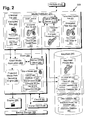
- Figure 2 presents a system providing a client with a digital receipt for use with an interoperable keychest, according to one embodiment of the present invention.
- Environment 200 of Figure 2 includes keychest 260, media distributor 270, distributor ID 271, client 280, client ID 281, shared client ID 286, display 288, and backup storage 289.
- Keychest 260 includes KeyInfo database 262, consumer database 263, transaction database 264, keychest private key 265, distributor public key database 266, distributor database 267, offer database 268, client API 256, and provider API 257. Since in Figure 2 , there are no interactions with preparers, a corresponding preparer API 161 and preparer database 169 from Figure 1 are omitted from Figure 2 for simplicity, but they may still exist within keychest 260.
- Media distributor 270 includes universal file 240, transcribed KeyInfo file 251, native DRM server 272, DRM license 273, distributor private key 275, and processor 276.
- Universal file 240 includes title ID 216, metadata 217, encrypted title 245, and keychest URL 246.
- Transcribed KeyInfo file 251 includes title owner ID 211, title ID 216, and encrypted title key 252.
- DRM license 273 includes title ID 216, encrypted title key 274, client ID 281, and usage rules 277.
- Client 280 includes native DRM client 282, client media application 283, protected media path decoding engine 299, and digital receipt 285.
- Digital receipt 285 includes title ID 216, distributor ID 271, client ID 281, shared client ID 286, consumer ID 284, and transaction info 287.
- keychest 260 corresponds to keychest 160 from Figure 1 and that media distributor 270 corresponds to media distributor 170 from Figure 1 .
- keychest 260 of Figure 2 does not depict a processor or memory as in keychest 160 of Figure 1 , it may be assumed they exist to support the operation of the APIs and other logical operations of keychest 260.
- Figure 2 shifts the focus from the title owners and preparers in Figure 1 to the media distributors and clients in Figure 2 . More specifically, Figure 2 illustrates how a consumer or client can actually access a media file for eventual playback on display 288 using the universal file, KeyInfo file, and CKR or keychest concepts introduced in Figure 1 . Additionally, Figure 2 introduces the concept of the digital receipt, shown as digital receipt 285, which can act as a proof of purchase or proof of transaction for reactivating protected media contents even if the client loses the originally retrieved protected media files or if the client switches media distributors, for example.
- digital receipt 285 can act as a proof of purchase or proof of transaction for reactivating protected media contents even if the client loses the originally retrieved protected media files or if the client switches media distributors, for example.
- Transcribed KeyInfo file 251 may have been provided to media distributor 270 by an entity having a distribution agreement with media distributor 270, such as an entity similar to title owner 110 of Figure 1 , along with keychest 260 for the transcription step.
- Processor 276 of media distributor 270 may be used with distributor private key 275 to decrypt encrypted title key 252 for use with native DRM server 272.
- Native DRM server 272 executing on processor 276 may then use all the inputs indicated in Figure 2 to generate DRM license 273 for distribution to authorized clients requesting universal file 240.
- Encrypted title key 274 may be protected using a protection system provided by native DRM server 272, effectively changing the encryption partner of media distributor 270 from keychest 260 to client 280. This step might be viewed like an additional transcription step similar to keychest 260 providing KeyInfo files transcribed for specific media distributors, but with media distributor 270 instead providing DRM licenses with transcribed title keys for specific clients.
- DRM license 273 encrypted title key 274 is included, corresponding to a title key usable to decrypt universal file 240.
- DRM license 273 also includes identifying information, including the client the DRM license applies to, or client ID 281, and the associated media title or universal file, or title ID 216. Additional information could also be embedded with DRM license 273, such as distributor ID 271, shared client ID 286, consumer ID 284, usage rules 277, and transaction info 284 as indicated in Figure 2 .
- client 280 might comprise a personal computer, a media player, a set-top box, a videogame console, a mobile phone, a portable media player, or any other device for interfacing with media distributor 270.
- Client 280 may also include client media application 283 for browsing, purchasing, playback, and other transactions with digital media provided by media distributor 270.
- client media application 283 for browsing, purchasing, playback, and other transactions with digital media provided by media distributor 270.
- media distributor 270 may process the transaction by interfacing with a financial institution to charge an agreed amount or internally subtracting an agreed amount of prepaid points or other currency, generate DRM license 273 as described above, and provide both universal file 240 and DRM license 273 to client 280 via native DRM server 272.
- a record of the digital transaction may be deposited in transaction database 264 via provider API 257 of keychest 260.
- client 280 After client 280 receives both universal file 240 and DRM license 273, client 280 can use DRM license 273 in conjunction with native DRM client 282 to decrypt encrypted title 245 within universal file 240 for consumption by playback using protected media path decoding engine 299 outputting to display 288, which may also include speakers for audio content. Therefore, the consumer may view the requested media on display 288.
- media distributor 270 may also provide client 280 with a secure digital receipt 285. If the consumer needs to address the situations listed above, digital receipt 285 can be retrieved and presented to an alternative media distributor or to keychest 260 as a proof of purchase to obtain the universal file again, to obtain a new DRM license, or even both, as the situation may demand.
- client 280 proactively safeguards digital receipt 285 by copying to backup storage 289, which might comprise a Universal Serial Bus (USB) storage device, and registering with the relevant CKR or keychest 260 via client API 256 for depositing the digital receipt into consumer database 263.
- backup storage 289 which might comprise a Universal Serial Bus (USB) storage device
- client API 256 for depositing the digital receipt into consumer database 263.
- a web interface may be provided to allow direct uploading of digital receipts to keychest 260 via client API 256, which may expose HTTPS protected SOAP web services similar to provider API 257.
- a third party may provide and maintain backup storage 289, for example by providing an online backup service or web accessible e-mail server.
- digital receipts are provided to users via registered e-mail addresses, user e-mail accounts may effectively substitute as a backup repository for digital receipts.
- client media application 283 might prompt the user to register the digital receipt online with keychest 260 automatically. Keychest 260 may then provide a return value to client 280, indicating either success or failure of the digital receipt registration process.
- Digital receipt 285 contains several fields related to the identity of the user leading to the creation of the digital receipt.
- Client ID 281 identifies a consumer or device in relation to a particular DRM system implemented by native DRM client 282 and native DRM server 272.
- Consumer ID 284 and distributor ID 271 indicates the particular consumer in relation to a specific media distributor, whereas shared client ID 286, an optional component, may globally identify the user in a general sense.
- Shared client ID 286 may be tied to an external user authentication system, such as OpenID, which is usable to authenticate across several media distributors, rather than just a single one. Since not all users may possess such a shared client ID, it may be omitted for such users, or a substitute identifier might be created and provided for the user. However, if shared client ID 286 is provided, then keychest 260 may be able to identify all receipts within consumer database 263 attributable to the consumer regardless of the media distributor, which may prove to be helpful for users having large media collections across several different media distributors.
- Digital receipt 285 also contains several fields related to the transaction creating the digital receipt.
- Title ID 216 indicates the specific universal file referenced by the digital receipt
- transaction info 287 may contain specific information regarding the transaction such as a transaction date, a transaction type or an offer ID, and metadata regarding the content referenced by title ID 216.
- the transaction date may include a specific date and time the transaction occurred, whereas the transaction type may, for example, indicate whether the transaction was a full purchase, a rental, part of a subscription plan, or comprised another type of transaction.
- the metadata might include information similar to metadata 117 from Figure 1 , such as titles, genre classifications, ratings, and other data.
- Digital receipt 285 may also optionally contain information regarding keychest 260, such as a keychest URL or alternatively information about a server used to register the digital receipt 285 in the form of a URL or similar reference data. While the majority of the data stored in digital receipt 285 may be protected with encryption, the title metadata portion of transaction info 287 might be presented in an unencrypted plain text form, allowing digital receipts to be easily identified by users. As shown in Figure 2 , portions of digital receipt 285 are encrypted with the public key of keychest 260, where keychest 260 can use keychest private key 265 to decrypt the encrypted portions, but other protection methods usable by keychest 260 may also be utilized. In addition, portions of digital receipt 285 may also be digitally signed by the issuing media distributor 270 so that keychest 260 can confirm that digital receipt 285 was duly issued by an authorized media distributor.
- keychest 260 such as a keychest URL or alternatively information about a server used to register the digital receipt 285 in the form of
- keychest 260 can validate the receipt using, as appropriate, keychest private key 265 to decrypt the encrypted portion of the digital receipt 285 and/or the public key of the media distributor 270 to validate the signature described above, and process any relevant business rules to approve or deny a query or request. If the query or request is approved, a media distributor may retrieve the corresponding KeyInfo file to authorize resending universal file 240 and/or to generate new DRM licenses including the title key for the user.
- distributor database 267 may dictate access privileges to specific KeyInfo files according to the identity of a querying media distributor. In the case of media distributor 270, this would correspond to distributor ID 271, which might be provided as part of the HTTPS or TLS handshaking procedure prior to establishing secure communications with keychest 260 via provider API 257.
- media distributors While the user might prefer that all media distributors offer the downloading of universal file 240 or the generation of a new DRM license for free, media distributors must also consider expenses such as server and network maintenance, customer service, and distribution contracts. Thus, while some media distributors might offer free reactivation through digital receipts to encourage usage of their particular online services, other media distributors might charge a fee for redeeming digital receipts to cover the costs of bandwidth, server maintenance, customer support, and acquiring and renewing distribution rights and content licenses. These considerations might be encapsulated within business rules implemented by keychest 260 or by individual media distributors, flexibly independent of the core key storing and distributing functions of the CKR, keychest 260.
- Figure 3 presents a system for obtaining protected digital rights management (DRM) licenses through an interoperable keychest for interoperability between different DRM systems, according to one embodiment of the present invention.
- Environment 300 of Figure 3 includes keychest 360, media distributors 370a-370b, clients 380a-380b, shared client ID 386, and shared client ID verification server 390.
- Keychest 360 includes KeyInfo database 362, consumer database 363, transaction database 364, distributor public key database 366, distributor database 367, offer database 368, preparer database 369, and provider API 357.
- Media distributor 370a includes native DRM server 372a.
- Media distributor 370b includes native DRM server 372b.
- Client 380a includes universal file 340, DRM license 373a, and native DRM client 382a.
- Universal file 340 includes title ID 316, metadata 317, encrypted title 345, and keychest URL 346.
- DRM license 373a includes title ID 316, encrypted title key 374a, and client ID 381.
- Client 380b includes universal file 340, DRM license 373b, and native DRM client 382b.
- DRM license 373b includes title ID 316, encrypted title key 374b, and client ID 381.
- keychest 360 corresponds to keychest 260 from Figure 2
- media distributors 370a-370b correspond to media distributor 270
- clients 380a-380b correspond to client 380.
- Figure 3 presents an alternative method of interoperability between different media distributors where a universal file is merely copied between different clients and used to obtain a new DRM license applicable to the new client, even if the different media distributors use different DRM systems or schemas.
- client 380a For example, assume that the user of client 380a has already purchased universal file 340, which also results in the acquisition of an associated DRM license 373a. Additionally, a record of the purchase is recorded in transaction database 364, including the identity of the purchaser, shared client ID 386. As previously discussed, shared client ID 386 might use an identification scheme such as an OpenID.
- shared client ID 386 might use an identification scheme such as an OpenID.
- client 380a might represent a personal computer of the user
- client 380b might represent a videogame console of the user.
- the user may wish to view universal file 340 on client 380b rather than client 380a if, for example, the videogame console happens to be connected to a high-end home theater system in the living room, whereas the personal computer happens to be relegated to the den with tinny computer speakers and a small LCD screen.
- client 380b might represent a portable media device of the user, where the user wants to view universal file 340 while flying on a business trip.
- client 380b can obtain DRM license 373b from media distributor 370b, even though client 380b and media distributor 370b utilize a different DRM system supported by native DRM server 372b and DRM client 382b.
- client 380b may query media distributor 370b for DRM license 373b.
- Client 380b may also provide identifying credentials associated with shared client ID 386, such as a username and password.
- Media distributor 370b may then verify the identity of the user by relaying the identifying credentials to shared client ID verification server 390.
- media distributor 370b may query keychest 360 via provider API 357 to confirm whether the user identified by shared client ID 386 has rights associated with universal file 340.
- keychest 360 may examine transaction database 364 to confirm the existence of a previous transaction with media distributor 370a involving the purchase of universal file 340 by the same user identified using shared client ID 386. If transaction database 364 instead reported no matching results associated with shared client ID 386 and universal file 340 or that the transaction type was merely a rental rather than a purchase, keychest 360 may stop processing and return that permission was denied.
- Distributor database 367 may also be consulted to determine whether media distributor 370b has an agreement in place for the distribution of the relevant KeyInfo file associated with universal file 340 from KeyInfo database 362.
- various business rules might be enforced by keychest 360. For example, to prevent universal file distribution abuse, a global limit of 5 different clients might be supported for any single purchase tied to an identifiable user, with users requiring more than 5 concurrently active DRM licenses addressed by customer service on a case-by-case basis. Similarly, a global limit of 5 different identities might be supported to identify the same consumer.
- keychest 360 may retrieve the associated KeyInfo file from KeyInfo database 362, providing media distributor 370b a transcribed KeyInfo file using a public key of media distributor 370b, as previously described. Media distributor 370b may then use the transcribed KeyInfo file to generate DRM license 373b using native DRM server 372b and provide DRM license 373b to native DRM client 382b in client 380b.
- the user of client 380b is able to consume universal file 340 by retrieving DRM license 373b, which comprises a much smaller download size than having to download universal file 340 again, providing almost instant playback and allowing the user to enjoy universal file 340 on the high-end home theater system or on the portable media device.
- client 380b may directly retransmit a digital receipt to keychest 360 if keychest 360 provides a direct client interface for requesting registered media. Individual keychests may provide this functionality at their own discretion. As previously discussed, the digital receipt acts as a proof of the transaction, and therefore can be retransmitted back to keychest 360 to obtain access to the original media or licenses granted by the original transaction. If keychest 360 does support such direct requests from client 380b, and if keychest 360 determines that client 380b is privileged to access the requested registered media as detailed above, then keychest 360 can direct client 380b to an appropriate media distributor capable of serving the requested registered media.
- keychest 360 may first determine a list of privileged media distributors using distributor database 367, finding all third party media distributors having distribution rights or distribution privileges for the requested registered media, for example universal file 340. Then, the user of client 380b might be prompted to select from the list of providers to be redirected to a particular third party media distributor. After the user of client 380b is redirected to the particular third party media distributor, for example media distributor 370b, then keychest 360 may forward to media distributor 370b a verification that the user of client 380b is authorized to retrieve the requested universal file 340 and/or any associated DRM licenses. As before, this verification may involve verifying a submitted digital receipt against registered digital receipts in consumer database 363 and applying any applicable business rules. After that, the process continues as normal, as if the user submitted the digital receipt to the media distributor instead of the CKR. Thus, media distributor 370b may therefore provide DRM license 373b to client 380b for consuming universal file 340.
- this process of sharing universal files and obtaining different DRM licenses could be used to offer friends and associates recommended media files without the need for them to re-download associated universal files.
- the user of client 380a may provide the user of client 380b a copy of universal file 340, perhaps through a USB storage device.
- client 380b since client 380b does not know the private login details of the user of client 380a, client 380b will be unable to provide login credentials for shared client ID 386, allowing media distributor 370b to ascertain that the user of client 380b is not the same as the user of client 380a, the original purchaser of the copied universal file 340.
- media distributor 370b might display an offer for executing a new transaction to obtain a DRM license for universal file 340, unlocking it for instant playback. Additionally, although two separate media distributors are shown in Figure 3 , this process could also apply to clients using the same media distributor.
- each media distributor can provide the exact same universal file for a particular media title, even if different DRM systems or schemas are used.
- keychest 360 functioning as a central rights clearinghouse and shared client ID verification server 390 verifying the identity of unique users across providers, media distributors can provide interoperable solutions with minimal additional effort and reengineering of existing DRM systems. This allows users to easily transport universal files between different devices and media distributors, with only a quick retrieval of a new DRM license required to playback copied universal files.
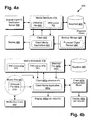
- Figure 4a presents a system for playback of protected media using an interoperable keychest independent of an original issuing media distributor, according to one embodiment of the present invention.
- Environment 400 of Figure 4a includes keychest 460, media distributor 470, client 480, display 488, backup storage 489, and shared client ID verification server 490.
- Media distributor 470 includes universal file 440 and DRM license 473.
- Client 480 includes client media application 483.
- Backup storage 489 includes digital receipt 485.
- keychest 460 corresponds to keychest 260 from Figure 2
- media distributor 470 corresponds to media distributor 270
- client 480 corresponds to client 280
- backup storage 489 corresponds to backup storage 489.
- Voluntary forfeiting might include changing client devices or media distributors.
- Involuntary forfeiting might include catastrophic hardware failures such as a failed hard disk drive, or user error such as accidentally deleting a file. Since each digital transaction is accompanied with a mandatory digital receipt under user control, as shown in Figure 2 , the user has full discretion to plan for such contingencies independently of the original media distributor. For example, if the user diligently registers a digital receipt online with an associated keychest and kept a safe backup, the user merely needs to resubmit the digital receipt to regain access to the associated universal file and DRM license.
- client 480 For example, assume that the user of client 480 suffered through a catastrophic hard disk drive failure. The user replaces the hard disk drive of client 480 and reinstalls client media application 483 for interfacing with media distributor 470 again. Since the hard drive stored the user's media library of universal files and DRM licenses, the user of client 480 seeks to regain access to his old media library. Currently, the user kept copies of the digital receipts within backup storage 489, which might comprise a USB storage device or an online e-mail provider, as previously discussed. Additionally, as indicated in Figure 4a , the user registered digital receipt 485 online with keychest 460, so that digital receipt 485 may be stored within a user authentication database of keychest 460.
- the user of client 480 merely provides digital receipt 485 retrieved from backup storage 489 to media distributor 470, along with user credentials for verifying with media distributor 470, or alternatively a shared user credential for verifying with shared client ID verification server 490.
- Media distributor 470 after consulting with keychest 460, may then provide universal file 440 and DRM license 473 back to client 480.
- media distributor 470 might also provide a batch transfer of any other universal files and DRM licenses having properly registered digital receipts within keychest 460 matching the user credentials provided by client 480 and duly verified by media distributor 470 or shared client ID verification server 490. This batch transfer may save the user considerable time and effort if several digital receipts are to be submitted, which may be the case after a catastrophic hardware failure.
- Several business rules may come into play in this model as to address possible abuse, ensure proper functioning of the system, or offer additional services to the consumer.
- this same mechanism can provide users a kind of insurance against the failure or reorganization of their favorite media distributors. If, for example, the media distributor that client 480 usually patronizes suddenly goes out of business, as long as the user of client 480 kept a backup of digital receipts and registered the digital receipts with keychest 460, the user can easily migrate to another media distributor such as media distributor 470 of Figure 4a . In this manner, many long standing user concerns regarding the permanence of DRM protected digital media may be effectively resolved.
- Figure 4b presents a system for redemption of secondary protected media using an interoperable keychest, according to one embodiment of the present invention.
- Environment 400 of Figure 4b includes keychest 460, media distributor 470, clients 480a-480b, displays 488a-488b, media disc 491, and media box code 492.
- Media distributor 470 includes universal file 440b and DRM licenses 473a-473b.
- Client 480a includes client media application 483a.
- Media disc 491 includes universal file 440a.
- keychest 460 corresponds to keychest 260 from Figure 2
- media distributor 470 corresponds to media distributor 270
- clients 480a-480b correspond to client 280
- displays 488a-488b correspond to display 288.
- universal files may also have applications with physical retail media as well.
- media disc 491 might comprise a Blu-ray disc purchased through retail channels. Besides storing the standard Blu-ray movie data, corresponding universal files might also be included for use on a personal computer or for portable media devices.
- Media box code 492 might then comprise a unique numeric or alphanumeric sequence printed within the inside liner or under a hidden scratch panel, usable to redeem universal file 440a for playback by retrieving an applicable DRM license.
- media box code 492 may act as an anonymous user identifier, as keychest 460 can limit the number of redemptions for any single media box code using business rules.
- the user of client 480a might insert media disc 491 into a Blu-ray drive, where the user is prompted whether he wishes to redeem universal file 440a. If the user answers yes, he may be prompted to enter media box code 492, which is sent along with any identifying metadata contained in universal file 440a to media distributor 470. Media distributor 470 may then consult with keychest 460 to determine whether media box code 492 is valid and/or has reached a maximum redemption count. For example, a business rule at keychest 460 might enforce that each valid media box code may only provide for a maximum of three (3) redemptions, again to prevent the potential abuse of indiscriminate universal file sharing. If keychest 460 answers positively, then media distributor 470 might provide DRM license 473a so that the user of client 480a can view the movie at full resolution on display 488a of the notebook PC.
- a compelling sales point for media disc 491 might include the ability to copy the movie from media disc 491 to various portable devices.
- client 480a might additionally request for a standard definition (SD) 720x480 version of the movie for playback on portable devices with standard definition displays.
- media distributor 470 might again query keychest 460 for a special standard definition version KeyFile for portable devices, which is duly returned and used to generate universal file 440b and DRM license 473b, which can then be transferred to client 480b for playback on display 488b.
- the redemption of box codes can be associated with a client or consumer ID and recorded within relevant databases in keychest 460, as previously done with online transactions.
- various universal files already formatted for popular media devices might be embedded on media disc 491 such that only a corresponding DRM license needs to be retrieved, reducing download time.
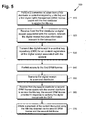
- FIG. 5 shows a flowchart describing the steps, according to one embodiment of the present invention, by which online registration of a digital receipt associated with a content can be used with a central key repository (CKR) to enable interoperable playback of the content independent of an initial distributor.
- CKR central key repository
- Certain details and features have been left out of flowchart 500 that are apparent to a person of ordinary skill in the art.
- a step may comprise one or more substeps or may involve specialized equipment or materials, as known in the art.
- steps 510 through 570 indicated in flowchart 500 are sufficient to describe one embodiment of the present invention, other embodiments of the invention may utilize steps different from those shown in flowchart 500.
- step 510 of flowchart 500 comprises client 280 performing a transaction to obtain from media distributor 270 universal file 240 including encrypted title 245 encrypted by a title key corresponding to an unencrypted version of encrypted title key 274, or title key 132 from Figure 1 , and DRM license 273 usable with media distributor 270 to access the unencrypted version of encrypted title key 274.
- client 280 uses client media application 283 to browse a digital storefront and select universal file 240 to commence a transaction.
- media distributor 270 provides universal file 240 and the associated DRM license 273 to client 280 via interactions with keychest 260, native DRM server 272, and native DRM client 282.
- step 520 of flowchart 500 comprises client 280 receiving a digital receipt 285 associated with encrypted title 245, wherein digital receipt 285 includes information relevant to the transaction of step 510. As shown in Figure 2 , this information includes client ID 281, distributor ID 271, shared client ID 286, consumer ID 284, title ID 216, and transaction info 287, but alternative embodiments may use other data arrangements. Additionally, as shown in Figure 2 , portions of digital receipt 285 are provided encrypted by the public key of keychest 260.
- step 530 of flowchart 500 comprises client 280 transmitting digital receipt 285 received from step 520 to keychest 260 for an online registration of digital receipt 285 within consumer database 263.
- client 280 transfers digital receipt 285 using client API 256 of keychest 260, which may expose web services accessible by SOAP over HTTPS.
- step 540 of flowchart 500 comprises client 480 forfeiting access to DRM license 473 corresponding to DRM license 273 retrieved from step 510.
- this might be a voluntary forfeiture by changing media distributors or clients, or involuntarily by, for example, hardware failures resulting in data loss.
- client 480 will no longer have direct access to DRM license 473 after step 540.
- client 480 may still retain direct access to universal file 440 corresponding to universal file 240 retrieved from step 510, contrary to the access state shown in Figure 4a .
- step 550 of flowchart 500 comprises client 480 transmitting digital receipt 485 to media distributor 470, where digital receipt 485 corresponds to digital receipt 285 retrieved from step 520, and wherein media distributor 470 is a different entity from media distributor 270 accessed during steps 510-520.
- media distributor 470 may scrutinize digital receipt 485 for validity by querying keychest 460 for prior evidence of online registration of the same digital receipt 485. Keychest 460 may also apply various business rules before providing a relevant KeyInfo file for generating a new DRM license.
- step 560 of flowchart 500 comprises client 480 receiving from media distributor 470 DRM license 473 usable with media distributor 470 to access a title key for decoding universal file 440, where the title key is the same as the title key used in step 510 for encrypted title 245.
- keychest 460 may also verify the identity of client 480, the authorization of media distributor 470, and any applicable business rules before providing the relevant KeyInfo file to allow step 560 to proceed.
- step 570 of flowchart 500 comprises client media application 483 of client 480 initiating a playback of universal file 440 on display 488 decrypted using the title key obtained by using DRM license 473 received from step 560 with media distributor 470. Since at the end of step 560, client 480 has access to both universal file 440 and DRM license 473, client 480 only needs to use the native DRM solution implemented by client media application 483 and media distributor 470 to access the title key embedded in DRM license 473 for decoding the encrypted title within universal file 440, which may then be consumed or output to display 488 for viewing by a user of client 480.
- Figure 6 shows a flowchart describing the steps, according to one embodiment of the present invention, by which media contents may be distributed to media distributors. Certain details and features have been left out of flowchart 600 that are apparent to a person of ordinary skill in the art. For example, a step may comprise one or more substeps or may involve specialized equipment or materials, as known in the art. While steps 610 through 670 indicated in flowchart 600 are sufficient to describe one embodiment of the present invention, other embodiments of the invention may utilize steps different from those shown in flowchart 600.
- step 610 of flowchart 600 comprises universal file packager 135 of preparer 130 obtaining a first key, keychest public key 122, a second key, title key 132, and title 115.
- keychest public key 122 is retrieved from a trusted third party, certificate authority 120, where certificate 121 is used to validate the binding between keychest public key 122 and keychest 160.
- certificate authority 120 may be used to validate the binding between keychest public key 122 and keychest 160.
- Preparer 130 may itself generate title key 132, using key generator 131.
- Title 115 is retrieved from title owner 110, which may be securely retrieved by digital or physical means.
- Title owner 110 may also be owned by the same entity as preparer 130.
- step 620 of flowchart 600 comprises universal file packager 135 of preparer 130 encrypting title key 132 using keychest public key 122, both obtained from step 610, to generate encrypted title key 152. Since encrypted title key 152 can only be decrypted using keychest private key 165, only keychest 160 can access title key 132 from encrypted title key 152, as long as keychest 160 protects the privacy of keychest private key 165. As previously discussed, 2048 bit RSA keys in accordance with Public-Key Cryptography Standards #1 (PKCS#1) may be utilized for the asymmetric key encryption of step 620.
- PCS#1 Public-Key Cryptography Standards #1
- step 630 of flowchart 600 comprises universal file packager 135 of preparer 130 encrypting title 115 using title key 132, both obtained from step 610, to generate encrypted title 145.
- a balanced compromise such as the Advanced Encryption Standard (AES) may used for the symmetric key encryption of step 630 to provide reasonably strong security with fast decoding times.
- AES Advanced Encryption Standard
- step 640 of flowchart 600 comprises universal file packager 135 of preparer 130 generating KeyInfo file 150 including encrypted title key 152 generated from step 620.
- KeyInfo file 150 may also include various metadata and identifying information, such as title owner ID 111 and title ID 116, to aid in indexing and retrieving KeyInfo file 150 within KeyInfo database 162.
- step 650 of flowchart 600 comprises universal file packager 135 of preparer 130 generating universal file 140 including encrypted title 145 generated from step 630 and keychest URL 146 for a central key repository (CKR), keychest 160.
- Keychest URL 146 represents a network address directing to keychest 160, and as previously discussed, a redirection server might also be used as an intermediary.
- Figure 1 uses a URL as the network address to interface with web based SOAP over HTTPS, alternative embodiments might use other protocols to reach a network address in a secure manner.
- additional metadata and identifying information such as title ID 116 and metadata 117, may also be included within universal file 140 to aid in the identification and cataloging of universal file 140.
- step 660 of flowchart 600 comprises universal file packager 135 of preparer 130 providing KeyInfo file 150 for storage in KeyInfo database 162 of keychest 160. As shown in Figure 1 , this may be by using SOAP web services exposed over HTTPS by preparer API 161 of keychest 160. After keychest 160 authenticates preparer 130 as an authorized preparer and accepts KeyInfo file 150, it may be filed within KeyInfo database 162 for future retrieval by media distributors, the KeyInfo file prepared in a transcribed form by using a public key from distributor public key database 166 corresponding to a retrieving media distributor. In this case, each media distributor generates its own private/public key pairs and distributes public keys to keychest 160, but as previously discussed, keychest 160 could also generate private/public key pairs and distribute public keys to media distributors.
- step 670 of flowchart 600 comprises universal file packager 135 of preparer 130 providing universal file 140 to media distributor 170.
- media distributor 170 should have an agreement to distribute title 115 from title owner 110, and distributor database 167 of keychest 160 should grant permission for media distributor 170 to access the corresponding KeyInfo file 150 from keychest 160.
- title owner 110 may have agreements with several different media distributors, sending a universal file generated by a preparer to each of the different media distributors.
- universal file 140 can be provided to media distributor 170 in any suitable secure method of communication, physically or digitally. Once universal file 140 is distributed to authorized media distributors such as media distributor 170, universal file 140 may be served to requesting clients or users through digital storefronts or other presentation methods.
- FIG. 7 shows a flowchart describing the steps, according to one embodiment of the present invention, by which a central key repository (CKR) can provide content access authorizations to media distributors.
- CKR central key repository
- Certain details and features have been left out of flowchart 700 that are apparent to a person of ordinary skill in the art.
- a step may comprise one or more substeps or may involve specialized equipment or materials, as known in the art.
- steps 710 through 750 indicated in flowchart 700 are sufficient to describe one embodiment of the present invention, other embodiments of the invention may utilize steps different from those shown in flowchart 700.
- step 710 of flowchart 700 comprises keychest 160 receiving KeyInfo file 150 including encrypted title key 152, title ID 116, and title owner ID 111.
- step 710 may be accomplished by exposing SOAP web services by HTTPS through preparer API 161 for use by preparer 130. Once keychest 160 receives KeyInfo file 150, it may catalogue it within Key Info database 162 for future retrieval by media distributors.
- step 720 of flowchart 700 comprises keychest 160 decrypting encrypted title key 152 within KeyInfo file 150 received from step 710 using keychest private key 165 to retrieve title key 132. Since encrypted title key 152 was encrypted using keychest public key 122, keychest 160 only needs to use keychest private key 165, which it already has within memory 159, for decryption.
- step 730 of flowchart 700 comprises keychest 160 receiving, from media distributor 170, a key request including title ID 116.
- media distributor 170 may receive a request from a client to serve universal file 140.
- KeyInfo file 150 is also needed for decrypting. Since universal file 140 includes title ID 116, media distributor 170 can request a KeyInfo file matching title ID 116 from keychest 160 to fulfill the request from the client.
- step 740 of flowchart 700 comprises keychest 160 encrypting title key 132 decrypted from step 720 using a provider public key stored in distributor public key database 166 to generate encrypted title key 252 of transcribed KeyInfo file 251, wherein the provider public key corresponds to a public portion of a private/public asymmetric key pair including distributor private key 175.
- This provider public key may have been provided to keychest 160 in advance through a trusted third party such as certificate authority 120.
- Step 740 "transcribes" KeyInfo file 150 to transcribed KeyInfo file 151, corresponding to transcribed KeyInfo file 251 in Figure 2 .
- title key 132 transitions from being encrypted by keychest public key 122 as encrypted title key 152 to being encrypted by the provider public key as encrypted title key 252, so that only the associated media distributor 270 having distributor private key 275 can access the original title key 132 from transcribed KeyInfo file 251.
- step 750 of flowchart 700 comprises keychest 160 transmitting encrypted title key 252 generated from step 740 corresponding to an encrypted title key contained within transcribed KeyInfo file 151 to media distributor 170 in response to step 730, the receiving of the key request.
- media distributor 170 can use distributor private key 175 to access the original title key 132 for integrating within native DRM system 172 to enable access and playback of universal file 140.
- Figure 8 shows a flowchart describing the steps, according to one embodiment of the present invention, by which a media distributor can obtain access to content access authorizations from a central key repository (CKR).
- CKR central key repository
- Certain details and features have been left out of flowchart 800 that are apparent to a person of ordinary skill in the art. For example, a step may comprise one or more substeps or may involve specialized equipment or materials, as known in the art. While steps 810 through 850 indicated in flowchart 800 are sufficient to describe one embodiment of the present invention, other embodiments of the invention may utilize steps different from those shown in flowchart 800.
- step 810 of flowchart 800 comprises media distributor 270 receiving a user request from client 280 for access to encrypted title 245 within universal file 240, the request including title ID 216.
- client media application 283 may communicate with media distributor 270 to present an e-commerce storefront to the user of client 280.
- the user of client 280 may browse the e-commerce storefront and commence an agreement to purchase a license for viewing digital media identified by title ID 216, or encrypted title 245 within universal file 240. This agreement may then be sent as a user request to be transmitted to media distributor 270.
- step 820 of flowchart 800 comprises media distributor 270 transmitting a key request to keychest 260 in response to step 810, the key request including title ID 216.
- media distributor 270 can send a key request to keychest 260 for a KeyInfo file corresponding to title ID 216.
- provider API 257 may be exposed to the outside by web services via SOAP over HTTPS.
- step 830 of flowchart 800 comprises media distributor 270 receiving transcribed KeyInfo file 251 including encrypted title key 252 in response to step 820.
- Transcribed KeyInfo file 251 may be received using the same secure connection established in step 820. Since encrypted title key 252 within transcribed KeyInfo file 251 is encrypted using a public key of media distributor 270, distributor private key 275 may be readily used to decrypt encrypted title key 252.
- step 840 of flowchart 800 comprises media distributor 270 decrypting encrypted title key 252 of transcribed KeyInfo file 251 received from step 830 to retrieve a title key corresponding to title key 132 from Figure 1 .
- This title key can eventually be used to decrypt encrypted title 245 associated with title ID 216 within universal file 240.
- step 850 of flowchart 800 comprises media distributor 270 providing DRM license 273 for encrypted title 245 of universal file 240 to client 280, DRM license 273 using the title key from step 840 as encrypted title key 274 protected by native DRM server 272.
- Step 850 is initiated in response to step 810 and for use by client 280 to decrypt encrypted title 245 using the title key from step 840 retrievable from DRM license 273 using native DRM client 282.
- client 280 receives DRM license 273, it can use native DRM client 282 to remove the protection from encrypted title key 274, gaining access to the title key from step 840 to decrypt encrypted title 245 within universal file 240.
- client 280 may, for example, direct the decrypted contents over protected media path decoding engine 299 for playback on display 288, so that the user of client 280 can enjoy the content requested from step 810.
- An advantageous embodiment of the invention comprises a central key repository (CKR) for providing content access authorizations to distributors, the central key repository comprising: a memory having a first key; a processor in communication with the memory, the processor configured to: receive a key information file including a first encrypted second key for decrypting with the first key and a content identification and store the key information file in the memory; decrypt the first encrypted second key using the first key retrieved from the memory to retrieve the second key; receive, from a distributor, a key request including the content identification; encrypt the second key using a third key to generate a second encrypted second key; and transmit the second encrypted second key to the distributor in response to receiving the key request, wherein the processor is configured to encrypt the second key using the third key in response to receiving the key request.
- the processor is configured to encrypt the second key using the third key in response to receiving the key request.
- the processor may be further configured to: generate the third key; store the third key in a distributor key database in the memory; and transmit the third key to the distributor prior to transmitting the second encrypted second key to the distributor.
- the processor may be further configured to: receive the third key from the distributor prior to encrypting the second key using the third key; and store the third key in a distributor key database in the memory.
- the processor may be further configured to: receive the third key from a third party prior to the encrypting of the second key using the third key; and store the third key in a distributor key database in the memory.
- the third party may comprise a certificate authority.
- the key information file may further include a Universally Unique Identifier (UUID) and an International Standard Audiovisual Number (ISAN).
- UUID Universally Unique Identifier
- ISAN International Standard Audiovisual Number
- the memory may further include a distributor database, and wherein in response to receiving the key request, the processor is further configured to determine whether the distributor is authorized to receive the second key.
- the key request may further include at least one of a consumer information, a transaction type and a device information.
- the memory may further include a consumer database, and wherein in response to receiving the key request, the processor is further configured to determine whether a consumer associated with the consumer information is authorized to consume a content associated with the content identification.
- the memory may further include a transaction database, and wherein in response to receiving the key request, the processor is further configured to determine whether the transaction type authorizes a consumer to consume a content associated with the content identification.
- the memory may further include a device database, and wherein in response to the receiving of the key request, the processor is further configured to determine whether the device associated with the request is authorized to consume a content associated with the content identification.
- the key request may further include a code associated with a content associated with the content identification.
- the processor may be configured to transmit the second encrypted second key by including a key information file having the second encrypted second key and information about a content referenced by the content identification.
- a further advantages embodiment of the invention comprises a method of distributing media contents to distributors, the method comprising: obtaining a first key, a second key and a content; encrypting the second key using the first key to generate an encrypted second key; encrypting the content using the second key to generate an encrypted content; generating a key information file including the encrypted second key; generating a universal file including the encrypted content and a first network address for a central key repository (CKR); providing the key information file for storage in the CKR; and providing the universal file to the distributors.
- CKR central key repository
- At least two of the distributors may receive the universal file utilize a different digital rights management (DRM) scheme for distributing the content to consumers.
- DRM digital rights management
- the obtaining of the first key may include receiving the first key from a certificate authority trusted by the CKR.
- the obtaining of the second key may include generating the second key.
- the method may further comprise obtaining content information relating to the content, wherein the key information file is generated by including the content information in the key information file.
- the generating of the universal file may include encoding the content prior to encryption of the content.
- the generating of the universal file may include formatting the encrypted content, a first network address and the content information using the MPEG-4 container format.
- the content information may include a Universally Unique Identifier (UUID), an International Standard Audiovisual Number (ISAN) and a content owner identification.
- UUID Universally Unique Identifier
- ISAN International Standard Audiovisual Number
- the method may further comprise obtaining content information relating to the content, wherein the universal file is generated by including the content information in the universal file.
- the content information may include a Universally Unique Identifier (UUID) and an International Standard Audiovisual Number (ISAN).
- UUID Universally Unique Identifier
- ISAN International Standard Audiovisual Number
- Providing the key information file for storage in the CKR may further use the CKR to transcribe the key information file such that a distributor can use a third key related to the first key to decrypt the encrypted second key and retrieve the second key.
- the first key may be a public key of the distributor, and the third key may be a private key of the distributor.
- the first key may be a symmetric key
- the third key may be a symmetric key accessible by the distributor.
- a further embodiment may comprise a universal file packager for distribution of media contents to distributor, the universal file packager comprising:
- At least two of the distributors may receive the universal file utilize a different digital rights management (DRM) scheme than the other for retrieving the content from the universal file.
- DRM digital rights management
- the processor may obtain the first key by receiving the first key from a certificate authority trusted by the CKR.
- the processor may obtain the second key by generating the second key.
- the processor may be further configured to obtain content information relating to the content, wherein the processor is further configured to generate the key information file by including the content information in the key information file.
- the processor may be configured to encode the content prior to generating the universal file.
- the processor may be configured to generate the universal file by formatting the encrypted content, a first network address and the content information using the MPEG-4 container format.
- the content information may include a Universally Unique Identifier (UUID), an
- ISAN International Standard Audiovisual Number
- the processor may be further configured to obtain content information relating to the content, wherein the processor may be further configured to generate the universal file by including the content information in the universal file.
- the content information may include a Universally Unique Identifier (UUID) and an International Standard Audiovisual Number (ISAN).
- UUID Universally Unique Identifier
- ISAN International Standard Audiovisual Number
- the processor may be configured to provide the key information file for storage in the CKR such that the CKR transcribes the key information file so that a distributor can use a third key related to the first key to decrypt the encrypted second key and retrieve the second key.
- the first key may be a public key of the distributor, and the third key may be a private key of the distributor.
- the first key may be a symmetric key
- the third key may be a symmetric key accessible by the distributor.
- a further advantageous embodiment comprises a method for use by a distributor to obtain content access authorizations from a central key repository (CKR), the method comprising: receiving a user request from a user device for access to an encrypted content, the user request including a content identification; transmitting a key request to the CKR in response to the receiving of the user request, the key request including the content identification; receiving an encrypted first key from the CKR in response to the transmitting of the key request; decrypting the encrypted first key using a second key to retrieve the first key; and providing a DRM license for the encrypted content to the user device using the first key, in response to the receiving of the user request and for use by the user device to decrypt the encrypted content using the first key.
- CKR central key repository
- the method may further comprise: receiving a universal content file including the encrypted content file, from a media content packager; and transmitting the encrypted content file to the user device.
- the universal content file may further include a first network address for a central key repository (CKR).
- CKR central key repository
- the method may further comprise retrieving the first network address, and wherein the transmitting transmits the key request to the first network address.
- the first network address may be a Uniform Resource Locator (URL) for access over the Internet.
- URL Uniform Resource Locator
- the method may further comprise: generating the second key; and transmitting the second key to the CKR prior to the transmitting of the key request to the CKR.
- the method may further comprise: receiving the second key form the CKR prior to the receiving of the encrypted first key from the CKR; and storing the second key.
- the key request may further include a user information and a transaction type.
- the method may further comprise: receiving, from the user device, a code associated with a medium storing a content associated with the content identification, wherein the key request includes the code.
- the receiving of the encrypted first key from the CKR may include receiving a key information file including the encrypted first key, a Universally Unique Identifier (UUID) and an International Standard Audiovisual Number (ISAN).
- UUID Universally Unique Identifier
- ISAN International Standard Audiovisual Number
- the key information file may further include access rights or usage rules associated with the key request.
- the DRM license may further include the access rights or usage rules received from the key information file.
- a further embodiment may comprise a distributor for obtaining content access authorizations from a central key repository (CKR), the distributor comprising: a processor configured to: receive a user request from a user device for access to an encrypted content, the user request including a content identification; transmit a key request to the CKR in response to receiving the user request, the key request including the content identification; receive an encrypted first key from the CKR in response to transmitting the key request; decrypt the encrypted first key using a second key to retrieve the first key; and provide a DRM license for the encrypted content to the user device using the first key, in response to receiving the user request and for use by the user device to decrypt the encrypted content using the first key.
- CKR central key repository
- the processor may be further configured to: receive a universal content file including the encrypted content file, from a media content packager; and transmit the encrypted content file to the user device.
- the universal content file may further include a first network address for a central key repository (CKR).
- CKR central key repository
- the processor Prior to transmitting the key request to the CKR, the processor may be further configured to retrieve the first network address, and the processor may be further configured to transmit the key request to the first network address.
- the first network address may be a Uniform Resource Locator (URL) for access over the Internet.
- URL Uniform Resource Locator
- the processor may be further configured to: generate the second key; and transmit the second key to the CKR prior to transmitting the key request to the CKR.
- the processor may be further configured to: receive the second key form the CKR prior to receiving the encrypted first key from the CKR; and store the second key.
- the key request may further include a user information and a transaction type.
- the processor may be further configured to: receive, from the user device, a code associated with a medium storing a content associated with the content identification, wherein the key request includes the code.
- Receiving the encrypted first key from the CKR may include receiving a key information file including the encrypted first key, a Universally Unique Identifier (UUID) and an International Standard Audiovisual Number (ISAN).
- UUID Universally Unique Identifier
- ISAN International Standard Audiovisual Number
- the key information file may further include access rights or usage rules associated with the key request.
- the DRM license may further include the access rights or usage rules received from the key information file.
- a further useful embodiment may comprise a method for online registration of a digital receipt associated with a content, the method comprising: performing a transaction to obtain from a first distributor the content; receiving from the first distributor the digital receipt associated with the content, wherein the digital receipt includes information relevant to the transaction; and transmitting the digital receipt to a central key repository (CKR) for an online registration of the digital receipt associated with the content.
- CKR central key repository
- the digital receipt may include data regarding a consumer.
- the digital receipt may include data regarding the first distributor.
- the digital receipt may include data regarding the transaction including a transaction type and a transaction date.
- the digital receipt may include metadata regarding the content.
- the digital receipt may include data regarding the CKR.
- the method may further comprise receiving a return value from the CKR indicating success or failure of an online registration process.
- Portions of the digital receipt may be further encrypted prior to the receiving of the digital receipt.
- Portions of the digital receipt may be further digitally signed prior to the receiving of the digital receipt.
- the encrypted portions of the digital receipt may be encrypted using a public key of the CKR.
- the transmitting of the digital receipt to the CKR may be by the first distributor.
- the method may further comprise: obtaining a first digital rights management (DRM) license from the first distributor for playing back the content.
- DRM digital rights management
- the method may further comprise: transmitting the digital receipt to a second distributor; and receiving from the second distributor a second DRM license to playback the content, the second DRM license granted in response to the second distributor validating the transmitted digital receipt using the CKR.
- the CKR further may apply one or more business rules to the information included in the digital receipt to verify the validity of the transmitted digital receipt.
- the transmitting may additionally transmit a user credential, and the second distributor may further authenticate the user credential to verify the validity of the transmitted digital receipt.
- the transmitting may additionally transmit a user credential, and the CKR may further authenticate the user credential to verify the validity of the transmitted digital receipt.
- the user credential may be usable for authenticating with multiple distributors including the first distributor and the second distributor, and the CKR may further verify the validity of the transmitted digital receipt by verifying the user credential against a third party authentication server.
- the second distributor may further query the CKR for additional online registrations of digital receipts authenticated with the same user credential, and the receiving from the second distributor may further include additional DRM licenses usable with the second distributor to access title keys for content associated with the additional online registrations.
- the method may further comprise, prior to the receiving the second DRM license, executing a further transaction to access the second DRM license from the second distributor.
- the method may further comprise: retransmitting the digital receipt to the CKR for providing proof of the transaction; accessing, from the CKR, the title key in response to the CKR to verifying a validity of the retransmitted digital receipt with the online registration thereby confirming the proof of the transaction; and initiating a playback of the content decrypted using the title key accessed from the CKR.
- the method may, further comprise: retransmitting the digital receipt to the CKR for providing proof of the transaction; selecting a third distributor from a plurality of distributors presented by the CKR, wherein the plurality of distributors are verified by the CKR to have distribution privileges for the content associated with the digital receipt; and receiving from the third distributor a third DRM license to playback the content, the third DRM license granted in response to the CKR forwarding to the third distributor a validity of the retransmitted digital receipt with the online registration thereby confirming the proof of the transaction.
- the retransmitting may additionally transmit a user credential, and the CKR may further authenticate the user credential to verify the validity of the retransmitted digital receipt.
- the retransmitting may additionally transmit a user credential, and the third distributor may further authenticate the user credential to verify the validity of the retransmitted digital receipt.
- a further embodiment may further comprise a method for use by a first distributor for enabling a client to playback a content encrypted with a title key, the method comprising: receiving from a client a digital receipt associated with the content, wherein the digital receipt includes information relevant to a transaction made by the client with a second distributor for enabling playback of the content; querying a central key repository (CKR) to verify a validity of the received digital receipt with a corresponding online registration of the digital receipt; generating a DRM license usable by the client to access the title key through the first distributor; sending the DRM license to the client; and providing the title key to the client in response to the client using the DRM license.
- CKR central key repository
- the method may further comprise sending the content encrypted with the title key to the client.
- the method may further comprise: querying the CKR for additional online registrations of digital receipts authenticated with a same user credential as the received digital receipt; generating additional DRM licenses usable by the client to access title keys for content associated with the additional online registrations; and sending the additional DRM licenses to the client.
Landscapes
- Engineering & Computer Science (AREA)
- Theoretical Computer Science (AREA)
- Software Systems (AREA)
- Physics & Mathematics (AREA)
- Computer Hardware Design (AREA)
- Computer Security & Cryptography (AREA)
- General Engineering & Computer Science (AREA)
- General Physics & Mathematics (AREA)
- Technology Law (AREA)
- Multimedia (AREA)
- Health & Medical Sciences (AREA)
- Bioethics (AREA)
- General Health & Medical Sciences (AREA)
- Storage Device Security (AREA)
- Management, Administration, Business Operations System, And Electronic Commerce (AREA)
Abstract
Description
- The present invention relates generally to digital media. More particularly, the present invention relates to digital rights management for digital media.
- Although digital media distribution is growing in popularity and becoming a viable alternative to purchasing retail physical media for many consumers, there are still significant barriers present before consumers can wholly embrace digital media without reservations. Many of these reservations revolve around the limited interoperability between different playback devices or service providers, and the possibility that media files may become inoperable in the future due to new formats or protection schemes. For example, competing digital media distribution channels may use incompatible media formats and proprietary DRM systems, and the closing or termination of video offerings due to financial difficulties or company ownership changes may leave consumers with media files that cannot be consumed anymore.
- Thus, there is a need for interoperable protected contents that can survive changes in the distribution market and provide continued service to consumers regardless of the original distribution channel used and the original media file format. In this manner, consumers can easily switch service providers, use protected media across a wide variety of playback devices, and remain confident that playback of protected content is ensured into the future. Similarly, content producers can remain confident of relying on digital distribution of protected media as a viable and sustainable business model. However, to ensure such interoperability in the most straightforward method by simply dictating a single DRM methodology, many existing DRM systems and distribution channels may need to radically modify established and proven operating procedures, a proposition that may find little enthusiasm in the marketplace. In addition, this would create a single security point of vulnerability.
- Accordingly, there is a need to overcome the drawbacks and deficiencies in the art by providing a way for digital media to interoperate across different service providers and media devices in a manner that requires minimal disruptive changes to existing digital rights management paradigms, distribution models and consumption models, particularly with respect to key management.
- There are provided systems and methods for an interoperable keychest, substantially as shown in and/or described in connection with at least one of the figures, as set forth more completely in the claims.
- The features and advantages of the present invention will become more readily apparent to those ordinarily skilled in the art after reviewing the following detailed description and accompanying drawings, wherein:
-
Figure 1 presents a system generating files for use with an interoperable keychest, according to one embodiment of the present invention; -
Figure 2 presents a system providing a client with a digital receipt for use with an interoperable keychest, according to one embodiment of the present invention; -
Figure 3 presents a system for obtaining protected digital rights management (DRM) licenses through an interoperable keychest for interoperability between different DRM systems, according to one embodiment of the present invention; -
Figure 4a presents a system for playback of protected media using an interoperable keychest independent of an original issuing media distributor, according to one embodiment of the present invention; -
Figure 4b presents a system for redemption of secondary protected media using an interoperable keychest, according to one embodiment of the present invention; -
Figure 5 shows a flowchart describing the steps, according to one embodiment of the present invention, by which online registration of a digital receipt associated with a content can be used with a central key repository (CKR) to enable interoperable playback of the content independent of an initial distributor; -
Figure 6 shows a flowchart describing the steps, according to one embodiment of the present invention, by which media contents may be distributed to media distributors; -
Figure 7 shows a flowchart describing the steps, according to one embodiment of the present invention, by which a central key repository (CKR) can provide content access authorizations to media distributors; and -
Figure 8 shows a flowchart describing the steps, according to one embodiment of the present invention, by which a media distributor can obtain access to content access authorizations from a central key repository (CKR). - The present application is directed to a system and method for a universal file packager for use with an interoperable keychest. The following description contains specific information pertaining to the implementation of the present invention. One skilled in the art will recognize that the present invention may be implemented in a manner different from that specifically discussed in the present application. Moreover, some of the specific details of the invention are not discussed in order not to obscure the invention. The specific details not described in the present application are within the knowledge of a person of ordinary skill in the art. The drawings in the present application and their accompanying detailed description are directed to merely exemplary embodiments of the invention. To maintain brevity, other embodiments of the invention, which use the principles of the present invention, are not specifically described in the present application and are not specifically illustrated by the present drawings.
-
Figure 1 presents a system generating files for use with an interoperable keychest, according to one embodiment of the present invention.Environment 100 ofFigure 1 includestitle owner 110, title owner ID (identifier) 111,title ID 116,certificate authority 120, preparer 130, keychest 160, andmedia distributor 170.Title owner 110 includestitle 115 andtitle metadata 118.Certificate authority 120 includescertificate 121.Certificate 121 includes keychestpublic key 122. Preparer 130 includeskey generator 131,title key 132,universal file packager 135,universal file 140, and KeyInfofile 150.Universal file 140 includestitle ID 116,metadata 117, encryptedtitle 145, and keychest URL (Uniform Resource Locator) 146.KeyInfo file 150 includestitle owner ID 111,title ID 116,encryption data 153, and encryptedtitle key 152. Keychest 160 includesprocessor 158 andmemory 159.Memory 159 includes preparer API (Application Program Interface) 161, KeyInfodatabase 162, consumer database 163, transaction database 164, keychestprivate key 165, distributorpublic key database 166,distributor database 167, andprovider API 157.Media distributor 170 includes transcribed KeyInfofile 151, distributorprivate key 175, and native DRM (digital rights management)system 172. -
Title owner 110 may comprise the producer, broadcaster, copyright holder, author, or assignee oftitle 115, such as an individual artist or composer, a media group, a film production studio, an animation studio, a television studio, or a movie distributor.Title 115 may then comprise a creative media work or project, such as a musical composition or album, a radio program, a video clip, a full-length film or animation, an episode of a drama or television series, an interactive videogame, or any other type of audiovisual work or content.Title metadata 118 may then be provided to describetitle 115 in more detail, such as providing human readable title names, specific media categories, content genres, media formats, ratings, and other information helpful for cataloging and identifyingtitle 115. Whiletitle metadata 118 is shown as provided bytitle owner 110 inFigure 1 , alternative embodiments may instead use preparer 130 or another third party to generatetitle metadata 118. - Additionally,
title owner 110 andtitle 115 are each uniquely identified bytitle owner ID 111 andtitle ID 116, respectively. These identifiers may also be included withintitle metadata 118. Although any suitable algorithm for selecting unique identifiers may be adopted,title ID 116 may be particularly suited to a combination of an International Standard Audiovisual Number (ISAN), if available, and a Universally Unique Identifier (UUID) based on a cryptographic function such as Secure Hash Algorithm 1 (SHA-1). In this manner, disparate title owners not in communication with each other can still generate title IDs with a strong assurance of uniqueness. Alternatively, a centralized body may dispense unique identifiers to requesting parties, guaranteeing uniqueness by maintaining a database of all identifiers. - Once the above identifiers, metadata, and title files are in order,
title owner 110 may convey them touniversal file packager 135 of preparer 130 for integration into distribution channels serving the general public. This conveyance to preparer 130 may be done by any suitable means of communication, preferably in a secure manner to mitigate the risk of third party leaks. For example, various protected Internet protocols might be utilized, such as secure FTP (File Transfer Protocol), secure sockets layer (SSL), secure shell (SSH), or another protocol. Alternatively, data may be written onto physical media, to be delivered by mail or in person to preparer 130. -
Title owner 110 andpreparer 130 are shown as separate entities inFigure 1 , as the process of preparing a title for encoding and distribution might be outsourced to a third party facility for efficiency or other reasons. However, alternative embodiments may havetitle owner 110 also assuming the functions of preparer 130, which may be more convenient for smaller media unit operations. In this case,title owner 110 andpreparer 130 are owned by the same parent and their functions might be consolidated into a single server or computing cluster. -
Key generator 131 provides encryption keys touniversal file packager 135 to support protection of contents through encryption. Without applying some kind of protection totitle 115, it becomes difficult to enforce license terms and prevent unauthorized copying since consumers have direct access to unprotected media files. Thus, as shown inFigure 1 ,key generator 131 generates a symmetric encryption key,title key 132, to both encrypt and decrypttitle 115. By limiting access totitle key 132 to authorized media applications having the proper DRM licenses, consumers can still enjoy viewing or listening totitle 115 without having direct access totitle 115 in unprotected form. - Although longer key lengths and stronger encryption algorithms for
title key 132 may provide greater security against circumvention techniques, decoding complexity may also pose an important counter consideration. This consideration may be particularly acute for mobile devices having limited battery life, memory, and processing resources. Thus, for encryptingtitle key 132, a balanced compromise such as the Advanced Encryption Standard (AES) may be chosen to provide reasonably strong security with fast decoding times. - In order to securely convey
title key 132 frompreparer 130 for access bykeychest 160, an asymmetric cryptography key pair, generated bycertificate authority 120, is used as shown inFigure 1 . The key pair could also be generated bykeychest 160 and the certificate issued bycertificate authority 120. Public and private key pairs may, for example, use 2048 bit RSA keys in accordance with Public-Key Cryptography Standards #1 (PKCS#1). The public key of the key pair is included in adigital certificate 121. By retrieving keychestpublic key 122 fromcertificate 121,universal file packager 135 can encrypttitle key 132 using keychestpublic key 122, resulting in theencrypted title key 152, such that only keychest 160, the owner of corresponding keychestprivate key 165, may decryptencrypted title key 152.Certificate authority 120 acts as the trusted third party inFigure 1 , vouching that keychestpublic key 122 provided withincertificate 121 properly binds to the entity known askeychest 160. -
Certificate authority 120 may for example comply with the X.509 Version 3 certificate standard. In order to verify the identity ofcertificate authority 120,preparer 130 may also have a preloaded set of certificates vouching for the identity of trusted third parties such ascertificate authority 120. Mutual authentication may also be implemented so thatcertificate authority 120 only responds to authorized preparers, media distributors or service providers, and other involved parties. Although only a single certificate authority is shown inFigure 1 , alternative embodiments may use a hierarchical system of certificate authorities or an alternative trust system other than X.509 such as a peer moderated web of trust. - In this manner, keychest 160 acts as a centralized key repository (CKR) holding title keys within KeyInfo files in encrypted form. Through
preparer API 161, content preparers such aspreparer 130 can submit encrypted title keys in KeyInfo file containers such asKeyInfo file 150. These KeyInfo files, containing encrypted title keys such asencrypted title key 152, encryption data or metadata such asencryption data 153, and associated content information such astitle owner ID 111 andtitle ID 116, may be deposited in a database such asKeyInfo database 162. Forpreparer 130 to accesspreparer API 161, standard web services may be exposed bykeychest 160 using Simple Object Access Protocol (SOAP) and Hypertext Transfer Protocol Secure (HTTPS) using Transport Layer Security (TLS) with Diffie-Hellman in accordance with PKCS#3 for key exchange. This same manner of secure communication or variants using different parameters may also be used for other communication paths shown inFigure 1 and the following figures. Additionally, security measures such as limiting incoming Internet Protocol (IP) address ranges or Media Access Control (MAC) address ranges to well known values may also be implemented to further protect against unauthorized access. - As previously discussed,
encrypted title key 152 is encrypted using keychestpublic key 122. Sincekeychest 160 is the owner of the corresponding private key, keychestprivate key 165, it may freely decrypt and access all title keys submitted toKeyInfo database 162 in the above described fashion. Usingprocessor 158 to interpret requests received viapreparer API 161 andprovider API 157 inmemory 159,keychest 160 can provide robust key storage and distribution services for authorized preparers and media distributors, also referred to as service providers or content providers. In the other direction, throughprovider API 157, authorized distributors such asmedia distributor 170 can request these title keys in encrypted form using their own assymetrical key pair to securely generate DRM licenses for delivery to consumer media applications and devices. As such, the original KeyInfo files fromKeyInfo database 162 are decrypted and encrypted, or transcribed, using an encryption key applicable for each particular media distributor to generate transcribed KeyInfo files such as transcribedKeyInfo file 151. - In
Figure 1 , this KeyFile transcription is enabled by havingkeychest 160 gather the public keys of all media distributors within distributor publickey database 166, with each media distributor such asmedia distributor 170 owning their own corresponding private key, such as distributorprivate key 175. Media distributors may generate their own key pairs using a standard public key infrastructure (PKI) approach. However, alternative embodiments may use alternative encryption arrangements, such as whereinkeychest 160 generates public/private key pairs and provides the private keys to each media distributor using a secure communication channel. As before with keychestpublic key 122,certificate authority 120 or another trusted third party may be utilized to provide trusted certificates ensuring legitimate bindings between public keys and their associated referenced identities. - As shown in
keychest 160, several additional databases are available including consumer database 163, transaction database 164,distributor database 167, offer database 168, and preparer database 169. These databases may be utilized to implement various business rules from the keychest side, thereby registering media transactions performed by consumers and the associated rights, registering consumer authentication data, and ensuring that only authorized providers and media distributors, pursuant to various business agreements, can interact with keychest. For example, after every successful online transaction, a record might be stored in transaction database 164, indicating the date and time of sale, the price paid, the type of purchase whether rental, permanent purchase, redemption, or subscription, whether a provided redemption code has been used multiple times, relevant identifiers such as a consumer, client, device ID, and other details. Thus,keychest 160 may be able to enforce rental time periods, redemption count limitations, and other business rules as necessary.Distributor database 167 may track which media distributors are privileged to access which KeyInfo files, askeychest 160 may support several different affiliated or non-affiliated media distributors with disparate content licensing agreements. Consumer database 163 may serve as a rights repository allowing consumers to access and unlock protected media files without being restricted to a particular media distributor, as discussed further inFigure 2 below, and also include authentication information to allow consumers to authenticate across multiple distributors using a single or multiple authentication schemes, such as proprietary authentication scheme from unique distributors or a more open framework like OpenID. Additionally or alternatively,keychest 160 might include a device database, not shown inFigure 1 , which lists media devices, which could be associated to a particular consumer, allowing for models based on binding to a particular device rather than to particular consumers or allowing for models based on binding to both the device and the consumer. Generally speaking, the device database works similarly to consumer database 163 and may be associated to it. Offer database 168 may associate titles with specific usage rules to support multiple business models such as rental, subscription, and purchase, for example. Preparer database 169 may ensure that only authorized media preparers can upload KeyInfo files intokeychest 160. - Switching focus from
KeyInfo file 150 touniversal file 140,universal file 140 is also generated byuniversal file packager 135 for distribution to media distributors and eventually to consumers. The name "universal file" describes the property that even if media distributors use different DRM systems, the same file is distributed to consumers and is interoperable across different media distributors with the help of the CKR,keychest 160. As shown inFigure 1 ,title 115 is encrypted withtitle key 132 to createencrypted title 145, which is accompanied with identifying data includingtitle ID 116,metadata 117, andkeychest URL 146.Metadata 117 may contain, for example, components oftitle metadata 118.Keychest URL 146 acts as a pointer or network address to direct where to find the keychest storing the associated KeyInfo file 150 so thatencrypted title 145 can be decoded using a title key stored inKeyinfo file 150. In the case ofFigure 1 ,keychest URL 146 would point tokeychest 160. It should be noted that the keychest URL might simply point to a redirection server using URL redirection to flexibly redirect keychest communications. Additionally, the URL form is chosen to tie with web services accessible over the Internet using SOAP, but alternative network addressing protocols could also be used as well. The components ofuniversal file 140 may be embedded in a standard container format such as a MPEG-4 Part 14 or MP4 container file. Additionally, iftitle 115 is provided in an uncompressed format,preparer 130 may apply video and audio compression before encryptingtitle 115, using for example MPEG-4 part 10 or H.264. Afteruniversal file 140 is generated, it may be provided tomedia distributor 170. - Once
media distributor 170 receivesuniversal file 140, it may immediately request the associated KeyInfo file fromkeychest URL 146, or may delay the request until a consumer or client actually requestsuniversal file 140. In either case,media distributor 170 queries keychest 160, using for example SOAP over HTTPS as previously discussed, to request information contained in the relevant KeyInfo file associated withtitle ID 116.Keychest 160 may then searchKeyInfo database 162 to discover KeyInfo file 150 stored there with thesame title ID 116, apply all relevant business logic rules to determine whether permission to distribute the file should be granted, and provide transcribedKeyInfo file 151 if such a determination is positive. TranscribedKeyInfo file 151 may look similar to KeyInfo file 150, with the exception thatencrypted title key 152 is encrypted with the public key ofmedia distributor 170, rather than the public key ofkeychest 160, keychestpublic key 122. As previously discussed, the transcription step may be supported bykeychest 160 collecting in advance the public keys of all media distributors into distributor publickey database 166. - To avoid constantly retrieving newly transcribed KeyInfo files from keychests, media distributors might store a local cache of transcribed KeyInfo files to avoid unnecessarily burdening keychest resources. To keep the cached KeyInfo files updated, a request for changes occurring since previous KeyInfo accesses might be requested from keychests periodically or on demand. Alternatively, keychests might proactively send updates to media distributors.
- Once
media distributor 170 has both transcribedKeyInfo file 151 anduniversal file 140, it may use them in conjunction with distributorprivate key 175 andnative DRM system 172 to service media files to clients in a protected manner with minor modification, if any, to any existing DRM systems infrastructure that may already be in place formedia distributor 170.Media distributor 170 can use its own private key, distributorprivate key 175, to accesstitle key 132 from transcribedKeyInfo file 151 and feedsuch title key 132 tonative DRM system 172. Thenative DRM system 172 can then generate the appropriate DRM license containing the usage rules andtitle key 132 encrypted using its own security protocol. Once the consumer receives theuniversal file 140 and the native DRM license, it can consume the media contained in theuniversal file 140 as allowed by the usage rules. - In this manner, the barrier of entry for adopting the universal file format and the interoperable keychest is minimized for participating media distributors, encouraging wider distribution channel adoption and providing all the benefits of enhanced interoperability to consumers. By helping address interoperability and availability concerns regarding digitally distributed media and by providing a digital receipt within the control of the consumer as described below in
Figure 2 , consumers may feel empowered rather than restricted by digital distribution, which may in turn translate to higher sales and greater consumer satisfaction. - Although
title owner 110,title 115,certificate authority 120,preparer 130,keychest 160, andmedia distributor 170 only have single instances inFigure 1 , alternative embodiments may include several instances of each entity. For example,universal file 140 could encapsulate several different titles as part of a compilation, album, or as alternative tracks. Similarly, KeyInfo file 150 may store several associated title keys. Keychests can also be scaled to suit particular organizational needs. For example, a large studio having many movie units and subdivisions may decide to dedicate a distinct keychest for every studio division, or may prefer to have all divisions served by one large consolidated keychest. Alternatively, particularly for smaller studios, several different studios or companies might share a single keychest, or outsource keychest operation and maintenance to a third party entity. Another possibility is one large centralized keychest operated by a third party, with studios submitting KeyInfo files to the centralized keychest. As mentioned above, URL redirection might also be used for flexible keychest redirection, enabling server load balancing, fast migration, and other features. Keychests might also share information with other keychests if the proper agreements and security procedures are in place. In other words, keychests can be as centralized or decentralized as desired, but a centralized keychest having access to a large KeyInfo database may provide more efficient service to clients having accounts with multiple media distributors. -
Figure 2 presents a system providing a client with a digital receipt for use with an interoperable keychest, according to one embodiment of the present invention.Environment 200 ofFigure 2 includeskeychest 260,media distributor 270,distributor ID 271,client 280,client ID 281, sharedclient ID 286,display 288, andbackup storage 289.Keychest 260 includesKeyInfo database 262,consumer database 263,transaction database 264, keychestprivate key 265, distributor publickey database 266,distributor database 267,offer database 268,client API 256, andprovider API 257. Since inFigure 2 , there are no interactions with preparers, acorresponding preparer API 161 and preparer database 169 fromFigure 1 are omitted fromFigure 2 for simplicity, but they may still exist withinkeychest 260.Media distributor 270 includesuniversal file 240, transcribedKeyInfo file 251,native DRM server 272,DRM license 273, distributorprivate key 275, andprocessor 276.Universal file 240 includestitle ID 216,metadata 217,encrypted title 245, andkeychest URL 246. TranscribedKeyInfo file 251 includestitle owner ID 211,title ID 216, andencrypted title key 252.DRM license 273 includestitle ID 216,encrypted title key 274,client ID 281, and usage rules 277.Client 280 includesnative DRM client 282, client media application 283, protected media path decoding engine 299, anddigital receipt 285.Digital receipt 285 includestitle ID 216,distributor ID 271,client ID 281, sharedclient ID 286, consumer ID 284, and transaction info 287. With regards toFigure 2 , it should be noted thatkeychest 260 corresponds to keychest 160 fromFigure 1 and thatmedia distributor 270 corresponds tomedia distributor 170 fromFigure 1 . Althoughkeychest 260 ofFigure 2 does not depict a processor or memory as inkeychest 160 ofFigure 1 , it may be assumed they exist to support the operation of the APIs and other logical operations ofkeychest 260. -
Figure 2 shifts the focus from the title owners and preparers inFigure 1 to the media distributors and clients inFigure 2 . More specifically,Figure 2 illustrates how a consumer or client can actually access a media file for eventual playback ondisplay 288 using the universal file, KeyInfo file, and CKR or keychest concepts introduced inFigure 1 . Additionally,Figure 2 introduces the concept of the digital receipt, shown asdigital receipt 285, which can act as a proof of purchase or proof of transaction for reactivating protected media contents even if the client loses the originally retrieved protected media files or if the client switches media distributors, for example. - The contents of
universal file 240 and transcribedKeyInfo file 251 have already been described in some detail through the correspondinguniversal file 140 and transcribed KeyInfo file 151 fromFigure 1 . TranscribedKeyInfo file 251 may have been provided tomedia distributor 270 by an entity having a distribution agreement withmedia distributor 270, such as an entity similar totitle owner 110 ofFigure 1 , along withkeychest 260 for the transcription step.Processor 276 ofmedia distributor 270 may be used with distributorprivate key 275 to decryptencrypted title key 252 for use withnative DRM server 272.Native DRM server 272 executing onprocessor 276 may then use all the inputs indicated inFigure 2 to generateDRM license 273 for distribution to authorized clients requestinguniversal file 240.Encrypted title key 274 may be protected using a protection system provided bynative DRM server 272, effectively changing the encryption partner ofmedia distributor 270 fromkeychest 260 toclient 280. This step might be viewed like an additional transcription step similar to keychest 260 providing KeyInfo files transcribed for specific media distributors, but withmedia distributor 270 instead providing DRM licenses with transcribed title keys for specific clients. - Examining
DRM license 273,encrypted title key 274 is included, corresponding to a title key usable to decryptuniversal file 240.DRM license 273 also includes identifying information, including the client the DRM license applies to, orclient ID 281, and the associated media title or universal file, ortitle ID 216. Additional information could also be embedded withDRM license 273, such asdistributor ID 271, sharedclient ID 286, consumer ID 284, usage rules 277, and transaction info 284 as indicated inFigure 2 . - Moving to
client 280,client 280 might comprise a personal computer, a media player, a set-top box, a videogame console, a mobile phone, a portable media player, or any other device for interfacing withmedia distributor 270.Client 280 may also include client media application 283 for browsing, purchasing, playback, and other transactions with digital media provided bymedia distributor 270. After the consumer decides to purchase, rent, or otherwise obtainuniversal file 240 through a digital transaction for playback onclient 280,media distributor 270 may process the transaction by interfacing with a financial institution to charge an agreed amount or internally subtracting an agreed amount of prepaid points or other currency, generateDRM license 273 as described above, and provide bothuniversal file 240 andDRM license 273 toclient 280 vianative DRM server 272. Additionally, a record of the digital transaction may be deposited intransaction database 264 viaprovider API 257 ofkeychest 260. - After
client 280 receives bothuniversal file 240 andDRM license 273,client 280 can useDRM license 273 in conjunction withnative DRM client 282 to decryptencrypted title 245 withinuniversal file 240 for consumption by playback using protected media path decoding engine 299 outputting to display 288, which may also include speakers for audio content. Therefore, the consumer may view the requested media ondisplay 288. - While having
universal file 240 andDRM license 273 allowsclient 280 to playbackencrypted title 245 whilenative DRM client 282 is able to interface withDRM server 272, there may be situations where one or more of the above elements are missing toclient 280, where the user needs to use a different client entirely, or where the user needs to use a different media distributor. To provide for these contingencies,media distributor 270 may also provideclient 280 with a securedigital receipt 285. If the consumer needs to address the situations listed above,digital receipt 285 can be retrieved and presented to an alternative media distributor or to keychest 260 as a proof of purchase to obtain the universal file again, to obtain a new DRM license, or even both, as the situation may demand. - As shown in
Figure 2 ,client 280 proactively safeguardsdigital receipt 285 by copying tobackup storage 289, which might comprise a Universal Serial Bus (USB) storage device, and registering with the relevant CKR orkeychest 260 viaclient API 256 for depositing the digital receipt intoconsumer database 263. For example, a web interface may be provided to allow direct uploading of digital receipts to keychest 260 viaclient API 256, which may expose HTTPS protected SOAP web services similar toprovider API 257. A third party may provide and maintainbackup storage 289, for example by providing an online backup service or web accessible e-mail server. In particular, if digital receipts are provided to users via registered e-mail addresses, user e-mail accounts may effectively substitute as a backup repository for digital receipts. - Alternatively, after a user consummates a digital transaction, client media application 283 might prompt the user to register the digital receipt online with
keychest 260 automatically.Keychest 260 may then provide a return value toclient 280, indicating either success or failure of the digital receipt registration process. -
Digital receipt 285 contains several fields related to the identity of the user leading to the creation of the digital receipt.Client ID 281 identifies a consumer or device in relation to a particular DRM system implemented bynative DRM client 282 andnative DRM server 272. Consumer ID 284 anddistributor ID 271 indicates the particular consumer in relation to a specific media distributor, whereas sharedclient ID 286, an optional component, may globally identify the user in a general sense. Sharedclient ID 286 may be tied to an external user authentication system, such as OpenID, which is usable to authenticate across several media distributors, rather than just a single one. Since not all users may possess such a shared client ID, it may be omitted for such users, or a substitute identifier might be created and provided for the user. However, if sharedclient ID 286 is provided, then keychest 260 may be able to identify all receipts withinconsumer database 263 attributable to the consumer regardless of the media distributor, which may prove to be helpful for users having large media collections across several different media distributors. -
Digital receipt 285 also contains several fields related to the transaction creating the digital receipt.Title ID 216 indicates the specific universal file referenced by the digital receipt, whereas transaction info 287 may contain specific information regarding the transaction such as a transaction date, a transaction type or an offer ID, and metadata regarding the content referenced bytitle ID 216. The transaction date may include a specific date and time the transaction occurred, whereas the transaction type may, for example, indicate whether the transaction was a full purchase, a rental, part of a subscription plan, or comprised another type of transaction. The metadata might include information similar tometadata 117 fromFigure 1 , such as titles, genre classifications, ratings, and other data.Digital receipt 285 may also optionally containinformation regarding keychest 260, such as a keychest URL or alternatively information about a server used to register thedigital receipt 285 in the form of a URL or similar reference data. While the majority of the data stored indigital receipt 285 may be protected with encryption, the title metadata portion of transaction info 287 might be presented in an unencrypted plain text form, allowing digital receipts to be easily identified by users. As shown inFigure 2 , portions ofdigital receipt 285 are encrypted with the public key ofkeychest 260, wherekeychest 260 can use keychestprivate key 265 to decrypt the encrypted portions, but other protection methods usable bykeychest 260 may also be utilized. In addition, portions ofdigital receipt 285 may also be digitally signed by the issuingmedia distributor 270 so thatkeychest 260 can confirm thatdigital receipt 285 was duly issued by an authorized media distributor. - Once
digital receipt 285 is safely stored inbackup storage 289 andconsumer database 263 ofkeychest 260, the user ofclient 280 is protected from the loss ofuniversal file 240, the loss ofDRM license 273, and the loss or changing ofclient 280 and/ormedia distributor 270. The user merely needs to retrievedigital receipt 285 frombackup storage 289 and resubmit it to eitherkeychest 260,media distributor 270, or another media distributor having an established relationship withkeychest 260. Oncedigital receipt 285 is directly submitted or forwarded tokeychest 260,keychest 260 can validate the receipt using, as appropriate, keychestprivate key 265 to decrypt the encrypted portion of thedigital receipt 285 and/or the public key of themedia distributor 270 to validate the signature described above, and process any relevant business rules to approve or deny a query or request. If the query or request is approved, a media distributor may retrieve the corresponding KeyInfo file to authorize resendinguniversal file 240 and/or to generate new DRM licenses including the title key for the user. - While from the user's point of view, it may be ideal for all media distributors to provide any demanded KeyInfo file for any submitted digital receipt, limited distribution agreements between different media distributors and title owners may restrict the range of KeyInfo files deliverable by any single media distributor. Specifically,
distributor database 267 may dictate access privileges to specific KeyInfo files according to the identity of a querying media distributor. In the case ofmedia distributor 270, this would correspond todistributor ID 271, which might be provided as part of the HTTPS or TLS handshaking procedure prior to establishing secure communications withkeychest 260 viaprovider API 257. - Moreover, while the user might prefer that all media distributors offer the downloading of
universal file 240 or the generation of a new DRM license for free, media distributors must also consider expenses such as server and network maintenance, customer service, and distribution contracts. Thus, while some media distributors might offer free reactivation through digital receipts to encourage usage of their particular online services, other media distributors might charge a fee for redeeming digital receipts to cover the costs of bandwidth, server maintenance, customer support, and acquiring and renewing distribution rights and content licenses. These considerations might be encapsulated within business rules implemented bykeychest 260 or by individual media distributors, flexibly independent of the core key storing and distributing functions of the CKR,keychest 260. -
Figure 3 presents a system for obtaining protected digital rights management (DRM) licenses through an interoperable keychest for interoperability between different DRM systems, according to one embodiment of the present invention.Environment 300 ofFigure 3 includeskeychest 360,media distributors 370a-370b,clients 380a-380b, sharedclient ID 386, and shared clientID verification server 390.Keychest 360 includesKeyInfo database 362,consumer database 363,transaction database 364, distributor publickey database 366,distributor database 367,offer database 368,preparer database 369, andprovider API 357.Media distributor 370a includesnative DRM server 372a.Media distributor 370b includesnative DRM server 372b.Client 380a includesuniversal file 340,DRM license 373a, andnative DRM client 382a.Universal file 340 includestitle ID 316,metadata 317,encrypted title 345, andkeychest URL 346.DRM license 373a includestitle ID 316, encrypted title key 374a, andclient ID 381.Client 380b includesuniversal file 340,DRM license 373b, and native DRM client 382b.DRM license 373b includestitle ID 316, encrypted title key 374b, andclient ID 381. With regards toFigure 3 , it should be noted thatkeychest 360 corresponds to keychest 260 fromFigure 2 , thatmedia distributors 370a-370b correspond tomedia distributor 270, and thatclients 380a-380b correspond to client 380. - While the concept of using a digital receipt for interoperability between different media distributors has been explained in some detail in
Figure 2 above,Figure 3 presents an alternative method of interoperability between different media distributors where a universal file is merely copied between different clients and used to obtain a new DRM license applicable to the new client, even if the different media distributors use different DRM systems or schemas. - For example, assume that the user of
client 380a has already purchaseduniversal file 340, which also results in the acquisition of an associatedDRM license 373a. Additionally, a record of the purchase is recorded intransaction database 364, including the identity of the purchaser, sharedclient ID 386. As previously discussed, sharedclient ID 386 might use an identification scheme such as an OpenID. By using a DRM system or schema supported bynative DRM client 382a andnative DRM server 372a, the user ofclient 380a can now easily consume and playback and enjoyencrypted title 345 onclient 380a. However, the user ofclient 380a may have several different clients or devices for media consumption, with some clients more suitable for certain situations than others. For example,client 380a might represent a personal computer of the user, whereasclient 380b might represent a videogame console of the user. The user may wish to viewuniversal file 340 onclient 380b rather thanclient 380a if, for example, the videogame console happens to be connected to a high-end home theater system in the living room, whereas the personal computer happens to be relegated to the den with tinny computer speakers and a small LCD screen. Alternatively,client 380b might represent a portable media device of the user, where the user wants to viewuniversal file 340 while flying on a business trip. - Traditionally, transferring media files between different devices utilizing different DRM systems has been difficult or impossible, as proprietary closed system DRM formats tend to introduce incompatibilities preventing full interoperability. In addition to DRM interoperability challenges, media container formats and compression algorithms may result in even unprotected content not be playable on different platforms.
- However, the introduction of the universal file concept as shown in
Figure 3 may help to largely address this concern among digital media consumers. As shown inFigure 3 , after the purchase ofuniversal file 340 fromclient 380a, it is copied directly as-is toclient 380b, as evidenced by the identical contents between the two instances ofuniversal file 340 withinclient 380a andclient 380b. Alternatively,universal file 340 might be first copied to an intermediary storage location, such as a USB storage device, before being copied toclient 380b. SinceDRM license 373a only works with the DRM system supported bynative DRM client 382a andnative DRM server 372a,DRM license 373a is of no use toclient 380b. However, with the assistance ofkeychest 360,client 380b can obtainDRM license 373b frommedia distributor 370b, even thoughclient 380b andmedia distributor 370b utilize a different DRM system supported bynative DRM server 372b and DRM client 382b. - After receiving
universal file 340,client 380b may querymedia distributor 370b forDRM license 373b.Client 380b may also provide identifying credentials associated with sharedclient ID 386, such as a username and password.Media distributor 370b may then verify the identity of the user by relaying the identifying credentials to shared clientID verification server 390. - Once the identity of
client 380b is confirmed,media distributor 370b may query keychest 360 viaprovider API 357 to confirm whether the user identified by sharedclient ID 386 has rights associated withuniversal file 340. Thus,keychest 360 may examinetransaction database 364 to confirm the existence of a previous transaction withmedia distributor 370a involving the purchase ofuniversal file 340 by the same user identified using sharedclient ID 386. Iftransaction database 364 instead reported no matching results associated with sharedclient ID 386 anduniversal file 340 or that the transaction type was merely a rental rather than a purchase,keychest 360 may stop processing and return that permission was denied.Distributor database 367 may also be consulted to determine whethermedia distributor 370b has an agreement in place for the distribution of the relevant KeyInfo file associated withuniversal file 340 fromKeyInfo database 362. Additionally, as previously discussed, various business rules might be enforced bykeychest 360. For example, to prevent universal file distribution abuse, a global limit of 5 different clients might be supported for any single purchase tied to an identifiable user, with users requiring more than 5 concurrently active DRM licenses addressed by customer service on a case-by-case basis. Similarly, a global limit of 5 different identities might be supported to identify the same consumer. - Assuming
keychest 360 confirms a qualifying transaction withintransaction database 364 and any and all other business rules are met to satisfaction,keychest 360 may retrieve the associated KeyInfo file fromKeyInfo database 362, providingmedia distributor 370b a transcribed KeyInfo file using a public key ofmedia distributor 370b, as previously described.Media distributor 370b may then use the transcribed KeyInfo file to generateDRM license 373b usingnative DRM server 372b and provideDRM license 373b to native DRM client 382b inclient 380b. Thus, the user ofclient 380b is able to consumeuniversal file 340 by retrievingDRM license 373b, which comprises a much smaller download size than having to downloaduniversal file 340 again, providing almost instant playback and allowing the user to enjoyuniversal file 340 on the high-end home theater system or on the portable media device. - Alternatively, instead of routing a digital receipt through a media distributor as an intermediary,
client 380b may directly retransmit a digital receipt to keychest 360 ifkeychest 360 provides a direct client interface for requesting registered media. Individual keychests may provide this functionality at their own discretion. As previously discussed, the digital receipt acts as a proof of the transaction, and therefore can be retransmitted back tokeychest 360 to obtain access to the original media or licenses granted by the original transaction. Ifkeychest 360 does support such direct requests fromclient 380b, and ifkeychest 360 determines thatclient 380b is privileged to access the requested registered media as detailed above, then keychest 360 can directclient 380b to an appropriate media distributor capable of serving the requested registered media. - For example,
keychest 360 may first determine a list of privileged media distributors usingdistributor database 367, finding all third party media distributors having distribution rights or distribution privileges for the requested registered media, for exampleuniversal file 340. Then, the user ofclient 380b might be prompted to select from the list of providers to be redirected to a particular third party media distributor. After the user ofclient 380b is redirected to the particular third party media distributor, forexample media distributor 370b, then keychest 360 may forward tomedia distributor 370b a verification that the user ofclient 380b is authorized to retrieve the requesteduniversal file 340 and/or any associated DRM licenses. As before, this verification may involve verifying a submitted digital receipt against registered digital receipts inconsumer database 363 and applying any applicable business rules. After that, the process continues as normal, as if the user submitted the digital receipt to the media distributor instead of the CKR. Thus,media distributor 370b may therefore provideDRM license 373b toclient 380b for consuminguniversal file 340. - Additionally, this process of sharing universal files and obtaining different DRM licenses could be used to offer friends and associates recommended media files without the need for them to re-download associated universal files. For example, the user of
client 380a may provide the user ofclient 380b a copy ofuniversal file 340, perhaps through a USB storage device. However, sinceclient 380b does not know the private login details of the user ofclient 380a,client 380b will be unable to provide login credentials for sharedclient ID 386, allowingmedia distributor 370b to ascertain that the user ofclient 380b is not the same as the user ofclient 380a, the original purchaser of the copieduniversal file 340. Instead,media distributor 370b might display an offer for executing a new transaction to obtain a DRM license foruniversal file 340, unlocking it for instant playback. Additionally, although two separate media distributors are shown inFigure 3 , this process could also apply to clients using the same media distributor. - As shown in
Figure 3 , each media distributor can provide the exact same universal file for a particular media title, even if different DRM systems or schemas are used. Withkeychest 360 functioning as a central rights clearinghouse and shared clientID verification server 390 verifying the identity of unique users across providers, media distributors can provide interoperable solutions with minimal additional effort and reengineering of existing DRM systems. This allows users to easily transport universal files between different devices and media distributors, with only a quick retrieval of a new DRM license required to playback copied universal files. -
Figure 4a presents a system for playback of protected media using an interoperable keychest independent of an original issuing media distributor, according to one embodiment of the present invention.Environment 400 ofFigure 4a includeskeychest 460,media distributor 470,client 480,display 488,backup storage 489, and shared client ID verification server 490.Media distributor 470 includesuniversal file 440 andDRM license 473.Client 480 includesclient media application 483.Backup storage 489 includesdigital receipt 485. With regards toFigure 4a , it should be noted thatkeychest 460 corresponds to keychest 260 fromFigure 2 , thatmedia distributor 470 corresponds tomedia distributor 270, thatclient 480 corresponds toclient 280, and thatbackup storage 489 corresponds tobackup storage 489. - As previously discussed, there may be situations where a user may forfeit, voluntarily or involuntarily, access to purchased universal files and associated DRM licenses. Voluntary forfeiting might include changing client devices or media distributors. Involuntary forfeiting might include catastrophic hardware failures such as a failed hard disk drive, or user error such as accidentally deleting a file. Since each digital transaction is accompanied with a mandatory digital receipt under user control, as shown in
Figure 2 , the user has full discretion to plan for such contingencies independently of the original media distributor. For example, if the user diligently registers a digital receipt online with an associated keychest and kept a safe backup, the user merely needs to resubmit the digital receipt to regain access to the associated universal file and DRM license. - For example, assume that the user of
client 480 suffered through a catastrophic hard disk drive failure. The user replaces the hard disk drive ofclient 480 and reinstallsclient media application 483 for interfacing withmedia distributor 470 again. Since the hard drive stored the user's media library of universal files and DRM licenses, the user ofclient 480 seeks to regain access to his old media library. Thankfully, the user kept copies of the digital receipts withinbackup storage 489, which might comprise a USB storage device or an online e-mail provider, as previously discussed. Additionally, as indicated inFigure 4a , the user registereddigital receipt 485 online withkeychest 460, so thatdigital receipt 485 may be stored within a user authentication database ofkeychest 460. - Thus, the user of
client 480 merely providesdigital receipt 485 retrieved frombackup storage 489 tomedia distributor 470, along with user credentials for verifying withmedia distributor 470, or alternatively a shared user credential for verifying with shared client ID verification server 490.Media distributor 470, after consulting withkeychest 460, may then provideuniversal file 440 andDRM license 473 back toclient 480. Additionally,media distributor 470 might also provide a batch transfer of any other universal files and DRM licenses having properly registered digital receipts withinkeychest 460 matching the user credentials provided byclient 480 and duly verified bymedia distributor 470 or shared client ID verification server 490. This batch transfer may save the user considerable time and effort if several digital receipts are to be submitted, which may be the case after a catastrophic hardware failure. Several business rules may come into play in this model as to address possible abuse, ensure proper functioning of the system, or offer additional services to the consumer. - Additionally, this same mechanism can provide users a kind of insurance against the failure or reorganization of their favorite media distributors. If, for example, the media distributor that
client 480 usually patronizes suddenly goes out of business, as long as the user ofclient 480 kept a backup of digital receipts and registered the digital receipts withkeychest 460, the user can easily migrate to another media distributor such asmedia distributor 470 ofFigure 4a . In this manner, many long standing user concerns regarding the permanence of DRM protected digital media may be effectively resolved. -
Figure 4b presents a system for redemption of secondary protected media using an interoperable keychest, according to one embodiment of the present invention.Environment 400 ofFigure 4b includeskeychest 460,media distributor 470,clients 480a-480b, displays 488a-488b,media disc 491, andmedia box code 492.Media distributor 470 includesuniversal file 440b andDRM licenses 473a-473b.Client 480a includesclient media application 483a.Media disc 491 includesuniversal file 440a. With regards toFigure 4b , it should be noted thatkeychest 460 corresponds to keychest 260 fromFigure 2 , thatmedia distributor 470 corresponds tomedia distributor 270, thatclients 480a-480b correspond toclient 280, and that displays 488a-488b correspond to display 288. - Although the discussion of universal files thus far has been generally limited to online digital distribution, universal files may also have applications with physical retail media as well. For example,
media disc 491 might comprise a Blu-ray disc purchased through retail channels. Besides storing the standard Blu-ray movie data, corresponding universal files might also be included for use on a personal computer or for portable media devices.Media box code 492 might then comprise a unique numeric or alphanumeric sequence printed within the inside liner or under a hidden scratch panel, usable to redeemuniversal file 440a for playback by retrieving an applicable DRM license. In this sense,media box code 492 may act as an anonymous user identifier, askeychest 460 can limit the number of redemptions for any single media box code using business rules. - Thus, the user of
client 480a, a notebook PC, might insertmedia disc 491 into a Blu-ray drive, where the user is prompted whether he wishes to redeemuniversal file 440a. If the user answers yes, he may be prompted to entermedia box code 492, which is sent along with any identifying metadata contained inuniversal file 440a tomedia distributor 470.Media distributor 470 may then consult withkeychest 460 to determine whethermedia box code 492 is valid and/or has reached a maximum redemption count. For example, a business rule atkeychest 460 might enforce that each valid media box code may only provide for a maximum of three (3) redemptions, again to prevent the potential abuse of indiscriminate universal file sharing. Ifkeychest 460 answers positively, thenmedia distributor 470 might provideDRM license 473a so that the user ofclient 480a can view the movie at full resolution on display 488a of the notebook PC. - Additionally, a compelling sales point for
media disc 491 might include the ability to copy the movie frommedia disc 491 to various portable devices. Thus,client 480a might additionally request for a standard definition (SD) 720x480 version of the movie for playback on portable devices with standard definition displays. Using the samemedia box code 492 and the same metadata fromuniversal file 440a,media distributor 470 might again query keychest 460 for a special standard definition version KeyFile for portable devices, which is duly returned and used to generateuniversal file 440b andDRM license 473b, which can then be transferred toclient 480b for playback ondisplay 488b. Moreover, the redemption of box codes can be associated with a client or consumer ID and recorded within relevant databases inkeychest 460, as previously done with online transactions. Alternatively, various universal files already formatted for popular media devices might be embedded onmedia disc 491 such that only a corresponding DRM license needs to be retrieved, reducing download time. -
Figure 5 shows a flowchart describing the steps, according to one embodiment of the present invention, by which online registration of a digital receipt associated with a content can be used with a central key repository (CKR) to enable interoperable playback of the content independent of an initial distributor. Certain details and features have been left out offlowchart 500 that are apparent to a person of ordinary skill in the art. For example, a step may comprise one or more substeps or may involve specialized equipment or materials, as known in the art. Whilesteps 510 through 570 indicated inflowchart 500 are sufficient to describe one embodiment of the present invention, other embodiments of the invention may utilize steps different from those shown inflowchart 500. - Referring to step 510 of
flowchart 500 inFigure 5 andenvironment 200 ofFigure 2 , step 510 offlowchart 500 comprisesclient 280 performing a transaction to obtain frommedia distributor 270universal file 240 includingencrypted title 245 encrypted by a title key corresponding to an unencrypted version ofencrypted title key 274, ortitle key 132 fromFigure 1 , andDRM license 273 usable withmedia distributor 270 to access the unencrypted version ofencrypted title key 274. This procedure has already been discussed in some detail, but briefly,client 280 uses client media application 283 to browse a digital storefront and selectuniversal file 240 to commence a transaction. In response,media distributor 270 providesuniversal file 240 and the associatedDRM license 273 toclient 280 via interactions withkeychest 260,native DRM server 272, andnative DRM client 282. - Referring to step 520 of
flowchart 500 inFigure 5 andenvironment 200 ofFigure 2 , step 520 offlowchart 500 comprisesclient 280 receiving adigital receipt 285 associated withencrypted title 245, whereindigital receipt 285 includes information relevant to the transaction ofstep 510. As shown inFigure 2 , this information includesclient ID 281,distributor ID 271, sharedclient ID 286, consumer ID 284,title ID 216, and transaction info 287, but alternative embodiments may use other data arrangements. Additionally, as shown inFigure 2 , portions ofdigital receipt 285 are provided encrypted by the public key ofkeychest 260. - Referring to step 530 of
flowchart 500 inFigure 5 andenvironment 200 ofFigure 2 , step 530 offlowchart 500 comprisesclient 280 transmittingdigital receipt 285 received fromstep 520 to keychest 260 for an online registration ofdigital receipt 285 withinconsumer database 263. As shown inFigure 2 ,client 280 transfersdigital receipt 285 usingclient API 256 ofkeychest 260, which may expose web services accessible by SOAP over HTTPS. - Referring to step 540 of
flowchart 500 inFigure 5 andenvironment 400 ofFigure 4a , step 540 offlowchart 500 comprisesclient 480 forfeiting access toDRM license 473 corresponding toDRM license 273 retrieved fromstep 510. As previously discussed, this might be a voluntary forfeiture by changing media distributors or clients, or involuntarily by, for example, hardware failures resulting in data loss. In either case,client 480 will no longer have direct access toDRM license 473 afterstep 540. However,client 480 may still retain direct access touniversal file 440 corresponding touniversal file 240 retrieved fromstep 510, contrary to the access state shown inFigure 4a . - Referring to step 550 of
flowchart 500 inFigure 5 andenvironment 400 ofFigure 4a , step 550 offlowchart 500 comprisesclient 480 transmittingdigital receipt 485 tomedia distributor 470, wheredigital receipt 485 corresponds todigital receipt 285 retrieved fromstep 520, and whereinmedia distributor 470 is a different entity frommedia distributor 270 accessed during steps 510-520. Afterstep 550,media distributor 470 may scrutinizedigital receipt 485 for validity by queryingkeychest 460 for prior evidence of online registration of the samedigital receipt 485.Keychest 460 may also apply various business rules before providing a relevant KeyInfo file for generating a new DRM license. - Referring to step 560 of
flowchart 500 inFigure 5 andenvironment 400 ofFigure 4a , step 560 offlowchart 500 comprisesclient 480 receiving frommedia distributor 470DRM license 473 usable withmedia distributor 470 to access a title key for decodinguniversal file 440, where the title key is the same as the title key used instep 510 forencrypted title 245. As previously discussed, afterstep 550,keychest 460 may also verify the identity ofclient 480, the authorization ofmedia distributor 470, and any applicable business rules before providing the relevant KeyInfo file to allowstep 560 to proceed. - Referring to step 570 of
flowchart 500 inFigure 5 andenvironment 400 ofFigure 4a , step 570 offlowchart 500 comprisesclient media application 483 ofclient 480 initiating a playback ofuniversal file 440 ondisplay 488 decrypted using the title key obtained by usingDRM license 473 received fromstep 560 withmedia distributor 470. Since at the end ofstep 560,client 480 has access to bothuniversal file 440 andDRM license 473,client 480 only needs to use the native DRM solution implemented byclient media application 483 andmedia distributor 470 to access the title key embedded inDRM license 473 for decoding the encrypted title withinuniversal file 440, which may then be consumed or output to display 488 for viewing by a user ofclient 480. -
Figure 6 shows a flowchart describing the steps, according to one embodiment of the present invention, by which media contents may be distributed to media distributors. Certain details and features have been left out offlowchart 600 that are apparent to a person of ordinary skill in the art. For example, a step may comprise one or more substeps or may involve specialized equipment or materials, as known in the art. Whilesteps 610 through 670 indicated inflowchart 600 are sufficient to describe one embodiment of the present invention, other embodiments of the invention may utilize steps different from those shown inflowchart 600. - Referring to step 610 of
flowchart 600 inFigure 6 andenvironment 100 ofFigure 1 , step 610 offlowchart 600 comprisesuniversal file packager 135 ofpreparer 130 obtaining a first key, keychestpublic key 122, a second key,title key 132, andtitle 115. As shown inFigure 1 , keychestpublic key 122 is retrieved from a trusted third party,certificate authority 120, wherecertificate 121 is used to validate the binding between keychestpublic key 122 andkeychest 160. However, alternative approaches with or without PKI may also be utilized.Preparer 130 may itself generatetitle key 132, usingkey generator 131.Title 115 is retrieved fromtitle owner 110, which may be securely retrieved by digital or physical means.Title owner 110, as previously noted, may also be owned by the same entity aspreparer 130. - Referring to step 620 of
flowchart 600 inFigure 6 andenvironment 100 ofFigure 1 , step 620 offlowchart 600 comprisesuniversal file packager 135 ofpreparer 130encrypting title key 132 using keychestpublic key 122, both obtained fromstep 610, to generateencrypted title key 152. Sinceencrypted title key 152 can only be decrypted using keychestprivate key 165, only keychest 160 can accesstitle key 132 fromencrypted title key 152, as long askeychest 160 protects the privacy of keychestprivate key 165. As previously discussed, 2048 bit RSA keys in accordance with Public-Key Cryptography Standards #1 (PKCS#1) may be utilized for the asymmetric key encryption ofstep 620. - Referring to step 630 of
flowchart 600 inFigure 6 andenvironment 100 ofFigure 1 , step 630 offlowchart 600 comprisesuniversal file packager 135 ofpreparer 130encrypting title 115 usingtitle key 132, both obtained fromstep 610, to generateencrypted title 145. As previously discussed, a balanced compromise such as the Advanced Encryption Standard (AES) may used for the symmetric key encryption ofstep 630 to provide reasonably strong security with fast decoding times. - Referring to step 640 of
flowchart 600 inFigure 6 andenvironment 100 ofFigure 1 , step 640 offlowchart 600 comprisesuniversal file packager 135 ofpreparer 130 generating KeyInfo file 150 includingencrypted title key 152 generated fromstep 620. As shown inFigure 1 , KeyInfo file 150 may also include various metadata and identifying information, such astitle owner ID 111 andtitle ID 116, to aid in indexing and retrievingKeyInfo file 150 withinKeyInfo database 162. - Referring to step 650 of
flowchart 600 inFigure 6 andenvironment 100 ofFigure 1 , step 650 offlowchart 600 comprisesuniversal file packager 135 ofpreparer 130 generatinguniversal file 140 includingencrypted title 145 generated fromstep 630 andkeychest URL 146 for a central key repository (CKR),keychest 160.Keychest URL 146 represents a network address directing tokeychest 160, and as previously discussed, a redirection server might also be used as an intermediary. AlthoughFigure 1 uses a URL as the network address to interface with web based SOAP over HTTPS, alternative embodiments might use other protocols to reach a network address in a secure manner. As shown inuniversal file 140, additional metadata and identifying information, such astitle ID 116 andmetadata 117, may also be included withinuniversal file 140 to aid in the identification and cataloging ofuniversal file 140. - Referring to step 660 of
flowchart 600 inFigure 6 andenvironment 100 ofFigure 1 , step 660 offlowchart 600 comprisesuniversal file packager 135 ofpreparer 130 providingKeyInfo file 150 for storage inKeyInfo database 162 ofkeychest 160. As shown inFigure 1 , this may be by using SOAP web services exposed over HTTPS bypreparer API 161 ofkeychest 160. Afterkeychest 160 authenticatespreparer 130 as an authorized preparer and acceptsKeyInfo file 150, it may be filed withinKeyInfo database 162 for future retrieval by media distributors, the KeyInfo file prepared in a transcribed form by using a public key from distributor publickey database 166 corresponding to a retrieving media distributor. In this case, each media distributor generates its own private/public key pairs and distributes public keys to keychest 160, but as previously discussed,keychest 160 could also generate private/public key pairs and distribute public keys to media distributors. - Referring to step 670 of
flowchart 600 inFigure 6 andenvironment 100 ofFigure 1 , step 670 offlowchart 600 comprisesuniversal file packager 135 ofpreparer 130 providinguniversal file 140 tomedia distributor 170. Beforestep 670, suitable distribution arrangements between the parties should exist. More specifically,media distributor 170 should have an agreement to distributetitle 115 fromtitle owner 110, anddistributor database 167 ofkeychest 160 should grant permission formedia distributor 170 to access the corresponding KeyInfo file 150 fromkeychest 160. Although only a single media distributor is shown inFigure 1 , in alternative embodiments,title owner 110 may have agreements with several different media distributors, sending a universal file generated by a preparer to each of the different media distributors. As withtitle owner 110 providingtitle 115 topreparer 130,universal file 140 can be provided tomedia distributor 170 in any suitable secure method of communication, physically or digitally. Onceuniversal file 140 is distributed to authorized media distributors such asmedia distributor 170,universal file 140 may be served to requesting clients or users through digital storefronts or other presentation methods. -
Figure 7 shows a flowchart describing the steps, according to one embodiment of the present invention, by which a central key repository (CKR) can provide content access authorizations to media distributors. Certain details and features have been left out offlowchart 700 that are apparent to a person of ordinary skill in the art. For example, a step may comprise one or more substeps or may involve specialized equipment or materials, as known in the art. Whilesteps 710 through 750 indicated inflowchart 700 are sufficient to describe one embodiment of the present invention, other embodiments of the invention may utilize steps different from those shown inflowchart 700. - Referring to step 710 of
flowchart 700 inFigure 7 andenvironment 100 ofFigure 1 , step 710 offlowchart 700 compriseskeychest 160 receiving KeyInfo file 150 includingencrypted title key 152,title ID 116, andtitle owner ID 111. As shown inFigure 1 , step 710 may be accomplished by exposing SOAP web services by HTTPS throughpreparer API 161 for use bypreparer 130. Oncekeychest 160 receivesKeyInfo file 150, it may catalogue it withinKey Info database 162 for future retrieval by media distributors. - Referring to step 720 of
flowchart 700 inFigure 7 andenvironment 100 ofFigure 1 , step 720 offlowchart 700 compriseskeychest 160 decryptingencrypted title key 152 within KeyInfo file 150 received fromstep 710 using keychestprivate key 165 to retrievetitle key 132. Sinceencrypted title key 152 was encrypted using keychestpublic key 122,keychest 160 only needs to use keychestprivate key 165, which it already has withinmemory 159, for decryption. - Referring to step 730 of
flowchart 700 inFigure 7 andenvironment 100 ofFigure 1 , step 730 offlowchart 700 compriseskeychest 160 receiving, frommedia distributor 170, a key request includingtitle ID 116. For example,media distributor 170 may receive a request from a client to serveuniversal file 140. However, to enable playback ofuniversal file 140,KeyInfo file 150 is also needed for decrypting. Sinceuniversal file 140 includestitle ID 116,media distributor 170 can request a KeyInfo filematching title ID 116 fromkeychest 160 to fulfill the request from the client. - Referring to step 740 of
flowchart 700 inFigure 7 ,environment 100 ofFigure 1 , andenvironment 200 ofFigure 2 , step 740 offlowchart 700 compriseskeychest 160 encryptingtitle key 132 decrypted fromstep 720 using a provider public key stored in distributor publickey database 166 to generateencrypted title key 252 of transcribedKeyInfo file 251, wherein the provider public key corresponds to a public portion of a private/public asymmetric key pair including distributorprivate key 175. This provider public key may have been provided tokeychest 160 in advance through a trusted third party such ascertificate authority 120. Step 740 "transcribes"KeyInfo file 150 to transcribedKeyInfo file 151, corresponding to transcribedKeyInfo file 251 inFigure 2 . The term "transcribe" is used here in the sense thattitle key 132 transitions from being encrypted by keychestpublic key 122 asencrypted title key 152 to being encrypted by the provider public key asencrypted title key 252, so that only the associatedmedia distributor 270 having distributorprivate key 275 can access theoriginal title key 132 from transcribedKeyInfo file 251. - Referring to step 750 of
flowchart 700 inFigure 7 andenvironment 100 ofFigure 1 , step 750 offlowchart 700 compriseskeychest 160 transmittingencrypted title key 252 generated fromstep 740 corresponding to an encrypted title key contained within transcribedKeyInfo file 151 tomedia distributor 170 in response to step 730, the receiving of the key request. Afterstep 750,media distributor 170 can use distributorprivate key 175 to access theoriginal title key 132 for integrating withinnative DRM system 172 to enable access and playback ofuniversal file 140. -
Figure 8 shows a flowchart describing the steps, according to one embodiment of the present invention, by which a media distributor can obtain access to content access authorizations from a central key repository (CKR). Certain details and features have been left out offlowchart 800 that are apparent to a person of ordinary skill in the art. For example, a step may comprise one or more substeps or may involve specialized equipment or materials, as known in the art. Whilesteps 810 through 850 indicated inflowchart 800 are sufficient to describe one embodiment of the present invention, other embodiments of the invention may utilize steps different from those shown inflowchart 800. - Referring to step 810 of
flowchart 800 inFigure 8 andenvironment 200 ofFigure 2 , step 810 offlowchart 800 comprisesmedia distributor 270 receiving a user request fromclient 280 for access toencrypted title 245 withinuniversal file 240, the request includingtitle ID 216. For example, client media application 283 may communicate withmedia distributor 270 to present an e-commerce storefront to the user ofclient 280. The user ofclient 280 may browse the e-commerce storefront and commence an agreement to purchase a license for viewing digital media identified bytitle ID 216, orencrypted title 245 withinuniversal file 240. This agreement may then be sent as a user request to be transmitted tomedia distributor 270. - Referring to step 820 of
flowchart 800 inFigure 8 andenvironment 200 ofFigure 2 , step 820 offlowchart 800 comprisesmedia distributor 270 transmitting a key request tokeychest 260 in response to step 810, the key request includingtitle ID 216. By usingprovider API 257,media distributor 270 can send a key request to keychest 260 for a KeyInfo file corresponding totitle ID 216. As withclient API 256,provider API 257 may be exposed to the outside by web services via SOAP over HTTPS. - Referring to step 830 of
flowchart 800 inFigure 8 andenvironment 200 ofFigure 2 , step 830 offlowchart 800 comprisesmedia distributor 270 receiving transcribedKeyInfo file 251 includingencrypted title key 252 in response to step 820. TranscribedKeyInfo file 251 may be received using the same secure connection established instep 820. Sinceencrypted title key 252 within transcribedKeyInfo file 251 is encrypted using a public key ofmedia distributor 270, distributorprivate key 275 may be readily used to decryptencrypted title key 252. - Referring to step 840 of
flowchart 800 inFigure 8 andenvironment 200 ofFigure 2 , step 840 offlowchart 800 comprisesmedia distributor 270 decryptingencrypted title key 252 of transcribedKeyInfo file 251 received fromstep 830 to retrieve a title key corresponding totitle key 132 fromFigure 1 . This title key can eventually be used to decryptencrypted title 245 associated withtitle ID 216 withinuniversal file 240. - Referring to step 850 of
flowchart 800 inFigure 8 andenvironment 200 ofFigure 2 , step 850 offlowchart 800 comprisesmedia distributor 270 providingDRM license 273 forencrypted title 245 ofuniversal file 240 toclient 280,DRM license 273 using the title key fromstep 840 asencrypted title key 274 protected bynative DRM server 272. Step 850 is initiated in response to step 810 and for use byclient 280 to decryptencrypted title 245 using the title key fromstep 840 retrievable fromDRM license 273 usingnative DRM client 282. Afterclient 280 receivesDRM license 273, it can usenative DRM client 282 to remove the protection fromencrypted title key 274, gaining access to the title key fromstep 840 to decryptencrypted title 245 withinuniversal file 240. After decrypting,client 280 may, for example, direct the decrypted contents over protected media path decoding engine 299 for playback ondisplay 288, so that the user ofclient 280 can enjoy the content requested fromstep 810. - An advantageous embodiment of the invention comprises a central key repository (CKR) for providing content access authorizations to distributors, the central key repository comprising: a memory having a first key; a processor in communication with the memory, the processor configured to: receive a key information file including a first encrypted second key for decrypting with the first key and a content identification and store the key information file in the memory; decrypt the first encrypted second key using the first key retrieved from the memory to retrieve the second key; receive, from a distributor, a key request including the content identification; encrypt the second key using a third key to generate a second encrypted second key; and transmit the second encrypted second key to the distributor in response to receiving the key request, wherein the processor is configured to encrypt the second key using the third key in response to receiving the key request.
- The processor may be further configured to: generate the third key; store the third key in a distributor key database in the memory; and transmit the third key to the distributor prior to transmitting the second encrypted second key to the distributor.
- The processor may be further configured to: receive the third key from the distributor prior to encrypting the second key using the third key; and store the third key in a distributor key database in the memory.
- The processor may be further configured to: receive the third key from a third party prior to the encrypting of the second key using the third key; and store the third key in a distributor key database in the memory.
- The third party may comprise a certificate authority.
- The key information file may further include a Universally Unique Identifier (UUID) and an International Standard Audiovisual Number (ISAN).
- The memory may further include a distributor database, and wherein in response to receiving the key request, the processor is further configured to determine whether the distributor is authorized to receive the second key.
- The key request may further include at least one of a consumer information, a transaction type and a device information.
- The memory may further include a consumer database, and wherein in response to receiving the key request, the processor is further configured to determine whether a consumer associated with the consumer information is authorized to consume a content associated with the content identification.
- The memory may further include a transaction database, and wherein in response to receiving the key request, the processor is further configured to determine whether the transaction type authorizes a consumer to consume a content associated with the content identification.
- The memory may further include a device database, and wherein in response to the receiving of the key request, the processor is further configured to determine whether the device associated with the request is authorized to consume a content associated with the content identification.
- The key request may further include a code associated with a content associated with the content identification.
- The processor may be configured to transmit the second encrypted second key by including a key information file having the second encrypted second key and information about a content referenced by the content identification.
- A further advantages embodiment of the invention comprises a method of distributing media contents to distributors, the method comprising: obtaining a first key, a second key and a content; encrypting the second key using the first key to generate an encrypted second key; encrypting the content using the second key to generate an encrypted content; generating a key information file including the encrypted second key; generating a universal file including the encrypted content and a first network address for a central key repository (CKR); providing the key information file for storage in the CKR; and providing the universal file to the distributors.
- At least two of the distributors may receive the universal file utilize a different digital rights management (DRM) scheme for distributing the content to consumers.
- The obtaining of the first key may include receiving the first key from a certificate authority trusted by the CKR.
- The obtaining of the second key may include generating the second key.
- The method may further comprise obtaining content information relating to the content, wherein the key information file is generated by including the content information in the key information file.
- The generating of the universal file may include encoding the content prior to encryption of the content.
- The generating of the universal file may include formatting the encrypted content, a first network address and the content information using the MPEG-4 container format.
- The content information may include a Universally Unique Identifier (UUID), an International Standard Audiovisual Number (ISAN) and a content owner identification.
- The method may further comprise obtaining content information relating to the content, wherein the universal file is generated by including the content information in the universal file.
- The content information may include a Universally Unique Identifier (UUID) and an International Standard Audiovisual Number (ISAN).
- Providing the key information file for storage in the CKR may further use the CKR to transcribe the key information file such that a distributor can use a third key related to the first key to decrypt the encrypted second key and retrieve the second key.
- The first key may be a public key of the distributor, and the third key may be a private key of the distributor.
- The first key may be a symmetric key, and the third key may be a symmetric key accessible by the distributor.
- A further embodiment may comprise a universal file packager for distribution of media contents to distributor, the universal file packager comprising:
- a processor configured to: obtain a first key, a second key and a content; encrypt the second key using the first key to generate an encrypted second key; encrypt the content using the second key to generate an encrypted content; generate a key information file including the encrypted second key; generate a universal file including the encrypted content and a first network address for a central key repository (CKR); provide the key information file for storage in the CKR; and provide the universal file to the distributors.
- At least two of the distributors may receive the universal file utilize a different digital rights management (DRM) scheme than the other for retrieving the content from the universal file.
- The processor may obtain the first key by receiving the first key from a certificate authority trusted by the CKR.
- The processor may obtain the second key by generating the second key.
- The processor may be further configured to obtain content information relating to the content, wherein the processor is further configured to generate the key information file by including the content information in the key information file.
- The processor may be configured to encode the content prior to generating the universal file.
- The processor may be configured to generate the universal file by formatting the encrypted content, a first network address and the content information using the MPEG-4 container format.
- The content information may include a Universally Unique Identifier (UUID), an
- International Standard Audiovisual Number (ISAN) and a content owner identification.
- The processor may be further configured to obtain content information relating to the content, wherein the processor may be further configured to generate the universal file by including the content information in the universal file.
- The content information may include a Universally Unique Identifier (UUID) and an International Standard Audiovisual Number (ISAN).
- The processor may be configured to provide the key information file for storage in the CKR such that the CKR transcribes the key information file so that a distributor can use a third key related to the first key to decrypt the encrypted second key and retrieve the second key.
- The first key may be a public key of the distributor, and the third key may be a private key of the distributor.
- The first key may be a symmetric key, and the third key may be a symmetric key accessible by the distributor.
- A further advantageous embodiment comprises a method for use by a distributor to obtain content access authorizations from a central key repository (CKR), the method comprising: receiving a user request from a user device for access to an encrypted content, the user request including a content identification; transmitting a key request to the CKR in response to the receiving of the user request, the key request including the content identification; receiving an encrypted first key from the CKR in response to the transmitting of the key request; decrypting the encrypted first key using a second key to retrieve the first key; and providing a DRM license for the encrypted content to the user device using the first key, in response to the receiving of the user request and for use by the user device to decrypt the encrypted content using the first key.
- The method may further comprise: receiving a universal content file including the encrypted content file, from a media content packager; and transmitting the encrypted content file to the user device.
- The universal content file may further include a first network address for a central key repository (CKR).
- Prior to the transmitting of the key request to the CKR, the method may further comprise retrieving the first network address, and wherein the transmitting transmits the key request to the first network address.
- The first network address may be a Uniform Resource Locator (URL) for access over the Internet.
- The method may further comprise: generating the second key; and transmitting the second key to the CKR prior to the transmitting of the key request to the CKR.
- The method may further comprise: receiving the second key form the CKR prior to the receiving of the encrypted first key from the CKR; and storing the second key.
- The key request may further include a user information and a transaction type.
- The method may further comprise: receiving, from the user device, a code associated with a medium storing a content associated with the content identification, wherein the key request includes the code.
- The receiving of the encrypted first key from the CKR may include receiving a key information file including the encrypted first key, a Universally Unique Identifier (UUID) and an International Standard Audiovisual Number (ISAN).
- The key information file may further include access rights or usage rules associated with the key request.
- The DRM license may further include the access rights or usage rules received from the key information file.
- A further embodiment may comprise a distributor for obtaining content access authorizations from a central key repository (CKR), the distributor comprising: a processor configured to: receive a user request from a user device for access to an encrypted content, the user request including a content identification; transmit a key request to the CKR in response to receiving the user request, the key request including the content identification; receive an encrypted first key from the CKR in response to transmitting the key request; decrypt the encrypted first key using a second key to retrieve the first key; and provide a DRM license for the encrypted content to the user device using the first key, in response to receiving the user request and for use by the user device to decrypt the encrypted content using the first key.
- The processor may be further configured to: receive a universal content file including the encrypted content file, from a media content packager; and transmit the encrypted content file to the user device.
- The universal content file may further include a first network address for a central key repository (CKR).
- Prior to transmitting the key request to the CKR, the processor may be further configured to retrieve the first network address, and the processor may be further configured to transmit the key request to the first network address.
- The first network address may be a Uniform Resource Locator (URL) for access over the Internet.
- The processor may be further configured to: generate the second key; and transmit the second key to the CKR prior to transmitting the key request to the CKR.
- The processor may be further configured to: receive the second key form the CKR prior to receiving the encrypted first key from the CKR; and store the second key.
- The key request may further include a user information and a transaction type.
- The processor may be further configured to: receive, from the user device, a code associated with a medium storing a content associated with the content identification, wherein the key request includes the code.
- Receiving the encrypted first key from the CKR may include receiving a key information file including the encrypted first key, a Universally Unique Identifier (UUID) and an International Standard Audiovisual Number (ISAN).
- The key information file may further include access rights or usage rules associated with the key request.
- The DRM license may further include the access rights or usage rules received from the key information file.
- A further useful embodiment may comprise a method for online registration of a digital receipt associated with a content, the method comprising: performing a transaction to obtain from a first distributor the content; receiving from the first distributor the digital receipt associated with the content, wherein the digital receipt includes information relevant to the transaction; and transmitting the digital receipt to a central key repository (CKR) for an online registration of the digital receipt associated with the content.
- The digital receipt may include data regarding a consumer.
- The digital receipt may include data regarding the first distributor.
- The digital receipt may include data regarding the transaction including a transaction type and a transaction date.
- The digital receipt may include metadata regarding the content.
- The digital receipt may include data regarding the CKR.
- The method may further comprise receiving a return value from the CKR indicating success or failure of an online registration process.
- Portions of the digital receipt may be further encrypted prior to the receiving of the digital receipt.
- Portions of the digital receipt may be further digitally signed prior to the receiving of the digital receipt.
- The encrypted portions of the digital receipt may be encrypted using a public key of the CKR.
- The transmitting of the digital receipt to the CKR may be by the first distributor.
- The method may further comprise: obtaining a first digital rights management (DRM) license from the first distributor for playing back the content.
- The method may further comprise: transmitting the digital receipt to a second distributor; and receiving from the second distributor a second DRM license to playback the content, the second DRM license granted in response to the second distributor validating the transmitted digital receipt using the CKR.
- The CKR further may apply one or more business rules to the information included in the digital receipt to verify the validity of the transmitted digital receipt.
- The transmitting may additionally transmit a user credential, and the second distributor may further authenticate the user credential to verify the validity of the transmitted digital receipt.
- The transmitting may additionally transmit a user credential, and the CKR may further authenticate the user credential to verify the validity of the transmitted digital receipt.
- The user credential may be usable for authenticating with multiple distributors including the first distributor and the second distributor, and the CKR may further verify the validity of the transmitted digital receipt by verifying the user credential against a third party authentication server.
- The second distributor may further query the CKR for additional online registrations of digital receipts authenticated with the same user credential, and the receiving from the second distributor may further include additional DRM licenses usable with the second distributor to access title keys for content associated with the additional online registrations.
- The method may further comprise, prior to the receiving the second DRM license, executing a further transaction to access the second DRM license from the second distributor.
- The method may further comprise: retransmitting the digital receipt to the CKR for providing proof of the transaction; accessing, from the CKR, the title key in response to the CKR to verifying a validity of the retransmitted digital receipt with the online registration thereby confirming the proof of the transaction; and initiating a playback of the content decrypted using the title key accessed from the CKR.
- The method may, further comprise: retransmitting the digital receipt to the CKR for providing proof of the transaction; selecting a third distributor from a plurality of distributors presented by the CKR, wherein the plurality of distributors are verified by the CKR to have distribution privileges for the content associated with the digital receipt; and receiving from the third distributor a third DRM license to playback the content, the third DRM license granted in response to the CKR forwarding to the third distributor a validity of the retransmitted digital receipt with the online registration thereby confirming the proof of the transaction.
- The retransmitting may additionally transmit a user credential, and the CKR may further authenticate the user credential to verify the validity of the retransmitted digital receipt.
- The retransmitting may additionally transmit a user credential, and the third distributor may further authenticate the user credential to verify the validity of the retransmitted digital receipt.
- A further embodiment may further comprise a method for use by a first distributor for enabling a client to playback a content encrypted with a title key, the method comprising: receiving from a client a digital receipt associated with the content, wherein the digital receipt includes information relevant to a transaction made by the client with a second distributor for enabling playback of the content; querying a central key repository (CKR) to verify a validity of the received digital receipt with a corresponding online registration of the digital receipt; generating a DRM license usable by the client to access the title key through the first distributor; sending the DRM license to the client; and providing the title key to the client in response to the client using the DRM license.
- The method may further comprise sending the content encrypted with the title key to the client.
- The method may further comprise: querying the CKR for additional online registrations of digital receipts authenticated with a same user credential as the received digital receipt; generating additional DRM licenses usable by the client to access title keys for content associated with the additional online registrations; and sending the additional DRM licenses to the client.
- From the above description of the invention it is manifest that various techniques can be used for implementing the concepts of the present invention without departing from its scope. Moreover, while the invention has been described with specific reference to certain embodiments, a person of ordinary skills in the art would recognize that changes can be made in form and detail without departing from the spirit and the scope of the invention. As such, the described embodiments are to be considered in all respects as illustrative and not restrictive. It should also be understood that the invention is not limited to the particular embodiments described herein, but is capable of many rearrangements, modifications, and substitutions without departing from the scope of the invention.
Claims (15)
- A method for use by a central key repository (CKR) to provide content access authorizations to distributors, the method comprising:receiving a key information file including a first encrypted second key for decrypting with a first key and a content identification;decrypting the first encrypted second key using a first key to retrieve the second key;receiving, from a distributor, a key request including the content identification;encrypting the second key using a third key to generate a second encrypted second key; andtransmitting the second encrypted second key to the distributor in response to the receiving of the key request.
- The method of claim 1, wherein the encrypting of the second key using the third key is in response to the receiving of the key request.
- The method of claim 1 further comprising:generating the third key;storing the third key in a distributor key database; andtransmitting the third key to the distributor prior to the transmitting of the second encrypted second key to the distributor.
- The method of claim 1 further comprising:receiving the third key from the distributor prior to the encrypting of the second key using the third key; andstoring the third key in a distributor key database.
- The method of claim 1 further comprising:receiving the third key from a third party prior to the encrypting of the second key using the third key; andstoring the third key in a distributor key database.
- The method of claim 5, wherein the third party comprises a certificate authority.
- The method of claim 1, wherein the key information file further includes a Universally Unique Identifier (UUID) and an International Standard Audiovisual Number (ISAN).
- The method of claim 1, wherein the CKR further includes a distributor database, and wherein in response to the receiving of the key request, the method further comprises determining whether the distributor is authorized to receive the second key.
- The method of claim 1, wherein the key request further includes at least one of a consumer information, a transaction type and a device information.
- The method of claim 9, wherein the CKR further includes a consumer database, and wherein in response to the receiving of the key request, the method further comprises determining whether a consumer associated with the consumer information is authorized to consume a content associated with the content identification.
- The method of claim 9, wherein the CKR further includes a transaction database, and wherein in response to the receiving of the key request, the method further comprises determining whether the transaction type authorizes a consumer to consume a content associated with the content identification.
- The method of claim 9, wherein the CKR further includes a device database, and wherein in response to the receiving of the key request, the method further comprises determining whether the device associated with the request is authorized to consume a content associated with the content identification.
- The method of claim 1, wherein the key request further includes a code associated with a content associated with the content identification.
- The method of claim 1, wherein the transmitting of the second encrypted second key includes a key information file having the second encrypted second key and information about a content referenced by the content identification.
- A central key repository (CKR) for providing content access authorizations to distributors, the central key repository comprising:a memory having a first key;a processor in communication with the memory, the processor configured to:receive a key information file including a first encrypted second key for decrypting with the first key and a content identification and store the key information file in the memory;decrypt the first encrypted second key using the first key retrieved from the memory to retrieve the second key;receive, from a distributor, a key request including the content identification;encrypt the second key using a third key to generate a second encrypted second key; andtransmit the second encrypted second key to the distributor in response to receiving the key request.
Applications Claiming Priority (4)
| Application Number | Priority Date | Filing Date | Title |
|---|---|---|---|
| US12/460,003 US10621518B2 (en) | 2009-07-10 | 2009-07-10 | Interoperable keychest |
| US12/460,002 US8452016B2 (en) | 2009-07-10 | 2009-07-10 | Interoperable keychest for use by service providers |
| US12/460,004 US8763156B2 (en) | 2009-07-10 | 2009-07-10 | Digital receipt for use with an interoperable keychest |
| US12/460,009 US8755526B2 (en) | 2009-07-10 | 2009-07-10 | Universal file packager for use with an interoperable keychest |
Publications (2)
| Publication Number | Publication Date |
|---|---|
| EP2273409A2 true EP2273409A2 (en) | 2011-01-12 |
| EP2273409A3 EP2273409A3 (en) | 2013-01-16 |
Family
ID=42791075
Family Applications (1)
| Application Number | Title | Priority Date | Filing Date |
|---|---|---|---|
| EP10007016A Ceased EP2273409A3 (en) | 2009-07-10 | 2010-07-07 | Interoperable keychest |
Country Status (4)
| Country | Link |
|---|---|
| EP (1) | EP2273409A3 (en) |
| JP (4) | JP5319620B2 (en) |
| KR (2) | KR101387635B1 (en) |
| CN (2) | CN104077501B (en) |
Cited By (7)
| Publication number | Priority date | Publication date | Assignee | Title |
|---|---|---|---|---|
| EP2702525A4 (en) * | 2011-04-29 | 2014-10-15 | Samsung Electronics Co Ltd | METHOD AND DEVICE FOR PROVIDING DRM SERVICE |
| EP2814200A4 (en) * | 2013-01-30 | 2015-07-08 | Huawei Device Co Ltd | METHOD AND APPARATUS FOR SHARING DATA |
| EP2870721A4 (en) * | 2012-10-10 | 2016-08-31 | Red Com Inc | DISTRIBUTION AND READING OF VIDEOS |
| WO2017005960A1 (en) * | 2015-07-08 | 2017-01-12 | SC Intelligent Holding Ltd. | A method of and system for providing access to access restricted content to a user |
| US10726102B2 (en) | 2014-01-08 | 2020-07-28 | Ipra Technologies Oy Ltd. | Method of and system for providing access to access restricted content to a user |
| WO2021079186A1 (en) * | 2019-10-22 | 2021-04-29 | Synamedia Limited | Content recognition systems and methods for encrypted data structures |
| US11432039B2 (en) | 2019-10-22 | 2022-08-30 | Synamedia Limited | Systems and methods for data processing, storage, and retrieval from a server |
Families Citing this family (6)
| Publication number | Priority date | Publication date | Assignee | Title |
|---|---|---|---|---|
| WO2014015073A1 (en) * | 2012-07-18 | 2014-01-23 | Cryptography Research, Inc. | Protecting media items using a media security controller |
| CN110581766A (en) * | 2013-10-31 | 2019-12-17 | 美国唯美安视国际有限公司 | System and method for synchronized key derivation across multiple conditional access servers |
| JP6319816B2 (en) * | 2016-09-21 | 2018-05-09 | 株式会社スカイコム | Authentication file generation system, file authentication system, authentication file generation method, file authentication method, authentication file generation program, and file authentication program |
| EA036720B1 (en) * | 2016-11-18 | 2020-12-11 | Перманент Прайвеси Лтд. | Protection for unauthorized copying (anti-cloning) method and system |
| CN107301108A (en) * | 2017-07-25 | 2017-10-27 | 合肥红铭网络科技有限公司 | A kind of server security protects system |
| US12314370B2 (en) * | 2018-08-20 | 2025-05-27 | Comcast Cable Communications, Llc | Digital rights management data conversion in a content delivery network |
Citations (2)
| Publication number | Priority date | Publication date | Assignee | Title |
|---|---|---|---|---|
| US6226618B1 (en) * | 1998-08-13 | 2001-05-01 | International Business Machines Corporation | Electronic content delivery system |
| US20080089516A1 (en) * | 2006-10-13 | 2008-04-17 | Syphermedia International, Inc. | Method and apparatus for providing secure internet protocol media services |
Family Cites Families (23)
| Publication number | Priority date | Publication date | Assignee | Title |
|---|---|---|---|---|
| JP2000113066A (en) * | 1998-10-09 | 2000-04-21 | Fujitsu Ltd | Digital content distribution management method and system |
| WO2000052684A1 (en) * | 1999-03-03 | 2000-09-08 | Sony Corporation | Recording device, recording method, reproducing device and reproducing method |
| US6460023B1 (en) * | 1999-06-16 | 2002-10-01 | Pulse Entertainment, Inc. | Software authorization system and method |
| US6460163B1 (en) * | 2000-04-05 | 2002-10-01 | International Business Machines Corporation | Software and method for digital content vending and transport |
| US7020779B1 (en) * | 2000-08-22 | 2006-03-28 | Sun Microsystems, Inc. | Secure, distributed e-mail system |
| US20030055733A1 (en) * | 2001-09-20 | 2003-03-20 | Marshall Carl S. | Mobile digital receipts |
| US20030079133A1 (en) * | 2001-10-18 | 2003-04-24 | International Business Machines Corporation | Method and system for digital rights management in content distribution application |
| JP2003177763A (en) * | 2001-12-11 | 2003-06-27 | Matsushita Electric Ind Co Ltd | Music distribution system |
| CN1685706A (en) * | 2002-09-23 | 2005-10-19 | 皇家飞利浦电子股份有限公司 | domain based certificate authority |
| JP2004297550A (en) * | 2003-03-27 | 2004-10-21 | Seiko Instruments Inc | Content management system and content distribution system |
| US7363508B2 (en) * | 2003-05-21 | 2008-04-22 | Palo Alto Research Center Incorporated | System and method for dynamically enabling components to implement data transfer security mechanisms |
| US7515717B2 (en) * | 2003-07-31 | 2009-04-07 | International Business Machines Corporation | Security containers for document components |
| JP2005258927A (en) * | 2004-03-12 | 2005-09-22 | Ntt Comware Corp | DYNAMIC VALUE CONTROL DRM SYSTEM, LICENSE ISSUING SERVER, CONTENT REPRODUCTION DEVICE, DYNAMIC VALUE CONTROL AND DRM LINKING METHOD, AND PROGRAM |
| CN101002421A (en) * | 2004-03-29 | 2007-07-18 | 斯马特互联网技术Crc有限公司 | Digital license sharing system and method |
| JP4850075B2 (en) * | 2005-01-18 | 2012-01-11 | パナソニック株式会社 | Data storage method, data reproduction method, data recording device, data reproduction device, and recording medium |
| JP4563450B2 (en) * | 2005-02-28 | 2010-10-13 | 三菱電機株式会社 | Content distribution system |
| US7349886B2 (en) * | 2005-03-25 | 2008-03-25 | Widevine Technologies, Inc. | Securely relaying content using key chains |
| JP4784131B2 (en) * | 2005-04-11 | 2011-10-05 | ソニー株式会社 | Information processing apparatus, information processing method, and computer program |
| US8194859B2 (en) * | 2005-09-01 | 2012-06-05 | Qualcomm Incorporated | Efficient key hierarchy for delivery of multimedia content |
| US8627482B2 (en) * | 2006-07-24 | 2014-01-07 | Thomson Licensing | Method, apparatus and system for secure distribution of content |
| US8474054B2 (en) * | 2007-06-26 | 2013-06-25 | Digital Keystone, Inc. | Systems and methods for conditional access and digital rights management |
| US8856861B2 (en) * | 2007-12-20 | 2014-10-07 | Samsung Electronics Co., Ltd. | Generic rights token and DRM-related service pointers in a common protected content file |
| WO2009083869A1 (en) | 2007-12-20 | 2009-07-09 | Koninklijke Philips Electronics N.V. | Device and method for digital right management |
-
2010
- 2010-07-07 EP EP10007016A patent/EP2273409A3/en not_active Ceased
- 2010-07-08 KR KR1020100065729A patent/KR101387635B1/en not_active Expired - Fee Related
- 2010-07-09 CN CN201410309535.7A patent/CN104077501B/en active Active
- 2010-07-09 CN CN201010225461.0A patent/CN101951360B/en active Active
- 2010-07-09 JP JP2010157194A patent/JP5319620B2/en active Active
-
2011
- 2011-12-26 KR KR1020110141963A patent/KR101276348B1/en active Active
-
2013
- 2013-02-21 JP JP2013032536A patent/JP5552176B2/en active Active
-
2014
- 2014-04-21 JP JP2014087720A patent/JP6294745B2/en active Active
- 2014-04-21 JP JP2014087728A patent/JP6328986B2/en active Active
Patent Citations (2)
| Publication number | Priority date | Publication date | Assignee | Title |
|---|---|---|---|---|
| US6226618B1 (en) * | 1998-08-13 | 2001-05-01 | International Business Machines Corporation | Electronic content delivery system |
| US20080089516A1 (en) * | 2006-10-13 | 2008-04-17 | Syphermedia International, Inc. | Method and apparatus for providing secure internet protocol media services |
Cited By (16)
| Publication number | Priority date | Publication date | Assignee | Title |
|---|---|---|---|---|
| EP2702525A4 (en) * | 2011-04-29 | 2014-10-15 | Samsung Electronics Co Ltd | METHOD AND DEVICE FOR PROVIDING DRM SERVICE |
| US9038191B2 (en) | 2011-04-29 | 2015-05-19 | Samsung Electronics Co., Ltd | Method and apparatus for providing DRM service |
| EP2870721A4 (en) * | 2012-10-10 | 2016-08-31 | Red Com Inc | DISTRIBUTION AND READING OF VIDEOS |
| EP2814200A4 (en) * | 2013-01-30 | 2015-07-08 | Huawei Device Co Ltd | METHOD AND APPARATUS FOR SHARING DATA |
| US9129125B2 (en) | 2013-01-30 | 2015-09-08 | Huawei Device Co., Ltd. | Data sharing method and device |
| US10726102B2 (en) | 2014-01-08 | 2020-07-28 | Ipra Technologies Oy Ltd. | Method of and system for providing access to access restricted content to a user |
| US11500968B2 (en) | 2014-01-08 | 2022-11-15 | Lauri Valjakka | Method of and system for providing access to access restricted content to a user |
| CN108140073A (en) * | 2015-07-08 | 2018-06-08 | Ipra科技有限公司 | For providing a user the method and system for the access right for accessing limitation content |
| GB2557754A (en) * | 2015-07-08 | 2018-06-27 | Ipra Tech Ltd | A method of and system for providing access to access restricted content to a user |
| WO2017005960A1 (en) * | 2015-07-08 | 2017-01-12 | SC Intelligent Holding Ltd. | A method of and system for providing access to access restricted content to a user |
| WO2021079186A1 (en) * | 2019-10-22 | 2021-04-29 | Synamedia Limited | Content recognition systems and methods for encrypted data structures |
| US11432039B2 (en) | 2019-10-22 | 2022-08-30 | Synamedia Limited | Systems and methods for data processing, storage, and retrieval from a server |
| US11451866B2 (en) | 2019-10-22 | 2022-09-20 | Synamedia Limited | Systems and methods for data processing, storage, and retrieval from a server |
| US11627371B2 (en) | 2019-10-22 | 2023-04-11 | Synamedia Limited | Systems and methods for data processing, storage, and retrieval from a server |
| US11838413B2 (en) | 2019-10-22 | 2023-12-05 | Synamedia Limited | Content recognition systems and methods for encrypted data structures |
| US11936942B2 (en) | 2019-10-22 | 2024-03-19 | Synamedia Limited | Systems and methods for data processing, storage, and retrieval from a server |
Also Published As
| Publication number | Publication date |
|---|---|
| KR20110005648A (en) | 2011-01-18 |
| KR101387635B1 (en) | 2014-04-23 |
| JP2014167810A (en) | 2014-09-11 |
| CN104077501B (en) | 2017-04-12 |
| JP6328986B2 (en) | 2018-05-23 |
| KR101276348B1 (en) | 2013-07-30 |
| JP2014149864A (en) | 2014-08-21 |
| HK1147863A1 (en) | 2011-08-19 |
| CN104077501A (en) | 2014-10-01 |
| EP2273409A3 (en) | 2013-01-16 |
| CN101951360A (en) | 2011-01-19 |
| JP2011018342A (en) | 2011-01-27 |
| JP2013101697A (en) | 2013-05-23 |
| JP6294745B2 (en) | 2018-03-14 |
| KR20120004389A (en) | 2012-01-12 |
| CN101951360B (en) | 2014-07-02 |
| JP5552176B2 (en) | 2014-07-16 |
| JP5319620B2 (en) | 2013-10-16 |
Similar Documents
| Publication | Publication Date | Title |
|---|---|---|
| US10621520B2 (en) | Interoperable keychest | |
| US8675878B2 (en) | Interoperable keychest for use by service providers | |
| US8948398B2 (en) | Universal file packager for use with an interoperable keychest | |
| CN104077501B (en) | Interoperable keychest | |
| JP5450392B2 (en) | Binding content licenses to portable storage devices | |
| JP5200204B2 (en) | A federated digital rights management mechanism including a trusted system | |
| RU2413980C2 (en) | Content processing method and system | |
| US20040158731A1 (en) | Publishing digital content within a defined universe such as an organization in accordance with a digital rights management (DRM) system | |
| JP5209945B2 (en) | Storage device, encryption content validation method, and terminal device | |
| US9305144B2 (en) | Digital receipt for use with an interoperable keychest | |
| HK1147863B (en) | Interoperable keychest |
Legal Events
| Date | Code | Title | Description |
|---|---|---|---|
| PUAI | Public reference made under article 153(3) epc to a published international application that has entered the european phase |
Free format text: ORIGINAL CODE: 0009012 |
|
| AK | Designated contracting states |
Kind code of ref document: A2 Designated state(s): AL AT BE BG CH CY CZ DE DK EE ES FI FR GB GR HR HU IE IS IT LI LT LU LV MC MK MT NL NO PL PT RO SE SI SK SM TR |
|
| AX | Request for extension of the european patent |
Extension state: BA ME RS |
|
| PUAL | Search report despatched |
Free format text: ORIGINAL CODE: 0009013 |
|
| AK | Designated contracting states |
Kind code of ref document: A3 Designated state(s): AL AT BE BG CH CY CZ DE DK EE ES FI FR GB GR HR HU IE IS IT LI LT LU LV MC MK MT NL NO PL PT RO SE SI SK SM TR |
|
| AX | Request for extension of the european patent |
Extension state: BA ME RS |
|
| RIC1 | Information provided on ipc code assigned before grant |
Ipc: G06F 21/00 20130101AFI20121210BHEP |
|
| 17P | Request for examination filed |
Effective date: 20130715 |
|
| RBV | Designated contracting states (corrected) |
Designated state(s): AL AT BE BG CH CY CZ DE DK EE ES FI FR GB GR HR HU IE IS IT LI LT LU LV MC MK MT NL NO PL PT RO SE SI SK SM TR |
|
| 17Q | First examination report despatched |
Effective date: 20160322 |
|
| STAA | Information on the status of an ep patent application or granted ep patent |
Free format text: STATUS: THE APPLICATION HAS BEEN REFUSED |
|
| 18R | Application refused |
Effective date: 20180417 |