EP2271143A1 - Mobile communication method, radio base station, and mobile station - Google Patents
Mobile communication method, radio base station, and mobile station Download PDFInfo
- Publication number
- EP2271143A1 EP2271143A1 EP09806756A EP09806756A EP2271143A1 EP 2271143 A1 EP2271143 A1 EP 2271143A1 EP 09806756 A EP09806756 A EP 09806756A EP 09806756 A EP09806756 A EP 09806756A EP 2271143 A1 EP2271143 A1 EP 2271143A1
- Authority
- EP
- European Patent Office
- Prior art keywords
- handover
- base station
- radio base
- key
- enb
- Prior art date
- Legal status (The legal status is an assumption and is not a legal conclusion. Google has not performed a legal analysis and makes no representation as to the accuracy of the status listed.)
- Granted
Links
Images




Classifications
-
- H—ELECTRICITY
- H04—ELECTRIC COMMUNICATION TECHNIQUE
- H04W—WIRELESS COMMUNICATION NETWORKS
- H04W36/00—Hand-off or reselection arrangements
- H04W36/0005—Control or signalling for completing the hand-off
- H04W36/0011—Control or signalling for completing the hand-off for data sessions of end-to-end connection
- H04W36/0033—Control or signalling for completing the hand-off for data sessions of end-to-end connection with transfer of context information
- H04W36/0038—Control or signalling for completing the hand-off for data sessions of end-to-end connection with transfer of context information of security context information
-
- H—ELECTRICITY
- H04—ELECTRIC COMMUNICATION TECHNIQUE
- H04L—TRANSMISSION OF DIGITAL INFORMATION, e.g. TELEGRAPHIC COMMUNICATION
- H04L9/00—Cryptographic mechanisms or cryptographic arrangements for secret or secure communications; Network security protocols
- H04L9/08—Key distribution or management, e.g. generation, sharing or updating, of cryptographic keys or passwords
- H04L9/0891—Revocation or update of secret information, e.g. encryption key update or rekeying
-
- H—ELECTRICITY
- H04—ELECTRIC COMMUNICATION TECHNIQUE
- H04W—WIRELESS COMMUNICATION NETWORKS
- H04W12/00—Security arrangements; Authentication; Protecting privacy or anonymity
- H04W12/04—Key management, e.g. using generic bootstrapping architecture [GBA]
- H04W12/041—Key generation or derivation
-
- H—ELECTRICITY
- H04—ELECTRIC COMMUNICATION TECHNIQUE
- H04W—WIRELESS COMMUNICATION NETWORKS
- H04W12/00—Security arrangements; Authentication; Protecting privacy or anonymity
- H04W12/04—Key management, e.g. using generic bootstrapping architecture [GBA]
- H04W12/047—Key management, e.g. using generic bootstrapping architecture [GBA] without using a trusted network node as an anchor
- H04W12/0471—Key exchange
-
- H—ELECTRICITY
- H04—ELECTRIC COMMUNICATION TECHNIQUE
- H04L—TRANSMISSION OF DIGITAL INFORMATION, e.g. TELEGRAPHIC COMMUNICATION
- H04L2209/00—Additional information or applications relating to cryptographic mechanisms or cryptographic arrangements for secret or secure communication H04L9/00
- H04L2209/80—Wireless
-
- Y—GENERAL TAGGING OF NEW TECHNOLOGICAL DEVELOPMENTS; GENERAL TAGGING OF CROSS-SECTIONAL TECHNOLOGIES SPANNING OVER SEVERAL SECTIONS OF THE IPC; TECHNICAL SUBJECTS COVERED BY FORMER USPC CROSS-REFERENCE ART COLLECTIONS [XRACs] AND DIGESTS
- Y02—TECHNOLOGIES OR APPLICATIONS FOR MITIGATION OR ADAPTATION AGAINST CLIMATE CHANGE
- Y02D—CLIMATE CHANGE MITIGATION TECHNOLOGIES IN INFORMATION AND COMMUNICATION TECHNOLOGIES [ICT], I.E. INFORMATION AND COMMUNICATION TECHNOLOGIES AIMING AT THE REDUCTION OF THEIR OWN ENERGY USE
- Y02D30/00—Reducing energy consumption in communication networks
- Y02D30/70—Reducing energy consumption in communication networks in wireless communication networks
Definitions
- the present invention relates to a mobile communication method, a radio base station, and a mobile station.
- C-plane Ciphering In the LTE system, the "C-plane Ciphering", “C-plane Integrity Protection”, and “U-plane Ciphering” are employed as such security measures.
- a key K RRC,ciph is used when the C-plane Ciphering is performed
- a key K RRC , IP is used when the C-plane Integrity Protection is performed
- a key K UP,ciph is used when the U-plane Ciphering is performed. All of these keys are generated from a base station key K eNB .
- Fig. 5(a) shows a typical layer structure of keys used in the LTE system.
- a key K ASME is a key known only to an upper station MME and a mobile station UE, and is used for generating a base station key K eNB .
- a layer structure of keys used in the LTE system may have a form as shown in Fig. 5(b) , since generating a base station key K eNB requires a parameter called "NH (Next Hop)", which is generated from a key K ASME .
- a base station key K eNB is configured to be managed per mobile station UE by each radio base station eNB, and to be updated when the corresponding mobile station UE performs a handover.
- the base station key K eNB is also managed by the mobile station UE so that the mobile station UE performs communication with the radio base station eNB .
- the radio base station eNB and the mobile station UE can perform communication with security.
- Step (2) the upper station MME notifies a radio base station eNB#1 of the temporary initial key (K eNB ) as an intermediate key K eNB *.
- Step (3) the radio base station eNB#1 stores the received intermediate key K eNB * without changing it as a base station key K eNB .
- the upper station MME also generates a parameter NH* on the basis of the key K ASME and the temporary initial key (K eNB ), and notifies the radio base station eNB#1 of the parameter NH*.
- Step (12) the radio base station eNB#1 stores the received parameter NH* without changing it as a parameter NH.
- the key is updated on the basis of the PCI.
- the operation for updating the key on the basis of the PCI as described above is called a "PCI binding".
- the radio base station eNB#1 also notifies the radio base station eNB#2 of an "index increase identifier (Index increase indicator) " indicating which of KDF (K eNB , PCI) and KDF (NH, PCI) is used as a basis for generating the intermediate key K eNB *.
- Index increase indicator index increase indicator
- the radio base station eNB#2 having received the intermediate key K eNB * judges whether or not to perform a "C-RNTI binding" for the intermediate key K eNB *, on the basis of the "index increase identifier".
- the radio base station eNB#2 recognizes from the "index increase identifier" that the intermediate key K eNB * is generated on the basis of KDF (K eNB , PCI) , the radio base station eNB#2 generates a base station key K eNB in Step (5) by inputting the intermediate key K eNB * and a mobile station identifier C-RNTI into a second function, more concretely, on the basis of KDF (K eNB *, C-RNTI).
- the mobile station identifier C-RNTI is allocated temporarily to the mobile station UE in the cell #2.
- the radio base station eNB#2 recognizes from the "index increase identifier" that the intermediate key K eNB * is generated on the basis of a current parameter NH, the radio base station eNB#2 sets the received intermediate key K eNB * as a base station key K eNB in Step (14) .
- the radio base station eNB#2 acquires a parameter NH newly from the upper station MME, when the upper station MME performs a "Path Switch", in preparation for a next handover for the mobile station UE.
- the radio base station eNB#1 notifies the mobile station UE of a parameter NCC (NH Chaining Count) through a handover command signal (Handover Command).
- NCC NH Chaining Count
- the parameter NCC indicates a number for the current parameter NH.
- the mobile station UE updates a current base station key K eNB[m] with the following formulae to acquire a base station key K eNB[m+1] if the received parameter NCC is the same as the NCC held in itself.
- the mobile station UE repeats calculation with the following formulae and updates the parameter NH until the NCC held in itself becomes equal to the received parameter NCC.
- the mobile station UE increments by one the NCC held in itself in every calculation with the following formulae:
- NH * KDF K ASME
- NH m NH ⁇ m + 1 NH *
- the base station key K eNB is updated in both of the mobile station UE and the radio base station eNB.
- a radio base station eNB In order for the LTE system to succeed in the reconnection control, a radio base station eNB, to which the reconnection is to be performed, needs to hold beforehand the context of the mobile station UE (UE context). The LTE system thus can perform a "handover preparation process (HO Preparation)" on multiple neighbor cells.
- HO Preparation Handover preparation process
- the reason why the handover-source radio base station performs a "PCI binding" here is to ensure as much as possible the uniqueness of an intermediate key K eNB * in multiple cells in the execution of a "handover preparation process (HO Preparation)" on the cells and thereby to improve the security in the mobile communication system.
- a handover-target cell under the control of a handover-target radio base station (Target eNB) and a preparation cell under the control of a radio base station targeted for a handover preparation process (Prepared eNB).
- the PCI of the handover-target cell under the control of the handover-target radio base station is different from the PCI of the preparation cell under the control of the radio base station targeted for a handover preparation process.
- the intermediate key K eNB * 1 turns out to be different from the intermediate key K eNB * 2 .
- An object of the present invention is to provide a mobile communication method, a radio base station, and a mobile station which allow ensuring the uniqueness of an intermediate key K eNB * in the execution of a "handover preparation process (HO Preparation)" on multiple cells, regardless of frequencies of the cells.
- a first aspect of the present invention is summarized as a mobile communication method of performing a handover process for allowing a mobile station to perform a handover from a handover-source cell under control of a handover-source radio base station to a handover-target cell under control of a handover-target radio base station, the method including the steps of: (A) generating, at the handover-source radio base station, an intermediate key, by inputting, into a first function, a base station key which is necessary for generating a key for communication of the mobile station in the handover-source cell, identification information of the handover-target cell, and identification information of a frequency for the handover-target cell; and transmitting, from the handover-source radio base station to the handover-target radio base station, the intermediate key, in the handover process; and (B) generating, at the handover-target radio base station, a base station key, on the basis of the intermediate key in the handover process, the base station key being necessary for generating a key for communication of the mobile station
- the handover-target radio base station can generate the base station key necessary for generating the key for communication of the mobile station in the handover-target cell, by inputting, into a second function, a mobile station identifier temporarily allocated to the mobile station UE in the handover-target cell and the intermediate key.
- a second aspect of the present invention is summarized as a mobile communication method of performing a handover process for allowing a mobile station to perform a handover from a handover-source cell under control of a handover-source radio base station to a handover-target cell under control of a handover-target radio base station, the method including the steps of: generating, at the handover-source radio base station, an intermediate key, by inputting, into a first function, a parameter notified by an upper station, identification information of the handover-target cell, and identification information of a frequency for the handover-target cell; and transmitting, from the handover-source radio base station to the handover-target radio base station, the intermediate key, in the handover process; and generating, at the handover-target radio base station, a base station key, on the basis of the intermediate key in the handover process, the base station key being necessary for generating a key for communication of the mobile station in the handover-target cell.
- a third aspect of the present invention is summarized as a radio base station capable of serving as a handover-source radio base station in a mobile communication method in which a handover process is performed for allowing a mobile station to perform a handover from a handover-source cell under control of the handover-source radio base station to a handover-target cell under control of a handover-target radio base station, wherein the radio base station is configured to generate an intermediate key, by inputting, into a first function, a base station key which is necessary for generating a key for communication of the mobile station in the handover-source cell, identification information of the handover-target cell, and identification information of a frequency for the handover-target cell; and to transmit, to the handover-target radio base station, the intermediate key, in the handover process.
- a fourth aspect of the present invention is summarized as a radio base station capable of serving as a handover-source radio base station in a mobile communication method in which a handover process is performed for allowing a mobile station to perform a handover from a handover-source cell under control of the handover-source radio base station to a handover-target cell under control of a handover-target radio base station, wherein the radio base station is configured to generate an intermediate key, by inputting, into a first function, a parameter notified by an upper station, identification information of the handover-target cell, and identification information of a frequency for the handover-target cell; and to transmit, to the handover-target radio base station, the intermediate key, in the handover process.
- a fifth aspect of the present invention is summarized as a mobile station configured to perform a handover process for performing a handover from a handover-source cell under control of a handover-source radio base station to a handover-target cell under control of a handover-target radio base station, wherein the mobile station is configured to generate an intermediate key, by inputting, into a first function, a base station key which is necessary for generating a key for communication of the mobile station in the handover-source cell, identification information of the handover-target cell, and identification information of a frequency for the handover-target cell, in the handover-target cell; and the mobile station is configured to generate a base station key, on the basis of the intermediate key in the handover process, the base station key being necessary for generating a key for communication of the mobile station in the handover-target cell.
- the mobile station can generate the base station key necessary for generating the key for communication of the mobile station in the handover-target cell, by inputting, into a second function, a mobile station identifier temporarily allocated to the mobile station UE in the handover-target cell and the intermediate key.
- a sixth aspect of the present invention is summarized as a mobile station configured to perform a handover process for performing a handover from a handover-source cell under control of a handover-source radio base station to a handover-target cell under control of a handover-target radio base station, wherein the mobile station is configured to generate an intermediate key, by inputting, into a first function, a parameter notified by an upper station, identification information of the handover-target cell, and identification information of a frequency for the handover-target cell, in the handover-target cell; and the mobile station is configured to generate a base station key, on the basis of the intermediate key in the handover process, the base station key being necessary for generating a key for communication of the mobile station in the handover-target cell.
- the mobile station can generate the base station key necessary for generating the key for communication of the mobile station in the handover-target cell, by inputting, into a second function, a mobile station identifier temporarily allocated to the mobile station UE in the handover-target cell and the intermediate key.
- the present invention can provide a mobile communication method, a radio base station, and a mobile station which allow ensuring the uniqueness of an intermediate key K eNB * in the execution of a "handover preparation process (HO Preparation) " on multiple cells, regardless of frequencies of the cells.
- a mobile communication system according to a first embodiment of the present invention is described with reference to Figs. 1 to 4 .
- the mobile communication system is a mobile communication system of the LTE system, and includes a serving gateway apparatus S-GW (Serivng Gateway), an upper station MME (Mobility Management Entity), and multiple radio base stations eNB#1 and #2.
- S-GW Serving Gateway apparatus
- MME Mobility Management Entity
- eNB#1 and #2 multiple radio base stations
- the serving gateway apparatus S-GW is an entity performing routing in the U-plane (routing of user packets), and MME is a network entity in charge of control in the C-plane (such as authentication control, location registration control, and transmission/reception control).
- the mobile communication system describes an example of a case where a handover process is performed for allowing a mobile station UE to perform a handover from a cell (handover-source cell) #1 under the control of the radio base station eNB#1 which is a handover-source radio base station (Source eNB) to a cell (handover-target cell) #2 under the control of the radio base station eNB#2 which is a handover-target radio base station.
- a handover-source cell #1 under the control of the radio base station eNB#1 which is a handover-source radio base station (Source eNB)
- Handover-target cell #2 under the control of the radio base station eNB#2 which is a handover-target radio base station.
- the handover-source cell #1 and the handover-target cell #2 may have the same frequency or different frequencies.
- the handover-source cell #1 and the handover-target cell #2 have the same frequency, the handover-source cell #1 and the handover-target cell #2 are to have different PCIs; when the handover-source cell #1 and the handover-target cell #2 have different frequencies, the handover-source cell #1 and the handover-target cell #2 may have the same PCI or different PCIs.
- a PCI is an identifier on which scrambling of a radio channel and the like depend. Accordingly, if cells using the same frequency and the same PCI exist neighboring to each other, interference occurs and thus causes trouble in normal communication.
- a PCI needs to be geographically unique in cells of the same frequency. It is not problematic for cells using the same PCI to exist geographically neighboring to each other as long as the cells have different frequencies.
- a mobile station UE includes a parameter acquiring unit 11 and a key updating unit 12.
- the parameter acquiring unit 11 is configured to acquire parameters necessary for key update from the handover-source radio base station and the handover-target radio base station, in the handover process for the mobile station UE.
- the parameter acquiring unit 11 is configured to acquire, as the aforementioned parameters: an "NCC”; a "PCI” which is identification information of the handover-target cell; an "ARFCN” which is identification information of a frequency for the handover-target cell; a "C-RNTI” which is a mobile station identifier temporarily allocated to the mobile station UE in the handover-target cell; and the like.
- the ARFCN Absolute Radio Frequency Code Number
- E-UTRA ARFCN E-UTRA ARFCN
- the key updating unit 12 is configured to update a base station key K eNB which is necessary for generating keys necessary for generating a key for communication of the mobile station UE in the handover-source cell #1 (such as a key K RRC,ciph , a key K RRc,IP , and a key K UP,ciph ), to a base station key K eNB which is necessary for generating keys necessary for generating a key for communication of the mobile station UE in the handover-target cell #2, in the handover process for the mobile station UE.
- a base station key K eNB which is necessary for generating keys necessary for generating a key for communication of the mobile station UE in the handover-target cell #1 (such as a key K RRC,ciph , a key K RRc,IP , and a key K UP,ciph )
- K eNB which is necessary for generating keys necessary for generating a key for communication of the mobile station UE in the handover-target cell #2, in
- the key updating unit 12 is configured to generate an intermediate key K eNB * in a case where the received parameter NCC is the same as the NCC held in the mobile station UE, in the handover process for the mobile station UE.
- the key updating unit 12 is configured to generate the intermediate key K eNB *, by inputting, into a first function KDF (*), a base station key K eNB [m] [n] which is necessary for generating a key for communication of the mobile station UE in the handover-source cell #1, the PCI of the handover-target cell #2, and the ARFCN of a frequency for the handover-target cell #2.
- the key updating unit 12 is configured to generate a base station key K eNB [m] [n+1] which is necessary for generating keys for communication of the mobile station UE in the handover-target cell #2, by inputting the mobile station identifier C-RNTI and the intermediate key K eNB * into a second function KDF (*) , the mobile station identifier C-RNTI temporarily allocated to the mobile station UE in the handover-target cell #2.
- the key updating unit 12 is configured to update the base station key K eNB by the following formulae:
- the mobile station UE is configured to repeat calculation with the following formulae, and to update a parameter NH, until the NCC held in itself becomes equal to the received parameter NCC.
- the mobile station UE is configured to increment by one the NCC held in itself in every calculation with the following formulae:
- the key updating unit 12 is configured to thereafter generate an intermediate key K eNs * by inputting, into the first function KDF (*), the parameter NH[m+1] notified by the upper station MME, the identification information PCI of the handover-target cell #2, and the identification information ARFCN of the frequency for the handover-target cell #2.
- the key updating unit 12 is configured to then set the intermediate key K eNB * as a base station key K eNB [m+1] [0] which is necessary for generating keys for communication of the mobile station UE in the handover-target cell #2.
- the radio base station eNB#1 serving as the handover-source radio base station includes a handover processor unit 21, an MME interface (may also be called an S1 interface) 22, an eNB interface (may also be called an X2 interface) 23, and a UE interface 24.
- the handover processor unit 21 is configured to acquire a parameter NH* from the upper station MME through the MME interface 22, in the handover process for the mobile station UE.
- the handover processor unit 21 is configured to acquire an initial parameter NH[0] from the upper station MME through the MME interface 22, in the connection setup for the mobile station UE.
- the handover processor unit 21 is configured to notify, to the radio base station eNB#2 serving as the handover-target radio base station (Target eNB), an intermediate key K eNB *, a NCC, and an index increase identifier, through the eNB interface 23.
- the handover processor unit 21 is configured to notify, to the mobile station UE, the NCC, and the PCI and ARFCN of the handover-target cell #2, through the UE interface 24.
- the radio base station eNB#2 serving as the handover-target radio base station includes a handover processor unit 31, an eNB interface 32, a key generator unit 33, and a UE interface 34.
- the key generator unit 33 is configured to generate a base station key K eNB which is necessary for generating of keys for communication of the mobile station UE in the handover cell #2, on the basis of the intermediate key K eNB *, the NCC, the index increase identifier and a C-RNTI.
- the intermediate key K eNB *, the NCC, and the index increase identifier are received through the eNB interface 32, and the C-RNTI is received from the handover processor unit 31 and allocated to the mobile station UE in the handover cell #2.
- Step (1) when setting up connection for the mobile station UE, the upper station MME generates an initial parameter NH[0] on the basis of a key K ASME and a "NAS SN (a sequence number in NAS)".
- Step (2) the upper station MME notifies the radio base station eNB#1 of the initial parameter NH [0] as an intermediate key K eNB *.
- Step (3) the radio base station eNB#1 stores the received intermediate key K eNB * without changing it as a base station key K eNB [0] [0] .
- Step (11) the upper station MME also generates a parameter NH* on the basis of the key K ASME and the initial parameter NH [0], and notifies the radio base station eNB#1 of the parameter NH*.
- Step (12) the radio base station eNB#1 stores the received parameter NH* without changing it as a parameter NH [1] .
- the radio base station eNB#1 generates an intermediate key K eNB * in Step (4) by inputting the current base station key K eNB[0] [0] , the PCI of the cell #2, and the identification information ARFCN of a frequency for the cell #2 into a first function KDF (*), more concretely, on the basis of KDF (K eNB [0] (0) , PCI, ARFCN) , and notifies the radio base station eNB#2 of the intermediate key K eNB *.
- the operation for updating the key using the frequency identification information ARFCN i.e., an "ARFCN binding" is performed.
- the radio base station eNB#1 Intra-eNB Handover, for example, the radio base station eNB#1 generates an intermediate key K eNB * on the basis of KDF (K eNB[0] (0) , PCI, ARFCN) , as described above. In this case, the radio base station eNB#1 and the handover-target radio base station eNB#2 are the same.
- the radio base station eNB#1 may generate an intermediate key K eNB * in Step (13) by inputting the current parameter NH [1] , the PCI of the cell #2, and the identification information ARFCN of the frequency for the cell #2 into the first function KDF (*) , more concretely, on the basis of KDF (NH [1] , PCI, ARFCN), and notify the radio base station eNB#2 of the intermediate key K eNB *, when the mobile station UE performs a handover from the cell #1 under the control of the radio base station eNB#1 to the cell #2 under the control of the radio base station eNB#2 different from the radio base station eNB#1.
- the radio base station eNB#1 In a case where the handover for the mobile station UE described above is a handover between cells under the control of different radio base stations eNB (Inter-eNB Handover), for example, the radio base station eNB#1 generates an intermediate key K eNB * on the basis of KDF (NH[1], PCI, ARFCN) , as described above.
- KDF KDF
- the radio base station eNB#2 recognizes from the "index increase identifier", which is notified by the radio base station eNB#1, that the intermediate key K eNB * is generated on the basis of KDF (K eNB[0] (0) , PCI, ARFCN)
- the radio base station eNB#2 generates a base station key K eNB[0] (1) in Step (5) by inputting the intermediate key K eNB * and the mobile station identifier C-RNTI, which is allocated temporarily to the mobile station UE in the cell #2, into a second function KDF (*), more concretely, on the basis of KDF (K eNB *, C-RNTI) .
- the radio base station eNB#2 recognizes from the "index increase identifier", which is notified by the radio base station eNB#1, that the intermediate key K eNB * is generated on the basis of the current parameter NH [1]
- the radio base station eNB#2 generates a base station key K eNB[1] (0) in Step (14) by inputting the intermediate key K eNB * and the mobile station identifier C-RNTI, which is allocated temporarily to the mobile station UE in the cell #2, into the second function KDF (*), more concretely, on the basis of KDF (K eNB *, C-RNTI).
- the first function and the second function may be the same function or different functions as long as they are known to both the radio base station eNB and the mobile station UE.
- Step (4) and Step (13) may be performed by the radio base station eNB#2 which is the handover-target radio base station instead of being performed by the radio base station eNB#1 which is the handover-source radio base station.
- Step (5) and Step (14) may be omitted.
- the mobile communication system according to the first embodiment of the present invention is configured in that the handover-source radio base station generates an intermediate key K eNB * by using not only the PCI of the handover-target cell (or a cell targeted for a handover preparation process) but also the identification information ARFCN of a frequency for the handover-target cell (or the cell targeted for the handover preparation process).
- This allows the mobile communication system according to the first embodiment of the present invention to ensure the uniqueness of the intermediate key K eNB * in the execution of the "handover preparation process" on multiple cells.
- operation of the above described mobile station UE and the radio base station eNB may be implemented by means of hardware, a software module executed by a processor, or a combination of both.
- the software module may be provided in any type of storage medium such as an RAM (Random Access Memory), a flash memory, a ROM (Read Only Memory) , an EPROM (Erasable Programmable ROM), an EEPROM (Electronically Erasable and Programmable ROM), a register, a hard disk, a removable disk, or a CD-ROM.
- RAM Random Access Memory
- ROM Read Only Memory
- EPROM Erasable Programmable ROM
- EEPROM Electrically Erasable and Programmable ROM
- register a hard disk, a removable disk, or a CD-ROM.
- the storage medium is connected to the processor so that the processor can read and write information from and to the storage medium. Also, the storage medium may be integrated into the processor. Also, the storage medium and the processor may be provided in an ASIC. The ASIC may be provided in the mobile station UE and the radio base station eNB. Also, the storage medium and the processor may be provided in the mobile station UE and the radio base station eNB as a discrete component.
Landscapes
- Engineering & Computer Science (AREA)
- Computer Security & Cryptography (AREA)
- Computer Networks & Wireless Communication (AREA)
- Signal Processing (AREA)
- Mobile Radio Communication Systems (AREA)
Abstract
Description
- The present invention relates to a mobile communication method, a radio base station, and a mobile station.
- In the LTE (Long Term Evolution) system, security measures are taken for the "AS (Access Stratum)" which is for communication between a mobile station UE and a radio base station eNB.
- Specifically, in the LTE system, the "C-plane Ciphering", "C-plane Integrity Protection", and "U-plane Ciphering" are employed as such security measures.
- In this respect, a key KRRC,ciph is used when the C-plane Ciphering is performed, a key KRRC,IP is used when the C-plane Integrity Protection is performed, and a key KUP,ciph is used when the U-plane Ciphering is performed. All of these keys are generated from a base station key KeNB.
-
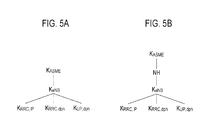
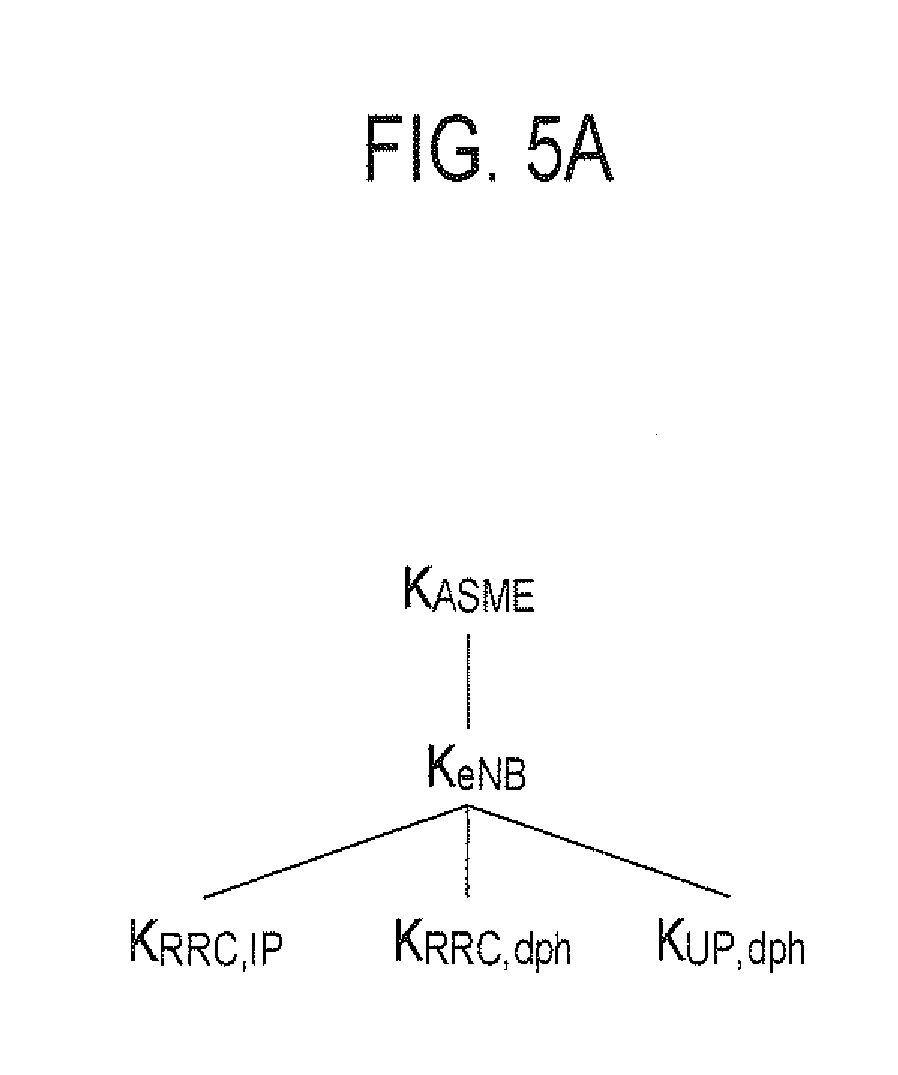
Fig. 5(a) shows a typical layer structure of keys used in the LTE system. Here, a key KASME is a key known only to an upper station MME and a mobile station UE, and is used for generating a base station key KeNB. - Note that, a layer structure of keys used in the LTE system may have a form as shown in
Fig. 5(b) , since generating a base station key KeNB requires a parameter called "NH (Next Hop)", which is generated from a key KASME. - Meanwhile, on a network side, a base station key KeNB is configured to be managed per mobile station UE by each radio base station eNB, and to be updated when the corresponding mobile station UE performs a handover.
- The base station key KeNB is also managed by the mobile station UE so that the mobile station UE performs communication with the radio base station eNB . Using the same base station key KeNB, the radio base station eNB and the mobile station UE can perform communication with security.
- Next, a brief description is given of a procedure for updating a base station key KeNB with reference to
Fig. 6 . - In Step (1), when setting up connection for a mobile station UE, an upper station MME generates a temporary initial key (KeNB) on the basis of a key KASME and a "NAS SN (a sequence number in NAS = Non Access Stratum)".
- In Step (2), the upper station MME notifies a radio base station eNB#1 of the temporary initial key (KeNB) as an intermediate key KeNB*. In Step (3), the radio base station eNB#1 stores the received intermediate key KeNB* without changing it as a base station key KeNB.
- In Steep (11), the upper station MME also generates a parameter NH* on the basis of the key KASME and the temporary initial key (KeNB), and notifies the radio base station eNB#1 of the parameter NH*.
- In Step (12), the radio base station eNB#1 stores the received parameter NH* without changing it as a parameter NH.
- Consider a case where the mobile station UE thereafter performs a handover from a
cell # 1 under the control of the radio base station eNB#1 to acell # 2 under the control of a radio base station eNB#2. In this case, the radio base station eNB#1 generates an intermediate key KeNB* in Step (4) by inputting the current base station key KeNB and the PCI (Physical Cell ID) of thecell # 2 into a first function, more concretely, on the basis of the first function (key derivation function) = KDF (KeNB, PCI) , and notifies the radio base station eNB#2 of the intermediate key KeNB*. - Alternatively, the radio base station eNB#1 generates an intermediate key KeNB* in Step (13) by inputting the current parameter NH and the PCI of the
cell # 2 into a first function, more concretely, on the basis of the first function (key derivation function) = KDF (NH, PCI) , and notifies the radio base station eNB#2 of the intermediate key KeNB*, when the mobile station UE performs a handover from thecell # 1 under the control of the radio base station eNB#1 to thecell # 2 under the control of the radio base station eNB#2. - In such calculation processing for the intermediate key KeNB*, the key is updated on the basis of the PCI. The operation for updating the key on the basis of the PCI as described above is called a "PCI binding".
- Here, the radio base station eNB#1 also notifies the radio base station eNB#2 of an "index increase identifier (Index increase indicator) " indicating which of KDF (KeNB, PCI) and KDF (NH, PCI) is used as a basis for generating the intermediate key KeNB*.
- The radio base station eNB#2 having received the intermediate key KeNB* judges whether or not to perform a "C-RNTI binding" for the intermediate key KeNB*, on the basis of the "index increase identifier".
- Specifically, if the radio base station eNB#2 recognizes from the "index increase identifier" that the intermediate key KeNB* is generated on the basis of KDF (KeNB, PCI) , the radio base station eNB#2 generates a base station key KeNB in Step (5) by inputting the intermediate key KeNB* and a mobile station identifier C-RNTI into a second function, more concretely, on the basis of KDF (KeNB*, C-RNTI). Here, the mobile station identifier C-RNTI is allocated temporarily to the mobile station UE in the
cell # 2. - On the other hand, if the radio base station eNB#2 recognizes from the "index increase identifier" that the intermediate key KeNB* is generated on the basis of a current parameter NH, the radio base station eNB#2 sets the received intermediate key KeNB* as a base station key KeNB in Step (14) .
- Note that, the radio base station eNB#2 acquires a parameter NH newly from the upper station MME, when the upper station MME performs a "Path Switch", in preparation for a next handover for the mobile station UE.
- Moreover, the radio base station eNB#1 notifies the mobile station UE of a parameter NCC (NH Chaining Count) through a handover command signal (Handover Command). Here, the parameter NCC indicates a number for the current parameter NH.
- The mobile station UE updates a current base station key KeNB[m] with the following formulae to acquire a base station key KeNB[m+1] if the received parameter NCC is the same as the NCC held in itself.
-


- On the other hand, if the received parameter NCC is larger than the NCC held in the mobile station UE, the mobile station UE repeats calculation with the following formulae and updates the parameter NH until the NCC held in itself becomes equal to the received parameter NCC. The mobile station UE increments by one the NCC held in itself in every calculation with the following formulae:
-


- Meanwhile, when a handover fails for some reasons or when a problem with a radio link (Radio Link Failure) occurs during communication, the communication can be restored by the execution of reconnection control.
- In order for the LTE system to succeed in the reconnection control, a radio base station eNB, to which the reconnection is to be performed, needs to hold beforehand the context of the mobile station UE (UE context). The LTE system thus can perform a "handover preparation process (HO Preparation)" on multiple neighbor cells.
- The reason why the handover-source radio base station performs a "PCI binding" here is to ensure as much as possible the uniqueness of an intermediate key KeNB* in multiple cells in the execution of a "handover preparation process (HO Preparation)" on the cells and thereby to improve the security in the mobile communication system.
- The use of the same intermediate key KeNB* for multiple cells in a handover preparation process accidentally allows radio base stations eNB having the intermediate key KeNB* to derive a base station key KeNB to be used by a handover-target radio base station eNB for communication with the mobile station UE. This makes the network vulnerable in terms of security.
- In a case of performing a "handover preparation process" on cells of the same frequency with the aforementioned method, the uniqueness of an intermediate key KeNB* can be ensured in the cells since a PCI is geographically unique.
- To be more specific, consider a case shown in
Fig. 7 where the same frequency is used in a handover-target cell under the control of a handover-target radio base station (Target eNB) and a preparation cell under the control of a radio base station targeted for a handover preparation process (Prepared eNB). In this case, the PCI of the handover-target cell under the control of the handover-target radio base station is different from the PCI of the preparation cell under the control of the radio base station targeted for a handover preparation process. For this reason, when a handover-source radio base station generates an intermediate key KeNB*1 by using the PCI of the handover-target cell under the control of the handover-target radio base station and generates an intermediate key KeNS*2 by using the PCI of the preparation cell under the control of the radio base station targeted for a handover preparation process, the intermediate key KeNB*1 turns out to be different from the intermediate key KeNB*2. - In a case of performing a "handover preparation process" on cells of different frequencies, however, a problem arises in that the uniqueness of an intermediate key KeNB* is less likely to be ensured, since cells having different frequencies and using the same PCI may exist neighboring to each other in some cases.
- The present invention is therefore made in view of the aforementioned problem. An object of the present invention is to provide a mobile communication method, a radio base station, and a mobile station which allow ensuring the uniqueness of an intermediate key KeNB* in the execution of a "handover preparation process (HO Preparation)" on multiple cells, regardless of frequencies of the cells.
- A first aspect of the present invention is summarized as a mobile communication method of performing a handover process for allowing a mobile station to perform a handover from a handover-source cell under control of a handover-source radio base station to a handover-target cell under control of a handover-target radio base station, the method including the steps of: (A) generating, at the handover-source radio base station, an intermediate key, by inputting, into a first function, a base station key which is necessary for generating a key for communication of the mobile station in the handover-source cell, identification information of the handover-target cell, and identification information of a frequency for the handover-target cell; and transmitting, from the handover-source radio base station to the handover-target radio base station, the intermediate key, in the handover process; and (B) generating, at the handover-target radio base station, a base station key, on the basis of the intermediate key in the handover process, the base station key being necessary for generating a key for communication of the mobile station in the handover-target cell.
- In the first aspect, in the step (B), the handover-target radio base station can generate the base station key necessary for generating the key for communication of the mobile station in the handover-target cell, by inputting, into a second function, a mobile station identifier temporarily allocated to the mobile station UE in the handover-target cell and the intermediate key.
- A second aspect of the present invention is summarized as a mobile communication method of performing a handover process for allowing a mobile station to perform a handover from a handover-source cell under control of a handover-source radio base station to a handover-target cell under control of a handover-target radio base station, the method including the steps of: generating, at the handover-source radio base station, an intermediate key, by inputting, into a first function, a parameter notified by an upper station, identification information of the handover-target cell, and identification information of a frequency for the handover-target cell; and transmitting, from the handover-source radio base station to the handover-target radio base station, the intermediate key, in the handover process; and generating, at the handover-target radio base station, a base station key, on the basis of the intermediate key in the handover process, the base station key being necessary for generating a key for communication of the mobile station in the handover-target cell.
- A third aspect of the present invention is summarized as a radio base station capable of serving as a handover-source radio base station in a mobile communication method in which a handover process is performed for allowing a mobile station to perform a handover from a handover-source cell under control of the handover-source radio base station to a handover-target cell under control of a handover-target radio base station, wherein the radio base station is configured to generate an intermediate key, by inputting, into a first function, a base station key which is necessary for generating a key for communication of the mobile station in the handover-source cell, identification information of the handover-target cell, and identification information of a frequency for the handover-target cell; and to transmit, to the handover-target radio base station, the intermediate key, in the handover process.
- A fourth aspect of the present invention is summarized as a radio base station capable of serving as a handover-source radio base station in a mobile communication method in which a handover process is performed for allowing a mobile station to perform a handover from a handover-source cell under control of the handover-source radio base station to a handover-target cell under control of a handover-target radio base station, wherein the radio base station is configured to generate an intermediate key, by inputting, into a first function, a parameter notified by an upper station, identification information of the handover-target cell, and identification information of a frequency for the handover-target cell; and to transmit, to the handover-target radio base station, the intermediate key, in the handover process.
- A fifth aspect of the present invention is summarized as a mobile station configured to perform a handover process for performing a handover from a handover-source cell under control of a handover-source radio base station to a handover-target cell under control of a handover-target radio base station, wherein the mobile station is configured to generate an intermediate key, by inputting, into a first function, a base station key which is necessary for generating a key for communication of the mobile station in the handover-source cell, identification information of the handover-target cell, and identification information of a frequency for the handover-target cell, in the handover-target cell; and the mobile station is configured to generate a base station key, on the basis of the intermediate key in the handover process, the base station key being necessary for generating a key for communication of the mobile station in the handover-target cell.
- In the fifth aspect, the mobile station can generate the base station key necessary for generating the key for communication of the mobile station in the handover-target cell, by inputting, into a second function, a mobile station identifier temporarily allocated to the mobile station UE in the handover-target cell and the intermediate key.
- A sixth aspect of the present invention is summarized as a mobile station configured to perform a handover process for performing a handover from a handover-source cell under control of a handover-source radio base station to a handover-target cell under control of a handover-target radio base station, wherein the mobile station is configured to generate an intermediate key, by inputting, into a first function, a parameter notified by an upper station, identification information of the handover-target cell, and identification information of a frequency for the handover-target cell, in the handover-target cell; and the mobile station is configured to generate a base station key, on the basis of the intermediate key in the handover process, the base station key being necessary for generating a key for communication of the mobile station in the handover-target cell.
- In the sixth aspect, the mobile station can generate the base station key necessary for generating the key for communication of the mobile station in the handover-target cell, by inputting, into a second function, a mobile station identifier temporarily allocated to the mobile station UE in the handover-target cell and the intermediate key.
- As described above, the present invention can provide a mobile communication method, a radio base station, and a mobile station which allow ensuring the uniqueness of an intermediate key KeNB* in the execution of a "handover preparation process (HO Preparation) " on multiple cells, regardless of frequencies of the cells.
-
- [
Fig. 1] Fig. 1 is an overall configurational view of a mobile communication system according to a first embodiment of the present invention. - [
Fig. 2] Fig. 2 is a functional block diagram of a mobile station according to the first embodiment of the present invention. - [
Fig. 3] Fig. 3 is a functional block diagram of radio base stations (a handover-source radio base station and a handover-target radio base station) according to the first embodiment of the present invention. - [
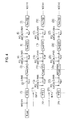
Fig. 4] Fig. 4 is a diagram for explaining how a key KeNB is updated in the mobile communication system according to the first embodiment of the present invention. - [
Fig. 5] Fig. 5 is a diagram illustrating layer models for keys in a mobile communication system defined in the 3GPP. - [
Fig. 6] Fig. 6 is a diagram illustrating how a key KeNB is updated in the mobile communication system defined in the 3GPP. - [
Fig. 7] Fig. 7 is a diagram for explaining a problem in a conventional mobile communication system. - A mobile communication system according to a first embodiment of the present invention is described with reference to
Figs. 1 to 4 . - As shown in
Fig. 1 , the mobile communication system according to this embodiment is a mobile communication system of the LTE system, and includes a serving gateway apparatus S-GW (Serivng Gateway), an upper station MME (Mobility Management Entity), and multiple radio basestations eNB# 1 and #2. - The serving gateway apparatus S-GW is an entity performing routing in the U-plane (routing of user packets), and MME is a network entity in charge of control in the C-plane (such as authentication control, location registration control, and transmission/reception control).
- Note that, as shown in
Fig. 1 , the mobile communication system according to this embodiment describes an example of a case where a handover process is performed for allowing a mobile station UE to perform a handover from a cell (handover-source cell) #1 under the control of the radio basestation eNB# 1 which is a handover-source radio base station (Source eNB) to a cell (handover-target cell) #2 under the control of the radio basestation eNB# 2 which is a handover-target radio base station. - Here, the handover-
source cell # 1 and the handover-target cell # 2 may have the same frequency or different frequencies. - It should be noted that, when the handover-
source cell # 1 and the handover-target cell # 2 have the same frequency, the handover-source cell # 1 and the handover-target cell # 2 are to have different PCIs; when the handover-source cell # 1 and the handover-target cell # 2 have different frequencies, the handover-source cell # 1 and the handover-target cell # 2 may have the same PCI or different PCIs. - This is due to the following reason. A PCI is an identifier on which scrambling of a radio channel and the like depend. Accordingly, if cells using the same frequency and the same PCI exist neighboring to each other, interference occurs and thus causes trouble in normal communication.
- Thus, in order for the mobile communication system to function normally as a cellular system, a PCI needs to be geographically unique in cells of the same frequency. It is not problematic for cells using the same PCI to exist geographically neighboring to each other as long as the cells have different frequencies.
- As shown in
Fig. 2 , a mobile station UE according to this embodiment includes aparameter acquiring unit 11 and akey updating unit 12. - The
parameter acquiring unit 11 is configured to acquire parameters necessary for key update from the handover-source radio base station and the handover-target radio base station, in the handover process for the mobile station UE. - For example, the
parameter acquiring unit 11 is configured to acquire, as the aforementioned parameters: an "NCC"; a "PCI" which is identification information of the handover-target cell; an "ARFCN" which is identification information of a frequency for the handover-target cell; a "C-RNTI" which is a mobile station identifier temporarily allocated to the mobile station UE in the handover-target cell; and the like. - Note that, in the LTE system, the ARFCN (Absolute Radio Frequency Code Number) is called an "EARFCN (E-UTRA ARFCN)".
- The
key updating unit 12 is configured to update a base station key KeNB which is necessary for generating keys necessary for generating a key for communication of the mobile station UE in the handover-source cell #1 (such as a key KRRC,ciph, a key KRRc,IP, and a key KUP,ciph), to a base station key KeNB which is necessary for generating keys necessary for generating a key for communication of the mobile station UE in the handover-target cell # 2, in the handover process for the mobile station UE. - Specifically, first of all, the
key updating unit 12 is configured to generate an intermediate key KeNB* in a case where the received parameter NCC is the same as the NCC held in the mobile station UE, in the handover process for the mobile station UE. Thekey updating unit 12 is configured to generate the intermediate key KeNB*, by inputting, into a first function KDF (*), a base station key KeNB [m] [n] which is necessary for generating a key for communication of the mobile station UE in the handover-source cell # 1, the PCI of the handover-target cell # 2, and the ARFCN of a frequency for the handover-target cell # 2. - Secondly, the
key updating unit 12 is configured to generate a base station key KeNB [m] [n+1] which is necessary for generating keys for communication of the mobile station UE in the handover-target cell # 2, by inputting the mobile station identifier C-RNTI and the intermediate key KeNB* into a second function KDF (*) , the mobile station identifier C-RNTI temporarily allocated to the mobile station UE in the handover-target cell # 2. - For example, the
key updating unit 12 is configured to update the base station key KeNB by the following formulae: -


On the other hand, if the received parameter NCC is larger than the NCC held in the mobile station UE, the mobile station UE is configured to repeat calculation with the following formulae, and to update a parameter NH, until the NCC held in itself becomes equal to the received parameter NCC. The mobile station UE is configured to increment by one the NCC held in itself in every calculation with the following formulae: -


key updating unit 12 is configured to thereafter generate an intermediate key KeNs* by inputting, into the first function KDF (*), the parameter NH[m+1] notified by the upper station MME, the identification information PCI of the handover-target cell # 2, and the identification information ARFCN of the frequency for the handover-target cell # 2. - The
key updating unit 12 is configured to then set the intermediate key KeNB* as a base station key KeNB [m+1] [0] which is necessary for generating keys for communication of the mobile station UE in the handover-target cell # 2. - As shown in
Fig. 3 , the radio basestation eNB# 1 serving as the handover-source radio base station (Source eNB) includes ahandover processor unit 21, an MME interface (may also be called an S1 interface) 22, an eNB interface (may also be called an X2 interface) 23, and aUE interface 24. - The
handover processor unit 21 is configured to acquire a parameter NH* from the upper station MME through theMME interface 22, in the handover process for the mobile station UE. - Moreover, the
handover processor unit 21 is configured to acquire an initial parameter NH[0] from the upper station MME through theMME interface 22, in the connection setup for the mobile station UE. - Further, the
handover processor unit 21 is configured to notify, to the radio basestation eNB# 2 serving as the handover-target radio base station (Target eNB), an intermediate key KeNB*, a NCC, and an index increase identifier, through theeNB interface 23. - Furthermore, the
handover processor unit 21 is configured to notify, to the mobile station UE, the NCC, and the PCI and ARFCN of the handover-target cell # 2, through theUE interface 24. - Meanwhile, the radio base
station eNB# 2 serving as the handover-target radio base station (Targert eNB) includes ahandover processor unit 31, aneNB interface 32, akey generator unit 33, and aUE interface 34. - The
key generator unit 33 is configured to generate a base station key KeNB which is necessary for generating of keys for communication of the mobile station UE in thehandover cell # 2, on the basis of the intermediate key KeNB*, the NCC, the index increase identifier and a C-RNTI. The intermediate key KeNB*, the NCC, and the index increase identifier are received through theeNB interface 32, and the C-RNTI is received from thehandover processor unit 31 and allocated to the mobile station UE in thehandover cell # 2. - Hereinafter, with reference to
Fig. 4 , a description is given of how a base station key KeNB is updated when the mobile station UE performs a handover from thecell # 1 under the control of the radio basestation eNB# 1 to thecell # 2 under the control of the radio basestation eNB# 2. - In Step (1), when setting up connection for the mobile station UE, the upper station MME generates an initial parameter NH[0] on the basis of a key KASME and a "NAS SN (a sequence number in NAS)".
- In Step (2), the upper station MME notifies the radio base
station eNB# 1 of the initial parameter NH [0] as an intermediate key KeNB*. In Step (3), the radio basestation eNB# 1 stores the received intermediate key KeNB* without changing it as a base station key KeNB [0] [0] . - In Step (11), the upper station MME also generates a parameter NH* on the basis of the key KASME and the initial parameter NH [0], and notifies the radio base
station eNB# 1 of the parameter NH*. - In Step (12), the radio base
station eNB# 1 stores the received parameter NH* without changing it as a parameter NH [1] . - Consider a case where the mobile station UE thereafter performs a handover from the
cell # 1 under the control of the radio basestation eNB# 1 to thecell # 2 under the control of the radio basestation eNB# 2. In this case, the radio basestation eNB# 1 generates an intermediate key KeNB* in Step (4) by inputting the current base station key KeNB[0] [0], the PCI of thecell # 2, and the identification information ARFCN of a frequency for thecell # 2 into a first function KDF (*), more concretely, on the basis of KDF (KeNB [0] (0), PCI, ARFCN) , and notifies the radio basestation eNB# 2 of the intermediate key KeNB*. - In other words, the operation for updating the key using the frequency identification information ARFCN, i.e., an "ARFCN binding" is performed.
- In a case where the handover for the mobile station UE described above is a handover between cells under the control of the same radio base station eNB (Intra-eNB Handover), for example, the radio base
station eNB# 1 generates an intermediate key KeNB* on the basis of KDF (KeNB[0] (0), PCI, ARFCN) , as described above. In this case, the radio basestation eNB# 1 and the handover-target radio basestation eNB# 2 are the same. - Alternatively, the radio base
station eNB# 1 may generate an intermediate key KeNB* in Step (13) by inputting the current parameter NH [1] , the PCI of thecell # 2, and the identification information ARFCN of the frequency for thecell # 2 into the first function KDF (*) , more concretely, on the basis of KDF (NH [1] , PCI, ARFCN), and notify the radio basestation eNB# 2 of the intermediate key KeNB*, when the mobile station UE performs a handover from thecell # 1 under the control of the radio basestation eNB# 1 to thecell # 2 under the control of the radio basestation eNB# 2 different from the radio basestation eNB# 1. - In a case where the handover for the mobile station UE described above is a handover between cells under the control of different radio base stations eNB (Inter-eNB Handover), for example, the radio base
station eNB# 1 generates an intermediate key KeNB* on the basis of KDF (NH[1], PCI, ARFCN) , as described above. - Specifically, if the radio base
station eNB# 2 recognizes from the "index increase identifier", which is notified by the radio basestation eNB# 1, that the intermediate key KeNB* is generated on the basis of KDF (KeNB[0] (0), PCI, ARFCN) , the radio basestation eNB# 2 generates a base station key KeNB[0] (1) in Step (5) by inputting the intermediate key KeNB* and the mobile station identifier C-RNTI, which is allocated temporarily to the mobile station UE in thecell # 2, into a second function KDF (*), more concretely, on the basis of KDF (KeNB*, C-RNTI) . - On the other hand, if the radio base
station eNB# 2 recognizes from the "index increase identifier", which is notified by the radio basestation eNB# 1, that the intermediate key KeNB* is generated on the basis of the current parameter NH [1], the radio basestation eNB# 2 generates a base station key KeNB[1] (0) in Step (14) by inputting the intermediate key KeNB* and the mobile station identifier C-RNTI, which is allocated temporarily to the mobile station UE in thecell # 2, into the second function KDF (*), more concretely, on the basis of KDF (KeNB*, C-RNTI). - Note that, the first function and the second function may be the same function or different functions as long as they are known to both the radio base station eNB and the mobile station UE.
- Further, the "PCI binding" and "ARFCN binding" in Step (4) and Step (13) may be performed by the radio base
station eNB# 2 which is the handover-target radio base station instead of being performed by the radio basestation eNB# 1 which is the handover-source radio base station. - Furthermore, the "C-RNTI binding" in Step (5) and Step (14) may be omitted.
- The mobile communication system according to the first embodiment of the present invention is configured in that the handover-source radio base station generates an intermediate key KeNB* by using not only the PCI of the handover-target cell (or a cell targeted for a handover preparation process) but also the identification information ARFCN of a frequency for the handover-target cell (or the cell targeted for the handover preparation process). This allows the mobile communication system according to the first embodiment of the present invention to ensure the uniqueness of the intermediate key KeNB* in the execution of the "handover preparation process" on multiple cells.
- Note that operation of the above described mobile station UE and the radio base station eNB may be implemented by means of hardware, a software module executed by a processor, or a combination of both.
- The software module may be provided in any type of storage medium such as an RAM (Random Access Memory), a flash memory, a ROM (Read Only Memory) , an EPROM (Erasable Programmable ROM), an EEPROM (Electronically Erasable and Programmable ROM), a register, a hard disk, a removable disk, or a CD-ROM.
- The storage medium is connected to the processor so that the processor can read and write information from and to the storage medium. Also, the storage medium may be integrated into the processor. Also, the storage medium and the processor may be provided in an ASIC. The ASIC may be provided in the mobile station UE and the radio base station eNB. Also, the storage medium and the processor may be provided in the mobile station UE and the radio base station eNB as a discrete component.
- Hereinabove, the present invention has been described in detail using the above embodiment; however, it is apparent to those skilled in the art that the present invention is not limited to the embodiment described herein. Modifications and variations of the present invention can be made without departing from the spirit and scope of the present invention defined by the description of the scope of claims. Thus, what is described herein is for illustrative purpose, and has no intention whatsoever to limit the present invention.
-
- UE
- MOBILE STATION
- 11
- PARAMETER ACQUIRING UNIT
- 12
- KEY UPDATING UNIT
- Sorce eNB
- HANDOVER-SOURCE RADIO BASE STATION
- 21, 31
- HANDOVER PROCESSOR UNIT
- 22
- MME INTERFACE
- 23, 32
- eNB INTERFACE
- 24, 34
- UE INTERFACE
- Target eNB
- HANDOVER-TARGET RADIO BASE STATION
- 33
- KEY GENERATOR UNIT
Claims (10)
- A mobile communication method of performing a handover process for allowing a mobile station to perform a handover from a handover-source cell under control of a handover-source radio base station to a handover-target cell under control of a handover-target radio base station, the method comprising the steps of:(A) generating, at the handover-source radio base station, an intermediate key, by inputting, into a first function, a base station key which is necessary for generating a key for communication of the mobile station in the handover-source cell, identification information of the handover-target cell, and identification information of a frequency for the handover-target cell; and transmitting, from the handover-source radio base station to the handover-target radio base station, the intermediate key, in the handover process; and(B) generating, at the handover-target radio base station, a base station key, on the basis of the intermediate key in the handover process, the base station key being necessary for generating a key for communication of the mobile station in the handover-target cell.
- The mobile communication method according to claim 1, wherein
in the step (B), the handover-target radio base station sets the intermediate key as the base station key in the handover process. - A mobile communication method of performing a handover process for allowing a mobile station to perform a handover from a handover-source cell under control of a handover-source radio base station to a handover-target cell under control of a handover-target radio base station, the method comprising the steps of:(A) generating, at the handover-source radio base station, an intermediate key, by inputting, into a first function, a parameter notified by an upper station, identification information of the handover-target cell, and identification information of a frequency for the handover-target cell; and transmitting, from the handover-source radio base station to the handover-target radio base station, the intermediate key, in the handover process; and(B) generating, at the handover-target radio base station, a base station key, on the basis of the intermediate key in the handover process, the base station key being necessary for generating a key for communication of the mobile station in the handover-target cell.
- The mobile communication method according to claim 3, wherein
in the step (B), the handover-target radio base station sets the intermediate key as the base station key in the handover process. - A radio base station capable of serving as a handover-source radio base station in a mobile communication method in which a handover process is performed for allowing a mobile station to perform a handover from a handover-source cell under control of the handover-source radio base station to a handover-target cell under control of a handover-target radio base station, wherein
the radio base station is configured to generate an intermediate key, by inputting, into a first function, a base station key which is necessary for generating a key for communication of the mobile station in the handover-source cell, identification information of the handover-target cell, and identification information of a frequency for the handover-target cell; and to transmit, to the handover-target radio base station, the intermediate key, in the handover process. - A radio base station capable of serving as a handover-source radio base station in a mobile communication method in which a handover process is performed for allowing a mobile station to perform a handover from a handover-source cell under control of the handover-source radio base station to a handover-target cell under control of a handover-target radio base station, wherein
the radio base station is configured to generate an intermediate key, by inputting, into a first function, a parameter notified by an upper station, identification information of the handover-target cell, and identification information of a frequency for the handover-target cell; and to transmit, to the handover-target radio base station, the intermediate key, in the handover process. - A mobile station configured to perform a handover process for performing a handover from a handover-source cell under control of a handover-source radio base station to a handover-target cell under control of a handover-target radio base station, wherein
the mobile station is configured to generate an intermediate key, by inputting, into a first function, a base station key which is necessary for generating a key for communication of the mobile station in the handover-source cell, identification information of the handover-target cell, and identification information of a frequency for the handover-target cell, in the handover-target cell; and
the mobile station is configured to generate a base station key, on the basis of the intermediate key in the handover process, the base station key being necessary for generating a key for communication of the mobile station in the handover-target cell. - The mobile station according to claim 7, wherein
the mobile station is configured to set the intermediate key as the base station key in the handover process. - A mobile communication method of performing a handover process for allowing a mobile station to perform a handover from a handover-source cell under control of a handover-source radio base station to a handover-target cell under control of a handover-target radio base station, the method comprising the steps of:(A) generating, at the handover-target radio base station, an intermediate key, by inputting, into a first function, a parameter notified by an upper station, identification information of the handover-target cell, and identification information of a frequency for the handover-target cell, in the handover process; and(B) generating, at the handover-target radio base station, a base station key on the basis of the intermediate key in the handover process, the base station key being necessary for generating a key for communication of the mobile station in the handover-target cell.
- The mobile communication method according to claim 9, wherein
in the step (B) , the handover-target radio base station sets the intermediate key as the base station key in the handover process.
Applications Claiming Priority (2)
| Application Number | Priority Date | Filing Date | Title |
|---|---|---|---|
| JP2008209386A JP4390842B1 (en) | 2008-08-15 | 2008-08-15 | Mobile communication method, radio base station, and mobile station |
| PCT/JP2009/064340 WO2010018865A1 (en) | 2008-08-15 | 2009-08-14 | Mobile communication method, radio base station, and mobile station |
Publications (3)
| Publication Number | Publication Date |
|---|---|
| EP2271143A1 true EP2271143A1 (en) | 2011-01-05 |
| EP2271143A4 EP2271143A4 (en) | 2011-07-06 |
| EP2271143B1 EP2271143B1 (en) | 2012-07-25 |
Family
ID=41549843
Family Applications (1)
| Application Number | Title | Priority Date | Filing Date |
|---|---|---|---|
| EP09806756A Active EP2271143B1 (en) | 2008-08-15 | 2009-08-14 | Mobile communication method, radio base station, and mobile station |
Country Status (9)
| Country | Link |
|---|---|
| US (1) | US8072939B2 (en) |
| EP (1) | EP2271143B1 (en) |
| JP (1) | JP4390842B1 (en) |
| KR (1) | KR101040068B1 (en) |
| CN (1) | CN102017674B (en) |
| BR (1) | BRPI0912603A2 (en) |
| ES (1) | ES2390190T3 (en) |
| RU (1) | RU2459380C2 (en) |
| WO (1) | WO2010018865A1 (en) |
Cited By (2)
| Publication number | Priority date | Publication date | Assignee | Title |
|---|---|---|---|---|
| US9602276B2 (en) | 2010-06-11 | 2017-03-21 | Qualcomm Incorporated | Method and apparatus for virtual pairing with a group of semi-connected devices |
| CN112385266A (en) * | 2018-07-09 | 2021-02-19 | 华为技术有限公司 | Communication method, device and system |
Families Citing this family (12)
| Publication number | Priority date | Publication date | Assignee | Title |
|---|---|---|---|---|
| JP4505528B2 (en) * | 2008-09-22 | 2010-07-21 | 株式会社エヌ・ティ・ティ・ドコモ | Mobile communication method |
| CN101835152A (en) * | 2010-04-16 | 2010-09-15 | 中兴通讯股份有限公司 | Method and system for establishing reinforced secret key when terminal moves to reinforced UTRAN (Universal Terrestrial Radio Access Network) |
| WO2012147270A1 (en) * | 2011-04-28 | 2012-11-01 | Panasonic Corporation | Communication system, mobile terminal, router, and mobility management entity |
| JP6309543B2 (en) * | 2013-01-09 | 2018-04-11 | 株式会社Nttドコモ | Protected radio access by radio base station (inter-eNB) carrier aggregation |
| RU2747375C2 (en) | 2013-01-30 | 2021-05-04 | Телефонактиеболагет Л М Эрикссон (Пабл) | Generating a security key for dual connection |
| WO2014161678A1 (en) * | 2013-04-05 | 2014-10-09 | Nokia Solutions And Networks Oy | Avoid key mismatch in security handling for multi frequency band |
| US9549350B2 (en) | 2013-04-15 | 2017-01-17 | Nokia Solutions And Networks Oy | Methods and apparatus for handover management |
| US20140335861A1 (en) * | 2013-05-08 | 2014-11-13 | Nokia Siemens Networks Oy | Methods and Apparatus for Handover Management |
| CN104768152B (en) * | 2014-01-02 | 2018-11-23 | 中国移动通信集团公司 | Key generation method, apparatus and system when a kind of Dual base stations data distribution |
| WO2017166247A1 (en) * | 2016-03-31 | 2017-10-05 | 华为技术有限公司 | Communication method, network-side device, and user terminal |
| CN109874139B (en) | 2017-05-05 | 2020-02-07 | 华为技术有限公司 | Anchor key generation method, device and system |
| US11071021B2 (en) * | 2017-07-28 | 2021-07-20 | Qualcomm Incorporated | Security key derivation for handover |
Family Cites Families (9)
| Publication number | Priority date | Publication date | Assignee | Title |
|---|---|---|---|---|
| US7257836B1 (en) * | 2000-04-24 | 2007-08-14 | Microsoft Corporation | Security link management in dynamic networks |
| WO2002082715A1 (en) * | 2001-04-03 | 2002-10-17 | Mitsubishi Denki Kabushiki Kaisha | Encrypting device |
| US20050176431A1 (en) * | 2004-02-11 | 2005-08-11 | Telefonaktiebolaget L M Ericsson (Publ) | Method for handling key sets during handover |
| KR100689575B1 (en) * | 2004-06-11 | 2007-03-02 | 삼성전자주식회사 | High Speed Network Reentry System and Method in Broadband Wireless Access Communication System |
| US7706800B2 (en) * | 2005-12-28 | 2010-04-27 | Intel Corporation | System, apparatus and method of hand over in wireless communication system |
| EP2005780A2 (en) * | 2006-03-27 | 2008-12-24 | Nokia Corporation | Apparatus, method and computer program product providing unified reactive and proactive handovers |
| JP4804983B2 (en) | 2006-03-29 | 2011-11-02 | 富士通株式会社 | Wireless terminal, authentication device, and program |
| EP2028890B1 (en) * | 2007-08-12 | 2019-01-02 | LG Electronics Inc. | Handover method with link failure recovery, wireless device and base station for implementing such method |
| US20090209259A1 (en) * | 2008-02-15 | 2009-08-20 | Alec Brusilovsky | System and method for performing handovers, or key management while performing handovers in a wireless communication system |
-
2008
- 2008-08-15 JP JP2008209386A patent/JP4390842B1/en active Active
-
2009
- 2009-08-14 KR KR1020107023559A patent/KR101040068B1/en not_active Expired - Fee Related
- 2009-08-14 CN CN2009801164720A patent/CN102017674B/en active Active
- 2009-08-14 US US12/988,649 patent/US8072939B2/en active Active
- 2009-08-14 WO PCT/JP2009/064340 patent/WO2010018865A1/en not_active Ceased
- 2009-08-14 EP EP09806756A patent/EP2271143B1/en active Active
- 2009-08-14 RU RU2010142986/07A patent/RU2459380C2/en not_active IP Right Cessation
- 2009-08-14 ES ES09806756T patent/ES2390190T3/en active Active
- 2009-08-14 BR BRPI0912603A patent/BRPI0912603A2/en not_active IP Right Cessation
Non-Patent Citations (2)
| Title |
|---|
| 3RD GENERATION PARTNERSHIP PROJECT: "3GPP TS 33.401 V8.3.1 (2009-03), 3rd Generation Partnership Project; Technical Specification Group Services and System Aspects; 3GPP System Architecture Evolution (SAE):Security Architecture; (Release 8)", 3GPP, [Online] 19 March 2009 (2009-03-19), pages 1-61, XP002634372, Retrieved from the Internet: URL:http://www.3gpp.org/ftp/specs/html-info/33401.htm> [retrieved on 2011-04-26] * |
| See also references of WO2010018865A1 * |
Cited By (3)
| Publication number | Priority date | Publication date | Assignee | Title |
|---|---|---|---|---|
| US9602276B2 (en) | 2010-06-11 | 2017-03-21 | Qualcomm Incorporated | Method and apparatus for virtual pairing with a group of semi-connected devices |
| CN112385266A (en) * | 2018-07-09 | 2021-02-19 | 华为技术有限公司 | Communication method, device and system |
| CN112385266B (en) * | 2018-07-09 | 2022-06-14 | 华为技术有限公司 | Communication method, device and system |
Also Published As
| Publication number | Publication date |
|---|---|
| EP2271143A4 (en) | 2011-07-06 |
| US8072939B2 (en) | 2011-12-06 |
| EP2271143B1 (en) | 2012-07-25 |
| RU2010142986A (en) | 2012-06-27 |
| KR20100126540A (en) | 2010-12-01 |
| RU2459380C2 (en) | 2012-08-20 |
| US20110128937A1 (en) | 2011-06-02 |
| WO2010018865A1 (en) | 2010-02-18 |
| JP4390842B1 (en) | 2009-12-24 |
| CN102017674A (en) | 2011-04-13 |
| JP2010045692A (en) | 2010-02-25 |
| ES2390190T3 (en) | 2012-11-07 |
| BRPI0912603A2 (en) | 2016-09-13 |
| CN102017674B (en) | 2013-03-20 |
| KR101040068B1 (en) | 2011-06-09 |
Similar Documents
| Publication | Publication Date | Title |
|---|---|---|
| EP2271143B1 (en) | Mobile communication method, radio base station, and mobile station | |
| US8229120B2 (en) | Mobile communication method | |
| US8213940B2 (en) | Mobile communication method and mobile station | |
| EP2266334B1 (en) | Methods, apparatuses, and computer program products for providing multi-hop cryptographic separation for handovers | |
| US8238916B2 (en) | Mobile communication method and mobile station | |
| CN110637451B (en) | Network node for use in a communication network, communication device and method of operating the same | |
| EP2996390B1 (en) | Mobile communication system | |
| WO2010119656A1 (en) | Wireless communication apparatus | |
| EP2548389B1 (en) | Enhanced key management for srns relocation | |
| JP5774096B2 (en) | Air interface key update method, core network node, and radio access system | |
| EP2109278A1 (en) | Method and apparatus for generating a new key | |
| CN101835151B (en) | The update method of air interface key and wireless access system | |
| US20160277924A1 (en) | Mobile communication method | |
| JP2010045815A (en) | Mobile communication method, radio base station, and mobile station | |
| KR20200084002A (en) | Information transmission method, network device and terminal device | |
| US20140024344A1 (en) | Mobile communication method, radio base station, mobile management node, and mobile station | |
| CN105165061A (en) | Handover method and wireless base station |
Legal Events
| Date | Code | Title | Description |
|---|---|---|---|
| PUAI | Public reference made under article 153(3) epc to a published international application that has entered the european phase |
Free format text: ORIGINAL CODE: 0009012 |
|
| 17P | Request for examination filed |
Effective date: 20101117 |
|
| AK | Designated contracting states |
Kind code of ref document: A1 Designated state(s): AT BE BG CH CY CZ DE DK EE ES FI FR GB GR HR HU IE IS IT LI LT LU LV MC MK MT NL NO PL PT RO SE SI SK SM TR |
|
| AX | Request for extension of the european patent |
Extension state: AL BA RS |
|
| A4 | Supplementary search report drawn up and despatched |
Effective date: 20110608 |
|
| DAX | Request for extension of the european patent (deleted) | ||
| REG | Reference to a national code |
Ref country code: DE Ref legal event code: R079 Ref document number: 602009008557 Country of ref document: DE Free format text: PREVIOUS MAIN CLASS: H04W0012040000 Ipc: H04W0036000000 |
|
| GRAP | Despatch of communication of intention to grant a patent |
Free format text: ORIGINAL CODE: EPIDOSNIGR1 |
|
| RIC1 | Information provided on ipc code assigned before grant |
Ipc: H04W 36/00 20090101AFI20120130BHEP Ipc: H04L 9/08 20060101ALN20120130BHEP |
|
| GRAS | Grant fee paid |
Free format text: ORIGINAL CODE: EPIDOSNIGR3 |
|
| GRAA | (expected) grant |
Free format text: ORIGINAL CODE: 0009210 |
|
| AK | Designated contracting states |
Kind code of ref document: B1 Designated state(s): AT BE BG CH CY CZ DE DK EE ES FI FR GB GR HR HU IE IS IT LI LT LU LV MC MK MT NL NO PL PT RO SE SI SK SM TR |
|
| REG | Reference to a national code |
Ref country code: GB Ref legal event code: FG4D |
|
| REG | Reference to a national code |
Ref country code: CH Ref legal event code: EP |
|
| REG | Reference to a national code |
Ref country code: AT Ref legal event code: REF Ref document number: 568132 Country of ref document: AT Kind code of ref document: T Effective date: 20120815 Ref country code: IE Ref legal event code: FG4D |
|
| REG | Reference to a national code |
Ref country code: DE Ref legal event code: R096 Ref document number: 602009008557 Country of ref document: DE Effective date: 20120920 |
|
| REG | Reference to a national code |
Ref country code: ES Ref legal event code: FG2A Ref document number: 2390190 Country of ref document: ES Kind code of ref document: T3 Effective date: 20121107 |
|
| REG | Reference to a national code |
Ref country code: NL Ref legal event code: T3 |
|
| REG | Reference to a national code |
Ref country code: LT Ref legal event code: MG4D Effective date: 20120725 |
|
| PG25 | Lapsed in a contracting state [announced via postgrant information from national office to epo] |
Ref country code: IS Free format text: LAPSE BECAUSE OF FAILURE TO SUBMIT A TRANSLATION OF THE DESCRIPTION OR TO PAY THE FEE WITHIN THE PRESCRIBED TIME-LIMIT Effective date: 20121125 Ref country code: HR Free format text: LAPSE BECAUSE OF FAILURE TO SUBMIT A TRANSLATION OF THE DESCRIPTION OR TO PAY THE FEE WITHIN THE PRESCRIBED TIME-LIMIT Effective date: 20120725 Ref country code: CY Free format text: LAPSE BECAUSE OF FAILURE TO SUBMIT A TRANSLATION OF THE DESCRIPTION OR TO PAY THE FEE WITHIN THE PRESCRIBED TIME-LIMIT Effective date: 20120725 Ref country code: LT Free format text: LAPSE BECAUSE OF FAILURE TO SUBMIT A TRANSLATION OF THE DESCRIPTION OR TO PAY THE FEE WITHIN THE PRESCRIBED TIME-LIMIT Effective date: 20120725 Ref country code: NO Free format text: LAPSE BECAUSE OF FAILURE TO SUBMIT A TRANSLATION OF THE DESCRIPTION OR TO PAY THE FEE WITHIN THE PRESCRIBED TIME-LIMIT Effective date: 20121025 Ref country code: BE Free format text: LAPSE BECAUSE OF FAILURE TO SUBMIT A TRANSLATION OF THE DESCRIPTION OR TO PAY THE FEE WITHIN THE PRESCRIBED TIME-LIMIT Effective date: 20120725 |
|
| PG25 | Lapsed in a contracting state [announced via postgrant information from national office to epo] |
Ref country code: PL Free format text: LAPSE BECAUSE OF FAILURE TO SUBMIT A TRANSLATION OF THE DESCRIPTION OR TO PAY THE FEE WITHIN THE PRESCRIBED TIME-LIMIT Effective date: 20120725 Ref country code: LV Free format text: LAPSE BECAUSE OF FAILURE TO SUBMIT A TRANSLATION OF THE DESCRIPTION OR TO PAY THE FEE WITHIN THE PRESCRIBED TIME-LIMIT Effective date: 20120725 Ref country code: PT Free format text: LAPSE BECAUSE OF FAILURE TO SUBMIT A TRANSLATION OF THE DESCRIPTION OR TO PAY THE FEE WITHIN THE PRESCRIBED TIME-LIMIT Effective date: 20121126 Ref country code: GR Free format text: LAPSE BECAUSE OF FAILURE TO SUBMIT A TRANSLATION OF THE DESCRIPTION OR TO PAY THE FEE WITHIN THE PRESCRIBED TIME-LIMIT Effective date: 20121026 Ref country code: SI Free format text: LAPSE BECAUSE OF FAILURE TO SUBMIT A TRANSLATION OF THE DESCRIPTION OR TO PAY THE FEE WITHIN THE PRESCRIBED TIME-LIMIT Effective date: 20120725 Ref country code: SE Free format text: LAPSE BECAUSE OF FAILURE TO SUBMIT A TRANSLATION OF THE DESCRIPTION OR TO PAY THE FEE WITHIN THE PRESCRIBED TIME-LIMIT Effective date: 20120725 |
|
| PG25 | Lapsed in a contracting state [announced via postgrant information from national office to epo] |
Ref country code: MC Free format text: LAPSE BECAUSE OF NON-PAYMENT OF DUE FEES Effective date: 20120831 |
|
| PG25 | Lapsed in a contracting state [announced via postgrant information from national office to epo] |
Ref country code: EE Free format text: LAPSE BECAUSE OF FAILURE TO SUBMIT A TRANSLATION OF THE DESCRIPTION OR TO PAY THE FEE WITHIN THE PRESCRIBED TIME-LIMIT Effective date: 20120725 Ref country code: DK Free format text: LAPSE BECAUSE OF FAILURE TO SUBMIT A TRANSLATION OF THE DESCRIPTION OR TO PAY THE FEE WITHIN THE PRESCRIBED TIME-LIMIT Effective date: 20120725 Ref country code: RO Free format text: LAPSE BECAUSE OF FAILURE TO SUBMIT A TRANSLATION OF THE DESCRIPTION OR TO PAY THE FEE WITHIN THE PRESCRIBED TIME-LIMIT Effective date: 20120725 |
|
| REG | Reference to a national code |
Ref country code: IE Ref legal event code: MM4A |
|
| PG25 | Lapsed in a contracting state [announced via postgrant information from national office to epo] |
Ref country code: SK Free format text: LAPSE BECAUSE OF FAILURE TO SUBMIT A TRANSLATION OF THE DESCRIPTION OR TO PAY THE FEE WITHIN THE PRESCRIBED TIME-LIMIT Effective date: 20120725 Ref country code: IT Free format text: LAPSE BECAUSE OF FAILURE TO SUBMIT A TRANSLATION OF THE DESCRIPTION OR TO PAY THE FEE WITHIN THE PRESCRIBED TIME-LIMIT Effective date: 20120725 |
|
| PLBE | No opposition filed within time limit |
Free format text: ORIGINAL CODE: 0009261 |
|
| STAA | Information on the status of an ep patent application or granted ep patent |
Free format text: STATUS: NO OPPOSITION FILED WITHIN TIME LIMIT |
|
| 26N | No opposition filed |
Effective date: 20130426 |
|
| REG | Reference to a national code |
Ref country code: FR Ref legal event code: ST Effective date: 20130607 |
|
| PG25 | Lapsed in a contracting state [announced via postgrant information from national office to epo] |
Ref country code: IE Free format text: LAPSE BECAUSE OF NON-PAYMENT OF DUE FEES Effective date: 20120814 Ref country code: BG Free format text: LAPSE BECAUSE OF FAILURE TO SUBMIT A TRANSLATION OF THE DESCRIPTION OR TO PAY THE FEE WITHIN THE PRESCRIBED TIME-LIMIT Effective date: 20121025 |
|
| REG | Reference to a national code |
Ref country code: DE Ref legal event code: R097 Ref document number: 602009008557 Country of ref document: DE Effective date: 20130426 |
|
| PG25 | Lapsed in a contracting state [announced via postgrant information from national office to epo] |
Ref country code: FR Free format text: LAPSE BECAUSE OF NON-PAYMENT OF DUE FEES Effective date: 20120925 |
|
| PG25 | Lapsed in a contracting state [announced via postgrant information from national office to epo] |
Ref country code: MT Free format text: LAPSE BECAUSE OF FAILURE TO SUBMIT A TRANSLATION OF THE DESCRIPTION OR TO PAY THE FEE WITHIN THE PRESCRIBED TIME-LIMIT Effective date: 20120725 |
|
| REG | Reference to a national code |
Ref country code: CH Ref legal event code: PL |
|
| PG25 | Lapsed in a contracting state [announced via postgrant information from national office to epo] |
Ref country code: CH Free format text: LAPSE BECAUSE OF NON-PAYMENT OF DUE FEES Effective date: 20130831 Ref country code: TR Free format text: LAPSE BECAUSE OF FAILURE TO SUBMIT A TRANSLATION OF THE DESCRIPTION OR TO PAY THE FEE WITHIN THE PRESCRIBED TIME-LIMIT Effective date: 20120725 Ref country code: LI Free format text: LAPSE BECAUSE OF NON-PAYMENT OF DUE FEES Effective date: 20130831 |
|
| PG25 | Lapsed in a contracting state [announced via postgrant information from national office to epo] |
Ref country code: LU Free format text: LAPSE BECAUSE OF NON-PAYMENT OF DUE FEES Effective date: 20120814 Ref country code: SM Free format text: LAPSE BECAUSE OF FAILURE TO SUBMIT A TRANSLATION OF THE DESCRIPTION OR TO PAY THE FEE WITHIN THE PRESCRIBED TIME-LIMIT Effective date: 20120725 |
|
| PG25 | Lapsed in a contracting state [announced via postgrant information from national office to epo] |
Ref country code: HU Free format text: LAPSE BECAUSE OF FAILURE TO SUBMIT A TRANSLATION OF THE DESCRIPTION OR TO PAY THE FEE WITHIN THE PRESCRIBED TIME-LIMIT Effective date: 20090814 |
|
| PG25 | Lapsed in a contracting state [announced via postgrant information from national office to epo] |
Ref country code: MK Free format text: LAPSE BECAUSE OF FAILURE TO SUBMIT A TRANSLATION OF THE DESCRIPTION OR TO PAY THE FEE WITHIN THE PRESCRIBED TIME-LIMIT Effective date: 20120725 |
|
| REG | Reference to a national code |
Ref country code: DE Ref legal event code: R008 Ref document number: 602009008557 Country of ref document: DE Ref country code: DE Ref legal event code: R039 Ref document number: 602009008557 Country of ref document: DE |
|
| REG | Reference to a national code |
Ref country code: DE Ref legal event code: R040 Ref document number: 602009008557 Country of ref document: DE Ref country code: DE Ref legal event code: R097 Ref document number: 602009008557 Country of ref document: DE |
|
| P01 | Opt-out of the competence of the unified patent court (upc) registered |
Effective date: 20230510 |
|
| PGFP | Annual fee paid to national office [announced via postgrant information from national office to epo] |
Ref country code: NL Payment date: 20250821 Year of fee payment: 17 |
|
| PGFP | Annual fee paid to national office [announced via postgrant information from national office to epo] |
Ref country code: FI Payment date: 20250822 Year of fee payment: 17 Ref country code: ES Payment date: 20250925 Year of fee payment: 17 |
|
| PGFP | Annual fee paid to national office [announced via postgrant information from national office to epo] |
Ref country code: DE Payment date: 20250820 Year of fee payment: 17 |
|
| PGFP | Annual fee paid to national office [announced via postgrant information from national office to epo] |
Ref country code: GB Payment date: 20250820 Year of fee payment: 17 |
|
| PGFP | Annual fee paid to national office [announced via postgrant information from national office to epo] |
Ref country code: AT Payment date: 20250821 Year of fee payment: 17 |
|
| PGFP | Annual fee paid to national office [announced via postgrant information from national office to epo] |
Ref country code: CZ Payment date: 20250806 Year of fee payment: 17 |