EP2270945A2 - System and method to measure load type and exclude the human body model - Google Patents
System and method to measure load type and exclude the human body model Download PDFInfo
- Publication number
- EP2270945A2 EP2270945A2 EP20100165392 EP10165392A EP2270945A2 EP 2270945 A2 EP2270945 A2 EP 2270945A2 EP 20100165392 EP20100165392 EP 20100165392 EP 10165392 A EP10165392 A EP 10165392A EP 2270945 A2 EP2270945 A2 EP 2270945A2
- Authority
- EP
- European Patent Office
- Prior art keywords
- outlet
- load
- signal
- human body
- body model
- Prior art date
- Legal status (The legal status is an assumption and is not a legal conclusion. Google has not performed a legal analysis and makes no representation as to the accuracy of the status listed.)
- Granted
Links
Images
Classifications
-
- H—ELECTRICITY
- H02—GENERATION; CONVERSION OR DISTRIBUTION OF ELECTRIC POWER
- H02H—EMERGENCY PROTECTIVE CIRCUIT ARRANGEMENTS
- H02H5/00—Emergency protective circuit arrangements for automatic disconnection directly responsive to an undesired change from normal non-electric working conditions with or without subsequent reconnection
- H02H5/12—Emergency protective circuit arrangements for automatic disconnection directly responsive to an undesired change from normal non-electric working conditions with or without subsequent reconnection responsive to undesired approach to, or touching of, live parts by living beings
-
- H—ELECTRICITY
- H02—GENERATION; CONVERSION OR DISTRIBUTION OF ELECTRIC POWER
- H02H—EMERGENCY PROTECTIVE CIRCUIT ARRANGEMENTS
- H02H11/00—Emergency protective circuit arrangements for preventing the switching-on in case an undesired electric working condition might result
Definitions
- This disclosure relates to electrical power distribution, and more particularly to devices for ensuring safety of electrical power outlets.
- Safety standards have been developed for electrical outlets used in various applications, to control the delivery of power to an outlet and particularly to ensure that a human body cannot activate the outlet. (An outlet with a safety feature that shuts off power when a human body is detected is said to "exclude the human body model.")
- a typical safety standard requires that an isolated sense circuit be provided in the outlet unit to determine that a user device (e.g. an adapter) is plugged in, before enabling the output power.
- a conventional arrangement uses non-isolated feedback to detect when a device is plugged in, and performs continuous monitoring to ensure that the device remains installed in the outlet.
- a number of conventional power outlet safety designs rely on contacts in the outlet to monitor whether a proper plug is installed.
- one typical outlet has two plunger-actuated sense contacts to detect when a plug is installed. This requires sensing contacts and switches to actuate the output power.
- Such mechanical sensing and switching arrangements are inherently prone to failure over time.
- a system for controlling connection of a power source to an outlet includes a signal generator for providing a first signal at the outlet; a detector including a current sensing device and a load detecting device; and an outlet control device.
- the current sensing device is coupled to the outlet and senses current at the outlet while the first signal is provided at the outlet.
- the load detecting device is coupled to the current sensing device, and detects an electrical load at the outlet in accordance with input from the current sensing device.
- the load detecting device outputs a second signal indicating presence of the load and indicating whether the load is consistent with the human body model.
- the outlet control device is coupled to the outlet, the detector, the signal generator and the power source, and connects the outlet to the power source in accordance with the second signal indicating presence of a load not consistent with the human body model.
- the outlet control device includes a trigger circuit coupled to the detector and a switching device; in an embodiment, the switching device is a relay.
- the trigger circuit is configured to receive the second signal, and to cause the switching device to connect the outlet to the power source in accordance with the second signal indicating presence of a load at the outlet not consistent with the human body model.
- the switching device may be configured to connect the outlet to the signal generator in the absence of a load at the outlet or in accordance with the second signal indicating presence of a load at the outlet consistent with the human body model.
- a method for controlling connection of an electrical outlet to a power source so as to exclude the human body model.
- This method includes the steps of providing a first signal at the outlet; sensing current at the outlet while the first signal is provided at the outlet; detecting an electrical load at the outlet in accordance with the sensed current; outputting a second signal indicating presence of the load and indicating whether the load is consistent with the human body model; and connecting the outlet to the power source in accordance with the second signal indicating presence of a load not consistent with the human body model.
- the connecting step may also include receiving the second signal from the trigger circuit to cause the switching device to connect the outlet to the power source, in accordance with the second signal indicating presence of a load at the outlet not consistent with the human body model.
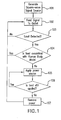
- FIG 1 is a flowchart showing steps in a method for detecting and analyzing a load at an outlet to exclude the human body model, in accordance with an embodiment of the disclosure.
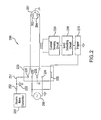
- FIG. 2 is a schematic block diagram of an electrical outlet and power source with a load detecting circuit, a current sensing circuit and an outlet control device, in accordance with an embodiment of the disclosure.
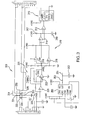
- FIG. 3 is a circuit diagram for a system to measure a load type and exclude the human body model, in accordance with an embodiment of the disclosure.
- a procedure to control power availability to an electrical outlet, and ensure that the human body cannot activate the outlet is shown in the flowchart of FIG. 1 .
- a signal generator device outputs a low energy, non-harmful, square-wave signal (step 101) which is fed to the electrical outlet through an outlet control device (step 102).
- the outlet is connected not to the power source, but to a detector including a current sensing circuit and a load detecting circuit.
- the current sensing circuit senses feedback from the load and inputs that feedback to the load detecting circuit.
- the detector determines whether the load is consistent with the human body model (step 104).
- the power source is applied to the outlet (step 105).
- the connection between the power source and the outlet is maintained while the load is applied (step 106); the power connection is removed (step 107) if the load is no longer detected. If the load is not appropriate (e.g. the load is consistent with the human body model), then the outlet remains isolated from the power source, the square-wave signal generator continues to be connected to the outlet, and the current sensing circuit continues to supply feedback to the load detecting circuit.
- the human body model is characterized by ranges of the resistance and capacitance of human skin.
- the resistance of human skin is typically in the range of 1 k ⁇ (for wet skin) to 500 k ⁇ (for very dry skin).
- the capacitance of human skin is generally at or below 0.03 ⁇ F.
- the signal generator must be set to a low frequency so as not to trigger through the capacitance of human skin, and a low voltage amplitude so as not to trigger through the resistance of human skin.
- Loads that are appropriate for activating the outlet typically have resistance below about 20 ⁇ while having capacitance above 1.0 ⁇ F.
- the wide range between the human body model and the load model permits the detector to discriminate between the two, and activate only with the load model while excluding the human body model.
- System 200 includes a current sensing circuit 220, a load detecting circuit 210 and an outlet control device; in this embodiment, the outlet control device includes a relay 230 connected to a square wave generator 250.
- the outlet control device controls connection of the outlet 201 to the power source 260 (typically 110 VAC), according to the characteristics of the load at the outlet.
- the terminals 202, 204 of the outlet are switched to contacts 231, 233 of the relay respectively.
- Contact 231 is connected to a signal output 251 of square wave generator 250, which outputs a square wave at a low frequency (e.g. in the range 10 Hz to 300 Hz) to be used as a source for detecting a load at the outlet.
- the square-wave peak voltage is in the "safety extra-low voltage" or “user-touchable” range (that is, less than about 40 V), as understood by those skilled in the art. The system therefore can detect a human touch at the outlet without causing harm.
- the RC combination of resistor 252 and capacitor 253 forms a filter which serves to limit the rise/fall time of the square wave.
- the low-frequency, low-voltage square wave signal is fed to the outlet 201 through contact 231.
- Terminal 204 of the outlet is coupled to current sensing circuit 220 to measure the amount of feedback signal, thereby determining whether a load has been connected to the outlet.
- Current sensing circuit 220 is coupled to load detecting circuit 210, which provides input to a trigger device 215.
- load detecting circuit 210 activates trigger circuit 215, which completes a conducting path through coil 235 of relay 230.
- Current in coil 235 then energizes relay 230, which switches power source 260 to outlet 201 through contacts 232, 234. Power from power source 260 will continue to be delivered to outlet 201 as long as an appropriate load is present.
- system 200 is external to power outlet 201, and does not require any switching or sensing elements within the outlet.
- System 200 responds to appropriate loads, distinguishes between a proper electrical load and an incorrect load such as a human body, and excludes the human body model from connection with the outlet. This reduces the number of conductors from the power source to the outlet (thereby reducing system weight and complexity), and maintains personal safety by not having power applied to the electrical outlet when not in use. This feature is particularly desirable for electrical outlets in locations with high exposure to children.
- a system 300 is shown schematically in FIG. 3 .
- a timing circuit e.g. LMC555CM NOPB from National Semiconductor Corporation
- the square wave generator has an output connected to resistor 352 and capacitor 353 which form a filter; the low voltage of 12 VDC and the filter (352, 353) limit the peak current to 1.2 mA, and the low frequency limits the AC current to 900 ⁇ A.
- the filter (352, 353) provides a rise and fall time modification of the generator signal limiting the frequency of the square-wave edge to 400Hz and limiting the current to 1.2mA peak.
- the output signal 351 from the generator and filter is connected to the outlet through the normally closed contacts 331, 333 of the control relay 330 (e.g. RTD14012F from Tyco Electronics Corporation).
- the control relay 330 e.g. RTD14012F from Tyco Electronics Corporation.
- the low level signal of the generator is then sensed through the coil 325.
- This signal is amplified by current-to-voltage converter amplifier 322 in circuit 320.
- Amplifier 321 the output of which is connected to an input of amplifier 322, provides a mid-point bias at approximately 6 V. This is done to center the quiescent voltage of amplifier 322 between the upper and lower voltage thresholds of 9 V and 3 V respectively.
- the pick-up coil has a turns ratio of 100:1. For a current of 600 pA, a sensed current of 6 ⁇ A is fed to the amplifier stage. With the high gain of the current to voltage converter amplifier, the 6 ⁇ A becomes a 2.0Volt signal.
- the threshold of +/- 3 V about the center voltage of 6 V requires a signal of at least 900 ⁇ A. This is 1.5 times greater than the typical human body model.
- comparators 316, 318 in circuit 310 are triggered.
- the outputs of these comparators are connected to amplifier 311 in the next stage of comparison to generate a control signal to relay 330.
- the output of this comparator triggers a timer circuit which includes resistor 317 and capacitor 319. This timer holds the relay coil 335 in an ON condition continuously as long as the threshold is exceeded by the load current signal. In the ON condition, coil 335 is caused to conduct current and thereby close contacts 332, 334 of relay 330, so that the outlet is connected to the power source.
- the timer will expire and release the relay drive through amplifier 312, so that coil 335 is in an OFF condition. In the OFF condition, coil 335 does not conduct current, so that contacts 332, 334 are open, the outlet is disconnected from the power source, and output signal 351 from the generator and filter is connected to the outlet through the normally closed contacts 331, 333.
- the opto-coupler 315 provides an isolated interface to the relay coil.
Landscapes
- Details Of Connecting Devices For Male And Female Coupling (AREA)
- Remote Monitoring And Control Of Power-Distribution Networks (AREA)
Abstract
Description
- This disclosure relates to electrical power distribution, and more particularly to devices for ensuring safety of electrical power outlets.
- Safety standards have been developed for electrical outlets used in various applications, to control the delivery of power to an outlet and particularly to ensure that a human body cannot activate the outlet. (An outlet with a safety feature that shuts off power when a human body is detected is said to "exclude the human body model.") A typical safety standard requires that an isolated sense circuit be provided in the outlet unit to determine that a user device (e.g. an adapter) is plugged in, before enabling the output power. A conventional arrangement uses non-isolated feedback to detect when a device is plugged in, and performs continuous monitoring to ensure that the device remains installed in the outlet.
- A number of conventional power outlet safety designs rely on contacts in the outlet to monitor whether a proper plug is installed. For example, one typical outlet has two plunger-actuated sense contacts to detect when a plug is installed. This requires sensing contacts and switches to actuate the output power. Such mechanical sensing and switching arrangements are inherently prone to failure over time.
- Accordingly, it is desirable to implement a load detector/analyzer and control device for a power outlet that does not rely on switching or sensing devices within the outlet.
- According to a first aspect of the disclosure, a system for controlling connection of a power source to an outlet includes a signal generator for providing a first signal at the outlet; a detector including a current sensing device and a load detecting device; and an outlet control device. The current sensing device is coupled to the outlet and senses current at the outlet while the first signal is provided at the outlet. The load detecting device is coupled to the current sensing device, and detects an electrical load at the outlet in accordance with input from the current sensing device. The load detecting device outputs a second signal indicating presence of the load and indicating whether the load is consistent with the human body model. The outlet control device is coupled to the outlet, the detector, the signal generator and the power source, and connects the outlet to the power source in accordance with the second signal indicating presence of a load not consistent with the human body model. The outlet control device includes a trigger circuit coupled to the detector and a switching device; in an embodiment, the switching device is a relay. The trigger circuit is configured to receive the second signal, and to cause the switching device to connect the outlet to the power source in accordance with the second signal indicating presence of a load at the outlet not consistent with the human body model. The switching device may be configured to connect the outlet to the signal generator in the absence of a load at the outlet or in accordance with the second signal indicating presence of a load at the outlet consistent with the human body model.
- According to another aspect of the disclosure, a method is provided for controlling connection of an electrical outlet to a power source so as to exclude the human body model. This method includes the steps of providing a first signal at the outlet; sensing current at the outlet while the first signal is provided at the outlet; detecting an electrical load at the outlet in accordance with the sensed current; outputting a second signal indicating presence of the load and indicating whether the load is consistent with the human body model; and connecting the outlet to the power source in accordance with the second signal indicating presence of a load not consistent with the human body model. The connecting step may also include receiving the second signal from the trigger circuit to cause the switching device to connect the outlet to the power source, in accordance with the second signal indicating presence of a load at the outlet not consistent with the human body model.
- The foregoing has outlined, rather broadly, the preferred features of the present disclosure so that those skilled in the art may better understand the detailed description of the disclosure that follows. Additional features of the disclosure will be described hereinafter that form the subject of the claims of the disclosure. Those skilled in the art should appreciate that they can readily use the disclosed conception and specific embodiment as a basis for designing or modifying other structures for carrying out the same purposes of the present disclosure and that such other structures do not depart from the spirit and scope of the disclosure in its broadest form.
- Further embodiments of the invention are included in the following numbered paragraphs:
- 1. A system for controlling connection of a power source to an outlet, comprising:
- a signal generator for providing a first signal at the outlet;
- a detector including
a current sensing device, coupled to the outlet, for sensing current at the outlet while the first signal is provided at the outlet, and
a load detecting device, coupled to the current sensing device, for detecting an electrical load at the outlet in accordance with input from the current sensing device, and for outputting a second signal indicating presence of the load and indicating whether the load is consistent with the human body model; and - an outlet control device, coupled to the outlet, the detector, the signal generator and the power source, and for connecting the outlet to the power source in accordance with the second signal indicating presence of a load not consistent with the human body model.
- 2. A system according to
paragraph 1, wherein the outlet control device includes
a trigger circuit coupled to the detector, and
a switching device coupled to the trigger circuit, the outlet, the signal generator and the power source,
wherein the trigger circuit is configured to receive the second signal and to cause the switching device to connect the outlet to the power source in accordance with the second signal indicating presence of a load at the outlet not consistent with the human body model. - 3. A system according to paragraph 2, wherein the switching device connects the outlet to the signal generator in the absence of a load at the outlet or in accordance with the second signal indicating presence of a load at the outlet consistent with the human body model.
- 4. A system according to
paragraph 1, wherein the first signal is a square wave output by the signal generator to the outlet via the outlet control device. - 5. A system according to paragraph 4, wherein the square wave is characterized by a rise/fall time, and further comprising an RC circuit coupled to the signal generator to limit the rise/fall time of the square wave.
- 6. A system according to paragraph 4, wherein the square wave has a frequency in the range of 10 Hz to 300 Hz.
- 7. A system according to paragraph 4, wherein the first signal has a peak voltage less than about 40 V.
- 8. A system according to paragraph 2, wherein the switching device comprises a relay including a coil, and the trigger circuit is effective to connect the coil to the power source in accordance with the second signal indicating presence of a load at the outlet not consistent with the human body model, thereby providing current in the coil to energize the relay.
- 9. A system according to
paragraph 8, wherein in the absence of a load at the outlet or in accordance with the second signal indicating presence of a load at the outlet consistent with the human body model, the relay is not energized, so that the outlet is connected to the signal generator. - 10. A system according to paragraph 2, wherein the trigger circuit comprises an opto-coupler.
- 11. A method for controlling connection of a power source to an outlet, the method comprising the steps of:
- providing a first signal at the outlet;
- sensing current at the outlet while the first signal is provided at the outlet;
- detecting an electrical load at the outlet in accordance with the sensed current;
- outputting a second signal indicating presence of the load and indicating whether the load is consistent with the human body model; and
- connecting the outlet to the power source in accordance with the second signal indicating presence of a load not consistent with the human body model.
- 12. A method according to
paragraph 1, wherein the first signal is provided using a signal generator, and further comprising:- providing a trigger circuit and a switching device coupled to the trigger circuit, the outlet, the signal generator and the power source.
- 13. A method according to paragraph 2, wherein the connecting step further comprises:
- receiving the second signal from the trigger circuit to cause the switching device to connect the outlet to the power source, in accordance with the second signal indicating presence of a load at the outlet not consistent with the human body model.
- 14. A method according to paragraph 2, wherein the switching device connects the outlet to the signal generator in the absence of a load at the outlet or in accordance with the second signal indicating presence of a load at the outlet consistent with the human body model.
- 15. A method according to paragraph 2, wherein the first signal is a square wave output by the signal generator to the outlet via the switching device.
- 16. A method according to paragraph 5, wherein the square wave is characterized by a rise/fall time, and further comprising the step of providing an RC circuit coupled to the signal generator to limit the rise/fall time of the square wave.
- 17. A method according to paragraph 5, wherein the square wave has a frequency in the range of 10 Hz to 300 Hz.
- 18. A method according to paragraph 5, wherein the first signal has a peak voltage less than about 40 V.
- 19. A method according to paragraph 2, wherein the switching device comprises a relay including a coil, and the trigger circuit is effective to connect the coil to the power source in accordance with the second signal indicating presence of a load at the outlet not consistent with the human body model, thereby providing current in the coil to energize the relay.
- 20. A method according to
paragraph 9, wherein in the absence of a load at the outlet or in accordance with the second signal indicating presence of a load at the outlet consistent with the human body model, the relay is not energized, so that the outlet is connected to the signal generator. -
FIG 1 is a flowchart showing steps in a method for detecting and analyzing a load at an outlet to exclude the human body model, in accordance with an embodiment of the disclosure. -
FIG. 2 is a schematic block diagram of an electrical outlet and power source with a load detecting circuit, a current sensing circuit and an outlet control device, in accordance with an embodiment of the disclosure. -
FIG. 3 is a circuit diagram for a system to measure a load type and exclude the human body model, in accordance with an embodiment of the disclosure. - In accordance with an embodiment of the disclosure, a procedure to control power availability to an electrical outlet, and ensure that the human body cannot activate the outlet, is shown in the flowchart of
FIG. 1 . A signal generator device outputs a low energy, non-harmful, square-wave signal (step 101) which is fed to the electrical outlet through an outlet control device (step 102). At this point the outlet is connected not to the power source, but to a detector including a current sensing circuit and a load detecting circuit. The current sensing circuit senses feedback from the load and inputs that feedback to the load detecting circuit. When a load is detected (step 103), the detector then determines whether the load is consistent with the human body model (step 104). If an appropriate load is present, the power source is applied to the outlet (step 105). The connection between the power source and the outlet is maintained while the load is applied (step 106); the power connection is removed (step 107) if the load is no longer detected. If the load is not appropriate (e.g. the load is consistent with the human body model), then the outlet remains isolated from the power source, the square-wave signal generator continues to be connected to the outlet, and the current sensing circuit continues to supply feedback to the load detecting circuit. - The human body model is characterized by ranges of the resistance and capacitance of human skin. The resistance of human skin is typically in the range of 1 kΩ (for wet skin) to 500 kΩ (for very dry skin). The capacitance of human skin is generally at or below 0.03 µF. To exclude the human body, the signal generator must be set to a low frequency so as not to trigger through the capacitance of human skin, and a low voltage amplitude so as not to trigger through the resistance of human skin. Loads that are appropriate for activating the outlet, by contrast, typically have resistance below about 20 Ω while having capacitance above 1.0 µF. The wide range between the human body model and the load model permits the detector to discriminate between the two, and activate only with the load model while excluding the human body model.
- A
system 200 for detecting loads at anoutlet 201, and applying a power source when the load is not consistent with the human body model, is shown in the block diagram ofFIG. 2 .System 200 includes acurrent sensing circuit 220, aload detecting circuit 210 and an outlet control device; in this embodiment, the outlet control device includes arelay 230 connected to asquare wave generator 250. The outlet control device controls connection of theoutlet 201 to the power source 260 (typically 110 VAC), according to the characteristics of the load at the outlet. - Before the outlet is connected to the power source, the
terminals contacts signal output 251 ofsquare wave generator 250, which outputs a square wave at a low frequency (e.g. in therange 10 Hz to 300 Hz) to be used as a source for detecting a load at the outlet. The square-wave peak voltage is in the "safety extra-low voltage" or "user-touchable" range (that is, less than about 40 V), as understood by those skilled in the art. The system therefore can detect a human touch at the outlet without causing harm. The RC combination ofresistor 252 andcapacitor 253 forms a filter which serves to limit the rise/fall time of the square wave. - The low-frequency, low-voltage square wave signal is fed to the
outlet 201 throughcontact 231.Terminal 204 of the outlet is coupled tocurrent sensing circuit 220 to measure the amount of feedback signal, thereby determining whether a load has been connected to the outlet.Current sensing circuit 220 is coupled to load detectingcircuit 210, which provides input to atrigger device 215. When a load is detected, and that load is not consistent with the human body model, load detectingcircuit 210 activatestrigger circuit 215, which completes a conducting path throughcoil 235 ofrelay 230. Current incoil 235 then energizesrelay 230, which switchespower source 260 tooutlet 201 throughcontacts power source 260 will continue to be delivered tooutlet 201 as long as an appropriate load is present. - It will be appreciated that
system 200 is external topower outlet 201, and does not require any switching or sensing elements within the outlet.System 200 responds to appropriate loads, distinguishes between a proper electrical load and an incorrect load such as a human body, and excludes the human body model from connection with the outlet. This reduces the number of conductors from the power source to the outlet (thereby reducing system weight and complexity), and maintains personal safety by not having power applied to the electrical outlet when not in use. This feature is particularly desirable for electrical outlets in locations with high exposure to children. - A
system 300 according to a particular embodiment of the disclosure is shown schematically inFIG. 3 . A timing circuit (e.g. LMC555CM NOPB from National Semiconductor Corporation) and the components connected directly thereto form asquare wave generator 350 providing a low-frequency, low-voltage (12 VDC peak) signal for determining the type of load at the outlet. The square wave generator has an output connected toresistor 352 andcapacitor 353 which form a filter; the low voltage of 12 VDC and the filter (352, 353) limit the peak current to 1.2 mA, and the low frequency limits the AC current to 900 µA. The filter (352, 353) provides a rise and fall time modification of the generator signal limiting the frequency of the square-wave edge to 400Hz and limiting the current to 1.2mA peak. - The
output signal 351 from the generator and filter is connected to the outlet through the normally closedcontacts - The low level signal of the generator is then sensed through the
coil 325. This signal is amplified by current-to-voltage converter amplifier 322 incircuit 320.Amplifier 321, the output of which is connected to an input ofamplifier 322, provides a mid-point bias at approximately 6 V. This is done to center the quiescent voltage ofamplifier 322 between the upper and lower voltage thresholds of 9 V and 3 V respectively. The pick-up coil has a turns ratio of 100:1. For a current of 600 pA, a sensed current of 6 µA is fed to the amplifier stage. With the high gain of the current to voltage converter amplifier, the 6 µA becomes a 2.0Volt signal. The threshold of +/- 3 V about the center voltage of 6 V requires a signal of at least 900 µA. This is 1.5 times greater than the typical human body model. - When the load sense current is in excess of the required amount to cause an amplifier output swing greater than the +/- 3 V thresholds,
comparators circuit 310 are triggered. The outputs of these comparators are connected toamplifier 311 in the next stage of comparison to generate a control signal to relay 330. The output of this comparator triggers a timer circuit which includesresistor 317 andcapacitor 319. This timer holds therelay coil 335 in an ON condition continuously as long as the threshold is exceeded by the load current signal. In the ON condition,coil 335 is caused to conduct current and therebyclose contacts relay 330, so that the outlet is connected to the power source. If the load current signal decreases below the threshold or if the load is removed, the timer will expire and release the relay drive throughamplifier 312, so thatcoil 335 is in an OFF condition. In the OFF condition,coil 335 does not conduct current, so thatcontacts contacts coupler 315 provides an isolated interface to the relay coil. - While the disclosure has been described in terms of specific embodiments, it is evident in view of the foregoing description that numerous alternatives, modifications and variations will be apparent to those skilled in the art. Accordingly, the disclosure is intended to encompass all such alternatives, modifications and variations which fall within the scope and spirit of the disclosure and the following claims.
Claims (15)
- A system (200) for controlling connection of a power source (260) to an outlet (201), characterized by:a signal generator (250 )for providing a first signal (251) at the outlet (201);a detector including
a current sensing device (220), coupled to the outlet (201), for sensing current at the outlet while the first signal (251) is provided at the outlet, and
a load detecting device (210), coupled to the current sensing device (220), for detecting an electrical load at the outlet (201) in accordance with input from the current sensing device, and for outputting a second signal indicating presence of the load and indicating whether the load is consistent with the human body model; andan outlet control device (215, 230) coupled to the outlet, the detector, the signal generator and the power source, for connecting the outlet (201) to the power source (260) in accordance with the second signal indicating presence of a load not consistent with the human body model. - A system according to claim 1, characterized in that the outlet control device includes
a trigger circuit (215) coupled to the detector, and
a switching device (230) coupled to the trigger circuit (215), the outlet (201), the signal generator (250) and the power source (260),
characterized in that the trigger circuit is configured to receive the second signal and to cause the switching device (230) to connect the outlet (201) to the power source (260) in accordance with the second signal indicating presence of a load at the outlet not consistent with the human body model. - A system according to claim 2, characterized in that the switching device (230) connects the outlet (201) to the signal generator (250) in the absence of a load at the outlet or in accordance with the second signal indicating presence of a load at the outlet consistent with the human body model.
- A system according to any of the preceding claims, characterized in that the first signal (251) is a square wave output by the signal generator (250) to the outlet (201) via the outlet control device.
- A system according to claim 4, characterized in that the square wave is characterized by a rise/fall time, and further comprising an RC circuit (252, 253) coupled to the signal generator (250) to limit the rise/fall time of the square wave.
- A system according to any of claims 2 to 5, characterized in that the switching device (230) comprises a relay including a coil (235), and the trigger circuit (215) is effective to connect the coil to the power source (260) in accordance with the second signal indicating presence of a load at the outlet (201) not consistent with the human body model, thereby providing current in the coil to energize the relay.
- A system according to any of the preceding claims, characterized in that in the absence of a load at the outlet (201) or in accordance with the second signal indicating presence of a load at the outlet consistent with the human body model, the relay is not energized, so that the outlet (201) is connected to the signal generator (250).
- A method for controlling connection of a power source (260) to an outlet (201), the method characterized by the steps of:providing (101, 102) a first signal (251) at the outlet (201);sensing current at the outlet (201) while the first signal (251) is provided at the outlet;detecting an electrical load (103) at the outlet (201) in accordance with the sensed current;outputting a second signal indicating presence of the load and indicating (104) whether the load is consistent with the human body model; andconnecting (105) the outlet (201) to the power source (260) in accordance with the second signal indicating (106) presence of a load not consistent with the human body model.
- A method according to claim 8, characterized in that the first signal (251) is provided using a signal generator (250), and further characterized by:providing a trigger circuit (215) and a switching device (230) coupled to the trigger circuit (215), the outlet (201), the signal generator (250) and the power source (260).
- A method according to claim 9, characterized in that the connecting step (105) further comprises:receiving the second signal from the trigger circuit (215) to cause the switching device (230) to connect the outlet (201) to the power source (260), in accordance with the second signal indicating (106) presence of a load at the outlet not consistent with the human body model.
- A method according to claim 9 or 10, characterized in that the switching device (230) connects the outlet (201) to the signal generator (250) in the absence of a load at the outlet or in accordance with the second signal indicating presence of a load at the outlet consistent with the human body model.
- A method according to any of claims 9 to 11, characterized in that the first signal (251) is a square wave output by the signal generator (250) to the outlet (201) via the switching device (230).
- A method according to claim 12, characterized in that the square wave is characterized by a rise/fall time, and further comprising the step of providing an RC circuit (252, 253) coupled to the signal generator (250) to limit the rise/fall time of the square wave.
- A method according to any of claims 9 to 13, characterized in that the switching device (230) comprises a relay including a coil (235), and the trigger circuit (215) is effective to connect the coil to the power source (260) in accordance with the second signal indicating presence of a load at the outlet (201) not consistent with the human body model, thereby providing current in the coil to energize the relay.
- A method according to any of claims 9 to 14, characterized in that in the absence of a load at the outlet (201) or in accordance with the second signal indicating presence of a load at the outlet consistent with the human body model, the relay is not energized (107), so that the outlet is connected to the signal generator (250).
Applications Claiming Priority (1)
| Application Number | Priority Date | Filing Date | Title |
|---|---|---|---|
| US12/495,002 US8089181B2 (en) | 2009-06-30 | 2009-06-30 | System and method to measure load type and exclude the human body model |
Publications (3)
| Publication Number | Publication Date |
|---|---|
| EP2270945A2 true EP2270945A2 (en) | 2011-01-05 |
| EP2270945A3 EP2270945A3 (en) | 2012-10-31 |
| EP2270945B1 EP2270945B1 (en) | 2014-08-20 |
Family
ID=42341598
Family Applications (1)
| Application Number | Title | Priority Date | Filing Date |
|---|---|---|---|
| EP20100165392 Active EP2270945B1 (en) | 2009-06-30 | 2010-06-09 | System and method to measure load type and exclude the human body model |
Country Status (2)
| Country | Link |
|---|---|
| US (1) | US8089181B2 (en) |
| EP (1) | EP2270945B1 (en) |
Cited By (2)
| Publication number | Priority date | Publication date | Assignee | Title |
|---|---|---|---|---|
| WO2014011758A1 (en) * | 2012-07-10 | 2014-01-16 | Ilumisys, Inc. | Protective circuit for electric device for avoiding electrical shock |
| WO2019206433A1 (en) * | 2018-04-27 | 2019-10-31 | Huawei Technologies Co., Ltd. | Power source, load and methods for providing and receiving power |
Families Citing this family (3)
| Publication number | Priority date | Publication date | Assignee | Title |
|---|---|---|---|---|
| CN101916977B (en) * | 2010-07-30 | 2013-01-23 | 纽福克斯光电科技(上海)有限公司 | Power socket protection circuit |
| US9325180B2 (en) | 2012-09-14 | 2016-04-26 | Astronics Advanced Electronic Systems Corp. | USB power supply |
| US9302781B2 (en) | 2014-02-25 | 2016-04-05 | Astronics Advanced Electronic Systems Corp. | Apparatus and method to monitor the occupancy of seating |
Family Cites Families (5)
| Publication number | Priority date | Publication date | Assignee | Title |
|---|---|---|---|---|
| SE448590B (en) * | 1983-04-18 | 1987-03-02 | Jan Svensson | METHOD AND DEVICE FOR DETECTING AN ELECTRICAL LOAD |
| GB2222039B (en) * | 1988-05-23 | 1992-07-01 | B & R Electrical Prod Ltd | Electrical safety apparatus |
| US5003486A (en) * | 1989-02-24 | 1991-03-26 | Nero Technologies Ltd. | Programmable safety electrical socket controller |
| ITBG20030032A1 (en) * | 2003-05-09 | 2004-11-10 | Armando Iaquinangelo | DEVICE FOR THE MANAGEMENT OF ELECTRIC SOCKETS. |
| US20050286184A1 (en) * | 2004-06-22 | 2005-12-29 | Steve Campolo | Electrical power outlet strip |
-
2009
- 2009-06-30 US US12/495,002 patent/US8089181B2/en active Active
-
2010
- 2010-06-09 EP EP20100165392 patent/EP2270945B1/en active Active
Non-Patent Citations (1)
| Title |
|---|
| None |
Cited By (3)
| Publication number | Priority date | Publication date | Assignee | Title |
|---|---|---|---|---|
| WO2014011758A1 (en) * | 2012-07-10 | 2014-01-16 | Ilumisys, Inc. | Protective circuit for electric device for avoiding electrical shock |
| WO2019206433A1 (en) * | 2018-04-27 | 2019-10-31 | Huawei Technologies Co., Ltd. | Power source, load and methods for providing and receiving power |
| CN112425021A (en) * | 2018-04-27 | 2021-02-26 | 华为技术有限公司 | Power supply, load and method for providing and receiving power |
Also Published As
| Publication number | Publication date |
|---|---|
| US20100327663A1 (en) | 2010-12-30 |
| US8089181B2 (en) | 2012-01-03 |
| EP2270945A3 (en) | 2012-10-31 |
| EP2270945B1 (en) | 2014-08-20 |
Similar Documents
| Publication | Publication Date | Title |
|---|---|---|
| US5003486A (en) | Programmable safety electrical socket controller | |
| CN104350388B (en) | For the system and method for detection branch electric current | |
| EP3289658B1 (en) | Power supply control | |
| KR102492612B1 (en) | System for detecting ground faults in energy storage and/or generation systems using DC-AC power conversion systems | |
| TWI573365B (en) | Protection circuit applied to an alternating current power source and related protection method thereof | |
| CN110691976B (en) | Remote power supply module, direct-current power system and fault detection method of direct-current power system | |
| CA2886374A1 (en) | Processor-based circuit interrupting devices | |
| EP2270945A2 (en) | System and method to measure load type and exclude the human body model | |
| JP2013226036A (en) | Faulty protective earthing circuit detection system and method | |
| JP2007533289A (en) | Method and safety device for ground fault circuit | |
| TWI645661B (en) | Adapter and adapter module having the same | |
| CN105914712A (en) | Device and method for fault current detection | |
| US20030107855A1 (en) | Power source protecting device | |
| CN1097864C (en) | Socket | |
| US10554058B2 (en) | Systems and methods for monitoring an operating status of a connector | |
| US10461520B2 (en) | Controllable test-pulse width and position for self-test ground fault circuit interrupter | |
| CN106771639B (en) | On-line Monitoring System for Grounding Resistance of High Voltage Tower | |
| KR101116916B1 (en) | Standby power breakiing device | |
| JP6420957B2 (en) | Test apparatus and method | |
| CN107534287B (en) | Electrical safety devices and devices and equipment including the same | |
| CN108603906A (en) | Multifunction fault circuit breaker apparatus and method | |
| JP5382433B2 (en) | Power supply device | |
| CN210167806U (en) | Ground fault circuit interrupter with capacitive power supply device circuit | |
| US11031772B2 (en) | Protection earth connection detector | |
| US20170207049A1 (en) | System for actively detecting alternating current load |
Legal Events
| Date | Code | Title | Description |
|---|---|---|---|
| PUAI | Public reference made under article 153(3) epc to a published international application that has entered the european phase |
Free format text: ORIGINAL CODE: 0009012 |
|
| 17P | Request for examination filed |
Effective date: 20100907 |
|
| AK | Designated contracting states |
Kind code of ref document: A2 Designated state(s): AL AT BE BG CH CY CZ DE DK EE ES FI FR GB GR HR HU IE IS IT LI LT LU LV MC MK MT NL NO PL PT RO SE SI SK SM TR |
|
| AX | Request for extension of the european patent |
Extension state: BA ME RS |
|
| PUAL | Search report despatched |
Free format text: ORIGINAL CODE: 0009013 |
|
| AK | Designated contracting states |
Kind code of ref document: A3 Designated state(s): AL AT BE BG CH CY CZ DE DK EE ES FI FR GB GR HR HU IE IS IT LI LT LU LV MC MK MT NL NO PL PT RO SE SI SK SM TR |
|
| AX | Request for extension of the european patent |
Extension state: BA ME RS |
|
| RIC1 | Information provided on ipc code assigned before grant |
Ipc: H02H 5/12 20060101AFI20120921BHEP Ipc: H02H 11/00 20060101ALI20120921BHEP |
|
| GRAP | Despatch of communication of intention to grant a patent |
Free format text: ORIGINAL CODE: EPIDOSNIGR1 |
|
| RIC1 | Information provided on ipc code assigned before grant |
Ipc: H02H 11/00 20060101ALI20140203BHEP Ipc: H02H 5/12 20060101AFI20140203BHEP |
|
| INTG | Intention to grant announced |
Effective date: 20140312 |
|
| GRAS | Grant fee paid |
Free format text: ORIGINAL CODE: EPIDOSNIGR3 |
|
| GRAA | (expected) grant |
Free format text: ORIGINAL CODE: 0009210 |
|
| AK | Designated contracting states |
Kind code of ref document: B1 Designated state(s): AL AT BE BG CH CY CZ DE DK EE ES FI FR GB GR HR HU IE IS IT LI LT LU LV MC MK MT NL NO PL PT RO SE SI SK SM TR |
|
| REG | Reference to a national code |
Ref country code: GB Ref legal event code: FG4D |
|
| REG | Reference to a national code |
Ref country code: CH Ref legal event code: EP |
|
| REG | Reference to a national code |
Ref country code: AT Ref legal event code: REF Ref document number: 683908 Country of ref document: AT Kind code of ref document: T Effective date: 20140915 |
|
| REG | Reference to a national code |
Ref country code: IE Ref legal event code: FG4D |
|
| REG | Reference to a national code |
Ref country code: DE Ref legal event code: R096 Ref document number: 602010018340 Country of ref document: DE Effective date: 20141002 |
|
| REG | Reference to a national code |
Ref country code: AT Ref legal event code: MK05 Ref document number: 683908 Country of ref document: AT Kind code of ref document: T Effective date: 20140820 |
|
| REG | Reference to a national code |
Ref country code: NL Ref legal event code: VDEP Effective date: 20140820 |
|
| REG | Reference to a national code |
Ref country code: LT Ref legal event code: MG4D |
|
| PG25 | Lapsed in a contracting state [announced via postgrant information from national office to epo] |
Ref country code: ES Free format text: LAPSE BECAUSE OF FAILURE TO SUBMIT A TRANSLATION OF THE DESCRIPTION OR TO PAY THE FEE WITHIN THE PRESCRIBED TIME-LIMIT Effective date: 20140820 Ref country code: GR Free format text: LAPSE BECAUSE OF FAILURE TO SUBMIT A TRANSLATION OF THE DESCRIPTION OR TO PAY THE FEE WITHIN THE PRESCRIBED TIME-LIMIT Effective date: 20141121 Ref country code: LT Free format text: LAPSE BECAUSE OF FAILURE TO SUBMIT A TRANSLATION OF THE DESCRIPTION OR TO PAY THE FEE WITHIN THE PRESCRIBED TIME-LIMIT Effective date: 20140820 Ref country code: FI Free format text: LAPSE BECAUSE OF FAILURE TO SUBMIT A TRANSLATION OF THE DESCRIPTION OR TO PAY THE FEE WITHIN THE PRESCRIBED TIME-LIMIT Effective date: 20140820 Ref country code: PT Free format text: LAPSE BECAUSE OF FAILURE TO SUBMIT A TRANSLATION OF THE DESCRIPTION OR TO PAY THE FEE WITHIN THE PRESCRIBED TIME-LIMIT Effective date: 20141222 Ref country code: BG Free format text: LAPSE BECAUSE OF FAILURE TO SUBMIT A TRANSLATION OF THE DESCRIPTION OR TO PAY THE FEE WITHIN THE PRESCRIBED TIME-LIMIT Effective date: 20141120 Ref country code: SE Free format text: LAPSE BECAUSE OF FAILURE TO SUBMIT A TRANSLATION OF THE DESCRIPTION OR TO PAY THE FEE WITHIN THE PRESCRIBED TIME-LIMIT Effective date: 20140820 Ref country code: NO Free format text: LAPSE BECAUSE OF FAILURE TO SUBMIT A TRANSLATION OF THE DESCRIPTION OR TO PAY THE FEE WITHIN THE PRESCRIBED TIME-LIMIT Effective date: 20141120 |
|
| PG25 | Lapsed in a contracting state [announced via postgrant information from national office to epo] |
Ref country code: AT Free format text: LAPSE BECAUSE OF FAILURE TO SUBMIT A TRANSLATION OF THE DESCRIPTION OR TO PAY THE FEE WITHIN THE PRESCRIBED TIME-LIMIT Effective date: 20140820 Ref country code: IS Free format text: LAPSE BECAUSE OF FAILURE TO SUBMIT A TRANSLATION OF THE DESCRIPTION OR TO PAY THE FEE WITHIN THE PRESCRIBED TIME-LIMIT Effective date: 20141220 Ref country code: LV Free format text: LAPSE BECAUSE OF FAILURE TO SUBMIT A TRANSLATION OF THE DESCRIPTION OR TO PAY THE FEE WITHIN THE PRESCRIBED TIME-LIMIT Effective date: 20140820 Ref country code: HR Free format text: LAPSE BECAUSE OF FAILURE TO SUBMIT A TRANSLATION OF THE DESCRIPTION OR TO PAY THE FEE WITHIN THE PRESCRIBED TIME-LIMIT Effective date: 20140820 |
|
| PG25 | Lapsed in a contracting state [announced via postgrant information from national office to epo] |
Ref country code: NL Free format text: LAPSE BECAUSE OF FAILURE TO SUBMIT A TRANSLATION OF THE DESCRIPTION OR TO PAY THE FEE WITHIN THE PRESCRIBED TIME-LIMIT Effective date: 20140820 |
|
| PG25 | Lapsed in a contracting state [announced via postgrant information from national office to epo] |
Ref country code: SK Free format text: LAPSE BECAUSE OF FAILURE TO SUBMIT A TRANSLATION OF THE DESCRIPTION OR TO PAY THE FEE WITHIN THE PRESCRIBED TIME-LIMIT Effective date: 20140820 Ref country code: IT Free format text: LAPSE BECAUSE OF FAILURE TO SUBMIT A TRANSLATION OF THE DESCRIPTION OR TO PAY THE FEE WITHIN THE PRESCRIBED TIME-LIMIT Effective date: 20140820 Ref country code: EE Free format text: LAPSE BECAUSE OF FAILURE TO SUBMIT A TRANSLATION OF THE DESCRIPTION OR TO PAY THE FEE WITHIN THE PRESCRIBED TIME-LIMIT Effective date: 20140820 Ref country code: DK Free format text: LAPSE BECAUSE OF FAILURE TO SUBMIT A TRANSLATION OF THE DESCRIPTION OR TO PAY THE FEE WITHIN THE PRESCRIBED TIME-LIMIT Effective date: 20140820 Ref country code: CZ Free format text: LAPSE BECAUSE OF FAILURE TO SUBMIT A TRANSLATION OF THE DESCRIPTION OR TO PAY THE FEE WITHIN THE PRESCRIBED TIME-LIMIT Effective date: 20140820 Ref country code: RO Free format text: LAPSE BECAUSE OF FAILURE TO SUBMIT A TRANSLATION OF THE DESCRIPTION OR TO PAY THE FEE WITHIN THE PRESCRIBED TIME-LIMIT Effective date: 20140820 |
|
| REG | Reference to a national code |
Ref country code: DE Ref legal event code: R097 Ref document number: 602010018340 Country of ref document: DE |
|
| PG25 | Lapsed in a contracting state [announced via postgrant information from national office to epo] |
Ref country code: PL Free format text: LAPSE BECAUSE OF FAILURE TO SUBMIT A TRANSLATION OF THE DESCRIPTION OR TO PAY THE FEE WITHIN THE PRESCRIBED TIME-LIMIT Effective date: 20140820 |
|
| PLBE | No opposition filed within time limit |
Free format text: ORIGINAL CODE: 0009261 |
|
| STAA | Information on the status of an ep patent application or granted ep patent |
Free format text: STATUS: NO OPPOSITION FILED WITHIN TIME LIMIT |
|
| 26N | No opposition filed |
Effective date: 20150521 |
|
| PG25 | Lapsed in a contracting state [announced via postgrant information from national office to epo] |
Ref country code: SI Free format text: LAPSE BECAUSE OF FAILURE TO SUBMIT A TRANSLATION OF THE DESCRIPTION OR TO PAY THE FEE WITHIN THE PRESCRIBED TIME-LIMIT Effective date: 20140820 |
|
| PG25 | Lapsed in a contracting state [announced via postgrant information from national office to epo] |
Ref country code: MC Free format text: LAPSE BECAUSE OF FAILURE TO SUBMIT A TRANSLATION OF THE DESCRIPTION OR TO PAY THE FEE WITHIN THE PRESCRIBED TIME-LIMIT Effective date: 20140820 |
|
| REG | Reference to a national code |
Ref country code: CH Ref legal event code: PL |
|
| PG25 | Lapsed in a contracting state [announced via postgrant information from national office to epo] |
Ref country code: LU Free format text: LAPSE BECAUSE OF FAILURE TO SUBMIT A TRANSLATION OF THE DESCRIPTION OR TO PAY THE FEE WITHIN THE PRESCRIBED TIME-LIMIT Effective date: 20150609 |
|
| REG | Reference to a national code |
Ref country code: IE Ref legal event code: MM4A |
|
| PG25 | Lapsed in a contracting state [announced via postgrant information from national office to epo] |
Ref country code: LI Free format text: LAPSE BECAUSE OF NON-PAYMENT OF DUE FEES Effective date: 20150630 Ref country code: IE Free format text: LAPSE BECAUSE OF NON-PAYMENT OF DUE FEES Effective date: 20150609 Ref country code: CH Free format text: LAPSE BECAUSE OF NON-PAYMENT OF DUE FEES Effective date: 20150630 |
|
| REG | Reference to a national code |
Ref country code: FR Ref legal event code: PLFP Year of fee payment: 7 |
|
| PG25 | Lapsed in a contracting state [announced via postgrant information from national office to epo] |
Ref country code: BE Free format text: LAPSE BECAUSE OF FAILURE TO SUBMIT A TRANSLATION OF THE DESCRIPTION OR TO PAY THE FEE WITHIN THE PRESCRIBED TIME-LIMIT Effective date: 20140820 |
|
| PG25 | Lapsed in a contracting state [announced via postgrant information from national office to epo] |
Ref country code: MT Free format text: LAPSE BECAUSE OF FAILURE TO SUBMIT A TRANSLATION OF THE DESCRIPTION OR TO PAY THE FEE WITHIN THE PRESCRIBED TIME-LIMIT Effective date: 20140820 |
|
| PG25 | Lapsed in a contracting state [announced via postgrant information from national office to epo] |
Ref country code: HU Free format text: LAPSE BECAUSE OF FAILURE TO SUBMIT A TRANSLATION OF THE DESCRIPTION OR TO PAY THE FEE WITHIN THE PRESCRIBED TIME-LIMIT; INVALID AB INITIO Effective date: 20100609 Ref country code: SM Free format text: LAPSE BECAUSE OF FAILURE TO SUBMIT A TRANSLATION OF THE DESCRIPTION OR TO PAY THE FEE WITHIN THE PRESCRIBED TIME-LIMIT Effective date: 20140820 |
|
| REG | Reference to a national code |
Ref country code: FR Ref legal event code: PLFP Year of fee payment: 8 |
|
| PG25 | Lapsed in a contracting state [announced via postgrant information from national office to epo] |
Ref country code: CY Free format text: LAPSE BECAUSE OF FAILURE TO SUBMIT A TRANSLATION OF THE DESCRIPTION OR TO PAY THE FEE WITHIN THE PRESCRIBED TIME-LIMIT Effective date: 20140820 |
|
| REG | Reference to a national code |
Ref country code: DE Ref legal event code: R082 Ref document number: 602010018340 Country of ref document: DE Representative=s name: SCHMITT-NILSON SCHRAUD WAIBEL WOHLFROM PATENTA, DE |
|
| PG25 | Lapsed in a contracting state [announced via postgrant information from national office to epo] |
Ref country code: TR Free format text: LAPSE BECAUSE OF FAILURE TO SUBMIT A TRANSLATION OF THE DESCRIPTION OR TO PAY THE FEE WITHIN THE PRESCRIBED TIME-LIMIT Effective date: 20140820 |
|
| REG | Reference to a national code |
Ref country code: FR Ref legal event code: PLFP Year of fee payment: 9 |
|
| PG25 | Lapsed in a contracting state [announced via postgrant information from national office to epo] |
Ref country code: MK Free format text: LAPSE BECAUSE OF FAILURE TO SUBMIT A TRANSLATION OF THE DESCRIPTION OR TO PAY THE FEE WITHIN THE PRESCRIBED TIME-LIMIT Effective date: 20140820 |
|
| PG25 | Lapsed in a contracting state [announced via postgrant information from national office to epo] |
Ref country code: AL Free format text: LAPSE BECAUSE OF FAILURE TO SUBMIT A TRANSLATION OF THE DESCRIPTION OR TO PAY THE FEE WITHIN THE PRESCRIBED TIME-LIMIT Effective date: 20140820 |
|
| PGFP | Annual fee paid to national office [announced via postgrant information from national office to epo] |
Ref country code: DE Payment date: 20250627 Year of fee payment: 16 |
|
| PGFP | Annual fee paid to national office [announced via postgrant information from national office to epo] |
Ref country code: GB Payment date: 20250627 Year of fee payment: 16 |
|
| PGFP | Annual fee paid to national office [announced via postgrant information from national office to epo] |
Ref country code: FR Payment date: 20250625 Year of fee payment: 16 |