EP2269575A1 - Method for improving bioavailability of latanoprost - Google Patents
Method for improving bioavailability of latanoprost Download PDFInfo
- Publication number
- EP2269575A1 EP2269575A1 EP09397519A EP09397519A EP2269575A1 EP 2269575 A1 EP2269575 A1 EP 2269575A1 EP 09397519 A EP09397519 A EP 09397519A EP 09397519 A EP09397519 A EP 09397519A EP 2269575 A1 EP2269575 A1 EP 2269575A1
- Authority
- EP
- European Patent Office
- Prior art keywords
- latanoprost
- eye drop
- aqueous
- organic amine
- drop composition
- Prior art date
- Legal status (The legal status is an assumption and is not a legal conclusion. Google has not performed a legal analysis and makes no representation as to the accuracy of the status listed.)
- Withdrawn
Links
- GGXICVAJURFBLW-CEYXHVGTSA-N latanoprost Chemical compound CC(C)OC(=O)CCC\C=C/C[C@H]1[C@@H](O)C[C@@H](O)[C@@H]1CC[C@@H](O)CCC1=CC=CC=C1 GGXICVAJURFBLW-CEYXHVGTSA-N 0.000 title claims abstract description 77
- 229960001160 latanoprost Drugs 0.000 title claims abstract description 68
- 238000000034 method Methods 0.000 title claims abstract description 16
- 239000000203 mixture Substances 0.000 claims abstract description 42
- 239000003889 eye drop Substances 0.000 claims abstract description 35
- 150000001412 amines Chemical class 0.000 claims abstract description 27
- 208000010412 Glaucoma Diseases 0.000 claims abstract description 5
- 206010030043 Ocular hypertension Diseases 0.000 claims abstract description 4
- 229960000281 trometamol Drugs 0.000 claims description 26
- 239000002997 ophthalmic solution Substances 0.000 claims description 16
- LENZDBCJOHFCAS-UHFFFAOYSA-N tris Chemical compound OCC(N)(CO)CO LENZDBCJOHFCAS-UHFFFAOYSA-N 0.000 claims description 16
- -1 polyethylene Polymers 0.000 claims description 15
- 239000003755 preservative agent Substances 0.000 claims description 12
- 239000004698 Polyethylene Substances 0.000 claims description 11
- 229920000573 polyethylene Polymers 0.000 claims description 11
- 239000003795 chemical substances by application Substances 0.000 claims description 6
- 239000012530 fluid Substances 0.000 claims description 6
- 239000002736 nonionic surfactant Substances 0.000 claims description 6
- 125000002887 hydroxy group Chemical group [H]O* 0.000 claims description 5
- 239000006172 buffering agent Substances 0.000 claims description 4
- 239000012611 container material Substances 0.000 claims description 4
- 230000002708 enhancing effect Effects 0.000 claims 3
- 239000000243 solution Substances 0.000 abstract description 13
- 229940054534 ophthalmic solution Drugs 0.000 description 13
- 230000004410 intraocular pressure Effects 0.000 description 11
- 150000003180 prostaglandins Chemical class 0.000 description 9
- 239000012085 test solution Substances 0.000 description 9
- 229940002639 xalatan Drugs 0.000 description 8
- 241000283973 Oryctolagus cuniculus Species 0.000 description 7
- 230000035515 penetration Effects 0.000 description 7
- HEMHJVSKTPXQMS-UHFFFAOYSA-M Sodium hydroxide Chemical compound [OH-].[Na+] HEMHJVSKTPXQMS-UHFFFAOYSA-M 0.000 description 6
- 239000013065 commercial product Substances 0.000 description 6
- 239000003814 drug Substances 0.000 description 6
- 230000000694 effects Effects 0.000 description 6
- 210000001742 aqueous humor Anatomy 0.000 description 5
- 229960000686 benzalkonium chloride Drugs 0.000 description 5
- CADWTSSKOVRVJC-UHFFFAOYSA-N benzyl(dimethyl)azanium;chloride Chemical compound [Cl-].C[NH+](C)CC1=CC=CC=C1 CADWTSSKOVRVJC-UHFFFAOYSA-N 0.000 description 5
- 238000002360 preparation method Methods 0.000 description 5
- LSIXBBPOJBJQHN-UHFFFAOYSA-N 2,3-Dimethylbicyclo[2.2.1]hept-2-ene Chemical compound C1CC2C(C)=C(C)C1C2 LSIXBBPOJBJQHN-UHFFFAOYSA-N 0.000 description 4
- VEXZGXHMUGYJMC-UHFFFAOYSA-N Hydrochloric acid Chemical compound Cl VEXZGXHMUGYJMC-UHFFFAOYSA-N 0.000 description 4
- FAPWRFPIFSIZLT-UHFFFAOYSA-M Sodium chloride Chemical compound [Na+].[Cl-] FAPWRFPIFSIZLT-UHFFFAOYSA-M 0.000 description 4
- 229940079593 drug Drugs 0.000 description 4
- 238000009472 formulation Methods 0.000 description 4
- 229920000136 polysorbate Polymers 0.000 description 4
- 230000001954 sterilising effect Effects 0.000 description 4
- 238000004659 sterilization and disinfection Methods 0.000 description 4
- PEDCQBHIVMGVHV-UHFFFAOYSA-N Glycerine Chemical compound OCC(O)CO PEDCQBHIVMGVHV-UHFFFAOYSA-N 0.000 description 3
- 241001465754 Metazoa Species 0.000 description 3
- DNIAPMSPPWPWGF-UHFFFAOYSA-N Propylene glycol Chemical compound CC(O)CO DNIAPMSPPWPWGF-UHFFFAOYSA-N 0.000 description 3
- 239000007864 aqueous solution Substances 0.000 description 3
- KRKNYBCHXYNGOX-UHFFFAOYSA-N citric acid Chemical compound OC(=O)CC(O)(C(O)=O)CC(O)=O KRKNYBCHXYNGOX-UHFFFAOYSA-N 0.000 description 3
- 239000003623 enhancer Substances 0.000 description 3
- 239000000463 material Substances 0.000 description 3
- 239000000047 product Substances 0.000 description 3
- 241000282320 Panthera leo Species 0.000 description 2
- WCUXLLCKKVVCTQ-UHFFFAOYSA-M Potassium chloride Chemical compound [Cl-].[K+] WCUXLLCKKVVCTQ-UHFFFAOYSA-M 0.000 description 2
- 241000700159 Rattus Species 0.000 description 2
- 239000004480 active ingredient Substances 0.000 description 2
- 230000003266 anti-allergic effect Effects 0.000 description 2
- 230000000845 anti-microbial effect Effects 0.000 description 2
- 238000010101 extrusion blow moulding Methods 0.000 description 2
- 238000004128 high performance liquid chromatography Methods 0.000 description 2
- 239000004615 ingredient Substances 0.000 description 2
- 238000010102 injection blow moulding Methods 0.000 description 2
- 229940094443 oxytocics prostaglandins Drugs 0.000 description 2
- 239000003002 pH adjusting agent Substances 0.000 description 2
- 239000000546 pharmaceutical excipient Substances 0.000 description 2
- WLJVXDMOQOGPHL-UHFFFAOYSA-N phenylacetic acid Chemical compound OC(=O)CC1=CC=CC=C1 WLJVXDMOQOGPHL-UHFFFAOYSA-N 0.000 description 2
- 229950008882 polysorbate Drugs 0.000 description 2
- 229940068965 polysorbates Drugs 0.000 description 2
- 230000002335 preservative effect Effects 0.000 description 2
- 239000012088 reference solution Substances 0.000 description 2
- 239000011780 sodium chloride Substances 0.000 description 2
- 238000003860 storage Methods 0.000 description 2
- 239000000126 substance Substances 0.000 description 2
- 229960004458 tafluprost Drugs 0.000 description 2
- WSNODXPBBALQOF-VEJSHDCNSA-N tafluprost Chemical compound CC(C)OC(=O)CCC\C=C/C[C@H]1[C@@H](O)C[C@@H](O)[C@@H]1\C=C\C(F)(F)COC1=CC=CC=C1 WSNODXPBBALQOF-VEJSHDCNSA-N 0.000 description 2
- 210000001519 tissue Anatomy 0.000 description 2
- 238000011200 topical administration Methods 0.000 description 2
- LNAZSHAWQACDHT-XIYTZBAFSA-N (2r,3r,4s,5r,6s)-4,5-dimethoxy-2-(methoxymethyl)-3-[(2s,3r,4s,5r,6r)-3,4,5-trimethoxy-6-(methoxymethyl)oxan-2-yl]oxy-6-[(2r,3r,4s,5r,6r)-4,5,6-trimethoxy-2-(methoxymethyl)oxan-3-yl]oxyoxane Chemical compound CO[C@@H]1[C@@H](OC)[C@H](OC)[C@@H](COC)O[C@H]1O[C@H]1[C@H](OC)[C@@H](OC)[C@H](O[C@H]2[C@@H]([C@@H](OC)[C@H](OC)O[C@@H]2COC)OC)O[C@@H]1COC LNAZSHAWQACDHT-XIYTZBAFSA-N 0.000 description 1
- HNPFPERDNWXAGS-LZCJLJQNSA-N (e)-7-[3,5-dihydroxy-2-(3-hydroxy-5-phenylpentyl)cyclopentyl]hept-5-enoic acid Chemical compound C=1C=CC=CC=1CCC(O)CCC1C(O)CC(O)C1C\C=C\CCCC(O)=O HNPFPERDNWXAGS-LZCJLJQNSA-N 0.000 description 1
- OOSZCNKVJAVHJI-UHFFFAOYSA-N 1-[(4-fluorophenyl)methyl]piperazine Chemical compound C1=CC(F)=CC=C1CN1CCNCC1 OOSZCNKVJAVHJI-UHFFFAOYSA-N 0.000 description 1
- HZAXFHJVJLSVMW-UHFFFAOYSA-N 2-Aminoethan-1-ol Chemical compound NCCO HZAXFHJVJLSVMW-UHFFFAOYSA-N 0.000 description 1
- NXYQWAUYFQDQFP-UHFFFAOYSA-N 2h-oxazine;pyridine-2-carboxylic acid Chemical compound N1OC=CC=C1.OC(=O)C1=CC=CC=N1 NXYQWAUYFQDQFP-UHFFFAOYSA-N 0.000 description 1
- SLXKOJJOQWFEFD-UHFFFAOYSA-N 6-aminohexanoic acid Chemical compound NCCCCCC(O)=O SLXKOJJOQWFEFD-UHFFFAOYSA-N 0.000 description 1
- 229920000178 Acrylic resin Polymers 0.000 description 1
- 239000004925 Acrylic resin Substances 0.000 description 1
- UXVMQQNJUSDDNG-UHFFFAOYSA-L Calcium chloride Chemical compound [Cl-].[Cl-].[Ca+2] UXVMQQNJUSDDNG-UHFFFAOYSA-L 0.000 description 1
- FBPFZTCFMRRESA-FSIIMWSLSA-N D-Glucitol Natural products OC[C@H](O)[C@H](O)[C@@H](O)[C@H](O)CO FBPFZTCFMRRESA-FSIIMWSLSA-N 0.000 description 1
- FBPFZTCFMRRESA-KVTDHHQDSA-N D-Mannitol Chemical compound OC[C@@H](O)[C@@H](O)[C@H](O)[C@H](O)CO FBPFZTCFMRRESA-KVTDHHQDSA-N 0.000 description 1
- FBPFZTCFMRRESA-JGWLITMVSA-N D-glucitol Chemical compound OC[C@H](O)[C@@H](O)[C@H](O)[C@H](O)CO FBPFZTCFMRRESA-JGWLITMVSA-N 0.000 description 1
- 229920002307 Dextran Polymers 0.000 description 1
- 101100256637 Drosophila melanogaster senju gene Proteins 0.000 description 1
- KCXVZYZYPLLWCC-UHFFFAOYSA-N EDTA Chemical compound OC(=O)CN(CC(O)=O)CCN(CC(O)=O)CC(O)=O KCXVZYZYPLLWCC-UHFFFAOYSA-N 0.000 description 1
- IAYPIBMASNFSPL-UHFFFAOYSA-N Ethylene oxide Chemical compound C1CO1 IAYPIBMASNFSPL-UHFFFAOYSA-N 0.000 description 1
- 229930195725 Mannitol Natural products 0.000 description 1
- MBBZMMPHUWSWHV-BDVNFPICSA-N N-methylglucamine Chemical compound CNC[C@H](O)[C@@H](O)[C@H](O)[C@H](O)CO MBBZMMPHUWSWHV-BDVNFPICSA-N 0.000 description 1
- 229920002292 Nylon 6 Polymers 0.000 description 1
- 239000004743 Polypropylene Substances 0.000 description 1
- 239000004793 Polystyrene Substances 0.000 description 1
- 229920002125 Sokalan® Polymers 0.000 description 1
- GSEJCLTVZPLZKY-UHFFFAOYSA-N Triethanolamine Chemical compound OCCN(CCO)CCO GSEJCLTVZPLZKY-UHFFFAOYSA-N 0.000 description 1
- 238000010521 absorption reaction Methods 0.000 description 1
- DPXJVFZANSGRMM-UHFFFAOYSA-N acetic acid;2,3,4,5,6-pentahydroxyhexanal;sodium Chemical compound [Na].CC(O)=O.OCC(O)C(O)C(O)C(O)C=O DPXJVFZANSGRMM-UHFFFAOYSA-N 0.000 description 1
- 239000013543 active substance Substances 0.000 description 1
- 239000002671 adjuvant Substances 0.000 description 1
- 229960002684 aminocaproic acid Drugs 0.000 description 1
- 230000003110 anti-inflammatory effect Effects 0.000 description 1
- 230000002421 anti-septic effect Effects 0.000 description 1
- 239000003963 antioxidant agent Substances 0.000 description 1
- 229910021538 borax Inorganic materials 0.000 description 1
- KGBXLFKZBHKPEV-UHFFFAOYSA-N boric acid Chemical compound OB(O)O KGBXLFKZBHKPEV-UHFFFAOYSA-N 0.000 description 1
- 239000004327 boric acid Substances 0.000 description 1
- 239000000872 buffer Substances 0.000 description 1
- 239000001110 calcium chloride Substances 0.000 description 1
- 229910001628 calcium chloride Inorganic materials 0.000 description 1
- 239000001768 carboxy methyl cellulose Substances 0.000 description 1
- 230000015556 catabolic process Effects 0.000 description 1
- 125000002091 cationic group Chemical group 0.000 description 1
- 210000004027 cell Anatomy 0.000 description 1
- 239000001913 cellulose Substances 0.000 description 1
- 229920002678 cellulose Polymers 0.000 description 1
- 210000000795 conjunctiva Anatomy 0.000 description 1
- 238000007796 conventional method Methods 0.000 description 1
- 210000004087 cornea Anatomy 0.000 description 1
- 238000006731 degradation reaction Methods 0.000 description 1
- ZBCBWPMODOFKDW-UHFFFAOYSA-N diethanolamine Chemical compound OCCNCCO ZBCBWPMODOFKDW-UHFFFAOYSA-N 0.000 description 1
- 229940043237 diethanolamine Drugs 0.000 description 1
- 208000037265 diseases, disorders, signs and symptoms Diseases 0.000 description 1
- 230000009977 dual effect Effects 0.000 description 1
- 210000003560 epithelium corneal Anatomy 0.000 description 1
- 229940012356 eye drops Drugs 0.000 description 1
- 238000005429 filling process Methods 0.000 description 1
- 239000011888 foil Substances 0.000 description 1
- 230000009931 harmful effect Effects 0.000 description 1
- 238000010438 heat treatment Methods 0.000 description 1
- 239000001866 hydroxypropyl methyl cellulose Substances 0.000 description 1
- 229920003088 hydroxypropyl methyl cellulose Polymers 0.000 description 1
- 235000010979 hydroxypropyl methyl cellulose Nutrition 0.000 description 1
- UFVKGYZPFZQRLF-UHFFFAOYSA-N hydroxypropyl methyl cellulose Chemical compound OC1C(O)C(OC)OC(CO)C1OC1C(O)C(O)C(OC2C(C(O)C(OC3C(C(O)C(O)C(CO)O3)O)C(CO)O2)O)C(CO)O1 UFVKGYZPFZQRLF-UHFFFAOYSA-N 0.000 description 1
- 238000000338 in vitro Methods 0.000 description 1
- 230000003993 interaction Effects 0.000 description 1
- 230000000622 irritating effect Effects 0.000 description 1
- 230000007794 irritation Effects 0.000 description 1
- XXUPXHKCPIKWLR-JHUOEJJVSA-N isopropyl unoprostone Chemical compound CCCCCCCC(=O)CC[C@H]1[C@H](O)C[C@H](O)[C@@H]1C\C=C/CCCC(=O)OC(C)C XXUPXHKCPIKWLR-JHUOEJJVSA-N 0.000 description 1
- 229920001684 low density polyethylene Polymers 0.000 description 1
- 239000004702 low-density polyethylene Substances 0.000 description 1
- 239000000594 mannitol Substances 0.000 description 1
- 235000010355 mannitol Nutrition 0.000 description 1
- 238000004519 manufacturing process Methods 0.000 description 1
- 238000005259 measurement Methods 0.000 description 1
- 229960003194 meglumine Drugs 0.000 description 1
- 229920000609 methyl cellulose Polymers 0.000 description 1
- 239000001923 methylcellulose Substances 0.000 description 1
- 235000010981 methylcellulose Nutrition 0.000 description 1
- 238000000465 moulding Methods 0.000 description 1
- 238000004806 packaging method and process Methods 0.000 description 1
- 229960004811 pemirolast potassium Drugs 0.000 description 1
- 229960003424 phenylacetic acid Drugs 0.000 description 1
- 239000003279 phenylacetic acid Substances 0.000 description 1
- 229920003023 plastic Polymers 0.000 description 1
- 239000004033 plastic Substances 0.000 description 1
- 229920003229 poly(methyl methacrylate) Polymers 0.000 description 1
- 229920000139 polyethylene terephthalate Polymers 0.000 description 1
- 239000005020 polyethylene terephthalate Substances 0.000 description 1
- 239000004926 polymethyl methacrylate Substances 0.000 description 1
- 229920001155 polypropylene Polymers 0.000 description 1
- 229920002223 polystyrene Polymers 0.000 description 1
- 229920002451 polyvinyl alcohol Polymers 0.000 description 1
- 235000019422 polyvinyl alcohol Nutrition 0.000 description 1
- 239000004800 polyvinyl chloride Substances 0.000 description 1
- 229920000915 polyvinyl chloride Polymers 0.000 description 1
- 239000001267 polyvinylpyrrolidone Substances 0.000 description 1
- 229920000036 polyvinylpyrrolidone Polymers 0.000 description 1
- 235000013855 polyvinylpyrrolidone Nutrition 0.000 description 1
- 239000001103 potassium chloride Substances 0.000 description 1
- 235000011164 potassium chloride Nutrition 0.000 description 1
- NMMVKSMGBDRONO-UHFFFAOYSA-N potassium;9-methyl-3-(1,2,4-triaza-3-azanidacyclopenta-1,4-dien-5-yl)pyrido[1,2-a]pyrimidin-4-one Chemical compound [K+].CC1=CC=CN(C2=O)C1=NC=C2C1=NN=N[N-]1 NMMVKSMGBDRONO-UHFFFAOYSA-N 0.000 description 1
- 238000001556 precipitation Methods 0.000 description 1
- 230000002265 prevention Effects 0.000 description 1
- 235000019812 sodium carboxymethyl cellulose Nutrition 0.000 description 1
- 229920001027 sodium carboxymethylcellulose Polymers 0.000 description 1
- 229940074545 sodium dihydrogen phosphate dihydrate Drugs 0.000 description 1
- 239000004328 sodium tetraborate Substances 0.000 description 1
- 235000010339 sodium tetraborate Nutrition 0.000 description 1
- 230000003381 solubilizing effect Effects 0.000 description 1
- 239000002904 solvent Substances 0.000 description 1
- 239000000600 sorbitol Substances 0.000 description 1
- 230000003019 stabilising effect Effects 0.000 description 1
- 230000000087 stabilizing effect Effects 0.000 description 1
- 230000004936 stimulating effect Effects 0.000 description 1
- 150000005846 sugar alcohols Chemical class 0.000 description 1
- 230000001629 suppression Effects 0.000 description 1
- 230000000699 topical effect Effects 0.000 description 1
- 231100000331 toxic Toxicity 0.000 description 1
- 230000002588 toxic effect Effects 0.000 description 1
- MKPLKVHSHYCHOC-AHTXBMBWSA-N travoprost Chemical compound CC(C)OC(=O)CCC\C=C/C[C@H]1[C@@H](O)C[C@@H](O)[C@@H]1\C=C\[C@@H](O)COC1=CC=CC(C(F)(F)F)=C1 MKPLKVHSHYCHOC-AHTXBMBWSA-N 0.000 description 1
- 229960002368 travoprost Drugs 0.000 description 1
- 229960004418 trolamine Drugs 0.000 description 1
- 229950008081 unoprostone isopropyl Drugs 0.000 description 1
Images


Classifications
-
- A—HUMAN NECESSITIES
- A61—MEDICAL OR VETERINARY SCIENCE; HYGIENE
- A61K—PREPARATIONS FOR MEDICAL, DENTAL OR TOILETRY PURPOSES
- A61K31/00—Medicinal preparations containing organic active ingredients
- A61K31/557—Eicosanoids, e.g. leukotrienes or prostaglandins
- A61K31/5575—Eicosanoids, e.g. leukotrienes or prostaglandins having a cyclopentane, e.g. prostaglandin E2, prostaglandin F2-alpha
-
- A—HUMAN NECESSITIES
- A61—MEDICAL OR VETERINARY SCIENCE; HYGIENE
- A61K—PREPARATIONS FOR MEDICAL, DENTAL OR TOILETRY PURPOSES
- A61K47/00—Medicinal preparations characterised by the non-active ingredients used, e.g. carriers or inert additives; Targeting or modifying agents chemically bound to the active ingredient
- A61K47/06—Organic compounds, e.g. natural or synthetic hydrocarbons, polyolefins, mineral oil, petrolatum or ozokerite
- A61K47/16—Organic compounds, e.g. natural or synthetic hydrocarbons, polyolefins, mineral oil, petrolatum or ozokerite containing nitrogen, e.g. nitro-, nitroso-, azo-compounds, nitriles, cyanates
- A61K47/18—Amines; Amides; Ureas; Quaternary ammonium compounds; Amino acids; Oligopeptides having up to five amino acids
-
- A—HUMAN NECESSITIES
- A61—MEDICAL OR VETERINARY SCIENCE; HYGIENE
- A61K—PREPARATIONS FOR MEDICAL, DENTAL OR TOILETRY PURPOSES
- A61K47/00—Medicinal preparations characterised by the non-active ingredients used, e.g. carriers or inert additives; Targeting or modifying agents chemically bound to the active ingredient
- A61K47/30—Macromolecular organic or inorganic compounds, e.g. inorganic polyphosphates
- A61K47/32—Macromolecular compounds obtained by reactions only involving carbon-to-carbon unsaturated bonds, e.g. carbomers, poly(meth)acrylates, or polyvinyl pyrrolidone
-
- A—HUMAN NECESSITIES
- A61—MEDICAL OR VETERINARY SCIENCE; HYGIENE
- A61K—PREPARATIONS FOR MEDICAL, DENTAL OR TOILETRY PURPOSES
- A61K47/00—Medicinal preparations characterised by the non-active ingredients used, e.g. carriers or inert additives; Targeting or modifying agents chemically bound to the active ingredient
- A61K47/30—Macromolecular organic or inorganic compounds, e.g. inorganic polyphosphates
- A61K47/36—Polysaccharides; Derivatives thereof, e.g. gums, starch, alginate, dextrin, hyaluronic acid, chitosan, inulin, agar or pectin
- A61K47/38—Cellulose; Derivatives thereof
-
- A—HUMAN NECESSITIES
- A61—MEDICAL OR VETERINARY SCIENCE; HYGIENE
- A61K—PREPARATIONS FOR MEDICAL, DENTAL OR TOILETRY PURPOSES
- A61K9/00—Medicinal preparations characterised by special physical form
- A61K9/0012—Galenical forms characterised by the site of application
- A61K9/0048—Eye, e.g. artificial tears
-
- A—HUMAN NECESSITIES
- A61—MEDICAL OR VETERINARY SCIENCE; HYGIENE
- A61P—SPECIFIC THERAPEUTIC ACTIVITY OF CHEMICAL COMPOUNDS OR MEDICINAL PREPARATIONS
- A61P27/00—Drugs for disorders of the senses
- A61P27/02—Ophthalmic agents
- A61P27/06—Antiglaucoma agents or miotics
Definitions
- the present invention relates to a method for improving ocular bioavailability of latanoprost by adding an organic amine to an aqueous eye drop solution containing latanoprost.
- the invention further relates to an aqueous eye drop composition in which a better ocular bioavailability/penetration of latanoprost is achieved by adding an organic amine to the aqueous eye drop solution containing latanoprost, and to a method for treating ocular hypertension and glaucoma by administering said composition to a subject in need of such treatment.
- latanoprost is a highly lipophilic medicament.
- concentration of latanoprost used for the treatment of glaucoma is very low, approximately 0.005 % (w/v).
- latanoprost is effective in low amounts, there is still a need to reduce that minor amount to its effective minimum to be administered onto the eye surface.
- the amount of the active agent in an eye drop composition is lowered, a balanced but sufficient penetration may become critical or impossible to obtain repeatedly and safely.
- Adjuvant agents are included in aqueous eye drop solutions in order to achieve sufficiently stable and effective eye drops for the desired purposes.
- Preservatives have been included in ophthalmic compositions not only for their antimicrobial effect but also for their stabilising and homogenizing interactions with the other ingredients.
- preservatives are also known as the major etiology of keratoconjuctive disorders, and for safety purposes it is preferred that the concentration of preservatives, such as those of benzalkonium chloride (BAK) type, is as low as possible.
- BAK benzalkonium chloride
- Animal studies and in vitro studies have demonstrated that preservatives such as BAK cause harmful effects on several eye tissues, including the tear film, cornea, conjunctiva and trabecular cells (Baudouin, 2008).
- Nonionic surfactants and antioxidants have been added to ophthalmic aqueous prostaglandin derivative solutions e.g. in order to prevent lowering of concentration of said prostaglandin derivatives.
- the latanoprost composition of WO2004/037267 (Sucampo) comprises polysorbate or polysorbate and EDTA, but substantially no BAK.
- nonionic surfactants, especially polysorbates have been found to prevent a prostaglandin derivative from being adsorbed to resinous container walls.
- the use of nonionic surfactants has been almost inavoidable in ophthalmic aqueous compositions comprising prostaglandin derivatives, especially if a preservative-free aqueous composition has been desired to be produced.
- JP03/146881 discloses the prevention of precipitation of anti-allergic pemirolast potassium using trometamol as buffering agent.
- JP03/327530 the preservative effect of a cationic can be enhanced with trometamol.
- Incorporating trometamol with a non-ionic surfactant into a suspension-type preparation of an oxazine-picolinic acid has been found to result in suppression of the adhesion of the active ingredient ( WO08/111630 , Santen).
- An antiseptic ophthalmic composition free from irritation to eyes can be formulated by including i.a.
- trometamol in the composition JP04/002364 , Lion; JP03/300871 , Lion and JP03/206241 , Teika.
- an excellent but less stimulative ophthalmic antiinflammatory effect can be obtained by adding trometamol to an ophthalmic preparation.
- JP99/11302-162 Korean
- a better anti-allergic effect of the active ingredient is obtained by incorporating trometamol.
- Promotion of intraocular penetration of a phenylacetic acid NSAID-compound is possible from a composition containing trometamol ( EP 1 808 170 , Senju).
- EP 1 916 002 Surfact
- degradation of a thermally unstable medicament such as latanoprost, can be prevented by adding an organic amine such as trometamol.
- the present invention relates to a method for improving ocular bioavailability of preservative-free latanoprost in an aqueous eye drop composition by adding an organic amine to the eye drop composition containing latanoprost.
- Another object of the invention is an aqueous preservative-free eye drop composition
- aqueous preservative-free eye drop composition comprising latanoprost, wherein the ocular bioavailability of latanoprost is improved by adding an organic amine to the latanoprost containing eye drop.
- a further object of the invention is a method for treating ocular hypertension and glaucoma by administering to a subject in need of such treatment an effective amount of an aqueous preservative-free eye drop composition comprising latanoprost, wherein the ocular bioavailability of latanoprost is improved by adding an organic amine to the latanoprost containing eye drop.
- substantially no preservatives or “preservative-free” means that the solution contains absolutely no preservatives, or the solution contains preservatives at a concentration that is undetectable or does not provide a preservative effect.
- Bioavailability refers to the degree and rate at which a drug is absorbed and made available in the target tissue. “Ocular bioavailability” refers more specifically to the concentration of a drug in the aqueous humor after topical administration of an ophthalmic solution.
- Stability refers to chemical and physical stability of the ophthalmic solution containing a drug.
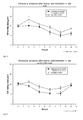
- Figures 1a-1c illustrate absorption of latanoprost from preservative-free test solutions with different latanoprost-trometamol ratio into aqueous humor of rabbit eye in comparison with commercial Xalatan, when latanoprost concentration in the test solution was the same as in Xalatan.
- latanoprost concentration in the test solution was 70 % of the latanoprost concentration in Xalatan.
- the latanoprost-trometamol ratios used in the test solutions were as follows:
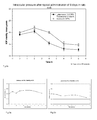
- Figures 2a - 2c show intraocular pressure after topical administration in rats when preservative-free test solutions with different latanoprost-trometamol ratios and different latanoprost concentrations were used in comparison with commercial Xalatan.
- the latanoprost-trometamol ratios used in the test solutions were as follows:
- ocular bioavailability of latanoprost in an aqueous eye drop composition can be improved by adding an organic amine to the aqueous eye drop composition containing latanoprost.
- This invention enables to provide homogenous and stable, preservative-free aqueous ophthalmic latanoprost solution as a sterile, preferably unit dose type formulation.
- the aqueous ophthalmic latanoprost solution according to the invention is evidently also less irritative to the eye than the currently available commercial product.
- the ingredients other than latanoprost and an organic amine may not be particularly limited as far as latanoprost is homogenously and stably dissolved in the aqueous solution.
- nonionic surfactants polysorbates, cremophores etc.
- preservatives are not required in the aqueous ophthalmic latanoprost solution of the invention to provide a stable and bioavailable formulation for use in a single dose form.
- the aqueous ophthalmic solution of the present invention also remains stable at room temperature, contrary to the currently available commercial product which requires cold storage (at 2-8 °C).
- the concentration of latanoprost in the ophthalmic aqueous solution and dosing frequency may vary according to the type and condition of the subject to be treated.
- an ophthalmic solution containing latanoprost at a concentration of 0.01 to 0.0005 %, preferably 0.0075 to 0.001 %, more preferably 0.005 to 0.002 % (w/v) may be instilled 1 to 4 times, preferably 1 to 2 times, and more preferably 1 time a day.
- the amount of latanoprost in the aqueous ophthalmic solution can be lowered compared to the prior art products, still achieving an effective product.
- the organic amine is a water-soluble organic amine, examples of which include organic amines having a hydroxy group, such as monoethanolamine, diethanolamine, triethanolamine, trometamol and meglumine.
- a preferred organic amine is trometamol.
- the concentration of the organic amine is for example in the case of trometamol preferably in the range of from 0.01 % to 1 % (w/v), more preferably from 0.05 to 0.75 % (w/v).
- the ophthalmic solution according to the invention may also comprise conventional excipients used in ophthalmic compositions, such as buffering agents, solvents, pH adjusters, tonicity agents, viscocity enhancers and the like.
- Preferred excipients for use in the ophthalmic solution of the present invention are viscosity enhancers.
- Suitable viscosity enhancers include but are not limited to cellulose derivatives, such as hydroxypropyl methylcellulose, sodium carboxymethylcellulose, methylcellulose, polyvinylpyrrolidone, polyvinylalcohols, dextrans and polyacrylic acids.
- buffering agents include but are not limited to sodium dihydrogen phosphate dihydrate, boric acid, borax, citric acid, or ⁇ -aminocaproic acid.
- tonicity agents include but are not limited to glycerol, sorbitol, mannitol and other sugar alcohols, propylene glycol, sodium chloride, potassium chloride and calcium chloride
- the pH of the ophthalmic aqueous solution according to the invention is preferably from 4 to 8, more preferably from 5 to 7.
- pH adjusters common pH adjusting agents such as sodium hydroxide and/or hydrochloric acid may be used.
- the ophthalmic solution according to the invention is preferably packaged in a container consisting essentially of polyethylene or in contact with material consisting essentially of polyethylene.
- the container material may contain minor amounts of other materials than polyethylene, for example polypropylene, polyethylene terephthalate, polyvinyl chloride, acrylic resins, polystyrene, polymethyl methacrylate and nylon 6.
- the amount of said materials is preferably no more than about 5 to 10 % of the total container material.
- Containers for packaging and storing the aqueous ophthalmic solution according to the invention include all container forms suitable for user-friendly topical ophthalmic delivery, preferably those of unit dose form. Consequently, the containers may be selected for example from the group consisting of bottles, tubes, ampoules, pipettes and fluid dispensers for dispensing minute amounts of sterile fluid.
- the containers for the ophthalmic solution according to the invention are preferably manufactured by extrusion blow moulding method.
- Extrusion blow moulding gives smoother inner surface of the container compared to injection blow moulding, which is commonly used to manufacture for example polyethylene multidose bottles.
- the smoother inner surface gives better chemical stability of prostaglandins in the polyethylene container compared to polyethylene container manufactured by injection blow moulding.
- single-dose containers are used, they are sterilized during the moulding process by heat and no additional sterilization of containers is needed, which also improves stability of prostaglandins in a single-dose container.
- the aqueous ophthalmic solution according to the invention remains soluble, stable and bioavailable also in fluid dispensers for dispensing of minute amounts of germ-free fluid or in any other container-type wherein the aqueous ophthalmic solution is in contact with container material consisting essentially of polyethylene.
- fluid dispensers are disclosed for example in US 5,614,172 (Ursapharm).
- the preservative-free aqueous ophthalmic solution according to the invention can be stored at room temperature in the above mentioned suitable containers, including unit dose pipettes and dispensers. Stability studies have shown that a preservative-free aqueous ophthalmic latanoprost solution according to the invention is stable in a polyethylene container for a long time, at least for 9 months at 5 °C and at 25 °C.
- IOP intraocular pressure
- the stability of preservative-free latanoprost in low density polyethylene containers was studied for 9 months at 5 °C and 25 °C.
- the composition of the preservative-free aqueous latanoprost formulation in the study was 0.003 % latanoprost, 0.3 % trometamol, 0.9 % sodium chloride and hydrochloric acid / sodium hydroxide to adjust the pH to 7.0.
- 0.3 ml of the composition prepared above was filled in the body part of the polyethylene unit dose container and sealed by heating with the upper part of the container.
- the containers were packaged into paper coated aluminium-polyethylene foil and stored in refrigerator or incubator.
- the concentration of latanoprost was measured by HPLC/UV. The results in comparison to time zero value are presented in figures 3a-3b . The results show that latanoprost concentration remains at the same level at 5 °C and 25 °C at least for nine (9) months.
Landscapes
- Health & Medical Sciences (AREA)
- Chemical & Material Sciences (AREA)
- Life Sciences & Earth Sciences (AREA)
- Veterinary Medicine (AREA)
- Medicinal Chemistry (AREA)
- Pharmacology & Pharmacy (AREA)
- Animal Behavior & Ethology (AREA)
- General Health & Medical Sciences (AREA)
- Public Health (AREA)
- Epidemiology (AREA)
- Ophthalmology & Optometry (AREA)
- Chemical Kinetics & Catalysis (AREA)
- General Chemical & Material Sciences (AREA)
- Engineering & Computer Science (AREA)
- Oil, Petroleum & Natural Gas (AREA)
- Proteomics, Peptides & Aminoacids (AREA)
- Inorganic Chemistry (AREA)
- Bioinformatics & Cheminformatics (AREA)
- Organic Chemistry (AREA)
- Nuclear Medicine, Radiotherapy & Molecular Imaging (AREA)
- Pharmaceuticals Containing Other Organic And Inorganic Compounds (AREA)
- Medicinal Preparation (AREA)
Abstract
The present invention relates to a method for improving ocular bioavailability of latanoprost by adding an organic amine to an aqueous eye drop solution containing latanoprost. The invention further relates to an aqueous eye drop composition in which a better ocular bioavailability of latanoprost is achieved by adding an organic amine to the aqueous eye drop solution containing latanoprost, and to a method for treating ocular hypertension and glaucoma by administering said composition to a subject in need of such treatment.
Description
- The present invention relates to a method for improving ocular bioavailability of latanoprost by adding an organic amine to an aqueous eye drop solution containing latanoprost. The invention further relates to an aqueous eye drop composition in which a better ocular bioavailability/penetration of latanoprost is achieved by adding an organic amine to the aqueous eye drop solution containing latanoprost, and to a method for treating ocular hypertension and glaucoma by administering said composition to a subject in need of such treatment.
- Like other prostaglandin derivatives, such as isopropyl unoprostone, tafluprost or travoprost, latanoprost is a highly lipophilic medicament. The concentration of latanoprost used for the treatment of glaucoma is very low, approximately 0.005 % (w/v). However, although latanoprost is effective in low amounts, there is still a need to reduce that minor amount to its effective minimum to be administered onto the eye surface. On the other hand, when the amount of the active agent in an eye drop composition is lowered, a balanced but sufficient penetration may become critical or impossible to obtain repeatedly and safely.
- Adjuvant agents are included in aqueous eye drop solutions in order to achieve sufficiently stable and effective eye drops for the desired purposes. Preservatives have been included in ophthalmic compositions not only for their antimicrobial effect but also for their stabilising and homogenizing interactions with the other ingredients. However, preservatives are also known as the major etiology of keratoconjuctive disorders, and for safety purposes it is preferred that the concentration of preservatives, such as those of benzalkonium chloride (BAK) type, is as low as possible. Animal studies and in vitro studies have demonstrated that preservatives such as BAK cause harmful effects on several eye tissues, including the tear film, cornea, conjunctiva and trabecular cells (Baudouin, 2008). Evidence from some rabbit and human studies has also suggested that the presence of BAK may affect the corneal epithelium layer and thus increase the transcorneal penetration of poorly permeable drugs. However, a recent study (Pellinen and Lokkila, 2009) has shown that the corneal penetration into rabbit aqueous humor is comparable between BAK-preserved and preservative-free tafluprost, which is another member in the family of prostaglandin derivatives. The dual role of preservatives (both antimicrobial and stabilizing/solubilizing effects) has lead to difficulties e.g. in preparing stable, preservative-free unit dose eye drop preparations.
- Nonionic surfactants and antioxidants have been added to ophthalmic aqueous prostaglandin derivative solutions e.g. in order to prevent lowering of concentration of said prostaglandin derivatives. The latanoprost composition of
WO2004/037267 (Sucampo) comprises polysorbate or polysorbate and EDTA, but substantially no BAK. InEP 1321144 (Santen), nonionic surfactants, especially polysorbates, have been found to prevent a prostaglandin derivative from being adsorbed to resinous container walls. The use of nonionic surfactants has been almost inavoidable in ophthalmic aqueous compositions comprising prostaglandin derivatives, especially if a preservative-free aqueous composition has been desired to be produced. - Organic amines have been used in several ophthalmic compositions, mostly as buffers and pH adjusting agents.
JP03/146881 JP03/327530 WO08/111630 JP04/002364 JP03/300871 JP03/206241 US03/055052 (Wakamoto) an excellent but less stimulative ophthalmic antiinflammatory effect can be obtained by adding trometamol to an ophthalmic preparation. InJP99/11302-162 EP 1 808 170EP 1 916 002 - However, despite of the above mentioned several references of eye drop formulations and various organic amines, there is no disclosure or suggestion that adding an organic amine to an ophthalmic aqueous latanoprost composition could cause a better transcorneal penetration and hence improved ocular bioavailability in relation to the reduced administered amount.
- The present invention relates to a method for improving ocular bioavailability of preservative-free latanoprost in an aqueous eye drop composition by adding an organic amine to the eye drop composition containing latanoprost.
- Another object of the invention is an aqueous preservative-free eye drop composition comprising latanoprost, wherein the ocular bioavailability of latanoprost is improved by adding an organic amine to the latanoprost containing eye drop.
- A further object of the invention is a method for treating ocular hypertension and glaucoma by administering to a subject in need of such treatment an effective amount of an aqueous preservative-free eye drop composition comprising latanoprost, wherein the ocular bioavailability of latanoprost is improved by adding an organic amine to the latanoprost containing eye drop.
- Within this description, "substantially no preservatives" or "preservative-free" means that the solution contains absolutely no preservatives, or the solution contains preservatives at a concentration that is undetectable or does not provide a preservative effect.
- "Bioavailability" refers to the degree and rate at which a drug is absorbed and made available in the target tissue. "Ocular bioavailability" refers more specifically to the concentration of a drug in the aqueous humor after topical administration of an ophthalmic solution.
- "Stability" refers to chemical and physical stability of the ophthalmic solution containing a drug.
-
Figures 1a-1c illustrate absorption of latanoprost from preservative-free test solutions with different latanoprost-trometamol ratio into aqueous humor of rabbit eye in comparison with commercial Xalatan, when latanoprost concentration in the test solution was the same as in Xalatan. Infigure 1d , latanoprost concentration in the test solution was 70 % of the latanoprost concentration in Xalatan. - The latanoprost-trometamol ratios used in the test solutions were as follows:
-
Fig 1a : Latanoprost - Trometamol ratio: 0.013 -
Fig 1b : Latanoprost - Trometamol ratio: 0.017 -
Fig 1c : Latanoprost - Trometamol ratio: 0.020 -
Fig 1d : Latanoprost - Trometamol ratio: 0.029 -
Figures 2a - 2c show intraocular pressure after topical administration in rats when preservative-free test solutions with different latanoprost-trometamol ratios and different latanoprost concentrations were used in comparison with commercial Xalatan.
The latanoprost-trometamol ratios used in the test solutions were as follows: -
Fig 2a : Latanoprost - Trometamol ratio: 0.020 (latanoprost concentration the same as in Xalatan) -
Fig 2b-2c : Latanoprost - Trometamol ratio: 0.029 (latanoprost concentration 70% of Xalatan) -
Figures 3a and 3b show preliminary stability of latanoprost unit dose eye drop composition during storage at 5 °C and at 25 °C, respectively. - According to the present invention it has now been found that ocular bioavailability of latanoprost in an aqueous eye drop composition can be improved by adding an organic amine to the aqueous eye drop composition containing latanoprost. This invention enables to provide homogenous and stable, preservative-free aqueous ophthalmic latanoprost solution as a sterile, preferably unit dose type formulation. The aqueous ophthalmic latanoprost solution according to the invention is evidently also less irritative to the eye than the currently available commercial product.
- The ingredients other than latanoprost and an organic amine may not be particularly limited as far as latanoprost is homogenously and stably dissolved in the aqueous solution. However, it is notable that nonionic surfactants (polysorbates, cremophores etc.) or preservatives are not required in the aqueous ophthalmic latanoprost solution of the invention to provide a stable and bioavailable formulation for use in a single dose form. The aqueous ophthalmic solution of the present invention also remains stable at room temperature, contrary to the currently available commercial product which requires cold storage (at 2-8 °C).
- The concentration of latanoprost in the ophthalmic aqueous solution and dosing frequency may vary according to the type and condition of the subject to be treated. For example, an ophthalmic solution containing latanoprost at a concentration of 0.01 to 0.0005 %, preferably 0.0075 to 0.001 %, more preferably 0.005 to 0.002 % (w/v) may be instilled 1 to 4 times, preferably 1 to 2 times, and more preferably 1 time a day. As the invention provides improved ocular bioavailability and IOP lowering effect of latanoprost, the amount of latanoprost in the aqueous ophthalmic solution can be lowered compared to the prior art products, still achieving an effective product.
- The organic amine is a water-soluble organic amine, examples of which include organic amines having a hydroxy group, such as monoethanolamine, diethanolamine, triethanolamine, trometamol and meglumine. A preferred organic amine is trometamol. The concentration of the organic amine is for example in the case of trometamol preferably in the range of from 0.01 % to 1 % (w/v), more preferably from 0.05 to 0.75 % (w/v).
- The ophthalmic solution according to the invention may also comprise conventional excipients used in ophthalmic compositions, such as buffering agents, solvents, pH adjusters, tonicity agents, viscocity enhancers and the like. Preferred excipients for use in the ophthalmic solution of the present invention are viscosity enhancers. Suitable viscosity enhancers include but are not limited to cellulose derivatives, such as hydroxypropyl methylcellulose, sodium carboxymethylcellulose, methylcellulose, polyvinylpyrrolidone, polyvinylalcohols, dextrans and polyacrylic acids. Examples of suitable buffering agents include but are not limited to sodium dihydrogen phosphate dihydrate, boric acid, borax, citric acid, or ε-aminocaproic acid. Specific examples of tonicity agents include but are not limited to glycerol, sorbitol, mannitol and other sugar alcohols, propylene glycol, sodium chloride, potassium chloride and calcium chloride
- The pH of the ophthalmic aqueous solution according to the invention is preferably from 4 to 8, more preferably from 5 to 7. As pH adjusters, common pH adjusting agents such as sodium hydroxide and/or hydrochloric acid may be used.
- The ophthalmic solution according to the invention is preferably packaged in a container consisting essentially of polyethylene or in contact with material consisting essentially of polyethylene. The container material may contain minor amounts of other materials than polyethylene, for example polypropylene, polyethylene terephthalate, polyvinyl chloride, acrylic resins, polystyrene, polymethyl methacrylate and
nylon 6. The amount of said materials is preferably no more than about 5 to 10 % of the total container material. - Containers for packaging and storing the aqueous ophthalmic solution according to the invention include all container forms suitable for user-friendly topical ophthalmic delivery, preferably those of unit dose form. Consequently, the containers may be selected for example from the group consisting of bottles, tubes, ampoules, pipettes and fluid dispensers for dispensing minute amounts of sterile fluid.
- The containers for the ophthalmic solution according to the invention are preferably manufactured by extrusion blow moulding method. Extrusion blow moulding gives smoother inner surface of the container compared to injection blow moulding, which is commonly used to manufacture for example polyethylene multidose bottles. The smoother inner surface gives better chemical stability of prostaglandins in the polyethylene container compared to polyethylene container manufactured by injection blow moulding. Furthermore, when single-dose containers are used, they are sterilized during the moulding process by heat and no additional sterilization of containers is needed, which also improves stability of prostaglandins in a single-dose container. Conventional techniques for sterilization of prostaglandin eye drop products consist of treatment of the empty plastic bottles with highly toxic ethylene oxide gas before filling-in the solution (see
EP 1 825 855EP 1 349 580 - Although unit dose containers are preferred for the purposes of the invention, the aqueous ophthalmic solution according to the invention remains soluble, stable and bioavailable also in fluid dispensers for dispensing of minute amounts of germ-free fluid or in any other container-type wherein the aqueous ophthalmic solution is in contact with container material consisting essentially of polyethylene. Such fluid dispensers are disclosed for example in
US 5,614,172 (Ursapharm). - The preservative-free aqueous ophthalmic solution according to the invention can be stored at room temperature in the above mentioned suitable containers, including unit dose pipettes and dispensers. Stability studies have shown that a preservative-free aqueous ophthalmic latanoprost solution according to the invention is stable in a polyethylene container for a long time, at least for 9 months at 5 °C and at 25 °C.
- The following examples illustrate the invention without limiting the same in any way.
- Male albino rabbits of New Zealand White strain received the ophthalmic solutions described above in connection with
Figure 1 . In each rabbit, one eye was dosed topically with one of the test solutions and the other eye with the reference solution (commercial Xalatan). The rabbits were sacrificed at each time point (4 animals per treatment per time point) and aqueous humor sample was taken. The concentration of latanoprost acid was measured using the HPLC/MS method. - The results are shown in
Figures 1a-1d . It can be seen that by increasing the latanoprost:trometamol ratio in preservative-free test solutions penetration of latanoprost into aqueous humor of rabbit eye is improved. - Spraque-Dawley rats were used to study the effects of ophthalmic solutions on the intraocular pressure (IOP). The test solutions were dosed topically (5 µl) either as a single instillation or repeated instillations onto one eye and the reference solution (commercial Xalatan) onto the other. Six to twelve animals were used per study. IOP was measured prior to dosing at 0 h and 2, 4, 6 and 8 hours (or additional 10 hours) after the dosing. Measurement was performed with a TonoLab rebound tonometer.
- The results are shown in
Figures 2a - 2c . From the results it can be seen that the commercial product causes an immediate increase in the IOP and the IOP lowering effect is seen only after several (6 to 8) hours. The compositions according to the invention do not provide an increase in the IOP and the IOP lowering effect starts earlier than with the current commercial product. The IOP lowering effect stays at the same level after repeated instillation as it is after single instillation. Furthermore, the IOP lowering effect of the composition according to the invention is better than that of the commercial product, even with a latanoprost concentration of only 70 % of the amount of latanoprost in the commercial product. - The stability of preservative-free latanoprost in low density polyethylene containers was studied for 9 months at 5 °C and 25 °C. The composition of the preservative-free aqueous latanoprost formulation in the study was 0.003 % latanoprost, 0.3 % trometamol, 0.9 % sodium chloride and hydrochloric acid / sodium hydroxide to adjust the pH to 7.0.
- 0.3 ml of the composition prepared above was filled in the body part of the polyethylene unit dose container and sealed by heating with the upper part of the container. The containers were packaged into paper coated aluminium-polyethylene foil and stored in refrigerator or incubator.
- The concentration of latanoprost was measured by HPLC/UV. The results in comparison to time zero value are presented in
figures 3a-3b . The results show that latanoprost concentration remains at the same level at 5 °C and 25 °C at least for nine (9) months. - Baudouin C. Detrimental effect of preservatives in eyedrops: implications for the treatment of glaucoma. Acta Ophthalmol 2008; 86:716-726.
- Pellinen P, Lokkila. Corneal penetration into rabbit aqueous humor is comparable between preserved and preservative-free tafluprost. Ophthalmic Res 2009; 41:118-122.
Claims (12)
- A method for improving ocular bioavailability of latanoprost from an aqueous eye drop composition by adding an organic amine to the eye drop composition containing latanoprost.
- The method according to claim 1, wherein the organic amine is an organic amine having a hydroxy group.
- The method according to claim 2, wherein the organic amine having a hydroxy group is trometamol.
- The method according to claim 1, wherein the aqueous latanoprost eye drop composition contains substantially no preservatives.
- The method according to claim 1, wherein the aqueous latanoprost eye drop composition contains viscosity enhancing agents.
- An aqueous eye drop composition comprising latanoprost, wherein the ocular bioavailability of latanoprost is improved by adding an organic amine to the latanoprost containing eye drop.
- The aqueous eye drop composition according to claim 6 wherein the organic amine is an organic amine having a hydroxy group.
- The aqueous eye drop composition according to claim 7, wherein the organic amine having a hydroxy group is trometamol.
- The aqueous eye drop composition according to claim 7 which contains substantially no preservatives or non-ionic surfactants.
- The aqueous eye drop composition according to claim 6 which further comprises viscosity enhancing agents.
- The aqueous eye drop composition according to claim 6, which comprises 0.0025 to 0.005 % (w/v) latanoprost, 0.1 to 1 % (w/v) trometamol, optionally buffering agents, pH adjusters, tonicity and viscosity enhancing agents conventionally used in ophthalmic solutions, and substantially no preservatives, in a unit dose container or fluid dispenser consisting essentially of polyethylene or in contact with container material consisting essentially of polyethylene.
- A method for treating ocular hypertension and glaucoma by administering to a subject in need of such treatment an effective amount of an aqueous eye drop composition comprising latanoprost, wherein the ocular bioavailability of latanoprost is improved by adding an organic amine to the latanoprost containing eye drop.
Priority Applications (13)
| Application Number | Priority Date | Filing Date | Title |
|---|---|---|---|
| EP09397519A EP2269575A1 (en) | 2009-06-30 | 2009-06-30 | Method for improving bioavailability of latanoprost |
| MYPI2011006155A MY157434A (en) | 2009-06-30 | 2010-06-23 | Method for improving bioavailability of latanoprost |
| PCT/JP2010/004179 WO2011001634A1 (en) | 2009-06-30 | 2010-06-23 | Method for improving bioavailability of latanoprost |
| CA2766269A CA2766269C (en) | 2009-06-30 | 2010-06-23 | Method for improving bioavailability of latanoprost |
| SG2011091741A SG176800A1 (en) | 2009-06-30 | 2010-06-23 | Method for improving bioavailability of latanoprost |
| CN201080028960.9A CN102802633B (en) | 2009-06-30 | 2010-06-23 | Method for improving the bioavailability of latanoprost |
| EP10793808.6A EP2448589A4 (en) | 2009-06-30 | 2010-06-23 | Method for improving bioavailability of latanoprost |
| KR1020127001350A KR20120095341A (en) | 2009-06-30 | 2010-06-23 | Method for improving bioavailability of latanoprost |
| JP2011551134A JP5695580B2 (en) | 2009-06-30 | 2010-06-23 | How to improve the bioavailability of latanoprost |
| HK13100192.1A HK1172849B (en) | 2009-06-30 | 2010-06-23 | Method for improving bioavailability of latanoprost |
| US13/381,631 US20120107376A1 (en) | 2009-06-30 | 2010-06-23 | Method for improving bioavailability of latanoprost |
| EA201270097A EA022390B1 (en) | 2009-06-30 | 2010-06-23 | Method for improving bioavailability of latanoprost |
| UAA201200886A UA107466C2 (en) | 2009-06-30 | 2010-06-23 | Method for improving bioavailability of latanoprost |
Applications Claiming Priority (1)
| Application Number | Priority Date | Filing Date | Title |
|---|---|---|---|
| EP09397519A EP2269575A1 (en) | 2009-06-30 | 2009-06-30 | Method for improving bioavailability of latanoprost |
Publications (1)
| Publication Number | Publication Date |
|---|---|
| EP2269575A1 true EP2269575A1 (en) | 2011-01-05 |
Family
ID=41137869
Family Applications (2)
| Application Number | Title | Priority Date | Filing Date |
|---|---|---|---|
| EP09397519A Withdrawn EP2269575A1 (en) | 2009-06-30 | 2009-06-30 | Method for improving bioavailability of latanoprost |
| EP10793808.6A Withdrawn EP2448589A4 (en) | 2009-06-30 | 2010-06-23 | Method for improving bioavailability of latanoprost |
Family Applications After (1)
| Application Number | Title | Priority Date | Filing Date |
|---|---|---|---|
| EP10793808.6A Withdrawn EP2448589A4 (en) | 2009-06-30 | 2010-06-23 | Method for improving bioavailability of latanoprost |
Country Status (11)
| Country | Link |
|---|---|
| US (1) | US20120107376A1 (en) |
| EP (2) | EP2269575A1 (en) |
| JP (1) | JP5695580B2 (en) |
| KR (1) | KR20120095341A (en) |
| CN (1) | CN102802633B (en) |
| CA (1) | CA2766269C (en) |
| EA (1) | EA022390B1 (en) |
| MY (1) | MY157434A (en) |
| SG (1) | SG176800A1 (en) |
| UA (1) | UA107466C2 (en) |
| WO (1) | WO2011001634A1 (en) |
Cited By (2)
| Publication number | Priority date | Publication date | Assignee | Title |
|---|---|---|---|---|
| EP2886130A1 (en) * | 2013-12-23 | 2015-06-24 | Rafarm S.A. | Ophthalmic pharmaceutical composition and process for the preparation thereof |
| WO2018033854A1 (en) | 2016-08-15 | 2018-02-22 | Santen Pharmaceutical Co., Ltd. | Ophthalmic composition and a method for treating ocular hypertension and glaucoma |
Citations (15)
| Publication number | Priority date | Publication date | Assignee | Title |
|---|---|---|---|---|
| JPH03146881A (en) | 1989-11-01 | 1991-06-21 | Fanuc Ltd | Loading/unloading structure for holding frame of printed board |
| JPH03206241A (en) | 1989-12-30 | 1991-09-09 | Dai Ichi Horm Co Ltd | Floor joist fixing device |
| JPH042364A (en) | 1990-04-19 | 1992-01-07 | Olympus Optical Co Ltd | Fistula forming tube |
| US5614172A (en) | 1990-08-29 | 1997-03-25 | Ursapharm Arzneimittel Gmbh | Fluid dispenser for germ-free fluid |
| JPH11302162A (en) | 1998-04-21 | 1999-11-02 | Kissei Pharmaceut Co Ltd | Tranilast aqueous solution preparation |
| US20030055052A1 (en) | 2000-11-10 | 2003-03-20 | Stefan Peters | FAP-activated anti-tumor compounds |
| EP1321144A1 (en) | 2000-09-13 | 2003-06-25 | Santen Pharmaceutical Co., Ltd. | Eye drops |
| EP1349580A1 (en) | 2000-12-22 | 2003-10-08 | Novartis AG | Process to improve stability of a pharmaceutical composition |
| WO2004037267A1 (en) | 2002-10-24 | 2004-05-06 | Sucampo Ag (Usa) Inc. | Method and composition containing latanoprost for treating ocular hypertension and glaucoma |
| US20070021507A1 (en) * | 2004-11-05 | 2007-01-25 | Shirou Sawa | Aqueous eye drops with accelerated intraocular migration |
| US20070134278A1 (en) * | 2005-12-09 | 2007-06-14 | Yosef Bershteyn | Aqueous dispersions and solutions of difficult to dissolve materials and methods of their preparation |
| EP1825855A1 (en) | 2004-12-09 | 2007-08-29 | Santen Pharmaceutical Co., Ltd. | Product containing prostaglandin having fluorine atom in molecule |
| EP1916002A1 (en) | 2005-08-02 | 2008-04-30 | Santen Pharmaceutical Co., Ltd. | Method for prevention of degradation of thermally unstable substance |
| WO2008111630A1 (en) | 2007-03-13 | 2008-09-18 | Santen Pharmaceutical Co., Ltd. | Pirenoxine-containing suspension-type aqueous preparation |
| WO2009007828A1 (en) * | 2007-07-11 | 2009-01-15 | Ophthalmopharma Ag | Complexes of prostaglandin derivatives and monosubstituted, charged beta-cyclodextrins |
Family Cites Families (3)
| Publication number | Priority date | Publication date | Assignee | Title |
|---|---|---|---|---|
| US5040706A (en) * | 1989-03-17 | 1991-08-20 | Insite Vision, Inc. | Liquid droplet dispensing apparatus |
| US20100120908A1 (en) * | 2007-02-07 | 2010-05-13 | Teika Pharmaceutical Co., Ltd | Eye drop preparation comprising latanoprost |
| JP5253775B2 (en) * | 2007-08-10 | 2013-07-31 | 科研製薬株式会社 | Latanoprost eye drops |
-
2009
- 2009-06-30 EP EP09397519A patent/EP2269575A1/en not_active Withdrawn
-
2010
- 2010-06-23 SG SG2011091741A patent/SG176800A1/en unknown
- 2010-06-23 US US13/381,631 patent/US20120107376A1/en not_active Abandoned
- 2010-06-23 JP JP2011551134A patent/JP5695580B2/en not_active Expired - Fee Related
- 2010-06-23 UA UAA201200886A patent/UA107466C2/en unknown
- 2010-06-23 CN CN201080028960.9A patent/CN102802633B/en not_active Expired - Fee Related
- 2010-06-23 WO PCT/JP2010/004179 patent/WO2011001634A1/en not_active Ceased
- 2010-06-23 MY MYPI2011006155A patent/MY157434A/en unknown
- 2010-06-23 EP EP10793808.6A patent/EP2448589A4/en not_active Withdrawn
- 2010-06-23 KR KR1020127001350A patent/KR20120095341A/en not_active Ceased
- 2010-06-23 CA CA2766269A patent/CA2766269C/en not_active Expired - Fee Related
- 2010-06-23 EA EA201270097A patent/EA022390B1/en not_active IP Right Cessation
Patent Citations (16)
| Publication number | Priority date | Publication date | Assignee | Title |
|---|---|---|---|---|
| JPH03146881A (en) | 1989-11-01 | 1991-06-21 | Fanuc Ltd | Loading/unloading structure for holding frame of printed board |
| JPH03206241A (en) | 1989-12-30 | 1991-09-09 | Dai Ichi Horm Co Ltd | Floor joist fixing device |
| JPH042364A (en) | 1990-04-19 | 1992-01-07 | Olympus Optical Co Ltd | Fistula forming tube |
| US5614172A (en) | 1990-08-29 | 1997-03-25 | Ursapharm Arzneimittel Gmbh | Fluid dispenser for germ-free fluid |
| JPH11302162A (en) | 1998-04-21 | 1999-11-02 | Kissei Pharmaceut Co Ltd | Tranilast aqueous solution preparation |
| EP1321144A1 (en) | 2000-09-13 | 2003-06-25 | Santen Pharmaceutical Co., Ltd. | Eye drops |
| US20030055052A1 (en) | 2000-11-10 | 2003-03-20 | Stefan Peters | FAP-activated anti-tumor compounds |
| EP1349580A1 (en) | 2000-12-22 | 2003-10-08 | Novartis AG | Process to improve stability of a pharmaceutical composition |
| WO2004037267A1 (en) | 2002-10-24 | 2004-05-06 | Sucampo Ag (Usa) Inc. | Method and composition containing latanoprost for treating ocular hypertension and glaucoma |
| US20070021507A1 (en) * | 2004-11-05 | 2007-01-25 | Shirou Sawa | Aqueous eye drops with accelerated intraocular migration |
| EP1808170A1 (en) | 2004-11-05 | 2007-07-18 | Senju Pharmaceutical Co., Ltd. | Aqueous eye drops with accelerated intraocular migration |
| EP1825855A1 (en) | 2004-12-09 | 2007-08-29 | Santen Pharmaceutical Co., Ltd. | Product containing prostaglandin having fluorine atom in molecule |
| EP1916002A1 (en) | 2005-08-02 | 2008-04-30 | Santen Pharmaceutical Co., Ltd. | Method for prevention of degradation of thermally unstable substance |
| US20070134278A1 (en) * | 2005-12-09 | 2007-06-14 | Yosef Bershteyn | Aqueous dispersions and solutions of difficult to dissolve materials and methods of their preparation |
| WO2008111630A1 (en) | 2007-03-13 | 2008-09-18 | Santen Pharmaceutical Co., Ltd. | Pirenoxine-containing suspension-type aqueous preparation |
| WO2009007828A1 (en) * | 2007-07-11 | 2009-01-15 | Ophthalmopharma Ag | Complexes of prostaglandin derivatives and monosubstituted, charged beta-cyclodextrins |
Non-Patent Citations (2)
| Title |
|---|
| BAUDOUIN C: "Detrimental effect of preservatives in eyedrops: implications for the treatment of glaucoma", ACTA OPHTHALMOL, vol. 86, 2008, pages 716 - 726 |
| PELLINEN P; LOKKILA: "Corneal penetration into rabbit aqueous humor is comparable between preserved and preservative-free tafluprost", OPHTHALMIC RES, vol. 41, 2009, pages 118 - 122 |
Cited By (2)
| Publication number | Priority date | Publication date | Assignee | Title |
|---|---|---|---|---|
| EP2886130A1 (en) * | 2013-12-23 | 2015-06-24 | Rafarm S.A. | Ophthalmic pharmaceutical composition and process for the preparation thereof |
| WO2018033854A1 (en) | 2016-08-15 | 2018-02-22 | Santen Pharmaceutical Co., Ltd. | Ophthalmic composition and a method for treating ocular hypertension and glaucoma |
Also Published As
| Publication number | Publication date |
|---|---|
| WO2011001634A1 (en) | 2011-01-06 |
| CN102802633A (en) | 2012-11-28 |
| EA022390B1 (en) | 2015-12-30 |
| MY157434A (en) | 2016-06-15 |
| HK1172849A1 (en) | 2013-05-03 |
| JP5695580B2 (en) | 2015-04-08 |
| CA2766269C (en) | 2018-04-03 |
| JP2012532091A (en) | 2012-12-13 |
| CN102802633B (en) | 2016-01-20 |
| EP2448589A1 (en) | 2012-05-09 |
| UA107466C2 (en) | 2015-01-12 |
| EP2448589A4 (en) | 2013-04-17 |
| CA2766269A1 (en) | 2011-01-06 |
| KR20120095341A (en) | 2012-08-28 |
| SG176800A1 (en) | 2012-01-30 |
| US20120107376A1 (en) | 2012-05-03 |
| EA201270097A1 (en) | 2012-05-30 |
Similar Documents
| Publication | Publication Date | Title |
|---|---|---|
| JP7520285B2 (en) | Methods and compositions for treating ocular hypertension and glaucoma - Patents.com | |
| CA2766269C (en) | Method for improving bioavailability of latanoprost | |
| HK1172849B (en) | Method for improving bioavailability of latanoprost |
Legal Events
| Date | Code | Title | Description |
|---|---|---|---|
| PUAI | Public reference made under article 153(3) epc to a published international application that has entered the european phase |
Free format text: ORIGINAL CODE: 0009012 |
|
| AK | Designated contracting states |
Kind code of ref document: A1 Designated state(s): AT BE BG CH CY CZ DE DK EE ES FI FR GB GR HR HU IE IS IT LI LT LU LV MC MK MT NL NO PL PT RO SE SI SK TR |
|
| AX | Request for extension of the european patent |
Extension state: AL BA RS |
|
| STAA | Information on the status of an ep patent application or granted ep patent |
Free format text: STATUS: THE APPLICATION IS DEEMED TO BE WITHDRAWN |
|
| 18D | Application deemed to be withdrawn |
Effective date: 20110706 |