EP2268626B1 - 5-aryl-4-(5-substituted 2,4-dihydroxyphenyl)-1,2,3-thiadiazoles as inhibitors of hsp90 chaperone and the intermediates for production thereof - Google Patents
5-aryl-4-(5-substituted 2,4-dihydroxyphenyl)-1,2,3-thiadiazoles as inhibitors of hsp90 chaperone and the intermediates for production thereof Download PDFInfo
- Publication number
- EP2268626B1 EP2268626B1 EP08766671A EP08766671A EP2268626B1 EP 2268626 B1 EP2268626 B1 EP 2268626B1 EP 08766671 A EP08766671 A EP 08766671A EP 08766671 A EP08766671 A EP 08766671A EP 2268626 B1 EP2268626 B1 EP 2268626B1
- Authority
- EP
- European Patent Office
- Prior art keywords
- dihydroxyphenyl
- chloro
- thiadiazoles
- synthesis
- thiadiazole
- Prior art date
- Legal status (The legal status is an assumption and is not a legal conclusion. Google has not performed a legal analysis and makes no representation as to the accuracy of the status listed.)
- Not-in-force
Links
- 239000003112 inhibitor Substances 0.000 title description 6
- 238000004519 manufacturing process Methods 0.000 title description 6
- 108010006519 Molecular Chaperones Proteins 0.000 title description 5
- 101100016370 Danio rerio hsp90a.1 gene Proteins 0.000 title 1
- 101100285708 Dictyostelium discoideum hspD gene Proteins 0.000 title 1
- 101100071627 Schizosaccharomyces pombe (strain 972 / ATCC 24843) swo1 gene Proteins 0.000 title 1
- 239000000543 intermediate Substances 0.000 title 1
- 150000001875 compounds Chemical class 0.000 claims abstract description 64
- 101001016865 Homo sapiens Heat shock protein HSP 90-alpha Proteins 0.000 claims abstract description 25
- 230000015572 biosynthetic process Effects 0.000 claims abstract description 23
- 238000003786 synthesis reaction Methods 0.000 claims abstract description 23
- 150000004867 thiadiazoles Chemical class 0.000 claims abstract description 10
- 102100034051 Heat shock protein HSP 90-alpha Human genes 0.000 claims description 18
- 125000000956 methoxy group Chemical group [H]C([H])([H])O* 0.000 claims description 11
- 239000003481 heat shock protein 90 inhibitor Substances 0.000 claims description 8
- RFRZSMIYYCXYNL-UHFFFAOYSA-N ICPD-47 Chemical compound C1=CC(OCC)=CC=C1C1=C(C=2C(=CC(O)=C(Cl)C=2)O)N=NS1 RFRZSMIYYCXYNL-UHFFFAOYSA-N 0.000 claims description 7
- 230000005764 inhibitory process Effects 0.000 claims description 6
- 150000003839 salts Chemical class 0.000 claims description 5
- 229910052739 hydrogen Inorganic materials 0.000 claims description 4
- DUXCVYIPXRRATG-UHFFFAOYSA-N 4-[5-(4-ethoxyphenyl)thiadiazol-4-yl]-6-ethylbenzene-1,3-diol Chemical compound C1=CC(OCC)=CC=C1C1=C(C=2C(=CC(O)=C(CC)C=2)O)N=NS1 DUXCVYIPXRRATG-UHFFFAOYSA-N 0.000 claims description 3
- 239000000203 mixture Substances 0.000 claims description 3
- 125000001424 substituent group Chemical group 0.000 claims description 3
- UTWGFIMJBOZKAO-UHFFFAOYSA-N 4-chloro-6-[5-(3,4-dimethoxyphenyl)thiadiazol-4-yl]benzene-1,3-diol Chemical compound C1=C(OC)C(OC)=CC=C1C1=C(C=2C(=CC(O)=C(Cl)C=2)O)N=NS1 UTWGFIMJBOZKAO-UHFFFAOYSA-N 0.000 claims description 2
- QVCCDDRAHNCHNO-UHFFFAOYSA-N 4-chloro-6-[5-(4-methylphenyl)thiadiazol-4-yl]benzene-1,3-diol Chemical compound C1=CC(C)=CC=C1C1=C(C=2C(=CC(O)=C(Cl)C=2)O)N=NS1 QVCCDDRAHNCHNO-UHFFFAOYSA-N 0.000 claims description 2
- FHKZHOZHULTQJI-UHFFFAOYSA-N ICPD-26 Chemical compound C1=CC(OC)=CC=C1C1=C(C=2C(=CC(O)=C(Cl)C=2)O)N=NS1 FHKZHOZHULTQJI-UHFFFAOYSA-N 0.000 claims description 2
- OKTIOCXNHWIOQB-UHFFFAOYSA-N 4-[1,3-bis(4-ethoxyphenyl)-3-(5-ethyl-2,4-dihydroxyphenyl)-2-hydrazinylidenepropyl]-6-ethylbenzene-1,3-diol Chemical compound C(C)C=1C(=CC(=C(C1)C(C1=CC=C(C=C1)OCC)C(C(C1=CC=C(C=C1)OCC)C1=C(C=C(C(=C1)CC)O)O)=NN)O)O OKTIOCXNHWIOQB-UHFFFAOYSA-N 0.000 claims 1
- BFUVHVYNOSQHMW-UHFFFAOYSA-N 4-chloro-6-[3-(5-chloro-2,4-dihydroxyphenyl)-1,3-bis(3,4-dimethoxyphenyl)-2-hydrazinylidenepropyl]benzene-1,3-diol Chemical compound ClC=1C(=CC(=C(C1)C(C1=CC(=C(C=C1)OC)OC)C(C(C1=CC(=C(C=C1)OC)OC)C1=C(C=C(C(=C1)Cl)O)O)=NN)O)O BFUVHVYNOSQHMW-UHFFFAOYSA-N 0.000 claims 1
- CCBNAYAZEQJTEX-UHFFFAOYSA-N 4-chloro-6-[3-(5-chloro-2,4-dihydroxyphenyl)-1,3-bis(4-ethoxyphenyl)-2-hydrazinylidenepropyl]benzene-1,3-diol Chemical compound ClC=1C(=CC(=C(C1)C(C1=CC=C(C=C1)OCC)C(C(C1=CC=C(C=C1)OCC)C1=C(C=C(C(=C1)Cl)O)O)=NN)O)O CCBNAYAZEQJTEX-UHFFFAOYSA-N 0.000 claims 1
- OYKFJMSWHWYGQQ-UHFFFAOYSA-N 4-chloro-6-[3-(5-chloro-2,4-dihydroxyphenyl)-2-hydrazinylidene-1,3-bis(4-methoxyphenyl)propyl]benzene-1,3-diol Chemical compound ClC=1C(=CC(=C(C1)C(C1=CC=C(C=C1)OC)C(C(C1=CC=C(C=C1)OC)C1=C(C=C(C(=C1)Cl)O)O)=NN)O)O OYKFJMSWHWYGQQ-UHFFFAOYSA-N 0.000 claims 1
- ZEJVPFZZXCJDJE-UHFFFAOYSA-N 4-chloro-6-[3-(5-chloro-2,4-dihydroxyphenyl)-2-hydrazinylidene-1,3-bis(4-methylphenyl)propyl]benzene-1,3-diol Chemical compound ClC=1C(=CC(=C(C1)C(C1=CC=C(C=C1)C)C(C(C1=CC=C(C=C1)C)C1=C(C=C(C(=C1)Cl)O)O)=NN)O)O ZEJVPFZZXCJDJE-UHFFFAOYSA-N 0.000 claims 1
- VLLMWSRANPNYQX-UHFFFAOYSA-N thiadiazole Chemical compound C1=CSN=N1.C1=CSN=N1 VLLMWSRANPNYQX-UHFFFAOYSA-N 0.000 claims 1
- 206010028980 Neoplasm Diseases 0.000 abstract description 11
- 201000011510 cancer Diseases 0.000 abstract description 9
- 239000004480 active ingredient Substances 0.000 abstract description 2
- 239000008194 pharmaceutical composition Substances 0.000 abstract 1
- IAZDPXIOMUYVGZ-WFGJKAKNSA-N Dimethyl sulfoxide Chemical compound [2H]C([2H])([2H])S(=O)C([2H])([2H])[2H] IAZDPXIOMUYVGZ-WFGJKAKNSA-N 0.000 description 28
- 210000004027 cell Anatomy 0.000 description 19
- 230000000694 effects Effects 0.000 description 11
- 238000005160 1H NMR spectroscopy Methods 0.000 description 10
- 239000007787 solid Substances 0.000 description 10
- 102000004169 proteins and genes Human genes 0.000 description 8
- 108090000623 proteins and genes Proteins 0.000 description 8
- AECPBJMOGBFQDN-YMYQVXQQSA-N radicicol Chemical compound C1CCCC(=O)C[C@H]2[C@H](Cl)C(=O)CC(=O)[C@H]2C(=O)O[C@H](C)C[C@H]2O[C@@H]21 AECPBJMOGBFQDN-YMYQVXQQSA-N 0.000 description 7
- 238000000111 isothermal titration calorimetry Methods 0.000 description 6
- FYSNRJHAOHDILO-UHFFFAOYSA-N thionyl chloride Chemical compound ClS(Cl)=O FYSNRJHAOHDILO-UHFFFAOYSA-N 0.000 description 6
- 238000001644 13C nuclear magnetic resonance spectroscopy Methods 0.000 description 5
- JRZJKWGQFNTSRN-UHFFFAOYSA-N Geldanamycin Natural products C1C(C)CC(OC)C(O)C(C)C=C(C)C(OC(N)=O)C(OC)CCC=C(C)C(=O)NC2=CC(=O)C(OC)=C1C2=O JRZJKWGQFNTSRN-UHFFFAOYSA-N 0.000 description 5
- OSVHLUXLWQLPIY-KBAYOESNSA-N butyl 2-[(6aR,9R,10aR)-1-hydroxy-9-(hydroxymethyl)-6,6-dimethyl-6a,7,8,9,10,10a-hexahydrobenzo[c]chromen-3-yl]-2-methylpropanoate Chemical compound C(CCC)OC(C(C)(C)C1=CC(=C2[C@H]3[C@H](C(OC2=C1)(C)C)CC[C@H](C3)CO)O)=O OSVHLUXLWQLPIY-KBAYOESNSA-N 0.000 description 5
- QTQAWLPCGQOSGP-GBTDJJJQSA-N geldanamycin Chemical compound N1C(=O)\C(C)=C/C=C\[C@@H](OC)[C@H](OC(N)=O)\C(C)=C/[C@@H](C)[C@@H](O)[C@H](OC)C[C@@H](C)CC2=C(OC)C(=O)C=C1C2=O QTQAWLPCGQOSGP-GBTDJJJQSA-N 0.000 description 5
- VYGYNVZNSSTDLJ-HKCOAVLJSA-N monorden Natural products CC1CC2OC2C=C/C=C/C(=O)CC3C(C(=CC(=C3Cl)O)O)C(=O)O1 VYGYNVZNSSTDLJ-HKCOAVLJSA-N 0.000 description 5
- 238000002360 preparation method Methods 0.000 description 5
- 229930192524 radicicol Natural products 0.000 description 5
- FANCTJAFZSYTIS-IQUVVAJASA-N (1r,3s,5z)-5-[(2e)-2-[(1r,3as,7ar)-7a-methyl-1-[(2r)-4-(phenylsulfonimidoyl)butan-2-yl]-2,3,3a,5,6,7-hexahydro-1h-inden-4-ylidene]ethylidene]-4-methylidenecyclohexane-1,3-diol Chemical compound C([C@@H](C)[C@@H]1[C@]2(CCCC(/[C@@H]2CC1)=C\C=C\1C([C@@H](O)C[C@H](O)C/1)=C)C)CS(=N)(=O)C1=CC=CC=C1 FANCTJAFZSYTIS-IQUVVAJASA-N 0.000 description 4
- PSWDQTMAUUQILQ-UHFFFAOYSA-N 2-[(6-methoxy-4-methylquinazolin-2-yl)amino]-5,6-dimethyl-1h-pyrimidin-4-one Chemical compound N1=C(C)C2=CC(OC)=CC=C2N=C1NC1=NC(=O)C(C)=C(C)N1 PSWDQTMAUUQILQ-UHFFFAOYSA-N 0.000 description 4
- JTWGXPMHFWGXHE-UHFFFAOYSA-N 4-[2-(4-ethoxyphenyl)ethanehydrazonoyl]-6-ethylbenzene-1,3-diol Chemical compound C1=CC(OCC)=CC=C1CC(=NN)C1=CC(CC)=C(O)C=C1O JTWGXPMHFWGXHE-UHFFFAOYSA-N 0.000 description 4
- QWDDPXSCTRRGQK-UHFFFAOYSA-N 4-chloro-6-[2-(3,4-dimethoxyphenyl)ethanehydrazonoyl]benzene-1,3-diol Chemical compound C1=C(OC)C(OC)=CC=C1CC(=NN)C1=CC(Cl)=C(O)C=C1O QWDDPXSCTRRGQK-UHFFFAOYSA-N 0.000 description 4
- JJNWOMFRHMKEHK-UHFFFAOYSA-N 4-chloro-6-[2-(4-ethoxyphenyl)ethanehydrazonoyl]benzene-1,3-diol Chemical compound C1=CC(OCC)=CC=C1CC(=NN)C1=CC(Cl)=C(O)C=C1O JJNWOMFRHMKEHK-UHFFFAOYSA-N 0.000 description 4
- ZJTNIGDEAIXWKY-UHFFFAOYSA-N 4-chloro-6-[2-(4-methoxyphenyl)ethanehydrazonoyl]benzene-1,3-diol Chemical compound C1=CC(OC)=CC=C1CC(=NN)C1=CC(Cl)=C(O)C=C1O ZJTNIGDEAIXWKY-UHFFFAOYSA-N 0.000 description 4
- BAWIWRKDRFMEPD-UHFFFAOYSA-N 4-chloro-6-[2-(4-methylphenyl)ethanehydrazonoyl]benzene-1,3-diol Chemical compound C1=CC(C)=CC=C1CC(=NN)C1=CC(Cl)=C(O)C=C1O BAWIWRKDRFMEPD-UHFFFAOYSA-N 0.000 description 4
- RXGJTUSBYWCRBK-UHFFFAOYSA-M 5-methylphenazinium methyl sulfate Chemical compound COS([O-])(=O)=O.C1=CC=C2[N+](C)=C(C=CC=C3)C3=NC2=C1 RXGJTUSBYWCRBK-UHFFFAOYSA-M 0.000 description 4
- KDCGOANMDULRCW-UHFFFAOYSA-N 7H-purine Chemical compound N1=CNC2=NC=NC2=C1 KDCGOANMDULRCW-UHFFFAOYSA-N 0.000 description 4
- LFQSCWFLJHTTHZ-UHFFFAOYSA-N Ethanol Chemical compound CCO LFQSCWFLJHTTHZ-UHFFFAOYSA-N 0.000 description 4
- 102000005431 Molecular Chaperones Human genes 0.000 description 4
- 229940125796 compound 3d Drugs 0.000 description 4
- 108091006112 ATPases Proteins 0.000 description 3
- 102000057290 Adenosine Triphosphatases Human genes 0.000 description 3
- IAZDPXIOMUYVGZ-UHFFFAOYSA-N Dimethylsulphoxide Chemical compound CS(C)=O IAZDPXIOMUYVGZ-UHFFFAOYSA-N 0.000 description 3
- KFZMGEQAYNKOFK-UHFFFAOYSA-N Isopropanol Chemical compound CC(C)O KFZMGEQAYNKOFK-UHFFFAOYSA-N 0.000 description 3
- 230000010261 cell growth Effects 0.000 description 3
- KRKNYBCHXYNGOX-UHFFFAOYSA-N citric acid Chemical compound OC(=O)CC(O)(C(O)=O)CC(O)=O KRKNYBCHXYNGOX-UHFFFAOYSA-N 0.000 description 3
- 238000011161 development Methods 0.000 description 3
- 230000018109 developmental process Effects 0.000 description 3
- 230000009036 growth inhibition Effects 0.000 description 3
- AYUNIORJHRXIBJ-TXHRRWQRSA-N tanespimycin Chemical compound N1C(=O)\C(C)=C\C=C/[C@H](OC)[C@@H](OC(N)=O)\C(C)=C\[C@H](C)[C@@H](O)[C@@H](OC)C[C@H](C)CC2=C(NCC=C)C(=O)C=C1C2=O AYUNIORJHRXIBJ-TXHRRWQRSA-N 0.000 description 3
- NWZSZGALRFJKBT-KNIFDHDWSA-N (2s)-2,6-diaminohexanoic acid;(2s)-2-hydroxybutanedioic acid Chemical compound OC(=O)[C@@H](O)CC(O)=O.NCCCC[C@H](N)C(O)=O NWZSZGALRFJKBT-KNIFDHDWSA-N 0.000 description 2
- CNSLCPBHKUYIDZ-UHFFFAOYSA-N 1-(5-chloro-2,4-dihydroxyphenyl)-2-(3,4-dimethoxyphenyl)ethanone Chemical compound C1=C(OC)C(OC)=CC=C1CC(=O)C1=CC(Cl)=C(O)C=C1O CNSLCPBHKUYIDZ-UHFFFAOYSA-N 0.000 description 2
- VHUZTHQEJUDFKA-UHFFFAOYSA-N 1-(5-chloro-2,4-dihydroxyphenyl)-2-(4-ethoxyphenyl)ethanone Chemical compound C1=CC(OCC)=CC=C1CC(=O)C1=CC(Cl)=C(O)C=C1O VHUZTHQEJUDFKA-UHFFFAOYSA-N 0.000 description 2
- JBCBFFFUINBPCU-UHFFFAOYSA-N 1-(5-chloro-2,4-dihydroxyphenyl)-2-(4-methoxyphenyl)ethanone Chemical compound C1=CC(OC)=CC=C1CC(=O)C1=CC(Cl)=C(O)C=C1O JBCBFFFUINBPCU-UHFFFAOYSA-N 0.000 description 2
- FOSRRKGKMWDIIA-UHFFFAOYSA-N 1-(5-chloro-2,4-dihydroxyphenyl)-2-(4-methylphenyl)ethanone Chemical compound C1=CC(C)=CC=C1CC(=O)C1=CC(Cl)=C(O)C=C1O FOSRRKGKMWDIIA-UHFFFAOYSA-N 0.000 description 2
- LTRJAXWJIQQNRP-UHFFFAOYSA-N 2-(4-ethoxyphenyl)-1-(5-ethyl-2,4-dihydroxyphenyl)ethanone Chemical compound C1=CC(OCC)=CC=C1CC(=O)C1=CC(CC)=C(O)C=C1O LTRJAXWJIQQNRP-UHFFFAOYSA-N 0.000 description 2
- HEDRZPFGACZZDS-UHFFFAOYSA-N Chloroform Chemical compound ClC(Cl)Cl HEDRZPFGACZZDS-UHFFFAOYSA-N 0.000 description 2
- 239000006144 Dulbecco’s modified Eagle's medium Substances 0.000 description 2
- -1 Oxime derivatives of radicicol Chemical class 0.000 description 2
- NBIIXXVUZAFLBC-UHFFFAOYSA-N Phosphoric acid Chemical compound OP(O)(O)=O NBIIXXVUZAFLBC-UHFFFAOYSA-N 0.000 description 2
- UIIMBOGNXHQVGW-UHFFFAOYSA-M Sodium bicarbonate Chemical compound [Na+].OC([O-])=O UIIMBOGNXHQVGW-UHFFFAOYSA-M 0.000 description 2
- FAPWRFPIFSIZLT-UHFFFAOYSA-M Sodium chloride Chemical compound [Na+].[Cl-] FAPWRFPIFSIZLT-UHFFFAOYSA-M 0.000 description 2
- HEDRZPFGACZZDS-MICDWDOJSA-N Trichloro(2H)methane Chemical compound [2H]C(Cl)(Cl)Cl HEDRZPFGACZZDS-MICDWDOJSA-N 0.000 description 2
- KUFRQPKVAWMTJO-LMZWQJSESA-N alvespimycin Chemical compound N1C(=O)\C(C)=C\C=C/[C@H](OC)[C@@H](OC(N)=O)\C(C)=C\[C@H](C)[C@@H](O)[C@@H](OC)C[C@H](C)CC2=C(NCCN(C)C)C(=O)C=C1C2=O KUFRQPKVAWMTJO-LMZWQJSESA-N 0.000 description 2
- 230000000259 anti-tumor effect Effects 0.000 description 2
- 230000015556 catabolic process Effects 0.000 description 2
- 208000019065 cervical carcinoma Diseases 0.000 description 2
- 238000006731 degradation reaction Methods 0.000 description 2
- 238000010494 dissociation reaction Methods 0.000 description 2
- 230000005593 dissociations Effects 0.000 description 2
- 238000002474 experimental method Methods 0.000 description 2
- IKDUDTNKRLTJSI-UHFFFAOYSA-N hydrazine monohydrate Substances O.NN IKDUDTNKRLTJSI-UHFFFAOYSA-N 0.000 description 2
- 150000007857 hydrazones Chemical class 0.000 description 2
- 238000001727 in vivo Methods 0.000 description 2
- 230000002401 inhibitory effect Effects 0.000 description 2
- 231100000252 nontoxic Toxicity 0.000 description 2
- 230000003000 nontoxic effect Effects 0.000 description 2
- 231100000590 oncogenic Toxicity 0.000 description 2
- 230000002246 oncogenic effect Effects 0.000 description 2
- 201000008968 osteosarcoma Diseases 0.000 description 2
- 230000003389 potentiating effect Effects 0.000 description 2
- 150000003212 purines Chemical class 0.000 description 2
- 230000011664 signaling Effects 0.000 description 2
- 150000003384 small molecules Chemical class 0.000 description 2
- 239000000243 solution Substances 0.000 description 2
- 239000011550 stock solution Substances 0.000 description 2
- 230000004083 survival effect Effects 0.000 description 2
- 230000001225 therapeutic effect Effects 0.000 description 2
- 238000004448 titration Methods 0.000 description 2
- 150000003852 triazoles Chemical class 0.000 description 2
- XLYOFNOQVPJJNP-UHFFFAOYSA-N water Substances O XLYOFNOQVPJJNP-UHFFFAOYSA-N 0.000 description 2
- 0 *c(cc1)c(*)cc1-c1c(-c(cc(*)c(*)c2)c2O)nn[s]1 Chemical compound *c(cc1)c(*)cc1-c1c(-c(cc(*)c(*)c2)c2O)nn[s]1 0.000 description 1
- JKMHFZQWWAIEOD-UHFFFAOYSA-N 2-[4-(2-hydroxyethyl)piperazin-1-yl]ethanesulfonic acid Chemical compound OCC[NH+]1CCN(CCS([O-])(=O)=O)CC1 JKMHFZQWWAIEOD-UHFFFAOYSA-N 0.000 description 1
- GOLORTLGFDVFDW-UHFFFAOYSA-N 3-(1h-benzimidazol-2-yl)-7-(diethylamino)chromen-2-one Chemical compound C1=CC=C2NC(C3=CC4=CC=C(C=C4OC3=O)N(CC)CC)=NC2=C1 GOLORTLGFDVFDW-UHFFFAOYSA-N 0.000 description 1
- HUNAOTXNHVALTN-UHFFFAOYSA-N 5-(5-chloro-2,4-dihydroxyphenyl)-N-ethyl-4-(4-methoxyphenyl)pyrazole-3-carboxamide Chemical compound CCNC(=O)C1=NNC(C=2C(=CC(O)=C(Cl)C=2)O)=C1C1=CC=C(OC)C=C1 HUNAOTXNHVALTN-UHFFFAOYSA-N 0.000 description 1
- 208000010444 Acidosis Diseases 0.000 description 1
- 108091003079 Bovine Serum Albumin Proteins 0.000 description 1
- 206010006187 Breast cancer Diseases 0.000 description 1
- 208000026310 Breast neoplasm Diseases 0.000 description 1
- OWPMENVYXDJDOW-UHFFFAOYSA-N CCT-018159 Chemical compound C1=C(O)C(CC)=CC(C2=C(C(C)=NN2)C=2C=C3OCCOC3=CC=2)=C1O OWPMENVYXDJDOW-UHFFFAOYSA-N 0.000 description 1
- 102100025064 Cellular tumor antigen p53 Human genes 0.000 description 1
- 102000013701 Cyclin-Dependent Kinase 4 Human genes 0.000 description 1
- 108010025464 Cyclin-Dependent Kinase 4 Proteins 0.000 description 1
- FEWJPZIEWOKRBE-JCYAYHJZSA-N Dextrotartaric acid Chemical compound OC(=O)[C@H](O)[C@@H](O)C(O)=O FEWJPZIEWOKRBE-JCYAYHJZSA-N 0.000 description 1
- 206010061818 Disease progression Diseases 0.000 description 1
- 108010033152 HSP90 Heat-Shock Proteins Proteins 0.000 description 1
- 102000007011 HSP90 Heat-Shock Proteins Human genes 0.000 description 1
- 101710113864 Heat shock protein 90 Proteins 0.000 description 1
- 108010004889 Heat-Shock Proteins Proteins 0.000 description 1
- 102000002812 Heat-Shock Proteins Human genes 0.000 description 1
- 206010019851 Hepatotoxicity Diseases 0.000 description 1
- 101001012157 Homo sapiens Receptor tyrosine-protein kinase erbB-2 Proteins 0.000 description 1
- VEXZGXHMUGYJMC-UHFFFAOYSA-N Hydrochloric acid Chemical compound Cl VEXZGXHMUGYJMC-UHFFFAOYSA-N 0.000 description 1
- 206010021143 Hypoxia Diseases 0.000 description 1
- 206010027476 Metastases Diseases 0.000 description 1
- 238000006845 Michael addition reaction Methods 0.000 description 1
- 239000007832 Na2SO4 Substances 0.000 description 1
- YJQPYGGHQPGBLI-UHFFFAOYSA-N Novobiocin Natural products O1C(C)(C)C(OC)C(OC(N)=O)C(O)C1OC1=CC=C(C(O)=C(NC(=O)C=2C=C(CC=C(C)C)C(O)=CC=2)C(=O)O2)C2=C1C YJQPYGGHQPGBLI-UHFFFAOYSA-N 0.000 description 1
- 239000012124 Opti-MEM Substances 0.000 description 1
- 102000001788 Proto-Oncogene Proteins c-raf Human genes 0.000 description 1
- 108010029869 Proto-Oncogene Proteins c-raf Proteins 0.000 description 1
- WTKZEGDFNFYCGP-UHFFFAOYSA-N Pyrazole Chemical compound C=1C=NNC=1 WTKZEGDFNFYCGP-UHFFFAOYSA-N 0.000 description 1
- 102100030086 Receptor tyrosine-protein kinase erbB-2 Human genes 0.000 description 1
- SKZKKFZAGNVIMN-UHFFFAOYSA-N Salicilamide Chemical class NC(=O)C1=CC=CC=C1O SKZKKFZAGNVIMN-UHFFFAOYSA-N 0.000 description 1
- PMZURENOXWZQFD-UHFFFAOYSA-L Sodium Sulfate Chemical compound [Na+].[Na+].[O-]S([O-])(=O)=O PMZURENOXWZQFD-UHFFFAOYSA-L 0.000 description 1
- QAOWNCQODCNURD-UHFFFAOYSA-N Sulfuric acid Chemical compound OS(O)(=O)=O QAOWNCQODCNURD-UHFFFAOYSA-N 0.000 description 1
- UCKMPCXJQFINFW-UHFFFAOYSA-N Sulphide Chemical compound [S-2] UCKMPCXJQFINFW-UHFFFAOYSA-N 0.000 description 1
- FEWJPZIEWOKRBE-UHFFFAOYSA-N Tartaric acid Natural products [H+].[H+].[O-]C(=O)C(O)C(O)C([O-])=O FEWJPZIEWOKRBE-UHFFFAOYSA-N 0.000 description 1
- 238000002835 absorbance Methods 0.000 description 1
- 230000007950 acidosis Effects 0.000 description 1
- 208000026545 acidosis disease Diseases 0.000 description 1
- 150000001298 alcohols Chemical class 0.000 description 1
- 229910000147 aluminium phosphate Inorganic materials 0.000 description 1
- 150000001412 amines Chemical class 0.000 description 1
- 102000001307 androgen receptors Human genes 0.000 description 1
- 108010080146 androgen receptors Proteins 0.000 description 1
- 230000033115 angiogenesis Effects 0.000 description 1
- 239000003242 anti bacterial agent Substances 0.000 description 1
- 229940088710 antibiotic agent Drugs 0.000 description 1
- 238000011394 anticancer treatment Methods 0.000 description 1
- 125000003118 aryl group Chemical group 0.000 description 1
- 239000011230 binding agent Substances 0.000 description 1
- 230000003115 biocidal effect Effects 0.000 description 1
- 238000009835 boiling Methods 0.000 description 1
- 239000007975 buffered saline Substances 0.000 description 1
- 210000004899 c-terminal region Anatomy 0.000 description 1
- 239000003560 cancer drug Substances 0.000 description 1
- 230000025084 cell cycle arrest Effects 0.000 description 1
- 230000024245 cell differentiation Effects 0.000 description 1
- 230000003833 cell viability Effects 0.000 description 1
- 230000035567 cellular accumulation Effects 0.000 description 1
- 230000001413 cellular effect Effects 0.000 description 1
- 239000003153 chemical reaction reagent Substances 0.000 description 1
- 239000003795 chemical substances by application Substances 0.000 description 1
- DQLATGHUWYMOKM-UHFFFAOYSA-L cisplatin Chemical compound N[Pt](N)(Cl)Cl DQLATGHUWYMOKM-UHFFFAOYSA-L 0.000 description 1
- 229960004316 cisplatin Drugs 0.000 description 1
- 235000015165 citric acid Nutrition 0.000 description 1
- 238000004440 column chromatography Methods 0.000 description 1
- 239000013078 crystal Substances 0.000 description 1
- 210000004748 cultured cell Anatomy 0.000 description 1
- 230000002074 deregulated effect Effects 0.000 description 1
- 230000001687 destabilization Effects 0.000 description 1
- 239000000539 dimer Substances 0.000 description 1
- 229960001760 dimethyl sulfoxide Drugs 0.000 description 1
- 238000009510 drug design Methods 0.000 description 1
- 238000005516 engineering process Methods 0.000 description 1
- 230000007613 environmental effect Effects 0.000 description 1
- 230000006353 environmental stress Effects 0.000 description 1
- 125000003700 epoxy group Chemical group 0.000 description 1
- 239000000262 estrogen Substances 0.000 description 1
- 229940011871 estrogen Drugs 0.000 description 1
- 102000015694 estrogen receptors Human genes 0.000 description 1
- 108010038795 estrogen receptors Proteins 0.000 description 1
- 239000012091 fetal bovine serum Substances 0.000 description 1
- 239000001963 growth medium Substances 0.000 description 1
- 229910001385 heavy metal Inorganic materials 0.000 description 1
- 231100000334 hepatotoxic Toxicity 0.000 description 1
- 230000003082 hepatotoxic effect Effects 0.000 description 1
- 231100000304 hepatotoxicity Toxicity 0.000 description 1
- 230000007686 hepatotoxicity Effects 0.000 description 1
- 238000013537 high throughput screening Methods 0.000 description 1
- IXCSERBJSXMMFS-UHFFFAOYSA-N hydrogen chloride Substances Cl.Cl IXCSERBJSXMMFS-UHFFFAOYSA-N 0.000 description 1
- 229910000041 hydrogen chloride Inorganic materials 0.000 description 1
- 230000007954 hypoxia Effects 0.000 description 1
- 238000000338 in vitro Methods 0.000 description 1
- 230000009545 invasion Effects 0.000 description 1
- 150000002518 isoindoles Chemical class 0.000 description 1
- CTAPFRYPJLPFDF-UHFFFAOYSA-N isoxazole Chemical compound C=1C=NOC=1 CTAPFRYPJLPFDF-UHFFFAOYSA-N 0.000 description 1
- 125000000468 ketone group Chemical group 0.000 description 1
- 150000002611 lead compounds Chemical class 0.000 description 1
- 239000003446 ligand Substances 0.000 description 1
- 230000003211 malignant effect Effects 0.000 description 1
- 230000009401 metastasis Effects 0.000 description 1
- 150000007522 mineralic acids Chemical class 0.000 description 1
- 238000002156 mixing Methods 0.000 description 1
- 230000035772 mutation Effects 0.000 description 1
- VMGAPWLDMVPYIA-HIDZBRGKSA-N n'-amino-n-iminomethanimidamide Chemical compound N\N=C\N=N VMGAPWLDMVPYIA-HIDZBRGKSA-N 0.000 description 1
- 229930014626 natural product Natural products 0.000 description 1
- 229960002950 novobiocin Drugs 0.000 description 1
- YJQPYGGHQPGBLI-KGSXXDOSSA-N novobiocin Chemical compound O1C(C)(C)[C@H](OC)[C@@H](OC(N)=O)[C@@H](O)[C@@H]1OC1=CC=C(C(O)=C(NC(=O)C=2C=C(CC=C(C)C)C(O)=CC=2)C(=O)O2)C2=C1C YJQPYGGHQPGBLI-KGSXXDOSSA-N 0.000 description 1
- 235000015097 nutrients Nutrition 0.000 description 1
- 150000007524 organic acids Chemical class 0.000 description 1
- 239000012044 organic layer Substances 0.000 description 1
- 230000036542 oxidative stress Effects 0.000 description 1
- 229940083251 peripheral vasodilators purine derivative Drugs 0.000 description 1
- 239000000825 pharmaceutical preparation Substances 0.000 description 1
- 235000011007 phosphoric acid Nutrition 0.000 description 1
- 230000035755 proliferation Effects 0.000 description 1
- 125000003226 pyrazolyl group Chemical group 0.000 description 1
- 150000004944 pyrrolopyrimidines Chemical class 0.000 description 1
- 150000003246 quinazolines Chemical class 0.000 description 1
- 239000011541 reaction mixture Substances 0.000 description 1
- 238000010992 reflux Methods 0.000 description 1
- BOLDJAUMGUJJKM-LSDHHAIUSA-N renifolin D Natural products CC(=C)[C@@H]1Cc2c(O)c(O)ccc2[C@H]1CC(=O)c3ccc(O)cc3O BOLDJAUMGUJJKM-LSDHHAIUSA-N 0.000 description 1
- 238000011160 research Methods 0.000 description 1
- GHMLBKRAJCXXBS-UHFFFAOYSA-N resorcinyl group Chemical group C1(O)=CC(O)=CC=C1 GHMLBKRAJCXXBS-UHFFFAOYSA-N 0.000 description 1
- 238000007363 ring formation reaction Methods 0.000 description 1
- 230000035939 shock Effects 0.000 description 1
- 229910000030 sodium bicarbonate Inorganic materials 0.000 description 1
- 239000011780 sodium chloride Substances 0.000 description 1
- 159000000000 sodium salts Chemical class 0.000 description 1
- 229910052938 sodium sulfate Inorganic materials 0.000 description 1
- 239000002904 solvent Substances 0.000 description 1
- 230000006641 stabilisation Effects 0.000 description 1
- 238000011105 stabilization Methods 0.000 description 1
- 230000035882 stress Effects 0.000 description 1
- 239000000126 substance Substances 0.000 description 1
- KDYFGRWQOYBRFD-UHFFFAOYSA-N succinic acid Chemical compound OC(=O)CCC(O)=O KDYFGRWQOYBRFD-UHFFFAOYSA-N 0.000 description 1
- 150000003457 sulfones Chemical group 0.000 description 1
- 150000003462 sulfoxides Chemical class 0.000 description 1
- 239000001117 sulphuric acid Substances 0.000 description 1
- 235000011149 sulphuric acid Nutrition 0.000 description 1
- 239000012622 synthetic inhibitor Substances 0.000 description 1
- 229940066771 systemic antihistamines piperazine derivative Drugs 0.000 description 1
- 239000011975 tartaric acid Substances 0.000 description 1
- 235000002906 tartaric acid Nutrition 0.000 description 1
- 230000036964 tight binding Effects 0.000 description 1
- 238000000954 titration curve Methods 0.000 description 1
- 231100000419 toxicity Toxicity 0.000 description 1
- 230000001988 toxicity Effects 0.000 description 1
Images

Classifications
-
- C—CHEMISTRY; METALLURGY
- C07—ORGANIC CHEMISTRY
- C07D—HETEROCYCLIC COMPOUNDS
- C07D285/00—Heterocyclic compounds containing rings having nitrogen and sulfur atoms as the only ring hetero atoms, not provided for by groups C07D275/00 - C07D283/00
- C07D285/01—Five-membered rings
- C07D285/02—Thiadiazoles; Hydrogenated thiadiazoles
- C07D285/04—Thiadiazoles; Hydrogenated thiadiazoles not condensed with other rings
- C07D285/06—1,2,3-Thiadiazoles; Hydrogenated 1,2,3-thiadiazoles
Definitions
- the present invention describes novel 5-aryl-4-(5-substituted 2,4-dihydroxyphenyl)-1,2,3-thiadiazole derivatives, potentially useful in biomedicine as active ingredients of pharmaceutical preparations due to their ability to inhibit Hsp90 chaperone participating in cancer-disease progression.
- the invention also relates to new intermediate compounds required for the synthesis of target thiadiazoles.
- Molecular chaperones are protein machines that are responsible for the correct folding, stabilization, and function of other proteins in the cell. Exposure of cells to environmental stress, including heat shock, alcohols, heavy metals or oxidative stress, results in the cellular accumulation of these chaperones, commonly known as heat shock proteins (Hsp's). Heat-shock protein 90 (Hsp90) constitutes about 1 - 2% of total cellular proteins and is usually present in the cell as a dimer. It is a molecular chaperone responsible for ATP-depended folding, stability and function of many "client” proteins that are involved in the development and progression of cancer.
- Hsp90 anti-viral growth factor receptors
- client proteins include ErbB2, c-Raf, Cdk4, mutant p53, hTERT, Hifl- ⁇ , and the estrogen/androgen receptors.
- Inhibition of Hsp90 causes the simultaneous, combinatorial destabilization and degradation of the oncogenic client proteins, leading in turn to a multiprolonged attack on all of the hallmark traits of cancer, including unrestricted proliferation and survival, invasion, metastasis and angiogenesis. It is generally thought that cancer cells are more susceptible to Hsp90 inhibition than are the corresponding normal cells ( P. Workman (2004), Trends Mol. Med., 10, 47 - 51 ).
- Hsp90 inhibitors are the stressed condition of cancer cells, due both to oncogenic mutations and deregulated signalling and also to environmental factors such as hypoxia, acidosis and nutrient deprivation.
- Hsp90 found in malignant cells exists predominantly in a superchaperone complex that binds Hsp90 inhibitors much more effectively than the uncomplexed form that is mainly present in healthy cells ( B. W. Dymock et al, (2004), Expert Opin. Ther. Patents, 14, 837-847 ).
- Hsp90 chaperone The ATPase activity of Hsp90 chaperone can be inhibited with some selectivity by natural product antibiotics such as geldanamycin and radicicol ( S. M. Roe et al, (1999), J Med Chem 42, 260-266 ). Both of those compounds bind to the N -terminal domain of Hsp90 and inhibit the intrinsic ATPase activity.
- Radicicol is macrocyclic antibiotic isolated from Monosporium Bonorden. Radicicol is more potent inhibitor of Hsp90 ATPase activity than geldanamycin or 17-AAG ( T. W. Schulte et al, (1998) Cell Stress Chaperones 3, 100-108 ). Unfortunately, the radicicol structure has some inherent limitations, including the epoxide moiety, keto group ant the propensity to undergo Michael addition reactions. Radicicol lacks antitumour activity in vivo due to the unstable chemical nature of the compound. Oxime derivatives of radicicol (known as KF25706 and KF58333) have been synthesized and retain the Hsp90 inhibitory activity of radicicol.
- KF25706 has been shown to exhibit in vivo antitumour activity in human tumour xenograft models ( S. Soga et al (1999) Cancer Res, 59, 2931 - 8 ; US 6239168 ; US 6316491 ; US 6635662 ). However, no radicicol derivative has progressed to clinical development.
- Hsp90 inhibitors are presented by structural purine analogs - pyrazolopyrimidines, pyrrolopyrimidines and triazolopyrimidines. These compounds were synthesized and tested by S. R. Kasibhatla et al ( US 7148228 ; US 7138402 , US 7129244 , EP1869027 ).
- pyrazole scaffold in 3,4-diarylpyrazoles can be replaced by other 5-membered ring, such as isoxazole ( EP1611112 ) or triazole ( WO2005000300 , W02007139952 ).
- This invention describes new 5-aryl-4-(5-substituted 2,4-dihydroxyphenyl)-1,2,3-thiadiazoles with general formula (I) wherein R is H, Cl, Br, I, CH 3 , C 2 H 5, , OCH 3 ; R 1 and R 2 are the same or different substituents, selected from the group, consisting of H, CH 3 , C 2 H 5 , C 3 H 7 , C 4 H 9 , OCH 3 , OC 2 H 5 , OC 3 H 7 , O(CH 2 ) 2 O, O(CH 2 ) 3 O
- the objects of the invention are also the non-toxic, pharmaceutically acceptable salts of the thiadiazoles of the general formula (I). They include all salts which retain activity comparable to original compounds and do not attain any harmful and undesirable effects. Such salts are obtained from compounds with general structural formula (I) by mixing their solution with pharmacologically acceptable non-toxic organic and inorganic acids, such as hydrogen chloride, butane diacid, citric acid, tartaric acid, phosphoric acid, sulphuric acid and other.
- pharmacologically acceptable non-toxic organic and inorganic acids such as hydrogen chloride, butane diacid, citric acid, tartaric acid, phosphoric acid, sulphuric acid and other.
- Examples of the invented compounds are compounds, selected from the group comprising:
- New compounds of the invention can be obtained according to general synthesis scheme:
- Example 1 Production of the intermediate compound 1-(5-chloro-2,4-dihydroxyphenyl)-2-(4-methoxyphenyl)ethanone hydrazone ( 2a ).
- Example 11 Determination of binding constants by isothermal titration calorimetry.
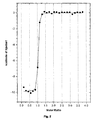
- Figure 1 shows a representative experimental data - raw isothermal titration calorimetry experiment of compound 3b binding to Hsp90N (50 mM Hepes buffer, 100 mM NaCl, pH 7.5, 37°C). Protein concentration in the calorimeter cell was 6 ⁇ M. Ligand concentration in the syringe was 120 ⁇ M.
- Figure 2 shows the same data as in Figure 1 in the integrated form. The binding constant was determined to be 1.3 ⁇ 10 8 M -1 with stoichiometry of 0.97.
- Dissociation constants ( K d , determined by isothermal titration calorimetry) of compound binding to the N-terminal domain of Hsp90 (Hsp90N) were: for compound 3a was 0.016 ⁇ 0.004 ⁇ M, for compound 3b was 0.035 ⁇ 0.008 ⁇ M, for compound 3c was 0.017 ⁇ 0.006 ⁇ M, for compound 3d was 0.034 ⁇ 0.003 ⁇ M, and for compound 3e with Hsp90N was 0.029 ⁇ 0.002 ⁇ M.
- the K d s of the compound binding to the full Hsp90 protein were: for compound 3a was 0.039 ⁇ 0.018 ⁇ M, for compound 3b was 0.014 ⁇ 0.001 ⁇ M, for compound 3c was 0.011 ⁇ 0.007 ⁇ M, for compound 3d was 0.057 ⁇ 0.002 ⁇ M, and for compound 3e was 0.031 ⁇ 0.005 ⁇ M.
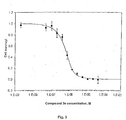
- the growth inhibition constants of the compounds were determined in two cancer cell lines: U2OS (osteosarcoma) and HeLa (cervical carcinoma).
- Cells were maintained in DMEM (HeLa) and a 50-50% mixture of DMEM and F-12 media (U2OS) supplemented with 10% fetal bovine serum.
- Stock solutions (20mM) of the tested compounds were prepared in 100% dimethyl-sulfoxide (DMSO).
- DMSO dimethyl-sulfoxide
- XTT sodium salt of 2,3-bis[2-Methoxy-4-nitro-5-sulfophenyl]-2H-tetrazolium-5-carboxyanilide inner salt
- PMS phenazine methosulfate
- the GI 50 constants for HeLa (cervical carcinoma) cell line were: for compound 3a was 2.5 ⁇ 0.1 ⁇ M, for compound 3b was 4.2 ⁇ 0.4 ⁇ M, for compound 3c was 3.3 ⁇ 0.1 ⁇ M, for compound 3d was 3.6 ⁇ 0.3 ⁇ M, and for compound 3e was 0.70 ⁇ 0.04 ⁇ M.
- Such strong compound potency in inhibiting cancerous cell growth and survivability indicate compound potential to become lead compounds and candidates for therapeutic anticancer treatment.
- the above described new compounds are effective binders of Hsp90 target and they efficiently inhibit cancerous cell growth.
- the potency of compounds is comparable or better than other patented compounds. Synthesis of new compounds is significantly easier and less expensive than other similar patented compounds with comparable potency.
Landscapes
- Chemical & Material Sciences (AREA)
- Organic Chemistry (AREA)
- Pharmaceuticals Containing Other Organic And Inorganic Compounds (AREA)
Abstract
Description
- The present invention describes novel 5-aryl-4-(5-substituted 2,4-dihydroxyphenyl)-1,2,3-thiadiazole derivatives, potentially useful in biomedicine as active ingredients of pharmaceutical preparations due to their ability to inhibit Hsp90 chaperone participating in cancer-disease progression. The invention also relates to new intermediate compounds required for the synthesis of target thiadiazoles.
- Molecular chaperones are protein machines that are responsible for the correct folding, stabilization, and function of other proteins in the cell. Exposure of cells to environmental stress, including heat shock, alcohols, heavy metals or oxidative stress, results in the cellular accumulation of these chaperones, commonly known as heat shock proteins (Hsp's). Heat-shock protein 90 (Hsp90) constitutes about 1 - 2% of total cellular proteins and is usually present in the cell as a dimer. It is a molecular chaperone responsible for ATP-depended folding, stability and function of many "client" proteins that are involved in the development and progression of cancer. These client proteins include ErbB2, c-Raf, Cdk4, mutant p53, hTERT, Hifl-α, and the estrogen/androgen receptors. Inhibition of Hsp90 causes the simultaneous, combinatorial destabilization and degradation of the oncogenic client proteins, leading in turn to a multiprolonged attack on all of the hallmark traits of cancer, including unrestricted proliferation and survival, invasion, metastasis and angiogenesis. It is generally thought that cancer cells are more susceptible to Hsp90 inhibition than are the corresponding normal cells (P. Workman (2004), Trends Mol. Med., 10, 47 - 51). On the other hand, therapeutic selectivity of Hsp90 inhibitors is the stressed condition of cancer cells, due both to oncogenic mutations and deregulated signalling and also to environmental factors such as hypoxia, acidosis and nutrient deprivation. Moreover, it has been reported that the Hsp90 found in malignant cells exists predominantly in a superchaperone complex that binds Hsp90 inhibitors much more effectively than the uncomplexed form that is mainly present in healthy cells (B. W. Dymock et al, (2004), Expert Opin. Ther. Patents, 14, 837-847).
- The ATPase activity of Hsp90 chaperone can be inhibited with some selectivity by natural product antibiotics such as geldanamycin and radicicol (S. M. Roe et al, (1999), J Med Chem 42, 260-266). Both of those compounds bind to the N-terminal domain of Hsp90 and inhibit the intrinsic ATPase activity.
- Geldanamycin showed activity in human tumour xenograft models but this compound proved to be too hepatotoxic for clinical development. However, the modified versions of geldanamycin - 17-allylamino-17-demethoxy-geldanamycin (17-AAG) and 17-dimethylaminoethylamino-17-demethoxygeldanamycin (17-DMAG) retain the property of Hsp90 inhibition and have significantly less hepatotoxicity than geldanamycin (patent No.
US 4261989 , publ. 1981). 17-AAG is currently being evaluated in clinical trials. - Radicicol is macrocyclic antibiotic isolated from Monosporium Bonorden. Radicicol is more potent inhibitor of Hsp90 ATPase activity than geldanamycin or 17-AAG (T. W. Schulte et al, (1998) Cell Stress Chaperones 3, 100-108). Unfortunately, the radicicol structure has some inherent limitations, including the epoxide moiety, keto group ant the propensity to undergo Michael addition reactions. Radicicol lacks antitumour activity in vivo due to the unstable chemical nature of the compound. Oxime derivatives of radicicol (known as KF25706 and KF58333) have been synthesized and retain the Hsp90 inhibitory activity of radicicol. Moreover KF25706 has been shown to exhibit in vivo antitumour activity in human tumour xenograft models (S. Soga et al (1999) Cancer Res, 59, 2931 - 8;
US 6239168 ;US 6316491 ;US 6635662 ). However, no radicicol derivative has progressed to clinical development. - It is also known that coumarin, novobiocin, and cisplatin bind to the C-terminal domain of Hsp90 resulting in the inhibition of ATPase function (G. A. Holdgate (1997) Biochemistry 36, 9663-9673; R. J. Lewis (1996) Embo J 15, 1412-1420; M. G. Marcu et al (2000) J. Biol. Chem., 275, 37181 - 37186; M. G. Marcu et al (2003) Curr. Cancer Drug Targets, 3, 343). Therefore, both binding sites of Hsp90 are important to Hsp90 chaperone properties.
- Significant consideration in the patent literature is given to various synthetic small molecule Hsp90 inhibitors. First purine-based inhibitors (PU3 and PU24FC1) have been synthesized based on rational drug design with the aid of the X-ray crystal structure (
EP 1335920 , G. Chiosis et al (2001) Chem. Biol. 8, 289 - 299). These agents were shown to result in the degradation of signaling molecules, including ERBB2, and to cause cell cycle arrest and differentiation in breast cancer cells. Recently, S. R. Kasibhatla et al have reported about novel purine derivatives with amine, sulfide, sulfoxide and sulfone moieties (WO 03037860 US 7241890 ;US 7138401 ). Some of these compounds inhibit Hsp90 chaperone in nanomolar potency. Nowadays purine-based inhibitors of Hsp90 attract scientific attention (WO2006075095 ,EP1838322 ). - Another class of synthetic Hsp90 inhibitors are presented by structural purine analogs - pyrazolopyrimidines, pyrrolopyrimidines and triazolopyrimidines. These compounds were synthesized and tested by S. R. Kasibhatla et al (
US 7148228 ;US 7138402 ,US 7129244 ,EP1869027 ). - Various 3,4-diarylpyrazole derivatives bearing resorcinol moiety have been selected and prepared by high throughput screening of a combinatorial library at the Institute of Cancer Research. Some of such derivatives (known as CCT 018159, VER 49009) showed very high Hsp90 inhibition affinity (K.M. J. Cheung et al (2005) Bioorg. Med. Chem. Lett., 15, 3338 - 3343; B. W. Dymock et al (2005) J. Med. Chem., 48, 4212 - 4215;
US 7247734 ;EP 1456180 ). A number of 3-arylpyrazole-4-piperazine derivatives (X. Barril (2006) Bioorg. Med Chem. Lett., 16, 2543 - 2548), as well as 3-aryl-4-aryloxypyrazoles (patent JP 2005225787 - It is also patented that pyrazole scaffold in 3,4-diarylpyrazoles can be replaced by other 5-membered ring, such as isoxazole (
EP1611112 ) or triazole (WO2005000300 ,W02007139952 ). - Also a large number of small-molecule synthetic inhibitors of Hsp90 chaperone have been synthesized and evaluated. This is different pyrazole (
US2007112192 ,EP1567151 ,US2007191445 ,EP1620090 ,JP2006306755 US2007155809 ,WO2007139956 ,WO2008021364 ,WO2006055760 ,WO2007139968 ,WO2007139967 ,WO2007139952 ,US2006167070 ), quinazolines (EP1885701 ,WO2006122631 ), isoindoles (WO2008044034 ,EP1869042 ) and hydroxybenzamides (WO2006109075 ). - Despite the fact that a large number of different Hsp90 inhibitors have been synthesized to date, only few of them are clinically tested. There still remains a great need of new potent Hsp90 inhibitors which offer one or more following advantages: improved activity, selectivity, solubility, reduced toxicity and side-effects, reduced cost of synthesis and so on.
- Therefore, the creation of novel Hsp90 chaperone inhibitors is still an important task.
- No data on synthesis of invention compounds 5-aryl-4-(5-substituted 2,4-dihydroxyphenyl)-1,2,3 thiadiazoles and intermediate compounds required for the synthesis of invention compounds was found in patent and non-patent literature.
- This invention describes new 5-aryl-4-(5-substituted 2,4-dihydroxyphenyl)-1,2,3-thiadiazoles with general formula (I)

R is H, Cl, Br, I, CH3, C2H5,, OCH3 ;
R1 and R2 are the same or different substituents, selected from the group, consisting of H, CH3, C2H5, C3H7, C4H9, OCH3, OC2H5, OC3H7, O(CH2)2O, O(CH2)3O - The objects of the invention are also the non-toxic, pharmaceutically acceptable salts of the thiadiazoles of the general formula (I). They include all salts which retain activity comparable to original compounds and do not attain any harmful and undesirable effects. Such salts are obtained from compounds with general structural formula (I) by mixing their solution with pharmacologically acceptable non-toxic organic and inorganic acids, such as hydrogen chloride, butane diacid, citric acid, tartaric acid, phosphoric acid, sulphuric acid and other.
- Examples of the invented compounds are compounds, selected from the group comprising:
- 4-[6-(4-chloro-1,3-dihydroxyphenyl)]-5-[4-(4-methoxyphenyl)]-1,2,3-thiadiazole;
- 4-[6-(4-chloro-1,3-dihydroxyphenyl)]-5-[4-(4-ethoxyphenyl)]-1,2,3-thiadiazole;
- 4-[6-(4-chloro-1,3-dihydroxyphenyl)]-5-[4-(4-methylphenyl)]-1,2,3-thiadiazole;
- 4-[6-(4-chloro-1,3-dihydroxyphenyl)]-5-[4-(3,4-dimethoxyphenyl)]-1,2,3-thiadiazole;
- 4-[6-(4-ethyl-1,3-dihydroxyphenyl)]-5-[4-(4-ethoxyphenyl)]-1,2,3-thiadiazole;
- The new intermediate compounds described below which could be used for the synthesis of thiadiazoles with general formula (I) are also subject of this invention.
- New compounds of the invention can be obtained according to general synthesis scheme:

- Synthesis of the starting materials (compounds with general formula 1) was accomplished by procedure described by B. W. Dymock, X. Barril, P. A. Brough, J. E. Cansfield, A. Massey, E. McDonald, R. E. Hubbard, A. Surgenor, S. D. Roughley, P. Webb, P. Workman, L. Wright, M. J. Drysdale (2005) J. Med. Chem., 48, 4212-4215. Compounds 1 reacted with hydrazine hydrate in boiling ethanol and formed the
corresponding hydrazones 2. Latter derivatives underwent smoothly cyclization with thionyl chloride to form 5-aryl-4-(5-substituted 2,4-dihydroxyphenyl)-1,2,3-thiadiazoles 3 in high yields. - To illustrate the main characteristics of the new compounds this description contains:
-
Fig. 1 . Determination of the compound of general formula I, namely 4-(5-chloro-2,4-dihydroxyphenyl)-5-(4-ethoxyphenyl)-1,2,3-thiadiazole (3b) binding to Hsp90N by isothermal titration calorimetry. Raw isothermal titration calorimetric data is shown. -
Fig. 2 . Determination of the compound of general formula I, namely 4-(5-chloro-2,4-dihydroxyphenyl)-5-(4-ethoxyphenyl)-1,2,3-thiadiazole (3b) binding to Hsp90N by isothermal titration calorimetry. Integrated isothermal titration calorimetric data is shown. -
Fig 3 . A typical cell survival curve generated for compound of general formula I, namely 4-(5-ethyl-2,4-dihydroxyphenyl)-5-(4-ethoxyphenyl)-1,2,3-thiadiazole (3e) in U20S cells. Such curves were used for the determination of compound concentrations where cell growth is reduced by 50% (GI50 ). - Represented below are specific examples of invention compounds and synthesis thereof, including intermediate compounds required for target compound. These examples are presented only for illustrative purpose of the invention; they do not limit the scope of the invention.
- Hydrazine hydrate (0.166 ml, 3.42 mmol) is added to a solution of 1-(5-chloro-2,4-dihydroxyphenyl)-2-(4-methoxyphenyl)ethanone (1a) (0.5 g, 1.71 mmol) in 95% ethanol (5 ml). The mixture is heated under reflux for 7 hours. Solvent is concentrated in vacuo, the residue treated with water, filtered of and recrystallyzed from 2-propanol.
Yield 76%, yellow solid, mp 143 - 145°C.
1H NMR (300 MHz, DMSO-d6) δ ppm 3.72 (3H, s, OCH3), 4.00 (2H, s, CH2), 6.40 (1H, s, ArH), 6.71 (2H, br.s. NH2), 6.88 (2H, d, J = 8.7 Hz, ArH), 7.15 (2H, d, J = 8.7 Hz, ArH), 7.26 (1H, s, ArH), 9.92 (1H, br.s. OH), 13.56 (1H, s, OH).
13C NMR (75 MHz, DMSO-d6) δ ppm 28.6, 54.9, 104.1, 109.2, 113.0, 114.0, 127.2, 128.0, 129.1, 149.3, 153.2, 157.7, 158.4. - Synthesis was carried out according to the description of Example 1, starting from 1-(5-chloro-2,4-dihydroxyphenyl)-2-(4-ethoxyphenyl)ethanone 1b (0.52 g, 1.71 mmol).
Yield 97%, yellow solid, mp 163 - 165°C.
1H NMR (300 MHz, DMSO-d6) δ ppm 1.28 (3H, t, J = 6.6 Hz, CH3), 3.94 (2H, q, J = 6.6 Hz, OCH2), 3.94 (2H, s, CH2), 6.39 (1H, s, ArH), 6.70 (2H, br.s. NH2), 6.84 (2H, d, J = 8.7 Hz, ArH), 7.11 (2H, d, J = 8.7 Hz, ArH), 7.24 (1H, s, ArH), 10.18 (1H, br.s. OH), 13.55 (1H, s, OH). - Synthesis was carried out according to the description of Example 1, starting from 1-(5-chloro-2,4-dihydroxyphenyl)-2-(4-methylphenyl)ethanone 1c (0.47 g, 1.71 mmol).
Yield 74%, yellow solid, mp 182-184°C.
1H NMR (300 MHz, DMSO-d6) δ ppm 3.33 (3H, s, CH3), 3.79 (2H, s, CH2), 6.41 (1H, s, ArH), 6.75 (2H, br.s. NH2), 7.08 - 7.17 (4H, m, ArH), 7.28 (1H, s, ArH), 9.99 (1H, br.s. OH), 13.50 (1H, s, OH). - Synthesis was carried out according to the description of Example 1, starting from 1-(5-chloro-2,4-dihydroxyphenyl)-2-(3,4-dimethoxyphenyl)ethanone 1d (0.55 g, 1.71 mmol).
Yield 83%, yellow solid, mp 152 - 154°C.
1H NMR (300 MHz, DMSO-d6) δ ppm 3.71 (3H, s, OCH3), 3.73 (3H, s, OCH3), 3.99 (2H, s, CH2), 6.40 (1H, s, ArH), 6.65 (2H, br.s. NH2), 6.68 - 6.94 (3H, m, ArH), 7.28 (1H, s, ArH), 10.02 (1H, br.s. OH), 13.52 (1H, s, OH). - Synthesis was carried out according to the description of Example 1, starting from 1-(5-ethyl-2,4-dihydroxyphenyl)-2-(4-ethoxyphenyl)ethanone 1e (0.51 g, 1.71 mmol).
Yield 60%, yellow solid, mp 63 - 64°C.
1H NMR (300 MHz, DMSO-d6) δ ppm 1.17 (3H, t, J = 7 Hz, CH3), 1.39 (3H, t, J = 7.5 Hz, CH3), 2.42 (2H, q, J = 7 Hz, CH2), 3.72 (2H, q, J = 7.5 Hz,OCH2), 3.99 (2H, s, CH3), 6.32 (1H, s, ArH), 6.54 (2H, br.s. NH2), 6.75 (2H, d, J = 8.7 Hz, ArH), 7.07 (2H, d, J = 8.7 Hz, ArH), 7.21 (1H, s, ArH), 9.90 (1H, br.s. OH), 13.50 (1H, s, OH). - 1-(5-chloro-2,4-dihydroxyphenyl)-2-(4-methoxyphenyl)ethanone hydrazone (2a) (0.1 g, 0.33 mmol) is carefully added to thionyl chloride (1 ml). The reaction mixture is stirred at room temperature for 2 hours. The excess of thionyl chloride is evaporated under reduced pressure, the residue is dissolved in chloroform (10 ml). The organic layer is washed twice with NaHCO3 (sat. aq. 10 ml), then with water (15 ml), dried over Na2SO4, concentrated in vacuo. The residue was purified by dry column chromatography (D. S. Pederson, C. Rosenbohm, (2001) Synthesis, 16,2431 - 2434).
Yield 95%, brown amorphous solid, mp 87 - 89°C.
1H NMR (300 MHz, CDCl3) δ ppm 3.93 (3H, s, OCH3), 5.76 (1H, br.s. OH), 6.81 (1H, s, ArH), 7.05 (2H, d, J = 8.7 Hz, ArH), 7.17 (1H, s, ArH), 7.39 (2H, d, J = 8.7 Hz, ArH), 10.20 (1H, s, OH).
13C NMR (75 MHz, DMSO-d6) δ ppm 55.2, 103.9, 109.9, 110.3, 114.5, 120.1, 129.6, 131.4, 151.9, 153.4, 154.6, 155.2, 160.2 - Synthesis was carried out according to the description of Example 6, starting from 1-(5-chloro-2,4-dihydroxyphenyl)-2-(4-ethoxyphenyl)ethanone hydrazone 2b (0.11 g, 0.33 mmol).
Yield 80%, brownish amorphous solid, mp 132-134°C.
1H NMR (300 MHz, DMSO-d6) δ ppm 1.30 (3H, t, J = 6.9 Hz, CH3), 4.01 (2H, q, J = 6.9 Hz, OCH2), 5.92 (1H, br.s. OH), 6.71 (1H, s, ArH), 6.93 (2H, d, J = 9 Hz, ArH), 7.24 (1H, s, ArH), 7.29 (2H, d, J = 9 Hz, ArH), 10.23 (1H, s, OH).
13C NMR (75 MHz, DMSO-d6) δ ppm 15.2, 53.9, 104.7, 110.7, 111.1, 115.6, 120.8, 130.4, 132.2, 152.8, 154.2, 155.4, 156.0, 160.3. - Synthesis was carried out according to the description of Example 6, starting from 1-(5-chloro-2,4-dihydroxyphenyl)-2-(4-methylphenyl)ethanone hydrazone 2c (0.10 g, 0.33 mmol).
Yield 94%, brown amorphous solid, mp 69 - 71 °C.
1H NMR (300 MHz, DMSO-d6) δ ppm 2.31 (3H, s, CH3), 5.57 (1H, br.s. OH), 6.70 (1H, s, ArH), 7.20 - 7.27 (4H, m, ArH), 7.29 (1H, s, ArH), 10.22 (1H, s, OH).
13C NMR (75 MHz, DMSO-d6) δ ppm 21.5, 104.7, 110.7, 111.0, 126.0, 128.8, 130.3, 132.3, 140.2, 152.9, 154.7, 155.4, 156.0. - Synthesis was carried out according to the description of Example 6, starting from 1-(5-chloro-2,4-dihydroxyphenyl)-2-(3,4-dimethoxyphenyl)ethanone hydrazone 2d (0.11 g, 0.33 mmol).
Yield 96%, brownish amorphous solid, mp 117 - 119°C.
1H NMR (300 MHz, DMSO-d6) δ ppm 3.60 (3H, s, OCH3), 3.77 (3H, s, OCH3), 5.78 (1H. br.s. OH), 6.73 (1H, s, ArH), 6.94 - 6.98 (3H, m, ArH), 7.26 (1H, s, ArH), 10.21 (1H, s, OH).
13C NMR (75 MHz, DMSO-d6) δ ppm 55.2, 55.5, 103.9, 109.9, 110.5, 111.4, 111.9, 120.2, 121.6, 131.6, 148.5, 149.9, 152.2, 153.6, 154.7, 155.5. - Synthesis was carried out according to the description of Example 6, starting from 1-(5-ethyl-2,4-dihydroxyphenyl)-2-(4-ethoxyphenyl)ethanone hydrazone 2e (0.10 g, 0.33 mmol).
Yield 65%, brown amorphous solid, mp 65 - 66°C.
1H NMR (300 MHz, DMSO-d6) δ ppm 1.08 (3H, t, J = 6.6 Hz, CH3), 1.319 (3H, t, J = 7 Hz, CH3), 2.44 (2H, q, J = 6.6 Hz, CH2), 4.03 (2H, q, J = 7.5 Hz,OCH2), 5.87 (1H, br.s. OH), 6.47 (1H, s, ArH), 6.94 (2H, d, J = 7.5 Hz, ArH), 7.99 (1H, s, ArH), 7.31 (2H, d, J = 7.5 Hz, ArH), 10.02 (1H, s, OH). - Compounds of general formula (I) bearing different substituents in aromatic rings (R = Br, I, OCH3; R1, R2 = OC3H7, C2H5, C3H7, C4H9, O(CH2)2O, O(CH2)3O and others) can be synthesized in a similar way to compounds 3a-e starting from corresponding 1-(5-substituted-2,4-dihydroxyphenyl)-2-(3,4-disubstitutedphenyl)ethanones.
- Inhibitor binding to the N-terminal domain of Hsp90 were determined by isothermal titration calorimetry (Chaires, J. B. 2008. Annu. Rev. Biophys. 37: 135-51).
Figure 1 shows a representative experimental data - raw isothermal titration calorimetry experiment of compound 3b binding to Hsp90N (50 mM Hepes buffer, 100 mM NaCl, pH 7.5, 37°C). Protein concentration in the calorimeter cell was 6 µM. Ligand concentration in the syringe was 120 µM.Figure 2 shows the same data as inFigure 1 in the integrated form. The binding constant was determined to be 1.3×10⁸ M-1 with stoichiometry of 0.97. This is equivalent to dissociation constant equal to 7.5 nM. Such strong binding constants are at the verge of instrument capabilities. Therefore, they may be slightly underestimated. Very steep isothermal titration curves show very tight binding and strong potential as candidate compounds to inhibit Hsp90 activity in vitro. - The values of various compound binding constants to both protein constructs (the N-terminal domain, Hsp90N, and the full length Hsp90F) obtained at 37 °C are listed below. Dissociation constants (Kd , determined by isothermal titration calorimetry) of compound binding to the N-terminal domain of Hsp90 (Hsp90N) were: for compound 3a was 0.016 ± 0.004 µM, for compound 3b was 0.035 ± 0.008 µM, for compound 3c was 0.017 ± 0.006 µM, for compound 3d was 0.034 ± 0.003 µM, and for
compound 3e with Hsp90N was 0.029 ± 0.002 µM. Similarly, the Kd s of the compound binding to the full Hsp90 protein (Hsp90F) were: for compound 3a was 0.039 ± 0.018 µM, for compound 3b was 0.014 ± 0.001 µM, for compound 3c was 0.011 ± 0.007 µM, for compound 3d was 0.057 ± 0.002 µM, and forcompound 3e was 0.031 ± 0.005 µM. - The growth inhibition constants of the compounds were determined in two cancer cell lines: U2OS (osteosarcoma) and HeLa (cervical carcinoma). Cells were maintained in DMEM (HeLa) and a 50-50% mixture of DMEM and F-12 media (U2OS) supplemented with 10% fetal bovine serum. Stock solutions (20mM) of the tested compounds were prepared in 100% dimethyl-sulfoxide (DMSO). Cells, cultured in 24-well plates, were subjected to a range of concentrations of the compounds (50mM - 0.05mM) at 0.25% DMSO. After 3 days, cell viability was assayed using XTT (sodium salt of 2,3-bis[2-Methoxy-4-nitro-5-sulfophenyl]-2H-tetrazolium-5-carboxyanilide inner salt) and PMS (phenazine methosulfate) reagents (Scudiero et al. 1988. Cancer Res. 48, 4827-4833). Stock solutions of XTT (1mg/ml) and PMS (1.53 mg/ml) were prepared in Hank's buffered saline (HBS). Culture medium in each well was replaced by 100 µl of OptiMEM media (Life technologies) containing 35 µg/ml XTT and 0.27 µg/ml PMS. Cells were returned to the incubator for 15-20 min. Quantity of viable cells in each well was evaluated spectrophotometrically measuring the absorbance of XTT formazan at 470 nm. Each experiment was run in duplicate.
- The values of various compound growth inhibition constants to U2OS (osteosarcoma) cell line and were the following: for compound 3a was 8.4 ± 1.2 µM, for compound 3b was 15.1 ± 3.4 µM, for compound 3c was 7.1 ± 0.1 µM, for compound 3d was 11.5 ± 0.1 µM, and for
compound 3e was 0.65 ± 0.08 µM. Similarly, the GI50 constants for HeLa (cervical carcinoma) cell line were: for compound 3a was 2.5 ± 0.1 µM, for compound 3b was 4.2 ± 0.4 µM, for compound 3c was 3.3 ± 0.1 µM, for compound 3d was 3.6 ± 0.3 µM, and forcompound 3e was 0.70 ± 0.04 µM. Such strong compound potency in inhibiting cancerous cell growth and survivability indicate compound potential to become lead compounds and candidates for therapeutic anticancer treatment. - The above described new compounds are effective binders of Hsp90 target and they efficiently inhibit cancerous cell growth. The potency of compounds is comparable or better than other patented compounds. Synthesis of new compounds is significantly easier and less expensive than other similar patented compounds with comparable potency.
Claims (8)
- 5-aryl-4-(5-substituted-2,4-dihydroxyphenyl)-1,2,3-thiadiazoles of general formula (I)
 R is H, Cl, Br, I, CH3, OCH3, C2H5;R1 and R2 are the same or different substituents, selected from the group,consisting of H, CH3, C2H5, C3H7, C4H9, OCH3, OC2H5, OC3H7, O(CH2)2O, O(CH2)3Oand pharmaceutically accetable salts thereof.
 - Compound according to claim 1, selected from a group comprising of:4-(5-chloro-2,4-dihydroxyphenyl)-5-(4-methoxyphenyl)-1,2,3-thiadiazole;4-(5-chloro-2,4-dihydroxyphenyl)-5-(4-ethoxyphenyl)-1,2,3-thiadiazole;4-(5-chloro-2,4-dihydroxyphenyl)-5-(4-methylphenyl)-1,2,3-thiadiazole;4-(5-chloro-2,4-dihydroxyphenyl)-5-(3,4-dimethoxyphenyl)-1,2,3-thiadiazole;4-(5-ethyl-2,4-dihydroxyphenyl)-5-(4-ethoxyphenyl)-1,2,3-thiadiazole;possesing Hsp90 inhibitor properties.
- 5-chloro-2,4-dihydroxy-phenyl-4-methoxybenzylketone hydrazone - intermediate compound useful for the synthesis of thiadiazoles with general formula (I).
- 5-chloro-2,4-dihydroxyphenyl-4-ethoxybenzylketone hydrazone - intermediate compound useful for the synthesis of thiadiazoles with general formula (I).
- 5-chloro-2,4-dihydroxyphenyl-4-methylbenzylketone hydrazone - intermediate compound useful for the synthesis of thiadiazoles with general formula (I).
- 5-chloro-2,4-dihydroxyphenyl-3,4-dimethoxybenzylketone hydrazone - intermediate compound useful for the synthesis of thiadiazoles with general formula (I).
- 5-ethyl-2,4-dihydroxyphenyl-4-ethoxybenzylketone hydrazone - intermediate compound useful for the synthesis of thiadiazoles with general formula (I).
- Composition for use in control of conditions where inhibition of Hsp90 is necessary, characterized in that it contains effective amount of thiadiazole according to any one of claims 1 to 2.
Applications Claiming Priority (2)
| Application Number | Priority Date | Filing Date | Title |
|---|---|---|---|
| LT2008035A LT5623B (en) | 2008-04-30 | 2008-04-30 | 5-aryl-4-(5-substituted 2,4-dihydroxyfenil)-1,2,3-thiadiazoles as inhibitors of hsp90 chaperone and the intermediates for production thereof |
| PCT/LT2008/000003 WO2009134110A1 (en) | 2008-04-30 | 2008-06-18 | 5-aryl-4-(5-substituted 2,4-dihydroxyphenyl)-1,2,3-thiadiazoles as inhibitors of hsp90 chaperone and the intermediates for production thereof |
Publications (2)
| Publication Number | Publication Date |
|---|---|
| EP2268626A1 EP2268626A1 (en) | 2011-01-05 |
| EP2268626B1 true EP2268626B1 (en) | 2012-02-01 |
Family
ID=39682765
Family Applications (1)
| Application Number | Title | Priority Date | Filing Date |
|---|---|---|---|
| EP08766671A Not-in-force EP2268626B1 (en) | 2008-04-30 | 2008-06-18 | 5-aryl-4-(5-substituted 2,4-dihydroxyphenyl)-1,2,3-thiadiazoles as inhibitors of hsp90 chaperone and the intermediates for production thereof |
Country Status (5)
| Country | Link |
|---|---|
| US (1) | US8314132B2 (en) |
| EP (1) | EP2268626B1 (en) |
| AT (1) | ATE543806T1 (en) |
| LT (1) | LT5623B (en) |
| WO (1) | WO2009134110A1 (en) |
Families Citing this family (1)
| Publication number | Priority date | Publication date | Assignee | Title |
|---|---|---|---|---|
| JP2014501232A (en) | 2010-12-20 | 2014-01-20 | シグマ−タウ・リサーチ・スウィッツァーランド・ソシエテ・アノニム | Aryl triazole compounds having antitumor activity |
Family Cites Families (23)
| Publication number | Priority date | Publication date | Assignee | Title |
|---|---|---|---|---|
| FR2559689B1 (en) | 1984-02-22 | 1987-05-15 | Siderurgie Fse Inst Rech | UNIVERSAL PLANETARY TYPE ROLLER FOR LONG PRODUCTS |
| ATE266017T1 (en) | 1996-10-25 | 2004-05-15 | Kyowa Hakko Kogyo Kk | RADICICOL DERIVATIVES |
| AU2002228771B2 (en) | 2000-11-02 | 2007-10-25 | Sloan-Kettering Institute For Cancer Research | Small molecule compositions for binding to HSP90 |
| EP1440072A4 (en) | 2001-10-30 | 2005-02-02 | Conforma Therapeutic Corp | Purine analogs having hsp90-inhibiting activity |
| GB0228417D0 (en) | 2002-12-05 | 2003-01-08 | Cancer Rec Tech Ltd | Pyrazole compounds |
| SI1611112T1 (en) * | 2003-02-11 | 2012-12-31 | Vernalis (R&D) Limited | Isoxazole compounds as inhibitors of heat shock proteins |
| GB0309637D0 (en) | 2003-04-28 | 2003-06-04 | Cancer Rec Tech Ltd | Pyrazole compounds |
| GB0315111D0 (en) | 2003-06-27 | 2003-07-30 | Cancer Rec Tech Ltd | Substituted 5-membered ring compounds and their use |
| NZ546611A (en) | 2003-09-18 | 2010-02-26 | Conforma Therapeutics Corp | Novel heterocyclic compounds as HSP90-inhibitors |
| JP2005225787A (en) | 2004-02-12 | 2005-08-25 | Nippon Kayaku Co Ltd | Hsp90 inhibitor |
| DE102004039280A1 (en) * | 2004-08-13 | 2006-02-23 | Merck Patent Gmbh | 1,5-diphenyl-pyrazoles |
| FR2880540B1 (en) | 2005-01-13 | 2008-07-11 | Aventis Pharma Sa | USE OF PURINE DERIVATIVES AS INHIBITORS OF HSP90 PROTEIN |
| BRPI0609509A2 (en) | 2005-03-30 | 2010-04-13 | Conforma Therapeutics Corp | pharmaceutically acceptable compound or a polymorph, solvate, tautomer, enantiomer, prodrug or salt thereof, pharmaceutical composition, and, use of the pharmaceutically acceptable compound, polymorph, solvate, tautomer, enantiomer, prodrug or salt |
| US20080306054A1 (en) | 2005-04-13 | 2008-12-11 | Astex Therapeutics Limited | Pharmaceutical Compounds |
| MX2007012836A (en) | 2005-04-14 | 2008-01-11 | Novartis Vaccines & Diagnostic | 2-amino-quinaz0lin-5-ones as hsp90 inhibitors useful in treating proliferation diseases. |
| JP2006306755A (en) | 2005-04-27 | 2006-11-09 | Nippon Kayaku Co Ltd | New pyrazole derivative and hsp90 inhibitor containing the same as active ingredient |
| US7608635B2 (en) | 2005-08-12 | 2009-10-27 | Synta Pharmaceuticals Corp. | Pyrazole compounds that modulate HSP90 activity |
| EP1928846B1 (en) | 2005-08-18 | 2014-06-04 | Synta Pharmaceuticals Corp. | Triazole compounds that modulate hsp90 activity |
| DE102006023337A1 (en) * | 2006-05-18 | 2007-11-22 | Merck Patent Gmbh | Triazole derivatives II |
| TW200806637A (en) | 2006-05-25 | 2008-02-01 | Synta Pharmaceuticals Corp | Synthesis of triazole compounds that modulate HSP90 activity |
| WO2007139956A2 (en) | 2006-05-26 | 2007-12-06 | Laboratory Corporation Of America Holdings | Methods and systems for the quantitative analysis of biomarkers |
| CN1865252A (en) * | 2006-06-19 | 2006-11-22 | 中国科学院上海药物研究所 | 4,5-di-substituted-phenyl-1,2,3-thiadia-zole derivative, and its preparation method and uses |
| AU2007284537B2 (en) | 2006-08-17 | 2012-04-12 | Synta Pharmaceuticals Corp. | Triazole compounds that modulate HSP90 activity |
-
2008
- 2008-04-30 LT LT2008035A patent/LT5623B/en not_active IP Right Cessation
- 2008-06-18 WO PCT/LT2008/000003 patent/WO2009134110A1/en not_active Ceased
- 2008-06-18 EP EP08766671A patent/EP2268626B1/en not_active Not-in-force
- 2008-06-18 US US12/990,551 patent/US8314132B2/en not_active Expired - Fee Related
- 2008-06-18 AT AT08766671T patent/ATE543806T1/en active
Also Published As
| Publication number | Publication date |
|---|---|
| US20110046387A1 (en) | 2011-02-24 |
| LT2008035A (en) | 2009-11-25 |
| LT5623B (en) | 2010-01-25 |
| EP2268626A1 (en) | 2011-01-05 |
| WO2009134110A1 (en) | 2009-11-05 |
| ATE543806T1 (en) | 2012-02-15 |
| US8314132B2 (en) | 2012-11-20 |
Similar Documents
| Publication | Publication Date | Title |
|---|---|---|
| Yadagiri et al. | Synthesis and evaluation of benzosuberone embedded with 1, 3, 4-oxadiazole, 1, 3, 4-thiadiazole and 1, 2, 4-triazole moieties as new potential anti proliferative agents | |
| Farghaly et al. | New and efficient approach for synthesis of novel bioactive [1, 3, 4] thiadiazoles incorporated with 1, 3-thiazole moiety | |
| Hannoun et al. | Synthesis and antibacterial evaluation of a novel library of 2-(thiazol-5-yl)-1, 3, 4-oxadiazole derivatives against methicillin-resistant Staphylococcus aureus (MRSA) | |
| Aliabadi et al. | Synthesis and evaluation of the cytotoxicity of a series of 1, 3, 4-thiadiazole based compounds as anticancer agents | |
| US9994584B2 (en) | Process of synthesizing 3-(4-methylpiperazine-1-carbonyl)-7-oxabicyclo[2.2.1] heptane-2-carboxylic acid | |
| Ghanaat et al. | Molecular docking studies, biological evaluation and synthesis of novel 3-mercapto-1, 2, 4-triazole derivatives | |
| Al-Khuzaie et al. | Synthesis, characterization and evaluation antimicrobial activity of some new substituted 2-mercapto-3-phenyl-4 (3H)-quinazolinone | |
| Ansari et al. | Design, synthesis and biological evaluation of flexible and rigid analogs of 4H-1, 2, 4-triazoles bearing 3, 4, 5-trimethoxyphenyl moiety as new antiproliferative agents | |
| Cikotiene et al. | 5-Aryl-4-(5-substituted-2, 4-dihydroxyphenyl)-1, 2, 3-thiadiazoles as inhibitors of Hsp90 chaperone | |
| Padmaja et al. | Synthesis and antioxidant activity of a new class of sulfone/sulfonamide-linked bis (oxadiazoles), bis (thiadiazoles), and bis (triazoles) | |
| Yang et al. | Discovery of new indole-based 1, 2, 4-triazole derivatives as potent tubulin polymerization inhibitors with anticancer activity | |
| Alghamdi et al. | Synthesis, characterization and cytotoxic study of 2-hydroxy benzothiazole incorporated 1, 3, 4-oxadiazole derivatives | |
| Bhole et al. | Synthesis and antitumor activity of (4-hydroxyphenyl)[5-substituted alkyl/aryl)-2-thioxo-1, 3, 4-thiadiazol-3-yl] methanone and [(3, 4-disubstituted)-1, 3-thiazol-2ylidene]-4-hydroxybenzohydrazide | |
| Zhang et al. | Design, synthesis and bioevaluation of inhibitors targeting HSP90-CDC37 protein-protein interaction based on a hydrophobic core | |
| Donawade et al. | Synthesis and antimicrobial activity of some new 1-substituted-3-pyrrolyl aminocarbonyl/oxadiazolyl/triazolyl/5-methoxy-2-methylindoles and benz [g] indoles | |
| Wang et al. | Design, synthesis and evaluation of antiproliferative and antitubulin activities of 5-methyl-4-aryl-3-(4-arylpiperazine-1-carbonyl)-4H-1, 2, 4-triazoles | |
| EP1589967B1 (en) | Benzthiazole-3 oxides useful for the treatment of proliferative disorders | |
| Zhang et al. | Design, synthesis, antiproliferative and antimicrobial evaluation of a new class of disulfides containing 1, 3, 4-thiadiazole units | |
| Hovsepian et al. | Synthesis of Substituted 1, 2, 4-Triazoles and 1, 3, 4-Thiadiazoles | |
| Demirci et al. | Anticancer activities of novel Mannich bases against prostate cancer cells | |
| Cui et al. | The discovery of water-soluble indazole derivatives as potent microtubule polymerization inhibitors | |
| US8314132B2 (en) | 5-aryl-4-(5-substituted 2,4-dihydroxyphenyl)-1,2,3-thiadiazoles as inhibitors of Hsp90 chaperone and the intermediates for production thereof | |
| Benmohammed et al. | Synthesis and antimicrobial activities of new thiosemicarbazones and thiazolidinones in indole series | |
| RU2402550C1 (en) | 2-[(1z)-1-(3,5-diphenyl-1,3,4-thiadiazol-2(3h)-ylidene)methyl]-3,5-diphenyl-1,3,4-thiadiazol-3-ium chloride and synthesis method thereof | |
| Mashelkar et al. | Synthesis of some novel 4-substituted coumarins having potential biological activity (Part III) |
Legal Events
| Date | Code | Title | Description |
|---|---|---|---|
| PUAI | Public reference made under article 153(3) epc to a published international application that has entered the european phase |
Free format text: ORIGINAL CODE: 0009012 |
|
| 17P | Request for examination filed |
Effective date: 20100827 |
|
| AK | Designated contracting states |
Kind code of ref document: A1 Designated state(s): AT BE BG CH CY CZ DE DK EE ES FI FR GB GR HR HU IE IS IT LI LT LU LV MC MT NL NO PL PT RO SE SI SK TR |
|
| AX | Request for extension of the european patent |
Extension state: AL BA MK RS |
|
| DAX | Request for extension of the european patent (deleted) | ||
| GRAP | Despatch of communication of intention to grant a patent |
Free format text: ORIGINAL CODE: EPIDOSNIGR1 |
|
| GRAS | Grant fee paid |
Free format text: ORIGINAL CODE: EPIDOSNIGR3 |
|
| GRAA | (expected) grant |
Free format text: ORIGINAL CODE: 0009210 |
|
| AK | Designated contracting states |
Kind code of ref document: B1 Designated state(s): AT BE BG CH CY CZ DE DK EE ES FI FR GB GR HR HU IE IS IT LI LT LU LV MC MT NL NO PL PT RO SE SI SK TR |
|
| REG | Reference to a national code |
Ref country code: GB Ref legal event code: FG4D |
|
| REG | Reference to a national code |
Ref country code: CH Ref legal event code: EP Ref country code: AT Ref legal event code: REF Ref document number: 543806 Country of ref document: AT Kind code of ref document: T Effective date: 20120215 |
|
| REG | Reference to a national code |
Ref country code: DE Ref legal event code: R096 Ref document number: 602008013101 Country of ref document: DE Effective date: 20120405 |
|
| REG | Reference to a national code |
Ref country code: NL Ref legal event code: VDEP Effective date: 20120201 |
|
| LTIE | Lt: invalidation of european patent or patent extension |
Effective date: 20120201 |
|
| PG25 | Lapsed in a contracting state [announced via postgrant information from national office to epo] |
Ref country code: LT Free format text: LAPSE BECAUSE OF FAILURE TO SUBMIT A TRANSLATION OF THE DESCRIPTION OR TO PAY THE FEE WITHIN THE PRESCRIBED TIME-LIMIT Effective date: 20120201 Ref country code: HR Free format text: LAPSE BECAUSE OF FAILURE TO SUBMIT A TRANSLATION OF THE DESCRIPTION OR TO PAY THE FEE WITHIN THE PRESCRIBED TIME-LIMIT Effective date: 20120201 Ref country code: NL Free format text: LAPSE BECAUSE OF FAILURE TO SUBMIT A TRANSLATION OF THE DESCRIPTION OR TO PAY THE FEE WITHIN THE PRESCRIBED TIME-LIMIT Effective date: 20120201 Ref country code: IS Free format text: LAPSE BECAUSE OF FAILURE TO SUBMIT A TRANSLATION OF THE DESCRIPTION OR TO PAY THE FEE WITHIN THE PRESCRIBED TIME-LIMIT Effective date: 20120601 Ref country code: NO Free format text: LAPSE BECAUSE OF FAILURE TO SUBMIT A TRANSLATION OF THE DESCRIPTION OR TO PAY THE FEE WITHIN THE PRESCRIBED TIME-LIMIT Effective date: 20120501 |
|
| PG25 | Lapsed in a contracting state [announced via postgrant information from national office to epo] |
Ref country code: BE Free format text: LAPSE BECAUSE OF FAILURE TO SUBMIT A TRANSLATION OF THE DESCRIPTION OR TO PAY THE FEE WITHIN THE PRESCRIBED TIME-LIMIT Effective date: 20120201 Ref country code: PT Free format text: LAPSE BECAUSE OF FAILURE TO SUBMIT A TRANSLATION OF THE DESCRIPTION OR TO PAY THE FEE WITHIN THE PRESCRIBED TIME-LIMIT Effective date: 20120601 Ref country code: LV Free format text: LAPSE BECAUSE OF FAILURE TO SUBMIT A TRANSLATION OF THE DESCRIPTION OR TO PAY THE FEE WITHIN THE PRESCRIBED TIME-LIMIT Effective date: 20120201 Ref country code: PL Free format text: LAPSE BECAUSE OF FAILURE TO SUBMIT A TRANSLATION OF THE DESCRIPTION OR TO PAY THE FEE WITHIN THE PRESCRIBED TIME-LIMIT Effective date: 20120201 Ref country code: FI Free format text: LAPSE BECAUSE OF FAILURE TO SUBMIT A TRANSLATION OF THE DESCRIPTION OR TO PAY THE FEE WITHIN THE PRESCRIBED TIME-LIMIT Effective date: 20120201 Ref country code: GR Free format text: LAPSE BECAUSE OF FAILURE TO SUBMIT A TRANSLATION OF THE DESCRIPTION OR TO PAY THE FEE WITHIN THE PRESCRIBED TIME-LIMIT Effective date: 20120502 |
|
| REG | Reference to a national code |
Ref country code: AT Ref legal event code: MK05 Ref document number: 543806 Country of ref document: AT Kind code of ref document: T Effective date: 20120201 |
|
| PG25 | Lapsed in a contracting state [announced via postgrant information from national office to epo] |
Ref country code: CY Free format text: LAPSE BECAUSE OF FAILURE TO SUBMIT A TRANSLATION OF THE DESCRIPTION OR TO PAY THE FEE WITHIN THE PRESCRIBED TIME-LIMIT Effective date: 20120201 |
|
| PG25 | Lapsed in a contracting state [announced via postgrant information from national office to epo] |
Ref country code: RO Free format text: LAPSE BECAUSE OF FAILURE TO SUBMIT A TRANSLATION OF THE DESCRIPTION OR TO PAY THE FEE WITHIN THE PRESCRIBED TIME-LIMIT Effective date: 20120201 Ref country code: DK Free format text: LAPSE BECAUSE OF FAILURE TO SUBMIT A TRANSLATION OF THE DESCRIPTION OR TO PAY THE FEE WITHIN THE PRESCRIBED TIME-LIMIT Effective date: 20120201 Ref country code: EE Free format text: LAPSE BECAUSE OF FAILURE TO SUBMIT A TRANSLATION OF THE DESCRIPTION OR TO PAY THE FEE WITHIN THE PRESCRIBED TIME-LIMIT Effective date: 20120201 Ref country code: CZ Free format text: LAPSE BECAUSE OF FAILURE TO SUBMIT A TRANSLATION OF THE DESCRIPTION OR TO PAY THE FEE WITHIN THE PRESCRIBED TIME-LIMIT Effective date: 20120201 Ref country code: SI Free format text: LAPSE BECAUSE OF FAILURE TO SUBMIT A TRANSLATION OF THE DESCRIPTION OR TO PAY THE FEE WITHIN THE PRESCRIBED TIME-LIMIT Effective date: 20120201 Ref country code: SE Free format text: LAPSE BECAUSE OF FAILURE TO SUBMIT A TRANSLATION OF THE DESCRIPTION OR TO PAY THE FEE WITHIN THE PRESCRIBED TIME-LIMIT Effective date: 20120201 |
|
| PG25 | Lapsed in a contracting state [announced via postgrant information from national office to epo] |
Ref country code: SK Free format text: LAPSE BECAUSE OF FAILURE TO SUBMIT A TRANSLATION OF THE DESCRIPTION OR TO PAY THE FEE WITHIN THE PRESCRIBED TIME-LIMIT Effective date: 20120201 Ref country code: IT Free format text: LAPSE BECAUSE OF FAILURE TO SUBMIT A TRANSLATION OF THE DESCRIPTION OR TO PAY THE FEE WITHIN THE PRESCRIBED TIME-LIMIT Effective date: 20120201 |
|
| PLBE | No opposition filed within time limit |
Free format text: ORIGINAL CODE: 0009261 |
|
| STAA | Information on the status of an ep patent application or granted ep patent |
Free format text: STATUS: NO OPPOSITION FILED WITHIN TIME LIMIT |
|
| 26N | No opposition filed |
Effective date: 20121105 |
|
| PG25 | Lapsed in a contracting state [announced via postgrant information from national office to epo] |
Ref country code: AT Free format text: LAPSE BECAUSE OF FAILURE TO SUBMIT A TRANSLATION OF THE DESCRIPTION OR TO PAY THE FEE WITHIN THE PRESCRIBED TIME-LIMIT Effective date: 20120201 Ref country code: MC Free format text: LAPSE BECAUSE OF NON-PAYMENT OF DUE FEES Effective date: 20120630 |
|
| REG | Reference to a national code |
Ref country code: DE Ref legal event code: R097 Ref document number: 602008013101 Country of ref document: DE Effective date: 20121105 |
|
| PG25 | Lapsed in a contracting state [announced via postgrant information from national office to epo] |
Ref country code: IE Free format text: LAPSE BECAUSE OF NON-PAYMENT OF DUE FEES Effective date: 20120618 Ref country code: ES Free format text: LAPSE BECAUSE OF FAILURE TO SUBMIT A TRANSLATION OF THE DESCRIPTION OR TO PAY THE FEE WITHIN THE PRESCRIBED TIME-LIMIT Effective date: 20120512 |
|
| PG25 | Lapsed in a contracting state [announced via postgrant information from national office to epo] |
Ref country code: BG Free format text: LAPSE BECAUSE OF FAILURE TO SUBMIT A TRANSLATION OF THE DESCRIPTION OR TO PAY THE FEE WITHIN THE PRESCRIBED TIME-LIMIT Effective date: 20120501 Ref country code: MT Free format text: LAPSE BECAUSE OF FAILURE TO SUBMIT A TRANSLATION OF THE DESCRIPTION OR TO PAY THE FEE WITHIN THE PRESCRIBED TIME-LIMIT Effective date: 20120201 |
|
| PGFP | Annual fee paid to national office [announced via postgrant information from national office to epo] |
Ref country code: CH Payment date: 20130628 Year of fee payment: 6 |
|
| PGFP | Annual fee paid to national office [announced via postgrant information from national office to epo] |
Ref country code: DE Payment date: 20130902 Year of fee payment: 6 |
|
| PGFP | Annual fee paid to national office [announced via postgrant information from national office to epo] |
Ref country code: FR Payment date: 20130722 Year of fee payment: 6 |
|
| PG25 | Lapsed in a contracting state [announced via postgrant information from national office to epo] |
Ref country code: TR Free format text: LAPSE BECAUSE OF FAILURE TO SUBMIT A TRANSLATION OF THE DESCRIPTION OR TO PAY THE FEE WITHIN THE PRESCRIBED TIME-LIMIT Effective date: 20120201 |
|
| PG25 | Lapsed in a contracting state [announced via postgrant information from national office to epo] |
Ref country code: LU Free format text: LAPSE BECAUSE OF NON-PAYMENT OF DUE FEES Effective date: 20120618 |
|
| PG25 | Lapsed in a contracting state [announced via postgrant information from national office to epo] |
Ref country code: HU Free format text: LAPSE BECAUSE OF FAILURE TO SUBMIT A TRANSLATION OF THE DESCRIPTION OR TO PAY THE FEE WITHIN THE PRESCRIBED TIME-LIMIT Effective date: 20080618 |
|
| REG | Reference to a national code |
Ref country code: DE Ref legal event code: R119 Ref document number: 602008013101 Country of ref document: DE |
|
| REG | Reference to a national code |
Ref country code: CH Ref legal event code: PL |
|
| REG | Reference to a national code |
Ref country code: DE Ref legal event code: R119 Ref document number: 602008013101 Country of ref document: DE Effective date: 20150101 |
|
| REG | Reference to a national code |
Ref country code: FR Ref legal event code: ST Effective date: 20150227 |
|
| PG25 | Lapsed in a contracting state [announced via postgrant information from national office to epo] |
Ref country code: CH Free format text: LAPSE BECAUSE OF NON-PAYMENT OF DUE FEES Effective date: 20140630 Ref country code: DE Free format text: LAPSE BECAUSE OF NON-PAYMENT OF DUE FEES Effective date: 20150101 Ref country code: LI Free format text: LAPSE BECAUSE OF NON-PAYMENT OF DUE FEES Effective date: 20140630 |
|
| PG25 | Lapsed in a contracting state [announced via postgrant information from national office to epo] |
Ref country code: FR Free format text: LAPSE BECAUSE OF NON-PAYMENT OF DUE FEES Effective date: 20140630 |
|
| PGFP | Annual fee paid to national office [announced via postgrant information from national office to epo] |
Ref country code: GB Payment date: 20170630 Year of fee payment: 10 |
|
| GBPC | Gb: european patent ceased through non-payment of renewal fee |
Effective date: 20180618 |
|
| PG25 | Lapsed in a contracting state [announced via postgrant information from national office to epo] |
Ref country code: GB Free format text: LAPSE BECAUSE OF NON-PAYMENT OF DUE FEES Effective date: 20180618 |