EP2268302B1 - Bmp-7 for use in treating neointimal hyperplasia - Google Patents
Bmp-7 for use in treating neointimal hyperplasia Download PDFInfo
- Publication number
- EP2268302B1 EP2268302B1 EP09710335.2A EP09710335A EP2268302B1 EP 2268302 B1 EP2268302 B1 EP 2268302B1 EP 09710335 A EP09710335 A EP 09710335A EP 2268302 B1 EP2268302 B1 EP 2268302B1
- Authority
- EP
- European Patent Office
- Prior art keywords
- bmp
- sequence
- protein
- ckd
- residue
- Prior art date
- Legal status (The legal status is an assumption and is not a legal conclusion. Google has not performed a legal analysis and makes no representation as to the accuracy of the status listed.)
- Not-in-force
Links
- 206010020718 hyperplasia Diseases 0.000 title claims description 36
- 101100165560 Mus musculus Bmp7 gene Proteins 0.000 title 1
- 108010049870 Bone Morphogenetic Protein 7 Proteins 0.000 claims description 100
- 208000020832 chronic kidney disease Diseases 0.000 claims description 91
- 125000003275 alpha amino acid group Chemical group 0.000 claims description 34
- 239000008194 pharmaceutical composition Substances 0.000 claims description 16
- 101000899361 Homo sapiens Bone morphogenetic protein 7 Proteins 0.000 claims description 13
- 230000003872 anastomosis Effects 0.000 claims description 13
- 238000002360 preparation method Methods 0.000 claims description 7
- FWMNVWWHGCHHJJ-SKKKGAJSSA-N 4-amino-1-[(2r)-6-amino-2-[[(2r)-2-[[(2r)-2-[[(2r)-2-amino-3-phenylpropanoyl]amino]-3-phenylpropanoyl]amino]-4-methylpentanoyl]amino]hexanoyl]piperidine-4-carboxylic acid Chemical compound C([C@H](C(=O)N[C@H](CC(C)C)C(=O)N[C@H](CCCCN)C(=O)N1CCC(N)(CC1)C(O)=O)NC(=O)[C@H](N)CC=1C=CC=CC=1)C1=CC=CC=C1 FWMNVWWHGCHHJJ-SKKKGAJSSA-N 0.000 claims description 2
- 102000008131 Bone Morphogenetic Protein 7 Human genes 0.000 claims 3
- 108090000623 proteins and genes Proteins 0.000 description 131
- 102000004169 proteins and genes Human genes 0.000 description 120
- 235000018102 proteins Nutrition 0.000 description 119
- 102100022544 Bone morphogenetic protein 7 Human genes 0.000 description 97
- 229910052698 phosphorus Inorganic materials 0.000 description 65
- 239000011574 phosphorus Substances 0.000 description 65
- OAICVXFJPJFONN-UHFFFAOYSA-N Phosphorus Chemical compound [P] OAICVXFJPJFONN-UHFFFAOYSA-N 0.000 description 64
- 210000004027 cell Anatomy 0.000 description 63
- 230000033558 biomineral tissue development Effects 0.000 description 61
- MTCFGRXMJLQNBG-REOHCLBHSA-N (2S)-2-Amino-3-hydroxypropansäure Chemical compound OC[C@H](N)C(O)=O MTCFGRXMJLQNBG-REOHCLBHSA-N 0.000 description 50
- 108010043267 Sp7 Transcription Factor Proteins 0.000 description 50
- 102000002624 Sp7 Transcription Factor Human genes 0.000 description 50
- VTYYLEPIZMXCLO-UHFFFAOYSA-L Calcium carbonate Chemical compound [Ca+2].[O-]C([O-])=O VTYYLEPIZMXCLO-UHFFFAOYSA-L 0.000 description 46
- 241000282414 Homo sapiens Species 0.000 description 46
- 102100024506 Bone morphogenetic protein 2 Human genes 0.000 description 45
- 230000014509 gene expression Effects 0.000 description 45
- 230000001089 mineralizing effect Effects 0.000 description 45
- KZSNJWFQEVHDMF-UHFFFAOYSA-N Valine Chemical compound CC(C)C(N)C(O)=O KZSNJWFQEVHDMF-UHFFFAOYSA-N 0.000 description 44
- DDRJAANPRJIHGJ-UHFFFAOYSA-N creatinine Chemical compound CN1CC(=O)NC1=N DDRJAANPRJIHGJ-UHFFFAOYSA-N 0.000 description 44
- 208000005475 Vascular calcification Diseases 0.000 description 42
- 238000000034 method Methods 0.000 description 42
- 108020004414 DNA Proteins 0.000 description 40
- 108010049931 Bone Morphogenetic Protein 2 Proteins 0.000 description 39
- 241000699670 Mus sp. Species 0.000 description 38
- KDXKERNSBIXSRK-UHFFFAOYSA-N Lysine Natural products NCCCCC(N)C(O)=O KDXKERNSBIXSRK-UHFFFAOYSA-N 0.000 description 37
- 201000005991 hyperphosphatemia Diseases 0.000 description 37
- 230000000694 effects Effects 0.000 description 36
- KDXKERNSBIXSRK-YFKPBYRVSA-N L-lysine Chemical compound NCCCC[C@H](N)C(O)=O KDXKERNSBIXSRK-YFKPBYRVSA-N 0.000 description 34
- 241001465754 Metazoa Species 0.000 description 34
- 108090000765 processed proteins & peptides Proteins 0.000 description 33
- 229920001184 polypeptide Polymers 0.000 description 32
- 102000004196 processed proteins & peptides Human genes 0.000 description 32
- DCXYFEDJOCDNAF-REOHCLBHSA-N L-asparagine Chemical compound OC(=O)[C@@H](N)CC(N)=O DCXYFEDJOCDNAF-REOHCLBHSA-N 0.000 description 31
- 238000011282 treatment Methods 0.000 description 31
- 235000001014 amino acid Nutrition 0.000 description 30
- 210000004509 vascular smooth muscle cell Anatomy 0.000 description 30
- CKLJMWTZIZZHCS-REOHCLBHSA-N L-aspartic acid Chemical compound OC(=O)[C@@H](N)CC(O)=O CKLJMWTZIZZHCS-REOHCLBHSA-N 0.000 description 29
- 229940024606 amino acid Drugs 0.000 description 29
- 150000001413 amino acids Chemical class 0.000 description 29
- 239000011575 calcium Substances 0.000 description 26
- 125000000151 cysteine group Chemical group N[C@@H](CS)C(=O)* 0.000 description 26
- 230000001582 osteoblastic effect Effects 0.000 description 26
- 210000004899 c-terminal region Anatomy 0.000 description 25
- 230000000921 morphogenic effect Effects 0.000 description 25
- ROHFNLRQFUQHCH-YFKPBYRVSA-N L-leucine Chemical compound CC(C)C[C@H](N)C(O)=O ROHFNLRQFUQHCH-YFKPBYRVSA-N 0.000 description 24
- 239000005557 antagonist Substances 0.000 description 24
- 210000000709 aorta Anatomy 0.000 description 23
- 229910000019 calcium carbonate Inorganic materials 0.000 description 23
- 229940109239 creatinine Drugs 0.000 description 22
- 235000019197 fats Nutrition 0.000 description 22
- 102100022525 Bone morphogenetic protein 6 Human genes 0.000 description 21
- 101710117973 Bone morphogenetic protein 8A Proteins 0.000 description 21
- 102100022545 Bone morphogenetic protein 8B Human genes 0.000 description 21
- WHUUTDBJXJRKMK-UHFFFAOYSA-N Glutamic acid Natural products OC(=O)C(N)CCC(O)=O WHUUTDBJXJRKMK-UHFFFAOYSA-N 0.000 description 21
- 101000899388 Homo sapiens Bone morphogenetic protein 5 Proteins 0.000 description 21
- 101000899390 Homo sapiens Bone morphogenetic protein 6 Proteins 0.000 description 21
- WHUUTDBJXJRKMK-VKHMYHEASA-N L-glutamic acid Chemical compound OC(=O)[C@@H](N)CCC(O)=O WHUUTDBJXJRKMK-VKHMYHEASA-N 0.000 description 21
- ZDXPYRJPNDTMRX-VKHMYHEASA-N L-glutamine Chemical compound OC(=O)[C@@H](N)CCC(N)=O ZDXPYRJPNDTMRX-VKHMYHEASA-N 0.000 description 21
- 239000000203 mixture Substances 0.000 description 21
- 210000001519 tissue Anatomy 0.000 description 21
- 102100022526 Bone morphogenetic protein 5 Human genes 0.000 description 20
- OYPRJOBELJOOCE-UHFFFAOYSA-N Calcium Chemical compound [Ca] OYPRJOBELJOOCE-UHFFFAOYSA-N 0.000 description 20
- 102100040897 Embryonic growth/differentiation factor 1 Human genes 0.000 description 20
- 108010090296 Growth Differentiation Factor 1 Proteins 0.000 description 20
- 229910052791 calcium Inorganic materials 0.000 description 20
- 210000003734 kidney Anatomy 0.000 description 20
- 230000003907 kidney function Effects 0.000 description 20
- 102100024504 Bone morphogenetic protein 3 Human genes 0.000 description 19
- 108020004459 Small interfering RNA Proteins 0.000 description 19
- 210000004369 blood Anatomy 0.000 description 19
- 239000008280 blood Substances 0.000 description 19
- 102100024505 Bone morphogenetic protein 4 Human genes 0.000 description 18
- 101000762375 Homo sapiens Bone morphogenetic protein 3 Proteins 0.000 description 18
- 230000009471 action Effects 0.000 description 18
- 230000003143 atherosclerotic effect Effects 0.000 description 17
- 230000002308 calcification Effects 0.000 description 17
- 108700007229 noggin Proteins 0.000 description 17
- 102000045246 noggin Human genes 0.000 description 17
- 230000002792 vascular Effects 0.000 description 17
- 208000004434 Calcinosis Diseases 0.000 description 16
- 108010024682 Core Binding Factor Alpha 1 Subunit Proteins 0.000 description 16
- 102000015775 Core Binding Factor Alpha 1 Subunit Human genes 0.000 description 16
- AYFVYJQAPQTCCC-GBXIJSLDSA-N L-threonine Chemical compound C[C@@H](O)[C@H](N)C(O)=O AYFVYJQAPQTCCC-GBXIJSLDSA-N 0.000 description 16
- OUYCCCASQSFEME-QMMMGPOBSA-N L-tyrosine Chemical compound OC(=O)[C@@H](N)CC1=CC=C(O)C=C1 OUYCCCASQSFEME-QMMMGPOBSA-N 0.000 description 16
- 238000000338 in vitro Methods 0.000 description 16
- 108010049974 Bone Morphogenetic Protein 6 Proteins 0.000 description 15
- 230000004069 differentiation Effects 0.000 description 15
- 108010049976 Bone Morphogenetic Protein 5 Proteins 0.000 description 14
- 102000008152 Bone Morphogenetic Protein 5 Human genes 0.000 description 14
- 102000008154 Bone Morphogenetic Protein 6 Human genes 0.000 description 14
- 239000011159 matrix material Substances 0.000 description 14
- 210000002966 serum Anatomy 0.000 description 14
- 238000006467 substitution reaction Methods 0.000 description 14
- 210000002700 urine Anatomy 0.000 description 14
- 108010049955 Bone Morphogenetic Protein 4 Proteins 0.000 description 13
- COLNVLDHVKWLRT-QMMMGPOBSA-N L-phenylalanine Chemical compound OC(=O)[C@@H](N)CC1=CC=CC=C1 COLNVLDHVKWLRT-QMMMGPOBSA-N 0.000 description 13
- 208000011775 arteriosclerosis disease Diseases 0.000 description 13
- 210000000963 osteoblast Anatomy 0.000 description 13
- 239000003981 vehicle Substances 0.000 description 13
- 102100040615 Homeobox protein MSX-2 Human genes 0.000 description 12
- 241000699666 Mus <mouse, genus> Species 0.000 description 12
- 235000018417 cysteine Nutrition 0.000 description 12
- 230000003247 decreasing effect Effects 0.000 description 12
- 230000001965 increasing effect Effects 0.000 description 12
- 239000000463 material Substances 0.000 description 12
- 101000967222 Homo sapiens Homeobox protein MSX-2 Proteins 0.000 description 11
- 238000010171 animal model Methods 0.000 description 11
- 235000005911 diet Nutrition 0.000 description 11
- 230000037213 diet Effects 0.000 description 11
- 230000007246 mechanism Effects 0.000 description 11
- 241000894007 species Species 0.000 description 11
- AGPKZVBTJJNPAG-WHFBIAKZSA-N L-isoleucine Chemical compound CC[C@H](C)[C@H](N)C(O)=O AGPKZVBTJJNPAG-WHFBIAKZSA-N 0.000 description 10
- 108010076504 Protein Sorting Signals Proteins 0.000 description 10
- RGCKGOZRHPZPFP-UHFFFAOYSA-N alizarin Chemical compound C1=CC=C2C(=O)C3=C(O)C(O)=CC=C3C(=O)C2=C1 RGCKGOZRHPZPFP-UHFFFAOYSA-N 0.000 description 10
- 125000000539 amino acid group Chemical group 0.000 description 10
- 238000003556 assay Methods 0.000 description 10
- 230000001276 controlling effect Effects 0.000 description 10
- 150000001945 cysteines Chemical class 0.000 description 10
- 235000009200 high fat diet Nutrition 0.000 description 10
- 230000003902 lesion Effects 0.000 description 10
- 239000003550 marker Substances 0.000 description 10
- DHMQDGOQFOQNFH-UHFFFAOYSA-N Glycine Chemical compound NCC(O)=O DHMQDGOQFOQNFH-UHFFFAOYSA-N 0.000 description 9
- 102000040945 Transcription factor Human genes 0.000 description 9
- 108091023040 Transcription factor Proteins 0.000 description 9
- HVYWMOMLDIMFJA-DPAQBDIFSA-N cholesterol Chemical compound C1C=C2C[C@@H](O)CC[C@]2(C)[C@@H]2[C@@H]1[C@@H]1CC[C@H]([C@H](C)CCCC(C)C)[C@@]1(C)CC2 HVYWMOMLDIMFJA-DPAQBDIFSA-N 0.000 description 9
- 208000022831 chronic renal failure syndrome Diseases 0.000 description 9
- 230000006698 induction Effects 0.000 description 9
- 230000005764 inhibitory process Effects 0.000 description 9
- 230000004936 stimulating effect Effects 0.000 description 9
- 230000000638 stimulation Effects 0.000 description 9
- 201000001320 Atherosclerosis Diseases 0.000 description 8
- 102000004067 Osteocalcin Human genes 0.000 description 8
- 108090000573 Osteocalcin Proteins 0.000 description 8
- 229910019142 PO4 Inorganic materials 0.000 description 8
- 230000001851 biosynthetic effect Effects 0.000 description 8
- 239000003814 drug Substances 0.000 description 8
- 230000002526 effect on cardiovascular system Effects 0.000 description 8
- 210000002216 heart Anatomy 0.000 description 8
- 238000001727 in vivo Methods 0.000 description 8
- 230000007030 peptide scission Effects 0.000 description 8
- 230000002829 reductive effect Effects 0.000 description 8
- 238000003757 reverse transcription PCR Methods 0.000 description 8
- 230000001225 therapeutic effect Effects 0.000 description 8
- 238000002560 therapeutic procedure Methods 0.000 description 8
- 230000015572 biosynthetic process Effects 0.000 description 7
- 238000011161 development Methods 0.000 description 7
- 230000018109 developmental process Effects 0.000 description 7
- 230000001939 inductive effect Effects 0.000 description 7
- 238000005259 measurement Methods 0.000 description 7
- NBIIXXVUZAFLBC-UHFFFAOYSA-K phosphate Chemical compound [O-]P([O-])([O-])=O NBIIXXVUZAFLBC-UHFFFAOYSA-K 0.000 description 7
- 239000010452 phosphate Substances 0.000 description 7
- 239000000126 substance Substances 0.000 description 7
- 230000035897 transcription Effects 0.000 description 7
- 102000007350 Bone Morphogenetic Proteins Human genes 0.000 description 6
- 108010007726 Bone Morphogenetic Proteins Proteins 0.000 description 6
- 206010016717 Fistula Diseases 0.000 description 6
- WQZGKKKJIJFFOK-GASJEMHNSA-N Glucose Natural products OC[C@H]1OC(O)[C@H](O)[C@@H](O)[C@@H]1O WQZGKKKJIJFFOK-GASJEMHNSA-N 0.000 description 6
- 101000762366 Homo sapiens Bone morphogenetic protein 2 Proteins 0.000 description 6
- 210000000988 bone and bone Anatomy 0.000 description 6
- 229940112869 bone morphogenetic protein Drugs 0.000 description 6
- 210000001168 carotid artery common Anatomy 0.000 description 6
- 238000004113 cell culture Methods 0.000 description 6
- 239000002299 complementary DNA Substances 0.000 description 6
- 230000003292 diminished effect Effects 0.000 description 6
- 230000003890 fistula Effects 0.000 description 6
- 230000006870 function Effects 0.000 description 6
- 230000011164 ossification Effects 0.000 description 6
- 230000002265 prevention Effects 0.000 description 6
- 230000035755 proliferation Effects 0.000 description 6
- 230000001177 retroviral effect Effects 0.000 description 6
- ZNSIZMQNQCNRBW-UHFFFAOYSA-N sevelamer Chemical compound NCC=C.ClCC1CO1 ZNSIZMQNQCNRBW-UHFFFAOYSA-N 0.000 description 6
- 229960003693 sevelamer Drugs 0.000 description 6
- 210000000130 stem cell Anatomy 0.000 description 6
- 238000012360 testing method Methods 0.000 description 6
- 238000013518 transcription Methods 0.000 description 6
- 230000003442 weekly effect Effects 0.000 description 6
- 208000037260 Atherosclerotic Plaque Diseases 0.000 description 5
- 239000006144 Dulbecco’s modified Eagle's medium Substances 0.000 description 5
- 101000762379 Homo sapiens Bone morphogenetic protein 4 Proteins 0.000 description 5
- 241000124008 Mammalia Species 0.000 description 5
- 101000899362 Mus musculus Bone morphogenetic protein 7 Proteins 0.000 description 5
- 108010068380 arginylarginine Proteins 0.000 description 5
- 230000004071 biological effect Effects 0.000 description 5
- 150000001875 compounds Chemical class 0.000 description 5
- 238000009472 formulation Methods 0.000 description 5
- 239000008103 glucose Substances 0.000 description 5
- 239000001963 growth medium Substances 0.000 description 5
- 230000006872 improvement Effects 0.000 description 5
- 230000002401 inhibitory effect Effects 0.000 description 5
- 229910052500 inorganic mineral Inorganic materials 0.000 description 5
- 210000004731 jugular vein Anatomy 0.000 description 5
- 238000011068 loading method Methods 0.000 description 5
- 239000002609 medium Substances 0.000 description 5
- 239000011707 mineral Substances 0.000 description 5
- 235000010755 mineral Nutrition 0.000 description 5
- 210000003205 muscle Anatomy 0.000 description 5
- 210000000056 organ Anatomy 0.000 description 5
- 239000000243 solution Substances 0.000 description 5
- 238000010186 staining Methods 0.000 description 5
- OMLWNBVRVJYMBQ-YUMQZZPRSA-N Arg-Arg Chemical compound NC(N)=NCCC[C@H](N)C(=O)N[C@@H](CCCN=C(N)N)C(O)=O OMLWNBVRVJYMBQ-YUMQZZPRSA-N 0.000 description 4
- 241000255348 Drosophila sp. (in: Insecta) Species 0.000 description 4
- 102100031181 Glyceraldehyde-3-phosphate dehydrogenase Human genes 0.000 description 4
- 108010090254 Growth Differentiation Factor 5 Proteins 0.000 description 4
- 102100035379 Growth/differentiation factor 5 Human genes 0.000 description 4
- 102100035368 Growth/differentiation factor 6 Human genes 0.000 description 4
- 102100033636 Histone H3.2 Human genes 0.000 description 4
- 108010033040 Histones Proteins 0.000 description 4
- 108091028043 Nucleic acid sequence Proteins 0.000 description 4
- FAPWRFPIFSIZLT-UHFFFAOYSA-M Sodium chloride Chemical compound [Na+].[Cl-] FAPWRFPIFSIZLT-UHFFFAOYSA-M 0.000 description 4
- XSQUKJJJFZCRTK-UHFFFAOYSA-N Urea Chemical compound NC(N)=O XSQUKJJJFZCRTK-UHFFFAOYSA-N 0.000 description 4
- 230000004913 activation Effects 0.000 description 4
- 230000036765 blood level Effects 0.000 description 4
- 239000003795 chemical substances by application Substances 0.000 description 4
- 235000012000 cholesterol Nutrition 0.000 description 4
- 230000001684 chronic effect Effects 0.000 description 4
- 230000007423 decrease Effects 0.000 description 4
- 238000012217 deletion Methods 0.000 description 4
- 230000037430 deletion Effects 0.000 description 4
- 230000008021 deposition Effects 0.000 description 4
- 208000037265 diseases, disorders, signs and symptoms Diseases 0.000 description 4
- 229940079593 drug Drugs 0.000 description 4
- 239000003937 drug carrier Substances 0.000 description 4
- 239000000499 gel Substances 0.000 description 4
- 230000024924 glomerular filtration Effects 0.000 description 4
- 108020004445 glyceraldehyde-3-phosphate dehydrogenase Proteins 0.000 description 4
- 239000003112 inhibitor Substances 0.000 description 4
- 102000039446 nucleic acids Human genes 0.000 description 4
- 108020004707 nucleic acids Proteins 0.000 description 4
- 150000007523 nucleic acids Chemical class 0.000 description 4
- 239000002694 phosphate binding agent Substances 0.000 description 4
- 239000000047 product Substances 0.000 description 4
- 230000009467 reduction Effects 0.000 description 4
- 230000002441 reversible effect Effects 0.000 description 4
- 239000011734 sodium Substances 0.000 description 4
- AJPJDKMHJJGVTQ-UHFFFAOYSA-M sodium dihydrogen phosphate Chemical compound [Na+].OP(O)([O-])=O AJPJDKMHJJGVTQ-UHFFFAOYSA-M 0.000 description 4
- 229910000162 sodium phosphate Inorganic materials 0.000 description 4
- 230000002103 transcriptional effect Effects 0.000 description 4
- 210000005239 tubule Anatomy 0.000 description 4
- 208000001072 type 2 diabetes mellitus Diseases 0.000 description 4
- 230000002485 urinary effect Effects 0.000 description 4
- 210000005166 vasculature Anatomy 0.000 description 4
- 239000013598 vector Substances 0.000 description 4
- XLYOFNOQVPJJNP-UHFFFAOYSA-N water Substances O XLYOFNOQVPJJNP-UHFFFAOYSA-N 0.000 description 4
- 238000001262 western blot Methods 0.000 description 4
- 108091032973 (ribonucleotides)n+m Proteins 0.000 description 3
- QTBSBXVTEAMEQO-UHFFFAOYSA-N Acetic acid Chemical compound CC(O)=O QTBSBXVTEAMEQO-UHFFFAOYSA-N 0.000 description 3
- 102000007469 Actins Human genes 0.000 description 3
- 108010085238 Actins Proteins 0.000 description 3
- LZRNYBIJOSKKRJ-XVYDVKMFSA-N Ala-Asp-His Chemical compound C[C@@H](C(=O)N[C@@H](CC(=O)O)C(=O)N[C@@H](CC1=CN=CN1)C(=O)O)N LZRNYBIJOSKKRJ-XVYDVKMFSA-N 0.000 description 3
- NCXTYSVDWLAQGZ-ZKWXMUAHSA-N Asn-Ser-Val Chemical compound CC(C)[C@@H](C(O)=O)NC(=O)[C@H](CO)NC(=O)[C@@H](N)CC(N)=O NCXTYSVDWLAQGZ-ZKWXMUAHSA-N 0.000 description 3
- 102000010834 Extracellular Matrix Proteins Human genes 0.000 description 3
- 108010037362 Extracellular Matrix Proteins Proteins 0.000 description 3
- 239000012981 Hank's balanced salt solution Substances 0.000 description 3
- 206010020880 Hypertrophy Diseases 0.000 description 3
- DGAQECJNVWCQMB-PUAWFVPOSA-M Ilexoside XXIX Chemical compound C[C@@H]1CC[C@@]2(CC[C@@]3(C(=CC[C@H]4[C@]3(CC[C@@H]5[C@@]4(CC[C@@H](C5(C)C)OS(=O)(=O)[O-])C)C)[C@@H]2[C@]1(C)O)C)C(=O)O[C@H]6[C@@H]([C@H]([C@@H]([C@H](O6)CO)O)O)O.[Na+] DGAQECJNVWCQMB-PUAWFVPOSA-M 0.000 description 3
- 125000000998 L-alanino group Chemical group [H]N([*])[C@](C([H])([H])[H])([H])C(=O)O[H] 0.000 description 3
- 108010001831 LDL receptors Proteins 0.000 description 3
- 102000000853 LDL receptors Human genes 0.000 description 3
- 208000001145 Metabolic Syndrome Diseases 0.000 description 3
- 208000034827 Neointima Diseases 0.000 description 3
- 208000008589 Obesity Diseases 0.000 description 3
- 239000002202 Polyethylene glycol Substances 0.000 description 3
- DNIAPMSPPWPWGF-UHFFFAOYSA-N Propylene glycol Chemical compound CC(O)CO DNIAPMSPPWPWGF-UHFFFAOYSA-N 0.000 description 3
- 108090001012 Transforming Growth Factor beta Proteins 0.000 description 3
- 102000004887 Transforming Growth Factor beta Human genes 0.000 description 3
- 102000013814 Wnt Human genes 0.000 description 3
- 108050003627 Wnt Proteins 0.000 description 3
- PNNCWTXUWKENPE-UHFFFAOYSA-N [N].NC(N)=O Chemical compound [N].NC(N)=O PNNCWTXUWKENPE-UHFFFAOYSA-N 0.000 description 3
- 210000002376 aorta thoracic Anatomy 0.000 description 3
- 230000008901 benefit Effects 0.000 description 3
- 102000006783 calponin Human genes 0.000 description 3
- 108010086826 calponin Proteins 0.000 description 3
- 230000007211 cardiovascular event Effects 0.000 description 3
- 230000001413 cellular effect Effects 0.000 description 3
- 238000006243 chemical reaction Methods 0.000 description 3
- 201000010099 disease Diseases 0.000 description 3
- 210000002744 extracellular matrix Anatomy 0.000 description 3
- 238000003197 gene knockdown Methods 0.000 description 3
- 238000003119 immunoblot Methods 0.000 description 3
- 238000003780 insertion Methods 0.000 description 3
- 230000037431 insertion Effects 0.000 description 3
- 208000017169 kidney disease Diseases 0.000 description 3
- 235000020824 obesity Nutrition 0.000 description 3
- 239000000546 pharmaceutical excipient Substances 0.000 description 3
- 230000036470 plasma concentration Effects 0.000 description 3
- 229920001223 polyethylene glycol Polymers 0.000 description 3
- 230000008569 process Effects 0.000 description 3
- 238000007634 remodeling Methods 0.000 description 3
- 239000013049 sediment Substances 0.000 description 3
- 210000000329 smooth muscle myocyte Anatomy 0.000 description 3
- 229910052708 sodium Inorganic materials 0.000 description 3
- 239000011780 sodium chloride Substances 0.000 description 3
- 230000008093 supporting effect Effects 0.000 description 3
- 238000001356 surgical procedure Methods 0.000 description 3
- ZRKFYGHZFMAOKI-QMGMOQQFSA-N tgfbeta Chemical compound C([C@H](NC(=O)[C@H](C(C)C)NC(=O)CNC(=O)[C@H](CCC(O)=O)NC(=O)[C@H](CCCNC(N)=N)NC(=O)[C@H](CC(N)=O)NC(=O)[C@H](CC(C)C)NC(=O)[C@H]([C@@H](C)O)NC(=O)[C@H](CCC(O)=O)NC(=O)[C@H]([C@@H](C)O)NC(=O)[C@H](CC(C)C)NC(=O)CNC(=O)[C@H](C)NC(=O)[C@H](CO)NC(=O)[C@H](CCC(N)=O)NC(=O)[C@@H](NC(=O)[C@H](C)NC(=O)[C@H](C)NC(=O)[C@@H](NC(=O)[C@H](CC(C)C)NC(=O)[C@@H](N)CCSC)C(C)C)[C@@H](C)CC)C(=O)N[C@@H]([C@@H](C)O)C(=O)N[C@@H](C(C)C)C(=O)N[C@@H](CC=1C=CC=CC=1)C(=O)N[C@@H](C)C(=O)N1[C@@H](CCC1)C(=O)N[C@@H]([C@@H](C)O)C(=O)N[C@@H](CC(N)=O)C(=O)N[C@@H](CCC(O)=O)C(=O)N[C@@H](C)C(=O)N[C@@H](CC=1C=CC=CC=1)C(=O)N[C@@H](CCCNC(N)=N)C(=O)N[C@@H](C)C(=O)N[C@@H](CC(C)C)C(=O)N1[C@@H](CCC1)C(=O)N1[C@@H](CCC1)C(=O)N[C@@H](CCCNC(N)=N)C(=O)N[C@@H](CCC(O)=O)C(=O)N[C@@H](CCCNC(N)=N)C(=O)N[C@@H](CO)C(=O)N[C@@H](CCCNC(N)=N)C(=O)N[C@@H](CC(C)C)C(=O)N[C@@H](CC(C)C)C(O)=O)C1=CC=C(O)C=C1 ZRKFYGHZFMAOKI-QMGMOQQFSA-N 0.000 description 3
- 229940124597 therapeutic agent Drugs 0.000 description 3
- 210000003462 vein Anatomy 0.000 description 3
- 229920001817 Agar Polymers 0.000 description 2
- AAXVGJXZKHQQHD-LSJOCFKGSA-N Ala-His-Met Chemical compound C[C@@H](C(=O)N[C@@H](CC1=CN=CN1)C(=O)N[C@@H](CCSC)C(=O)O)N AAXVGJXZKHQQHD-LSJOCFKGSA-N 0.000 description 2
- 208000037411 Aortic calcification Diseases 0.000 description 2
- CIWBSHSKHKDKBQ-JLAZNSOCSA-N Ascorbic acid Chemical compound OC[C@H](O)[C@H]1OC(=O)C(O)=C1O CIWBSHSKHKDKBQ-JLAZNSOCSA-N 0.000 description 2
- IJGRMHOSHXDMSA-UHFFFAOYSA-N Atomic nitrogen Chemical compound N#N IJGRMHOSHXDMSA-UHFFFAOYSA-N 0.000 description 2
- 241000283690 Bos taurus Species 0.000 description 2
- 108010078791 Carrier Proteins Proteins 0.000 description 2
- FBPFZTCFMRRESA-KVTDHHQDSA-N D-Mannitol Chemical compound OC[C@@H](O)[C@@H](O)[C@H](O)[C@H](O)CO FBPFZTCFMRRESA-KVTDHHQDSA-N 0.000 description 2
- 241000255581 Drosophila <fruit fly, genus> Species 0.000 description 2
- 108700005865 Drosophila gbb Proteins 0.000 description 2
- LVGKNOAMLMIIKO-UHFFFAOYSA-N Elaidinsaeure-aethylester Natural products CCCCCCCCC=CCCCCCCCC(=O)OCC LVGKNOAMLMIIKO-UHFFFAOYSA-N 0.000 description 2
- LFQSCWFLJHTTHZ-UHFFFAOYSA-N Ethanol Chemical compound CCO LFQSCWFLJHTTHZ-UHFFFAOYSA-N 0.000 description 2
- ZHNUHDYFZUAESO-UHFFFAOYSA-N Formamide Chemical compound NC=O ZHNUHDYFZUAESO-UHFFFAOYSA-N 0.000 description 2
- 108010010803 Gelatin Proteins 0.000 description 2
- OWOFCNWTMWOOJJ-WDSKDSINSA-N Gln-Glu Chemical compound NC(=O)CC[C@H](N)C(=O)N[C@@H](CCC(O)=O)C(O)=O OWOFCNWTMWOOJJ-WDSKDSINSA-N 0.000 description 2
- PEDCQBHIVMGVHV-UHFFFAOYSA-N Glycerine Chemical compound OCC(O)CO PEDCQBHIVMGVHV-UHFFFAOYSA-N 0.000 description 2
- 108010090250 Growth Differentiation Factor 6 Proteins 0.000 description 2
- 102100040898 Growth/differentiation factor 11 Human genes 0.000 description 2
- 101710194452 Growth/differentiation factor 11 Proteins 0.000 description 2
- 102100040892 Growth/differentiation factor 2 Human genes 0.000 description 2
- 101710204281 Growth/differentiation factor 6 Proteins 0.000 description 2
- 102100035363 Growth/differentiation factor 7 Human genes 0.000 description 2
- 101710204283 Growth/differentiation factor 7 Proteins 0.000 description 2
- MJUUWJJEUOBDGW-IHRRRGAJSA-N His-Leu-Met Chemical compound CSCC[C@@H](C(O)=O)NC(=O)[C@H](CC(C)C)NC(=O)[C@@H](N)CC1=CN=CN1 MJUUWJJEUOBDGW-IHRRRGAJSA-N 0.000 description 2
- 101000899364 Homo sapiens Bone morphogenetic protein 8A Proteins 0.000 description 2
- 101000899368 Homo sapiens Bone morphogenetic protein 8B Proteins 0.000 description 2
- 206010020772 Hypertension Diseases 0.000 description 2
- 102100034343 Integrase Human genes 0.000 description 2
- 125000000393 L-methionino group Chemical group [H]OC(=O)[C@@]([H])(N([H])[*])C([H])([H])C(SC([H])([H])[H])([H])[H] 0.000 description 2
- 125000000174 L-prolyl group Chemical group [H]N1C([H])([H])C([H])([H])C([H])([H])[C@@]1([H])C(*)=O 0.000 description 2
- 229930195725 Mannitol Natural products 0.000 description 2
- 101000899367 Mus musculus Bone morphogenetic protein 8A Proteins 0.000 description 2
- 101100478063 Mus musculus Sp7 gene Proteins 0.000 description 2
- 102000008300 Mutant Proteins Human genes 0.000 description 2
- 108010021466 Mutant Proteins Proteins 0.000 description 2
- 102000003505 Myosin Human genes 0.000 description 2
- 108060008487 Myosin Proteins 0.000 description 2
- GXCLVBGFBYZDAG-UHFFFAOYSA-N N-[2-(1H-indol-3-yl)ethyl]-N-methylprop-2-en-1-amine Chemical compound CN(CCC1=CNC2=C1C=CC=C2)CC=C GXCLVBGFBYZDAG-UHFFFAOYSA-N 0.000 description 2
- 239000004677 Nylon Substances 0.000 description 2
- 238000009004 PCR Kit Methods 0.000 description 2
- 101150054854 POU1F1 gene Proteins 0.000 description 2
- FSXRLASFHBWESK-HOTGVXAUSA-N Phe-Tyr Chemical compound C([C@H](N)C(=O)N[C@@H](CC=1C=CC(O)=CC=1)C(O)=O)C1=CC=CC=C1 FSXRLASFHBWESK-HOTGVXAUSA-N 0.000 description 2
- 241000288906 Primates Species 0.000 description 2
- 108010092799 RNA-directed DNA polymerase Proteins 0.000 description 2
- 108020004511 Recombinant DNA Proteins 0.000 description 2
- 241000283984 Rodentia Species 0.000 description 2
- 101150086605 Runx2 gene Proteins 0.000 description 2
- BXLYSRPHVMCOPS-ACZMJKKPSA-N Ser-Ile Chemical compound CC[C@H](C)[C@@H](C(O)=O)NC(=O)[C@@H](N)CO BXLYSRPHVMCOPS-ACZMJKKPSA-N 0.000 description 2
- 208000037065 Subacute sclerosing leukoencephalitis Diseases 0.000 description 2
- 206010042297 Subacute sclerosing panencephalitis Diseases 0.000 description 2
- 208000007536 Thrombosis Diseases 0.000 description 2
- 102000003932 Transgelin Human genes 0.000 description 2
- 108090000333 Transgelin Proteins 0.000 description 2
- 241000269370 Xenopus <genus> Species 0.000 description 2
- 241000269360 Xenopus sp. Species 0.000 description 2
- 201000000690 abdominal obesity-metabolic syndrome Diseases 0.000 description 2
- 230000002159 abnormal effect Effects 0.000 description 2
- 239000008272 agar Substances 0.000 description 2
- 238000000540 analysis of variance Methods 0.000 description 2
- 230000003466 anti-cipated effect Effects 0.000 description 2
- 210000001367 artery Anatomy 0.000 description 2
- WQZGKKKJIJFFOK-VFUOTHLCSA-N beta-D-glucose Chemical compound OC[C@H]1O[C@@H](O)[C@H](O)[C@@H](O)[C@@H]1O WQZGKKKJIJFFOK-VFUOTHLCSA-N 0.000 description 2
- 239000011230 binding agent Substances 0.000 description 2
- 239000000090 biomarker Substances 0.000 description 2
- 238000009534 blood test Methods 0.000 description 2
- 210000004204 blood vessel Anatomy 0.000 description 2
- 230000037396 body weight Effects 0.000 description 2
- 239000004202 carbamide Substances 0.000 description 2
- 230000000747 cardiac effect Effects 0.000 description 2
- 239000000969 carrier Substances 0.000 description 2
- 230000022159 cartilage development Effects 0.000 description 2
- 230000024245 cell differentiation Effects 0.000 description 2
- 230000008859 change Effects 0.000 description 2
- 230000002648 chondrogenic effect Effects 0.000 description 2
- 238000003776 cleavage reaction Methods 0.000 description 2
- 238000010367 cloning Methods 0.000 description 2
- 238000002591 computed tomography Methods 0.000 description 2
- 238000012937 correction Methods 0.000 description 2
- XUJNEKJLAYXESH-UHFFFAOYSA-N cysteine Natural products SCC(N)C(O)=O XUJNEKJLAYXESH-UHFFFAOYSA-N 0.000 description 2
- 230000032459 dedifferentiation Effects 0.000 description 2
- 230000002950 deficient Effects 0.000 description 2
- 230000001419 dependent effect Effects 0.000 description 2
- 230000006866 deterioration Effects 0.000 description 2
- 239000000539 dimer Substances 0.000 description 2
- FSXRLASFHBWESK-UHFFFAOYSA-N dipeptide phenylalanyl-tyrosine Natural products C=1C=C(O)C=CC=1CC(C(O)=O)NC(=O)C(N)CC1=CC=CC=C1 FSXRLASFHBWESK-UHFFFAOYSA-N 0.000 description 2
- 239000002552 dosage form Substances 0.000 description 2
- MMXKVMNBHPAILY-UHFFFAOYSA-N ethyl laurate Chemical compound CCCCCCCCCCCC(=O)OCC MMXKVMNBHPAILY-UHFFFAOYSA-N 0.000 description 2
- LVGKNOAMLMIIKO-QXMHVHEDSA-N ethyl oleate Chemical compound CCCCCCCC\C=C/CCCCCCCC(=O)OCC LVGKNOAMLMIIKO-QXMHVHEDSA-N 0.000 description 2
- 229940093471 ethyl oleate Drugs 0.000 description 2
- 230000029142 excretion Effects 0.000 description 2
- 239000012091 fetal bovine serum Substances 0.000 description 2
- 239000008273 gelatin Substances 0.000 description 2
- 229920000159 gelatin Polymers 0.000 description 2
- 235000019322 gelatine Nutrition 0.000 description 2
- 235000011852 gelatine desserts Nutrition 0.000 description 2
- 230000002068 genetic effect Effects 0.000 description 2
- 230000012010 growth Effects 0.000 description 2
- 230000035876 healing Effects 0.000 description 2
- 230000036541 health Effects 0.000 description 2
- 108010025306 histidylleucine Proteins 0.000 description 2
- 229920002674 hyaluronan Polymers 0.000 description 2
- 238000009396 hybridization Methods 0.000 description 2
- 208000015181 infectious disease Diseases 0.000 description 2
- 230000000968 intestinal effect Effects 0.000 description 2
- 210000005240 left ventricle Anatomy 0.000 description 2
- 150000002632 lipids Chemical class 0.000 description 2
- 239000007788 liquid Substances 0.000 description 2
- 238000012423 maintenance Methods 0.000 description 2
- 239000000594 mannitol Substances 0.000 description 2
- 235000010355 mannitol Nutrition 0.000 description 2
- 102000043253 matrix Gla protein Human genes 0.000 description 2
- 108010057546 matrix Gla protein Proteins 0.000 description 2
- 108020004999 messenger RNA Proteins 0.000 description 2
- 208000030159 metabolic disease Diseases 0.000 description 2
- 230000002503 metabolic effect Effects 0.000 description 2
- 230000005012 migration Effects 0.000 description 2
- 238000013508 migration Methods 0.000 description 2
- 230000003278 mimic effect Effects 0.000 description 2
- 238000010172 mouse model Methods 0.000 description 2
- 210000002464 muscle smooth vascular Anatomy 0.000 description 2
- 239000013642 negative control Substances 0.000 description 2
- 210000000885 nephron Anatomy 0.000 description 2
- 229910052757 nitrogen Inorganic materials 0.000 description 2
- 229920001778 nylon Polymers 0.000 description 2
- 230000002188 osteogenic effect Effects 0.000 description 2
- 230000037361 pathway Effects 0.000 description 2
- 239000002243 precursor Substances 0.000 description 2
- 230000000750 progressive effect Effects 0.000 description 2
- RXWNCPJZOCPEPQ-NVWDDTSBSA-N puromycin Chemical compound C1=CC(OC)=CC=C1C[C@H](N)C(=O)N[C@H]1[C@@H](O)[C@H](N2C3=NC=NC(=C3N=C2)N(C)C)O[C@@H]1CO RXWNCPJZOCPEPQ-NVWDDTSBSA-N 0.000 description 2
- 238000003753 real-time PCR Methods 0.000 description 2
- 238000011160 research Methods 0.000 description 2
- 210000003752 saphenous vein Anatomy 0.000 description 2
- 230000007017 scission Effects 0.000 description 2
- 230000011664 signaling Effects 0.000 description 2
- 101150056399 slc20a1 gene Proteins 0.000 description 2
- DAEPDZWVDSPTHF-UHFFFAOYSA-M sodium pyruvate Chemical compound [Na+].CC(=O)C([O-])=O DAEPDZWVDSPTHF-UHFFFAOYSA-M 0.000 description 2
- WCIMWHNSWLLELS-ZMWPDAOESA-M sodium;3-acetamido-2,6-bis(iodanyl)-4-iodo-5-(methylcarbamoyl)benzoate Chemical compound [Na+].CNC(=O)C1=C(I)C(NC(C)=O)=C([125I])C(C([O-])=O)=C1[125I] WCIMWHNSWLLELS-ZMWPDAOESA-M 0.000 description 2
- 230000003068 static effect Effects 0.000 description 2
- UCSJYZPVAKXKNQ-HZYVHMACSA-N streptomycin Chemical compound CN[C@H]1[C@H](O)[C@@H](O)[C@H](CO)O[C@H]1O[C@@H]1[C@](C=O)(O)[C@H](C)O[C@H]1O[C@@H]1[C@@H](NC(N)=N)[C@H](O)[C@@H](NC(N)=N)[C@H](O)[C@H]1O UCSJYZPVAKXKNQ-HZYVHMACSA-N 0.000 description 2
- 239000006228 supernatant Substances 0.000 description 2
- 238000013268 sustained release Methods 0.000 description 2
- 239000012730 sustained-release form Substances 0.000 description 2
- 208000024891 symptom Diseases 0.000 description 2
- 230000014616 translation Effects 0.000 description 2
- 210000004231 tunica media Anatomy 0.000 description 2
- 238000011144 upstream manufacturing Methods 0.000 description 2
- 238000005303 weighing Methods 0.000 description 2
- KIUKXJAPPMFGSW-DNGZLQJQSA-N (2S,3S,4S,5R,6R)-6-[(2S,3R,4R,5S,6R)-3-Acetamido-2-[(2S,3S,4R,5R,6R)-6-[(2R,3R,4R,5S,6R)-3-acetamido-2,5-dihydroxy-6-(hydroxymethyl)oxan-4-yl]oxy-2-carboxy-4,5-dihydroxyoxan-3-yl]oxy-5-hydroxy-6-(hydroxymethyl)oxan-4-yl]oxy-3,4,5-trihydroxyoxane-2-carboxylic acid Chemical compound CC(=O)N[C@H]1[C@H](O)O[C@H](CO)[C@@H](O)[C@@H]1O[C@H]1[C@H](O)[C@@H](O)[C@H](O[C@H]2[C@@H]([C@@H](O[C@H]3[C@@H]([C@@H](O)[C@H](O)[C@H](O3)C(O)=O)O)[C@H](O)[C@@H](CO)O2)NC(C)=O)[C@@H](C(O)=O)O1 KIUKXJAPPMFGSW-DNGZLQJQSA-N 0.000 description 1
- CPBJMKMKNCRKQB-UHFFFAOYSA-N 3,3-bis(4-hydroxy-3-methylphenyl)-2-benzofuran-1-one Chemical compound C1=C(O)C(C)=CC(C2(C3=CC=CC=C3C(=O)O2)C=2C=C(C)C(O)=CC=2)=C1 CPBJMKMKNCRKQB-UHFFFAOYSA-N 0.000 description 1
- QTBSBXVTEAMEQO-UHFFFAOYSA-M Acetate Chemical compound CC([O-])=O QTBSBXVTEAMEQO-UHFFFAOYSA-M 0.000 description 1
- 108010059616 Activins Proteins 0.000 description 1
- 208000009304 Acute Kidney Injury Diseases 0.000 description 1
- 229920000936 Agarose Polymers 0.000 description 1
- KRHRBKYBJXMYBB-WHFBIAKZSA-N Ala-Cys-Gly Chemical compound C[C@H](N)C(=O)N[C@@H](CS)C(=O)NCC(O)=O KRHRBKYBJXMYBB-WHFBIAKZSA-N 0.000 description 1
- XZWXFWBHYRFLEF-FSPLSTOPSA-N Ala-His Chemical compound C[C@H](N)C(=O)N[C@H](C(O)=O)CC1=CN=CN1 XZWXFWBHYRFLEF-FSPLSTOPSA-N 0.000 description 1
- LNNSWWRRYJLGNI-NAKRPEOUSA-N Ala-Ile-Val Chemical compound C[C@H](N)C(=O)N[C@@H]([C@@H](C)CC)C(=O)N[C@@H](C(C)C)C(O)=O LNNSWWRRYJLGNI-NAKRPEOUSA-N 0.000 description 1
- SOBIAADAMRHGKH-CIUDSAMLSA-N Ala-Leu-Ser Chemical compound [H]N[C@@H](C)C(=O)N[C@@H](CC(C)C)C(=O)N[C@@H](CO)C(O)=O SOBIAADAMRHGKH-CIUDSAMLSA-N 0.000 description 1
- VEAPAYQQLSEKEM-GUBZILKMSA-N Ala-Met-Met Chemical compound [H]N[C@@H](C)C(=O)N[C@@H](CCSC)C(=O)N[C@@H](CCSC)C(O)=O VEAPAYQQLSEKEM-GUBZILKMSA-N 0.000 description 1
- IORKCNUBHNIMKY-CIUDSAMLSA-N Ala-Pro-Glu Chemical compound C[C@H](N)C(=O)N1CCC[C@H]1C(=O)N[C@@H](CCC(O)=O)C(O)=O IORKCNUBHNIMKY-CIUDSAMLSA-N 0.000 description 1
- MUGAESARFRGOTQ-IGNZVWTISA-N Ala-Tyr-Tyr Chemical compound C[C@@H](C(=O)N[C@@H](CC1=CC=C(C=C1)O)C(=O)N[C@@H](CC2=CC=C(C=C2)O)C(=O)O)N MUGAESARFRGOTQ-IGNZVWTISA-N 0.000 description 1
- GUBGYTABKSRVRQ-XLOQQCSPSA-N Alpha-Lactose Chemical compound O[C@@H]1[C@@H](O)[C@@H](O)[C@@H](CO)O[C@H]1O[C@@H]1[C@@H](CO)O[C@H](O)[C@H](O)[C@H]1O GUBGYTABKSRVRQ-XLOQQCSPSA-N 0.000 description 1
- 208000024985 Alport syndrome Diseases 0.000 description 1
- 108091093088 Amplicon Proteins 0.000 description 1
- 206010002091 Anaesthesia Diseases 0.000 description 1
- 241001156002 Anthonomus pomorum Species 0.000 description 1
- SGYSTDWPNPKJPP-GUBZILKMSA-N Arg-Ala-Arg Chemical compound NC(=N)NCCC[C@H](N)C(=O)N[C@@H](C)C(=O)N[C@@H](CCCNC(N)=N)C(O)=O SGYSTDWPNPKJPP-GUBZILKMSA-N 0.000 description 1
- 239000004475 Arginine Substances 0.000 description 1
- 206010003210 Arteriosclerosis Diseases 0.000 description 1
- SJUXYGVRSGTPMC-IMJSIDKUSA-N Asn-Ala Chemical compound OC(=O)[C@H](C)NC(=O)[C@@H](N)CC(N)=O SJUXYGVRSGTPMC-IMJSIDKUSA-N 0.000 description 1
- ACRYGQFHAQHDSF-ZLUOBGJFSA-N Asn-Asn-Asn Chemical compound NC(=O)C[C@H](N)C(=O)N[C@@H](CC(N)=O)C(=O)N[C@@H](CC(N)=O)C(O)=O ACRYGQFHAQHDSF-ZLUOBGJFSA-N 0.000 description 1
- KSBHCUSPLWRVEK-ZLUOBGJFSA-N Asn-Asn-Asp Chemical compound [H]N[C@@H](CC(N)=O)C(=O)N[C@@H](CC(N)=O)C(=O)N[C@@H](CC(O)=O)C(O)=O KSBHCUSPLWRVEK-ZLUOBGJFSA-N 0.000 description 1
- PBFXCUOEGVJTMV-QXEWZRGKSA-N Asn-Met-Val Chemical compound [H]N[C@@H](CC(N)=O)C(=O)N[C@@H](CCSC)C(=O)N[C@@H](C(C)C)C(O)=O PBFXCUOEGVJTMV-QXEWZRGKSA-N 0.000 description 1
- MYTHOBCLNIOFBL-SRVKXCTJSA-N Asn-Ser-Tyr Chemical compound [H]N[C@@H](CC(N)=O)C(=O)N[C@@H](CO)C(=O)N[C@@H](CC1=CC=C(O)C=C1)C(O)=O MYTHOBCLNIOFBL-SRVKXCTJSA-N 0.000 description 1
- QXHVOUSPVAWEMX-ZLUOBGJFSA-N Asp-Asp-Ser Chemical compound OC(=O)C[C@H](N)C(=O)N[C@@H](CC(O)=O)C(=O)N[C@@H](CO)C(O)=O QXHVOUSPVAWEMX-ZLUOBGJFSA-N 0.000 description 1
- HSPSXROIMXIJQW-BQBZGAKWSA-N Asp-His Chemical compound OC(=O)C[C@H](N)C(=O)N[C@H](C(O)=O)CC1=CNC=N1 HSPSXROIMXIJQW-BQBZGAKWSA-N 0.000 description 1
- BSWHERGFUNMWGS-UHFFFAOYSA-N Asp-Ile Chemical compound CCC(C)C(C(O)=O)NC(=O)C(N)CC(O)=O BSWHERGFUNMWGS-UHFFFAOYSA-N 0.000 description 1
- AYFVRYXNDHBECD-YUMQZZPRSA-N Asp-Leu-Gly Chemical compound [H]N[C@@H](CC(O)=O)C(=O)N[C@@H](CC(C)C)C(=O)NCC(O)=O AYFVRYXNDHBECD-YUMQZZPRSA-N 0.000 description 1
- DCXYFEDJOCDNAF-UHFFFAOYSA-N Asparagine Natural products OC(=O)C(N)CC(N)=O DCXYFEDJOCDNAF-UHFFFAOYSA-N 0.000 description 1
- 241000416162 Astragalus gummifer Species 0.000 description 1
- 208000037157 Azotemia Diseases 0.000 description 1
- 241000894006 Bacteria Species 0.000 description 1
- 108010017384 Blood Proteins Proteins 0.000 description 1
- 102000004506 Blood Proteins Human genes 0.000 description 1
- 108010049951 Bone Morphogenetic Protein 3 Proteins 0.000 description 1
- 102100028726 Bone morphogenetic protein 10 Human genes 0.000 description 1
- 101710118482 Bone morphogenetic protein 10 Proteins 0.000 description 1
- 102000003928 Bone morphogenetic protein 15 Human genes 0.000 description 1
- 108090000349 Bone morphogenetic protein 15 Proteins 0.000 description 1
- 108091003079 Bovine Serum Albumin Proteins 0.000 description 1
- 101100394185 Caenorhabditis elegans his-63 gene Proteins 0.000 description 1
- 241000282472 Canis lupus familiaris Species 0.000 description 1
- 241000283707 Capra Species 0.000 description 1
- 208000021479 Cardiovascular injury Diseases 0.000 description 1
- 102000014914 Carrier Proteins Human genes 0.000 description 1
- 102000012422 Collagen Type I Human genes 0.000 description 1
- 108010022452 Collagen Type I Proteins 0.000 description 1
- 102000029816 Collagenase Human genes 0.000 description 1
- 108060005980 Collagenase Proteins 0.000 description 1
- 102000002585 Contractile Proteins Human genes 0.000 description 1
- 108010068426 Contractile Proteins Proteins 0.000 description 1
- 229920002261 Corn starch Polymers 0.000 description 1
- HYKFOHGZGLOCAY-ZLUOBGJFSA-N Cys-Cys-Ala Chemical compound [H]N[C@@H](CS)C(=O)N[C@@H](CS)C(=O)N[C@@H](C)C(O)=O HYKFOHGZGLOCAY-ZLUOBGJFSA-N 0.000 description 1
- UXUSHQYYQCZWET-WDSKDSINSA-N Cys-Glu-Gly Chemical compound [H]N[C@@H](CS)C(=O)N[C@@H](CCC(O)=O)C(=O)NCC(O)=O UXUSHQYYQCZWET-WDSKDSINSA-N 0.000 description 1
- KGIHMGPYGXBYJJ-SRVKXCTJSA-N Cys-Lys-Lys Chemical compound NCCCC[C@@H](C(O)=O)NC(=O)[C@H](CCCCN)NC(=O)[C@@H](N)CS KGIHMGPYGXBYJJ-SRVKXCTJSA-N 0.000 description 1
- 108090000695 Cytokines Proteins 0.000 description 1
- 102000004127 Cytokines Human genes 0.000 description 1
- FBPFZTCFMRRESA-FSIIMWSLSA-N D-Glucitol Natural products OC[C@H](O)[C@H](O)[C@@H](O)[C@H](O)CO FBPFZTCFMRRESA-FSIIMWSLSA-N 0.000 description 1
- 150000008574 D-amino acids Chemical class 0.000 description 1
- FBPFZTCFMRRESA-JGWLITMVSA-N D-glucitol Chemical compound OC[C@H](O)[C@@H](O)[C@H](O)[C@H](O)CO FBPFZTCFMRRESA-JGWLITMVSA-N 0.000 description 1
- 229920004934 Dacron® Polymers 0.000 description 1
- 208000007342 Diabetic Nephropathies Diseases 0.000 description 1
- 108700003483 Drosophila dpp Proteins 0.000 description 1
- 102000004190 Enzymes Human genes 0.000 description 1
- 108090000790 Enzymes Proteins 0.000 description 1
- 241000283086 Equidae Species 0.000 description 1
- 241000588724 Escherichia coli Species 0.000 description 1
- 239000001856 Ethyl cellulose Substances 0.000 description 1
- ZZSNKZQZMQGXPY-UHFFFAOYSA-N Ethyl cellulose Chemical compound CCOCC1OC(OC)C(OCC)C(OCC)C1OC1C(O)C(O)C(OC)C(CO)O1 ZZSNKZQZMQGXPY-UHFFFAOYSA-N 0.000 description 1
- 241000206602 Eukaryota Species 0.000 description 1
- 241000282326 Felis catus Species 0.000 description 1
- SSHIXEILTLPAQT-WHFBIAKZSA-N Gln-Asp Chemical compound NC(=O)CC[C@H](N)C(=O)N[C@@H](CC(O)=O)C(O)=O SSHIXEILTLPAQT-WHFBIAKZSA-N 0.000 description 1
- NHMRJKKAVMENKJ-WDCWCFNPSA-N Gln-Thr-Leu Chemical compound [H]N[C@@H](CCC(N)=O)C(=O)N[C@@H]([C@@H](C)O)C(=O)N[C@@H](CC(C)C)C(O)=O NHMRJKKAVMENKJ-WDCWCFNPSA-N 0.000 description 1
- 206010018367 Glomerulonephritis chronic Diseases 0.000 description 1
- YYOBUPFZLKQUAX-FXQIFTODSA-N Glu-Asn-Glu Chemical compound [H]N[C@@H](CCC(O)=O)C(=O)N[C@@H](CC(N)=O)C(=O)N[C@@H](CCC(O)=O)C(O)=O YYOBUPFZLKQUAX-FXQIFTODSA-N 0.000 description 1
- RJONUNZIMUXUOI-GUBZILKMSA-N Glu-Asn-Lys Chemical compound C(CCN)C[C@@H](C(=O)O)NC(=O)[C@H](CC(=O)N)NC(=O)[C@H](CCC(=O)O)N RJONUNZIMUXUOI-GUBZILKMSA-N 0.000 description 1
- FYYSIASRLDJUNP-WHFBIAKZSA-N Glu-Asp Chemical compound OC(=O)CC[C@H](N)C(=O)N[C@@H](CC(O)=O)C(O)=O FYYSIASRLDJUNP-WHFBIAKZSA-N 0.000 description 1
- SAEBUDRWKUXLOM-ACZMJKKPSA-N Glu-Cys-Ala Chemical compound OC(=O)[C@H](C)NC(=O)[C@H](CS)NC(=O)[C@@H](N)CCC(O)=O SAEBUDRWKUXLOM-ACZMJKKPSA-N 0.000 description 1
- BBBXWRGITSUJPB-YUMQZZPRSA-N Glu-Lys Chemical compound NCCCC[C@@H](C(O)=O)NC(=O)[C@@H](N)CCC(O)=O BBBXWRGITSUJPB-YUMQZZPRSA-N 0.000 description 1
- DLISPGXMKZTWQG-IFFSRLJSSA-N Glu-Thr-Val Chemical compound [H]N[C@@H](CCC(O)=O)C(=O)N[C@@H]([C@@H](C)O)C(=O)N[C@@H](C(C)C)C(O)=O DLISPGXMKZTWQG-IFFSRLJSSA-N 0.000 description 1
- HHSKZJZWQFPSKN-AVGNSLFASA-N Glu-Tyr-Asp Chemical compound [H]N[C@@H](CCC(O)=O)C(=O)N[C@@H](CC1=CC=C(O)C=C1)C(=O)N[C@@H](CC(O)=O)C(O)=O HHSKZJZWQFPSKN-AVGNSLFASA-N 0.000 description 1
- SITLTJHOQZFJGG-XPUUQOCRSA-N Glu-Val Chemical compound CC(C)[C@@H](C(O)=O)NC(=O)[C@@H](N)CCC(O)=O SITLTJHOQZFJGG-XPUUQOCRSA-N 0.000 description 1
- PYTZFYUXZZHOAD-WHFBIAKZSA-N Gly-Ala-Ala Chemical compound OC(=O)[C@H](C)NC(=O)[C@H](C)NC(=O)CN PYTZFYUXZZHOAD-WHFBIAKZSA-N 0.000 description 1
- IKAIKUBBJHFNBZ-LURJTMIESA-N Gly-Lys Chemical compound NCCCC[C@@H](C(O)=O)NC(=O)CN IKAIKUBBJHFNBZ-LURJTMIESA-N 0.000 description 1
- UIQGJYUEQDOODF-KWQFWETISA-N Gly-Tyr-Ala Chemical compound OC(=O)[C@H](C)NC(=O)[C@@H](NC(=O)CN)CC1=CC=C(O)C=C1 UIQGJYUEQDOODF-KWQFWETISA-N 0.000 description 1
- KSOBNUBCYHGUKH-UWVGGRQHSA-N Gly-Val-Val Chemical compound CC(C)[C@@H](C(O)=O)NC(=O)[C@H](C(C)C)NC(=O)CN KSOBNUBCYHGUKH-UWVGGRQHSA-N 0.000 description 1
- 239000004471 Glycine Substances 0.000 description 1
- 108010041881 Growth Differentiation Factor 10 Proteins 0.000 description 1
- 108010090290 Growth Differentiation Factor 2 Proteins 0.000 description 1
- 108010090293 Growth Differentiation Factor 3 Proteins 0.000 description 1
- 102000004858 Growth differentiation factor-9 Human genes 0.000 description 1
- 108090001086 Growth differentiation factor-9 Proteins 0.000 description 1
- 102100040895 Growth/differentiation factor 10 Human genes 0.000 description 1
- 102100035364 Growth/differentiation factor 3 Human genes 0.000 description 1
- 102100039939 Growth/differentiation factor 8 Human genes 0.000 description 1
- 101000766116 Haloarcula vallismortis Cruxrhodopsin-3 Proteins 0.000 description 1
- 241000238631 Hexapoda Species 0.000 description 1
- NIKBMHGRNAPJFW-IUCAKERBSA-N His-Arg Chemical compound NC(N)=NCCC[C@@H](C(O)=O)NC(=O)[C@@H](N)CC1=CN=CN1 NIKBMHGRNAPJFW-IUCAKERBSA-N 0.000 description 1
- FIMNVXRZGUAGBI-AVGNSLFASA-N His-Glu-Leu Chemical compound [H]N[C@@H](CC1=CNC=N1)C(=O)N[C@@H](CCC(O)=O)C(=O)N[C@@H](CC(C)C)C(O)=O FIMNVXRZGUAGBI-AVGNSLFASA-N 0.000 description 1
- 101100218947 Homo sapiens BMP3 gene Proteins 0.000 description 1
- 101000893552 Homo sapiens Embryonic growth/differentiation factor 1 Proteins 0.000 description 1
- 101000893585 Homo sapiens Growth/differentiation factor 2 Proteins 0.000 description 1
- 101001051093 Homo sapiens Low-density lipoprotein receptor Proteins 0.000 description 1
- 101000848718 Homo sapiens Rap guanine nucleotide exchange factor 5 Proteins 0.000 description 1
- 101000868887 Homo sapiens Transcription factor Sp7 Proteins 0.000 description 1
- 101000652736 Homo sapiens Transgelin Proteins 0.000 description 1
- 108091006905 Human Serum Albumin Proteins 0.000 description 1
- 102000008100 Human Serum Albumin Human genes 0.000 description 1
- 208000035150 Hypercholesterolemia Diseases 0.000 description 1
- 208000031226 Hyperlipidaemia Diseases 0.000 description 1
- UKTUOMWSJPXODT-GUDRVLHUSA-N Ile-Asn-Pro Chemical compound CC[C@H](C)[C@@H](C(=O)N[C@@H](CC(=O)N)C(=O)N1CCC[C@@H]1C(=O)O)N UKTUOMWSJPXODT-GUDRVLHUSA-N 0.000 description 1
- TVYWVSJGSHQWMT-AJNGGQMLSA-N Ile-Leu-Lys Chemical compound CC[C@H](C)[C@@H](C(=O)N[C@@H](CC(C)C)C(=O)N[C@@H](CCCCN)C(=O)O)N TVYWVSJGSHQWMT-AJNGGQMLSA-N 0.000 description 1
- HXIDVIFHRYRXLZ-NAKRPEOUSA-N Ile-Ser-Val Chemical compound CC[C@H](C)[C@@H](C(=O)N[C@@H](CO)C(=O)N[C@@H](C(C)C)C(=O)O)N HXIDVIFHRYRXLZ-NAKRPEOUSA-N 0.000 description 1
- 102100026818 Inhibin beta E chain Human genes 0.000 description 1
- 102000002746 Inhibins Human genes 0.000 description 1
- 108010004250 Inhibins Proteins 0.000 description 1
- 206010022489 Insulin Resistance Diseases 0.000 description 1
- 229920001202 Inulin Polymers 0.000 description 1
- QNAYBMKLOCPYGJ-REOHCLBHSA-N L-alanine Chemical compound C[C@H](N)C(O)=O QNAYBMKLOCPYGJ-REOHCLBHSA-N 0.000 description 1
- ODKSFYDXXFIFQN-BYPYZUCNSA-N L-arginine Chemical compound OC(=O)[C@@H](N)CCCN=C(N)N ODKSFYDXXFIFQN-BYPYZUCNSA-N 0.000 description 1
- ODKSFYDXXFIFQN-BYPYZUCNSA-P L-argininium(2+) Chemical compound NC(=[NH2+])NCCC[C@H]([NH3+])C(O)=O ODKSFYDXXFIFQN-BYPYZUCNSA-P 0.000 description 1
- HNDVDQJCIGZPNO-YFKPBYRVSA-N L-histidine Chemical compound OC(=O)[C@@H](N)CC1=CN=CN1 HNDVDQJCIGZPNO-YFKPBYRVSA-N 0.000 description 1
- 125000000510 L-tryptophano group Chemical group [H]C1=C([H])C([H])=C2N([H])C([H])=C(C([H])([H])[C@@]([H])(C(O[H])=O)N([H])[*])C2=C1[H] 0.000 description 1
- KZSNJWFQEVHDMF-BYPYZUCNSA-N L-valine Chemical compound CC(C)[C@H](N)C(O)=O KZSNJWFQEVHDMF-BYPYZUCNSA-N 0.000 description 1
- GUBGYTABKSRVRQ-QKKXKWKRSA-N Lactose Natural products OC[C@H]1O[C@@H](O[C@H]2[C@H](O)[C@@H](O)C(O)O[C@@H]2CO)[C@H](O)[C@@H](O)[C@H]1O GUBGYTABKSRVRQ-QKKXKWKRSA-N 0.000 description 1
- 208000007177 Left Ventricular Hypertrophy Diseases 0.000 description 1
- WUFYAPWIHCUMLL-CIUDSAMLSA-N Leu-Asn-Ala Chemical compound [H]N[C@@H](CC(C)C)C(=O)N[C@@H](CC(N)=O)C(=O)N[C@@H](C)C(O)=O WUFYAPWIHCUMLL-CIUDSAMLSA-N 0.000 description 1
- VCSBGUACOYUIGD-CIUDSAMLSA-N Leu-Asn-Asp Chemical compound [H]N[C@@H](CC(C)C)C(=O)N[C@@H](CC(N)=O)C(=O)N[C@@H](CC(O)=O)C(O)=O VCSBGUACOYUIGD-CIUDSAMLSA-N 0.000 description 1
- QNBVTHNJGCOVFA-AVGNSLFASA-N Leu-Leu-Glu Chemical compound CC(C)C[C@H](N)C(=O)N[C@@H](CC(C)C)C(=O)N[C@H](C(O)=O)CCC(O)=O QNBVTHNJGCOVFA-AVGNSLFASA-N 0.000 description 1
- MJTOYIHCKVQICL-ULQDDVLXSA-N Leu-Met-Phe Chemical compound CC(C)C[C@@H](C(=O)N[C@@H](CCSC)C(=O)N[C@@H](CC1=CC=CC=C1)C(=O)O)N MJTOYIHCKVQICL-ULQDDVLXSA-N 0.000 description 1
- RDFIVFHPOSOXMW-ACRUOGEOSA-N Leu-Tyr-Phe Chemical compound [H]N[C@@H](CC(C)C)C(=O)N[C@@H](CC1=CC=C(O)C=C1)C(=O)N[C@@H](CC1=CC=CC=C1)C(O)=O RDFIVFHPOSOXMW-ACRUOGEOSA-N 0.000 description 1
- ROHFNLRQFUQHCH-UHFFFAOYSA-N Leucine Natural products CC(C)CC(N)C(O)=O ROHFNLRQFUQHCH-UHFFFAOYSA-N 0.000 description 1
- 102100024640 Low-density lipoprotein receptor Human genes 0.000 description 1
- BRSGXFITDXFMFF-IHRRRGAJSA-N Lys-Arg-His Chemical compound C1=C(NC=N1)C[C@@H](C(=O)O)NC(=O)[C@H](CCCN=C(N)N)NC(=O)[C@H](CCCCN)N BRSGXFITDXFMFF-IHRRRGAJSA-N 0.000 description 1
- FMIIKPHLJKUXGE-GUBZILKMSA-N Lys-Ile Chemical compound CC[C@H](C)[C@@H](C(O)=O)NC(=O)[C@@H](N)CCCCN FMIIKPHLJKUXGE-GUBZILKMSA-N 0.000 description 1
- SQXZLVXQXWILKW-KKUMJFAQSA-N Lys-Ser-Phe Chemical compound [H]N[C@@H](CCCCN)C(=O)N[C@@H](CO)C(=O)N[C@@H](CC1=CC=CC=C1)C(O)=O SQXZLVXQXWILKW-KKUMJFAQSA-N 0.000 description 1
- ZVZRQKJOQQAFCF-ULQDDVLXSA-N Lys-Tyr-Arg Chemical compound [H]N[C@@H](CCCCN)C(=O)N[C@@H](CC1=CC=C(O)C=C1)C(=O)N[C@@H](CCCNC(N)=N)C(O)=O ZVZRQKJOQQAFCF-ULQDDVLXSA-N 0.000 description 1
- 239000004472 Lysine Substances 0.000 description 1
- DCHHUGLTVLJYKA-FXQIFTODSA-N Met-Asn-Ala Chemical compound CSCC[C@H](N)C(=O)N[C@@H](CC(N)=O)C(=O)N[C@@H](C)C(O)=O DCHHUGLTVLJYKA-FXQIFTODSA-N 0.000 description 1
- JPCHYAUKOUGOIB-HJGDQZAQSA-N Met-Glu-Thr Chemical compound CSCC[C@H](N)C(=O)N[C@@H](CCC(O)=O)C(=O)N[C@@H]([C@@H](C)O)C(O)=O JPCHYAUKOUGOIB-HJGDQZAQSA-N 0.000 description 1
- WXXNVZMWHOLNRJ-AVGNSLFASA-N Met-Pro-Lys Chemical compound CSCC[C@H](N)C(=O)N1CCC[C@H]1C(=O)N[C@@H](CCCCN)C(O)=O WXXNVZMWHOLNRJ-AVGNSLFASA-N 0.000 description 1
- PHURAEXVWLDIGT-LPEHRKFASA-N Met-Ser-Pro Chemical compound CSCC[C@@H](C(=O)N[C@@H](CO)C(=O)N1CCC[C@@H]1C(=O)O)N PHURAEXVWLDIGT-LPEHRKFASA-N 0.000 description 1
- MIXPUVSPPOWTCR-FXQIFTODSA-N Met-Ser-Ser Chemical compound [H]N[C@@H](CCSC)C(=O)N[C@@H](CO)C(=O)N[C@@H](CO)C(O)=O MIXPUVSPPOWTCR-FXQIFTODSA-N 0.000 description 1
- 101710159910 Movement protein Proteins 0.000 description 1
- 241001529936 Murinae Species 0.000 description 1
- 101100165556 Mus musculus Bmp6 gene Proteins 0.000 description 1
- 101000819572 Mus musculus Glyceraldehyde-3-phosphate dehydrogenase Proteins 0.000 description 1
- 108010081823 Myocardin Proteins 0.000 description 1
- 102100030217 Myocardin Human genes 0.000 description 1
- 108010056852 Myostatin Proteins 0.000 description 1
- SITLTJHOQZFJGG-UHFFFAOYSA-N N-L-alpha-glutamyl-L-valine Natural products CC(C)C(C(O)=O)NC(=O)C(N)CCC(O)=O SITLTJHOQZFJGG-UHFFFAOYSA-N 0.000 description 1
- AJHCSUXXECOXOY-UHFFFAOYSA-N N-glycyl-L-tryptophan Natural products C1=CC=C2C(CC(NC(=O)CN)C(O)=O)=CNC2=C1 AJHCSUXXECOXOY-UHFFFAOYSA-N 0.000 description 1
- 108010002311 N-glycylglutamic acid Proteins 0.000 description 1
- 238000005481 NMR spectroscopy Methods 0.000 description 1
- 208000012266 Needlestick injury Diseases 0.000 description 1
- 108091034117 Oligonucleotide Proteins 0.000 description 1
- 102000004264 Osteopontin Human genes 0.000 description 1
- 108010081689 Osteopontin Proteins 0.000 description 1
- 208000001132 Osteoporosis Diseases 0.000 description 1
- 102000016387 Pancreatic elastase Human genes 0.000 description 1
- 108010067372 Pancreatic elastase Proteins 0.000 description 1
- 208000031481 Pathologic Constriction Diseases 0.000 description 1
- 235000019483 Peanut oil Nutrition 0.000 description 1
- 241001494479 Pecora Species 0.000 description 1
- 229930182555 Penicillin Natural products 0.000 description 1
- JGSARLDLIJGVTE-MBNYWOFBSA-N Penicillin G Chemical compound N([C@H]1[C@H]2SC([C@@H](N2C1=O)C(O)=O)(C)C)C(=O)CC1=CC=CC=C1 JGSARLDLIJGVTE-MBNYWOFBSA-N 0.000 description 1
- WWPAHTZOWURIMR-ULQDDVLXSA-N Phe-Pro-Leu Chemical compound CC(C)C[C@@H](C(O)=O)NC(=O)[C@@H]1CCCN1C(=O)[C@@H](N)CC1=CC=CC=C1 WWPAHTZOWURIMR-ULQDDVLXSA-N 0.000 description 1
- 102000006335 Phosphate-Binding Proteins Human genes 0.000 description 1
- 108010058514 Phosphate-Binding Proteins Proteins 0.000 description 1
- 229920000954 Polyglycolide Polymers 0.000 description 1
- FEPSEIDIPBMIOS-QXEWZRGKSA-N Pro-Gly-Ile Chemical compound CC[C@H](C)[C@@H](C(O)=O)NC(=O)CNC(=O)[C@@H]1CCCN1 FEPSEIDIPBMIOS-QXEWZRGKSA-N 0.000 description 1
- ULWBBFKQBDNGOY-RWMBFGLXSA-N Pro-Lys-Pro Chemical compound C1C[C@H](NC1)C(=O)N[C@@H](CCCCN)C(=O)N2CCC[C@@H]2C(=O)O ULWBBFKQBDNGOY-RWMBFGLXSA-N 0.000 description 1
- HRIXMVRZRGFKNQ-HJGDQZAQSA-N Pro-Thr-Gln Chemical compound [H]N1CCC[C@H]1C(=O)N[C@@H]([C@@H](C)O)C(=O)N[C@@H](CCC(N)=O)C(O)=O HRIXMVRZRGFKNQ-HJGDQZAQSA-N 0.000 description 1
- 102000007056 Recombinant Fusion Proteins Human genes 0.000 description 1
- 108010008281 Recombinant Fusion Proteins Proteins 0.000 description 1
- 208000001647 Renal Insufficiency Diseases 0.000 description 1
- 208000033626 Renal failure acute Diseases 0.000 description 1
- 240000004808 Saccharomyces cerevisiae Species 0.000 description 1
- 235000019485 Safflower oil Nutrition 0.000 description 1
- 208000034189 Sclerosis Diseases 0.000 description 1
- TYYBJUYSTWJHGO-ZKWXMUAHSA-N Ser-Asn-Val Chemical compound [H]N[C@@H](CO)C(=O)N[C@@H](CC(N)=O)C(=O)N[C@@H](C(C)C)C(O)=O TYYBJUYSTWJHGO-ZKWXMUAHSA-N 0.000 description 1
- LAFKUZYWNCHOHT-WHFBIAKZSA-N Ser-Glu Chemical compound OC[C@H](N)C(=O)N[C@H](C(O)=O)CCC(O)=O LAFKUZYWNCHOHT-WHFBIAKZSA-N 0.000 description 1
- UBRMZSHOOIVJPW-SRVKXCTJSA-N Ser-Leu-Lys Chemical compound OC[C@H](N)C(=O)N[C@@H](CC(C)C)C(=O)N[C@@H](CCCCN)C(O)=O UBRMZSHOOIVJPW-SRVKXCTJSA-N 0.000 description 1
- JAWGSPUJAXYXJA-IHRRRGAJSA-N Ser-Phe-Arg Chemical compound NC(N)=NCCC[C@@H](C(O)=O)NC(=O)[C@@H](NC(=O)[C@H](CO)N)CC1=CC=CC=C1 JAWGSPUJAXYXJA-IHRRRGAJSA-N 0.000 description 1
- WBAXJMCUFIXCNI-WDSKDSINSA-N Ser-Pro Chemical compound OC[C@H](N)C(=O)N1CCC[C@H]1C(O)=O WBAXJMCUFIXCNI-WDSKDSINSA-N 0.000 description 1
- MTCFGRXMJLQNBG-UHFFFAOYSA-N Serine Natural products OCC(N)C(O)=O MTCFGRXMJLQNBG-UHFFFAOYSA-N 0.000 description 1
- 208000000223 Solitary Kidney Diseases 0.000 description 1
- 229920002472 Starch Polymers 0.000 description 1
- CZMRCDWAGMRECN-UGDNZRGBSA-N Sucrose Chemical compound O[C@H]1[C@H](O)[C@@H](CO)O[C@@]1(CO)O[C@@H]1[C@H](O)[C@@H](O)[C@H](O)[C@@H](CO)O1 CZMRCDWAGMRECN-UGDNZRGBSA-N 0.000 description 1
- 229930006000 Sucrose Natural products 0.000 description 1
- 241000282887 Suidae Species 0.000 description 1
- PAOYNIKMYOGBMR-PBCZWWQYSA-N Thr-Asn-His Chemical compound C[C@H]([C@@H](C(=O)N[C@@H](CC(=O)N)C(=O)N[C@@H](CC1=CN=CN1)C(=O)O)N)O PAOYNIKMYOGBMR-PBCZWWQYSA-N 0.000 description 1
- JMGJDTNUMAZNLX-RWRJDSDZSA-N Thr-Glu-Ile Chemical compound [H]N[C@@H]([C@@H](C)O)C(=O)N[C@@H](CCC(O)=O)C(=O)N[C@@H]([C@@H](C)CC)C(O)=O JMGJDTNUMAZNLX-RWRJDSDZSA-N 0.000 description 1
- LUMXICQAOKVQOB-YWIQKCBGSA-N Thr-Ile Chemical compound CC[C@H](C)[C@@H](C(O)=O)NC(=O)[C@@H](N)[C@@H](C)O LUMXICQAOKVQOB-YWIQKCBGSA-N 0.000 description 1
- AYFVYJQAPQTCCC-UHFFFAOYSA-N Threonine Natural products CC(O)C(N)C(O)=O AYFVYJQAPQTCCC-UHFFFAOYSA-N 0.000 description 1
- 239000004473 Threonine Substances 0.000 description 1
- 229920001615 Tragacanth Polymers 0.000 description 1
- 102100031013 Transgelin Human genes 0.000 description 1
- 239000007983 Tris buffer Substances 0.000 description 1
- 229920004890 Triton X-100 Polymers 0.000 description 1
- 239000013504 Triton X-100 Substances 0.000 description 1
- OBWQLWYNNZPWGX-QEJZJMRPSA-N Trp-Gln-Asp Chemical compound [H]N[C@@H](CC1=CNC2=C1C=CC=C2)C(=O)N[C@@H](CCC(N)=O)C(=O)N[C@@H](CC(O)=O)C(O)=O OBWQLWYNNZPWGX-QEJZJMRPSA-N 0.000 description 1
- LDMUNXDDIDAPJH-VMBFOHBNSA-N Trp-Ile-Ile Chemical compound CC[C@H](C)[C@@H](C(=O)N[C@@H]([C@@H](C)CC)C(=O)O)NC(=O)[C@H](CC1=CNC2=CC=CC=C21)N LDMUNXDDIDAPJH-VMBFOHBNSA-N 0.000 description 1
- 101100472152 Trypanosoma brucei brucei (strain 927/4 GUTat10.1) REL1 gene Proteins 0.000 description 1
- 208000035896 Twin-reversed arterial perfusion sequence Diseases 0.000 description 1
- ZTKGDWOUYRRAOQ-ULQDDVLXSA-N Val-His-Phe Chemical compound CC(C)[C@@H](C(=O)N[C@@H](CC1=CN=CN1)C(=O)N[C@@H](CC2=CC=CC=C2)C(=O)O)N ZTKGDWOUYRRAOQ-ULQDDVLXSA-N 0.000 description 1
- OTJMMKPMLUNTQT-AVGNSLFASA-N Val-Leu-Arg Chemical compound CC(C)C[C@@H](C(=O)N[C@@H](CCCN=C(N)N)C(=O)O)NC(=O)[C@H](C(C)C)N OTJMMKPMLUNTQT-AVGNSLFASA-N 0.000 description 1
- JLCPHMBAVCMARE-UHFFFAOYSA-N [3-[[3-[[3-[[3-[[3-[[3-[[3-[[3-[[3-[[3-[[3-[[5-(2-amino-6-oxo-1H-purin-9-yl)-3-[[3-[[3-[[3-[[3-[[3-[[5-(2-amino-6-oxo-1H-purin-9-yl)-3-[[5-(2-amino-6-oxo-1H-purin-9-yl)-3-hydroxyoxolan-2-yl]methoxy-hydroxyphosphoryl]oxyoxolan-2-yl]methoxy-hydroxyphosphoryl]oxy-5-(5-methyl-2,4-dioxopyrimidin-1-yl)oxolan-2-yl]methoxy-hydroxyphosphoryl]oxy-5-(6-aminopurin-9-yl)oxolan-2-yl]methoxy-hydroxyphosphoryl]oxy-5-(6-aminopurin-9-yl)oxolan-2-yl]methoxy-hydroxyphosphoryl]oxy-5-(6-aminopurin-9-yl)oxolan-2-yl]methoxy-hydroxyphosphoryl]oxy-5-(6-aminopurin-9-yl)oxolan-2-yl]methoxy-hydroxyphosphoryl]oxyoxolan-2-yl]methoxy-hydroxyphosphoryl]oxy-5-(5-methyl-2,4-dioxopyrimidin-1-yl)oxolan-2-yl]methoxy-hydroxyphosphoryl]oxy-5-(4-amino-2-oxopyrimidin-1-yl)oxolan-2-yl]methoxy-hydroxyphosphoryl]oxy-5-(5-methyl-2,4-dioxopyrimidin-1-yl)oxolan-2-yl]methoxy-hydroxyphosphoryl]oxy-5-(5-methyl-2,4-dioxopyrimidin-1-yl)oxolan-2-yl]methoxy-hydroxyphosphoryl]oxy-5-(6-aminopurin-9-yl)oxolan-2-yl]methoxy-hydroxyphosphoryl]oxy-5-(6-aminopurin-9-yl)oxolan-2-yl]methoxy-hydroxyphosphoryl]oxy-5-(4-amino-2-oxopyrimidin-1-yl)oxolan-2-yl]methoxy-hydroxyphosphoryl]oxy-5-(4-amino-2-oxopyrimidin-1-yl)oxolan-2-yl]methoxy-hydroxyphosphoryl]oxy-5-(4-amino-2-oxopyrimidin-1-yl)oxolan-2-yl]methoxy-hydroxyphosphoryl]oxy-5-(6-aminopurin-9-yl)oxolan-2-yl]methoxy-hydroxyphosphoryl]oxy-5-(4-amino-2-oxopyrimidin-1-yl)oxolan-2-yl]methyl [5-(6-aminopurin-9-yl)-2-(hydroxymethyl)oxolan-3-yl] hydrogen phosphate Polymers Cc1cn(C2CC(OP(O)(=O)OCC3OC(CC3OP(O)(=O)OCC3OC(CC3O)n3cnc4c3nc(N)[nH]c4=O)n3cnc4c3nc(N)[nH]c4=O)C(COP(O)(=O)OC3CC(OC3COP(O)(=O)OC3CC(OC3COP(O)(=O)OC3CC(OC3COP(O)(=O)OC3CC(OC3COP(O)(=O)OC3CC(OC3COP(O)(=O)OC3CC(OC3COP(O)(=O)OC3CC(OC3COP(O)(=O)OC3CC(OC3COP(O)(=O)OC3CC(OC3COP(O)(=O)OC3CC(OC3COP(O)(=O)OC3CC(OC3COP(O)(=O)OC3CC(OC3COP(O)(=O)OC3CC(OC3COP(O)(=O)OC3CC(OC3COP(O)(=O)OC3CC(OC3COP(O)(=O)OC3CC(OC3COP(O)(=O)OC3CC(OC3CO)n3cnc4c(N)ncnc34)n3ccc(N)nc3=O)n3cnc4c(N)ncnc34)n3ccc(N)nc3=O)n3ccc(N)nc3=O)n3ccc(N)nc3=O)n3cnc4c(N)ncnc34)n3cnc4c(N)ncnc34)n3cc(C)c(=O)[nH]c3=O)n3cc(C)c(=O)[nH]c3=O)n3ccc(N)nc3=O)n3cc(C)c(=O)[nH]c3=O)n3cnc4c3nc(N)[nH]c4=O)n3cnc4c(N)ncnc34)n3cnc4c(N)ncnc34)n3cnc4c(N)ncnc34)n3cnc4c(N)ncnc34)O2)c(=O)[nH]c1=O JLCPHMBAVCMARE-UHFFFAOYSA-N 0.000 description 1
- 238000009825 accumulation Methods 0.000 description 1
- DPXJVFZANSGRMM-UHFFFAOYSA-N acetic acid;2,3,4,5,6-pentahydroxyhexanal;sodium Chemical compound [Na].CC(O)=O.OCC(O)C(O)C(O)C(O)C=O DPXJVFZANSGRMM-UHFFFAOYSA-N 0.000 description 1
- 201000011040 acute kidney failure Diseases 0.000 description 1
- 208000012998 acute renal failure Diseases 0.000 description 1
- 210000000577 adipose tissue Anatomy 0.000 description 1
- 239000002671 adjuvant Substances 0.000 description 1
- 235000004279 alanine Nutrition 0.000 description 1
- 108010070944 alanylhistidine Proteins 0.000 description 1
- 108010087924 alanylproline Proteins 0.000 description 1
- 239000000783 alginic acid Substances 0.000 description 1
- 235000010443 alginic acid Nutrition 0.000 description 1
- 229920000615 alginic acid Polymers 0.000 description 1
- 229960001126 alginic acid Drugs 0.000 description 1
- 150000004781 alginic acids Chemical class 0.000 description 1
- 208000026935 allergic disease Diseases 0.000 description 1
- 230000004075 alteration Effects 0.000 description 1
- WNROFYMDJYEPJX-UHFFFAOYSA-K aluminium hydroxide Chemical compound [OH-].[OH-].[OH-].[Al+3] WNROFYMDJYEPJX-UHFFFAOYSA-K 0.000 description 1
- 230000003321 amplification Effects 0.000 description 1
- 230000037005 anaesthesia Effects 0.000 description 1
- 238000004458 analytical method Methods 0.000 description 1
- 238000002583 angiography Methods 0.000 description 1
- 238000002399 angioplasty Methods 0.000 description 1
- 239000006053 animal diet Substances 0.000 description 1
- 239000003242 anti bacterial agent Substances 0.000 description 1
- 230000000692 anti-sense effect Effects 0.000 description 1
- 229940088710 antibiotic agent Drugs 0.000 description 1
- 239000002246 antineoplastic agent Substances 0.000 description 1
- 230000006907 apoptotic process Effects 0.000 description 1
- 239000007864 aqueous solution Substances 0.000 description 1
- ODKSFYDXXFIFQN-UHFFFAOYSA-N arginine Natural products OC(=O)C(N)CCCNC(N)=N ODKSFYDXXFIFQN-UHFFFAOYSA-N 0.000 description 1
- 229960005070 ascorbic acid Drugs 0.000 description 1
- 235000010323 ascorbic acid Nutrition 0.000 description 1
- 239000011668 ascorbic acid Substances 0.000 description 1
- 235000009582 asparagine Nutrition 0.000 description 1
- 229960001230 asparagine Drugs 0.000 description 1
- 235000003704 aspartic acid Nutrition 0.000 description 1
- 108010038633 aspartylglutamate Proteins 0.000 description 1
- 108010092854 aspartyllysine Proteins 0.000 description 1
- OQFSQFPPLPISGP-UHFFFAOYSA-N beta-carboxyaspartic acid Natural products OC(=O)C(N)C(C(O)=O)C(O)=O OQFSQFPPLPISGP-UHFFFAOYSA-N 0.000 description 1
- 239000003833 bile salt Substances 0.000 description 1
- 229940093761 bile salts Drugs 0.000 description 1
- 239000012867 bioactive agent Substances 0.000 description 1
- 238000012742 biochemical analysis Methods 0.000 description 1
- 230000008827 biological function Effects 0.000 description 1
- 238000001574 biopsy Methods 0.000 description 1
- 230000000903 blocking effect Effects 0.000 description 1
- 230000017531 blood circulation Effects 0.000 description 1
- 238000009835 boiling Methods 0.000 description 1
- 239000000872 buffer Substances 0.000 description 1
- 239000006172 buffering agent Substances 0.000 description 1
- 239000006227 byproduct Substances 0.000 description 1
- 238000010805 cDNA synthesis kit Methods 0.000 description 1
- 235000010216 calcium carbonate Nutrition 0.000 description 1
- 238000004364 calculation method Methods 0.000 description 1
- 239000001768 carboxy methyl cellulose Substances 0.000 description 1
- 230000036996 cardiovascular health Effects 0.000 description 1
- 108010027904 cartilage-derived-morphogenetic protein-2 Proteins 0.000 description 1
- 239000006285 cell suspension Substances 0.000 description 1
- 230000019522 cellular metabolic process Effects 0.000 description 1
- 230000005754 cellular signaling Effects 0.000 description 1
- 239000001913 cellulose Substances 0.000 description 1
- 229920002678 cellulose Polymers 0.000 description 1
- 229920002301 cellulose acetate Polymers 0.000 description 1
- 238000012512 characterization method Methods 0.000 description 1
- YRQNKMKHABXEJZ-UVQQGXFZSA-N chembl176323 Chemical compound C1C[C@]2(C)[C@@]3(C)CC(N=C4C[C@]5(C)CCC6[C@]7(C)CC[C@@H]([C@]7(CC[C@]6(C)[C@@]5(C)CC4=N4)C)CCCCCCCC)=C4C[C@]3(C)CCC2[C@]2(C)CC[C@H](CCCCCCCC)[C@]21C YRQNKMKHABXEJZ-UVQQGXFZSA-N 0.000 description 1
- 230000004087 circulation Effects 0.000 description 1
- 230000015271 coagulation Effects 0.000 description 1
- 238000005345 coagulation Methods 0.000 description 1
- 229940110456 cocoa butter Drugs 0.000 description 1
- 235000019868 cocoa butter Nutrition 0.000 description 1
- 229960002424 collagenase Drugs 0.000 description 1
- 230000000295 complement effect Effects 0.000 description 1
- 238000010276 construction Methods 0.000 description 1
- 238000011109 contamination Methods 0.000 description 1
- 235000005687 corn oil Nutrition 0.000 description 1
- 239000002285 corn oil Substances 0.000 description 1
- 239000008120 corn starch Substances 0.000 description 1
- 210000004351 coronary vessel Anatomy 0.000 description 1
- 235000012343 cottonseed oil Nutrition 0.000 description 1
- 239000002385 cottonseed oil Substances 0.000 description 1
- 229940127089 cytotoxic agent Drugs 0.000 description 1
- 230000034994 death Effects 0.000 description 1
- 230000006735 deficit Effects 0.000 description 1
- 230000003111 delayed effect Effects 0.000 description 1
- 206010012601 diabetes mellitus Diseases 0.000 description 1
- 208000033679 diabetic kidney disease Diseases 0.000 description 1
- 235000013367 dietary fats Nutrition 0.000 description 1
- 230000029087 digestion Effects 0.000 description 1
- 239000003085 diluting agent Substances 0.000 description 1
- 239000012895 dilution Substances 0.000 description 1
- 238000010790 dilution Methods 0.000 description 1
- 230000007646 directional migration Effects 0.000 description 1
- 208000016097 disease of metabolism Diseases 0.000 description 1
- 208000035475 disorder Diseases 0.000 description 1
- 238000002224 dissection Methods 0.000 description 1
- 238000010494 dissociation reaction Methods 0.000 description 1
- 230000005593 dissociations Effects 0.000 description 1
- 239000000890 drug combination Substances 0.000 description 1
- 230000008030 elimination Effects 0.000 description 1
- 238000003379 elimination reaction Methods 0.000 description 1
- 239000000839 emulsion Substances 0.000 description 1
- 208000028208 end stage renal disease Diseases 0.000 description 1
- 201000000523 end stage renal failure Diseases 0.000 description 1
- 238000005516 engineering process Methods 0.000 description 1
- 230000007613 environmental effect Effects 0.000 description 1
- 229940088598 enzyme Drugs 0.000 description 1
- 239000002532 enzyme inhibitor Substances 0.000 description 1
- 150000002148 esters Chemical class 0.000 description 1
- 235000019441 ethanol Nutrition 0.000 description 1
- ZMMJGEGLRURXTF-UHFFFAOYSA-N ethidium bromide Chemical compound [Br-].C12=CC(N)=CC=C2C2=CC=C(N)C=C2[N+](CC)=C1C1=CC=CC=C1 ZMMJGEGLRURXTF-UHFFFAOYSA-N 0.000 description 1
- 229960005542 ethidium bromide Drugs 0.000 description 1
- 235000019325 ethyl cellulose Nutrition 0.000 description 1
- 229920001249 ethyl cellulose Polymers 0.000 description 1
- 230000007717 exclusion Effects 0.000 description 1
- 230000001747 exhibiting effect Effects 0.000 description 1
- 229920000295 expanded polytetrafluoroethylene Polymers 0.000 description 1
- 238000013401 experimental design Methods 0.000 description 1
- 238000002474 experimental method Methods 0.000 description 1
- 102000013361 fetuin Human genes 0.000 description 1
- 108060002885 fetuin Proteins 0.000 description 1
- 239000000945 filler Substances 0.000 description 1
- 238000011049 filling Methods 0.000 description 1
- 235000013305 food Nutrition 0.000 description 1
- 239000012634 fragment Substances 0.000 description 1
- 230000004927 fusion Effects 0.000 description 1
- 102000037865 fusion proteins Human genes 0.000 description 1
- 108020001507 fusion proteins Proteins 0.000 description 1
- 108010063718 gamma-glutamylaspartic acid Proteins 0.000 description 1
- 230000030279 gene silencing Effects 0.000 description 1
- 230000009368 gene silencing by RNA Effects 0.000 description 1
- 230000008571 general function Effects 0.000 description 1
- 230000001434 glomerular Effects 0.000 description 1
- 206010061989 glomerulosclerosis Diseases 0.000 description 1
- 235000013922 glutamic acid Nutrition 0.000 description 1
- 239000004220 glutamic acid Substances 0.000 description 1
- ZDXPYRJPNDTMRX-UHFFFAOYSA-N glutamine Natural products OC(=O)C(N)CCC(N)=O ZDXPYRJPNDTMRX-UHFFFAOYSA-N 0.000 description 1
- 235000011187 glycerol Nutrition 0.000 description 1
- 150000002334 glycols Chemical class 0.000 description 1
- 230000013595 glycosylation Effects 0.000 description 1
- 238000006206 glycosylation reaction Methods 0.000 description 1
- 108010048994 glycyl-tyrosyl-alanine Proteins 0.000 description 1
- 108010050848 glycylleucine Proteins 0.000 description 1
- 108010015792 glycyllysine Proteins 0.000 description 1
- 230000036449 good health Effects 0.000 description 1
- 244000144993 groups of animals Species 0.000 description 1
- 239000003102 growth factor Substances 0.000 description 1
- 238000001631 haemodialysis Methods 0.000 description 1
- 238000003306 harvesting Methods 0.000 description 1
- 230000003862 health status Effects 0.000 description 1
- 230000000322 hemodialysis Effects 0.000 description 1
- 230000000004 hemodynamic effect Effects 0.000 description 1
- 239000000833 heterodimer Substances 0.000 description 1
- HNDVDQJCIGZPNO-UHFFFAOYSA-N histidine Natural products OC(=O)C(N)CC1=CN=CN1 HNDVDQJCIGZPNO-UHFFFAOYSA-N 0.000 description 1
- 108010040030 histidinoalanine Proteins 0.000 description 1
- 108010092114 histidylphenylalanine Proteins 0.000 description 1
- 239000005556 hormone Substances 0.000 description 1
- 229940088597 hormone Drugs 0.000 description 1
- 102000044396 human BMP8B Human genes 0.000 description 1
- 102000043629 human RAPGEF5 Human genes 0.000 description 1
- 102000043827 human Smooth muscle Human genes 0.000 description 1
- 108700038605 human Smooth muscle Proteins 0.000 description 1
- 102000049038 human Sp7 Human genes 0.000 description 1
- 210000005119 human aortic smooth muscle cell Anatomy 0.000 description 1
- 210000005260 human cell Anatomy 0.000 description 1
- 229940099552 hyaluronan Drugs 0.000 description 1
- KIUKXJAPPMFGSW-MNSSHETKSA-N hyaluronan Chemical compound CC(=O)N[C@H]1[C@H](O)O[C@H](CO)[C@@H](O)C1O[C@H]1[C@H](O)[C@@H](O)[C@H](O[C@H]2[C@@H](C(O[C@H]3[C@@H]([C@@H](O)[C@H](O)[C@H](O3)C(O)=O)O)[C@H](O)[C@@H](CO)O2)NC(C)=O)[C@@H](C(O)=O)O1 KIUKXJAPPMFGSW-MNSSHETKSA-N 0.000 description 1
- 229960003160 hyaluronic acid Drugs 0.000 description 1
- 229910052739 hydrogen Inorganic materials 0.000 description 1
- 239000001257 hydrogen Substances 0.000 description 1
- 230000002390 hyperplastic effect Effects 0.000 description 1
- 230000001631 hypertensive effect Effects 0.000 description 1
- 238000012744 immunostaining Methods 0.000 description 1
- 238000002513 implantation Methods 0.000 description 1
- 238000010874 in vitro model Methods 0.000 description 1
- 238000011065 in-situ storage Methods 0.000 description 1
- 230000000415 inactivating effect Effects 0.000 description 1
- 230000002779 inactivation Effects 0.000 description 1
- 239000000411 inducer Substances 0.000 description 1
- 230000002757 inflammatory effect Effects 0.000 description 1
- 239000004615 ingredient Substances 0.000 description 1
- 239000000893 inhibin Substances 0.000 description 1
- 230000000977 initiatory effect Effects 0.000 description 1
- 230000000266 injurious effect Effects 0.000 description 1
- 230000031891 intestinal absorption Effects 0.000 description 1
- 238000007918 intramuscular administration Methods 0.000 description 1
- 238000007912 intraperitoneal administration Methods 0.000 description 1
- 239000007928 intraperitoneal injection Substances 0.000 description 1
- 238000001990 intravenous administration Methods 0.000 description 1
- JYJIGFIDKWBXDU-MNNPPOADSA-N inulin Chemical compound O[C@H]1[C@H](O)[C@@H](CO)O[C@@]1(CO)OC[C@]1(OC[C@]2(OC[C@]3(OC[C@]4(OC[C@]5(OC[C@]6(OC[C@]7(OC[C@]8(OC[C@]9(OC[C@]%10(OC[C@]%11(OC[C@]%12(OC[C@]%13(OC[C@]%14(OC[C@]%15(OC[C@]%16(OC[C@]%17(OC[C@]%18(OC[C@]%19(OC[C@]%20(OC[C@]%21(OC[C@]%22(OC[C@]%23(OC[C@]%24(OC[C@]%25(OC[C@]%26(OC[C@]%27(OC[C@]%28(OC[C@]%29(OC[C@]%30(OC[C@]%31(OC[C@]%32(OC[C@]%33(OC[C@]%34(OC[C@]%35(OC[C@]%36(O[C@@H]%37[C@@H]([C@@H](O)[C@H](O)[C@@H](CO)O%37)O)[C@H]([C@H](O)[C@@H](CO)O%36)O)[C@H]([C@H](O)[C@@H](CO)O%35)O)[C@H]([C@H](O)[C@@H](CO)O%34)O)[C@H]([C@H](O)[C@@H](CO)O%33)O)[C@H]([C@H](O)[C@@H](CO)O%32)O)[C@H]([C@H](O)[C@@H](CO)O%31)O)[C@H]([C@H](O)[C@@H](CO)O%30)O)[C@H]([C@H](O)[C@@H](CO)O%29)O)[C@H]([C@H](O)[C@@H](CO)O%28)O)[C@H]([C@H](O)[C@@H](CO)O%27)O)[C@H]([C@H](O)[C@@H](CO)O%26)O)[C@H]([C@H](O)[C@@H](CO)O%25)O)[C@H]([C@H](O)[C@@H](CO)O%24)O)[C@H]([C@H](O)[C@@H](CO)O%23)O)[C@H]([C@H](O)[C@@H](CO)O%22)O)[C@H]([C@H](O)[C@@H](CO)O%21)O)[C@H]([C@H](O)[C@@H](CO)O%20)O)[C@H]([C@H](O)[C@@H](CO)O%19)O)[C@H]([C@H](O)[C@@H](CO)O%18)O)[C@H]([C@H](O)[C@@H](CO)O%17)O)[C@H]([C@H](O)[C@@H](CO)O%16)O)[C@H]([C@H](O)[C@@H](CO)O%15)O)[C@H]([C@H](O)[C@@H](CO)O%14)O)[C@H]([C@H](O)[C@@H](CO)O%13)O)[C@H]([C@H](O)[C@@H](CO)O%12)O)[C@H]([C@H](O)[C@@H](CO)O%11)O)[C@H]([C@H](O)[C@@H](CO)O%10)O)[C@H]([C@H](O)[C@@H](CO)O9)O)[C@H]([C@H](O)[C@@H](CO)O8)O)[C@H]([C@H](O)[C@@H](CO)O7)O)[C@H]([C@H](O)[C@@H](CO)O6)O)[C@H]([C@H](O)[C@@H](CO)O5)O)[C@H]([C@H](O)[C@@H](CO)O4)O)[C@H]([C@H](O)[C@@H](CO)O3)O)[C@H]([C@H](O)[C@@H](CO)O2)O)[C@@H](O)[C@H](O)[C@@H](CO)O1 JYJIGFIDKWBXDU-MNNPPOADSA-N 0.000 description 1
- 229940029339 inulin Drugs 0.000 description 1
- 150000002500 ions Chemical class 0.000 description 1
- 230000007794 irritation Effects 0.000 description 1
- 229960000310 isoleucine Drugs 0.000 description 1
- AGPKZVBTJJNPAG-UHFFFAOYSA-N isoleucine Natural products CCC(C)C(N)C(O)=O AGPKZVBTJJNPAG-UHFFFAOYSA-N 0.000 description 1
- 230000029795 kidney development Effects 0.000 description 1
- 201000006370 kidney failure Diseases 0.000 description 1
- 238000009533 lab test Methods 0.000 description 1
- 238000011005 laboratory method Methods 0.000 description 1
- 239000008101 lactose Substances 0.000 description 1
- 229910052746 lanthanum Inorganic materials 0.000 description 1
- FZLIPJUXYLNCLC-UHFFFAOYSA-N lanthanum atom Chemical compound [La] FZLIPJUXYLNCLC-UHFFFAOYSA-N 0.000 description 1
- 108010090333 leucyl-lysyl-proline Proteins 0.000 description 1
- 108010012058 leucyltyrosine Proteins 0.000 description 1
- 230000000670 limiting effect Effects 0.000 description 1
- 239000002502 liposome Substances 0.000 description 1
- 239000008297 liquid dosage form Substances 0.000 description 1
- 239000006193 liquid solution Substances 0.000 description 1
- 239000006166 lysate Substances 0.000 description 1
- VTHJTEIRLNZDEV-UHFFFAOYSA-L magnesium dihydroxide Chemical compound [OH-].[OH-].[Mg+2] VTHJTEIRLNZDEV-UHFFFAOYSA-L 0.000 description 1
- 239000000347 magnesium hydroxide Substances 0.000 description 1
- 229910001862 magnesium hydroxide Inorganic materials 0.000 description 1
- 210000004962 mammalian cell Anatomy 0.000 description 1
- 230000035800 maturation Effects 0.000 description 1
- 235000013372 meat Nutrition 0.000 description 1
- 239000000155 melt Substances 0.000 description 1
- 239000012528 membrane Substances 0.000 description 1
- 239000004005 microsphere Substances 0.000 description 1
- 238000010369 molecular cloning Methods 0.000 description 1
- 230000024799 morphogenesis of a branching structure Effects 0.000 description 1
- 239000004570 mortar (masonry) Substances 0.000 description 1
- 230000035772 mutation Effects 0.000 description 1
- 201000009925 nephrosclerosis Diseases 0.000 description 1
- 239000002687 nonaqueous vehicle Substances 0.000 description 1
- 238000005312 nonlinear dynamic Methods 0.000 description 1
- 231100000252 nontoxic Toxicity 0.000 description 1
- 230000003000 nontoxic effect Effects 0.000 description 1
- 239000000346 nonvolatile oil Substances 0.000 description 1
- 238000003199 nucleic acid amplification method Methods 0.000 description 1
- 238000007899 nucleic acid hybridization Methods 0.000 description 1
- 239000003921 oil Substances 0.000 description 1
- 235000019198 oils Nutrition 0.000 description 1
- 238000002515 oligonucleotide synthesis Methods 0.000 description 1
- 239000004006 olive oil Substances 0.000 description 1
- 235000008390 olive oil Nutrition 0.000 description 1
- 230000004072 osteoblast differentiation Effects 0.000 description 1
- 210000002997 osteoclast Anatomy 0.000 description 1
- 238000004806 packaging method and process Methods 0.000 description 1
- 230000008506 pathogenesis Effects 0.000 description 1
- 239000000312 peanut oil Substances 0.000 description 1
- 229940049954 penicillin Drugs 0.000 description 1
- 230000010412 perfusion Effects 0.000 description 1
- 230000002085 persistent effect Effects 0.000 description 1
- 230000000144 pharmacologic effect Effects 0.000 description 1
- COLNVLDHVKWLRT-UHFFFAOYSA-N phenylalanine Natural products OC(=O)C(N)CC1=CC=CC=C1 COLNVLDHVKWLRT-UHFFFAOYSA-N 0.000 description 1
- 239000008363 phosphate buffer Substances 0.000 description 1
- 150000003017 phosphorus Chemical class 0.000 description 1
- 230000000704 physical effect Effects 0.000 description 1
- 230000004962 physiological condition Effects 0.000 description 1
- 239000006187 pill Substances 0.000 description 1
- 230000010118 platelet activation Effects 0.000 description 1
- 229920000747 poly(lactic acid) Polymers 0.000 description 1
- 239000005020 polyethylene terephthalate Substances 0.000 description 1
- 239000004633 polyglycolic acid Substances 0.000 description 1
- 239000004626 polylactic acid Substances 0.000 description 1
- 229920000642 polymer Polymers 0.000 description 1
- 229920005862 polyol Polymers 0.000 description 1
- 150000003077 polyols Chemical class 0.000 description 1
- 229920001282 polysaccharide Polymers 0.000 description 1
- 239000005017 polysaccharide Substances 0.000 description 1
- 150000004804 polysaccharides Chemical class 0.000 description 1
- 230000004481 post-translational protein modification Effects 0.000 description 1
- 229920001592 potato starch Polymers 0.000 description 1
- 244000144977 poultry Species 0.000 description 1
- 239000000843 powder Substances 0.000 description 1
- 230000003449 preventive effect Effects 0.000 description 1
- 125000002924 primary amino group Chemical group [H]N([H])* 0.000 description 1
- 230000000069 prophylactic effect Effects 0.000 description 1
- 235000021134 protein-rich food Nutrition 0.000 description 1
- 210000000512 proximal kidney tubule Anatomy 0.000 description 1
- 229950010131 puromycin Drugs 0.000 description 1
- 238000004451 qualitative analysis Methods 0.000 description 1
- 238000011002 quantification Methods 0.000 description 1
- 239000012217 radiopharmaceutical Substances 0.000 description 1
- 229940121896 radiopharmaceutical Drugs 0.000 description 1
- 230000002799 radiopharmaceutical effect Effects 0.000 description 1
- 108020003175 receptors Proteins 0.000 description 1
- 102000005962 receptors Human genes 0.000 description 1
- 206010038433 renal dysplasia Diseases 0.000 description 1
- 201000002793 renal fibrosis Diseases 0.000 description 1
- 230000008439 repair process Effects 0.000 description 1
- 208000037803 restenosis Diseases 0.000 description 1
- 238000010839 reverse transcription Methods 0.000 description 1
- 230000033764 rhythmic process Effects 0.000 description 1
- 235000005713 safflower oil Nutrition 0.000 description 1
- 239000003813 safflower oil Substances 0.000 description 1
- 239000008299 semisolid dosage form Substances 0.000 description 1
- 238000013207 serial dilution Methods 0.000 description 1
- 108010026333 seryl-proline Proteins 0.000 description 1
- 239000008159 sesame oil Substances 0.000 description 1
- 235000011803 sesame oil Nutrition 0.000 description 1
- 230000019491 signal transduction Effects 0.000 description 1
- 210000003491 skin Anatomy 0.000 description 1
- 210000002460 smooth muscle Anatomy 0.000 description 1
- 235000019812 sodium carboxymethyl cellulose Nutrition 0.000 description 1
- 229920001027 sodium carboxymethylcellulose Polymers 0.000 description 1
- 238000002415 sodium dodecyl sulfate polyacrylamide gel electrophoresis Methods 0.000 description 1
- 229940083604 sodium iothalamate Drugs 0.000 description 1
- 229940054269 sodium pyruvate Drugs 0.000 description 1
- 239000007787 solid Substances 0.000 description 1
- 239000007909 solid dosage form Substances 0.000 description 1
- 239000002904 solvent Substances 0.000 description 1
- 238000000527 sonication Methods 0.000 description 1
- 239000000600 sorbitol Substances 0.000 description 1
- 235000010356 sorbitol Nutrition 0.000 description 1
- 239000003549 soybean oil Substances 0.000 description 1
- 235000012424 soybean oil Nutrition 0.000 description 1
- 238000010561 standard procedure Methods 0.000 description 1
- 235000019698 starch Nutrition 0.000 description 1
- 238000007619 statistical method Methods 0.000 description 1
- 230000036262 stenosis Effects 0.000 description 1
- 208000037804 stenosis Diseases 0.000 description 1
- 239000008223 sterile water Substances 0.000 description 1
- 229960005322 streptomycin Drugs 0.000 description 1
- 238000009662 stress testing Methods 0.000 description 1
- 210000003699 striated muscle Anatomy 0.000 description 1
- 238000007920 subcutaneous administration Methods 0.000 description 1
- 239000000758 substrate Substances 0.000 description 1
- 239000005720 sucrose Substances 0.000 description 1
- 235000000346 sugar Nutrition 0.000 description 1
- 150000008163 sugars Chemical class 0.000 description 1
- 239000000829 suppository Substances 0.000 description 1
- 239000000725 suspension Substances 0.000 description 1
- 239000003826 tablet Substances 0.000 description 1
- 239000000454 talc Substances 0.000 description 1
- 229910052623 talc Inorganic materials 0.000 description 1
- UEUXEKPTXMALOB-UHFFFAOYSA-J tetrasodium;2-[2-[bis(carboxylatomethyl)amino]ethyl-(carboxylatomethyl)amino]acetate Chemical compound [Na+].[Na+].[Na+].[Na+].[O-]C(=O)CN(CC([O-])=O)CCN(CC([O-])=O)CC([O-])=O UEUXEKPTXMALOB-UHFFFAOYSA-J 0.000 description 1
- 230000000451 tissue damage Effects 0.000 description 1
- 231100000827 tissue damage Toxicity 0.000 description 1
- 238000011200 topical administration Methods 0.000 description 1
- 230000001988 toxicity Effects 0.000 description 1
- 231100000419 toxicity Toxicity 0.000 description 1
- 239000000196 tragacanth Substances 0.000 description 1
- 235000010487 tragacanth Nutrition 0.000 description 1
- 229940116362 tragacanth Drugs 0.000 description 1
- 238000013519 translation Methods 0.000 description 1
- 238000011269 treatment regimen Methods 0.000 description 1
- LENZDBCJOHFCAS-UHFFFAOYSA-N tris Chemical compound OCC(N)(CO)CO LENZDBCJOHFCAS-UHFFFAOYSA-N 0.000 description 1
- 230000001228 trophic effect Effects 0.000 description 1
- OUYCCCASQSFEME-UHFFFAOYSA-N tyrosine Natural products OC(=O)C(N)CC1=CC=C(O)C=C1 OUYCCCASQSFEME-UHFFFAOYSA-N 0.000 description 1
- 238000002604 ultrasonography Methods 0.000 description 1
- 208000009852 uremia Diseases 0.000 description 1
- 238000002562 urinalysis Methods 0.000 description 1
- 239000004474 valine Substances 0.000 description 1
- IBIDRSSEHFLGSD-UHFFFAOYSA-N valinyl-arginine Natural products CC(C)C(N)C(=O)NC(C(O)=O)CCCN=C(N)N IBIDRSSEHFLGSD-UHFFFAOYSA-N 0.000 description 1
- 235000013311 vegetables Nutrition 0.000 description 1
- 230000003878 venous anastomosis Effects 0.000 description 1
- 108010047303 von Willebrand Factor Proteins 0.000 description 1
- 102100036537 von Willebrand factor Human genes 0.000 description 1
- 229960001134 von willebrand factor Drugs 0.000 description 1
- 238000005406 washing Methods 0.000 description 1
- 239000001993 wax Substances 0.000 description 1
Images


Classifications
-
- A—HUMAN NECESSITIES
- A61—MEDICAL OR VETERINARY SCIENCE; HYGIENE
- A61K—PREPARATIONS FOR MEDICAL, DENTAL OR TOILETRY PURPOSES
- A61K38/00—Medicinal preparations containing peptides
- A61K38/16—Peptides having more than 20 amino acids; Gastrins; Somatostatins; Melanotropins; Derivatives thereof
- A61K38/17—Peptides having more than 20 amino acids; Gastrins; Somatostatins; Melanotropins; Derivatives thereof from animals; from humans
- A61K38/18—Growth factors; Growth regulators
- A61K38/1875—Bone morphogenic factor; Osteogenins; Osteogenic factor; Bone-inducing factor
-
- A—HUMAN NECESSITIES
- A61—MEDICAL OR VETERINARY SCIENCE; HYGIENE
- A61P—SPECIFIC THERAPEUTIC ACTIVITY OF CHEMICAL COMPOUNDS OR MEDICINAL PREPARATIONS
- A61P13/00—Drugs for disorders of the urinary system
- A61P13/12—Drugs for disorders of the urinary system of the kidneys
-
- A—HUMAN NECESSITIES
- A61—MEDICAL OR VETERINARY SCIENCE; HYGIENE
- A61P—SPECIFIC THERAPEUTIC ACTIVITY OF CHEMICAL COMPOUNDS OR MEDICINAL PREPARATIONS
- A61P43/00—Drugs for specific purposes, not provided for in groups A61P1/00-A61P41/00
-
- A—HUMAN NECESSITIES
- A61—MEDICAL OR VETERINARY SCIENCE; HYGIENE
- A61P—SPECIFIC THERAPEUTIC ACTIVITY OF CHEMICAL COMPOUNDS OR MEDICINAL PREPARATIONS
- A61P9/00—Drugs for disorders of the cardiovascular system
-
- A—HUMAN NECESSITIES
- A61—MEDICAL OR VETERINARY SCIENCE; HYGIENE
- A61P—SPECIFIC THERAPEUTIC ACTIVITY OF CHEMICAL COMPOUNDS OR MEDICINAL PREPARATIONS
- A61P9/00—Drugs for disorders of the cardiovascular system
- A61P9/10—Drugs for disorders of the cardiovascular system for treating ischaemic or atherosclerotic diseases, e.g. antianginal drugs, coronary vasodilators, drugs for myocardial infarction, retinopathy, cerebrovascula insufficiency, renal arteriosclerosis
-
- A—HUMAN NECESSITIES
- A61—MEDICAL OR VETERINARY SCIENCE; HYGIENE
- A61P—SPECIFIC THERAPEUTIC ACTIVITY OF CHEMICAL COMPOUNDS OR MEDICINAL PREPARATIONS
- A61P9/00—Drugs for disorders of the cardiovascular system
- A61P9/14—Vasoprotectives; Antihaemorrhoidals; Drugs for varicose therapy; Capillary stabilisers
Definitions
- the present invention relates to the prevention, treatment or reduction of neointimal hyperplasia.
- CKD Chronic kidney disease
- cardiovascular complications including arteriovenous (AV) access failure due to venous neointimal hyperplasia (NH) lesions
- AV arteriovenous
- NH venous neointimal hyperplasia
- the cause of AV access failure is predominantly secondary to the occlusive neointimal hyperplastic lesion formation at the anastomosis and/or the outflow veins followed by in situ thrombosis ( Mattana J, et al., Kidney Int. 1997;52(6):1478-1485 ; Ezzahiri R, et al., Nephrol Dial Transplant. 1999;14(9):2110-2115 ; Cinat ME, et al., Ann Vasc Surg. 1999;13(2):191-198 ; Tordoir JH, et al., Eur J Vasc Endovasc Surg. 1995;9(3):305-309 ).
- neointimal (new intimal) hyperplasia is seen at the anastomosis involving an artery or a synthetic graft (e.g., ePTFE, Dacron) and a vein in the extremities.
- a synthetic graft e.g., ePTFE, Dacron
- these blood vessels are usually free of atherosclerotic plaque, they are predisposed to calcification, pre-existing NH and needle stick injuries.
- SMCs smooth muscle cells
- CKD has been implicated in the development of atherosclerosis along with a host of other deranged factors such as hemodynamic forces, inflammatory mediators, platelet activation, coagulation cascade and metabolic factors. Further, there is strong epidemiologic evidence that serum phosphorus is an independent risk factor for cardiovascular events and mortality in CKD ( Kestenbaum, B. et al., J. Am. Soc. Nephrol. 16:520-528, 2005 ; Slinin, Y. et al., J. Am. See. Nephml. 16:1788-1793, 2005 ). 3;4 Serum phosphorus has been linked to another cardiovascular risk factor, vascular calcification (VC) (Kestenbaum et al. 2005; London, G.M.
- VC vascular calcification
- Nephrol. 15:2857-2867, 2004 10-12 .
- expression of the contractile proteins of vascular smooth muscle cells such as ⁇ -smooth muscle actin, SM22, and heavy chain myosin, are suppressed ( Trion, A. and van der Laarse, A., Am. Heart J. 147:808-814, 2004 ), 13 while osteoblastic lineage markers such as osteocalcin, osteopontin, and the bone morphogenetic proteins 2 and 4 are increased (Tyson 2003; Moe, S.M. et al., Kidney Int'l 61:638-647, 2002 ; Boström, K. et al., J Clin. Invest.
- the instant invention relates to a pharmaceutical composition comprising the morphogen BMP-7 for use in treating, preventing or reducing neointimal hyperplasia in a subject. Furthermore, the present invention relates to the use of the morphogen BMP-7 for the preparation of a pharmaceutical composition for treating, preventing or reducing neointimal hyperplasia in a subject.
- the neointimal hyperplasia is associated with anastomosis. In other embodiments, the neointimal hyperplasia is induced by chronic kidney disease.
- an analog, of BMP-7 represents any similar BMPs having highly homologous structures, i.e., a six-or seven-cysteine skeleton which, through disulfide bonds form a distinct structure at the C-terminal portion of the polypeptide, wherein the amino acid sequence of such six- or seven-cysteine skeleton shares 70, 80, 90, or 95% similarity or identity while preserving the cysteines and wherein the biological activities may'partially or wholly substitute the BMP-7.
- OP/BMP morphogen As used herein, the terms “OP/BMP morphogen,” “BMP,” “OP,” “morphogen,” “bone morphogenic protein,” and “bone morphogenetic protein” are used interchangeably and mean a polypeptide, or a functional variant of a polypeptide, comprising at least the C-terminal six- or seven-cysteine domain of a mammalian protein selected from the group consisting of BMP-7 (OP-1), OP-2 (BMP-8), OP-3, BMP2, BMP3, BMP4, BMP5, BMP6, BMP9, and "morphogen analogs.”
- Morphogen analogs are defined herein as proteins which comprises the C-terminal six- or seven-cysteine skeleton (with the cysteines forming a scaffold that preserves the spatial relationships to and among each other and with other amino acid residues) and exhibit, among the amino aids in this skeleton that are not cysteines, at least 65% or, more preferably, 70%, 75% 80%
- a morphogen analog may be truncated at the N-terminus compared to a full-length morphogen, or may be a corresponding protein from a different species.
- a morphogen analog may be artificially prepared.
- a morphogen analog may have post-translational modification or may have been incorporated non-amino acids, or may comprise unnatural amino acids, such as D-amino acids or polysaccharides that have substantially similar conformation as the amino acid residues that they replaced.
- a morphogen analog may have similar biological activities as the protein of which it is an analog. Such activities are: (a) capable of inducing chondrogenesis in the Reddi-Sampath ectopic bone assay ( Sampath and Reddi 1981, Proc. Natl. Acad. Sci. (USA) 78: 7599-7603 ) or a substantially equivalent assay, (b) capable of significantly preventing, inhibiting, delaying or alleviating the progressive loss of renal function in a standard animal model of chronic renal failure, or (c) capable of causing a clinically significant improvement in a standard marker of renal function when administered to a mammal in, or at risk of, chronic renal failure.
- mineralizing bone morphogenetic protein or “mineralizing BMP” refers to a subset of OP/BMP morphogen (as defined above) that promotes osteoblast differentiation and calcification of tissues.
- mineralizing BMP examples include BMP-2 and BMP-4, and analogs of BMP-2 and BMP-4.
- mineralization-countering BMP means BMP-7, that counter the activity of mineralizing BMP and therefore hampers mineralization of tissues.
- amino acid sequence homology or a percentage “homology” between two amino acid sequences is understood herein to include both amino acid sequence identity and conserved substitution.
- a percentage “homology” between two amino acid sequences indicates the percentage of amino acid residues which are identical or are conserved substitution between the sequences.
- Constant substitutions of amino acids fulfill the criteria defined for an "accepted point mutation” in Dayhoff et al. (1978), Atlas of Protein Sequence and Structure Vol. 5 (Suppl. 3), pp. 354-352, Natl. Biomed. Res. Found., Washington, D.C .
- conservative substitutions are residues that are physically or functionally similar to the corresponding reference residues, having similar size, shape, electric charge, and/or chemical properties such as the ability to form covalent or hydrogen bonds, or the like.
- preferred conservative substitutions include the substitution of one amino acid for another with similar characteristics, e.g., substitutions within the following groups: (a) Ser, Thr, Pro, Ala, Gly; (b) Asn, Asp, Glu, Gln; (c) His, Arg, Lys; (d) Met, Ile, Leu, Val; (e) Phe, Tyr, Trp.
- conservative substitutions include the substitution of one amino acid for another within the following groups: (a) glycine, alanine; (b) valine, isoleucine, leucine; (c) aspartic acid, glutamic acid; (d) asparagine, glutamine;(e) serine, threonine; (f) lysine, arginine, histidine; and (g) phenylalanine, tyrosine. See Figure 84 of Dayhoff et al. (1978), Atlas of Protein Sequence and Structure Vol. 5 (Suppl. 3), pp. 354-352, Natl. Biomed. Res. Found., Washington, D.C .
- conservative substitution or “conservative variation” also includes the use of a substituted amino acid in place of an unsubstituted parent amino acid in a given polypeptide chain, provided that the resulting substituted polypeptide chain also has therapeutic efficacy.
- a therapeutic agent (morphogen) described herein is said to have “therapeutic efficacy,” and an amount of the agent is said to be “therapeutically effective,” if administration of that amount of the agent is sufficient to cause a clinically significant improvement in a standard marker of cardiovascular health when administered to a mammalian subject (e.g., a human patient) in, or at risk of, vascular sclerosis.
- markers of vascular sclerosis are well known in the medical literature and include, without being limited to, heart rate, heart rhythm and the results of tests such as angiography, stress testing, electrocardiogram, echocardiogram, computed tomography, heartscoring, cardiac calcification scoring, calcium scoring and heart scanning.
- 'therapeutically effective amount' as used herein means that amount of a compound, material, or composition comprising a compound of the present invention which is effective for producing some desired therapeutic effect in at least a sub-population of cells in an animal and thereby blocking the biological consequences of that pathway in the treated cells, at a reasonable benefit/risk ratio applicable to any medical treatment.
- phrases "pharmaceutically acceptable” is employed herein to refer to those compounds, materials, compositions, and/or dosage forms which are, within the scope of sound medical judgment, suitable for use in contact with the tissues of human beings and animals without excessive toxicity, irritation, allergic response, or other problem or complication, commensurate with a reasonable benefit/risk ratio.
- pharmaceutically acceptable carrier means a pharmaceutically acceptable material, composition or vehicle, such as a liquid or solid filler, diluent, excipient, solvent or encapsulating material, involved in carrying or transporting the subject compounds from one organ, or portion of the body, to another organ, or portion of the body.
- a pharmaceutically acceptable material, composition or vehicle such as a liquid or solid filler, diluent, excipient, solvent or encapsulating material, involved in carrying or transporting the subject compounds from one organ, or portion of the body, to another organ, or portion of the body.
- Each carrier must be “acceptable” in the sense of being compatible with the other ingredients of the formulation and not injurious to the patient.
- materials which can serve as pharmaceutically acceptable carriers include: (1) sugars, such as lactose, glucose and sucrose; (2) starches, such as corn starch and potato starch; (3) cellulose, and its derivatives, such as sodium carboxymethyl cellulose, ethyl cellulose and cellulose acetate; (4) powdered tragacanth; (5) malt; (6) gelatin; (7) talc; (8) excipients, such as cocoa butter and suppository waxes; (9) oils, such as peanut oil, cottonseed oil, safflower oil, sesame oil, olive oil, corn oil and soybean oil; (10) glycols, such as propylene glycol; (11) polyols, such as glycerin, sorbitol, mannitol and polyethylene glycol; (12) esters, such as ethyl oleate and ethyl laurate; (13) agar; (14) buffering agents, such as magnesium hydroxide and aluminum hydroxide;
- treat means refers to alleviating or lessening the severity of one or more symptoms associated with the recited condition, disease or disorder in a subject.
- the term treat or treating does not, however, mean, or otherwise necessitate, a process of complete healing or a treatment, which is 100% effective at restoring the health the subject to its precondition state.
- prevent means reducing the probability / risk of developing a condition in a subject (cell, tissue, organ, or organism, etc.), or delaying the onset of a condition in the subject, or to lessening the severity of one or more symptoms of a condition that may develop in the subject, or any combination thereof.
- subject refers to an animal.
- the animal is a mammal, including but not limited to a human, bovine and rodent.
- the mammal is a human.
- chronic means persisting for a period of at least three, and more preferably, at least six months.
- a subject with a measured GFR chronically below 50% of GFR exp is a subject in which the GFR has been measured and found to be below 50% of GFR exp in at least two measurements separated by at least three, and more preferably, by at least six months, and for which there is no medically sound reason to believe that GFR was substantially (e.g., 10%) higher during the intervening period.
- a subject may be regarded as afflicted with renal disease if he or she presents with chronic renal failure, end-stage renal disease, chronic diabetic nephropathy, hypertensive nephrosclerosis, chronic glomerulonephritis, hereditary nephritis, and/or renal dysplasia; subjects having a biopsy indicating glomerular hypertrophy, tubular hypertrophy, chronic glomerulosclerosis, and/or chronic tubulointerstitial sclerosis; subjects having an ultrasound, NMR, CAT scan, or other non-invasive examination indicating renal fibrosis; subjects having an unusual number of broad casts present in urinary sediment; subjects having agar which is chronically less than about 50%, and more particularly less than about 40%, 30% or 20%, of the expected GFR for the subject; human male subjects weighing at least about 50 kg and having a GFR which is chronically less than about 50 ml/min, and more particularly less than about 40 ml/min, 30 ml/min
- Vascular sclerosis or hardening of blood vessels, leads to multiple related cardiovascular injuries and failures.
- Vascular sclerosis may manifest itself in many diseases, including renal disease, such as chronic kidney disease (CKD), atherosclerosis, metabolic disease, metabolic syndrome, obesity, osteoporosis, hypertension, type-II diabetes, etc.
- CKD chronic kidney disease
- CDK is a complex multiorgan system failure. It is associated with high mortality rates due to cardiovascular events.
- Hyperphosphatemia and vascular calcification (VC), or vascular mineralization, are cardiovascular risk factors in CKD.
- CKD cardiovascular risk factors in an animal model of atherosclerosis and type 2 diabetes.
- CKD has been demonstrated to stimulate hyperphosphatemia and VC.
- hyperphosphatemia is directly linked to VC as dermonstrated using this model, and that BMP-7 or intestinal phosphorus binding corrected hyperphosphatemia and decreased established VC in this model.
- Also described is a method of preventing vascular sclerosis in a subject comprising the step of administering to said subject a morphogen selected from the group consisting of BMP-7, BMP-5, BMP-6, OP-2 (BMP-8) and variants thereof.
- a morphogen selected from the group consisting of BMP-7, BMP-5, BMP-6, OP-2 (BMP-8) and variants thereof.
- BMP-8 a morphogen selected from the group consisting of BMP-7, BMP-5, BMP-6, OP-2 (BMP-8).
- the morphogen is preferably BMP-7.
- a method of preventing vascular sclerosis in a subject comprising the step of contacting vascular smooth muscle cells with an antagonist of a mineralizing BMP.
- the mineralizing BMP can be BMP-2 or BMP-4, or an analog thereof.
- the mineralizing BMP antagonist can be noggin.
- the mineralizing BMP antagonist can also be a mineralization countering BMP.
- a method of reducing or controlling vascular sclerosis in a subject comprising the step of administering to said subject a morphogen selected from the group consisting of BMP-7, BMP-5, BMP-6, OP-2 (BMP-8) and variants thereof. Also described is a method of reducing or controlling vascular sclerosis in a subject comprising the step of contacting vascular smooth muscle cells with BMP-7, BMP-5, BMP-6 or OP-2 (BMP-8).
- the morphogen is preferably BMP-7.
- a method of treating vascular sclerosis in a subject comprising the step of contacting vascular smooth muscle cells with an antagonist of a mineralizing BMP.
- the mineralizing BMP can be BMP-2 or BMP-4, or an analog thereof.
- the mineralizing BMP antagonist can be noggin.
- the mineralizing BMP antagonist can be a mineralization countering BMP.
- the vascular sclerosis can accompany or be induced by CKD.
- Another aspect described herein is to treat, prevent or reduce neointimal hyperplasia in a subject.
- a method of treating neointimal hyperplasia in a subject comprising the step of administering to said subject a morphogen selected from BMP-7, BMP-5, BMP-6, OP-2 (BMP-8) and variants thereof.
- a method of treating neointimal hyperplasia in a subject comprising the step of contacting vascular smooth muscle cells with a morphogen selected from BMP-7, BMP-5, BMP-6 and OP-2 (BMP-8).
- the morphogen is preferably BMP-7.
- a method of treating neointimal hyperplasia in a subject comprising the step of contacting vascular smooth muscle cells with an antagonist of a mineralizing BMP.
- the mineralizing BMP can be BMP-2 or BMP-4, or an analog thereof.
- the mineralizing BMP antagonist can be noggin.
- the mineralizing BMP antagonist can be a mineralization countering BMP.
- the neointimal hyperplasia can be associated with anastomosis.
- the neointimal hyperplasia can accompany or be induced by CKD.
- Also described is a method of preventing neointimal hyperplasia in a subject comprising the step of administering to said subject a morphogen selected from BMP-7, BMP-5, BMP-6, OP-2 (BMP-8) and variants thereof. Also described is a method of preventing neointimal hyperplasia in a subject comprising the step of contacting vascular smooth muscle cells with a morphogen selected from BMP-7, BMP-5, BMP-6 and OP-2 (BMP-8). The morphogen is preferably BMP-7. Also described is a method of preventing neointimal hyperplasia in a subject comprising the step of contacting vascular smooth muscle cells with an antagonist of a mineralizing BMP.
- the mineralizing BMP can be BMP-2 or BMP-4, or an analog thereof.
- the mineralizing BMP antagonist can be noggin.
- the neointimal hyperplasia can be associated with anastomosis.
- the neointimal hyperplasia can accompany or be induced by CKD.
- Also described is a method of reducing neointimal hyperplasia in a subject comprising the step of administering to said subject a morphogen selected from BMP-7, BMP-5. BMP-6, OP-2 (BMP-8) and variants thereof. Also described is a method of reducing neointimal hyperplasia in a subject comprising the step of contacting vascular smooth muscle cells with a morphogen selected from BMP-7, BMP-5, BMP-6 and OP-2 (BMP-8). The morphogen can be BMP-7. Also described is a method of reducing neointimal hyperplasia in a subject comprising the step of contacting vascular smooth muscle cells with an antagonist of a mineralizing BMP.
- the mineralizing BMP can be BMP-2 or BMP-4, or an analog thereof.
- the mineralizing BMP antagonist can be noggin.
- the mineralizing BMP antagonist can be a mineralization countering BMP.
- the neointimal hyperplasia can be associated with anastomosis.
- the neointimal hyperplasia can be induced by chronic kidney disease.
- the present disclosure also relates to compositions and methods for inducing differentiation of vascular smooth muscle cells.
- a method of inducing vascular smooth muscle cell differentiation comprising the step of contacting a vascular smooth muscle progenitor cell or an undifferentiated or dedifferentiated vascular smooth muscle cell with a morphogen selected from the group consisting of BMP-7 , BMP-5, BMP-6 and OP-2 (BMP-8).
- the morphogen is preferably BMP-7.
- a method of inducing vascular smooth muscle cell differentiation comprising the step of contacting a vascular smooth muscle progenitor cell or an undifferentiated or dedifferentiated vascular smooth muscle cell with an antagonist of a mineralizing BMP.
- the mineralizing BMP can be BMP-2 or BMP-4, or an analog thereof.
- the mineralizing BMP antagonist can be noggin.
- the mineralizing BMP antagonist can be a mineralization countering BMP.
- the dedifferentiation of the vascular smooth muscle cells can accompany or be induced by CKD.
- the present disclosure also relates to prevention and treatment of vascular calcification (VC).
- the disclosure relates to prophylactic and therapeutic treatment of vascular calcification accompanying or induced by CKD.
- CKD vascular calcification
- matrix mineralization was observed when media phosphorus was increased in the presence of a BMP-2 and RUNX2 directed osteoblastic transcription. This phosphorus stimulated mineralization in vitro was silenced by inhibition of osterix, a second critical osteoblast transcription factor, and by inhibition of BMP-2 action by a BMP-2 antagonist, noggin.
- one aspect of the present disclosure relates to reducing, controlling, and preventing matrix mineralization by inhibiting BMP that promote mineralization.
- Another aspect of the disclosure is reducing, controlling, and preventing matrix mineralization by inhibiting osterix.
- the present disclosure also relates to reducing, controlling, and preventing matrix mineralization by inhibiting BMP-2 action by a BMP-antagonist, noggin. BMP-2 action can be countered by another BMP, for example BMP-7.
- CKD In vivo, CKD produced hyperphosphatemia and stimulated aortic osterix expression. Control of hyperphosphatemia, with phosphate binding agents or BMP-7, decreased osterix expression and aortic mineralization.
- Another aspect of the present disclosure relates to reducing, controlling, and preventing vascular mineralization by controlling hyperphosphatemia.
- One embodiment of the present disclosure is a method of reducing, controlling and preventing hyperphosphatemia in a subject in need thereof, comprising the step of administering a phosphate binding agent, thereby reducing the serum phosphorus content.
- BMP-7 can be administered to reduce, control, or prevent hyperphosphatemia.
- One embodiment of the present disclosure is a method of reducing, controlling and preventing vascular mineralization by controlling hyperphosphatemia.
- Another embodiment of the disclosure is a method of reducing osterix expression comprising the step of administering a phosphate binding agent or BMP-7.
- the present invention relates to a pharmaceutical composition comprising the morphogen BMP-7 for use in treating, preventing or reducing neointimal hyperplasia in a subject.
- the disclosure also relates to a pharmaceutical composition comprising an antagonist of a mineralizing BMP for treating, preventing or reducing neointimal hyperplasia.
- the mineralizing BMP is BMP-2 or BMP-4, or an analog thereof.
- the mineralizing BMP antagonist is noggin.
- the mineralizing BMP antagonist is a mineralization countering BMP.
- the neointimal hyperplasia is associated with anastomosis.
- the neointimal hyperplasia accompanies or is induced by chronic kidney disease.
- BUN and Creatinine The concentration in the blood (blood level) of blood urea nitrogen (BUN), known as urea, and creatinine (Cr) can be measured by routine laboratory tests.
- BUN and creatinine levels indicate the general function of the kidneys.
- BUN is a metabolic by-product of protein-rich food such as meat, poultry, and certain vegetables.
- BUN is filtered out of the blood by the kidneys and excreted in the urine.
- Creatinine is continuously generated by normal cell metabolism within the muscles. Creatinine is also filtered out of the blood by the kidneys and excreted in the urine.
- BUN and creatinine in the blood are equal to the amount excreted by the kidneys.
- the blood levels of BUN and Cr remain unchanged unless there is sudden deterioration of renal (i.e., kidney) function. If the kidneys are suddenly unable to function, BUN and Cr increase daily. This condition is known as acute renal failure.
- Chronic renal failure is a condition distinguished by a gradual increase in BUN and Cr over a long period of time.
- Kidney Function When renal function decreases, blood levels of Cr and BUN increase because the kidneys are unable to clean the blood effectively. Factors not related to the kidneys also impact BUN and Cr levels. Creatinine, in particular, is affected by age, sex, weight, and muscle mass.
- Renal function is measured to evaluate the rate at which both kidneys are able to clean the blood.
- a 24-hour urine sample must be collected. It is of importance that the 24-hour sample is complete (i.e., no urine is missing), so that true renal function will not be underestimated.
- CrCl creatinine clearance
- mL/min milliliters per minute
- Some health care facilities in the United States offer the Glofil-125 assay to evaluate renal function.
- Sodium iothalamate I-125 (a radiopharmaceutical) is injected into the skin, and blood and urine samples are obtained to determine renal function.
- the test is easy to perform, is more sensitive than blood creatinine measurements, and provides results within 2 to 3 hours.
- Measurements of renal function determine the severity of kidney impairment. It is important to monitor renal function over time to document the rate of deterioration or improvement with treatment.
- GFR Glomerular Filtration Rate
- GFR is corrected for body surface area.
- the GFR values used herein may be regarded as being in units of ml/min/1.73m 2 .
- the preferred measure of GFR is the clearance of inulin but, because of the difficulty of measuring the concentrations of this substance, the clearance of creatinine is typically used in clinical settings.
- a typical GFR measured by creatinine clearance is expected to be approximately 125 ml/min with plasma concentrations of creatinine of 0.7-1.5 mg/dL.
- a typical GFR measured by creatinine clearance is expected to be approximately 115 ml/min with creatinine levels of 0.5-1.3 mg/dL.
- human GFR values are relatively stable until about age 40, when GFR typically begins to decrease with age. For subjects surviving to age 85-90, GFR may be reduced to 50% of the comparable values at 40.
- GFR exp Expected Glomerular Filtration Rate
- a "broad cast” means a urinary sediment cast having a diameter of 2-6 times normal, or about 30-150 ⁇ m for human casts.
- Vascular calcification (VC) in the LDLR-/- mouse fed high fat diets has been shown to be a clinically relevant model of VC in type 2 diabetes, metabolic syndromes, obesity, and atheroma ( Towler, D.A. et al., J. Biol. Chem. 273:30427-30434, 1998 ; Shao, J.S. et al. J. Clin. Invest. 115:1210-1220, 2005 ) 26;27 and it is a model of stimulation of vascular calcification by CKD (Davies 2003).
- Morphogens described herein are naturally occurring proteins, or functional variants and analogs of naturally occurring proteins, in the osteogenic protein / bone morphogenetic protein (OP/BMP) family within the TGF- ⁇ superfamily of proteins.
- osteogenic protein / bone morphogenetic protein OP/BMP
- the "OP/BMP family" of proteins forms a distinct subgroup within the loose evolutionary grouping of sequence-related proteins known as the TGF- ⁇ superfamily.
- Members of this protein family comprise secreted polypeptides that share common structural features, and that are similarly processed from a pro-protein to yield a carboxy-terminal mature protein.
- This family of proteins is also referred to as morphogens.
- a protein is morphogenic as defined herein if it induces the developmental cascade of cellular and molecular events that culminate in the formation of new, organ-specific tissue.
- the "OP/BMP family” can further be classified into at least two groups, one of which is a “mineralizing BMP” family and another is a “mineralization-countering BMP” family, as described above in the Definition section.
- a morphogen useful for the practice of the invention is a dimeric protein, each polypeptide component of which has a sequence that corresponds to, or is functionally equivalent to, at least the conserved C-terminal six or seven cysteine skeleton of human BMP proteins.
- BMP-7 included in SEQ ID NO: 2, and/or its analog, which shares 70% amino acid sequence homology or 50% identity with BMP-7 (OP-1) in this region.
- BMP-2 or BMP-4 or an analog thereof.
- the morphogens are generally competent to induce a cascade of events including the following, in a morphogenically permissive environment: stimulating proliferation of progenitor cells; stimulating the differentiation of progenitor cells; stimulating the proliferation of differentiated cells; and supporting the growth and maintenance of differentiated cells. Under appropriate conditions, morphogens are also competent to induce redifferentiation of cells that have undergone abnormal differentiation. Details of how the morphogens useful in this invention were identified, as well as a description on how to make, use and test them for morphogenic activity are disclosed in numerous publications, including U.S. Patent Nos.
- the morphogens can be purified from naturally sourced material or recombinantly produced from prokaryotic or eukaryotic host cells, using the genetic sequences disclosed therein. Alternatively, novel morphogenic sequences can be identified following the procedures disclosed therein.
- the naturally occurring morphogens share substantial amino acid sequence homology in their C-terminal sequences (a region dubbed as "six- or "seven- cysteine skeleton" sequence for the conserved cysteines in this region).
- a naturally occurring morphogen is translated as a precursor, having an N-terminal signal peptide sequence, typically less than about 35 residues in length, followed by a "pro" domain that is cleaved to yield the mature polypeptide, which includes the biologically active C-terminal skeleton sequence.
- the signal peptide is cleaved rapidly upon translation, at a cleavage site that can be predicted in a given sequence using the method of Von Heijne, Nucleic Acids Research 14: 4683-4691 (1986 ).
- the "pro” domain is variable both in sequence and in length, ranging from approximately 200 to over 400 residues.
- the pro domain is cleaved to yield the "mature" C-terminal domain of approximately 115-180 residues, which includes the conserved six- or seven-cysteine C-terminal domain of 97-106 residues.
- the pro polypeptide typically is about three times larger than the fully processed, mature C-terminal polypeptide.
- the protein is secreted as a mature dimer and the cleaved pro polypeptide is thought to remain associated therewith to form a protein complex, presumably to improve the solubility of the mature dimeric protein.
- the complexed form of a morphogen is generally observed to be more soluble than the mature form under physiological conditions.
- the "pro form" of an OP/BMP family member refers to a protein comprising a folded pair of polypeptides, each comprising a pro domain in either covalent or noncovalent association with the mature domains of the OP/BMP polypeptide.
- the pro form appears to be the primary form secreted from cultured mammalian cells.
- the "mature form” of the protein refers to mature C-terminal domain which is not associated, either covalently or noncovalentiy, with the pro domain. Any preparation of BMP-7 (OP-1) is considered to contain mature form when the amount of pro domain in the preparation is no more than 5% of the amount of "mature" C-terminal domain.
- Natural-sourced morphogenic protein in its mature, native form is typically a glycosylated dimer, having an apparent molecular weight of about 30-36 kDa as determined by SDS-PAGE.
- the 30 kDa protein gives rise to two glycosylated polypeptide subunits having apparent molecular weights in the range of about 16 kDa and about 18 kDa.
- the unglycosylated dimeric protein which also has morphogenic activity, typically has an apparent molecular weight in the range of about 27 kDa.
- the 27 kDa protein gives rise to two unglycosylated polypeptides having molecular weights typically in the range of about 14 kDa to about 16 kDa.
- OP/BMP family members useful herein include any of the known naturally occurring native proteins including allelic, phylogenetic counterpart and other variants thereof, whether naturally sourced or biosynthetically produced (e.g., including “muteins” or “mutant proteins"), as well as new, active members of the OP/BMP family of proteins.
- Particularly useful sequences include those comprising the C-terminal seven cysteine domains of mammalian, with all cysteines preserved, preferably the human, BMP-7 (OP-1).
- Proteins and polypeptides having biological activities of BMP-7 may be used as mineralization-countering BMP.
- the morphogen of the invention is BMP-7 (OP-1).
- BMP-7 is in a soluble form.
- each of the polypeptide subunits of a dimeric morphogenic protein as defined herein comprises an amino acid sequence sharing a defined relationship with an amino acid sequence of a reference morphogen.
- preferred morphogenic polypeptide chains share a defined relationship with a sequence present in morphogenically active full-length human BMP-7 (OP-1), SEQ ID NO: 3.
- any one or more of the naturally occurring or biosynthetic morphogenic proteins disclosed herein similarly could be used as a reference sequence.
- Preferred morphogenic polypeptide chains share a defined relationship with at least the C-terminal six cysteine skeleton of human BMP-7 (OP-1), residues 335-431 of SEQ ID NO: 3 (or residues 43-139 of SEQ ID NO: 1).
- morphogenic proteins share a defined relationship with at least the C-terminal seven cysteine skeleton of human BMP-7 (OP-1), residues 330-431 of SEQ ID NO: 3 (or residues 38-139 of SEQ ID NO: 1).
- Functionally equivalent sequences include functionally equivalent arrangements of cysteine residues disposed within the reference sequence, including amino acid insertions or deletions which alter the linear arrangement of these cysteines, but do not materially impair their relationship in the folded structure of the dimeric morphogen protein, including their ability to form such intra- or inter-chain disulfide bonds as may be necessary for morphogenic activity.
- Functionally equivalent sequences further include those wherein one or more amino acid residues differ from the corresponding residue of a reference sequence, e.g., the C-terminal seven cysteine skeleton of human BMP-7 (OP-1), provided that this difference does not destroy tissue morphogenic activity. Accordingly, conservative substitutions of corresponding amino acids in the reference sequence are preferred.
- Table I summarizes various naturally occurring members of the OP/BMP family identified to date, including their nomenclature as used herein, their Sequence listing references, and publication sources for the amino acid sequences for the full length proteins not included in the Sequence listing.
- Each of the generic terms set forth in Table I is intended and should be understood to embrace the therapeutic effective proteins expressed from nucleic acids encoding the identified sequence mentioned below and set forth in the Sequence listing, or an active fragment or precursor thereof, or a functional equivalent thereof such as a naturally occurring or biosynthetic variant.
- Naturally occurring variants include allelic variant forms isolated from other individuals of a single biological species, as well as species variants (homologous) isolated from phylogenetically distinct biological species.
- BMP-7 or "OP-1” refers generically to the group of morphogenically active proteins expressed from part or all of a DNA sequence encoding OP-I protein, including allelic and species variants thereof, e.g., human BMP-7 (OP-1) ("hBMP-7 (OP-1)", SEQ ID NOs: 1, mature protein amino acid sequence), or mouse BMP-7 (OP-1) ("mBMP-7 (OP-1)", SEQ ID NO: 4, mature protein amino acid sequence.)
- OP-1 human BMP-7
- mouse BMP-7 OP-1
- mBMP-7 (OP-1) SEQ ID NO: 4
- the conserved seven cysteine skeleton is defined by residues 38 to 139 of SEQ ID NOs: 1 and 4.
- the cDNA sequences and the amino acids encoding the full length proteins are provided in SEQ ID NOs: 17 and 3 (hBMP-7 (OP-1)) and SEQ ID NOs: 18 and 19 (mBMP-7 (OP-1)).
- the mature proteins are defined by residues 293-431 (hBMP-7 (OP-1)) and 292-430 (mBMP-7 (OP-1)).
- the "pro" regions of the proteins, cleaved to yield the mature, morphogenically active proteins are defined essentially by residues 30-292 (hBMP-7 (OP-1)) and residues 30-291 (mBMP-7 (OP-1)).
- OP-2 (BMP-8) refers generically to the group of active proteins expressed from part or all of a DNA sequence encoding OP-2 (also known as BMP-8) protein, including allelic and species variants thereof, e.g., human OP-2 (BMP-8) ("hOP-2", SEQ ID No: 5, mature protein amino acid sequence) or mouse OP-2 ("mOP-2", SEQ ID No: 6, mature protein amino acid sequence).
- BMP-8 human OP-2
- mOP-2 mouse OP-2
- the conserved seven cysteine skeleton is defined by residues 38 to 139 of SEQ ID NOs: 5 and 6.
- the cDNA sequences and the amino acids encoding the full length proteins are provided in SEQ ID NOs: 20 and 21 (hOP-2) and SEQ ID NOs: 22 and 23 (mOP-2).
- the mature proteins are defined essentially by residues 264-402 (hOP-2) and 261-399 (mOP-2).
- the "pro" regions of the proteins, cleaved to yield the mature, morphogenically active proteins likely are defined essentially by residues 18-263 (hOP-2) and residues 18-260 (mOP-2). Another cleavage site also occurs 21 residues upstream for both OP-2 proteins.
- CBMP2 refers generically to the morphogenically active proteins expressed from a DNA sequence encoding the CBMP2 proteins, including allelic and species variants thereof, e.g., human CBMP2A ("CBMP2A(fx)"), SEQ ID NO: 10) or human CBMP2B DNA (“CBMP2B(fx)”), SEQ ID NO: 11).
- CBMP2A(fx) human CBMP2A
- BMP2B human CBMP2B DNA
- BMP2A and BMP2B or BMP2 and BMP4 appear in Wozney, et al. (1988) Science 242:1528-1534 , the content of which is incorporated by reference herein.
- the pro-domain for BMP2 (BMP2A) likely includes residues 25-248 or 25-282; the mature protein, residues 249-396 or 283-396.
- the pro-domain for BMP4 (BMP2B) likely includes residues 25-256 or 25-292; the mature protein, residues 257-408 or 293-408.
- DPP(fx) refers to protein sequences encoded by the Drosophila DPP gene (DPP protein, see SEQ ID NO: 7) and defining the conserved seven cysteine skeleton. The amino acid sequence for the full length protein appears in Padgett, et al (1987) Nature 325: 81-84 , the content of which is incorporated by reference herein.
- the pro-domain likely extends from the signal peptide cleavage site to residue 456; mature protein likely is defined by residues 457-588.
- the sequence of DPP(fx) is shown in Table II. "Vgl(fx) " refers to protein sequences encoded by the Xenopus Vgl gene (Vg1 protein, see SEQ ID NO: 8) and defining the conserved seven cysteine skeleton. The amino acid sequence for the full length protein appears in Weeks (1987) Cell 51: 861-867 , the content of which is incorporated by reference herein.
- the pro-domain likely extends from the signal peptide cleavage site to residue 246; the mature protein likely is defined by residues 247-360.
- Vgr-1(fx) refers to protein sequences encoded by the murine vgr-1 gene (Vgr-1 protein, see SEQ ID NO: 9) and defining the conserved seven cysteine skeleton.
- the amino acid sequence for the full length protein appears in Lyons, et al., (1989) PNAS 86: 4554-4558 , the content of which is incorporated by reference herein.
- the pro-domain likely extends from the signal peptide cleavage site to residue 299; the mature protein likely is defined by residues 300-438.
- the sequence of Vgr-1(fx) is shown in Table II.
- GDF-1 (fx) refers to protein sequences encoded by the human GDF-1 gene (GDF-1 protein, see SEQ ID NO: 13) and defining the conserved seven cysteine skeleton.
- the amino acid sequence for the full length protein is provided in SEQ ID NO: 13.
- the pro-domain likely extends from the signal peptide cleavage site to residue 214; the mature protein likely is defined by residues 215-372.
- the sequence of GDF-1(fx) is shown in Table II.
- “60A” refers generically to the morphogenically active proteins expressed from part or all of a DNA sequence (from the Drosophila 60A gene) encoding the 60A proteins (see SEQ ID NO: 14).
- 60A(fx) refers to the protein sequences defining the conserved seven cysteine skeleton (residues 354 to 455 of SEQ ID NO: 14). The pro-domain likely extends from the signal peptide cleavage site to residue 324; the mature protein likely is defined by residues 325-455. The sequence of 60A(fx) is shown in Table II.
- BMP3(fx) refers to protein sequences encoded by the human BMP3 gene (BMP3 protein, see SEQ ID NO: 12) and defining the conserved seven cysteine skeleton. The amino acid sequence for the full length protein appears in Wozney et al.
- BMP3(fx) refers to protein sequences encoded by the human BMP5 gene (BMP5 protein, see SEQ ID NO: 15) and defining the conserved seven cysteine skeleton.
- the amino acid sequence for the full length protein appears in Celeste, et al. (1991) PNAS 87: 9843-9847 , the content of which is incorporated by reference herein.
- the pro-domain likely extends from the signal peptide cleavage site to residue 316; the mature protein likely is defined by residues 317-454.
- the sequence of BMP5(fx) is shown in Table II.
- BMP6(fx) refers to protein sequences encoded by the human BMP6 gene (BMP6 protein, see SEQ ID NO: 16) and defining the conserved seven cysteine skeleton. The amino acid sequence for the full length protein appears in Celeste, et al. (1990) PNAS 87: 9843-9847 , the content of which is incorporated by reference herein.
- the pro-domain likely includes extends from the signal peptide cleavage site to residue 374; the mature sequence likely includes residues 375-513.
- the sequence of BMP6(fx) is shown in Table II.
- the reference OP-2 (BMP-8) proteins have an "additional" cysteine residue in this region (e.g., see residue 41 of SEQ ID NOs: 21 and 23), in addition to the conserved cysteine skeleton in common with the other proteins in this family.
- the reference GDF-1 protein has a four amino acid insert within the conserved skeleton (compare SEQ ID NO: 19 with SEQ ID NO: 13) but this insert likely does not interfere with the relationship of the cysteines in the folded structure.
- the reference CBMP2 proteins are missing one amino acid residue within the cysteine skeleton.
- a morphogen is a dimeric protein comprising a pair of polypeptide chains, wherein each polypeptide chain comprises at least the C-terminal six cysteine skeleton defined by residues 43-139 of SEQ ID NO: 1, including functionally equivalent arrangements of these cysteines (e.g., amino acid insertions or deletions which alter the linear arrangement of the cysteines in the sequence but not their relationship in the folded structure), such that, when the polypeptide chains are folded, the dimeric protein species comprising the pair of polypeptide chains has the appropriate three-dimensional structure, including the appropriate intra-or inter-chain disulfide bonds such that the protein is capable of acting as a morphogen as defined herein.
- the morphogens generally are capable of all of the following biological functions in a morphogenically permissive environment: stimulating proliferation of progenitor cells; stimulating the differentiation of progenitor cells; stimulating the proliferation of differentiated cells; and supporting the growth and maintenance of differentiated cells, including the "redifferentiation" of transformed cells.
- these morphogens are capable of inducing redifferentiation of committed cells under appropriate environmental conditions.
- BMP-7 OP-1
- BMP-2 BMP-8
- useful proteins include biologically active biosynthetic constructs, including novel biosynthetic morphogenic proteins and chimeric proteins designed using sequences from two or more known morphogens. See also the biosynthetic constructs disclosed in U.S. Pat. 5,011,691 (e.g ., CBMP-7 (OP-1), COP-3, COP-4, COP-5, COP-7, and CBMP-7 (OP-1)6).
- Morphogenic proteins include those in which the amino acid sequences comprise a sequence sharing at least 70% amino acid sequence homology (identity or conserved substitution), and preferably 80%, 85%, 90%, 95% or 99% homology, with a reference morphogenic protein selected from the exemplary naturally occurring morphogenic proteins listed herein.
- the reference protein for mineralization-countering BMP is human BMP-7 (OP-1), and the reference sequence thereof is the C-terminal seven cysteine skeleton present in osteogenically active forms of human BMP-7 (OP-1), residues 330-431 of SEQ ID NO: 3 (or residues 38-139 of SEQ ID NO: 1).
- Morphogenic proteins accordingly include allelic, phylogenetic counterpart and other variants of the preferred reference sequence, whether naturally occurring or biosynthetically produced (e.g ., including “muteins” or “mutant proteins”), as well as novel members of the general morphogenic family of proteins including those set forth and identified above.
- Morphogenic polypeptides share at least 50% amino acid identity with the preferred reference sequence of human BMP-7 (OP-1), or any of the other morphogens described above, still more preferably at least 55%, 60%, 65%, 70%, 80%, 85%, 90%, 95%, 99% or more amino acid identity therewith.
- FIG. 10 recites the percent amino acid sequence homology and percent identity within the C-terminal seven cysteine skeletons of various representative members of the TGF- ⁇ superfamily, using BMP-7 (OP-1) as the reference sequence.
- the percent homologies recited in the figure are determined by aligning the sequences using the MegaAlign Program (DNAstar, Inc.). Insertions and deletions from the reference morphogen sequence (the C-terminal, biologically active seven-cysteine skeleton of hBMP-7 (OP-1)) are ignored for purposes of calculation (details see below).
- Morphogens that counterart mineralization include the C-terminal domains, e.g., the C-terminal 96-102 amino acid residues of Vgl, Vgr-1, BMP-7 (OP-1), OP-2 (BMP-8), GDF-1, GDF-5 (see Table II, below, and SEQ ID NOs: 1-13), as well as proteins comprising the C-terminal domains of 60A, BMP5 and BMP6 (see SEQ ID NOs: 12, 14-16), all of which include at least the conserved six or seven cysteine skeleton.
- biosynthetic constructs designed from the generic sequences, such as CBMP-7 (OP-1), 3-5, 7, 16, are disclosed in U.S. Pat. No. 5.011.691 .
- sequences include the inhibins/activin proteins (see, for example, U.S. Pat. Nos. 4,968,590 and 5,011,691 ). Accordingly, other sequences are those sharing at least 70% amino acid sequence homology or 50% identity, and preferably 80% homology or 70% identity with any of the sequences above. These are anticipated to include allelic and species variants and mutants, and biosynthetic muteins, as well as novel members of this morphogenic family of proteins.
- Sequences are aligned with a known morphogen sequence using the method of Needleman et al. ((1970) J. Mol. Biol. 48:443-453 ) and identities calculated by the MegaAlign program (DNAstar, Inc.).
- Table II compares the amino acid sequences of the active regions of native proteins that have been identified as morphogens, including human BMP-7 (OP-1) (hBMP-7 (OP-1), SEQ ID NOs: 1-3), mouse BMP-7 (OP-1) (mBMP-7 (OP-1), SEQ ID NOs: 4 and 19), human and mouse OP-2 (BMP-8) (SEQ ID NOs: 5, 6, 21, and 23), CBMP2A (SEQ ID NO: 10), CBMP2B (SEQ ID NO: 11), BMP3 (SEQ ID NO: 12), DPP (from Drosophila, SEQ ID NO: 7), Vgl (from Xenopus, SEQ ID NO: 8), Vgr-1 (from mouse, SEQ ID NO: 9), GDF-1 (from mouse, SEQ ID NOs: 13), 60A protein (from Drosophila, SEQ ID NOs: 14), BMP5 (SEQ ID NO: 15) and BMP6 (SEQ ID NO: 16).
- certain morphogenic polypeptide sequences have greater than-50% identity, preferably greater than 55%. 60%, 65%, 70%, 80%, 85%, 90%, 95% or even 99% identity, with the amino acid sequence defining the preferred reference sequence of hBMP-7 (OP-1) (especially the conserved six-seven cysteine skeleton of hBMP-7 (OP-1), e.g., residues 38-139 of SEQ ID No: 1), or equivalent regions from other morphogens described in the application.
- OP-1 conserved six-seven cysteine skeleton of hBMP-7
- sequences include allelic and phylogenetic counterpart variants of the BMP-7 (OP-1) and OP-2 proteins, including the Drosophila 60A protein, as well as the closely related proteins BMP5, BMP6 and Vgr-1.
- morphogenic proteins include active proteins comprising pairs of polypeptide chains within the generic amino acid sequence herein referred to as "OPX" (SEQ ID NO: 25), which defines the seven cysteine skeleton and accommodates the homologies between several identified variants of BMP-7 (OP-1) and OP-2 (BMP-8).
- OPX OPX
- each "Xaa” at a given position in OPX independently is selected from the residues occurring at the corresponding position in the C-terminal sequence of mouse or human BMP-7 (OP-1) or-OP-2 (BMP-8).
- each "Xaa” is independently selected from a group of one or more specified amino acids as defined below (SEQ ID NO: 25): wherein Xaa at res.
- the morphogens useful in the methods, composition and devices described herein include proteins comprising any of the polypeptide chains described , whether isolated from naturally occurring sources, or produced by recombinant DNA or other synthetic techniques, and includes allelic and species variants of this protein, naturally occurring or biosynthetic mutants thereof, as well as various truncated and fusion constructs. Deletion or addition mutants also are envisioned to be active, including those which may alter the conserved C-terminal cysteine skeleton, provided that the alteration does not functionally disrupt the relationship of these cysteines in the folded structure. Accordingly, such active forms are considered the equivalent of the specifically described constructs disclosed herein.
- the proteins may include forms having varying glycosylation patterns, varying N-termini, a family of related proteins having regions of amino acid sequence homology, and active truncated or mutated forms of native or biosynthetic proteins, produced by expression of recombinant DNA in host cells.
- the morphogens contemplated herein can be expressed from intact or truncated genomic or cDNA or from synthetic DNAs in prokaryotic or eukaryotic host cells, and purified, cleaved, refolded, and dimerized to form morphogenically active compositions.
- the dimeric proteins can be isolated from the culture media and/or refolded and dimerized in vitro to form biologically active compositions,
- Heterodimers can be formed in vitro by combining separate, distinct polypeptide chains. Alternatively, heterodimers can be formed in a single cell by co-expressing nucleic acids encoding separate, distinct polypeptide chains. See, for example, WO93/09229 , or U.S. Pat. No.
- host cells include, without limitation, prokaryotes including E. coli, or eukaryotes including yeast (such as S. cerevisiae), insect cells, or any suitable mammalian host cells, such as CHO, COS or BSC cells.
- prokaryotes including E. coli
- eukaryotes including yeast (such as S. cerevisiae)
- insect cells or any suitable mammalian host cells, such as CHO, COS or BSC cells.
- mammalian host cells such as CHO, COS or BSC cells.
- Morphogenically active proteins have polypeptide chains with amino acid sequences comprising a sequence encoded by a nucleic acid that hybridizes with DNA or RNA encoding reference morphogen sequences, e.g., C-terminal sequences defining the conserved seven cysteine skeletons of BMP-7 (OP-1), OP-2 (BMP-8), BMP5, BMP6, Vgr-1, 60A, GDF-3, GDF-5, GDF-6, GDF-7 and the like.
- high stringency hybridization conditions are defined as hybridization according to known techniques in 40% formamide, 5 X SSPE, 5 X Denhardt's Solution, and 0.1 % SDS at 37 °C overnight, and washing in 0.1 X SSPE, 0.1 % SDS at 50 °C.
- Standard stringency conditions are well characterized in standard molecular biology cloning texts. See, for example, MOLECULAR CLONING-A LABORATORY MANUAL, 2nd Ed., ed. by Sambrook, Fritsch and Maniatis (Cold Spring Harbor Laboratory Press: 1989 ); DNA CLONING, Volumes I and 1.1 (D.N.
- a morphogen is (a) capable of inducing chondrogenesis in the Reddi-Sampath ectopic bone assay ( Sampath and Reddi (1981), Proc. Natl. Acad. Sci. USA 78:7599-7603 ) or a substantially equivalent assay, (b) capable of significantly preventing, inhibiting, delaying or alleviating the progressive loss of renal function in a standard animal model of chronic renal failure, or (c) capable of causing a clinically significant improvement in a standard marker of renal function when administered to a mammal in, or at risk of, chronic renal failure.
- the Reddi-Sampath ectopic bone assay is well known in the art as an assay of chondrogenic activity.
- the assay which can be easily performed, is described and discussed in, for example, Sampath and Reddi (1981) and function which characterizes chronic renal failure.
- OP-1 may be evaluated for its therapeutic efficacy in causing a clinically significant improvement in a standard marker of renal function when administered to a mammalian subject (e.g., a human patient) in, or at risk of, chronic renal failure.
- markers of renal function are well known in the medical literature and include, without being limited to, rates of increase in BUN levels, rates of increase in serum creatinine, static measurements of BUN, static measurements of serum creatinine, glomerular filtration rates (GFR), ratios of BUN/creatinine, serum concentrations of sodium (Na + ), urine/plasma ratios for creatinine, urine/plasma ratios for urea, urine osmolality, daily urine output, and the like (see, for example, Brenner and Lazarus (1994), in Harrison's Principles of Internal Medicine, 13th edition, Isselbacher et al., eds., McGraw Hill Text, New York ; Luke and Strom (1994), in Internal Medicine, 4th Edition, J.H. Stein
- compositions useful in this invention may be in a variety of forms. These include, for example, liquid, solid or semi-solid dosage forms such as liquid solutions, infusible solutions, emulsions, gels, suspensions, tablets, and pills,. The preferred form depends on the intended mode of administration and the therapeutic application and may be selected by one skilled in the art. Modes of administration may include intravenous, oral, parenteral, intramuscular, intraperitoneal, subcutaneous, intralesional, surgical implantation or topical administration.
- the compositions may be formulated in dosage forms appropriate for each route of administration.
- the pharmaceutical compositions are to be administered into the vascular tissue.
- the pharmaceutical compositions are to be administered in the vicinity of the target vascular tissue.
- the pharmaceutical is to be administered at a site distal to the target tissue.
- the pharmaceutical compositions may be administered systemically.
- compositions also will preferably include conventional pharmaceutically acceptable carriers well known in the art (see, e.g., Remington's Pharmaceutical Sciences, 16th Ed., Mac Publishing Company (1980 )).
- pharmaceutically acceptable carriers may include other medicinal agents, carriers, genetic carriers, adjuvants, excipients, etc., such as human serum albumin or plasma preparations.
- the carrier is isotonic.
- carrier vehicles include water, saline, Ringer's solution, buffered aqueous solutions, hyaluronan, hyaluronic acid and dextrose solution.
- Non-aqueous vehicles such as fixed oils and ethyl oleate are also useful herein.
- the compositions are sustained release formulations, slow delivery formulations, or formulations whereby the clearance of the morphogen is delayed.
- delivery materials including but not limited to microspheres (e.g., polylactic/polyglycolic acid polymers), liposomes, polyethylene glycol (PEG), gelatin, and other microparticulate delivery systems or sustained release formulations.
- the morphogen is covalently linked to the delivery material.
- Various growth factors, cytokines, hormones, trophic agents and therapeutic agents including antibiotics and chemotherapeutic agents, enzymes, enzyme inhibitors and other bioactive agents may also be included in the pharmaceutical compositions.
- compositions are preferably in the form of a unit dose and will usually be administered as a dose regimen that depends on the particular tissue treatment.
- the composition may be administered once or multiple times, with an administration frequency, as is known in the art, that optimizes tissue healing or repair.
- the composition can, for example, be administered daily, weekly, monthly, semimonthly, bimonthly, quarterly, biyearly or yearly.
- Specific dosage and treatment regimens for any particular patient will depend upon a variety of factors, including the activity of morphogen employed, the age, body weight, general health status, sex, diet, time of administration, rate of excretion, drug combination, the severity of the tissue damage and the judgment of the treating physician.
- - OP-1 may be used in the preparation of medicaments for the treatment of neointimal hyperplasia in a subject.
- the invention is suitable for the treatment of any primate, preferably a higher primate such as a human.
- the invention may be employed in the treatment of domesticated mammals which are maintained as human companions (e.g ., dogs, cats, horses), which have significant commercial value (e.g ., goats, pigs, sheep, cattle, sporting or draft animals), which have significant scientific value (e.g., captive or free specimens of endangered species, or inbred or engineered animal strains), or which otherwise have value.
- LDL receptor null mice on a C57BI/6J background were purchased from Jackson Laboratory (Bar Harbor, Maine) and bred in a pathogen-free environment. Animals were weaned at three weeks to a chow diet [1:1 mixture of Pico Lab rodent chow 20 and mouse chow 20, 6.75% calories as fat]. At 10 weeks, animals were either continued on this chow diet or initiated on a high cholesterol (0.15%) diet containing 42% calories as fat [Harlan Teklad, Madison WI, Product No.TD88137]. For some animals, the diet was supplemented with 1 % or 3% CaCO 3 . Animal diets supplemented with CaCO 3 were previously reported.
- a chow diet [1:1 mixture of Pico Lab rodent chow 20 and mouse chow 20, 6.75% calories as fat]. At 10 weeks, animals were either continued on this chow diet or initiated on a high cholesterol (0.15%) diet containing 42% calories as fat [Harlan Teklad, Madison WI, Product No.TD88
- Example 2 Induction of CKD: A two-step procedure was utilized to create uremia as previously described. (Davies 2003; Lund, 2004) 19;21 Saphenous vein blood samples were taken 1 week following the second surgery to assess baseline post-surgical renal function. Animals were sacrificed under anesthesia 28 weeks post natal. At the time of sacrifice, blood was taken by intracardiac stab, and the heart and aorta dissected en bloc. The BMP-7 treated group received intraperitoneal injection of BMP-7 10 ⁇ g/kg dry weight once weekly in 100 ⁇ l vehicle Imannitol (5%w/v), NaAcetate buffer (20mM, pH 4.0-4.5), sterile water]. This is the same dose used in our previous studies. (Davies 2003; Davies 2005) 19;20
- mice were allocated to one of seven CKD high fat fed groups after the second surgery:
- Other control Groups included LDLR -/- sham operated mice on chow diet, and LDLR-/- mice with CKD on chow diet. C57B16 WT mice fed chow served as the normal benchmark source. Data from these control groups are not presented.
- Group 1 were LDLR-/- mice on the high fat diet sacrificed at 22 weeks.
- Group 2 were LDLR-/- mice with CKD fed the high fat diet and treated weekly from 22 to 28 weeks with vehicle IP. This group was expected to develop high serum phosphorus and VC.
- Group 3 was the first treatment group.
- mice with CKD on high fat diet that received BMP-7 treatment (10 ⁇ g/kg IP weekly).
- Group 4 were LDLR-/- mice with CKD on high fat diet treated with sevelamer CO 3 1%.
- Group 5 were LDLR-/- mice with CKD on high fat diet treated with sevelamer CO 3 3%.
- Group 6 were LDLR-/- mice with CKD on high fat diet treated with CaCO 3 3%.
- Group 7 were LDLR-/- mice with CKD on high fat diet treated with CaCO 3 3%.
- Example 3 Blood tests: Serum was analyzed on the day of blood draw for blood urea nitrogen [BUN], cholesterol, calcium and phosphate by standard laboratory methods. Before initiation of therapy, blood was obtained through saphenous vein. At the time of sacrifice, blood was obtained through intracardiac stab.
- BUN blood urea nitrogen
- Example 4 Tissue Preparation: Resected specimens were flash frozen in liquid nitrogen, then divided as follows: the heart, ascending aorta and aortic arch were separated from the descending aorta, and bisected sagittally through the aortic outflow tract. The descending aorta was bisected coronally, approximately halfway along its length. In order to visualize calcification in the tissue sections, Slices (5 ⁇ m thick) were cut and stained with von Kossa and Trap staining.
- Example 5 Chemical Calcification Quantitation: similar to our previous experimental plans (Davies 2003; Davies 2005). 19;20 Aorta and hearts were dissected at sacrifice, and all extraneous tissue removed by blunt dissection under a dissecting microscope. Tissues were desiccated for 20-24 hours at 60°C, weighed and crushed to a powder with a pestle and mortar. Calcium was eluted in 1 N HCL for 24 hours at 4°C. Calcium content of eluate was assayed using a cresolphthalein complexone method (Sigma, St Louis), according to manufacturers instructions, and results were corrected for dry tissue weight for Heart and Aorta.
- a cresolphthalein complexone method Sigma, St Louis
- Example 6 Human adult aorta were obtained from seven cadaveric organ donors rejected because of atherosclerosis by Mid-America Transplant Services (St. Louis, MO) and enzymatically digested to obtain Human Smooth Muscle Cells (HSMC). Medial tissue was separated from the adventia and intima and digested with collagenase type I (Worthington, Lakewood, NJ) 2mg/ml for 1 hr, and washed with Hank's balanced salt solution (HBSS). Further digestion followed with collagenase type II 1 mg/ml (Worthington, Lakewood, NJ) and elastase .25 mg/ml (Worthington, Lakewood, NJ) for 4 hrs.
- collagenase type I Worthington, Lakewood, NJ
- HBSS Hank's balanced salt solution
- Cell suspensions were washed twice with HBSS and cultured in T-75 flasks for three weeks in a 95%/5% air/CO 2 humidified environment at 37°C.
- the growth medium used was DMEM containing 4.5% glucose (high glucose), 10% fetal bovine serum (FBS, Atlas, Fort Collins, CO), 1 mM sodium pyruvate, 100 units/ml Penicillin and 100mg/ml Streptomycin (Sigma, St Louis, MO). Cell purity was assessed by positive immunostaining for ⁇ -smooth muscle actin and calponin and for the absence of von Willebrand factor. In all experimental protocols, cells were seeded at 1 X 10 5 cells/well in six-well plates. Medium was changed on the first day and every third day thereafter.
- Example 7 Induction of Calcification: At the time of confluence, cells were switched to mineralization medium consisting of DMEM supplemented with 1 or 2mM P i . For cells exposed to BMP-7 treatment, fresh mineralization medium containing either vehicle (mannitol, acetic acid, acetate) or BMP-7 in vehicle was added at 0.1, 1.0, 10, or 100 ng/ml. The medium was changed every two or three days. Noggin, (Pepro Tech., Rocky Hill, NJ), was added to the mineralization medium at a final concentration of 100ng/ml. Calcium content was quantified and normalized to cellular protein as described. (Jono 2000; Moe S.M. et al., Kidney Int 67:2295-2304, 2005 ) 11;52
- GAPDH was used as internal standard to assess loading. Genomic contamination was assessed by heat inactivation of the reverse transcriptase prior to RT-PCR. Primers were designed using Vector NTI soft ware (Invitrogen, Grand Island, NY) and optimal conditions for each prime pairs were determined (Table 4). A Perkin-Elmer DNA Thermal Cycler was used to perform the reaction. Products were separated on a 2% agarose E-gel (Invitrogen, Grand Island, NY), and visualized with ethidium bromide. The band intensity was analyzed first by scanning the gel on a Typhoon 9410 gel imager (Amersham Biosciences), quantified by using TotalLab software v2003.03 (Nonlinear Dynamics, Durham, NC) and normalized for loading by comparison to GAPGH.
- Negative controls were performed by inactivating the reverse transcriptase by boiling for 5 min prior to RT-PCR to insure that genomic DNA was not amplified.
- Table 4 Primer Sequence Gene Primer Sequence (5'-3') Product Lenght (bp) T m (°C) SEQ ID NO.
- Example 9 Real Time Quantitative RT-PCR: Following reverse transcription performed as above, real time was performed using the MX 4000 (Strategene, La Jolla, CA), SYBR Green from Sigma (St. Louis) and the PCR kit from Invitrogen. Each reaction was performed in triplicate at 95°C, 45 sec, and 60°C, 30 sec, and 60 sec at 72°C for 40 cycles. This was followed by a melt cycle, which consisted of stepwise increase in temperature from 72°C to 99°C. A single predominant peak was observed in the dissociation curve of each gene, supporting the specificity of the PCR product. Ct numbers (threshold values) were set within the exponential phase of PCR and were used to calculate the expression levels of the genes of interest.
- GAPDH was used as an internal standard and used to normalize the values.
- Example 10 Osterix siRNA Constructs: The human osterix (osx) siRNA target sequences were designed by Enhanced siDirect (RNAi Co., Ltd.) (Table 4). The 63-mer sense and antisense strands of DNA oligonucleotides were synthesized by Integrated DNA Technologies. Construction of a retroviral vector for delivery of siRNA was performed using the pSilencer 5.1-H retroviral system (Ambion) according to the manufacturer's instructions. Scrambled siRNA negative control retroviral vector was purchased from Ambion.
- Example 11 Establishment of stably infected cells: Subconfluent Phoenix-A, which was a gift from Dr. Garry Nolan (Stanford University School of Medicine, Stanford, California) packaging cells were transfected with siRNA retroviral vectors (8 ⁇ g DNA/100 mm dish) using FuGene 6 (Roche). After 48 h, the supernatant was collected, filtered through a 0.45 ⁇ m syringe filter, and used to transduct target cells. Each supernatant (5 ml) was mixed with 8 ⁇ g/ml polybren (Sigma). This infection cocktail (10 ml) was used to infect into SaOs cells (2 X 10 5 cells/100 mm dish) for 6 h. Infected cells were selected in the presence of 4 ⁇ g/ml puromycin (Sigma) for three days, and infected cells were assayed.
- Example 12 Immunoblotting: To evaluate the effect of knock down by siRNA, nuclear lysate of cells was assayed by immunoblotting using specific antibodies for osterix (Santa Cruz Biotechnology, Inc.) and histone H3 (Cell Signaling). Histone H3 antibodies were used as a loading control. Immunoblotting methodologies are well known in the art.
- Example 13 Mineralization assay: To induce mineralization in vitro, infected cells were cultured in serum free HL-1 media (Lonza) with 50 ug/ml ascorbic acid (Sigma) for 7 days. After 7 days culture, infected cells were stained by von Kossa or alizarin red to detect mineralization (1, 2). For calcium quantification, calcium was dissolved in 0.1 M Tris buffer (pH 7.2) including 0.1 % Triton X-100 and 4 N HCL for 16 h after sonication. The content of dissolved calcium was measured by Calcium C-Test (Wako).
- Example 14 Statistical Analysis: Data were analyzed for statistical significance (P ⁇ .05) using ANOVA. Comparisons were made between animals sacrificed at 22 weeks (control group) and those sacrificed at 28 weeks that were treated with BMP-7 or CaCO 3 . For the cell culture, system data was analyzed for statistical significance (P ⁇ .05) using ANOVA. These analyses were performed with the Systat, Software Inc, (Point Richmond, CA).
- Example 15 Quantitation of aortic Ca. Quantitation of aortic Ca in fat fed mice with CKD induced at 14 weeks and euthanized at 22 weeks post natal demonstrated CKD stimulated calcification ( Fig. 1A ). Mice were treated with 10mcg/kg BMP-7 injected intraperitoneally once weekly. Panel A shows the change in the degree of vascular calcification increased from 22 wks to 28 wks in vehicle treated animals, but aortic calcium decreased in animals treated with BMP-7. Panel B shows the level of phosphorus in the sera of control animals and BMP-7 treated animals. Untreated, it was unchanged between 22 wks and 28 wks, but was reduced to normal levels by treatment with BMP-7.
- Fig. 1A vascular calcium
- BMP-7 10 ⁇ g/kg IP weekly, the same dose used in prior prevention trials (Davies 2003; Davies 2005)., 19;20 for the period 22-28 weeks produced a significant reduction of aortic calcification compared to the 22 week start point ( Fig. 1A ) and correction of hyperphosphatemia ( Fig. 1B ).
- Example 16 Direct effect of hyperphosphatemia on calcification. Since BMP-7 has actions directly on the vasculature ( Dorai H, et al., J. Cellular Physiol. 184:37-45, 2000 ; Dorai H, and Sampath TK, J. Bone Joint Surg. 83:570-S78, 2001 ) 28;29 in addition to decreasing hyperphosphatemia, the inventors of the instant invention analyzed the effects of control of hyperphosphatemia alone. The inventors of the instant invention initially chose sevelamer CO 3 , a non-absorbable binder of intestinal lumen phosphate and bile salts to correct hyperphosphatemia, but this binder, while effective (Table 5), had pleotropic actions.( Mathew S et al., J.
- the inventors of the instant invention chose CaCO 3 , whose actions may be limited to phosphate binding when well mixed in the food, and if the serum Ca is not affected.
- Panel B A large calcified plaque (between arrows) in the proximal aorta of a CKD high fat fed LDLR-/- mouse.
- Panel C A large lipid laden plaque (between arrows) in the proximal aorta of a BMP-7 treated CKD high fat fed LDLR-/- mouse. The stain is alizarin red. Magnification is 400x in A-C. Treatment with BMP-7, CaCO 3 , or LaCO 3 diminished plaque associated calcium deposition, but they did not decrease the size of the atherosclerotic lesions ( Fig. 3 ).
- Example 17 In vitro matrix mineralization.
- the inventors of the instant invention examined matrix mineralization by human vascular smooth muscle cells (hVSMC) isolated from atherosclerotic donors (Table 3) in vitro to mimic this atherosclerotic mouse model.
- the inventors of the instant invention increased the media phosphorus to mimic the hyperphosphatemia of CKD.
- the concept of the model follows previously established calcifying vascular smooth muscle cell culture systems 10-12 adapted to human tissues.
- hVSMC did not mineralize the extracellular matrix in basal conditions, but when exposed to an increase in phosphorus of 1 mM over that already present in the culture media (final Pi 2mM), the hVSMC mineralized their matrix over time ( Fig. 4 ).
- hVSMC from seven donors were grown in DMEM as described in Example 6 (group A) or DMEM supplemented with 1 mM NaH 2 PO 4 /NaHPO 4 , pH 7.4 (group B).
- groups C, D, and E 0.1, 1 and 10 ng/ml of BMP-7, respectively, were added to the NaH 2 PO 4 /NaHPO 4 supplemented media.
- BMP-7 exposure for 14 ( Fig. 4A ) or 21 days ( Fig. 4B ) in high phosphorus media decreased mineralization of the ECM.
- Example 18 Stimulation of osteoblastic differentiation through osterix induction.
- RT-PCR was used to demonstrate the hVSMC primary cultures expressed osteocalcin, the marker of the differentiated osteoblast (Aubin JE, Liu F: The osteoblast lineage.
- Basal levels of gene expression in hVSMC cultured in DMEM as described in Example 6 and detected by RT-PCR (insets) were set as a reference value of 1 (open bars, group A).
- Fold induction by high phosphorus (2 mM NaH 2 PO 4 /(Na) 2 HPO 4 ) culture media (black bars, group B) and 2mM phosphorus plus 10 ng/ml BMP-7 (shaded bars, group C) was determined.
- RUNX2/Cbfa1 the osteoblast tissue specific transcription factor, (Ducy 1997; Komori T et al., Cell 89:755-764, 1997 ) 17;35 was expressed in the untreated hVSMC cells ( Fig. 5D ) and not stimulated by media phosphorus.
- the second osteoblast tissue specific transcription factor downstream of BMP-2 and BMP-4, osterix, 24;25 was expressed at low levels until it was induced by high phosphorus culture media ( Fig. 5E ).
- RUNX2 and osterix are osteoblastic transcription factors (Nakashima 2002; Lee 2003 ; Komori 1997) 24;25;35 capable of guiding mesenchymal lineage cells through the osteoblastic program directed by the osteoblastic morphogens BMP-2 and 4.
- 34 BMP-7 failed to affect expression of the BMP-2 pathway upstream of osterix (BMP-2 and RUNX2) ( Fig. 5B,C,D ), but it strongly inhibited osterix expression ( Fig. 5E ), and expression of proteins that are markers of the osteoblastic phenotype ( Fig. 5A ).
- Example 19 Inhibition of mineralization by BMP-2 inhibitor .
- the critical role of BMP-2 in inducing osteoblastic differentiation and mineralization was demonstrated by the elimination of mineralization in high phosphorus media when an inhibitor of BMP-2, noggin, was added ( Fig. 6A ).
- Panel A shows the effect of Noggin, (10-100 ng/ml), added to high phosphorus media, shaded bars, inhibited matrix mineralization stimulated by phosphorus.
- Panel B shows Noggin, 100 ng/ml, blocked phosphorus induced osterix expression. Addition of noggin ( Fig.
- Example 20 Mineralization in osterix knockdown cells .
- SAOS retroviral induced expression of osterix siRNA, as described in Example 11, blocked high media phosphate stimulated matrix mineralization as expected while retroviral induced scrambled siRNA from the osterix sequence responded to the high phosphate HL-1 media ( Fig.7 ).
- Example 21 Expression of contractile VSMC markers in human cells . While BMP-7 exhibited actions besides inhibition of osterix, such as stimulating the hVSMC contractile phenotype, phosphorus did not affect transcription of these biomarkers ( Fig. 8 ), so they were not likely to be the mechanism of BMP-7 inhibition of phosphorus action. Expression of VSMC biomarkers as shown in Figure 8 was reduced in these cultures derived from atherosclerotic aortas, possibly reflecting the abnormal phenotype of VSMC in the neointima associated with atherosclerotic plaques.
- the low basal levels may have been the basis for the absence of a high media phosphorus effect to reduce their expression as shown by other investigators (Jono 2000; Li, X et al., 2007, Unpublished Work ) 11;36 .
- SAOS cell lines expressing siRNA to osterix were developed as described in Example 11.
- Panel A The levels of mRNA to osterix were decreased by greater than 50% in two separate cell lines (osxsiRNA#1 and osxsiRNA#2).
- Panel B Protein levels of osterix were greatly diminished by Western analysis in osxsiRNA #1 and osxsiRNA#2. Histone H3 levels were determined as a loading control on the Western blots.
- Panel C Mineralized nodules in the periphery of wells containing cells expressing the scrambled siRNA at seven days in the high phosphorus mineralizing conditions.
- Panel D Mineralized nodules in the center of wells containing cells expressing the scrambled siRNA at seven days in the high phosphorus mineralizing conditions.
- Panel E Absence of mineralization detected by von Kossa staining in periphery of wells expressing osxsiRNA#1 at seven days in the high phosphorus mineralizing conditions.
- Panel F Absence of mineralization detected by von Kossa staining in periphery of wells expressing osxsiRNA#1 at seven days in the high phosphorus mineralizing conditions.
- the BMP-2/4-directed program is antagonized by BMP-7, a closely-related BMP that is generally, but not always, ( Asahina I. et al., Exp Cell Res 222:38-47, 1996 ) 37 complementary in osteoblast function. This is consistent with observed phenomena in several biological situations including kidney development where BMP-2 inhibits BMP-7-stimulated branching morphogenesis. ( Piscione T.D. et al., Am J Phys (Renal) 273:F961-F975, 1997 ) 38 A consistent phenomenon had been reported, in collecting duct function where BMP-2 inhibited proliferation and induced apoptosis, while low dose BMP-7 stimulated proliferation. ( Piscione T.D.
- Example 22 Expression of calcification related genes .
- the inventors of the instant invention analyzed aortic expression of the osteoblastic lineage genes including osterix message levels by real time RT-PCR.
- the various groups of mice were: A, sham operated; B, CKD vehicle treated; C, CKD BMP-7 treated; D, CKD 3% CaCO 3 treated; E, CKD 3% LaCO 3 treated.
- MSX2 expression (A) was low, not induced by CKD and suppressed with each of the three treatments. Inset shows data for scale of the ratio between 0.0-0.5.
- CBFA1 expression (B) was not stimulated by CKD, but it was inhibited by BMP-7, 3% CaCO 3 , and 3% LaCO 3 , treatment.
- Osterix expression (C) was stimulated by CKD and it was inhibited by BMP-7, CaCO 3 , or LaCO 3 treatment.
- Osteocalcin expression (D) was strongly induced by CKD (note different Y axis scale), and inhibited by BMP-7, CaCO 3 or LaCO 3 .
- the invention disclosed herein extend previous studies demonstrating that CKD stimulates vascular mineralization.(Davies 2003; Davies 2005; Phan O. et al., Circulation 112:2875-2882, 2005 ; Tamagaki K. et al., Nephrol Dial Transplant 21:651-659, 2006 ) 19;20;42;43
- the described animal model, the low density lipoprotein receptor deficient mouse fed a high fat diet is an animal model of atherosclerosis due to hyperlipidemia, obesity, insulin resistance, and the metabolic syndrome.
- An unexpected and new invention herein is the demonstration that established vascular mineralization levels can be diminished by BMP-7 and hyperphosphatemia control.
- Reduction of existing vascular mineral deposits with pharmacologic treatment is a significant step forward in atherosclerosis therapy. It makes a strong case for the mechanism of the atherosclerotic mineralization process to be an active biologic remodeling mechanism.
- One such mechanism would be akin to skeletal remodeling where mineral deposition (bone formation) is linked to mineral resorption. Resorption of existing deposits at a rate greater than formation adding to or creating new deposits is the most reasonable explanation of these results. Since TRAP positive multinucleated osteoclast-like cells have been demonstrated in the neointima, (Moe 2002; Chen N.X. et al., Sem.
- mice Six weeks after creation of CKD and sham mice as described above, animals underwent an AV fistula creation by anastomosing the left common carotid artery to the jugular vein in an end-to-side fashion. Under a sterile condition, a vertical incision was made in the left neck with the left common carotid artery and the adjacent external jugular vein carefully dissected out. The common carotid artery clamp was placed at the proximal portion with an 11-0 nylon suture and the common carotid artery was divided just proximal to the bifurcation. Next, the jugular vein was clamped proximally and distally and punctured in the middle portion with a 27G syringe.
- the venotomy of 0.7 mm in length was performed.
- the end to side anastomosis commonly carotid artery end to jugular vein side
- the vessels were unclamped and checked for patency ( Fig. 11 A, B ).
- CKD induced VSMC dedifferentiation allowing higher rates of migration
- a systemically administered VSMC differentiation factor e.g., BMP-7 which has been previously shown to stimulate expression of markers of the VSCM contractile phenotype in vitro ( Mathew, S, et al., J Am Soc Nephrol., 2005 16:52a (Abstract)
- NH neointimal hyperplasia
- BMP-7 100 ⁇ g/kg or its vehicle (saline) was administered intraperitoneally twice a week.
- BMP-7 100 ⁇ g/kg or its vehicle (saline) was administered intraperitoneally twice a week.
- BMP-7 In sham operated animals, there was no effect of BMP-7 on NH lesion development (18 BMP-7 animals vs. 16 vehicle animals).
- BMP-7 administration eliminated the stimulation of NH lesion formation induced by CKD (16 BMP-7 animals vs. 19 vehicle animals). * P ⁇ 0.01.
- Figure 12 These results suggest that the CKD stimulated VSMC migration to the NH lesion was allowed through effects of CKD to diminish the VSCM differentiation of the migrating cells.
Landscapes
- Health & Medical Sciences (AREA)
- Life Sciences & Earth Sciences (AREA)
- Bioinformatics & Cheminformatics (AREA)
- Engineering & Computer Science (AREA)
- Animal Behavior & Ethology (AREA)
- Chemical & Material Sciences (AREA)
- Veterinary Medicine (AREA)
- Public Health (AREA)
- Medicinal Chemistry (AREA)
- General Health & Medical Sciences (AREA)
- Pharmacology & Pharmacy (AREA)
- Nuclear Medicine, Radiotherapy & Molecular Imaging (AREA)
- General Chemical & Material Sciences (AREA)
- Chemical Kinetics & Catalysis (AREA)
- Organic Chemistry (AREA)
- Cardiology (AREA)
- Heart & Thoracic Surgery (AREA)
- Zoology (AREA)
- Vascular Medicine (AREA)
- Orthopedic Medicine & Surgery (AREA)
- Urology & Nephrology (AREA)
- Gastroenterology & Hepatology (AREA)
- Immunology (AREA)
- Proteomics, Peptides & Aminoacids (AREA)
- Epidemiology (AREA)
- Medicines That Contain Protein Lipid Enzymes And Other Medicines (AREA)
- Peptides Or Proteins (AREA)
- Pharmaceuticals Containing Other Organic And Inorganic Compounds (AREA)
- Acyclic And Carbocyclic Compounds In Medicinal Compositions (AREA)
- Measuring Or Testing Involving Enzymes Or Micro-Organisms (AREA)
Description
- The present invention relates to the prevention, treatment or reduction of neointimal hyperplasia.
- Chronic kidney disease (CKD) is a fatal illness, and cardiovascular complications (including arteriovenous (AV) access failure due to venous neointimal hyperplasia (NH) lesions) are the major causes of morbidity and mortality. (Go, A.S. et al., New Engl. J. Med. 351:1296-1305, 2004; Berl, T. and Henrich, W., Clin. J. Am. Soc. Nephrol 1:8-18, 2006)1;2 The causes of the excess cardiovascular mortality associated with CKD are unknown, since the role of the standard risk factors associated with cardiovascular mortality do not account for the increased risk in CKD (Berl, ibid.).
- While AV fistulae constructed with native vessels are the best vascular access available, owing to a lower incidence of stenosis, thrombosis and infection compared with vascular grafts or central venous catheters, even after maturation, the failure rate of 66% at 2 years still remains unacceptable (Shenoy S, et al., J Vasc Surg. 2003;38(2):229-235.)54 and hemodialysis access related hospitalizations continue to cost well over 1 billion dollars per annum in the United States (Lee H, et al., Am J Kidney Dis. 2002;40(3):611-622).55
- The cause of AV access failure is predominantly secondary to the occlusive neointimal hyperplastic lesion formation at the anastomosis and/or the outflow veins followed by in situ thrombosis (Mattana J, et al., Kidney Int. 1997;52(6):1478-1485; Ezzahiri R, et al., Nephrol Dial Transplant. 1999;14(9):2110-2115; Cinat ME, et al., Ann Vasc Surg. 1999;13(2):191-198; Tordoir JH, et al., Eur J Vasc Endovasc Surg. 1995;9(3):305-309).56-59 Unlike restenosis seen with preocclusive atherosclerotic arteries after angioplasty and stenting, neointimal (new intimal) hyperplasia (NH) is seen at the anastomosis involving an artery or a synthetic graft (e.g., ePTFE, Dacron) and a vein in the extremities. Although these blood vessels are usually free of atherosclerotic plaque, they are predisposed to calcification, pre-existing NH and needle stick injuries. Therefore, directional migration of smooth muscle cells (SMCs) into the venous luminal surface is critical to peri-anastomotic NH lesion formation (Roy-Chaudhury P, et al., J Am Soc Nephrol. 2006;17(4):1112-1127; Nikkari ST, et al., Ann Med. 1994;26(2):95-100).60,61
- CKD has been implicated in the development of atherosclerosis along with a host of other deranged factors such as hemodynamic forces, inflammatory mediators, platelet activation, coagulation cascade and metabolic factors. Further, there is strong epidemiologic evidence that serum phosphorus is an independent risk factor for cardiovascular events and mortality in CKD (Kestenbaum, B. et al., J. Am. Soc. Nephrol. 16:520-528, 2005; Slinin, Y. et al., J. Am. See. Nephml. 16:1788-1793, 2005).3;4 Serum phosphorus has been linked to another cardiovascular risk factor, vascular calcification (VC) (Kestenbaum et al. 2005; London, G.M. et al., Nephrol. Dial. Transplant. 18:1731-1740, 2003; Raggi, P. et al., J. Am. Coll. Cardiol. 39:695-701, 2002)3;5;6, an important cause of vascular stiffness in CKD. Vascular stiffness from various causes including CKD, atherosclerosis, metabolic diseases, and diabetes, is a major cardiovascular risk factor, leading to increased pulse wave velocity, increased cardiac work, left ventricular hypertrophy, and decreased coronary artery blood flow.(Raggi 2002; Zile, M.R. et al., New Engl. J. Med. 350:1953-1959, 2004; Ohtake, T. et al., J. Am. Soc. Nephrol. 16:1141-1148, 2005).6-8 Phosphorus has been further implicated as a cause of VC through studies in vitro which have demonstrated that it induces phenotypic changes in vascular smooth muscle cells by increasing gene transcription of proteins involved in osteoblast function - bone formation (Tyson, K.L. et al., Arterioscler. Thromb. Vasc. Biol. 23:489-494, 2003)9 and stimulating matrix mineralization (Steitz, S.A. et al., Circ. Res. 89:1147-1154, 2001; Jono, S. et al., Cir. Res. 87:e10-e17, 2000; Reynolds, J.L. et al., J. Am. Soc. Nephrol. 15:2857-2867, 2004)10-12. In the uremic calcifying environment, expression of the contractile proteins of vascular smooth muscle cells, such as α-smooth muscle actin, SM22, and heavy chain myosin, are suppressed (Trion, A. and van der Laarse, A., Am. Heart J. 147:808-814, 2004),13 while osteoblastic lineage markers such as osteocalcin, osteopontin, and the bone
morphogenetic proteins - An animal model of CKD-stimulated VC in the atherosclerotic low density lipoprotein receptor-deficient mouse fed high dietary fat has recently been identified (Davies, M.R. et al., J. Am. Soc. Nephrol. 14:1559-1567, 2003).19 The CKD in this model is associated with hyperphosphatemia. It has been demonstrated that the hyperphosphatemia is a direct cause of VC in CKD (Davies, M.R. et al., J. Am. Soc. Neph. 16:917-928, 2005).20 This was the first demonstration in vivo that hyperphosphatemia is causative of a cardiovascular complication of the disease. Furthermore, it has been demonstrated that the skeleton in CKD is a significant contributor of phosphorus to hyperphosphatemia, (Davies 2005; Lund, R,J, et al., J. Am. Soc. Nephrol. 15:359-369, 2004)20;21 along with intestinal absorption of ingested phosphorus and diminished renal excretion. This establishes a direct link between skeletal remodeling and VC in CKD through the serum phosphorus. The mechanism of phosphorus action at the level of the vasculature remains to be demonstrated despite recent progress suggesting direct actions of the ion (Jono 2000; Li, X. et al., Circ. Res. 98:905-912, 2006).11;22
- The instant invention relates to a pharmaceutical composition comprising the morphogen BMP-7 for use in treating, preventing or reducing neointimal hyperplasia in a subject.
Furthermore, the present invention relates to the use of the morphogen BMP-7 for the preparation of a pharmaceutical composition for treating, preventing or reducing neointimal hyperplasia in a subject. - In some embodiments, the neointimal hyperplasia is associated with anastomosis. In other embodiments, the neointimal hyperplasia is induced by chronic kidney disease.
- In any of the described aspects and embodiments described herein, an analog, of BMP-7 represents any similar BMPs having highly homologous structures, i.e., a six-or seven-cysteine skeleton which, through disulfide bonds form a distinct structure at the C-terminal portion of the polypeptide, wherein the amino acid sequence of such six- or seven-cysteine skeleton shares 70, 80, 90, or 95% similarity or identity while preserving the cysteines and wherein the biological activities may'partially or wholly substitute the BMP-7.
-
-
Figure 1 shows the effects of BMP-7 on vascular calcification in CKD. -
Figure 2 shows the effects of CaCO3 and LaCO3, both 3% mixed in the diet, on vascular calcification in CKD. -
Figure 3 shows sections of the proximal aorta demonstrating large calcified atherosclerotic plaques in the LDLR-/- high fat fed mice. -
Figure 4 shows that matrix mineralization is stimulated in cultures of human vascular smooth muscle cells (hVSMC) isolated from atherosclerotic donors. -
Figure 5 shows the stimulation of a BMP-2/MSX2 directed osteoblastic differentiation program by NaH2PO4/NaHPO4 through induction of osterix. -
Figure 6 shows the effects of a bone morphogenetic protein specific inhibitor Noggin, on VSMC mineralization and gene expression. -
Figure 7 shows the effects of osterix knockdown on phosphorus stimulated mineralization by osteoblastic-like cells. SAOS cell lines expressing siRNA to osterix were developed as described in the Example 11. Panel A. The levels of mRNA to osterix were decreased by greater than 50% in two separate cell lines (osxsiRNA# 1 and osxsiRNA#2). Panel B. Protein levels of osterix were greatly diminished by Western analysis inosxsiRNA # 1 andosxsiRNA# 2. Histone H3 levels were determined as a loading control on the Western blots. Panels C-G. Von Kossa (Panels C-E) and alizarin red (Panels F,G) stains of cultures stimulated by high phosphorus conditions. Panel C. Mineralized nodules in the periphery of wells containing cells expressing the scrambled siRNA at seven days in the high phosphorus mineralizing conditions. Panel D. Mineralized nodules in the center of wells containing cells expressing the scrambled siRNA at seven days in the high phosphorus mineralizing conditions. Panel E. Absence of mineralization detected by von Kossa staining in periphery of wells expressingosxsiRNA# 1 at seven days in the high phosphorus mineralizing conditions. Panel F. Alizarin red stained nodules in the periphery of wells containing cells expressing the scrambled siRNA at seven days in the high phosphorus mineralizing conditions. Panel G. Absence of mineralization detected by alizarin red staining in periphery of wells expressingosxsiRNA# 1 at seven days in the high phosphorus mineralizing conditions. The orange is the background stain in alizarin red negative stains. Panel H. Calcium levels in the matrices of cultures of cell lines expressing siRNA to osterix. -
Figure 8 shows the expression of contractile VSMC markers in hVSMC. -
Figure 9 shows expression of various calcification related genes in aortas of various groups of LDLR-/- high fat fed mice measured by real time RT-PCR. -
Figure 10 shows homologies among various bone morphogenetic proteins. -
Figure 11 is a schematic representation of the AV anastomosis. Actual picture (B) and schema (A) of mouse model of AV fistula creation with end-to-side anastomosis of end left common carotid artery to side left external jugular vein. One-hundred micron crosssections of thevenous anastomosis 3 weeks following AV fistula creation (C-F). Bar=100 µm. -
Figure 12 shows the effect of BMP-7 administration on CKD induction of anastomotic NH lesion formation. -
Figure 13 shows the sequences of various morphogens. - In order that the invention herein described may be fully understood, the following detailed description is set forth.
- Unless defined otherwise, all technical and scientific terms used herein have the same meaning as those commonly understood by one of ordinary skill in the art to which this invention belongs. Although methods and materials similar or equivalent to those described herein can be used in the practice or testing of the present invention, suitable methods and materials are described below. The materials, methods and examples are illustrative only, and are not intended to be limiting.
- Throughout this specification, the word "comprise" or variations such as "comprises" or "comprising" will be understood to imply the inclusion of a stated integer or groups of integers but not the exclusion of any other integer or group of integers.
- OP/BMP morphogen. As used herein, the terms "OP/BMP morphogen," "BMP," "OP," "morphogen," "bone morphogenic protein," and "bone morphogenetic protein" are used interchangeably and mean a polypeptide, or a functional variant of a polypeptide, comprising at least the C-terminal six- or seven-cysteine domain of a mammalian protein selected from the group consisting of BMP-7 (OP-1), OP-2 (BMP-8), OP-3, BMP2, BMP3, BMP4, BMP5, BMP6, BMP9, and "morphogen analogs." "Morphogen analogs" are defined herein as proteins which comprises the C-terminal six- or seven-cysteine skeleton (with the cysteines forming a scaffold that preserves the spatial relationships to and among each other and with other amino acid residues) and exhibit, among the amino aids in this skeleton that are not cysteines, at least 65% or, more preferably, 70%, 75% 80%. 85%, 90%, or 95% amino acid sequence homology, or at least 50%, more preferably 55%, 60%, 70%, 80%, 90%, 99% or more identity, with the amino acid sequence of the seven-cysteine domain of a morphogen of which it is an analog. A morphogen analog may be truncated at the N-terminus compared to a full-length morphogen, or may be a corresponding protein from a different species. A morphogen analog may be artificially prepared. A morphogen analog may have post-translational modification or may have been incorporated non-amino acids, or may comprise unnatural amino acids, such as D-amino acids or polysaccharides that have substantially similar conformation as the amino acid residues that they replaced. A morphogen analog may have similar biological activities as the protein of which it is an analog. Such activities are: (a) capable of inducing chondrogenesis in the Reddi-Sampath ectopic bone assay (Sampath and Reddi 1981, Proc. Natl. Acad. Sci. (USA) 78: 7599-7603) or a substantially equivalent assay, (b) capable of significantly preventing, inhibiting, delaying or alleviating the progressive loss of renal function in a standard animal model of chronic renal failure, or (c) capable of causing a clinically significant improvement in a standard marker of renal function when administered to a mammal in, or at risk of, chronic renal failure.
- As used herein, "mineralizing bone morphogenetic protein" or "mineralizing BMP" refers to a subset of OP/BMP morphogen (as defined above) that promotes osteoblast differentiation and calcification of tissues. Examples of mineralizing BMP are BMP-2 and BMP-4, and analogs of BMP-2 and BMP-4.
- As used herein, "mineralization-countering BMP" means BMP-7, that counter the activity of mineralizing BMP and therefore hampers mineralization of tissues.
- As used herein, "amino acid sequence homology" or a percentage "homology" between two amino acid sequences is understood herein to include both amino acid sequence identity and conserved substitution. Thus, as used herein, a percentage "homology" between two amino acid sequences indicates the percentage of amino acid residues which are identical or are conserved substitution between the sequences. "Conservative substitutions" of amino acids fulfill the criteria defined for an "accepted point mutation" in Dayhoff et al. (1978), Atlas of Protein Sequence and Structure Vol. 5 (Suppl. 3), pp. 354-352, Natl. Biomed. Res. Found., Washington, D.C. Thus, "conservative substitutions" are residues that are physically or functionally similar to the corresponding reference residues, having similar size, shape, electric charge, and/or chemical properties such as the ability to form covalent or hydrogen bonds, or the like. Examples of preferred conservative substitutions include the substitution of one amino acid for another with similar characteristics, e.g., substitutions within the following groups: (a) Ser, Thr, Pro, Ala, Gly; (b) Asn, Asp, Glu, Gln; (c) His, Arg, Lys; (d) Met, Ile, Leu, Val; (e) Phe, Tyr, Trp. In a most preferred embodiment, conservative substitutions include the substitution of one amino acid for another within the following groups: (a) glycine, alanine; (b) valine, isoleucine, leucine; (c) aspartic acid, glutamic acid; (d) asparagine, glutamine;(e) serine, threonine; (f) lysine, arginine, histidine; and (g) phenylalanine, tyrosine. See Figure 84 of Dayhoff et al. (1978), Atlas of Protein Sequence and Structure Vol. 5 (Suppl. 3), pp. 354-352, Natl. Biomed. Res. Found., Washington, D.C. The term "conservative substitution" or "conservative variation" also includes the use of a substituted amino acid in place of an unsubstituted parent amino acid in a given polypeptide chain, provided that the resulting substituted polypeptide chain also has therapeutic efficacy.
- As used herein, a therapeutic agent (morphogen) described herein is said to have "therapeutic efficacy," and an amount of the agent is said to be "therapeutically effective," if administration of that amount of the agent is sufficient to cause a clinically significant improvement in a standard marker of cardiovascular health when administered to a mammalian subject (e.g., a human patient) in, or at risk of, vascular sclerosis. Such markers of vascular sclerosis are well known in the medical literature and include, without being limited to, heart rate, heart rhythm and the results of tests such as angiography, stress testing, electrocardiogram, echocardiogram, computed tomography, heartscoring, cardiac calcification scoring, calcium scoring and heart scanning.
- The phrase 'therapeutically effective amount' as used herein means that amount of a compound, material, or composition comprising a compound of the present invention which is effective for producing some desired therapeutic effect in at least a sub-population of cells in an animal and thereby blocking the biological consequences of that pathway in the treated cells, at a reasonable benefit/risk ratio applicable to any medical treatment.
- The phrase "pharmaceutically acceptable" is employed herein to refer to those compounds, materials, compositions, and/or dosage forms which are, within the scope of sound medical judgment, suitable for use in contact with the tissues of human beings and animals without excessive toxicity, irritation, allergic response, or other problem or complication, commensurate with a reasonable benefit/risk ratio.
- The phrase "pharmaceutically acceptable carrier" as used herein means a pharmaceutically acceptable material, composition or vehicle, such as a liquid or solid filler, diluent, excipient, solvent or encapsulating material, involved in carrying or transporting the subject compounds from one organ, or portion of the body, to another organ, or portion of the body. Each carrier must be "acceptable" in the sense of being compatible with the other ingredients of the formulation and not injurious to the patient. Some examples of materials which can serve as pharmaceutically acceptable carriers include: (1) sugars, such as lactose, glucose and sucrose; (2) starches, such as corn starch and potato starch; (3) cellulose, and its derivatives, such as sodium carboxymethyl cellulose, ethyl cellulose and cellulose acetate; (4) powdered tragacanth; (5) malt; (6) gelatin; (7) talc; (8) excipients, such as cocoa butter and suppository waxes; (9) oils, such as peanut oil, cottonseed oil, safflower oil, sesame oil, olive oil, corn oil and soybean oil; (10) glycols, such as propylene glycol; (11) polyols, such as glycerin, sorbitol, mannitol and polyethylene glycol; (12) esters, such as ethyl oleate and ethyl laurate; (13) agar; (14) buffering agents, such as magnesium hydroxide and aluminum hydroxide; (15) alginic acid; (16) pyrogen-free water; (17) isotonic saline; (18) Ringer's solution; (19) ethyl alcohol; (20) phosphate buffer solutions; and (21) other non-toxic compatible substances employed in pharmaceutical formulations.
- As used herein, "treat" or "treating" means refers to alleviating or lessening the severity of one or more symptoms associated with the recited condition, disease or disorder in a subject. The term treat or treating does not, however, mean, or otherwise necessitate, a process of complete healing or a treatment, which is 100% effective at restoring the health the subject to its precondition state.
- As used herein, "prevent" or "prevention" means reducing the probability / risk of developing a condition in a subject (cell, tissue, organ, or organism, etc.), or delaying the onset of a condition in the subject, or to lessening the severity of one or more symptoms of a condition that may develop in the subject, or any combination thereof.
- As used herein, "subject" refers to an animal. In some embodiments, the animal is a mammal, including but not limited to a human, bovine and rodent. In a preferred embodiment, the mammal is a human.
- As used herein with respect to kidney disease in general and more specifically to clinical indications such as urinary casts, measured GFR, or other markers of renal function, each of which is described hereinbelow, "chronic" means persisting for a period of at least three, and more preferably, at least six months. Thus, for example, a subject with a measured GFR chronically below 50% of GFRexp is a subject in which the GFR has been measured and found to be below 50% of GFRexp in at least two measurements separated by at least three, and more preferably, by at least six months, and for which there is no medically sound reason to believe that GFR was substantially (e.g., 10%) higher during the intervening period.
- As used herein, a subject may be regarded as afflicted with renal disease if he or she presents with chronic renal failure, end-stage renal disease, chronic diabetic nephropathy, hypertensive nephrosclerosis, chronic glomerulonephritis, hereditary nephritis, and/or renal dysplasia; subjects having a biopsy indicating glomerular hypertrophy, tubular hypertrophy, chronic glomerulosclerosis, and/or chronic tubulointerstitial sclerosis; subjects having an ultrasound, NMR, CAT scan, or other non-invasive examination indicating renal fibrosis; subjects having an unusual number of broad casts present in urinary sediment; subjects having agar which is chronically less than about 50%, and more particularly less than about 40%, 30% or 20%, of the expected GFR for the subject; human male subjects weighing at least about 50 kg and having a GFR which is chronically less than about 50 ml/min, and more particularly less than about 40 ml/min, 30 ml/min or 20 ml/min; human female subjects weighing at least about 40 kg and having a GFR which is chronically less than about 40 ml/min, and more particularly less than about 30 ml/min, 20 ml/min or 10 ml/min; subjects possessing a number of functional nephron units which is less than about 50%, and more particularly less than about 40%, 30% or 20%, of the number of functional nephron units possessed by a healthy but otherwise similar subject; subjects which have a single kidney; and subjects which are kidney transplant recipients.
- Vascular sclerosis, or hardening of blood vessels, leads to multiple related cardiovascular injuries and failures. Vascular sclerosis may manifest itself in many diseases, including renal disease, such as chronic kidney disease (CKD), atherosclerosis, metabolic disease, metabolic syndrome, obesity, osteoporosis, hypertension, type-II diabetes, etc. CDK is a complex multiorgan system failure. It is associated with high mortality rates due to cardiovascular events.
- Hyperphosphatemia and vascular calcification (VC), or vascular mineralization, (these two terms are used interchangeably herein) are cardiovascular risk factors in CKD. In an animal model of atherosclerosis and
type 2 diabetes, CKD has been demonstrated to stimulate hyperphosphatemia and VC. Further, disclosed herein is that hyperphosphatemia is directly linked to VC as dermonstrated using this model, and that BMP-7 or intestinal phosphorus binding corrected hyperphosphatemia and decreased established VC in this model. - Also described is a method of preventing vascular sclerosis in a subject comprising the step of administering to said subject a morphogen selected from the group consisting of BMP-7, BMP-5, BMP-6, OP-2 (BMP-8) and variants thereof. Herein, described is a method of preventing vascular sclerosis in a subject comprising the step of contacting vascular smooth muscle cells with BMP-7, BMP-5, BMP-6 or OP-2 (BMP-8). The morphogen is preferably BMP-7. Also described is a method of preventing vascular sclerosis in a subject comprising the step of contacting vascular smooth muscle cells with an antagonist of a mineralizing BMP. The mineralizing BMP can be BMP-2 or BMP-4, or an analog thereof. The mineralizing BMP antagonist can be noggin. The mineralizing BMP antagonist can also be a mineralization countering BMP.
- Also described is a method of reducing or controlling vascular sclerosis in a subject comprising the step of administering to said subject a morphogen selected from the group consisting of BMP-7, BMP-5, BMP-6, OP-2 (BMP-8) and variants thereof. Also described is a method of reducing or controlling vascular sclerosis in a subject comprising the step of contacting vascular smooth muscle cells with BMP-7, BMP-5, BMP-6 or OP-2 (BMP-8). The morphogen is preferably BMP-7. Also described is a method of treating vascular sclerosis in a subject comprising the step of contacting vascular smooth muscle cells with an antagonist of a mineralizing BMP. The mineralizing BMP can be BMP-2 or BMP-4, or an analog thereof. The mineralizing BMP antagonist can be noggin. The mineralizing BMP antagonist can be a mineralization countering BMP. The vascular sclerosis can accompany or be induced by CKD.
- Another aspect described herein is to treat, prevent or reduce neointimal hyperplasia in a subject. Described is a method of treating neointimal hyperplasia in a subject comprising the step of administering to said subject a morphogen selected from BMP-7, BMP-5, BMP-6, OP-2 (BMP-8) and variants thereof. Also described is a method of treating neointimal hyperplasia in a subject comprising the step of contacting vascular smooth muscle cells with a morphogen selected from BMP-7, BMP-5, BMP-6 and OP-2 (BMP-8). The morphogen is preferably BMP-7. Also described a method of treating neointimal hyperplasia in a subject comprising the step of contacting vascular smooth muscle cells with an antagonist of a mineralizing BMP. The mineralizing BMP can be BMP-2 or BMP-4, or an analog thereof. The mineralizing BMP antagonist can be noggin. The mineralizing BMP antagonist can be a mineralization countering BMP. The neointimal hyperplasia can be associated with anastomosis. The neointimal hyperplasia can accompany or be induced by CKD.
- Also described is a method of preventing neointimal hyperplasia in a subject comprising the step of administering to said subject a morphogen selected from BMP-7, BMP-5, BMP-6, OP-2 (BMP-8) and variants thereof. Also described is a method of preventing neointimal hyperplasia in a subject comprising the step of contacting vascular smooth muscle cells with a morphogen selected from BMP-7, BMP-5, BMP-6 and OP-2 (BMP-8). The morphogen is preferably BMP-7. Also described is a method of preventing neointimal hyperplasia in a subject comprising the step of contacting vascular smooth muscle cells with an antagonist of a mineralizing BMP. The mineralizing BMP can be BMP-2 or BMP-4, or an analog thereof. The mineralizing BMP antagonist can be noggin. The neointimal hyperplasia can be associated with anastomosis. The neointimal hyperplasia can accompany or be induced by CKD.
- Also described is a method of reducing neointimal hyperplasia in a subject comprising the step of administering to said subject a morphogen selected from BMP-7, BMP-5. BMP-6, OP-2 (BMP-8) and variants thereof. Also described is a method of reducing neointimal hyperplasia in a subject comprising the step of contacting vascular smooth muscle cells with a morphogen selected from BMP-7, BMP-5, BMP-6 and OP-2 (BMP-8). The morphogen can be BMP-7. Also described is a method of reducing neointimal hyperplasia in a subject comprising the step of contacting vascular smooth muscle cells with an antagonist of a mineralizing BMP. The mineralizing BMP can be BMP-2 or BMP-4, or an analog thereof. The mineralizing BMP antagonist can be noggin. The mineralizing BMP antagonist can be a mineralization countering BMP. The neointimal hyperplasia can be associated with anastomosis. The neointimal hyperplasia can be induced by chronic kidney disease.
- The present disclosure also relates to compositions and methods for inducing differentiation of vascular smooth muscle cells. Also described is a method of inducing vascular smooth muscle cell differentiation comprising the step of contacting a vascular smooth muscle progenitor cell or an undifferentiated or dedifferentiated vascular smooth muscle cell with a morphogen selected from the group consisting of BMP-7 , BMP-5, BMP-6 and OP-2 (BMP-8). The morphogen is preferably BMP-7. Also described is a method of inducing vascular smooth muscle cell differentiation comprising the step of contacting a vascular smooth muscle progenitor cell or an undifferentiated or dedifferentiated vascular smooth muscle cell with an antagonist of a mineralizing BMP. The mineralizing BMP can be BMP-2 or BMP-4, or an analog thereof. The mineralizing BMP antagonist can be noggin. The mineralizing BMP antagonist can be a mineralization countering BMP. The dedifferentiation of the vascular smooth muscle cells can accompany or be induced by CKD.
- The present disclosure also relates to prevention and treatment of vascular calcification (VC). In one aspect, the disclosure relates to prophylactic and therapeutic treatment of vascular calcification accompanying or induced by CKD. In the animal model of CKD-stimulated VC described above, matrix mineralization was observed when media phosphorus was increased in the presence of a BMP-2 and RUNX2 directed osteoblastic transcription. This phosphorus stimulated mineralization in vitro was silenced by inhibition of osterix, a second critical osteoblast transcription factor, and by inhibition of BMP-2 action by a BMP-2 antagonist, noggin.
- Thus, one aspect of the present disclosure relates to reducing, controlling, and preventing matrix mineralization by inhibiting BMP that promote mineralization. Another aspect of the disclosure is reducing, controlling, and preventing matrix mineralization by inhibiting osterix. The present disclosure also relates to reducing, controlling, and preventing matrix mineralization by inhibiting BMP-2 action by a BMP-antagonist, noggin. BMP-2 action can be countered by another BMP, for example BMP-7.
- In vivo, CKD produced hyperphosphatemia and stimulated aortic osterix expression. Control of hyperphosphatemia, with phosphate binding agents or BMP-7, decreased osterix expression and aortic mineralization.
- Thus, another aspect of the present disclosure relates to reducing, controlling, and preventing vascular mineralization by controlling hyperphosphatemia. One embodiment of the present disclosure is a method of reducing, controlling and preventing hyperphosphatemia in a subject in need thereof, comprising the step of administering a phosphate binding agent, thereby reducing the serum phosphorus content. In another embodiment, BMP-7 can be administered to reduce, control, or prevent hyperphosphatemia. One embodiment of the present disclosure is a method of reducing, controlling and preventing vascular mineralization by controlling hyperphosphatemia. Another embodiment of the disclosure is a method of reducing osterix expression comprising the step of administering a phosphate binding agent or BMP-7.
- Human aortic smooth muscle cell cultures isolated from atherosclerotic aortas demonstrated a BMP-2 and -4 activated osteoblastic gene transcription program (Lecanda, F. et al., J. Cell Biochem. 67:386-398, 1997)23 Phosphorus stimulated mineralization of the extracellular matrix of these cultures analogous to bone formation in vitro. Mineralization was blocked by a BMP antagonist, noggin, in the presence of high phosphorus. Phosphorus added critical stimulation of the osteoblastic mineralization program through increased expression of the osteoblast specific transcription factor, osterix.( Nakashima, K. et al., Cell 108:17-29, 2002; Lee, M.-H., et al., Biochem. Biophys. Res. Comm. 309:689-694, 2003)24;25 Inhibition of mineralization was produced by decreasing osterix expression in the presence of high media phosphate. The data in vitro were perfectly matched in vivo by CKD in part by stimulating the high phosphorus signal. High fat fed atherosclerotic LDLR-/- mice expressed BMP-4 and RUNX2 and had some low level aortic mineralization. CKD stimulated hyperphosphatemia, osterix expression and aortic mineralization. Mineralization was partially reversible by treatment of hyperphosphatemia or with BMP-7 (which also corrected hyperphosphatemia), associated with silencing of osterix expression.
- The present invention relates to a pharmaceutical composition comprising the morphogen BMP-7 for use in treating, preventing or reducing neointimal hyperplasia in a subject.
The disclosure also relates to a pharmaceutical composition comprising an antagonist of a mineralizing BMP for treating, preventing or reducing neointimal hyperplasia. In certain embodiments, the mineralizing BMP is BMP-2 or BMP-4, or an analog thereof. In some embodiments, the mineralizing BMP antagonist is noggin. In other embodiments, the mineralizing BMP antagonist is a mineralization countering BMP. In some embodiments, the neointimal hyperplasia is associated with anastomosis. In some embodiments, the neointimal hyperplasia accompanies or is induced by chronic kidney disease. - BUN and Creatinine. The concentration in the blood (blood level) of blood urea nitrogen (BUN), known as urea, and creatinine (Cr) can be measured by routine laboratory tests. BUN and creatinine levels indicate the general function of the kidneys. BUN is a metabolic by-product of protein-rich food such as meat, poultry, and certain vegetables. BUN is filtered out of the blood by the kidneys and excreted in the urine. Creatinine is continuously generated by normal cell metabolism within the muscles. Creatinine is also filtered out of the blood by the kidneys and excreted in the urine.
- The amounts of BUN and creatinine in the blood are equal to the amount excreted by the kidneys. The blood levels of BUN and Cr remain unchanged unless there is sudden deterioration of renal (i.e., kidney) function. If the kidneys are suddenly unable to function, BUN and Cr increase daily. This condition is known as acute renal failure. Chronic renal failure is a condition distinguished by a gradual increase in BUN and Cr over a long period of time.
- Measurement of Kidney Function. When renal function decreases, blood levels of Cr and BUN increase because the kidneys are unable to clean the blood effectively. Factors not related to the kidneys also impact BUN and Cr levels. Creatinine, in particular, is affected by age, sex, weight, and muscle mass.
- Renal function is measured to evaluate the rate at which both kidneys are able to clean the blood. To measure renal function, a 24-hour urine sample must be collected. It is of importance that the 24-hour sample is complete (i.e., no urine is missing), so that true renal function will not be underestimated.
- The amount of Cr in the urine sample is compared to the blood level of Cr. This figure is known as creatinine clearance (CrCl), the rate at which both kidneys clean the blood. The normal CrCl is about 90 to 130 milliliters per minute (mL/min). Many people gradually lose renal function as they age. Alternative renal function measurements rely on tables or formulas that take into consideration age, body weight, sex, and blood creatinine.
- Some health care facilities in the United States offer the Glofil-125 assay to evaluate renal function. Sodium iothalamate I-125 (a radiopharmaceutical) is injected into the skin, and blood and urine samples are obtained to determine renal function. The test is easy to perform, is more sensitive than blood creatinine measurements, and provides results within 2 to 3 hours. Measurements of renal function determine the severity of kidney impairment. It is important to monitor renal function over time to document the rate of deterioration or improvement with treatment.
- Glomerular Filtration Rate (GFR). The "glomerular filtration rate" or "GFR" is proportional to the rate of clearance into urine of a plasma-bome substance which is not bound by serum proteins, is freely filtered across glomeruli, and is neither secreted nor reabsorbed by the renal tubules. Thus, as used herein, GFR preferably is defined by the following equation.

- where Uconc is the urine concentration of the marker, Pconc is the plasma concentration of the marker, and V is the urine flow rate in ml/min. Optionally, GFR is corrected for body surface area. Thus, the GFR values used herein may be regarded as being in units of ml/min/1.73m2.
- The preferred measure of GFR is the clearance of inulin but, because of the difficulty of measuring the concentrations of this substance, the clearance of creatinine is typically used in clinical settings. For example, for an average size, healthy human male (70 kg, 20-40 yrs), a typical GFR measured by creatinine clearance is expected to be approximately 125 ml/min with plasma concentrations of creatinine of 0.7-1.5 mg/dL. For a comparable, average size woman, a typical GFR measured by creatinine clearance is expected to be approximately 115 ml/min with creatinine levels of 0.5-1.3 mg/dL. During times of good health, human GFR values are relatively stable until about
age 40, when GFR typically begins to decrease with age. For subjects surviving to age 85-90, GFR may be reduced to 50% of the comparable values at 40. - Expected Glomerular Filtration Rate (GFRexp). An estimate of the "expected GFR" or "GFRexp" may be provided based upon considerations of a subject's age, weight, sex, body surface area, and degree of musculature, and the plasma concentration of some marker compound (e.g., creatinine) as determined by a blood test. Thus, as an example, an expected GFR or GFRexp maybe estimated as:

- This estimate does not take into consideration such factors as surface area, degree of musculature, or percentage body fat. Nonetheless, using plasma creatinine levels as the marker, this formula has been employed for human males as an inexpensive means of estimating GFR. Because creatinine is produced by striated muscle, the expected GFR or GFRexp of human female subjects is estimated by the same equation multiplied by 0.85 to account for expected differences in muscle mass. (See Lemann, et al. (1990) Am. J. Kidney Dis. 16(3): 236).
- Broad Cast. Microscopic examination of urinary sediment for the presence of formed elements is a standard procedure in urinalysis. Amongst the formed elements which may be present in urine are cylindrical masses of agglutinated materials that typically represent a mold or "cast" of the lumen of a distal convoluted tubule or collecting tubule. In healthy human subjects, such casts typically have a diameter of 15-25 µm. In subjects with chronic renal failure, however, hypertrophy of the tubules may result in the presence of "broad casts" or "renal failure casts" which are 2-6 times the diameter of normal casts and often have a homogeneous waxy appearance. Thus, as used herein, a "broad cast" means a urinary sediment cast having a diameter of 2-6 times normal, or about 30-150 µm for human casts.
- Vascular calcification (VC) in the LDLR-/- mouse fed high fat diets has been shown to be a clinically relevant model of VC in
type 2 diabetes, metabolic syndromes, obesity, and atheroma (Towler, D.A. et al., J. Biol. Chem. 273:30427-30434, 1998; Shao, J.S. et al. J. Clin. Invest. 115:1210-1220, 2005) 26;27 and it is a model of stimulation of vascular calcification by CKD (Davies 2003).19 Previous studies have demonstrated that BMP-7 prevented the development of aortic calcification in LDLR-/- mice with CKD fed high fat diets in part through stimulation of bone formation leading to control of hyperphosphatemia by increased skeletal deposition (Davies 2003; Davies 2005).19;20 In order to examine the actions of BMP-7 and hyperphosphatemia control on treating established VC, a "treatment study" experimental design was undertaken, wherein therapy was begun at the time previous prevention studies ended and continued it for a period of six weeks. - Morphogens described herein are naturally occurring proteins, or functional variants and analogs of naturally occurring proteins, in the osteogenic protein / bone morphogenetic protein (OP/BMP) family within the TGF-β superfamily of proteins.
- The "OP/BMP family" of proteins forms a distinct subgroup within the loose evolutionary grouping of sequence-related proteins known as the TGF-β superfamily. Members of this protein family comprise secreted polypeptides that share common structural features, and that are similarly processed from a pro-protein to yield a carboxy-terminal mature protein. This family of proteins is also referred to as morphogens. As noted above, a protein is morphogenic as defined herein if it induces the developmental cascade of cellular and molecular events that culminate in the formation of new, organ-specific tissue.
- The "OP/BMP family" can further be classified into at least two groups, one of which is a "mineralizing BMP" family and another is a "mineralization-countering BMP" family, as described above in the Definition section.
- In a preferred embodiment of the present invention, a morphogen useful for the practice of the invention is a dimeric protein, each polypeptide component of which has a sequence that corresponds to, or is functionally equivalent to, at least the conserved C-terminal six or seven cysteine skeleton of human BMP proteins. For the mineralization-countering BMP, a preferred embodiment uses BMP-7 (OP-1), included in SEQ ID NO: 2, and/or its analog, which shares 70% amino acid sequence homology or 50% identity with BMP-7 (OP-1) in this region. For identifying mineralizing BMP, a preferred embodiment is BMP-2 or BMP-4, or an analog thereof. The morphogens are generally competent to induce a cascade of events including the following, in a morphogenically permissive environment: stimulating proliferation of progenitor cells; stimulating the differentiation of progenitor cells; stimulating the proliferation of differentiated cells; and supporting the growth and maintenance of differentiated cells. Under appropriate conditions, morphogens are also competent to induce redifferentiation of cells that have undergone abnormal differentiation. Details of how the morphogens useful in this invention were identified, as well as a description on how to make, use and test them for morphogenic activity are disclosed in numerous publications, including
U.S. Patent Nos. 5,011,691 and5,266,683 , and the international patent application publicationsWO 92/15323 WO 93/04692 WO 94/03200 - The naturally occurring morphogens share substantial amino acid sequence homology in their C-terminal sequences (a region dubbed as "six- or "seven- cysteine skeleton" sequence for the conserved cysteines in this region). Typically, a naturally occurring morphogen is translated as a precursor, having an N-terminal signal peptide sequence, typically less than about 35 residues in length, followed by a "pro" domain that is cleaved to yield the mature polypeptide, which includes the biologically active C-terminal skeleton sequence. The signal peptide is cleaved rapidly upon translation, at a cleavage site that can be predicted in a given sequence using the method of Von Heijne, Nucleic Acids Research 14: 4683-4691 (1986). The "pro" domain is variable both in sequence and in length, ranging from approximately 200 to over 400 residues. The pro domain is cleaved to yield the "mature" C-terminal domain of approximately 115-180 residues, which includes the conserved six- or seven-cysteine C-terminal domain of 97-106 residues. The pro polypeptide typically is about three times larger than the fully processed, mature C-terminal polypeptide. Under native conditions, the protein is secreted as a mature dimer and the cleaved pro polypeptide is thought to remain associated therewith to form a protein complex, presumably to improve the solubility of the mature dimeric protein. The complexed form of a morphogen is generally observed to be more soluble than the mature form under physiological conditions.
- As used herein, the "pro form" of an OP/BMP family member refers to a protein comprising a folded pair of polypeptides, each comprising a pro domain in either covalent or noncovalent association with the mature domains of the OP/BMP polypeptide. The pro form appears to be the primary form secreted from cultured mammalian cells. The "mature form" of the protein refers to mature C-terminal domain which is not associated, either covalently or noncovalentiy, with the pro domain. Any preparation of BMP-7 (OP-1) is considered to contain mature form when the amount of pro domain in the preparation is no more than 5% of the amount of "mature" C-terminal domain.
- Natural-sourced morphogenic protein in its mature, native form, is typically a glycosylated dimer, having an apparent molecular weight of about 30-36 kDa as determined by SDS-PAGE. When reduced, the 30 kDa protein gives rise to two glycosylated polypeptide subunits having apparent molecular weights in the range of about 16 kDa and about 18 kDa. The unglycosylated dimeric protein, which also has morphogenic activity, typically has an apparent molecular weight in the range of about 27 kDa. When reduced, the 27 kDa protein gives rise to two unglycosylated polypeptides having molecular weights typically in the range of about 14 kDa to about 16 kDa.
- OP/BMP family members useful herein include any of the known naturally occurring native proteins including allelic, phylogenetic counterpart and other variants thereof, whether naturally sourced or biosynthetically produced (e.g., including "muteins" or "mutant proteins"), as well as new, active members of the OP/BMP family of proteins. Particularly useful sequences include those comprising the C-terminal seven cysteine domains of mammalian, with all cysteines preserved, preferably the human, BMP-7 (OP-1).
- Proteins and polypeptides having biological activities of BMP-7 may be used as mineralization-countering BMP.
- In one preferred embodiment, the morphogen of the invention is BMP-7 (OP-1). In a particularly preferred embodiment, BMP-7 is in a soluble form. In preferred embodiments, each of the polypeptide subunits of a dimeric morphogenic protein as defined herein comprises an amino acid sequence sharing a defined relationship with an amino acid sequence of a reference morphogen. In one embodiment, preferred morphogenic polypeptide chains share a defined relationship with a sequence present in morphogenically active full-length human BMP-7 (OP-1), SEQ ID NO: 3. However, any one or more of the naturally occurring or biosynthetic morphogenic proteins disclosed herein similarly could be used as a reference sequence. Preferred morphogenic polypeptide chains share a defined relationship with at least the C-terminal six cysteine skeleton of human BMP-7 (OP-1), residues 335-431 of SEQ ID NO: 3 (or residues 43-139 of SEQ ID NO: 1). Preferably, morphogenic proteins share a defined relationship with at least the C-terminal seven cysteine skeleton of human BMP-7 (OP-1), residues 330-431 of SEQ ID NO: 3 (or residues 38-139 of SEQ ID NO: 1).
- Functionally equivalent sequences include functionally equivalent arrangements of cysteine residues disposed within the reference sequence, including amino acid insertions or deletions which alter the linear arrangement of these cysteines, but do not materially impair their relationship in the folded structure of the dimeric morphogen protein, including their ability to form such intra- or inter-chain disulfide bonds as may be necessary for morphogenic activity. Functionally equivalent sequences further include those wherein one or more amino acid residues differ from the corresponding residue of a reference sequence, e.g., the C-terminal seven cysteine skeleton of human BMP-7 (OP-1), provided that this difference does not destroy tissue morphogenic activity. Accordingly, conservative substitutions of corresponding amino acids in the reference sequence are preferred.
- Table I below summarizes various naturally occurring members of the OP/BMP family identified to date, including their nomenclature as used herein, their Sequence listing references, and publication sources for the amino acid sequences for the full length proteins not included in the Sequence listing. Each of the generic terms set forth in Table I is intended and should be understood to embrace the therapeutic effective proteins expressed from nucleic acids encoding the identified sequence mentioned below and set forth in the Sequence listing, or an active fragment or precursor thereof, or a functional equivalent thereof such as a naturally occurring or biosynthetic variant. Naturally occurring variants include allelic variant forms isolated from other individuals of a single biological species, as well as species variants (homologous) isolated from phylogenetically distinct biological species. These morphogens may be mineralizing BMPs or mineralization-countering BMPs.
Table I Exemplary Morphogens "BMP-7" or "OP-1" refers generically to the group of morphogenically active proteins expressed from part or all of a DNA sequence encoding OP-I protein, including allelic and species variants thereof, e.g., human BMP-7 (OP-1) ("hBMP-7 (OP-1)", SEQ ID NOs: 1, mature protein amino acid sequence), or mouse BMP-7 (OP-1) ("mBMP-7 (OP-1)", SEQ ID NO: 4, mature protein amino acid sequence.) The conserved seven cysteine skeleton is defined by residues 38 to 139 of SEQ ID NOs: 1 and 4. The cDNA sequences and the amino acids encoding the full length proteins are provided in SEQ ID NOs: 17 and 3 (hBMP-7 (OP-1)) and SEQ ID NOs: 18 and 19 (mBMP-7 (OP-1)). The mature proteins are defined by residues 293-431 (hBMP-7 (OP-1)) and 292-430 (mBMP-7 (OP-1)). The "pro" regions of the proteins, cleaved to yield the mature, morphogenically active proteins are defined essentially by residues 30-292 (hBMP-7 (OP-1)) and residues 30-291 (mBMP-7 (OP-1)). Reference Morphogens "OP-2 (BMP-8)" refers generically to the group of active proteins expressed from part or all of a DNA sequence encoding OP-2 (also known as BMP-8) protein, including allelic and species variants thereof, e.g., human OP-2 (BMP-8) ("hOP-2", SEQ ID No: 5, mature protein amino acid sequence) or mouse OP-2 ("mOP-2", SEQ ID No: 6, mature protein amino acid sequence). The conserved seven cysteine skeleton is defined by residues 38 to 139 of SEQ ID NOs: 5 and 6. The cDNA sequences and the amino acids encoding the full length proteins are provided in SEQ ID NOs: 20 and 21 (hOP-2) and SEQ ID NOs: 22 and 23 (mOP-2). The mature proteins are defined essentially by residues 264-402 (hOP-2) and 261-399 (mOP-2). The "pro" regions of the proteins, cleaved to yield the mature, morphogenically active proteins likely are defined essentially by residues 18-263 (hOP-2) and residues 18-260 (mOP-2). Another cleavage site also occurs 21 residues upstream for both OP-2 proteins. "CBMP2" refers generically to the morphogenically active proteins expressed from a DNA sequence encoding the CBMP2 proteins, including allelic and species variants thereof, e.g., human CBMP2A ("CBMP2A(fx)"), SEQ ID NO: 10) or human CBMP2B DNA ("CBMP2B(fx)"), SEQ ID NO: 11). The amino acid sequence for the full length proteins, referred to in the literature as BMP2A and BMP2B, or BMP2 and BMP4, appear in Wozney, et al. (1988) Science 242:1528-1534, the content of which is incorporated by reference herein. The pro-domain for BMP2 (BMP2A) likely includes residues 25-248 or 25-282; the mature protein, residues 249-396 or 283-396. The pro-domain for BMP4 (BMP2B) likely includes residues 25-256 or 25-292; the mature protein, residues 257-408 or 293-408. "DPP(fx)" refers to protein sequences encoded by the Drosophila DPP gene (DPP protein, see SEQ ID NO: 7) and defining the conserved seven cysteine skeleton. The amino acid sequence for the full length protein appears in Padgett, et al (1987) Nature 325: 81-84, the content of which is incorporated by reference herein. The pro-domain likely extends from the signal peptide cleavage site to residue 456; mature protein likely is defined by residues 457-588. The sequence of DPP(fx) is shown in Table II. "Vgl(fx) " refers to protein sequences encoded by the Xenopus Vgl gene (Vg1 protein, see SEQ ID NO: 8) and defining the conserved seven cysteine skeleton. The amino acid sequence for the full length protein appears in Weeks (1987) Cell 51: 861-867, the content of which is incorporated by reference herein. The pro-domain likely extends from the signal peptide cleavage site to residue 246; the mature protein likely is defined by residues 247-360. The sequence of Vg1(fx) is shown in Table II. "Vgr-1(fx)" refers to protein sequences encoded by the murine vgr-1 gene (Vgr-1 protein, see SEQ ID NO: 9) and defining the conserved seven cysteine skeleton. The amino acid sequence for the full length protein appears in Lyons, et al., (1989) PNAS 86: 4554-4558, the content of which is incorporated by reference herein. The pro-domain likely extends from the signal peptide cleavage site to residue 299; the mature protein likely is defined by residues 300-438. The sequence of Vgr-1(fx) is shown in Table II. "GDF-1 (fx)" refers to protein sequences encoded by the human GDF-1 gene (GDF-1 protein, see SEQ ID NO: 13) and defining the conserved seven cysteine skeleton. The amino acid sequence for the full length protein is provided in SEQ ID NO: 13. The pro-domain likely extends from the signal peptide cleavage site to residue 214; the mature protein likely is defined by residues 215-372. The sequence of GDF-1(fx) is shown in Table II. "60A" refers generically to the morphogenically active proteins expressed from part or all of a DNA sequence (from the Drosophila 60A gene) encoding the 60A proteins (see SEQ ID NO: 14). "60A(fx)" refers to the protein sequences defining the conserved seven cysteine skeleton (residues 354 to 455 of SEQ ID NO: 14). The pro-domain likely extends from the signal peptide cleavage site to residue 324; the mature protein likely is defined by residues 325-455. The sequence of 60A(fx) is shown in Table II."BMP3(fx)" refers to protein sequences encoded by the human BMP3 gene (BMP3 protein, see SEQ ID NO: 12) and defining the conserved seven cysteine skeleton. The amino acid sequence for the full length protein appears in Wozney et al. (1988) Science 242: 1528-1534, the content of which is incorporated by reference herein. The pro-domain likely extends from the signal peptide cleavage site to residue 290; the mature protein likely. is defined by residues 291-472. The sequence of BMP3(fx) is shown in Table II."BMP5(fx)" refers to protein sequences encoded by the human BMP5 gene (BMP5 protein, see SEQ ID NO: 15) and defining the conserved seven cysteine skeleton. The amino acid sequence for the full length protein appears in Celeste, et al. (1991) PNAS 87: 9843-9847, the content of which is incorporated by reference herein. The pro-domain likely extends from the signal peptide cleavage site to residue 316; the mature protein likely is defined by residues 317-454. The sequence of BMP5(fx) is shown in Table II. "BMP6(fx)" refers to protein sequences encoded by the human BMP6 gene (BMP6 protein, see SEQ ID NO: 16) and defining the conserved seven cysteine skeleton. The amino acid sequence for the full length protein appears in Celeste, et al. (1990) PNAS 87: 9843-9847, the content of which is incorporated by reference herein. The pro-domain likely includes extends from the signal peptide cleavage site to residue 374; the mature sequence likely includes residues 375-513. The sequence of BMP6(fx) is shown in Table II. - The reference OP-2 (BMP-8) proteins have an "additional" cysteine residue in this region (e.g., see residue 41 of SEQ ID NOs: 21 and 23), in addition to the conserved cysteine skeleton in common with the other proteins in this family. The reference GDF-1 protein has a four amino acid insert within the conserved skeleton (compare SEQ ID NO: 19 with SEQ ID NO: 13) but this insert likely does not interfere with the relationship of the cysteines in the folded structure. In addition, the reference CBMP2 proteins are missing one amino acid residue within the cysteine skeleton.
- The morphogens are inactive when reduced, but are active as oxidized homodimers and when oxidized in combination with other morphogens of this invention (e.g., as heterodimers). Thus, a morphogen is a dimeric protein comprising a pair of polypeptide chains, wherein each polypeptide chain comprises at least the C-terminal six cysteine skeleton defined by residues 43-139 of SEQ ID NO: 1, including functionally equivalent arrangements of these cysteines (e.g., amino acid insertions or deletions which alter the linear arrangement of the cysteines in the sequence but not their relationship in the folded structure), such that, when the polypeptide chains are folded, the dimeric protein species comprising the pair of polypeptide chains has the appropriate three-dimensional structure, including the appropriate intra-or inter-chain disulfide bonds such that the protein is capable of acting as a morphogen as defined herein. Specifically, the morphogens generally are capable of all of the following biological functions in a morphogenically permissive environment: stimulating proliferation of progenitor cells; stimulating the differentiation of progenitor cells; stimulating the proliferation of differentiated cells; and supporting the growth and maintenance of differentiated cells, including the "redifferentiation" of transformed cells. In addition, it is also anticipated that these morphogens are capable of inducing redifferentiation of committed cells under appropriate environmental conditions.
- The following publications disclose published morphogen polypeptide sequences, as well as relevant chemical and physical properties, of naturally occurring and/or synthetic morphogens: BMP-7 (OP-1) and OP-2 (BMP-8):
U.S. 5,011,691 ,U.S. 5,266,683 , Ozkaynak, et al., EMBO J. 9: 2085-2093 (1990); OP-3:WO 94/10203 PCT US93/10520 WO 88/00205 WO 95/33830 PCT/US95/07084 WO 94/26893 PCT/US94/05290 WO 94/26892 PCT/US94/05288 WO 95/16035 PCT/US94/14030 WO 95/16035 PCT/US94/14030 WO 92/00382 PCT/US91/04096 WO 94/21681 PCT/US94/03019 WO 94/15966 PCT/US94/00685 WO 95/10539 PCT/US94/11440 WO 96/01845 PCT/US95/08543 WO 96/36710 PCT/US96/06540 WO 96/01316 PCT/EP95/02552 ); GDF-5 (CDMP-1, MP52):WO 94/15949 PCT/US94/00657 WO 96/14335 PCT/US94/12814 WO 93/16099 PCT/EP93/00350 ); GDF-6 (CDMP-2, BMP-13):WO 95/01801 PCT/US94/07762 WO 96/14335 WO 95/10635 PCT/US94/14030 WO 95/10802 PCT/US94/07799 WO 95/10635 PCT/US94/14030 U.S. Pat. 5,011,691 (e.g., CBMP-7 (OP-1), COP-3, COP-4, COP-5, COP-7, and CBMP-7 (OP-1)6). - Morphogenic proteins include those in which the amino acid sequences comprise a sequence sharing at least 70% amino acid sequence homology (identity or conserved substitution), and preferably 80%, 85%, 90%, 95% or 99% homology, with a reference morphogenic protein selected from the exemplary naturally occurring morphogenic proteins listed herein. Preferably, the reference protein for mineralization-countering BMP is human BMP-7 (OP-1), and the reference sequence thereof is the C-terminal seven cysteine skeleton present in osteogenically active forms of human BMP-7 (OP-1), residues 330-431 of SEQ ID NO: 3 (or residues 38-139 of SEQ ID NO: 1). Morphogenic proteins accordingly include allelic, phylogenetic counterpart and other variants of the preferred reference sequence, whether naturally occurring or biosynthetically produced (e.g., including "muteins" or "mutant proteins"), as well as novel members of the general morphogenic family of proteins including those set forth and identified above. Morphogenic polypeptides share at least 50% amino acid identity with the preferred reference sequence of human BMP-7 (OP-1), or any of the other morphogens described above, still more preferably at least 55%, 60%, 65%, 70%, 80%, 85%, 90%, 95%, 99% or more amino acid identity therewith.
-
FIG. 10 recites the percent amino acid sequence homology and percent identity within the C-terminal seven cysteine skeletons of various representative members of the TGF-β superfamily, using BMP-7 (OP-1) as the reference sequence. The percent homologies recited in the figure are determined by aligning the sequences using the MegaAlign Program (DNAstar, Inc.). Insertions and deletions from the reference morphogen sequence (the C-terminal, biologically active seven-cysteine skeleton of hBMP-7 (OP-1)) are ignored for purposes of calculation (details see below). - Morphogens that counterart mineralization include the C-terminal domains, e.g., the C-terminal 96-102 amino acid residues of Vgl, Vgr-1, BMP-7 (OP-1), OP-2 (BMP-8), GDF-1, GDF-5 (see Table II, below, and SEQ ID NOs: 1-13), as well as proteins comprising the C-terminal domains of 60A, BMP5 and BMP6 (see SEQ ID NOs: 12, 14-16), all of which include at least the conserved six or seven cysteine skeleton. In addition, biosynthetic constructs designed from the generic sequences, such as CBMP-7 (OP-1), 3-5, 7, 16, are disclosed in
U.S. Pat. No. 5.011.691 . Other sequences include the inhibins/activin proteins (see, for example,U.S. Pat. Nos. 4,968,590 and5,011,691 ). Accordingly, other sequences are those sharing at least 70% amino acid sequence homology or 50% identity, and preferably 80% homology or 70% identity with any of the sequences above. These are anticipated to include allelic and species variants and mutants, and biosynthetic muteins, as well as novel members of this morphogenic family of proteins. - In the family of related proteins are those proteins exhibiting morphogenic activity and wherein the amino acid changes from the reference sequences include conservative changes. Information regarding conserved amino acid changes are well-known in the art. For example, Dayhoff et al. described in Atlas of Protein Sequence and Structure; vol. 5, Suppl. 3, pp. 345-362, (M.O. Dayhoff, ed., Nat'l BioMed. Research Fdn., Washington, D.C. 1978) that certain amino acids substitutions among evolutionary conserved proteins occur at higher than expected frequency than random chance would allow. Thus, conserved amino acid substitutions can be determined according to Figure 84 (supra).
- Sequences are aligned with a known morphogen sequence using the method of Needleman et al. ((1970) J. Mol. Biol. 48:443-453) and identities calculated by the MegaAlign program (DNAstar, Inc.).
- Table II, set forth below, compares the amino acid sequences of the active regions of native proteins that have been identified as morphogens, including human BMP-7 (OP-1) (hBMP-7 (OP-1), SEQ ID NOs: 1-3), mouse BMP-7 (OP-1) (mBMP-7 (OP-1), SEQ ID NOs: 4 and 19), human and mouse OP-2 (BMP-8) (SEQ ID NOs: 5, 6, 21, and 23), CBMP2A (SEQ ID NO: 10), CBMP2B (SEQ ID NO: 11), BMP3 (SEQ ID NO: 12), DPP (from Drosophila, SEQ ID NO: 7), Vgl (from Xenopus, SEQ ID NO: 8), Vgr-1 (from mouse, SEQ ID NO: 9), GDF-1 (from mouse, SEQ ID NOs: 13), 60A protein (from Drosophila, SEQ ID NOs: 14), BMP5 (SEQ ID NO: 15) and BMP6 (SEQ ID NO: 16). The sequences are aligned essentially following the method of Needleman et al. (1970) J. Mol. Biol., 48: 443-453, calculated using the Align Program (DNAstar, Inc.) In the table, three dots indicates that the amino acid in that position is the same as the amino acid in hBMP-7 (OP-1). Three dashes indicates that no amino acid is present in that position, and are included for purposes of illustrating homologies. For example,
amino acid residue 60 of CBMP-2A and CBMP-2B is "missing".TABLE II SEQ ID NO 54 hBMP-7 (OP-1) Cys Lys Lys His Glu Leu Tyr Val 55 mBMP-7 (OP-1) ... ... ... ... ... ... ... ... 56 BMP5 ... ... ... ... ... ... ... ... 57 BMP6 ... Arg ... ... ... ... ... ... 58 Vgr-1 ... ... ... ... Gly ... ... ... 59 hOP-2 ... Arg Arg ... ... ... ... ... 60 mOP-2 ... Arg Arg ... ... ... ... ... 61 DPP ... Arg Arg ... Ser ... ... ... 62 CBMP-2A ... ... Arg ... Pro ... ... ... 63 CBMP-2B ... Arg Arg ... Ser ... ... ... 64 BMP3 ... Ala Arg Arg Tyr ... Lys ... 65 Vgl ... ... Lys Arg His ... ... ... 66 GDF-1 ... Arg Ala Arg Arg ... ... ... 67 60A ... 1 Gin Met Glu Thr 5 ... ... ... 54 hBMP-7 (OP-1) Ser Phe Arg Asp Leu Gly Trp Gln Asp 55 mBMP-7 (OP-1) ... ... ... ... ... ... ... ... ... 56 BMP5 ... ... ... ... ... ... ... ... ... 57 BMP6 ... ... Gln ... ... ... ... ... ... 58 Vgr-1 ... ... Gln ... Val ... ... ... ... 59 hOP-2 ... ... Gln ... ... ... ... Leu ... 60 mOP-2 ... ... ... ... ... ... ... Leu ... 61 DPP Asp ... Ser ... Val ... ... Asp ... 62 CBMP-2A Asp ... Ser ... Val ... ... Asn ... 63 CBMP-2B Asp ... Ser ... Val ... ... Asn ... 64 BMP3 Asp ... Ala ... Ile ... ... Ser Glu 65 Vgl Glu ... Lys ... Val ... ... ... Asn 66 GDF-1 ... ... ... Glu Val ... ... His Arg 67 60A Asp ... 10 Lys ... ... ... ... 15 His ... 54 hBMP-7 (OP-1) Trp Ile Ile Ala Pro Glu Gly Tyr Ala 55 mBMP-7 (OP-1) ... ... ... ... ... ... ... ... ... 56 BMP5 ... ... ... ... ... ... ... ... 57 BMP6 ... ... ... ... ... Lys ... ... ... 58 Vgr-1 ... ... ... ... ... Lys ... ... ... 59 hOP-2 ... Val ... ... ... Gln ... ... Ser 60 mOP-2 ... Val ... ... ... Gin ... ... Ser 61 DPP ... ... Val ... ... Leu ... ... Asp 62 CBMP-2A ... ... Val ... ... Pro ... ... His 63 CBMP-2B ... ... Val ... ... Pro ... ... Gln 64 BMP3 ... ... ... Ser ... Lys Ser Phe Asp 65 Vgl ... Val ... ... ... Gln ... ... Met 66 GDF-1 ... Val ... ... ... Arg ... Phe Leu 67 60A ... ... ... 20 ... ... ... 25 ... Gly 54 hBMP-7 (OP-1) Ala Tyr Tyr Cys Glu Gly Glu Cys Ala 55 mBMP-7 (OP-1) ... ... ... ... ... ... ... ... ... 56 BMP5 ... Phe ... ... Asp ... ... ... Ser 57 BMP6 ... Asn ... ... Asp ... ... ... Ser 58 Vgr-1 ... Asn ... ... Asp ... ... ... Ser 59 hOP-2 ... ... ... ... ... ... ... ... Ser 60 mOP-2 ... ... ... ... ... ... ... ... 61 DPP ... ... ... ... His ... Lys ... Pro 62 CBMP-2A ... Phe ... ... His ... Glu ... Pro 63 CBMP-2B ... Phe ... ... His ... Asp ... Pro 64 BMP3 ... ... ... ... Ser ... Ala ... Gln 65 Vgl ... Asn ... ... Tyr ... ... ... Pro 66 GDF-1 ... Asn ... ... Gln ... Gln ... 67 60A ... Phe ... 30 Ser ... ... ... Asn 3554 hBMP-7 (OP-1) Phe Pro Leu Asn Ser Tyr Met Asn Ala 55 mBMP-7 (OP-1) ... ... ... ... ... ... ... ... ... 56 BMP5 ... ... ... ... Ala His Met ... ... 57 BMP6 ... ... ... ... Ala His Met ... ... 58 Vgr-1 ... ... ... ... Ala His ... ... ... 59 hOP-2 ... ... ... Asp ... Cys ... ... ... 60 mOP-2 ... ... ... Asp ... Cys ... ... ... 61 DPP ... ... ... Ala Asp His Phe ... Ser 62 CBMP-2A ... ... ... Ala Asp His Leu ... Ser 63 CBMP-2B ... ... ... Ala Asp His Leu ... Ser 64 BMP3 Leu ... Val Ala Leu Ser Gly Ser† ... 65 Vgl Tyr ... ... Thr Glu Ile Leu Gly 66 GDF-1 ... ... Met Pro Lys Ser Leu Lys Pro 67 60A ... ... ... ... Ala 40His ... ... ... 54 hBMP-7 (OP-1) Thr Asn His Ala Ile Val Gln Thr Leu 55 mBMP-7 (OP-1) ... ... ... ... ... ... ... ... ... 56 BMP5 ... ... ... ... ... ... ... ... ... 57 BMP6 ... ... ... ... ... ... ... ... ... 58 Vgr-1 ... ... ... ... ... ... ... ... ... 59 hOP-2 ... ... ... ... ... Leu ... Ser ... 60 mOP-2 ... ... ... ... ... Leu ... Ser ... 61 DPP ... ... ... ... Val ... ... ... ... 62 CBMP-2A ... ... ... ... ... ... ... ... ... 63 CBMP-2B ... ... ... ... ... ... ... ... ... 64 BMP3 Ser ... ... ... Thr Ile ... Ser Ile 65 Vgl Ser ... ... ... Leu ... ... ... 66 GDF-1 Leu ... ... ... Val Leu Arg Ala ... 67 60A ... 45 ... ... ... ... 50 ... ... ... 54 hBMP-7 (OP-1) Val His Phe Ile Asn Pro Glu Thr Val 55 mBMP-7 (OP-1) ... ... ... ... ... ... Asp ... ... 56 BMP5 ... ... Leu Met Phe ... Asp His ... 57 BMP6 ... ... Leu Met ... ... ... Tyr ... 58 Vgr-1 ... ... Val Met ... ... ... Tyr ... 59 hOP-2 ... His Leu Met Lys ... Asn Ala ... 60 mOP-2 ... His Leu Met Lys ... Asp Val ... 61 DPP ... Asn Asn Asn ... ... Gly Lys ... 62 CBMP-2A ... Asn Ser Val ... Ser ... Lys Ile 63 CBMP-2B ... Asn Ser Val ... Ser ... Ser Ile 64 BMP3 ... Arg Ala† Gly Val Val Pro Gly Ile 65 Vgl ... ... Ser ... Glu ... ... Asp Ile 66 GDF-1 Met ... Ala Ala Ala ... Gly Ala Ala 67 60A ... 55 Leu Leu Glu ... Lys 60 Lys ... 54 hBMP-7 (OP-1) Pro Lys Pro Cys Cys Ala Pro Thr Gln 55 mBMP-7 (OP-1) ... ... ... ... ... ... ... ... ... 56 BMP5 ... ... ... ... ... ... ... ... Lys 57 BMP6 ... ... ... ... ... ... ... ... Lys 58 Vgr-1 ... ... ... ... ... ... ... ... Lys 59 hOP-2 ... ... Ala ... ... ... ... ... Lys 60 mOP-2 ... ... Ala ... ... ... ... ... Lys 61 DPP ... ... Ala ... ... Val ... ... ... 62 CBMP-2A ... ... Ala ... ... Val ... ... Glu 63 CBMP-2B ... ... Ala ... ... Val ... ... Glu 64 BMP3 ... Glu ... ... ... Val ... Glu Lys 65 Vgl ... Leu ... ... ... Val ... ... Lys 66 GDF-1 Asp Leu ... ... ... Val ... Ala Arg 67 60A ... ... ... 65 ... ... ... ... ... 70 Arg 54 hBMP-7 (OP-1) Leu Asn Ala Ile Ser Val Leu Tyr Phe 55 mBMP-7 (OP-1) ... ... ... ... ... ... ... ... ... 56 BMP5 ... ... ... ... ... ... ... ... ... 57 BMP6 ... ... ... ... ... ... ... ... ... 58 Vgr-1 ... ... ... ... ... ... ... ... ... 59 hOP-2 ... Ser ... Thr ... ... ... ... Tyr 60 mOP-2 ... Ser ... Thr ... ... ... ... Tyr 61 DPP ... Asn Ser Val Ala Met Met ... ... Leu 62 CBMP-2A ... Ser ... ... ... Met ... ... Leu 63 CBMP-2B ... Ser ... ... ... Met ... ... Leu 64 BMP3 Met Ser Ser Leu ... Ile ... Phe Tyr 65 Vg1 Met Ser Pro ... ... Met ... Phe Tyr 66 GDF-1 ... Ser Pro ... ... ... ... Phe ... 67 60A ... Gly ... Leu 75Pro ... ... ... His 80 54 hBMP-7 (OP-1) Asp Asp Ser Ser Asn Val Ile Leu Lys 55 mBMP-7 (OP-1) ... ... ... ... ... ... ... ... ... 56 BMP5 ... ... ... ... ... ... ... ... ... 57 BMP6 ... ... ... ... ... ... ... ... ... 58 Vgr-1 ... ... Asn ... ... ... ... ... ... 59 hOP-2 ... Ser ... Asn ... ... ... ... Arg 60 mOP-2 ... Ser ... Asn ... ... ... ... Arg 61 DPP Asn ... Gln ... Thr ... Val ... ... 62 CBMP-2A ... Glu Asn Glu Lys ... Val ... ... 63 CBMP-2B ... Glu Tyr Asp Lys ... Val ... ... 64 BMP3 ... Glu Asn Lys ... ... Val ... ... 65 Vgl ... Asn Asn Asp ... ... Val ... Arg 66 GDF-1 ... Asn ... Asp ... ... Val ... Arg 67 60A Leu Asn Asp Glu 85 ... Asn ... ... ... ... ... ... 54 hBMP-7 (OP-1) Lys Tyr Arg Asn Met Val Val Arg 55 mBMP-7 (OP-1) ... ... ... ... ... ... ... ... 56 BMP5 ... ... ... ... ... ... ... ... 57 BMP6 ... ... ... Trp ... ... ... ... 58 Vgr-1 ... ... ... ... ... ... ... ... 59 hOP-2 ... His ... ... ... ... ... Lys 60 mOP-2 ... His ... ... ... ... ... Lys 61 DPP Asn ... Gln Glu ... Thr ... Val 62 CBMP-2A Asn ... Gln Asp ... ... ... Glu 63 CBMP-2B Asn ... Gln Glu ... ... ... Glu 64 BMP3 Val ... Pro ... ... Thr ... Glu 65 Vg1 His ... Glu ... ... Ala ... Asp 66 GDF-1 Gln ... Glu Asp ... ... ... Asp 67 60A ... 90 ... ... ... ... Ile ... 95 Lys 54 hBMP-7 (OP-1) Ala Cys Gly Cys His 55 mBMP-7 (OP-1) ... ... ... ... ... 56 BMP5 Ser ... ... ... ... 57 BMP6 ... ... ... ... ... 58 Vgr-1 ... ... ... ... ... 59 hOP-2 ... ... ... ... ... 60 mOP-2 ... ... ... ... ... 61 DPP Gly ... ... ... Arg 62 CBMP-2A Gly ... ... ... Arg 63 CBMP-2B Gly ... ... ... Arg 64 BMP3 Ser ... Ala ... Arg 65 Vgl Glu ... ... ... Arg 66 GDF-1 Glu ... ... ... Arg 67 60A Ser ... ... 100 ... ... † Between residues 56 and 57 of BMP3 is a Val residue; between residues 43 and 44 of GDF-1 lies the amino acid sequence Gly-Gly-Pro-Pro (SEQ ID NO: 68). - As is apparent from the foregoing amino acid sequence comparisons, some amino acid changes can be made within the generic sequences while retaining the morphogenic activity. The observation of the sequences easily reveals that there are subfamilies within this family: human and mouse BMP-7 are closely related, and with BMP-5, BMP-6, and Vgr-1, form one subfamily. CBMP-2A and CBMP-2B, along with DPP, form another subfamily. The changed amino acid residues are not crucial to the biological activities and the amino acid residues are expected to be interchangeable. As such, a generic sequence having a sequence encompassing all members of the subfamily can be easily understood for each subfamily, and any sequence within the generic sequence is expected to have same or similar activities.
- For example, Generic Sequence No. 1 (SEQ ID NO: 24) encompassing the mineralization-countering BMPs (mouse and human BMP-7) and related sequences (BMP-5, BMP-6, and VGR-1, can be described as the following:wherein each Xaa independently is selected from a group of one or more specified amino acids defined as follows: "Res." means "residue" and; Xaa at res. 6 = (Arg or Gln); Xaa at res. 8 = (Leu or Val); Xaa at res. 18 = (Glu or Lys); Xaa at res. 23 = (Tyr, Asn or Phe); Xaa at res. 26 = (Glu or Asp); Xaa at res. 30 = (Ala or Ser); Xaa at res. 31 = (Phe, Leu or Tyr); Xaa at res. 33 = (Leu, Val or Met); Xaa at res. 34 = (Asn, Asp, Ala, Thr or Pro); Xaa at res. 35 = (Ser or Ala); Xaa at res. 36 = (Tyr or His); Xaa at res. 51 = (Phe, Leu, or Val); Xaa at res. 52 = (Ile or Met); Xaa at res. 53 = (Asn or Phe); Xaa at res. 55 = (Glu or Asp); Xaa at res. 66 = (Gin or Lys); Xaa at res. 67 = (Leu, or Val); Xaa at res. 88 = (Asn or Trp); Xaa at res. 90 = (Val, Thr, Ala or Ile); Xaa at res. 92 = (Arg, Lys, Val, Asp, Gin or Glu); and Xaa at res. 93 = (Ala or Ser). Such Generic Sequence depicts all expected morphogen that preserves the activities of BMP-7. Other generic sequences can be constructed using the subfamily sequences and allowing for interchangeable amino acid residues.

- As noted above, certain morphogenic polypeptide sequences have greater than-50% identity, preferably greater than 55%. 60%, 65%, 70%, 80%, 85%, 90%, 95% or even 99% identity, with the amino acid sequence defining the preferred reference sequence of hBMP-7 (OP-1) (especially the conserved six-seven cysteine skeleton of hBMP-7 (OP-1), e.g., residues 38-139 of SEQ ID No: 1), or equivalent regions from other morphogens described in the application. These sequences include allelic and phylogenetic counterpart variants of the BMP-7 (OP-1) and OP-2 proteins, including the
Drosophila 60A protein, as well as the closely related proteins BMP5, BMP6 and Vgr-1. Accordingly, morphogenic proteins include active proteins comprising pairs of polypeptide chains within the generic amino acid sequence herein referred to as "OPX" (SEQ ID NO: 25), which defines the seven cysteine skeleton and accommodates the homologies between several identified variants of BMP-7 (OP-1) and OP-2 (BMP-8). Accordingly, each "Xaa" at a given position in OPX independently is selected from the residues occurring at the corresponding position in the C-terminal sequence of mouse or human BMP-7 (OP-1) or-OP-2 (BMP-8). Specifically,' each "Xaa" is independently selected from a group of one or more specified amino acids as defined below (SEQ ID NO: 25):wherein Xaa at res. 2 = (Lys or Arg); Xaa at res. 3 = (Lys or Arg); Xaa at res. 11 = (Arg or Gln); Xaa at res. 16 = (Gin or Leu); Xaa. at res. 19 = (Ile or Val); baa at res. 23 = (Glu or Gln); Xaa at res. 26 = (Ala or Ser); Xaa at res. 35 = (Ala or Ser); Xaa at res. 39 = (Asn or Asp); Xaa at res. 41 = (Tyr or Cys); Xaa at res. 50 = (Val or Leu); Xaa at res. 52 = (Ser or Thr); Xaa at res. 56 = (Phe or Leu); Xaa at res. 57 = (Ile or Met); Xaa at res. 58 = (Asn or Lys); Xaa at res. 60 = (Glu, Asp or Asn); Xaa at res. 61 = (Thr, Ala or Val); Xaa at res. 65 = (Pro or Ala); Xaa at res. 71 = (Gln or Lys); Xaa at res. 73 = (Asn or Ser); Xaa at res. 75 = (Ile or Thr); Xaa at res. 80 = (Phe or Tyr); Xaa at res. 82 = (Asp or Ser); Xaa at res. 84 = (Ser or Asn); Xaa at res. 89 = (Lys or Arg); Xaa at res. 91 = (Tyr or His); and Xaa at res. 96 = (Arg or Lys).
- The morphogens useful in the methods, composition and devices described herein include proteins comprising any of the polypeptide chains described
, whether isolated from naturally occurring sources, or produced by recombinant DNA or other synthetic techniques, and includes allelic and species variants of this protein, naturally occurring or biosynthetic mutants thereof, as well as various truncated and fusion constructs. Deletion or addition mutants also are envisioned to be active, including those which may alter the conserved C-terminal cysteine skeleton, provided that the alteration does not functionally disrupt the relationship of these cysteines in the folded structure. Accordingly, such active forms are considered the equivalent of the specifically described constructs disclosed herein. - The proteins may include forms having varying glycosylation patterns, varying N-termini, a family of related proteins having regions of amino acid sequence homology, and active truncated or mutated forms of native or biosynthetic proteins, produced by expression of recombinant DNA in host cells.
- The morphogens contemplated herein can be expressed from intact or truncated genomic or cDNA or from synthetic DNAs in prokaryotic or eukaryotic host cells, and purified, cleaved, refolded, and dimerized to form morphogenically active compositions. The dimeric proteins can be isolated from the culture media and/or refolded and dimerized in vitro to form biologically active compositions, Heterodimers can be formed in vitro by combining separate, distinct polypeptide chains. Alternatively, heterodimers can be formed in a single cell by co-expressing nucleic acids encoding separate, distinct polypeptide chains. See, for example,
WO93/09229 U.S. Pat. No. 5,411,941 , for several exemplary recombinant heterodimer protein production protocols. Currently preferred host cells include, without limitation, prokaryotes including E. coli, or eukaryotes including yeast (such as S. cerevisiae), insect cells, or any suitable mammalian host cells, such as CHO, COS or BSC cells. One of ordinary skill will appreciate that other host cells can be used to advantage. A detailed description of the morphogens useful in the methods, compositions and devices of this invention, including how to make, use and test them for chondrogenic activity, are disclosed in numerous publications, includingU.S. Pat. Nos. 5,266,683 and5,011,691 . - Morphogenically active proteins have polypeptide chains with amino acid sequences comprising a sequence encoded by a nucleic acid that hybridizes with DNA or RNA encoding reference morphogen sequences, e.g., C-terminal sequences defining the conserved seven cysteine skeletons of BMP-7 (OP-1), OP-2 (BMP-8), BMP5, BMP6, Vgr-1, 60A, GDF-3, GDF-5, GDF-6, GDF-7 and the like. As used herein, high stringency hybridization conditions are defined as hybridization according to known techniques in 40% formamide, 5 X SSPE, 5 X Denhardt's Solution, and 0.1 % SDS at 37 °C overnight, and washing in 0.1 X SSPE, 0.1 % SDS at 50 °C. Standard stringency conditions are well characterized in standard molecular biology cloning texts. See, for example, MOLECULAR CLONING-A LABORATORY MANUAL, 2nd Ed., ed. by Sambrook, Fritsch and Maniatis (Cold Spring Harbor Laboratory Press: 1989); DNA CLONING, Volumes I and 1.1 (D.N. Glover ed., 1985); OLIGONUCLEOTIDE SYNTHESIS (M.J. Gait ed., 1984); NUCLEIC ACID HYBRIDIZATION (B. D. Hames & S.J. Higgins eds. 1984); and B. Perbal, A PRACTICAL GLIDE To MOLECULAR CLONING (1984).
- The OP/BMP family of morphogens is also characterized by biological activities which may be readily ascertained by those of ordinary skill in the art. Specifically, a morphogen is (a) capable of inducing chondrogenesis in the Reddi-Sampath ectopic bone assay (Sampath and Reddi (1981), Proc. Natl. Acad. Sci. USA 78:7599-7603) or a substantially equivalent assay, (b) capable of significantly preventing, inhibiting, delaying or alleviating the progressive loss of renal function in a standard animal model of chronic renal failure, or (c) capable of causing a clinically significant improvement in a standard marker of renal function when administered to a mammal in, or at risk of, chronic renal failure.
- The Reddi-Sampath ectopic bone assay is well known in the art as an assay of chondrogenic activity. The assay, which can be easily performed, is described and discussed in, for example, Sampath and Reddi (1981) and function which characterizes chronic renal failure.
- Finally, OP-1 may be evaluated for its therapeutic efficacy in causing a clinically significant improvement in a standard marker of renal function when administered to a mammalian subject (e.g., a human patient) in, or at risk of, chronic renal failure. Such markers of renal function are well known in the medical literature and include, without being limited to, rates of increase in BUN levels, rates of increase in serum creatinine, static measurements of BUN, static measurements of serum creatinine, glomerular filtration rates (GFR), ratios of BUN/creatinine, serum concentrations of sodium (Na+), urine/plasma ratios for creatinine, urine/plasma ratios for urea, urine osmolality, daily urine output, and the like (see, for example, Brenner and Lazarus (1994), in Harrison's Principles of Internal Medicine, 13th edition, Isselbacher et al., eds., McGraw Hill Text, New York; Luke and Strom (1994), in Internal Medicine, 4th Edition, J.H. Stein, ed., Mosby-Year Book, Inc. St. Louis).
- The pharmaceutical compositions useful in this invention may be in a variety of forms. These include, for example, liquid, solid or semi-solid dosage forms such as liquid solutions, infusible solutions, emulsions, gels, suspensions, tablets, and pills,. The preferred form depends on the intended mode of administration and the therapeutic application and may be selected by one skilled in the art. Modes of administration may include intravenous, oral, parenteral, intramuscular, intraperitoneal, subcutaneous, intralesional, surgical implantation or topical administration. The compositions may be formulated in dosage forms appropriate for each route of administration. In some embodiments, the pharmaceutical compositions are to be administered into the vascular tissue. In other embodiments, the pharmaceutical compositions are to be administered in the vicinity of the target vascular tissue. In yet other embodiments, the pharmaceutical is to be administered at a site distal to the target tissue. For example, in some embodiments, the pharmaceutical compositions may be administered systemically.
- The compositions also will preferably include conventional pharmaceutically acceptable carriers well known in the art (see, e.g., Remington's Pharmaceutical Sciences, 16th Ed., Mac Publishing Company (1980)). Such pharmaceutically acceptable carriers may include other medicinal agents, carriers, genetic carriers, adjuvants, excipients, etc., such as human serum albumin or plasma preparations. Preferably, the carrier is isotonic. Examples of such carrier vehicles include water, saline, Ringer's solution, buffered aqueous solutions, hyaluronan, hyaluronic acid and dextrose solution. Non-aqueous vehicles such as fixed oils and ethyl oleate are also useful herein.
- In some embodiments, the compositions are sustained release formulations, slow delivery formulations, or formulations whereby the clearance of the morphogen is delayed. There are numerous delivery materials available for preparing these compositions, including but not limited to microspheres (e.g., polylactic/polyglycolic acid polymers), liposomes, polyethylene glycol (PEG), gelatin, and other microparticulate delivery systems or sustained release formulations. In some embodiments, the morphogen is covalently linked to the delivery material.
- Various growth factors, cytokines, hormones, trophic agents and therapeutic agents including antibiotics and chemotherapeutic agents, enzymes, enzyme inhibitors and other bioactive agents may also be included in the pharmaceutical compositions.
- Dosage levels of between about 1 µg and about 1000 µg per day, preferably between 3 µg and 50 µg per day of morphogen are useful. As the skilled artisan will appreciate, lower or higher doses than those recited may be required. The compositions are preferably in the form of a unit dose and will usually be administered as a dose regimen that depends on the particular tissue treatment. The composition may be administered once or multiple times, with an administration frequency, as is known in the art, that optimizes tissue healing or repair. The composition can, for example, be administered daily, weekly, monthly, semimonthly, bimonthly, quarterly, biyearly or yearly. Specific dosage and treatment regimens for any particular patient will depend upon a variety of factors, including the activity of morphogen employed, the age, body weight, general health status, sex, diet, time of administration, rate of excretion, drug combination, the severity of the tissue damage and the judgment of the treating physician.
- As a general matter, - OP-1 may be used in the preparation of medicaments for the treatment of neointimal hyperplasia in a subject. The invention is suitable for the treatment of any primate, preferably a higher primate such as a human. In addition, however, the invention may be employed in the treatment of domesticated mammals which are maintained as human companions (e.g., dogs, cats, horses), which have significant commercial value (e.g., goats, pigs, sheep, cattle, sporting or draft animals), which have significant scientific value (e.g., captive or free specimens of endangered species, or inbred or engineered animal strains), or which otherwise have value.
- Example 1. Animals and diets: LDL receptor null (LDLR-/-) mice on a C57BI/6J background were purchased from Jackson Laboratory (Bar Harbor, Maine) and bred in a pathogen-free environment. Animals were weaned at three weeks to a chow diet [1:1 mixture of Pico
Lab rodent chow 20 andmouse chow 20, 6.75% calories as fat]. At 10 weeks, animals were either continued on this chow diet or initiated on a high cholesterol (0.15%) diet containing 42% calories as fat [Harlan Teklad, Madison WI, Product No.TD88137]. For some animals, the diet was supplemented with 1 % or 3% CaCO3. Animal diets supplemented with CaCO3 were previously reported.20 Animals were given access to water ad libitum. BMP-7 was provided by Johnson and Johnson (Raritan, NJ). The Washington University Animal Care committee approved the study protocol. Animal experiments were performed according to the NIH Guide for the Care and Use of Laboratory Animals and approved by the Washington University Animal Studies Committee. - Example 2. Induction of CKD: A two-step procedure was utilized to create uremia as previously described. (Davies 2003; Lund, 2004)19;21 Saphenous vein blood samples were taken 1 week following the second surgery to assess baseline post-surgical renal function. Animals were sacrificed under
anesthesia 28 weeks post natal. At the time of sacrifice, blood was taken by intracardiac stab, and the heart and aorta dissected en bloc. The BMP-7 treated group received intraperitoneal injection of BMP-7 10 µg/kg dry weight once weekly in 100 µl vehicle Imannitol (5%w/v), NaAcetate buffer (20mM, pH 4.0-4.5), sterile water]. This is the same dose used in our previous studies. (Davies 2003; Davies 2005)19;20 - Animals were allocated to one of seven CKD high fat fed groups after the second surgery: Other control Groups included LDLR -/- sham operated mice on chow diet, and LDLR-/- mice with CKD on chow diet. C57B16 WT mice fed chow served as the normal benchmark source. Data from these control groups are not presented.
Group 1 were LDLR-/- mice on the high fat diet sacrificed at 22 weeks.Group 2 were LDLR-/- mice with CKD fed the high fat diet and treated weekly from 22 to 28 weeks with vehicle IP. This group was expected to develop high serum phosphorus and VC.Group 3 was the first treatment group. These were LDLR-/- mice with CKD on high fat diet that received BMP-7 treatment (10 µg/kg IP weekly).Group 4 were LDLR-/- mice with CKD on high fat diet treated withsevelamer CO 3 1%.Group 5 were LDLR-/- mice with CKD on high fat diet treated withsevelamer CO 3 3%.Group 6 were LDLR-/- mice with CKD on high fat diet treated withCaCO 3 3%.Group 7 were LDLR-/- mice with CKD on high fat diet treated withCaCO 3 3%. Once the mice were randomized into groups, they were allowed to develop calcification fromweeks 14 throughweeks 22 post natal. Therapy was initiated at 23 weeks postnatal and continued untilweek 28 postnatal at which time the mice were examined. - Example 3. Blood tests: Serum was analyzed on the day of blood draw for blood urea nitrogen [BUN], cholesterol, calcium and phosphate by standard laboratory methods. Before initiation of therapy, blood was obtained through saphenous vein. At the time of sacrifice, blood was obtained through intracardiac stab.
- Example 4. Tissue Preparation: Resected specimens were flash frozen in liquid nitrogen, then divided as follows: the heart, ascending aorta and aortic arch were separated from the descending aorta, and bisected sagittally through the aortic outflow tract. The descending aorta was bisected coronally, approximately halfway along its length. In order to visualize calcification in the tissue sections, Slices (5 µm thick) were cut and stained with von Kossa and Trap staining.
- Example 5. Chemical Calcification Quantitation: similar to our previous experimental plans (Davies 2003; Davies 2005).19;20 Aorta and hearts were dissected at sacrifice, and all extraneous tissue removed by blunt dissection under a dissecting microscope. Tissues were desiccated for 20-24 hours at 60°C, weighed and crushed to a powder with a pestle and mortar. Calcium was eluted in 1 N HCL for 24 hours at 4°C. Calcium content of eluate was assayed using a cresolphthalein complexone method (Sigma, St Louis), according to manufacturers instructions, and results were corrected for dry tissue weight for Heart and Aorta.
- Example 6. Cell Culture: Human adult aorta were obtained from seven cadaveric organ donors rejected because of atherosclerosis by Mid-America Transplant Services (St. Louis, MO) and enzymatically digested to obtain Human Smooth Muscle Cells (HSMC). Medial tissue was separated from the adventia and intima and digested with collagenase type I (Worthington, Lakewood, NJ) 2mg/ml for 1 hr, and washed with Hank's balanced salt solution (HBSS). Further digestion followed with collagenase type II 1 mg/ml (Worthington, Lakewood, NJ) and elastase .25 mg/ml (Worthington, Lakewood, NJ) for 4 hrs. Cell suspensions were washed twice with HBSS and cultured in T-75 flasks for three weeks in a 95%/5% air/CO2 humidified environment at 37°C. The growth medium used was DMEM containing 4.5% glucose (high glucose), 10% fetal bovine serum (FBS, Atlas, Fort Collins, CO), 1 mM sodium pyruvate, 100 units/ml Penicillin and 100mg/ml Streptomycin (Sigma, St Louis, MO). Cell purity was assessed by positive immunostaining for α-smooth muscle actin and calponin and for the absence of von Willebrand factor. In all experimental protocols, cells were seeded at 1
X 105 cells/well in six-well plates. Medium was changed on the first day and every third day thereafter. In all cases, cells used were between passages two and five (Table 3).Table 3 Characterization of hVSMC culture matrix Ca content isolated from atherosclerotic aortas Donor # Passage # studied Basal condition Effects of 2 nM PO4 Effects of 10 ng/ml BMP-7 Matrix Ca content 1 2 4.3 29.9 20.3 2 3 6.5 31.1 20.6 3 3 5.3 28.7 18 4 2 5.6 28.6 17.9 5 3 5.7 35.6 25.8 6 3 4.9 31.4 19.8 7 2 5.5 33.5 22.1 - Example 7. Induction of Calcification: At the time of confluence, cells were switched to mineralization medium consisting of DMEM supplemented with 1 or 2mM Pi. For cells exposed to BMP-7 treatment, fresh mineralization medium containing either vehicle (mannitol, acetic acid, acetate) or BMP-7 in vehicle was added at 0.1, 1.0, 10, or 100 ng/ml. The medium was changed every two or three days. Noggin, (Pepro Tech., Rocky Hill, NJ), was added to the mineralization medium at a final concentration of 100ng/ml. Calcium content was quantified and normalized to cellular protein as described. (Jono 2000; Moe S.M. et al., Kidney Int 67:2295-2304, 2005)11;52
- Example 8. RT-PCR: RNA was extracted from cell cultures using RNeasy Mini Kits (Qiagen, Valencia, CA). Semi-quantitative RT-PCR was conducted using
Roche 1st Strand cDNA Synthesis Kit (Indianapolis, IN) and PCR kit from Invitrogen (Grand Island, NY) according to manufacturer's instructions using a two-step method. 1 µg of total RNA was reverse transcribed and random primers were added for 60 min at 42°C, prior to PCR. Forward and Reverse primers (Table 4) were added and the reactions subjected to PCR for 20-35 cycles. The number of cycles necessary to amplify cDNA but remain within the exponential amplification range was determined for each primer set. GAPDH was used as internal standard to assess loading. Genomic contamination was assessed by heat inactivation of the reverse transcriptase prior to RT-PCR. Primers were designed using Vector NTI soft ware (Invitrogen, Grand Island, NY) and optimal conditions for each prime pairs were determined (Table 4). A Perkin-Elmer DNA Thermal Cycler was used to perform the reaction. Products were separated on a 2% agarose E-gel (Invitrogen, Grand Island, NY), and visualized with ethidium bromide. The band intensity was analyzed first by scanning the gel on a Typhoon 9410 gel imager (Amersham Biosciences), quantified by using TotalLab software v2003.03 (Nonlinear Dynamics, Durham, NC) and normalized for loading by comparison to GAPGH. Negative controls were performed by inactivating the reverse transcriptase by boiling for 5 min prior to RT-PCR to insure that genomic DNA was not amplified.Table 4. Primer Sequence Gene Primer Sequence (5'-3') Product Lenght (bp) Tm(°C) SEQ ID NO. Myocardin F GAGAGGTCCATTCCAACTGCTCAGATGAAG 249 26 30 R GTCTTCACTTCGAGTCTGATCCGGAGAAAG 27 Calponin F AGCATGTCCTCTGCTCACTTCAACC 154 28 32 R CGTCCATGAAGTTGTTGCCGAT 29 33 SM22 alpha F TGGGTGGTGATCCACTGGATC 179 30 34 R TTGCCTTGAGTCAGTGCGCC 31 35 αSM F AGCCCAGCCAAGCACTGTCA 130 32 36 R GAGCATCGTCCCCAGCAAAG 33 37 Myocin heavy chain F GAAGATCGTCGACATGTACAAGGG 122 34 38 R TGCATAGAATGGACTGGTCCTCC 35 Matrix Gla Protein (MGP) F GCTACACAAGACCCTGAGACTGACC 192 36 40 R TCTCCATCTCTGCTGAGGGGAT 37 41 Cbfa1 F CACGACAACCGCACCATGGT 181 38 42 R TGACAGTAACCACAGTCCCATCTG 39 MSX2 F GCTGGTGAAGCCCTTCGAGA 173 40 44 R ATGTGGTAAAGGGCGTGCG 41 45 Osterix F AGTTCATGGCTCCAGTCCCC 146 42 46 R TGGAGGCTGAAAGGTCACTGC 43 47 BMP2 F AGCCAACACTGTGCGCAGCT 140 44 48 R CCTGAAGCTCTGCTGAGGTGATAA 45 Osteocalcin F ATGAGAGCCCTCACACTCCTC 297 46 50 R GCCGTAGAAGCGCCGATAGGC 47 51 GAPDH F TCCTGTTCGACAGTCAGCCG 122 48 52 R TGGTGACCAGGCGCCCAATA 49 53 Mouse Osterix F TCCCTTCTCAAGCACCAATGGACT 230 50 54 R AGCTGTGAATGGGCTTCTTCCTCA 51 Mouse GAPDH F TGTTCCAGTATGACTCCACTCACG 170 52 56 R GAAGACACCAGTAGACTCCACGACA 53 - Example 9. Real Time Quantitative RT-PCR: Following reverse transcription performed as above, real time was performed using the MX 4000 (Strategene, La Jolla, CA), SYBR Green from Sigma (St. Louis) and the PCR kit from Invitrogen. Each reaction was performed in triplicate at 95°C, 45 sec, and 60°C, 30 sec, and 60 sec at 72°C for 40 cycles. This was followed by a melt cycle, which consisted of stepwise increase in temperature from 72°C to 99°C. A single predominant peak was observed in the dissociation curve of each gene, supporting the specificity of the PCR product. Ct numbers (threshold values) were set within the exponential phase of PCR and were used to calculate the expression levels of the genes of interest. GAPDH was used as an internal standard and used to normalize the values. A standard curve consisting of the c T versus log cDNA dilutions (corresponding to the log copy numbers) was generated by amplifying serial dilutions of cDNA corresponding to an unknown amount of amplicon.
- Example 10. Osterix siRNA Constructs: The human osterix (osx) siRNA target sequences were designed by Enhanced siDirect (RNAi Co., Ltd.) (Table 4). The 63-mer sense and antisense strands of DNA oligonucleotides were synthesized by Integrated DNA Technologies. Construction of a retroviral vector for delivery of siRNA was performed using the pSilencer 5.1-H retroviral system (Ambion) according to the manufacturer's instructions. Scrambled siRNA negative control retroviral vector was purchased from Ambion.
- Example 11. Establishment of stably infected cells: Subconfluent Phoenix-A, which was a gift from Dr. Garry Nolan (Stanford University School of Medicine, Stanford, California) packaging cells were transfected with siRNA retroviral vectors (8 µg DNA/100 mm dish) using FuGene 6 (Roche). After 48 h, the supernatant was collected, filtered through a 0.45 µm syringe filter, and used to transduct target cells. Each supernatant (5 ml) was mixed with 8 µg/ml polybren (Sigma). This infection cocktail (10 ml) was used to infect into SaOs cells (2
X 105 cells/100 mm dish) for 6 h. Infected cells were selected in the presence of 4 µg/ml puromycin (Sigma) for three days, and infected cells were assayed. - Example 12. Immunoblotting: To evaluate the effect of knock down by siRNA, nuclear lysate of cells was assayed by immunoblotting using specific antibodies for osterix (Santa Cruz Biotechnology, Inc.) and histone H3 (Cell Signaling). Histone H3 antibodies were used as a loading control. Immunoblotting methodologies are well known in the art.
- Example 13. Mineralization assay: To induce mineralization in vitro, infected cells were cultured in serum free HL-1 media (Lonza) with 50 ug/ml ascorbic acid (Sigma) for 7 days. After 7 days culture, infected cells were stained by von Kossa or alizarin red to detect mineralization (1, 2). For calcium quantification, calcium was dissolved in 0.1 M Tris buffer (pH 7.2) including 0.1 % Triton X-100 and 4 N HCL for 16 h after sonication. The content of dissolved calcium was measured by Calcium C-Test (Wako).
- Example 14. Statistical Analysis: Data were analyzed for statistical significance (P<.05) using ANOVA. Comparisons were made between animals sacrificed at 22 weeks (control group) and those sacrificed at 28 weeks that were treated with BMP-7 or CaCO3. For the cell culture, system data was analyzed for statistical significance (P < .05) using ANOVA. These analyses were performed with the Systat, Software Inc, (Point Richmond, CA).
- Example 15. Quantitation of aortic Ca. Quantitation of aortic Ca in fat fed mice with CKD induced at 14 weeks and euthanized at 22 weeks post natal demonstrated CKD stimulated calcification (
Fig. 1A ). Mice were treated with 10mcg/kg BMP-7 injected intraperitoneally once weekly. Panel A shows the change in the degree of vascular calcification increased from 22 wks to 28 wks in vehicle treated animals, but aortic calcium decreased in animals treated with BMP-7. Panel B shows the level of phosphorus in the sera of control animals and BMP-7 treated animals. Untreated, it was unchanged between 22 wks and 28 wks, but was reduced to normal levels by treatment with BMP-7. The data are expressed as group mean ± SEM, n = 4-7. Therapy with the vehicle for six weeks beginning atweeks 22 post natal toweek 28 post natal resulted in further accumulation of vascular calcium (Fig. 1A ). Therapy with BMP-7, 10 µg/kg IP weekly, the same dose used in prior prevention trials (Davies 2003; Davies 2005).,19;20 for the period 22-28 weeks produced a significant reduction of aortic calcification compared to the 22 week start point (Fig. 1A ) and correction of hyperphosphatemia (Fig. 1B ). - Example 16. Direct effect of hyperphosphatemia on calcification. Since BMP-7 has actions directly on the vasculature (Dorai H, et al., J. Cellular Physiol. 184:37-45, 2000; Dorai H, and Sampath TK, J. Bone Joint Surg. 83:570-S78, 2001)28;29 in addition to decreasing hyperphosphatemia, the inventors of the instant invention analyzed the effects of control of hyperphosphatemia alone. The inventors of the instant invention initially chose sevelamer CO3, a non-absorbable binder of intestinal lumen phosphate and bile salts to correct hyperphosphatemia, but this binder, while effective (Table 5), had pleotropic actions.(Mathew S et al., J. Am. Soc. Nephrol. 18:122-130, 2007)30
Table 5: Biochemical parameters in the various groups of animals Group Group 1 Group 2 Group 3 Group 4 Group 5 Group 6 Group 7 Mouse Strain LDLR-/- LDLR-/- LDLR-/- LDLR-/- LDLR-/- LDLR-/- LDLR-/- Diet Fat Fat Fat Fat Fat Fat Fat Surgery CKD CKD CKD CKD CKD CKD CKD Weeks post natal 22 28 28 28 28 28 28 Treatment BMP-7 Sevelamer 1% Sevelamer 3% CaCO3 3% Lanthanum 3% N 7 7 4 6 5 5 5 Presurgical Weight 21.74 ±.751 17.6 ±.390 20.05 ±.674 22 22 19.95 ±.712 17.4 ±.702 Weight at Sacrifice 21.64 ±.954 18.3 ±.839 21.47 ±.383 29 28 20.5 ±.694 19.5 ±.687 Calcium (mg/dl) 1U.55 ±.396 7.8 ±.214 8.37 ±.229 10.4 ±.23 13 ±.9 6.9 ±.589 8.2 ±.3 Phosphorus (mg/dl) 10.8 ±.802 10.94 ±1.092 6.325 ±.471 8.4 ±.9 6.2 ±.4 ND 9.7 ±.4 BUN (mg/dl) 53.54 ±3.93 62.71 ±3.74 52.50 ±5.172 67 ±7.5 59 ±7.4 58 ±10.625 40 ±5.3 Glucose (mg/dl) 288 ±122.8 247 ±24 191 ±13.8 291 ±21 337 ±68 124 ±13.2 201 ±19 Cholesterol (mg/dl) 1210 ±526.2 1188 ±129.6 911.6 ±93.7 656 ±137 675 ±56.8 ND 889 ±80 ND - (Not Done, serum used in development of a new assay for fetuin). Effects of CaCO3 on serum Pi, glucose and cholesterol were reported by Davies et al.20 - Thus, the inventors of the instant invention chose CaCO3, whose actions may be limited to phosphate binding when well mixed in the food, and if the serum Ca is not affected. LaCO3, another non-calcium containing phosphate binder used clinically, was also studied. While vascular calcification significantly increased from 22 wks to 28 wks in vehicle treated animals, aortic calcium was decreased below levels at 22 wks in animals treated with 3% CaCO3. There was no significant change from 22 wks in the 3% LaCO3 treated animals. The data are expressed as group mean ± SEM, n = 4-5. CaCO3 added to the diet significantly decreased vascular calcification compared to the 22 weeks start point animals similar to the BMP-7 effects (
Fig. 2 ). The treatment actions of CaCO3 were similar to our published studies demonstrating prevention of VC when hyperphosphatemia was prevented by CaCO3. (Davies 2005)20 CaCO3 did not affect the serum Ca (Table 5). LaCO3 also prevented the increase in vascular calcification from 22 to 28 weeks similar to CaCO3, but did not reduce vascular calcium levels below those observed at 22 weeks. Sevelamer CO3 therapy reduced the serum cholesterol, but none of the other treatments affected the hypercholesterolemia of the LDLR-/- mice. - Additional mice were enrolled to the study for qualitative analysis of aortas to quantitate the effects of the treatments, because aortas of the experimental animals were destroyed by the technique of quantifying the aortic calcium content. Vascular calcification was largely aortic atherosclerotic plaque associated (
Fig. 3 ), and punctate calcifications in the tunica media were observed. Panel A: Large lipid laden plaque (between arrows) in proximal aorta of a sham-operated high fat fed LDLR-/- mouse. Thick arrows identify focal calcifications in the base of the plaque. Panel B: A large calcified plaque (between arrows) in the proximal aorta of a CKD high fat fed LDLR-/- mouse. Panel C: A large lipid laden plaque (between arrows) in the proximal aorta of a BMP-7 treated CKD high fat fed LDLR-/- mouse. The stain is alizarin red. Magnification is 400x in A-C. Treatment with BMP-7, CaCO3, or LaCO3 diminished plaque associated calcium deposition, but they did not decrease the size of the atherosclerotic lesions (Fig. 3 ). - Example 17. In vitro matrix mineralization. In order to analyze the mechanism of phosphorus stimulated vascular calcification, the inventors of the instant invention examined matrix mineralization by human vascular smooth muscle cells (hVSMC) isolated from atherosclerotic donors (Table 3) in vitro to mimic this atherosclerotic mouse model. The inventors of the instant invention increased the media phosphorus to mimic the hyperphosphatemia of CKD. The concept of the model follows previously established calcifying vascular smooth muscle cell culture systems10-12 adapted to human tissues. The hVSMC used herein, did not mineralize the extracellular matrix in basal conditions, but when exposed to an increase in phosphorus of 1 mM over that already present in the culture media (final Pi 2mM), the hVSMC mineralized their matrix over time (
Fig. 4 ). hVSMC from seven donors were grown in DMEM as described in Example 6 (group A) or DMEM supplemented with 1 mM NaH2PO4/NaHPO4, pH 7.4 (group B). In groups C, D, and E, 0.1, 1 and 10 ng/ml of BMP-7, respectively, were added to the NaH2PO4/NaHPO4 supplemented media. Cultures were ended at 14 days (A) and 21 days (B). The data are mean ± SEM, n = 7 donors. BMP-7 exposure for 14 (Fig. 4A ) or 21 days (Fig. 4B ) in high phosphorus media decreased mineralization of the ECM. - Example 18. Stimulation of osteoblastic differentiation through osterix induction. RT-PCR was used to demonstrate the hVSMC primary cultures expressed osteocalcin, the marker of the differentiated osteoblast (Aubin JE, Liu F: The osteoblast lineage. Basal levels of gene expression in hVSMC cultured in DMEM as described in Example 6 and detected by RT-PCR (insets) were set as a reference value of 1 (open bars, group A). Fold induction by high phosphorus (2 mM NaH2PO4/(Na)2HPO4) culture media (black bars, group B) and 2mM phosphorus plus 10 ng/ml BMP-7 (shaded bars, group C) was determined. An osteoblastic transcriptional program directed by BMP-2/MSX2 was present in hVSMC cultures as demonstrated by the presence of osteocalcin (A), BMP-2 (B), MSX2 (C), and RUNX2 (D), gene transcription. Osterix (E) was only weakly expressed in basal culture conditions. Phosphorus stimulated transcription of osterix (E). BMP-7 inhibited osterix and osteocalcin expression. The data in A-E were normalized to the expression level in basal culture conditions and expressed as fold induction, mean ± SEM, n = 3. In: Principles of Bone Biology, edited by Bilezikian JP et al., New York, Academic Press, 1996, pp 51-67; Hoffmann HM et al., Proc. Nat. Acad. Sci. USA 91:12887-12891, 1994)31;32 (
Fig. 5A ), in agreement with the previous immunohistologic studies in vivo, (Davies 2003)19 by the inventors and the colleagues, suggesting that osteoblastic differentiation may be the mechanism of heterotopic mineralization. Transcription of BMP-2, and MSX2, inducers of osteoblastic differentiation, (Cheng SL et al., J. Biol. Chem. 278:45969-45977, 2003; Harris SE et al., Mol Cell Different 3:137-155, 1995)33;34 was present in the primary cultures in agreement with this possibility (Fig. 5B,C ), but their levels were not induced by high phosphorus conditions. Likewise, RUNX2/Cbfa1, the osteoblast tissue specific transcription factor, (Ducy 1997; Komori T et al., Cell 89:755-764, 1997)17;35 was expressed in the untreated hVSMC cells (Fig. 5D ) and not stimulated by media phosphorus. However, the second osteoblast tissue specific transcription factor downstream of BMP-2 and BMP-4, osterix,24;25 was expressed at low levels until it was induced by high phosphorus culture media (Fig. 5E ). RUNX2 and osterix are osteoblastic transcription factors (Nakashima 2002; Lee 2003 ; Komori 1997)24;25;35 capable of guiding mesenchymal lineage cells through the osteoblastic program directed by the osteoblastic morphogens BMP-2 and 4. (Harris 1995)34 BMP-7 failed to affect expression of the BMP-2 pathway upstream of osterix (BMP-2 and RUNX2) (Fig. 5B,C,D ), but it strongly inhibited osterix expression (Fig. 5E ), and expression of proteins that are markers of the osteoblastic phenotype (Fig. 5A ). - Example 19. Inhibition of mineralization by BMP-2 inhibitor. The critical role of BMP-2 in inducing osteoblastic differentiation and mineralization was demonstrated by the elimination of mineralization in high phosphorus media when an inhibitor of BMP-2, noggin, was added (
Fig. 6A ). Panel A shows the effect of Noggin, (10-100 ng/ml), added to high phosphorus media, shaded bars, inhibited matrix mineralization stimulated by phosphorus. Panel B shows Noggin, 100 ng/ml, blocked phosphorus induced osterix expression. Addition of noggin (Fig. 6B ), also inhibited high phosphorus media stimulated osterix expression suggesting that the actions of high phosphorus are cooperative with the BMP-2 and 4 stimulated osteoblastic differentiation. The stimulation of the developmental late-stage second osteoblast specific transcription factor, osterix, by high phosphate was the final step in osteoblastic differentiation that resulted in mineral deposition in the extracellular matrix as shown by reversal of mineralization when osterix was inhibited by BMP-7 treatment (Fig. 6B ,Fig. 1 ). - Example 20. Mineralization in osterix knockdown cells . In a phosphate responsive mineralizing cell line, SAOS, retroviral induced expression of osterix siRNA, as described in Example 11, blocked high media phosphate stimulated matrix mineralization as expected while retroviral induced scrambled siRNA from the osterix sequence responded to the high phosphate HL-1 media (
Fig.7 ). - Example 21. Expression of contractile VSMC markers in human cells . While BMP-7 exhibited actions besides inhibition of osterix, such as stimulating the hVSMC contractile phenotype, phosphorus did not affect transcription of these biomarkers (
Fig. 8 ), so they were not likely to be the mechanism of BMP-7 inhibition of phosphorus action. Expression of VSMC biomarkers as shown inFigure 8 was reduced in these cultures derived from atherosclerotic aortas, possibly reflecting the abnormal phenotype of VSMC in the neointima associated with atherosclerotic plaques. Calponin (Panel A), alpha smooth muscle actin (alpha SMA) (Panel B), heavy chain myosin (MHSCM) (Panel C), and SM22 alpha (Panel D) message levels detected by RT-PCR were low in hVSMC in basal conditions (open bars, Group A) and in the presence of high phosphorus media (black bars, Group B). BMP-7 (shaded bars, Group C) induced expression of each of the marker proteins. The data in Panels A-D were normalized to the expression level in basal culture conditions and expressed as fold induction, mean ± SEM, n = 3. The low basal levels may have been the basis for the absence of a high media phosphorus effect to reduce their expression as shown by other investigators (Jono 2000; Li, X et al., 2007, Unpublished Work )11;36. SAOS cell lines expressing siRNA to osterix were developed as described in Example 11. Panel A. The levels of mRNA to osterix were decreased by greater than 50% in two separate cell lines (osxsiRNA# 1 and osxsiRNA#2). Panel B. Protein levels of osterix were greatly diminished by Western analysis inosxsiRNA # 1 andosxsiRNA# 2. Histone H3 levels were determined as a loading control on the Western blots. Von Kossa (Panels C-E) and alizarin red (Panels F,G) stains of cultures stimulated by high phosphorus conditions. Panel C. Mineralized nodules in the periphery of wells containing cells expressing the scrambled siRNA at seven days in the high phosphorus mineralizing conditions. Panel D. Mineralized nodules in the center of wells containing cells expressing the scrambled siRNA at seven days in the high phosphorus mineralizing conditions. Panel E. Absence of mineralization detected by von Kossa staining in periphery of wells expressingosxsiRNA# 1 at seven days in the high phosphorus mineralizing conditions. Panel F. Alizarin red stained nodules in the periphery of wells containing cells expressing the scrambled siRNA at seven days in the high phosphorus mineralizing conditions. Panel G. Absence of mineralization detected by alizarin red staining in periphery of wells expressingosxsiRNA# 1 at seven days in the high phosphorus mineralizing conditions. The orange is the background stain in alizarin red negative stains. Panel H. Calcium levels in the matrices of cultures of cell lines expressing siRNA to osterix. - The BMP-2/4-directed program is antagonized by BMP-7, a closely-related BMP that is generally, but not always, (Asahina I. et al., Exp Cell Res 222:38-47, 1996)37 complementary in osteoblast function. This is consistent with observed phenomena in several biological situations including kidney development where BMP-2 inhibits BMP-7-stimulated branching morphogenesis. (Piscione T.D. et al., Am J Phys (Renal) 273:F961-F975, 1997)38 A consistent phenomenon had been reported, in collecting duct function where BMP-2 inhibited proliferation and induced apoptosis, while low dose BMP-7 stimulated proliferation. (Piscione T.D. et al., Am J Physiol Renal Physiol 280:F19-F33, 2001)39 Without being bound by theory, such distinct activities of related BMPs are possibly due to utilization of different receptors (Macias-Silva M. et al., J Biol Chem 273:25628-25636, 1998) 40 and Smad independent signal transduction.
- Example 22. Expression of calcification related genes . To relate the mechanism of phosphorus action detected in vitro to this model of CKD induced vascular calcification and hyperphosphatemia in vivo, the inventors of the instant invention analyzed aortic expression of the osteoblastic lineage genes including osterix message levels by real time RT-PCR. The various groups of mice were: A, sham operated; B, CKD vehicle treated; C, CKD BMP-7 treated; D,
CKD 3% CaCO3 treated; E,CKD 3% LaCO3 treated. MSX2 expression (A) was low, not induced by CKD and suppressed with each of the three treatments. Inset shows data for scale of the ratio between 0.0-0.5. CBFA1 expression (B) was not stimulated by CKD, but it was inhibited by BMP-7, 3% CaCO3, and 3% LaCO3, treatment. Osterix expression (C) was stimulated by CKD and it was inhibited by BMP-7, CaCO3, or LaCO3 treatment. Osteocalcin expression (D) was strongly induced by CKD (note different Y axis scale), and inhibited by BMP-7, CaCO3 or LaCO3. The number of aortas/animals in each group was 4. Data are expressed as the mean of the transcript levels relative to GAPDH expression in each aorta ± SEM, N=3. In the high fat fed sham operated mice, the inventors of the instant invention found expression of BMP-2 (not shown), MSX2 (Fig. 9A ), and RUNX2 (Fig. 9B ) in agreement with recent data from Shao et al. 2005,27 but osterix was only weakly expressed (Fig. 9C ). Osterix was strongly induced by CKD (Fig. 9C ), and treatment with BMP-7, or CaCO3, shown above (Figs. 1 and2 ) to partially reverse vascular calcification, reduced osterix and RUNX2 expression (Fig. 9B & C ). Aortic expression of osteocalcin was diminished by BMP-7, CaCO3, or LaCO3 therapy (Fig. 9D ) compatible with inhibition of osterix activity and the osteoblastic transcriptional program. (Hoffman 1994;Ducy P. et al., Mol Cell Biol 15:1858-1869, 1995)32;41 - The invention disclosed herein extend previous studies demonstrating that CKD stimulates vascular mineralization.(Davies 2003; Davies 2005; Phan O. et al., Circulation 112:2875-2882, 2005; Tamagaki K. et al., Nephrol Dial Transplant 21:651-659, 2006) 19;20;42;43 The described animal model, the low density lipoprotein receptor deficient mouse fed a high fat diet, is an animal model of atherosclerosis due to hyperlipidemia, obesity, insulin resistance, and the metabolic syndrome. In this animal model, VC develops in aortic atherosclerotic neointima (Davies 1003; Shao 2006) 19;26 associated with expression of an osteoblastic differentiation program directed by BMP-2 and MSX2 along with the transcriptional effects of the osteoblast transcription factor RUNX2. (Shao 2005)27;33 The data obtained demonstrate that MSX2 is expressed in low levels in the fat fed atherosclerotic aorta in agreement with Cheng et al, (2003)33 who proceeded to overexpress MSX2 to demonstrate its role in osteoblastic vascular calcification. Shao et al, (Shao, J.S. et al. J. Clin. Invest. 115:1210-1220, 2005)27 also demonstrate activation of advential Wnt activity in the LDLR-/- fat fed model, but the inventors of the instant invention have shown CKD induced perivascular Wnt inhibitors, (Surendran K. et al., J. Am. Soc. Neph. 16:2373-2384, 2005) 44 and the role of Wnt activity in CKD induced VC requires further study. The present studies and the previous studies by the inventors and the colleagues demonstrate major intensification of the neointimal calcification induced by CKD in this model.(Davies 2003; Davies 2005)19;20 The results are also in agreement with previous study by the inventors and their colleagues in that the induction of CKD was associated with the development of hyperphosphatemia, and that treatment with BMP-7 corrected hyperphosphatemia. (Davies 2005)20 The effect of BMP-7 to correct hyperphosphatemia has been shown to be due to stimulation of bone formation, (Davies 2005)20 and correction of hyperphosphatemia has been preventive in the development of CKD stimulated VC. (Davies 2005; Mathew 2007)20;30
- An unexpected and new invention herein is the demonstration that established vascular mineralization levels can be diminished by BMP-7 and hyperphosphatemia control. Reduction of existing vascular mineral deposits with pharmacologic treatment is a significant step forward in atherosclerosis therapy. It makes a strong case for the mechanism of the atherosclerotic mineralization process to be an active biologic remodeling mechanism. One such mechanism would be akin to skeletal remodeling where mineral deposition (bone formation) is linked to mineral resorption. Resorption of existing deposits at a rate greater than formation adding to or creating new deposits is the most reasonable explanation of these results. Since TRAP positive multinucleated osteoclast-like cells have been demonstrated in the neointima, (Moe 2002; Chen N.X. et al., Sem. Nephrol. 24:61-68, 2004; Doherty T.M. et al. FASEB J. 16:577-582, 2002) 14;45;46 the inventors of the instant invention interpreted the decrease in the vascular mineralization in CaCO3 and BMP-7 treated animals to be compatible with decreased formation of vascular mineral deposits and continued resorption.
- Reduction of CKD induced vascular calcification in the described animal model with control of the hyperphosphatemia is evidence for reversal of a phosphorus stimulated effect. In the studies in vitro, phosphorus stimulated mineralization through activation of a BMP-2 directed vascular osteoblastic program through the actions of osteoblast specific transcription factors. The osteoblastic program was present in these cell cultures demonstrated by the presence of BMP-2 and MSX2 expression, the presence of RUNX2, and the targets of RUNX2 transcriptional activity such as osteocalcin. (Ducy 1997; Ducy 1995)17;41 The finding of BMP-2 and 4 and RUNX2 expression in hVSMC derived from atherosclerotic aortas differs from the results of primary cultures of normal aortas without atherosclerosis. However, mineralization was not present due to insufficient expression of osterix, a critical osteoblastic tissue specific transcription factor,(Nakashima 2002; Koga T. et al., Nature Medicine 11:880-885, 2005)24;47 which was stimulated by the addition of media phosphorus and is downstream of BMP-2 but not necessarily RUNX2. (Lee 2003)25 That high media phosphorus induced mineralization was indeed due to activity of the osteogenic program was demonstrated by its inhibition with a BMP antagonist, noggin. Interruption of the program through inhibition of the transcription factor, osterix, as with BMP-7 treatment or by siRNA to osterix, was sufficient in the presence of high media phosphorus to eliminate mineralization. Thus, phosphorus was an active signaling molecule leading to increased osterix expression and not just a physical-chemical mineralization force in agreement with other studies in vitro. (Steiz 2001;Jono 2000; Li 2006)10;11;22 These studies (Jono 2000; Li 2006)11;22 have established that the action of phosphorus is related to the activity of the Pit1 sodium dependent transporter in VSMC as suggested in osteoblasts. (Beck G.R. et al., Proc Natl Acad Sci 97:8352-8357, 2000)48 Its role as a signal molecule may be through Pit1 induced activation of a membrane associated signaling complex similar to that known to associate with the sodium dependent transport protein of the proximal tubule and osteoclasts, NaPi2a. (Biber J. et al., Am. J. Physio/. Renal. Physiol. 287:871-5, 2004)49
- The described data in vivo were directly related to in vitro models. In agreement with previous studies, (Shao 2005)27 the BMP-2/MSX2 program was induced in the aorta by high fat feeding analogous to the basal condition hVSMC cultures from atherosclerotic donors. However, CKD was the major stimulus to VC in this model analogous to the effect of phosphorus in vitro. CKD induced expression of osterix in the aorta, similar to the effect of phosphorus in vitro. Control of hyperphosphatemia by two separate therapeutic strategies reversed VC and returned aortic osterix and RUNX2 expression to levels below that in aortas of sham operated high fat fed mice. Thus, the data herein demonstrate activation of an osteoblastic program in the vasculature as the pathogenesis of CKD stimulated atherosclerotic calcification in agreement with data from other investigators.(Reynolds 2004; Moe 2003)12;18
- Regarding the role of phosphorus, translational data are in agreement with human clinical observations of Chertow et al. (Chertow G.M. et al., Kidney Int 62:245-252, 2002)50 and Block (Block G.A. et al., Kidney Int 68:1815-1824, 2005)51 in vivo, and several labs in vitro. (Tyson 2003; Steitz 2001; Jono 2000)9-11 This specification describe for the first time to clearly demonstrate that phosphorus causes VC in vivo, and that the mechanism of phosphorus action is through stimulation of a heterotopic osteoblastic differentiation program. These data are in agreement with the human epidemiologic studies relating hyperphosphatemia to cardiovascular mortality in CKD, (Kestenbaum 2006; Slinin 2005)3;4 and they offer a mechanism of hyperphosphatemia action. The studies reported here provide a mechanism of hyperphosphatemia induced atherosclerotic vascular calcification in CKD. They may not be related to the calcification of the elastic lamina of the arterial media that is also stimulated in CKD. This process is distinct from osteoblastic mineralization where the matrix mineralization substrate is
type 1 collagen. - Six weeks after creation of CKD and sham mice as described above, animals underwent an AV fistula creation by anastomosing the left common carotid artery to the jugular vein in an end-to-side fashion. Under a sterile condition, a vertical incision was made in the left neck with the left common carotid artery and the adjacent external jugular vein carefully dissected out. The common carotid artery clamp was placed at the proximal portion with an 11-0 nylon suture and the common carotid artery was divided just proximal to the bifurcation. Next, the jugular vein was clamped proximally and distally and punctured in the middle portion with a 27G syringe. After filling this vein segment with heparinized saline, the venotomy of 0.7 mm in length was performed. The end to side anastomosis (common carotid artery end to jugular vein side) were then created using 11-0 nylon heel to toe continuous suturing. The vessels were unclamped and checked for patency (
Fig. 11 A, B ). - Three weeks after AV fistula creation, animals were euthanized, and the AV anastomoses were perfusion-fixed via the left ventricle at 100 mm Hg pressure as described previously (Leidenfrost JE, et al., Am J Pathol. 2003;163(2):773-778).53 Before perfusion fixation, blood was drawn from the left ventricle for the biochemical analysis. Blood urea nitrogen (BUN), phosphorus, and calcium were measured by autoanalyzer techniques in the Animal Facility Clinical Laboratory at Washington University in St. Louis, Missouri.
- To study the possibility that CKD induced VSMC dedifferentiation allowing higher rates of migration, the effects of a systemically administered VSMC differentiation factor (e.g., BMP-7 which has been previously shown to stimulate expression of markers of the VSCM contractile phenotype in vitro (Mathew, S, et al., J Am Soc Nephrol., 2005 16:52a (Abstract))62 on neointimal hyperplasia (NH) lesion development was examined. Mice underwent CKD creation and 3 weeks later underwent arteriovenous (AV) fistula creation. One week prior to the AV fistula creation and continuing through to AV anastomosis harvest, BMP-7 (100 µg/kg) or its vehicle (saline) was administered intraperitoneally twice a week. In sham operated animals, there was no effect of BMP-7 on NH lesion development (18 BMP-7 animals vs. 16 vehicle animals). However, BMP-7 administration eliminated the stimulation of NH lesion formation induced by CKD (16 BMP-7 animals vs. 19 vehicle animals). * P<0.01.
Figure 12 . These results suggest that the CKD stimulated VSMC migration to the NH lesion was allowed through effects of CKD to diminish the VSCM differentiation of the migrating cells. -
- 1. Go AS, Chertow GM, Fan D, McCulloch CE, Hsu Cy: Chronic kidney disease and the risks of death, cardiovascular events, and hospitalization. New Engl J Med 351:1296-1305, 2004.
- 2. Berl T, Henrich W: Kidney-heart interactions: epidemiology, pathogenesis, and treatment. Clin J Am Soc Nephrol 1:8-18, 2006.
- 3. Kestenbaum B, Sampson JN, Rudser KD, Patterson DJ, Seliger SL, Young B, Sherrard DJ, Andress DL: Serum phosphate levels and mortality risk among people with chronic kidney disease. J Am Soc Nephrol 16:520-528, 2005.
- 4. Slinin Y, Foley RN, Collins AJ: Calcium, Phosphorus, Parathyroid Hormone, and Cardiovascular Disease in Hemodialysis Patients: The USRDS Waves 1, 3, and 4 Study. J Am Soc Nephrol 16:1788-1793, 2005.
- 5. London GM, Guerin AP, Marchais SJ, Metivier F, Pannier B, Adda H: Arterial media calcification in end-stage renal diseases: impact on all-cause and cardiovascular mortality. Nephrol Dial Transplant 18:1731-1740, 2003.
- 6. Raggi P, Boulay A, Chasan-Taber S, Amin N, Dillon M, Burke SK, Chertow GM: Cardiac calcification in adult hemodialysis patients. A link between end-stage renal disease and cardiovascular disease? J Am Coll Cardiol 39:695-701, 2002.
- 7. Zile MR, Baicu CF, Gaasch WH: Diastolic heart failure - abnormalities in active relaxation and passive stiffness of the left ventricle. N Eng J Med 350:1953-1959, 2004.
- 8. Ohtake T, Kobayashi S, Moriya H, Negishi K, Okamoto K, Maesato K, Saito S: High Prevalence of Occult Coronary Artery Stenosis in Patients with Chronic Kidney Disease at the Initiation of Renal Replacement Therapy: An Angiographic Examination. J Am Soc Nephrol 16:1141-1148, 2005.
- 9. Tyson KL, Reynolds JL, McNair R, Zhang Q, Weissberg PL, Shanahan CM: Osteo/chondrocytic transcription factors and their target genes exhibit distinct patterns of expression in human arterial calcification. Arterioscler Thromb Vasc Biol 23:489-494, 2003.
- 10. Steitz SA, Speer MY, Curinga G, Yang H-Y, Haynes P, Aebersold R., Schinke T, Karsenty G, Giachelli CM: Smooth muscle cell phenotypic transition associated with calcification. Circ Res 89:1147-1154, 2001.
- 11. Jono S, McKee MD, Murry CE, Shioi A, Nishizawa Y, Mori K, Morii H, Giachelli CM: Phosphate regulation of vascular smooth muscle cell calcification. Circ Res 87:e10-e17, 2000.
- 12. Reynolds JL, Joannides AJ, Skepper JN, McNair R, Schurgers LJ, Proudfoot D, Jahnen-Dechent W, Weissberg PL, Shanahan CM: Human Vascular Smooth Muscle Cells Undergo Vesicle-Mediated Calcification in Response to Changes in Extracellular Calcium and Phosphate Concentrations: A Potential Mechanism for Accelerated Vascular Calcification in ESRD. J Am Soc Nephrol 15:2857-2867, 2004.
- 13. Trion A, van der Laarse A: Vascular smooth muscle cells and calcification in atherosclerosis. Am Heart J 147:808-814, 2004.
- 14. Moe SM, O'Neill KD, Duan D, Ahmed S, Chen NX, Leapman SB, Fineberg N, Kopecky K: Medial artery calcification in ESRD patients is associated with deposition of bone matrix proteins. Kidney International 61:638-647, 2002.
- 15. Boström K, Watson KE, Horn S, Worthman C, Herman IM, Demer LL: Bone morphogenetic protein expression in human atherosclerotic lesions. J Clin Invest 91:1800-1809, 1993.
- 16. Dhore CR, Cleutjens J, Lutgens E, Cleutjens K, Geussens P, Kitslaar P, Tordoir J, Spronk H, Vermeer C, Daemen M: Differential expression of bone matrix regulatory proteins in human atherosclerotic plaques. Arterioscler Thromb Vasc Biol 21:1998-2003, 2001.
- 17. Ducy P, Zhang R, Geoffroy V, Ridall AL, Karsenty G: Osf2/Cbfa1: A transcriptional activator of osteoblast differentiation. Cell 89:747-754, 1997.
- 18. Moe SM, Duan D, Doehle BP, O'Neill KD, Chen NX: Uremia induces the osteoblast differentiation factor Cbfa1 in human blood vessels. Kidney Int 63:1003-1011, 2003.
- 19. Davies MR, Lund RJ, Hruska KA: BMP-7 is an efficacious treatment of vascular calcification in a murine model of atherosclerosis and chronic renal failure. J Am Soc Neph 14:1559-1567, 2003.
- 20. Davies MR, Lund RJ, Mathew S, Hruska KA: Low turnover osteodystrophy and vascular calcification are amenable to skeletal anabolism in an animal model of chronic kidney disease and the metabolic syndrome. J Am Soc Neph 16:917-928, 2005.
- 21. Lund RJ, Davies MR, Brown AJ, Hruska KA: Successful treatment of an adynamic bone disorder with bone morphogenetic protein-7 in a renal ablation model. J Am Soc Neph 15:359-369, 2004.
- 22. Li X, Yang HY, Giachelli CM: Role of the Sodium-Dependent Phosphate Cotransporter, Pit-1, in Vascular Smooth Muscle Cell Calcification. Circ Res 98:905-912, 2006.
- 23. Lecanda F, Avioli LV, Cheng SL: Regulation of bone matrix protein expression and induction of differentiation of human osteoblasts and human bone marrow stromal cells by bone morphogenetic protein-2. J Cell Biochem 67:386-398, 1997.
- 24. Nakashima K, Zhou X, Kunkel G, Zhang Z, Deng JM, Behringer RR, De Crombrugghe B: The novel zinc finger-containing transcription factor osterix is required for osteoblast differentiation and bone formation. Cell 108:17-29, 2002.
- 25. Lee M-H, Kwon T-G, Park H-S, Wozney JM, Ryoo H-M: BMP-2 induced osterix expression is mediated by DIx5 but is independent of Runx2. Biochem Biophys Res Com 309:689-694, 2003.
- 26. Towler DA, Bidder M, Latifi T, Coleman T, Semenkovich CF: Diet-induced diabetes activates an osteogenic gene regulatory program in the aortas of low density lipoprotein receptor-deficient mice. J Biol Chem 273:30427-30434, 1998.
- 27. Shao JS, Cheng SL, Pingsterhaus JM, Charlton-Kachigian N, Loewy AP, Towler DA: Msx2 promotes cardiovascular calcification by activating paracrine Wnt signals. J Clin Invest 115:1210-1220, 2005.
- 28. Dorai H, Vukicevic S, Sampath TK: Bone morphogenetic protein-7 (osteogenic protein-1) inhibits smooth muscle cell proliferation and stimulates the expression of markers that are characteristic of SMC phenotype in vitro. J Cellular Physiol 184:37-45, 2000.
- 29. Dorai H, Sampath TK: Bone Morphogenetic Protein-7 Modulates Genes that Maintain the Vascular Smooth Muscle Cell Phenotype in Culture. J Bone and Joint Surg 83:S70-S78, 2001.
- 30. Mathew S, Lund R, Strebeck F, Tustison KS, Geurs T, Hruska KA: Reversal of the adynamic bone disorder and decreased vascular calcification in chronic kidney disease by sevelamer carbonate therapy. J Am Soc Nephrol 18:122-130,2007.
- 31. Aubin JE, Liu F: The osteoblast lineage. In: Principles of Bone Biology, edited by Bilezikian JP, Raisz LG, Rodan GA, New York, Academic Press, 1996, pp 51-67.
- 32. Hoffmann HM, Catron KM, van Wijnen AJ, McCabe LR, Lian JB, Stein GS, Stein JL: Transcriptional control of the tissue-specific, developmentally regulated osteocalcin gene requires a binding motif for the Msx family of homeodomain proteins. Proceedings of the National Academy of Sciences, USA 91:12887-12891, 1994.
- 33. Cheng SL, Shao JS, Charlton-Kachigian N, Loewy AP, Towler DA: Msx2 Promotes Osteogenesis and Suppresses Adipogenic Differentiation of Multipotent Mesenchymal Progenitors. J Biol Chem 278:45969-45977, 2003
- 34. Harris SE, Feng JQ, Harris MA, Ghosh-Choudhury N, Wozney J, Mundy GR: Recombinant bone .
- 35. Komori T, Yagi H, Nomura S, Yamaguchi A, Sasaki K, Deguchi K, Shimizu Y, Bronson RT, Gao Y-H, Inada M: Targeted Disruption of Cbfa1 Results in a Complete Lack of Bone Formation owing to Maturational Arrest of Osteoblasts. Cell 89:755-764, 1997.
- 36. Li, X., Yang, H-Y., and Giachelli, C. BMP-2 promotes phosphate uptake, phenotypic modulation, and calcification ofvascular smooth muscle cells. 2007.
Ref Type: Unpublished Work. - 37. Asahina I, Sampath TK, Hauschka PV: Human osteogenic protein-1 induces chondroblastic, osteoblastic, and/or adipocytic differentiation of clonal murine target cells. Exp Cell Res 222:38-47, 1996.
- 38. Piscione TD, Yager TD, Gupta IR, Grinfeld B, Pei Y, Attisano L, Wrana JL, Rosenblum ND: BMP-2 and OP-1 exert direct and opposite effects on renal branching morphogenesis. Am J Phys (Renal) 273:F961-F975, 1997.
- 39. Piscione TD, Phan T, Rosenblum ND: BMP7 controls collecting tubule cell proliferation and apoptosis via Smad1-dependent and -independent pathways. Am J Physiol Renal Physiol 280:F19-F33, 2001.
- 40. Macias-Silva M, Hoodless PA, Tang SJ, Buchwald M, Wrana JL: Specific Activation of Smad1 Signaling Pathways by the BMP7 Type I Receptor, ALK2. J Biol Chem 273:25628-25636, 1998.
- 41. Ducy P, Karsenty G: Two distinct osteoblast-specific cis acting elements control expression of a mouse osteocalcin gene. Mol Cell Biol 15:1858-1869, 1995.
- 42. Phan O, Ivanovski O, Nguyen-Khoa T, Mothu N, Angulo J, Westenfeld R, Ketteler M, Meert N, Maizel J, Nikolov IG, Vanholder R, Lacour B, Drueke TB, Massy ZA: Sevelamer Prevents Uremia-Enhanced Atherosclerosis Progression in Apolipoprotein E-Deficient Mice. Circulation 112:2875-2882, 2005.
- 43. Tamagaki K, Yuan Q, Ohkawa H, Imazeki I, Moriguchi Y, Imai N, Sasaki S, Takeda K, Fukagawa M: Severe hyperparathyroidism with bone abnormalities and metastatic calcification in rats with adenine-induced uraemia. Nephrol Dial Transplant 21:651-659, 2006 .
- 44. Surendran K, Schiavi S, Hruska KA: Wnt-dependent-b-catenin signaling is activated after unilateral ureteral obstruction, and recombinant secreted frizzled-related .
- 45. Chen NX, Moe SM: Vascular calcification in chronic kidney disease. Sem Nephrol 24:61-68, 2004.
- 46. Doherty TM, Uzui H, Fitzpatrick LA, Tripathi PV, Dunstan CR, Asotra K, Rajavashisth TB: Rationale for the role of osteoclast-like cells in arterial calcification. FASEB J 16:577-582, 2002.
- 47. Koga T, Matsui Y, Asagiri M, Kodama T, De Crombrugghe B, Nakashima K, Takayanagi H: NFAT and Osterix cooperatively regulate bone formation. Nature Medicine 11:880-885, 2005.
- 48. Beck GR, Jr., Zerler B, Moran E: Phosphate is a specific signal for induction of osteopontin gene expression. Proc Natl Acad Sci 97:8352-8357, 2000.
- 49. Biber J, Gisler SM, Hernando N, Wagner CA, Murer H: PDZ interactions and proximal tubular phosphate reabsorption. Am J Physiol Renal Physiol 287:871-5, 2004.
- 50. Chertow GM, Burke SK, Raggi P: Sevelamer attenuates the progression of coronary and aortic calcification in hemodialysis patients. Kidney Int 62:245-252, 2002.
- 51. Block GA, Spiegel DM, Ehrlich J, Mehta R, Lindbergh J, Dreisbach A, Raggi P: Effects of sevelamer and calcium on coronary artery calcification in patients new to hemodialysis. Kidney Int 68:1815-1824, 2005.
- 52. Moe SM, Reslerova M, Ketteler M, O'Neill K, Duan D, Koczman J, Westenfeld R, Jahnen-Dechent W, Chen NX: Role of calcification inhibitors in the pathogenesis of vascular calcification in chronic kidney disease (CKD). Kidney Int 67:2295-2304, 2005.
- 53. Leidenfrost JE, Khan MF, Boc KP, Villa BR, Collins ET, Parks WC, Abendschein DR, Choi ET. A model of primary atherosclerosis and post-angioplasty restenosis in mice. Am J Pathol. 2003;163(2):773-778.
- 54. Shenoy S, Miller A, Petersen F, Kirsch WM, Konkin T, Kim P, Dickson C, Schild AF, Stewart L, Reyes M, Anton L, Woodward RS. A multicenter study of permanent hemodialysis access patency: beneficial effect of clipped vascular anastomotic technique. J Vasc Surg. 2003;38(2):229-235.
- 55. Lee H, Manns B, Taub K, Ghali WA, Dean S, Johnson D, Donaldson C. Cost analysis of ongoing care of patients with end-stage renal disease: the impact of dialysis modality and dialysis access. Am J Kidney Dis. 2002;40(3):611-622.
- 56. Mattana J, Effiong C, Kapasi A, Singhal PC. Leukocyte-polytetrafluoroethylene interaction enhances proliferation of vascular smooth muscle cells via tumor necrosis factor-alpha secretion. Kidney Int. 1997;52(6):1478-1485.
- 57. Ezzahiri R, Lemson MS, Kitslaar PJ, Leunissen KM, Tordoir JH. Haemodialysis vascular access and fistula surveillance methods in The Netherlands. Nephrol Dial Transplant. 1999;14(9):2110-2115.
- 58. Cinat ME, Hopkins J, Wilson SE. A prospective evaluation of PTFE graft patency and surveillance techniques in hemodialysis access. Ann Vasc Surg. 1999;13(2):191-198.
- 59. Tordoir JH, Hofstra L, Leunissen KM, Kitslaar PJ. Early experience with stretch polytetrafluoroethylene grafts for haemodialysis access surgery: results of a prospective randomised study. Eur J Vasc Endovasc Surg. 1995;9(3):305-309.
- 60. Roy-Chaudhury P, Sukhatme VP, Cheung AK. Hemodialysis vascular access dysfunction: a cellular and molecular viewpoint. J Am Soc Nephrol. 2006;17(4):1112-1127.
- 61. Nikkari ST, Clowes AW. Restenosis after vascular reconstruction. Ann Med. 1994;26(2):95-100.
- 62. Mathew, S, Geurs, S and Hruska, KA. Bone morphogenetic protein-7 (BMP-7) inhibits vascular calcification (VC) by stimulating the contractile vascular smooth muscle cell (VSMC) phenotype. J Am Soc Nephrol., 2005 16:52a (Abstract).
-
- <110> STRYKER CORPORATION
- <120> METHOD OF TREATING VASCULAR SCLEROSIS
- <130> 003443.0096.WO1
- <140>
<141> - <150>
61/028,499
<151> 2008-02-13 - <160> 68
- <170> PatentIn version 3.5
- <210> 1
<211> 431
<212> PRT
<213> Homo sapiens - <400> 1


- <210> 2
<211> 97
<212> PRT
<213> Homo sapiens - <400> 2

- <210> 3
<211> 139
<212> PRT
<213> Homo sapiens - <400> 3


- <210> 4
<211> 430
<212> PRT
<213> Mus sp. - <400> 4


- <210> 5
<211> 139
<212> PRT
<213> Homo sapiens - <400> 5

- <210> 6
<211> 139
<212> PRT
<213> Mus sp. - <400> 6

- <210> 7
<211> 588
<212> PRT
<213> Drosophila sp. - <400> 7


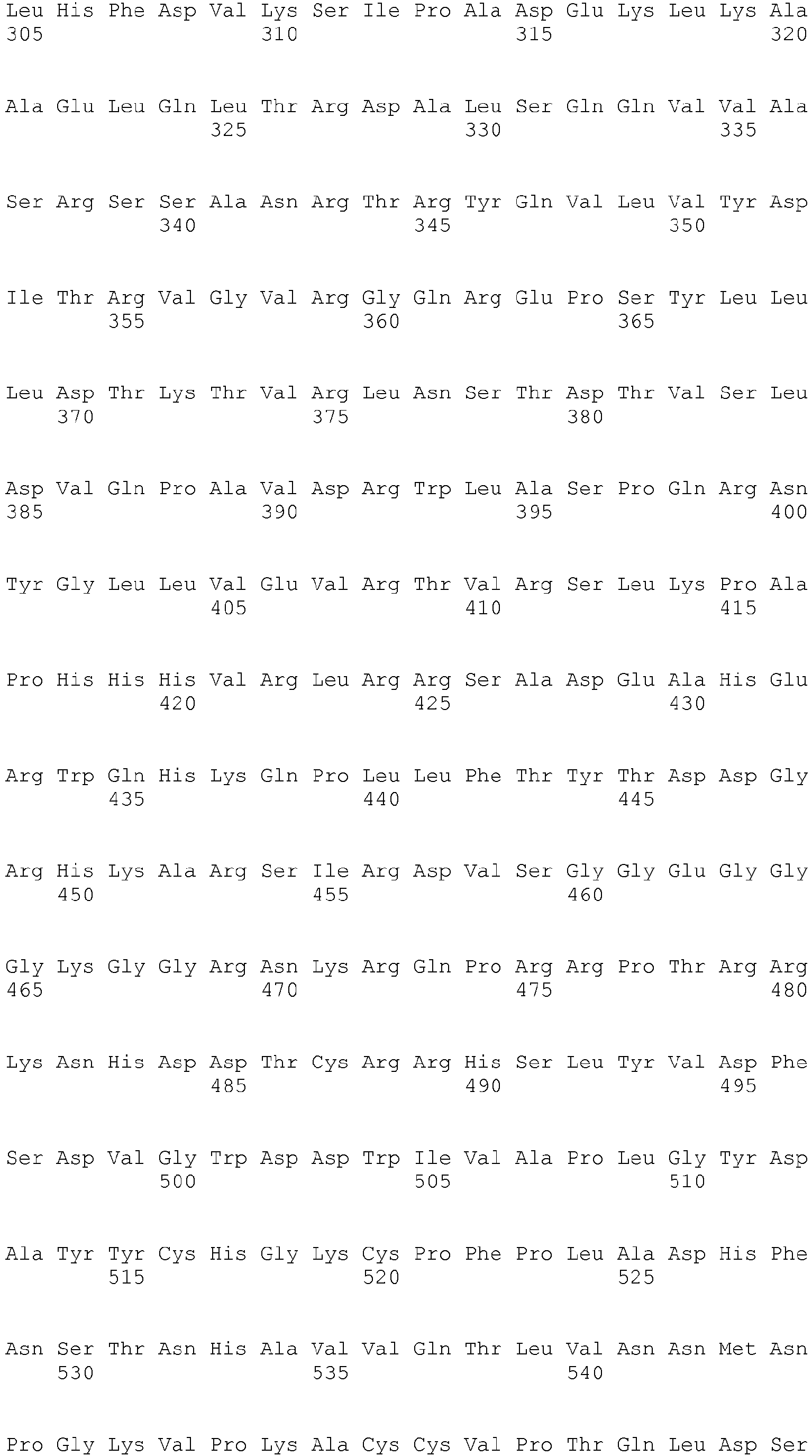

- <210> 8
<211> 360
<212> PRT
<213> Xenopus sp. - <400> 8


- <210> 9
<211> 438
<212> PRT
<213> Mus sp. - <400> 9


- <210> 10
<211> 396
<212> PRT
<213> Homo sapiens - <400> 10

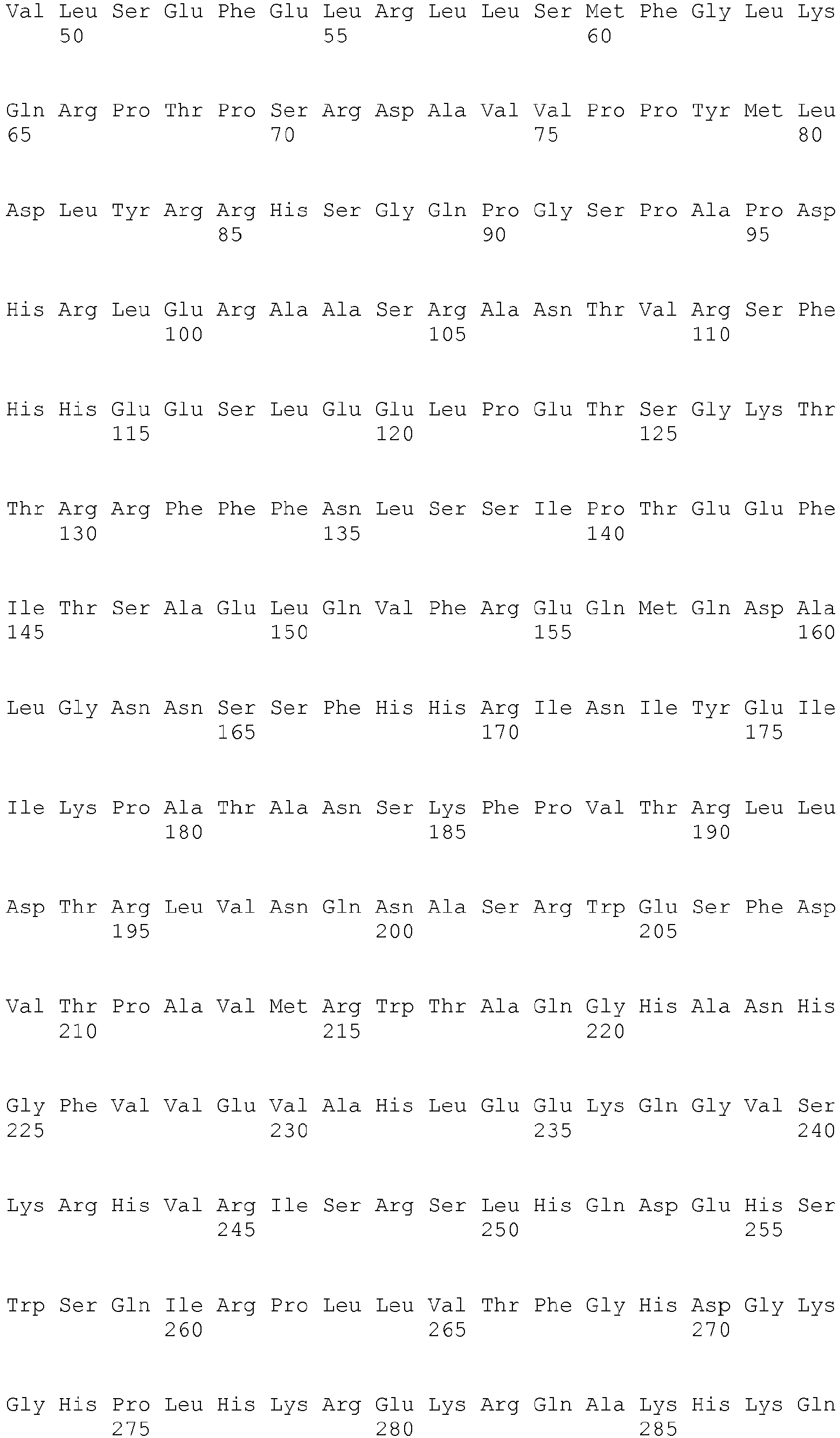

- <210> 11
<211> 408
<212> PRT
<213> Homo sapiens - <400> 11


- <210> 12
<211> 472
<212> PRT
<213> Homo sapiens - <400> 12


- <210> 13
<211> 372
<212> PRT
<213> Homo sapiens - <400> 13


- <210> 14
<211> 455
<212> PRT
<213> Drosophila sp. - <400> 14

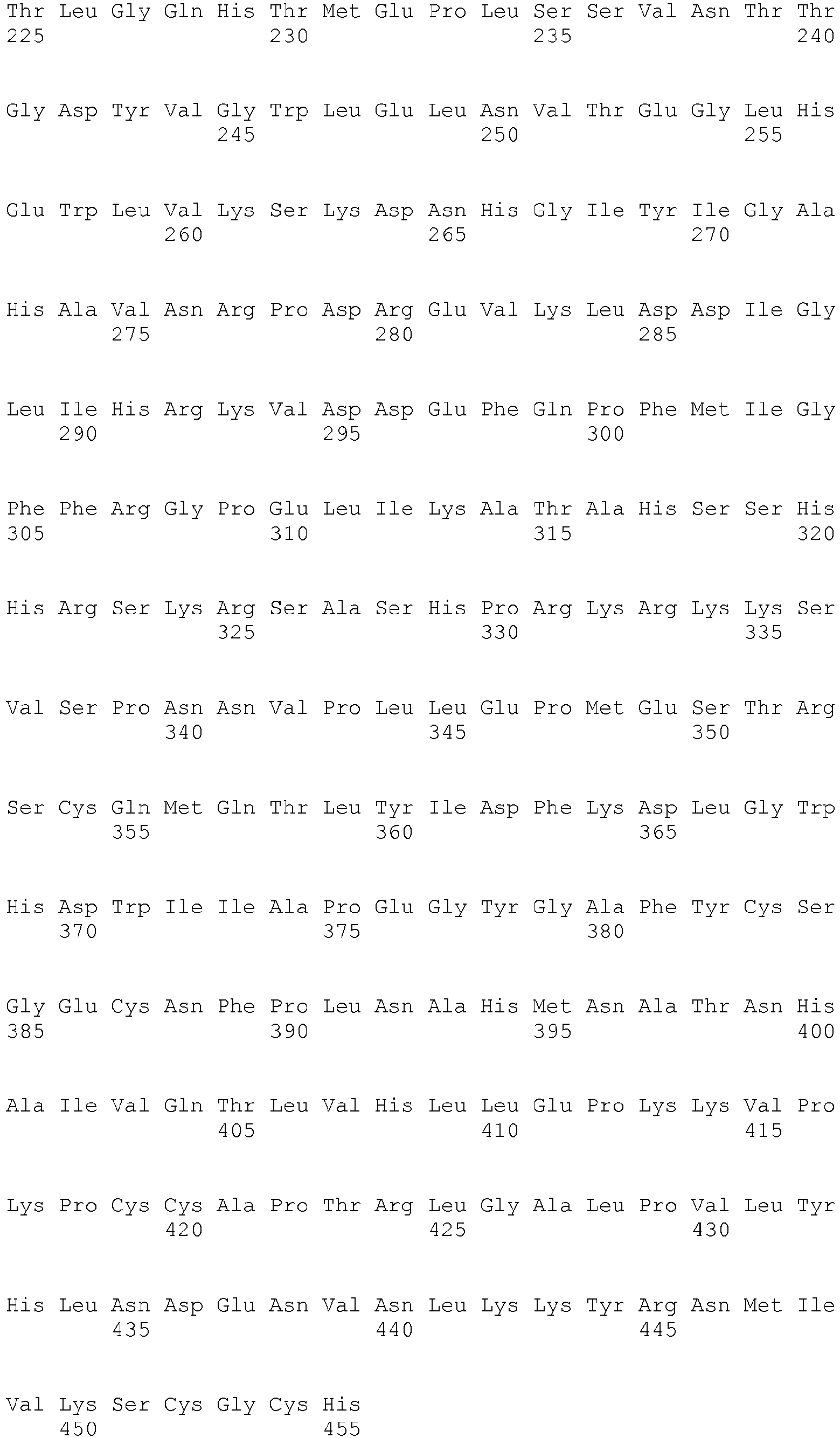
- <210> 15
<211> 454
<212> PRT
<213> Homo sapiens - <400> 15


- <210> 16
<211> 513
<212> PRT
<213> Homo sapiens - <400> 16

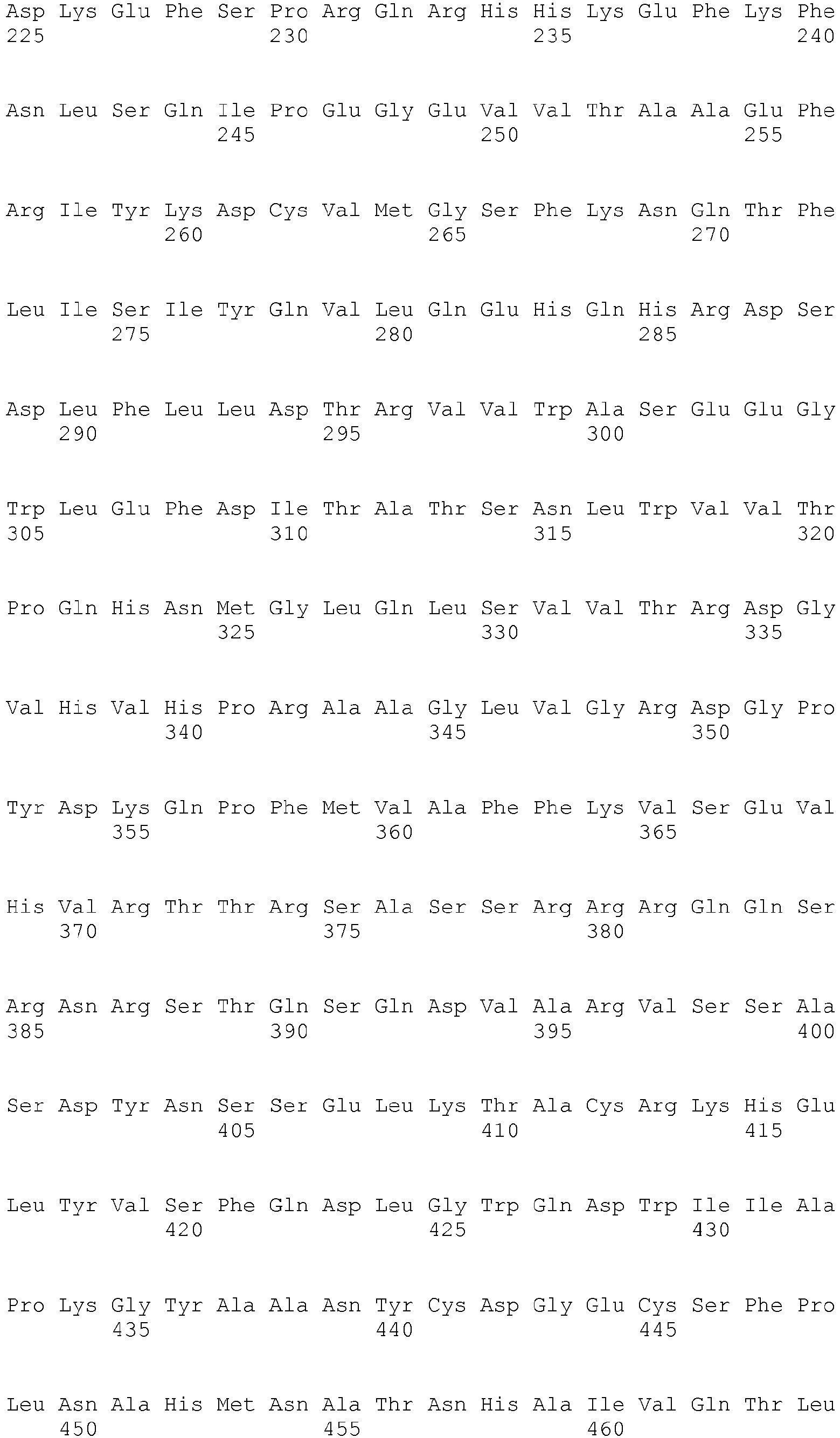

- <210> 17
<211> 1878
<212> DNA
<213> Homo sapiens - <400> 17
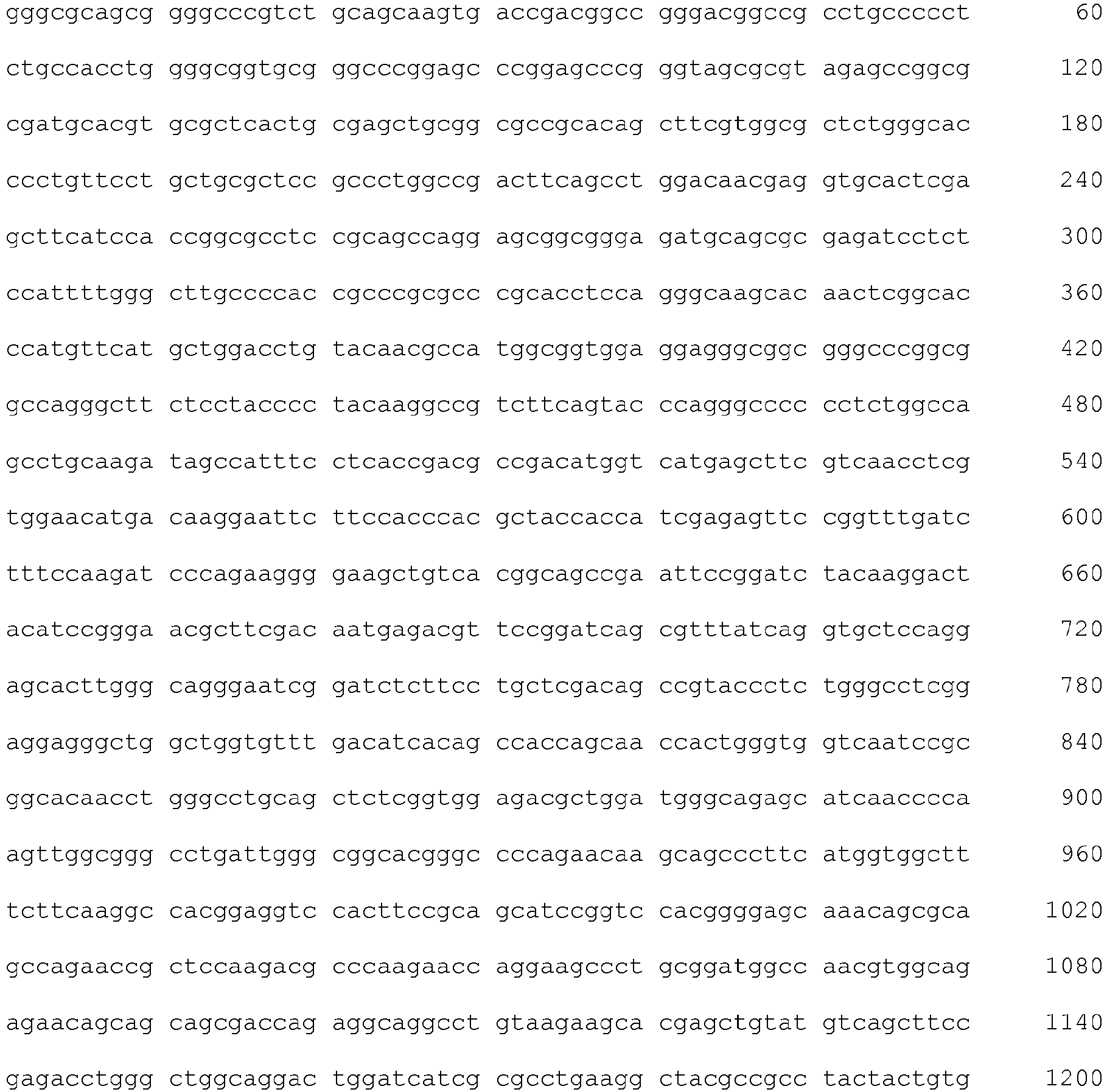

- <210> 18
<211> 1872
<212> DNA
<213> Mus sp. - <400> 18


- <210> 19
<211> 430
<212> PRT
<213> Mus sp. - <400> 19


- <210> 20
<211> 1842
<212> DNA
<213> Homo sapiens - <400> 20


- <210> 21
<211> 402
<212> PRT
<213> Homo sapiens - <400> 21


- <210> 22
<211> 1917
<212> DNA
<213> Mus sp. - <400> 22


- <210> 23
<211> 399
<212> PRT
<213> Mus sp. - <400> 23

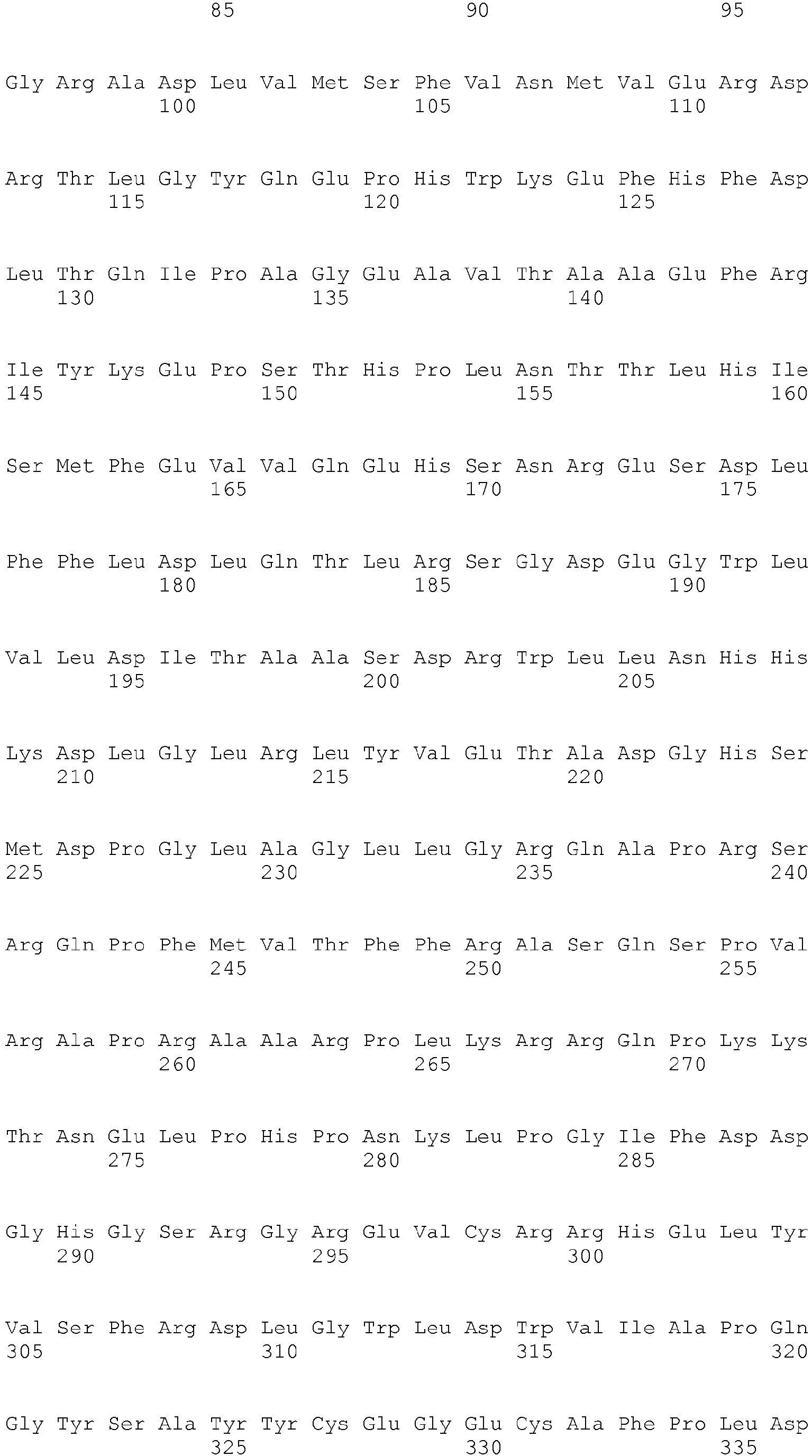

- <210> 24
<211> 97
<212> PRT
<213> Artificial Sequence - <220>
<221> source
<223> /note="Description of Artificial Sequence: Synthetic peptide" - <220>
<221> VARIANT
<222> (6)..(6)
<223> /replace="Gln" - <220>
<221> misc_feature
<222> (6)..(6)
<223> /note="Residue given in the sequence has no preference with respect to the residue in the annotation for said position" - <220>
<221> VARIANT
<222> (8) .. (8)
<223> /replace="Val" - <220>
<221> misc_feature
<222> (8) .. (8)
<223> /note="Residue given in the sequence has no preference with respect to the residue in the annotation for said position" - <220>
<221> VARIANT
<222> (18) .. (18)
<223> /replace="Lys" - <220>
<221> misc_feature
<222> (18) .. (18)
<223> /note="Residue given in the sequence has no preference with respect to the residue in the annotation for said position" - <220>
<221> VARIANT
<222> (23) .. (23)
<223> /replace="Asn" or "Phe" - <220>
<221> misc_feature
<222> (23)..(23)
<223> /note="Residue given in the sequence has no preference with respect to those in the annotation for said position" - <220>
<221> VARIANT
<222> (26)..(26)
<223> /replace="Asp" - <220>
<221> misc_feature
<222> (26) .. (26)
<223> /note="Residue given in the sequence has no preference with respect to the residue in the annotation for said position" - <220>
<221> VARIANT
<222> (30)..(30)
<223> /replace="Ser" - <220>
<221> misc_feature
<222> (30) .. (30)
<223> /note="Residue given in the sequence has no preference with respect to the residue in the annotation for said position" - <220>
<221> VARIANT
<222> (31)..(31)
<223> /replace="Leu" or "Tyr" - <220>
<221> misc_feature
<222> (31)..(31)
<223> /note="Residue given in the sequence has no preference with respect to those in the annotation for said position" - <220>
<221> VARIANT
<222> (33)..(33)
<223> /replace="Val" or "Met" - <220>
<221> misc_feature
<222> (33)..(33)
<223> /note="Residue given in the sequence has no preference with respect to those in the annotation for said position" - <220>
<221> VARIANT
<222> (34)..(34)
<223> /replace="Asp" or "Ala" or "Thr" or "Pro" - <220>
<221> misc_feature
<222> (34)..(34)
<223> /note="Residue given in the sequence has no preference with respect to those in the annotation for said position" - <220>
<221> VARIANT
<222> (35)..(35)
<223> /replace="Ala" - <220>
<221> misc_feature
<222> (35)..(35)
<223> /note="Residue given in the sequence has no preference with respect to the residue in the annotation for said position" - <220>
<221> VARIANT
<222> (36)..(36)
<223> /replace="His" - <220>
<221> misc_feature
<222> (36) .. (36)
<223> /note="Residue given in the sequence has no preference with respect to the residue in the annotation for said position" - <220>
<221> VARIANT
<222> (51)..(51)
<223> /replace="Leu" or "Val" - <220>
<221> misc_feature
<222> (51)..(51)
<223> /note="Residue given in the sequence has no preference with respect to those in the annotation for said position" - <220>
<221> VARIANT
<222> (52)..(52)
<223> /replace="Met" - <220>
<221> misc_feature
<222> (52) .. (52)
<223> /note="Residue given in the sequence has no preference with respect to the residue in the annotation for said position" - <220>
<221> VARIANT
<222> (53)..(53)
<223> /replace="Phe" - <220>
<221> misc_feature
<222> (53)..(53)
<223> /note="Residue given in the sequence has no preference with respect to the residue in the annotation for said position" - <220>
<221> VARIANT
<222> (55)..(55)
<223> /replace="Asp" - <220>
<221> misc_feature
<222> (55)
<223> /note="Residue given in the sequence has no preference with respect to the residue in the annotation for said position" - <220>
<221> MOD_RES
<222> (56)..(56)
<223> Any amino acid - <220>
<221> VARIANT
<222> (66)..(66)
<223> /replace="Lys" - <220>
<221> misc_feature
<222> (66)..(66)
<223> /note="Residue given in the sequence has no preference with respect to the residue in the annotation for said position" - <220>
<221> VARIANT
<222> (67) .. (67)
<223> /replace="Val" - <220>
<221> misc_feature
<222> (67) .. (67)
<223> /note="Residue given in the sequence has no preference with respect to the residue in the annotation for said position" - <220>
<221> MOD_RES
<222> (78) .. (78)
<223> Any amino acid - <220>
<221> VARIANT
<222> (88)..(88)
<223> /replace="Trp" - <220>
<221> misc_feature
<222> (88)..(88)
<223> /note="Residue given in the sequence has no preference with respect to the residue in the annotation for said position" - <220>
<221> VARIANT
<222> (90)..(90)
<223> /replace="Thr" or "Ala" or "Ile" - <220>
<221> misc_feature
<222> (90)..(90)
<223> /note="Residue given in the sequence has no preference with respect to those in the annotation for said position" - <220>
<221> VARIANT
<222> (92) .. (92)
<223> /replace="Lys" or "Val" or "Asp" or "Gln" or "Glu" - <220>
<221> misc_feature
<222> (92) .. (92)
<223> /note="Residue given in the sequence has no preference with respect to those in the annotation for said position" - <220>
<221> VARIANT
<222> (93) .. (93)
<223> /replace="Ser" - <220>
<221> misc_feature
<222> (93) .. (93)
<223> /note="Residue given in the sequence has no preference with respect to the residue in the annotation for said position" - <400> 24


- <210> 25
<211> 101
<212> PRT
<213> Artificial Sequence - <220>
<221> source
<223> /note="Description of Artificial Sequence: Synthetic polypeptide" - <220>
<221> VARIANT
<222> (2) .. (2)
<223> /replace="Arg" - <220>
<221> misc_feature
<222> (2) .. (2)
<223> /note="Residue given in the sequence has no preference with respect to the residue in the annotation for said position" - <220>
<221> VARIANT
<222> (3) .. (3)
<223> /replace="Arg" - <220>
<221> misc_feature
<222> (3) .. (3)
<223> /note="Residue given in the sequence has no preference with respect to the residue in the annotation for said position" - <220>
<221> VARIANT
<222> (11)..(11)
<223> /replace="Gln" - <220>
<221> misc_feature
<222> (11)..(11)
<223> /note="Residue given in the sequence has no preference with respect to the residue in the annotation for said position" - <220>
<221> VARIANT
<222> (16)..(16)
<223> /replace="Leu" - <220>
<221> misc_feature
<222> (16) .. (16)
<223> /note="Residue given in the sequence has no preference with respect to the residue in the annotation for said position" - <220>
<221> VARIANT
<222> (19) .. (19)
<223> /replace="Val" - <220>
<221> misc_feature
<222> (19) .. (19)
<223> /note="Residue given in the sequence has no preference with respect to the residue in the annotation for said position" - <220>
<221> VARIANT
<222> (23) .. (23)
<223> /replace="Gln" - <220>
<221> misc_feature
<222> (23) .. (23)
<223> /note="Residue given in the sequence has no preference with respect to the residue in the annotation for said position" - <220>
<221> VARIANT
<222> (26)..(26)
<223> /replace="Ser" - <220>
<221> misc_feature
<222> (26) .. (26)
<223> /note="Residue given in the sequence has no preference with respect to the residue in the annotation for said position" - <220>
<221> VARIANT
<222> (35)..(35)
<223> /replace="Ser" - <220>
<221> misc_feature
<222> (35)..(35)
<223> /note="Residue given in the sequence has no preference with respect to the residue in the annotation for said position" - <220>
<221> VARIANT
<222> (39)..(39)
<223> /replace="Asp" - <220>
<221> misc_feature
<222> (39) .. (39)
<223> /note="Residue given in the sequence has no preference with respect to the residue in the annotation for said position" - <220>
<221> VARIANT
<222> (41)..(41)
<223> /replace="Cys" - <220>
<221> misc_feature
<222> (41)..(41)
<223> /note="Residue given in the sequence has no preference with respect to the residue in the annotation for said position" - <220>
<221> VARIANT
<222> (50)..(50)
<223> /replace="Leu" - <220>
<221> misc_feature
<222> (50) .. (50)
<223> /note="Residue given in the sequence has no preference with respect to the residue in the annotation for said position" - <220>
<221> VARIANT
<222> (52)..(52)
<223> /replace="Thr" - <220>
<221> misc_feature
<222> (52)..(52)
<223> /note="Residue given in the sequence has no preference with respect to the residue in the annotation for said position" - <220>
<221> VARIANT
<222> (56)..(56)
<223> /replace="Leu" - <220>
<221> misc_feature
<222> (56) .. (56)
<223> /note="Residue given in the sequence has no preference with respect to the residue in the annotation for said position" - <220>
<221> VARIANT
<222> (57)..(57)
<223> /replace="Met" - <220>
<221> misc_feature
<222> (57)..(57)
<223> /note="Residue given in the sequence has no preference with respect to the residue in the annotation for said position" - <220>
<221> VARIANT
<222> (58) .. (58)
<223> /replace="Lys" - <220>
<221> misc_feature
<222> (58) .. (58)
<223> /note="Residue given in the sequence has no preference with respect to the residue in the annotation for said position" - <220>
<221> VARIANT
<222> (60)..(60)
<223> /replace="Asp" or "Asn" - <220>
<221> misc_feature
<222> (60)..(60)
<223> /note="Residue given in the sequence has no preference with respect to those in the annotation for said position" - <220>
<221> VARIANT
<222> (61) .. (61)
<223> /replace="Ala" or "Val" - <220>
<221> misc_feature
<222> (61) .. (61)
<223> /note="Residue given in the sequence has no preference with respect to those in the annotation for said position" - <220>
<221> VARIANT
<222> (65)..(65)
<223> /replace="Ala" - <220>
<221> misc_feature
<222> (65) .. (65)
<223> /note="Residue given in the sequence has no preference with respect to the residue in the annotation for said position" - <220>
<221> VARIANT
<222> (71)..(71)
<223> /replace="Lys" - <220>
<221> misc_feature
<222> (71)..(71)
<223> /note="Residue given in the sequence has no preference with respect to the residue in the annotation for said position" - <220>
<221> VARIANT
<222> (73)..(73)
<223> /replace="Ser" - <220>
<221> misc_feature
<222> (73)..(73)
<223> /note="Residue given in the sequence has no preference with respect to the residue in the annotation for said position" - <220>
<221> VARIANT
<222> (75)..(75)
<223> /replace="Thr" - <220>
<221> misc_feature
<222> (75)..(75)
<223> /note="Residue given in the sequence has no preference with respect to the residue in the annotation for said position" - <220>
<221> VARIANT
<222> (80)..(80)
<223> /replace="Tyr" - <220>
<221> misc_feature
<222> (80)..(80)
<223> /note="Residue given in the sequence has no preference with respect to the residue in the annotation for said position" - <220>
<221> VARIANT
<222> (82) .. (82)
<223> /replace="Ser" - <220>
<221> misc_feature
<222> (82) .. (82)
<223> /note="Residue given in the sequence has no preference with respect to the residue in the annotation for said position" - <220>
<221> VARIANT
<222> (84) .. (84)
<223> /replace="Asn" - <220>
<221> misc_feature
<222> (84) .. (84)
<223> /note="Residue given in the sequence has no preference with respect to the residue in the annotation for said position" - <220>
<221> VARIANT
<222> (89)..(89)
<223> /replace="Arg" - <220>
<221> misc_feature
<222> (89)..(89)
<223> /note="Residue given in the sequence has no preference with respect to the residue in the annotation for said position" - <220>
<221> VARIANT
<222> (91) .. (91)
<223> /replace="His" - <220>
<221> misc_feature
<222> (91) .. (91)
<223> /note="Residue given in the sequence has no preference with respect to the residue in the annotation for said position" - <220>
<221> MOD_RES
<222> (96)..(96)
<223> /replace="Lys" - <220>
<221> misc_feature
<222> (96) .. (96)
<223> /note="Residue given in the sequence has no preference with respect to the residue in the annotation for said position" - <400> 25


- <210> 26
<211> 30
<212> DNA
<213> Artificial Sequence - <220>
<221> source
<223> /note="Description of Artificial Sequence: Synthetic primer" - <400> 26
gagaggtcca ttccaactgc tcagatgaag 30 - <210> 27
<211> 30
<212> DNA
<213> Artificial Sequence - <220>
<221> source
<223> /note="Description of Artificial Sequence: Synthetic primer" - <400> 27
gtcttcactt cgagtctgat ccggagaaag 30 - <210> 28
<211> 25
<212> DNA
<213> Artificial Sequence - <220>
<221> source
<223> /note="Description of Artificial Sequence: Synthetic primer" - <400> 28
agcatgtcct ctgctcactt caacc 25 - <210> 29
<211> 22
<212> DNA
<213> Artificial Sequence - <220>
<221> source
<223> /note="Description of Artificial Sequence: Synthetic primer" - <400> 29
cgtccatgaa gttgttgccg at 22 - <210> 30
<211> 21
<212> DNA
<213> Artificial Sequence - <220>
<221> source
<223> /note="Description of Artificial Sequence: Synthetic primer" - <400> 30
tgggtggtga tccactggatc 21 - <210> 31
<211> 20
<212> DNA
<213> Artificial Sequence - <220>
<221> source
<223> /note="Description of Artificial Sequence: Synthetic primer" - <400> 31
ttgccttgag tcagtgcgcc 20 - <210> 32
<211> 20
<212> DNA
<213> Artificial Sequence - <220>
<221> source
<223> /note="Description of Artificial Sequence: Synthetic primer" - <400> 32
agcccagcca agcactgtca 20 - <210> 33
<211> 20
<212> DNA
<213> Artificial Sequence - <220>
<221> source
<223> /note="Description of Artificial Sequence: Synthetic primer" - <400> 33
gagcatcgtc cccagcaaag 20 - <210> 34
<211> 24
<212> DNA
<213> Artificial Sequence - <220>
<221> source
<223> /note="Description of Artificial Sequence: Synthetic primer" - <400> 34
gaagatcgtc gacatgtaca aggg 24 - <210> 35
<211> 23
<212> DNA
<213> Artificial Sequence - <220>
<221> source
<223> /note="Description of Artificial Sequence: Synthetic primer" - <400> 35
tgcatagaat ggactggtcc tcc 23 - <210> 36
<211> 25
<212> DNA
<213> Artificial Sequence - <220>
<221> source
<223> /note="Description of Artificial Sequence: Synthetic primer" - <400> 36
gctacacaag accctgagac tgacc 25 - <210> 37
<211> 22
<212> DNA
<213> Artificial Sequence - <220>
<221> source
<223> /note="Description of Artificial Sequence: Synthetic primer" - <400> 37
tctccatctc tgctgagggg at 22 - <210> 38
<211> 20
<212> DNA
<213> Artificial Sequence - <220>
<221> source
<223> /note="Description of Artificial Sequence: Synthetic primer" - <400> 38
cacgacaacc gcaccatggt 20 - <210> 39
<211> 24
<212> DNA
<213> Artificial Sequence - <220>
<221> source
<223> /note="Description of Artificial Sequence: Synthetic primer" - <400> 39
tgacagtaac cacagtccca tctg 24 - <210> 40
<211> 20
<212> DNA
<213> Artificial Sequence - <220>
<221> source
<223> /note="Description of Artificial Sequence: Synthetic primer" - <400> 40
gctggtgaag cccttcgaga 20 - <210> 41
<211> 19
<212> DNA
<213> Artificial Sequence - <220>
<221> source
<223> /note="Description of Artificial Sequence: Synthetic primer" - <400> 41
atgtggtaaa gggcgtgcg 19 - <210> 42
<211> 20
<212> DNA
<213> Artificial Sequence - <220>
<221> source
<223> /note="Description of Artificial Sequence: Synthetic primer" - <400> 42
agttcatggc tccagtcccc 20 - <210> 43
<211> 21
<212> DNA
<213> Artificial Sequence - <220>
<221> source
<223> /note="Description of Artificial Sequence: Synthetic primer" - <400> 43
tggaggctga aaggtcactgc 21 - <210> 44
<211> 20
<212> DNA
<213> Artificial Sequence - <220>
<221> source
<223> /note="Description of Artificial Sequence: Synthetic primer" - <400> 44
agccaacact gtgcgcagct 20 - <210> 45
<211> 24
<212> DNA
<213> Artificial Sequence - <220>
<221> source
<223> /note="Description of Artificial Sequence: Synthetic primer" - <400> 45
cctgaagctc tgctgaggtg ataa 24 - <210> 46
<211> 21
<212> DNA
<213> Artificial Sequence - <220>
<221> source
<223> /note="Description of Artificial Sequence: Synthetic primer" - <400> 46
atgagagccc tcacactcctc 21 - <210> 47
<211> 21
<212> DNA
<213> Artificial Sequence - <220>
<221> source
<223> /note="Description of Artificial Sequence: Synthetic primer" - <400> 47
gccgtagaag cgccgataggc 21 - <210> 48
<211> 20
<212> DNA
<213> Artificial Sequence - <220>
<221> source
<223> /note="Description of Artificial Sequence: Synthetic primer" - <400> 48
tcctgttcga cagtcagccg 20 - <210> 49
<211> 20
<212> DNA
<213> Artificial Sequence - <220>
<221> source
<223> /note="Description of Artificial Sequence: Synthetic primer" - <400> 49
tggtgaccag gcgcccaata 20 - <210> 50
<211> 24
<212> DNA
<213> Artificial Sequence - <220>
<221> source
<223> /note="Description of Artificial Sequence: Synthetic primer" - <400> 50
tcccttctca agcaccaatg gact 24 - <210> 51
<211> 24
<212> DNA
<213> Artificial Sequence - <220>
<221> source
<223> /note="Description of Artificial Sequence: Synthetic primer" - <400> 51
agctgtgaat gggcttcttc ctca 24 - <210> 52
<211> 24
<212> DNA
<213> Artificial Sequence - <220>
<221> source
<223> /note="Description of Artificial Sequence: Synthetic primer" - <400> 52
tgttccagta tgactccact cacg 24 - <210> 53
<211> 25
<212> DNA
<213> Artificial Sequence - <220>
<221> source
<223> /note="Description of Artificial Sequence: Synthetic primer" - <400> 53
gaagacacca gtagactcca cgaca 25 - <210> 54
<211> 102
<212> PRT
<213> Homo sapiens - <400> 54


- <210> 55
<211> 102
<212> PRT
<213> Mus sp. - <400> 55

- <210> 56
<211> 102
<212> PRT
<213> Homo sapiens - <400> 56


- <210> 57
<211> 102
<212> PRT
<213> Homo sapiens - <400> 57

- <210> 58
<211> 102
<212> PRT
<213> Mus sp. - <400> 58


- <210> 59
<211> 102
<212> PRT
<213> Homo sapiens - <400> 59

- <210> 60
<211> 102
<212> PRT
<213> Mus sp. - <400> 60

- <210> 61
<211> 102
<212> PRT
<213> Drosophila sp. - <400> 61
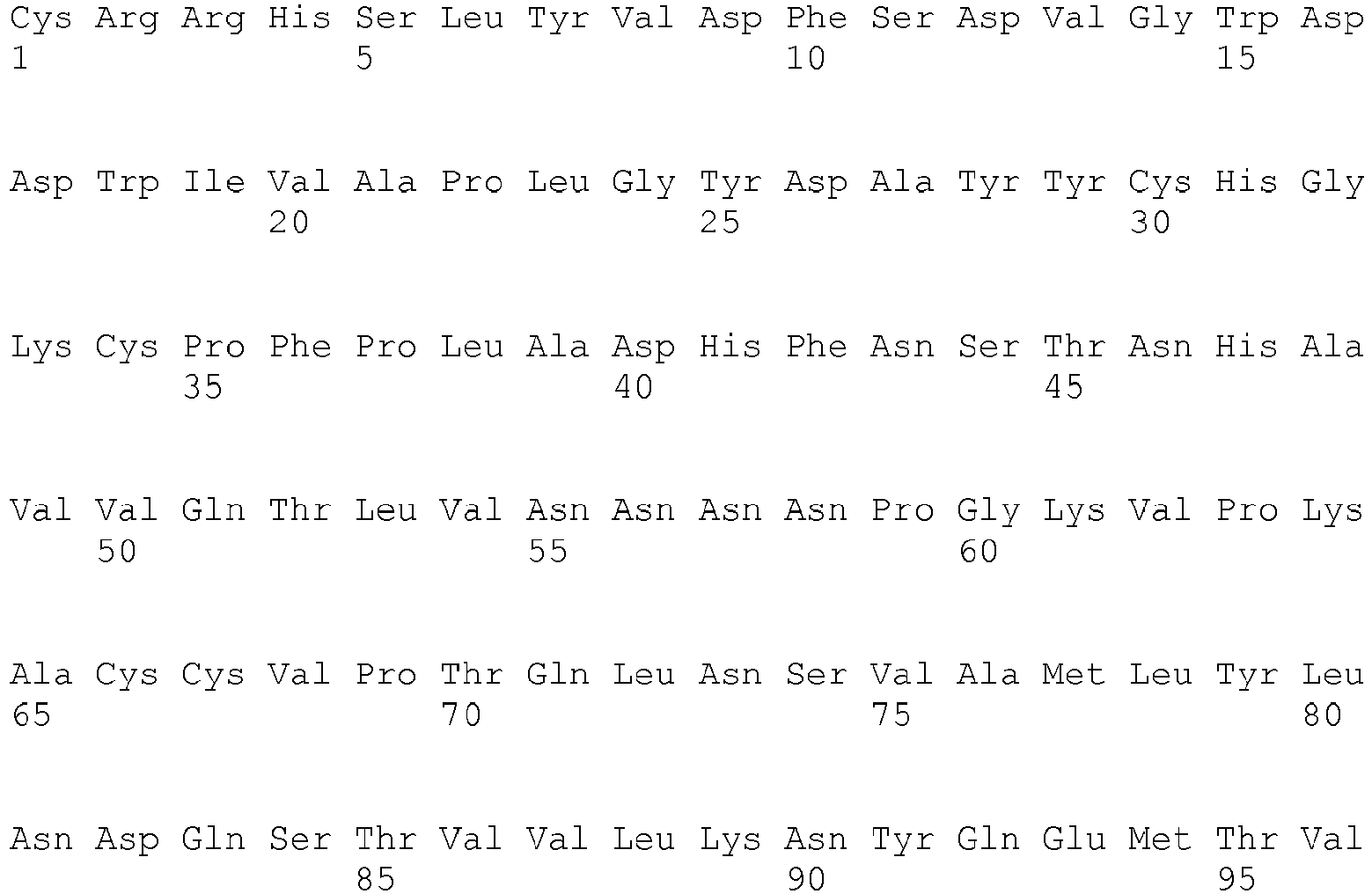

- <210> 62
<211> 101
<212> PRT
<213> Homo sapiens - <400> 62

- <210> 63
<211> 101
<212> PRT
<213> Homo sapiens - <400> 63
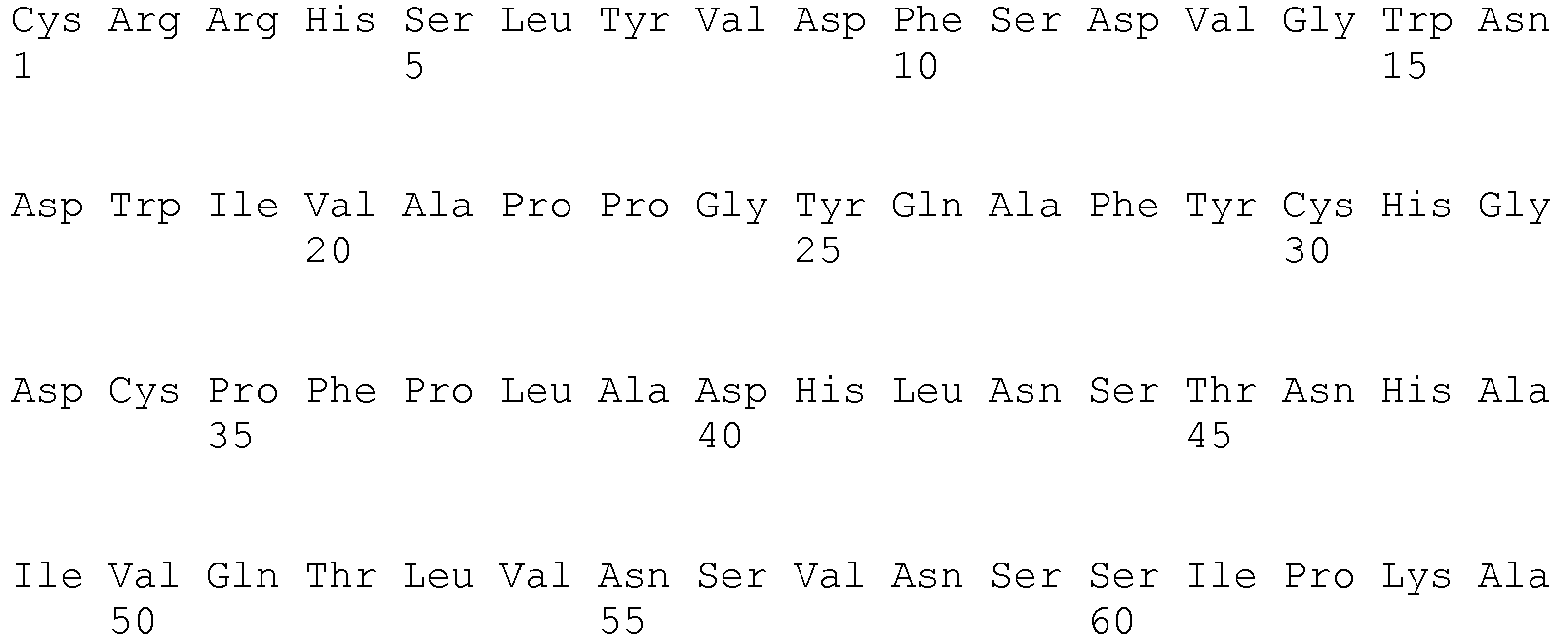

- <210> 64
<211> 103
<212> PRT
<213> Homo sapiens - <400> 64

- <210> 65
<211> 102
<212> PRT
<213> Xenopus sp. - <400> 65


- <210> 66
<211> 106
<212> PRT
<213> Mus sp. - <400> 66
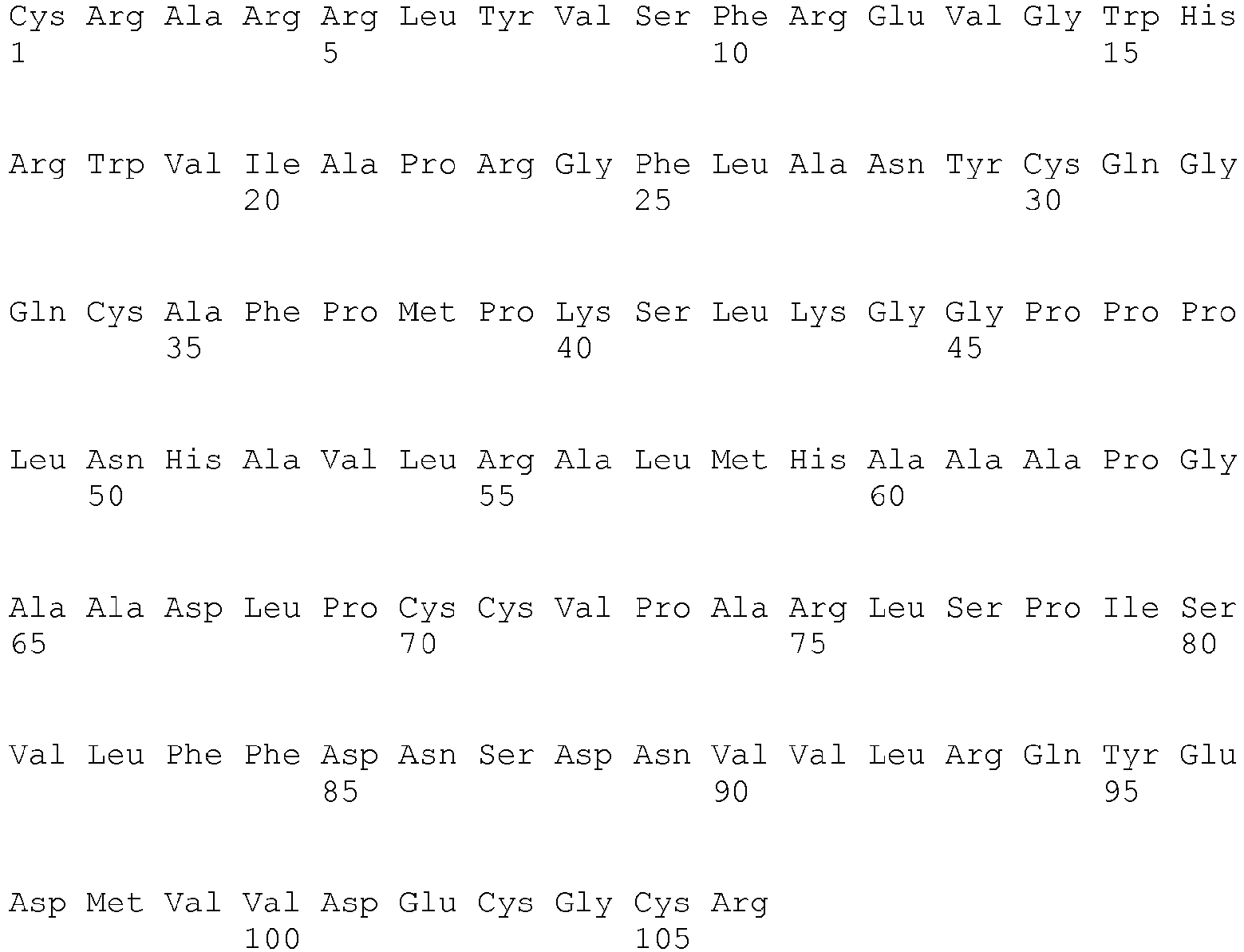
- <210> 67
<211> 102
<212> PRT
<213> Drosophila sp. - <400> 67

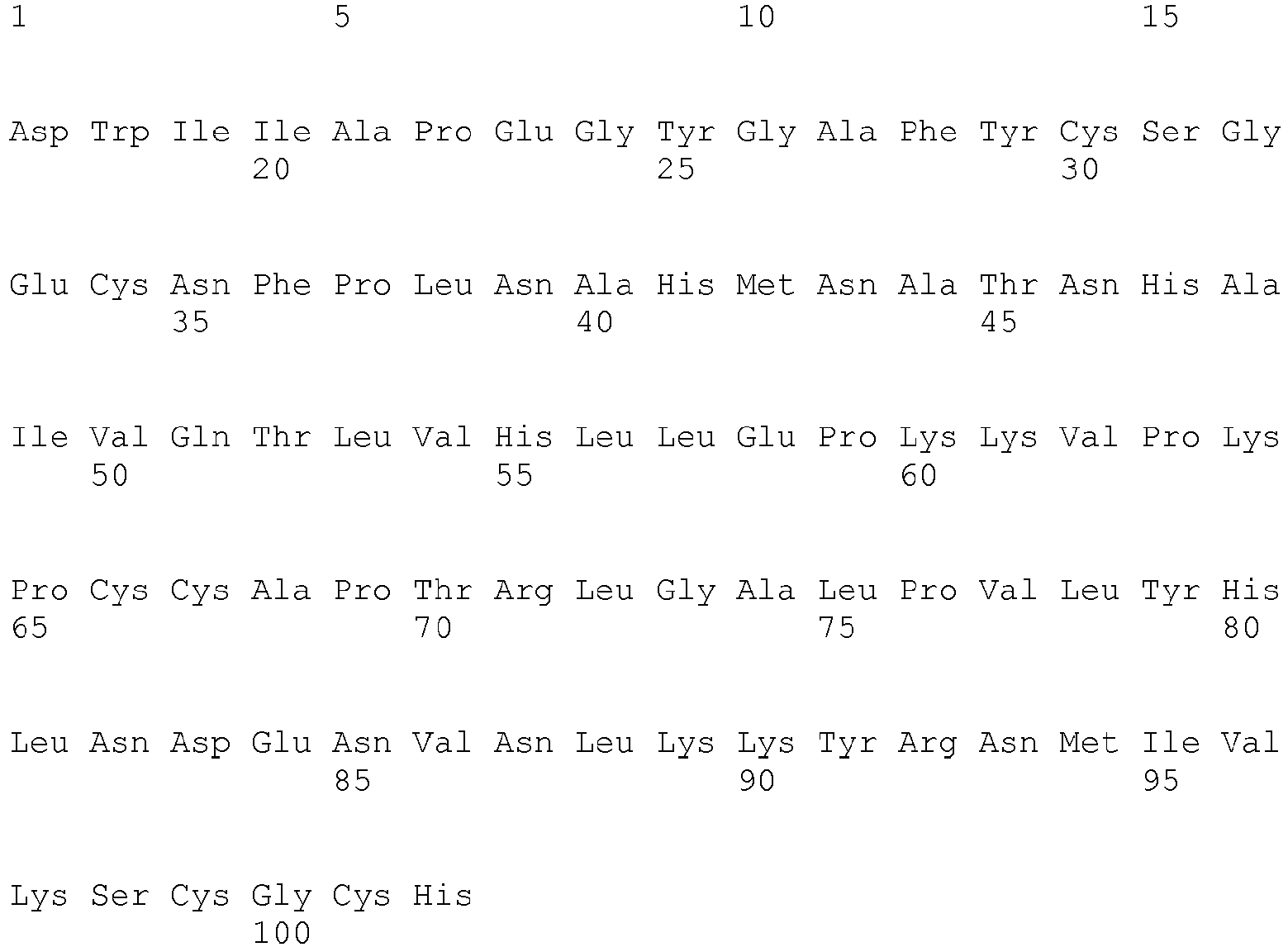
- <210> 68
<211> 4
<212> PRT
<213> Mus sp. - <400> 68

Claims (5)
- A pharmaceutical composition comprising the morphogen BMP-7 for use in treating, preventing or reducing neointimal hyperplasia in a subject.
- Use of the morphogen BMP-7 for the preparation of a pharmaceutical composition for treating, preventing or reducing neointimal hyperplasia in a subject.
- The pharmaceutical composition for use of claim 1 or the use of claim 2, wherein the neointimal hyperplasia is associated with anastomosis.
- The pharmaceutical composition for use or the use of claim 3, wherein the neointimal hyperplasia is induced by chronic kidney disease.
- The pharmaceutical composition for use of any one of claims 1, 3 or 4, or the use of any one of claims 2 to 4, wherein the BMP-7 is human BMP-7 comprising the amino acid sequence of SEQ ID NO: 2.
Applications Claiming Priority (2)
| Application Number | Priority Date | Filing Date | Title |
|---|---|---|---|
| US2849908P | 2008-02-13 | 2008-02-13 | |
| PCT/US2009/034069 WO2009102966A2 (en) | 2008-02-13 | 2009-02-13 | Method of treating vascular sclerosis |
Publications (2)
| Publication Number | Publication Date |
|---|---|
| EP2268302A2 EP2268302A2 (en) | 2011-01-05 |
| EP2268302B1 true EP2268302B1 (en) | 2014-04-09 |
Family
ID=40801928
Family Applications (1)
| Application Number | Title | Priority Date | Filing Date |
|---|---|---|---|
| EP09710335.2A Not-in-force EP2268302B1 (en) | 2008-02-13 | 2009-02-13 | Bmp-7 for use in treating neointimal hyperplasia |
Country Status (7)
| Country | Link |
|---|---|
| US (1) | US8741840B2 (en) |
| EP (1) | EP2268302B1 (en) |
| JP (2) | JP2011514331A (en) |
| AU (1) | AU2009214629A1 (en) |
| CA (1) | CA2718592A1 (en) |
| ES (1) | ES2474194T3 (en) |
| WO (1) | WO2009102966A2 (en) |
Families Citing this family (4)
| Publication number | Priority date | Publication date | Assignee | Title |
|---|---|---|---|---|
| WO2013033680A1 (en) | 2011-09-02 | 2013-03-07 | Lifenet Health | Bmp peptides & methods of use |
| US11078248B2 (en) | 2010-03-19 | 2021-08-03 | Lifenet Health | BMP peptides and methods of use |
| US9565622B2 (en) * | 2012-07-05 | 2017-02-07 | Qualcomm Incorporated | Detecting services provided by a wireless node before device discovery and connection establishment |
| US20140227219A1 (en) * | 2013-02-08 | 2014-08-14 | University Of Central Florida Research Foundation, Inc. | Compositions and Methods Comprising BMP-7 |
Family Cites Families (39)
| Publication number | Priority date | Publication date | Assignee | Title |
|---|---|---|---|---|
| IL83003A (en) | 1986-07-01 | 1995-07-31 | Genetics Inst | Osteoinductive factors |
| US5266683A (en) | 1988-04-08 | 1993-11-30 | Stryker Corporation | Osteogenic proteins |
| US5011691A (en) | 1988-08-15 | 1991-04-30 | Stryker Corporation | Osteogenic devices |
| US4968590A (en) | 1988-04-08 | 1990-11-06 | Stryker Corporation | Osteogenic proteins and polypeptides |
| US5284756A (en) | 1988-10-11 | 1994-02-08 | Lynn Grinna | Heterodimeric osteogenic factor |
| DE69131580T2 (en) | 1990-06-15 | 2000-01-13 | Carnegie Institution Of Washington, Washington | GDF-1 and UOG1 proteins |
| AU660019B2 (en) | 1991-03-11 | 1995-06-08 | Stryker Corporation | Protein-induced morphogenesis |
| US6723698B2 (en) | 1991-03-11 | 2004-04-20 | Curis, Inc. | Methods and compositions for the treatment of motor neuron injury and neuropathy |
| US6287816B1 (en) | 1991-06-25 | 2001-09-11 | Genetics Institute, Inc. | BMP-9 compositions |
| ATE197611T1 (en) | 1991-08-30 | 2000-12-15 | Creative Biomolecules Inc | SCREENING METHOD OF MORPHOGENIC PROTEINS |
| DE69233559T2 (en) | 1991-08-30 | 2006-08-31 | Curis, Inc., Cambridge | OSTEOGENIC PROTEINS IN THE TREATMENT OF METABOLIC BONE DISEASES |
| CA2116562C (en) | 1991-08-30 | 1999-04-13 | Thangavel Kuberasampath | Morphogen-induced modulation of inflammatory response |
| DE69233022T2 (en) | 1991-11-04 | 2004-02-12 | Genetics Institute, LLC, Cambridge | RECOMBINANT BONE MORPHOGENETIC PROTEIN HETERODIMERS, COMPOSITIONS AND METHODS OF USE |
| HU218845B (en) | 1992-02-12 | 2000-12-28 | Biopharm Gesellschaft Zur Biotechnologischen Entwicklung Von Pharmaka Mbh. | Dna sequences encoding novel growth/differentiation factors, pharmaceutical preparations containing said factors, dna molecules, mosts, antibodies and diagnostic methods |
| EP0653942B2 (en) | 1992-07-31 | 2007-03-07 | Curis, Inc. | Morphogen-induced nerve regeneration and repair |
| EP0672064A1 (en) | 1992-11-03 | 1995-09-20 | Creative Biomolecules, Inc. | Op-3-induced morphogenesis |
| EP0690871A4 (en) | 1993-01-12 | 1999-10-20 | Univ Johns Hopkins Med | GROWTH AND DIFFERENTIATION FACTOR-5 |
| CA2153653C (en) | 1993-01-12 | 2010-12-07 | Se-Jin Lee | Growth differentiation factor-9 |
| ES2201076T3 (en) | 1993-03-19 | 2004-03-16 | The Johns Hopkins University School Of Medicine | GROWTH DIFFERENTIATION FACTOR-8. |
| DE69433742T2 (en) | 1993-05-12 | 2005-07-07 | Genetics Institute, LLC, Cambridge | BMP-10 COMPOSITIONS |
| DK0698094T3 (en) | 1993-05-12 | 2004-05-03 | Inst Genetics Llc | BMP-11 compositions |
| EP0717633A4 (en) | 1993-07-09 | 1998-05-20 | Univ Johns Hopkins Med | GROWTH DIFFERENTIATION FACTOR 7 |
| CA2165776A1 (en) | 1993-07-09 | 1995-01-19 | The Johns Hopkins University School Of Medicine | Growth differentiation factor-6 |
| CA2171546A1 (en) | 1993-10-08 | 1995-04-20 | The Johns Hopkins University School Of Medicine | Growth differentiation factor-10 |
| DE4334646C1 (en) | 1993-10-12 | 1994-09-29 | Quinting Friedhelm | Transparent analogue watch (timepiece) |
| JP3300500B2 (en) | 1993-10-12 | 2002-07-08 | 新日本製鐵株式会社 | Method for producing hot forging steel excellent in fatigue strength, yield strength and machinability |
| DE69434651T2 (en) | 1993-12-07 | 2007-03-08 | Genetics Institute, Inc., Cambridge | BMP-12, BMP-13 AND THESE INCLUDING SEWNE-INDUCTIVE COMPOSITIONS |
| IL114397A0 (en) | 1994-07-01 | 1995-10-31 | Bioph Biotech Entw Pharm Gmbh | Growth/differentiation factor of the TGF-beta-family |
| WO1996001845A1 (en) | 1994-07-08 | 1996-01-25 | The Johns Hopkins University School Of Medicine | Growth differentiation factor-11 |
| WO1996014335A1 (en) | 1994-11-07 | 1996-05-17 | The Government Of The United States Of America, Asrepresented By The Secretary, Department Of Health And Human Services | Cartilage-derived morphogenetic proteins |
| US5635372A (en) | 1995-05-18 | 1997-06-03 | Genetics Institute, Inc. | BMP-15 compositions |
| US6040431A (en) | 1995-06-07 | 2000-03-21 | Stryker Corporation | Single chain analogs of the TGF-β superfamily (morphons) |
| US5834188A (en) | 1995-07-26 | 1998-11-10 | Creative Biomolecule, Inc. | Methods and compositions for identifying morphogen analogs |
| US20030185792A1 (en) | 1996-01-22 | 2003-10-02 | Curis, Inc. | Morphogen analogs of bone morphogenic proteins |
| CA2244228A1 (en) | 1996-01-22 | 1997-07-24 | Creative Biomolecules, Inc. | Morphogen analogs and methods for producing them |
| JP2003508446A (en) * | 1999-09-02 | 2003-03-04 | アコロジックス インコーポレイテッド | Methods and compositions for lowering serum phosphate levels |
| AU2002249958B2 (en) * | 2001-01-16 | 2007-11-08 | Vascular Therapies, Inc. | Implantable device containing resorbable matrix material and anti-proliferative drugs for preventing or treating failure of hemodialysis vascular access and other vascular grafts |
| EP1578360A4 (en) | 2002-08-28 | 2009-10-21 | Curis Inc | SIMULTANEOUS ADMINISTRATION OF MORPHOGENIC AND ACE INHIBITORS IN THE TREATMENT OF CHRONIC KIDNEY INUFFICIENCY |
| AU2005295609A1 (en) * | 2004-10-15 | 2006-04-27 | Spectrum Pharmaceuticals, Inc. | Phosphate binder with reduced pill burden |
-
2009
- 2009-02-13 AU AU2009214629A patent/AU2009214629A1/en not_active Abandoned
- 2009-02-13 EP EP09710335.2A patent/EP2268302B1/en not_active Not-in-force
- 2009-02-13 WO PCT/US2009/034069 patent/WO2009102966A2/en not_active Ceased
- 2009-02-13 CA CA2718592A patent/CA2718592A1/en not_active Abandoned
- 2009-02-13 ES ES09710335.2T patent/ES2474194T3/en active Active
- 2009-02-13 US US12/867,562 patent/US8741840B2/en not_active Expired - Fee Related
- 2009-02-13 JP JP2010546922A patent/JP2011514331A/en active Pending
-
2013
- 2013-11-27 JP JP2013244679A patent/JP2014043461A/en not_active Withdrawn
Also Published As
| Publication number | Publication date |
|---|---|
| WO2009102966A2 (en) | 2009-08-20 |
| US8741840B2 (en) | 2014-06-03 |
| AU2009214629A1 (en) | 2009-08-20 |
| ES2474194T3 (en) | 2014-07-08 |
| CA2718592A1 (en) | 2009-08-20 |
| WO2009102966A3 (en) | 2010-01-28 |
| JP2011514331A (en) | 2011-05-06 |
| EP2268302A2 (en) | 2011-01-05 |
| JP2014043461A (en) | 2014-03-13 |
| US20110111054A1 (en) | 2011-05-12 |
Similar Documents
| Publication | Publication Date | Title |
|---|---|---|
| CA2254954C (en) | Morphogen treatment for chronic renal failure | |
| Mathew et al. | The mechanism of phosphorus as a cardiovascular risk factor in CKD | |
| US8748378B2 (en) | Therapies for acute renal failure | |
| JP3973050B2 (en) | Morphogen-induced liver regeneration | |
| JP2013137314A (en) | Method for evaluating tissue morphogenesis and activity | |
| US7147839B2 (en) | Methods for evaluating tissue morphogenesis and activity | |
| US8741840B2 (en) | BMP-7 for use in treating neointimal hyperplasia | |
| US20050272649A1 (en) | Conjoint administration of morphogens and ACE inhibitors in treatment of chronic renal failure | |
| EP0950110A1 (en) | Novel morphogen-responsive signal transducer and methods of use thereof | |
| AU767112B2 (en) | Morphogen treatment for chronic renal failure | |
| AU757969B2 (en) | Therapies for chronic renal failure |
Legal Events
| Date | Code | Title | Description |
|---|---|---|---|
| PUAI | Public reference made under article 153(3) epc to a published international application that has entered the european phase |
Free format text: ORIGINAL CODE: 0009012 |
|
| 17P | Request for examination filed |
Effective date: 20100910 |
|
| AK | Designated contracting states |
Kind code of ref document: A2 Designated state(s): AT BE BG CH CY CZ DE DK EE ES FI FR GB GR HR HU IE IS IT LI LT LU LV MC MK MT NL NO PL PT RO SE SI SK TR |
|
| AX | Request for extension of the european patent |
Extension state: AL BA RS |
|
| DAX | Request for extension of the european patent (deleted) | ||
| 17Q | First examination report despatched |
Effective date: 20110614 |
|
| GRAP | Despatch of communication of intention to grant a patent |
Free format text: ORIGINAL CODE: EPIDOSNIGR1 |
|
| GRAS | Grant fee paid |
Free format text: ORIGINAL CODE: EPIDOSNIGR3 |
|
| GRAP | Despatch of communication of intention to grant a patent |
Free format text: ORIGINAL CODE: EPIDOSNIGR1 |
|
| INTG | Intention to grant announced |
Effective date: 20131010 |
|
| GRAA | (expected) grant |
Free format text: ORIGINAL CODE: 0009210 |
|
| AK | Designated contracting states |
Kind code of ref document: B1 Designated state(s): AT BE BG CH CY CZ DE DK EE ES FI FR GB GR HR HU IE IS IT LI LT LU LV MC MK MT NL NO PL PT RO SE SI SK TR |
|
| REG | Reference to a national code |
Ref country code: GB Ref legal event code: FG4D |
|
| REG | Reference to a national code |
Ref country code: AT Ref legal event code: REF Ref document number: 660957 Country of ref document: AT Kind code of ref document: T Effective date: 20140415 Ref country code: CH Ref legal event code: EP |
|
| REG | Reference to a national code |
Ref country code: IE Ref legal event code: FG4D |
|
| REG | Reference to a national code |
Ref country code: DE Ref legal event code: R096 Ref document number: 602009023102 Country of ref document: DE Effective date: 20140522 |
|
| REG | Reference to a national code |
Ref country code: NL Ref legal event code: T3 |
|
| REG | Reference to a national code |
Ref country code: ES Ref legal event code: FG2A Ref document number: 2474194 Country of ref document: ES Kind code of ref document: T3 Effective date: 20140708 |
|
| REG | Reference to a national code |
Ref country code: SE Ref legal event code: TRGR |
|
| REG | Reference to a national code |
Ref country code: AT Ref legal event code: MK05 Ref document number: 660957 Country of ref document: AT Kind code of ref document: T Effective date: 20140409 |
|
| REG | Reference to a national code |
Ref country code: LT Ref legal event code: MG4D |
|
| REG | Reference to a national code |
Ref country code: CH Ref legal event code: NV Representative=s name: VOSSIUS AND PARTNER, CH |
|
| PG25 | Lapsed in a contracting state [announced via postgrant information from national office to epo] |
Ref country code: BG Free format text: LAPSE BECAUSE OF FAILURE TO SUBMIT A TRANSLATION OF THE DESCRIPTION OR TO PAY THE FEE WITHIN THE PRESCRIBED TIME-LIMIT Effective date: 20140709 Ref country code: GR Free format text: LAPSE BECAUSE OF FAILURE TO SUBMIT A TRANSLATION OF THE DESCRIPTION OR TO PAY THE FEE WITHIN THE PRESCRIBED TIME-LIMIT Effective date: 20140710 Ref country code: LT Free format text: LAPSE BECAUSE OF FAILURE TO SUBMIT A TRANSLATION OF THE DESCRIPTION OR TO PAY THE FEE WITHIN THE PRESCRIBED TIME-LIMIT Effective date: 20140409 Ref country code: FI Free format text: LAPSE BECAUSE OF FAILURE TO SUBMIT A TRANSLATION OF THE DESCRIPTION OR TO PAY THE FEE WITHIN THE PRESCRIBED TIME-LIMIT Effective date: 20140409 Ref country code: IS Free format text: LAPSE BECAUSE OF FAILURE TO SUBMIT A TRANSLATION OF THE DESCRIPTION OR TO PAY THE FEE WITHIN THE PRESCRIBED TIME-LIMIT Effective date: 20140809 Ref country code: NO Free format text: LAPSE BECAUSE OF FAILURE TO SUBMIT A TRANSLATION OF THE DESCRIPTION OR TO PAY THE FEE WITHIN THE PRESCRIBED TIME-LIMIT Effective date: 20140709 |
|
| PG25 | Lapsed in a contracting state [announced via postgrant information from national office to epo] |
Ref country code: PL Free format text: LAPSE BECAUSE OF FAILURE TO SUBMIT A TRANSLATION OF THE DESCRIPTION OR TO PAY THE FEE WITHIN THE PRESCRIBED TIME-LIMIT Effective date: 20140409 Ref country code: AT Free format text: LAPSE BECAUSE OF FAILURE TO SUBMIT A TRANSLATION OF THE DESCRIPTION OR TO PAY THE FEE WITHIN THE PRESCRIBED TIME-LIMIT Effective date: 20140409 Ref country code: HR Free format text: LAPSE BECAUSE OF FAILURE TO SUBMIT A TRANSLATION OF THE DESCRIPTION OR TO PAY THE FEE WITHIN THE PRESCRIBED TIME-LIMIT Effective date: 20140409 Ref country code: LV Free format text: LAPSE BECAUSE OF FAILURE TO SUBMIT A TRANSLATION OF THE DESCRIPTION OR TO PAY THE FEE WITHIN THE PRESCRIBED TIME-LIMIT Effective date: 20140409 |
|
| PG25 | Lapsed in a contracting state [announced via postgrant information from national office to epo] |
Ref country code: PT Free format text: LAPSE BECAUSE OF FAILURE TO SUBMIT A TRANSLATION OF THE DESCRIPTION OR TO PAY THE FEE WITHIN THE PRESCRIBED TIME-LIMIT Effective date: 20140811 |
|
| REG | Reference to a national code |
Ref country code: DE Ref legal event code: R097 Ref document number: 602009023102 Country of ref document: DE |
|
| PG25 | Lapsed in a contracting state [announced via postgrant information from national office to epo] |
Ref country code: EE Free format text: LAPSE BECAUSE OF FAILURE TO SUBMIT A TRANSLATION OF THE DESCRIPTION OR TO PAY THE FEE WITHIN THE PRESCRIBED TIME-LIMIT Effective date: 20140409 Ref country code: RO Free format text: LAPSE BECAUSE OF FAILURE TO SUBMIT A TRANSLATION OF THE DESCRIPTION OR TO PAY THE FEE WITHIN THE PRESCRIBED TIME-LIMIT Effective date: 20140409 Ref country code: DK Free format text: LAPSE BECAUSE OF FAILURE TO SUBMIT A TRANSLATION OF THE DESCRIPTION OR TO PAY THE FEE WITHIN THE PRESCRIBED TIME-LIMIT Effective date: 20140409 Ref country code: SK Free format text: LAPSE BECAUSE OF FAILURE TO SUBMIT A TRANSLATION OF THE DESCRIPTION OR TO PAY THE FEE WITHIN THE PRESCRIBED TIME-LIMIT Effective date: 20140409 Ref country code: BE Free format text: LAPSE BECAUSE OF FAILURE TO SUBMIT A TRANSLATION OF THE DESCRIPTION OR TO PAY THE FEE WITHIN THE PRESCRIBED TIME-LIMIT Effective date: 20140409 Ref country code: CZ Free format text: LAPSE BECAUSE OF FAILURE TO SUBMIT A TRANSLATION OF THE DESCRIPTION OR TO PAY THE FEE WITHIN THE PRESCRIBED TIME-LIMIT Effective date: 20140409 |
|
| REG | Reference to a national code |
Ref country code: FR Ref legal event code: PLFP Year of fee payment: 7 |
|
| PLBE | No opposition filed within time limit |
Free format text: ORIGINAL CODE: 0009261 |
|
| STAA | Information on the status of an ep patent application or granted ep patent |
Free format text: STATUS: NO OPPOSITION FILED WITHIN TIME LIMIT |
|
| 26N | No opposition filed |
Effective date: 20150112 |
|
| PGFP | Annual fee paid to national office [announced via postgrant information from national office to epo] |
Ref country code: NL Payment date: 20150210 Year of fee payment: 7 |
|
| REG | Reference to a national code |
Ref country code: DE Ref legal event code: R097 Ref document number: 602009023102 Country of ref document: DE Effective date: 20150112 |
|
| PGFP | Annual fee paid to national office [announced via postgrant information from national office to epo] |
Ref country code: DE Payment date: 20150210 Year of fee payment: 7 Ref country code: ES Payment date: 20150113 Year of fee payment: 7 Ref country code: IE Payment date: 20150210 Year of fee payment: 7 Ref country code: IT Payment date: 20150210 Year of fee payment: 7 Ref country code: CH Payment date: 20150213 Year of fee payment: 7 |
|
| PGFP | Annual fee paid to national office [announced via postgrant information from national office to epo] |
Ref country code: SE Payment date: 20150212 Year of fee payment: 7 Ref country code: TR Payment date: 20150212 Year of fee payment: 7 Ref country code: FR Payment date: 20150210 Year of fee payment: 7 Ref country code: GB Payment date: 20150211 Year of fee payment: 7 |
|
| PG25 | Lapsed in a contracting state [announced via postgrant information from national office to epo] |
Ref country code: SI Free format text: LAPSE BECAUSE OF FAILURE TO SUBMIT A TRANSLATION OF THE DESCRIPTION OR TO PAY THE FEE WITHIN THE PRESCRIBED TIME-LIMIT Effective date: 20140409 |
|
| PG25 | Lapsed in a contracting state [announced via postgrant information from national office to epo] |
Ref country code: LU Free format text: LAPSE BECAUSE OF FAILURE TO SUBMIT A TRANSLATION OF THE DESCRIPTION OR TO PAY THE FEE WITHIN THE PRESCRIBED TIME-LIMIT Effective date: 20150213 |
|
| PG25 | Lapsed in a contracting state [announced via postgrant information from national office to epo] |
Ref country code: MC Free format text: LAPSE BECAUSE OF FAILURE TO SUBMIT A TRANSLATION OF THE DESCRIPTION OR TO PAY THE FEE WITHIN THE PRESCRIBED TIME-LIMIT Effective date: 20140409 |
|
| REG | Reference to a national code |
Ref country code: CH Ref legal event code: PFA Owner name: HRUSKA, KEITH, US Free format text: FORMER OWNER: HRUSKA, KEITH, US |
|
| REG | Reference to a national code |
Ref country code: DE Ref legal event code: R119 Ref document number: 602009023102 Country of ref document: DE |
|
| REG | Reference to a national code |
Ref country code: CH Ref legal event code: PL |
|
| REG | Reference to a national code |
Ref country code: SE Ref legal event code: EUG |
|
| GBPC | Gb: european patent ceased through non-payment of renewal fee |
Effective date: 20160213 |
|
| PG25 | Lapsed in a contracting state [announced via postgrant information from national office to epo] |
Ref country code: CH Free format text: LAPSE BECAUSE OF NON-PAYMENT OF DUE FEES Effective date: 20160229 Ref country code: LI Free format text: LAPSE BECAUSE OF NON-PAYMENT OF DUE FEES Effective date: 20160229 |
|
| REG | Reference to a national code |
Ref country code: NL Ref legal event code: MM Effective date: 20160301 |
|
| REG | Reference to a national code |
Ref country code: FR Ref legal event code: ST Effective date: 20161028 |
|
| PG25 | Lapsed in a contracting state [announced via postgrant information from national office to epo] |
Ref country code: SE Free format text: LAPSE BECAUSE OF NON-PAYMENT OF DUE FEES Effective date: 20160214 |
|
| REG | Reference to a national code |
Ref country code: IE Ref legal event code: MM4A |
|
| PG25 | Lapsed in a contracting state [announced via postgrant information from national office to epo] |
Ref country code: IT Free format text: LAPSE BECAUSE OF NON-PAYMENT OF DUE FEES Effective date: 20160213 Ref country code: MT Free format text: LAPSE BECAUSE OF FAILURE TO SUBMIT A TRANSLATION OF THE DESCRIPTION OR TO PAY THE FEE WITHIN THE PRESCRIBED TIME-LIMIT Effective date: 20140409 |
|
| PG25 | Lapsed in a contracting state [announced via postgrant information from national office to epo] |
Ref country code: IE Free format text: LAPSE BECAUSE OF NON-PAYMENT OF DUE FEES Effective date: 20160213 Ref country code: GB Free format text: LAPSE BECAUSE OF NON-PAYMENT OF DUE FEES Effective date: 20160213 Ref country code: DE Free format text: LAPSE BECAUSE OF NON-PAYMENT OF DUE FEES Effective date: 20160901 Ref country code: FR Free format text: LAPSE BECAUSE OF NON-PAYMENT OF DUE FEES Effective date: 20160229 Ref country code: NL Free format text: LAPSE BECAUSE OF NON-PAYMENT OF DUE FEES Effective date: 20160301 |
|
| PG25 | Lapsed in a contracting state [announced via postgrant information from national office to epo] |
Ref country code: HU Free format text: LAPSE BECAUSE OF FAILURE TO SUBMIT A TRANSLATION OF THE DESCRIPTION OR TO PAY THE FEE WITHIN THE PRESCRIBED TIME-LIMIT; INVALID AB INITIO Effective date: 20090213 |
|
| PG25 | Lapsed in a contracting state [announced via postgrant information from national office to epo] |
Ref country code: CY Free format text: LAPSE BECAUSE OF FAILURE TO SUBMIT A TRANSLATION OF THE DESCRIPTION OR TO PAY THE FEE WITHIN THE PRESCRIBED TIME-LIMIT Effective date: 20140409 |
|
| PG25 | Lapsed in a contracting state [announced via postgrant information from national office to epo] |
Ref country code: ES Free format text: LAPSE BECAUSE OF NON-PAYMENT OF DUE FEES Effective date: 20160214 |
|
| PG25 | Lapsed in a contracting state [announced via postgrant information from national office to epo] |
Ref country code: MK Free format text: LAPSE BECAUSE OF FAILURE TO SUBMIT A TRANSLATION OF THE DESCRIPTION OR TO PAY THE FEE WITHIN THE PRESCRIBED TIME-LIMIT Effective date: 20140409 |
|
| REG | Reference to a national code |
Ref country code: ES Ref legal event code: FD2A Effective date: 20181203 |
|
| PG25 | Lapsed in a contracting state [announced via postgrant information from national office to epo] |
Ref country code: TR Free format text: LAPSE BECAUSE OF NON-PAYMENT OF DUE FEES Effective date: 20160213 |