EP2267624B1 - A generic framework for runtime interception and execution control of interpreted languages - Google Patents
A generic framework for runtime interception and execution control of interpreted languages Download PDFInfo
- Publication number
- EP2267624B1 EP2267624B1 EP10184880.2A EP10184880A EP2267624B1 EP 2267624 B1 EP2267624 B1 EP 2267624B1 EP 10184880 A EP10184880 A EP 10184880A EP 2267624 B1 EP2267624 B1 EP 2267624B1
- Authority
- EP
- European Patent Office
- Prior art keywords
- statements
- execution
- script engine
- script
- module
- Prior art date
- Legal status (The legal status is an assumption and is not a legal conclusion. Google has not performed a legal analysis and makes no representation as to the accuracy of the status listed.)
- Expired - Lifetime
Links
Images




Classifications
-
- G—PHYSICS
- G06—COMPUTING OR CALCULATING; COUNTING
- G06F—ELECTRIC DIGITAL DATA PROCESSING
- G06F21/00—Security arrangements for protecting computers, components thereof, programs or data against unauthorised activity
- G06F21/70—Protecting specific internal or peripheral components, in which the protection of a component leads to protection of the entire computer
- G06F21/78—Protecting specific internal or peripheral components, in which the protection of a component leads to protection of the entire computer to assure secure storage of data
- G06F21/80—Protecting specific internal or peripheral components, in which the protection of a component leads to protection of the entire computer to assure secure storage of data in storage media based on magnetic or optical technology, e.g. disks with sectors
-
- G—PHYSICS
- G06—COMPUTING OR CALCULATING; COUNTING
- G06F—ELECTRIC DIGITAL DATA PROCESSING
- G06F21/00—Security arrangements for protecting computers, components thereof, programs or data against unauthorised activity
- G06F21/50—Monitoring users, programs or devices to maintain the integrity of platforms, e.g. of processors, firmware or operating systems
- G06F21/52—Monitoring users, programs or devices to maintain the integrity of platforms, e.g. of processors, firmware or operating systems during program execution, e.g. stack integrity ; Preventing unwanted data erasure; Buffer overflow
-
- H—ELECTRICITY
- H04—ELECTRIC COMMUNICATION TECHNIQUE
- H04L—TRANSMISSION OF DIGITAL INFORMATION, e.g. TELEGRAPHIC COMMUNICATION
- H04L9/00—Cryptographic mechanisms or cryptographic arrangements for secret or secure communications; Network security protocols
- H04L9/08—Key distribution or management, e.g. generation, sharing or updating, of cryptographic keys or passwords
- H04L9/0816—Key establishment, i.e. cryptographic processes or cryptographic protocols whereby a shared secret becomes available to two or more parties, for subsequent use
- H04L9/0819—Key transport or distribution, i.e. key establishment techniques where one party creates or otherwise obtains a secret value, and securely transfers it to the other(s)
- H04L9/0822—Key transport or distribution, i.e. key establishment techniques where one party creates or otherwise obtains a secret value, and securely transfers it to the other(s) using key encryption key
-
- H—ELECTRICITY
- H04—ELECTRIC COMMUNICATION TECHNIQUE
- H04L—TRANSMISSION OF DIGITAL INFORMATION, e.g. TELEGRAPHIC COMMUNICATION
- H04L9/00—Cryptographic mechanisms or cryptographic arrangements for secret or secure communications; Network security protocols
- H04L9/32—Cryptographic mechanisms or cryptographic arrangements for secret or secure communications; Network security protocols including means for verifying the identity or authority of a user of the system or for message authentication, e.g. authorization, entity authentication, data integrity or data verification, non-repudiation, key authentication or verification of credentials
- H04L9/321—Cryptographic mechanisms or cryptographic arrangements for secret or secure communications; Network security protocols including means for verifying the identity or authority of a user of the system or for message authentication, e.g. authorization, entity authentication, data integrity or data verification, non-repudiation, key authentication or verification of credentials involving a third party or a trusted authority
-
- H—ELECTRICITY
- H04—ELECTRIC COMMUNICATION TECHNIQUE
- H04L—TRANSMISSION OF DIGITAL INFORMATION, e.g. TELEGRAPHIC COMMUNICATION
- H04L9/00—Cryptographic mechanisms or cryptographic arrangements for secret or secure communications; Network security protocols
- H04L9/32—Cryptographic mechanisms or cryptographic arrangements for secret or secure communications; Network security protocols including means for verifying the identity or authority of a user of the system or for message authentication, e.g. authorization, entity authentication, data integrity or data verification, non-repudiation, key authentication or verification of credentials
- H04L9/3226—Cryptographic mechanisms or cryptographic arrangements for secret or secure communications; Network security protocols including means for verifying the identity or authority of a user of the system or for message authentication, e.g. authorization, entity authentication, data integrity or data verification, non-repudiation, key authentication or verification of credentials using a predetermined code, e.g. password, passphrase or PIN
-
- G—PHYSICS
- G06—COMPUTING OR CALCULATING; COUNTING
- G06F—ELECTRIC DIGITAL DATA PROCESSING
- G06F2221/00—Indexing scheme relating to security arrangements for protecting computers, components thereof, programs or data against unauthorised activity
- G06F2221/21—Indexing scheme relating to G06F21/00 and subgroups addressing additional information or applications relating to security arrangements for protecting computers, components thereof, programs or data against unauthorised activity
- G06F2221/2107—File encryption
Definitions
- the present invention relates generally to the execution of interpreted code and more particularly to a security system that controls whether or not the interpreted code is allowed to be executed.
- Cryptographic digests public and symmetric key cryptography, and digital certificates are used extensively in order to identify executables and secure communication links between the configuration store and the protection module.
- a number of algorithms (SHA-1 for digests and certificates, RSA public key cryptography for certificates and secure communications, AES for secure communications) are in public domain and are employed by the system.
- a technique for intercepting system services on the MS Windows NT family of operating systems involves overwriting ("patching") the system service table.
- the technique is in public domain.
- the prior art also includes ad hoc techniques that intercept a number of known applications that use an interpreted language. They may not be able to handle interpreted languages when their target applications undergo a version change, and they are not able to handle the same interpreted language in all applications. Other systems may use less-secure interception methods.
- US-A-2002/0099952 discloses a system and method that automatically, transparently and securely controls software execution.
- the present invention seeks to provide an improved method and system for controlling execution of an interpreted computer language and an improved method and system for setting up an intercept structure.
- An embodiment of the invention controls execution of interpreted code.
- the protection system may be configured by system administrators to allow or disallow an interpreted language, or to function in a "pass-through” mode (see bellow), for all interpreted languages (known to the system) or on a per language basis.
- the invention extends the security framework of contemporary computer operating systems and relies on the operating system to provide system services to load and/or execute standalone executable modules.
- the invention interacts with the operating system's vendor-supplied or third-party modules that enable applications to use interpreted languages.
- the privileged protection modules ensures that a script engine is always handled by a script engine helper module.
- the authorization module may be a system of interacting modules. In the simplest case, it is a user-mode application executing in the context of the same user. If the authorization module is in the allow-all or deny-all mode for the user, the request is responded to accordingly.
- the code When interpreted code is received as a part of an authorization request in step 250, the code may be used to derive, in step 252, a cryptographic digest, or some other identity value (e.g., by algorithms that measure textual proximity). This identity value is compared, in step 254, with the list of permanently authorized or denied identities, which is stored persistently by the authorization module.
- step 256 If a match is found (or the code is evaluated has similar by text-metric algorithm), as determined in step 256, and if a preset reply is found, as determined in step 258, the preset reply is retrieved from the persistent data, in step 260. If no preset reply is found, as determined in step 258, and the authorization module is not in the ask-user mode, a negative reply is sent, in step 262. Otherwise, the code and the information on the code are shown to the user, in step 264, which is the pass-through mode. The user determines whether the code is do be allowed or denied, in step 266. The user may also specify that the reply be associated persistently with the identity of the code (whereupon the identity and the reply are stored permanently).
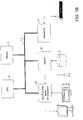
- FIG. 1A five standalone software components are included in the system 10: a configuration provider 20, an administrative console 22, a protection module 24, one or more script engine helper modules 26, and an authorization module 28.
- a white-list system 30 may optionally be present.
- the software components execute on an exemplary computer system, shown in FIG. 1B , that includes a processor 12, a memory 14, a mass storage subsystem 16, 19, a network subsystem 15, and user-oriented I/O 18, interconnected by a bus 17.
- the memory 14 and/or mass storage system 16, 19 store the instructions of the software components used for execution by the processor 12.
- the configuration provider 20 is a means for storing the mode of the authorization module for users and security groups.
- the configuration provider may be provided by an operating system or by a standalone system.
- the administrative console 22 is a set of instruments that the system administrators use to view and modify the configuration settings of the authorization module 28. If an IDD is allowed to be modified online, the administrative console 22 provides certain means for carrying that out.
- the protection module 30 is a highly privileged module installed at the computers being protected. This module 30 intercepts the services that the operating system provides to load and execute executable files. When a service is intercepted, the module 30 matches the module against a set of IDDs, and if a match is found, intercepts it.
- the protection module may be, in fact, a task within the white-list system's protection module 30.
- the protection module interacts with a memory block, the IDDs 42, and a list 44 of loaded script engines.
- the memory block includes a information block 46 and a bootstrap loader 48.
- Each script engine helper module 26 possesses intimate knowledge of the script engine it handles and interacts with the authorization module to determine whether code is authorized to be executed.
- the authorization module 28 interacts with a database list of permanently authorized or denied identities 32 of language code to be executed. It receives an authorization request 34 and derives a unique identity value for language code associated with the authorization request. The authorization component compares the unique identity value with the list and generates a reply 36 to the authorization request.
- the protection module There are four major tasks to be performed in a process in accordance with an embodiment of the present invention.
- the first major task, performed by the protection module is the identification of a script engine and the injection of interception code and data into the process loading the script engine. This is illustrated in FIGs. 2A and 2B .
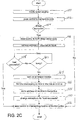
- the second major task which is performed by the injected trampolines and the bootstrap loader, is the interception of the script engine interface and the loading of the script helper during the first intercepted call. This is illustrated in FIG. 2C .
- a bo otstrap sequence is commenced, a script helper is loaded and then called.
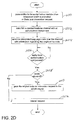
- the fourth major task, illustrated in FIGs. 2D and 2E and performed by the authorization module, is the checking and authorization of intercepted scripts.
- Script engines may be identified by their file names, filesystem or network location, or their cryptographic digests, via the script engine registration information (if supported by the operating system). There are also certain descriptive data associated with each script engine. Thus, each script engine is associated with certain Identification and Description Data (IDD).
- IDDD Identification and Description Data
- step 100 the IDD for a script engine is obtained and the list of IDDs is loaded, in step 102.
- the IDD may be hardcoded or changeable.
- the IDD contains a location or image of a script engine helper module and a list of export routines that must be intercepted.
- step 104 When an attempt to load a a module (create a section object for the Windows NT family of operation systems) takes place in step 104, the relevant system services are intercepted in step 106, by the privileged protection module, which then calls, in step 108, the original service and matches, in step 110, the module being loaded against the IDD. If a match is found, as determined in step 112, a pointer to the module and a pointer to its IDD are added, in step 114, to a list of loaded script engines. If there is no match found in step 112, the module being loaded is not a known script engine. In this case, the protection module simply returns control.
- step 120 when an attempt to execute a previously loaded module (map a section object for the Windows NT family of operating systems) takes place as determined in step 120, the relevant system service is intercepted, in step 122, by the privileged protection module, which then calls, in step 124, the original service, and matches, in step 126, the module being executed against the list of loaded script engines.
- a block of memory is allocated, in step 130, in the process executing the script engine, a boot-strap loader and information block is generated, in step 132, in the allocated block, the in-memory runnable (mapped) image of the script engines is traversed and the export routines described in the IDD are located, in step 134.
- the entry point addresses of the export routines are then stored, in step 136, in the trampolines as addresses of the intercepted routines and the original export entry point addresses are then overwritten, in step 138, to point to the entry points of the trampolines. This ensures that, whenever an intercepted export routine is called, control is diverted to an associated trampoline.
- the information block that was generated contains an array of trampoline structures, one for each export routine in the IDD of the script engine, and an array of the names of these export routines.
- Each trampoline structure includes five fields, (i) a "thunk” code, which calls a "hook” routine, passing itself as an additional parameter, (ii) an address field for pointing to the "original" (intercepted) routine, (iii) an address field for pointing to the "hook” (intercepting routine), (iv) an integer "tag” field, and (v) an address field for pointing to the boot-strap information block.
- the pointer to the "hook” initially points to the bootstrap code and then to the corresponding routine in the script helper.
- Each trampoline also contains a short sequence of executable code (see below).
- the trampoline receives control, in step 152.
- the trampoline code retrieves the address of the trampoline and then transfers control at the address of the intercepting routine, passing the address of the trampoline as a parameter (the parameters that may have been specified by the caller of the export routine are preserved as well).
- all the trampolines have the address of the boot-strap loader as the address of the intercepting routine, thus the boot-strap loader receives control, in step 156.
- the boot-strap loader retrieves the address of the information block, in step 158, and performs an atomic compare-exchange on a semaphore variable stored in the block.
- the loader simply transfers control, in step 162, to the intercepting routine of the trampoline (the address of which is passed as a parameter). If the semaphore signals that the boot-strap loader is executing (in another thread), as determined in step 158, it performs a (busy) wait on the semaphore, in step 160, until the semaphore signals a successful load, as determined in step 158, and transfers control to the intercepting routine of the trampoline, in step 162. Otherwise, if the semaphore signals that a load has not been attempted yet, as determined in step 160, it starts the load sequence.
- the load sequence proceeds as follows.
- the script engine helper module whose location or image is contained in the bootstrap information block, is loaded in step 164.
- an intercepting routine in the script engine helper module is found, in step 166, and its address is stored, in step 168, as the address of the intercepting routine in the trampoline.
- the semaphore is set to a "load successful" state, in step 170, and execution is transferred, in step 162, to the intercepting routine of the trampoline that was passed as a parameter to the boot-strap loader.
- Each script engine helper module possesses intimate knowledge of the script engine it handles. Both execute within the same process; thus, the helper module may easily use a host of well-known "hooking" and "patching” techniques.
- the number of the export routines in the IDD is small. They are normally the routines that are executed by the script engine user to initialize the script engine and/or retrieve a programming interface relating to the functionality of the script engine.
- the other routines that must be intercepted are intercepted by the helper module when the IDD-intercepted routines execute. This keeps the IDD small and the script engine interception logic localized in the helper module.
- a script engine helper module intercepts, in step 200, an interpreted language code (script or macro) load or invocation request.
- the helper module has access to the interpreted language code.
- the helper module establishes a communication channel, in step 202, with an authorization component, sends the interpreted language code over the channel, in step 204, together with information on the origin of the code (the application that has loaded the code, the filesystem or network location the code has been loaded from, etc.) and awaits a reply, in step 206, from the authorization component.
- the reply either allows or denies the execution of the code. If the code is allowed, as determined in step 208, the script engine helper module passes the original load or invocation request, in step210, to the script engine, or otherwise cancels the request, in step 212, in an appropriate way.
- the authorization module may be a system of interacting modules. In the simplest case, it is a user-mode application executing in the context of the same user. If the authorization module is in the allow-all or deny-all mode for the user, the request is responded to accordingly.
- the code When interpreted code is received as apart of an authorization request in step 250, the code may be used to derive, in step 252, a cryptographic digest, or some other identity value (e.g., by algorithms that measure textual proximity). This identity value is compared, in step 254, with the list of permanently authorized or denied identities, which is stored persistently by the authorization module.
- step 256 If a match is found (or the code is evaluated as similar by text-metric algorithms), as determined in step 256, and if a preset reply is found, as determined in step 258, the preset reply is retrieved from the persistent data, in step 260. If no preset reply is found, as determined in step 258, and the authorization module is not in the ask-user mode, a negative reply is sent, in step 262. Otherwise, the code and the information on the code are shown to the user, in step 264, which is the pass-through mode. The user determines whether the code is do be allowed or denied, in step 266. The user may also specify that the reply be associated persistently with the identity of the code (whereupon the identity and the reply are stored permanently).
Landscapes
- Engineering & Computer Science (AREA)
- Computer Security & Cryptography (AREA)
- Theoretical Computer Science (AREA)
- Computer Networks & Wireless Communication (AREA)
- Signal Processing (AREA)
- Software Systems (AREA)
- Computer Hardware Design (AREA)
- Physics & Mathematics (AREA)
- General Engineering & Computer Science (AREA)
- General Physics & Mathematics (AREA)
- Storage Device Security (AREA)
- Stored Programmes (AREA)
Description
- The present invention relates generally to the execution of interpreted code and more particularly to a security system that controls whether or not the interpreted code is allowed to be executed.
- Cryptographic digests, public and symmetric key cryptography, and digital certificates are used extensively in order to identify executables and secure communication links between the configuration store and the protection module. A number of algorithms (SHA-1 for digests and certificates, RSA public key cryptography for certificates and secure communications, AES for secure communications) are in public domain and are employed by the system.
- A technique for intercepting system services on the MS Windows NT family of operating systems involves overwriting ("patching") the system service table. The technique is in public domain.
- The prior art also includes ad hoc techniques that intercept a number of known applications that use an interpreted language. They may not be able to handle interpreted languages when their target applications undergo a version change, and they are not able to handle the same interpreted language in all applications. Other systems may use less-secure interception methods.
-
US-A-2002/0099952 discloses a system and method that automatically, transparently and securely controls software execution. - The present invention seeks to provide an improved method and system for controlling execution of an interpreted computer language and an improved method and system for setting up an intercept structure.
- According to one aspect of the present invention, there is provided a method for controlling execution of an interpreted computer language as defined in claim 1 hereinafter.
- According to a further aspect of the present invention, there is provided a system for controlling execution of an interpreted computer language as defined in claim 2 hereinafter.
- An embodiment of the invention controls execution of interpreted code. The protection system may be configured by system administrators to allow or disallow an interpreted language, or to function in a "pass-through" mode (see bellow), for all interpreted languages (known to the system) or on a per language basis. The invention extends the security framework of contemporary computer operating systems and relies on the operating system to provide system services to load and/or execute standalone executable modules. The invention interacts with the operating system's vendor-supplied or third-party modules that enable applications to use interpreted languages.
- When in the "pass-through" mode, the decision to execute a particular interpreted program (script or macro) is delegated to users, and, optionally, is recorded and then automatically applies to the same program in subsequent invocations.
- The privileged protection modules ensures that a script engine is always handled by a script engine helper module.
- The use of cryptographic digests and text metric algorithms enables the users and administrators to identify safe and unsafe interpreted language code and handle it accordingly, without disturbing the user. This also allows a purely white-list list procedure, where only known-safe code is allowed and everything else is denied.
or invocation request, in step210, to the script engine, or otherwise cancels the request, instep 212, in an appropriate way. - Referring to
FIG.2E , the authorization module may be a system of interacting modules. In the simplest case, it is a user-mode application executing in the context of the same user. If the authorization module is in the allow-all or deny-all mode for the user, the request is responded to accordingly. When interpreted code is received as a part of an authorization request instep 250, the code may be used to derive, instep 252, a cryptographic digest, or some other identity value (e.g., by algorithms that measure textual proximity). This identity value is compared, in step 254, with the list of permanently authorized or denied identities, which is stored persistently by the authorization module. If a match is found (or the code is evaluated has similar by text-metric algorithm), as determined instep 256, and if a preset reply is found, as determined instep 258, the preset reply is retrieved from the persistent data, instep 260. If no preset reply is found, as determined instep 258, and the authorization module is not in the ask-user mode, a negative reply is sent, instep 262. Otherwise, the code and the information on the code are shown to the user, instep 264, which is the pass-through mode. The user determines whether the code is do be allowed or denied, in step 266. The user may also specify that the reply be associated persistently with the identity of the code (whereupon the identity and the reply are stored permanently). - These and other features, aspects and advantages of the present invention will become better understood with regard to the following description, appended claims, and accompanying drawings where:
-
FIG. 1A is a system diagram of the present invention; -
FIG. 1B is a diagram of a typical computer system; and -
FIGs. 2A-2E are flow charts showing a method in accordance with an embodiment of the present invention. - Referring to the system diagram of
FIG. 1A , five standalone software components are included in the system 10: aconfiguration provider 20, anadministrative console 22, a protection module 24, one or more scriptengine helper modules 26, and anauthorization module 28. A white-list system 30 may optionally be present. The software components execute on an exemplary computer system, shown inFIG. 1B , that includes a processor 12, amemory 14, amass storage subsystem 16, 19, a network subsystem 15, and user-oriented I/O 18, interconnected by abus 17. Thememory 14 and/ormass storage system 16, 19 store the instructions of the software components used for execution by the processor 12. - The
configuration provider 20 is a means for storing the mode of the authorization module for users and security groups. The configuration provider may be provided by an operating system or by a standalone system. - The
administrative console 22 is a set of instruments that the system administrators use to view and modify the configuration settings of theauthorization module 28. If an IDD is allowed to be modified online, theadministrative console 22 provides certain means for carrying that out. - The protection module 30 is a highly privileged module installed at the computers being protected. This module 30 intercepts the services that the operating system provides to load and execute executable files. When a service is intercepted, the module 30 matches the module against a set of IDDs, and if a match is found, intercepts it. The protection module may be, in fact, a task within the white-list system's protection module 30. The protection module interacts with a memory block, the
IDDs 42, and a list 44 of loaded script engines. The memory block includes a information block 46 and a bootstrap loader 48. - Each script
engine helper module 26 possesses intimate knowledge of the script engine it handles and interacts with the authorization module to determine whether code is authorized to be executed. - The
authorization module 28 interacts with a database list of permanently authorized or deniedidentities 32 of language code to be executed. It receives anauthorization request 34 and derives a unique identity value for language code associated with the authorization request. The authorization component compares the unique identity value with the list and generates areply 36 to the authorization request. - There are four major tasks to be performed in a process in accordance with an embodiment of the present invention. The first major task, performed by the protection module, is the identification of a script engine and the injection of interception code and data into the process loading the script engine. This is illustrated in
FIGs. 2A and2B . For the Windows NT family of operating system, this involves intercepting two different system services, create section and map section. - The second major task, which is performed by the injected trampolines and the bootstrap loader, is the interception of the script engine interface and the loading of the script helper during the first intercepted call. This is illustrated in
FIG. 2C . In this task, a bo otstrap sequence is commenced, a script helper is loaded and then called. - In the third major task, shown in
FIG. 2D , the language specific (or script engine-specific) interception occurs. - The fourth major task, illustrated in
FIGs. 2D and2E and performed by the authorization module, is the checking and authorization of intercepted scripts. - Referring to
FIG. 2A , the intercept of script engines is described in more detail. To intercept a script engine, it must be identifiable and known to the protection system. Script engines may be identified by their file names, filesystem or network location, or their cryptographic digests, via the script engine registration information (if supported by the operating system). There are also certain descriptive data associated with each script engine. Thus, each script engine is associated with certain Identification and Description Data (IDD). Instep 100, the IDD for a script engine is obtained and the list of IDDs is loaded, in step 102. The IDD may be hardcoded or changeable. For each script engine, the IDD contains a location or image of a script engine helper module and a list of export routines that must be intercepted. When an attempt to load a a module (create a section object for the Windows NT family of operation systems) takes place instep 104, the relevant system services are intercepted in step 106, by the privileged protection module, which then calls, instep 108, the original service and matches, in step 110, the module being loaded against the IDD. If a match is found, as determined instep 112, a pointer to the module and a pointer to its IDD are added, instep 114, to a list of loaded script engines. If there is no match found instep 112, the module being loaded is not a known script engine. In this case, the protection module simply returns control. - Referring to
FIG. 2B , when an attempt to execute a previously loaded module (map a section object for the Windows NT family of operating systems) takes place as determined instep 120, the relevant system service is intercepted, instep 122, by the privileged protection module, which then calls, instep 124, the original service, and matches, in step 126, the module being executed against the list of loaded script engines. If a match is found as determined instep 128, a block of memory is allocated, instep 130, in the process executing the script engine, a boot-strap loader and information block is generated, instep 132, in the allocated block, the in-memory runnable (mapped) image of the script engines is traversed and the export routines described in the IDD are located, instep 134. The entry point addresses of the export routines are then stored, instep 136, in the trampolines as addresses of the intercepted routines and the original export entry point addresses are then overwritten, instep 138, to point to the entry points of the trampolines. This ensures that, whenever an intercepted export routine is called, control is diverted to an associated trampoline. The information block that was generated contains an array of trampoline structures, one for each export routine in the IDD of the script engine, and an array of the names of these export routines. Each trampoline structure includes five fields, (i) a "thunk" code, which calls a "hook" routine, passing itself as an additional parameter, (ii) an address field for pointing to the "original" (intercepted) routine, (iii) an address field for pointing to the "hook" (intercepting routine), (iv) an integer "tag" field, and (v) an address field for pointing to the boot-strap information block. The pointer to the "hook" initially points to the bootstrap code and then to the corresponding routine in the script helper. Each trampoline also contains a short sequence of executable code (see below). - Referring to
FIG. 2C , when the script engine is invoked, instep 150, through an intercepted export routine, the trampoline receives control, in step 152. The trampoline code retrieves the address of the trampoline and then transfers control at the address of the intercepting routine, passing the address of the trampoline as a parameter (the parameters that may have been specified by the caller of the export routine are preserved as well). Initially, all the trampolines have the address of the boot-strap loader as the address of the intercepting routine, thus the boot-strap loader receives control, instep 156. The boot-strap loader retrieves the address of the information block, instep 158, and performs an atomic compare-exchange on a semaphore variable stored in the block. If the semaphore signals that the boot-strap loader has executed successfully, as determined instep 158, the loader simply transfers control, instep 162, to the intercepting routine of the trampoline (the address of which is passed as a parameter). If the semaphore signals that the boot-strap loader is executing (in another thread), as determined instep 158, it performs a (busy) wait on the semaphore, instep 160, until the semaphore signals a successful load, as determined instep 158, and transfers control to the intercepting routine of the trampoline, instep 162. Otherwise, if the semaphore signals that a load has not been attempted yet, as determined instep 160, it starts the load sequence. - Continuing with
FIG. 2C , the load sequence proceeds as follows. The script engine helper module, whose location or image is contained in the bootstrap information block, is loaded instep 164. For each intercepted export routine, an intercepting routine in the script engine helper module is found, instep 166, and its address is stored, instep 168, as the address of the intercepting routine in the trampoline. The semaphore is set to a "load successful" state, in step 170, and execution is transferred, instep 162, to the intercepting routine of the trampoline that was passed as a parameter to the boot-strap loader. - Each script engine helper module possesses intimate knowledge of the script engine it handles. Both execute within the same process; thus, the helper module may easily use a host of well-known "hooking" and "patching" techniques. Typically, the number of the export routines in the IDD (intercepted before the helper module loads) is small. They are normally the routines that are executed by the script engine user to initialize the script engine and/or retrieve a programming interface relating to the functionality of the script engine. The other routines that must be intercepted are intercepted by the helper module when the IDD-intercepted routines execute. This keeps the IDD small and the script engine interception logic localized in the helper module.
- Referring now to
FIG. 2D , eventually, a script engine helper module intercepts, instep 200, an interpreted language code (script or macro) load or invocation request. At this stage, the helper module has access to the interpreted language code. The helper module establishes a communication channel, instep 202, with an authorization component, sends the interpreted language code over the channel, in step 204, together with information on the origin of the code (the application that has loaded the code, the filesystem or network location the code has been loaded from, etc.) and awaits a reply, instep 206, from the authorization component. The reply either allows or denies the execution of the code. If the code is allowed, as determined instep 208, the script engine helper module passes the original load or invocation request, in step210, to the script engine, or otherwise cancels the request, instep 212, in an appropriate way. - Referring to
FIG.2E , the authorization module may be a system of interacting modules. In the simplest case, it is a user-mode application executing in the context of the same user. If the authorization module is in the allow-all or deny-all mode for the user, the request is responded to accordingly. When interpreted code is received as apart of an authorization request instep 250, the code may be used to derive, instep 252, a cryptographic digest, or some other identity value (e.g., by algorithms that measure textual proximity). This identity value is compared, in step 254, with the list of permanently authorized or denied identities, which is stored persistently by the authorization module. If a match is found (or the code is evaluated as similar by text-metric algorithms), as determined instep 256, and if a preset reply is found, as determined instep 258, the preset reply is retrieved from the persistent data, instep 260. If no preset reply is found, as determined instep 258, and the authorization module is not in the ask-user mode, a negative reply is sent, instep 262. Otherwise, the code and the information on the code are shown to the user, instep 264, which is the pass-through mode. The user determines whether the code is do be allowed or denied, in step 266. The user may also specify that the reply be associated persistently with the identity of the code (whereupon the identity and the reply are stored permanently). - Although the present invention has been described in considerable detail with reference to certain preferred versions thereof, other versions are possible. Therefore, the spirit and scope of the appended claims should not be limited to the description of the preferred versions contained herein.
Claims (2)
- A method for controlling execution of an interpreted computer language, the method comprising:determining that statements of the interpreted computer language are attempting execution or there is an invocation request to execute said statements;setting up an intercept structure by:traversing an in-memory runnable image of an identified script engine for the interpreted computer language to locate routines described in an information block associated with the identified script engine, the routines being routines that must be intercepted;storing entry point addresses of the routines that must be intercepted in a trampoline structure (46); andoverwriting the original entry point addresses in the identified script engine to be the entry points of the trampoline structure (46), wherein the trampoline structure (46) includes at least one of the address of the intercepted routine, the address of the intercepting routine, the address of a boot-strap block, an integer tag and a short sequence of code; wherein the method further comprises:intercepting the statements or invocation request and passing control to a script helper module (26) in response to the identification of the script helper module (26) associated with the identified script engine that interprets statements of the computer language, each script helper module (26) of a plurality of script helper modules (26) being associated with a script engine;sending the interpreted language statements over a communications channel to an authorization component (28) with information regarding the origin of the statements;receiving a reply from the authorization component (28) to allow or deny the execution of the statements;passing the original statements or invocation request to the identified script engine, responsive to receiving a reply to allow the execution of the statements; andcancelling the attempting execution of invocation request, responsive to receiving a reply to deny the execution of the statements.
- A system for controlling execution of an interpreted computer language, the system being programmed to perform the method of claim 1.
Applications Claiming Priority (4)
| Application Number | Priority Date | Filing Date | Title |
|---|---|---|---|
| US56298304P | 2004-04-19 | 2004-04-19 | |
| US56298204P | 2004-04-19 | 2004-04-19 | |
| US56457904P | 2004-04-23 | 2004-04-23 | |
| EP05762158.3A EP1745343B1 (en) | 2004-04-19 | 2005-04-18 | A generic framework for runtime interception and execution control of interpreted languages |
Related Parent Applications (3)
| Application Number | Title | Priority Date | Filing Date |
|---|---|---|---|
| EP05762158.3A Division-Into EP1745343B1 (en) | 2004-04-19 | 2005-04-18 | A generic framework for runtime interception and execution control of interpreted languages |
| EP05762158.3A Division EP1745343B1 (en) | 2004-04-19 | 2005-04-18 | A generic framework for runtime interception and execution control of interpreted languages |
| EP05762158.3 Division | 2005-04-18 |
Publications (3)
| Publication Number | Publication Date |
|---|---|
| EP2267624A2 EP2267624A2 (en) | 2010-12-29 |
| EP2267624A3 EP2267624A3 (en) | 2011-11-09 |
| EP2267624B1 true EP2267624B1 (en) | 2017-07-12 |
Family
ID=35759306
Family Applications (3)
| Application Number | Title | Priority Date | Filing Date |
|---|---|---|---|
| EP10184911.5A Withdrawn EP2267625A3 (en) | 2004-04-19 | 2005-04-18 | On-line centralized and local authorization of executable files |
| EP10184880.2A Expired - Lifetime EP2267624B1 (en) | 2004-04-19 | 2005-04-18 | A generic framework for runtime interception and execution control of interpreted languages |
| EP05781730A Ceased EP1743230A2 (en) | 2004-04-23 | 2005-04-22 | Transparent encryption and access controll for mass-storage devices |
Family Applications Before (1)
| Application Number | Title | Priority Date | Filing Date |
|---|---|---|---|
| EP10184911.5A Withdrawn EP2267625A3 (en) | 2004-04-19 | 2005-04-18 | On-line centralized and local authorization of executable files |
Family Applications After (1)
| Application Number | Title | Priority Date | Filing Date |
|---|---|---|---|
| EP05781730A Ceased EP1743230A2 (en) | 2004-04-23 | 2005-04-22 | Transparent encryption and access controll for mass-storage devices |
Country Status (3)
| Country | Link |
|---|---|
| US (1) | US7849514B2 (en) |
| EP (3) | EP2267625A3 (en) |
| WO (1) | WO2006003529A2 (en) |
Families Citing this family (44)
| Publication number | Priority date | Publication date | Assignee | Title |
|---|---|---|---|---|
| WO2002025438A1 (en) | 2000-09-22 | 2002-03-28 | Patchlink.Com Corporation | Non-invasive automatic offsite patch fingerprinting and updating system and method |
| US7487495B2 (en) | 2004-04-19 | 2009-02-03 | Lumension Security, Inc. | Generic framework for runtime interception and execution control of interpreted languages |
| WO2006070353A2 (en) * | 2004-12-30 | 2006-07-06 | Safend Ltd | Method and system for securely identifying computer storage devices |
| US20060294580A1 (en) * | 2005-06-28 | 2006-12-28 | Yeh Frank Jr | Administration of access to computer resources on a network |
| US7464219B2 (en) * | 2005-08-01 | 2008-12-09 | International Business Machines Corporation | Apparatus, system, and storage medium for data protection by a storage device |
| US7694134B2 (en) * | 2005-11-11 | 2010-04-06 | Computer Associates Think, Inc. | System and method for encrypting data without regard to application |
| US20070174362A1 (en) * | 2006-01-18 | 2007-07-26 | Duc Pham | System and methods for secure digital data archiving and access auditing |
| WO2007117879A1 (en) * | 2006-04-07 | 2007-10-18 | Intel Corporation | Method and apparatus to mate an external code image with an on-chip private key |
| US8281405B1 (en) | 2007-06-13 | 2012-10-02 | Mcafee, Inc. | System, method, and computer program product for securing data on a server based on a heuristic analysis |
| US8479020B2 (en) * | 2007-07-25 | 2013-07-02 | Motorola Mobility Llc | Method and apparatus for providing an asymmetric encrypted cookie for product data storage |
| US9094206B2 (en) * | 2007-10-26 | 2015-07-28 | Telcordia Technologies, Inc. | Method and system for secure session establishment using identity-based encryption (VDTLS) |
| US7979264B2 (en) * | 2008-02-26 | 2011-07-12 | Streaming Networks (Pvt) Ltd | System and method for interfacing a media processing apparatus with a computer |
| US8745386B2 (en) * | 2010-06-21 | 2014-06-03 | Microsoft Corporation | Single-use authentication methods for accessing encrypted data |
| US8745064B2 (en) | 2010-09-13 | 2014-06-03 | Lumension Security, Inc. | Systems and methods for operating a saturated hash table |
| EP2439673A3 (en) | 2010-10-11 | 2012-05-30 | Lumension Security, Inc. | Systems and methods for implementing application control security |
| US20120173881A1 (en) * | 2011-01-03 | 2012-07-05 | Patient Always First | Method & Apparatus for Remote Information Capture, Storage, and Retrieval |
| US9792451B2 (en) * | 2011-12-09 | 2017-10-17 | Echarge2 Corporation | System and methods for using cipher objects to protect data |
| CN102420829B (en) * | 2011-12-15 | 2014-07-02 | 北京握奇数据系统有限公司 | Service data signature method, device, system and digital certification terminal |
| US8458494B1 (en) * | 2012-03-26 | 2013-06-04 | Symantec Corporation | Systems and methods for secure third-party data storage |
| US9590959B2 (en) | 2013-02-12 | 2017-03-07 | Amazon Technologies, Inc. | Data security service |
| US10075471B2 (en) | 2012-06-07 | 2018-09-11 | Amazon Technologies, Inc. | Data loss prevention techniques |
| US10084818B1 (en) | 2012-06-07 | 2018-09-25 | Amazon Technologies, Inc. | Flexibly configurable data modification services |
| US9286491B2 (en) | 2012-06-07 | 2016-03-15 | Amazon Technologies, Inc. | Virtual service provider zones |
| US9300464B1 (en) | 2013-02-12 | 2016-03-29 | Amazon Technologies, Inc. | Probabilistic key rotation |
| US10211977B1 (en) | 2013-02-12 | 2019-02-19 | Amazon Technologies, Inc. | Secure management of information using a security module |
| US10467422B1 (en) | 2013-02-12 | 2019-11-05 | Amazon Technologies, Inc. | Automatic key rotation |
| US9367697B1 (en) | 2013-02-12 | 2016-06-14 | Amazon Technologies, Inc. | Data security with a security module |
| US10210341B2 (en) | 2013-02-12 | 2019-02-19 | Amazon Technologies, Inc. | Delayed data access |
| US9705674B2 (en) * | 2013-02-12 | 2017-07-11 | Amazon Technologies, Inc. | Federated key management |
| US9547771B2 (en) | 2013-02-12 | 2017-01-17 | Amazon Technologies, Inc. | Policy enforcement with associated data |
| US9832171B1 (en) | 2013-06-13 | 2017-11-28 | Amazon Technologies, Inc. | Negotiating a session with a cryptographic domain |
| US9430216B2 (en) | 2014-05-11 | 2016-08-30 | Lumension Security, Inc. | Self-contained executable for predetermined software updating |
| US9397835B1 (en) | 2014-05-21 | 2016-07-19 | Amazon Technologies, Inc. | Web of trust management in a distributed system |
| US9438421B1 (en) | 2014-06-27 | 2016-09-06 | Amazon Technologies, Inc. | Supporting a fixed transaction rate with a variably-backed logical cryptographic key |
| US9866392B1 (en) | 2014-09-15 | 2018-01-09 | Amazon Technologies, Inc. | Distributed system web of trust provisioning |
| US10469477B2 (en) | 2015-03-31 | 2019-11-05 | Amazon Technologies, Inc. | Key export techniques |
| CN107220550A (en) * | 2017-04-19 | 2017-09-29 | 上海海加网络科技有限公司 | Encrypted card performance optimization method and system based on eCryptfs |
| US11429753B2 (en) * | 2018-09-27 | 2022-08-30 | Citrix Systems, Inc. | Encryption of keyboard data to avoid being read by endpoint-hosted keylogger applications |
| US10963592B2 (en) | 2019-02-05 | 2021-03-30 | Western Digital Technologies, Inc. | Method to unlock a secure digital memory device locked in a secure digital operational mode |
| US11232210B2 (en) | 2019-03-26 | 2022-01-25 | Western Digital Technologies, Inc. | Secure firmware booting |
| US10997297B1 (en) | 2019-12-06 | 2021-05-04 | Western Digital Technologies, Inc. | Validating firmware for data storage devices |
| CN114048506A (en) * | 2021-11-15 | 2022-02-15 | 北京百度网讯科技有限公司 | Application control method, device, equipment and storage medium |
| US12561075B2 (en) | 2024-07-01 | 2026-02-24 | T-Mobile Usa, Inc. | Secure storing and retrieval of sensitive data from a server system |
| US12563020B2 (en) | 2024-07-01 | 2026-02-24 | T-Mobile Usa, Inc. | Secure collection of sensitive data on computer devices |
Family Cites Families (35)
| Publication number | Priority date | Publication date | Assignee | Title |
|---|---|---|---|---|
| FR2742892B1 (en) * | 1995-12-21 | 1998-02-13 | Bull Sa | SOFTWARE PROTECTION SYSTEM FOR A WRITTEN LANGUAGE COMPUTER |
| US5794049A (en) * | 1996-06-05 | 1998-08-11 | Sun Microsystems, Inc. | Computer system and method for executing architecture specific code with reduced run-time memory space requirements |
| US6721941B1 (en) * | 1996-08-27 | 2004-04-13 | Compuware Corporation | Collection of timing and coverage data through a debugging interface |
| US6094528A (en) * | 1996-10-24 | 2000-07-25 | Sun Microsystems, Inc. | Method and apparatus for system building with a transactional interpreter |
| US5923878A (en) * | 1996-11-13 | 1999-07-13 | Sun Microsystems, Inc. | System, method and apparatus of directly executing an architecture-independent binary program |
| US6367012B1 (en) * | 1996-12-06 | 2002-04-02 | Microsoft Corporation | Embedding certifications in executable files for network transmission |
| US5854930A (en) * | 1996-12-30 | 1998-12-29 | Mci Communications Corporations | System, method, and computer program product for script processing |
| US5953422A (en) * | 1996-12-31 | 1999-09-14 | Compaq Computer Corporation | Secure two-piece user authentication in a computer network |
| CA2194848C (en) * | 1997-01-10 | 2003-12-23 | Loran Network Systems, Llc | Condition handling using script interpreters |
| US6766454B1 (en) * | 1997-04-08 | 2004-07-20 | Visto Corporation | System and method for using an authentication applet to identify and authenticate a user in a computer network |
| WO1998050843A1 (en) * | 1997-05-02 | 1998-11-12 | Network Associates, Inc. | Process-level data security system |
| US6473893B1 (en) * | 1997-05-30 | 2002-10-29 | International Business Machines Corporation | Information objects system, method, and computer program organization |
| JPH11120135A (en) * | 1997-10-14 | 1999-04-30 | Canon Inc | Information processing apparatus and method, and storage medium storing program |
| US6141793A (en) * | 1998-04-01 | 2000-10-31 | Hewlett-Packard Company | Apparatus and method for increasing the performance of interpreted programs running on a server |
| US6507911B1 (en) * | 1998-07-22 | 2003-01-14 | Entrust Technologies Limited | System and method for securely deleting plaintext data |
| US20020178370A1 (en) * | 1999-12-30 | 2002-11-28 | Gurevich Michael N. | Method and apparatus for secure authentication and sensitive data management |
| EP1133188A3 (en) * | 2000-02-23 | 2004-11-24 | Sony Corporation | Information processing apparatus, network system, recording medium |
| US6981281B1 (en) * | 2000-06-21 | 2005-12-27 | Microsoft Corporation | Filtering a permission set using permission requests associated with a code assembly |
| US7350204B2 (en) * | 2000-07-24 | 2008-03-25 | Microsoft Corporation | Policies for secure software execution |
| JP4660900B2 (en) * | 2000-08-31 | 2011-03-30 | ソニー株式会社 | Personal authentication application data processing system, personal authentication application data processing method, information processing apparatus, and program providing medium |
| US20020029176A1 (en) * | 2000-09-01 | 2002-03-07 | Anne Carlson | Inventory management system and method |
| US6686002B2 (en) * | 2001-01-11 | 2004-02-03 | Seal-Ops, Llc | Sealing strip composition |
| US7043637B2 (en) * | 2001-03-21 | 2006-05-09 | Microsoft Corporation | On-disk file format for a serverless distributed file system |
| US6981138B2 (en) * | 2001-03-26 | 2005-12-27 | Microsoft Corporation | Encrypted key cache |
| US20020172363A1 (en) * | 2001-05-15 | 2002-11-21 | Dierks Timothy M. | Data security on a mobile device |
| CN1592877B (en) * | 2001-09-28 | 2010-05-26 | 高密度装置公司 | Method and apparatus for encrypting/decrypting data on a mass storage device |
| US20030074564A1 (en) * | 2001-10-11 | 2003-04-17 | Peterson Robert L. | Encryption system for allowing immediate universal access to medical records while maintaining complete patient control over privacy |
| EP1440439A1 (en) * | 2001-10-12 | 2004-07-28 | Koninklijke Philips Electronics N.V. | Apparatus and method for reading or writing block-wise stored user data |
| US20030084307A1 (en) * | 2001-10-30 | 2003-05-01 | Schwartz Jeffrey D. | Secure boot device selection method and system |
| US6996814B2 (en) * | 2001-11-14 | 2006-02-07 | Sun Microsystems, Inc. | Method and apparatus for dynamically compiling byte codes into native code |
| CA2474915A1 (en) * | 2002-03-18 | 2003-09-25 | Colin Martin Schmidt | Session key distribution methods using a hierarchy of key servers |
| US7219344B2 (en) * | 2002-04-30 | 2007-05-15 | Accenture Global Services Gmbh | Method and apparatus for deploying programs and computing platforms to selected computers |
| US7272231B2 (en) * | 2003-01-27 | 2007-09-18 | International Business Machines Corporation | Encrypting data for access by multiple users |
| US7549044B2 (en) * | 2003-10-28 | 2009-06-16 | Dphi Acquisitions, Inc. | Block-level storage device with content security |
| US7487495B2 (en) | 2004-04-19 | 2009-02-03 | Lumension Security, Inc. | Generic framework for runtime interception and execution control of interpreted languages |
-
2005
- 2005-04-18 EP EP10184911.5A patent/EP2267625A3/en not_active Withdrawn
- 2005-04-18 EP EP10184880.2A patent/EP2267624B1/en not_active Expired - Lifetime
- 2005-04-22 US US11/111,930 patent/US7849514B2/en not_active Expired - Fee Related
- 2005-04-22 WO PCT/IB2005/002755 patent/WO2006003529A2/en not_active Ceased
- 2005-04-22 EP EP05781730A patent/EP1743230A2/en not_active Ceased
Non-Patent Citations (1)
| Title |
|---|
| None * |
Also Published As
| Publication number | Publication date |
|---|---|
| EP2267624A3 (en) | 2011-11-09 |
| WO2006003529A3 (en) | 2006-05-04 |
| US7849514B2 (en) | 2010-12-07 |
| US20050246778A1 (en) | 2005-11-03 |
| EP2267625A3 (en) | 2015-08-05 |
| WO2006003529A2 (en) | 2006-01-12 |
| EP2267625A2 (en) | 2010-12-29 |
| EP1743230A2 (en) | 2007-01-17 |
| EP2267624A2 (en) | 2010-12-29 |
Similar Documents
| Publication | Publication Date | Title |
|---|---|---|
| EP1745343B1 (en) | A generic framework for runtime interception and execution control of interpreted languages | |
| EP2267624A2 (en) | A generic framework for runtime interception and execution control of interpreted languages | |
| US9842203B2 (en) | Secure system for allowing the execution of authorized computer program code | |
| US8230479B2 (en) | Security deployment system | |
| WO2004099947A2 (en) | Memory protection systems and methods for writable memory | |
| KR102579861B1 (en) | In-vehicle software update system and method for controlling the same | |
| US20060053492A1 (en) | Software tracking protection system | |
| Shukla et al. | Enhance OS security by restricting privileges of vulnerable application |
Legal Events
| Date | Code | Title | Description |
|---|---|---|---|
| PUAI | Public reference made under article 153(3) epc to a published international application that has entered the european phase |
Free format text: ORIGINAL CODE: 0009012 |
|
| AC | Divisional application: reference to earlier application |
Ref document number: 1745343 Country of ref document: EP Kind code of ref document: P |
|
| AK | Designated contracting states |
Kind code of ref document: A2 Designated state(s): AT BE BG CH CY CZ DE DK EE ES FI FR GB GR HU IE IS IT LI LT LU MC NL PL PT RO SE SI SK TR |
|
| PUAL | Search report despatched |
Free format text: ORIGINAL CODE: 0009013 |
|
| AK | Designated contracting states |
Kind code of ref document: A3 Designated state(s): AT BE BG CH CY CZ DE DK EE ES FI FR GB GR HU IE IS IT LI LT LU MC NL PL PT RO SE SI SK TR |
|
| RIC1 | Information provided on ipc code assigned before grant |
Ipc: G06F 21/00 20060101AFI20110930BHEP |
|
| 17P | Request for examination filed |
Effective date: 20120509 |
|
| RAP1 | Party data changed (applicant data changed or rights of an application transferred) |
Owner name: LUMENSION SECURITY S.A. |
|
| 17Q | First examination report despatched |
Effective date: 20160908 |
|
| REG | Reference to a national code |
Ref country code: DE Ref legal event code: R079 Ref document number: 602005052336 Country of ref document: DE Free format text: PREVIOUS MAIN CLASS: G06F0021000000 Ipc: G06F0021520000 |
|
| GRAP | Despatch of communication of intention to grant a patent |
Free format text: ORIGINAL CODE: EPIDOSNIGR1 |
|
| RIC1 | Information provided on ipc code assigned before grant |
Ipc: G06F 21/80 20130101ALI20170118BHEP Ipc: G06F 21/52 20130101AFI20170118BHEP Ipc: H04L 9/08 20060101ALI20170118BHEP Ipc: H04L 9/32 20060101ALI20170118BHEP |
|
| INTG | Intention to grant announced |
Effective date: 20170206 |
|
| GRAS | Grant fee paid |
Free format text: ORIGINAL CODE: EPIDOSNIGR3 |
|
| GRAA | (expected) grant |
Free format text: ORIGINAL CODE: 0009210 |
|
| AC | Divisional application: reference to earlier application |
Ref document number: 1745343 Country of ref document: EP Kind code of ref document: P |
|
| AK | Designated contracting states |
Kind code of ref document: B1 Designated state(s): AT BE BG CH CY CZ DE DK EE ES FI FR GB GR HU IE IS IT LI LT LU MC NL PL PT RO SE SI SK TR |
|
| REG | Reference to a national code |
Ref country code: GB Ref legal event code: FG4D |
|
| REG | Reference to a national code |
Ref country code: CH Ref legal event code: EP |
|
| REG | Reference to a national code |
Ref country code: AT Ref legal event code: REF Ref document number: 908973 Country of ref document: AT Kind code of ref document: T Effective date: 20170715 |
|
| REG | Reference to a national code |
Ref country code: IE Ref legal event code: FG4D |
|
| REG | Reference to a national code |
Ref country code: DE Ref legal event code: R096 Ref document number: 602005052336 Country of ref document: DE |
|
| REG | Reference to a national code |
Ref country code: NL Ref legal event code: FP |
|
| REG | Reference to a national code |
Ref country code: LT Ref legal event code: MG4D |
|
| REG | Reference to a national code |
Ref country code: AT Ref legal event code: MK05 Ref document number: 908973 Country of ref document: AT Kind code of ref document: T Effective date: 20170712 |
|
| PG25 | Lapsed in a contracting state [announced via postgrant information from national office to epo] |
Ref country code: SE Free format text: LAPSE BECAUSE OF FAILURE TO SUBMIT A TRANSLATION OF THE DESCRIPTION OR TO PAY THE FEE WITHIN THE PRESCRIBED TIME-LIMIT Effective date: 20170712 Ref country code: LT Free format text: LAPSE BECAUSE OF FAILURE TO SUBMIT A TRANSLATION OF THE DESCRIPTION OR TO PAY THE FEE WITHIN THE PRESCRIBED TIME-LIMIT Effective date: 20170712 Ref country code: FI Free format text: LAPSE BECAUSE OF FAILURE TO SUBMIT A TRANSLATION OF THE DESCRIPTION OR TO PAY THE FEE WITHIN THE PRESCRIBED TIME-LIMIT Effective date: 20170712 Ref country code: AT Free format text: LAPSE BECAUSE OF FAILURE TO SUBMIT A TRANSLATION OF THE DESCRIPTION OR TO PAY THE FEE WITHIN THE PRESCRIBED TIME-LIMIT Effective date: 20170712 |
|
| PG25 | Lapsed in a contracting state [announced via postgrant information from national office to epo] |
Ref country code: BG Free format text: LAPSE BECAUSE OF FAILURE TO SUBMIT A TRANSLATION OF THE DESCRIPTION OR TO PAY THE FEE WITHIN THE PRESCRIBED TIME-LIMIT Effective date: 20171012 Ref country code: PL Free format text: LAPSE BECAUSE OF FAILURE TO SUBMIT A TRANSLATION OF THE DESCRIPTION OR TO PAY THE FEE WITHIN THE PRESCRIBED TIME-LIMIT Effective date: 20170712 Ref country code: IS Free format text: LAPSE BECAUSE OF FAILURE TO SUBMIT A TRANSLATION OF THE DESCRIPTION OR TO PAY THE FEE WITHIN THE PRESCRIBED TIME-LIMIT Effective date: 20171112 Ref country code: ES Free format text: LAPSE BECAUSE OF FAILURE TO SUBMIT A TRANSLATION OF THE DESCRIPTION OR TO PAY THE FEE WITHIN THE PRESCRIBED TIME-LIMIT Effective date: 20170712 Ref country code: GR Free format text: LAPSE BECAUSE OF FAILURE TO SUBMIT A TRANSLATION OF THE DESCRIPTION OR TO PAY THE FEE WITHIN THE PRESCRIBED TIME-LIMIT Effective date: 20171013 |
|
| REG | Reference to a national code |
Ref country code: FR Ref legal event code: PLFP Year of fee payment: 14 |
|
| REG | Reference to a national code |
Ref country code: DE Ref legal event code: R097 Ref document number: 602005052336 Country of ref document: DE |
|
| PG25 | Lapsed in a contracting state [announced via postgrant information from national office to epo] |
Ref country code: CZ Free format text: LAPSE BECAUSE OF FAILURE TO SUBMIT A TRANSLATION OF THE DESCRIPTION OR TO PAY THE FEE WITHIN THE PRESCRIBED TIME-LIMIT Effective date: 20170712 Ref country code: RO Free format text: LAPSE BECAUSE OF FAILURE TO SUBMIT A TRANSLATION OF THE DESCRIPTION OR TO PAY THE FEE WITHIN THE PRESCRIBED TIME-LIMIT Effective date: 20170712 Ref country code: DK Free format text: LAPSE BECAUSE OF FAILURE TO SUBMIT A TRANSLATION OF THE DESCRIPTION OR TO PAY THE FEE WITHIN THE PRESCRIBED TIME-LIMIT Effective date: 20170712 |
|
| PLBE | No opposition filed within time limit |
Free format text: ORIGINAL CODE: 0009261 |
|
| STAA | Information on the status of an ep patent application or granted ep patent |
Free format text: STATUS: NO OPPOSITION FILED WITHIN TIME LIMIT |
|
| PG25 | Lapsed in a contracting state [announced via postgrant information from national office to epo] |
Ref country code: SK Free format text: LAPSE BECAUSE OF FAILURE TO SUBMIT A TRANSLATION OF THE DESCRIPTION OR TO PAY THE FEE WITHIN THE PRESCRIBED TIME-LIMIT Effective date: 20170712 Ref country code: IT Free format text: LAPSE BECAUSE OF FAILURE TO SUBMIT A TRANSLATION OF THE DESCRIPTION OR TO PAY THE FEE WITHIN THE PRESCRIBED TIME-LIMIT Effective date: 20170712 Ref country code: EE Free format text: LAPSE BECAUSE OF FAILURE TO SUBMIT A TRANSLATION OF THE DESCRIPTION OR TO PAY THE FEE WITHIN THE PRESCRIBED TIME-LIMIT Effective date: 20170712 |
|
| 26N | No opposition filed |
Effective date: 20180413 |
|
| PG25 | Lapsed in a contracting state [announced via postgrant information from national office to epo] |
Ref country code: SI Free format text: LAPSE BECAUSE OF FAILURE TO SUBMIT A TRANSLATION OF THE DESCRIPTION OR TO PAY THE FEE WITHIN THE PRESCRIBED TIME-LIMIT Effective date: 20170712 |
|
| PG25 | Lapsed in a contracting state [announced via postgrant information from national office to epo] |
Ref country code: MC Free format text: LAPSE BECAUSE OF FAILURE TO SUBMIT A TRANSLATION OF THE DESCRIPTION OR TO PAY THE FEE WITHIN THE PRESCRIBED TIME-LIMIT Effective date: 20170712 |
|
| REG | Reference to a national code |
Ref country code: CH Ref legal event code: PL |
|
| REG | Reference to a national code |
Ref country code: BE Ref legal event code: MM Effective date: 20180430 |
|
| REG | Reference to a national code |
Ref country code: IE Ref legal event code: MM4A |
|
| PG25 | Lapsed in a contracting state [announced via postgrant information from national office to epo] |
Ref country code: LU Free format text: LAPSE BECAUSE OF NON-PAYMENT OF DUE FEES Effective date: 20180418 |
|
| PG25 | Lapsed in a contracting state [announced via postgrant information from national office to epo] |
Ref country code: BE Free format text: LAPSE BECAUSE OF NON-PAYMENT OF DUE FEES Effective date: 20180430 Ref country code: CH Free format text: LAPSE BECAUSE OF NON-PAYMENT OF DUE FEES Effective date: 20180430 Ref country code: LI Free format text: LAPSE BECAUSE OF NON-PAYMENT OF DUE FEES Effective date: 20180430 |
|
| REG | Reference to a national code |
Ref country code: DE Ref legal event code: R082 Ref document number: 602005052336 Country of ref document: DE Representative=s name: BOEHMERT & BOEHMERT ANWALTSPARTNERSCHAFT MBB -, DE Ref country code: DE Ref legal event code: R081 Ref document number: 602005052336 Country of ref document: DE Owner name: IVANTI, INC., SOUTH JORDAN, US Free format text: FORMER OWNER: LUMENSION SECURITY S.A., BERTRANGE, LU |
|
| PG25 | Lapsed in a contracting state [announced via postgrant information from national office to epo] |
Ref country code: IE Free format text: LAPSE BECAUSE OF NON-PAYMENT OF DUE FEES Effective date: 20180418 |
|
| REG | Reference to a national code |
Ref country code: GB Ref legal event code: 732E Free format text: REGISTERED BETWEEN 20190516 AND 20190522 |
|
| REG | Reference to a national code |
Ref country code: GB Ref legal event code: 732E Free format text: REGISTERED BETWEEN 20190523 AND 20190529 |
|
| REG | Reference to a national code |
Ref country code: NL Ref legal event code: PD Owner name: IVANTI, INC.; US Free format text: DETAILS ASSIGNMENT: CHANGE OF OWNER(S), ASSIGNMENT; FORMER OWNER NAME: LUMENSION SECURITY, INC. Effective date: 20190718 |
|
| PG25 | Lapsed in a contracting state [announced via postgrant information from national office to epo] |
Ref country code: TR Free format text: LAPSE BECAUSE OF FAILURE TO SUBMIT A TRANSLATION OF THE DESCRIPTION OR TO PAY THE FEE WITHIN THE PRESCRIBED TIME-LIMIT Effective date: 20170712 |
|
| PG25 | Lapsed in a contracting state [announced via postgrant information from national office to epo] |
Ref country code: HU Free format text: LAPSE BECAUSE OF FAILURE TO SUBMIT A TRANSLATION OF THE DESCRIPTION OR TO PAY THE FEE WITHIN THE PRESCRIBED TIME-LIMIT; INVALID AB INITIO Effective date: 20050418 Ref country code: PT Free format text: LAPSE BECAUSE OF FAILURE TO SUBMIT A TRANSLATION OF THE DESCRIPTION OR TO PAY THE FEE WITHIN THE PRESCRIBED TIME-LIMIT Effective date: 20170712 |
|
| PG25 | Lapsed in a contracting state [announced via postgrant information from national office to epo] |
Ref country code: CY Free format text: LAPSE BECAUSE OF FAILURE TO SUBMIT A TRANSLATION OF THE DESCRIPTION OR TO PAY THE FEE WITHIN THE PRESCRIBED TIME-LIMIT Effective date: 20170712 |
|
| PGFP | Annual fee paid to national office [announced via postgrant information from national office to epo] |
Ref country code: FR Payment date: 20200414 Year of fee payment: 16 |
|
| PGFP | Annual fee paid to national office [announced via postgrant information from national office to epo] |
Ref country code: NL Payment date: 20210329 Year of fee payment: 17 |
|
| PGFP | Annual fee paid to national office [announced via postgrant information from national office to epo] |
Ref country code: DE Payment date: 20210323 Year of fee payment: 17 |
|
| PG25 | Lapsed in a contracting state [announced via postgrant information from national office to epo] |
Ref country code: FR Free format text: LAPSE BECAUSE OF NON-PAYMENT OF DUE FEES Effective date: 20210430 |
|
| REG | Reference to a national code |
Ref country code: DE Ref legal event code: R119 Ref document number: 602005052336 Country of ref document: DE |
|
| REG | Reference to a national code |
Ref country code: NL Ref legal event code: MM Effective date: 20220501 |
|
| PG25 | Lapsed in a contracting state [announced via postgrant information from national office to epo] |
Ref country code: NL Free format text: LAPSE BECAUSE OF NON-PAYMENT OF DUE FEES Effective date: 20220501 Ref country code: DE Free format text: LAPSE BECAUSE OF NON-PAYMENT OF DUE FEES Effective date: 20221103 |
|
| PGFP | Annual fee paid to national office [announced via postgrant information from national office to epo] |
Ref country code: GB Payment date: 20230321 Year of fee payment: 19 |
|
| GBPC | Gb: european patent ceased through non-payment of renewal fee |
Effective date: 20240418 |
|
| PG25 | Lapsed in a contracting state [announced via postgrant information from national office to epo] |
Ref country code: GB Free format text: LAPSE BECAUSE OF NON-PAYMENT OF DUE FEES Effective date: 20240418 |
|
| PG25 | Lapsed in a contracting state [announced via postgrant information from national office to epo] |
Ref country code: GB Free format text: LAPSE BECAUSE OF NON-PAYMENT OF DUE FEES Effective date: 20240418 |