EP2266575A2 - Use of Norgestimate as a selective inhibitor of TRPC3, TRPC6 and TRPC7 ion channels - Google Patents
Use of Norgestimate as a selective inhibitor of TRPC3, TRPC6 and TRPC7 ion channels Download PDFInfo
- Publication number
- EP2266575A2 EP2266575A2 EP10185309A EP10185309A EP2266575A2 EP 2266575 A2 EP2266575 A2 EP 2266575A2 EP 10185309 A EP10185309 A EP 10185309A EP 10185309 A EP10185309 A EP 10185309A EP 2266575 A2 EP2266575 A2 EP 2266575A2
- Authority
- EP
- European Patent Office
- Prior art keywords
- norgestimate
- trpc
- ion channel
- trpc ion
- trpc3
- Prior art date
- Legal status (The legal status is an assumption and is not a legal conclusion. Google has not performed a legal analysis and makes no representation as to the accuracy of the status listed.)
- Withdrawn
Links
- KIQQMECNKUGGKA-NMYWJIRASA-N norgestimate Chemical compound O/N=C/1CC[C@@H]2[C@H]3CC[C@](CC)([C@](CC4)(OC(C)=O)C#C)[C@@H]4[C@@H]3CCC2=C\1 KIQQMECNKUGGKA-NMYWJIRASA-N 0.000 title claims abstract description 116
- 229960000417 norgestimate Drugs 0.000 title claims abstract description 116
- 108090000862 Ion Channels Proteins 0.000 title claims abstract description 64
- 102000004310 Ion Channels Human genes 0.000 title claims abstract description 64
- 101100426589 Neurospora crassa (strain ATCC 24698 / 74-OR23-1A / CBS 708.71 / DSM 1257 / FGSC 987) trp-3 gene Proteins 0.000 title claims abstract description 36
- 102000003629 TRPC3 Human genes 0.000 title claims abstract description 36
- 101150037542 Trpc3 gene Proteins 0.000 title claims abstract description 36
- 108050001421 Transient receptor potential channel, canonical 6 Proteins 0.000 title claims abstract description 29
- 102000003623 TRPC6 Human genes 0.000 title claims abstract description 26
- 102000003564 TRPC7 Human genes 0.000 title claims abstract description 16
- 101150095096 TRPM2 gene Proteins 0.000 title claims abstract description 16
- 101150033973 Trpc7 gene Proteins 0.000 title claims abstract description 16
- 229940124639 Selective inhibitor Drugs 0.000 title description 5
- 102000027549 TRPC Human genes 0.000 claims abstract description 105
- 108060008648 TRPC Proteins 0.000 claims abstract description 105
- 108091006146 Channels Proteins 0.000 claims abstract description 36
- 150000001875 compounds Chemical class 0.000 claims abstract description 18
- 239000003814 drug Substances 0.000 claims abstract description 13
- 230000005764 inhibitory process Effects 0.000 claims abstract description 12
- 241000282414 Homo sapiens Species 0.000 claims abstract description 9
- 230000000144 pharmacologic effect Effects 0.000 claims abstract description 8
- 230000000694 effects Effects 0.000 claims description 40
- 238000000034 method Methods 0.000 claims description 23
- 101100100680 Schizosaccharomyces pombe (strain 972 / ATCC 24843) trp4 gene Proteins 0.000 claims description 22
- 102000003622 TRPC4 Human genes 0.000 claims description 22
- 101150099990 Trpc4 gene Proteins 0.000 claims description 22
- 239000012190 activator Substances 0.000 claims description 13
- 208000002193 Pain Diseases 0.000 claims description 12
- 238000004458 analytical method Methods 0.000 claims description 11
- 230000009460 calcium influx Effects 0.000 claims description 10
- 239000000203 mixture Substances 0.000 claims description 10
- 238000012360 testing method Methods 0.000 claims description 9
- 208000024172 Cardiovascular disease Diseases 0.000 claims description 8
- 230000008859 change Effects 0.000 claims description 8
- 230000004936 stimulating effect Effects 0.000 claims description 7
- 201000001320 Atherosclerosis Diseases 0.000 claims description 6
- 208000000094 Chronic Pain Diseases 0.000 claims description 6
- 208000012902 Nervous system disease Diseases 0.000 claims description 6
- 208000025966 Neurological disease Diseases 0.000 claims description 6
- 208000005298 acute pain Diseases 0.000 claims description 6
- 208000020832 chronic kidney disease Diseases 0.000 claims description 6
- 208000029078 coronary artery disease Diseases 0.000 claims description 6
- 208000028208 end stage renal disease Diseases 0.000 claims description 6
- 201000000523 end stage renal failure Diseases 0.000 claims description 6
- 230000006870 function Effects 0.000 claims description 6
- 208000027866 inflammatory disease Diseases 0.000 claims description 6
- 230000002401 inhibitory effect Effects 0.000 claims description 5
- 230000004962 physiological condition Effects 0.000 claims description 5
- 238000000338 in vitro Methods 0.000 claims description 4
- 238000001727 in vivo Methods 0.000 claims description 4
- 230000004963 pathophysiological condition Effects 0.000 claims description 4
- 230000003389 potentiating effect Effects 0.000 claims description 4
- 238000002360 preparation method Methods 0.000 claims description 4
- 229940079593 drug Drugs 0.000 abstract description 5
- 230000035790 physiological processes and functions Effects 0.000 abstract description 4
- 238000011161 development Methods 0.000 abstract description 3
- 210000004027 cell Anatomy 0.000 description 66
- 102000003621 TRPC5 Human genes 0.000 description 16
- 101150042815 TRPC5 gene Proteins 0.000 description 16
- 238000005259 measurement Methods 0.000 description 11
- 210000001519 tissue Anatomy 0.000 description 11
- 230000004913 activation Effects 0.000 description 9
- 239000003112 inhibitor Substances 0.000 description 9
- 239000000243 solution Substances 0.000 description 8
- 102000002020 Protease-activated receptors Human genes 0.000 description 7
- 108050009310 Protease-activated receptors Proteins 0.000 description 7
- KBZOIRJILGZLEJ-LGYYRGKSSA-N argipressin Chemical compound C([C@H]1C(=O)N[C@@H](CCC(N)=O)C(=O)N[C@@H](CC(N)=O)C(=O)N[C@@H](CSSC[C@@H](C(N[C@@H](CC=2C=CC(O)=CC=2)C(=O)N1)=O)N)C(=O)N1[C@@H](CCC1)C(=O)N[C@@H](CCCN=C(N)N)C(=O)NCC(N)=O)C1=CC=CC=C1 KBZOIRJILGZLEJ-LGYYRGKSSA-N 0.000 description 7
- 230000001404 mediated effect Effects 0.000 description 7
- BLZVCIGGICSWIG-UHFFFAOYSA-N 2-aminoethoxydiphenylborane Chemical compound C=1C=CC=CC=1B(OCCN)C1=CC=CC=C1 BLZVCIGGICSWIG-UHFFFAOYSA-N 0.000 description 6
- CUAMENOHJPFQQA-JCKUYFFHSA-N [(2s)-1-hydroxy-3-[(z)-octadec-9-enoxy]propan-2-yl] acetate Chemical compound CCCCCCCC\C=C/CCCCCCCCOC[C@H](CO)OC(C)=O CUAMENOHJPFQQA-JCKUYFFHSA-N 0.000 description 6
- 239000000975 dye Substances 0.000 description 6
- 238000002474 experimental method Methods 0.000 description 6
- 241000699666 Mus <mouse, genus> Species 0.000 description 5
- 150000001982 diacylglycerols Chemical class 0.000 description 5
- 230000004907 flux Effects 0.000 description 5
- 150000002500 ions Chemical class 0.000 description 5
- OYPRJOBELJOOCE-UHFFFAOYSA-N Calcium Chemical compound [Ca] OYPRJOBELJOOCE-UHFFFAOYSA-N 0.000 description 4
- FAPWRFPIFSIZLT-UHFFFAOYSA-M Sodium chloride Chemical compound [Na+].[Cl-] FAPWRFPIFSIZLT-UHFFFAOYSA-M 0.000 description 4
- 102000004142 Trypsin Human genes 0.000 description 4
- 108090000631 Trypsin Proteins 0.000 description 4
- 238000003556 assay Methods 0.000 description 4
- 239000011575 calcium Substances 0.000 description 4
- 229910052791 calcium Inorganic materials 0.000 description 4
- 238000001802 infusion Methods 0.000 description 4
- 239000000126 substance Substances 0.000 description 4
- 239000012588 trypsin Substances 0.000 description 4
- 241001465754 Metazoa Species 0.000 description 3
- 102000003627 TRPC1 Human genes 0.000 description 3
- 101150017559 TRPC1 gene Proteins 0.000 description 3
- 241000251539 Vertebrata <Metazoa> Species 0.000 description 3
- 210000004978 chinese hamster ovary cell Anatomy 0.000 description 3
- 201000010099 disease Diseases 0.000 description 3
- 208000037265 diseases, disorders, signs and symptoms Diseases 0.000 description 3
- 239000003937 drug carrier Substances 0.000 description 3
- 210000002472 endoplasmic reticulum Anatomy 0.000 description 3
- 230000000763 evoking effect Effects 0.000 description 3
- 238000002347 injection Methods 0.000 description 3
- 239000007924 injection Substances 0.000 description 3
- 230000007246 mechanism Effects 0.000 description 3
- 210000004379 membrane Anatomy 0.000 description 3
- 239000012528 membrane Substances 0.000 description 3
- 230000002829 reductive effect Effects 0.000 description 3
- 230000002441 reversible effect Effects 0.000 description 3
- 230000036962 time dependent Effects 0.000 description 3
- UIAGMCDKSXEBJQ-IBGZPJMESA-N 3-o-(2-methoxyethyl) 5-o-propan-2-yl (4s)-2,6-dimethyl-4-(3-nitrophenyl)-1,4-dihydropyridine-3,5-dicarboxylate Chemical compound COCCOC(=O)C1=C(C)NC(C)=C(C(=O)OC(C)C)[C@H]1C1=CC=CC([N+]([O-])=O)=C1 UIAGMCDKSXEBJQ-IBGZPJMESA-N 0.000 description 2
- 108091005462 Cation channels Proteins 0.000 description 2
- 108700019917 Drosophila trp Proteins 0.000 description 2
- OUVXYXNWSVIOSJ-UHFFFAOYSA-N Fluo-4 Chemical compound CC1=CC=C(N(CC(O)=O)CC(O)=O)C(OCCOC=2C(=CC=C(C=2)C2=C3C=C(F)C(=O)C=C3OC3=CC(O)=C(F)C=C32)N(CC(O)=O)CC(O)=O)=C1 OUVXYXNWSVIOSJ-UHFFFAOYSA-N 0.000 description 2
- 108091006027 G proteins Proteins 0.000 description 2
- 102000030782 GTP binding Human genes 0.000 description 2
- 108091000058 GTP-Binding Proteins 0.000 description 2
- 108091005804 Peptidases Proteins 0.000 description 2
- RJKFOVLPORLFTN-LEKSSAKUSA-N Progesterone Chemical compound C1CC2=CC(=O)CC[C@]2(C)[C@@H]2[C@@H]1[C@@H]1CC[C@H](C(=O)C)[C@@]1(C)CC2 RJKFOVLPORLFTN-LEKSSAKUSA-N 0.000 description 2
- 239000004365 Protease Substances 0.000 description 2
- 102100037486 Reverse transcriptase/ribonuclease H Human genes 0.000 description 2
- 101100426590 Schizosaccharomyces pombe (strain 972 / ATCC 24843) trp2 gene Proteins 0.000 description 2
- 102000004136 Vasopressin Receptors Human genes 0.000 description 2
- 108090000643 Vasopressin Receptors Proteins 0.000 description 2
- QOMNQGZXFYNBNG-UHFFFAOYSA-N acetyloxymethyl 2-[2-[2-[5-[3-(acetyloxymethoxy)-2,7-difluoro-6-oxoxanthen-9-yl]-2-[bis[2-(acetyloxymethoxy)-2-oxoethyl]amino]phenoxy]ethoxy]-n-[2-(acetyloxymethoxy)-2-oxoethyl]-4-methylanilino]acetate Chemical compound CC(=O)OCOC(=O)CN(CC(=O)OCOC(C)=O)C1=CC=C(C)C=C1OCCOC1=CC(C2=C3C=C(F)C(=O)C=C3OC3=CC(OCOC(C)=O)=C(F)C=C32)=CC=C1N(CC(=O)OCOC(C)=O)CC(=O)OCOC(C)=O QOMNQGZXFYNBNG-UHFFFAOYSA-N 0.000 description 2
- 239000002253 acid Substances 0.000 description 2
- 239000000556 agonist Substances 0.000 description 2
- 239000005557 antagonist Substances 0.000 description 2
- 210000004369 blood Anatomy 0.000 description 2
- 239000008280 blood Substances 0.000 description 2
- 125000002091 cationic group Chemical group 0.000 description 2
- 238000003384 imaging method Methods 0.000 description 2
- 230000003834 intracellular effect Effects 0.000 description 2
- QQVIHTHCMHWDBS-UHFFFAOYSA-N isophthalic acid Chemical compound OC(=O)C1=CC=CC(C(O)=O)=C1 QQVIHTHCMHWDBS-UHFFFAOYSA-N 0.000 description 2
- 239000000644 isotonic solution Substances 0.000 description 2
- 239000012160 loading buffer Substances 0.000 description 2
- 229960000715 nimodipine Drugs 0.000 description 2
- -1 norgestimate Chemical class 0.000 description 2
- CELWCAITJAEQNL-UHFFFAOYSA-N oxan-2-ol Chemical compound OC1CCCCO1 CELWCAITJAEQNL-UHFFFAOYSA-N 0.000 description 2
- 238000012402 patch clamp technique Methods 0.000 description 2
- 230000007310 pathophysiology Effects 0.000 description 2
- 125000000951 phenoxy group Chemical group [H]C1=C([H])C([H])=C(O*)C([H])=C1[H] 0.000 description 2
- 150000003905 phosphatidylinositols Chemical class 0.000 description 2
- 108090000765 processed proteins & peptides Proteins 0.000 description 2
- 102000005962 receptors Human genes 0.000 description 2
- 108020003175 receptors Proteins 0.000 description 2
- 230000036390 resting membrane potential Effects 0.000 description 2
- 239000011780 sodium chloride Substances 0.000 description 2
- 239000000725 suspension Substances 0.000 description 2
- 101150079396 trpC2 gene Proteins 0.000 description 2
- XLYOFNOQVPJJNP-UHFFFAOYSA-N water Substances O XLYOFNOQVPJJNP-UHFFFAOYSA-N 0.000 description 2
- KBPZBOSJIZEELA-UHFFFAOYSA-N 1-[2-[4-methoxy-3-[3-(4-methoxyphenyl)propoxy]phenyl]ethyl]imidazole;hydrochloride Chemical compound Cl.C1=CC(OC)=CC=C1CCCOC1=CC(CCN2C=NC=C2)=CC=C1OC KBPZBOSJIZEELA-UHFFFAOYSA-N 0.000 description 1
- HAPJROQJVSPKCJ-UHFFFAOYSA-N 3-[4-[2-[6-(dibutylamino)naphthalen-2-yl]ethenyl]pyridin-1-ium-1-yl]propane-1-sulfonate Chemical compound C1=CC2=CC(N(CCCC)CCCC)=CC=C2C=C1C=CC1=CC=[N+](CCCS([O-])(=O)=O)C=C1 HAPJROQJVSPKCJ-UHFFFAOYSA-N 0.000 description 1
- 241000283690 Bos taurus Species 0.000 description 1
- 241000282465 Canis Species 0.000 description 1
- 208000031229 Cardiomyopathies Diseases 0.000 description 1
- 102000053642 Catalytic RNA Human genes 0.000 description 1
- 108090000994 Catalytic RNA Proteins 0.000 description 1
- 241000699802 Cricetulus griseus Species 0.000 description 1
- 102000001189 Cyclic Peptides Human genes 0.000 description 1
- 108010069514 Cyclic Peptides Proteins 0.000 description 1
- KCXVZYZYPLLWCC-UHFFFAOYSA-N EDTA Chemical compound OC(=O)CN(CC(O)=O)CCN(CC(O)=O)CC(O)=O KCXVZYZYPLLWCC-UHFFFAOYSA-N 0.000 description 1
- 102000004190 Enzymes Human genes 0.000 description 1
- 108090000790 Enzymes Proteins 0.000 description 1
- 241000283073 Equus caballus Species 0.000 description 1
- 102000003688 G-Protein-Coupled Receptors Human genes 0.000 description 1
- 108090000045 G-Protein-Coupled Receptors Proteins 0.000 description 1
- 241000287828 Gallus gallus Species 0.000 description 1
- 241000288105 Grus Species 0.000 description 1
- 206010020772 Hypertension Diseases 0.000 description 1
- 241000124008 Mammalia Species 0.000 description 1
- 241000699660 Mus musculus Species 0.000 description 1
- 101710163270 Nuclease Proteins 0.000 description 1
- 241000283973 Oryctolagus cuniculus Species 0.000 description 1
- 241000009328 Perro Species 0.000 description 1
- 102000007074 Phospholipase C beta Human genes 0.000 description 1
- 108010047834 Phospholipase C beta Proteins 0.000 description 1
- 102000015439 Phospholipases Human genes 0.000 description 1
- 108010064785 Phospholipases Proteins 0.000 description 1
- 241000700159 Rattus Species 0.000 description 1
- 241000283984 Rodentia Species 0.000 description 1
- GXBMIBRIOWHPDT-UHFFFAOYSA-N Vasopressin Natural products N1C(=O)C(CC=2C=C(O)C=CC=2)NC(=O)C(N)CSSCC(C(=O)N2C(CCC2)C(=O)NC(CCCN=C(N)N)C(=O)NCC(N)=O)NC(=O)C(CC(N)=O)NC(=O)C(CCC(N)=O)NC(=O)C1CC1=CC=CC=C1 GXBMIBRIOWHPDT-UHFFFAOYSA-N 0.000 description 1
- 102000002852 Vasopressins Human genes 0.000 description 1
- 108010004977 Vasopressins Proteins 0.000 description 1
- 238000001793 Wilcoxon signed-rank test Methods 0.000 description 1
- MUQPEGKETXRBMK-JSSVAETHSA-N [(2R)-3-[2-aminoethoxy(hydroxy)phosphoryl]oxy-2-tetradecanoyloxypropyl] tetradecanoate N,N-diethylethanamine Chemical compound CCN(CC)CC.CCCCCCCCCCCCCC(=O)OC[C@H](COP(O)(=O)OCCN)OC(=O)CCCCCCCCCCCCC MUQPEGKETXRBMK-JSSVAETHSA-N 0.000 description 1
- 125000003668 acetyloxy group Chemical group [H]C([H])([H])C(=O)O[*] 0.000 description 1
- 230000003213 activating effect Effects 0.000 description 1
- UYOMQIYKOOHAMK-UHFFFAOYSA-K aluminum hydron tetrafluoride Chemical compound [H+].[F-].[F-].[F-].[F-].[Al+3] UYOMQIYKOOHAMK-UHFFFAOYSA-K 0.000 description 1
- 150000001413 amino acids Chemical group 0.000 description 1
- 238000010171 animal model Methods 0.000 description 1
- 230000008485 antagonism Effects 0.000 description 1
- 230000001775 anti-pathogenic effect Effects 0.000 description 1
- 230000000692 anti-sense effect Effects 0.000 description 1
- 210000002376 aorta thoracic Anatomy 0.000 description 1
- 238000003705 background correction Methods 0.000 description 1
- 238000010876 biochemical test Methods 0.000 description 1
- 239000012620 biological material Substances 0.000 description 1
- 210000004204 blood vessel Anatomy 0.000 description 1
- 210000001124 body fluid Anatomy 0.000 description 1
- 239000010839 body fluid Substances 0.000 description 1
- 210000004556 brain Anatomy 0.000 description 1
- 239000000872 buffer Substances 0.000 description 1
- 239000007853 buffer solution Substances 0.000 description 1
- 238000004364 calculation method Methods 0.000 description 1
- 239000002775 capsule Substances 0.000 description 1
- 230000001413 cellular effect Effects 0.000 description 1
- 229940125400 channel inhibitor Drugs 0.000 description 1
- 238000012512 characterization method Methods 0.000 description 1
- 238000007705 chemical test Methods 0.000 description 1
- 230000001447 compensatory effect Effects 0.000 description 1
- 229940124558 contraceptive agent Drugs 0.000 description 1
- 239000003433 contraceptive agent Substances 0.000 description 1
- 230000034994 death Effects 0.000 description 1
- 231100000517 death Toxicity 0.000 description 1
- 230000007423 decrease Effects 0.000 description 1
- 230000001934 delay Effects 0.000 description 1
- 230000009699 differential effect Effects 0.000 description 1
- 239000012895 dilution Substances 0.000 description 1
- 238000010790 dilution Methods 0.000 description 1
- 230000002526 effect on cardiovascular system Effects 0.000 description 1
- 239000006274 endogenous ligand Substances 0.000 description 1
- 230000003511 endothelial effect Effects 0.000 description 1
- 150000002148 esters Chemical class 0.000 description 1
- DEFVIWRASFVYLL-UHFFFAOYSA-N ethylene glycol bis(2-aminoethyl)tetraacetic acid Chemical compound OC(=O)CN(CC(O)=O)CCOCCOCCN(CC(O)=O)CC(O)=O DEFVIWRASFVYLL-UHFFFAOYSA-N 0.000 description 1
- 230000003631 expected effect Effects 0.000 description 1
- 239000012530 fluid Substances 0.000 description 1
- 238000000799 fluorescence microscopy Methods 0.000 description 1
- 239000007850 fluorescent dye Substances 0.000 description 1
- 238000009472 formulation Methods 0.000 description 1
- YFHXZQPUBCBNIP-UHFFFAOYSA-N fura-2 Chemical compound CC1=CC=C(N(CC(O)=O)CC(O)=O)C(OCCOC=2C(=CC=3OC(=CC=3C=2)C=2OC(=CN=2)C(O)=O)N(CC(O)=O)CC(O)=O)=C1 YFHXZQPUBCBNIP-UHFFFAOYSA-N 0.000 description 1
- 239000000499 gel Substances 0.000 description 1
- 230000002068 genetic effect Effects 0.000 description 1
- 239000003163 gonadal steroid hormone Substances 0.000 description 1
- 210000002216 heart Anatomy 0.000 description 1
- 238000012203 high throughput assay Methods 0.000 description 1
- 230000003054 hormonal effect Effects 0.000 description 1
- 210000005260 human cell Anatomy 0.000 description 1
- XLYOFNOQVPJJNP-UHFFFAOYSA-M hydroxide Chemical compound [OH-] XLYOFNOQVPJJNP-UHFFFAOYSA-M 0.000 description 1
- 238000011065 in-situ storage Methods 0.000 description 1
- 230000000415 inactivating effect Effects 0.000 description 1
- 239000003978 infusion fluid Substances 0.000 description 1
- 230000003993 interaction Effects 0.000 description 1
- 210000003734 kidney Anatomy 0.000 description 1
- 229910052746 lanthanum Inorganic materials 0.000 description 1
- FZLIPJUXYLNCLC-UHFFFAOYSA-N lanthanum atom Chemical compound [La] FZLIPJUXYLNCLC-UHFFFAOYSA-N 0.000 description 1
- 239000003446 ligand Substances 0.000 description 1
- 230000000670 limiting effect Effects 0.000 description 1
- 239000002502 liposome Substances 0.000 description 1
- 210000004185 liver Anatomy 0.000 description 1
- 230000001926 lymphatic effect Effects 0.000 description 1
- 210000004962 mammalian cell Anatomy 0.000 description 1
- 230000010534 mechanism of action Effects 0.000 description 1
- 108020004999 messenger RNA Proteins 0.000 description 1
- MYWUZJCMWCOHBA-VIFPVBQESA-N methamphetamine Chemical compound CN[C@@H](C)CC1=CC=CC=C1 MYWUZJCMWCOHBA-VIFPVBQESA-N 0.000 description 1
- DZNKOAWEHDKBEP-UHFFFAOYSA-N methyl 2-[6-[bis(2-methoxy-2-oxoethyl)amino]-5-[2-[2-[bis(2-methoxy-2-oxoethyl)amino]-5-methylphenoxy]ethoxy]-1-benzofuran-2-yl]-1,3-oxazole-5-carboxylate Chemical compound COC(=O)CN(CC(=O)OC)C1=CC=C(C)C=C1OCCOC(C(=C1)N(CC(=O)OC)CC(=O)OC)=CC2=C1OC(C=1OC(=CN=1)C(=O)OC)=C2 DZNKOAWEHDKBEP-UHFFFAOYSA-N 0.000 description 1
- 125000002496 methyl group Chemical group [H]C([H])([H])* 0.000 description 1
- 210000000214 mouth Anatomy 0.000 description 1
- 210000004400 mucous membrane Anatomy 0.000 description 1
- 210000003205 muscle Anatomy 0.000 description 1
- 239000002547 new drug Substances 0.000 description 1
- 108020004707 nucleic acids Proteins 0.000 description 1
- 102000039446 nucleic acids Human genes 0.000 description 1
- 150000007523 nucleic acids Chemical class 0.000 description 1
- 239000006186 oral dosage form Substances 0.000 description 1
- 210000000056 organ Anatomy 0.000 description 1
- 150000002923 oximes Chemical class 0.000 description 1
- 230000007170 pathology Effects 0.000 description 1
- 230000037361 pathway Effects 0.000 description 1
- 230000010412 perfusion Effects 0.000 description 1
- 230000035699 permeability Effects 0.000 description 1
- SONNWYBIRXJNDC-VIFPVBQESA-N phenylephrine Chemical compound CNC[C@H](O)C1=CC=CC(O)=C1 SONNWYBIRXJNDC-VIFPVBQESA-N 0.000 description 1
- 229960001802 phenylephrine Drugs 0.000 description 1
- 229920001184 polypeptide Polymers 0.000 description 1
- 102000004196 processed proteins & peptides Human genes 0.000 description 1
- 239000000186 progesterone Substances 0.000 description 1
- 229960003387 progesterone Drugs 0.000 description 1
- 239000000583 progesterone congener Substances 0.000 description 1
- 108090000623 proteins and genes Proteins 0.000 description 1
- 102000004169 proteins and genes Human genes 0.000 description 1
- JUJWROOIHBZHMG-UHFFFAOYSA-O pyridinium Chemical compound C1=CC=[NH+]C=C1 JUJWROOIHBZHMG-UHFFFAOYSA-O 0.000 description 1
- 239000000018 receptor agonist Substances 0.000 description 1
- 229940044601 receptor agonist Drugs 0.000 description 1
- 102000027426 receptor tyrosine kinases Human genes 0.000 description 1
- 108091008598 receptor tyrosine kinases Proteins 0.000 description 1
- 230000009467 reduction Effects 0.000 description 1
- 230000004044 response Effects 0.000 description 1
- 108091092562 ribozyme Proteins 0.000 description 1
- 210000003296 saliva Anatomy 0.000 description 1
- 239000000523 sample Substances 0.000 description 1
- 238000012216 screening Methods 0.000 description 1
- 239000003352 sequestering agent Substances 0.000 description 1
- 210000003491 skin Anatomy 0.000 description 1
- 210000000329 smooth muscle myocyte Anatomy 0.000 description 1
- 241000894007 species Species 0.000 description 1
- 210000000952 spleen Anatomy 0.000 description 1
- 239000003381 stabilizer Substances 0.000 description 1
- 238000007619 statistical method Methods 0.000 description 1
- 239000008223 sterile water Substances 0.000 description 1
- 230000000638 stimulation Effects 0.000 description 1
- 238000001356 surgical procedure Methods 0.000 description 1
- 210000001179 synovial fluid Anatomy 0.000 description 1
- 238000002560 therapeutic procedure Methods 0.000 description 1
- 231100000027 toxicology Toxicity 0.000 description 1
- 238000011830 transgenic mouse model Methods 0.000 description 1
- 230000001052 transient effect Effects 0.000 description 1
- VBEQCZHXXJYVRD-GACYYNSASA-N uroanthelone Chemical compound C([C@@H](C(=O)N[C@H](C(=O)N[C@@H](CS)C(=O)N[C@@H](CC(N)=O)C(=O)N[C@@H](CS)C(=O)N[C@H](C(=O)N[C@@H]([C@@H](C)CC)C(=O)NCC(=O)N[C@@H](CC=1C=CC(O)=CC=1)C(=O)N[C@@H](CO)C(=O)NCC(=O)N[C@@H](CC(O)=O)C(=O)N[C@@H](CCCNC(N)=N)C(=O)N[C@@H](CS)C(=O)N[C@@H](CCC(N)=O)C(=O)N[C@@H]([C@@H](C)O)C(=O)N[C@@H](CCCNC(N)=N)C(=O)N[C@@H](CC(O)=O)C(=O)N[C@@H](CC(C)C)C(=O)N[C@@H](CCCNC(N)=N)C(=O)N[C@@H](CC=1C2=CC=CC=C2NC=1)C(=O)N[C@@H](CC=1C2=CC=CC=C2NC=1)C(=O)N[C@@H](CCC(O)=O)C(=O)N[C@@H](CC(C)C)C(=O)N[C@@H](CCCNC(N)=N)C(O)=O)C(C)C)[C@@H](C)O)NC(=O)[C@H](CO)NC(=O)[C@H](CC(O)=O)NC(=O)[C@H](CC(C)C)NC(=O)[C@H](CO)NC(=O)[C@H](CCC(O)=O)NC(=O)[C@@H](NC(=O)[C@H](CC=1NC=NC=1)NC(=O)[C@H](CCSC)NC(=O)[C@H](CS)NC(=O)[C@@H](NC(=O)CNC(=O)CNC(=O)[C@H](CC(N)=O)NC(=O)[C@H](CC(C)C)NC(=O)[C@H](CS)NC(=O)[C@H](CC=1C=CC(O)=CC=1)NC(=O)CNC(=O)[C@H](CC(O)=O)NC(=O)[C@H](CC=1C=CC(O)=CC=1)NC(=O)[C@H](CO)NC(=O)[C@H](CO)NC(=O)[C@H]1N(CCC1)C(=O)[C@H](CS)NC(=O)CNC(=O)[C@H]1N(CCC1)C(=O)[C@H](CC=1C=CC(O)=CC=1)NC(=O)[C@H](CO)NC(=O)[C@@H](N)CC(N)=O)C(C)C)[C@@H](C)CC)C1=CC=C(O)C=C1 VBEQCZHXXJYVRD-GACYYNSASA-N 0.000 description 1
- 230000002792 vascular Effects 0.000 description 1
- 229960003726 vasopressin Drugs 0.000 description 1
Images


Classifications
-
- A—HUMAN NECESSITIES
- A61—MEDICAL OR VETERINARY SCIENCE; HYGIENE
- A61K—PREPARATIONS FOR MEDICAL, DENTAL OR TOILETRY PURPOSES
- A61K31/00—Medicinal preparations containing organic active ingredients
- A61K31/56—Compounds containing cyclopenta[a]hydrophenanthrene ring systems; Derivatives thereof, e.g. steroids
- A61K31/57—Compounds containing cyclopenta[a]hydrophenanthrene ring systems; Derivatives thereof, e.g. steroids substituted in position 17 beta by a chain of two carbon atoms, e.g. pregnane or progesterone
-
- A—HUMAN NECESSITIES
- A61—MEDICAL OR VETERINARY SCIENCE; HYGIENE
- A61P—SPECIFIC THERAPEUTIC ACTIVITY OF CHEMICAL COMPOUNDS OR MEDICINAL PREPARATIONS
- A61P13/00—Drugs for disorders of the urinary system
- A61P13/12—Drugs for disorders of the urinary system of the kidneys
-
- A—HUMAN NECESSITIES
- A61—MEDICAL OR VETERINARY SCIENCE; HYGIENE
- A61P—SPECIFIC THERAPEUTIC ACTIVITY OF CHEMICAL COMPOUNDS OR MEDICINAL PREPARATIONS
- A61P25/00—Drugs for disorders of the nervous system
-
- A—HUMAN NECESSITIES
- A61—MEDICAL OR VETERINARY SCIENCE; HYGIENE
- A61P—SPECIFIC THERAPEUTIC ACTIVITY OF CHEMICAL COMPOUNDS OR MEDICINAL PREPARATIONS
- A61P25/00—Drugs for disorders of the nervous system
- A61P25/04—Centrally acting analgesics, e.g. opioids
-
- A—HUMAN NECESSITIES
- A61—MEDICAL OR VETERINARY SCIENCE; HYGIENE
- A61P—SPECIFIC THERAPEUTIC ACTIVITY OF CHEMICAL COMPOUNDS OR MEDICINAL PREPARATIONS
- A61P29/00—Non-central analgesic, antipyretic or antiinflammatory agents, e.g. antirheumatic agents; Non-steroidal antiinflammatory drugs [NSAID]
-
- A—HUMAN NECESSITIES
- A61—MEDICAL OR VETERINARY SCIENCE; HYGIENE
- A61P—SPECIFIC THERAPEUTIC ACTIVITY OF CHEMICAL COMPOUNDS OR MEDICINAL PREPARATIONS
- A61P43/00—Drugs for specific purposes, not provided for in groups A61P1/00-A61P41/00
-
- A—HUMAN NECESSITIES
- A61—MEDICAL OR VETERINARY SCIENCE; HYGIENE
- A61P—SPECIFIC THERAPEUTIC ACTIVITY OF CHEMICAL COMPOUNDS OR MEDICINAL PREPARATIONS
- A61P9/00—Drugs for disorders of the cardiovascular system
-
- A—HUMAN NECESSITIES
- A61—MEDICAL OR VETERINARY SCIENCE; HYGIENE
- A61P—SPECIFIC THERAPEUTIC ACTIVITY OF CHEMICAL COMPOUNDS OR MEDICINAL PREPARATIONS
- A61P9/00—Drugs for disorders of the cardiovascular system
- A61P9/10—Drugs for disorders of the cardiovascular system for treating ischaemic or atherosclerotic diseases, e.g. antianginal drugs, coronary vasodilators, drugs for myocardial infarction, retinopathy, cerebrovascula insufficiency, renal arteriosclerosis
-
- G—PHYSICS
- G01—MEASURING; TESTING
- G01N—INVESTIGATING OR ANALYSING MATERIALS BY DETERMINING THEIR CHEMICAL OR PHYSICAL PROPERTIES
- G01N33/00—Investigating or analysing materials by specific methods not covered by groups G01N1/00 - G01N31/00
- G01N33/48—Biological material, e.g. blood, urine; Haemocytometers
- G01N33/50—Chemical analysis of biological material, e.g. blood, urine; Testing involving biospecific ligand binding methods; Immunological testing
- G01N33/68—Chemical analysis of biological material, e.g. blood, urine; Testing involving biospecific ligand binding methods; Immunological testing involving proteins, peptides or amino acids
- G01N33/6872—Intracellular protein regulatory factors and their receptors, e.g. including ion channels
-
- G—PHYSICS
- G01—MEASURING; TESTING
- G01N—INVESTIGATING OR ANALYSING MATERIALS BY DETERMINING THEIR CHEMICAL OR PHYSICAL PROPERTIES
- G01N2333/00—Assays involving biological materials from specific organisms or of a specific nature
- G01N2333/435—Assays involving biological materials from specific organisms or of a specific nature from animals; from humans
- G01N2333/575—Hormones
-
- G—PHYSICS
- G01—MEASURING; TESTING
- G01N—INVESTIGATING OR ANALYSING MATERIALS BY DETERMINING THEIR CHEMICAL OR PHYSICAL PROPERTIES
- G01N2500/00—Screening for compounds of potential therapeutic value
- G01N2500/10—Screening for compounds of potential therapeutic value involving cells
Definitions
- the present invention relates to the use of norgestimate as a selective inhibitor of members of the TRPC3/6/7 ion channel subfamily, which allows to pharmacologically distinguishing between said subfamily members and members of other TRPC subfamilies. It also relates to the use of norgestimate to identify, characterize and modulate TRPC ion channels in cellular models, tissues or animal models.
- TRPC channels are nonspecific cation channels widely expressed in human tissues (Montell 2005). They were the first found mammalian homologues of Drosophila TRP (Wes et al., 1995, Zhu et al., 1995). Seven proteins, referred to as TRPC1 - 7, constitute the canonical (or classical) TRP subfamily that is the closest related to the archetypal Drosophila TRP (30 - 40 % identity, Okuhara et al., 2007).
- TRPCs can be subclassified into four groups (Clapham et al., 2001; Montell, 2001). Being quite unique within the TRPC family, TRPC1 and TRPC2 each constitute a subfamily by themselves while TRPC4 and -5 are merged just as TRPC3, -6, and -7. The closely related TRPC3, TRPC6 and TRPC7 channels share a common activation mechanism and diacylglycerol (DAG) has been identified as their endogenous ligand (Hofmann et al., 1999; Okada et al., 1999).
- DAG diacylglycerol
- TRPC channels are considered important pharmacological targets for the development of novel medicines for several cardiovascular pathologies including cardiomyopathy, vascular remodelling, hypertension and high endothelial permeability (Dietrich et al., 2007).
- TRPC organic inhibitors such as 2-aminoethoxydiphenyl borate (2-APB) (Xu et al., 2005), SKF 96365 (Boulay et al., 1997; Zhu et al., 1998) and BTP2 (He et al., 2005), and inorganic blockers such as Gd 3+ and La 3+ are not potent and specific enough (Li et al., 2004).
- the aim of the present invention was to develop a new pharmacological tool that allows to discriminate between and within the TRPC subfamilies, thereby allowing to elucidate the roles of the different channels under physiological as well as patho-physiological conditions.
- norgestimate allows to pharmacologically distinguishe channels belonging to different TRPC subfamilies.
- norgestimate does not interfere with the common G protein-coupled receptor, Gq, phospholipase C ⁇ pathway that mediates TRPC channel activation in many cells.
- TRPC ion channel selectively inhibited by norgestimate is preferably TRPC3, TRPC6 or TRPC7.
- Norgestimate may be used to selectively inhibit a TRPC ion channel in vitro and in vivo.
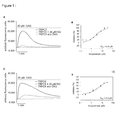
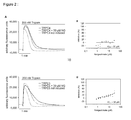
- norgestimate is at least 4-fold more potent on TRPC3/6/7 subfamily members than on TRPC4/5 subfamily members ( Figures 1 and 2 ).
- the 4-fold more potency of norgestimate on TRPC3/6/7 subfamily members than on TRPC4/5 subfamily members was evaluated with fluorometric measurements and based on the calculated inhibition by 10 ⁇ M norgestimate.
- norgestimate may be used as a pharmacological tool which allows characterising channels belonging to different TRPC subfamilies, that is distinguishing between TRPC3/6/7 subfamily members and members of other TRPC ion channel subfamilies ( Figures 1 , 2 and 3 ).
- norgestimate may further be used as a tool compound to develop and verify assays that measure the activity of the respective ion channel.
- An example of such an assay is shown in Figure 1 .
- Another subject matter of the present invention is directed to the use of norgestimate to make a differential analysis of the channel functions of, respectively, the TRPC3/6/7 subfamily members and the TRPC4/5 subfamily members under physiological and patho-physiological conditions. This can be done e.g. as described in the Exemplification.
- the analysis can be made in a cell, a tissue or an animal.
- the animal may be a rodent, preferably a mouse or a rat.
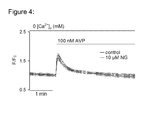
- the modulation of native TRPCs by norgestimate can be investigated using the A7r5 cell line, which is a validated model system for the study of endogenously expressed TRPC ion channels. Further details of such preferred assay systems are given in the Exemplification and in Figure 4 .
- TRPC ion channels are TRPC3, TRPC6 and TRPC7.
- a cell expressing a TRPC ion channel is brought into contact with norgestimate and the influence of norgestimate on the TRPC ion channel activity is measured or detected.
- TRPC ion channel modulator Another subject matter of the present invention is directed to a method of identifying a TRPC ion channel modulator.
- Preferred TRPC ion channels are TRPC3, TRPC6 and TRPC7.
- a cell expressing a TRPC ion channel is brought into contact with a test compound and the influence of the test compound on the TRPC ion channel activity is measured or detected.
- the cells used in the above methods are fluorescent cells.
- Preferred cells according to the present invention are MDCK, HEK 293, HEK 293 T, BHK, COS, NIH3T3, Swiss3T3 or CHO cells, in particular a HEK293 cell.
- TRPC channel activity can be measured or detected by measuring or detecting a change in ion fluxes, in particular Ca 2+ fluxes, by e.g. patch clamp techniques, whole cell currents, radiolabeled ion fluxes, or in particular fluorescence e.g. using voltage-sensitive dyes or ion-sensitive dyes ( Vestergarrd-Bogind et al. (1988), J. Membrane Biol., 88:67-75 ; Daniel et al. (1991) J. Pharmacol. Meth. 25:185-193 ; Hoevinsky et al. (1994) J. Membrane Biol., 137:59-70 ; Ackerman et al. (1997), New Engl. J. Med., 336:1575-1595 ; Hamil et al. (1981), Pflugers. Archiv., 391:185 ).
- voltage-sensitive dyes or ion-sensitive dyes Vestergarrd-Bogind
- An example for the measurement of the TRPC ion channel activity is an assay comprising the steps of:
- Another subject of the present invention is directed to a method for profiling selectivity of norgestimate for a TRPC channel, which comprises assessing the norgestimate's ability to inhibit the TRPC channel activity and comparing the inhibition potency of norgestimate between and within the different TRPC subfamilies.
- Another subject of the present invention is directed to the use of norgestimate in the preparation of a medicament for the treatment of cardiovascular diseases, coronary artery diseases, atherosclerosis, end-stage renal failure, neurological diseases, chronic pain, acute pain, or inflammatory diseases.
- Norgestimate may be formulated with one or more pharmaceutically acceptable carriers or auxiliary substances.
- Pharmaceutically acceptable carriers or auxiliary substances are for example a physiological buffer solution, e.g. sodium chloride solution, demineralised water, stabilizers, such as protease or nuclease inhibitors, or sequestering agents, such as EDTA.
- Another subject of the present invention is directed to a method of treatment of a cardiovascular disease, a coronary artery disease, atherosclerosis, end-stage renal failure, a neurological disease, chronic pain, acute pain, or an inflammatory disease, comprising administering to a subject a therapeutically effective amount of a composition comprising norgestimate.
- TRPC ion channel refers to Ca 2+ permeable non-selective cation channels. It shall mean any one of the list of the following transient receptor potential canonical ion channels: TRPC1, TRPC2, TRPC3, TRPC4, TRPC5, TRPC6 and TRPC7. Especially preferred are TRPC3, TRPC6 and/or TRPC7.
- TRPC ion channels could be derived from any vertebrate and in particular mammalian species (e.g. dog, horse, bovine, mouse, rat, canine, rabbit, chicken, anthropoid, human or others).
- the TRPC could be isolated from tissue probes of such vertebrate organisms or could be manufactured by means of recombinant biological material that is able to express the TRPC protein.
- the term may refer to native polypeptides, polymorphic variants, mutants, and interspecies homologues.
- Norgestimate is also known under its chemical name D-17.beta.-acetoxy-B-ethyl-17.alpha. ethinyl-gon-4-en-3-one oxime. It is a gestagen which is a synthetic form of the naturally occurring female sex hormone progesterone. Norgestimate is a molecule used in the prior art in the composition of hormonal contraceptives.
- norgestimate is used as a selective inhibitor of a TRPC3, TRPC6 and TRPC7.
- selective inhibition in context of the present invention refers to the potency of an inhibitor, e.g. norgestimate, to inhibit one or more members of the TRPC family with a higher efficiency than one or more other members.
- norgestimate is more effective on the TRPC3/6/7 subfamily than on the TRPC4/5 subfamily.
- norgestimate is at least 4-fold more effective on the TRPC3/6/7 subfamily than on the TRPC4/5 subfamily.
- the term "pharmacological tool” refers to a compound which functional properties allow to study how drugs interact with living organisms to produce a change in functions of interest, thereby allowing to study new drug composition and properties, interactions, toxicology, therapy, medical applications and antipathogenic capabilities. Furthermore, the term refers to a compound which may be used to characterize potential targets for the development of novel medicines, e.g. characterize their native composition, activation mechanisms, physiological functions, and roles in pathophysiology and disease.
- Differential analysis refers to an analysis which allows to characterize channel function differences between TRPC3/6/7 subfamily members and TRPC4/5 subfamily members under the same conditions.
- cells expressing respectively TRPC6 ion channels and TRPC5 ion channels are brought into contact with norgestimate in two parallel experiments, and the influence of norgestimate on the respective TRPC ion channel activities is measured or detected, allowing to compare functions of the respective channels under the same conditions.
- TRPC ion channel modulator means a modulating molecule of the TRPC channel, in particular an inhibitory or activating molecule ("inhibitor” or “activator”), especially an inhibitor of the TRPC channel identifiable according to the method of the present invention.
- An inhibitor is generally a compound which, e.g. binds to, partially or totally blocks activity, decreases, prevents, delays activation, inactivates, desensitizes, or down-regulates the activity or expression of at least one of the TRPC channels as preferably described above in details.
- An activator is generally a compound which, e.g. increases, opens, activates, facilitates, enhances activation, sensitizes, agonizes, or up-regulates the activity or expression of at least one of the TRPC channels as preferably described above in details.
- Such modulators include genetically modified versions of the TRPC channels, preferably an inactivating mutant of the TRPC channels, as well as naturally occurring or synthetic ligands, antagonists, agonists, peptides, cyclic peptides, nucleic acids, antibodies, antisense molecules, ribozymes, small organic molecules and the like.
- TRPC activators are diacylglycerols, in particular 1-Oleyl-2acetyl-sn-glycerol (OAG), Gq-coupled receptor agonists, such as phenylephrine and in particular trypsin, an agonist that stimulates receptor tyrosine kinases such as epidermal growth factor (EGF) or diacylglycerol generating enzymes such as phospholipases or activators thereof.
- OAG 1-Oleyl-2acetyl-sn-glycerol
- Gq-coupled receptor agonists such as phenylephrine and in particular trypsin
- an agonist that stimulates receptor tyrosine kinases such as epidermal growth factor (EGF) or diacylglycerol generating enzymes such as phospholipases or activators thereof.
- EGF epidermal growth factor
- diacylglycerol generating enzymes such as phospholipases or activators thereof.
- cells which express a TRPC channel.
- Such cells can be produced using genetic methods known to a person skilled in the art.
- cells are usually plated into e.g. microtiter plates and grown. Usually the cells grow at the bottom of multiwell plates and are fixed. Thereafter, the cells are generally washed and loaded with a dye in a suitable loading buffer, preferably with a fluorescent dye such as fluo4am.
- the cells are incubated with the test compound or modulator, in particular with a biochemical or chemical test compound as described above, e.g. in the form of a chemical compound library.
- Ca 2+ measurements can be carried out using e.g. a Fluorescence Imaging Plate Reader (FLIPR).
- FLIPR Fluorescence Imaging Plate Reader
- inhibitors would be a reduction of e.g. the fluorescence increase.
- Activators would lead to a further increase of e.g. an activator-evoked fluorescence or induce e.g. an activator-independent fluorescence increase.
- modulators in particular inhibitors
- suitable modulators for the screening of chemical compound libraries, the use of high-throughput assays are preferred which are known to the skilled person or which are commercially available.
- cell expressing TRPC refers to a cell expressing the ion channel of interest endogenously or a recombinant cell.
- the cell will usually be a mammalian cell, such as a human cell, a mouse cell, a rat cell, a Chinese hamster cell, etc.
- Cells that are found to be convenient include MDCK, HEK 293, HEK 293 T, BHK, COS, NIH3T3, Swiss3T3 and CHO cells, preferably HEK293 cells.
- tissue can refer to any type of tissue preparation or taken part of tissue or organ (e.g. brain, liver, spleen, kidney, heart, blood vessels, muscle, skin, etc. and refers also to any kind of body fluid such as blood, saliva, lymphatic fluid, synovial fluid etc.), preferably if derived from a vertebrate, and more preferably from a mammal such as a human. Tissue samples can be gained by well-known techniques, such as taking of blood, tissue punction or surgical techniques.
- dyes used in such measurements are Di-4-ANEPPS (pyridinium 4-(2(6-(dibutylamino)-2- naphthalenyl)ethenyl)-1-(3-sulfopropyl) hydroxide), CC-2-DMPE (1 ,2-ditetradecanoyl- sn-glycero-3-phosphoethanolamine triethylammonium), DiSBAC2 (bis-(1 ,2-dibarbituric acid)-trimethine oxanol), DisBAC3 ((bis-(1 ,3-dibarbituric acid)-trimethine oxanol), SBFI- AM (1 ,3-benzenedicarboxylic acid,4,4'-[1,4,10-trioxa-7,13-diazacyclopentadecane- 7,13-diylbis(5-methoxy-6, 12-benzofurandiyl)]bis-(tetrakis-[(
- profiling refers to the characterisation of a compound, e.g. norgestimate, through functional and structural categories, potency, specificity, selectivity and mechanism-of-action. In the present invention, it refers in particular to the selectivity study of the inhibition effect of norgestimate on a TRPC ion channel.
- the term “medicament” refers to a composition comprising a therapeutically effective amount of norgestimate and one or more pharmaceutically acceptable carriers or auxiliary substances.
- the medicament can be administered systemically or topically, in any conventional manner.
- This can e.g. be by means of oral dosage forms, such as, for example, tablets or capsules, by means of the mucous membranes, for example the nose or the oral cavity, in the form of dispositories implanted under the skin, by means of injections, infusions or gels which contain the medicaments according to the invention.
- the medicament can also be administered in form of an injection solution or an infusion.
- Injection solutions are in general used if only relatively small amounts of a solution or suspension, for example about 1 to about 20 ml, are to be administered to the body.
- Infusion solutions are in general used if a larger amount of a solution or suspension, for example one or more litres, are to be administered.
- the formulation according to the invention should be diluted briefly before administration to such an extent that an at least approximately isotonic solution is obtained.
- An example of an isotonic solution is a 0.9% strength sodium chloride solution.
- the dilution can be carried out, for example, using sterile water while the administration can be carried out, for example, via a so-called bypass.
- the invention thus relates to the following subjects:
- TRPC ion channel is selected from the list consisting of: TRPC3, TRPC6 and TRPC7.
- norgestimate is at least 4-fold more potent on TRPC3/6/7 subfamily members than on TRPC4/5 subfamily members.
- norgestimate is used as a pharmacological tool which allows characterising channels belonging to different TRPC subfamilies.
- norgestimate which is carried out in vitro or in vivo in a non-human animal, wherein the animal can e.g. be a mouse or a rat.
- TRPC ion channel is selected from the list consisting of: TRPC3, TRPC6 and TRPC7 and wherein norgestimate is used to make a differential analysis of the channel functions of, respectively, the TRPC3/6/7 subfamily members and the TRPC4/5 subfamily members under physiological and patho-physiological conditions.
- norgestimate wherein the analysis is made in a cell or in a tissue or in a non-human animal.
- a method for selectively inhibiting a TRPC ion channel which comprises contacting a cell expressing a TRPC ion channel with norgestimate.
- TRPC ion channel is selected from the list consisting of: TRPC3, TRPC6 and TRPC7.
- One of the above methods which is carried out in vitro or in vivo in a non-human animal, such as a rat or a mouse.
- a method for determining the effect of norgestimate on the TRPC ion channel activity which comprises:
- a method for identifying a TRPC ion channel modulator which comprises:
- TRPC ion channel activity is measured or detected by measuring or detecting a change in Ca 2+ fluxes, by patch clamp techniques, whole cell currents, radiolabeled ion fluxes, or fluorescence using voltage-sensitive dyes or ion-sensitive dyes.
- a method for profiling selectivity of norgestimate for a TRPC ion channel which comprises assessing the norgestimate's ability to inhibit the TRPC ion channel activity and comparing the inhibition potency of norgestimate between and within the different TRPC subfamilies.
- norgestimate in the preparation of a medicament for the treatment of a cardiovascular disease, a coronary artery disease, atherosclerosis, end-stage renal failure, a neurological disease, chronic pain, acute pain, or an inflammatory disease.
- a method of treatment of a cardiovascular disease, a coronary artery disease, atherosclerosis, end-stage renal failure, a neurological disease, chronic pain, acute pain, or an inflammatory disease comprising administering to a subject a therapeutically effective amount of a composition comprising norgestimate.
- TRPC3 and TRPC6 were directly activated by application of oleoyl-2-acetyl-sn-glycerol (OAG), a membrane permeable diacylglycerol analogue.
- OAG oleoyl-2-acetyl-sn-glycerol
- TRPC3- and TRPC6-mediated Ca 2+ influx following application of 30 ⁇ M OAG was strongly reduced in cells preincubated with 30 ⁇ M norgestimate ( Fig. 1 A, C ).
- phosphatidylinositol (PI) response is independent of the channel's presence but consequently leads to activation of store-operated channels like TRPC4 and TRPC5.
- Basic prerequisite to measure the effect of norgestimate on both channels under these conditions is to exclude PAR antagonism of this potential channel inhibitor.
- calcium release from ER was compared in non-induced TRPC5 HEK293 FITR cells preincubated with 30 ⁇ M norgestimate or buffer only (10 min).
- Kinetics and quantity of calcium store release in cells treated with 30 ⁇ M norgestimate were not changed compared to untreated cells. Therefore, norgestimate is not a PAR antagonist and TRPC4 and TRPC5 activation via PAR stimulation is suitable to measure the channels inhibition by norgestimate.
- the A7r5 cell line (derived from rat thoracic aorta smooth muscle cells) is a model system to investigate endogenous TRPC channels (Jung et al., 2002;Soboloff et al., 2005).
- the channels were indirectly stimulated by Arg 8 -vasopressin (AVP), a vasoconstricting peptide that activates the endogenous vasopressin V 1A receptor in these cells (Thibonnier et al., 1991).
- AVP Arg 8 -vasopressin
Landscapes
- Health & Medical Sciences (AREA)
- Life Sciences & Earth Sciences (AREA)
- Chemical & Material Sciences (AREA)
- Engineering & Computer Science (AREA)
- General Health & Medical Sciences (AREA)
- Medicinal Chemistry (AREA)
- Public Health (AREA)
- Animal Behavior & Ethology (AREA)
- Veterinary Medicine (AREA)
- Pharmacology & Pharmacy (AREA)
- Chemical Kinetics & Catalysis (AREA)
- General Chemical & Material Sciences (AREA)
- Nuclear Medicine, Radiotherapy & Molecular Imaging (AREA)
- Organic Chemistry (AREA)
- Bioinformatics & Cheminformatics (AREA)
- Biomedical Technology (AREA)
- Molecular Biology (AREA)
- Urology & Nephrology (AREA)
- Cell Biology (AREA)
- Immunology (AREA)
- Hematology (AREA)
- Neurosurgery (AREA)
- Physics & Mathematics (AREA)
- Epidemiology (AREA)
- Neurology (AREA)
- Pain & Pain Management (AREA)
- Proteomics, Peptides & Aminoacids (AREA)
- Biotechnology (AREA)
- Pathology (AREA)
- Cardiology (AREA)
- Microbiology (AREA)
- Food Science & Technology (AREA)
- Heart & Thoracic Surgery (AREA)
- Analytical Chemistry (AREA)
- Biochemistry (AREA)
- General Physics & Mathematics (AREA)
- Vascular Medicine (AREA)
- Rheumatology (AREA)
- Pharmaceuticals Containing Other Organic And Inorganic Compounds (AREA)
- Measuring Or Testing Involving Enzymes Or Micro-Organisms (AREA)
Abstract
Description
- The present invention relates to the use of norgestimate as a selective inhibitor of members of the TRPC3/6/7 ion channel subfamily, which allows to pharmacologically distinguishing between said subfamily members and members of other TRPC subfamilies. It also relates to the use of norgestimate to identify, characterize and modulate TRPC ion channels in cellular models, tissues or animal models.
- TRPC channels are nonspecific cation channels widely expressed in human tissues (Montell 2005). They were the first found mammalian homologues of Drosophila TRP (Wes et al., 1995, Zhu et al., 1995). Seven proteins, referred to as TRPC1 - 7, constitute the canonical (or classical) TRP subfamily that is the closest related to the archetypal Drosophila TRP (30 - 40 % identity, Okuhara et al., 2007).
- Based on amino acid sequence homology, tissue distribution and functional similarities, TRPCs can be subclassified into four groups (Clapham et al., 2001; Montell, 2001). Being quite unique within the TRPC family, TRPC1 and TRPC2 each constitute a subfamily by themselves while TRPC4 and -5 are merged just as TRPC3, -6, and -7. The closely related TRPC3, TRPC6 and TRPC7 channels share a common activation mechanism and diacylglycerol (DAG) has been identified as their endogenous ligand (Hofmann et al., 1999; Okada et al., 1999).
- According to the WHO, 30% of all deaths worldwide were caused by various cardiovascular diseases in 2005. Thus, there is an immense medical need for new medicines that prevent and treat cardiovascular diseases. TRPC channels are considered important pharmacological targets for the development of novel medicines for several cardiovascular pathologies including cardiomyopathy, vascular remodelling, hypertension and high endothelial permeability (Dietrich et al., 2007).
- But so far, there are many open questions regarding their native composition and activation mechanisms, physiological functions, and roles in pathophysiology and disease. In situ identification of native TRPC channels is complicated by their wide and partially overlapping distribution, potential heteromultimerization, similar electrophysiological properties and a paucity of tool compounds to unequivocally trace these channels (Moran et al., 2004).
- Known TRPC organic inhibitors such as 2-aminoethoxydiphenyl borate (2-APB) (Xu et al., 2005), SKF 96365 (Boulay et al., 1997; Zhu et al., 1998) and BTP2 (He et al., 2005), and inorganic blockers such as Gd3+ and La3+ are not potent and specific enough (Li et al., 2004).
- Studies in transgenic mice already have proven to be valuable in unravelling possible physiological functions of certain TRPCs (Freichel et al., 2001). But these model systems do not exist for each of the seven mammalian TRPC channels so far, their generation and analysis is time- and cost-consuming and they also have limitations as they are vulnerable to compensatory effects by closely related channels (Dietrich et al., 2005c).
- Thus, the aim of the present invention was to develop a new pharmacological tool that allows to discriminate between and within the TRPC subfamilies, thereby allowing to elucidate the roles of the different channels under physiological as well as patho-physiological conditions.
- According to the present invention, this is achieved with the use of norgestimate to selectively inhibit TRPC3, TRPC6 and TRPC7. Thus, norgestimate allows to pharmacologically distinguishe channels belonging to different TRPC subfamilies. In addition, norgestimate does not interfere with the common G protein-coupled receptor, Gq, phospholipase Cβ pathway that mediates TRPC channel activation in many cells. These properties make norgestimate a preferable tool for the identification and modulation of TRPC3, TRPC6 and TRPC7.
- One subject matter of the present invention is directed to the use of norgestimate as a selective inhibitor of a TRPC ion channel. A TRPC ion channel selectively inhibited by norgestimate is preferably TRPC3, TRPC6 or TRPC7. Norgestimate may be used to selectively inhibit a TRPC ion channel in vitro and in vivo.
- In particular, norgestimate is at least 4-fold more potent on TRPC3/6/7 subfamily members than on TRPC4/5 subfamily members (
Figures 1 and2 ). The 4-fold more potency of norgestimate on TRPC3/6/7 subfamily members than on TRPC4/5 subfamily members was evaluated with fluorometric measurements and based on the calculated inhibition by 10 µM norgestimate. - These fluorometric measurements were exemplary validated by means of patch clamp recording in the whole-cell configuration (
Figure 3 ). - As a selective inhibitor of TRPC3, TRPC6 and TRPC7, norgestimate may be used as a pharmacological tool which allows characterising channels belonging to different TRPC subfamilies, that is distinguishing between TRPC3/6/7 subfamily members and members of other TRPC ion channel subfamilies (
Figures 1 ,2 and3 ). - As such an inhibitor, norgestimate may further be used as a tool compound to develop and verify assays that measure the activity of the respective ion channel. An example of such an assay is shown in
Figure 1 . - Another subject matter of the present invention is directed to the use of norgestimate to make a differential analysis of the channel functions of, respectively, the TRPC3/6/7 subfamily members and the TRPC4/5 subfamily members under physiological and patho-physiological conditions. This can be done e.g. as described in the Exemplification. The analysis can be made in a cell, a tissue or an animal. The animal may be a rodent, preferably a mouse or a rat.
- According to a preferred embodiment, the modulation of native TRPCs by norgestimate can be investigated using the A7r5 cell line, which is a validated model system for the study of endogenously expressed TRPC ion channels. Further details of such preferred assay systems are given in the Exemplification and in
Figure 4 . - Another subject matter of the present invention is directed to a method of determining the effect of norgestimate on the TRPC channel activity. Preferred TRPC ion channels are TRPC3, TRPC6 and TRPC7.
- In general, a cell expressing a TRPC ion channel is brought into contact with norgestimate and the influence of norgestimate on the TRPC ion channel activity is measured or detected.
- Another subject matter of the present invention is directed to a method of identifying a TRPC ion channel modulator. Preferred TRPC ion channels are TRPC3, TRPC6 and TRPC7.
- In general, a cell expressing a TRPC ion channel is brought into contact with a test compound and the influence of the test compound on the TRPC ion channel activity is measured or detected.
- In preferred embodiments the cells used in the above methods are fluorescent cells.
- Preferred cells according to the present invention are MDCK, HEK 293, HEK 293 T, BHK, COS, NIH3T3, Swiss3T3 or CHO cells, in particular a HEK293 cell.
- TRPC channel activity can be measured or detected by measuring or detecting a change in ion fluxes, in particular Ca2+ fluxes, by e.g. patch clamp techniques, whole cell currents, radiolabeled ion fluxes, or in particular fluorescence e.g. using voltage-sensitive dyes or ion-sensitive dyes (Vestergarrd-Bogind et al. (1988), J. Membrane Biol., 88:67-75; Daniel et al. (1991) J. Pharmacol. Meth. 25:185-193; Hoevinsky et al. (1994) J. Membrane Biol., 137:59-70; Ackerman et al. (1997), New Engl. J. Med., 336:1575-1595; Hamil et al. (1981), Pflugers. Archiv., 391:185).
- An example for the measurement of the TRPC ion channel activity is an assay comprising the steps of:
- (a) contacting a fluorescent cell expressing a TRPC ion channel,
- (b) stimulating Ca2+ influx by a channel activator before, simultaneously or after contacting the fluorescent cell with the modulator or test compound, and
- (c) measuring or detecting a change in fluorescence.
- Another subject of the present invention is directed to a method for profiling selectivity of norgestimate for a TRPC channel, which comprises assessing the norgestimate's ability to inhibit the TRPC channel activity and comparing the inhibition potency of norgestimate between and within the different TRPC subfamilies.
- Another subject of the present invention is directed to the use of norgestimate in the preparation of a medicament for the treatment of cardiovascular diseases, coronary artery diseases, atherosclerosis, end-stage renal failure, neurological diseases, chronic pain, acute pain, or inflammatory diseases.
- Norgestimate may be formulated with one or more pharmaceutically acceptable carriers or auxiliary substances. Pharmaceutically acceptable carriers or auxiliary substances are for example a physiological buffer solution, e.g. sodium chloride solution, demineralised water, stabilizers, such as protease or nuclease inhibitors, or sequestering agents, such as EDTA.
- Another subject of the present invention is directed to a method of treatment of a cardiovascular disease, a coronary artery disease, atherosclerosis, end-stage renal failure, a neurological disease, chronic pain, acute pain, or an inflammatory disease, comprising administering to a subject a therapeutically effective amount of a composition comprising norgestimate.
- The term "TRPC ion channel" or "TRPC" in context of the present invention refers to Ca2+ permeable non-selective cation channels. It shall mean any one of the list of the following transient receptor potential canonical ion channels: TRPC1, TRPC2, TRPC3, TRPC4, TRPC5, TRPC6 and TRPC7. Especially preferred are TRPC3, TRPC6 and/or TRPC7.
- Such TRPC ion channels could be derived from any vertebrate and in particular mammalian species (e.g. dog, horse, bovine, mouse, rat, canine, rabbit, chicken, anthropoid, human or others). The TRPC could be isolated from tissue probes of such vertebrate organisms or could be manufactured by means of recombinant biological material that is able to express the TRPC protein.
- The term may refer to native polypeptides, polymorphic variants, mutants, and interspecies homologues.
- "Norgestimate" is also known under its chemical name D-17.beta.-acetoxy-B-ethyl-17.alpha. ethinyl-gon-4-en-3-one oxime. It is a gestagen which is a synthetic form of the naturally occurring female sex hormone progesterone. Norgestimate is a molecule used in the prior art in the composition of hormonal contraceptives.
- In the present invention, norgestimate is used as a selective inhibitor of a TRPC3, TRPC6 and TRPC7.
- The term "selective inhibition" in context of the present invention refers to the potency of an inhibitor, e.g. norgestimate, to inhibit one or more members of the TRPC family with a higher efficiency than one or more other members. In a preferred embodiment, norgestimate is more effective on the TRPC3/6/7 subfamily than on the TRPC4/5 subfamily. In a more preferred embodiment, norgestimate is at least 4-fold more effective on the TRPC3/6/7 subfamily than on the TRPC4/5 subfamily.
- The term "pharmacological tool" refers to a compound which functional properties allow to study how drugs interact with living organisms to produce a change in functions of interest, thereby allowing to study new drug composition and properties, interactions, toxicology, therapy, medical applications and antipathogenic capabilities. Furthermore, the term refers to a compound which may be used to characterize potential targets for the development of novel medicines, e.g. characterize their native composition, activation mechanisms, physiological functions, and roles in pathophysiology and disease.
- The term "differential analysis" refers to an analysis which allows to characterize channel function differences between TRPC3/6/7 subfamily members and TRPC4/5 subfamily members under the same conditions.
- According to a preferred embodiment, cells expressing respectively TRPC6 ion channels and TRPC5 ion channels are brought into contact with norgestimate in two parallel experiments, and the influence of norgestimate on the respective TRPC ion channel activities is measured or detected, allowing to compare functions of the respective channels under the same conditions.
- The term "TRPC ion channel modulator" means a modulating molecule of the TRPC channel, in particular an inhibitory or activating molecule ("inhibitor" or "activator"), especially an inhibitor of the TRPC channel identifiable according to the method of the present invention.
- An inhibitor is generally a compound which, e.g. binds to, partially or totally blocks activity, decreases, prevents, delays activation, inactivates, desensitizes, or down-regulates the activity or expression of at least one of the TRPC channels as preferably described above in details.
- An activator is generally a compound which, e.g. increases, opens, activates, facilitates, enhances activation, sensitizes, agonizes, or up-regulates the activity or expression of at least one of the TRPC channels as preferably described above in details.
- Such modulators include genetically modified versions of the TRPC channels, preferably an inactivating mutant of the TRPC channels, as well as naturally occurring or synthetic ligands, antagonists, agonists, peptides, cyclic peptides, nucleic acids, antibodies, antisense molecules, ribozymes, small organic molecules and the like.
- Examples of TRPC activators are diacylglycerols, in particular 1-Oleyl-2acetyl-sn-glycerol (OAG), Gq-coupled receptor agonists, such as phenylephrine and in particular trypsin, an agonist that stimulates receptor tyrosine kinases such as epidermal growth factor (EGF) or diacylglycerol generating enzymes such as phospholipases or activators thereof.
- An example for the measurement of the TRPC ion channel activity modulation in presence of a test compound is as following:
- In general, cells are provided which express a TRPC channel. Such cells can be produced using genetic methods known to a person skilled in the art. After having induced the expression of the TRPC channel, cells are usually plated into e.g. microtiter plates and grown. Usually the cells grow at the bottom of multiwell plates and are fixed. Thereafter, the cells are generally washed and loaded with a dye in a suitable loading buffer, preferably with a fluorescent dye such as fluo4am. After having removed the loading buffer, the cells are incubated with the test compound or modulator, in particular with a biochemical or chemical test compound as described above, e.g. in the form of a chemical compound library. Ca2+ measurements can be carried out using e.g. a Fluorescence Imaging Plate Reader (FLIPR). To stimulate Ca2+ influx through the TRPC channel a channel activator such as OAG should generally be applied.
- The expected effects of inhibitors would be a reduction of e.g. the fluorescence increase. Activators would lead to a further increase of e.g. an activator-evoked fluorescence or induce e.g. an activator-independent fluorescence increase.
- Thereafter, suitable modulators, in particular inhibitors can be analyzed and/or isolated. For the screening of chemical compound libraries, the use of high-throughput assays are preferred which are known to the skilled person or which are commercially available.
- The term "cell expressing TRPC" refers to a cell expressing the ion channel of interest endogenously or a recombinant cell.
- The cell will usually be a mammalian cell, such as a human cell, a mouse cell, a rat cell, a Chinese hamster cell, etc. Cells that are found to be convenient include MDCK, HEK 293, HEK 293 T, BHK, COS, NIH3T3, Swiss3T3 and CHO cells, preferably HEK293 cells.
- The term "tissue" as used herein, can refer to any type of tissue preparation or taken part of tissue or organ (e.g. brain, liver, spleen, kidney, heart, blood vessels, muscle, skin, etc. and refers also to any kind of body fluid such as blood, saliva, lymphatic fluid, synovial fluid etc.), preferably if derived from a vertebrate, and more preferably from a mammal such as a human. Tissue samples can be gained by well-known techniques, such as taking of blood, tissue punction or surgical techniques.
- Examples of dyes used in such measurements are Di-4-ANEPPS (pyridinium 4-(2(6-(dibutylamino)-2- naphthalenyl)ethenyl)-1-(3-sulfopropyl) hydroxide), CC-2-DMPE (1 ,2-ditetradecanoyl- sn-glycero-3-phosphoethanolamine triethylammonium), DiSBAC2 (bis-(1 ,2-dibarbituric acid)-trimethine oxanol), DisBAC3 ((bis-(1 ,3-dibarbituric acid)-trimethine oxanol), SBFI- AM (1 ,3-benzenedicarboxylic acid,4,4'-[1,4,10-trioxa-7,13-diazacyclopentadecane- 7,13-diylbis(5-methoxy-6, 12-benzofurandiyl)]bis-(tetrakis-[(acetyloxy)methyl]ester)), fluo3am (1-[2-Amino-5-(2,7-dichloro-6-hydroxy-3-oxy-9-xanthenyl)phenoxy]-2-(2'- amino-5<1 >-methylphenoxy)ethane- N,N,N',N'-tetraacetic), fluo4am (1-[2-Amino-5-(2,7- dichloro-6-hydroxy-4-oxy-9-xanthenyl) phenoxy]-2-(2'-amino-5'- methylphenoxy)ethane-N,N,N',N'-tetraacetic) or fura2am (1-t2-(5'-carboxyoxazol-2'-yl)- 6-aminobenzofuran-5-oxy]-2-(2'-amino-5<1>-methyl-phenoxy)-ethane-N,N,N',N'- tetraacetic).
- The term "profiling" refers to the characterisation of a compound, e.g. norgestimate, through functional and structural categories, potency, specificity, selectivity and mechanism-of-action. In the present invention, it refers in particular to the selectivity study of the inhibition effect of norgestimate on a TRPC ion channel.
- The term "medicament" refers to a composition comprising a therapeutically effective amount of norgestimate and one or more pharmaceutically acceptable carriers or auxiliary substances.
- The medicament can be administered systemically or topically, in any conventional manner. This can e.g. be by means of oral dosage forms, such as, for example, tablets or capsules, by means of the mucous membranes, for example the nose or the oral cavity, in the form of dispositories implanted under the skin, by means of injections, infusions or gels which contain the medicaments according to the invention. It is further possible to administer the medicament topically and locally in order to treat the particular disease as described above, if appropriate, in the form of liposome complexes.
- The medicament can also be administered in form of an injection solution or an infusion. Injection solutions are in general used if only relatively small amounts of a solution or suspension, for example about 1 to about 20 ml, are to be administered to the body. Infusion solutions are in general used if a larger amount of a solution or suspension, for example one or more litres, are to be administered. In the case of the administration of relatively large amounts, however, the formulation according to the invention should be diluted briefly before administration to such an extent that an at least approximately isotonic solution is obtained. An example of an isotonic solution is a 0.9% strength sodium chloride solution. In the case of infusion, the dilution can be carried out, for example, using sterile water while the administration can be carried out, for example, via a so-called bypass.
- The invention thus relates to the following subjects:
- Use of norgestimate for inhibition of a TRPC ion channel.
- Above use of norgestimate, wherein the TRPC ion channel is selected from the list consisting of: TRPC3, TRPC6 and TRPC7.
- One of the above uses of norgestimate, wherein norgestimate is at least 4-fold more potent on TRPC3/6/7 subfamily members than on TRPC4/5 subfamily members.
- One of the above uses of norgestimate, wherein norgestimate is used as a pharmacological tool which allows characterising channels belonging to different TRPC subfamilies.
- One of the above uses of norgestimate, which is carried out in vitro or in vivo in a non-human animal, wherein the animal can e.g. be a mouse or a rat.
- Use of norgestimate, wherein the TRPC ion channel is selected from the list consisting of: TRPC3, TRPC6 and TRPC7 and wherein norgestimate is used to make a differential analysis of the channel functions of, respectively, the TRPC3/6/7 subfamily members and the TRPC4/5 subfamily members under physiological and patho-physiological conditions.
- One of the above uses of norgestimate, wherein the analysis is made in a cell or in a tissue or in a non-human animal.
- A method for selectively inhibiting a TRPC ion channel, which comprises contacting a cell expressing a TRPC ion channel with norgestimate.
- Above method for selectively inhibiting a TRPC ion channel, wherein the TRPC ion channel is selected from the list consisting of: TRPC3, TRPC6 and TRPC7.
- One of the above methods, which is carried out in vitro or in vivo in a non-human animal, such as a rat or a mouse.
- A method for determining the effect of norgestimate on the TRPC ion channel activity, which comprises:
- a) contacting a cell expressing a TRPC ion channel,
- b) stimulating Ca2+ influx by a channel activator before, simultaneously or after contacting the cell with norgestimate, and
- c) measuring or detecting a change of the TRPC ion channel activity.
- A method for identifying a TRPC ion channel modulator, which comprises:
- a) contacting a cell expressing a TRPC ion channel,
- b) stimulating Ca2+ influx by a channel activator before, simultaneously or after contacting the cell with a test compound, and
- c) measuring or detecting a change of the TRPC ion channel activity.
- One of the above methods for determining the effect of norgestimate on the TRPC ion channel activity or for identifying a TRPC ion channel modulator, wherein the cell is a fluorescent cell.
- One of the above methods for determining the effect of norgestimate on the TRPC ion channel activity or for identifying a TRPC ion channel modulator, wherein the cell is selected from a MDCK, HEK 293, HEK 293 T, BHK, COS, NIH3T3, Swiss3T3 or CHO cell.
- One of the above methods for determining the effect of norgestimate on the TRPC ion channel activity or for identifying a TRPC ion channel modulator, wherein the TRPC ion channel activity is measured or detected by measuring or detecting a change in Ca2+ fluxes, by patch clamp techniques, whole cell currents, radiolabeled ion fluxes, or fluorescence using voltage-sensitive dyes or ion-sensitive dyes.
- A method for profiling selectivity of norgestimate for a TRPC ion channel, which comprises assessing the norgestimate's ability to inhibit the TRPC ion channel activity and comparing the inhibition potency of norgestimate between and within the different TRPC subfamilies.
- The use of norgestimate in the preparation of a medicament for the treatment of a cardiovascular disease, a coronary artery disease, atherosclerosis, end-stage renal failure, a neurological disease, chronic pain, acute pain, or an inflammatory disease. A method of treatment of a cardiovascular disease, a coronary artery disease, atherosclerosis, end-stage renal failure, a neurological disease, chronic pain, acute pain, or an inflammatory disease, comprising administering to a subject a therapeutically effective amount of a composition comprising norgestimate.
- The following Figures and Examples shall explain the present invention without limiting the scope of the invention.
- TRPC3 and TRPC6 were directly activated by application of oleoyl-2-acetyl-sn-glycerol (OAG), a membrane permeable diacylglycerol analogue. TRPC3- and TRPC6-mediated Ca2+ influx following application of 30 µM OAG was strongly reduced in cells preincubated with 30 µM norgestimate (
Fig. 1 A, C ).The IC50 of norgestimate on TRPC3 was 2.8 ± 0.4 µM (n = 2,Fig. 1 B) . Norgestimate was similarly active on TRPC6 with an IC50 of 5.2 ± 0.4 µM (n = 4,Fig. 1 D) . - When these experiments were performed, no direct physiological stimuli of TRPC4 and TRPC5 were known. Therefore, both channels had to be stimulated indirectly, e.g. by application of trypsin, a protease-activated receptor (PAR) stimulating protease. Trypsin is able to activate all four known PAR subtypes and the mRNA of three of them (PAR1, PAR2 and PAR3) was shown to be endogenously present in HEK293 cells (Kawabata et al., 1999). PAR are G protein-coupled and their activation leads to calcium store depletion from endoplasmic reticulum (ER). This so called phosphatidylinositol (PI) response is independent of the channel's presence but consequently leads to activation of store-operated channels like TRPC4 and TRPC5. Basic prerequisite to measure the effect of norgestimate on both channels under these conditions is to exclude PAR antagonism of this potential channel inhibitor. Hence, calcium release from ER was compared in non-induced TRPC5 HEK293 FITR cells preincubated with 30 µM norgestimate or buffer only (10 min). Kinetics and quantity of calcium store release in cells treated with 30 µM norgestimate were not changed compared to untreated cells. Therefore, norgestimate is not a PAR antagonist and TRPC4 and TRPC5 activation via PAR stimulation is suitable to measure the channels inhibition by norgestimate.
- 30 µM norgestimate had only small inhibitory effects on TRPC4 and TRPC5 (
fig. 2 A, C ). An IC50 > 30 µM was determined on both TRPC4 (n = 2,Figure 2 B) and TRPC5 (n = 4,Figure 2 D) . - In summary these FLIPR measurements have shown that norgestimate inhibits channels of the TRPC3/6/7 subfamily as well as of the TRPC4/5 subfamily when applied in micromolar concentrations. Norgestimate was more effective on the TRPC3/6/7 than on the TRPC4/5 subfamily. Therefore, norgestimate was chosen for further experiments to test its discriminating capability.
- Inhibition of TRPC6- and TRPC5-mediated Ca2+-influx by norgestimate monitored in fluorometric experiments with cell populations was validated and compared with whole-cell patch clamp recordings of single cells. Channels were indirectly excited with the same stimulus for better comparability of the norgestimate effect. Aluminium tetrafluoride (AlF4 -) applied intracellularly via the patch pipette activates G-proteins by mimicking GTP (Sternweis & Gilman, 1982;Bigay et al., 1985). Subsequently TRPC channels are stimulated and mediate non-specific cationic currents (
fig. 3 A, B ) - When 10 µM norgestimate were applied to activated TRPC6 channels, 89.9 ± 3.1% (n = 15) of the current measured at resting membrane potential were blocked. This inhibition was reversible as current amplitude increased after norgestimate wash out (
fig. 3 A) . The adjacent block by 10 µM lanthanum (La3+) was complete and reversible and thus used for background (leak) calculation. - By contrast, application of 10 µM norgestimate to stimulated TRPC5 channels had a minor effect on the current, 25.9 ± 5.7% (n = 20) were blocked. Since these channels are potentiated by micromolar La3+ concentrations (Jung et al., 2003), 2-aminoethoxydiphenyl borate (2-APB), a characterized TRPC5 blocker (Xu et al., 2005) was used instead. Background was calculated by application of 10 µM 2-APB that completely and reversibly blocked the channel.
- So far all norgestimate effects were investigated on homomeric channels heterologously expressed in HEK293 cells. It is well known that TRPC channels heteromultimerize under physiological conditions (reviewed by Schaefer, 2005). Taking the numerous possible stoichiometrically compositions of these heteromultimers into account, it is common use to start pharmacological examinations of TRPC channels in artificial model systems. But it is even more interesting to test whether norgestimate inhibits native TRPC channels too.
- The A7r5 cell line (derived from rat thoracic aorta smooth muscle cells) is a model system to investigate endogenous TRPC channels (Jung et al., 2002;Soboloff et al., 2005). The channels were indirectly stimulated by Arg8-vasopressin (AVP), a vasoconstricting peptide that activates the endogenous vasopressin V1A receptor in these cells (Thibonnier et al., 1991). Before whole-cell patch clamp recordings were performed, it was shown in calcium imaging experiments that norgestimate does not generally suppress V1 receptors (
fig. 4 ) - Perfusion of A7r5 cells with 100 nM AVP stimulated non-selective cationic currents that bore the biophysical hallmarks of TRPC channels (
fig. 5 ). The double-rectifying I-V relationship was similar to those exhibited by the heterologously expressed TRPC6 homomers (Fig. 3 A) . When 10 µM norgestimate were applied to AVP-stimulated A7r5 cells, 86.5 ± 6.0% (n = 8) of the current measured at resting membrane potential were blocked and this effect was reversible (fig. 5 ). -
-
Figure 1 :
(A, C) Time-dependent changes of intracellular Ca2+ concentration ([Ca2+]i) of fluo-4-loaded induced TRPC3 HEK293 cells (A) and TRPC6 HEK293 cells (C). TRPC-mediated Ca2+ influx following application of 30 µM OAG was strongly reduced in cells preincubated with 30 µM norgestimate (NG).
Measurements were performed in 96er well plates using FLIPR (Molecular Devices, Sunnyvale, CA, USA)
(B, D) Determination of norgestimates IC50 value on TRPC3 (B) and TRPC6 (D). Data are represented as means of 2 wells (B) and 4 wells (D) with 45,000 cells per well. -
Figure 2 :
(A, C) Time-dependent changes of intracellular Ca2+ concentration ([Ca2+]i) of fluo-4-loaded induced TRPC4 HEK293 cells (A) and TRPC5 HEK293 cells (C). TRPC-mediated Ca2+ influx following application of 200 nM trypsin was slightly reduced in cells preincubated with 30 µM norgestimate (NG).
Measurements were performed in 96er well plates using FLIPR (Molecular Devices, Sunnyvale, CA, USA)
(B, D) Determination of norgestimates IC50value on TRPC4 (B) and TRPC5 (D). Data are represented as means of 2 wells (B) and 4 wells (D) with 47,000 cells per well. -
Figure 3 :
Effect of 10 µM norgestimate (NG) on whole-cell currents evoked by AlF4 - infusion into induced TRPC6 - (A) and TRPC5 HEK 293 (B) cells. Whole cell currents recorded at - 70 mV (left panels) and the corresponding current-voltage (I-V) relationships are shown (right panels). For background correction channels were completely blocked with 10 µM La3+ (A) or 10 µM 2-APB (B). The curves were obtained during voltage ramps from -100 to +80 mV.
(C) Statistical analysis of the norgestimate effect on TRPC5- and TRPC6-mediated currents. 10 µM norgestimate inhibit 25.9 ± 5.7% (n = 20) of TRPC5-mediated currents and 89.9 ± 3.1% (n = 15) of TRPC6-mediated currents (P < 0.001, Wilcoxon test, two-sided). -
Figure 4 :
Time-dependent changes of [Ca2+]i of fura-2-loaded A7r5 cells. Cells were preincubated with or without (control) 10 µM norgestimate (NG) in calcium-free standard extracellular solution (1 mM EGTA) for 5 min before stimulating the V1 receptor by application of 100 nM AVP. Data are represented as means of 33 cells (control) and 36 cells (10 µM norgestimate).
Measurements were performed using a standard imaging setup (TILL Photonics, Gräfelfing, Germany). -
Figure 5 :
Effect of 10 µM norgestimate (NG) on whole-cell currents evoked by 100 nM AVP on A7r5 cells in standard extracellular solution (200 µM [Ca2+]o). Whole cell currents recorded at -60 mV (left panels) and the corresponding I-V relationships are shown (right panels). The curves were obtained during voltage ramps from -100 to +80 mV. L-type voltage-gated Ca2+ channels were blocked by 5 µM nimodipine (ND) during the whole experiment.
Claims (16)
- 2. Use of norgestimate for inhibition of a TRPC ion channel.
- 3. Use of norgestimate according to claim 1, wherein the TRPC ion channel is selected from the list consisting of: TRPC3, TRPC6 and TRPC7.
- 4. Use of norgestimate according to any of the claims 1-2, wherein norgestimate is at least 4-fold more potent on TRPC3/6/7 subfamily members than on TRPC4/5 subfamily members.
- 5. Use of norgestimate according to any of the claims 1-2, wherein norgestimate is used as a pharmacological tool which allows characterising channels belonging to different TRPC subfamilies.
- 6. Use of norgestimate according to any of the claims 1-4, which is carried out in vitro.
- 7. Use of norgestimate according to any of the claims 1-4, which is carried out in vivo in a non-human animal.
- 8. Use of norgestimate according to claim 2, wherein norgestimate is used to make a differential analysis of the channel functions of, respectively, the TRPC3/6/7 subfamily members and the TRPC4/5 subfamily members under physiological and patho-physiological conditions.
- 9. Use of norgestimate according to claim 7, wherein the analysis is made in a cell.
- 10. Use of norgestimate according to claim 7, wherein the analysis is made in a tissue.
- 11. Use of norgestimate according to claim 7, wherein the analysis is made in a non-human animal.
- 12. A method for selectively inhibiting a TRPC ion channel, which comprises contacting a cell expressing a TRPC ion channel with norgestimate.
- 13. A method for determining the effect of norgestimate on the TRPC ion channel activity, which comprises:d) contacting a cell expressing a TRPC ion channel,e) stimulating Ca2+ influx by a channel activator before, simultaneously or after contacting the cell with norgestimate, andf) measuring or detecting a change of the TRPC ion channel activity.
- 14. A method for identifying a TRPC ion channel modulator, which comprises:a) contacting a cell expressing a TRPC ion channel,b) stimulating Ca2+ influx by a channel activator before, simultaneously or after contacting the cell with a test compound, andc) measuring or detecting a change of the TRPC ion channel activity.
- 15. A method for profiling selectivity of norgestimate for a TRPC ion channel, which comprises assessing the norgestimate's ability to inhibit the TRPC ion channel activity and comparing the inhibition potency of norgestimate between and within the different TRPC subfamilies.
- 16. The use of norgestimate in the preparation of a medicament for the treatment of a cardiovascular disease, a coronary artery disease, atherosclerosis, end-stage renal failure, a neurological disease, chronic pain, acute pain, or an inflammatory disease.
- 17. A method of treatment of a cardiovascular disease, a coronary artery disease, atherosclerosis, end-stage renal failure, a neurological disease, chronic pain, acute pain, or an inflammatory disease, comprising administering to a subject a therapeutically effective amount of a composition comprising norgestimate.
Priority Applications (1)
| Application Number | Priority Date | Filing Date | Title |
|---|---|---|---|
| EP10185309A EP2266575A3 (en) | 2007-10-26 | 2008-10-14 | Use of Norgestimate as a selective inhibitor of TRPC3, TRPC6 and TRPC7 ion channels |
Applications Claiming Priority (3)
| Application Number | Priority Date | Filing Date | Title |
|---|---|---|---|
| EP07291301A EP2052724A1 (en) | 2007-10-26 | 2007-10-26 | Use of norgestimate as a selective inhibitor of TRPC3, TRPC6 and TRPC6 and TRPC7 ion channel |
| EP08842179.7A EP2205247B1 (en) | 2007-10-26 | 2008-10-14 | Use of norgestimate as a selective inhibitor of trpc3, trpc6 and trpc7 ion channels |
| EP10185309A EP2266575A3 (en) | 2007-10-26 | 2008-10-14 | Use of Norgestimate as a selective inhibitor of TRPC3, TRPC6 and TRPC7 ion channels |
Related Parent Applications (1)
| Application Number | Title | Priority Date | Filing Date |
|---|---|---|---|
| EP08842179.7 Division | 2008-10-14 |
Publications (2)
| Publication Number | Publication Date |
|---|---|
| EP2266575A2 true EP2266575A2 (en) | 2010-12-29 |
| EP2266575A3 EP2266575A3 (en) | 2012-05-02 |
Family
ID=39281756
Family Applications (3)
| Application Number | Title | Priority Date | Filing Date |
|---|---|---|---|
| EP07291301A Withdrawn EP2052724A1 (en) | 2007-10-26 | 2007-10-26 | Use of norgestimate as a selective inhibitor of TRPC3, TRPC6 and TRPC6 and TRPC7 ion channel |
| EP10185309A Withdrawn EP2266575A3 (en) | 2007-10-26 | 2008-10-14 | Use of Norgestimate as a selective inhibitor of TRPC3, TRPC6 and TRPC7 ion channels |
| EP08842179.7A Active EP2205247B1 (en) | 2007-10-26 | 2008-10-14 | Use of norgestimate as a selective inhibitor of trpc3, trpc6 and trpc7 ion channels |
Family Applications Before (1)
| Application Number | Title | Priority Date | Filing Date |
|---|---|---|---|
| EP07291301A Withdrawn EP2052724A1 (en) | 2007-10-26 | 2007-10-26 | Use of norgestimate as a selective inhibitor of TRPC3, TRPC6 and TRPC6 and TRPC7 ion channel |
Family Applications After (1)
| Application Number | Title | Priority Date | Filing Date |
|---|---|---|---|
| EP08842179.7A Active EP2205247B1 (en) | 2007-10-26 | 2008-10-14 | Use of norgestimate as a selective inhibitor of trpc3, trpc6 and trpc7 ion channels |
Country Status (13)
| Country | Link |
|---|---|
| US (1) | US8455469B2 (en) |
| EP (3) | EP2052724A1 (en) |
| JP (1) | JP2011500738A (en) |
| KR (1) | KR20100072288A (en) |
| CN (1) | CN101848717B (en) |
| AR (1) | AR069006A1 (en) |
| AU (1) | AU2008315952B2 (en) |
| BR (1) | BRPI0818823A2 (en) |
| CA (1) | CA2702510A1 (en) |
| IL (1) | IL205217A0 (en) |
| MX (1) | MX2010004090A (en) |
| TW (1) | TW200934501A (en) |
| WO (1) | WO2009052972A2 (en) |
Families Citing this family (6)
| Publication number | Priority date | Publication date | Assignee | Title |
|---|---|---|---|---|
| WO2014005186A1 (en) * | 2012-07-06 | 2014-01-09 | Newsouth Innovations Pty Limited | Methods for inhibiting neuron apoptosis and necrosis |
| US9978610B2 (en) * | 2015-08-21 | 2018-05-22 | Lam Research Corporation | Pulsing RF power in etch process to enhance tungsten gapfill performance |
| US10017856B1 (en) | 2017-04-17 | 2018-07-10 | Applied Materials, Inc. | Flowable gapfill using solvents |
| CN110530829A (en) * | 2019-08-20 | 2019-12-03 | 北京爱思益普生物科技股份有限公司 | A kind of fluorescence-based early stage drug screening method |
| CN111991382B (en) * | 2020-04-16 | 2026-03-24 | 苏中药业集团股份有限公司 | Application of protocatechuic acid as an inhibitor of calcium ion channels |
| CN112972485B (en) * | 2020-04-16 | 2023-04-14 | 苏中药业集团股份有限公司 | Application of quercetin-3' -O-beta-D-glucoside as inhibitor of calcium ion channel |
Citations (1)
| Publication number | Priority date | Publication date | Assignee | Title |
|---|---|---|---|---|
| WO2002048342A2 (en) * | 2000-12-11 | 2002-06-20 | Deltagen, Inc. | Knockout mice for trp6 gene |
Family Cites Families (8)
| Publication number | Priority date | Publication date | Assignee | Title |
|---|---|---|---|---|
| US20010044584A1 (en) * | 1997-08-28 | 2001-11-22 | Kensey Kenneth R. | In vivo delivery methods and compositions |
| FR2769728B1 (en) * | 1997-10-09 | 2000-01-28 | St Microelectronics Sa | IMPROVED METHOD AND SYSTEM FOR CONTROLLING SHARED ACCESS TO A RAM |
| US7056906B2 (en) * | 2001-09-21 | 2006-06-06 | Schering Corporation | Combinations of hormone replacement therapy composition(s) and sterol absorption inhibitor(s) and treatments for vascular conditions in post-menopausal women |
| WO2004013629A2 (en) * | 2002-07-29 | 2004-02-12 | Novartis Ag | Screening for agents suitable for treatment of leukocyte associated inflammatory diseases |
| US7786101B2 (en) * | 2002-11-05 | 2010-08-31 | Bayer Schering Pharma Ag | Cardiovascular protection using anti-aldosteronic progestins |
| DE60330888D1 (en) * | 2002-11-05 | 2010-02-25 | Bayer Schering Pharma Ag | USE OF DROSPIRENONE FOR THE TREATMENT OF HYPERTENSION |
| CN101098709B (en) * | 2005-01-12 | 2012-06-20 | 塞诺菲-安万特股份有限公司 | Use of a trpc channel for the treatment of a cardiovascular disease |
| DE602006020353D1 (en) * | 2005-03-24 | 2011-04-07 | Univ Emory | Progesterone dosage instructions in the treatment of traumatic brain injury |
-
2007
- 2007-10-26 EP EP07291301A patent/EP2052724A1/en not_active Withdrawn
-
2008
- 2008-10-14 US US12/738,137 patent/US8455469B2/en not_active Expired - Fee Related
- 2008-10-14 JP JP2010530309A patent/JP2011500738A/en not_active Ceased
- 2008-10-14 EP EP10185309A patent/EP2266575A3/en not_active Withdrawn
- 2008-10-14 CN CN2008801132566A patent/CN101848717B/en not_active Expired - Fee Related
- 2008-10-14 EP EP08842179.7A patent/EP2205247B1/en active Active
- 2008-10-14 KR KR1020107008925A patent/KR20100072288A/en not_active Ceased
- 2008-10-14 BR BRPI0818823 patent/BRPI0818823A2/en not_active IP Right Cessation
- 2008-10-14 MX MX2010004090A patent/MX2010004090A/en active IP Right Grant
- 2008-10-14 CA CA2702510A patent/CA2702510A1/en not_active Abandoned
- 2008-10-14 WO PCT/EP2008/008671 patent/WO2009052972A2/en not_active Ceased
- 2008-10-14 AU AU2008315952A patent/AU2008315952B2/en not_active Ceased
- 2008-10-23 AR ARP080104622A patent/AR069006A1/en not_active Application Discontinuation
- 2008-10-23 TW TW097140557A patent/TW200934501A/en unknown
-
2010
- 2010-04-21 IL IL205217A patent/IL205217A0/en unknown
Patent Citations (1)
| Publication number | Priority date | Publication date | Assignee | Title |
|---|---|---|---|---|
| WO2002048342A2 (en) * | 2000-12-11 | 2002-06-20 | Deltagen, Inc. | Knockout mice for trp6 gene |
Non-Patent Citations (9)
| Title |
|---|
| ACKERMAN ET AL., NEW ENGL. J. MED., vol. 336, 1997, pages 1575 - 1595 |
| ALESSANDRI-HABER NICOLE ET AL: "TRPC1 and TRPC6 channels cooperate with TRPV4 to mediate mechanical hyperalgesia and nociceptor sensitization.", THE JOURNAL OF NEUROSCIENCE : THE OFFICIAL JOURNAL OF THE SOCIETY FOR NEUROSCIENCE 13 MAY 2009, vol. 29, no. 19, 13 May 2009 (2009-05-13), pages 6217 - 6228, ISSN: 1529-2401 * |
| DANIEL ET AL., J. PHARMACOL. METH., vol. 25, 1991, pages 185 - 193 |
| HAMIL ET AL., PFLUGERS. ARCHIV., vol. 391, 1981, pages 185 |
| HOEVINSKY ET AL., J. MEMBRANE BIOL., vol. 137, 1994, pages 59 - 70 |
| QU LINTAO ET AL: "Transient receptor potential canonical 3 (TRPC3) is required for IgG immune complex-induced excitation of the rat dorsal root ganglion neurons.", THE JOURNAL OF NEUROSCIENCE : THE OFFICIAL JOURNAL OF THE SOCIETY FOR NEUROSCIENCE 11 JUL 2012, vol. 32, no. 28, 11 July 2012 (2012-07-11), pages 9554 - 9562, ISSN: 1529-2401 * |
| REISER JOCHEN ET AL: "TRPC6 is a glomerular slit diaphragm-associated channel required for normal renal function.", NATURE GENETICS JUL 2005, vol. 37, no. 7, July 2005 (2005-07-01), pages 739 - 744, ISSN: 1061-4036 * |
| VESTERGARRD-BOGIND ET AL., J. MEMBRANE BIOL., vol. 88, 1988, pages 67 - 75 |
| WINN MICHELLE P ET AL: "A mutation in the TRPC6 cation channel causes familial focal segmental glomerulosclerosis.", SCIENCE (NEW YORK, N.Y.) 17 JUN 2005, vol. 308, no. 5729, 17 June 2005 (2005-06-17), pages 1801 - 1804, ISSN: 1095-9203 * |
Also Published As
| Publication number | Publication date |
|---|---|
| EP2205247B1 (en) | 2013-07-31 |
| KR20100072288A (en) | 2010-06-30 |
| US20110015167A1 (en) | 2011-01-20 |
| AU2008315952A1 (en) | 2009-04-30 |
| JP2011500738A (en) | 2011-01-06 |
| CN101848717A (en) | 2010-09-29 |
| US8455469B2 (en) | 2013-06-04 |
| AR069006A1 (en) | 2009-12-23 |
| EP2052724A1 (en) | 2009-04-29 |
| WO2009052972A2 (en) | 2009-04-30 |
| EP2205247A2 (en) | 2010-07-14 |
| AU2008315952B2 (en) | 2013-09-12 |
| IL205217A0 (en) | 2010-11-30 |
| TW200934501A (en) | 2009-08-16 |
| EP2266575A3 (en) | 2012-05-02 |
| MX2010004090A (en) | 2010-04-30 |
| BRPI0818823A2 (en) | 2015-04-22 |
| CN101848717B (en) | 2013-09-18 |
| WO2009052972A3 (en) | 2009-08-13 |
| CA2702510A1 (en) | 2009-04-30 |
Similar Documents
| Publication | Publication Date | Title |
|---|---|---|
| Tribollet et al. | Early appearance and transient expression of vasopressin receptors in the brain of rat fetus and infant. An autoradiographical and electrophysiological study | |
| Nemeth et al. | Calcilytic compounds: potent and selective Ca2+ receptor antagonists that stimulate secretion of parathyroid hormone | |
| Raju et al. | A fluorescent indicator for measuring cytosolic free magnesium | |
| Neubert et al. | Inflammation-induced changes in primary afferent-evoked release of substance P within trigeminal ganglia in vivo | |
| US8455469B2 (en) | Use of norgestimate as a selective inhibitor of TRPC3, TRPC6 and TRPC7 ion channels | |
| Cooper et al. | Effects of the β-carbolines, harmane and pinoline, on insulin secretion from isolated human islets of Langerhans | |
| Aiyar et al. | Pharmacology of SB-273779, a nonpeptide calcitonin gene-related peptide 1 receptor antagonist | |
| Bowers et al. | A substance P-like peptide in bullfrog autonomic nerve terminals: anatomy biochemistry and physiology | |
| Zimlichman et al. | Angiotensin II increases cytosolic calcium and stimulates catecholamine release in cultured bovine adrenomedullary cells | |
| DE60033576T2 (en) | METHODS FOR SCREENING BONE MORPHOGENETIC IMMETICS | |
| Chan et al. | Angiotensin-[1-12] interacts with angiotensin type I receptors | |
| Watanabe et al. | Relationship between the increase in Ca2+ transient and contractile force induced by angiotensin II in aequorin-loaded rabbit ventricular myocardium | |
| Spurney et al. | Aluminum is a weak agonist for the calcium-sensing receptor | |
| Savci et al. | Intracerebroventricular injection of choline increases plasma oxytocin levels in conscious rats | |
| WO2021208984A1 (en) | Application of abelmoschi corolla extract as trpc ion channel inhibitor | |
| HK1148474A (en) | Use of norgestimate as a selective inhibitor of trpc3, trpc6 and trpc7 ion channels | |
| US20140113314A1 (en) | Two Pore Channels as a Therapeutic Target to Protect Against Myocardial Ischemia and as an Adjuvant in Cardiac Surgery | |
| Zhu et al. | The transient receptor potential protein homologue TRPC4/5 as a candidate for the nonselective cationic channel activated by muscarinic stimulation in the murine stomach | |
| Kubota et al. | The Na+-Ca2+ exchanger contributes to β-adrenoceptor mediated positive inotropy in mouse heart | |
| Bironaite et al. | Characterization of the B2 receptor and activity of bradykinin analogs in SHP-77 cell line by Cytosensor microphysiometer | |
| Donoso et al. | Release and functional role of neuropeptide Y as a sympathetic modulator in human saphenous vein biopsies | |
| WO2001033220A2 (en) | The use of the area postreama to identify therapeutic compounds | |
| Pansu et al. | Calcium transport and intracellular calcium homeostasis | |
| WO2021208985A1 (en) | USE OF QUERCETIN-3'-O-β-D-GLUCOSIDE AS CALCIUM CHANNEL INHIBITOR | |
| US20090275497A1 (en) | Method for identifying modulators of the activity of ion-channels receptors |
Legal Events
| Date | Code | Title | Description |
|---|---|---|---|
| PUAI | Public reference made under article 153(3) epc to a published international application that has entered the european phase |
Free format text: ORIGINAL CODE: 0009012 |
|
| AC | Divisional application: reference to earlier application |
Ref document number: 2205247 Country of ref document: EP Kind code of ref document: P |
|
| AK | Designated contracting states |
Kind code of ref document: A2 Designated state(s): AT BE BG CH CY CZ DE DK EE ES FI FR GB GR HR HU IE IS IT LI LT LU LV MC MT NL NO PL PT RO SE SI SK TR |
|
| AX | Request for extension of the european patent |
Extension state: AL BA MK RS |
|
| RAP1 | Party data changed (applicant data changed or rights of an application transferred) |
Owner name: SANOFI |
|
| RIC1 | Information provided on ipc code assigned before grant |
Ipc: G01N 33/68 20060101ALI20111111BHEP Ipc: G01N 33/15 20060101ALI20111111BHEP Ipc: A61P 29/00 20060101ALI20111111BHEP Ipc: A61P 13/12 20060101ALI20111111BHEP Ipc: A61P 9/00 20060101ALI20111111BHEP Ipc: A61K 31/57 20060101AFI20111111BHEP |
|
| PUAL | Search report despatched |
Free format text: ORIGINAL CODE: 0009013 |
|
| RAP1 | Party data changed (applicant data changed or rights of an application transferred) |
Owner name: SANOFI |
|
| AK | Designated contracting states |
Kind code of ref document: A3 Designated state(s): AT BE BG CH CY CZ DE DK EE ES FI FR GB GR HR HU IE IS IT LI LT LU LV MC MT NL NO PL PT RO SE SI SK TR |
|
| AX | Request for extension of the european patent |
Extension state: AL BA MK RS |
|
| RAP1 | Party data changed (applicant data changed or rights of an application transferred) |
Owner name: SANOFI |
|
| RIC1 | Information provided on ipc code assigned before grant |
Ipc: G01N 33/68 20060101ALI20120327BHEP Ipc: G01N 33/15 20060101ALI20120327BHEP Ipc: A61P 29/00 20060101ALI20120327BHEP Ipc: A61P 13/12 20060101ALI20120327BHEP Ipc: A61P 9/00 20060101ALI20120327BHEP Ipc: A61K 31/57 20060101AFI20120327BHEP |
|
| 17P | Request for examination filed |
Effective date: 20121102 |
|
| 17Q | First examination report despatched |
Effective date: 20121218 |
|
| GRAP | Despatch of communication of intention to grant a patent |
Free format text: ORIGINAL CODE: EPIDOSNIGR1 |
|
| GRAJ | Information related to disapproval of communication of intention to grant by the applicant or resumption of examination proceedings by the epo deleted |
Free format text: ORIGINAL CODE: EPIDOSDIGR1 |
|
| GRAP | Despatch of communication of intention to grant a patent |
Free format text: ORIGINAL CODE: EPIDOSNIGR1 |
|
| INTG | Intention to grant announced |
Effective date: 20131114 |
|
| INTG | Intention to grant announced |
Effective date: 20131128 |
|
| STAA | Information on the status of an ep patent application or granted ep patent |
Free format text: STATUS: THE APPLICATION HAS BEEN WITHDRAWN |
|
| 18W | Application withdrawn |
Effective date: 20140311 |