EP2258927A2 - Shut-down arrangement - Google Patents
Shut-down arrangement Download PDFInfo
- Publication number
- EP2258927A2 EP2258927A2 EP20100250877 EP10250877A EP2258927A2 EP 2258927 A2 EP2258927 A2 EP 2258927A2 EP 20100250877 EP20100250877 EP 20100250877 EP 10250877 A EP10250877 A EP 10250877A EP 2258927 A2 EP2258927 A2 EP 2258927A2
- Authority
- EP
- European Patent Office
- Prior art keywords
- shut
- control unit
- control
- actuation device
- fuel
- Prior art date
- Legal status (The legal status is an assumption and is not a legal conclusion. Google has not performed a legal analysis and makes no representation as to the accuracy of the status listed.)
- Granted
Links
- 230000005540 biological transmission Effects 0.000 claims abstract description 10
- 230000003111 delayed effect Effects 0.000 claims abstract description 7
- 239000000446 fuel Substances 0.000 claims description 36
- 230000004044 response Effects 0.000 claims description 6
- 230000009977 dual effect Effects 0.000 claims description 4
- 206010016256 fatigue Diseases 0.000 description 4
- 239000012530 fluid Substances 0.000 description 4
- 238000010586 diagram Methods 0.000 description 2
- 230000000694 effects Effects 0.000 description 2
- 230000004075 alteration Effects 0.000 description 1
- 230000008901 benefit Effects 0.000 description 1
- 230000003247 decreasing effect Effects 0.000 description 1
- 238000000034 method Methods 0.000 description 1
- 230000004048 modification Effects 0.000 description 1
- 238000012986 modification Methods 0.000 description 1
Images

Classifications
-
- F—MECHANICAL ENGINEERING; LIGHTING; HEATING; WEAPONS; BLASTING
- F01—MACHINES OR ENGINES IN GENERAL; ENGINE PLANTS IN GENERAL; STEAM ENGINES
- F01D—NON-POSITIVE DISPLACEMENT MACHINES OR ENGINES, e.g. STEAM TURBINES
- F01D21/00—Shutting-down of machines or engines, e.g. in emergency; Regulating, controlling, or safety means not otherwise provided for
-
- F—MECHANICAL ENGINEERING; LIGHTING; HEATING; WEAPONS; BLASTING
- F02—COMBUSTION ENGINES; HOT-GAS OR COMBUSTION-PRODUCT ENGINE PLANTS
- F02C—GAS-TURBINE PLANTS; AIR INTAKES FOR JET-PROPULSION PLANTS; CONTROLLING FUEL SUPPLY IN AIR-BREATHING JET-PROPULSION PLANTS
- F02C7/00—Features, components parts, details or accessories, not provided for in, or of interest apart form groups F02C1/00 - F02C6/00; Air intakes for jet-propulsion plants
- F02C7/22—Fuel supply systems
- F02C7/232—Fuel valves; Draining valves or systems
-
- F—MECHANICAL ENGINEERING; LIGHTING; HEATING; WEAPONS; BLASTING
- F02—COMBUSTION ENGINES; HOT-GAS OR COMBUSTION-PRODUCT ENGINE PLANTS
- F02C—GAS-TURBINE PLANTS; AIR INTAKES FOR JET-PROPULSION PLANTS; CONTROLLING FUEL SUPPLY IN AIR-BREATHING JET-PROPULSION PLANTS
- F02C9/00—Controlling gas-turbine plants; Controlling fuel supply in air- breathing jet-propulsion plants
- F02C9/26—Control of fuel supply
-
- F—MECHANICAL ENGINEERING; LIGHTING; HEATING; WEAPONS; BLASTING
- F02—COMBUSTION ENGINES; HOT-GAS OR COMBUSTION-PRODUCT ENGINE PLANTS
- F02C—GAS-TURBINE PLANTS; AIR INTAKES FOR JET-PROPULSION PLANTS; CONTROLLING FUEL SUPPLY IN AIR-BREATHING JET-PROPULSION PLANTS
- F02C9/00—Controlling gas-turbine plants; Controlling fuel supply in air- breathing jet-propulsion plants
- F02C9/26—Control of fuel supply
- F02C9/263—Control of fuel supply by means of fuel metering valves
-
- Y—GENERAL TAGGING OF NEW TECHNOLOGICAL DEVELOPMENTS; GENERAL TAGGING OF CROSS-SECTIONAL TECHNOLOGIES SPANNING OVER SEVERAL SECTIONS OF THE IPC; TECHNICAL SUBJECTS COVERED BY FORMER USPC CROSS-REFERENCE ART COLLECTIONS [XRACs] AND DIGESTS
- Y02—TECHNOLOGIES OR APPLICATIONS FOR MITIGATION OR ADAPTATION AGAINST CLIMATE CHANGE
- Y02T—CLIMATE CHANGE MITIGATION TECHNOLOGIES RELATED TO TRANSPORTATION
- Y02T50/00—Aeronautics or air transport
- Y02T50/60—Efficient propulsion technologies, e.g. for aircraft
-
- Y—GENERAL TAGGING OF NEW TECHNOLOGICAL DEVELOPMENTS; GENERAL TAGGING OF CROSS-SECTIONAL TECHNOLOGIES SPANNING OVER SEVERAL SECTIONS OF THE IPC; TECHNICAL SUBJECTS COVERED BY FORMER USPC CROSS-REFERENCE ART COLLECTIONS [XRACs] AND DIGESTS
- Y10—TECHNICAL SUBJECTS COVERED BY FORMER USPC
- Y10T—TECHNICAL SUBJECTS COVERED BY FORMER US CLASSIFICATION
- Y10T137/00—Fluid handling
- Y10T137/8593—Systems
- Y10T137/87096—Valves with separate, correlated, actuators
-
- Y—GENERAL TAGGING OF NEW TECHNOLOGICAL DEVELOPMENTS; GENERAL TAGGING OF CROSS-SECTIONAL TECHNOLOGIES SPANNING OVER SEVERAL SECTIONS OF THE IPC; TECHNICAL SUBJECTS COVERED BY FORMER USPC CROSS-REFERENCE ART COLLECTIONS [XRACs] AND DIGESTS
- Y10—TECHNICAL SUBJECTS COVERED BY FORMER USPC
- Y10T—TECHNICAL SUBJECTS COVERED BY FORMER US CLASSIFICATION
- Y10T137/00—Fluid handling
- Y10T137/8593—Systems
- Y10T137/87917—Flow path with serial valves and/or closures
Definitions
- This invention relates to a shut-down arrangement for use in controlling the operation of a fuel control system during the shutting down of an associated engine.
- a typical shut-down arrangement has two modes of operation.
- the shut-down arrangement controls the fuel control system such that the supply of fuel to the engine is shut-off relatively slowly. Such operation is advantageous in that fatigue damage is low, thus this mode of operation is suitable for regular or repeated use.
- the fuel supply is rapidly shut-off. This mode of operation is used in emergency situations where it is important to ensure that the engine is shut-down very quickly.
- high pressure spikes may occur in parts of the fuel system, resulting from the well known phenomenon of fluid hammer. These pressure spikes may give rise to fatigue damage which is obviously undesirable.
- this mode of operation is only used infrequently, this is not problematic.
- the two modes of operation are typically achieved using separate control valve arrangements.
- the normal, relatively slow shut-down maybe achieved using a single stage servo-valve with relatively small flow restrictions
- the fast shut-down may be achieved using a two stage servo-valve with larger area flow restrictions.
- the provision of two separate devices for use in controlling shut-down results in the system being relatively heavy. It is desirable to minimise the weight of the shut-down arrangement, and one way in which this has been achieved is to omit the relatively slow shut-down functionality and to use the rapid shut-down mode for all engine shut-down events. Such a system achieves the desired weight saving whilst ensuring that safety levels are maintained as rapid engine shut-down in an emergency situation is still achieved in an acceptably short period of time.
- a shut-down arrangement comprising a shut-off actuation device operable under the control of a control unit, a switch whereby a first shut-down signal can be supplied to the control unit and whereby a second shut-down signal can be supplied to the shut-off actuation device, and delay means whereby the transmission of the second shut-down signal to the shut-off actuation device is delayed relative to the transmission of the first shut-down signal to the control unit.
- the control unit conveniently prepares the associated systems for shut-down by controlling a metering device in such a manner as to reduce the supply of fuel to the associated engine.
- the control unit is preferably of dual channel form, and separate first shut-down signals are preferably transmitted to each channel by the switch, in use.
- the switch is thus conveniently of three pole form to provide separate signals for each channel of the control unit and to produce the second shut-down signal.
- the shut-off actuation device is preferably electrically operated and includes a coil operable in response to the receipt of the second shut-down signal and arranged in parallel to one or more coils (two coils where a dual channel control unit is used) operated under the control of the control unit.
- the fuel control system illustrated diagrammatically in Figure 1 comprises a high pressure fuel pump 10 arranged to supply fuel through a line 12 to a metering valve 14.
- the metering valve 14 controls the delivery of fuel to a pressure raising and shut-off valve (PRSOV) 16 from where fuel is delivered to a burner manifold associated with an aircraft engine (not shown).
- PRSOV pressure raising and shut-off valve
- a spill valve arrangement 18 is operable to return fuel from the line 12 to the low pressure side of the pump 10 for the purpose of maintaining the pressure drop across the metering valve 14 at a fixed level.
- a shut-off actuation device 20 is provided, the shut-off device 20 being operable to vary a control pressure applied to the PRSOV 16 along a line 22 in response to control signals applied to the shut-off device 20.
- the shut-off device 20 receives a control signal commanding shutting down of the fuel system, the shut-off device 20 operates to increase the control pressure applied to the PRSOV 16 along the line 22, resulting in PRSOV 16 closing, and the supply of fuel to the burner manifold terminating.
- the shut-off actuation device 20 takes the form of an electro-hydraulic arrangement comprising a torque motor operated valve 24 controlling the fluid pressures applied to the ends of a spool valve 26.
- the position occupied by the spool valve 26 determines whether or not the line 22 is connected to low pressure or high pressure.
- the torque motor of the valve 24 has a series of coils 25 associated therewith to which control signals can be applied to control the operation of the valve 24. In the embodiment illustrated in Figure 2 and described herein there are four coils 25. The functions of these four coils are as follows:
- a control unit 28 in the form of an engine electronic control (EEC) unit is arranged to control the operation of the metering valve 14 and the shut-off actuation device 20 through control lines 30, 32.
- EEC engine electronic control
- the control over the operation of the metering valve 14 will typically be a closed loop control, the control unit 28 receiving position information indicative of the operating position of the metering valve 14 at any given time.
- control unit 28 is of dual channel type, and consequently a pair of control lines 30 connect the two channels of the control unit 28 to the metering valve 14, and similarly a pair of control lines 32 connect the channels of the control unit 28 to the shut-off actuation device 20.
- the fuel control system further comprises a three-pole switch 34 located on the flight deck and operable by the pilot of the aircraft when commanding a shut-down of the engine.
- the switch 34 is connected by a control line 36 to the control unit 28, and is also connected via a further control line 38 to the shut-off actuation device 20.
- the further control line 38 incorporates delay means 40 to delay the transmission of a control signal from the switch 34 to the shut-off actuation device 20.
- the control unit 28 controls the operation of the metering valve 14 to control the delivery of fuel to the associated engine. If the control unit 28 determines that a failure has occurred which necessitates the rapid shutting down of the engine, then the control unit 28 commands the shut off actuation device 20 by the application of an appropriate command signal to the control line 32 to cause PRSOV 16 to close, as described hereinbefore, thus terminating the supply of fuel to the engine manifold. Terminating the supply of fuel to the engine in this manner carries the risk of the occurrence of high pressure spikes in the fuel system which is undesirable. Consequently, shutting down the fuel system in this manner is typically only undertaken rarely, and in the event of an emergency.
- the switch 34 is operated resulting in the application of a first shut-down signal transmitted along the control lines 36 to the control unit 28.
- the control unit 28 Upon receipt of this signal, the control unit 28 will control the metering valve 30 in such a manner as to gradually reduce the supply of fuel to the associated engine.
- a second shut-down signal is applied by the switch 34 to the control line 38.
- the control line 38 incorporates delay means 40 which serves to delay the transmission of the second shut-down signal to the shut-off actuation device 20 with the result that the second shut-down signal is only received by the shut-off actuation device 20 after the control unit 28 has had an opportunity to respond to receipt of the first shut-down signal.
- the shut-off actuation device 20 Upon receipt of the second shut-down signal, the shut-off actuation device 20 operates in the manner described hereinbefore to close the PRSOV 16 and terminate the supply of fuel to the engine.
- the operation of the control unit 28 will have already served to reduce the fuel flow within the fuel system thereby minimising the risk of the production of fluid hammer induced high pressure spikes within the fuel system. By avoiding the generation of such spikes, the risk of fatigue damage is minimised. It will be appreciated that the risk of such damage is minimised whilst achieving weight savings in that only a single shut-off actuation device needs to be provided.
- the delay means 40 results in the operation of the shut-off actuation device 20 being delayed, compared to a traditional arrangement in which two separate shut-off actuation devices are provided, the arrangement of the present invention will still achieve the required time for termination of the fuel supply to the engine in an emergency situation since the response time of the arrangement of shut-off actuation device 20 and PRSOV 16 is relatively fast.
- the precise delay introduced by the operation of the delay means 40 may take a range of values. It is envisaged that in the embodiment of the invention described herein the delay means 40 will introduce a delay in the operation of the shut-off actuation device 20 of approximately 0.950 seconds. Since the response time of a typical arrangement of shut-off actuation device 20 and PRSOV 16 is of the order of 0.045 seconds, the total response time of the fuel control system in terminating the supply of fuel to the engine in an emergency situation will not exceed 1 second, a typical airframe safety requirement. It is recognised, however, that the invention is not restricted to a delay of this period of time.
- a further benefit of the invention is that the delayed shut-down, in normal operation, enables enhanced flexibility in the scheduling of fuel system checks, commonly referred to as BITE checks, between the engine start-up and engine shut-down routines.
Landscapes
- Engineering & Computer Science (AREA)
- Chemical & Material Sciences (AREA)
- Combustion & Propulsion (AREA)
- Mechanical Engineering (AREA)
- General Engineering & Computer Science (AREA)
- Electrical Control Of Air Or Fuel Supplied To Internal-Combustion Engine (AREA)
- Feeding And Controlling Fuel (AREA)
- Fuel-Injection Apparatus (AREA)
Abstract
Description
- This invention relates to a shut-down arrangement for use in controlling the operation of a fuel control system during the shutting down of an associated engine.
- A typical shut-down arrangement has two modes of operation. In normal use, the shut-down arrangement controls the fuel control system such that the supply of fuel to the engine is shut-off relatively slowly. Such operation is advantageous in that fatigue damage is low, thus this mode of operation is suitable for regular or repeated use. In the second mode of operation, the fuel supply is rapidly shut-off. This mode of operation is used in emergency situations where it is important to ensure that the engine is shut-down very quickly. During the rapid shut-down mode of operation, high pressure spikes may occur in parts of the fuel system, resulting from the well known phenomenon of fluid hammer. These pressure spikes may give rise to fatigue damage which is obviously undesirable. However, provided this mode of operation is only used infrequently, this is not problematic.
- The two modes of operation are typically achieved using separate control valve arrangements. For example, the normal, relatively slow shut-down maybe achieved using a single stage servo-valve with relatively small flow restrictions, whereas the fast shut-down may be achieved using a two stage servo-valve with larger area flow restrictions. The provision of two separate devices for use in controlling shut-down results in the system being relatively heavy. It is desirable to minimise the weight of the shut-down arrangement, and one way in which this has been achieved is to omit the relatively slow shut-down functionality and to use the rapid shut-down mode for all engine shut-down events. Such a system achieves the desired weight saving whilst ensuring that safety levels are maintained as rapid engine shut-down in an emergency situation is still achieved in an acceptably short period of time. One such system is described in
US7337761 . However, as mentioned above, the fluid hammer induced pressure spikes which can occur during such a shut-down operation can cause fatigue. Although the occurrence of such pressure spikes may be acceptable when the rapid shut-down mode is used only infrequently, their presence is undesirable in a system regularly used to control the normal shut-down of an engine. - It is an object of the invention to provide a shut-down arrangement in which at least some of the disadvantages of known arrangements as outlined hereinbefore are overcome or are of reduced effect.
- According to the present invention there is provided a shut-down arrangement comprising a shut-off actuation device operable under the control of a control unit, a switch whereby a first shut-down signal can be supplied to the control unit and whereby a second shut-down signal can be supplied to the shut-off actuation device, and delay means whereby the transmission of the second shut-down signal to the shut-off actuation device is delayed relative to the transmission of the first shut-down signal to the control unit.
- With such an arrangement, rapid shut-down under the control of the control unit can still be achieved. When a normal, slower shut-down is required the switch is operated by the pilot to instruct shut-down. This results in the transmission of the first shut-down signal to the control unit which allows the control unit to prepare the associated systems for shut-down so that the subsequent operation of the shut-off actuation device upon receipt of the delayed second shut-down signal can take place without the occurrence of damaging high pressure spikes.
- The control unit conveniently prepares the associated systems for shut-down by controlling a metering device in such a manner as to reduce the supply of fuel to the associated engine.
- The control unit is preferably of dual channel form, and separate first shut-down signals are preferably transmitted to each channel by the switch, in use. The switch is thus conveniently of three pole form to provide separate signals for each channel of the control unit and to produce the second shut-down signal.
- The shut-off actuation device is preferably electrically operated and includes a coil operable in response to the receipt of the second shut-down signal and arranged in parallel to one or more coils (two coils where a dual channel control unit is used) operated under the control of the control unit.
- The invention will further be described, by way of example, with reference to the accompanying drawings, in which:
-
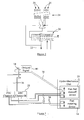
Figure 1 is a simplified block diagram illustrating a fuel control system incorporating a shut-down arrangement in accordance with one embodiment of the invention; -
Figure 2 is a view illustrating part of the shut-down arrangement; and -
Figure 3 is a further diagram illustrating the shut-down arrangement of the system ofFigure 1 . - The fuel control system illustrated diagrammatically in
Figure 1 comprises a highpressure fuel pump 10 arranged to supply fuel through aline 12 to ametering valve 14. Themetering valve 14 controls the delivery of fuel to a pressure raising and shut-off valve (PRSOV) 16 from where fuel is delivered to a burner manifold associated with an aircraft engine (not shown). Aspill valve arrangement 18 is operable to return fuel from theline 12 to the low pressure side of thepump 10 for the purpose of maintaining the pressure drop across themetering valve 14 at a fixed level. - A shut-off
actuation device 20 is provided, the shut-offdevice 20 being operable to vary a control pressure applied to thePRSOV 16 along aline 22 in response to control signals applied to the shut-offdevice 20. When the shut-offdevice 20 receives a control signal commanding shutting down of the fuel system, the shut-offdevice 20 operates to increase the control pressure applied to thePRSOV 16 along theline 22, resulting inPRSOV 16 closing, and the supply of fuel to the burner manifold terminating. As illustrated inFigure 2 , the shut-offactuation device 20 takes the form of an electro-hydraulic arrangement comprising a torque motor operatedvalve 24 controlling the fluid pressures applied to the ends of aspool valve 26. The position occupied by thespool valve 26 determines whether or not theline 22 is connected to low pressure or high pressure. The torque motor of thevalve 24 has a series ofcoils 25 associated therewith to which control signals can be applied to control the operation of thevalve 24. In the embodiment illustrated inFigure 2 and described herein there are fourcoils 25. The functions of these four coils are as follows: - (a) start coil wire to both EEC channels (not shown in
Figure 3 ) - (b) channel A emergency protection coil
- (c) channel B emergency protection coil
- (d) pilot/normal shut-down coil
- As shown in
Figure 1 , acontrol unit 28 in the form of an engine electronic control (EEC) unit is arranged to control the operation of themetering valve 14 and the shut-offactuation device 20 throughcontrol lines metering valve 14 will typically be a closed loop control, thecontrol unit 28 receiving position information indicative of the operating position of themetering valve 14 at any given time. - As best shown in
Figure 3 , thecontrol unit 28 is of dual channel type, and consequently a pair ofcontrol lines 30 connect the two channels of thecontrol unit 28 to themetering valve 14, and similarly a pair ofcontrol lines 32 connect the channels of thecontrol unit 28 to the shut-offactuation device 20. - Referring again to
Figure 1 , the fuel control system further comprises a three-pole switch 34 located on the flight deck and operable by the pilot of the aircraft when commanding a shut-down of the engine. Theswitch 34 is connected by acontrol line 36 to thecontrol unit 28, and is also connected via afurther control line 38 to the shut-offactuation device 20. Thefurther control line 38 incorporates delay means 40 to delay the transmission of a control signal from theswitch 34 to the shut-offactuation device 20. - In normal use, with the
switch 34 in the position illustrated inFigure 3 , thecontrol unit 28 controls the operation of themetering valve 14 to control the delivery of fuel to the associated engine. If thecontrol unit 28 determines that a failure has occurred which necessitates the rapid shutting down of the engine, then thecontrol unit 28 commands the shut offactuation device 20 by the application of an appropriate command signal to thecontrol line 32 to causePRSOV 16 to close, as described hereinbefore, thus terminating the supply of fuel to the engine manifold. Terminating the supply of fuel to the engine in this manner carries the risk of the occurrence of high pressure spikes in the fuel system which is undesirable. Consequently, shutting down the fuel system in this manner is typically only undertaken rarely, and in the event of an emergency. - During a normal engine shut-down procedure, the
switch 34 is operated resulting in the application of a first shut-down signal transmitted along thecontrol lines 36 to thecontrol unit 28. Upon receipt of this signal, thecontrol unit 28 will control themetering valve 30 in such a manner as to gradually reduce the supply of fuel to the associated engine. In addition to the generation of the first shut-down signal which is transmitted along thecontrol line 36 to thecontrol unit 28, a second shut-down signal is applied by theswitch 34 to thecontrol line 38. As mentioned hereinbefore, thecontrol line 38 incorporates delay means 40 which serves to delay the transmission of the second shut-down signal to the shut-offactuation device 20 with the result that the second shut-down signal is only received by the shut-offactuation device 20 after thecontrol unit 28 has had an opportunity to respond to receipt of the first shut-down signal. Upon receipt of the second shut-down signal, the shut-offactuation device 20 operates in the manner described hereinbefore to close thePRSOV 16 and terminate the supply of fuel to the engine. However, by the time this occurs, the operation of thecontrol unit 28 will have already served to reduce the fuel flow within the fuel system thereby minimising the risk of the production of fluid hammer induced high pressure spikes within the fuel system. By avoiding the generation of such spikes, the risk of fatigue damage is minimised. It will be appreciated that the risk of such damage is minimised whilst achieving weight savings in that only a single shut-off actuation device needs to be provided. - In an emergency, if both channels of the
control unit 28 have failed and thus there is no automated shut-down of the fuel control system under the control of thecontrol unit 28 then operation of theswitch 34 will still result in shut-down occurring. In such circumstances, the transmission of the first control signal to thecontrol unit 28 will have little effect as both channels of thecontrol unit 28 have failed. However, upon receipt of the delayed second shut-down signal, the shut-offactuation device 20 will operate to cause the rapid shut-down of the fuel control system. There is a risk of high pressure spikes occurring in such a shut-down as thecontrol unit 28 will not have been able to reduce the fuel flow. However, this is acceptable in these extraordinary circumstances. - Although the presence of the delay means 40 results in the operation of the shut-off
actuation device 20 being delayed, compared to a traditional arrangement in which two separate shut-off actuation devices are provided, the arrangement of the present invention will still achieve the required time for termination of the fuel supply to the engine in an emergency situation since the response time of the arrangement of shut-offactuation device 20 andPRSOV 16 is relatively fast. - The precise delay introduced by the operation of the delay means 40 may take a range of values. It is envisaged that in the embodiment of the invention described herein the delay means 40 will introduce a delay in the operation of the shut-off
actuation device 20 of approximately 0.950 seconds. Since the response time of a typical arrangement of shut-offactuation device 20 andPRSOV 16 is of the order of 0.045 seconds, the total response time of the fuel control system in terminating the supply of fuel to the engine in an emergency situation will not exceed 1 second, a typical airframe safety requirement. It is recognised, however, that the invention is not restricted to a delay of this period of time. - A further benefit of the invention is that the delayed shut-down, in normal operation, enables enhanced flexibility in the scheduling of fuel system checks, commonly referred to as BITE checks, between the engine start-up and engine shut-down routines.
- A specific embodiment of the invention is described hereinbefore. However, it will be appreciated that the invention is not restricted to this specific arrangement or to use with the specific form of fuel control system or shut-off actuation device outlined hereinbefore. Rather, a range of modifications and alterations may be made to the arrangement described hereinbefore without departing from the scope of the invention.
Claims (6)
- A shut-down arrangement comprising a shut-off actuation device (20) operable under the control of a control unit (28), a switch (34) whereby a first shut-down signal can be supplied to the control unit (28) and whereby a second shut-down signal can be supplied to the shut-off actuation device (20), and delay means (40) whereby the transmission of the second shut-down signal to the shut-off actuation device (20) is delayed relative to the transmission of the first shut-down signal to the control unit (28).
- A shut-down arrangement according to Claim 1, wherein the control unit (28) is adapted to prepare associated systems for shut-down, upon receipt of the first shut-down signal, by controlling a metering device (14) in such a manner as to reduce the supply of fuel to an associated engine.
- A shut-down arrangement according to Claim 1 or Claim 2, wherein the control unit (28) is of dual channel form.
- A shut-down arrangement according to Claim 3, wherein separate first shut-down signals are transmitted to each channel of the control unit (28) by the switch (34), in use.
- A shut-down arrangement according to Claim 3 or Claim 4, wherein the switch (34) is of three pole form to provide separate signals for each channel of the control unit (28) and to produce the second shut-down signal.
- A shut-down arrangement according to any of the preceding claims, wherein the shut-off actuation device (20) is electrically operated and includes a coil operable in response to the receipt of the second shut-down signal and arranged in parallel to at least one coil operated under the control of the control unit (28).
Applications Claiming Priority (1)
| Application Number | Priority Date | Filing Date | Title |
|---|---|---|---|
| GB0908485A GB0908485D0 (en) | 2009-05-18 | 2009-05-18 | Shut-down arrangement |
Publications (3)
| Publication Number | Publication Date |
|---|---|
| EP2258927A2 true EP2258927A2 (en) | 2010-12-08 |
| EP2258927A3 EP2258927A3 (en) | 2012-04-25 |
| EP2258927B1 EP2258927B1 (en) | 2013-09-11 |
Family
ID=40834140
Family Applications (1)
| Application Number | Title | Priority Date | Filing Date |
|---|---|---|---|
| EP20100250877 Not-in-force EP2258927B1 (en) | 2009-05-18 | 2010-05-05 | An aircraft fuel control and shut-down system |
Country Status (3)
| Country | Link |
|---|---|
| US (1) | US8733398B2 (en) |
| EP (1) | EP2258927B1 (en) |
| GB (1) | GB0908485D0 (en) |
Cited By (2)
| Publication number | Priority date | Publication date | Assignee | Title |
|---|---|---|---|---|
| US9470152B2 (en) | 2013-02-01 | 2016-10-18 | Rolls-Royce Controls And Data Services Limited | Engine fuel control system |
| EP3909860A1 (en) | 2020-05-12 | 2021-11-17 | Airbus Operations (S.A.S.) | System for confirming cut-off of an aircraft engine |
Families Citing this family (5)
| Publication number | Priority date | Publication date | Assignee | Title |
|---|---|---|---|---|
| FR2981133B1 (en) * | 2011-10-10 | 2013-10-25 | In Lhc | METHOD OF DETECTING FAILURE OF SERVOVALVE AND SERVOVALVE APPLYING. |
| US20130104561A1 (en) * | 2011-10-31 | 2013-05-02 | General Electric Company | Active fuel control on gas turbine shutdown sequence |
| CA3079606A1 (en) | 2017-10-19 | 2019-04-25 | Bombardier Inc. | Fuel pump management system and method of operating a fuel pump management system |
| EP3537581B1 (en) * | 2018-03-08 | 2022-05-04 | Hamilton Sundstrand Corporation | Servovalve |
| DE102022115930A1 (en) | 2022-06-27 | 2023-12-28 | Rolls-Royce Deutschland Ltd & Co Kg | Method and device for the targeted shutdown of an aircraft engine |
Citations (1)
| Publication number | Priority date | Publication date | Assignee | Title |
|---|---|---|---|---|
| US7337761B2 (en) | 2005-04-22 | 2008-03-04 | Goodrich Control Systems Limited | Fuel system |
Family Cites Families (5)
| Publication number | Priority date | Publication date | Assignee | Title |
|---|---|---|---|---|
| US3785148A (en) * | 1971-10-14 | 1974-01-15 | Westinghouse Electric Corp | Electronic system and method for operating a steam turbine with independent overspeed protection especially adapted for a nuclear reactor powered steam turbine |
| US3911685A (en) * | 1974-04-12 | 1975-10-14 | Gen Electric | Automatic rollover marine turbine control |
| US4574752A (en) * | 1984-10-15 | 1986-03-11 | Marvion E. Reichert, Jr. | Internal combustion engine shutdown device |
| US6981359B2 (en) * | 2003-06-16 | 2006-01-03 | Woodward Governor Company | Centrifugal pump fuel system and method for gas turbine engine |
| US20070113559A1 (en) * | 2004-06-03 | 2007-05-24 | Raymond Zagranski | Overspeed limiter for turboshaft engines |
-
2009
- 2009-05-18 GB GB0908485A patent/GB0908485D0/en not_active Ceased
-
2010
- 2010-05-05 EP EP20100250877 patent/EP2258927B1/en not_active Not-in-force
- 2010-05-11 US US12/777,604 patent/US8733398B2/en active Active
Patent Citations (1)
| Publication number | Priority date | Publication date | Assignee | Title |
|---|---|---|---|---|
| US7337761B2 (en) | 2005-04-22 | 2008-03-04 | Goodrich Control Systems Limited | Fuel system |
Cited By (4)
| Publication number | Priority date | Publication date | Assignee | Title |
|---|---|---|---|---|
| US9470152B2 (en) | 2013-02-01 | 2016-10-18 | Rolls-Royce Controls And Data Services Limited | Engine fuel control system |
| EP3909860A1 (en) | 2020-05-12 | 2021-11-17 | Airbus Operations (S.A.S.) | System for confirming cut-off of an aircraft engine |
| FR3110140A1 (en) * | 2020-05-12 | 2021-11-19 | Airbus Operations | AIRCRAFT ENGINE FAILURE CONFIRMATION SYSTEM |
| US11486318B2 (en) | 2020-05-12 | 2022-11-01 | Airbus Operations (S.A.S.) | System for confirming shutdown of an aircraft engine |
Also Published As
| Publication number | Publication date |
|---|---|
| US8733398B2 (en) | 2014-05-27 |
| EP2258927B1 (en) | 2013-09-11 |
| GB0908485D0 (en) | 2009-06-24 |
| US20100288951A1 (en) | 2010-11-18 |
| EP2258927A3 (en) | 2012-04-25 |
Similar Documents
| Publication | Publication Date | Title |
|---|---|---|
| EP2258927B1 (en) | An aircraft fuel control and shut-down system | |
| EP2762711B1 (en) | Engine fuel control system | |
| EP2356327B1 (en) | Adaptive fail-fixed system for fadec controlled gas turbine engines | |
| CN103930347B (en) | For regulating the method and system of power in the case of at least one airborne vehicle engine failure | |
| EP2339147A2 (en) | Fuel supply control system for an aircraft engine | |
| US8991148B2 (en) | Fuel feed device for aviation engine | |
| US20090199823A1 (en) | Direct metering fuel control with integral electrical metering pump and actuator servo pump | |
| US9850917B2 (en) | Pump authority switching apparatus for a fluid distribution system | |
| EP0448678B1 (en) | A fluid flow system | |
| US9068509B2 (en) | Gas turbine engine fuel control thrust control override system | |
| EP3594110B1 (en) | System and method for feathering an aircraft propeller | |
| EP3392485B1 (en) | Fuel control system | |
| US9732678B2 (en) | Speed card-controlled override fuel pump assist | |
| EP3744958B1 (en) | Fuel system with integrated thrust control malfunction protection and method | |
| EP2578844B1 (en) | Fuel system of a jet engine | |
| EP1699695B1 (en) | Device and method for temperature control in an aircraft cabin | |
| US6655123B2 (en) | Device for economizing fuel supply in a fuel supply circuit | |
| US20090240386A1 (en) | Device for issuing authorization to act on the operating conditions of an aircraft engine and engine control system comprising same | |
| US20040003597A1 (en) | Battle override valve | |
| US9188286B2 (en) | Hydraulic system and hydraulic distributor for the actuating working machines | |
| CN105485072A (en) | Cabin door transient actuating device and system based on secondary regulation and control method | |
| CN110697028A (en) | System and method for feathering an aircraft propeller | |
| RU2622683C1 (en) | Gas-turbine engine fuel supply system | |
| JPS62107242A (en) | Electric controller for fuel circuit of turbine engine | |
| EP2341252B1 (en) | Aircraft |
Legal Events
| Date | Code | Title | Description |
|---|---|---|---|
| PUAI | Public reference made under article 153(3) epc to a published international application that has entered the european phase |
Free format text: ORIGINAL CODE: 0009012 |
|
| AK | Designated contracting states |
Kind code of ref document: A2 Designated state(s): AL AT BE BG CH CY CZ DE DK EE ES FI FR GB GR HR HU IE IS IT LI LT LU LV MC MK MT NL NO PL PT RO SE SI SK SM TR |
|
| AX | Request for extension of the european patent |
Extension state: BA ME RS |
|
| PUAL | Search report despatched |
Free format text: ORIGINAL CODE: 0009013 |
|
| AK | Designated contracting states |
Kind code of ref document: A3 Designated state(s): AL AT BE BG CH CY CZ DE DK EE ES FI FR GB GR HR HU IE IS IT LI LT LU LV MC MK MT NL NO PL PT RO SE SI SK SM TR |
|
| AX | Request for extension of the european patent |
Extension state: BA ME RS |
|
| RIC1 | Information provided on ipc code assigned before grant |
Ipc: F02C 9/26 20060101ALI20120321BHEP Ipc: F02C 7/232 20060101ALI20120321BHEP Ipc: F01D 21/00 20060101AFI20120321BHEP |
|
| 17P | Request for examination filed |
Effective date: 20121019 |
|
| RAP1 | Party data changed (applicant data changed or rights of an application transferred) |
Owner name: ROLLS-ROYCE ENGINE CONTROL SYSTEMS LTD |
|
| GRAP | Despatch of communication of intention to grant a patent |
Free format text: ORIGINAL CODE: EPIDOSNIGR1 |
|
| INTG | Intention to grant announced |
Effective date: 20130527 |
|
| RIN1 | Information on inventor provided before grant (corrected) |
Inventor name: HENSON, NIGEL HERBERT |
|
| GRAS | Grant fee paid |
Free format text: ORIGINAL CODE: EPIDOSNIGR3 |
|
| GRAA | (expected) grant |
Free format text: ORIGINAL CODE: 0009210 |
|
| AK | Designated contracting states |
Kind code of ref document: B1 Designated state(s): AL AT BE BG CH CY CZ DE DK EE ES FI FR GB GR HR HU IE IS IT LI LT LU LV MC MK MT NL NO PL PT RO SE SI SK SM TR |
|
| REG | Reference to a national code |
Ref country code: GB Ref legal event code: FG4D |
|
| REG | Reference to a national code |
Ref country code: CH Ref legal event code: EP |
|
| REG | Reference to a national code |
Ref country code: AT Ref legal event code: REF Ref document number: 631758 Country of ref document: AT Kind code of ref document: T Effective date: 20130915 |
|
| REG | Reference to a national code |
Ref country code: IE Ref legal event code: FG4D |
|
| REG | Reference to a national code |
Ref country code: DE Ref legal event code: R096 Ref document number: 602010010177 Country of ref document: DE Effective date: 20131107 |
|
| PG25 | Lapsed in a contracting state [announced via postgrant information from national office to epo] |
Ref country code: LT Free format text: LAPSE BECAUSE OF FAILURE TO SUBMIT A TRANSLATION OF THE DESCRIPTION OR TO PAY THE FEE WITHIN THE PRESCRIBED TIME-LIMIT Effective date: 20130911 Ref country code: SE Free format text: LAPSE BECAUSE OF FAILURE TO SUBMIT A TRANSLATION OF THE DESCRIPTION OR TO PAY THE FEE WITHIN THE PRESCRIBED TIME-LIMIT Effective date: 20130911 Ref country code: NO Free format text: LAPSE BECAUSE OF FAILURE TO SUBMIT A TRANSLATION OF THE DESCRIPTION OR TO PAY THE FEE WITHIN THE PRESCRIBED TIME-LIMIT Effective date: 20131211 Ref country code: CY Free format text: LAPSE BECAUSE OF FAILURE TO SUBMIT A TRANSLATION OF THE DESCRIPTION OR TO PAY THE FEE WITHIN THE PRESCRIBED TIME-LIMIT Effective date: 20130911 Ref country code: HR Free format text: LAPSE BECAUSE OF FAILURE TO SUBMIT A TRANSLATION OF THE DESCRIPTION OR TO PAY THE FEE WITHIN THE PRESCRIBED TIME-LIMIT Effective date: 20130911 |
|
| REG | Reference to a national code |
Ref country code: NL Ref legal event code: VDEP Effective date: 20130911 |
|
| REG | Reference to a national code |
Ref country code: AT Ref legal event code: MK05 Ref document number: 631758 Country of ref document: AT Kind code of ref document: T Effective date: 20130911 |
|
| REG | Reference to a national code |
Ref country code: LT Ref legal event code: MG4D |
|
| PG25 | Lapsed in a contracting state [announced via postgrant information from national office to epo] |
Ref country code: GR Free format text: LAPSE BECAUSE OF FAILURE TO SUBMIT A TRANSLATION OF THE DESCRIPTION OR TO PAY THE FEE WITHIN THE PRESCRIBED TIME-LIMIT Effective date: 20131212 Ref country code: LV Free format text: LAPSE BECAUSE OF FAILURE TO SUBMIT A TRANSLATION OF THE DESCRIPTION OR TO PAY THE FEE WITHIN THE PRESCRIBED TIME-LIMIT Effective date: 20130911 Ref country code: FI Free format text: LAPSE BECAUSE OF FAILURE TO SUBMIT A TRANSLATION OF THE DESCRIPTION OR TO PAY THE FEE WITHIN THE PRESCRIBED TIME-LIMIT Effective date: 20130911 Ref country code: SI Free format text: LAPSE BECAUSE OF FAILURE TO SUBMIT A TRANSLATION OF THE DESCRIPTION OR TO PAY THE FEE WITHIN THE PRESCRIBED TIME-LIMIT Effective date: 20130911 |
|
| REG | Reference to a national code |
Ref country code: DE Ref legal event code: R081 Ref document number: 602010010177 Country of ref document: DE Owner name: ROLLS-ROYCE PLC, GB Free format text: FORMER OWNER: ROLLS-ROYCE ENGINE CONTROL SYSTEMS LTD, DERBY, GB Effective date: 20140213 Ref country code: DE Ref legal event code: R081 Ref document number: 602010010177 Country of ref document: DE Owner name: ROLLS-ROYCE PLC, GB Free format text: FORMER OWNER: ROLLS-ROYCE ENGINE CONTROL SYSTEMS LIMITED, DERBY, GB Effective date: 20131213 Ref country code: DE Ref legal event code: R081 Ref document number: 602010010177 Country of ref document: DE Owner name: ROLLS-ROYCE CONTROLS AND DATA SERVICES LIMITED, GB Free format text: FORMER OWNER: ROLLS-ROYCE ENGINE CONTROL SYSTEMS LTD, DERBY, GB Effective date: 20140213 Ref country code: DE Ref legal event code: R081 Ref document number: 602010010177 Country of ref document: DE Owner name: ROLLS-ROYCE CONTROLS AND DATA SERVICES LIMITED, GB Free format text: FORMER OWNER: ROLLS-ROYCE ENGINE CONTROL SYSTEMS LIMITED, DERBY, GB Effective date: 20131213 Ref country code: DE Ref legal event code: R082 Ref document number: 602010010177 Country of ref document: DE Representative=s name: LEINWEBER & ZIMMERMANN, DE Effective date: 20140213 |
|
| PG25 | Lapsed in a contracting state [announced via postgrant information from national office to epo] |
Ref country code: BE Free format text: LAPSE BECAUSE OF FAILURE TO SUBMIT A TRANSLATION OF THE DESCRIPTION OR TO PAY THE FEE WITHIN THE PRESCRIBED TIME-LIMIT Effective date: 20130911 |
|
| REG | Reference to a national code |
Ref country code: FR Ref legal event code: CD Owner name: ROLLS-ROYCE CONTROLS AND DATA SERVICES LIMITED, GB Effective date: 20140306 |
|
| PG25 | Lapsed in a contracting state [announced via postgrant information from national office to epo] |
Ref country code: SK Free format text: LAPSE BECAUSE OF FAILURE TO SUBMIT A TRANSLATION OF THE DESCRIPTION OR TO PAY THE FEE WITHIN THE PRESCRIBED TIME-LIMIT Effective date: 20130911 Ref country code: EE Free format text: LAPSE BECAUSE OF FAILURE TO SUBMIT A TRANSLATION OF THE DESCRIPTION OR TO PAY THE FEE WITHIN THE PRESCRIBED TIME-LIMIT Effective date: 20130911 Ref country code: IS Free format text: LAPSE BECAUSE OF FAILURE TO SUBMIT A TRANSLATION OF THE DESCRIPTION OR TO PAY THE FEE WITHIN THE PRESCRIBED TIME-LIMIT Effective date: 20140111 Ref country code: CZ Free format text: LAPSE BECAUSE OF FAILURE TO SUBMIT A TRANSLATION OF THE DESCRIPTION OR TO PAY THE FEE WITHIN THE PRESCRIBED TIME-LIMIT Effective date: 20130911 Ref country code: RO Free format text: LAPSE BECAUSE OF FAILURE TO SUBMIT A TRANSLATION OF THE DESCRIPTION OR TO PAY THE FEE WITHIN THE PRESCRIBED TIME-LIMIT Effective date: 20130911 Ref country code: NL Free format text: LAPSE BECAUSE OF FAILURE TO SUBMIT A TRANSLATION OF THE DESCRIPTION OR TO PAY THE FEE WITHIN THE PRESCRIBED TIME-LIMIT Effective date: 20130911 |
|
| PG25 | Lapsed in a contracting state [announced via postgrant information from national office to epo] |
Ref country code: AT Free format text: LAPSE BECAUSE OF FAILURE TO SUBMIT A TRANSLATION OF THE DESCRIPTION OR TO PAY THE FEE WITHIN THE PRESCRIBED TIME-LIMIT Effective date: 20130911 Ref country code: ES Free format text: LAPSE BECAUSE OF FAILURE TO SUBMIT A TRANSLATION OF THE DESCRIPTION OR TO PAY THE FEE WITHIN THE PRESCRIBED TIME-LIMIT Effective date: 20130911 Ref country code: PL Free format text: LAPSE BECAUSE OF FAILURE TO SUBMIT A TRANSLATION OF THE DESCRIPTION OR TO PAY THE FEE WITHIN THE PRESCRIBED TIME-LIMIT Effective date: 20130911 |
|
| REG | Reference to a national code |
Ref country code: DE Ref legal event code: R097 Ref document number: 602010010177 Country of ref document: DE |
|
| PG25 | Lapsed in a contracting state [announced via postgrant information from national office to epo] |
Ref country code: PT Free format text: LAPSE BECAUSE OF FAILURE TO SUBMIT A TRANSLATION OF THE DESCRIPTION OR TO PAY THE FEE WITHIN THE PRESCRIBED TIME-LIMIT Effective date: 20140113 |
|
| PLBE | No opposition filed within time limit |
Free format text: ORIGINAL CODE: 0009261 |
|
| STAA | Information on the status of an ep patent application or granted ep patent |
Free format text: STATUS: NO OPPOSITION FILED WITHIN TIME LIMIT |
|
| 26N | No opposition filed |
Effective date: 20140612 |
|
| PG25 | Lapsed in a contracting state [announced via postgrant information from national office to epo] |
Ref country code: IT Free format text: LAPSE BECAUSE OF FAILURE TO SUBMIT A TRANSLATION OF THE DESCRIPTION OR TO PAY THE FEE WITHIN THE PRESCRIBED TIME-LIMIT Effective date: 20130911 |
|
| REG | Reference to a national code |
Ref country code: DE Ref legal event code: R097 Ref document number: 602010010177 Country of ref document: DE Effective date: 20140612 |
|
| PG25 | Lapsed in a contracting state [announced via postgrant information from national office to epo] |
Ref country code: DK Free format text: LAPSE BECAUSE OF FAILURE TO SUBMIT A TRANSLATION OF THE DESCRIPTION OR TO PAY THE FEE WITHIN THE PRESCRIBED TIME-LIMIT Effective date: 20130911 |
|
| PG25 | Lapsed in a contracting state [announced via postgrant information from national office to epo] |
Ref country code: LU Free format text: LAPSE BECAUSE OF FAILURE TO SUBMIT A TRANSLATION OF THE DESCRIPTION OR TO PAY THE FEE WITHIN THE PRESCRIBED TIME-LIMIT Effective date: 20140505 |
|
| REG | Reference to a national code |
Ref country code: CH Ref legal event code: PL |
|
| PG25 | Lapsed in a contracting state [announced via postgrant information from national office to epo] |
Ref country code: MC Free format text: LAPSE BECAUSE OF FAILURE TO SUBMIT A TRANSLATION OF THE DESCRIPTION OR TO PAY THE FEE WITHIN THE PRESCRIBED TIME-LIMIT Effective date: 20130911 Ref country code: LI Free format text: LAPSE BECAUSE OF NON-PAYMENT OF DUE FEES Effective date: 20140531 Ref country code: CH Free format text: LAPSE BECAUSE OF NON-PAYMENT OF DUE FEES Effective date: 20140531 |
|
| REG | Reference to a national code |
Ref country code: IE Ref legal event code: MM4A |
|
| PG25 | Lapsed in a contracting state [announced via postgrant information from national office to epo] |
Ref country code: IE Free format text: LAPSE BECAUSE OF NON-PAYMENT OF DUE FEES Effective date: 20140505 |
|
| PG25 | Lapsed in a contracting state [announced via postgrant information from national office to epo] |
Ref country code: MT Free format text: LAPSE BECAUSE OF FAILURE TO SUBMIT A TRANSLATION OF THE DESCRIPTION OR TO PAY THE FEE WITHIN THE PRESCRIBED TIME-LIMIT Effective date: 20130911 |
|
| PG25 | Lapsed in a contracting state [announced via postgrant information from national office to epo] |
Ref country code: SM Free format text: LAPSE BECAUSE OF FAILURE TO SUBMIT A TRANSLATION OF THE DESCRIPTION OR TO PAY THE FEE WITHIN THE PRESCRIBED TIME-LIMIT Effective date: 20130911 |
|
| REG | Reference to a national code |
Ref country code: FR Ref legal event code: PLFP Year of fee payment: 7 |
|
| PG25 | Lapsed in a contracting state [announced via postgrant information from national office to epo] |
Ref country code: BG Free format text: LAPSE BECAUSE OF FAILURE TO SUBMIT A TRANSLATION OF THE DESCRIPTION OR TO PAY THE FEE WITHIN THE PRESCRIBED TIME-LIMIT Effective date: 20130911 |
|
| PG25 | Lapsed in a contracting state [announced via postgrant information from national office to epo] |
Ref country code: HU Free format text: LAPSE BECAUSE OF FAILURE TO SUBMIT A TRANSLATION OF THE DESCRIPTION OR TO PAY THE FEE WITHIN THE PRESCRIBED TIME-LIMIT; INVALID AB INITIO Effective date: 20100505 Ref country code: TR Free format text: LAPSE BECAUSE OF FAILURE TO SUBMIT A TRANSLATION OF THE DESCRIPTION OR TO PAY THE FEE WITHIN THE PRESCRIBED TIME-LIMIT Effective date: 20130911 |
|
| REG | Reference to a national code |
Ref country code: DE Ref legal event code: R082 Ref document number: 602010010177 Country of ref document: DE Representative=s name: LEINWEBER & ZIMMERMANN PATENTANWALTS-PARTG MBB, DE Ref country code: DE Ref legal event code: R081 Ref document number: 602010010177 Country of ref document: DE Owner name: ROLLS-ROYCE PLC, GB Free format text: FORMER OWNER: ROLLS-ROYCE CONTROLS AND DATA SERVICES LIMITED, DERBY DE 24 8BJ, GB Ref country code: DE Ref legal event code: R082 Ref document number: 602010010177 Country of ref document: DE Representative=s name: LEINWEBER & ZIMMERMANN, DE |
|
| REG | Reference to a national code |
Ref country code: GB Ref legal event code: 732E Free format text: REGISTERED BETWEEN 20170126 AND 20170201 |
|
| REG | Reference to a national code |
Ref country code: FR Ref legal event code: PLFP Year of fee payment: 8 |
|
| REG | Reference to a national code |
Ref country code: FR Ref legal event code: TP Owner name: ROLLS-ROYCE PLC, GB Effective date: 20170601 |
|
| REG | Reference to a national code |
Ref country code: FR Ref legal event code: PLFP Year of fee payment: 9 |
|
| PG25 | Lapsed in a contracting state [announced via postgrant information from national office to epo] |
Ref country code: MK Free format text: LAPSE BECAUSE OF FAILURE TO SUBMIT A TRANSLATION OF THE DESCRIPTION OR TO PAY THE FEE WITHIN THE PRESCRIBED TIME-LIMIT Effective date: 20130911 |
|
| PG25 | Lapsed in a contracting state [announced via postgrant information from national office to epo] |
Ref country code: AL Free format text: LAPSE BECAUSE OF FAILURE TO SUBMIT A TRANSLATION OF THE DESCRIPTION OR TO PAY THE FEE WITHIN THE PRESCRIBED TIME-LIMIT Effective date: 20130911 |
|
| PGFP | Annual fee paid to national office [announced via postgrant information from national office to epo] |
Ref country code: DE Payment date: 20190530 Year of fee payment: 10 |
|
| PGFP | Annual fee paid to national office [announced via postgrant information from national office to epo] |
Ref country code: FR Payment date: 20190527 Year of fee payment: 10 |
|
| PGFP | Annual fee paid to national office [announced via postgrant information from national office to epo] |
Ref country code: GB Payment date: 20190528 Year of fee payment: 10 |
|
| REG | Reference to a national code |
Ref country code: DE Ref legal event code: R119 Ref document number: 602010010177 Country of ref document: DE |
|
| GBPC | Gb: european patent ceased through non-payment of renewal fee |
Effective date: 20200505 |
|
| PG25 | Lapsed in a contracting state [announced via postgrant information from national office to epo] |
Ref country code: GB Free format text: LAPSE BECAUSE OF NON-PAYMENT OF DUE FEES Effective date: 20200505 Ref country code: FR Free format text: LAPSE BECAUSE OF NON-PAYMENT OF DUE FEES Effective date: 20200531 |
|
| PG25 | Lapsed in a contracting state [announced via postgrant information from national office to epo] |
Ref country code: DE Free format text: LAPSE BECAUSE OF NON-PAYMENT OF DUE FEES Effective date: 20201201 |