EP2257912B1 - Pattern classification system and method for collective learning - Google Patents
Pattern classification system and method for collective learning Download PDFInfo
- Publication number
- EP2257912B1 EP2257912B1 EP09714481.0A EP09714481A EP2257912B1 EP 2257912 B1 EP2257912 B1 EP 2257912B1 EP 09714481 A EP09714481 A EP 09714481A EP 2257912 B1 EP2257912 B1 EP 2257912B1
- Authority
- EP
- European Patent Office
- Prior art keywords
- image processing
- local
- pattern recognition
- local image
- data
- Prior art date
- Legal status (The legal status is an assumption and is not a legal conclusion. Google has not performed a legal analysis and makes no representation as to the accuracy of the status listed.)
- Not-in-force
Links
Images



Classifications
-
- H—ELECTRICITY
- H04—ELECTRIC COMMUNICATION TECHNIQUE
- H04N—PICTORIAL COMMUNICATION, e.g. TELEVISION
- H04N7/00—Television systems
- H04N7/18—Closed-circuit television [CCTV] systems, i.e. systems in which the video signal is not broadcast
- H04N7/181—Closed-circuit television [CCTV] systems, i.e. systems in which the video signal is not broadcast for receiving images from a plurality of remote sources
-
- G—PHYSICS
- G06—COMPUTING OR CALCULATING; COUNTING
- G06V—IMAGE OR VIDEO RECOGNITION OR UNDERSTANDING
- G06V10/00—Arrangements for image or video recognition or understanding
- G06V10/10—Image acquisition
- G06V10/12—Details of acquisition arrangements; Constructional details thereof
- G06V10/14—Optical characteristics of the device performing the acquisition or on the illumination arrangements
- G06V10/147—Details of sensors, e.g. sensor lenses
-
- G—PHYSICS
- G06—COMPUTING OR CALCULATING; COUNTING
- G06V—IMAGE OR VIDEO RECOGNITION OR UNDERSTANDING
- G06V10/00—Arrangements for image or video recognition or understanding
- G06V10/20—Image preprocessing
- G06V10/24—Aligning, centring, orientation detection or correction of the image
Definitions
- the present invention relates generally to a method and system for pattern recognition, and more specifically, to a method and system for collecting and compiling data from a plurality of local pattern recognizing systems to adapt to changes in the local environment and to configure other local systems installed in similar environments.
- Pattern recognition systems have been contemplated for many years and have gained acceptance for some applications.
- one of the major obstacles that stand in the way of wider acceptance and use is the difficulty in installing, configuring and maintaining these systems. Potential customers often elect not to implement these systems because the setup and configuration procedures are simply too complicated to be cost effective. This difficulty stems from the fundamental issue that pattern classification systems are only as accurate as the information used to set up the classifier.
- Pattern classification systems are designed to match patterns of data that are acquired by sensors to an existing classification database or "training set.”
- the training set is programmed into the device to provide a wide variety of examples of patterns that belong to one or more object classes that are to be recognized.
- a pattern of data matches the training set to within a certain accuracy the detected data is classified to belong to certain class.
- the ability of the pattern recognition systems to accurately classify measured data is dependent on the size and diversity of the training set.
- it is often difficult to predict the variations of data that the system will measure. For example, actual variations in the members of the class, variations in the measurements from sensor inaccuracies, sensor noise, system setup variations, system noise, and variations in the environment or environmental noise may differ for each system installed in the field.
- pattern recognition systems often incorporate the ability to adapt to new classification data via supervised or unsupervised learning. This adaptive ability allows the training set to be expanded to include new data acquired after the initial installation. In addition, new training data is often extracted from these "field trained" devices and manually included in future installations of pattern recognition systems.
- the designer or installer is forced to supervise the training of each device in the field to adapt to the new conditions.
- the installer must simulate as many variations in the classification members and environmental variations as possible to train the system. This approach is often impractical and validates customers' complaints concerning the complexity of the system.
- high quality sensors minimize sensor bias and noise
- expensive hardware filters minimize sensor, system and environmental noise
- high speed processors may implement complex software filters, and execute feature extraction and complex classification algorithms
- large amounts of system memory may store a large training set, allowing for as many anticipated variations in the actual class members as possible, as well as variations in environmental conditions.
- the system is usually equipped with high bandwidth data port connections to allow installers to monitor sensor data directly during installation and to assist in the supervised training of the devices. In the event that the environmental conditions change, the system performance will often be affected, causing the installer to retune the system.
- WO 2006/089776 A1 discloses an object tracking camera, comprising an image detecting unit for generating image data and a processing unit for processing the image data transmitted by the image detecting unit to the processing unit.
- Zajdel W et al. "Gaussian Mixture Model for Multi-sensor Tracking", PROCEEDINGS OF THE BELGIUM-NETHERLANDS CONFERENCE ON ARTIFICIALINTELLIGENCE , discloses a principle of multi-sensor tracking using an algorithm for tracking many objects observed with distributed, non-overlapping sensors.
- the present invention advantageously provides a method and system for configuring and updating local image processing systems of a collective learning pattern recognition system.
- the present invention uses information collected from local image processing systems in the collective learning pattern recognition system to automatically configure and update other local image processing systems located in similar environments.
- One aspect of the present invention includes a method for configuring a pattern recognition system according to Claim 1.
- the present invention provides a method of configuring a local image processing system according to Claim 10.
- the present invention provides a pattern recognition system according to Claim 12.
- sensor data includes data received from any sensor including, but not limited to, an image sensor.
- One embodiment of the present invention includes a video and/or data pattern recognition and classification system that incorporates a low complexity, low cost architecture within a local image processing system or edge device.
- the local system communicates with a higher complexity centralized expert system that provides learning assistance to the low complexity local system.
- the information sent from the low complexity edge device may include, but is not limited to, images captured by the optical sensor, other sensor data and the device ID number.
- the expert system uses its knowledge of the edge device hardware, software and local data to confirm classification outcomes and to arbitrate non-classifiable outcomes.
- the expert system may update the classification and feature extraction algorithms used by the low complexity device as needed.
- the expert system may collect data from many low complexity edge devices and use this information to improve its global knowledge of system effectiveness. The expert system may then learn the best algorithms and classification techniques to be used for each installation of the edge devices. This information allows newly installed low complexity edge devices to benefit from the knowledge of previously installed devices. Upon installation, the installer may reference the environmental characteristics of an installation to pre-select preferred algorithms that a low complexity edge device may be programmed with as it registers on the network, enabling the edge device to incorporate knowledge gained by devices previously installed in similar environments as a starting point prior to post installation training. Such a system may be used in conjunction with or as part of a security system.
- System 10 includes a centralized expert system 12 which may contain global pattern recognition databases 14 constructed from information received from a plurality of local image processing systems 16 (two shown).
- the centralized expert system 12 communicates with the local image processing systems 16 over the Internet 18 or other communication network, directly or indirectly using, for example, web services 20.
- Information is routed to and from each local image processing system 16 directly or through a gateway or sensor network appliance 22.
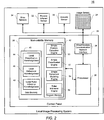
- FIG. 2 depicts a block diagram of an exemplary local image processing system 16 constructed in accordance with the principles of the present invention.
- An image sensor 4 captures video image data and transfers this information to a local control panel 26. Protocols for wired or wireless data communication, such as TCP/IP, are known.
- the local control panel 26 receives video data from the image sensor 24 using a network communication interface 28, which may be wired, wireless, or a combination of wired and wireless devices.
- the local control panel 26 may also receive auxiliary information from acoustic sensors 30 (one shown), passive infrared sensors 32 (one shown), and a variety of other sensors 34 to aid in determining recognizable patterns with greater accuracy.
- activation of an alert from an acoustic sensor 30 may trigger the local image processing system 16 to begin capturing and processing image data.
- the image sensor 24, acoustic sensor 30, passive infrared sensor 32 and other sensors may be co-located with the control panel 26 in a single, low-complexity edge device or remotely located but within communication range of the control panel 26.
- the exemplary control panel 26 may also include a processor 36, which supervises and performs the various functions of the control panel including those described herein.
- the processor 36 is communicatively coupled to the communication interface 28 and a non- volatile memory 38.
- the non- volatile memory 38 may include a data memory 40 and a program memory 42.
- the data memory 40 and program memory 42 may contain local versions of databases and executable pattern recognition routines to be used solely for pattern recognition within the local image processing system 16.
- the data memory 40 may include local databases for pattern recognition and classification such as a local classification knowledgebase 44, a local behavior knowledgebase 46, and a local rules inference knowledgebase 48.
- the program memory 42 may include a simple feature extraction engine 50, a simple classification engine 52, a simple behavioral modeling engine 54 and a rules inference engine 56.
- the local databases 44, 46, 48 and local pattern recognition routines 50, 52, 54, 56 may be periodically updated and modified according to information received from the centralized expert system 12. Each pattern recognition routine may be called, as needed, by the processor 36 for processing image datasets.
- the simple feature extraction engine 50 extracts salient feature data included in image datasets collected from the image sensor 24.
- the simple classification engine 52 uses the local classification knowledgebase 44 to classify and determine the object class of each salient feature set.
- the simple behavior modeling engine 54 tracks the objects within the field of view of the image sensor 24 over a period of time to classify the behavior of the objects over time to create models of the behaviors of objects, and stores these models in the local behavior knowledgebase 46.
- the simple rules inference engine 56 compares the identified behavior to a set of behavior rules contained in the local rules inference knowledgebase 48 to determine if an alarm condition exists.
- FIG. 3 illustrates a block diagram of an exemplary centralized expert system 12.
- the expert system 12 may contain a processor 58 for controlling the functions of the centralized expert system, communicatively coupled to a wired or wireless network communication interface 60 for maintaining communications with local image processing systems 16.
- the processor 58 is communicatively coupled to a non- volatile memory 62 containing a data memory 64 and a program memory 66.
- the data memory 64 may include extensive databases, e.g., a global classification knowledgebase 68, a global behavioral knowledgebase 70, and a global rules inference knowledgebase 72, which contain information collected and compiled from every local image processing system within the entire pattern recognition system 100.
- the centralized expert system 12 also has the ability to increase the global databases 68, 70, 72 based on new data received from each local image processing system 16.
- the program memory 66 may contain advanced pattern recognition and classification routines, e.g. a strong feature extraction engine 74, an expert classification engine 76, an expert behavioral modeling engine 78, and a robust inference engine 80, which are similar to the corresponding local pattern recognition and classification routines 50, 52, 54, 56, respectively, but generally more complicated, requiring more processing capabilities.
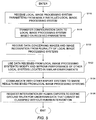
- an exemplary operational flowchart is provided that describes steps performed by a local image processing system 16 for using pattern recognition data collected from a plurality of local image processing systems by a centralized expert system 12 to configure and update the local image processing system 16.
- the process begins when an installer installs (step SI02) a local image processing system 16 at a specific location.
- the installer enters installation parameters which are received and/or stored by the local image processing system 16 (step S104).
- the installation parameters may include such characteristics as the location of the system, e.g., ABC Corp. Store #456, Front Entrance; the desired functionality, e.g., traffic monitoring, people counting, intrusion detection, etc., and general environmental characteristics, e.g., indoor vs. outdoor, windows vs.
- the local image processing system 16 then registers itself with the centralized expert system 12 (step S106), for example, upon connecting to a network and establishing communication with the centralized expert system 12.
- the local image processing system 16 may register, for example, by transmitting local image processing system parameters, including a device or system ID and one or more other installation parameters, to the expert system 12.
- the local image processing system 16 receives configuration data from the expert system 12 (step S108) which is customized for the specific local image processing system based on the received system parameters.
- the configuration data may include updated algorithms for feature extraction, classification, behavior modeling and rules inference designed specifically for local systems having the received system parameters.
- the local image processing system 16 After the local image processing system 16 has been configured, it begins collecting and analyzing image data.
- the low complexity (as compared generally with the centralized expert system 12) local image processing system 16 transmits a system or device ID, and one or more of the following data to the expert system 12 for analysis: images, transformed representations of images, feature vectors, sensor data, results of feature extraction algorithms, results of classification algorithms, results of behavior modeling and results of rules inference decisions (step S110).
- the sensor data transmitted from the local image processing system 16 can be low bandwidth data containing a reduced set of the full dataset captured by the local image processing system 16.
- the data sent by the local image processing system 16 may contain only the salient information needed by the expert system 12 to classify and recognize image patterns.
- U.S. Patent Application No. 12/023,651, to Stewart E. Hall, filed January 31, 2008 and entitled "Video Sensor and Alarm System with Object and Event Classification,” discloses one method of extracting salient features from image data using low complexity end devices and is hereby incorporated by reference
- the local image processing system 16 may then receive updates to its local databases, e.g., local classification knowledgebase 44, local behavioral knowledgebase 46, local rules inference knowledgebase 48, and/or pattern recognition routines, e.g., simple feature extraction engine 42, simple classification engine 52, simple behavioral modeling engine 54, rules inference engine 56, from the expert system 12 to modify and improve its performance (step S112).
- the updated databases and/or pattern recognition routines may be based on data collected and learned from other local image processing systems located in similar environments.
- FIG. 5 is an exemplary operational flowchart describing the process performed by a centralized expert system 12 to collect and compile pattern recognition data from multiple local image processing systems 16, and to use the collected data to configure and update additional image processing systems.
- the centralized expert system 12 receives registration data including local image processing system parameters from a newly installed local image processing system 16 (step S116).
- the expert system 12 analyzes the received local image processing system parameters and transfers configuration data back to the local image processing system 16 based on the received parameters (step S118).
- the configuration data may include updates to local databases and/or algorithms for feature extraction, classification, behavior modeling and rules inference.
- the expert system 12 then receives data concerning images and image/object recognition compressed or transformed representations of images, and other sensor data.
- the data may be used to evaluate the characteristics of the background image, e.g., variations of the background image lighting, motion within the image, variations in sensor data, etc.
- the data may also contain features and objects to be classified in order to evaluate the effectiveness of the local image processing system's pattern recognition algorithms.
- the expert system 12 may also receive direct output of the local image processing system's feature extraction engine 42, the classification engine 52, the behavior modeling engine 54 and/or the rules inference engine 56. The expert system 12 may then use the data received from individual local image processing systems 16 to modify and improve the performance of a group of local image processing systems that are in similar environments or used for similar tasks, i.e. local image processing systems having at least one common system parameter (step S122).
- the expert system 12 receives recognition results based on at least one pattern recognition algorithm from at least one local image processing system 16, e.g., feature extraction engine 50, classification engine 52, behavior modeling engine 54, and rules inference engine 56, as well as the original corresponding image data (step S128).
- at least one pattern recognition algorithm from at least one local image processing system 16, e.g., feature extraction engine 50, classification engine 52, behavior modeling engine 54, and rules inference engine 56, as well as the original corresponding image data (step S128).
- the expert system 12 may then assess the performance of the local image processing system 16 by executing its own corresponding pattern recognition algorithm (step S130), e.g., strong feature extraction engine 74, expert classification engine 76, expert behavior modeling engine 78, and robust rules inference engine 80 on the original image data and comparing the results to the output results received from the local image processing system 16. If the performance is deemed satisfactory (step S132), the expert system 12 takes no other action and simply waits to receive additional results. However, if there are any discrepancies in the data, the expert system 12 may determine that the local image processing system 16 needs to be updated.
- step S130 e.g., strong feature extraction engine 74, expert classification engine 76, expert behavior modeling engine 78, and robust rules inference engine 80 on the original image data and comparing the results to the output results received from the local image processing system 16. If the performance is deemed satisfactory (step S132), the expert system 12 takes no other action and simply waits to receive additional results. However, if there are any discrepancies in the data, the expert
- the expert system 12 performs a system optimization by grouping local image processing systems 16 according to local environmental characteristics and designated classification, behavior detection and rules inference requirements (step S134). The expert system 12 then assesses potential performance improvements that can be implemented on groups of local image processing systems 16 by changing the local image processing and classification procedures for each group (step S136). The expert system 12 also assesses the impact of changes on the overall system complexity and determines if the system 16 is optimized. If the overall system 16 is not optimized (step S138), the expert system returns to step S134 and continues the optimization procedures. If the overall system 16 is optimized (step S138) the expert system 12 compiles recommended changes to processing and classification procedures within each of the local image processing system groups (step S140). The recommended changes may optionally require approval from a system administrator prior to implementation.
- the expert system 12 schedules and sends updates to the local image processing system 16 containing improved pattern recognition algorithms and/or training set databases (step S142). This collective learning capability by the expert system 12 is an advantageous feature of the present invention.
- the expert system 12 may also communicate (step S124) with other expert systems (not shown) to share the results that received from edge devices, i.e. local image processing systems. Additionally, the expert system 12 may request (step S126) and/or receive intervention by human experts to define the ground truth for uncertain data that cannot be classified without human intervention. This feature enhances the learning capability of the expert system 12, which is then seamlessly passed down to local image processing systems 16 without requiring human intervention at each local site.
- An advantage of the present invention over the prior art is the ability to program and reprogram similar local image processing-based systems as a single group.
- most chain retail department stores are designed to have a certain similar look and feel for each store.
- local image processing systems 16 located in each store are necessarily situated in similar environments.
- Installation of new systems in new stores is exceedingly simple.
- An installer begins with a basic set of parameters determined by known qualities such as the location, e.g., name of store chain, and specific features, e.g. carpet, indoors, of the installation site.
- the expert system merely has to learn one location and may assume that other local systems having similar parameters are the same, e.g., all Store "X" fronts are the same.
- This group learning allows an expert system to "pre-learn" a location before a local system is even installed. Once active, the system learns other specific characteristics of the local system, such as lighting, needed for accurate detection. All the local systems are able to reap the benefit of adaptive knowledge learned from each individual system.
- optimization of local system performance comes at the expense of system complexity - with each local image processing system having the potential to have a different decision making process from its neighbor.
- the expert system may group local devices with similar operational characteristics and program all members of the group with identical decision making processes. This is done at the expense of individual device performance.
- the expert system uses this optimized system configuration to provide new training data to each of the local devices as needed to improve operation of the overall system.
- the expert system modifies the base state of instructions and training data that it will provide to new devices that will register in the future so that the "experiences" of the individual local devices that were incorporated into collective global knowledge base can be immediately used without the need for each new device to learn on its own.
- local systems may be reprogrammed as a group, rather than on an individual basis. For example, all employees of Store “X” stores wear the same color vests. Supposing Store “X” decided it wanted to track the number of employees on the floor at any given time, all local image processing systems belonging to Store “X” could be reprogrammed simultaneously to begin tracking the number of people identified as wearing a certain color vest.
- An embodiment of the present invention utilizes an adaptive approach that allows for changes in the local image processing system or edge device algorithms so that the local system can be changed to adapt to actual variations in class members or to variations in the measurement data caused by the sensor inaccuracies, sensor noise, system setup variations, system noise, variations in the environment or environmental noise.
- the changes to the local systems are supervised by a centralized expert system to minimize the variations and uncontrolled learning that can occur with unsupervised learning.
- the present invention uses an adaptive training algorithm that is supervised by an expert system and ultimately controlled by a human operator, the local system can be installed without the need for extensive training at the time of installation. Because the edge devices are continuously evaluated for accuracy, there is no need to anticipate all of the variations that the edge devices may encounter. Because the expert system can collect data from many local systems, it is possible to use the training data from previous installations to use in the initial setup of new installs. Additionally, if environmental conditions should change the local system performance, the expert system may compensate for many of these changes without the need for the installer to retune the local system. For newly requested changes to the systems operation, such as recognition of a new class of objects or data, a new classification training set may be developed and upgraded remotely without the need for an installer to retrain each of the edge devices.
- the embodiments discussed herein have focused primarily on the use of video pattern classification, it is expected that data from other sensors may be substituted for video sensors or used in addition to the video sensors without changing the overall concept of the invention.
- the present invention may be used for many applications where a low cost, low complexity edge device can be used to classify data and provide useful information based on the classification of that data. Some examples include people counting, line management, shopper tracking in retail, cart tracking, vehicle tracking, human recognition, adult vs. child detection, etc.
Landscapes
- Engineering & Computer Science (AREA)
- Multimedia (AREA)
- Physics & Mathematics (AREA)
- General Physics & Mathematics (AREA)
- Theoretical Computer Science (AREA)
- Health & Medical Sciences (AREA)
- General Health & Medical Sciences (AREA)
- Vascular Medicine (AREA)
- Signal Processing (AREA)
- Image Analysis (AREA)
- Image Processing (AREA)
Description
- The present invention relates generally to a method and system for pattern recognition, and more specifically, to a method and system for collecting and compiling data from a plurality of local pattern recognizing systems to adapt to changes in the local environment and to configure other local systems installed in similar environments.
- Pattern recognition systems have been contemplated for many years and have gained acceptance for some applications. However, one of the major obstacles that stand in the way of wider acceptance and use is the difficulty in installing, configuring and maintaining these systems. Potential customers often elect not to implement these systems because the setup and configuration procedures are simply too complicated to be cost effective. This difficulty stems from the fundamental issue that pattern classification systems are only as accurate as the information used to set up the classifier.
- Pattern classification systems are designed to match patterns of data that are acquired by sensors to an existing classification database or "training set." The training set is programmed into the device to provide a wide variety of examples of patterns that belong to one or more object classes that are to be recognized. When a pattern of data matches the training set to within a certain accuracy the detected data is classified to belong to certain class. The ability of the pattern recognition systems to accurately classify measured data is dependent on the size and diversity of the training set. Unfortunately, while designing a classification system, it is often difficult to predict the variations of data that the system will measure. For example, actual variations in the members of the class, variations in the measurements from sensor inaccuracies, sensor noise, system setup variations, system noise, and variations in the environment or environmental noise may differ for each system installed in the field.
- Due to these variations, pattern recognition systems often incorporate the ability to adapt to new classification data via supervised or unsupervised learning. This adaptive ability allows the training set to be expanded to include new data acquired after the initial installation. In addition, new training data is often extracted from these "field trained" devices and manually included in future installations of pattern recognition systems.
- However, there are several fundamental problems associated with this approach. For example, if the system is static, i.e. does not use an adaptive classification algorithm with learning, it cannot adapt to actual variations associated with its local environment such as variations in the members of the class, variations in the measurements due to sensor inaccuracies, sensor noise, system setup variations, system noise, variations in the environment or environmental noise, etc.
- On the other hand, if the system uses an adaptive classification algorithm that relies on unsupervised learning, the sensor designer has limited control of the end state of the classification training set. This lack of control has the undesired effect that individual sensors will perform differently under identical conditions due to the non-deterministic characteristics of learning associated with different data being "learned" by each device. Systems that rely on these unsupervised approaches also require additional computing resources and power at the device.
- If the system uses an adaptive algorithm that relies only on supervised learning, the designer or installer is forced to supervise the training of each device in the field to adapt to the new conditions. Thus, the installer must simulate as many variations in the classification members and environmental variations as possible to train the system. This approach is often impractical and validates customers' complaints concerning the complexity of the system.
- To overcome many of the above deficiencies, system designers often attempt to minimize variations by specifying high quality components which increases the cost of the system. For example, high quality sensors minimize sensor bias and noise; expensive hardware filters minimize sensor, system and environmental noise; high speed processors may implement complex software filters, and execute feature extraction and complex classification algorithms; and large amounts of system memory may store a large training set, allowing for as many anticipated variations in the actual class members as possible, as well as variations in environmental conditions.
- Additionally, the system is usually equipped with high bandwidth data port connections to allow installers to monitor sensor data directly during installation and to assist in the supervised training of the devices. In the event that the environmental conditions change, the system performance will often be affected, causing the installer to retune the system.
- If the end-customer requests a change to the system's operation, such as recognition of a new class of objects or data, the designer must create a new classification training set and installer must repeat the installation procedure to tune the system with the new class members. Therefore, what is needed is a system and method for collecting and compiling pattern recognition data from multiple local image processing systems such that the collected data can be used to update the local processing system to allow for changes in the environment and to configure and update additional image processing systems.
-
WO 2006/089776 A1 discloses an object tracking camera, comprising an image detecting unit for generating image data and a processing unit for processing the image data transmitted by the image detecting unit to the processing unit. - Zajdel W et al., "Gaussian Mixture Model for Multi-sensor Tracking", PROCEEDINGS OF THE BELGIUM-NETHERLANDS CONFERENCE ON ARTIFICIALINTELLIGENCE, discloses a principle of multi-sensor tracking using an algorithm for tracking many objects observed with distributed, non-overlapping sensors.
- The present invention advantageously provides a method and system for configuring and updating local image processing systems of a collective learning pattern recognition system. Generally, the present invention uses information collected from local image processing systems in the collective learning pattern recognition system to automatically configure and update other local image processing systems located in similar environments.
- One aspect of the present invention includes a method for configuring a pattern recognition system according to Claim 1.
- In accordance with another aspect, the present invention provides a method of configuring a local image processing system according to
Claim 10. - In accordance with still another aspect, the present invention provides a pattern recognition system according to
Claim 12. - A more complete understanding of the present invention, and the attendant advantages and features thereof, will be more readily understood by reference to the following detailed description when considered in conjunction with the accompanying drawings wherein:
-
FIG. 1 is a block diagram of an exemplary collective learning pattern recognition system constructed in accordance with the principles of the present invention; -
FIG. 2 is a block diagram of an exemplary local image processing system constructed in accordance with the principles of the present invention; -
FIG. 3 is a block diagram of an exemplary centralized expert system constructed in accordance with the principles of the present invention; -
FIG. 4 is a flowchart of a local image processing system configuration process according to the principles of the present invention; -
FIG. 5 is a flowchart of a pattern recognition data collection process performed in accordance with the principles of the present invention; and -
FIG. 6 is a flow chart of an image processing system optimization process performed in accordance with the principles of the present invention. - Before describing in detail exemplary embodiments that are in accordance with the present invention, it should be observed that the embodiments reside primarily in combinations of apparatus components and processing steps related to implementing a system and method for collecting and compiling pattern recognition data from multiple edge devices and using the collected data to configure and update additional edge devices. Accordingly, the apparatus and method components have been represented where appropriate by conventional symbols in the drawings, showing only those specific details that are pertinent to understanding the embodiments of the present invention so as not to obscure the disclosure with details that will be readily apparent to those of ordinary skill in the art having the benefit of the description herein.
- In this document, relational terms, such as "first" and "second," "top" and "bottom," and the like, may be used solely to distinguish one entity or element from another entity or element without necessarily requiring or implying any physical or logical relationship or order between such entities or elements. The term "sensor data" includes data received from any sensor including, but not limited to, an image sensor.
- One embodiment of the present invention includes a video and/or data pattern recognition and classification system that incorporates a low complexity, low cost architecture within a local image processing system or edge device. The local system communicates with a higher complexity centralized expert system that provides learning assistance to the low complexity local system. The information sent from the low complexity edge device may include, but is not limited to, images captured by the optical sensor, other sensor data and the device ID number. The expert system uses its knowledge of the edge device hardware, software and local data to confirm classification outcomes and to arbitrate non-classifiable outcomes. The expert system may update the classification and feature extraction algorithms used by the low complexity device as needed.
- Additionally, the expert system may collect data from many low complexity edge devices and use this information to improve its global knowledge of system effectiveness. The expert system may then learn the best algorithms and classification techniques to be used for each installation of the edge devices. This information allows newly installed low complexity edge devices to benefit from the knowledge of previously installed devices. Upon installation, the installer may reference the environmental characteristics of an installation to pre-select preferred algorithms that a low complexity edge device may be programmed with as it registers on the network, enabling the edge device to incorporate knowledge gained by devices previously installed in similar environments as a starting point prior to post installation training. Such a system may be used in conjunction with or as part of a security system.
- Referring now to the drawing figures in which like reference designators refer to like elements, there is shown in
FIG. 1 , a collective learning pattern recognition system constructed in accordance with the principles of the present invention and designated generally as "10."System 10 includes acentralized expert system 12 which may contain globalpattern recognition databases 14 constructed from information received from a plurality of local image processing systems 16 (two shown). Thecentralized expert system 12 communicates with the localimage processing systems 16 over the Internet 18 or other communication network, directly or indirectly using, for example,web services 20. Information is routed to and from each localimage processing system 16 directly or through a gateway orsensor network appliance 22. -
FIG. 2 depicts a block diagram of an exemplary localimage processing system 16 constructed in accordance with the principles of the present invention. An image sensor 4 captures video image data and transfers this information to alocal control panel 26. Protocols for wired or wireless data communication, such as TCP/IP, are known. Thelocal control panel 26 receives video data from theimage sensor 24 using anetwork communication interface 28, which may be wired, wireless, or a combination of wired and wireless devices. Thelocal control panel 26 may also receive auxiliary information from acoustic sensors 30 (one shown), passive infrared sensors 32 (one shown), and a variety ofother sensors 34 to aid in determining recognizable patterns with greater accuracy. For example, activation of an alert from anacoustic sensor 30 may trigger the localimage processing system 16 to begin capturing and processing image data. Theimage sensor 24,acoustic sensor 30, passiveinfrared sensor 32 and other sensors may be co-located with thecontrol panel 26 in a single, low-complexity edge device or remotely located but within communication range of thecontrol panel 26. - The
exemplary control panel 26 may also include aprocessor 36, which supervises and performs the various functions of the control panel including those described herein. Theprocessor 36 is communicatively coupled to thecommunication interface 28 and a non-volatile memory 38. The non-volatile memory 38 may include adata memory 40 and aprogram memory 42. Thedata memory 40 andprogram memory 42 may contain local versions of databases and executable pattern recognition routines to be used solely for pattern recognition within the localimage processing system 16. Thedata memory 40 may include local databases for pattern recognition and classification such as alocal classification knowledgebase 44, alocal behavior knowledgebase 46, and a localrules inference knowledgebase 48. Theprogram memory 42 may include a simplefeature extraction engine 50, asimple classification engine 52, a simplebehavioral modeling engine 54 and arules inference engine 56. - The
local databases pattern recognition routines centralized expert system 12. Each pattern recognition routine may be called, as needed, by theprocessor 36 for processing image datasets. For example, the simplefeature extraction engine 50 extracts salient feature data included in image datasets collected from theimage sensor 24. Thesimple classification engine 52 uses thelocal classification knowledgebase 44 to classify and determine the object class of each salient feature set. The simplebehavior modeling engine 54 tracks the objects within the field of view of theimage sensor 24 over a period of time to classify the behavior of the objects over time to create models of the behaviors of objects, and stores these models in thelocal behavior knowledgebase 46. The simplerules inference engine 56 compares the identified behavior to a set of behavior rules contained in the localrules inference knowledgebase 48 to determine if an alarm condition exists. -
FIG. 3 illustrates a block diagram of an exemplarycentralized expert system 12. Theexpert system 12 may contain aprocessor 58 for controlling the functions of the centralized expert system, communicatively coupled to a wired or wirelessnetwork communication interface 60 for maintaining communications with localimage processing systems 16. Theprocessor 58 is communicatively coupled to a non-volatile memory 62 containing adata memory 64 and aprogram memory 66. Thedata memory 64 may include extensive databases, e.g., aglobal classification knowledgebase 68, a globalbehavioral knowledgebase 70, and a globalrules inference knowledgebase 72, which contain information collected and compiled from every local image processing system within the entire pattern recognition system 100. Theseglobal databases local databases centralized expert system 12 also has the ability to increase theglobal databases image processing system 16. Additionally, theprogram memory 66 may contain advanced pattern recognition and classification routines, e.g. a strongfeature extraction engine 74, anexpert classification engine 76, an expertbehavioral modeling engine 78, and arobust inference engine 80, which are similar to the corresponding local pattern recognition andclassification routines - Referring to
FIG. 4 , an exemplary operational flowchart is provided that describes steps performed by a localimage processing system 16 for using pattern recognition data collected from a plurality of local image processing systems by acentralized expert system 12 to configure and update the localimage processing system 16. The process begins when an installer installs (step SI02) a localimage processing system 16 at a specific location. The installer enters installation parameters which are received and/or stored by the local image processing system 16 (step S104). The installation parameters may include such characteristics as the location of the system, e.g., ABC Corp. Store #456, Front Entrance; the desired functionality, e.g., traffic monitoring, people counting, intrusion detection, etc., and general environmental characteristics, e.g., indoor vs. outdoor, windows vs. non-windows, carpeted floors vs. tile floors, etc. The localimage processing system 16 then registers itself with the centralized expert system 12 (step S106), for example, upon connecting to a network and establishing communication with thecentralized expert system 12. The localimage processing system 16 may register, for example, by transmitting local image processing system parameters, including a device or system ID and one or more other installation parameters, to theexpert system 12. - The local
image processing system 16 receives configuration data from the expert system 12 (step S108) which is customized for the specific local image processing system based on the received system parameters. The configuration data may include updated algorithms for feature extraction, classification, behavior modeling and rules inference designed specifically for local systems having the received system parameters. - After the local
image processing system 16 has been configured, it begins collecting and analyzing image data. The low complexity (as compared generally with the centralized expert system 12) localimage processing system 16 transmits a system or device ID, and one or more of the following data to theexpert system 12 for analysis: images, transformed representations of images, feature vectors, sensor data, results of feature extraction algorithms, results of classification algorithms, results of behavior modeling and results of rules inference decisions (step S110). The sensor data transmitted from the localimage processing system 16 can be low bandwidth data containing a reduced set of the full dataset captured by the localimage processing system 16. For example, the data sent by the localimage processing system 16 may contain only the salient information needed by theexpert system 12 to classify and recognize image patterns.U.S. Patent Application No. 12/023,651, to Stewart E. Hall, filed January 31, 2008 and entitled "Video Sensor and Alarm System with Object and Event Classification," discloses one method of extracting salient features from image data using low complexity end devices and is hereby incorporated by reference. - The local
image processing system 16 may then receive updates to its local databases, e.g.,local classification knowledgebase 44, localbehavioral knowledgebase 46, localrules inference knowledgebase 48, and/or pattern recognition routines, e.g., simplefeature extraction engine 42,simple classification engine 52, simplebehavioral modeling engine 54,rules inference engine 56, from theexpert system 12 to modify and improve its performance (step S112). The updated databases and/or pattern recognition routines may be based on data collected and learned from other local image processing systems located in similar environments. -
FIG. 5 is an exemplary operational flowchart describing the process performed by acentralized expert system 12 to collect and compile pattern recognition data from multiple localimage processing systems 16, and to use the collected data to configure and update additional image processing systems. In operation, thecentralized expert system 12 receives registration data including local image processing system parameters from a newly installed local image processing system 16 (step S116). Theexpert system 12 analyzes the received local image processing system parameters and transfers configuration data back to the localimage processing system 16 based on the received parameters (step S118). The configuration data may include updates to local databases and/or algorithms for feature extraction, classification, behavior modeling and rules inference. - The
expert system 12 then receives data concerning images and image/object recognition compressed or transformed representations of images, and other sensor data. The data may be used to evaluate the characteristics of the background image, e.g., variations of the background image lighting, motion within the image, variations in sensor data, etc. The data may also contain features and objects to be classified in order to evaluate the effectiveness of the local image processing system's pattern recognition algorithms. - The
expert system 12 may also receive direct output of the local image processing system'sfeature extraction engine 42, theclassification engine 52, thebehavior modeling engine 54 and/or therules inference engine 56. Theexpert system 12 may then use the data received from individual localimage processing systems 16 to modify and improve the performance of a group of local image processing systems that are in similar environments or used for similar tasks, i.e. local image processing systems having at least one common system parameter (step S122). - This data may also be used to evaluate and verify the effectiveness of the local image processing algorithms and to determine if changes to these algorithms are needed. For example, as shown in
FIG. 6 , theexpert system 12 receives recognition results based on at least one pattern recognition algorithm from at least one localimage processing system 16, e.g.,feature extraction engine 50,classification engine 52,behavior modeling engine 54, and rulesinference engine 56, as well as the original corresponding image data (step S128). Theexpert system 12 may then assess the performance of the localimage processing system 16 by executing its own corresponding pattern recognition algorithm (step S130), e.g., strongfeature extraction engine 74,expert classification engine 76, expertbehavior modeling engine 78, and robustrules inference engine 80 on the original image data and comparing the results to the output results received from the localimage processing system 16. If the performance is deemed satisfactory (step S132), theexpert system 12 takes no other action and simply waits to receive additional results. However, if there are any discrepancies in the data, theexpert system 12 may determine that the localimage processing system 16 needs to be updated. - The
expert system 12 performs a system optimization by grouping localimage processing systems 16 according to local environmental characteristics and designated classification, behavior detection and rules inference requirements (step S134). Theexpert system 12 then assesses potential performance improvements that can be implemented on groups of localimage processing systems 16 by changing the local image processing and classification procedures for each group (step S136). Theexpert system 12 also assesses the impact of changes on the overall system complexity and determines if thesystem 16 is optimized. If theoverall system 16 is not optimized (step S138), the expert system returns to step S134 and continues the optimization procedures. If theoverall system 16 is optimized (step S138) theexpert system 12 compiles recommended changes to processing and classification procedures within each of the local image processing system groups (step S140). The recommended changes may optionally require approval from a system administrator prior to implementation. - The
expert system 12 schedules and sends updates to the localimage processing system 16 containing improved pattern recognition algorithms and/or training set databases (step S142). This collective learning capability by theexpert system 12 is an advantageous feature of the present invention. Returning toFIG. 5 , theexpert system 12 may also communicate (step S124) with other expert systems (not shown) to share the results that received from edge devices, i.e. local image processing systems. Additionally, theexpert system 12 may request (step S126) and/or receive intervention by human experts to define the ground truth for uncertain data that cannot be classified without human intervention. This feature enhances the learning capability of theexpert system 12, which is then seamlessly passed down to localimage processing systems 16 without requiring human intervention at each local site. - An advantage of the present invention over the prior art is the ability to program and reprogram similar local image processing-based systems as a single group. For example, most chain retail department stores are designed to have a certain similar look and feel for each store. Thus, local
image processing systems 16 located in each store are necessarily situated in similar environments. Installation of new systems in new stores is exceedingly simple. An installer begins with a basic set of parameters determined by known qualities such as the location, e.g., name of store chain, and specific features, e.g. carpet, indoors, of the installation site. The expert system merely has to learn one location and may assume that other local systems having similar parameters are the same, e.g., all Store "X" fronts are the same. This group learning allows an expert system to "pre-learn" a location before a local system is even installed. Once active, the system learns other specific characteristics of the local system, such as lighting, needed for accurate detection. All the local systems are able to reap the benefit of adaptive knowledge learned from each individual system. - Optimization of local system performance comes at the expense of system complexity - with each local image processing system having the potential to have a different decision making process from its neighbor. To simultaneously optimize system performance and system complexity, the expert system may group local devices with similar operational characteristics and program all members of the group with identical decision making processes. This is done at the expense of individual device performance. Once an optimized grouping of devices is determined, the expert system uses this optimized system configuration to provide new training data to each of the local devices as needed to improve operation of the overall system. In addition, the expert system then modifies the base state of instructions and training data that it will provide to new devices that will register in the future so that the "experiences" of the individual local devices that were incorporated into collective global knowledge base can be immediately used without the need for each new device to learn on its own. Additionally, local systems may be reprogrammed as a group, rather than on an individual basis. For example, all employees of Store "X" stores wear the same color vests. Supposing Store "X" decided it wanted to track the number of employees on the floor at any given time, all local image processing systems belonging to Store "X" could be reprogrammed simultaneously to begin tracking the number of people identified as wearing a certain color vest.
- An embodiment of the present invention utilizes an adaptive approach that allows for changes in the local image processing system or edge device algorithms so that the local system can be changed to adapt to actual variations in class members or to variations in the measurement data caused by the sensor inaccuracies, sensor noise, system setup variations, system noise, variations in the environment or environmental noise. However, the changes to the local systems are supervised by a centralized expert system to minimize the variations and uncontrolled learning that can occur with unsupervised learning.
- Because the present invention uses an adaptive training algorithm that is supervised by an expert system and ultimately controlled by a human operator, the local system can be installed without the need for extensive training at the time of installation. Because the edge devices are continuously evaluated for accuracy, there is no need to anticipate all of the variations that the edge devices may encounter. Because the expert system can collect data from many local systems, it is possible to use the training data from previous installations to use in the initial setup of new installs. Additionally, if environmental conditions should change the local system performance, the expert system may compensate for many of these changes without the need for the installer to retune the local system. For newly requested changes to the systems operation, such as recognition of a new class of objects or data, a new classification training set may be developed and upgraded remotely without the need for an installer to retrain each of the edge devices.
- Alternative examples may eliminate the behavior modeling or rules inference engine if not needed. Additionally, the functionality of blocks may be combined together without changing the basic idea of the invention.
- In summary, in accordance with the principles of the present invention, "experience" is collected locally, while learning is accomplished globally. Local databases allow fast operation without transfer of information or decision making to the global level. But any learning, i.e. changes to the decision making process, is done at the expert system level. These changes to the decision making process are accomplished by the expert system changing the local databases on one or more local devices.
- Although the embodiments discussed herein have focused primarily on the use of video pattern classification, it is expected that data from other sensors may be substituted for video sensors or used in addition to the video sensors without changing the overall concept of the invention. The present invention may be used for many applications where a low cost, low complexity edge device can be used to classify data and provide useful information based on the classification of that data. Some examples include people counting, line management, shopper tracking in retail, cart tracking, vehicle tracking, human recognition, adult vs. child detection, etc.
- It will be appreciated by persons skilled in the art that the present invention is not limited to what has been particularly shown and described herein above. In addition, unless mention was made above to the contrary, it should be noted that all of the accompanying drawings are not to scale. A variety of modifications and variations are possible in light of the above teachings without departing from the scope of the invention, which is limited only by the appended claims.
Claims (13)
- A method for configuring a pattern recognition system (10), the method comprising:receiving object recognition data from at least one first local image processing system (16), wherein the object recognition data includes at least one of images, compressed representations of images, transformed representations of images, sensor data, salient features, classification objects, output from a behavior modeling engine and output from a rules inference engine;storing the object recognition data in at least one global pattern recognition database (14) of a centralized expert pattern recognition system (12), the global pattern recognition database (14) being constructed from information received from a plurality of local image processing systems (16);determining, by a processor (58) of the centralized expert pattern recognition system (12), configuration data for updating a local classification knowledgebase (44) or a local behavioral knowledgebase (46) or a local rules inference knowledgebase (48) or pattern recognition routines or for updating algorithms for feature extraction, classification, behavior modeling and rules inference, for a second local image processing system (16), the configuration data using at least in part the object recognition data received from the at least one first local image processing system (16); andtransmitting the configuration data to the second local image processing system (16); whereinthe configuration data includes updates to a local classification knowledgebase (44) or a local behavioral knowledgebase (46) or a local rules inference knowledgebase (48) or pattern recognition routines or updates to algorithms for feature extraction, classification, behavior modeling and rules inference;updating the second local imaging processing system (16) using the transmitted configuration data; whereinthe updates to the local classification knowledgebase (44) or the local behavioral knowledgebase (46) or the local rules inference knowledgebase (48) or the pattern recognition routines or the updates to the algorithms for feature extraction, classification, behavior modeling and rules inference modify and improve the performance of the second local image processing system (16); further comprisingreceiving, by the centralized expert pattern recognition system (12), the direct output of a local image processing system's feature extraction engine (42) classification engine (52), behavior modeling engine (54) and/or rules inference engine (56) and use the data received from individual local image processing systems (16) to modify and improve the performance of a group of local image processing systems (16) having at least one common system parameter; characterized in thatthe data received from the individual local image processing systems (16) is also used to evaluate and verify the effectiveness of the local image processing algorithms and to determine if changes to these algorithms are needed.
- The method of Claim 1, further comprising:receiving a first set of system parameters from the second local image processing system (16); anddetermining the configuration data based at least in part upon the first set of system parameters.
- The method of Claim 2 wherein the set of system parameters includes at least one of a device ID, a system ID, a location, a desired functionality and an environmental characteristic.
- The method of Claim 2, further comprising:receiving a second set of system parameters from the at least one first local image processing system (16) wherein at least one parameter from the first set of system parameters received from the second local image processing system (16) is the same as at least one parameter from the second set of system parameters received from the at least one first local image processing system (16).
- The method of Claim 1 wherein the global database includes at least one of a classification knowledgebase, a behavioral knowledgebase, and a rules inference knowledgebase.
- The method of Claim 1 further comprising:receiving image data from the at least one local image processing system (16);receiving a first pattern recognition dataset based upon a first pattern recognition algorithm;executing a second pattern recognition algorithm on the received image data to produce a second pattern recognition dataset;comparing the first pattern recognition dataset to the second pattern recognition dataset to reveal any discrepancies; andresponsive to discovering discrepancies, transmitting updates to at least one of the first pattern recognition algorithm and a database of the at least one local image processing system (16).
- The method of Claim 6 wherein the second pattern recognition algorithm is at least one of a feature extractor, an object classifier, a behavior modeler, and a rules inference engine.
- The method of Claim 7 wherein the second pattern recognition algorithm references the at least one global database to produce the second pattern recognition dataset.
- The method of Claim 1 wherein the step of receiving object recognition data further comprises receiving object recognition data from a centralized expert pattern recognition system (12).
- A method of configuring a local image processing system (16), the method comprising:transmitting, from at least one first local image processing system (16), a first set of system parameters to a centralized expert pattern recognition system (12), wherein the centralized expert pattern recognition system (12) contains a global pattern recognition database (14) being constructed from information received from a plurality of local image processing systems (16);determining, by a processor (58) of the centralized expert pattern recognition system (12), configuration data for a second local image processing system (16), the configuration data using at least in part the object recognition data received from the at least one first local image processing system (16);receiving configuration data for updating local classification knowledgebase (44) or local behavioral knowledgebase (46) or local rules inference knowledgebase (48) or pattern recognition routines or for updating algorithms for feature extraction, classification, behavior modeling and rules inference, from the centralized expert pattern recognition system (12), the configuration data based at least in part on the first set of system parameters and object recognition data collected from at least one other local image processing system (16), wherein the object recognition data includes at least one of images, compressed representations of images, transformed representations of images, sensor data, salient features, classification objects, output from a behavior modeling engine and output from a rules inference engine; whereinthe configuration data includes updates to local classification knowledgebase (44) or local behavioral knowledgebase (46) or local rules inference knowledgebase (48) or pattern recognition routines, or updates to algorithms for feature extraction, classification, behavior modeling and rules inference;updating the second local image processing system (16) using the transmitted configuration data; whereinthe updates to the local classification knowledgebase (44) or the local behavioral knowledgebase (46) or the local rules inference knowledgebase (48) or the pattern recognition routines or the updates to the algorithms for feature extraction, classification, behavior modeling and rules inference modify and improve the performance of the second local image processing system (16); further comprisingreceiving, by the centralized expert pattern recognition system (12), the direct output of a local image processing system's feature extraction engine (42) classification engine (52), behavior modeling engine (54) and/or rules inference engine (56) and use the data received from individual local image processing systems (16) to modify and improve the performance of a group of local image processing systems (16) having at least one common system parameter; characterized in thatthe data received from the individual local image processing systems (16) is also used to evaluate and verify the effectiveness of the local image processing algorithms and to determine if changes to these algorithms are needed.
- The method of Claim 10, further comprising:capturing image data;producing object recognition data using the received configuration data and the captured image data;transmitting the object recognition data to the centralized expert pattern recognition system (12); andreceiving updated configuration data from the centralized expert pattern recognition system (12) based on the transmitted object recognition data.
- A pattern recognition system comprising:at least one first local image processing system (16) and at least one second local image processing system (16); andat least one centralized expert pattern recognition system (12) communicatively coupled to each of the at least one local image processing systems (16), wherein the at least one centralized expert pattern recognition system (12) contains a global pattern recognition database (14) being constructed from information received from a plurality of local image processing systems (16), the at least one centralized expert pattern recognition system (12):receiving object recognition data from at least one of the first local image processing systems (16), wherein the object recognition data includes at least one of images, compressed representations of images, transformed representations of images, sensor data, salient features, classification objects, output from a behavior modeling engine and output from a rules inference engine;storing the object recognition data in at least one global database;determining, by a processor (58) of the centralized expert pattern recognition system (12), configuration data for updating a local classification knowledgebase (44) or a local behavioral knowledgebase (46) or a local rules inference knowledgebase (48) or pattern recognition routines or for updating algorithms for feature extraction, classification, behavior modeling and rules inference of a second local image processing system (16), for a second local image processing system (16), the configuration data using at least in part the object recognition data received from the at least one first local image processing system (16); andtransmitting the configuration data to the second local image processing system (16); whereinthe configuration data includes updates to local classification knowledgebase (44) or local behavioral knowledgebase (46) or local rules inference knowledgebase (48) or pattern recognition routines or updates to algorithms for feature extraction, classification, behavior modeling and rules inference;updating the second local image processing system (16) using the transmitted configuration data; whereinthe updates to the local classification knowledgebase (44) or the local behavioral knowledgebase (46) or the local rules inference knowledgebase (48) or the pattern recognition routines or the updates to the algorithms for feature extraction, classification, behavior modeling and rules inference modify and improve the performance of the second local image processing system (16);receiving the direct output of a local image processing system's feature extraction engine (42) classification engine (52), behavior modeling engine (54) and/or rules inference engine (56) and use the data received from individual local image processing systems (16) to modify and improve the performance of a group of local image processing systems (16) having at least one common system parameter; characterized byusing the data received from the individual local image processing systems (16) to evaluate and verify the effectiveness of the local image processing algorithms and to determine if changes to these algorithms are needed.
- The system of Claim 12 wherein each local image processing system of the plurality of local image processing systems (16) includes:a communication interface;an image capturing device for capturing video image data; anda processor communicatively coupled to the communication interface and the image capturing device, the processor producing object recognition data from the captured image data.
Applications Claiming Priority (2)
| Application Number | Priority Date | Filing Date | Title |
|---|---|---|---|
| US12/038,918 US8428310B2 (en) | 2008-02-28 | 2008-02-28 | Pattern classification system and method for collective learning |
| PCT/US2009/000296 WO2009108256A2 (en) | 2008-02-28 | 2009-01-16 | Pattern classification system and method for collective learning |
Publications (2)
| Publication Number | Publication Date |
|---|---|
| EP2257912A2 EP2257912A2 (en) | 2010-12-08 |
| EP2257912B1 true EP2257912B1 (en) | 2020-05-06 |
Family
ID=40911996
Family Applications (1)
| Application Number | Title | Priority Date | Filing Date |
|---|---|---|---|
| EP09714481.0A Not-in-force EP2257912B1 (en) | 2008-02-28 | 2009-01-16 | Pattern classification system and method for collective learning |
Country Status (7)
| Country | Link |
|---|---|
| US (1) | US8428310B2 (en) |
| EP (1) | EP2257912B1 (en) |
| JP (1) | JP5590728B2 (en) |
| CN (1) | CN101965578B (en) |
| AU (1) | AU2009217782B2 (en) |
| CA (1) | CA2715971C (en) |
| WO (1) | WO2009108256A2 (en) |
Families Citing this family (20)
| Publication number | Priority date | Publication date | Assignee | Title |
|---|---|---|---|---|
| US8666935B2 (en) * | 2009-03-10 | 2014-03-04 | Xerox Corporation | System and method of on-demand document processing for a medical office |
| US8473454B2 (en) * | 2009-03-10 | 2013-06-25 | Xerox Corporation | System and method of on-demand document processing |
| EP2600307B1 (en) * | 2010-07-29 | 2020-12-02 | Fujitsu Limited | Biometric authentication device, biometric authentication method and computer program for biometric authentication |
| JP5923723B2 (en) * | 2011-06-02 | 2016-05-25 | パナソニックIpマネジメント株式会社 | Person attribute estimation system, person attribute estimation apparatus, and person attribute estimation method |
| US8769404B2 (en) | 2012-01-03 | 2014-07-01 | International Business Machines Corporation | Rule-based locale definition generation for a new or customized locale support |
| IL224482B (en) | 2013-01-29 | 2018-08-30 | Verint Systems Ltd | System and method for keyword spotting using representative dictionary |
| US10534995B2 (en) * | 2013-03-15 | 2020-01-14 | Qylur Intelligent Systems, Inc. | Network of intelligent machines |
| IL226056A (en) * | 2013-04-28 | 2017-06-29 | Verint Systems Ltd | Systems and methods for keyword spotting using adaptive management of multiple pattern matching algorithms |
| US9147132B2 (en) | 2013-09-11 | 2015-09-29 | Digitalglobe, Inc. | Classification of land based on analysis of remotely-sensed earth images |
| CN104821952B (en) * | 2014-04-09 | 2018-11-23 | 惠州Tcl移动通信有限公司 | The expert system and its data digging method of end-to-end cloud service |
| CN104159071A (en) * | 2014-07-11 | 2014-11-19 | 深圳瞭望通达科技有限公司 | Intelligent target identification device, system and method based on cloud service |
| US10387794B2 (en) * | 2015-01-22 | 2019-08-20 | Preferred Networks, Inc. | Machine learning with model filtering and model mixing for edge devices in a heterogeneous environment |
| IL242218B (en) | 2015-10-22 | 2020-11-30 | Verint Systems Ltd | System and method for maintaining a dynamic dictionary |
| IL242219B (en) | 2015-10-22 | 2020-11-30 | Verint Systems Ltd | System and method for keyword searching using both static and dynamic dictionaries |
| EP3680785A4 (en) | 2017-09-15 | 2020-09-23 | Guangdong Oppo Mobile Telecommunications Corp., Ltd. | IMAGE PROCESSING METHODS AND DEVICE, COMPUTER DEVICE, AND NON-VOLATILE READABLE STORAGE MEDIUM |
| JP6727176B2 (en) * | 2017-09-27 | 2020-07-22 | 富士フイルム株式会社 | Learning support device, method of operating learning support device, learning support program, learning support system, and terminal device |
| JP6768620B2 (en) * | 2017-09-27 | 2020-10-14 | 富士フイルム株式会社 | Learning support device, operation method of learning support device, learning support program, learning support system, terminal device and program |
| CN113811880A (en) * | 2019-06-07 | 2021-12-17 | 巴斯夫涂料有限公司 | Device and method for forming at least one ground truth database for an object recognition system |
| WO2022009091A1 (en) * | 2020-07-08 | 2022-01-13 | Cron Systems Pvt. Ltd. | System and method for classification of objects by a body taper detection |
| CN119596888B (en) * | 2025-02-05 | 2025-05-06 | 成都微精电机股份公司 | Digital twin method and system for flexible brushless motor production line |
Family Cites Families (20)
| Publication number | Priority date | Publication date | Assignee | Title |
|---|---|---|---|---|
| US20040250083A1 (en) * | 1994-03-03 | 2004-12-09 | Barry Schwab | Secure interactive digital system for displaying items to a user identified as having permission to access the system |
| JP3584334B2 (en) * | 1997-12-05 | 2004-11-04 | オムロン株式会社 | Human detection tracking system and human detection tracking method |
| US7110580B2 (en) * | 2000-05-19 | 2006-09-19 | Nextgenid, Inc. | Distributed biometric access control method and apparatus |
| US7319479B1 (en) * | 2000-09-22 | 2008-01-15 | Brickstream Corporation | System and method for multi-camera linking and analysis |
| CA2331558A1 (en) * | 2001-01-18 | 2002-07-18 | Frank E. Bunn | System and method for multiplexing wireless devices |
| GB2371936A (en) * | 2001-02-03 | 2002-08-07 | Hewlett Packard Co | Surveillance system for tracking a moving object |
| US20060098880A1 (en) * | 2002-02-22 | 2006-05-11 | Montgomery Dennis L | Method and apparatus for storing digital video content provided from a plurality of cameras |
| US7822687B2 (en) * | 2002-09-16 | 2010-10-26 | Francois Brillon | Jukebox with customizable avatar |
| CA2505831C (en) | 2002-11-12 | 2014-06-10 | Intellivid Corporation | Method and system for tracking and behavioral monitoring of multiple objects moving through multiple fields-of-view |
| US7394916B2 (en) * | 2003-02-10 | 2008-07-01 | Activeye, Inc. | Linking tracked objects that undergo temporary occlusion |
| US7956889B2 (en) * | 2003-06-04 | 2011-06-07 | Model Software Corporation | Video surveillance system |
| US7242423B2 (en) * | 2003-06-16 | 2007-07-10 | Active Eye, Inc. | Linking zones for object tracking and camera handoff |
| US20060072010A1 (en) * | 2004-09-24 | 2006-04-06 | Objectvideo, Inc. | Target property maps for surveillance systems |
| DE102005009626A1 (en) | 2005-02-24 | 2006-08-31 | Universität Tübingen | Camera for tracking objects, has processing unit with region of interest-sampling unit, and tracking unit with particle filter, which are provided to determine tracking data of objects to be tracked on basis of image data |
| GB0517801D0 (en) * | 2005-09-01 | 2005-10-12 | Omniperception Ltd | Security system |
| US20080147557A1 (en) * | 2005-10-03 | 2008-06-19 | Sheehy Dennis G | Display based purchase opportunity originating from in-store identification of sound recordings |
| WO2007059301A2 (en) * | 2005-11-16 | 2007-05-24 | Integrated Equine Technologies Llc | Automated video system for context-appropriate object tracking |
| JP4952101B2 (en) * | 2006-07-12 | 2012-06-13 | 富士通株式会社 | Personal authentication device and personal authentication method |
| JP4654163B2 (en) * | 2006-07-14 | 2011-03-16 | 日立オートモティブシステムズ株式会社 | Vehicle surrounding environment recognition device and system |
| US20080177576A1 (en) * | 2007-01-18 | 2008-07-24 | Tom Jennings | System and method for interactive integration of electronic medical health records |
-
2008
- 2008-02-28 US US12/038,918 patent/US8428310B2/en active Active
-
2009
- 2009-01-16 JP JP2010548666A patent/JP5590728B2/en not_active Expired - Fee Related
- 2009-01-16 CA CA2715971A patent/CA2715971C/en not_active Expired - Fee Related
- 2009-01-16 AU AU2009217782A patent/AU2009217782B2/en not_active Ceased
- 2009-01-16 WO PCT/US2009/000296 patent/WO2009108256A2/en not_active Ceased
- 2009-01-16 CN CN200980106896.9A patent/CN101965578B/en not_active Expired - Fee Related
- 2009-01-16 EP EP09714481.0A patent/EP2257912B1/en not_active Not-in-force
Non-Patent Citations (1)
| Title |
|---|
| None * |
Also Published As
| Publication number | Publication date |
|---|---|
| WO2009108256A3 (en) | 2009-10-22 |
| AU2009217782A1 (en) | 2009-09-03 |
| CA2715971C (en) | 2016-08-30 |
| CA2715971A1 (en) | 2009-09-03 |
| CN101965578B (en) | 2014-09-24 |
| CN101965578A (en) | 2011-02-02 |
| JP5590728B2 (en) | 2014-09-17 |
| AU2009217782B2 (en) | 2015-01-22 |
| EP2257912A2 (en) | 2010-12-08 |
| WO2009108256A2 (en) | 2009-09-03 |
| US8428310B2 (en) | 2013-04-23 |
| JP2011514994A (en) | 2011-05-12 |
| US20090220153A1 (en) | 2009-09-03 |
| HK1149101A1 (en) | 2011-09-23 |
Similar Documents
| Publication | Publication Date | Title |
|---|---|---|
| CA2715971C (en) | Pattern classification system and method for collective learning | |
| KR101607224B1 (en) | Dynamic object classification | |
| JP7446060B2 (en) | Information processing device, program and information processing method | |
| CA3196344A1 (en) | Rail feature identification system | |
| CN116862740A (en) | Intelligent prison management and control system based on Internet | |
| JP7438365B2 (en) | Learning utilization system, utilization device, learning device, program and learning utilization method | |
| CN118574286B (en) | Intelligent factory lighting control method and system | |
| CN119848488A (en) | Visual cat eye intelligent control method and system based on deep learning | |
| CN120337160A (en) | An automatic identification system for smoking control areas | |
| JP6905849B2 (en) | Image processing system, information processing device, program | |
| CN117237879A (en) | A trajectory tracking method and system | |
| CN117456648A (en) | A park gate management method and system based on AI intelligence | |
| US20220060910A1 (en) | Deployment method and system for wireless sensing apparatus | |
| CN121170981A (en) | Intelligent security alarm method and system based on intelligent park | |
| CN120972739A (en) | IoT-based intelligent integrated control method and system for security doors | |
| KR102425213B1 (en) | Apparatus for continuous object location tracking through training of multiple image data and method thereof | |
| Schiff et al. | Automated intruder tracking using particle filtering and a network of binary motion sensors | |
| CN118114855B (en) | A method and system for intelligently controlling community digital information | |
| CN117575083B (en) | Radar layout method applied to bird intrusion detection | |
| HK1149101B (en) | Pattern classification system and method for collective learning | |
| KR20190072195A (en) | Method of providing traffic information and apparatus performing the same | |
| CN119693785B (en) | Self-learning method and device for detecting abnormal targets in complex urban backgrounds | |
| CN119826800A (en) | Navigation path determining method and device, storage medium, electronic device and computer program product | |
| Oates | The suitability of the dendritic cell algorithm for robotic security applications | |
| Castillo et al. | A framework for multisensory intelligent monitoring and interpretation of behaviors through information fusion |
Legal Events
| Date | Code | Title | Description |
|---|---|---|---|
| PUAI | Public reference made under article 153(3) epc to a published international application that has entered the european phase |
Free format text: ORIGINAL CODE: 0009012 |
|
| 17P | Request for examination filed |
Effective date: 20100923 |
|
| AK | Designated contracting states |
Kind code of ref document: A2 Designated state(s): AT BE BG CH CY CZ DE DK EE ES FI FR GB GR HR HU IE IS IT LI LT LU LV MC MK MT NL NO PL PT RO SE SI SK TR |
|
| AX | Request for extension of the european patent |
Extension state: AL BA RS |
|
| 17Q | First examination report despatched |
Effective date: 20110121 |
|
| DAX | Request for extension of the european patent (deleted) | ||
| RAP1 | Party data changed (applicant data changed or rights of an application transferred) |
Owner name: TYCO FIRE & SECURITY GMBH |
|
| STAA | Information on the status of an ep patent application or granted ep patent |
Free format text: STATUS: EXAMINATION IS IN PROGRESS |
|
| RAP1 | Party data changed (applicant data changed or rights of an application transferred) |
Owner name: SENSORMATIC ELECTRONICS, LLC |
|
| GRAP | Despatch of communication of intention to grant a patent |
Free format text: ORIGINAL CODE: EPIDOSNIGR1 |
|
| STAA | Information on the status of an ep patent application or granted ep patent |
Free format text: STATUS: GRANT OF PATENT IS INTENDED |
|
| INTG | Intention to grant announced |
Effective date: 20191119 |
|
| GRAS | Grant fee paid |
Free format text: ORIGINAL CODE: EPIDOSNIGR3 |
|
| GRAA | (expected) grant |
Free format text: ORIGINAL CODE: 0009210 |
|
| STAA | Information on the status of an ep patent application or granted ep patent |
Free format text: STATUS: THE PATENT HAS BEEN GRANTED |
|
| AK | Designated contracting states |
Kind code of ref document: B1 Designated state(s): AT BE BG CH CY CZ DE DK EE ES FI FR GB GR HR HU IE IS IT LI LT LU LV MC MK MT NL NO PL PT RO SE SI SK TR |
|
| REG | Reference to a national code |
Ref country code: GB Ref legal event code: FG4D |
|
| REG | Reference to a national code |
Ref country code: AT Ref legal event code: REF Ref document number: 1267970 Country of ref document: AT Kind code of ref document: T Effective date: 20200515 Ref country code: CH Ref legal event code: EP |
|
| REG | Reference to a national code |
Ref country code: IE Ref legal event code: FG4D |
|
| REG | Reference to a national code |
Ref country code: DE Ref legal event code: R096 Ref document number: 602009061957 Country of ref document: DE |
|
| REG | Reference to a national code |
Ref country code: LT Ref legal event code: MG4D |
|
| REG | Reference to a national code |
Ref country code: NL Ref legal event code: MP Effective date: 20200506 |
|
| PG25 | Lapsed in a contracting state [announced via postgrant information from national office to epo] |
Ref country code: GR Free format text: LAPSE BECAUSE OF FAILURE TO SUBMIT A TRANSLATION OF THE DESCRIPTION OR TO PAY THE FEE WITHIN THE PRESCRIBED TIME-LIMIT Effective date: 20200807 Ref country code: NO Free format text: LAPSE BECAUSE OF FAILURE TO SUBMIT A TRANSLATION OF THE DESCRIPTION OR TO PAY THE FEE WITHIN THE PRESCRIBED TIME-LIMIT Effective date: 20200806 Ref country code: IS Free format text: LAPSE BECAUSE OF FAILURE TO SUBMIT A TRANSLATION OF THE DESCRIPTION OR TO PAY THE FEE WITHIN THE PRESCRIBED TIME-LIMIT Effective date: 20200906 Ref country code: SE Free format text: LAPSE BECAUSE OF FAILURE TO SUBMIT A TRANSLATION OF THE DESCRIPTION OR TO PAY THE FEE WITHIN THE PRESCRIBED TIME-LIMIT Effective date: 20200506 Ref country code: LT Free format text: LAPSE BECAUSE OF FAILURE TO SUBMIT A TRANSLATION OF THE DESCRIPTION OR TO PAY THE FEE WITHIN THE PRESCRIBED TIME-LIMIT Effective date: 20200506 Ref country code: FI Free format text: LAPSE BECAUSE OF FAILURE TO SUBMIT A TRANSLATION OF THE DESCRIPTION OR TO PAY THE FEE WITHIN THE PRESCRIBED TIME-LIMIT Effective date: 20200506 Ref country code: PT Free format text: LAPSE BECAUSE OF FAILURE TO SUBMIT A TRANSLATION OF THE DESCRIPTION OR TO PAY THE FEE WITHIN THE PRESCRIBED TIME-LIMIT Effective date: 20200907 |
|
| PG25 | Lapsed in a contracting state [announced via postgrant information from national office to epo] |
Ref country code: LV Free format text: LAPSE BECAUSE OF FAILURE TO SUBMIT A TRANSLATION OF THE DESCRIPTION OR TO PAY THE FEE WITHIN THE PRESCRIBED TIME-LIMIT Effective date: 20200506 Ref country code: HR Free format text: LAPSE BECAUSE OF FAILURE TO SUBMIT A TRANSLATION OF THE DESCRIPTION OR TO PAY THE FEE WITHIN THE PRESCRIBED TIME-LIMIT Effective date: 20200506 Ref country code: BG Free format text: LAPSE BECAUSE OF FAILURE TO SUBMIT A TRANSLATION OF THE DESCRIPTION OR TO PAY THE FEE WITHIN THE PRESCRIBED TIME-LIMIT Effective date: 20200806 |
|
| REG | Reference to a national code |
Ref country code: AT Ref legal event code: MK05 Ref document number: 1267970 Country of ref document: AT Kind code of ref document: T Effective date: 20200506 |
|
| PG25 | Lapsed in a contracting state [announced via postgrant information from national office to epo] |
Ref country code: NL Free format text: LAPSE BECAUSE OF FAILURE TO SUBMIT A TRANSLATION OF THE DESCRIPTION OR TO PAY THE FEE WITHIN THE PRESCRIBED TIME-LIMIT Effective date: 20200506 |
|
| PG25 | Lapsed in a contracting state [announced via postgrant information from national office to epo] |
Ref country code: IT Free format text: LAPSE BECAUSE OF FAILURE TO SUBMIT A TRANSLATION OF THE DESCRIPTION OR TO PAY THE FEE WITHIN THE PRESCRIBED TIME-LIMIT Effective date: 20200506 Ref country code: RO Free format text: LAPSE BECAUSE OF FAILURE TO SUBMIT A TRANSLATION OF THE DESCRIPTION OR TO PAY THE FEE WITHIN THE PRESCRIBED TIME-LIMIT Effective date: 20200506 Ref country code: EE Free format text: LAPSE BECAUSE OF FAILURE TO SUBMIT A TRANSLATION OF THE DESCRIPTION OR TO PAY THE FEE WITHIN THE PRESCRIBED TIME-LIMIT Effective date: 20200506 Ref country code: CZ Free format text: LAPSE BECAUSE OF FAILURE TO SUBMIT A TRANSLATION OF THE DESCRIPTION OR TO PAY THE FEE WITHIN THE PRESCRIBED TIME-LIMIT Effective date: 20200506 Ref country code: DK Free format text: LAPSE BECAUSE OF FAILURE TO SUBMIT A TRANSLATION OF THE DESCRIPTION OR TO PAY THE FEE WITHIN THE PRESCRIBED TIME-LIMIT Effective date: 20200506 Ref country code: AT Free format text: LAPSE BECAUSE OF FAILURE TO SUBMIT A TRANSLATION OF THE DESCRIPTION OR TO PAY THE FEE WITHIN THE PRESCRIBED TIME-LIMIT Effective date: 20200506 Ref country code: ES Free format text: LAPSE BECAUSE OF FAILURE TO SUBMIT A TRANSLATION OF THE DESCRIPTION OR TO PAY THE FEE WITHIN THE PRESCRIBED TIME-LIMIT Effective date: 20200506 |
|
| REG | Reference to a national code |
Ref country code: DE Ref legal event code: R097 Ref document number: 602009061957 Country of ref document: DE |
|
| PG25 | Lapsed in a contracting state [announced via postgrant information from national office to epo] |
Ref country code: PL Free format text: LAPSE BECAUSE OF FAILURE TO SUBMIT A TRANSLATION OF THE DESCRIPTION OR TO PAY THE FEE WITHIN THE PRESCRIBED TIME-LIMIT Effective date: 20200506 Ref country code: SK Free format text: LAPSE BECAUSE OF FAILURE TO SUBMIT A TRANSLATION OF THE DESCRIPTION OR TO PAY THE FEE WITHIN THE PRESCRIBED TIME-LIMIT Effective date: 20200506 |
|
| PLBE | No opposition filed within time limit |
Free format text: ORIGINAL CODE: 0009261 |
|
| STAA | Information on the status of an ep patent application or granted ep patent |
Free format text: STATUS: NO OPPOSITION FILED WITHIN TIME LIMIT |
|
| 26N | No opposition filed |
Effective date: 20210209 |
|
| PGFP | Annual fee paid to national office [announced via postgrant information from national office to epo] |
Ref country code: FR Payment date: 20210125 Year of fee payment: 13 |
|
| PG25 | Lapsed in a contracting state [announced via postgrant information from national office to epo] |
Ref country code: SI Free format text: LAPSE BECAUSE OF FAILURE TO SUBMIT A TRANSLATION OF THE DESCRIPTION OR TO PAY THE FEE WITHIN THE PRESCRIBED TIME-LIMIT Effective date: 20200506 |
|
| PGFP | Annual fee paid to national office [announced via postgrant information from national office to epo] |
Ref country code: GB Payment date: 20210128 Year of fee payment: 13 Ref country code: DE Payment date: 20210127 Year of fee payment: 13 |
|
| PG25 | Lapsed in a contracting state [announced via postgrant information from national office to epo] |
Ref country code: MC Free format text: LAPSE BECAUSE OF FAILURE TO SUBMIT A TRANSLATION OF THE DESCRIPTION OR TO PAY THE FEE WITHIN THE PRESCRIBED TIME-LIMIT Effective date: 20200506 |
|
| REG | Reference to a national code |
Ref country code: CH Ref legal event code: PL |
|
| PG25 | Lapsed in a contracting state [announced via postgrant information from national office to epo] |
Ref country code: LU Free format text: LAPSE BECAUSE OF NON-PAYMENT OF DUE FEES Effective date: 20210116 |
|
| REG | Reference to a national code |
Ref country code: BE Ref legal event code: MM Effective date: 20210131 |
|
| REG | Reference to a national code |
Ref country code: DE Ref legal event code: R079 Ref document number: 602009061957 Country of ref document: DE Free format text: PREVIOUS MAIN CLASS: G06K0009200000 Ipc: G06V0030140000 |
|
| PG25 | Lapsed in a contracting state [announced via postgrant information from national office to epo] |
Ref country code: LI Free format text: LAPSE BECAUSE OF NON-PAYMENT OF DUE FEES Effective date: 20210131 Ref country code: CH Free format text: LAPSE BECAUSE OF NON-PAYMENT OF DUE FEES Effective date: 20210131 |
|
| PG25 | Lapsed in a contracting state [announced via postgrant information from national office to epo] |
Ref country code: IE Free format text: LAPSE BECAUSE OF NON-PAYMENT OF DUE FEES Effective date: 20210116 |
|
| PG25 | Lapsed in a contracting state [announced via postgrant information from national office to epo] |
Ref country code: BE Free format text: LAPSE BECAUSE OF NON-PAYMENT OF DUE FEES Effective date: 20210131 |
|
| REG | Reference to a national code |
Ref country code: DE Ref legal event code: R119 Ref document number: 602009061957 Country of ref document: DE |
|
| GBPC | Gb: european patent ceased through non-payment of renewal fee |
Effective date: 20220116 |
|
| PG25 | Lapsed in a contracting state [announced via postgrant information from national office to epo] |
Ref country code: GB Free format text: LAPSE BECAUSE OF NON-PAYMENT OF DUE FEES Effective date: 20220116 Ref country code: DE Free format text: LAPSE BECAUSE OF NON-PAYMENT OF DUE FEES Effective date: 20220802 |
|
| PG25 | Lapsed in a contracting state [announced via postgrant information from national office to epo] |
Ref country code: FR Free format text: LAPSE BECAUSE OF NON-PAYMENT OF DUE FEES Effective date: 20220131 |
|
| PG25 | Lapsed in a contracting state [announced via postgrant information from national office to epo] |
Ref country code: HU Free format text: LAPSE BECAUSE OF FAILURE TO SUBMIT A TRANSLATION OF THE DESCRIPTION OR TO PAY THE FEE WITHIN THE PRESCRIBED TIME-LIMIT; INVALID AB INITIO Effective date: 20090116 Ref country code: CY Free format text: LAPSE BECAUSE OF FAILURE TO SUBMIT A TRANSLATION OF THE DESCRIPTION OR TO PAY THE FEE WITHIN THE PRESCRIBED TIME-LIMIT Effective date: 20200506 |
|
| PG25 | Lapsed in a contracting state [announced via postgrant information from national office to epo] |
Ref country code: MK Free format text: LAPSE BECAUSE OF FAILURE TO SUBMIT A TRANSLATION OF THE DESCRIPTION OR TO PAY THE FEE WITHIN THE PRESCRIBED TIME-LIMIT Effective date: 20200506 |
|
| PG25 | Lapsed in a contracting state [announced via postgrant information from national office to epo] |
Ref country code: TR Free format text: LAPSE BECAUSE OF FAILURE TO SUBMIT A TRANSLATION OF THE DESCRIPTION OR TO PAY THE FEE WITHIN THE PRESCRIBED TIME-LIMIT Effective date: 20200506 |
|
| PG25 | Lapsed in a contracting state [announced via postgrant information from national office to epo] |
Ref country code: MT Free format text: LAPSE BECAUSE OF FAILURE TO SUBMIT A TRANSLATION OF THE DESCRIPTION OR TO PAY THE FEE WITHIN THE PRESCRIBED TIME-LIMIT Effective date: 20200506 |