EP2256514A1 - Secondary surveillance radar - Google Patents
Secondary surveillance radar Download PDFInfo
- Publication number
- EP2256514A1 EP2256514A1 EP09252839A EP09252839A EP2256514A1 EP 2256514 A1 EP2256514 A1 EP 2256514A1 EP 09252839 A EP09252839 A EP 09252839A EP 09252839 A EP09252839 A EP 09252839A EP 2256514 A1 EP2256514 A1 EP 2256514A1
- Authority
- EP
- European Patent Office
- Prior art keywords
- aircraft
- squitter
- analyzer
- mode
- reply
- Prior art date
- Legal status (The legal status is an assumption and is not a legal conclusion. Google has not performed a legal analysis and makes no representation as to the accuracy of the status listed.)
- Granted
Links
Images




Classifications
-
- G—PHYSICS
- G01—MEASURING; TESTING
- G01S—RADIO DIRECTION-FINDING; RADIO NAVIGATION; DETERMINING DISTANCE OR VELOCITY BY USE OF RADIO WAVES; LOCATING OR PRESENCE-DETECTING BY USE OF THE REFLECTION OR RERADIATION OF RADIO WAVES; ANALOGOUS ARRANGEMENTS USING OTHER WAVES
- G01S13/00—Systems using the reflection or reradiation of radio waves, e.g. radar systems; Analogous systems using reflection or reradiation of waves whose nature or wavelength is irrelevant or unspecified
- G01S13/74—Systems using reradiation of radio waves, e.g. secondary radar systems; Analogous systems
- G01S13/76—Systems using reradiation of radio waves, e.g. secondary radar systems; Analogous systems wherein pulse-type signals are transmitted
- G01S13/78—Systems using reradiation of radio waves, e.g. secondary radar systems; Analogous systems wherein pulse-type signals are transmitted discriminating between different kinds of targets, e.g. IFF-radar, i.e. identification of friend or foe
- G01S13/781—Secondary Surveillance Radar [SSR] in general
- G01S13/782—Secondary Surveillance Radar [SSR] in general using multimoding or selective addressing
-
- G—PHYSICS
- G01—MEASURING; TESTING
- G01S—RADIO DIRECTION-FINDING; RADIO NAVIGATION; DETERMINING DISTANCE OR VELOCITY BY USE OF RADIO WAVES; LOCATING OR PRESENCE-DETECTING BY USE OF THE REFLECTION OR RERADIATION OF RADIO WAVES; ANALOGOUS ARRANGEMENTS USING OTHER WAVES
- G01S13/00—Systems using the reflection or reradiation of radio waves, e.g. radar systems; Analogous systems using reflection or reradiation of waves whose nature or wavelength is irrelevant or unspecified
- G01S13/74—Systems using reradiation of radio waves, e.g. secondary radar systems; Analogous systems
- G01S13/76—Systems using reradiation of radio waves, e.g. secondary radar systems; Analogous systems wherein pulse-type signals are transmitted
- G01S13/762—Systems using reradiation of radio waves, e.g. secondary radar systems; Analogous systems wherein pulse-type signals are transmitted with special measures concerning the radiation pattern, e.g. S.L.S.
Definitions
- the present invention relates to a secondary surveillance radar (SSR) making use of an extended squitter received from aircraft.
- SSR secondary surveillance radar
- Fig. 1 illustrates an SSR 1a installed at a ground station. It has a transmitter-receiver 12 adapted for transmission of signals as interrogations to transponders 20 boarded on aircraft 2, and for reception of signals as replies transmitted from transponders 20 on aircraft 20 in response to interrogations.
- the transmitter-receiver 12 implements various processes under control of a signal processor 13a.
- the SSR 1a is adapted for such signal transmission and reception to acquire necessary information for air traffic control.
- the SSR 1a is an SSR mode S (secondary surveillance radar mode S) system cooperative with both ATCRBS transponder and mode S transponder, so it is adaptive as an SSR for surveillance, even for ATCRBS aircraft (aircraft with an ATCRBS transponder on board), as well as for mode S aircraft (aircraft with a mode S transponder on board).
- SSR mode S secondary surveillance radar mode S
- the SSR mode S 1a has the transmitter-receiver 12 including a transmission-reception selector 121 for selection between signal transmission and reception, a transmitter 122 for transmission of interrogations, and a receiver 123 for reception of replies. Further, the SSR mode S 1a has the signal processor 13a including a transmission controller 131 for controlling the transmission of interrogations, a mode S reply processor 136 for processing replies received from mode S aircraft, an ATGRBS reply processor 133 for processing replies received from ATCRBS aircraft, a surveillance processor 137 making use of received replies for preparation of target reports to survey flights of aircraft, and a channel controller 134 for controlling transactions in all-call time periods and roll-call time periods.
- the signal processor 13a including a transmission controller 131 for controlling the transmission of interrogations, a mode S reply processor 136 for processing replies received from mode S aircraft, an ATGRBS reply processor 133 for processing replies received from ATCRBS aircraft, a surveillance processor 137 making use of received replies for preparation of target reports to survey flights of aircraft, and a channel controller
- the receiver 123 includes a ⁇ video detector 123a for detecting ⁇ video from received signals, a digitizer 123b for digitizing detected ⁇ video, a ⁇ video detector 123c for detecting ⁇ video, a digitizer 123d for digitizing detected ⁇ video, a ⁇ video detector 123e for detecting ⁇ video, and a digitizer 123f for digitizing detected ⁇ video.
- the mode S reply processor 136 includes a mode S reply detector 136a for detecting, from among digitized signals from the digitizers 123b, 123d, and 123f, mode S replies transmitted from mode S aircraft, and a mode S reply analyzer 136b for analyzing detected mode S replies.
- the ATCRBS reply processor 133 includes an ATCRBS reply detector 133a for detecting, from among digitized signals from the digitizers 123b, 123d, and 123f, ATCRBS replies transmitted from ATCRBS aircraft, and an ATCRBS reply analyzer 133b for analyzing detected ATCRBS replies.
- the surveillance processor 137 includes a target report preparer 137a adapted to make use of results of analyses by the analyzers 133b and 136b, for preparing target reports.
- the SSR mode S 1a is configured, as illustrated in Fig. 4 , for time division into all-call time periods Ta and roll-call time periods Tr according to, among others, prescribed repetition periods and coverage area, to proceed with processes for acquiring ATCRBS aircraft and mode S aircraft. More specifically, the SSR mode S 1a has the transmission controller 131 adapted in all-call time periods Ta for transmission of all-call interrogations to acquire ATCRBS aircraft and mode S aircraft, and in roll-call time periods Tr for transmission of roll-call interrogations to keep acquisition of mode S aircraft having been acquired in all-call time periods Ta, for a processing to enable acquisition of all aircraft within a coverage (refer to Japanese Patent Application Laid-Open Publication No. 2007-248296 , and " Secondary Surveillance Radar, Michael C. Stevens, 1998, ISBN 0-89006-292-7 ").
- the SSR mode S 1a may have an increased number of aircraft within the coverage, which might overlap addition of a datalink function, which would constitute a difficulty in acquisition of all aircraft within the coverage, thus shedding light on the importance of efficient use of the periods Ta and Tr.
- aircraft is configured to transmit, besides the reply to be transmitted in response to an interrogation transmitted from the SSR mode S 1a, an extended squitter for use in the ADS-B (automatic dependent surveillance-broadcast).
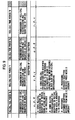
- the extended squitter is a signal that is formatted, as illustrated in Fig. 5A and Fig. 5B , with fields of contents including "CA (transponder capability)", "AA (address announced: transponder mode S address)", “ME (message extend squitter: aircraft position, velocity, etc)", and "PI (parity / interrogator identifies)".
- CA transponder capability
- AA address announced: transponder mode S address
- ME messages extend squitter: aircraft position, velocity, etc
- PI parity / interrogator identifies
- a secondary surveillance radar comprises a transmitter configured to transmit interrogations to aircraft airborne in a coverage, a receiver configured to receive signals transmitted from aircraft airborne in the coverage, a reply analyzer configured to analyze a reply responding to an interrogation transmitted from the transmitter, as the reply is detected from signals received by the receiver, and a squitter analyzer configured to analyze an extended squitter, as the extended squitter is detected from the signals received by the receiver.
- a and Fig. 5B is a set of exemplary formats of extended squitters.
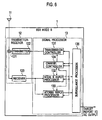
- Fig. 6 illustrates an SSR mode S 1 according to an embodiment of the present invention.
- the SSR mode S1 of Fig. 6 is installed at a ground station, and configured for surveillance of aircraft 2 on bases of transactions with transponders 20 of aircraft 2.
- the SSR mode S 1 includes an antenna 11, a transmitter-receiver 12 configured for signal transmission and reception through the antenna 11, and a signal processor 13 connected to the transmitter-receiver 12, and configured to implement transaction control, and prepare target reports to be output in accordance with received replies.
- the transmitter-receiver 12 is provided with a transmission-reception selector 121, a transmitter 122, and a receiver 123, and configured for transmission of interrogations through the antenna 11, and for handling replies received at the antenna 11 to output to the signal processor 13.
- the signal processor 13 includes a transmission controller 131 configured to control transmission of interrogations, a mode S reply processor 132 configured to process received mode S replies, an ATCRBS reply processor 133 configured to process received ATCRBS replies, a channel controller 134 configured to schedule transactions in all-call time periods and roll-call time periods, and a surveillance processor 135 configured to make use of replies for preparation of target reports.
- the receiver 123 includes: a ⁇ video receiver composed of a ⁇ video detector 123a for detecting ⁇ video from received signals, and a digitizer 123b for digitizing detected ⁇ video; a ⁇ video receiver composed of a ⁇ video detector 123c for detecting ⁇ video from received signals, and a digitizer 123d for digitizing detected ⁇ video; and a ⁇ video receiver composed of a ⁇ video detector 123e for detecting ⁇ video from received signals, and a digitizer 123f for digitizing detected ⁇ video.
- the digitizers 123b, 123d, and 123f are each respectively adapted to output digitized video to the mode S reply processor 132 and the ATCRBS reply processor 133.
- the mode S reply processor 132 includes: a mode S reply detector 132a configured to have digitized ⁇ video, ⁇ video, and ⁇ video input from the receiver 123, for detection of mode S replies transmitted from aircraft 2 in response to interrogations the transmitter 122 has transmitted; a mode S reply analyzer 132b configured for analyses of mode S replies detected by the mode S reply detector 132a to output the results to the surveillance processor 135; an extended squitter detector 132c configured to have digitized ⁇ video input from the receiver 123, for detection of extended squitters transmitted from aircraft 2; and an extended squitter analyzer 132d configured for analyses of extended squitters detected by the extended squitter detector 132c to output the results to the surveillance processor 135.
- a mode S reply detector 132a configured to have digitized ⁇ video, ⁇ video, and ⁇ video input from the receiver 123, for detection of mode S replies transmitted from aircraft 2 in response to interrogations the transmitter 122 has transmitted
- the ATCRBS reply processor 133 includes: an ATCRBS reply detector 133a configured to have digitized ⁇ video, ⁇ video, and ⁇ video input from the receiver 123, for detection of ATCRBS replies transmitted from aircraft 2 in response to interrogations the transmitter 122 has transmitted; and an ATCRBS reply analyzer 133b configured for analyses of ATCRBS replies detected by the ATCRBS reply detector 133a to output the results to the surveillance processor 135.
- the surveillance processor 135 includes a target report preparer 135a configured for use of analysis results of replies and extended squitters to prepare target reports, and a coordinate transformer 135b configured to transform coordinates of extended squitters.
- ⁇ video is a set of signals received from within a region A of a lobe extending along a center axis of the antenna 11 in a frontward direction f of the antenna 11.
- ⁇ video is a set of signals received from within regions B of lobes about the frontward direction f of antenna 11,
- ⁇ video is a set of signals received from a widespread region C.
- ⁇ video and ⁇ video appear as directional signals, and can only be used for transactions with aircraft airborne in prescribed (azimuth) ranges with respect to the antenna 11.
- ⁇ video appears as a non-directional signal, and can be used for communications with aircraft airborne in a widespread (azimuth) range with respect to the antenna 11. It is noted that all-call interrogations and replies as well as roll-call interrogations and replies are intended to use simply for targets airborne in the prescribed (azimuth) ranges with respect to the antenna 11. In use of non-directional ⁇ video, there come replies (fruits, squitters, etc) from any and all transponder as targets.
- the extended squitter analyzer 132d decodes respective data blocks of extended squitters detected by the extended squitter detector 132c, and outputs the results to the surveillance processor 135.
- the coordinate transformer 135b transforms positional information contained in extended squitters into positional information compliant with replies. That is, those replies analyzed by the mode S reply analyzer 132b or the ATCRBS reply analyzer 133b each contain, as positional information of aircraft 2, such a coordinate (slant range, azimuth) that represents a location of aircraft 2 with respect to the SSR mode S 1. On the other hand, those extended squitters analyzed by the extended squitter analyzer 132d each contain, as positional information of aircraft 2, such a combination of latitude and longitude that represents a location of aircraft 2. Therefore, the coordinate transformer 135b transforms a combination of latitude and longitude analyzed by the extended squitter analyzer 132d, into such a coordinate (slant range, azimuth) that defines a location of aircraft 2.
- the SSR mode S 1 is configured to process also extended squitters received from aircraft 2, as described.
- Extended squitters are signals periodically transmitted from aircraft 2, so the SSR mode S 1 receives such extended squitters at timings independent of all-call time periods Ta and roll-call time periods Tr. Therefore, as shown in Fig. 9 , the mode S reply processor 132 is adapted to process received extended squitters irrespective of all-call time periods Ta and roll-call time periods Tr.
- the SSR mode S 1 is adapted in each all-call time period Ta to transmit all-call interrogations to mode S aircraft and ATCRBS aircraft, thereby receiving replies, processing ( ⁇ , ⁇ ) them, while processing ( ⁇ ) extended squitters received from mode S aircraft. Further in each roll-call time period Tr, the SSR mode S 1 is adapted to transmit selective interrogations to mode S aircraft having had replies received by the SSR mode S 1 in past all-call time periods Ta, thereby receiving replies, processing ( ⁇ ) them, while processing ( ⁇ ) received extended squitters. In roll-call time period Tr also, the SSR mode S1 is adapted to process ( ⁇ ) extended squitters received from mode S aircraft.
- the SSR mode S1 makes use not simply of information contained in mode S replies or ATCRBS replies, but also of information contained in extended squitters, for preparation of target reports. Accordingly, the SSR mode S1 making use of extended squitter is permitted to acquire additional information on aircraft that might not have been caught in any way by conventional transactions only, thus allowing for an enhanced capability in surveillance of aircraft.
Landscapes
- Engineering & Computer Science (AREA)
- Radar, Positioning & Navigation (AREA)
- Remote Sensing (AREA)
- Computer Networks & Wireless Communication (AREA)
- Physics & Mathematics (AREA)
- General Physics & Mathematics (AREA)
- Radar Systems Or Details Thereof (AREA)
Abstract
Description
- The present application claims the benefit of priority under 35 U.S.C. § 119 to Japanese Patent Application No.
2009-118473, filed on May 15, 2009 - The present invention relates to a secondary surveillance radar (SSR) making use of an extended squitter received from aircraft.
-
Fig. 1 illustrates an SSR 1a installed at a ground station. It has a transmitter-receiver 12 adapted for transmission of signals as interrogations totransponders 20 boarded on aircraft 2, and for reception of signals as replies transmitted fromtransponders 20 onaircraft 20 in response to interrogations. The transmitter-receiver 12 implements various processes under control of asignal processor 13a. The SSR 1a is adapted for such signal transmission and reception to acquire necessary information for air traffic control. - There are two types of transponders: an ATCRBS (Air Traffic Control Radar Beacon System) transponder that has been used since ever, and a mode S transponder that has been developed later than the ATCRBS transponder. They employ different signals for transmission and reception. In
Fig. 1 , the SSR 1a is an SSR mode S (secondary surveillance radar mode S) system cooperative with both ATCRBS transponder and mode S transponder, so it is adaptive as an SSR for surveillance, even for ATCRBS aircraft (aircraft with an ATCRBS transponder on board), as well as for mode S aircraft (aircraft with a mode S transponder on board). - As illustrated in
Fig. 2 , theSSR mode S 1a has the transmitter-receiver 12 including a transmission-reception selector 121 for selection between signal transmission and reception, atransmitter 122 for transmission of interrogations, and areceiver 123 for reception of replies. Further, theSSR mode S 1a has thesignal processor 13a including atransmission controller 131 for controlling the transmission of interrogations, a modeS reply processor 136 for processing replies received from mode S aircraft, an ATGRBSreply processor 133 for processing replies received from ATCRBS aircraft, asurveillance processor 137 making use of received replies for preparation of target reports to survey flights of aircraft, and achannel controller 134 for controlling transactions in all-call time periods and roll-call time periods. - More specifically, as illustrated in
Fig. 3 , thereceiver 123 includes a Σvideodetector 123a for detecting Σvideo from received signals, adigitizer 123b for digitizing detected Σ video, aΔ video detector 123c for detecting Δvideo, adigitizer 123d for digitizing detected Δvideo, aΩvideo detector 123e for detecting Ωvideo, and adigitizer 123f for digitizing detected Ωvideo. - Further, as illustrated in
Fig. 3 , the modeS reply processor 136 includes a modeS reply detector 136a for detecting, from among digitized signals from thedigitizers S reply analyzer 136b for analyzing detected mode S replies. On the other hand, the ATCRBSreply processor 133 includes an ATCRBSreply detector 133a for detecting, from among digitized signals from thedigitizers reply analyzer 133b for analyzing detected ATCRBS replies. - Further, the
surveillance processor 137 includes atarget report preparer 137a adapted to make use of results of analyses by theanalyzers - The
SSR mode S 1a is configured, as illustrated inFig. 4 , for time division into all-call time periods Ta and roll-call time periods Tr according to, among others, prescribed repetition periods and coverage area, to proceed with processes for acquiring ATCRBS aircraft and mode S aircraft. More specifically, the SSRmode S 1a has thetransmission controller 131 adapted in all-call time periods Ta for transmission of all-call interrogations to acquire ATCRBS aircraft and mode S aircraft, and in roll-call time periods Tr for transmission of roll-call interrogations to keep acquisition of mode S aircraft having been acquired in all-call time periods Ta, for a processing to enable acquisition of all aircraft within a coverage (refer to Japanese Patent Application Laid-Open Publication No.2007-248296 - However, the
SSR mode S 1a may have an increased number of aircraft within the coverage, which might overlap addition of a datalink function, which would constitute a difficulty in acquisition of all aircraft within the coverage, thus shedding light on the importance of efficient use of the periods Ta and Tr. - In the meanwhile, aircraft is configured to transmit, besides the reply to be transmitted in response to an interrogation transmitted from the
SSR mode S 1a, an extended squitter for use in the ADS-B (automatic dependent surveillance-broadcast). The extended squitter is a signal that is formatted, as illustrated inFig. 5A and Fig. 5B , with fields of contents including "CA (transponder capability)", "AA (address announced: transponder mode S address)", "ME (message extend squitter: aircraft position, velocity, etc)", and "PI (parity / interrogator identifies)". TheSSR mode S 1a may thus receive extended squitters, but is configured to use no extended squitters it has received. - As having been described, there is a conventional
SSR mode S 1a that may have an increased number of aircraft within a coverage, which might overlap addition of a datalink function, which would constitute a difficulty to acquire all aircraft within the coverage. On the other hand, there is an extended squitter to be received irrespective of replies, which is not made use of at theSSR mode S 1a. - With this point in view, it is an object of the present invention to provide a secondary surveillance radar adapted for utilization of an extended squitter transmitted from mode S aircraft to perform surveillance of aircraft.
- According to an aspect of the present invention, a secondary surveillance radar comprises a transmitter configured to transmit interrogations to aircraft airborne in a coverage, a receiver configured to receive signals transmitted from aircraft airborne in the coverage, a reply analyzer configured to analyze a reply responding to an interrogation transmitted from the transmitter, as the reply is detected from signals received by the receiver, and a squitter analyzer configured to analyze an extended squitter, as the extended squitter is detected from the signals received by the receiver.
-
-
Fig.1 is an illustration of transaction between a typical SSR mode S and a transponder. -
Fig. 2 is a functional block diagram of the SSR mode S ofFig. 1 . -
Fig. 3 is a functional block diagram of essential portions of the SSR mode S ofFig. 2 -
Fig. 4 is a time chart of essential actions of the SSR mode S ofFig. 2 . - A and
Fig. 5B is a set of exemplary formats of extended squitters. -
Fig. 6 is a functional block diagram of an SSR mode S according to an embodiment of the present invention. -
Fig. 7 is a functional block diagram of essential portions of the SSR mode S ofFig. 6 . -
Fig. 8 is an illustration of lobes of an antenna of the SSR mode S ofFig. 6 . -
Fig. 9 is a time chart of essential actions of the SSR mode S ofFig. 6 . - There will be described the preferred embodiments of the present invention. Like elements to the conventional configuration will be designated by like reference characters.
Fig. 6 illustrates anSSR mode S 1 according to an embodiment of the present invention. Like theSSR mode S 1a ofFig.1 , the SSR mode S1 ofFig. 6 is installed at a ground station, and configured for surveillance of aircraft 2 on bases of transactions withtransponders 20 of aircraft 2. - As shown in
Fig. 6 , theSSR mode S 1 includes anantenna 11, a transmitter-receiver 12 configured for signal transmission and reception through theantenna 11, and asignal processor 13 connected to the transmitter-receiver 12, and configured to implement transaction control, and prepare target reports to be output in accordance with received replies. - The transmitter-
receiver 12 is provided with a transmission-reception selector 121, atransmitter 122, and areceiver 123, and configured for transmission of interrogations through theantenna 11, and for handling replies received at theantenna 11 to output to thesignal processor 13. - The
signal processor 13 includes atransmission controller 131 configured to control transmission of interrogations, a modeS reply processor 132 configured to process received mode S replies, an ATCRBSreply processor 133 configured to process received ATCRBS replies, achannel controller 134 configured to schedule transactions in all-call time periods and roll-call time periods, and asurveillance processor 135 configured to make use of replies for preparation of target reports. - More specifically, as shown in
Fig. 7 , thereceiver 123 includes: a Σvideo receiver composed of aΣvideo detector 123a for detecting Σvideo from received signals, and adigitizer 123b for digitizing detected Σvideo; a Δvideo receiver composed of aΔvideo detector 123c for detecting Δvideo from received signals, and adigitizer 123d for digitizing detected Δvideo; and a Ωvideo receiver composed of aΩvideo detector 123e for detecting Ωvideo from received signals, and adigitizer 123f for digitizing detected Ωvideo. At thereceiver 123, thedigitizers S reply processor 132 and the ATCRBSreply processor 133. - As shown in
Fig. 7 , the modeS reply processor 132 includes: a modeS reply detector 132a configured to have digitized Σvideo, Δvideo, and Ωvideo input from thereceiver 123, for detection of mode S replies transmitted from aircraft 2 in response to interrogations thetransmitter 122 has transmitted; a modeS reply analyzer 132b configured for analyses of mode S replies detected by the modeS reply detector 132a to output the results to thesurveillance processor 135; an extendedsquitter detector 132c configured to have digitized Ωvideo input from thereceiver 123, for detection of extended squitters transmitted from aircraft 2; and an extendedsquitter analyzer 132d configured for analyses of extended squitters detected by the extendedsquitter detector 132c to output the results to thesurveillance processor 135. - As shown in
Fig. 7 , the ATCRBSreply processor 133 includes: an ATCRBSreply detector 133a configured to have digitized Σvideo, Δvideo, and Ωvideo input from thereceiver 123, for detection of ATCRBS replies transmitted from aircraft 2 in response to interrogations thetransmitter 122 has transmitted; and an ATCRBSreply analyzer 133b configured for analyses of ATCRBS replies detected by the ATCRBSreply detector 133a to output the results to thesurveillance processor 135. - As shown in
Fig. 7 , thesurveillance processor 135 includes atarget report preparer 135a configured for use of analysis results of replies and extended squitters to prepare target reports, and acoordinate transformer 135b configured to transform coordinates of extended squitters. - As illustrated in
Fig. 8 , Σvideo is a set of signals received from within a region A of a lobe extending along a center axis of theantenna 11 in a frontward direction f of theantenna 11. Δ video is a set of signals received from within regions B of lobes about the frontward direction f ofantenna 11, Ωvideo is a set of signals received from a widespread region C. - As illustrated in
Fig. 8 , Σvideo and Δvideo appear as directional signals, and can only be used for transactions with aircraft airborne in prescribed (azimuth) ranges with respect to theantenna 11. On the other hand, Ωvideo appears as a non-directional signal, and can be used for communications with aircraft airborne in a widespread (azimuth) range with respect to theantenna 11. It is noted that all-call interrogations and replies as well as roll-call interrogations and replies are intended to use simply for targets airborne in the prescribed (azimuth) ranges with respect to theantenna 11. In use of non-directional Ωvideo, there come replies (fruits, squitters, etc) from any and all transponder as targets. - More specifically, the
extended squitter analyzer 132d decodes respective data blocks of extended squitters detected by the extendedsquitter detector 132c, and outputs the results to thesurveillance processor 135. Extended squitters are formatted as illustrated in A andFig. 5B , including a field of PI (parity / interrogator identifier) to be "0" in value, so theextended squitter analyzer 132d outputs a decoded result to thesurveillance processor 135, simply when the PI field has the value "0", and a field of DF (downlink format) is "10001" in value for DF = 17 or "10010" in value for DF = 18. - The coordinate
transformer 135b transforms positional information contained in extended squitters into positional information compliant with replies. That is, those replies analyzed by the mode Sreply analyzer 132b or theATCRBS reply analyzer 133b each contain, as positional information of aircraft 2, such a coordinate (slant range, azimuth) that represents a location of aircraft 2 with respect to theSSR mode S 1. On the other hand, those extended squitters analyzed by the extended squitter analyzer 132d each contain, as positional information of aircraft 2, such a combination of latitude and longitude that represents a location of aircraft 2. Therefore, the coordinatetransformer 135b transforms a combination of latitude and longitude analyzed by theextended squitter analyzer 132d, into such a coordinate (slant range, azimuth) that defines a location of aircraft 2. - The
SSR mode S 1 is configured to process also extended squitters received from aircraft 2, as described. Extended squitters are signals periodically transmitted from aircraft 2, so theSSR mode S 1 receives such extended squitters at timings independent of all-call time periods Ta and roll-call time periods Tr. Therefore, as shown inFig. 9 , the mode Sreply processor 132 is adapted to process received extended squitters irrespective of all-call time periods Ta and roll-call time periods Tr. - More specifically, as shown in
Fig. 9 , theSSR mode S 1 is adapted in each all-call time period Ta to transmit all-call interrogations to mode S aircraft and ATCRBS aircraft, thereby receiving replies, processing (α, β) them, while processing (δ) extended squitters received from mode S aircraft. Further in each roll-call time period Tr, theSSR mode S 1 is adapted to transmit selective interrogations to mode S aircraft having had replies received by theSSR mode S 1 in past all-call time periods Ta, thereby receiving replies, processing (γ) them, while processing (δ) received extended squitters. In roll-call time period Tr also, the SSR mode S1 is adapted to process (δ) extended squitters received from mode S aircraft. - According to the embodiment of the present invention, the SSR mode S1 makes use not simply of information contained in mode S replies or ATCRBS replies, but also of information contained in extended squitters, for preparation of target reports. Accordingly, the SSR mode S1 making use of extended squitter is permitted to acquire additional information on aircraft that might not have been caught in any way by conventional transactions only, thus allowing for an enhanced capability in surveillance of aircraft.
Claims (6)
- A secondary surveillance radar comprising:a transmitter configured to transmit interrogations to aircraft airborne in a coverage;a receiver configured to receive signals transmitted from aircraft airborne in the coverage;a reply analyzer configured to analyze a reply responding to an interrogation transmitted from the transmitter, as the reply is detected from signals received by the receiver; anda squitter analyzer configured to analyze an extended squitter, as the extended squitter is detected from the signals received by the receiver.
- The secondary surveillance radar according to claim 1, wherein the squitter analyzer analyzes an extended squitter detected from received Ωvideo signals, among the signals received.
- The secondary surveillance radar according to claim 1, further comprising a coordinate transformer configured to determine from an extended squitter analyzed by the squitter analyzer a combination of latitude and longitude representing a location of aircraft having transmitted the extended squitter, and transform the combination of latitude and longitude into a coordinate defining the location of aircraft with respect to the SSR mode S.
- The secondary surveillance radar according to claim 1, further comprising a target report preparer configured to prepare a target report for surveillance of aircraft in accordance with an analysis result of the reply analyzer and an analysis result of the squitter analyzer.
- The secondary surveillance radar according to claim 3, comprising:a coordinate transformer configured to determine from an extended squitter analyzed by the squitter analyzer a combination of latitude and longitude representing a location of aircraft having transmitted the extended squitter, and transform the combination of latitude and longitude into a coordinate defining the location of aircraft with respect to the SSR mode S; andthe target report preparer making use of the coordinate of aircraft for preparation of the target report.
- The secondary surveillance radar according to claim 1, wherein the squitter analyzer is adapted to use, among the signals received, a signal having a PI field of a value of "0" and a DF field of a value of "17" or "18", as an extended squitter.
Applications Claiming Priority (1)
| Application Number | Priority Date | Filing Date | Title |
|---|---|---|---|
| JP2009118473A JP5398343B2 (en) | 2009-05-15 | 2009-05-15 | Secondary surveillance radar |
Publications (2)
| Publication Number | Publication Date |
|---|---|
| EP2256514A1 true EP2256514A1 (en) | 2010-12-01 |
| EP2256514B1 EP2256514B1 (en) | 2012-02-22 |
Family
ID=42676827
Family Applications (1)
| Application Number | Title | Priority Date | Filing Date |
|---|---|---|---|
| EP09252839A Not-in-force EP2256514B1 (en) | 2009-05-15 | 2009-12-21 | Secondary surveillance radar |
Country Status (4)
| Country | Link |
|---|---|
| US (1) | US8102300B2 (en) |
| EP (1) | EP2256514B1 (en) |
| JP (1) | JP5398343B2 (en) |
| AT (1) | ATE546747T1 (en) |
Families Citing this family (2)
| Publication number | Priority date | Publication date | Assignee | Title |
|---|---|---|---|---|
| FR2938076B1 (en) * | 2008-10-31 | 2010-11-12 | Thales Sa | METHOD FOR OPTIMIZING RADAR TIME MANAGEMENT FOR SECONDARY RADARS OPERATING IN S MODE |
| FR3075398B1 (en) * | 2017-12-19 | 2020-01-10 | Thales | METHOD FOR MEASURING ANTENNA DIAGRAMS OF A SECONDARY RADAR AND SECONDARY RADAR IMPLEMENTING SUCH A METHOD |
Citations (4)
| Publication number | Priority date | Publication date | Assignee | Title |
|---|---|---|---|---|
| US6094169A (en) * | 1998-12-11 | 2000-07-25 | Rannoch Corporation | Multilateration auto-calibration and position error correction |
| JP2007248296A (en) | 2006-03-16 | 2007-09-27 | Toshiba Corp | Secondary surveillance radar |
| EP1901090A1 (en) * | 2006-09-14 | 2008-03-19 | Kabushiki Kaisha Toshiba | Mode S secondary surveillance radar system |
| JP2009118473A (en) | 2007-10-19 | 2009-05-28 | Sumitomo Electric Ind Ltd | In-vehicle optical LAN system |
Family Cites Families (10)
| Publication number | Priority date | Publication date | Assignee | Title |
|---|---|---|---|---|
| JP3539799B2 (en) * | 1995-06-21 | 2004-07-07 | 三菱電機株式会社 | Air traffic control radar system |
| ITRM20010176A1 (en) * | 2001-04-03 | 2002-10-03 | Univ Roma | RECEIVING AND PROCESSING APPARATUS FOR "REPLICA" SIGNALS OF SECONDARY SURVEILLANCE RADAR WITH SUPER RESOLUTION CAPACITY. |
| US20040130479A1 (en) * | 2003-01-02 | 2004-07-08 | Chen-Jui Lo | Robust data fusion procedure of a multi-digital surveillance information |
| JP4113080B2 (en) * | 2003-09-05 | 2008-07-02 | 株式会社東芝 | Secondary monitoring radar system |
| GB2412027B (en) * | 2004-03-08 | 2007-04-11 | Raytheon Systems Ltd | Secondary radar message decoding |
| JP4253291B2 (en) * | 2004-09-15 | 2009-04-08 | 株式会社東芝 | Secondary monitoring radar system and its ground equipment |
| JP4331094B2 (en) * | 2004-12-03 | 2009-09-16 | 株式会社東芝 | Mode S transponder transmission signal decoding apparatus and mode S transponder transmission signal decoding method |
| JP4679500B2 (en) | 2006-12-12 | 2011-04-27 | 株式会社東芝 | ADS-B ground station |
| JP4966031B2 (en) * | 2007-01-22 | 2012-07-04 | 株式会社東芝 | Mode S secondary monitoring radar |
| JP5017053B2 (en) * | 2007-10-23 | 2012-09-05 | 株式会社東芝 | Mode S secondary monitoring radar |
-
2009
- 2009-05-15 JP JP2009118473A patent/JP5398343B2/en not_active Expired - Fee Related
- 2009-12-18 US US12/642,076 patent/US8102300B2/en not_active Expired - Fee Related
- 2009-12-21 EP EP09252839A patent/EP2256514B1/en not_active Not-in-force
- 2009-12-21 AT AT09252839T patent/ATE546747T1/en active
Patent Citations (4)
| Publication number | Priority date | Publication date | Assignee | Title |
|---|---|---|---|---|
| US6094169A (en) * | 1998-12-11 | 2000-07-25 | Rannoch Corporation | Multilateration auto-calibration and position error correction |
| JP2007248296A (en) | 2006-03-16 | 2007-09-27 | Toshiba Corp | Secondary surveillance radar |
| EP1901090A1 (en) * | 2006-09-14 | 2008-03-19 | Kabushiki Kaisha Toshiba | Mode S secondary surveillance radar system |
| JP2009118473A (en) | 2007-10-19 | 2009-05-28 | Sumitomo Electric Ind Ltd | In-vehicle optical LAN system |
Non-Patent Citations (2)
| Title |
|---|
| BAUD O ET AL: "Radar / ADS-B data fusion architecture for experimentation purpose", 2006 9TH INTERNATIONAL CONFERENCE ON INFORMATION FUSION, FUSION - 2006 9TH INTERNATIONAL CONFERENCE ON INFORMATION FUSION, FUSION 2006 INST. OF ELEC. AND ELEC. ENG. COMPUTER SOCIETY US, IEEE, PISCATAWAY, NJ, USA LNKD- DOI:10.1109/ICIF.2006.301555, 1 July 2006 (2006-07-01), pages 1 - 6, XP031042567, ISBN: 978-1-4244-0953-2 * |
| DE VELA G ET AL: "Integration of ADS-B surveillance data in operative multiradar tracking processors", INFORMATION FUSION, 2008 11TH INTERNATIONAL CONFERENCE ON, IEEE, PISCATAWAY, NJ, USA, 30 June 2008 (2008-06-30), pages 1 - 8, XP031395509, ISBN: 978-3-8007-3092-6 * |
Also Published As
| Publication number | Publication date |
|---|---|
| EP2256514B1 (en) | 2012-02-22 |
| JP5398343B2 (en) | 2014-01-29 |
| JP2010266350A (en) | 2010-11-25 |
| US20100289689A1 (en) | 2010-11-18 |
| ATE546747T1 (en) | 2012-03-15 |
| US8102300B2 (en) | 2012-01-24 |
Similar Documents
| Publication | Publication Date | Title |
|---|---|---|
| Sun | The 1090 megahertz riddle: a guide to decoding mode S and ADS-B signals | |
| US6433729B1 (en) | System and method for displaying vertical profile of intruding traffic in two dimensions | |
| US4910526A (en) | Airborne surveillance method and system | |
| US5075694A (en) | Airborne surveillance method and system | |
| US7095360B2 (en) | Secondary surveillance radar system, ground equipment for use therein, and response signal checking method applied thereto | |
| US6094169A (en) | Multilateration auto-calibration and position error correction | |
| US6313783B1 (en) | Transponder having directional antennas | |
| EP1185880B1 (en) | Multifunction aircraft transponder | |
| EP1666917B1 (en) | Decoder and decoding method for Mode S transponder transmission signal | |
| US7616149B2 (en) | Methods and apparatus for radar time sensor | |
| EP1901090B1 (en) | Mode S secondary surveillance radar system | |
| CN1441912A (en) | Vehicle surreillance system | |
| US20120038501A1 (en) | Self-configuring universal access transceiver | |
| WO2010045299A1 (en) | Bi-static radar processing for ads-b sensors | |
| EP1953565B1 (en) | Secondary surveillance radar and method of analyzing replies for secondary surveillance radar | |
| EP1635189A1 (en) | Secondary surveillance radar and its interrogation transmission method | |
| CA2533442A1 (en) | Passive airborne collision warning device and method | |
| EP1045257A1 (en) | Ssr device and secondary airplane surveillance network | |
| US4733241A (en) | Position finding and collision avoidance system | |
| Orlando | The mode S beacon radar system | |
| US5463398A (en) | Method and apparatus for multiple reply rejection when decoding transponder replay signals | |
| EP2256514B1 (en) | Secondary surveillance radar | |
| US11320528B1 (en) | Monopulse secondary surveillance radar system | |
| US7847722B2 (en) | Secondary surveillance radar and method of analyzing replies for secondary surveillance radar | |
| US20230343231A1 (en) | Ads-b validation using directional antenna |
Legal Events
| Date | Code | Title | Description |
|---|---|---|---|
| PUAI | Public reference made under article 153(3) epc to a published international application that has entered the european phase |
Free format text: ORIGINAL CODE: 0009012 |
|
| 17P | Request for examination filed |
Effective date: 20100106 |
|
| AK | Designated contracting states |
Kind code of ref document: A1 Designated state(s): AT BE BG CH CY CZ DE DK EE ES FI FR GB GR HR HU IE IS IT LI LT LU LV MC MK MT NL NO PL PT RO SE SI SK SM TR |
|
| AX | Request for extension of the european patent |
Extension state: AL BA RS |
|
| RIC1 | Information provided on ipc code assigned before grant |
Ipc: G01S 13/76 20060101ALI20110526BHEP Ipc: G01S 13/78 20060101AFI20110526BHEP |
|
| GRAP | Despatch of communication of intention to grant a patent |
Free format text: ORIGINAL CODE: EPIDOSNIGR1 |
|
| RIN1 | Information on inventor provided before grant (corrected) |
Inventor name: KUJI, YOSHINORI, C/O IP DIVISION, TOSHIBA CORP. Inventor name: YAMADA, TAKAFUMI, C/O IP DIVISION, TOSHIBA CORP. Inventor name: TAKEDA, TAKAFUMI, C/O IP DIVISION, TOSHIBA CORP. Inventor name: YOSHIROU, AOKI, C/O IP DIVISION, TOSHIBA CORP. |
|
| GRAS | Grant fee paid |
Free format text: ORIGINAL CODE: EPIDOSNIGR3 |
|
| GRAA | (expected) grant |
Free format text: ORIGINAL CODE: 0009210 |
|
| AK | Designated contracting states |
Kind code of ref document: B1 Designated state(s): AT BE BG CH CY CZ DE DK EE ES FI FR GB GR HR HU IE IS IT LI LT LU LV MC MK MT NL NO PL PT RO SE SI SK SM TR |
|
| REG | Reference to a national code |
Ref country code: GB Ref legal event code: FG4D |
|
| REG | Reference to a national code |
Ref country code: CH Ref legal event code: EP |
|
| REG | Reference to a national code |
Ref country code: AT Ref legal event code: REF Ref document number: 546747 Country of ref document: AT Kind code of ref document: T Effective date: 20120315 |
|
| REG | Reference to a national code |
Ref country code: IE Ref legal event code: FG4D |
|
| REG | Reference to a national code |
Ref country code: DE Ref legal event code: R096 Ref document number: 602009005461 Country of ref document: DE Effective date: 20120412 |
|
| REG | Reference to a national code |
Ref country code: NL Ref legal event code: VDEP Effective date: 20120222 |
|
| LTIE | Lt: invalidation of european patent or patent extension |
Effective date: 20120222 |
|
| PG25 | Lapsed in a contracting state [announced via postgrant information from national office to epo] |
Ref country code: IS Free format text: LAPSE BECAUSE OF FAILURE TO SUBMIT A TRANSLATION OF THE DESCRIPTION OR TO PAY THE FEE WITHIN THE PRESCRIBED TIME-LIMIT Effective date: 20120622 Ref country code: NO Free format text: LAPSE BECAUSE OF FAILURE TO SUBMIT A TRANSLATION OF THE DESCRIPTION OR TO PAY THE FEE WITHIN THE PRESCRIBED TIME-LIMIT Effective date: 20120522 Ref country code: HR Free format text: LAPSE BECAUSE OF FAILURE TO SUBMIT A TRANSLATION OF THE DESCRIPTION OR TO PAY THE FEE WITHIN THE PRESCRIBED TIME-LIMIT Effective date: 20120222 Ref country code: LT Free format text: LAPSE BECAUSE OF FAILURE TO SUBMIT A TRANSLATION OF THE DESCRIPTION OR TO PAY THE FEE WITHIN THE PRESCRIBED TIME-LIMIT Effective date: 20120222 Ref country code: NL Free format text: LAPSE BECAUSE OF FAILURE TO SUBMIT A TRANSLATION OF THE DESCRIPTION OR TO PAY THE FEE WITHIN THE PRESCRIBED TIME-LIMIT Effective date: 20120222 |
|
| PG25 | Lapsed in a contracting state [announced via postgrant information from national office to epo] |
Ref country code: GR Free format text: LAPSE BECAUSE OF FAILURE TO SUBMIT A TRANSLATION OF THE DESCRIPTION OR TO PAY THE FEE WITHIN THE PRESCRIBED TIME-LIMIT Effective date: 20120523 Ref country code: FI Free format text: LAPSE BECAUSE OF FAILURE TO SUBMIT A TRANSLATION OF THE DESCRIPTION OR TO PAY THE FEE WITHIN THE PRESCRIBED TIME-LIMIT Effective date: 20120222 Ref country code: BE Free format text: LAPSE BECAUSE OF FAILURE TO SUBMIT A TRANSLATION OF THE DESCRIPTION OR TO PAY THE FEE WITHIN THE PRESCRIBED TIME-LIMIT Effective date: 20120222 Ref country code: PT Free format text: LAPSE BECAUSE OF FAILURE TO SUBMIT A TRANSLATION OF THE DESCRIPTION OR TO PAY THE FEE WITHIN THE PRESCRIBED TIME-LIMIT Effective date: 20120622 Ref country code: LV Free format text: LAPSE BECAUSE OF FAILURE TO SUBMIT A TRANSLATION OF THE DESCRIPTION OR TO PAY THE FEE WITHIN THE PRESCRIBED TIME-LIMIT Effective date: 20120222 |
|
| REG | Reference to a national code |
Ref country code: AT Ref legal event code: MK05 Ref document number: 546747 Country of ref document: AT Kind code of ref document: T Effective date: 20120222 |
|
| PG25 | Lapsed in a contracting state [announced via postgrant information from national office to epo] |
Ref country code: CY Free format text: LAPSE BECAUSE OF FAILURE TO SUBMIT A TRANSLATION OF THE DESCRIPTION OR TO PAY THE FEE WITHIN THE PRESCRIBED TIME-LIMIT Effective date: 20120222 |
|
| PG25 | Lapsed in a contracting state [announced via postgrant information from national office to epo] |
Ref country code: PL Free format text: LAPSE BECAUSE OF FAILURE TO SUBMIT A TRANSLATION OF THE DESCRIPTION OR TO PAY THE FEE WITHIN THE PRESCRIBED TIME-LIMIT Effective date: 20120222 Ref country code: CZ Free format text: LAPSE BECAUSE OF FAILURE TO SUBMIT A TRANSLATION OF THE DESCRIPTION OR TO PAY THE FEE WITHIN THE PRESCRIBED TIME-LIMIT Effective date: 20120222 Ref country code: RO Free format text: LAPSE BECAUSE OF FAILURE TO SUBMIT A TRANSLATION OF THE DESCRIPTION OR TO PAY THE FEE WITHIN THE PRESCRIBED TIME-LIMIT Effective date: 20120222 Ref country code: DK Free format text: LAPSE BECAUSE OF FAILURE TO SUBMIT A TRANSLATION OF THE DESCRIPTION OR TO PAY THE FEE WITHIN THE PRESCRIBED TIME-LIMIT Effective date: 20120222 Ref country code: EE Free format text: LAPSE BECAUSE OF FAILURE TO SUBMIT A TRANSLATION OF THE DESCRIPTION OR TO PAY THE FEE WITHIN THE PRESCRIBED TIME-LIMIT Effective date: 20120222 Ref country code: SE Free format text: LAPSE BECAUSE OF FAILURE TO SUBMIT A TRANSLATION OF THE DESCRIPTION OR TO PAY THE FEE WITHIN THE PRESCRIBED TIME-LIMIT Effective date: 20120222 Ref country code: SI Free format text: LAPSE BECAUSE OF FAILURE TO SUBMIT A TRANSLATION OF THE DESCRIPTION OR TO PAY THE FEE WITHIN THE PRESCRIBED TIME-LIMIT Effective date: 20120222 |
|
| PG25 | Lapsed in a contracting state [announced via postgrant information from national office to epo] |
Ref country code: IT Free format text: LAPSE BECAUSE OF FAILURE TO SUBMIT A TRANSLATION OF THE DESCRIPTION OR TO PAY THE FEE WITHIN THE PRESCRIBED TIME-LIMIT Effective date: 20120222 Ref country code: SK Free format text: LAPSE BECAUSE OF FAILURE TO SUBMIT A TRANSLATION OF THE DESCRIPTION OR TO PAY THE FEE WITHIN THE PRESCRIBED TIME-LIMIT Effective date: 20120222 |
|
| PLBE | No opposition filed within time limit |
Free format text: ORIGINAL CODE: 0009261 |
|
| STAA | Information on the status of an ep patent application or granted ep patent |
Free format text: STATUS: NO OPPOSITION FILED WITHIN TIME LIMIT |
|
| 26N | No opposition filed |
Effective date: 20121123 |
|
| PG25 | Lapsed in a contracting state [announced via postgrant information from national office to epo] |
Ref country code: AT Free format text: LAPSE BECAUSE OF FAILURE TO SUBMIT A TRANSLATION OF THE DESCRIPTION OR TO PAY THE FEE WITHIN THE PRESCRIBED TIME-LIMIT Effective date: 20120222 |
|
| REG | Reference to a national code |
Ref country code: DE Ref legal event code: R097 Ref document number: 602009005461 Country of ref document: DE Effective date: 20121123 |
|
| PG25 | Lapsed in a contracting state [announced via postgrant information from national office to epo] |
Ref country code: ES Free format text: LAPSE BECAUSE OF FAILURE TO SUBMIT A TRANSLATION OF THE DESCRIPTION OR TO PAY THE FEE WITHIN THE PRESCRIBED TIME-LIMIT Effective date: 20120602 |
|
| PG25 | Lapsed in a contracting state [announced via postgrant information from national office to epo] |
Ref country code: BG Free format text: LAPSE BECAUSE OF FAILURE TO SUBMIT A TRANSLATION OF THE DESCRIPTION OR TO PAY THE FEE WITHIN THE PRESCRIBED TIME-LIMIT Effective date: 20120522 Ref country code: MC Free format text: LAPSE BECAUSE OF NON-PAYMENT OF DUE FEES Effective date: 20121231 |
|
| REG | Reference to a national code |
Ref country code: IE Ref legal event code: MM4A |
|
| REG | Reference to a national code |
Ref country code: DE Ref legal event code: R119 Ref document number: 602009005461 Country of ref document: DE Effective date: 20130702 |
|
| PG25 | Lapsed in a contracting state [announced via postgrant information from national office to epo] |
Ref country code: DE Free format text: LAPSE BECAUSE OF NON-PAYMENT OF DUE FEES Effective date: 20130702 Ref country code: IE Free format text: LAPSE BECAUSE OF NON-PAYMENT OF DUE FEES Effective date: 20121221 |
|
| PG25 | Lapsed in a contracting state [announced via postgrant information from national office to epo] |
Ref country code: MT Free format text: LAPSE BECAUSE OF FAILURE TO SUBMIT A TRANSLATION OF THE DESCRIPTION OR TO PAY THE FEE WITHIN THE PRESCRIBED TIME-LIMIT Effective date: 20120222 |
|
| PG25 | Lapsed in a contracting state [announced via postgrant information from national office to epo] |
Ref country code: TR Free format text: LAPSE BECAUSE OF FAILURE TO SUBMIT A TRANSLATION OF THE DESCRIPTION OR TO PAY THE FEE WITHIN THE PRESCRIBED TIME-LIMIT Effective date: 20120222 |
|
| PG25 | Lapsed in a contracting state [announced via postgrant information from national office to epo] |
Ref country code: SM Free format text: LAPSE BECAUSE OF FAILURE TO SUBMIT A TRANSLATION OF THE DESCRIPTION OR TO PAY THE FEE WITHIN THE PRESCRIBED TIME-LIMIT Effective date: 20120222 Ref country code: LU Free format text: LAPSE BECAUSE OF NON-PAYMENT OF DUE FEES Effective date: 20121221 |
|
| PG25 | Lapsed in a contracting state [announced via postgrant information from national office to epo] |
Ref country code: HU Free format text: LAPSE BECAUSE OF FAILURE TO SUBMIT A TRANSLATION OF THE DESCRIPTION OR TO PAY THE FEE WITHIN THE PRESCRIBED TIME-LIMIT Effective date: 20091221 |
|
| REG | Reference to a national code |
Ref country code: CH Ref legal event code: PL |
|
| PG25 | Lapsed in a contracting state [announced via postgrant information from national office to epo] |
Ref country code: CH Free format text: LAPSE BECAUSE OF NON-PAYMENT OF DUE FEES Effective date: 20131231 Ref country code: LI Free format text: LAPSE BECAUSE OF NON-PAYMENT OF DUE FEES Effective date: 20131231 |
|
| PG25 | Lapsed in a contracting state [announced via postgrant information from national office to epo] |
Ref country code: MK Free format text: LAPSE BECAUSE OF FAILURE TO SUBMIT A TRANSLATION OF THE DESCRIPTION OR TO PAY THE FEE WITHIN THE PRESCRIBED TIME-LIMIT Effective date: 20120222 |
|
| REG | Reference to a national code |
Ref country code: FR Ref legal event code: PLFP Year of fee payment: 7 |
|
| PGFP | Annual fee paid to national office [announced via postgrant information from national office to epo] |
Ref country code: GB Payment date: 20151216 Year of fee payment: 7 |
|
| PGFP | Annual fee paid to national office [announced via postgrant information from national office to epo] |
Ref country code: FR Payment date: 20151110 Year of fee payment: 7 |
|
| GBPC | Gb: european patent ceased through non-payment of renewal fee |
Effective date: 20161221 |
|
| REG | Reference to a national code |
Ref country code: FR Ref legal event code: ST Effective date: 20170831 |
|
| PG25 | Lapsed in a contracting state [announced via postgrant information from national office to epo] |
Ref country code: FR Free format text: LAPSE BECAUSE OF NON-PAYMENT OF DUE FEES Effective date: 20170102 |
|
| PG25 | Lapsed in a contracting state [announced via postgrant information from national office to epo] |
Ref country code: GB Free format text: LAPSE BECAUSE OF NON-PAYMENT OF DUE FEES Effective date: 20161221 |