EP2255997A1 - A fastening arrangement for securing a load to a support surface - Google Patents
A fastening arrangement for securing a load to a support surface Download PDFInfo
- Publication number
- EP2255997A1 EP2255997A1 EP10275057A EP10275057A EP2255997A1 EP 2255997 A1 EP2255997 A1 EP 2255997A1 EP 10275057 A EP10275057 A EP 10275057A EP 10275057 A EP10275057 A EP 10275057A EP 2255997 A1 EP2255997 A1 EP 2255997A1
- Authority
- EP
- European Patent Office
- Prior art keywords
- securing member
- load
- support
- fastening arrangement
- support surface
- Prior art date
- Legal status (The legal status is an assumption and is not a legal conclusion. Google has not performed a legal analysis and makes no representation as to the accuracy of the status listed.)
- Withdrawn
Links
- 238000004873 anchoring Methods 0.000 claims description 5
- 230000006378 damage Effects 0.000 description 4
- 230000001133 acceleration Effects 0.000 description 2
- 208000027418 Wounds and injury Diseases 0.000 description 1
- 230000003116 impacting effect Effects 0.000 description 1
- 208000014674 injury Diseases 0.000 description 1
- 230000004048 modification Effects 0.000 description 1
- 238000012986 modification Methods 0.000 description 1
- 230000002787 reinforcement Effects 0.000 description 1
- 230000000717 retained effect Effects 0.000 description 1
Images



Classifications
-
- B—PERFORMING OPERATIONS; TRANSPORTING
- B60—VEHICLES IN GENERAL
- B60P—VEHICLES ADAPTED FOR LOAD TRANSPORTATION OR TO TRANSPORT, TO CARRY, OR TO COMPRISE SPECIAL LOADS OR OBJECTS
- B60P7/00—Securing or covering of load on vehicles
- B60P7/06—Securing of load
- B60P7/08—Securing to the vehicle floor or sides
- B60P7/0823—Straps; Tighteners
-
- B—PERFORMING OPERATIONS; TRANSPORTING
- B60—VEHICLES IN GENERAL
- B60P—VEHICLES ADAPTED FOR LOAD TRANSPORTATION OR TO TRANSPORT, TO CARRY, OR TO COMPRISE SPECIAL LOADS OR OBJECTS
- B60P7/00—Securing or covering of load on vehicles
- B60P7/06—Securing of load
- B60P7/08—Securing to the vehicle floor or sides
- B60P7/0823—Straps; Tighteners
- B60P7/0846—Straps; Tighteners winding up or storing of straps
-
- B—PERFORMING OPERATIONS; TRANSPORTING
- B60—VEHICLES IN GENERAL
- B60P—VEHICLES ADAPTED FOR LOAD TRANSPORTATION OR TO TRANSPORT, TO CARRY, OR TO COMPRISE SPECIAL LOADS OR OBJECTS
- B60P7/00—Securing or covering of load on vehicles
- B60P7/06—Securing of load
- B60P7/08—Securing to the vehicle floor or sides
- B60P7/0823—Straps; Tighteners
- B60P7/0869—Protecting the strap or the load from wear
-
- B—PERFORMING OPERATIONS; TRANSPORTING
- B60—VEHICLES IN GENERAL
- B60P—VEHICLES ADAPTED FOR LOAD TRANSPORTATION OR TO TRANSPORT, TO CARRY, OR TO COMPRISE SPECIAL LOADS OR OBJECTS
- B60P7/00—Securing or covering of load on vehicles
- B60P7/06—Securing of load
- B60P7/08—Securing to the vehicle floor or sides
- B60P7/0892—Securing to the vehicle floor or sides by preventing lateral movement of the load, e.g. using stop blocks
Definitions
- the present invention relates to a fastening arrangement for securing a load to the support surface of a vehicle, and in particular for securing a load to the base of a trailer.
- Load securement is particularly important for trailers having open side walls closed off with curtains. Although such curtains typically include reinforcement members, large unsecured loads may still irreparably damage, or even fall through the curtains under certain driving conditions, potentially risking serious injury or death to other road users and pedestrians.
- Strap fasteners are used to secure loads to the base of a trailer. Typically one or more straps are passed over the load, and secured at either side to the trailer base, before being tensioned to securely hold the load in position. This operation is cumbersome, and can be significantly time consuming, particularly where several loads must be secured within a trailer. In addition, fitting such straps often requires the operator to climb onto the trailer floor, which presents health and safety risks to the operator.
- a fastening arrangement for securing a load to a load support surface.
- the fastening arrangement comprises a securing member for clamping said load to the support surface, and at least one securing member support mountable spaced from said support surface for supporting the securing member.
- the at least one securing member support comprises a movable portion connected to the securing member which is movable between a first support position in which at least a portion of the securing member is held spaced from the support surface, and a second deployed position in which the securing member is able to engage and secure said load to said support surface.
- Holding the securing member in a support position spaced away from the support surface enables the securing member to be easily moved over loads placed on the support surface, and obviates the requirement for an operator having to struggle to pass the securing member over the load once in place.
- the securing member can be stowed high in the roof section of a trailer to enable it to be moved over goods placed on the trailer.
- the movable portion of the securing member support enables the securing member to a moved to deployed position once located over the load, to clamp the load to the base.
- the movable securing member support enables the securing member to also be retracted away from the load when released to allow the load to be removed from the base unobstructed, and returns the securing member to a stowed retracted position.
- This arrangement provides the further advantage that the load may be secured by a single operative.
- two operatives have been required at opposing sides of a trailer to pass and receive a securing strap, and to secure the strap.
- the fastening arrangement of the present invention includes a strap which is mounted spaced from the load surface a single operative may quickly and easily move the load strap over a load and secure it while it remain supported in the stowed position.
- the operative does not have to climb onto the load deck of the trailer to pass the strap over the load, thereby making securement of the load a safer operation.
- the fastening arrangement may further comprise a biasing member that biases the movable portion and the securing member to the first support position. In this way, when the securing member is released from the deployed securing position it is automatically retracted to the first support position by the biasing member.
- the securing member support may comprise an elongate resilient member.
- the elongate resilient member may be an elastic cord such as a bungee cord, and comprises the biasing member.
- the resilient member may comprise a first end for connection to the securing member, a second end for connection to a mounting point spaced from the support surface, and a main body portion. Stretching of the body portion enables the first end section to move to the deployed position.
- the load surface may be a load support surface of a vehicle.
- the load surface may be a load surface of one of a flatbed trailer, an articulated truck, a curtain sided trailer, a train carriage or any other load space for transit of a load, including a shipping container.
- the fastening arrangement may comprise two securing member supports.
- the two securing members are laterally spaced to support the securing member in the first support position at two laterally spaced apart locations. In this way the securing member may be spaced apart across the width of support surface to enable it to be easily moved over a load.
- the securing member supports may be spaced substantially the width of the support surface, which enables the securing member to pass the sides of any load accommodated on the support surface.
- the securing member has two opposing ends which are connectable to corresponding fixed and laterally spaced anchoring points proximate the load support surface such that a load receiving area is defined between the load supporting surface and the securing member.
- the load receiving area defined by the securing member ensures the securing member is spaced such that a load may be received beneath the load securing member, with the securing member able to pass over the load and/or the load able to pass under the securing member unobstructed.
- a plurality of anchoring points may be provided which are spaced longitudinally along opposing edges of the support surface.
- the plurality of anchoring points defined a plurality of securing positions along the length of the support surface.
- the securing member may be secured to the load surface to clamp a load at any one of the securing positions.
- the securing member comprises a strap such as a load strap.
- the securing member may be a sheet or a rigid elongate member.
- the use of a load strap provides a lightweight, flexible securing member having a high tensile strength which is easily conformable to the shape of the load against which it is clamped.
- the fastening arrangement may further comprising tensioning means for tightening the securing member to tension the securing member against the load support surface to clamp the load against the load support surface.
- the tensioning means is a ratchet tensioner configured to decrease the effective length of the securing member to tightening and hence clamp the securing member against the load. As the tensioner tightens the securing member it is moved from the first support position to the deployed position.
- the securing member may be slidingly supported by the at least one securing member support.
- the at least one securing member support comprises a sleeve for slidingly receiving the securing member.
- the slidable sleeve support enables the securing member to slide relative to the securing member support. This allows the securing member to be shortened for tensioning without pulling the securing member supports out of their support positions.
- the fastening arrangement may comprise guide means mountable in a spaced relationship to the support surface.
- the at least one securing member support is movably mounted on the guide means to enable selective positioning of the support member along the guide means.
- the guide means may be tracks mounted on opposing sides of the support surface and arranged along the length of the support surface, with the securing member support slideable along the tracks. In this way the securing member support may be selectively positioned at a plurality of securing positions along the support surface.
- a load transporter comprising a base defining a load support surface for supporting a load, and at least one fastening arrangement as described above and in the accompanying claims.
- the at least one securing member support is mounted in an elevated position relative to the base.
- the load transporter comprises a frame mounted to the base, and the at least one securing member is mounted to the frame in an elevated position relative to the base.
- the at least one securing member support is moveably mounted in the elevated position to enable the securing member to be selectively moved to a plurality of securing positions.
- the load transporter may comprise a cross beam mounted in an elevated position from and extending across the base, and upon which the securing member support is mounted.
- the cross beam is movably mounted on the guide tracks such that it is movable along the length of the base to carry the securing member supports and thereby the securing member along the base.
- the load transporter may be a vehicle trailer.
- the load transporter may alternatively be a an articulated truck, a curtain sided trailer, a train carriage or any other load space for transit of a load, including a shipping container.
- a trailer 10 for connection to an engine driven truck is used in the haulage industry for transportation of cargo loads.
- the trailer 10 comprises a deck 2 forming a base of the trailer 10 which defines a support surface for supporting a load 15 to be transported by the trailer 10.
- a frame 11 is mounted to the base 2 and supports a plurality of walls 4 and a roof 7.
- the side walls 4 and roof 7 define a load space 6 for containing the load 15.
- the side walls 8 extend along the length of the base.
- the side walls 8 are formed from flexible curtains 9.
- the curtains 9 comprise flexible material re-enforced with vertically extending re-enforcement rods.
- Each curtain 9 is retractable between an open position and closed position. In the open position, as shown in Figure 1 , the curtain 9 is retracted to an end of the base 2 to provide access to the load space 6 through the side wall 8 for loading and unloading cargo loads. In the closed position the curtain 9 extends along the entire length of the base to close the side wall 8.
- the load 15 In transit, the load 15 is supported on the base 2. Due to the inertia resulting from the mass of the load 15, the load 15 is prone to lateral movement relative to the base 2 in transit. Specifically, acceleration and deceleration of the trailer 10 causes longitudinal movement of the load 15 backwards and forwards along the length of the trailer 10. Changes in direction, such as cornering, cause transverse movement of the load 15 side to side across the base 2 of the trailer 10. Transverse movement is of particular concern is it can result in the load 15 impacting against the curtain 9. This contact can cause damage to the curtain 9 or the load 15. More seriously, depending on the weight of the load and the transverse acceleration caused by the trailer 10, impact of the load 15 with the side even result in the load 15 breaking through the curtain 9 and falling from the trailer 10.
- a fastening arrangement 20 is therefore provided to secure the load 15 to the base 2 to prevent movement of the load 15 relative to the base 2 in transit. While an individual fastening arrangement is described below, multiple fastening arrangements 20 may be mounted to the trailer 10 for securing multiple loads, or for applying additional securement to a single large load.
- the fastening arrangement 20 is configured to clamp the load 15 against the base.
- the fastening arrangement comprises a securing strap 22 for engaging and urging against the load 15 to clamp it to the base 2.
- a plurality of mounting points 25 are provided along opposing side edges of the base 2.
- the strap 22 comprises a hook 23 at a first end 17 which connects to one of the plurality of mounting points 25 on the base 2.
- a ratchet tensioner 26 is connected to a second opposing end 19 of the strap 22 for tightening the strap 22 for clamping against the load 15.
- the ratchet tensioner 26 connects via a hook 27 to a mounting point 25 corresponding to the mounting point 25 to which the first strap end 17 is connected.
- the ratchet tensioner 26 is supported in an upright position by a separate support strap 33.
- the securing strap 22 is supported in an elevated position from the base 2 by strap supports 24.
- the strap supports comprise elasticated "bungee" cords.
- the strap supports 24 are mounted to the roof structure of the trailer 10.
- the strap 22 is slidingly received within support sleeves 32, which include hooks 35.
- the hooks 35 connect to the strap supports 24 such that the strap 22 is supported by and slidable relative to the strap supports 24.
- the strap supports 24 and ratchet tensioner support strap 33 are mounted to and supported by cross beam 36.
- the cross beam 36 is connected to the longitudinal roof frame members 42 by guide tracks 38 and 40.
- the cross beam 36 is also connected to the roof cross braces 44 by a central guide track 39.
- the guide tracks 38 and 40 comprise c-section tracks, in which the cross beam 36 is slidingly received.
- one of the guide tracks 40 may comprise an angle section flange, about which cross bar is slidingly mounted.
- the cross beam 36 includes rollers 41 at it ends 37 for sliding engagement with the cross beam 36.
- the cross beam 36 also comprises a guide projection (not shown) which is slidingly received within the c-section track 39.
- a pull strap 34 is connected to the cross beam 36 to enable it to be pulled along the length of the base 2 by an operative standing at ground level by pulling the handle 51. When not in use the pull strap 34 may be secured to the strap 22.
- the strap supports 24 are connected to the cross beam 36 at proximate the end section 37 of the cross beam 36.
- the strap supports 24 hold the guide sleeves 32 of the strap 22 in a spaced apart relationship substantially equal to the width of the base 2, as shown in Figure 3 .
- the positioning of the strap supports 24 and guide sleeves 32 along the length of the strap 22 segregates the strap 22 into three sections; a centre section 52, and opposing end sections 50 and 54.
- the end section 54 includes is connected to the hook 23, and the opposing end section is connected to the ratchet tensioner 26.
- FIG. 2 shows the strap 22 held in a retracted support position by the strap supports 24.
- the strap supports 24 are unextended.
- the central section 52 of the strap 22 is held spaced from the base close to the roof 7 of the trailer 10.
- the end sections 50 and 54 are held towards the sides of the base 2 by their connection to the mounting points 25.
- a load receiving area 60 is defined between the strap 22 and the base 2. With the strap 22 held in the retracted position, the load 15 may be received within the load receiving area 60 without contacting the strap 22.
- Tensioning of the strap by the ratchet tensioner 26 causes the effective length of the strap 22 to shorten. As the free end of the end section 50 of the strap 22 is pulled through the ratchet tensioner 26, the strap 22 is drawn downwards towards the base 2. This downwards force, counteracted by the base 2, causes the strap supports 24 to begin to stretch enabling the guide sleeves 32 and hence the strap 22 to move downwards towards the base.
- the strap 22 is moved from the retracted position to a deployed position.
- the trap supports 24 are stretched from their unextended position in which they held the strap 22 in the stowed support position, to an extended position in which the strap 22 is held in a deployed position. In the deployed position, the load receiving area is reduced.
- a strap retainer 53 is used to hold the strap 22 against the upright members of the frame 11 and hence to hold the fastening arrangement in the stored position.
- the strap retainer 53 is removed to release the strap 22.
- Pull straps 34 are used to slide the cross bar 36, and hence the strap 22, along the length of the trailer to draw the strap 22 over the load 15.
- the ratchet tensioner 26 is used to tighten the strap 22. As the strap 22 is tightened it is drawn down over the load 15, causing the strap supports 24 to stretch and move to the deployed position.
- the sleeves 32 allow the strap 22 to slide relative to the strap supports 24 as it is tightened by the ratchet tensioner 26, to enable the strap supports 24 to maintain an even spacing and prevent them from being pulled out of position by the strap 22.
- the ratchet tensioner 26 can no longer be manually operated. The load 15 is thereby clamped against the base 2 by the strap 22 and secured for transit.
- the strap 22 in the retracted position (indicated by phantom lines) the strap 22 is held spaced from the load 15. In the deployed securing position, the strap 22 is held in engagement with and conforms with the shape of the load 15, to clamp the load 15 to the base.
- the ratchet tensioner 26 is released to remove the tension in the strap 22.
- the stretched resilient strap supports 24 biases the strap 22 to the stowed support position.
- the pull strap 34 is used to slide the cross bar 36 back to the stored position. The load 15 may then be unloaded from the base 2.
- the strap is described as supported from the roof and clamping the load to the base, the strap could be used to clamp the load against a side wall acting as a support surface, with the strap being held spaced from the side wall in the stowed position.
- the securing member is described as being a strap, any suitable securing member capable of being clamped over a load may be used.
Landscapes
- Engineering & Computer Science (AREA)
- Transportation (AREA)
- Mechanical Engineering (AREA)
- Fittings On The Vehicle Exterior For Carrying Loads, And Devices For Holding Or Mounting Articles (AREA)
Abstract
A fastening arrangement (20) for securing a load (15) to the deck (2) of a trailer (10) in transit. The fastening arrangement (20) comprises a securing member (22) for clamping the load (15) to the support surface (2), and at least one securing member support (24) mountable in an elevated position from the deck (2) for supporting the securing member (22). The securing member support (24) comprises a movable portion connected to the securing member (22) which is movable between a first support position in which at least a portion of the securing member (22) is held spaced from the deck (2), and a second deployed position in which the securing member (22) is able to engage and secure the load (15) to the deck (2).
Description
- The present invention relates to a fastening arrangement for securing a load to the support surface of a vehicle, and in particular for securing a load to the base of a trailer.
- In the road haulage industry, cargo loads are carried on flatbed trailers connected to an engine driven truck. Loads are often secured in transit, to prevent movement of the loads within the trailer, and thereby mitigate damage to both the goods and the trailer. Load securement is particularly important for trailers having open side walls closed off with curtains. Although such curtains typically include reinforcement members, large unsecured loads may still irreparably damage, or even fall through the curtains under certain driving conditions, potentially risking serious injury or death to other road users and pedestrians.
- Strap fasteners are used to secure loads to the base of a trailer. Typically one or more straps are passed over the load, and secured at either side to the trailer base, before being tensioned to securely hold the load in position. This operation is cumbersome, and can be significantly time consuming, particularly where several loads must be secured within a trailer. In addition, fitting such straps often requires the operator to climb onto the trailer floor, which presents health and safety risks to the operator.
- It is therefore desirable to provide an improved fastening arrangement for securing a load to a support surface of a trailer which addresses the above described problems and/or which offers improvements generally.
- According to the present invention there is provided a fastening arrangement as described in the accompanying claims. There is also provided a load transporter as described in the accompanying claims.
- In an embodiment of the invention there is provided a fastening arrangement for securing a load to a load support surface. The fastening arrangement comprises a securing member for clamping said load to the support surface, and at least one securing member support mountable spaced from said support surface for supporting the securing member. The at least one securing member support comprises a movable portion connected to the securing member which is movable between a first support position in which at least a portion of the securing member is held spaced from the support surface, and a second deployed position in which the securing member is able to engage and secure said load to said support surface.
- Holding the securing member in a support position spaced away from the support surface enables the securing member to be easily moved over loads placed on the support surface, and obviates the requirement for an operator having to struggle to pass the securing member over the load once in place. Specifically, the securing member can be stowed high in the roof section of a trailer to enable it to be moved over goods placed on the trailer. The movable portion of the securing member support enables the securing member to a moved to deployed position once located over the load, to clamp the load to the base. In addition, the movable securing member support enables the securing member to also be retracted away from the load when released to allow the load to be removed from the base unobstructed, and returns the securing member to a stowed retracted position.
- This arrangement provides the further advantage that the load may be secured by a single operative. Conventionally, two operatives have been required at opposing sides of a trailer to pass and receive a securing strap, and to secure the strap. As the fastening arrangement of the present invention includes a strap which is mounted spaced from the load surface a single operative may quickly and easily move the load strap over a load and secure it while it remain supported in the stowed position. In addition, as the load strap I moved into position from above the load surface, the operative does not have to climb onto the load deck of the trailer to pass the strap over the load, thereby making securement of the load a safer operation.
- The fastening arrangement may further comprise a biasing member that biases the movable portion and the securing member to the first support position. In this way, when the securing member is released from the deployed securing position it is automatically retracted to the first support position by the biasing member.
- The securing member support may comprise an elongate resilient member. The elongate resilient member may be an elastic cord such as a bungee cord, and comprises the biasing member. The resilient member may comprise a first end for connection to the securing member, a second end for connection to a mounting point spaced from the support surface, and a main body portion. Stretching of the body portion enables the first end section to move to the deployed position.
- The load surface may be a load support surface of a vehicle. Specifically, the load surface may be a load surface of one of a flatbed trailer, an articulated truck, a curtain sided trailer, a train carriage or any other load space for transit of a load, including a shipping container.
- The fastening arrangement may comprise two securing member supports. The two securing members are laterally spaced to support the securing member in the first support position at two laterally spaced apart locations. In this way the securing member may be spaced apart across the width of support surface to enable it to be easily moved over a load. The securing member supports may be spaced substantially the width of the support surface, which enables the securing member to pass the sides of any load accommodated on the support surface.
- The securing member has two opposing ends which are connectable to corresponding fixed and laterally spaced anchoring points proximate the load support surface such that a load receiving area is defined between the load supporting surface and the securing member. The load receiving area defined by the securing member ensures the securing member is spaced such that a load may be received beneath the load securing member, with the securing member able to pass over the load and/or the load able to pass under the securing member unobstructed.
- A plurality of anchoring points may be provided which are spaced longitudinally along opposing edges of the support surface. The plurality of anchoring points defined a plurality of securing positions along the length of the support surface. As such, the securing member may be secured to the load surface to clamp a load at any one of the securing positions. The securing member comprises a strap such as a load strap. Alternatively, the securing member may be a sheet or a rigid elongate member. The use of a load strap provides a lightweight, flexible securing member having a high tensile strength which is easily conformable to the shape of the load against which it is clamped.
- The fastening arrangement may further comprising tensioning means for tightening the securing member to tension the securing member against the load support surface to clamp the load against the load support surface. The tensioning means is a ratchet tensioner configured to decrease the effective length of the securing member to tightening and hence clamp the securing member against the load. As the tensioner tightens the securing member it is moved from the first support position to the deployed position.
- The securing member may be slidingly supported by the at least one securing member support. Preferably the at least one securing member support comprises a sleeve for slidingly receiving the securing member. The slidable sleeve support enables the securing member to slide relative to the securing member support. This allows the securing member to be shortened for tensioning without pulling the securing member supports out of their support positions.
- The fastening arrangement may comprise guide means mountable in a spaced relationship to the support surface. The at least one securing member support is movably mounted on the guide means to enable selective positioning of the support member along the guide means. The guide means may be tracks mounted on opposing sides of the support surface and arranged along the length of the support surface, with the securing member support slideable along the tracks. In this way the securing member support may be selectively positioned at a plurality of securing positions along the support surface.
- In another aspect of the invention there is provided a load transporter comprising a base defining a load support surface for supporting a load, and at least one fastening arrangement as described above and in the accompanying claims. The at least one securing member support is mounted in an elevated position relative to the base. Preferably, the load transporter comprises a frame mounted to the base, and the at least one securing member is mounted to the frame in an elevated position relative to the base.
- The at least one securing member support is moveably mounted in the elevated position to enable the securing member to be selectively moved to a plurality of securing positions.
- The load transporter may comprise a cross beam mounted in an elevated position from and extending across the base, and upon which the securing member support is mounted. The cross beam is movably mounted on the guide tracks such that it is movable along the length of the base to carry the securing member supports and thereby the securing member along the base.
- The load transporter may be a vehicle trailer. The load transporter may alternatively be a an articulated truck, a curtain sided trailer, a train carriage or any other load space for transit of a load, including a shipping container.
- The present invention will now be described by way of example only with reference to the following illustrative figures in which:
-
Figure 1 shows a curtain sided trailer according to an embodiment of the invention; -
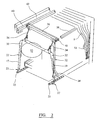
Figure 2 shows a cut away section of a trailer including a fastening arrangement according to an embodiment of the invention; -
Figure 3 shows a cut away section of a trailer including a fastening arrangement according to an embodiment of the invention; -
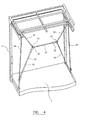
Figure 4 shows the fastening arrangement ofFigure 2 in the deployed securing position; -
Figure 5 is a diametric representation of a fastening arrangement according to the claimed invention, in the deployed securing position, with the retracted position represented in phantom lines. - Referring to
Figure 1 , atrailer 10 for connection to an engine driven truck is used in the haulage industry for transportation of cargo loads. Thetrailer 10 comprises adeck 2 forming a base of thetrailer 10 which defines a support surface for supporting aload 15 to be transported by thetrailer 10. Aframe 11 is mounted to thebase 2 and supports a plurality ofwalls 4 and aroof 7. Theside walls 4 androof 7 define a load space 6 for containing theload 15. -
Side walls 8 extend along the length of the base. Theside walls 8 are formed fromflexible curtains 9. Thecurtains 9 comprise flexible material re-enforced with vertically extending re-enforcement rods. Eachcurtain 9 is retractable between an open position and closed position. In the open position, as shown inFigure 1 , thecurtain 9 is retracted to an end of thebase 2 to provide access to the load space 6 through theside wall 8 for loading and unloading cargo loads. In the closed position thecurtain 9 extends along the entire length of the base to close theside wall 8. - In transit, the
load 15 is supported on thebase 2. Due to the inertia resulting from the mass of theload 15, theload 15 is prone to lateral movement relative to thebase 2 in transit. Specifically, acceleration and deceleration of thetrailer 10 causes longitudinal movement of theload 15 backwards and forwards along the length of thetrailer 10. Changes in direction, such as cornering, cause transverse movement of theload 15 side to side across thebase 2 of thetrailer 10. Transverse movement is of particular concern is it can result in theload 15 impacting against thecurtain 9. This contact can cause damage to thecurtain 9 or theload 15. More seriously, depending on the weight of the load and the transverse acceleration caused by thetrailer 10, impact of theload 15 with the side even result in theload 15 breaking through thecurtain 9 and falling from thetrailer 10. - A
fastening arrangement 20 is therefore provided to secure theload 15 to thebase 2 to prevent movement of theload 15 relative to thebase 2 in transit. While an individual fastening arrangement is described below,multiple fastening arrangements 20 may be mounted to thetrailer 10 for securing multiple loads, or for applying additional securement to a single large load. - The
fastening arrangement 20 is configured to clamp theload 15 against the base. The fastening arrangement comprises a securingstrap 22 for engaging and urging against theload 15 to clamp it to thebase 2. As shown inFigure 2 , a plurality of mountingpoints 25 are provided along opposing side edges of thebase 2. Thestrap 22 comprises ahook 23 at afirst end 17 which connects to one of the plurality of mountingpoints 25 on thebase 2. Aratchet tensioner 26 is connected to a second opposingend 19 of thestrap 22 for tightening thestrap 22 for clamping against theload 15. Theratchet tensioner 26 connects via ahook 27 to a mountingpoint 25 corresponding to the mountingpoint 25 to which thefirst strap end 17 is connected. Theratchet tensioner 26 is supported in an upright position by aseparate support strap 33. - The securing
strap 22 is supported in an elevated position from thebase 2 by strap supports 24. The strap supports comprise elasticated "bungee" cords. The strap supports 24 are mounted to the roof structure of thetrailer 10. Thestrap 22 is slidingly received withinsupport sleeves 32, which include hooks 35. Thehooks 35 connect to the strap supports 24 such that thestrap 22 is supported by and slidable relative to the strap supports 24. - The strap supports 24 and ratchet
tensioner support strap 33 are mounted to and supported bycross beam 36. Thecross beam 36 is connected to the longitudinalroof frame members 42 byguide tracks cross beam 36 is also connected to the roof cross braces 44 by acentral guide track 39. The guide tracks 38 and 40 comprise c-section tracks, in which thecross beam 36 is slidingly received. Alternatively, and as shown inFigure 3 , one of the guide tracks 40 may comprise an angle section flange, about which cross bar is slidingly mounted. Thecross beam 36 includesrollers 41 at it ends 37 for sliding engagement with thecross beam 36. Thecross beam 36 also comprises a guide projection (not shown) which is slidingly received within the c-section track 39. The sliding engagement of thecross beam 36 with thetracks trailer 10 along the longitudinal axis A to move the strap supports 24 and hence thestrap 22 along the length ofbase 2. Apull strap 34 is connected to thecross beam 36 to enable it to be pulled along the length of thebase 2 by an operative standing at ground level by pulling thehandle 51. When not in use thepull strap 34 may be secured to thestrap 22. - The strap supports 24 are connected to the
cross beam 36 at proximate theend section 37 of thecross beam 36. The strap supports 24 hold theguide sleeves 32 of thestrap 22 in a spaced apart relationship substantially equal to the width of thebase 2, as shown inFigure 3 . The positioning of the strap supports 24 and guidesleeves 32 along the length of thestrap 22 segregates thestrap 22 into three sections; acentre section 52, and opposingend sections end section 54 includes is connected to thehook 23, and the opposing end section is connected to theratchet tensioner 26. -
Figure 2 shows thestrap 22 held in a retracted support position by the strap supports 24. In the retracted support position the strap supports 24 are unextended. Thecentral section 52 of thestrap 22 is held spaced from the base close to theroof 7 of thetrailer 10. Theend sections base 2 by their connection to the mounting points 25. In this position, aload receiving area 60 is defined between thestrap 22 and thebase 2. With thestrap 22 held in the retracted position, theload 15 may be received within theload receiving area 60 without contacting thestrap 22. - Tensioning of the strap by the
ratchet tensioner 26 causes the effective length of thestrap 22 to shorten. As the free end of theend section 50 of thestrap 22 is pulled through theratchet tensioner 26, thestrap 22 is drawn downwards towards thebase 2. This downwards force, counteracted by thebase 2, causes the strap supports 24 to begin to stretch enabling theguide sleeves 32 and hence thestrap 22 to move downwards towards the base. - In the arrangement shown in
Figure 3 , thestrap 22 is moved from the retracted position to a deployed position. The trap supports 24 are stretched from their unextended position in which they held thestrap 22 in the stowed support position, to an extended position in which thestrap 22 is held in a deployed position. In the deployed position, the load receiving area is reduced. - Goods are loaded on to the
base 2 through theside wall 8 of thetrailer 10 with thecurtain 9 in a retracted position, in which thecross bar 36 is retained at the end of thetrailer 10 in a stored position. Astrap retainer 53 is used to hold thestrap 22 against the upright members of theframe 11 and hence to hold the fastening arrangement in the stored position. When theload 15 has been placed on to thebase 2, thestrap retainer 53 is removed to release thestrap 22. Pull straps 34 are used to slide thecross bar 36, and hence thestrap 22, along the length of the trailer to draw thestrap 22 over theload 15. - Once the
strap 22 is drawn over and level with theload 15, theend sections ratchet tensioner 26 is used to tighten thestrap 22. As thestrap 22 is tightened it is drawn down over theload 15, causing the strap supports 24 to stretch and move to the deployed position. Thesleeves 32 allow thestrap 22 to slide relative to the strap supports 24 as it is tightened by theratchet tensioner 26, to enable the strap supports 24 to maintain an even spacing and prevent them from being pulled out of position by thestrap 22. Once thestrap 22 engages the top of theload 15, tightening of thestrap 22 continues to clamp the strap against theload 15. Tensioning continues until theratchet tensioner 26 can no longer be manually operated. Theload 15 is thereby clamped against thebase 2 by thestrap 22 and secured for transit. - As can be seen from
Figure 5 , in the retracted position (indicated by phantom lines) thestrap 22 is held spaced from theload 15. In the deployed securing position, thestrap 22 is held in engagement with and conforms with the shape of theload 15, to clamp theload 15 to the base. - To release the
load 15 for unloading, theratchet tensioner 26 is released to remove the tension in thestrap 22. The stretched resilient strap supports 24 biases thestrap 22 to the stowed support position. As such, as theratchet tensioner 26 is released, thestrap 22 is pulled upwards by strap supports 24 towards the sowed support position away from theload 15. Once thestrap 22 has returned to the retracted stowed position, thepull strap 34 is used to slide thecross bar 36 back to the stored position. Theload 15 may then be unloaded from thebase 2. - It will be appreciated that in further embodiments various modifications to the specific arrangements described above and shown in the drawings may be made. For example, while a the strap is described as supported from the roof and clamping the load to the base, the strap could be used to clamp the load against a side wall acting as a support surface, with the strap being held spaced from the side wall in the stowed position. In addition, while the securing member is described as being a strap, any suitable securing member capable of being clamped over a load may be used. Furthermore, the strap support I described as being a resilient cord, but may alternatively be a retractable support such as a winch arrangement windable between the stowed and deployed positions.
Claims (15)
- A fastening arrangement (20) for securing a load (15) to a load support surface (2) for example of a vehicle (10), the arrangement comprising:a securing member (22) for clamping said load (15) to the support surface (); andat least one securing member support (24) mountable spaced from said support surface (2) for supporting the securing member (22);wherein said at least one securing member support (24) comprises a movable portion (32,35) connected to the securing member (22) movable between a first support position in which at least a portion of the securing member (22) is held spaced from the support surface (2), and a second deployed position in which the securing member (22) is able to engage and secure said load (15) to said support surface (2).
- The fastening arrangement (20) of claim 1 further comprising a biasing member which biases the movable portion (32,35) and the securing member (22) toward the first support position.
- The fastening arrangement (20) of claim 1 or 2 wherein the securing member support (24) comprises an elongate resilient member.
- The fastening arrangement (20) of any preceding claim comprising two securing member supports (24), and wherein the two securing member supports (24) are laterally spaced to support the securing member (22) in the first support position at two laterally spaced apart locations.
- The fastening arrangement (20) of any preceding claim wherein the securing member (22) has two opposing ends (50,54) which are connectable to corresponding fixed and laterally spaced anchoring points (25) proximate the load support surface (2) such that a load receiving area is defined between the load supporting surface (2) and the securing member (22).
- The fastening arrangement (20) of claim 5 wherein there is a plurality of anchoring points (25) spaced longitudinally along opposing edges of the support surface (2).
- The fastening arrangement (20) of any preceding claim wherein the securing member (22) comprises a strap.
- The fastening arrangement (20) of any preceding claim further comprising tensioning means (26) for tightening the securing member (22) to tension the securing member (22) against the load support surface (2) to clamp the load (15) against the load support surface (2).
- The fastening arrangement (20) of any preceding claim wherein the securing member (22) is slidingly supported by the at least one securing member support (24).
- The fastening arrangement (20) of claim 9 wherein the at least one securing member support (24) comprises a sleeve (32) for slidingly receiving the securing member (22).
- The fastening arrangement (20) of any preceding claim further comprising guide means (38,40) mountable in a spaced relationship to the support surface (2); and wherein the at least one securing member support (24) is movably mounted on the guide means (38,40) to enable selective positioning of the support member (22) along the guide means (38,40).
- A load transporter (10), for example a vehicle trailer, comprising:a base (2) defining a load support surface (2) for supporting a load (15); andat least one fastening arrangement (20) according to any preceding claim;wherein the at least one securing member support (24) is mounted in an elevated position relative to the base (2).
- The load transporter (10) of claim 12 wherein the at least one securing member support (24) is moveably mounted in said elevated position to enable the securing member (22) to be selectively moved to a plurality of securing positions.
- The load transporter (10) of any one of claims 12 or 13 further comprising a cross beam (36) mounted in an elevated position from and extending across the base (2), and upon which the securing member support (24) is mounted.
- The load transporter (10) of claim 14 wherein said cross beam (36) is slideably mounted to a guide member (38,40) such that it is movable along the length of the base (2).
Applications Claiming Priority (1)
| Application Number | Priority Date | Filing Date | Title |
|---|---|---|---|
| GB0909124A GB2470582A (en) | 2009-05-26 | 2009-05-26 | Fastening arrangement for securing a load to a support surface |
Publications (1)
| Publication Number | Publication Date |
|---|---|
| EP2255997A1 true EP2255997A1 (en) | 2010-12-01 |
Family
ID=40863058
Family Applications (1)
| Application Number | Title | Priority Date | Filing Date |
|---|---|---|---|
| EP10275057A Withdrawn EP2255997A1 (en) | 2009-05-26 | 2010-05-28 | A fastening arrangement for securing a load to a support surface |
Country Status (2)
| Country | Link |
|---|---|
| EP (1) | EP2255997A1 (en) |
| GB (1) | GB2470582A (en) |
Cited By (7)
| Publication number | Priority date | Publication date | Assignee | Title |
|---|---|---|---|---|
| WO2014080201A1 (en) * | 2012-11-21 | 2014-05-30 | Freight Securing Systems Limited | Cargo Retention Systems |
| EP2759444A1 (en) * | 2013-01-23 | 2014-07-30 | System Trailers Fahrzeugbau GmbH | Commercial vehicle with a fixing device for a load securing element |
| EP2835282A1 (en) * | 2013-08-05 | 2015-02-11 | Schmitz Cargobull AG | Commercial vehicle structure with sliding load securing device |
| WO2018053582A1 (en) * | 2016-09-21 | 2018-03-29 | Sergis Systems & Co Pty Ltd | System and method for securing and/or covering a load |
| EP3770013A1 (en) * | 2019-07-25 | 2021-01-27 | Easy Lock GmbH | Vehicle body with a device for securing loads |
| EP3822119A1 (en) * | 2019-11-14 | 2021-05-19 | Easy Lock GmbH | Vehicle body with a device for securing loads |
| EP4292882A1 (en) * | 2022-06-16 | 2023-12-20 | The West Retail Group Limited | A transport system and a method |
Citations (6)
| Publication number | Priority date | Publication date | Assignee | Title |
|---|---|---|---|---|
| DE8632782U1 (en) * | 1986-12-06 | 1987-02-05 | Stupperich, Dieter, 5960 Olpe | Protective cover for tensioning straps to secure loads |
| FR2596340A1 (en) * | 1986-03-28 | 1987-10-02 | Renault Vehicules Ind | Device for anchoring a load, especially to the floor of a road trailer |
| DE19944538A1 (en) * | 1999-09-17 | 2001-04-05 | Daimler Chrysler Ag | Arrangement for fixing loads on vehicle loading surface has belt fixed above load surface at ends to be close to or on and preferably parallel to boundary wall when no load on surface |
| DE20109024U1 (en) * | 2001-05-30 | 2001-09-20 | Schröder-Rentrop, Karl-Dieter, 58840 Plettenberg | Lashing strap ready system for truck bodies |
| DE20113047U1 (en) * | 2001-05-23 | 2001-11-08 | BPW Bergische Achsen KG, 51674 Wiehl | Load securing system |
| DE102004045905A1 (en) * | 2004-09-20 | 2006-03-30 | Spanset Inter Ag | Protective element for textile lashing or slinging equipment and lashing or slinging equipment equipped with such a protective element |
Family Cites Families (3)
| Publication number | Priority date | Publication date | Assignee | Title |
|---|---|---|---|---|
| DE2520034A1 (en) * | 1975-05-06 | 1976-11-18 | Friedrich Wilhelm Dipl Schmidt | Luggage restraining bands for car boot - comprises metal fitting loops in plastic plates glued to boot |
| SU580134A1 (en) * | 1976-02-27 | 1977-11-15 | Центральное проектно-конструкторское технологическое бюро "Автоспецоборудование" | Arrangement for securing packaged loads in a vehicle van |
| DE19602597C1 (en) * | 1996-01-25 | 1996-10-02 | Daimler Benz Ag | Device for temporary fixture of object on vehicle seat |
-
2009
- 2009-05-26 GB GB0909124A patent/GB2470582A/en not_active Withdrawn
-
2010
- 2010-05-28 EP EP10275057A patent/EP2255997A1/en not_active Withdrawn
Patent Citations (6)
| Publication number | Priority date | Publication date | Assignee | Title |
|---|---|---|---|---|
| FR2596340A1 (en) * | 1986-03-28 | 1987-10-02 | Renault Vehicules Ind | Device for anchoring a load, especially to the floor of a road trailer |
| DE8632782U1 (en) * | 1986-12-06 | 1987-02-05 | Stupperich, Dieter, 5960 Olpe | Protective cover for tensioning straps to secure loads |
| DE19944538A1 (en) * | 1999-09-17 | 2001-04-05 | Daimler Chrysler Ag | Arrangement for fixing loads on vehicle loading surface has belt fixed above load surface at ends to be close to or on and preferably parallel to boundary wall when no load on surface |
| DE20113047U1 (en) * | 2001-05-23 | 2001-11-08 | BPW Bergische Achsen KG, 51674 Wiehl | Load securing system |
| DE20109024U1 (en) * | 2001-05-30 | 2001-09-20 | Schröder-Rentrop, Karl-Dieter, 58840 Plettenberg | Lashing strap ready system for truck bodies |
| DE102004045905A1 (en) * | 2004-09-20 | 2006-03-30 | Spanset Inter Ag | Protective element for textile lashing or slinging equipment and lashing or slinging equipment equipped with such a protective element |
Cited By (7)
| Publication number | Priority date | Publication date | Assignee | Title |
|---|---|---|---|---|
| WO2014080201A1 (en) * | 2012-11-21 | 2014-05-30 | Freight Securing Systems Limited | Cargo Retention Systems |
| EP2759444A1 (en) * | 2013-01-23 | 2014-07-30 | System Trailers Fahrzeugbau GmbH | Commercial vehicle with a fixing device for a load securing element |
| EP2835282A1 (en) * | 2013-08-05 | 2015-02-11 | Schmitz Cargobull AG | Commercial vehicle structure with sliding load securing device |
| WO2018053582A1 (en) * | 2016-09-21 | 2018-03-29 | Sergis Systems & Co Pty Ltd | System and method for securing and/or covering a load |
| EP3770013A1 (en) * | 2019-07-25 | 2021-01-27 | Easy Lock GmbH | Vehicle body with a device for securing loads |
| EP3822119A1 (en) * | 2019-11-14 | 2021-05-19 | Easy Lock GmbH | Vehicle body with a device for securing loads |
| EP4292882A1 (en) * | 2022-06-16 | 2023-12-20 | The West Retail Group Limited | A transport system and a method |
Also Published As
| Publication number | Publication date |
|---|---|
| GB0909124D0 (en) | 2009-07-01 |
| GB2470582A (en) | 2010-12-01 |
Similar Documents
| Publication | Publication Date | Title |
|---|---|---|
| EP2255997A1 (en) | A fastening arrangement for securing a load to a support surface | |
| US4369009A (en) | Load carrying system | |
| US5156506A (en) | Log truck securement system | |
| US10322662B2 (en) | Kayak transport dolly and storage rack | |
| US6520723B2 (en) | Rack with built-in winch component | |
| US3697045A (en) | Adjustable winch for cargo tie-down | |
| US5538376A (en) | Apparatus and method for securing large objects | |
| US8366373B2 (en) | Collapsible, lightweight mount to support a cargo loading device | |
| CA2607008C (en) | Clamp-on material carrier for a panel truck | |
| GB2537951A (en) | Removable frame system for vehicle shipping | |
| US7344343B2 (en) | Vehicle support and retention system for a vehicle transporter | |
| US10000146B2 (en) | Adjustable and collapsible apparatus for loading and unloading pickup truck cargo beds | |
| US20130223972A1 (en) | Method and apparatus for loading and unloading an atv | |
| US20190232857A1 (en) | Systems and methods for securing cargo on a flatbed carrier | |
| US4037870A (en) | Apparatus for transporting glass panes | |
| US6726073B2 (en) | Boat-carrying rack | |
| US8025468B2 (en) | Metal coil securing apparatus and method | |
| US20230192199A1 (en) | Railing assembly for trailer | |
| CN114174113A (en) | Transport vehicle for piece goods | |
| KR20040053347A (en) | Cargo Support Device | |
| US7845886B2 (en) | Tiedown system | |
| GB2464469A (en) | Flatbed Safety System | |
| CA2636445A1 (en) | Retractable monorail tarpaulin system | |
| US20070194068A1 (en) | Vehicle mounted ladder rack | |
| ES2891674T3 (en) | Hybrid suspension tarpaulin |
Legal Events
| Date | Code | Title | Description |
|---|---|---|---|
| PUAI | Public reference made under article 153(3) epc to a published international application that has entered the european phase |
Free format text: ORIGINAL CODE: 0009012 |
|
| AK | Designated contracting states |
Kind code of ref document: A1 Designated state(s): AL AT BE BG CH CY CZ DE DK EE ES FI FR GB GR HR HU IE IS IT LI LT LU LV MC MK MT NL NO PL PT RO SE SI SK SM TR |
|
| AX | Request for extension of the european patent |
Extension state: BA ME RS |
|
| STAA | Information on the status of an ep patent application or granted ep patent |
Free format text: STATUS: THE APPLICATION IS DEEMED TO BE WITHDRAWN |
|
| 18D | Application deemed to be withdrawn |
Effective date: 20110602 |