EP2255726A1 - Spectral profile of SWS enhancing drugs - Google Patents
Spectral profile of SWS enhancing drugs Download PDFInfo
- Publication number
- EP2255726A1 EP2255726A1 EP09290384A EP09290384A EP2255726A1 EP 2255726 A1 EP2255726 A1 EP 2255726A1 EP 09290384 A EP09290384 A EP 09290384A EP 09290384 A EP09290384 A EP 09290384A EP 2255726 A1 EP2255726 A1 EP 2255726A1
- Authority
- EP
- European Patent Office
- Prior art keywords
- sleep disorders
- compound
- sleep
- eplivanserin
- insomnia
- Prior art date
- Legal status (The legal status is an assumption and is not a legal conclusion. Google has not performed a legal analysis and makes no representation as to the accuracy of the status listed.)
- Withdrawn
Links
- 230000003595 spectral effect Effects 0.000 title claims abstract description 15
- 239000003814 drug Substances 0.000 title claims description 6
- 229940079593 drug Drugs 0.000 title claims description 5
- 230000002708 enhancing effect Effects 0.000 title description 2
- 150000001875 compounds Chemical class 0.000 claims abstract description 23
- 208000019116 sleep disease Diseases 0.000 claims abstract description 22
- 230000037053 non-rapid eye movement Effects 0.000 claims abstract description 13
- 230000001965 increasing effect Effects 0.000 claims abstract description 7
- 230000001225 therapeutic effect Effects 0.000 claims abstract description 4
- 208000013738 Sleep Initiation and Maintenance disease Diseases 0.000 claims description 20
- VAIOZOCLKVMIMN-PRJWTAEASA-N eplivanserin Chemical compound C=1C=CC=C(F)C=1\C(=N/OCCN(C)C)\C=C\C1=CC=C(O)C=C1 VAIOZOCLKVMIMN-PRJWTAEASA-N 0.000 claims description 19
- 206010022437 insomnia Diseases 0.000 claims description 19
- 229950000789 eplivanserin Drugs 0.000 claims description 18
- 150000003839 salts Chemical class 0.000 claims description 11
- 230000007958 sleep Effects 0.000 claims description 10
- 150000002148 esters Chemical class 0.000 claims description 9
- 238000012423 maintenance Methods 0.000 claims description 7
- RNLKLYQQDLHHBH-ABDBJYMXSA-N chembl2103845 Chemical compound OC(=O)\C=C\C(O)=O.C=1C=CC=C(F)C=1\C(=N/OCCN(C)C)\C=C\C1=CC=C(O)C=C1.C=1C=CC=C(F)C=1\C(=N/OCCN(C)C)\C=C\C1=CC=C(O)C=C1 RNLKLYQQDLHHBH-ABDBJYMXSA-N 0.000 claims 2
- 230000037322 slow-wave sleep Effects 0.000 description 6
- 230000000694 effects Effects 0.000 description 4
- 239000005557 antagonist Substances 0.000 description 3
- 206010027590 Middle insomnia Diseases 0.000 description 2
- 239000003326 hypnotic agent Substances 0.000 description 2
- 230000000147 hypnotic effect Effects 0.000 description 2
- 230000000144 pharmacologic effect Effects 0.000 description 2
- 102000005962 receptors Human genes 0.000 description 2
- 108020003175 receptors Proteins 0.000 description 2
- QZAYGJVTTNCVMB-UHFFFAOYSA-N serotonin Chemical compound C1=C(O)C=C2C(CCN)=CNC2=C1 QZAYGJVTTNCVMB-UHFFFAOYSA-N 0.000 description 2
- 230000037046 slow wave activity Effects 0.000 description 2
- PBJUNZJWGZTSKL-MRXNPFEDSA-N tiagabine Chemical compound C1=CSC(C(=CCCN2C[C@@H](CCC2)C(O)=O)C2=C(C=CS2)C)=C1C PBJUNZJWGZTSKL-MRXNPFEDSA-N 0.000 description 2
- 229960001918 tiagabine Drugs 0.000 description 2
- SVUOLADPCWQTTE-UHFFFAOYSA-N 1h-1,2-benzodiazepine Chemical compound N1N=CC=CC2=CC=CC=C12 SVUOLADPCWQTTE-UHFFFAOYSA-N 0.000 description 1
- 102000040125 5-hydroxytryptamine receptor family Human genes 0.000 description 1
- 108091032151 5-hydroxytryptamine receptor family Proteins 0.000 description 1
- 206010039897 Sedation Diseases 0.000 description 1
- 206010041235 Snoring Diseases 0.000 description 1
- 238000000692 Student's t-test Methods 0.000 description 1
- 208000007271 Substance Withdrawal Syndrome Diseases 0.000 description 1
- 206010063968 Upper airway resistance syndrome Diseases 0.000 description 1
- 230000009471 action Effects 0.000 description 1
- 239000000556 agonist Substances 0.000 description 1
- 230000002744 anti-aggregatory effect Effects 0.000 description 1
- 239000003146 anticoagulant agent Substances 0.000 description 1
- 229940049706 benzodiazepine Drugs 0.000 description 1
- 230000005540 biological transmission Effects 0.000 description 1
- 230000000903 blocking effect Effects 0.000 description 1
- 230000008859 change Effects 0.000 description 1
- 239000003795 chemical substances by application Substances 0.000 description 1
- 238000012937 correction Methods 0.000 description 1
- 238000002474 experimental method Methods 0.000 description 1
- 239000005554 hypnotics and sedatives Substances 0.000 description 1
- 230000006872 improvement Effects 0.000 description 1
- 230000001939 inductive effect Effects 0.000 description 1
- 230000007246 mechanism Effects 0.000 description 1
- 230000010534 mechanism of action Effects 0.000 description 1
- 230000010004 neural pathway Effects 0.000 description 1
- 210000000118 neural pathway Anatomy 0.000 description 1
- 239000002858 neurotransmitter agent Substances 0.000 description 1
- 239000000902 placebo Substances 0.000 description 1
- 229940068196 placebo Drugs 0.000 description 1
- 230000036470 plasma concentration Effects 0.000 description 1
- 239000004089 psychotropic agent Substances 0.000 description 1
- 238000012216 screening Methods 0.000 description 1
- 230000036280 sedation Effects 0.000 description 1
- 229940076279 serotonin Drugs 0.000 description 1
- 230000002295 serotoninergic effect Effects 0.000 description 1
- 201000002859 sleep apnea Diseases 0.000 description 1
- 230000003860 sleep quality Effects 0.000 description 1
- 238000001228 spectrum Methods 0.000 description 1
- 238000010183 spectrum analysis Methods 0.000 description 1
- 230000004936 stimulating effect Effects 0.000 description 1
- 238000012353 t test Methods 0.000 description 1
- 230000000007 visual effect Effects 0.000 description 1
Images
Classifications
-
- A—HUMAN NECESSITIES
- A61—MEDICAL OR VETERINARY SCIENCE; HYGIENE
- A61B—DIAGNOSIS; SURGERY; IDENTIFICATION
- A61B5/00—Measuring for diagnostic purposes; Identification of persons
- A61B5/24—Detecting, measuring or recording bioelectric or biomagnetic signals of the body or parts thereof
- A61B5/316—Modalities, i.e. specific diagnostic methods
- A61B5/369—Electroencephalography [EEG]
- A61B5/372—Analysis of electroencephalograms
- A61B5/374—Detecting the frequency distribution of signals, e.g. detecting delta, theta, alpha, beta or gamma waves
-
- A—HUMAN NECESSITIES
- A61—MEDICAL OR VETERINARY SCIENCE; HYGIENE
- A61B—DIAGNOSIS; SURGERY; IDENTIFICATION
- A61B5/00—Measuring for diagnostic purposes; Identification of persons
- A61B5/48—Other medical applications
- A61B5/4806—Sleep evaluation
Definitions
- the present invention relates to compounds having a spectral NREM (non-rapid eye movement) electroencephalographic (EEG) profile increasing the power density of 1 and 2 Hz bins and reducing power in beta frequency bins for sleep disorders.
- spectral NREM non-rapid eye movement
- EEG electroencephalographic
- the present invention also relates to the use of such spectral profile for identifying compounds displaying therapeutic activity on sleep disorders.
- eplivanserin The compound (1Z, 2E)-1-(2-fluorophenyl)-3-(4-hydroxyphenyl)-prop-2-en-1-one-O-(2-dimethylaminoethyl)oxime, is hereafter referenced as eplivanserin or pharmaceutically acceptable salts or esters thereof.
- Documents EP 373998 and US 5166416 claim compounds having a generic scope encompassing eplivanserin or pharmaceutically acceptable salts or esters thereof and also specifically claimed eplivanserin or pharmaceutically acceptable salts or esters thereof, and disclosed its use as a platelet antiaggregant or a psychotropic agent.
- Eplivanserin or pharmaceutically acceptable salts or esters thereof in particular hemifumarate salt, is an antagonist of 5HT 2A receptors ( Journal of Pharmacological Experiment in Therapeutics, (1992), vol. 262 (2), pp. 759-68 ). Eplivanserin is well absorbed (>70%). Conventional dosage, between 1 and 10 mg, leads to a maximal plasma concentration that is reached between 2 and 6 hours; the half-life time of eplivanserin or pharmaceutically acceptable salts or esters thereof is relatively long, with an average value of 50 hours. Eplivanserin or pharmaceutically acceptable salts or esters thereof is also known to enhance slow wave sleep (SWS) ( Neuropsychopharmacology (1999), vol.21 (3), pp. 455-466 ).
- SWS slow wave sleep
- a polysomnographic (PSG) recording was performed on 102 patients aged of 18 years or more (52 women, 50 men) with primary insomnia. These patients were randomly selected from a group of approximately 300 patients with primary insomnia who received nightly eplivanserin 5mg during a six-week clinical trial.
- the spectral analysis was conducted using a 4-second tapering window, overlapping 25%. This resulted in a ten 4-second windows, called sub-epochs, per 30-second epoch.
- the spectra from the sub-epochs were averaged across the 30-second epoch, and subsequently, all 30-second epochs were averaged together to get the spectral power for all NREM sleep during the entire night.
- the spectral power in quarter-Hz bins up to 31.5 Hz was calculated separately for each recording.
- the absolute power in 1 Hz bins up to 31 Hz was then calculated for each analyzed PSG recording by summing four 0.25 Hz bins (e.g.
- the relative power was then calculated for each subject by dividing the average absolute power measures for the treatment nights by the absolute power values for the screen/baseline nights. A statistical comparison was made using t-tests with Bonferroni correction for multiple comparisons.
- the absolute power in 1- and 2-Hz bins was significantly greater on eplivanserin treatment nights than at baseline (p ⁇ 0.002), as were sub-delta (0.25-0.75 Hz) and delta (0.75-4.5 Hz) power (p ⁇ 0.007). Therefore, eplivanserin shows a significantly lowered absolute power in 1-Hz bins from 12 to 23 Hz (p ⁇ 0.002) and within the sigma (12-15 Hz), beta-1 (15-20 Hz), and beta-2 (20-25 Hz) bands (p ⁇ 0.007) when compared with baseline.
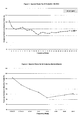
- Figures 1 and 2 show spectral power in the 1-Hz bins and standard bands, respectively, for all patients; absolute power on treatment nights is expressed relative to baseline nights in these figures, for a better visual depiction of the data.
- BzRA benzodiazepine
- Tiagabine Similar analysis were performed on benzodiazepine (BzRA) and Tiagabine and provided different results. BzRAs reduced power in slow wave and theta frequencies, and tiagabine and other SWS-enhancing drugs increased power throughout the slow wave and theta bands.
- sleep disorders are insomnia.
- sleep disorders are chronic insomnia.
- sleep disorders are insomnia characterized by sleep maintenance difficulties.
- sleep disorders are insomnia including nocturnal awakenings, usually for short-term duration.
- sleep disorders are insomnia including nocturnal awakenings or early awakenings, usually for short-term duration. In some embodiments, sleep disorders are chronic insomnia characterized by difficulties with sleep maintenance.
- a pharmaceutically acceptable salt of eplivanserin is hemifumarate.
Landscapes
- Health & Medical Sciences (AREA)
- Life Sciences & Earth Sciences (AREA)
- Biomedical Technology (AREA)
- Molecular Biology (AREA)
- Psychology (AREA)
- Biophysics (AREA)
- Pathology (AREA)
- Engineering & Computer Science (AREA)
- Psychiatry (AREA)
- Heart & Thoracic Surgery (AREA)
- Medical Informatics (AREA)
- Physics & Mathematics (AREA)
- Surgery (AREA)
- Animal Behavior & Ethology (AREA)
- General Health & Medical Sciences (AREA)
- Public Health (AREA)
- Veterinary Medicine (AREA)
- Pharmaceuticals Containing Other Organic And Inorganic Compounds (AREA)
- Acyclic And Carbocyclic Compounds In Medicinal Compositions (AREA)
Abstract
Use of a spectral NREM (non-rapid eye movement) electroencephalographic (EEG) profile increasing the power density of 1 and 2 Hz bins and reducing power in beta frequency bins for identifying compounds displaying therapeutic activity on sleep disorders.
Compound with, in humans, a spectral NREM (non-rapid eye movement) electroencephalographic (EEG) profile increasing the power density of 1 and 2 Hz bins and reducing power,in beta frequency bins for sleep disorders.
Description
- The present invention relates to compounds having a spectral NREM (non-rapid eye movement) electroencephalographic (EEG) profile increasing the power density of 1 and 2 Hz bins and reducing power in beta frequency bins for sleep disorders.
- The present invention also relates to the use of such spectral profile for identifying compounds displaying therapeutic activity on sleep disorders.
- Compounds with a large variety of mechanisms of action with effect on SWS (slow wave sleep) and or SWA (slow wave activity) are known but all display side effects, such as no consistent improvement in sleep quality without inducing next-day sedation, or rebound or withdrawal symptoms after treatment discontinuation in patients with chronic insomnia and sleep maintenance difficulties.
- It has been known for many years that neural pathways utilizing serotonin as their primary neurotransmitter play important roles in the control of sleep states. However, drugs which modulate serotoninergic transmission by, for example, stimulating or blocking receptors for this transmitter, have never found clinical use in the treatment of insomnia (Ann Pharm Fr 2007, vol. 65 pp. 268-274). This may soon change as several agents with selective activity as antagonists or inverse agonists at the 5HT2A subtype of serotonin receptors are currently being tested in patients with sleep disorders. 5HT2A antagonists do not show pharmacological effects similar to traditional sedative hypnotic agents. However, they do modify sleep architecture by selectively increasing slow wave sleep (Neuropsychopharmacology (1999); vol.21, pp. 455-466).
- The compound (1Z, 2E)-1-(2-fluorophenyl)-3-(4-hydroxyphenyl)-prop-2-en-1-one-O-(2-dimethylaminoethyl)oxime, is hereafter referenced as eplivanserin or pharmaceutically acceptable salts or esters thereof. Documents
EP 373998 US 5166416 claim compounds having a generic scope encompassing eplivanserin or pharmaceutically acceptable salts or esters thereof and also specifically claimed eplivanserin or pharmaceutically acceptable salts or esters thereof, and disclosed its use as a platelet antiaggregant or a psychotropic agent. - See also
US 6143792 andEP 1014960 (sleep apnea) andUS 6576970 andEP 11140955 - Eplivanserin or pharmaceutically acceptable salts or esters thereof, in particular hemifumarate salt, is an antagonist of 5HT2A receptors (Journal of Pharmacological Experiment in Therapeutics, (1992), vol. 262 (2), pp. 759-68). Eplivanserin is well absorbed (>70%). Conventional dosage, between 1 and 10 mg, leads to a maximal plasma concentration that is reached between 2 and 6 hours; the half-life time of eplivanserin or pharmaceutically acceptable salts or esters thereof is relatively long, with an average value of 50 hours. Eplivanserin or pharmaceutically acceptable salts or esters thereof is also known to enhance slow wave sleep (SWS) (Neuropsychopharmacology (1999), vol.21 (3), pp. 455-466).
- A clinical study was performed in order to define the spectral profile of eplivanserin and to examine the NREM EEG profile of eplivanserin in primary insomnia patients.
- A polysomnographic (PSG) recording was performed on 102 patients aged of 18 years or more (52 women, 50 men) with primary insomnia. These patients were randomly selected from a group of approximately 300 patients with primary insomnia who received nightly eplivanserin 5mg during a six-week clinical trial.
- Patients received placebo during two night-times and the screening/baseline with polysomnogram (PSG) was recorded. While receiving
eplivanserin 5 mg on study days 41 and 42 PSG recordings were performed during two night-times. - The spectral analysis was conducted using a 4-second tapering window, overlapping 25%. This resulted in a ten 4-second windows, called sub-epochs, per 30-second epoch. The spectra from the sub-epochs were averaged across the 30-second epoch, and subsequently, all 30-second epochs were averaged together to get the spectral power for all NREM sleep during the entire night. The spectral power in quarter-Hz bins up to 31.5 Hz was calculated separately for each recording. The absolute power in 1 Hz bins up to 31 Hz was then calculated for each analyzed PSG recording by summing four 0.25 Hz bins (e.g. 0.25 + 0.50 Hz + 0.75 Hz + 1.0 Hz = 1 Hz band; 1.25 + 1.50 Hz + 1.75 Hz + 2.0 Hz = 2 Hz band). The absolute power values for the two screen/baseline PSGs were averaged, as were absolute power values for the two treatment nights.
- The relative power was then calculated for each subject by dividing the average absolute power measures for the treatment nights by the absolute power values for the screen/baseline nights. A statistical comparison was made using t-tests with Bonferroni correction for multiple comparisons.
- The absolute power in 1- and 2-Hz bins was significantly greater on eplivanserin treatment nights than at baseline (p<0.002), as were sub-delta (0.25-0.75 Hz) and delta (0.75-4.5 Hz) power (p<0.007). Therefore, eplivanserin shows a significantly lowered absolute power in 1-Hz bins from 12 to 23 Hz (p<0.002) and within the sigma (12-15 Hz), beta-1 (15-20 Hz), and beta-2 (20-25 Hz) bands (p<0.007) when compared with baseline.
-
Figures 1 and 2 show spectral power in the 1-Hz bins and standard bands, respectively, for all patients; absolute power on treatment nights is expressed relative to baseline nights in these figures, for a better visual depiction of the data. - Similar analysis were performed on benzodiazepine (BzRA) and Tiagabine and provided different results. BzRAs reduced power in slow wave and theta frequencies, and tiagabine and other SWS-enhancing drugs increased power throughout the slow wave and theta bands.
- These findings indicate that eplivanserin or pharmaceutically acceptable salts or esters thereof produces a NREM spectral profile that significantly differs from both hypnotics and other SWS-enhancing drugs. This spectral profile thus may be used to illustrate the distinct mechanism of action as compared to standard hypnotics and for identifying compounds displaying activity on sleep disorders, by enhancing SWS.
- In some embodiments, sleep disorders are insomnia.
- In some embodiments, sleep disorders are chronic insomnia.
- In some embodiments, sleep disorders are insomnia characterized by sleep maintenance difficulties.
- In some embodiments, sleep disorders are insomnia including nocturnal awakenings, usually for short-term duration.
- In some embodiments, sleep disorders are insomnia including nocturnal awakenings or early awakenings, usually for short-term duration. In some embodiments, sleep disorders are chronic insomnia characterized by difficulties with sleep maintenance.
- In some embodiments, a pharmaceutically acceptable salt of eplivanserin is hemifumarate.
-
Figure 1 : Spectral power for all subjects -1 Hz Bins -
Figure 2 : Spectral power for all subjects-Standard bands
Claims (17)
- Use of a spectral NREM (non-rapid eye movement) electroencephalographic (EEG) profile increasing the power density of 1 and 2 Hz bins and reducing power in beta frequency bins in humans for identifying compounds displaying therapeutic activity on sleep disorders.
- Use according to claim 1, wherein said identified compound is a SWS-enhancing drug.
- Use according to claim 1 or 2, wherein said identified compound is eplivanserin or pharmaceutically acceptable salts or esters thereof.
- Use according to claims 1 to 3, wherein said identified compound is eplivanserin hemifumarate.
- Use according to claims 1 to 4, wherein sleep disorders are insomnia.
- Use according to claims 1 to 5, wherein sleep disorders are chronic insomnia.
- Use according to claims 1 to 6, wherein sleep disorders are insomnia characterized by difficulties with sleep maintenance.
- Use according to claims 1 to 7, wherein sleep disorders are chronic insomnia characterized by difficulties with sleep maintenance.
- Compound with, in human, a spectral NREM (non-rapid eye movement) electroencephalographic (EEG) profile increasing the power density of 1 and 2 Hz bins and reducing power in beta frequency bins for sleep disorders.
- Compound according to claim 9, wherein said compound is eplivanserin or pharmaceutically acceptable salts or esters thereof.
- Compound according to claim 8 or 10, wherein said compound is eplivanserin hemifumarate.
- Compound according to claims 8 to 11, wherein sleep disorders are insomnia.
- Compound according to claims 8 to 12, wherein sleep disorders are chronic insomnia.
- Compound according to claims 8 to 13, wherein sleep disorders are insomnia characterized by difficulties with sleep maintenance.
- Compound according to claims 8 to 14, wherein sleep disorders are chronic insomnia characterized by difficulties with sleep maintenance.
- Compound according to claims 8 to 15, wherein a therapeutic amount of eplivanserin is 5 mg once a day.
- Compound according to claims 8 to 16, wherein the administration can be made at any time of the day.
Priority Applications (1)
| Application Number | Priority Date | Filing Date | Title |
|---|---|---|---|
| EP09290384A EP2255726A1 (en) | 2009-05-26 | 2009-05-26 | Spectral profile of SWS enhancing drugs |
Applications Claiming Priority (1)
| Application Number | Priority Date | Filing Date | Title |
|---|---|---|---|
| EP09290384A EP2255726A1 (en) | 2009-05-26 | 2009-05-26 | Spectral profile of SWS enhancing drugs |
Publications (1)
| Publication Number | Publication Date |
|---|---|
| EP2255726A1 true EP2255726A1 (en) | 2010-12-01 |
Family
ID=40947486
Family Applications (1)
| Application Number | Title | Priority Date | Filing Date |
|---|---|---|---|
| EP09290384A Withdrawn EP2255726A1 (en) | 2009-05-26 | 2009-05-26 | Spectral profile of SWS enhancing drugs |
Country Status (1)
| Country | Link |
|---|---|
| EP (1) | EP2255726A1 (en) |
Citations (9)
| Publication number | Priority date | Publication date | Assignee | Title |
|---|---|---|---|---|
| EP0373998A1 (en) | 1988-12-02 | 1990-06-20 | Elf Sanofi | Propenone oxime ethers, method for their preparation and pharmaceutical compositions containing them |
| EP1014960A1 (en) | 1997-06-26 | 2000-07-05 | Sanofi-Synthelabo | Use of a specific antagonist of 5ht2 receptors for preparing medicines useful for treating sleep-disordered breathing |
| EP1140955A1 (en) | 1998-12-16 | 2001-10-10 | Basf Aktiengesellschaft | Metallocene complexes |
| US6576970B2 (en) | 2001-01-26 | 2003-06-10 | Samsung Electronics Co., Ltd. | Bonding pad structure of semiconductor device and method for fabricating the same |
| US20050239838A1 (en) * | 2004-04-23 | 2005-10-27 | Dale Edgar | Methods of treating sleep disorders |
| US20070088079A1 (en) * | 2005-09-20 | 2007-04-19 | Takeda Pharmaceutical Company Limited | Prophylactic or therapeutic agent for sleep disorder |
| WO2008006082A2 (en) * | 2006-07-06 | 2008-01-10 | Jon Barron | Energy enhancing formulation |
| US20080181943A1 (en) * | 2005-08-19 | 2008-07-31 | Sanofi-Aventis | Combination of a long-acting hypnotic agent and a short-acting hypnotic agent and therapeutic use thereof |
| US20080242682A1 (en) * | 2004-12-13 | 2008-10-02 | Takeda Pharmaceutical Company Limited | Preventive or Therapeutic Agent for Sleep Disorder |
-
2009
- 2009-05-26 EP EP09290384A patent/EP2255726A1/en not_active Withdrawn
Patent Citations (11)
| Publication number | Priority date | Publication date | Assignee | Title |
|---|---|---|---|---|
| EP0373998A1 (en) | 1988-12-02 | 1990-06-20 | Elf Sanofi | Propenone oxime ethers, method for their preparation and pharmaceutical compositions containing them |
| US5166416A (en) | 1988-12-02 | 1992-11-24 | Societe Anonyme: Sanofi | Propenone oxime ethers, a method of preparing them, and pharmaceutical compositions containing them |
| EP1014960A1 (en) | 1997-06-26 | 2000-07-05 | Sanofi-Synthelabo | Use of a specific antagonist of 5ht2 receptors for preparing medicines useful for treating sleep-disordered breathing |
| US6143792A (en) | 1997-06-26 | 2000-11-07 | Sanofi-Synthelabo | Use of a specific antagonist of 5HT2 receptors for preparaing medicines useful for treating sleep-disordered breathing |
| EP1140955A1 (en) | 1998-12-16 | 2001-10-10 | Basf Aktiengesellschaft | Metallocene complexes |
| US6576970B2 (en) | 2001-01-26 | 2003-06-10 | Samsung Electronics Co., Ltd. | Bonding pad structure of semiconductor device and method for fabricating the same |
| US20050239838A1 (en) * | 2004-04-23 | 2005-10-27 | Dale Edgar | Methods of treating sleep disorders |
| US20080242682A1 (en) * | 2004-12-13 | 2008-10-02 | Takeda Pharmaceutical Company Limited | Preventive or Therapeutic Agent for Sleep Disorder |
| US20080181943A1 (en) * | 2005-08-19 | 2008-07-31 | Sanofi-Aventis | Combination of a long-acting hypnotic agent and a short-acting hypnotic agent and therapeutic use thereof |
| US20070088079A1 (en) * | 2005-09-20 | 2007-04-19 | Takeda Pharmaceutical Company Limited | Prophylactic or therapeutic agent for sleep disorder |
| WO2008006082A2 (en) * | 2006-07-06 | 2008-01-10 | Jon Barron | Energy enhancing formulation |
Non-Patent Citations (4)
| Title |
|---|
| ANN PHARM FR, vol. 65, 2007, pages 268 - 274 |
| JOURNAL OF PHARMACOLOGICAL EXPERIMENT IN THERAPEUTICS, vol. 262, no. 2, 1992, pages 759 - 68 |
| NEUROPSYCHOPHARMACOLOGY, vol. 21, 1999, pages 455 - 466 |
| NEUROPSYCHOPHARMACOLOGY, vol. 21, no. 3, 1999, pages 455 - 466 |
Similar Documents
| Publication | Publication Date | Title |
|---|---|---|
| Massicotte‐Marquez et al. | Slow‐wave sleep and delta power in rapid eye movement sleep behavior disorder | |
| Bach et al. | Sleep fragmentation in kyphoscoliotic individuals with alveolar hypoventilation treated by NIPPV | |
| Sheldon | Pro-convulsant effects of oral melatonin in neurologically disabled children | |
| Gigli et al. | Nocturnal sleep and daytime somnolence in untreated patients with temporal lobe epilepsy: changes after treatment with controlled‐release carbamazepine | |
| Harding | Sleep in fibromyalgia patients: subjective and objective findings | |
| Martin et al. | Effect of ipratropium bromide treatment on oxygen saturation and sleep quality in COPD | |
| Landolt et al. | Serotonin-2 receptors and human sleep: effect of a selective antagonist on EEG power spectra | |
| Kunz et al. | Melatonin as a therapy in REM sleep behavior disorder patients: an open‐labeled pilot study on the possible influence of melatonin on REM‐sleep regulation | |
| Ferri et al. | Effects of long-term use of clonazepam on nonrapid eye movement sleep patterns in rapid eye movement sleep behavior disorder | |
| Lagard et al. | Mechanisms of tramadol-related neurotoxicity in the rat: does diazepam/tramadol combination play a worsening role in overdose? | |
| Lu et al. | Intranasal dexmedetomidine as a sedative premedication for patients undergoing suspension laryngoscopy: a randomized double-blind study | |
| JP6306114B2 (en) | Melatonin agonist treatment | |
| Parrino et al. | Is insomnia a neurophysiological disorder? The role of sleep EEG microstructure | |
| Kohara et al. | Effect of nebulized furosemide in terminally ill cancer patients with dyspnea | |
| Portaluppi et al. | Progressive disruption of the circadian rhythm of melatonin in fatal familial insomnia | |
| Schwarzer et al. | Sleep-disordered breathing decreases after opioid withdrawal: results of a prospective controlled trial | |
| Carotenuto et al. | Sleep alterations in children with refractory epileptic encephalopathies: a polysomnographic study | |
| Leonardis et al. | Sleep and breathing disorders in myotonic dystrophy type 2 | |
| Roehrs et al. | Effects of theophylline on nocturnal sleep and daytime sleepiness/alertness | |
| US9555055B2 (en) | Use of albiflorin and metabolites thereof | |
| Wolfensberger et al. | From physiological neck myoclonus to sleep related head jerk | |
| de Zambotti et al. | Poor autonomic nervous system functioning during sleep in recently detoxified alcohol‐dependent men and women | |
| Ferri et al. | Experimentally induced arousals do not elicit periodic leg motor activity during sleep in normal subjects | |
| Inoue et al. | Findings of the maintenance of wakefulness test and its relationship with response to modafinil therapy for residual excessive daytime sleepiness in obstructive sleep apnea patients adequately treated with nasal continuous positive airway pressure | |
| Orth et al. | Short-term effects of oral theophylline in addition to CPAP in mild to moderate OSAS |
Legal Events
| Date | Code | Title | Description |
|---|---|---|---|
| PUAI | Public reference made under article 153(3) epc to a published international application that has entered the european phase |
Free format text: ORIGINAL CODE: 0009012 |
|
| AK | Designated contracting states |
Kind code of ref document: A1 Designated state(s): FR |
|
| AX | Request for extension of the european patent |
Extension state: AL BA RS |
|
| RAP1 | Party data changed (applicant data changed or rights of an application transferred) |
Owner name: SANOFI |
|
| STAA | Information on the status of an ep patent application or granted ep patent |
Free format text: STATUS: THE APPLICATION IS DEEMED TO BE WITHDRAWN |
|
| 18D | Application deemed to be withdrawn |
Effective date: 20110602 |