EP2254873B1 - Benzodiazepine compound and pharmaceutical composition - Google Patents
Benzodiazepine compound and pharmaceutical composition Download PDFInfo
- Publication number
- EP2254873B1 EP2254873B1 EP09713382.1A EP09713382A EP2254873B1 EP 2254873 B1 EP2254873 B1 EP 2254873B1 EP 09713382 A EP09713382 A EP 09713382A EP 2254873 B1 EP2254873 B1 EP 2254873B1
- Authority
- EP
- European Patent Office
- Prior art keywords
- ethyl
- pyridin
- trimethyl
- diazepine
- dihydrobenzo
- Prior art date
- Legal status (The legal status is an assumption and is not a legal conclusion. Google has not performed a legal analysis and makes no representation as to the accuracy of the status listed.)
- Not-in-force
Links
- 0 **OCc(cc1)cc(N(*)C(C2)=O)c1N(*)C2=O Chemical compound **OCc(cc1)cc(N(*)C(C2)=O)c1N(*)C2=O 0.000 description 14
- AGRHHVRNXZNHNI-UHFFFAOYSA-N C1CO[IH]CC1 Chemical compound C1CO[IH]CC1 AGRHHVRNXZNHNI-UHFFFAOYSA-N 0.000 description 2
- INHYNOZJAVXMJL-UHFFFAOYSA-N Cc1c2OCOc2ccc1 Chemical compound Cc1c2OCOc2ccc1 INHYNOZJAVXMJL-UHFFFAOYSA-N 0.000 description 2
- PJQIBTFOXWGAEN-UHFFFAOYSA-N Cc1nc(cccc2)c2[n]1C Chemical compound Cc1nc(cccc2)c2[n]1C PJQIBTFOXWGAEN-UHFFFAOYSA-N 0.000 description 2
- FRHKMUFEIINJMX-HTAVEAQLSA-N C/C(/NC)=C(\C=CC=C1)/C1=N Chemical compound C/C(/NC)=C(\C=CC=C1)/C1=N FRHKMUFEIINJMX-HTAVEAQLSA-N 0.000 description 1
- DTFJDKQVJTWWAB-NSCUHMNNSA-N C/C=C/c(cc1)ccc1C#N Chemical compound C/C=C/c(cc1)ccc1C#N DTFJDKQVJTWWAB-NSCUHMNNSA-N 0.000 description 1
- WHGXZPQWZJUGEP-GORDUTHDSA-N C/C=C/c1ccccc1O Chemical compound C/C=C/c1ccccc1O WHGXZPQWZJUGEP-GORDUTHDSA-N 0.000 description 1
- GHVPOJSWSKJKME-UHFFFAOYSA-N CC(C)(CNc(cc(cc1)OCCCN(CCc2cccnc2)C(C2NC2)=O)c1N1C)C1=O Chemical compound CC(C)(CNc(cc(cc1)OCCCN(CCc2cccnc2)C(C2NC2)=O)c1N1C)C1=O GHVPOJSWSKJKME-UHFFFAOYSA-N 0.000 description 1
- LCJSYINDMVAHCS-UHFFFAOYSA-N CC1C(C)=C(C)SC1[C+]=O Chemical compound CC1C(C)=C(C)SC1[C+]=O LCJSYINDMVAHCS-UHFFFAOYSA-N 0.000 description 1
- LARBLAUGADJSDW-UHFFFAOYSA-N CC1N=[I]SC1 Chemical compound CC1N=[I]SC1 LARBLAUGADJSDW-UHFFFAOYSA-N 0.000 description 1
- IWDFHWZHHOSSGR-UHFFFAOYSA-N CC[n]1cncc1 Chemical compound CC[n]1cncc1 IWDFHWZHHOSSGR-UHFFFAOYSA-N 0.000 description 1
- LHZUDYFBERWRSA-UHFFFAOYSA-N CCc([o]c(C)c1)c1C(O)=O Chemical compound CCc([o]c(C)c1)c1C(O)=O LHZUDYFBERWRSA-UHFFFAOYSA-N 0.000 description 1
- ZWRYWVBALYOSPQ-UHFFFAOYSA-N Cc([nH]1)nc(Cl)c1Cl Chemical compound Cc([nH]1)nc(Cl)c1Cl ZWRYWVBALYOSPQ-UHFFFAOYSA-N 0.000 description 1
- VPZIDNMDDRLDFS-UHFFFAOYSA-N Cc([n](cc[s]1)c1n1)c1Cl Chemical compound Cc([n](cc[s]1)c1n1)c1Cl VPZIDNMDDRLDFS-UHFFFAOYSA-N 0.000 description 1
- LSCDYSDTXGBTIT-UHFFFAOYSA-N Cc([o]1)ccc1S(O)=O Chemical compound Cc([o]1)ccc1S(O)=O LSCDYSDTXGBTIT-UHFFFAOYSA-N 0.000 description 1
- VKVFDPQDGZSLJK-UHFFFAOYSA-N Cc(cc1)c[n]2c1ncc2 Chemical compound Cc(cc1)c[n]2c1ncc2 VKVFDPQDGZSLJK-UHFFFAOYSA-N 0.000 description 1
- QFRXRQJZRSSGQO-UHFFFAOYSA-N Cc(cc1)cc(O2)c1OC2(F)F Chemical compound Cc(cc1)cc(O2)c1OC2(F)F QFRXRQJZRSSGQO-UHFFFAOYSA-N 0.000 description 1
- AYTGARGOCPEHGL-UHFFFAOYSA-N Cc(cc1)cc2c1OCCO2 Chemical compound Cc(cc1)cc2c1OCCO2 AYTGARGOCPEHGL-UHFFFAOYSA-N 0.000 description 1
- GHPODDMCSOYWNE-UHFFFAOYSA-N Cc(cc1)cc2c1OCO2 Chemical compound Cc(cc1)cc2c1OCO2 GHPODDMCSOYWNE-UHFFFAOYSA-N 0.000 description 1
- BWPQESSTPCIEEM-UHFFFAOYSA-N Cc(cc1)cc2c1SC(C)=CC2 Chemical compound Cc(cc1)cc2c1SC(C)=CC2 BWPQESSTPCIEEM-UHFFFAOYSA-N 0.000 description 1
- OSRARURJYPOUOV-UHFFFAOYSA-N Cc(cc1)cc2c1nccn2 Chemical compound Cc(cc1)cc2c1nccn2 OSRARURJYPOUOV-UHFFFAOYSA-N 0.000 description 1
- SIQOTFIJLIQFOK-UHFFFAOYSA-N Cc1[n-]c2ncccc2cc1 Chemical compound Cc1[n-]c2ncccc2cc1 SIQOTFIJLIQFOK-UHFFFAOYSA-N 0.000 description 1
- OKVWLWBCBJWXEX-UHFFFAOYSA-N Cc1c(C)[o]c(C)c1C(OC)=O Chemical compound Cc1c(C)[o]c(C)c1C(OC)=O OKVWLWBCBJWXEX-UHFFFAOYSA-N 0.000 description 1
- ACHMHHCOSAKQSS-UHFFFAOYSA-N Cc1c(C)[s]c2ccccc12 Chemical compound Cc1c(C)[s]c2ccccc12 ACHMHHCOSAKQSS-UHFFFAOYSA-N 0.000 description 1
- ICURQXROMAKEGX-UHFFFAOYSA-N Cc1c[nH]nc1-c1ccc[s]1 Chemical compound Cc1c[nH]nc1-c1ccc[s]1 ICURQXROMAKEGX-UHFFFAOYSA-N 0.000 description 1
- VFPIWRDESXULHD-UHFFFAOYSA-N Cc1c[n](cc[s]2)c2n1 Chemical compound Cc1c[n](cc[s]2)c2n1 VFPIWRDESXULHD-UHFFFAOYSA-N 0.000 description 1
- CKQXPRSCSFUGRC-UHFFFAOYSA-N Cc1cc(F)cnc1 Chemical compound Cc1cc(F)cnc1 CKQXPRSCSFUGRC-UHFFFAOYSA-N 0.000 description 1
- BJMUOUXGBFNLSN-UHFFFAOYSA-N Cc1cc(cccc2)c2[n]1C Chemical compound Cc1cc(cccc2)c2[n]1C BJMUOUXGBFNLSN-UHFFFAOYSA-N 0.000 description 1
- GIBOUIXBPTWKBL-UHFFFAOYSA-N Cc1ccc(C(F)F)[o]1 Chemical compound Cc1ccc(C(F)F)[o]1 GIBOUIXBPTWKBL-UHFFFAOYSA-N 0.000 description 1
- GSNUFIFRDBKVIE-UHFFFAOYSA-N Cc1ccc(C)[o]1 Chemical compound Cc1ccc(C)[o]1 GSNUFIFRDBKVIE-UHFFFAOYSA-N 0.000 description 1
- PZNYKBLADPHGMI-UHFFFAOYSA-N Cc1ccc2[n](C)ccc2c1 Chemical compound Cc1ccc2[n](C)ccc2c1 PZNYKBLADPHGMI-UHFFFAOYSA-N 0.000 description 1
- LSZQMSSIUQNTDX-UHFFFAOYSA-N Cc1ccn[n]1C Chemical compound Cc1ccn[n]1C LSZQMSSIUQNTDX-UHFFFAOYSA-N 0.000 description 1
- LXBGSDVWAMZHDD-UHFFFAOYSA-N Cc1ncc[nH]1 Chemical compound Cc1ncc[nH]1 LXBGSDVWAMZHDD-UHFFFAOYSA-N 0.000 description 1
Classifications
-
- C—CHEMISTRY; METALLURGY
- C07—ORGANIC CHEMISTRY
- C07D—HETEROCYCLIC COMPOUNDS
- C07D401/00—Heterocyclic compounds containing two or more hetero rings, having nitrogen atoms as the only ring hetero atoms, at least one ring being a six-membered ring with only one nitrogen atom
- C07D401/14—Heterocyclic compounds containing two or more hetero rings, having nitrogen atoms as the only ring hetero atoms, at least one ring being a six-membered ring with only one nitrogen atom containing three or more hetero rings
-
- A—HUMAN NECESSITIES
- A61—MEDICAL OR VETERINARY SCIENCE; HYGIENE
- A61P—SPECIFIC THERAPEUTIC ACTIVITY OF CHEMICAL COMPOUNDS OR MEDICINAL PREPARATIONS
- A61P9/00—Drugs for disorders of the cardiovascular system
-
- A—HUMAN NECESSITIES
- A61—MEDICAL OR VETERINARY SCIENCE; HYGIENE
- A61P—SPECIFIC THERAPEUTIC ACTIVITY OF CHEMICAL COMPOUNDS OR MEDICINAL PREPARATIONS
- A61P9/00—Drugs for disorders of the cardiovascular system
- A61P9/06—Antiarrhythmics
-
- C—CHEMISTRY; METALLURGY
- C07—ORGANIC CHEMISTRY
- C07D—HETEROCYCLIC COMPOUNDS
- C07D401/00—Heterocyclic compounds containing two or more hetero rings, having nitrogen atoms as the only ring hetero atoms, at least one ring being a six-membered ring with only one nitrogen atom
- C07D401/02—Heterocyclic compounds containing two or more hetero rings, having nitrogen atoms as the only ring hetero atoms, at least one ring being a six-membered ring with only one nitrogen atom containing two hetero rings
- C07D401/12—Heterocyclic compounds containing two or more hetero rings, having nitrogen atoms as the only ring hetero atoms, at least one ring being a six-membered ring with only one nitrogen atom containing two hetero rings linked by a chain containing hetero atoms as chain links
-
- C—CHEMISTRY; METALLURGY
- C07—ORGANIC CHEMISTRY
- C07D—HETEROCYCLIC COMPOUNDS
- C07D405/00—Heterocyclic compounds containing both one or more hetero rings having oxygen atoms as the only ring hetero atoms, and one or more rings having nitrogen as the only ring hetero atom
- C07D405/14—Heterocyclic compounds containing both one or more hetero rings having oxygen atoms as the only ring hetero atoms, and one or more rings having nitrogen as the only ring hetero atom containing three or more hetero rings
-
- C—CHEMISTRY; METALLURGY
- C07—ORGANIC CHEMISTRY
- C07D—HETEROCYCLIC COMPOUNDS
- C07D409/00—Heterocyclic compounds containing two or more hetero rings, at least one ring having sulfur atoms as the only ring hetero atoms
- C07D409/14—Heterocyclic compounds containing two or more hetero rings, at least one ring having sulfur atoms as the only ring hetero atoms containing three or more hetero rings
-
- C—CHEMISTRY; METALLURGY
- C07—ORGANIC CHEMISTRY
- C07D—HETEROCYCLIC COMPOUNDS
- C07D413/00—Heterocyclic compounds containing two or more hetero rings, at least one ring having nitrogen and oxygen atoms as the only ring hetero atoms
- C07D413/14—Heterocyclic compounds containing two or more hetero rings, at least one ring having nitrogen and oxygen atoms as the only ring hetero atoms containing three or more hetero rings
-
- C—CHEMISTRY; METALLURGY
- C07—ORGANIC CHEMISTRY
- C07D—HETEROCYCLIC COMPOUNDS
- C07D417/00—Heterocyclic compounds containing two or more hetero rings, at least one ring having nitrogen and sulfur atoms as the only ring hetero atoms, not provided for by group C07D415/00
- C07D417/14—Heterocyclic compounds containing two or more hetero rings, at least one ring having nitrogen and sulfur atoms as the only ring hetero atoms, not provided for by group C07D415/00 containing three or more hetero rings
-
- C—CHEMISTRY; METALLURGY
- C07—ORGANIC CHEMISTRY
- C07D—HETEROCYCLIC COMPOUNDS
- C07D471/00—Heterocyclic compounds containing nitrogen atoms as the only ring hetero atoms in the condensed system, at least one ring being a six-membered ring with one nitrogen atom, not provided for by groups C07D451/00 - C07D463/00
- C07D471/02—Heterocyclic compounds containing nitrogen atoms as the only ring hetero atoms in the condensed system, at least one ring being a six-membered ring with one nitrogen atom, not provided for by groups C07D451/00 - C07D463/00 in which the condensed system contains two hetero rings
- C07D471/04—Ortho-condensed systems
-
- C—CHEMISTRY; METALLURGY
- C07—ORGANIC CHEMISTRY
- C07D—HETEROCYCLIC COMPOUNDS
- C07D491/00—Heterocyclic compounds containing in the condensed ring system both one or more rings having oxygen atoms as the only ring hetero atoms and one or more rings having nitrogen atoms as the only ring hetero atoms, not provided for by groups C07D451/00 - C07D459/00, C07D463/00, C07D477/00 or C07D489/00
- C07D491/02—Heterocyclic compounds containing in the condensed ring system both one or more rings having oxygen atoms as the only ring hetero atoms and one or more rings having nitrogen atoms as the only ring hetero atoms, not provided for by groups C07D451/00 - C07D459/00, C07D463/00, C07D477/00 or C07D489/00 in which the condensed system contains two hetero rings
- C07D491/04—Ortho-condensed systems
-
- C—CHEMISTRY; METALLURGY
- C07—ORGANIC CHEMISTRY
- C07D—HETEROCYCLIC COMPOUNDS
- C07D495/00—Heterocyclic compounds containing in the condensed system at least one hetero ring having sulfur atoms as the only ring hetero atoms
- C07D495/02—Heterocyclic compounds containing in the condensed system at least one hetero ring having sulfur atoms as the only ring hetero atoms in which the condensed system contains two hetero rings
- C07D495/04—Ortho-condensed systems
-
- C—CHEMISTRY; METALLURGY
- C07—ORGANIC CHEMISTRY
- C07D—HETEROCYCLIC COMPOUNDS
- C07D513/00—Heterocyclic compounds containing in the condensed system at least one hetero ring having nitrogen and sulfur atoms as the only ring hetero atoms, not provided for in groups C07D463/00, C07D477/00 or C07D499/00 - C07D507/00
- C07D513/02—Heterocyclic compounds containing in the condensed system at least one hetero ring having nitrogen and sulfur atoms as the only ring hetero atoms, not provided for in groups C07D463/00, C07D477/00 or C07D499/00 - C07D507/00 in which the condensed system contains two hetero rings
- C07D513/04—Ortho-condensed systems
Definitions
- the present invention relates to a benzodiazepine compound and a pharmaceutical composition.
- Atrial fibrillation (hereinafter referred to as "AF") is the most frequently observed type of arrhythmia in clinical examinations. Although not a lethal arrhythmia, AF causes cardiogenic cerebral embolism, and is therefore recognized as an arrhythmia that greatly affects vital prognoses and QOL. It is known that the onset of AF increases with age, and that repeated AF strokes lead to chronic (serious) AF ( The Journal of American Medical Association, 285, 2370-2375 (2001 ) and Circulation, 114, 119-123 (2006 )).
- Antiarrhythmic drugs (classes I and III) are most commonly used as pharmacotherapy, but these drugs achieve insufficient therapeutic effects, while causing serious side effects such as a proarrhythmic effect ( Am. J. Cardiol., 72, B44-B49 (1993 )).
- the onset of AF is triggered by atrial premature contraction with underlining causes such as intra-atrial conduction delay, shortening and heterogeneity of the atrial refractory period ( Nature Reviews DRUG DISCOVERY 4, 899-910 (2005 )). It is known that the prolongation of refractory period of atrial muscle can terminate AF (defibrillation) or prevent the occurence of AF.
- the action potential duration of the mammalian cardiac muscle is predominantly determined by voltage-dependent K + channels. Inhibition of the K + channel prolongs myocardial action potential duration, which results in prolongation of the refractory period ( Nature Reviews DRUG DISCOVERY 5, 1034-49 (2006 )).
- class III antiarrhythmic drugs e.g., Dofetilide
- K + current K + current encoded by HERG.
- I Kr rapid delayed rectifier K + current
- K + current encoded by HERG K + current encoded by HERG.
- I Kr is present in both the atria and ventricles, such drugs might cause ventricular arrhythmias, such as torsades de pointes ( Trends Pharmacol. Sci., 22, 240-246 (2001 )).
- Muscarine potassium current (I KACh ) encoded by two genes called GIRK1 and GIRK4 is known as a K + channel specifically expressed in human atria ( Nature 374, 135-141 (1995 )). Accordingly, a pharmacologically acceptable substance that selectively blocks the I Kur current (the Kv1. 5 channel) or the I KACh current (GIRK1/4 channel) can act selectively on the atrial muscle and is considered effective to exclude the proarrhythmic effect caused by prolonged action potential duration of the ventricular muscle.
- the present inventors conducted extensive research to develop a compound that blocks the I Kur current (Kv1.5 channel) and/or the I KACh current (GIRK1/4 channel) potently and more selectively than other K + channels.
- a novel benzodiazepine compound represented by General Formula (1) below could be the desired compound.
- the present invention has been accomplished based on the above findings.
- the present invention provides benzodiazepine compounds, and pharmaceutical compositions comprising the benzodiazepine compounds as summarized in items 1 to 8 below.
- Item 1 A benzodiazepine compound represented by General Formula (1) or a salt thereof, wherein R 1 , R 2 , R 3 , and R 4 are each independently hydrogen or lower alkyl; R 2 and R 3 may be linked to form lower alkylene; A 1 is lower alkylene optionally substituted with one or more hydroxy; and R 5 is group represented by wherein X A and X B are each independently bond, lower alkylene, lower alkenylene, -CO-, -SO 2 -, -SO 2 -lower alkylene, -CO-lower alkylene, -CO-lower alkenylene, lower alkylene-N(lower alkyl)-CO-lower alkylene, lower alkylene-N (lower alkyl)-, lower alkylene-N (lower alkyl)-CO- or lower alky
- Item 2 A benzodiazepine compound represented by General Formula (1) or a salt thereof according to item 1, wherein R 6 and R 7 are each independently hydrogen, lower alkyl, cyclo lower alkyl, aryl or saturated or unsaturated monocyclic or polycyclic heterocyclic group containing at least one hetero atom selected from among oxygen, sulfur and nitrogen.
- R 6 and R 7 are each independently hydrogen, lower alkyl, cyclo lower alkyl, aryl or saturated or unsaturated monocyclic or polycyclic heterocyclic group containing at least one hetero atom selected from among oxygen, sulfur and nitrogen.
- heterocyclic group examples include saturated or unsaturated monocyclic or polycyclic heterocyclic group containing at least one hetero atom selected from among oxygen, sulfur and nitrogen. More preferable heterocyclic group may be the group such as :
- “Lower alkyl” refers to linear or branched alkyl groups having 1 to 6 carbon atoms, such as methyl, ethyl, n-propyl, isopropyl, n-butyl, isobutyl, tert-butyl, sec-butyl, n-pentyl, neopentyl, n-hexyl, isohexyl, and 3-methylpentyl.
- “Lower alkylene” refers to linear or branched alkylene groups having 1 to 6 carbon atoms, such as methylene, ethylene, trimethylene, 2-methyltrimethylene, 2,2-dimethyltrimethylene, 1-methyltrimethylene, methylmethylene, ethylmethylene, tetramethylene, pentamethylene, and hexamethylene.
- Cyclo lower alkyl refers to linear or branched cyclo alkyl having 3 to 6 carbon atoms, such as cyclopropyl, cyclobutyl, cyclopentyl, and cyclohexyl.
- “Lower alkoxy” refers to linear or branched alkoxy groups having 1 to 6 carbon atoms, such as methoxy, ethoxy, n-propoxy, isopropoxy, n-butoxy, isobutoxy, tert-butoxy, sec-butoxy, n-pentyloxy, neopentyloxy, n-hexyloxy, isohexyloxy, and 3-methylpentyloxy.
- Halogen refers to fluorine, chlorine, bromine, and iodine.
- “Lower alkylenedioxy” refers to linear or branched alkylene groups having 1 to 4 carbon atoms, such as methylenedioxy, ethylenedioxy, trimethylenedioxy, and tetramethylenedioxy.
- “Lower alkanoyl” refers to linear or branched alkanoyl groups having 1 to 6 carbon atoms, such as formyl, acetyl, propionyl, butyryl, isobutyryl, pentanoyl, tert-butylcarbonyl, and hexanoyl.
- one or more may be preferably 1 to 6, more preferably 1 to 3.
- the benzodiazepine compound of the present invention represented by Formula (1) or its salt can be produced by, for example, the processes shown in the following reaction formulas. wherein R 1 , R 2 , R 3 , R 4 , R 5 , and A 1 are the same as above, and X 1 is halogen or hydroxyl.
- reaction of the compound of Formula (2) with the compound of Formula (3) wherein X 1 is halogen can be performed in a usual inert solvent or without using any solvents in the presence or absence of a basic compound.
- inert solvents include water; ethers such as dioxane, tetrahydrofuran, diethyl ether, diethylene glycol dimethyl ether, and ethylene glycol dimethyl ether; aromatic hydrocarbons such as benzene, toluene, and xylene; halogenated hydrocarbons such as dichloromethane, dichloroethane, chloroform, and carbon tetrachloride; lower alcohols such as methanol, ethanol, and isopropanol; ketones such as acetone and methyl ethyl ketone; polar solvents such as dimethylformamide (DMF), dimethyl sulfoxide (DMSO), hexamethylphosphoric triamide, and acetonitrile; and mixed solvents of such solvents.
- ethers such as dioxane, tetrahydrofuran, diethyl ether, diethylene glycol dimethyl ether, and ethylene glycol dimethyl ether
- the basic compound may be selected from various known compounds.
- examples of such compounds include inorganic bases, for example, alkali metal hydroxides such as sodium hydroxide, potassium hydroxide, cesium hydroxide, and lithium hydroxide; alkali metal carbonates such as sodium carbonate, potassium carbonate, cesium carbonate, lithium carbonate, lithium hydrogencarbonate, sodium hydrogencarbonate, and potassium hydrogencarbonate; alkali metals such as sodium and potassium; sodium amide; sodium hydride; and potassium hydride; and organic bases, for example, alkali metal alcoholates such as sodium methoxide, sodium ethoxide, potassium methoxide, and potassium ethoxide; triethylamine; tripropylamine; pyridine; quinoline; 1,5-diazabicyclo[4.3.0]nonene-5 (DBN); 1,8-diazabicyclo[5.4.0]undecene-7 (DBU); and 1,4-diazabicyclo[2.2.2]octane (DAB
- the above reaction may be performed by adding an alkali metal iodide such as potassium iodide or sodium iodide to the reaction system, as required.
- an alkali metal iodide such as potassium iodide or sodium iodide
- the compound of Formula (3) is usually used in an amount of at least 0.5 moles, and preferably 0.5 to 10 moles, per mole of the compound of Formula (2).
- the basic compound is usually used in an amount of 0.5 to 10 moles, and preferably 0.5 to 6 moles, per mole of the compound of Formula (2).
- the reaction is usually performed at a temperature of 0°C to 250°C, and preferably 0°C to 200°C, and is usually completed in about 1 to about 80 hours.
- reaction of the compound of Formula (2) with the compound of Formula (3) wherein X 1 is hydroxyl is performed in an appropriate solvent in the presence of a condensing agent.
- solvents usable herein include water; halogenated hydrocarbons such as chloroform, dichloromethane, dichloromethane, and carbon tetrachloride; aromatic hydrocarbons such as benzene, toluene, and xylene; ethers such as diethyl ether, diisopropyl ether, tetrahydrofuran, and dimethoxyethane; esters such as methyl acetate, ethyl acetate, and isopropyl acetate; alcohols such as methanol, ethanol, isopropanol, propanol, butanol, 3-methoxy-1-butanol, ethyl cellosolve, and methyl cellosolve; aprotic polar solvents such as acetonitrile, pyridine, acetone, N,N-dimethyl formamide, dimethyl sulfoxide, and hexamethylphosphoric triamide; and mixtures of such solvents
- condensing agents include azocarboxylates such as di-tert-butyl azodicarboxylate, N,N,N',N'-tetramethyl azodicarboxamide, 1,1'-(Azodicarbonyl)dipiperidine, diethyl azodicarboxylate; and phosphorus compounds such as triphenylphosphine and tri-n-butylphosphine.
- azocarboxylates such as di-tert-butyl azodicarboxylate, N,N,N',N'-tetramethyl azodicarboxamide, 1,1'-(Azodicarbonyl)dipiperidine, diethyl azodicarboxylate
- phosphorus compounds such as triphenylphosphine and tri-n-butylphosphine.
- the compound (3) is usually used in an amount of at least 1 mole, and preferably 1 to 2 moles, per mole of the compound (2).
- the condensing agent is usually used in an amount of at least 1 mole, and preferably 1 to 2 moles, per mole of the compound (2).
- the reaction proceeds usually at 0 to 200°C, and preferably at about 0 to about 150°C, and is completed in about 1 to about 10 hours.
- R 1 , R 2 , R 3 , R 4 and A 1 are the same as above.
- the reaction converting the compound of Formula (1a) to the compound of Formula (1b) can be carried out by either reacting the compound (1a) with hydrazine in a suitable solvent, or by hydrolysis.
- hydrazine hydrate may be used as the hydrazine.
- solvents used for reaction of the hydrazine include water; halogenated hydrocarbons such as chloroform dichloromethane and dichloroethane; aromatic hydrocarbons such as benzene, toluene, and xylene; ethers such as diethyl ether, diisopropyl ether, tetrahydrofuran, and dimethoxyethane; esters such as methyl acetate and ethyl acetate; and aprotic polar solvents such as N,N-dimethylformamide, dimethylsulfoxide, and hexamethylphosphoric triamide; and mixtures of such solvents.
- halogenated hydrocarbons such as chloroform dichloromethane and dichloroethane
- aromatic hydrocarbons such as benzene, toluene, and xylene
- ethers such as diethyl ether, diisopropyl ether, tetrahydrofuran, and dimeth
- solvents used for the reaction include alcohols such as methanol, ethanol, propanol, butanol, 3-methoxy-1-butanol, ethyl cellosolve or methyl cellosolve; acetonitrile, pyridine, acetone, and mixtures of such solvents.
- the hydrazine is usually used in an amount of at least about 1 mole, and preferably about 1 to about 5 moles, per mole of the compound (1a).
- the reaction proceeds usually at about 0 to about 120°C, and preferably at about 0 to about 100°C, and is usually completed in about 0.5 to about 5 hours.
- the hydrolysis of the compound of Formula (1a) is performed in an appropriate solvent or without using any solvents in the presence of an acid or a basic compound.
- solvents usable herein include water; lower alcohols such as methanol, ethanol, and isopropanol; ketones such as acetone and methyl ethyl ketone; ethers such as dioxane, tetrahydrofuran and ethylene glycol dimethyl ether; fatty acids such as acetic acid and formic acid; and mixtures of such solvents.
- acids examples include mineral acids such as hydrochloric acids, sulfuric acid and hydrobromic acid; aliphatic acids such as formic acid, acetic acid; and sulfonic acids such as p-toluenesulfonic acid.
- Examples of basic compounds include metal carbonates such as sodium carbonate and potassium carbonate; and metal hydroxides such as sodium hydroxide and potassium hydroxide.
- the reaction proceeds usually at room temperature to about 200°C, and preferably at room temperature to about 150°C, and is usually completed in about 10 minutes to 25 hours.
- R 1 , R 2 , R 3 , R 4 , R 5 , and A 1 are the same as above, and X 2 is halogen, alkanesulfonyloxy, or arylsulfonyloxy.
- reaction of the compound of Formula (4) with the compound of Formula (5) is performed under the same reaction conditions as those for the reaction of the compound of Formula (3), in which X 1 is halogen, with the compound of Formula (2) in Reaction Formula 1.
- R 1 , R 2 , R 3 , R 4 , R 6 , R 7 and A 1 are the same as above; and R 8 is hydrogen or lower alkyl; provided that the alkylene moiety of -CHR 7 R 8 contains no more than 6 carbon atoms, and -CHR 3 is the same as X B in which alkylene is contained.
- reaction of the compound of Formula (1c) and the compound of Formula (6) is carried out, for example, in the presence of a reducing agent in a suitable solvent or without using any solvents.
- solvents usable herein are water; lower alcohols such as methanol, ethanol, isopropanol, butanol, tert-butanol and ethylene glycol; acetonitrile; aliphatic acids such as formic acid and acetic acid; ethers such as diethyl ether, tetrahydrofuran, dioxane, monoglyme and diglyme; aromatic hydrocarbons such as benzene, toluene and xylene; halogenated hydrocarbons such as dichloromethane, dichloroethane, chloroform, and carbon tetrachloride; and mixtures of such solvents, etc.
- reducing agents are aliphatic acids such as formic acid and acetic acid; aliphatic acid alkali metal salts such as sodium formate and sodium acetate; hydride reducing agents such as sodium borohydride, sodium cyanoborohydride, sodium triacetoxyborohydride and aluminium lithium hydride; mixtures of such hydride reducing agents; mixtures of aliphatic acids or aliphatic acid alkali metal salts with hydride reducing agents; catalytic hydrogenation reducing agents such as palladium black, palladium carbon, platinum oxide, platinum black, Raney nickel, etc.
- aliphatic acids such as formic acid and acetic acid
- aliphatic acid alkali metal salts such as sodium formate and sodium acetate
- hydride reducing agents such as sodium borohydride, sodium cyanoborohydride, sodium triacetoxyborohydride and aluminium lithium hydride
- mixtures of such hydride reducing agents mixtures of aliphatic acids or alipha
- a suitable reaction temperature is usually about room temperature to about 200°C, and preferably about 50 to about 150°C. The reaction is usually completed in about 10 minutes to about 10 hours.
- Such aliphatic acids and aliphatic acid alkali metal salts are usually used in a large excess relative to the compound of Formula (1c).
- a suitable reaction temperature is usually about -80 to about 100°C, and preferably about -80 to about 70°C.
- the reaction is usually completed in about 30 minutes to about 60 hours.
- the hydride reducing agent is usually used in an amount of about 1 to about 20 moles, and preferably about 1 to about 10 moles, per mole of the compound of Formula (1c).
- aluminium lithium hydride when aluminium lithium hydride is used as a hydride reducing agent, it is preferable to use diethyl ether, tetrahydrofuran, dioxane, monoglyme, diglyme, or like ethers; or benzene, toluene, xylene, or like aromatic hydrocarbons as a solvent.
- Trimethylamine, triethylamine, N -ethyldiisopropylamine, or like amines; or molecular sieves 3A (MS-3A), molecular sieves 4A (MS-4A), or like molecular sieves may be introduced into the reaction system of the reaction.
- the reaction is usually carried out at about -30 to about 100°C, and preferably about 0 to about 60°C, in a hydrogen atmosphere usually about 1 to about 20 atm, and preferably about 1 to about 10 atm, or in the presence of formic acid, ammonium formate, cyclohexene, hydrazine hydrate, or like hydrogen donor.
- the reaction is usually completed in about 1 to about 12 hours.
- the catalytic hydrogenation reducing agent is usually used in an amount of about 0.1 to about 40 wt. %, and preferably about 1 to about 20 wt. %, relative to the compound of Formula (1c).
- the compound of Formula (6) is usually used in an amount at least 1 mole, and preferably 1 to 5 moles, per mole of the compound of Formula (1c).
- R 1 , R 2 , R 3 , R 4 , R 6 , R 6 , X A , X B , A 1 and X 1 are the same as above.
- reaction of the compound of Formula (1c) with the compound of Formula (7) is performed under the same reaction conditions as those for the reaction of the compound of Formula (3) with the compound of Formula (2) in Reaction Formula 1.
- R 1 , R 2 , R 3 , R 4 , R 6 , R 7 , X A , and A 1 are the same as above, and X B , is -SO 2 - or -CO-.
- the reaction converting the compound of Formula (1f) to the compound of Formula (1c) can be carried out by hydrolysis.
- the hydrolysis reaction is performed in an appropriate solvent or without using any solvents in the presence of an acid or a basic compound.
- solvents examples include water; lower alcohols such as methanol, ethanol, isopropanol and tert-butanol; ketones such as acetone and methylethyl ketone; ethers such as diethyl ether, dioxane, tetrahydrofuran, monoglyme and diglyme; aliphatic acids such as acetic acid and formic acid; esters such as methyl acetate and ethyl acetate; halogenated hydrocarbons such as chloroform, dichloromethane, dichloroethane and carbon tetrachloride; dimethyl sulfoxide; N,N-dimethylformamide; and hexamethylphosphoric triamide: and mixtures of such solvents.
- lower alcohols such as methanol, ethanol, isopropanol and tert-butanol
- ketones such as acetone and methylethyl ketone
- ethers such as diethyl
- useful acids include mineral acids such as hydrochloric acid, sulfuric acid and hydrobromic acid; and organic acids such as formic acid, acetic acid, thioglycolic acid, trifluoroacetic acid and sulfonic acid (e.g., p-toluenesulfonic acid). Such acids can be used singly or in a combination.
- useful basic compounds include carbonates such as sodium carbonate, potassium carbonate, sodium hydrogencarbonate and potassium hydrogencarbonate; and metal hydroxides such as sodium hydroxide, potassium hydroxide, calcium hydroxide and lithium hydroxide. Such basic compounds can be used singly or in a combination.
- An acid or basic compound is usually used in an amount of at least about 1 mole, and preferably about 1 to about 10 moles, per mole of the compound of Formula (1f).
- the reaction advantageously proceeds usually at about 0 to about 200°C, and preferably at about 0 to about 150°C, and usually finishes in about 10 minutes to about 80 hours.
- Reaction Formula 6 when X B , in the compound of Formula (1f) is -SO 2 -, the compound of Formula (1c) can be easily produced from the compound of Formula (1f) when thiol acts on the compound under basic conditions.
- Any basic compound used in the aforementioned hydrolysis reaction can be used.
- thiols include aromatic mercaptans such as thiophenol; lower alkyl thiols such as thioglycolic acid; etc.
- the reaction is performed under the same reaction conditions as those for the aforementioned hydrolysis reaction, except that thiol is usually used in an amount of at least 0.5 moles, and preferably about 1 to about 3 moles per mole of the compound of Formula (1f).
- R 2 , R 3 , R 4 , R 5 , A 1 , and X 2 are the same as above, and R 1a is lower alkyl.
- reaction of the compound of Formula (1g) with the compound of Formula (8) is performed under the same reaction conditions as those for the reaction of the compound of Formula (3), in which X 1 is halogen, with the compound of Formula (2) in Reaction Formula 1.
- R 4 in the compound of Formula (1g) is hydrogen in the reaction, a compound in which the first and fifth positions of the benzodiazepine skeleton are simultaneously substituted with R 1a may be produced.
- R 1 , R 2 , R 3 , R 5 , A 1 , and X 2 are the same as above, and R 1a is lower alkyl.
- reaction of the compound of Formula (1i) with the compound of Formula (9) is performed under the same reaction conditions as those for the reaction of the compound of Formula (3), in which X 1 is halogen, with the compound of Formula (2) in Reaction Formula 1.
- R 1 in the compound of Formula (1i) is hydrogen in the reaction
- a compound in which the first and fifth positions of the benzodiazepine skeleton are simultaneously substituted with R 4a may be produced.
- R 1 , R 4 , R 5 , A 7 , and X 2 are the same as above, and R 2a is lower alkyl.
- reaction of the compound of Formula (1k) with the compound of Formula (10) is performed under the same reaction conditions as those for the reaction of the compound of Formula (3), in which X 1 is halogen, with the compound of Formula (2) in Reaction Formula 1.
- R 1 and/or R 4 is hydrogen in the reaction of the compound of Formula (1k) and the compound of Formula (10), the hydrogen may be replaced with R 2a .
- the compound of Formula (2) which is used as a starting material in the above-mentioned reaction formula, can be easily produced by the process shown in the following reaction formulae. wherein R 2 , R 3 , R 4 , R 1a , and X 2 are the same as above. R 9 is lower alkoxy, and R 10 is lower alkoxycarbonyl.
- the compound of Formula (11) is reacted with carboxylic acid of the compound of Formula (12) through a usual amide bond formation reaction.
- Conditions for known amide bond formation reactions can be easily employed in the above amide formation reaction.
- reaction methods can be employed: (A) a mixed acid anhydride method, in which Carboxylic Acid (12) is reacted with an alkyl halocarboxylate to form a mixed acid anhydride, which is then reacted with Amine (11) ; (B) an active ester method, in which Carboxylic Acid (12) is converted to an activated ester such as a phenyl ester, p-nitrophenyl ester, N-hydroxysuccinimide ester, 1-hydroxybenzotriazole ester or the like, or an activated amide with benzoxazoline-2-thione, and the activated ester or amide is reacted with Amine (11); (C) a carbodiimide method, in which Carboxylic Acid (12) is subjected to a condensation reaction with Amine (11) in the presence of an activating agent such as dicyclohexylcarbodiimide, 1-(3-dimethylaminopropyl)-3-ethy
- the mixed acid anhydride used in the mixed acid anhydride method (A) can be obtained by the known Schotten-Baumann reaction, and the obtained mixed acid anhydride is reacted with Amine (11), usually without being isolated, to thereby produce the compound of Formula (13).
- the Schotten-Baumann reaction is performed in the presence of a basic compound.
- Usable basic compounds include compounds conventionally used in the Schotten-Baumann reaction, such as triethylamine, trimethylamine, pyridine, dimethylaniline, N-ethyldiisopropylamine, dimethylaminopyridine, N-methylmorpholine, 1,5-diazabicyclo[4.3.0]nonene-5 (DBN), 1,8-diazabicyclo[5.4.0]undecene-7 (DBU), 1,4-diazabicyclo[2.2.2]octane (DABCO) and other organic bases; sodium carbonate, potassium carbonate, sodium hydrogencarbonate, potassium hydrogencarbonate and other carbonates; sodium hydroxide, potassium hydroxide, calcium hydroxide and other metal hydroxides; potassium hydride, sodium hydride, potassium, sodium, sodium amide, metal alcoholates such as sodium methylate and sodium ethylate, and other inorganic bases; etc.
- DBN 1,8-diazabicyclo[5.4.0]undecene
- the reaction is usually performed at about -20 to about 150°C, and preferably at about 0 to about 100°C, usually for about 5 minutes to about 10 hours, and preferably for about 5 minutes to about 5 hours.
- the reaction of the obtained mixed acid anhydride with Amine (11) is usually carried out at about -20 to about 150°C, and preferably at about 10 to about 50°C, usually for about 5 minutes to about 30 hours, and preferably for about 5 minutes to about 25 hours.
- the mixed acid anhydride method is performed in a solvent. Solvents used for conventional mixed acid anhydride methods are usable.
- Examples of usable solvents include chloroform, dichloromethane, dichloroethane, carbon tetrachloride and other halogenated hydrocarbons; benzene, toluene, xylene and other aromatic hydrocarbons; diethyl ether, diisopropyl ether, tetrahydrofuran, dimethoxyethane and other ethers; methyl acetate, ethyl acetate, isopropyl acetate and other esters; N,N-dimethylformamide, dimethylsulfoxide, hexamethylphosphoric triamide and other aprotic polar solvents; mixtures thereof; etc.
- Carboxylic Acid (12), an alkyl halocarboxylate, and Amine (11) are preferably used in equimolear amounts, but each of the alkyl halocarboxylate and Carboxylic Acid (12) can also be used in an amount of about 1 to about 1.5 moles per mole of Amine (11).
- Method (C) in which a condensation reaction is carried out in the presence of an activating agent, can be performed in a suitable solvent in the presence or absence of a basic compound.
- Solvents and basic compounds usable in this method include those mentioned hereinafter as solvents and basic compounds usable in the method in which a carboxylic acid halide is reacted with Amine (11) mentioned above as one of the other methods (D).
- a suitable amount of activating agent is at least 1 mole, and preferably 1 to 5 moles per mole of Amine (11).
- WSC as an activating agent
- addition of 1-hydroxybenzotriazol to the reaction system enables the reaction to proceed advantageously.
- the reaction is usually performed at about -20 to about 180°C, and preferably at about 0 to about 150°C, and is usually completed in about 5 minutes to about 90 hours.
- a carboxylic acid halide is reacted with Amine (11), mentioned above as one of the other methods (D)
- the reaction is performed in the presence of a basic compound in a suitable solvent.
- a basic compound include a wide variety of known basic compounds, such as those for use in the Schotten-Baumann reaction described above.
- Usable solvents include, in addition to those usable in the mixed acid anhydride method, methanol, ethanol, isopropanol, propanol, butanol, 3-methoxy-1-butanol, ethylcellosolve, methylcellosolve and other alcohols; acetonitrile; pyridine; acetone; water; etc.
- the ratio of the carboxylic acid halide to Amine (11) is not limited and can be suitably selected from a wide range. It is usually suitable to use, for example, at least about 1 mole, and preferably about 1 to about 5 moles of the carboxylic acid halide per mole of Amine (11).
- the reaction is usually performed at about -20 to about 180°C, and preferably at about 0 to about 150°C, and usually completed in about 5 minutes to about 30 hours.
- the amide bond formation reaction shown in Reaction Formula 10 can also be performed by reacting Carboxylic Acid (12) with Amine (11) in the presence of a phosphorus compound serving as a condensing agent, such as triphenylphosphine, diphenylphosphinyl chloride, phenyl-N-phenylphosphoramide chloridate, diethyl chlorophosphate, diethyl cyanophosphate, diphenylphosphoric azide, bis(2-oxo-3-oxazolidinyl)phosphinic chloride or the like.
- a phosphorus compound serving as a condensing agent such as triphenylphosphine, diphenylphosphinyl chloride, phenyl-N-phenylphosphoramide chloridate, diethyl chlorophosphate, diethyl cyanophosphate, diphenylphosphoric azide, bis(2-oxo-3-oxazolidinyl)phosphinic chloride or the
- the reaction is carried out in the presence of a solvent and a basic compound usable for the method in which a carboxylic acid halide is reacted with Amine (11), usually at about -20 to about 150°C, and preferably at about 0 to about 100°C, and is usually completed in about 5 minutes to about 30 hours. It is suitable to use each of the condensing agent and Carboxylic Acid (12) in amounts of at least about 1 mole, and preferably about 1 to about 2 moles per mole of Amine (11).
- the reaction converting the compound of Formula (13) to the compound of Formula (14) can be carried out by, for example, (1) reducing the compound of Formula (13) in a suitable solvent using a catalytic hydrogenation reducing agent, or (2) reducing the compound of Formula (13) in a suitable inert solvent using as a reducing agent a mixture of an acid with a metal or metal salt, a mixture of a metal or metal salt with an alkali metal hydroxide, sulfide, or ammonium salt, or the like.
- examples of usable solvents are water; acetic acid; alcohols such as methanol, ethanol and isopropanol; hydrocarbons such as n-hexane and cyclohexane; ethers such as dioxane, tetrahydrofuran, diethyl ether and diethylene glycol dimethyl ether; esters such as ethyl acetate and methyl acetate; aprotic polar solvents such as N,N-dimethylformamide; mixtures of such solvents; etc.
- Examples of usable catalytic hydrogenation reducing agents include palladium, palladium black, palladium carbon, platinum carbon, platinum, platinum black, platinum oxide, copper chromite, Raney nickel, etc.
- a reducing agent is usually used in an amount of about 0.02 times to equal to the weight of the compound of Formula (13).
- the reaction temperature is usually about -20 to about 150°C, and preferably about 0 to about 100°C.
- the hydrogen pressure is usually about 1 to 10 atm.
- the reaction is usually completed in about 0.5 to about 100 hours.
- An acid such as hydrochloric acid may be introduced into the reaction system of the reaction.
- alkali metal hydroxide such as sodium hydroxide
- a sulfide such as ammonium sulfide, aqueous ammonia solution, or an ammonium salt such as ammonium chloride, or the like
- inert solvents are water; acetic acid; alcohols such as methanol and ethanol; ethers such as dioxane; mixtures of such solvents, etc.
- Conditions for the reduction reaction can be suitably selected according to the reducing agent to be used.
- a mixture of tin (II) chloride and hydrochloric acid is used as a reducing agent, it is advantageous to carry out the reaction at about 0 to about 150°C for about 0.5 to about 10 hours.
- a reducing agent is used in an amount of at least 1 mole, and preferably about 1 to 5 moles, per mole of the compound of Formula (13).
- reaction converting the compound of Formula (14) to the compound of Formula (15) is performed under the same reaction conditions as those for the reaction of the compound of Formula (11) with the compound of Formula (12).
- reaction of the compound of Formula (15) with the compound of Formula (8) is performed under the same reaction conditions as those for the reaction of the compound of Formula (1g) with the compound of Formula (8) in Reaction Formula 7. wherein R 1 , R 2a , R 4 , R 9 , and X 2 are the same as above.
- reaction of the compound of Formula (17) with the compound of Formula (10) is performed under the same reaction conditions as those for the reaction of the compound of Formula (3), in which X 1 is halogen, with the compound of Formula (2) in Reaction Formula 1.
- R 1 and/or R 4 is hydrogen in the reaction of the compound of Formula (17) and the compound of Formula (10), the hydrogen atom may be replaced with R 2a .
- R 1 , R 2 R 3 , R 4 , and R 9 are the same as above.
- the reaction converting the compound of Formula (16) to the compound of Formula (2) can be carried out in a suitable solvent in the presence of an acid.
- suitable solvents include water; lower alcohols such as methanol, ethanol, and isopropanol; ethers such as dioxane, tetrahydrofuran, and diethyl ether; halogenated hydrocarbons such as dichloromethane, chloroform, and carbon tetrachloride; polar solvents such as acetonitrile; and mixtures of such solvents.
- acids include mineral acids such as hydrochloric acid, sulfuric acid, and hydrobromic acid; aliphatic acids such as formic acid, and acetic acid; sulfonic acids such as p-toluenesulfonic acid; Lewis acids such as boron fluoride, aluminium chloride, and boron tribromide; iodides such as sodium iodide, and potassium iodide; mixtures of such iodides and Lewis acids.
- the reaction is usually performed at about 0 to about 200°C, and preferably at about 0 to about 150°C, and is usually completed in about 0.5 to about 25 hours.
- An acid is usually used in an amount of 1 to 10 moles, and preferably about 1 mole to about 2 moles per mole of the compound of Formula (16).
- the compound of Formula (16) can be prepared using the processes shown in Reaction Formulae 13 and 14 below. wherein R 1 , R 2 , R 3 , R 4 , and R 9 are the same as above.
- reaction of the compound of Formula (18) with the compound of Formula (19) is performed under the same reaction conditions as those for the reaction of the compound of Formula (11) with the compound of Formula (12) in Reaction Formula 10.
- R 1 , R 2 , R 3 , R 4a , and R 9 are the same as above.
- reaction of the compound of Formula (20) with the compound of Formula (9) is performed under the same reaction conditions as those for the reaction of the compound of Formula (1i) with the compound of Formula (9) in Reaction Formula 8.
- R 1 in the compound of Formula (20) is hydrogen in the reaction, a compound in which the first and fifth positions of the benzodiazepine skeleton are simultaneously substituted with R 4a may be produced.
- the compound of Formula 4 which is used as a starting material in the above-mentioned reaction formula, can be easily prepared by the process shown in the following reaction formula. wherein R 1 , R 2 , R 3 , R 4 , A 1 , and X 2 are the same as above, and X 3 is halogen.
- reaction of the compound of Formula (2) with the compound of Formula (21) is performed under the same reaction conditions as those for the reaction of the compound of Formula (3), in which X 1 is halogen, with the compound of Formula (2) in Reaction
- X 2 in the compound of Formula (4) can be replaced with another halogen atom by adding it to an appropriate solvent with an alkali metal halide, and heating under reflux.
- alkali metal halides include sodium iodide, sodium bromide, sodium fluoride, sodium chloride, potassium iodide, potassium bromide, potassium fluoride, potassium chloride, etc.
- solvents for halogen exchange include ketones such as acetone, 2-butanone; ethers such as dioxane, tetrahydrofuran, diethyl ether, diethylene glycol dimethyl ether, and ethylene glycol dimethyl ether; and esters such as methyl acetate and ethyl acetate.
- Such solvents can be used singly or in a combination of two or more.
- An alkali metal halide is usually used in an amount at least 1 mole, and preferably about 1 mole to about 10 moles, per mole of the compound of Formula (4).
- Heat-reflux is continued until the reaction finishes. For example, heat-reflux is preferably continued for about 1 to about 15 hours.
- the heat-reflux temperature varies according to the solvent to be used, and is usually about 0 to about 150°C, and preferably about 0 to about 100°C.
- the compound of Formula (5) which is used as a starting material, can be easily prepared by the process shown in the following reaction formula. wherein R 6 , R 7 , X A , X B , X 1 , and R 8 are the same as above.
- reaction of the compound of Formula (5a) with the compound of Formula (6) is performed under the same reaction conditions as those for the reaction of the compound of Formula (1c) with the compound of Formula (6) in Reaction Formula 4.
- reaction of the compound of Formula (5a) with the compound of Formula (7) is performed under the same reaction conditions as those for the reaction of the compound of Formula (1c) with the compound of Formula (7) in Reaction Formula 5.
- the compound of Formula (3) which is used as a starting material, can be easily prepared by the process shown in the following reaction formula.
- Starting material (24) used in the following Reaction Formula 18 can be easily prepared by the process shown in Reaction Formula 17. wherein A 1 and X A are the same as above, X 1 , is halogen, and R 6a is the same as R 6 as defined above, excluding the hydrogen atom.
- reaction of the compound of Formula (22) with the compound of Formula (23) is performed under the same reaction conditions as those for the reaction of the compound of Formula (2) with the compound of Formula (3) in Reaction Formula 1.
- R 6 , R 7 , X A , X B , A 1 , X 1 and X 2 are the same as above, and R 11 is lower alkylsulfonyl.
- X 4 is halogen
- M is alkali metal such as sodium, potassium, etc.
- Examples of the lower alkylsulfonyl groups represented by R 11 include linear or branched C 1-6 alkylsulfonyl groups, such as methylsulfonyl, ethylsulfonyl, n-propylsulfonyl, isopropylsulfonyl, n-butylsulfonyl, isobutylsulfonyl, tert-butylsulfonyl, sec-butylsulfonyl, n-pentylsulfonyl, isopentylsulfonyl, neopentylsulfonyl, n-hexylsulfonyl, isohexylsulfonyl, and 3-methylpentylsulfonyl.
- C 1-6 alkylsulfonyl groups such as methylsulfonyl, ethylsulfony
- the reaction of the compound of Formula (24) and the compound of Formula (25) is performed in a suitable solvent or without using any solvents in the presence of an acid.
- solvents include the solvents used in the reaction of the compound of Formula (2) and the compound of Formula (3) in Reaction Formula 1.
- usable acids include mineral acids such as hydrochloric acid, sulfuric acid, and hydrobromic acid; and organic acids such as formic acid, acetic acid, thioglycolic acid, trifluoroacetic acid, and sulfonic acid (e.g., p-toluenesulfonic acid). Such acids can be used singly or in a combination. Conditions other than those described above may be the same as those of the reaction between the compound of Formula (2) and the compound of Formula (3) in Reaction Formula 1.
- reaction of the compound of Formula (26) with the compound of Formula (7) is performed under the same reaction conditions as those for the reaction of the compound of Formula (2) with the compound of Formula (3) in Reaction Formula 1.
- reaction of the compound of Formula (5c) with the compound of Formula (28) is performed under the same reaction conditions as those for the reaction of the compound of Formula (3), in which X 1 is halogen, with the compound of Formula (2) in Reaction Formula 1.
- reaction converting the compound of Formula (27) to the compound of Formula (3a) can be carried out in an appropriate solvent or without using any solvents in the presence of an acid or a basic compound.
- solvents examples include water; lower alcohols such as methanol, ethanol, isopropanol, and tert-butanol; ketones such as acetone, and methyl ethyl ketone; ethers such as diethyl ether, dioxane, tetrahydrofuran, monoglyme and diglyme; aliphatic acids such as acetic acid and formic acid; esters such as methyl acetate and ethyl acetate; halogenated hydrocarbons such as chloroform, dichloromethane, dichloroethane, and carbon tetrachloride; dimethyl sulfoxide; N,N-dimethylformamide; and hexamethylphosphoric triamide; and mixtures of such solvents.
- lower alcohols such as methanol, ethanol, isopropanol, and tert-butanol
- ketones such as acetone, and methyl ethyl ketone
- acids include mineral acids such as hydrochloric acid, sulfuric acid, and hydrobromic acid; and organic acids such as formic acid, acetic acid, trifluoroacetic acid, and sulfonic acid (e.g., p-toluenesulfonic acid and pyridinium p-toluenesulfonate); Lewis acids such as boron tribromide and boron trichloride. Such acids can be used singly or in a combination.
- useful basic compounds include carbonates such as sodium carbonate, potassium carbonate, sodium hydrogencarbonate, and potassium hydrogencarbonate; and metal hydroxides such as sodium hydroxide, potassium hydroxide, calcium hydroxide, and lithium hydroxide. Such basic compounds can be used singly or in a combination.
- the reaction advantageously proceeds usually at about 0 to about 200°C, and preferably at about 0 to about 150°C, and is usually completed in about 10 minutes to about 50 hours.
- reaction of the compound of Formula (3a) with the compound of Formula (29) is performed under the same reaction conditions as those for the reaction of the compound of Formula (5c) with the compound of Formula (28).
- reaction converting the compound of Formula (30) to the compound of Formula (3b) is performed under the same reaction conditions as those for the reaction of the compound of Formula (3), in which X 1 is halogen, with the compound of Formula (2) in Reaction Formula 1.
- the compound of Formula (7) which is used as a starting material, can be easily prepared by the process shown in the following reaction formula. wherein R 7 , X B , X 2 and A 1 are the same as above.
- reaction of the compound of Formula (32) with the compound of Formula (28) is performed under the same reaction conditions as those for the reaction of the compound of Formula (5c) with the compound of Formula (28) in Reaction Formula 18.
- reaction converting the compound of Formula (33) to the compound of Formula (7a) can be carried out under the same reaction conditions as those for the reaction converting the compound of Formula (27) to the compound of Formula (3a) in Reaction Formula 18.
- the compound of Formula (5) which is used as a starting material, can be easily prepared by the process shown in the following reaction formula. wherein A 1 , R 7 , X B , and X 2 are the same as above.
- reaction of the compound of Formula (34) with the compound of Formula (35) is performed under the same reaction conditions as those for the reaction of the compound of Formula (3), in which X 1 is halogen, with the compound of Formula (2) in Reaction Formula 1.
- the reaction converting the compound of Formula (36) to the compound of Formula (5c) can be carried out under the same reaction conditions as those for the reaction converting the compound of Formula (1a) to the compound of Formula (1b) in Reaction Formula 2.
- R 1 , R 2 , R 3 , R 4 , R 6 , X A and A 1 are the same as above.
- R 12 is hydrogen, lower alkyl, lower alkoxycarbonyl, 2,3-dihydrobenzo[b]furylcarbonyl, or benzoyl.
- R 13 is lower alkoxycarbonyl, 2,3-dihydrobenzo[b]furyl carbonyl, or benzoyl
- a 2 is lower alkylene.
- the reaction converting the compound of Formula (37) to the compound of Formula (38) can be carried out under the same reaction conditions as those for the reaction converting the compound of Formula (1f) to the compound of Formula (1c) in Reaction Formula 6.
- R 1 , R 2 , R 3 , R 4 , R 6 , X A , R 12 , A 1 , and A 2 are the same as above.
- R 13 is 2,3-dihydrobenzo[b]furyl or phenyl.
- reaction of the compound of Formula (38) with the compound of Formula (39) is performed under the same reaction conditions as those for the reaction of the compound of Formula (11) with the compound of Formula (12) in Reaction Formula 10.
- the compound of Formula (1) according to the present invention includes stereoisomers and optical isomers.
- the starting material compounds and object compounds represented by each of the reaction formulae can be used in an appropriate salt form.
- Each of the object compounds obtained according to the above reaction formulae can be isolated and purified from the reaction mixture by, for example, after cooling the reaction mixture, performing an isolation procedure such as filtration, concentration, extraction, etc., to separate a crude reaction product, and then subjecting the crude reaction product to a usual purification procedure such as column chromatography, recrystallization, etc.
- those having a basic group or groups can easily form salts with common pharmaceutically acceptable acids.
- acids include hydrochloric acid, hydrobromic acid, nitric acid, sulfuric acid, phosphoric acid and other inorganic acids, methansulfonic acid, p-toluenesulfonic acid, acetic acid, citric acid, tartaric acid, maleic acid, fumaric acid, malic acid, lactic acid and other organic acids, etc.
- those having an acidic group or groups can easily form salts by reacting with pharmaceutically acceptable basic compounds.
- basic compounds include sodium hydroxide, potassium hydroxide, calcium hydroxide, sodium carbonate, potassium carbonate, sodium hydrogencarbonate, potassium hydrogencarbonate, etc.
- Such pharmaceutical preparations are obtained by formulating the compound of the present invention into usual pharmaceutical preparations, using usually employed diluents or excipients such as fillers, extenders, binders, wetting agents, disintegrants, surfactants, lubricants, etc.
- compositions can be selected from various forms according to the purpose of therapy. Typical examples include tablets, pills, powders, solutions, suspensions, emulsions, granules, capsules, suppositories, injections (solutions, suspensions, etc.) and the like.
- any of various known carriers can be used, including, for example, lactose, white sugar, sodium chloride, glucose, urea, starch, calcium carbonate, kaolin, crystalline cellulose and other excipients; water, ethanol, propanol, simple syrup, glucose solutions, starch solutions, gelatin solutions, carboxymethylcellulose, shellac, methylcellulose, potassium phosphate, polyvinylpyrrolidone and other binders; dry starch, sodium alginate, agar powder, laminaran powder, sodium hydrogencarbonate, calcium carbonate, fatty acid esters of polyoxyethylenesorbitan, sodium laurylsulfate, stearic acid monoglyceride, starch, lactose and other disintegrants; white sugar, stearin, cacao butter, hydrogenated oils and other disintegration inhibitors; quaternary ammonium base, sodium lauryl sulfate and other absorption promoters; glycerin, starch and other wetting agents; starch,
- Such tablets may be coated with usual coating materials as required, to prepare, for example, sugar-coated tablets, gelatin-coated tablets, enteric-coated tablets, film-coated tablets, double- or multi-layered tablets, etc.
- any of various known carriers can be used, including, for example, glucose, lactose, starch, cacao butter, hydrogenated vegetable oils, kaolin, talc and other excipients; gum arabic powder, tragacanth powder, gelatin, ethanol and other binders; laminaran, agar and other disintegrants; etc.
- any of various known carriers can be used, including, for example, polyethylene glycol, cacao butter, higher alcohols, esters of higher alcohols, gelatin, semisynthetic glycerides, etc.
- a solution, emulsion or suspension is sterilized and preferably made isotonic with blood.
- Any of various known widely used diluents can be employed to prepare the solution, emulsion or suspension. Examples of such diluents include water, ethanol, propylene glycol, ethoxylated isostearyl alcohol, polyoxylated isostearyl alcohol, fatty acid esters of polyoxyethylene sorbitan, etc.
- the pharmaceutical preparation may contain sodium chloride, glucose or glycerin in an amount sufficient to prepare an isotonic solution, and may contain usual solubilizers, buffers, analgesic agents, etc., and further, if necessary, coloring agents, preservatives, flavors, sweetening agents, etc., and/or other medicines.
- the proportion of the compound of the present invention in the pharmaceutical preparation is not limited and can be suitably selected from a wide range. It is usually preferable that the pharmaceutical preparation contain the compound of the present invention in a proportion of 1 to 70 wt.%.
- the route of administration of the pharmaceutical preparation according to the present invention is not limited, and the preparation can be administered by a route suitable for the form of the preparation, the patient's age and sex, the conditions of the disease, and other conditions.
- a route suitable for the form of the preparation for example, tablets, pills, solutions, suspensions, emulsions, granules and capsules are administered orally.
- Injections are intravenously administered singly or as mixed with usual injection transfusions such as glucose solutions, amino acid solutions or the like, or singly administered intramuscularly, intracutaneously, subcutaneously or intraperitoneally, as required.
- Suppositories are administered intrarectally.
- the dosage of the pharmaceutical preparation is suitably selected according to the method of use, the patient's age and sex, the severity of the disease, and other conditions, and is usually about 0.001 to about 100 mg/kg body weight/day, and preferably 0.001 to 50 mg/kg body weight/day, in single or divided doses.
- a dosage smaller than the above range may be sufficient, or a dosage larger than the above range may be required.
- the compound of the present invention When administered to the human body as a pharmaceutical, the compound of the present invention may be used concurrently with, or before or after, antithrombotics such as blood clotting inhibitors and antiplatelet agents (e.g., warfarin, aspirin, etc.). Further, the present compound may be used concurrently with, or before or after, drugs for treating chronic diseases, such as antihypertensive drugs (ACE inhibitors, beta blockers, angiotensin II receptor antagonists), heart failure drugs (cardiotonic agents, diuretics), and diabetes treatment agents.
- antithrombotics such as blood clotting inhibitors and antiplatelet agents (e.g., warfarin, aspirin, etc.).
- the present compound may be used concurrently with, or before or after, drugs for treating chronic diseases, such as antihypertensive drugs (ACE inhibitors, beta blockers, angiotensin II receptor antagonists), heart failure drugs (cardiotonic agents, diuretics), and diabetes treatment agents.
- the compound of the present invention has potent blocking effects on human Kv1.5 and/or GIRK1/4 channels, and weak blocking effects on HERG channels.
- the compound of the invention has characteristics as an atrial-selective K + channel-blocking agent.
- the compound of the invention can be used as a pharmacologically active substance that is safer and provides a more potent effect on the prolongation of the atrial refractory period than conventional antiarrhythmic agents.
- the compound of the invention is preferably used as a therapeutic agent for arrhythmia such as atrial fibrillation, atrial flutter, and atrial tachycardia (elimination of arrhythmia and/or prevention of the occurrence of arrhythmia).
- the compound of the invention is particularly preferably used as a therapeutic agent for atrial fibrillation (defibrillation and maintenance of sinus rhythm).
- the compound of the invention can also be used as a prophylactic agent for thromboembolism such as cerebral infarction and as a therapeutic agent for heart failure.
- the compound having potent blocking effects on both human Kv1.5 and human GIRK1/4 channels has more potent atrial refractory period prolongation effects and is highly safe, compared to compounds inhibiting either one of the channels. Furthermore, this compound has greater therapeutic effects on atrial fibrillation (defibrillation and maintenance of sinus rhythm) than compounds inhibiting either one of the channels. Therefore, the compound having potent blocking effects on both the human Kv1.5 and human GIRK1/4 channels is particularly useful as a therapeutic agent for arrhythmia such as atrial fibrillation, atrial flutter, and atrial tachycardia (termination of arrhythmia and/or prevention of the occurrence of arrhythmia). This compound is particularly useful as a therapeutic agent for atrial fibrillation (defibrillation and maintenance of sinus rhythm).
- Palladium carbon (10%, 1.1g) was added to an ethanol solution (250 ml) of ethyl N-ethyl-N-(5-methoxy-2-nitrophenyl) malonamate (21.05 g, 67.8 mmol), and cooled in an ice water bath. Catalytic reduction was conducted at about room temperature. Celite filtration was conducted to remove the catalyst, and the filtrate was concentrated under reduced pressure. The residue was dissolved in tetrahydrofuran (THF) (200 ml). Sodium ethoxide (6.9 g, 102 mmol) was added thereto, and then heating was conducted under reflux for 15 minutes.
- THF tetrahydrofuran
- a 2N-hydrogen chloride methanol solution (1.2 ml) was added to a methanol solution (4 ml) of (2-pyridin-3-ylethyl)pyridin-4-ylmethyl-[3-(tetrahydropyran-2-yloxy)propyl]amine (236 mg, 0.66 mmol), and stirred at room temperature overnight.
- a 2N-hydrogen chloride methanol solution (0.5 ml) was added to the mixture, and stirred at 50°C for 3 hours.
- Triethylamine (0.64 ml) was then added to the reaction mixture, and concentrated under reduced pressure. The residue was purified by basic silica gel column chromatography (dichloromethane).
- Pyridinium p-toluenesulfonate (0.21 g, 0.85 mmol) was added to a methanol solution (20 ml) of 6-[2-(tetrahydropyran-2-yloxy) ethyl]-6H-furo[2,3-c]pyridin-7-one (0.45 g, 1.7 mmol), and stirred at room temperature for 2 days.
- An aqueous sodium hydrogen carbonate solution was added to the reaction mixture, and extracted with dichloromethane. The organic layer was dried over anhydrous sodium sulfate, and concentrated under reduced pressure. Diethyl ether was added to the residue to precipitate crystals.
- 2-Nitrobenzenesulfonyl chloride (22.1 g, 0.10 mol) was added to a dichloromethane solution (400 ml) of 3-aminopropanol (8.2 g, 0.11 mol) and triethylamine (21 ml, 0.15 mol) at 0°C, and stirred at room temperature overnight. Water was added to the reaction mixture and extraction with dichloromethane was performed. The organic layer was dried over anhydrous sodium sulfate, and concentrated under reduced pressure.
- Triphenylphosphine (393 mg, 1.5 mmol) and azodicarboxylic acid di-tert-butyl ester(345 mg, 1.5 mmol) were added to a tetrahydrofuran (THF) solution (10 ml) of 6-(2-hydroxyethyl) -6H-furo[2,3-c]pyridin-7-one (179 mg, 1.0 mmol) and 2-nitro-N-[3-(tetrahydropyran-2-yloxy)propyl]benzenesulfonamide (413 mg, 1.2 mmol), and stirred overnight. The resulting reaction mixture was concentrated under reduced pressure.
- THF tetrahydrofuran
- Methanesulfonyl chloride (0.14 ml, 1.8 mmol) was added to a THF solution (30 ml) of N-(3-hydroxypropyl)-2-nitro-N-[2-(7-oxo-7H-furo[2,3-c]pyridin-6-yl)ethyl]benzenesulfonamide (644 mg, 1.5 mmol) and triethylamine (0.34 ml, 2.3 mmol), and stirred at room temperature overnight. Water was added to the reaction mixture, and extraction with dichloromethane was performed. The organic layer was dried over anhydrous sodium sulfate, and concentrated under reduced pressure.
- Triethylamine (0.8 ml, 5.7 mmol) was added to a dichloromethane solution (50 ml) of 7-(3-aminopropoxy)-1-ethyl-3,3,5-trimethyl-1,5-dihydrobenzo[b][1,4]diazepine-2,4-dione (1.22 g, 3.8 mmol) and ice-cooled.
- o-Nitrobenzenesulfonyl chloride (1.03 g, 4.2 mmol) was added to the resulting mixture, and stirred at room temperature for 2 hours. Water was added to the reaction mixture, and extraction with dichloromethane was performed.
- the reaction mixture was diluted with dichloromethane, washed with water and a saturated sodium chloride aqueous solution in this order, then dried over anhydrous magnesium sulfate, and concentrated under reduced pressure.
- Triphenylphosphine (186 mg, 0.71 mmol) and di-tert-butyl azodicarboxylate (163 mg, 0.71 mmol) were added to a tetrahydrofuran (THF) solution (5 ml) of 1-ethyl-7-hydroxy-3,3,5-trimethyl-1,5-dihydrobenzo[b][1,4]diazepine-2,4-dione (156 mg, 0.59 mmol) and 3-[(2-pyridin-3-ylethyl)pyridin-4-ylmethylamino]propan-1-ol (161 mg, 0.59 mmol), and stirred overnight. The reaction mixture was concentrated under reduced pressure.
- N,N,N',N'-Tetramethylazodicarboxamide(TMAD)(189 mg, 1.1 mmol) and tri-n-butyl phosphine (0.28 ml, 1.1 mmol) were added to a THE' solution (5 ml) of 7-hydroxy-1-isobutyl-3,3,5-trimethyl-1,5-dihydrobenzo[b][1,4]diazepine-2,4-dione (213 mg, 0.73 mmol) and 3-[(2-pyridin-3-ylethyl)pyridin-4-ylmethylamino]propan-1-ol (199 mg, 0.73 mmol), and stirred at room temperature overnight.
- Lithium hydroxide (0.36 g, 15 mmol) and thioglycolic acid (0.48 ml, 6.9 mmol) were added to a DMF solution (20 ml) of 2-nitro-N-(2-pyridin-3-ylethyl)-N-[3-(1,3,3,5-tetramethyl-2,4-dio xo-2,3,4,5-tetrahydro-1H-benzo[b] [1,4]diazepin-7-yloxy)propyl] benzenesulfonamide (2.05 g, 3.4 mmol), and stirred at room temperature for 3 days. The reaction mixture was added to ice water, and extracted with ethyl acetate.
- Potassium carbonate (1.89 g, 13.7 mmol) was added to a DMF solution (50 ml) of 2-nitro-N-(2-pyridin-3-ylethyl)benzene sulfonamide (1.40 g, 4.56 mmol) and 1-ethyl-7-(3-iodopropoxy)-3,3,5-trimethyl-1,5-dihydrobenzo[b][1,4 ]diazepine-2,4-dione (2.16 g, 5.0 mmol), and stirred at room temperature overnight. Water was added to the reaction mixture, and extraction with ethyl acetate was performed.
- N, N, N', N'-Tetra methyl azodicarboxamide (TMAD) (118 mg) and tri-n-butyl phosphine (0.17 ml) were added to a THF solution (5 ml) of N-[3-(1-ethyl-3,3,5-trimethyl-2,4-dioxo-2,3,4,5-tetrahydro-1H-benzo[b][1,4]diazepin-7-yloxy)propyl]-2-nitrobenzenesulfonamide (231 mg) and 2-(2-hydroxyethyl)-7-methyl-2H-isoquinolin-1-one (93 mg), and stirred at room temperature overnight.
- TMAD tri-n-butyl phosphine
- N-(3-Dimethylaminopropyl)-N'-ethylcarbodiimide hydrochloride (WSC) (0.16 g, 0.85 mmol) was added to an acetonitrile solution (6 ml) of 1-ethyl-3,3,5-trimethyl-7-[3-(2-pyridin-3-ylethylamino)propoxy]-1,5-dihydrobenzo [b] [1,4]diazepine-2,4-dione (0.3 g, 0.71 mmol), isonicotinic acid (96 mg, 0.78 mmol), and 1-hydroxybenzotriazole (HOBT) (0.138 g, 0.
- the purified product was concentrated under reduced pressure and the resultant residue was dissolved in ethyl acetate (10 ml).
- Diethyl phosphorocyanidate (0.15 g, 1.0 mmol) was added to a THF solution (5 ml) of 1-ethyl-3,3,5-trimethyl-7- ⁇ 3-[(2-methylaminoethyl)pyridin-4-ylmethylamino]propoxy ⁇ -1,5-dihydrobenzo[b][1,4]diazepine-2,4-dione (0.39 g, 0.83 mmol), benzoic acid (0.14 g, 1.1 mmol), and triethylamine (0.15 ml, 1.1 mmol), and the mixture was stirred at room temperature overnight.
Landscapes
- Organic Chemistry (AREA)
- Chemical & Material Sciences (AREA)
- Health & Medical Sciences (AREA)
- Pharmacology & Pharmacy (AREA)
- Bioinformatics & Cheminformatics (AREA)
- Cardiology (AREA)
- Chemical Kinetics & Catalysis (AREA)
- General Chemical & Material Sciences (AREA)
- Medicinal Chemistry (AREA)
- Nuclear Medicine, Radiotherapy & Molecular Imaging (AREA)
- Engineering & Computer Science (AREA)
- Life Sciences & Earth Sciences (AREA)
- Heart & Thoracic Surgery (AREA)
- Animal Behavior & Ethology (AREA)
- General Health & Medical Sciences (AREA)
- Public Health (AREA)
- Veterinary Medicine (AREA)
- Heterocyclic Carbon Compounds Containing A Hetero Ring Having Oxygen Or Sulfur (AREA)
- Pharmaceuticals Containing Other Organic And Inorganic Compounds (AREA)
- Plural Heterocyclic Compounds (AREA)
- Nitrogen Condensed Heterocyclic Rings (AREA)
Description
- The present invention relates to a benzodiazepine compound and a pharmaceutical composition.
- Atrial fibrillation (hereinafter referred to as "AF") is the most frequently observed type of arrhythmia in clinical examinations. Although not a lethal arrhythmia, AF causes cardiogenic cerebral embolism, and is therefore recognized as an arrhythmia that greatly affects vital prognoses and QOL. It is known that the onset of AF increases with age, and that repeated AF strokes lead to chronic (serious) AF (The Journal of American Medical Association, 285, 2370-2375 (2001) and Circulation, 114, 119-123 (2006)).
- To prevent chronic AF, which causes difficulty in restoring sinus rhythm and increases the risk of cardiogenic cerebral embolism, early defibrillation and subsequent prevention of recurrence (maintenance of the sinus rhythm) are required. Antiarrhythmic drugs (classes I and III) are most commonly used as pharmacotherapy, but these drugs achieve insufficient therapeutic effects, while causing serious side effects such as a proarrhythmic effect (Am. J. Cardiol., 72, B44-B49 (1993)).
- The onset of AF is triggered by atrial premature contraction with underlining causes such as intra-atrial conduction delay, shortening and heterogeneity of the atrial refractory period (Nature Reviews DRUG DISCOVERY 4, 899-910 (2005)). It is known that the prolongation of refractory period of atrial muscle can terminate AF (defibrillation) or prevent the occurence of AF. The action potential duration of the mammalian cardiac muscle is predominantly determined by voltage-dependent K+ channels. Inhibition of the K+ channel prolongs myocardial action potential duration, which results in prolongation of the refractory period (Nature Reviews DRUG DISCOVERY 5, 1034-49 (2006)). The action mechanism of class III antiarrhythmic drugs (e.g., Dofetilide) is to inhibit rapid delayed rectifier K+ current (IKr), K+ current encoded by HERG. However, since IKr is present in both the atria and ventricles, such drugs might cause ventricular arrhythmias, such as torsades de pointes (Trends Pharmacol. Sci., 22, 240-246 (2001)).
- Ultra-rapid delayed rectifier K+ current (IKur), K+ current encoded by Kv1.5, has been identified as K+ channel that is specifically expressed only in human atria (Circ. Res., 73, 1061-1076 (1993), J. Physiol., 491, 31-50 (1996) and Circ. Res., 80, 572-579 (1997)). Muscarine potassium current (IKACh) encoded by two genes called GIRK1 and GIRK4 is known as a K+ channel specifically expressed in human atria (Nature 374, 135-141 (1995)). Accordingly, a pharmacologically acceptable substance that selectively blocks the IKur current (the Kv1. 5 channel) or the IKACh current (GIRK1/4 channel) can act selectively on the atrial muscle and is considered effective to exclude the proarrhythmic effect caused by prolonged action potential duration of the ventricular muscle.
- The present inventors conducted extensive research to develop a compound that blocks the IKur current (Kv1.5 channel) and/or the IKACh current (GIRK1/4 channel) potently and more selectively than other K+ channels. As a result, the inventors found that a novel benzodiazepine compound represented by General Formula (1) below could be the desired compound. The present invention has been accomplished based on the above findings.
- The present invention provides benzodiazepine compounds, and pharmaceutical compositions comprising the benzodiazepine compounds as summarized in items 1 to 8 below.
Item 1. A benzodiazepine compound represented by General Formula (1)

R6 and R7 are each independently hydrogen, lower alkyl, cyclo lower alkyl, aryl or heterocyclic group.
Item 2. A benzodiazepine compound represented by General Formula (1) or a salt thereof according to item 1,
wherein R6 and R7 are each independently hydrogen, lower alkyl, cyclo lower alkyl, aryl or saturated or unsaturated monocyclic or polycyclic heterocyclic group containing at least one hetero atom selected from among oxygen, sulfur and nitrogen.
Item 3. A benzodiazepine compound represented by General Formula (1) or a salt thereof according to item 2,
wherein R6 and R7 are each independently hydrogen, lower alkyl, cyclo lower alkyl, phenyl, naphthyl, furyl, thienyl, pyrazolyl, oxazolyl, isoxazolyl, thiazolyl, pyrrolyl, triazolyl, pyridyl, pyrimidinyl, pyridazinyl, pyrazinyl, imidazo[2,1-b]thiazolyl, thieno[2,3-b]pyrazinyl, 2,3-dihydroimidazo[2,1-b]thiazolyl, benzothiazolyl, indolyl, imidazo[1,2-a]pyridyl, benzothienyl, benzimidazolyl, 2,3-dihydrobenzo[b]furyl, benzofuryl, indazolyl, furo[2,3-c]pyridyl, furo[3,2-c]pyridyl, thieno[2,3-c]pyridyl, thieno[3,2-c]pyridyl, thieno[2,3-b]pyridyl, benzo[1,3]dioxolyl, benzisoxazolyl, pyrazolo[2,3-a]pyridyl, indolizinyl, 2,3-dihydroindolyl, isoquinolyl, 1,2,3,4-tetrahydro-1H-isoquinolyl, carbostyril, 3,4-dihydrocarbostyril, quinolyl, chromanyl, 5,6,7,8-tetrahydroisoquinolyl, 3,4-dihydro-1H-isoquinolyl, naphthyridinyl, 1,4-benzodioxanyl, cinnolinyl, quinoxalinyl, or 2,3-dihydrobenz-1,4-oxazinyl, each of which is optionally substituted.
Item 4. A benzodiazepine compound represented by General Formula (1) or a salt thereof according to item 3,
wherein R6 and R7 are each one of the following (1) to (52) : - (1) hydrogen,
- (2) lower alkyl,
- (3) cyclo lower alkyl,
- (4) phenyl optionally substituted with one or more substituents selected from the group consisting of the following (4-1) to (4-25):
- (4-1) cyano,
- (4-2) hydroxy,
- (4-3) halogen,
- (4-4) lower alkyl optionally substituted with one or more substituents selected from the group consisting of halogen, imidazolyl and morpholinyl,
- (4-5) lower alkoxy optionally substituted with one or more substituents selected from the group consisting of amino and lower alkyl amino,
- (4-6) pyridyl,
- (4-7) thienyl,
- (4-8) piperazinyl optionally substituted with one or more lower alkyl,
- (4-9) phenyl,
- (4-10) pyrazolyl optionally substituted with one or more lower alkyl,
- (4-11) pyrimidinyl optionally substituted with one or more lower alkyl,
- (4-12) piperidyl optionally substituted with one or more lower alkyl,
- (4-13) furyl,
- (4-14) carboxy,
- (4-15) lower alkoxycarbonyl,
- (4-16) amino optionally substituted with one or more substituents selected from the group consisting of lower alkanoyl and lower alkylsulfonyl,
- (4-17) lower alkylthio,
- (4-18) triazolyl,
- (4-19) imidazolyl,
- (4-20) pyrrolidinyl optionally substituted with one or more oxo,
- (4-21) lower alkylsulfonyl,
- (4-22) lower alkylenedioxy optionally substituted with one or more halogen,
- (4-23) nitro,
- (4-24) oxazolyl, and
- (4-25) thiazolyl optionally substituted with one or more lower alkyl,
- (5) naphthyl,
- (6) furyl optionally substituted with one or more substituents selected from the group consisting of lower alkyl optionally substituted with halogen, carboxy, sulfo, pyridyloxy, lower alkoxycarbonyl and phenyl,
- (7) thienyl optionally substituted with one or more substituents selected from the group consisting of lower alkyl, lower alkylenedioxy, carboxy, halogen, pyridyl, lower alkoxy, lower alkoxycarbonyl, oxazolyl and furyl,
- (8) imidazolyl optionally substituted with one or more substituents selected from the group consisting of phenyl, lower alkyl and halogen,
- (9) pyrazolyl optionally substituted with one or more substituents selected from the group consisting of lower alkyl optionally substituted with halogen, halogen, phenyl optionally substituted with lower alkoxy, furyl and thienyl,
- (10) oxazolyl optionally substituted with one or more substituents selected from the group consisting of lower alkyl and phenyl,
- (11) isoxazolyl optionally substituted with one or more substituents selected from the group consisting of phenyl, lower alkyl, thienyl and furyl,
- (12) thiazolyl optionally substituted with one or more substituents selected from the group consisting of lower alkyl optionally substituted with lower alkoxy, phenyl and lower alkanoylamino,
- (13) pyrrolyl optionally substituted with one or more substituents selected from the group consisting of lower alkyl and lower alkoxycarbonyl,
- (14) triazolyl optionally substituted with one or more lower alkyl,
- (15) pyridyl optionally substituted with one or more substituents selected from the group consisting of lower alkyl optionally substituted with halogen, oxo, hydroxy, lower alkoxy, halogen, pyrrolidinyl, morpholinyl and thienyl,
- (16) pyrimidinyl optionally substituted with one or more substituents selected from the group consisting of lower alkyl and phenyl,
- (17) pyridazinyl,
- (18) pyrazinyl,
- (19) imidazo[2,1-b]thiazolyl optionally substituted with one or more halogen,
- (20) thieno[2,3-b]pyrazinyl,
- (21) 2,3-dihydroimidazo[2,1-b]thiazolyl optionally substituted with one or more phenyl,
- (22) benzothiazolyl optionally substituted with one or more lower alkyl,
- (23) indolyl optionally substituted with one or more substituents selected from the group consisting of lower alkyl, lower alkanoyl and halogen,
- (24) imidazo[1,2-a]pyridyl optionally substituted with one or more lower alkyl,
- (25) benzothienyl optionally substituted with one or more lower alkyl,
- (26) benzimidazolyl optionally substituted with one or more lower alkyl,
- (27) 2,3-dihydrobenzo[b]furyl,
- (28) benzofuryl optionally substituted with one or more halogen,
- (29) indazolyl optionally substituted with one or more lower alkyl,
- (30) furo[2,3-c]pyridyl optionally substituted with one or more substituents selected from the group consisting of oxo and lower alkyl,
- (31) furo[3,2-c]pyridyl optionally substituted with one or more substituents selected from the group consisting of oxo, lower alkyl optionally substituted with halogen, halogen, furyl, pyridyl and phenyl optionally substituted with one or more substituents selected from the group consisting of amino and lower alkoxy,
- (32) thieno[2,3-c]pyridyl optionally substituted with one or more substituents selected from the group consisting of oxo group and lower alkyl,
- (33) thieno[3,2-c]pyridyl optionally substituted with one or more substituents selected from the group consisting of oxo and lower alkyl,
- (34) thieno[2,3-b]pyridyl,
- (35) benzo[1,3]dioxolyl optionally substituted with one or more halogen,
- (36) benzisoxazolyl,
- (37) pyrazolo[2,3-a]pyridyl,
- (38) indolizinyl,
- (39) 2,3-dihydroindolyl optionally substituted with one or more substituents selected from the group consisting of oxo, lower alkyl and lower alkanoyl,
- (40) isoquinolyl optionally substituted with one or more substituents selected from the group consisting of lower alkyl, halogen and oxo,
- (41) 1,2,3,4-tetrahydro-1H-isoquinolyl optionally substituted with one or more oxo,
- (42) carbostyril optionally substituted with one or more lower alkoxy,
- (43) 3,4-dihydrocarbostyril optionally substituted with one or more lower alkoxy,
- (44) quinolyl optionally substituted with one or more substituents selected from the group consisting of amino optionally substituted with one or two lower alkyl, lower alkoxy, lower alkyl and oxo,
- (45) chromanyl optionally substituted with one or more lower alkyl,
- (46) 5,6,7,8-tetrahydroisoquinolyl optionally substituted with one or more oxo,
- (47) 3,4-dihydro-1H-isoquinolyl optionally substituted with one or more oxo,
- (48) naphthyridinyl,
- (49) 1,4-benzodioxanyl,
- (50) cinnolinyl,
- (51) quinoxalinyl, or
- (52) 2,3-dihydrobenz-1,4-oxazinyl optionally substituted with one or more substituents selected from the group consisting of lower alkyl and oxo.
- (4a) phenyl optionally substituted with one or more substituents selected from the group consisting of the following (4a-1), (4a-4) and (4a-6):
- (4a-1) cyano,
- (4a-4) lower alkyl optionally substituted with one or more halogen, and
- (4a-6) pyridyl,
- (6a) furyl,
- (7a) thienyl,
- (15a) pyridyl optionally substituted with one or more lower alkyl,
- (30a) furo[2,3-c]pyridyl optionally substituted with one or more oxo,
- (31a) furo[3,2-c]pyridyl optionally substituted with one or more substituents selected from the group consisting of oxo and lower alkyl,
- (32a) thieno[2,3-c]pyridyl optionally substituted with one or more oxo,
- (33a) thieno[3,2-c]pyridyl optionally substituted with one or more oxo,
- (40a) isoquinolyl optionally substituted with one or more oxo, and
- (44a) quinolyl optionally substituted with one or more oxo.
- 1-ethyl-3,3,5-trimethyl-7-{3-[(2-pyridin-3-ylethyl)pyridin-4-yl methylamino]propoxy}-1,5-dihydrobenzo[b][1,4]diazepine-2,4-dione trihydrochloride,
- 3,3,5-trimethyl-1-propyl-7-{3-[(2-pyridin-3-ylethyl)pyridin-4-yl methylamino]propoxy}-1,5-dihydrobenzo[b][1,4]diazepine-2,4-dione trihydrochloride,
- 1,5-diethyl-3,3-dimethyl-7-{3-[(2-pyridin-3-ylethyl)pyridin-4-yl methylamino]propoxy}-1,5-dihydrobenzo[b][1,4]diazepine-2,4-dione trihydrochloride,
- 1,3,3,5-tetramethyl-7-{3-[(2-pyridin-3-ylethyl)pyridin-4-ylmethyl amino]propoxy}-1,5-dihydrobenzo[b][1,4]diazepine-2,4-dione trihydrochloride,
- 1-ethyl-3,3,5-trimethyl-7-(3-{[2-(1-oxo-1H-isoquinolin-2-yl)ethyl ]pyridin-4-ylmethylamino}propoxy)-1,5-dihydrobenzo[b][1,4] diazepine-2,4-dione dihydrochloride,
- 1-ethyl-3,3,5-trimethyl-7-(3-{[2-(7-oxo-7H-furo[2,3-c]pyridin-6-yl)ethyl]pyridin-4-ylmethylamino}propoxy)-1,5-dihydrobenzo[b] [1,4]diazepine-2,4-dione dihydrochloride,
- N-methyl-N-(2-{pyridin-4-ylmethyl-[3-(1,3,3,5-tetramethyl-2,4-dioxo-2,3,4,5-tetrahydro-1H-benzo[b][1,4]diazepin-7-yloxy)propyl] amino}ethyl)benzamide dihydrochloride,
- 1,3,3,5-tetramethyl-7-{3-[(2-methylbenzyl)-(2-pyridin-3-ylethyl) amino]propoxy}-1,5-dihydrobenzo[b][1,4]diazepine-2,4-dione dihydrochloride,
- 1,3,3,5-tetramethyl-7-{3-[(2-pyridin-3-ylethyl)-(quinolin-4-yl methyl)amino]propoxy}-1,5-dihydrobenzo[b][1,4]diazepine-2,4-dione trihydrochloride,
- 1-ethyl-3,3,5-trimethyl-7-{3-[(3-methylpyridin-4-ylmethyl)-(2-pyridin-3-ylethyl)amino]propoxy}-1,5-dihydrobenzo[b][1,4] diazepine-2,4-dione trihydrochloride,
- 1-ethyl-3,3,5-trimethyl-7-(3-{[2-(2-oxo-2H-quinolin-1-yl)ethyl] pyridin-4-ylmethylamino}propoxy)-1,5-dihydrobenzo[b][1,4] diazepine-2,4-dione dihydrochloride,
- 1-ethyl-3,3,5-trimethyl-7-(3-{[2-(7-oxo-7H-thieno[2,3-c]pyridin-6 -yl)ethyl]pyridin-4-ylmethylamino}propoxy)-1,5-dihydrobenzo[b] [1,4]diazepine-2,4-dione dihydrochloride,
- 4-({[3-(1-ethyl-3,3,5-trimethyl-2,4-dioxo-2,3,4,5-tetrahydro-1H-benzo[b][1,4]diazepin-7-yloxy)propyl]-[2-(1-oxo-1H-isoquinolin-2-yl)ethyl]amino}methyl)benzonitrile,
- 1-ethyl-3,3,5-trimethyl-7-(3-{[2-(1-oxo-1H-isoquinolin-2-yl) ethyl]thiophen-3-ylmethylamino}propoxy)-1,5-dihydrobenzo[b][1,4] diazepine-2,4-dione,
- 1-ethyl-7-(3-{furan-2-ylmethyl-[2-(1-oxo-1H-isoquinolin-2-yl) ethyl]amino}propoxy)-3,3,5-trimethyl-1,5-dihydrobenzo[b][1,4] diazepine-2,4-dione,
- 7-{3-[benzyl-(2-pyridin-3-ylethyl)amino]propoxy}-1-ethyl-3,3,5-trimethyl-1,5-dihydrobenzo[b][1,4]diazepine-2,4-dione,
- 3-{[[3-(1-ethyl-3,3,5-trimethyl-2,4-dioxo-2,3,4,5-tetrahydro-1H-benzo[b][1,4]diazepin-7-yloxy)propyl]-(2-pyridin-3-ylethyl)amino] methyl}benzonitrile,
- 1-ethyl-3,3,5-trimethyl-7-{3-[(2-pyridin-3-ylbenzyl)-(2-pyridin-3-ylethyl)amino]propoxy}-1,5-dihydrobenzo[b][1,4]diazepine-2,4-dione,
- 4-({[3-(1-ethyl-3,3,5-trimethyl-2,4-dioxo-2,3,4,5-tetrahydro-1H-benzo[b] [1,4]diazepin-7-yloxy)propyl]-[2-(7-oxo-7H-furo[2,3-c] pyridin-6-yl)ethyl]amino}methyl)benzonitrile,
- 1-ethyl-3,3,5-trimethyl-7-{3-[[2-(7-oxo-7H-furo[2,3-c]pyridin-6-yl)ethyl]-(4-trifluoromethylbenzyl)amino]propoxy}-1,5-dihydrobenzo[b][1,4]diazepine-2,4-dione,
- 1-ethyl-3,3,5-trimethyl-7-(3-{(2-methylbenzyl)-[2-(7-oxo-7H-furo [2,3-c]pyridin-6-yl)ethyl]amino}propoxy)-1,5-dihydrobenzo[b][1,4] diazepine-2,4-dione,
- 1-ethyl-3,3,5-trimethyl-7-(3-{[2-(7-oxo-7H-furo[2,3-c]pyridin-6-yl)ethyl]thiophen-2-ylmethylamino}propoxy)-1,5-dihydrobenzo[b] [1,4]diazepine-2,4-dione,
- 1-ethyl-3,3,5-trimethyl-7-(3-{[2-(2-methyl-4-oxo-4H-furo[3,2-c] pyridin-5-yl)ethyl]pyridin-4-ylmethylamino}propoxy)-1,5-dihydrobenzo[b] [1,4]diazepine-2,4-dione dihydrochloride,
- 1-ethyl-3,3,5-trimethyl-7-(3-{[2-(4-oxo-4H-furo[3,2-c]pyridin-5-yl)ethyl]pyridin-3-ylmethylamino}propoxy)-1,5-dihydrobenzo[b] [1,4]diazepine-2,4-dione,
- 1-ethyl-3,3,5-trimethyl-7-(3-{[2-(4-oxo-4H-thieno[3,2-c]pyridin-5 -yl)ethyl]pyridin-3-ylmethylamino}propoxy)-1,5-dihydrobenzo[b] [1,4]diazepine-2,4-dione,
- 1-ethyl-3,3,5-trimethyl-7-{3-[[2-(2-methyl-4-oxo-4H-furo[3,2-c] pyridin-5-yl)ethyl]-(4-methylpyridin-3-ylmethyl)amino]propoxy}-1,5-dihydrobenzo[b][1,4]diazepine-2,4-dione,
- 1-ethyl-3,3,5-trimethyl-7-(3-{(2-methylpyridin-3-ylmethyl)-[2-(4-oxo-4H-furo[3,2-c]pyridin-5-yl)ethyl]amino}propoxy)-1,5-dihydrobenzo[b][1,4]diazepine-2,4-dione,
- 1-ethyl-3,3,5-trimethyl-7-(3-{(4-methylpyridin-3-ylmethyl)-[2-(4-oxo-4H-furo[3,2-c]pyridin-5-yl)ethyl]amino}propoxy)-1,5-dihydrobenzo[b][1,4]diazepine-2,4-dione,
- 1-ethyl-3,3,5-trimethyl-7-(3-{(2-methylpyridin-3-ylmethyl)-[2-(4-oxo-4H-thieno[3,2-c]pyridin-5-yl)ethyl]amino}propoxy)-1,5-dihydro benzo[b][1,4]diazepine-2,4-dione,
- 1-ethyl-3,3,5-trimethyl-7-{3-[[2-(2-methyl-4-oxo-4H-furo[3,2-c] pyridin-5-yl)ethyl]-(2-propylpyridin-3-ylmethyl)amino]propoxy}-1,5-dihydrobenzo[b][1,4]diazepine-2,4-dione dihydrochloride,
- N-[3-(1-ethyl-3,3,5-trimethyl-2,4-dioxo-2,3,4,5-tetrahydro-1H-benzo[b][1,4]diazepin-7-yloxy)propyl]-N-(2-pyridin-3-ylethyl) benzenesulfonamide hydrochloride,
- 7-((3-{(2,6-dimethylpyridin-3-ylmethyl)-[2-(4-oxo-4H-furo[3,2-c] pyridin-5-yl)ethyl]amino}propoxy)-1-ethyl-3,3,5-trimethyl-1,5-dihydrobenzo[b][1,4]diazepine-2,4-dione dihydrochloride,
- N-[3-(1-ethyl-3,3,5-trimethyl-2,4-dioxo-2,3,4,5-tetrahydro-1H-benzo[b][1,4]diazepin-7-yloxy)propyl]-N-(2-pyridin-3-ylethyl) benzamide hydrochloride, and
- N-[3-(1-ethyl-3,3,5-trimethyl-2,4-dioxo-2,3,4,5-tetrahydro-1H-benzo[b][1,4]diazepin-7-yloxy)propyl]-N-[2-(1-oxo-1H-isoquinolin 2-yl)ethyl]benzenesulfonamide.
- The groups represented by R1, R2, R3, R4, R5, R6, R7, A1, XA and XB, in the specification are described below.
- Examples of "heterocyclic group" include saturated or unsaturated monocyclic or polycyclic heterocyclic group containing at least one hetero atom selected from among oxygen, sulfur and nitrogen. More preferable heterocyclic group may be the group such as :
- unsaturated 3 to 8-membered, preferably 5 or 6- membered heteromonocyclic group containing 1 to 4 nitrogen atom(s), for example, pyrrolyl, pyrrolinyl, imidazolyl, pyrazolyl, pyridyl, and its N-oxide, pyrimidinyl, pyrazinyl, pyridazinyl, triazolyl (e.g., 4H-1,2,4-triazolyl, 1H-1,2,3-triazolyl, 2H-1,2,3-triazolyl, etc.), tetrazolyl (e.g., 1H-tetrazolyl, 2H-tetrazolyl, etc.), dihydrotriazinyl (e.g., 4,5-dihydro-1,2,4-triazinyl, 2,5-dihydro-1,2,4-triazinyl, etc.), etc.;
- saturated 3 to 8-membered, preferably 5 or 6- membered heteromonocyclic group containing 1 to 4 nitrogen atom(s), for example, azetidinyl, pyrrolidinyl, imidazolidinyl, piperidinyl, pyrazolidinyl, piperazinyl, etc.;
- unsaturated condensed 7 to 12-membered heterocyclic group containing 1 to 5 nitrogen atom(s), for example, indolyl, dihydroindolyl (e.g., 2,3- dihydroindolyl, etc.), isoindolyl, indolizinyl, benzimidazolyl, uinolyl, isoquinolyl, dihydroisoquinolyl (e.g., 3,4-dihydro-1H-isoquinolyl, etc.), tetrahydroisoquinolyl (e.g., 1,2,3,4-tetrahydro-1H-isoquinolyl, 5,6,7,8-tetrahydroisoquinolyl, etc.), carbostyril, dihydrocarbostyril (e.g., 3,4-dihydrocarbostyril, etc.), indazolyl, benzotriazolyl, tetrazolopyridyl, tetrazolopyridazinyl (e.g., tetrazolo[1,5-b]pyridazinyl, etc.), dihydrotriazolopyridazinyl, imidazopyridyl (e.g., imidazo[1,2-a]pyridyl, etc.,), naphthyridinyl, cinnolinyl, quinoxalinyl, pyrazolopyridyl (e.g., pyrazolo[2,3-a]pyridyl, etc.) etc.;
- unsaturated 3 to 8-membered, preferably 5 or 6- membered heteromonocyclic group containing 1 to 2 oxygen atom(s), for example, furyl, etc.;
- unsaturated condensed 7 to 12-membered heterocyclic group containing 1 to 3 oxygen atom(s), for example, benzofuryl, dihydrobenzofuryl (e.g. 2,3-dihydrobenzo[b]furyl, etc.), chromanyl, benzodioxanyl (e.g., 1,4-benzodioxanyl, etc.), dihydrobenzoxazinyl (e.g., 2,3-dihydrobenz-1,4-oxazinyl, etc.), benzodioxolyl (benzo[1,3]dioxolyl, etc.), etc.;
- unsaturated 3 to 8-membered, preferably 5 or 6- membered heteromonocyclic group containing 1 to 2 oxygen atom(s) and 1 to 3 nitrogen atom(s), for example, oxazolyl, isoxazolyl, oxadiazolyl (e.g., 1,2,4- oxadiazolyl, 1,3,9-oxadiazolyl, 1,2,5-oxadiazolyl, etc.), etc.;
- saturated 3 to 8-membered, preferably 5 or 6- membered heteromonocyclic group containing 1 to 2 oxygen atom(s) and 1 to 3 nitrogen atom(s), for example, morpholinyl, etc. ;
- unsaturated condensed 7 to 12-membered heterocyclic group containing 1 to 2 oxygen atom(s) and 1 to 3 nitrogen atom(s), for example, benzoxazolyl, benzoxadiazolyl, benzisoxazolyl, furopyridyl (e.g., furo[2,3-b]pyridyl, furo[3,2-c]pyridyl, etc.), etc.;
- unsaturated 3 to 8-membered, preferably 5 or 6- membered heteromonocyclic group containing 1 to 2 sulfur atom(s) and 1 to 3 nitrogen atom(s), for example, thiazolyl, 1,2-thiazolyl, thiazolinyl, thiadiazolyl (e.g., 1,2,4-thiadiazolyl, 1,3,4-thiadiazolyl, 1,2,5-thiadiazolyl, 1,2,3-thiadiazolyl, etc.), etc.;
- saturated 3 to 8-membered, preferably 5 or 6- membered heteromonocyclic group containing 1 to 2 sulfur atom(s) and 1 to 3 nitrogen atom(s), for example, thiazolidinyl, etc.;
- unsaturated 3 to 8-membered, preferably 5 or 6- membered heteromonocyclic group containing a sulfur atom, for example, thienyl, etc.;
- unsaturated condensed 7 to 12-membered heterocyclic group containing 1 to 3 sulfur atom(s), for example, benzothienyl (e.g. benzolb] thienyl, etc.),
- unsaturated condensed 7 to 12-membered heterocyclic group containing 1 to 2 sulfur atom(s) and 1 to 3 nitrogen atom(s), for example, benzothiazolyl, benzothiadiazolyl, thienopyridyl (e.g., thieno[2,3-b]pyridyl, thieno[2,3-c]pyridyl, thieno[3,2-c]pyridyl, etc.), imidazothiazolyl (e.g., imidazo[2,1-b]thiazolyl, etc.), dihydroimidazothiazolyl (e.g., 2,3-dihydroimidazo[2,1-b]thiazolyl, etc.), thienopyrazinyl (e.g., thieno[2,3-b]pyrazinyl, etc.), etc. and the like; wherein said heterocyclic group may be substituted by one or more suitable substituent(s).
- "Lower alkyl" refers to linear or branched alkyl groups having 1 to 6 carbon atoms, such as methyl, ethyl, n-propyl, isopropyl, n-butyl, isobutyl, tert-butyl, sec-butyl, n-pentyl, neopentyl, n-hexyl, isohexyl, and 3-methylpentyl.
- "Lower alkylene" refers to linear or branched alkylene groups having 1 to 6 carbon atoms, such as methylene, ethylene, trimethylene, 2-methyltrimethylene, 2,2-dimethyltrimethylene, 1-methyltrimethylene, methylmethylene, ethylmethylene, tetramethylene, pentamethylene, and hexamethylene.
- "Cyclo lower alkyl" refers to linear or branched cyclo alkyl having 3 to 6 carbon atoms, such as cyclopropyl, cyclobutyl, cyclopentyl, and cyclohexyl.
- "Lower alkoxy" refers to linear or branched alkoxy groups having 1 to 6 carbon atoms, such as methoxy, ethoxy, n-propoxy, isopropoxy, n-butoxy, isobutoxy, tert-butoxy, sec-butoxy, n-pentyloxy, neopentyloxy, n-hexyloxy, isohexyloxy, and 3-methylpentyloxy.
- "Halogen" refers to fluorine, chlorine, bromine, and iodine.
- "Lower alkylenedioxy" refers to linear or branched alkylene groups having 1 to 4 carbon atoms, such as methylenedioxy, ethylenedioxy, trimethylenedioxy, and tetramethylenedioxy.
- "Lower alkanoyl" refers to linear or branched alkanoyl groups having 1 to 6 carbon atoms, such as formyl, acetyl, propionyl, butyryl, isobutyryl, pentanoyl, tert-butylcarbonyl, and hexanoyl.
- The term "one or more" may be preferably 1 to 6, more preferably 1 to 3.
- The benzodiazepine compound of the present invention represented by Formula (1) or its salt can be produced by, for example, the processes shown in the following reaction formulas.


- The reaction of the compound of Formula (2) with the compound of Formula (3) wherein X1 is halogen can be performed in a usual inert solvent or without using any solvents in the presence or absence of a basic compound.
- Examples of inert solvents include water; ethers such as dioxane, tetrahydrofuran, diethyl ether, diethylene glycol dimethyl ether, and ethylene glycol dimethyl ether; aromatic hydrocarbons such as benzene, toluene, and xylene; halogenated hydrocarbons such as dichloromethane, dichloroethane, chloroform, and carbon tetrachloride; lower alcohols such as methanol, ethanol, and isopropanol; ketones such as acetone and methyl ethyl ketone; polar solvents such as dimethylformamide (DMF), dimethyl sulfoxide (DMSO), hexamethylphosphoric triamide, and acetonitrile; and mixed solvents of such solvents.
- The basic compound may be selected from various known compounds. Examples of such compounds include inorganic bases, for example, alkali metal hydroxides such as sodium hydroxide, potassium hydroxide, cesium hydroxide, and lithium hydroxide; alkali metal carbonates such as sodium carbonate, potassium carbonate, cesium carbonate, lithium carbonate, lithium hydrogencarbonate, sodium hydrogencarbonate, and potassium hydrogencarbonate; alkali metals such as sodium and potassium; sodium amide; sodium hydride; and potassium hydride; and organic bases, for example, alkali metal alcoholates such as sodium methoxide, sodium ethoxide, potassium methoxide, and potassium ethoxide; triethylamine; tripropylamine; pyridine; quinoline; 1,5-diazabicyclo[4.3.0]nonene-5 (DBN); 1,8-diazabicyclo[5.4.0]undecene-7 (DBU); and 1,4-diazabicyclo[2.2.2]octane (DABCO). These basic compounds can be used singly or in a combination of two or more.
- The above reaction may be performed by adding an alkali metal iodide such as potassium iodide or sodium iodide to the reaction system, as required.
- The compound of Formula (3) is usually used in an amount of at least 0.5 moles, and preferably 0.5 to 10 moles, per mole of the compound of Formula (2).
- The basic compound is usually used in an amount of 0.5 to 10 moles, and preferably 0.5 to 6 moles, per mole of the compound of Formula (2).
- The reaction is usually performed at a temperature of 0°C to 250°C, and preferably 0°C to 200°C, and is usually completed in about 1 to about 80 hours.
- The reaction of the compound of Formula (2) with the compound of Formula (3) wherein X1 is hydroxyl is performed in an appropriate solvent in the presence of a condensing agent.
- Examples of solvents usable herein include water; halogenated hydrocarbons such as chloroform, dichloromethane, dichloromethane, and carbon tetrachloride; aromatic hydrocarbons such as benzene, toluene, and xylene; ethers such as diethyl ether, diisopropyl ether, tetrahydrofuran, and dimethoxyethane; esters such as methyl acetate, ethyl acetate, and isopropyl acetate; alcohols such as methanol, ethanol, isopropanol, propanol, butanol, 3-methoxy-1-butanol, ethyl cellosolve, and methyl cellosolve; aprotic polar solvents such as acetonitrile, pyridine, acetone, N,N-dimethyl formamide, dimethyl sulfoxide, and hexamethylphosphoric triamide; and mixtures of such solvents.
- Examples of condensing agents include azocarboxylates such as di-tert-butyl azodicarboxylate, N,N,N',N'-tetramethyl azodicarboxamide, 1,1'-(Azodicarbonyl)dipiperidine, diethyl azodicarboxylate; and phosphorus compounds such as triphenylphosphine and tri-n-butylphosphine.
- In this reaction, the compound (3) is usually used in an amount of at least 1 mole, and preferably 1 to 2 moles, per mole of the compound (2).
- The condensing agent is usually used in an amount of at least 1 mole, and preferably 1 to 2 moles, per mole of the compound (2).
- The reaction proceeds usually at 0 to 200°C, and preferably at about 0 to about 150°C, and is completed in about 1 to about 10 hours.

- The reaction converting the compound of Formula (1a) to the compound of Formula (1b) can be carried out by either reacting the compound (1a) with hydrazine in a suitable solvent, or by hydrolysis. Here, hydrazine hydrate may be used as the hydrazine.
- Examples of solvents used for reaction of the hydrazine include water; halogenated hydrocarbons such as chloroform dichloromethane and dichloroethane; aromatic hydrocarbons such as benzene, toluene, and xylene; ethers such as diethyl ether, diisopropyl ether, tetrahydrofuran, and dimethoxyethane; esters such as methyl acetate and ethyl acetate; and aprotic polar solvents such as N,N-dimethylformamide, dimethylsulfoxide, and hexamethylphosphoric triamide; and mixtures of such solvents. Other examples of solvents used for the reaction include alcohols such as methanol, ethanol, propanol, butanol, 3-methoxy-1-butanol, ethyl cellosolve or methyl cellosolve; acetonitrile, pyridine, acetone, and mixtures of such solvents.
- The hydrazine is usually used in an amount of at least about 1 mole, and preferably about 1 to about 5 moles, per mole of the compound (1a).
- The reaction proceeds usually at about 0 to about 120°C, and preferably at about 0 to about 100°C, and is usually completed in about 0.5 to about 5 hours.
- The hydrolysis of the compound of Formula (1a) is performed in an appropriate solvent or without using any solvents in the presence of an acid or a basic compound.
- Examples of solvents usable herein include water; lower alcohols such as methanol, ethanol, and isopropanol; ketones such as acetone and methyl ethyl ketone; ethers such as dioxane, tetrahydrofuran and ethylene glycol dimethyl ether; fatty acids such as acetic acid and formic acid; and mixtures of such solvents.
- Examples of acids include mineral acids such as hydrochloric acids, sulfuric acid and hydrobromic acid; aliphatic acids such as formic acid, acetic acid; and sulfonic acids such as p-toluenesulfonic acid.
- Examples of basic compounds include metal carbonates such as sodium carbonate and potassium carbonate; and metal hydroxides such as sodium hydroxide and potassium hydroxide.
- The reaction proceeds usually at room temperature to about 200°C, and preferably at room temperature to about 150°C, and is usually completed in about 10 minutes to 25 hours.

- The reaction of the compound of Formula (4) with the compound of Formula (5) is performed under the same reaction conditions as those for the reaction of the compound of Formula (3), in which X1 is halogen, with the compound of Formula (2) in Reaction Formula 1.

provided that the alkylene moiety of -CHR7R8 contains no more than 6 carbon atoms, and -CHR3 is the same as XB in which alkylene is contained. - The reaction of the compound of Formula (1c) and the compound of Formula (6) is carried out, for example, in the presence of a reducing agent in a suitable solvent or without using any solvents.
- Examples of solvents usable herein are water; lower alcohols such as methanol, ethanol, isopropanol, butanol, tert-butanol and ethylene glycol; acetonitrile; aliphatic acids such as formic acid and acetic acid; ethers such as diethyl ether, tetrahydrofuran, dioxane, monoglyme and diglyme; aromatic hydrocarbons such as benzene, toluene and xylene; halogenated hydrocarbons such as dichloromethane, dichloroethane, chloroform, and carbon tetrachloride; and mixtures of such solvents, etc.
- Examples of reducing agents are aliphatic acids such as formic acid and acetic acid; aliphatic acid alkali metal salts such as sodium formate and sodium acetate; hydride reducing agents such as sodium borohydride, sodium cyanoborohydride, sodium triacetoxyborohydride and aluminium lithium hydride; mixtures of such hydride reducing agents; mixtures of aliphatic acids or aliphatic acid alkali metal salts with hydride reducing agents; catalytic hydrogenation reducing agents such as palladium black, palladium carbon, platinum oxide, platinum black, Raney nickel, etc.
- When an aliphatic acid such as formic acid, or an aliphatic acid alkali metal salt such as sodium formate or sodium acetate is used as a reducing agent, a suitable reaction temperature is usually about room temperature to about 200°C, and preferably about 50 to about 150°C. The reaction is usually completed in about 10 minutes to about 10 hours. Such aliphatic acids and aliphatic acid alkali metal salts are usually used in a large excess relative to the compound of Formula (1c).
- When a hydride reducing agent is used, a suitable reaction temperature is usually about -80 to about 100°C, and preferably about -80 to about 70°C. The reaction is usually completed in about 30 minutes to about 60 hours. The hydride reducing agent is usually used in an amount of about 1 to about 20 moles, and preferably about 1 to about 10 moles, per mole of the compound of Formula (1c). In particular, when aluminium lithium hydride is used as a hydride reducing agent, it is preferable to use diethyl ether, tetrahydrofuran, dioxane, monoglyme, diglyme, or like ethers; or benzene, toluene, xylene, or like aromatic hydrocarbons as a solvent. Trimethylamine, triethylamine, N-ethyldiisopropylamine, or like amines; or molecular sieves 3A (MS-3A), molecular sieves 4A (MS-4A), or like molecular sieves may be introduced into the reaction system of the reaction.
- When a catalytic hydrogenation reducing agent is used, the reaction is usually carried out at about -30 to about 100°C, and preferably about 0 to about 60°C, in a hydrogen atmosphere usually about 1 to about 20 atm, and preferably about 1 to about 10 atm, or in the presence of formic acid, ammonium formate, cyclohexene, hydrazine hydrate, or like hydrogen donor. The reaction is usually completed in about 1 to about 12 hours. The catalytic hydrogenation reducing agent is usually used in an amount of about 0.1 to about 40 wt. %, and preferably about 1 to about 20 wt. %, relative to the compound of Formula (1c).
- In the reaction of the compound of Formula (1c) with the compound of Formula (6), the compound of Formula (6) is usually used in an amount at least 1 mole, and preferably 1 to 5 moles, per mole of the compound of Formula (1c).

- The reaction of the compound of Formula (1c) with the compound of Formula (7) is performed under the same reaction conditions as those for the reaction of the compound of Formula (3) with the compound of Formula (2) in Reaction Formula 1.

- The reaction converting the compound of Formula (1f) to the compound of Formula (1c) can be carried out by hydrolysis. The hydrolysis reaction is performed in an appropriate solvent or without using any solvents in the presence of an acid or a basic compound.
- Examples of useful solvents include water; lower alcohols such as methanol, ethanol, isopropanol and tert-butanol; ketones such as acetone and methylethyl ketone; ethers such as diethyl ether, dioxane, tetrahydrofuran, monoglyme and diglyme; aliphatic acids such as acetic acid and formic acid; esters such as methyl acetate and ethyl acetate; halogenated hydrocarbons such as chloroform, dichloromethane, dichloroethane and carbon tetrachloride; dimethyl sulfoxide; N,N-dimethylformamide; and hexamethylphosphoric triamide: and mixtures of such solvents.
- Examples of useful acids include mineral acids such as hydrochloric acid, sulfuric acid and hydrobromic acid; and organic acids such as formic acid, acetic acid, thioglycolic acid, trifluoroacetic acid and sulfonic acid (e.g., p-toluenesulfonic acid). Such acids can be used singly or in a combination.
- Examples of useful basic compounds include carbonates such as sodium carbonate, potassium carbonate, sodium hydrogencarbonate and potassium hydrogencarbonate; and metal hydroxides such as sodium hydroxide, potassium hydroxide, calcium hydroxide and lithium hydroxide. Such basic compounds can be used singly or in a combination.
- An acid or basic compound is usually used in an amount of at least about 1 mole, and preferably about 1 to about 10 moles, per mole of the compound of Formula (1f).
- The reaction advantageously proceeds usually at about 0 to about 200°C, and preferably at about 0 to about 150°C, and usually finishes in about 10 minutes to about 80 hours.
- In Reaction Formula 6, when XB, in the compound of Formula (1f) is -SO2-, the compound of Formula (1c) can be easily produced from the compound of Formula (1f) when thiol acts on the compound under basic conditions. Any basic compound used in the aforementioned hydrolysis reaction can be used. Examples of thiols include aromatic mercaptans such as thiophenol; lower alkyl thiols such as thioglycolic acid; etc. The reaction is performed under the same reaction conditions as those for the aforementioned hydrolysis reaction, except that thiol is usually used in an amount of at least 0.5 moles, and preferably about 1 to about 3 moles per mole of the compound of Formula (1f).
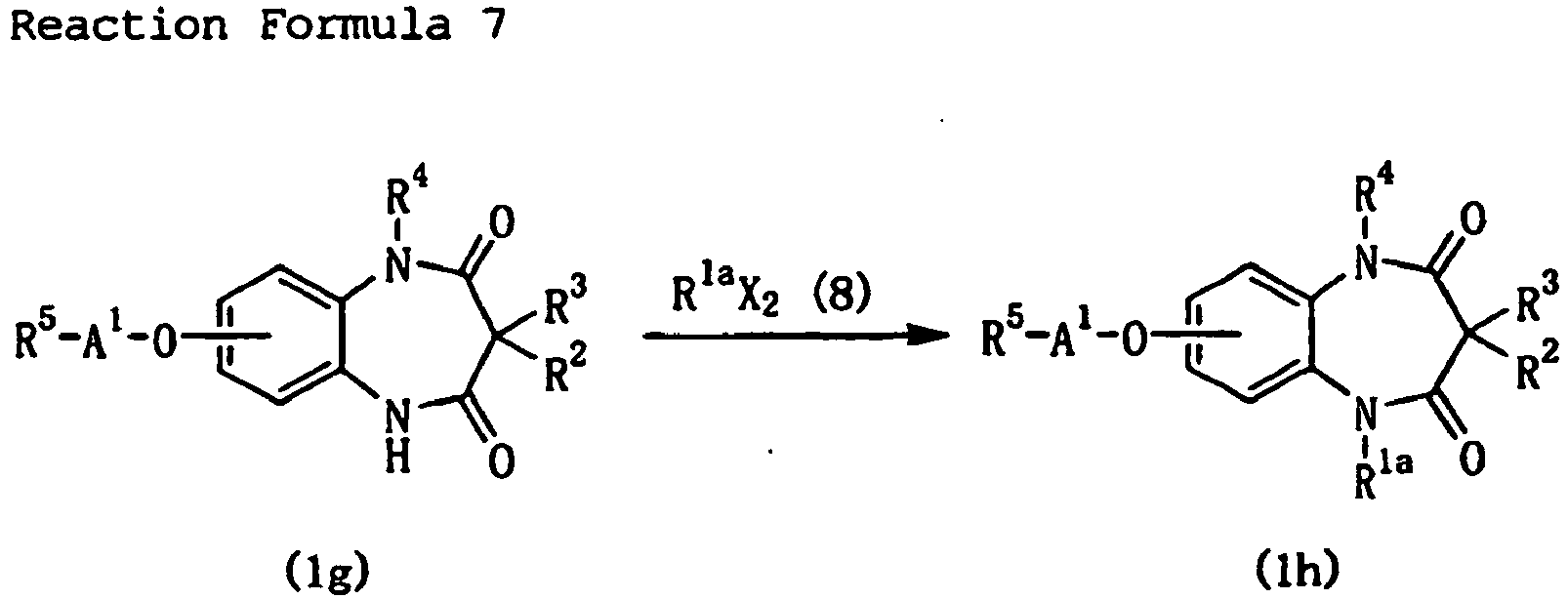
- The reaction of the compound of Formula (1g) with the compound of Formula (8) is performed under the same reaction conditions as those for the reaction of the compound of Formula (3), in which X1 is halogen, with the compound of Formula (2) in Reaction Formula 1.
- When R4 in the compound of Formula (1g) is hydrogen in the reaction, a compound in which the first and fifth positions of the benzodiazepine skeleton are simultaneously substituted with R1a may be produced.

- The reaction of the compound of Formula (1i) with the compound of Formula (9) is performed under the same reaction conditions as those for the reaction of the compound of Formula (3), in which X1 is halogen, with the compound of Formula (2) in Reaction Formula 1.
- When R1 in the compound of Formula (1i) is hydrogen in the reaction, a compound in which the first and fifth positions of the benzodiazepine skeleton are simultaneously substituted with R4a may be produced.

- The reaction of the compound of Formula (1k) with the compound of Formula (10) is performed under the same reaction conditions as those for the reaction of the compound of Formula (3), in which X1 is halogen, with the compound of Formula (2) in Reaction Formula 1.
- When R1 and/or R4 is hydrogen in the reaction of the compound of Formula (1k) and the compound of Formula (10), the hydrogen may be replaced with R2a.
- The compound of Formula (2), which is used as a starting material in the above-mentioned reaction formula, can be easily produced by the process shown in the following reaction formulae.

- In the reaction of the compound of Formula (11) and the compound of Formula (12), the compound of Formula (11) is reacted with carboxylic acid of the compound of Formula (12) through a usual amide bond formation reaction. Conditions for known amide bond formation reactions can be easily employed in the above amide formation reaction. For example, the following reaction methods can be employed: (A) a mixed acid anhydride method, in which Carboxylic Acid (12) is reacted with an alkyl halocarboxylate to form a mixed acid anhydride, which is then reacted with Amine (11) ; (B) an active ester method, in which Carboxylic Acid (12) is converted to an activated ester such as a phenyl ester, p-nitrophenyl ester, N-hydroxysuccinimide ester, 1-hydroxybenzotriazole ester or the like, or an activated amide with benzoxazoline-2-thione, and the activated ester or amide is reacted with Amine (11); (C) a carbodiimide method, in which Carboxylic Acid (12) is subjected to a condensation reaction with Amine (11) in the presence of an activating agent such as dicyclohexylcarbodiimide, 1-(3-dimethylaminopropyl)-3-ethylcarbodiimide (WSC), carbonyldiimidazole or the like; (D) other methods, for example, a method in which Carboxylic Acid (12) is converted to a carboxylic anhydride using a dehydrating agent such as acetic anhydride, and the carboxylic anhydride is then reacted with Amine (11), a method in which an ester of Carboxylic Acid (12) with a lower alcohol is reacted with Amine (11) at a high pressure and a high temperature, a method in which an acid halide of Carboxylic Acid (12), i.e., a carboxylic acid halide, is reacted with Amine (11), etc.
- The mixed acid anhydride used in the mixed acid anhydride method (A) can be obtained by the known Schotten-Baumann reaction, and the obtained mixed acid anhydride is reacted with Amine (11), usually without being isolated, to thereby produce the compound of Formula (13). The Schotten-Baumann reaction is performed in the presence of a basic compound. Usable basic compounds include compounds conventionally used in the Schotten-Baumann reaction, such as triethylamine, trimethylamine, pyridine, dimethylaniline, N-ethyldiisopropylamine, dimethylaminopyridine, N-methylmorpholine, 1,5-diazabicyclo[4.3.0]nonene-5 (DBN), 1,8-diazabicyclo[5.4.0]undecene-7 (DBU), 1,4-diazabicyclo[2.2.2]octane (DABCO) and other organic bases; sodium carbonate, potassium carbonate, sodium hydrogencarbonate, potassium hydrogencarbonate and other carbonates; sodium hydroxide, potassium hydroxide, calcium hydroxide and other metal hydroxides; potassium hydride, sodium hydride, potassium, sodium, sodium amide, metal alcoholates such as sodium methylate and sodium ethylate, and other inorganic bases; etc. The reaction is usually performed at about -20 to about 150°C, and preferably at about 0 to about 100°C, usually for about 5 minutes to about 10 hours, and preferably for about 5 minutes to about 5 hours. The reaction of the obtained mixed acid anhydride with Amine (11) is usually carried out at about -20 to about 150°C, and preferably at about 10 to about 50°C, usually for about 5 minutes to about 30 hours, and preferably for about 5 minutes to about 25 hours. Generally, the mixed acid anhydride method is performed in a solvent. Solvents used for conventional mixed acid anhydride methods are usable. Examples of usable solvents include chloroform, dichloromethane, dichloroethane, carbon tetrachloride and other halogenated hydrocarbons; benzene, toluene, xylene and other aromatic hydrocarbons; diethyl ether, diisopropyl ether, tetrahydrofuran, dimethoxyethane and other ethers; methyl acetate, ethyl acetate, isopropyl acetate and other esters; N,N-dimethylformamide, dimethylsulfoxide, hexamethylphosphoric triamide and other aprotic polar solvents; mixtures thereof; etc. Examples of alkyl halocarboxylates usable in the mixed acid anhydride method include methyl chloroformate, methyl bromoformate, ethyl chloroformate, ethyl bromoformate, isobutyl chloroformate, etc. In this method, Carboxylic Acid (12), an alkyl halocarboxylate, and Amine (11) are preferably used in equimolear amounts, but each of the alkyl halocarboxylate and Carboxylic Acid (12) can also be used in an amount of about 1 to about 1.5 moles per mole of Amine (11).
- Method (C), in which a condensation reaction is carried out in the presence of an activating agent, can be performed in a suitable solvent in the presence or absence of a basic compound. Solvents and basic compounds usable in this method include those mentioned hereinafter as solvents and basic compounds usable in the method in which a carboxylic acid halide is reacted with Amine (11) mentioned above as one of the other methods (D). A suitable amount of activating agent is at least 1 mole, and preferably 1 to 5 moles per mole of Amine (11). When using WSC as an activating agent, addition of 1-hydroxybenzotriazol to the reaction system enables the reaction to proceed advantageously. The reaction is usually performed at about -20 to about 180°C, and preferably at about 0 to about 150°C, and is usually completed in about 5 minutes to about 90 hours.
- When the method in which a carboxylic acid halide is reacted with Amine (11), mentioned above as one of the other methods (D), is employed, the reaction is performed in the presence of a basic compound in a suitable solvent. Usable basic compounds include a wide variety of known basic compounds, such as those for use in the Schotten-Baumann reaction described above. Usable solvents include, in addition to those usable in the mixed acid anhydride method, methanol, ethanol, isopropanol, propanol, butanol, 3-methoxy-1-butanol, ethylcellosolve, methylcellosolve and other alcohols; acetonitrile; pyridine; acetone; water; etc. The ratio of the carboxylic acid halide to Amine (11) is not limited and can be suitably selected from a wide range. It is usually suitable to use, for example, at least about 1 mole, and preferably about 1 to about 5 moles of the carboxylic acid halide per mole of Amine (11). The reaction is usually performed at about -20 to about 180°C, and preferably at about 0 to about 150°C, and usually completed in about 5 minutes to about 30 hours.
- The amide bond formation reaction shown in Reaction Formula 10 can also be performed by reacting Carboxylic Acid (12) with Amine (11) in the presence of a phosphorus compound serving as a condensing agent, such as triphenylphosphine, diphenylphosphinyl chloride, phenyl-N-phenylphosphoramide chloridate, diethyl chlorophosphate, diethyl cyanophosphate, diphenylphosphoric azide, bis(2-oxo-3-oxazolidinyl)phosphinic chloride or the like.
- The reaction is carried out in the presence of a solvent and a basic compound usable for the method in which a carboxylic acid halide is reacted with Amine (11), usually at about -20 to about 150°C, and preferably at about 0 to about 100°C, and is usually completed in about 5 minutes to about 30 hours. It is suitable to use each of the condensing agent and Carboxylic Acid (12) in amounts of at least about 1 mole, and preferably about 1 to about 2 moles per mole of Amine (11).
- The reaction converting the compound of Formula (13) to the compound of Formula (14) can be carried out by, for example, (1) reducing the compound of Formula (13) in a suitable solvent using a catalytic hydrogenation reducing agent, or (2) reducing the compound of Formula (13) in a suitable inert solvent using as a reducing agent a mixture of an acid with a metal or metal salt, a mixture of a metal or metal salt with an alkali metal hydroxide, sulfide, or ammonium salt, or the like.
- When using Method (1) in which a catalytic hydrogenation reducing agent is used, examples of usable solvents are water; acetic acid; alcohols such as methanol, ethanol and isopropanol; hydrocarbons such as n-hexane and cyclohexane; ethers such as dioxane, tetrahydrofuran, diethyl ether and diethylene glycol dimethyl ether; esters such as ethyl acetate and methyl acetate; aprotic polar solvents such as N,N-dimethylformamide; mixtures of such solvents; etc. Examples of usable catalytic hydrogenation reducing agents include palladium, palladium black, palladium carbon, platinum carbon, platinum, platinum black, platinum oxide, copper chromite, Raney nickel, etc. A reducing agent is usually used in an amount of about 0.02 times to equal to the weight of the compound of Formula (13). The reaction temperature is usually about -20 to about 150°C, and preferably about 0 to about 100°C. The hydrogen pressure is usually about 1 to 10 atm. The reaction is usually completed in about 0.5 to about 100 hours. An acid such as hydrochloric acid may be introduced into the reaction system of the reaction.
- When using Method (2) above, a mixture of iron, zinc, tin, or tin (II) chloride, with a mineral acid such as hydrochloric acid, or sulfuric acid; or a mixture of iron, iron (II) sulfate, zinc, or tin, with an alkali metal hydroxide such as sodium hydroxide, a sulfide such as ammonium sulfide, aqueous ammonia solution, or an ammonium salt such as ammonium chloride, or the like can be used as a reducing agent. Examples of inert solvents are water; acetic acid; alcohols such as methanol and ethanol; ethers such as dioxane; mixtures of such solvents, etc. Conditions for the reduction reaction can be suitably selected according to the reducing agent to be used. For example, when a mixture of tin (II) chloride and hydrochloric acid is used as a reducing agent, it is advantageous to carry out the reaction at about 0 to about 150°C for about 0.5 to about 10 hours. A reducing agent is used in an amount of at least 1 mole, and preferably about 1 to 5 moles, per mole of the compound of Formula (13).
- The reaction converting the compound of Formula (14) to the compound of Formula (15) is performed under the same reaction conditions as those for the reaction of the compound of Formula (11) with the compound of Formula (12).
- The reaction of the compound of Formula (15) with the compound of Formula (8) is performed under the same reaction conditions as those for the reaction of the compound of Formula (1g) with the compound of Formula (8) in Reaction Formula 7.

- The reaction of the compound of Formula (17) with the compound of Formula (10) is performed under the same reaction conditions as those for the reaction of the compound of Formula (3), in which X1 is halogen, with the compound of Formula (2) in Reaction Formula 1.
- When R1 and/or R4 is hydrogen in the reaction of the compound of Formula (17) and the compound of Formula (10), the hydrogen atom may be replaced with R2a.

- The reaction converting the compound of Formula (16) to the compound of Formula (2) can be carried out in a suitable solvent in the presence of an acid. Examples of solvents include water; lower alcohols such as methanol, ethanol, and isopropanol; ethers such as dioxane, tetrahydrofuran, and diethyl ether; halogenated hydrocarbons such as dichloromethane, chloroform, and carbon tetrachloride; polar solvents such as acetonitrile; and mixtures of such solvents. Examples of acids include mineral acids such as hydrochloric acid, sulfuric acid, and hydrobromic acid; aliphatic acids such as formic acid, and acetic acid; sulfonic acids such as p-toluenesulfonic acid; Lewis acids such as boron fluoride, aluminium chloride, and boron tribromide; iodides such as sodium iodide, and potassium iodide; mixtures of such iodides and Lewis acids. The reaction is usually performed at about 0 to about 200°C, and preferably at about 0 to about 150°C, and is usually completed in about 0.5 to about 25 hours. An acid is usually used in an amount of 1 to 10 moles, and preferably about 1 mole to about 2 moles per mole of the compound of Formula (16).
- The compound of Formula (16) can be prepared using the processes shown in Reaction Formulae 13 and 14 below.

- The reaction of the compound of Formula (18) with the compound of Formula (19) is performed under the same reaction conditions as those for the reaction of the compound of Formula (11) with the compound of Formula (12) in Reaction Formula 10.

- The reaction of the compound of Formula (20) with the compound of Formula (9) is performed under the same reaction conditions as those for the reaction of the compound of Formula (1i) with the compound of Formula (9) in Reaction Formula 8.
- When R1 in the compound of Formula (20) is hydrogen in the reaction, a compound in which the first and fifth positions of the benzodiazepine skeleton are simultaneously substituted with R4a may be produced.
- The compound of Formula 4, which is used as a starting material in the above-mentioned reaction formula, can be easily prepared by the process shown in the following reaction formula.

- The reaction of the compound of Formula (2) with the compound of Formula (21) is performed under the same reaction conditions as those for the reaction of the compound of Formula (3), in which X1 is halogen, with the compound of Formula (2) in Reaction
- Formula 1.
- X2 in the compound of Formula (4) can be replaced with another halogen atom by adding it to an appropriate solvent with an alkali metal halide, and heating under reflux. Examples of alkali metal halides include sodium iodide, sodium bromide, sodium fluoride, sodium chloride, potassium iodide, potassium bromide, potassium fluoride, potassium chloride, etc. Examples of solvents for halogen exchange include ketones such as acetone, 2-butanone; ethers such as dioxane, tetrahydrofuran, diethyl ether, diethylene glycol dimethyl ether, and ethylene glycol dimethyl ether; and esters such as methyl acetate and ethyl acetate. Such solvents can be used singly or in a combination of two or more. An alkali metal halide is usually used in an amount at least 1 mole, and preferably about 1 mole to about 10 moles, per mole of the compound of Formula (4). Heat-reflux is continued until the reaction finishes. For example, heat-reflux is preferably continued for about 1 to about 15 hours. The heat-reflux temperature varies according to the solvent to be used, and is usually about 0 to about 150°C, and preferably about 0 to about 100°C.
- The compound of Formula (5), which is used as a starting material, can be easily prepared by the process shown in the following reaction formula.

- The reaction of the compound of Formula (5a) with the compound of Formula (6) is performed under the same reaction conditions as those for the reaction of the compound of Formula (1c) with the compound of Formula (6) in Reaction Formula 4.
- The reaction of the compound of Formula (5a) with the compound of Formula (7) is performed under the same reaction conditions as those for the reaction of the compound of Formula (1c) with the compound of Formula (7) in Reaction Formula 5.
- The compound of Formula (3), which is used as a starting material, can be easily prepared by the process shown in the following reaction formula.
- Starting material (24) used in the following Reaction Formula 18 can be easily prepared by the process shown in Reaction Formula 17.

- The reaction of the compound of Formula (22) with the compound of Formula (23) is performed under the same reaction conditions as those for the reaction of the compound of Formula (2) with the compound of Formula (3) in Reaction Formula 1.

- Examples of the lower alkylsulfonyl groups represented by R11 include linear or branched C1-6 alkylsulfonyl groups, such as methylsulfonyl, ethylsulfonyl, n-propylsulfonyl, isopropylsulfonyl, n-butylsulfonyl, isobutylsulfonyl, tert-butylsulfonyl, sec-butylsulfonyl, n-pentylsulfonyl, isopentylsulfonyl, neopentylsulfonyl, n-hexylsulfonyl, isohexylsulfonyl, and 3-methylpentylsulfonyl.
- The reaction of the compound of Formula (24) and the compound of Formula (25) is performed in a suitable solvent or without using any solvents in the presence of an acid. Examples of solvents include the solvents used in the reaction of the compound of Formula (2) and the compound of Formula (3) in Reaction Formula 1. Examples of usable acids include mineral acids such as hydrochloric acid, sulfuric acid, and hydrobromic acid; and organic acids such as formic acid, acetic acid, thioglycolic acid, trifluoroacetic acid, and sulfonic acid (e.g., p-toluenesulfonic acid). Such acids can be used singly or in a combination. Conditions other than those described above may be the same as those of the reaction between the compound of Formula (2) and the compound of Formula (3) in Reaction Formula 1.
- The reaction of the compound of Formula (26) with the compound of Formula (7) is performed under the same reaction conditions as those for the reaction of the compound of Formula (2) with the compound of Formula (3) in Reaction Formula 1.
- The reaction of the compound of Formula (5c) with the compound of Formula (28) is performed under the same reaction conditions as those for the reaction of the compound of Formula (3), in which X1 is halogen, with the compound of Formula (2) in Reaction Formula 1.
- The reaction converting the compound of Formula (27) to the compound of Formula (3a) can be carried out in an appropriate solvent or without using any solvents in the presence of an acid or a basic compound.
- Examples of useful solvents include water; lower alcohols such as methanol, ethanol, isopropanol, and tert-butanol; ketones such as acetone, and methyl ethyl ketone; ethers such as diethyl ether, dioxane, tetrahydrofuran, monoglyme and diglyme; aliphatic acids such as acetic acid and formic acid; esters such as methyl acetate and ethyl acetate; halogenated hydrocarbons such as chloroform, dichloromethane, dichloroethane, and carbon tetrachloride; dimethyl sulfoxide; N,N-dimethylformamide; and hexamethylphosphoric triamide; and mixtures of such solvents.
- Examples of acids include mineral acids such as hydrochloric acid, sulfuric acid, and hydrobromic acid; and organic acids such as formic acid, acetic acid, trifluoroacetic acid, and sulfonic acid (e.g., p-toluenesulfonic acid and pyridinium p-toluenesulfonate); Lewis acids such as boron tribromide and boron trichloride. Such acids can be used singly or in a combination.
- Examples of useful basic compounds include carbonates such as sodium carbonate, potassium carbonate, sodium hydrogencarbonate, and potassium hydrogencarbonate; and metal hydroxides such as sodium hydroxide, potassium hydroxide, calcium hydroxide, and lithium hydroxide. Such basic compounds can be used singly or in a combination.
- The reaction advantageously proceeds usually at about 0 to about 200°C, and preferably at about 0 to about 150°C, and is usually completed in about 10 minutes to about 50 hours.
- The reaction of the compound of Formula (3a) with the compound of Formula (29) is performed under the same reaction conditions as those for the reaction of the compound of Formula (5c) with the compound of Formula (28).
- The reaction converting the compound of Formula (30) to the compound of Formula (3b) is performed under the same reaction conditions as those for the reaction of the compound of Formula (3), in which X1 is halogen, with the compound of Formula (2) in Reaction Formula 1.
- The compound of Formula (7), which is used as a starting material, can be easily prepared by the process shown in the following reaction formula.

- The reaction of the compound of Formula (32) with the compound of Formula (28) is performed under the same reaction conditions as those for the reaction of the compound of Formula (5c) with the compound of Formula (28) in Reaction Formula 18.
- The reaction converting the compound of Formula (33) to the compound of Formula (7a) can be carried out under the same reaction conditions as those for the reaction converting the compound of Formula (27) to the compound of Formula (3a) in Reaction Formula 18.
- The compound of Formula (5), which is used as a starting material, can be easily prepared by the process shown in the following reaction formula.
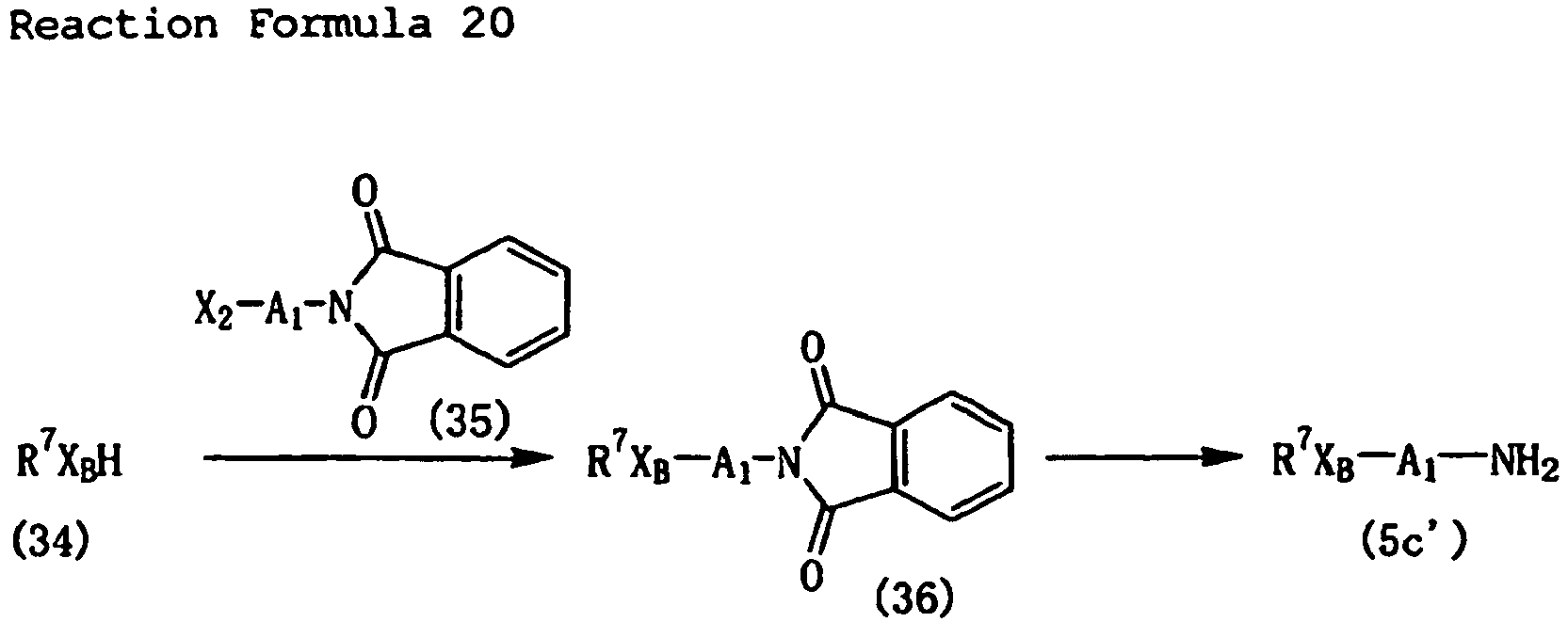
- The reaction of the compound of Formula (34) with the compound of Formula (35) is performed under the same reaction conditions as those for the reaction of the compound of Formula (3), in which X1 is halogen, with the compound of Formula (2) in Reaction Formula 1.
- The reaction converting the compound of Formula (36) to the compound of Formula (5c) can be carried out under the same reaction conditions as those for the reaction converting the compound of Formula (1a) to the compound of Formula (1b) in Reaction Formula 2.

R12 is hydrogen, lower alkyl, lower alkoxycarbonyl, 2,3-dihydrobenzo[b]furylcarbonyl, or benzoyl. R13 is lower alkoxycarbonyl, 2,3-dihydrobenzo[b]furyl carbonyl, or benzoyl, and A2 is lower alkylene. - The reaction converting the compound of Formula (37) to the compound of Formula (38) can be carried out under the same reaction conditions as those for the reaction converting the compound of Formula (1f) to the compound of Formula (1c) in Reaction Formula 6.

- The reaction of the compound of Formula (38) with the compound of Formula (39) is performed under the same reaction conditions as those for the reaction of the compound of Formula (11) with the compound of Formula (12) in Reaction Formula 10.
- In addition, compounds in the form in which a solvate (for example, a hydrate, ethanolate, etc.) was added to the starting material compounds and object compounds shown in each of the reaction formulae are included in each of the formulae.
- The compound of Formula (1) according to the present invention includes stereoisomers and optical isomers.
- The starting material compounds and object compounds represented by each of the reaction formulae can be used in an appropriate salt form.
- Each of the object compounds obtained according to the above reaction formulae can be isolated and purified from the reaction mixture by, for example, after cooling the reaction mixture, performing an isolation procedure such as filtration, concentration, extraction, etc., to separate a crude reaction product, and then subjecting the crude reaction product to a usual purification procedure such as column chromatography, recrystallization, etc.
- Among the compounds of the present invention, those having a basic group or groups can easily form salts with common pharmaceutically acceptable acids. Examples of such acids include hydrochloric acid, hydrobromic acid, nitric acid, sulfuric acid, phosphoric acid and other inorganic acids, methansulfonic acid, p-toluenesulfonic acid, acetic acid, citric acid, tartaric acid, maleic acid, fumaric acid, malic acid, lactic acid and other organic acids, etc.
- Among the compounds of the present invention, those having an acidic group or groups can easily form salts by reacting with pharmaceutically acceptable basic compounds. Examples of such basic compounds include sodium hydroxide, potassium hydroxide, calcium hydroxide, sodium carbonate, potassium carbonate, sodium hydrogencarbonate, potassium hydrogencarbonate, etc.
- The following is an explanation of pharmaceutical preparations comprising the compound of the present invention as an active ingredient.
- Such pharmaceutical preparations are obtained by formulating the compound of the present invention into usual pharmaceutical preparations, using usually employed diluents or excipients such as fillers, extenders, binders, wetting agents, disintegrants, surfactants, lubricants, etc.
- The form of such pharmaceutical preparations can be selected from various forms according to the purpose of therapy. Typical examples include tablets, pills, powders, solutions, suspensions, emulsions, granules, capsules, suppositories, injections (solutions, suspensions, etc.) and the like.
- To form tablets, any of various known carriers can be used, including, for example, lactose, white sugar, sodium chloride, glucose, urea, starch, calcium carbonate, kaolin, crystalline cellulose and other excipients; water, ethanol, propanol, simple syrup, glucose solutions, starch solutions, gelatin solutions, carboxymethylcellulose, shellac, methylcellulose, potassium phosphate, polyvinylpyrrolidone and other binders; dry starch, sodium alginate, agar powder, laminaran powder, sodium hydrogencarbonate, calcium carbonate, fatty acid esters of polyoxyethylenesorbitan, sodium laurylsulfate, stearic acid monoglyceride, starch, lactose and other disintegrants; white sugar, stearin, cacao butter, hydrogenated oils and other disintegration inhibitors; quaternary ammonium base, sodium lauryl sulfate and other absorption promoters; glycerin, starch and other wetting agents; starch, lactose, kaolin, bentonite, colloidal silicic acid and other adsorbents; purified talc, stearates, boric acid powder, polyethylene glycol and other lubricants; etc.
- Such tablets may be coated with usual coating materials as required, to prepare, for example, sugar-coated tablets, gelatin-coated tablets, enteric-coated tablets, film-coated tablets, double- or multi-layered tablets, etc.
- To form pills, any of various known carriers can be used, including, for example, glucose, lactose, starch, cacao butter, hydrogenated vegetable oils, kaolin, talc and other excipients; gum arabic powder, tragacanth powder, gelatin, ethanol and other binders; laminaran, agar and other disintegrants; etc.
- To form suppositories, any of various known carriers can be used, including, for example, polyethylene glycol, cacao butter, higher alcohols, esters of higher alcohols, gelatin, semisynthetic glycerides, etc.
- To form an injection, a solution, emulsion or suspension is sterilized and preferably made isotonic with blood. Any of various known widely used diluents can be employed to prepare the solution, emulsion or suspension. Examples of such diluents include water, ethanol, propylene glycol, ethoxylated isostearyl alcohol, polyoxylated isostearyl alcohol, fatty acid esters of polyoxyethylene sorbitan, etc. In this case, the pharmaceutical preparation may contain sodium chloride, glucose or glycerin in an amount sufficient to prepare an isotonic solution, and may contain usual solubilizers, buffers, analgesic agents, etc., and further, if necessary, coloring agents, preservatives, flavors, sweetening agents, etc., and/or other medicines.
- The proportion of the compound of the present invention in the pharmaceutical preparation is not limited and can be suitably selected from a wide range. It is usually preferable that the pharmaceutical preparation contain the compound of the present invention in a proportion of 1 to 70 wt.%.
- The route of administration of the pharmaceutical preparation according to the present invention is not limited, and the preparation can be administered by a route suitable for the form of the preparation, the patient's age and sex, the conditions of the disease, and other conditions.
For example, tablets, pills, solutions, suspensions, emulsions, granules and capsules are administered orally.
Injections are intravenously administered singly or as mixed with usual injection transfusions such as glucose solutions, amino acid solutions or the like, or singly administered intramuscularly, intracutaneously, subcutaneously or intraperitoneally, as required. Suppositories are administered intrarectally. - The dosage of the pharmaceutical preparation is suitably selected according to the method of use, the patient's age and sex, the severity of the disease, and other conditions, and is usually about 0.001 to about 100 mg/kg body weight/day, and preferably 0.001 to 50 mg/kg body weight/day, in single or divided doses.
- Since the dosage varies depending on various conditions, a dosage smaller than the above range may be sufficient, or a dosage larger than the above range may be required.
- When administered to the human body as a pharmaceutical, the compound of the present invention may be used concurrently with, or before or after, antithrombotics such as blood clotting inhibitors and antiplatelet agents (e.g., warfarin, aspirin, etc.). Further, the present compound may be used concurrently with, or before or after, drugs for treating chronic diseases, such as antihypertensive drugs (ACE inhibitors, beta blockers, angiotensin II receptor antagonists), heart failure drugs (cardiotonic agents, diuretics), and diabetes treatment agents.
- The compound of the present invention has potent blocking effects on human Kv1.5 and/or GIRK1/4 channels, and weak blocking effects on HERG channels. Thus, the compound of the invention has characteristics as an atrial-selective K+ channel-blocking agent.
- Therefore, the compound of the invention can be used as a pharmacologically active substance that is safer and provides a more potent effect on the prolongation of the atrial refractory period than conventional antiarrhythmic agents. The compound of the invention is preferably used as a therapeutic agent for arrhythmia such as atrial fibrillation, atrial flutter, and atrial tachycardia (elimination of arrhythmia and/or prevention of the occurrence of arrhythmia). The compound of the invention is particularly preferably used as a therapeutic agent for atrial fibrillation (defibrillation and maintenance of sinus rhythm). The compound of the invention can also be used as a prophylactic agent for thromboembolism such as cerebral infarction and as a therapeutic agent for heart failure.
- The compound having potent blocking effects on both human Kv1.5 and human GIRK1/4 channels has more potent atrial refractory period prolongation effects and is highly safe, compared to compounds inhibiting either one of the channels. Furthermore, this compound has greater therapeutic effects on atrial fibrillation (defibrillation and maintenance of sinus rhythm) than compounds inhibiting either one of the channels. Therefore, the compound having potent blocking effects on both the human Kv1.5 and human GIRK1/4 channels is particularly useful as a therapeutic agent for arrhythmia such as atrial fibrillation, atrial flutter, and atrial tachycardia (termination of arrhythmia and/or prevention of the occurrence of arrhythmia). This compound is particularly useful as a therapeutic agent for atrial fibrillation (defibrillation and maintenance of sinus rhythm).
- The following Examples are intended to illustrate the present invention in future detail.
- Sodium hydride (60% in oil, 96 mg, 2.4 mmol) was suspended in 10 ml of dimethylformamide (DMF).
N-Methyl-5-methoxy-2-nitroaniline (364 mg, 2 mmol) was added thereto at 0°C, and stirring was conducted for 30 minutes at room temperature. Ethyl malonyl chloride (0.38 ml, 3 mmol) was added at 0°C to the stirred mixture, and the reaction mixture was stirred at room temperature overnight. Water was added thereto, and extraction with ethyl acetate was performed. The organic layer was dried over sodium sulfate, and concentrated under reduced pressure. The residue was purified by silica gel column chromatography (n-hexane:ethyl acetate=2:1→1:2). The purified product was concentrated under reduced pressure to thereby obtain 554 mg (yield: 90%) of ethyl N-(5-methoxy-2-nitrophenyl)-N-methyl malonamate as a yellow oil.
1H-NMR (CDCl3) δppm: - 1.24 (3H, t, J = 7.1 Hz), 3.15 - 3.17 (2H, m), 3.25 (3H, s), 3.92 (3H, s), 4.13 (2H, q, J = 7.1 Hz), 6.93 (1H, d, J = 2.8 Hz), 7.02 (1H, dd, J = 2.8 and 9.2 Hz), 8.15 (1H, d, J = 9.2 Hz).
- Using an appropriate starting material and following the procedure of Reference Example 1, the object compound was synthesized.
1H-NMR (CDCl3) δppm: - 1.11 (3H, t, J = 7.2 Hz), 1.24 (3H, t, J = 7.1 Hz), 3.11-3.25 (2H, m), 3.39-3.46 (1H, m), 3.92 (3H, s), 3.98-4.17 (3H, m), 6.89 (1H, d, J = 2.8 Hz), 7.03 (1H, dd, J = 9.2 and 2.8 Hz), 8.13 (1H, d, J = 9.2 Hz).
- Palladium carbon (10%, 0.5 g) was added to an ethanol solution (150 ml) of ethyl N-(5-methoxy-2-nitrophenyl)-N-methyl malonamate (3.0 g, 10 mmol), and catalytic reduction was conducted at room temperature and normal pressure. The reaction mixture was filtered through Celite to remove the catalyst. The filtrate was concentrated under reduced pressure to thereby obtain 2.68 g (yield: quantitative) of ethyl N-(2-amino-5-methoxyphenyl)-N-methyl malonamate as a yellow oil.
1H-NMR (CDCl3) δppm: - 1.22 (3H, t, J = 7.1 Hz), 3.19 - 3.27 (5H, m), 3.52-3.68 (2H, br), 3.74 (3H, s), 4.11 (2H, q, J = 7.1 Hz), 6.62 (1H, d, J = 2.7 Hz), 6.73 (1H, d, J = 8.7 Hz), 6.79 (1H, dd, J = 2.7 and 8.7 Hz).
- Sodium ethoxide (204 mg, 3.0 mmol) was added to an ethanol solution (15 ml) of ethyl N-(2-amino-5-methoxyphenyl)-N-methyl malonamate (266 mg, 1.0 mmol), and stirred at 65°C for 2. 5 hours. The reaction mixture was cooled to room temperature, and concentrated under reduced pressure. The residue was purified by silica gel column chromatography (dichloromethane:methanol=1:0→10:1). The purified product was concentrated to dryness under reduced pressure to thereby obtain 176.3 mg (yield: 80%) of 8-methoxy-1-methyl-1,5-dihydrobenzo [b][1,4]diazepine-2,4-dione as a white powder.
1H-NMR (CDCl3) δppm: - 3.36 (2H, s), 3.43 (3H, s), 3.84 (3H, s), 6.79-6.83 (1H, m), 7.06-7.09 (1H, m), 8.72 (1H, br-s).
- Palladium carbon (10%, 1.1g) was added to an ethanol solution (250 ml) of ethyl N-ethyl-N-(5-methoxy-2-nitrophenyl) malonamate (21.05 g, 67.8 mmol), and cooled in an ice water bath. Catalytic reduction was conducted at about room temperature. Celite filtration was conducted to remove the catalyst, and the filtrate was concentrated under reduced pressure. The residue was dissolved in tetrahydrofuran (THF) (200 ml). Sodium ethoxide (6.9 g, 102 mmol) was added thereto, and then heating was conducted under reflux for 15 minutes. The reaction mixture was cooled to room temperature, and the precipitated insoluble matter was collected by filtration. The filtrate was concentrated under reduced pressure. Water was added to the residue and the collected insoluble matter, and the mixture was neutralized with hydrochloric acid. Extraction with ethyl acetate was then performed. The organic layer was washed with a saturated sodium chloride aqueous solution, dried over anhydrous sodium sulfate, and concentrated under reduced pressure. The residue was recrystallized from ethanol to thereby obtain 7.9 g (yield: 50%) of 1-ethyl-8-methoxy-1,5-dihydrobenzo[b][1,4]diazepine-2,4-dione as a white powder. The mother liquor was then concentrated, and the residue was purified using a silica gel flash column (n-hexane:ethyl acetate= 1:1-.0:1) to thereby obtain 2.9 g of object compound.
1H-NMR (CDCl3) δppm: - 1.19 (3H, t, J = 7.1 Hz), 3.33 (2H, s), 3.78-3.84 (1H, m), 3.84 (3H, s), 4.13 - 4.25 (1H, m), 6.82 (1H, dd, J = 8.8 and 2.7 Hz), 6.87 (1H, d, J = 2.7 Hz), 7.09 (1H, d, J = 8.8 Hz), 8.82 (1H, br-s).
- Sodium hydride (60% in oil, 44 mg, 1.1 mmol) was suspended in dimethylformamide (DMF) (8 ml), and cooled in an ice water bath to 0°C. 8-Methoxy-1-methyl-1,5-dihydrobenzo[b] [1,4] diazepine-2,4-dione (220 mg, 1.0 mmol) was added to the suspension at the same temperature, and stirred at 0°C for 1 hour. Ethyl iodide (187 mg, 1.2 mmol) was added to the mixture and stirred at room temperature overnight. Water was added to the reaction mixture, and extraction with ethyl acetate was performed. The organic layer was dried over sodium sulfate, and concentrated under reduced pressure. The residue was purified by silica gel column chromatography (n-hexane:ethyl acetate=4:1→1:1). The purified product was concentrated to dryness under reduced pressure to thereby obtain 190.2 mg (yield: 77%) of 1-ethyl-7-methoxy-5-methyl-1,5-dihydrobenzo [b][1,4]diazepine-2,4-dione as a yellow solid.
1H-NMR (CDCl3) δppm: - 1.11 (3H, t, J = 7.1 Hz), 3.31 - 3.32 (2H, m), 3.40 (3H, s), 3.59-3.68 (1H, m), 3.85 (3H, s), 4.18-4.30 (1H, m), 6.78 (1H, d, J = 2.8 Hz), 6.84 (1H, dd, J = 9.0 and 2.8 Hz), 7.26 (1H, d, J = 9.0 Hz).
- Using an appropriate starting material and following the procedure of Reference Example 6, the object compound was synthesized.
1H-NMR (CDCl3) δppm: - 1.04-1.14 (6H, m), 3.28 (2H, s), 3.50-3.64 (2H, m), 3.85 (3H, s), 4.35-4.47 (2H, m), 6.83-6.88 (2H, m), 7.25-7.27 (1H, m).
- Using an appropriate starting material and following the procedure of Reference Example 6, the object compound was synthesized.
1H-NMR (CDCl3) δppm: - 0.76 (3H, t, J = 7.3 Hz), 1.35-1.62 (2H, m), 3.32 (2H, s), 3.40 (3H, s), 3.33-3.51 (1H, m), 3.49 (3H, s), 4.21-4.38 (1H, m), 6.78 (1H, d, J = 2.8 Hz), 6.84 (1H, dd, J = 9.0 and 2.8 Hz), 7.25 (1H, d, J = 9.0 Hz).
- Using an appropriate starting material and following the procedure of Reference Example 6, the object compound was synthesized.
1H-NMR (CDCl3) δppm: - 0.69 (3H, d, J = 6.7 Hz), 0.77 (3H, d, J = 6.7 Hz), 1.56-1.90 (1H, m), 3.24 (1H, dd, J = 13.6 and 5.9 Hz), 3.33 (2H, s), 3.40 (3H, s), 3.85 (3H, s), 4.32 (1H, dd, J = 13.6 and 9.0 Hz), 6.78 (1H, d, J = 2.8 Hz), 6.84 (1H, dd, J = 9.0 and 2.9 Hz), 7.24 (1H, d, J = 9.0 Hz).
- Using an appropriate starting material and following the procedure of Reference Example 6, the object compound was synthesized.
1H-NMR (CDCl3) δppm: - 0.80 (3H, d, J = 6.3 Hz), 0.86 (3H, d, J = 6.3 Hz) 1.22-1.53 (3H, m), 3.32 (2H, s), 3.39 (3H, s), 3.36-3.62 (1H, m), 3.85 (3H, s), 4.31-4.48 (1H, m), 6.78 (1H, d, J = 2.8 Hz), 6.85 (1H, dd, J = 8.8 and 2.8 Hz), 7.25 (1H, d, J = 8.8 Hz).
- Using an appropriate starting material and following the procedure of Reference Example 6, the object compound was synthesized.
1H-NMR (CDCl3) δppm: - 1.63 (6H, s), 3.32 - 3.34 (2H, m), 3.38 (3H, s), 3.84 (3H, s), 4.33 (1H, dd, J = 13.6 and 6.2 Hz), 4.51 (1H, dd, J = 13.6 and 6.9 Hz), 5.14 - 5.19 (1H, m), 6.76 (1H, d, J = 2.8 Hz), 6.81 (1H, dd, J = 9.0 and 2.8 Hz), 7.27 (1H, d, J = 9.0 Hz).
- Sodium hydride (60% in oil, 76 mg, 1.9 mmol) was suspended in DMF (8 ml).
1-Ethyl-7-methoxy-5-methyl-1,5-dihydrobenzo[b][1,4]diazepine-2,4-dione (190 mg, 0.76 mmol) was added thereto at 0°C, and stirring was conducted at the same temperature for 1 hour. Methyl iodide (0.19 ml, 3.1 mmol) was added to the mixture, and stirred at room temperature for 3 days. Water was added to the reaction mixture, and extraction with ethyl acetate was performed. The organic layer was dried over sodium sulfate, and concentrated under reduced pressure. The residue was purified by silica gel column chromatography (ethyl acetate). The purified product was concentrated to dryness under reduced pressure to thereby obtain 169 mg (yield: 80%) of
1-ethyl-7-methoxy-3,3,5-trimethyl-1,5-dihydrobenzo[b][1,4] diazepine-2,4-dione as a yellow powder.
1H-NMR (CDCl3) δppm: - 0.86 (3H, s), 1.15 (3H, t, J = 7.1 Hz), 1.53 (3H, s), 3.40 (3H, s), 3.65-3.76 (1H, m), 3.85 (3H, s), 4.12-4.24 (1H, m), 6.73 (1H, d, J = 2.8 Hz), 6.83 (1H, dd, J = 9.0 and 2.8 Hz), 7.22 (1H, d, J = 9.0 Hz).
- Using an appropriate starting material and following the procedure of Reference Example 12, the object compound was synthesized.
1H-NMR (CDCl3) δppm: - 0.76 (3H, t, J = 7.3 Hz), 0.85 (3H, s), 1.52 (3H, s), 1.38-1.68 (2H, m), 3.41 (3H, s), 3.42-3.58 (1H, m), 3.85 (3H, s), 4.19-4.31 (1H, m), 6.72 (1H, d, J = 2.8 Hz), 6.81 (1H, dd, J = 9.0 and 2.8 Hz), 7.20 (1H, d, J = 9.0 Hz).
- Using an appropriate starting material and following the procedure of Reference Example 12, the object compound was synthesized.
1H-NMR (CDCl3) δppm: - 0.82 (3H, d, J=6.2Hz), 0.85 (3H, s), 0.86 (3H, d, J= 6.2 Hz), 1.30-1.49 (3H, m), 1.52 (3H, s), 3.40 (3H, s), 3.49-3.62 (1H, m), 3.85 (3H, s), 4.21-4.36 (1H, m), 6.71 (1H, d, J = 2.8 Hz), 6.80 (1H, dd, J = 9.0 and 2.8 Hz), 7.20 (1H, d, J = 9.0 Hz).
- Using an appropriate starting material and following the procedure of Reference Example 12, the object compound was synthesized.
1H-NMR (CDCl3) δppm: - 0.84 (3H, s), 1.06-1.18 (6H, m), 1.51 (3H, s), 3.56-3.83 (2H, m), 3.85 (3H, s), 4.29-4.42 (2H, m), 6.79-6.86 (2H, m), 7.21 (1H, d, J = 8.9
Hz). - Using an appropriate starting material and following the procedure of Reference Example 12, the object compound was synthesized.
1H-NMR (CDCl3) δppm: - 0.86 (3H, t, J = 7.3 Hz), 1.06 (3H, t, J = 7.0 Hz), 1.94-2.05 (2H, m), 2.97 (1H, t, J = 6.9 Hz), 3.40 (3H, s), 3.55-3.66 (1H, m), 3.86 (3H, s), 4.20-4.33 (1H, m), 6.79 (1H, d, J = 2.8 Hz), 6.84-6.88 (1H, m), 7.26-7.29 (1H, m).
- Diethylmalonyl dichloride (0.95 ml, 5.5 mmol) was added to a dichloromethane solution (20 ml) of 4-methoxy-o-phenylenediamine (691 mg, 5 mmol) and triethylamine (1.7 ml, 12.5 mmol) at 0°C, and stirred at room temperature overnight. Water was added to the reaction mixture, and extraction with dichloromethane was performed. The organic layer was washed with a saturated sodium chloride aqueous solution, dried over sodium sulfate, and concentrated under reduced pressure. The residue was purified by silica gel column chromatography (n-hexane:ethyl acetate=9:1→1:1). The purified product was concentrated to dryness under reduced pressure to thereby obtain 452.3 mg (yield: 34%) of 3,3-diethyl-7-methoxy-1,5-dihydrobenzo[b][1,4] diazepine-2,4-dione as a yellow oil.
1H-NMR (CDCl3) δppm: - 1.10 (6H, t, J = 7.5 Hz), 1.86 (4H, q, J = 7.5 Hz), 3.76 (3H, s), 4.18 (2H, br), 6.30 (1H, d, J = 2.7 Hz), 6.35 (1H, dd, J = 8.7 and 2.7 Hz), 7.23 (1H, d, J = 8.7 Hz).
- Sodium hydride (60% in oil, 170 mg, 4.3 mmol) was suspended in DMF (15 ml).
3,3-Diethyl-7-methoxy-1,5-dihydrobenzo[b] [1,4]diazepine-2,4-dione (452 mg, 1.7 mmol) was added thereto at 0°C, and stirring was conducted at the same temperature for 1 hour. Methyl iodide (0.42 ml, 6.8 mmol) was added to the mixture, and stirred at room temperature for 3 days. Water was added to the reaction mixture and extraction with ethyl acetate was performed. The organic layer was dried over sodium sulfate, and concentrated under reduced pressure. The residue was purified by silica gel column chromatography (n-hexane:ethyl acetate=2:1→1:1). The purified product was concentrated to dryness under reduced pressure to thereby obtain 373 mg (yield: 76%) of 3,3-diethyl-7-methoxy-1,5-dimethyl-1,5-dihydrobenzo [b] [1,4] diazepine-2,4-dione as a white powder.
1H-NMR (CDCl3) δppm: - 0.56 (3H, t, J = 7.4 Hz), 1.02 (3H, t, J = 7.3 Hz), 1.20-1.31 (2H, m), 2.15 (2H, q, J = 7.3 Hz), 3.38 (3H, s), 3.41 (3H, s), 3.85 (3H, s), 6.71 (1H, d, J = 2.8 Hz), 6.81 (1H, dd, J = 9.0 and 2.8 Hz), 7.14 (1H, d, J = 9.0 Hz).
- Sodium hydride (60% in oil, 128 mg, 3.2 mmol) was suspended in DMF (10 ml).
8-Methoxy-1-methyl-1,5-dihydrobenzo[b] [1,4]diazepine-2,4-dione (176 mg, 0.8 mmol) was added thereto at 0°C, and stirring was conducted at the same temperature for 1 hour. Methyl iodide (0.25 ml, 4.0 mmol) was added to the mixture, and stirred at room temperature overnight. Water was added to the reaction mixture, and extraction with ethyl acetate was performed. The organic layer was washed with water, dried over sodium sulfate, and concentrated under reduced pressure. The residue was recrystallized from n-hexane to thereby obtain 161.6 mg (yield: 77%) of 7-methoxy-1,3,3,5-tetramethyl-1,5-dihydrobenzo [b][1,4]diazepine-2,4-dione as a white powder.
1H-NMR (CDCl3) δppm: - 0.87 (3H, s), 1.54 (3H, s), 3.40 (3H, s), 3.42 (3H, s), 3.84 (3H, s), 6.73 (1H, s), 6.84 (1H, d, J = 8.9 Hz), 7.14 (1H, d, J = 8.9 Hz).
- Using an appropriate starting material and following the procedure of Reference Example 19, the object compound was synthesized.
1H-NMR (CDCl3) δppm: - 0.86 (3H, s), 1.19 (3H, t, J = 7.1 Hz), 1.53 (3H, s), 3.38 (3H, s), 3.75-3.82 (1H, m), 3.84 (3H, s), 4.12-4.19 (1H, m), 6.80-6.85 (2H, m), 7.16 (1H, dd, J = 8.6 and 0.5 Hz).
- Using an appropriate starting material and following the procedure of Reference Example 19, the object compound was synthesized.
1H-NMR (CDCl3) δppm: - 0.56 (3H, t, J = 7.4 Hz), 0.98 (3H, t, J = 7.4 Hz), 1.07-1.26 (6H, m), 2.10-2.17 (2H, m), 3.59-3.74 (2H, m), 3.85 (3H, s), 4.24-4.32 (2H, m), 6.78-6.85 (2H, m), 7.20 (1H, d, J = 8.9 Hz).
- Using an appropriate starting material and following the procedure of Reference Example 19, the object compound was synthesized.
1H-NMR (CDCl3) δppm: - 0.57 (3H, t, J = 7.4 Hz), 1.00 (3H, t, J = 7.3 Hz), 1.16 (3H, t, J = 7.2Hz), 1.21-1.29 (2H, m), 2.10-2.19 (2H, m), 3.40 (3H, s), 3.72-3.83 (1H, m), 3.85 (3H, s), 4.06-4.14 (1H, m), 6.71 (1H, d, J = 2.8 Hz), 6.82 (1H, dd, J = 9.0 and 2.8 Hz), 7.21 (1H, d, J = 9.0 Hz).
- Using an appropriate starting material and following the procedure of Reference Example 19, the object compound was synthesized.
1H-NMR (CDCl3) δppm: - 0.85 (3H, t, J = 7.5 Hz), 0.88-1.11 (6H, m), 2.92 - 2.97 (1H, m), 3.50-3.65 (2H, m), 3.86 (3H, s), 4.12 (2H, q, J = 7.2 Hz), 4.38-4.45 (2H, m), 6.84-6.89 (2H, m), 7.25-7.28 (1H, m).
- A 1.0 M boron tribromide/dichloromethane solution (1.22 ml) was added to a dichloromethane solution (3 ml) of 1-ethyl-7-methoxy-3,3,5-trimethyl-1,5-dihydrobenzo [b] [1,4]diazepi ne-2,4-dione (169 mg, 1. 0 mmol) at 0°C, and stirred at room temperature overnight. Water and methanol were added to the reaction mixture and extraction with the mixture solvent (dichloromethane:methanol =10:1) was performed. The organic layer was dried over anhydrous sodium sulfate, and concentrated to dryness under reduced pressure to thereby obtain 156.4 mg (yield: 98%) of 1-ethyl-7-hydroxy-3,3,5-trimethyl-1,5-dihydrobenzo[b][1,4]diazepine-2,4-dione as a white powder.
1H-NMR (CDCl3) δppm: - 0.90 (3H, s), 1.16 (3H, t, J = 7.0 Hz), 1.55 (3H, s), 3.41 (3H, s), 3.66-3.78 (1H, m), 4.12-4.23 (1H, m), 6.79 (1H, d, J = 2.7 Hz), 6.84 (1H, dd, J = 8.8 and 2.7 Hz), 6.88 (1H, d, J = 2.7 Hz), 7.18 (1H, d, J = 8.8 Hz).
- Using an appropriate starting material and following the procedure of Reference Example 24, the object compound was synthesized.
1H-NMR (CDCl3) δppm: - 0.55 (3H, t, J = 7.3 Hz), 1.00 (3H, t, J = 7.3 Hz), 1.15-1.29 (2H, m), 2.12 (2H, q, J = 7.3 Hz), 3.37 (3H, s), 3.38 (3H, s), 6.69 (1H, d, J = 2.7 Hz), 6.76 (1H, dd, J = 8.8 and 2.7 Hz), 7.06 (1H, d, J = 8.8 Hz).
- Using an appropriate starting material and following the procedure of Reference Example 24, the object compound was synthesized.
1H-NMR (CDCl3) δppm: - 0.59 (3H, t, J = 7.3 Hz), 1.01 (3H, t, J = 7.3 Hz), 1.18 (3H, t, J = 7.1 Hz), 1.21-1.34 (2H, m), 2.13-2.24 (2H, m), 3. 40 (3H, s), 3.71-3.82 (1H, m), 4.05-4.16 (1H, m), 6.78 (1H, d, J = 2.7 Hz), 6.84 (1H, dd, J = 8.8 and 2.7 Hz), 7.04 (1H, br-s), 7.17 (1H, d, J = 8.8 Hz).
- Using an appropriate starting material and following the procedure of Reference Example 24, the object compound was synthesized.
1H-NMR (CDCl3) δppm: - 0.87 (3H, t, J = 7.4 Hz), 1.07 (3H, t, J = 7.1 Hz), 1.95-2.05 (2H, m), 3.00 (1H, t, J = 6.9 Hz), 3.39 (3H, s), 3.58-3.64 (1H, m), 4.22-4.29 (1H, m), 5.87 (1H, br-s), 6.80-6.84 (2H, m), 7.21-7.24 (1H, m).
- Using an appropriate starting material and following the procedure of Reference Example 24, the object compound was synthesized.
1H-NMR (CDCl3) δppm: - 0.64 (3H, t, J = 7.3 Hz), 1.11 - 1.26 (5H, m), 1.54 (3H, s), 3.40 (3H, s), 3.70-3.82 (1H, m), 4.06-4.17 (1H, m), 6.39 (1H, br-s), 6.75-6.83 (2H, m), 7.17-7.24 (1H, d, J = 8.8 Hz).
- Using an appropriate starting material and following the procedure of Reference Example 24, the object compound was synthesized.
1H-NMR (CDCl3) δppm: - 0.88 (3H, s), 1.20 (3H, t, J = 7.1 Hz), 1.53 (3H, s), 3.38 (3H, s), 3.73-3.84 (1H, m), 4.07-4.19 (1H, m), 6.76-6.81 (2H, m), 7.11 (1H, d, J = 8.7 Hz).
- Using an appropriate starting material and following the procedure of Reference Example 24, the object compound was synthesized.
1H-NMR (CD3OD) δppm: - 0.74 (3H, t, J = 7.4 Hz), 0.85 (3H, s), 1.43 (3H, s), 1.38-1.61 (2H, m), 3.36 (3H, s), 3.53-3.61 (1H, m), 4.21-4.29 (1H, m), 6.76-6.82 (2H, m), 7.26 (1H, d, J = 8.5 Hz).
- Using an appropriate starting material and following the procedure of Reference Example 24, the object compound was synthesized.
1H-NMR (CD3OD) δppm: - 0.79 (3H, d, J=6.1Hz), 0.85 (3H, s), 0.85 (3H, d, J = 6.1 Hz), 1.26-1.40 (3H, m), 1.42 (3H, s), 3.35 (3H, s), 3.56-3.63 (1H, m), 4.34-4.41 (1H, m), 6.76-6.82 (2H, m), 7.28 (1H, d, J = 8.7 Hz).
- Using an appropriate starting material and following the procedure of Reference Example 24, the object compound was synthesized.
1H-NMR (CDCl3) δppm: - 0.58 (3H, t, J = 7.4 Hz), 0.98 (3H, t, J = 7.3 Hz), 1.08-1.29 (8H, m), 2.12-2.19 (2H, m), 3.57-3.76 (2H, m), 4.20-4.34 (2H, m), 6.09 (1H, br-s), 6.78-6.82 (2H, m), 7.14-7.17 (1H, m).
- Using an appropriate starting material and following the procedure of Reference Example 24, the object compound was synthesized.
1H-NMR (CDCl3) δppm: - 0.87 (3H, s), 1.08-1.17 (6H, m), 1.54 (3H, s), 3.57-3.73 (2H, m), 4.27-4.39 (2H, m), 6.85-6.87 (2H, m), 7.15-7.18 (1H, m).
- Using an appropriate starting material and following the procedure of Reference Example 24, the object compound was synthesized.
1H-NMR (CDCl3) δppm: - 0.84 (3H, t, J = 7.4 Hz), 1.02-1.12 (6H, m), 1.95-2.19 (2H, m), 3.03 (1H, t, J = 6.9 Hz), 3.51-3.70 (2H, m), 4.33-4.46 (2H, m), 6.89-6.93 (2H, m), 7.23 (1H, d, J = 8.5 Hz), 7.57 (1H, s).
- Using an appropriate starting material and following the procedure of Reference Example 24, the object compound was synthesized.
1H-NMR (CDCl3) δppm: - 0.90 (3H, s), 1.49 (3H, s), 3.39 (3H, s), 3.40 (3H, s), 6.73 (1H, d, J = 2.7 Hz), 6.80 (1H, dd, J = 8.9 and 2.7 Hz), 7.13 (1H, d, J = 8.9 Hz).
- Using an appropriate starting material and following the procedure of Reference Example 24, the object compound was synthesized.
1H-NMR (CDCl3) δppm: - 0.69 (3H, d, J = 6.7 Hz), 0.75 (3H, d, J = 6.7 Hz), 0.87 (3H, s), 1.53 (3H, s), 1.72-1.91 (1H, m), 3.24 (1H, dd, J = 6.3 and 13.5 Hz), 3.40 (3H, s), 4.35 (1H, dd, J = 8.6 and 13.5 Hz), 6.72-6.79 (2H, m), 7.13 (1H, d, J = 8.6 Hz).
- 1-Ethyl-7-hydroxy-3,3,5-trimethyl-1,5-dihydrobenzo[b] [1,4]diazepine-2,4-dione (1.85 g, 7.1 mmol) and potassium carbonate (1.2 g, 8.5 mmol) were added to 50% water-containing acetonitrile (40 ml), and dissolved by heating to 70°C. 1-Bromo-3-chloropropane (2.1 ml, 21 mmol) was added thereto, and heating was conducted under reflux for 6 hours. The reaction mixture was cooled to room temperature. Water was added, and extraction with ethyl acetate was performed. The organic layer was dried over sodium sulfate, and concentrated under reduced pressure. The residue was purified by silica gel column chromatography (n-hexane:ethyl acetate=2:1→1:1). The purified product was concentrated to dryness under reduced pressure to thereby obtain 2.18 g (yield: 91%) of 7-(3-chloropropoxy)-1-ethyl-3,3,5-trimethyl-1,5-dihydrobenzo[b][1,4]diazepine-2,4-dione as a colorless oil.
1H-NMR (CDCl3) δppm: - 0.86 (3H, s), 1.15 (3H, t, J = 7.1 Hz), 1.53 (3H, s), 2.21-2.38 (2H, m), 3.40 (3H, s), 3.63-3.89 (4H, m), 4.10-4.26 (2H, m), 6.74 (1H, d, J = 2.8 Hz), 6.83 (1H, dd, J=2.8 and 9.0 Hz), 7.21 (1H, d, J= 9.0 Hz).
- Using an appropriate starting material and following the procedure of Reference Example 37, the object compound was synthesized.
1H-NMR (CDCl3) δppm: - 0.88 (3H, s), 1.53 (3H, s), 2.20-2.32 (2H, m), 3.40 (3H, s), 3.42 (3H, s), 3.77 (2H, t, J = 6.1 Hz), 4.15 (2H, t, J = 5.8 Hz), 6.74 (1H, d, J = 2.7 Hz), 6.83 (1H, dd, J = 2.7 and 9.0 Hz), 7.15 (1H, d, J = 9.0 Hz).
- 7-(3-Chloropropoxy)-1-ethyl-3,3,5-trimethyl-1,5-dihydro-benzo[b] [1,4] diazepine-2,4-dione (2.18 g, 6.4 mmol) and sodium iodide (4.8 g, 32 mmol) were added to acetone (50 ml), and heated under reflux for 8.5 hours. The reaction mixture was cooled to room temperature, water was added, and extraction with ethyl acetate was performed. The organic layer was dried over sodium sulfate, and concentrated under reduced pressure. The residue was purified by silica gel column chromatography (n-hexane:ethyl acetate=1:1). The purified product was concentrated under reduced pressure to thereby obtain 2.76 g (yield: 100%) of 1-ethyl-7-(3-iodopropoxy)-3,3,5-trimethyl-1,5-dihydrobenzo[b][1,4]diazepine-2,4-dione as a colorless oil.
1H-NMR (CDCl3) δppm: - 0.87 (3H, s), 1.15 (3H, t, J=7.1 Hz), 1.53 (3H, s), 2.26 - 2.34 (2H, m), 3.39 (2H, t, J = 6.6 Hz), 3.65-3.76 (1H, m), 3.41 (3H, s), 4.07 (2H, t, J = 5.8 Hz), 4.12-4.24 (1H, m), 6.74 (1H, d, J = 2.8 Hz), 6.83 (1H, dd, J = 9.0 and 2.8 Hz), 7.22 (1H, d, J = 9.0 Hz).
- Using an appropriate starting material and following the procedure of Reference Example 39, the object compound was synthesized.
1H-NMR (CDCl3) δppm: - 0.88 (3H, s), 1.54 (3H, s), 2.22-2.34 (2H, m), 3.39 (2H, t, J = 6.6 Hz), 3.40 (3H, s), 3.42 (3H, s), 4.07 (2H, t, J = 5.8 Hz), 6.74 (1H, d, J = 2.8 Hz), 6.83 (1H, dd, J = 2.8 and 9.0 Hz), 7.15 (1H, d, J = 9.0 Hz).
- 4-Pyridinecarbaldehyde (5.36 g, 50 mmol) and 3-(2-aminoethyl)pyridine (6.5ml, 50 mmol) were added to methanol (100 ml), and stirred at room temperature for 7 hours. The resulting mixture was cooled to 0°C. Sodium borohydride (2.8 g, 74 mmol) was added to the mixture, and stirred at 0°C for 1 hour. Water was then added to the reaction mixture to distill the methanol off under reduced pressure. The residue was extracted with dichloromethane. The organic layer was washed with a saturated sodium chloride aqueous solution, dried over anhydrous sodium sulfate, and concentrated under reduced pressure. The residue was purified by basic silica gel column chromatography (ethyl acetate:methanol=95:5→85:5). The purified product was concentrated under reduced pressure to thereby obtain 10.03 g (yield: 94%) of (2-pyridin-3-ylethyl)pyridin-4-ylmethylamine as a colorless oil.
1H-NMR (CDCl3) δppm: - 2.79-2.98 (4H, m), 3.82 (2H, s), 7.21 - 7.25 (3H, m), 7.51 - 7.55 (1H, m), 8.47 - 8.50 (2H, m), 8.52 - 8.54 (2H, m)
- Sodium iodide (1.5 g, 10 mmol) was added to a DMF solution (20 ml) of 2-(3-bromopropoxy)tetrahydropyran (0.85 ml, 5 mmol), and stirred at 70°C for 7 hours. The reaction mixture was cooled to room temperature. (2-Pyridin-3-ylethyl)pyridin-4-ylmethylamine (1.28 g, 6 mmol) and N-ethyl diisopropylamine (1.3 ml, 7. 5 mmol) were then added to the reaction mixture and stirred at room temperature overnight. Water was added to the reaction mixture, and extraction with ethyl acetate was performed. The organic layer was washed with water, and a saturated sodium chloride aqueous solution, in this order. The organic layer was dried over anhydrous sodium sulfate, and concentrated under reduced pressure. The residue was purified by silica gel column chromatography (ethyl acetate:methanol=20:1→4:1). The purified product was concentrated under reduced pressure to thereby obtain 236 mg (yield: 13%) of (2-pyridin-3-ylethyl)pyridin-4-ylmethyl-[3-(tetrahydropyran-2-yloxy)propyl]amine as a colorless oil.
1H-NMR (CDCl3) δppm: - 1.40-1.92 (8H, m), 2.52-2.83 (6H, m), 3.30-3.56 (2H, m), 3.62 (2H, s), 3.66-3.90 (2H, m), 4.51 - 4.53 (1H, m), 7.16 (2H, d, J = 6.0 Hz), 7.19 (1H, d, J = 4.8 Hz), 7.42 (1H, d, J = 6.6 Hz), 8.41-8.49 (4H, m)
- A 2N-hydrogen chloride methanol solution (1.2 ml) was added to a methanol solution (4 ml) of (2-pyridin-3-ylethyl)pyridin-4-ylmethyl-[3-(tetrahydropyran-2-yloxy)propyl]amine (236 mg, 0.66 mmol), and stirred at room temperature overnight. A 2N-hydrogen chloride methanol solution (0.5 ml) was added to the mixture, and stirred at 50°C for 3 hours. Triethylamine (0.64 ml) was then added to the reaction mixture, and concentrated under reduced pressure. The residue was purified by basic silica gel column chromatography (dichloromethane). The purified product was concentrated under reduced pressure to thereby obtain 186.3 mg (yield: quantitative) of 3-[(2-pyridin-3-ylethyl)pyridin-4-ylmethylamino)propan-1-ol as an orange oil.
1H-NMR (CDCl3) δppm: - 1.70-1.86 (2H, m), 2.67-2.78 (4H, m), 2.81 (2H, t, J = 6.0 Hz), 3.65 (2H, s), 3.72 (2H, t, J = 5.5 Hz), 7.18 (2H, d, J = 5.9 Hz), 7.21 (1H, d, J = 4.9 Hz), 7.42 (1H, dt, J = 1.8 and 7.8 Hz), 8.42-8.54 (2H, m), 8.54 (2H, d, J = 5.9 Hz).
- Sodium hydride (60% in oil, 138 mg, 3.5 mmol) was suspended in DMF (10 ml). A DMF solution (5 ml) of 6H-furo[2,3-c]pyridin-7-one (310 mg, 2.3 mmol) was added thereto at 0°C, and stirring was conducted at the same temperature for 1 hour. A DMF solution (5 ml) of 2- (2-iodoethoxy) tetrahydropyran (1175 mg, 4.6 mmol) was added thereto, and stirring was conducted at room temperature overnight. Water was added to the reaction mixture and extraction with ethyl acetate was performed. The organic layer was washed with water, dried over sodium sulfate, and concentrated under reduced pressure. The residue was purified by silica gel column chromatography (n-hexane:ethyl acetate=2:1→1:1). The purified product was concentrated under reduced pressure to thereby obtain 450 mg (yield: 74%) of 6-[2-(tetrahydropyran-2-yloxy)ethyl]-6H-furo[2,3-c]pyridin-7-one as a yellow oil.
1H-NMR (CDCl3) δppm: - 1.46-1.81 (6H, m), 3.40-3.47 (1H, m), 3.63-3.79 (2H, m), 4.00-4.07 (1H, m), 4.16-4.24. (1H, m), 4.34-4.41 (1H, m), 4.54 (1H, t, J = 3.1 Hz), 6.43 (1H, d, J = 7.0 Hz), 6.65 (1H, d, J = 1.9 Hz), 7.26 (1H, d, J = 7.0 Hz), 7.73 (1H, d, J = 1.9 Hz).
- Using an appropriate starting material and following the procedure of Reference Example 44, the object compound was synthesized.
1H-NMR (CDCl3) δppm: - 1.39-1.88 (6H, m), 2.49 (3H, s), 3.33-3.48 (1H, m), 3.61-3.81 (2H, m), 4.00-4.21 (2H, m), 4.28-4.39 (1H, m), 4.53 - 4.56 (1H, m), 6.43 (1H, d, J = 7.4 Hz), 7.15 (1H, d, J = 7.4 Hz), 7.41 (1H, d, J = 8.1 Hz), 7.45 (1H, dd, J = 1.7 and 8.1 Hz), 8.23 (1H, s).
- Pyridinium p-toluenesulfonate (0.21 g, 0.85 mmol) was added to a methanol solution (20 ml) of 6-[2-(tetrahydropyran-2-yloxy) ethyl]-6H-furo[2,3-c]pyridin-7-one (0.45 g, 1.7 mmol), and stirred at room temperature for 2 days. An aqueous sodium hydrogen carbonate solution was added to the reaction mixture, and extracted with dichloromethane. The organic layer was dried over anhydrous sodium sulfate, and concentrated under reduced pressure. Diethyl ether was added to the residue to precipitate crystals. The crystals were collected by filtration and dried to thereby obtain 223 mg (yield: 73%) of 6-(2-hydroxyethyl)-6H-furo[2,3-c]pyridin-7-one as a white powder.
1H-NMR (CDCl3) δppm: - 3.15 (1H, t, J = 5.3 Hz), 3.96-4.01 (2H, m), 4.25 (2H, t, J = 5.3 Hz), 6.49 (1H, d, J = 7.0 Hz), 6.66 (1H, d, J = 2.0 Hz), 7.18 (1H, d, J = 7.0 Hz), 7.75 (1H, d, J = 2.0 Hz).
- Using an appropriate starting material and following the procedure of Reference Example 46, the object compound was synthesized.
1H-NMR (CDCl3) δppm: - 2.48 (3H, s), 3.29 (1H, t, J = 5.2 Hz), 3.96 - 4.01 (2H, m), 4.16 - 4.19 (2H, m), 6.49 (1H, d, J = 7.3 Hz), 7.05 (1H, d, J = 7.3 Hz), 7.41 (1H, d, J = 8.1 Hz), 7.46 (1H, dd, J = 1.7 and 8.1 Hz), 8.20 (1H, d, J = 1.7 Hz).
- 2-Nitrobenzenesulfonyl chloride (22.1 g, 0.10 mol) was added to a dichloromethane solution (400 ml) of 3-aminopropanol (8.2 g, 0.11 mol) and triethylamine (21 ml, 0.15 mol) at 0°C, and stirred at room temperature overnight. Water was added to the reaction mixture and extraction with dichloromethane was performed. The organic layer was dried over anhydrous sodium sulfate, and concentrated under reduced pressure. The residue was dissolved in dichloromethane (400 ml), and 3,4-dihydro-2H-pyrane (9.3 g, 0.11 mol) and p-toluenesulfonic acid (1.9 g, 0.01 mol) were added thereto. Stirring was conducted at room temperature overnight. A 1N-sodium hydroxide aqueous solution was added to the reaction mixture, and extraction with dichloromethane was performed. The organic layer was washed with water, dried over sodium sulfate, and concentrated under reduced pressure. The residue was purified by silica gel column chromatography (n-hexane:ethyl acetate=2:1→1:2). The purified product was concentrated under reduced pressure to thereby obtain 27.56 g (yield: 80%) of 2-nitro-N-[3-(tetrahydropyran-2-yloxy)propyl]benzenesulfonamide as a pale brown oil.
1H-NMR (CDCl3) δppm: - 1.40-1.93 (6H, m), 3.12-3.38 (2H, m), 3.38-3.58 (2H, m), 3.75-3.92 (2H, m), 4.11 - 4:17 (1H, m), 4.51 - 4.54 (1H, m), 5.85 - 5.93 (1H, m), 7.63-7.79 (2H, m), 7.79-7.92 (1H, m), 8.07-8.20 (1H, m).
- Triphenylphosphine (393 mg, 1.5 mmol) and azodicarboxylic acid di-tert-butyl ester(345 mg, 1.5 mmol) were added to a tetrahydrofuran (THF) solution (10 ml) of 6-(2-hydroxyethyl) -6H-furo[2,3-c]pyridin-7-one (179 mg, 1.0 mmol) and 2-nitro-N-[3-(tetrahydropyran-2-yloxy)propyl]benzenesulfonamide (413 mg, 1.2 mmol), and stirred overnight. The resulting reaction mixture was concentrated under reduced pressure. The residue was purified by silica gel column chromatography (n-hexane:ethyl acetate=1:1→0:1). The purified product was concentrated to dryness under reduced pressure to thereby obtain 286 mg (yield: 57%) of 2-nitro-N-[2-(7-oxo-7H-furo[2,3-c]pyridin-6-yl)ethyl]-N-[3-(tetra hydropyran-2-yloxy)propyl]benzenesulfonamide as a white amorphous solid.
1H-NMR (CDCl3) δppm: - 1.37-1.91 (8H, m), 3.25-3.59 (4H, m), 3.61-3.88 (4H, m), 4.27 (2H, t, J = 6.5 Hz), 4.45-4.49 (1H, m), 6.43 (1H, d, J = 7.0 Hz), 6.64 (1H, s), 7.19 (1H, d, J = 7.0 Hz), 7.49-7.69 (3H, m), 7.72 (1H, s), 7. 92-8. 02 (1H, m).
- Using an appropriate starting material and following the procedure of Reference Example 49, the object compound was synthesized.
1H-NMR (CDCl3) δppm: - 1.40-1.91 (8H, m), 3.21-3.61 (4H, m), 3.61-3.86 (4H, m), 4.21 (2H, t, J = 6.6 Hz), 4.45 - 4.48 (1H, m), 6.45 (1H, d, J = 7.3 Hz), 7.14 (1H, d, J = 7.3 Hz), 7.38-7.79 (6H, m), 7.91-8.01 (1H, m), 8.34 (1H, d, J = 7.5 Hz).
- Using an appropriate starting material and following the procedure of Reference Example 49, the object compound was synthesized.
1H-NMR (CDCl3) δppm: - 1.44-1.98 (8H, m), 3.01 (2H, t, J = 6.6 Hz), 3.28-3.82 (12H, m), 4.46 - 4.49 (1H, m), 7.18 (1H, d, J = 7.6 Hz), 7.29-7.72 (5H, m), 7.98-8.07 (2H, m).
- Using an appropriate starting material and following the procedure of Reference Example 46, the object compound was synthesized.
1H-NMR (CDCl3) δppm: - 1.73-1.87 (2H, m), 3.51 (2H, t, J = 6.9 Hz), 3.63 (2H, t, J = 5.7 Hz), 3.71 (2H, t, J = 6.8 Hz), 4.27 (2H, t, J = 6.8 Hz), 6.46 (1H, d, J =7.0 Hz), 6.65 (1H, d, J = 1.9 Hz), 7.20 (1H, d, J=7.0 Hz), 7.50-7.69 (3H, m), 7.73 (1H, d, J = 1.9 Hz), 7.92-8.01 (1H, m).
- Using an appropriate starting material and following the procedure of Reference Example 46, the object compound was synthesized.
1H-NMR. (CDCl3) δppm: - 1.72-1.89 (2H, m), 3.54 (2H, t, J = 6.7 Hz), 3.65 (2H, t, J = 5.5 Hz), 3.72 (2H, t, J = 6.7 Hz), 4.23 (2H, t, J = 6.8 Hz), 6.49 (1H, d, J = 7.3 Hz), 7.15 (1H, d, J= 7.3 Hz), 7.42-7.70 (6H, m), 7.90-8.00 (1H, m), 8.34 (1H, d, J = 7.9 Hz).
- Using an appropriate starting material and following the procedure of Reference Example 46, the object compound was synthesized.
1H-NMR (CDCl3) δppm: - 1.75-2.05 (2H, m), 3.01 (2H, t, J = 6.2 Hz), 3.46-3.88 (10H, m), 7.18 (1H, d, J = 7.6Hz), 7.34 (1H, d, J = 7.7Hz), 7.39-7.42 (1H, m), 7.57-7.70 (3H, m), 7.97-8.06 (2H, m).
- Methanesulfonyl chloride (0.14 ml, 1.8 mmol) was added to a THF solution (30 ml) of N-(3-hydroxypropyl)-2-nitro-N-[2-(7-oxo-7H-furo[2,3-c]pyridin-6-yl)ethyl]benzenesulfonamide (644 mg, 1.5 mmol) and triethylamine (0.34 ml, 2.3 mmol), and stirred at room temperature overnight. Water was added to the reaction mixture, and extraction with dichloromethane was performed. The organic layer was dried over anhydrous sodium sulfate, and concentrated under reduced pressure. The residue was purified by silica gel column chromatography (ethyl acetate:methanol=1:0→10:1). The purified product was concentrated to dryness under reduced pressure to thereby obtain 480 mg (yield: 64%) of 3-{(2-nitrobenzenesulfonyl)-[2-(7-oxo-7H-furo [2,3-c]pyridin-6-yl)ethyl]amino}propyl methanesulfonate as a white amorphous solid.
1H-NMR (CDCl3) δppm: - 1.95-2.05 (2H, m), 3.04 (3H, s), 3.50 (2H, t, J=7.1 Hz), 3.70 (2H, t, J = 6.7 Hz), 4.18 (2H, t, J = 5.8 Hz), 4.26 (2H, t, J = 6.7 Hz), 6.47 (1H, d, J = 7.0 Hz), 6.66 (1H, d, J = 1.9 Hz), 7.19 (1H, d, J = 7.0 Hz), 7.50 - 7.74 (4H, m), 7.94-8.02 (1H, m).
- Using an appropriate starting material and following the procedure of Reference Example 55, the object compound was synthesized.
1H-NMR (CDCl3) δppm: - 1.98-2.09 (2H, m), 3.01 (3H, s), 3.52 (2H, t, J = 6.9 Hz), 3.71 (2H, t, J = 6.6 Hz), 4.17 (2H, t, J = 5.8 Hz), 4.21 (2H, t, J = 6.9 Hz), 6.47 (1H, d, J = 7.4 Hz), 7.13 (1H, d, J = 7.4 Hz), 7.45-7.70 (6H, m), 7.90-8.00 (1H, m), 8.33 (1H, d, J = 7.7 Hz).
- Using an appropriate starting material and following the procedure of Reference Example 55, the object compound was synthesized.
1H-NMR (CDCl3) δppm: - 2.04-2.19 (2H, m), 3.01 (2H, t, J = 6.7 Hz), 3.02 (3H, s), 3.39-3.48 (6H, m), 3.75 (2H, t, J = 7.2 Hz), 4.26 (2H, t, J = 5.9Hz), 7.17 (1H, d, J = 7.4 Hz), 7.28-7.45 (2H, m), 7.60-7.74 (3H, m), 7.96-8.04 (2H, m).
- 3-{(2-Nitrobenzenesulfonyl)-[2-(7-oxo-7H-furo[2,3-c] pyridin-6-yl)ethyl]amino}propyl methanesulfonate (480 mg, 0.96 mmol) and sodium iodide (720 mg, 4.8 mmol) were added to acetone (20 ml), and heated under reflux for 5 hours. The reaction mixture was cooled to room temperature, water was added, and extraction with dichloromethane was performed. The organic layer was dried over sodium sulfate, and concentrated under reduced pressure to thereby obtain 474 mg (yield: 93%) of N- (3-iodopropyl) -2-nitro-N-[2-(7-oxo-7H-furo [2,3-c]pyridin-6-yl)ethyl]benzenesulfonamide as a yellow amorphous solid.
1H-NMR (DMSO-D6) δppm: - 1.89-2.02 (2H, m), 3.12 (2H, t, J = 6.9Hz), 3.42 (2H, t, J = 7.3 Hz), 3.66 (2H, t, J = 5.8 Hz), 4.15 (2H, t, J = 5.9 Hz), 6.49 (1H, d, J = 7.0 Hz), 6.84 (1H, d, J = 1.9 Hz), 7.37 (1H, d, J = 7.0 Hz), 7.69-7.81 (2H, m), 7.87-7.99 (2H, m), 8.09 (1H, d, J = 1.9 Hz).
- Using an appropriate starting material and following the procedure of Reference Example 58, the object compound was synthesized.
1H-NMR (CDCl3) δppm: - 2.02-2.18 (2H, m), 3.06 (2H, t, J = 7.0 Hz), 3.44 (2H, t, J = 7.2 Hz), 3.72 (2H, t, J = 6.5 Hz), 4.21 (2H, t, J = 6.5 Hz), 6.46 (1H, d, J = 7.3 Hz), 7.13 (1H, d, J = 7.3 Hz), 7.41-7.70 (6H, m), 7.95-8.06 (1H, m), 8.34 (1H, d, J = 7.9 Hz).
- Using an appropriate starting material and following the procedure of Reference Example 58, the object compound was synthesized.
1H-NMR (CDCl3) δppm: - 2.03-2.20 (2H, m), 3.02 (2H, t, J = 6.6 Hz), 3.12 (2H, t, J = 6.6 Hz), 3.50 (2H, t, J = 7.1 Hz), 3.56-3.70 (4H, m), 3.76 (2H, t, J = 7.0 Hz), 7.17 (1H, d, J = 7.5 Hz), 7.28-7.45 (2H, m), 7.60-7.70 (3H, m), 8.00-8.11 (2H, m).
- 2-Nitrobenzenesulfonyl chloride (4.9 g, 22 mmol) was added to a dichloromethane solution (100 ml) of tert-butyl (2-aminoethyl)methylcarbamate (3.5 g, 20 mmol) and triethylamine (3.3 ml, 24 mmol) at 0°C, and stirred at room temperature overnight. Water was added to the reaction mixture, and extraction with dichloromethane was performed. The organic layer was dried over anhydrous sodium sulfate, and concentrated under reduced pressure. The residue was purified by silica gel column chromatography (n-hexane:ethyl acetate=3:2→2:3). The purified product was concentrated under reduced pressure to thereby obtain 5.06 g (yield: 70%) of tert-butyl methyl-[2-(2-nitrobenzenesulfonylamino)ethyl]carbamate as a yellow oil.
1H-NMR (CDCl3) δppm: - 1.45 (9H, s), 2.84 (3H, s), 3.26 - 3.41 (4H, m), 7.68-7.79 (2H, m), 7.79-7.90 (1H, m), 8.09-8.19 (1H, m).
- Using an appropriate starting material and following the procedure of Reference Example 61, the object compound was synthesized.
1H-NMR (CDCl3) δppm: - 2.88 (2H, t, J = 7.1 Hz), 3.41 (2H, q, J = 7.1 Hz), 5.44 (1H, t, J = 5.4 Hz), 7.18-7.22 (1H, m), 7.50 (1H, dt, J = 7.8 and 1.8 Hz) 7.71-7.77 (2H, m), 7.82-7.88 (1H, m), 8.07-8.12 (1H, m), 8.35 (1H, d, J = 1.8 Hz), 8.45 (1H, dd, J = 4.8 and 1.8 Hz).
- Potassium carbonate (2.99 g, 21.6 mmol) and N-(3-bromopropyl)phthalimide (2.32 g, 8.65 mmol) were added to a DMF solution (50 ml) of 1-ethyl-7-hydroxy-3,3,5-trimethyl-1,5-dihydrobenzo[b][1,4]diazepine-2,4-dione (1.89 g, 7.2 mmol), and stirred at room temperature overnight. Water was added to the reaction mixture, and extraction with ethyl acetate was performed. The organic layer was washed with water and a saturated sodium chloride aqueous solution, in this order. The organic layer was dried over anhydrous magnesium sulfate, and concentrated under reduced pressure. The residue was purified by silica gel column chromatography (n-hexane:ethyl acetate=2:1→3:7). The purified product was concentrated to dryness under reduced pressure to thereby obtain 2.70 g (yield: 83%) of 7-(3-(1,3-dioxo-1,3-dihydroisoindol-2-yl) propoxy)-1-ethyl-3,3,5-trimethyl-1,5-dihydrobenzo[b][1,4] diazepine-2,4-dione as a white powder.
1H-NMR (CDCl3) δppm: - 0.84 (3H, s), 1.13 (3H, t, J = 7.1 Hz), 1.52 (3H, s), 2.18-2.24 (2H, m), 3.33 (3H, s), 3.63-3.75 (1H, m), 3.93 (2H, t, J = 6.8 Hz), 4.06 (2H, t, J= 5.9 Hz), 4.10-4.10 (1H, m), 6.59 (1H, d, J = 2.8 Hz), 6.73 (1H, dd, J = 9.0 and 2.8 Hz), 7.16 (1H, d, J = 9.0 Hz), 7.72-7.76 (2H, m), 7.82-7.88 (2H, m).
- Hydrazine hydrate (1.17 ml, 24 mmol) was added to a methanol solution (60 ml) of 7-[3-(1,3-dioxo-1,3-dihydroisoindol-2-yl) propoxy]-1-ethyl-3,3,5-trimethyl-1,5-dihydrobenzo[b][1,4] diazepine-2,4-dione (2.70 g, 6.0 mmol), and stirred while heating under reflux for 2 hours. The reaction mixture was concentrated under reduced pressure. A 1N-sodium hydroxide aqueous solution was added to the residue, and stirred for 30 minutes, and extraction with dichloromethane was performed. The organic layer was washed with water and a saturated sodium chloride aqueous solution, in this order. The organic layer was dried over anhydrous magnesium sulfate, and concentrated under reduced pressure to thereby obtain 1.48 g (yield: 77%) of 7-(3-aminopropoxy)-1-ethyl-3,3,5-trimethyl-1,5-dihydrobenzo[b][1,4]diazepine-2,4-dione as a colorless oil.
1H-NMR (CDCl3) δppm: - 0.86 (3H, s), 1.14 (3H, t, J = 7.1 Hz), 1.52 (3H, s), 1.90-2.00 (2H, m), 2.94 (2H, t, J = 6.8 Hz), 3.40 (3H, s), 3.66-3.76 (1H, m), 4.08 (2H, t, J = 6.2 Hz), 4.11-4.21 (1H, m), 6.73 (1H, d, J = 2.8 Hz), 6.82 (1H, dd, J = 9.0 and 2.8 Hz), 7.20 (1H, d, J = 9.0 Hz).
- A 4N-hydrogen chloride ethyl acetate solution (0.42 ml) was added to an ethyl acetate solution (3 ml) of 7-(3-aminopropoxy)-1-ethyl-3,3,5-trimethyl-1,5-dihydrobenzo[b] [1, 4]diazepine-2,4-dione (264 mg), and stirred at room temperature for 30 minutes. The reaction mixture was concentrated to dryness under reduced pressure to thereby obtain 0.22 g of 7-(3-aminopropoxy)-1-ethyl-3,3,5-trimethyl-1,5-dihydrobenzo[b] [1, 4]diazepine-2,4-dione hydrochloride as a white amorphous solid.
1H-NMR (DMSO-D6) δppm: - 0.77 (3H, s), 1.01 (3H, t, J = 6.6 Hz), 1.33 (3H, s), 1.92-2.38 (4H, m), 3.33 (3H, s), 3.67-4.20 (6H, m), 6.95-7.00 (2H, m), 7.42 (1H, d, J = 8.8 Hz), 8.28 (1H, br-s).
- Triethylamine (0.8 ml, 5.7 mmol) was added to a dichloromethane solution (50 ml) of 7-(3-aminopropoxy)-1-ethyl-3,3,5-trimethyl-1,5-dihydrobenzo[b][1,4]diazepine-2,4-dione (1.22 g, 3.8 mmol) and ice-cooled. o-Nitrobenzenesulfonyl chloride (1.03 g, 4.2 mmol) was added to the resulting mixture, and stirred at room temperature for 2 hours. Water was added to the reaction mixture, and extraction with dichloromethane was performed. The organic layer was washed with water and a saturated sodium chloride aqueous solution, in this order, then dried over anhydrous magnesium sulfate, and concentrated under reduced pressure. The residue was purified by silica gel column chromatography (n-hexane:ethyl acetate=1:1→0:1). The purified product was concentrated to dryness under reduced pressure to thereby obtain 1.86 g (yield: 97%) of N-(3-(1-ethyl-3,3,5-trimethyl-2,4-dioxo-2,3,4,5-tetrahydro-1H-ben zo[b][1,4]diazepin-7-yloxy)propyl)-2-nitrobenzenesulfonamide as a white amorphous solid.
1H-NMR (CDCl3) δppm: - 0.86 (3H, s), 1.15 (3H, t, J = 7.1 Hz), 1.52 (3H, s), 2.05-2.13 (2H, m), 3.34-3.40 (2H, m), 3.40 (3H, s), 3.65-3.77 (1H, m), 4.07-4.21 (3H, m), 5.76 (1H, t, J = 5.9 Hz), 6.77 (1H, d, J = 2.7 Hz), 6.82 (1H, dd, J = 8.9 and 2.8 Hz), 7.21 (1H, d, J = 9.0 Hz), 7.73-7.79 (2H, m), 7.85-7.89 (1H, m), 8.14-8.18 (1H, m).
- 1-Ethyl-7-(3-iodopropoxy)-3,3,5-trimethyl-1,5-dihydroben zo[b][1,4]diazepine-2,4-dione (5.3 mmol) was added to a methanol solution (100 ml) of 3- (2-aminoethyl) pyridine (3.3 g, 26.7 mmol), and stirred at 50°C for 9 hours. The reaction mixture was cooled to room temperature, and concentrated under reduced pressure. Water was added to the residue, and extraction with dichloromethane was performed. The organic layer was dried over anhydrous sodium sulfate, and concentrated under reduced pressure. The residue was purified by silica gel column chromatography (dichloromethane:methanol=20:1 →10:1). The purified product was concentrated under reduced pressure, and the residue was purified by basic silica gel column chromatography (ethyl acetate:methanol=1:0→10:1) again. The purified product was concentrated under reduced pressure to thereby obtain 1.57 g (yield: 70%) of 1-ethyl-3,3,5-trimethyl-7-[3-(2-pyridin-3-ylethylamino) propoxy]-1,5-dihydrobenzo[b][1,4]diazepine-2,4-dione as a yellow oil.
1H-NMR (CDCl3) δppm: - 0.86 (3H, s), 1.14 (3H, t, J = 7.1 Hz), 1.52 (3H, s), 1.93-2.00 (2H,m), 2.80-2.96 (6H, m), 3.39 (3H, s), 3.66-3.73 (1H, m), 4.04 (2H, t, J = 6.1 Hz), 4.14-4.21 (1H, m), 6.70 (1H, d, J = 2.8 Hz), 6.78 (1H, dd, J = 9.0 and 2.0 Hz), 7.17-7.24 (2H, m), 7.54 (1H, dt, J = 7.8 and 1.9 Hz), 8.46 (1H, dd, J = 4.8 and 1.6 Hz), 8.49 (1H, d, J = 2.0 Hz).
- A 4N-hydrogen chloride ethyl acetate solution (0.37 ml) was added to an ethyl acetate solution (10 ml) of 1-ethyl-3,3,5-trimethyl-7-[3-(2-pyridin-3-ylethylamino)propoxy]-1 , 5-dihydrobenzo[b] [1,4]diazepine-2,4-dione (207 mg, 0.49 mmol), and stirred for 30 minutes at room temperature. The precipitated insoluble matter was collected by filtration, washed with ethyl acetate, and dried to thereby obtain 208 mg (yield: 85%) of 1-ethyl-3,3,5-trimethyl-7-[3-(2-pyridin-3-ylethylamino)propoxy]-1 , 5-dihydrobenzo[b][1,4]diazepine-2,4-dione dihydrochloride as a pale yellow amorphous solid.
1H-NMR (DMSO-D6) δppm: - 0.76 (3H, s), 1.01 (3H, t, J = 7.0 Hz), 1.32 (3H, s), 2.14-2.20 (2H, m), 3.10 (2H, br-s), 3.25-3.33 (6H, m), 3.61-3.73 (1H, m), 3.99-4.18 (4H, m), 6.92-6.99 (2H, m), 7.42 (1H, d, J = 8.9 Hz), 7.94-7.89 (1H, m), 8.46 (1H, d, J = 8.0 Hz), 8.80 (1H, dd, J = 5.5 and 1.0 Hz), 8.90 (1H, d, J = 1.0 Hz), 9.46 (2H, br-s).
- 4-Pyridinecarbaldehyde (1.18 ml, 12.5 mmol) and a catalytic amount of acetic acid were added to a 1,2-dichloroethane solution (40 ml) of 1-ethyl-3,3,5-trimethyl-7-[3-(2-pyridin-3-ylethylamino) propoxy]-1,5-dihydrobenzo[b][1,4]diazepine-2,4-dione (4.44 g, 10.5 mmol), and stirred for 30 minutes. Sodium triacetoxyhydroborate (3.33 g, 15.7 mmol) was added to the resulting mixture, and stirred at room temperature overnight. The reaction mixture was diluted with dichloromethane, washed with water and a saturated sodium chloride aqueous solution in this order, then dried over anhydrous magnesium sulfate, and concentrated under reduced pressure. The residue was purified by silica gel flash chromatography (ethyl acetate:methanol=1:0→9:1). The purified product was concentrated under reduced pressure to thereby obtain 4.73 g (yield: 88%) of 1-ethyl-3,3,5-trimethyl-7-{3-[(2-pyridin-3-ylethyl)pyridin-4-yl methylamino]propoxy}-1,5-dihydrobenzo[b] [1,4]diazepine-2,4-dione as a pale yellow oil.
1H-NMR (CDCl3) δppm: - 0.86 (3H, s), 1.15 (3H, t, J = 7.0 Hz), 1.52 (3H, s), 1.87-1.95 (2H, m), 2.67-2.80 (6H, m), 3.40 (3H, s), 3.66-3.77 (3H, m), 3.89 (2H, t, J = 6.0 Hz), 4.09-4.21 (1H, m), 6.63 (1H, d, J = 2.7 Hz), 6.72 (1H, dd, J = 9.0 and 2.7 Hz), 7.12-7.22 (4H, m), 7.42 (1H, dt, J = 7.8 and 1.9 Hz), 8.42-8.46 (4H, m).
- Triphenylphosphine (186 mg, 0.71 mmol) and di-tert-butyl azodicarboxylate (163 mg, 0.71 mmol) were added to a tetrahydrofuran (THF) solution (5 ml) of 1-ethyl-7-hydroxy-3,3,5-trimethyl-1,5-dihydrobenzo[b][1,4]diazepine-2,4-dione (156 mg, 0.59 mmol) and 3-[(2-pyridin-3-ylethyl)pyridin-4-ylmethylamino]propan-1-ol (161 mg, 0.59 mmol), and stirred overnight. The reaction mixture was concentrated under reduced pressure. The residue was purified by silica gel column chromatography (ethyl acetate:methanol=1:0→4:1), and the purified product was concentrated under reduced pressure. A 4N-hydrogen chloride ethyl acetate solution (0.29 ml) was added to the residue (ethyl acetate solution), stirred at room temperature for 30 minutes, and concentrated to dryness under reduced pressure to thereby obtain 206 mg (yield: 56%) of 1-ethyl-3,3,5-trimethyl-7-{3-[(2-pyridin-3-ylethyl)pyridin-4-ylme thylamino]propoxy}-1,5-dihydrobenzo[b][1,4]diazepine-2,4-dione trihydrochloride as a white amorphous solid.
1H-NMR (DMSO-D6) δppm: - 0.75 (3H, s), 1.01 (3H, t, J = 7.0 Hz), 1.32 (3H, s), 2.22-2.41 (2H, m), 3.15-3.53 (6H, m), 3.33 (3H, s), 3.64-3.71 (1H, m), 4.07-4.14 (3H, m), 4.62-4.86 (2H, m), 6.88-6.94 (2H, m), 7.42 (1H, d, J = 8.8 Hz), 8.03 (1H, dd, J = 8.0 and 5.7 Hz), 8.27-8.42 (2H, m), 8.54 (1H, d, J = 8.0 Hz), 8.84 (1H, d, J = 4.8 Hz), 8.94-9.02 (3H, m).
- N,N,N',N'-Tetramethylazodicarboxamide(TMAD)(189 mg, 1.1 mmol) and tri-n-butyl phosphine (0.28 ml, 1.1 mmol) were added to a THE' solution (5 ml) of 7-hydroxy-1-isobutyl-3,3,5-trimethyl-1,5-dihydrobenzo[b][1,4]diazepine-2,4-dione (213 mg, 0.73 mmol) and 3-[(2-pyridin-3-ylethyl)pyridin-4-ylmethylamino]propan-1-ol (199 mg, 0.73 mmol), and stirred at room temperature overnight. Water was added to the reaction mixture, and extraction with dichloromethane was performed. The organic layer was dried over anhydrous sodium sulfate, and concentrated under reduced pressure. The residue was purified by silica gel column chromatography (ethyl acetate:methanol=20:1→10:1). The purified product was concentrated under reduced pressure, and the residue was purified by silica gel column chromatography (dichloromethane:methanol=40:1→10:1) again. The purified product was concentrated under reduced pressure. A 4N-hydrogen chloride ethyl acetate solution (0.57 ml) was added to the residue (ethyl acetate solution), stirred at room temperature for 30 minutes, and concentrated to dryness under reduced pressure to thereby obtain 480 mg (yield: quantitative) of 1-isobutyl-3,3,5-trimethyl-7-{3-[(2-pyridin-3-ylethyl)pyridin-4-ylmethylamino]propoxy}-1,5-dihydrobenzo[b][1,4]diazepine-2,4-dione trihydrochloride as a white amorphous solid.
1H-NMR (DMSO-D6) δppm: - 0.58 (3H, d, J = 6.6 Hz), 0.71 (3H, d, J = 6.6 Hz), 0.75 (3H, s), 1.33 (3H, s), 1.51-1.78 (2H, m), 2.19-2.38 (2H, m), 3.00-3.48 (7H, m), 3.34 (3H, s), 4.02-4.28 (2H, m), 4.38-4.59 (2H, m), 6.86-6.94 (2H, m), 7.45 (1H, d, J = 9.0 Hz), 7.63-7.67 (1H, m), 7.87 (2H, d, J = 5.2 Hz), 8.07 (1H, d, J = 7.9 Hz), 8.62 (1H, d, J = 1.3 Hz), 8.66-8.78 (3H, m).
- Using an appropriate starting material and following the procedure of Example 9, the object compound was synthesized.
1H-NMR (DMSO-D6) δppm: - 0.64 (3H, t, J = 7.4 Hz), 0.75 (3H, s), 1.32 (3H, s), 1.28-1.51 (2H, m), 2.18-2.41 (2H, m), 3.09-3.61 (7H, m), 3.32 (3H, s), 4.02-4.26 (3H, m), 4.47-4.82 (2H, m), 6.82-6.97 (2H, m), 7.42 (1H, d, J = 8.8 Hz), 7.92-8.03 (1H, m), 8.08-8.31 (2H, m), 8.41-8.50 (1H, m), 8.82 (1H, d, J = 5.6 Hz), 8.83-8.98 (3H, m).
- Using an appropriate starting material and following the procedure of Example 9, the object compound was synthesized.
1H-NMR (DMSO-D6) δppm: - 0.68-1.80 (15H, m), 2.28-2.48 (2H, m), 3.19-3.40 (2H, m), 3.31 (3H, s), 3.40-3.64 (5H, m), 4.03-4.18 (2H, m), 4.18-4.33 (1H, m), 4.70-4.92 (2H, m), 6.87-6.99 (2H, m), 7.44 (1H, d, J = 8.9 Hz), 8.00-8.09 (1H, m), 8.38-8.50 (2H, m), 8.51-8.62 (1H, m), 8.86 (1H, d, J = 5.5 Hz), 8.94-9.08 (3H, m).
- Using an appropriate starting material and following the procedure of Example 9, the object compound was synthesized.
1H-NMR (DMSO-D6) δppm: - 0.75 (3H, s), 1.03 (3H, t, J = 7.0 Hz), 1.32 (3H, s), 2.21-2.41 (2H, m), 3.15-3.32 (2H, m), 3.28 (3H, s), 3.32-3.58 (4H, m), 3.64-3.82 (1H, m), 4.01-4.18 (3H, m), 4.59-4.82 (2H, m), 6.86-7.00 (2H, m), 7.38 (1H, d, J = 8.9 Hz), 8.02 (1H, dd, J = 5.7 and 8.0 Hz), 8.32 (2H, s), 8.53 (1H, d, J = 8.1 Hz), 8.83 (1H, d, J = 5.2 Hz), 8.90-8.99 (3H, m).
- Using an appropriate starting material and following the procedure of Example 9, the object compound was synthesized.
1H-NMR (DMSO-D6) δppm: - 0.47 (3H, t, J = 7.1 Hz), 0.76-1.80 (13H, m), 1.80 - 2.00 (2H, m), 2.25-2.44 (2H, m), 3.22-3.40 (2H, m), 3.40-3.58 (2H, m), 3.58-3.79 (2H, m), 4.02-4.30 (4H, m), 4.70-4.92 (2H, m), 6.93 (2H, dd, J = 2.5 and 9.0 Hz), 6.99 (1H, d, J = 2.5 Hz), 7.44 (1H, d, J = 9.0 Hz), 8.06 (1H, dd, J = 5.8 and 7.9 Hz), 8.49 (1H, s), 8.60 (1H, d, J = 8.1 Hz), 8.86 (1H, d, J = 5.5 Hz), 8.96-9.09 (3H, m).
- Using an appropriate starting material and following the procedure of Example 9, the object compound was synthesized.
1H-NMR (DMSO-D6) δppm: - 0.73 (3H, s), 0.79-1.01 (6H, m), 1.31 (3H, s), 2.20-2.45 (2H, m), 3.18-3.38 (2H, m), 3.38-3.52 (2H, m), 3.52-3.79 (2H, m), 4.09-4.16 (2H, m), 4.16-4.35 (2H, m), 4.63-4.89 (2H, m), 6.92 (1H, dd, J = 2.6 and 9.0 Hz), 6.99 (1H, d, J = 2.6 Hz), 7.43 (1H, d, J = 9.0 Hz), 8.02 (1H, dd, J = 5.7 and 8.0 Hz), 8.34 (2H, s), 8.55 (1H, d, J = 8.0Hz), 8.84 (1H, d, J = 5.4 Hz), 8.94-8.97 (3H, m).
- Using an appropriate starting material and following the procedure of Example 9, the object compound was synthesized.
1H-NMR (DMSO-D6) δppm: - 0.62-1.80 (11H, m), 2.22-2.41 (2H, m), 2.81-3.00 (1H, m), 3.12-3.37 (2H, m), 3.37-3.55 (4H, m), 3.55-3.85 (2H, m), 4.08-4.19 (2H, m), 4.19-4.38 (2H, m), 4.62-4.88 (2H, m), 6.92 (1H, d, J = 9.1 Hz), 7.05 (1H, s), 7.50 (1H, d, J = 9.1 Hz), 8.03 (1H, dd, J = 5.9 and 7.9 Hz), 8.37 (2H, s), 8.56 (1H, d, J=8.0Hz), 8.84 (1H, d, J=5.5Hz), 8.92-9.02 (3H, m).
- 2-Nitro-N-(2-pyridin-3-ylethyl)benzenesulfonamide (1.8 g, 5.8 mmol) and potassium carbonate (1.0 g, 7.2 mmol) were added to a DMF solution (30 ml) of 7-(3-iodopropoxy)-1,3,3,5-tetramethyl-1,5-dihydrobenzo [b] [1,4]diazepine-2,4-dione (2. 0 g, 4.8 mmol) and stirred at room temperature overnight. The reaction mixture was added to ice water, and extraction with ethyl acetate was performed. The organic layer was washed with water, dried over anhydrous sodium sulfate, concentrated under reduced pressure. The residue was purified by silica gel column chromatography (n-hexane:ethyl acetate=1:2→ethyl acetate→ethyl acetate:methanol=20:1). The purified product was concentrated to dryness under reduced pressure to thereby obtain 2.29 g (yield: 80%) of 2-nitro-N-(2-pyridin-3-ylethyl)-N-[3-(1,3,3,5-tetramethyl-2,4-dioxo-2,3,4,5-tetrahydro-1H-benzo[b] [1,4]diazepin -7-yloxy)propyl]benzenesulfonamide as a yellow amorphous solid.
1H-NMR (CDCl3) δppm: - 0.86 (3H, s), 1.53 (3H, s), 2.02-2.12 (2H, m), 2.91 (2H, t, J = 8.1 Hz), 3.39 (3H, s), 3.41 (3H, s), 3.57 (2H, t, J = 8.4 Hz), 3.60 (2H, t, J = 7.4 Hz), 4.01 (2H, t, J = 5.9 Hz), 6.71 (1H, d, J = 2.7 Hz), 6.77 (1H, d, J = 8.8 Hz), 7.14 (1H, d, J = 8.9 Hz), 7.18-7.24 (1H, m), 7.48-7.64 (4H, m), 8.00 (1H, d, J = 9.2 Hz), 8.41 (1H, d, J = 2.1 Hz), 8.45 (1H, d, J = 4.8 Hz).
- A 4N-hydrogen chloride ethyl acetate solution (0.57 ml) was added to an ethyl acetate solution (1 ml) of 2-nitro-N-(2-pyridin-3-ylethyl)-N-[3-(1,3,3,5-tetramethyl-2,4-dioxo-2,3,4,5-tetrahydro-1H-benzo[b][1,4]diazepin-7-yloxy)propyl] benzenesulfonamide (236 mg), and stirred at room temperature for 1 minute. The precipitated insoluble matter was collected by filtration, washed with ethyl acetate, and dried to thereby obtain 163 mg (yield: 65%) of 2-nitro-N-(2-pyridin-3-ylethyl)-N-[3-(1,3,3,5-tetramethyl-2,4-dioxo-2,3,4,5-tetrahydro-1H-benzo[b][1,4]diazepin-7-yloxy) propyl]benzenesulfonamide hydrochloride as a white powder.
1H-NMR (DMSO-D6) δppm: - 0.76 (3H, s), 1.33 (3H, s), 1.89-2.08 (2H, m), 3.10 (2H, t, J = 7.0 Hz), 3.30 (3H, s), 3.33 (3H, s), 3.55 (2H, t, J = 7.6 Hz), 3.69 (2H, t, J = 6.8 Hz), 4.00 (2H, t, J = 6.0 Hz), 6.82-6.95 (2H, m), 7.34 (1H, d, J = 8.8 Hz), 7.76-7.96 (4H, m), 8.03 (1H, d, J = 7.4 Hz), 8.40 (1H, d, J = 7.8 Hz), 8.75 (1H, d, J = 5.3 Hz), 8.85 (1H, s).
- Lithium hydroxide (0.36 g, 15 mmol) and thioglycolic acid (0.48 ml, 6.9 mmol) were added to a DMF solution (20 ml) of 2-nitro-N-(2-pyridin-3-ylethyl)-N-[3-(1,3,3,5-tetramethyl-2,4-dio xo-2,3,4,5-tetrahydro-1H-benzo[b] [1,4]diazepin-7-yloxy)propyl] benzenesulfonamide (2.05 g, 3.4 mmol), and stirred at room temperature for 3 days. The reaction mixture was added to ice water, and extracted with ethyl acetate. The organic layer was washed with water, dried over anhydrous sodium sulfate, and concentrated under reduced pressure. The residue was purified by silica gel column chromatography (ethyl acetate:methanol=20:1→dichloromethane:methanol=10:1→4:1). The purified product was concentrated under reduced pressure to thereby obtain 1.13 g (yield: 81%) of 1,3,3,5-tetramethyl-7-[3-(2-pyridin -3-ylethylamino)propoxy]-1,5-dihydrobenzo[b][1,4]diazepine-2,4-dione as a yellow oil.
1H-NMR (CDCl3) δppm: - 0.87 (3H, s), 1.53 (3H, s), 1.92-2.02 (2H, m), 2.78-2.90 (4H, m), 2.93 (2H, t, J=6.5Hz), 3.39 (3H, s), 3.41 (3H, s), 4.04 (2H, t, J = 6.2 Hz), 6.71 (1H, d, J = 2.7 Hz), 6.78 (1H, dd, J = 2.7 and 8.9 Hz), 7.13 (1H, d, J = 9.0 Hz), 7.16-7.25 (1H, m), 7.54 (1H, d, J = 7.8 Hz), 8.46 (1H, dd, J = 1.6 and 4.8 Hz), 8.49 (1H, d, J = 1.6 Hz).
- Using an appropriate starting material and following the procedure of Example 8, the object compound was synthesized.
1H-NMR (DMSO-D6) δppm: - 0.76 (3H, s), 1.33 (3H, s), 2.18-2.40 (2H, m), 3.10-3.64 (6H, m), 3.30 (3H, s), 3.33 (3H, s), 3.97-4.14 (2H, m), 4.40-4.72 (2H, m), 6.81-6.92 (2H, m), 7.36 (1H, d, J = 8.6 Hz), 7.73-8.02 (3H, m), 8.28 (1H, d, J = 6.4 Hz), 8.68-8.82 (4H, m).
- Using an appropriate starting material and following the procedure of Example 8, the object compound was synthesized.
1H-NMR (CDCl3) δppm: - 0.54 (3H, t, J = 7.5 Hz), 1.01 (3H, t, J = 7.5 Hz), 1.12-1.31 (4H, m), 2.09-2.24 (2H, m), 2.99-3.41 (6H, m), 3.38 (3H, s), 3.41 (3H, s), 3.97-4.08 (2H, m), 4.40-4.88 (2H, m), 6.67 (1H, d, J = 2.6 Hz), 6.74 (1H, dd, J = 9.0 and 2. 6 Hz), 7.14 (1H, d, J = 9.0 Hz), 7.51-7.62 (1H, m), 7.70 (2H, d, J = 5.3 Hz), 7.96 (1H, d, J = 7.1 Hz), 8.61 (1H, d, J = 4.7 Hz), 8.70 (2H, d, J = 5.3 Hz), 8.89 (1H, s).
- Potassium carbonate (0.22 g, 1.6 mmol) was added to a DMF solution (10 ml) of N-(3-iodopropyl)-2-nitro-N-[2-(1-oxo-1H-isoquinolin-2-yl)ethyl]benzenesulfonamide (0.57 g, 1.05 mmol) and 1-ethyl-7-hydroxy-3,3,5-trimethyl-1,5-dihydrobenzo[b][1,4] diazepine-2,4-dione (0.33 g, 1.26 mmol), and stirred at room temperature overnight. The reaction mixture was added to ice water, and extraction with ethyl acetate was performed. The organic layer was washed with 1N-sodium hydroxide aqueous solution and water, dried over anhydrous sodium sulfate, and concentrated under reduced pressure. The residue was purified by silica gel column chromatography (n-hexane:ethyl acetate=1:1→0:1). The purified product was concentrated to dryness under reduced pressure to thereby obtain 0.49 g (yield: 69%) of N-[3-(1-ethyl-3,3,5-trimethyl-2,4-dioxo-2,3,4,5-tetrahydro-1H-benzo[b][1,4]diazepin-7-yloxy)propyl]-2-nitro-N-[2-(1-oxo-1H-isoquinolin-2-yl)ethyl]benzenesulfonamide as a white amorphous solid.
1H-NMR (CDCl3) δppm: - 0.84 (3H, s), 1.14 (3H, t, J = 7.0 Hz), 1.52 (3H, s), 2.08-2.14 (2H, m), 3.39 (3H, s), 3.62 (2H, t, J = 7.4 Hz), 3.66-3.77 (3H, m), 3.94 (2H, t, J = 5.8 Hz), 4.13-4.22 (1H, m), 4.24 (2H, t, J = 6.7 Hz), 6.46 (1H, d, J = 7.3 Hz), 6.67 (1H, d, J = 2.7 Hz), 6.72 (1H, dd, J = 8.9 and 2.7 Hz), 7.12-7.19 (2H, m), 7.47-7.67 (6H, m), 7.95-7.98 (1H, m), 8.35 (1H, d, J = 7.5 Hz).
- Using an appropriate starting material and following the procedure of Example 18, the object compound was synthesized.
1H-NMR (CDCl3) δppm: - 0.84 (3H, s), 1.14 (3H, t, J = 7.0 Hz), 1.52 (3H, s), 1.92-2.00 (2H, m), 2.87 (2H, t, J = 6.7 Hz), 3.06 (2H, t, J = 6.2 Hz), 3.38 (3H, s), 3.63-3.74 (1H, m), 4.02 (2H, t, J = 6.1 Hz), 4.09-4.23 (3H, m), 6.46 (1H, d, J = 7.3 Hz), 6.69 (1H, d, J = 2.7 Hz), 6.74 (1H, dd, J = 9.0 and 2.7 Hz), 7.10-7.16 (2H, m), 7.46-7.51 (2H, m), 7.64 (1H, t, J = 8.1 Hz), 8.41 (1H, d, J = 8.2 Hz).
- Using appropriate starting materials and following the procedures of Examples 7 and 6, the object compound was synthesized.
1H-NMR (DMSO-D6) δppm: - 0.74 (3H, s), 1.01 (3H, t, J = 7.0 Hz), 1.32 (3H, s), 2.01-2.39 (2H, m), 2.89-3.51 (2H, m), 3.30 (3H, s), 3.61-3.73 (1H, m), 3.89-4.12 (5H, m), 4.19-4.77 (4H, m), 6.67 (1H, d, J = 7.0 Hz), 6.71-6.90 (2H, m), 7.37 (1H, d, J = 9.0 Hz), 7.50-7.54 (2H, m), 7.66-7.76 (2H, m), 8.20 (1H, d, J = 8.0 Hz), 7.87-8.13 (2H, m), 8.60-8.96 (2H, m).
- Using an appropriate starting material and following the procedure of Example 7, the object compound was synthesized.
White powder (ethyl acetate)
Melting point 119.8-121.6°C
1H-NMR (CDCl3) δppm: - 0.86 (3H, s), 1.16 (3H, t, J = 7.0 Hz), 1.53 (3H, s), 1.87-1.96 (2H, m), 2.70-2.74 (2H, m), 2.83-2.93 (2H, m), 3.36 (3H, s), 3.36-3.74 (3H, m), 3.86 (2H, t, J = 6.0 Hz), 4.10 (2H, t, J = 6.1 Hz), 4.12-4.21 (1H, m), 6.41 (1H, d, J = 7.3 Hz), 6.58-6.62 (2H, m), 6.98 (1H, d, J = 7.3 Hz), 7.08-7.17 (3H, m), 7.47-7.52 (2H, m), 7.66 (1H, td, J = 7.5 and 1.7 Hz), 8.27 (2H, dd, J = 4.4 and 1.6 Hz), 8.59 (1H, dt, J = 8.1 and 0.7 Hz).
- Using an appropriate starting material and following the procedure of Example 21, the object compound was synthesized.
1H-NMR (CDCl3) δppm: - 0.85 (3H, s), 1.53 (3H, s), 2.03-2.15 (2H, m), 3.39 (3H, s), 3.42 (3H, s), 3.59 (2H, t, J=7.4 Hz), 3.73 (2H, t, J = 6.9 Hz), 3.94 (2H, t, J = 5.8 Hz), 4.29 (2H, t, J = 6.7 Hz), 6.45 (1H, d, J = 7.0 Hz), 6.64 (1H, d, J = 2.0 Hz), 6.69-6.75 (2H, m), 7.12 (1H, d, J = 8.8 Hz), 7.19 (1H, d, J = 7.0 Hz), 7.56-7.66 (3H, m), 7.73 (1H, d, J = 1.9 Hz), 7.98-8.02 (1H, m).
- Using an appropriate starting material and following the procedure of Example 18, the object compound was synthesized.
1H-NMR (CDCl3) δppm: - 0.86 (3H, s), 1.53 (3H, s), 1.90-2.02 (2H, m), 2.87 (2H, t, J = 6.7 Hz), 3.07 (2H, t, J = 6.2 Hz), 3.39 (3H, s), 3.41 (3H, s), 4.03 (2H, t, J = 6.1 Hz), 4.20 (2H, t, J = 6.5 Hz), 6.45 (1H, d, J = 7.0 Hz), 6.65 (1H, d, J= 2.0 Hz), 6.72 (1H, d, J= 2.7 Hz), 6.78 (1H, dd, J = 2.7 and 8.9 Hz), 7.12 (1H, d, J = 8.9 Hz), 7.17 (1H, d, J = 7.0 Hz), 7.74 (1H, d, J = 2.0 Hz).
- Using appropriate starting materials and following the procedures of Examples 7 and 6, the object compound was synthesized.
1H-NMR (DMSO-D6) δppm: - 0.76 (3H, s), 1.33 (3H, s), 1.89-2.32 (2H, m), 2.89-3.51 (6H, m), 3.30 (3H, s), 3.33 (3H, s), 3.91-4.12 (2H, m), 4.22-4.61 (2H, m), 6.62 (1H, d, J = 6.5 Hz), 6.72-6.98 (3H, m), 7.35 (1H, d, J = 8.9 Hz), 7.56 (1H, d, J = 7.0 Hz), 8.08 (2H, br-s), 8.13 (1H, s), 8.81 (2H, br-s).
- Using an appropriate starting material and following the procedure of Example 21, the object compound was synthesized.
1H-NMR (CDCl3) δppm: - 0.84 (3H, s), 1.14 (3H, t, J = 7.1 Hz), 1.52 (3H, s), 2.06-2.13 (2H, m), 3.40 (3H, s), 3.57-3.75 (5H, m), 3.94 (2H, t, J = 5.8 Hz), 4.11-4.20 (1H, m), 4.29 (2H, t, J = 6.9 Hz), 6.45 (1H, d, J = 7.0 Hz), 6.64 (1H, d, J = 2.0 Hz), 6.70-6.76 (2H, m), 7.18 (1H, d, J = 8.9 Hz), 7.20 (1H, d, J = 7.0 Hz), 7.55-7.66 (3H, m), 7.74 (1H, d, J = 2.0 Hz), 7.99-8.02 (1H, m).
- Using an appropriate starting material and following the procedure of Example 18, the object compound was synthesized.
1H-NMR (CDCl3) δppm: - 0.85 (3H, s), 1.14 (3H, t, J = 7.1 Hz), 1.52 (3H, s), 1.92-2.01 (2H, m), 2.86 (2H, t, J = 6.8 Hz), 3.05 (2H, t, J = 6.2 Hz), 3.39 (3H, s), 3.66-3.75 (1H, m), 4.02 (2H, t, J = 6.1 Hz), 4.12-4.24 (3H, m), 6.43 (1H, d, J = 7.0 Hz), 6.64 (1H, d, J = 2.0 Hz), 6.71 (1H, d, J = 2.8 Hz), 6.78 (1H, dd, J = 9.0 and 2.8 Hz), 7.14 (1H, d, J = 7.0 Hz), 7.18 (1H, d, J = 9.0 Hz), 7.73 (1H, d, J = 2.0 Hz).
- Using an appropriate starting material and following the procedure of Example 7, the object compound was synthesized.
White powder (ethyl acetate-n-hexane)
Melting point 80.7-82.8°C
1H-NMR (CDCl3) δppm: - 0.86 (3H, s), 1.15 (3H, t, J = 7.1 Hz), 1.52 (3H, s), 1.89-1.97 (2H, m), 2.73 (2H, t, J = 6.8 Hz), 2.87 (2H, t, J = 4.9 Hz), 3.40 (3H, s), 3.66-3.77 (3H, m), 3.91 (2H, t, J = 6.1 Hz), 4.09-4.22 (3H, m), 6.37 (1H, d, J = 7.0 Hz), 6.64-6.72 (3H, m), 6.99 (1H, d, J = 7.0 Hz), 7.09 (2H, d, J = 5.9 Hz), 7.19 (1H, d, J = 8.9 Hz), 7.75 (1H, d, J = 2.0 Hz), 8.33 (2H, dd, J = 4.5 and 1.5 Hz).
- Using an appropriate starting material and following the procedure of Example 3, the object compound was synthesized.
1H-NMR (DMSO-D6) δppm: - 0.75 (3H, s), 1.01 (3H, t, J = 7.0 Hz), 1.32 (3H, s), 1.98-2.20 (2H, m), 2.92-3.40 (4H, m), 3.31 (3H, s), 3.63-3.71 (1H, m), 3.99-4.12 (4H, m), 4.22-4.66 (3H, m), 6.62 (1H, d, J = 6.7 Hz), 6.82-6.90 (3H, m), 7.39 (1H, d, J = 9.0 Hz), 7.55 (1H, d, J = 6.8 Hz), 7.89-8.19 (3H, m), 8.65-8.94 (2H, m).
- Using an appropriate starting material and following the procedure of Example 21, the object compound was synthesized.
1H-NMR (CDCl3) δppm: - 0.85 (3H, s), 1.53 (3H, s), 2.10-2.20 (2H, m), 2.95 - 3.07 (2H, m), 3.39 (3H, s), 3.41 (3H, s), 3.55-3.69 (6H, m), 3.79 (2H, t, J = 6.9 Hz), 3.99 (2H, t, J = 5.9 Hz), 6.65-6.77 (2H, m), 7.11 (1H, d, J = 8.8 Hz), 7.18 (1H, d, J = 7.8 Hz), 7.30-7.49 (2H, m), 7.58-7.69 (3H, m), 7.98-8.08 (2H, m).
- Using an appropriate starting material and following the procedure of Example 18, the object compound was synthesized.
1H-NMR (CDCl3) δpm: - 0.86 (3H, s), 1.53 (3H, s), 1.92-2.02 (2H, m), 2.87-3.02 (6H, m), 3.38 (3H, s), 3.40 (3H, s), 3.62 (2H, t, J = 6.4 Hz), 3.72 (2H, t, J = 6.5 Hz), 4.06 (2H, t, J = 6.1 Hz), 6.72 (1H, d, J = 2.7 Hz), 6.79 (1H, dd, J = 2.7 and 9.0 Hz), 7.10 (1H, d, J = 8.9 Hz), 7.17 (1H, d, J = 7.4 Hz), 7.29-7.43 (2H, m), 8.05 (1H, d, J = 7.6 Hz).
- Using appropriate starting materials and following the procedures of Examples 7 and 6, the object compound was synthesized.
1H-NMR (DMSO-D6) δppm: - 0.76 (3H, s), 1.33 (3H, s), 2.20-2.41 (2H, m), 2.98-3.08 (2H, m), 3.16-3.45 (4H, m), 3.29 (3H, s), 3.33 (3H, s), 3.53-3.71 (2H, m), 3.82-4.01 (2H, m), 4.03-4.20 (2H, m), 4.55-4.89 (2H, m), 6.81-6.97 (2H, m), 7.28-7.40 (3H, m), 7.42-7.54 (1H, m), 7.87 (1H, d, J = 7.6 Hz), 8.28 (2H, d, J = 4.9 Hz), 8.94 (2H, d, J = 5.6 Hz).
- Using an appropriate starting material and following the procedure of Example 21, the object compound was synthesized.
1H-NMR (CDCl3) δppm: - 0.84 (3H, s), 1.14 (3H, t, J = 7.0 Hz), 1.52 (3H, s), 2.10-2.24 (2H, m), 3.01 (2H, t, J = 6.5 Hz), 3.39 (3H, s), 3.59-3.87 (9H, m), 3.99 (2H, t, J = 5.9 Hz, 4.08-4.23 (1H, m), 6.69 (1H, d, J = 2.9 Hz), 6.74 (1H, dd, J = 2.7 and 8.8 Hz), 7.17 (2H, d, J = 9.0 Hz), 7.29-7.48 (2H, m), 7.57-7.69 (3H, m), 8.00-8.05 (2H, m).
- Using an appropriate starting material and following the procedure of Example 18, the object compound was synthesized.
1H-NMR (CDCl3) δppm: - 0.85 (3H, s), 1.14 (3H, t, J = 7.0 Hz), 1.52 (3H, s), 1.91-2.06 (2H, m), 2.82-3.02 (6H, m), 3.38 (3H, s), 3.53-3.78 (5H, m), 4.06 (2H, t, J = 6.1 Hz), 4.09-4.25 (1H, m), 6.72 (1H, d, J = 2.7 Hz), 6.78 (1H, dd, J = 2.7 and 9.0 Hz), 7.16 (2H, d, J=8.9 Hz), 7.28-7.48 (2H, m), 8.05 (1H, d, J = 7.6 Hz).
- Using appropriate starting materials and following the procedures of Examples 7 and 6, the object compound was synthesized.
1H-NMR (DMSO-D6) δppm: - 0.75 (3H, s), 1.01 (3H, t, J = 7.0 Hz), 1.32 (3H, s), 2.22-2.43 (2H, m), 2.98-3.10 (2H, m), 3.20-3.49 (4H, m), 3.32 (3H, s), 3.57-3.75 (3H, m), 3.90-4.08 (3H, m), 4.08-4.20 (2H, m), 4.65-4.90 (2H, m), 6.80-6.97 (2H, m), 7.28-7.45 (3H, m), 7.45-7.55 (1H, m), 7.87 (1H, d, J = 7.6 Hz), 8.38 (2H, d, J = 5.7 Hz), 8.99 (2H, d, J = 6.1 Hz).
- Using an appropriate starting material and following the procedure of Example 21, the object compound was synthesized.
1H-NMR (CDCl3) δppm: - 0.85 (3H, s), 1.53 (3H, s), 1.99-2.15 (2H, m) 3.39 (3H, s), 3.41 (3H, s), 3.61 (2H, t, J = 6.9 Hz), 3.74 (2H, t, J = 6.8 Hz), 3.94 (2H, t, J = 5.6Hz), 4.24 (2H, t, J = 6.7 Hz), 6.45 (1H, d, J = 7.3Hz), 6.60-6.74 (2H, m), 7.02-7.18 (2H, m), 7.41-7.70 (6H, m), 7.88-8.00 (1H, m), 8.35 (1H, d, J = 8.3 Hz).
- Using an appropriate starting material and following the procedure of Example 18, the object compound was synthesized.
1H-NMR (CDCl3) δppm: - 0.86 (3H, s), 1.53 (3H, s), 1.89-2.04 (2H, m), 2.87 (2H, t, J = 6.8 Hz), 3.07 (2H, t, J = 6.2 Hz), 3.38 (3H, s), 3.39 (3H, s), 4.03 (2H, t, J = 6.1 Hz), 4.08-4.21 (2H, m), 6.47 (1H, d, J = 7.3 Hz), 6.70 (1H, d, J = 2.7 Hz), 6.75 (1H, dd, J = 2.7 and 9.0 Hz), 7.09 (1H, d, J = 8.9 Hz), 7.13 (1H, d, J = 7.4 Hz), 7.41-7.55 (2H, m), 7.60-7.70 (1H, m), 8.41 (1H, d, J = 8.0 Hz).
- Using appropriate starting materials and following the procedures of Examples 7 and 6, the object compound was synthesized.
1H-NMR (DMSO-D6) δppm: - 0.75 (3H, s), 1.33 (3H, s), 2.09-2.38 (2H, m), 3.01-3.56 (6H, m), 3.30 (3H, s), 3. 32 (3H, s), 3.93-4.18 (2H, m), 4.30-4.54 (2H, m), 6. 62-6. 73 (1H, m), 6.73-6.96 (2H, m), 7.34 (1H, d, J = 8.9 Hz), 7.48-7.62 (2H, m), 7.62-7.81 (2H, m), 8.12-8.38 (3H, m), 8.76-9.05 (2H, m).
- Using an appropriate starting material and following the procedure of Example 21, the object compound was synthesized.
1H-NMR (CDCl3) δppm: - 0.86 (3H, s), 1.46 (9H, s), 1.53 (3H, s), 2.01-2.15 (2H, m), 2.87 (3H, s), 3.39 (3H, s), 3.41 (3H, s), 3.43 - 3.48 (4H, m), 3.58 (2H, t, J = 6.9 Hz), 3.99 (2H, t, J = 5.5 Hz), 6.69 (1H, d, J = 2.7 Hz), 6.75 (1H, dd, J = 2.7 and 8.9 Hz), 7.12 (1H, d, J = 9.1 Hz), 7.57-7.72 (3H, m), 7.98-8.08 (1H, m).
- Using an appropriate starting material and following the procedure of Example 18, the object compound was synthesized.
1H-NMR (CDCl3) δppm: - 0.87 (3H, s), 1.46 (9H, s), 1.53 (3H, s), 1.91-2.04 (2H, m), 2.80 (2H, t, J = 6.5 Hz), 2.84 (2H, t, J=7.0 Hz), 2.88 (3H, s), 3.35 (2H, t, J = 6.5 Hz), 3.39 (3H, s), 3.41 (3H, s), 4.06 (2H, t, J = 6.2 Hz), 6.73 (1H, d, J = 2.7 Hz), 6.81 (1H, dd, J = 2.7 and 9.0 Hz), 7.13 (1H, d, J = 9.0 Hz).
- Using an appropriate starting material and following the procedure of Example 7, the object compound was synthesized.
1H-NMR (CDCl3) δppm: - 0.87 (3H, s), 1.44 (9H, br), 1.53 (3H, s), 1.90-2.02 (2H, m), 2.63 (2H, t, J = 6.9 Hz), 2.67 (2H, t, J = 6.9 Hz), 2.79 (3H, br), 3.33 (2H, br), 3.40 (3H, s), 3.41 (3H, s), 3.65 (2H, s), 4.00 (2H, t, J = 6.1 Hz), 6.66 (1H, d, J = 2.7 Hz), 6.75 (1H, dd, J = 2.7 and 8.9 Hz), 7.13 (1H, d, J = 8.9 Hz), 7.25 (2H, d, J = 6.5 Hz), 8.48 (2H, d, J = 5.7 Hz).
- A 4N-hydrogen chloride ethyl acetate solution (3.2 ml) was added to an ethyl acetate solution (30 ml) of tert-butyl methyl-(2-{pyridin-4-ylmethyl-[3-(1,3,3,5-tetramethyl-2,4-dioxo-2 ,3,4,5-tetrahydro-1H-benzo[b][1,4]diazepin-7-yloxy)propyl]amino} ethyl)carbamate (1.43 g, 2.5 mmol) and stirred at room temperature overnight. The reaction mixture was concentrated under reduced pressure. The residue was dissolved in dichloromethane, and trifluoroacetic acid (3 ml) was added thereto. Stirring was conducted at room temperature for 1 hour. The reaction mixture was concentrated under reduced pressure, and the residue was dissolved in a dichloromethane-methanol mixture solvent. Polymer-bonded quaternary ammonium carbonate (PL-HcO3MP) was added thereto to neutralize the mixture. The resulting reaction mixture was filtered. The filtrate was concentrated under reduced pressure to thereby obtain 1.44 g (yield: quantitative) of 1,3,3,5-tetramethyl-7-{3-[(2-methyl aminoethyl)pyridin-4-ylmethylamino]propoxy}-1,5-dihydrobenzo[b] [1,4]diazepine-2,4-dione as a pale brown oil.
1H-NMR (CDCl3) δppm: - 0.85 (3H, s), 1.53 (3H, s), 1.92-2.06 (2H, m), 2.56 (3H, s), 2.72 (2H, t, J = 7.0 Hz), 2.89 (2H, t, J = 5.6 Hz), 3.03 (2H, t, J = 5.6 Hz), 3.38 (3H, s), 3.39 (3H, s), 3.68 (2H, s), 4.00 (2H, t, J = 5.6 Hz), 6.67 (1H, d, J= 2.7 Hz), 6.75 (1H, dd, J = 2.7 and 8.9 Hz), 7.12 (1H, d, J = 8.9 Hz), 7.30 (2H, d, J = 5.8 Hz), 8.51 (2H, d, J = 4.6 Hz).
- 1-(3-Dimethylaminopropyl)-3-ethyl carbodiimide hydrochloride (WSC) (144 mg, 0.75 mmol) and 1-hydroxybenzotriazole (HOBt) (115 mg, 0.75 mmol) were added to a DMF solution (5 ml) of 1,3,3,5-tetramethyl-7-{3-[(2-methylaminoethyl)pyridin-4-ylmethyl amino]propoxy}-1,5-dihydrobenzo[b][1,4]diazepine-2,4-dione (227 mg, 0.5 mmol) and benzoic acid (92 mg, 0.75 mmol), and stirred at room temperature overnight. Water was added to the reaction mixture, and extraction with ethyl acetate was performed. The organic layer was washed with water, dried over anhydrous sodium sulfate, and concentrated under reduced pressure. The residue was purified by silica gel column chromatography (ethyl acetate:methanol=1:0→10:1). The purified product was concentrated under reduced pressure, and a 4N-hydrogen chloride ethyl acetate solution (0.14 ml) was added to the residue (an ethyl acetate solution). The precipitated insoluble matter was collected by filtration, washed with ethyl acetate, and dried to thereby obtain 120.5 mg (yield: 40%) of N-methyl-N-(2-{pyridin-4-ylmethyl-[3-(1,3, 3, 5-tetramethyl-2,4-dioxo-2,3,4,5-tetrahydro-1H-benzo[b] [1,4]diazepin-7-yloxy)propyl] amino}ethyl)benzamide dihydrochloride as a white powder.
1H-NMR (DMSO-D6) δppm: - 0.76 (3H, s), 1.34 (3H, s), 2.08-2.31 (2H, m), 2.94 (3H, s), 2.99-3.38 (4H, m), 3.29 (3H, s), 3.32 (3H, s), 3.66-3.89 (2H, m), 4.00-4.15 (2H, m), 4.29-4.55 (2H, m), 6.80-6.89 (2H, m), 7.32 (1H, d, J = 8.7 Hz), 7.41 (5H, br-s), 8.02 (2H, br-s), 7.58-8.78 (2H, m).
- Using an appropriate starting material and following the procedure of Example 45, the object compound was synthesized.
1H-NMR (DMSO-D6) δppm: - 0.77 (3H, s), 1.34 (3H, s), 2.08-2.34 (2H, m), 2.76-3.33 (8H, m), 3.29 (3H, s), 3.32 (3H, s), 3.69-3.92 (2H, m), 3.95-4.18 (3H, m), 4.39-4.63 (4H, m), 6.72-6.92 (3H, m), 6.92-7.10 (1H, m), 7.19-7.37 (2H, m), 7.80-8.18 (2H, m), 8.79 (2H, br-s).
- Potassium carbonate (1.89 g, 13.7 mmol) was added to a DMF solution (50 ml) of 2-nitro-N-(2-pyridin-3-ylethyl)benzene sulfonamide (1.40 g, 4.56 mmol) and 1-ethyl-7-(3-iodopropoxy)-3,3,5-trimethyl-1,5-dihydrobenzo[b][1,4 ]diazepine-2,4-dione (2.16 g, 5.0 mmol), and stirred at room temperature overnight. Water was added to the reaction mixture, and extraction with ethyl acetate was performed. The organic layer was washed with water and a saturated sodium chloride aqueous solution in this order, dried over anhydrous magnesium sulfate, and concentrated under reduced pressure. The residue was purified by silica gel column chromatography (ethyl acetate:methanol=1:0→10:1). The purified product was concentrated under reduced pressure to thereby obtain 2.99 g (yield: quantitative) of 2-nitro-N-(2-pyridin-3-ylethyl)-N-[3-(1-ethyl-3,3,5-trimethyl-2,4 -dioxo-2,3,4,5-tetrahydro-1H-benzo[b][1,4]diazepin-7-yloxy)propyl ]benzenesulfonamide as a yellow oil.
1H-NMR (CDCl3) δppm: - 0.84 (3H, s), 1.15 (3H, t, J = 7.0 Hz), 1.52 (3H, s), 2.04-2.12 (2H, m), 2.88 - 2.96 (2H, m), 3.40 (3H, s), 3.55-3.62 (4H, m), 3.64-3.76 (1H, m), 4.01 (2H, t, J = 5.9 Hz), 4.08-4.23 (1H, m), 6.70 (1H, d, J = 2.7 Hz), 6.78 (1H, dd, J = 9.0 and 2.0 Hz), 7.17-7.22 (2H, m), 7.53 (1H, dt, J = 7.9 and 2.1 Hz), 7.59-7.70 (2H, m), 7.99-8.02 (2H, m), 8.42 (1H, d, J = 1.7 Hz), 8.46 (1H, dd, J = 4.8 and 1.7 Hz).
- Using an appropriate starting material and following the procedure of Example 7, the object compound was synthesized.
1H-NMR (CDCl3) δppm: - 0.85 (3H, s), 1.15 (3H, t, J = 7.0 Hz), 1.52 (3H, s), 1.91-1.99 (2H, m), 2.68-2.90 (6H, m), 3.39 (3H, s), 3.60-3.78 (1H, m), 3.78-4.02 (4H, m), 4.07-4.22 (1H, m), 6.67 (1H, d, J = 2.5 Hz), 6.76 (1H, dd, J = 2.5 and 9.0 Hz), 6.85 - 6.94 (2H, m), 7.12-7.28 (2H, m), 7.46 (1H, d, J = 7.8 Hz), 8.44 (1H, d, J = 4.5 Hz), 8.47 (1H, s).
- Using appropriate starting materials and following the procedures of Examples 7 and 6, the object compound was synthesized.
1H-NMR (DMSO-D6) δppm: - 0.76 (3H, s), 1.01 (3H, t, J = 6.9 Hz), 1.32 (3H, s), 2.18-2.38 (2H, m), 3.17-3.42 (6H, m), 3.33 (3H, s), 3.58-3.72 (1H, m), 4.00-4.19 (3H, m), 4.40-4.52 (2H, m), 6.88-6.98 (2H, m), 7.42 (1H, d, J = 8.8 Hz), 7.73 (1H, dd, J = 5.3 and 7.5 Hz), 7.87 (1H, s), 8.21 (1H, d, J = 7.5 Hz), 8.67 (1H, d, J = 5.3 Hz), 8.78 (1H, s), 8.91 (1H, s).
- Using appropriate starting materials and following the procedures of Examples 7 and 6, the object compound was synthesized.
1H-NMR (DMSO-D6) δppm: - 0.76 (3H, s), 1.33 (3H, s), 2.20-2.42 (2H, m), 2.50 (3H, s), 3.08-3.40 (2H, m), 3.30 (3H, s), 3.33 (3H, s), 3.49-3.62 (4H, m), 4.08-4.21 (2H, m), 4.37-4.61 (2H, m), 6.82-6.96 (2H, m), 7.17-7.41 (4H, m), 7.78 (1H, d, J = 7.3 Hz), 7.99 (1H, dd, J = 5.7 and 7.6 Hz), 8.49 (1H, d, J = 8.0 Hz), 8.82 (1H, d, J = 5.3 Hz), 8.94 (1H, s).
- Using appropriate starting materials and following the procedures of Examples 7 and 6, the object compound was synthesized.
1H-NMR (DMSO-D6) δppm: - 0.74 (3H, s), 1.32 (3H, s), 2.13-2.45 (2H, m), 3.14-3.78 (6H, m), 3.29 (3H, s), 3.31 (3H, s), 3.98-4.17 (4H, m), 6.73-6.89 (2H, m), 7.33 (1H, d, J = 8.8 Hz), 7.90 (1H, t, J = 7.7Hz), 7.98-8.12 (2H, m), 8.37 (1H, d, J = 8.4 Hz), 8.53 (1H, d, J = 8.2 Hz), 8.38-8.69 (2H, m), 8.83 (1H, d, J = 5.6 Hz), 8.95 (1H, s), 9.22 (1H, d, J = 4.9 Hz).
- Using appropriate starting materials and following the procedures of Examples 7 and 6, the object compound was synthesized.
1H-NMR (DMSO-D6) δppm: - 0.76 (3H, s), 1.33 (3H, s), 2.10-2.37 (2H, m), 2. 69 (3H, s), 3.00-3. 98 (6H, m), 3.30 (3H, s), 3.33 (3H, s), 3.98-4.22 (2H, m), 4.41-4.78 (2H, m), 6.82-6.95 (3H, m), 7.37 (1H, d, J = 8.6 Hz), 7.88-8.26 (3H, m), 8.68-8.82 (2H, m), 8.85 (1H, s).
- Using appropriate starting materials and following the procedures of Examples 7 and 6, the object compound was synthesized.
1H-NMR (DMSO-D6) δppm: - 0.76 (3H, s), 1.02 (3H, t, J = 7.0 Hz), 1.33 (3H, s), 2.09-2.44 (2H, m), 2.98-3.60 (6H, m), 3.33 (3H, s), 3.60-3.77 (1H, m), 3.98-4.18 (3H, m), 4.20-4.62 (2H, m), 6.80-7.00 (2H, m), 7.41 (1H, d, J = 8.7 Hz), 7.97-8.10 (1H, m), 8.49-8.78 (3H, m), 8.84 (1H, d, J = 5.4 Hz), 8.96 (1H, s).
- Using appropriate starting materials and following the procedures of Examples 7 and 6, the object compound was synthesized.
1H-NMR (DMSO-D6) δppm: - 0.75 (3H, s), 1.01 (3H, t, J = 6.9 Hz), 1.32 (3H, s), 2.11-2.42 (2H, m), 2.56 (3H, s), 3.08-3.59 (8H, m), 3.59-3.77 (1H, m), 3.95-4.18 (2H, m), 4.41-4.90 (4H, m), 6.82-6.97 (2H, m), 7.41 (1H, d, J = 8.8 Hz), 8.03 (1H, dd, J = 5.7 and 7.8 Hz), 8.30-8.69 (1H, m), 8.56 (1H, d, J = 8.1 Hz), 8.72-8.88 (3H, m), 8.96 (1H, s).
- Using appropriate starting materials and following the procedures of Examples 7 and 6, the object compound was synthesized.
1H-NMR (DMSO-D6) δppm: - 0.76 (3H, s), 1.01 (3H, t, J= 6.9 Hz), 1.32 (3H, s), 2.27-2.41 (2H, m), 3.20-3.36 (2H, m), 3.33 (3H, s), 3.38-3.57 (4H, m), 3.67-3.76 (1H, m), 4.00-4.18 (3H, m), 4.52-4.75 (2H, m), 6.87-6.97 (2H, m), 7.42 (1H, d, J = 8.8 Hz), 7.83 (1H, dd, J = 5.3 and 7.9 Hz), 7.99 (1H, dd, J = 5.7 and 8.0 Hz), 8.51 (1H, d, J = 8.1 Hz), 8.65 (1H, d, J = 7.9 Hz), 8.78-8.87 (2H, m), 8.95 (1H, s), 9.13 (1H, s).
- Using appropriate starting materials and following the procedures of Examples 7 and 6, the object compound was synthesized.
1H-NMR (DMSO-D6) δppm: - 0.75 (3H, s), 1.01 (3H, t, J = 7.0 Hz), 1.32 (3H, s), 2.19-2.40 (2H, m), 3.20-3.57 (4H, m), 3.32 (3H, s), 3.61-3.72 (1H, m), 3.99-4.10 (3H, m), 4.35-4.85 (4H, m), 6.70 (1H, d, J = 7.4 Hz), 6.81-6.97 (2H, m), 7.39 (1H, d, J = 9.0 Hz), 7.50-7.57 (2H, m), 7.66-7.92 (3H, m), 8.22 (1H, d, J = 8.0 Hz), 8.50-8.71 (1H, m), 8.78-8.90 (1H, m), 9.02-9.18 (1H, m).
- Using an appropriate starting material and following the procedure of Example 7, the object compound was synthesized.
1H-NMR (CDCl3) δppm: - 0.84 (s, 3H), 1.15 (t, J = 7.1 Hz, 3H), 1.53 (s, 3H), 1.88-2.00 (m, 2H), 2.82 (t, J = 6.3 Hz, 2H), 3.01 (t, J = 6.3 Hz, 2H), 3.36 (s, 3H), 3.61-3.74 (m, 1H), 3.88 (t, J = 6.1 Hz, 2H), 4.07 (s, 2H), 4.08-4.23 (m, 3H), 6.42 (d, J = 7.3 Hz, 1H), 6.60-6.68 (m, 2H), 7.06 (d, J = 7.3 Hz, 1H), 7.12-7.15 (m, 2H), 7.48-7.49 (m, 2H), 7.64 (d, J = 7.9 Hz, 1H), 7.67 (d, J = 3.3 Hz, 1H), 8.39 (d, J = 7.4 Hz, 1H).
- Using an appropriate starting material and following the procedure of Example 7, the object compound was synthesized.
1H-NMR (CDCl3) δppm: - 0.85 (s, 3H), 1.15 (t, J = 7.0 Hz, 3H), 1.53 (s, 3H), 1.80-1.96 (m, 2H), 2.70 (t, J = 6.4 Hz, 2H), 2.70 (t, J = 6.4 Hz, 2H), 3.35 (s, 3H), 3.67 (s, 2H), 3.66-3.76 (m, 1H), 3.83 (t, J = 6.0 Hz, 2H), 4.08 (t, J= 6.0 Hz, 2H), 4.00-4.21 (m, 1H), 6.40 (d, J = 7.4 Hz, 1H), 6.55-6.61 (m, 2H), 6.80-6.95 (m, 1H), 6.88-7.00 (m, 3H), 7.05-7.18 (m, 2H), 8.41-8.50 (m, 2H), 7.64 (t, J = 8.0 Hz, 1H), 8.39 (d, J = 8.0 Hz, 1H).
- Using an appropriate starting material and following the procedure of Example 7, the object compound was synthesized.
1H-NMR (CDCl3) δppm: - 0.84 (s, 3H), 1.15 (t, J = 7.1 Hz, 3H), 1.52 (s, 3H), 1.80-1.96 (m, 2H), 2.70 (t, J = 6.8 Hz, 2H), 2.90 (t, J = 6.2 Hz, 2H), 3.36 (s, 3H), 3.65 (s, 2H), 3.68 (s, 3H), 3.65-3.72 (m, 1H), 3.84 (t, J = 6.2 Hz, 2H), 4.06 (t, J = 6.2 Hz, 2H), 4.10-4.20 (m, 1H), 6.38 (d, J = 7.3 Hz, 1H), 6.55-6.60 (m, 2H), 6.67 - 6.73 (m, 1H), 6.79-6.81 (m, 2H), 6.95-7.30 (m, 3H), 7.39-7.50 (m, 2H), 7.60-7.67 (m, 1H), 8.40 (d, J = 1.2 Hz, 1H).
- Using an appropriate starting material and following the procedure of Example 7, the object compound was synthesized.
1H-NMR (CDCl3) δppm: - 0.85 (s, 3H), 1.14 (t, J = 7.1 Hz, 3H), 1.52 (s, 3H), 1.80-1.96 (m, 2H), 2.69 (t, J= 6.8 Hz, 2H), 2.91 (t, J= 6.2 Hz, 2H), 3.35 (s, 3H), 3.65-3.78 (m, 1H), 3.82 (t, J = 6.2 Hz, 2H), 3.89 (s, 2H), 4.07 (t, J = 6.2 Hz, 2H), 4.10-4.25 (m, 1H), 6.40 (d, J = 7.3 Hz, 1H), 6.38-6.49 (m, 2H), 6.87-6.89 (m, 2H), 7.02-7.28 (m, 3H), 7.42-7.50 (m, 2H), 7.60-7.64 (m, 1H), 8.40 (d, J = 1.2 Hz, 1H).
- (1-Oxo-1H-isoquinolin-2-yl)acetaldehyde (207 mg, 1.1 mmol) was added to a 1,2-dichloroethane solution (4 ml) of 7-(3-aminopropoxy)-1-ethyl-3,3,5-trimethyl-1,5-dihydrobenzo[b][1, 4]diazepine-2,4-dione (329 mg, 1.0 mmol) and sodium triacetoxyhydroborate (381 mg, 1.8 mmol), and stirred at room temperature overnight. Water was added to the reaction mixture, and extraction with ethyl acetate was performed. The organic layer was washed with water, and a saturated sodium chloride aqueous solution, in this order, dried over anhydrous magnesium sulfate, and concentrated under reduced pressure. The residue was purified by silica gel column chromatography (dichloromethane:methanol=20:1). The purified product was concentrated under reduced pressure to thereby obtain 7-(3-{bis-[2-(1-oxo-1H-isoquinolin-2-yl)ethyl] amino}propoxy)-1-ethyl-3,3,5-trimethyl-1,5-dihydrobenzo[b][1,4] diazepine-2,4-dione.
1H-NMR (CDCl3) δppm: - 0.84 (s, 3H), 1.14 (t, J = 7.1 Hz, 3H), 1.52 (s, 3H), 1.74-1.82 (m, 2H), 2.75 (t, J = 7.3 Hz, 2H), 2.94 (t, J = 6.2 Hz, 4H), 3.34 (s, 3H), 3.62-3.75 (m, 3H), 4.02 (t, J = 6.2 Hz, 4H), 4.12-4.23 (m, 1H), 6.16 (d, J = 7.3 Hz, 2H), 6.50 (dd, J = 8.9 and 2.7 Hz, 1H), 6.56 (d, J = 2.7 Hz, 1H), 6.91 (d, J = 7.3 Hz, 2H), 7.09 (d, J = 8.9 Hz, 1H), 7.39-7.62 (m, 4H), 7.59-7.68 (m, 2H), 8.41 (d, J = 7.9 Hz, 2H).
- Using an appropriate starting material and following the procedure of Example 7, the object compound was synthesized.
1H-NMR (CDCl3) δppm: - 0.84 (s, 3H), 1.14 (t, J = 7.1 Hz, 3H), 1.51 (s, 3H), 1.90-2.00 (m, 4H), 2.58 (t, J = 6.8 Hz, 2H), 2.68 (t, J = 6.8 Hz, 2H), 3.38 (s, 3H), 3.61 (s, 2H), 3.62-3.72 (m, 1H), 3.95-4.00 (m, 4H), 4.08-4.22 (m, 1H), 6.44 (d, J = 7.3 Hz, 1H), 6.68 (d, J = 2.7 Hz, 1H), 6.75 (dd, J = 9.0 and 2.7 Hz, 1H), 6.95 (d, J = 7.3 Hz, 1H), 7.17 (d, J = 9.0 Hz, 1H), 7.25-7.27 (m, 2H), 7.45-7.52 (m, 2H), 7.60-7.70 (m, 1H), 8.40 (d, J = 7.9 Hz, 1H), 8.48 (d, J = 1.5 Hz, 2H).
- Using an appropriate starting material and following the procedure of Example 7, the object compound was synthesized.
1H-NMR (CDCl3) δppm: - 0.87 (s, 3H), 1.17 (t, J = 7.0 Hz, 3H), 1.54 (s, 3H), 1.92-2.04 (m, 2H), 2.80-2.86 (m, 4H), 3.41 (s, 3H), 3.76 (s, 2H), 3.68-3.78 (m, 1H), 4.01 (t, J=6.0Hz, 2H), 4.10-4.22 (m, 1H), 4.44 (t, J = 7.0 Hz, 2H), 6.66-6.70 (m, 2H), 6.76 (dd, J = 8.9 and 2.9 Hz, 1H), 7.09 (d, J = 8.3 Hz, 1H), 7.07-7.11 (m, 4H), 7.38-7.46 (m, 1H), 7.57 (d, J = 6.5 Hz, 1H), 7.68 (d, J = 9.5 Hz, 1H), 8.44 (d, J = 5.9 Hz, 2H).
- Using an appropriate starting material and following the procedure of Example 7, the object compound was synthesized.
1H-NMR (CDCl3) δppm: - 0.85 (s, 3H), 1.15 (t, J = 7.1 Hz, 3H), 1.52 (s, 3H), 1.89-2.00 (m, 2H), 2.81 (m, 4H), 3.39 (s, 3H), 3.74 (s, 2H), 3.65-3.77 (m, 1H), 3.85 (s, 3H), 3.99 (t, J = 6.0Hz, 2H), 4.11-4.28 (m, 1H), 4.40 (t, J = 6.9 Hz, 2H), 6.64-6.70 (m, 2H), 6.74 (dd, J = 8.9 and 2.9 Hz, 1H), 6.96-7.04 (m, 3H), 7.16-7.20 (m, 3H), 7.60 (d, J = 9.5 Hz, 1H), 8.43 (d, J = 5.9 Hz, 2H).
- Using an appropriate starting material and following the procedure of Example 7, the object compound was synthesized.
1H-NMR (CDCl3) δppm: - 0.82 (s, 3H), 1.12 (t, J = 7.1 Hz, 3H), 1.51 (s, 3H), 1.90-2.05 (m, 2H), 2.77 (t, J = 7.0 Hz, 2H), 2.97 (t, J = 7.0 Hz, 2H), 3.34 (s, 3H), 4.58-5.59 (m, 1H), 3.77 (s, 2H), 3.90 (s, 3H), 3.95-4.04 (m, 2H), 4.04-4.19 (m, 1H), 4.50-4.63 (m, 2H), 6.59-6.66 (m, 2H), 6.83 (d, J = 8.8 Hz, 1H), 7.04 (d, J = 2.8 Hz, 1H), 7.11 (d, J = 8.9 Hz, 1H), 7.24-7.27 (m, 3H), 7.67 (d, J = 9.1 Hz, 1H), 7.89 (d, J = 8.8 Hz, 1H), 8.42 (d, J = 5.9 Hz, 2H).
- Using an appropriate starting material and following the procedure of Example 7, the object compound was synthesized.
1H-NMR (CDCl3) δppm: - 0.85 (s, 3H), 1.14 (t, J = 7.1 Hz, 3H), 1.52 (s, 3H), 1.89-1.97 (m, 2H), 2.53-2.64 (m, 2H), 2.68-2.77 (m, 4H), 2.86 (t, J = 8.0 Hz, 2H), 3.38 (s, 3H), 3.69 (s, 2H), 3.60-3.78 (m, 1H), 3.93-4.20 (m, 5H), 6.67 (d, J=2.7Hz, 1H), 6.72-6.84 (m, 2H), 6.79 (t, J=8.2Hz, 1H), 7.10-7.22 (m, 5H), 8.44 (d, J = 6.0 Hz, 2H).
- Using an appropriate starting material and following the procedure of Example 7, the object compound was synthesized.
1H-NMR (CDCl3) δppm: - 0.88 (s, 3H), 1.17 (t, J = 7.1 Hz, 3H), 1.54 (s, 3H), 1.89-1.97 (m, 2H), 2.74 (t, J = 6.8 Hz, 2H), 2.83-2.95 (m, 2H), 3.39 (s, 3H), 3.69 (s, 2H), 3.68-3.74 (m, 1H), 3.89 (t, J = 6.0 Hz, 2H), 4.12 (t, J = 6.0 Hz, 2H), 4.11-4.21 (m, 1H), 6.53-6.70 (m, 3H), 7.05 (d, J = 7.2 Hz, 1H), 7.10 (d, J = 5.9 Hz, 2H), 7.20 (d, J = 8.9 Hz, 1H), 7.32 (d, J = 5.3 Hz, 1H), 7.63 (d, J = 5.3 Hz, 1H), 8.32 (d, J = 5.9 Hz, 2H).
- Using an appropriate starting material and following the procedure of Example 7, the object compound was synthesized.
1H-NMR (CDCl3) δppm: - 0.88 (s, 3H), 1.17 (t, J = 7.1 Hz, 3H), 1.54 (s, 3H), 1.89-1.97 (m, 2H), 2.74 (t, J = 6.8 Hz, 2H), 2.83-2.95 (m, 2H), 3.39 (s, 3H), 3.68 (s, 2H), 3.68-3.74 (m, 1H), 3.90 (t, J = 6.0 Hz, 2H), 4.05-4.21 (m, 3H), 6.56 (d, J = 7.1 Hz, 1H), 6.60-6.70 (m, 2H), 7.03-7.10 (m, 3H), 7.16-7.23 (m, 2H), 7.73 (d, J = 5.2 Hz, 1H), 8.31 (d, J=5.9 Hz, 2H).
- Using an appropriate starting material and following the procedure of Example 7, the object compound was synthesized.
1H-NMR (CDCl3) δppm: - 0.87 (s, 3H), 1.17 (t, J = 7.1 Hz, 3H), 1.54 (s, 3H), 1.89-1.97 (m, 2H), 2.78 (t, J = 6.7 Hz, 2H), 2.88 (t, J = 7.2 Hz, 2H), 3.41 (s, 3H), 3.75 (s, 3H), 3.68-3.79 (m, 3H), 3.98 (t, J = 6.2 Hz, 2H), 4.05-4.21 (m, 1H), 4.80 (t, J = 7.7 Hz, 2H), 6.65-6.78 (m, 3H), 6.96-7.03 (m, 1H), 7.11-7.23 (m, 5H), 7.62 (d, J = 9.4 Hz, 1H), 8.41 (d, J = 6.0 Hz, 2H).
- Using an appropriate starting material and following the procedure of Example 7, the object compound was synthesized.
1H-NMR (CDCl3) δppm: - 0.83 (s, 3H), 1.14 (t, J = 7.1 Hz, 3H), 1.51 (s, 3H), 1.89-2.03 (m, 2H), 2.76 (t, J = 6.7 Hz, 2H), 3.00 (t, J = 7.2 Hz, 2H), 3.35 (s, 3H), 3.59-3.67 (m, 1H), 3.80 (s, 2H), 3.99 (s, 3H), 3.95-4.07 (m, 2H), 4.10-4.19 (m, 1H), 4.70 (t, J = 7.0 Hz, 2H), 6.58-6.70 (m, 2H), 6.89 (d, J=8.8Hz, 1H) 6.95-7.05 (m, 1H), 7.11 (d, J = 8.9 Hz, 1H), 7.23-7.38 (m, 4H), 7.97 (d, J = 8.8 Hz, 1H), 8.41 (d, J = 6.0 Hz, 2H).
- Using an appropriate starting material and following the procedure of Example 7, the object compound was synthesized.
1H-NMR (CDCl3) δppm: - 0.87 (s, 3H), 1.16 (t, J = 7.1 Hz, 3H), 1.53 (s, 3H), 1.82-1.95 (m, 2H), 2.72 (t, J = 6.8 Hz, 2H), 2.76-2.89 (m, 2H), 3.38 (s, 3H), 3.68 (s, 2H), 3.63-3.78 (m, 1H), 3.87 (t, J = 6.0 Hz, 2H), 4.10 (t, J = 6.0 Hz, 2H), 4.11-4.20 (m, 1H), 6.43 (d, J = 7.4 Hz, 1H), 6.60 (d, J = 2.8 Hz, 1H), 6.67 (dd, J = 9.0 and 2.8 Hz, 1H), 6.96 (d, J = 2.9 Hz, 1H), 7.05-7.11 (m, 3H), 7.19 (d, J = 9.0 Hz, 1H), 7.50 (d, J = 2.9 Hz, 1H), 8.35 (d, J = 6.0 Hz, 2H).
- Using an appropriate starting material and following the procedure of Example 7, the object compound was synthesized.
1H-NMR (CDCl3) δppm: - 0.87 (s, 3H), 1.16 (t, J = 7.1 Hz, 3H), 1.53 (s, 3H), 1.86-1.96 (m, 2H), 1.87-2.01 (m, 2H), 2.55-2.61 (m, 2H), 2.70-2.85 (m, 6H), 3.40 (s, 3H), 3.62-3.78 (m, 1H), 3.71 (s, 2H), 3.75 (s, 3H), 3.98-4.21 (m, 3H), 6.48 (d, J = 2.3 Hz, 1H), 6.49 (dd, J= 8.2 and 2.3 Hz, 1H), 6.69 (d, J = 2.7 Hz, 1H), 6.76 (dd, J = 8.0 and 2.7Hz, 1H), 7.06 (d, J = 8.2 Hz, 1H), 7.18-7.23 (m, 3H), 8.44 (d, J = 6.0 Hz, 2H).
- Using an appropriate starting material and following the procedure of Example 7, the object compound was synthesized.
1H-NMR (CDCl3) δppm: - 0.85 (s, 3H), 1.14 (t, J = 7.1 Hz, 3H), 1.52 (s, 3H), 1.84-1.96 (m, 2H), 2.55-2.63 (m, 2H), 2.62-2.71 (m, 4H), 2.75-2.84 (m, 2H), 3.38 (s, 3H), 3.68 (s, 2H), 3.77 (s, 3H), 3.64-3.76 (m, 1H), 3.96-4.23 (m, 5H), 6.61-6.75 (m, 5H), 7.16-7.22 (m, 3H), 8.45 (d, J = 6.0 Hz, 2H).
- N, N, N', N'-Tetra methyl azodicarboxamide (TMAD) (118 mg) and tri-n-butyl phosphine (0.17 ml) were added to a THF solution (5 ml) of N-[3-(1-ethyl-3,3,5-trimethyl-2,4-dioxo-2,3,4,5-tetrahydro-1H-benzo[b][1,4]diazepin-7-yloxy)propyl]-2-nitrobenzenesulfonamide (231 mg) and 2-(2-hydroxyethyl)-7-methyl-2H-isoquinolin-1-one (93 mg), and stirred at room temperature overnight. Water was added to the reaction mixture, and extraction with dichloromethane was performed. The organic layer was dried over anhydrous sodium sulfate, and concentrated under reduced pressure. The residue was purified by silica gel column chromatography (ethyl acetate:methanol=20:1→10:1). The purified product was concentrated to dryness under reduced pressure to thereby obtain 205 mg (yield: 65%) of N-(3-(1-ethyl-3,3,5-trimethyl-2,4-dioxo-2,3,4,5-tetrahydro-1H-benzo[b][1,4]diazepin-7-yloxy)propyl)-N-(2-(7-methyl-1-oxo-1H-isoquinolin-2-yl)ethyl)-2-nitrobenzenesulfonamide as a white amorphous solid.
1H-NMR (CDCl3) δppm: - 0.84 (3H, s), 1.14 (3H, t, J = 7.1 Hz), 1.52 (3H, s), 2.04-2.19 (2H, m), 2.49 (3H, s), 3.39 (3H, s), 3.62 (2H, t, J= 6.7 Hz), 3.60-3.78 (1H, m), 3.73 (2H, t, J = 6.7 Hz), 3.94 (2H, t, J = 5.7 Hz), 4.10-4.26 (1H, m), 4.23 (2H, t, J = 6.7 Hz), 6.43 (1H, d, J = 7.3 Hz), 6.68 (1H, d, J = 2.7 Hz), 6.72 (1H, dd, J = 2.7 and 8.9 Hz), 7.08 (1H, d, J = 7.3 Hz), 7.17 (1H, d, J = 8.9 Hz), 7.39 (1H, d, J = 8.1 Hz), 7.46-7.54 (1H, m), 7.54-7.62 (3H, m), 7.93-8.03 (1H, m), 8.16 (1H, s).
- Using an appropriate starting material and following the procedure of Example 18, the object compound was synthesized.
1H-NMR (CDCl3) δppm: - 0.84 (3H, s), 1.14 (3H, t, J = 7.0 Hz), 1.52 (3H, s), 1.89-2.05 (2H, m), 2.48 (3H, s), 2.87 (2H, t, J = 6.7 Hz), 3.06 (2H, t, J = 6.2 Hz), 3.38 (3H, s), 3.61-3.76 (1H, m), 4.02 (2H, t, J = 6.1 Hz), 4.14 (2H, t, J = 6.2 Hz), 4.10-4.22 (1H, m), 6.44 (1H, d, J = 7.3 Hz), 6.69 (1H, d, J = 2.7 Hz), 6.75 (1H, dd, J = 2.7 and 8.9 Hz), 7.06 (1H, d, J = 7.3 Hz), 7.15 (1H, d, J = 8.9 Hz), 7.40 (1H, d, J = 8.0 Hz), 7.45-7.50 (1H, m), 8.22 (1H, s).
- Using appropriate starting materials and following the procedures of Examples 7 and 6, the object compound was synthesized. 1H-NMR (DMSO-D6) δppm:0.74 (3H, s), 1.01 (3H, t, J = 6.9Hz), 1.32 (3H, s), 2.00-2.24 (2H, m), 2.44 (3H, s), 2.89-4.60 (10H, m), 3.30 (3H, s), 4.81 (2H, s), 6.62 (1H, d, J = 7.1 Hz), 6.78 (1H, d, J = 9.1 Hz), 6.85 (1H, s), 7.36 (1H, d, J=9.1Hz), 7.95 (1H, d, J=7.1Hz), 7.95-8.13 (5H, m), 8.86 (2H, d, J = 6.0 Hz).
- 4-Pyridinecarbaldehyde (0.64 ml, 6.8 mmol) was added to a methanol solution (10 ml) of 7-(3-aminopropoxy)-1-ethyl-3,3,5-trimethyl-1,5-dihydrobenzo[b][1,4]diazepine-2,4-dione (2.18 g, 6.8 mmol), and stirred under a nitrogen atmosphere at room temperature for 1.5 hours. The reaction mixture was cooled in an ice water bath, and sodium borohydride (257 mg, 6.8 mmol) was added thereto at 0°C. The mixture was then stirred at room temperature overnight. Water was added to the reaction mixture, and extraction with ethyl acetate was performed. The organic layer was washed with water and a saturated sodium chloride aqueous solution, in this order, dried over anhydrous magnesium sulfate, and concentrated under reduced pressure. The residue was purified by silica gel column chromatography (ethyl acetate:methanol=9:1→3:2). The purified product was concentrated under reduced pressure to thereby obtain 2.35 g (yield: 84%) of 1-ethyl-3,3,5-trimethyl-7-{3-[(pyridin-4-ylmethyl)amino]propoxy}-1,5-dihydrobenzo[b][1,4]diazepine-2,4-dione as a pale yellow oil.
1H-NMR (CDCl3) δppm: - 0.86 (s, 3H), 1.12 (t, J = 7.1 Hz, 3H), 1.52 (s, 3H), 1.97-2.09 (m, 2H), 2.84 (t, J = 6.8 Hz, 2H), 3.39 (s, 3H), 3.62-3.78 (m, 1H), 3.85 (s, 2H), 4.09 (t, J = 6.1 Hz, 2H), 4.06-4.24 (m, 1H), 6.71 (d, J = 2.8 Hz, 1H), 6.80 (dd, J = 9.0 and 2.8 Hz, 1H), 7.20 (d, J = 9.0 Hz, 1H), 7.26-7.27 (m, 2H), 8.53 (d, J = 6.0 Hz, 2H).
- Using appropriate starting materials and following the procedures of the above-mentioned Examples, the compounds shown in Tables 1 to 33 were prepared.
Table 1 
Example R101 R102 R103 R104 R105 MS(M+1) 78 -H -H -H -H -H 581 79 -H -H -CO2H -H -H 625 80 -H -H -C6H5 -H -H 657 81 -H -H -OCH3 -H -H 611 82 -H -H -OH -H -H 597 83 -H -H -CH3 -H -H 595 84 -H -H -CH(CH3)2 -H -H 623 85 -H -H -CN -H -H 606 86 -H -H -OC2H5 -H -H 625 87 -H -OH -H -H -H 597 88 -H -H -NHCOCH3 -H -H 638 89 -Cl -H -H -H -H 615 90 -H -Cl -H -H -H 615 91 -H -H -Cl -H -H 615 92 -F -H -H -H -H 599 93 -CN -H -H -H -H 606 94 -CF3 -H -H -H -H 649 95 -H -CF3 -H -H -H 649 96 -H -CH3 -H -H -H 595 97 -H -H -CF3 -H -H 649 98 -H -H -C2H5 -H -H 609 99 -H -H -F -H -H 599 100 -CH3 -H -H -H -H 595 101 -H -CN -H -H -H 606 102 -OCH3 -H -H -H -H 611 103 -H -H -SCH3 -H -H 627 104 -H -H -OCH(CH3)2 -H -H 639 Table 2 
Example R101 R102 R103 R104 R105 MS(M+1) 105 -H -C6H5 4-t -H -H 657 106 -H -H -2-THIENYL -H -H 663 107 -OH -H -H -H -H 597 108 -H -H -3-PYRIDYL -H -H 658 109 -H -3-PYRIDYL -H -H -H 658 110 -3-PYRIDYL -H -H -H -H 658 111 -2-THIENYL -H -H -H -H 663 112 -H -H -2-FURYL -H -H 647 Table 3 
Example R101 R102 R103 R104 R105 MS(M+1) 113 -H -H 
-H -H 648 114 -H -H 
-H -H 647 115 -H -H 
-H -H 664 116 
-H -H -H -H 679 117 -H 
-H -H -H 647 118 -H -H 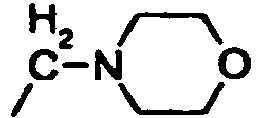
-H -H 680 119 -H -H 
-H -H 661 120 -H 
-H -H -H 661 121 -H -H 
-H -H 659 122 -H 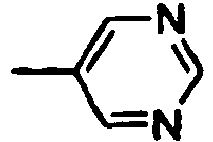
-H -H -H 659 Table 4 
Example R106 MS(M+1) 123 -2-IMIDAZOLYL 571 124 -2-PYRIDYL 582 125 -3-THIENYL 587 126 -3-INDOLYL 620 127 -2-BENZOFURANYL 621 128 -4-QUINOLYL 632 129 -2-QUINOLYL 632 130 -CH=CHC6H5(trans) 607 131 -4-IMIDAZOLYL 571 132 2-FURYL 571 133 -2-NAPHTHYL 631 134 -5-BENZOFURANYL 621 135 -3-QUINOLYL 632 136 -CH2H6H5 595 137 -8-QUINOLYL 632 138 -CH(CH3)C6H5 609 139 -(CH2)2C6H5 609 Table 5 
Example R106 MS(M+1) 140 
585 141 
601 142 
647 143 
634 144 
621 145 
627 146 
664 147 
597 148 
615 149 
631 Table 6 
Example R106 MS(M+1) 150 
651 151 
599 152 
651 153 
621 154 
599 155 
585 156 
662 157 
635 158 
615 Table 7 
Example R106 MS(M+1) 159 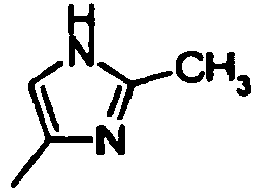
585 160 
625 161 
637 162 
625 163 
620 164 
665 165 
623 166 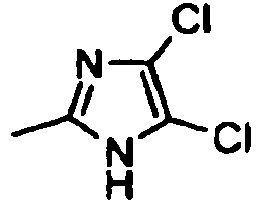
639 167 
655 Table 8 
Example R106 MS(M+1) 168 
661 169 
661 170 
632 171 
632 172 
599 173 
619 174 
585 175 
623 Table 9 
Example R106 MS(M+1) 176 
621 177 
621 178 
654 179 
637 180 
637 181 
596 182 
601 183 
635 184 
600 Table 10 
Example R106 MS(M+1) 185 
664 186 
602 187 
639 188 
648 189 
639 190 
660 191 
616 192 
635 193 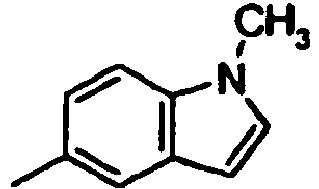
634 194 
661 Table 11 
Example R106 MS(M+1) 195 
622 196 
638 197 
636 198 
585 199 
615 Table 12 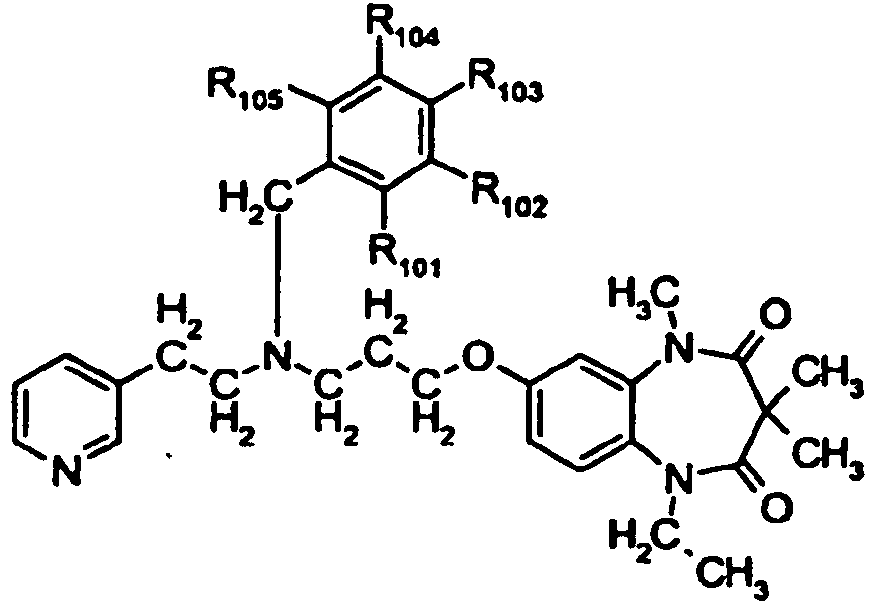
Example R101 R102 R103 R104 R105 MS(M+1) 200 -H -H -H -H -H 515 201 -H -H -CO2H -H -H 559 202 -H -H -C6H5 -H -H 591 203 -H -H -OCH3 -H -H 545 204 -H -H -H -OCH3 -H 545 205 -H -H -OH -H -H 531 206 -H -H -CH3 -H -H 529 207 -H -H -CH(CH3)2 -H -H 557 208 -H -H -CN -H -H 540 209 -H -H -OC2H5 -H -H 559 210 -H -H -H -OH -H 531 211 -H -H -OH -OH -H 547 212 -H -H -H -H -CO2H 559 213 -H -H -NHCOCH3 -H -H 572 214 -H -H -O(CH2)3N(CH3)2 -H -H 616 215 -H -H -H -H -Cl 549 216 -H -H -H -Cl -H 549 217 -H -H -Cl -H -H 549 218 -H -H -H -H -F 533 219 -H -H -H -H -CN 540 220 -H -H -H -H -CF3 583 221 -H -H -H -CF3 -H 583 222 -H -H -H -CH3 -H 529 223 -H -H -CF3 -H -H 583 224 -H -H -C2H5 -H -H 543 225 -H -H -F -H -H 533 226 -H -H -H -H -CH3 529 227 -H -H -CO2CH3 -H -H 573 Table 13 
Example R101 R102 R103 R104 R105 MS(M+1) 228 -H -H -H -F -H 533 229 -H -H -H -CN -H 540 230 -H -H -H -H -OCH3 545 231 -H -H -SCH3 -H -H 561 232 -H -H -H -H -CO2CH3 573 233 -H -H -SO2CH3 -H -H 593 234 -H -H -OCH(CH3)2 -H -H 573 235 -H -H -H -C6H5 -H 591 236 -H -H -H -H -NHSO2H3 608 237 -H -H -1-IMIDAZOLYL -H -H 581 238 -H -H -2-THIENYL -H -H 597 239 -H -H -H -H -OH 531 240 -H -H -3-PYRIDYL -H -H 592 241 -H -H -H -3-PYRIDYL -H 592 242 -H -H -H -H -3-PYRIDYL 592 243 -H -H -H -H -2-THIENYL 597 244 -H -H -2-FURY -H -H 581 Table 14 
Example R101 R102 R103 R104 R105 MS(M+1) 245 -H -H 
-H -H 582 246 -H -H -H -H 
613 247 -H -H -H 
-H 581 248 -H -H 
-H -H 614 249 -H -H 
-H -H 595 250 -H -H -H 
-H 595 251 -H -H 
-H -H 593 252 -H -H -H 
-H 593 253 -H -H 
-H -H 598 Table 15 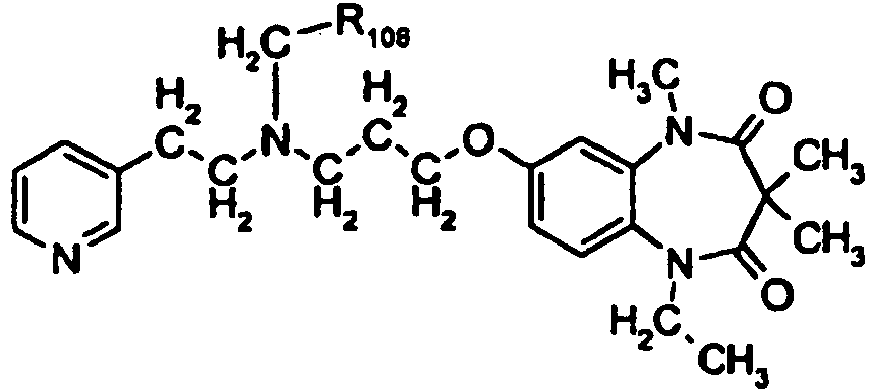
Example R106 MS(M+1) 254 -3-FURYL 505 255 -2-PYRlDYL 516 256 -2-THIENYL 521 257 -3-THIENYL 521 258 -2-BENZOFURANYL 555 259 -4-QUINOLYL 566 260 -2-QUINOLYL 566 261 -CH=CHC6H5(trans) 541 262 -2-THIAZOLYL 522 263 -1-NAPHTHYL 565 264 -2-FURYL 505 265 -2-NAPHTHYL 565 266 -5-BENZOFURANYL 555 267 -3-QUINOLYL 566 268 -CH2C6H5 529 269 -8-QUINOLYL 566 270 -CH(CH3)C6H5 543 271 -(CH2)2C6H5 543 272 -6-QUINOLYL 566 273 2-BENZTHIAZOLYL 572 Table 16 
Example R106 MS(M+1) 274 
519 275 
535 276 
581 277 
568 278 
555 279 
561 280 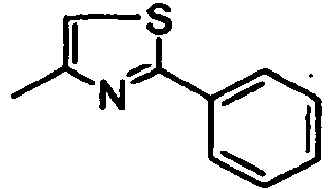
598 281 
531 282 
549 283 
565 Table 17 
Example R106 MS(M+1) 284 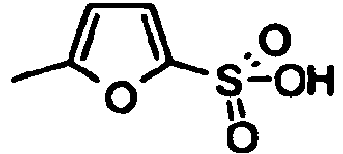
585 285 
533 286 
585 287 
555 288 
533 289 
519 290 
596 291 
569 292 
549 Table 18 
Example R106 MS(M+1) 293 
519 294 
559 295 
573 296 
571 297 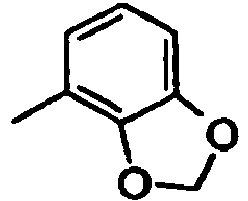
559 298 
554 299 
599 300 
557 301 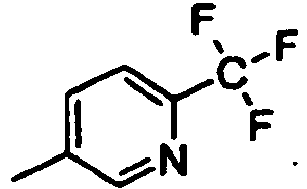
584 Table 19 
Example R106 MS(M+1) 302 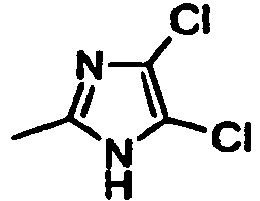
573 303 
575 304 
589 305 
595 306 
595 307 
566 308 
566 309 
533 Table 20 
Example R106 MS(M+1) 310 
553 311 
519 312 
557 313 
555 314 
555 315 
588 316 
571 317 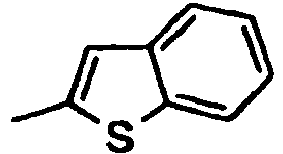
571 318 
530 Table 21 
Example R106 MS(M+1) 319 
535 320 
569 321 
534 322 
598 323 
536 324 
573 325 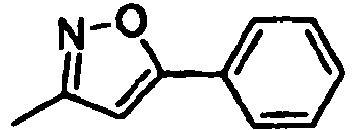
582 326 
573 327 
594 328 
550 Table 22 
Example R106 MS(M+1) 329 
569 330 
568 331 
595 332 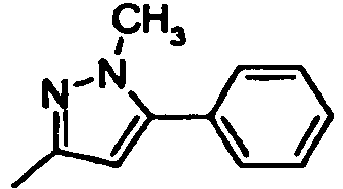
595 333 
556 334 
572 335 
570 336 
519 337 
549 Table 23 
Example R106 MS(M+1) 338 
559 339 
598 340 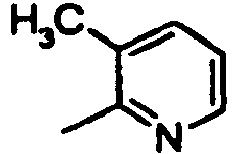
530 341 
530 342 
530 343 
530 344 
596 345 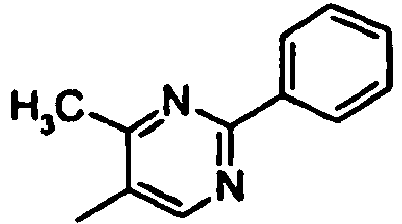
607 346 
595 Table 24 
Example R106 MS(M+1) 347 
596 348 
588 349 
581 350 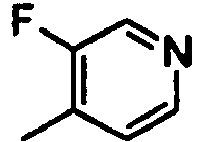
534 351 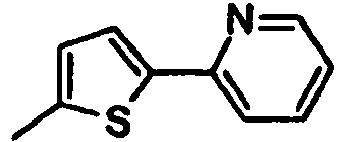
598 352 
572 353 
596 354 
595 355 
612 Table 25 
Example R106 MS(M+1) 356 
572 357 
555 358 
535 359 
587 360 
595 361 
601 362 
585 363 
579 364 
612 Table 26 
Example R106 MS(M+1) 365 
585 366 
587 367 
519 368 
555 369 
530 Table 27 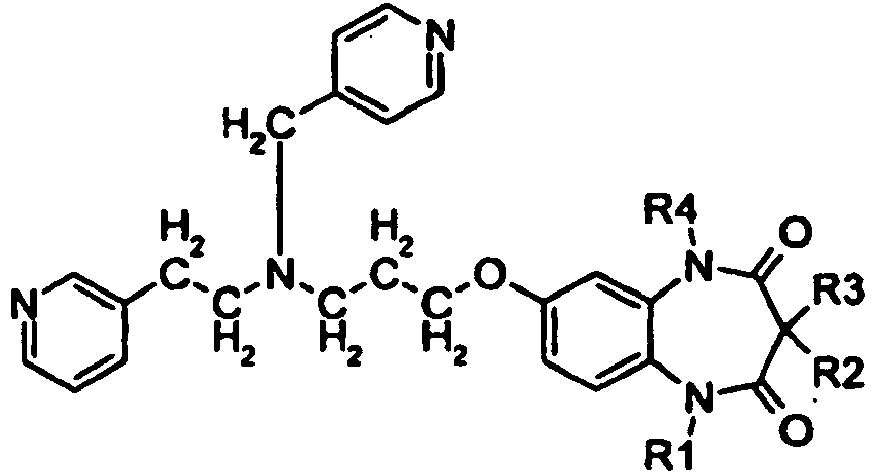
Example R1 R2 R3 R4 MS(M+1) 370 -CH3 -H -H -CH3 474 371 -H -H -H -H 446 Table 28 
Example R101 R102 R103 R104 R105 MS(M+1) 372 -H -H -H -H -H 571 373 -H -H -CO2H -H -H 615 374 -H -H -C6H5 -H -H 647 375 -H -H -OCH3 -H -H 601 376 -H -H -H -OCH3 -H 601 377 -H -H -OH -H -H 587 378 -H -H -CH3 -H -H 585 379 -H -H -CH(CH3)2 -H -H 613 380 -H -H -CN -H -H 596 381 -H -H -OC2H5 -H -H 615 382 -H -H -H -OH -H 587 383 -H -H -OH -OH -H 603 384 -H -H -H -H -CO2H 615 385 -H -H -NHCOCH3 -H -H 628 386 -H -H -O(CH2)3N(CF3)2 -H -H 672 387 -H -H -H -H -Cl 605 388 -H -H -H -Cl -H 605 389 -H -H -Cl -H -H 605 390 -H -H -H -H -F 589 391 -H -H -H -H -CN 596 392 -H -H -H -H -CF3 639 393 -H -H -H -CF3 -H 639 394 -H -H -H -CH3 -H 585 395 -H -H -CF3 -H -H 639 396 -H -H -C2H5 -H -H 599 397 -H -H -F -H -H 589 398 -H -H -H -H -CH3 585 399 -H -H -CO2CH3 -H -H 629 Table 29 
Example R101 R102 R103 R104 R105 MS(M+1) 400 -H -H -H -F -H 589 401 -H -H -H -CN -H 596 402 -H -H -H -H -OCH3 601 403 -H -H -SCH3 -H -H 617 404 -H -H -H -H -CO2CH3 629 405 -H -H -SO2CH3 -H -H 649 406 -H -H -OCH(CH3)2 -H -H 629 407 -H -H -H -C6H5 -H 647 408 -H -H -H -H -NHSO2CH3 664 409 -H -H -1-IMIDAZOLYL -H -H 637 410 -H -H -2-THIENYL -H -H 653 411 -H -H 
-H -H 638 412 -H -H 
-H -H 654 Table 30 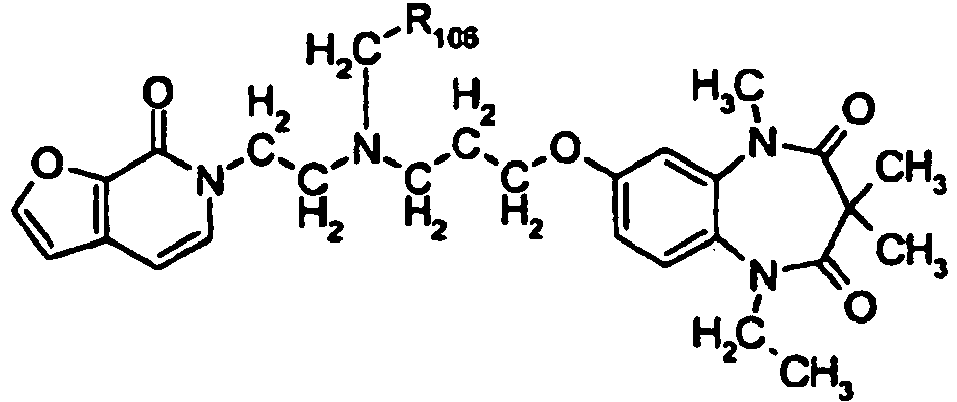
Example R106 MS(M+1) 413 -3-FURYL 561 414 -2-IMIDAZOLYL 561 415 -2-PYRIDYL 572 416 -3-PYRIDYL 572 417 -2-THIENYL 577 418 -3-THIENYL 577 419 -2-BENZOFURANYL 611 420 -4-QUINOLYL 622 421 -2-QUINOLYL 622 422 -CH=CHC6H5(trans) 597 423 -2-THIAZOLYL 578 424 -4-IMIDAZOLYL 561 425 -1-NAPHTHYL 621 426 -2-FURYL 561 427 -2-NAPHTHYL 621 428 -5-BENZOFURANYL 611 Table 31 
Example R106 MS(M+1) 429 
575 430 
591 431 
637 432 
624 433 
611 434 
617 435 
654 436 
587 437 
605 438 
621 Table 32 
Example R106 MS(M+1) 439 
641 440 
589 441 
641 442 
611 443 
589 444 
575 445 
652 446 
625 447 
605 Table 33 
Example R106 MS(M+1) 448 
575 449 
615 450 
629 451 
627 452 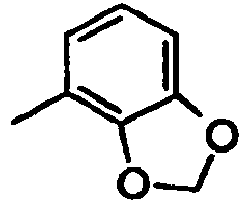
615 453 
610 454 
655 455 
613 456 
629 - Using appropriate starting materials and following the procedures of Reference Examples 1 to 62, the following object compounds were synthesized.
- 1H-NMR (CDCl3) δppm:
- 4.78 (s, 2H), 6.59 (d, J=7.3Hz, 1H), 7.00 (d, J=7.3 Hz, 1H), 7.52-7.59 (m, 2H), 7.68-7.73 (m, 1H), 8.44 (d, J=8.9 Hz, 1H), 9.76 (s, 1H).
- 1H-NMR (CDCl3) δppm:
- 5.15 (s, 2H), 6.76 (d, J=9.5 Hz, 1H), 7.05 (d, J=8.5 Hz, 1H), 7.24-7.29 (m, 1H), 7.54-7.60 (m, 1H), 7.61 (dd, J=7.7 and 1.5 Hz, 1H), 7.77 (d, J=9.5 Hz, 1H), 9.70 (s, 1H).
- 1H-NMR (DMSO-d6) δppm:
- 3.98 (d, J=5.3 Hz, 2H), 5.11-5.16 (m, 1H), 6.04 (d, J=6.4 Hz, 1H), 6.66 (d, J=7.1 Hz, 2H), 7.27 (d, J=5.2 Hz, 1H), 7.41 (d, J=7.1 Hz, 1H), 7.84 (d, J=5.2 H, 1H).
- 1H-NMR (DMSO-d6) δppm:
- 3.88 (d, J=5.4 Hz, 2H), 4.95-5.03 (m, 1H), 6.08 (d, J=6.4 Hz, 2H), 6.69 (dd, J=7.4, 0.8 Hz, 1H), 6.94 (dd, J=2.1 and 0.8 Hz, 1H), 7.50 (d, J=7.4 Hz, 1H), 7.86 (d, J=2.1 Hz, 1H).
- 1H-NMR (DMSO-d6) δppm:
- 3.90 (d, J=6.3 Hz, 2H), 4.99-5.04 (m, 1H), 6.07 (d, J=6.3 Hz, 2H), 6.86 (d, J=7.2 Hz, 1H), 7.41-7.49 (m, 2H), 7.57-7.64 (m, 1H).
- 1H-NMR (DMSO-d6) δppm:
- 3.86 (d, J=5.4 Hz, 2H), 4.95-5.03 (m, 1H), 6.07 (d, J=6. 4 Hz, 2H), 6.69 (dd, J=7.4 and 0.8 Hz, 1H), 7.08 (d, J=0.8 Hz, 1H), 7. 51 (d, J=7.4 Hz, 1H).
- 1H-NMR (DMSO-d6) δppm:
- 2.36 (s, 3H), 3.86 (d, J=5.4 Hz, 2H), 4.94-4.98 (m, 1H), 6.04 (d, J=6.4 Hz, 2H), 6.52 (s, 1H), 6.59 (d, J=7.4 Hz, 1H), 7.41 (d, J=7.4 H, 1H).
- 1H-NMR (DMSO-d6) δppm:
- 1.73 (t, J=7.5z, 3H), 3.31 (q, J=7.5 Hz, 2H), 4.32 (d, J=6.8 Hz, 2H), 5.40-5.51 (m, 1H), 6.53 (d, J=6.2 Hz, 2H), 7.22 (d, J=7.2 Hz, 1H), 7.65 (s, 1H), 7.82 (d, J=7.2 Hz, 1Hz).
- 1H-NMR (CDCl3) δppm:
- 4.77 (s, 2H), 6.52 (d, J=7.4 Hz, 1H), 6.97 (d, J=7.4 Hz, 1H), 7.43 (d, J=8.5 Hz, 1H), 7.76 (dd, J=8.5 and 2.1 Hz, 1H), 8.55 (d, J=2.1 Hz, 1H), 9.73 (s, 1H).
- 1H-NMR (CDCl3) δppm:
- 1.73-1.94 (4H, m), 2.64-2.81 (2H, m), 2.81-2.98 (2H, m), 5.04-5.17 (2H, m), 6.72-6.84 (1H, m), 7.08 (1H, d, J=6.5 Hz), 8.31 (1H, d, J=6.5 Hz).
- 1H-NMR (CDCl3) δppm:
- 0.96 (3H, t, J=7.4 Hz), 1.41-1.48 (2H, m), 1.67-1.76 (2H, m), 3.21 (2H, t, J=8.0 Hz), 7.31 (1H, dd, J=7.8 and 4.8 Hz), 8.13 (1H, dd, J=7.8 and 1.9 Hz), 8.72 (1H, dd, J=4.8 and 1.9 Hz), 10.36 (1H, s).
- 1H-NMR (CDCl3) δppm:
- 1.27 (t, J=7.1 Hz, 3H), 2.00-2.07 (m, 2H), 2.60 (t, J=8.2 Hz, 4H), 4.25 (q, J=7.1 Hz, 1H).
- 1H-NMR (CDCl3) δppm:
- 1.34 (t, J=7.1Hz, 3H), 1.97-2.08 (m, 2H), 2.60-2.68 (m, 2H), 2.71-2.82 (m, 2H), 3.80 (br, 2H), 4.29 (q, J=7.1 Hz, 2H), 6.77-6.83 (m, 2H), 7.02-7.08 (m, 1H), 7.95 (br, 1H).
- 1H-NMR (DMSO-d6) δppm:
- 1.59-1.70 (m, 2H), 3.29-3.44 (m, 4H), 7.07-7.14 (m, 4H), 10.4 (br, 2H).
- 1H-NMR (CDCl3) δppm:
- 1.26-1.68 (m, 4H), 2.83-2.89 (m, 2H), 3.44 (s, 6H), 7.23-7.30 (m, 4H).
- 1H-NMR (CDCl3) δppm:
- 1.26 (s, 6H), 1.60 (s, 6H), 1.62-1.69 (m, 4H), 2.06-2.89 (m, 2H), 3.45 (s, 3H), 3.48 (s, 3H), 7.26-7.28 (m, 1H), 7.65-7.70 (m, 2H).
- 1H-NMR (CDCl3) δppm:
- 1.58-1.62 (m, 4H), 2.83-2.88 (m, 2H), 3.41 (s, 3H), 3.44 (s, 3H), 7.14 (d, J=8.7 Hz, 1H), 7.36 (dd, J=8.7 and 2.1 Hz, 1H), 7.41 (d, J=2.1 Hz, 1H).
- Sulfuric acid (13 µl) was added to an ethyl acetate solution (5 ml) of 1-ethyl-3,3,5-trimethyl-7-{3-[(pyridin-4-ylmethyl) amino]propoxy}-1,5-dihydrobenzo[b][1,4]diazepine-2,4-dione (100 mg, 0.24 mmol), and stirred at room temperature for 15 minutes. The resultant mixture was concentrated to dryness under reduced pressure to thereby obtain 1-ethyl-3,3,5-trimethyl-7-{3-[(pyridin-4-yl methyl)amino]propoxy}-1,5-dihydrobenzo[b] [1,4]diazepine-2,4-dione sulfate as a white amorphous solid.
1H-NMR (DMSO-d6) δppm: - 0.74 (s, 3H), 0.99 (t, J = 7.0 Hz, 3H), 1.31 (s, 3H), 2.14-2.18 (m, 2H), 3.14-3.18 (m, 2H), 3.31 (s, 3H), 3.61-3.69 (m, 1H), 4.00-4.09 (m, 1H), 4.10-4.14 (m, 2H), 4.27 (s, 2H).6.94-6.95 (m, 2H), 7.40 (d, J = 9.0 Hz, 1H), 7.55-7.57 (m, 2H), 8.62-8.64 (m, 2H).
- 85% phosphoric acid aqueous solution (0.34ml) was added to an ethanol solution (19ml) of 1,3,3,5-Tetramethyl-7-(3-{[2-(1-oxo-3,4-dihydro-1H-isoquinolin-2-yl)ethyl]pyridin-4-ylmethylamino}-propoxy)-1,5-dihydro-benzo[b] [1,4]diazepine-2,4-di one (1.05g, 1.84mmol), and stirred at 50°C for 15 minutes. The reaction mixture was cooled to room temperature. The precipitated insoluble matter was collected by filtration, washed with ethanol, and dried to thereby obtain 1.59 g (yield: 73%) of 1,3,3,5-Tetramethyl-7-(3-{[2-(1-oxo-3,4-dihydro-1H-isoquinolin-2-yl)ethyl]pyridin-4-ylmethylamino}-propoxy)-1,5-dihydro-benzo[b] [1 ,4]diazepine-2,4-dione tris(phosphate) as a white solid.
1H-NMR (DMSO-d6) δppm: - 0.75 (3H, s), 1.32 (3H, s), 1.78-1.98 (2H, m), 2.55-2.77 (4H, m), 2.81-2.98 (2H, m), 3.28 (3H, s), 3.29 (3H, s), 3.51 (2H, t, 6.6 Hz), 3.62 (2H, m), 3.68(s, 2 H), 3.99 (2H, t, J = 6.0 Hz), 6.75 (2H, dd, J=2.6 and 9.0 Hz), 6.82 (2H, d, 2.6 Hz), 7.21-7.38 (5H, m), 7.41-7.51 (1H, m), 8.34 (2H, d, J=5.8Hz)
- N-(3-Dimethylaminopropyl)-N'-ethylcarbodiimide hydrochloride (WSC) (0.16 g, 0.85 mmol) was added to an acetonitrile solution (6 ml) of 1-ethyl-3,3,5-trimethyl-7-[3-(2-pyridin-3-ylethylamino)propoxy]-1,5-dihydrobenzo [b] [1,4]diazepine-2,4-dione (0.3 g, 0.71 mmol), isonicotinic acid (96 mg, 0.78 mmol), and 1-hydroxybenzotriazole (HOBT) (0.138 g, 0. 85 mmol), and then stirred at room temperature for 2 days. The solvent was concentrated under reduced pressure. Ethyl acetate and a sodium hydrogen carbonate aqueous solution were added to the reaction mixture, and stirred for 1 hour. Water was added to the reaction mixture, and extraction with ethyl acetate was conducted. The organic layer was dried over anhydrous sodium sulfate and concentrated under reduced pressure. The residue thus obtained was purified by medium pressure liquid chromatography (silica gel, dichloromethane:methanol=92:8). The purified product was concentrated under reduced pressure and crystallized from ethyl acetate, diethylether and n-hexane. The precipitated crystals were collected by filtration and dried to thereby obtain 0.21 g (yield:56%) of N-[3-(1-ethyl-3,3,5-trimethyl -2,4-dioxo-2,3,4,5-tetrahydro-1H-benzo[b] [1,4]diazepin-7-yloxy) propyl]-N-(2-pyridin-3-ylethyl)isonicotinamide as a white powder. Melting Point 88.1 to 92.2°C
- Using an appropriate starting material and following the procedure of Example 7, the object compound was synthesized.
1H-NMR (CDCl3) δppm: - 0.88 (s, 3H), 1.17 (t, J=7.1Hz, 3H), 1.54 (s, 3H), 1.89-1.97 (m, 2H), 2.74 (t, J=6.8 Hz, 2H), 2.83-2.95 (m, 2H), 3.39 (s, 3H), 3.69 (s, 2H), 3.68-3.74 (m, 1H), 3.89 (t, J=6.0 Hz, 2H), 4.12 (t, J=6.0 Hz, 2H), 4.11-4.21 (m, 1H), 6.53-6.70 (m, 3H), 7.05 (d, J=7.2 Hz, 1H), 7.10 (d, J=5.9 Hz, 2H), 7.20 (d, J=8.9 Hz, 1H), 7.32 (d, J=5.3 Hz, 1H), 7.63 (d, J=5.3 Hz, 1H), 8.32 (d, J=5.9 Hz, 2H).
- Using an appropriate starting material and following the procedure of Example 7, the object compound was synthesized.
1H-NMR (CDCl3) δppm: - 0.88 (s, 3H), 1.17 (t, J=7.1 Hz, 3H), 1.54 (s, 3H), 1.89-1.97 (m, 2H), 2.74 (t, J=6.8 Hz, 2H), 2.83-2.95 (m, 2H), 3.39 (s, 3H), 3.68-3.74 (m, 3H), 3.90 (t, J=6.0 Hz, 2H), 4.05-4.21 (m, 3H), 6.56 (d, J=7.1 Hz, 1H), 6.60-6.70 (m, 2H), 7.03-7.10 (m, 3H), 7.16-7.23 (m, 2H), 7.73 (d, J=5.2 Hz, 1H), 8.31 (d, J=5.9 Hz, 2H).
- Using an appropriate starting material and following the procedure of Example 7, the object compound was synthesized.
White powder
Melting Point 93.8°C
1H-NMR (CDCl3) δppm: - 0.87 (s, 3H), 1.16 (t, J=7.1 Hz, 3H), 1.53 (s, 3H), 1.82-1.95 (m, 2H), 2.72 (t, J=6.8 Hz, 2H), 2.76-2.89 (m, 2H), 3.38 (s, 3H), 3.68 (s, 2H), 3.63-3.78 (m, 1H), 3.87 (t, J=6.0 Hz, 2H), 4.10 (t, J=6.0 Hz, 2H), 4.11-4.20 (m, 1H), 6.43 (d, J=7.4 Hz, 1H), 6.60 (d, J=2.8 Hz, 1H), 6.67 (dd, J=9.0 and 2.8 Hz, 1H), 6.96 (d, J=2.9 Hz, 1H), 7.05-7.11 (m, 3H), 7.19 (d, J=9.0 Hz, 1H), 7.50 (d, J=2.9 Hz, 1H), 8.35 (d, J=6.0 Hz, 2H).
- Using an appropriate starting material and following the procedure of Example 7 and Example 6, the object compound was synthesized.
amorphous
1H-NMR (DMSO-d6) δppm: - 0.75 (s, 3H), 1.01 (t, J=7.1 Hz, 3H), 1.32 (s, 3H), 2.15 (br, 2H), 2.95-3.40 (m, 2H), 3.32 (s, 3H), 3.61-3.73 (m, 3H), 4.01-4.09 (m, 3H), 4.34 (br, 4H), 6.81 (br, 2H), 6.88 (br, 1H), 7.10 (s, 1H), 7.39 (d, J = 9.0 Hz, 1H), 7.74 (br, 1H), 8.13 (br, 2H), 8.86 (br, 2H).
- Using an appropriate starting material and following the procedure of Example 6, the object compound was synthesized. amorphous
1H-NMR (DMSO-d6) δppm: - 0.75 (s, 3H), 1.01 (t, J = 7.1 Hz, 3H), 1.32 (s, 3H), 2.00-2.22 (m, 2H), 2.22 (s, 3H), 3.11-3.39 (m, 7H), 3.60-3.71 (m, 1H), 4.02-4.07 (m, 3H), 4.30-4.45 (m, 2H), 4.51-4.71(m, 2H), 6.55 (s, 1H), 6.72 (d, J = 7.3 Hz, 1H), 6.84-6.90 (m, 2H), 7.40 (d, J = 9.0 Hz, 1H), 7.64 (d, J = 7.3 Hz, 1H), 8.21 (br, 2H), 8.89 (br, 2H).
- Using an appropriate starting material and following the procedure of Example 7, the object compound was synthesized.
1H-NMR (CDCl3) δppm: - 0.87 (s, 3H), 1.16 (t, J=7.1 Hz, 3H), 1. 53 (s, 3H), 1.83-1.96 (m, 2H), 2.42 (s, 3H), 2.72 (t, J=6.2 Hz, 2H), 2.85 (t, J=6.0 Hz, 2H), 3.39 (s, 3H), 3.68 (s, 2H), 3.66-3.79 (m, 1H), 3.89 (t, J=6.1 Hz, 2H), 4.08-4.23 (m, 3H), 6.37 (d, J=7.3Hz, 1H), 6.49-6.54 (m, 1H), 6.63-6.69 (m, 2H), 7.01 (d, J=7.3 Hz, 1H), 7.08-7.12 (m, 2H), 7.19 (d, J=8.3 Hz, 1H), 8.35-8.37 (m, 2H).
- Using an appropriate starting material and following the procedure of Example 7 and Example 6, the object compound was synthesized.
amorphous
1H-NMR (DMSO-d6) δppm: - 0.75 (s, 3H), 1.01 (t, J=7.0Hz, 3H), 1.28 (t, J=7.5Hz, 3H), 1.32 (s, 3H), 2.09 (br, 2H), 2.87 (q, J=7.5 Hz, 2H), 3.10-3.21 (m, 2H), 3.30 (s, 3H), 3.51-3.69 (m, 3H), 3.90-4.09 (m, 5H), 4.30 (br, 2H), 6.71-6.88 (m, 3H), 7.18-7.20 (m, 1H), 7.36-7.43 (m, 1H), 7.52 (br, 1H), 7.86 (br, 2H), 8.69 (br, 2H).
- Using an appropriate starting material and following the procedure of Example 7 and Example 6, the object compound was synthesized.
pale yellow amorphous
1H-NMR (DMSO-d6) δppm: - 0.74 (s, 3H), 1.01 (t, J = 7.0 Hz, 3H), 1.32 (s, 3H), 2.05-2.20 (m, 2H), 2.17 (s, 3H), 2.29 (s, 3H), 3.05-3.20 (m, 2H), 3.31 (s, 3H), 3.61-3.73 (m, 3H), 3.95-4.05 (m, 3H), 4.31 (br, 4H), 6.63 (br, 1H), 6.81-6.88 (m, 2H), 7.39 (d, J=9.0 Hz, 1H), 7.56 (d, J=7.3 Hz, 1H), 8.04 (br, 2H), 8.79 (br, 2H).
- A 2N-Sodium carbonate aqueous solution (0.3 ml) and tetrakis(triphenylphosphine)palladium(0) (37.2 mg, 0.03 mmol) were added to a dimethoxyethane solution (2 ml) of 7-(3-{[2-(2-bromo -4-oxo-4H-furo[3,2-c]pyridin-5-yl)ethyl]pyridin-4-ylmethylamino} propoxy)-1-ethyl-3,3,5-trimethyl-1,5-dihydrobenzo[b] [1,4]diazepin e-2,4-dione (0.20 g, 0.31 mmol) and furan-3-boronic acid (39.2 mg, 0.035 mmol), and stirred under argon atmosphere at 80°C for 6.5 hours. The reaction mixture was cooled to room temperature, and purified by silica gel column chromatography (ethyl acetate:methanol=100:0→93:7). The purified product was concentrated under reduced pressure and the resultant residue was dissolved in ethyl acetate (10 ml). A 4N-HCl ethyl acetate solution (0.5 ml) was added to the solution, and concentrated to dryness under reduced pressure to thereby obtain 0.10 g (yield:51%) of 1-ethyl-7-(3-{[2-(2-furan-3-yl-4-oxo-4H-furo [3,2-c]pyridin-5-yl) ethyl]pyridin-4-ylmethylamino}propoxy)-3,3,5-trimethyl-1,5-dihydrobenzo[b][1,4]diazepine-2,4-dione dihydrochloride as a pale yellow amorphous solid.
1H-NMR (DMSO-d6) δppm: - 0.73 (s, 3H), 1.00 (t, J = 7.0 Hz, 3H), 1.32 (s, 3H), 2.09 (br, 2H), 3.21-3.40 (m, 2H), 3.29 (s, 3H), 3.51-3.64 (m, 3H), 3.81-4.01 (m, 5H), 4.30 (br, 2H), 6.78 (br, 2H), 6.84 (br, 1H), 6.98 (d, J = 0.74 Hz, 1H), 7.16 (s, 1H), 7.33 (d, J=8.5 Hz, 1H), 7.69 (d, J= 5.9 Hz, 1H), 7.82 (s, 1H), 7.93 (br, 2H), 8.19 (s, 1H), 8.74 (br, 2H).
- Using an appropriate starting material and following the procedure of Example 468, the object compound was synthesized. pale yellow amorphous
1H-NMR (DMSO-d6) δppm: - 0.73 (s, 3H), 0.99 (t, J = 7.0 Hz, 3H), 1.31 (s, 3H), 2.13 (br, 2H), 3.10-3.30 (m, 2H), 3.30 (s, 3H), 3.70-3.85 (m, 1H), 3.92-4.03 (m, 5H), 4.38 (br, 4H), 6.80-6.87 (m, 3H), 7.35 (d, J=9.0Hz, 1H), 7.79-7.84 (m, 3H), 8.07 (br, 2H), 8.55 (d, J=8.0 Hz, 1H), 8.72 (dd, J = 1.3, 5.2 Hz, 1H), 8.82 (br, 2H), 9.23 (d, J = 1.8 Hz, 1H).
- Using an appropriate starting material and following the procedure of Example 468, the object compound was synthesized. yellow powder
1H-NMR (DMSO-d6) δppm: - 0.74 (s, 3H), 0.99 (t, J = 7.0 Hz, 3H), 1.31 (s, 3H), 2.11 (br, 2H), 3.12-3.30 (m, 2H), 3.29 (s, 3H), 3.55-3.69 (m, 1H), 3.91-4.08 (m, 5H), 4.36 (br, 4H), 6.77-6.90 (m, 3H), 7.35 (d, J=8.9 Hz, 1H), 7.93 (br, 3H), 8.30 (br, 3H), 8.76 (br, 2H), 8.91 (d, J = 5.6 Hz, 2H).
- Using an appropriate starting material and following the procedure of Example 468, the object compound was synthesized.
1H-NMR (DMSO-d6) δppm: - 0.73 (s, 3H), 0.99 (t, J = 7.0 Hz, 3H), 1.31 (s, 3H), 2.10 (br, 2H), 3.02-3.20 (m, 2H), 3.30 (s, 3H), 3.55-3.70 (m, 1H), 3.95-4.03 (m, 5H), 4.39 (br, 4H), 6.78-6.88 (m, 3H), 7.15-7.80 (m, 2H), 7.53 (br, 2H), 7.62-7.81 (m, 3H), 8.06 (br, 2H), 8.82 (br, 2H).
- Using an appropriate starting material and following the procedure of Example 7, the object compound was synthesized.
White powder
Melting Point 125°C - Using an appropriate starting material and following the procedure of Example 7 and Example 6, the object compound was synthesized.
White powder
1H-NMR (DMSO-D6) δppm: - 0.74 (3H, s), 1.01 (3H, t, J=7.0 Hz), 1.32 (3H, s), 2.00-2.28 (2H, m), 2.70-5.31 (15H, m), 6.45-6.59 (1H, m), 6.76-6.80 (1H, m), 6.83-6.87 (2H, m), 7.37 (1H, d, J= 9.0 Hz) 7.42-7.58 (1H, m), 7.72-7.88 (1H, m), 7.95-8.19 (3H, m), 8.31 (1H, d, J= 8.6 Hz), 8.43-8.50 (1H, m), 9.03-9.19 (1H, m)
- Using an appropriate starting material and following the procedure of Example 7 and Example 6, the object compound was synthesized.
White powder
1H-NMR (DMSO-D6) δppm: - 0.75 (3H, s), 1.01 (3H, t, J=7.0 Hz), 1.32 (3H, s), 2.12-2.27 (2H, m), 3.20-3.44 (7H, m) 3.45-3.43 (2H, m), 3.63-3.70 (1H, m), 3.99-4.09 (3H, m), 4.35-4.37 (1H, m), 4.43-4.53 (1H, m) 6.68-6.71 (1H, m), 6.84-6.93 (4H, m), 6.99-7.10 (2H, m), 7.20-7.26 (1H, m), 7.40 (1H, d, J= 7.7Hz), 7.54-7.58 (1H, m), 8.17(1H, s), 9.72-9.80(1H, m)
- Using an appropriate starting material and following the procedure of Example 7 and Example 6, the object compound was synthesized.
White powder
1H-NMR (DMSO-D6) δppm: - 0.75 (3H, s), 1.00 (3H, t, J= 7.1 Hz), 1.32 (3H, s), 2.05-2.28 (2H, m), 3.10-3.84 (8H, m), 3.99-4.09 (3H, m), 4.40-4.50 (2H, m), 4.72-4.88 (2H, m), 6.64-6.67 (1H, m), 6.84-6.92 (3H, m), 7.39 (1H, d, J= 9.0Hz) 7.52-7.59 (1H, m), 7.65-7.91 (2H, m), 8.14 (1H, d, J= 1.9Hz)
- Using an appropriate starting material and following the procedure of Example 468, the object compound was synthesized. amorphous
1H-NMR (DMSO-d6) δppm: - 0.72 (s, 3H), 0.99 (t, J = 7.0 Hz, 3H), 1.31 (s, 3H), 2.09 (br, 2H), 3.11-3.30 (m, 2H), 3.29 (s, 3H), 3.61-3.72 (m, 1H), 3.60-4.04 (m, 5H), 4.38 (br, 4H), 6.71-6.88 (m, 3H), 7.32 (d, J=8.6Hz, 1H), 7.37-7.41 (m, 1H), 7.46-7.51 (m, 3H), 7.74 (br, 1H), 7.86 (d, J = 7.4 Hz, 2H), 8.03 (br, 2H), 8.81 (br, 2H).
- Using an appropriate starting material and following the procedure of Example 468, the object compound was synthesized. amorphous
1H-NMR (DMSO-d6) δppm: - 0.71 (s, 3H), 0.98 (t, J=7.0 Hz, 3H), 1.31 (s, 3H), 2.00 (br, 2H), 3.28 (s, 3H), 3.20-3.38 (m, 2H), 3.50-3.70 (m, 1H), 3.82 (s, 3H), 3.90-4.02 (m, 5H), 4.40 (br, 4H), 6.82 (br, 3H), 7.05 (d, J = 8.8 Hz, 2H), 7.30 (br, 2H), 7.66 (br, 1H), 7.79 (d, J=8.8Hz, 2H), 7.92 (br, 2H), 8.68 (br, 2H).
- Using an appropriate starting material and following the procedure of Example 7, the object compound was synthesized. Colorless oil
1H-NMR (CDCl3) δppm: - 0.86 (s, 3H), 1.15 (t, J=7.1 Hz, 3H), 1.53 (s, 3H), 1.91-2.08 (m, 2H), 2.66 (t, J=6.9 Hz, 2H), 3.39 (s, 3H), 3.61 (s, 2H), 3.63 (s, 2H), 3.61-3.78 (m, 1H), 3.97 (t, J=6.1 Hz, 2H), 4.03-4.20 (m, 1H), 6.60 (d, J=2.7 Hz, 1H), 6.70 (dd, J=2.7 and 9. 0 Hz, 1H), 7.16-7.26 (m, 4H), 7.64-7.68 (m, 1H), 8.46-8.52 (m, 3H), 8.60 (br, 1H).
- Using an appropriate starting material and following the procedure of Example 6, the object compound was synthesized.
White solid
1H-NMR (DMSO-d6) δppm: - 0.76 (s, 3H), 1.05 (t, J=7.0 Hz, 3H), 1.33 (s, 3H), 2.09 (br, 2H), 2.75 (br, 2H), 3.31 (s, 3H), 3.61-3.73 (m, 1H), 4.03 - 4.30 (m, 5H), 4.53 (br, 2H), 6.81-6.82 (m, 2H), 7.34-7.37 (m, 1H), 7.94 (br, 1H), 8.15 (br, 2H), 8.64 (br, 1H), 8.80-8.87 (m, 3H), 9.01(Br, 1H).
- Using an appropriate starting material and following the procedure of Example 7, the object compound was synthesized. colorless oil
1H-NMR (CDCl3) δppm: - 0.86 (s, 3H), 1.15 (t, J=7.1 Hz, 3H), 1. 53 (s, 3H), 1.91-2.04 (m, 2H), 2.71 (t, J=6.9 Hz, 2H), 3.38 (s, 3H), 3.67 (s, 2H), 3.61-3.72 (m, 1H), 3.80 (s, 2H), 3.99 (t, J=6.1Hz, 2H), 4.05-4.20 (m, 1H), 6.61 (d, J=2.8 Hz, 1H), 6.71 (dd, J=2.8 and 9.0 Hz, 1H), 7.14-7.19 (m, 2H), 7.26-7.31 (m, 2H), 7.46 (d, J=7.8 Hz, 1H), 7.57-7.68 (m, 1H), 8.47-8.54 (m, 3H).
- Using an appropriate starting material and following the procedure of Example 6, the object compound was synthesized. White amorphous
1H-NMR (DMSO-d6) δppm: - 0.76 (s, 3H), 1.01 (t, J=7.0 Hz, 3H), 1.32 (s, 3H), 2.14 (br, 2H), 2.96 (br, 2H), 3.30 (s, 3H), 3.61-3.73 (m, 1H), 4.03-4.10 (m, 3H), 4.27-4.32 (m, 4H), 6.81-6.85 (m, 2H), 7.38 (d, J=9.0 Hz, 1H), 7.64 (br, 1H), 7.81 (br, 1H), 8.07 (br, 3H), 8.81 (br, 3H).
- Using an appropriate starting material and following the procedure of Example 7, the object compound was synthesized. colorless oil
1H-NMR (CDCl3) δppm: - 0.86 (s, 3H), 1.15 (t, J=7.1 Hz, 3H), 1. 53 (s, 3H), 1. 91-2.02 (m, 2H), 2.66 (t, J=6.6Hz, 2H), 3.38 (s, 3H), 3.62 (s, 4H), 3.61-3.78 (m, 1H), 3.92-3.99 (m, 2H), 4.01-4.20 (m, 1H), 6.61 (d, J=2.8 Hz, 1H), 6.70 (dd, J=2.8 and 9.0 Hz, 1H), 7.20 (d, J=9.0 Hz, 1H), 7.28-7.30 (m, 4H), 8.50-8.53 (m, 4H).
- Using an appropriate starting material and following the procedure of Example 6, the object compound was synthesized. White amorphous
1H-NMR (DMSO-d6) δppm: - 0.75 (s, 3H), 1.02 (t, J=7.0 Hz, 3H), 1.32 (s, 3H), 2.01 (br, 2H), 2.67 (br, 2H), 3.30 (s, 3H), 3.63-3.72 (m, 1H), 4.03-4.10 (m, 7H), 6.81-6.85 (m, 2H), 7.37 (d, J=9.0 Hz, 1H), 8.10 (br, 4H), 8.84 (br, 4H).
- Using an appropriate starting material and following the procedure of Example 7, the object compound was synthesized. pale yellow oil
1H-NMR (CDCl3) δppm: - 0.86 (s, 3H), 1.15 (t, J=7.1 Hz, 3H), 1.53 (s, 3H), 1.91-2.05 (m, 2H), 2.27 (s, 3H), 2.67 (t, J=6.6Hz, 2H), 3.39 (s, 3H), 3.63 (s, 2H), 3.64 (s, 2H), 3.62-3.79 (m, 1H), 4.02 (t, J=6.2 Hz, 2H), 4.07-9.22 (m, 1H), 5.87 (br, 1H), 6.04 (br, 1H), 6.66 (d, J=2.8 Hz, 1H), 6.75 (dd, J=2.8 and 9.0 Hz, 1H), 7.20 (d, J=9.0 Hz, 1H), 7.24-7.26 (m, 2H), 8.46-8.50 (m, 2H).
- Using an appropriate starting material and following the procedure of Example 6, the object compound was synthesized. pale yellow amorphous
1H-NMR (DMSO-d6) δppm: - 0.76 (s, 3H), 1.01 (t, J=7.0 Hz, 3H), 1.32 (s, 3H), 2.21-2.30 (m, 5H), 3.05 (br, 2H), 3.32 (s, 3H), 3.62-3.72 (m, 1H), 4.02-4.11 (m, 3H), 4.23-4.58 (m, 4H), 6.10 (br, 1H), 6.57 (br, 1H), 6.87-6.91 (m, 2H), 7.40 (d, J=9.0 Hz, 1H), 8.20 (br, 2H), 8.90 (br, 2H).
- Using an appropriate starting material and following the procedure of Example 44, the object compound was synthesized.
1H-NMR (DMSO-d6) δppm: - 0.76 (s, 3H), 1.01 (t, J = 7.0 Hz, 3H), 1.32 (s, 3H), 2.21 (br, 2H), 2.51 (s, 3H), 3.10 (br, 2H), 3.33 (s, 3H), 3.35 (br, 2H), 3.61-3.72 (m, 1H), 4.00-4.12 (m, 5H), 4.55 (br, 2H), 6.90 (dd, J = 2.6, 9.0 Hz, 1H), 6.94 (d, J = 2.6 Hz, 1H), 7.40 (d, J = 9.0 Hz, 1H), 8.35 (br, 2H), 8.95 (br, 2H), 9.50 (br, 2H).
- Diethyl phosphorocyanidate (0.15 g, 1.0 mmol) was added to a THF solution (5 ml) of 1-ethyl-3,3,5-trimethyl-7-{3-[(2-methylaminoethyl)pyridin-4-ylmethylamino]propoxy} -1,5-dihydrobenzo[b][1,4]diazepine-2,4-dione (0.39 g, 0.83 mmol), benzoic acid (0.14 g, 1.1 mmol), and triethylamine (0.15 ml, 1.1 mmol), and the mixture was stirred at room temperature overnight. The reaction mixture was purified by silica gel column chromatography (ethyl acetate:methanol=100:0→80:20). The purified product was concentrated under reduced pressure to thereby obtain 0.41g (yield: 86%) of N-(2-{[3-(1-ethyl-3,3,5-trimethyl-2,4-dioxo-2,3,4,5-tetrahydro-1H-benzo[b][1,4]diazepin-7-yloxy)propyl]pyridin-4-yl methylamino}ethyl)-N-methyl-benzamide as a colorless oil.
1H-NMR (CDCl3) δppm: - 0.84 (s, 3H), 1.15 (t, J=7.1 Hz, 3H), 1.52 (s, 3H), 1.86-1.98 (m, 2H), 2.72 (br, 4H), 2.93 (br, 3H), 3.36 (s, 3H), 3.40-3.69 (m, 5H), 3.98 (br, 2H), 4.13-4.23 (m, 1H), 6.66 (d, J=2.8 Hz, 1H), 6.70 (dd, J=2.8 and 9.0 Hz, 1H), 7.15 (d, J=9.0 Hz, 1H), 7.17-7.27 (m, 2H), 7.30-7.39 (m, 5H), 8.47-8.50 (m, 2H).
- Using an appropriate starting material and following the procedure of Example 6, the object compound was synthesized.
1H-NMR (DMSO-d6) δppm: - 0.75 (s, 3H), 1.01 (t, J=7.0 Hz, 3H), 1.33 (s, 3H), 2.38 (br, 2H), 2.97 (s, 3H), 3.32 (br, 5H), 3.40-3.49 (m, 2H), 3.61-3.70 (m, 1H), 3.97 (br, 2H), 4.01-4.10 (m, 1H), 4.15 (br, 2H), 4.87 (br, 2H), 6.90-6.95 (m, 2H), 7.40-7.49 (m, 6H), 8.50 (br, 2H), 9.05 (br, 2H).
- Using an appropriate starting material and following the procedure of Example 487, the object compound was synthesized.
1H-NMR (CDCl3) δppm: - 0.84 (s, 3H), 1.13 (t, J=7.1 Hz, 3H), 1.52 (s, 3H), 1.92 (br, 2H), 2.71 (br, 4H), 2.93 (br, 3H), 3.36 (s, 3H), 3.40-3.80 (m, 5H), 3.79 (s, 3H), 3.99 (br, 2H), 4.08-4.25 (m, 1H), 6.67 (d, J=2.8 Hz, 1H), 6.72 (dd, J=2.8 and 9.0 Hz, 1H), 6.85-6.94 (m, 3H), 7.16 (d, J=9.0 Hz, 1H), 7.12-7.30 (m, 3H), 8.47-8.50 (m, 2H).
- Using an appropriate starting material and following the procedure of Example 6, the object compound was synthesized.
1H-NMR (DMSO-d6) δppm: - 0.75 (br, 3H), 1.00 (br, 3H), 1.32 (s, 3H), 2.33 (br, 2H), 2.94 (s, 3H), 3.30 (br, 7H), 3.61-3.70 (m, 1H), 3.77 (s, 3H), 4.01-4.15 (m, 5H), 4.71 (br, 2H), 6.91 (br, 2H), 7.02 (br, 3H), 7.32-7.41 (m, 2H), 8.17 (br, 2H), 8.89 (br, 2H).
- Using an appropriate starting material and following the procedure of Example 487, the object compound was synthesized.
1H-NMR (CDCl3) δppm: - 0.84 (s, 3H), 1.13 (t, J=7.1 Hz, 3H), 1. 51 (s, 3H), 1. 84-1. 97 (m, 2H), 2.60-2.78 (m, 4H), 2.95 (s, 3H), 3.37 (s, 3H), 3.50-3.75 (m, 5H), 3.82 (s, 3H), 4.00 (t, J=6.2 Hz, 2H), 4.08-4.21 (m, 1H), 6.67 (d, J=2.8 Hz, 1H), 6.86 (dd, J=2.8 and 9.0 Hz, 1H), 6.85-6.88 (m, 2H), 7.16 (d, J=9.0 Hz, 1H), 7.17-7.21 (m, 2H), 7.32-7.33 (m, 2H), 8.47-8.50 (m, 2H) .
- Using an appropriate starting material and following the procedure of Example 6, the object compound was synthesized.
1H-NMR (DMSO-d6) δppm: - 0.75 (br, 3H), 1.00 (br, 3H), 1.32 (s, 3H), 2.32 (br, 2H), 2.99 (s, 3H), 3.30 (br, 5H), 3.66 (br, 2H), 3.78 (s, 3H), 3.88 (br, 3H), 4.10 (br, 3H), 4.64 (br, 2H), 6.87-6.97 (m, 4H), 7.38-7.45 (m, 3H), 8.12 (br, 2H), 8.95 (br, 2H).
- Using an appropriate starting material and following the procedure of Example 487, the object compound was synthesized.
1H-NMR (CDCl3) δppm: - 0.84 (s, 3H), 1.13 (t, J=7.1 Hz, 3H), 1.51 (s, 3H), 1.95-2.04 (m, 2H), 2.43-2.59 (m, 2H), 2.81-2.95 (m, 2H), 2.83 (s, 3H), 3.35 (s, 3H), 3.62-3.79 (m, 5H), 4.02-4.21 (m, 3H), 6.61-6.79 (m, 3H), 7.00-7.39 (m, 6H), 8.46-8.49 (m, 2H).
- Using an appropriate starting material and following the procedure of Example 6, the object compound was synthesized.
1H-NMR (DMSO-d6) δppm: - 0.75 (br, 3H), 1.00 (br, 3H), 1.32 (s, 3H), 2.32 (br, 2H), 2.88 (s, 3H), 3.30 (br, 5H), 3.68 (br, 3H), 4.12 (br, 5H), 4.72 (br, 2H), 6.89-6.93 (m, 2H), 7.29 (br, 2H), 7.38-7.42 (m, 1H), 7.51 (br, 2H), 8.29 (br, 2H), 8.96 (br, 2H).
- Using an appropriate starting material and following the procedure of Example 487, the object compound was synthesized.
1H-NMR (CDCl3) δppm: - 0.84 (s, 3H), 1.13 (t, J=7.1Hz, 3H), 1.49 (s, 3H), 1.95-2.04 (m, 2H), 2.26 (s, 3H), 2.43-2.59 (m, 2H), 2.73 (s, 3H), 2.72-2.81 (m, 2H), 3.35 (s, 3H), 3.62-3.79 (m, 5H), 4.02-4.27 (m, 3H), 6.60-6.79 (m, 2H), 7.00-7.35 (m, 7H), 8.46-8.52 (m, 2H).
- Using an appropriate starting material and following the procedure of Example 6, the object compound was synthesized.
1H-NMR (DMSO-d6) δppm: - 0.75 (s, 3H), 1.00 (br, 3H), 1.32 (s, 3H), 2.18 (s, 3H), 2.33 (br, 2H), 2.78 (s, 3H), 3.30 (br, 5H), 3.60 - 3.75 (m, 3H), 4.04-4.08 (m, 3H), 4.13(br, 2H), 4.71 (br, 2H), 6.87-6.93 (m, 2H), 7.15-7.31 (m, 4H), 7.40-7.42 (m, 1H), 8.23 (br, 2H), 8.92 (br, 2H).
- Using an appropriate starting material and following the procedure of Example 487, the object compound was synthesized.
1H-NMR (CDCl3) δppm: - 0.84 (s, 3H), 1.13 (t, J=7.1 Hz, 3H), 1.51 (s, 3H), 1.84-1.98 (m, 2H), 2.35 (s, 3H), 2.60-2.78 (m, 4H), 2.93 (s, 3H), 3.36 (s, 3H), 3.53-3.78 (m, 5H), 4.00 (br, 2H), 4.07-4.22 (m, 1H), 6.67 (d, J=2.8 Hz, 1H), 6.70 (dd, J=2.8 and 9.0 Hz, 1H), 7.10-7.17 (m, 3H), 7.20-7.27 (m, 4H), 8.47-8.50 (m, 2H).
- Using an appropriate starting material and following the procedure of Example 6, the object compound was synthesized.
1H-NMR (DMSO-d6) δppm: - 0.74 (s, 3H), 1.00 (br, 3H), 1.32 (s, 3H), 2.32 (br, 5H), 2.95 (s, 3H), 3.30 (br, 5H), 3.60 -3.75 (m, 3H), 3.80 - 4.15 (m, 5H), 4.'68 (br, 2H), 6.91(br, 2H), 7.23 (br, 2H), 7.40-7.42 (m, 3H), 8.23 (br, 2H), 8.91 (br, 2H).
- Using an appropriate starting material and following the procedure of Example 487, the object compound was synthesized.
1H-NMR (CDCl3) δppm: - 0.84 (s, 3H) 1.13 (t, J=7.1 Hz, 3H), 1. 52 (s, 3H), 1.84-1. 99 (m, 2H), 2.60-2.73 (m, 4H), 3.04 (s, 3H), 3.37 (s, 3H), 3.41-3.53 (m, 2H), 3.65 (br, 2H), 3.61-3,70 (m, 1H), 3.83 (s, 3H), 3.93-4.00 (m, 2H), 4.06-4.21 (m, 1H), 4.68 (s, 2H), 6.63-6.73 (m, 2H), 6.80-6.97(m, 4H), 7.10-7.24 (m, 3H), 8.47-8.49 (m, 2H).
- Using an appropriate starting material and following the procedure of Example 6, the object compound was synthesized.
1H-NMR (DMSO-d6) δppm: - 0.74 (s, 3H), 1.01 (t, J=7.0 Hz, 3H), 1.31 (s, 3H), 2.25 (br, 2H), 3.04 (s, 3H), 3.30 (br, 5H), 3.40-3.49 (m, 2H), 3.75 (s, 3H), 3.75 (br, 1H), 3.94-4.08 (m, 5H), 4.67 (br, 2H), 4.83 (s, 2H), 6.79-6.99 (m, 6H), 3.78 (d, J=9.0 Hz, 1H), 8.05 (br, 2H), 8.83 (br, 2H).
- Using an appropriate starting material and following the procedure of Example 487, the object compound was synthesized.
1H-NMR (CDCl3) δppm: - 0.84 (s, 3H), 1.13 (t, J=7.1 Hz, 3H), 1.52 (s, 3H), 1.82-1.93 (m, 2H), 2.60-2.73 (m, 4H), 2.91 (s, 3H), 3.37 (s, 3H), 3.41-3.54 (m, 2H), 3.59-3.70 (m, 5H), 3.76 (s, 3H), 3.97 (t, J=6.1 Hz, 2H), 4.06-4.21 (m, 1H), 6.65-6.81 (m, 5H), 7.13-7.25 (m, 4H), 8.44-8.50 (m, 2H).
- Using an appropriate starting material and following the procedure of Example 6, the object compound was synthesized.
1H-NMR (DMSO-d6) δppm: - 0.74 (s, 3H), 1.00 (t, J=7.0 Hz, 3H), 1.32 (s, 3H), 2.24 (br, 2H), 3.03 (s, 3H), 3.23 (br, 2H), 3.30 (s, 3H), 3.63-3.72 (m, 6H), 4.01-4.08 (m, 5H), 4.62 (br, 4H), 6.78 - 6.91 (m, 5H), 7.20 (t, J = 7.8 Hz, 1H), 7.39 (d, J=8.9 Hz, 1H), 8.22 (br, 2H), 8.90 (br, 2H).
- Using an appropriate starting material and following the procedure of Example 487, the object compound was synthesized.
1H-NMR (CDCl3) δppm: - 0.84 (s, 3H), 1.13 (t, J=7.1 Hz, 3H), 1. 52 (s, 3H), 1. 82-1. 93 (m, 2H), 2.57-2.73 (m, 4H), 2.91 (s, 3H), 3.37 (s, 3H), 3.43-3.54 (m, 2H), 3.59 (s, 2H), 3.60-3.75 (m, 3H), 3.76 (s, 3H), 3.97 (t, J=6.1 Hz, 2H), 4.06-4.21 (m, 1H), 6.65 (br, 1H), 6.73 (dd, J=8.9 and 2.8 Hz, 1H), 6.83 (d, J=8.4 Hz, 2H), 7.05-7.21 (m, 5H), 8.44-8.50 (m, 2H).
- Using an appropriate starting material and following the procedure of Example 6, the object compound was synthesized.
1H-NMR (DMSO-d6) δppm: - 0.74 (s, 3H), 1.00 (t, J = 7.0 Hz, 3H), 1.31 (s, 3H), 2.27 (br, 2H), 3.04 (s, 3H), 3.23 (br, 2H), 3.30 (s, 3H), 3.63 - 3.72 (m, 6H), 4.01 - 4.08 (m, 5H), 4.62 (br, 4H), 6.78 - 6.89 (m, 4H), 7.12 - 7.14 (m, 2H), 7.39 (d, J = 9.0 Hz, 1H), 7.96 (br, 2H), 8.81 (br, 2H).
- Using an appropriate starting material and following the procedure of Example 487, the object compound was synthesized.
1H-NMR (CDCl3) δppm: - 0.84 (s, 3H), 1.13 (t, J=7.1 Hz, 3H), 1.52 (s, 3H), 1.82-1.93 (m, 2H), 2.57-2.73 (m, 4H), 2.92 (s, 3H), 3.37 (s, 3H), 3.41-3.50 (m, 2H), 3.57 (s, 2H), 3.59-3.73 (m, 3H), 3.98 (t, J=6.1Hz, 2H), 4.07-4.20 (m, 1H), 5.89 (s, 2H), 6.64-6.77 (m, 5H), 7.07-7.25 (m, 3H), 8.44-8.49 (m, 2H) .
- Using an appropriate starting material and following the procedure of Example 6, the object compound was synthesized.
1H-NMR (DMSO-d6) δppm: - 0.74 (s, 3H), 1.00 (t, J=7.0 Hz, 3H), 1.32 (s, 3H), 2.25 (br, 2H), 3.03 (s, 3H), 3.23 (br, 2H), 3.30 (s, 3H), 3.63 - 3.71 (m, 3H), 4.01 - 4.08 (m, 5H), 4.58 (br, 2H), 4.69 (br, 2H), 5.97 (s, 2H), 6.67 - 6.69 (m, 1H), 6.80 - 6.83 (m, 2H), 6.89 - 6.91 (m, 2H), 7.39 (d, J = 8.9 Hz, 1H), 8.14 (br, 2H), 8.87 (br, 2H).
- Using an appropriate starting material and following the procedure of Example 7 and Example 6, the object compound was synthesized.
White powder
1H-NMR (DMSO-D6) δppm: - 0.75 (3H, s), 1.02 (3H, t, J= 7.1 Hz), 1.32 (3H, s), 1.90-2.01 (2H, m), 2.35-2.45 (3H, m), 2.61-3.95 (8H, m), 3.96-4.32 (7H, m), 6.49-6.61 (1H, m), 6.81-6.89 (3H, m), 7.39 (1H, d, J= 9.0 Hz), 7.41-7.51 (1H, m), 7.52-8.02 (1H, m), 8.11 (1H, s), 8.41-8.49 (1H, m), 8.65 (1H, s)
- Using an appropriate starting material and following the procedure of Example 7 and Example 6, the object compound was synthesized.
White powder
1H-NMR (DMSO-D6) δppm: - 0.75 (3H, s), 1.01 (3H, t, J= 7.1 Hz), 1.32 (3H, s), 1.82-2.11 (2H, m), 2.61-3.81 (8H, m), 3.89-4.41 (10H, m), 6.54-6.59 (1H, m), 6.78-6.91 (3H, m), 7.39 (1H, d, J=9.0Hz), 7.48-7.53 (1H, m), 7.52-7.99 (2H, m), 8.12 (1H, s), 8.52-8.68 (1H, m)
- Using an appropriate starting material and following the procedure of Example 7 and Example 6, the object compound was synthesized.
White powder
1H-NMR (DMSO-D6) δppm: - 0.75 (3H, s), 1.01 (3H, t, J= 7.1 Hz), 1.32 (3H, s), 1.99-2.27 (2H, m), 3.31 (3H, s), 3.33-3.81 (5H, m), 3.96-4.20 (3H, m), 4.25-4.45 (4H, m), 6.60-6.64 (1H, m), 6.80-6.92 (3H, m), 7.39 (1H, d, J= 9.0 Hz), 7.52-7.56 (1H, m), 7.57-8.12 (1H, m), 8.14 (1H, s), 8.15-8.57 (1H, m), 8.60-8.66 (1H, m)
- Using an appropriate starting material and following the procedure of Example 7 and Example 6, the object compound was synthesized.
White powder
1H-NMR (DMSO-D6) δppm: - 0.75 (3H, s), 1.01 (3H, t, J= 7.1 Hz), 1.32 (3H, s), 1.90-2.17 (2H, m), 2.52-3.00 (4H, m), 3.25-3.94 (9H, m), 4.01-4.35 (5H, m), 6.52-6.60 (1H, m), 6.82-6.91 (3H, m), 6.93-7.38 (1H, m), 7.40 (1H, d, J= 9.0 Hz), 7.47-7.94 (2H, m), 8.12 (1H, s), 8.60-8.68 (1H, m)
- Using an appropriate starting material and following the procedure of Example 7, the object compound was synthesized.
White powder
Melting Point 137 to 138°C - Using an appropriate starting material and following the procedure of Example 7 and Example 6, the object compound was synthesized.
White powder
1H-NMR (DMSO-D6) δppm: - 0.75 (3H, s), 1.01 (3H, t, J= 7.1 Hz), 1.32 (3H, s), 1.91-2.03 (5H, m), 3.27-3.76 (13H, m), 3.99-4.61 (7H, m), 6.58-6.62 (1H, m), 6.91-7.24 (4H, m), 7.40 (1H, d, J= 9.1 Hz), 7.43-8.09 (3H, m), 8.13 (1H, s)
- Using an appropriate starting material and following the procedure of Example 7 and Example 458, the object compound was synthesized.
1H-NMR (DMSO-D6) δppm: - 0.75 (3H, s), 1.02 (3H, t, J= 7.0 Hz), 1.32 (3H, s), 1.78-1.90 (2H, m), 2.65 (2H, t, J= 6.5 Hz), 2.77 (2H, t, J= 5.7 Hz), 3.30 (3H, s), 3.34-4.13 (8H, m), 6.46 (1H, d, J= 6.7 Hz), 6.74 (1H, dd, J= 2.7 and 9.0 Hz), 6.81 (1H, d, J= 2.7 Hz), 6.85 (1H, d, J= 2.0 Hz), 7.21-7.32 (3H, m), 7.35-7.40 (2H, m), 7.63 (1H, m), 8.07 (1H, d, J= 2.0 Hz)
- Using an appropriate starting material and following the procedure of Example 7 and Example 6, the object compound was synthesized.
White powder
1H-NMR (DMSO-D6) δppm: - 0.75 (3H, s), 1.00 (3H, t, J= 7.0 Hz), 1.32 (3H, s), 2.20-2.35 (2H, m), 3.08-3.62 (7H, m), 3.63-3.72 (1H, m), 3.99-4.17 (3H, m), 4.18-4.28 (1H, m), 4.30-4.72 (3H, m), 6.34 (1H, s), 6.45 (2H, s), 6.70 (1H, d, J= 7.0 Hz), 6.86-6.96 (3H, m), 7.39 (1H, d, J=8.9 Hz), 7.56 (1H, d, J= 7.1 Hz), 8.16 (1H, s), 9.47 (2H, br s)
- Using an appropriate starting material and following the procedure of Example 7 and Example 6, the object compound was synthesized.
White powder
1H-NMR (DMSO-D6) δppm: - 0.75 (3H, s), 1.00 (3H, t, J= 7.1 Hz), 1.32 (3H, s), 2.17-2.32 (2H, m), 3.22-3.73 (8H, m), 3.99-4.10 (3H, m), 4.44-4.66(4H, m), 6.68 (1H, d, J= 7.0 Hz), 6.85-6.93 (3H, m), 7.41 (1H, d, J= 9.0 Hz), 7.58 (1H, d, J= 7.0 Hz), 8.05-8.21 (2H, m), 8.64-8.71 (2H, m)
- Using an appropriate starting material and following the procedure of Example 7, the object compound was synthesized.
Colorless solid
Melting Point 67 to 74°C - Using an appropriate starting material and following the procedure of Example 7, the object compound was synthesized. colorless solid
1H-NMR (DMSO-D6) δppm: - 0.74 (3H, s), 1.03 (3H, t, J= 7.0 Hz), 1.32 (3H, s), 2.54-3.08 (3H, m), 3.23-3.30 (3H, m), 3.49-3.92 (6H, m), 3,92-4.27 (3H, m), 4.84-4.99 (1H, m), 6.45-6.56 (1H, m), 6.56-6.79 (2H, m), 6.88-7.06 (1H, m), 7.22-7.38 (1H, m), 7.38-7.73 (5H, m), 8.16 (1H, d, J=8.1Hz), 8.23-8.35 (1H, m), 8.42 (1H, s).
- Using an appropriate starting material and following the procedure of Example 487, the object compound was synthesized.
1H-NMR (CDCl3) δppm: - 0.84 (s, 3H), 1.13 (t, J = 7.1 Hz, 3H), 1.52 (s, 3H), 2.02 (br, 2H), 2.73 (br, 4H), 2.92 (s, 3H), 3.36 (s, 3H), 3.41 - 3.73 (m, 5H), 3.99 (br, 2H), 4.07 - 4.20 (m, 1H), 6.67 (d, J = 2.8 Hz, 1H), 6.72 (dd, J = 2.8 and 9.0 Hz, 1H), 7.03 - 7.40 (m, 7H), 8.48 - 8.51 (m, 2H).
- Using an appropriate starting material and following the procedure of Example 6, the object compound was synthesized.
1H-NMR (DMSO-d6) δppm: - 0.75 (s, 3H), 1.00 (t, J = 7.0 Hz, 3H), 1.32 (s, 3H), 2.33 (br, 2H), 2.93 (s, 3H), 3.30 (br, 5H), 3.61-3.71 (m, 3H), 4.01- 4.11 (m, 5H), 4.66 (br, 2H), 6.88 - 6.91 (m, 2H), 7.28 - 7.33 (m, 2H), 7.39 - 7.40 (m, 2H), 7.46 - 7.52 (m, 1H), 8.14 (br, 2H), 8.91 (br, 2H).
- Using an appropriate starting material and following the procedure of Example 487, the object compound was synthesized.
1H-NMR CDCl3) δppm: - 0.84 (s, 3H), 1.13 (t, J=7.1 Hz, 3H), 1.52 (s, 3H), 1.95 (br, 2H), 2.73 (br, 4H), 2.94 (s, 3H), 3.37 (s, 3H), 3.42-3.77 (m, 5H), 3.98 (br, 2H), 4.07-4.20 (m, 1H), 6.67 (d, J=2.8 Hz, 1H), 6.72 (dd, J=2.8 and 9.0 Hz, 1H), 7.05 (t, J=8.6 Hz, 2H), 7.16 (d, J=9.0 Hz, 1H), 7.26 (br, 2H), 7.32-7.38 (m, 2H), 8.48-8.51 (m, 2H).
- Using an appropriate starting material and following the procedure of Example 6, the object compound was synthesized.
1H-NMR (DMSO-d6) δppm: - 0.74 (s, 3H), 1.00 (t, J=7.0 Hz, 3H), 1.32 (s, 3H), 2.27 (br, 2H), 2.94 (s, 3H), 3.30 (br, 5H), 3.61-3.91 (m, 5H), 4.03-4.10 (m, 3H), 4.62 (br, 2H), 6.86-6.90 (m, 2H), 7.24-7.26 (m, 2H), 7.39 (d, J=8.9 Hz, 1H), 7.56 (br, 2H), 8.00 (br, 2H), 8.82 (br, 2H).
- Using an appropriate starting material and following the procedure of Example 487, the object compound was synthesized.
1H-NMR (CDCl3) δppm: - 0.84 (s, 3H), 1.13 (t, J=7.1 Hz, 3H), 1.52 (s, 3H), 1.97 (br, 2H), 2.34 (s, 3H), 2.78 (br, 4H), 2.94 (s, 3H), 3.36 (s, 3H), 3.43-3.81 (m, 5H), 4.04 (br, 2H), 4.07-4.20 (m, 1H), 6.67 (d, J=2.8 Hz, 1H), 6.73 (dd, J=2.8 and 9.0 Hz, 1H), 7.09-7.26 (m, 5H), 7.32 (br, 2H), 8.48-8.51 (m, 2H).
- Using an appropriate starting material and following the procedure of Example 6, the object compound was synthesized.
1H-NMR (DMSO-d6) δppm: - 0.75 (s, 3H), 1.00 (t, J=7.0 Hz, 3H), 1.32 (s, 3H), 2.32 (br, 5H), 2.94 (s, 3H), 3.30 (br, 5H), 3.61-3.91 (m, 5H), 4.02-4.11 (m, 3H), 4.62 (br, 2H), 6.89-6.90 (m, 2H), 7.20-7.31 (m, 4H), 7.39 (d, J=8.9 Hz, 1H), 8.05 (br, 2H), 8.83 (br, 2H).
- Using an appropriate starting material and following the procedure of Example 487, the object compound was synthesized.
1H-NMR (CDCl3) δppm: - 0.84 (s, 3H), 1.13 (t, J=7.1 Hz, 3H), 1.52 (s, 3H), 1.99 (br, 2H), 2.76 (s, 6H), 2.74-2.89 (m, 4H), 3.06 (s, 3H), 3.36 (s, 3H), 3.53-3.83 (m, 5H), 3.95-4.21 (m, 3H), 6.67-6.75 (m, 2H), 6.85-6.97 (m, 2H), 7.10-7.24 (m, 3H), 7.40-7.42 (m, 2H), 8.53-8.55 (m, 2H).
- Using an appropriate starting material and following the procedure of Example 6, the object compound was synthesized.
1H-NMR (DMSO-d6) δppm: - 0.74 (s, 3H), 1.00 (t, J = 7.0 Hz, 3H), 1.32 (s, 3H), 2.32 (br, 2H), 2.84 (s, 6H), 2.94 (s, 3H), 3.01 (br, 7H), 3.64 - 3.70 (m, 1H), 3.93 (br, 2H), 4.03-4.14 (m, 3H), 4.69 (br, 2H), 6.85 - 6.93 (m, 2H), 7.12 (br, 1H), 7.23 (br, 2H), 7.39 - 7.42 (m, 2H), 8.22 (br, 2H), 8.92 (br, 2H).
- Using an appropriate starting material and following the procedure of Example 487, the object compound was synthesized. White powder
1H-NMR (DMSO-d6) δppm: - 0.75 (s, 3H), 1.00 (t, J = 7.0 Hz, 3H), 1.32 (s, 3H), 2.34 (br, 2H), 2.96 (s, 3H), 3.05 (s, 6H), 3.31 (s, 3H), 3.43 (br, 2H), 3.58-3.69 (m, 1H), 3.94 (br, 2H), 4.01-4.10 (m, 1H), 4.13 (br, 2H), 4.68 (br, 2H), 4.81 (br, 2H), 6.88-6.93 (m, 2H), 7.18 (br, 1H), 7.40 (d, J = 9.0 Hz, 1H), 7.47 (br, 3H), 8.47 (br, 2H), 9.03 (br, 2H).
- Using an appropriate starting material and following the procedure of Example 487, the object compound was synthesized.
White solid
1H-NMR (DMSO-d6) δppm: - 0.75 (s, 3H), 1.00 (t, J = 7.0 Hz, 3H), 1.32 (s, 3H), 2.31 (br, 2H), 3.00 (br, 9H), 3.22-3.48 (m, 4H), 3.31 (s, 3H), 3.61-3.70 (m, 1H), 3.89 (br, 2H), 3.99-4.14 (m, 3H), 4.80 (br, 2H), 6.87-6.93 (m, 2H), 7.12 (br, 2H), 7.40 (d, J = 9.0 Hz, 1H), 7.48 (br, 2H), 8.46 (br, 2H), 9.03 (br, 2H).
- Using an appropriate starting material and following the procedure of Example 487, the object compound was synthesized.
1H-NMR (CDCl3) δppm: - 0.86 (s, 3H), 1.15 (t, J=7.1 Hz, 3H), 1.54 (s, 3H), 1.88-1.96 (m, 2H), 2.65-2.80 (m, 4H), 3.14 (s, 3H), 3.39 (s, 3H), 3.61-3.75 (m, 5H), 4.01 (t, J=6.2 Hz, 2H), 4.04-4.22 (m, 1H), 6.45-6.48 (m, 1H), 6.67-6.69 (m, 1H), 6.73 (dd, J=2.8 and 9.0 Hz, 1H), 6.99 (d, J=3.5 Hz, 1H), 7.18 (d, J=9.0 Hz, 1H), 7.24-7.26 (m, 2H), 7.60 (br, 1H), 8.49-8.50 (m, 2H).
- Using an appropriate starting material and following the procedure of Example 6, the object compound was synthesized.
1H-NMR (DMSO-d6) δppm: - 0.75 (s, 3H), 1.00 (t, J = 7.0 Hz, 3H), 1.32 (s, 3H), 2.29 (br, 2H), 3.10-3.40 (m, 2H), 3.32 (s, 3H), 3.59-3.70 (m, 1H), 3.80-4.11 (m, 7H), 4.70 (br, 2H), 6.63 (d, J = 1.6 Hz, 1H), 6.88 (dd, J = 2.7, 9.0 Hz, 1H), 6.92 (d, J = 2.7 Hz, 1H), 6.96 (d, J = 3.3 Hz, 1H), 7.40 (d, J = 9.0 Hz, 1H), 7.86 (br, 1H), 8.38 (br, 2H), 8.94 (br, 2H).
- Using an appropriate starting material and following the procedure of Example 487, the object compound was synthesized.
1H-NMR (CDCl3) δppm: - 0.86 (s, 3H), 1.15 (t, J=7.1 Hz, 3H), 1. 54 (s, 3H), 1. 86-1. 96 (m, 2H), 2.63-2.80 (m, 4H), 3.14 (s, 3H), 3.38 (s, 3H), 3.62-3.77 (m, 5H), 4.01 (t, J=6.2 Hz, 2H), 4.03-4.20 (m, 1H), 6.67 (d, J=2.8 Hz, 1H), 6.73 (dd, J=2.8 and 9.0 Hz, 1H), 7.01-7.03 (m, 1H), 7.16 (d, J=9.0 Hz, 1H), 7.24-7.26 (m, 2H), 7.30-7.32 (m, 1H), 7.59-7.61 (m, 1H), 8.48-8.50 (m, 2H).
- Using an appropriate starting material and following the procedure of Example 6, the object compound was synthesized.
1H-NMR (DMSO-d6) δppm: - 0.75 (s, 3H), 1.00 (t, J = 7.0 Hz, 3H), 1.32 (s, 3H), 2.26 (br, 3H), 3.23 (br, 2H), 3.31 (s, 3H), 3.64 - 3.70 (m, 3H), 3.80 - 3.93 (m, 2H), 4.02 - 4.08 (m, 3H), 4.59 (br, 2H), 6.85 - 6.89 (m, 2H), 7.14 (br, 1H), 7.39 (d, J = 8.9 Hz, 1H), 7.58 (br, 1H), 7.79 (br, 1H), 7.95 (br, 2H), 8.80 (br, 2H).
- Using an appropriate starting material and following the procedure of Example 487, the object compound was synthesized.
1H-NMR (CDCl3) δppm: - 0.84 (s, 3H), 1.13 (t, J=7.1Hz, 3H), 1.52 (s, 3H), 1.87-1.98 (m, 2H), 2.63-2.80 (m, 4H), 3.05 (s, 3H), 3.37 (s, 3H), 3.53-3.70 (m, 5H), 3.99 (t, J=6.2 Hz, 2H), 4.01-4.21 (m, 1H), 6.56 (s, 1H), 6.66 (d, J=2.8 Hz, 1H), 6.72 (dd, J=2.8 and 9.0 Hz, 1H), 7.16 (d, J=9.0 Hz, 1H), 7.24-7.26 (m, 2H), 7.39 (br, 1H), 7.66 (br, 1H), 8.47-8.50 (m, 2H).
- Using an appropriate starting material and following the procedure of Example 6, the object compound was synthesized.
1H-NMR (DMSO-d6) δppm: - 0.75 (s, 3H), 1.00 (t, J=7.0 Hz, 3H), 1.32 (s, 3H), 2.26 (br, 2H), 3.14 (br, 3H), 3.31 (s, 5H), 3.62-3.70 (m, 3H), 3. 87 (br, 2H), 4.03-4.09 (m, 3H), 4.61 (br, 2H), 6.74 (br, 1H), 6.85-6.90 (m, 2H), 7.39 (d, J=8.9 Hz, 1H), 7.74 (s, 1H), 8.09 (br, 2H), 8.14 (br, 1H), 8.85 (br, 2H).
- Using an appropriate starting material and following the procedure of Example 487, the object compound was synthesized.
1H-NMR (CDCl3) δppm: - 0.84 (s, 3H), 1.13 (t, J=7.1 Hz, 3H), 1. 52 (s, 3H), 1.88-1.97 (m, 2H), 2.62-2.78 (m, 4H), 3.00 (s, 3H), 3.37 (s, 3H), 3.51-3.73 (m, 5H), 3.99 (t, J=6.2 Hz, 2H), 4.01-4.21 (m, 1H), 6.66 (d, J=2.8 Hz, 1H), 6.71 (dd, J=2.8 and 9.0 Hz, 1H), 7.13-7.26 (m, 4H), 7.26-7.29 (m, 1H), 7.43-7.44 (m, 1H), 8.48-8.50 (m, 2H).
- Using an appropriate starting material and following the procedure of Example 6, the object compound was synthesized.
1H-NMR (DMSO-d6) δppm: - 0.75 (s, 3H), 1.00 (t, J=7.0 Hz, 3H), 1.32 (s, 3H), 2.28 (br, 2H), 3.06 (br, 5H), 3.31 (s, 3H), 3.61-3.70 (m, 3H), 3.87 (br, 2H), 4.03-4.09 (m, 3H), 4.61 (br, 2H), 6.86-6.90 (m, 2H), 7.28 (br, 1H), 7.39 (d, J=8.9 Hz, 1H), 7.58-7.60 (m, 1H), 7.91 (br, 1H), 8.06 (br, 2H), 8.84 (br, 2H).
- Using an appropriate starting material and following the procedure of Example 487, the object compound was synthesized.
1H-NMR (CDCl3) δppm: - 0.83 (s, 3H), 1.13 (t, J=7.1Hz, 3H), 1.52 (s, 3H), 1.50-1.81 (m, 10H), 1.88-2.00 (m, 2H), 2.39 (br, 1H), 2.60-2.78 (m, 4H), 2.93 (s, 3H), 3.37 (s, 3H), 3.43 (br, 2H), 3.61-3.74 (m, 3H), 3.91-4.21 (m, 3H), 6.67 (d, J=2.8 Hz, 1H), 6.73 (dd, J=2.8 and 9.0 Hz, 1H), 7.15 (d, J=9.0 Hz, 1H), 7.24-7.26 (m, 2H), 8.48 (br, 2H).
- Using an appropriate starting material and following the procedure of Example 6, the object compound was synthesized.
1H-NMR (DMSO-d6) δppm: - 0.75 (s, 3H), 1.00 (t, J=7.0 Hz, 3H), 1.08-1.28 (m, 6H), 1.32 (s, 3H), 1.66 (br, 4H), 2.26 (br, 2H), 2.55 (br, 1H), 3.03 (s, 3H), 3.21 (br, 2H), 3.32 (s, 3H), 3.64-3.71 (m, 3H), 4.02-4.10 (m, 5H), 4.59 (br, 2H), 6.87-6.92 (m, 2H), 7.40 (d, J=8.9 Hz, 1H), 8.09 (br, 2H), 8.86 (br, 2H).
- Using an appropriate starting material and following the procedure of Example 487, the object compound was synthesized.
1H-NMR (CDCl3) δppm: - 0.84 (s, 3H), 1.13 (t, J=7.1 Hz, 3H), 1. 52 (s, 3H), 1.88-1.94 (m, 2H), 2.62-2.75 (m, 4H), 2.94 (s, 3H), 3.36 (s, 3H), 3.51 (br, 2H), 3.63 (s, 2H), 3.61-3.77 (m, 1H), 3.98 (t, J=6.2Hz, 2H), 3.95-4.20 (m, 1H), 5.96 (s, 2H), 6.67 (d, J=2.8 Hz, 1H), 6.72-6.79 (m, 2H), 6.83-6.88 (m, 2H), 7.15 (d, J=9.0Hz, 1H), 7.24-7.26 (m, 2H), 8.47-8.50 (m, 2H).
- Using an appropriate starting material and following the procedure of Example 6, the object compound was synthesized.
1H-NMR (DMSO-d6) δppm: - 0.75 (s, 3H), 1.00 (t, J=7.0 Hz, 3H), 1.32 (s, 3H), 2.32 (br, 2H), 2.95 (s, 3H), 3.31 (br, 5H), 3.62-3.71 (m, 3H), 4.02-4.09 (m, 5H), 4.71 (br, 2H), 6.06 (s, 2H), 6.86-7.06 (m, 5H), 7.39 (d, J=8.9 Hz, 1H), 8.2.9 (br, 2H), 8.94 (br, 2H).
- Using an appropriate starting material and following the procedure of Example 7, the object compound was synthesized.
Light brown amorphous
1H-NMR (DMSO-d6) δppm: - 0.75 (s, 3H), 1.01 (t, J = 7.0 Hz, 3H), 1.32 (s, 3H), 2.26 (br, 2H), 3.24 (br, 2H), 3.32 (s, 3H), 3.64-3.73 (m, 1H), 4.01-4.09 (m, 5H), 4.37 (br, 2H), 4.70 (br, 2H), 6.28 (t, J = 6.5 Hz, 1H), 6.41 (d, J = 9.0 Hz, 1H), 6.89 (dd, J = 2.5, 9.0 Hz, 1H), 6.93 (d, J = 2.5 Hz, 1H), 7.41 (d, J = 9.0 Hz, 1H), 7.42-7.47 (m, 1H), 7.78 (d, J = 6.5 Hz, 1H), 8.34 (br, 2H), 8.98 (br, 2H).
- Using an appropriate starting material and following the procedure of Example 487, the object compound was synthesized. White powder
1H-NMR (DMSO-d6) δppm: - 0.75 (s, 3H), 1.01 (t, J = 7.0 Hz, 3H), 1.32 (s, 3H), 2.33 (br, 2H), 2.79 (s, 3H), 3.21-3.44 (m, 2H), 3.30 (s, 3H), 3.53-3.64 (m, 1H), 3.94 (s, 3H), 3.90-4.15 (m, 7H), 4.76 (br, 2H), 6.84-7.14 (m, 4H), 7.22 (d, J = 7.4 Hz, 1H), 7.38-7.44 (m, 2H), 8.36 (br, 2H), 8.99 (br, 2H).
- Using an appropriate starting material and following the procedure of Example 487, the object compound was synthesized. Pale yellow powder
1H-NMR (DMSO-d6) δppm: - 0.75 (s, 3H), 1.00 (t, J = 7.0 Hz, 3H), 1.32 (s, 3H), 2.36 (br, 2H), 2.78 (s, 3H), 3.30-3.43 (m, 5H), 3.61-3.70 (m, 1H), 3.85 (br, 2H), 4.00-4.19 (m, 5H), 4.81 (br, 2H), 6.84-6.95 (m, 2H), 7.40 (d, J = 9.0 Hz, 1H), 7.62-7.69 (m, 2H), 7.76 (t, J = 7.7 Hz, 1H), 7.82 (d, J = 7.7 Hz, 1H), 8.44 (br, 2H), 9.01 (br, 2H).
- Using an appropriate starting material and following the procedure of Example 487, the object compound was synthesized.
Pale yellow amorphous
1H-NMR (DMSO-d6) δppm: - 0.75 (s, 3H), 1.00 (t, J = 7.0 Hz, 3H), 1.32 (s, 3H), 2.36 (br, 2H), 2.95 (s, 3H), 3.25-3.33 (m, 2H), 3.31 (s, 3H), 3.37-3.45 (m, 2H), 3.61-3.73 (m, 1H), 3.97 (br, 2H), 4.00-4.13 (m, 1H), 4.13 (br, 2H), 4.82 (br, 2H), 6.89-6.94 (m, 2H), 7.40 (d, J = 9.0 Hz, 1H), 7.69 (t, J =7.6 Hz, 1H), 7.82-7.86 (m, 2H), 7.91 (s, 1H), 8.47 (br, 2H), 9.02 (br, 2H).
- Using an appropriate starting material and following the procedure of Example 487, the object compound was synthesized. 1H-NMR (DMSO-d6) δppm:
- 0.75 (s, 3H), 1.00 (t, J = 7.0 Hz, 3H), 1.32 (s, 3H), 2.31 (br, 2H), 2.89 (s, 3H), 3.16-3.45 (m, 2H), 3.30 (s, 3H), 3.50-3.75 (m, 3H), 3.90-4.15 (m, 5H), 4.71 (br, 2H), 6.82-6.94 (m, 2H), 7.40 (d, J= 9.0 Hz, 1H), 7.62-7.67 (m, 1H), 7.74 (br, 1H), 7.78-7.80 (m, 1H), 7.95 (d, J = 7.7 Hz, 1H), 8.29 (br, 2H), 8.94 (br, 2H).
- Using an appropriate starting material and following the procedure of Example 487, the object compound was synthesized. White solid
1H-NMR (DMSO-d6) δppm: - 0.74 (s, 3H), 1.00 (t, J = 7.0 Hz, 3H), 1.32 (s, 3H), 2.31 (br, 2H), 2.91 (s, 3H), 3.21-3.40 (m, 4H), 3.30 (s, 3H), 3.50 - 3.75 (m, 1H), 3.93 (br, 2H), 4.00-4.13 (m, 3H), 4.69 (br, 2H), 6.87-6.92 (m, 2H), 7.39 (d, J = 9.0 Hz, 1H), 7.71 (d, J = 7.8 Hz, 2H), 7.92 (d, J = 7.8 Hz, 1H), 8.28 (br, 2H), 8.94 (br, 2H).
- Using an appropriate starting material and following the procedure of Example 487, the object compound was synthesized.
White solid
1H-NMR (DMSO-d6) δppm: - 0.75 (s, 3H), 1.00 (t, J = 7.0 Hz, 3H), 1.32 (s, 3H), 2.26 (br, 2H), 3.08 (s, 3H), 3.22 (br, 2H), 3.31 (s, 3H), 3.45-3.63 (m, 3H), 3.67-3.86 (m, 2H), 3.97 (s, 2H), 3.98-4.10 (m, 3H), 4.62 (br, 2H), 6.87-6.97 (m, 4H), 7.36-7.39 (m, 2H), 8.20 (br, 2H), 8.90 (br, 2H).
- Using an appropriate starting material and following the procedure of Example 487, the object compound was synthesized.
White solid
1H-NMR (DMSO-d6) δppm: - 0.75 (s, 3H), 1.00 (t, J = 7.0 Hz, 3H), 1.32 (s, 3H), 2.25 (br, 2H), 3.05 (s, 3H), 3.22 (br, 2H), 3.31 (s, 3H), 3.49-3.80 (m, 7H), 3.95-4.10 (m, 3H), 4.62 (br, 2H), 6.86-6.92 (m, 2H), 6.99-7.01 (m, 1H), 7.25 (br, 1H), 7.40 (d, J = 9.0 Hz, 1H), 7.44-7.46 (m, 1H), 8.21 (br, 2H), 8.91 (br, 2H).
- Using an appropriate starting material and following the procedure of Example 487, the object compound was synthesized.
White solid
1H-NMR (DMSO-d6) δppm: - 0.75 (s, 3H), 1.00 (t, J = 7.0 Hz, 3H), 1.32 (s, 3H), 2.31 (br, 2H), 3.17 (s, 3H), 3.23-3.40 (m, 2H), 3.31 (s, 3H), 3.61-3.80 (m, 3H), 3.95-4.11 (m, 5H), 4.66 (br, 2H), 6.89-6.92 (m, 2H), 7.40 (d, J = 9.0 Hz, 1H), 8.23-8.32 (m, 3H), 8.96 (br, 2H), 9.15-9.17 (m, 1H).
- Using an appropriate starting material and following the procedure of Example 487, the object compound was synthesized.
White solid
1H-NMR (DMSO-d6) δppm: - 0.75 (s, 3H), 1.00 (t, J = 7.0 Hz, 3H), 1.32 (s, 3H), 2.29 (br, 2H), 3.17 (s, 3H), 3.25 (br, 2H), 3.31 (s, 3H), 3.55-3.77 (m, 3H), 3.81-4.10 (m, 5H), 4.69 (br, 2H), 6.87-6.93 (m, 2H), 7.04 (d, J = 1.8 Hz, 1H), 7.40 (d, J = 9.0 Hz, 1H), 8.30 (br, 2H), 8.75-8.76 (m, 1H), 8.95 (br, 2H).
- Using an appropriate starting material and following the procedure of Example 487, the object compound was synthesized.
White solid
1H-NMR (DMSO-d6) δppm: - 0.75 (s, 3H), 1.00 (t, J = 7.0 Hz, 3H), 1.32 (s, 3H), 2.27 (br, 2H), 2.46 (s, 3H), 3.11 (s, 3H), 3.21-3.47 (m, 2H), 3.32 (s, 3H), 3.50-3.95 (m, 5H), 4.00-4.13 (m, 3H), 4.67 (br, 2H), 6.50 (s, 1H), 6.87-6.93 (m, 2H), 7.40 (d, J = 9.0 Hz, 1H), 8.24 (br, 2H), 8.93 (br, 2H).
- Using an appropriate starting material and following the procedure of Example 7, the object compound was synthesized.
White powder
Melting Point 118 to 119°C - Using an appropriate starting material and following the procedure of Example 6, the object compound was synthesized. White amorphous
1H-NMR (DMSO-d6) δppm: - 0.75 (3H, s), 1.01 (3H, t, J= 7.1 Hz), 1.32 (3H, s), 2.20-2.43 (2H, m), 3.08-3.40 (5H, m), 3.43-4.68 (10H, m), 6.82-6.94 (4H m), 7.41 (1H, d, J= 8.9 Hz), 7.70-7.75 (2H, m), 7.92 (1H, d, J= 1.9 Hz), 8.36-8.48 (1H, m), 8.74-8.80 (1H, m), 8.94-9.02 (1H, m)
- Using an appropriate starting material and following the procedure of Example 7, the object compound was synthesized. White powder
1H-NMR (CDCl3) δppm: - 0.86 (3H, s), 1.16 (3H, t, J= 7.1 Hz), 1.53 (3H, s), 1.88-1.93 (2H, m), 2.41 (3H, s), 2.70 (2H, t, J= 6.8 Hz), 2.86 (2H, t, J= 6.2 Hz), 3.39 (3H, s), 3.68-3.75 (3H, m), 3.86 (2H, t, J= 6.1 Hz), 4.07 (2H, t, J= 6.1 Hz) 4.14-4.21 (1H, m), 6.36 (1H, d, J= 7.3 Hz), 6.52 (1H, s), 6.62 (1H, s), 6.67 (1H, dd, J= 9.0, 2.8 Hz), 7.00 (1H, d, J= 7.4 Hz), 7.07 (1H, dd, J= 7.7, 4.9 Hz), 7.17 (1H, d, J= 9.0 Hz), 7.50 (1H, d, J= 7.8 Hz), 8.42 (1H, d, J= 4.8 Hz), 8.48 (1H, s)
- Using an appropriate starting material and following the procedure of Example 7 and Example 6, the object compound was synthesized.
White amorphous
1H-NMR (DMSO-d6) δppm: - 0.74 (3H, s), 1.00 (3H, t, J= 7.0Hz), 1.32 (3H, s), 2.18-2.39 (2H, m), 3.04-3.79 (7H, m), 3.99-4.28 (3H, m), 4.42-4.94 (5H, m), 6.66 (1H, d, J= 9.5 Hz), 6.78-6.97 (2H, m), 7.32 (1H, t, J= 7.4 Hz), 7.40 (1H, d, J= 8.9 Hz), 7.63 (1H, t, J= 7.2 Hz), 7.70-7.84 (3H, m), 8.00 (1H, d, J= 9.5 Hz), 8.39-8.52 (1H, m), 8.73-8.82 (1H, m), 8.99 (1H, s)
- Using an appropriate starting material and following the procedure of Example 7 and Example 6, the object compound was synthesized.
White amorphous
1H-NMR (DMSO-d6) δppm: - 0.75 (3H, s), 1.00 (3H, t, J= 7.1 Hz), 1.32 (3H, s), 2.15-2.40 (2H, m), 2.57 (2H, t, J= 8.2 Hz), 2.89 (2H, t, J= 7.7 Hz), 3.08-3.96 (8H, m), 3.99-4.22 (3H, m), 4.29-4.51 (2H, m), 4.51-4.80 (2H, m), 6.86-6.94 (2H, m), 7.00-7.06 (1H, m), 7.20-7.32 (3H, m), 7.41 (1H, d, J= 8.9 Hz), 7.72-7.85 (1H, m), 8.46-8.60 (1H, m), 8.79-8.84 (1H, m), 9.04 (1H, s)
- Using an appropriate starting material and following the procedure of Example 7, the object compound was synthesized.
pale yellow powder
Melting Point 146 to 147°C - Using an appropriate starting material and following the procedure of Example 7, the object compound was synthesized.
White powder
Melting Point 160.5 to 161.5°C - Using an appropriate starting material and following the procedure of Example 7 and Example 6, the object compound was synthesized.
White amorphous
1H-NMR (DMSO-d6) δppm: - 0.74 (3H, s), 1.00 (3H, t, J=7.0 Hz), 1.31 (3H, s), 1.68-2.48(2H,m), 2.64 (3H, s), 2.70-4.25 (6H, m), 3.30 (3H, s), 3.43 (2H, t, J=7.0 Hz), 3.66(1H, dq, J= 7.0, 7.0Hz), 4.05 (1H, dq, J= 7.0, 7.0 Hz), 4.23-4.99 (2H, bs), 6.80-7.00(2H, m), 7.40(1H, d, J=9.0 Hz), 7.48-8.23(3H, m), 8.32(1H, bs), 8.50-9.00(1H, m), 8.74(1H, d, J=5.7 Hz), 8.80(1H, s), 12.00(1H, bs)
- Using an appropriate starting material and following the procedure of Example 487, the object compound was synthesized. colorless amorphous
1H-NMR (DMSO-d6) δppm: - 0.74 (s, 3H), 1.00 (t, J = 7.0 Hz, 3H), 1.32 (s, 3H), 2.30 (br, 2H), 2.91 (s, 3H), 3.11-3.30 (m, 2H), 3.29 (s, 3H), 3.59-3.69 (m, 3H), 4.02 (br, 2H), 4.01-4.15 (m, 3H), 4.63 (br, 2H), 6.82-6.90 (m, 2H), 7.39 (d, J = 8.9 Hz, 1H), 7.55-8.02 (m, 6H), 8.81 (br, 2H).
- Using an appropriate starting material and following the procedure of Example 487, the object compound was synthesized. colorless amorphous
1H-NMR (DMSO-d6) δppm: - 0.74 (s, 3H), 1.00 (t, J = 7.0 Hz, 3H), 1.32 (s, 3H), 2.32 (br, 2H), 2.92 (s, 3H), 3.15-3.28 (m, 2H), 3.29 (s, 3H), 3.55-3.70 (m, 3H), 3.87 (br, 2H), 4.00-4.12 (m, 3H), 4.58 (br, 2H), 6.86-6.90 (m, 2H), 7.39 (d, J = 8.9 Hz, 1H), 7.63-7.68 (m, 1H), 7.73-8.14 (m, 5H), 8.84 (br, 2H).
- Using an appropriate starting material and following the procedure of Example 487, the object compound was synthesized. colorless amorphous
1H-NMR (DMSO-d6) δppm: - 0.73 (s, 3H), 0.99 (t, J=7.0 Hz, 3H), 1.31 (s, 3H), 2.32 (br, 2H), 3.06 (br, 3H), 3.28 (br, 3H), 3.43 (br, 2H), 3.61-3.69 (m, 3H), 4.01-4.11 (m, 5H), 4.67 (br, 2H), 6.84-6.89 (m, 2H), 7.20-7.24 (m, 1H), 7.33-7.36 (m, 1H), 7.40-7.44 (m, 1H), 7.61-7.63 (m, 1H), 8.04 (br, 3H), 8.83 (br, 2H), 13.7 (br, 1H).
- Using an appropriate starting material and following the procedure of Example 487, the object compound was synthesized. colorless amorphous
1H-NMR (DMSO-d6) δppm: - 0.75 (s, 3H), 1.00 (t, J = 7.0 Hz, 3H), 1.32 (s, 3H), 2.26 (br, 2H), 3.10-3.25 (m, 5H), 3.31 (s, 3H), 3.57-3.69 (m, 3H), 3.87 (br, 2H), 4.02-4.08 (m, 3H), 4.60 (br, 2H), 6.15 (s, 1H), 6.63 (br, 1H), 6.83-6.94 (m, 3H), 7.39 (d, J = 8.9 Hz, 1H), 7.99 (br, 2H), 8.81 (br, 2H).
- Using an appropriate starting material and following the procedure of Example 487, the object compound was synthesized. colorless amorphous
1H-NMR (DMSO-d6) δppm: - 0.75 (s, 3H), 1.00 (t, J = 7.0 Hz, 3H), 1.32 (s, 3H), 2.33 (br, 2H), 2.98 (s, 3H), 3.30 (s, 3H), 3.43 (br, 2H), 3.53-3.70 (m, 3H), 3.93-4.20 (m, 5H), 4.84 (br, 2H), 6.87-6.92 (m, 2H), 7.40 (d, J = 8.9 Hz, 1H), 7.78 (br, 1H), 8.28 (br, 3H), 8.80 (br, 1H), 8.94 (br, 3H).
- Using an appropriate starting material and following the procedure of Example 7, the object compound was synthesized.
White powder
Melting Point 155 to 156°C - Using an appropriate starting material and following the procedure of Example 7 and Example 6, the object compound was synthesized.
colorless solid
Melting Point 149 to 153°C
1H-NMR (DMSO-d6) δppm: - 0.76 (3H, s), 1.32 (3H, s), 1.73-2.42 (2H, m), 3.30 (3H, s), 3.32 (3H, s), 2.80-3.50 (4H, m), 3.83-4.81 (6H, m), 6.65-6.90 (3H, m), 6.94 (1H, d, J=1.6 Hz), 7.35 (1H, d, J=8.9 Hz), 7.71 (1H, d, J=7.5 Hz), 7.91 (1H, d, J=2.1 Hz), 7.95-8.35 (2H, m), 8.60-9.03 (2H, m).
- Using an appropriate starting material and following the procedure of Example 7, the object compound was synthesized.
White powder
Melting Point 154°C - Using an appropriate starting material and following the procedure of Example 7, the object compound was synthesized.
White powder
Melting Point 128 to 129°C - Using an appropriate starting material and following the procedure of Example 7, the object compound was synthesized.
Ivory white powder
Melting Point 114°C - Using an appropriate starting material and following the procedure of Example 7 and Example 6, the object compound was synthesized.
White amorphous
1H-NMR (DMSO-d6) δppm: - 0.75 (3H, s), 1.02 (3H, t, J= 7.0 Hz), 1.32 (3H, s), 1.78-2.08 (2H, m), 2.27-2.46 (5H, m), 2.60-3.07 (3H, m), 3.31 (3H, s), 3.62-3.77 (2H, m), 3.79-5.39 (8H, m), 6.39-6.58 (1H, m), 6.58-6.74 (1H, m), 6.80-6.90 (2H, m), 7.39 (1H, d, J= 9.0 Hz), 7.45-7.59 (1H, m),7.61-7.95 (1H, m), 8.30-8.61 (1H, m), 8.64-8.81 (1H, m)
- Using an appropriate starting material and following the procedure of Example 7 and Example 6, the object compound was synthesized.
White amorphous
1H-NMR (DMSO-d6) δppm: - 0.75 (3H, s), 1.01 (3H, t, J= 7.0 Hz), 1.33 (3H, s), 2.03-2.38 (2H, m), 2.39 (3H, s), 2.55-2.78 (3H, m), 3.00-3.54 (5H, m), 3.62-3.71 (1H, m), 3.89-4.18 (5H, m), 4.26-4.64 (4H, m), 6.55 (1H, s), 6.67-6.76 (1H, m), 6.77-6.93 (2H, m), 7.39 (1H, d, J= 9.0 Hz), 7.58-7.64 (1H, m) 7.79-8.25 (2H, m), 8.60-8.78 (1H, m)
- Using an appropriate starting material and following the procedure of Example 7 and Example 6, the object compound was synthesized.
White amorphous
1H-NMR (DMSO-d6) δppm: - 0.75 (3H, s), 1.01 (3H, t, J= 7.1 Hz), 1.32 (3H, s), 2.20-2.32 (2H, m), 2.40 (3H, s), 3.31 (3H, s) 3.37-3.46 (2H, m), 3.49-3.58 (2H, m), 3.60-3.71 (1H, m), 3.99-4.69 (7H, m), 6.56 (1H, s), 6.78 (1H, d, J= 7.4 Hz), 6.86-6.90 (2H, m), 7.38-7.43 (1H, m), 7.64 (1H, d, J= 7.3 Hz), 7.68-7.73 (1H, m) 8.04-8.09 (1H, m), 8.54 (1H, s)
- Using an appropriate starting material and following the procedure of Example 7, the object compound was synthesized.
White powder
Melting Point 114 to 116°C - Using an appropriate starting material and following the procedure of Example 7, the object compound was synthesized.
White powder
Melting Point 147 to 148°C - Using an appropriate starting material and following the procedure of Example 7, the object compound was synthesized.
White powder
Melting Point 111 to 113°C - Using an appropriate starting material and following the procedure of Example 7, the object compound was synthesized.
White powder
Melting Point 111 to 114°C - Using an appropriate starting material and following the procedure of Example 7, the object compound was synthesized.
White solid
Melting Point 94.6 to 95.4°C - Using an appropriate starting material and following the procedure of Example 7 and Example 6, the object compound was synthesized.
White powder
Melting Point 139 to 143°C - Using an appropriate starting material and following the procedure of Example 7, the object compound was synthesized.
White powder
Melting Point 123 to 124°C - Using an appropriate starting material and following the procedure of Example 7 and Example 6, the object compound was synthesized.
White amorphous
1H-NMR (D2O) δppm: - 0.64 (3H, s), 0.96 (3H, t, J=7.0 Hz), 1.29(3H, s), 2.21(2H, quin, J=2.8 Hz), 3.25(3H, s), 3.27-3.35 (2H, m), 3.55 (2H, t, J=7.0Hz), 3.57-3.69 (3H, m), 3.71 (2H, t, J=5.4 Hz), 4.02 (1H, dq, J= 7.0, 7.0 Hz), 4.12 (2H, t, J=5.4 Hz), 4.38-4.53 (2H,m), 6.75(1H, s), 6.81-6.93(3H, m), 7.33(1H, d, J=9.0Hz), 7.50(1H, d, 7.5Hz), 7.58-7.65(1H, m), 7.77-7.90(1H, m), 8.30-8.40(1H, m), 8.57(1H, d, J=5.6 Hz), 8.61(1H, s)
- Using an appropriate starting material and following the procedure of Example 7 and Example 6, the object compound was synthesized.
White powder
Melting Point 116.3 to 120°C (dec.) - Using an appropriate starting material and following the procedure of Example 7, the object compound was synthesized.
White powder
Melting Point 120 to 122°C - Using an appropriate starting material and following the procedure of Example 7, the object compound was synthesized.
White powder
Melting Point 136 to 138°C - Using an appropriate starting material and following the procedure of Example 7, the object compound was synthesized. White powder
1H-NMR (CDCl3) δppm: - 0.86 (3H, s), 1.15 (3H, t, J= 7.1 Hz), 1.53 (3H, s), 1.86 - 1.95 (2H, m), 2.48 (3H, s), 2.70 (2H, t, J = 6.8 Hz), 2.85 (2H, t, J = 6.2 Hz), 3.39 (3H, s), 3.63 (2H, s), 3.65 - 3.75 (1H, m), 3.86 (2H, t, J = 6.1 Hz), 4.06 (2H, t, J = 6.1 Hz), 4.14 - 4.22 (1H, m), 6.41 (1H, dd, J= 7.4, 0.8 Hz), 6.62 (1H, d, J = 2.7 Hz), 6.67 (1H, dd, J= 9.0, 2.4 Hz), 6.90-6.95 (2H, m), 7.07 (1H, d, J= 7.4 Hz), 7.18 (1H, d, J= 8.9 Hz), 7.35-7.42 (1H m), 7.47 (1H, d, J= 2.1 Hz), 8.31 (1H, d, J = 1.8Hz)
- Using an appropriate starting material and following the procedure of Example 7 and Example 6, the object compound was synthesized.
pale yellow white amorphous
1H-NMR (D2O) δppm: - 0.66 (3H, s), 0.97 (3H, t, J=7.1 Hz), 1.30(3H, s), 2.12-2.37(2H,m), 3.25(3H, s), 3.36-3.57 (4H, m), 3.57-3.74 (3H, m), 3.93-4.10 (3H, m), 5.08 (2H, s), 6.69(1H, dd, J=9.0 and 2.8 Hz), 6.71(1H, d, J=2.8 Hz), 7.30(1H, d, J=9.0Hz), 7.93(1H, dd, J=8.0 and 5.8Hz), 7.98-8.13(3H, m), 8.23(1H, d, J=8.3 Hz), 8.43(1H, d, J=8.3 Hz), 8.63(1H, d, J=5.7 Hz), 8.67(1H, s), 9.04-9.13(1H, m), 9.23(1H, d, J=8.7 Hz)
- Using an appropriate starting material and following the procedure of Example 7, the object compound was synthesized.
White powder
1H-NMR (DMSO-D6) δppm: - 0.75 (3H, s), 1.01 (3H, t, J=7.0 Hz), 1.32 (3H, s), 1.49-1.74 (4H, m), 2.03-2.40 (4H, m), 2.90-3.41 (4H, m), 3.32 (3H, s), 3.56-4.84. (10H, m), 6.02 (1H, d, J=6.8 Hz), 6.79-7.00 (2H, m), 7.31-7.57 (2H, m), 7.93-8.25 (2H, m), 8.68-9.08 (2H, m).
- Using an appropriate starting material and following the procedure of Example 7, the object compound was synthesized.
White powder
Melting Point 96 to 99°C - Using an appropriate starting material and following the procedure of Example 7 and Example 6, the object compound was synthesized.
White amorphous
1H-NMR (D2O) δppm: - 0.60 (3H, s), 0.95 (3H, t, J=7.1 Hz), 1.28(3H, s), 2.06-2.37(2H,m), 3.07(3H, s), 3.34-3.43 (2H, m), 3.47-3.56 (2H, m), 3.59 (1H, dq, J= 7.0, 7.0 Hz), 3.63-3.73 (2H, m), 3.98 (1H, dq, J=7.0, 7.0Hz), 4.03-4.16 (2H,m), 4.85 (1H, d, J= 15.2 Hz), 4.89 (1H, d, J= 15.2 Hz), 6.51(1H, d, J=2.8 Hz), 6.71(1H, dd, J=9.1 and 2.8 Hz), 7.20(1H, d, J=9.1 Hz), 7.38-7.53(2H,m), 7.83(1H, d, J=8.0Hz), 7.87(1H, dd, J=8.0 and 5.8Hz), 7.91(1H, d, J=8.0 Hz), 8.43(1H, d, J=8.0 Hz), 8.56(1H, d, J=5.8 Hz), 8.66 (1H, s)
- Using an appropriate starting material and following the procedure of Example 7, the object compound was synthesized.
White powder
Melting Point 130 to 131°C - Using an appropriate starting material and following the procedure of Example 7, the object compound was synthesized.
White powder
Melting Point 125 to 127°C - Using an appropriate starting material and following the procedure of Example 7, the object compound was synthesized.
White powder
1H-NMR (CDCl3) δppm: - 0.86 (3H, s), 1.15 (3H, t, J=7.0 Hz), 1.53 (3H, s), 1.91-2.01 (2H, m), 2.25 (3H, s), 2.76 (2H, t, J= 6.8 Hz), 2.87 (2H, t, J= 6.5 Hz), 3.39 (3H, s), 3.65-3.74 (3H, m), 3.91 (2H, t, J= 6.2 Hz), 4.02 (2H, t, J= 6.4 Hz) 4.11-4.22 (1H, m), 6.41 (1H, d, J= 7.3 Hz), 6.65 (1H, d, J= 2.6 Hz), 6.70 (1H, dd, J= 8.9, 2.7 Hz), 6.91 - 6.97 (3H, m), 7.17 (1H, d, J= 9.0 Hz), 7.47 (1H, d, J= 2.0 Hz), 8.32 (1H, d, J= 4.8 Hz), 8.40 (1H, s)
- Using an appropriate starting material and following the procedure of Example 7, the object compound was synthesized.
White powder
Melting Point 115 to 117°C - Using an appropriate starting material and following the procedure of Example 7 and Example 6, the object compound was synthesized.
White amorphous
1H-NMR (D2O) δppm: - 0.70 (3H, s), 0.97 (3H, t, J=7.0 Hz), 1.30(3H, s), 2.06(3H, s), 2.13-2.30(2H,m),3.29 (3H, s), 3.30-3.37 (2H, m), 3.37-3.48 (2H, m), 3.48-3.68 (3H, m), 3.73 (3H, s), 4.03 (1H, dq, J=7.0, 7.0 Hz), 4.09 (2H, t, J=5.4 Hz), 4.53 (2H, s), 6.30(1H, s), 6.84(1H, d, J=2.7 Hz), 6.87(1H, dd, J=9.0 and 2.7 Hz), 7.36(1H, d, J=9.0 Hz), 7.95(1H, dd, J=8.0 and 5.9 Hz)), 8.44(1H, d, J=8.0 Hz), 8.64(1H, d, J=5.9 Hz) 8.66(1H, s)
- Using an appropriate starting material and following the procedure of Example 7 and Example 6, the object compound was synthesized.
White powder
Melting Point 175 to 185°C - Using an appropriate starting material and following the procedure of Example 7, the object compound was synthesized.
White powder
Melting Point 128 to 129°C - Using an appropriate starting material and following the procedure of Example 7, the object compound was synthesized.
White powder
Melting Point 95 to 98°C - Using an appropriate starting material and following the procedure of Example 7, the object compound was synthesized.
White powder
Melting Point 119 to 121°C - Using an appropriate starting material and following the procedure of Example 7 and Example 6, the object compound was synthesized.
White amorphous
1H-NMR (DMSO-d6) δppm: - 0.75 (3H, s), 1.01 (3H, t, J= 7.2 Hz), 1.32 (3H, s), 2.22-2.38 (5H, m), 3.20-3.41 (5H, m), 3.41-3.49 (2H, m), 3.72 (3H, s), 4.04-4.17 (4H, m), 4.26-4.38 (2H, m), 4.40-4.47 (2H, m), 6.74 (1H, d, J=7.4 Hz), 6.88-6.95 (2H, m), 7.42 (1H, d, J=8.9 Hz), 7.51-7.56 (2H, m), 7.62 (1H, s), 7.66-7.78 (2H, m), 8.24 (1H, d, J= 8.0 Hz)
- Using an appropriate starting material and following the procedure of Example 7, the object compound was synthesized.
White powder
Melting Point 140 to 142°C - Using an appropriate starting material and following the procedure of Example 7, the object compound was synthesized.
White powder
Melting Point 126 to 129°C - Using an appropriate starting material and following the procedure of Example 7, the object compound was synthesized.
White powder
Melting Point 120 to 122°C - Using an appropriate starting material and following the procedure of Example 7, the object compound was synthesized.
White powder
Melting Point 98 to 102°C - Using an appropriate starting material and following the procedure of Example 7, the object compound was synthesized.
White powder
Melting Point 175 to 176°C - Using an appropriate starting material and following the procedure of Example 7, the object compound was synthesized.
White powder
Melting Point 130 to 131°C - Using an appropriate starting material and following the procedure of Example 7, the object compound was synthesized.
White powder
Melting Point 181 to 183°C - Using an appropriate starting material and following the procedure of Example 7, the object compound was synthesized.
White powder
1H-NMR (CDCl3) δppm: - 0.86 (3H, s), 1.15 (3H, t, J= 7.0 Hz), 1.53 (3H, s), 1.83-1.90 (2H, m), 2.40 (3H, s), 2.65-2.75 (2H, m), 2.83-2.92 (2H, m), 3.40 (3H, s), 3.65-3.72 (1H, m), 3.79 (2H, s), 3.82-3.88 (2H, m) 4.03-4.08 (2H, m), 4.10-4.22 (1H, m), 6.35 (1H, d, J= 7.3 Hz), 6.54 (1H, s), 6.63-6.73 (2H, m), 6.92 (1H, s), 7.09 (1H, d, J=7.4 Hz), 7.18 (1H, d, J= 8.9 Hz), 7.74 (1H, s)
- Using an appropriate starting material and following the procedure of Example 7, the object compound was synthesized.
White powder
Melting Point 136 to 137°C - Using an appropriate starting material and following the procedure of Example 7, the object compound was synthesized.
White powder
Melting Point 119 to 120°C - Using an appropriate starting material and following the procedure of Example 7 and Example 6, the object compound was synthesized.
White amorphous
1H-NMR (DMSO-d6) δppm: - 0.75 (3H, s), 1.01 (3H, t, J= 7.0 Hz), 1.15-1.31 (3H, m), 1.33 (3H, s), 1.75-2.41 (2H, m), 2.93-3.26 (3H, m), 3.31 (3H, s), 3.54-4.93 (11H, m), 6.58-7.03 (4H, m), 7.39 (1H, d, J= 8.9 Hz), 7.46-7.85 (2H, m), 7.90 (1H, s), 8.42-8.92 (2H, m)
- Using an appropriate starting material and following the procedure of Example 7 and Example 6, the object compound was synthesized.
White amorphous
1H-NMR (DMSO-d6) δppm: - 0.75 (3H, s), 1.01 (3H, t, J= 7.0 Hz), 1.15-1.31 (3H, m), 1.32 (3H, s), 1.82-2.00 (2H, m), 2.39 (3H, s), 2.63-2.92 (2H, m), 2.93-3.20 (2H, m), 3.31 (3H, s), 3.51-4.88 (10H, m), 6.38-6.53 (2H, m), 6.54-6.92 (2H, m), 7.39 (1H, d, J= 9.0 Hz), 7.40-7.77 (2H, m), 8.09-8.80 (2H, m)
- Using an appropriate starting material and following the procedure of Example 7 and Example 6, the object compound was synthesized.
White amorphous
1H-NMR (DMSO-D6) δppm: - 0.76 (3H, s), 0.90 (3H, t, J= 6.7 Hz), 1.02 (3H, t, J=7.0 Hz), 1.33 (3H, s), 1.51-1.72 (2H, m), 1. 73-2.00 (2H, m), 2.61-3.12 (4H, m), 3.31 (3H, s), 3.33-4.10 (10H, m), 6.55-7.03 (4H, m), 7.39 (1H, d, J= 9.0 Hz), 7.43-7.68 (2H, m), 7.85-7.95 (1H, m), 8.10-8.78 (2H, m)
- Using an appropriate starting material and following the procedure of Example 7 and Example 6, the object compound was synthesized.
White amorphous
1H-NMR (DMSO-d6) δppm: - 0.75 (3H, s), 0.91 (3H, t, J=7.1 Hz), 1.02 (3H, t, J=7.0 Hz), 1.33 (3H, s), 1.55-1.76 (2H, m), 2.39 (3H, s), 2.51-2.88 (2H, m), 2.90-3.19 (2H, m), 3.31 (3H, s), 3.55-4.81 (12H, m), 6.42-6.70 (2H, m), 6.78-6.92 (2H, m), 7.39 (1H, d, J= 8.9 Hz), 7.43-7.88 (2H, m), 7.92-8.89 (2H, m)
- Using an appropriate starting material and following the procedure of Example 7 and Example 6, the object compound was synthesized.
White powder
Melting Point 163 to 166°C - Using an appropriate starting material and following the procedure of Example 7 and Example 6, the object compound was synthesized.
1H-NMR (DMSO-d6) δppm: - 0.74 (3H, s), 0.99 (3H, t, J=7.0 Hz), 1.31 (3H, s), 2.20-2.30(2H,m), 2.36 (3H, s), 2.38 (3H, s), 2.70-3.85 (6H, m), 3.31 (3H, s), 3.66(1H, dq, J=7.0, 7.0Hz), 4.05 (1H, dq, J=7.0, 7.0 Hz), 4.12 (2H, t, J=6.0 Hz), 4.33 (2H, bs), 6.92(1H, dd, J=8.9 and 2. 8 Hz), 6.94(1H, d, J=2.8 Hz), 7.42(1H, d, J=8.9Hz), 7.71(1H, bs), 8.13(1H, bs), 8.61-8.70(1H, m), 8.72(1H, s), 10.60 (1H, bs)
- Using an appropriate starting material and following the procedure of Example 7 and Example 6, the object compound was synthesized.
White amorphous
1H-NMR (DMSO-d6) δppm: - 0.73 (3H, s), 0.99 (3H, t, J=7.0 Hz), 1.30 (3H, s), 2.2-2.35(2H,m), 3.04 (3H, s), 3.05-3.95 (6H, m), 3.30 (3H, s), 3.65 (1H, dq, J= 7.0, 7.0 Hz), 4.04 (1H, dq, J= 7.0, 7.0 Hz), 4.04-4.20 (2H, m), 4.59 (2H, bs), 6.82-6.95 (2H, m), 7.33-7.50(3H, m), 7.50-7.60(1H, m), 7.60-7.75 (1H, m), 7.84 (1H, d, J=6.8 Hz), 7.96-8.16 (1H, m), 8.57-8.70 (1H, m), 8.68 (1H, bs)), 10.37(1H, bs)
- Using an appropriate starting material and following the procedure of Example 7 and Example 6, the object compound was synthesized.
White amorphous
1H-NMR (DMSO-d6) δppm: - 0.75 (3H, s), 1.01 (3H, t, J= 7.1 Hz), 1.32 (3H, s), 1.62-2.14 (4H, m), 2.39 (3H, s), 2.50-2.53 (3H, m), 2.73-3.08 (4H, m), 3.14-4.85 (11H, m), 6.70-6.85 (1H, m), 6.86-7.02 (3H, m), 7.40 (1H, d, J= 8.9 Hz), 7.67-7.99 (3H, m), 8.51-9.03 (2H, m)
- Using an appropriate starting material and following the procedure of Example 7 and Example 6, the object compound was synthesized.
White amorphous
1H-NMR (DMSO-d6) δppm: - 0.75 (3H, s), 1.01 (3H, t, J= 7.0 Hz), 1.32 (3H, s), 1.53-2.15 (4H, m), 2.39 (3H, s), 2.42-2.96 (7H, m), 3.26-4.88 (11H, m), 6.41-6.63 (1H, m), 6.65-6.84 (1H, m), 6.87-6.95 (2H, m), 7.40 (1H, d, J= 8.8 Hz), 7.52-7.89 (2H, m), 8.46-8.88 (2H, m)
- Using an appropriate starting material and following the procedure of Example 7 and Example 6, the object compound was synthesized.
White amorphous
1H-NMR (DMSO-d6) δppm: - 0.75 (3H, s), 1.01 (3H, t, J=7.1 Hz), 1.32 (3H, s), 1.60-2.14 (4H, m), 2.47-3.08 (7H, m), 3.16-4.77 (11H, m), 6.58-6.80 (1H, m), 6.83-7.00 (2H, m), 7.39 (1H, d, J=8.9 Hz), 7.43-7.62 (2H, m), 7.63-7.99 (3H, m), 8.12-8.30 (1H, m), 8.55-9.02 (2H, m)
- Using an appropriate starting material and following the procedure of Example 7 and Example 6, the object compound was synthesized.
White amorphous
1H-NMR (DMSO-d6) δppm: - 0.75 (3H, s), 1.01 (3H, t, J=7.1 Hz), 1.32 (3H, s), 1.42-1.91 (4H, m), 3.31 (3H, s), 3.33-4.71 (12H, m), 6.63-6.98 (4H, m), 7.39 (1H, d, J=8.7 Hz), 7.61-7.70 (1H, m), 7.77-7.94 (3H, m), 8.66-8.82 (2H, m)
- Using an appropriate starting material and following the procedure of Example 7 and Example 6, the object compound was synthesized.
White amorphous
1H-NMR (DMSO-d6) δppm: - 0.75 (3H, s), 1.01 (3H, t, J= 7.1 Hz), 1.31 (3H, s), 1.57-1.99 (4H, m), 2.49 (3H, s), 3.08-4.62 (15H, s), 6.53-6.58 (1H, m),6.69-6.76 (1H, m), 6.86-6.94 (2H, m), 7.39 (1H, d, J= 8.8 Hz), 7.58-7.65 (1H, m), 7.83-8.13 (2H, m), 8.72-8.89 (2H, m)
- Using an appropriate starting material and following the procedure of Example 7 and Example 6, the object compound was synthesized.
White amorphous
1H-NMR (DMSO-d6) δppm: - 0.75 (3H, s), 1.01 (3H, t, J=7.1 Hz), 1.32 (3H, s), 1.60-1.99 (4H, m), 3.07-4.70 (15H, m), 6.69 (1H, d, J= 7.3 Hz), 6.83-6.98 (2H, m), 7.39 (1H, d, J=8.8 Hz) 7.48-7.55 (2H, m), 7.65-7.76 (2H, m), 7.82-8.12 (2H, m), 8.20 (1H, d, J=7.9 Hz), 8.70-8.93 (2H, m)
- Using an appropriate starting material and following the procedure of Example 7 and Example 6, the object compound was synthesized.
White amorphous
1H-NMR (DMSO-d6) δppm: - 0.75 (3H, s), 1.01 (3H, t, J=7.0 Hz), 1.32 (3H, s), 2.08-2.33 (2H, m), 2.39 (3H, s), 3.17-4.85 (15H, m), 6.57 (1H, s), 6.70-6.94 (3H, m), 7.40 (1H, d, J= 9.0 Hz) 7.42-7.74 (2H, m), 8.21-8.57 (2H, m)
- 1H-NMR (CDCl3) δppm:
- 0.87 (s, 3H), 1.16 (t, J=7.1 Hz, 3H), 1. 53 (s, 3H), 1. 81-1. 94 (m, 2H), 2.56 (s, 3H), 2.72 (t, J=6.2 Hz, 2H), 2.83-2.90 (m, 2H), 3.38 (s, 3H), 3.67 (s, 2H), 3.66-3.78 (m, 1H), 3.88 (t, J=6.1 Hz, 2H), 4.08-4.23 (m, 3H), 6.48 (d, J=7.1 Hz, 1H), 6.53-6.62 (m, 3H), 6.96 (d, J=7.1 Hz, 1H), 7.07-7.08 (m, 2H), 7.19 (d, J=8.9Hz, 1H), 8.28-8.32 (m, 2H).
- Using an appropriate starting material and following the procedure of Example 7, the object compound was synthesized.
1H-NMR (DMSO-d6) δppm: - 0.75 (s, 3H), 1.01 (t, J = 7.0 Hz, 3H), 1.32 (s, 3H), 2.08 (br, 2H), 2.22 (s, 3H), 3.20-3.40 (m, 2H), 3.30 (s, 3H), 3.53-3.70 (m, 3H), 3.89-4.13 (m, 5H), 4.24 (br, 2H), 6.67 (br, 1H), 6.70-6.83 (m, 2H), 7.38 (d, J=9.0Hz, 1H), 7.62 (br, 2H), 7.89 (br, 2H), 8.71 (br, 2H).
- Using an appropriate starting material and following the procedure of Example 7, the object compound was synthesized.
1H-NMR (DMSO-d6) δppm: - 0.75 (s, 3H), 1.01 (t, J = 7.0 Hz, 3H), 1.32 (s, 3H), 2.10 (br, 2H), 2.17 (s, 3H), 3.20-3.39 (m, 2H), 3.30 (s, 3H), 3.61-3.72 (m, 3H), 3.83-4.11 (m, 5H), 4.16 (br, 2H), 6.77 (br, 1H), 6.85 (br, 1H), 6.96 (s, 1H), 7.31 (br, 1H), 7.38 (d, J = 9.0 Hz; 1H), 7.80 (br, 2H), 8.14 (s, 1H), 8.68 (br, 2H).
- Using an appropriate starting material and following the procedure of Example 7 and Example 6, the object compound was synthesized.
White amorphous
1H-NMR (DMSO-D6) δppm: - 0.76 (3H, s), 0.86 (3H, t, J=7.3 Hz), 1.02 (3H, t, J=7.0 Hz), 1.21-1.40 (5H, m), 1.47-1.67 (2H, m), 1.83-2.06 (2H, m), 2.39 (3H, s), 2.60-3.01 (6H, m), 3.17 (3H, s), 3.22-4.19 (8H, m) 6.35-6.67 (2H, m), 6.69-6.92 (2H, m), 7.39 (1H, d, J= 8.9 Hz) 7.42-7.71 (2H, m), 8.17-8.42 (1H, m), 8.53-8.65 (1H, m)
- Using an appropriate starting material and following the procedure of Example 7 and Example 6, the object compound was synthesized.
White amorphous
1H-NMR (DMSO-d6) δppm: - 0.74 (3H, s), 0.99 (3H, t, J = 7.0 Hz), 1.31 (3H, s), 2.26(2H,bs), 2.39 (3H, s), 2.59 (3H, s), 3.11-3.61 (6H, m), 3.31 (3H, s), 3.67 (1H, t, dq = 7.0, 7.0 Hz), 4.05 (1H, dq, J = 7.0, 7.0 Hz), 4.09-4.17 (2H, m), 4.62 (2H, bs), 6.84-6.95 (2H, m), 7.41 (1H, d, J = 8.9 Hz), 7.89 (1H, dd, J = 7.8 and 5.6 Hz), 8.35(1H, d, J = 7.8 Hz), 8.76 (1H, d, J = 5.6 Hz), 8.84 (1H, s), 11.2 (1H, bs)
- Using an appropriate starting material and following the procedure of Example 7, the object compound was synthesized. White powder
1H-NMR (CDCl3) δppm: - 0.86 (3H, s), 1.16 (3H, t, J=7.1 Hz), 1.53 (3H, s), 1.87-1.97 (2H, m), 2.73 (2H, t, J= 6.8 Hz), 2.87-2.95 (2H, m), 3.39 (3H, s), 3.66-3.77 (3H, m), 3.85 (2H, t, J=5.9 Hz), 4.10-4.24 (3H, m), 6.48 (1H, d, J= 7.4 Hz), 6.59 (1H, d, J= 2.7 Hz), 6.65 (1H, dd, J= 2.7 and 9.0 Hz), 6.95 (1H, t, J= 0.8 Hz), 7.09 (1H, d, J= 7.4 Hz), 7.19 (1H, d, J= 9.0 Hz), 7.25-7.28 (1H, m), 7.51 (1H, d, J= 2.1 Hz), 8.89 (1H, dd, J= 1.2 and 5.2 Hz), 9.08 (1H, s)
- Using an appropriate starting material and following the procedure of Example 4 and Example 6, the object compound was synthesized.
White amorphous
1H-NMR (DMSO-d6) δppm: - 0.74 (3H, s), 1.01 (3H, t, J = 7.0 Hz), 1.32 (3H, s), 1.85-1.97(2H, m), 3.03(2H, t, J = 7.0 Hz), 3.03-3.62 (4H, m), 3.31 (3H, s), 3.67 (1H, dq, J = 7.0, 7.0 Hz), 3.98 (2H, t, t = 7.0 Hz), 4.06 (1H, dq, J = 7.0, 7.0 Hz), 6.84-6.95 (2H, m), 7.41(1H, d, J = 8.9 Hz),
- Using an appropriate starting material and following the procedure of Example 7 and Example 6, the object compound was synthesized.
White amorphous
1H-NMR (DMSO-d6) δppm: - 0.75 (3H, s), 1.01 (3H, t, J=7.0 Hz), 1.32 (3H, s), 1.99-3.04 (12H, m), 3.05-4.82 (11H, m), 6.55-7.04 (4H, m), 7.41 (1H, d, J= 8.9 Hz) 7.44-7.82 (2H, m), 7.91 (1H, s), 8.38-8.92 (1H, m)
- Using an appropriate starting material and following the procedure of Example 7, the object compound was synthesized.
White powder
Melting Point 114 to 116°C - Using an appropriate starting material and following the procedure of Example 4, the object compound was synthesized.
White powder
Melting Point 179.6 to 182.5°C - Using an appropriate starting material and following the procedure of Example 7, the object compound was synthesized.
1H-NMR (DMSO-d6) δppm: - 0.75 (s, 3H), 1.01 (t, J=7.0 Hz, 3H), 1.32 (s, 3H), 2.00 (br, 2H), 2.16 (s, 3H), 3.21-3.35 (m, 2H), 3.30 (s, 3H), 3.53-3.70 (m, 3H), 3.93 (br, 4H), 4.00-4.19 (m, 3H), 6.70-6.81 (m, 2H), 6.95 (s, 1H), 7.37 (d, J=9.0Hz, 1H), 7.45 (br, 1H), 7.78 (br, 2H), 7.93 (br, 1H), 8.67 (br, 2H).
- Benzoyl chloride (0.091 ml, 0.78 mmol) was added to an acetonitrile solution (3 ml) of 1-ethyl-3,3,5-trimethyl-7-[3-(2-pyridin-3-ylethylamino)propoxy] -1,5-dihydrobenzo[b] [1,4]diazepine-2,4-dione (0.39 g, 0.71 mmol) and triethylamine (0.12 ml, 0.86 mmol) while cooling in an ice-bath, and the mixture was stirred at room temperature overnight. Water was added to the reaction mixture, and extraction with ethyl acetate was conducted. The organic layer was dried over anhydrous sodium sulfate and concentrated under reduced pressure. The residue thus obtained was purified by medium pressure liquid chromatography (silica gel, ethyl acetate: isopropyl alcohol=100: 0→92:8). The purified product was concentrated under reduced pressure and the resultant residue was dissolved in ethyl acetate (10 ml). A 1N-HCl ethanol solution (0.65 ml) was added to the solution, and concentrated under reduced pressure. The residue was recrystallized from ethyl acetate to thereby obtain 0.28 g (yield:54%) of N-[3-(1-ethyl-3,3,5-trimethyl-2,4-dioxo-2,3,4,5-tetrahydro-1H-benzo [b] [1,4] diazepin-7-yloxy) propyl] -N-(2-pyridin-3-ylethyl)benzamide hydrochloride as a white powder. Melting Point 179 to 191°C
- Using an appropriate starting material and following the procedure of Example 4, the object compound was synthesized.
White powder
Melting Point 134 to 137°C - Using an appropriate starting material and following the procedure of Example 4, the object compound was synthesized.
White powder
Melting Point 160 to 164°C - Using an appropriate starting material and following the procedure of Example 7, the object compound was synthesized.
1H-NMR (DMSO-d6) δppm: - 0.75 (s, 3H), 1.01 (t, J=7.0 Hz, 3H), 1.32 (s, 3H), 2.05 (br, 2H), 2.24 (s, 3H), 3.30-3.40 (m, 2H), 3.30 (s, 3H), 3.63-3.70 (m, 3H), 3.82 (br, 4H), 3.95-4.10 (m, 1H), 4.25 (br, 2H), 6.72 (br, 1H), 6.80 (br 1H), 7.35-7.43 (m, 3H), 7.85 (br, 2H), 8.07-8.11 (m, 1H), 8.66 (br, 2H).
- Using an appropriate starting material and following the procedure of Example 4, the object compound was synthesized.
White powder
Melting Point 163.3 to 166.3°C - Using an appropriate starting material and following the procedure of Example 7 and Example 6, the object compound was synthesized.
White amorphous
1H-NMR (DMSO-d6) δppm: - 0.75 (3H, s), 1.02 (3H, t, J=7.0 Hz), 1.33 (3H, s), 2.61 (3H, s), 2.77-3.05(4H, m), 3.32(3H, s), 3.48-3.71(3H, m), 3.94-4.16(5H, m), 6.63(1H, d, J=7.3Hz), 6.83-6.91 (3H, m), 7.39(1H, d, J=8.8Hz), 7.55(1H, d, J=7.6Hz), 7.65(1H, t, J=6.2Hz), 7.84(1H, d, J=2.1 Hz), 8.34-8.38 (1H, m), 8.51(1H, d, J=5.9 Hz)
- Using an appropriate starting material and following the procedure of Example 4 and Example 458, the object compound was synthesized.
White amorhous
1H-NMR (DMSO-d6) δppm: - 0.74 (3H, s), 1.01 (3H, t, J=7.0Hz), 1.32 (3H, s), 1.89-2.08 (2H, m), 2.80-2.98 (2H, m), 3.31 (3H, s), 3.31-5.00 (8H, m), 6.84-6.96 (2H, m), 7.30(1H, dd, J=8.0 and 4.8 Hz), 7.40(1H, d, J=8.7Hz), 7.54-7.74 (2H, m), 8.18-8.27(1H, m), 8.42(1H, dd, J=4.8 and 1.5 Hz), 8.44 (1H, d, J=1.8 Hz), 8.83(1H, dd, J=4.8 Hz , J=1.5 Hz), 8.99 (1H, d, J=1.8 Hz)
- Using an appropriate starting material and following the procedure of Example 4 and Example 6, the object compound was synthesized.
1H-NMR (DMSO-d6) δppm: - 0.75 (3H, s), 1.01 (3H, t, J=7.0 Hz), 1.32 (3H, s), 1.89-2.25 (2H, m), 2.49 (3H, s), 2.62 (3H, s), 3.08 (2H, t, J=7.0 Hz), 3.32 (3H, s), 3.32-3.90 (3H, m), 3.54 (2H, t, J=7.0 Hz), 4.01 (2H, t, J=7.0 Hz), 4.01-4.20 (1H, m), 6.84-6.96 (2H, m), 7.41(1H, d, J=8.9Hz), 7.90(1H, dd, J=8.0 and 5.4 Hz), 8.37 (1H, d, J=8.0 Hz), 8.75(1H, d, J=5.4 Hz), 8.82 (1H, s)
- Using an appropriate starting material and following the procedure of Example 7, the object compound was synthesized.
1H-NMR (CDCl3) δppm: - 0.85 (s, 3H), 1.14 (t, J=7.1 Hz, 3H), 1.52 (s, 3H), 1.81-1.93 (m, 2H), 2.72 (t, J=6.8 Hz, 2H), 2.89 (t, J=6.1 Hz, 2H), 3.38 (s, 3H), 3.68 (s, 2H), 3.60-3.75 (m, 1H), 3.86 (t, J=6.0 Hz, 2H), 4.05-4.21 (m, 3H), 6.55 (d, J=7.1 Hz, 1H), 6.60-6.68 (m, 2H), 6.96-7.03 (m, 1H), 7.07 (d, J=7.1 Hz) 1H), 7.12-7.18 (m, 2H), 7.42-7.50 (m, 1H), 7.66-7.70 (m, 1H), 8.35-8.37 (m, 1H), 8.47 (s, 1H).
- Using an appropriate starting material and following the procedure of Example 7, the object compound was synthesized.
1H-NMR (DMSO-d6) δppm: - 0.75 (s, 3H), 1.01 (t, J=7.0Hz, 3H), 1.28 (t, J=7.5Hz, 3H), 1.32 (s, 3H), 2.25 (br, 2H), 2.87 (q, J=7.5Hz, 2H), 3.20-3.35 (m, 2H), 3.32 (s, 3H), 3.51-3.69 (m, 3H), 3.97-4.15 (m, 5H), 4.28 (br, 2H), 6.90 (br, 3H), 7.22 (s, 1H), 7.42 (d, J=9.0Hz, 1H), 7.50-7.68 (m, 2H), 8.18 (br, 1H), 8.73 (br, 1H), 8.80 (br, 1H).
- Using an appropriate starting material and following the procedure of Example 7, the object compound was synthesized. 1H-NMR (DMSO-d6) δppm:
- 0.75 (s, 3H), 1.02 (t, J = 7.0 Hz, 3H), 1.32 (s, 3H), 2.31 (br, 2H), 2.51-2.60 (m, 2H), 2.77-2.82 (m, 2H), 3.28 (br, 2H), 3.32 (s, 3H), 3.50-3.70 (m, 3H), 3.77 (s, 3H), 4.01-4.14 (m, 3H), 4.43 (br, 2H), 4.68 (br, 2H), 6.60 (dd, J = 2.0, 8.2 Hz, 1H), 6.79 (br, 1H), 6.91 (dd, J = 2.8, 9.0 Hz, 1H), 6.94 (d, J = 2.8 Hz, 1H), 7.14 (d, J = 8.2 Hz, 1H), 7.41 (d, J = 9.0 Hz, 1H), 7.90 (br, 1H), 8.67 (br, 1H), 8.87 (br, 1H), 9.12 (br, 1H).
- Using an appropriate starting material and following the procedure of Example 4, the object compound was synthesized.
White powder
Melting Point 76 to 84°C - Using an appropriate starting material and following the procedure of Example 7, the object compound was synthesized.
1H-NMR (DMSO-d6) δppm: - 0.75 (s, 3H), 1.02 (t, J=7.0Hz, 3H), 1.32 (t, J = 7.5 Hz, 3H), 2.45-2.60 (m, 2H), 3.20-3.35 (m, 2H), 3.30 (s, 3H), 3.59-3.70 (m, 3H), 3.81 (br, 4H), 3.98-4.06 (m, 1H), 4.13 (br, 2H), 6.63-6.80 (m, 3H), 7.36 (d, J = 9.0 Hz, 1H), 7.61-7.87 (m, 4H), 8.65 (br, 2H).
- Using an appropriate starting material and following the procedure of Example 7, the object compound was synthesized.
1H-NMR (DMSO-d6) δppm: - 0.75 (s, 3H), 1.02 (t, J = 7.0 Hz, 3H), 1.32 (s, 3H), 1.98 (br, 2H), 2.74 (br, 5H), 3.20-3.35 (m, 2H), 3.31 (s, 3H), 3.55-3.69 (m, 3H), 3.99-4.10 (m, 5H), 6.70-6.90 (m, 3H), 7.39 (d, J = 9.0 Hz, 1H), 7.76 (br, 3H), 8.26 (br, 1H), 8.59 (br, 1H).
- Using an appropriate starting material and following the procedure of Example 7, the object compound was synthesized.
1H-NMR (DMSO-d6) δppm: - 0.76 (s, 3H), 1.02 (t, J = 7.0 Hz, 3H), 1.33 (s, 3H), 1.99 (br, 2H), 2.43 (br, 3H), 2.62 (br, 3H), 2.73 (br, 4H), 3.33 (s, 3H), 3.61-3.70 (m, 3H), 3.90-4.10 (m, 5H), 6.59 (br, 1H), 6.82-6.92 (m, 3H), 7.40 (d, J = 9.0 Hz, 1H), 7.49 (br, 2H), 7.87 (br, 1H), 8.40 (br, 1H).
- Using an appropriate starting material and following the procedure of Example 7, the object compound was synthesized.
1H-NMR (CDCl3) δppm: - 0.86 (s, 3H), 1.15 (t, J=7.1 Hz, 3H), 1. 53 (s, 3H), 1.85-1.94 (m, 2H), 2.78 (t, J=7. 2 Hz, 2H), 2.89 (t, J=6.2 Hz, 2H), 3.38 (s, 3H), 3.63-3.76 (m, 1H), 3.87-3.93 (m, 4H), 4.03-4.22 (m, 3H), 6.41-6.44 (m, 1H), 6.61 (d, J=2.7 Hz, 1H), 6.67 (dd, J=9.0 and 2.7 Hz, 1H), 6.94-6.95 (m, 1H), 7.01-7.08 (m, 2H), 7.19 (d, J=9.0Hz, 1H), 7.50-7.51 (m, 1H), 7.79-7.81 (m, 1H), 8.46 (d, J=3.6 Hz, 1H).
- Using an appropriate starting material and following the procedure of Example 7, the object compound was synthesized.
1H-NMR (CDCl3) δppm: - 0.86 (s, 3H), 1.15 (t, J=7.1 Hz, 3H), 1. 53 (s, 3H), 1.87-1.95 (m, 2H), 2.43 (s, 3H), 2.78 (t, J=7.2 Hz, 2H), 2.88 (t, J=6.2 Hz, 2H), 3.38 (s, 3H), 3.63-3.76 (m, 1H), 3.86 (s, 2H), 3.92 (t, J=6.0 Hz, 2H), 4.05-4.22 (m, 3H), 6.34-6.37 (m, 1H), 6.53 (s, 1H), 6.63 (d, J=2.7 Hz, 1H), 6.68 (dd, J=9.0 and 2.7 Hz, 1H), 6.99 (d, J=7.4 Hz, 1H), 7.01-7.09 (m, 1H), 7.19 (d, J=9.0 Hz, 1H), 7.80-7.84 (m, 1H), 8.45 (d, J=3. 6 Hz, 1H).
- Using an appropriate starting material and following the procedure of Example 7, the object compound was synthesized.
1H-NMR (DMSO-d6) δppm: - 0.76 (s, 3H), 1.02 (t, J = 7.0 Hz, 3H), 1.32 (s, 3H), 2.22 (br, 4H), 2.39 (s, 3H), 3.10 (br, 2H), 3.21 (br, 2H), 3.31 (s, 3H), 3.45-3.70 (m, 1H), 4.01-4.10 (m, 5H), 4.58 (br, 2H), 6.56 (s, 1H), 6.79 (d, J = 7.4 Hz, 1H), 6.87-6.92 (m, 2H), 7.40 (d, J = 9.0 Hz, 1H), 7.57 (d, J = 7.4 Hz, 1H), 8.08 (br, 2H), 8.82 (br, 2H).
- Using an appropriate starting material and following the procedure of Example 45, the object compound was synthesized.
1H-NMR (DMSO-D6) δppm: - 0.75 (3H, s), 1.01 (3H, t, J=7.0 Hz), 1.32 (3H, s), 1.89-2.25 (2H, m), 3.00-3.23 (2H, m), 3.29 and 3.32 (3H, s), 3.32-3.78 (4H, m), 3.78-3.95 (2H, m), 3.95-4.29 (2H, m), 6. 67-6. 80 (1H, m), 6. 92-7. 07 (1H, m), 7.36 and 7.42 (1H, d, J=9.5Hz), 7.80 and 7.95(1H, dd, J=7.7 and 5.6 Hz), 8.14 and 8.48 (1H, d, J=8.0 Hz), 8.52-9.02(5H, m)
- Using an appropriate starting material and following the procedure of Example 7, the object compound was synthesized.
1H-NMR (DMSO-d6) δppm: - 0.76 (s, 3H), 1.02 (t, J = 7.0 Hz, 3H), 1.33 (s, 3H), 2.00 (br, 2H), 2.36 (br, 3H), 2.43-2.62 (m, 6H), 2.76 (br, 4H), 3.33 (s, 3H), 3.55-3.68 (m, 3H), 3.95 (br, 2H), 4.03-4.11 (m, 3H), 6.59 (br, 1H), 6.80-6.94 (m, 3H), 7.27 (br, 1H), 7.39-7.47 (m, 2H), 7.89 (s, 1H).
- Using an appropriate starting material and following the procedure of Example 459, the object compound was synthesized.
White powder
Melting Point 135.5 to 138.1°C - Using an appropriate starting material and following the procedure of Example 633 and Example 458, the object compound was synthesized.
1H-NMR (DMSO-d6) δppm: - 0.75(3H, s), 1.00 (3H, t, J=7.0 Hz), 1.32 (3H, s), 1.82-2.27(2H, m), 3.29 (3H, s), 3.36-3.52 (2H, m), 3.52-4.25 (4H, m), 4.57 and 4.78 (2H, s), 6.53-7.09 (2H, m), 7.09-7.56 (4H, m), 7.69-8.05 (1H, m), 8.37-8.88 (4H, m)
- Using an appropriate starting material and following the procedure of Example 45, the object compound was synthesized.
1H-NMR (DMSO-d6) δppm: - 0.74 (3H, s), 1.00 (3H, t, J=7.0 Hz), 1.32 (3H, s), 1.89-2.25 (2H, m), 2.87-3.21 (2H, m), 3.31 (3H, s), 3.31-4.27 (8H, m), 6.74-6.94 (1H, m), 6.95-7.05 (1H, m), 7.28-7.47 (1H, m), 7.65-7.94 (1H, m), 8.01 (1H, bs), 8.06-8.50 (1H, m), 8.50-8.94 (2H, m), 9.05-9.22 (1H, m)
- Benzotriazol-1-yloxytris(dimethylamino) phosphonium hexafluorophosphate (BOP) (0.3 g, 0.68 mmol) was added to a dichloromethane solution (6 ml) of 1-ethyl-3,3,5-trimethyl-7-{3-[(pyridin-4-ylmethyl)amino]propoxy}-1,5-dihydrobenzo[b][1,4] diazepine-2,4-dione (0.39 g, 0.73 mmol), 3-pyridylacetic acid hydrochloride (0.14 g, 0.8 mmol), and triethylamine (0.31 ml, 2.2 mmol) while cooling in an ice-bath, and the mixture was stirred at room temperature overnight. Water was added to the reaction mixture, and extraction with dichloromethane was conducted. The organic layer was dried over anhydrous sodium sulfate and concentrated under reduced pressure. The residue thus obtained was purified by medium pressure liquid chromatography (NH-silica gel, ethyl acetate:isopropyl alcohol=100:0→91:9). The purified product was concentrated under reduced pressure and the resultant residue was dissolved in ethanol (10 ml). Methanesulfonic acid (0.047 ml, 0.72 mmol) was added to the solution, and concentrated under reduced pressure. The resultant residue was washed with diethylether by decantation to thereby obtain 0.17 g (yield:35%) of N-[3-(1-ethyl-3,3,5-trimethyl-2,4-dioxo-2,3,4,5-tetrahydro-1H-benzo[b][1,4]diazepin-7-yloxy)propyl}-2-pyridin-3-yl-N-pyridin-4-ylmethylacetamide 1.5 methanesulfonate as a pale yellow white amorphous solid.
1H-NMR (DMSO-D6) δppm: - 0.73 (3H, s), 1.00 (3H, t, J=7.3 Hz), 1.32 (3H, s), 1.85-2.25 (2H, m), 2.35 (4.5H, s), 3.29 and 3.30 (3H, s), 3.30-3.97 (2H, m), 3.97-4.27 (6H, m), 4.79 and 4.99 (2H, s), 6.82-7.04 (2H, m), 7.33-7.48 (1H, m), 7.54-7.95 (3H, m), 8.10-8.23 (1H, m), 8.57-8.90 (4H, m)
- Using an appropriate starting material and following the procedure of Example 45, the object compound was synthesized.
1H-NMR (DMSO-D6) δppm: - 0.74 (3H, s), 1.00 (3H, t, J=7.3 Hz), 1.32 (3H, s), 1.98-2.25(2H, m), 3.03-3.21 (2H, m), 3.31 (3H, s), 3.40-4.22 (8H, m), 6.74-7.05 (2H, m), 7.31-7.47 (1H, m), 7.75-8.03 (1H, m), 8.32 (1H, d, J=7.3 Hz), 8.37-8.60 (2H, m), 8.60-8.97 (2H, m)
- Using an appropriate starting material and following the procedure of Example 633, the object compound was synthesized.
1H-NMR (DMSO-D6) δppm: - 0.74 (3H, s), 1.00 (3H, t, J=7.2 Hz), 1.32 (3H, s), 1.88-2.25(2H, m), 3.09 (2H, bs), 3.31 (3H, s), 3.32-4.30 (8H, m), 6.64-7.18 (3H, m), 7.39 (1H, d, J=9.3 Hz), 7.55 (1H, dd, J=4.9 and 2.9 Hz), 7.62 (1H, bs), 7.67-8.22 (1H, m), 8.22-.18 (3H, m)
- Using an appropriate starting material and following the procedure of Example 633, the object compound was synthesized.
1H-NMR (DMSO-d6) δppm: - 0.74 (3H, s), 1.01 (3H, t, J=7.0 Hz), 1.32 (3H, s), 1.92-2.12 (2H, m), 3.01-3.21 (2H, m), 3.31 (3H, s), 3.30-3.90 (5H, m), 4.00-4.15 (3H, m), 6.56-6.62 (1H, m), 6.85-7.00 (3H, m), 7.36-7.45 (1H, m), 7.78 (1H, s), 7.85-8.00 (1H, m), 8.38 (1H, bs), 8.74 (1H, d, J=5.3 Hz), 8.82 (1H, bs)
- Using an appropriate starting material and following the procedure of Example 77, the object compound was synthesized.
1H-NMR (CDCl3) δppm: - 0.87 (3H, s), 1.53 (3H, s), 1.92-2.10 (2H, m), 2.84 (2H, t, J=6.8 Hz), 3.39 (3H, s), 3.41 (3H, s), 3.85 (2H, s), 4.08 (2H, t, J=6.2), 6.71 (1H, d, J=2.7 Hz), 6.80 (1H, dd, J=2.7 and 9.0 Hz), 7.14 (1H, d, J=9.0), 7.20-7.34 (2H, m), 8.45-8.65 (2H, m).
- Using an appropriate starting material and following the procedure of Example 7, the object compound was synthesized.
1H-NMR (CDCl3) δppm: - 0.84 (3H, s), 1.14 (3H, t, J=7.0 Hz), 1.52 (3H, s), 2.75-3.04 (2H, m), 3.11 (2H, t, J=6.1 Hz), 3.78 (3H, s), 3.59-3.79 (1H, m), 3.89-4.29 (6H, m), 6.52 (1H, d, J=7.3Hz), 6.68-6.86 (2H, m), 7.11 (1H, d, J=7.3 Hz, 7.18 (1H, d, J=8.7 Hz), 7.43-7.57 (2H, m), 7.57-7.74 (1H, m), 8.42 (1H, d, J=8.2 Hz).
- Using an appropriate starting material and following the procedure of Example 77, the object compound was synthesized.
1H-NMR (CDCl3) δppm: - 0.86 (3H, s), 1.14 (3H, t, J=7.1 Hz), 1.52 (3H, s), 1.96-2.06 (2H, m), 2.85 (2H, t, J=6.8 Hz), 3.39 (3H, s), 3.65-3.74 (1H, m), 3.85 (2H,s), 4.07 (2H, t, J=6.1 Hz), 4.10-4.21 (1H, m), 6.71 (1H, d, J=2.8 Hz), 6.80 (1H, dd, J=9.0 and 2.8 Hz), 7.19 (1H, d, J=9.0 Hz), 7.22-7.29 (1H, m), 7.65-7.68 (1H, m), 8.50 (1H, d, J=1.6 Hz), 8.58-8.61 (1H, m)
- Using an appropriate starting material and following the procedure of Example 18, the object compound was synthesized.
1H-NMR (CDCl3) δppm: - 0.85 (3H, s), 1.14 (3H, t, J=7.1 Hz), 1.52 (3H, s), 1.92-2.00 (2H, m), 2.41 (3H, s), 2.88 (2H, t, J=6.8 Hz), 3.03 (2H, t, J=6.2 Hz) 3.39 (3H, s),3.62-3.74 (1H, m), 4.02 (2H, t, J=6.1 Hz), 4.14 (2H, t, J=6.2 Hz), 4.16-4.22 (1H, m), 6.42 (1H, d, J=9.0 Hz), 6.54 (1H, s), 6.70 (1H, d, J=2.7 Hz), 6.72-6.82 (1H, m), 7.13-7.20 (2H, m)
- Using an appropriate starting material and following the procedure of Example 77, the object compound was synthesized.
1H-NMR (CDCl3) δppm: - 0.86 (3H, s), 1.14 (3H, t, J=7.1 Hz), 1.52 (3H, s), 2.03-2.09 (2H, m), 2.91 (2H, t, J=6.7 Hz), 3.48 (3H, s), 3.64-3.76 (1H, m), 3.97 (2H,s), 4.10 (2H, t, J=6.2 Hz), 4.14-4.23 (1H, m), 6.73 (1H, d, J=2.7 Hz), 6.82 (1H, dd, J=9.0 and 2.7 Hz), 7.16-7.21 (2H, m), 7.27-7.32 (1H, m), 7.85 (1H, td, J=7.7, 1.8 Hz), 8.58-8.56 (1H, m)
- Using an appropriate starting material and following the procedure of Example 18, the object compound was synthesized.
1H-NMR (CDCl3) δppm: - 0.86 (3H, s), 1.14 (3H, t, J= 7.1 Hz), 1.52 (3H, s), 1.91-2.00 (2H, m), 2.85 (2H, t, J= 6.7 Hz), 3.03 (2H, t, J= 6.2 Hz), 3.39 (3H, s), 3.66-3.76 (1H, m), 4.02 (2H, t, J= 6.1 Hz), 4.09-4.24 (3H, m), 6.48 (1H, d, J= 7.4 Hz), 6.69 (1H, d, J= 2.8 Hz), 6.76 (1H, dd, J= 9.0, 2.8 Hz), 6.97 (1H, d, J=2.0 Hz), 7.16-7.24 (2H, m), 7.48 (1H, d, J=2.1 Hz)
- Using an appropriate starting material and following the procedure of Example 77, the object compound was synthesized.
1H-NMR (CDCl3) δppm: - 0.86 (3H, s), 1.14 (3H, t, J = 7.0 Hz), 1.53 (3H, s), 1.98-2.07 (2H, m), 2.57 (3H, s), 2.89 (2H, t, J= 6.8 Hz), 3.39 (3H, s), 3.62-3.73 (1H, m), 3.82 (2H,s), 4.07-4.21 (3H, m), 6.71 (1H, d, J= 2.8 Hz), 6.80 (1H, dd, J=9.0 and 2.8 Hz), 7.10 (1H, dd, J = 7.7 and 4.9 Hz), 7.20 (1H, d, J = 9.0 Hz), 7.59-7.62 (1H, m), 8.38-8.41 (1H, m)
- Using an appropriate starting material and following the procedure of Example 77, the object compound was synthesized.
1H-NMR (CDCl3) δppm: - 0.86 (3H, s), 1.14 (3H, t, J=7.1 Hz), 1.52 (3H, s), 1.95-2.07 (2H, m), 2.54 (3H, s), 2.84 (2H, t, J=6.8 Hz), 3.39 (3H, s), 3.64-3.76 (1H, m), 3.80 (2H,s), 4.04-4.20 (3H, m), 6.71 (1H, d, J=2.8 Hz), 6.79 (1H, dd, J=9.0 and 2.8 Hz), 7.11 (1H, d, J=7.9 Hz), 7.19 (1H, d, J=9.0 Hz), 7.56 (1H, dd, J=7.9 and 2.3 Hz), 8.44-8.45 (1H, m)
- Using an appropriate starting material and following the procedure of Example 77, the object compound was synthesized.
1H-NMR (CDCl3) δppm: - 0.86 (3H, s), 1.14 (3H, t, J=7.0 Hz), 1.52 (3H, s), 2.00 (2H, quin, J=6.5 Hz), 2.83(2H, t, J=6.5 H), 3.39 (3H, s), 3.70 (1H, dq, J=7.0, 7.0 Hz), 3.76 (2H, s), 3.80 (3H, s), 4.07(2H, t, J=6.5 Hz), 4.18 (1H, dq, J=7.0, 7.0 Hz), 6.71. (1H, d, J=2.7 Hz), 6.80 (1H, dd, J=2.7 and 9.0 Hz), 6.86 (2H, d, J=8.5 Hz), 7.19 (1H, d, J=9.0 Hz), 7.24 (2H, d, J=8.5 Hz)
- Using an appropriate starting material and following the procedure of Example 77, the object compound was synthesized.
1H-NMR (CDCl3) δppm: - 0.86 (3H, s), 1.14 (3H, t, J=7.1 Hz), 1.50 (3H, s), 1.98-2.05 (2H, m), 2.32 (3H, s), 2.85 (2H, t, J=6.8 Hz), 3.39 (3H, s),3.62-3.72 (1H, m), 3.81 (2H,s), 4.05-4.17 (3H, m), 6.71 (1H, s), 6.80 (1H, dd, J=9.0 and 2.8 Hz), 7.19 (1H, d, J=9.0 Hz), 7.48 (1H, s), 8.34-8.38 (2H, m)
- Using an appropriate starting material and following the procedure of Example 77, the object compound was synthesized.
1H-NMR (CDCl3) δppm: - 0.86 (3H, s), 1.14 (3H, t, J = 7.1 Hz), 1.29 (3H, t, J = 7.5 Hz), 1.52 (3H, s), 1.99-2.05 (2H, m), 2. 82-2. 91 (4H, m), 3.39 (3H, s), 3.62-3.75 (1H, m), 3.84 (2H,s), 4.09 (2H, t, J=6.2 Hz) 4.10-4.23 (1H, m), 6.71 (1H, d, J = 2.8 Hz), 6.80 (1H, dd, J = 9.0 and 2.8 Hz), 7.09 (1H, dd, J = 7.6 and 4.9 Hz), 7.20 (1H, d, J = 9.0 Hz), 7.63 (1H, d, J = 7.7 Hz), 8.43-8.46 (1H, m)
- Using an appropriate starting material and following the procedure of Example 77, the object compound was synthesized.
1H-NMR (CDCl3) δppm: - 0.86 (3H, s), 0.99 (3H, t, J=7.4 Hz), 1.14 (3H, t, J=7.1 Hz), 1.52 (3H, s), 1.69-1.81 (2H, m), 1. 99-2.07 (2H, m), 2.77-2.90 (4H, m), 3.39 (3H, s), 3.60-3.73 (1H, m), 3.84 (2H,s), 4.06-4.23 (3H, m), 6.72 (1H, s), 6.79 (1H, dd, J=9.0 and 2.8 Hz), 7.06-7.09 (1H, m), 7.20 (1H, d, J=8.0 Hz), 7.63 (1H, d, J=7.7 Hz), 8.42-8.45 (1H, m)
- Using an appropriate starting material and following the procedure of Example 77, the object compound was synthesized.
1H-NMR (CDCl3) δppm: - 0.86 (3H, s), 1.14 (3H, t, J=7.1 Hz), 1.54 (3H, s), 1.67-1.75 (2H, m), 1.85-1.92 (2H, m), 2.58 (3H, s), 2.76 (2H, t, J=7.0 Hz), 3.39 (3H, s), 3.60-3.77 (1H, m), 3.80 (2H, s), 3.99 (2H, t, J=6.3 Hz), 4.11-4.22 (1H, m), 6.74 (1H, s), 6.79 (1H, dd, J=8.9 and 2.8 Hz), 7.10 (1H, dd, J=7.6 and 4.9 Hz), 7.19 (1H, d, J=9.0 Hz), 7.61 (1H, d, J=6.1 Hz), 8.38-8.41 (1H, m)
- Using an appropriate starting material and following the procedure of Example 77, the object compound was synthesized.
1H-NMR (CDCl3) δppm: - 0.86 (3H, s), 1.14 (3H, t, J=7.1 Hz), 1.52 (3H, s), 1.64-1.78 (2H, m), 1.83-1.95 (2H, m), 2.72 (2H, t, J=7.1 Hz), 3.39 (3H, s), 3.63-3.73 (1H, m), 3.84 (2H,s), 3.99 (2H, t, J=6.3 Hz), 4.09-4.21 (1H, m), 6.71 (1H, s), 6.79 (1H, dd, J=9.0 and 2.8 Hz), 7.19 (1H, d, J=9.0 Hz), 7.26-7.29 (2H, m), 8.55 (2H, dd, J=4.4 and 1.6 Hz)
- Using an appropriate starting material and following the procedure of Example 77, the object compound was synthesized.
1H-NMR (CDCl3) δppm: - 0.86 (3H, s), 1.15 (3H, t, J=7.1 Hz), 1.52 (3H, s), 1.97-2.06 (2H, m), 2.85 (2H, t, J=6.7 Hz), 3.40 (3H, s), 3.65-3.75 (1H, m), 3.90 (2H, s), 4.09 (2H, t, J=6.0 Hz), 4.10-4.22 (1H, m), 6.71 (1H, d, J=2.8 Hz), 6.80 (1H, dd, J=9.0 and 2.8 Hz), 7.21 (1H, d, J=9.0 Hz), 7.46-7.49 (1H, m), 9.11 (1H, dd, J=5.2 and 1.2 Hz), 9.21 (1H, s)
- Using an appropriate starting material and following the procedure of Example 77, the object compound was synthesized.
1H-NMR (CDCl3) δppm: - 0.86 (3H, s), 1.14 (3H, t, J=7.1 Hz), 1.52 (3H, s), 1.97-2.05 (2H, m), 2.50 (3H, s), 2.54 (3H, s), 2.87 (2H, t, J=6.7 Hz), 3.39 (3H, s), 3.60-3.77 (1H, m), 3.78 (2H,s), 4.06-4.24 (3H, m), 6.71 (1H, s), 6.80 (1H, dd, J=9.0 and 2.8 Hz), 6.95 (1H, d, J=7.3 Hz), 7.20 (1H, d, J=9.0 Hz), 7.48 (1H, d, J=7.7 Hz),
- Using an appropriate starting material and following the procedure of Example 77, the object compound was synthesized.
1H-NMR (CDCl3) δppm: - 0.85 (3H, s), 1.14 (3H, t, J=7.1 Hz), 1.52 (3H, s), 2.59 (3H, s), 3.02-3.10 (2H, m), 3.39 (3H, s), 3.65-3.76 (1H, m), 3.89 (2H,s), 4.09-4.21 (3H, m), 6.73-6.75 (1H, m), 6.80-6.85 (1H, m), 7.10-7.14 (1H, m), 7.19-7.23 (1H, m), 7.65 (1H, dd, J=7.7 and 1.5 Hz), 8.40-8.42 (1H, m)
- Using an appropriate starting material and following the procedure of Example 459, the object compound was synthesized.
White amorphous
1H-NMR (CDCl3) δppm: - 0.82 (3H, s), 1.13 (3H, t, J= 7.0 Hz), 1.51 (3H, s), 1.88-2.45 (2H, m), 3.37 (3H, s), 3.42-3.60 (2H, m), 3.60-3.90 (3H, m), 3.95 (2H, t, J= 6.2 Hz), 4.01-4.27 (1H, m), 4.40 (2H, t, J= 6.2 Hz), 6.40-6.67 (2H, m), 667-7.43 (4H, m), 7.43-7.61 (2H, m), 7.61-7.76 (2H, m), 8.13-8.78 (3H, m)
- Using an appropriate starting material and following the procedure of Example 633, the object compound was synthesized.
White powder
Melting Point 155.3 to 159.3°C (dec.) - Using an appropriate starting material and following the procedure of Example 459, the object compound was synthesized.
White powder
Melting Point 112.8 to 113.9°C - Using an appropriate starting material and following the procedure of Example 633, the object compound was synthesized.
White powder
Melting Point 153.4 to 157.5°C (dec.) - Using an appropriate starting material and following the procedure of Example 633, the object compound was synthesized.
White amorphous
1H-NMR (DMSO-d6) δppm: - 0.73 and 0.74 (3H, s), 1.01 (3H, t, J=7.0 Hz), 1.32 (3H, s), 1.85-2.12 (2H, m), 1.93 and 1.95(3H, s), 2.92-3.11 (2H, m), 3.12-3.95 (5H, m), 3.32 (3H, s), 3.95-4.16 (3H, m), 6.88-7.00 (2H, m), 7.40 (1H, dd, J=8.8 and 2.7 Hz), 7.89 (1H, dt, J=8.1 and 5.5Hz), 8.36 (1H, d, J=8.1Hz), 8.74 (1H, d, J=5.5 Hz), 8.77-8.86 (1H, m)
- Using an appropriate starting material and following the procedure of Example 2, the object compound was synthesized.
1H-NMR (CDCl3) δppm: - 0.86 (3H, s), 1.14 (3H, t, J= 7.1 Hz), 1.52 (3H, s), 1.60-1.70 (2H, m), 1.82-1.90 (2H, m), 2.80 (2H, t, J= 7.0 Hz), 3.40 (3H, s), 3.64-3.76 (1H, m), 4.00 (2H, t, J= 6.3 Hz), 4.12-4.24 (1H, m), 6.72 (1H, d, J= 2.7 Hz), 6.81 (1H, dd, J= 9.0 and 2.7 Hz), 7.20 (1H, d, J= 9.0 Hz)
- Using an appropriate starting material and following the procedure of Example 2, the object compound was synthesized.
1H-NMR (CDCl3) δppm: - 0.86 (3H, s), 1.15 (3H, t, J= 7.1 Hz), 1.53 (3H, s), 3.13 (2H, t, J= 5.1 Hz), 3.40 (3H, s), 3.47-3.76 (1H, m), 4.01 (2H, t, J= 5.1 Hz), 4.11-4.24 (1H, m), 6.75 (1H, d, J= 2.8 Hz), 6.83 (1H, dd, J= 9.0 and 2.8 Hz), 7.21 (1H, d, J= 9.0 Hz)
- Using an appropriate starting material and following the procedure of Example 7, the object compound was synthesized.
1H-NMR (DMSO-d6) δppm: - 1.64 (br, 4H), 2.28 (br, 2H), 2.42 (s, 3H), 2.49 (s, 3H), 2.75 (br, 2H), 2.84-2.88 (m, 4H), 3.39 (s, 3H), 3.40 (s, 3H), 3.64 (br, 2H), 3.89 (br, 2H), 4.00 (br, 2H), 6.33-6.35 (m, 1H), 6.51 (br, 1H), 6.56-6.69 (m, 2H), 6.89-6.92 (m, 2H), 7.47 (br, 1H), 8.32 (br, 2H).
- Using an appropriate starting material and following the procedure of Example 1, the object compound was synthesized.
1H-NMR (CDCl3) δppm: - 1.57-1.67 (m, 4H), 2.11-2.23 (m, 2H), 2.78-2.90 (m, 2H), 3.35 (s, 3H), 3.37 (s, 3H), 3.93 (t, J=6.7 Hz, 2H), 4.05 (t, J=5.9 Hz, 2H), 6.61 (d, J=2.8 Hz, 1H), 6.71 (dd, J=9.0 and 2.8 Hz, 1H), 7.12 (d, J=9.0 Hz, 1H), 7.71-7.75 (m, 2H), 7.83-7.86 (m, 2H).
- Using an appropriate starting material and following the procedure of Example 2, the object compound was synthesized.
1H-NMR (CDCl3) δppm: - 1.63-1.68 (m, 4H), 1.96-2.01 (m, 2H), 2.78-2.83 (m, 2H), 2.93 (t, J=6.7 Hz, 2H), 3.38 (s, 3H), 3.42 (s, 3H), 4.07 (t, J=6.2 Hz, 2H), 6.74 (d, J=2.7 Hz, 1H), 6.80 (dd, J=8.9 and 2.7 Hz, 1H), 7.16 (d, J=8.9 Hz, 1H).
- Using an appropriate starting material and following the procedure of Example 77, the object compound was synthesized.
1H-NMR (CDCl3) δppm: - 1.62-1.68 (m, 4H), 2.00-2.05 (m, 2H), 2.57 (s, 3H), 2.82-2.91 (m, 4H), 3.39 (s, 3H), 3.41 (s, 3H), 3.82 (s, 2H), 4.08 (t, J=6.1 Hz, 2H), 6.73 (d, J=2.7 Hz, 1H), 6.79 (dd, J=8.9 and 2.7 Hz, 1H), 7.10 (dd, J=7.6 and 4.9 Hz, 1H), 7.16 (d, J=8.9 Hz, 1H), 7.62 (dd, J=7.6 and 1.4 Hz, 1H), 8.40 (dd, J=4.9 and 1.4 Hz, 1H).
- Using an appropriate starting material and following the procedure of Example 6, the object compound was synthesized.
1H-NMR (DMSO-d6) δppm: 0.75 (s, 3H), 1.01 (t, J = 7.0 Hz, 3H), 1.32 (s, 3H), 2.20 (br, 2H), 3.30 (s, 3H), 3.21-3.58 (m, 4H), 3.61-3.71 (m, 1H), 4.00-4.11 (m, 3H), 4.42 (br, 2H), 4.81 (br, 2H), 6.69 (d, J = 7.0 Hz, 1H), 6.82-6.89 (m, 2H), 7.38 (d, J = 9.0 Hz, 1H), 7.50-7.54 (m, 2H), 7.66-7.75 (m, 2H), 7.89 (br, 2H), 8.21 (d, J = 8.0 Hz, 1H). - Using an appropriate starting material and following the procedure of Example 6, the object compound was synthesized.
1H-NMR (DMSO-d6) δppm: - 0.75 (s, 3H), 1.01 (t, J = 7.0 Hz, 3H), 1.32 (s, 3H), 2.29 (br, 2H), 3.31 (s, 3H), 3.50 (br, 4H), 3.61-3.68 (m, 1H), 4.02-4.18 (m, 3H), 4.48-4.60 (m, 4H), 6.72 (d, J = 7.2 Hz, 1H), 6.85-6.90 (m, 2H), 7.30-7.42 (m, 2H), 7.46-7.81 (m, 7H), 8.23 (d, J = 8.0 Hz, 1H).
- Using an appropriate starting material and following the procedure of Example 6, the object compound was synthesized.
1H-NMR (DMSO-d6) δppm: - 0.75 (s, 3H), 1.01 (t, J = 7.0 Hz, 3H), 1.32 (s, 3H), 2.27 (br, 2H), 3.21-3.30 (m, 5H), 3.42 (s, 3H), 3.51 (br, 2H), 3.61-3.72 (m, 1H), 4.0.2-4.18 (m, 3H), 4.38-4.61 (m, 4H), 6.73 (d, J = 7.2 Hz, 1H), 6.86-6.90 (m, 2H), 7.01 (d, J = 8.8 Hz, 1H), 7.18 (d, J = 7.6 Hz, 1H), 7.31-7.42 (m, 3H), 7.51-7.56 (m, 2H), 7.68-7.77 (m, 2H), 8.21 (d, J = 8.0 Hz, 1H).
- Using an appropriate starting material and following the procedure of Example 6, the object compound was synthesized.
1H-NMR (DMSO-d6) δppm: - 0.75 (s, 3H), 1.01 (t, J = 7.0 Hz, 3H), 1.32 (s, 3H), 2.29 (br, 2H), 3.21-3.29 (m, 5H), 3.49 (br, 4H), 3.62-3.70 (m, 1H), 4.01-4.29 (m, 3H), 4.48 (br, 2H), 6.72 (d, J = 7.1 Hz, 1H), 6.86-6.93 (m, 2H), 7.15 (br, 1H), 7.40 (d, J = 8.9 Hz, 1H), 7.50-7.55 (m, 3H), 7.67-7.74 (m, 3H), 8.21 (d, J = 8.0 Hz, 1H).
- Using an appropriate starting material and following the procedure of Example 6, the object compound was synthesized.
1H-NMR (DMSO-d6) δppm: - 0.74 (s, 3H), 1.00 (t, J = 7.0 Hz, 3H), 1.32 (s, 3H), 2.28 (br, 2H), 3.29 (s, 3H), 3.61 (br, 2H), 3.61-3.71 (m, 5H), 3.95-4.09 (m, 1H), 4.17 (br, 2H), 4.45 (br, 4H), 6.71-6.74 (m, 2H), 6.91-6.97 (m, 2H), 7.40 (d, J = 9.0 Hz, 1H), 7.49-7.57 (m, 4H), 7.67-7.74 (m, 4H), 8.15 (d, J = 8.2 Hz, 2H).
- Using an appropriate starting material and following the procedure of Example 6, the object compound was synthesized.
1H-NMR (DMSO-d6) δppm: - 0.74 (s, 3H), 1.00 (t, J = 7.0 Hz, 3H), 1.32 (s, 3H), 2.25 (br, 4H), 3.01-3.31 (m, 4H), 3.31 (s, 3H), 3.61-3.70 (m, 1H), 4.00-4.12 (m, 5H), 4.61 (br, 2H), 6.65 (d, J = 7.4 Hz, 1H), 6.86-6.91 (m, 2H), 7.39 (d, J = 8.9 Hz, 1H), 7.47-7.53 (m, 2H), 7.65-7.74 (m, 2H), 8.08 (br, 2H), 8.21 (d, J = 8.0 Hz, 1H), 8.80 (br, 2H).
- Using an appropriate starting material and following the procedure of Example 6, the object compound was synthesized.
1H-NMR (DMSO-d6) δppm: - 0.74 (s, 3H), 1.00 (t, J = 7.0 Hz, 3H), 1.32 (s, 3H), 2.28 (br, 2H), 3.21-3.49 (m, 5H), 3.60-3.70 (m, 3H), 4.01-4.19 (m, 3H), 4.78 (br, 4H), 6.64 (d, J =7.4 Hz, 1H), 6.88 (br, 2H), 7.30 (br, 1H), 7.39 (d, J = 8.9 Hz, 1H), 7.55-8.20 (m, 6H), 8.82 (br, 2H).
- Using an appropriate starting material and following the procedure of Example 6, the object compound was synthesized.
1H-NMR (DMSO-d6) δppm: - 0.74 (s, 3H), 1.00 (t, J = 7.0 Hz, 3H), 1.32 (s, 3H), 2.17 (br, 2H), 3.01-3.35 (m, 5H), 3.53-3.70 (m, 3H), 3.82 (s, 3H), 4.01-4.12 (m, 3H), 4.67 (br, 4H), 6.63 (d, J = 7.4 Hz, 1H), 6.83 - 6.89 (m, 2H), 7.21 (d, J=9.2Hz, 1H), 7.32 (s, 1H), 7.39 (d, J = 9.0 Hz, 1H), 7.70 (br, 1H), 7.91 (d, J = 9.5 Hz, 1H), 8.00 (br, 2H), 8.82 (br, 2H).
- Using an appropriate starting material and following the procedure of Example 6, the object compound was synthesized.
1H-NMR (DMSO-d6) δppm: - 0.74 (s, 3H), 1.00 (t, J = 7.0 Hz, 3H), 1.32 (s, 3H), 2.09 (br, 2H), 3.01 (br, 2H), 3.31 (s, 3H), 3.70-3.90 (m, 4H), 3.98-4.18 (m, 5H), 4.33 (br, 2H), 4.80 (br, 2H), 6.50 (d, J=9.6Hz, 1H), 6.79-6.90 (m, 2H), 7.21-7.25 (m, 1H), 7.30-7.39 (m, 2H), 7.85 (d, J=9.6Hz, 1H), 8.20 (d, J = 8.9 Hz, 1H), 8.21 (br, 2H), 8.88 (br, 2H).
- Using an appropriate starting material and following the procedure of Example 6, the object compound was synthesized.
1H-NMR (DMSO-d6) δppm: - 0.74 (s, 3H), 1.00 (t, J = 7.0 Hz, 3H), 1.32 (s, 3H), 2.10 (br, 2H), 2.51-2.60 (m, 2H), 2.85 (br, 4H), 3.31 (s, 3H), 3.10-3.35 (m, 2H), 3.52-3.70 (m, 3H), 4.01-4.11 (m, 3H), 4.22 (br, 2H), 6.85-6.89 (m, 2H), 7.00-7.02 (m, 1H), 7.13 (br, 1H), 7.19-7.24 (m, 2H), 7.40 (d, J = 8.8 Hz, 1H), 7.82 (br, 2H), 8.73 (br, 2H).
- Using an appropriate starting material and following the procedure of Example 6, the object compound was synthesized.
1H-NMR (DMSO-d6) δppm: - 0.74 (s, 3H), 1.00 (t, J = 7.0 Hz, 3H), 1.32 (s, 3H), 2.08 (br, 2H), 3.05 (br, 2H), 3.31 (s, 3H), 3.53-3.70 (m, 1H), 3.95-4.09 (m, 5H), 4.31 (br, 4H), 6.71-6.83 (m, 2H), 6.95 (br, 1H), 7.39 (d, J = 8.9 Hz, 1H), 7.45-7.47 (m, 1H), 7.57-7.64 (m, 2H), 7.88 (br, 2H), 8.72 (br, 2H).
- Using an appropriate starting material and following the procedure of Example 6, the object compound was synthesized.
1H-NMR (DMSO-d6) δppm: - 0.74 (s, 3H), 1.00 (t, J = 7.0 Hz, 3H), 1.32 (s, 3H), 2.32 (br, 2H), 3.33 (s, 3H), 3.26-3.37 (m, 2H), 3.43 (br, 2H), 3.62-3.70 (m, 1H), 4.00-4.13 (m, 3H), 4.53 (br, 2H), 4.82 (br, 2H), 6.82-6.89 (m, 2H), 6.92 - 6.93 (m, 1H), 7.38-7.42 (m, 2H), 7.69 (d, J = 7.2 Hz, 1H), 8.09 (d, J = 5.2 Hz, 1H), 8.44 (br, 2H), 9.00 (br, 2H).
- Using an appropriate starting material and following the procedure of Example 6, the object compound was synthesized.
1H-NMR (DMSO-d6) δppm: - 0.74 (s, 3H), 1.01 (t, J=7.0Hz, 3H), 1.32 (s, 3H), 2.33 (br, 2H), 3.32 (s, 3H), 3.25-3.38 (m, 2H), 3.53-3.69 (m, 3H), 3.86 (s, 3H), 4.03-4.10 (m, 1H), 4.14 (br, 2H), 4.65 (br, 2H), 4.81 (br, 2H), 6.64 (d, J = 9.4 Hz, 1H), 6.89-6.95 (m, 2H), 7.21-7.33 (m, 3H), 7.41 (d, J = 8. 9 Hz, 1H), 7.92 (d, J = 9.4 Hz, 1H), 8.14 (br, 2H), 8. 68 (br, 2H).
- Using an appropriate starting material and following the procedure of Example 6, the object compound was synthesized.
1H-NMR (DMSO-d6) δppm: - 0.74 (s, 3H), 1.00 (t, J = 7.0 Hz, 3H), 1.32 (s, 3H), 2.26 (br, 2H), 3.15-3.21 (m, 2H), 3.31 (s, 3H), 3.58-3.65 (m, 1H), 3.90 (s, 3H), 3.98-4.12 (m, 5H), 4.51-4.80 (m, 4H), 6.52 (d, J=9.6Hz, 1H), 6.83-6.89 (m, 2H), 7.08-7.11 (m, 1H), 7.19-7.21 (m, 1H), 7.32-7.48 (m, 2H), 7.89 (d, J = 9.6 Hz, 1H), 8.00 (br, 2H), 8.80 (br, 2H).
- Using an appropriate starting material and following the procedure of Example 6, the object compound was synthesized.
1H-NMR (DMSO-d6) δppm: - 0.74 (s, 3H), 1.01 (t, J = 7.0 Hz, 3H), 1.32 (s, 3H), 2.16 (br, 2H), 3.09 (br, 2H), 3.31 (s, 3H), 3.60-3.75 (m, 3H), 3.91-4.08 (m, 3H), 4.38 (br, 4H), 6.77-6.87 (m, 3H), 6.94 (br, 1H), 7.39 (d, J = 9.0 Hz, 1H), 7.70 (br, 1H), 7.90 (br, 1H), 8.11 (br, 2H), 8.84 (br, 2H).
- Using an appropriate starting material and following the procedure of Example 6, the object compound was synthesized.
1H-NMR (DMSO-d6) δppm: - 0.74 (s, 3H), 1.01 (t, J = 7.0 Hz, 3H), 1.32 (s, 3H), 2.16 (br, 2H), 2.48-2.54 (m, 2H), 2.77 (br, 2H), 3.31 (s, 3H), 3.25-3.34 (m, 2H), 3.53-3.69 (m, 3H), 3.76 (s, 3H), 3.98-4.10 (m, 3H), 4.33 (br, 2H), 4.74 (br, 2H), 6.60 (d, J=8.3Hz, 1H), 6.74 (br, 1H), 6.82-6.91 (m, 2H), 7.13 (d, J = 8.3 Hz, 1H), 7.40 (d, J = 9.0 Hz, 1H), 7.98 (br, 2H), 8.80 (br, 2H).
- Using an appropriate starting material and following the procedure of Example 6, the object compound was synthesized.
1H-NMR (DMSO-d6) δppm: - 0.74 (s, 3H), 1.01 (t, J = 7.0 Hz, 3H), 1.32 (s, 3H), 2.22 (br, 2H), 2.48-2.53 (m, 2H), 2.83 (br, 2H), 3.10-3.25 (m, 2H), 3.31 (s, 3H), 3.53-3.63 (m, 3H), 3.73 (s, 3H), 4.00-4.10 (m, 3H), 4.32 (br, 2H), 4.61 (br, 2H), 6.74-6.77 (m, 1H), 6.84 6.91 (m, 3H), 7.16 (br, 1H), 7.40 (d, J = 8.9 Hz, 1H), 8.00 (br, 2H), 8.83 (br, 2H).
- Using an appropriate starting material and following the procedure of Example 8, the object compound was synthesized.
1H-NMR (CDCl3) δppm: - 1.05 (3H, br), 1.52 (3H, br), 1.88 - 1.93 (2H, m), 2.71 (2H, t, J = 6.7 Hz), 2.88 (2H, t, J = 6.0 Hz), 3.41 (3H, s), 3.67 (2H, s), 3.84 (2H, t, J = 5.9 Hz), 4.10 (2H, t, J = 6.0 Hz), 6.41 (1H, d, J = 7.3 Hz), 6.52 (1H, dd, J = 8.8 and 2.6 Hz), 6.61 (1H, d, J = 2.6 Hz), 6.87 (1H, d, J = 8.8 Hz), 6.97 (1H, d, J = 7.3 Hz), 7.08 (2H, d, J = 5.7 Hz), 7.49-7.53 (2H, m), 7. 64 - 7.69 (1H, m), 7.78 (1H, br), 8.26 (2H, d, J = 5.7 Hz), 8.38 (1H, d, J = 7.3 Hz).
- Using an appropriate starting material and following the procedure of Example 18, the object compound was synthesized.
1H-NMR (CDCl3) δppm: - 1.05 (3H, br), 1.55 (3H, br), 1.93 - 1.99 (2H, m), 2.86 (2H, t, J = 6.7 Hz), 3.06 (2H, t, J = 6.2 Hz), 3.43 (3H, s), 4.01 (2H, t, J = 6.2 Hz), 4.09 - 4.15 (3H, m), 6.46 (1H, d, J = 7.4 Hz), 6.66 - 6.72 (2H, m); 6.87 (1H, d, J = 8.6 Hz), 7.11 (1H, d, J = 7.3 Hz), 7.46-7.51 (2H, m), 7.61 - 7.67 (1H, m), 7.87 (1H, br), 8.41 (1H, d, J = 8.0 Hz).
- Using appropriate starting materials and following the procedures of the above-mentioned Examples, the compounds shown in Tables 34 to 76 were prepared.
Table 34 
Example No. R101 R102 R103 R104 R105 MS(M+1) Example 705 -H -H -H -H -H 501 Example 706 -H -H -C6H5 -H -H 577 Example 707 -H -H -OCH3 -H -H 531 Example 708 -H -OCH3 -H -H -H 531 Example 709 -H -H -NHCOCH3 -H -H 558 Example 710 -Cl -H -H -H -H 535 Example 711 -H -Cl -H -H -H 535 Example 712 -H -H -Cl -H -H 535 Example 713 -OCH3 -H -H -H -H 531 Example 714 -H -C6H5 -H -H -H 577 Example 715 -H -H -2-THIENYL -H -H 583 Example 716 -H -H -3-PYRIDYL -H -H 578 Example 717 -H -3-PYRIDYL -H -H -H 578 Example 718 -3-PYRIDYL -H -H -H -H 578 Table 35 
Example No. R101 R102 R103 R104 R105 MS(M+1) Example 719 -H -H 
-H -H 568 Example 720 -H -H 
-H -H 567 Example 712 -H 
-H -H -H 567 Example 722 -H -H 
-H -H 579 Example 723 -H 
-H -H -H 579 Example 724 -H -H 
-H -H 584 Table 36 
Example No. R106 MS(M+1) Example 725 -3-FURYL 491 Example 726 -2-PYRIDYL 502 Example 727 -3-PYRIDYL 502 Example 728 -4-PYRIDYL 502 Example 729 -2-THIENYL 507 Example 730 -3-THIENYL 507 Example 731 -CH=CHC6H5 (trans) 527 Example 732 -2-FURYL 491 Example 733 -CH2C6H5 515 Example 734 -CH (CH3) C6H5 529 Example 735 -(CH2)2C6H5 529 Example 736 -2-BENZTHIAZOLYL 558 Table 37 
Example No. R106 MS(M+1) Example 737 
491 Example 738 
505 Example 739 
521 Example 740 
541 Example 741 
552 Example 742 
552 Example 743 
567 Example 744 
554 Example 745 
541 Table 38 
Example No. R106 MS(M+1) Example 746 
547 Example 747 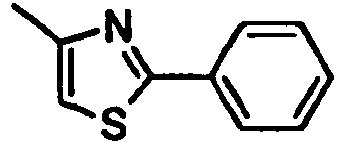
584 Example 748 
517 Example 749 
508 Example 750 
571 Example 751 
541 Example 753 
519 Example 753 
582 Table 39 
Example No. R106 MS(M+1) Example 754 
555 Example 755 
505 Example 756 
545 Example 757 
557 Example 758 
551 Example 759 
545 Example 760 
540 Example 761 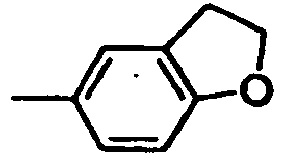
543 Table 40 
Example No. R106 MS(M+1) Example 762 
570 Example 763 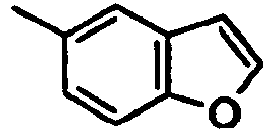
541 Example 764 
545 Example 765 
561 Example 766 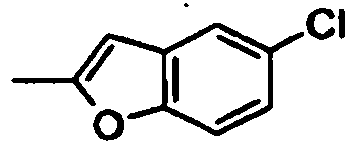
575 Example 767 
519 Example 768 
539 Example 769 
505 Example 770 
541 Table 41 
Example No. R106 MS(M+1). Example 771 
541 Example 772 
552 Example 773 
574 Example 774 
552 Example 775 
557 Example 776 
516 Example 777 
521 Example 778 
555 Table 42 
Example No. R106 MS(M+1) Example 779 
520 Example 780 
584 Example 781 
522 Example 782 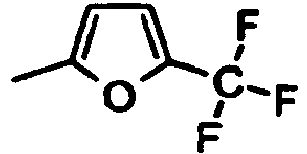
559 Example 783 
559 Example 784 
536 Example 785 
555 Example 786 
554 Example 787 
581 Table 43 
Example No. R106 MS(M+1) Example 788 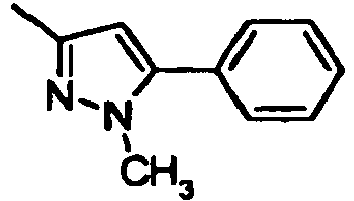
581 Example 789 
542 Example 790 
558 Example 791 
556 Example 792 
505 Example 793 
545 Example 794 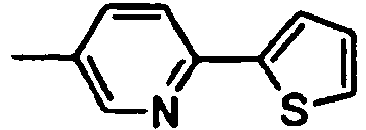
584 Table 44 
Example No. R106 MS(M+1) Example 795 
516 Example 796 
516 Example 797 
516 Example 798 
516 Example 799 
581 Example 800 
574 Example 801 
567 Example 802 
520 Example 803 
552 Table 45 
Example No. R106 MS(M+1) Example 804 
584 Example 805 
558 Example 806 
582 Example 807 
581 Example 808 
598 Example 809 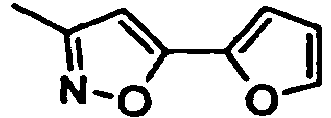
558 Example 810 
555 Example 811 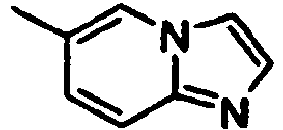
541 Table 46 
Example No. R106 MS(M+1) Example 812 
573 Example 813 
581 Example 814 
587 Example 815 
584 Example 816 
571 Example 817 
565 Example 818 
598 Example 819 
553 Table 47 
Example No. R106 MS(M+1) Example 820 
571 Example 821 
573 Example 822 
505 Example 823 
541 Example 824 
625 Example 825 
595 Example 826 
516 Example 827 
536 Table 48 
Example No. R106 MS(M+1) Example 828 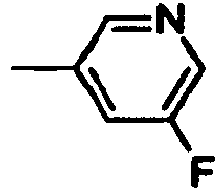
520 Example 829 
505 Table 49 
Example No. R106 MS(M+1) Example 830 
554 Example 831 
598 Example 832 
559 Example 833 
569 Example 834 
569 Example 835 
598 Example 836 
625 Example 837 
567 Table 50 
Example No. R106 MS(M+1) Example 838 
585 Example 839 
585 Example 840 
609 Example 841 
550 Example 842 
534 Example 843 
584 Example 844 
584 Example 845 
626 Table 51 
Example No. R106 MS(M+1) Example 846 
626 Example 847 
519 Example 848 
596 Table 52 
Example No. R201 R202 R203 R204 R205 MS(M+1) Example 849 -H -H -OCH3 -H -H 661 Example 850 -H -H -Cl -H -H 665 Example 851 -H -H -H -H -CH3 645 Example 852 -H -H -F -H -H 649 Example 853 -H -H -H -H -Cl 665 Example 854 -H -H -H -H -CO2CH3 689 Example 855 -CN -H -H -H -H 656 Example 856 -H -OCH3 -H -H -H 661 Example 857 -H -F -H -H -H 649 Example 858 -H -H -H -H -F 649 Example 859 -H -CH3 -H -H -H 645 Example 860 -H -Cl -H -H -H 665 Example 861 -H -H -H -H -H 631 Example 862 -H -H -NHCOCH3 -H -H 688 Example 863 -H -H -CH3 -H -H 645 Example 864 -H -CO2H -H -H -H 675 Example 865 -H -CN -H -H -H 656 Example 866 -H -H -CN -H -H 656 Table 53 
Example No. R201 R202 R203 R204 R205 MS(M+1) Example 867 -H -H 
-H -H 698 Example 868 -H -H 
-H -H 711 Example 869 -H -H 
-H -H 725 Example 870 -H 
-H -H -H 711 Example 871 -H -H 
-H -H 714 Example 872 -H 
-H -H -H 711 Example 873 -H 
-H -H -H 709 Table 54 
Example No. R201 R202 R203 R204 R205 MS(M+1) Example 874 -H 
-H -H -H 728 Example 875 -H -H 
-H -H 709 Example 876 -H -H 
-H -H 728 Example 877 -H 
-H -H -H 723 Table 55 
Example No. R206 MS(M+1) Example 878 -2-THIENYL 637 Example 879 -CH2C6H5 645 Example 880 -3-THIENYL 637 Example 881 -2-FURYL 621 Table 56 
Example No. R206 MS(M+1) Example 882 
682 Example 883 
635 Example 884 
689 Example 885 
671 Example 886 
702 Example 887 
696 Example 888 
682 Table 57 
Example No. R206 MS(M+1) Example 889 
683 Example 890 
650 Example 891 
705 Example 892 
709 Example 893 
695 Example 894 
684 Example 895 
665 Table 58 
Example No. R206 MS(M+1) Example 896 
651 Example 897 
693 Example 898 
692 Example 899 
671 Example 900 
711 Example 901 
649 Example 902 
725 Example 903 
712 Table 59 
Example No. R206 MS(M+1) Example 904 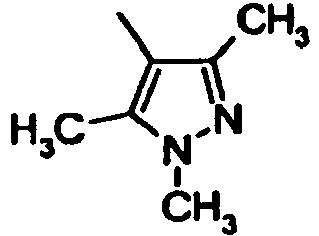
663 Example 905 
679 Example 906 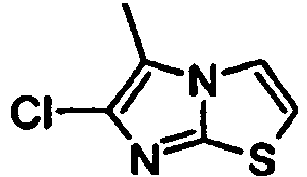
711 Example 907 
725 Example 908 
703 Example 909 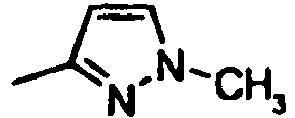
635 Example 910 
703 Table 60 
Example No. R206 MS(M+1) Example 911 
635 Example 912 
684 Example 913 
666 Example 914 
659 Example 915 
679 Example 916 
663 Example 917 
717 Example 918 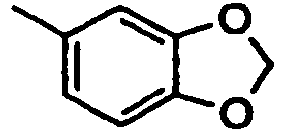
675 Table 61 
Example No. R206 MS(M+1) Example 919 
673 Example 920 
704 Example 921 
636 Example 922 
684 Example 923 
703 Example 924 
686 Example 925 
663 Table 62 
Example No. R206 MS(M+1) Example 926 
714 Example 927 
700 Example 928 
702 Example 929 
703 Example 930 
702 Example 931 
663 Example 932 
707 Table 63 
Example No. R206 MS(M+1) Example 933 
702 Example 934 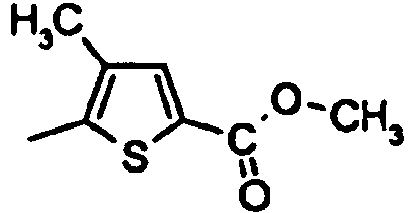
709 Example 935 
679 Example 936 
649 Example 937 
688 Example 938 
670 Example 939 
670 Example 940 
673 Table 64 
Example No. R301 R302 R303 R304 R305 MS(M+1) Example 941 -H -H -H -H -H 529 Example 942 -H -H -CH3 -H -H 543 Example 943 -H -H -Cl -H -H 563 Example 944 -H -H -F -H -H 547 Example 945 -H -H -OCH3 -H -H 559 Example 946 -OCH3 -H -H -H -H 559 Example 947 -Cl -H -H -H -H 563 Example 948 -CH3 -H -H -H -H 543 Example 949 -F -H -H -H -H 547 Example 950 -H -OCH3 -H -H -H 559 Example 951 -H -Cl -H -H -H 563 Example 952 -H -CH3 -H -H -H 543 Example 953 -H -F -H -H -H 547 Table 65 
Example No. R306 MS(M+1) Example 954 -CH2OC6H5 559 Example 955 -(CH2)2C6H5 557 Example 956 -CH=CHC6H5(trans) 555 Example 957 -2-PYRIDYL 530 Example 958 -3-PYRIDYL 530 Example 959 -4-PYRIDYL 530 Example 960 -2-FURYL 519 Example 961 -2-THIENYL 535 Example 962 -3-FURYL 519 Example 963 -3-THIENYL 535 Example 964 -2-BENZTHIAZOLYL 586 Table 66 
Example No. R306 MS(M+1) Example 965 
558 Example 966 
544 Example 967 
544 Example 968 
544 Example 969 
549 Example 970 
549 Example 971 
585 Example 972 
556 Example 973 
556 Table 67 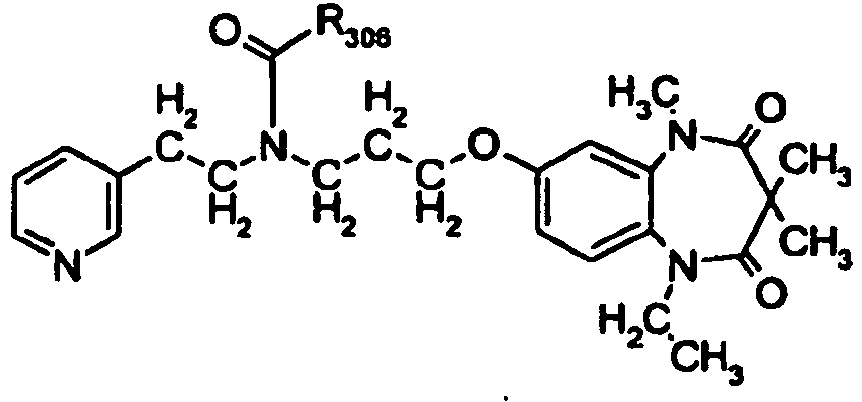
Example No. R306 MS(M+1) Example 974 
568 Example 975 
568 Example 976 
580 Example 977 
580 Example 978 
580 Example 979 
580 Example 980 
580 Example 981 
580 Table 68 
Example No. R306 MS(M+1) Example 982 
569 Example 983 
582 Example 984 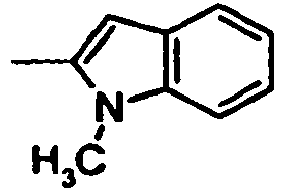
582 Example 985 
556 Example 986 
598 Example 987 
596 Example 988 
586 Example 989 
532 Table 69 
Example No. R306 MS(M+1) Example 990 
531 Example 991 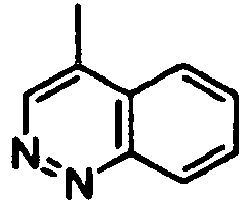
581 Example 992 
569 Example 993 
536 Example 994 
569 Example 995 
545 Example 996 
569 Example 997 
569 Table 70 
Example No. R306 MS(M+1) Example 998 
571 Example 999 
571 Example 1000 
569 Example 1001 
568 Example 1002 
568 Example 1003 
568 Example 1004 
587 Table 71 
Example No. R306 MS(M+1) Example 1005 
581 Example 1006 
581 Example 1007 
587 Example 1008 
600 Example 1009 
533 Example 1010 
533 Example 1011 
584 Example 1012 
533 Table 72 
Example No. R306 MS(M+1) Example 1013 
578 Example 1014 
561 Example 1015 
547 Example 1016 
563 Example 1017 
583 Example 1018 
533 Example 1019 
569 Example 1020 
569 Table 73 
Example No. R306 MS(M+1) Example 1021 
569 Example 1022 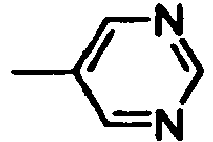
531 Example 1023 
573 Example 1024 
581 Example 1025 
569 Example 1026 
582 Example 1027 
580 Example 1028 
598 Table 74 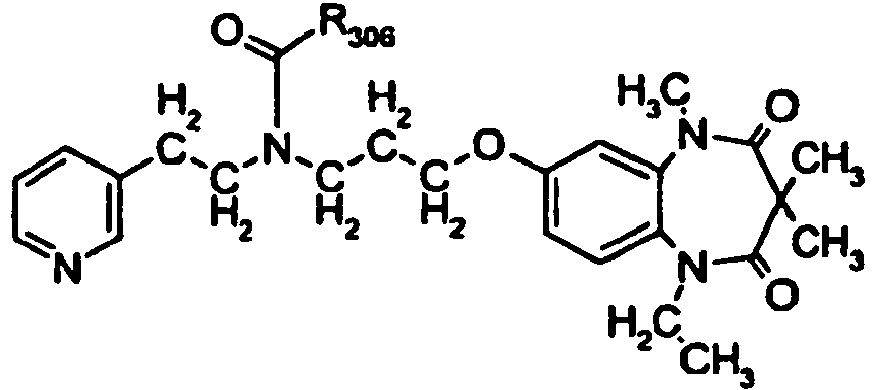
Example No. R306 MS(M+1) Example 1029 
531 Example 1030 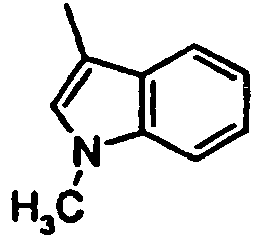
582 Example 1031 
580 Example 1032 
569 Example 1033 
545 Example 1034 
561 Example 1035 
587 Example 1036 
583 Table 75 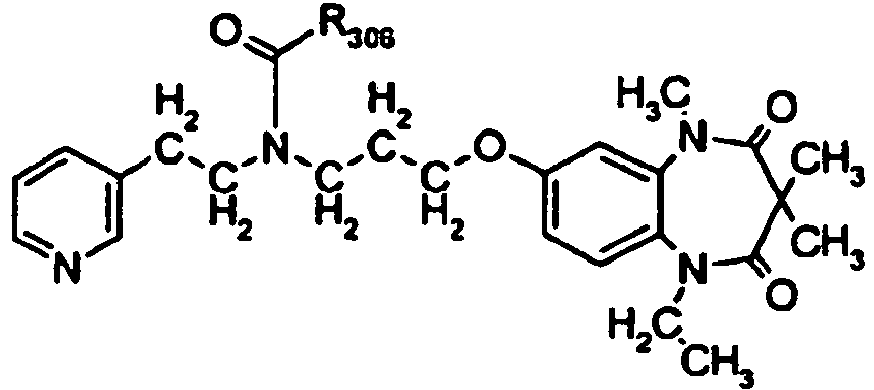
Example No. R306 MS(M+1) Example 1037 
582 Example 1038 
582 Example 1039 
533 Example 1040 
584 Example 1041 
581 Example 1042 
531 Example 1043 
580 Table 76 
Example No. R306 MS(M+1) Example 1044 
580 Example 1045 
568 Example 1046 
548 Example 1047 
533 - CHO-K1 cell lines stably expressing human Kv1.5 channels were prepared in the following manner.
- Full-length human Kv1.5 cDNA was cloned from a human, heart cDNA library (produced by Stratagene). The obtained human Kv1.5 sequence corresponds to the sequence described in FASEB J. 5, 331-337 (1991).
- The obtained human Kv1.5 cDNA was inserted into a plasmid encoding a CMV promoter and a G418 resistance marker to produce a Kv1.5 expression vector. The human Kv1.5 expression vector was transfected into CHO-K1 cells by the lipofectamine method. After culturing the cells in an F-12 medium (produced by Invitrogen Corp.) containing 10% FBS (produced by Invitrogen Corp.) for 3 or 4 days, the medium was replaced with a FBS-containing F-12 medium that included 1, 000 µg/ml of G418 (produced by Invitrogen Corp.), and single colonies were isolated. The amount of Kv1.5 channel expression in the single colonies was quantified at the mRNA level by RT-PCR and then quantified at the protein level by western blotting. Finally, the expressed current was analyzed by patch clamp method. Cell lines expressing a current of 200 pA or more per cell were selected as channel-expressing cell lines for activity measurement by patch clamp method.
- CHO cell lines stably expressing human GIRK1/4 channels were prepared in the following manner.
- Full-length human GIRK1 cDNA was cloned from HuH cell- and HeLa cell-derived cDNA libraries. Full-length GIRK4 cDNA was amplified from a human heart cDNA library (produced by Clontech Laboratories, Inc.) by PCR using synthetic primers shown in Table 1, and cloned into the Eco-RI restriction enzyme site of pCR-Blunt (produced by Invitrogen Corporation) or into the HincII site of pUC118 (produced by Takara Bio, Inc.).
Table 77 Primer Sequence hGIRK1-S 5'-ATGTCTGCACTCCGAAGGAAATTTG-3' SEQ ID No.1 hGIRK1-A 5'-TTATGTGAAGCGATCAGAGTTC-3' SEQ ID No.2 hGIRR1-F2 5'-GCAGGGTACCCCTTCGTATTATGTCTGCACTCC-3' SEQ ID No.3 hGIRR1-A3 5'-GGTGTCTGCCGAGATTTGA-3' SEQ ID No.4 bGIRK1-A4 5'-CCGAGTGTAGGCGATCACCC-3' SEQ ID No.5 hGIRK4-S 5'-ATGGCTGGCGATTCTAGGAATGCC-3' SEQ ID No.6 hGIRK4-A 5'-TCTCACCGAGCCCCTGGCCTCCC-3' SEQ ID No.7 hGIRK4-S2 5'-AACCAGGACATGGAGATTGG-3' SEQ ID No.8 hGIRK4-A2 5'-GAGAACAGGAAAGCGGACAC-3' SEQ ID No.9 - The obtained human GIRK1 and GIRK4 cDNA.sequences correspond to known sequences (NCBI database: GIRK1 (NM_002239) and GIRK4 (NM_000890) respectively). The obtained GIRK1 and GIRK4 cDNA sequences were cloned into the Eco-RI restriction enzyme site of pCR-Blunt (available from Invitrogen Corporation) or into the HincII site of pUC118 (available from Takara Bio, Inc.). A GIRK4 expression vector was constructed by insertion into the BamHI-XhoI site of pcDNA5/FRT. A GIRK1 expression vector was constructed by insertion into the KpnI-XhoI site of pcDNA3. 1 (+) or pCAG_neo. FLP-IN-CHO cells (produced by Invitrogen Corporation) were transfected with human GIRK1 and GIRK4 expression vectors by using Lipofectamine 2000 (produced by Invitrogen Corporation) according to the protocol enclosed with the reagent or using an electronic induction method ("Nucleofector Kit-T", produced by Amaxa). First, the cells transfected with the GIRK4 expression vector were cultured in a 10% serum-containing F12 medium (produced by Sigma) supplemented with 600 µg/ml of hygromycin in an incubator with 5% carbon dioxide at 37°C. Then the cells expressing GIRK4 were transfected with the GIRK1, expression vector and were cultured in 10% serum-containing F12 medium supplemented with 350 µg/ml of G418 and 600 µg/ml of hygromycin in an incubator with 5% carbon dioxide at 37°C to select GIRK1/4 expressing cell lines. Cell populations whose growth was observed after about 2 weeks were isolated using cloning rings, and the obtained single colonies were proliferated. RNA was extracted from single colonies, and single-stranded cDNA was synthesized by a cDNA synthesis kit (produced by Invitrogen Corporation), and the amount of expression was quantified at the mRNA level by real-time PCR (Applied Biosystems, Ltd.). Finally, the expressed current was analyzed by patch clamp method described below. The cell lines expressing a current of 500 pA or more per cell were selected as channel-expressing cell lines for activity measurement by patch clamping method.
- An experiment was carried out using a patch clamp setup at room temperature (20 to 26°C). A perfusion chamber having a diameter of 20 mm (flow rate: about 5 ml/min) was mounted on the stage of a phase-contrast inverted microscope (produced by Nikon Corporation) placed on a vibration isolated table. A poly-L-lysine (produced by Sigma)-coated coverslip (diameter: 15 mm, produced by Matsunami Glass Ind., Ltd.) on which human Kv1.5-expressing cells were cultured was placed in the perfusion chamber.
- Depolarizing stimulation pulses were applied and ionic current was recorded by using a patch clamp amplifier (EPC-7 or EPC-7 PLUS, produced by HEKA) and a personal computer (manufactured by IBM Corp.) in which software for data acquisition and analysis of ion channel current (PULSE 8.77, produced by HEKA) was installed. The current was measured in the whole-cell configuration of the patch-clamp technique. The tip (resistance: 2 to 4 MΩ) of a borosilicate glass pipette (produced by Sutter Instrument Co.) was gently placed on the cell membrane by using a three-dimensional mechanical micromanipulator (produced by Shoshin EM Corporation). Weak suction resulted in giga seal formation (the pipette resistance increased to more than 1 GΩ). Subsequently, stronger suction was applied to break the cell membrane. The capacitative current derived from the cell membrane was corrected using a patch clamp amplifier. Subsequently, the series resistance (Rs) between the pipette and the interior of the cell was measured and corrected.
- The composition of the extracellular solution used is shown below. Unless otherwise specified, these components were obtained from Wako Pure Chemical Industries, Ltd.
NaCl 140 mM, KCl 40 mM, CaCl2 1.8 mM, MgCl2 1 mM, NaH2PO4 0.33 mM, HEPES 5 mM Glucose 5.5 mM (pH = 7.4) - Each test compound was prepared as a 1000-fold concentrated stock solution that was dissolved in DMSO and then diluted in the extracellular solution.
- The composition of the electrode internal solution used is shown below. Unless otherwise specified, these components were obtained from Wako Pure Chemical Industries, Ltd.
KOH 100 mM, KCl 40 mM, Aspartic acid 70 mM, MgCl2 1 mM, MgATP 5 mM, K2 creatine phosphate 5 mM, HEPES 5 mM EGTA 5 mM (pH = 7.2) - An experiment was carried out using a patch clamp setup at room temperature (20 to 26°C). A perfusion chamber having a diameter of 20 mm (flow rate: about 5 ml/min) was mounted on the stage of a phase-contrast inverted microscope (produced by Nikon Corporation) placed on a vibration isolation table. A poly-L-lysine (produced by Sigma)-coated coverslip (diameter: 15 mm, produced by Matsunami Glass Ind., Ltd.) on which human GIRK1/4-expressing cells were cultured was placed in the perfusion chamber.
- Hyperpolarizing stimulation pulses were applied and ionic current was recorded using a patch clamp amplifier (EPC-7 or EPC-7 PLUS, manufactured by HEKA) and a personal computer (manufactured by IBM Corp.) in which software for data acquisition and analysis of ion channel current (PULSE 8.77, manufactured by HEKA) was installed. The current was measured in the whole-cell configuration of the patch-clamp technique. The tip (resistance: 2 to 4 MΩ) of a borosilicate glass pipette (produced by Sutter Instrument Co.) was gently placed on the cell membrane by using a three-dimensional mechanical micromanipulator (produced by Shoshin EM Corporation). Weak suction resulted in giga seal formation (the pipette resistance increased to more than 1 GΩ). Subsequently, stronger suction was applied to break the cell membrane. The capacitative current derived from the cell membrane was corrected using a patch clamp amplifier. Subsequently, the series resistance (Rs) between the pipette and the interior of the cell was measured and corrected.
- The composition of the extracellular solution used is shown below. Unless otherwise specified, these components were obtained from Wako Pure Chemical Industries, Ltd.
NaCl 140 mM, KCl 4 mM, CaCl2 1.8 mM, MgCl2 1 mM, NaH2PO4 0.33 mM, HEPES 5 mM Glucose 5.5 mM (pH = 7.4) - Each test compound was prepared as a 1000-fold concentrated stock solution that was dissolved in DMSO and then diluted in the extracellular solution.
- The composition of the electrode internal solution used is shown below. Unless otherwise specified, these components were obtained from Wako Pure Chemical Industries, Ltd.
KOH 100 mM, KCl 40 mM, Aspartic acid 70 mM, MgCl2 1 mM, MgATP 5 mM, K2 creatine phosphate 5 mM, HEPES 5 mM EGTA 5 mM (pH = 7.2) - While the membrane potential was holded at -80 mV, depolarizing pulses (-80 mV for 0.05 seconds → +40 mV for 0.2 seconds → -40 mV for 0.2 seconds → -80 mV for 0.05 seconds) were applied at a stimulation frequency of 1 Hz to measure Kv1.5 channel current. More specifically, first, while perfusing an extracellular solution containing 0.1% DMSO and holding the membrane potential at -80 mV, depolarizing pulses were applied. The current obtained during the pulse application was recorded as a current in the absence of the test compounds. Subsequently, while perfusing an extracellular solution containing 0.1 µM of a test compound and holding the membrane potential at -80 mV, depolarizing pulses were applied. After the inhibitory effect of the test compound had been stabilized, the current was recorded. The same procedure was repeated using an extracellular solution containing 1 µM of the test compound and then using an extracellular solution containing 10 µM of the test compound. The current obtained using the solution containing the test compound at each concentration was recorded.
- The data was analyzed by using the step end current recorded during the +40 mV depolarizing stimulation. The "step end current" refers to the average current flowing for a period of 195 to 199 milliseconds from the start of the +40 mV depolarizing pulse stimulation.
- Using the step end current in the presence of the test compound and the step end current in the absence of the test compound, the relative current in the solution containing the test compound at each concentration was calculated according to the following formula:

- While the membrane potential was holded at -80 mV, hyperpolarizing pulses (-80 mV for 0.05 seconds → -120 mV for 0.2 seconds → -80 mV for 0.05 seconds) were applied at a stimulation frequency of 1 Hz to measure GIRK1/4 channel current. More specifically, first, while perfusing an extracellular solution containing 0.1% DMSO and maintaining the membrane potential at -80 mV, hyperpolarizing pulses were applied. The current obtained during the pulse application was recorded as the current in the absence of the test compounds. Subsequently, while perfusing an extracellular solution containing 0.1 µM of a test compound and maintaining the membrane potential at -80 mV, hyperpolarizing pulses were applied. After the inhibitory effect of the test compound had been stabilized, the current was recorded. The same procedure was repeated using an extracellular solution containing 1 µM of the test compound and then using an extracellular solution containing 10 µM of the test compound. The current obtained using the solution containing the test compound at each concentration were recorded.
- The data was analyzed by using the step end current recorded during the -120 mV depolarizing stimulation. The "step end current" refers to the average current flowing for a period of 195 to 199 milliseconds from the start of the -120 mV depolarizing pulse stimulation.
- Using the step end current in the presence of the test compound and the step end current in the absence of the test compound, the relative current in the solution containing the test compound at each concentration was calculated according to the following formula:

- The concentration for 50% inhibition of Kv1.5 channel current or GIRK1/4 channel current (IC50 value) was calculated according to the following nonlinear regression equation:

- Table 78 shows the test results..
Table 78 Test Compound KV1.5 IC50 (µM) GIRK1/4 IC50(µM) Compound of Example 8 0.40 0.93 Compound of Example 10 0.58 3.6 Compound of Example 14 0.58 0.72 Compound of Example 19 0.54 1.4 Compound of Example 23 0.18 0.25 Compound of Example 31 1.30 2.90 Compound of Example 45 0.69 2.15 Compound of Example 50 0.25 0.46 Compound of Example 51 0.21 1.5 Compound of Example 54 0.28 0.97 Compound of Example 63 0.24 0.92 Compound of Example 68 0.38 5.1 Compound of Example 85 0.15 0.15 Compound of Example 125 0.19 0.091 Compound of Example 132 0.27 0.27 Compound of Example 200 0.29 0.59 Compound of Example 229 0.16 0.69 Compound of Example 242 0.18 0.22 Compound of Example 380 0.16 0.49 Compound of Example 395 0.19 0.33 Compound of Example 398 0.22 0.49 Compound of Example 417 0.18 0.98 Compound of Example 464 0.44 3.20 Compound of Example 551 0.39 5.20 Compound of Example 568 0.42 0.05 Compound of Example 573 0.33 1.50 Compound of Example 575 0.44 0.50 Compound of Example 590 0.46 2.40 Compound of Example 595 0.50 0.79 Compound of Example 611 0.31 0.37 Compound of Example 628 0.98 2.50 Compound of Example 629 0.76 0.17 Compound of Example 633 1.10 8.40 Compound of Example 634 0.36 0.49 -
- <110> OTSUKA PHARMACEUTICAL CO., LTD.
- <120> BENZODIAZEPINE COMPOUND AND PHARMACEUTICAL COMPOSITION
- <130> P09-01
- <150>
JP 2008-041296
<151> 2008-2-22 - <150>
JP 2008-227368
<151> 2008-9-4 - <160> 9
- <170> PatentIn version 3.3
- <210> 1
<211> 25
<212> DNA
<213> artificial sequence - <220>
<223> Primer - <400> 1
atgtctgcac tccgaaggaa atttg 25 - <210> 2
<211> 22
<212> DNA
<213> artificial sequence - <220>
<223> Primer - <400> 2
ttatgtgaag cgatcagagt tc 22 - <210> 3
<211> 33
<212> DNA
<213> artificial sequence - <220>
<223> Primer - <400> 3
gcagggtacc ccttcgtatt atgtctgcac tcc 33 - <210> 4
<211> 19
<212> DNA
<213> artificial sequence - <220>
<223> Primer - <400> 4
ggtgtctgcc gagatttga 19 - <210> 5
<211> 20
<212> DNA
<213> artificial sequence - <220>
<223> Primer - <400> 5
ccgagtgtag gcgatcaccc 20 - <210> 6
<211> 24
<212> DNA
<213> artificial sequence - <220>
<223> Primer - <400> 6
atggctggcg attctaggaa tgcc 24 - <210> 7
<211> 23
<212> DNA
<213> artificial sequence - <220>
<223> Primer - <400> 7
tctcaccgag cccctggcct ccc 23 - <210> 8
<211> 20
<212> DNA
<213> artificial sequence - <220>
<223> Primer - <400> 8
aaccaggaca tggagattgg 20 - <210> 9
<211> 20
<212> DNA
<213> artificial sequence - <220>
<223> Primer - <400> 9
gagaacagga aagcggacac 20
wherein R6 and R7 are each one of the following (4a), (6a), (7a), (15a), (30a), (31a), (32a), (33a), (40a) and (44a):
Item 8. A benzodiazepine compound represented by Formula (1) or a salt thereof according to items 1-6 for use in the prevention or treatment of arrhythmia.
Claims (9)
- A benzodiazepine compound represented by General Formula (1)

wherein R1, R2, R3, and R4 are each independently hydrogen or C1-6 alkyl;
R2 and R3 may be linked to form C1-6 alkylene;
A1 is C1-6 alkylene optionally substituted with one or more hydroxy; and
R5 is group represented by
- A benzodiazepine compound represented by General Formula (1) or a salt thereof according to claim 1,
wherein R6 and R7 are each independently hydrogen, C1-6 alkyl, cyclo C3-6 alkyl, aryl or saturated or unsaturated monocyclic or polycyclic heteroeyelie group containing at least one hetero atom selected from among oxygen, sulfur and nitrogen. - A benzodiazepine compound represented by General Formula (1) or a salt thereof according to claim 2, wherein R6 and R7 are each independently hydrogen, C1-6 alkyl, cyclo C3-6 alkyl, phenyl, naphthyl, fury, thienyl, pyrazolyl, oxazolyl, isoxazolyl, thiazolyl, pyrrolyl, triazolyl, pyridyl, pyrimidinyl, pyridazinyl, pyrazinyl, imidazo[2,1-b]thiazolyl, thieno[2,3-b]pyrazinyl, 2,3-dihydroimidazo[2,1-b]thiazolyl, benzothiazolyl, indolyl, imidazo[1,2-a]pyridyl, benzothienyl, benzimidazolyl, 2,3-dihydrobenzo[b]furyl, benzofuryl, indazolyl, furo[2,3-c]pyridyl, furo[3,2-c]pyridyl, thieno[2,3-c]pyridyl, thieno[3,2-c]pyridyl, thieno[2,3-b]pyridyl, benzo[1,3]dioxolyl, benzisoxazolyl, pyrazolo[2,3-a]pyridyl, indolizinyl, 2,3-dihydroindolyl, isoquinolyl, 1,2,3,4-tetrahydro-1H-isoquinolyl, carbostyril, 3,4-dihydrocarbostyril, quinolyl, chromanyl, 5,6,7,8-tetrahydroisoquinolyl, 3,4-dihydro-1H-isoquinolyl, naphthyridinyl, 1,4-benzodioxanyl, cinnolinyl, quinoxalinyl, or 2,3-dihydrobenz-1,4-oxazinyl, each of which is optionally substituted.
- A benzodiazepine compound represented by General Formula (1) or a salt thereof according to claim 3,
wherein R6 and R7 are each one of the following (1) to (52):(1) hydrogen,(2) C1-6 alkyl,(3) cyclo C3-6 alkyl,(4) phenyl optionally substituted with one or more substituents selected from the group consisting of the following (4-1) to (4-25) :(4-1) cyano,(4-2) hydroxy,(4-3) halogen,(4-4) C1-6 alkyl optionally substituted with one or more substituents selected from the group consisting of halogen, imidazolyl and morpholinyl,(4-5) C1-6 alkoxy optionally substituted with one or more substituents selected from the group consisting of amino and C1-6 alkyl amino,(4-6) pyridyl,(4-7) thienyl,(4-8) piperazinyl optionally substituted with one or more C1-6 alkyl,(4-9) phenyl,(4-10) pyrazolyl optionally substituted with one or more C1-6 alkyl,(4-11) pyrimidinyl optionally substituted with one or more C1-6 alkyl,(4-12) piperidyl optionally substituted with one or more C1-6 alkyl,(4-13) furyl,(4-14) carboxy,(4-15) lower alkoxycarbonyl,(4-16) amino optionally substituted with one or more substituents selected from the group consisting of C1-6 alkanoyl and C1-6 alkylsulfonyl,(4-17) C1-6 alkylthio,(4-18) triazolyl,(4-19) imidazolyl,(4-20) pyrrolidinyl optionally substituted with one or more oxo,(4-21) C1-6 alkylsulfonyl,(4-22) C1-4 alkylenedioxy optionally substituted with one or more halogen,(4-23) nitro,(4-24) oxazolyl, and(4-25) thiazolyl optionally substituted with one or more C1-6 alkyl,(5) naphthyl,(6) furyl optionally substituted with one or more substituents selected from the group consisting of C1-6 alkyl optionally substituted with halogen, carboxy, sulfo, pyridyloxy, lower alkoxycarbonyl and phenyl,(7) thienyl optionally substituted with one or more substituents selected from the group consisting of C1-6 alkyl, C1-4 alkylenedioxy, carboxy, halogen, pyridyl, C1-6 alkoxy, C1-6 alkoxycarbonyl, oxazolyl and furyl,(8) imidazolyl optionally substituted with one or more substituents selected from the group consisting of phenyl, C1-6 alkyl and halogen,(9) pyrazolyl optionally substituted with one or more substituents selected from the group consisting of C1-6 alkyl optionally substituted with halogen, halogen, phenyl optionally substituted with C1-6 alkoxy, furyl and thienyl,(10) oxazolyl optionally substituted with one or more substituents selected from the group consisting of C1-6 alkyl and phenyl,(11) isoxazolyl optionally substituted with one or more substituents selected from the group consisting of phenyl, C1-6 alkyl, thienyl and furyl,(12) thiazolyl optionally substituted with one or more substituents selected from the group consisting of C1-6 alkyl optionally substituted with C1-6 alkoxy, phenyl and C1-6 alkanoylamino,(13) pyrrolyl optionally substituted with one or more substituents selected from the group consisting of C1-6 alkyl and C1-6 alkoxycarbonyl,(14) triazolyl optionally substituted with one or more C1-6 alkyl,(15) pyridyl optionally substituted with one or more substituents selected from the group consisting of C1-6 alkyl optionally substituted with halogen, oxo, hydroxy, C1-6 alkoxy, halogen, pyrrolidinyl, morpholinyl and thienyl,(16) pyrimidinyl optionally substituted with one or more substituents selected from the group consisting of C1-6 alkyl and phenyl,(17) pyridazinyl,(18) pyrazinyl,(19) imidazo[2,1-b]thiazolyl optionally substituted with one or more halogen,(20) thieno[2,3-b]pyrazinyl,(21) 2,3-dihydroimidazo[2,1-b]thiazolyl optionally substituted with one or more phenyl,(22) benzothiazolyl optionally substituted with one or more C1-6 alkyl,(23) indolyl optionally substituted with one or more substituents selected from the group consisting of C1-6 alkyl, C1-6 alkanoyl and halogen,(24) imidazo[1,2-a]pyridyl optionally substituted with one or more C1-6 alkyl,(25) benzothienyl optionally substituted with one or more C1-6 alkyl,(26) benzimidazolyl optionally substituted with one or more C1-6 alkyl,(27) 2,3-dihydrobenzo[b]furyl,(28) benzofuryl optionally substituted with one or more halogen,(29) indazolyl optionally substituted with one or more C1-6 alkyl,(30) furo[2,3-c]pyridyl optionally substituted with one or more substituents selected from the group consisting of oxo and C1-6 alkyl,(31) furo[3,2-c]pyridyl optionally substituted with one or more substituents selected from the group consisting of oxo, C1-6 alkyl optionally substituted with halogen, halogen, furyl, pyridyl and phenyl optionally substituted with one or more substituents selected from the group consisting of amino and C1-6 alkoxy,(32) thieno[2,3-c]pyridyl optionally substituted with one or more substituents selected from the group consisting of oxo group and C1-6 alkyl,(33) thieno[3,2-c]pyridyl optionally substituted with one or more substituents selected from the group consisting of oxo and C1-6 alkyl,(34) thieno[2,3-b]pyridyl,(35) benzo[1,3]dioxolyl optionally substituted with one or more halogen,(36) benzisoxazolyl,(37) pyrazolo[2,3-a]pyridyl,(38) indolizinyl,(39) 2,3-dihydroindolyl optionally substituted with one or more substituents selected from the group consisting of oxo, C1-6 alkyl and C1-6 alkanoyl,(40) isoquinolyl optionally substituted with one or more substituents selected from the group consisting of C1-6 alkyl, halogen and oxo,(41) 1,2,3,4-tetrahydro-1H-isoquinolyl optionally substituted with one or more oxo,(42) carbostyril optionally substituted with one or more C1-6 alkoxy,(43) 3,4-dihydrocarbostyril optionally substituted with one or more C1-6 alkoxy,(44) quinolyl optionally substituted with one or more substituents selected from the group consisting of amino optionally substituted with one or two C1-6 alkyl, C1-6 alkoxy, C1-6 alkyl and oxo,(45) chromanyl optionally substituted with one or more C1-6 alkyl,(46) 5,6,7,8-tetrahydroisoquinolyl optionally substituted with one or more oxo,(47) 3,4-dihydro-1H-isoquinolyl optionally substituted with one or more oxo,(48) naphthyridinyl,(49) 1,4-benzodioxanyl,(50) cinnolinyl,(51) quinoxalinyl, or(52) 2, 3-dihydrobenz-1,4-oxazinyl optionally substituted with one or more substituents selected from the group consisting of C1-6 alkyl and oxo. - A benzodiazepine compound represented by General Formula (1) or a salt thereof according to claim 4,
wherein R6 and R7 are each one of the following (4a), (6a), (7a), (15a), (30a), (31a), (32a), (33a), (40a) and (44a):(4a) phenyl optionally substituted with one or more substituents selected from the group consisting of the following (4a-1), (4a-4) and (4a-6):(4a-1) cyano,(4a-4) C1-6 alkyl optionally substituted with one or more halogen, and(4a-6) pyridyl,(6a) furyl,(7a) thienyl,(15a) pyridyl optionally substituted with one or more C1-6 alkyl,(30a) furo[2,3-c]pyridyl optionally substituted with one or more oxo,(31a) furo[3,2-c]pyridyl optionally substituted with one or more substituents selected from the group consisting of oxo and C1-6 alkyl,(32a) thieno[2,3-c]pyridyl optionally substituted with one or more oxo,(33a) thieno[3,2-c]pyridyl optionally substituted with one or more oxo,(40a) isoquinolyl optionally substituted with one or more oxo, and (44a) quinolyl optionally substituted with one or more oxo. - A benzodiazepine compound represented by General Formula (1) or a salt thereof according to claim 4, which is selected from the group consisting of the following compounds:1-ethyl-3,3,5-trimethyl-7-{3-[(2-pyridin-3-ylethyl)pyridin-4-ylmethylamino]propoxy}-1,5-dihydrobenzo[b][1,4]diazepine-2,4-dione,3,3,5-trimethyl-1-propyl-7-{3-[(2-pyridin-3-ylethyl)pyridin-4-ylmethylamino]propoxy}-1,5-dihydrobenzo[b][1,4]diazepine-2,4-dione,1,5-diethyl-3,3-dimethyl-7-{3-[(2-pyridin-3-ylethyl)pyridin-4-ylmethylamino]propoxy}-1,5-dihydrobenzo[b][1,4]diazepine-2,4-dione,1,3,3,5-tetramethyl-7-{3-[(2-pyridin-3-ylethyl)pyridin-4-ylmethylamino]propoxy}-1,5-dihydrobenzo[b][1,4]diazepine-2,4-dione,1-ethyl-3,3,5-trimethyl-7-(3-{[2-(1-oxo-1H-isoquinolin-2-yl)ethyl]pyridin-4-ylmethylamino}propoxy)-1,5-dihydrobenzo[b][1,4]diazepine-2,4-dione,1-ethyl-3,3,5-trimethyl-7-(3-{[2-(7-oxo-7H-furo[2,3-c]pyridin-6-yl)ethyl]pyridin-4'-ylmethylamino}propoxy)-1,5-dihydrobenzo[b][1,4]diazepine-2,4-dione,N-methyl-N-(2-{pyridin-4-ylmethyl-[3-(1,3,3,5-tetramethyl-2,4-dioxo-2,3,4,5-tetrahydro-1H-benzo[b][1,4]diazepin-7-yloxy)propyl]amino}ethyl)benzamide,1,3,3,5-tetramethyl-7-{3-[(2-methylbenzyl)-(2-pyridin-3-ylethyl)amino]propoxy}-1,5-dihydrobenzo[b][1,4]diazepine-2,4-dione,1,3,3,5-tetramethyl-7-{3-[(2-pyridin-3-ylethyl)-(quinolin-4-ylmethyl)amino]propoxy}-1,5-dihydrobenzo[b][1,4]diazepine-2,4-dione,1-ethyl-3,3,5-trimethyl-7-{3-[(3-methylpyridin-4-ylmethyl)-(2-pyridin-3-ylethyl)amino]propoxy}-1,5-dihydrobenzo[b][1,4]diazepine-2,4-dione,1-ethyl-3,3,5-trimethyl-7-(3-{[2-(2-oxo-2H-quinolin-1-yl)ethyl]pyridin-4-ylmethylamino}propoxy)-1,5-dihydrobenzo[b][1,4]diazepine-2,4-dione,1-ethyl-3,3,5-trimethyl-7-3-{[2-(7-oxo-7H-thieno[2,3-c]pyridin-6-yl)ethyl]pyridin-4-ylmethylamino}propoxy)-1,5-dihydrobenzo[b][1,4]diazepine-2,4-dione,4-({[3-(1-ethyl-3,3,5-trimethyl-2,4-dioxo-2,3,4,5-tetrahydro-1H-benzo[b][1,4]diazepin-7-yloxy)propyl]-[2-(1-oxo-1H-isoquinolin-2-yl)ethyl]amino}methyl)benzonitrile,1-ethyl-3,3,5-trimethyl-7-(3-{[2-(1-oxo-1H-isoquinolin-2-yl)ethyl]thiophen-3-ylmethylamino}propoxy)-1,5-dihydrobenzo[b][1,4]diazepine-2,4-dione,1-ethyl-7-(3-{furan-2-ylmethyl-[2-(1-oxo-1H-isoquinolin-2-yl)ethyl]amino}propoxy)-3,3,5-trimethyl-1,5-dihydrobenzo[b][1,4]diazepine-2,4-dione,7-{3-[benzyl-(2-pyridin-3-ylethyl)amino]propoxy}-1-ethyl-3,3,5-Crimethyl-1,5-dihydrobenzo[b][1,4]diazepine-2,4-dione,3-{[[3-(1-ethyl-3,3,5-trimethyl-2,4-dioxo-2,3,4,5-tetrahydro-1H-benzo[b][1,4]diazepin-7-yloxy)propyl]-(2-pyridin-3-ylethyl)amino]methyl}benzonitrile,1-ethyl-3,3,5-trimethyl-7-{3-[(2-pyridin-3-ylbenzyl)-(2-pyridin-3-ylethyl)amino]propoxy}-1',5-dihydrobenzo[b][1,4]diazepine-2,4-dione,4-({[3-(1-ethyl-3,3,5-trimethyl-2,4-dioxo-2,3,4,5-tetrahydro-1H-benzo[b][1,4]diazepin-7-yloxy)propyl]-[2-(7-oxo-7H-furo[2,3-c]pyridin-6-yl)ethyl]amino}methyl)benzonitrile,1-ethyl-3,3,5-trimethyl-7-{3-[[2-(7-oxo-7H-furo(2,3-c]pyridin-6-yl)ethyl]-(4-trifluoromethylbenzyl)amino]propoxy}-1,5-dihydro-benzo[b][1,4]diazepine-2,4-dione,1-ethyl-3,3,5-trimethyl-7-(3-{(2-methylbenzyl)-[2-(7-oxo-7H-furo[2,3-c]pyridin-6-yl)ethyl]amino}propoxy)-1,5-dihydrobenzo[b][1,4]diazepine-2,4-dione,1-ethyl-3,3,5-trimethyl-7-(3-{[2-(7-oxo-7H-furo[2,3-c]pyridin-6-yl)ethyl]thiophen-2-ylmethylamino}propoxy)-1,5-dihydrobenzo[b][1,4]diazepine-2,4-dione,1-ethyl-3,3,5-trimethyl-7-(3-{[2-(2-methyl-4-oxo-4H-furo[3,2-c]pyridin-5-yl)ethyl]pyridin-4-ylmethylamino}propoxy)-1,5-dihydro-benzo[b][1,4]diazepine-2,4-dione,1-ethyl-3,3,5-trimethyl-7-(3-{[2-(4-oxo-4H-furo[3,2-c)pyridin-5-yl)ethyl]pyridin-3-ylmethylamino}propoxy)-1,5-dihydrobenzo[b][1,4]diazepine-2,4-dione,1-ethyl-3,3,5-trimethyl-7-(3-{[2-(4-oxo-4H-thieno[3,2-c]pyridin-5-yl)ethyl]pyridin-3-ylmethylamino}propoxy)-1,5-dihydrobenzo[b][1,4]diazepine-2,4-dione,1-ethyl-3,3,5-trimethyl-7-{3-[[2-(2-methyl-4-oxo-4H-furo[3,2-c]pyridin-5-yl)ethyl]-(4-methylpyridin-3-ylmethyl)amino]propoxy}-1,5-dihydrobenzo[b][1,4]diazepine-2,4-dione,1-ethyl-3,3,5-trimethyl-7-(3-{(2-methylpyridin-3-ylmethyl)-[2-(4-oxo-4H-furo[3,2-c]pyridin-5-yl)ethyl]amino}propoxy)-1,5-dihydro-benzo[b][1,4]diazepine-2,4-dione,1-ethyl-3,3,5-trimethyl-7-(3-{(4-methylpyridin-3-ylmethyl)-[2-(4-oxo-4H-furo[3,2-c]pyridin-5-yl)ethyl]amino}propoxy)-1,5-dihydro-benzo[b][1,4]diazepine-2,4-dione,1-ethyl-3,3,5-trimethyl-7-(3-{(2-methylpyridin-3-ylmethyl)-[2-(4-oxo-4H-thieno[3,2-c]pyridin-5-yl)ethyl]amino}propoxy)-1,5-dihydrobenzo[b][1,4]diazepine-2,4-dione,1-ethyl-3,3,5-trimethyl-7-(3-[[2-(2-methyl-4-oxo-4H-furo[3,2-c]pyridin-5-yl)ethyl]-(2-propylpyridin-3-ylmethyl)amino]propoxy)-1,5-dihydrobenzo[b][1,4]diazepine-2,4-dione,N-[3-(1-ethyl-3,3,5-trimethyl-2,4-dioxo-2,3,4,5-tetrahydro-1H-benzo[b][1,4]diazepin-7-yloxy)propyl]-N-(2-pyridin-3-ylethyl)benzenesulfonamide,7-((3-{(2,6-dimethylpyridin-3-ylmethyl)-[2-(4-oxo-4H-furo[3,2-c]pyridin-5-yl)ethyl]amino}propoxy)-1-ethyl-3,3,5-trimethyl-1,5-dihydrobenzo[b][1,4]diazepine-2,4-dione,N-[3-(1-ethyl-3,3,5-trimethyl-2,4-dioxo-2,3,4,5-tetrahydro-1H-benzo[b][1,4]diazepin-7-yloxy)propyl]-N-(2-pyridin-3-ylethyl)benzamide,N-[3-(1-ethyl-3,3,5-trimethyl-2,4-dioxo-2,3,4,5-tetrahydro-1H-benzo[b][1,4]diazepin-7-yloxy)propyl]-N-[2-(1-oxo-1H-isoquinolin-2-yl)ethyl]benzenesulfonamide,and a salt of any one of the aforementioned compounds.
- A benzodiazepine compound represented by General Formula (1) or a salt thereof according to claim 4, which is selected from the group consisting of the following compounds:1-ethyl-3,3,5-trimethyl-7-{3-[(2-pyridin-3-ylethyl)pyridin-4-ylmethylamino]propoxy}-1,5-dihydrobenzo[b][1,4]diazepine-2,4-dione trihydrochloride,3,3,5-trimethyl-1-propyl-7-{3-[(2-pyridin-3-ylethyl)pyridin-4-ylmethylamino]propoxy}-1,5-dihydrobenzo[b][1,4]diazepine-2,4-dione trihydrochloride,1,5-diethyl-3,3-dimethyl-7-{3-[(2-pyridin-3-ylethyl)pyridin-4-ylmethylamino]propoxy}-1,5-dihydrobenzo[b][1,4]diazepine-2, 4-dione trihydrochloride,1,3,3,5-tetramethyl-7-{3-[(2-pyridin-3-ylethyl)pyridin-4-ylmethyl amino]propoxy}-1,5-dihydrobenzo[b][1,4]diazepine-2,4-dione trihydrochloride,1-ethyl-3,3,5-trimethyl-7-(3-{[2-(1-oxo-1H-isoquinolin-2-yl) ethyl]pyridin-4-ylmethylamino}propoxy)-1,5-dihydrobenzo[b][1,4] diazepine-2, 4-dione dihydrochloride,1-ethyl-3,3,5-trimethyl-7-(3-{[2-(7-oxo-7H-furo[2,3-c]pyridin-6-yl)ethyl]pyridin-4-ylmethylamino)propoxy)-1,5-dihydrobenzo[b] [1,4]diazepine-2,4-dione dihydrochloride,N-methyl-N-(2-{pyridin-4-ylmethyl-[3-(1,3,3,5-tetramethyl-2,4-dioxo-2,3,4,5-tetrahydro-1H-benzo[b][1,4]diazepin-7-yloxy)propyl] amino}ethyl)benzamide dihydrochloride,1,3,3,5-tetramethyl-7-{3-[(2-methylbenzyl)-(2-pyridin-3-ylethyl)a mino]propoxy}-1,5-dihydrobenzo[b][1,4]diazepine-2,4-dione dihydrochloride,1,3,3,5-tetramethyl-7-{3-[(2-pyridin-3-ylethyl)-(quinolin-4-ylmethyl)amino]propoxy}-1,5-dihydrobenzo[b][1,4]diazepine-2,4-dione trihydrochloride,1-ethyl-3,3,5-trimethyl-7-{3-[(3-methylpyridin-4-ylmethyl)-(2-pyr idin-3-ylethyl)amino]propoxy}-1,5-dihydrobenzo[b][1,4]diazepine-2 ,4-dione trihydrochloride,1-ethyl-3,3,5-trimethyl-7-(3-{[2-(2-oxo-2H-quinolin-1-yl)ethyl] pyridin-4-ylmethylamino}propoxy)-1,5-dihydrobenzo[b][1,4] diazepine-2,4-dione dihydrochloride,1-ethyl-3,3,5-trimethyl-7-(3-{[2-(7-oxo-7H-thieno[2,3-c]pyridin-6-yl)ethyl]pyridin-4-ylmethylamino}propoxy)-1,5-dihydrobenzo[b] [1,4]diazepine-2,4-dione dihydrochloride,4- ({[3-(1-ethyl-3,3,5-trimethyl-2,4-dioxo-2,3,4,5-tetrahydro-1H-benzo[b][1,4]diazepin-7-yloxy)propyl]-[2-(1-oxo-1H-isoquinolin-2-yl)ethyl]amino}methyl)benzonitrile,1-ethyl-3,3,5-trimethyl-7-(3-{[2-(1-oxo-1H-isoqumolin-2-yl) ethyl]thiophen-3-ylmethylamino}propoxy)-1,5-dihydrobenzo[b][1,4] diazepine-2,4-dione,1-ethyl-7-(3-{furan-2-ylmethyl-[2-(1-oxo-1H-isoquinolin-2-yl) ethyl]amino}propoxy)-3,3,5-trtmethyl-1,5-dihydrobenzo[b][1,4] diazepine-2,4-dione,7-{3-[benzyl-(2-pyridin-3-ylethyl)amino]propoxy}-1-ethyl-3, 3, 5-trimethyl-1,5-dihydrobenzo[b][1,4]diazepine-2,4-dione,3-{[[3-(1-ethyl-3,3,5-trimethyl-2,4-dioxo-2,3,4,5-tetrahydro-1H-benzo[b][1,4]diazepin-7-yloxy)propyl]-(2-pyridin-3-ylethyl)amino] methyl}benzonitrile,1-ethyl-3,3,5-trimethyl-7-{3-[(2-pyridin-3-ylbenzyl)-(2-pyridin-3-ylethyl)amino]propoxy}-1,5-dihydrobenzo[b][1,4] diazepine-2, 4-dione,4-({[3-(1-ethyl-3,3,5-trimethyl-2,4-dioxo-2,3,4,5-tetrahydro-1H-benzo[b][1,4]diazepin-7-yloxy)propyl]-[2-(7-oxo-7H-furo[2,3-c] pyridin-6-yl)ethyl]amino}methyl)benzonitrile,1-ethyl-3,3,5-trimethyl-7-{3-[[2-(7-oxo-7H-furo[2,3-c]pyridin-6-yl)ethyl]-(4-trifluoromethylbenzyl)amino]propoxy}-1,5-dihydrobenzo[b][1,4]diazepine-2,4-dione,1-ethyl-3,3,5-trimethyl-7-{3-[(2-methylbenzyl)-[2-(7-oxo-7H-furo [2,3-c]pyridin-6-yl)ethyl]amino}propoxy)-1,5-dihydrobenzo[b][1,4] diazepine-2,4-dione,1-ethyl-3,3,5-trimethyl-7-(3-{[2-(7-oxo-7H-furo[2,3-c]pyridin-6-yl)ethyl]thiophen-2-ylmethylamino}propoxy)-1,5-dihydrobenzo[b] [1,4]diazepine-2,4-dione,1-ethyl-3,3, 5-trimethyl-7-(3-{[2-(2-methyl-4-oxo-4H-furo[3,2-c] pyridin-5-yl)ethyl]pyridin-4-ylmethylamino}propoxy)-1,5-dihydrobenzo[b][1,4]diazepine-2,4-dione dihydrochloride,1-ethyl-3,3,5-trimethyl-7-(3-{[2-(4-oxo-4H-furo[3,2-c]pyridin-5-yl)ethyl]pyridin-3-ylmethylamino}propoxy)-1,5-dihydrobenzo[b] [1,4]diazepine-2,4-dione,1-ethyl-3,3,5-trimethyl-7-(3-{[2-(4-oxo-4H-thieno[3,2-c]pyridin-5-yl)ethyl]pyridin-3-ylmethylamino}propoxy)-1,5-dihydrobenzo[b] [1,4]diazepine-2,4-dione,1-ethyl-3,3,5-trimethyl-7-3-[[2-(2-methyl-4-oxo-4H-furo[3,2-c] pyridin-5-yl)ethyl]-(4-methylpyridin-3-ylmethyl)amino]propoxy}-1,5-dihydrobenzo[b][1,4]diazepine-2,4-dione,1-ethyl-3,3,5-trimethyl-7-(3-{(2-methylpyridin-3-ylmethyl)-[2- (4-oxo-4H-furo[3,2-c]pyridin-5-yl)ethyl]amino}propoxy)-1,5-dihydrobenzo[b][1,4]diazepine-2,4-dione,1-ethyl-3,3,5-trimethyl-7-(3-{(4-methylpyridin-3-ylmethyl)-[2-(4-oxo-4H-furo[3,2-c]pyridin-5-yl)ethyl]amino}propoxy)-1,5-dihydrobenzo[b][1,4]diazepine-2,4-dione,1-ethyl-3,3,5-trimethyl-7-(3-{(2-methylpyridin-3-ylmethyl)-[2-(4-oxo-4H-thieno[3,2-c]pyridin-5-yl)ethyl]amino}propoxy)-1,5-dihydrobenzo[b][1,4]diazepine-2,4-dione,1-ethyl-3,3,5-trimethyl-7-{3-[[2-(2-methyl-4-oxo-4H-furo[3,2-c] pyridin-5-yl)ethyl]-(2-propylpyridin-3-ylmethyl)amino]propoxy}-1,5-dihydrobenzo[b][1,4]diazepine-2,4-dione dihydrochloride,N-[3-(1-ethyl-3,3,5-trimethyl-2,4-dioxo-2,3,4,5-tetrahydro-1H-benzo[b][1,4]diazepin-7-yloxy)propyl]-N-(2-pyridin-3-ylethyl) benzenesulfonamide hydrochloride,7- ((3-{(2,6-dimethylpyridin-3-ylmethyl)-[2-(4-oxo-4H-furo[3,2-c] pyridin-5-yl)ethyl]amino}propoxy)-1-ethyl-3,3,5-trimethyl-1,5-dihydrobenzo[b][1,4]diazepine-2,4-dione dihydrochloride,N-[3-(1-ethyl-3,3,5-trimethyl-2,4-dioxo-2,3,4,5-tetrahydro-1H-benzo[b][1,4]diazepin-7-yloxy)propyl]-N-(2-pyridin-3-ylethyl) benzamide hydrochloride, andN-[3-(1-ethyl-3,3,5-trimethyl-2,4-dioxo-2,3,4,5-tetrahydro-1H-benzo[b][1,4]diazepin-7-yloxy)propyl]-N-[2-(1-oxo-1H-isoquinolin-2-yl)ethyl]benzenesulfonamide.
- A pharmaceutical composition comprising a benzodiazepine compound represented by Formula (1) or a salt thereof according to any of claims 1 to 7, and a pharmacologically acceptable carrier.
- Benzodiazepine compound represented by Formula (1) or a salt thereof according to any of claims 1 to 7 for use in the prevention or treatment of arrhythmia.
Priority Applications (3)
| Application Number | Priority Date | Filing Date | Title |
|---|---|---|---|
| PL09713382T PL2254873T3 (en) | 2008-02-22 | 2009-02-20 | Benzodiazepine compound and pharmaceutical composition |
| SI200930958T SI2254873T1 (en) | 2008-02-22 | 2009-02-20 | Benzodiazepine compound and pharmaceutical composition |
| CY20141100482T CY1115220T1 (en) | 2008-02-22 | 2014-07-01 | BENZODIAZEPIN COMPOUND AND PHARMACEUTICAL COMPOSITION |
Applications Claiming Priority (3)
| Application Number | Priority Date | Filing Date | Title |
|---|---|---|---|
| JP2008041296 | 2008-02-22 | ||
| JP2008227368 | 2008-09-04 | ||
| PCT/JP2009/053623 WO2009104819A1 (en) | 2008-02-22 | 2009-02-20 | Benzodiazepine compound and pharmaceutical composition |
Publications (2)
| Publication Number | Publication Date |
|---|---|
| EP2254873A1 EP2254873A1 (en) | 2010-12-01 |
| EP2254873B1 true EP2254873B1 (en) | 2014-06-04 |
Family
ID=40600203
Family Applications (1)
| Application Number | Title | Priority Date | Filing Date |
|---|---|---|---|
| EP09713382.1A Not-in-force EP2254873B1 (en) | 2008-02-22 | 2009-02-20 | Benzodiazepine compound and pharmaceutical composition |
Country Status (26)
| Country | Link |
|---|---|
| US (2) | US8338406B2 (en) |
| EP (1) | EP2254873B1 (en) |
| JP (1) | JP5355582B2 (en) |
| KR (1) | KR101332948B1 (en) |
| CN (2) | CN103554088B (en) |
| AR (1) | AR070449A1 (en) |
| AU (1) | AU2009216079B2 (en) |
| BR (1) | BRPI0908132A2 (en) |
| CA (1) | CA2715872A1 (en) |
| CO (1) | CO6300950A2 (en) |
| CY (1) | CY1115220T1 (en) |
| DK (1) | DK2254873T3 (en) |
| ES (1) | ES2494366T3 (en) |
| HR (1) | HRP20140796T1 (en) |
| IL (1) | IL207276A (en) |
| MX (1) | MX2010009269A (en) |
| MY (1) | MY156226A (en) |
| NZ (1) | NZ587157A (en) |
| PL (1) | PL2254873T3 (en) |
| PT (1) | PT2254873E (en) |
| RU (1) | RU2496775C2 (en) |
| SI (1) | SI2254873T1 (en) |
| TW (1) | TWI413522B (en) |
| UA (1) | UA103018C2 (en) |
| WO (1) | WO2009104819A1 (en) |
| ZA (1) | ZA201005469B (en) |
Families Citing this family (17)
| Publication number | Priority date | Publication date | Assignee | Title |
|---|---|---|---|---|
| PL2254873T3 (en) | 2008-02-22 | 2014-10-31 | Otsuka Pharma Co Ltd | Benzodiazepine compound and pharmaceutical composition |
| TWI481601B (en) | 2009-08-21 | 2015-04-21 | Otsuka Pharma Co Ltd | Nitrogen-containing compound and pharmaceutical composition |
| WO2011021676A1 (en) | 2009-08-21 | 2011-02-24 | 大塚製薬株式会社 | Process for producing benzo[b][1,4]diazepine-2,4-dione compound |
| JP2012184225A (en) * | 2011-02-18 | 2012-09-27 | Otsuka Pharmaceut Co Ltd | Pharmaceutical composition |
| WO2012149540A1 (en) | 2011-04-28 | 2012-11-01 | The Broad Institute Inc | Inhibitors of histone deacetylase |
| AR090037A1 (en) | 2011-11-15 | 2014-10-15 | Xention Ltd | DERIVATIVES OF TIENO AND / OR FURO-PYRIMIDINES AND PYRIDINES INHIBITORS OF THE POTASSIUM CHANNELS |
| JP2014533258A (en) | 2011-11-15 | 2014-12-11 | ゼンション・リミテッドXention Limited | Use of thieno [2,3-C] pyrazoles as potassium channel inhibitors |
| EP2877444B1 (en) | 2012-07-27 | 2020-09-02 | The Broad Institute, Inc. | Inhibitors of histone deacetylase |
| US9914717B2 (en) | 2012-12-20 | 2018-03-13 | The Broad Institute, Inc. | Cycloalkenyl hydroxamic acid derivatives and their use as histone deacetylase inhibitors |
| JOP20190086A1 (en) * | 2016-10-21 | 2019-04-18 | Novartis Ag | Naphthyridinone derivatives and their use in the treatment of arrhythmia |
| EA038455B1 (en) * | 2016-10-26 | 2021-08-31 | Новартис Аг | Novel naphthyridinone derivatives and their use in the treatment of arrhythmia |
| RU2764243C2 (en) | 2017-09-22 | 2022-01-14 | ДЖУБИЛАНТ ЭПИПЭД ЭлЭлСи | Heterocyclic compounds as pad inhibitors |
| CN111225915B (en) | 2017-10-18 | 2023-03-07 | 朱比兰特埃皮帕德有限公司 | Imidazopyridine compounds as PAD inhibitors |
| US11629135B2 (en) | 2017-11-06 | 2023-04-18 | Jubilant Prodell Llc | Pyrimidine derivatives as inhibitors of PD1/PD-L1 activation |
| RS65576B1 (en) | 2017-11-24 | 2024-06-28 | Jubilant Episcribe Llc | Heterocyclic compounds as prmt5 inhibitors |
| CA3125731A1 (en) | 2018-01-12 | 2019-07-18 | KDAc Therapeutics, Inc. | Combination of a selective histone deacetylase 3 (hdac3) inhibitor and an immunotherapy agent for the treatment of cancer |
| CN112105610B (en) | 2018-03-13 | 2024-01-26 | 朱比连特普罗德尔有限责任公司 | Bicyclic compounds as inhibitors of PD1/PD-L1 interaction/activation |
Family Cites Families (16)
| Publication number | Priority date | Publication date | Assignee | Title |
|---|---|---|---|---|
| US3133056A (en) | 1961-05-15 | 1964-05-12 | May & Baker Ltd | N-phenylpiperazine derivatives of tetrahydrobenzodiazepines |
| US3984398A (en) | 1966-12-14 | 1976-10-05 | Roussel-Uclaf | 1,5-Benzodiazepine-2,4-diones |
| BE707667A (en) | 1966-12-14 | 1968-06-07 | ||
| US4001408A (en) | 1966-12-14 | 1977-01-04 | Roussel-Uclaf | Substituted heterocyclic compounds, processes and composition including those |
| JPH0296133A (en) * | 1988-10-01 | 1990-04-06 | Fuji Photo Film Co Ltd | Silver halide color photographic sensitive material |
| BR9200951A (en) | 1991-03-21 | 1992-11-17 | Hoffmann La Roche | COMPOUNDS, PROCESS FOR ITS PRODUCTION, PHARMACEUTICAL PREPARATIONS AND USE |
| US5428031A (en) * | 1991-12-03 | 1995-06-27 | Merck & Co., Inc. | Methods of treating cardiac arrhythmia |
| US5700797A (en) | 1995-06-07 | 1997-12-23 | Merck & Co, Inc. | N-(2,4-dioxo-2,3,4,5-tetrahydro-1H-1,5-benzodiazepin-3-yl)-3-amides |
| US5691331A (en) * | 1995-06-07 | 1997-11-25 | Merck & Co., Inc. | N-(2,4-Dioxo-2,3,4,5-tetrahydro-1H-1,5-benzodiazepin-3yl) -3- amides |
| GB0008179D0 (en) | 2000-04-05 | 2000-05-24 | Glaxo Group Ltd | Chemical process |
| AU6895000A (en) | 1999-08-09 | 2001-03-05 | Merck & Co., Inc. | Antiarrhythmic compounds |
| CN1596114A (en) * | 2001-11-13 | 2005-03-16 | 三维药物公司 | Substituted 1,4-benzodiazepines and their use in the treatment of cancer |
| ES2401079T3 (en) | 2002-12-20 | 2013-04-16 | Amgen Inc. | Asthma and allergic inflammation modulators |
| TWI329641B (en) | 2005-08-31 | 2010-09-01 | Otsuka Pharma Co Ltd | (benzo[b]thiophen-4-yl)piperazine compounds, pharmaceutical compositions comprising the same, uses of the same and processes for preparing the same |
| JP4785881B2 (en) * | 2007-02-27 | 2011-10-05 | 大塚製薬株式会社 | Medicine |
| PL2254873T3 (en) | 2008-02-22 | 2014-10-31 | Otsuka Pharma Co Ltd | Benzodiazepine compound and pharmaceutical composition |
-
2009
- 2009-02-20 PL PL09713382T patent/PL2254873T3/en unknown
- 2009-02-20 UA UAA201011248A patent/UA103018C2/en unknown
- 2009-02-20 AR ARP090100589A patent/AR070449A1/en unknown
- 2009-02-20 ES ES09713382.1T patent/ES2494366T3/en active Active
- 2009-02-20 MX MX2010009269A patent/MX2010009269A/en active IP Right Grant
- 2009-02-20 JP JP2010533351A patent/JP5355582B2/en not_active Expired - Fee Related
- 2009-02-20 TW TW098105587A patent/TWI413522B/en not_active IP Right Cessation
- 2009-02-20 SI SI200930958T patent/SI2254873T1/en unknown
- 2009-02-20 MY MYPI2010003603A patent/MY156226A/en unknown
- 2009-02-20 EP EP09713382.1A patent/EP2254873B1/en not_active Not-in-force
- 2009-02-20 RU RU2010138928/04A patent/RU2496775C2/en not_active IP Right Cessation
- 2009-02-20 AU AU2009216079A patent/AU2009216079B2/en not_active Ceased
- 2009-02-20 CN CN201310203728.XA patent/CN103554088B/en not_active Expired - Fee Related
- 2009-02-20 DK DK09713382.1T patent/DK2254873T3/en active
- 2009-02-20 HR HRP20140796AT patent/HRP20140796T1/en unknown
- 2009-02-20 WO PCT/JP2009/053623 patent/WO2009104819A1/en not_active Ceased
- 2009-02-20 US US12/918,226 patent/US8338406B2/en not_active Expired - Fee Related
- 2009-02-20 BR BRPI0908132-1A patent/BRPI0908132A2/en not_active IP Right Cessation
- 2009-02-20 CN CN200980105883XA patent/CN101952259B/en not_active Expired - Fee Related
- 2009-02-20 NZ NZ587157A patent/NZ587157A/en not_active IP Right Cessation
- 2009-02-20 CA CA2715872A patent/CA2715872A1/en active Pending
- 2009-02-20 PT PT97133821T patent/PT2254873E/en unknown
- 2009-02-20 KR KR1020107021117A patent/KR101332948B1/en not_active Expired - Fee Related
-
2010
- 2010-07-29 IL IL207276A patent/IL207276A/en not_active IP Right Cessation
- 2010-07-30 ZA ZA2010/05469A patent/ZA201005469B/en unknown
- 2010-09-22 CO CO10117060A patent/CO6300950A2/en active IP Right Grant
-
2012
- 2012-08-22 US US13/591,361 patent/US8664217B2/en not_active Expired - Fee Related
-
2014
- 2014-07-01 CY CY20141100482T patent/CY1115220T1/en unknown
Also Published As
Similar Documents
| Publication | Publication Date | Title |
|---|---|---|
| US8664217B2 (en) | Benzodiazepine compound and pharmaceutical composition | |
| US8822453B2 (en) | Nitrogen-containing compounds and pharmaceutical compositions thereof for the treatment of atrial fibrillation | |
| US10123993B2 (en) | Cyclic ureas as inhibitors of rock | |
| US10392380B2 (en) | Compounds | |
| JP2012184225A (en) | Pharmaceutical composition | |
| JP5669481B2 (en) | Pharmaceutical composition | |
| HK1145461B (en) | Benzodiazepine compound and pharmaceutical composition | |
| HK1167391B (en) | Nitrogen-containing compounds and pharmaceutical compositions thereof for the treatment of atrial fibrillation |
Legal Events
| Date | Code | Title | Description |
|---|---|---|---|
| PUAI | Public reference made under article 153(3) epc to a published international application that has entered the european phase |
Free format text: ORIGINAL CODE: 0009012 |
|
| 17P | Request for examination filed |
Effective date: 20100906 |
|
| AK | Designated contracting states |
Kind code of ref document: A1 Designated state(s): AT BE BG CH CY CZ DE DK EE ES FI FR GB GR HR HU IE IS IT LI LT LU LV MC MK MT NL NO PL PT RO SE SI SK TR |
|
| AX | Request for extension of the european patent |
Extension state: AL BA RS |
|
| REG | Reference to a national code |
Ref country code: HK Ref legal event code: DE Ref document number: 1145461 Country of ref document: HK |
|
| DAX | Request for extension of the european patent (deleted) | ||
| GRAP | Despatch of communication of intention to grant a patent |
Free format text: ORIGINAL CODE: EPIDOSNIGR1 |
|
| GRAJ | Information related to disapproval of communication of intention to grant by the applicant or resumption of examination proceedings by the epo deleted |
Free format text: ORIGINAL CODE: EPIDOSDIGR1 |
|
| GRAP | Despatch of communication of intention to grant a patent |
Free format text: ORIGINAL CODE: EPIDOSNIGR1 |
|
| GRAP | Despatch of communication of intention to grant a patent |
Free format text: ORIGINAL CODE: EPIDOSNIGR1 |
|
| INTG | Intention to grant announced |
Effective date: 20130809 |
|
| GRAP | Despatch of communication of intention to grant a patent |
Free format text: ORIGINAL CODE: EPIDOSNIGR1 |
|
| INTG | Intention to grant announced |
Effective date: 20140114 |
|
| GRAS | Grant fee paid |
Free format text: ORIGINAL CODE: EPIDOSNIGR3 |
|
| GRAA | (expected) grant |
Free format text: ORIGINAL CODE: 0009210 |
|
| AK | Designated contracting states |
Kind code of ref document: B1 Designated state(s): AT BE BG CH CY CZ DE DK EE ES FI FR GB GR HR HU IE IS IT LI LT LU LV MC MK MT NL NO PL PT RO SE SI SK TR |
|
| REG | Reference to a national code |
Ref country code: GB Ref legal event code: FG4D |
|
| REG | Reference to a national code |
Ref country code: CH Ref legal event code: EP Ref country code: CH Ref legal event code: NV Representative=s name: SERVOPATENT GMBH, CH |
|
| REG | Reference to a national code |
Ref country code: AT Ref legal event code: REF Ref document number: 671022 Country of ref document: AT Kind code of ref document: T Effective date: 20140615 |
|
| REG | Reference to a national code |
Ref country code: DK Ref legal event code: T3 Effective date: 20140626 |
|
| REG | Reference to a national code |
Ref country code: IE Ref legal event code: FG4D |
|
| REG | Reference to a national code |
Ref country code: NL Ref legal event code: T3 |
|
| REG | Reference to a national code |
Ref country code: DE Ref legal event code: R096 Ref document number: 602009024431 Country of ref document: DE Effective date: 20140717 |
|
| REG | Reference to a national code |
Ref country code: RO Ref legal event code: EPE |
|
| REG | Reference to a national code |
Ref country code: HR Ref legal event code: TUEP Ref document number: P20140796 Country of ref document: HR |
|
| REG | Reference to a national code |
Ref country code: PT Ref legal event code: SC4A Free format text: AVAILABILITY OF NATIONAL TRANSLATION Effective date: 20140811 |
|
| REG | Reference to a national code |
Ref country code: SE Ref legal event code: TRGR |
|
| REG | Reference to a national code |
Ref country code: GR Ref legal event code: EP Ref document number: 20140401257 Country of ref document: GR Effective date: 20140718 |
|
| REG | Reference to a national code |
Ref country code: ES Ref legal event code: FG2A Ref document number: 2494366 Country of ref document: ES Kind code of ref document: T3 Effective date: 20140915 |
|
| REG | Reference to a national code |
Ref country code: HK Ref legal event code: GR Ref document number: 1145461 Country of ref document: HK |
|
| REG | Reference to a national code |
Ref country code: SK Ref legal event code: T3 Ref document number: E 16822 Country of ref document: SK |
|
| REG | Reference to a national code |
Ref country code: EE Ref legal event code: FG4A Ref document number: E009501 Country of ref document: EE Effective date: 20140821 |
|
| REG | Reference to a national code |
Ref country code: NO Ref legal event code: T2 Effective date: 20140604 |
|
| REG | Reference to a national code |
Ref country code: HR Ref legal event code: T1PR Ref document number: P20140796 Country of ref document: HR |
|
| REG | Reference to a national code |
Ref country code: PL Ref legal event code: T3 |
|
| REG | Reference to a national code |
Ref country code: FR Ref legal event code: PLFP Year of fee payment: 7 |
|
| REG | Reference to a national code |
Ref country code: DE Ref legal event code: R097 Ref document number: 602009024431 Country of ref document: DE |
|
| PLBE | No opposition filed within time limit |
Free format text: ORIGINAL CODE: 0009261 |
|
| STAA | Information on the status of an ep patent application or granted ep patent |
Free format text: STATUS: NO OPPOSITION FILED WITHIN TIME LIMIT |
|
| 26N | No opposition filed |
Effective date: 20150305 |
|
| REG | Reference to a national code |
Ref country code: HU Ref legal event code: AG4A Ref document number: E022469 Country of ref document: HU |
|
| REG | Reference to a national code |
Ref country code: DE Ref legal event code: R097 Ref document number: 602009024431 Country of ref document: DE Effective date: 20150305 |
|
| REG | Reference to a national code |
Ref country code: FR Ref legal event code: PLFP Year of fee payment: 8 |
|
| REG | Reference to a national code |
Ref country code: HR Ref legal event code: ODRP Ref document number: P20140796 Country of ref document: HR Payment date: 20160202 Year of fee payment: 8 |
|
| PGFP | Annual fee paid to national office [announced via postgrant information from national office to epo] |
Ref country code: LU Payment date: 20160224 Year of fee payment: 8 |
|
| PGFP | Annual fee paid to national office [announced via postgrant information from national office to epo] |
Ref country code: BG Payment date: 20160208 Year of fee payment: 8 Ref country code: NO Payment date: 20160205 Year of fee payment: 8 Ref country code: LT Payment date: 20160204 Year of fee payment: 8 Ref country code: SK Payment date: 20160218 Year of fee payment: 8 Ref country code: CZ Payment date: 20160201 Year of fee payment: 8 Ref country code: IT Payment date: 20160208 Year of fee payment: 8 Ref country code: ES Payment date: 20160129 Year of fee payment: 8 Ref country code: EE Payment date: 20160201 Year of fee payment: 8 Ref country code: CH Payment date: 20160210 Year of fee payment: 8 Ref country code: DE Payment date: 20160218 Year of fee payment: 8 Ref country code: MC Payment date: 20160225 Year of fee payment: 8 Ref country code: DK Payment date: 20160212 Year of fee payment: 8 Ref country code: IE Payment date: 20160129 Year of fee payment: 8 Ref country code: IS Payment date: 20160129 Year of fee payment: 8 Ref country code: TR Payment date: 20160202 Year of fee payment: 8 Ref country code: CY Payment date: 20160208 Year of fee payment: 8 |
|
| PGFP | Annual fee paid to national office [announced via postgrant information from national office to epo] |
Ref country code: LV Payment date: 20160204 Year of fee payment: 8 Ref country code: SI Payment date: 20160203 Year of fee payment: 8 Ref country code: NL Payment date: 20160225 Year of fee payment: 8 Ref country code: HR Payment date: 20160202 Year of fee payment: 8 Ref country code: RO Payment date: 20160215 Year of fee payment: 8 Ref country code: FI Payment date: 20160216 Year of fee payment: 8 Ref country code: GR Payment date: 20160129 Year of fee payment: 8 Ref country code: SE Payment date: 20160211 Year of fee payment: 8 Ref country code: HU Payment date: 20160229 Year of fee payment: 8 Ref country code: PL Payment date: 20160205 Year of fee payment: 8 Ref country code: BE Payment date: 20160128 Year of fee payment: 8 Ref country code: GB Payment date: 20160217 Year of fee payment: 8 Ref country code: FR Payment date: 20160128 Year of fee payment: 8 Ref country code: PT Payment date: 20160203 Year of fee payment: 8 Ref country code: AT Payment date: 20160218 Year of fee payment: 8 |
|
| REG | Reference to a national code |
Ref country code: SE Ref legal event code: RPOT |
|
| PG25 | Lapsed in a contracting state [announced via postgrant information from national office to epo] |
Ref country code: BE Free format text: LAPSE BECAUSE OF NON-PAYMENT OF DUE FEES Effective date: 20170228 |
|
| PGFP | Annual fee paid to national office [announced via postgrant information from national office to epo] |
Ref country code: MT Payment date: 20160224 Year of fee payment: 8 |
|
| REG | Reference to a national code |
Ref country code: DE Ref legal event code: R119 Ref document number: 602009024431 Country of ref document: DE |
|
| REG | Reference to a national code |
Ref country code: HR Ref legal event code: PBON Ref document number: P20140796 Country of ref document: HR Effective date: 20170220 |
|
| REG | Reference to a national code |
Ref country code: LT Ref legal event code: MM4D Effective date: 20170220 |
|
| REG | Reference to a national code |
Ref country code: EE Ref legal event code: MM4A Ref document number: E009501 Country of ref document: EE Effective date: 20170228 |
|
| REG | Reference to a national code |
Ref country code: DK Ref legal event code: EBP Effective date: 20170228 |
|
| REG | Reference to a national code |
Ref country code: NO Ref legal event code: MMEP |
|
| PG25 | Lapsed in a contracting state [announced via postgrant information from national office to epo] |
Ref country code: MC Free format text: LAPSE BECAUSE OF NON-PAYMENT OF DUE FEES Effective date: 20170228 |
|
| REG | Reference to a national code |
Ref country code: CH Ref legal event code: PL |
|
| REG | Reference to a national code |
Ref country code: SE Ref legal event code: EUG |
|
| REG | Reference to a national code |
Ref country code: NL Ref legal event code: MM Effective date: 20170301 |
|
| REG | Reference to a national code |
Ref country code: AT Ref legal event code: MM01 Ref document number: 671022 Country of ref document: AT Kind code of ref document: T Effective date: 20170220 |
|
| GBPC | Gb: european patent ceased through non-payment of renewal fee |
Effective date: 20170220 |
|
| PG25 | Lapsed in a contracting state [announced via postgrant information from national office to epo] |
Ref country code: AT Free format text: LAPSE BECAUSE OF NON-PAYMENT OF DUE FEES Effective date: 20170220 Ref country code: RO Free format text: LAPSE BECAUSE OF NON-PAYMENT OF DUE FEES Effective date: 20170220 Ref country code: EE Free format text: LAPSE BECAUSE OF NON-PAYMENT OF DUE FEES Effective date: 20170228 Ref country code: GR Free format text: LAPSE BECAUSE OF NON-PAYMENT OF DUE FEES Effective date: 20170906 Ref country code: NO Free format text: LAPSE BECAUSE OF NON-PAYMENT OF DUE FEES Effective date: 20170228 Ref country code: FI Free format text: LAPSE BECAUSE OF NON-PAYMENT OF DUE FEES Effective date: 20170220 Ref country code: CZ Free format text: LAPSE BECAUSE OF NON-PAYMENT OF DUE FEES Effective date: 20170220 Ref country code: LI Free format text: LAPSE BECAUSE OF NON-PAYMENT OF DUE FEES Effective date: 20170228 Ref country code: LT Free format text: LAPSE BECAUSE OF NON-PAYMENT OF DUE FEES Effective date: 20170220 Ref country code: CH Free format text: LAPSE BECAUSE OF NON-PAYMENT OF DUE FEES Effective date: 20170228 Ref country code: CY Free format text: LAPSE BECAUSE OF NON-PAYMENT OF DUE FEES Effective date: 20170220 Ref country code: HR Free format text: LAPSE BECAUSE OF NON-PAYMENT OF DUE FEES Effective date: 20170220 Ref country code: SK Free format text: LAPSE BECAUSE OF NON-PAYMENT OF DUE FEES Effective date: 20170220 |
|
| REG | Reference to a national code |
Ref country code: SK Ref legal event code: MM4A Ref document number: E 16822 Country of ref document: SK Effective date: 20170220 |
|
| REG | Reference to a national code |
Ref country code: IE Ref legal event code: MM4A |
|
| PG25 | Lapsed in a contracting state [announced via postgrant information from national office to epo] |
Ref country code: HU Free format text: LAPSE BECAUSE OF NON-PAYMENT OF DUE FEES Effective date: 20170221 Ref country code: LV Free format text: LAPSE BECAUSE OF NON-PAYMENT OF DUE FEES Effective date: 20170220 Ref country code: NL Free format text: LAPSE BECAUSE OF NON-PAYMENT OF DUE FEES Effective date: 20170301 Ref country code: SE Free format text: LAPSE BECAUSE OF NON-PAYMENT OF DUE FEES Effective date: 20170221 Ref country code: PT Free format text: LAPSE BECAUSE OF NON-PAYMENT OF DUE FEES Effective date: 20170821 Ref country code: SI Free format text: LAPSE BECAUSE OF NON-PAYMENT OF DUE FEES Effective date: 20170221 Ref country code: IS Free format text: LAPSE BECAUSE OF FAILURE TO SUBMIT A TRANSLATION OF THE DESCRIPTION OR TO PAY THE FEE WITHIN THE PRESCRIBED TIME-LIMIT Effective date: 20170829 |
|
| REG | Reference to a national code |
Ref country code: FR Ref legal event code: ST Effective date: 20171031 |
|
| PG25 | Lapsed in a contracting state [announced via postgrant information from national office to epo] |
Ref country code: LU Free format text: LAPSE BECAUSE OF NON-PAYMENT OF DUE FEES Effective date: 20170220 |
|
| PG25 | Lapsed in a contracting state [announced via postgrant information from national office to epo] |
Ref country code: DK Free format text: LAPSE BECAUSE OF NON-PAYMENT OF DUE FEES Effective date: 20170228 Ref country code: FR Free format text: LAPSE BECAUSE OF NON-PAYMENT OF DUE FEES Effective date: 20170228 Ref country code: DE Free format text: LAPSE BECAUSE OF NON-PAYMENT OF DUE FEES Effective date: 20170901 |
|
| REG | Reference to a national code |
Ref country code: SI Ref legal event code: KO00 Effective date: 20171208 |
|
| REG | Reference to a national code |
Ref country code: BE Ref legal event code: FP Effective date: 20140902 Ref country code: BE Ref legal event code: MM Effective date: 20170228 |
|
| PG25 | Lapsed in a contracting state [announced via postgrant information from national office to epo] |
Ref country code: IT Free format text: LAPSE BECAUSE OF NON-PAYMENT OF DUE FEES Effective date: 20170220 Ref country code: IE Free format text: LAPSE BECAUSE OF NON-PAYMENT OF DUE FEES Effective date: 20170220 Ref country code: GB Free format text: LAPSE BECAUSE OF NON-PAYMENT OF DUE FEES Effective date: 20170220 |
|
| PG25 | Lapsed in a contracting state [announced via postgrant information from national office to epo] |
Ref country code: MK Free format text: LAPSE BECAUSE OF FAILURE TO SUBMIT A TRANSLATION OF THE DESCRIPTION OR TO PAY THE FEE WITHIN THE PRESCRIBED TIME-LIMIT Effective date: 20140604 |
|
| REG | Reference to a national code |
Ref country code: ES Ref legal event code: FD2A Effective date: 20180710 |
|
| PG25 | Lapsed in a contracting state [announced via postgrant information from national office to epo] |
Ref country code: PL Free format text: LAPSE BECAUSE OF NON-PAYMENT OF DUE FEES Effective date: 20170220 |
|
| PG25 | Lapsed in a contracting state [announced via postgrant information from national office to epo] |
Ref country code: MT Free format text: LAPSE BECAUSE OF NON-PAYMENT OF DUE FEES Effective date: 20170220 |
|
| PG25 | Lapsed in a contracting state [announced via postgrant information from national office to epo] |
Ref country code: ES Free format text: LAPSE BECAUSE OF NON-PAYMENT OF DUE FEES Effective date: 20170221 |
|
| PG25 | Lapsed in a contracting state [announced via postgrant information from national office to epo] |
Ref country code: BG Free format text: LAPSE BECAUSE OF NON-PAYMENT OF DUE FEES Effective date: 20170903 |
|
| PG25 | Lapsed in a contracting state [announced via postgrant information from national office to epo] |
Ref country code: TR Free format text: LAPSE BECAUSE OF NON-PAYMENT OF DUE FEES Effective date: 20170220 |