EP2252623B1 - Hexavalent chromium detector - Google Patents
Hexavalent chromium detector Download PDFInfo
- Publication number
- EP2252623B1 EP2252623B1 EP09705349.0A EP09705349A EP2252623B1 EP 2252623 B1 EP2252623 B1 EP 2252623B1 EP 09705349 A EP09705349 A EP 09705349A EP 2252623 B1 EP2252623 B1 EP 2252623B1
- Authority
- EP
- European Patent Office
- Prior art keywords
- pyridyl complex
- complex
- substituted
- hydrogen
- substrate
- Prior art date
- Legal status (The legal status is an assumption and is not a legal conclusion. Google has not performed a legal analysis and makes no representation as to the accuracy of the status listed.)
- Not-in-force
Links
- JOPOVCBBYLSVDA-UHFFFAOYSA-N chromium(6+) Chemical compound [Cr+6] JOPOVCBBYLSVDA-UHFFFAOYSA-N 0.000 title claims abstract description 136
- 125000004076 pyridyl group Chemical group 0.000 claims abstract description 96
- 238000007254 oxidation reaction Methods 0.000 claims abstract description 64
- 230000003647 oxidation Effects 0.000 claims abstract description 63
- XEEYBQQBJWHFJM-UHFFFAOYSA-N Iron Chemical compound [Fe] XEEYBQQBJWHFJM-UHFFFAOYSA-N 0.000 claims abstract description 49
- 239000000758 substrate Substances 0.000 claims abstract description 43
- 230000009467 reduction Effects 0.000 claims abstract description 38
- 229910052762 osmium Inorganic materials 0.000 claims abstract description 35
- 230000003287 optical effect Effects 0.000 claims abstract description 27
- 230000004044 response Effects 0.000 claims abstract description 27
- SYQBFIAQOQZEGI-UHFFFAOYSA-N osmium atom Chemical compound [Os] SYQBFIAQOQZEGI-UHFFFAOYSA-N 0.000 claims abstract description 25
- 229910052707 ruthenium Inorganic materials 0.000 claims abstract description 24
- 238000001514 detection method Methods 0.000 claims abstract description 22
- 230000008859 change Effects 0.000 claims abstract description 19
- KJTLSVCANCCWHF-UHFFFAOYSA-N Ruthenium Chemical compound [Ru] KJTLSVCANCCWHF-UHFFFAOYSA-N 0.000 claims abstract description 16
- 229910052742 iron Inorganic materials 0.000 claims abstract description 16
- 238000001784 detoxification Methods 0.000 claims abstract description 14
- 238000011002 quantification Methods 0.000 claims abstract description 13
- 230000002441 reversible effect Effects 0.000 claims abstract description 9
- 230000003197 catalytic effect Effects 0.000 claims abstract description 8
- 239000002356 single layer Substances 0.000 claims description 82
- 239000000243 solution Substances 0.000 claims description 69
- XLYOFNOQVPJJNP-UHFFFAOYSA-N water Substances O XLYOFNOQVPJJNP-UHFFFAOYSA-N 0.000 claims description 64
- 150000001875 compounds Chemical class 0.000 claims description 50
- 238000000034 method Methods 0.000 claims description 42
- -1 nitro, cyano, amino, substituted amino Chemical group 0.000 claims description 38
- 125000004435 hydrogen atom Chemical class [H]* 0.000 claims description 27
- 229910052751 metal Inorganic materials 0.000 claims description 27
- 239000011521 glass Substances 0.000 claims description 26
- 229910052739 hydrogen Inorganic materials 0.000 claims description 26
- 239000001257 hydrogen Substances 0.000 claims description 26
- 125000003178 carboxy group Chemical group [H]OC(*)=O 0.000 claims description 23
- 239000007864 aqueous solution Substances 0.000 claims description 20
- 239000002184 metal Substances 0.000 claims description 20
- 239000007788 liquid Substances 0.000 claims description 19
- 230000002378 acidificating effect Effects 0.000 claims description 18
- 125000003118 aryl group Chemical group 0.000 claims description 18
- 229910052799 carbon Inorganic materials 0.000 claims description 18
- 229910052757 nitrogen Inorganic materials 0.000 claims description 18
- 125000002496 methyl group Chemical group [H]C([H])([H])* 0.000 claims description 15
- 125000004432 carbon atom Chemical group C* 0.000 claims description 14
- 125000000753 cycloalkyl group Chemical group 0.000 claims description 14
- 125000000592 heterocycloalkyl group Chemical group 0.000 claims description 14
- VYPSYNLAJGMNEJ-UHFFFAOYSA-N Silicium dioxide Chemical compound O=[Si]=O VYPSYNLAJGMNEJ-UHFFFAOYSA-N 0.000 claims description 13
- 125000000217 alkyl group Chemical group 0.000 claims description 13
- 125000005518 carboxamido group Chemical group 0.000 claims description 13
- 150000003573 thiols Chemical class 0.000 claims description 13
- 238000000862 absorption spectrum Methods 0.000 claims description 12
- 125000001072 heteroaryl group Chemical group 0.000 claims description 11
- CWYNVVGOOAEACU-UHFFFAOYSA-N Fe2+ Chemical compound [Fe+2] CWYNVVGOOAEACU-UHFFFAOYSA-N 0.000 claims description 10
- 230000007935 neutral effect Effects 0.000 claims description 10
- 230000008569 process Effects 0.000 claims description 10
- 125000004122 cyclic group Chemical group 0.000 claims description 9
- 229910052736 halogen Inorganic materials 0.000 claims description 9
- 150000002367 halogens Chemical class 0.000 claims description 9
- 239000003446 ligand Substances 0.000 claims description 9
- 239000000463 material Substances 0.000 claims description 9
- 125000001424 substituent group Chemical group 0.000 claims description 9
- 125000003342 alkenyl group Chemical group 0.000 claims description 8
- 125000002947 alkylene group Chemical group 0.000 claims description 8
- 239000011324 bead Substances 0.000 claims description 8
- 239000010410 layer Substances 0.000 claims description 8
- 238000012544 monitoring process Methods 0.000 claims description 8
- 229910052760 oxygen Inorganic materials 0.000 claims description 8
- 238000012546 transfer Methods 0.000 claims description 8
- 125000003545 alkoxy group Chemical group 0.000 claims description 7
- 125000000304 alkynyl group Chemical group 0.000 claims description 7
- 150000001450 anions Chemical class 0.000 claims description 7
- 125000000852 azido group Chemical group *N=[N+]=[N-] 0.000 claims description 7
- 125000001188 haloalkyl group Chemical group 0.000 claims description 7
- 230000003595 spectral effect Effects 0.000 claims description 7
- 125000003107 substituted aryl group Chemical group 0.000 claims description 7
- YUYCVXFAYWRXLS-UHFFFAOYSA-N trimethoxysilane Chemical group CO[SiH](OC)OC YUYCVXFAYWRXLS-UHFFFAOYSA-N 0.000 claims description 7
- 125000000008 (C1-C10) alkyl group Chemical group 0.000 claims description 6
- 229910007157 Si(OH)3 Inorganic materials 0.000 claims description 6
- 125000000732 arylene group Chemical group 0.000 claims description 6
- 125000000524 functional group Chemical group 0.000 claims description 6
- 125000002887 hydroxy group Chemical group [H]O* 0.000 claims description 6
- UEZVMMHDMIWARA-UHFFFAOYSA-M phosphonate Chemical compound [O-]P(=O)=O UEZVMMHDMIWARA-UHFFFAOYSA-M 0.000 claims description 6
- 125000002924 primary amino group Chemical group [H]N([H])* 0.000 claims description 6
- PNEYBMLMFCGWSK-UHFFFAOYSA-N aluminium oxide Inorganic materials [O-2].[O-2].[O-2].[Al+3].[Al+3] PNEYBMLMFCGWSK-UHFFFAOYSA-N 0.000 claims description 5
- 125000005842 heteroatom Chemical group 0.000 claims description 5
- 125000005647 linker group Chemical group 0.000 claims description 5
- 229910052717 sulfur Inorganic materials 0.000 claims description 5
- 239000000919 ceramic Substances 0.000 claims description 4
- 238000000705 flame atomic absorption spectrometry Methods 0.000 claims description 4
- 238000002354 inductively-coupled plasma atomic emission spectroscopy Methods 0.000 claims description 4
- 229910044991 metal oxide Inorganic materials 0.000 claims description 4
- 150000004706 metal oxides Chemical class 0.000 claims description 4
- 239000002105 nanoparticle Substances 0.000 claims description 4
- 239000002071 nanotube Substances 0.000 claims description 4
- 125000001436 propyl group Chemical group [H]C([*])([H])C([H])([H])C([H])([H])[H] 0.000 claims description 4
- 239000002096 quantum dot Substances 0.000 claims description 4
- 239000010703 silicon Substances 0.000 claims description 4
- 229910052710 silicon Inorganic materials 0.000 claims description 4
- 239000007787 solid Substances 0.000 claims description 4
- QVGXLLKOCUKJST-UHFFFAOYSA-N atomic oxygen Chemical compound [O] QVGXLLKOCUKJST-UHFFFAOYSA-N 0.000 claims description 3
- 229910001914 chlorine tetroxide Inorganic materials 0.000 claims description 3
- 239000000203 mixture Substances 0.000 claims description 3
- 239000001301 oxygen Substances 0.000 claims description 3
- VLTRZXGMWDSKGL-UHFFFAOYSA-M perchlorate Chemical compound [O-]Cl(=O)(=O)=O VLTRZXGMWDSKGL-UHFFFAOYSA-M 0.000 claims description 3
- 125000005346 substituted cycloalkyl group Chemical group 0.000 claims description 3
- 125000000472 sulfonyl group Chemical group *S(*)(=O)=O 0.000 claims description 3
- QQQSFSZALRVCSZ-UHFFFAOYSA-N triethoxysilane Chemical compound CCO[SiH](OCC)OCC QQQSFSZALRVCSZ-UHFFFAOYSA-N 0.000 claims description 3
- 239000002023 wood Substances 0.000 claims description 3
- 239000004793 Polystyrene Substances 0.000 claims description 2
- 229910000831 Steel Inorganic materials 0.000 claims description 2
- 229910021536 Zeolite Inorganic materials 0.000 claims description 2
- 239000003708 ampul Substances 0.000 claims description 2
- 239000004927 clay Substances 0.000 claims description 2
- 229910052681 coesite Inorganic materials 0.000 claims description 2
- 239000004020 conductor Substances 0.000 claims description 2
- 229910052906 cristobalite Inorganic materials 0.000 claims description 2
- HNPSIPDUKPIQMN-UHFFFAOYSA-N dioxosilane;oxo(oxoalumanyloxy)alumane Chemical compound O=[Si]=O.O=[Al]O[Al]=O HNPSIPDUKPIQMN-UHFFFAOYSA-N 0.000 claims description 2
- 238000002848 electrochemical method Methods 0.000 claims description 2
- 229910021480 group 4 element Inorganic materials 0.000 claims description 2
- QHGSGZLLHBKSAH-UHFFFAOYSA-N hydridosilicon Chemical compound [SiH] QHGSGZLLHBKSAH-UHFFFAOYSA-N 0.000 claims description 2
- 230000002209 hydrophobic effect Effects 0.000 claims description 2
- AMGQUBHHOARCQH-UHFFFAOYSA-N indium;oxotin Chemical compound [In].[Sn]=O AMGQUBHHOARCQH-UHFFFAOYSA-N 0.000 claims description 2
- 239000012528 membrane Substances 0.000 claims description 2
- 239000010445 mica Substances 0.000 claims description 2
- 229910052618 mica group Inorganic materials 0.000 claims description 2
- 239000011859 microparticle Substances 0.000 claims description 2
- 239000013307 optical fiber Substances 0.000 claims description 2
- 239000004033 plastic Substances 0.000 claims description 2
- 229920003023 plastic Polymers 0.000 claims description 2
- 229920002401 polyacrylamide Polymers 0.000 claims description 2
- 229920000642 polymer Polymers 0.000 claims description 2
- 229920002223 polystyrene Polymers 0.000 claims description 2
- 239000010453 quartz Substances 0.000 claims description 2
- 239000004065 semiconductor Substances 0.000 claims description 2
- HBMJWWWQQXIZIP-UHFFFAOYSA-N silicon carbide Chemical compound [Si+]#[C-] HBMJWWWQQXIZIP-UHFFFAOYSA-N 0.000 claims description 2
- 229910010271 silicon carbide Inorganic materials 0.000 claims description 2
- 239000000377 silicon dioxide Substances 0.000 claims description 2
- 229910001220 stainless steel Inorganic materials 0.000 claims description 2
- 239000010935 stainless steel Substances 0.000 claims description 2
- 239000010959 steel Substances 0.000 claims description 2
- 229910052682 stishovite Inorganic materials 0.000 claims description 2
- 229910052905 tridymite Inorganic materials 0.000 claims description 2
- 238000004876 x-ray fluorescence Methods 0.000 claims description 2
- 239000010457 zeolite Substances 0.000 claims description 2
- 230000027756 respiratory electron transport chain Effects 0.000 abstract description 4
- WEVYAHXRMPXWCK-UHFFFAOYSA-N Acetonitrile Chemical compound CC#N WEVYAHXRMPXWCK-UHFFFAOYSA-N 0.000 description 37
- ROFVEXUMMXZLPA-UHFFFAOYSA-N Bipyridyl Chemical compound N1=CC=CC=C1C1=CC=CC=N1 ROFVEXUMMXZLPA-UHFFFAOYSA-N 0.000 description 31
- 238000006722 reduction reaction Methods 0.000 description 31
- KMUONIBRACKNSN-UHFFFAOYSA-N potassium dichromate Chemical compound [K+].[K+].[O-][Cr](=O)(=O)O[Cr]([O-])(=O)=O KMUONIBRACKNSN-UHFFFAOYSA-N 0.000 description 28
- 229940125773 compound 10 Drugs 0.000 description 17
- ZLVXBBHTMQJRSX-VMGNSXQWSA-N jdtic Chemical compound C1([C@]2(C)CCN(C[C@@H]2C)C[C@H](C(C)C)NC(=O)[C@@H]2NCC3=CC(O)=CC=C3C2)=CC=CC(O)=C1 ZLVXBBHTMQJRSX-VMGNSXQWSA-N 0.000 description 17
- 238000002371 ultraviolet--visible spectrum Methods 0.000 description 17
- YMWUJEATGCHHMB-UHFFFAOYSA-N Dichloromethane Chemical compound ClCCl YMWUJEATGCHHMB-UHFFFAOYSA-N 0.000 description 16
- 239000011651 chromium Substances 0.000 description 13
- OKKJLVBELUTLKV-UHFFFAOYSA-N Methanol Chemical compound OC OKKJLVBELUTLKV-UHFFFAOYSA-N 0.000 description 12
- WYURNTSHIVDZCO-UHFFFAOYSA-N Tetrahydrofuran Chemical compound C1CCOC1 WYURNTSHIVDZCO-UHFFFAOYSA-N 0.000 description 12
- 238000006243 chemical reaction Methods 0.000 description 12
- 238000002474 experimental method Methods 0.000 description 12
- 238000010521 absorption reaction Methods 0.000 description 11
- WCUXLLCKKVVCTQ-UHFFFAOYSA-M Potassium chloride Chemical compound [Cl-].[K+] WCUXLLCKKVVCTQ-UHFFFAOYSA-M 0.000 description 10
- 230000015572 biosynthetic process Effects 0.000 description 9
- 238000007654 immersion Methods 0.000 description 9
- 238000004611 spectroscopical analysis Methods 0.000 description 8
- 229910021578 Iron(III) chloride Inorganic materials 0.000 description 7
- 239000002585 base Substances 0.000 description 7
- UTFJHBNXHONIAI-UHFFFAOYSA-N cobalt(3+) 2-pyrazol-1-ylpyridine Chemical compound [Co+3].C1=CC=NN1C1=CC=CC=N1.C1=CC=NN1C1=CC=CC=N1.C1=CC=NN1C1=CC=CC=N1 UTFJHBNXHONIAI-UHFFFAOYSA-N 0.000 description 7
- 230000000694 effects Effects 0.000 description 7
- 230000007613 environmental effect Effects 0.000 description 7
- RBTARNINKXHZNM-UHFFFAOYSA-K iron trichloride Chemical compound Cl[Fe](Cl)Cl RBTARNINKXHZNM-UHFFFAOYSA-K 0.000 description 7
- 238000002360 preparation method Methods 0.000 description 7
- 230000002829 reductive effect Effects 0.000 description 7
- 239000004576 sand Substances 0.000 description 7
- WRTMQOHKMFDUKX-UHFFFAOYSA-N triiodide Chemical compound I[I-]I WRTMQOHKMFDUKX-UHFFFAOYSA-N 0.000 description 7
- 238000004435 EPR spectroscopy Methods 0.000 description 6
- TWRXJAOTZQYOKJ-UHFFFAOYSA-L Magnesium chloride Chemical compound [Mg+2].[Cl-].[Cl-] TWRXJAOTZQYOKJ-UHFFFAOYSA-L 0.000 description 6
- JUJWROOIHBZHMG-UHFFFAOYSA-N Pyridine Chemical compound C1=CC=NC=C1 JUJWROOIHBZHMG-UHFFFAOYSA-N 0.000 description 6
- FAPWRFPIFSIZLT-UHFFFAOYSA-M Sodium chloride Chemical compound [Na+].[Cl-] FAPWRFPIFSIZLT-UHFFFAOYSA-M 0.000 description 6
- YXFVVABEGXRONW-UHFFFAOYSA-N Toluene Chemical compound CC1=CC=CC=C1 YXFVVABEGXRONW-UHFFFAOYSA-N 0.000 description 6
- 230000001419 dependent effect Effects 0.000 description 6
- MQZFZDIZKWNWFX-UHFFFAOYSA-N osmium(2+) Chemical compound [Os+2] MQZFZDIZKWNWFX-UHFFFAOYSA-N 0.000 description 6
- 229920006395 saturated elastomer Polymers 0.000 description 6
- VYZAMTAEIAYCRO-UHFFFAOYSA-N Chromium Chemical compound [Cr] VYZAMTAEIAYCRO-UHFFFAOYSA-N 0.000 description 5
- 229940126214 compound 3 Drugs 0.000 description 5
- KWGKDLIKAYFUFQ-UHFFFAOYSA-M lithium chloride Chemical compound [Li+].[Cl-] KWGKDLIKAYFUFQ-UHFFFAOYSA-M 0.000 description 5
- 229910021645 metal ion Inorganic materials 0.000 description 5
- 125000001997 phenyl group Chemical group [H]C1=C([H])C([H])=C(*)C([H])=C1[H] 0.000 description 5
- LPXPTNMVRIOKMN-UHFFFAOYSA-M sodium nitrite Chemical compound [Na+].[O-]N=O LPXPTNMVRIOKMN-UHFFFAOYSA-M 0.000 description 5
- 239000002904 solvent Substances 0.000 description 5
- 238000003756 stirring Methods 0.000 description 5
- 239000011550 stock solution Substances 0.000 description 5
- 239000000126 substance Substances 0.000 description 5
- 238000012360 testing method Methods 0.000 description 5
- XKRFYHLGVUSROY-UHFFFAOYSA-N Argon Chemical compound [Ar] XKRFYHLGVUSROY-UHFFFAOYSA-N 0.000 description 4
- RTZKZFJDLAIYFH-UHFFFAOYSA-N Diethyl ether Chemical compound CCOCC RTZKZFJDLAIYFH-UHFFFAOYSA-N 0.000 description 4
- KFZMGEQAYNKOFK-UHFFFAOYSA-N Isopropanol Chemical compound CC(C)O KFZMGEQAYNKOFK-UHFFFAOYSA-N 0.000 description 4
- 239000007832 Na2SO4 Substances 0.000 description 4
- OFBQJSOFQDEBGM-UHFFFAOYSA-N Pentane Chemical compound CCCCC OFBQJSOFQDEBGM-UHFFFAOYSA-N 0.000 description 4
- PMZURENOXWZQFD-UHFFFAOYSA-L Sodium Sulfate Chemical compound [Na+].[Na+].[O-]S([O-])(=O)=O PMZURENOXWZQFD-UHFFFAOYSA-L 0.000 description 4
- 239000002253 acid Substances 0.000 description 4
- JLDSOYXADOWAKB-UHFFFAOYSA-N aluminium nitrate Chemical compound [Al+3].[O-][N+]([O-])=O.[O-][N+]([O-])=O.[O-][N+]([O-])=O JLDSOYXADOWAKB-UHFFFAOYSA-N 0.000 description 4
- AIYUHDOJVYHVIT-UHFFFAOYSA-M caesium chloride Chemical compound [Cl-].[Cs+] AIYUHDOJVYHVIT-UHFFFAOYSA-M 0.000 description 4
- 229910052804 chromium Inorganic materials 0.000 description 4
- 229940125782 compound 2 Drugs 0.000 description 4
- 238000002484 cyclic voltammetry Methods 0.000 description 4
- RLJMLMKIBZAXJO-UHFFFAOYSA-N lead nitrate Chemical compound [O-][N+](=O)O[Pb]O[N+]([O-])=O RLJMLMKIBZAXJO-UHFFFAOYSA-N 0.000 description 4
- JUJWROOIHBZHMG-UHFFFAOYSA-O pyridinium Chemical compound C1=CC=[NH+]C=C1 JUJWROOIHBZHMG-UHFFFAOYSA-O 0.000 description 4
- VWDWKYIASSYTQR-UHFFFAOYSA-N sodium nitrate Chemical compound [Na+].[O-][N+]([O-])=O VWDWKYIASSYTQR-UHFFFAOYSA-N 0.000 description 4
- 229910052938 sodium sulfate Inorganic materials 0.000 description 4
- 238000004809 thin layer chromatography Methods 0.000 description 4
- 238000005160 1H NMR spectroscopy Methods 0.000 description 3
- CSCPPACGZOOCGX-UHFFFAOYSA-N Acetone Chemical compound CC(C)=O CSCPPACGZOOCGX-UHFFFAOYSA-N 0.000 description 3
- 239000004215 Carbon black (E152) Substances 0.000 description 3
- 241000252506 Characiformes Species 0.000 description 3
- LYCAIKOWRPUZTN-UHFFFAOYSA-N Ethylene glycol Chemical compound OCCO LYCAIKOWRPUZTN-UHFFFAOYSA-N 0.000 description 3
- HEMHJVSKTPXQMS-UHFFFAOYSA-M Sodium hydroxide Chemical compound [OH-].[Na+] HEMHJVSKTPXQMS-UHFFFAOYSA-M 0.000 description 3
- 230000005540 biological transmission Effects 0.000 description 3
- 238000004061 bleaching Methods 0.000 description 3
- QCUOBSQYDGUHHT-UHFFFAOYSA-L cadmium sulfate Chemical compound [Cd+2].[O-]S([O-])(=O)=O QCUOBSQYDGUHHT-UHFFFAOYSA-L 0.000 description 3
- 238000004440 column chromatography Methods 0.000 description 3
- UAOMVDZJSHZZME-UHFFFAOYSA-N diisopropylamine Chemical compound CC(C)NC(C)C UAOMVDZJSHZZME-UHFFFAOYSA-N 0.000 description 3
- 238000011066 ex-situ storage Methods 0.000 description 3
- 238000000605 extraction Methods 0.000 description 3
- 239000000706 filtrate Substances 0.000 description 3
- 230000036541 health Effects 0.000 description 3
- 229930195733 hydrocarbon Natural products 0.000 description 3
- 238000011065 in-situ storage Methods 0.000 description 3
- LNQCJIZJBYZCME-UHFFFAOYSA-N iron(2+);1,10-phenanthroline Chemical compound [Fe+2].C1=CN=C2C3=NC=CC=C3C=CC2=C1.C1=CN=C2C3=NC=CC=C3C=CC2=C1.C1=CN=C2C3=NC=CC=C3C=CC2=C1 LNQCJIZJBYZCME-UHFFFAOYSA-N 0.000 description 3
- 229910001629 magnesium chloride Inorganic materials 0.000 description 3
- 238000004519 manufacturing process Methods 0.000 description 3
- 238000005259 measurement Methods 0.000 description 3
- 239000007800 oxidant agent Substances 0.000 description 3
- XHXFXVLFKHQFAL-UHFFFAOYSA-N phosphoryl trichloride Chemical compound ClP(Cl)(Cl)=O XHXFXVLFKHQFAL-UHFFFAOYSA-N 0.000 description 3
- 238000001556 precipitation Methods 0.000 description 3
- UMJSCPRVCHMLSP-UHFFFAOYSA-N pyridine Natural products COC1=CC=CN=C1 UMJSCPRVCHMLSP-UHFFFAOYSA-N 0.000 description 3
- 150000003839 salts Chemical class 0.000 description 3
- 230000036962 time dependent Effects 0.000 description 3
- 239000002351 wastewater Substances 0.000 description 3
- 238000001644 13C nuclear magnetic resonance spectroscopy Methods 0.000 description 2
- UXVMQQNJUSDDNG-UHFFFAOYSA-L Calcium chloride Chemical compound [Cl-].[Cl-].[Ca+2] UXVMQQNJUSDDNG-UHFFFAOYSA-L 0.000 description 2
- 241000579895 Chlorostilbon Species 0.000 description 2
- 229910021580 Cobalt(II) chloride Inorganic materials 0.000 description 2
- 229910021592 Copper(II) chloride Inorganic materials 0.000 description 2
- 239000007836 KH2PO4 Substances 0.000 description 2
- 229910002249 LaCl3 Inorganic materials 0.000 description 2
- 229910021380 Manganese Chloride Inorganic materials 0.000 description 2
- GLFNIEUTAYBVOC-UHFFFAOYSA-L Manganese chloride Chemical compound Cl[Mn]Cl GLFNIEUTAYBVOC-UHFFFAOYSA-L 0.000 description 2
- 229910004064 NOBF4 Inorganic materials 0.000 description 2
- UFWIBTONFRDIAS-UHFFFAOYSA-N Naphthalene Chemical compound C1=CC=CC2=CC=CC=C21 UFWIBTONFRDIAS-UHFFFAOYSA-N 0.000 description 2
- 229910021586 Nickel(II) chloride Inorganic materials 0.000 description 2
- QQONPFPTGQHPMA-UHFFFAOYSA-N Propene Chemical group CC=C QQONPFPTGQHPMA-UHFFFAOYSA-N 0.000 description 2
- 239000004809 Teflon Substances 0.000 description 2
- 229920006362 Teflon® Polymers 0.000 description 2
- TXTQARDVRPFFHL-UHFFFAOYSA-N [Sb].[H][H] Chemical compound [Sb].[H][H] TXTQARDVRPFFHL-UHFFFAOYSA-N 0.000 description 2
- 239000003929 acidic solution Substances 0.000 description 2
- 239000012491 analyte Substances 0.000 description 2
- 238000004458 analytical method Methods 0.000 description 2
- 239000012736 aqueous medium Substances 0.000 description 2
- 229910052786 argon Inorganic materials 0.000 description 2
- 238000004630 atomic force microscopy Methods 0.000 description 2
- 229910001626 barium chloride Inorganic materials 0.000 description 2
- WDIHJSXYQDMJHN-UHFFFAOYSA-L barium chloride Chemical compound [Cl-].[Cl-].[Ba+2] WDIHJSXYQDMJHN-UHFFFAOYSA-L 0.000 description 2
- 229910000369 cadmium(II) sulfate Inorganic materials 0.000 description 2
- 239000001110 calcium chloride Substances 0.000 description 2
- 229910001628 calcium chloride Inorganic materials 0.000 description 2
- 150000001768 cations Chemical class 0.000 description 2
- ORTQZVOHEJQUHG-UHFFFAOYSA-L copper(II) chloride Chemical compound Cl[Cu]Cl ORTQZVOHEJQUHG-UHFFFAOYSA-L 0.000 description 2
- 125000004093 cyano group Chemical group *C#N 0.000 description 2
- KPUWHANPEXNPJT-UHFFFAOYSA-N disiloxane Chemical class [SiH3]O[SiH3] KPUWHANPEXNPJT-UHFFFAOYSA-N 0.000 description 2
- 230000009977 dual effect Effects 0.000 description 2
- 239000003480 eluent Substances 0.000 description 2
- 239000010976 emerald Substances 0.000 description 2
- 229910052876 emerald Inorganic materials 0.000 description 2
- 239000010437 gem Substances 0.000 description 2
- 229910001751 gemstone Inorganic materials 0.000 description 2
- 239000003673 groundwater Substances 0.000 description 2
- ACGUYXCXAPNIKK-UHFFFAOYSA-N hexachlorophene Chemical compound OC1=C(Cl)C=C(Cl)C(Cl)=C1CC1=C(O)C(Cl)=CC(Cl)=C1Cl ACGUYXCXAPNIKK-UHFFFAOYSA-N 0.000 description 2
- 150000002430 hydrocarbons Chemical group 0.000 description 2
- 150000002500 ions Chemical class 0.000 description 2
- ICAKDTKJOYSXGC-UHFFFAOYSA-K lanthanum(iii) chloride Chemical compound Cl[La](Cl)Cl ICAKDTKJOYSXGC-UHFFFAOYSA-K 0.000 description 2
- OVEHNNQXLPJPPL-UHFFFAOYSA-N lithium;n-propan-2-ylpropan-2-amine Chemical compound [Li].CC(C)NC(C)C OVEHNNQXLPJPPL-UHFFFAOYSA-N 0.000 description 2
- 239000011565 manganese chloride Substances 0.000 description 2
- 238000004949 mass spectrometry Methods 0.000 description 2
- 239000002609 medium Substances 0.000 description 2
- LWJROJCJINYWOX-UHFFFAOYSA-L mercury dichloride Chemical compound Cl[Hg]Cl LWJROJCJINYWOX-UHFFFAOYSA-L 0.000 description 2
- 239000011259 mixed solution Substances 0.000 description 2
- 229910000402 monopotassium phosphate Inorganic materials 0.000 description 2
- QMMRZOWCJAIUJA-UHFFFAOYSA-L nickel dichloride Chemical compound Cl[Ni]Cl QMMRZOWCJAIUJA-UHFFFAOYSA-L 0.000 description 2
- 125000000449 nitro group Chemical group [O-][N+](*)=O 0.000 description 2
- LQNUZADURLCDLV-UHFFFAOYSA-N nitrobenzene Chemical compound [O-][N+](=O)C1=CC=CC=C1 LQNUZADURLCDLV-UHFFFAOYSA-N 0.000 description 2
- 239000012299 nitrogen atmosphere Substances 0.000 description 2
- 239000012044 organic layer Substances 0.000 description 2
- 230000020477 pH reduction Effects 0.000 description 2
- YNPNZTXNASCQKK-UHFFFAOYSA-N phenanthrene Chemical compound C1=CC=C2C3=CC=CC=C3C=CC2=C1 YNPNZTXNASCQKK-UHFFFAOYSA-N 0.000 description 2
- IOLCXVTUBQKXJR-UHFFFAOYSA-M potassium bromide Chemical compound [K+].[Br-] IOLCXVTUBQKXJR-UHFFFAOYSA-M 0.000 description 2
- GNSKLFRGEWLPPA-UHFFFAOYSA-M potassium dihydrogen phosphate Chemical compound [K+].OP(O)([O-])=O GNSKLFRGEWLPPA-UHFFFAOYSA-M 0.000 description 2
- 238000011084 recovery Methods 0.000 description 2
- 238000011946 reduction process Methods 0.000 description 2
- 239000010979 ruby Substances 0.000 description 2
- 229910001750 ruby Inorganic materials 0.000 description 2
- YAYGSLOSTXKUBW-UHFFFAOYSA-N ruthenium(2+) Chemical compound [Ru+2] YAYGSLOSTXKUBW-UHFFFAOYSA-N 0.000 description 2
- 239000012266 salt solution Substances 0.000 description 2
- 239000011780 sodium chloride Substances 0.000 description 2
- GEHJYWRUCIMESM-UHFFFAOYSA-L sodium sulfite Chemical compound [Na+].[Na+].[O-]S([O-])=O GEHJYWRUCIMESM-UHFFFAOYSA-L 0.000 description 2
- 238000002798 spectrophotometry method Methods 0.000 description 2
- 238000001228 spectrum Methods 0.000 description 2
- 239000007858 starting material Substances 0.000 description 2
- 238000003786 synthesis reaction Methods 0.000 description 2
- 231100000419 toxicity Toxicity 0.000 description 2
- 230000001988 toxicity Effects 0.000 description 2
- 238000005406 washing Methods 0.000 description 2
- 238000004065 wastewater treatment Methods 0.000 description 2
- 239000011592 zinc chloride Substances 0.000 description 2
- JIAARYAFYJHUJI-UHFFFAOYSA-L zinc dichloride Chemical compound [Cl-].[Cl-].[Zn+2] JIAARYAFYJHUJI-UHFFFAOYSA-L 0.000 description 2
- 0 ***1ccc(*)cc1 Chemical compound ***1ccc(*)cc1 0.000 description 1
- DOIVPHUVGVJOMX-UHFFFAOYSA-N 1,10-phenanthroline;ruthenium Chemical compound [Ru].C1=CN=C2C3=NC=CC=C3C=CC2=C1.C1=CN=C2C3=NC=CC=C3C=CC2=C1.C1=CN=C2C3=NC=CC=C3C=CC2=C1 DOIVPHUVGVJOMX-UHFFFAOYSA-N 0.000 description 1
- 125000004529 1,2,3-triazinyl group Chemical group N1=NN=C(C=C1)* 0.000 description 1
- 125000003363 1,3,5-triazinyl group Chemical group N1=C(N=CN=C1)* 0.000 description 1
- HIYWOHBEPVGIQN-UHFFFAOYSA-N 1h-benzo[g]indole Chemical compound C1=CC=CC2=C(NC=C3)C3=CC=C21 HIYWOHBEPVGIQN-UHFFFAOYSA-N 0.000 description 1
- VDFROBPHUGMHHT-UHFFFAOYSA-N 2-(4-methylpyridin-2-yl)-4-(2-pyridin-4-ylethynyl)pyridine Chemical compound CC1=CC=NC(C=2N=CC=C(C=2)C#CC=2C=CN=CC=2)=C1 VDFROBPHUGMHHT-UHFFFAOYSA-N 0.000 description 1
- NILZGRNPRBIQOG-UHFFFAOYSA-N 3-iodopropyl(trimethoxy)silane Chemical compound CO[Si](OC)(OC)CCCI NILZGRNPRBIQOG-UHFFFAOYSA-N 0.000 description 1
- NBPGPQJFYXNFKN-UHFFFAOYSA-N 4-methyl-2-(4-methylpyridin-2-yl)pyridine Chemical compound CC1=CC=NC(C=2N=CC=C(C)C=2)=C1 NBPGPQJFYXNFKN-UHFFFAOYSA-N 0.000 description 1
- VHUUQVKOLVNVRT-UHFFFAOYSA-N Ammonium hydroxide Chemical compound [NH4+].[OH-] VHUUQVKOLVNVRT-UHFFFAOYSA-N 0.000 description 1
- 206010006458 Bronchitis chronic Diseases 0.000 description 1
- 229910021556 Chromium(III) chloride Inorganic materials 0.000 description 1
- 206010014561 Emphysema Diseases 0.000 description 1
- 206010058467 Lung neoplasm malignant Diseases 0.000 description 1
- MZRVEZGGRBJDDB-UHFFFAOYSA-N N-Butyllithium Chemical compound [Li]CCCC MZRVEZGGRBJDDB-UHFFFAOYSA-N 0.000 description 1
- 229910017673 NH4PF6 Inorganic materials 0.000 description 1
- 229910019213 POCl3 Inorganic materials 0.000 description 1
- ABLZXFCXXLZCGV-UHFFFAOYSA-N Phosphorous acid Chemical class OP(O)=O ABLZXFCXXLZCGV-UHFFFAOYSA-N 0.000 description 1
- SMWDFEZZVXVKRB-UHFFFAOYSA-N Quinoline Chemical compound N1=CC=CC2=CC=CC=C21 SMWDFEZZVXVKRB-UHFFFAOYSA-N 0.000 description 1
- 238000004639 Schlenk technique Methods 0.000 description 1
- 229910018557 Si O Inorganic materials 0.000 description 1
- 229910021607 Silver chloride Inorganic materials 0.000 description 1
- QAOWNCQODCNURD-UHFFFAOYSA-N Sulfuric acid Chemical compound OS(O)(=O)=O QAOWNCQODCNURD-UHFFFAOYSA-N 0.000 description 1
- 239000007983 Tris buffer Substances 0.000 description 1
- DGEZNRSVGBDHLK-UHFFFAOYSA-N [1,10]phenanthroline Chemical compound C1=CN=C2C3=NC=CC=C3C=CC2=C1 DGEZNRSVGBDHLK-UHFFFAOYSA-N 0.000 description 1
- 229910052768 actinide Inorganic materials 0.000 description 1
- 150000001255 actinides Chemical class 0.000 description 1
- 150000001338 aliphatic hydrocarbons Chemical class 0.000 description 1
- 239000003513 alkali Substances 0.000 description 1
- 229910001413 alkali metal ion Inorganic materials 0.000 description 1
- 229910001420 alkaline earth metal ion Inorganic materials 0.000 description 1
- 150000001336 alkenes Chemical class 0.000 description 1
- 125000004450 alkenylene group Chemical group 0.000 description 1
- 125000002877 alkyl aryl group Chemical group 0.000 description 1
- 125000003277 amino group Chemical group 0.000 description 1
- 238000013459 approach Methods 0.000 description 1
- 125000003785 benzimidazolyl group Chemical group N1=C(NC2=C1C=CC=C2)* 0.000 description 1
- 125000004618 benzofuryl group Chemical group O1C(=CC2=C1C=CC=C2)* 0.000 description 1
- 125000001164 benzothiazolyl group Chemical group S1C(=NC2=C1C=CC=C2)* 0.000 description 1
- 125000004541 benzoxazolyl group Chemical group O1C(=NC2=C1C=CC=C2)* 0.000 description 1
- 125000001246 bromo group Chemical group Br* 0.000 description 1
- 206010006451 bronchitis Diseases 0.000 description 1
- IAQRGUVFOMOMEM-UHFFFAOYSA-N butene Natural products CC=CC IAQRGUVFOMOMEM-UHFFFAOYSA-N 0.000 description 1
- 238000011088 calibration curve Methods 0.000 description 1
- 150000007942 carboxylates Chemical group 0.000 description 1
- 238000006555 catalytic reaction Methods 0.000 description 1
- 229910052729 chemical element Inorganic materials 0.000 description 1
- 238000001311 chemical methods and process Methods 0.000 description 1
- 239000003153 chemical reaction reagent Substances 0.000 description 1
- 239000003638 chemical reducing agent Substances 0.000 description 1
- 125000001309 chloro group Chemical group Cl* 0.000 description 1
- QSWDMMVNRMROPK-UHFFFAOYSA-K chromium(3+) trichloride Chemical compound [Cl-].[Cl-].[Cl-].[Cr+3] QSWDMMVNRMROPK-UHFFFAOYSA-K 0.000 description 1
- UUMMHAPECIIHJR-UHFFFAOYSA-N chromium(4+) Chemical compound [Cr+4] UUMMHAPECIIHJR-UHFFFAOYSA-N 0.000 description 1
- 239000011636 chromium(III) chloride Substances 0.000 description 1
- 208000007451 chronic bronchitis Diseases 0.000 description 1
- NNBZCPXTIHJBJL-AOOOYVTPSA-N cis-decalin Chemical compound C1CCC[C@H]2CCCC[C@H]21 NNBZCPXTIHJBJL-AOOOYVTPSA-N 0.000 description 1
- 239000003245 coal Substances 0.000 description 1
- 239000003086 colorant Substances 0.000 description 1
- 238000002485 combustion reaction Methods 0.000 description 1
- 229940125904 compound 1 Drugs 0.000 description 1
- 238000001816 cooling Methods 0.000 description 1
- 125000001995 cyclobutyl group Chemical group [H]C1([H])C([H])([H])C([H])(*)C1([H])[H] 0.000 description 1
- 125000000113 cyclohexyl group Chemical group [H]C1([H])C([H])([H])C([H])([H])C([H])(*)C([H])([H])C1([H])[H] 0.000 description 1
- 125000001511 cyclopentyl group Chemical group [H]C1([H])C([H])([H])C([H])([H])C([H])(*)C1([H])[H] 0.000 description 1
- 125000001559 cyclopropyl group Chemical group [H]C1([H])C([H])([H])C1([H])* 0.000 description 1
- 238000013461 design Methods 0.000 description 1
- 229960004132 diethyl ether Drugs 0.000 description 1
- 238000009792 diffusion process Methods 0.000 description 1
- 229940043279 diisopropylamine Drugs 0.000 description 1
- 201000010099 disease Diseases 0.000 description 1
- 208000037265 diseases, disorders, signs and symptoms Diseases 0.000 description 1
- 238000001035 drying Methods 0.000 description 1
- 239000000975 dye Substances 0.000 description 1
- 230000005684 electric field Effects 0.000 description 1
- 238000001362 electron spin resonance spectrum Methods 0.000 description 1
- 238000009713 electroplating Methods 0.000 description 1
- 150000002148 esters Chemical class 0.000 description 1
- IDGUHHHQCWSQLU-UHFFFAOYSA-N ethanol;hydrate Chemical compound O.CCO IDGUHHHQCWSQLU-UHFFFAOYSA-N 0.000 description 1
- 125000001495 ethyl group Chemical group [H]C([H])([H])C([H])([H])* 0.000 description 1
- 239000002421 finishing Substances 0.000 description 1
- 238000004401 flow injection analysis Methods 0.000 description 1
- 125000001153 fluoro group Chemical group F* 0.000 description 1
- 125000002541 furyl group Chemical group 0.000 description 1
- 239000007789 gas Substances 0.000 description 1
- 229910021397 glassy carbon Inorganic materials 0.000 description 1
- 238000010438 heat treatment Methods 0.000 description 1
- XLYOFNOQVPJJNP-ZSJDYOACSA-N heavy water Substances [2H]O[2H] XLYOFNOQVPJJNP-ZSJDYOACSA-N 0.000 description 1
- 230000007062 hydrolysis Effects 0.000 description 1
- 238000006460 hydrolysis reaction Methods 0.000 description 1
- XLYOFNOQVPJJNP-UHFFFAOYSA-M hydroxide Chemical compound [OH-] XLYOFNOQVPJJNP-UHFFFAOYSA-M 0.000 description 1
- UCNNJGDEJXIUCC-UHFFFAOYSA-L hydroxy(oxo)iron;iron Chemical compound [Fe].O[Fe]=O.O[Fe]=O UCNNJGDEJXIUCC-UHFFFAOYSA-L 0.000 description 1
- 125000005946 imidazo[1,2-a]pyridyl group Chemical group 0.000 description 1
- 125000002883 imidazolyl group Chemical group 0.000 description 1
- 125000001041 indolyl group Chemical group 0.000 description 1
- 230000003993 interaction Effects 0.000 description 1
- 239000000543 intermediate Substances 0.000 description 1
- 125000002346 iodo group Chemical group I* 0.000 description 1
- 150000002505 iron Chemical class 0.000 description 1
- 230000002427 irreversible effect Effects 0.000 description 1
- 125000000959 isobutyl group Chemical group [H]C([H])([H])C([H])(C([H])([H])[H])C([H])([H])* 0.000 description 1
- 125000001972 isopentyl group Chemical group [H]C([H])([H])C([H])(C([H])([H])[H])C([H])([H])C([H])([H])* 0.000 description 1
- 125000001449 isopropyl group Chemical group [H]C([H])([H])C([H])(*)C([H])([H])[H] 0.000 description 1
- 125000002183 isoquinolinyl group Chemical group C1(=NC=CC2=CC=CC=C12)* 0.000 description 1
- 125000001786 isothiazolyl group Chemical group 0.000 description 1
- 229910052747 lanthanoid Inorganic materials 0.000 description 1
- 239000010985 leather Substances 0.000 description 1
- 230000000670 limiting effect Effects 0.000 description 1
- 230000007774 longterm Effects 0.000 description 1
- 238000004020 luminiscence type Methods 0.000 description 1
- 201000005202 lung cancer Diseases 0.000 description 1
- 208000020816 lung neoplasm Diseases 0.000 description 1
- 239000011159 matrix material Substances 0.000 description 1
- 230000007246 mechanism Effects 0.000 description 1
- 230000001404 mediated effect Effects 0.000 description 1
- 238000002156 mixing Methods 0.000 description 1
- 238000012986 modification Methods 0.000 description 1
- 230000004048 modification Effects 0.000 description 1
- 125000004108 n-butyl group Chemical group [H]C([H])([H])C([H])([H])C([H])([H])C([H])([H])* 0.000 description 1
- 125000003136 n-heptyl group Chemical group [H]C([H])([H])C([H])([H])C([H])([H])C([H])([H])C([H])([H])C([H])([H])C([H])([H])* 0.000 description 1
- 125000001280 n-hexyl group Chemical group C(CCCCC)* 0.000 description 1
- 125000000740 n-pentyl group Chemical group [H]C([H])([H])C([H])([H])C([H])([H])C([H])([H])C([H])([H])* 0.000 description 1
- 125000004123 n-propyl group Chemical group [H]C([H])([H])C([H])([H])C([H])([H])* 0.000 description 1
- 125000001624 naphthyl group Chemical group 0.000 description 1
- 125000001971 neopentyl group Chemical group [H]C([*])([H])C(C([H])([H])[H])(C([H])([H])[H])C([H])([H])[H] 0.000 description 1
- 239000003921 oil Substances 0.000 description 1
- 239000003960 organic solvent Substances 0.000 description 1
- 125000002971 oxazolyl group Chemical group 0.000 description 1
- 230000001590 oxidative effect Effects 0.000 description 1
- 238000007747 plating Methods 0.000 description 1
- 125000004424 polypyridyl Polymers 0.000 description 1
- 239000011148 porous material Substances 0.000 description 1
- 230000000063 preceeding effect Effects 0.000 description 1
- 239000002244 precipitate Substances 0.000 description 1
- 238000004321 preservation Methods 0.000 description 1
- 208000005069 pulmonary fibrosis Diseases 0.000 description 1
- 238000000746 purification Methods 0.000 description 1
- 125000003373 pyrazinyl group Chemical group 0.000 description 1
- 125000003226 pyrazolyl group Chemical group 0.000 description 1
- 125000000714 pyrimidinyl group Chemical group 0.000 description 1
- 125000000168 pyrrolyl group Chemical group 0.000 description 1
- 238000010791 quenching Methods 0.000 description 1
- 230000000171 quenching effect Effects 0.000 description 1
- 125000002943 quinolinyl group Chemical group N1=C(C=CC2=CC=CC=C12)* 0.000 description 1
- 150000003254 radicals Chemical class 0.000 description 1
- 239000011541 reaction mixture Substances 0.000 description 1
- 238000010992 reflux Methods 0.000 description 1
- 230000008929 regeneration Effects 0.000 description 1
- 238000011069 regeneration method Methods 0.000 description 1
- 238000006798 ring closing metathesis reaction Methods 0.000 description 1
- 125000002914 sec-butyl group Chemical group [H]C([H])([H])C([H])([H])C([H])(*)C([H])([H])[H] 0.000 description 1
- 238000000926 separation method Methods 0.000 description 1
- 150000004756 silanes Chemical class 0.000 description 1
- LIVNPJMFVYWSIS-UHFFFAOYSA-N silicon monoxide Inorganic materials [Si-]#[O+] LIVNPJMFVYWSIS-UHFFFAOYSA-N 0.000 description 1
- HKZLPVFGJNLROG-UHFFFAOYSA-M silver monochloride Chemical compound [Cl-].[Ag+] HKZLPVFGJNLROG-UHFFFAOYSA-M 0.000 description 1
- 239000005361 soda-lime glass Substances 0.000 description 1
- 241000894007 species Species 0.000 description 1
- 238000006467 substitution reaction Methods 0.000 description 1
- 125000000999 tert-butyl group Chemical group [H]C([H])([H])C(*)(C([H])([H])[H])C([H])([H])[H] 0.000 description 1
- YLQBMQCUIZJEEH-UHFFFAOYSA-N tetrahydrofuran Natural products C=1C=COC=1 YLQBMQCUIZJEEH-UHFFFAOYSA-N 0.000 description 1
- 125000000383 tetramethylene group Chemical group [H]C([H])([*:1])C([H])([H])C([H])([H])C([H])([H])[*:2] 0.000 description 1
- 239000004753 textile Substances 0.000 description 1
- 125000004305 thiazinyl group Chemical group S1NC(=CC=C1)* 0.000 description 1
- 125000001544 thienyl group Chemical group 0.000 description 1
- 231100000331 toxic Toxicity 0.000 description 1
- 230000002588 toxic effect Effects 0.000 description 1
- 239000010891 toxic waste Substances 0.000 description 1
- 239000011573 trace mineral Substances 0.000 description 1
- 235000013619 trace mineral Nutrition 0.000 description 1
- NNBZCPXTIHJBJL-UHFFFAOYSA-N trans-decahydronaphthalene Natural products C1CCCC2CCCCC21 NNBZCPXTIHJBJL-UHFFFAOYSA-N 0.000 description 1
- NNBZCPXTIHJBJL-MGCOHNPYSA-N trans-decalin Chemical compound C1CCC[C@@H]2CCCC[C@H]21 NNBZCPXTIHJBJL-MGCOHNPYSA-N 0.000 description 1
- 229910001428 transition metal ion Inorganic materials 0.000 description 1
- 229910052720 vanadium Inorganic materials 0.000 description 1
- 125000000391 vinyl group Chemical group [H]C([*])=C([H])[H] 0.000 description 1
Images





Classifications
-
- C—CHEMISTRY; METALLURGY
- C07—ORGANIC CHEMISTRY
- C07F—ACYCLIC, CARBOCYCLIC OR HETEROCYCLIC COMPOUNDS CONTAINING ELEMENTS OTHER THAN CARBON, HYDROGEN, HALOGEN, OXYGEN, NITROGEN, SULFUR, SELENIUM OR TELLURIUM
- C07F15/00—Compounds containing elements of Groups 8, 9, 10 or 18 of the Periodic Table
- C07F15/0006—Compounds containing elements of Groups 8, 9, 10 or 18 of the Periodic Table compounds of the platinum group
- C07F15/002—Osmium compounds
- C07F15/0026—Osmium compounds without a metal-carbon linkage
-
- C—CHEMISTRY; METALLURGY
- C07—ORGANIC CHEMISTRY
- C07D—HETEROCYCLIC COMPOUNDS
- C07D213/00—Heterocyclic compounds containing six-membered rings, not condensed with other rings, with one nitrogen atom as the only ring hetero atom and three or more double bonds between ring members or between ring members and non-ring members
- C07D213/02—Heterocyclic compounds containing six-membered rings, not condensed with other rings, with one nitrogen atom as the only ring hetero atom and three or more double bonds between ring members or between ring members and non-ring members having three double bonds between ring members or between ring members and non-ring members
- C07D213/04—Heterocyclic compounds containing six-membered rings, not condensed with other rings, with one nitrogen atom as the only ring hetero atom and three or more double bonds between ring members or between ring members and non-ring members having three double bonds between ring members or between ring members and non-ring members having no bond between the ring nitrogen atom and a non-ring member or having only hydrogen or carbon atoms directly attached to the ring nitrogen atom
- C07D213/60—Heterocyclic compounds containing six-membered rings, not condensed with other rings, with one nitrogen atom as the only ring hetero atom and three or more double bonds between ring members or between ring members and non-ring members having three double bonds between ring members or between ring members and non-ring members having no bond between the ring nitrogen atom and a non-ring member or having only hydrogen or carbon atoms directly attached to the ring nitrogen atom with hetero atoms or with carbon atoms having three bonds to hetero atoms with at the most one bond to halogen, e.g. ester or nitrile radicals, directly attached to ring carbon atoms
- C07D213/72—Nitrogen atoms
-
- C—CHEMISTRY; METALLURGY
- C07—ORGANIC CHEMISTRY
- C07F—ACYCLIC, CARBOCYCLIC OR HETEROCYCLIC COMPOUNDS CONTAINING ELEMENTS OTHER THAN CARBON, HYDROGEN, HALOGEN, OXYGEN, NITROGEN, SULFUR, SELENIUM OR TELLURIUM
- C07F15/00—Compounds containing elements of Groups 8, 9, 10 or 18 of the Periodic Table
- C07F15/0006—Compounds containing elements of Groups 8, 9, 10 or 18 of the Periodic Table compounds of the platinum group
- C07F15/0046—Ruthenium compounds
- C07F15/0053—Ruthenium compounds without a metal-carbon linkage
-
- C—CHEMISTRY; METALLURGY
- C07—ORGANIC CHEMISTRY
- C07F—ACYCLIC, CARBOCYCLIC OR HETEROCYCLIC COMPOUNDS CONTAINING ELEMENTS OTHER THAN CARBON, HYDROGEN, HALOGEN, OXYGEN, NITROGEN, SULFUR, SELENIUM OR TELLURIUM
- C07F15/00—Compounds containing elements of Groups 8, 9, 10 or 18 of the Periodic Table
- C07F15/02—Iron compounds
- C07F15/025—Iron compounds without a metal-carbon linkage
-
- G—PHYSICS
- G01—MEASURING; TESTING
- G01N—INVESTIGATING OR ANALYSING MATERIALS BY DETERMINING THEIR CHEMICAL OR PHYSICAL PROPERTIES
- G01N31/00—Investigating or analysing non-biological materials by the use of the chemical methods specified in the subgroup; Apparatus specially adapted for such methods
- G01N31/22—Investigating or analysing non-biological materials by the use of the chemical methods specified in the subgroup; Apparatus specially adapted for such methods using chemical indicators
-
- G—PHYSICS
- G01—MEASURING; TESTING
- G01N—INVESTIGATING OR ANALYSING MATERIALS BY DETERMINING THEIR CHEMICAL OR PHYSICAL PROPERTIES
- G01N33/00—Investigating or analysing materials by specific methods not covered by groups G01N1/00 - G01N31/00
- G01N33/18—Water
- G01N33/1813—Specific cations in water, e.g. heavy metals
Definitions
- the present invention relates to the use of a divalent osmium-, iron- or ruthenium-based pyridyl complex, for the optical detection, quantification and detoxification of Cr 6+ by reversible metal-substrate electron transfer.
- Chromium exists in oxidation states ranging from Cr 2+ -Cr 6+ , wherein Cr 3+ is thermodynamically the most stable and also the most important, being an essential trace element with a daily uptake of approximately 25-50 ⁇ g.
- Cr 6+ it is extremely dangerous being 500-1000 times more toxic than Cr 3+ .
- the main sources for Cr 6+ are modem chemical and industrial processes including oil and coal combustion, manufacturing of textile dyes, fabrication of nuclear weapons, chrome plating, metal finishing, and leather and wood preservation. These processes create a vast amount of toxic waste (Singh and Gupta, 2007; Liu et al. , 2006; Gheju and Iovi, 2006; Mytych and Stasicka, 2004; Kieber et al. , 2002).
- the United States annually emits tons of Cr 6+ as atmospheric pollution.
- there is additional pollution of Cr 6+ as waste water (ATSDR Chromium Toxicity, US Department of Health and Human Services, 2000). Therefore, selective detection and quantification, together with detoxification of Cr 6+ , are of high importance.
- a device having reversibly changeable and optically readable optical properties comprising a substrate having an electrically conductive surface and carrying a redox-active layer structure configured to have at least one predetermined electronic property including at least one of electrodensity and oxidation state, said at least one electronic property being changeable by subjecting the layer structure to an electric field, wherein the electronic property of the layer structure defines an optical property of the structure thereby determining an optical response of the structure to certain incident light, the device enabling to effect a change in said electronic property that results in a detectable change in the optical response of the layer structure.
- US 20070258147 further discloses a sensor device configured and operable for sensing at least one predetermined cation, anion, radical, liquid or gas substance, the device comprising a redox-active layer structure selected to be capable of changing its oxidation state in response to a reaction with said at least one substance, thereby causing a change in optical properties of said structure, said change being reversible and being optically readable.
- the cation to be recognized said sensor device may be selected from the group consisting of [Ru(phen) 3 ] 3+ , [Ru(bipy) 3 ] 3+ , [trianthrene] + , [Fe(bip) 3 ] 3+ , Pu 4+ , Au + , Ag 2+ , Ag + , Ce 4+ , Ru 3+ , Ir 3+ , Ir 4+ , Rh + , Rh 2+ , U 2+ , U 3+ , U 4+ , U 5+ , Rh 3+ , Pd 2+ , Pd 4+ , Pt 2+ , Pt 4+ , Ni 2+ , Ni 4+ , Co 3+ , Hg 2+ , Cu 2+ , Cu + , Cd 2+ , Pb 2+ , Pb 4+ , Sn 2+ , Sn 4+ , W + , NO + , Fe 2+ , Fe
- the redox-active layer structure of said sensor device comprises the osmium polypyridyl compound bis(2,2'-bipyridine)[4'-methyl-4-(2-(4-(3-propyltrimethoxysilane) pyridinium) ethenyl)-2,2'-bipyridine]osmium(II) [tris(hexafluorophosphate)/tri-iodide], respectively.
- Hassan et al. disclose the flow injection fluorimetric determination of chromium(VI) in electroplating baths by luminescence quenching of tris(2,2'-bipyridyl) ruthenium(II).
- Du et al. describe the kinetics of the reaction of chromium(VI) with tris(1,10-phenanthroline)iron(II) ions in acidic solutions.
- Yonehara et al. relate to the indirect kinetic spectrophotometric determination of micro amounts of antimony(III) by means of the oxidation reaction of tris(1,10-phenanthroline)iron(II) by excess chromium(VI).
- Yonehara et al. disclose the kinetic spectrophotometric determination of antimony(III) based on induced oxidation of tris(1,10-phenanthroline)iron(II) by chromium(VI).
- Dutt et al. describe a tris(1,10-phenanthroline)iron(II)-chromium(VI) indicator reaction.
- Yamamoto et al. describe the selective extraction of a small amount of chromium(VI) into nitrobenzene when a considerable amount of tris(1,10-phenanthroline)iron(II) chelate cation is present in an aqueous medium.
- Espenson et al. relate to the kinetics and mechanisms of reactions of chromium(IV) and iron(II) species in acidic solution.
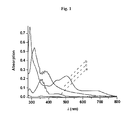
- the measurements are relatively fast, i.e., about 1-min, and can be carried out under environmental conditions and monitored in - and ex-situ using standard UV/visible spectroscopy (260-900 nm).
- the present invention relates to the use of a Cr 6+ sensor device comprising a divalent osmium (Os2 + )-, iron (Fe 2+ )- or ruthenium (Ru 2+ )-based pyridyl complex capable of changing its oxidation state in response to a reduction of Cr 6+ at the presence of H + , thereby causing a reversible and optically readable change in optical properties of said complex.
- the sensor device underlying the present invention comprises Os -based pyridyl complex.
- oxidation state refers to the electrically neutral state or to the state produced by the gain or loss of electrons to an element, compound or chemical substituent/subunit. In a preferred embodiment, this term refers to states including the neutral state and any state other than a neutral state caused by the gain or loss of electrons (reduction or oxidation).
- optical properties refers to the absorption spectrum of the Os 2+ -, Fe 2+ - or Ru 2+ -based pyridyl complex used in the Cr 6+ sensor device of the present invention.
- the change in the optical properties is caused electrochemically by addition or withdrawal of one or more electrons to or from the Os 2+ -, Fe 2+ - or Ru 2+ -based pyridyl complex.
- the Os 2+ -, Fe 2+ - or Ru 2+ -based pyridyl complex is a compound of the general formula I: wherein M is Os, Fe or Ru; n is the formal oxidation state of the Os or Fe, wherein n is 2 or 3; m is the positive charge of the tris-bipyridyl ligand, wherein m is an integer from 0 to 24, X is a counter anion selected from Br - , Cl - , F - , I - , PF 6 - , BF 4 - , OH - , ClO 4 - , SO 3 - , CF 3 COO - , CN - , alkylCOO - , arylCOO - or a combination thereof; and R 5 to R 28 is each independently selected from hydrogen, halogen, hydroxyl, azido, nitro, cyano, amino, substituted amino, thiol, C 1 -
- alkyl typically means a straight or branched hydrocarbon radical having preferably 1-10 carbon atoms, and includes, e.g., methyl, ethyl, n-propyl, isopropyl, n-butyl, isobutyl, sec-butyl, tert-butyl, n-pentyl, isopentyl, 2,2-dimethylpropyl, n-hexyl, n-heptyl, n-octyl, n-nonyl, n-decyl and the like.
- the alkyl may further be substituted.
- alkylene refers to a linear divalent hydrocarbon chain having preferably 1-10 carbon atoms and includes, e.g., methylene, ethylene, propylene, butylene, pentylene, hexylene, octylene and the like.
- alkenyl typically means a straight or branched hydrocarbon radical having preferably 2-10 carbon atoms and one or more double bonds. Non-limiting examples of such alkenyls are ethenyl, 3-buten-1-yl, 2-ethenylbutyl, 3-octen-1-yl, and the like.
- alkenylene refers to a linear divalent hydrocarbon chain having preferably 2-10 carbon atoms and one or more double bonds, and includes, e.g., 1-propylene, 1-butylene, 2-butylene, 3-hexylene and the like.
- alkynyl refers to a straight or branched hydrocarbon radical having preferably 2-10 carbon atoms and containing at least one triple bond.
- cycloalkyl typically means a saturated aliphatic hydrocarbon in a cyclic form (ring) having preferably 3-10 carbon atoms.
- Non-limiting examples of such cycloalkyl ring systems include cyclopropyl, cyclobutyl, cyclopentyl, cyclohexyl, cyclodecyl and the like.
- the cycloalkyl may be fused to other cycloalkyls, such in the case of cis/trans decalin.
- heterocycloalkyl refers to a cycloalkyl, in which at least one of the carbon atoms of the ring is replaced by a heteroatom selected from N, O or S.
- alkylCOO refers to an alkyl group substituted by a carboxyl group (-COO-) on any one of its carbon atoms.
- the alkyl has 1-10 carbon atoms, more preferably CH 3 COO - .
- aryl typically means any aromatic group, preferably having 6-14 carbon atoms such as phenyl and naphtyl.
- the aryl group may be substituted by any known substituents.
- arylCOO refers to such a substituted aryl, in this case being substituted by a carboxylate group.
- heteroaryl refers to an aromatic ring system in which at least one of the carbon atoms is replaced by a heteroatom selected from N, O or S.
- Non-limiting examples of heteroaryl include pyrrolyl, furyl, thienyl, pyrazolyl, imidazolyl, oxazolyl, isoxazolyl thiazolyl, isothiazolyl, pyridyl, 1,3-benzodioxinyl, pyrazinyl, pyrimidinyl, 1,3,4-triazinyl, 1,2,3-triazinyl, 1,3,5-triazinyl, thiazinyl, quinolinyl, isoquinolinyl, benzofuryl, isobenzofuryl, indolyl, imidazo[1,2-a]pyridyl, pyrido[1,2-a]pyrimidinyl, benz-imidazolyl, benzthiazolyl and be
- halogen includes fluoro, chloro, bromo, and iodo.
- haloalkyl refers to an alkyl substituted by at least one halogen.
- alkoxy refers to the group -OR, wherein R is an alkyl group.
- zido refers to -N 3 .
- nitro refers to -NO 2 and the term “cyano” refers to -CN.
- amino refers to the group -NH 2 or to substituted amino including secondary, tertiary and quaternary substitutions wherein the substituents are alkyl or aryl.
- protected amino refers to such groups which may be converted to the amino group.
- carbboxamido refers to the group -CONH 2 or to such a group substituted, in which each of the hydrogens is replaced by an alkyl or aryl group.
- carboxyl refers to the group -COOH.
- protected carboxyl refers to such groups which may be converted into the carboxyl group, e.g., esters such as -COOR, wherein R is an alkyl group or an equivalent thereof, and others which may be known to a person skilled in the art of organic chemistry.
- trialkoxysilane refers to a group of the general formula -Si(OR) 3 , wherein each of the three R groups is an alkyl group, and may be the same or different, preferably, trimethoxysilane or triethoxysilane.
- trimethoxysilane refers to -SiX 3 , wherein X is a halogen, each X may be same or different.
- any two vicinal R 5 -R 28 substituents refers to any two substituents on the benzene rings, being ortho to one another.
- fused ring system refers to at least two rings sharing one bond, such as in the case of naphthalene, phenanthrene, benzindole, benzpyridine and others.
- the fused ring system contains at least one benzene ring, being the ring of the compound of general formula I and another ring being formed by the ring closure of said any two vicinal R 4 -R 27 substituents.
- the said another ring may be saturated or unsaturated, substituted or unsabstituted and may be heterocylic.
- the pyridyl complex is the compound of the general formula I as defined above, wherein M is Os, n is 2, m is 0, X is PF 6 - or I - , R 5 , R 7 to R 26 and R 28 each is hydrogen, R 6 and R 27 each is B, wherein p is 9 and R 29 is triethoxysilane, i.e., bis(2,2'-bipyridine)[4,4'-dinonoxy-9-triethoxysilane-2,2'-bipyridine] osmium(II) [bis(hexafluorophosphate)/di-iodide], herein designated compounds 15a and 15b , respectively.
- the various Os 2+ -, Fe 2+ - or Ru 2+ -based pyridyl complexes used according to the present invention can be prepared by any suitable method known in the art, e.g., as disclosed in the aforesaid WO 2006085319 and US 20070258147 .
- the preparation of the Os 2+ -based pyridyl complex 10 used in all the experiments conducted in accordance with the present invention, as well as the formation of 10- based monolayers on glass, are further described in Examples 1-2 hereinafter.
- trace amounts of Cr 6+ in aqueous or organic solution could be detected in situ by monitoring the optical properties of the 10 -based monolayer by UV/visible spectroscopy in the transmission mode (260-900 nm).
- UV/visible spectroscopy in the transmission mode (260-900 nm).
- the amount of Cr 6+ could be accurately quantified within only 1-min of exposure time as well.
- the good linear correlation and the system stability allowed reliable and accurate quantification of Cr 6+ .
- a blind test showed that even after several weeks in air, the calibrated 10 -based sensor can be used to determine the amount of Cr 6+ within 10% accuracy.
- the surface-solution redox chemistry is dependent on the pH and shows good reversibility for at least 10 redox cycles.
- the monolayer setup became unstable at higher pH values, which is common for siloxane-based monolayers.
- the 10 -based sensor does not respond to Cr 6+
- the 10 -based monolayer is capable of optically sensing Fe 3+ in H 2 O and MeCN.
- this dual sensor system is capable of detecting a specific metal ion by varying the pH.
- Time-dependent measurement of the oxidation of the 10 -based monolayer by aqueous solutions containing 80 ppm Fe 3+ or Cr 6+ showed that the optical response of the sensor towards the latter ion is at least 6 times greater within 1-min of exposure time.
- Fe 3+ can selectively be removed from the medium by treatment with strong base prior to analysis of the Cr 6+ content by the 10 -based monolayer.
- Cr 6+ is stable under basic conditions.
- the formation of device quality sensors requires not only the ability to detect analytes under controlled laboratory conditions, but also under environmental conditions.
- the 10 -based monolayer has also been used to detect Cr 6+ in environmental samples.
- Water from a fishing pond and playground sand samples were collected and analyzed with and without the addition of ppm-levels of Cr 6+ .
- the optical properties of the Os 2+ -, Fe 2+ - or Ru 2+ -based pyridyl complex are optical absorption spectra of said pyridyl complex at the UV/visible spectral range, preferably at the range of 400-900 nm.
- the Cr 6+ sensor device comprises a divalent Os 2+ -based pyridyl complex, wherein said device is further capable of changing its oxidation state in response to a reduction of Fe 3+ at neutral pH, for detection of Fe 3+ .
- the Cr 6+ sensor device may further comprise a substrate carrying a layered structure of the Os 2+ -, Fe 2+ - or Ru 2+ -based pyridyl complex as defined above.
- the layered structure of the Os 2+ -, Fe 2+ - or Ru 2+ -based pyridyl complex comprises a monolayer of said pyridyl complex.
- the layered structure of the Os 2+ -, Fe 2+ - or Ru 2+ -based pyridyl complex comprises a plurality of identical or different layers of said pyridyl complex.
- the pyridyl complex is bound to a linker designed to covalently bind to the surface of said substrate; or (ii) the surface of said substrate carries a functional group capable of coordinating or binding to said layered structure.
- the functional group is capable of either covalently or non-covalently binding to said layered structure.
- the linker may be, without being limited to, a saturated or unsaturated, substituted or unsubsituted alkylene; a saturated or unsaturated, substituted or unsubsituted alkylaryl group; or a saturated or unsaturated, substituted or unsubsituted heterocycloalkyl groups, wherein said linker is attached to a functional group.
- functional groups when attached either to the linker or to the surface of the substrate, include silanes, thiols, phosphonates and alkenes.
- the substrate is hydrophilic, hydrophobic or a combination thereof.
- the substrate includes a material selected from glass, a doped glass, indium tin oxide (ITO)-coated glass, silicon, a doped silicon, Si(100), Si(111), SiO 2 , SiH, silicon carbide mirror, quartz, a metal, metal oxide, a mixture of metal and metal oxide, group IV elements, mica, a polymer such as polyacrylamide and polystyrene, a plastic, a zeolite, a clay, wood, a membrane, an optical fiber, a ceramic, a metalized ceramic, an alumina, an electrically-conductive material, a semiconductor, steel or a stainless steel.
- the substrate as defined hereinabove is in the form of beads, microparticles, nanoparticles, quantum dots or nanotubes.
- the substrate is optically transparent to the UV and visible spectral ranges.
- said substrate is glass, more preferably glass slides or beads
- said pyridyl complex is the compound of the general formula I wherein M is Os, n is 2, m is 1, X is PF 6 - or I - , R 5
- the present invention relates to the use of an acidic aqueous solution comprising a divalent osmium (Os 2+ )-, iron (Fe 2+ )- or ruthenium (Ru 2+ )-based pyridyl complex as defined in the annexed claims which is capable of changing its oxidation state in response to a reduction of Cr 6+ at the presence of H + , for selective detection and quantification of Cr 6+ .
- a divalent osmium (Os 2+ )-, iron (Fe 2+ )- or ruthenium (Ru 2+ )-based pyridyl complex as defined in the annexed claims which is capable of changing its oxidation state in response to a reduction of Cr 6+ at the presence of H + , for selective detection and quantification of Cr 6+ .
- the pyridyl complex comprised within the acidic aqueous solution may be any Os 2+ -, Fe 2+ - or Ru 2+ -based pyridyl complex as defined above such as, without being limited to, any one of compounds 4-15.
- the solution comprises Os 2+ -based pyridyl complex as defined above.
- the solution has a pH at the range of 0.1-3, preferably 0.3-2, most preferably about 1.
- the acidic aqueous solution as defined above is contained in an ampoule.
- At least two ampoules as defined above are contained in a kit.
- the present invention provides a method for selective detection and quantification of Cr 6+ in a liquid sample, comprising:
- the pyridyl complex used according to this method may be any Os 2+ -, Fe 2+ -or Ru 2+ -based pyridyl complex as defined above such as, without being limited to, any one of compounds 4-15.
- the pyridyl complex used according to this method is carried as a layered structure on a substrate as defined above.
- the liquid sample analyzed according to this method is obtained as a result of treating a solid sample by a liquid media.
- the pyridyl complex used according to this method is Os 2+ -based pyridyl complex as defined above.
- the Os 2+ -based pyridyl complex is exposed to the sample analyzed at a pH in a range of 0.1-3, preferably 0.3-2, most preferably about 1, and the Os 2+ -based pyridyl complex is exposed to the sample analyzed for about 1 min.
- the Cr 6+ detection method is redox coupled, i.e., associated with the oxidation of the 10 -based monolayer from Os 2+ to Os 3+ , followed by Cr 3+ generation; and the oxidation of the Os metal center may be reversibly switched in solution, depending of the pH, with subsequent Cr 3+ formation.
- a chemically surface bound 10 -based monolayer may effectively be applied in a reactor for Cr 6+ waste water treatment, i.e., for Cr 6+ detoxification.
- the Cr 6+ detoxification process is, in fact, a catalytic process, in which Cr 6+ is reduced with Os 2+ -based pyridyl complex to thereby oxidize the Os 2+ to Os 3+ , and the Os 3+ is then exposed to water, to thereby regenerate the Os 3+ to Os 2+ .
- the present invention provides a method for detoxification of Cr 6+ in an aqueous or organic liquid media, comprising:
- the pyridyl complex used according to this method may be any Os 2+ -, Fe 2+ -or Ru 2+ -based pyridyl complex as defined above such as, without being limited to, any one of compounds 4-15.
- the substrate is in the form of beads, nanoparticles, quantum dots or nanotubes.
- the monitoring of the presence of Cr 6+ and the determination of its concentration in step (ii) of this method may be carried out by any suitable method known in the art, e.g., by flame atomic absorption spectrometry (FAAS), inductively coupled plasma atomic emission spectrometry (ICP-AES), chemiluminescence, X-ray fluorescence, electrochemical methods or by the method for selective detection and quantification of Cr 6+ in a liquid sample as defined above.
- FAS flame atomic absorption spectrometry
- ICP-AES inductively coupled plasma atomic emission spectrometry
- chemiluminescence chemiluminescence
- X-ray fluorescence electrochemical methods
- electrochemical methods electrochemical methods or by the method for selective detection and quantification of Cr 6+ in a liquid sample as defined above.
- the pyridyl complex used according to this method is Os 2+ -based pyridyl complex as defined above.
- the Os 2+ -based pyridyl complex is contacted with the sample treated at a pH in a range of 0.1-3, preferably 0.3-2, most preferably about 1.
- the present invention provides a method for detoxification of Cr 6+ in an aqueous or organic liquid media, comprising contacting said liquid media with a divalent osmium (Os 2+ )-, iron (Fe 2+ )- or ruthenium (Ru 2+ )-based pyridyl complex as defined in the annexed claims which is capable of changing its oxidation state to Os 3+ , Fe 3+ or Ru 3+ -based pyridyl complex, respectively, in response to a reduction of Cr 6+ , for a sufficient time period at the presence of H + , wherein said pyridyl complex is carried as a layered structure on a substrate.
- a divalent osmium (Os 2+ )-, iron (Fe 2+ )- or ruthenium (Ru 2+ )-based pyridyl complex as defined in the annexed claims which is capable of changing its oxidation state to Os 3+ , Fe 3+ or
- the present invention provides a catalytic process for reduction of Cr +6 , comprising reducing said Cr 6+ with a divalent osmium (Os 2+ )-based pyridyl complex as defined in the annexed claims to thereby oxidize the Os 2+ to Os 3+ , and exposing the oxidized Os 3+ to water for a sufficient time period to hereby regenerate the Os 3+ to Os 2+ .
- a catalytic process for reduction of Cr +6 comprising reducing said Cr 6+ with a divalent osmium (Os 2+ )-based pyridyl complex as defined in the annexed claims to thereby oxidize the Os 2+ to Os 3+ , and exposing the oxidized Os 3+ to water for a sufficient time period to hereby regenerate the Os 3+ to Os 2+ .
- a catalytic process for reduction of Cr +6 comprising reducing said Cr 6+ with a divalent
- Soda-Lime glass used for monolayer preparation was cleaned by washing several times with deionised (DI) water, followed by immersion in a piranha solution (7:3 ( ⁇ : ⁇ ) H 2 SO 4 : 30% H 2 O 2 ) for 1 h (Caution: piranha is an extremely dangerous oxidizing agent thus should be carefully handled using appropriate personal protection).
- the glass substrates were again cleaned after the piranha treatment with DI water and placed in RCA (1:5:1 ( ⁇ : ⁇ : ⁇ ) NH 4 OH : H 2 O : 30% H 2 O 2 ) for 1 h. Subsequently, the substrates were rinsed with isopropanol, dried under N 2 flow and oven dried for 2 h.
- UV/visible spectra were recorded at room temperature, unless stated otherwise, on a Cary 100 spectrophotometer in transmission mode (260-900 nm).
- the functionalised glass substrates were fixed in a Teflon holder (1.5 x 0.75 cm window) and an identical glass substrate without monolayer was used to compensate for the background absorption.
- Optical detection of Cr 6+ in solution A stock solution of 1000 ppm K 2 Cr 2 O 7 in MeCN was prepared by dissolving 16 mg K 2 Cr 2 O 7 in 1 ml water whereafter 19 ml MeCN was added. This solution was diluted twice and acidified with 60 ⁇ l 32% HCl, and the UV/visible spectrum was recorded using MeCN as a background. The same was done with a MeCN solution of compound 10. After both spectra were taken, the two solutions were mixed together and the UV/visible spectrum was immediately recorded with a K 2 Cr 2 O 7 solution as the background reference.
- a stock solution of 1000 ppm of K 2 Cr 2 O 7 in DI water was prepared by dissolving 20 mg K 2 Cr 2 O 7 in 20 ml water.
- Stock solutions of each one of the metal salts used were prepared by dissolving 5x10 -4 mol of the corresponding metal salt in 100 ml DI water.
- a typical experiment was carried out as follows: The aqueous metal salt solution (1 ml) was further diluted with 8 ml DI water, and 100 ⁇ l of 32% HCl was then added. The 10-based monolayer was immersed in the obtained solution for 1 min and after drying, the UV/visible spectrum was recorded. Then, 1 ml of the K 2 Cr 2 O 7 stock solution was added to the same aqueous metal salt solution, the monolayer was again immersed for 1 min, and the UV/visible spectrum was recorded.
- Aqueous solutions at pH 1 were prepared, containing 80 ppm of FeCl 3 or K 2 Cr 2 O 7 .
- the 10-based monolayer was immersed for 5 min in a FeCl 3 solution and the UV/visible spectrum was recorded with 1 min time intervals. The same was done with the Cr 6+ solution, only for a 3 min time window, since saturation of the sensor was already achieved after 1 min exposure time.
- the same FeCl 3 sample was made basic, pH 14, while after Fe 3+ precipitated as its hydroxide.
- the solution was filtered using 2 ⁇ m pore Teflon filter, and the filtrate was reacidified to pH 1.
- the 10-based monolayer was then immersed again for 5 min, during which the UV/visible spectrum was recorded with 1 min time intervals.
- Monolayers of compound 10 on glass were formed as previously described and are illustrated in Scheme 2 hereinafter.
- freshly cleaned glass substrates (0.1 x 0.8 x 2.5 cm) were loaded under N 2 atmosphere into a pressure tube that contained a 0.5 mM solution of compound 10 in acetonitrile/toluene (3:7 v:v).
- the pressure tube was sealed and allowed to react for 52 h at 85°C, and the functionalized substrates were then rinsed with acetonitrile under N 2 atmosphere and sonicated for 8 min each in acetonitrile, acetone and isopropanol.
- the samples were dried under N 2 flow and stored in the dark.
- MLCT metal-to-ligand charge-transfer
- LMCT ligand-to-metal charge-transfer
- the electron transfer was also confirmed by electron spin resonance (ESR) that showed the formation of Cr 3+ by reacting a 6 mM aqueous solution of [Os(bpy) 3 )Cl 2 with 2 mM aqueous solution of K 2 Cr 2 O 7 at pH 1.
- ESR electron spin resonance
- Example 4 Compound 10 optically recognizes ppm levels of Cr 6+
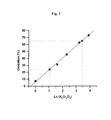
- the 10 -based monolayer was immersed for 1 min in aqueous (pH 1) solutions containing various concentrations (0, 1, 5, 10, 25 or 50 ppm) of K 2 Cr 2 O 7 , where after subsequently their UV/visible absorption spectra were recorded, and a representative calibration curve of the 10- based monolayer with these solutions is shown in Fig. 3 .
- the good linear correlation and the system stability allowed reliable and accurate quantification of Cr 6+ , and was further verified by performing a blind test with standard acidic (pH 1) aqueous solutions containing 3 and 28 ppm of Cr 6+ .
- standard acidic (pH 1) aqueous solutions containing 3 and 28 ppm of Cr 6+ As particularly shown in Fig.
- the blind test showed that even after several weeks in air, the calibrated 10 -based sensor could be used to determine the amount of Cr 6+ within 10% accuracy.
- the detection range in H 2 O and MeCN was 1-100 ppm and 0.5-100 ppm, respectively.
- the effect of consecutive oxidation/reduction cycles on the 10-based monolayer i.e., its oxidation/reduction reversibility
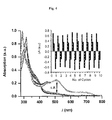
- the 10 -based monolayer sensor was immersed in a 5 ppm K 2 Cr 2 O 7 solution in acidic MeCN (pH 1) for 1 min, whereafter; it was reset by immersing for 1 min in MeCN, quick washing with basic water (pH ⁇ 8) and then immersing again in water for 3 min.
- the substrates were subsequently dried and gently wiped with task paper and the UV/visible spectrum was recorded.
- the surface-solution redox chemistry is dependent on the pH and shows good reversibility for at least 10 redox cycles.
- the complete reversibility of the of the 10 -based monolayer is particularly shown in the inset of this figure, wherein negative values correspond to the "oxidative" bleaching of the MLCT bands and positive values correspond to the "reductive” restoration of these bands, indicating that every oxidation/reduction cycle caused about the same change, ⁇ A, for the oxidation and the reduction process.
- This process is reversible and indicated by a peak separation of 60 mV and a linear correlation between I p and ⁇ 1/2 , characteristic for reversible processes ( Figs. 8A-8B ).
- Fig. 7B there was no significant effect of the pH on the redox potential of the Os-metal center, i.e., the oxidation/reduction potentials were only shifted 20 mV upon acidification from pH 3.5 to 1, while increasing the pH from 3.5 to 12 did not lead to any change in the cyclic voltammogram.
- Example 6 Compound 10 is highly selective to Cr 6+ in the presence of H +
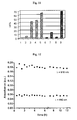
- the specific solutions prepared and used in this experiment consisted of (a) HgCl 2 , ZnCl 2 , CuCl 2 , CoCl 2 , MnCl 2 and NiCl 2 ; (b) MgCl 2 , BaCl 2 and CaCl 2 ; (c) KCl , NaCl , CsCl and LiCl; (d) LaCl 3 , Al(NO 3 ) 3 and CdSO 4 ; (e) NaNO 3 , Na 2 SO 4 , Na 2 SO 3 , KH 2 PO 4 and KBr; (f) Pb(NO 3 ) 2 and NaNO 2 ; (g) FeCl 3 ; and (h) FeCl 3 (after sample treatment with a strong base to selectively remove Fe 3+ ). As shown in Fig. 9 , only samples containing Cr 6+ induced significant optical changes ( ⁇ A ⁇ 60%) after a 1-min exposure time. Furthermore, the selectivity of Cr 6+ over Fe 3+ was remarkable.
- the 10 -based sensor did not respond to Cr 6+ in the absence of H + , as shown above, it was capable of optically sensing Fe 3+ in H 2 O and MeCN, under neutral conditions, as we have previously described (Gupta and van der Boom, 2007). Apparently, this dual sensor system was capable of detecting a specific metal ion by varying the pH. Time-dependent measurement of the oxidation of the 10-based monolayer by aqueous solutions containing 80 ppm Fe 3+ or Cr 6+ showed that the optical response of the sensor towards the latter ion was at least 6 times greater within 1-min of exposure time, as shown in Fig. 10 .
- Fe 3+ could selectively be removed from the medium by treatment with a strong base, as described in Materials and Methods, prior to analysis of the Cr 6+ content by the 10-based monolayer ( Fig. 9 , entry h). Cr 6+ is stable under basic conditions (Ji et al., 2001).
- Example 7 Compound 10 optically recognizes Cr 6+ in environmental samples
- Example 8 The 10-based monolayer is stable under acidic conditions
- Example 9 The 10-based monolayer may be used for Cr 6+ catalytic detoxification
- the Cr 6+ detection method is redox coupled, i.e., associated with the oxidation of the 10-based monolayer from Os 2+ to Os 3+ , followed by Cr 3+ generation as indicated by ESR.
- the oxidation of the Os metal center may be reversibly switched in solution, depending of the pH, as indicated by UV/visible spectra, with subsequent Cr 3+ formation.
- Fig. 14 shows the oxidation of the 10 -based monolayer by Cr 6+ and the resetting by H 2 O, as a function of the pH, indicating that the optimum pH value for the catalytic reaction described above is probably between pH 1.5-3.0.
Landscapes
- Chemical & Material Sciences (AREA)
- Organic Chemistry (AREA)
- Life Sciences & Earth Sciences (AREA)
- Health & Medical Sciences (AREA)
- Biochemistry (AREA)
- Immunology (AREA)
- Physics & Mathematics (AREA)
- Analytical Chemistry (AREA)
- Pathology (AREA)
- General Health & Medical Sciences (AREA)
- General Physics & Mathematics (AREA)
- Biophysics (AREA)
- Molecular Biology (AREA)
- Engineering & Computer Science (AREA)
- Food Science & Technology (AREA)
- Medicinal Chemistry (AREA)
- Investigating Or Analysing Materials By The Use Of Chemical Reactions (AREA)
- Investigating Or Analyzing Non-Biological Materials By The Use Of Chemical Means (AREA)
Abstract
Description
- The present invention relates to the use of a divalent osmium-, iron- or ruthenium-based pyridyl complex, for the optical detection, quantification and detoxification of Cr6+ by reversible metal-substrate electron transfer.
- The most remarkable occurrence of chromium in nature is found in ruby and emerald gemstones, where replacing Al3+ by Cr3+ produces the characteristic red and green colors of the ruby and emerald gemstones, respectively. Chromium exists in oxidation states ranging from Cr2+-Cr6+, wherein Cr3+ is thermodynamically the most stable and also the most important, being an essential trace element with a daily uptake of approximately 25-50 µg. However, in the higher oxidation states, e.g., as Cr6+, it is extremely dangerous being 500-1000 times more toxic than Cr3+. Long term exposure to Cr6+ can lead to lung cancer, chronic bronchitis, astma, emphysema, pulmonary fibrosis and other kinds of diseases (Reynolds et al., 2007; Zhitkovich, 2005; Levina and Lay, 2005). According to the US Department of Health and Human Services, the maximum exposure limit in air varies between 0.5-100 µg/m3, whereas in water the maximum exposure limit is 100 µg/l (ATSDR Chromium Toxicity, US Department of Health and Human Services, 2000).
- The main sources for Cr6+ are modem chemical and industrial processes including oil and coal combustion, manufacturing of textile dyes, fabrication of nuclear weapons, chrome plating, metal finishing, and leather and wood preservation. These processes create a vast amount of toxic waste (Singh and Gupta, 2007; Liu et al., 2006; Gheju and Iovi, 2006; Mytych and Stasicka, 2004; Kieber et al., 2002). For example, the United States annually emits tons of Cr6+ as atmospheric pollution. Besides that, there is additional pollution of Cr6+ as waste water (ATSDR Chromium Toxicity, US Department of Health and Human Services, 2000). Therefore, selective detection and quantification, together with detoxification of Cr6+, are of high importance.
- Current detoxification of Cr6+ is based on chemical reduction with stochiometric amounts of iron(sulfur) salts followed by precipitation with a base (Eary and Rai, 1988; EPA, 1980, 2000). Although several sophisticated techniques are available to detect and quantify Cr6+ (Marqués et al., 2000), a selective and cost-effective sensor system with minimum requirements for sample preparation is highly desirable. Alternative approaches are rare (Boiadjiev et al., 2005; Tian et al., 2005; Turyan and Mandler, 1997; Ji et al., 2001). Cr6+ undergoes reduction in solution in the presence of H+ and low-valent metal centers such as Fe2+, Mn2+, V3+ or Os2+ (Espenson, 1970; Davies and Espenson, 1970; Birk, 1969; Westheimer, 1949). For example, [Os(bpy)3]Cl2 reacts with K2Cr2O7 in water under acidic conditions (pH=1) to afford Cr3+, as may be indicated by electron spin resonance (ESR) spectroscopy. Monolayer chemistry is rapidly developing (Collman et al., 2007; Yerushalmi et al., 2004; Liu et al., 2003; Lahann et al., 2003; Gupta and van der Boom, 2006, 2007; Gupta et al., 2006, 2007; Baker et al., 2006; Gulino et al., 2005; Basabe-Desmonts et al., 2004; Ashkenasy et al., 2000; Crooks and Ricco, 1998), and such, well-designed interfaces have been used to detect various analytes (Gupta and van der Boom, 2006, 2007; Gupta et al., 2006, 2007; Baker et al., 2006; Gulino et al., 2005; Basabe-Desmonts et al., 2004; Ashkenasy et al., 2000; Crooks and Ricco, 1998). However, the design of a suitable platform for detecting specific metal ions in a matrix remains a challenging task (Gupta and van der Boom, 2007; Zhang et al., 2006).
- International Publication No.
WO 2006085319 and the correspondingUS Publication No. 20070258147 disclose a device having reversibly changeable and optically readable optical properties, the device comprising a substrate having an electrically conductive surface and carrying a redox-active layer structure configured to have at least one predetermined electronic property including at least one of electrodensity and oxidation state, said at least one electronic property being changeable by subjecting the layer structure to an electric field, wherein the electronic property of the layer structure defines an optical property of the structure thereby determining an optical response of the structure to certain incident light, the device enabling to effect a change in said electronic property that results in a detectable change in the optical response of the layer structure. - The aforesaid
US 20070258147 further discloses a sensor device configured and operable for sensing at least one predetermined cation, anion, radical, liquid or gas substance, the device comprising a redox-active layer structure selected to be capable of changing its oxidation state in response to a reaction with said at least one substance, thereby causing a change in optical properties of said structure, said change being reversible and being optically readable. As defined in the aforesaid US publication, the cation to be recognized said sensor device may be selected from the group consisting of [Ru(phen)3]3+, [Ru(bipy)3]3+, [trianthrene]+, [Fe(bip)3]3+, Pu4+, Au+, Ag2+, Ag+, Ce4+, Ru3+, Ir3+, Ir4+, Rh+, Rh2+, U2+, U3+, U4+, U5+, Rh3+, Pd2+, Pd4+, Pt2+, Pt4+, Ni2+, Ni4+, Co3+, Hg2+, Cu2+, Cu+, Cd2+, Pb2+, Pb4+, Sn2+, Sn4+, W+, NO+, Fe2+, Fe3+, an actinide and a lanthanide cation. In a particular embodiment, the redox-active layer structure of said sensor device comprises the osmium polypyridyl compound bis(2,2'-bipyridine)[4'-methyl-4-(2-(4-(3-propyltrimethoxysilane) pyridinium) ethenyl)-2,2'-bipyridine]osmium(II) [tris(hexafluorophosphate)/tri-iodide], respectively. - Hassan et al. disclose the flow injection fluorimetric determination of chromium(VI) in electroplating baths by luminescence quenching of tris(2,2'-bipyridyl) ruthenium(II).
- Du et al. describe the kinetics of the reaction of chromium(VI) with tris(1,10-phenanthroline)iron(II) ions in acidic solutions.
- Yonehara et al. relate to the indirect kinetic spectrophotometric determination of micro amounts of antimony(III) by means of the oxidation reaction of tris(1,10-phenanthroline)iron(II) by excess chromium(VI).
- Yonehara et al. (Analytica Chemica Acta) disclose the kinetic spectrophotometric determination of antimony(III) based on induced oxidation of tris(1,10-phenanthroline)iron(II) by chromium(VI).
- Dutt et al. describe a tris(1,10-phenanthroline)iron(II)-chromium(VI) indicator reaction.
- Yamamoto et al. describe the selective extraction of a small amount of chromium(VI) into nitrobenzene when a considerable amount of tris(1,10-phenanthroline)iron(II) chelate cation is present in an aqueous medium.
- Espenson et al. relate to the kinetics and mechanisms of reactions of chromium(IV) and iron(II) species in acidic solution.
- It has been found, in accordance with the present invention, that divalent osmium-based pyridyl complexes as defined in
claim 1, in particular, (bis(2,2'-bipyridine)[4'-methyl-4-(2-(4-(3-propyltrimethoxysilane)pyridinium) ethenyl)-2,2'-bipyridine] osmium(II) [tris(hexafluorophosphate)/tri-iodide], previously disclosed inWO 2006085319 , and bis(2,2'-bipyridine)[4'-methyl-4-(2-(4-(3-propoxytrimethoxysilane)phenyl) ethenyl)-2,2'-bipyridine]osmium(II) [bis(hexafluorophosphate)/di-iodide], are able to selectively detect and quantify traces, i.e., ppm levels, of hexavalent chromium (Cr6+) in H2O and MeCN under acidic conditions. The measurements are relatively fast, i.e., about 1-min, and can be carried out under environmental conditions and monitored in- and ex-situ using standard UV/visible spectroscopy (260-900 nm). The combined physicochemical properties and device performance of such pyridyl complex-based monolayers, including robustness, regeneration, response time, stability and selectivity, as well as the low detection limits, make this system an excellent alternative for detecting and quantifying Cr6. Since osmium, iron and ruthenium belong to the same group of chemical elements, i.e., have similar physicochemical properties, it is postulated that divalent iron/ruthenium-based pyridyl complexes will have a similar capacity. - The present invention is as defined in the annexed claims.
-
-
Fig. 1 shows absorption spectra of (a) a solution (pH 1) of (0.85 mM) Cr6+ in MeCN; (b) a solution of 10.4µM compound 10 in MeCN; and (c) a mixed solution of 1 ml (20.8 µM)compound pH 1. -
Fig. 2 shows absorption changes of the 10-based monolayer immersed in an acidified MeCN solution (pH=1) containing 0.5 ppm Cr6+. The inset shows the absorption changes at λ=516 (■) R2=0.990, λ=692 nm (●) R2=0.997, λ=317 nm (A) R2=0.979, and λ=293 nm (▼) R2=0.850, at 4, 6, 10, 16, and 45 min, respectively. -
Fig. 3 shows the absorption changes in oxidation % after a 1-min exposure of the 10-based monolayer to aqueous solutions containing 0, 1, 5 10, 25 or 50 ppm Cr6+ at pH=1. The black line represents a linear fit (R2=0.996). The dots show the results of a blind test, performed with standard acidic (pH 1) aqueous solutions containing 3 and 28 ppm of Cr6+. -
Fig. 4 shows absorption spectra of a typical switching experiment where the 10-based monolayer was oxidized for 1-min with an acidified MeCN solution (pH<1) containing 5 ppm Cr6+, and subsequently reduced with H2O within 3-min. the inset shows the spectral changes of the MLCT bands at λ=516 and 692 nm (long and short bars, respectively), as a function of the oxidation/reduction cycles. -
Fig. 5 shows absorption of the 10-based monolayer at λ=516 nm after immersion for 1-min in an aqueous solution containing 100 ppm Cr6+ at different pH values. -
Figs. 6A-6B show the optical response of the 10-based monolayer, expressed in reduction percentage, as a function of the pH. The pH dependent reduction of the 10-based monolayer with H2O, wherein oxidation was performed with 50 ppm K2Cr2O7 (R2=0.983) (6A); and the pH dependent reduction of the 10-based monolayer with H2O, wherein oxidation was performed with 100 ppm NOBF4 in MeCN (R2=0.996) (6B). -
Figs. 7A-7B show cyclic voltammogram for [Os(bpy)3]Cl2, in 0.1 M KCl solution in water at a scan rate of 100 mV/s between -1.6 and +1.0 V, with a glassy carbon working electrode and a Pt-wire counter electrode with Ag/AgCl as reference, at pH 3.5 and pH 1 (7A); and cyclic voltammogram for [Os(bpy)3]Cl2, in 0.1 M KCl solution in water at a scan rate of 400 mV/s, isolating the Os-metal center between 0 and 1 V, at pH 3.5 and pH 1 (7B). -
Figs. 8A-8B show a plot of Ip vs. v1/2 for [Os(bpy)3]Cl2 at pH 1 (8A) and pH 3.5 (8B), representing a linear correlation indicating a diffusion controlled oxidation/reduction process. -
Fig. 9 shows relative oxidation change of the 10-based monolayer at λ=516 nm, after immersion in various aqueous matrices containing 5x10⁻⁴ M of each of the following metals salts, with (row 1) and without (row 2) the presence of 100 ppm Cr6+. a) HgCl2, ZnCl2, CuCl2, CoCl2, MnCl2 and NiCl2; b) MgCl2, BaCl2 and CaCl2; c) KCl, NaCl, CsCl and LiCl; d) LaCl3, Al(NO3)3 and CdSO4; e) NaNO3, Na2SO4, Na2SO3, KH2PO4 and KBr; f) Pb(NO3)2 and NaNO2; g) FeCl3; and h) FeCl3 after sample treatment with a strong base to selectively remove Fe3+. -
Fig. 10 shows the absorption changes at λ=516 nm of the 10-based monolayer as a function of time upon immersion in aqueous solutions (pH 1) containing 80 ppm Cr6+ (A) and Fe3+ (●; R2=0.998). The line represented by the character ■ represents the absorption of the 10-based monolayer after treatment with a strong base to selectively remove Fe3+, as described in Materials and Methods. -
Fig. 11 shows optical response, expressed in oxidation %, of the 10-based monolayer at λ=516 nm after immersion for 1-min in pond water (entries 1-5) and sand-extracted water (entries 6-9) under acidic conditions (pH=1).Entries entries entry 5 represents 100 ppm Cr6+.Entries entries -
Fig. 12 shows the stability of both MLCT bands at λ=516 and 692 upon immersion the 10-based monolayer in acidic water (pH 1) for several hours. The break indicates a 16 h break, during which the 10-based monolayer was not immersed in the acidic water. -
Fig. 13 shows the oxidation change in %, as a function of time, of the MLCT band at λ=516 nm of the 10-based monolayer after exposure to the solution, used in the experiment described in Example 9. The line shows an exponential fit with R2=0.993. -
Fig. 14 shows electron spin resonance (ESR) spectrum of 2 mM solution of CrCl3 in H2O at pH 1 (1); and a 1:1 (ν:ν) mixture of 2 mM K2Cr2O7 and 6 mM [Os(bpy)3]Cl2 in H2O atpH 1 after 8 consecutive cycles, as described in Example 9 (2). -
Fig. 15 shows changes of the oxidation (■) and reduction (◆) % of the MLCT at λ=516 nm of the 10-based monolayer as a function of the pH. Oxidation was done with 100 ppm Cr6+ (red dots), whereas as the reduction was done with H2O. -
Fig. 16 shows a graphical representation of a potential reactor for catalytic detoxification of Cr6+ waste water with glass beads functionalized with the 10-based monolayer. The magnification shows the probable surface processes. - In one aspect, the present invention relates to the use of a Cr6+ sensor device comprising a divalent osmium (Os2+)-, iron (Fe2+)- or ruthenium (Ru2+)-based pyridyl complex capable of changing its oxidation state in response to a reduction of Cr6+ at the presence of H+, thereby causing a reversible and optically readable change in optical properties of said complex. In a preferred embodiment, the sensor device underlying the present invention comprises Os -based pyridyl complex.
- The term "oxidation state", as used herein, refers to the electrically neutral state or to the state produced by the gain or loss of electrons to an element, compound or chemical substituent/subunit. In a preferred embodiment, this term refers to states including the neutral state and any state other than a neutral state caused by the gain or loss of electrons (reduction or oxidation).
- The term "optical properties", as used herein, refers to the absorption spectrum of the Os2+-, Fe2+- or Ru2+-based pyridyl complex used in the Cr6+ sensor device of the present invention. The change in the optical properties is caused electrochemically by addition or withdrawal of one or more electrons to or from the Os2+-, Fe2+- or Ru2+-based pyridyl complex.
- The Os2+-, Fe2+- or Ru2+-based pyridyl complex is a compound of the general formula I:


- A is linked to the ring structure of the compound of general formula I via R4; R4 is selected from cis/trans C=C, C≡C, N=N, C=N, N=C, C-N, N-C, alkylene, arylene or a combination thereof; R3 is C or N; R2 is absent or is selected from hydrogen, alkyl, alkylene, aryl, arylene, OH, O-alkyl, O-alkylene or a combination thereof; and R1 is absent or is selected from hydrogen, trialkoxysilane, trihalidesilane, thiol, COOH, COO-, Si(OH)3 or phosphonate; and
- B is -O(CH2)p-R29 linked to the ring structure of the compound of general formula I via the oxygen, wherein p is an integer from 9 to 12; and R29 is selected from hydrogen, trialkoxysilane, trihalidesilane, thiol, COOH, COO-, Si(OH)3 or phosphonate; and
- any two vicinal R5-R28 substituents, together with the carbon atoms to which they are attached, may form a fused ring system selected from cycloalkyl, heterocycloalkyl, heteroaryl or aryl, wherein said fused system may be substituted by one or more groups selected from C1-C10 alkyl, aryl, azido, cycloalkyl, halogen, heterocycloalkyl, alkoxy, hydroxyl, haloalkyl, heteroaryl, alkenyl, alkynyl, nitro, cyano, amino, substituted amino, carboxamido, substituted carboxamido, carboxyl, protected carboxyl, protected amino, thiol, sulfonyl or substituted aryl; and said fused ring system may also contain at least one heteroatom selected from N, O or S.
- The term "alkyl", as used herein, typically means a straight or branched hydrocarbon radical having preferably 1-10 carbon atoms, and includes, e.g., methyl, ethyl, n-propyl, isopropyl, n-butyl, isobutyl, sec-butyl, tert-butyl, n-pentyl, isopentyl, 2,2-dimethylpropyl, n-hexyl, n-heptyl, n-octyl, n-nonyl, n-decyl and the like. The alkyl may further be substituted. The term "alkylene" refers to a linear divalent hydrocarbon chain having preferably 1-10 carbon atoms and includes, e.g., methylene, ethylene, propylene, butylene, pentylene, hexylene, octylene and the like.
- The term "alkenyl" typically means a straight or branched hydrocarbon radical having preferably 2-10 carbon atoms and one or more double bonds. Non-limiting examples of such alkenyls are ethenyl, 3-buten-1-yl, 2-ethenylbutyl, 3-octen-1-yl, and the like. The term "alkenylene" refers to a linear divalent hydrocarbon chain having preferably 2-10 carbon atoms and one or more double bonds, and includes, e.g., 1-propylene, 1-butylene, 2-butylene, 3-hexylene and the like.
- The term "alkynyl" refers to a straight or branched hydrocarbon radical having preferably 2-10 carbon atoms and containing at least one triple bond.
- The term "cycloalkyl" typically means a saturated aliphatic hydrocarbon in a cyclic form (ring) having preferably 3-10 carbon atoms. Non-limiting examples of such cycloalkyl ring systems include cyclopropyl, cyclobutyl, cyclopentyl, cyclohexyl, cyclodecyl and the like. The cycloalkyl may be fused to other cycloalkyls, such in the case of cis/trans decalin. The term "heterocycloalkyl" refers to a cycloalkyl, in which at least one of the carbon atoms of the ring is replaced by a heteroatom selected from N, O or S.
- The term "alkylCOO" refers to an alkyl group substituted by a carboxyl group (-COO-) on any one of its carbon atoms. Preferably, the alkyl has 1-10 carbon atoms, more preferably CH3COO-.
- The term "aryl" typically means any aromatic group, preferably having 6-14 carbon atoms such as phenyl and naphtyl. The aryl group may be substituted by any known substituents. The term "arylCOO" refers to such a substituted aryl, in this case being substituted by a carboxylate group.
- The term "heteroaryl" refers to an aromatic ring system in which at least one of the carbon atoms is replaced by a heteroatom selected from N, O or S. Non-limiting examples of heteroaryl include pyrrolyl, furyl, thienyl, pyrazolyl, imidazolyl, oxazolyl, isoxazolyl thiazolyl, isothiazolyl, pyridyl, 1,3-benzodioxinyl, pyrazinyl, pyrimidinyl, 1,3,4-triazinyl, 1,2,3-triazinyl, 1,3,5-triazinyl, thiazinyl, quinolinyl, isoquinolinyl, benzofuryl, isobenzofuryl, indolyl, imidazo[1,2-a]pyridyl, pyrido[1,2-a]pyrimidinyl, benz-imidazolyl, benzthiazolyl and benzoxazolyl.
- The term "halogen" includes fluoro, chloro, bromo, and iodo. The term "haloalkyl" refers to an alkyl substituted by at least one halogen.
- The term "alkoxy" refers to the group -OR, wherein R is an alkyl group. The term "azido" refers to -N3. The term "nitro" refers to -NO2 and the term "cyano" refers to -CN. The term "amino" refers to the group -NH2 or to substituted amino including secondary, tertiary and quaternary substitutions wherein the substituents are alkyl or aryl. The term "protected amino" refers to such groups which may be converted to the amino group. The term "carboxamido" refers to the group -CONH2 or to such a group substituted, in which each of the hydrogens is replaced by an alkyl or aryl group.
- The term "carboxyl" refers to the group -COOH. The term "protected carboxyl" refers to such groups which may be converted into the carboxyl group, e.g., esters such as -COOR, wherein R is an alkyl group or an equivalent thereof, and others which may be known to a person skilled in the art of organic chemistry.
- The term "trialkoxysilane" refers to a group of the general formula -Si(OR)3, wherein each of the three R groups is an alkyl group, and may be the same or different, preferably, trimethoxysilane or triethoxysilane. Similarly, the term "trihalidesilane" refers to -SiX3, wherein X is a halogen, each X may be same or different.
- The expression "any two vicinal R5-R28 substituents" refers to any two substituents on the benzene rings, being ortho to one another. The expression "fused ring system" refers to at least two rings sharing one bond, such as in the case of naphthalene, phenanthrene, benzindole, benzpyridine and others. The fused ring system contains at least one benzene ring, being the ring of the compound of general formula I and another ring being formed by the ring closure of said any two vicinal R4-R27 substituents. The said another ring may be saturated or unsaturated, substituted or unsabstituted and may be heterocylic.
- The compounds described in the specification, both the compounds of formula I, i.e., the Os2+-, Fe2+- or Ru2+-based pyridyl complexes/compounds, as well as the starting compounds and intermediates, are herein identified by the Arabic numbers 1-15 in bold. However, since the pyridyl complexes specifically described herein are defined with two different anions, each one of the compounds 4-15 has two forms designated "a" and "b".
- In one embodiment, the pyridyl complex is the compound of the general formula I as defined above, wherein M is Os, Fe or Ru, n is 2, m is 0, X is PF6 - or I-, R5, R7 to R26 and R28 each is hydrogen, R6 is methyl, and R27 is A, wherein R4 is C=C, R3 is N, and R2 and R1 are both absent, i.e., bis(2,2'-bipyridine)[4'-methyl-4-(2-(4-pyridyl)ethenyl)-2,2'-bipyridine]osmium(II) [bis(hexafluorophosphate)/di-iodide], herein designated compounds 4a-4b, respectively; bis(2,2'-bipyridine)[4'-methyl-4-(2-(4-pyridyl)ethenyl)-2,2'-bipyridine] iron(II) [bis(hexafluorophosphate) /di-iodide], herein designated compounds 5a-5b, respectively; or bis(2,2'-bipyridine)[4'-methyl-4-(2-(4-pyridyl)ethenyl)-2,2'-bipyridine] ruthenium(II) [bis-(hexafluorophosphate)/di-iodide], herein designated compounds 6a-6b, respectively.

- In another embodiment, the pyridyl complex is the compound of the general formula I as defined above, wherein M is Os, Fe or Ru, n is 2, m is 1, X is PF6 - or I-, R5, R7 to R26 and R28 each is hydrogen, R6 is methyl, and R27 is A, wherein R4 is C=C, R3 is N, R2 is methyl, and R1 is absent, i.e., bis(2,2'-bipyridine)[4'-methyl-4-(2-(4-methylpyridinium)ethenyl)-2,2'-bipyridine] osmium(II) [tris(hexafluorophosphate)/tri-iodide], herein designated compounds 7a-7b, respectively; bis(2,2'-bipyridine)[4'-methyl-4-(2-(4-methylpyridinium)ethenyl)-2,2'-bipyridine] iron(II) [tris(hexafluorophosphate)/tri-iodide], herein designated compounds 8a-8b, respectively; or bis(2,2'-bipyridine)[4'-methyl-4-(2-(4-methylpyridinium)ethenyl)-2,2'-bipyridine] ruthenuim(II) [tris(hexafluorophosphate)/tri-iodide], herein designated compounds 9a-9b, respectively.

- In a preferred embodiment, the pyridyl complex is the compound of the general formula I as defined above, wherein M is Os, n is 2, m is 1, X is PF6 - or I-, R5, R7 to R26 and R28 each is hydrogen, R6 is methyl, and R27 is A, wherein R4 is C=C, R3 is N, R2 is propyl, and R1 is trimethoxysilane, i.e., bis(2,2'-bipyridine)[4'-methyl-4-(2-(4-(3-propyltrimethoxysilane)pyridinium)ethenyl)-2,2'-bipyridine] osmium(II) [tris(hexafluorophosphate)/tri-iodide], herein designated compounds 10a and 10b, respectively.

- In a further embodiment, the pyridyl complex is the compound of the general formula I as defined above, wherein M is Os, Fe or Ru, n is 2, m is 0, X is PF6 - or I-, R5, R7 to R26 and R28 each is hydrogen, R6 is methyl, and R27 is A, wherein R4 is C=C, R3 is C, R2 is OH, and R1 is absent, i.e., bis(2,2'-bipyridine)[4'-methyl-4-(2-(4-hydroxyphenyl)ethenyl)-2,2'-bipyridine] osmium(II) [bis(hexafluorophosphate)/ di-iodide], herein designated compounds 11a-11b, respectively; bis(2,2'-bipyridine)[4'-methyl-4-(2-(4-hydroxyphenyl)ethenyl)-2,2'-bipyridine] iron(II) [bis(hexafluorophosphate)/di-iodide], herein designated compounds 12a-12b, respectively; or bis(2,2'-bipyridine)[4'-methyl-4-(2-(4-hydroxyphenyl)ethenyl)-2,2'-bipyridine] ruthenium(II) [bis(hexafluorophosphate)/di-iodide], herein designated compounds 13a-13b, respectively.

- In another preferred embodiment, the pyridyl complex is the compound of the general formula I as defined above, wherein M is Os, n is 2, m is 0, X is PF6 - or I-, R5, R7 to R26 and R28 each is hydrogen, R6 is methyl, and R27 is A, wherein R4 is C=C, R3 is C, R2 is O-propyl, and R1 is trimethoxysilane, i.e., bis(2,2'-bipyridine)[4'-methyl-4-(2-(4-(3-propoxytrimethoxysilane)phenyl)ethenyl)-2,2'-bipyridine] osmium(II) [bis(hexafluorophosphate)/di-iodide], herein designated compounds 14a and 14b, respectively.

- In still further embodiments, the pyridyl complex is the compound of the general formula I as defined above, wherein M is Os, n is 2, m is 0, X is PF6 - or I-, R5, R7 to R26 and R28 each is hydrogen, R6 and R27 each is B, wherein p is 9 and R29 is triethoxysilane, i.e., bis(2,2'-bipyridine)[4,4'-dinonoxy-9-triethoxysilane-2,2'-bipyridine] osmium(II) [bis(hexafluorophosphate)/di-iodide], herein designated compounds 15a and 15b, respectively.

- The various Os2+-, Fe2+- or Ru2+-based pyridyl complexes used according to the present invention can be prepared by any suitable method known in the art, e.g., as disclosed in the aforesaid
WO 2006085319 andUS 20070258147 . In particular, the preparation of the Os2+-based pyridyl complex 10 used in all the experiments conducted in accordance with the present invention, as well as the formation of 10-based monolayers on glass, are further described in Examples 1-2 hereinafter. - As shown in detail in the Examples section, trace amounts of Cr6+ in aqueous or organic solution could be detected in situ by monitoring the optical properties of the 10-based monolayer by UV/visible spectroscopy in the transmission mode (260-900 nm). For example, immersing a 10-based monolayer on glass (0.8 x 2.5 x 0.1 cm) in an acidified MeCN solution containing 0.5 ppm Cr6+ resulted in a significant decrease of the absorption band at λ=293 nm and both singlet and triplet states of metal-to-ligand charge-transfer (MLCT) bands at λ=516 and 692 nm, and a concurrent increase of the ligand-to-metal charge-transfer (LMCT) band at λ=317 nm. Saturation of the sensor occurred under these reaction conditions after 45 min. The 10-based monolayer is stable in H2O at pH=1 for at least several hours in the absence of Cr6+, as judged by UV/visible spectroscopy.
- Remarkably, the amount of Cr6+ could be accurately quantified within only 1-min of exposure time as well. The good linear correlation and the system stability allowed reliable and accurate quantification of Cr6+. For instance, a blind test showed that even after several weeks in air, the calibrated 10-based sensor can be used to determine the amount of Cr6+ within 10% accuracy. The detection range in H2O and MeCN was 1-100 ppm and 0.5-100 ppm, respectively. Reduction of the Os3+ system by water completely restored the MLCT bands at λ=516 and 692 nm to their original values.
- As further shown, the surface-solution redox chemistry is dependent on the pH and shows good reversibility for at least 10 redox cycles. Ex situ UV/visible follow-up experiments demonstrated that the system only responds to the analyte at a pH<3 for a 1-min exposure time, wherein the highest oxidation rate is observed at pH=0.3. Interestingly, reduction of the sensor with H2O was pH dependent as well. The maximum reduction rate was observed at pH=7.5, whereas at pH=1, hardly any reaction was observed. The monolayer setup became unstable at higher pH values, which is common for siloxane-based monolayers.
- The selectivity of the 10-based monolayer towards Cr6+ was demonstrated using a series of aqueous matrices containing various metal ions, or anions commonly found in groundwater. Only samples containing Cr6+ induced significant optical changes (ΔA ≥ 60%) after a 1-min exposure time.
- Whereas in the absence of H+, the 10-based sensor does not respond to Cr6+, we recently reported that under such conditions, the 10-based monolayer is capable of optically sensing Fe3+ in H2O and MeCN. Apparently, this dual sensor system is capable of detecting a specific metal ion by varying the pH. Time-dependent measurement of the oxidation of the 10-based monolayer by aqueous solutions containing 80 ppm Fe3+ or Cr6+ showed that the optical response of the sensor towards the latter ion is at least 6 times greater within 1-min of exposure time. Moreover, Fe3+ can selectively be removed from the medium by treatment with strong base prior to analysis of the Cr6+ content by the 10-based monolayer. Cr6+ is stable under basic conditions.
- The formation of device quality sensors requires not only the ability to detect analytes under controlled laboratory conditions, but also under environmental conditions. As shown, the 10-based monolayer has also been used to detect Cr6+ in environmental samples. Water from a fishing pond and playground sand samples were collected and analyzed with and without the addition of ppm-levels of Cr6+. The Cr6+ was extracted from the sand with water. All water samples were acidified to pH=1. Only contaminated samples gave positive responses.
- In view of the aforesaid, in one embodiment, the optical properties of the Os2+-, Fe2+- or Ru2+-based pyridyl complex are optical absorption spectra of said pyridyl complex at the UV/visible spectral range, preferably at the range of 400-900 nm.
- In another embodiment, the Cr6+ sensor device comprises a divalent Os2+-based pyridyl complex, wherein said device is further capable of changing its oxidation state in response to a reduction of Fe3+ at neutral pH, for detection of Fe3+.
- The Cr6+ sensor device may further comprise a substrate carrying a layered structure of the Os2+-, Fe2+- or Ru2+-based pyridyl complex as defined above.
- In one embodiment, the layered structure of the Os2+-, Fe2+- or Ru2+-based pyridyl complex comprises a monolayer of said pyridyl complex.
- In another embodiment, the layered structure of the Os2+-, Fe2+- or Ru2+-based pyridyl complex comprises a plurality of identical or different layers of said pyridyl complex.
- In a further embodiment, (i) the pyridyl complex is bound to a linker designed to covalently bind to the surface of said substrate; or (ii) the surface of said substrate carries a functional group capable of coordinating or binding to said layered structure. In a preferred embodiment, the functional group is capable of either covalently or non-covalently binding to said layered structure. The linker may be, without being limited to, a saturated or unsaturated, substituted or unsubsituted alkylene; a saturated or unsaturated, substituted or unsubsituted alkylaryl group; or a saturated or unsaturated, substituted or unsubsituted heterocycloalkyl groups, wherein said linker is attached to a functional group. Non-limiting examples of functional groups, when attached either to the linker or to the surface of the substrate, include silanes, thiols, phosphonates and alkenes.
- In yet a further embodiment, the substrate is hydrophilic, hydrophobic or a combination thereof.
- In one embodiment, the substrate includes a material selected from glass, a doped glass, indium tin oxide (ITO)-coated glass, silicon, a doped silicon, Si(100), Si(111), SiO2, SiH, silicon carbide mirror, quartz, a metal, metal oxide, a mixture of metal and metal oxide, group IV elements, mica, a polymer such as polyacrylamide and polystyrene, a plastic, a zeolite, a clay, wood, a membrane, an optical fiber, a ceramic, a metalized ceramic, an alumina, an electrically-conductive material, a semiconductor, steel or a stainless steel. In preferred embodiments, the substrate as defined hereinabove is in the form of beads, microparticles, nanoparticles, quantum dots or nanotubes.
- In one embodiment, the substrate is optically transparent to the UV and visible spectral ranges.
- In a most preferred embodiment, the Cr6+ sensor device comprises a substrate carrying a layered structure of an Os2+-based pyridyl complex as defined above, wherein said substrate is glass, more preferably glass slides or beads, said pyridyl complex is the compound of the general formula I wherein M is Os, n is 2, m is 1, X is PF6 - or I-, R5, R7 to R26 and R28 each is hydrogen, R6 is methyl, and R27 is A, wherein R4 is C=C, R3 is N, R2 is propyl, and R1 is trimethoxysilane (compounds 10a or 10b, respectively), and a monolayer of said pyridyl complex is covalently bound to said substrate.
- In another aspect, the present invention relates to the use of an acidic aqueous solution comprising a divalent osmium (Os2+)-, iron (Fe2+)- or ruthenium (Ru2+)-based pyridyl complex as defined in the annexed claims which is capable of changing its oxidation state in response to a reduction of Cr6+ at the presence of H+, for selective detection and quantification of Cr6+.
- The pyridyl complex comprised within the acidic aqueous solution may be any Os2+-, Fe2+- or Ru2+-based pyridyl complex as defined above such as, without being limited to, any one of compounds 4-15.
- In one embodiment, the solution comprises Os2+-based pyridyl complex as defined above. In a preferred embodiment, the solution has a pH at the range of 0.1-3, preferably 0.3-2, most preferably about 1.
- In a further aspect, the acidic aqueous solution as defined above is contained in an ampoule.
- In yet a further aspect, at least two ampoules as defined above are contained in a kit.
- In still another aspect, the present invention provides a method for selective detection and quantification of Cr6+ in a liquid sample, comprising:
- (i) exposing a divalent osmium (Os2+)-, iron (Fe2+)- or ruthenium (Ru2+)-based pyridyl complex as defined in the annexed claims which is capable of changing its oxidation state in response to a reduction of Cr6+ to said sample, for a sufficient time period at the presence of H+;
- (ii) recording absorption spectra of said pyridyl complex at the UV/visible spectral range, preferably at the range of 400-900 nm; and
- (iii) monitoring the presence of Cr6+ in said sample and determining its concentration according to the change in the absorption spectra of (ii) compared to a predetermined absorption spectra of said pyridyl complex.
- The pyridyl complex used according to this method may be any Os2+-, Fe2+-or Ru2+-based pyridyl complex as defined above such as, without being limited to, any one of compounds 4-15.
- In another embodiment, the pyridyl complex used according to this method is carried as a layered structure on a substrate as defined above.
- In one embodiment, the liquid sample analyzed according to this method is obtained as a result of treating a solid sample by a liquid media.
- In one embodiment, the pyridyl complex used according to this method is Os2+-based pyridyl complex as defined above. In a preferred embodiment, a decrease of the metal to ligand charge transfer (MLCT) bands at λ=516 and 692 nm indicates the presence of Cr6+, and the percentage of said decrease is proportional to the concentration of Cr6+ in said sample. In another preferred embodiment, the Os2+-based pyridyl complex is exposed to the sample analyzed at a pH in a range of 0.1-3, preferably 0.3-2, most preferably about 1, and the Os2+-based pyridyl complex is exposed to the sample analyzed for about 1 min.
- As shown in the Examples section hereinafter, the Cr6+ detection method is redox coupled, i.e., associated with the oxidation of the 10-based monolayer from Os2+ to Os3+, followed by Cr3+ generation; and the oxidation of the Os metal center may be reversibly switched in solution, depending of the pH, with subsequent Cr3+ formation. In view of that, a chemically surface bound 10-based monolayer may effectively be applied in a reactor for Cr6+ waste water treatment, i.e., for Cr6+ detoxification. As particularly shown in Example 9, the Cr6+ detoxification process is, in fact, a catalytic process, in which Cr6+ is reduced with Os2+-based pyridyl complex to thereby oxidize the Os2+ to Os3+, and the Os3+ is then exposed to water, to thereby regenerate the Os3+ to Os2+.
- Thus, in yet another aspect, the present invention provides a method for detoxification of Cr6+ in an aqueous or organic liquid media, comprising:
- (i) contacting said liquid media with a divalent osmium (Os2+)-, iron (Fe2+)- or ruthenium (Ru2+)-based pyridyl complex as defined in the annexed claims which is capable of changing its oxidation state to Os3+-, Fe3+- or Ru3+-based pyridyl complex, respectively, in response to a reduction of Cr6+, for a sufficient time period at the presence of H+, wherein said pyridyl complex is carried as a layered structure on a substrate;
- (ii) monitoring the presence of Cr6+ and determining its concentration in a sample taken from said liquid media; and
- (iii) when Cr6+ is detected in said sample, reducing said Os3+-, Fe3+- or Ru3+-based pyridyl complex and repeating steps (i) and (ii).
- The pyridyl complex used according to this method may be any Os2+-, Fe2+-or Ru2+-based pyridyl complex as defined above such as, without being limited to, any one of compounds 4-15.
- In one embodiment, the substrate is in the form of beads, nanoparticles, quantum dots or nanotubes.
- The monitoring of the presence of Cr6+ and the determination of its concentration in step (ii) of this method may be carried out by any suitable method known in the art, e.g., by flame atomic absorption spectrometry (FAAS), inductively coupled plasma atomic emission spectrometry (ICP-AES), chemiluminescence, X-ray fluorescence, electrochemical methods or by the method for selective detection and quantification of Cr6+ in a liquid sample as defined above.
- In one embodiment, the pyridyl complex used according to this method is Os2+-based pyridyl complex as defined above. In a preferred embodiment, the Os2+-based pyridyl complex is contacted with the sample treated at a pH in a range of 0.1-3, preferably 0.3-2, most preferably about 1.
- In yet a further aspect, the present invention provides a method for detoxification of Cr6+ in an aqueous or organic liquid media, comprising contacting said liquid media with a divalent osmium (Os2+)-, iron (Fe2+)- or ruthenium (Ru2+)-based pyridyl complex as defined in the annexed claims which is capable of changing its oxidation state to Os3+, Fe3+ or Ru3+-based pyridyl complex, respectively, in response to a reduction of Cr6+, for a sufficient time period at the presence of H+, wherein said pyridyl complex is carried as a layered structure on a substrate.
- In still a further aspect, the present invention provides a catalytic process for reduction of Cr+6, comprising reducing said Cr6+ with a divalent osmium (Os2+)-based pyridyl complex as defined in the annexed claims to thereby oxidize the Os2+ to Os3+, and exposing the oxidized Os3+ to water for a sufficient time period to hereby regenerate the Os3+ to Os2+.
- The invention will now be illustrated by the following non-limiting Examples.
- General. Most metal salts were purchased from BDH or Merck. MgCl2 was purchased from Aldrich. All chemicals where used as received. Solvents (Reagent Grade) were purchased from Bio-Lab (Jerusalem), Frutarom (Haifa) or Mallinckrodt Baker (Phillipsburg, NJ). [Os(bpy)3]Cl2 was prepared by a modification of the procedure described by Johnson et al. (1988) with NH4OsCl6, ethylene glycol, while purification was done by precipitation with Et2O. The monolayers were synthesized and characterized as previously reported (Gupta et al., 2006). Soda-Lime glass used for monolayer preparation was cleaned by washing several times with deionised (DI) water, followed by immersion in a piranha solution (7:3 (ν:ν) H2SO4 : 30% H2O2) for 1 h (Caution: piranha is an extremely dangerous oxidizing agent thus should be carefully handled using appropriate personal protection). The glass substrates were again cleaned after the piranha treatment with DI water and placed in RCA (1:5:1 (ν:ν:ν) NH4OH : H2O : 30% H2O2) for 1 h. Subsequently, the substrates were rinsed with isopropanol, dried under N2 flow and oven dried for 2 h. UV/visible spectra were recorded at room temperature, unless stated otherwise, on a
Cary 100 spectrophotometer in transmission mode (260-900 nm). The functionalised glass substrates were fixed in a Teflon holder (1.5 x 0.75 cm window) and an identical glass substrate without monolayer was used to compensate for the background absorption. - Optical detection of Cr 6+ in solution. A stock solution of 1000 ppm K2Cr2O7 in MeCN was prepared by dissolving 16 mg K2Cr2O7 in 1 ml water whereafter 19 ml MeCN was added. This solution was diluted twice and acidified with 60 µl 32% HCl, and the UV/visible spectrum was recorded using MeCN as a background. The same was done with a MeCN solution of
compound 10. After both spectra were taken, the two solutions were mixed together and the UV/visible spectrum was immediately recorded with a K2Cr2O7 solution as the background reference. - Time-dependent oxidation of the 10-based monolayer by Cr 6+. A stock solution of 1000 ppm K2Cr2O7 in MeCN was prepared as described above. The 10-based monolayer was immersed in an acidified MeCN (pH 1) 0.5 ppm K2Cr2O7 solution for 2, 4, 6-16 min. The glass substrate was dried at room temperature and gently wiped with task paper and the UV/visible spectrum was then recorded.
- pH dependence of Cr 6+ detection. 100 ppm K2Cr2O7 solutions in DI water at a pH ranging from 7 to 0 were prepared by adding a specified amount of 1M HCl to the K2Cr2O7 solutions, with increments of 0.5 pH units between pH 0-3, and with increments of 1 pH unit between pH 3-7. The 10-based monolayer was immersed in the various solutions for 1 min, subsequently dried and gently wiped with task paper, and the UV/visible spectra were then recorded. After each experiment, the 10-based monolayer was reset as described above. Removal of the monolayer from the glass substrates was observed by UV/visible spectroscopy at pH>9.
- Selective sensing of Cr 6+ in aqueous matrices. A stock solution of 1000 ppm of K2Cr2O7 in DI water was prepared by dissolving 20 mg K2Cr2O7 in 20 ml water. Stock solutions of each one of the metal salts used were prepared by dissolving 5x10⁻⁴ mol of the corresponding metal salt in 100 ml DI water. A typical experiment was carried out as follows: The aqueous metal salt solution (1 ml) was further diluted with 8 ml DI water, and 100 µl of 32% HCl was then added. The 10-based monolayer was immersed in the obtained solution for 1 min and after drying, the UV/visible spectrum was recorded. Then, 1 ml of the K2Cr2O7 stock solution was added to the same aqueous metal salt solution, the monolayer was again immersed for 1 min, and the UV/visible spectrum was recorded.
- Effect of Fe3+ on the oxidation of the sensor by Cr 6+ . Aqueous solutions at
pH 1 were prepared, containing 80 ppm of FeCl3 or K2Cr2O7. The 10-based monolayer was immersed for 5 min in a FeCl3 solution and the UV/visible spectrum was recorded with 1 min time intervals. The same was done with the Cr6+ solution, only for a 3 min time window, since saturation of the sensor was already achieved after 1 min exposure time. The same FeCl3 sample was made basic, pH 14, while after Fe3+ precipitated as its hydroxide. The solution was filtered using 2 µm pore Teflon filter, and the filtrate was reacidified topH 1. The 10-based monolayer was then immersed again for 5 min, during which the UV/visible spectrum was recorded with 1 min time intervals. - Environmental detection of Cr 6+ . (a) A water sample was collected from a pond located at the campus of the Weizmann Institute of Science (Rehovot, Israel) and divided into two fractions of 10 and 9 ml respectively. One ml of 1000 ppm K2Cr2O7 was added to the latter sample, and both samples were acidified with 100 µl 32% HCl. The 10-based monolayer was immersed in both samples for 1 min, and their UV/visible spectra were then recorded. The same was done with K2Cr2O7 concentrations of 5 and 10 ppm respectively, with 2 min immersion time. (b) A 100 g sand sample was collected from a playground located at the campus of the Weizmann Institute of Science and divided into two portions of 20 g each, and 10 mg K2Cr2O7 was then added to one of the portions. 100 ml DI water were added to both portions and then vigorously stirred for 2 h under heating (60°C). Both solutions were then filtered, and 10 ml of the filtrates were collected. After cooling to room temperature, 100 µl 32% HCl was added to each one of the collected filtrates, and the 10-based monolayer was immersed for 1 min in both solutions. Then, the substrate was dried and gently wiped with task paper and the UV/visible spectrum was recorded.
- pH dependence of the H2O oxidation. Water samples with different pH values ranging between 1-7.5, with increments of 1 pH unit, as well as a 50 ppm aqueous solution of K2Cr2O7 at
pH 1 were prepared. The 10-based monolayer was fully oxidized by immersion for 3 min in the 50 ppm aqueous K2Cr2O7 solution and subsequently washed for 1 min in dry MeCN, and the UV/visible spectrum was then recorded to confirm full oxidation of the 10-based monolayer. When fully oxidized, the monolayer was immersed for 3 min in water atpH 1. The glass substrate was then dried and gently wiped with task paper and the UV/visible spectrum was recorded. This procedure was repeated for all the water samples at different pH values, and was further used when the 10-based monolayer was oxidized with a 100 ppm NOBF4 solution in dry MeCN. - Detection of Cr 3+ by electron spin resonance (ESR). A 10
ml 6 mM aqueous solution of [Os(bpy)3]Cl2 atpH 1, and a 10ml 2 mM aqueous solution of K2Cr2O7 at pH I were prepared. Subsequently, 2 ml of both solutions were mixed together, and a gradual color change was observed from dark green to red/purple. Directly after mixing, the ESR spectrum of the mixed solution was recorded. - In order to prepare the Os2+-based
pyridyl complex 10,compound 3 was first synthesized starting fromcompound 1, using a modified literature procedure (Kim and Shin, 2003), and the preparation ofcompound 10 fromcompound 3 was performed in two steps as previously described (Gupta et al., 2006). As particularly depicted inScheme 1 hereinafter, the prepration ofcompound 10 included the following steps: - (i) Synthesis of 4'-methyl-4-(2-(4-pyridyl)ethan-2-ol)-2,2'-bipyridine, 2. A solution of 4,4'-dimethyl-2,2'-bipyridine, 1 (2.2 g, 11.9 mmol), in tetrahydrofuran (THF, 50 ml) was prepared under Argon, and freshly prepared lithiumdiisopropylamine (LDA) (8 ml, 12.6 mmol, BuLi and 1.6 ml, 12.7 mmol diisopropylamine in 16 ml THF) was added to the solution while stirring during 30 min at 0°C. After 1 h of additional stirring, 4-pyridinecarboxy aldehylde (1.2 ml, 12.8 mmol) in 10 ml THF was added dropwise, and the solution was allowed to stir overnight whereupon the color changed from green to orange. The reaction was quenched with water and the THF was evaporated under reduced pressure. The remaining solution was extracted (3x100 ml) with CH2Cl2, and the organic layer was then washed with saturated NaCl and dried with Na2SO4. Thereafter, the solvent was removed under reduced pressure and the residue was purified using column chromatography (150 g neutral alumina G-II). The eluent was changed from CH2Cl2 to 2% MeOH in CH2Cl2 as the starting material was identified on thin layer chromatography (TLC), yielding 1.3 g, 25%,
compound 2 as a light yellow/orange solid, as identify by TLC (2% MeOH in CH2Cl2). - (ii) Synthesis of 4'-methyl-4-(2-(4-pyridyl)ethynyl)-2,2'-bipyridine, 3. Compound 2 (2.9 g, 9.9 mmol) was dried for 0.5 h under vacuum, and dry pyridine (24 ml) was then added under Argon. Using schlenk techniques, a solution of POCl3 (3.9 ml, 41.8 mmol) in dry pyridine (16 ml) was prepared and added dropwise during 30 min at room temperature, to the solution of
compound 2, and the solution was allowed to stir for at least additional 1 h. The pyridine was carefully removed under vacuum and the residue was dissolved in water. The pH of the aqueous solution was adjusted to pH 7-8 with a concentrated NaOH solution, and the solution was extracted (3x100 ml CH2Cl2). The organic layers were combined, washed with saturated NaCl and dried with Na2SO4. The solvent was removed under reduced pressure and the residue was purified using column chromatography (150 g neutral alumina G-II) while gradually increasing the solvent polarity from CH2Cl2 to 2% MeOH in CH2Cl2, yielding 0.65 g (50%) ofcompound 3 as a light yellow solid. The structure and purity ofcompound 3 was verified by TLC (2% MeOH in CH2Cl2) and 1H NMR spectroscopy. - (iii) Preparation of bis(2,2'-bipyridine)[4'-methyl-4-(2-(4-pyridyl)ethenyl)-2,2'-bipyridine]osmium(II) [bis(hexafluorophosphate)/di-iodide], 4. Os(bpy)2Cl2]·2H2O (200 mg, 0.328 mmol) was reacted with compound 3 (107 mg, 0.39 mmol) under reflux in 50 ml ethanol-water (1:1, v:v) for 24 h to provide a dark green solution, which was concentrated to ∼10 ml under vacuum.
Compound 4 was precipitated by addition of an excess of a saturated NH4PF6 solution in water (150 mg in 3 ml). The precipitate was washed with an excess of water (100 ml) and afterwards with diethylether (50 ml), and was then purified by column chromatography (neutral alumina, G-III) using toluene/MeCN (8:2 ν:ν) as eluent. The second green fraction was collected and dried under vacuum to afford compound 4 (yield: 220 mg, 63%). The structure and purity ofcompound 4 was verified by 1H and 13C NMR spectroscopy and mass spectroscopy. - (iv) Preparation of bis(2,2'-bipyridine)[4'-methyl-4-(2-(4-(3-propyl trimethoxysilane)pyridinium) ethenyl)-2,2'-bipyridine]osmium(II) [tris (hexa fluorophosphate)/tri-iodide], 10. 3-iodopropyltrimethoxy silane (67 mg, 0.23 mmol) in excess was added to a dry THF/MeCN (9:1 ν:ν) solution (20 ml) of compound 4 (50 mg, 0.047 mmol) under N2 in a pressure vessel. The reaction mixture was stirred at 90°C for 72 h and the volume was then reduced to ∼2 ml. The addition of dry pentane (15 ml) resulted in the precipitation of
compound 10 at room temperature. The solvent was decanted and washed with dry pentane (3x60 ml) under vacuum to afford compound 10 (yield: 56 mg, 88%). The structure and purity ofcompound 10 was verified by 1H and 13C NMR spectroscopy and mass spectroscopy. - Importantly, when the concentrations of
compound 2 and phosphoroxychloride where increased, considerable better yields, i.e., 50-75%, were obtained.
- Monolayers of
compound 10 on glass were formed as previously described and are illustrated inScheme 2 hereinafter. In particular, freshly cleaned glass substrates (0.1 x 0.8 x 2.5 cm) were loaded under N2 atmosphere into a pressure tube that contained a 0.5 mM solution ofcompound 10 in acetonitrile/toluene (3:7 v:v). The pressure tube was sealed and allowed to react for 52 h at 85°C, and the functionalized substrates were then rinsed with acetonitrile under N2 atmosphere and sonicated for 8 min each in acetonitrile, acetone and isopropanol. The samples were dried under N2 flow and stored in the dark.
- These monolayers are robust and have previously been characterized with atomic force microscopy (AFM) and UV/visible spectroscopy (Gupta et al., 2006). As has further been shown (Gupta et al., 2006, 2007; Gupta and van der Boom, 2006, 2007; Gulino et al., 2007), the UV/visible spectrum of the 10-based monolayer shows characteristic metal-to-ligand charge-transfer (MLCT) bands at λ=692 and 516 nm respectively, which can be addressed by changing the metal oxidation state of the d6 metal centre. For instance, oxidation of Os2+ to Os3+ induces the bleaching of the MLCT bands with a subsequent increase of the ligand-to-metal charge-transfer (LMCT) band at λ=317 nm. This has previously been exploited to detect H2O, NO+ in organic solvents, Fe3+ in organic and aqueous media, and NOx in the gasphase.
- Since Cr6+ undergoes reduction in solution in the presence of H+ and low-valent metal centers such as Fe2+, Mn2+ and V3+, it was speculated that such a reaction would also be possible between Os2+ and Cr6+. For this reaction, acidic conditions are required as it is well known that K2Cr2O7 is a strong oxidizing agent only under acidic conditions (E°=+1.33 V), whereas under basic conditions it is a poor oxidizer (E°=-0.13 V). Indeed, reaction of compound 10 (20.8 µM) in MeCN with an excess (1.7 mM) of K2Cr2O7 in MeCN, at
pH 1, resulted in electron transfer from the osmium metal center to the Cr6+ metal center, as indicated by the characteristic bleaching of the MLCT bands at λ=516 and 692 nm and the increase of the LMCT band at λ=312 nm, and shown inFig. 1 . The electron transfer was also confirmed by electron spin resonance (ESR) that showed the formation of Cr3+ by reacting a 6 mM aqueous solution of [Os(bpy)3)Cl2 with 2 mM aqueous solution of K2Cr2O7 atpH 1. - As found in a series of experiments, using K2Cr2O7 as the Cr6+ source, trace amounts of Cr6+ in aqueous or organic solution can be detected in situ by monitoring the optical properties of the 10-based monolayer by UV/visible spectroscopy in the transmission mode (260-800 nm). In particular, immersing a 10-based monolayer on glass (0.8 x 2.5 x 0.1 cm) in an acidified MeCN solution containing 0.5 ppm Cr6+ resulted in a significant decrease of the absorption band at λ=293 nm and both singlet and triplet states of metal-to-ligand charge-transfer (MLCT) bands at λ=516 and 692 nm, and a concurrent increase of the ligand-to-metal charge-transfer (LMCT) band at λ=317 nm, as shown in
Fig. 2 . As further shown inFig. 2 (inset), saturation of the sensor occurred under these reaction conditions after 45 minutes. The 10-based monolayer was stable in H2O at pH=1 for at least several hours in the absence of Cr6+, as indicated by UV/visible spectroscopy. - In order to evaluate its Cr6+ sensing quality, the 10-based monolayer was immersed for 1 min in aqueous (pH 1) solutions containing various concentrations (0, 1, 5, 10, 25 or 50 ppm) of K2Cr2O7,, where after subsequently their UV/visible absorption spectra were recorded, and a representative calibration curve of the 10-based monolayer with these solutions is shown in
Fig. 3 . The good linear correlation and the system stability allowed reliable and accurate quantification of Cr6+, and was further verified by performing a blind test with standard acidic (pH 1) aqueous solutions containing 3 and 28 ppm of Cr6+. As particularly shown inFig. 3 , the blind test showed that even after several weeks in air, the calibrated 10-based sensor could be used to determine the amount of Cr6+ within 10% accuracy. The detection range in H2O and MeCN was 1-100 ppm and 0.5-100 ppm, respectively. Reduction of the Os3+ system by water completely restores the MLCT bands at λ=516 and 692 nm to their original values, as shown inFig. 4 (Gupta and van der Boom, 2006, 2007; Gupta et al., 2006; For water-mediated reduction of Ru3+ and Os3+ complexes in solution, see: Zong and Thummel, 2005; Hurst, 2005; Lay and Sasse, 1985). - In this experiment, the effect of consecutive oxidation/reduction cycles on the 10-based monolayer, i.e., its oxidation/reduction reversibility, was examined. In particular, the 10-based monolayer sensor was immersed in a 5 ppm K2Cr2O7 solution in acidic MeCN (pH 1) for 1 min, whereafter; it was reset by immersing for 1 min in MeCN, quick washing with basic water (pH∼8) and then immersing again in water for 3 min. After each oxidation/reduction cycle, the substrates were subsequently dried and gently wiped with task paper and the UV/visible spectrum was recorded. These cycles were repeated up to 10 times to show complete reversibility. As shown in
Fig. 4 , the surface-solution redox chemistry is dependent on the pH and shows good reversibility for at least 10 redox cycles. The complete reversibility of the of the 10-based monolayer is particularly shown in the inset of this figure, wherein negative values correspond to the "oxidative" bleaching of the MLCT bands and positive values correspond to the "reductive" restoration of these bands, indicating that every oxidation/reduction cycle caused about the same change, ΔA, for the oxidation and the reduction process. - Ex situ UV/visible follow-up experiments, as described in Materials and Methods, demonstrated that the system responds to the analyte only at a pH<3 for a 1-min exposure time, as shown in
Fig. 5 . The highest oxidation rate was observed at pH=0.3. Interestingly, reduction of the sensor with H2O was pH dependent as well. The maximum reduction rate was observed at pH=7.5, whereas at pH=1, hardly any reaction is observed. The monolayer setup became unstable at higher pH values, which is common for siloxane-based monolayers (Wasserman et al., 1989). - The pH dependence of the water oxidation of the 10-based monolayer was evaluated as described in Materials and Methods, and the optical response of the 10-based monolayer, expressed in reduction % as a function of pH, is shown in
Figs. 6A-6B . As particularly found, the recovery of the 10-based monolayer at low pH values was rather difficult, in contrast to neutral pH values where 100% recovery was observed, suggesting that the pH might have an interesting effect on the electrode potential of the used 10-based monolayer. Therefore, [Os(bpy)3]Cl2, closely resembles the confined osmium-complex on glass, was chosen, and its cyclic voltammograms in 0.1 M KCl solution) are shown inFigs. 7A-7B . - In water, the first oxidation process at E=0.61 V is associated with the oxidation of Os2+ to Os3+. This process is reversible and indicated by a peak separation of 60 mV and a linear correlation between Ip and ν1/2, characteristic for reversible processes (
Figs. 8A-8B ). As shown inFig. 7B , there was no significant effect of the pH on the redox potential of the Os-metal center, i.e., the oxidation/reduction potentials were only shifted 20 mV upon acidification from pH 3.5 to 1, while increasing the pH from 3.5 to 12 did not lead to any change in the cyclic voltammogram. In water, however, only one irreversible oxidation peak was observed for the bipyridine ligand around -1.3 V, instead of two oxidation processes observed in MeCN (Matsumurainoue et al., 1986). In view of that it is suggested that the pH has no effect on the redox potential of [Os(bpy)3]Cl2, thus the pH dependence must be caused by a mechanistic effect. - In order to test the selectivity of the 10-based monolayer towards Cr6+, a series of aqueous solutions containing various metal ions, e.g., alkali, alkaline earth and transition metal ions, or anions commonly found in groundwater (Förstner and Wittman, 1981) were prepared as described in Materials and Methods, and the relative oxidation change of the 10-based monolayer at λ=516 nm, after immersion in each one of these solutions, with and without the presence of Cr6+, was tested. The specific solutions prepared and used in this experiment consisted of (a) HgCl2, ZnCl2, CuCl2, CoCl2, MnCl2 and NiCl2; (b) MgCl2, BaCl2 and CaCl2; (c) KCl , NaCl , CsCl and LiCl; (d) LaCl3, Al(NO3)3 and CdSO4; (e) NaNO3, Na2SO4, Na2SO3, KH2PO4 and KBr; (f) Pb(NO3)2 and NaNO2; (g) FeCl3; and (h) FeCl3 (after sample treatment with a strong base to selectively remove Fe3+). As shown in
Fig. 9 , only samples containing Cr6+ induced significant optical changes (ΔA≥60%) after a 1-min exposure time. Furthermore, the selectivity of Cr6+ over Fe3+ was remarkable. - Whereas the 10-based sensor did not respond to Cr6+ in the absence of H+, as shown above, it was capable of optically sensing Fe3+ in H2O and MeCN, under neutral conditions, as we have previously described (Gupta and van der Boom, 2007). Apparently, this dual sensor system was capable of detecting a specific metal ion by varying the pH. Time-dependent measurement of the oxidation of the 10-based monolayer by aqueous solutions containing 80 ppm Fe3+ or Cr6+ showed that the optical response of the sensor towards the latter ion was at least 6 times greater within 1-min of exposure time, as shown in
Fig. 10 . Moreover, Fe3+ could selectively be removed from the medium by treatment with a strong base, as described in Materials and Methods, prior to analysis of the Cr6+ content by the 10-based monolayer (Fig. 9 , entry h). Cr6+ is stable under basic conditions (Ji et al., 2001). - The formation of device quality sensors requires not only the ability to detect analytes under controlled laboratory conditions, but also under environmental conditions. Indeed, the 10-based monolayer has also been used to detect Cr6+ in environmental samples. Water from a fishing pond and playground sand samples were collected and analyzed with and without the addition of ppm-levels of Cr6+, as described in Materials and Methods. The Cr6+ was extracted from the sand with water. All water samples were acidified to pH=1. As shown in
Fig. 11 , only samples contaminated with Cr6+ gave positive responses. - Since
compound 10 was found to be highly selective to Cr6+ in the presence of H+ only, stability of the 10-based monolayer towards acidic conditions is preferable. In order to evaluate its stability under said conditions, the 10-based monolayer was immersed in water atpH 1 for several hours, the substrate was gently wiped with task paper and dried, and the absorption of MLCT bands at λ=516 and 692 were then recorded. As shown inFig. 12 , the 10-based monolayer was stable for at least 12 hours in an acidic environment; however, over a longer extended period of time (56 h), a decrease of 18% in the absorption of both MLCT bands was observed (data not shown). Nevertheless, comparing the stability atpH 1 for several hours with a 1 min response time of the 10-based monolayer in most experiments, it can be concluded that this monolayer is stable under conditions required for detection and quantification of Cr6+. At high pH (>9), however, removal of the 10-based monolayer from the glass substrates was observed by hydrolysis of the Si-O bond, which is in good agreement with Wasserman et al. (1989). - As shown in the preceeding Examples, the Cr6+ detection method is redox coupled, i.e., associated with the oxidation of the 10-based monolayer from Os2+ to Os3+, followed by Cr3+ generation as indicated by ESR. As was further shown, the oxidation of the Os metal center may be reversibly switched in solution, depending of the pH, as indicated by UV/visible spectra, with subsequent Cr3+ formation.
- In a typical experiment, 1 mM K2Cr2O7 (2 times excess) was reacted with 3 mM [Os(bpy)3]Cl2, and the pH of the obtained solution was modulated between pH 1-12, using 10 M HCl and 10 M KOH. After each addition of base/acid, the pH was measured and the solution was allowed to stir for additional 5 min. Upon acidification of the solution to
pH 1, a fast color change was observed from dark green, indicating Os2+, to red, indicating oxidation of the Os2+ (as Os3+ has no color, the red color was probably due to other interactions); however, when the solution was made basic, the reverse color change was observed from red to dark green (data not shown). These oxidation/reduction cycles were repeated (x8) until no color change was observed, and the final solution (pH 1) was analyzed for Cr6+ using the 10-based monolayer. The monolayer was immersed for 6 min in the solution, atpH 1, during which the UV/visible spectrum was recorded with 1 min intervals, and as shown inFig. 13 , the amount of Cr6+ detected by the 10-based monolayer after a 6 min exposure was ∼> 1 ppm (hence the 9% response of 1 ppm after 1 min) νs. 60 ppm in the original solution, indicating that switching of the oxidation state of the Os metal center may be done until the Cr6+ amount is fully consumed. The solution was also analyzed by ESR for the presence of Cr3+, and as shown inFig. 14 , Cr3+ was indeed formed after the "catalytic" treatment of the initial 1 mM K2Cr2O7 solution.Fig. 15 shows the oxidation of the 10-based monolayer by Cr6+ and the resetting by H2O, as a function of the pH, indicating that the optimum pH value for the catalytic reaction described above is probably between pH 1.5-3.0. - In view of the experimental data descibed hereinabove, it is concluded that chemically surface bound 10-based monolayers may effectively be applied in a reactor for Cr6+ waste water treatment. A graphical drawing of such a reactor, in which Cr6+ waste water are catalytically detoxify with glass beads functionalized with 10-based monolayers, is shown in
Fig. 16 . -
- Ashkenasy G., Ivanisevic A., Cohen R., Felder C.E., Cahen D., Ellis A.B., Shanzer A., J. Am. Chem. Soc., 2000, 122, 1116
- Baker B.R., Lai R.Y., Wood M.S., Doctor E.H., Heeger A.J., Plaxco K.W., J. Am. Chem. Soc., 2006, 128, 3138
- Basabe-Desmonts L., Beld J., Zimmerman R.S., Hernando J., Mela P., Garcia-Parajo M.F., Hulst N.F. van, Berg A. Van den, Reinhoudt D.N., Crego Calama M., J. Am. Chem. Soc., 2004, 126, 7293
- Birk J.P., J. Am. Chem. Soc., 1969, 91, 3189
- Boiadjiev V.I., Brown G.M., Pinnaduwage L.A., Goretzki G., Bonnesen P.V., Thundat T., Langmuir, 2005, 21, 1139
- Collman J.P., Devaraj N.K., Decreau R.A., Yang Y., Yan Y.L., Ebina W., Eberspacher T.A., Chidsey C.E.D., Science, 2007, 315, 1565
- Crooks R.M., Ricco, A.J., Acc. Chem. Res., 1998, 31, 219
- Davies K.M., Espenson J.H., J. Am. Chem. Soc., 1970, 92, 1884
- Du et al., Inorganic Chemistry, 2006, 45 1053-1058
- Dutt et al., Analytical Chemistry, 1974, 46, 1090-1094
- Eary L.E., Rai D., Environ. Sci. Technol., 1988, 22, 972
- EPA Control and Treatment Technology for the Metal Finishing Industry: Sulfide Precipitation, US Environmental Protection Agency, 1980
- EPA In Situ Treatment of Soil and Groundwater Contaminated with Chromium(VI), US Environmental Protection Agency, 2000
- Espenson et al., Journal of the American Chemical Society, 1963, 85, 3328-3333
- Espenson J.H., J. Am. Chem. Soc., 1970, 92, 1880
- Förstner V., Wittman G.T.W., Metal Pollution in Aquatic Environment; Springer-Verlag: Berlin, 1981
- Fryxell G.E., Mattigod S.V., Lin, Y.H., Wu H., Fiskum S., Parker K., Zheng F., Yantasee W., Zemanian T.S., Addleman R.S., Liu J., Kemner K., Kelly S., Feng X.D., J. Mater. Chem., 2007, 17, 2863
- Gheju M., Iovi A., J. Hazard Mater., 2006, 135, 66
- Gulino A., Bazzano S., Condorelli G.G., Giuffrida S., Mineo P., Satriano C., Scamporrino E., Ventimiglia G., Vitalini D., Fragalà I., Chem. Mater., 2005, 17, 1079
- Gulino A., Gupta T., Mineo P.G., van der Boom M.E., Chem Commun., 2007,4878
- Gupta T., van der Boom M.E., J. Am. Chem. Soc., 2006, 128, 8400
- Gupta T., Altman M., Shukla A.D., Freeman D., Leitus G., van der Boom M.E., Chem. Mater., 2006, 18, 1379
- Gupta T., van der Boom M.E., J. Am. Chem. Soc., 2007, 129, 12296
- Gupta T., Cohen R., Evmenenko G., Dutta P., van der Boom M.E., J. Phys. Chem. C, 2007, 111, 4655
- Hassan et al., Talanta, 2005, 67, 696-702
- Hurst J.K., Coord. Chem. Rev., 2005, 249, 313
- Ji H.F., Thundat T., Dabestani R., Brown G.M., Britt P.F., Bonnesen P.V., Anal. Chem., 2001, 73, 1572
- Kieber R.J., Willey J.D., Zvalaren S.D., Environ. Sci. Technol., 2002, 36, 5321
- Kim D., Shin E.J., Bull. Korean Chem. Soc., 2003, 24, 1490
- Lahann J., Mitragotri S., Tran T., Kaido H., Sundaran J., Hoffer S., Somorjai G.A., Langer R., Science, 2003, 299, 371
- Lay P.A., Sasse W.H.F., Inorg. Chem., 1985, 24, 4707.
- Levina A., Lay P.A., Coord. Chem. Rev., 2005, 249, 281
- Liu C.C., Wang M.K., Li Y.S., Lin Y.A., Chiou C.S., Huang S.S., Ind. Eng. Chem. Res., 2006, 45, 8891
- Liu Z., Yasseri A.A., Lindsey J.S., Bocian D.F., Science, 2003, 302, 1543
- Marqués M.J., Salvador A., Morales-Rubio A.E., de la Guardia M., Fresenius' J. Anal. Chem. , 2000, 367, 601
- Matsumurainoue T., Ikemoto I., Umezawa Y., J. Electroanal. Chem., 1986, 209, 135
- Mytych P., Stasicka Z., Appl. Catal. B: Environ., 2004, 52, 167
- Reynolds M., Stoddard L., Bespalov I., Zhitkovich A., Nucl. Acids Res., 2007,35,465
- Singh A.K., Gupta V.K., Gupta B., Anal. Chim. Acta, 2007, 585, 171
- Tian F., Boiadjiev V.I., Pinnaduwage L.A., Brown G.M., Thundat T., J. Vac. Sci. Technol. A, 2005, 23, 1022
- Turyan I., Mandler D., Anal. Chem., 1997, 69, 894
- Wasserman S.R., Tao Y.T., Whitesides G.M., Langmuir, 1989, 5, 1074
- Westheimer F.H., Chem. Rev., 1949, 45, 419
- Yamamoto et al., Japan Analyst, 1970, 19, 1168-1174
- Yerushalmi R., Scherz A., van der Boom M.E., J. Am. Chem. Soc., 2004, 126, 2700
- Yonehara et al., Analytica Chimica Acta, 1982, 143, 277-281
- Yonehara et al., Reports of the Faculty of Science, Mathematics, Physics and Chemistry, 1984, 17, 19-23
- Zhang S., Cardona C.M., Echegoyen L., Chem Commun., 2006, 4461
- Zhitkovich A., Chem. Res. Toxicol., 2005, 18, 3
- Zong R., Thummel R.P., J. Am. Chem. Soc., 2005, 127, 12802
Claims (21)
- Used a device comprising a divalent osmium (Os2+)-, iron (Fe2+)- or ruthenium (Ru2+)-based pyridyl complex, preferably Os2+-based pyridyl complex, capable of changing its oxidation state in response to a reduction of Cr6+ at the presence of H+, thereby causing a reversible and optically readable change in optical properties of said complex, for the optical detection, quantification or detoxification of Cr6+,
wherein said pyridyl complex is a charged tris-bipyridyl Os2+, Fe2+ or Ru2+ complex of the general formula I:
 A is linked to the ring structure of the compound of general formula I via R4; R4 is selected from cis/trans C=C, C≡C, N=N, C=N, N=C, C-N, N-C, alkylene, arylene or a combination thereof; R3 is C or N; R2 is absent or is selected from hydrogen, alkyl, alkylene, aryl, arylene, OH, O-alkyl, O-alkylene or a combination thereof; and R1 is absent or is selected from hydrogen, trialkoxysilane, trihalidesilane, thiol, COOH, COO-, Si(OH)3 or phosphonate; andB is -O(CH2)p-R29 linked to the ring structure of the compound of general formula I via the oxygen, wherein p is an integer from 9 to 12; and R29 is selected from hydrogen, trialkoxysilane, trihalidesilane, thiol, COOH, COO-, Si(OH)3 or phosphonate; andany two vicinal R5-R28 substituents, together with the carbon atoms to which they are attached, may form a fused ring system selected from cycloalkyl, heterocycloalkyl, heteroaryl or aryl, wherein said fused system may be substituted by one or more groups selected from C1-C10 alkyl, aryl, azido, cycloalkyl, halogen, heterocycloalkyl, alkoxy, hydroxyl, haloalkyl, heteroaryl, alkenyl, alkynyl, nitro, cyano, amino, substituted amino, carboxamido, substituted carboxamido, carboxyl, protected carboxyl, protected amino, thiol, sulfonyl or substituted aryl; and said fused ring system may also contain at least one heteroatom selected from N, O or S.
 - The use of claim 1, wherein said pyridyl complex is the compound of the general formula I, wherein:(i) M is Os, Fe or Ru, n is 2, m is 0, X is PF6 - or I-, R5, R7 to R26 and R28 each is hydrogen, R6 is methyl, and R27 is A, wherein R4 is C=C, R3 is N, and R2 and R1 are both absent (compounds 4a-4b, 5a-5b and 6a-6b, respectively).
 (ii) M is Os, Fe or Ru, n is 2, m is 1, X is PF6 - or I-, R5, R7 to R26 and R28 each is hydrogen, R6 is methyl, and R27 is A, wherein R4 is C=C, R3 is N, R2 is methyl, and R1 is absent (compounds 7a-7b, 8a-8b and 9a-9b, respectivly);
 (iii) M is Os, n is 2, m is 1, X is PF6 - or I-, R5, R7 to R26 and R28 each is hydrogen, R6 is methyl, and R27 is A, wherein R4 is C=C, R3 is N, R2 is propyl, and R1 is trimethoxysilane (compounds 10a and 10b, respectively);
 (iv) M is Os, Fe or Ru, n is 2, m is 0, X is PF6 - or I-, R5, R7 to R26 and R28 each is hydrogen, R6 is methyl, and R27 is A, wherein R4 is C=C, R3 is C, R2 is OH, and R1 is absent (compounds 11a-11b, 12a-12b and 13a-13b, respectively);
 (v) M is Os, n is 2, m is 0, X is PF6 - or r, R5, R7 to R26 and R28 each is hydrogen, R6 is methyl, and R27 is A, wherein R4 is C=C, R3 is C, R2 is O-propyl, and R1 is trimethoxysilane (compounds 14a and 14b, respectively); or
 (vi) M is Os, n is 2, m is 0, X is PF6 - or I-, R5, R7 to R26 and R28 each is hydrogen, R6 and R27 each is B, wherein p is 9 and R29 is triethoxysilane (compounds 15a and 15b, respectively).
- The use of claim 1, wherein said optical properties are optical absorption spectra of said pyridyl complex at the UV/visible spectral range, preferably at the range of 400-900 nm.
- The use of claim 1, the device comprising Os2+-based pyridyl complex, further capable of changing its oxidation state in response to a reduction of Fe3+ at neutral pH, for detection of Fe3+.
- The use of any one of claims 1 to 4, the device further comprising a substrate carrying a layered structure of said pyridyl complex.
- The use of claim 5, wherein in the device:(i) said layered structure comprises a monolayer of said pyridyl complex, or a plurality of identical or different layers of said pyridyl complex;(ii) said pyridyl complex is bound to a linker designed to covalently bind to the surface of said substrate; or(iii) the surface of said substrate carries a functional group capable of coordinating or binding to said layered structure.
- The use of claim 6, wherein said functional group is capable of either covalently or non-covalently binding to said layered structure.
- The use of claim 5, wherein:(i) said substrate is hydrophilic, hydrophobic or a combination thereof;(ii) said substrate includes a material selected from glass, a doped glass, indium tin oxide (ITO)-coated glass, silicon, a doped silicon, Si(100), Ski(111), SiO2, SiH, silicon carbide mirror, quartz, a metal, metal oxide, a mixture of metal and metal oxide, group IV elements, mica, a polymer such as polyacrylamide and polystyrene, a plastic, a zeolite, a clay, wood, a membrane, an optical fiber, a ceramic, a metalized ceramic, an alumina, an electrically-conductive material, a semiconductor, steel or a stainless steel, preferably in the form of beads, microparticles, nanoparticles, quantum dots or nanotubes; or(iii) said substrate is optically transparent to the UV and visible spectral ranges.
- The use of claim 5, wherein said substrate is glass, preferably glass slides or beads, said pyridyl complex is the compound of the general formula I wherein M is Os, n is 2, m is 1, X is PF6 - or I-, R5, R7 to R26 and R28 each is hydrogen, R6 is methyl, and R27 is A, wherein R4 is C=C, R3 is N, R2 is propyl, and R1 is trimethoxysilane (compounds 10a and 10b, respectively), and a monolayer of said pyridyl complex is covalently bound to said substrate.
- Use of an acidic aqueous solution comprising a divalent osmium (Os2+)-, iron (Fe2+)- or ruthenium (Ru2+)-based pyridyl complex as defined in any of claims 1 to 3, preferably Os2+ -based pyridyl complex, capable of changing its oxidation state in response to a reduction of Cr6+ at the presence of H+, for selective detection and quantification of Cr6+.
- The use of claim 10, the solution comprising Os2+-based pyridyl complex and having a pH at a range of 0.1-3, preferably 0.3-2, most preferably about 1.
- The use according to claim 10 or 11, wherein the acidic aqueous solution is contained in an ampoule.
- The use according to claim 12, wherein at least two ampoules according to claim 12 are contained in a kit.
- A method for selective detection and quantification of Cr6+ in a liquid sample, comprising:(i) exposing a divalent osmium (OS2+)-, iron (Fe2+)- or ruthenium (Ru2+)-based pyridyl complex as defined in any of claims 1 to 3, preferably Os2+-based pyridyl complex, capable of changing its oxidation state in response to a reduction of Cr6+ to said sample, for a sufficient time period at the presence of H+;(ii) recording absorption spectra of said pyridyl complex at the UV/visible spectral range, preferably at the range of 400-900 nm; and(iii) monitoring the presence of Cr6+ in said sample and determining its concentration according to the change in the absorption spectra of (ii) compared to a predetermined absorption spectra of said pyridyl complex.
- The method of claim 14, wherein said pyridyl complex is carried as a layered structure on a substrate, or wherein said liquid sample is obtained as a result of treating a solid sample by a liquid media.
- The method of claim 14, wherein Os2+-based pyridyl complex is exposed to said sample and:(i) a decrease of the metal to ligand charge transfer (MLCT) bands at λ=516 and 692 nm indicates the presence of Cr6+, and the percentage of said decrease is proportional to the concentration of Cr6+ in said sample; or(ii) said Os2+-based pyridyl complex is exposed to said sample at a pH in a range of 0.1-3, preferably 0.3-2, most preferably about 1, and said sufficient time period is about 1 min.
- A method for detoxification of Cr6+ in an aqueous or organic liquid media, comprising:(i) contacting said liquid media with a divalent osmium (Os2+)-, iron (Fe2+)-or ruthenium (Ru2+)-based pyridyl complex as defined in any of claims 1 to 3, preferably Os2+-based pyridyl complex, capable of changing its oxidation state to Os3+-, Fe3+-or Ru3+-based pyridyl complex, respectively, in response to a reduction of Cr6+, for a sufficient time period at the presence of H+, wherein said pyridyl complex is carried as a layered structure on a substrate;(ii) monitoring the presence of Cr6+ and determining its concentration in a sample taken from said liquid media; and(iii) when Cr6+ is detected in said sample, reducing said Os3+-, Fe3+- or Ru3+-based pyridyl complex and repeating steps (i) and (ii).
- The method of claim 17, wherein said substrate is in the form of beads, nanoparticles, quantum dots or nanotubes; or the monitoring of the presence of Cr6+ and the determination of its concentration in step (ii) is carried out by flame atomic absorption spectrometry (FAAS), inductively coupled plasma atomic emission spectrometry (ICP-AES), chemiluminescence, X-ray fluorescence, electrochemical methods or by the method of claim 17.
- The method of claim 17, wherein said liquid media is contacted with Os2+-based pyridyl at a pH in a range of 0.1-3, preferably 0.3-2, most preferably about 1.
- A method for detoxification of Cr6+ in an aqueous or organic liquid media, comprising contacting said liquid media with a divalent osmium (Os2+)-, iron (Fe2+)- or ruthenium (Ru2+)-based pyridyl complex as defined in any of claims 1 to 3 capable of changing its oxidation state to Os3+-, Fe3+- or Ru3+-based pyridyl complex, respectively, in response to a reduction of Cr6+, for a sufficient time period at the presence of H+, wherein said pyridyl complex is carried as a layered structure on a substrate.
- A catalytic process for reduction of Cr6+, comprising reducing said Cr6+ with a divalent osmium (Os2+)-based pyridyl complex of the general formula I:

 A is linked to the ring structure of the compound of general formula I via R4; R4 is selected from cis/trans C=C, C≡C, N=N, C=N, N=C, C-N, N-C, alkylene, arylene or a combination thereof; R3 is C or N; R2 is absent or is selected from hydrogen, alkyl, alkylene, aryl, arylene, OH, O-alkyl, O-alkylene or a combination thereof; and R1 is absent or is selected from hydrogen, trialkoxysilane, trihalidesilane, thiol, COOH, COO-, Si(OH)3 or phosphonate; andB is -O(CH2)p-R29 linked to the ring structure of the compound of general formula I via the oxygen, wherein p is an integer from 9 to 12; and R29 is selected from hydrogen, trialkoxysilane, trihalidesilane, thiol, COOH, COO-, Si(OH)3 or phosphonate; andany two vicinal R5-R28 substituents, together with the carbon atoms to which they are attached, may form a fused ring system selected from cycloalkyl, heterocycloalkyl, heteroaryl or aryl, wherein said fused system may be substituted by one or more groups selected from C1-C10 alkyl, aryl, azido, cycloalkyl, halogen, heterocycloalkyl, alkoxy, hydroxyl, haloalkyl, heteroaryl, alkenyl, alkynyl, nitro, cyano, amino, substituted amino, carboxamido, substituted carboxamido, carboxyl, protected carboxyl, protected amino, thiol, sulfonyl or substituted aryl; and said fused ring system may also contain at least one heteroatom selected from N, O or S, to thereby oxidize the Os2+ to Os3+, and exposing the oxidized Os3+ to water for a sufficient time period to thereby regenerate the Os3+ to Os2+.
Applications Claiming Priority (2)
| Application Number | Priority Date | Filing Date | Title |
|---|---|---|---|
| US2516908P | 2008-01-31 | 2008-01-31 | |
| PCT/IL2009/000122 WO2009095924A1 (en) | 2008-01-31 | 2009-02-01 | Hexavalent chromium detector |
Publications (2)
| Publication Number | Publication Date |
|---|---|
| EP2252623A1 EP2252623A1 (en) | 2010-11-24 |
| EP2252623B1 true EP2252623B1 (en) | 2013-12-25 |
Family
ID=40601405
Family Applications (1)
| Application Number | Title | Priority Date | Filing Date |
|---|---|---|---|
| EP09705349.0A Not-in-force EP2252623B1 (en) | 2008-01-31 | 2009-02-01 | Hexavalent chromium detector |
Country Status (4)
| Country | Link |
|---|---|
| US (1) | US8273576B2 (en) |
| EP (1) | EP2252623B1 (en) |
| JP (1) | JP2011514508A (en) |
| WO (1) | WO2009095924A1 (en) |
Cited By (1)
| Publication number | Priority date | Publication date | Assignee | Title |
|---|---|---|---|---|
| US11592414B2 (en) | 2018-02-27 | 2023-02-28 | University Of Massachusetts | Electrochemical sensor for detection and quantification of heavy metals |
Families Citing this family (9)
| Publication number | Priority date | Publication date | Assignee | Title |
|---|---|---|---|---|
| EP2870644A2 (en) | 2012-07-09 | 2015-05-13 | Yeda Research and Development Co. Ltd. | Logic circuits with plug and play solid-state molecular chips |
| CN103115988B (en) * | 2013-02-06 | 2014-11-05 | 林建贤 | Kit for detecting trace hexavalent chromium in sample by LC-ICPMS (liquid chromatograph-inductively coupled plasma-mass spectrometer), and detection method of hexavalent chromium |
| IL229525A0 (en) | 2013-11-20 | 2014-01-30 | Yeda Res & Dev | Metal-based tris-bipyridyl complexes and uses thereof in electrochromic applications |
| CN104237206A (en) * | 2014-08-29 | 2014-12-24 | 中国航空工业集团公司北京航空材料研究院 | Analytical method for measuring contents of iron, manganese, aluminum, titanium, nickel, calcium and magnesium in silica powder |
| CN108474047B (en) * | 2016-01-29 | 2021-03-23 | 西铁城时计株式会社 | Test solution for leather treated with hexavalent chromium reducing compound |
| CN109238767B (en) * | 2018-09-18 | 2019-11-26 | 广东电网有限责任公司 | Coastal area iron tower foundation structure reinforcing bars corrode Nondestructive method |
| CN110066290B (en) * | 2019-05-23 | 2021-09-07 | 济南大学 | An organosilicon Schiff base fluorescent probe and its application |
| CN111337485A (en) * | 2020-03-19 | 2020-06-26 | 江苏科技大学 | Hexavalent chromium colorimetric detection method based on silver nanocluster nanoenzyme |
| CN116337852B (en) * | 2022-12-07 | 2026-03-27 | 武汉市农业科学院 | A rapid detection method and test strip for Cr6+ based on two-dimensional MOFs oxidase-mimicking activity |
Family Cites Families (4)
| Publication number | Priority date | Publication date | Assignee | Title |
|---|---|---|---|---|
| FR2699170B1 (en) * | 1992-12-15 | 1995-07-28 | Asulab Sa | Complexes of a transition metal with 2,2'-bipyridine ligands substituted by at least one alkyl ammonium radical, their manufacturing process and their use as redox mediator. |
| JP2001281149A (en) * | 2000-03-29 | 2001-10-10 | Kometto:Kk | Analytical method using chemiluminescence and apparatus therefor |
| JP2006055748A (en) * | 2004-08-20 | 2006-03-02 | Tanaka Kikinzoku Kogyo Kk | Catalyst production method |
| EP3228624A3 (en) | 2005-02-10 | 2017-11-01 | Yeda Research And Development Co., Ltd. | Redox-active chromophore molecules and devices utilizing the same |
-
2009
- 2009-02-01 US US12/865,804 patent/US8273576B2/en not_active Expired - Fee Related
- 2009-02-01 JP JP2010544843A patent/JP2011514508A/en not_active Ceased
- 2009-02-01 EP EP09705349.0A patent/EP2252623B1/en not_active Not-in-force
- 2009-02-01 WO PCT/IL2009/000122 patent/WO2009095924A1/en not_active Ceased
Cited By (1)
| Publication number | Priority date | Publication date | Assignee | Title |
|---|---|---|---|---|
| US11592414B2 (en) | 2018-02-27 | 2023-02-28 | University Of Massachusetts | Electrochemical sensor for detection and quantification of heavy metals |
Also Published As
| Publication number | Publication date |
|---|---|
| US20110059536A1 (en) | 2011-03-10 |
| US8273576B2 (en) | 2012-09-25 |
| JP2011514508A (en) | 2011-05-06 |
| EP2252623A1 (en) | 2010-11-24 |
| WO2009095924A1 (en) | 2009-08-06 |
Similar Documents
| Publication | Publication Date | Title |
|---|---|---|
| US8273576B2 (en) | Hexavalent chromium detector | |
| Munir et al. | Selective and simultaneous detection of Zn2+, Cd2+, Pb2+, Cu2+, Hg2+ and Sr2+ using surfactant modified electrochemical sensors | |
| Mergu et al. | A novel colorimetric detection probe for copper (II) ions based on a Schiff base | |
| Pandey et al. | Single step green synthesis of carbon dots from Murraya koenigii leaves; a unique turn-off fluorescent contrivance for selective sensing of Cd (II) ion | |
| Zhang et al. | An optical fiber chemical sensor for mercury ions based on a porphyrin dimer | |
| Nolan et al. | Turn-on and ratiometric mercury sensing in water with a red-emitting probe | |
| Jorge et al. | Studies on the stripping voltammetric determination and speciation of chromium at a rotating-disc bismuth film electrode | |
| Khatua et al. | A single molecular light-up sensor for quantification of Hg2+ and Ag+ in aqueous medium: high selectivity toward Hg2+ over Ag+ in a mixture | |
| Sarfo et al. | Rapid detection of mercury contamination in water by surface enhanced Raman spectroscopy | |
| Panchompoo et al. | One-step synthesis of fluorescein modified nano-carbon for Pd (ii) detection via fluorescence quenching | |
| Wu et al. | A selective fluorescent sensor for Hg2+ based on covalently immobilized naphthalimide derivative | |
| Fomo et al. | Low symmetric metallophthalocyanine modified electrode via click chemistry for simultaneous detection of heavy metals | |
| Fathirad et al. | Fabrication of a new carbon paste electrode modified with multi-walled carbon nanotube for stripping voltammetric determination of bismuth (III) | |
| Rotake et al. | Ultraselective, ultrasensitive, point-of-care electrochemical sensor for detection of Hg (II) ions with electrospun-InZnO nanofibers | |
| Maurya et al. | Selective colorimetric and fluorescence ‘turn-on’sensor for Ag+ and in-situ sensing of CN−(off–on-off) via displacement approach | |
| CN108440547B (en) | A kind of Rhodamine 6G Schiff base fluorescent probe and its preparation and application | |
| Djouhra et al. | A selective naked-eye chemosensor derived from 2-methoxybenzylamine and 2, 3-dihydroxybenzaldehyde-synthesis, spectral characterization and electrochemistry of its bis-bidentates Schiff bases metal complexes | |
| Shan et al. | Simultaneous electrochemical determination of Sb (III) and Sb (V) in Water samples: Deposition potential differences and Sb (III) photooxidation characteristics | |
| Levanen et al. | Specific electrochemical sensor for cadmium detection: Comparison between monolayer and multilayer functionalization | |
| Akbari et al. | Lead ion (Pb 2+) electrochemical sensors based on novel Schiff base ligands | |
| Liang et al. | A rhodamine-benzothiophene based fluorescent chemosensor for Hg2+ detection: Synthesis, theoretical calculations, and investigations in solutions and biosystems | |
| Halder et al. | Fe (II)-based metallo-supramolecular polymer nanostructures: An efficient electrode material for highly sensitive electrochemical detection and abatement of hexavalent chromium | |
| Xing et al. | A simple and sensitive method for the amperometric detection of trace chromium (VI) based on prussian blue modified glassy carbon electrode | |
| Wannassi et al. | Highly selective and sensitive electrochemical sensor for mercury (II) detection using nickel (II)(bromophenyl) porphyrin on a glassy carbon electrode for environmental monitoring | |
| Rana et al. | Disposable screen printed electrode modified with imine receptor having a wedge bridge for selective detection of Fe (II) in aqueous medium |
Legal Events
| Date | Code | Title | Description |
|---|---|---|---|
| PUAI | Public reference made under article 153(3) epc to a published international application that has entered the european phase |
Free format text: ORIGINAL CODE: 0009012 |
|
| 17P | Request for examination filed |
Effective date: 20100812 |
|
| AK | Designated contracting states |
Kind code of ref document: A1 Designated state(s): AT BE BG CH CY CZ DE DK EE ES FI FR GB GR HR HU IE IS IT LI LT LU LV MC MK MT NL NO PL PT RO SE SI SK TR |
|
| AX | Request for extension of the european patent |
Extension state: AL BA RS |
|
| DAX | Request for extension of the european patent (deleted) | ||
| 17Q | First examination report despatched |
Effective date: 20121213 |
|
| GRAP | Despatch of communication of intention to grant a patent |
Free format text: ORIGINAL CODE: EPIDOSNIGR1 |
|
| INTG | Intention to grant announced |
Effective date: 20130711 |
|
| GRAS | Grant fee paid |
Free format text: ORIGINAL CODE: EPIDOSNIGR3 |
|
| GRAA | (expected) grant |
Free format text: ORIGINAL CODE: 0009210 |
|
| AK | Designated contracting states |
Kind code of ref document: B1 Designated state(s): AT BE BG CH CY CZ DE DK EE ES FI FR GB GR HR HU IE IS IT LI LT LU LV MC MK MT NL NO PL PT RO SE SI SK TR |
|
| REG | Reference to a national code |
Ref country code: GB Ref legal event code: FG4D |
|
| REG | Reference to a national code |
Ref country code: CH Ref legal event code: EP |
|
| REG | Reference to a national code |
Ref country code: AT Ref legal event code: REF Ref document number: 646609 Country of ref document: AT Kind code of ref document: T Effective date: 20140115 |
|
| REG | Reference to a national code |
Ref country code: IE Ref legal event code: FG4D |
|
| REG | Reference to a national code |
Ref country code: DE Ref legal event code: R096 Ref document number: 602009020959 Country of ref document: DE Effective date: 20140213 |
|
| PG25 | Lapsed in a contracting state [announced via postgrant information from national office to epo] |
Ref country code: LT Free format text: LAPSE BECAUSE OF FAILURE TO SUBMIT A TRANSLATION OF THE DESCRIPTION OR TO PAY THE FEE WITHIN THE PRESCRIBED TIME-LIMIT Effective date: 20131225 Ref country code: FI Free format text: LAPSE BECAUSE OF FAILURE TO SUBMIT A TRANSLATION OF THE DESCRIPTION OR TO PAY THE FEE WITHIN THE PRESCRIBED TIME-LIMIT Effective date: 20131225 Ref country code: HR Free format text: LAPSE BECAUSE OF FAILURE TO SUBMIT A TRANSLATION OF THE DESCRIPTION OR TO PAY THE FEE WITHIN THE PRESCRIBED TIME-LIMIT Effective date: 20131225 Ref country code: SE Free format text: LAPSE BECAUSE OF FAILURE TO SUBMIT A TRANSLATION OF THE DESCRIPTION OR TO PAY THE FEE WITHIN THE PRESCRIBED TIME-LIMIT Effective date: 20131225 Ref country code: NO Free format text: LAPSE BECAUSE OF FAILURE TO SUBMIT A TRANSLATION OF THE DESCRIPTION OR TO PAY THE FEE WITHIN THE PRESCRIBED TIME-LIMIT Effective date: 20140325 |
|
| REG | Reference to a national code |
Ref country code: NL Ref legal event code: VDEP Effective date: 20131225 |
|
| REG | Reference to a national code |
Ref country code: AT Ref legal event code: MK05 Ref document number: 646609 Country of ref document: AT Kind code of ref document: T Effective date: 20131225 |
|
| REG | Reference to a national code |
Ref country code: LT Ref legal event code: MG4D |
|
| PG25 | Lapsed in a contracting state [announced via postgrant information from national office to epo] |
Ref country code: LV Free format text: LAPSE BECAUSE OF FAILURE TO SUBMIT A TRANSLATION OF THE DESCRIPTION OR TO PAY THE FEE WITHIN THE PRESCRIBED TIME-LIMIT Effective date: 20131225 |
|
| PG25 | Lapsed in a contracting state [announced via postgrant information from national office to epo] |
Ref country code: BE Free format text: LAPSE BECAUSE OF FAILURE TO SUBMIT A TRANSLATION OF THE DESCRIPTION OR TO PAY THE FEE WITHIN THE PRESCRIBED TIME-LIMIT Effective date: 20131225 Ref country code: IS Free format text: LAPSE BECAUSE OF FAILURE TO SUBMIT A TRANSLATION OF THE DESCRIPTION OR TO PAY THE FEE WITHIN THE PRESCRIBED TIME-LIMIT Effective date: 20140425 Ref country code: EE Free format text: LAPSE BECAUSE OF FAILURE TO SUBMIT A TRANSLATION OF THE DESCRIPTION OR TO PAY THE FEE WITHIN THE PRESCRIBED TIME-LIMIT Effective date: 20131225 |
|
| PG25 | Lapsed in a contracting state [announced via postgrant information from national office to epo] |
Ref country code: PL Free format text: LAPSE BECAUSE OF FAILURE TO SUBMIT A TRANSLATION OF THE DESCRIPTION OR TO PAY THE FEE WITHIN THE PRESCRIBED TIME-LIMIT Effective date: 20131225 Ref country code: ES Free format text: LAPSE BECAUSE OF FAILURE TO SUBMIT A TRANSLATION OF THE DESCRIPTION OR TO PAY THE FEE WITHIN THE PRESCRIBED TIME-LIMIT Effective date: 20131225 Ref country code: NL Free format text: LAPSE BECAUSE OF FAILURE TO SUBMIT A TRANSLATION OF THE DESCRIPTION OR TO PAY THE FEE WITHIN THE PRESCRIBED TIME-LIMIT Effective date: 20131225 Ref country code: AT Free format text: LAPSE BECAUSE OF FAILURE TO SUBMIT A TRANSLATION OF THE DESCRIPTION OR TO PAY THE FEE WITHIN THE PRESCRIBED TIME-LIMIT Effective date: 20131225 Ref country code: RO Free format text: LAPSE BECAUSE OF FAILURE TO SUBMIT A TRANSLATION OF THE DESCRIPTION OR TO PAY THE FEE WITHIN THE PRESCRIBED TIME-LIMIT Effective date: 20131225 Ref country code: PT Free format text: LAPSE BECAUSE OF FAILURE TO SUBMIT A TRANSLATION OF THE DESCRIPTION OR TO PAY THE FEE WITHIN THE PRESCRIBED TIME-LIMIT Effective date: 20140428 Ref country code: CY Free format text: LAPSE BECAUSE OF FAILURE TO SUBMIT A TRANSLATION OF THE DESCRIPTION OR TO PAY THE FEE WITHIN THE PRESCRIBED TIME-LIMIT Effective date: 20131225 Ref country code: CZ Free format text: LAPSE BECAUSE OF FAILURE TO SUBMIT A TRANSLATION OF THE DESCRIPTION OR TO PAY THE FEE WITHIN THE PRESCRIBED TIME-LIMIT Effective date: 20131225 Ref country code: SK Free format text: LAPSE BECAUSE OF FAILURE TO SUBMIT A TRANSLATION OF THE DESCRIPTION OR TO PAY THE FEE WITHIN THE PRESCRIBED TIME-LIMIT Effective date: 20131225 |
|
| REG | Reference to a national code |
Ref country code: DE Ref legal event code: R119 Ref document number: 602009020959 Country of ref document: DE |
|
| PG25 | Lapsed in a contracting state [announced via postgrant information from national office to epo] |
Ref country code: MC Free format text: LAPSE BECAUSE OF FAILURE TO SUBMIT A TRANSLATION OF THE DESCRIPTION OR TO PAY THE FEE WITHIN THE PRESCRIBED TIME-LIMIT Effective date: 20131225 Ref country code: LU Free format text: LAPSE BECAUSE OF FAILURE TO SUBMIT A TRANSLATION OF THE DESCRIPTION OR TO PAY THE FEE WITHIN THE PRESCRIBED TIME-LIMIT Effective date: 20140201 |
|
| REG | Reference to a national code |
Ref country code: CH Ref legal event code: PL |
|
| PG25 | Lapsed in a contracting state [announced via postgrant information from national office to epo] |
Ref country code: LI Free format text: LAPSE BECAUSE OF NON-PAYMENT OF DUE FEES Effective date: 20140228 Ref country code: CH Free format text: LAPSE BECAUSE OF NON-PAYMENT OF DUE FEES Effective date: 20140228 Ref country code: DK Free format text: LAPSE BECAUSE OF FAILURE TO SUBMIT A TRANSLATION OF THE DESCRIPTION OR TO PAY THE FEE WITHIN THE PRESCRIBED TIME-LIMIT Effective date: 20131225 |
|
| PLBE | No opposition filed within time limit |
Free format text: ORIGINAL CODE: 0009261 |
|
| STAA | Information on the status of an ep patent application or granted ep patent |
Free format text: STATUS: NO OPPOSITION FILED WITHIN TIME LIMIT |
|
| REG | Reference to a national code |
Ref country code: FR Ref legal event code: ST Effective date: 20141031 |
|
| GBPC | Gb: european patent ceased through non-payment of renewal fee |
Effective date: 20140325 |
|
| REG | Reference to a national code |
Ref country code: DE Ref legal event code: R119 Ref document number: 602009020959 Country of ref document: DE Effective date: 20140902 |
|
| 26N | No opposition filed |
Effective date: 20140926 |
|
| REG | Reference to a national code |
Ref country code: IE Ref legal event code: MM4A |
|
| PG25 | Lapsed in a contracting state [announced via postgrant information from national office to epo] |
Ref country code: IE Free format text: LAPSE BECAUSE OF NON-PAYMENT OF DUE FEES Effective date: 20140201 Ref country code: DE Free format text: LAPSE BECAUSE OF NON-PAYMENT OF DUE FEES Effective date: 20140902 Ref country code: FR Free format text: LAPSE BECAUSE OF NON-PAYMENT OF DUE FEES Effective date: 20140228 Ref country code: GB Free format text: LAPSE BECAUSE OF NON-PAYMENT OF DUE FEES Effective date: 20140325 |
|
| PG25 | Lapsed in a contracting state [announced via postgrant information from national office to epo] |
Ref country code: SI Free format text: LAPSE BECAUSE OF FAILURE TO SUBMIT A TRANSLATION OF THE DESCRIPTION OR TO PAY THE FEE WITHIN THE PRESCRIBED TIME-LIMIT Effective date: 20131225 |
|
| PG25 | Lapsed in a contracting state [announced via postgrant information from national office to epo] |
Ref country code: MT Free format text: LAPSE BECAUSE OF FAILURE TO SUBMIT A TRANSLATION OF THE DESCRIPTION OR TO PAY THE FEE WITHIN THE PRESCRIBED TIME-LIMIT Effective date: 20131225 |
|
| PG25 | Lapsed in a contracting state [announced via postgrant information from national office to epo] |
Ref country code: BG Free format text: LAPSE BECAUSE OF FAILURE TO SUBMIT A TRANSLATION OF THE DESCRIPTION OR TO PAY THE FEE WITHIN THE PRESCRIBED TIME-LIMIT Effective date: 20131225 |
|
| PG25 | Lapsed in a contracting state [announced via postgrant information from national office to epo] |
Ref country code: GR Free format text: LAPSE BECAUSE OF FAILURE TO SUBMIT A TRANSLATION OF THE DESCRIPTION OR TO PAY THE FEE WITHIN THE PRESCRIBED TIME-LIMIT Effective date: 20140326 Ref country code: IT Free format text: LAPSE BECAUSE OF FAILURE TO SUBMIT A TRANSLATION OF THE DESCRIPTION OR TO PAY THE FEE WITHIN THE PRESCRIBED TIME-LIMIT Effective date: 20131225 |
|
| PG25 | Lapsed in a contracting state [announced via postgrant information from national office to epo] |
Ref country code: HU Free format text: LAPSE BECAUSE OF FAILURE TO SUBMIT A TRANSLATION OF THE DESCRIPTION OR TO PAY THE FEE WITHIN THE PRESCRIBED TIME-LIMIT; INVALID AB INITIO Effective date: 20090201 Ref country code: TR Free format text: LAPSE BECAUSE OF FAILURE TO SUBMIT A TRANSLATION OF THE DESCRIPTION OR TO PAY THE FEE WITHIN THE PRESCRIBED TIME-LIMIT Effective date: 20131225 |
|
| PG25 | Lapsed in a contracting state [announced via postgrant information from national office to epo] |
Ref country code: MK Free format text: LAPSE BECAUSE OF FAILURE TO SUBMIT A TRANSLATION OF THE DESCRIPTION OR TO PAY THE FEE WITHIN THE PRESCRIBED TIME-LIMIT Effective date: 20131225 |