EP2251356B1 - Polyclonal-monoclonal elisa assay for detecting n-terminus probnp - Google Patents
Polyclonal-monoclonal elisa assay for detecting n-terminus probnp Download PDFInfo
- Publication number
- EP2251356B1 EP2251356B1 EP10169301.8A EP10169301A EP2251356B1 EP 2251356 B1 EP2251356 B1 EP 2251356B1 EP 10169301 A EP10169301 A EP 10169301A EP 2251356 B1 EP2251356 B1 EP 2251356B1
- Authority
- EP
- European Patent Office
- Prior art keywords
- probnp
- antibodies
- monoclonal antibodies
- polyclonal
- amino acid
- Prior art date
- Legal status (The legal status is an assumption and is not a legal conclusion. Google has not performed a legal analysis and makes no representation as to the accuracy of the status listed.)
- Expired - Lifetime
Links
Images


Classifications
-
- C—CHEMISTRY; METALLURGY
- C07—ORGANIC CHEMISTRY
- C07K—PEPTIDES
- C07K16/00—Immunoglobulins [IG], e.g. monoclonal or polyclonal antibodies
- C07K16/18—Immunoglobulins [IG], e.g. monoclonal or polyclonal antibodies against material from animals or humans
- C07K16/26—Immunoglobulins [IG], e.g. monoclonal or polyclonal antibodies against material from animals or humans against hormones ; against hormone releasing or inhibiting factors
-
- C—CHEMISTRY; METALLURGY
- C12—BIOCHEMISTRY; BEER; SPIRITS; WINE; VINEGAR; MICROBIOLOGY; ENZYMOLOGY; MUTATION OR GENETIC ENGINEERING
- C12N—MICROORGANISMS OR ENZYMES; COMPOSITIONS THEREOF; PROPAGATING, PRESERVING, OR MAINTAINING MICROORGANISMS; MUTATION OR GENETIC ENGINEERING; CULTURE MEDIA
- C12N5/00—Undifferentiated human, animal or plant cells, e.g. cell lines; Tissues; Cultivation or maintenance thereof; Culture media therefor
- C12N5/10—Cells modified by introduction of foreign genetic material
- C12N5/12—Fused cells, e.g. hybridomas
- C12N5/16—Animal cells
- C12N5/163—Animal cells one of the fusion partners being a B or a T lymphocyte
-
- G—PHYSICS
- G01—MEASURING; TESTING
- G01N—INVESTIGATING OR ANALYSING MATERIALS BY DETERMINING THEIR CHEMICAL OR PHYSICAL PROPERTIES
- G01N33/00—Investigating or analysing materials by specific methods not covered by groups G01N1/00 - G01N31/00
- G01N33/48—Biological material, e.g. blood, urine; Haemocytometers
- G01N33/50—Chemical analysis of biological material, e.g. blood, urine; Testing involving biospecific ligand binding methods; Immunological testing
- G01N33/53—Immunoassay; Biospecific binding assay; Materials therefor
- G01N33/531—Production of immunochemical test materials
- G01N33/532—Production of labelled immunochemicals
- G01N33/535—Production of labelled immunochemicals with enzyme label or co-enzymes, co-factors, enzyme inhibitors or enzyme substrates
-
- G—PHYSICS
- G01—MEASURING; TESTING
- G01N—INVESTIGATING OR ANALYSING MATERIALS BY DETERMINING THEIR CHEMICAL OR PHYSICAL PROPERTIES
- G01N33/00—Investigating or analysing materials by specific methods not covered by groups G01N1/00 - G01N31/00
- G01N33/48—Biological material, e.g. blood, urine; Haemocytometers
- G01N33/50—Chemical analysis of biological material, e.g. blood, urine; Testing involving biospecific ligand binding methods; Immunological testing
- G01N33/53—Immunoassay; Biospecific binding assay; Materials therefor
- G01N33/543—Immunoassay; Biospecific binding assay; Materials therefor with an insoluble carrier for immobilising immunochemicals
-
- G—PHYSICS
- G01—MEASURING; TESTING
- G01N—INVESTIGATING OR ANALYSING MATERIALS BY DETERMINING THEIR CHEMICAL OR PHYSICAL PROPERTIES
- G01N33/00—Investigating or analysing materials by specific methods not covered by groups G01N1/00 - G01N31/00
- G01N33/48—Biological material, e.g. blood, urine; Haemocytometers
- G01N33/50—Chemical analysis of biological material, e.g. blood, urine; Testing involving biospecific ligand binding methods; Immunological testing
- G01N33/68—Chemical analysis of biological material, e.g. blood, urine; Testing involving biospecific ligand binding methods; Immunological testing involving proteins, peptides or amino acids
- G01N33/6854—Immunoglobulins
-
- G—PHYSICS
- G01—MEASURING; TESTING
- G01N—INVESTIGATING OR ANALYSING MATERIALS BY DETERMINING THEIR CHEMICAL OR PHYSICAL PROPERTIES
- G01N33/00—Investigating or analysing materials by specific methods not covered by groups G01N1/00 - G01N31/00
- G01N33/48—Biological material, e.g. blood, urine; Haemocytometers
- G01N33/50—Chemical analysis of biological material, e.g. blood, urine; Testing involving biospecific ligand binding methods; Immunological testing
- G01N33/68—Chemical analysis of biological material, e.g. blood, urine; Testing involving biospecific ligand binding methods; Immunological testing involving proteins, peptides or amino acids
- G01N33/6887—Chemical analysis of biological material, e.g. blood, urine; Testing involving biospecific ligand binding methods; Immunological testing involving proteins, peptides or amino acids from muscle, cartilage or connective tissue
-
- G—PHYSICS
- G01—MEASURING; TESTING
- G01N—INVESTIGATING OR ANALYSING MATERIALS BY DETERMINING THEIR CHEMICAL OR PHYSICAL PROPERTIES
- G01N33/00—Investigating or analysing materials by specific methods not covered by groups G01N1/00 - G01N31/00
- G01N33/48—Biological material, e.g. blood, urine; Haemocytometers
- G01N33/50—Chemical analysis of biological material, e.g. blood, urine; Testing involving biospecific ligand binding methods; Immunological testing
- G01N33/68—Chemical analysis of biological material, e.g. blood, urine; Testing involving biospecific ligand binding methods; Immunological testing involving proteins, peptides or amino acids
- G01N33/6893—Chemical analysis of biological material, e.g. blood, urine; Testing involving biospecific ligand binding methods; Immunological testing involving proteins, peptides or amino acids related to diseases not provided for elsewhere
-
- G—PHYSICS
- G01—MEASURING; TESTING
- G01N—INVESTIGATING OR ANALYSING MATERIALS BY DETERMINING THEIR CHEMICAL OR PHYSICAL PROPERTIES
- G01N33/00—Investigating or analysing materials by specific methods not covered by groups G01N1/00 - G01N31/00
- G01N33/48—Biological material, e.g. blood, urine; Haemocytometers
- G01N33/50—Chemical analysis of biological material, e.g. blood, urine; Testing involving biospecific ligand binding methods; Immunological testing
- G01N33/74—Chemical analysis of biological material, e.g. blood, urine; Testing involving biospecific ligand binding methods; Immunological testing involving hormones or other non-cytokine intercellular protein regulatory factors such as growth factors, including receptors to hormones and growth factors
-
- C—CHEMISTRY; METALLURGY
- C07—ORGANIC CHEMISTRY
- C07K—PEPTIDES
- C07K2317/00—Immunoglobulins specific features
- C07K2317/30—Immunoglobulins specific features characterized by aspects of specificity or valency
- C07K2317/31—Immunoglobulins specific features characterized by aspects of specificity or valency multispecific
-
- C—CHEMISTRY; METALLURGY
- C07—ORGANIC CHEMISTRY
- C07K—PEPTIDES
- C07K2317/00—Immunoglobulins specific features
- C07K2317/30—Immunoglobulins specific features characterized by aspects of specificity or valency
- C07K2317/34—Identification of a linear epitope shorter than 20 amino acid residues or of a conformational epitope defined by amino acid residues
-
- G—PHYSICS
- G01—MEASURING; TESTING
- G01N—INVESTIGATING OR ANALYSING MATERIALS BY DETERMINING THEIR CHEMICAL OR PHYSICAL PROPERTIES
- G01N2333/00—Assays involving biological materials from specific organisms or of a specific nature
- G01N2333/435—Assays involving biological materials from specific organisms or of a specific nature from animals; from humans
- G01N2333/575—Hormones
- G01N2333/58—Atrial natriuretic factor complex; Atriopeptin; Atrial natriuretic peptide [ANP]; Brain natriuretic peptide [BNP, proBNP]; Cardionatrin; Cardiodilatin
-
- G—PHYSICS
- G01—MEASURING; TESTING
- G01N—INVESTIGATING OR ANALYSING MATERIALS BY DETERMINING THEIR CHEMICAL OR PHYSICAL PROPERTIES
- G01N2800/00—Detection or diagnosis of diseases
- G01N2800/32—Cardiovascular disorders
- G01N2800/325—Heart failure or cardiac arrest, e.g. cardiomyopathy, congestive heart failure
-
- G—PHYSICS
- G01—MEASURING; TESTING
- G01N—INVESTIGATING OR ANALYSING MATERIALS BY DETERMINING THEIR CHEMICAL OR PHYSICAL PROPERTIES
- G01N2800/00—Detection or diagnosis of diseases
- G01N2800/56—Staging of a disease; Further complications associated with the disease
-
- G—PHYSICS
- G01—MEASURING; TESTING
- G01N—INVESTIGATING OR ANALYSING MATERIALS BY DETERMINING THEIR CHEMICAL OR PHYSICAL PROPERTIES
- G01N2800/00—Detection or diagnosis of diseases
- G01N2800/70—Mechanisms involved in disease identification
- G01N2800/7019—Ischaemia
-
- G—PHYSICS
- G01—MEASURING; TESTING
- G01N—INVESTIGATING OR ANALYSING MATERIALS BY DETERMINING THEIR CHEMICAL OR PHYSICAL PROPERTIES
- G01N33/00—Investigating or analysing materials by specific methods not covered by groups G01N1/00 - G01N31/00
- G01N33/48—Biological material, e.g. blood, urine; Haemocytometers
- G01N33/50—Chemical analysis of biological material, e.g. blood, urine; Testing involving biospecific ligand binding methods; Immunological testing
- G01N33/53—Immunoassay; Biospecific binding assay; Materials therefor
- G01N33/543—Immunoassay; Biospecific binding assay; Materials therefor with an insoluble carrier for immobilising immunochemicals
- G01N33/544—Immunoassay; Biospecific binding assay; Materials therefor with an insoluble carrier for immobilising immunochemicals the carrier being organic
- G01N33/545—Synthetic resin
-
- Y—GENERAL TAGGING OF NEW TECHNOLOGICAL DEVELOPMENTS; GENERAL TAGGING OF CROSS-SECTIONAL TECHNOLOGIES SPANNING OVER SEVERAL SECTIONS OF THE IPC; TECHNICAL SUBJECTS COVERED BY FORMER USPC CROSS-REFERENCE ART COLLECTIONS [XRACs] AND DIGESTS
- Y10—TECHNICAL SUBJECTS COVERED BY FORMER USPC
- Y10S—TECHNICAL SUBJECTS COVERED BY FORMER USPC CROSS-REFERENCE ART COLLECTIONS [XRACs] AND DIGESTS
- Y10S436/00—Chemistry: analytical and immunological testing
- Y10S436/811—Test for named disease, body condition or organ function
-
- Y—GENERAL TAGGING OF NEW TECHNOLOGICAL DEVELOPMENTS; GENERAL TAGGING OF CROSS-SECTIONAL TECHNOLOGIES SPANNING OVER SEVERAL SECTIONS OF THE IPC; TECHNICAL SUBJECTS COVERED BY FORMER USPC CROSS-REFERENCE ART COLLECTIONS [XRACs] AND DIGESTS
- Y10—TECHNICAL SUBJECTS COVERED BY FORMER USPC
- Y10S—TECHNICAL SUBJECTS COVERED BY FORMER USPC CROSS-REFERENCE ART COLLECTIONS [XRACs] AND DIGESTS
- Y10S530/00—Chemistry: natural resins or derivatives; peptides or proteins; lignins or reaction products thereof
- Y10S530/80—Antihypertensive peptides
Definitions
- This invention relates to an NT-proBNP protein ELISA assay procedure and test kit which is a specific and sensitive in vitro assay for measuring the concentration of NT-proBNP in bodily fluids, particularly human plasma.
- the invention particularly relates to an NT-proBNP protein ELISA assay having a particularly high diagnostic specificity, whereby the assay is particularly designed to be predictive of mortality as a result of congestive heart failure.
- B-type natriuretic peptide (Brain natriuretic peptide, BNP) belongs to the family of structurally similar, but genetically distinct natriuretic peptides (NPs) first described by de Bold et al . ( de Bold AJ. Heart atria granularity: effects of changes in water-electrolyte balance. Proc Soc Exp Biol Med 1979; 161:508-511 ; de Bold AJ, Borenstein HB, Veress AT and Sonnenberg H. A rapid and potent natriuretic response to intravenous injection of atrial myocardial extracts in rats. Life Sci 1981; 28:89-94 ).
- the NPs possess potent diuretic, natriuretic and vasodilatory properties and have been reported as valuable diagnostic and prognostic markers in cardiovascular disease, particularly for patients in New York Heart Association (NYHA) classes I-IV congestive heart failure (CHF) (Boomsma F and van den Meiracker AH. Plasma A- and B-type natriuretic peptides: physiology, methodology and clinical use. Cardiovasc Res 2001; 51:442-449 ).
- NYHA New York Heart Association
- CHF congestive heart failure
- the BNP gene encodes for a 108 amino acid residue precursor molecule, proBNP (Sequence ID No. 1). Prior to secretion by cardiomyocytes, cleavage of this prohormone results in the generation of bioactive BNP from the COOH terminus.
- proBNP Stemcell precursor molecule
- cleavage of this prohormone results in the generation of bioactive BNP from the COOH terminus.
- Hunt et al . Hunt PJ, Yandle TG, Nicholls MG, Richards AM and Espiner EA.
- the Aminoterminal Portion Of Probrain Natriuretic Peptide (Probnp) Circulates In Human Plasma. Biochem Biophys Res Commun 1995; 14:1175-1183 ; Hunt PJ, Richards AM, Nicholls MG, Yandle TG, Doughty RN and Espiner EA.
- NT-PROBNP Immunoreactive Amino-Terminal Pro-Brain Natriuretic Peptide
- NPs have been suggested as the biomarkers of choice for diagnosis and risk stratification of patients with heart failure ( Clerico A, Del Ry S and Giannessi D. Measurement Of Cardiac Natriuretic Hormones (Atrial Natriuretic Peptide, Brain Natriuretic Peptide, And Related Peptides) In Clinical Practice: The Need For A New Generation Of Immunoassay Methods. Clin Chem 2000; 46:1529-1534 : Mair J, Hammerer-Lercher A and Puschendorf B. The Impact Of Cardiac Natriuretic Peptide Determination On The Diagnosis And Management Of Heart Failure.
- NPs have been shown to have good prognostic value with regards to both morbidity and mortality in heart failure.
- studies have also demonstrated the utility of NP measurements in the prediction of left ventricular dysfunction and survival following acute myocardial infarction ( Richards AM, Nicholls MG, Yandle TG, Frampton C, Espiner EA, Turner JG, et al. Plasma N-Terminal Pro-Brain Natriuretic Peptide And Adrenomedullin.
- Monitoring NP levels may also provide guidance in tailoring therapies to meet the required intensity of the individual patient and in monitoring therapeutic efficacy ( Richards AM, Doughty R, Nicholls G, MacMahon S, Sharpe N, Murphy J, et al. Plasma N-Terminal Pro-Brain Natriuretic Peptide And Adrenomedullin.
- WO 93/24531 US 5,786,163 to Hall describes an immunological method of identifying N-terminal proBNP and the antibodies used for it. To obtain these antibodies single synthetically produced peptides from the sequence of N-terminal proBNP are used. The production of antibodies by means of peptide immunization is possible in principle but the affinity regarding the whole molecule generally is too low to reach the necessary sensitivity in a test procedure. In addition, there is a danger that when using peptides the antibodies obtained can, for example, identify the C-terminus of the peptide and can therefore only bind to this fragment of the whole molecule, thus resulting in antibodies which generally cannot bind to the whole molecule, or can do so to only a limited extent.
- WO 93/24531 an antibody against one single peptide derived from the N-terminal proBNP is produced. It is shown that the antibodies produced bind to the immunization peptide (amino acids 47-64) in the competitive test format. It is however not shown that the antibodies are able to bind to native N-terminal proBNP as a whole molecule in a sample. Additionally, the sandwich test described in WO 93/24531 in a sample cannot be performed as described since there was no appropriate standard material and no antibodies against two different epitopes.
- the competitive test performed in PCT 93/24531 suffers from the fact that only a very moderate competition is reached after 48 hours of incubation from which only a low detection limit of approx. 250 fmol/ml can be derived. This is neither sufficient for the differentiation of healthy individuals and patients suffering from heart failure nor for a differentiated classification of patient samples into the severity degrees of heart failure. In addition, the long incubation times of the competitive test are not acceptable for routine measurements of the samples in automated laboratories.
- Hunt et al. (Clinical Endocrinology 47 (1997),287-296 ) also describes a competitive test for the detection of N-terminal proBNP. For this a complex extraction of the plasma sample is necessary before the measurement; this may lead to the destruction of the analyte and error measurements.
- the antiserum used is produced analogously to WO 93/24531 by immunization with a synthetic peptide- Hunt et al. produces the antiserum by immunization with the N-terminal proBNP amino acids 1-13 and the peptide of amino acids 1-21 is used as a standard. For this test long incubation times are necessary too. After an incubation of 24 hours a lower detection limit of 1.3 fmol/ml is reached.
- WO 00/45176 Method of Identifying N-Terminal proBNP, Karl et al., discloses monoclonal and polyclonal antibodies isolated via the use of a recombinant NT-proBNP immunogen. The reference suggests the formation of an assay using the disclosed antibodies as being specific for NT-proBNP in bodily fluids. As will be more fully described, a comparison of the area under the curve (AUC)of a plot of the Receiver Operated Characteristics (ROC) for this assay versus the assay of the instant invention indicates that the instant invention demonstrates superior diagnostic performance.
- AUC area under the curve
- ROC Receiver Operated Characteristics
- WO 00/35951 Natriuretic Peptide Fragments, is directed toward an assay for NT-proBNP utilizing two antibodies directed toward differing epitopes of the NT-proBNP sequence.
- This assay suffers from similar deficiencies as that of Hall (5,786,163) in that the antibodies are raised against synthetic peptide fragments as the immunogen.
- the instantly disclosed NT-proBNP protein ELISA assay and test kit is a specific and sensitive in vitro assay that is capable of measuring the concentration of NT-proBNP in a variety of bodily fluids, non-limiting examples of which are blood, serum, plasma, urine and the like.
- bodily fluids non-limiting examples of which are blood, serum, plasma, urine and the like.
- the following examples and descriptions will exemplify the use of the assay in human plasma.
- antibody or antibodies includes polyclonal and monoclonal antibodies of any isotype (IgA, IgG, IgE, IgD, IgM), or an antigen-binding portion thereof, including but not limited to F(ab) and Fv fragments, single chain antibodies, chimeric antibodies, humanized antibodies, and a Fab Expression library.
- IgA, IgG, IgE, IgD, IgM an antigen-binding portion thereof, including but not limited to F(ab) and Fv fragments, single chain antibodies, chimeric antibodies, humanized antibodies, and a Fab Expression library.
- the invention provides a test kit for determining a level of N-terminus pro-brain natriuretic peptide (NT-proBNP) in a sample, comprising:
- the invention provides a method for determining a level of N-terminus pro-brain natriuretic peptide (NT-proBNP) in a sample, the method comprising:
- the NT-proBNP ELISA assay test employs the sandwich ELISA technique to measure circulating NT-proBNP in human plasma.
- Microplate wells coated with goat polyclonal anti-NT-proBNP capture protein constitute the solid phase.
- Test subject plasma, standards and controls are added to the coated wells and incubated with incubation buffer. No sample extraction step is required.
- NT-proBNP protein is present in the test sample, it will be captured by NT-proBNP specific antibody coated on the wells.
- a monoclonal anti-NT-proBNP detector antibody is added to the wells. The detector antibody binds to the NT-proBNP protein, or immunogenic fragments thereof, e.g.
- polypeptide fragments which are recognized by said antibody, bound to anti-NT-proBNP capture antibody, thus forming a sandwich.
- a polyclonal donkey anti-mouse IgG labeled with horseradish peroxidase (HRP) is added to the wells.
- HRP horseradish peroxidase
- an enzyme substrate is added to the wells and incubated.
- An acidic solution is then added in order to stop the enzymatic reaction.
- the degree of enzymatic activity of immobilized HRP is determined by measuring the optical density of the oxidized enzymatic product in the wells at 450nm. The absorbance at 450nm is proportional to the amount of NT-proBNP in the test subject sample.
- a set of NT-proBNP protein standards is used to generate a standard curve of absorbance versus NT-proBNP concentration from which the NT-proBNP concentrations in test specimens and controls can be calculated. It is understood that detection of the immunoreaction may be accomplished via direct or indirect methods which are well-known in the art.
- ProBNP-pUC9 plasmid construct was obtained from Dr. Adolfo J. de Bold (Ottawa Heart Institute).
- the full-length rhproBNP open reading frame (ORF) was obtained by polymerase chain reaction (PCR) and subcloning into pET32c (NcoI/XhoI).
- the pET32c vector was modified by removing 81 nucleotides so that the final fusion protein would not contain the S-tag and enterokinase sites.
- the sequence at the N-terminus of the rhproBNP ORF consisted of thioredoxin and poly-histidine tags and a thrombin cleavage site. There was no extra sequence at the C-terminus.
- the protein was expressed in Escherichia coli BL21 (DE3) cells and the crude cellular extract was prepared in non-denaturing conditions. The subsequent affinity purification was completed by Ni-NTA chromatography following the supplier's recommendations. Prior to injections, endotoxin levels in the rhproBNP solutions were lowered to acceptable levels using a Detoxigel® endotoxin-removing resin following the supplier's recommendations.
- Goats (La Mancha or Toggenburg breed) were immunized with purified recombinant human full-length proBNP (rhproBNP).
- rhproBNP purified recombinant human full-length proBNP
- a primary intramuscular injection at multiple sites of 500ug purified rhproBNP emulsified in Complete Freund's Adjuvant was administered, followed by bi-weekly 250ug intramuscular injections at multiple sites of the purified rhproBNP emulsified in Freund's incomplete adjuvant.
- the titer of immunized goats was monitored routinely by screening serum using a half-sandwich ELISA technique.
- Polyclonal antibodies (PAb) specific for amino acid sequences within proBNP (1-25, 26-51, 52-76 or 77-108) of Sequence ID No. 1 were subsequently purified from goat serum by sequential affinity purification using cyanogen bromide activated sepharose-4B (Pharmacia) coupled, according to the supplier's recommendations, to the following proteins or peptide sequences:
- the purified polyclonal antibodies were dialyzed against 20mM PBS, pH 7.4, concentrated by ultrafiltration and stored at -20°C.
- recombinant human NT-proBNP (or rhNT-proBNP) was expressed and purified.
- a proBNP-pUC9 plasmid construct was obtained from Dr. Adolfo J. de Bold (Ottawa Heart Institute).
- the rhNT-proBNP ORF was obtained by PCR and subcloning into pET32c (NcoI/XhoI).
- the sequence at the N-terminus of the rhNT-proBNP ORF consisted of thioredoxin, poly-histidine, and S-tag tags, as well as thrombin and enterokinase cleavage sites.
- the protein was expressed in Escherichia coli BL21 (DE3) cells and the crude cellular extract was prepared in non-denaturing conditions. The subsequent affinity purification was completed by Ni-NTA chromatography following the supplier's recommendations.
- Monoclonal antibodies secreted by hybridoma cell lines herein designated as 6G11-F11-D12 and as 1C3-E11-H9 for use in a method of immunoassay, wherein said antibodies are specific to the polypeptide consisting of amino acids 1-25 of human N-terminal brain natriuretic factor BNP(1-25), were obtained from Dr. Adolfo J. De Bold. These monoclonals were produced from supernatants for use in an NT-proBNP ELISA in pairing with the instantly described Goat Polyclonal Antibodies, and are designated 6G11 and 1C3 respectively. These clones are the subject of U.S.
- Confluent hybridoma culture supernatants were added to 96-well microtiter plates (NUNC, MaxiSorp, GIBCO BRL) coated with donkey anti-mouse IgG (H+L ) immunoglobulins ( Jackson ImmunoResearch) at 2 ⁇ g/ml in 100mM carbonate buffer, pH 9.6. Excess binding sites were blocked with bovine serum albumin (BSA) in PBS, pH 7.4. After washing the plate with wash buffer (PBS containing 0.05%(v/v) Tween 20), 50 ⁇ L of each culture supernatant containing monoclonal antibody was incubated on the plate. Following 1 hour incubation at 37°C in a CO 2 incubator, the plate was washed with wash buffer.
- BSA bovine serum albumin
- Recombinant human proBNP (Syn-X Pharma) was then added to the plate at concentrations of 3 ng/ml or 0 ng/ml, and the plate incubated for 2 hours at room temperature (RT) on a shaker. After washing the plate, biotinylated goat polyclonal antibodies affinity purified against proBNP amino acid peptide sequences 1-25, 26-51 or 52-76 (Syn-X Pharma), diluted appropriately in PBS with 0.5%(w/v) BSA, were added to the appropriate wells. Goat polyclonal antibodies were biotinylated using a Biotin Labeling Kit from Roche following the manufacturer's recommendations.
- 96-well microtiter plates were coated with goat polyclonal antibodies affinity purified against proBNP amino acid peptide sequences 1-25, 26-51, or 52-76 (Syn-X Pharma) at 1 ⁇ g/ml in 100mM carbonate buffer, pH 9.6. Excess binding sites were blocked as for method (i). After washing with wash buffer, recombinant human proBNP (Syn-X Pharma) was added to the wells at concentrations of 3 ng/ml or 0 ng/ml and the plate incubated for 2 hours at RT on a shaker.
- the purified antibodies were retested as described above for screening of hybridoma supernatants, but for the fact that the purified monoclonal antibodies were appropriately diluted in 100mM carbonate buffer, pH 9.6 and coated directly onto the plate for screening as captures, or appropriately diluted in PBS containing 0.5%(w/v) BSA for screening as detectors.
- Optimal ELISA specificity and sensitivity for recombinant human proBNP and recombinant human NT-proBNP were obtained using the combination of goat polyclonal antibody affinity purified against proBNP amino acid peptide sequence 26-51 as capture with MAb clone designate 6G11 as detector.
- Figure 5 the procedure for carrying out the ELISA assay of the instant invention is set forth.
- an ELISA Test Kit is provided for the purpose of carrying out the above-outlined procedure.
- each vial contains 0.5ml, except for the 0 pg/ml standard which contains 1.0 ml.
- the extra volume allows for diluting samples that have values greater than 3000 pg/ml, if retesting is desired.
- TMB 3, 3', 5, 5'-tetramethylbenzidine
- the time between addition of samples, standards, and controls to the first well and the last well should not exceed 10 minutes.
- the following order of addition to the plate is recommended:
- an automatic microplate washer Since incomplete washing adversely affects assay precision, the use of an automatic microplate washer is highly recommended.
- washing can be accomplished manually by repeatedly aspirating microwell contents and refilling each microwell with 340 ⁇ l of wash solution, three times.
- 100 ⁇ l of detector antibody solution to each well using a semi-automatic pipette.
- Aspirate and wash microwells three times with the wash solution using an appropriate microplate washer. Blot dry by inverting the plate on absorbent material.
- ROC receiver operating characteristic
- Figure 3 displays boxplots of NT-proBNP levels in the control subjects and the heart failure subjects; at a cutoff level of 165 pg/mL, the diagnostic sensitivity with respect to the heart failure subjects was 90.4% (with 189 out of 209 such subjects with NT-proBNP levels above the cutoff) and the diagnostic specificity with respect to the control subjects was 94.1% (with 95 out of 101 such subjects with NT-proBNP levels below the cutoff).
- Fischer et al . Fischer Y, Filzmaier K, Stiegler H, Graf J, Fuhs S, Franke A, Janasens U and Gressner AM (2001). "Evaluation of a New, Rapid Bedside Test for Quantitative Determination of B-Type Natriuretic Peptide.” Clinical Chemistry 47 591-594 .) gave performance data comparing the Triage BNP test to an NT-proBNP EIA assay from Roche Diagnostics with respect to 93 subjects with underlying cardiac disease and suspected heart failure.
- Luchner et al ( Luchner A, Hengstenberg C, Löwel H, Trawinski J, Baumann M, Riegger G, Schunkert H and Holmer S (2002). "N-Terminal Pro-Brain Natriuretic Peptide After Myocardial Infarction.” Hypertension 39 99-104 ) conducted a large clinical study involving 594 myocardial infarction subjects and 449 healthy controls, in order to determine the ability of the Roche EIA NT-proBNP assay to predict decreased ventricular function in these subjects.
- the instant assay would be expected to exhibit superior diagnostic performance.
Landscapes
- Health & Medical Sciences (AREA)
- Life Sciences & Earth Sciences (AREA)
- Engineering & Computer Science (AREA)
- Immunology (AREA)
- Chemical & Material Sciences (AREA)
- Molecular Biology (AREA)
- Biomedical Technology (AREA)
- Hematology (AREA)
- Urology & Nephrology (AREA)
- General Health & Medical Sciences (AREA)
- Biochemistry (AREA)
- Biotechnology (AREA)
- Medicinal Chemistry (AREA)
- Cell Biology (AREA)
- Microbiology (AREA)
- Analytical Chemistry (AREA)
- Physics & Mathematics (AREA)
- Food Science & Technology (AREA)
- General Physics & Mathematics (AREA)
- Pathology (AREA)
- Proteomics, Peptides & Aminoacids (AREA)
- Organic Chemistry (AREA)
- Genetics & Genomics (AREA)
- Endocrinology (AREA)
- Wood Science & Technology (AREA)
- Zoology (AREA)
- Bioinformatics & Cheminformatics (AREA)
- Biophysics (AREA)
- General Engineering & Computer Science (AREA)
- Peptides Or Proteins (AREA)
- Preparation Of Compounds By Using Micro-Organisms (AREA)
- Investigating Or Analysing Biological Materials (AREA)
Abstract
Description
- This invention relates to an NT-proBNP protein ELISA assay procedure and test kit which is a specific and sensitive in vitro assay for measuring the concentration of NT-proBNP in bodily fluids, particularly human plasma. The invention particularly relates to an NT-proBNP protein ELISA assay having a particularly high diagnostic specificity, whereby the assay is particularly designed to be predictive of mortality as a result of congestive heart failure.
- B-type natriuretic peptide (Brain natriuretic peptide, BNP) belongs to the family of structurally similar, but genetically distinct natriuretic peptides (NPs) first described by de Bold et al. ( de Bold AJ. Heart atria granularity: effects of changes in water-electrolyte balance. Proc Soc Exp Biol Med 1979; 161:508-511; de Bold AJ, Borenstein HB, Veress AT and Sonnenberg H. A rapid and potent natriuretic response to intravenous injection of atrial myocardial extracts in rats. Life Sci 1981; 28:89-94).
- The NPs possess potent diuretic, natriuretic and vasodilatory properties and have been reported as valuable diagnostic and prognostic markers in cardiovascular disease, particularly for patients in New York Heart Association (NYHA) classes I-IV congestive heart failure (CHF) (Boomsma F and van den Meiracker AH. Plasma A- and B-type natriuretic peptides: physiology, methodology and clinical use. Cardiovasc Res 2001; 51:442-449).
- The BNP gene encodes for a 108 amino acid residue precursor molecule, proBNP (Sequence ID No. 1). Prior to secretion by cardiomyocytes, cleavage of this prohormone results in the generation of bioactive BNP from the COOH terminus. In 1995, Hunt et al. (Hunt PJ, Yandle TG, Nicholls MG, Richards AM and Espiner EA. The Aminoterminal Portion Of Probrain Natriuretic Peptide (Probnp) Circulates In Human Plasma. Biochem Biophys Res Commun 1995; 14:1175-1183; Hunt PJ, Richards AM, Nicholls MG, Yandle TG, Doughty RN and Espiner EA. Immunoreactive Amino-Terminal Pro-Brain Natriuretic Peptide (NT-PROBNP): A New Marker Of Cardiac Impairment. Clin Endocrinol 1997; 47:287-296) demonstrated that fragments corresponding to the N-terminal.portion of the cleaved prohormone, NT-proBNP, also circulated in plasma, and like BNP, were a potentially important, and possibly more discerning, marker of ventricular dysfunction.
- Many studies have demonstrated the clinical utility of measuring plasma concentrations of NPs, including NT-proBNP. NPs have been suggested as the biomarkers of choice for diagnosis and risk stratification of patients with heart failure (Clerico A, Del Ry S and Giannessi D. Measurement Of Cardiac Natriuretic Hormones (Atrial Natriuretic Peptide, Brain Natriuretic Peptide, And Related Peptides) In Clinical Practice: The Need For A New Generation Of Immunoassay Methods. Clin Chem 2000; 46:1529-1534: Mair J, Hammerer-Lercher A and Puschendorf B. The Impact Of Cardiac Natriuretic Peptide Determination On The Diagnosis And Management Of Heart Failure. Clin Chem Lab Med 2001; 39:571-588; Sagnella GA. Measurement And Importance Of Plasma Brian Natriuretic Peptide And Related Peptides. Ann Clin Biochem 2001; 38:83-93; Selvais PL, Donckier JE, Robert A, Laloux O, van Linden F, Ahn S, Ketelslegers JM and Rousseau MF. Cardiac Natriuretic Peptides For Diagnosis And Risk Stratification In Heart Failure: Influences Of Left Ventricular Dysfunction And Coronary Artery Disease On Cardiac Hormonal Activation. Eur J Clin Invest 1998; 28:636-642; McDonagh TA, Cunningham AD, Morrison CE, McMurray JJ, Ford I, Morton JJ and Dargie HJ. Left Ventricular Dysfunction, Natriuretic Peptides, And Mortality In Urban Population. Heart 2001; 86:21-26). Several studies have shown the utility of using NP measurements to identify patients with left ventricular dysfunction, even amongst patients who are asymptomatic (i.e. NYHA class I) and it has been suggested that NP measurements as a screening tool may help effectively target patients within high risk heart failure groups (e.g. coronary artery disease, hypertension, diabetes, aged) who will require follow-up assessment and treatment (Hughes D, Talwar S, Squire IB, Davies JE and Ng LL. An Immunoluminometric Assay For N-Terminal Pro-Brain Natriuretic Peptide: Development Of A Test For Left Ventricular Dysfunction. Clin Sci 1999; 96:373-80; Omland T, Aakvaag A, Vik-Mo H. Plasma Cardiac Natriuretic Peptide Determination As A Screening Test For The Detection Of Patients With Mild Left Ventricular Impairment. Heart 1996; 76:232-237; McDonagh TA, Robb SD, Murdoch DR, Morton JJ, Ford I, Morrison CE, et al. Biochemical Detection Of Left-Ventricular Systolic Dysfunction. Lancet 1998; 351:9-13; Schulz H, Langvik TA, Lund Sagen E, Smith J, Ahmadi N and Hall C. Radioimmunoassay For N-Terminal Probrain Natriuretic Peptide In Human Plasma. Scand J Clin Lab Invest 2001; 61:33-42; Talwar S, Squire IB, Davies JE, Barnett DB and Ng LL. Plasma N-Terminal Pro-Brain Natriuretic Peptide And The ECG In The Assessment Of Left-Ventricular Systolic Dysfunction In A High Risk Population. Eur Heart J 1999; 20:1736-1744; Hystad ME, Geiran OR, Attramadal H, Spurkland A, Vege A, Simonsen S and Hall C. Regional Cardiac Expression And Concentration Of Natriuretic Peptides In Patients With Severe Chronic Heart Failure. Acta Physiol Scand 2001; 171:395-403; Hobbs FDR, Davis RC, Roalfe AK, Hare R, Davies MK and Kenkre JE. Reliability Of N-Terminal Pro-Brain Natriuretic Peptide Assay In Diagnosis Of Heart Failure: Cohort Study In.Representative And High Risk Community Populations. BMJ 20.02; 324:1498). NPs have been shown to have good prognostic value with regards to both morbidity and mortality in heart failure. Several studies have also demonstrated the utility of NP measurements in the prediction of left ventricular dysfunction and survival following acute myocardial infarction (Richards AM, Nicholls MG, Yandle TG, Frampton C, Espiner EA, Turner JG, et al. Plasma N-Terminal Pro-Brain Natriuretic Peptide And Adrenomedullin. New Neurohormonal Predictors Of Left Ventricular Function And Prognosis After Myocardial Infarction. Circulation 1998; 97:1921-1929; Luchner A, Hengstenberg C, Lowel H, Trawinski J, Baumann M, Riegger GAJ, et al. N-Terminal Pro-Brain Natriuretic Peptide After Myocardial Infarction. A Marker Of Cardio-Renal Function. Hypertension 2002; 39:99-104; Campbell DJ, Munir V, Hennessy OF and Dent AW. Plasma Amino-Terminal Pro-Brain Natriuretic Peptide Levels In Subjects Presenting To The Emergency Department With Suspected Acute Coronary Syndrome: Possible Role In Selecting Patients For Follow Up? Intern Med J 2001; 31:211-219; Nilsson JC, Groenning BA, Nielsen G, Fritz-Hansen T, Trawinski J, Hildebrandt PR, et al. Left Ventricular Remodeling In The First Year After Acute Myocardial Infarction And The Predictive Value Of N-Terminal Pro Brain Natriuretic Peptide. Am Heart J 2002; 143:696-702). Monitoring NP levels may also provide guidance in tailoring therapies to meet the required intensity of the individual patient and in monitoring therapeutic efficacy (Richards AM, Doughty R, Nicholls G, MacMahon S, Sharpe N, Murphy J, et al. Plasma N-Terminal Pro-Brain Natriuretic Peptide And Adrenomedullin. Prognostic Utility And Prediction Of Benefit From Carvedilol In Chronic Ischemic Left Ventricular Dysfunction. J Am Coll Cardiol 2001; 37:1781-1787; Troughton RW, Frampton CM, Yandle TG, Espiner EA, Nicholls MG and Richards AM. Treatment Of Heart Failure Guided By Plasma Aminoterminal Brain Natriuretic Peptide (N-BNP) Concentrations. Lancet 2000; 355:1126-30).
-
WO 93/24531 US 5,786,163 ) to Hall describes an immunological method of identifying N-terminal proBNP and the antibodies used for it. To obtain these antibodies single synthetically produced peptides from the sequence of N-terminal proBNP are used. The production of antibodies by means of peptide immunization is possible in principle but the affinity regarding the whole molecule generally is too low to reach the necessary sensitivity in a test procedure. In addition, there is a danger that when using peptides the antibodies obtained can, for example, identify the C-terminus of the peptide and can therefore only bind to this fragment of the whole molecule, thus resulting in antibodies which generally cannot bind to the whole molecule, or can do so to only a limited extent. InWO 93/24531 WO 93/24531 - Hunt et al. (Clinical Endocrinology 47 (1997),287-296) also describes a competitive test for the detection of N-terminal proBNP. For this a complex extraction of the plasma sample is necessary before the measurement; this may lead to the destruction of the analyte and error measurements. The antiserum used is produced analogously to
WO 93/24531 -
WO 00/45176 -
WO 00/35951 - The instantly disclosed NT-proBNP protein ELISA assay and test kit is a specific and sensitive in vitro assay that is capable of measuring the concentration of NT-proBNP in a variety of bodily fluids, non-limiting examples of which are blood, serum, plasma, urine and the like. The following examples and descriptions will exemplify the use of the assay in human plasma.
- As used herein, the term "antibody or antibodies" includes polyclonal and monoclonal antibodies of any isotype (IgA, IgG, IgE, IgD, IgM), or an antigen-binding portion thereof, including but not limited to F(ab) and Fv fragments, single chain antibodies, chimeric antibodies, humanized antibodies, and a Fab Expression library.
- In a first aspect the invention provides a test kit for determining a level of N-terminus pro-brain natriuretic peptide (NT-proBNP) in a sample, comprising:
- isolated polyclonal antibodies specific for NT-proBNP within amino acid residues 26-51 of SEQ ID NO:1, and isolated monoclonal antibodies specific for NT-proBNP within amino acid residues 1-25 of SEQ ID NO:1, wherein the monoclonal antibodies are bound to a solid support, wherein the polyclonal and monoclonal antibodies form a detectable immunocomplex with NT-proBNP in a sample.
- In a further aspect the invention provides a method for determining a level of N-terminus pro-brain natriuretic peptide (NT-proBNP) in a sample, the method comprising:
- contacting a sample with polyclonal antibodies and monoclonal antibodies, the polyclonal antibodies being specific for NT-proBNP within amino acid residues 26-51 of SEQ ID NO:1, and the isolated monoclonal antibodies being specific for NT-proBNP within amino acid residues 1-25 of SEQ ID NO:1, wherein the monoclonal antibodies are attached to a solid support, and quantifying the amount of an immunocomplex formed by the polyclonal and monoclonal antibodies with NT-proBNP in the sample.
- Accordingly, it is an objective of the instant invention to provide goat polyclonal antibodies raised against recombinant human proBNP, which antibodies are specifically selected to exhibit a specific affinity for targeted amino acid sequences within human proBNP.
- It is a further objective of the instant invention to provide a quantitative method for measurement of human NT-proBNP, whereby a diagnostic/screening tool for accurately predicting mortality in congestive heart failure patients may be determined.
- It is yet an additional objective of the instant invention to provide monoclonal antibodies useful in providing a particularly sensitive and specific in vitro diagnostic assay when combined with the previously selected goat Polyclonal antibodies.
- It is still an additional objective of the instant invention to provide an ELISA Test Kit for the purpose of carrying out the above-outlined diagnostic/screening procedure to determine levels of NT-proBNP.
-
-
Figure 1 illustrates the method of selection of NT-proBNP and target peptides starting from a pre-proBNP precursor protein; -
Figure 2 is an ROC curve for the goat polyclonal/6G11 monoclonal assay; -
Figure 3 is a box-plot of NT-proBNP levels in NYHA Class III and IV versus controls; -
Figure 4 is a box-plot of NT-proBNP levels in control subjects, stratified by age; -
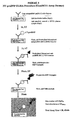
Figure 5 outlines the ELISA procedure for utilizing the goat polyclonal/6G11 monoclonal assay of the instant invention. - The NT-proBNP ELISA assay test employs the sandwich ELISA technique to measure circulating NT-proBNP in human plasma. Microplate wells coated with goat polyclonal anti-NT-proBNP capture protein constitute the solid phase. Test subject plasma, standards and controls are added to the coated wells and incubated with incubation buffer. No sample extraction step is required. If NT-proBNP protein is present in the test sample, it will be captured by NT-proBNP specific antibody coated on the wells. After incubation and washing, a monoclonal anti-NT-proBNP detector antibody is added to the wells. The detector antibody binds to the NT-proBNP protein, or immunogenic fragments thereof, e.g. polypeptide fragments which are recognized by said antibody, bound to anti-NT-proBNP capture antibody, thus forming a sandwich. After incubation and washing, a polyclonal donkey anti-mouse IgG labeled with horseradish peroxidase (HRP) is added to the wells. Following incubation and washing, an enzyme substrate is added to the wells and incubated. An acidic solution is then added in order to stop the enzymatic reaction. The degree of enzymatic activity of immobilized HRP is determined by measuring the optical density of the oxidized enzymatic product in the wells at 450nm. The absorbance at 450nm is proportional to the amount of NT-proBNP in the test subject sample. A set of NT-proBNP protein standards is used to generate a standard curve of absorbance versus NT-proBNP concentration from which the NT-proBNP concentrations in test specimens and controls can be calculated. It is understood that detection of the immunoreaction may be accomplished via direct or indirect methods which are well-known in the art.
- In order to obtain antibodies with specific binding properties for targeted amino acid sequences within human proBNP, recombinant human proBNP (or rhproBNP) was expressed and purified for use as an immunogen. ProBNP-pUC9 plasmid construct was obtained from Dr. Adolfo J. de Bold (Ottawa Heart Institute). The full-length rhproBNP open reading frame (ORF) was obtained by polymerase chain reaction (PCR) and subcloning into pET32c (NcoI/XhoI). The pET32c vector was modified by removing 81 nucleotides so that the final fusion protein would not contain the S-tag and enterokinase sites. The sequence at the N-terminus of the rhproBNP ORF consisted of thioredoxin and poly-histidine tags and a thrombin cleavage site. There was no extra sequence at the C-terminus. The protein was expressed in Escherichia coli BL21 (DE3) cells and the crude cellular extract was prepared in non-denaturing conditions. The subsequent affinity purification was completed by Ni-NTA chromatography following the supplier's recommendations. Prior to injections, endotoxin levels in the rhproBNP solutions were lowered to acceptable levels using a Detoxigel® endotoxin-removing resin following the supplier's recommendations.
- Goats (La Mancha or Toggenburg breed) were immunized with purified recombinant human full-length proBNP (rhproBNP). A primary intramuscular injection at multiple sites of 500ug purified rhproBNP emulsified in Complete Freund's Adjuvant was administered, followed by bi-weekly 250ug intramuscular injections at multiple sites of the purified rhproBNP emulsified in Freund's incomplete adjuvant. The titer of immunized goats was monitored routinely by screening serum using a half-sandwich ELISA technique.
- Polyclonal antibodies (PAb) specific for amino acid sequences within proBNP (1-25, 26-51, 52-76 or 77-108) of Sequence ID No. 1 were subsequently purified from goat serum by sequential affinity purification using cyanogen bromide activated sepharose-4B (Pharmacia) coupled, according to the supplier's recommendations, to the following proteins or peptide sequences:
- 1. human IgG (Jackson ImmunoResearch)
- 2. mouse IgG (Jackson ImmunoResearch)
- 3. proBNP amino acid sequence #1-25 of Sequence ID No. 1 (H P L G S P G 8 A S D L E T S G L Q E Q R N H L Q) coupled to Keyhole Limpet Haemocyanin (ADI Inc.)
- 3. proBNP amino acid sequence #26-51 of Sequence ID No.1 (G K L S E L Q V E Q T S L E P L Q E S P R P T G V W) coupled to Keyhole Limpet Haemocyanin (ADI Inc.)
- 4. proBNP amino acid sequence #52-76 of Sequence ID No. 1 (K S R E V A T E G I R G H R K M V L Y T L R A P R) coupled to Keyhole Limpet Haemocyanin (ADI Inc.)
- 5. proBNP amino acid sequence #77-108 of Sequence ID No. 1 (BNP-32, S P K M V Q G S G C F G R K M D R I S S S S G L G C K V L R R H) coupled to Keyhole Limpet Haemocyanin (ADI Inc.)
- The purified polyclonal antibodies were dialyzed against 20mM PBS, pH 7.4, concentrated by ultrafiltration and stored at -20°C.
- In order to obtain material for use in calibration of a quantitative method for measurement of human NT-proBNP, recombinant human NT-proBNP (or rhNT-proBNP) was expressed and purified. A proBNP-pUC9 plasmid construct was obtained from Dr. Adolfo J. de Bold (Ottawa Heart Institute). The rhNT-proBNP ORF was obtained by PCR and subcloning into pET32c (NcoI/XhoI). The sequence at the N-terminus of the rhNT-proBNP ORF consisted of thioredoxin, poly-histidine, and S-tag tags, as well as thrombin and enterokinase cleavage sites. There was no extra sequence at the C-terminus. The protein was expressed in Escherichia coli BL21 (DE3) cells and the crude cellular extract was prepared in non-denaturing conditions. The subsequent affinity purification was completed by Ni-NTA chromatography following the supplier's recommendations.
- Monoclonal antibodies, secreted by hybridoma cell lines herein designated as 6G11-F11-D12 and as 1C3-E11-H9 for use in a method of immunoassay, wherein said antibodies are specific to the polypeptide consisting of amino acids 1-25 of human N-terminal brain natriuretic factor BNP(1-25), were obtained from Dr. Adolfo J. De Bold. These monoclonals were produced from supernatants for use in an NT-proBNP ELISA in pairing with the instantly described Goat Polyclonal Antibodies, and are designated 6G11 and 1C3 respectively. These clones are the subject of
U.S. SN 10/299,606 - Confluent hybridoma culture supernatants were added to 96-well microtiter plates (NUNC, MaxiSorp, GIBCO BRL) coated with donkey anti-mouse IgG(H+L) immunoglobulins ( Jackson ImmunoResearch) at 2 µg/ml in 100mM carbonate buffer, pH 9.6. Excess binding sites were blocked with bovine serum albumin (BSA) in PBS, pH 7.4. After washing the plate with wash buffer (PBS containing 0.05%(v/v) Tween 20), 50µL of each culture supernatant containing monoclonal antibody was incubated on the plate. Following 1 hour incubation at 37°C in a CO2 incubator, the plate was washed with wash buffer. Recombinant human proBNP (Syn-X Pharma) was then added to the plate at concentrations of 3 ng/ml or 0 ng/ml, and the plate incubated for 2 hours at room temperature (RT) on a shaker. After washing the plate, biotinylated goat polyclonal antibodies affinity purified against proBNP amino acid peptide sequences 1-25, 26-51 or 52-76 (Syn-X Pharma), diluted appropriately in PBS with 0.5%(w/v) BSA, were added to the appropriate wells. Goat polyclonal antibodies were biotinylated using a Biotin Labeling Kit from Roche following the manufacturer's recommendations. After 1 hour incubation at RT on a shaker, the plate was washed and HRP-conjugated streptavidin (Jackson ImmunoResearch) at a dilution of 1/5000 was added and incubated for 1 hour at RT on a shaker. Following washing, TMB substrate solution (Moss) was added and after 8 minutes incubation at RT in the dark, the reaction was stopped with 1 N H2SO4 and optical density read at 450nm. Clones were selected for ascites production based on ability to pair with the respective goat polyclonal antibody to produce a specific high intensity signal in wells containing proBNP antigen, and minimal signal in wells containing no proBNP antigen.
- 96-well microtiter plates were coated with goat polyclonal antibodies affinity purified against proBNP amino acid peptide sequences 1-25, 26-51, or 52-76 (Syn-X Pharma) at 1 µg/ml in 100mM carbonate buffer, pH 9.6. Excess binding sites were blocked as for method (i). After washing with wash buffer, recombinant human proBNP (Syn-X Pharma) was added to the wells at concentrations of 3 ng/ml or 0 ng/ml and the plate incubated for 2 hours at RT on a shaker. Following washing, confluent hybridoma culture supernatants containing monoclonal antibodies were added (50 µL per well) and the plates incubated for 1 hour at 37°C in a CO2 incubator. After another wash step, HRP conjugated donkey anti-mouse IgG(H+L) (Jackson ImmunoResearch) at a dilution of 1/5000 was added to the plate and incubated for 1 hour at RT on a shaker. TMB substrate was added, after washing, and the plates developed as for method (i). Clones were selected for ascites production based on ability to pair with the respective goat polyclonal antibody to produce a specific high intensity signal in wells containing proBNP antigen, and minimal signal in wells without antigen.
- Following production of the selected monoclonal antibodies by ascites, and subsequent purification by Protein G (Pharmacia) using known procedures, the purified antibodies were retested as described above for screening of hybridoma supernatants, but for the fact that the purified monoclonal antibodies were appropriately diluted in 100mM carbonate buffer, pH 9.6 and coated directly onto the plate for screening as captures, or appropriately diluted in PBS containing 0.5%(w/v) BSA for screening as detectors.
- Optimal ELISA specificity and sensitivity for recombinant human proBNP and recombinant human NT-proBNP were obtained using the combination of goat polyclonal antibody affinity purified against proBNP amino acid peptide sequence 26-51 as capture with MAb clone designate 6G11 as detector. Now referring to
Figure 5 , the procedure for carrying out the ELISA assay of the instant invention is set forth. - Subsequent analysis of the data derived from human plasma samples tested in accordance with these procedures have demonstrated the utility of this antibody combination for yielding excellent sensitivity and specificity when measuring NT-proBNP levels in apparently healthy individuals versus heart failure patients.
- In accordance with this invention, an ELISA Test Kit is provided for the purpose of carrying out the above-outlined procedure.
- One stripholder containing 96 microtitration wells coated with goat polyclonal anti-NT-proBNP antibody. Store at 2-8°C, in the pouch with desiccant, until expiry.
- Six vials, each containing one of the following standards: 0, 50, 150, 375, 1500, and 3000 pg/ml of NT-proBNP, are provided. Each vial contains 0.5ml, except for the 0 pg/ml standard which contains 1.0 ml. The extra volume allows for diluting samples that have values greater than 3000 pg/ml, if retesting is desired. Store at -70±10°C. Kept at this temperature, the standards are stable for at least 3 cycles of freeze/thaw and up to 6 months.
- Two vials, 0.5 ml each, containing NT-proBNP controls at low and high protein concentration. Store at -70±10°C. Kept at this temperature, the controls are stable for at least 3 cycles of freeze/thaw and up to 6 months.
- One vial containing 10 ml of incubation buffer. Store at 2-8°C until expiry.
- One vial containing 10 ml of monoclonal anti-NT-proBNP antibody. Store at 2-8°C until expiry.
- One vial containing 10 ml of donkey anti-mouse immunoglobulins labeled with horseradish peroxidase. Store at 2-8°C until expiry.
- One vial containing 10 ml of 3, 3', 5, 5'-tetramethylbenzidine (TMB) substrate solution. Store at 2-8°C until expiry.
- One bottle containing 60 ml phosphate buffered saline with nonionic detergent.
Dilute contents 25 fold with deionized water before use. Store at 2-8°C. - One bottle containing 10 ml 1N sulfuric acid. Store at 2-8°C .
- In carrying out the assay, the time between addition of samples, standards, and controls to the first well and the last well should not exceed 10 minutes. For large series of samples, run the ELISA in small batches to accommodate this time frame.
Mark the microplate wells to be used.
Add 50 µl of the incubation buffer to each well using a semi-automatic pipette.
Using a precision micropipette, add 50 µl of each test sample, NT-proBNP standard, or NT-proBNP control to the appropriate microwell. In order to ensure standard curve consistency, the following order of addition to the plate is recommended: - It is recommended that NT-proBNP standards and controls be assayed in duplicate.
- Cover microwells using an adhesive plate cover and incubate for 2 hours on an orbital microplate shaker at room temperature.
- Aspirate and wash each microwell three times with the wash solution using an appropriate microplate washer. Blot dry by inverting the plate on absorbent material.
- Since incomplete washing adversely affects assay precision, the use of an automatic microplate washer is highly recommended. Alternatively, if an automatic microplate washer is not available, washing can be accomplished manually by repeatedly aspirating microwell contents and refilling each microwell with 340 µl of wash solution, three times.
Add 100 µl of detector antibody solution to each well using a semi-automatic pipette.
Incubate the wells for 1 hour on an orbital microplate shaker at room temperature.
Aspirate and wash microwells three times with the wash solution using an appropriate microplate washer. Blot dry by inverting the plate on absorbent material.
Add 100 µl of HRP conjugate solution to each well using a semi-automatic pipette.
Cover microwells using an adhesive plate cover and incubate for 30 minutes on an orbital microplate shaker at room temperature.
Aspirate and wash microwells three times with wash solution. Blot dry by inverting the plate on absorbent material.
Add 100 µl of the TMB solution to each well using a semi-automatic pipette.
Incubate the wells in the dark for 5 minutes at room temperature. Avoid exposure to direct sunlight.
Add 100 µl of stopping solution (1N sulfuric acid) to each well using a semi-automatic pipette.
Measure the absorbance of the solution in the microwells using a microplate reader at 450 nm. - Calculate the mean absorbance for each well containing standard, control or test subject plasma.
Plot the mean absorbance reading for each of the standards along the y-axis (quadratic) versus the NT-proBNP concentration, in pg/ml, along the x-axis (linear).
Draw the best fitting standard curve through the mean of the duplicate points.
Determine the NT-proBNP concentrations of the test subjects' plasma and controls by interpolating from the standard curve.
Subject plasma specimens reading lower than the lowest standard should be reported as such.
Alternatively, a computer program may be used for handling ELISA type data to evaluate the NT-proBNP concentrations in test subjects' plasma and controls. The following data represent an example dose response curve using this assay:Standars Dose (pg/ml) Mean OD 450mm 0 0.04 50 0.095 150 0.178 375 0.347 1500 1.161 3000 1.781 Note: These values should not be used in lieu of a standard curve, which should be prepared at the time of assay. - In order to insure quality control standards, two controls designated- low and high - provided in the kit must be analyzed in each assay. It is recommended that each laboratory use additional controls for validation of each assay run.
- Data is available from 209 subjects diagnosed with congestive heart failure (NYHA Class III and Class IV) and 101 healthy normal control subjects. The receiver operating characteristic (ROC) curve is displayed in
Figure 2 ; an area under the curve (AUC) of 0.974 was obtained, with a corresponding standard error (s.e.) of 0.008.Figure 3 displays boxplots of NT-proBNP levels in the control subjects and the heart failure subjects; at a cutoff level of 165 pg/mL, the diagnostic sensitivity with respect to the heart failure subjects was 90.4% (with 189 out of 209 such subjects with NT-proBNP levels above the cutoff) and the diagnostic specificity with respect to the control subjects was 94.1% (with 95 out of 101 such subjects with NT-proBNP levels below the cutoff). - In the product insert for the Biosite Triage BNP test (Triage © B-Type Natriuretic Peptide (BNP) Test, Product insert, Biosite Diagnostics, Inc., 2001), a ROC curve analysis on clinical data obtained from 804 heart failure subjects and 1286 control subjects revealed an AUC of 0.955 (standard error = 0.0053). Comparing this AUC with that of the instantly disclosed NT-proBNP assay, following the procedure of Hanley and McNeil (Hanley JA and McNeil BJ (1982). "The meaning and use of the area under a receiver operating characteristic (ROC) curve." Radiology 143 29-36), one finds that the instantly disclosed NT-proBNP assay has a significantly higher AUC (p < 0.001), indicative of superior diagnostic performance.
- Fischer et al. (Fischer Y, Filzmaier K, Stiegler H, Graf J, Fuhs S, Franke A, Janasens U and Gressner AM (2001). "Evaluation of a New, Rapid Bedside Test for Quantitative Determination of B-Type Natriuretic Peptide." Clinical Chemistry 47 591-594.) gave performance data comparing the Triage BNP test to an NT-proBNP EIA assay from Roche Diagnostics with respect to 93 subjects with underlying cardiac disease and suspected heart failure. In distinguishing subjects with decreased ventricular function from those with preserved ventricular function, an AUC of 0.91 (± 0.033 s.e.) was obtained for the Triage BNP test, and an AUC of 0.86 (± 0.040 s.e.) was obtained for the Roche NT-proBNP assay. Given a reported correlation between the two neurohormone measurements of r = 0.947, and following the method of Hanley and McNeil (Hanley JA and McNeil BJ (1983), "A method of comparing the areas under Receiver Operating Characteristic curves derived from the same cases." Radiology 148 839-843) for comparing AUC's derived from the same set of cases, one finds that the Triage BNP test has a significantly higher AUC than that of the Roche NT-proBNP assay (p = 0.005).
- Hammerer-Lercher et al. (Hammerer-Lercher A, Neubauer E, Müller S, Pachinger O, Puschendorf B and Mair J (2001). "Head-to-head comparison of N-terminal pro-brain natriuretic peptide, brain natriuretic peptide and N-terminal pro-atrial natriuretic peptide in diagnosing left ventricular dysfunction." Clinica Chimica Acta 310 193-197) compared the Shionogi IMRA BNP assay to the Biomedica EIA NT-proBNP assay with respect to the same population of 57 patients with stable chronic heart failure. In distinguishing subjects with decreased ventricular function from those with preserved ventricular function, an AUC of 0.75 (± 0.06 s.e.) was obtained for the BNP assay, and an AUC of 0.67 (± 0.07 s.e.) was obtained for the Biomedica NT-proBNP assay. Following the method of Hanley and McNeil (Hanley JA and McNeil BJ (1983). "A method of comparing the areas under Receiver Operating Characteristic curves derived from the same cases." Radiology 148 839-843), one finds that the Shionogi BNP assay has a significantly higher AUC than that of the Biomedica NT-proBNP assay (p = 0.009).
- Luchner et al. (Luchner A, Hengstenberg C, Löwel H, Trawinski J, Baumann M, Riegger G, Schunkert H and Holmer S (2002). "N-Terminal Pro-Brain Natriuretic Peptide After Myocardial Infarction." Hypertension 39 99-104) conducted a large clinical study involving 594 myocardial infarction subjects and 449 healthy controls, in order to determine the ability of the Roche EIA NT-proBNP assay to predict decreased ventricular function in these subjects. The authors quoted an AUC of 0.77 (± 0.057 s.e.) with respect to NT-proBNP in separating subjects with a left ventricular ejection fraction of less than 35% from those with a higher ejection fraction. This AUC is significantly lower than that quoted above for the instantly disclosed NT-proBNP assay (p=0.000).
- Thus, on the basis of quantifying the variously available assays for determining the presence of NT-proBNp based upon an area under the curve analysis, the instant assay would be expected to exhibit superior diagnostic performance.
- All patents and publications mentioned in this specification are indicative of the levels of those skilled in the art to which the invention pertains.
- It is to be understood that while a certain form of the invention is illustrated, it is not to be limited to the specific form or arrangement herein described and shown . One skilled in the art will readily appreciate that the present invention is well adapted to carry out the objectives and obtain the ends and advantages mentioned, as well as those inherent therein. The embodiments, methods, procedures and techniques described herein are presently representative of the preferred embodiments, are intended to be exemplary and are not intended as limitations on the scope. Although the invention has been described in connection with specific preferred embodiments, it should be understood that the invention as claimed should not be unduly limited to such specific embodiments.
- The following section of the description consists of numbered paragraphs simply providing statements of the invention already described herein. The numbered paragraphs in this section are not claims. The claims are set forth below in the later section headed "claims".
- 1. An enzyme linked immunosorbent assay (ELISA) process useful in diagnosing, stratifying, and predicting mortality rate in patients with congestive heart failure comprising:
- obtaining isolated polyclonal antibodies specific for an amino acid sequence selected from the group consisting of amino acids 1-25 of Sequence ID No. 1, amino acids 26-51 of sequence ID No. 1, and amino acids 52-76 of Sequence ID No. 1;
- selecting a polyclonal antibody from said group and attaching said polyclonal antibody to a solid support; reacting a clinical sample suspected of containing immunogenic fragments of NT-proBNP with said isolated polyclonal antibody;
- providing a monoclonal detector antibody selected as recognizing an amino acid sequence which is separate and distinct from the amino acid sequence recognized by the polyclonal antibody;
- effecting an immunoreaction; and
- detecting said immunoreaction.
- 2. The assay of 1 wherein:
- said polyclonal antibody is selected as being specific to an amino acid sequence consisting of amino acids 26-51 of Sequence ID No. 1.
- 3. The assay of 1 wherein:
- said polyclonal antibody is selected as being specific to an amino acid sequence consisting of amino acids 52-76 of Sequence ID No. 1.
- 4. The assay of 1 wherein:
- said monoclonal antibody is produced from hybridoma cell line 6G11-F11-D12, which corresponds to ATCC # PTA-4844 and is specific to a polypeptide consisting of amino acids 1-25 of Sequence ID No. 1.
- 5. The assay of 1 wherein:
- said monoclonal antibody is produced from hybridoma cell line 1C3-E11-H9, which corresponds to ATCC # PTA-4845 and is specific to a polypeptide consisting of amino acids 1-25 of Sequence ID No. 1.
- 6. The assay of 1 wherein said detection is direct.
- 7. The assay of 1 wherein said detection is indirect.
-
- <110> Syn X Pharma, Inc.
- <120> Polyclonal-Monoclonal ELISA Assay for Detecting N-Terminus proBNP
- <130> 2132PCT.137
- <150>
US 10/300,733
<151> 2002-11-18 - <150>
US 10/359,051
<151> 2003-02-04 - <160> 1
- <170> PatentIn version 3.1
- <210> 1
<211> 108
<212> PRT
<213> Homo sapiens - <400> 1

Claims (13)
- A test kit for determining a level of N-terminus pro-brain natriuretic peptide (NT-proBNP) in a sample, comprising:isolated polyclonal antibodies specific for NT-proBNP within amino acid residues 26-51 of SEQ ID NO:1, andisolated monoclonal antibodies specific for NT-proBNP within amino acid residues 1-25 of SEQ ID NO:1, wherein the monoclonal antibodies are bound to a solid support,wherein the polyclonal and monoclonal antibodies form a detectable immunocomplex with NT-proBNP in a sample.
- A kit as claimed in claim 1, wherein the monoclonal antibodies are biotinylated.
- A kit as claimed in claim 1, wherein the polyclonal antibodies are biotinylated.
- A kit as claimed in claim 1, wherein the immunocomplex is detected directly.
- A kit as claimed in claim 1, wherein the immunocomplex is detected indirectly.
- A kit as claimed in any preceding claim, wherein the monoclonal antibodies bind to a region of NT-proBNP recognized by the monoclonal antibody produced by a hybridoma cell line designated as 6G11-F11-D12 and deposited with the American Type Culture Collection (ATCC) as Accession Number PTA-4844.
- A method for determining a level of N-terminus pro-brain natriuretic peptide (NT-proBNP) in a sample, the method comprising:contacting a sample with polyclonal antibodies and monoclonal antibodies, the polyclonal antibodies being specific for NT-proBNP within amino acid residues 26-51 of SEQ ID NO:1,and the isolated monoclonal antibodies being specific for NT-proBNP within amino acid residues 1-25 of SEQ ID NO:1, wherein the monoclonal antibodies are attached to a solid support, andquantifying the amount of an immunocomplex formed by the polyclonal and monoclonal antibodies with NT-proBNP in the sample.
- A method as claimed in claim 7, wherein the monoclonal antibodies are biotinylated.
- A method as claimed in claim 7, wherein the polyclonal antibodies are biotinylated.
- A method as claimed in claim 7, wherein the immunocomplex is detected directly.
- A method as claimed in claim 7, wherein the immunocomplex is detected indirectly.
- A method as claimed in any of claims 7 to 11, wherein the monoclonal antibodies bind to a region of NT-proBNP recognized by the monoclonal antibody produced by a hybridoma cell line designated as 6G11-F11-D12 and deposited with the American Type Culture Collection (ATCC) as Accession Number PTA-4844.
- A method as claimed in any of claims 7 to 12, wherein the sample is blood, serum, plasma, or urine; preferably wherein the sample is plasma.
Priority Applications (2)
| Application Number | Priority Date | Filing Date | Title |
|---|---|---|---|
| EP18186495.0A EP3450457A1 (en) | 2002-11-18 | 2003-11-17 | Polyclonal-monoclonal elisa assay for detecting n-terminus probnp |
| EP15203244.7A EP3061769B1 (en) | 2002-11-18 | 2003-11-17 | Polyclonal-monoclonal elisa assay for detecting n-terminus probnp |
Applications Claiming Priority (3)
| Application Number | Priority Date | Filing Date | Title |
|---|---|---|---|
| US10/300,733 US20040096919A1 (en) | 2002-11-18 | 2002-11-18 | Polyclonal-monoclonal ELISA assay for detecting N-terminus proBNP |
| US10/359,051 US20040096920A1 (en) | 2002-11-18 | 2003-02-04 | Polyclonal-monoclonal elisa assay for detecting n-terminus proBNP |
| EP03811319A EP1562990B1 (en) | 2002-11-18 | 2003-11-17 | Polyclonal-monoclonal elisa assay for detecting n-terminus probnp |
Related Parent Applications (2)
| Application Number | Title | Priority Date | Filing Date |
|---|---|---|---|
| EP03811319A Division EP1562990B1 (en) | 2002-11-18 | 2003-11-17 | Polyclonal-monoclonal elisa assay for detecting n-terminus probnp |
| EP03811319.7 Division | 2003-11-17 |
Related Child Applications (3)
| Application Number | Title | Priority Date | Filing Date |
|---|---|---|---|
| EP15203244.7A Division EP3061769B1 (en) | 2002-11-18 | 2003-11-17 | Polyclonal-monoclonal elisa assay for detecting n-terminus probnp |
| EP15203244.7A Division-Into EP3061769B1 (en) | 2002-11-18 | 2003-11-17 | Polyclonal-monoclonal elisa assay for detecting n-terminus probnp |
| EP18186495.0A Division EP3450457A1 (en) | 2002-11-18 | 2003-11-17 | Polyclonal-monoclonal elisa assay for detecting n-terminus probnp |
Publications (3)
| Publication Number | Publication Date |
|---|---|
| EP2251356A2 EP2251356A2 (en) | 2010-11-17 |
| EP2251356A3 EP2251356A3 (en) | 2011-08-31 |
| EP2251356B1 true EP2251356B1 (en) | 2016-03-02 |
Family
ID=32297956
Family Applications (3)
| Application Number | Title | Priority Date | Filing Date |
|---|---|---|---|
| EP10169301.8A Expired - Lifetime EP2251356B1 (en) | 2002-11-18 | 2003-11-17 | Polyclonal-monoclonal elisa assay for detecting n-terminus probnp |
| EP18186495.0A Pending EP3450457A1 (en) | 2002-11-18 | 2003-11-17 | Polyclonal-monoclonal elisa assay for detecting n-terminus probnp |
| EP15203244.7A Expired - Lifetime EP3061769B1 (en) | 2002-11-18 | 2003-11-17 | Polyclonal-monoclonal elisa assay for detecting n-terminus probnp |
Family Applications After (2)
| Application Number | Title | Priority Date | Filing Date |
|---|---|---|---|
| EP18186495.0A Pending EP3450457A1 (en) | 2002-11-18 | 2003-11-17 | Polyclonal-monoclonal elisa assay for detecting n-terminus probnp |
| EP15203244.7A Expired - Lifetime EP3061769B1 (en) | 2002-11-18 | 2003-11-17 | Polyclonal-monoclonal elisa assay for detecting n-terminus probnp |
Country Status (5)
| Country | Link |
|---|---|
| US (3) | US20040096919A1 (en) |
| EP (3) | EP2251356B1 (en) |
| AT (1) | ATE474855T1 (en) |
| DE (1) | DE60333471D1 (en) |
| ES (2) | ES2568894T3 (en) |
Cited By (4)
| Publication number | Priority date | Publication date | Assignee | Title |
|---|---|---|---|---|
| US20180237537A1 (en) | 2015-08-25 | 2018-08-23 | Mochida Pharmaceutical Co., Ltd. | Specifically purified anti-presepsin antibody |
| WO2021028520A1 (en) | 2019-08-13 | 2021-02-18 | Gentian As | Highly sensitive particle enhanced assay for the quantification of nt-probnp |
| US11016106B2 (en) | 2002-11-18 | 2021-05-25 | Nexus Dx, Inc. | Polyclonal-monoclonal ELISA assay for detecting N-terminus pro-BNP |
| WO2023052642A1 (en) | 2021-10-01 | 2023-04-06 | Gentian As | Novel method for determining a concentration of n-terminal pro-hormone bnp (nt-probnp) in a sample |
Families Citing this family (20)
| Publication number | Priority date | Publication date | Assignee | Title |
|---|---|---|---|---|
| US7109023B2 (en) * | 2002-11-18 | 2006-09-19 | Princeton Biomeditech Corporation | Immunossay device for diagnosing congestive heart failure and predicting mortality in congestive heart failure patients |
| US7135329B2 (en) * | 2002-11-18 | 2006-11-14 | Princeton Biomeditech Corporation | Immunoassay device for diagnosing congestive heart failure and predicting mortality in congestive heart failure patients |
| CA2522747C (en) * | 2003-05-12 | 2012-08-14 | F. Hoffmann-La Roche Ag | Method of detecting native probnp with a monoclonal antibody binding to the amino acids 38-43 |
| DE10355731A1 (en) * | 2003-11-28 | 2005-06-30 | Roche Diagnostics Gmbh | Analytical sandwich test to determine NT-proBNP |
| AT500800B1 (en) * | 2004-09-08 | 2008-07-15 | Biomedica Medizinprodukte Gmbh | PROCESS FOR DETERMINING PROBNP |
| EP1884777A1 (en) * | 2006-08-04 | 2008-02-06 | Medizinische Hochschule Hannover | Means and methods for assessing the risk of cardiac interventions based on GDF-15 |
| WO2008015254A2 (en) * | 2006-08-04 | 2008-02-07 | Medizinische Hochschule Hannover | Means and methods for assessing the risk of cardiac interventions based on gdf-15 |
| AT504942B1 (en) | 2007-03-07 | 2009-08-15 | Biomedica Medizinprodukte Gmbh | PROCESS FOR DETERMINING PROBNP |
| EP2601531A1 (en) | 2010-08-04 | 2013-06-12 | IDEXX Laboratories, Inc. | Detection of degradation products of canine nt-probnp |
| US8481333B2 (en) | 2011-05-31 | 2013-07-09 | Idexx Laboratories, Inc. | Detection of degradation products of feline NT-proBNP |
| CN102323418A (en) * | 2011-08-31 | 2012-01-18 | 内蒙古科慧生物科技有限责任公司 | Quantitative determination kit for B-type pro-brain natriuretic peptide (proBNP) and detection method thereof |
| CN102879589A (en) * | 2012-09-26 | 2013-01-16 | 中国人民解放军总医院 | Human NT-proBNP preparation capable of stable preservation and preparation method thereof |
| CN108613977B (en) * | 2018-05-15 | 2021-02-26 | 绍兴圣康生物科技有限公司 | N-terminal brain natriuretic peptide precursor detection kit |
| US11446009B2 (en) | 2018-12-11 | 2022-09-20 | Eko.Ai Pte. Ltd. | Clinical workflow to diagnose heart disease based on cardiac biomarker measurements and AI recognition of 2D and doppler modality echocardiogram images |
| US11931207B2 (en) | 2018-12-11 | 2024-03-19 | Eko.Ai Pte. Ltd. | Artificial intelligence (AI) recognition of echocardiogram images to enhance a mobile ultrasound device |
| US12322100B2 (en) | 2018-12-11 | 2025-06-03 | Eko.Ai Pte. Ltd. | Automatic clinical workflow that recognizes and analyzes 2D and doppler modality echocardiogram images for automated cardiac measurements and grading of aortic stenosis severity |
| US12400762B2 (en) | 2018-12-11 | 2025-08-26 | Eko.Ai Pte. Ltd. | Automatic clinical workflow that recognizes and analyzes 2D and doppler modality echocardiogram images for automated cardiac measurements and diagnosis of cardiac amyloidosis and hypertrophic cardiomyopathy |
| US12001939B2 (en) | 2018-12-11 | 2024-06-04 | Eko.Ai Pte. Ltd. | Artificial intelligence (AI)-based guidance for an ultrasound device to improve capture of echo image views |
| CN111848775B (en) * | 2020-08-05 | 2022-03-11 | 武汉生之源生物科技股份有限公司 | NT-proBNP recombinant protein preservation solution and preparation method thereof |
| EP4169946B1 (en) * | 2021-10-25 | 2026-04-22 | Bionote, Inc. | Antibodies binding specifically to nt-probnp and use thereof |
Family Cites Families (6)
| Publication number | Priority date | Publication date | Assignee | Title |
|---|---|---|---|---|
| GB9211686D0 (en) | 1992-06-03 | 1992-07-15 | Medisinsk Innovation A S | Chemical compounds |
| US6117644A (en) * | 1998-06-04 | 2000-09-12 | Ottawa Heart Institute Research Corporation | Predicting and detecting cardiac allograft rejection |
| GB9827348D0 (en) * | 1998-12-12 | 1999-02-03 | Univ Leicester | Natriuretic peptide |
| AU758562B2 (en) * | 1999-01-29 | 2003-03-27 | Roche Diagnostics Gmbh | Method of identifying N-terminal proBNP |
| JP4610025B2 (en) * | 2002-11-18 | 2011-01-12 | シン.クス ファーマ、インコーポレイテッド | Polyclonal monoclonal Elisa assay for NT-proBNP detection |
| US6960472B2 (en) * | 2002-11-18 | 2005-11-01 | Ottawa Heart Institute Research Corporation | Monoclonal antibodies against N-Terminus proBNP |
-
2002
- 2002-11-18 US US10/300,733 patent/US20040096919A1/en not_active Abandoned
-
2003
- 2003-02-04 US US10/359,051 patent/US20040096920A1/en not_active Abandoned
- 2003-11-17 EP EP10169301.8A patent/EP2251356B1/en not_active Expired - Lifetime
- 2003-11-17 EP EP18186495.0A patent/EP3450457A1/en active Pending
- 2003-11-17 ES ES10169301.8T patent/ES2568894T3/en not_active Expired - Lifetime
- 2003-11-17 DE DE60333471T patent/DE60333471D1/en not_active Expired - Lifetime
- 2003-11-17 ES ES15203244.7T patent/ES2688545T3/en not_active Expired - Lifetime
- 2003-11-17 EP EP15203244.7A patent/EP3061769B1/en not_active Expired - Lifetime
- 2003-11-17 AT AT03811319T patent/ATE474855T1/en not_active IP Right Cessation
-
2021
- 2021-05-19 US US17/324,685 patent/US20220099687A1/en not_active Abandoned
Cited By (5)
| Publication number | Priority date | Publication date | Assignee | Title |
|---|---|---|---|---|
| US11016106B2 (en) | 2002-11-18 | 2021-05-25 | Nexus Dx, Inc. | Polyclonal-monoclonal ELISA assay for detecting N-terminus pro-BNP |
| US20180237537A1 (en) | 2015-08-25 | 2018-08-23 | Mochida Pharmaceutical Co., Ltd. | Specifically purified anti-presepsin antibody |
| US11117974B2 (en) | 2015-08-25 | 2021-09-14 | Mochida Pharmaceutical Co., Ltd. | Specifically purified anti-presepsin antibody |
| WO2021028520A1 (en) | 2019-08-13 | 2021-02-18 | Gentian As | Highly sensitive particle enhanced assay for the quantification of nt-probnp |
| WO2023052642A1 (en) | 2021-10-01 | 2023-04-06 | Gentian As | Novel method for determining a concentration of n-terminal pro-hormone bnp (nt-probnp) in a sample |
Also Published As
| Publication number | Publication date |
|---|---|
| EP3061769A1 (en) | 2016-08-31 |
| ES2688545T3 (en) | 2018-11-05 |
| ES2568894T3 (en) | 2016-05-05 |
| DE60333471D1 (en) | 2010-09-02 |
| EP2251356A2 (en) | 2010-11-17 |
| EP2251356A3 (en) | 2011-08-31 |
| EP3061769B1 (en) | 2018-08-01 |
| US20220099687A1 (en) | 2022-03-31 |
| US20040096919A1 (en) | 2004-05-20 |
| HK1223947A1 (en) | 2017-08-11 |
| US20040096920A1 (en) | 2004-05-20 |
| EP3450457A1 (en) | 2019-03-06 |
| ATE474855T1 (en) | 2010-08-15 |
Similar Documents
| Publication | Publication Date | Title |
|---|---|---|
| US20220099687A1 (en) | Polyclonal-monoclonal elisa assay for detecting n-terminus pro-bnp | |
| US11016106B2 (en) | Polyclonal-monoclonal ELISA assay for detecting N-terminus pro-BNP | |
| CN101046478B (en) | Method for detecting n-terminal pre-BNP | |
| JP2009538288A (en) | Antibodies and standards for use in NT-proBNP and proBNP immunoassays | |
| EP3132268B1 (en) | Immunoassay for the detection of chromogranin a | |
| US20050287613A1 (en) | Polyclonal-polyclonal ELISA assay for detecting N-terminus-proBNP | |
| US10954298B2 (en) | Method of obtaining a binder to prepro-vasopressin or fragments thereof | |
| KR20140030188A (en) | Method for determining the risk of cardiovascular events using igfbp fragments | |
| US6960472B2 (en) | Monoclonal antibodies against N-Terminus proBNP | |
| HK1223947B (en) | Polyclonal-monoclonal elisa assay for detecting n-terminus probnp | |
| US20040096449A1 (en) | Monoclonal antibodies against N-Terminus proBNP | |
| WO2025172467A1 (en) | Endotrophin assay | |
| JP2014028770A (en) | Human b-type natriuretic peptide specific antibody and measuring method using it | |
| WO2015004248A2 (en) | Augurin immunoassay | |
| HK1229425A1 (en) | Immunoassay for the detection of chromogranin a | |
| HK1229425B (en) | Immunoassay for the detection of chromogranin a |
Legal Events
| Date | Code | Title | Description |
|---|---|---|---|
| PUAI | Public reference made under article 153(3) epc to a published international application that has entered the european phase |
Free format text: ORIGINAL CODE: 0009012 |
|
| 17P | Request for examination filed |
Effective date: 20100712 |
|
| AC | Divisional application: reference to earlier application |
Ref document number: 1562990 Country of ref document: EP Kind code of ref document: P |
|
| AK | Designated contracting states |
Kind code of ref document: A2 Designated state(s): AT BE BG CH CY CZ DE DK EE ES FI FR GB GR HU IE IT LI LU MC NL PT RO SE SI SK TR |
|
| RAP1 | Party data changed (applicant data changed or rights of an application transferred) |
Owner name: NANOGEN, INC. |
|
| RAP1 | Party data changed (applicant data changed or rights of an application transferred) |
Owner name: FINANCIERE ELITECH SAS |
|
| RAP1 | Party data changed (applicant data changed or rights of an application transferred) |
Owner name: DXCON, INC. |
|
| RAP1 | Party data changed (applicant data changed or rights of an application transferred) |
Owner name: NEXUS DX, INC. |
|
| PUAL | Search report despatched |
Free format text: ORIGINAL CODE: 0009013 |
|
| AK | Designated contracting states |
Kind code of ref document: A3 Designated state(s): AT BE BG CH CY CZ DE DK EE ES FI FR GB GR HU IE IT LI LU MC NL PT RO SE SI SK TR |
|
| RIC1 | Information provided on ipc code assigned before grant |
Ipc: C07K 16/26 20060101AFI20110726BHEP Ipc: G01N 33/74 20060101ALI20110726BHEP |
|
| 17Q | First examination report despatched |
Effective date: 20130311 |
|
| REG | Reference to a national code |
Ref country code: DE Ref legal event code: R079 Ref document number: 60348613 Country of ref document: DE Free format text: PREVIOUS MAIN CLASS: C07K0016260000 Ipc: G01N0033680000 |
|
| RIC1 | Information provided on ipc code assigned before grant |
Ipc: G01N 33/68 20060101AFI20150622BHEP Ipc: G01N 33/74 20060101ALI20150622BHEP Ipc: C07K 16/26 20060101ALI20150622BHEP |
|
| GRAP | Despatch of communication of intention to grant a patent |
Free format text: ORIGINAL CODE: EPIDOSNIGR1 |
|
| INTG | Intention to grant announced |
Effective date: 20150810 |
|
| GRAS | Grant fee paid |
Free format text: ORIGINAL CODE: EPIDOSNIGR3 |
|
| GRAA | (expected) grant |
Free format text: ORIGINAL CODE: 0009210 |
|
| AC | Divisional application: reference to earlier application |
Ref document number: 1562990 Country of ref document: EP Kind code of ref document: P |
|
| AK | Designated contracting states |
Kind code of ref document: B1 Designated state(s): AT BE BG CH CY CZ DE DK EE ES FI FR GB GR HU IE IT LI LU MC NL PT RO SE SI SK TR |
|
| REG | Reference to a national code |
Ref country code: GB Ref legal event code: FG4D |
|
| REG | Reference to a national code |
Ref country code: AT Ref legal event code: REF Ref document number: 778402 Country of ref document: AT Kind code of ref document: T Effective date: 20160315 Ref country code: CH Ref legal event code: EP |
|
| REG | Reference to a national code |
Ref country code: IE Ref legal event code: FG4D |
|
| REG | Reference to a national code |
Ref country code: DE Ref legal event code: R096 Ref document number: 60348613 Country of ref document: DE |
|
| REG | Reference to a national code |
Ref country code: ES Ref legal event code: FG2A Ref document number: 2568894 Country of ref document: ES Kind code of ref document: T3 Effective date: 20160505 |
|
| REG | Reference to a national code |
Ref country code: NL Ref legal event code: MP Effective date: 20160302 |
|
| REG | Reference to a national code |
Ref country code: AT Ref legal event code: MK05 Ref document number: 778402 Country of ref document: AT Kind code of ref document: T Effective date: 20160302 |
|
| PG25 | Lapsed in a contracting state [announced via postgrant information from national office to epo] |
Ref country code: GR Free format text: LAPSE BECAUSE OF FAILURE TO SUBMIT A TRANSLATION OF THE DESCRIPTION OR TO PAY THE FEE WITHIN THE PRESCRIBED TIME-LIMIT Effective date: 20160603 Ref country code: FI Free format text: LAPSE BECAUSE OF FAILURE TO SUBMIT A TRANSLATION OF THE DESCRIPTION OR TO PAY THE FEE WITHIN THE PRESCRIBED TIME-LIMIT Effective date: 20160302 |
|
| PG25 | Lapsed in a contracting state [announced via postgrant information from national office to epo] |
Ref country code: AT Free format text: LAPSE BECAUSE OF FAILURE TO SUBMIT A TRANSLATION OF THE DESCRIPTION OR TO PAY THE FEE WITHIN THE PRESCRIBED TIME-LIMIT Effective date: 20160302 Ref country code: NL Free format text: LAPSE BECAUSE OF FAILURE TO SUBMIT A TRANSLATION OF THE DESCRIPTION OR TO PAY THE FEE WITHIN THE PRESCRIBED TIME-LIMIT Effective date: 20160302 Ref country code: SE Free format text: LAPSE BECAUSE OF FAILURE TO SUBMIT A TRANSLATION OF THE DESCRIPTION OR TO PAY THE FEE WITHIN THE PRESCRIBED TIME-LIMIT Effective date: 20160302 |
|
| REG | Reference to a national code |
Ref country code: FR Ref legal event code: PLFP Year of fee payment: 14 |
|
| PG25 | Lapsed in a contracting state [announced via postgrant information from national office to epo] |
Ref country code: EE Free format text: LAPSE BECAUSE OF FAILURE TO SUBMIT A TRANSLATION OF THE DESCRIPTION OR TO PAY THE FEE WITHIN THE PRESCRIBED TIME-LIMIT Effective date: 20160302 |
|
| PG25 | Lapsed in a contracting state [announced via postgrant information from national office to epo] |
Ref country code: CZ Free format text: LAPSE BECAUSE OF FAILURE TO SUBMIT A TRANSLATION OF THE DESCRIPTION OR TO PAY THE FEE WITHIN THE PRESCRIBED TIME-LIMIT Effective date: 20160302 Ref country code: RO Free format text: LAPSE BECAUSE OF FAILURE TO SUBMIT A TRANSLATION OF THE DESCRIPTION OR TO PAY THE FEE WITHIN THE PRESCRIBED TIME-LIMIT Effective date: 20160302 Ref country code: PT Free format text: LAPSE BECAUSE OF FAILURE TO SUBMIT A TRANSLATION OF THE DESCRIPTION OR TO PAY THE FEE WITHIN THE PRESCRIBED TIME-LIMIT Effective date: 20160704 Ref country code: SK Free format text: LAPSE BECAUSE OF FAILURE TO SUBMIT A TRANSLATION OF THE DESCRIPTION OR TO PAY THE FEE WITHIN THE PRESCRIBED TIME-LIMIT Effective date: 20160302 |
|
| REG | Reference to a national code |
Ref country code: DE Ref legal event code: R097 Ref document number: 60348613 Country of ref document: DE |
|
| PG25 | Lapsed in a contracting state [announced via postgrant information from national office to epo] |
Ref country code: BE Free format text: LAPSE BECAUSE OF FAILURE TO SUBMIT A TRANSLATION OF THE DESCRIPTION OR TO PAY THE FEE WITHIN THE PRESCRIBED TIME-LIMIT Effective date: 20160302 |
|
| PLBE | No opposition filed within time limit |
Free format text: ORIGINAL CODE: 0009261 |
|
| STAA | Information on the status of an ep patent application or granted ep patent |
Free format text: STATUS: NO OPPOSITION FILED WITHIN TIME LIMIT |
|
| PG25 | Lapsed in a contracting state [announced via postgrant information from national office to epo] |
Ref country code: DK Free format text: LAPSE BECAUSE OF FAILURE TO SUBMIT A TRANSLATION OF THE DESCRIPTION OR TO PAY THE FEE WITHIN THE PRESCRIBED TIME-LIMIT Effective date: 20160302 |
|
| 26N | No opposition filed |
Effective date: 20161205 |
|
| PG25 | Lapsed in a contracting state [announced via postgrant information from national office to epo] |
Ref country code: SI Free format text: LAPSE BECAUSE OF FAILURE TO SUBMIT A TRANSLATION OF THE DESCRIPTION OR TO PAY THE FEE WITHIN THE PRESCRIBED TIME-LIMIT Effective date: 20160302 Ref country code: BG Free format text: LAPSE BECAUSE OF FAILURE TO SUBMIT A TRANSLATION OF THE DESCRIPTION OR TO PAY THE FEE WITHIN THE PRESCRIBED TIME-LIMIT Effective date: 20160602 |
|
| REG | Reference to a national code |
Ref country code: CH Ref legal event code: PL |
|
| PG25 | Lapsed in a contracting state [announced via postgrant information from national office to epo] |
Ref country code: CH Free format text: LAPSE BECAUSE OF NON-PAYMENT OF DUE FEES Effective date: 20161130 Ref country code: LI Free format text: LAPSE BECAUSE OF NON-PAYMENT OF DUE FEES Effective date: 20161130 |
|
| PG25 | Lapsed in a contracting state [announced via postgrant information from national office to epo] |
Ref country code: LU Free format text: LAPSE BECAUSE OF NON-PAYMENT OF DUE FEES Effective date: 20161130 |
|
| REG | Reference to a national code |
Ref country code: FR Ref legal event code: PLFP Year of fee payment: 15 |
|
| PG25 | Lapsed in a contracting state [announced via postgrant information from national office to epo] |
Ref country code: HU Free format text: LAPSE BECAUSE OF FAILURE TO SUBMIT A TRANSLATION OF THE DESCRIPTION OR TO PAY THE FEE WITHIN THE PRESCRIBED TIME-LIMIT; INVALID AB INITIO Effective date: 20031117 Ref country code: CY Free format text: LAPSE BECAUSE OF FAILURE TO SUBMIT A TRANSLATION OF THE DESCRIPTION OR TO PAY THE FEE WITHIN THE PRESCRIBED TIME-LIMIT Effective date: 20160302 |
|
| PG25 | Lapsed in a contracting state [announced via postgrant information from national office to epo] |
Ref country code: MC Free format text: LAPSE BECAUSE OF FAILURE TO SUBMIT A TRANSLATION OF THE DESCRIPTION OR TO PAY THE FEE WITHIN THE PRESCRIBED TIME-LIMIT Effective date: 20160302 Ref country code: TR Free format text: LAPSE BECAUSE OF FAILURE TO SUBMIT A TRANSLATION OF THE DESCRIPTION OR TO PAY THE FEE WITHIN THE PRESCRIBED TIME-LIMIT Effective date: 20160302 |
|
| REG | Reference to a national code |
Ref country code: FR Ref legal event code: PLFP Year of fee payment: 16 |
|
| PGFP | Annual fee paid to national office [announced via postgrant information from national office to epo] |
Ref country code: IE Payment date: 20220912 Year of fee payment: 20 Ref country code: GB Payment date: 20220930 Year of fee payment: 20 |
|
| PGFP | Annual fee paid to national office [announced via postgrant information from national office to epo] |
Ref country code: FR Payment date: 20220908 Year of fee payment: 20 |
|
| PGFP | Annual fee paid to national office [announced via postgrant information from national office to epo] |
Ref country code: IT Payment date: 20221011 Year of fee payment: 20 Ref country code: ES Payment date: 20221207 Year of fee payment: 20 Ref country code: DE Payment date: 20220921 Year of fee payment: 20 |
|
| REG | Reference to a national code |
Ref country code: DE Ref legal event code: R071 Ref document number: 60348613 Country of ref document: DE |
|
| REG | Reference to a national code |
Ref country code: ES Ref legal event code: FD2A Effective date: 20231201 |
|
| REG | Reference to a national code |
Ref country code: GB Ref legal event code: PE20 Expiry date: 20231116 |
|
| PG25 | Lapsed in a contracting state [announced via postgrant information from national office to epo] |
Ref country code: GB Free format text: LAPSE BECAUSE OF EXPIRATION OF PROTECTION Effective date: 20231116 |
|
| PG25 | Lapsed in a contracting state [announced via postgrant information from national office to epo] |
Ref country code: ES Free format text: LAPSE BECAUSE OF EXPIRATION OF PROTECTION Effective date: 20231118 |
|
| PG25 | Lapsed in a contracting state [announced via postgrant information from national office to epo] |
Ref country code: IE Free format text: LAPSE BECAUSE OF EXPIRATION OF PROTECTION Effective date: 20231117 Ref country code: GB Free format text: LAPSE BECAUSE OF EXPIRATION OF PROTECTION Effective date: 20231116 Ref country code: ES Free format text: LAPSE BECAUSE OF EXPIRATION OF PROTECTION Effective date: 20231118 |