EP2249774B1 - Means and methods for controlling commensales - Google Patents
Means and methods for controlling commensales Download PDFInfo
- Publication number
- EP2249774B1 EP2249774B1 EP09712381.4A EP09712381A EP2249774B1 EP 2249774 B1 EP2249774 B1 EP 2249774B1 EP 09712381 A EP09712381 A EP 09712381A EP 2249774 B1 EP2249774 B1 EP 2249774B1
- Authority
- EP
- European Patent Office
- Prior art keywords
- branched
- linear
- biofilm
- compounds
- bacteria
- Prior art date
- Legal status (The legal status is an assumption and is not a legal conclusion. Google has not performed a legal analysis and makes no representation as to the accuracy of the status listed.)
- Not-in-force
Links
- 238000000034 method Methods 0.000 title claims description 23
- 150000001875 compounds Chemical class 0.000 claims description 93
- 241000894006 Bacteria Species 0.000 claims description 40
- 241000186427 Cutibacterium acnes Species 0.000 claims description 37
- 206010000496 acne Diseases 0.000 claims description 35
- 241000186429 Propionibacterium Species 0.000 claims description 30
- 238000011282 treatment Methods 0.000 claims description 28
- 208000002874 Acne Vulgaris Diseases 0.000 claims description 26
- 125000003342 alkenyl group Chemical group 0.000 claims description 18
- 125000006193 alkinyl group Chemical group 0.000 claims description 17
- 125000000217 alkyl group Chemical group 0.000 claims description 17
- 230000015572 biosynthetic process Effects 0.000 claims description 17
- 208000015181 infectious disease Diseases 0.000 claims description 12
- 230000002265 prevention Effects 0.000 claims description 11
- 241001465754 Metazoa Species 0.000 claims description 9
- 229910052736 halogen Inorganic materials 0.000 claims description 9
- 150000002367 halogens Chemical class 0.000 claims description 9
- 125000001589 carboacyl group Chemical group 0.000 claims description 8
- 239000007943 implant Substances 0.000 claims description 4
- 239000000203 mixture Substances 0.000 description 39
- 239000002537 cosmetic Substances 0.000 description 36
- 210000003491 skin Anatomy 0.000 description 31
- 210000004027 cell Anatomy 0.000 description 23
- 230000012010 growth Effects 0.000 description 17
- MHOOPNKRBMHHEC-UHFFFAOYSA-N Terrein Natural products CC=CC1=CC(=O)C(O)C1O MHOOPNKRBMHHEC-UHFFFAOYSA-N 0.000 description 16
- MHOOPNKRBMHHEC-HZIBQTDNSA-N terrein Chemical compound C\C=C\C1=CC(=O)[C@H](O)[C@H]1O MHOOPNKRBMHHEC-HZIBQTDNSA-N 0.000 description 16
- 230000032770 biofilm formation Effects 0.000 description 14
- 238000012360 testing method Methods 0.000 description 14
- 230000000694 effects Effects 0.000 description 12
- 239000011159 matrix material Substances 0.000 description 12
- 238000004140 cleaning Methods 0.000 description 11
- IAZDPXIOMUYVGZ-UHFFFAOYSA-N Dimethylsulphoxide Chemical compound CS(C)=O IAZDPXIOMUYVGZ-UHFFFAOYSA-N 0.000 description 9
- 238000003556 assay Methods 0.000 description 9
- 238000011161 development Methods 0.000 description 9
- 230000018109 developmental process Effects 0.000 description 9
- 230000005764 inhibitory process Effects 0.000 description 9
- 239000003795 chemical substances by application Substances 0.000 description 8
- 239000003085 diluting agent Substances 0.000 description 7
- 230000002757 inflammatory effect Effects 0.000 description 7
- 244000005700 microbiome Species 0.000 description 7
- ULGZDMOVFRHVEP-RWJQBGPGSA-N Erythromycin Chemical compound O([C@@H]1[C@@H](C)C(=O)O[C@@H]([C@@]([C@H](O)[C@@H](C)C(=O)[C@H](C)C[C@@](C)(O)[C@H](O[C@H]2[C@@H]([C@H](C[C@@H](C)O2)N(C)C)O)[C@H]1C)(C)O)CC)[C@H]1C[C@@](C)(OC)[C@@H](O)[C@H](C)O1 ULGZDMOVFRHVEP-RWJQBGPGSA-N 0.000 description 6
- UFHFLCQGNIYNRP-UHFFFAOYSA-N Hydrogen Chemical group [H][H] UFHFLCQGNIYNRP-UHFFFAOYSA-N 0.000 description 6
- OKKJLVBELUTLKV-UHFFFAOYSA-N Methanol Chemical compound OC OKKJLVBELUTLKV-UHFFFAOYSA-N 0.000 description 6
- 241000191963 Staphylococcus epidermidis Species 0.000 description 6
- 239000003242 anti bacterial agent Substances 0.000 description 6
- 239000004599 antimicrobial Substances 0.000 description 6
- 230000003115 biocidal effect Effects 0.000 description 6
- 239000000969 carrier Substances 0.000 description 6
- 208000037265 diseases, disorders, signs and symptoms Diseases 0.000 description 6
- 229910052739 hydrogen Chemical group 0.000 description 6
- 239000001257 hydrogen Chemical group 0.000 description 6
- 238000011081 inoculation Methods 0.000 description 6
- 230000003902 lesion Effects 0.000 description 6
- 210000001732 sebaceous gland Anatomy 0.000 description 6
- 229940088710 antibiotic agent Drugs 0.000 description 5
- 230000003325 follicular Effects 0.000 description 5
- 239000008194 pharmaceutical composition Substances 0.000 description 5
- 239000000126 substance Substances 0.000 description 5
- 230000001225 therapeutic effect Effects 0.000 description 5
- XEFQLINVKFYRCS-UHFFFAOYSA-N Triclosan Chemical compound OC1=CC(Cl)=CC=C1OC1=CC=C(Cl)C=C1Cl XEFQLINVKFYRCS-UHFFFAOYSA-N 0.000 description 4
- 230000010261 cell growth Effects 0.000 description 4
- 230000006870 function Effects 0.000 description 4
- 150000004676 glycans Chemical class 0.000 description 4
- 150000002632 lipids Chemical class 0.000 description 4
- 230000003287 optical effect Effects 0.000 description 4
- 229920001282 polysaccharide Polymers 0.000 description 4
- 239000005017 polysaccharide Substances 0.000 description 4
- 230000035755 proliferation Effects 0.000 description 4
- 230000009467 reduction Effects 0.000 description 4
- YGSDEFSMJLZEOE-UHFFFAOYSA-N salicylic acid Chemical compound OC(=O)C1=CC=CC=C1O YGSDEFSMJLZEOE-UHFFFAOYSA-N 0.000 description 4
- 230000000699 topical effect Effects 0.000 description 4
- MHOOPNKRBMHHEC-NSCUHMNNSA-N 4,5-dihydroxy-3-[(e)-prop-1-enyl]cyclopent-2-en-1-one Chemical compound C\C=C\C1=CC(=O)C(O)C1O MHOOPNKRBMHHEC-NSCUHMNNSA-N 0.000 description 3
- OKTJSMMVPCPJKN-UHFFFAOYSA-N Carbon Chemical group [C] OKTJSMMVPCPJKN-UHFFFAOYSA-N 0.000 description 3
- XEKOWRVHYACXOJ-UHFFFAOYSA-N Ethyl acetate Chemical compound CCOC(C)=O XEKOWRVHYACXOJ-UHFFFAOYSA-N 0.000 description 3
- AEMRFAOFKBGASW-UHFFFAOYSA-N Glycolic acid Chemical compound OCC(O)=O AEMRFAOFKBGASW-UHFFFAOYSA-N 0.000 description 3
- 206010061218 Inflammation Diseases 0.000 description 3
- 102000011782 Keratins Human genes 0.000 description 3
- 108010076876 Keratins Proteins 0.000 description 3
- 102000004882 Lipase Human genes 0.000 description 3
- 239000004367 Lipase Substances 0.000 description 3
- 108090001060 Lipase Proteins 0.000 description 3
- 230000009471 action Effects 0.000 description 3
- 239000003945 anionic surfactant Substances 0.000 description 3
- 239000012298 atmosphere Substances 0.000 description 3
- KDLRVYVGXIQJDK-AWPVFWJPSA-N clindamycin Chemical compound CN1C[C@H](CCC)C[C@H]1C(=O)N[C@H]([C@H](C)Cl)[C@@H]1[C@H](O)[C@H](O)[C@@H](O)[C@@H](SC)O1 KDLRVYVGXIQJDK-AWPVFWJPSA-N 0.000 description 3
- 238000003235 crystal violet staining Methods 0.000 description 3
- 230000003247 decreasing effect Effects 0.000 description 3
- 201000010099 disease Diseases 0.000 description 3
- 208000035475 disorder Diseases 0.000 description 3
- 229960003276 erythromycin Drugs 0.000 description 3
- 238000009472 formulation Methods 0.000 description 3
- 239000000017 hydrogel Substances 0.000 description 3
- 230000002209 hydrophobic effect Effects 0.000 description 3
- 230000001965 increasing effect Effects 0.000 description 3
- 230000004054 inflammatory process Effects 0.000 description 3
- 230000002401 inhibitory effect Effects 0.000 description 3
- 235000019421 lipase Nutrition 0.000 description 3
- 238000004519 manufacturing process Methods 0.000 description 3
- 239000000463 material Substances 0.000 description 3
- 125000002496 methyl group Chemical group [H]C([H])([H])* 0.000 description 3
- FJKROLUGYXJWQN-UHFFFAOYSA-N papa-hydroxy-benzoic acid Natural products OC(=O)C1=CC=C(O)C=C1 FJKROLUGYXJWQN-UHFFFAOYSA-N 0.000 description 3
- 239000000546 pharmaceutical excipient Substances 0.000 description 3
- 239000011148 porous material Substances 0.000 description 3
- 230000001737 promoting effect Effects 0.000 description 3
- 238000000746 purification Methods 0.000 description 3
- 210000002374 sebum Anatomy 0.000 description 3
- 238000003786 synthesis reaction Methods 0.000 description 3
- 238000011200 topical administration Methods 0.000 description 3
- 229960003500 triclosan Drugs 0.000 description 3
- 0 *C(*)C(*)C(C(C1O)O)=CC1O Chemical compound *C(*)C(*)C(C(C1O)O)=CC1O 0.000 description 2
- 239000004342 Benzoyl peroxide Substances 0.000 description 2
- RTZKZFJDLAIYFH-UHFFFAOYSA-N Diethyl ether Chemical compound CCOCC RTZKZFJDLAIYFH-UHFFFAOYSA-N 0.000 description 2
- 241000192125 Firmicutes Species 0.000 description 2
- 230000005526 G1 to G0 transition Effects 0.000 description 2
- 108010003272 Hyaluronate lyase Proteins 0.000 description 2
- 102000001974 Hyaluronidases Human genes 0.000 description 2
- XUMBMVFBXHLACL-UHFFFAOYSA-N Melanin Chemical compound O=C1C(=O)C(C2=CNC3=C(C(C(=O)C4=C32)=O)C)=C2C4=CNC2=C1C XUMBMVFBXHLACL-UHFFFAOYSA-N 0.000 description 2
- 206010048723 Multiple-drug resistance Diseases 0.000 description 2
- 206010033733 Papule Diseases 0.000 description 2
- 102000035195 Peptidases Human genes 0.000 description 2
- 108091005804 Peptidases Proteins 0.000 description 2
- 239000004365 Protease Substances 0.000 description 2
- 206010037888 Rash pustular Diseases 0.000 description 2
- VYPSYNLAJGMNEJ-UHFFFAOYSA-N Silicium dioxide Chemical compound O=[Si]=O VYPSYNLAJGMNEJ-UHFFFAOYSA-N 0.000 description 2
- 239000004098 Tetracycline Substances 0.000 description 2
- GWEVSGVZZGPLCZ-UHFFFAOYSA-N Titan oxide Chemical compound O=[Ti]=O GWEVSGVZZGPLCZ-UHFFFAOYSA-N 0.000 description 2
- XSQUKJJJFZCRTK-UHFFFAOYSA-N Urea Chemical compound NC(N)=O XSQUKJJJFZCRTK-UHFFFAOYSA-N 0.000 description 2
- 125000002777 acetyl group Chemical group [H]C([H])([H])C(*)=O 0.000 description 2
- POJWUDADGALRAB-UHFFFAOYSA-N allantoin Chemical compound NC(=O)NC1NC(=O)NC1=O POJWUDADGALRAB-UHFFFAOYSA-N 0.000 description 2
- 230000003255 anti-acne Effects 0.000 description 2
- 230000000844 anti-bacterial effect Effects 0.000 description 2
- 230000000845 anti-microbial effect Effects 0.000 description 2
- 230000001580 bacterial effect Effects 0.000 description 2
- 235000019400 benzoyl peroxide Nutrition 0.000 description 2
- 229920001222 biopolymer Polymers 0.000 description 2
- 239000004202 carbamide Substances 0.000 description 2
- 125000004432 carbon atom Chemical group C* 0.000 description 2
- 239000005482 chemotactic factor Substances 0.000 description 2
- 229960002227 clindamycin Drugs 0.000 description 2
- 239000006071 cream Substances 0.000 description 2
- 239000013078 crystal Substances 0.000 description 2
- 230000003111 delayed effect Effects 0.000 description 2
- 239000003814 drug Substances 0.000 description 2
- 229940079593 drug Drugs 0.000 description 2
- 238000002474 experimental method Methods 0.000 description 2
- 235000021588 free fatty acids Nutrition 0.000 description 2
- 210000004907 gland Anatomy 0.000 description 2
- 238000010438 heat treatment Methods 0.000 description 2
- 238000004128 high performance liquid chromatography Methods 0.000 description 2
- 229960002773 hyaluronidase Drugs 0.000 description 2
- 239000004615 ingredient Substances 0.000 description 2
- 239000002054 inoculum Substances 0.000 description 2
- 230000007794 irritation Effects 0.000 description 2
- 210000004698 lymphocyte Anatomy 0.000 description 2
- 210000002540 macrophage Anatomy 0.000 description 2
- 239000002207 metabolite Substances 0.000 description 2
- 230000000813 microbial effect Effects 0.000 description 2
- 210000000440 neutrophil Anatomy 0.000 description 2
- 239000003921 oil Substances 0.000 description 2
- 230000035515 penetration Effects 0.000 description 2
- 229920000642 polymer Polymers 0.000 description 2
- 208000029561 pustule Diseases 0.000 description 2
- 230000002829 reductive effect Effects 0.000 description 2
- 229960004889 salicylic acid Drugs 0.000 description 2
- 238000005201 scrubbing Methods 0.000 description 2
- 238000010186 staining Methods 0.000 description 2
- 238000004659 sterilization and disinfection Methods 0.000 description 2
- 125000001424 substituent group Chemical group 0.000 description 2
- 239000004094 surface-active agent Substances 0.000 description 2
- 229960002180 tetracycline Drugs 0.000 description 2
- 229930101283 tetracycline Natural products 0.000 description 2
- 235000019364 tetracycline Nutrition 0.000 description 2
- 150000003522 tetracyclines Chemical class 0.000 description 2
- 238000002560 therapeutic procedure Methods 0.000 description 2
- XLYOFNOQVPJJNP-UHFFFAOYSA-N water Substances O XLYOFNOQVPJJNP-UHFFFAOYSA-N 0.000 description 2
- 239000007183 wilkins-chalgren anaerobe broth Substances 0.000 description 2
- FFTVPQUHLQBXQZ-KVUCHLLUSA-N (4s,4as,5ar,12ar)-4,7-bis(dimethylamino)-1,10,11,12a-tetrahydroxy-3,12-dioxo-4a,5,5a,6-tetrahydro-4h-tetracene-2-carboxamide Chemical compound C1C2=C(N(C)C)C=CC(O)=C2C(O)=C2[C@@H]1C[C@H]1[C@H](N(C)C)C(=O)C(C(N)=O)=C(O)[C@@]1(O)C2=O FFTVPQUHLQBXQZ-KVUCHLLUSA-N 0.000 description 1
- POJWUDADGALRAB-PVQJCKRUSA-N Allantoin Natural products NC(=O)N[C@@H]1NC(=O)NC1=O POJWUDADGALRAB-PVQJCKRUSA-N 0.000 description 1
- 241000228212 Aspergillus Species 0.000 description 1
- 241001607706 Aspergillus stellatus Species 0.000 description 1
- 241001465318 Aspergillus terreus Species 0.000 description 1
- OMPJBNCRMGITSC-UHFFFAOYSA-N Benzoylperoxide Chemical compound C=1C=CC=CC=1C(=O)OOC(=O)C1=CC=CC=C1 OMPJBNCRMGITSC-UHFFFAOYSA-N 0.000 description 1
- 101100065878 Caenorhabditis elegans sec-10 gene Proteins 0.000 description 1
- BVKZGUZCCUSVTD-UHFFFAOYSA-L Carbonate Chemical compound [O-]C([O-])=O BVKZGUZCCUSVTD-UHFFFAOYSA-L 0.000 description 1
- KCXVZYZYPLLWCC-UHFFFAOYSA-N EDTA Chemical compound OC(=O)CN(CC(O)=O)CCN(CC(O)=O)CC(O)=O KCXVZYZYPLLWCC-UHFFFAOYSA-N 0.000 description 1
- 241001635598 Enicostema Species 0.000 description 1
- IAYPIBMASNFSPL-UHFFFAOYSA-N Ethylene oxide Chemical compound C1CO1 IAYPIBMASNFSPL-UHFFFAOYSA-N 0.000 description 1
- 102000010834 Extracellular Matrix Proteins Human genes 0.000 description 1
- 108010037362 Extracellular Matrix Proteins Proteins 0.000 description 1
- 241000233866 Fungi Species 0.000 description 1
- 241000282412 Homo Species 0.000 description 1
- 206010020751 Hypersensitivity Diseases 0.000 description 1
- SHGAZHPCJJPHSC-NUEINMDLSA-N Isotretinoin Chemical compound OC(=O)C=C(C)/C=C/C=C(C)C=CC1=C(C)CCCC1(C)C SHGAZHPCJJPHSC-NUEINMDLSA-N 0.000 description 1
- 229940124091 Keratolytic Drugs 0.000 description 1
- RJQXTJLFIWVMTO-TYNCELHUSA-N Methicillin Chemical compound COC1=CC=CC(OC)=C1C(=O)N[C@@H]1C(=O)N2[C@@H](C(O)=O)C(C)(C)S[C@@H]21 RJQXTJLFIWVMTO-TYNCELHUSA-N 0.000 description 1
- 206010027626 Milia Diseases 0.000 description 1
- 239000004909 Moisturizer Substances 0.000 description 1
- 229910019142 PO4 Inorganic materials 0.000 description 1
- 229930182555 Penicillin Natural products 0.000 description 1
- JGSARLDLIJGVTE-MBNYWOFBSA-N Penicillin G Chemical compound N([C@H]1[C@H]2SC([C@@H](N2C1=O)C(O)=O)(C)C)C(=O)CC1=CC=CC=C1 JGSARLDLIJGVTE-MBNYWOFBSA-N 0.000 description 1
- 241000228143 Penicillium Species 0.000 description 1
- 229920000954 Polyglycolide Polymers 0.000 description 1
- 241001655324 Propionibacteriales Species 0.000 description 1
- GOOHAUXETOMSMM-UHFFFAOYSA-N Propylene oxide Chemical compound CC1CO1 GOOHAUXETOMSMM-UHFFFAOYSA-N 0.000 description 1
- 206010040844 Skin exfoliation Diseases 0.000 description 1
- 206010041290 Soft tissue inflammation Diseases 0.000 description 1
- 241000191967 Staphylococcus aureus Species 0.000 description 1
- 229920002472 Starch Polymers 0.000 description 1
- 241000194017 Streptococcus Species 0.000 description 1
- QAOWNCQODCNURD-UHFFFAOYSA-L Sulfate Chemical compound [O-]S([O-])(=O)=O QAOWNCQODCNURD-UHFFFAOYSA-L 0.000 description 1
- 206010052428 Wound Diseases 0.000 description 1
- 208000027418 Wounds and injury Diseases 0.000 description 1
- 238000010521 absorption reaction Methods 0.000 description 1
- 239000000853 adhesive Substances 0.000 description 1
- 230000001070 adhesive effect Effects 0.000 description 1
- 230000002411 adverse Effects 0.000 description 1
- 150000001447 alkali salts Chemical class 0.000 description 1
- 229960000458 allantoin Drugs 0.000 description 1
- RGZSQWQPBWRIAQ-LSDHHAIUSA-N alpha-Bisabolol Natural products CC(C)=CCC[C@@](C)(O)[C@@H]1CCC(C)=CC1 RGZSQWQPBWRIAQ-LSDHHAIUSA-N 0.000 description 1
- 230000003698 anagen phase Effects 0.000 description 1
- 239000003098 androgen Substances 0.000 description 1
- 230000003110 anti-inflammatory effect Effects 0.000 description 1
- 239000003963 antioxidant agent Substances 0.000 description 1
- 235000006708 antioxidants Nutrition 0.000 description 1
- 230000003385 bacteriostatic effect Effects 0.000 description 1
- 230000008901 benefit Effects 0.000 description 1
- 230000000975 bioactive effect Effects 0.000 description 1
- 210000004556 brain Anatomy 0.000 description 1
- 229910052799 carbon Inorganic materials 0.000 description 1
- 150000007942 carboxylates Chemical class 0.000 description 1
- 230000006037 cell lysis Effects 0.000 description 1
- 230000008859 change Effects 0.000 description 1
- 239000002738 chelating agent Substances 0.000 description 1
- 238000004587 chromatography analysis Methods 0.000 description 1
- 239000011248 coating agent Substances 0.000 description 1
- 238000000576 coating method Methods 0.000 description 1
- 238000004440 column chromatography Methods 0.000 description 1
- 238000002648 combination therapy Methods 0.000 description 1
- 230000013368 commensalism Effects 0.000 description 1
- 230000001010 compromised effect Effects 0.000 description 1
- 230000003750 conditioning effect Effects 0.000 description 1
- 239000000470 constituent Substances 0.000 description 1
- 239000013068 control sample Substances 0.000 description 1
- 239000013058 crude material Substances 0.000 description 1
- 238000012258 culturing Methods 0.000 description 1
- 208000031513 cyst Diseases 0.000 description 1
- 239000002781 deodorant agent Substances 0.000 description 1
- 230000001419 dependent effect Effects 0.000 description 1
- 239000007854 depigmenting agent Substances 0.000 description 1
- 210000004207 dermis Anatomy 0.000 description 1
- 235000014113 dietary fatty acids Nutrition 0.000 description 1
- 231100000676 disease causative agent Toxicity 0.000 description 1
- 239000006185 dispersion Substances 0.000 description 1
- 239000002552 dosage form Substances 0.000 description 1
- 239000003937 drug carrier Substances 0.000 description 1
- 238000001035 drying Methods 0.000 description 1
- 230000002500 effect on skin Effects 0.000 description 1
- 238000010828 elution Methods 0.000 description 1
- 239000000839 emulsion Substances 0.000 description 1
- 230000002708 enhancing effect Effects 0.000 description 1
- 238000005530 etching Methods 0.000 description 1
- 229940093499 ethyl acetate Drugs 0.000 description 1
- 235000019439 ethyl acetate Nutrition 0.000 description 1
- 210000002744 extracellular matrix Anatomy 0.000 description 1
- 230000001815 facial effect Effects 0.000 description 1
- 239000000194 fatty acid Substances 0.000 description 1
- 229930195729 fatty acid Natural products 0.000 description 1
- 150000004665 fatty acids Chemical class 0.000 description 1
- 239000006260 foam Substances 0.000 description 1
- 239000003205 fragrance Substances 0.000 description 1
- 230000002538 fungal effect Effects 0.000 description 1
- 239000000499 gel Substances 0.000 description 1
- 238000001641 gel filtration chromatography Methods 0.000 description 1
- 210000003780 hair follicle Anatomy 0.000 description 1
- 210000000987 immune system Anatomy 0.000 description 1
- 230000001771 impaired effect Effects 0.000 description 1
- 239000012535 impurity Substances 0.000 description 1
- 230000004968 inflammatory condition Effects 0.000 description 1
- 238000001802 infusion Methods 0.000 description 1
- 239000003112 inhibitor Substances 0.000 description 1
- 238000007689 inspection Methods 0.000 description 1
- 210000000936 intestine Anatomy 0.000 description 1
- 239000002085 irritant Substances 0.000 description 1
- 229960005280 isotretinoin Drugs 0.000 description 1
- 230000001530 keratinolytic effect Effects 0.000 description 1
- 239000003410 keratolytic agent Substances 0.000 description 1
- 230000007774 longterm Effects 0.000 description 1
- 238000005259 measurement Methods 0.000 description 1
- 230000002503 metabolic effect Effects 0.000 description 1
- XELZGAJCZANUQH-UHFFFAOYSA-N methyl 1-acetylthieno[3,2-c]pyrazole-5-carboxylate Chemical compound CC(=O)N1N=CC2=C1C=C(C(=O)OC)S2 XELZGAJCZANUQH-UHFFFAOYSA-N 0.000 description 1
- 229960003085 meticillin Drugs 0.000 description 1
- 239000011859 microparticle Substances 0.000 description 1
- 235000013336 milk Nutrition 0.000 description 1
- 210000004080 milk Anatomy 0.000 description 1
- 229960004023 minocycline Drugs 0.000 description 1
- 230000001333 moisturizer Effects 0.000 description 1
- 210000004400 mucous membrane Anatomy 0.000 description 1
- 210000003097 mucus Anatomy 0.000 description 1
- 239000000820 nonprescription drug Substances 0.000 description 1
- 238000002414 normal-phase solid-phase extraction Methods 0.000 description 1
- 150000007523 nucleic acids Chemical class 0.000 description 1
- 102000039446 nucleic acids Human genes 0.000 description 1
- 108020004707 nucleic acids Proteins 0.000 description 1
- 239000002674 ointment Substances 0.000 description 1
- 230000003647 oxidation Effects 0.000 description 1
- 238000007254 oxidation reaction Methods 0.000 description 1
- DXGLGDHPHMLXJC-UHFFFAOYSA-N oxybenzone Chemical compound OC1=CC(OC)=CC=C1C(=O)C1=CC=CC=C1 DXGLGDHPHMLXJC-UHFFFAOYSA-N 0.000 description 1
- 229960001173 oxybenzone Drugs 0.000 description 1
- 230000001717 pathogenic effect Effects 0.000 description 1
- 230000007310 pathophysiology Effects 0.000 description 1
- 229940049954 penicillin Drugs 0.000 description 1
- 230000002085 persistent effect Effects 0.000 description 1
- 239000012071 phase Substances 0.000 description 1
- NBIIXXVUZAFLBC-UHFFFAOYSA-K phosphate Chemical compound [O-]P([O-])([O-])=O NBIIXXVUZAFLBC-UHFFFAOYSA-K 0.000 description 1
- 239000010452 phosphate Substances 0.000 description 1
- 230000000704 physical effect Effects 0.000 description 1
- 239000000049 pigment Substances 0.000 description 1
- 229920000747 poly(lactic acid) Polymers 0.000 description 1
- 229920001606 poly(lactic acid-co-glycolic acid) Polymers 0.000 description 1
- 229920002463 poly(p-dioxanone) polymer Polymers 0.000 description 1
- 229920000070 poly-3-hydroxybutyrate Polymers 0.000 description 1
- 229920001610 polycaprolactone Polymers 0.000 description 1
- 239000004632 polycaprolactone Substances 0.000 description 1
- 239000000622 polydioxanone Substances 0.000 description 1
- 239000004626 polylactic acid Substances 0.000 description 1
- 239000000843 powder Substances 0.000 description 1
- 238000002360 preparation method Methods 0.000 description 1
- 239000003755 preservative agent Substances 0.000 description 1
- 230000008569 process Effects 0.000 description 1
- 238000012545 processing Methods 0.000 description 1
- 229940055019 propionibacterium acne Drugs 0.000 description 1
- 239000011814 protection agent Substances 0.000 description 1
- 102000004169 proteins and genes Human genes 0.000 description 1
- 108090000623 proteins and genes Proteins 0.000 description 1
- LISFMEBWQUVKPJ-UHFFFAOYSA-N quinolin-2-ol Chemical compound C1=CC=C2NC(=O)C=CC2=C1 LISFMEBWQUVKPJ-UHFFFAOYSA-N 0.000 description 1
- 238000012552 review Methods 0.000 description 1
- 230000028327 secretion Effects 0.000 description 1
- 239000002453 shampoo Substances 0.000 description 1
- 239000000741 silica gel Substances 0.000 description 1
- 229910002027 silica gel Inorganic materials 0.000 description 1
- 208000017520 skin disease Diseases 0.000 description 1
- 244000005714 skin microbiome Species 0.000 description 1
- 239000000344 soap Substances 0.000 description 1
- 239000007787 solid Substances 0.000 description 1
- 238000001179 sorption measurement Methods 0.000 description 1
- 239000007921 spray Substances 0.000 description 1
- 235000019698 starch Nutrition 0.000 description 1
- 239000008107 starch Substances 0.000 description 1
- 150000003431 steroids Chemical class 0.000 description 1
- 210000002784 stomach Anatomy 0.000 description 1
- BDHFUVZGWQCTTF-UHFFFAOYSA-M sulfonate Chemical compound [O-]S(=O)=O BDHFUVZGWQCTTF-UHFFFAOYSA-M 0.000 description 1
- 230000037072 sun protection Effects 0.000 description 1
- 238000011477 surgical intervention Methods 0.000 description 1
- 239000000725 suspension Substances 0.000 description 1
- 238000013268 sustained release Methods 0.000 description 1
- 239000012730 sustained-release form Substances 0.000 description 1
- 230000009182 swimming Effects 0.000 description 1
- 210000001519 tissue Anatomy 0.000 description 1
- 239000004408 titanium dioxide Substances 0.000 description 1
- 239000000606 toothpaste Substances 0.000 description 1
- 229940034610 toothpaste Drugs 0.000 description 1
- 239000012049 topical pharmaceutical composition Substances 0.000 description 1
- 150000003626 triacylglycerols Chemical class 0.000 description 1
- 235000021122 unsaturated fatty acids Nutrition 0.000 description 1
- 150000004670 unsaturated fatty acids Chemical class 0.000 description 1
- 239000003981 vehicle Substances 0.000 description 1
- 230000035899 viability Effects 0.000 description 1
Images


Classifications
-
- A—HUMAN NECESSITIES
- A61—MEDICAL OR VETERINARY SCIENCE; HYGIENE
- A61K—PREPARATIONS FOR MEDICAL, DENTAL OR TOILETRY PURPOSES
- A61K8/00—Cosmetics or similar toiletry preparations
- A61K8/18—Cosmetics or similar toiletry preparations characterised by the composition
- A61K8/30—Cosmetics or similar toiletry preparations characterised by the composition containing organic compounds
- A61K8/33—Cosmetics or similar toiletry preparations characterised by the composition containing organic compounds containing oxygen
- A61K8/35—Ketones, e.g. benzophenone
-
- A—HUMAN NECESSITIES
- A61—MEDICAL OR VETERINARY SCIENCE; HYGIENE
- A61L—METHODS OR APPARATUS FOR STERILISING MATERIALS OR OBJECTS IN GENERAL; DISINFECTION, STERILISATION OR DEODORISATION OF AIR; CHEMICAL ASPECTS OF BANDAGES, DRESSINGS, ABSORBENT PADS OR SURGICAL ARTICLES; MATERIALS FOR BANDAGES, DRESSINGS, ABSORBENT PADS OR SURGICAL ARTICLES
- A61L27/00—Materials for grafts or prostheses or for coating grafts or prostheses
- A61L27/50—Materials characterised by their function or physical properties, e.g. injectable or lubricating compositions, shape-memory materials, surface modified materials
- A61L27/54—Biologically active materials, e.g. therapeutic substances
-
- A—HUMAN NECESSITIES
- A61—MEDICAL OR VETERINARY SCIENCE; HYGIENE
- A61L—METHODS OR APPARATUS FOR STERILISING MATERIALS OR OBJECTS IN GENERAL; DISINFECTION, STERILISATION OR DEODORISATION OF AIR; CHEMICAL ASPECTS OF BANDAGES, DRESSINGS, ABSORBENT PADS OR SURGICAL ARTICLES; MATERIALS FOR BANDAGES, DRESSINGS, ABSORBENT PADS OR SURGICAL ARTICLES
- A61L29/00—Materials for catheters, medical tubing, cannulae, or endoscopes or for coating catheters
- A61L29/14—Materials characterised by their function or physical properties, e.g. lubricating compositions
- A61L29/16—Biologically active materials, e.g. therapeutic substances
-
- A—HUMAN NECESSITIES
- A61—MEDICAL OR VETERINARY SCIENCE; HYGIENE
- A61L—METHODS OR APPARATUS FOR STERILISING MATERIALS OR OBJECTS IN GENERAL; DISINFECTION, STERILISATION OR DEODORISATION OF AIR; CHEMICAL ASPECTS OF BANDAGES, DRESSINGS, ABSORBENT PADS OR SURGICAL ARTICLES; MATERIALS FOR BANDAGES, DRESSINGS, ABSORBENT PADS OR SURGICAL ARTICLES
- A61L31/00—Materials for other surgical articles, e.g. stents, stent-grafts, shunts, surgical drapes, guide wires, materials for adhesion prevention, occluding devices, surgical gloves, tissue fixation devices
- A61L31/14—Materials characterised by their function or physical properties, e.g. injectable or lubricating compositions, shape-memory materials, surface modified materials
- A61L31/16—Biologically active materials, e.g. therapeutic substances
-
- A—HUMAN NECESSITIES
- A61—MEDICAL OR VETERINARY SCIENCE; HYGIENE
- A61P—SPECIFIC THERAPEUTIC ACTIVITY OF CHEMICAL COMPOUNDS OR MEDICINAL PREPARATIONS
- A61P17/00—Drugs for dermatological disorders
- A61P17/10—Anti-acne agents
-
- A—HUMAN NECESSITIES
- A61—MEDICAL OR VETERINARY SCIENCE; HYGIENE
- A61Q—SPECIFIC USE OF COSMETICS OR SIMILAR TOILETRY PREPARATIONS
- A61Q17/00—Barrier preparations; Preparations brought into direct contact with the skin for affording protection against external influences, e.g. sunlight, X-rays or other harmful rays, corrosive materials, bacteria or insect stings
- A61Q17/005—Antimicrobial preparations
-
- A—HUMAN NECESSITIES
- A61—MEDICAL OR VETERINARY SCIENCE; HYGIENE
- A61L—METHODS OR APPARATUS FOR STERILISING MATERIALS OR OBJECTS IN GENERAL; DISINFECTION, STERILISATION OR DEODORISATION OF AIR; CHEMICAL ASPECTS OF BANDAGES, DRESSINGS, ABSORBENT PADS OR SURGICAL ARTICLES; MATERIALS FOR BANDAGES, DRESSINGS, ABSORBENT PADS OR SURGICAL ARTICLES
- A61L2300/00—Biologically active materials used in bandages, wound dressings, absorbent pads or medical devices
- A61L2300/40—Biologically active materials used in bandages, wound dressings, absorbent pads or medical devices characterised by a specific therapeutic activity or mode of action
- A61L2300/404—Biocides, antimicrobial agents, antiseptic agents
Definitions
- This invention relates to a compound or a plurality of compounds of formula (I) wherein ---- represents a single bond or double bond;
- R1 and R2 are independently selected from H, linear or branched C1 to C4 alkyl, linear or branched C1 to C4 alkenyl, linear or branched C1 to C4 alkinyl, and linear or branched C1 to C4 alkanoyl;
- R4 is selected from H, linear or branched C1 to C4 alkyl, linear or branched C1 to C4 alkenyl, and linear or branched C1 to C4 alkinyl;
- R3 and R5 are independently selected from H, OH and halogen, or R3 and R5 together are O to form an epoxid, wherein ---- represents a single bond in case R3 and R5 together are O for use in (i) the treatment or prevention of infections caused by bacteria of the genus Propionibacterium, wherein said bacteria are capable of forming
- Commensalism is a term employed in ecology and describes a relationship between two living organisms where one benefits and the other is not significantly harmed or helped.
- the human skin is populated by various commensales including bacteria which in general are not harmful. Nevertheless, it has been considered and is being considered desirable to control the presence and/or the proliferation of commensales of the human or animal skin. It has been observed that in the absence of such controlling under certain conditions commensales may turn into causative agents of undesirable conditions including inflammatory conditions. If not attended to, such conditions may further aggravate and turn into diseases requiring medical treatment.
- cosmetic treatment including cleaning and/or disinfection, the likelihood of the development of undesirable skin conditions and skin diseases can be significantly reduced.
- the choice of the cosmetically active constituents of the cosmetic product depends on the type of commensales which are to be controlled.
- Cosmetics are commonly defined by their Intended use, as articles or compositions intended to be rubbed, poured, sprinkled, or sprayed on, introduced into, or otherwise applied to the human body for cleansing, beautifying, promoting attractiveness, or altering the appearance.
- a corresponding definition can, for example, be found in the US Food, Drug, and Cosmetic Act, FD&C Act.
- Acne is an undesirable condition of the skin, caused by changes in skin structures, i.e. hair follicles and its associated sebaceous gland. Sebaceous glands secrete an oily substance called sebum made of lipids and debris of dead fat producing cells into the upper part of the follicles. In each gland, sebaceous cells move toward the centre of the gland, lipid synthesis within the cells continues until they rupture and lipid is expelled into the excretory stream of the gland. Acne develops as a result of blockages in follicles. Formation of a plug of keratin and sebum is the earliest change.
- closed comedone are small lesions of the follicle that are often without a visible central plug.
- Closed comedones are non-inflammatory acne lesions.
- Open comedones blackheads consist of small follicular lesions having a central black keratin plug as a result of oxidation of melanin figment.
- Open comedones develop from closed comedones as the orifice dilates.
- the open comedone is not an inflammatory lesion unless traumatized, i.e. picked at, by the affected person. Comedones, either open or closed, are non-inflammatory.
- Propionibacterium acnes can cause inflammation, leading to inflammatory lesions (papules, infected pustules, or nodules) In the dermis around the microcomedone or comedones.
- Papules appear when lipases from P. acnes metabolize triglycerides into free fatty acids, which irritate the follicular wall.
- Pustules occur when active P. acnes infections cause inflammation within the follicle.
- Nodules and cysts occur when rupture of follicles due to inflammation, physical manipulation or harsh rubbing releases free fatty acids, bacteria, and keratin into tissue, triggering soft-tissue inflammation.
- Acne vulgaris is the most common dermatological disorder with 45 million people having this disorder solely in the US, resulting in 5 - 6 million physician visits annually.
- the estimated annual costs of acne-related healthcare range from 1 billion to $2.2 billion, with approximately $100million spent on over-the-counter products (Del Rosso, 2006).
- acne is not a life-threatening disorder of the skin, it can have serious physiological and socioeconomic consequences that affect a patient's quality of life.
- Topical retinoids such as tretoin primarily function by correcting altered patterns of keratinisation.
- Oral isotretinoin primarily functions by decreasing sebaceous gland activity.
- Antibiotic therapies such as oral minocycline or topical clindamycine primarily function by reducing the numbers or activity of P. acnes.
- steroids can be injected into acne lesions to produce an anti-inflammatory effect.
- Acne usually is treated with combination therapy to address its multifactorial pathophysiology (Del Rosso, 2006).
- Mild inflammatory acne is treated with topical benzoyl peroxide, topical antibiotics (e.g. erythromycin, clindamycin) and/or glycolic acid. Combinations of these agents may help limit development of resistance. None have significant adverse effects other than drying and irritation and rare allergic reactions to benzoyl peroxide.
- topical antibiotics e.g. erythromycin, clindamycin
- glycolic acid e.g. glycolic acid
- a careful cleansing of acne foci usually accompanies the therapeutic treatment of acne. Peelings may be very helpful in this respect as they facilitate an opening of the follicles.
- antibiotic-sensitive P.acnes strains reveal great tolerance to even high concentrations of antibiotics as a result of its existence in a biofilm matrix. Resistance within the biofilm is related to delayed penetration of antimicrobial agents into the biofilm polysaccharide matrix, the slow growth rate of organisms within the biofilm and the phenotypes of bacteria expressed within the biofilm that are distinct from planktonic (free swimming) cells.
- P.acnes an array of extracellular products, including hyaluronidase, proteases, lipases and chemotactic factors for neutrophils, lymphocytes and macrophages are secreted (Burkhart & Burkhart, 2003).
- Treatments that target specific components of the biofilm, i.e. to alter the ability of P. acnes to synthesize the extracellular matrix, or e.g. to reduce the attachment of P. acnes to the follicular lining are up to now lacking.
- WO2005/055995 describes terrein as a skin whitening agent or browning inhibitor.
- WO2005/05599 fails to suggest the cosmetic application for cleaning of the skin according to the present invention.
- Malmstr ⁇ m et al., 2002 describe bioactive metabolites from a marine-derived strain of the fungus Emericella variecolor. Terrein is described to exhibit weak antibacterial activity. Activity against a bacterial biofilm is not assayed in Malmstr ⁇ m et al., 2002.
- the technical problem underlying the present invention was to provide improved or alternative means and methods for controlling commensales.
- This invention relates to a compound or a plurality of compounds of formula (I) wherein ---- represents a single bond or double bond;
- R1 and R2 are independently selected from H, linear or branched C1 to C4 alkyl, linear or branched C1 to C4 alkenyl, linear or branched C1 to C4 alkinyl, and linear or branched C1 to C4 alkanoyl;
- R4 is selected from H, linear or branched C1 to C4 alkyl, linear or branched C1 to C4 alkenyl, and linear or branched C1 to C4 alkinyl;
- R3 and R5 are independently selected from H, OH and halogen, or R3 and R5 together are O to form an epoxid, wherein ---- represents a single bond in case R3 and R5 together are O for use in (i) the treatment or prevention of infections caused by bacteria of the genus Propionibacterium, wherein said bacteria are capable
- a cosmetic composition for the cleaning of the skin comprising or consisting of one or more compounds of formula (I) wherein ---- represents a single bond or double bond;
- R 1 and R 2 are independently selected from H, linear or branched C 1 to C 4 alkyl, linear or branched C 1 to C 4 alkenyl, linear or branched C 1 to C 4 alkinyl, and linear or branched C 1 to C 4 alkanoyl;
- R 4 is selected from H, linear or branched C 1 to C 4 alkyl, linear or branched C 1 to C 4 alkenyl, and linear or branched C 1 to C 4 alkinyl;
- R 3 and R 5 are independently selected from H, OH and halogen, or R 3 and R 5 together are O to form an epoxid, wherein ---- represents a single bond in case R 3 and R 5 together are O.
- cosmetic composition delimits the composition described herein form pharmaceutical compositions.
- cosmetic composition and “pharmaceutical composition” are mutually exclusive. In other words, a cosmetic composition described herein is for use in non-therapeutic applications.
- Cosmetic compositions may also be defined by their intended use, as compositions intended to be rubbed, poured, sprinkled, or sprayed on, introduced into, or otherwise applied to the human body for cleansing, beautifying, promoting attractiveness, or altering the appearance.
- Cosmetic of the skin according to the above defined cosmetic composition is envisaged as a means of controlling impurities of the skin.
- cleaning or “cleaning” of the skin refer to a process comprising or consisting of the removal or reduction of superficial dirt, of substances which can accumulate and cause clogging of the pores of the skin, and/or of microorganisms, the term “microorganisms” including bacteria.
- it is envisaged to reduce acne promoting factors including excess oil, or dead skin that may clog pores. Accordingly, by applying the cosmetic composition described herein, the appearance of the skin is improved.
- the composition may comprise exfoliating agents. Exfoliating agents help to reduce the blockage of skin pores. Examples of suitable exfoliating agents include fine silica particles and polymer microparticles. Also, the composition may comprise keratolytic agents such as salicylic acid and urea.
- the cosmetic composition described herein is not limited. Envisaged formulations include emulsions, creams, milks, gels such as hydrogels, ointments, suspensions, dispersions, powders, solid sticks, foams, sprays and shampoos.
- the cosmetic composition described herein may further comprise cosmetically acceptable diluents and/or carriers. Choosing appropriate carriers and diluents in dependency of the desired formulation is within the skills of the skilled person. Suitable cosmetically acceptable diluents and carriers are well known in the art and include agents referred to in Bushell et al. (WO 2006/053613 ).
- hydrogel patches may be prepared as described in Lee et al, (2003).
- the cosmetic composition can contain any cosmetically acceptable ingredients.
- the cosmetic composition described herein may comprise, without limitation, one or more further ingredients such as keratolytic compounds (e.g. salicylic acid, urea), moisturizers (e.g. artificial or natural oils), anti-irritants (e.g. allantoin, ⁇ -bisabolole), anti-oxidants (e.g. tocopherole), chelating agents (e.g. EDTA), preservative agents (e.g. hydroxybenzoic acid and derivatives thereof), sun protection agents (e.g. benzophenone-3), pigments (e.g. titanium dioxide) and fragrances.
- keratolytic compounds e.g. salicylic acid, urea
- moisturizers e.g. artificial or natural oils
- anti-irritants e.g. allantoin, ⁇ -bisabolole
- anti-oxidants e.g. tocopherole
- chelating agents e.g. ED
- the cosmetic composition described herein may contain one or more surfactants, such as one or more anionic surfactants.
- Surfactants comprise a hydrophobic moiety, such as a carbon chain having about 8 to about 30 carbon atoms, more preferably about 12 to about 20 carbon atoms, and further a hydrophilic moiety, such as sulfate, sulfonate, carbonate, phosphate or carboxylate.
- the term "carbon chain” includes alkyl groups as well as alkenyl and alkinyl groups. Alkenyl groups include the hydrophobic moiety comprised in unsaturated fatty acids.
- Anionic surfactants may be alkali salts of fatty acids.
- the hydrophobic carbon chain may also be etherified, such as with ethylene oxide or propylene oxide, to impart a particular physical property, such as increased water solubility or reduced surface tension to the anionic surfactant.
- the amount of compounds described herein comprised in the cosmetic composition is such that by applying usual amounts of the composition, controlling of commensales of the genus Propionibacterium is achieved. Suitable amounts can be determined without further ado by comparing the amounts of commensales prior and after application of the cosmetic composition in dependency of the amount applied. Such testing may start with lower amounts.
- amounts of compounds described herein between 5 ⁇ g and 50mg, between 5 ⁇ g and 10mg and between 5 ⁇ g and 5mg may be applied.
- the cosmetic composition described herein may be applied once, twice or three times a day. Concentrations of the compounds according to the invention in the cosmetic composition may be between 0,001 weight-% and 10 weight-%, between 0,001 weight-% and 2 weight-%, and between 0,001 weight-% and 1 weight-%.
- Amounts of the cosmetic compositions described herein to be applied in a single application may be between 0,1 and 10g, between 0,1 and 1g, 0,5g.
- the cosmetic composition described herein is left on for a period of time between 1 min and 24 hours, between 1 hour and 12 hours.
- Regions of the skin may include the facial skin, the skin on the shoulders, and the skin on the back.
- Controlling commensales of the genus Propionibacterium by applying the cosmetic composition described herein is a cosmetic and in accordance with this aspect described herein non-therapeutic treatment.
- R 1 and R 2 are independently selected from methyl, acetyl and hydrogen. In preferred embodiments, both R 1 and R 2 are either methyl, acetyl or hydrogen. Particularly preferred is hydrogen.
- the substituent R 4 is methyl.
- one of R 3 and R 5 is OH and the other is selected from halogen and hydrogen.
- the prupyllprupenyl side chain is trans-propenyl.
- R1 and R2 are both hydrogen:
- 4,5-Dihydroxy-3-(1-propenyl)-2-cyclopenten-1-one is also known as terrein.
- terrein is obtainable by culturing fungi of the genus Aspergillus such as Aspergillus terreus var. terreus (CBS deposit number CBS 134.60) (Raistrick & Smith, 1935, Clutterbuck et al, 1937), separating the media containing the compounds from the microbial cells and performing purification starting with HPLC-based solid phase extraction, for example on Amberchrom 161c. A H2O/MeO gradient is then used for elution. The fractions eluting with 80-100% methanol are combined and concentrated to an aqueous residue and lyophilized.
- Aspergillus terreus var. terreus CBS deposit number CBS 134.60
- HPLC-based solid phase extraction for example on Amberchrom 161c.
- a H2O/MeO gradient is then used for elution.
- the fractions eluting with 80-100% methanol are combined and concentrated to an aqueous residue and lyophilized.
- the crude material (5.8 g) is subjected to column chromatography on silica gel and eluted with a gradient starting with petrol ether/ethylacetate mixtures in the range 20:1 ⁇ 3:1 and finally using chlorofom/methanol mixtures in the range 5:1 ⁇ 0:1.
- the fractions containing the activity against Propionibacterium are collected.
- each fraction having a volume of 5 mL each, terrein was obtained in fractions 71-78.
- final purification by gel filtration chromatography for example on Sephadex LH20, may be perfomred.
- Preferred degrees of purity of the compounds described herein are at least 90% by weight, more preferred 95%, 96%, 97%, 98%, 99% by weight or above.
- a method of cosmetic treatment comprising the administration of one or more compounds as defined in the main embodiment, wherein said cosmetic treatment is or comprises cleaning of the skin.
- said cosmetic treatment is a non-therapeutic treatment.
- Said administration may be topical administration. Said administration may be administration to the skin.
- said cosmetic treatment is or comprises cleaning of the skin.
- said cosmetic treatment is a non-therapeutic treatment.
- said cleaning of the skin comprises removing and/or reducing a biofilm and/or preventing the formation of said biofilm, wherein said biofilm comprises or consists of bacteria of the genus Propionibacterium.
- biofilm is known in the art and refers to a mucus layer with microorganisms embedded therein (Nadell et al., 2008; Donlan, 2001). Biofilms are formed by microorganisms at surfaces and adhere to this surface. Accordingly, a biofilm described herein may also be referred to as a multicellular surface-bound aggregate.
- the microorganisms present in biofilms described herein either comprise or exclusively consist of bacteria of the genus Propionibacterium.
- biofilms may comprise water and/or biopolymers secreted by the microorganisms. These polymers are also referred to as "extracellular polymeric substances" (EPS).
- EPS extracellular polymeric substances
- biopolymers may be comprised in the biofilms, including polysaccharides, proteins, lipids and nucleic acids.
- polysaccharides In particular the presence of polysaccharides gives rise to mucous nature of the biofilm.
- Propionibacterium an array of extracellular products, including hyaluronidase, proteases, lipases and chemotactic factors for neutrophils, lymphocytes and macrophages are secreted.
- biofilms renders the control of commensales particularly difficult.
- the formation of a biofilm often gives rise to resistance to antibiotic agents as a consequence of the delayed penetration of antimicrobial agents into the biofilm polysaccharide matrix, the slow growth rate of organisms within the biofilm and the specific phenotype of the bacteria which develops within the biofilm and is distinct from the phenotype of planktonic cells.
- the compounds described herein are capable of inhibiting not only planktonic growth of Propionibacterium, but also the growth of Propionibacterium in biofilms. This capability of the compounds described herein is unexpected and very advantageous. As a consequence, the compounds described herein solve the technical problem of resistance to antibiotic agents of biofilms comprising Propionibacterium.
- said bacteria of the genus Propionibacterium are bacteria of the species Propionibacterium acnes.
- Also described herein is a compound or a plurality of compounds, said compound(s) being selected from the compounds as defined in the main embodiment, for the prevention or reduction of biofilm formation on an intracorporeal device and/or for the removal of biofilm from an intracorporeal device, wherein said biofilm comprises or consists of bacteria of the genus Propionibacterium.
- the prevention or reduction of biofilm formation on an intracorporeal device or the removal of biofilm from an intracorporeal device are suitable to prevent or treat infections by or excessive growth of Propionibacterium such as infections by or excessive growth of Propionibacterium acnes.
- a compound or a plurality of compounds said compound(s) being selected from the compounds as defined in the main embodiment, for use in the treatment or prevention of infections caused by bacteria of the genus Propionibacterium, wherein said bacteria are capable of forming or form a biofilm on an intracorporeal device.
- Prevention or reduction of biofilm formation on an intracorporeal device and removal of biofilm from an intracorporeal device may, depending on the case, be a cosmetic or a medical application.
- said intracorporeal device is selected from catheters, implants, endoscopes, drainages, contact lenses and hearing aids.
- Endoscopes are diagnostic instruments known in the art and are available for inspection of, for example stomach and intestine. It is known that disinfection of endoscopes is not straightforward, in particular they are not amenable to autoclaving.
- a drainage is a device which permits to drain secretion from wounds after surgical interventions. Formation of biofilms on drainages may facilitate entry of bacteria into the body, leading to unwanted spread of the bacteria within the body. Biofilms on contact lenses may lead to irritations of the eye and/or impaired vision.
- biofilms on intracorporeal devices are frequently encountered problem which up to date cannot be satisfactorily controlled.
- Common measures to control biofilms are simple mechanic removal of the biofilm which has to be performed in regular intervals.
- said bacteria of the genus Propionibacterium are bacteria of the species Propionibacterium acnes.
- the present invention furthermore relates to a method of preventing or reducing formation of a biofilm on a device for intracorporeal use and/or of removing of a biofilm from a device for intracorporeal use, wherein said device is not present in a human or animal body, and wherein said biofilm comprises or consists of bacteria of the genus Propionibacterium, said method comprising bringing said device into contact with a compound or a plurality of compounds, said compound(s) being as defined in the main embodiment.
- intracorporeal device and “device for intracorporeal use” are used equivalently herein.
- an intracorporeal device comprising bringing said device into contact with a compound or a plurality of compounds, said compound(s) being as defined in the main embodiment, wherein said device is not present in a human or animal body.
- preparing as used in the context of this embodiment relates to a conditioning or processing of the intracorporeal device as opposed to a method of manufacturing. This is also apparent from the following explanation of the step of "bringing into contact”.
- the recited "bringing into contact” may be effected such that the compound or the compounds as defined in the main embodiment or a composition comprising the compound(s) is adsorbed or absorbed by the device for intracorporeal use.
- This may be achieved by using a suitably prepared intracorporeal device.
- the extracorporeal device may have a roughened surface.
- the roughened surface may be achieved by using various procedures as known in the art including etching or abrading. The roughened surface permits adsorption or absorption of sufficient amounts of said compounds.
- compositions comprising one or more compounds as defined in the main embodiment may be prepared and used in the method according to the invention, wherein said composition adheres to the surface of any intracorporeal device, for example, as a consequence of surface tension and/or stickiness.
- Both the above defined method of preventing or reducing formation of a biofilm on a device for intracorporeal use and/or of removing of a biofilm from a device for intracorporeal use as well as the method of preparing an intracorporeal device according to the invention may be performed in an automated manner, i.e. without the need for human intervention.
- handling of the intracorporeal device in the course of the above described adsorbing or absorbing of compounds of the invention may be accomplished with robotic means in a medium- to high-throughput fashion. This also applies to the other steps which may be used in the course of the above methods such as preparing of a roughened surface of the device etc.
- the present invention also provides the use of a compound or a plurality of compounds, said compound(s) being as defined in the main embodiment for preventing or reducing formation of a biofilm on a device for intracorporeal use and/or for removing of a biofilm from a device for intracorporeal use, wherein optionally said device is not present in a human or animal body, and wherein said biofilm comprises or consists of bacteria of the genus Propionibacterium.
- said device for intracorporeal use is selected from catheters, implants, endoscopes, drainages, contact lenses and hearing aids.
- said bacteria of the genus Propionibacterium are bacteria of the species Propionibacterium acnes.
- the present invention furthermore relates to an intracorporeal device which is coated and/or loaded with one or more compounds, said compound(s) being as defined in the main embodiment.
- coated refers to a layer on the surface of the intracorporeal device which comprises or consists of one or more compounds according to the invention. Said layer may cover all or parts of the intracorporeal device.
- loaded refers to an intracorporeal device, wherein said intracorporeal device in its entirety or parts thereof are made of a material, herein also referred to as matrix, which comprises one or more compounds as defined in the main embodiment.
- Coating of an intracorporeal device with one or more compound(s) according to the invention may be achieved, for example, by the means described in conjunction with the method of preventing or reducing formation of a biofilm according to the invention further above. Thereby, adsorbing or absorbing of said compound(s) may be achieved.
- An intracorporeal device loaded with one or more compounds as defined in the main embodiment may be obtained by producing the intracorporeal device or parts thereof from a material or matrix which permits embedding one or more compounds as defined in the main embodiment therein. This embedding may be such that no or no significant release of the compounds according to the invention occurs. Alternatively or in addition, the matrix may be designed such that a sustained release of one or more compounds as defined in the main embodiment occurs from the matrix. In either case, presence and/or release of one or more compounds as defined above permits the control of biofilm formation.
- Suitable matrix materials are well known in the art and include biodegradable as well as non-biodegradable materials. If a biodegradable matrix material is to be used, it will generally be preferred that only parts of the intracorporeal device are made thereof.
- Polyglycolide, polylactic acid, poly(lactic-co-glycolic acid), polycaprolactone, poly-3-hydroxybutyrate and polydioxanone are envisaged biodegradable matrix materials.
- biodegradable matrix comprises one or more compounds as defined in the main embodiment.
- the present invention furthermore provides a compound or a plurality of compounds, said compound(s) being selected from the compounds as defined in the main embodiment, for use in the prevention or treatment of acne, wherein said acne is or involves an infection with bacteria of the genus Propionibacterium.
- said bacteria of the genus Propionibacterium are bacteria of the species Propionibacterium acnes.
- the latter embodiments refer to medical uses of the compounds as defined in the main embodiment.
- Acne may manifest itself in forms which are generally considered a disease which in turn requires medical treatment.
- the compounds as defined in the main embodiment may be formulated as pharmaceutical compositions comprising, in addition to one or more compounds as defined in the main embodiment, pharmaceutically acceptable carriers, diluents and/or excipients. Suitable carriers, diluents and excipients are well known to the person skilled in the art. It is preferred that the compounds according to the invention, when used in a treatment of acne, are applied topically to affected parts of the skin.
- Suitable pharmaceutically acceptable diluents and carriers for topical administration to the skin are well known in the art and include agents referred to in Bushell et al (WO 2006/053613 ).
- Preferred aspects of the compounds as of the invention as disclosed herein above are also preferred for the medical uses according to the invention.
- Example 1 Susceptibility testing of planktonic growing and biofilm cells of P. acnes.
- Routine susceptibility testing of P. acnes is performed in high throughput 96-well microtiter plate format using Wilkins-Chalgren anaerobe broth (CM 0643, Oxoid GmbH, Wesel, Germany) in an anaerobic atmosphere produced using the AnaeroGen TM system (10% CO 2 and ⁇ 1% O 2 , Oxoid GmbH, Wesel, Germany) at 37°C. Planktonic growth of cells is determined by measuring turbidity at 580nm in a microtiter plate reader (SpectraMAX, Molecular Devices GmbH, Ober, Germany). Compounds dissolved in 100% DMSO are added simultaneously to an inoculum of 0.1 OD580 actively growing P.
- acnes cells to give a final concentration of 12.5 ⁇ g/mL.
- Growth of untreated planktonic cells started to cease approximately 24 hours after inoculation resulting maximum OD580 values of approximately 0.4.
- planktonic cells are removed and the biofilm adhering at the bottom of the microtiter plate is been fixed by heat treatment (10min 80°C) and washed before staining with 0.1% crystal violet and quantified at 580nm (CV580) as described in O'Toole, G. A. and Kolter, R. (1998) in a microtiter plate reader (SpectraMAX, Molecular Devices GmbH, Ober, Germany).
- Biofilm development reached maximum approximately 24 hours upon inoculation. Data for planktonic proliferation and biofilm formation of P.
- acnes was collected from identical wells of a microtiter plate. Assays were done as quadruples. The effects of test compounds on growth of planktonic cells and formation of biofilm was determined 26-28 hours after inoculation and evaluated by comparison of turbidity (optical density, OD580) and crystal violet staining (CV580) of treated and untreated samples (control) and given as % inhibition ( Figures 2 and 3 ).
- Example 2 Susceptibility testing of planktonic growing and bilofilm cells of Staphylococcus epidermidis.
- Staphylococcus epidermidis occurs frequently on the skin of humans and animals and in mucous membranes. Although S. epidermidis is usually non-pathogenic, it is an important cause of infection in patients whose immune system is compromised, or who have indwelling catheters. Many strains produce a biofilm that allows them to adhere to the surfaces of medical prostheses. S. opidermidis is often resistant to a wide variety of antibiotics, including penicillin and methicillin (Mack et al, 2007, review).
- Routine susceptibility testing of Staphylococcus epidermidis is performed in high throughput 96-well microtiter plate format using M218 media (BHI/3 media: 37g/L Difco BBL TM Brain heart infusion (BD Becton Dickinson GmbH, Heidelberg, Germany), 10 g/L NZ Amine A (Sigma-Aldrich, Taufkirchen, Germany and 1 g/L starch (Merck Biosciences GmbH, Schwalbach, Germany) in an aerobic atmosphere at 37°C. Planktonic growth of cells is determined by measuring turbidity at 580nm in a microtiter plate reader (SpectraMAX, Molecular Devices GmbH, Ober, Germany).
- Exponentially growing cells of P. acnes are in a defined active state with respect to proliferation and metabolic activity. Cell numbers are significantly higher compared to the assay described in Example 1, so that only highly active compounds will have an inhibitory effect on planktonic growth or biofilm formation of P. acnes. Moreover, the mode of inhibition caused by the test compound can be determined.
- This assay enables to define the effectiveness of a test compound on biofilms that is not accessible with the assay set up described in Example 1. Biofilm propagation is retarded (inhibition), stopped (stagnation), or pre-formed biofilm is partially or completely dissolved (detachment). The assay can identify compounds that are active against biofilm-protected and hence persistent cells. Moreover, by combining the two read-outs of OD580 and CV580, it is possible to identify compounds selectively acting on either Planktonic or biofilm cells.
- P.acnes (DSMZ 1897 T ) cells are grown to half-maximum planktonic cell growth and half maximum biofilm formation before test compounds are added.
- the relationship between optical density (OD580) and biofilm development (crystal violet staining, CV580) of P. acnes cells was determined previously, so that the biofilm status of the untreated control could be determined noninvasively by measuring optical density at OD580.
- Level-% values for test compounds might be close to "control-level” values (no effect), might vary between 100% and “control-level” (inhibition), might be close to 100% (stagnation), or might fall below 100 % (cell-lysis or biofilm detachment).
- the effects of the broad-spectrum anti-microbial agent triclosan on the planktonic growth and the biofilm formation of P.acnes at a final concentration of 12.5 ⁇ g/mL were assayed for comparison ( Figures 4 and 5 ).
Landscapes
- Health & Medical Sciences (AREA)
- Life Sciences & Earth Sciences (AREA)
- Veterinary Medicine (AREA)
- Public Health (AREA)
- General Health & Medical Sciences (AREA)
- Animal Behavior & Ethology (AREA)
- Chemical & Material Sciences (AREA)
- Medicinal Chemistry (AREA)
- Epidemiology (AREA)
- Engineering & Computer Science (AREA)
- Molecular Biology (AREA)
- Biomedical Technology (AREA)
- Dermatology (AREA)
- Heart & Thoracic Surgery (AREA)
- Oral & Maxillofacial Surgery (AREA)
- Birds (AREA)
- Surgery (AREA)
- Emergency Medicine (AREA)
- Vascular Medicine (AREA)
- Transplantation (AREA)
- General Chemical & Material Sciences (AREA)
- Pharmacology & Pharmacy (AREA)
- Organic Chemistry (AREA)
- Nuclear Medicine, Radiotherapy & Molecular Imaging (AREA)
- Chemical Kinetics & Catalysis (AREA)
- Bioinformatics & Cheminformatics (AREA)
- Cosmetics (AREA)
- Pharmaceuticals Containing Other Organic And Inorganic Compounds (AREA)
- Acyclic And Carbocyclic Compounds In Medicinal Compositions (AREA)
- Detergent Compositions (AREA)
Description
- This invention relates to a compound or a plurality of compounds of formula (I)


- Commensalism is a term employed in ecology and describes a relationship between two living organisms where one benefits and the other is not significantly harmed or helped. The human skin is populated by various commensales including bacteria which in general are not harmful. Nevertheless, it has been considered and is being considered desirable to control the presence and/or the proliferation of commensales of the human or animal skin. It has been observed that in the absence of such controlling under certain conditions commensales may turn into causative agents of undesirable conditions including inflammatory conditions. If not attended to, such conditions may further aggravate and turn into diseases requiring medical treatment. By controlling commensales of the human or animal skin by cosmetic treatment including cleaning and/or disinfection, the likelihood of the development of undesirable skin conditions and skin diseases can be significantly reduced. The choice of the cosmetically active constituents of the cosmetic product depends on the type of commensales which are to be controlled.
- Cosmetics are commonly defined by their Intended use, as articles or compositions intended to be rubbed, poured, sprinkled, or sprayed on, introduced into, or otherwise applied to the human body for cleansing, beautifying, promoting attractiveness, or altering the appearance. A corresponding definition can, for example, be found in the US Food, Drug, and Cosmetic Act, FD&C Act.
- In the following, the pertinent prior art is briefly reviewed. This includes a discussion of the undesirable conditions and diseases which may arise In the absence of controlling commensales or in case of insufficient controlling.
- Acne is an undesirable condition of the skin, caused by changes in skin structures, i.e. hair follicles and its associated sebaceous gland. Sebaceous glands secrete an oily substance called sebum made of lipids and debris of dead fat producing cells into the upper part of the follicles. In each gland, sebaceous cells move toward the centre of the gland, lipid synthesis within the cells continues until they rupture and lipid is expelled into the excretory stream of the gland. Acne develops as a result of blockages in follicles. Formation of a plug of keratin and sebum is the earliest change. With the onset of adrenarche and an increased androgen production the enlargement of sebaceous glands and an increase in sebum production occurs. When the follicular canal becomes blocked, a microcomedone is formed. The primary manifestation of acne is the closed comedone, which are small lesions of the follicle that are often without a visible central plug. Closed comedones (whiteheads) are non-inflammatory acne lesions. Open comedones (blackheads) consist of small follicular lesions having a central black keratin plug as a result of oxidation of melanin figment. Open comedones develop from closed comedones as the orifice dilates. The open comedone is not an inflammatory lesion unless traumatized, i.e. picked at, by the affected person. Comedones, either open or closed, are non-inflammatory.
- In these conditions the naturally occurring largely commensally bacteria Propionibacterium acnes can cause inflammation, leading to inflammatory lesions (papules, infected pustules, or nodules) In the dermis around the microcomedone or comedones. Papules appear when lipases from P. acnes metabolize triglycerides into free fatty acids, which irritate the follicular wall. Pustules occur when active P. acnes infections cause inflammation within the follicle. Nodules and cysts occur when rupture of follicles due to inflammation, physical manipulation or harsh rubbing releases free fatty acids, bacteria, and keratin into tissue, triggering soft-tissue inflammation.
- Acne vulgaris is the most common dermatological disorder with 45 million people having this disorder solely in the US, resulting in 5 - 6 million physician visits annually. In the US alone, the estimated annual costs of acne-related healthcare range from 1 billion to $2.2 billion, with approximately $100million spent on over-the-counter products (Del Rosso, 2006). Although acne is not a life-threatening disorder of the skin, it can have serious physiological and socioeconomic consequences that affect a patient's quality of life.
- Known treatments are directed at (1) reducing sebaceous gland function (2) normalizing the pattern of follicular keratinisation (3) decreasing the P.acnes population and/or decreasing the generation of inflammatory substances by the bacterial population and (4) producing non-inflammatory effects; see
Figure 1 . - Topical retinoids such as tretoin primarily function by correcting altered patterns of keratinisation. Oral isotretinoin primarily functions by decreasing sebaceous gland activity. Antibiotic therapies such as oral minocycline or topical clindamycine primarily function by reducing the numbers or activity of P. acnes. Furthermore, steroids can be injected into acne lesions to produce an anti-inflammatory effect. Acne usually is treated with combination therapy to address its multifactorial pathophysiology (Del Rosso, 2006).
- Mild inflammatory acne is treated with topical benzoyl peroxide, topical antibiotics (e.g. erythromycin, clindamycin) and/or glycolic acid. Combinations of these agents may help limit development of resistance. None have significant adverse effects other than drying and irritation and rare allergic reactions to benzoyl peroxide. For a dermal delivery and to localize compounds within the skin to enhance the local effect vehicles such as adhesive hydrogel patches containing triclosan are discussed as anti-acne dosage forms (Lee et al, 2003). Triclosan, (2,4,4'-Trichloro-2'-hydroxy diphenyl ether, Ciba Specialty Chemicals) is a broad spectrum antibacterial/antimicrobial agent. As a result of its bacteriostatic activity against a wide range of both Gram-negative and Gram-positive bacteria it has found increasing and recent popular use in personal care products, i.e. -toothpaste, deodorant soaps, cosmetics and anti-microbial creams etc.
- A careful cleansing of acne foci usually accompanies the therapeutic treatment of acne. Peelings may be very helpful in this respect as they facilitate an opening of the follicles.
- Shortly after introducing topical formulations of antibiotics in the early 1980s, less-sensitive strains of P. acnes were reported in the US. Meanwhile a steady increase in clinically significant antibiotic resistance can be observed and P. acnes strains with multiple drug resistance were identified (Eady et al, 2003; Ross et al, 2001).
- The emergence and spread of erythromycin, clindamycin and/or tetracycline resistant propionibacterial populations threatened their long term viability as anti-acne therapies. A worldwide survey revealed that about 50% of clinical P. acnes isolates were resistant to erythromycin and about 20% resistant to tetracycline (Eady et al., 2003). This development clearly underlines that there is an urgent need for novel treatment options.
- In the course of the development of new antimicrobial agents, often clinical isolates of sensitive and resistant P. acnes strains are tested as well as other commensally Gram-positive bacteria (e.g. Staphylococcus aureus). Besides P. acnes, other skin bacteria such as S. aureus or Streptococcus spp. demonstrate as well a good susceptibility against new e.g. quinolone antibiotics, thus the observed anti-microbial activities are not acne specific (Nenoff et al., 2004).
- In addition to the multiple drug resistance phenomenons, antibiotic-sensitive P.acnes strains reveal great tolerance to even high concentrations of antibiotics as a result of its existence in a biofilm matrix. Resistance within the biofilm is related to delayed penetration of antimicrobial agents into the biofilm polysaccharide matrix, the slow growth rate of organisms within the biofilm and the phenotypes of bacteria expressed within the biofilm that are distinct from planktonic (free swimming) cells. In the case of P.acnes, an array of extracellular products, including hyaluronidase, proteases, lipases and chemotactic factors for neutrophils, lymphocytes and macrophages are secreted (Burkhart & Burkhart, 2003).
- Treatments that target specific components of the biofilm, i.e. to alter the ability of P. acnes to synthesize the extracellular matrix, or e.g. to reduce the attachment of P. acnes to the follicular lining are up to now lacking.
- This development of (a) multi-resistant P. acnes strains and (b) the application of non-acne specific multi component antibiotic treatments clearly underlines that there is an urgent need for novel treatment options.
-
WO2005/055995 describes terrein as a skin whitening agent or browning inhibitor.WO2005/05599 - Malmstrøm et al., 2002 describe bioactive metabolites from a marine-derived strain of the fungus Emericella variecolor. Terrein is described to exhibit weak antibacterial activity. Activity against a bacterial biofilm is not assayed in Malmstrøm et al., 2002. The technical problem underlying the present invention was to provide improved or alternative means and methods for controlling commensales.
- The present invention is defined by the claims. This invention relates to a compound or a plurality of compounds of formula (I)

- Also described herein is a cosmetic composition for the cleaning of the skin, said composition comprising or consisting of one or more compounds of formula (I)
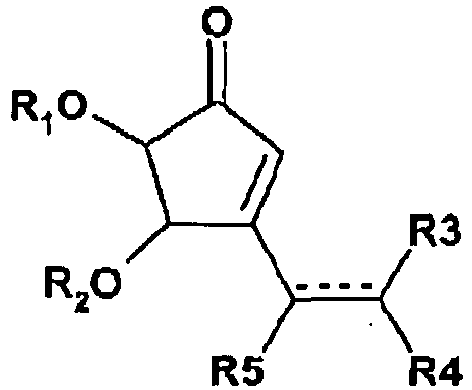

- The term "cosmetic composition" delimits the composition described herein form pharmaceutical compositions. The terms "cosmetic composition" and "pharmaceutical composition" are mutually exclusive. In other words, a cosmetic composition described herein is for use in non-therapeutic applications.
- Cosmetic compositions may also be defined by their intended use, as compositions intended to be rubbed, poured, sprinkled, or sprayed on, introduced into, or otherwise applied to the human body for cleansing, beautifying, promoting attractiveness, or altering the appearance.
- "Cleaning of the skin" according to the above defined cosmetic composition is envisaged as a means of controlling impurities of the skin. To explain further, the terms "cleansing" or "cleaning" of the skin refer to a process comprising or consisting of the removal or reduction of superficial dirt, of substances which can accumulate and cause clogging of the pores of the skin, and/or of microorganisms, the term "microorganisms" including bacteria. Furthermore, it is envisaged to reduce acne promoting factors including excess oil, or dead skin that may clog pores. Accordingly, by applying the cosmetic composition described herein, the appearance of the skin is improved.
- Cleaning involves bringing the skin to be cleaned into contact with the cosmetic composition described herein. Cleaning may further involve mechanic action such as scrubbing, for example, with a pad. For the purpose of enhancing the cleaning properties of the cosmetic composition described herein, the composition may comprise exfoliating agents. Exfoliating agents help to reduce the blockage of skin pores. Examples of suitable exfoliating agents include fine silica particles and polymer microparticles. Also, the composition may comprise keratolytic agents such as salicylic acid and urea.
- The particular formulation of the cosmetic composition described herein is not limited. Envisaged formulations include emulsions, creams, milks, gels such as hydrogels, ointments, suspensions, dispersions, powders, solid sticks, foams, sprays and shampoos. For this purpose, the cosmetic composition described herein may further comprise cosmetically acceptable diluents and/or carriers. Choosing appropriate carriers and diluents in dependency of the desired formulation is within the skills of the skilled person. Suitable cosmetically acceptable diluents and carriers are well known in the art and include agents referred to in
Bushell et al. (WO 2006/053613 ). As an example, hydrogel patches may be prepared as described in Lee et al, (2003). - Moreover, the cosmetic composition can contain any cosmetically acceptable ingredients. To explain further, the cosmetic composition described herein may comprise, without limitation, one or more further ingredients such as keratolytic compounds (e.g. salicylic acid, urea), moisturizers (e.g. artificial or natural oils), anti-irritants (e.g. allantoin, α-bisabolole), anti-oxidants (e.g. tocopherole), chelating agents (e.g. EDTA), preservative agents (e.g. hydroxybenzoic acid and derivatives thereof), sun protection agents (e.g. benzophenone-3), pigments (e.g. titanium dioxide) and fragrances.
- The cosmetic composition described herein may contain one or more surfactants, such as one or more anionic surfactants. Surfactants comprise a hydrophobic moiety, such as a carbon chain having about 8 to about 30 carbon atoms, more preferably about 12 to about 20 carbon atoms, and further a hydrophilic moiety, such as sulfate, sulfonate, carbonate, phosphate or carboxylate. The term "carbon chain" includes alkyl groups as well as alkenyl and alkinyl groups. Alkenyl groups include the hydrophobic moiety comprised in unsaturated fatty acids. Anionic surfactants may be alkali salts of fatty acids. The hydrophobic carbon chain may also be etherified, such as with ethylene oxide or propylene oxide, to impart a particular physical property, such as increased water solubility or reduced surface tension to the anionic surfactant.
- The amount of compounds described herein comprised in the cosmetic composition is such that by applying usual amounts of the composition, controlling of commensales of the genus Propionibacterium is achieved. Suitable amounts can be determined without further ado by comparing the amounts of commensales prior and after application of the cosmetic composition in dependency of the amount applied. Such testing may start with lower amounts. During a single application, amounts of compounds described herein between 5µg and 50mg, between 5µg and 10mg and between 5µg and 5mg may be applied. The cosmetic composition described herein may be applied once, twice or three times a day. Concentrations of the compounds according to the invention in the cosmetic composition may be between 0,001 weight-% and 10 weight-%, between 0,001 weight-% and 2 weight-%, and between 0,001 weight-% and 1 weight-%.
- Amounts of the cosmetic compositions described herein to be applied in a single application may be between 0,1 and 10g, between 0,1 and 1g, 0,5g.
- The cosmetic composition described herein is left on for a period of time between 1 min and 24 hours, between 1 hour and 12 hours.
- Regions of the skin may include the facial skin, the skin on the shoulders, and the skin on the back.
- Controlling commensales of the genus Propionibacterium by applying the cosmetic composition described herein is a cosmetic and in accordance with this aspect described herein non-therapeutic treatment.
- Preferred substituents R1 and R2 are independently selected from methyl, acetyl and hydrogen. In preferred embodiments, both R1 and R2 are either methyl, acetyl or hydrogen. Particularly preferred is hydrogen.
- Preferably, the substituent R4 is methyl.
- In case a double bond is present, the trans configuration is preferred. In case a double bond is present, it is preferred that both R3 and R5 are hydrogen.
- In case neither a double bond nor an epoxid is present, it is preferred that one of R3 and R5 is OH and the other is selected from halogen and hydrogen.
- In a preferred aspect described herein; the compounds of formula (I) have the following structure:

- In a more preferred aspect described herein; the prupyllprupenyl side chain is trans-propenyl.
- In a yet more preferred aspect described herein; R1 and R2 are both hydrogen:

- 4,5-Dihydroxy-3-(1-propenyl)-2-cyclopenten-1-one. 4,5-Dihydroxy-3-(1-propenyl)-2-cyclopenten-1-one is also known as terrein.
- A preferred stereochemistry of the compounds of formula (I) is shown below:

- The stereochemistry displayed above is not only preferred for 4,5-Dihydroxy-3-(1-propenyl)-2-cyclopenten-1-one, but also for the compounds of formula (I) in general. Any of the other stereoisomers is also envisaged.
- The synthesis of terrein is described, for example, in Lee et al., 2005. Further information on available synthesis routes for terrein and its derivatives as disclosed herein can be found in the Beilstein database as available from Elsevier MDL. To the extent synthetic routes described in the Beilstein database do not explicitly refer to terrein, the skilled person can apply these synthetic routes to terrein and its derivatives by analogy without further ado.
- Alternatively, terrein is obtainable by culturing fungi of the genus Aspergillus such as Aspergillus terreus var. terreus (CBS deposit number CBS 134.60) (Raistrick & Smith, 1935, Clutterbuck et al, 1937), separating the media containing the compounds from the microbial cells and performing purification starting with HPLC-based solid phase extraction, for example on Amberchrom 161c. A H2O/MeO gradient is then used for elution. The fractions eluting with 80-100% methanol are combined and concentrated to an aqueous residue and lyophilized. The crude material (5.8 g) is subjected to column chromatography on silica gel and eluted with a gradient starting with petrol ether/ethylacetate mixtures in the range 20:1 ~ 3:1 and finally using chlorofom/methanol mixtures in the range 5:1 ~ 0:1. The fractions containing the activity against Propionibacterium (for assays see the enclosed Examples) are collected. In a specific case, while collecting 320 fractions in total, each fraction having a volume of 5 mL each, terrein was obtained in fractions 71-78. Subsequently, final purification by gel filtration chromatography, for example on Sephadex LH20, may be perfomred. Purification may be monitored by analytical HPLC/MS chromatography. A general strategy for obtaining microbial metabolites such as terrein from fungal sources is also described in He et al, 2005. Furthermore, terrein may also be obtained from Penicillium; see Park et al. (2004).
- Preferred degrees of purity of the compounds described herein are at least 90% by weight, more preferred 95%, 96%, 97%, 98%, 99% by weight or above.
- Also described herein is a method of cosmetic treatment comprising the administration of one or more compounds as defined in the main embodiment, wherein said cosmetic treatment is or comprises cleaning of the skin. In line with the above distinction between "cosmetic composition" and "pharmaceutical composition", said cosmetic treatment is a non-therapeutic treatment.
- Said administration may be topical administration. Said administration may be administration to the skin.
- Also described herein is the use of one or more compounds as defined in the main embodiment for cosmetic treatment, wherein said cosmetic treatment is or comprises cleaning of the skin. As stated above, said cosmetic treatment is a non-therapeutic treatment.
- In the composition, the method and the use described herein above, said cleaning of the skin comprises removing and/or reducing a biofilm and/or preventing the formation of said biofilm, wherein said biofilm comprises or consists of bacteria of the genus Propionibacterium.
- The term "biofilm" is known in the art and refers to a mucus layer with microorganisms embedded therein (Nadell et al., 2008; Donlan, 2001). Biofilms are formed by microorganisms at surfaces and adhere to this surface. Accordingly, a biofilm described herein may also be referred to as a multicellular surface-bound aggregate. The microorganisms present in biofilms described herein either comprise or exclusively consist of bacteria of the genus Propionibacterium. In addition to microorganisms, biofilms may comprise water and/or biopolymers secreted by the microorganisms. These polymers are also referred to as "extracellular polymeric substances" (EPS). Any kind of biopolymers may be comprised in the biofilms, including polysaccharides, proteins, lipids and nucleic acids. In particular the presence of polysaccharides gives rise to mucous nature of the biofilm. In the case of Propionibacterium, an array of extracellular products, including hyaluronidase, proteases, lipases and chemotactic factors for neutrophils, lymphocytes and macrophages are secreted.
- The formation of biofilms renders the control of commensales particularly difficult. For example, and as stated in the introductory part of this specification, the formation of a biofilm often gives rise to resistance to antibiotic agents as a consequence of the delayed penetration of antimicrobial agents into the biofilm polysaccharide matrix, the slow growth rate of organisms within the biofilm and the specific phenotype of the bacteria which develops within the biofilm and is distinct from the phenotype of planktonic cells. As documented in the Examples enclosed herewith, the compounds described herein are capable of inhibiting not only planktonic growth of Propionibacterium, but also the growth of Propionibacterium in biofilms. This capability of the compounds described herein is unexpected and very advantageous. As a consequence, the compounds described herein solve the technical problem of resistance to antibiotic agents of biofilms comprising Propionibacterium.
- The prior art reviewed herein above (Malmstrøm et al., loc. cit.) only reported weak to negligible activity of terrein against certain Gram-positive and Gram-negative bacteria including commensales of the skin. Surprisingly it was found that compounds described herein exhibit marked activity against bacteria of the genus Propionibacterium,
- In the composition, method or use described herein, said bacteria of the genus Propionibacterium are bacteria of the species Propionibacterium acnes.
- Also described herein is a compound or a plurality of compounds, said compound(s) being selected from the compounds as defined in the main embodiment, for the prevention or reduction of biofilm formation on an intracorporeal device and/or for the removal of biofilm from an intracorporeal device, wherein said biofilm comprises or consists of bacteria of the genus Propionibacterium. The prevention or reduction of biofilm formation on an intracorporeal device or the removal of biofilm from an intracorporeal device are suitable to prevent or treat infections by or excessive growth of Propionibacterium such as infections by or excessive growth of Propionibacterium acnes.
- In other words, provided is also a compound or a plurality of compounds, said compound(s) being selected from the compounds as defined in the main embodiment, for use in the treatment or prevention of infections caused by bacteria of the genus Propionibacterium, wherein said bacteria are capable of forming or form a biofilm on an intracorporeal device.
- Prevention or reduction of biofilm formation on an intracorporeal device and removal of biofilm from an intracorporeal device may, depending on the case, be a cosmetic or a medical application.
- In a preferred embodiment said intracorporeal device is selected from catheters, implants, endoscopes, drainages, contact lenses and hearing aids.
- Endoscopes are diagnostic instruments known in the art and are available for inspection of, for example stomach and intestine. It is known that disinfection of endoscopes is not straightforward, in particular they are not amenable to autoclaving. A drainage is a device which permits to drain secretion from wounds after surgical interventions. Formation of biofilms on drainages may facilitate entry of bacteria into the body, leading to unwanted spread of the bacteria within the body. Biofilms on contact lenses may lead to irritations of the eye and/or impaired vision.
- The development or presence of biofilms on intracorporeal devices is a frequently encountered problem which up to date cannot be satisfactorily controlled. Common measures to control biofilms are simple mechanic removal of the biofilm which has to be performed in regular intervals.
- In a preferred embodiment, said bacteria of the genus Propionibacterium are bacteria of the species Propionibacterium acnes.
- The present invention furthermore relates to a method of preventing or reducing formation of a biofilm on a device for intracorporeal use and/or of removing of a biofilm from a device for intracorporeal use, wherein said device is not present in a human or animal body, and wherein said biofilm comprises or consists of bacteria of the genus Propionibacterium, said method comprising bringing said device into contact with a compound or a plurality of compounds, said compound(s) being as defined in the main embodiment.
- The terms "intracorporeal device" and "device for intracorporeal use" are used equivalently herein.
- Furthermore provided is a method of preparing an intracorporeal device, said method comprising bringing said device into contact with a compound or a plurality of compounds, said compound(s) being as defined in the main embodiment, wherein said device is not present in a human or animal body.
- The term "preparing" as used in the context of this embodiment relates to a conditioning or processing of the intracorporeal device as opposed to a method of manufacturing. This is also apparent from the following explanation of the step of "bringing into contact".
- The recited "bringing into contact" may be effected such that the compound or the compounds as defined in the main embodiment or a composition comprising the compound(s) is adsorbed or absorbed by the device for intracorporeal use. This may be achieved by using a suitably prepared intracorporeal device. For example, the extracorporeal device may have a roughened surface. The roughened surface may be achieved by using various procedures as known in the art including etching or abrading. The roughened surface permits adsorption or absorption of sufficient amounts of said compounds.
- Alternatively or in addition, a composition comprising one or more compounds as defined in the main embodiment may be prepared and used in the method according to the invention, wherein said composition adheres to the surface of any intracorporeal device, for example, as a consequence of surface tension and/or stickiness.
- To the extent the above method according to the invention relates to removing of a biofilm, it is envisaged that, in addition to bringing the device into contact with one or more compounds as defined in the main embodiment, mechanic action may be applied, such as scrubbing.
- Both the above defined method of preventing or reducing formation of a biofilm on a device for intracorporeal use and/or of removing of a biofilm from a device for intracorporeal use as well as the method of preparing an intracorporeal device according to the invention may be performed in an automated manner, i.e. without the need for human intervention. For example, handling of the intracorporeal device in the course of the above described adsorbing or absorbing of compounds of the invention may be accomplished with robotic means in a medium- to high-throughput fashion. This also applies to the other steps which may be used in the course of the above methods such as preparing of a roughened surface of the device etc.
- In relation thereto, the present invention also provides the use of a compound or a plurality of compounds, said compound(s) being as defined in the main embodiment for preventing or reducing formation of a biofilm on a device for intracorporeal use and/or for removing of a biofilm from a device for intracorporeal use, wherein optionally said device is not present in a human or animal body, and wherein said biofilm comprises or consists of bacteria of the genus Propionibacterium.
- In a preferred embodiment, said device for intracorporeal use is selected from catheters, implants, endoscopes, drainages, contact lenses and hearing aids.
- In a further preferred embodiment, said bacteria of the genus Propionibacterium are bacteria of the species Propionibacterium acnes.
- The present invention furthermore relates to an intracorporeal device which is coated and/or loaded with one or more compounds, said compound(s) being as defined in the main embodiment.
- Preferred intracorporeal devices are listed herein above.
- The term "coated" refers to a layer on the surface of the intracorporeal device which comprises or consists of one or more compounds according to the invention. Said layer may cover all or parts of the intracorporeal device.
- The term "loaded" refers to an intracorporeal device, wherein said intracorporeal device in its entirety or parts thereof are made of a material, herein also referred to as matrix, which comprises one or more compounds as defined in the main embodiment.
- Coating of an intracorporeal device with one or more compound(s) according to the invention may be achieved, for example, by the means described in conjunction with the method of preventing or reducing formation of a biofilm according to the invention further above. Thereby, adsorbing or absorbing of said compound(s) may be achieved.
- An intracorporeal device loaded with one or more compounds as defined in the main embodiment may be obtained by producing the intracorporeal device or parts thereof from a material or matrix which permits embedding one or more compounds as defined in the main embodiment therein. This embedding may be such that no or no significant release of the compounds according to the invention occurs. Alternatively or in addition, the matrix may be designed such that a sustained release of one or more compounds as defined in the main embodiment occurs from the matrix. In either case, presence and/or release of one or more compounds as defined above permits the control of biofilm formation.
- Suitable matrix materials are well known in the art and include biodegradable as well as non-biodegradable materials. If a biodegradable matrix material is to be used, it will generally be preferred that only parts of the intracorporeal device are made thereof. Polyglycolide, polylactic acid, poly(lactic-co-glycolic acid), polycaprolactone, poly-3-hydroxybutyrate and polydioxanone are envisaged biodegradable matrix materials.
- It is also envisaged to cover an intracorporeal device with a layer of biodegradable matrix, wherein said biodegradable matrix comprises one or more compounds as defined in the main embodiment.
- The present invention furthermore provides a compound or a plurality of compounds, said compound(s) being selected from the compounds as defined in the main embodiment, for use in the prevention or treatment of acne, wherein said acne is or involves an infection with bacteria of the genus Propionibacterium. In a preferred embodiment, said bacteria of the genus Propionibacterium are bacteria of the species Propionibacterium acnes.
- The latter embodiments refer to medical uses of the compounds as defined in the main embodiment. Acne may manifest itself in forms which are generally considered a disease which in turn requires medical treatment. For the purpose of medical treatment, the compounds as defined in the main embodiment may be formulated as pharmaceutical compositions comprising, in addition to one or more compounds as defined in the main embodiment, pharmaceutically acceptable carriers, diluents and/or excipients. Suitable carriers, diluents and excipients are well known to the person skilled in the art. It is preferred that the compounds according to the invention, when used in a treatment of acne, are applied topically to affected parts of the skin. Accordingly, it is preferred to use pharmaceutically acceptable diluents, carriers and/or excipients which are commonly used in the preparation of pharmaceutical formulations designed for topical administration to the skin. Suitable pharmaceutically acceptable diluents and carriers for topical administration to the skin are well known in the art and include agents referred to in
Bushell et al (WO 2006/053613 ). Preferred aspects of the compounds as of the invention as disclosed herein above are also preferred for the medical uses according to the invention. - The figures show:
-
Figure 1 : Mode of action of drugs for treating acne.Figure 1 is taken from http://www.merck.com/mmpe/sec10/ch111/ch111b.html. -
Figure 2 : Inhibition of planktonic growth of P. acnes by Terrein. -
Figure 3 : Inhibition of biofilm formation by P. acnes by Terrein. -
Figure 4 : Planktonic growth of P. acnes and inhibition thereof by Terrein. -
Figure 5 : Biofilm formation of P. acnes and inhibition thereof by Terrein. - The following examples illustrate the invention.
- Routine susceptibility testing of P. acnes (DSMZ 1897T) is performed in high throughput 96-well microtiter plate format using Wilkins-Chalgren anaerobe broth (CM 0643, Oxoid GmbH, Wesel, Germany) in an anaerobic atmosphere produced using the AnaeroGen™ system (10% CO2 and <1% O2, Oxoid GmbH, Wesel, Germany) at 37°C. Planktonic growth of cells is determined by measuring turbidity at 580nm in a microtiter plate reader (SpectraMAX, Molecular Devices GmbH, München, Germany). Compounds dissolved in 100% DMSO are added simultaneously to an inoculum of 0.1 OD580 actively growing P. acnes cells to give a final concentration of 12.5µg/mL. Growth of untreated planktonic cells started to cease approximately 24 hours after inoculation resulting maximum OD580 values of approximately 0.4. Subsequently, planktonic cells are removed and the biofilm adhering at the bottom of the microtiter plate is been fixed by heat treatment (10min 80°C) and washed before staining with 0.1% crystal violet and quantified at 580nm (CV580) as described in O'Toole, G. A. and Kolter, R. (1998) in a microtiter plate reader (SpectraMAX, Molecular Devices GmbH, München, Germany). Biofilm development reached maximum approximately 24 hours upon inoculation. Data for planktonic proliferation and biofilm formation of P. acnes was collected from identical wells of a microtiter plate. Assays were done as quadruples. The effects of test compounds on growth of planktonic cells and formation of biofilm was determined 26-28 hours after inoculation and evaluated by comparison of turbidity (optical density, OD580) and crystal violet staining (CV580) of treated and untreated samples (control) and given as % inhibition (
Figures 2 and3 ). - Staphylococcus epidermidis occurs frequently on the skin of humans and animals and in mucous membranes. Although S. epidermidis is usually non-pathogenic, it is an important cause of infection in patients whose immune system is compromised, or who have indwelling catheters. Many strains produce a biofilm that allows them to adhere to the surfaces of medical prostheses. S. opidermidis is often resistant to a wide variety of antibiotics, including penicillin and methicillin (Mack et al, 2007, review).
- Routine susceptibility testing of Staphylococcus epidermidis (DSMZ 20042T) is performed in high throughput 96-well microtiter plate format using M218 media (BHI/3 media: 37g/L Difco BBL™ Brain heart infusion (BD Becton Dickinson GmbH, Heidelberg, Germany), 10 g/L NZ Amine A (Sigma-Aldrich, Taufkirchen, Germany and 1 g/L starch (Merck Biosciences GmbH, Schwalbach, Germany) in an aerobic atmosphere at 37°C. Planktonic growth of cells is determined by measuring turbidity at 580nm in a microtiter plate reader (SpectraMAX, Molecular Devices GmbH, München, Germany). Compounds dissolved in 100% DMSO are added simultaneously to an inoculum of 0.1 OD580 actively growing S. epidermidis cells to give a final concentration of 12.5µg/mL. Growth of untreated planktonic cells started to cease approximately 16 hours after inoculation resulting maximum OD580 values of approximately 0.7. Subsequently, planktonic cells are removed and the biofilm adhering at the bottom of the microtiter plate is been fixed by heat treatment (10min 80°C) and washed before staining with 0.1% crystal violet and quantified at 580nm (CV580) as described in O'Toole, G. A. and Kolter, R. (1998) in a microtiter plate reader (SpectraMAX, Molecular Devices GmbH, München, Germany). Data for planktonic proliferation and blofllm formation of S. epidermidis was collected from identical wells of a microtiter plate. Assays were done as quadruples. Biofilm development reached maximum approximately 20 hours upon inoculation. The effects of test compounds on planktonic growth of cells and formation of biofilm was determined 20-24 hours after inoculation and evaluated by comparison of turbidity (optical density, OD580) and crystal violet staining (CV580) of treated and untreated samples (control) and given as % inhibition (
Figures 2 and3 ). - Exponentially growing cells of P. acnes are in a defined active state with respect to proliferation and metabolic activity. Cell numbers are significantly higher compared to the assay described in Example 1, so that only highly active compounds will have an inhibitory effect on planktonic growth or biofilm formation of P. acnes. Moreover, the mode of inhibition caused by the test compound can be determined.
This assay enables to define the effectiveness of a test compound on biofilms that is not accessible with the assay set up described in Example 1. Biofilm propagation is retarded (inhibition), stopped (stagnation), or pre-formed biofilm is partially or completely dissolved (detachment). The assay can identify compounds that are active against biofilm-protected and hence persistent cells. Moreover, by combining the two read-outs of OD580 and CV580, it is possible to identify compounds selectively acting on either Planktonic or biofilm cells. - For this assay P.acnes (DSMZ 1897T) cells are grown to half-maximum planktonic cell growth and half maximum biofilm formation before test compounds are added. The relationship between optical density (OD580) and biofilm development (crystal violet staining, CV580) of P. acnes cells was determined previously, so that the biofilm status of the untreated control could be determined noninvasively by measuring optical density at OD580.
- Actively growing P. acnes cells were seeded in Wilkins-Chalgren anaerobe broth (CM 0643, Oxoid GmbH, Wesel, Germany) in microtiter plates with an OD580 of 0.025 - 0.05 and grown at 37°C in an anaerobic atmosphere produced using the AnaeroGen™ system (10% CO2 and <1% O2, Oxoid GmbH, Wesel, Germany). After reaching approximately half maximum logarithmic growth phase (t=start), values for OD580 and CV580 were recorded and cells were incubated further until the untreated samples (control) did not show further increase in planktonic growth and/or biofilm formation (stationary phase, t=end) or test compounds, dissolved in 100% DMSO were added to a final concentration of 12.5µg/mL. Assay data points are mean value of 16 individual measurements. Numbers for OD580 and CV580 of untreated control samples and samples treated with test compounds were compared to t=start-value, which is defined as the 100% level for planktonic growth and biofilm formation, respectively. Values for OD580 and CV580 of the untreated control sample in stationary phase are defined as the "control-level" (t=end, given in %) for unrestricted growth and biofilm formation at the end of the experiment. Values for "control-levels" are solely dependent on t=start-values and therefore vary with each experiment. "Control-level" values are routinely higher than 100%, ideally show values of about 200%, but might be even higher. The effectiveness of test compounds is given as "level-%" and has to be compared to the respective "control-levels". "Level-%" values for test compounds might be close to "control-level" values (no effect), might vary between 100% and "control-level" (inhibition), might be close to 100% (stagnation), or might fall below 100 % (cell-lysis or biofilm detachment). The effects of the broad-spectrum anti-microbial agent triclosan on the planktonic growth and the biofilm formation of P.acnes at a final concentration of 12.5µg/mL were assayed for comparison (
Figures 4 and5 ). -
- Burkhart, C.N. & Burkhart, C.G., Microbiology's principle of biofilms as a major factor in the pathogenesis of acne vulgaris, Int. J. Dermatol., 2003, 42, 925-927.
- Bushell, D., D'Agostino, E.M., Little, J., Parry, N.J., Windust, J.H.C., Composition, patent application
WO2006/053613A2 . - Clutterbuck, P.W., Raistrick, H.,Reuter, F. Studies in the biochemistry of micro-organisms: The molecular constitution of terrein, a metabolic product of Aspergillus terreus Thom, Biochem. J., 1937, 62, 987-1002
- Del Rosso, J.Q., Combination topical therapy in the treatment of acne, Cutis, cutaneous medicine for the practitioner. 2006, 78, 5-12.
- Donlan, R. M., Biofilm formation: a clinically relevant microbiological process, Clin Infect Dis. 2001, 33, 1387-1392.
- Eady, E.A., Gloor, M., Leyden, J.J., Propionibacterium acnes resistance: a worldwide problem, Dermatology 2003, 206, 54-56.
- He, J., Lion, U., Sattler, I., Gollmick, F.A., Grabley, S., Cai, J., Meiners, M., Schünke, H., Schaumann, K., Dechert, U., Krohn, M., Diastereomeric Quinolinone Alkaloids from the Marine-Derived Fungus Penicillium janczewskii, J. Nat. Prod., 2005, 68, 1397-1399.
- Lee, T.-W., Kim, J.-C., Hwang, S.-J, Hydrogel patches containing triclosan for acne treatment, Eur. J. Pharm. Biopharm. 2003, 56, 407-412.
- Lee, S., Kim, W.-G., Kim, E., Ryoo, I.-J., Lee, H.K., Kim, J.N., Jung, S.-H., Yoo, I.-D., Synthesis and melanin biosynthesis inhibitory activity of (+/-)-terrein produced by Penicillium sp. 20135, Bioorg. Med. Chem .Lett., 2005, 15, 471-473.
- Malmstrøm, J., Christophersen, C., Barrero, A.F., Oltra, J.E., Justicia, J., Rosales, A., Bioactive metabolites from a marine-derived strain of the fungus Emericella variecolor, J. Nat. Prod., 2002, 65, 364-367.
- Mack, D., Davies, A.P., Harris, L.G., Rohde, H., Horstkotte, M.A., Knobloch, J.K.-M., Microbial interactions in Staphylococcus epidermidis biofilms, Anal. Bioanal. Chem., 2007, 387, 399-408.
- Nadell, C.D., Xavier, J.B., Levin, S.A., Foster, K.R., The evolution of quorum sensing in bacterial biofilms, PloS Biol. 2008, 6, e14.
- Nenoff, P., Haustein, U.-F., Hittel, N., Activity of nadifloxacin (OPC-7251) and seven other antimicrobial agents against aerobic and anaerobic Gram-positive bacteria isolated from bacterial skin infections, .
- O'Toole, G.A. and Kolter, R., Initiation of biofilm formation in Pseudomonas fluorescens WCS365 proceeds via multiple, convergent signalling pathways: a genetic analysis. Mol. Microbiol. 1998, 28, 449-461.
- Park, S.-H., Kim, D.-S., Kim, W.-G., Ryoo, I.-J., Lee, D.-H., Huh, C.-H., Youn, S.-W., Yoo, I.-D., Park, K.-C., Terrein: a new melanogenesis inhibitor and its mechanism, Cell. Mol. Life Sci., 2004, 61, 2878-2885.
- Raistrick, H. & Smith, G., Studies in the biochemistry of micro-organisms: The metabolic products of Aspergillus terreus Thom. A new mould metabolic product-terrein., Biochem. J., 1935, 29, 606-611.
- Ross, J.I., Snelling, A.M., Eady, E.A., Cove, J.H., Cunliffe, W.J., Leyden, J.J., Collignon, P., Dréno, B., Reynaud, A., Fluhr, J., Oshima, S., Phenotypic and genotypic characterization of antibiotic-resistant Propionibacterium acnes isolated from acne patients attending dermatology clinics in Europe, the U.S.A., Japan and Australia, Br. J. Dermatol 2001, 144, 339-346
- Yoo, I.-D., Kim, W.-G.. Ryoo, I.-J., Kim, J.-P., Lee, S., Park, S.-H., Kim, D.-S., Park, K.-C., Terrein copound having melanin biosynthesis inhibitors and its preparation, 2005, patent application
WO2005/055995A1 .
Claims (9)
- A compound or a plurality of compounds of formula (I)
 ---- represents a single bond or double bond;R1 and R2 are independently selected from H, linear or branched C1 to C4 alkyl, linear or branched C1 to C4 alkenyl, linear or branched C1 to C4 alkinyl, and linear or branched C1 to C4 alkanoyl;R4 is selected from H, linear or branched C1 to C4 alkyl, linear or branched C1 to C4 alkenyl, and linear or branched C1 to C4 alkinyl; and R3 and R5 are independently selected from H, OH and halogen, or R3 and R5 together are O to form an epoxid, wherein ---- represents a single bond in case R3 and R5 together are Ofor use in(i) the treatment or prevention of infections caused by bacteria of the genus Propionibacterium, wherein said bacteria are capable of forming or form a biofilm on an intracorporeal device, or(ii) the prevention or treatment of acne, wherein said acne is or involves an infection with bacteria of the genus Propionibacterium.
 - The compound or plurality of compounds for use of claim 1, wherein said intracorporeal device is selected from catheters, implants, endoscopes, drainages, contact lenses and hearing aids.
- The compound or plurality of compounds for use of claims 1 or 2, wherein said bacteria of the genus Propionibacterium are bacteria of the species Propionibacterium acnes.
- A method of preventing or reducing formation of a biofilm on a device for intracorporeal use and/or of removing of a biofilm from a device for intracorporeal use, wherein said device is not present in a human or animal body, and wherein said biofilm comprises or consists of bacteria of the genus Propionibacterium, said method comprising bringing said device into contact with a compound or a plurality of compounds of formula (I)
 ---- represents a single bond or double bond;R1 and R2 are independently selected from H, linear or branched C1 to C4 alkyl, linear or branched C1 to C4 alkenyl, linear or branched C1 to C4 alkinyl, and linear or branched C1 to C4 alkanoyl;R4 is selected from H, linear or branched C1 to C4 alkyl, linear or branched C1 to C4 alkenyl, and linear or branched C1 to C4 alkinyl; and R3 and R5 are independently selected from H, OH and halogen, or R3 and R5 together are O to form an epoxid, wherein ---- represents a single bond in case R3 and R5 together are O.
 - A method of preparing an intracorporeal device, said method comprising bringing said device into contact with a compound or a plurality of compounds of formula (I)
 ---- represents a single bond or double bond;R1 and R2 are independently selected from H, linear or branched C1 to C4 alkyl, linear or branched C1 to C4 alkenyl, linear or branched C1 to C4 alkinyl, and linear or branched C1 to C4 alkanoyl;R4 is selected from H, linear or branched C1 to C4 alkyl, linear or branched C1 to C4 alkenyl, and linear or branched C1 to C4 alkinyl; and R3 and R5 are independently selected from H, OH and halogen, or R3 and R5 together are O to form an epoxid, wherein ---- represents a single bond in case R3 and R5 together are O,wherein said device is not present in a human or animal body.
 - Use of a compound or a plurality of compounds of formula (I)
 ---- represents a single bond or double bond;R1 and R2 are independently selected from H, linear or branched C1 to C4 alkyl, linear or branched C1 to C4 alkenyl, linear or branched C1 to C4 alkinyl, and linear or branched C1 to C4 alkanoyl;R4 is selected from H, linear or branched C1 to C4 alkyl, linear or branched C1 to C4 alkenyl, and linear or branched C1 to C4 alkinyl; and R3 and R5 are independently selected from H, OH and halogen, or R3 and R5 together are O to form an epoxid, wherein ---- represents a single bond in case R3 and R5 together are Ofor preventing or reducing formation of a biofilm on a device for intracorporeal use and/or for removing of a biofilm from a device for intracorporeal use, wherein said device is not present in a human or animal body, and wherein said biofilm comprises or consists of bacteria of the genus Propionibacterium.
 - The method of claim 4 or 5 or the use of claim 6, wherein said device for intracorporeal use is selected from catheters, implants, endoscopes, drainages, contact lenses and hearing aids.
- The method of claim 4, 5 or 7 or the use of claim 6 or 7, wherein said bacteria of the genus Propionibacterium are bacteria of the species Propionibacterium acnes.
- An intracorporeal device which is coated and/or loaded with one or more compounds of formula (I)
 ---- represents a single bond or double bond;R1 and R2 are independently selected from H, linear or branched C1 to C4 alkyl, linear or branched C1 to C4 alkenyl, linear or branched C1 to C4 alkinyl, and linear or branched C1 to C4 alkanoyl;R4 is selected from H, linear or branched C1 to C4 alkyl, linear or branched C1 to C4 alkenyl, and linear or branched C1 to C4 alkinyl; and R3 and R5 are independently selected from H, OH and halogen, or R3 and R5 together are O to form an epoxid, wherein ---- represents a single bond in case R3 and R5 together are O.
Priority Applications (1)
| Application Number | Priority Date | Filing Date | Title |
|---|---|---|---|
| EP09712381.4A EP2249774B1 (en) | 2008-02-18 | 2009-02-18 | Means and methods for controlling commensales |
Applications Claiming Priority (3)
| Application Number | Priority Date | Filing Date | Title |
|---|---|---|---|
| EP08002963A EP2090285A1 (en) | 2008-02-18 | 2008-02-18 | Means and methods for controlling commensales |
| PCT/EP2009/001135 WO2009103500A1 (en) | 2008-02-18 | 2009-02-18 | Means and methods for controlling commensales |
| EP09712381.4A EP2249774B1 (en) | 2008-02-18 | 2009-02-18 | Means and methods for controlling commensales |
Publications (2)
| Publication Number | Publication Date |
|---|---|
| EP2249774A1 EP2249774A1 (en) | 2010-11-17 |
| EP2249774B1 true EP2249774B1 (en) | 2014-05-14 |
Family
ID=39523796
Family Applications (2)
| Application Number | Title | Priority Date | Filing Date |
|---|---|---|---|
| EP08002963A Ceased EP2090285A1 (en) | 2008-02-18 | 2008-02-18 | Means and methods for controlling commensales |
| EP09712381.4A Not-in-force EP2249774B1 (en) | 2008-02-18 | 2009-02-18 | Means and methods for controlling commensales |
Family Applications Before (1)
| Application Number | Title | Priority Date | Filing Date |
|---|---|---|---|
| EP08002963A Ceased EP2090285A1 (en) | 2008-02-18 | 2008-02-18 | Means and methods for controlling commensales |
Country Status (3)
| Country | Link |
|---|---|
| US (1) | US20110105442A2 (en) |
| EP (2) | EP2090285A1 (en) |
| WO (1) | WO2009103500A1 (en) |
Families Citing this family (8)
| Publication number | Priority date | Publication date | Assignee | Title |
|---|---|---|---|---|
| CN101613264B (en) * | 2008-06-27 | 2013-12-04 | 中国科学院广州生物医药与健康研究院 | Annulenone compounds and application thereof in preparing anti-tumor medicaments |
| US9572880B2 (en) | 2010-08-27 | 2017-02-21 | Sienna Biopharmaceuticals, Inc. | Ultrasound delivery of nanoparticles |
| HUE038539T2 (en) | 2010-08-27 | 2018-10-29 | Sienna Biopharmaceuticals Inc | Compositions and methods for targeted thermomodulation |
| JP6325552B2 (en) | 2012-10-11 | 2018-05-16 | ナノコンポジックス,インコーポレイテッド | Silver nanoplate compositions and methods |
| EP3291793A1 (en) * | 2015-05-07 | 2018-03-14 | L'Oréal | Cleansing scrub composition |
| NO342374B1 (en) * | 2016-07-08 | 2018-05-14 | Inhibio As | Compounds and compositions for biofilm prevention |
| KR102097121B1 (en) * | 2018-07-02 | 2020-04-03 | 한국생명공학연구원 | Composition for inhibiting biofilm formation of Gram-negative bacteria comprising terrein as effective component and uses thereof |
| CN115281191B (en) * | 2022-07-26 | 2023-04-25 | 中国科学院新疆生态与地理研究所 | Application of terrein in drought resistance and growth promotion of crops and its treatment method |
Family Cites Families (6)
| Publication number | Priority date | Publication date | Assignee | Title |
|---|---|---|---|---|
| US20030035846A1 (en) * | 2000-06-08 | 2003-02-20 | Toshimitsu Hattori | Water having a superior ability to disperse oil and fats |
| US7025957B2 (en) * | 2002-09-06 | 2006-04-11 | Desert Whale Jojoba Company | Composition and method to whiten skin |
| KR100586814B1 (en) | 2003-12-12 | 2006-06-08 | 한국생명공학연구원 | Terane compounds having melanin biosynthesis inhibitory activity and preparation method thereof |
| WO2006053613A2 (en) | 2004-11-19 | 2006-05-26 | Unilever N.V. | Skin care composition comprising fusion polypeptide composition |
| US20070134304A1 (en) * | 2005-12-07 | 2007-06-14 | L'oreal | Soluble article for exfoliating the skin |
| KR100771523B1 (en) * | 2006-04-06 | 2007-10-30 | 한국생명공학연구원 | Inhibitor of keratinocyte proliferation, including terane |
-
2008
- 2008-02-18 EP EP08002963A patent/EP2090285A1/en not_active Ceased
-
2009
- 2009-02-18 EP EP09712381.4A patent/EP2249774B1/en not_active Not-in-force
- 2009-02-18 US US12/867,766 patent/US20110105442A2/en not_active Abandoned
- 2009-02-18 WO PCT/EP2009/001135 patent/WO2009103500A1/en not_active Ceased
Non-Patent Citations (1)
| Title |
|---|
| CH.C.ZOUBOULIS: "Moderne Aknetherapie", AKTUELLE DERMATOLOGIE, vol. 29, no. 1-2, 2003, pages 49 - 57, ISSN: 0340-2541 * |
Also Published As
| Publication number | Publication date |
|---|---|
| US20100323996A1 (en) | 2010-12-23 |
| US20110105442A2 (en) | 2011-05-05 |
| EP2249774A1 (en) | 2010-11-17 |
| WO2009103500A8 (en) | 2009-12-03 |
| EP2090285A1 (en) | 2009-08-19 |
| WO2009103500A1 (en) | 2009-08-27 |
Similar Documents
| Publication | Publication Date | Title |
|---|---|---|
| US20100323996A1 (en) | Means and methods of controlling commensales | |
| JP6267633B2 (en) | Novel lactic acid bacteria and composition containing the same | |
| Masako et al. | A novel method to control the balance of skin microflora: Part 1. Attack on biofilm of Staphylococcus aureus without antibiotics | |
| US20200107551A1 (en) | Biofilm penetrating compositions and methods | |
| EP3920881A1 (en) | Antimicrobial activity of fatty acid esters and combinations thereof | |
| JP6815006B2 (en) | Acne strain selective antibacterial agent | |
| JP6579529B2 (en) | Antibacterial composition | |
| WO2011119247A2 (en) | Topical skincare composition | |
| TW201416071A (en) | a composition having antibacterial properties, regulating sebum secretion and exfoliating effects to remove or prevent acne | |
| WO2008149089A1 (en) | Antimicrobial formulations comprising a combination of a pyridine thiol and a bis-quinolinium salt | |
| JP2022528460A (en) | A liquid composition with chitosan that affects the microbial flora of the subject's skin | |
| KR101433823B1 (en) | External Composition for Skin Using an Extract or a Fraction of Padina arborescens | |
| KR20180027664A (en) | A hydrogel mask pack composition for antioxidating, whitening and antiaging comprising herb extracts | |
| JP2011527347A (en) | Antibacterial composition | |
| JP2024102278A (en) | Use of dianhydrohexitol to eliminate cosmetic effects of acne, dandruff and bad odors | |
| EP2090292A1 (en) | Means and methods for controlling commensales | |
| EP2654746B1 (en) | Antibacterial or anti-acne formulations containing usnic acid or an usnate and a metal salt | |
| US20230112887A1 (en) | Pentagalloyl Glucose Derived from Schinus Plants and Methods of Use | |
| Chen et al. | Effects of Commonly Used Vegetable Oils on Skin Barrier Function and Staphylococcus aureus Biofilm | |
| KR20220040795A (en) | A natural soap containing coffee fresh leat and the process for the preparation thereof | |
| Stupak | SCALP MICROBIOME IN ALOPECIA: A NEW DIRECTION IN TRICHOLOGICAL DIAGNOSTICS AND FOLLICLE RESTORATION | |
| CN117442778B (en) | Gel composition for medical cosmetology | |
| EP4591851A1 (en) | Prebiotic cosmetic compositions, use of the prebiotic cosmetic compositions, use of babassu oil, and cosmetic method | |
| KR20120086123A (en) | External Composition for Skin Having Antibacterial Activities | |
| Nakamura et al. | Hinokitiol inhibits Candida albicans adherence to oral epithelial cells |
Legal Events
| Date | Code | Title | Description |
|---|---|---|---|
| PUAI | Public reference made under article 153(3) epc to a published international application that has entered the european phase |
Free format text: ORIGINAL CODE: 0009012 |
|
| 17P | Request for examination filed |
Effective date: 20100909 |
|
| AK | Designated contracting states |
Kind code of ref document: A1 Designated state(s): AT BE BG CH CY CZ DE DK EE ES FI FR GB GR HR HU IE IS IT LI LT LU LV MC MK MT NL NO PL PT RO SE SI SK TR |
|
| AX | Request for extension of the european patent |
Extension state: AL BA RS |
|
| DAX | Request for extension of the european patent (deleted) | ||
| 17Q | First examination report despatched |
Effective date: 20111115 |
|
| GRAP | Despatch of communication of intention to grant a patent |
Free format text: ORIGINAL CODE: EPIDOSNIGR1 |
|
| INTG | Intention to grant announced |
Effective date: 20131120 |
|
| GRAS | Grant fee paid |
Free format text: ORIGINAL CODE: EPIDOSNIGR3 |
|
| GRAA | (expected) grant |
Free format text: ORIGINAL CODE: 0009210 |
|
| AK | Designated contracting states |
Kind code of ref document: B1 Designated state(s): AT BE BG CH CY CZ DE DK EE ES FI FR GB GR HR HU IE IS IT LI LT LU LV MC MK MT NL NO PL PT RO SE SI SK TR |
|
| REG | Reference to a national code |
Ref country code: GB Ref legal event code: FG4D |
|
| REG | Reference to a national code |
Ref country code: AT Ref legal event code: REF Ref document number: 667676 Country of ref document: AT Kind code of ref document: T Effective date: 20140615 |
|
| REG | Reference to a national code |
Ref country code: IE Ref legal event code: FG4D |
|
| REG | Reference to a national code |
Ref country code: NL Ref legal event code: T3 |
|
| REG | Reference to a national code |
Ref country code: DE Ref legal event code: R096 Ref document number: 602009024094 Country of ref document: DE Effective date: 20140626 |
|
| REG | Reference to a national code |
Ref country code: CH Ref legal event code: NV Representative=s name: VOSSIUS AND PARTNER, CH |
|
| REG | Reference to a national code |
Ref country code: AT Ref legal event code: MK05 Ref document number: 667676 Country of ref document: AT Kind code of ref document: T Effective date: 20140514 |
|
| REG | Reference to a national code |
Ref country code: LT Ref legal event code: MG4D |
|
| PG25 | Lapsed in a contracting state [announced via postgrant information from national office to epo] |
Ref country code: GR Free format text: LAPSE BECAUSE OF FAILURE TO SUBMIT A TRANSLATION OF THE DESCRIPTION OR TO PAY THE FEE WITHIN THE PRESCRIBED TIME-LIMIT Effective date: 20140815 Ref country code: CY Free format text: LAPSE BECAUSE OF FAILURE TO SUBMIT A TRANSLATION OF THE DESCRIPTION OR TO PAY THE FEE WITHIN THE PRESCRIBED TIME-LIMIT Effective date: 20140514 Ref country code: FI Free format text: LAPSE BECAUSE OF FAILURE TO SUBMIT A TRANSLATION OF THE DESCRIPTION OR TO PAY THE FEE WITHIN THE PRESCRIBED TIME-LIMIT Effective date: 20140514 Ref country code: IS Free format text: LAPSE BECAUSE OF FAILURE TO SUBMIT A TRANSLATION OF THE DESCRIPTION OR TO PAY THE FEE WITHIN THE PRESCRIBED TIME-LIMIT Effective date: 20140914 Ref country code: NO Free format text: LAPSE BECAUSE OF FAILURE TO SUBMIT A TRANSLATION OF THE DESCRIPTION OR TO PAY THE FEE WITHIN THE PRESCRIBED TIME-LIMIT Effective date: 20140814 Ref country code: LT Free format text: LAPSE BECAUSE OF FAILURE TO SUBMIT A TRANSLATION OF THE DESCRIPTION OR TO PAY THE FEE WITHIN THE PRESCRIBED TIME-LIMIT Effective date: 20140514 |
|
| PG25 | Lapsed in a contracting state [announced via postgrant information from national office to epo] |
Ref country code: LV Free format text: LAPSE BECAUSE OF FAILURE TO SUBMIT A TRANSLATION OF THE DESCRIPTION OR TO PAY THE FEE WITHIN THE PRESCRIBED TIME-LIMIT Effective date: 20140514 Ref country code: HR Free format text: LAPSE BECAUSE OF FAILURE TO SUBMIT A TRANSLATION OF THE DESCRIPTION OR TO PAY THE FEE WITHIN THE PRESCRIBED TIME-LIMIT Effective date: 20140514 Ref country code: PL Free format text: LAPSE BECAUSE OF FAILURE TO SUBMIT A TRANSLATION OF THE DESCRIPTION OR TO PAY THE FEE WITHIN THE PRESCRIBED TIME-LIMIT Effective date: 20140514 Ref country code: SE Free format text: LAPSE BECAUSE OF FAILURE TO SUBMIT A TRANSLATION OF THE DESCRIPTION OR TO PAY THE FEE WITHIN THE PRESCRIBED TIME-LIMIT Effective date: 20140514 Ref country code: ES Free format text: LAPSE BECAUSE OF FAILURE TO SUBMIT A TRANSLATION OF THE DESCRIPTION OR TO PAY THE FEE WITHIN THE PRESCRIBED TIME-LIMIT Effective date: 20140514 Ref country code: AT Free format text: LAPSE BECAUSE OF FAILURE TO SUBMIT A TRANSLATION OF THE DESCRIPTION OR TO PAY THE FEE WITHIN THE PRESCRIBED TIME-LIMIT Effective date: 20140514 |
|
| PG25 | Lapsed in a contracting state [announced via postgrant information from national office to epo] |
Ref country code: PT Free format text: LAPSE BECAUSE OF FAILURE TO SUBMIT A TRANSLATION OF THE DESCRIPTION OR TO PAY THE FEE WITHIN THE PRESCRIBED TIME-LIMIT Effective date: 20140915 |
|
| PG25 | Lapsed in a contracting state [announced via postgrant information from national office to epo] |
Ref country code: CZ Free format text: LAPSE BECAUSE OF FAILURE TO SUBMIT A TRANSLATION OF THE DESCRIPTION OR TO PAY THE FEE WITHIN THE PRESCRIBED TIME-LIMIT Effective date: 20140514 Ref country code: BE Free format text: LAPSE BECAUSE OF FAILURE TO SUBMIT A TRANSLATION OF THE DESCRIPTION OR TO PAY THE FEE WITHIN THE PRESCRIBED TIME-LIMIT Effective date: 20140514 Ref country code: RO Free format text: LAPSE BECAUSE OF FAILURE TO SUBMIT A TRANSLATION OF THE DESCRIPTION OR TO PAY THE FEE WITHIN THE PRESCRIBED TIME-LIMIT Effective date: 20140514 Ref country code: SK Free format text: LAPSE BECAUSE OF FAILURE TO SUBMIT A TRANSLATION OF THE DESCRIPTION OR TO PAY THE FEE WITHIN THE PRESCRIBED TIME-LIMIT Effective date: 20140514 Ref country code: DK Free format text: LAPSE BECAUSE OF FAILURE TO SUBMIT A TRANSLATION OF THE DESCRIPTION OR TO PAY THE FEE WITHIN THE PRESCRIBED TIME-LIMIT Effective date: 20140514 Ref country code: EE Free format text: LAPSE BECAUSE OF FAILURE TO SUBMIT A TRANSLATION OF THE DESCRIPTION OR TO PAY THE FEE WITHIN THE PRESCRIBED TIME-LIMIT Effective date: 20140514 |
|
| REG | Reference to a national code |
Ref country code: DE Ref legal event code: R097 Ref document number: 602009024094 Country of ref document: DE |
|
| PLBE | No opposition filed within time limit |
Free format text: ORIGINAL CODE: 0009261 |
|
| STAA | Information on the status of an ep patent application or granted ep patent |
Free format text: STATUS: NO OPPOSITION FILED WITHIN TIME LIMIT |
|
| 26N | No opposition filed |
Effective date: 20150217 |
|
| PG25 | Lapsed in a contracting state [announced via postgrant information from national office to epo] |
Ref country code: IT Free format text: LAPSE BECAUSE OF FAILURE TO SUBMIT A TRANSLATION OF THE DESCRIPTION OR TO PAY THE FEE WITHIN THE PRESCRIBED TIME-LIMIT Effective date: 20140514 |
|
| REG | Reference to a national code |
Ref country code: DE Ref legal event code: R097 Ref document number: 602009024094 Country of ref document: DE Effective date: 20150217 |
|
| PG25 | Lapsed in a contracting state [announced via postgrant information from national office to epo] |
Ref country code: SI Free format text: LAPSE BECAUSE OF FAILURE TO SUBMIT A TRANSLATION OF THE DESCRIPTION OR TO PAY THE FEE WITHIN THE PRESCRIBED TIME-LIMIT Effective date: 20140514 |
|
| PG25 | Lapsed in a contracting state [announced via postgrant information from national office to epo] |
Ref country code: LU Free format text: LAPSE BECAUSE OF FAILURE TO SUBMIT A TRANSLATION OF THE DESCRIPTION OR TO PAY THE FEE WITHIN THE PRESCRIBED TIME-LIMIT Effective date: 20150218 |
|
| PG25 | Lapsed in a contracting state [announced via postgrant information from national office to epo] |
Ref country code: MC Free format text: LAPSE BECAUSE OF FAILURE TO SUBMIT A TRANSLATION OF THE DESCRIPTION OR TO PAY THE FEE WITHIN THE PRESCRIBED TIME-LIMIT Effective date: 20140514 |
|
| REG | Reference to a national code |
Ref country code: IE Ref legal event code: MM4A |
|
| PG25 | Lapsed in a contracting state [announced via postgrant information from national office to epo] |
Ref country code: IE Free format text: LAPSE BECAUSE OF NON-PAYMENT OF DUE FEES Effective date: 20150218 |
|
| REG | Reference to a national code |
Ref country code: FR Ref legal event code: PLFP Year of fee payment: 8 |
|
| REG | Reference to a national code |
Ref country code: CH Ref legal event code: PFA Owner name: B.R.A.I.N. BIOTECHNOLOGY RESEARCH AND INFORMAT, DE Free format text: FORMER OWNER: B.R.A.I.N. BIOTECHNOLOGY RESEARCH AND INFORMATION NETWORK AG, DE |
|
| PG25 | Lapsed in a contracting state [announced via postgrant information from national office to epo] |
Ref country code: MT Free format text: LAPSE BECAUSE OF FAILURE TO SUBMIT A TRANSLATION OF THE DESCRIPTION OR TO PAY THE FEE WITHIN THE PRESCRIBED TIME-LIMIT Effective date: 20140514 |
|
| REG | Reference to a national code |
Ref country code: FR Ref legal event code: PLFP Year of fee payment: 9 |
|
| PGFP | Annual fee paid to national office [announced via postgrant information from national office to epo] |
Ref country code: CH Payment date: 20170228 Year of fee payment: 9 Ref country code: DE Payment date: 20170228 Year of fee payment: 9 Ref country code: FR Payment date: 20170203 Year of fee payment: 9 |
|
| PG25 | Lapsed in a contracting state [announced via postgrant information from national office to epo] |
Ref country code: BG Free format text: LAPSE BECAUSE OF FAILURE TO SUBMIT A TRANSLATION OF THE DESCRIPTION OR TO PAY THE FEE WITHIN THE PRESCRIBED TIME-LIMIT Effective date: 20140514 Ref country code: HU Free format text: LAPSE BECAUSE OF FAILURE TO SUBMIT A TRANSLATION OF THE DESCRIPTION OR TO PAY THE FEE WITHIN THE PRESCRIBED TIME-LIMIT; INVALID AB INITIO Effective date: 20090218 |
|
| PGFP | Annual fee paid to national office [announced via postgrant information from national office to epo] |
Ref country code: GB Payment date: 20170228 Year of fee payment: 9 Ref country code: NL Payment date: 20170201 Year of fee payment: 9 |
|
| PG25 | Lapsed in a contracting state [announced via postgrant information from national office to epo] |
Ref country code: TR Free format text: LAPSE BECAUSE OF FAILURE TO SUBMIT A TRANSLATION OF THE DESCRIPTION OR TO PAY THE FEE WITHIN THE PRESCRIBED TIME-LIMIT Effective date: 20140514 |
|
| PG25 | Lapsed in a contracting state [announced via postgrant information from national office to epo] |
Ref country code: MK Free format text: LAPSE BECAUSE OF FAILURE TO SUBMIT A TRANSLATION OF THE DESCRIPTION OR TO PAY THE FEE WITHIN THE PRESCRIBED TIME-LIMIT Effective date: 20140514 |
|
| REG | Reference to a national code |
Ref country code: DE Ref legal event code: R119 Ref document number: 602009024094 Country of ref document: DE |
|
| REG | Reference to a national code |
Ref country code: CH Ref legal event code: PL |
|
| REG | Reference to a national code |
Ref country code: NL Ref legal event code: MM Effective date: 20180301 |
|
| GBPC | Gb: european patent ceased through non-payment of renewal fee |
Effective date: 20180218 |
|
| PG25 | Lapsed in a contracting state [announced via postgrant information from national office to epo] |
Ref country code: LI Free format text: LAPSE BECAUSE OF NON-PAYMENT OF DUE FEES Effective date: 20180228 Ref country code: CH Free format text: LAPSE BECAUSE OF NON-PAYMENT OF DUE FEES Effective date: 20180228 |
|
| REG | Reference to a national code |
Ref country code: FR Ref legal event code: ST Effective date: 20181031 |
|
| PG25 | Lapsed in a contracting state [announced via postgrant information from national office to epo] |
Ref country code: NL Free format text: LAPSE BECAUSE OF NON-PAYMENT OF DUE FEES Effective date: 20180301 |
|
| PG25 | Lapsed in a contracting state [announced via postgrant information from national office to epo] |
Ref country code: DE Free format text: LAPSE BECAUSE OF NON-PAYMENT OF DUE FEES Effective date: 20180901 |
|
| PG25 | Lapsed in a contracting state [announced via postgrant information from national office to epo] |
Ref country code: FR Free format text: LAPSE BECAUSE OF NON-PAYMENT OF DUE FEES Effective date: 20180228 Ref country code: GB Free format text: LAPSE BECAUSE OF NON-PAYMENT OF DUE FEES Effective date: 20180218 |