EP2248823A1 - New competence stimulating peptide - Google Patents
New competence stimulating peptide Download PDFInfo
- Publication number
- EP2248823A1 EP2248823A1 EP09305367A EP09305367A EP2248823A1 EP 2248823 A1 EP2248823 A1 EP 2248823A1 EP 09305367 A EP09305367 A EP 09305367A EP 09305367 A EP09305367 A EP 09305367A EP 2248823 A1 EP2248823 A1 EP 2248823A1
- Authority
- EP
- European Patent Office
- Prior art keywords
- thermophilus
- bacteria
- firmicutes
- strain
- competence
- Prior art date
- Legal status (The legal status is an assumption and is not a legal conclusion. Google has not performed a legal analysis and makes no representation as to the accuracy of the status listed.)
- Withdrawn
Links
- 101710082261 Competence-stimulating peptide Proteins 0.000 title abstract description 20
- 241000194020 Streptococcus thermophilus Species 0.000 claims abstract description 78
- 241000192125 Firmicutes Species 0.000 claims abstract description 47
- 241000194017 Streptococcus Species 0.000 claims abstract description 45
- 230000009466 transformation Effects 0.000 claims abstract description 36
- 238000000034 method Methods 0.000 claims abstract description 35
- 108090000765 processed proteins & peptides Proteins 0.000 claims description 82
- 108090000623 proteins and genes Proteins 0.000 claims description 72
- 102000004196 processed proteins & peptides Human genes 0.000 claims description 65
- 108020004414 DNA Proteins 0.000 claims description 42
- 229920001184 polypeptide Polymers 0.000 claims description 41
- 102000004169 proteins and genes Human genes 0.000 claims description 40
- 241000894006 Bacteria Species 0.000 claims description 33
- 230000014509 gene expression Effects 0.000 claims description 31
- 150000001413 amino acids Chemical group 0.000 claims description 30
- 150000007523 nucleic acids Chemical class 0.000 claims description 24
- 108020004707 nucleic acids Proteins 0.000 claims description 17
- 102000039446 nucleic acids Human genes 0.000 claims description 17
- 230000012010 growth Effects 0.000 claims description 15
- 150000001875 compounds Chemical class 0.000 claims description 14
- 239000002609 medium Substances 0.000 claims description 14
- 239000013598 vector Substances 0.000 claims description 13
- 239000001963 growth medium Substances 0.000 claims description 12
- 239000012634 fragment Substances 0.000 claims description 10
- 230000004936 stimulating effect Effects 0.000 claims description 10
- 108091028043 Nucleic acid sequence Proteins 0.000 claims description 8
- 238000007865 diluting Methods 0.000 claims description 5
- 108010076504 Protein Sorting Signals Proteins 0.000 claims description 4
- 235000015097 nutrients Nutrition 0.000 claims description 4
- 238000012258 culturing Methods 0.000 claims description 3
- 102000002464 Galactosidases Human genes 0.000 claims description 2
- 108010093031 Galactosidases Proteins 0.000 claims description 2
- 241000237519 Bivalvia Species 0.000 claims 2
- 235000020639 clam Nutrition 0.000 claims 2
- 125000003275 alpha amino acid group Chemical group 0.000 claims 1
- 210000004027 cell Anatomy 0.000 description 41
- 235000018102 proteins Nutrition 0.000 description 38
- 239000013612 plasmid Substances 0.000 description 30
- ULGZDMOVFRHVEP-RWJQBGPGSA-N Erythromycin Chemical compound O([C@@H]1[C@@H](C)C(=O)O[C@@H]([C@@]([C@H](O)[C@@H](C)C(=O)[C@H](C)C[C@@](C)(O)[C@H](O[C@H]2[C@@H]([C@H](C[C@@H](C)O2)N(C)C)O)[C@H]1C)(C)O)CC)[C@H]1C[C@@](C)(OC)[C@@H](O)[C@H](C)O1 ULGZDMOVFRHVEP-RWJQBGPGSA-N 0.000 description 26
- WEVYAHXRMPXWCK-UHFFFAOYSA-N Acetonitrile Chemical compound CC#N WEVYAHXRMPXWCK-UHFFFAOYSA-N 0.000 description 24
- 239000013611 chromosomal DNA Substances 0.000 description 23
- 229940024606 amino acid Drugs 0.000 description 21
- 235000001014 amino acid Nutrition 0.000 description 21
- 101150103565 comX gene Proteins 0.000 description 14
- 229960003276 erythromycin Drugs 0.000 description 13
- 238000013518 transcription Methods 0.000 description 12
- 230000035897 transcription Effects 0.000 description 12
- 239000012895 dilution Substances 0.000 description 11
- 238000010790 dilution Methods 0.000 description 11
- 108010078791 Carrier Proteins Proteins 0.000 description 10
- 230000032258 transport Effects 0.000 description 10
- 238000002474 experimental method Methods 0.000 description 9
- 108010038807 Oligopeptides Proteins 0.000 description 8
- 102000015636 Oligopeptides Human genes 0.000 description 8
- 102000022744 oligopeptide binding proteins Human genes 0.000 description 8
- 108091013547 oligopeptide binding proteins Proteins 0.000 description 8
- 230000003115 biocidal effect Effects 0.000 description 7
- 229930027917 kanamycin Natural products 0.000 description 7
- SBUJHOSQTJFQJX-NOAMYHISSA-N kanamycin Chemical compound O[C@@H]1[C@@H](O)[C@H](O)[C@@H](CN)O[C@@H]1O[C@H]1[C@H](O)[C@@H](O[C@@H]2[C@@H]([C@@H](N)[C@H](O)[C@@H](CO)O2)O)[C@H](N)C[C@@H]1N SBUJHOSQTJFQJX-NOAMYHISSA-N 0.000 description 7
- 229960000318 kanamycin Drugs 0.000 description 7
- 229930182823 kanamycin A Natural products 0.000 description 7
- 238000004519 manufacturing process Methods 0.000 description 7
- PXHVJJICTQNCMI-UHFFFAOYSA-N Nickel Chemical compound [Ni] PXHVJJICTQNCMI-UHFFFAOYSA-N 0.000 description 6
- 241001633172 Streptococcus thermophilus LMD-9 Species 0.000 description 6
- 238000011161 development Methods 0.000 description 6
- 230000018109 developmental process Effects 0.000 description 6
- 108010062877 Bacteriocins Proteins 0.000 description 5
- 101100186943 Escherichia coli (strain K12) nfsB gene Proteins 0.000 description 5
- PEDCQBHIVMGVHV-UHFFFAOYSA-N Glycerine Chemical compound OCC(O)CO PEDCQBHIVMGVHV-UHFFFAOYSA-N 0.000 description 5
- GUBGYTABKSRVRQ-QKKXKWKRSA-N Lactose Natural products OC[C@H]1O[C@@H](O[C@H]2[C@H](O)[C@@H](O)C(O)O[C@@H]2CO)[C@H](O)[C@@H](O)[C@H]1O GUBGYTABKSRVRQ-QKKXKWKRSA-N 0.000 description 5
- 210000000349 chromosome Anatomy 0.000 description 5
- 101150107457 comGA gene Proteins 0.000 description 5
- 101150109576 dprA gene Proteins 0.000 description 5
- 230000006870 function Effects 0.000 description 5
- 230000006698 induction Effects 0.000 description 5
- 230000001939 inductive effect Effects 0.000 description 5
- 239000008101 lactose Substances 0.000 description 5
- 230000002018 overexpression Effects 0.000 description 5
- 239000003016 pheromone Substances 0.000 description 5
- 101150079601 recA gene Proteins 0.000 description 5
- 235000014469 Bacillus subtilis Nutrition 0.000 description 4
- 101100060904 Bacillus subtilis (strain 168) comEC gene Proteins 0.000 description 4
- 102000003939 Membrane transport proteins Human genes 0.000 description 4
- 108090000301 Membrane transport proteins Proteins 0.000 description 4
- DNIAPMSPPWPWGF-UHFFFAOYSA-N Propylene glycol Chemical compound CC(O)CO DNIAPMSPPWPWGF-UHFFFAOYSA-N 0.000 description 4
- CDBYLPFSWZWCQE-UHFFFAOYSA-L Sodium Carbonate Chemical compound [Na+].[Na+].[O-]C([O-])=O CDBYLPFSWZWCQE-UHFFFAOYSA-L 0.000 description 4
- 241000079831 Streptococcus thermophilus LMG 18311 Species 0.000 description 4
- 238000004458 analytical method Methods 0.000 description 4
- 230000000052 comparative effect Effects 0.000 description 4
- 230000000694 effects Effects 0.000 description 4
- 150000002500 ions Chemical class 0.000 description 4
- JVTAAEKCZFNVCJ-UHFFFAOYSA-N lactic acid Chemical compound CC(O)C(O)=O JVTAAEKCZFNVCJ-UHFFFAOYSA-N 0.000 description 4
- BDAGIHXWWSANSR-UHFFFAOYSA-N methanoic acid Natural products OC=O BDAGIHXWWSANSR-UHFFFAOYSA-N 0.000 description 4
- 230000037361 pathway Effects 0.000 description 4
- 230000001105 regulatory effect Effects 0.000 description 4
- 230000003362 replicative effect Effects 0.000 description 4
- 230000011664 signaling Effects 0.000 description 4
- 241000894007 species Species 0.000 description 4
- QTBSBXVTEAMEQO-UHFFFAOYSA-N Acetic acid Chemical compound CC(O)=O QTBSBXVTEAMEQO-UHFFFAOYSA-N 0.000 description 3
- 108010016626 Dipeptides Proteins 0.000 description 3
- 241000194032 Enterococcus faecalis Species 0.000 description 3
- LFQSCWFLJHTTHZ-UHFFFAOYSA-N Ethanol Chemical compound CCO LFQSCWFLJHTTHZ-UHFFFAOYSA-N 0.000 description 3
- LYCAIKOWRPUZTN-UHFFFAOYSA-N Ethylene glycol Chemical compound OCCO LYCAIKOWRPUZTN-UHFFFAOYSA-N 0.000 description 3
- OKKJLVBELUTLKV-UHFFFAOYSA-N Methanol Chemical compound OC OKKJLVBELUTLKV-UHFFFAOYSA-N 0.000 description 3
- 102000001218 Rec A Recombinases Human genes 0.000 description 3
- 108010055016 Rec A Recombinases Proteins 0.000 description 3
- 244000057717 Streptococcus lactis Species 0.000 description 3
- 235000014897 Streptococcus lactis Nutrition 0.000 description 3
- 230000001580 bacterial effect Effects 0.000 description 3
- 230000027455 binding Effects 0.000 description 3
- XUJNEKJLAYXESH-UHFFFAOYSA-N cysteine Natural products SCC(N)C(O)=O XUJNEKJLAYXESH-UHFFFAOYSA-N 0.000 description 3
- 238000012217 deletion Methods 0.000 description 3
- 230000037430 deletion Effects 0.000 description 3
- 238000001962 electrophoresis Methods 0.000 description 3
- 238000004520 electroporation Methods 0.000 description 3
- 239000000284 extract Substances 0.000 description 3
- 238000002744 homologous recombination Methods 0.000 description 3
- 230000006801 homologous recombination Effects 0.000 description 3
- 229910052759 nickel Inorganic materials 0.000 description 3
- 235000016709 nutrition Nutrition 0.000 description 3
- 230000003287 optical effect Effects 0.000 description 3
- 239000008188 pellet Substances 0.000 description 3
- 239000000523 sample Substances 0.000 description 3
- 230000003248 secreting effect Effects 0.000 description 3
- 239000003381 stabilizer Substances 0.000 description 3
- 238000006467 substitution reaction Methods 0.000 description 3
- 230000002103 transcriptional effect Effects 0.000 description 3
- 238000012546 transfer Methods 0.000 description 3
- 238000013519 translation Methods 0.000 description 3
- 238000011144 upstream manufacturing Methods 0.000 description 3
- XLYOFNOQVPJJNP-UHFFFAOYSA-N water Substances O XLYOFNOQVPJJNP-UHFFFAOYSA-N 0.000 description 3
- YBJHBAHKTGYVGT-ZKWXMUAHSA-N (+)-Biotin Chemical compound N1C(=O)N[C@@H]2[C@H](CCCCC(=O)O)SC[C@@H]21 YBJHBAHKTGYVGT-ZKWXMUAHSA-N 0.000 description 2
- HNSDLXPSAYFUHK-UHFFFAOYSA-N 1,4-bis(2-ethylhexyl) sulfosuccinate Chemical group CCCCC(CC)COC(=O)CC(S(O)(=O)=O)C(=O)OCC(CC)CCCC HNSDLXPSAYFUHK-UHFFFAOYSA-N 0.000 description 2
- OSWFIVFLDKOXQC-UHFFFAOYSA-N 4-(3-methoxyphenyl)aniline Chemical compound COC1=CC=CC(C=2C=CC(N)=CC=2)=C1 OSWFIVFLDKOXQC-UHFFFAOYSA-N 0.000 description 2
- LRFVTYWOQMYALW-UHFFFAOYSA-N 9H-xanthine Chemical compound O=C1NC(=O)NC2=C1NC=N2 LRFVTYWOQMYALW-UHFFFAOYSA-N 0.000 description 2
- 108091006112 ATPases Proteins 0.000 description 2
- 102000057290 Adenosine Triphosphatases Human genes 0.000 description 2
- CIWBSHSKHKDKBQ-JLAZNSOCSA-N Ascorbic acid Chemical compound OC[C@H](O)[C@H]1OC(=O)C(O)=C1O CIWBSHSKHKDKBQ-JLAZNSOCSA-N 0.000 description 2
- IJGRMHOSHXDMSA-UHFFFAOYSA-N Atomic nitrogen Chemical compound N#N IJGRMHOSHXDMSA-UHFFFAOYSA-N 0.000 description 2
- FBPFZTCFMRRESA-KVTDHHQDSA-N D-Mannitol Chemical compound OC[C@@H](O)[C@@H](O)[C@H](O)[C@H](O)CO FBPFZTCFMRRESA-KVTDHHQDSA-N 0.000 description 2
- CKLJMWTZIZZHCS-UWTATZPHSA-N D-aspartic acid Chemical compound OC(=O)[C@H](N)CC(O)=O CKLJMWTZIZZHCS-UWTATZPHSA-N 0.000 description 2
- 102000052510 DNA-Binding Proteins Human genes 0.000 description 2
- 101710204837 Envelope small membrane protein Proteins 0.000 description 2
- 102000004190 Enzymes Human genes 0.000 description 2
- 108090000790 Enzymes Proteins 0.000 description 2
- WQZGKKKJIJFFOK-GASJEMHNSA-N Glucose Natural products OC[C@H]1OC(O)[C@H](O)[C@@H](O)[C@@H]1O WQZGKKKJIJFFOK-GASJEMHNSA-N 0.000 description 2
- DHMQDGOQFOQNFH-UHFFFAOYSA-N Glycine Chemical compound NCC(O)=O DHMQDGOQFOQNFH-UHFFFAOYSA-N 0.000 description 2
- WHUUTDBJXJRKMK-VKHMYHEASA-N L-glutamic acid Chemical compound OC(=O)[C@@H](N)CCC(O)=O WHUUTDBJXJRKMK-VKHMYHEASA-N 0.000 description 2
- COLNVLDHVKWLRT-QMMMGPOBSA-N L-phenylalanine Chemical compound OC(=O)[C@@H](N)CC1=CC=CC=C1 COLNVLDHVKWLRT-QMMMGPOBSA-N 0.000 description 2
- 229930195725 Mannitol Natural products 0.000 description 2
- PVNIIMVLHYAWGP-UHFFFAOYSA-N Niacin Chemical compound OC(=O)C1=CC=CN=C1 PVNIIMVLHYAWGP-UHFFFAOYSA-N 0.000 description 2
- 240000000220 Panda oleosa Species 0.000 description 2
- 235000016496 Panda oleosa Nutrition 0.000 description 2
- 102000007056 Recombinant Fusion Proteins Human genes 0.000 description 2
- 108010008281 Recombinant Fusion Proteins Proteins 0.000 description 2
- 101710088839 Replication initiation protein Proteins 0.000 description 2
- AUNGANRZJHBGPY-SCRDCRAPSA-N Riboflavin Chemical compound OC[C@@H](O)[C@@H](O)[C@@H](O)CN1C=2C=C(C)C(C)=CC=2N=C2C1=NC(=O)NC2=O AUNGANRZJHBGPY-SCRDCRAPSA-N 0.000 description 2
- FAPWRFPIFSIZLT-UHFFFAOYSA-M Sodium chloride Chemical compound [Na+].[Cl-] FAPWRFPIFSIZLT-UHFFFAOYSA-M 0.000 description 2
- 241000193998 Streptococcus pneumoniae Species 0.000 description 2
- CZMRCDWAGMRECN-UGDNZRGBSA-N Sucrose Chemical compound O[C@H]1[C@H](O)[C@@H](CO)O[C@@]1(CO)O[C@@H]1[C@H](O)[C@@H](O)[C@H](O)[C@@H](CO)O1 CZMRCDWAGMRECN-UGDNZRGBSA-N 0.000 description 2
- 229930006000 Sucrose Natural products 0.000 description 2
- IQFYYKKMVGJFEH-XLPZGREQSA-N Thymidine Chemical compound O=C1NC(=O)C(C)=CN1[C@@H]1O[C@H](CO)[C@@H](O)C1 IQFYYKKMVGJFEH-XLPZGREQSA-N 0.000 description 2
- DTQVDTLACAAQTR-UHFFFAOYSA-N Trifluoroacetic acid Chemical compound OC(=O)C(F)(F)F DTQVDTLACAAQTR-UHFFFAOYSA-N 0.000 description 2
- 102000004142 Trypsin Human genes 0.000 description 2
- 108090000631 Trypsin Proteins 0.000 description 2
- ISAKRJDGNUQOIC-UHFFFAOYSA-N Uracil Chemical compound O=C1C=CNC(=O)N1 ISAKRJDGNUQOIC-UHFFFAOYSA-N 0.000 description 2
- XSQUKJJJFZCRTK-UHFFFAOYSA-N Urea Chemical compound NC(N)=O XSQUKJJJFZCRTK-UHFFFAOYSA-N 0.000 description 2
- 230000029936 alkylation Effects 0.000 description 2
- 238000005804 alkylation reaction Methods 0.000 description 2
- 239000003242 anti bacterial agent Substances 0.000 description 2
- WQZGKKKJIJFFOK-VFUOTHLCSA-N beta-D-glucose Chemical compound OC[C@H]1O[C@@H](O)[C@H](O)[C@@H](O)[C@@H]1O WQZGKKKJIJFFOK-VFUOTHLCSA-N 0.000 description 2
- 230000033228 biological regulation Effects 0.000 description 2
- 230000015572 biosynthetic process Effects 0.000 description 2
- 230000015556 catabolic process Effects 0.000 description 2
- 238000010276 construction Methods 0.000 description 2
- 235000018417 cysteine Nutrition 0.000 description 2
- 235000013365 dairy product Nutrition 0.000 description 2
- 230000003247 decreasing effect Effects 0.000 description 2
- 238000006731 degradation reaction Methods 0.000 description 2
- 230000029087 digestion Effects 0.000 description 2
- 229940032049 enterococcus faecalis Drugs 0.000 description 2
- 210000003527 eukaryotic cell Anatomy 0.000 description 2
- 235000013305 food Nutrition 0.000 description 2
- 235000019253 formic acid Nutrition 0.000 description 2
- 230000002068 genetic effect Effects 0.000 description 2
- 235000011187 glycerol Nutrition 0.000 description 2
- UYTPUPDQBNUYGX-UHFFFAOYSA-N guanine Chemical compound O=C1NC(N)=NC2=C1N=CN2 UYTPUPDQBNUYGX-UHFFFAOYSA-N 0.000 description 2
- 230000001976 improved effect Effects 0.000 description 2
- 238000002743 insertional mutagenesis Methods 0.000 description 2
- 239000004310 lactic acid Substances 0.000 description 2
- 235000014655 lactic acid Nutrition 0.000 description 2
- 238000001294 liquid chromatography-tandem mass spectrometry Methods 0.000 description 2
- 239000000594 mannitol Substances 0.000 description 2
- 235000010355 mannitol Nutrition 0.000 description 2
- 239000003550 marker Substances 0.000 description 2
- 230000007246 mechanism Effects 0.000 description 2
- 239000012528 membrane Substances 0.000 description 2
- 239000000203 mixture Substances 0.000 description 2
- 229920005862 polyol Polymers 0.000 description 2
- 150000003077 polyols Chemical class 0.000 description 2
- 239000011148 porous material Substances 0.000 description 2
- 239000002243 precursor Substances 0.000 description 2
- 230000008569 process Effects 0.000 description 2
- 238000000575 proteomic method Methods 0.000 description 2
- 230000018612 quorum sensing Effects 0.000 description 2
- 230000004044 response Effects 0.000 description 2
- 229910000029 sodium carbonate Inorganic materials 0.000 description 2
- 235000017550 sodium carbonate Nutrition 0.000 description 2
- 229960000268 spectinomycin Drugs 0.000 description 2
- UNFWWIHTNXNPBV-WXKVUWSESA-N spectinomycin Chemical compound O([C@@H]1[C@@H](NC)[C@@H](O)[C@H]([C@@H]([C@H]1O1)O)NC)[C@]2(O)[C@H]1O[C@H](C)CC2=O UNFWWIHTNXNPBV-WXKVUWSESA-N 0.000 description 2
- 238000001228 spectrum Methods 0.000 description 2
- 229940031000 streptococcus pneumoniae Drugs 0.000 description 2
- 239000005720 sucrose Substances 0.000 description 2
- 238000003786 synthesis reaction Methods 0.000 description 2
- 238000004885 tandem mass spectrometry Methods 0.000 description 2
- JZRWCGZRTZMZEH-UHFFFAOYSA-N thiamine Chemical compound CC1=C(CCO)SC=[N+]1CC1=CN=C(C)N=C1N JZRWCGZRTZMZEH-UHFFFAOYSA-N 0.000 description 2
- 239000012588 trypsin Substances 0.000 description 2
- 230000001018 virulence Effects 0.000 description 2
- HDTRYLNUVZCQOY-UHFFFAOYSA-N α-D-glucopyranosyl-α-D-glucopyranoside Natural products OC1C(O)C(O)C(CO)OC1OC1C(O)C(O)C(O)C(CO)O1 HDTRYLNUVZCQOY-UHFFFAOYSA-N 0.000 description 1
- OWEGMIWEEQEYGQ-UHFFFAOYSA-N 100676-05-9 Natural products OC1C(O)C(O)C(CO)OC1OCC1C(O)C(O)C(O)C(OC2C(OC(O)C(O)C2O)CO)O1 OWEGMIWEEQEYGQ-UHFFFAOYSA-N 0.000 description 1
- GOJUJUVQIVIZAV-UHFFFAOYSA-N 2-amino-4,6-dichloropyrimidine-5-carbaldehyde Chemical group NC1=NC(Cl)=C(C=O)C(Cl)=N1 GOJUJUVQIVIZAV-UHFFFAOYSA-N 0.000 description 1
- ALYNCZNDIQEVRV-UHFFFAOYSA-N 4-aminobenzoic acid Chemical compound NC1=CC=C(C(O)=O)C=C1 ALYNCZNDIQEVRV-UHFFFAOYSA-N 0.000 description 1
- PCFGFYKGPMQDBX-FEKONODYSA-N 78355-50-7 Chemical compound C([C@@H](C(=O)N[C@@H](CCSC)C(=O)N[C@@H](CCCNC(N)=N)C(=O)N[C@@H](CCCNC(N)=N)C(=O)N[C@@H](C(C)C)C(=O)NCC(=O)N[C@@H](CCCNC(N)=N)C(=O)N1[C@@H](CCC1)C(=O)N[C@@H](CCC(O)=O)C(=O)N[C@@H](CC=1C2=CC=CC=C2NC=1)C(=O)N[C@@H](CC=1C2=CC=CC=C2NC=1)C(=O)N[C@@H](CCSC)C(=O)N[C@@H](CC(O)=O)C(=O)N[C@@H](CC=1C=CC(O)=CC=1)C(=O)N[C@@H](CCC(N)=O)C(=O)N[C@@H](CCCCN)C(=O)N[C@@H](CCCNC(N)=N)C(=O)N[C@@H](CC=1C=CC(O)=CC=1)C(=O)NCC(=O)NCC(=O)N[C@@H](CC=1C=CC=CC=1)C(=O)N[C@@H](CC(C)C)C(O)=O)NC(=O)CNC(=O)CNC(=O)[C@@H](N)CC=1C=CC(O)=CC=1)C1=CC=CC=C1 PCFGFYKGPMQDBX-FEKONODYSA-N 0.000 description 1
- 102000021527 ATP binding proteins Human genes 0.000 description 1
- 108091011108 ATP binding proteins Proteins 0.000 description 1
- 102000005416 ATP-Binding Cassette Transporters Human genes 0.000 description 1
- 108010006533 ATP-Binding Cassette Transporters Proteins 0.000 description 1
- QTBSBXVTEAMEQO-UHFFFAOYSA-M Acetate Chemical compound CC([O-])=O QTBSBXVTEAMEQO-UHFFFAOYSA-M 0.000 description 1
- 108010092060 Acetate kinase Proteins 0.000 description 1
- 101710159080 Aconitate hydratase A Proteins 0.000 description 1
- 101710159078 Aconitate hydratase B Proteins 0.000 description 1
- 229930024421 Adenine Natural products 0.000 description 1
- GFFGJBXGBJISGV-UHFFFAOYSA-N Adenine Chemical compound NC1=NC=NC2=C1N=CN2 GFFGJBXGBJISGV-UHFFFAOYSA-N 0.000 description 1
- 239000004475 Arginine Substances 0.000 description 1
- DCXYFEDJOCDNAF-UHFFFAOYSA-N Asparagine Natural products OC(=O)C(N)CC(N)=O DCXYFEDJOCDNAF-UHFFFAOYSA-N 0.000 description 1
- 241000193755 Bacillus cereus Species 0.000 description 1
- 241000006378 Bacillus cereus group Species 0.000 description 1
- 244000063299 Bacillus subtilis Species 0.000 description 1
- 101100440622 Bacillus subtilis (strain 168) yuxO gene Proteins 0.000 description 1
- DWRXFEITVBNRMK-UHFFFAOYSA-N Beta-D-1-Arabinofuranosylthymine Natural products O=C1NC(=O)C(C)=CN1C1C(O)C(O)C(CO)O1 DWRXFEITVBNRMK-UHFFFAOYSA-N 0.000 description 1
- GHOKWGTUZJEAQD-UHFFFAOYSA-N Chick antidermatitis factor Natural products OCC(C)(C)C(O)C(=O)NCCC(O)=O GHOKWGTUZJEAQD-UHFFFAOYSA-N 0.000 description 1
- 229910021580 Cobalt(II) chloride Inorganic materials 0.000 description 1
- 108091026890 Coding region Proteins 0.000 description 1
- 101710134967 ComX pheromone Proteins 0.000 description 1
- 229920000858 Cyclodextrin Polymers 0.000 description 1
- FBPFZTCFMRRESA-FSIIMWSLSA-N D-Glucitol Natural products OC[C@H](O)[C@H](O)[C@@H](O)[C@H](O)CO FBPFZTCFMRRESA-FSIIMWSLSA-N 0.000 description 1
- AUNGANRZJHBGPY-UHFFFAOYSA-N D-Lyxoflavin Natural products OCC(O)C(O)C(O)CN1C=2C=C(C)C(C)=CC=2N=C2C1=NC(=O)NC2=O AUNGANRZJHBGPY-UHFFFAOYSA-N 0.000 description 1
- CKLJMWTZIZZHCS-UHFFFAOYSA-N D-OH-Asp Natural products OC(=O)C(N)CC(O)=O CKLJMWTZIZZHCS-UHFFFAOYSA-N 0.000 description 1
- FBPFZTCFMRRESA-JGWLITMVSA-N D-glucitol Chemical compound OC[C@H](O)[C@@H](O)[C@H](O)[C@H](O)CO FBPFZTCFMRRESA-JGWLITMVSA-N 0.000 description 1
- WQZGKKKJIJFFOK-QTVWNMPRSA-N D-mannopyranose Chemical compound OC[C@H]1OC(O)[C@@H](O)[C@@H](O)[C@@H]1O WQZGKKKJIJFFOK-QTVWNMPRSA-N 0.000 description 1
- 102000053602 DNA Human genes 0.000 description 1
- 238000000018 DNA microarray Methods 0.000 description 1
- 230000033616 DNA repair Effects 0.000 description 1
- 101710116602 DNA-Binding protein G5P Proteins 0.000 description 1
- 101710096438 DNA-binding protein Proteins 0.000 description 1
- 229920002307 Dextran Polymers 0.000 description 1
- 102100027723 Endogenous retrovirus group K member 6 Rec protein Human genes 0.000 description 1
- 101710091045 Envelope protein Proteins 0.000 description 1
- 229930091371 Fructose Natural products 0.000 description 1
- RFSUNEUAIZKAJO-ARQDHWQXSA-N Fructose Chemical compound OC[C@H]1O[C@](O)(CO)[C@@H](O)[C@@H]1O RFSUNEUAIZKAJO-ARQDHWQXSA-N 0.000 description 1
- 239000005715 Fructose Substances 0.000 description 1
- 108700028146 Genetic Enhancer Elements Proteins 0.000 description 1
- 108700039691 Genetic Promoter Regions Proteins 0.000 description 1
- 239000004471 Glycine Substances 0.000 description 1
- HTTJABKRGRZYRN-UHFFFAOYSA-N Heparin Chemical compound OC1C(NC(=O)C)C(O)OC(COS(O)(=O)=O)C1OC1C(OS(O)(=O)=O)C(O)C(OC2C(C(OS(O)(=O)=O)C(OC3C(C(O)C(O)C(O3)C(O)=O)OS(O)(=O)=O)C(CO)O2)NS(O)(=O)=O)C(C(O)=O)O1 HTTJABKRGRZYRN-UHFFFAOYSA-N 0.000 description 1
- 108010072039 Histidine kinase Proteins 0.000 description 1
- UGQMRVRMYYASKQ-KQYNXXCUSA-N Inosine Chemical compound O[C@@H]1[C@H](O)[C@@H](CO)O[C@H]1N1C2=NC=NC(O)=C2N=C1 UGQMRVRMYYASKQ-KQYNXXCUSA-N 0.000 description 1
- 229910021577 Iron(II) chloride Inorganic materials 0.000 description 1
- 239000007836 KH2PO4 Substances 0.000 description 1
- ONIBWKKTOPOVIA-BYPYZUCNSA-N L-Proline Chemical compound OC(=O)[C@@H]1CCCN1 ONIBWKKTOPOVIA-BYPYZUCNSA-N 0.000 description 1
- QNAYBMKLOCPYGJ-REOHCLBHSA-N L-alanine Chemical compound C[C@H](N)C(O)=O QNAYBMKLOCPYGJ-REOHCLBHSA-N 0.000 description 1
- DCXYFEDJOCDNAF-REOHCLBHSA-N L-asparagine Chemical compound OC(=O)[C@@H](N)CC(N)=O DCXYFEDJOCDNAF-REOHCLBHSA-N 0.000 description 1
- AGPKZVBTJJNPAG-WHFBIAKZSA-N L-isoleucine Chemical compound CC[C@H](C)[C@H](N)C(O)=O AGPKZVBTJJNPAG-WHFBIAKZSA-N 0.000 description 1
- ROHFNLRQFUQHCH-YFKPBYRVSA-N L-leucine Chemical compound CC(C)C[C@H](N)C(O)=O ROHFNLRQFUQHCH-YFKPBYRVSA-N 0.000 description 1
- FFEARJCKVFRZRR-BYPYZUCNSA-N L-methionine Chemical compound CSCC[C@H](N)C(O)=O FFEARJCKVFRZRR-BYPYZUCNSA-N 0.000 description 1
- QIVBCDIJIAJPQS-VIFPVBQESA-N L-tryptophane Chemical compound C1=CC=C2C(C[C@H](N)C(O)=O)=CNC2=C1 QIVBCDIJIAJPQS-VIFPVBQESA-N 0.000 description 1
- OUYCCCASQSFEME-QMMMGPOBSA-N L-tyrosine Chemical compound OC(=O)[C@@H](N)CC1=CC=C(O)C=C1 OUYCCCASQSFEME-QMMMGPOBSA-N 0.000 description 1
- KZSNJWFQEVHDMF-BYPYZUCNSA-N L-valine Chemical compound CC(C)[C@H](N)C(O)=O KZSNJWFQEVHDMF-BYPYZUCNSA-N 0.000 description 1
- ROHFNLRQFUQHCH-UHFFFAOYSA-N Leucine Natural products CC(C)CC(N)C(O)=O ROHFNLRQFUQHCH-UHFFFAOYSA-N 0.000 description 1
- KDXKERNSBIXSRK-UHFFFAOYSA-N Lysine Natural products NCCCCC(N)C(O)=O KDXKERNSBIXSRK-UHFFFAOYSA-N 0.000 description 1
- 239000004472 Lysine Substances 0.000 description 1
- 102000015841 Major facilitator superfamily Human genes 0.000 description 1
- 108050004064 Major facilitator superfamily Proteins 0.000 description 1
- GUBGYTABKSRVRQ-PICCSMPSSA-N Maltose Natural products O[C@@H]1[C@@H](O)[C@H](O)[C@@H](CO)O[C@@H]1O[C@@H]1[C@@H](CO)OC(O)[C@H](O)[C@H]1O GUBGYTABKSRVRQ-PICCSMPSSA-N 0.000 description 1
- 240000002129 Malva sylvestris Species 0.000 description 1
- 235000006770 Malva sylvestris Nutrition 0.000 description 1
- WHNWPMSKXPGLAX-UHFFFAOYSA-N N-Vinyl-2-pyrrolidone Chemical compound C=CN1CCCC1=O WHNWPMSKXPGLAX-UHFFFAOYSA-N 0.000 description 1
- 102000017279 Oligopeptide transporters Human genes 0.000 description 1
- 108050005204 Oligopeptide transporters Proteins 0.000 description 1
- 102000000309 PIN domains Human genes 0.000 description 1
- 108050008752 PIN domains Proteins 0.000 description 1
- 102000004160 Phosphoric Monoester Hydrolases Human genes 0.000 description 1
- 108090000608 Phosphoric Monoester Hydrolases Proteins 0.000 description 1
- ONIBWKKTOPOVIA-UHFFFAOYSA-N Proline Natural products OC(=O)C1CCCN1 ONIBWKKTOPOVIA-UHFFFAOYSA-N 0.000 description 1
- 102000001253 Protein Kinase Human genes 0.000 description 1
- 101710188315 Protein X Proteins 0.000 description 1
- 108010026552 Proteome Proteins 0.000 description 1
- 102000044126 RNA-Binding Proteins Human genes 0.000 description 1
- 101710105008 RNA-binding protein Proteins 0.000 description 1
- 238000011529 RT qPCR Methods 0.000 description 1
- 102000016812 Radical SAM Human genes 0.000 description 1
- 108050006523 Radical SAM Proteins 0.000 description 1
- 101710162453 Replication factor A Proteins 0.000 description 1
- 101710176758 Replication protein A 70 kDa DNA-binding subunit Proteins 0.000 description 1
- 101710176276 SSB protein Proteins 0.000 description 1
- MTCFGRXMJLQNBG-UHFFFAOYSA-N Serine Natural products OCC(N)C(O)=O MTCFGRXMJLQNBG-UHFFFAOYSA-N 0.000 description 1
- 102000007562 Serum Albumin Human genes 0.000 description 1
- 108010071390 Serum Albumin Proteins 0.000 description 1
- 101710126859 Single-stranded DNA-binding protein Proteins 0.000 description 1
- 241000191967 Staphylococcus aureus Species 0.000 description 1
- 101100161718 Streptococcus thermophilus (strain ATCC BAA-491 / LMD-9) ackA gene Proteins 0.000 description 1
- 101100102012 Streptococcus thermophilus (strain ATCC BAA-491 / LMD-9) ureD gene Proteins 0.000 description 1
- 241001217892 Streptococcus thermophilus CNRZ1066 Species 0.000 description 1
- 108700005078 Synthetic Genes Proteins 0.000 description 1
- 101710114434 Thioredoxin domain-containing protein Proteins 0.000 description 1
- AYFVYJQAPQTCCC-UHFFFAOYSA-N Threonine Natural products CC(O)C(N)C(O)=O AYFVYJQAPQTCCC-UHFFFAOYSA-N 0.000 description 1
- 239000004473 Threonine Substances 0.000 description 1
- 102000008579 Transposases Human genes 0.000 description 1
- 108010020764 Transposases Proteins 0.000 description 1
- HDTRYLNUVZCQOY-WSWWMNSNSA-N Trehalose Natural products O[C@@H]1[C@@H](O)[C@@H](O)[C@@H](CO)O[C@@H]1O[C@@H]1[C@H](O)[C@@H](O)[C@@H](O)[C@@H](CO)O1 HDTRYLNUVZCQOY-WSWWMNSNSA-N 0.000 description 1
- QIVBCDIJIAJPQS-UHFFFAOYSA-N Tryptophan Natural products C1=CC=C2C(CC(N)C(O)=O)=CNC2=C1 QIVBCDIJIAJPQS-UHFFFAOYSA-N 0.000 description 1
- 101710110109 Urease accessory protein UreH Proteins 0.000 description 1
- KZSNJWFQEVHDMF-UHFFFAOYSA-N Valine Natural products CC(C)C(N)C(O)=O KZSNJWFQEVHDMF-UHFFFAOYSA-N 0.000 description 1
- 230000021736 acetylation Effects 0.000 description 1
- 238000006640 acetylation reaction Methods 0.000 description 1
- 230000004913 activation Effects 0.000 description 1
- 239000012190 activator Substances 0.000 description 1
- 238000007792 addition Methods 0.000 description 1
- 229960000643 adenine Drugs 0.000 description 1
- 235000004279 alanine Nutrition 0.000 description 1
- 150000001298 alcohols Chemical class 0.000 description 1
- HDTRYLNUVZCQOY-LIZSDCNHSA-N alpha,alpha-trehalose Chemical compound O[C@@H]1[C@@H](O)[C@H](O)[C@@H](CO)O[C@@H]1O[C@@H]1[C@H](O)[C@@H](O)[C@H](O)[C@@H](CO)O1 HDTRYLNUVZCQOY-LIZSDCNHSA-N 0.000 description 1
- 229960004050 aminobenzoic acid Drugs 0.000 description 1
- 230000003698 anagen phase Effects 0.000 description 1
- 238000000540 analysis of variance Methods 0.000 description 1
- 229940088710 antibiotic agent Drugs 0.000 description 1
- 239000000427 antigen Substances 0.000 description 1
- 108091007433 antigens Proteins 0.000 description 1
- 102000036639 antigens Human genes 0.000 description 1
- PYMYPHUHKUWMLA-WDCZJNDASA-N arabinose Chemical compound OC[C@@H](O)[C@@H](O)[C@H](O)C=O PYMYPHUHKUWMLA-WDCZJNDASA-N 0.000 description 1
- PYMYPHUHKUWMLA-UHFFFAOYSA-N arabinose Natural products OCC(O)C(O)C(O)C=O PYMYPHUHKUWMLA-UHFFFAOYSA-N 0.000 description 1
- ODKSFYDXXFIFQN-UHFFFAOYSA-N arginine Natural products OC(=O)C(N)CCCNC(N)=N ODKSFYDXXFIFQN-UHFFFAOYSA-N 0.000 description 1
- 235000010323 ascorbic acid Nutrition 0.000 description 1
- 229960005070 ascorbic acid Drugs 0.000 description 1
- 239000011668 ascorbic acid Substances 0.000 description 1
- 229960001230 asparagine Drugs 0.000 description 1
- 235000009582 asparagine Nutrition 0.000 description 1
- 229960005261 aspartic acid Drugs 0.000 description 1
- SRBFZHDQGSBBOR-UHFFFAOYSA-N beta-D-Pyranose-Lyxose Natural products OC1COC(O)C(O)C1O SRBFZHDQGSBBOR-UHFFFAOYSA-N 0.000 description 1
- IQFYYKKMVGJFEH-UHFFFAOYSA-N beta-L-thymidine Natural products O=C1NC(=O)C(C)=CN1C1OC(CO)C(O)C1 IQFYYKKMVGJFEH-UHFFFAOYSA-N 0.000 description 1
- GUBGYTABKSRVRQ-QUYVBRFLSA-N beta-maltose Chemical compound OC[C@H]1O[C@H](O[C@H]2[C@H](O)[C@@H](O)[C@H](O)O[C@@H]2CO)[C@H](O)[C@@H](O)[C@@H]1O GUBGYTABKSRVRQ-QUYVBRFLSA-N 0.000 description 1
- 101150114605 bhsA gene Proteins 0.000 description 1
- 230000004071 biological effect Effects 0.000 description 1
- 229960002685 biotin Drugs 0.000 description 1
- 235000020958 biotin Nutrition 0.000 description 1
- 239000011616 biotin Substances 0.000 description 1
- 239000001506 calcium phosphate Substances 0.000 description 1
- 229910000389 calcium phosphate Inorganic materials 0.000 description 1
- 235000011010 calcium phosphates Nutrition 0.000 description 1
- 239000004202 carbamide Substances 0.000 description 1
- 235000013351 cheese Nutrition 0.000 description 1
- 230000002759 chromosomal effect Effects 0.000 description 1
- 238000003776 cleavage reaction Methods 0.000 description 1
- 229910017052 cobalt Inorganic materials 0.000 description 1
- 239000010941 cobalt Substances 0.000 description 1
- GUTLYIVDDKVIGB-UHFFFAOYSA-N cobalt atom Chemical compound [Co] GUTLYIVDDKVIGB-UHFFFAOYSA-N 0.000 description 1
- 101150100845 comC gene Proteins 0.000 description 1
- 101150109808 comC1 gene Proteins 0.000 description 1
- -1 comCDE Proteins 0.000 description 1
- 239000000356 contaminant Substances 0.000 description 1
- 230000001276 controlling effect Effects 0.000 description 1
- ARUVKPQLZAKDPS-UHFFFAOYSA-L copper(II) sulfate Chemical compound [Cu+2].[O-][S+2]([O-])([O-])[O-] ARUVKPQLZAKDPS-UHFFFAOYSA-L 0.000 description 1
- 229910000366 copper(II) sulfate Inorganic materials 0.000 description 1
- 230000009089 cytolysis Effects 0.000 description 1
- 230000001086 cytosolic effect Effects 0.000 description 1
- 230000003413 degradative effect Effects 0.000 description 1
- 238000004925 denaturation Methods 0.000 description 1
- 230000036425 denaturation Effects 0.000 description 1
- 230000001419 dependent effect Effects 0.000 description 1
- 238000001514 detection method Methods 0.000 description 1
- 239000008121 dextrose Substances 0.000 description 1
- 235000014113 dietary fatty acids Nutrition 0.000 description 1
- ZPWVASYFFYYZEW-UHFFFAOYSA-L dipotassium hydrogen phosphate Chemical compound [K+].[K+].OP([O-])([O-])=O ZPWVASYFFYYZEW-UHFFFAOYSA-L 0.000 description 1
- 229910000396 dipotassium phosphate Inorganic materials 0.000 description 1
- 235000019797 dipotassium phosphate Nutrition 0.000 description 1
- 150000002016 disaccharides Chemical class 0.000 description 1
- BNIILDVGGAEEIG-UHFFFAOYSA-L disodium hydrogen phosphate Chemical compound [Na+].[Na+].OP([O-])([O-])=O BNIILDVGGAEEIG-UHFFFAOYSA-L 0.000 description 1
- 235000019800 disodium phosphate Nutrition 0.000 description 1
- 229910000397 disodium phosphate Inorganic materials 0.000 description 1
- 239000003623 enhancer Substances 0.000 description 1
- 230000007717 exclusion Effects 0.000 description 1
- 230000008622 extracellular signaling Effects 0.000 description 1
- 229930195729 fatty acid Natural products 0.000 description 1
- 239000000194 fatty acid Substances 0.000 description 1
- 150000004665 fatty acids Chemical class 0.000 description 1
- 101150016604 feoB gene Proteins 0.000 description 1
- 238000000855 fermentation Methods 0.000 description 1
- 230000004151 fermentation Effects 0.000 description 1
- 239000013020 final formulation Substances 0.000 description 1
- 238000013467 fragmentation Methods 0.000 description 1
- 238000006062 fragmentation reaction Methods 0.000 description 1
- 230000037433 frameshift Effects 0.000 description 1
- 238000010353 genetic engineering Methods 0.000 description 1
- 239000008103 glucose Substances 0.000 description 1
- 229960002989 glutamic acid Drugs 0.000 description 1
- ZDXPYRJPNDTMRX-UHFFFAOYSA-N glutamine Natural products OC(=O)C(N)CCC(N)=O ZDXPYRJPNDTMRX-UHFFFAOYSA-N 0.000 description 1
- XLYOFNOQVPJJNP-ZSJDYOACSA-N heavy water Substances [2H]O[2H] XLYOFNOQVPJJNP-ZSJDYOACSA-N 0.000 description 1
- 229960002897 heparin Drugs 0.000 description 1
- 229920000669 heparin Polymers 0.000 description 1
- HNDVDQJCIGZPNO-UHFFFAOYSA-N histidine Natural products OC(=O)C(N)CC1=CN=CN1 HNDVDQJCIGZPNO-UHFFFAOYSA-N 0.000 description 1
- 230000007062 hydrolysis Effects 0.000 description 1
- 238000006460 hydrolysis reaction Methods 0.000 description 1
- 230000008676 import Effects 0.000 description 1
- 230000006872 improvement Effects 0.000 description 1
- 230000000977 initiatory effect Effects 0.000 description 1
- 238000003780 insertion Methods 0.000 description 1
- 230000037431 insertion Effects 0.000 description 1
- 230000010354 integration Effects 0.000 description 1
- PGLTVOMIXTUURA-UHFFFAOYSA-N iodoacetamide Chemical compound NC(=O)CI PGLTVOMIXTUURA-UHFFFAOYSA-N 0.000 description 1
- 238000005040 ion trap Methods 0.000 description 1
- NMCUIPGRVMDVDB-UHFFFAOYSA-L iron dichloride Chemical compound Cl[Fe]Cl NMCUIPGRVMDVDB-UHFFFAOYSA-L 0.000 description 1
- FZWBNHMXJMCXLU-BLAUPYHCSA-N isomaltotriose Chemical compound O[C@@H]1[C@@H](O)[C@H](O)[C@@H](CO)O[C@@H]1OC[C@@H]1[C@@H](O)[C@H](O)[C@@H](O)[C@@H](OC[C@@H](O)[C@@H](O)[C@H](O)[C@@H](O)C=O)O1 FZWBNHMXJMCXLU-BLAUPYHCSA-N 0.000 description 1
- 108010066097 lactococcin A Proteins 0.000 description 1
- 239000007788 liquid Substances 0.000 description 1
- 229910000357 manganese(II) sulfate Inorganic materials 0.000 description 1
- 229910052751 metal Inorganic materials 0.000 description 1
- 239000002184 metal Substances 0.000 description 1
- 150000002739 metals Chemical class 0.000 description 1
- 229930182817 methionine Natural products 0.000 description 1
- 235000013336 milk Nutrition 0.000 description 1
- 239000008267 milk Substances 0.000 description 1
- 210000004080 milk Anatomy 0.000 description 1
- 238000010369 molecular cloning Methods 0.000 description 1
- 229910000402 monopotassium phosphate Inorganic materials 0.000 description 1
- 235000019796 monopotassium phosphate Nutrition 0.000 description 1
- 150000002772 monosaccharides Chemical class 0.000 description 1
- 230000035772 mutation Effects 0.000 description 1
- 235000001968 nicotinic acid Nutrition 0.000 description 1
- 229960003512 nicotinic acid Drugs 0.000 description 1
- 239000011664 nicotinic acid Substances 0.000 description 1
- 229910052757 nitrogen Inorganic materials 0.000 description 1
- 239000002773 nucleotide Substances 0.000 description 1
- 102000026415 nucleotide binding proteins Human genes 0.000 description 1
- 108091014756 nucleotide binding proteins Proteins 0.000 description 1
- 125000003729 nucleotide group Chemical group 0.000 description 1
- 230000035764 nutrition Effects 0.000 description 1
- 238000007254 oxidation reaction Methods 0.000 description 1
- 235000019161 pantothenic acid Nutrition 0.000 description 1
- 239000011713 pantothenic acid Substances 0.000 description 1
- 108010069653 peptide E (adrenal medulla) Proteins 0.000 description 1
- 239000000546 pharmaceutical excipient Substances 0.000 description 1
- 229960005190 phenylalanine Drugs 0.000 description 1
- 150000003904 phospholipids Chemical class 0.000 description 1
- 230000035790 physiological processes and functions Effects 0.000 description 1
- 230000006461 physiological response Effects 0.000 description 1
- 239000013600 plasmid vector Substances 0.000 description 1
- 229920000642 polymer Polymers 0.000 description 1
- GNSKLFRGEWLPPA-UHFFFAOYSA-M potassium dihydrogen phosphate Chemical compound [K+].OP(O)([O-])=O GNSKLFRGEWLPPA-UHFFFAOYSA-M 0.000 description 1
- 239000003755 preservative agent Substances 0.000 description 1
- 210000001236 prokaryotic cell Anatomy 0.000 description 1
- NHZMQXZHNVQTQA-UHFFFAOYSA-N pyridoxamine Chemical compound CC1=NC=C(CO)C(CN)=C1O NHZMQXZHNVQTQA-UHFFFAOYSA-N 0.000 description 1
- 235000008151 pyridoxamine Nutrition 0.000 description 1
- 239000011699 pyridoxamine Substances 0.000 description 1
- LXNHXLLTXMVWPM-UHFFFAOYSA-N pyridoxine Chemical compound CC1=NC=C(CO)C(CO)=C1O LXNHXLLTXMVWPM-UHFFFAOYSA-N 0.000 description 1
- 230000006798 recombination Effects 0.000 description 1
- 238000005215 recombination Methods 0.000 description 1
- 230000009467 reduction Effects 0.000 description 1
- 235000019192 riboflavin Nutrition 0.000 description 1
- 229960002477 riboflavin Drugs 0.000 description 1
- 239000002151 riboflavin Substances 0.000 description 1
- HFHDHCJBZVLPGP-UHFFFAOYSA-N schardinger α-dextrin Chemical compound O1C(C(C2O)O)C(CO)OC2OC(C(C2O)O)C(CO)OC2OC(C(C2O)O)C(CO)OC2OC(C(O)C2O)C(CO)OC2OC(C(C2O)O)C(CO)OC2OC2C(O)C(O)C1OC2CO HFHDHCJBZVLPGP-UHFFFAOYSA-N 0.000 description 1
- 230000007017 scission Effects 0.000 description 1
- 238000012216 screening Methods 0.000 description 1
- 230000028327 secretion Effects 0.000 description 1
- 238000012163 sequencing technique Methods 0.000 description 1
- 230000019491 signal transduction Effects 0.000 description 1
- 239000011734 sodium Substances 0.000 description 1
- 239000011780 sodium chloride Substances 0.000 description 1
- 235000002639 sodium chloride Nutrition 0.000 description 1
- 239000001488 sodium phosphate Substances 0.000 description 1
- 239000000243 solution Substances 0.000 description 1
- 239000000600 sorbitol Substances 0.000 description 1
- 230000028070 sporulation Effects 0.000 description 1
- 239000007921 spray Substances 0.000 description 1
- 239000007858 starting material Substances 0.000 description 1
- 230000000638 stimulation Effects 0.000 description 1
- 239000000758 substrate Substances 0.000 description 1
- 238000012360 testing method Methods 0.000 description 1
- WROMPOXWARCANT-UHFFFAOYSA-N tfa trifluoroacetic acid Chemical compound OC(=O)C(F)(F)F.OC(=O)C(F)(F)F WROMPOXWARCANT-UHFFFAOYSA-N 0.000 description 1
- 235000019157 thiamine Nutrition 0.000 description 1
- 239000011721 thiamine Substances 0.000 description 1
- 229940104230 thymidine Drugs 0.000 description 1
- 108091008023 transcriptional regulators Proteins 0.000 description 1
- 238000001890 transfection Methods 0.000 description 1
- 230000005945 translocation Effects 0.000 description 1
- 108091005703 transmembrane proteins Proteins 0.000 description 1
- 102000035160 transmembrane proteins Human genes 0.000 description 1
- YWYZEGXAUVWDED-UHFFFAOYSA-N triammonium citrate Chemical compound [NH4+].[NH4+].[NH4+].[O-]C(=O)CC(O)(CC([O-])=O)C([O-])=O YWYZEGXAUVWDED-UHFFFAOYSA-N 0.000 description 1
- QORWJWZARLRLPR-UHFFFAOYSA-H tricalcium bis(phosphate) Chemical compound [Ca+2].[Ca+2].[Ca+2].[O-]P([O-])([O-])=O.[O-]P([O-])([O-])=O QORWJWZARLRLPR-UHFFFAOYSA-H 0.000 description 1
- 230000001960 triggered effect Effects 0.000 description 1
- OUYCCCASQSFEME-UHFFFAOYSA-N tyrosine Natural products OC(=O)C(N)CC1=CC=C(O)C=C1 OUYCCCASQSFEME-UHFFFAOYSA-N 0.000 description 1
- 229940035893 uracil Drugs 0.000 description 1
- 239000004474 valine Substances 0.000 description 1
- 235000013343 vitamin Nutrition 0.000 description 1
- 229940011671 vitamin b6 Drugs 0.000 description 1
- 229940075420 xanthine Drugs 0.000 description 1
- 235000013618 yogurt Nutrition 0.000 description 1
- 229910000368 zinc sulfate Inorganic materials 0.000 description 1
Images
Classifications
-
- C—CHEMISTRY; METALLURGY
- C07—ORGANIC CHEMISTRY
- C07K—PEPTIDES
- C07K14/00—Peptides having more than 20 amino acids; Gastrins; Somatostatins; Melanotropins; Derivatives thereof
- C07K14/195—Peptides having more than 20 amino acids; Gastrins; Somatostatins; Melanotropins; Derivatives thereof from bacteria
- C07K14/315—Peptides having more than 20 amino acids; Gastrins; Somatostatins; Melanotropins; Derivatives thereof from bacteria from Streptococcus (G), e.g. Enterococci
-
- C—CHEMISTRY; METALLURGY
- C12—BIOCHEMISTRY; BEER; SPIRITS; WINE; VINEGAR; MICROBIOLOGY; ENZYMOLOGY; MUTATION OR GENETIC ENGINEERING
- C12N—MICROORGANISMS OR ENZYMES; COMPOSITIONS THEREOF; PROPAGATING, PRESERVING, OR MAINTAINING MICROORGANISMS; MUTATION OR GENETIC ENGINEERING; CULTURE MEDIA
- C12N1/00—Microorganisms, e.g. protozoa; Compositions thereof; Processes of propagating, maintaining or preserving microorganisms or compositions thereof; Processes of preparing or isolating a composition containing a microorganism; Culture media therefor
- C12N1/20—Bacteria; Culture media therefor
-
- C—CHEMISTRY; METALLURGY
- C12—BIOCHEMISTRY; BEER; SPIRITS; WINE; VINEGAR; MICROBIOLOGY; ENZYMOLOGY; MUTATION OR GENETIC ENGINEERING
- C12N—MICROORGANISMS OR ENZYMES; COMPOSITIONS THEREOF; PROPAGATING, PRESERVING, OR MAINTAINING MICROORGANISMS; MUTATION OR GENETIC ENGINEERING; CULTURE MEDIA
- C12N1/00—Microorganisms, e.g. protozoa; Compositions thereof; Processes of propagating, maintaining or preserving microorganisms or compositions thereof; Processes of preparing or isolating a composition containing a microorganism; Culture media therefor
- C12N1/38—Chemical stimulation of growth or activity by addition of chemical compounds which are not essential growth factors; Stimulation of growth by removal of a chemical compound
-
- C—CHEMISTRY; METALLURGY
- C12—BIOCHEMISTRY; BEER; SPIRITS; WINE; VINEGAR; MICROBIOLOGY; ENZYMOLOGY; MUTATION OR GENETIC ENGINEERING
- C12N—MICROORGANISMS OR ENZYMES; COMPOSITIONS THEREOF; PROPAGATING, PRESERVING, OR MAINTAINING MICROORGANISMS; MUTATION OR GENETIC ENGINEERING; CULTURE MEDIA
- C12N15/00—Mutation or genetic engineering; DNA or RNA concerning genetic engineering, vectors, e.g. plasmids, or their isolation, preparation or purification; Use of hosts therefor
- C12N15/09—Recombinant DNA-technology
- C12N15/63—Introduction of foreign genetic material using vectors; Vectors; Use of hosts therefor; Regulation of expression
- C12N15/74—Vectors or expression systems specially adapted for prokaryotic hosts other than E. coli, e.g. Lactobacillus, Micromonospora
- C12N15/746—Vectors or expression systems specially adapted for prokaryotic hosts other than E. coli, e.g. Lactobacillus, Micromonospora for lactic acid bacteria (Streptococcus; Lactococcus; Lactobacillus; Pediococcus; Enterococcus; Leuconostoc; Propionibacterium; Bifidobacterium; Sporolactobacillus)
Definitions
- the present invention relates to Firmicutes, in particular Streptococcus, and more preferably S. thermophilus competence, and more specifically to a new competence stimulating peptide.
- TCS TCS
- ComD membrane embedded histidine kinase
- ComE its cognate response regulator
- ComX is an alternative competence specific sigma factor required for expression of late CSP-induced genes, which comprise genes encoding the DNA uptake machinery.
- Oligopeptide transport systems involved in these signaling pathways belong to the superfamily of ATP-binding cassette (ABC) transporters. They are composed of five subunits: an extracellular oligopeptide-binding protein, OppA that specifically captures the substrates, two transmembrane proteins, OppB and OppC that form the pore and two membrane-bound cytoplasmic ATP-binding proteins, OppD and OppF that provide the energy for peptide translocation.
- Several copies of the opp operon and/or of the genes encoding the oligopeptide-binding proteins can be present in a single genome.
- Streptococcus thermophilus encodes one oligopeptide transport system and depending on the strain, two (strain LMD-9 and CNRZ1066) or three (strain LMG18311) oligopeptide-binding proteins.
- two main functions have been attributed to the Opp transporters: nutrition and sensing.
- the nutritional role has been well studied in lactic acid bacteria such as Lactococcus lactis or S. thermophilus.
- the Opp transporters supply these auxotrophic bacteria with peptides that serve as amino acid sources.
- the sensing function is more complex and is poorly documented, particularly in nonpathogenic bacteria.
- S. thermophilus is of major importance for the food industry since it is massively used for the manufacture of yoghurt and Swiss or Italian-type cheeses with an annual market value of approximately $40 billion making S. thermophilus a species of major economic importance.
- the industry is continuously working to improve the properties of S. thermophilus starter strains. Even though the fermentation properties of this bacterium have been gradually improved by classical methods, there is great potential for further improvement through genetic engineering.
- Havarstein has disclosed an inducible system (stb system) that permits the surexpression of proteins in S. thermophilus ( Blomgvist T. et al "Pheromone-induced expression of recombinant proteins in Streptococcus thermophilus” Arch Microbiol. 2006 Dec;186(6):465-73 . Epub 2006 Aug 24.).
- this article discloses that a possible peptide-pheromone (STP) regulates bacteriocin production in S. thermophilus LMG 18311, and show that the StbABCHR (system that regulates bacteriocin production) quorum-sensing system can be exploited for inducible expression of recombinant proteins in this bacterial species.
- StbABCHR system that regulates bacteriocin production
- the present invention relates to an isolated polypeptide comprising the amino acids sequence SEQ ID N°1 (LKTLKIFVLFSLLIAILPYFAGCL), and derivatives thereof.
- the present invention also relates to an isolated nucleic acid encoding for said isolated polypeptide.
- the present invention still relates to a vector comprising said nucleic acid operably linked to a gene expression sequence.
- the present invention still relates to a host cell genetically engineered with said vector.
- the present invention also relates to a culture medium comprising an effective amount of said isolated polypeptide and nutrients that allow the growing of Firmicutes, in particular Streptococcus, and more preferably S. thermophilus.
- the present invention further relates to a use of said polypeptide, said nucleic acid, said vector, said host cell, or said culture medium for stimulating competence in Firmicutes, in particular Streptococcus, and more preferably S. thermophilus.
- the present invention still relates to a method of producing transformation competent Firmicutes, in particular Streptococcus, and more preferably S. thermophilus bacteria comprising the step (i) of contacting said Firmicutes, in particular Streptococcus, and more preferably S. thermophilus bacteria with an effective amount of an isolated polypeptide as defined in any one of claims 1 to 5 for obtaining said transformation competent Firmicutes, in particular Streptococcus, and more preferably S. thermophilus bacteria.
- Ami oligopeptide transport system is implicated in the control of competence in Streptococcus, in particular S. thermophilus. This transport system functions with several oligopeptide binding proteins. In strain LMD9 where two oligopeptide binding proteins are present, AmiA3 and AmiA1, AmiA3 plays the major role in the control of competence.
- the inventors have identifying one new polypeptide implicated in the control of competence.
- the present invention relates to an isolated polypeptide comprising the amino acids sequence SEQ ID N°1 (LKTLKIFVLFSLLIAILPYFAGCL), or derivatives and fragments capable of stimulating competence in Firmicutes, in particular Streptococcus, and more preferably S. thermophilus, thereof.
- the isolated polypeptide of the invention has the ability to stimulate the competence in Firmicutes, in particular Streptococcus, and more preferably S. thermophilus strains.
- the length of the isolated polypeptide of the invention is less than 100 amino acids, preferably less than 50 amino acids.
- the isolated polypeptide of the present invention consists in the amino acids sequence SEQ ID N°1 (LKTLKIFVLFSLLIAILPYFAGCL), and derivatives thereof.
- the isolated polypeptide of the present invention further comprises an amino acid sequence corresponding to a signal peptide.
- Said signal peptide allows the secretion of the polypeptide of the invention in the extracellular medium when said polypeptide is expressed in a prokaryotic or .an eukaryotic cell, preferably in a prokaryotic cell, such as in a bacteria from the Streptococcus genus, more preferably in a Firmicutes, in particular Streptococcus, and more preferably S. thermophilus bacteria.
- derivatives refer to an amino acid sequence having a percentage of identity of at least 70% with the amino acid sequence SEQ ID N°:1, as an example at least 85% (i.e. 3 amino acids substitution), preferably of at least 90% (i.e. 2 amino acids substitution), and more preferably of at least 95% (i.e. 1 amino acids substitution).
- percentage of identity between two amino acids sequences, means the percentage of identical amino-acids, between the two sequences to be compared, obtained with the best alignment of said sequences, this percentage being purely statistical and the differences between these two sequences being randomly spread over the amino acids sequences.
- best alignment or “optimal alignment” means the alignment for which the determined percentage of identity (see below) is the highest. Sequences comparison between two amino acids sequences are usually realized by comparing these sequences that have been previously aligned according to the best alignment; this comparison is realized on segments of comparison in order to identify and compared the local regions of similarity.
- the best sequences alignment to perform comparison can be realized, beside by a manual way, by using computer softwares using such algorithms (GAP, BESTFIT, BLAST P, BLAST N, FASTA, TFASTA).
- the identity percentage between two sequences of amino acids is determined by comparing these two sequences optimally aligned, the amino acids sequences being able to comprise additions or deletions in respect to the reference sequence in order to get the optimal alignment between these two sequences.
- the percentage of identity is calculated by determining the number of identical position between these two sequences, and dividing this number by the total number of compared positions, and by multiplying the result obtained by 100 to get the percentage of identity between these two sequences.
- an amino acid sequence having the ability to stimulate the competence in Firmicutes, in particular Streptococcus, and more preferably S. thermophilus strains can simply be identified by one of skill in the art in view of the following examples.
- the skilled person can screen for polypeptides derivated from SEQ ID N°1 inducing competence in Firmicutes, in particular Streptococcus, and more preferably S. thermophilus when present in the culture medium.
- natural amino acids may be replaced by chemically modified amino acids.
- chemically modified amino acids enable to increase the polypeptide half life.
- the present invention relates to an isolated nucleic acid encoding for the isolated polypeptide as described above.
- Said nucleic acid corresponds to RNA or DNA, preferably to DNA.
- said isolated nucleic acid comprises a nucleic acid sequence selected in the group comprising and
- the present invention relates to a vector comprising the nucleic acid encoding for the isolated polypeptide of the invention as described above operably linked to a gene expression sequence.
- Said gene expression sequence directs the expression of said nucleic acid within a prokarotic or an eukaryotic cell, preferably within a prokariotic cell, and more preferably within Firmicutes, in particular Streptococcus, and more preferably S. thermophilus bacteria.
- the "gene expression sequence” is any regulatory nucleotide sequence, such as a promoter sequence or promoter-enhancer combination, which facilitates the efficient transcription and translation of the nucleic acid to which it is operatively linked.
- the gene expression sequence may be a constitutive or inducible promoter.
- Promoters for use in the invention are preferably strong promoters, i.e. on induction in the relevant cell yield high levels of transcription of the downstream gene.
- strong inducible promoters include by examples promoters, from bacteria, involved in the production of bacteriocins such as the stb promoter.
- the gene expression sequence shall include, as necessary, 5' non-transcribing and 5' non-translating sequences involved with the initiation of transcription and translation, respectively.
- the gene expression sequences optionally include enhancer sequences or upstream activator sequences as desired.
- nucleic acid sequence encoding the polypeptide of the invention and the gene expression sequence are said to be "operably linked" when they are covalently linked in such a way as to place the expression or transcription and/or translation of the polypeptide of the invention coding sequence under the influence or control of the gene expression sequence.
- Two DNA sequences are said to be operably linked if induction of a promoter in the 5' gene expression sequence results in the transcription of the polypeptide of the invention and if the nature of the linkage between the two DNA sequences does not result in the introduction of a frame-shift mutation, interfere with the ability of the promoter region to direct the transcription of the polypeptide of the invention, or interfere with the ability of the corresponding RNA transcript to be translated into a protein.
- a gene expression sequence would be operably linked to a nucleic acid sequence coding for the polypeptide of the invention if the gene expression sequence was capable of effecting transcription of that nucleic acid sequence such that the resulting transcript is translated into the desired polypeptide.
- Preferred vectors are plasmid vectors, which have been extensively described in the art and are well known to those of skill in the art. See e.g., SAMBROOK et al., "Molecular Cloning: A Laboratory Manual,” Second Edition, Cold Spring Harbor Laboratory Press, 1989 .
- the vector of the invention can include a selectable marker that is active in bacteria.
- the present invention relates to a host cell genetically engineered with the vector described previously.
- host cell genetically engineered relates to host cells which have been transformed with the vector described previously.
- Said host cell is preferably a bacterial cell, such as a bacteria belonging to the Firmicutes phylum, preferably the Streptococcous genus, and more preferably a Streptococcus thermophilus bacteria.
- the introduction of the vector described previously into the host cell can be effected by method well known from one of skill in the art such as calcium phosphate transfection or electroporation.
- the present invention relates to a culture medium comprising an effective amount of the isolated polypeptide as described above and nutrients that allow the growing of Firmicutes, in particular Streptococcus, and more preferably S. thermophilus.
- an "effective amount" of said isolated polypeptide is one which is sufficient to achieve a desired biological effect, in this case stimulating competence in Firmicutes, in particular Streptococcus, and more preferably S. thermophilus.
- said effective amount is comprised between 0,1 ng/ml and 1 mg/ml, preferably between 0,5 ng/ml and 1mg/ml, and more preferably between 1 ng/ml and 100 ng/ml.
- Such nutrients are well known from the skilled person and include, as an example dextrose, sodium chloride, sodium carbonate, disodium phosphate, sodium carbonate, amino acids or neopeptone.
- the culture medium of the invention further comprises at least one stabilizer.
- Stabilizers include cyclodextrine and derivatives thereof (see U.S. Pat. No.5,730,969 ). Suitable preservatives such as sucrose, mannitol, sorbitol, trehalose, dextran and glycerin can also be added to stabilize the final formulation.
- Polyols may stabilize a peptide, and are water-miscible or water-soluble. Suitable polyols may be polyhydroxy alcohols, monosaccharides and disaccharides including mannitol, glycerol, ethylene glycol, propylene glycol, trimethyl glycol, vinyl pyrrolidone, glucose, fructose, arabinose, mannose, maltose, sucrose, and polymers thereof.
- Various excipients may also stabilize peptides, including serum albumin, amino acids, heparin, fatty acids and phospholipids.
- the present invention relates to the use of a polypeptide as described above, a nucleic acid as described previously, a vector comprising such a nucleic acid, a host cell as defined previously, or a culture medium as described previously for stimulating competence in Firmicutes, in particular Streptococcus, and more preferably S. thermophilus.
- the present invention relates to a method of producing transformation competent Firmicutes, in particular Streptococcus, and more preferably S. thermophilus bacteria comprising the step (i) of contacting said Firmicutes, in particular Streptococcus, and more preferably S. thermophilus bacteria with an effective amount of an isolated polypeptide as defined previously for obtaining said transformation competent Firmicutes, in particular Streptococcus, and more preferably S. thermophilus bacteria.
- the method of the invention is performed in a culture medium as described previously.
- the present invention relates to a method of producing transformation competent Firmicutes, in particular Streptococcus, and more preferably S. thermophilus bacteria comprising the step (i) of culturing said Firmicutes, in particular Streptococcus, and more preferably S. thermophilus bacteria in a peptide free medium allowing the growth of said bacteria to an OD 600 comprised between 1.5 and 2.5 preferably about 2 and (i') diluting said culture to an OD 600 comprised between 0.01 and 0.1, preferably about 0.05.
- the present invention relates to a method of producing transformation competent Firmicutes, in particular Streptococcus, and more preferably S. thermophilus bacteria comprising the step (i) of culturing said Firmicutes, in particular Streptococcus, and more preferably S. thermophilus bacteria in M17 lactose (10g/l) for 8 hours and (i') diluting said culture 50 fold in a peptide free medium .
- the diluted culture is then incubated at 4°C for 10 hours and further incubated at 42°C for 6 hours allowing the growth of said bacteria to an OD600 comprised between 1.5 and 2.5 preferably about 2, and (i") diluting said culture in a peptide free medium to an OD600 comprised between 0.01 and 0.1, preferably about 0.05.
- said peptide free medium comprises: g/mol g/l Lactose/Buffer lactose 360,32 10 g Na acetate 82,03 1 g ammonium citrate 243,2 0,6 g KH2PO4 136,09 3 g K2HPO4 174,18 2,5 g urea 60,06 0,240 g Vitamines 1 Ascorbic acid L+ 176,13 0,5 g 2 pyridoxamin 241,1 5 mg 3 nicotinic acid 123,1 1 mg 4 riboflavin 376,4 1 mg 5 panthothenic acid 238,3 1 mg 6 thiamin 337,3 1 mg 7 pyridoxin 205,6 2 mg 8 aminobenzoic acid 137,1 10 mg 9 biotin 244,3 10 mg 10 folic ac 441,4 1 mg 11 B12 1355,4 1 mg 12 orotic ac 156,1 5 mg 13 thymidine 242,2 5 mg 14 inos
- the medium is adjusted to pH 6,6 with HCl, completed to 1 L with water and filtered on GV filter.
- said Firmicutes, in particular Streptococcus, and more preferably S. thermophilus bacteria is selected in the group comprising S. thermophilus LMD-9, S. thermophilus CNRZ1066 and S. thermophilus LMG18311, preferably S. thermophilus LMD-9.
- said methods are for producing a mutant bacteria and said method further comprises the step (ii) contacting said transformation competent Firmicutes, in particular Streptococcus, and more preferably S. thermophilus bacteria with homologous DNA under conditions to allow transformation of said bacteria with said homologous DNA and insertion of the homologous DNA in the chromosome of Firmicutes, in particular Streptococcus, and more preferably S. thermophilus by homologous recombination.
- Said homologous DNA can be linear DNA (PCR fragment), plasmid DNA or chromosomal DNA.
- said contacting step (ii) is realised simultaneously with the step (i') of diluting the culture of the method according to the eighth aspect.
- the transformation happened essentially during the 100 minutes following said contacting, more specifically essentially during the first 60 minutes.
- said methods may comprise the steps (iii) of selecting and/or amplifying the mutant bacteria thus generated.
- the present invention concerns a method of screening a compound, preferably a polypeptide, capable of stimulating competence in Firmicutes, in particular Streptococcus, and more preferably S. thermophilus using AMI-3 target and comprising the steps of contacting said compound with AMI-3, verifying the binding between AMI-3 and said compound, and selecting compound that bind to AMI-3 as a compound capable of stimulating competence in Firmicutes, in particular Streptococcus, and more preferably S. thermophilus.
- the present invention concerns a method for identifying a compound stimulating competence in Firmicutes, in particular Streptococcus, and more preferably S. thermophilus comprising the steps of:
- the method of the invention can further comprise the steps of:
- Ami transporter controls the synthesis of several proteins essential for natural transformation in streptococci.
- CDM free-peptide chemically defined medium
- OD 600 Optical density at 600 nm (OD 600 ) of the cultures was measured using a spectrophotometer UVIKON 931 (KONTRON).
- Proteins were prepared from cells grown in CDM and harvested at OD 600 0.7 in two independent cultures for each strain. Bacteria were mechanically disrupted and the supernantants were ultracentrifuged at 220, 000 g for 30 min at 4°C to enrich the 'cell envelope pellets' in cell-envelope proteins. Finally the pellet were resuspended in disruption buffer and sonicated for 15 min at 4°C in an ultrasonic bath. The cell-envelope pellet fractions (10 ⁇ g) were separated by 1D electrophoresis. Each 1D electrophoresis lane was cut into 26 pieces of gel (2 mm width). In-gel digestion of the proteins was performed with the Progest system (Genomic Solution) according to the following protocol.
- Gel pieces were washed firstly, in two successive baths of (i) 10% acetic acid 40% ethanol and (ii) 100% acetonitrile (ACN) and secondly, in two successive baths of (i) 25 mM NH 4 CO 3 and (ii) 100% ACN. Gel pieces were further incubated in 10 mM DTT in 25 mM NH 4 CO 3 , 30 min at 55°C and in 50 mM iodoacetamide in 25 mM NH 4 CO 3 , 45 min at room temperature for cysteine reduction and alkylation, respectively.
- ACN acetonitrile
- Fractions enriched in cell envelope proteins were then analyzed by a label-free comparative proteomic approach combining 1D electrophoresis with LC-MS/MS analysis.
- LC-MS/MS analysis was performed on Ultimate 3000 LC system (DIONEX) connected to LTQ Orbitrap mass spectrometer (THERMO FISHER) by nanoelectrospray ion source. Tryptic peptide mixtures (4 ⁇ l) were loaded at flow rate 20 ⁇ l min -1 onto precolumn Pepmap C18 (0.3 X 5 mm, 100 ⁇ , 5 ⁇ m; DIONEX).
- the precolumn was connected with the separating nanocolumn Pepmap C18 (0.075 X 15cm, 100 ⁇ , 3 ⁇ m) and the linear gradient was started from 2 to 36% of buffer B (0.1 % formic acid, 80% acetonitrile) in buffer A (0.1% formic acid, 2% acetonitrile) at 300 nl min -1 over 50 min. Ionization was performed on liquid junction with a spray voltage of 1.3 kV applied to non-coated capillary probe (PicoTip EMITER 10 ⁇ m tip ID; NEW OBJECTIVE).
- the raw data produced on LTQ-Orbitrap mass spectrometer were first converted in mzXML file with ReADW (http://sashimi.sourceforge.net) and in a second step, protein identification was performed with X!Tandem software (X!Tandem tornado 2008.02.01.3, http://www.thegpm.org) against a protein database of S. thermophilus LMD-9 (GenBank: CP000419.1), associated to a proteomic contaminant database.
- the X!Tandem search parameters were: trypsin specificity with one missed cleavage, fixed alkylation of cysteine and variable oxydation of methionine.
- the mass tolerance was fixed to 10 ppm for precursor ions and 0.5 Da for fragment ions.
- the final search results were filtered using a multiple threshold filter applied at the protein level and consisting of the following criteria: protein E-value ⁇ 10 -8 identified with a minimum of two different peptides sequences, detected in at least one piece of gel, with an peptide E -value ⁇ 0.05.
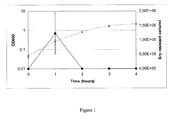
- the figure 1 shows the development of competence during growth of strain LMD-9 in CDM using pG + host9 plasmid as transformant DNA.
- Optical density (OD 600 ) ( ⁇ , dashed line) was used to measure cell numbers and count of cells resistant to erythromycin (Ery resistant cells) ( ⁇ , plain line) was used to assess competence.
- 1 ⁇ g of plasmid DNA was mixed with 100 ⁇ l of cells. The mean of three independent experiments are presented and error bars indicate standard deviation.
- strain TIL1192 (LMD-9 feoB :: erm ) containing an erythromycin ( erm ) resistant cassette introduced into the chromosome of strain LMD-9 at the ⁇ eo locus. Integration of a PCR fragment by homologous recombination in the chromosome of strain LMD-9 was demonstrated in the framework of this construction.
- Chromosomal DNA of strain TIL1192 was further used as donor DNA to study the timing of the triggering of the competence state during growth in CDM.
- the figure 2 shows the development of competence during growth of strain LMD-9 in CDM using chromosomal DNA of strain TIL1192 as transformant DNA.
- Optical density (OD 600 ) ( ⁇ , dashed line) was used to measure cell number and count of cells resistant to erythromycin (Ery resistant cells) ( ⁇ , plained line) was used to assess competence.
- 1 ⁇ g of chromosomal DNA was mixed with 100 ⁇ l of cells. The mean of four independent experiments are presented and error bars indicate standard deviation.
- strain TIL1195 (LMD-9 comEC :: erm ).
- ComEC is one of the proteins of the DNA uptake machinery essential for natural transformation in S. pneumoniae and B.subtilis.
- TIL1193 (LMD-9 feo :: aphA3 ) as a chromosomal DNA source with a different antibiotic resistance than erythromycin.
- LMD-9 chromosomal DNA of strain TIL1193
- TIL1192 chromosomal DNA of strain TIL1192
- strain TIL1196 (LMD-9 comX :: erm ) . Samples of strain'cells TIL1196 grown in CDM were harvested every 30 min for 2 hours and tested for transformation with chromosomal DNA of strain TIL1193.
- the pG+host plasmids generate linear plasmid multimers in Lactococcus lactis ( Maguin et al., Efficient insertional mutagenesis in lactococci and other gram-positive bacteria. J. Bacteriol. 178:931-935, 1996 ). Such is probably also the case in S. thermophilus.
- the Ami transporter indirectly controls the transcription of genes necessary for the development of competence in streptococci.
- the figure 3 shows the relative expression levels of comX, recA, dprA and comGA between S. thermophilus LMD-9 and strain TIL883 (LMD9 ⁇ amiCDE ) or strain TIL1196 (LMD-9 comX :: erm ) .
- Relative expression levels were computed using the comparative critical threshold method (2 - ⁇ C T) as described by Livak and Schmittgen (Analysis of relative gene expression data using real-time quantitative PCR and the 2(- ⁇ C(T)) Method. Methods, 25:402-408, 2001 ). Data are expressed as means from three independent experiments and were significant according to an analysis of variance (P ⁇ 0.05).
- the oligopeptide-binding protein AmiA3 plays the major role in the control of competence.
- strain LMD-9 displays only two genes encoding oligopeptide-binding proteins, amiA1 ( ster_1409 ), the first gene of the ami operon ( ster_1408 to ster _ 1405 ) and amiA3 ( ster _ 1411 ) that is flanked by two transposase encoding genes.
- TIL1197 ( amiA3 :: erm )
- TIL1198 ( ⁇ amiA1 )
- TIL1199 ( amiA3 :: erm ⁇ amiA1 ) corresponding to insertional mutagenesis of amiA3 , deletion of amiA1 and a combination of both mutations, respectively.
- the transformability of the three strains was tested using chromosomal DNA of strain TIL 1193 and compared to that of strain LMD-9 at its optimum of competence, i.e. one hour after the dilution of the cells in CDM.
- the Ami3 oligopeptide-binding protein imports a peptide involved with a transcriptional regulator in the control of the expression of comX.
- This peptide could be a specific pheromone or a peptide resulting from the degradation of secreted proteins or proteins released by lysis of bacteria.
- the growth medium composition influences the competence state of S. thermophilus.
- the transformability of the mutant was assessed for three hours every thirty minutes using chromosomal DNA of strain TIL1193 ( ⁇ eo :: aphA3 ). Three independent experiments were performed and no kanamycin resistant transformants were obtained indicating that ster0316 is involved in the triggering of competence in S. thermophilus.
- a small CDS, papR-like is located downstream of gene ster0316 and is not annotated in Genbank.
- PlcR regulators As the activity of PlcR regulators is controlled by peptides, we suspected that the peptide encoded by this small CDS papR-like could be involved in the controlled of the activity of Ster0316.
- papR-like was deleted and replaced by a spectinomycin resistance cassette leading to the construction of a papR-like :: spec mutant. The transformability of the mutant was assessed for three hours every thirty minutes using plasmid DNA (pGhost9). Four independent experiments were performed and no erythromycin resistant transformants were obtained indicating that papR-like is most probably involved in the triggering of competence in S. thermophilus probably through the control of the activity of Ster0316.
- S. thermophilus cells are grown overnight at 42°C in CDM. The culture is then diluted in CDM at an OD 600 0.05. Thirty minutes after dilution, the competence stimulating peptide (CSP), which is the mature peptide comprising SEQ ID N°1 or fragments or derivatives of SEQ ID N°1 that allow to induce competence in S. thermophilus, is added to the culture at a concentration of 1 ⁇ g/ml.
- CSP competence stimulating peptide
- 100 ⁇ l of the culture containing the CSP is mixed with 1 ⁇ g of DNA and incubated for 2 hours at 28°C when mixed with a thermosensitive replicative plasmid DNA or at 42°C when mixed with chromosomal DNA or PCR fragments, before being serially diluted and spread on M17lac plates with the appropriate antibiotic.
- S. thermophilus cells are electroporated with a replicative plasmid where the papR-like gene is under the control of a strong constitutive promoter. Cells containing this plasmid are grown overnight at 42°C in CDM. The culture is then diluted in CDM at an OD 600 0.05. One hour after dilution, 100 ⁇ l of the culture is mixed with 1 ⁇ g of DNA and incubated for 2 hours at 28°C when mixed with a thermosensitive replicative plasmid DNA or at 42°C when mixed with chromosomal DNA or PCR fragments, before being serially diluted and spread on M17lac plates with the appropriate antibiotic. The transformants can further be easily cured of the replicative plasmid by growth in the absence of antibiotic.
Landscapes
- Chemical & Material Sciences (AREA)
- Health & Medical Sciences (AREA)
- Life Sciences & Earth Sciences (AREA)
- Engineering & Computer Science (AREA)
- Genetics & Genomics (AREA)
- Organic Chemistry (AREA)
- Biotechnology (AREA)
- Bioinformatics & Cheminformatics (AREA)
- Wood Science & Technology (AREA)
- Zoology (AREA)
- General Health & Medical Sciences (AREA)
- Biochemistry (AREA)
- Biomedical Technology (AREA)
- General Engineering & Computer Science (AREA)
- Medicinal Chemistry (AREA)
- Microbiology (AREA)
- Tropical Medicine & Parasitology (AREA)
- Virology (AREA)
- Molecular Biology (AREA)
- Biophysics (AREA)
- Gastroenterology & Hepatology (AREA)
- Proteomics, Peptides & Aminoacids (AREA)
- General Chemical & Material Sciences (AREA)
- Plant Pathology (AREA)
- Physics & Mathematics (AREA)
- Micro-Organisms Or Cultivation Processes Thereof (AREA)
- Peptides Or Proteins (AREA)
Abstract
The present invention concerns a new competence stimulating peptide identified in Firmicutes, in particular Streptococcus, and more preferably S. thermophilus and methods of producing transformation competent Firmicutes, in particular Streptococcus, and more preferably S. thermophilus bacteria
Description
- The present invention relates to Firmicutes, in particular Streptococcus, and more preferably S. thermophilus competence, and more specifically to a new competence stimulating peptide.
- Many species of bacteria control gene expression on a community-wide scale by producing, secreting, detecting and responding to extracellular signaling molecules (sometimes called 'autoinducers' or 'pheromones') that accumulate in the environment. This phenomenon is termed 'quorum sensing' (QS) as gene expression is triggered by the 'sensing' of the pheromone when its concentration has reached a 'quorum'. In Gram-positive bacteria, the signaling molecules are mainly short peptides acting either from the outside part of bacteria or from the inside, after internalization via oligopeptide transport systems called Opp or Ami.
- Several bacterial functions such as the virulence in Staphylococcus aureus and Enterococcus faecalis, the competence in Bacillus subtilis or the production of bacteriocin in Lactococcus lactis are controlled by peptides acting at the surface of bacteria. However, the paradigm for mechanisms involving peptides detected from the outside is the regulation of the competence state for natural transformation by chromosomal donor DNA in Streptococcus pneumoniae. In this bacterium, the signaling peptide, called CSP (Competence Stimulating Peptide) and encoded by the gene comC, is secreted and matured by an ABC transporter, ComAB. The detection of the extracellular CSP at the surface of the bacterium is achieved by a two component system (TCS). Firstly, the membrane embedded histidine kinase, ComD, autophosphorylates in response to CSP and further phosphorylates its cognate response regulator, ComE, which activates transcription of a few genes, the early CSP-induced genes, including comCDE, comAB and comX. ComX is an alternative competence specific sigma factor required for expression of late CSP-induced genes, which comprise genes encoding the DNA uptake machinery.
- Concerning signaling peptides that are active after internalization by an oligopeptide transporter, three groups have been described in detail: (i) Phr peptides in B. subtilis involved in the control of sporulation, competence, and production of degradative enzymes and antibiotics, (ii) PapR peptides involved in the control of virulence of bacteria belonging to the Bacillus cereus group and (iii) peptides involved in the control of plasmid transfer in Enterococcus faecalis. All these extracellular short peptides interact with either Rap phosphatases (in B. subtilis) or transcriptional regulators (PlcR in B. cereus or PrgX in E. faecalis) to elicit a physiological response.
- Oligopeptide transport systems involved in these signaling pathways belong to the superfamily of ATP-binding cassette (ABC) transporters. They are composed of five subunits: an extracellular oligopeptide-binding protein, OppA that specifically captures the substrates, two transmembrane proteins, OppB and OppC that form the pore and two membrane-bound cytoplasmic ATP-binding proteins, OppD and OppF that provide the energy for peptide translocation. Several copies of the opp operon and/or of the genes encoding the oligopeptide-binding proteins can be present in a single genome. The genome of Streptococcus thermophilus encodes one oligopeptide transport system and depending on the strain, two (strain LMD-9 and CNRZ1066) or three (strain LMG18311) oligopeptide-binding proteins. In Gram-positive bacteria, two main functions have been attributed to the Opp transporters: nutrition and sensing. The nutritional role has been well studied in lactic acid bacteria such as Lactococcus lactis or S. thermophilus. During growth in milk, the Opp transporters supply these auxotrophic bacteria with peptides that serve as amino acid sources. The sensing function is more complex and is poorly documented, particularly in nonpathogenic bacteria.
- Among the nonpathogenic bacteria, S. thermophilus is of major importance for the food industry since it is massively used for the manufacture of yoghurt and Swiss or Italian-type cheeses with an annual market value of approximately $40 billion making S. thermophilus a species of major economic importance. The industry is continuously working to improve the properties of S. thermophilus starter strains. Even though the fermentation properties of this bacterium have been gradually improved by classical methods, there is great potential for further improvement through genetic engineering.
- However, until now, only genetic tools based on genetically modified bacteria exist. For example, Havarstein has disclosed an inducible system (stb system) that permits the surexpression of proteins in S. thermophilus (Blomgvist T. et al "Pheromone-induced expression of recombinant proteins in Streptococcus thermophilus" Arch Microbiol. 2006 Dec;186(6):465-73. Epub 2006 Aug 24.). In particular, this article discloses that a possible peptide-pheromone (STP) regulates bacteriocin production in S. thermophilus LMG 18311, and show that the StbABCHR (system that regulates bacteriocin production) quorum-sensing system can be exploited for inducible expression of recombinant proteins in this bacterial species.
- Thus, there is a need for an efficient method that allows obtaining improved Firmicutes, in particular Streptococcus, and more preferably S. thermophilus by natural processes of gene transfer, and not artificial gene transfer. This is particularly important for the food industries, for example the dairy industries which do not want to use GMO in their products.
- Regarding this need of genetic tools, competence is poorly understood in S. thermophilus. In fact, regarding QS systems, only one of them has been yet described, which QS system (called stb or blp) controls the production of a bacteriocin.
- The sequencing of the genome of three strains of S. thermophilus, CNRZ1066, LMG18311 and LMD-9, has revealed the presence of comX and of 14 proteins with strong similarities with the 14 proteins known to be required for competence in S. pneumoniae and encoded by late CSP-induced genes (Bolotin et al., Complete sequence and comparative genome analysis of the dairy bacterium Streptococcus thermophilus., Nat. Biotechnol. 22:1554-1558, 2004; Makarova et al. Comparative genomics of the lactic acid bacteria. Proc Natl Acad Sci U S A.,103(42):15611-6, 2006). Except comX, no ortholog of the early CSP-induced genes of S. pneumoniae have been detected in the genome of S. thermophilus. It has been shown that overexpression of comX induces the competent state in S. thermophilus LMG18311.
- Still, how transformation is turned on in this strain and what regulatory pathway and more especially which competence stimulating peptide (CSP) controls the expression of comX have not previously been explained.
- The present invention relates to an isolated polypeptide comprising the amino acids sequence SEQ ID N°1 (LKTLKIFVLFSLLIAILPYFAGCL), and derivatives thereof.
- The present invention also relates to an isolated nucleic acid encoding for said isolated polypeptide.
- The present invention still relates to a vector comprising said nucleic acid operably linked to a gene expression sequence.
- The present invention still relates to a host cell genetically engineered with said vector.
- The present invention also relates to a culture medium comprising an effective amount of said isolated polypeptide and nutrients that allow the growing of Firmicutes, in particular Streptococcus, and more preferably S. thermophilus.
- The present invention further relates to a use of said polypeptide, said nucleic acid, said vector, said host cell, or said culture medium for stimulating competence in Firmicutes, in particular Streptococcus, and more preferably S. thermophilus.
- The present invention still relates to a method of producing transformation competent Firmicutes, in particular Streptococcus, and more preferably S. thermophilus bacteria comprising the step (i) of contacting said Firmicutes, in particular Streptococcus, and more preferably S. thermophilus bacteria with an effective amount of an isolated polypeptide as defined in any one of
claims 1 to 5 for obtaining said transformation competent Firmicutes, in particular Streptococcus, and more preferably S. thermophilus bacteria. -
-
Figure 1 : Development of competence during growth of strain LMD-9 in CDM using pG+host9 plasmid as transformant DNA. -
Figure 2 : Development of competence during growth of strain LMD-9 in CDM using chromosomal DNA of strain TIL 1192 as transformant DNA. -
Figure 3 : Relative expression levels of comX, recA, dprA and comGA between S. thermophilus LMD-9 and strain TIL883 (LMD9 ΔamiCDE) or strain TIL1196 (LMD-9 comX::erm). - Surprisingly, the inventors have established that the Ami oligopeptide transport system is implicated in the control of competence in Streptococcus, in particular S. thermophilus. This transport system functions with several oligopeptide binding proteins. In strain LMD9 where two oligopeptide binding proteins are present, AmiA3 and AmiA1, AmiA3 plays the major role in the control of competence.
- More specifically, the inventors have identifying one new polypeptide implicated in the control of competence.
- In a first aspect, the present invention relates to an isolated polypeptide comprising the amino acids sequence SEQ ID N°1 (LKTLKIFVLFSLLIAILPYFAGCL), or derivatives and fragments capable of stimulating competence in Firmicutes, in particular Streptococcus, and more preferably S. thermophilus, thereof.
- The isolated polypeptide of the invention has the ability to stimulate the competence in Firmicutes, in particular Streptococcus, and more preferably S. thermophilus strains.
- According to the present invention, the length of the isolated polypeptide of the invention is less than 100 amino acids, preferably less than 50 amino acids.
- In a preferred embodiment, the isolated polypeptide of the present invention consists in the amino acids sequence SEQ ID N°1 (LKTLKIFVLFSLLIAILPYFAGCL), and derivatives thereof.
- In another preferred embodiment, the isolated polypeptide of the present invention further comprises an amino acid sequence corresponding to a signal peptide.
- Said signal peptide allows the secretion of the polypeptide of the invention in the extracellular medium when said polypeptide is expressed in a prokaryotic or .an eukaryotic cell, preferably in a prokaryotic cell, such as in a bacteria from the Streptococcus genus, more preferably in a Firmicutes, in particular Streptococcus, and more preferably S. thermophilus bacteria.
- Such signal peptides are well known from the skill person.
- As used herein, the term "derivatives"' refer to an amino acid sequence having a percentage of identity of at least 70% with the amino acid sequence SEQ ID N°:1, as an example at least 85% (i.e. 3 amino acids substitution), preferably of at least 90% (i.e. 2 amino acids substitution), and more preferably of at least 95% (i.e. 1 amino acids substitution).
- As an example of derivative, one can cite the polypeptide of sequence SEQ ID N°5 (MGKTLKIFVLFSLLIAILPYFAGCL), which is disclosed in the examples.
- As used herein, "percentage of identity" between two amino acids sequences, means the percentage of identical amino-acids, between the two sequences to be compared, obtained with the best alignment of said sequences, this percentage being purely statistical and the differences between these two sequences being randomly spread over the amino acids sequences. As used herein, "best alignment" or "optimal alignment", means the alignment for which the determined percentage of identity (see below) is the highest. Sequences comparison between two amino acids sequences are usually realized by comparing these sequences that have been previously aligned according to the best alignment; this comparison is realized on segments of comparison in order to identify and compared the local regions of similarity. The best sequences alignment to perform comparison can be realized, beside by a manual way, by using computer softwares using such algorithms (GAP, BESTFIT, BLAST P, BLAST N, FASTA, TFASTA). The identity percentage between two sequences of amino acids is determined by comparing these two sequences optimally aligned, the amino acids sequences being able to comprise additions or deletions in respect to the reference sequence in order to get the optimal alignment between these two sequences. The percentage of identity is calculated by determining the number of identical position between these two sequences, and dividing this number by the total number of compared positions, and by multiplying the result obtained by 100 to get the percentage of identity between these two sequences.
- As used herein an amino acid sequence having the ability to stimulate the competence in Firmicutes, in particular Streptococcus, and more preferably S. thermophilus strains can simply be identified by one of skill in the art in view of the following examples. As an example, the skilled person can screen for polypeptides derivated from SEQ ID N°1 inducing competence in Firmicutes, in particular Streptococcus, and more preferably S. thermophilus when present in the culture medium.
- It will also be understood that natural amino acids may be replaced by chemically modified amino acids. Typically, such chemically modified amino acids enable to increase the polypeptide half life.
- In a second aspect the present invention relates to an isolated nucleic acid encoding for the isolated polypeptide as described above.
- Said nucleic acid corresponds to RNA or DNA, preferably to DNA.
-
- In a third aspect the present invention relates to a vector comprising the nucleic acid encoding for the isolated polypeptide of the invention as described above operably linked to a gene expression sequence.
- Said gene expression sequence directs the expression of said nucleic acid within a prokarotic or an eukaryotic cell, preferably within a prokariotic cell, and more preferably within Firmicutes, in particular Streptococcus, and more preferably S. thermophilus bacteria. The "gene expression sequence" is any regulatory nucleotide sequence, such as a promoter sequence or promoter-enhancer combination, which facilitates the efficient transcription and translation of the nucleic acid to which it is operatively linked. The gene expression sequence may be a constitutive or inducible promoter.
- Such promoters are well known in the art. Promoters for use in the invention are preferably strong promoters, i.e. on induction in the relevant cell yield high levels of transcription of the downstream gene. Examples of strong inducible promoters include by examples promoters, from bacteria, involved in the production of bacteriocins such as the stb promoter.
- In general, the gene expression sequence shall include, as necessary, 5' non-transcribing and 5' non-translating sequences involved with the initiation of transcription and translation, respectively. The gene expression sequences optionally include enhancer sequences or upstream activator sequences as desired.
- As used herein, the nucleic acid sequence encoding the polypeptide of the invention and the gene expression sequence are said to be "operably linked" when they are covalently linked in such a way as to place the expression or transcription and/or translation of the polypeptide of the invention coding sequence under the influence or control of the gene expression sequence. Two DNA sequences are said to be operably linked if induction of a promoter in the 5' gene expression sequence results in the transcription of the polypeptide of the invention and if the nature of the linkage between the two DNA sequences does not result in the introduction of a frame-shift mutation, interfere with the ability of the promoter region to direct the transcription of the polypeptide of the invention, or interfere with the ability of the corresponding RNA transcript to be translated into a protein. Thus, a gene expression sequence would be operably linked to a nucleic acid sequence coding for the polypeptide of the invention if the gene expression sequence was capable of effecting transcription of that nucleic acid sequence such that the resulting transcript is translated into the desired polypeptide.
- Preferred vectors are plasmid vectors, which have been extensively described in the art and are well known to those of skill in the art. See e.g., SAMBROOK et al., "Molecular Cloning: A Laboratory Manual," Second Edition, Cold Spring Harbor Laboratory Press, 1989.
- The vector of the invention can include a selectable marker that is active in bacteria.
- In a forth aspect, the present invention relates to a host cell genetically engineered with the vector described previously.
- As used herein, the term "host cell genetically engineered" relates to host cells which have been transformed with the vector described previously.
- Said host cell is preferably a bacterial cell, such as a bacteria belonging to the Firmicutes phylum, preferably the Streptococcous genus, and more preferably a Streptococcus thermophilus bacteria.
- The introduction of the vector described previously into the host cell can be effected by method well known from one of skill in the art such as calcium phosphate transfection or electroporation.
- In a fifth embodiment, the present invention relates to a culture medium comprising an effective amount of the isolated polypeptide as described above and nutrients that allow the growing of Firmicutes, in particular Streptococcus, and more preferably S. thermophilus.
- According to the present invention, an "effective amount" of said isolated polypeptide is one which is sufficient to achieve a desired biological effect, in this case stimulating competence in Firmicutes, in particular Streptococcus, and more preferably S. thermophilus. As an example, said effective amount is comprised between 0,1 ng/ml and 1 mg/ml, preferably between 0,5 ng/ml and 1mg/ml, and more preferably between 1 ng/ml and 100 ng/ml.
- Such nutrients are well known from the skilled person and include, as an example dextrose, sodium chloride, sodium carbonate, disodium phosphate, sodium carbonate, amino acids or neopeptone.
- There are numerous causes of peptide instability or degradation, including hydrolysis and denaturation. This result may entail diminution of the induction of the competence in Firmicutes, in particular Streptococcus, and more preferably S. thermophilus. Stabilizers may be added to lessen or prevent such problems.
- According to a specific embodiment, the culture medium of the invention further comprises at least one stabilizer.
- Stabilizers include cyclodextrine and derivatives thereof (see
U.S. Pat. No.5,730,969 ). Suitable preservatives such as sucrose, mannitol, sorbitol, trehalose, dextran and glycerin can also be added to stabilize the final formulation. Polyols may stabilize a peptide, and are water-miscible or water-soluble. Suitable polyols may be polyhydroxy alcohols, monosaccharides and disaccharides including mannitol, glycerol, ethylene glycol, propylene glycol, trimethyl glycol, vinyl pyrrolidone, glucose, fructose, arabinose, mannose, maltose, sucrose, and polymers thereof. Various excipients may also stabilize peptides, including serum albumin, amino acids, heparin, fatty acids and phospholipids. - In a sixth aspect, the present invention relates to the use of a polypeptide as described above, a nucleic acid as described previously, a vector comprising such a nucleic acid, a host cell as defined previously, or a culture medium as described previously for stimulating competence in Firmicutes, in particular Streptococcus, and more preferably S. thermophilus.
- In a seventh aspect, the present invention relates to a method of producing transformation competent Firmicutes, in particular Streptococcus, and more preferably S. thermophilus bacteria comprising the step (i) of contacting said Firmicutes, in particular Streptococcus, and more preferably S. thermophilus bacteria with an effective amount of an isolated polypeptide as defined previously for obtaining said transformation competent Firmicutes, in particular Streptococcus, and more preferably S. thermophilus bacteria.
- Preferably, the method of the invention is performed in a culture medium as described previously.
- In a eight aspect, the present invention relates to a method of producing transformation competent Firmicutes, in particular Streptococcus, and more preferably S. thermophilus bacteria comprising the step (i) of culturing said Firmicutes, in particular Streptococcus, and more preferably S. thermophilus bacteria in a peptide free medium allowing the growth of said bacteria to an OD600 comprised between 1.5 and 2.5 preferably about 2 and (i') diluting said culture to an OD600 comprised between 0.01 and 0.1, preferably about 0.05.
- Preferably, the present invention relates to a method of producing transformation competent Firmicutes, in particular Streptococcus, and more preferably S. thermophilus bacteria comprising the step (i) of culturing said Firmicutes, in particular Streptococcus, and more preferably S. thermophilus bacteria in M17 lactose (10g/l) for 8 hours and (i') diluting said culture 50 fold in a peptide free medium . The diluted culture is then incubated at 4°C for 10 hours and further incubated at 42°C for 6 hours allowing the growth of said bacteria to an OD600 comprised between 1.5 and 2.5 preferably about 2, and (i") diluting said culture in a peptide free medium to an OD600 comprised between 0.01 and 0.1, preferably about 0.05.
- For example, said peptide free medium comprises:
g/mol g/l Lactose/Buffer lactose 360,32 10 g Na acetate 82,03 1 g ammonium citrate 243,2 0,6 g KH2PO4 136,09 3 g K2HPO4 174,18 2,5 g urea 60,06 0,240 g Vitamines 1 Ascorbic acid L+ 176,13 0,5 g 2 pyridoxamin 241,1 5 mg 3 nicotinic acid 123,1 1 mg 4 riboflavin 376,4 1 mg 5 panthothenic acid 238,3 1 mg 6 thiamin 337,3 1 mg 7 pyridoxin 205,6 2 mg 8 aminobenzoic acid 137,1 10 mg 9 biotin 244,3 10 mg 10 folic ac 441,4 1 mg 11 B12 1355,4 1 mg 12 orotic ac 156,1 5 mg 13 thymidine 242,2 5 mg 14 inosin 268,23 5 mg 15 DL 6,8 thioctic ac 206,3 2,5 mg Metals MgCL2-6H2O 203,3 0,200 g CaCL2-2H2O 147,02 0,050 g FeCl2 198,81 0,005 g ZnS04 287,54 0,005 g CuSO4 249,7 0,000 g CoCl2 237,9 0,003 g MnS04 169 0,028 g Amino Acid L aspartic acid 133,1 0,455 g L glutamic acid 147,13 0,398 g L asparagine 132,1 0,350 g L glutamine 146,1 0,390 g L histidine 155,16 0,150 g L arginine 174,2 0,350 g L lysine 146,2 0,440 g L serine 105,1 0,225 g L threonine 119,1 0,175 g glycine 75,07 0,175 g L alanine 89,1 0,240 g L isoleucine 131,18 0,210 g L leucine 131,18 0,475 g L valine 117,1 0,325 g L tryptophan 204,2 0,050 g L méthionine 149,2 0,125 g L proline 115,13 0,675 g L phenylalanine 165,19 0,275 g L tyrosine 181,2 0,290 g L cystéine 121,16 0,250 g Nucleic acids adenine 135,1 0,010 g uracil 112,09 0,010 g xanthine 174,1 0,010 g guanine 187,6 0,010 g - The medium is adjusted to pH 6,6 with HCl, completed to 1 L with water and filtered on GV filter.
- Adavantageously, said Firmicutes, in particular Streptococcus, and more preferably S. thermophilus bacteria is selected in the group comprising S. thermophilus LMD-9, S. thermophilus CNRZ1066 and S. thermophilus LMG18311, preferably S. thermophilus LMD-9.
- According to a preferred embodiment, said methods are for producing a mutant bacteria and said method further comprises the step (ii) contacting said transformation competent Firmicutes, in particular Streptococcus, and more preferably S. thermophilus bacteria with homologous DNA under conditions to allow transformation of said bacteria with said homologous DNA and insertion of the homologous DNA in the chromosome of Firmicutes, in particular Streptococcus, and more preferably S. thermophilus by homologous recombination.
- Said homologous DNA can be linear DNA (PCR fragment), plasmid DNA or chromosomal DNA.
- Advantageously, said contacting step (ii) is realised simultaneously with the step (i') of diluting the culture of the method according to the eighth aspect. In that case, the transformation happened essentially during the 100 minutes following said contacting, more specifically essentially during the first 60 minutes.
- Advantageously, said methods may comprise the steps (iii) of selecting and/or amplifying the mutant bacteria thus generated.
- In a ninth aspect, the present invention concerns a method of screening a compound, preferably a polypeptide, capable of stimulating competence in Firmicutes, in particular Streptococcus, and more preferably S. thermophilus using AMI-3 target and comprising the steps of contacting said compound with AMI-3, verifying the binding between AMI-3 and said compound, and selecting compound that bind to AMI-3 as a compound capable of stimulating competence in Firmicutes, in particular Streptococcus, and more preferably S. thermophilus.
- Methods for verifying the binding between AMI-3 and said compound are well known by the skill person.
- In a tenth aspect, the present invention concerns a method for identifying a compound stimulating competence in Firmicutes, in particular Streptococcus, and more preferably S. thermophilus comprising the steps of:
- i) contacting, with said compound, a host cell (preferably a bacteria) transformed with a nucleic acid comprising a nucleic acid sequence coding for a reporter protein (preferably GFP, béta Galactosidase, etc.) under the control of all or part of a promoter preceded by the inverted repeat sequence recognized by the PlcR like regulator (Ster0316 in strain LMD9, str0270 in strain CNRZ1066, stu0270 in strain LMG18311) ATAGTGACATATATGTCTCTAT (SEQ ID N°3) or GTGGTGACATAAATGTCACTAT (SEQ ID N°4);
- ii) selecting the compound that stimulates the expression of said reporter protein.
- Methods for testing the stimulation of Firmicutes, in particular Streptococcus, and more preferably S. thermophilus competence are well known from the skilled person. Examples of such methods are disclosed in the examples.
- In a preferred embodiment, the method of the invention can further comprise the steps of:
- iii) contacting said compound with Firmicutes, in particular Streptococcus, and more preferably S. thermophilus in the presence of DNA (plasmids, chromosomal DNA, etc.); and
- iv) selecting the compounds that effectively enhance competence.
- In the following, the invention is described in more detail with reference to amino acid sequences, nucleic acid sequences and the examples. Yet, no limitation of the invention is intended by the details of the examples. Rather, the invention pertains to any embodiment which comprises details which are not explicitly mentioned in the examples herein, but which the skilled person finds without undue effort.
- In order to find physiological functions controlled by signaling peptides that are internalized by the Ami transporter, we compared the proteome of the wild type LMD-9 strain and its isogenic mutant deleted for the ami operon, LMD-9 ΔamiCDE (TIL883; IBRAHIM et al., J. Bacteriol., vol.189, p:8844-8854, 2007).
- In order to by-pass the nutritional function of the Ami transporter, cells were gown in CDM, a free-peptide chemically defined medium (CDM), containing only amino acids as nitrogen source, as described by Letort & Juillard, Development of a minimal chemically-defined medium for the exponential growth of Streptococcus thermophilus, J. Appl. Microbiol., vol. 91., p. 1023-1029, 2001. Optical density at 600 nm (OD600) of the cultures was measured using a spectrophotometer UVIKON 931 (KONTRON).
- Proteins were prepared from cells grown in CDM and harvested at OD600 0.7 in two independent cultures for each strain. Bacteria were mechanically disrupted and the supernantants were ultracentrifuged at 220, 000 g for 30 min at 4°C to enrich the 'cell envelope pellets' in cell-envelope proteins. Finally the pellet were resuspended in disruption buffer and sonicated for 15 min at 4°C in an ultrasonic bath. The cell-envelope pellet fractions (10 µg) were separated by 1D electrophoresis. Each 1D electrophoresis lane was cut into 26 pieces of gel (2 mm width). In-gel digestion of the proteins was performed with the Progest system (Genomic Solution) according to the following protocol.
- Gel pieces were washed firstly, in two successive baths of (i) 10%
acetic acid 40% ethanol and (ii) 100% acetonitrile (ACN) and secondly, in two successive baths of (i) 25 mM NH4CO3 and (ii) 100% ACN. Gel pieces were further incubated in 10 mM DTT in 25 mM NH4CO3, 30 min at 55°C and in 50 mM iodoacetamide in 25 mM NH4CO3, 45 min at room temperature for cysteine reduction and alkylation, respectively. Digestion was subsequently performed for 6 h at 37°C with 125 ng of modified trypsin (PROMEGA) dissolved in 20% methanol and 20 mM NH4CO3, per gel piece. The peptides were extracted successively with (i) 0.5% trifluoroacetic acid (TFA) 50% ACN and (ii) with 100% ACN. The resulting peptide extracts were dried in a vacuum centrifuge and suspended in 25 µl of 0.08% TFA, and 2% ACN. - Fractions enriched in cell envelope proteins were then analyzed by a label-free comparative proteomic approach combining 1D electrophoresis with LC-MS/MS analysis.
- LC-MS/MS analysis was performed on Ultimate 3000 LC system (DIONEX) connected to LTQ Orbitrap mass spectrometer (THERMO FISHER) by nanoelectrospray ion source. Tryptic peptide mixtures (4 µl) were loaded at
flow rate 20 µl min-1 onto precolumn Pepmap C18 (0.3 X 5 mm, 100 Å, 5 µm; DIONEX). After 4 min, the precolumn was connected with the separating nanocolumn Pepmap C18 (0.075 X 15cm, 100Å, 3 µm) and the linear gradient was started from 2 to 36% of buffer B (0.1 % formic acid, 80% acetonitrile) in buffer A (0.1% formic acid, 2% acetonitrile) at 300 nl min-1 over 50 min. Ionization was performed on liquid junction with a spray voltage of 1.3 kV applied to non-coated capillary probe (PicoTip EMITER 10 µm tip ID; NEW OBJECTIVE). Peptides ions were automatically analyzed by the data dependent method as follows: full MS scan (m/z 300-1600) on Orbitrap analyser and MS/MS on the 4 most abundant precursor on the LTQ linear ion trap. In this study only +2 and +3 charged peptides were subjected to MS/MS experiments with an exclusion window of 1.5 min, with classical peptides fragmentation parameters: Qz = 0.22, activation time = 50 ms, collision energy = 35%. - The raw data produced on LTQ-Orbitrap mass spectrometer were first converted in mzXML file with ReADW (http://sashimi.sourceforge.net) and in a second step, protein identification was performed with X!Tandem software (X!Tandem tornado 2008.02.01.3, http://www.thegpm.org) against a protein database of S. thermophilus LMD-9 (GenBank: CP000419.1), associated to a proteomic contaminant database. The X!Tandem search parameters were: trypsin specificity with one missed cleavage, fixed alkylation of cysteine and variable oxydation of methionine. The mass tolerance was fixed to 10 ppm for precursor ions and 0.5 Da for fragment ions. For all proteins identified with a protein E-value < 0.01 in the first step, we searched for additional peptides to reinforce identification using similar parameters except that semi-tryptic peptides and protein N-terminal acetylations were accepted. All peptides identified with an E-value < 0.1 were conserved. All results for each piece of gel were merged with an home-made program written in java by Benoit Valot at the PAPPSO platform (http://moulon.inra.fr/PAPPSO). The final search results were filtered using a multiple threshold filter applied at the protein level and consisting of the following criteria: protein E-value < 10-8 identified with a minimum of two different peptides sequences, detected in at least one piece of gel, with an peptide E-value < 0.05.
- We focused our attention on proteins that were detected in the extracts prepared from strain LMD-9 and that completely disappeared in the extracts prepared from strain TIL883. The identified proteins are disclosed in the Table I.
- For each protein detected, we calculated an abundance factor defined as the total number of spectra detected per protein in each gel lane normalized by the theoretical number of peptides having a mass ranging between 800 and 2500 Da. Proteins that were detected in the two repetitions performed for strain LMD-9 and absent in the two repetitions performed for strain TIL883 (abundance factor =0) were taken into account.
TABLE I GenBank MW Protein identification Abundance factora LMD-9 TIL883 Proteins essential for natural transformationb STER1521 24400 DNA uptake protein or related DNA-binding protein, ComEA 0.63-0.50 0-0 STER0922 31100 Predicted Rossmann fold nucleotide-binding protein involved in DNA uptake, DprA 1.12-1.12 0-0 STER1821 14700 Single-stranded DNA-binding protein, SsbB 0.50-0.83 0-0 STER1840 11800 Competence protein ComGC 1-1.75 0-0 STER1841 33800 Type II secretory pathway/competence component, ComGB 0.64-0.82 0-0 STER1842 35300 Type II secretory pathway/competence component, ATPase, ComGA 0.95-0.79 0-0 STER0189 20100 ComX 0.57-0.14 0-0 Proteins induced by the competence state but not essential for transformationb STER0057 30100 Surface antigen, CbpD 0.75-0.75 0-0 STER1430 25700 DNA repair protein, RadC 0.25-0.33 0-0 Subunits of the Ami oligopeptide transport system STER_1407 34600 ABC-type dipeptide/oligopeptide/nickel transport system, permease component, AmiD 2.17-2.33 0-0 STER_1408 55500 ABC-type dipeptide/oligopeptide/nickel transport system, permease component, AmiC 1.41-1.12 0-0 STER_1406 39800 ABC-type dipeptide/oligopeptide/nickel transport system, ATPase component, AmiE 1.28-1. 0-0 Other proteins STER_1356 50500 Radical SAM superfamily enzyme 1.55-1.65 0-0 STER_1652 50300 lactococcin A ABC transporter permease protein, PcsB 0.60-1.00 0-0 STER_0329 32200 Urease accessory protein UreH 0.57-0.57 0-0 STER_0123 18500 Predicted RNA-binding protein containing a PIN domain 0.60-0.40 0-0 STER_1296 45700 Permease of the major facilitator superfamily 0.57-0.29 0-0 STER_0331 29100 ABC-type cobalt transport system, permease component CbiQ or related transporter 0.23-0.46 0-0 STER_1779 12200 Thioredoxin domain containing protein 0.33-0.33 0-0 STER_1834 43200 Acetate kinase 0.26-0.32 0-0 aThe abundance factor is the ratio between the total number of spectra obtained during the protein identification process on the theoretical number of peptides ranging between 800 and 2500 Da. Two repetitions were performed for each strain leading to two values.
bThese categories of proteins have been defined from the results obtained with the orthologues of these proteins in S. pneumoniae. - The results show that in addition to the subunits C, D and E of the Ami transporter, which were absent from the mutant, as expected, seventeen proteins fulfilled this criterion (Table I). Eight were encoded by genes the orthologues of which were identified as late CSP-induced genes in S. pneumoniae. Among them, six have also been identified as essential for natural transformation (Peterson et al., Identification of competence pheromone responsive genes in Streptococcus pneumoniae by use of DNA microarrays. Mol. Microbiol. 51:1051-1070, 2004). The ComX protein involved in the regulation of the competence state was also detected in strain LMD-9 but not in strain TIL883.
- These results suggest that the Ami transporter is involved in the regulatory pathway that controls the induction of the competence state in S. thermophilus and also that natural transformation can be turned on in CDM during the exponential growth phase.
- To check the hypothesis formulated on the basis of our proteomic results, we first tested the natural transformability of S. thermophilus using the pG+host9 plasmid.
- An overnight culture of strain LMD-9 grown in CDM at 42°C was diluted in CDM to OD600 0.05. 2 ml of this diluted culture were distributed in 2-ml tubes and incubated in a water bath at 42°C. Once each hour for four hours, a sample was used to measure the OD600 and 100 µl were mixed with 1 µg of plasmid DNA. Cells with DNA were incubated for 2 hours at 28°C before being plated on M17 medium (DIFCO) supplemented with 10 g liter-1 lactose (M171ac) with erythromycin (5 µg ml-1 for S. thermophilus).
- The
figure 1 shows the development of competence during growth of strain LMD-9 in CDM using pG+host9 plasmid as transformant DNA. Optical density (OD600) (×, dashed line) was used to measure cell numbers and count of cells resistant to erythromycin (Ery resistant cells) (◆, plain line) was used to assess competence. 1 µg of plasmid DNA was mixed with 100 µl of cells. The mean of three independent experiments are presented and error bars indicate standard deviation. - We obtained erythromycin resistant cells (transformants) but only in samples harvested one hour after dilution (
Figure 1 ). We observed a mean of 1.2 × 10⁶ transformants per ml (standard error, ± 7.2 × 10⁵ transformants per ml; n=3). The presence of the plasmid pG+host9 in these bacteria was checked on several colonies by PCR. - This result indicates that bacteria were able to take up the plasmid but only at a specific growth stage corresponding to the beginning of the exponential phase (OD600 0.2-0.3).
- To confirm the transformability of S. thermophilus, to demonstrate its ability to take up linear DNA (PCR fragment or chromosomal DNA) and to incorporate it by homologous recombination in its chromosome and also to assess the kinetics of the transformation rate more precisely, we needed chromosomal DNA containing an antibiotic resistant marker.
- For that purpose, we constructed strain TIL1192 (LMD-9 feoB::erm) containing an erythromycin (erm) resistant cassette introduced into the chromosome of strain LMD-9 at the ƒeo locus. Integration of a PCR fragment by homologous recombination in the chromosome of strain LMD-9 was demonstrated in the framework of this construction.
- Chromosomal DNA of strain TIL1192 was further used as donor DNA to study the timing of the triggering of the competence state during growth in CDM.
- An overnight culture of strain LMD-9 grown in CDM at 42°C was diluted in CDM to OD600 0.05. 2 ml of this diluted culture were distributed in 2-ml tubes and incubated in a water bath at 42°C. Once twenty minutes for two hours, a sample was used to measure the OD600 and 100 µl were mixed with 1 µg of chromosomal DNA. Cells with DNA were incubated for 2 hours at 42°C before being plated on M17 medium (DIFCO) supplemented with 10 g liter-1 lactose (M17lac) with erythromycin (5 µg ml-1 or kanamycin 1000µg/ml-1 for S. thermophilus).
- The
figure 2 shows the development of competence during growth of strain LMD-9 in CDM using chromosomal DNA of strain TIL1192 as transformant DNA. Optical density (OD600) (×, dashed line) was used to measure cell number and count of cells resistant to erythromycin (Ery resistant cells) (◆, plained line) was used to assess competence. 1 µg of chromosomal DNA was mixed with 100 µl of cells.The mean of four independent experiments are presented and error bars indicate standard deviation. - The kinetics of transformation obtained from four independent experiments (
Fig. 2 ) confirmed that natural competence is a short transitory state. Transformability rose sharply 20 min after dilution (OD600 0.06), reached an optimum one hour after dilution (OD600 0.17∼0.2) and then rapidly declined. One hundred min after dilution (OD600 0.4∼0.5), cells were no longer transformable. At the optimum, the average transformation rate was 3.8 10-6 (standard error, ± 4.6 10-7; n=4). - We also tested the transformability of strain TIL883 (ΔamiCDE) with chromosomal DNA of TIL1192 under the same conditions. No transformants were obtained during the growth of this strain in CDM.
- In order to confirm that antibiotic resistant clones obtained from the previous experiments were the result of a natural transformation involving ComEC and most probably a transformasome complex similar to the one described in S. pneumoniae, we constructed strain TIL1195 (LMD-9 comEC::erm). ComEC is one of the proteins of the DNA uptake machinery essential for natural transformation in S. pneumoniae and B.subtilis.
- We also constructed TIL1193(LMD-9 feo::aphA3) as a chromosomal DNA source with a different antibiotic resistance than erythromycin. We checked that natural transformation of strain LMD-9 with chromosomal DNA of strain TIL1193 gave a similar transformation rate as with chromosomal DNA of strain TIL1192 (data not shown). Finally, we tried to naturally transform strain TIL1195 with chromosomal DNA of strain TIL1193. Samples of cells of TIL1195 grown in CDM were harvested every 30 min for 2 hours and tested for transformation.
- We obtained no kanamycin-resistant clones.
- In order to confirm that ComX is essential for natural transformation in S. thermophilus, we constructed strain TIL1196 (LMD-9 comX::erm). Samples of strain'cells TIL1196 grown in CDM were harvested every 30 min for 2 hours and tested for transformation with chromosomal DNA of strain TIL1193.
- As expected, we obtained no kanamycin-resistant clones during this kinetic.
- Finally, we have found a natural condition of growth that turns on the transformability of strain LMD-9. Using plasmid or chromosomal DNA as donor DNA, we showed that cells were transformable in CDM, during a narrow window, the optimum being one hour after the dilution of an overnight culture in CDM. The rates obtained made it possible to easily construct deletion mutants using PCR fragments and were much higher with plasmid DNA than with chromosomal DNA. This difference can be explained by two factors. First, the higher number of molecules of plasmid compared to the number of molecules of chromosome present in 1 µg DNA (around 450 fold more). Second, the pG+host plasmids generate linear plasmid multimers in Lactococcus lactis (Maguin et al., Efficient insertional mutagenesis in lactococci and other gram-positive bacteria. J. Bacteriol. 178:931-935, 1996). Such is probably also the case in S. thermophilus.
- Among the proteins detected in strain LMD-9 and not in strain TIL883, three were chosen for a transcriptional study of the corresponding genes. These proteins were ComGA that is involved in the pore assembly, DprA, a recombination mediator protein that conveys incoming ssDNA to the recombinase RecA and the sigma factor ComX. Although the abundance factor of RecA did not reach zero in the strain TIL883 but decreased by a factor 4 (data not shown), we chose to follow its encoding gene because RecA is essential for transformation in many Gram-positive transformable species.
- The
figure 3 shows the relative expression levels of comX, recA, dprA and comGA between S. thermophilus LMD-9 and strain TIL883 (LMD9 ΔamiCDE) or strain TIL1196 (LMD-9 comX::erm). Relative expression levels were computed using the comparative critical threshold method (2-ΔΔCT) as described by Livak and Schmittgen (Analysis of relative gene expression data using real-time quantitative PCR and the 2(-ΔΔ C(T)) Method. Methods, 25:402-408, 2001). Data are expressed as means from three independent experiments and were significant according to an analysis of variance (P<0.05). - As shown in
figure 3 , the level of expression of comGA and dprA of strain LMD-9 was higher than that of strain TIL883. To a lesser extent but with significant values (P<0.05), we obtained similar results with comX and recA that were 5-fold and 4-fold more highly expressed in strain LMD-9, respectively. - To confirm that the transcription of genes dprA, comGA and recA is under the control of ComX, we compared the expression of these genes in strain LMD-9 and strain TIL1196 (LMD9 comX::erm). As expected, the transcription of the three genes was significantly higher in strain LMD-9 than in strain TIL1196 (
figure 3 ) confirming that their transcription is positively controlled by ComX. - The genome of strain LMD-9 displays only two genes encoding oligopeptide-binding proteins, amiA1 (ster_1409), the first gene of the ami operon (ster_1408 to ster_1405) and amiA3 (ster_1411) that is flanked by two transposase encoding genes.
- We constructed three strains, TIL1197 (amiA3::erm), TIL1198 (ΔamiA1) and TIL1199 (amiA3::erm ΔamiA1) corresponding to insertional mutagenesis of amiA3, deletion of amiA1 and a combination of both mutations, respectively.
- The transformability of the three strains was tested using chromosomal DNA of strain TIL 1193 and compared to that of strain LMD-9 at its optimum of competence, i.e. one hour after the dilution of the cells in CDM.
- As expected, no kanamycin resistant cells were obtained after transformation of strain TIL1199. However, the percentage of the competence rate of strains TIL1197 (amiA3::erm) and TIL1198 (ΔamiA1) compared to that of strain LMD-9 were 1% (standard error ±2) and 48% (standard error ±4), respectively.
- This result suggests that AmiA3 is more important in the triggering of the competence than AmiA1.
- As our experiments were performed in a medium without peptides, we hypothesize that in S. thermophilus, the Ami3 oligopeptide-binding protein imports a peptide involved with a transcriptional regulator in the control of the expression of comX. This peptide could be a specific pheromone or a peptide resulting from the degradation of secreted proteins or proteins released by lysis of bacteria.
- Kinetics of competence rate were performed with LMD-9 cells grown in M171ac and with pG+host9 plasmid DNA or chromosomal DNA of strain TIL1192.
- With both types of donor DNA, no erythromycin resistant transformants were obtained with cells harvested every 30 min for 2 hours.
- We then compared the expression of comGA, dprA, recA and comX from RNA extracted from LMD-9 cells grown in CDM and M17lac medium and harvested at OD600 0.2.
- We observed that these genes were respectively, 1492, 2246, 24 and 236 more highly expressed in CDM than in M17lac which was consistent with the absence of transformants during growth in M17lac.
- We tested natural transformability of the two other S. thermophilus strains, CNRZ1066 and LMG18311.
- For this purpose, we used the plasmid pG+host9 as donor DNA and cells were harvested every 30 min for 2 hours.
- We obtained no erythromycin resistant clones with strain CNRZ1066 and a few erythromycin resistant clones with strain LMG18311, one hour after dilution. However, we obtained 2 104 less transformants with strain LMG18311 than with strain LMD-9. We also used chromosomal DNA of strain TIL1195 (LMD-9 comEC::erm) as donor DNA because surrounding regions of gene comEC are highly conserved between strains LMD-9, CNRZ1066 and LMG18311 (more than 98 % identity over 5 kb upstream and downstream comEC). Under this condition, we obtained no erythromycin resistant clones with both strains.
- During the proteomic approach described in
paragraph 1, we noticed that the synthesis of a transcriptional regulator annotated PlcR, ster0316, decreased in the Ami mutant compared to the wild type strain. These regulators are known to be regulated by peptides that are secreted and imported back by Opp. As we suspected that the triggering of the competence state in S. thermophilus is controlled by a secreted peptide further imported by Opp, we thought that this regulator could be involved in the mechanism controlling the triggering of competence in S. thermophilus. We deleted ster0316 and replaced it by an erythromycin resistance cassette. The transformability of the mutant was assessed for three hours every thirty minutes using chromosomal DNA of strain TIL1193 (ƒeo ::aphA3). Three independent experiments were performed and no kanamycin resistant transformants were obtained indicating that ster0316 is involved in the triggering of competence in S. thermophilus. - A small CDS, papR-like, is located downstream of gene ster0316 and is not annotated in Genbank. As the activity of PlcR regulators is controlled by peptides, we suspected that the peptide encoded by this small CDS papR-like could be involved in the controlled of the activity of Ster0316. papR-like was deleted and replaced by a spectinomycin resistance cassette leading to the construction of a papR-like::spec mutant. The transformability of the mutant was assessed for three hours every thirty minutes using plasmid DNA (pGhost9). Four independent experiments were performed and no erythromycin resistant transformants were obtained indicating that papR-like is most probably involved in the triggering of competence in S. thermophilus probably through the control of the activity of Ster0316.
- In order to check that the absence of transformality of the papR-like::spec mutant was the result of the absence of the papR-like gene and not the result of a polar effect of the presence of the spectinomycin resistant cassette on upstream or downstream genes of papR-like, we cloned the papR-like gene in a plasmid in order to express it under the control of a strong constitutive promoter and introduced this plasmid by electroporation in the papR-like::spec mutant. The transformability of the mutant was assessed one hour after the dilution of the preculture in CDM using plasmid DNA (pGhost9::kana). We obtained kanamycin resistant transformants indicating that the transformability of the papR-like::spec mutant was restaored by the presence of papR and that the absence of transformality of the papR-like::spec mutant was the result of the absence of the papR-like gene.
- S. thermophilus cells are grown overnight at 42°C in CDM. The culture is then diluted in CDM at an OD600 0.05. Thirty minutes after dilution, the competence stimulating peptide (CSP), which is the mature peptide comprising SEQ ID N°1 or fragments or derivatives of SEQ ID N°1 that allow to induce competence in S. thermophilus, is added to the culture at a concentration of 1µg/ml. Thirty minutes later, 100 µl of the culture containing the CSP is mixed with 1 µg of DNA and incubated for 2 hours at 28°C when mixed with a thermosensitive replicative plasmid DNA or at 42°C when mixed with chromosomal DNA or PCR fragments, before being serially diluted and spread on M17lac plates with the appropriate antibiotic.
- Strain S. thermophilus LMG18311 is naturally poorly transformable . We introduced in this strain and by electroporation, the plasmid comprising the sequence SEQ ID N°6 coding for the polypeptide derivatives having the sequence SEQ ID N°5, plasmid that allows the overexpression of the papR-like gene and that is described in paragraph 7. The transformability of the mutant was assessed one hour after the dilution of the culture of this mutant in CDM using plasmid DNA (pGhost9::kana). 100µl of the culture was mixed with 1µg of DNA. Cells were further incubated 2 hours at 30°C before been spread on M17lac plates containing the appropiate antibiotic. The LMG18311 wild type strain was used as a control. We obtained no kanamycin resistant transformants with the control and many (>1000) with the mutant overexpressing the papR-like gene. This result indicates that the overexpression of the papR-like gene is able to stimulate the transformability of a poorly transformable strain.
- S. thermophilus cells are electroporated with a replicative plasmid where the papR-like gene is under the control of a strong constitutive promoter. Cells containing this plasmid are grown overnight at 42°C in CDM. The culture is then diluted in CDM at an OD600 0.05. One hour after dilution, 100 µl of the culture is mixed with 1 µg of DNA and incubated for 2 hours at 28°C when mixed with a thermosensitive replicative plasmid DNA or at 42°C when mixed with chromosomal DNA or PCR fragments, before being serially diluted and spread on M17lac plates with the appropriate antibiotic. The transformants can further be easily cured of the replicative plasmid by growth in the absence of antibiotic.
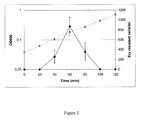
Claims (16)
- An isolated polypeptide comprising the amino acids sequence SEQ ID N°1 (LKTLKIFVLFSLLIAILPYFAGCL), or derivatives and fragments capable of stimulating competence in Firmicutes, in particular Streptococcus, and more preferably S. thermophilus, thereof.
- The isolated polypeptide of claim 1, wherein the length of said isolated polypeptide of the invention is less than 100 amino acids, preferably less than 50 amino acids.
- The isolated polypeptide of any one of claim 1 or 2, wherein said polypeptide consists in the amino acids sequence SEQ ID N°1 (LKTLKIFVLFSLLIAILPYFAGCL), and derivatives thereof.
- The isolated polypeptide of any one of claims 1 or 2, wherein said isolated polypeptide further comprises an amino acid sequence corresponding to a signal peptide.
- An isolated nucleic acid encoding for the isolated polypeptide as defined in any one of clams 1 to 4.
- A vector comprising the nucleic acid encoding as defined in claim 5 operably linked to a gene expression sequence.
- A host cell genetically engineered with the vector as defined in claim 6.
- A culture medium comprising an effective amount of the isolated polypeptide as defined in any one of clams 1 to 4 and nutrients that allow the growing of Firmicutes, in particular Streptococcus, and more preferably S. thermophilus.
- The culture medium of claim 8, wherein said effective amount is comprised between 0,1 ng/ml and 1 mg/ml.
- A use of a polypeptide as defined in any one of claims 1 to 4, a nucleic acid as defined in claim 5, a vector as defined in claim 6, a host cell as defined in claim 7, or a culture medium as defined in claim 8 or 9 for stimulating competence in Firmicutes, in particular Streptococcus, and more preferably S. thermophilus bacteria.
- A method of producing transformation competent Firmicutes, in particular Streptococcus, and more preferably S. thermophilus bacteria comprising the step (i) of contacting said Firmicutes, in particular Streptococcus, and more preferably S. thermophilus, bacteria with an effective amount of an isolated polypeptide as defined in any one of claims 1 to 4 for obtaining said transformation competent Firmicutes, in particular Streptococcus, and more preferably S. thermophilus bacteria.
- A method of producing transformation competent Firmicutes, in particular Streptococcus, and more preferably S. thermophilus bacteria comprising the step (i) of culturing said Firmicutes, in particular Streptococcus, and more preferably S. thermophilus bacteria in a peptide free medium allowing the growth of said bacteria to an OD600 comprised between 1.5 and 2.5, and (i') diluting said culture to an OD600 comprised between 0.01 and 0.1, preferably about 0.05.
- The method of claim 11, wherein said method is performed in a culture medium as defined in claim 8 or 9.
- The method of any one of claim 11 to 13, wherein said method is for producing a mutant bacteria and said method further comprises the step (ii) of contacting said transformation competent Firmicutes, in particular Streptococcus, and more preferably S. thermophilus bacteria with homologous DNA under conditions to allow transformation of said bacteria with said homologous DNA.
- The method of claim 14, wherein said method comprises the steps (iii) of selecting and/or amplifying the mutant bacteria thus generated.
- A method for identifying a compound stimulating competence in S. thermophilus comprising the steps of:i) contacting, with said compound, a host cell (preferably a bacteria) transformed with a nucleic acid comprising a nucleic acid sequence coding for a reporter protein (preferably GFP, béta Galactosidase, etc.) under the control of all or part of a promoter preceded by the inverted repeat sequence recognized by the PlcR like regulator (Ster0316 in strain LMD9, str0270 in strain CNRZ1066, stu0270 in strain LMG18311) ATAGTGACATATATGTCTCTAT (SEQ ID N°3) or GTGGTGACATAAATGTCACTAT (SEQ ID N°4);ii) selecting the compound that stimulates the expression of said reporter protein.
Priority Applications (7)
| Application Number | Priority Date | Filing Date | Title |
|---|---|---|---|
| EP09305367A EP2248823A1 (en) | 2009-04-28 | 2009-04-28 | New competence stimulating peptide |
| EP10715552.5A EP2424883B1 (en) | 2009-04-28 | 2010-04-28 | New competence stimulating peptide |
| ES10715552.5T ES2617130T3 (en) | 2009-04-28 | 2010-04-28 | New competition stimulating peptide |
| US13/266,103 US20120040365A1 (en) | 2009-04-28 | 2010-04-28 | New competence stimulating peptide |
| DK10715552.5T DK2424883T3 (en) | 2009-04-28 | 2010-04-28 | NEW COMPETENCY STIMULATING PEPTID |
| PCT/EP2010/055692 WO2010125091A1 (en) | 2009-04-28 | 2010-04-28 | New competence stimulating peptide |
| US14/327,422 US9340585B2 (en) | 2009-04-28 | 2014-07-09 | Competence stimulating peptide |
Applications Claiming Priority (1)
| Application Number | Priority Date | Filing Date | Title |
|---|---|---|---|
| EP09305367A EP2248823A1 (en) | 2009-04-28 | 2009-04-28 | New competence stimulating peptide |
Publications (1)
| Publication Number | Publication Date |
|---|---|
| EP2248823A1 true EP2248823A1 (en) | 2010-11-10 |
Family
ID=40941479
Family Applications (2)
| Application Number | Title | Priority Date | Filing Date |
|---|---|---|---|
| EP09305367A Withdrawn EP2248823A1 (en) | 2009-04-28 | 2009-04-28 | New competence stimulating peptide |
| EP10715552.5A Active EP2424883B1 (en) | 2009-04-28 | 2010-04-28 | New competence stimulating peptide |
Family Applications After (1)
| Application Number | Title | Priority Date | Filing Date |
|---|---|---|---|
| EP10715552.5A Active EP2424883B1 (en) | 2009-04-28 | 2010-04-28 | New competence stimulating peptide |
Country Status (5)
| Country | Link |
|---|---|
| US (2) | US20120040365A1 (en) |
| EP (2) | EP2248823A1 (en) |
| DK (1) | DK2424883T3 (en) |
| ES (1) | ES2617130T3 (en) |
| WO (1) | WO2010125091A1 (en) |
Cited By (4)
| Publication number | Priority date | Publication date | Assignee | Title |
|---|---|---|---|---|
| US20130259834A1 (en) * | 2010-05-19 | 2013-10-03 | University Of Virginia Patent Foundation | Compositions and methods for the delivery of therapeutic peptides |
| US8663655B2 (en) | 2009-06-23 | 2014-03-04 | Dupont Nutrition Biosciences Aps | Method for transforming a bacterium belonging to the Streptococcus genus by natural competence |
| US9340585B2 (en) | 2009-04-28 | 2016-05-17 | Institut National De La Recherche Agronomique | Competence stimulating peptide |
| WO2018114983A1 (en) * | 2016-12-19 | 2018-06-28 | Dupont Nutrition Biosciences Aps | Methods and strain |
Families Citing this family (3)
| Publication number | Priority date | Publication date | Assignee | Title |
|---|---|---|---|---|
| WO2018138271A1 (en) | 2017-01-26 | 2018-08-02 | Biomillenia Sas | High-throughput microfluidic screening in droplets |
| US20210208045A9 (en) | 2017-06-12 | 2021-07-08 | Biomillenia Sas | Method Of Measuring Viscosity In A Microfluidic System |
| FR3107902B1 (en) | 2020-03-06 | 2025-04-25 | Institut National De Rech Pour Lagriculture Lalimentation Et Lenvironnement | GRAM-POSITIVE BACTERIA OF THE SPECIES LACTOCOCCUS LACTIS OR STREPTOCOCCUS THERMOPHILUS HAVING VERY LOW SURFACE PROTEOLYSIS, METHODS OF OBTAINING THEM AND THEIR USES |
Citations (2)
| Publication number | Priority date | Publication date | Assignee | Title |
|---|---|---|---|---|
| US5730969A (en) | 1988-10-05 | 1998-03-24 | Chiron Corporation | Method and compositions for solubilization and stabilization of polypeptides, especially proteins |
| WO2006060903A1 (en) * | 2004-12-06 | 2006-06-15 | Kane Biotech Inc. | Signal peptides, nucleic acid molecules and methods of treatment |
Family Cites Families (7)
| Publication number | Priority date | Publication date | Assignee | Title |
|---|---|---|---|---|
| WO1994005314A1 (en) * | 1992-09-08 | 1994-03-17 | Centocor, Inc. | Peptide inhibitors of leukocyte adhesion |
| US6800744B1 (en) | 1997-07-02 | 2004-10-05 | Genome Therapeutics Corporation | Nucleic acid and amino acid sequences relating to Streptococcus pneumoniae for diagnostics and therapeutics |
| US7393663B2 (en) | 1997-08-01 | 2008-07-01 | Serono Genetics Institute S.A. | Expressed sequence tags and encoded human proteins |
| US8106174B2 (en) | 2000-05-08 | 2012-01-31 | Monsanto Technology Llc | Nucleic acid molecules and other molecules associated with plants and uses thereof for plant improvement |
| GB0608966D0 (en) | 2006-05-05 | 2006-06-14 | Norwegian University Of Life S | Method and product |
| EP2248823A1 (en) | 2009-04-28 | 2010-11-10 | Institut National de la Recherche Agronomique | New competence stimulating peptide |
| CN104650197B (en) | 2009-06-23 | 2018-03-02 | 杜邦营养生物科学有限公司 | Belong to the method for the bacterium of streptococcus by natural competence conversion |
-
2009
- 2009-04-28 EP EP09305367A patent/EP2248823A1/en not_active Withdrawn
-
2010
- 2010-04-28 WO PCT/EP2010/055692 patent/WO2010125091A1/en not_active Ceased
- 2010-04-28 DK DK10715552.5T patent/DK2424883T3/en active
- 2010-04-28 ES ES10715552.5T patent/ES2617130T3/en active Active
- 2010-04-28 EP EP10715552.5A patent/EP2424883B1/en active Active
- 2010-04-28 US US13/266,103 patent/US20120040365A1/en not_active Abandoned
-
2014
- 2014-07-09 US US14/327,422 patent/US9340585B2/en active Active
Patent Citations (2)
| Publication number | Priority date | Publication date | Assignee | Title |
|---|---|---|---|---|
| US5730969A (en) | 1988-10-05 | 1998-03-24 | Chiron Corporation | Method and compositions for solubilization and stabilization of polypeptides, especially proteins |
| WO2006060903A1 (en) * | 2004-12-06 | 2006-06-15 | Kane Biotech Inc. | Signal peptides, nucleic acid molecules and methods of treatment |
Non-Patent Citations (11)
| Title |
|---|
| BLOMGVIST T. ET AL.: "Pheromone-induced expression of recombinant proteins in Streptococcus thermophilus", ARCH MICROBIOL., vol. 186, no. 6, December 2006 (2006-12-01), pages 465 - 73 |
| BOLOTIN ET AL.: "Complete sequence and comparative genome analysis of the dairy bacterium Streptococcus thermophilus.", NAT. BIOTECHNOL., vol. 22, 2004, pages 1554 - 1558 |
| CVITKOVITCH D G ET AL: "Quorum sensing and biofilm formation by Streptococcus mutans", ADVANCES IN EXPERIMENTAL MEDICINE AND BIOLOGY - BACTERIAL SIGNAL TRANSDUCTION: NETWORKS AND DRUG TARGETS 2008 US, vol. 631, 2008, pages 178 - 188, XP009121571, ISSN: 0065-2598 978-0-387-78884-5 * |
| GARDAN ROZENN ET AL: "The Oligopeptide Transport System Is Essential for the Development of Natural Competence in Streptococcus thermophilus Strain LMD-9", JOURNAL OF BACTERIOLOGY, AMERICAN SOCIETY FOR MICROBIOLOGY, US, vol. 191, no. 14, 1 July 2009 (2009-07-01), pages 4647 - 4655, XP009121572, ISSN: 0021-9193 * |
| IBRAHIM ET AL., J BACTERIOL., vol. 189, 2007, pages 8844 - 8854 |
| JOHNSBORG OLA ET AL: "A hydrophobic patch in the competence-stimulating peptide, a pneumococcal competence pheromone, is essential for specificity and biological activity", JOURNAL OF BACTERIOLOGY, vol. 188, no. 5, March 2006 (2006-03-01), pages 1744 - 1749, XP002541817, ISSN: 0021-9193 * |
| LAWSON J W ET AL: "Growth and development of competence in the group H streptococci.", JOURNAL OF BACTERIOLOGY JUN 1970, vol. 102, no. 3, June 1970 (1970-06-01), pages 820 - 825, XP002550550, ISSN: 0021-9193 * |
| MAKAROVA ET AL.: "Comparative genomics of the lactic acid bacteria.", PROC NATL ACAD SCI U S A., vol. 103, no. 42, 2006, pages 15611 - 6 |
| PETERSON ET AL.: "Identification of competence pheromone responsive genes in Streptococcus pneumoniae by use of DNA microarrays", MOL. MICROBIOL., vol. 51, 2004, pages 1051 - 1070 |
| SAMBROOK ET AL.: "Molecular Cloning: A Laboratory Manual", 1989, COLD SPRING HARBOR LABORATORY PRESS |
| STREPTOCOCCUS THERMOPHILUS, J APPL. MICROBIOL., vol. 91, 2001, pages 1023 - 1029 |
Cited By (8)
| Publication number | Priority date | Publication date | Assignee | Title |
|---|---|---|---|---|
| US9340585B2 (en) | 2009-04-28 | 2016-05-17 | Institut National De La Recherche Agronomique | Competence stimulating peptide |
| US8663655B2 (en) | 2009-06-23 | 2014-03-04 | Dupont Nutrition Biosciences Aps | Method for transforming a bacterium belonging to the Streptococcus genus by natural competence |
| US9243254B2 (en) | 2009-06-23 | 2016-01-26 | Dupont Nutrition Biosciences Aps | Method for transforming a bacterium belonging to the streptococcus genus by natural competence |
| EP2445929B1 (en) * | 2009-06-23 | 2016-05-11 | DuPont Nutrition Biosciences ApS | A method for transforming a bacterium belonging to the streptococcus genus by natural competence |
| US20130259834A1 (en) * | 2010-05-19 | 2013-10-03 | University Of Virginia Patent Foundation | Compositions and methods for the delivery of therapeutic peptides |
| US9040302B2 (en) * | 2010-05-19 | 2015-05-26 | North Carolina State University | Genetically modified Streptococcus thermophilus bacterium |
| WO2018114983A1 (en) * | 2016-12-19 | 2018-06-28 | Dupont Nutrition Biosciences Aps | Methods and strain |
| US12297448B2 (en) | 2016-12-19 | 2025-05-13 | International N&H Denmark Aps | Methods and strain |
Also Published As
| Publication number | Publication date |
|---|---|
| US9340585B2 (en) | 2016-05-17 |
| EP2424883B1 (en) | 2017-01-18 |
| WO2010125091A1 (en) | 2010-11-04 |
| US20140322718A1 (en) | 2014-10-30 |
| ES2617130T3 (en) | 2017-06-15 |
| US20120040365A1 (en) | 2012-02-16 |
| DK2424883T3 (en) | 2017-03-06 |
| EP2424883A1 (en) | 2012-03-07 |
Similar Documents
| Publication | Publication Date | Title |
|---|---|---|
| US9340585B2 (en) | Competence stimulating peptide | |
| Gardan et al. | The oligopeptide transport system is essential for the development of natural competence in Streptococcus thermophilus strain LMD-9 | |
| Kronemeyer et al. | Structure of the gluABCD cluster encoding the glutamate uptake system of Corynebacterium glutamicum | |
| EP1507798B2 (en) | Export and modification of (poly)peptides in the lantibiotic way | |
| Garault et al. | Three oligopeptide-binding proteins are involved in the oligopeptide transport of Streptococcus thermophilus | |
| Robichon et al. | The rpoN (sigma54) gene from Listeria monocytogenes is involved in resistance to mesentericin Y105, an antibacterial peptide from Leuconostoc mesenteroides | |
| Dodd et al. | A lactococcal expression system for engineered nisins | |
| EP2445929B1 (en) | A method for transforming a bacterium belonging to the streptococcus genus by natural competence | |
| EP3555320B1 (en) | Methods and strain | |
| JP2011019524A (en) | Promoter nucleic acid originated from bacteria of genus corynebacterium, expression cassette containing promoter, vector containing cassette, host cell containing vector and method for expressing gene by using the same | |
| CN103975072B (en) | Deficient In Extracellular Proteases Bacillus anthracis | |
| US9187754B2 (en) | Modified Bordetella pertussis strains | |
| JP2013000064A (en) | Recombinant microorganism, and method for producing alanine using the recombinant microorganism | |
| Budin‐Verneuil et al. | Proteome phenotyping of acid stress‐resistant mutants of Lactococcus lactis MG1363 | |
| Zagorec et al. | Cloning and nucleotide sequence of the ptsG gene of Bacillus subtilis | |
| EP1268808B1 (en) | Mutants of lactobacillus casei defective in carbon catabolism regulation | |
| US20230101904A1 (en) | Gram-positive bacteria of the species lactococcus lactis or streptococcus thermophilus having a very low surface proteolysis, processes for obtaining them and uses thereof | |
| Tyagi et al. | An M. tuberculosis DNA fragment contains genes encoding cell division proteins ftsX and ftsE, a basic protein and homologues of PemK and small protein B | |
| JP7706628B2 (en) | Modified 5' untranslated region and method for producing target substance using same | |
| EP1801117A1 (en) | Means and methods for regulating amino acid pools and/or transport | |
| CN115747126B (en) | Bacillus subtilis recombinant integration engineering strain for producing microcin J25, construction method and application | |
| KR100801437B1 (en) | Novel plasmid isolated from pig lactic acid bacteria and use thereof | |
| Lindbäck et al. | Characterization of the mbl determinant and cloning of the spoIIID gene from Bacillus cereus ATCC 10987 | |
| US7358083B1 (en) | Food-grade cloning vector and their use in lactic acid bacteria | |
| Chen et al. | Genetic operation system of lactic acid bacteria and its applications |
Legal Events
| Date | Code | Title | Description |
|---|---|---|---|
| PUAI | Public reference made under article 153(3) epc to a published international application that has entered the european phase |
Free format text: ORIGINAL CODE: 0009012 |
|
| AK | Designated contracting states |
Kind code of ref document: A1 Designated state(s): AT BE BG CH CY CZ DE DK EE ES FI FR GB GR HR HU IE IS IT LI LT LU LV MC MK MT NL NO PL PT RO SE SI SK TR |
|
| AX | Request for extension of the european patent |
Extension state: AL BA RS |
|
| STAA | Information on the status of an ep patent application or granted ep patent |
Free format text: STATUS: THE APPLICATION IS DEEMED TO BE WITHDRAWN |
|
| 18D | Application deemed to be withdrawn |
Effective date: 20110511 |


