EP2246924A1 - Fuel cell electrode catalyst, method for manufacturing the same, and solid polymer type fuel cell using the same - Google Patents
Fuel cell electrode catalyst, method for manufacturing the same, and solid polymer type fuel cell using the same Download PDFInfo
- Publication number
- EP2246924A1 EP2246924A1 EP09705680A EP09705680A EP2246924A1 EP 2246924 A1 EP2246924 A1 EP 2246924A1 EP 09705680 A EP09705680 A EP 09705680A EP 09705680 A EP09705680 A EP 09705680A EP 2246924 A1 EP2246924 A1 EP 2246924A1
- Authority
- EP
- European Patent Office
- Prior art keywords
- fuel cell
- metal
- catalyst
- electrode catalyst
- noble
- Prior art date
- Legal status (The legal status is an assumption and is not a legal conclusion. Google has not performed a legal analysis and makes no representation as to the accuracy of the status listed.)
- Granted
Links
- 239000003054 catalyst Substances 0.000 title claims abstract description 96
- 239000000446 fuel Substances 0.000 title claims abstract description 42
- 238000004519 manufacturing process Methods 0.000 title claims abstract description 9
- 238000000034 method Methods 0.000 title description 5
- 229920000642 polymer Polymers 0.000 title description 2
- 239000007787 solid Substances 0.000 title 1
- 239000000203 mixture Substances 0.000 claims abstract description 26
- 229910000510 noble metal Inorganic materials 0.000 claims abstract description 24
- 239000005518 polymer electrolyte Substances 0.000 claims abstract description 23
- 239000010970 precious metal Substances 0.000 claims abstract description 15
- 239000011258 core-shell material Substances 0.000 claims abstract description 8
- 229910000923 precious metal alloy Inorganic materials 0.000 claims abstract description 8
- BASFCYQUMIYNBI-UHFFFAOYSA-N platinum Chemical compound [Pt] BASFCYQUMIYNBI-UHFFFAOYSA-N 0.000 claims description 64
- 229910052697 platinum Inorganic materials 0.000 claims description 28
- XEEYBQQBJWHFJM-UHFFFAOYSA-N Iron Chemical compound [Fe] XEEYBQQBJWHFJM-UHFFFAOYSA-N 0.000 claims description 11
- 238000010438 heat treatment Methods 0.000 claims description 9
- OKTJSMMVPCPJKN-UHFFFAOYSA-N Carbon Chemical group [C] OKTJSMMVPCPJKN-UHFFFAOYSA-N 0.000 claims description 8
- PXHVJJICTQNCMI-UHFFFAOYSA-N Nickel Chemical compound [Ni] PXHVJJICTQNCMI-UHFFFAOYSA-N 0.000 claims description 8
- 229910052799 carbon Inorganic materials 0.000 claims description 8
- 238000006722 reduction reaction Methods 0.000 claims description 8
- 238000005406 washing Methods 0.000 claims description 8
- 239000012298 atmosphere Substances 0.000 claims description 7
- 239000011651 chromium Substances 0.000 claims description 7
- WFDIJRYMOXRFFG-UHFFFAOYSA-N Acetic anhydride Chemical compound CC(=O)OC(C)=O WFDIJRYMOXRFFG-UHFFFAOYSA-N 0.000 claims description 6
- CSCPPACGZOOCGX-UHFFFAOYSA-N Acetone Chemical compound CC(C)=O CSCPPACGZOOCGX-UHFFFAOYSA-N 0.000 claims description 6
- KDLHZDBZIXYQEI-UHFFFAOYSA-N Palladium Chemical compound [Pd] KDLHZDBZIXYQEI-UHFFFAOYSA-N 0.000 claims description 6
- 229910052751 metal Inorganic materials 0.000 claims description 6
- 239000002184 metal Substances 0.000 claims description 6
- 229920005862 polyol Polymers 0.000 claims description 6
- 150000003077 polyols Chemical class 0.000 claims description 6
- VYZAMTAEIAYCRO-UHFFFAOYSA-N Chromium Chemical compound [Cr] VYZAMTAEIAYCRO-UHFFFAOYSA-N 0.000 claims description 5
- 229910052804 chromium Inorganic materials 0.000 claims description 5
- 239000000084 colloidal system Substances 0.000 claims description 5
- 239000011572 manganese Substances 0.000 claims description 5
- 239000010936 titanium Substances 0.000 claims description 5
- 239000010955 niobium Substances 0.000 claims description 4
- 230000001681 protective effect Effects 0.000 claims description 4
- 239000010948 rhodium Substances 0.000 claims description 4
- PWHULOQIROXLJO-UHFFFAOYSA-N Manganese Chemical compound [Mn] PWHULOQIROXLJO-UHFFFAOYSA-N 0.000 claims description 3
- RTAQQCXQSZGOHL-UHFFFAOYSA-N Titanium Chemical compound [Ti] RTAQQCXQSZGOHL-UHFFFAOYSA-N 0.000 claims description 3
- 229910017052 cobalt Inorganic materials 0.000 claims description 3
- 239000010941 cobalt Substances 0.000 claims description 3
- GUTLYIVDDKVIGB-UHFFFAOYSA-N cobalt atom Chemical compound [Co] GUTLYIVDDKVIGB-UHFFFAOYSA-N 0.000 claims description 3
- 238000001035 drying Methods 0.000 claims description 3
- 229910052748 manganese Inorganic materials 0.000 claims description 3
- 229910052759 nickel Inorganic materials 0.000 claims description 3
- 238000010992 reflux Methods 0.000 claims description 3
- 229910052719 titanium Inorganic materials 0.000 claims description 3
- ZOKXTWBITQBERF-UHFFFAOYSA-N Molybdenum Chemical compound [Mo] ZOKXTWBITQBERF-UHFFFAOYSA-N 0.000 claims description 2
- KJTLSVCANCCWHF-UHFFFAOYSA-N Ruthenium Chemical compound [Ru] KJTLSVCANCCWHF-UHFFFAOYSA-N 0.000 claims description 2
- VBXBSTJDBPXOAD-UHFFFAOYSA-N acetyl acetate;platinum Chemical group [Pt].CC(=O)OC(C)=O VBXBSTJDBPXOAD-UHFFFAOYSA-N 0.000 claims description 2
- 150000001412 amines Chemical class 0.000 claims description 2
- 229910052741 iridium Inorganic materials 0.000 claims description 2
- GKOZUEZYRPOHIO-UHFFFAOYSA-N iridium atom Chemical compound [Ir] GKOZUEZYRPOHIO-UHFFFAOYSA-N 0.000 claims description 2
- 229910052750 molybdenum Inorganic materials 0.000 claims description 2
- 239000011733 molybdenum Substances 0.000 claims description 2
- 229910052758 niobium Inorganic materials 0.000 claims description 2
- GUCVJGMIXFAOAE-UHFFFAOYSA-N niobium atom Chemical compound [Nb] GUCVJGMIXFAOAE-UHFFFAOYSA-N 0.000 claims description 2
- 229910052762 osmium Inorganic materials 0.000 claims description 2
- SYQBFIAQOQZEGI-UHFFFAOYSA-N osmium atom Chemical compound [Os] SYQBFIAQOQZEGI-UHFFFAOYSA-N 0.000 claims description 2
- 229910052763 palladium Inorganic materials 0.000 claims description 2
- 229910052702 rhenium Inorganic materials 0.000 claims description 2
- WUAPFZMCVAUBPE-UHFFFAOYSA-N rhenium atom Chemical compound [Re] WUAPFZMCVAUBPE-UHFFFAOYSA-N 0.000 claims description 2
- 229910052703 rhodium Inorganic materials 0.000 claims description 2
- MHOVAHRLVXNVSD-UHFFFAOYSA-N rhodium atom Chemical compound [Rh] MHOVAHRLVXNVSD-UHFFFAOYSA-N 0.000 claims description 2
- 229910052707 ruthenium Inorganic materials 0.000 claims description 2
- 239000002904 solvent Substances 0.000 claims description 2
- 229910052715 tantalum Inorganic materials 0.000 claims description 2
- GUVRBAGPIYLISA-UHFFFAOYSA-N tantalum atom Chemical compound [Ta] GUVRBAGPIYLISA-UHFFFAOYSA-N 0.000 claims description 2
- WFKWXMTUELFFGS-UHFFFAOYSA-N tungsten Chemical compound [W] WFKWXMTUELFFGS-UHFFFAOYSA-N 0.000 claims description 2
- 229910052721 tungsten Inorganic materials 0.000 claims description 2
- 239000010937 tungsten Substances 0.000 claims description 2
- 229910001260 Pt alloy Inorganic materials 0.000 abstract description 8
- XLYOFNOQVPJJNP-UHFFFAOYSA-N water Substances O XLYOFNOQVPJJNP-UHFFFAOYSA-N 0.000 description 14
- 239000000243 solution Substances 0.000 description 12
- 238000003756 stirring Methods 0.000 description 9
- 229910002836 PtFe Inorganic materials 0.000 description 7
- 229910045601 alloy Inorganic materials 0.000 description 7
- 239000000956 alloy Substances 0.000 description 7
- 229920001343 polytetrafluoroethylene Polymers 0.000 description 7
- 238000009792 diffusion process Methods 0.000 description 6
- 239000002245 particle Substances 0.000 description 6
- 238000001914 filtration Methods 0.000 description 5
- 239000007789 gas Substances 0.000 description 5
- 239000012528 membrane Substances 0.000 description 5
- 229910000640 Fe alloy Inorganic materials 0.000 description 4
- 238000004458 analytical method Methods 0.000 description 4
- 239000006229 carbon black Substances 0.000 description 4
- 150000004696 coordination complex Chemical class 0.000 description 4
- 230000000694 effects Effects 0.000 description 4
- 238000002360 preparation method Methods 0.000 description 4
- 239000002002 slurry Substances 0.000 description 4
- UFHFLCQGNIYNRP-UHFFFAOYSA-N Hydrogen Chemical compound [H][H] UFHFLCQGNIYNRP-UHFFFAOYSA-N 0.000 description 3
- CMHKGULXIWIGBU-UHFFFAOYSA-N [Fe].[Pt] Chemical compound [Fe].[Pt] CMHKGULXIWIGBU-UHFFFAOYSA-N 0.000 description 3
- 238000006243 chemical reaction Methods 0.000 description 3
- 230000000052 comparative effect Effects 0.000 description 3
- 238000002149 energy-dispersive X-ray emission spectroscopy Methods 0.000 description 3
- 229910052742 iron Inorganic materials 0.000 description 3
- 239000000463 material Substances 0.000 description 3
- 239000002923 metal particle Substances 0.000 description 3
- VLKZOEOYAKHREP-UHFFFAOYSA-N n-Hexane Chemical compound CCCCCC VLKZOEOYAKHREP-UHFFFAOYSA-N 0.000 description 3
- WRIDQFICGBMAFQ-UHFFFAOYSA-N (E)-8-Octadecenoic acid Natural products CCCCCCCCCC=CCCCCCCC(O)=O WRIDQFICGBMAFQ-UHFFFAOYSA-N 0.000 description 2
- QGLWBTPVKHMVHM-KTKRTIGZSA-N (z)-octadec-9-en-1-amine Chemical compound CCCCCCCC\C=C/CCCCCCCCN QGLWBTPVKHMVHM-KTKRTIGZSA-N 0.000 description 2
- LQJBNNIYVWPHFW-UHFFFAOYSA-N 20:1omega9c fatty acid Natural products CCCCCCCCCCC=CCCCCCCCC(O)=O LQJBNNIYVWPHFW-UHFFFAOYSA-N 0.000 description 2
- QSBYPNXLFMSGKH-UHFFFAOYSA-N 9-Heptadecensaeure Natural products CCCCCCCC=CCCCCCCCC(O)=O QSBYPNXLFMSGKH-UHFFFAOYSA-N 0.000 description 2
- NLXLAEXVIDQMFP-UHFFFAOYSA-N Ammonium chloride Substances [NH4+].[Cl-] NLXLAEXVIDQMFP-UHFFFAOYSA-N 0.000 description 2
- VHUUQVKOLVNVRT-UHFFFAOYSA-N Ammonium hydroxide Chemical compound [NH4+].[OH-] VHUUQVKOLVNVRT-UHFFFAOYSA-N 0.000 description 2
- LFQSCWFLJHTTHZ-UHFFFAOYSA-N Ethanol Chemical compound CCO LFQSCWFLJHTTHZ-UHFFFAOYSA-N 0.000 description 2
- 229910002651 NO3 Inorganic materials 0.000 description 2
- NHNBFGGVMKEFGY-UHFFFAOYSA-N Nitrate Chemical compound [O-][N+]([O-])=O NHNBFGGVMKEFGY-UHFFFAOYSA-N 0.000 description 2
- ZQPPMHVWECSIRJ-UHFFFAOYSA-N Oleic acid Natural products CCCCCCCCC=CCCCCCCCC(O)=O ZQPPMHVWECSIRJ-UHFFFAOYSA-N 0.000 description 2
- 239000005642 Oleic acid Substances 0.000 description 2
- 235000011114 ammonium hydroxide Nutrition 0.000 description 2
- QVGXLLKOCUKJST-UHFFFAOYSA-N atomic oxygen Chemical compound [O] QVGXLLKOCUKJST-UHFFFAOYSA-N 0.000 description 2
- 230000015572 biosynthetic process Effects 0.000 description 2
- 239000003575 carbonaceous material Substances 0.000 description 2
- 239000000470 constituent Substances 0.000 description 2
- 239000001257 hydrogen Substances 0.000 description 2
- 229910052739 hydrogen Inorganic materials 0.000 description 2
- MVFCKEFYUDZOCX-UHFFFAOYSA-N iron(2+);dinitrate Chemical compound [Fe+2].[O-][N+]([O-])=O.[O-][N+]([O-])=O MVFCKEFYUDZOCX-UHFFFAOYSA-N 0.000 description 2
- QXJSBBXBKPUZAA-UHFFFAOYSA-N isooleic acid Natural products CCCCCCCC=CCCCCCCCCC(O)=O QXJSBBXBKPUZAA-UHFFFAOYSA-N 0.000 description 2
- 150000002736 metal compounds Chemical class 0.000 description 2
- 150000002739 metals Chemical class 0.000 description 2
- 238000002156 mixing Methods 0.000 description 2
- ZQPPMHVWECSIRJ-KTKRTIGZSA-N oleic acid Chemical compound CCCCCCCC\C=C/CCCCCCCC(O)=O ZQPPMHVWECSIRJ-KTKRTIGZSA-N 0.000 description 2
- 239000001301 oxygen Substances 0.000 description 2
- 229910052760 oxygen Inorganic materials 0.000 description 2
- 238000010587 phase diagram Methods 0.000 description 2
- 230000010287 polarization Effects 0.000 description 2
- 239000000843 powder Substances 0.000 description 2
- 239000012495 reaction gas Substances 0.000 description 2
- 238000012916 structural analysis Methods 0.000 description 2
- 239000000758 substrate Substances 0.000 description 2
- VEJOYRPGKZZTJW-FDGPNNRMSA-N (z)-4-hydroxypent-3-en-2-one;platinum Chemical compound [Pt].C\C(O)=C\C(C)=O.C\C(O)=C\C(C)=O VEJOYRPGKZZTJW-FDGPNNRMSA-N 0.000 description 1
- NKJOXAZJBOMXID-UHFFFAOYSA-N 1,1'-Oxybisoctane Chemical compound CCCCCCCCOCCCCCCCC NKJOXAZJBOMXID-UHFFFAOYSA-N 0.000 description 1
- BTOOAFQCTJZDRC-UHFFFAOYSA-N 1,2-hexadecanediol Chemical compound CCCCCCCCCCCCCCC(O)CO BTOOAFQCTJZDRC-UHFFFAOYSA-N 0.000 description 1
- VEXZGXHMUGYJMC-UHFFFAOYSA-M Chloride anion Chemical compound [Cl-] VEXZGXHMUGYJMC-UHFFFAOYSA-M 0.000 description 1
- RYGMFSIKBFXOCR-UHFFFAOYSA-N Copper Chemical compound [Cu] RYGMFSIKBFXOCR-UHFFFAOYSA-N 0.000 description 1
- MYMOFIZGZYHOMD-UHFFFAOYSA-N Dioxygen Chemical compound O=O MYMOFIZGZYHOMD-UHFFFAOYSA-N 0.000 description 1
- 229910002552 Fe K Inorganic materials 0.000 description 1
- MHAJPDPJQMAIIY-UHFFFAOYSA-N Hydrogen peroxide Chemical compound OO MHAJPDPJQMAIIY-UHFFFAOYSA-N 0.000 description 1
- 239000004952 Polyamide Substances 0.000 description 1
- DWAQJAXMDSEUJJ-UHFFFAOYSA-M Sodium bisulfite Chemical compound [Na+].OS([O-])=O DWAQJAXMDSEUJJ-UHFFFAOYSA-M 0.000 description 1
- CUJRVFIICFDLGR-UHFFFAOYSA-N acetylacetonate Chemical compound CC(=O)[CH-]C(C)=O CUJRVFIICFDLGR-UHFFFAOYSA-N 0.000 description 1
- 230000002378 acidificating effect Effects 0.000 description 1
- 239000007864 aqueous solution Substances 0.000 description 1
- 239000012300 argon atmosphere Substances 0.000 description 1
- 239000011248 coating agent Substances 0.000 description 1
- 238000000576 coating method Methods 0.000 description 1
- 229910052802 copper Inorganic materials 0.000 description 1
- 239000010949 copper Substances 0.000 description 1
- 229910001882 dioxygen Inorganic materials 0.000 description 1
- 239000003792 electrolyte Substances 0.000 description 1
- 238000011156 evaluation Methods 0.000 description 1
- 239000002737 fuel gas Substances 0.000 description 1
- PCHJSUWPFVWCPO-UHFFFAOYSA-N gold Chemical compound [Au] PCHJSUWPFVWCPO-UHFFFAOYSA-N 0.000 description 1
- 229910052737 gold Inorganic materials 0.000 description 1
- 239000010931 gold Substances 0.000 description 1
- 230000002401 inhibitory effect Effects 0.000 description 1
- 150000002500 ions Chemical class 0.000 description 1
- LZKLAOYSENRNKR-LNTINUHCSA-N iron;(z)-4-oxoniumylidenepent-2-en-2-olate Chemical compound [Fe].C\C(O)=C\C(C)=O.C\C(O)=C\C(C)=O.C\C(O)=C\C(C)=O LZKLAOYSENRNKR-LNTINUHCSA-N 0.000 description 1
- 239000007800 oxidant agent Substances 0.000 description 1
- 230000001590 oxidative effect Effects 0.000 description 1
- 229920002647 polyamide Polymers 0.000 description 1
- 238000010248 power generation Methods 0.000 description 1
- 230000036647 reaction Effects 0.000 description 1
- 229910000033 sodium borohydride Inorganic materials 0.000 description 1
- 239000012279 sodium borohydride Substances 0.000 description 1
- 235000010267 sodium hydrogen sulphite Nutrition 0.000 description 1
- 238000001308 synthesis method Methods 0.000 description 1
- 238000001291 vacuum drying Methods 0.000 description 1
- 229910052720 vanadium Inorganic materials 0.000 description 1
- LEONUFNNVUYDNQ-UHFFFAOYSA-N vanadium atom Chemical compound [V] LEONUFNNVUYDNQ-UHFFFAOYSA-N 0.000 description 1
Images


Classifications
-
- H—ELECTRICITY
- H01—ELECTRIC ELEMENTS
- H01M—PROCESSES OR MEANS, e.g. BATTERIES, FOR THE DIRECT CONVERSION OF CHEMICAL ENERGY INTO ELECTRICAL ENERGY
- H01M4/00—Electrodes
- H01M4/86—Inert electrodes with catalytic activity, e.g. for fuel cells
- H01M4/90—Selection of catalytic material
- H01M4/92—Metals of platinum group
- H01M4/921—Alloys or mixtures with metallic elements
-
- H—ELECTRICITY
- H01—ELECTRIC ELEMENTS
- H01M—PROCESSES OR MEANS, e.g. BATTERIES, FOR THE DIRECT CONVERSION OF CHEMICAL ENERGY INTO ELECTRICAL ENERGY
- H01M4/00—Electrodes
- H01M4/86—Inert electrodes with catalytic activity, e.g. for fuel cells
- H01M4/90—Selection of catalytic material
- H01M4/92—Metals of platinum group
- H01M4/925—Metals of platinum group supported on carriers, e.g. powder carriers
- H01M4/926—Metals of platinum group supported on carriers, e.g. powder carriers on carbon or graphite
-
- H—ELECTRICITY
- H01—ELECTRIC ELEMENTS
- H01M—PROCESSES OR MEANS, e.g. BATTERIES, FOR THE DIRECT CONVERSION OF CHEMICAL ENERGY INTO ELECTRICAL ENERGY
- H01M8/00—Fuel cells; Manufacture thereof
- H01M8/10—Fuel cells with solid electrolytes
- H01M2008/1095—Fuel cells with polymeric electrolytes
-
- Y—GENERAL TAGGING OF NEW TECHNOLOGICAL DEVELOPMENTS; GENERAL TAGGING OF CROSS-SECTIONAL TECHNOLOGIES SPANNING OVER SEVERAL SECTIONS OF THE IPC; TECHNICAL SUBJECTS COVERED BY FORMER USPC CROSS-REFERENCE ART COLLECTIONS [XRACs] AND DIGESTS
- Y02—TECHNOLOGIES OR APPLICATIONS FOR MITIGATION OR ADAPTATION AGAINST CLIMATE CHANGE
- Y02E—REDUCTION OF GREENHOUSE GAS [GHG] EMISSIONS, RELATED TO ENERGY GENERATION, TRANSMISSION OR DISTRIBUTION
- Y02E60/00—Enabling technologies; Technologies with a potential or indirect contribution to GHG emissions mitigation
- Y02E60/30—Hydrogen technology
- Y02E60/50—Fuel cells
Definitions
- the present invention relates to an electrode catalyst for a fuel cell, which has improved performance compared with conventional platinum alloy catalysts, a method for producing the electrode catalyst, and a polymer electrolyte fuel cell using the electrode catalyst.
- a polymer electrolyte fuel cell comprising a pair of electrodes on both sides of a polymer electrolyte membrane that conducts protons produces electromotive force by supplying hydrogen gas as a fuel gas to one of the electrodes (i.e., the fuel electrode: anode), and supplying oxygen gas or air as an oxidant to the other electrode (i.e., the air electrode: cathode).
- polymer electrolyte fuel cells have been drastically improved by advances such as the following: (1) a polymer electrolyte membrane having high ion conductivity has been developed; and (2) catalyst-supported carbon coated with the polymer electrolyte consisting of a material that is the same as or different from that of the polymer electrolyte membrane is used as the constituent material of the electrode catalyst layer to form what is called a three-dimensional reaction site in the catalyst layer.
- the polymer electrolyte fuel cell can readily be made smaller and lighter. Due to the characteristics described above, the polymer electrolyte fuel cell is expected to be put in practical use as a power source for mobile vehicles such as electrically powered cars or power sources for small cogeneration systems.
- the gas diffusion electrode used in a polymer electrolyte fuel cell consists of a catalyst layer, which contains catalyst-supported carbon materials coated with the polymer electrolyte, and a gas diffusion layer, which not only supplies the reaction gas to the catalyst layer but also collects electrons.
- the catalyst layer has open areas consisting of micropores formed among secondary or tertiary carbon particles, which are constituents of the catalyst layer, and the open areas function as diffusion channels of the reaction gas.
- noble metal catalysts such as platinum or a platinum alloy, that are stable in a polymer electrolyte are generally used.
- a polymer electrolyte fuel cell involved the use of catalysts comprising a noble metal, such as platinum or platinum alloy, supported on carbon black as cathode and anode catalysts of the electrode catalysts.
- a noble metal such as platinum or platinum alloy
- platinum-supported carbon black is prepared by adding sodium bisulfite to an aqueous solution of platinic chloride, allowing the mixture to react with a hydrogen peroxide solution, preparing the carbon black particles to support the resulting platinum colloids, washing the resultants, and heating the resultants as needed.
- Electrodes of a polymer electrolyte fuel cell are prepared by dispersing platinum-supported carbon black particles in a polymer electrolyte solution to prepare an ink, coating the gas diffusion substrate, such as a carbon paper, with the ink, and drying the substrate.
- the polymer electrolyte membrane is sandwiched between such two electrodes, followed by a hot press.
- an electrolyte membrane-electrode assembly (MEA) can be constructed.
- JP Patent Publication (kokai) No. 2002-289208 A is intended to provide an electrode catalyst for a fuel cell having high durability by inhibiting growth of platinum particles during operation, and discloses an electrode catalyst comprising a conductive carbon material, metal particles supported thereon that are less likely to be oxidized than platinum under acidic conditions, and platinum covering the outer surface of the metal particles.
- the publication exemplifies an alloy comprising platinum and at least one metal selected from among gold, chromium, iron, nickel, cobalt, titanium, vanadium, copper, and manganese as the metal particle.
- JP Patent Publication (kokai) No. 2002-15744 A is intended to provide a polymer fuel cell that has excellent cathode polarization properties and produces a high cell output, and disclose the catalyst layer of the cathode containing a metal catalyst selected from the group consisting of platinum and platinum alloy and a metal complex containing a given amount of iron or chromium to improve cathode polarization properties.
- a polymer electrolyte fuel cell comprises an anode, a cathode, and a polymer electrolyte membrane located between the anode and the cathode
- the cathode comprises a gas diffusion layer and a catalyst layer located between the gas diffusion layer and the polymer electrolyte layer
- the catalyst layer contains a noble metal catalyst selected from the group consisting of platinum and platinum alloy and a metal complex containing iron or chromium, and the content of the metal complex is 1 to 40 mol% of the combined quantity of the metal complex and the noble metal catalyst.
- JP Patent Publication (Kokai) No. 63-12349 A (1988 ) discloses obtainment of a platinum alloy catalyst by causing a carrier to support platinum thereon, adhering a metal compound for alloy formation to the carrier, reducing the metal compound, and then performing heat treatment for alloy formation.
- JP Patent Publication (Kokai) No. 2005-135900 A discloses an electrode catalyst for a fuel cell having a core-shell structure, in which both the core and the shell contain platinum.
- an object of the present invention is to provide a more sophisticated electrode catalyst for a fuel cell, compared with conventional platinum alloy catalysts, a method for producing the electrode catalyst, and a polymer electrolyte fuel cell using the electrode catalyst.
- the present inventors have discovered that the above problems can be solved using a specific amount of an alloy catalyst component of a catalyst having a core-shell structure. Thus, the present inventors have achieved the present invention.
- the present invention relates to an electrode catalyst for a fuel cell, comprising a noble-metal-non-precious metal alloy with a core-shell structure supported on a conductive carrier.
- the present invention is characterized in that the composition of the catalyst component of the shell is such that the amount of the noble metal is greater than or equal to the amount of the non-precious metal.
- the electrode catalyst for a fuel cell of the present invention can reduce the overall noble metal amount and is excellent in cost performance.
- a typical example of the electrode catalyst for a fuel cell of the present invention is preferably an electrode catalyst wherein the core part comprises a noble-metal-non-precious metal alloy and the shell part comprises a noble metal.
- noble metals and non-precious metals can be used in combination as noble metals and non-precious metals.
- a preferable example thereof is a noble-metal-non-precious metal alloy combination of a noble metal that is platinum and a non-precious metal that is one or more types of metal selected from the group consisting of ruthenium (Ru), molybdenum (Mo), osmium (Os), cobalt (Co), rhodium (Rh), iridium (Ir), iron (Fe), nickel (Ni), titanium (Ti), tungsten (W), palladium (Pd), rhenium (Re), chromium (Cr), manganese (Mn), niobium (Nb), and tantalum (Ta).
- Ru ruthenium
- Mo molybdenum
- Os osmium
- Co cobalt
- Rhodium Rh
- Ir iridium
- Fe iron
- Ni nickel
- the present invention relates to a method for producing an electrode catalyst for a fuel cell, which comprises a noble-metal-non-precious metal alloy having a core-shell structure supported on a conductive carrier, wherein the composition of the catalyst component of the shell is such that the amount of the noble metal is greater than or equal to the amount of the non-precious metal.
- the method comprises dissolving a noble metal component, a non-precious metal component, and polyol in a solvent, adding amine to the solution, adding a conductive carrier and acetone after reflux, causing the conductive carrier to support the catalyst component thereon while removing protective colloids formed during the polyol reduction reaction, washing and drying the resultant, and then performing heat treatment under a reducing atmosphere.
- catalyst preparation proceeds using polyol reduction reaction while removing protective colloids formed during the polyol reduction reaction.
- a catalyst having the above specific structure and specific components can be efficiently produced.
- platinum is precipitated on the uppermost surface of particles by heat treatment under a reducing atmosphere, making it possible to form a core-shell structure and produce a highly active catalyst.
- the overall amount of the noble metal used can be further reduced compared with conventional cases.
- a preferable example of the method for producing an electrode catalyst for a fuel cell of the present invention is, more specifically, a case wherein the noble metal component is platinum acetyl acetate, the non-precious metal component is non-precious metal acetyl acetate, and the conductive carrier is a carbon carrier.
- Temperature for heat treatment under the reducing atmosphere preferably ranges from 300°C to 500°C and is more preferably around 400°C.
- the present invention relates to a polymer electrolyte fuel cell that comprises the above electrode catalyst for a fuel cell.
- the electrode catalyst for a fuel cell of the present invention is highly active, although the proportion of the amount of the noble metal used is more reduced than in the case of conventional catalysts for a fuel cell. That is, the activity of per weight of platinum in the case of the electrode catalyst of the present invention is higher than the case of conventional platinum catalysts or platinum-iron alloy catalysts.
- a PtFe/C catalyst was prepared by the following procedures.
- the composition ratio is selected so that the amount of platinum is great based on the stable structures of alloys, which are represented by the phase diagram between metals.
- stable structures are Fe3Pt (wherein the amount of Pt accounts for 25%), PtFe (wherein the amount of Pt accounts for 50%), and Pt3Fe (wherein the amount of Pt accounts for 75%).
- a composition ratio is selected, so that the amount of platinum in the composition is greater than that in these stable structures.
- the average Pt percentage in the alloy ranges from 25% to 33%, 50% to 56%, and 75% to 99%.
- the thus obtained PtFe/C catalyst powder was subjected to heat treatment at 400°C under a hydrogen atmosphere.
- a conventional PtFe/C catalyst was prepared by the following procedure.
- a conventional Pt/C catalyst was prepared by the following procedure.
- Fig. 2 shows the state of Pt4f as analyzed by XPS analysis. As shown in the result in Fig. 2 , the catalyst surface of the Example was rich in platinum.
- Fig. 3 shows the result of TEM-EDX analysis for the catalyst of the Example.
- K of "Fe-K” and “M” of "Pt-M” denote the K-shell and the M-shell, respectively.
- the catalyst resulting from the Example had a structure comprising a core portion of a platinum-iron alloy and a platinum-rich shell portion.
- Fig. 4 shows the result of evaluating oxygen reduction performance with a rotary disc electrode and a current value of 900 mV vs. RHE.
- the electrode catalyst obtained according to the present invention was more active than platinum catalysts and conventional platinum-iron alloy catalysts.
- the electrode catalyst for a fuel cell of the present invention is highly active and useful for reduction of the amount of a noble metal used, such as expensive platinum. Therefore, the electrode catalyst of the present invention is expected as a next-generation electrode catalyst for a fuel cell.
Landscapes
- Chemical & Material Sciences (AREA)
- Engineering & Computer Science (AREA)
- Materials Engineering (AREA)
- Chemical Kinetics & Catalysis (AREA)
- Electrochemistry (AREA)
- General Chemical & Material Sciences (AREA)
- Inert Electrodes (AREA)
- Catalysts (AREA)
Abstract
Description
- The present invention relates to an electrode catalyst for a fuel cell, which has improved performance compared with conventional platinum alloy catalysts, a method for producing the electrode catalyst, and a polymer electrolyte fuel cell using the electrode catalyst.
- In fuel cells, water is produced by a cell reaction as a product in principle. Fuel cells have therefore drawn attention as clean power generation systems without a substantially harmful influence on the earth's environment. For example, a polymer electrolyte fuel cell comprising a pair of electrodes on both sides of a polymer electrolyte membrane that conducts protons produces electromotive force by supplying hydrogen gas as a fuel gas to one of the electrodes (i.e., the fuel electrode: anode), and supplying oxygen gas or air as an oxidant to the other electrode (i.e., the air electrode: cathode).
- The cell characteristics of polymer electrolyte fuel cells have been drastically improved by advances such as the following: (1) a polymer electrolyte membrane having high ion conductivity has been developed; and (2) catalyst-supported carbon coated with the polymer electrolyte consisting of a material that is the same as or different from that of the polymer electrolyte membrane is used as the constituent material of the electrode catalyst layer to form what is called a three-dimensional reaction site in the catalyst layer. In addition to the excellent cell characteristics described above, the polymer electrolyte fuel cell can readily be made smaller and lighter. Due to the characteristics described above, the polymer electrolyte fuel cell is expected to be put in practical use as a power source for mobile vehicles such as electrically powered cars or power sources for small cogeneration systems.
- In general, the gas diffusion electrode used in a polymer electrolyte fuel cell consists of a catalyst layer, which contains catalyst-supported carbon materials coated with the polymer electrolyte, and a gas diffusion layer, which not only supplies the reaction gas to the catalyst layer but also collects electrons. The catalyst layer has open areas consisting of micropores formed among secondary or tertiary carbon particles, which are constituents of the catalyst layer, and the open areas function as diffusion channels of the reaction gas. As such catalysts, noble metal catalysts, such as platinum or a platinum alloy, that are stable in a polymer electrolyte are generally used.
- In the past, a polymer electrolyte fuel cell involved the use of catalysts comprising a noble metal, such as platinum or platinum alloy, supported on carbon black as cathode and anode catalysts of the electrode catalysts. In general, platinum-supported carbon black is prepared by adding sodium bisulfite to an aqueous solution of platinic chloride, allowing the mixture to react with a hydrogen peroxide solution, preparing the carbon black particles to support the resulting platinum colloids, washing the resultants, and heating the resultants as needed. Electrodes of a polymer electrolyte fuel cell are prepared by dispersing platinum-supported carbon black particles in a polymer electrolyte solution to prepare an ink, coating the gas diffusion substrate, such as a carbon paper, with the ink, and drying the substrate. The polymer electrolyte membrane is sandwiched between such two electrodes, followed by a hot press. Thus, an electrolyte membrane-electrode assembly (MEA) can be constructed.
- Platinum is an expensive noble metal, and it is thus expected to exhibit satisfactory performance by a small amount thereof. Accordingly, work is proceeding with catalyst activity in smaller amounts of platinum. For example,
JP Patent Publication (kokai) No. 2002-289208 A -
JP Patent Publication (kokai) No. 2002-15744 A - Moreover,
JP Patent Publication (Kokai) No. 63-12349 A (1988 - Meanwhile,
JP Patent Publication (Kokai) No. 2005-135900 A - Catalysts according to the above patent documents (
JP Patent Publication (kokai) No. 2002-289208 A JP Patent Publication (kokai) No. 2002-15744 A JP Patent Publication (Kokai) No. 63-12349 A (1988 JP Patent Publication (Kokai) No. 2005-135900 A - Therefore, an object of the present invention is to provide a more sophisticated electrode catalyst for a fuel cell, compared with conventional platinum alloy catalysts, a method for producing the electrode catalyst, and a polymer electrolyte fuel cell using the electrode catalyst.
- The present inventors have discovered that the above problems can be solved using a specific amount of an alloy catalyst component of a catalyst having a core-shell structure. Thus, the present inventors have achieved the present invention.
- Specifically, first, the present invention relates to an electrode catalyst for a fuel cell, comprising a noble-metal-non-precious metal alloy with a core-shell structure supported on a conductive carrier. The present invention is characterized in that the composition of the catalyst component of the shell is such that the amount of the noble metal is greater than or equal to the amount of the non-precious metal. The electrode catalyst for a fuel cell of the present invention can reduce the overall noble metal amount and is excellent in cost performance.
- A typical example of the electrode catalyst for a fuel cell of the present invention is preferably an electrode catalyst wherein the core part comprises a noble-metal-non-precious metal alloy and the shell part comprises a noble metal.
- For the present invention, various known metals can be used in combination as noble metals and non-precious metals. A preferable example thereof is a noble-metal-non-precious metal alloy combination of a noble metal that is platinum and a non-precious metal that is one or more types of metal selected from the group consisting of ruthenium (Ru), molybdenum (Mo), osmium (Os), cobalt (Co), rhodium (Rh), iridium (Ir), iron (Fe), nickel (Ni), titanium (Ti), tungsten (W), palladium (Pd), rhenium (Re), chromium (Cr), manganese (Mn), niobium (Nb), and tantalum (Ta).
- Second, the present invention relates to a method for producing an electrode catalyst for a fuel cell, which comprises a noble-metal-non-precious metal alloy having a core-shell structure supported on a conductive carrier, wherein the composition of the catalyst component of the shell is such that the amount of the noble metal is greater than or equal to the amount of the non-precious metal. The method comprises dissolving a noble metal component, a non-precious metal component, and polyol in a solvent, adding amine to the solution, adding a conductive carrier and acetone after reflux, causing the conductive carrier to support the catalyst component thereon while removing protective colloids formed during the polyol reduction reaction, washing and drying the resultant, and then performing heat treatment under a reducing atmosphere.
- According to the method for producing an electrode catalyst for a fuel cell of the present invention, catalyst preparation proceeds using polyol reduction reaction while removing protective colloids formed during the polyol reduction reaction. Hence, a catalyst having the above specific structure and specific components can be efficiently produced. Also, platinum is precipitated on the uppermost surface of particles by heat treatment under a reducing atmosphere, making it possible to form a core-shell structure and produce a highly active catalyst. Meanwhile, the average composition ratio of the obtained catalyst can be, for example, noble metal : non-precious metal = 50 : 50 to 89 : 11, and particularly 51 : 49 to 57 : 43. The overall amount of the noble metal used can be further reduced compared with conventional cases.
- A preferable example of the method for producing an electrode catalyst for a fuel cell of the present invention is, more specifically, a case wherein the noble metal component is platinum acetyl acetate, the non-precious metal component is non-precious metal acetyl acetate, and the conductive carrier is a carbon carrier.
- Temperature for heat treatment under the reducing atmosphere preferably ranges from 300°C to 500°C and is more preferably around 400°C.
- Third, the present invention relates to a polymer electrolyte fuel cell that comprises the above electrode catalyst for a fuel cell.
- The electrode catalyst for a fuel cell of the present invention is highly active, although the proportion of the amount of the noble metal used is more reduced than in the case of conventional catalysts for a fuel cell. That is, the activity of per weight of platinum in the case of the electrode catalyst of the present invention is higher than the case of conventional platinum catalysts or platinum-iron alloy catalysts.
- This description includes part or all of the contents as disclosed in the description and/or drawings of Japanese Patent Application No.
2008-015952 -
-
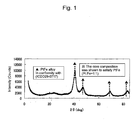
Fig. 1 shows the composition of the catalyst core in the Example, as evaluated by ERD analysis. -
Fig. 2 shows the state of Pt4f as analyzed by XPS analysis. The results inFig. 2 show that the catalyst surface in the Example is rich in platinum. -
Fig. 3 shows the result of TEM-EDX analysis for the catalyst of the Example. -
Fig. 4 shows the result of evaluating oxygen reduction performance with a rotary disc electrode and a current value of 900mV vs. RHE. - Hereafter, the present invention is described in greater detail with reference to the following example and comparative examples.
- A PtFe/C catalyst was prepared by the following procedures.
- The composition ratio is selected so that the amount of platinum is great based on the stable structures of alloys, which are represented by the phase diagram between metals. Specifically, as in the phase diagram of a PtFe alloy, stable structures are Fe3Pt (wherein the amount of Pt accounts for 25%), PtFe (wherein the amount of Pt accounts for 50%), and Pt3Fe (wherein the amount of Pt accounts for 75%). A composition ratio is selected, so that the amount of platinum in the composition is greater than that in these stable structures. For example, in the case of a Pt-Fe alloy catalyst, the average Pt percentage in the alloy ranges from 25% to 33%, 50% to 56%, and 75% to 99%.
-
- 1) Always perform the reaction under an Ar atmosphere.
- 2) Dissolve 197 mg of Pt(acac)2, 139 mg of Fe(acac)3, and 390 mg of 1,2-Hexadecanediol in 20 ml of octyl-ether. In addition, the term "acac" refers to acetyl acetate.
- 3) Maintain the solution at 100°C for 30 minutes while stirring it with a magnetic stirrer.
- 4) Add 0.16 ml of oleic acid and 0.17 ml of oleyl amine into the system.
- 5) Perform reflux at 290°C for 30 minutes while stirring the solution.
- 6) Stop stirring and then allow the solution to naturally cool to room temperature.
- 7) Add 100 mL of hexane to the solution in which particles are dispersed.
- 8) Add 120 mg of carbon.
- 9) Add approximately 50 mL of acetone while stirring the solution and then dissolve polyamide (condensate of oleic acid and oleyl amine) in the form of protective colloids therein.
- 10) Filter the resultant, followed by washing with ethanol → pure water.
- 11) Perform vacuum drying at 90°C.
- The thus obtained PtFe/C catalyst powder was subjected to heat treatment at 400°C under a hydrogen atmosphere.
- A conventional PtFe/C catalyst was prepared by the following procedure.
- 1) Disperse 2.0 g of carbon (Ketjen, trade name) in 0. 2 L of pure water, preparing a slurry.
- 2) Add dropwise 33 g (containing 1.6 g of platinum) of a 5 wt% aqueous hexahydroxoplatinum nitrate solution while stirring the slurry.
- 3) Stir the above mixture.
- 4) Add dropwise 1 L of pure water to the thus obtained mixture and then filter the solution after mixing.
- 5) After filtration, further wash the thus obtained cake with pure water.
- 6) After washing, disperse the thus obtained cake in 1 L of pure water.
- 7) Dissolve 1.5 g (containing 0.16 g of Fe) of iron nitrate in 40 g of pure water.
- 8) Add dropwise the aqueous iron nitrate solution of (7) to the mixture of (6).
- 9) Add dropwise a 0.01N ammonia solution to the thus obtained mixture to PH 9.0.
- 10) Add dropwise 1 L of pure water to the thus obtained mixture, followed by filtration.
- 11) After filtration, further wash the thus obtained cake with pure water.
- 12) After washing, heat and dry the thus obtained cake in a vacuum at 100°C for 24 hours.
- 13) Heat the dried powder at 700°C for 2 hours under a hydrogen atmosphere.
- 14) Further perform heat treatment at 800°C for 5 hours under an argon atmosphere.
- A conventional Pt/C catalyst was prepared by the following procedure.
- 1) Disperse 2.0 g of carbon (trade name: Ketjen) in 0.2 L of pure water, preparing a slurry.
- 2) Add dropwise 33 g (containing 1.6 g of platinum) of a 5 wt% aqueous hexahydroxoplatinum nitrate solution while stirring the slurry.
- 3) Stir the above mixture.
- 4) Add dropwise 1 L of pure water to the thus obtained mixture. Filter the solution after mixing.
- 5) After filtration, further wash the thus obtained cake with pure water.
- 6) After washing, disperse the thus obtained cake in 1 L of pure water.
- 7) Add dropwise a 0.01 N ammonia solution to the thus obtained mixture to PH 9.0.
- 8) Furthermore, add dropwise 140 mL of a 3 wt% aqueous sodium borohydride solution to the mixture.
- 9) Sufficiently stir the mixture.
- 10) Filter the thus obtained mixture.
- 11) After filtration, further wash the thus obtained cake with pure water.
- 12) After washing, heat and dry the thus obtained cake at 80°C for 48 hours.
- Structural analysis was carried out for the above catalyst materials using XRD, XPS, and TEM-EDX.
-
Fig. 1 shows the composition of the catalyst core resulting from the Example, as evaluated by ERD analysis. As shown in the result inFig. 1 , the composition of the catalyst core of the Example satisfied the condition of Pt : Fe = 1 : 1. -
Fig. 2 shows the state of Pt4f as analyzed by XPS analysis. As shown in the result inFig. 2 , the catalyst surface of the Example was rich in platinum. -
Fig. 3 shows the result of TEM-EDX analysis for the catalyst of the Example. As shown in the result inFig. 3 , the composition ratio of the catalyst of the Example was Pt : Fe = 56.47 : 43.53. In addition, inFig. 3 , "K" of "Fe-K" and "M" of "Pt-M" denote the K-shell and the M-shell, respectively. - Accordingly, it was inferred that the catalyst resulting from the Example had a structure comprising a core portion of a platinum-iron alloy and a platinum-rich shell portion.
-
Fig. 4 shows the result of evaluating oxygen reduction performance with a rotary disc electrode and a current value of 900 mV vs. RHE. As shown in the results inFig. 4 , the electrode catalyst obtained according to the present invention was more active than platinum catalysts and conventional platinum-iron alloy catalysts. - The electrode catalyst for a fuel cell of the present invention is highly active and useful for reduction of the amount of a noble metal used, such as expensive platinum. Therefore, the electrode catalyst of the present invention is expected as a next-generation electrode catalyst for a fuel cell.
- All publications, patents, and patent applications cited herein are incorporated herein by reference in their entirety.
Claims (6)
- An electrode catalyst for a fuel cell, comprising a noble-metal-non-precious metal alloy with a core-shell structure supported on a conductive carrier, wherein the composition of the catalyst component of the shell is such that the amount of the noble metal is greater than or equal to the amount of the non-precious metal.
- The electrode catalyst for a fuel cell according to claim 1, wherein the core part comprises a noble-metal-non-precious metal alloy and the shell part comprises a noble metal.
- The electrode catalyst for a fuel cell according to claim 1 or 2, wherein the noble metal is platinum and the non-precious metal is one or more types of metal selected from the group consisting of ruthenium (Ru), molybdenum (Mo), osmium (Os), cobalt (Co), rhodium (Rh), iridium (Ir), iron (Fe), nickel (Ni), titanium (Ti), tungsten (W), palladium (Pd), rhenium (Re), chromium (Cr), manganese (Mn), niobium (Nb), and tantalum (Ta).
- A method for producing an electrode catalyst for a fuel cell, comprising:dissolving a noble metal component, a non-precious metal component,and polyol in a solvent;adding amine to the solution;adding a conductive carrier and acetone after reflux;causing the conductive carrier to support the catalyst component thereon while removing protective colloids formed during the polyol reduction reaction;washing and drying the resultant; and thenperforming heat treatment under a reducing atmosphere,wherein the electrode catalyst comprises a noble-metal-non-precious metal alloy having a core-shell structure supported on a conductive carrier and the composition of the catalyst component of the shell is such that the amount of the noble metal is greater than or equal to the amount of the non-precious metal.
- The method for producing an electrode catalyst for a fuel cell according to claim 4, wherein the noble metal component is platinum acetyl acetate, the non-precious metal component is non-precious metal acetyl acetate, and the conductive carrier is a carbon carrier.
- A polymer electrolyte fuel cell, comprising the electrode catalyst for a fuel cell according to any one of claims 1 to 3.
Applications Claiming Priority (2)
| Application Number | Priority Date | Filing Date | Title |
|---|---|---|---|
| JP2008015952 | 2008-01-28 | ||
| PCT/JP2009/051188 WO2009096356A1 (en) | 2008-01-28 | 2009-01-26 | Fuel cell electrode catalyst, method for manufacturing the same, and solid polymer type fuel cell using the same |
Publications (3)
| Publication Number | Publication Date |
|---|---|
| EP2246924A1 true EP2246924A1 (en) | 2010-11-03 |
| EP2246924A4 EP2246924A4 (en) | 2012-06-20 |
| EP2246924B1 EP2246924B1 (en) | 2015-10-21 |
Family
ID=40912709
Family Applications (1)
| Application Number | Title | Priority Date | Filing Date |
|---|---|---|---|
| EP09705680.8A Not-in-force EP2246924B1 (en) | 2008-01-28 | 2009-01-26 | Fuel cell electrode catalyst, method for manufacturing the same, and solid polymer type fuel cell using the same |
Country Status (5)
| Country | Link |
|---|---|
| US (1) | US8236462B2 (en) |
| EP (1) | EP2246924B1 (en) |
| JP (1) | JPWO2009096356A1 (en) |
| CN (1) | CN101926034B (en) |
| WO (1) | WO2009096356A1 (en) |
Cited By (1)
| Publication number | Priority date | Publication date | Assignee | Title |
|---|---|---|---|---|
| CN105680054A (en) * | 2014-11-17 | 2016-06-15 | 中国科学院大连化学物理研究所 | Preparation method for supported hollow-structured alloy catalyst for low-temperature fuel cell |
Families Citing this family (11)
| Publication number | Priority date | Publication date | Assignee | Title |
|---|---|---|---|---|
| CN101522345B (en) * | 2006-08-30 | 2012-08-29 | 尤米科尔股份公司及两合公司 | Core/shell-type catalyst particles comprising metal or ceramic core materials and methods for their preparation |
| JPWO2009096356A1 (en) * | 2008-01-28 | 2011-05-26 | トヨタ自動車株式会社 | ELECTRODE CATALYST FOR FUEL CELL, PROCESS FOR PRODUCING THE SAME, AND SOLID POLYMER FUEL CELL USING THE SAME |
| US10693146B2 (en) | 2013-05-01 | 2020-06-23 | University Of Yamanashi | Production method for fine metal particles, production method for fuel cell electrode catalyst, supported fine metal particle catalyst, and fuel cell electrode catalyst |
| KR101851424B1 (en) * | 2014-08-19 | 2018-04-25 | 주식회사 엘지화학 | Carrier-nano particles complex and method for fabricating the same |
| CN105355935B (en) * | 2015-11-11 | 2018-04-10 | 大连理工大学 | A kind of preparation method and application of noble metal electrocatalyst |
| KR102664090B1 (en) * | 2018-08-20 | 2024-05-07 | 현대자동차주식회사 | Electrodes comprising metal nanoparticles having conductive polymer-shell and conductive film, and manufacture method thereof |
| KR102791540B1 (en) * | 2019-04-02 | 2025-04-03 | 현대자동차주식회사 | A method of manufacturing multi-component alloy catalyst |
| CN110112430A (en) * | 2019-04-19 | 2019-08-09 | 贵研铂业股份有限公司 | A kind of platinum alloy carbon-supported powder and preparation method thereof |
| CN110993972B (en) * | 2019-12-17 | 2021-07-20 | 北京化工大学 | A kind of hydrogen oxidation reaction catalyst for alkaline medium and synthesis method thereof |
| CN112054219B (en) * | 2020-09-16 | 2021-10-08 | 湖南大学 | Cathode catalyst active material for hydrogen fuel cell, preparation method and catalyst |
| KR20230032250A (en) * | 2021-08-30 | 2023-03-07 | 현대모비스 주식회사 | Catalyst for fuel cell, method of preparing thereof and fuel cell comprising the same |
Family Cites Families (14)
| Publication number | Priority date | Publication date | Assignee | Title |
|---|---|---|---|---|
| JPS6312349A (en) | 1986-07-03 | 1988-01-19 | Fuji Electric Co Ltd | Production of pt alloy catalyst for fuel cell |
| JP2002015744A (en) | 2000-06-30 | 2002-01-18 | Asahi Glass Co Ltd | Polymer electrolyte fuel cell |
| JP4721539B2 (en) | 2001-03-26 | 2011-07-13 | パナソニック株式会社 | Fuel cell electrode catalyst and method for producing the same |
| JP3894002B2 (en) | 2002-03-07 | 2007-03-14 | 株式会社豊田中央研究所 | Membrane electrode assembly and fuel cell and electrolysis cell provided with the same |
| JP2005100713A (en) | 2003-09-22 | 2005-04-14 | Nissan Motor Co Ltd | Fuel cell electrode catalyst and method for producing the same |
| JP5082187B2 (en) | 2003-10-06 | 2012-11-28 | 日産自動車株式会社 | Method for producing electrode catalyst particles for polymer electrolyte fuel cell |
| JP2005196972A (en) | 2003-12-26 | 2005-07-21 | Nissan Motor Co Ltd | Electrocatalyst production method |
| KR100550998B1 (en) | 2004-10-28 | 2006-02-13 | 삼성에스디아이 주식회사 | Electrode for fuel cell and fuel cell system comprising same |
| JP2007134295A (en) | 2005-11-09 | 2007-05-31 | Shin Etsu Chem Co Ltd | Fuel cell electrode catalyst and method for producing the same |
| WO2007043441A1 (en) | 2005-10-07 | 2007-04-19 | Asahi Kasei Kabushiki Kaisha | Alloy catalyst for fuel cell cathode |
| JP4802898B2 (en) | 2006-07-10 | 2011-10-26 | 大日本印刷株式会社 | Device and method for correcting an image having linear elements |
| CN101522345B (en) * | 2006-08-30 | 2012-08-29 | 尤米科尔股份公司及两合公司 | Core/shell-type catalyst particles comprising metal or ceramic core materials and methods for their preparation |
| CN100442578C (en) * | 2006-12-06 | 2008-12-10 | 厦门大学 | Fuel cell nano electrocatalyst and preparation method thereof |
| JPWO2009096356A1 (en) * | 2008-01-28 | 2011-05-26 | トヨタ自動車株式会社 | ELECTRODE CATALYST FOR FUEL CELL, PROCESS FOR PRODUCING THE SAME, AND SOLID POLYMER FUEL CELL USING THE SAME |
-
2009
- 2009-01-26 JP JP2009551508A patent/JPWO2009096356A1/en active Pending
- 2009-01-26 WO PCT/JP2009/051188 patent/WO2009096356A1/en not_active Ceased
- 2009-01-26 CN CN200980103233.1A patent/CN101926034B/en not_active Expired - Fee Related
- 2009-01-26 US US12/672,079 patent/US8236462B2/en not_active Expired - Fee Related
- 2009-01-26 EP EP09705680.8A patent/EP2246924B1/en not_active Not-in-force
Cited By (1)
| Publication number | Priority date | Publication date | Assignee | Title |
|---|---|---|---|---|
| CN105680054A (en) * | 2014-11-17 | 2016-06-15 | 中国科学院大连化学物理研究所 | Preparation method for supported hollow-structured alloy catalyst for low-temperature fuel cell |
Also Published As
| Publication number | Publication date |
|---|---|
| CN101926034B (en) | 2014-02-19 |
| JPWO2009096356A1 (en) | 2011-05-26 |
| CN101926034A (en) | 2010-12-22 |
| EP2246924A4 (en) | 2012-06-20 |
| EP2246924B1 (en) | 2015-10-21 |
| WO2009096356A1 (en) | 2009-08-06 |
| US20110081595A1 (en) | 2011-04-07 |
| US8236462B2 (en) | 2012-08-07 |
Similar Documents
| Publication | Publication Date | Title |
|---|---|---|
| US8236462B2 (en) | Electrode catalyst for fuel cell, method for producing the electrode catalyst, and polymer electrolyte fuel cell using the electrode catalyst | |
| KR101384650B1 (en) | Core/shell-type catalyst particles and methods for their preparation | |
| JP4401059B2 (en) | Process for preparing anode catalyst for fuel cell and anode catalyst prepared using the process | |
| KR101197172B1 (en) | Method for one-pot synthesizing of catalyst for fuel cell having nano structure shape | |
| Wang et al. | Ternary PtRuCu aerogels for enhanced methanol electrooxidation | |
| US9437876B2 (en) | Production method of electrode catalyst, electrode catalyst, composition for forming gas diffusion electrode, gas diffusion electrode, membrane-electrode assembly (MEA), and fuel cell stack | |
| JP5270468B2 (en) | ELECTRODE CATALYST FOR FUEL CELL, ITS MANUFACTURING METHOD, AND SOLID POLYMER TYPE FUEL CELL USING THE SAME | |
| EP3051614B1 (en) | Catalyst for electrode, composition for forming gas diffusion electrode, gas diffusion electrode, membrane electrode assembly, and fuel cell stack | |
| WO2008153189A1 (en) | Electrode catalyst for fuel cell, method for producing the same, and fuel cell using the electrode catalyst | |
| JP2013073940A (en) | Electrode catalyst for fuel cell, method of preparing the same, membrane electrode assembly including the electrode catalyst, and fuel cell | |
| US9525180B2 (en) | Production method of electrode catalyst, electrode catalyst, composition for forming gas diffusion electrode, gas diffusion electrode, membrane-electrode assembly (MEA), and fuel cell stack | |
| JP5158334B2 (en) | Method for producing electrode catalyst for fuel cell | |
| CN101596453B (en) | Method for preparing Pt catalyst with carbon carrier as carrier | |
| JP5489740B2 (en) | Method for producing ternary electrode catalyst for fuel cell, and polymer electrolyte fuel cell using the same | |
| WO2018047188A1 (en) | A bimetallic catalyst and fuel for use in a direct dimethyl ether fuel cell | |
| JP2013116458A (en) | Manufacturing method for catalyst carrier, manufacturing method for complex catalyst, complex catalyst and direct oxidation type fuel battery using the catalyst | |
| Liu et al. | Development of ruthenium-based bimetallic electrocatalysts for oxygen reduction reaction | |
| EP1825543A1 (en) | Electrode catalyst for fuel cell and fuel cell | |
| Lee et al. | Electrocatalytic activity and durability study of carbon supported Pt nanodendrites in polymer electrolyte membrane fuel cells | |
| JP2007273340A (en) | High durability electrode catalyst for fuel cell and fuel cell using the electrode catalyst | |
| WO2022158395A1 (en) | Fuel cell electrode catalyst | |
| JP2009117253A (en) | ELECTRODE CATALYST FOR FUEL CELL, ITS MANUFACTURING METHOD, AND SOLID POLYMER TYPE FUEL CELL USING THE SAME | |
| Kaya et al. | Enhanced performance of CNT supported bimetallic PdM (M= Cr, Ta, Bi, Hf) catalysts as anode electrode for ammonia borane electrooxidation | |
| JP2008123860A (en) | Metal oxide-supported carbon and fuel cell electrode using the same | |
| US20230163319A1 (en) | Catalyst, electrode, membrane electrode assembly, fuel cell, and method for manufacturing catalyst |
Legal Events
| Date | Code | Title | Description |
|---|---|---|---|
| PUAI | Public reference made under article 153(3) epc to a published international application that has entered the european phase |
Free format text: ORIGINAL CODE: 0009012 |
|
| 17P | Request for examination filed |
Effective date: 20100205 |
|
| AK | Designated contracting states |
Kind code of ref document: A1 Designated state(s): AT BE BG CH CY CZ DE DK EE ES FI FR GB GR HR HU IE IS IT LI LT LU LV MC MK MT NL NO PL PT RO SE SI SK TR |
|
| AX | Request for extension of the european patent |
Extension state: AL BA RS |
|
| DAX | Request for extension of the european patent (deleted) | ||
| A4 | Supplementary search report drawn up and despatched |
Effective date: 20120518 |
|
| RIC1 | Information provided on ipc code assigned before grant |
Ipc: H01M 4/90 20060101AFI20120511BHEP Ipc: B01J 23/89 20060101ALI20120511BHEP Ipc: B01J 37/02 20060101ALI20120511BHEP Ipc: H01M 8/10 20060101ALI20120511BHEP Ipc: H01M 4/92 20060101ALI20120511BHEP Ipc: H01M 4/88 20060101ALI20120511BHEP |
|
| RAP1 | Party data changed (applicant data changed or rights of an application transferred) |
Owner name: TOYOTA JIDOSHA KABUSHIKI KAISHA |
|
| GRAP | Despatch of communication of intention to grant a patent |
Free format text: ORIGINAL CODE: EPIDOSNIGR1 |
|
| INTG | Intention to grant announced |
Effective date: 20150430 |
|
| GRAS | Grant fee paid |
Free format text: ORIGINAL CODE: EPIDOSNIGR3 |
|
| GRAA | (expected) grant |
Free format text: ORIGINAL CODE: 0009210 |
|
| AK | Designated contracting states |
Kind code of ref document: B1 Designated state(s): AT BE BG CH CY CZ DE DK EE ES FI FR GB GR HR HU IE IS IT LI LT LU LV MC MK MT NL NO PL PT RO SE SI SK TR |
|
| REG | Reference to a national code |
Ref country code: GB Ref legal event code: FG4D Ref country code: NL Ref legal event code: MP Effective date: 20151021 |
|
| REG | Reference to a national code |
Ref country code: CH Ref legal event code: EP |
|
| REG | Reference to a national code |
Ref country code: AT Ref legal event code: REF Ref document number: 757120 Country of ref document: AT Kind code of ref document: T Effective date: 20151115 |
|
| REG | Reference to a national code |
Ref country code: IE Ref legal event code: FG4D |
|
| REG | Reference to a national code |
Ref country code: DE Ref legal event code: R096 Ref document number: 602009034331 Country of ref document: DE |
|
| REG | Reference to a national code |
Ref country code: LT Ref legal event code: MG4D |
|
| REG | Reference to a national code |
Ref country code: AT Ref legal event code: MK05 Ref document number: 757120 Country of ref document: AT Kind code of ref document: T Effective date: 20151021 |
|
| PG25 | Lapsed in a contracting state [announced via postgrant information from national office to epo] |
Ref country code: IS Free format text: LAPSE BECAUSE OF FAILURE TO SUBMIT A TRANSLATION OF THE DESCRIPTION OR TO PAY THE FEE WITHIN THE PRESCRIBED TIME-LIMIT Effective date: 20160221 Ref country code: HR Free format text: LAPSE BECAUSE OF FAILURE TO SUBMIT A TRANSLATION OF THE DESCRIPTION OR TO PAY THE FEE WITHIN THE PRESCRIBED TIME-LIMIT Effective date: 20151021 Ref country code: NL Free format text: LAPSE BECAUSE OF FAILURE TO SUBMIT A TRANSLATION OF THE DESCRIPTION OR TO PAY THE FEE WITHIN THE PRESCRIBED TIME-LIMIT Effective date: 20151021 Ref country code: NO Free format text: LAPSE BECAUSE OF FAILURE TO SUBMIT A TRANSLATION OF THE DESCRIPTION OR TO PAY THE FEE WITHIN THE PRESCRIBED TIME-LIMIT Effective date: 20160121 Ref country code: IT Free format text: LAPSE BECAUSE OF FAILURE TO SUBMIT A TRANSLATION OF THE DESCRIPTION OR TO PAY THE FEE WITHIN THE PRESCRIBED TIME-LIMIT Effective date: 20151021 Ref country code: LT Free format text: LAPSE BECAUSE OF FAILURE TO SUBMIT A TRANSLATION OF THE DESCRIPTION OR TO PAY THE FEE WITHIN THE PRESCRIBED TIME-LIMIT Effective date: 20151021 Ref country code: ES Free format text: LAPSE BECAUSE OF FAILURE TO SUBMIT A TRANSLATION OF THE DESCRIPTION OR TO PAY THE FEE WITHIN THE PRESCRIBED TIME-LIMIT Effective date: 20151021 |
|
| PG25 | Lapsed in a contracting state [announced via postgrant information from national office to epo] |
Ref country code: FI Free format text: LAPSE BECAUSE OF FAILURE TO SUBMIT A TRANSLATION OF THE DESCRIPTION OR TO PAY THE FEE WITHIN THE PRESCRIBED TIME-LIMIT Effective date: 20151021 Ref country code: SE Free format text: LAPSE BECAUSE OF FAILURE TO SUBMIT A TRANSLATION OF THE DESCRIPTION OR TO PAY THE FEE WITHIN THE PRESCRIBED TIME-LIMIT Effective date: 20151021 Ref country code: AT Free format text: LAPSE BECAUSE OF FAILURE TO SUBMIT A TRANSLATION OF THE DESCRIPTION OR TO PAY THE FEE WITHIN THE PRESCRIBED TIME-LIMIT Effective date: 20151021 Ref country code: LV Free format text: LAPSE BECAUSE OF FAILURE TO SUBMIT A TRANSLATION OF THE DESCRIPTION OR TO PAY THE FEE WITHIN THE PRESCRIBED TIME-LIMIT Effective date: 20151021 Ref country code: BE Free format text: LAPSE BECAUSE OF NON-PAYMENT OF DUE FEES Effective date: 20160131 Ref country code: PL Free format text: LAPSE BECAUSE OF FAILURE TO SUBMIT A TRANSLATION OF THE DESCRIPTION OR TO PAY THE FEE WITHIN THE PRESCRIBED TIME-LIMIT Effective date: 20151021 Ref country code: GR Free format text: LAPSE BECAUSE OF FAILURE TO SUBMIT A TRANSLATION OF THE DESCRIPTION OR TO PAY THE FEE WITHIN THE PRESCRIBED TIME-LIMIT Effective date: 20160122 Ref country code: PT Free format text: LAPSE BECAUSE OF FAILURE TO SUBMIT A TRANSLATION OF THE DESCRIPTION OR TO PAY THE FEE WITHIN THE PRESCRIBED TIME-LIMIT Effective date: 20160222 |
|
| REG | Reference to a national code |
Ref country code: DE Ref legal event code: R097 Ref document number: 602009034331 Country of ref document: DE |
|
| PG25 | Lapsed in a contracting state [announced via postgrant information from national office to epo] |
Ref country code: CZ Free format text: LAPSE BECAUSE OF FAILURE TO SUBMIT A TRANSLATION OF THE DESCRIPTION OR TO PAY THE FEE WITHIN THE PRESCRIBED TIME-LIMIT Effective date: 20151021 |
|
| PLBE | No opposition filed within time limit |
Free format text: ORIGINAL CODE: 0009261 |
|
| STAA | Information on the status of an ep patent application or granted ep patent |
Free format text: STATUS: NO OPPOSITION FILED WITHIN TIME LIMIT |
|
| PG25 | Lapsed in a contracting state [announced via postgrant information from national office to epo] |
Ref country code: SK Free format text: LAPSE BECAUSE OF FAILURE TO SUBMIT A TRANSLATION OF THE DESCRIPTION OR TO PAY THE FEE WITHIN THE PRESCRIBED TIME-LIMIT Effective date: 20151021 Ref country code: RO Free format text: LAPSE BECAUSE OF FAILURE TO SUBMIT A TRANSLATION OF THE DESCRIPTION OR TO PAY THE FEE WITHIN THE PRESCRIBED TIME-LIMIT Effective date: 20151021 Ref country code: LU Free format text: LAPSE BECAUSE OF FAILURE TO SUBMIT A TRANSLATION OF THE DESCRIPTION OR TO PAY THE FEE WITHIN THE PRESCRIBED TIME-LIMIT Effective date: 20160126 Ref country code: DK Free format text: LAPSE BECAUSE OF FAILURE TO SUBMIT A TRANSLATION OF THE DESCRIPTION OR TO PAY THE FEE WITHIN THE PRESCRIBED TIME-LIMIT Effective date: 20151021 Ref country code: EE Free format text: LAPSE BECAUSE OF FAILURE TO SUBMIT A TRANSLATION OF THE DESCRIPTION OR TO PAY THE FEE WITHIN THE PRESCRIBED TIME-LIMIT Effective date: 20151021 |
|
| REG | Reference to a national code |
Ref country code: CH Ref legal event code: PL |
|
| 26N | No opposition filed |
Effective date: 20160722 |
|
| PG25 | Lapsed in a contracting state [announced via postgrant information from national office to epo] |
Ref country code: MC Free format text: LAPSE BECAUSE OF FAILURE TO SUBMIT A TRANSLATION OF THE DESCRIPTION OR TO PAY THE FEE WITHIN THE PRESCRIBED TIME-LIMIT Effective date: 20151021 |
|
| REG | Reference to a national code |
Ref country code: DE Ref legal event code: R084 Ref document number: 602009034331 Country of ref document: DE |
|
| REG | Reference to a national code |
Ref country code: FR Ref legal event code: ST Effective date: 20160930 |
|
| PG25 | Lapsed in a contracting state [announced via postgrant information from national office to epo] |
Ref country code: CH Free format text: LAPSE BECAUSE OF NON-PAYMENT OF DUE FEES Effective date: 20160131 Ref country code: LI Free format text: LAPSE BECAUSE OF NON-PAYMENT OF DUE FEES Effective date: 20160131 |
|
| REG | Reference to a national code |
Ref country code: IE Ref legal event code: MM4A |
|
| REG | Reference to a national code |
Ref country code: GB Ref legal event code: 746 Effective date: 20161027 |
|
| PG25 | Lapsed in a contracting state [announced via postgrant information from national office to epo] |
Ref country code: SI Free format text: LAPSE BECAUSE OF FAILURE TO SUBMIT A TRANSLATION OF THE DESCRIPTION OR TO PAY THE FEE WITHIN THE PRESCRIBED TIME-LIMIT Effective date: 20151021 Ref country code: FR Free format text: LAPSE BECAUSE OF NON-PAYMENT OF DUE FEES Effective date: 20160201 |
|
| PG25 | Lapsed in a contracting state [announced via postgrant information from national office to epo] |
Ref country code: BE Free format text: LAPSE BECAUSE OF FAILURE TO SUBMIT A TRANSLATION OF THE DESCRIPTION OR TO PAY THE FEE WITHIN THE PRESCRIBED TIME-LIMIT Effective date: 20151021 |
|
| PG25 | Lapsed in a contracting state [announced via postgrant information from national office to epo] |
Ref country code: IE Free format text: LAPSE BECAUSE OF NON-PAYMENT OF DUE FEES Effective date: 20160126 |
|
| PG25 | Lapsed in a contracting state [announced via postgrant information from national office to epo] |
Ref country code: MT Free format text: LAPSE BECAUSE OF FAILURE TO SUBMIT A TRANSLATION OF THE DESCRIPTION OR TO PAY THE FEE WITHIN THE PRESCRIBED TIME-LIMIT Effective date: 20151021 |
|
| PG25 | Lapsed in a contracting state [announced via postgrant information from national office to epo] |
Ref country code: CY Free format text: LAPSE BECAUSE OF FAILURE TO SUBMIT A TRANSLATION OF THE DESCRIPTION OR TO PAY THE FEE WITHIN THE PRESCRIBED TIME-LIMIT Effective date: 20151021 Ref country code: HU Free format text: LAPSE BECAUSE OF FAILURE TO SUBMIT A TRANSLATION OF THE DESCRIPTION OR TO PAY THE FEE WITHIN THE PRESCRIBED TIME-LIMIT; INVALID AB INITIO Effective date: 20090126 |
|
| PG25 | Lapsed in a contracting state [announced via postgrant information from national office to epo] |
Ref country code: MT Free format text: LAPSE BECAUSE OF FAILURE TO SUBMIT A TRANSLATION OF THE DESCRIPTION OR TO PAY THE FEE WITHIN THE PRESCRIBED TIME-LIMIT Effective date: 20160131 Ref country code: TR Free format text: LAPSE BECAUSE OF FAILURE TO SUBMIT A TRANSLATION OF THE DESCRIPTION OR TO PAY THE FEE WITHIN THE PRESCRIBED TIME-LIMIT Effective date: 20151021 Ref country code: MK Free format text: LAPSE BECAUSE OF FAILURE TO SUBMIT A TRANSLATION OF THE DESCRIPTION OR TO PAY THE FEE WITHIN THE PRESCRIBED TIME-LIMIT Effective date: 20151021 |
|
| PG25 | Lapsed in a contracting state [announced via postgrant information from national office to epo] |
Ref country code: BG Free format text: LAPSE BECAUSE OF FAILURE TO SUBMIT A TRANSLATION OF THE DESCRIPTION OR TO PAY THE FEE WITHIN THE PRESCRIBED TIME-LIMIT Effective date: 20151021 |
|
| PGFP | Annual fee paid to national office [announced via postgrant information from national office to epo] |
Ref country code: GB Payment date: 20211206 Year of fee payment: 14 |
|
| PGFP | Annual fee paid to national office [announced via postgrant information from national office to epo] |
Ref country code: DE Payment date: 20211130 Year of fee payment: 14 |
|
| REG | Reference to a national code |
Ref country code: DE Ref legal event code: R119 Ref document number: 602009034331 Country of ref document: DE |
|
| GBPC | Gb: european patent ceased through non-payment of renewal fee |
Effective date: 20230126 |
|
| PG25 | Lapsed in a contracting state [announced via postgrant information from national office to epo] |
Ref country code: GB Free format text: LAPSE BECAUSE OF NON-PAYMENT OF DUE FEES Effective date: 20230126 Ref country code: DE Free format text: LAPSE BECAUSE OF NON-PAYMENT OF DUE FEES Effective date: 20230801 |