EP2246388A1 - Granular stabilizer formulation and production method thereof - Google Patents
Granular stabilizer formulation and production method thereof Download PDFInfo
- Publication number
- EP2246388A1 EP2246388A1 EP10160883A EP10160883A EP2246388A1 EP 2246388 A1 EP2246388 A1 EP 2246388A1 EP 10160883 A EP10160883 A EP 10160883A EP 10160883 A EP10160883 A EP 10160883A EP 2246388 A1 EP2246388 A1 EP 2246388A1
- Authority
- EP
- European Patent Office
- Prior art keywords
- granular formulation
- weight
- compound
- propylene
- acid
- Prior art date
- Legal status (The legal status is an assumption and is not a legal conclusion. Google has not performed a legal analysis and makes no representation as to the accuracy of the status listed.)
- Withdrawn
Links
- 0 *CC1(CCC2)CC2CCC1 Chemical compound *CC1(CCC2)CC2CCC1 0.000 description 4
Images
Classifications
-
- C—CHEMISTRY; METALLURGY
- C08—ORGANIC MACROMOLECULAR COMPOUNDS; THEIR PREPARATION OR CHEMICAL WORKING-UP; COMPOSITIONS BASED THEREON
- C08K—Use of inorganic or non-macromolecular organic substances as compounding ingredients
- C08K5/00—Use of organic ingredients
- C08K5/0008—Organic ingredients according to more than one of the "one dot" groups of C08K5/01 - C08K5/59
- C08K5/005—Stabilisers against oxidation, heat, light, ozone
Definitions
- the present invention relates to a granular formulation, and a production method thereof, and the like.
- HALS hindered amine light stabilizer
- Patent document 1 JP-A No. 5-1180
- hindered amine light stabilizers are in the form of a powder at ambient temperature, and have a problem of occurrence of dusting in handling thereof, thus, a dust prevention countermeasure is necessary in blending into a thermoplastic polymer. There is required a stabilizer imparting stability against light and heat to a thermoplastic polymer, without causing a problem of dusting.
- the present invention provides the following [1] to [8].
- the granular formulation of the present invention contains 3,9-bis[2-[3-(3-t-butyl-4-hydroxy-5-methylphenyl)propionyloxy]-1,1-dimethylethyl]-2,4,8,10-tetraoxaspiro[5 ⁇ 5]undecane (A).
- the granular formulation of the present invention contains a compound (B) having a hindered amine skeleton of the formula (1): wherein, R represents a hydrogen atom or methyl group, in addition to the above-described (A).
- a compound having a hindered amine skeleton is known as a hindered amine light stabilizer (HALS), and particularly, compounds having a melting point of preferably 70 to 220°C, more preferably 70 to 180°C and further preferably 70 to 130°C are suitably used in the present invention.
- HALS hindered amine light stabilizer
- Examples of the compound (B) having a hindered amine skeleton include bis(2,2,6,6-tetramethyl-4-piperidyl) sebacate (melting point: 81 to 85°C), ⁇ -alkene (C20-C24) maleic anhydride 4-amino-2,2,6,6-tetramethylpiperidine oligomer (melting point: 95 to 125°C), poly[(6-morpholino-s-triazine-2,4-diyl)[2,2,6,6-tetramethyl-4-piperidyl]imino]-hexamethylene[(2,2,6,6-tetramethyl-4-piperidyl)imino] (melting point: 110 to 130°C), 8-acetyl-3-dodecyl-7,7,9,9-tetramethyl-1,3,8-triazospiro(4,5)decane-2,4-dione (melting point: 72 to 78°C), polymer of bis(2,2,
- the granular formulation of the present invention can contain at least one additive (C) selected from the group consisting of a phosphorus-based antioxidant, ultraviolet absorber, neutralizing agent, lubricant, anti-blocking agent, antistatic agent, pigment, nucleating agent and flame retardant, in addition to the above-described (A) and the compound (B) having a hindered amine skeleton.
- C additive
- inorganic additives and organic additives having a melting point of 70°C or more can be suitably used since these additives scarcely exert an influence on a granule property. It is preferable from the standpoint of stable granulation that the additive (C) has a melting point which is higher than that of the compound (B) having a hindered amine skeleton.
- additives other than the additive (C) for example, a sulfur-based antioxidant is contained in a proportion of preferably 1% by weight or less, more preferably 0.01% by weight or less with respect to the weight of the granular formulation, and it is further preferable that a sulfur-based antioxidant is not substantially contained.
- sulfur-based antioxidant examples include dilauryl-3,3'-thiodipropionate (melting point: 40 to 42°C), dimyristyl-3,3'-thiodipropionate (melting point: 49 to 54°C), distearyl-3,3'-thiodipropionate (melting point: 65 to 67°C), pentaerythrityl tetrakis(3-dodecylthiopropionate) (melting point: about 46°C), and the like.
- the phosphorus-based antioxidant examples include tris(2,4-di-t-butylphenyl) phosphite (melting point: 183 to 187°C), tetrakis(2,4-di-t-butylphenyl)-4,4'-biphenylene diphosphonite (melting point: 75 to 90°C), bis[2,4-di-t-butyl, (6-methyl)phenyl]ethyl phosphite (melting point: 89 to 92°C), and the like.
- Examples of the ultraviolet absorber include 2-hydroxy-4-n-octyloxy benzophenone (melting point: 45°C or more), 2-(2H-benzotriazol-2-yl)-4,6-di-t-pentyl phenol (melting point: 77°C or more), 2-[4,6-bis(2,4-dimethylphenyl)-1,3,5-triazin-2-yl]-5-(octyloxy)phenol (melting point: 87 to 89°C), and the like.
- neutralizing agent examples include synthetic hydrotalcite, natural hydrotalcite, calcium hydroxide, and fatty acid metal salts such as calcium stearate, magnesium stearate, sodium stearate, potassium stearate, calcium laurate, magnesium laurate, sodium laurate, potassium laurate, calcium palmitate, magnesium palmitate, sodium palmitate, potassium palmitate, calcium myristate, magnesium myristate, sodium myristate, potassium myristate, and the like.
- lubricant examples include oleic amide (melting point: about 72 to 77°C), erucic amide (melting point: 79 to 81°C), propylene glycol monostearate (melting point: 42 to 48°C), stearyl stearate (melting point: 53 to 59°C), sorbitan stearate (melting point: 52 to 58°C), and the like.
- anti-blocking agent examples include inorganic or organic anti-blocking agents such as aluminum silicate, synthetic silica, natural silica, zeolite, kaolin, diatomaceous earth and the like; etc.
- antistatic agent examples include glycerin monostearate (melting point: 65 to 70°C), glycerin monocaprate (melting point: 46°C), glycerin monolaurate (melting point: 57°C), citric acid fatty acid monoglyceride (melting point: 59°C), and the like.
- the pigment examples include carbon black, titanium oxide, phthalocyanine pigment, quinacridone pigment, isoindolinone pigment, perylene or perynine pigment, quinophthalone pigment, diketo pyrrolo-pyrrole pigment, dioxazine pigment, disazo condensed pigment, benzimidazolone pigment, and the like.
- nucleating agent examples include a Na salt of ⁇ -naphthalenesulfonic acid, Mg salt of ⁇ - naphthalenesulfonic acid, Ca salt of ⁇ -naphthalenesulfonic acid, Al salt of ⁇ -naphthalenesulfonic acid, Na salt of 8-aminonaphthalenesulfonic acid, Na salt of benzenesulfonic acid, Mg salt of benzenesulfonic acid, Ca salt of benzenesulfonic acid, Al salt of benzenesulfonic acid, Ca salt of 2,5-dichlorobenzenesulfonic acid, Mg salt of 2,5-dichlorobenzenesulfonic acid, Ca salt of m-xylenesulfonic acid, Mg salt of m-xylenesulfonic acid, benzoic acid (melting point: 122°C), p-isopropylbenzoic acid, o-t-buty
- Examples of the flame retardant include decabromobiphenyl, antimony trioxide, phosphorus-based flame retardant, aluminum hydroxide, and the like.
- the granular formulation [1] of the present invention contains 1 to 95% by weight of the phenol antioxidant (A) and 99 to 5% by weight of the compound (B) having a hindered amine skeleton, based on the weight of the granular formulation.
- the granular formulation [2] of the present invention contains the above-described components: the phenol antioxidant(A) in an amount of 1 to 95% by weight, preferably 2 to 90% by weight and the compound (B) having a hindered amine skeleton in an amount of 50 to 5% by weight, preferably 50 to 10% by weight, more preferably 30 to 10% by weight, based on the weight of the granular formulation, and further, the additive (C), in which the total amount of (A) (B) (C) is 100% by weight.
- the content of the additive (C) is preferably 80 to 1% by weight, based on the weight of the granular formulation.
- the additive (C) is preferably at least one additive selected from the group consisting of a phosphorus-based antioxidant, ultraviolet absorber, neutralizing agent, anti-blocking agent, pigment, nucleating agent and flame retardant. It is more preferable that at least one or more additives selected from a phosphorus-based antioxidant, ultraviolet absorber and neutralizing agent are contained as the additive (C).
- the granular formulation of the present invention is excellent in shape preservation stability under a high temperature atmosphere.
- the granular formulation of the present invention is not easily colored, namely, excellent in an anti-coloring property.
- a thermoplastic polymer can be endowed with stability against light and heat, by blending the granular formulation of the present invention.
- the stability of the thermoplastic polymer composition containing the granular formulation of the present invention is approximately equivalent to the stability of a thermoplastic polymer composition obtained by individually mixing the above-described components (A), (B) and (C) in the form of a powder, with a thermoplastic polymer.
- the production method of the granular formulation of the present invention is not particularly restricted, there is suitably adopted a method in which the component (A), the compound (B) having a hindered amine skeleton, and if necessary, the additive (C), are mixed and the resultant mixture is granulated by an extruder, or the like. Mixing of the components may be sequential or simultaneous.
- the mixing method includes a method of dry blending using a mixing machine such as a Henschel mixer, or a method of performing melt kneading using a mixing machine such as a kneader, Bunbury, roll mill and extruder.
- the components are previously dry-blended, and the resultant mixture is further melt-kneaded.
- a method comprising a first step of mixing a mixture containing the phenol antioxidant (A), the compound (B) having a hindered amine skeleton of the above-described formula (1), and at least one additive (C) selected from the group consisting of a phosphorus-based antioxidant, ultraviolet absorber, neutralizing agent, lubricant, anti-blocking agent, antistatic agent, pigment, nucleating agent and flame retardant, and a second step of extrusion-granulating the mixture obtained in the first step.
- the temperature in granulation by an extruder is a temperature near the melting point of the compound (B) having a hindered amine skeleton contained in the mixture. More specifically, it is preferable that the temperature in extrusion-granulation in the second step is defined by the inequality: Tm - 30 °C ⁇ Tm ⁇ Tm + 10 °C wherein, Tm represents the melting point (°C) of the compound (B) having a hindered amine skeleton.
- the method of setting the granulation temperature exemplified are a method in which, in extruding a mixture in an extruder, the temperature is set by utilizing heat generation ascribable to shearing force, a method in which temperature is raised by passing a heat medium through a jacket of an extruder or the like, and methods combining these methods, and the like.
- extruder examples include dry extruders such as a disk pelletter and the like, and melt extruders such as a single screw extruder, a twin screw extruder or an extruder combining them (for example, single screw/twin screw extruder, and the like), etc.
- melt extruders such as a single screw extruder, a twin screw extruder or an extruder combining them (for example, single screw/twin screw extruder, and the like), etc.
- shape of thus obtained granular formulation include pellet, disk, sphere and the like, and it is preferable from the standpoint of mixability into a thermoplastic polymer that the granular formulation is in the form of a pellet preferably having a diameter of about 1 to 4 mm and a length of about 1 to 5 mm.
- the granular formulation of the present invention is suitable as a stabilizer for a thermoplastic polymer having a tendency of undergoing deterioration due to heat or light.
- the thermoplastic polymer include polypropylene resins such as an ethylene-propylene copolymer and the like; polyethylene resins (high density polyethylene (HD-PE), low density polyethylene (LD-PE), linear low density polyethylene (LLDPE) and the like), methylpentene polymer, ethylene-ethyl acrylate copolymer, ethylene-vinyl acetate copolymer, polystyrenes (polystyrene such as poly(p-methylstyrene), poly( ⁇ -methylstyrene) and the like, acrylonitrile-styrene copolymer, acrylonitrile-butadiene-styrene copolymer, special acrylic rubber-acrylonitrile-styrene copolymer, acrylonitrile-chlorinated poly
- polyolefins such as polyethylene resins, polypropylene resins and the like and polystyrenes are preferable, and polypropylene resins are more preferable.
- polyolefins having a melt index (MI) in the range of about 0.01 to 100 are preferable.
- thermoplastic polymers having a median diameter of about 0.1 to 10 mm are preferable.
- the polypropylene resin means a polyolefin containing a structural unit derived from propylene, and specifically mentioned are a crystalline propylene homopolymer, propylene-ethylene random copolymer, propylene- ⁇ -olefin random copolymer, propylene-ethylene- ⁇ -olefin copolymer; polypropylene block copolymer composed of a propylene homopolymer component or a copolymer component mainly composed of propylene, and a copolymer component of propylene and ethylene and/or ⁇ -olefin; and the like.
- one polypropylene resin may be used or two or more polypropylene resins may be blended and used.
- ⁇ -olefins having 4 to 12 carbon atoms are mentioned, and examples thereof include 1-butene, 1-pentene, 1-hexene, 4-methyl-1-pentene, 1-octene, 1-decene and the like, preferably 1-butene, 1-hexene) and 1-octene.
- propylene- ⁇ -olefin random copolymer examples include a propylene-1-butene random copolymer, propylene-1-hexene random copolymer, propylene-1-octene random copolymer and the like.
- propylene-ethylene-a-olefin copolymer examples include a propylene-ethylene-1-butene copolymer, propylene-ethylene-1-hexene copolymer, propylene-ethylene-1-octene copolymer and the like.
- examples of the copolymer component mainly composed of propylene include a propylene-ethylene copolymer component, propylene-1-butene copolymer component, propylene-1-hexene copolymer component and the like.
- Examples of the copolymer component of propylene and ethylene and/or ⁇ -olefin include a propylene-ethylene copolymer component, propylene-ethylene-1-butene copolymer component, propylene-ethylene-1-hexene copolymer component, propylene-ethylene-1-octene copolymer component, propylene-1-butene copolymer component, propylene-1-hexene copolymer component, propylene-1-octene copolymer component and the like.
- the content of ethylene and/or ⁇ -olefin having 4 to 12 carbon atoms in the copolymer component of propylene and ethylene and/or ⁇ -olefin is usually 0.01 to 20 wt%.
- Examples of the polypropylene block copolymer composed of a propylene homopolymer component or a copolymer component mainly composed of propylene, and a copolymer component of propylene and ethylene and/or ⁇ -olefin include a propylene-ethylene block copolymer, (propylene)-(propylene-ethylene) block copolymer, (propylene)-(propylene-ethylene-1-butene) block copolymer, (propylene)-(propylene-ethylene-1-hexene) block copolymer, (propylene)-(propylene-1-butene) block copolymer, (propylene)-(propylene-1-hexene) block copolymer, (propylene-ethylene)-(propylene-ethylene-1-butene) block copolymer, (propylene-ethylene)-(propylene-ethylene-1-hexene) block copolymer, (propylene-ethylene)-(
- the granular formulation of the present invention is usually advantageously blended in an amount of 2 parts by weight or less with respect to 100 parts by weight of a thermoplastic polymer, and specifically, this amount is preferably 0.01 part by weight or more and 2 parts by weight or less, more preferably 0.01 part by weight or more and 1 part by weight or less.
- this amount is preferably 0.01 part by weight or more and 2 parts by weight or less, more preferably 0.01 part by weight or more and 1 part by weight or less.
- antioxidant Chemical name Melting point P-1 3,9-bis[2-[3-(3-t-butyl-4-hydroxy-5-methylphenyl)propionyloxy]-1,1-dimethylethyl]-2,4,8,10-tetraoxaspiro[5 ⁇ 5]undecane 110 to 120°C
- P-2 tris(2,4-di-t-butylphenyl) phosphite 183 to 187°C
- Example 1 (Production of granular formulation for a thermoplastic polymer)
- a compound (P-1) (500 g) and a compound (P-4) (500 g) were charged into a Henschel mixer, and stirred for 30 seconds at a revolution of a stirring blade of 950 rpm.
- the resultant mixture was charged into a hopper part of a twin screw extruder (manufactured by Nakatani Corporation, 30 mm ⁇ ) shown in Fig. 1 , and the heater temperatures on a cylinder part were set at C1: 43°C, C2: 56°C, C3: 60°C, C4: 62°C, A: 75°C, D: 73°C, respectively, (respective positions are shown in Fig. 1 ), and extrusion was carried out at a screw revolution of 40 rpm.
- the resultant strand was cooled at room temperature, then, subjected to cutting to obtain 1000 g of a pellet-shaped granular formulation a (pellet diameter: 3.0 mm, pellet length: 1.0 to 5.0 mm).
- the temperature of the product in extrusion granulation was measured at part A of the cylinder, to find a value of 73°C.
- a constant temperature constant humidity tank was prepared under conditions of a temperature of 50°C and a humidity of 80% RH, supposing for example transportation in a ship and the like, as a high temperature atmosphere, and each 50 g of the resultant granular formulation was placed in a 200 ml beaker, and a 60 mm ⁇ cylindrical iron weight was placed on this under a load of 2 kg and allowed to stand for 4 weeks, and apparent coloration or discoloration and existence of fixation between granular formulations (blocking) were visually confirmed. The weaker the fixation and coloration (discoloration) on the appearance of the sample, the more excellent the product.
- Table 1 The results of measurement of shape preservation stability under these high temperature high humidity conditions are shown in Table 1.
- a pellet-shaped granular formulation b was obtained in the same manner as in Example 1 except that a mixture of a compound (P-1) (900 g) and a compound (P-4) (100 g) was charged and the temperature conditions were set at C1: 54°C, C2: 71°C, C3: 83°C, C4: 80°C, A: 80°C, D: 80°C, respectively, in Example 1.
- the temperature of the product in extrusion granulation was 85°C. The results are shown in Table 1.
- a pellet-shaped granular formulation c was obtained in the same manner as in Example 1 except that a mixture of a compound (P-1) (770 g) and a compound (P-4) (230 g) was charged and the temperature conditions were set at C1: 42°C, C2: 54°C, C3: 65°C, C4: 62°C, A: 71°C, D: 71°C, respectively, in Example 1.
- the temperature of the product in extrusion granulation was 71°C. The results are shown in Table 1.
- a pellet-shaped granular formulation d was obtained in the same manner as in Example 1 except that a mixture of a compound (P-1) (670 g) and a compound (P-4) (330 g) was charged and the temperature conditions were set at C1: 43°C, C2: 55°C, C3: 61°C, C4: 62°C, A: 75°C, D: 75°C, respectively, in Example 1.
- the temperature of the product in extrusion granulation was 73°C. The results are shown in Table 1.
- a pellet-shaped granular formulation e was obtained in the same manner as in Example 1 except that a mixture of a compound (P-1) (20 g), compound (P-2) (200 g), compound (P-4) (200 g), compound (P-6) (200 g) and compound (P-7) (380 g) was charged and the temperature conditions were set at C1: 69°C, C2: 74°C, C3: 79°C, C4: 85°C, A: 98°C, D: 98°C, respectively, in Example 1. The temperature of the product in extrusion granulation was 94°C. The results are shown in Table 1.
- a pellet-shaped granular formulation f was obtained in the same manner as in Example 1 except that a mixture of a compound (P-1) (20 g), compound (P-2) (200 g), compound (P-4) (200 g), compound (P-5) (20 g), compound (P-6) (200 g) and compound (P-7) (360 g) was charged and the temperature conditions were set at C1: 45°C, C2: 53°C, C3: 65°C, C4: 67°C, A: 76°C, D: 78°C, respectively, in Example 1. The temperature of the product in extrusion granulation was 76°C. The results are shown in Table 1.
- Example 7 (Production of molded body i after addition of granular formulation a)
- a polypropylene resin 100 parts by weight
- the above-described granular formulation a (0.05 parts by weight) previously mixed by a Henschel mixer were charged.
- the heater temperatures were set at hopper (H): 50°C
- Example 7 Injection molding was carried out in the same manner as in Example 7 to obtain a molded body j, except that 0.05 parts by weight of the above-described granular formulation c was charged, in example 7.
- the weather resistance test was carried out in the same manner as in Example 7 to recognize no existence of crack, except that the molded body j was used and exposure was performed for 200 hours.
- Example 7 Injection molding was carried out in the same manner as in Example 7 to obtain a molded body 1, except that 0.05 parts by weight of the above-described granular formulation d was charged, in example 7.
- the weather resistance test was carried out in the same manner as in Example 8 to recognize no existence of crack, except that the molded body 1 was used.
- Example 7 Injection molding was carried out in the same manner as in Example 7 to obtain a molded body m, except that 0.05 parts by weight of the above-described granular formulation e was charged, in example 7.
- the weather resistance test was carried out in the same manner as in Example 7 to recognize no existence of crack, except that the molded body m was used.
- Example 11 (Production of molded body n after addition of granular formulation f)
- Example 7 Injection molding was carried out in the same manner as in Example 7 to obtain a molded body n, except that 0.05 parts by weight of the above-described granular formulation f was charged, in example 7.
- the weather resistance test was carried out in the same manner as in Example 7 to recognize no existence of crack, except that the molded body n was used and exposure was performed up to 400 hours.
- Example 12 (Production of molded body o after addition of granular formulation a)
- Example 7 Injection molding was carried out in the same manner as in Example 7 to obtain a molded body o, except that 0.20 parts by weight of the above-described granular formulation a was charged, in example 7.
- the weather resistance test was carried out in the same manner as in Example 7 to recognize no existence of crack, except that the molded body o was used and exposure was performed up to 700 hours.
- Example 7 Injection molding was carried out in the same manner as in Example 7 to obtain a molded body p, except that 0.20 parts by weight of the above-described granular formulation d was charged, in example 7.
- the weather resistance test was carried out in the same manner as in Example 7 to recognize no existence of crack, except that the molded body p was used and exposure was performed up to 600 hours.
- Example 7 Injection molding was carried out in the same manner as in Example 7 to obtain a molded body r, except that 0.20 parts by weight of the above-described granular formulation e was charged, in example 7.
- the weather resistance test was carried out in the same manner as in Example 7 to recognize no existence of crack, except that the molded body r was used and exposure was performed up to 700 hours.
- Example 7 Injection molding was carried out in the same manner as in Example 7 to obtain a molded body s, except that 0.20 parts by weight of the above-described granular formulation f was charged, in example 7.
- the weather resistance test was carried out in the same manner as in Example 7 to recognize no existence of crack, except that the molded body s was used and exposure was performed up to 700 hours.
- the granular formulation of the present invention imparts stability against light and heat to a thermoplastic polymer, without causing a problem of dusting. Therefore, various articles obtained from a thermoplastic polymer into which the granular formulation of the present invention has been blended can be suitably used in applications requiring light resistance and heat resistance.
Landscapes
- Chemical & Material Sciences (AREA)
- Health & Medical Sciences (AREA)
- Chemical Kinetics & Catalysis (AREA)
- Medicinal Chemistry (AREA)
- Polymers & Plastics (AREA)
- Organic Chemistry (AREA)
- Compositions Of Macromolecular Compounds (AREA)
Abstract
A granular stabilizer formulation comprising 1 to 95% by weight of (A) 3,9-bis[2-[3-(3-t-butyl-4-hydroxy-5-methylphenyl)propionyloxy]-1,1-dimethylethyl]-2,4,8,10-tetraoxaspiro[5.5]undecane and 99 to 5% by weight of (B) a compound having a hindered amine skeleton of the formula (1):
wherein, R represents a hydrogen atom or methyl group, and a method for preparing thermoplastic polymer compositions comprising 0.01 to 2 parts by weight of the granular stabilizer formulation per 100 parts by weight of thermoplastic polymer.
Description
- The present invention relates to a granular formulation, and a production method thereof, and the like.
- Compounds having a hindered amine skeleton are known as a hindered amine light stabilizer (HALS), and
patent document 1 discloses that, of these compounds, a hindered piperidine compound can be blended, together with a phenol compound, sulfur compound, phosphorus compound and the like, into a thermoplastic polymer such as polyethylene, polypropylene and the like using a Henschel mixer, thereby imparting stability against light and heat in use of the thermoplastic polymer material. - Patent document 1:
JP-A No. 5-1180 - However, hindered amine light stabilizers are in the form of a powder at ambient temperature, and have a problem of occurrence of dusting in handling thereof, thus, a dust prevention countermeasure is necessary in blending into a thermoplastic polymer.
There is required a stabilizer imparting stability against light and heat to a thermoplastic polymer, without causing a problem of dusting. - That is, the present invention provides the following [1] to [8].
- [1]. A granular formulation comprising 1 to 95% by weight of (A) 3,9-bis[2-[3-(3-t-butyl-4-hydroxy-5-methylphenyl)propionyloxy]-1,1-dimethylethyl]-2,4,8,10-tetraoxaspiro[5.5]undecane and 99 to 5% by weight of (B) a compound having a hindered amine skeleton of the formula (1):

- [2]. A granular formulation comprising 1 to 95% by weight of (A) 3,9-bis[2-[3-(3-t-butyl-4-hydroxy-5-methylphenyl)propionyloxy]-1,1-dimethylethyl]-2,4,8,10-tetraoxaspiro[5·5]undecane, 50 to 5% by weight of (B) a compound having a hindered amine skeleton of the formula (1):

- [3]. The granular formulation according to [2], wherein the additive (C) has a melting point which is higher than that of the compound (B) having a hindered amine skeleton.
- [4]. The granular formulation according to any one of [1] to [3], wherein the granular formulation is a granular formulation containing substantially no sulfur-based antioxidant.
-
- [5] A granular formulation production method comprising a first step of mixing (A) 3,9-bis[2-[3-(3-t-butyl-4-hydroxy-5-methylphenyl)propionyloxy]-1,1-dimethylethyl]-2,4,8,10-tetraoxaspiro[5.5]undecane and (B) a compound having a hindered amine skeleton of the formula (1):

- [6] A granular formulation production method comprising a first step of mixing (A) 3,9-bis[2-[3-(3-t-butyl-4-hydroxy-5-methylphenyl)propionyloxy]-1,1-dimethylethyl]-2,4,8,10-tetraoxaspiro[5·5]undecane, (B) a compound having a hindered amine skeleton of the formula (1):

and a second step of extrusion-granulating the mixture obtained in the first step. - [7]. The production method according to [5] or [6], wherein the temperature in extrusion-granulation in the second step is defined by the inequality:

wherein, Tm represents the melting point (°C) of the compound (B) having a hindered amine skeleton. - [8]. A method of producing a thermoplastic polymer composition, comprising a step of blending 0.01 to 2 parts by weight of the granular formulation as described in any one of [1] to [4], per 100 parts by weight of the thermoplastic polymer.
-
-
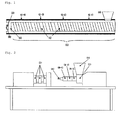
Fig. 1 is a schematic view of an extruder used in examples. -
Fig. 2 is a schematic view of an injection molding machine used in examples. -
Fig. 1 - A: position of measurement of maximum temperature of mixture at adapter part
- B: discharge pore
- C: cylinder part
- C-1 to C-4: temperature setting positions of heat mixing part
- D: temperature setting position of dice part
- E: screw part
- H: hopper part
- (A) nozzle
- (B-1) to (B-3):
barrels 1 to 3 - (C) hopper
- (D) metal mold
- (H) raw material charging part
- The granular formulation of the present invention contains 3,9-bis[2-[3-(3-t-butyl-4-hydroxy-5-methylphenyl)propionyloxy]-1,1-dimethylethyl]-2,4,8,10-tetraoxaspiro[5·5]undecane (A).
- (A) is represented by the following formula.

- The granular formulation of the present invention contains a compound (B) having a hindered amine skeleton of the formula (1):

in addition to the above-described (A). Such a compound having a hindered amine skeleton is known as a hindered amine light stabilizer (HALS), and particularly, compounds having a melting point of preferably 70 to 220°C, more preferably 70 to 180°C and further preferably 70 to 130°C are suitably used in the present invention. When the compound has a higher melting point, dispersibility in the case of addition of this compound into a thermoplastic polymer is poor in some cases, and when the compound has a lower melting point, granulation becomes difficult and a granulated material of good properties and conditions is not obtained in some cases. - Examples of the compound (B) having a hindered amine skeleton include bis(2,2,6,6-tetramethyl-4-piperidyl) sebacate (melting point: 81 to 85°C), α-alkene (C20-C24) maleic anhydride 4-amino-2,2,6,6-tetramethylpiperidine oligomer (melting point: 95 to 125°C), poly[(6-morpholino-s-triazine-2,4-diyl)[2,2,6,6-tetramethyl-4-piperidyl]imino]-hexamethylene[(2,2,6,6-tetramethyl-4-piperidyl)imino] (melting point: 110 to 130°C), 8-acetyl-3-dodecyl-7,7,9,9-tetramethyl-1,3,8-triazospiro(4,5)decane-2,4-dione (melting point: 72 to 78°C), polymer of bis(2,2,6,6-tetramethyl-4-piperidinyl)-succinate (melting point: 116 to 119°C), and the like, and particularly suitable are bis(2,2,6,6-tetramethyl-4-piperidyl) sebacate, α-alkene (C20-C24) maleic anhydride 4-amino-2,2,6,6-tetramethylpiperidine oligomer, poly[(6-morpholino-s-triazine-2,4-diyl)[2,2,6,6-tetramethyl-4-piperidyl]imino]-hexamethylene[(2,2,6,6-tetramethyl-4-piperidyl)imino].
- The granular formulation of the present invention can contain at least one additive (C) selected from the group consisting of a phosphorus-based antioxidant, ultraviolet absorber, neutralizing agent, lubricant, anti-blocking agent, antistatic agent, pigment, nucleating agent and flame retardant, in addition to the above-described (A) and the compound (B) having a hindered amine skeleton. Particularly, inorganic additives and organic additives having a melting point of 70°C or more can be suitably used since these additives scarcely exert an influence on a granule property. It is preferable from the standpoint of stable granulation that the additive (C) has a melting point which is higher than that of the compound (B) having a hindered amine skeleton. On the other hand, additives other than the additive (C), for example, a sulfur-based antioxidant is contained in a proportion of preferably 1% by weight or less, more preferably 0.01% by weight or less with respect to the weight of the granular formulation, and it is further preferable that a sulfur-based antioxidant is not substantially contained. Examples of such a sulfur-based antioxidant include dilauryl-3,3'-thiodipropionate (melting point: 40 to 42°C), dimyristyl-3,3'-thiodipropionate (melting point: 49 to 54°C), distearyl-3,3'-thiodipropionate (melting point: 65 to 67°C), pentaerythrityl tetrakis(3-dodecylthiopropionate) (melting point: about 46°C), and the like.
- As the above-described additive (C), the following compounds and the like are listed.
Examples of the phosphorus-based antioxidant include tris(2,4-di-t-butylphenyl) phosphite (melting point: 183 to 187°C), tetrakis(2,4-di-t-butylphenyl)-4,4'-biphenylene diphosphonite (melting point: 75 to 90°C), bis[2,4-di-t-butyl, (6-methyl)phenyl]ethyl phosphite (melting point: 89 to 92°C), and the like. - Examples of the ultraviolet absorber include 2-hydroxy-4-n-octyloxy benzophenone (melting point: 45°C or more), 2-(2H-benzotriazol-2-yl)-4,6-di-t-pentyl phenol (melting point: 77°C or more), 2-[4,6-bis(2,4-dimethylphenyl)-1,3,5-triazin-2-yl]-5-(octyloxy)phenol (melting point: 87 to 89°C), and the like.
- Examples of the neutralizing agent include synthetic hydrotalcite, natural hydrotalcite, calcium hydroxide, and fatty acid metal salts such as calcium stearate, magnesium stearate, sodium stearate, potassium stearate, calcium laurate, magnesium laurate, sodium laurate, potassium laurate, calcium palmitate, magnesium palmitate, sodium palmitate, potassium palmitate, calcium myristate, magnesium myristate, sodium myristate, potassium myristate, and the like.
- Examples of the lubricant include oleic amide (melting point: about 72 to 77°C), erucic amide (melting point: 79 to 81°C), propylene glycol monostearate (melting point: 42 to 48°C), stearyl stearate (melting point: 53 to 59°C), sorbitan stearate (melting point: 52 to 58°C), and the like.
- Examples of the anti-blocking agent include inorganic or organic anti-blocking agents such as aluminum silicate, synthetic silica, natural silica, zeolite, kaolin, diatomaceous earth and the like; etc.
- Examples of the antistatic agent include glycerin monostearate (melting point: 65 to 70°C), glycerin monocaprate (melting point: 46°C), glycerin monolaurate (melting point: 57°C), citric acid fatty acid monoglyceride (melting point: 59°C), and the like.
- Examples of the pigment include carbon black, titanium oxide, phthalocyanine pigment, quinacridone pigment, isoindolinone pigment, perylene or perynine pigment, quinophthalone pigment, diketo pyrrolo-pyrrole pigment, dioxazine pigment, disazo condensed pigment, benzimidazolone pigment, and the like.
- Examples of the nucleating agent include a Na salt of α-naphthalenesulfonic acid, Mg salt of α- naphthalenesulfonic acid, Ca salt of α-naphthalenesulfonic acid, Al salt of α-naphthalenesulfonic acid, Na salt of 8-aminonaphthalenesulfonic acid, Na salt of benzenesulfonic acid, Mg salt of benzenesulfonic acid, Ca salt of benzenesulfonic acid, Al salt of benzenesulfonic acid, Ca salt of 2,5-dichlorobenzenesulfonic acid, Mg salt of 2,5-dichlorobenzenesulfonic acid, Ca salt of m-xylenesulfonic acid, Mg salt of m-xylenesulfonic acid, benzoic acid (melting point: 122°C), p-isopropylbenzoic acid, o-t-butylbenzoic acid, p-t-butylbenzoic acid, monophenylacetic acid (melting point: 77°C), diphenylacetic acid, Li salt of diphenylacetic acid, Na salt of diphenylacetic acid, Mg salt of diphenylacetic acid, Ca salt of diphenylacetic acid, Ba salt of diphenylacetic acid, Al salt of diphenylacetic acid, phenyldimethylacetic acid, Li salt of phenyldimethylacetic acid, Na salt of phenyldimethylacetic acid, Mg salt of phenyldimethylacetic acid, Ca salt of phenyldimethylacetic acid, Ba salt of phenyldimethylacetic acid, Mg salt of phthalic acid, succinic acid (melting point: 185°C), Li salt of succinic acid, Na salt of succinic acid, Mg salt of succinic acid, Ca salt of succinic acid, Ba salt of succinic acid, glutaric acid (melting point: 95 to 99°C), Li salt of glutaric acid, Na salt of glutaric acid, Mg salt of glutaric acid, Ca salt of glutaric acid, Ba salt of glutaric acid, adipic acid (melting point: 151 to 153°C), suberic acid, Li salt of suberic acid, Na salt of suberic acid, Mg salt of suberic acid, Ca salt of suberic acid, Ba salt of suberic acid, sebacic acid, Li salt of sebacic acid, Na salt of sebacic acid, Mg salt of sebacic acid, Ca salt of sebacic acid, Al salt of sebacic acid, diphenylphosphinic acid (melting point: 193 to 196°C), Li salt of diphenylphosphinic acid, Na salt of diphenylphosphinic acid, K salt of diphenylphosphinic acid, Ca salt of diphenylphosphinic acid, Mg salt of diphenylphosphinic acid, Al salt of diphenylphosphinic acid, Li salt of 4,4'-dichlorodiphenylphosphinic acid, Na salt of 4,4'-dimethyldiphenylphosphinic acid, dinaphthylphosphinic acid, Li salt of dinaphthylphosphinic acid, Na salt of dinaphthylphosphinic acid, Mg salt of dinaphthylphosphinic acid, Ca salt of dinaphthylphosphinic acid, Al salt of dinaphthylphosphinic acid, and the like.
- Examples of the flame retardant include decabromobiphenyl, antimony trioxide, phosphorus-based flame retardant, aluminum hydroxide, and the like.
- The granular formulation [1] of the present invention contains 1 to 95% by weight of the phenol antioxidant (A) and 99 to 5% by weight of the compound (B) having a hindered amine skeleton, based on the weight of the granular formulation.
The granular formulation [2] of the present invention contains the above-described components: the phenol antioxidant(A) in an amount of 1 to 95% by weight, preferably 2 to 90% by weight and the compound (B) having a hindered amine skeleton in an amount of 50 to 5% by weight, preferably 50 to 10% by weight, more preferably 30 to 10% by weight, based on the weight of the granular formulation, and further, the additive (C), in which the total amount of (A) (B) (C) is 100% by weight. The content of the additive (C) is preferably 80 to 1% by weight, based on the weight of the granular formulation.
The additive (C) is preferably at least one additive selected from the group consisting of a phosphorus-based antioxidant, ultraviolet absorber, neutralizing agent, anti-blocking agent, pigment, nucleating agent and flame retardant. It is more preferable that at least one or more additives selected from a phosphorus-based antioxidant, ultraviolet absorber and neutralizing agent are contained as the additive (C). - The granular formulation of the present invention is excellent in shape preservation stability under a high temperature atmosphere. The granular formulation of the present invention is not easily colored, namely, excellent in an anti-coloring property. Further, a thermoplastic polymer can be endowed with stability against light and heat, by blending the granular formulation of the present invention. The stability of the thermoplastic polymer composition containing the granular formulation of the present invention is approximately equivalent to the stability of a thermoplastic polymer composition obtained by individually mixing the above-described components (A), (B) and (C) in the form of a powder, with a thermoplastic polymer.
- Next, the production method of the granular formulation of the present invention will be explained.
Though the production method of the granular formulation of the present invention is not particularly restricted, there is suitably adopted a method in which the component (A), the compound (B) having a hindered amine skeleton, and if necessary, the additive (C), are mixed and the resultant mixture is granulated by an extruder, or the like. Mixing of the components may be sequential or simultaneous. The mixing method includes a method of dry blending using a mixing machine such as a Henschel mixer, or a method of performing melt kneading using a mixing machine such as a kneader, Bunbury, roll mill and extruder. For obtaining a more uniform mixture in the mixing, it is preferable that the components are previously dry-blended, and the resultant mixture is further melt-kneaded. Thus, it is preferable to adopt, as the production method of the granular formulation of the present invention, a method comprising a first step of mixing a mixture containing the phenol antioxidant (A), the compound (B) having a hindered amine skeleton of the above-described formula (1), and at least one additive (C) selected from the group consisting of a phosphorus-based antioxidant, ultraviolet absorber, neutralizing agent, lubricant, anti-blocking agent, antistatic agent, pigment, nucleating agent and flame retardant, and a second step of extrusion-granulating the mixture obtained in the first step. - It is preferable that the temperature in granulation by an extruder is a temperature near the melting point of the compound (B) having a hindered amine skeleton contained in the mixture. More specifically, it is preferable that the temperature in extrusion-granulation in the second step is defined by the inequality:

wherein, Tm represents the melting point (°C) of the compound (B) having a hindered amine skeleton. As the method of setting the granulation temperature, exemplified are a method in which, in extruding a mixture in an extruder, the temperature is set by utilizing heat generation ascribable to shearing force, a method in which temperature is raised by passing a heat medium through a jacket of an extruder or the like, and methods combining these methods, and the like. - Examples of the extruder include dry extruders such as a disk pelletter and the like, and melt extruders such as a single screw extruder, a twin screw extruder or an extruder combining them (for example, single screw/twin screw extruder, and the like), etc.
Examples of the shape of thus obtained granular formulation include pellet, disk, sphere and the like, and it is preferable from the standpoint of mixability into a thermoplastic polymer that the granular formulation is in the form of a pellet preferably having a diameter of about 1 to 4 mm and a length of about 1 to 5 mm. - The granular formulation of the present invention is suitable as a stabilizer for a thermoplastic polymer having a tendency of undergoing deterioration due to heat or light.
Examples of the thermoplastic polymer include polypropylene resins such as an ethylene-propylene copolymer and the like; polyethylene resins (high density polyethylene (HD-PE), low density polyethylene (LD-PE), linear low density polyethylene (LLDPE) and the like), methylpentene polymer, ethylene-ethyl acrylate copolymer, ethylene-vinyl acetate copolymer, polystyrenes (polystyrene such as poly(p-methylstyrene), poly(α-methylstyrene) and the like, acrylonitrile-styrene copolymer, acrylonitrile-butadiene-styrene copolymer, special acrylic rubber-acrylonitrile-styrene copolymer, acrylonitrile-chlorinated polyethylene-styrene copolymer, styrene-butadiene copolymer and the like), chlorinated polyethylene, polychloroprene, chlorinated rubber, polyvinyl chloride, polyvinylidene chloride, methacrylic resin, ethylene-vinyl alcohol copolymer, fluorine resin, polyacetal, grafted polyphenylene ether resin, polyphenylene sulfide resin, polyurethane, polyamide, polyester resins (for example, polyethylene terephthalate, polybutylene terephthalate and the like), polycarbonate, polyacrylate, polysulfone, polyether ether ketone, polyether sulfone, aromatic polyester resin, diallyl phthalate prepolymer, silicone resin, 1,2-polybutadiene, polyisoprene, butadiene/acrylonitrile copolymer, ethylene-methyl methacrylate copolymer, and the like. Especially, from the standpoint of good molding processability, polyolefins such as polyethylene resins, polypropylene resins and the like and polystyrenes are preferable, and polypropylene resins are more preferable. Of them, polyolefins having a melt index (MI) in the range of about 0.01 to 100 are preferable. Further, thermoplastic polymers having a median diameter of about 0.1 to 10 mm are preferable. - Here, the polypropylene resin means a polyolefin containing a structural unit derived from propylene, and specifically mentioned are a crystalline propylene homopolymer, propylene-ethylene random copolymer, propylene-α-olefin random copolymer, propylene-ethylene-α-olefin copolymer; polypropylene block copolymer composed of a propylene homopolymer component or a copolymer component mainly composed of propylene, and a copolymer component of propylene and ethylene and/or α-olefin; and the like.
- In the case of use of a polypropylene resin as the thermoplastic polymer to be stabilized in the present invention, one polypropylene resin may be used or two or more polypropylene resins may be blended and used.
- As the α-olefin, α-olefins having 4 to 12 carbon atoms are mentioned, and examples thereof include 1-butene, 1-pentene, 1-hexene, 4-methyl-1-pentene, 1-octene, 1-decene and the like, preferably 1-butene, 1-hexene) and 1-octene.
- Examples of the propylene-α-olefin random copolymer include a propylene-1-butene random copolymer, propylene-1-hexene random copolymer, propylene-1-octene random copolymer and the like.
- Examples of the propylene-ethylene-a-olefin copolymer include a propylene-ethylene-1-butene copolymer, propylene-ethylene-1-hexene copolymer, propylene-ethylene-1-octene copolymer and the like.
- In the polypropylene block copolymer composed of a propylene homopolymer component or a copolymer component mainly composed of propylene, and a copolymer component of propylene and ethylene and/or α-olefin, examples of the copolymer component mainly composed of propylene include a propylene-ethylene copolymer component, propylene-1-butene copolymer component, propylene-1-hexene copolymer component and the like. Examples of the copolymer component of propylene and ethylene and/or α-olefin include a propylene-ethylene copolymer component, propylene-ethylene-1-butene copolymer component, propylene-ethylene-1-hexene copolymer component, propylene-ethylene-1-octene copolymer component, propylene-1-butene copolymer component, propylene-1-hexene copolymer component, propylene-1-octene copolymer component and the like. The content of ethylene and/or α-olefin having 4 to 12 carbon atoms in the copolymer component of propylene and ethylene and/or α-olefin is usually 0.01 to 20 wt%.
- Examples of the polypropylene block copolymer composed of a propylene homopolymer component or a copolymer component mainly composed of propylene, and a copolymer component of propylene and ethylene and/or α-olefin include a propylene-ethylene block copolymer, (propylene)-(propylene-ethylene) block copolymer, (propylene)-(propylene-ethylene-1-butene) block copolymer, (propylene)-(propylene-ethylene-1-hexene) block copolymer, (propylene)-(propylene-1-butene) block copolymer, (propylene)-(propylene-1-hexene) block copolymer, (propylene-ethylene)-(propylene-ethylene-1-butene) block copolymer, (propylene-ethylene)-(propylene-ethylene-1-hexene) block copolymer, (propylene-ethylene)-(propylene-1-butene) block copolymer, (propylene-ethylene)-(propylene-1-hexene) block copolymer, (propylene-1-butene)-(propylene-ethylene) block copolymer, (propylene-1-butene)-(propylene-ethylene-1-butene) block copolymer, (propylene-1-butene)-(propylene-ethylene-1-hexene) block copolymer, (propylene-1-butene)-(propylene-1-butene) block copolymer, (propylene-1-butene)-(propylene-1-hexene) block copolymer, and the like.
- The granular formulation of the present invention is usually advantageously blended in an amount of 2 parts by weight or less with respect to 100 parts by weight of a thermoplastic polymer, and specifically, this amount is preferably 0.01 part by weight or more and 2 parts by weight or less, more preferably 0.01 part by weight or more and 1 part by weight or less. When 2 parts by weight or less, there is a preferable tendency of suppressing a bleed phenomenon in which a stabilizer comes out to the surface of a thermoplastic polymer composition.
- The present invention will be illustrated further in detail by examples and reference examples listed below, but the present invention is not limited to these examples.
- Additives used in the examples and reference examples are shown in the following table.
antioxidant Chemical name Melting point P-1 3,9-bis[2-[3-(3-t-butyl-4-hydroxy-5-methylphenyl)propionyloxy]-1,1-dimethylethyl]-2,4,8,10-tetraoxaspiro[5·5]undecane 110 to 120°C P-2 tris(2,4-di-t-butylphenyl) phosphite 183 to 187°C P-3 dimyristyl-3,3-thiodipropionate 49 to 54°C
(coagulation point)P-4 bis(2,2,6,6-tetramethyl-4-piperidyl) sebacate 81 to 85°C P-5 glycerol monostearate 65 to 70°C P-6 hydrotalcite P-7 2,4-di-t-butylphenyl-3,5-di-t-butyl-4-hydroxy benzoate 192 to 197°C - A compound (P-1) (500 g) and a compound (P-4) (500 g) were charged into a Henschel mixer, and stirred for 30 seconds at a revolution of a stirring blade of 950 rpm. The resultant mixture was charged into a hopper part of a twin screw extruder (manufactured by Nakatani Corporation, 30 mmϕ) shown in
Fig. 1 , and the heater temperatures on a cylinder part were set at C1: 43°C, C2: 56°C, C3: 60°C, C4: 62°C, A: 75°C, D: 73°C, respectively, (respective positions are shown inFig. 1 ), and extrusion was carried out at a screw revolution of 40 rpm. The resultant strand was cooled at room temperature, then, subjected to cutting to obtain 1000 g of a pellet-shaped granular formulation a (pellet diameter: 3.0 mm, pellet length: 1.0 to 5.0 mm). The temperature of the product in extrusion granulation was measured at part A of the cylinder, to find a value of 73°C. A constant temperature constant humidity tank was prepared under conditions of a temperature of 50°C and a humidity of 80% RH, supposing for example transportation in a ship and the like, as a high temperature atmosphere, and each 50 g of the resultant granular formulation was placed in a 200 ml beaker, and a 60 mmϕ cylindrical iron weight was placed on this under a load of 2 kg and allowed to stand for 4 weeks, and apparent coloration or discoloration and existence of fixation between granular formulations (blocking) were visually confirmed. The weaker the fixation and coloration (discoloration) on the appearance of the sample, the more excellent the product. The results of measurement of shape preservation stability under these high temperature high humidity conditions are shown in Table 1. - A pellet-shaped granular formulation b was obtained in the same manner as in Example 1 except that a mixture of a compound (P-1) (900 g) and a compound (P-4) (100 g) was charged and the temperature conditions were set at C1: 54°C, C2: 71°C, C3: 83°C, C4: 80°C, A: 80°C, D: 80°C, respectively, in Example 1. The temperature of the product in extrusion granulation was 85°C. The results are shown in Table 1.
- A pellet-shaped granular formulation c was obtained in the same manner as in Example 1 except that a mixture of a compound (P-1) (770 g) and a compound (P-4) (230 g) was charged and the temperature conditions were set at C1: 42°C, C2: 54°C, C3: 65°C, C4: 62°C, A: 71°C, D: 71°C, respectively, in Example 1. The temperature of the product in extrusion granulation was 71°C. The results are shown in Table 1.
- A pellet-shaped granular formulation d was obtained in the same manner as in Example 1 except that a mixture of a compound (P-1) (670 g) and a compound (P-4) (330 g) was charged and the temperature conditions were set at C1: 43°C, C2: 55°C, C3: 61°C, C4: 62°C, A: 75°C, D: 75°C, respectively, in Example 1. The temperature of the product in extrusion granulation was 73°C. The results are shown in Table 1.
- A pellet-shaped granular formulation e was obtained in the same manner as in Example 1 except that a mixture of a compound (P-1) (20 g), compound (P-2) (200 g), compound (P-4) (200 g), compound (P-6) (200 g) and compound (P-7) (380 g) was charged and the temperature conditions were set at C1: 69°C, C2: 74°C, C3: 79°C, C4: 85°C, A: 98°C, D: 98°C, respectively, in Example 1. The temperature of the product in extrusion granulation was 94°C. The results are shown in Table 1.
- A pellet-shaped granular formulation f was obtained in the same manner as in Example 1 except that a mixture of a compound (P-1) (20 g), compound (P-2) (200 g), compound (P-4) (200 g), compound (P-5) (20 g), compound (P-6) (200 g) and compound (P-7) (360 g) was charged and the temperature conditions were set at C1: 45°C, C2: 53°C, C3: 65°C, C4: 67°C, A: 76°C, D: 78°C, respectively, in Example 1. The temperature of the product in extrusion granulation was 76°C. The results are shown in Table 1.
- The granular formulations a to f obtained in Example 1 to 6, respectively, do not cause a problem of dusting.
-
Table 1 Shape preservation stability after 4 weeks under 50°C and 80% RH of pellet-shaped granular formulation Example 1 Example 2 Example 3 Example 4 Example 5 Example 6 Granular formulation a b c d e f Apparent coloration No coloration No coloration No coloration No coloration No coloration No coloration stability △ ○ ○ △ ○ △ - Judge of shape preservation stability
-
- ○: unstiffened under weak shaking
- Δ: slight fixation, unstiffened under strong push
- X: melting or severe fixation, no collapse under impact
- Into a hopper of an injection molding machine shown in
Fig. 2 (manufactured by FANUC, 30 mmϕ), a polypropylene resin (100 parts by weight) and the above-described granular formulation a (0.05 parts by weight) previously mixed by a Henschel mixer were charged. The heater temperatures were set at hopper (H): 50°C, barrel 3 (B-3): 220°C, barrel 2 (B-2): 230°C, barrel 1 (B-1): 230°C, nozzle (A): 230°C, metal mold (D): 40°C, respectively, (respective positions are shown inFig. 2 ), and injection molding was carried out, to obtain a molded body i having a thickness of 1 mm. As a weather resistance test, exposure was performed up to 300 hours under conditions of 63°C and no water spray using Xenon Weather-Ometer ci35A manufactured by ATLAS corporation, and the surface of the molded body was observed by a microscope, to recognize no existence of crack. - Injection molding was carried out in the same manner as in Example 7 to obtain a molded body j, except that 0.05 parts by weight of the above-described granular formulation c was charged, in example 7. The weather resistance test was carried out in the same manner as in Example 7 to recognize no existence of crack, except that the molded body j was used and exposure was performed for 200 hours.
- Injection molding was carried out in the same manner as in Example 7 to obtain a molded
body 1, except that 0.05 parts by weight of the above-described granular formulation d was charged, in example 7. The weather resistance test was carried out in the same manner as in Example 8 to recognize no existence of crack, except that the moldedbody 1 was used. - Injection molding was carried out in the same manner as in Example 7 to obtain a molded body m, except that 0.05 parts by weight of the above-described granular formulation e was charged, in example 7. The weather resistance test was carried out in the same manner as in Example 7 to recognize no existence of crack, except that the molded body m was used.
- Injection molding was carried out in the same manner as in Example 7 to obtain a molded body n, except that 0.05 parts by weight of the above-described granular formulation f was charged, in example 7. The weather resistance test was carried out in the same manner as in Example 7 to recognize no existence of crack, except that the molded body n was used and exposure was performed up to 400 hours.
- Injection molding was carried out in the same manner as in Example 7 to obtain a molded body o, except that 0.20 parts by weight of the above-described granular formulation a was charged, in example 7. The weather resistance test was carried out in the same manner as in Example 7 to recognize no existence of crack, except that the molded body o was used and exposure was performed up to 700 hours.
- Injection molding was carried out in the same manner as in Example 7 to obtain a molded body p, except that 0.20 parts by weight of the above-described granular formulation d was charged, in example 7. The weather resistance test was carried out in the same manner as in Example 7 to recognize no existence of crack, except that the molded body p was used and exposure was performed up to 600 hours.
- Injection molding was carried out in the same manner as in Example 7 to obtain a molded body r, except that 0.20 parts by weight of the above-described granular formulation e was charged, in example 7. The weather resistance test was carried out in the same manner as in Example 7 to recognize no existence of crack, except that the molded body r was used and exposure was performed up to 700 hours.
- Injection molding was carried out in the same manner as in Example 7 to obtain a molded body s, except that 0.20 parts by weight of the above-described granular formulation f was charged, in example 7. The weather resistance test was carried out in the same manner as in Example 7 to recognize no existence of crack, except that the molded body s was used and exposure was performed up to 700 hours.
- (0057) The granular formulation of the present invention imparts stability against light and heat to a thermoplastic polymer, without causing a problem of dusting. Therefore, various articles obtained from a thermoplastic polymer into which the granular formulation of the present invention has been blended can be suitably used in applications requiring light resistance and heat resistance.
Claims (8)
- A granular formulation comprising 1 to 95% by weight of (A) 3,9-bis[2-[3-(3-t-butyl-4-hydroxy-5-methylphenyl)propionyloxy]-1,1-dimethylethyl]-2,4,8,10-tetraoxaspiro[5·5]undecane and 99 to 5% by weight of (B) a compound having a hindered amine skeleton of the formula (1):

- A granular formulation comprising 1 to 95% by weight of (A) 3,9-bis[2-[3-(3-t-butyl-4-hydroxy-5-methylphenyl)propionyloxy]-1,1-dimethylethyl]-2,4,8,10-tetraoxaspiro[5·5]undecane, 50 to 5% by weight of (B) a compound having a hindered amine skeleton of the formula (1):

- The granular formulation according to claim 2,
wherein the additive (C) has a melting point which is higher than that of the compound (B) having a hindered amine skeleton. - The granular formulation according to any one of claims 1 to 3, wherein the granular formulation is a granular formulation containing substantially no sulfur-based antioxidant.
- A granular formulation production method comprising a first step of mixing (A) 3,9-bis[2-[3-(3-t-butyl-4-hydroxy-5-methylphenyl)propionyloxy]-1,1-dimethylethyl]-2,4,8,10-tetraoxaspiro[5·5]undecane and (B) a compound having a hindered amine skeleton of the formula (1):

- A granular formulation production method comprising a first step of mixing (A) 3,9-bis[2-[3-(3-t-butyl-4-hydroxy-5-methylphenyl)propionyloxy]-1,1-dimethylethyl]-2,4,8,10-tetraoxaspiro[5·5]undecane, (B) a compound having a hindered amine skeleton of the formula (1):

and a second step of extrusion-granulating the mixture obtained in the first step. - The production method according to claim 5 or 6,
wherein the temperature in extrusion-granulation in the second step is defined by the inequality:
wherein, Tm represents the melting point (°C) of the compound (B) having a hindered amine skeleton. - A method of producing a thermoplastic polymer composition, comprising a step of blending 0.01 to 2 parts by weight of the granular formulation as described in any one of claims 1 to 4, per 100 parts by weight of the thermoplastic polymer.
Applications Claiming Priority (1)
| Application Number | Priority Date | Filing Date | Title |
|---|---|---|---|
| JP2009108102 | 2009-04-27 |
Publications (1)
| Publication Number | Publication Date |
|---|---|
| EP2246388A1 true EP2246388A1 (en) | 2010-11-03 |
Family
ID=42341713
Family Applications (1)
| Application Number | Title | Priority Date | Filing Date |
|---|---|---|---|
| EP10160883A Withdrawn EP2246388A1 (en) | 2009-04-27 | 2010-04-23 | Granular stabilizer formulation and production method thereof |
Country Status (2)
| Country | Link |
|---|---|
| EP (1) | EP2246388A1 (en) |
| JP (1) | JP2010275535A (en) |
Cited By (1)
| Publication number | Priority date | Publication date | Assignee | Title |
|---|---|---|---|---|
| US20190264084A1 (en) * | 2018-02-28 | 2019-08-29 | Cytec Industries Inc. | Granular stabilizer compositions for use in polymer resins and methods of making same |
Families Citing this family (4)
| Publication number | Priority date | Publication date | Assignee | Title |
|---|---|---|---|---|
| WO2018021161A1 (en) | 2016-07-29 | 2018-02-01 | 新日本理化株式会社 | Crystal nucleating agent for polyolefin resin, method for producing crystal nucleating agent for polyolefin resin, and method for improving fluidity of crystal nucleating agent for polyolefin resin |
| US10894874B2 (en) | 2016-08-25 | 2021-01-19 | New Japan Chemical Co., Ltd. | Crystal nucleator for polyolefin resins, method for producing crystal nucleator for polyolefin resins, and method for improving fluidity of crystal nucleator for polyolefin resins |
| JP6679450B2 (en) * | 2016-09-16 | 2020-04-15 | 新日本理化株式会社 | Crystal nucleating agent for granular polyolefin resin with improved fluidity |
| CN109689765A (en) | 2016-09-16 | 2019-04-26 | 新日本理化株式会社 | Crystal nucleating agent for polyolefin-based resin, method for producing crystal nucleating agent for polyolefin-based resin, and method for improving fluidity of crystal nucleating agent for polyolefin-based resin |
Citations (5)
| Publication number | Priority date | Publication date | Assignee | Title |
|---|---|---|---|---|
| US4721744A (en) * | 1985-04-04 | 1988-01-26 | Sumitomo Chemical Company, Limited | Stabilized polyurethane compositions |
| EP0454378A1 (en) * | 1990-04-25 | 1991-10-30 | Sumitomo Chemical Company, Limited | Stabilized polyolefin composition |
| EP0934972A2 (en) * | 1998-02-07 | 1999-08-11 | Clariant GmbH | Polyolefin moulding matters for manufacture of calandered foils/boards |
| US6824936B1 (en) * | 2003-08-05 | 2004-11-30 | Eastman Kodak Company | Hindered amine light stabilizer for improved yellow dark stability |
| WO2008033410A1 (en) * | 2006-09-14 | 2008-03-20 | Ingenia Polymers Inc. | High concentration pelletized additive concentrates for polymer |
-
2010
- 2010-04-23 JP JP2010099707A patent/JP2010275535A/en not_active Withdrawn
- 2010-04-23 EP EP10160883A patent/EP2246388A1/en not_active Withdrawn
Patent Citations (5)
| Publication number | Priority date | Publication date | Assignee | Title |
|---|---|---|---|---|
| US4721744A (en) * | 1985-04-04 | 1988-01-26 | Sumitomo Chemical Company, Limited | Stabilized polyurethane compositions |
| EP0454378A1 (en) * | 1990-04-25 | 1991-10-30 | Sumitomo Chemical Company, Limited | Stabilized polyolefin composition |
| EP0934972A2 (en) * | 1998-02-07 | 1999-08-11 | Clariant GmbH | Polyolefin moulding matters for manufacture of calandered foils/boards |
| US6824936B1 (en) * | 2003-08-05 | 2004-11-30 | Eastman Kodak Company | Hindered amine light stabilizer for improved yellow dark stability |
| WO2008033410A1 (en) * | 2006-09-14 | 2008-03-20 | Ingenia Polymers Inc. | High concentration pelletized additive concentrates for polymer |
Cited By (8)
| Publication number | Priority date | Publication date | Assignee | Title |
|---|---|---|---|---|
| US20190264084A1 (en) * | 2018-02-28 | 2019-08-29 | Cytec Industries Inc. | Granular stabilizer compositions for use in polymer resins and methods of making same |
| WO2019168892A1 (en) | 2018-02-28 | 2019-09-06 | Cytec Industries Inc. | Granular stabilizer compositions for use in polymer resins and methods of making same |
| CN112055728A (en) * | 2018-02-28 | 2020-12-08 | 塞特工业公司 | Particulate stabilizer composition for polymer resins and process for producing the same |
| US10975278B2 (en) * | 2018-02-28 | 2021-04-13 | Cytec Industries Inc. | Granular stabilizer compositions for use in polymer resins and methods of making same |
| CN112055728B (en) * | 2018-02-28 | 2023-05-05 | 塞特工业公司 | Granular stabilizer composition for polymer resin and its production method |
| IL276941B1 (en) * | 2018-02-28 | 2024-05-01 | Cytec Ind Inc | Granular stabilizers for use in polymer resins and methods for their preparation |
| IL276941B2 (en) * | 2018-02-28 | 2024-09-01 | Cytec Ind Inc | Granular stabilizers for use in polymer resins and methods for their preparation |
| EP3578599A1 (en) * | 2018-06-08 | 2019-12-11 | Cytec Industries Inc. | Granular stabilizer compositions for use in polymer resins and methods of making same |
Also Published As
| Publication number | Publication date |
|---|---|
| JP2010275535A (en) | 2010-12-09 |
Similar Documents
| Publication | Publication Date | Title |
|---|---|---|
| US10214627B2 (en) | Stabilised resin composition | |
| JP5388263B2 (en) | Master batch for polyolefin resin nucleating agent | |
| TWI441860B (en) | Polyolefin resin composition | |
| TWI526447B (en) | A photonic agent composition containing a sorbitol compound, and a method for producing a polypropylene resin composition using the sorbitol compound | |
| JP2008050583A (en) | Resin composition | |
| KR20150139897A (en) | Resin additive masterbatch and polyolefin resin composition to which said resin additive masterbatch has been admixed | |
| EP1967548B1 (en) | Polypropylene Composition | |
| KR101602750B1 (en) | Synthetic resin composition, and automotive interior/exterior material comprising the same | |
| JP2010275535A (en) | Granule and method for producing the same | |
| JP5628539B2 (en) | Clarifying agent composition with improved effect of dibenzylidene sorbitol-based clarifying agent | |
| JP6630461B1 (en) | Agricultural film, agricultural film-forming resin composition, and plant growing method using the same | |
| WO2020230664A1 (en) | Agricultural film and plant growing method | |
| JP5679154B2 (en) | Granular polyolefin resin additive composition | |
| JP4867593B2 (en) | Phosphite ester composition and method for producing the same | |
| JP5478012B2 (en) | Resin composition and resin molded product | |
| US20180002495A1 (en) | Masterbatch Formulation and Formation | |
| EP2657288B1 (en) | Flame-retardant styrene resin composition, and toner cartridge container produced using same | |
| JPWO2008062560A1 (en) | Lead-free vinyl chloride resin composition and lead-free vinyl chloride extruded product | |
| JP4526830B2 (en) | Polyolefin molded body for sodium chloride filling | |
| CN101193963A (en) | Aluminum pigment compound resin composition | |
| JP2011207992A (en) | Method of manufacturing polypropylene resin composition containing sorbitol transparentization agent with large particle size | |
| US20080262124A1 (en) | Master Batch for Resin | |
| JPH07309978A (en) | Polyolefin resin composition containing inorganic filler | |
| JP2020184984A (en) | Method for improving sulfur absorption inhibiting ability of agricultural film | |
| JP2006232905A (en) | Master batch for resin |
Legal Events
| Date | Code | Title | Description |
|---|---|---|---|
| PUAI | Public reference made under article 153(3) epc to a published international application that has entered the european phase |
Free format text: ORIGINAL CODE: 0009012 |
|
| AK | Designated contracting states |
Kind code of ref document: A1 Designated state(s): AT BE BG CH CY CZ DE DK EE ES FI FR GB GR HR HU IE IS IT LI LT LU LV MC MK MT NL NO PL PT RO SE SI SK SM TR |
|
| AX | Request for extension of the european patent |
Extension state: AL BA ME RS |
|
| 17P | Request for examination filed |
Effective date: 20110503 |
|
| 17Q | First examination report despatched |
Effective date: 20130821 |
|
| STAA | Information on the status of an ep patent application or granted ep patent |
Free format text: STATUS: THE APPLICATION IS DEEMED TO BE WITHDRAWN |
|
| 18D | Application deemed to be withdrawn |
Effective date: 20140103 |