EP2245617B1 - Computer-implemented method for interacting with a user via a speech-based user interface - Google Patents
Computer-implemented method for interacting with a user via a speech-based user interface Download PDFInfo
- Publication number
- EP2245617B1 EP2245617B1 EP09715785.3A EP09715785A EP2245617B1 EP 2245617 B1 EP2245617 B1 EP 2245617B1 EP 09715785 A EP09715785 A EP 09715785A EP 2245617 B1 EP2245617 B1 EP 2245617B1
- Authority
- EP
- European Patent Office
- Prior art keywords
- items
- phrase
- domains
- relevant
- command
- Prior art date
- Legal status (The legal status is an assumption and is not a legal conclusion. Google has not performed a legal analysis and makes no representation as to the accuracy of the status listed.)
- Active
Links
Images


Classifications
-
- G—PHYSICS
- G10—MUSICAL INSTRUMENTS; ACOUSTICS
- G10L—SPEECH ANALYSIS TECHNIQUES OR SPEECH SYNTHESIS; SPEECH RECOGNITION; SPEECH OR VOICE PROCESSING TECHNIQUES; SPEECH OR AUDIO CODING OR DECODING
- G10L15/00—Speech recognition
- G10L15/08—Speech classification or search
- G10L15/18—Speech classification or search using natural language modelling
- G10L15/1815—Semantic context, e.g. disambiguation of the recognition hypotheses based on word meaning
Definitions
- the invention relates generally to automatic speech recognition systems, and more specifically to a user interaction interface for such a system.
- WO 2005/024781 A1 discloses a method of operating a speech recognition system in a vehicle, comprising sending a wireless message to a remote system of a recognized word does not match a predetermined keyword.
- the first task type relates to information retrieval (IR) with a query.
- IR information retrieval
- the user wishes to retrieve an item, e.g., a document, image, recording, from a large collection of items stored in a database, e.g., the web of the Internet.
- the other task type is for speech enabled command and control.
- Both tasks involve a "narrowing down" of the possibilities of what the user might have said.
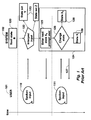
- IR In the case of IR, this is often accomplished through dialogs as shown in Figure 1 , where the vertical axis indicates time.
- the user 101 steps are shown in the left, and the system 102 steps on the right.
- the system has some root state R 120.
- the user 101 provides spoken input 110, e.g. to search for an item.
- the spoken input 110 is interpreted 122 as relevant to state set X 124, rather than as relevant to some other state sets Y and Z 123.
- the system enters a next state X 0 125, and perhaps, prompts the user.
- the user provides additional input 110.
- the user might first be required to select a country, and then, in a separate step, a city, before being allowed to say a destination street name.
- the process 124 iterates and continues with the system changing 126 states 128-129, until the interaction is complete and the relevant item 127 is retrieved.
- every system state has a limited, state-specific grammar, vocabulary, and/or language model, and states such as 128-129 are reachable only via a multi-step process involving the traversal of two or more application states in a finite-state machine (FSM).
- FSM finite-state machine
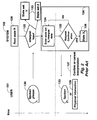
- a command-oriented approach often involve "carrier" phrases, wherein command words are present in the same phrases 130 as certain modifier words and/or variables.
- the system interprets 122 the meaning of the carrier phrase given as modifiers and variables within the phrase 130 and enters state set X 124. If the carrier phrase is relevant to for some example state X 1 129, the system may either immediately enter that state, or request confirmation 132 from the user before entering that state. Confirmation or cancellation 137 on the user's part 133 could be accomplished using verbal or physical interaction modalities 139.
- the process 124 can iterate as before.
- variable can be spoken without a command, or a command can initiate a dialog state in which only the variables are available.
- Search tasks can also be accomplished using carrier words, such as in the phrase "find artist Vanilla Ice.” In each case, however, the vocabularies, phrase grammars and/or language models for each state are fixed.
- the two different interfaces are incompatible with each other. That is, an IR interface cannot process commands, and a control interface cannot process queries.
- the embodiments of our invention provide a method for interacting with a user via a speech-based interface.
- Arbitrary spoken input can be pertinent either to information retrieval or to command and control, where the latter can include selecting among menus or functional hierarchies.
- our interface In contrast with conventional spoken user interfaces that have a limited vocabulary and grammar, our interface has essentially an unlimited vocabulary and grammar. This means that any words can be spoken in any order. This greatly enhances the flexibility and efficiency of operation of the spoken interface.
- Figure 3 shows the speech-based user interface according to an embodiment of the invention.
- the vertical axis represents time.
- User 101 operations are shown on the left, and system 102 operations on the right.
- the user initiates an interaction by providing unstructured or semi-structured spoken input 133 in a form of a phrase of one or more words.
- the input can be either a query or a command.
- Variables and modifiers may be included in the command phrase in addition to command words. That is, the interface allows the user to say anything.
- the system Rather than entering a finite state machine (FSM) 124 as in conventional interfaces, the system performs a sequence of multi-domain lookups and relevance analysis 135 on the spoken input using a speech-based IR system, such as described in U.S. Patent 6,877,001 .
- FSM finite state machine
- the spoken input can use particles as described and shown in the co-pending and related U.S. Patent Application US 2009/0216740 A1 .
- the lookups and relevance scoring occur within various domains, some of which pertain to commands, as in a conventional command-and-control interface, and others of which pertain to searchable content such as a document or music collection, or points of interest (POI) in a navigation system.
- States within different functional areas of the application for example audio/visual and navigation, can be indexed separately, forming one or more distinct command domains.
- the "items" retrieved by the IR engine are pointers to a given FSM state, and the items may include information about any inputs expected by this state and other states reachable from the state of the item. If inputs are required that are not included in the IR index for the command item, then the inputs can be extracted either by re-recognizing the speech input against a conventional finite state grammar (FSG), which includes placeholders for variables and/or modifiers, or by prompting the user for additional clarifying input.
- FSG finite state grammar
- the "items" retrieved are pointers to individual nodes of searchable content, such as artists, albums, or songs in a music collection, or nearby restaurant POIs.
- the system determines 136 whether the spoken input is either a query or a command. If the best-matching domain is in a content domain, then a result list 137 is presented to the user and the user selects 140 which content item to activate. If the input phrase is a command, then the best-matching command or commands can be presented to the user for confirmation, or can be performed 138 immediately if there is an unambiguously best-matching command. If necessary, additional phrases can be input to refine or complete either commands or queries.
- Relevant commands or relevant items can be presented to the user in a number of different ways. Relevant matches from different domains can be segregated on a domain-by-domain basis, with domains appearing in either the same order every time, or in decreasing order of relevance to a given query. Alternatively, matches from all domains can be commingled into a combined result list.
- Any speech input phrase is likely match in each of the domains.
- To determine a most relevant domain for the input phrase we determine which of the matches are least likely to have been obtained by a random draw.
- the likelihoods can be computed conventionally.
- Figure 4 shows a set of items I 406 in all domains.
- the number of items I in the set is T.
- Subsets I 1 , 1 2 , etc. represent items from domains 1, 2, etc., and T 1 , T 2 , etc. represent the number of items in each of these subsets.
- the subsets can intersect, see subset 407-408.
- a user input phrase U retrieves N items, in which N 1 items are from subset I 1 , N 2 from subset I 2 , and so on.
- N 1 items are from subset I 1 , N 2 from subset I 2 , and so on.
- P 1 rand N 1 , N. This is, if we were to draw randomly N items from the set I , then N 1 of the items would be from the subset I 1 .
- a probability P 2 rand (N 2 , N). This is, if we were to randomly draw of N documents from the set I , then N2 would belong to subset I2.
- the probability P i rand (N i , N) is the probability that the number of items obtained from the i th domain could also have been obtained by a random draw of N documents from the set I.
- the above method determines which of the domains is least likely to have been obtained randomly, and the corresponding domain is selected as the most relevant domain for the input phrase. Furthermore, additional thresholds on the probability can be applied to reject an input phrase altogether.
- Items in the domains can be constructed by indexing each item, as described in the related U.S. Application.
- the item is a textual document such as an operator's manual 510.
- the document can be explicitly or implicitly formatted, and may be provided in either machine-readable or human-readable forms.
- the indexing process partitions the document into smaller sections 520, and identifies terms or phrases likely to be spoken by a user retrieving a given section.
- stop list of unimportant terms, such as very short or common words, e.g., "the”, can be incorporated. However, if a term on the stop list is found to occur with a high frequency in certain sections but not others, it is moved from the stop list to a list of relevant terms.
- Figure 6 shows a domain structure in hierarchical form with user input 133, a set of search domains 610 and a set of command domains 620, and various subsets of items, some which can intersect.
Landscapes
- Engineering & Computer Science (AREA)
- Artificial Intelligence (AREA)
- Computational Linguistics (AREA)
- Health & Medical Sciences (AREA)
- Audiology, Speech & Language Pathology (AREA)
- Human Computer Interaction (AREA)
- Physics & Mathematics (AREA)
- Acoustics & Sound (AREA)
- Multimedia (AREA)
- Information Retrieval, Db Structures And Fs Structures Therefor (AREA)
- User Interface Of Digital Computer (AREA)
Abstract
Description
- The invention relates generally to automatic speech recognition systems, and more specifically to a user interaction interface for such a system.
- Applications that use automatic speech recognition (ASR) require a speech-based user interface to interact with users.
WO 2005/024781 A1 discloses a method of operating a speech recognition system in a vehicle, comprising sending a wireless message to a remote system of a recognized word does not match a predetermined keyword. Generally, users can perform two types of tasks using spoken user input. The first task type relates to information retrieval (IR) with a query. In this tasks, the user wishes to retrieve an item, e.g., a document, image, recording, from a large collection of items stored in a database, e.g., the web of the Internet. The other task type is for speech enabled command and control. Here, the user wishes to perform some operation. Both tasks involve a "narrowing down" of the possibilities of what the user might have said. - In the case of IR, this is often accomplished through dialogs as shown in
Figure 1 , where the vertical axis indicates time. InFigure 1 , theuser 101 steps are shown in the left, and thesystem 102 steps on the right. The system has someroot state R 120. Theuser 101 provides spokeninput 110, e.g. to search for an item. The spokeninput 110 is interpreted 122 as relevant to state setX 124, rather than as relevant to some other state sets Y andZ 123. In response the system enters anext state X 0 125, and perhaps, prompts the user. - The user provides
additional input 110. For example, in a voice-based destination entry system, the user might first be required to select a country, and then, in a separate step, a city, before being allowed to say a destination street name. Theprocess 124 iterates and continues with the system changing 126 states 128-129, until the interaction is complete and therelevant item 127 is retrieved. - Typically, every system state has a limited, state-specific grammar, vocabulary, and/or language model, and states such as 128-129 are reachable only via a multi-step process involving the traversal of two or more application states in a finite-state machine (FSM).
- As shown in
Figure 2 , a command-oriented approach often involve "carrier" phrases, wherein command words are present in thesame phrases 130 as certain modifier words and/or variables. The system interprets 122 the meaning of the carrier phrase given as modifiers and variables within thephrase 130 and enters state setX 124. If the carrier phrase is relevant to for someexample state X 1 129, the system may either immediately enter that state, or requestconfirmation 132 from the user before entering that state. Confirmation orcancellation 137 on the user'spart 133 could be accomplished using verbal orphysical interaction modalities 139. Theprocess 124 can iterate as before. - Other approaches are also common. For example, a variable can be spoken without a command, or a command can initiate a dialog state in which only the variables are available. Search tasks can also be accomplished using carrier words, such as in the phrase "find artist Vanilla Ice." In each case, however, the vocabularies, phrase grammars and/or language models for each state are fixed.
- In general, the two different interfaces are incompatible with each other. That is, an IR interface cannot process commands, and a control interface cannot process queries.
- According to the invention, there is provided a computer implemented method as set forth in
claim 1. Preferred embodiments are set forth in the dependent claims. -
-
Figure 1 is a block diagram of a prior art speech-based interface for information retrieval; -
Figure 2 is a block diagram of a prior art speech-based interface for command and control; -
Figure 3 is a block diagram of a spoken user interface according to an embodiment of the invention; -
Figure 4 is a schematic of domains according to the embodiments of the invention; -
Figure 5 is a schematic of a process for constructing the domains ofFigure 4 ; and -
Figure 6 is a schematic of an example domain structure according to an embodiment of the invention. - The embodiments of our invention provide a method for interacting with a user via a speech-based interface. Arbitrary spoken input can be pertinent either to information retrieval or to command and control, where the latter can include selecting among menus or functional hierarchies.
- In contrast with conventional spoken user interfaces that have a limited vocabulary and grammar, our interface has essentially an unlimited vocabulary and grammar. This means that any words can be spoken in any order. This greatly enhances the flexibility and efficiency of operation of the spoken interface.
-
Figure 3 shows the speech-based user interface according to an embodiment of the invention. The vertical axis represents time.User 101 operations are shown on the left, andsystem 102 operations on the right. - The user initiates an interaction by providing unstructured or semi-structured spoken
input 133 in a form of a phrase of one or more words. Unlike conventional interfaces, the input can be either a query or a command. - Variables and modifiers may be included in the command phrase in addition to command words. That is, the interface allows the user to say anything.
- Rather than entering a finite state machine (FSM) 124 as in conventional interfaces, the system performs a sequence of multi-domain lookups and
relevance analysis 135 on the spoken input using a speech-based IR system, such as described inU.S. Patent 6,877,001 . - The spoken input, as well as any underlying indices and databases can use particles as described and shown in the co-pending and related U.S. Patent Application
US 2009/0216740 A1 . The lookups and relevance scoring occur within various domains, some of which pertain to commands, as in a conventional command-and-control interface, and others of which pertain to searchable content such as a document or music collection, or points of interest (POI) in a navigation system. - States within different functional areas of the application, for example audio/visual and navigation, can be indexed separately, forming one or more distinct command domains.
- In the case of command domains, the "items" retrieved by the IR engine are pointers to a given FSM state, and the items may include information about any inputs expected by this state and other states reachable from the state of the item. If inputs are required that are not included in the IR index for the command item, then the inputs can be extracted either by re-recognizing the speech input against a conventional finite state grammar (FSG), which includes placeholders for variables and/or modifiers, or by prompting the user for additional clarifying input.
- In the case of content domains, the "items" retrieved are pointers to individual nodes of searchable content, such as artists, albums, or songs in a music collection, or nearby restaurant POIs.
- The system determines 136 whether the spoken input is either a query or a command. If the best-matching domain is in a content domain, then a
result list 137 is presented to the user and the user selects 140 which content item to activate. If the input phrase is a command, then the best-matching command or commands can be presented to the user for confirmation, or can be performed 138 immediately if there is an unambiguously best-matching command. If necessary, additional phrases can be input to refine or complete either commands or queries. - Relevant commands or relevant items can be presented to the user in a number of different ways. Relevant matches from different domains can be segregated on a domain-by-domain basis, with domains appearing in either the same order every time, or in decreasing order of relevance to a given query. Alternatively, matches from all domains can be commingled into a combined result list.
- Any speech input phrase is likely match in each of the domains. To determine a most relevant domain for the input phrase, we determine which of the matches are least likely to have been obtained by a random draw. The likelihoods can be computed conventionally.
-
Figure 4 shows a set of items I 406 in all domains. The number of items I in the set is T. Subsets I1, 12, etc. represent items fromdomains - A user input phrase U retrieves N items, in which N1 items are from subset I1, N2 from subset I2, and so on. In order to determine the relevance of these retrievals, we determine a probability P1 rand(N1, N). This is, if we were to draw randomly N items from the set I, then N1 of the items would be from the subset I1 .
- Similarly, we determine a probability P2 rand(N2, N). This is, if we were to randomly draw of N documents from the set I, then N2 would belong to subset I2. In general, the probability Pi rand(Ni, N) is the probability that the number of items obtained from the i th domain could also have been obtained by a random draw of N documents from the set I. Then, the domain for the input phrase U has a smallest probability Pi rand(Ni, N), i.e.,

- The above method determines which of the domains is least likely to have been obtained randomly, and the corresponding domain is selected as the most relevant domain for the input phrase. Furthermore, additional thresholds on the probability can be applied to reject an input phrase altogether.
- Other variants of the above method are also possible that factor in the actual probability of drawing N documents randomly, or which use upper or lower bound on Pi rand(Ni, N) within the formula.
- Items in the domains can be constructed by indexing each item, as described in the related U.S. Application. For example, the item is a textual document such as an operator's manual 510. The document can be explicitly or implicitly formatted, and may be provided in either machine-readable or human-readable forms. The indexing process partitions the document into
smaller sections 520, and identifies terms or phrases likely to be spoken by a user retrieving a given section. - There are several means by which the terms can be identified using the structure of the document, such as chapter titles and sub-chapters. Statistics on the occurrence of word and phrase can be compiled, as a whole, as well as for each section. Weights can be assigned to terms on a per-section basis, respective of the document as a whole. This enables the identification of more relevant terms for the purposes of IR.
- A hand- or machine-generated "stop list" of unimportant terms, such as very short or common words, e.g., "the", can be incorporated. However, if a term on the stop list is found to occur with a high frequency in certain sections but not others, it is moved from the stop list to a list of relevant terms.
- Relevant or distinguishing terms that appear in chapter or sub-chapter titles can be looked up in a synonym dictionary, and if found, such synonyms are also added to the relevant and distinguishing terms list for a given section.
-
Figure 6 shows a domain structure in hierarchical form withuser input 133, a set of search domains 610 and a set of command domains 620, and various subsets of items, some which can intersect. - Although the invention has been described by way of examples of preferred embodiments, it is to be understood that various other adaptations and modifications may be made within the scope of the invention.
Claims (7)
- A computer implemented method for interacting with a user via a speech-based user interface, comprising the steps of:acquiring spoken input from a user in a form of a phrase of one or more words;determining, using a plurality of different domains, some of which domains pertaining to commands and other of which domains pertaining to searchable content, whether the phrase is a query or a command; wherein in order to determine a most relevant domain for the input phrase, it is determined which matches are least likely to have been obtained by random draw, andretrieving and presenting relevant items from a plurality of databases if the phrase is the query; and otherwiseperforming an operation if the phrase is a command.
- The method of claim 1, in which the phrase includes variables and modifiers if the phrase is the command.
- The method of claim 1, in which the phrase is in a form of particles, and an index to the items is in the form of the particles.
- The method of claim 1, in which the relevant items are segregated domain-by-domain.
- The method of claim 1, in which the relevant items are presented in a relevance order.
- The method of claim 1, in which the relevant items are commingled in a combined result list.
- The method of claim 1, in which all possible items form a set of items, and further comprising:grouping items in the set into subsets of items, in which each subset of items forms one of the plurality of domains;retrieving the items from one or more of the plurality of domains in response to the query; andselecting a particular domain as most relevant to the query if the retrieved items are least likely to have been obtained by random draw from the entire set of items.
Applications Claiming Priority (2)
| Application Number | Priority Date | Filing Date | Title |
|---|---|---|---|
| US12/036,713 US7917368B2 (en) | 2008-02-25 | 2008-02-25 | Method for interacting with users of speech recognition systems |
| PCT/JP2009/053998 WO2009107848A1 (en) | 2008-02-25 | 2009-02-25 | Computer implemented method for interacting with user via speech-based user interface |
Publications (2)
| Publication Number | Publication Date |
|---|---|
| EP2245617A1 EP2245617A1 (en) | 2010-11-03 |
| EP2245617B1 true EP2245617B1 (en) | 2013-12-18 |
Family
ID=40651523
Family Applications (1)
| Application Number | Title | Priority Date | Filing Date |
|---|---|---|---|
| EP09715785.3A Active EP2245617B1 (en) | 2008-02-25 | 2009-02-25 | Computer-implemented method for interacting with a user via a speech-based user interface |
Country Status (5)
| Country | Link |
|---|---|
| US (1) | US7917368B2 (en) |
| EP (1) | EP2245617B1 (en) |
| JP (1) | JP5111607B2 (en) |
| CN (1) | CN101952883B (en) |
| WO (1) | WO2009107848A1 (en) |
Families Citing this family (22)
| Publication number | Priority date | Publication date | Assignee | Title |
|---|---|---|---|---|
| KR20090107365A (en) * | 2008-04-08 | 2009-10-13 | 엘지전자 주식회사 | Mobile terminal and its menu control method |
| US8586338B2 (en) | 2008-05-30 | 2013-11-19 | 3M Innovative Properties Company | Ligand functionalized substrates |
| CN102083897B (en) | 2008-05-30 | 2013-06-12 | 3M创新有限公司 | Method of making ligand functionalized substrates |
| JP2010160316A (en) * | 2009-01-08 | 2010-07-22 | Alpine Electronics Inc | Information processor and text read out method |
| EP2446077B1 (en) | 2009-06-23 | 2016-05-18 | 3M Innovative Properties Company | Functionalized nonwoven article |
| US8626511B2 (en) * | 2010-01-22 | 2014-01-07 | Google Inc. | Multi-dimensional disambiguation of voice commands |
| US8377672B2 (en) | 2010-02-18 | 2013-02-19 | 3M Innovative Properties Company | Ligand functionalized polymers |
| BR112012021943B1 (en) | 2010-03-03 | 2021-09-28 | 3M Innovative Properties Company | METHOD OF SEPARATION OF A TARGET BIOLOGICAL SPECIES FROM A FLUID |
| US8738377B2 (en) * | 2010-06-07 | 2014-05-27 | Google Inc. | Predicting and learning carrier phrases for speech input |
| US8731939B1 (en) | 2010-08-06 | 2014-05-20 | Google Inc. | Routing queries based on carrier phrase registration |
| US8924219B1 (en) * | 2011-09-30 | 2014-12-30 | Google Inc. | Multi hotword robust continuous voice command detection in mobile devices |
| US9317605B1 (en) | 2012-03-21 | 2016-04-19 | Google Inc. | Presenting forked auto-completions |
| US9536528B2 (en) | 2012-07-03 | 2017-01-03 | Google Inc. | Determining hotword suitability |
| CN103116649B (en) * | 2013-02-28 | 2016-09-14 | 用友网络科技股份有限公司 | Data analysis system and data analysing method |
| US9646606B2 (en) | 2013-07-03 | 2017-05-09 | Google Inc. | Speech recognition using domain knowledge |
| US9472196B1 (en) | 2015-04-22 | 2016-10-18 | Google Inc. | Developer voice actions system |
| US9740751B1 (en) | 2016-02-18 | 2017-08-22 | Google Inc. | Application keywords |
| US9922648B2 (en) | 2016-03-01 | 2018-03-20 | Google Llc | Developer voice actions system |
| US9691384B1 (en) | 2016-08-19 | 2017-06-27 | Google Inc. | Voice action biasing system |
| CN106653019B (en) * | 2016-12-07 | 2019-11-15 | 华南理工大学 | A method and system for man-machine dialogue control based on user registration information |
| KR102685417B1 (en) * | 2019-02-19 | 2024-07-17 | 삼성전자주식회사 | Electronic device and system for processing user input and method thereof |
| CN111081225B (en) * | 2019-12-31 | 2022-04-01 | 思必驰科技股份有限公司 | Skill voice awakening method and device |
Family Cites Families (9)
| Publication number | Priority date | Publication date | Assignee | Title |
|---|---|---|---|---|
| EP0895396A3 (en) * | 1997-07-03 | 2004-01-14 | Texas Instruments Incorporated | Spoken dialogue system for information access |
| US7089188B2 (en) * | 2002-03-27 | 2006-08-08 | Hewlett-Packard Development Company, L.P. | Method to expand inputs for word or document searching |
| US6877001B2 (en) * | 2002-04-25 | 2005-04-05 | Mitsubishi Electric Research Laboratories, Inc. | Method and system for retrieving documents with spoken queries |
| US7693720B2 (en) * | 2002-07-15 | 2010-04-06 | Voicebox Technologies, Inc. | Mobile systems and methods for responding to natural language speech utterance |
| CN1267838C (en) * | 2002-12-31 | 2006-08-02 | 程松林 | Sound searching method and video and audio information searching system using said method |
| EP1661122B1 (en) | 2003-08-29 | 2008-10-08 | Johnson Controls Technology Company | System and method of operating a speech recognition system in a vehicle |
| CN1629934B (en) * | 2004-02-06 | 2011-05-11 | 刘新斌 | A method for constructing a voice virtual keyboard user command lexicon |
| JP2006338508A (en) * | 2005-06-03 | 2006-12-14 | Nippon Telegr & Teleph Corp <Ntt> | Related content search apparatus and method |
| US8438024B2 (en) * | 2007-10-05 | 2013-05-07 | International Business Machines Corporation | Indexing method for quick search of voice recognition results |
-
2008
- 2008-02-25 US US12/036,713 patent/US7917368B2/en active Active
-
2009
- 2009-02-25 CN CN2009801062430A patent/CN101952883B/en active Active
- 2009-02-25 EP EP09715785.3A patent/EP2245617B1/en active Active
- 2009-02-25 JP JP2010521152A patent/JP5111607B2/en active Active
- 2009-02-25 WO PCT/JP2009/053998 patent/WO2009107848A1/en not_active Ceased
Also Published As
| Publication number | Publication date |
|---|---|
| JP5111607B2 (en) | 2013-01-09 |
| CN101952883A (en) | 2011-01-19 |
| US20090216538A1 (en) | 2009-08-27 |
| US7917368B2 (en) | 2011-03-29 |
| EP2245617A1 (en) | 2010-11-03 |
| JP2011505026A (en) | 2011-02-17 |
| CN101952883B (en) | 2012-03-21 |
| WO2009107848A1 (en) | 2009-09-03 |
Similar Documents
| Publication | Publication Date | Title |
|---|---|---|
| US7917368B2 (en) | Method for interacting with users of speech recognition systems | |
| US8380505B2 (en) | System for recognizing speech for searching a database | |
| US7890326B2 (en) | Business listing search | |
| US7840407B2 (en) | Business listing search | |
| US8041568B2 (en) | Business listing search | |
| US6574624B1 (en) | Automatic topic identification and switch for natural language search of textual document collections | |
| US7027987B1 (en) | Voice interface for a search engine | |
| US7949524B2 (en) | Speech recognition correction with standby-word dictionary | |
| US8510032B2 (en) | Method and system for improving speech recognition accuracy by use of geographic information | |
| US7933774B1 (en) | System and method for automatic generation of a natural language understanding model | |
| US8996385B2 (en) | Conversation system and conversation software | |
| US7747437B2 (en) | N-best list rescoring in speech recognition | |
| JP2008532099A (en) | Computer-implemented method for indexing and retrieving documents stored in a database and system for indexing and retrieving documents | |
| US8438024B2 (en) | Indexing method for quick search of voice recognition results | |
| WO2010075015A2 (en) | Assigning an indexing weight to a search term | |
| EP2863385B1 (en) | Function execution instruction system, function execution instruction method, and function execution instruction program | |
| CN112527955A (en) | Data processing method and device | |
| CN1795367A (en) | Method of operating a voice-controlled navigation system | |
| US20020184022A1 (en) | Proofreading assistance techniques for a voice recognition system | |
| JP3893893B2 (en) | Voice search method, voice search apparatus and voice search program for web pages | |
| Komatani et al. | Contextual constraints based on dialogue models in database search task for spoken dialogue systems. | |
| EP2087447A2 (en) | Business listing search | |
| JP4822993B2 (en) | Point search device and navigation device | |
| Yang et al. | Research on realizing speech-operated on-board traveler information system |
Legal Events
| Date | Code | Title | Description |
|---|---|---|---|
| PUAI | Public reference made under article 153(3) epc to a published international application that has entered the european phase |
Free format text: ORIGINAL CODE: 0009012 |
|
| 17P | Request for examination filed |
Effective date: 20100714 |
|
| AK | Designated contracting states |
Kind code of ref document: A1 Designated state(s): AT BE BG CH CY CZ DE DK EE ES FI FR GB GR HR HU IE IS IT LI LT LU LV MC MK MT NL NO PL PT RO SE SI SK TR |
|
| AX | Request for extension of the european patent |
Extension state: AL BA RS |
|
| RIN1 | Information on inventor provided before grant (corrected) |
Inventor name: SCHMIDT-NIELSEN, BENT Inventor name: RAMAKRISHNAN, BHIKSHA Inventor name: WEINBERG, GARRETT Inventor name: HARSHAM, BRET, A. |
|
| DAX | Request for extension of the european patent (deleted) | ||
| 17Q | First examination report despatched |
Effective date: 20120312 |
|
| GRAP | Despatch of communication of intention to grant a patent |
Free format text: ORIGINAL CODE: EPIDOSNIGR1 |
|
| INTG | Intention to grant announced |
Effective date: 20130731 |
|
| GRAS | Grant fee paid |
Free format text: ORIGINAL CODE: EPIDOSNIGR3 |
|
| GRAA | (expected) grant |
Free format text: ORIGINAL CODE: 0009210 |
|
| AK | Designated contracting states |
Kind code of ref document: B1 Designated state(s): AT BE BG CH CY CZ DE DK EE ES FI FR GB GR HR HU IE IS IT LI LT LU LV MC MK MT NL NO PL PT RO SE SI SK TR |
|
| REG | Reference to a national code |
Ref country code: GB Ref legal event code: FG4D |
|
| REG | Reference to a national code |
Ref country code: CH Ref legal event code: EP |
|
| REG | Reference to a national code |
Ref country code: AT Ref legal event code: REF Ref document number: 645920 Country of ref document: AT Kind code of ref document: T Effective date: 20140115 |
|
| REG | Reference to a national code |
Ref country code: IE Ref legal event code: FG4D |
|
| REG | Reference to a national code |
Ref country code: DE Ref legal event code: R096 Ref document number: 602009020820 Country of ref document: DE Effective date: 20140213 |
|
| REG | Reference to a national code |
Ref country code: NL Ref legal event code: VDEP Effective date: 20131218 |
|
| PG25 | Lapsed in a contracting state [announced via postgrant information from national office to epo] |
Ref country code: SE Free format text: LAPSE BECAUSE OF FAILURE TO SUBMIT A TRANSLATION OF THE DESCRIPTION OR TO PAY THE FEE WITHIN THE PRESCRIBED TIME-LIMIT Effective date: 20131218 Ref country code: LT Free format text: LAPSE BECAUSE OF FAILURE TO SUBMIT A TRANSLATION OF THE DESCRIPTION OR TO PAY THE FEE WITHIN THE PRESCRIBED TIME-LIMIT Effective date: 20131218 Ref country code: HR Free format text: LAPSE BECAUSE OF FAILURE TO SUBMIT A TRANSLATION OF THE DESCRIPTION OR TO PAY THE FEE WITHIN THE PRESCRIBED TIME-LIMIT Effective date: 20131218 Ref country code: NO Free format text: LAPSE BECAUSE OF FAILURE TO SUBMIT A TRANSLATION OF THE DESCRIPTION OR TO PAY THE FEE WITHIN THE PRESCRIBED TIME-LIMIT Effective date: 20140318 Ref country code: FI Free format text: LAPSE BECAUSE OF FAILURE TO SUBMIT A TRANSLATION OF THE DESCRIPTION OR TO PAY THE FEE WITHIN THE PRESCRIBED TIME-LIMIT Effective date: 20131218 |
|
| REG | Reference to a national code |
Ref country code: AT Ref legal event code: MK05 Ref document number: 645920 Country of ref document: AT Kind code of ref document: T Effective date: 20131218 |
|
| REG | Reference to a national code |
Ref country code: LT Ref legal event code: MG4D |
|
| PG25 | Lapsed in a contracting state [announced via postgrant information from national office to epo] |
Ref country code: LV Free format text: LAPSE BECAUSE OF FAILURE TO SUBMIT A TRANSLATION OF THE DESCRIPTION OR TO PAY THE FEE WITHIN THE PRESCRIBED TIME-LIMIT Effective date: 20131218 |
|
| PG25 | Lapsed in a contracting state [announced via postgrant information from national office to epo] |
Ref country code: BE Free format text: LAPSE BECAUSE OF FAILURE TO SUBMIT A TRANSLATION OF THE DESCRIPTION OR TO PAY THE FEE WITHIN THE PRESCRIBED TIME-LIMIT Effective date: 20131218 Ref country code: IS Free format text: LAPSE BECAUSE OF FAILURE TO SUBMIT A TRANSLATION OF THE DESCRIPTION OR TO PAY THE FEE WITHIN THE PRESCRIBED TIME-LIMIT Effective date: 20140418 Ref country code: EE Free format text: LAPSE BECAUSE OF FAILURE TO SUBMIT A TRANSLATION OF THE DESCRIPTION OR TO PAY THE FEE WITHIN THE PRESCRIBED TIME-LIMIT Effective date: 20131218 |
|
| PG25 | Lapsed in a contracting state [announced via postgrant information from national office to epo] |
Ref country code: ES Free format text: LAPSE BECAUSE OF FAILURE TO SUBMIT A TRANSLATION OF THE DESCRIPTION OR TO PAY THE FEE WITHIN THE PRESCRIBED TIME-LIMIT Effective date: 20131218 Ref country code: CY Free format text: LAPSE BECAUSE OF FAILURE TO SUBMIT A TRANSLATION OF THE DESCRIPTION OR TO PAY THE FEE WITHIN THE PRESCRIBED TIME-LIMIT Effective date: 20131218 Ref country code: NL Free format text: LAPSE BECAUSE OF FAILURE TO SUBMIT A TRANSLATION OF THE DESCRIPTION OR TO PAY THE FEE WITHIN THE PRESCRIBED TIME-LIMIT Effective date: 20131218 Ref country code: PT Free format text: LAPSE BECAUSE OF FAILURE TO SUBMIT A TRANSLATION OF THE DESCRIPTION OR TO PAY THE FEE WITHIN THE PRESCRIBED TIME-LIMIT Effective date: 20140418 Ref country code: AT Free format text: LAPSE BECAUSE OF FAILURE TO SUBMIT A TRANSLATION OF THE DESCRIPTION OR TO PAY THE FEE WITHIN THE PRESCRIBED TIME-LIMIT Effective date: 20131218 Ref country code: CZ Free format text: LAPSE BECAUSE OF FAILURE TO SUBMIT A TRANSLATION OF THE DESCRIPTION OR TO PAY THE FEE WITHIN THE PRESCRIBED TIME-LIMIT Effective date: 20131218 Ref country code: RO Free format text: LAPSE BECAUSE OF FAILURE TO SUBMIT A TRANSLATION OF THE DESCRIPTION OR TO PAY THE FEE WITHIN THE PRESCRIBED TIME-LIMIT Effective date: 20131218 Ref country code: SK Free format text: LAPSE BECAUSE OF FAILURE TO SUBMIT A TRANSLATION OF THE DESCRIPTION OR TO PAY THE FEE WITHIN THE PRESCRIBED TIME-LIMIT Effective date: 20131218 Ref country code: PL Free format text: LAPSE BECAUSE OF FAILURE TO SUBMIT A TRANSLATION OF THE DESCRIPTION OR TO PAY THE FEE WITHIN THE PRESCRIBED TIME-LIMIT Effective date: 20131218 |
|
| REG | Reference to a national code |
Ref country code: DE Ref legal event code: R097 Ref document number: 602009020820 Country of ref document: DE |
|
| PG25 | Lapsed in a contracting state [announced via postgrant information from national office to epo] |
Ref country code: MC Free format text: LAPSE BECAUSE OF FAILURE TO SUBMIT A TRANSLATION OF THE DESCRIPTION OR TO PAY THE FEE WITHIN THE PRESCRIBED TIME-LIMIT Effective date: 20131218 Ref country code: LU Free format text: LAPSE BECAUSE OF FAILURE TO SUBMIT A TRANSLATION OF THE DESCRIPTION OR TO PAY THE FEE WITHIN THE PRESCRIBED TIME-LIMIT Effective date: 20140225 |
|
| REG | Reference to a national code |
Ref country code: CH Ref legal event code: PL |
|
| PLBE | No opposition filed within time limit |
Free format text: ORIGINAL CODE: 0009261 |
|
| STAA | Information on the status of an ep patent application or granted ep patent |
Free format text: STATUS: NO OPPOSITION FILED WITHIN TIME LIMIT |
|
| PG25 | Lapsed in a contracting state [announced via postgrant information from national office to epo] |
Ref country code: CH Free format text: LAPSE BECAUSE OF NON-PAYMENT OF DUE FEES Effective date: 20140228 Ref country code: LI Free format text: LAPSE BECAUSE OF NON-PAYMENT OF DUE FEES Effective date: 20140228 Ref country code: DK Free format text: LAPSE BECAUSE OF FAILURE TO SUBMIT A TRANSLATION OF THE DESCRIPTION OR TO PAY THE FEE WITHIN THE PRESCRIBED TIME-LIMIT Effective date: 20131218 |
|
| REG | Reference to a national code |
Ref country code: FR Ref legal event code: ST Effective date: 20141031 |
|
| 26N | No opposition filed |
Effective date: 20140919 |
|
| GBPC | Gb: european patent ceased through non-payment of renewal fee |
Effective date: 20140318 |
|
| REG | Reference to a national code |
Ref country code: IE Ref legal event code: MM4A |
|
| REG | Reference to a national code |
Ref country code: DE Ref legal event code: R097 Ref document number: 602009020820 Country of ref document: DE Effective date: 20140919 |
|
| PG25 | Lapsed in a contracting state [announced via postgrant information from national office to epo] |
Ref country code: IE Free format text: LAPSE BECAUSE OF NON-PAYMENT OF DUE FEES Effective date: 20140225 Ref country code: GB Free format text: LAPSE BECAUSE OF NON-PAYMENT OF DUE FEES Effective date: 20140318 Ref country code: FR Free format text: LAPSE BECAUSE OF NON-PAYMENT OF DUE FEES Effective date: 20140228 |
|
| PG25 | Lapsed in a contracting state [announced via postgrant information from national office to epo] |
Ref country code: SI Free format text: LAPSE BECAUSE OF FAILURE TO SUBMIT A TRANSLATION OF THE DESCRIPTION OR TO PAY THE FEE WITHIN THE PRESCRIBED TIME-LIMIT Effective date: 20131218 |
|
| PG25 | Lapsed in a contracting state [announced via postgrant information from national office to epo] |
Ref country code: MT Free format text: LAPSE BECAUSE OF FAILURE TO SUBMIT A TRANSLATION OF THE DESCRIPTION OR TO PAY THE FEE WITHIN THE PRESCRIBED TIME-LIMIT Effective date: 20131218 |
|
| PG25 | Lapsed in a contracting state [announced via postgrant information from national office to epo] |
Ref country code: BG Free format text: LAPSE BECAUSE OF FAILURE TO SUBMIT A TRANSLATION OF THE DESCRIPTION OR TO PAY THE FEE WITHIN THE PRESCRIBED TIME-LIMIT Effective date: 20131218 |
|
| PG25 | Lapsed in a contracting state [announced via postgrant information from national office to epo] |
Ref country code: GR Free format text: LAPSE BECAUSE OF FAILURE TO SUBMIT A TRANSLATION OF THE DESCRIPTION OR TO PAY THE FEE WITHIN THE PRESCRIBED TIME-LIMIT Effective date: 20140319 Ref country code: IT Free format text: LAPSE BECAUSE OF FAILURE TO SUBMIT A TRANSLATION OF THE DESCRIPTION OR TO PAY THE FEE WITHIN THE PRESCRIBED TIME-LIMIT Effective date: 20131218 |
|
| PG25 | Lapsed in a contracting state [announced via postgrant information from national office to epo] |
Ref country code: HU Free format text: LAPSE BECAUSE OF FAILURE TO SUBMIT A TRANSLATION OF THE DESCRIPTION OR TO PAY THE FEE WITHIN THE PRESCRIBED TIME-LIMIT; INVALID AB INITIO Effective date: 20090225 Ref country code: TR Free format text: LAPSE BECAUSE OF FAILURE TO SUBMIT A TRANSLATION OF THE DESCRIPTION OR TO PAY THE FEE WITHIN THE PRESCRIBED TIME-LIMIT Effective date: 20131218 |
|
| REG | Reference to a national code |
Ref country code: DE Ref legal event code: R084 Ref document number: 602009020820 Country of ref document: DE |
|
| PG25 | Lapsed in a contracting state [announced via postgrant information from national office to epo] |
Ref country code: MK Free format text: LAPSE BECAUSE OF FAILURE TO SUBMIT A TRANSLATION OF THE DESCRIPTION OR TO PAY THE FEE WITHIN THE PRESCRIBED TIME-LIMIT Effective date: 20131218 |
|
| P01 | Opt-out of the competence of the unified patent court (upc) registered |
Effective date: 20230512 |
|
| PGFP | Annual fee paid to national office [announced via postgrant information from national office to epo] |
Ref country code: DE Payment date: 20260102 Year of fee payment: 18 |