EP2243636A1 - Unitary secure pharmacy dispensing form for digital printers - Google Patents
Unitary secure pharmacy dispensing form for digital printers Download PDFInfo
- Publication number
- EP2243636A1 EP2243636A1 EP20100150964 EP10150964A EP2243636A1 EP 2243636 A1 EP2243636 A1 EP 2243636A1 EP 20100150964 EP20100150964 EP 20100150964 EP 10150964 A EP10150964 A EP 10150964A EP 2243636 A1 EP2243636 A1 EP 2243636A1
- Authority
- EP
- European Patent Office
- Prior art keywords
- section
- layer
- sections
- printed
- envelope
- Prior art date
- Legal status (The legal status is an assumption and is not a legal conclusion. Google has not performed a legal analysis and makes no representation as to the accuracy of the status listed.)
- Granted
Links
Images

Classifications
-
- B—PERFORMING OPERATIONS; TRANSPORTING
- B42—BOOKBINDING; ALBUMS; FILES; SPECIAL PRINTED MATTER
- B42D—BOOKS; BOOK COVERS; LOOSE LEAVES; PRINTED MATTER CHARACTERISED BY IDENTIFICATION OR SECURITY FEATURES; PRINTED MATTER OF SPECIAL FORMAT OR STYLE NOT OTHERWISE PROVIDED FOR; DEVICES FOR USE THEREWITH AND NOT OTHERWISE PROVIDED FOR; MOVABLE-STRIP WRITING OR READING APPARATUS
- B42D15/00—Printed matter of special format or style not otherwise provided for
- B42D15/0053—Forms specially designed for commercial use, e.g. bills, receipts, offer or order sheets, coupons
- B42D15/006—Shipping forms
-
- G—PHYSICS
- G09—EDUCATION; CRYPTOGRAPHY; DISPLAY; ADVERTISING; SEALS
- G09F—DISPLAYING; ADVERTISING; SIGNS; LABELS OR NAME-PLATES; SEALS
- G09F3/00—Labels, tag tickets, or similar identification or indication means; Seals; Postage or like stamps
- G09F3/02—Forms or constructions
- G09F3/0288—Labels or tickets consisting of more than one part, e.g. with address of sender or other reference on separate section to main label; Multi-copy labels
-
- G—PHYSICS
- G09—EDUCATION; CRYPTOGRAPHY; DISPLAY; ADVERTISING; SEALS
- G09F—DISPLAYING; ADVERTISING; SIGNS; LABELS OR NAME-PLATES; SEALS
- G09F3/00—Labels, tag tickets, or similar identification or indication means; Seals; Postage or like stamps
- G09F3/02—Forms or constructions
- G09F3/03—Forms or constructions of security seals
- G09F3/0305—Forms or constructions of security seals characterised by the type of seal used
- G09F3/0341—Forms or constructions of security seals characterised by the type of seal used having label sealing means
-
- G—PHYSICS
- G09—EDUCATION; CRYPTOGRAPHY; DISPLAY; ADVERTISING; SEALS
- G09F—DISPLAYING; ADVERTISING; SIGNS; LABELS OR NAME-PLATES; SEALS
- G09F3/00—Labels, tag tickets, or similar identification or indication means; Seals; Postage or like stamps
- G09F3/08—Fastening or securing by means not forming part of the material of the label itself
- G09F3/10—Fastening or securing by means not forming part of the material of the label itself by an adhesive layer
-
- A—HUMAN NECESSITIES
- A61—MEDICAL OR VETERINARY SCIENCE; HYGIENE
- A61J—CONTAINERS SPECIALLY ADAPTED FOR MEDICAL OR PHARMACEUTICAL PURPOSES; DEVICES OR METHODS SPECIALLY ADAPTED FOR BRINGING PHARMACEUTICAL PRODUCTS INTO PARTICULAR PHYSICAL OR ADMINISTERING FORMS; DEVICES FOR ADMINISTERING FOOD OR MEDICINES ORALLY; BABY COMFORTERS; DEVICES FOR RECEIVING SPITTLE
- A61J2205/00—General identification or selection means
- A61J2205/30—Printed labels
-
- B—PERFORMING OPERATIONS; TRANSPORTING
- B42—BOOKBINDING; ALBUMS; FILES; SPECIAL PRINTED MATTER
- B42P—INDEXING SCHEME RELATING TO BOOKS, FILING APPLIANCES OR THE LIKE
- B42P2241/00—Parts, details or accessories for books or filing appliances
- B42P2241/22—Sheets or cards with additional means allowing easy feeding through printers
-
- G—PHYSICS
- G09—EDUCATION; CRYPTOGRAPHY; DISPLAY; ADVERTISING; SEALS
- G09F—DISPLAYING; ADVERTISING; SIGNS; LABELS OR NAME-PLATES; SEALS
- G09F3/00—Labels, tag tickets, or similar identification or indication means; Seals; Postage or like stamps
- G09F3/02—Forms or constructions
- G09F2003/0214—Stock management
- G09F2003/0217—Stock management for envelopes
-
- G—PHYSICS
- G09—EDUCATION; CRYPTOGRAPHY; DISPLAY; ADVERTISING; SEALS
- G09F—DISPLAYING; ADVERTISING; SIGNS; LABELS OR NAME-PLATES; SEALS
- G09F3/00—Labels, tag tickets, or similar identification or indication means; Seals; Postage or like stamps
- G09F3/02—Forms or constructions
- G09F2003/0272—Labels for containers
-
- Y—GENERAL TAGGING OF NEW TECHNOLOGICAL DEVELOPMENTS; GENERAL TAGGING OF CROSS-SECTIONAL TECHNOLOGIES SPANNING OVER SEVERAL SECTIONS OF THE IPC; TECHNICAL SUBJECTS COVERED BY FORMER USPC CROSS-REFERENCE ART COLLECTIONS [XRACs] AND DIGESTS
- Y10—TECHNICAL SUBJECTS COVERED BY FORMER USPC
- Y10T—TECHNICAL SUBJECTS COVERED BY FORMER US CLASSIFICATION
- Y10T156/00—Adhesive bonding and miscellaneous chemical manufacture
- Y10T156/10—Methods of surface bonding and/or assembly therefor
- Y10T156/1052—Methods of surface bonding and/or assembly therefor with cutting, punching, tearing or severing
- Y10T156/1062—Prior to assembly
- Y10T156/1064—Partial cutting [e.g., grooving or incising]
-
- Y—GENERAL TAGGING OF NEW TECHNOLOGICAL DEVELOPMENTS; GENERAL TAGGING OF CROSS-SECTIONAL TECHNOLOGIES SPANNING OVER SEVERAL SECTIONS OF THE IPC; TECHNICAL SUBJECTS COVERED BY FORMER USPC CROSS-REFERENCE ART COLLECTIONS [XRACs] AND DIGESTS
- Y10—TECHNICAL SUBJECTS COVERED BY FORMER USPC
- Y10T—TECHNICAL SUBJECTS COVERED BY FORMER US CLASSIFICATION
- Y10T428/00—Stock material or miscellaneous articles
- Y10T428/14—Layer or component removable to expose adhesive
-
- Y—GENERAL TAGGING OF NEW TECHNOLOGICAL DEVELOPMENTS; GENERAL TAGGING OF CROSS-SECTIONAL TECHNOLOGIES SPANNING OVER SEVERAL SECTIONS OF THE IPC; TECHNICAL SUBJECTS COVERED BY FORMER USPC CROSS-REFERENCE ART COLLECTIONS [XRACs] AND DIGESTS
- Y10—TECHNICAL SUBJECTS COVERED BY FORMER USPC
- Y10T—TECHNICAL SUBJECTS COVERED BY FORMER US CLASSIFICATION
- Y10T428/00—Stock material or miscellaneous articles
- Y10T428/14—Layer or component removable to expose adhesive
- Y10T428/1486—Ornamental, decorative, pattern, or indicia
-
- Y—GENERAL TAGGING OF NEW TECHNOLOGICAL DEVELOPMENTS; GENERAL TAGGING OF CROSS-SECTIONAL TECHNOLOGIES SPANNING OVER SEVERAL SECTIONS OF THE IPC; TECHNICAL SUBJECTS COVERED BY FORMER USPC CROSS-REFERENCE ART COLLECTIONS [XRACs] AND DIGESTS
- Y10—TECHNICAL SUBJECTS COVERED BY FORMER USPC
- Y10T—TECHNICAL SUBJECTS COVERED BY FORMER US CLASSIFICATION
- Y10T428/00—Stock material or miscellaneous articles
- Y10T428/14—Layer or component removable to expose adhesive
- Y10T428/149—Sectional layer removable
-
- Y—GENERAL TAGGING OF NEW TECHNOLOGICAL DEVELOPMENTS; GENERAL TAGGING OF CROSS-SECTIONAL TECHNOLOGIES SPANNING OVER SEVERAL SECTIONS OF THE IPC; TECHNICAL SUBJECTS COVERED BY FORMER USPC CROSS-REFERENCE ART COLLECTIONS [XRACs] AND DIGESTS
- Y10—TECHNICAL SUBJECTS COVERED BY FORMER USPC
- Y10T—TECHNICAL SUBJECTS COVERED BY FORMER US CLASSIFICATION
- Y10T428/00—Stock material or miscellaneous articles
- Y10T428/14—Layer or component removable to expose adhesive
- Y10T428/149—Sectional layer removable
- Y10T428/1495—Adhesive is on removable layer
-
- Y—GENERAL TAGGING OF NEW TECHNOLOGICAL DEVELOPMENTS; GENERAL TAGGING OF CROSS-SECTIONAL TECHNOLOGIES SPANNING OVER SEVERAL SECTIONS OF THE IPC; TECHNICAL SUBJECTS COVERED BY FORMER USPC CROSS-REFERENCE ART COLLECTIONS [XRACs] AND DIGESTS
- Y10—TECHNICAL SUBJECTS COVERED BY FORMER USPC
- Y10T—TECHNICAL SUBJECTS COVERED BY FORMER US CLASSIFICATION
- Y10T428/00—Stock material or miscellaneous articles
- Y10T428/15—Sheet, web, or layer weakened to permit separation through thickness
-
- Y—GENERAL TAGGING OF NEW TECHNOLOGICAL DEVELOPMENTS; GENERAL TAGGING OF CROSS-SECTIONAL TECHNOLOGIES SPANNING OVER SEVERAL SECTIONS OF THE IPC; TECHNICAL SUBJECTS COVERED BY FORMER USPC CROSS-REFERENCE ART COLLECTIONS [XRACs] AND DIGESTS
- Y10—TECHNICAL SUBJECTS COVERED BY FORMER USPC
- Y10T—TECHNICAL SUBJECTS COVERED BY FORMER US CLASSIFICATION
- Y10T428/00—Stock material or miscellaneous articles
- Y10T428/18—Longitudinally sectional layer of three or more sections
-
- Y—GENERAL TAGGING OF NEW TECHNOLOGICAL DEVELOPMENTS; GENERAL TAGGING OF CROSS-SECTIONAL TECHNOLOGIES SPANNING OVER SEVERAL SECTIONS OF THE IPC; TECHNICAL SUBJECTS COVERED BY FORMER USPC CROSS-REFERENCE ART COLLECTIONS [XRACs] AND DIGESTS
- Y10—TECHNICAL SUBJECTS COVERED BY FORMER USPC
- Y10T—TECHNICAL SUBJECTS COVERED BY FORMER US CLASSIFICATION
- Y10T428/00—Stock material or miscellaneous articles
- Y10T428/18—Longitudinally sectional layer of three or more sections
- Y10T428/183—Next to unitary sheet of equal or greater extent
-
- Y—GENERAL TAGGING OF NEW TECHNOLOGICAL DEVELOPMENTS; GENERAL TAGGING OF CROSS-SECTIONAL TECHNOLOGIES SPANNING OVER SEVERAL SECTIONS OF THE IPC; TECHNICAL SUBJECTS COVERED BY FORMER USPC CROSS-REFERENCE ART COLLECTIONS [XRACs] AND DIGESTS
- Y10—TECHNICAL SUBJECTS COVERED BY FORMER USPC
- Y10T—TECHNICAL SUBJECTS COVERED BY FORMER US CLASSIFICATION
- Y10T428/00—Stock material or miscellaneous articles
- Y10T428/18—Longitudinally sectional layer of three or more sections
- Y10T428/183—Next to unitary sheet of equal or greater extent
- Y10T428/187—Continuous sectional layer
-
- Y—GENERAL TAGGING OF NEW TECHNOLOGICAL DEVELOPMENTS; GENERAL TAGGING OF CROSS-SECTIONAL TECHNOLOGIES SPANNING OVER SEVERAL SECTIONS OF THE IPC; TECHNICAL SUBJECTS COVERED BY FORMER USPC CROSS-REFERENCE ART COLLECTIONS [XRACs] AND DIGESTS
- Y10—TECHNICAL SUBJECTS COVERED BY FORMER USPC
- Y10T—TECHNICAL SUBJECTS COVERED BY FORMER US CLASSIFICATION
- Y10T428/00—Stock material or miscellaneous articles
- Y10T428/19—Sheets or webs edge spliced or joined
-
- Y—GENERAL TAGGING OF NEW TECHNOLOGICAL DEVELOPMENTS; GENERAL TAGGING OF CROSS-SECTIONAL TECHNOLOGIES SPANNING OVER SEVERAL SECTIONS OF THE IPC; TECHNICAL SUBJECTS COVERED BY FORMER USPC CROSS-REFERENCE ART COLLECTIONS [XRACs] AND DIGESTS
- Y10—TECHNICAL SUBJECTS COVERED BY FORMER USPC
- Y10T—TECHNICAL SUBJECTS COVERED BY FORMER US CLASSIFICATION
- Y10T428/00—Stock material or miscellaneous articles
- Y10T428/24—Structurally defined web or sheet [e.g., overall dimension, etc.]
- Y10T428/24273—Structurally defined web or sheet [e.g., overall dimension, etc.] including aperture
-
- Y—GENERAL TAGGING OF NEW TECHNOLOGICAL DEVELOPMENTS; GENERAL TAGGING OF CROSS-SECTIONAL TECHNOLOGIES SPANNING OVER SEVERAL SECTIONS OF THE IPC; TECHNICAL SUBJECTS COVERED BY FORMER USPC CROSS-REFERENCE ART COLLECTIONS [XRACs] AND DIGESTS
- Y10—TECHNICAL SUBJECTS COVERED BY FORMER USPC
- Y10T—TECHNICAL SUBJECTS COVERED BY FORMER US CLASSIFICATION
- Y10T428/00—Stock material or miscellaneous articles
- Y10T428/24—Structurally defined web or sheet [e.g., overall dimension, etc.]
- Y10T428/24273—Structurally defined web or sheet [e.g., overall dimension, etc.] including aperture
- Y10T428/24322—Composite web or sheet
-
- Y—GENERAL TAGGING OF NEW TECHNOLOGICAL DEVELOPMENTS; GENERAL TAGGING OF CROSS-SECTIONAL TECHNOLOGIES SPANNING OVER SEVERAL SECTIONS OF THE IPC; TECHNICAL SUBJECTS COVERED BY FORMER USPC CROSS-REFERENCE ART COLLECTIONS [XRACs] AND DIGESTS
- Y10—TECHNICAL SUBJECTS COVERED BY FORMER USPC
- Y10T—TECHNICAL SUBJECTS COVERED BY FORMER US CLASSIFICATION
- Y10T428/00—Stock material or miscellaneous articles
- Y10T428/24—Structurally defined web or sheet [e.g., overall dimension, etc.]
- Y10T428/24802—Discontinuous or differential coating, impregnation or bond [e.g., artwork, printing, retouched photograph, etc.]
-
- Y—GENERAL TAGGING OF NEW TECHNOLOGICAL DEVELOPMENTS; GENERAL TAGGING OF CROSS-SECTIONAL TECHNOLOGIES SPANNING OVER SEVERAL SECTIONS OF THE IPC; TECHNICAL SUBJECTS COVERED BY FORMER USPC CROSS-REFERENCE ART COLLECTIONS [XRACs] AND DIGESTS
- Y10—TECHNICAL SUBJECTS COVERED BY FORMER USPC
- Y10T—TECHNICAL SUBJECTS COVERED BY FORMER US CLASSIFICATION
- Y10T428/00—Stock material or miscellaneous articles
- Y10T428/24—Structurally defined web or sheet [e.g., overall dimension, etc.]
- Y10T428/24802—Discontinuous or differential coating, impregnation or bond [e.g., artwork, printing, retouched photograph, etc.]
- Y10T428/24851—Intermediate layer is discontinuous or differential
Definitions
- the present disclosure generally relates to secure packaging of a product and method of forming the same. More particularly, exemplary embodiments relate to a multi-layer printable form, the printed form convertible to a detachable dispensing envelope, detachable slip, and detachable waste paper.
- the bag with medication is delivered to the responsible floor nursing staff and then dispensed to a patient.
- the delivered bag is not secure and the medication can easily be removed at any point during transport. Unless the medication is later carefully verified by comparing the label on the medication with the label on the script form stapled to the bag, a patient may receive the wrong medication or the medication could be removed or otherwise tampered with prior to dispensing to the patient.
- Medication dispensing should be free of document merge errors and secure throughout the process of filling an original prescription by a pharmacist and technicians to a final patient delivery. To date, no device or methods have been established which satisfy these needs.
- a convertible multi-layer media product is provided.
- the exemplary convertible product can include a printed layer, the printed layer comprising - three separable sections, each section having an outer surface and an inner surface, a first section including printed indicia on the outer surface, a second section including a die cut label therethrough, and a third section including printed indicia on the outer surface and a die cut peel strip therethrough intermediate the printed indicia and an adjacent section; a liner layer aligned and coupled with said printed layer, said liner layer comprising - three separable sections corresponding to the three separable sections of the printed layer, each section having an outer surface and an inner surface, a first section including adhesive on the inner surface, a second section including a release material on the inner surface, and the third section including a removable die cut area defining an opening inset from outer edges, adhesive adjacent outer edges of the inner surface, and a release material intermediate the removable die cut area and an adjacent section; and a see-through film sandwiched between inner surfaces of the printed layer and the liner layer at the third sections thereof, the film
- a method of forming a convertible multi-layer media product is provided.
- the exemplary method can include forming a printed layer, forming said printed layer comprising - forming three separable sections, each section having an outer surface and an inner surface; printing indicia on the outer surface of a first section; printing a removable label on the outer surface of a second section; and printing indicia on the outer surface of a third section; and forming a liner layer and coupling the liner layer with said printed layer, forming said liner layer comprising - forming three separable sections corresponding to the three separable sections of the printed layer, each section having an inner surface and an outer surface; applying adhesive to the inner surface of a first section; applying a release layer to an inner surface of a second section; providing a die cut defining an opening set in from outer edges of a third section; applying adhesive adjacent outer edges of the third section inner surface; providing a release material in a flap portion intermediate the removable die cut area and an adjacent section; providing a see-through film spanning the cut out opening and affixed to the adhesive at outer edges of
- the multi-layer media product is convertible to a product containing envelope by detaching each of the adhesively joined first and second sections, removing the die cut label from the second section, applying the die cut label to a medication container, filling the medication container, inserting the filled and labeled medication container into the envelope between the see-through film and printed layer, removing the peel strip, and folding the flap portion over the outer surface of the printed layer in the third section.
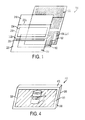
- FIG. 1 is an exploded perspective view of a multi-layer media product in accordance with embodiments of the present teachings
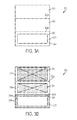
- FIG. 2A is a top view and FIG. 2B is a bottom view, respectively, of a printed layer of the multi-layer media product in accordance with embodiments of the present teachings;
- FIG. 3A is a top view and FIG. 3B is a bottom view, respectively, of a liner layer of the multi-layer media product in accordance with embodiments of the present teachings;
- FIG. 4 is a perspective view illustrating an exemplary envelope converted from the multimedia product in accordance with embodiments of the present teachings.
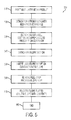
- FIG. 5 is a flow chart depicting a method of assembling the envelope from the multimedia product in accordance with exemplary embodiments of the present teachings.
- Embodiments pertain generally to a multi-layered media product and more particularly to a multi-layer media product convertible to a secure pharmacy envelope, including exemplary methods of forming the same.
- the embodiments are described in connection with structures for a multi-layer media product, a resulting secure pharmacy envelope, and methods of forming, it will be appreciated that the multi-layer media product can be any variety of printed matter including labeling and can be used for packaging of products other than prescriptions generated at a pharmacy, by way of nonlimiting examples.
- the multi-layer media product 100 can include a printed layer 200, a liner layer 300 and a window layer 150.
- the relationships of components are described in general terms, it will be appreciated that one of skill in the art can add, remove, or modify certain components without departing from the scope of the exemplary embodiments.
- the printed layer 200 can include an outer printed surface 212 ( FIG. 2A ) and an inner non-printed surface 214 ( FIG. 2B ).
- the printed layer 200 can be configured with three separate sections 216, 218, and 220.
- a perforation 222 can be formed between adjoining sections, for example between 216 and 218, and between 218 and 220 in order to enable separation of a section from a remainder of the printed layer 200, and accordingly from a remainder of the media product 100.
- any suitable perforation can be used, including a micro-perforation, but it will be appreciated that the perforation should withstand handling and prevent removal of a section until the multi-layer media product 100 is converted to an envelope as will be described further in connection with FIG. 4 . It will be appreciated that the sections are labeled for ease of description and that their relative relationship can be other than that described.
- Each section 216, 218, 220 can receive printed indicia.
- Printed indicia can be applied with a conventional printer or other suitable means for transferring pertinent data to a printed side of the printed layer. The printed indicia can be the same or can be varied according to a particular need.
- Each of the printed sections 216, 218, 220 can be separated at the perforations 222a, 222b to perform subsequent distinct functions.
- each section 216, 218, 220 can receive printed indicia on the outer surface 212 thereof which indicia corresponds to prescription information of a particular patient.
- a pharmacist can utilize the printed indicia to fill a prescription because the printed media product 100 can be in proximity to the pharmacist while dispensing a prescription product into a container, thus further limiting potential error.
- the middle section 218 can include a die cut label 224 therein, upon which indicia can be printed.
- the die cut label 224 can be removed from the middle section 218 as will be described in further detail below.
- a size of the die cut label 224 can be determined according to an overall size of the media product 100.
- the label 224 can encompass an entirety of the middle section 218.
- the third section 220 can include a die cut peel off strip 226.
- the die cut peel off strip 226 can be positioned adjacent an upper edge of the third section 220 and between the printed indicia area of the outer side of the printed layer 200 and the perforation 222b between the second 218 and third 220 sections.
- the inner surface 214 of the printed layer 200 can be substantially free of indicia, adhesives or the like, and is essentially a blank side of the printed layer with the exception of a release material 228 formed on an inner surface 214 of the third section 220.
- the release material 228, such as a silicone release material can be formed on the inner surface 214 of the printed layer 200 in a location of the peel strip 226 in order to detach the peel strip from adhesive formed on the inner surface of the liner layer 300 as will be described in the following.
- adhesives and release materials formed on an inner surface of the liner layer 300 can instead or additionally be applied to suitable areas of the inner surface of the liner layer according to assembly equipment and preferences.
- the printed layer 200 can include digitally optimized paper stock, with a bias weight of 90 GSM.
- the label 224 in the printed layer 200 can include a die cut of about 13,77 x 2,86 cm (3.5 x 1.125 inches) to form the label.
- the die cut peel strip 226 in the third section 220 of the printed layer 200 can be about 1,27 x 21,59 cm (0.5 x 8.5 inches) in dimension to form the peel strip on a flap of the formed envelope, as will be described in the following.
- the liner layer 300 can include an outer surface 312 and an inner surface 314.
- the liner layer 300 is free of indicia on either the inner 312 or outer 314 surfaces thereof.
- the liner layer 300 can be configured with three separate sections 316, 318, and 320.
- a perforation 322 can be formed between adjoining sections, for example between 316 and 318, and between 318 and 320 in order to enable separation of a section from a remainder of the liner layer 300, and thus from a remainder of the multi-layer media product 100.
- Any suitable type of perforation can be used, including micro-perforation, but it will be appreciated that the perforation should withstand handling and prevent removal of a particular section until the multi-layer media product 100 is converted to assemble an envelope housing a prescription container (for example as depicted in FIG. 4 and described further below).
- the sections are labeled for ease of description and that their relative positions with respect to each other can be different than that described.
- the sections can be arranged such that the third section is between the first and second section, the first section is between the second and third section, and so on.
- the third section 320 can include a die cut window 330 formed therein, the die cut window removable from a remainder of the third section 320 as will be described in further detail below.
- a size of the die cut window 330 can be determined according to an overall size of the media product 100 and according to a window size in the envelope 400 of FIG. 4 .
- the die cut 330 can encompass an entirety of the third section 320.
- the die cut window 330 can be about 10,79 x 18,10 cm (4.25 x 7.125 inches) made into the liner layer 300; the die cut being removed to form a window opening.
- the first section 316 can include an adhesive 332 on the surface thereof.
- the adhesive 332 can cover an entire inner surface of the section 316 in order to provide maximum adhesion to a corresponding section 216 inner surface 214 of the printed layer 200.
- the adhesive can be applied in an effective amount without covering an entirety of the inner surface 314 of the first section 316.
- the adhesive can be applied by way of a pattern, such as a dot matrix, cross-hatch, lined, spot printed, or other suitable pattern and provide effective adhesion with the corresponding section 216 of the printed layer.
- the inner surface 314 of the second section 318 of the liner layer 300 can include a release material 334, for example a silicone release material, formed, printed or otherwise disposed thereon.
- the release material 334 can cover an entire inner surface of the section 318, however, an area of the release material can be provided to substantially correspond to a size of the die cut label 224 in the aligned section 218 of the printed layer 200.
- the release material 334 can be applied by way of a pattern, such as a dot matrix, cross-hatch, lined, spot printed, or other suitable pattern and provide effective adhesion with the corresponding section 218 of the printed layer 200.
- the inner surface 314 of the third section 320 of the liner layer 300 can include an adhesive perimeter 336 formed, printed or otherwise disposed adjacent an outer perimeter 321 of the section 320.
- the above described die cut window 330 can therefore be formed within the adhesive perimeter 336.
- the die cut window 330 can be removed from a remainder of the third section 320 in order to create a window opening in the section.
- the perimeter adhesive 336 can be, for example, a permanent rubber based adhesive recessed about 0,32 cm (0.125 inches) from an outer edge of the liner layer 300 to prevent adhesive ooze during fusing of the liner layer 300 to the printed layer 200.
- the liner layer 300 can include a 13,61-18,14 kg (30-40 pound) liner material.
- a window layer 150 can be provided in the multi-layer media product 100.
- the window layer 150 can include a clear poly material.
- the window layer 150 can be substantially the same size as the third sections 220, 320.
- Spot printed rubber based adhesive 152 can be applied to or otherwise formed adjacent the side and bottom edges of the window layer 150 to form a top entry pocket.
- the adhesive 152 can be formed on a surface of the window layer 150 facing an inner surface 212 of the printed layer 200.
- the adhesive can be about 1,27 cm (0.5 inches) wide and recessed about 3,17 mm (0.125 inches) from an outer edge to prevent adhesive ooze during fusing of the liner layer 300 to the printed layer 200.
- the window layer can include a 50,8 ⁇ m (2 mil) PET material.
- the sections 216, 218, 220 of the printed layer 200 are substantially aligned with the sections 316, 318, 320 of the liner layer 300, as the adhered printed layer 200 and liner layer 300 combine with the window layer 150 to form the overall multi-layer media product 100.
- the multi-layer media product 100 can therefore include the window layer 150 sandwiched between inner surfaces 212, 312 of the printed layer 200 and the liner layer 300. More specifically, the inner surface 212 of the first section 216 of the printed layer 200 can adhere to the adhesive 322 of the inner surface 314 of the first section 316 of the liner layer 300; the inner surface 212 of the second section 218 of the printed layer 200 can adhere to the silicone release material 334 of the inner surface 314 of the second section 318 of the liner layer 300; and the inner surface 214 of the third section 220 of the printed layer 200, including the release material 228 thereof, can adhere to the perimeter adhesive 336 of inner surface 314 of the third section 320 of the liner layer 300. Further, the multi-layer media product 100 can be a relatively flat product having surfaces suitable for printing indicia thereon, including prescription indicia.
- the overall dimensions can correspond to that of an 21,59 x 27,94 cm (81 ⁇ 2 x 11") sheet for easily feeding through a printer (not shown).
- a printer not shown
- various other dimensions of the multi-layer media product can be utilized without departing from the exemplary embodiments.
- the multi-layer media product 100 can be converted to a secure envelope 400 containing a dispensed prescription in a container 425 as depicted in FIG. 4 .
- the envelope 400 in FIG. 4 appears to have a depth, such is merely exemplary of the expansion of the envelope with the container therein. Absent housing a container, the envelope will lie flat.
- a method of converting the multi-layer media product 100 to the secure envelope 400 is described in connection with FIG. 5 with reference to FIGS. 1-4 . It should be readily apparent to those of ordinary skill in the art that the method depicted in FIG. 5 represents a generalized schematic illustration and that other steps may be added or existing steps may be removed or modified. Further, the exemplary steps are in connection with filling and delivery of a prescription from a pharmacy, but other applications will become apparent to those skilled in the art.
- the multi-layer media product 100 can be printed with pertinent variable information, for example, at step 510.
- the top of the multi-layer media product which serves as a detachable script form, can be removed and retained to file within a manual pharmacy filing system at step 520. It will be appreciated that the "top" of the form corresponds to the adhered first sections 216, 316 of the printed layer 200 and liner layer 300.
- the label die cut mid section can be removed from the multi-layer media product 100 and placed on the container 425 holding the dispensed medication at step 530. It will be appreciated that the mid section corresponds to the adhered second sections 218, 318 of the printed layer 200 and liner layer 300.
- the section containing the envelope 400 with the clear poly window 150 can be detached from a remainder of the product 100 via the micro perforation 222b/322b at step 540.
- the envelope 400 corresponds to the adhered third sections 220, 320 of the printed layer 200 and liner layer 300 with the window film 150 therebetween.
- the labeled prescription container 425 can be placed in the configured envelope 400 at step 550, with the label 224 facing the window so it can be read.
- the peel strip 226 on the flap 470 of the envelope 400 can be removed to expose the permanent rubber based adhesive 336 at step 560, after which the flap 470 can be folded to seal the envelope 400 at step 570.
- the front of the envelope 400 (opposite side of the window) therefore contains printed indicia identical to that of the script form retained to file, while the remaining side of the envelope has a copy of the prescription form.
- the secure envelope containing medication dispensed at the pharmacy can be safely and securely delivered to a nursing staff and hence patient in a tamper-evident envelope.
- the multi-layer media product can allow unified printing of variable data needed for a medication label, script form, and security envelope. This unified printing can reduce merge errors related to printing the multiple forms required and aid in the assembling and dispensing of the prescription.
- the attached see through envelope allows correlation between the medication label information and the script information printed on the envelope without having to remove the medication from the envelope.
- the sealing mechanism on the envelope protects the medication from tampering while in transport from the pharmacy to the patient floor. By the very nature of the envelope construction, if the medication is tampered with, damage to the envelope will be evident to staff administering medication to a patient.
- the exemplary multi-layer media product can be optimally printed by Xerox ® Phaser ® printers.
Landscapes
- Engineering & Computer Science (AREA)
- Physics & Mathematics (AREA)
- General Physics & Mathematics (AREA)
- Theoretical Computer Science (AREA)
- Computer Security & Cryptography (AREA)
- Details Of Rigid Or Semi-Rigid Containers (AREA)
- Making Paper Articles (AREA)
- Medical Preparation Storing Or Oral Administration Devices (AREA)
- Credit Cards Or The Like (AREA)
Abstract
Description
- The present disclosure generally relates to secure packaging of a product and method of forming the same. More particularly, exemplary embodiments relate to a multi-layer printable form, the printed form convertible to a detachable dispensing envelope, detachable slip, and detachable waste paper.
- In the field of medication dispensing, and particularly in dispensing medications from a pharmacy, accurately coordinating prescription data with their respective containers can become problematic. Typically, three separate documents including two with media thereon are printed to complete a prescription order. These three documents can include a label stock for a medication container, and two prescription ("script") forms. Upon separately printing these three documents, the documents must be manually merged with a correct medication container. One label is adhered to the medication container and another label is used as the script form. The script form is stapled to some type of receptacle, typically a bag. A duplicate script form (e.g. the third document) is retained to a file within the pharmacy from which the prescription is dispensed. Having multiple documents, which are separately printed, and each of which serves a separate purpose, can lead to error in dispensing.
- In a hospital environment, the bag with medication is delivered to the responsible floor nursing staff and then dispensed to a patient. Typically the delivered bag is not secure and the medication can easily be removed at any point during transport. Unless the medication is later carefully verified by comparing the label on the medication with the label on the script form stapled to the bag, a patient may receive the wrong medication or the medication could be removed or otherwise tampered with prior to dispensing to the patient.
- These procedures have long been in practice without significant alteration or advances in secure medication dispensing and/or transport. Medication dispensing should be free of document merge errors and secure throughout the process of filling an original prescription by a pharmacist and technicians to a final patient delivery. To date, no device or methods have been established which satisfy these needs.
- Thus, there is a need to overcome these and other problems of the prior art and to provide a method and device, each of which provides a multi-layered printed media product, convertible to a secure delivery envelope, that will eliminate the need for multiple forms in an originating pharmacy for the dispensing of medications. The digital optimized media will eliminate merge errors and a created security envelope will provide a secure receptacle for transporting medication to administering hospital staff without concern of tampering.
- In accordance with the present teachings, a convertible multi-layer media product is provided.
- The exemplary convertible product can include a printed layer, the printed layer comprising - three separable sections, each section having an outer surface and an inner surface, a first section including printed indicia on the outer surface, a second section including a die cut label therethrough, and a third section including printed indicia on the outer surface and a die cut peel strip therethrough intermediate the printed indicia and an adjacent section; a liner layer aligned and coupled with said printed layer, said liner layer comprising - three separable sections corresponding to the three separable sections of the printed layer, each section having an outer surface and an inner surface, a first section including adhesive on the inner surface, a second section including a release material on the inner surface, and the third section including a removable die cut area defining an opening inset from outer edges, adhesive adjacent outer edges of the inner surface, and a release material intermediate the removable die cut area and an adjacent section; and a see-through film sandwiched between inner surfaces of the printed layer and the liner layer at the third sections thereof, the film including an adhesive at outer edges thereof on a face oriented toward the printed layer.
- In accordance with the present teachings, a method of forming a convertible multi-layer media product is provided.
- The exemplary method can include forming a printed layer, forming said printed layer comprising - forming three separable sections, each section having an outer surface and an inner surface; printing indicia on the outer surface of a first section; printing a removable label on the outer surface of a second section; and printing indicia on the outer surface of a third section; and forming a liner layer and coupling the liner layer with said printed layer, forming said liner layer comprising - forming three separable sections corresponding to the three separable sections of the printed layer, each section having an inner surface and an outer surface; applying adhesive to the inner surface of a first section; applying a release layer to an inner surface of a second section; providing a die cut defining an opening set in from outer edges of a third section; applying adhesive adjacent outer edges of the third section inner surface; providing a release material in a flap portion intermediate the removable die cut area and an adjacent section; providing a see-through film spanning the cut out opening and affixed to the adhesive at outer edges of the film; and forming a peel strip over a silicone release surface adjacent a separation border of the third section.
- In accordance with the present teachings, the multi-layer media product is convertible to a product containing envelope by detaching each of the adhesively joined first and second sections, removing the die cut label from the second section, applying the die cut label to a medication container, filling the medication container, inserting the filled and labeled medication container into the envelope between the see-through film and printed layer, removing the peel strip, and folding the flap portion over the outer surface of the printed layer in the third section.
- It is to be understood that both the foregoing general description and the following detailed description are exemplary and explanatory only and are not restrictive of the invention, as claimed.
- The accompanying drawings, which are incorporated in and constitute a part of this specification, illustrate several embodiments of the invention and together with the description, serve to explain the principles of the invention.
-
FIG. 1 is an exploded perspective view of a multi-layer media product in accordance with embodiments of the present teachings; -
FIG. 2A is a top view andFIG. 2B is a bottom view, respectively, of a printed layer of the multi-layer media product in accordance with embodiments of the present teachings; -
FIG. 3A is a top view andFIG. 3B is a bottom view, respectively, of a liner layer of the multi-layer media product in accordance with embodiments of the present teachings; -
FIG. 4 is a perspective view illustrating an exemplary envelope converted from the multimedia product in accordance with embodiments of the present teachings; and -
FIG. 5 is a flow chart depicting a method of assembling the envelope from the multimedia product in accordance with exemplary embodiments of the present teachings. - Reference will now be made in detail to exemplary embodiments of the invention, examples of which are illustrated in the accompanying drawings. Wherever possible, the same reference numbers will be used throughout the drawings to refer to the same or like parts.
- Embodiments pertain generally to a multi-layered media product and more particularly to a multi-layer media product convertible to a secure pharmacy envelope, including exemplary methods of forming the same. Although the embodiments are described in connection with structures for a multi-layer media product, a resulting secure pharmacy envelope, and methods of forming, it will be appreciated that the multi-layer media product can be any variety of printed matter including labeling and can be used for packaging of products other than prescriptions generated at a pharmacy, by way of nonlimiting examples.
- An exemplary
multi-layer media product 100 is depicted inFIG. 1 . Themulti-layer media product 100 can include a printedlayer 200, aliner layer 300 and awindow layer 150. Although the relationships of components are described in general terms, it will be appreciated that one of skill in the art can add, remove, or modify certain components without departing from the scope of the exemplary embodiments. - Reference can be made to
FIG. 1 as well asFIG. 2A and FIG. 2B depicting inner and outer surfaces when describing the components of the printedlayer 200. More specifically, the printedlayer 200 can include an outer printed surface 212 (FIG. 2A ) and an inner non-printed surface 214 (FIG. 2B ). The printedlayer 200 can be configured with threeseparate sections layer 200, and accordingly from a remainder of themedia product 100. Any suitable perforation can be used, including a micro-perforation, but it will be appreciated that the perforation should withstand handling and prevent removal of a section until themulti-layer media product 100 is converted to an envelope as will be described further in connection withFIG. 4 . It will be appreciated that the sections are labeled for ease of description and that their relative relationship can be other than that described. - Each
section sections perforations section outer surface 212 thereof which indicia corresponds to prescription information of a particular patient. A pharmacist can utilize the printed indicia to fill a prescription because the printedmedia product 100 can be in proximity to the pharmacist while dispensing a prescription product into a container, thus further limiting potential error. - In addition, the
middle section 218 can include adie cut label 224 therein, upon which indicia can be printed. Thedie cut label 224 can be removed from themiddle section 218 as will be described in further detail below. A size of thedie cut label 224 can be determined according to an overall size of themedia product 100. In some embodiments, thelabel 224 can encompass an entirety of themiddle section 218. - The
third section 220 can include a die cut peel offstrip 226. The die cut peel offstrip 226 can be positioned adjacent an upper edge of thethird section 220 and between the printed indicia area of the outer side of the printedlayer 200 and theperforation 222b between the second 218 and third 220 sections. - The
inner surface 214 of the printedlayer 200 can be substantially free of indicia, adhesives or the like, and is essentially a blank side of the printed layer with the exception of arelease material 228 formed on aninner surface 214 of thethird section 220. For example, in the exemplary embodiment, therelease material 228, such as a silicone release material, can be formed on theinner surface 214 of the printedlayer 200 in a location of thepeel strip 226 in order to detach the peel strip from adhesive formed on the inner surface of theliner layer 300 as will be described in the following. - However, it will be appreciated that description below of adhesives and release materials formed on an inner surface of the
liner layer 300 can instead or additionally be applied to suitable areas of the inner surface of the liner layer according to assembly equipment and preferences. - Although not limiting to the exemplary embodiments, the printed
layer 200 can include digitally optimized paper stock, with a bias weight of 90 GSM. In addition, by way of example, thelabel 224 in the printedlayer 200 can include a die cut of about 13,77 x 2,86 cm (3.5 x 1.125 inches) to form the label. The diecut peel strip 226 in thethird section 220 of the printedlayer 200 can be about 1,27 x 21,59 cm (0.5 x 8.5 inches) in dimension to form the peel strip on a flap of the formed envelope, as will be described in the following. - Reference can be made to
FIG. 1 as well asFIG. 3A and FIG. 3B depicting inner and outer surfaces when describing the components of theliner layer 300. More specifically, theliner layer 300 can include anouter surface 312 and aninner surface 314. Typically, theliner layer 300 is free of indicia on either the inner 312 or outer 314 surfaces thereof. - The
liner layer 300 can be configured with threeseparate sections liner layer 300, and thus from a remainder of themulti-layer media product 100. Any suitable type of perforation can be used, including micro-perforation, but it will be appreciated that the perforation should withstand handling and prevent removal of a particular section until themulti-layer media product 100 is converted to assemble an envelope housing a prescription container (for example as depicted inFIG. 4 and described further below). It will also be appreciated that the sections are labeled for ease of description and that their relative positions with respect to each other can be different than that described. For example, the sections can be arranged such that the third section is between the first and second section, the first section is between the second and third section, and so on. - Each
section liner layer 300 can be separable at theperforation third section 320 can include adie cut window 330 formed therein, the die cut window removable from a remainder of thethird section 320 as will be described in further detail below. A size of the die cutwindow 330 can be determined according to an overall size of themedia product 100 and according to a window size in theenvelope 400 ofFIG. 4 . In some embodiments, the die cut 330 can encompass an entirety of thethird section 320. By way of example, the die cutwindow 330 can be about 10,79 x 18,10 cm (4.25 x 7.125 inches) made into theliner layer 300; the die cut being removed to form a window opening. - Referring particularly to
FIG. 3B , depicting theinner surface 314 of theliner layer 300, thefirst section 316 can include an adhesive 332 on the surface thereof. The adhesive 332 can cover an entire inner surface of thesection 316 in order to provide maximum adhesion to acorresponding section 216inner surface 214 of the printedlayer 200. However, it will be appreciated that the adhesive can be applied in an effective amount without covering an entirety of theinner surface 314 of thefirst section 316. The adhesive can be applied by way of a pattern, such as a dot matrix, cross-hatch, lined, spot printed, or other suitable pattern and provide effective adhesion with thecorresponding section 216 of the printed layer. - The
inner surface 314 of thesecond section 318 of theliner layer 300 can include arelease material 334, for example a silicone release material, formed, printed or otherwise disposed thereon. Typically, therelease material 334 can cover an entire inner surface of thesection 318, however, an area of the release material can be provided to substantially correspond to a size of thedie cut label 224 in the alignedsection 218 of the printedlayer 200. Therelease material 334 can be applied by way of a pattern, such as a dot matrix, cross-hatch, lined, spot printed, or other suitable pattern and provide effective adhesion with thecorresponding section 218 of the printedlayer 200. - The
inner surface 314 of thethird section 320 of theliner layer 300 can include anadhesive perimeter 336 formed, printed or otherwise disposed adjacent anouter perimeter 321 of thesection 320. The above described diecut window 330 can therefore be formed within theadhesive perimeter 336. The die cutwindow 330 can be removed from a remainder of thethird section 320 in order to create a window opening in the section. The perimeter adhesive 336 can be, for example, a permanent rubber based adhesive recessed about 0,32 cm (0.125 inches) from an outer edge of theliner layer 300 to prevent adhesive ooze during fusing of theliner layer 300 to the printedlayer 200. - Although not limiting to the exemplary embodiments, the
liner layer 300 can include a 13,61-18,14 kg (30-40 pound) liner material. - In addition to the printed
layer 200 and theliner layer 300, awindow layer 150 can be provided in themulti-layer media product 100. Thewindow layer 150 can include a clear poly material. Thewindow layer 150 can be substantially the same size as thethird sections window layer 150 to form a top entry pocket. The adhesive 152 can be formed on a surface of thewindow layer 150 facing aninner surface 212 of the printedlayer 200. The adhesive can be about 1,27 cm (0.5 inches) wide and recessed about 3,17 mm (0.125 inches) from an outer edge to prevent adhesive ooze during fusing of theliner layer 300 to the printedlayer 200. By way of example, the window layer can include a 50,8 µm (2 mil) PET material. - In exemplary embodiments, it will be appreciated that the
sections layer 200 are substantially aligned with thesections liner layer 300, as the adhered printedlayer 200 andliner layer 300 combine with thewindow layer 150 to form the overallmulti-layer media product 100. - The
multi-layer media product 100 can therefore include thewindow layer 150 sandwiched betweeninner surfaces layer 200 and theliner layer 300. More specifically, theinner surface 212 of thefirst section 216 of the printedlayer 200 can adhere to the adhesive 322 of theinner surface 314 of thefirst section 316 of theliner layer 300; theinner surface 212 of thesecond section 218 of the printedlayer 200 can adhere to thesilicone release material 334 of theinner surface 314 of thesecond section 318 of theliner layer 300; and theinner surface 214 of thethird section 220 of the printedlayer 200, including therelease material 228 thereof, can adhere to theperimeter adhesive 336 ofinner surface 314 of thethird section 320 of theliner layer 300. Further, themulti-layer media product 100 can be a relatively flat product having surfaces suitable for printing indicia thereon, including prescription indicia. - As a
multi-layer media product 100, the overall dimensions can correspond to that of an 21,59 x 27,94 cm (8½ x 11") sheet for easily feeding through a printer (not shown). However, it will be appreciated that various other dimensions of the multi-layer media product can be utilized without departing from the exemplary embodiments. - In operation, the
multi-layer media product 100 can be converted to asecure envelope 400 containing a dispensed prescription in acontainer 425 as depicted inFIG. 4 . Although theenvelope 400 inFIG. 4 appears to have a depth, such is merely exemplary of the expansion of the envelope with the container therein. Absent housing a container, the envelope will lie flat. A method of converting themulti-layer media product 100 to thesecure envelope 400 is described in connection withFIG. 5 with reference toFIGS. 1-4 . It should be readily apparent to those of ordinary skill in the art that the method depicted inFIG. 5 represents a generalized schematic illustration and that other steps may be added or existing steps may be removed or modified. Further, the exemplary steps are in connection with filling and delivery of a prescription from a pharmacy, but other applications will become apparent to those skilled in the art. - During the
process 500 of filling a pharmacy order, themulti-layer media product 100 can be printed with pertinent variable information, for example, atstep 510. The top of the multi-layer media product, which serves as a detachable script form, can be removed and retained to file within a manual pharmacy filing system atstep 520. It will be appreciated that the "top" of the form corresponds to the adheredfirst sections layer 200 andliner layer 300. The label die cut mid section can be removed from themulti-layer media product 100 and placed on thecontainer 425 holding the dispensed medication atstep 530. It will be appreciated that the mid section corresponds to the adheredsecond sections layer 200 andliner layer 300. The section containing theenvelope 400 with theclear poly window 150 can be detached from a remainder of theproduct 100 via themicro perforation 222b/322b atstep 540. It will be appreciated that theenvelope 400 corresponds to the adheredthird sections layer 200 andliner layer 300 with thewindow film 150 therebetween. The labeledprescription container 425 can be placed in the configuredenvelope 400 atstep 550, with thelabel 224 facing the window so it can be read. Thepeel strip 226 on theflap 470 of theenvelope 400 can be removed to expose the permanent rubber based adhesive 336 atstep 560, after which theflap 470 can be folded to seal theenvelope 400 atstep 570. The front of the envelope 400 (opposite side of the window) therefore contains printed indicia identical to that of the script form retained to file, while the remaining side of the envelope has a copy of the prescription form. Although not depicted in the method, it will be appreciated that the secure envelope containing medication dispensed at the pharmacy, can be safely and securely delivered to a nursing staff and hence patient in a tamper-evident envelope. - It will be appreciated by those of skill in the art that several benefits are achieved by the exemplary embodiments described herein and include provision of one multi-layer media product (form) which contains all pertinent components to administer medication and which eliminates possible printing and merging errors. The multi-layer media product can allow unified printing of variable data needed for a medication label, script form, and security envelope. This unified printing can reduce merge errors related to printing the multiple forms required and aid in the assembling and dispensing of the prescription. The attached see through envelope allows correlation between the medication label information and the script information printed on the envelope without having to remove the medication from the envelope. The sealing mechanism on the envelope protects the medication from tampering while in transport from the pharmacy to the patient floor. By the very nature of the envelope construction, if the medication is tampered with, damage to the envelope will be evident to staff administering medication to a patient. The exemplary multi-layer media product can be optimally printed by Xerox® Phaser® printers.
Claims (15)
- A multi-layered media product (100) comprising:a printed layer (200), said printed layer comprising -
three separable sections (216, 218, 220), each section having an outer surface (212) and an inner surface (214), a first section (216) including printed indicia on the outer surface (212), a second section (218) including a die cut label (224) therethrough, and a third section (220) including printed indicia on the outer surface (212) and a die cut peel strip (226) therethrough intermediate the printed indicia and an adjacent section;a liner layer (300) aligned and coupled with said printed layer (200), said liner layer (300) comprising -
three separable sections (316, 318, 320) corresponding to the three separable sections (216, 218, 220) of the printed layer, each section having an outer surface (312) and an inner surface (314), a first section (316) including adhesive (332) on the inner surface, a second section (318) including a release material (334) on the inner surface (314), and the third section (320) including a removable die cut area (330) defining an opening inset from outer edges, adhesive adjacent outer edges of the inner surface(314), and a release material intermediate the removable die cut area (330) and an adjacent section; anda see-through film sandwiched between inner surfaces (214) of the printed layer (200) and the liner layer (300) at the third sections (320) thereof, the film including an adhesive (336) at outer edges thereof on a face oriented toward the printed layer (200). - The product of claim 1, wherein the printed indicia comprises prescription information.
- The product of claim 1, wherein the coupled:- first sections (316) comprise a detachable prescription suitable for pharmacy retention;- second sections (318) comprise a removable label; or- third sections (320) are convertible to a sealable envelope.
- The product of claim 1, wherein inner surfaces (214) of the printed layer (200) and liner layer (300) are adhesively coupled.
- The product of claim 1, wherein the second section (318) is intermediate the first (316) and third sections (320).
- The product of claim 1, wherein the sections (316, 318, 320) are separable along perforations (322).
- A method of forming a convertible multi-layered media product (100) comprising:forming a printed layer (200), forming said printed layer (200)comprising -
forming three separable sections (216,218,220), each section having an outer surface (212) and an inner surface (214);
printing indicia on the outer surface (212) of a first section (216);
printing a removable label on the outer surface (212) of a second section (218); and
printing indicia on the outer surface (212) of a third section (220); andforming a liner layer (300) and coupling the liner layer (300) with said printed layer (200),forming said liner layer (300) comprising -
forming three separable sections (316, 318, 320) corresponding to the three separable sections (216, 218, 220) of the printed layer (200), each section having an inner surface (314) and an outer surface (312);
applying adhesive to the inner surface (314) of a first section (316);
applying a release layer to an inner surface (314) of a second section (318);
providing a die cut (330) defining an opening set in from outer edges of a third section (320);
applying adhesive adjacent outer edges of the third section inner surface (314);
providing a release material (334) in a flap portion (470) intermediate the removable die cut area (330) and an adjacent section;
providing a see-through film spanning the cut out opening and affixed to the adhesive at outer edges of the film; and
forming a peel strip (226) over a silicone release surface adjacent a separation border of the third section (320). - The method of claim 7, further comprising converting the multi-layer media product (100) to an envelope (400).
- The method of claim 7, further comprising converting the multi-layer media product (100) to an envelope (400) formed by detaching each of the adhesively joined first and second sections (216, 218), removing the peel strip (226), and folding the flap portion (470) over the outer surface (212) of the printed layer (200) in the third section (220).
- The method of claim 7, further comprising converting the multi-layer media product (100) to a product containing envelope (400).
- The method of claim 7, further comprising converting the multi-layer media product (100) to a product containing envelope (400) formed by detaching each of the adhesively joined first and second sections (216, 218), removing the die cut label (224) from the second section (218), applying the die cut label (224) to a medication container (425), filling the medication container (425), inserting the filled and labeled medication container (425) into the envelope (400) between the see-through film and printed layer (200), removing the peel strip (226), and folding the flap portion (470) over the outer surface (212) of the printed layer (200) in the third section (220).
- The method of claim 7, wherein printing indicia comprises printing prescription information.
- The method of claim 7, wherein:- the coupled first sections (316) comprise a detachable prescription suitable for pharmacy retention; or- the coupled second sections (318) comprise a removable label.
- The method of claim 7, further comprising:- converting the coupled third sections (320) to a sealable envelope; or- separating sections (316, 318, 320) along perforations (322).
- The method of claim 7, further adhesively coupling inner surfaces of the printed layer (200) and liner layer (300).
Applications Claiming Priority (1)
| Application Number | Priority Date | Filing Date | Title |
|---|---|---|---|
| US12/357,851 US8475901B2 (en) | 2009-01-22 | 2009-01-22 | Secure pharmacy dispensing uni-form for digital printers |
Publications (2)
| Publication Number | Publication Date |
|---|---|
| EP2243636A1 true EP2243636A1 (en) | 2010-10-27 |
| EP2243636B1 EP2243636B1 (en) | 2015-10-21 |
Family
ID=42144911
Family Applications (1)
| Application Number | Title | Priority Date | Filing Date |
|---|---|---|---|
| EP10150964.4A Not-in-force EP2243636B1 (en) | 2009-01-22 | 2010-01-18 | Unitary secure pharmacy dispensing form for digital printers |
Country Status (4)
| Country | Link |
|---|---|
| US (1) | US8475901B2 (en) |
| EP (1) | EP2243636B1 (en) |
| JP (1) | JP5468912B2 (en) |
| CA (1) | CA2690321C (en) |
Families Citing this family (2)
| Publication number | Priority date | Publication date | Assignee | Title |
|---|---|---|---|---|
| US10176735B2 (en) | 2012-11-30 | 2019-01-08 | Cvs Pharmacy, Inc. | Packaged medication assembly and associated method |
| US12536924B2 (en) * | 2020-06-15 | 2026-01-27 | Anheuser-Busch, Llc | Full wrap pressure sensitive label |
Citations (6)
| Publication number | Priority date | Publication date | Assignee | Title |
|---|---|---|---|---|
| US4708285A (en) * | 1986-05-07 | 1987-11-24 | Segall Peter L | Floppy disk directory envelope form |
| US5238183A (en) * | 1992-10-14 | 1993-08-24 | Moore Business Forms, Inc. | Bifold mailer with return envelope |
| US5582298A (en) * | 1995-05-16 | 1996-12-10 | Uarco Incorporated | Business form including a sampling kit |
| WO1999025565A1 (en) * | 1997-11-17 | 1999-05-27 | Avery Dennison Corporation | Laminated article |
| EP0924676A2 (en) * | 1997-12-19 | 1999-06-23 | Ncr International Inc. | Printed form and container |
| US5924738A (en) * | 1995-02-06 | 1999-07-20 | The Standard Register Company | Multipart form and label combination |
Family Cites Families (22)
| Publication number | Priority date | Publication date | Assignee | Title |
|---|---|---|---|---|
| US4211434A (en) * | 1973-04-05 | 1980-07-08 | Jonathan Reese | Combination container and control form for shipping, identifying and reordering merchandise |
| US4189053A (en) * | 1979-01-25 | 1980-02-19 | Hoffmann-La Roche Inc. | Bulk unit of use informational medicinal dispensing system |
| US4461661A (en) * | 1980-03-21 | 1984-07-24 | Fabel Warren M | Non-tenting business form assemblies and method and apparatus for making the same |
| US6173888B1 (en) * | 1994-05-10 | 2001-01-16 | Laser Substrates, Inc. | Mailing form for non-impact printing |
| US5328208A (en) * | 1993-07-19 | 1994-07-12 | Wallace Computer Services, Inc. | Pharmacy form and method |
| CA2132164A1 (en) * | 1993-09-16 | 1995-03-17 | Richard W. Foote | Pharmaceutical label and record system |
| DE29604732U1 (en) * | 1996-03-14 | 1996-05-30 | Hoppmann, Karl-F., 47495 Rheinberg | Envelope |
| US6258428B1 (en) * | 1997-08-15 | 2001-07-10 | Ncr Corporation | Method of using an entertainment placement product having storage pocket |
| US6027014A (en) * | 1998-02-23 | 2000-02-22 | Cochran; W. Ches | Single sheet mailer with return envelope |
| JP2000006551A (en) * | 1998-06-24 | 2000-01-11 | Enika Kk | Prescription sheet and its manufacture |
| US6254952B1 (en) * | 1999-02-26 | 2001-07-03 | Ncr Corporation | Strip tied label sheet |
| US6304849B1 (en) * | 2000-02-23 | 2001-10-16 | Catalina Marketing International, Inc. | Method and system for printing a combination pharmaceutical label and directed newsletter |
| JP2001322373A (en) * | 2000-05-15 | 2001-11-20 | Enika Kk | Paper for prescription slip and method for preparing it |
| JP4526173B2 (en) * | 2000-09-12 | 2010-08-18 | エニカ株式会社 | Manufacturing method for prescription paper or slips |
| US6701654B2 (en) * | 2001-02-23 | 2004-03-09 | Sunshine Girl Creations Inc. | Personalized picture postcard for holding inserted photograph |
| JP3611814B2 (en) * | 2001-03-07 | 2005-01-19 | 恵和株式会社 | Bag with management function |
| US6626464B1 (en) * | 2001-03-12 | 2003-09-30 | Convergent Label Technology | Form with label and non-label portions, and method of manufacturing same |
| JP4361719B2 (en) * | 2002-07-31 | 2009-11-11 | トッパン・フォームズ株式会社 | Bag with card sheet |
| JP4290938B2 (en) * | 2002-07-31 | 2009-07-08 | トッパン・フォームズ株式会社 | Bag with label sheet |
| US6994899B2 (en) * | 2003-03-26 | 2006-02-07 | The Cyril-Scott Company | Curl resistant single substrate label sheet and a method for making same |
| JP2006151467A (en) * | 2004-11-30 | 2006-06-15 | Toppan Forms Co Ltd | Bag |
| JP5239672B2 (en) * | 2008-09-17 | 2013-07-17 | 大日本印刷株式会社 | Medicine bag |
-
2009
- 2009-01-22 US US12/357,851 patent/US8475901B2/en not_active Expired - Fee Related
-
2010
- 2010-01-14 CA CA2690321A patent/CA2690321C/en not_active Expired - Fee Related
- 2010-01-15 JP JP2010006638A patent/JP5468912B2/en not_active Expired - Fee Related
- 2010-01-18 EP EP10150964.4A patent/EP2243636B1/en not_active Not-in-force
Patent Citations (6)
| Publication number | Priority date | Publication date | Assignee | Title |
|---|---|---|---|---|
| US4708285A (en) * | 1986-05-07 | 1987-11-24 | Segall Peter L | Floppy disk directory envelope form |
| US5238183A (en) * | 1992-10-14 | 1993-08-24 | Moore Business Forms, Inc. | Bifold mailer with return envelope |
| US5924738A (en) * | 1995-02-06 | 1999-07-20 | The Standard Register Company | Multipart form and label combination |
| US5582298A (en) * | 1995-05-16 | 1996-12-10 | Uarco Incorporated | Business form including a sampling kit |
| WO1999025565A1 (en) * | 1997-11-17 | 1999-05-27 | Avery Dennison Corporation | Laminated article |
| EP0924676A2 (en) * | 1997-12-19 | 1999-06-23 | Ncr International Inc. | Printed form and container |
Also Published As
| Publication number | Publication date |
|---|---|
| JP5468912B2 (en) | 2014-04-09 |
| US8475901B2 (en) | 2013-07-02 |
| US20100181756A1 (en) | 2010-07-22 |
| CA2690321C (en) | 2012-12-18 |
| CA2690321A1 (en) | 2010-07-22 |
| EP2243636B1 (en) | 2015-10-21 |
| JP2010167277A (en) | 2010-08-05 |
Similar Documents
| Publication | Publication Date | Title |
|---|---|---|
| AU744429B2 (en) | Computer generated multi-web moisture proof identification bracelet | |
| EP0924676A2 (en) | Printed form and container | |
| EP0274225B1 (en) | Windowed mailer with return envelope for remittance document, having return mail-to address exposed by removal of original mail-to label | |
| US6644538B1 (en) | Shipping envelope | |
| US7475912B1 (en) | Combination shipping label and packing slip form | |
| EP2243636B1 (en) | Unitary secure pharmacy dispensing form for digital printers | |
| EP3871997A1 (en) | Container with flexible packaging bag | |
| US11776431B2 (en) | Multilayer label | |
| US10363728B2 (en) | Method for the production of labels, and multi-layer composite | |
| JP4290938B2 (en) | Bag with label sheet | |
| CN105684064A (en) | Extended content booklet labels | |
| JP5239672B2 (en) | Medicine bag | |
| US9165480B2 (en) | Shipping document and method and apparatus for applying a shipping document to a surface | |
| JP2001354244A (en) | Medicine bag | |
| JP3688364B2 (en) | Delivery slips and how to use them | |
| JP7375899B2 (en) | packaging bag | |
| JP4992336B2 (en) | Slip envelope | |
| EP1656654B1 (en) | Adhesive label and booklet blanks | |
| JP4950173B2 (en) | Packaging method and packaging material | |
| JP2003341686A (en) | Courier envelope | |
| JP2004054074A (en) | Label type slip with pocket | |
| JP2017124028A (en) | Labelled bag body | |
| JP3755969B2 (en) | Application form with envelope | |
| JP2001159868A (en) | Method for producing peelable pressure-sensitive adhesive sheet | |
| JP2000218964A (en) | Delivery management label |
Legal Events
| Date | Code | Title | Description |
|---|---|---|---|
| PUAI | Public reference made under article 153(3) epc to a published international application that has entered the european phase |
Free format text: ORIGINAL CODE: 0009012 |
|
| AK | Designated contracting states |
Kind code of ref document: A1 Designated state(s): AT BE BG CH CY CZ DE DK EE ES FI FR GB GR HR HU IE IS IT LI LT LU LV MC MK MT NL NO PL PT RO SE SI SK SM TR |
|
| AX | Request for extension of the european patent |
Extension state: AL BA RS |
|
| 17P | Request for examination filed |
Effective date: 20101015 |
|
| GRAP | Despatch of communication of intention to grant a patent |
Free format text: ORIGINAL CODE: EPIDOSNIGR1 |
|
| INTG | Intention to grant announced |
Effective date: 20150603 |
|
| GRAS | Grant fee paid |
Free format text: ORIGINAL CODE: EPIDOSNIGR3 |
|
| GRAA | (expected) grant |
Free format text: ORIGINAL CODE: 0009210 |
|
| AK | Designated contracting states |
Kind code of ref document: B1 Designated state(s): AT BE BG CH CY CZ DE DK EE ES FI FR GB GR HR HU IE IS IT LI LT LU LV MC MK MT NL NO PL PT RO SE SI SK SM TR |
|
| REG | Reference to a national code |
Ref country code: GB Ref legal event code: FG4D Ref country code: NL Ref legal event code: MP Effective date: 20151021 |
|
| REG | Reference to a national code |
Ref country code: CH Ref legal event code: EP |
|
| REG | Reference to a national code |
Ref country code: AT Ref legal event code: REF Ref document number: 756345 Country of ref document: AT Kind code of ref document: T Effective date: 20151115 |
|
| REG | Reference to a national code |
Ref country code: IE Ref legal event code: FG4D |
|
| REG | Reference to a national code |
Ref country code: DE Ref legal event code: R096 Ref document number: 602010028337 Country of ref document: DE |
|
| REG | Reference to a national code |
Ref country code: FR Ref legal event code: PLFP Year of fee payment: 7 |
|
| REG | Reference to a national code |
Ref country code: LT Ref legal event code: MG4D |
|
| REG | Reference to a national code |
Ref country code: AT Ref legal event code: MK05 Ref document number: 756345 Country of ref document: AT Kind code of ref document: T Effective date: 20151021 |
|
| PG25 | Lapsed in a contracting state [announced via postgrant information from national office to epo] |
Ref country code: LT Free format text: LAPSE BECAUSE OF FAILURE TO SUBMIT A TRANSLATION OF THE DESCRIPTION OR TO PAY THE FEE WITHIN THE PRESCRIBED TIME-LIMIT Effective date: 20151021 Ref country code: HR Free format text: LAPSE BECAUSE OF FAILURE TO SUBMIT A TRANSLATION OF THE DESCRIPTION OR TO PAY THE FEE WITHIN THE PRESCRIBED TIME-LIMIT Effective date: 20151021 Ref country code: NL Free format text: LAPSE BECAUSE OF FAILURE TO SUBMIT A TRANSLATION OF THE DESCRIPTION OR TO PAY THE FEE WITHIN THE PRESCRIBED TIME-LIMIT Effective date: 20151021 Ref country code: NO Free format text: LAPSE BECAUSE OF FAILURE TO SUBMIT A TRANSLATION OF THE DESCRIPTION OR TO PAY THE FEE WITHIN THE PRESCRIBED TIME-LIMIT Effective date: 20160121 Ref country code: IS Free format text: LAPSE BECAUSE OF FAILURE TO SUBMIT A TRANSLATION OF THE DESCRIPTION OR TO PAY THE FEE WITHIN THE PRESCRIBED TIME-LIMIT Effective date: 20160221 Ref country code: IT Free format text: LAPSE BECAUSE OF FAILURE TO SUBMIT A TRANSLATION OF THE DESCRIPTION OR TO PAY THE FEE WITHIN THE PRESCRIBED TIME-LIMIT Effective date: 20151021 Ref country code: ES Free format text: LAPSE BECAUSE OF FAILURE TO SUBMIT A TRANSLATION OF THE DESCRIPTION OR TO PAY THE FEE WITHIN THE PRESCRIBED TIME-LIMIT Effective date: 20151021 |
|
| PG25 | Lapsed in a contracting state [announced via postgrant information from national office to epo] |
Ref country code: BE Free format text: LAPSE BECAUSE OF NON-PAYMENT OF DUE FEES Effective date: 20160131 Ref country code: FI Free format text: LAPSE BECAUSE OF FAILURE TO SUBMIT A TRANSLATION OF THE DESCRIPTION OR TO PAY THE FEE WITHIN THE PRESCRIBED TIME-LIMIT Effective date: 20151021 Ref country code: AT Free format text: LAPSE BECAUSE OF FAILURE TO SUBMIT A TRANSLATION OF THE DESCRIPTION OR TO PAY THE FEE WITHIN THE PRESCRIBED TIME-LIMIT Effective date: 20151021 Ref country code: SE Free format text: LAPSE BECAUSE OF FAILURE TO SUBMIT A TRANSLATION OF THE DESCRIPTION OR TO PAY THE FEE WITHIN THE PRESCRIBED TIME-LIMIT Effective date: 20151021 Ref country code: LV Free format text: LAPSE BECAUSE OF FAILURE TO SUBMIT A TRANSLATION OF THE DESCRIPTION OR TO PAY THE FEE WITHIN THE PRESCRIBED TIME-LIMIT Effective date: 20151021 Ref country code: PL Free format text: LAPSE BECAUSE OF FAILURE TO SUBMIT A TRANSLATION OF THE DESCRIPTION OR TO PAY THE FEE WITHIN THE PRESCRIBED TIME-LIMIT Effective date: 20151021 Ref country code: GR Free format text: LAPSE BECAUSE OF FAILURE TO SUBMIT A TRANSLATION OF THE DESCRIPTION OR TO PAY THE FEE WITHIN THE PRESCRIBED TIME-LIMIT Effective date: 20160122 Ref country code: PT Free format text: LAPSE BECAUSE OF FAILURE TO SUBMIT A TRANSLATION OF THE DESCRIPTION OR TO PAY THE FEE WITHIN THE PRESCRIBED TIME-LIMIT Effective date: 20160222 |
|
| REG | Reference to a national code |
Ref country code: DE Ref legal event code: R097 Ref document number: 602010028337 Country of ref document: DE |
|
| PG25 | Lapsed in a contracting state [announced via postgrant information from national office to epo] |
Ref country code: CZ Free format text: LAPSE BECAUSE OF FAILURE TO SUBMIT A TRANSLATION OF THE DESCRIPTION OR TO PAY THE FEE WITHIN THE PRESCRIBED TIME-LIMIT Effective date: 20151021 |
|
| PLBE | No opposition filed within time limit |
Free format text: ORIGINAL CODE: 0009261 |
|
| STAA | Information on the status of an ep patent application or granted ep patent |
Free format text: STATUS: NO OPPOSITION FILED WITHIN TIME LIMIT |
|
| PG25 | Lapsed in a contracting state [announced via postgrant information from national office to epo] |
Ref country code: EE Free format text: LAPSE BECAUSE OF FAILURE TO SUBMIT A TRANSLATION OF THE DESCRIPTION OR TO PAY THE FEE WITHIN THE PRESCRIBED TIME-LIMIT Effective date: 20151021 Ref country code: LU Free format text: LAPSE BECAUSE OF FAILURE TO SUBMIT A TRANSLATION OF THE DESCRIPTION OR TO PAY THE FEE WITHIN THE PRESCRIBED TIME-LIMIT Effective date: 20160118 Ref country code: RO Free format text: LAPSE BECAUSE OF FAILURE TO SUBMIT A TRANSLATION OF THE DESCRIPTION OR TO PAY THE FEE WITHIN THE PRESCRIBED TIME-LIMIT Effective date: 20151021 Ref country code: SM Free format text: LAPSE BECAUSE OF FAILURE TO SUBMIT A TRANSLATION OF THE DESCRIPTION OR TO PAY THE FEE WITHIN THE PRESCRIBED TIME-LIMIT Effective date: 20151021 Ref country code: SK Free format text: LAPSE BECAUSE OF FAILURE TO SUBMIT A TRANSLATION OF THE DESCRIPTION OR TO PAY THE FEE WITHIN THE PRESCRIBED TIME-LIMIT Effective date: 20151021 Ref country code: DK Free format text: LAPSE BECAUSE OF FAILURE TO SUBMIT A TRANSLATION OF THE DESCRIPTION OR TO PAY THE FEE WITHIN THE PRESCRIBED TIME-LIMIT Effective date: 20151021 |
|
| REG | Reference to a national code |
Ref country code: CH Ref legal event code: PL |
|
| 26N | No opposition filed |
Effective date: 20160722 |
|
| PG25 | Lapsed in a contracting state [announced via postgrant information from national office to epo] |
Ref country code: MC Free format text: LAPSE BECAUSE OF FAILURE TO SUBMIT A TRANSLATION OF THE DESCRIPTION OR TO PAY THE FEE WITHIN THE PRESCRIBED TIME-LIMIT Effective date: 20151021 |
|
| PG25 | Lapsed in a contracting state [announced via postgrant information from national office to epo] |
Ref country code: CH Free format text: LAPSE BECAUSE OF NON-PAYMENT OF DUE FEES Effective date: 20160131 Ref country code: LI Free format text: LAPSE BECAUSE OF NON-PAYMENT OF DUE FEES Effective date: 20160131 |
|
| REG | Reference to a national code |
Ref country code: IE Ref legal event code: MM4A |
|
| PG25 | Lapsed in a contracting state [announced via postgrant information from national office to epo] |
Ref country code: SI Free format text: LAPSE BECAUSE OF FAILURE TO SUBMIT A TRANSLATION OF THE DESCRIPTION OR TO PAY THE FEE WITHIN THE PRESCRIBED TIME-LIMIT Effective date: 20151021 |
|
| REG | Reference to a national code |
Ref country code: FR Ref legal event code: PLFP Year of fee payment: 8 |
|
| PG25 | Lapsed in a contracting state [announced via postgrant information from national office to epo] |
Ref country code: BE Free format text: LAPSE BECAUSE OF FAILURE TO SUBMIT A TRANSLATION OF THE DESCRIPTION OR TO PAY THE FEE WITHIN THE PRESCRIBED TIME-LIMIT Effective date: 20151021 |
|
| PG25 | Lapsed in a contracting state [announced via postgrant information from national office to epo] |
Ref country code: IE Free format text: LAPSE BECAUSE OF NON-PAYMENT OF DUE FEES Effective date: 20160118 |
|
| PGFP | Annual fee paid to national office [announced via postgrant information from national office to epo] |
Ref country code: GB Payment date: 20161228 Year of fee payment: 8 |
|
| PGFP | Annual fee paid to national office [announced via postgrant information from national office to epo] |
Ref country code: FR Payment date: 20161221 Year of fee payment: 8 |
|
| PGFP | Annual fee paid to national office [announced via postgrant information from national office to epo] |
Ref country code: DE Payment date: 20161219 Year of fee payment: 8 |
|
| PG25 | Lapsed in a contracting state [announced via postgrant information from national office to epo] |
Ref country code: MT Free format text: LAPSE BECAUSE OF FAILURE TO SUBMIT A TRANSLATION OF THE DESCRIPTION OR TO PAY THE FEE WITHIN THE PRESCRIBED TIME-LIMIT Effective date: 20151021 |
|
| PG25 | Lapsed in a contracting state [announced via postgrant information from national office to epo] |
Ref country code: CY Free format text: LAPSE BECAUSE OF FAILURE TO SUBMIT A TRANSLATION OF THE DESCRIPTION OR TO PAY THE FEE WITHIN THE PRESCRIBED TIME-LIMIT Effective date: 20151021 Ref country code: HU Free format text: LAPSE BECAUSE OF FAILURE TO SUBMIT A TRANSLATION OF THE DESCRIPTION OR TO PAY THE FEE WITHIN THE PRESCRIBED TIME-LIMIT; INVALID AB INITIO Effective date: 20100118 |
|
| PG25 | Lapsed in a contracting state [announced via postgrant information from national office to epo] |
Ref country code: MK Free format text: LAPSE BECAUSE OF FAILURE TO SUBMIT A TRANSLATION OF THE DESCRIPTION OR TO PAY THE FEE WITHIN THE PRESCRIBED TIME-LIMIT Effective date: 20151021 Ref country code: MT Free format text: LAPSE BECAUSE OF FAILURE TO SUBMIT A TRANSLATION OF THE DESCRIPTION OR TO PAY THE FEE WITHIN THE PRESCRIBED TIME-LIMIT Effective date: 20160131 Ref country code: TR Free format text: LAPSE BECAUSE OF FAILURE TO SUBMIT A TRANSLATION OF THE DESCRIPTION OR TO PAY THE FEE WITHIN THE PRESCRIBED TIME-LIMIT Effective date: 20151021 |
|
| PG25 | Lapsed in a contracting state [announced via postgrant information from national office to epo] |
Ref country code: BG Free format text: LAPSE BECAUSE OF FAILURE TO SUBMIT A TRANSLATION OF THE DESCRIPTION OR TO PAY THE FEE WITHIN THE PRESCRIBED TIME-LIMIT Effective date: 20151021 |
|
| REG | Reference to a national code |
Ref country code: DE Ref legal event code: R119 Ref document number: 602010028337 Country of ref document: DE |
|
| GBPC | Gb: european patent ceased through non-payment of renewal fee |
Effective date: 20180118 |
|
| PG25 | Lapsed in a contracting state [announced via postgrant information from national office to epo] |
Ref country code: DE Free format text: LAPSE BECAUSE OF NON-PAYMENT OF DUE FEES Effective date: 20180801 Ref country code: FR Free format text: LAPSE BECAUSE OF NON-PAYMENT OF DUE FEES Effective date: 20180131 |
|
| REG | Reference to a national code |
Ref country code: FR Ref legal event code: ST Effective date: 20180928 |
|
| PG25 | Lapsed in a contracting state [announced via postgrant information from national office to epo] |
Ref country code: GB Free format text: LAPSE BECAUSE OF NON-PAYMENT OF DUE FEES Effective date: 20180118 |