EP2242300A1 - Method of handling measurement capability and related communication - Google Patents
Method of handling measurement capability and related communication Download PDFInfo
- Publication number
- EP2242300A1 EP2242300A1 EP10004009A EP10004009A EP2242300A1 EP 2242300 A1 EP2242300 A1 EP 2242300A1 EP 10004009 A EP10004009 A EP 10004009A EP 10004009 A EP10004009 A EP 10004009A EP 2242300 A1 EP2242300 A1 EP 2242300A1
- Authority
- EP
- European Patent Office
- Prior art keywords
- network
- component carriers
- measurement
- capability
- component carrier
- Prior art date
- Legal status (The legal status is an assumption and is not a legal conclusion. Google has not performed a legal analysis and makes no representation as to the accuracy of the status listed.)
- Granted
Links
Images



Classifications
-
- H—ELECTRICITY
- H04—ELECTRIC COMMUNICATION TECHNIQUE
- H04L—TRANSMISSION OF DIGITAL INFORMATION, e.g. TELEGRAPHIC COMMUNICATION
- H04L12/00—Data switching networks
- H04L12/02—Details
- H04L12/16—Arrangements for providing special services to substations
- H04L12/18—Arrangements for providing special services to substations for broadcast or conference, e.g. multicast
- H04L12/189—Arrangements for providing special services to substations for broadcast or conference, e.g. multicast in combination with wireless systems
-
- H—ELECTRICITY
- H04—ELECTRIC COMMUNICATION TECHNIQUE
- H04W—WIRELESS COMMUNICATION NETWORKS
- H04W24/00—Supervisory, monitoring or testing arrangements
- H04W24/10—Scheduling measurement reports ; Arrangements for measurement reports
-
- H—ELECTRICITY
- H04—ELECTRIC COMMUNICATION TECHNIQUE
- H04W—WIRELESS COMMUNICATION NETWORKS
- H04W24/00—Supervisory, monitoring or testing arrangements
- H04W24/08—Testing, supervising or monitoring using real traffic
-
- H—ELECTRICITY
- H04—ELECTRIC COMMUNICATION TECHNIQUE
- H04W—WIRELESS COMMUNICATION NETWORKS
- H04W4/00—Services specially adapted for wireless communication networks; Facilities therefor
- H04W4/06—Selective distribution of broadcast services, e.g. multimedia broadcast multicast service [MBMS]; Services to user groups; One-way selective calling services
Definitions
- the application relates to a method and apparatus for handling measurement capability in a wireless communication system.
- an evolved universal terrestrial radio access network includes a plurality of evolved Node-Bs (eNBs) and communicates with a plurality of mobile stations, also referred as user equipments (UEs).
- eNBs evolved Node-Bs
- UEs user equipments
- a user equipment may perform measurement to measure communication quality, such as quality of a frequency layer or strength of a radio signal, which is controlled by the E-UTRAN, due to mobility of the UE. Measurement can be divided into two types according to the current operating frequency of the UE, which are an intra-frequency measurement and an inter-frequency/inter-RAT measurement.
- the intra-frequency measurement is predominantly performed for the mobility within the same frequency layer (i.e. between cells with the same carrier frequency)
- the inter-frequency/inter-RAT measurement is predominantly performed for the mobility between different frequency layers (i.e. between cells with a different carrier frequency).
- the inter-frequency/inter-RAT measurement is performed during uplink/downlink idle periods, such as a measurement gap configured by the network. During the measurement gap, both the uplink and downlink transmissions are prohibited, and thereby the inter-frequency/inter-RAT measurement can be performed within the measurement gap.
- LTE-Advanced system Toward advanced high-speed wireless communication system, such as transmitting data in a higher peak data rate, LTE-Advanced system is standardized by the 3rd Generation Partnership Project (3GPP) as an enhancement of LTE system.
- 3GPP 3rd Generation Partnership Project
- LTE-Advanced system targets faster switching between power states, improves performance at the cell edge, and includes subjects, such as bandwidth extension, coordinated multipoint transmission/reception (COMP), uplink multiple input multiple output (MIMO), etc.
- 3GPP 3rd Generation Partnership Project
- carrier aggregation is introduced to the LTE-Advanced system for extension to wider bandwidth, where two or more component carriers are aggregated, for supporting wider transmission bandwidths (for example up to 1 00MHz) and for spectrum aggregation.
- carrier aggregation capability multiple component carriers are aggregated into overall wider bandwidth, where the UE can establish multiple links corresponding to the multiple component carriers for simultaneously receiving and/or transmitting.
- COMP is considered for LTE-Advanced as a tool to improve coverage of high data rates, cell edge throughput, and system efficiency, which implies dynamic coordination among multiple geographical separated points. That is, when an UE is in a cell-edge region, the UE is able to receive signal from multiple cells, and the multiple cells can receive transmission of the UE.
- measurement functionality is defined for the UE supporting a single component carrier.
- the network always configures a measurement gap to the UE for the inter-frequency/inter-RAT measurement.
- the measurement functionality is not clear defined for the UE supporting multiple component carriers. Improper configuration of the measurement gap may cause packet scheduling problems. Since data transmission/reception cannot be performed during the measurement gap, transmission/reception performance of the UE is downgraded.
- MBMS multimedia broadcast multicast service
- the MBMS gives the opportunity to broadcast or multicast TV, film, information such as free overnight transmission of newspaper in digital form and other media in these networks. Since the MBMS is a broadcast or multicast service, the network is unable to know which one of the UEs receives the MBMS data when the MBMS is provided by the network. This causes difficulty in measurement gap configuration for the network.
- the application aims at providing a method and apparatus for handling measurement capability in a wireless communication system, so as to solve the abovementioned problems.
- the claimed method for handling measurement capability for a network in a wireless communication system including a mobile device capable of communicating with the network through a maximum number of component carriers comprises receiving a capability information message indicating a component carrier capability, from the mobile device, and determining whether to configure a measurement gap to at least one of the component carriers, according to the component carrier capability and a first number of component carriers that have been configured to the mobile device.
- Fig. 1 illustrates a schematic diagram of a wireless communication system featuring multiple connections between a mobile device 10 and cells C1-Cn.
- the wireless communication system may be a LTE-Advanced system.
- the mobile device 10 can operate with carrier aggregation and COMP.
- the mobile device 10 communicates with the cells C1-Cn through radio links L 1 -L m that correspond to component carriers CA(1)-CA(m) configured in the mobile device 10 respectively.
- Each of the component carriers CA(1)-CA(m) corresponds to a radio frequency (RF) channel whose bandwidth may be varied according to different communication systems.
- RF radio frequency
- the mobile device 10 is referred as a user equipment (UE) or a mobile station (MS), and can be a device such as a mobile phone, a computer system, etc.
- the mobile device 10 may perform inter-frequency measurement for measuring signal strength of a component carrier which has different carrier frequency from frequencies of the component carriers CA(1)-CA(m), or perform inter-RAT measurement for measuring a component carrier CA(m+1) except the component carriers CA(1)-CA(m).
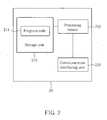
- Fig. 2 illustrates a schematic diagram of an exemplary communication device 20.
- the communication device 20 can be the mobile device 10 shown in Fig. 1 , but is not limited herein.
- the communication device 20 may include a processing means 200 such as a microprocessor or ASIC, a storage unit 210 and a communication interfacing unit 220.
- the storage unit 210 may be any data storage device that can store program code 214, for access by the processing means 200. Examples of the storage unit 210 include but are not limited to a subscriber identity module (SIM), read-only memory (ROM), random-access memory (RAM), CD-ROMs, magnetic tapes, hard disks, and optical data storage devices.
- SIM subscriber identity module
- ROM read-only memory
- RAM random-access memory
- CD-ROMs magnetic tapes
- hard disks hard disks
- optical data storage devices optical data storage devices.
- the communication interfacing unit 220 is preferably a radio transceiver and can exchange wireless signals with the network according to processing results of the processing
- the program code 214 includes a program code of a RRC layer which can activate measurement functionality according to measurement configurations received from the network.
- the RRC layer is used for performing RRC connection management, measurement control and reporting, and radio bearer (RB) control responsible for generating or releasing radio bearers (RBs).
- RB radio bearer
- the RRC layer includes a RRC_CONNECTED state capable of using the RBs, and a RRC_IDLE state incapable of using the RBs.
- the applicant takes measurement capability of the UE into consideration. Assume that a UE of the LTE-Advanced system supports two component carriers. If the UE receives data only on one of the component carriers, the UE shall be able to perform the inter-frequency/inter-RAT measurement without measurement gap assistance of the network. That is, the network does not necessarily configure the measurement gap to the UE for the inter-frequency/inter-RAT measurement. As a result, a basis for measurement gap configuration determination is required for the network in the LTE-Advanced system.
- the UE shall provide proper information to the network so that the network can know the usage status of the component carriers of the UE. Therefore, the network can correctly determine whether a measurement gap is required for the UE for the inter-frequency/inter-RAT measurement. Thus, how to transfer the information to the network is also provided herein.
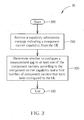
- Fig. 3 illustrates a flowchart of an exemplary process 30.
- the process 30 is utilized in the network for handling measurement capability of a UE capable of supporting a maximum number of component carriers in a wireless communication system, in order to provide a criterion for measurement gap configuration determination.
- the network may be an evolved Node-B (eNB) or a cell (e.g. any of the cells C1-Cn).
- eNB evolved Node-B
- C1-Cn any of the cells
- the network determines whether to configure the measurement gap to at least one of the component carriers according to the component carrier capability which may include the maximum number of the component carriers on which the UE receives data and according to the first number of component carriers that the network configures to the UE to receive data.
- the measurement gap configuration determination is described as follows. After the network receives the capability information message indicating the component carrier capability, the network compares the maximum number of the component carriers indicated by the component carrier capability and the first number of component carriers having been configured to receive data If the first number of component carriers that have been configured to receive data is equal to the maximum number of the indicated component carriers, the network configures the measurement gap to at least one of the component carriers. That is, the network configures the measurement gap(s) to at least one of the component carriers for the inter-frequency/inter-RAT measurement when the UE receives data with the maximum number of the component carriers. On the other hand, the network does not configure the measurement gap to any of the component carriers for the inter-frequency/inter-RAT measurement when the UE receives data on part of the component carriers. With such manner, the network can properly configure the measurement gap to each component carrier of the UE for the inter-frequency/inter-RAT measurement.
- the UE supports m component carriers CA(1)-CA(m), thereby capable of receiving data on the m component carriers CA(1)-CA(m).
- the network receives the capability information message indicating the component carrier capability including the number of "m” from the UE, and the network compares the "m" and the number of component carriers that has been configured to the UE to receive data. If the network has configured (m-1) component carriers CA(1)-CA(m-1) to receive data, the network does not configure the measurement gap to the UE for the inter-frequency/inter-RAT measurement. On the other hand, if the network has configured all the component carriers to the UE for receiving data, the network configures the measurement gap to at least one of the component carriers of the UE for inter-frequency/inter-RAT measurement.
- the network can send a measurement command to command the UE to perform the inter-frequency measurement/inter-RAT measurement on at least one of the component carriers. Therefore, when the UE is not configured to receive data with the maximum number of the component carriers, the UE can perform the inter-frequency measurement/inter-RAT measurement without measurement gap assistance of the network. For example, when the UE receives data on the component carriers CA(1)-CA(m-1), the network does not configure any measurement gap to the UE, but sends the measurement command to command the UE to perform the inter-frequency measurement/inter-RAT measurement on the component carrier CA(m) that is not in-use for data reception.
- the measurement command can command the UE to perform the inter-frequency measurement/inter-RAT measurement on any of the component carriers that are not configured to receive data. For example, if the UE is configured to receive data only on the component carrier CA(1), the network can command the UE to perform the inter-frequency measurement/inter-RAT measurement on any of the component carriers CA(2)-CA(m) via the measurement command.
- the network configures the measurement gap for the inter-frequency/inter-RAT measurement when a message indicating that all of the component carriers are configured to receive data is received from the UE. That is, the UE sends the message to the network to notify that the UE receives data with the maximum number of the component carriers, and thereby the network configures the measurement gap to at least one of the component carriers.
- the message may further indicate to the network that the measurement gap is required for the inter-frequency/inter-RAT measurement. Therefore, the network can timely configure the measurement gap for the inter-frequency/inter-RAT measurement.
- the measurement gap can be configured to ones of the component carriers.
- the component carriers that are configured with the measurement gap cannot perform data transmission/reception within the measurement gap, but only perform the inter-frequency/inter-RAT measurement.
- the un-configured component carriers can continue the data transmission/reception without measurement gap influence, thereby increasing usage efficiency of the component carriers of the UE.
- the UE supporting data reception on m component carriers receives data on all of the component carriers CA(1)-CA(m).
- the network requires the UE to perform the inter-frequency/inter-RAT measurement for a certain component carrier (e.g. a component carrier CA(m+1) shown in Fig.
- the network can configure the measurement gap only to a component carrier (e.g. the component carrier CA(1)). Therefore, the component carriers CA(2)-CA(m) are not affected by the measurement gap, and remains performing the data transmission/reception.
- a component carrier e.g. the component carrier CA(1)
- the network determines that the component carrier capability of the UE is changed, when reception of a multimedia broadcast multicast service (MBMS) message of the UE is activated on ones of the component carriers.
- the activated component carriers can be a dedicated component carrier only used for transmitting the MBMS message to the UE, or a mixed component carrier used for transmitting the MBMS message and unicast data to the UE. If the activated component carrier is the dedicated component carrier, the network determines that the maximum number of the component carriers that the UE is capable of using is changed. On the other hand, if the activated component carrier is the mixed component carrier, the network does not determine the maximum number of component carriers that the UE is capable of using is changed, and may configure the UE to remove the mixed component carrier for unicast data transmission.
- MBMS multimedia broadcast multicast service
- Fig. 4 illustrates a flowchart of an exemplary process 40.
- the process 40 is utilized in the UE capable of supporting a maximum number of component carriers for handling measurement capability.
- the process 40 can be compiled into the program code 214 and includes the following steps:
- the UE not only indicates the component carrier capability to the network, but also indicates the change of the component carrier capability to the network when the UE activates the MBMS reception on the dedicated component carrier(s).
- the UE in a RRC_CONNECTED state supports m component carriers CA(1)-CA(m).
- the network determines to configure the measurement gap to at least one of the component carriers CA(1)-CA(m) according to the component carrier capability and the number of the component carriers having been configured to the UE.
- the detailed description related to the measurement gap configuration determination can be referred from above, so it is not given herein.
- the UE performs the inter-frequency/inter-RAT measurement only using the measurement gap on the component carrier CA(1), thereby avoiding affecting other component carriers (e.g. the component carrier CA(2)-CA(m)) for data transmission/reception.
- the network configures the measurement gap to all of the component carriers CA(1)-CA(m)
- the UE performs the inter-frequency/inter-RAT measurement using the measurement gap on all of the component carriers CA(1)-CA(m).
- the UE indicates to the network that the component carrier capability is changed when the UE activates MBMS reception on the dedicated component carrier(s).
- the UE indicates to the network that the component carrier capability is (m-1) when the UE having one dedicated component carrier activates MBMS reception on the component carrier, indicates to the network that the component carrier capability is (m-2) when the UE having two dedicated component carriers activates MBMS reception on both the dedicated component carriers, and so on.
- the network can clearly know the latest component carrier capability of the UE, and determines whether to configure the measurement gap for the inter-frequency/inter-RAT measurement according to the latest component carrier capability; thereby making measurement gap configuration correctly reflecting the component carrier usage of the UE.
- the UE may further indicate to the network frequency information of the dedicated component carrier(s) on which the UE receives the MBMS message from the network.
- the UE may indicate to the network carrier information of the component carrier(s) on which the UE receives the MBMS message from the network.
- the carrier information may include frequency information of the component carrier(s) on which the UE receives the MBMS message, and type information indicating whether the component carrier(s) on which the UE receives the MBMS message is the dedicated component carrier or the mixed component carrier.
- Fig. 5 illustrates a flowchart of an exemplary process 50.
- the process 50 is utilized in the UE capable of supporting a maximum number of component carriers for handling measurement capability.
- the process 50 can be compiled into the program code 214 and includes the following steps:
- the UE performs the inter-frequency/inter-RAT measurement according to the measurement command received from the network without measurement gap configured to any of the component carriers when not all of the component carriers are in-use for data reception.
- the network when the UE receives data on the component carriers CA(1)-CA(m-1), the network does not configure any measurement gap to the UE.
- the network can send the measurement command to command the UE to perform the inter-frequency/inter-RAT measurement on the component carrier CA(m).
- the UE can perform the inter-frequency/inter-RAT measurement when the UE does not receive data on all of the component carriers CA(1)-CA(m).
- the measurement command can command the UE to perform the inter-frequency/inter-RAT measurement on any of the component carrier(s) that is/are not configured to receive data.
- the detailed description can be referred from above, so it is not given herein.
- the UE when the UE does not receive data with the maximum number of the component carriers, the UE can perform the inter-frequency/inter-RAT measurement without measurement gap assistance of the network.
- Fig. 6 illustrates a flowchart of an exemplary process 60.
- the process 60 is utilized in the UE capable of supporting a maximum number of component carriers for handling measurement capability.
- the process 60 can be compiled into the program code 214 and includes the following steps:
- the UE when the UE receives data with the maximum number of the component carriers, the UE sends the message to the network for notifying that the UE receives data with the maximum number of the component carriers.
- the UE receives data on all of the component carriers CA(1)-CA(m), and then sends the message to notify the network that the UE receives data on all of the component carriers CA(1)-CA(m).
- the message indicates to the network that the measurement gap is required for the inter-frequency/inter-RAT measurement. Therefore, the network configures the measurement gap for the inter-frequency/inter-RAT measurement according to the notification message.
- the network can configure the measurement gap to part or all of the component carriers. The detailed description can be referred from above, so it is not given herein.
- Fig. 7 illustrates a flowchart of an exemplary process 70.
- the process 70 is utilized in the UE capable of supporting a maximum number of component carriers for handling measurement capability.
- the process 70 can be compiled into the program code 214 and includes the following steps:
- the UE when the UE in the RRC_IDLE state receives the MBMS message on any of the component carriers, the UE excludes capability of the component carrier(s) from the component carrier capability after entering the RRC_ CONNECTED.
- the UE After the UE enters the RRC_ CONNECTED state from the RRC_IDLE state, the UE sends the capability information message indicating to the network the component carrier capability which does not include the capability of component carrier(s) transmitting the MBMS message. That is, the UE takes a change of the component carrier capability in the RRC_ IDLE state into consideration when reporting to the network the component carrier capability in the RRC_ CONNECTED state. Therefore, the network can acquire a reliable component carrier capability for the measurement gap configuration determination.
- the UE in the RRC_IDLE state receives the MBMS message on the component carriers CA(1)-CA(5).
- the UE sends the capability information message indicating the number of component carriers the UE supports is m-5 to the network. Accordingly, the network makes a determination of the measurement gap configuration according to the component carrier capability excluding the capability of the component carriers CA(1)-CA(5).
- the capability information message may further indicate frequency information of the component carrier(s) transmitting the MBMS message.
- the component carrier(s) transmitting the MBMS message may be a dedicated component carrier.
- the abovementioned steps of the processes including suggested steps can be realized by means that could be hardware, firmware known as a combination of a hardware device and computer instructions and data that reside as read-only software on the hardware device, or an electronic system.
- hardware can include analog, digital and mixed circuits known as microcircuit, microchip, or silicon chip.
- the electronic system can include system on chip (SOC), system in package (Sip), computer on module (COM), and the communication device 20.
- SOC system on chip
- Sip system in package
- COM computer on module
- the exemplary examples and means are provided for handling the measurement capability of the UE supporting data transfer of multiple connections (e.g. multiple component carriers or COMP ), so as to make a correct determination of measurement gap configuration to the UE, thereby avoiding affecting schedule of the component carrier(s) of the UE.
- multiple connections e.g. multiple component carriers or COMP
Landscapes
- Engineering & Computer Science (AREA)
- Computer Networks & Wireless Communication (AREA)
- Signal Processing (AREA)
- Multimedia (AREA)
- Mobile Radio Communication Systems (AREA)
Abstract
Description
- The application relates to a method and apparatus for handling measurement capability in a wireless communication system.
- A long-term evolution (LTE) system, initiated by the third generation partnership project (3GPP), is now being regarded as a new radio interface and radio network architecture that provides a high data rate, low latency, packet optimization, and improved system capacity and coverage. In the LTE system, an evolved universal terrestrial radio access network (E-UTRAN) includes a plurality of evolved Node-Bs (eNBs) and communicates with a plurality of mobile stations, also referred as user equipments (UEs).
- In the LTE system, a user equipment (UE) may perform measurement to measure communication quality, such as quality of a frequency layer or strength of a radio signal, which is controlled by the E-UTRAN, due to mobility of the UE. Measurement can be divided into two types according to the current operating frequency of the UE, which are an intra-frequency measurement and an inter-frequency/inter-RAT measurement. The intra-frequency measurement is predominantly performed for the mobility within the same frequency layer (i.e. between cells with the same carrier frequency), whereas the inter-frequency/inter-RAT measurement is predominantly performed for the mobility between different frequency layers (i.e. between cells with a different carrier frequency). In addition, the inter-frequency/inter-RAT measurement is performed during uplink/downlink idle periods, such as a measurement gap configured by the network. During the measurement gap, both the uplink and downlink transmissions are prohibited, and thereby the inter-frequency/inter-RAT measurement can be performed within the measurement gap.
- Toward advanced high-speed wireless communication system, such as transmitting data in a higher peak data rate, LTE-Advanced system is standardized by the 3rd Generation Partnership Project (3GPP) as an enhancement of LTE system. LTE-Advanced system targets faster switching between power states, improves performance at the cell edge, and includes subjects, such as bandwidth extension, coordinated multipoint transmission/reception (COMP), uplink multiple input multiple output (MIMO), etc.
- For bandwidth extension, carrier aggregation is introduced to the LTE-Advanced system for extension to wider bandwidth, where two or more component carriers are aggregated, for supporting wider transmission bandwidths (for example up to 1 00MHz) and for spectrum aggregation. According to carrier aggregation capability, multiple component carriers are aggregated into overall wider bandwidth, where the UE can establish multiple links corresponding to the multiple component carriers for simultaneously receiving and/or transmitting.
- In addition, COMP is considered for LTE-Advanced as a tool to improve coverage of high data rates, cell edge throughput, and system efficiency, which implies dynamic coordination among multiple geographical separated points. That is, when an UE is in a cell-edge region, the UE is able to receive signal from multiple cells, and the multiple cells can receive transmission of the UE.
- However, in the LTE system, measurement functionality is defined for the UE supporting a single component carrier. The network always configures a measurement gap to the UE for the inter-frequency/inter-RAT measurement. For the UE operated in the LTE-Advanced system, the measurement functionality is not clear defined for the UE supporting multiple component carriers. Improper configuration of the measurement gap may cause packet scheduling problems. Since data transmission/reception cannot be performed during the measurement gap, transmission/reception performance of the UE is downgraded.
- In addition, consider a scenario related to multimedia broadcast multicast service (MBMS). The MBMS gives the opportunity to broadcast or multicast TV, film, information such as free overnight transmission of newspaper in digital form and other media in these networks. Since the MBMS is a broadcast or multicast service, the network is unable to know which one of the UEs receives the MBMS data when the MBMS is provided by the network. This causes difficulty in measurement gap configuration for the network.
- This in mind, the application aims at providing a method and apparatus for handling measurement capability in a wireless communication system, so as to solve the abovementioned problems.
- This is achieved by a method and apparatus for handling measurement capability for a wireless communication system according to
claims - As will be seen more clearly from the detailed description following below, the claimed method for handling measurement capability for a network in a wireless communication system including a mobile device capable of communicating with the network through a maximum number of component carriers comprises receiving a capability information message indicating a component carrier capability, from the mobile device, and determining whether to configure a measurement gap to at least one of the component carriers, according to the component carrier capability and a first number of component carriers that have been configured to the mobile device.
- In the following, the invention is further illustrated by way of example, taking reference to the accompanying drawings. Thereof
-
Fig. 1 is a schematic diagram of a wireless communication system, -
Fig. 2 is a schematic diagram of an exemplary communication device according to the present disclosure, and -
Figs. 3-7 are flowcharts of exemplary processes according to the present disclosure. - Please refer to
Fig. 1 , which illustrates a schematic diagram of a wireless communication system featuring multiple connections between amobile device 10 and cells C1-Cn. The wireless communication system may be a LTE-Advanced system. Themobile device 10 can operate with carrier aggregation and COMP. InFig. 1 , themobile device 10 communicates with the cells C1-Cn through radio links L1-Lm that correspond to component carriers CA(1)-CA(m) configured in themobile device 10 respectively. Each of the component carriers CA(1)-CA(m) corresponds to a radio frequency (RF) channel whose bandwidth may be varied according to different communication systems. In addition, themobile device 10 is referred as a user equipment (UE) or a mobile station (MS), and can be a device such as a mobile phone, a computer system, etc. Themobile device 10 may perform inter-frequency measurement for measuring signal strength of a component carrier which has different carrier frequency from frequencies of the component carriers CA(1)-CA(m), or perform inter-RAT measurement for measuring a component carrier CA(m+1) except the component carriers CA(1)-CA(m). -
Fig. 2 illustrates a schematic diagram of anexemplary communication device 20. Thecommunication device 20 can be themobile device 10 shown inFig. 1 , but is not limited herein. Thecommunication device 20 may include a processing means 200 such as a microprocessor or ASIC, astorage unit 210 and acommunication interfacing unit 220. Thestorage unit 210 may be any data storage device that can storeprogram code 214, for access by the processing means 200. Examples of thestorage unit 210 include but are not limited to a subscriber identity module (SIM), read-only memory (ROM), random-access memory (RAM), CD-ROMs, magnetic tapes, hard disks, and optical data storage devices. Thecommunication interfacing unit 220 is preferably a radio transceiver and can exchange wireless signals with the network according to processing results of the processing means 200. - The
program code 214 includes a program code of a RRC layer which can activate measurement functionality according to measurement configurations received from the network. The RRC layer is used for performing RRC connection management, measurement control and reporting, and radio bearer (RB) control responsible for generating or releasing radio bearers (RBs).
In addition, the RRC layer includes a RRC_CONNECTED state capable of using the RBs, and a RRC_IDLE state incapable of using the RBs. - For measurement mechanism in the LTE-Advanced system, the applicant takes measurement capability of the UE into consideration. Assume that a UE of the LTE-Advanced system supports two component carriers. If the UE receives data only on one of the component carriers, the UE shall be able to perform the inter-frequency/inter-RAT measurement without measurement gap assistance of the network. That is, the network does not necessarily configure the measurement gap to the UE for the inter-frequency/inter-RAT measurement. As a result, a basis for measurement gap configuration determination is required for the network in the LTE-Advanced system.
- In addition, the UE shall provide proper information to the network so that the network can know the usage status of the component carriers of the UE. Therefore, the network can correctly determine whether a measurement gap is required for the UE for the inter-frequency/inter-RAT measurement. Thus, how to transfer the information to the network is also provided herein.
- Please refer to
Fig. 3 , which illustrates a flowchart of anexemplary process 30. Theprocess 30 is utilized in the network for handling measurement capability of a UE capable of supporting a maximum number of component carriers in a wireless communication system, in order to provide a criterion for measurement gap configuration determination. The network may be an evolved Node-B (eNB) or a cell (e.g. any of the cells C1-Cn). Theprocess 30 can be compiled into theprogram code 214 and includes the following steps: - Step 300:
- Start.
- Step 310:
- Receive a capability information message indicating a component carrier capability, from the UE.
- Step 320:
- Determine whether to configure a measurement gap to at least one of the component carriers, according to the component carrier capability and a first number of component carriers that have been configured to the UE.
- Step 330:
- End.
- According to the
process 30, the network determines whether to configure the measurement gap to at least one of the component carriers according to the component carrier capability which may include the maximum number of the component carriers on which the UE receives data and according to the first number of component carriers that the network configures to the UE to receive data. - The measurement gap configuration determination is described as follows. After the network receives the capability information message indicating the component carrier capability, the network compares the maximum number of the component carriers indicated by the component carrier capability and the first number of component carriers having been configured to receive data If the first number of component carriers that have been configured to receive data is equal to the maximum number of the indicated component carriers, the network configures the measurement gap to at least one of the component carriers. That is, the network configures the measurement gap(s) to at least one of the component carriers for the inter-frequency/inter-RAT measurement when the UE receives data with the maximum number of the component carriers. On the other hand, the network does not configure the measurement gap to any of the component carriers for the inter-frequency/inter-RAT measurement when the UE receives data on part of the component carriers. With such manner, the network can properly configure the measurement gap to each component carrier of the UE for the inter-frequency/inter-RAT measurement.
- Referring back to
Fig. 1 , take an example based on the concept of theprocess 30. As shown inFig. 1 , the UE supports m component carriers CA(1)-CA(m), thereby capable of receiving data on the m component carriers CA(1)-CA(m). The network receives the capability information message indicating the component carrier capability including the number of "m" from the UE, and the network compares the "m" and the number of component carriers that has been configured to the UE to receive data. If the network has configured (m-1) component carriers CA(1)-CA(m-1) to receive data, the network does not configure the measurement gap to the UE for the inter-frequency/inter-RAT measurement. On the other hand, if the network has configured all the component carriers to the UE for receiving data, the network configures the measurement gap to at least one of the component carriers of the UE for inter-frequency/inter-RAT measurement. - In addition, when no measurement gap is configured to the UE, the network can send a measurement command to command the UE to perform the inter-frequency measurement/inter-RAT measurement on at least one of the component carriers. Therefore, when the UE is not configured to receive data with the maximum number of the component carriers, the UE can perform the inter-frequency measurement/inter-RAT measurement without measurement gap assistance of the network. For example, when the UE receives data on the component carriers CA(1)-CA(m-1), the network does not configure any measurement gap to the UE, but sends the measurement command to command the UE to perform the inter-frequency measurement/inter-RAT measurement on the component carrier CA(m) that is not in-use for data reception. Please note that, the measurement command can command the UE to perform the inter-frequency measurement/inter-RAT measurement on any of the component carriers that are not configured to receive data. For example, if the UE is configured to receive data only on the component carrier CA(1), the network can command the UE to perform the inter-frequency measurement/inter-RAT measurement on any of the component carriers CA(2)-CA(m) via the measurement command.
- Alternatively, the network configures the measurement gap for the inter-frequency/inter-RAT measurement when a message indicating that all of the component carriers are configured to receive data is received from the UE. That is, the UE sends the message to the network to notify that the UE receives data with the maximum number of the component carriers, and thereby the network configures the measurement gap to at least one of the component carriers. In addition, the message may further indicate to the network that the measurement gap is required for the inter-frequency/inter-RAT measurement. Therefore, the network can timely configure the measurement gap for the inter-frequency/inter-RAT measurement.
- As the above mentioned, the measurement gap can be configured to ones of the component carriers. The component carriers that are configured with the measurement gap cannot perform data transmission/reception within the measurement gap, but only perform the inter-frequency/inter-RAT measurement. On the other hand, the un-configured component carriers can continue the data transmission/reception without measurement gap influence, thereby increasing usage efficiency of the component carriers of the UE. For example, the UE supporting data reception on m component carriers receives data on all of the component carriers CA(1)-CA(m). When the network requires the UE to perform the inter-frequency/inter-RAT measurement for a certain component carrier (e.g. a component carrier CA(m+1) shown in
Fig. 1 ), which is not belonging to the component carriers CA(1)-CA(m), the network can configure the measurement gap only to a component carrier (e.g. the component carrier CA(1)). Therefore, the component carriers CA(2)-CA(m) are not affected by the measurement gap, and remains performing the data transmission/reception. - In addition, the network determines that the component carrier capability of the UE is changed, when reception of a multimedia broadcast multicast service (MBMS) message of the UE is activated on ones of the component carriers. The activated component carriers can be a dedicated component carrier only used for transmitting the MBMS message to the UE, or a mixed component carrier used for transmitting the MBMS message and unicast data to the UE. If the activated component carrier is the dedicated component carrier, the network determines that the maximum number of the component carriers that the UE is capable of using is changed. On the other hand, if the activated component carrier is the mixed component carrier, the network does not determine the maximum number of component carriers that the UE is capable of using is changed, and may configure the UE to remove the mixed component carrier for unicast data transmission.
- For clearly understanding the MBMS message reception activation, please refer to
Fig. 4 , which illustrates a flowchart of anexemplary process 40. Theprocess 40 is utilized in the UE capable of supporting a maximum number of component carriers for handling measurement capability. Theprocess 40 can be compiled into theprogram code 214 and includes the following steps: - Step 400:
- Start.
- Step 410:
- Send a capability information message indicating a component carrier capability to the network.
- Step 420:
- Indicate to the network that the component carrier capability is changed, when one of the component carriers is dedicated to MBMS transmission.
- Step 430:
- End.
- According to the
process 40, the UE not only indicates the component carrier capability to the network, but also indicates the change of the component carrier capability to the network when the UE activates the MBMS reception on the dedicated component carrier(s). - Take an example associated with
Fig. 1 . The UE in a RRC_CONNECTED state supports m component carriers CA(1)-CA(m). When the UE sends the capability information message indicating the component carrier capability (e.g. the total number of the component carriers CA(1)-CA(m)), the network determines to configure the measurement gap to at least one of the component carriers CA(1)-CA(m) according to the component carrier capability and the number of the component carriers having been configured to the UE. The detailed description related to the measurement gap configuration determination can be referred from above, so it is not given herein. If the network configures the measurement gap to part of the component carriers, such as the component carrier CA(1), the UE performs the inter-frequency/inter-RAT measurement only using the measurement gap on the component carrier CA(1), thereby avoiding affecting other component carriers (e.g. the component carrier CA(2)-CA(m)) for data transmission/reception. On the other hand, if the network configures the measurement gap to all of the component carriers CA(1)-CA(m), the UE performs the inter-frequency/inter-RAT measurement using the measurement gap on all of the component carriers CA(1)-CA(m). In addition, the UE indicates to the network that the component carrier capability is changed when the UE activates MBMS reception on the dedicated component carrier(s). In addition, the UE indicates to the network that the component carrier capability is (m-1) when the UE having one dedicated component carrier activates MBMS reception on the component carrier, indicates to the network that the component carrier capability is (m-2) when the UE having two dedicated component carriers activates MBMS reception on both the dedicated component carriers, and so on. Thus, the network can clearly know the latest component carrier capability of the UE, and determines whether to configure the measurement gap for the inter-frequency/inter-RAT measurement according to the latest component carrier capability; thereby making measurement gap configuration correctly reflecting the component carrier usage of the UE. - Moreover, the UE may further indicate to the network frequency information of the dedicated component carrier(s) on which the UE receives the MBMS message from the network. Alternatively, the UE may indicate to the network carrier information of the component carrier(s) on which the UE receives the MBMS message from the network. Please note that, the carrier information may include frequency information of the component carrier(s) on which the UE receives the MBMS message, and type information indicating whether the component carrier(s) on which the UE receives the MBMS message is the dedicated component carrier or the mixed component carrier.
- Please refer to
Fig. 5 , which illustrates a flowchart of anexemplary process 50. Theprocess 50 is utilized in the UE capable of supporting a maximum number of component carriers for handling measurement capability. Theprocess 50 can be compiled into theprogram code 214 and includes the following steps: - Step 500:
- Start.
- Step 510:
- Receive a measurement command from the network.
- Step 520:
- Perform an inter-frequency measurement or the inter-RAT measurement according to the measurement command when the UE does not receive data with the maximum number of the component carriers.
- Step 530:
- End.
- According to the
process 50, the UE performs the inter-frequency/inter-RAT measurement according to the measurement command received from the network without measurement gap configured to any of the component carriers when not all of the component carriers are in-use for data reception. - Take an example associated with
Fig. 1 . As the above mentioned, when the UE receives data on the component carriers CA(1)-CA(m-1), the network does not configure any measurement gap to the UE. In addition, the network can send the measurement command to command the UE to perform the inter-frequency/inter-RAT measurement on the component carrier CA(m). In other words, the UE can perform the inter-frequency/inter-RAT measurement when the UE does not receive data on all of the component carriers CA(1)-CA(m). Please note that, the measurement command can command the UE to perform the inter-frequency/inter-RAT measurement on any of the component carrier(s) that is/are not configured to receive data. The detailed description can be referred from above, so it is not given herein. - Based on the concept of the
process 50, when the UE does not receive data with the maximum number of the component carriers, the UE can perform the inter-frequency/inter-RAT measurement without measurement gap assistance of the network. - Please refer to
Fig. 6 , which illustrates a flowchart of anexemplary process 60. Theprocess 60 is utilized in the UE capable of supporting a maximum number of component carriers for handling measurement capability. Theprocess 60 can be compiled into theprogram code 214 and includes the following steps: - Step 600:
- Start.
- Step 610:
- Receive data with the maximum number of component carriers.
- Step 620:
- Send a message to notify the network that the UE receives the data with the maximum number of the component carriers, wherein the message further indicates to the network that a measurement gap is required for an inter-frequency measurement or an inter-RAT measurement.
- Step 630:
- Perform the inter-frequency measurement or the inter-RAT measurement on one of the component carriers when the network configures the measurement gap to the component carrier.
- Step 640:
- End.
- According to the
process 60, when the UE receives data with the maximum number of the component carriers, the UE sends the message to the network for notifying that the UE receives data with the maximum number of the component carriers. - For example, the UE receives data on all of the component carriers CA(1)-CA(m), and then sends the message to notify the network that the UE receives data on all of the component carriers CA(1)-CA(m). In other words, the message indicates to the network that the measurement gap is required for the inter-frequency/inter-RAT measurement. Therefore, the network configures the measurement gap for the inter-frequency/inter-RAT measurement according to the notification message. Please note that, the network can configure the measurement gap to part or all of the component carriers. The detailed description can be referred from above, so it is not given herein.
- Please refer to
Fig. 7 , which illustrates a flowchart of anexemplary process 70. Theprocess 70 is utilized in the UE capable of supporting a maximum number of component carriers for handling measurement capability. Theprocess 70 can be compiled into theprogram code 214 and includes the following steps: - Step 700:
- Start.
- Step 710:
- Receive a MBMS message on one of the component carriers in a RRC_ IDLE state, from the network.
- Step 720:
- Send a capability information message indicating a component carrier capability to the network when the UE enters a RRC_CONNECTED state from the RRC_ IDLE state, wherein the component carrier capability excludes capability of the component carrier transmitting the MBMS message.
- Step 730:
- End.
- According to the
process 70, when the UE in the RRC_IDLE state receives the MBMS message on any of the component carriers, the UE excludes capability of the component carrier(s) from the component carrier capability after entering the RRC_ CONNECTED. In other words, After the UE enters the RRC_ CONNECTED state from the RRC_IDLE state, the UE sends the capability information message indicating to the network the component carrier capability which does not include the capability of component carrier(s) transmitting the MBMS message. That is, the UE takes a change of the component carrier capability in the RRC_ IDLE state into consideration when reporting to the network the component carrier capability in the RRC_ CONNECTED state. Therefore, the network can acquire a reliable component carrier capability for the measurement gap configuration determination. - For example, the UE in the RRC_IDLE state receives the MBMS message on the component carriers CA(1)-CA(5). When the UE enters the RRC_ CONNECTED state, the UE sends the capability information message indicating the number of component carriers the UE supports is m-5 to the network. Accordingly, the network makes a determination of the measurement gap configuration according to the component carrier capability excluding the capability of the component carriers CA(1)-CA(5).
- The capability information message may further indicate frequency information of the component carrier(s) transmitting the MBMS message. In addition, the component carrier(s) transmitting the MBMS message may be a dedicated component carrier.
- Please note that, the abovementioned steps of the processes including suggested steps can be realized by means that could be hardware, firmware known as a combination of a hardware device and computer instructions and data that reside as read-only software on the hardware device, or an electronic system. Examples of hardware can include analog, digital and mixed circuits known as microcircuit, microchip, or silicon chip. Examples of the electronic system can include system on chip (SOC), system in package (Sip), computer on module (COM), and the
communication device 20. - In conclusion, the exemplary examples and means are provided for handling the measurement capability of the UE supporting data transfer of multiple connections (e.g. multiple component carriers or COMP ), so as to make a correct determination of measurement gap configuration to the UE, thereby avoiding affecting schedule of the component carrier(s) of the UE.
Claims (20)
- A method of handling measurement capability for a network in a wireless communication system comprising a mobile device (10) capable of communicating with the network through a maximum number of component carriers, characterized by the method comprising:receiving a capability information message indicating a component carrier capability, from the mobile device (310); anddetermining whether to configure a measurement gap to at least one of the component carriers, according to the component carrier capability and a first number of component carriers that have been configured to the mobile device (320).
- A network of a wireless communication system comprising a mobile device (10) for handling measurement capability, the mobile device (10) capable of communicating with the network through a maximum number of component carriers, characterized by the network comprising:means for receiving a capability information message indicating a component carrier capability, from the mobile device (310); andmeans for determining whether to configure a measurement gap to at least one of the component carriers, according to the component carrier capability and a first number of component carriers that have been configured to the mobile device (320).
- The method of claim 1 or the network of claim 2, wherein the component carrier capability comprises the maximum number of the component carriers.
- The method of claim 3 further comprising:determining that a change of the component carrier capability occurs, when transmission of a multimedia broadcast multicast service (MBMS) message is activated on one of the component carriers and the component carrier for the transmission of the MBMS message is a component carrier only dedicated to the transmission of the MBMS message, or the network of claim 3 further comprising:means for determining that a change of the component carrier capability occurs, when reception of a multimedia broadcast multicast service (MBMS) message is activated on one of the component carriers and the component carrier for the reception of the MBMS message is a component carrier only dedicated to the reception of the MBMS message.
- The method of claim 3, wherein determining whether to configure a measurement gap to at least one of the component carriers according to the component carrier capability and the first number of component carriers that have been configured to the mobile device comprises:configuring the measurement gap to at least one of the component carriers when the first number of component carriers that have been configured to the mobile device is equal to the maximum number of component carriers included in the component carrier capability, or the network of claim 3 further comprising:means for configuring the measurement gap to at least one of the plurality of component carriers when the number of component carriers that have been configured to the mobile device is equal to the number of the plurality of component carriers included in the component carrier capability.
- The method of claim 3 further comprising:configuring the measurement gap to at least one of the component carriers when a message notifying that the mobile device receives data with the maximum number of component carriers is received from the mobile device or the network of claim 3 further comprising:means for configuring the measurement gap to at least one of the component carriers when a message notifying that the mobile device receives data with the maximum number of the component carriers is received from the mobile device.
- The method of claim 1 further comprising:sending a measurement command to command the mobile device to perform an inter-frequency measurement or an inter-RAT measurement when no measurement gap has been configured to the mobile device, or the network of claim 2 further comprising:means for sending a measurement command to command the mobile device to perform an inter-frequency measurement or an inter-RAT measurement when no measurement gap has been configured to the mobile device.
- A method of handling measurement capability for a mobile device capable of communicating with a network through a maximum number of component carriers in a wireless communication system, the mobile device having a radio resource control connection with the network, characterized by the method comprising:sending a capability information message indicating a component carrier capability of the mobile device to the network (410); andindicating to the network that the component carrier capability is changed, when one of the component carriers is dedicated to multimedia broadcast multicast service (MBMS) transmission (420).
- A communication device (20) of a wireless communication system comprising a network for handling measurement capability, the communication device capable of communicating with the network through a maximum number of component carriers, characterized by the communication device (20) comprising:means for sending a capability information message indicating a component carrier capability of the communication device to the network (410); andmeans for indicating to the network that the component carrier capability is changed, when one of the component carriers is dedicated to multimedia broadcast multicast service (MBMS) transmission (420).
- The method of claim 8 or the communication device of claims 9, wherein the component carrier capability is the maximum number of the component carriers.
- The method of claim 10, wherein indicating to the network that the component carrier capability is changed when the component carrier is dedicated to the MBMS transmission comprises indicating to the network that the maximum number of the component carriers is decreased by one when the component carrier is dedicated to the MBMS transmission, or the communication device (20) of claim 10, wherein the means for indicating to the network that the component carrier capability is changed when the component carrier is dedicated to the MBMS reception comprises means for indicating to the network that the maximum number of the component carriers is decreased by one when the component carrier is.dedicated to the MBMS transmission.
- The method of claim 8 further comprising:indicating frequency information of the component carrier dedicated to the MBMS transmission to the network; andindicating carrier information of one of the component carriers to the network, when MBMS message is transmitted on the component carrier, wherein the carrier information includes at least one of frequency information and type information indicating whether the component carrier is a component carrier dedicated to the MBMS transmission or capable of transmitting MBMS message and unicast data, or the communication device (20) of claim 9 further comprising:means for indicating frequency information of the component carrier dedicated to the MBMS transmission to the network; andmeans for indicating carrier information of one of the component carriers to the network, when MBMS message is received on the component carrier, wherein the carrier information includes at least one of frequency information and type information indicating whether the component carrier is a component carrier dedicated to the MBMS transmission or capable of transmitting MBMS message and unicast data.
- The method of claim 8 further comprising:performing an inter-frequency measurement or an inter-RAT measurement on one of the component carriers when a measurement gap is configured to the component carrier by the network; orperforming the inter-frequency measurement or the inter-RAT measurement on all of the component carriers when the measurement gap is configured to all of the component carriers by the network, or the communication device (20) of claim 9 further comprising:means for performing an inter-frequency measurement or an inter-RAT measurement on one of the component carriers when a measurement gap is configured to the component carrier by the network; ormeans for performing the inter-frequency measurement or the inter-RAT measurement on all of the component carriers when the measurement gap is configured to all of the component carriers by the network.
- A method of handling measurement capability for a mobile device capable of communicating with a network through a maximum number of component carriers in a wireless communication system, characterized by the method comprising:receiving a measurement command from the network (510); andperforming an inter-frequency measurement or the inter-RAT measurement according to the measurement command when the mobile device does not receive data with the maximum number of the component carriers (520).
- A communication device (20) of a wireless communication system comprising a network for handling measurement capability, the communication device capable of communicating with a network through a maximum number of component carriers, characterized by the communication device (20) comprising:means for receiving a measurement command from the network (510); andmeans for performing an inter-frequency measurement or the inter-RAT measurement according to the measurement command when the communication device does not receive data with the maximum number of the component carriers (520).
- A method of handling measurement capability for a mobile device capable of communicating with a network through a maximum number of component carriers in a wireless communication system, characterized by the method comprising:receiving data with the maximum number of the component carriers (610);sending a message to notify the network that the mobile device receives the data with the maximum number of the component carriers, wherein the message further indicates to the network that a measurement gap is required for an inter-frequency measurement or an inter-RAT measurement (620); andperforming the inter-frequency measurement or the inter-RAT measurement on one of the component carriers when the network configures the measurement gap to the component carrier (630).
- A communication device (20) of a wireless communication system comprising a network for handling measurement capability, the communication device capable of communicating with the network through a maximum number of component carriers, characterized by the communication device (20) comprising:means for receiving data with the maximum number of the component carriers (610);means for sending a message to notify the network that the communication device receives the data with the maximum number of the component carriers, wherein the message further indicates to the network that a measurement gap is required for an inter-frequency measurement or an inter-RAT measurement (620); andmeans for performing the inter-frequency measurement or the inter-RAT measurement on one of the component carriers when the network configures the measurement gap to the component carrier (630).
- A method of handling measurement capability for a mobile device capable of communicating with a network through a maximum number of component carriers in a wireless communication system, characterized by the method comprising:receiving a multimedia broadcast multicast service (MBMS) message on one of the component carriers in an radio resource control idle state, from the network of the wireless communication system (710); andsending a capability information message indicating a component carrier capability to the network when the mobile device establishes a radio resource control connection with the network and enters a radio resource control connected state from the radio resource control idle state;wherein the component carrier capability excludes capability of the component carrier transmitting the MBMS message (720).
- A communication device (20) of a wireless communication system comprising a network for handling measurement capability, the communication device capable of communicating with the network through a maximum number of component carriers, characterized by the communication device (20) comprising:means for receiving a multimedia broadcast multicast service (MBMS) message on one of the component carriers in an radio resource control idle state, from the network of the wireless communication system (710); andmeans for sending a capability information message indicating a component carrier capability to the network when the communication device establishes a radio resource control connection with the network and enters a radio resource control connected state from the radio resource control idle state;wherein the component carrier capability excludes capability of the component carrier transmitting the MBMS message (720).
- The method of claim 18 or the communication device of 19, wherein the capability information message further indicates frequency information of the component carrier to the network.
Priority Applications (3)
| Application Number | Priority Date | Filing Date | Title |
|---|---|---|---|
| EP12005644.5A EP2528378B1 (en) | 2009-04-15 | 2010-04-15 | Method and system for handling measurement capability |
| EP15159475.1A EP2903326B1 (en) | 2009-04-15 | 2010-04-15 | Method of handling measurement capability and related communication device |
| EP12005645.2A EP2528379B1 (en) | 2009-04-15 | 2010-04-15 | Method for handling measurement capability and related communication device |
Applications Claiming Priority (1)
| Application Number | Priority Date | Filing Date | Title |
|---|---|---|---|
| US16931909P | 2009-04-15 | 2009-04-15 |
Related Child Applications (3)
| Application Number | Title | Priority Date | Filing Date |
|---|---|---|---|
| EP12005644.5A Division EP2528378B1 (en) | 2009-04-15 | 2010-04-15 | Method and system for handling measurement capability |
| EP12005645.2A Division EP2528379B1 (en) | 2009-04-15 | 2010-04-15 | Method for handling measurement capability and related communication device |
| EP15159475.1A Division EP2903326B1 (en) | 2009-04-15 | 2010-04-15 | Method of handling measurement capability and related communication device |
Publications (2)
| Publication Number | Publication Date |
|---|---|
| EP2242300A1 true EP2242300A1 (en) | 2010-10-20 |
| EP2242300B1 EP2242300B1 (en) | 2012-08-22 |
Family
ID=42307800
Family Applications (4)
| Application Number | Title | Priority Date | Filing Date |
|---|---|---|---|
| EP15159475.1A Active EP2903326B1 (en) | 2009-04-15 | 2010-04-15 | Method of handling measurement capability and related communication device |
| EP12005645.2A Active EP2528379B1 (en) | 2009-04-15 | 2010-04-15 | Method for handling measurement capability and related communication device |
| EP12005644.5A Active EP2528378B1 (en) | 2009-04-15 | 2010-04-15 | Method and system for handling measurement capability |
| EP10004009A Active EP2242300B1 (en) | 2009-04-15 | 2010-04-15 | Method of handling measurement capability and related communication network |
Family Applications Before (3)
| Application Number | Title | Priority Date | Filing Date |
|---|---|---|---|
| EP15159475.1A Active EP2903326B1 (en) | 2009-04-15 | 2010-04-15 | Method of handling measurement capability and related communication device |
| EP12005645.2A Active EP2528379B1 (en) | 2009-04-15 | 2010-04-15 | Method for handling measurement capability and related communication device |
| EP12005644.5A Active EP2528378B1 (en) | 2009-04-15 | 2010-04-15 | Method and system for handling measurement capability |
Country Status (4)
| Country | Link |
|---|---|
| US (3) | US8787921B2 (en) |
| EP (4) | EP2903326B1 (en) |
| CN (1) | CN101867878B (en) |
| TW (1) | TWI419580B (en) |
Cited By (20)
| Publication number | Priority date | Publication date | Assignee | Title |
|---|---|---|---|---|
| EP2276275A1 (en) * | 2009-07-17 | 2011-01-19 | HTC Corporation | Method of handling multimedia broadcast multicast service data reception on multiple component carriers |
| WO2011041662A1 (en) * | 2009-10-01 | 2011-04-07 | Interdigital Patent Holdings, Inc. | Method and apparatus for performing inter-frequency and/or inter-radio access technology (rat) measurements in a multi-receiver wireless transmit/receive unit (wtru) |
| WO2012064262A1 (en) * | 2010-11-09 | 2012-05-18 | Telefonaktiebolaget L M Ericsson (Publ) | Method and devices for configuring measurement gap pattern in a communication system |
| WO2012064780A1 (en) * | 2010-11-08 | 2012-05-18 | Qualcomm Incorporated | Inter-frequency measurement control in a multi-carrier system |
| WO2012074878A3 (en) * | 2010-12-03 | 2012-07-26 | Interdigital Patent Holdings, Inc. | Methods, apparatus and systems for performing multi-radio access technology carrier aggregation |
| GB2490661A (en) * | 2011-05-04 | 2012-11-14 | Sharp Kk | Calculating User Equipment (UE) measurement gap requirement in a carrier aggregation system |
| WO2012171542A1 (en) * | 2011-06-13 | 2012-12-20 | Telefonaktiebolaget L M Ericsson (Publ) | Inter-carrier measurement technique |
| GB2493715A (en) * | 2011-08-12 | 2013-02-20 | Nec Corp | Configuring component carriers in a carrier aggregation communication system |
| US20130235755A1 (en) * | 2010-11-08 | 2013-09-12 | Samsung Electronics Co. Ltd. | Method and apparatus for performing measurements in a multi carrier environment |
| WO2014078654A3 (en) * | 2012-11-16 | 2014-10-02 | Qualcomm Incorporated | Inter radio access technology (irat) measurement |
| WO2015168029A1 (en) * | 2014-04-29 | 2015-11-05 | Qualcomm Incorporated | Dynamic update of ue capability for inter-frequency and inter-rat measurements |
| US9497007B2 (en) | 2012-05-15 | 2016-11-15 | Telefonaktiebolaget L M Ericsson | Methods of sending feedback signaling under carrier specific measurement gaps in multi-carrier |
| US9781643B2 (en) | 2012-03-08 | 2017-10-03 | Blackberry Limited | Methods for improved inter-radio access technology measurements |
| EP3261282A1 (en) * | 2016-06-23 | 2017-12-27 | HTC Corporation | Device and method for handling dual cellular system aggregation |
| EP3253105A4 (en) * | 2015-01-30 | 2018-01-24 | Huawei Technologies Co. Ltd. | Multi-carrier measurement configuration method and device |
| US10349463B2 (en) | 2012-08-23 | 2019-07-09 | Interdigital Patent Holdings, Inc. | Operating with multiple schedulers in a wireless system |
| US10425848B2 (en) | 2012-07-06 | 2019-09-24 | Huawei Technologies Co., Ltd. | Method for virtual carrier aggregation, base station, and user equipment |
| CN111615114A (en) * | 2020-05-22 | 2020-09-01 | 中国联合网络通信集团有限公司 | A method and device for determining edge coverage |
| US10973019B2 (en) | 2012-08-23 | 2021-04-06 | Interdigital Patent Holdings, Inc. | Physical layer operation for multi-layer operation in a wireless system |
| US11838849B2 (en) | 2011-07-29 | 2023-12-05 | Interdigital Patent Holdings, Inc. | Methods and apparatus for radio resources management in multi-radio access technology wireless systems |
Families Citing this family (37)
| Publication number | Priority date | Publication date | Assignee | Title |
|---|---|---|---|---|
| CN101895908A (en) * | 2009-05-21 | 2010-11-24 | 创新音速股份有限公司 | Measurement time slot configuration method and communication device |
| CN104853439A (en) | 2009-06-19 | 2015-08-19 | 三菱电机株式会社 | Mobile communication system |
| US9014138B2 (en) * | 2009-08-07 | 2015-04-21 | Blackberry Limited | System and method for a virtual carrier for multi-carrier and coordinated multi-point network operation |
| JP4740365B2 (en) * | 2009-10-26 | 2011-08-03 | シャープ株式会社 | Mobile station apparatus, base station apparatus, radio communication system, communication control method, communication control program, and processor |
| CN102014424B (en) * | 2009-12-08 | 2014-08-20 | 电信科学技术研究院 | Measurement reporting method and equipment of carrier aggregation system |
| CN102823188A (en) * | 2010-02-11 | 2012-12-12 | 诺基亚西门子通信公司 | Component Carrier Allocation |
| US20110205976A1 (en) * | 2010-02-19 | 2011-08-25 | Nokia Siemens Networks Oy | UE Specific Signaling Carrier Indicator For Carrier Aggregation |
| JP5094896B2 (en) * | 2010-02-26 | 2012-12-12 | シャープ株式会社 | Mobile station apparatus, base station apparatus, communication control method, and integrated circuit |
| US9001750B2 (en) | 2010-04-05 | 2015-04-07 | Qualcomm Incorporated | Method and apparatus for signaling user equipment capabilities |
| US9526048B2 (en) * | 2010-05-04 | 2016-12-20 | Acer Incorporated | Method of handling measurement gap configuration and communication device thereof |
| US20110280140A1 (en) * | 2010-05-17 | 2011-11-17 | Tom Chin | Alternate Transmission Scheme for High Speed Packet Access (HSPA) |
| CN102378370B (en) * | 2010-08-13 | 2014-10-29 | 电信科学技术研究院 | Method and device for processing carrier aggregation capacity |
| CN102469413B (en) * | 2010-11-18 | 2016-03-30 | 中兴通讯股份有限公司 | Under a kind of carrier aggregation, UE receives the method and apparatus of MBMS |
| CN102595475B (en) * | 2011-01-06 | 2017-12-19 | 中兴通讯股份有限公司 | A kind of method of reporting measurement ability |
| US8750807B2 (en) * | 2011-01-10 | 2014-06-10 | Mediatek Inc. | Measurement gap configuration in wireless communication systems with carrier aggregation |
| EP2705710B1 (en) * | 2011-05-03 | 2020-05-20 | Telefonaktiebolaget LM Ericsson (publ) | Methods and network nodes in a telecommunication system |
| JP5483621B2 (en) * | 2011-08-12 | 2014-05-07 | 株式会社Nttドコモ | Mobile communication method |
| US9356757B2 (en) * | 2011-12-30 | 2016-05-31 | Broadcom Corporation | Wireless communication device capable of scanning for available base stations using reduced bandwidth |
| ES2671419T3 (en) * | 2012-03-23 | 2018-06-06 | Mediatek Inc. | Methods for aggregation of multi-point carriers of physical layer and multi-point feedback configuration |
| US9848340B2 (en) * | 2012-05-18 | 2017-12-19 | Telefonaktiebolaget Lm Ericsson (Publ) | Technique for performing cell measurement on at least two cells |
| JP5902608B2 (en) * | 2012-12-28 | 2016-04-13 | 株式会社Nttドコモ | Mobile station and radio base station |
| US10015837B2 (en) | 2014-05-15 | 2018-07-03 | Telefonaktiebolaget L M Ericsson (Publ) | Assignment of component carriers in dual connectivity operation |
| US10411847B2 (en) * | 2015-04-10 | 2019-09-10 | Futurewei Technologies, Inc. | Communications with carrier selection, switching and measurements |
| US9641986B2 (en) * | 2015-04-21 | 2017-05-02 | Qualcomm Incorporated | Prioritization of concurrent inter-frequency/inter-RAT measurement and eMBMS service reception |
| WO2016183950A1 (en) * | 2015-05-15 | 2016-11-24 | 华为技术有限公司 | Device and method for reporting carrier aggregation capability and measuring carrier |
| US9980169B2 (en) * | 2015-05-15 | 2018-05-22 | Qualcomm Incorporated | Measurement gaps in carrier aggregation |
| KR102208128B1 (en) * | 2016-09-29 | 2021-01-27 | 엘지전자 주식회사 | Method for a plurality of processing times or a plurality of transmission time intervals in a wireless communication system, and apparatus therefor |
| WO2018087737A1 (en) * | 2016-11-14 | 2018-05-17 | Telefonaktiebolaget Lm Ericsson (Publ) | Inter-frequency measurements on fs3 scells |
| EP3554159B1 (en) | 2016-12-11 | 2023-09-27 | LG Electronics Inc. | Method for supporting plurality of transmission time intervals in wireless communication system and apparatus therefor |
| CN110169108B (en) * | 2017-01-13 | 2022-04-22 | 华为技术有限公司 | High-speed data transmission degradation method, device and system |
| CN110313202B (en) * | 2017-02-13 | 2024-03-08 | 瑞典爱立信有限公司 | Controlling user equipment carrier aggregation configuration with Enhanced Multimedia Broadcast Multicast Service |
| US10588042B2 (en) * | 2017-07-11 | 2020-03-10 | Qualcomm Incorporated | Transmission opportunities during measurement gaps |
| CN111526534B (en) * | 2019-02-02 | 2021-12-10 | 华为技术有限公司 | Communication method and device |
| WO2020191683A1 (en) * | 2019-03-27 | 2020-10-01 | Oppo广东移动通信有限公司 | Measurement interval configuration method and device, terminal, and network device |
| CN112399582B (en) * | 2019-08-16 | 2024-05-07 | 华为技术有限公司 | Resource allocation method, controller and reflector |
| EP4293944A4 (en) * | 2021-02-09 | 2024-12-18 | Beijing Xiaomi Mobile Software Co., Ltd. | METHOD AND DEVICE FOR PROCESSING THE CAPACITY OF A USER DEVICE, COMMUNICATIONS DEVICE AND STORAGE MEDIUM |
| WO2023051638A1 (en) * | 2021-09-30 | 2023-04-06 | 维沃移动通信有限公司 | Ue capability reporting method, joint scheduling method, scheduling method, and device |
Citations (3)
| Publication number | Priority date | Publication date | Assignee | Title |
|---|---|---|---|---|
| WO2004091241A1 (en) * | 2003-04-11 | 2004-10-21 | Telefonaktiebolaget Lm Ericsson (Publ) | Method and apparatus for wireless intersystem handover |
| EP1853081A1 (en) * | 2005-04-27 | 2007-11-07 | Huawei Technologies Co., Ltd. | Method of inter-frequency/system measurement and method of determining measurement performance requirement thereof |
| WO2008043560A1 (en) * | 2006-10-12 | 2008-04-17 | Telefonaktiebolaget L M Ericsson (Publ) | Method and arrangement in a telecommunication system |
Family Cites Families (7)
| Publication number | Priority date | Publication date | Assignee | Title |
|---|---|---|---|---|
| ATE388589T1 (en) | 2003-04-11 | 2008-03-15 | Ericsson Telefon Ab L M | METHOD FOR SYNCHRONIZING IN A MOBILE RADIO TERMINAL |
| EP3886479B1 (en) * | 2004-02-18 | 2023-04-19 | Telefonaktiebolaget LM Ericsson (publ) | Method and apparatus for unlicensed-radio access in a mobile radio communications system |
| US8358629B2 (en) * | 2005-11-01 | 2013-01-22 | Qualcomm Incorporated | Mobile device-initiated measurement gap request |
| KR101358469B1 (en) * | 2006-02-07 | 2014-02-06 | 엘지전자 주식회사 | Method for selection and signaling of downlink and uplink bandwidth in wireless networks |
| US7729315B2 (en) * | 2006-06-23 | 2010-06-01 | Telefonaktiebolaget L M Ericsson (Publ) | System and method of performing cell measurements in a telecommunications system |
| WO2008149534A1 (en) | 2007-05-31 | 2008-12-11 | Panasonic Corporation | Gap support measuring method |
| US20090185524A1 (en) * | 2008-01-02 | 2009-07-23 | Interdigital Patent Holdings, Inc. | Manual cell detection and selection procedures |
-
2010
- 2010-04-15 EP EP15159475.1A patent/EP2903326B1/en active Active
- 2010-04-15 EP EP12005645.2A patent/EP2528379B1/en active Active
- 2010-04-15 CN CN2010101654673A patent/CN101867878B/en active Active
- 2010-04-15 EP EP12005644.5A patent/EP2528378B1/en active Active
- 2010-04-15 TW TW099111805A patent/TWI419580B/en active
- 2010-04-15 EP EP10004009A patent/EP2242300B1/en active Active
- 2010-04-15 US US12/760,570 patent/US8787921B2/en active Active
-
2014
- 2014-06-19 US US14/309,871 patent/US9313039B2/en active Active
- 2014-06-19 US US14/309,880 patent/US9306760B2/en active Active
Patent Citations (3)
| Publication number | Priority date | Publication date | Assignee | Title |
|---|---|---|---|---|
| WO2004091241A1 (en) * | 2003-04-11 | 2004-10-21 | Telefonaktiebolaget Lm Ericsson (Publ) | Method and apparatus for wireless intersystem handover |
| EP1853081A1 (en) * | 2005-04-27 | 2007-11-07 | Huawei Technologies Co., Ltd. | Method of inter-frequency/system measurement and method of determining measurement performance requirement thereof |
| WO2008043560A1 (en) * | 2006-10-12 | 2008-04-17 | Telefonaktiebolaget L M Ericsson (Publ) | Method and arrangement in a telecommunication system |
Non-Patent Citations (1)
| Title |
|---|
| "Evolved Universal Terrestrial Radio Access (E-UTRA) and Evolved Universal Terrestrial Radio Access (E-UTRAN); Overall description; Stage 2 (3GPP TS 36.300 version 8.4.0 Release 8); ETSI TS 136 300", ETSI STANDARDS, LIS, SOPHIA ANTIPOLIS CEDEX, FRANCE, vol. 3-R2, no. V8.4.0, 1 April 2008 (2008-04-01), XP014041816, ISSN: 0000-0001 * |
Cited By (48)
| Publication number | Priority date | Publication date | Assignee | Title |
|---|---|---|---|---|
| EP2276275A1 (en) * | 2009-07-17 | 2011-01-19 | HTC Corporation | Method of handling multimedia broadcast multicast service data reception on multiple component carriers |
| US8570928B2 (en) | 2009-07-17 | 2013-10-29 | Htc Corporation | Method of handling multimedia broadcast multicast service data reception on multiple component carriers |
| US8526888B2 (en) | 2009-10-01 | 2013-09-03 | Interdigital Patent Holdings, Inc. | Method and apparatus for performing inter-frequency and/or inter-radio access technology measurements |
| WO2011041662A1 (en) * | 2009-10-01 | 2011-04-07 | Interdigital Patent Holdings, Inc. | Method and apparatus for performing inter-frequency and/or inter-radio access technology (rat) measurements in a multi-receiver wireless transmit/receive unit (wtru) |
| US9113351B2 (en) | 2009-10-01 | 2015-08-18 | Interdigital Patent Holdings, Inc. | Method and apparatus for performing inter-frequency and/or inter-radio access technology measurements |
| EP2638722A4 (en) * | 2010-11-08 | 2017-01-18 | Samsung Electronics Co., Ltd | Method and apparatus for performing measurements in a multi carrier environment |
| WO2012064780A1 (en) * | 2010-11-08 | 2012-05-18 | Qualcomm Incorporated | Inter-frequency measurement control in a multi-carrier system |
| KR101845049B1 (en) | 2010-11-08 | 2018-04-04 | 삼성전자주식회사 | Method and apparatus for performing measurements in a multi carrier environment |
| US20130235755A1 (en) * | 2010-11-08 | 2013-09-12 | Samsung Electronics Co. Ltd. | Method and apparatus for performing measurements in a multi carrier environment |
| US9467885B2 (en) | 2010-11-08 | 2016-10-11 | Qualcomm Incorporated | Inter-frequency measurement control in a multi-carrier system |
| EP3910997A1 (en) * | 2010-11-08 | 2021-11-17 | Qualcomm Incorporated | Inter-frequency measurement control in a multi-carrier system |
| WO2012064262A1 (en) * | 2010-11-09 | 2012-05-18 | Telefonaktiebolaget L M Ericsson (Publ) | Method and devices for configuring measurement gap pattern in a communication system |
| US8842564B2 (en) | 2010-11-09 | 2014-09-23 | Telefonaktiebolaget L M Ericsson (Publ) | Method and devices for a communication system |
| US9271290B2 (en) | 2010-12-03 | 2016-02-23 | Interdigital Patent Holdings, Inc. | Methods, apparatus and systems for performing multi-radio access technology carrier aggregation |
| US12581471B2 (en) | 2010-12-03 | 2026-03-17 | Interdigital Patent Holdings, Inc. | Methods, apparatus and systems for performing multi-radio access technology carrier aggregation |
| US10143016B2 (en) | 2010-12-03 | 2018-11-27 | Interdigital Patent Holdings, Inc. | Methods, apparatus and systems for performing multi-radio access technology carrier aggregation |
| US10560944B2 (en) | 2010-12-03 | 2020-02-11 | Interdigital Patent Holdings, Inc. | Methods, apparatus and systems for performing multi-radio access technology carrier aggregation |
| US11363597B2 (en) | 2010-12-03 | 2022-06-14 | Interdigital Patent Holdings, Inc. | Methods, apparatus and systems for performing multi-radio access technology carrier aggregation |
| WO2012074878A3 (en) * | 2010-12-03 | 2012-07-26 | Interdigital Patent Holdings, Inc. | Methods, apparatus and systems for performing multi-radio access technology carrier aggregation |
| US11871391B2 (en) | 2010-12-03 | 2024-01-09 | Interdigital Patent Holdings, Inc. | Methods, apparatus and systems for performing multi-radio access technology carrier aggregation |
| GB2490661A (en) * | 2011-05-04 | 2012-11-14 | Sharp Kk | Calculating User Equipment (UE) measurement gap requirement in a carrier aggregation system |
| US9408102B2 (en) | 2011-06-13 | 2016-08-02 | Telefonaktiebolaget Lm Ericsson (Publ) | Inter-carrier measurement technique |
| WO2012171542A1 (en) * | 2011-06-13 | 2012-12-20 | Telefonaktiebolaget L M Ericsson (Publ) | Inter-carrier measurement technique |
| US12167316B2 (en) | 2011-07-29 | 2024-12-10 | Interdigital Patent Holdings, Inc. | Methods and apparatus for radio resources management in multi-radio access technology wireless systems |
| US11838849B2 (en) | 2011-07-29 | 2023-12-05 | Interdigital Patent Holdings, Inc. | Methods and apparatus for radio resources management in multi-radio access technology wireless systems |
| US10462712B2 (en) | 2011-08-12 | 2019-10-29 | Nec Corporation | Communication system |
| GB2493715A (en) * | 2011-08-12 | 2013-02-20 | Nec Corp | Configuring component carriers in a carrier aggregation communication system |
| US9781643B2 (en) | 2012-03-08 | 2017-10-03 | Blackberry Limited | Methods for improved inter-radio access technology measurements |
| US9497007B2 (en) | 2012-05-15 | 2016-11-15 | Telefonaktiebolaget L M Ericsson | Methods of sending feedback signaling under carrier specific measurement gaps in multi-carrier |
| US10425848B2 (en) | 2012-07-06 | 2019-09-24 | Huawei Technologies Co., Ltd. | Method for virtual carrier aggregation, base station, and user equipment |
| EP2871880B1 (en) * | 2012-07-06 | 2020-09-02 | Huawei Technologies Co., Ltd. | Virtual carrier aggregation method, base station and user equipment |
| US11716781B2 (en) | 2012-08-23 | 2023-08-01 | Interdigital Patent Holdings, Inc. | Operating with multiple schedulers in a wireless system |
| US10349463B2 (en) | 2012-08-23 | 2019-07-09 | Interdigital Patent Holdings, Inc. | Operating with multiple schedulers in a wireless system |
| US10973019B2 (en) | 2012-08-23 | 2021-04-06 | Interdigital Patent Holdings, Inc. | Physical layer operation for multi-layer operation in a wireless system |
| US11184942B2 (en) | 2012-08-23 | 2021-11-23 | Interdigital Patent Holdings, Inc. | Operating with multiple schedulers in a wireless system |
| US9125114B2 (en) | 2012-11-16 | 2015-09-01 | Qualcomm Incorporated | Inter radio access technology (IRAT) measurement |
| WO2014078654A3 (en) * | 2012-11-16 | 2014-10-02 | Qualcomm Incorporated | Inter radio access technology (irat) measurement |
| CN106256142B (en) * | 2014-04-29 | 2020-01-07 | 高通股份有限公司 | Dynamic updating of UE capabilities for inter-frequency and inter-RAT measurements |
| US9894547B2 (en) | 2014-04-29 | 2018-02-13 | Qualcomm Incorporated | Dynamic update of UE capability for inter-frequency and inter-RAT measurements |
| CN106256142A (en) * | 2014-04-29 | 2016-12-21 | 高通股份有限公司 | Dynamic update of UE capabilities for inter-frequency and inter-RAT measurements |
| WO2015168029A1 (en) * | 2014-04-29 | 2015-11-05 | Qualcomm Incorporated | Dynamic update of ue capability for inter-frequency and inter-rat measurements |
| EP3253105A4 (en) * | 2015-01-30 | 2018-01-24 | Huawei Technologies Co. Ltd. | Multi-carrier measurement configuration method and device |
| CN107548123A (en) * | 2016-06-23 | 2018-01-05 | 宏达国际电子股份有限公司 | Apparatus and method for processing dual cellular system integration |
| CN107548123B (en) * | 2016-06-23 | 2020-08-18 | 宏达国际电子股份有限公司 | Apparatus and method for handling dual cellular system integration |
| US10660025B2 (en) | 2016-06-23 | 2020-05-19 | Htc Corporation | Device and method for handling dual cellular system aggregation |
| EP3261282A1 (en) * | 2016-06-23 | 2017-12-27 | HTC Corporation | Device and method for handling dual cellular system aggregation |
| CN111615114B (en) * | 2020-05-22 | 2023-10-31 | 中国联合网络通信集团有限公司 | Edge coverage rate determining method and device |
| CN111615114A (en) * | 2020-05-22 | 2020-09-01 | 中国联合网络通信集团有限公司 | A method and device for determining edge coverage |
Also Published As
| Publication number | Publication date |
|---|---|
| EP2528379B1 (en) | 2016-06-08 |
| EP2903326B1 (en) | 2016-09-28 |
| US8787921B2 (en) | 2014-07-22 |
| EP2528378B1 (en) | 2016-06-08 |
| US20140301229A1 (en) | 2014-10-09 |
| EP2242300B1 (en) | 2012-08-22 |
| TW201129138A (en) | 2011-08-16 |
| TWI419580B (en) | 2013-12-11 |
| EP2528379A1 (en) | 2012-11-28 |
| US20100267394A1 (en) | 2010-10-21 |
| EP2903326A1 (en) | 2015-08-05 |
| US20140301230A1 (en) | 2014-10-09 |
| US9306760B2 (en) | 2016-04-05 |
| CN101867878A (en) | 2010-10-20 |
| US9313039B2 (en) | 2016-04-12 |
| CN101867878B (en) | 2013-12-11 |
| EP2528378A1 (en) | 2012-11-28 |
Similar Documents
| Publication | Publication Date | Title |
|---|---|---|
| US8787921B2 (en) | Method of handling measurement capability and related communication device | |
| EP3874852B1 (en) | Methods to avoid transmission collisions for nr v2x and lte v2x within the same device | |
| CN103096256B (en) | Method for processing multiple component carrier multimedia broadcast multicast service data reception | |
| KR101985038B1 (en) | Capability extensions for multimedia broadcast multicast services | |
| EP2244505B1 (en) | Method of handling cell change and related communication device | |
| EP2385723A1 (en) | Method of handling measurement gap configuration and communication device thereof | |
| EP2317792B1 (en) | Method of handling measurement and related communication device | |
| EP3461192B1 (en) | Method for receiving mbms service and device for supporting same | |
| US8805318B2 (en) | Method of handling data transmission associated with natural disaster notification in a wireless communication system and related apparatus | |
| EP4057703B1 (en) | Status conversion method and apparatus, and communication device | |
| US20240214133A1 (en) | Transmission configuration indicator state applicability prior to acknowledgement | |
| EP2885885A1 (en) | Method and apparatus for transmitting indication in wireless communication system | |
| US9655131B2 (en) | Method and apparatus for transmitting indication in wireless communication system | |
| KR20200120701A (en) | Channel transmission method, apparatus and computer storage medium | |
| EP4282214A1 (en) | Techniques for channel repetition counting | |
| WO2022159734A1 (en) | Techniques for channel repetition counting |
Legal Events
| Date | Code | Title | Description |
|---|---|---|---|
| PUAI | Public reference made under article 153(3) epc to a published international application that has entered the european phase |
Free format text: ORIGINAL CODE: 0009012 |
|
| 17P | Request for examination filed |
Effective date: 20100415 |
|
| AK | Designated contracting states |
Kind code of ref document: A1 Designated state(s): AT BE BG CH CY CZ DE DK EE ES FI FR GB GR HR HU IE IS IT LI LT LU LV MC MK MT NL NO PL PT RO SE SI SK SM TR |
|
| AX | Request for extension of the european patent |
Extension state: AL BA ME RS |
|
| 17Q | First examination report despatched |
Effective date: 20110118 |
|
| GRAP | Despatch of communication of intention to grant a patent |
Free format text: ORIGINAL CODE: EPIDOSNIGR1 |
|
| RTI1 | Title (correction) |
Free format text: METHOD OF HANDLING MEASUREMENT CAPABILITY AND RELATED COMMUNICATION NETWORK |
|
| RIN1 | Information on inventor provided before grant (corrected) |
Inventor name: WU, CHIH-HSIANG |
|
| GRAS | Grant fee paid |
Free format text: ORIGINAL CODE: EPIDOSNIGR3 |
|
| GRAA | (expected) grant |
Free format text: ORIGINAL CODE: 0009210 |
|
| AK | Designated contracting states |
Kind code of ref document: B1 Designated state(s): AT BE BG CH CY CZ DE DK EE ES FI FR GB GR HR HU IE IS IT LI LT LU LV MC MK MT NL NO PL PT RO SE SI SK SM TR |
|
| REG | Reference to a national code |
Ref country code: GB Ref legal event code: FG4D |
|
| REG | Reference to a national code |
Ref country code: CH Ref legal event code: EP |
|
| REG | Reference to a national code |
Ref country code: IE Ref legal event code: FG4D |
|
| REG | Reference to a national code |
Ref country code: AT Ref legal event code: REF Ref document number: 572493 Country of ref document: AT Kind code of ref document: T Effective date: 20120915 |
|
| REG | Reference to a national code |
Ref country code: DE Ref legal event code: R096 Ref document number: 602010002326 Country of ref document: DE Effective date: 20121018 |
|
| REG | Reference to a national code |
Ref country code: NL Ref legal event code: T3 |
|
| REG | Reference to a national code |
Ref country code: AT Ref legal event code: MK05 Ref document number: 572493 Country of ref document: AT Kind code of ref document: T Effective date: 20120822 |
|
| REG | Reference to a national code |
Ref country code: LT Ref legal event code: MG4D Effective date: 20120822 |
|
| PG25 | Lapsed in a contracting state [announced via postgrant information from national office to epo] |
Ref country code: HR Free format text: LAPSE BECAUSE OF FAILURE TO SUBMIT A TRANSLATION OF THE DESCRIPTION OR TO PAY THE FEE WITHIN THE PRESCRIBED TIME-LIMIT Effective date: 20120822 Ref country code: LT Free format text: LAPSE BECAUSE OF FAILURE TO SUBMIT A TRANSLATION OF THE DESCRIPTION OR TO PAY THE FEE WITHIN THE PRESCRIBED TIME-LIMIT Effective date: 20120822 Ref country code: NO Free format text: LAPSE BECAUSE OF FAILURE TO SUBMIT A TRANSLATION OF THE DESCRIPTION OR TO PAY THE FEE WITHIN THE PRESCRIBED TIME-LIMIT Effective date: 20121122 Ref country code: FI Free format text: LAPSE BECAUSE OF FAILURE TO SUBMIT A TRANSLATION OF THE DESCRIPTION OR TO PAY THE FEE WITHIN THE PRESCRIBED TIME-LIMIT Effective date: 20120822 Ref country code: IS Free format text: LAPSE BECAUSE OF FAILURE TO SUBMIT A TRANSLATION OF THE DESCRIPTION OR TO PAY THE FEE WITHIN THE PRESCRIBED TIME-LIMIT Effective date: 20121222 Ref country code: AT Free format text: LAPSE BECAUSE OF FAILURE TO SUBMIT A TRANSLATION OF THE DESCRIPTION OR TO PAY THE FEE WITHIN THE PRESCRIBED TIME-LIMIT Effective date: 20120822 |
|
| PG25 | Lapsed in a contracting state [announced via postgrant information from national office to epo] |
Ref country code: BE Free format text: LAPSE BECAUSE OF FAILURE TO SUBMIT A TRANSLATION OF THE DESCRIPTION OR TO PAY THE FEE WITHIN THE PRESCRIBED TIME-LIMIT Effective date: 20120822 Ref country code: LV Free format text: LAPSE BECAUSE OF FAILURE TO SUBMIT A TRANSLATION OF THE DESCRIPTION OR TO PAY THE FEE WITHIN THE PRESCRIBED TIME-LIMIT Effective date: 20120822 Ref country code: SI Free format text: LAPSE BECAUSE OF FAILURE TO SUBMIT A TRANSLATION OF THE DESCRIPTION OR TO PAY THE FEE WITHIN THE PRESCRIBED TIME-LIMIT Effective date: 20120822 Ref country code: GR Free format text: LAPSE BECAUSE OF FAILURE TO SUBMIT A TRANSLATION OF THE DESCRIPTION OR TO PAY THE FEE WITHIN THE PRESCRIBED TIME-LIMIT Effective date: 20121123 Ref country code: PT Free format text: LAPSE BECAUSE OF FAILURE TO SUBMIT A TRANSLATION OF THE DESCRIPTION OR TO PAY THE FEE WITHIN THE PRESCRIBED TIME-LIMIT Effective date: 20121224 Ref country code: SE Free format text: LAPSE BECAUSE OF FAILURE TO SUBMIT A TRANSLATION OF THE DESCRIPTION OR TO PAY THE FEE WITHIN THE PRESCRIBED TIME-LIMIT Effective date: 20120822 |
|
| PG25 | Lapsed in a contracting state [announced via postgrant information from national office to epo] |
Ref country code: ES Free format text: LAPSE BECAUSE OF FAILURE TO SUBMIT A TRANSLATION OF THE DESCRIPTION OR TO PAY THE FEE WITHIN THE PRESCRIBED TIME-LIMIT Effective date: 20121203 Ref country code: EE Free format text: LAPSE BECAUSE OF FAILURE TO SUBMIT A TRANSLATION OF THE DESCRIPTION OR TO PAY THE FEE WITHIN THE PRESCRIBED TIME-LIMIT Effective date: 20120822 Ref country code: DK Free format text: LAPSE BECAUSE OF FAILURE TO SUBMIT A TRANSLATION OF THE DESCRIPTION OR TO PAY THE FEE WITHIN THE PRESCRIBED TIME-LIMIT Effective date: 20120822 Ref country code: CZ Free format text: LAPSE BECAUSE OF FAILURE TO SUBMIT A TRANSLATION OF THE DESCRIPTION OR TO PAY THE FEE WITHIN THE PRESCRIBED TIME-LIMIT Effective date: 20120822 Ref country code: RO Free format text: LAPSE BECAUSE OF FAILURE TO SUBMIT A TRANSLATION OF THE DESCRIPTION OR TO PAY THE FEE WITHIN THE PRESCRIBED TIME-LIMIT Effective date: 20120822 |
|
| PG25 | Lapsed in a contracting state [announced via postgrant information from national office to epo] |
Ref country code: IT Free format text: LAPSE BECAUSE OF FAILURE TO SUBMIT A TRANSLATION OF THE DESCRIPTION OR TO PAY THE FEE WITHIN THE PRESCRIBED TIME-LIMIT Effective date: 20120822 Ref country code: SK Free format text: LAPSE BECAUSE OF FAILURE TO SUBMIT A TRANSLATION OF THE DESCRIPTION OR TO PAY THE FEE WITHIN THE PRESCRIBED TIME-LIMIT Effective date: 20120822 Ref country code: PL Free format text: LAPSE BECAUSE OF FAILURE TO SUBMIT A TRANSLATION OF THE DESCRIPTION OR TO PAY THE FEE WITHIN THE PRESCRIBED TIME-LIMIT Effective date: 20120822 |
|
| PLBE | No opposition filed within time limit |
Free format text: ORIGINAL CODE: 0009261 |
|
| STAA | Information on the status of an ep patent application or granted ep patent |
Free format text: STATUS: NO OPPOSITION FILED WITHIN TIME LIMIT |
|
| 26N | No opposition filed |
Effective date: 20130523 |
|
| PG25 | Lapsed in a contracting state [announced via postgrant information from national office to epo] |
Ref country code: BG Free format text: LAPSE BECAUSE OF FAILURE TO SUBMIT A TRANSLATION OF THE DESCRIPTION OR TO PAY THE FEE WITHIN THE PRESCRIBED TIME-LIMIT Effective date: 20121122 |
|
| REG | Reference to a national code |
Ref country code: DE Ref legal event code: R097 Ref document number: 602010002326 Country of ref document: DE Effective date: 20130523 |
|
| PG25 | Lapsed in a contracting state [announced via postgrant information from national office to epo] |
Ref country code: CY Free format text: LAPSE BECAUSE OF FAILURE TO SUBMIT A TRANSLATION OF THE DESCRIPTION OR TO PAY THE FEE WITHIN THE PRESCRIBED TIME-LIMIT Effective date: 20120822 Ref country code: MC Free format text: LAPSE BECAUSE OF FAILURE TO SUBMIT A TRANSLATION OF THE DESCRIPTION OR TO PAY THE FEE WITHIN THE PRESCRIBED TIME-LIMIT Effective date: 20120822 |
|
| REG | Reference to a national code |
Ref country code: IE Ref legal event code: MM4A |
|
| REG | Reference to a national code |
Ref country code: FR Ref legal event code: ST Effective date: 20131231 |
|
| PG25 | Lapsed in a contracting state [announced via postgrant information from national office to epo] |
Ref country code: FR Free format text: LAPSE BECAUSE OF NON-PAYMENT OF DUE FEES Effective date: 20130430 |
|
| PG25 | Lapsed in a contracting state [announced via postgrant information from national office to epo] |
Ref country code: IE Free format text: LAPSE BECAUSE OF NON-PAYMENT OF DUE FEES Effective date: 20130415 |
|
| REG | Reference to a national code |
Ref country code: CH Ref legal event code: PL |
|
| GBPC | Gb: european patent ceased through non-payment of renewal fee |
Effective date: 20140415 |
|
| PG25 | Lapsed in a contracting state [announced via postgrant information from national office to epo] |
Ref country code: CH Free format text: LAPSE BECAUSE OF NON-PAYMENT OF DUE FEES Effective date: 20140430 Ref country code: LI Free format text: LAPSE BECAUSE OF NON-PAYMENT OF DUE FEES Effective date: 20140430 Ref country code: GB Free format text: LAPSE BECAUSE OF NON-PAYMENT OF DUE FEES Effective date: 20140415 |
|
| PG25 | Lapsed in a contracting state [announced via postgrant information from national office to epo] |
Ref country code: MT Free format text: LAPSE BECAUSE OF FAILURE TO SUBMIT A TRANSLATION OF THE DESCRIPTION OR TO PAY THE FEE WITHIN THE PRESCRIBED TIME-LIMIT Effective date: 20120822 |
|
| PG25 | Lapsed in a contracting state [announced via postgrant information from national office to epo] |
Ref country code: SM Free format text: LAPSE BECAUSE OF FAILURE TO SUBMIT A TRANSLATION OF THE DESCRIPTION OR TO PAY THE FEE WITHIN THE PRESCRIBED TIME-LIMIT Effective date: 20120822 |
|
| PG25 | Lapsed in a contracting state [announced via postgrant information from national office to epo] |
Ref country code: TR Free format text: LAPSE BECAUSE OF FAILURE TO SUBMIT A TRANSLATION OF THE DESCRIPTION OR TO PAY THE FEE WITHIN THE PRESCRIBED TIME-LIMIT Effective date: 20120822 |
|
| PG25 | Lapsed in a contracting state [announced via postgrant information from national office to epo] |
Ref country code: LU Free format text: LAPSE BECAUSE OF NON-PAYMENT OF DUE FEES Effective date: 20130415 Ref country code: MK Free format text: LAPSE BECAUSE OF FAILURE TO SUBMIT A TRANSLATION OF THE DESCRIPTION OR TO PAY THE FEE WITHIN THE PRESCRIBED TIME-LIMIT Effective date: 20120822 Ref country code: HU Free format text: LAPSE BECAUSE OF FAILURE TO SUBMIT A TRANSLATION OF THE DESCRIPTION OR TO PAY THE FEE WITHIN THE PRESCRIBED TIME-LIMIT; INVALID AB INITIO Effective date: 20100415 |
|
| P01 | Opt-out of the competence of the unified patent court (upc) registered |
Effective date: 20230602 |
|
| PGFP | Annual fee paid to national office [announced via postgrant information from national office to epo] |
Ref country code: DE Payment date: 20250305 Year of fee payment: 16 |
|
| PGFP | Annual fee paid to national office [announced via postgrant information from national office to epo] |
Ref country code: NL Payment date: 20260317 Year of fee payment: 17 |