EP2239294B1 - Soluble conductive polymer and method for preparing same - Google Patents
Soluble conductive polymer and method for preparing same Download PDFInfo
- Publication number
- EP2239294B1 EP2239294B1 EP09703080.3A EP09703080A EP2239294B1 EP 2239294 B1 EP2239294 B1 EP 2239294B1 EP 09703080 A EP09703080 A EP 09703080A EP 2239294 B1 EP2239294 B1 EP 2239294B1
- Authority
- EP
- European Patent Office
- Prior art keywords
- acid
- conductive polymer
- solution
- weight
- dopant
- Prior art date
- Legal status (The legal status is an assumption and is not a legal conclusion. Google has not performed a legal analysis and makes no representation as to the accuracy of the status listed.)
- Not-in-force
Links
- 229920001940 conductive polymer Polymers 0.000 title claims description 151
- 238000000034 method Methods 0.000 title claims description 50
- ZWEHNKRNPOVVGH-UHFFFAOYSA-N 2-Butanone Chemical compound CCC(C)=O ZWEHNKRNPOVVGH-UHFFFAOYSA-N 0.000 claims description 87
- SECXISVLQFMRJM-UHFFFAOYSA-N N-Methylpyrrolidone Chemical compound CN1CCCC1=O SECXISVLQFMRJM-UHFFFAOYSA-N 0.000 claims description 62
- ZMXDDKWLCZADIW-UHFFFAOYSA-N N,N-Dimethylformamide Chemical compound CN(C)C=O ZMXDDKWLCZADIW-UHFFFAOYSA-N 0.000 claims description 57
- 239000002019 doping agent Substances 0.000 claims description 54
- 239000003960 organic solvent Substances 0.000 claims description 53
- 239000000178 monomer Substances 0.000 claims description 50
- IAZDPXIOMUYVGZ-UHFFFAOYSA-N Dimethylsulphoxide Chemical compound CS(C)=O IAZDPXIOMUYVGZ-UHFFFAOYSA-N 0.000 claims description 48
- 239000007800 oxidant agent Substances 0.000 claims description 42
- KFZMGEQAYNKOFK-UHFFFAOYSA-N Isopropanol Chemical compound CC(C)O KFZMGEQAYNKOFK-UHFFFAOYSA-N 0.000 claims description 39
- QAOWNCQODCNURD-UHFFFAOYSA-N Sulfuric acid Chemical compound OS(O)(=O)=O QAOWNCQODCNURD-UHFFFAOYSA-N 0.000 claims description 38
- WYURNTSHIVDZCO-UHFFFAOYSA-N Tetrahydrofuran Chemical compound C1CCOC1 WYURNTSHIVDZCO-UHFFFAOYSA-N 0.000 claims description 38
- 238000006243 chemical reaction Methods 0.000 claims description 29
- OKKJLVBELUTLKV-UHFFFAOYSA-N Methanol Chemical compound OC OKKJLVBELUTLKV-UHFFFAOYSA-N 0.000 claims description 27
- XLYOFNOQVPJJNP-UHFFFAOYSA-N water Substances O XLYOFNOQVPJJNP-UHFFFAOYSA-N 0.000 claims description 25
- KAESVJOAVNADME-UHFFFAOYSA-N 1H-pyrrole Natural products C=1C=CNC=1 KAESVJOAVNADME-UHFFFAOYSA-N 0.000 claims description 24
- LFQSCWFLJHTTHZ-UHFFFAOYSA-N Ethanol Chemical compound CCO LFQSCWFLJHTTHZ-UHFFFAOYSA-N 0.000 claims description 24
- XEKOWRVHYACXOJ-UHFFFAOYSA-N Ethyl acetate Chemical compound CCOC(C)=O XEKOWRVHYACXOJ-UHFFFAOYSA-N 0.000 claims description 24
- ROOXNKNUYICQNP-UHFFFAOYSA-N ammonium persulfate Chemical compound [NH4+].[NH4+].[O-]S(=O)(=O)OOS([O-])(=O)=O ROOXNKNUYICQNP-UHFFFAOYSA-N 0.000 claims description 24
- 239000002253 acid Substances 0.000 claims description 23
- YTPLMLYBLZKORZ-UHFFFAOYSA-N Divinylene sulfide Natural products C=1C=CSC=1 YTPLMLYBLZKORZ-UHFFFAOYSA-N 0.000 claims description 22
- PAYRUJLWNCNPSJ-UHFFFAOYSA-N N-phenyl amine Natural products NC1=CC=CC=C1 PAYRUJLWNCNPSJ-UHFFFAOYSA-N 0.000 claims description 20
- 229910001870 ammonium persulfate Inorganic materials 0.000 claims description 20
- VEXZGXHMUGYJMC-UHFFFAOYSA-N Hydrochloric acid Chemical compound Cl VEXZGXHMUGYJMC-UHFFFAOYSA-N 0.000 claims description 19
- YLQBMQCUIZJEEH-UHFFFAOYSA-N tetrahydrofuran Natural products C=1C=COC=1 YLQBMQCUIZJEEH-UHFFFAOYSA-N 0.000 claims description 19
- BDAGIHXWWSANSR-UHFFFAOYSA-N methanoic acid Natural products OC=O BDAGIHXWWSANSR-UHFFFAOYSA-N 0.000 claims description 18
- LRHPLDYGYMQRHN-UHFFFAOYSA-N N-Butanol Chemical compound CCCCO LRHPLDYGYMQRHN-UHFFFAOYSA-N 0.000 claims description 16
- MUBZPKHOEPUJKR-UHFFFAOYSA-N Oxalic acid Chemical compound OC(=O)C(O)=O MUBZPKHOEPUJKR-UHFFFAOYSA-N 0.000 claims description 15
- 229930192474 thiophene Natural products 0.000 claims description 15
- 239000002671 adjuvant Substances 0.000 claims description 14
- AFVFQIVMOAPDHO-UHFFFAOYSA-N Methanesulfonic acid Chemical compound CS(O)(=O)=O AFVFQIVMOAPDHO-UHFFFAOYSA-N 0.000 claims description 13
- 229960004592 isopropanol Drugs 0.000 claims description 13
- QTBSBXVTEAMEQO-UHFFFAOYSA-N Acetic acid Chemical compound CC(O)=O QTBSBXVTEAMEQO-UHFFFAOYSA-N 0.000 claims description 12
- WEVYAHXRMPXWCK-UHFFFAOYSA-N Acetonitrile Chemical compound CC#N WEVYAHXRMPXWCK-UHFFFAOYSA-N 0.000 claims description 12
- YMWUJEATGCHHMB-UHFFFAOYSA-N Dichloromethane Chemical compound ClCCl YMWUJEATGCHHMB-UHFFFAOYSA-N 0.000 claims description 12
- LYCAIKOWRPUZTN-UHFFFAOYSA-N Ethylene glycol Chemical compound OCCO LYCAIKOWRPUZTN-UHFFFAOYSA-N 0.000 claims description 12
- RWRDLPDLKQPQOW-UHFFFAOYSA-N Pyrrolidine Chemical compound C1CCNC1 RWRDLPDLKQPQOW-UHFFFAOYSA-N 0.000 claims description 12
- 239000011541 reaction mixture Substances 0.000 claims description 12
- NBIIXXVUZAFLBC-UHFFFAOYSA-N Phosphoric acid Chemical compound OP(O)(O)=O NBIIXXVUZAFLBC-UHFFFAOYSA-N 0.000 claims description 10
- WPYMKLBDIGXBTP-UHFFFAOYSA-N benzoic acid Chemical compound OC(=O)C1=CC=CC=C1 WPYMKLBDIGXBTP-UHFFFAOYSA-N 0.000 claims description 10
- KWGKDLIKAYFUFQ-UHFFFAOYSA-M lithium chloride Inorganic materials [Li+].[Cl-] KWGKDLIKAYFUFQ-UHFFFAOYSA-M 0.000 claims description 10
- OSWFIVFLDKOXQC-UHFFFAOYSA-N 4-(3-methoxyphenyl)aniline Chemical compound COC1=CC=CC(C=2C=CC(N)=CC=2)=C1 OSWFIVFLDKOXQC-UHFFFAOYSA-N 0.000 claims description 9
- 235000019253 formic acid Nutrition 0.000 claims description 9
- DKPFZGUDAPQIHT-UHFFFAOYSA-N Butyl acetate Natural products CCCCOC(C)=O DKPFZGUDAPQIHT-UHFFFAOYSA-N 0.000 claims description 8
- HEDRZPFGACZZDS-UHFFFAOYSA-N Chloroform Chemical compound ClC(Cl)Cl HEDRZPFGACZZDS-UHFFFAOYSA-N 0.000 claims description 8
- YNAVUWVOSKDBBP-UHFFFAOYSA-N Morpholine Chemical compound C1COCCN1 YNAVUWVOSKDBBP-UHFFFAOYSA-N 0.000 claims description 8
- FXHOOIRPVKKKFG-UHFFFAOYSA-N N,N-Dimethylacetamide Chemical compound CN(C)C(C)=O FXHOOIRPVKKKFG-UHFFFAOYSA-N 0.000 claims description 8
- JUJWROOIHBZHMG-UHFFFAOYSA-N Pyridine Chemical compound C1=CC=NC=C1 JUJWROOIHBZHMG-UHFFFAOYSA-N 0.000 claims description 8
- DKGAVHZHDRPRBM-UHFFFAOYSA-N Tert-Butanol Chemical compound CC(C)(C)O DKGAVHZHDRPRBM-UHFFFAOYSA-N 0.000 claims description 8
- DTQVDTLACAAQTR-UHFFFAOYSA-N Trifluoroacetic acid Chemical compound OC(=O)C(F)(F)F DTQVDTLACAAQTR-UHFFFAOYSA-N 0.000 claims description 8
- 239000003054 catalyst Substances 0.000 claims description 8
- KZTYYGOKRVBIMI-UHFFFAOYSA-N diphenyl sulfone Chemical compound C=1C=CC=CC=1S(=O)(=O)C1=CC=CC=C1 KZTYYGOKRVBIMI-UHFFFAOYSA-N 0.000 claims description 8
- 238000001914 filtration Methods 0.000 claims description 8
- FUZZWVXGSFPDMH-UHFFFAOYSA-N hexanoic acid Chemical compound CCCCCC(O)=O FUZZWVXGSFPDMH-UHFFFAOYSA-N 0.000 claims description 8
- LLHKCFNBLRBOGN-UHFFFAOYSA-N propylene glycol methyl ether acetate Chemical compound COCC(C)OC(C)=O LLHKCFNBLRBOGN-UHFFFAOYSA-N 0.000 claims description 8
- 150000003233 pyrroles Chemical class 0.000 claims description 8
- 150000003577 thiophenes Chemical class 0.000 claims description 8
- WBIQQQGBSDOWNP-UHFFFAOYSA-N 2-dodecylbenzenesulfonic acid Chemical compound CCCCCCCCCCCCC1=CC=CC=C1S(O)(=O)=O WBIQQQGBSDOWNP-UHFFFAOYSA-N 0.000 claims description 7
- 239000004793 Polystyrene Substances 0.000 claims description 7
- 229940060296 dodecylbenzenesulfonic acid Drugs 0.000 claims description 7
- 229920002223 polystyrene Polymers 0.000 claims description 7
- BDERNNFJNOPAEC-UHFFFAOYSA-N propan-1-ol Chemical compound CCCO BDERNNFJNOPAEC-UHFFFAOYSA-N 0.000 claims description 7
- 239000010421 standard material Substances 0.000 claims description 7
- MIOPJNTWMNEORI-GMSGAONNSA-N (S)-camphorsulfonic acid Chemical compound C1C[C@@]2(CS(O)(=O)=O)C(=O)C[C@@H]1C2(C)C MIOPJNTWMNEORI-GMSGAONNSA-N 0.000 claims description 6
- KEQGZUUPPQEDPF-UHFFFAOYSA-N 1,3-dichloro-5,5-dimethylimidazolidine-2,4-dione Chemical compound CC1(C)N(Cl)C(=O)N(Cl)C1=O KEQGZUUPPQEDPF-UHFFFAOYSA-N 0.000 claims description 6
- 150000001448 anilines Chemical class 0.000 claims description 6
- XTHPWXDJESJLNJ-UHFFFAOYSA-N chlorosulfonic acid Substances OS(Cl)(=O)=O XTHPWXDJESJLNJ-UHFFFAOYSA-N 0.000 claims description 6
- 229940098779 methanesulfonic acid Drugs 0.000 claims description 6
- 239000012286 potassium permanganate Substances 0.000 claims description 6
- LBLYYCQCTBFVLH-UHFFFAOYSA-N 2-Methylbenzenesulfonic acid Chemical compound CC1=CC=CC=C1S(O)(=O)=O LBLYYCQCTBFVLH-UHFFFAOYSA-N 0.000 claims description 5
- JAJIPIAHCFBEPI-UHFFFAOYSA-N 9,10-dioxoanthracene-1-sulfonic acid Chemical compound O=C1C2=CC=CC=C2C(=O)C2=C1C=CC=C2S(=O)(=O)O JAJIPIAHCFBEPI-UHFFFAOYSA-N 0.000 claims description 5
- 239000005711 Benzoic acid Substances 0.000 claims description 5
- GRYLNZFGIOXLOG-UHFFFAOYSA-N Nitric acid Chemical compound O[N+]([O-])=O GRYLNZFGIOXLOG-UHFFFAOYSA-N 0.000 claims description 5
- 238000007259 addition reaction Methods 0.000 claims description 5
- 229910000147 aluminium phosphate Inorganic materials 0.000 claims description 5
- SRSXLGNVWSONIS-UHFFFAOYSA-N benzenesulfonic acid Chemical compound OS(=O)(=O)C1=CC=CC=C1 SRSXLGNVWSONIS-UHFFFAOYSA-N 0.000 claims description 5
- 229940092714 benzenesulfonic acid Drugs 0.000 claims description 5
- 235000010233 benzoic acid Nutrition 0.000 claims description 5
- 229940013688 formic acid Drugs 0.000 claims description 5
- LNOPIUAQISRISI-UHFFFAOYSA-N n'-hydroxy-2-propan-2-ylsulfonylethanimidamide Chemical compound CC(C)S(=O)(=O)CC(N)=NO LNOPIUAQISRISI-UHFFFAOYSA-N 0.000 claims description 5
- PSZYNBSKGUBXEH-UHFFFAOYSA-N naphthalene-1-sulfonic acid Chemical compound C1=CC=C2C(S(=O)(=O)O)=CC=CC2=C1 PSZYNBSKGUBXEH-UHFFFAOYSA-N 0.000 claims description 5
- 229910017604 nitric acid Inorganic materials 0.000 claims description 5
- 229940074355 nitric acid Drugs 0.000 claims description 5
- 235000006408 oxalic acid Nutrition 0.000 claims description 5
- 229940116315 oxalic acid Drugs 0.000 claims description 5
- 229920000172 poly(styrenesulfonic acid) Polymers 0.000 claims description 5
- 229940005642 polystyrene sulfonic acid Drugs 0.000 claims description 5
- SFFUEHODRAXXIA-UHFFFAOYSA-N 2,2,2-trifluoroacetonitrile Chemical compound FC(F)(F)C#N SFFUEHODRAXXIA-UHFFFAOYSA-N 0.000 claims description 4
- LSNNMFCWUKXFEE-UHFFFAOYSA-M Bisulfite Chemical compound OS([O-])=O LSNNMFCWUKXFEE-UHFFFAOYSA-M 0.000 claims description 4
- 229940043232 butyl acetate Drugs 0.000 claims description 4
- 239000007795 chemical reaction product Substances 0.000 claims description 4
- UYAAVKFHBMJOJZ-UHFFFAOYSA-N diimidazo[1,3-b:1',3'-e]pyrazine-5,10-dione Chemical compound O=C1C2=CN=CN2C(=O)C2=CN=CN12 UYAAVKFHBMJOJZ-UHFFFAOYSA-N 0.000 claims description 4
- GUVUOGQBMYCBQP-UHFFFAOYSA-N dmpu Chemical compound CN1CCCN(C)C1=O GUVUOGQBMYCBQP-UHFFFAOYSA-N 0.000 claims description 4
- 229940093499 ethyl acetate Drugs 0.000 claims description 4
- RBTARNINKXHZNM-UHFFFAOYSA-K iron trichloride Chemical compound Cl[Fe](Cl)Cl RBTARNINKXHZNM-UHFFFAOYSA-K 0.000 claims description 4
- WVDDGKGOMKODPV-ZQBYOMGUSA-N phenyl(114C)methanol Chemical compound O[14CH2]C1=CC=CC=C1 WVDDGKGOMKODPV-ZQBYOMGUSA-N 0.000 claims description 4
- KMUONIBRACKNSN-UHFFFAOYSA-N potassium dichromate Chemical compound [K+].[K+].[O-][Cr](=O)(=O)O[Cr]([O-])(=O)=O KMUONIBRACKNSN-UHFFFAOYSA-N 0.000 claims description 4
- 229940116423 propylene glycol diacetate Drugs 0.000 claims description 4
- UMJSCPRVCHMLSP-UHFFFAOYSA-N pyridine Natural products COC1=CC=CN=C1 UMJSCPRVCHMLSP-UHFFFAOYSA-N 0.000 claims description 4
- 229910021578 Iron(III) chloride Inorganic materials 0.000 claims description 2
- XGGLLRJQCZROSE-UHFFFAOYSA-K ammonium iron(iii) sulfate Chemical compound [NH4+].[Fe+3].[O-]S([O-])(=O)=O.[O-]S([O-])(=O)=O XGGLLRJQCZROSE-UHFFFAOYSA-K 0.000 claims description 2
- XEEYBQQBJWHFJM-UHFFFAOYSA-N iron Substances [Fe] XEEYBQQBJWHFJM-UHFFFAOYSA-N 0.000 claims description 2
- VPCCKEJZODGJBT-UHFFFAOYSA-K iron(3+) phenylmethanesulfonate Chemical compound [Fe+3].[O-]S(=O)(=O)Cc1ccccc1.[O-]S(=O)(=O)Cc1ccccc1.[O-]S(=O)(=O)Cc1ccccc1 VPCCKEJZODGJBT-UHFFFAOYSA-K 0.000 claims description 2
- RUTXIHLAWFEWGM-UHFFFAOYSA-H iron(3+) sulfate Chemical compound [Fe+3].[Fe+3].[O-]S([O-])(=O)=O.[O-]S([O-])(=O)=O.[O-]S([O-])(=O)=O RUTXIHLAWFEWGM-UHFFFAOYSA-H 0.000 claims description 2
- FYMCOOOLDFPFPN-UHFFFAOYSA-K iron(3+);4-methylbenzenesulfonate Chemical compound [Fe+3].CC1=CC=C(S([O-])(=O)=O)C=C1.CC1=CC=C(S([O-])(=O)=O)C=C1.CC1=CC=C(S([O-])(=O)=O)C=C1 FYMCOOOLDFPFPN-UHFFFAOYSA-K 0.000 claims description 2
- LHOWRPZTCLUDOI-UHFFFAOYSA-K iron(3+);triperchlorate Chemical compound [Fe+3].[O-]Cl(=O)(=O)=O.[O-]Cl(=O)(=O)=O.[O-]Cl(=O)(=O)=O LHOWRPZTCLUDOI-UHFFFAOYSA-K 0.000 claims description 2
- 229910000360 iron(III) sulfate Inorganic materials 0.000 claims description 2
- 239000004305 biphenyl Substances 0.000 claims 1
- 235000010290 biphenyl Nutrition 0.000 claims 1
- 125000006267 biphenyl group Chemical group 0.000 claims 1
- 230000001590 oxidative effect Effects 0.000 claims 1
- ZUOUZKKEUPVFJK-UHFFFAOYSA-N phenylbenzene Natural products C1=CC=CC=C1C1=CC=CC=C1 ZUOUZKKEUPVFJK-UHFFFAOYSA-N 0.000 claims 1
- 239000000243 solution Substances 0.000 description 134
- 229920000767 polyaniline Polymers 0.000 description 46
- 229920000128 polypyrrole Polymers 0.000 description 35
- 238000002834 transmittance Methods 0.000 description 24
- 230000015572 biosynthetic process Effects 0.000 description 23
- 229920000123 polythiophene Polymers 0.000 description 21
- 239000002904 solvent Substances 0.000 description 21
- 238000002360 preparation method Methods 0.000 description 17
- VHUUQVKOLVNVRT-UHFFFAOYSA-N Ammonium hydroxide Chemical compound [NH4+].[OH-] VHUUQVKOLVNVRT-UHFFFAOYSA-N 0.000 description 12
- 235000011114 ammonium hydroxide Nutrition 0.000 description 12
- 239000007864 aqueous solution Substances 0.000 description 12
- RLSSMJSEOOYNOY-UHFFFAOYSA-N m-cresol Chemical compound CC1=CC=CC(O)=C1 RLSSMJSEOOYNOY-UHFFFAOYSA-N 0.000 description 10
- 230000003472 neutralizing effect Effects 0.000 description 10
- 239000002244 precipitate Substances 0.000 description 10
- 238000003786 synthesis reaction Methods 0.000 description 10
- 238000003756 stirring Methods 0.000 description 9
- 229920000642 polymer Polymers 0.000 description 7
- 238000001157 Fourier transform infrared spectrum Methods 0.000 description 6
- 238000005481 NMR spectroscopy Methods 0.000 description 6
- 238000002371 ultraviolet--visible spectrum Methods 0.000 description 6
- 239000006227 byproduct Substances 0.000 description 4
- 238000001035 drying Methods 0.000 description 4
- 238000005259 measurement Methods 0.000 description 4
- 229910052751 metal Inorganic materials 0.000 description 4
- 239000002184 metal Substances 0.000 description 4
- 150000002739 metals Chemical class 0.000 description 4
- -1 poly(p-phenylene) Polymers 0.000 description 4
- 150000003839 salts Chemical class 0.000 description 4
- 239000002351 wastewater Substances 0.000 description 4
- 238000005033 Fourier transform infrared spectroscopy Methods 0.000 description 3
- 150000007513 acids Chemical class 0.000 description 3
- 230000000694 effects Effects 0.000 description 3
- 238000000655 nuclear magnetic resonance spectrum Methods 0.000 description 3
- 239000003495 polar organic solvent Substances 0.000 description 3
- 238000006116 polymerization reaction Methods 0.000 description 3
- NLKNQRATVPKPDG-UHFFFAOYSA-M potassium iodide Chemical compound [K+].[I-] NLKNQRATVPKPDG-UHFFFAOYSA-M 0.000 description 3
- FVAUCKIRQBBSSJ-UHFFFAOYSA-M sodium iodide Chemical compound [Na+].[I-] FVAUCKIRQBBSSJ-UHFFFAOYSA-M 0.000 description 3
- QGZKDVFQNNGYKY-UHFFFAOYSA-N Ammonia Chemical compound N QGZKDVFQNNGYKY-UHFFFAOYSA-N 0.000 description 2
- TWRXJAOTZQYOKJ-UHFFFAOYSA-L Magnesium chloride Chemical compound [Mg+2].[Cl-].[Cl-] TWRXJAOTZQYOKJ-UHFFFAOYSA-L 0.000 description 2
- WCUXLLCKKVVCTQ-UHFFFAOYSA-M Potassium chloride Chemical compound [Cl-].[K+] WCUXLLCKKVVCTQ-UHFFFAOYSA-M 0.000 description 2
- FAPWRFPIFSIZLT-UHFFFAOYSA-M Sodium chloride Chemical compound [Na+].[Cl-] FAPWRFPIFSIZLT-UHFFFAOYSA-M 0.000 description 2
- 230000002378 acidificating effect Effects 0.000 description 2
- 125000003118 aryl group Chemical group 0.000 description 2
- AMXOYNBUYSYVKV-UHFFFAOYSA-M lithium bromide Chemical compound [Li+].[Br-] AMXOYNBUYSYVKV-UHFFFAOYSA-M 0.000 description 2
- HSZCZNFXUDYRKD-UHFFFAOYSA-M lithium iodide Chemical compound [Li+].[I-] HSZCZNFXUDYRKD-UHFFFAOYSA-M 0.000 description 2
- 239000000203 mixture Substances 0.000 description 2
- 125000001997 phenyl group Chemical group [H]C1=C([H])C([H])=C(*)C([H])=C1[H] 0.000 description 2
- IOLCXVTUBQKXJR-UHFFFAOYSA-M potassium bromide Chemical compound [K+].[Br-] IOLCXVTUBQKXJR-UHFFFAOYSA-M 0.000 description 2
- 239000000843 powder Substances 0.000 description 2
- JHJLBTNAGRQEKS-UHFFFAOYSA-M sodium bromide Chemical compound [Na+].[Br-] JHJLBTNAGRQEKS-UHFFFAOYSA-M 0.000 description 2
- 125000001424 substituent group Chemical group 0.000 description 2
- WLPQHPARWSMVFW-UHFFFAOYSA-N 2-dodecylbenzoic acid Chemical compound CCCCCCCCCCCCC1=CC=CC=C1C(O)=O WLPQHPARWSMVFW-UHFFFAOYSA-N 0.000 description 1
- 125000006539 C12 alkyl group Chemical group [H]C([H])([H])C([H])([H])C([H])([H])C([H])([H])C([H])([H])C([H])([H])C([H])([H])C([H])([H])C([H])([H])C([H])([H])C([H])([H])C([H])([H])* 0.000 description 1
- UXVMQQNJUSDDNG-UHFFFAOYSA-L Calcium chloride Chemical compound [Cl-].[Cl-].[Ca+2] UXVMQQNJUSDDNG-UHFFFAOYSA-L 0.000 description 1
- 229910019142 PO4 Inorganic materials 0.000 description 1
- 229920000265 Polyparaphenylene Polymers 0.000 description 1
- QAOWNCQODCNURD-UHFFFAOYSA-L Sulfate Chemical compound [O-]S([O-])(=O)=O QAOWNCQODCNURD-UHFFFAOYSA-L 0.000 description 1
- 238000010521 absorption reaction Methods 0.000 description 1
- 229910021529 ammonia Inorganic materials 0.000 description 1
- WDIHJSXYQDMJHN-UHFFFAOYSA-L barium chloride Chemical compound [Cl-].[Cl-].[Ba+2] WDIHJSXYQDMJHN-UHFFFAOYSA-L 0.000 description 1
- 229910001626 barium chloride Inorganic materials 0.000 description 1
- 239000001110 calcium chloride Substances 0.000 description 1
- 229910001628 calcium chloride Inorganic materials 0.000 description 1
- 230000003197 catalytic effect Effects 0.000 description 1
- 239000007809 chemical reaction catalyst Substances 0.000 description 1
- XTHPWXDJESJLNJ-UHFFFAOYSA-M chlorosulfate Chemical compound [O-]S(Cl)(=O)=O XTHPWXDJESJLNJ-UHFFFAOYSA-M 0.000 description 1
- 239000002322 conducting polymer Substances 0.000 description 1
- 238000011109 contamination Methods 0.000 description 1
- 230000003247 decreasing effect Effects 0.000 description 1
- 230000002542 deteriorative effect Effects 0.000 description 1
- 239000006185 dispersion Substances 0.000 description 1
- 239000000839 emulsion Substances 0.000 description 1
- 238000010556 emulsion polymerization method Methods 0.000 description 1
- 230000007613 environmental effect Effects 0.000 description 1
- 231100000086 high toxicity Toxicity 0.000 description 1
- 229910052739 hydrogen Inorganic materials 0.000 description 1
- 239000001257 hydrogen Substances 0.000 description 1
- 125000004435 hydrogen atom Chemical group [H]* 0.000 description 1
- 229910001496 lithium tetrafluoroborate Inorganic materials 0.000 description 1
- OTCKOJUMXQWKQG-UHFFFAOYSA-L magnesium bromide Chemical compound [Mg+2].[Br-].[Br-] OTCKOJUMXQWKQG-UHFFFAOYSA-L 0.000 description 1
- 229910001623 magnesium bromide Inorganic materials 0.000 description 1
- 229910001629 magnesium chloride Inorganic materials 0.000 description 1
- 239000000463 material Substances 0.000 description 1
- BSUHUYNJLGMEPD-UHFFFAOYSA-N methanol;propan-1-ol Chemical compound OC.CCCO BSUHUYNJLGMEPD-UHFFFAOYSA-N 0.000 description 1
- 239000000615 nonconductor Substances 0.000 description 1
- VMPITZXILSNTON-UHFFFAOYSA-N o-anisidine Chemical compound COC1=CC=CC=C1N VMPITZXILSNTON-UHFFFAOYSA-N 0.000 description 1
- 238000007254 oxidation reaction Methods 0.000 description 1
- NBIIXXVUZAFLBC-UHFFFAOYSA-K phosphate Chemical compound [O-]P([O-])([O-])=O NBIIXXVUZAFLBC-UHFFFAOYSA-K 0.000 description 1
- 239000010452 phosphate Substances 0.000 description 1
- 239000002798 polar solvent Substances 0.000 description 1
- 229920000553 poly(phenylenevinylene) Polymers 0.000 description 1
- 239000001103 potassium chloride Substances 0.000 description 1
- 235000011164 potassium chloride Nutrition 0.000 description 1
- 238000000746 purification Methods 0.000 description 1
- 125000004151 quinonyl group Chemical group 0.000 description 1
- 239000011780 sodium chloride Substances 0.000 description 1
- APSBXTVYXVQYAB-UHFFFAOYSA-M sodium docusate Chemical compound [Na+].CCCCC(CC)COC(=O)CC(S([O-])(=O)=O)C(=O)OCC(CC)CCCC APSBXTVYXVQYAB-UHFFFAOYSA-M 0.000 description 1
- 235000009518 sodium iodide Nutrition 0.000 description 1
- 229910001631 strontium chloride Inorganic materials 0.000 description 1
- AHBGXTDRMVNFER-UHFFFAOYSA-L strontium dichloride Chemical compound [Cl-].[Cl-].[Sr+2] AHBGXTDRMVNFER-UHFFFAOYSA-L 0.000 description 1
- 238000001308 synthesis method Methods 0.000 description 1
Images



Classifications
-
- C—CHEMISTRY; METALLURGY
- C08—ORGANIC MACROMOLECULAR COMPOUNDS; THEIR PREPARATION OR CHEMICAL WORKING-UP; COMPOSITIONS BASED THEREON
- C08G—MACROMOLECULAR COMPOUNDS OBTAINED OTHERWISE THAN BY REACTIONS ONLY INVOLVING UNSATURATED CARBON-TO-CARBON BONDS
- C08G73/00—Macromolecular compounds obtained by reactions forming a linkage containing nitrogen with or without oxygen or carbon in the main chain of the macromolecule, not provided for in groups C08G12/00 - C08G71/00
-
- C—CHEMISTRY; METALLURGY
- C08—ORGANIC MACROMOLECULAR COMPOUNDS; THEIR PREPARATION OR CHEMICAL WORKING-UP; COMPOSITIONS BASED THEREON
- C08L—COMPOSITIONS OF MACROMOLECULAR COMPOUNDS
- C08L79/00—Compositions of macromolecular compounds obtained by reactions forming in the main chain of the macromolecule a linkage containing nitrogen with or without oxygen or carbon only, not provided for in groups C08L61/00 - C08L77/00
- C08L79/02—Polyamines
-
- C—CHEMISTRY; METALLURGY
- C08—ORGANIC MACROMOLECULAR COMPOUNDS; THEIR PREPARATION OR CHEMICAL WORKING-UP; COMPOSITIONS BASED THEREON
- C08G—MACROMOLECULAR COMPOUNDS OBTAINED OTHERWISE THAN BY REACTIONS ONLY INVOLVING UNSATURATED CARBON-TO-CARBON BONDS
- C08G61/00—Macromolecular compounds obtained by reactions forming a carbon-to-carbon link in the main chain of the macromolecule
- C08G61/12—Macromolecular compounds containing atoms other than carbon in the main chain of the macromolecule
- C08G61/122—Macromolecular compounds containing atoms other than carbon in the main chain of the macromolecule derived from five- or six-membered heterocyclic compounds, other than imides
- C08G61/123—Macromolecular compounds containing atoms other than carbon in the main chain of the macromolecule derived from five- or six-membered heterocyclic compounds, other than imides derived from five-membered heterocyclic compounds
- C08G61/124—Macromolecular compounds containing atoms other than carbon in the main chain of the macromolecule derived from five- or six-membered heterocyclic compounds, other than imides derived from five-membered heterocyclic compounds with a five-membered ring containing one nitrogen atom in the ring
-
- C—CHEMISTRY; METALLURGY
- C08—ORGANIC MACROMOLECULAR COMPOUNDS; THEIR PREPARATION OR CHEMICAL WORKING-UP; COMPOSITIONS BASED THEREON
- C08G—MACROMOLECULAR COMPOUNDS OBTAINED OTHERWISE THAN BY REACTIONS ONLY INVOLVING UNSATURATED CARBON-TO-CARBON BONDS
- C08G61/00—Macromolecular compounds obtained by reactions forming a carbon-to-carbon link in the main chain of the macromolecule
- C08G61/12—Macromolecular compounds containing atoms other than carbon in the main chain of the macromolecule
- C08G61/122—Macromolecular compounds containing atoms other than carbon in the main chain of the macromolecule derived from five- or six-membered heterocyclic compounds, other than imides
- C08G61/123—Macromolecular compounds containing atoms other than carbon in the main chain of the macromolecule derived from five- or six-membered heterocyclic compounds, other than imides derived from five-membered heterocyclic compounds
- C08G61/126—Macromolecular compounds containing atoms other than carbon in the main chain of the macromolecule derived from five- or six-membered heterocyclic compounds, other than imides derived from five-membered heterocyclic compounds with a five-membered ring containing one sulfur atom in the ring
-
- C—CHEMISTRY; METALLURGY
- C08—ORGANIC MACROMOLECULAR COMPOUNDS; THEIR PREPARATION OR CHEMICAL WORKING-UP; COMPOSITIONS BASED THEREON
- C08G—MACROMOLECULAR COMPOUNDS OBTAINED OTHERWISE THAN BY REACTIONS ONLY INVOLVING UNSATURATED CARBON-TO-CARBON BONDS
- C08G73/00—Macromolecular compounds obtained by reactions forming a linkage containing nitrogen with or without oxygen or carbon in the main chain of the macromolecule, not provided for in groups C08G12/00 - C08G71/00
- C08G73/02—Polyamines
-
- C—CHEMISTRY; METALLURGY
- C08—ORGANIC MACROMOLECULAR COMPOUNDS; THEIR PREPARATION OR CHEMICAL WORKING-UP; COMPOSITIONS BASED THEREON
- C08G—MACROMOLECULAR COMPOUNDS OBTAINED OTHERWISE THAN BY REACTIONS ONLY INVOLVING UNSATURATED CARBON-TO-CARBON BONDS
- C08G73/00—Macromolecular compounds obtained by reactions forming a linkage containing nitrogen with or without oxygen or carbon in the main chain of the macromolecule, not provided for in groups C08G12/00 - C08G71/00
- C08G73/02—Polyamines
- C08G73/026—Wholly aromatic polyamines
- C08G73/0266—Polyanilines or derivatives thereof
-
- C—CHEMISTRY; METALLURGY
- C08—ORGANIC MACROMOLECULAR COMPOUNDS; THEIR PREPARATION OR CHEMICAL WORKING-UP; COMPOSITIONS BASED THEREON
- C08L—COMPOSITIONS OF MACROMOLECULAR COMPOUNDS
- C08L101/00—Compositions of unspecified macromolecular compounds
- C08L101/12—Compositions of unspecified macromolecular compounds characterised by physical features, e.g. anisotropy, viscosity or electrical conductivity
-
- C—CHEMISTRY; METALLURGY
- C08—ORGANIC MACROMOLECULAR COMPOUNDS; THEIR PREPARATION OR CHEMICAL WORKING-UP; COMPOSITIONS BASED THEREON
- C08L—COMPOSITIONS OF MACROMOLECULAR COMPOUNDS
- C08L79/00—Compositions of macromolecular compounds obtained by reactions forming in the main chain of the macromolecule a linkage containing nitrogen with or without oxygen or carbon only, not provided for in groups C08L61/00 - C08L77/00
-
- C—CHEMISTRY; METALLURGY
- C08—ORGANIC MACROMOLECULAR COMPOUNDS; THEIR PREPARATION OR CHEMICAL WORKING-UP; COMPOSITIONS BASED THEREON
- C08G—MACROMOLECULAR COMPOUNDS OBTAINED OTHERWISE THAN BY REACTIONS ONLY INVOLVING UNSATURATED CARBON-TO-CARBON BONDS
- C08G2261/00—Macromolecular compounds obtained by reactions forming a carbon-to-carbon link in the main chain of the macromolecule
- C08G2261/30—Monomer units or repeat units incorporating structural elements in the main chain
- C08G2261/32—Monomer units or repeat units incorporating structural elements in the main chain incorporating heteroaromatic structural elements in the main chain
- C08G2261/322—Monomer units or repeat units incorporating structural elements in the main chain incorporating heteroaromatic structural elements in the main chain non-condensed
- C08G2261/3223—Monomer units or repeat units incorporating structural elements in the main chain incorporating heteroaromatic structural elements in the main chain non-condensed containing one or more sulfur atoms as the only heteroatom, e.g. thiophene
-
- C—CHEMISTRY; METALLURGY
- C08—ORGANIC MACROMOLECULAR COMPOUNDS; THEIR PREPARATION OR CHEMICAL WORKING-UP; COMPOSITIONS BASED THEREON
- C08G—MACROMOLECULAR COMPOUNDS OBTAINED OTHERWISE THAN BY REACTIONS ONLY INVOLVING UNSATURATED CARBON-TO-CARBON BONDS
- C08G2261/00—Macromolecular compounds obtained by reactions forming a carbon-to-carbon link in the main chain of the macromolecule
- C08G2261/70—Post-treatment
- C08G2261/79—Post-treatment doping
- C08G2261/792—Post-treatment doping with low-molecular weight dopants
-
- C—CHEMISTRY; METALLURGY
- C08—ORGANIC MACROMOLECULAR COMPOUNDS; THEIR PREPARATION OR CHEMICAL WORKING-UP; COMPOSITIONS BASED THEREON
- C08K—Use of inorganic or non-macromolecular organic substances as compounding ingredients
- C08K5/00—Use of organic ingredients
- C08K5/16—Nitrogen-containing compounds
- C08K5/20—Carboxylic acid amides
-
- C—CHEMISTRY; METALLURGY
- C08—ORGANIC MACROMOLECULAR COMPOUNDS; THEIR PREPARATION OR CHEMICAL WORKING-UP; COMPOSITIONS BASED THEREON
- C08K—Use of inorganic or non-macromolecular organic substances as compounding ingredients
- C08K5/00—Use of organic ingredients
- C08K5/16—Nitrogen-containing compounds
- C08K5/34—Heterocyclic compounds having nitrogen in the ring
- C08K5/3412—Heterocyclic compounds having nitrogen in the ring having one nitrogen atom in the ring
- C08K5/3415—Five-membered rings
-
- C—CHEMISTRY; METALLURGY
- C08—ORGANIC MACROMOLECULAR COMPOUNDS; THEIR PREPARATION OR CHEMICAL WORKING-UP; COMPOSITIONS BASED THEREON
- C08K—Use of inorganic or non-macromolecular organic substances as compounding ingredients
- C08K5/00—Use of organic ingredients
- C08K5/36—Sulfur-, selenium-, or tellurium-containing compounds
- C08K5/41—Compounds containing sulfur bound to oxygen
-
- C—CHEMISTRY; METALLURGY
- C08—ORGANIC MACROMOLECULAR COMPOUNDS; THEIR PREPARATION OR CHEMICAL WORKING-UP; COMPOSITIONS BASED THEREON
- C08L—COMPOSITIONS OF MACROMOLECULAR COMPOUNDS
- C08L65/00—Compositions of macromolecular compounds obtained by reactions forming a carbon-to-carbon link in the main chain; Compositions of derivatives of such polymers
Definitions
- the present invention relates to a soluble conductive polymer and a method of preparing the same, and more particularly to a conductive polymer having low molecular weight, which is prepared using a synthesis process that controls molecular weight, thus being efficiently soluble in various polar organic solvents, and to a method of preparing such a conductive polymer.
- polyaniline is prepared in the form of base type polyaniline by reacting an aniline monomer with an oxidizer in the presence of a hydrochloric acid aqueous solution or a sulfuric acid aqueous solution thus obtaining a polyaniline salt and then neutralizing the polyaniline salt with a base.
- the base type polyaniline which is a nonconductor is imparted with conductivity only when doped again with an acid.
- the conductive polyaniline thus prepared does not dissolve in most organic solvents and does not fuse even when heated, resulting in poor processability. Also, the preparation process of the conductive polyaniline generates a large amount of wastewater due to the aqueous solution treatment, undesirably causing serious environmental contamination.
- MacDiarmid et al. ( A. G. MacDiarmid et al., "Polyaniline: A New Concept in Conducting Polymers", Synthetic Metals. 18(1987), pp285-290 ) describes the results of observing the changes in conductivity of polyaniline obtained by de-doping polyaniline synthesized in the presence of a hydrochloric acid aqueous solution thus preparing base type polyaniline and then doping the base type polyaniline with various acids.
- this method is disadvantageous because the kind of acid usable as a dopant is limited, and the there is a limited number of solvents able to dissolve the conductive polymer.
- Polypyrrole is typically prepared by polymerising a pyrrole monomer with an oxidizer in the presence of an acid aqueous solution.
- this polypyrrole is not dissolved in water or an organic solvent, the industrial use thereof is difficult.
- Lee Jin-Young et al. J. Y. Lee D. Y. Kim, and C. Y. Kim, Synthetic Metals 74(1995), p103 ) describes polypyrrole which is soluble in m-cresol, Tetrahydrofuran (THF) or dimethylformamide (DMF) using dodecylbenzenesulfonic acid (HDBSA) as a dopant.
- THF Tetrahydrofuran
- DMF dimethylformamide
- HDBSA dodecylbenzenesulfonic acid
- the preparation of this polymer is disadvantageous because the dopant only includes dodecylbenzenesulfonic acid, the solvent able to dissolve the polymer is merely exemplified by m-cresol, Tetrahydrofuran (THF) or dimethylformamide (DMF), and the solubility of the polymer is also limited.
- US Patent No. 5,567,356 discloses an emulsion polymerization method, but is problematic because an excess of dopant remains in the organic solvent layer and the conductivity is low.
- Korean Patent No. 10-0633031 discloses a method of increasing solubility using a dopant mixture, but is disadvantageous because the organic solvent layer and the water layer should be separated from each other, a dopant mixture which is expensive should be used, and there is not a variety of kinds of dopants.
- a dopant having a complicated structure is present in a large amount in the organic solvent layer, and is removed, a large amount of wastewater may be undesirably generated.
- Conductive polymers have a large variety of uses in the industrial field.
- the conventional conductive polymer is difficult to apply to various end uses because it dissolves in a minimum number of a specific organic solvent only when doped with a specific dopant as mentioned above.
- the main reason why the conventional conductive polymer has the above problems is considered to be due to the large molecular weight of the doped conductive polymer.
- conductive polymers are fabricated in a solvent including a considerable amount of water.
- the conductive polymer thus synthesized is reported to have a weight-average molecular weight of at least 10,000.
- Mattoso et al. (“Controlled Synthesis of High Molecular Weight Polyaniline and Poly(o-methoxyaniline", L. H. C. Mattoso, A. G. MacDiarmid and A. J Epstein, Synthetic Metals, 68(1994) pp1-11 ) describes polyaniline having a weight-average molecular weight of about 53,000, synthesized in the presence of a hydrochloric acid aqueous solution at 0°C, and polyaniline having a weight-average molecular weight controlled to the range of 36,900 ⁇ 384,900 under conditions in which the temperature is changed to be lower than 0°C and the reaction catalyst is changed.
- Korean Patent No. 10-0373926 discloses polyaniline having a weight-average molecular weight of at least 10,000, synthesized in the presence of an acidic aqueous solution.
- Korean Unexamined Patent Publication No. 2001-0112574 discloses polypyrrole having a weight-average molecular weight of about 13,441, synthesized through an oxidation reaction using dodecylbenzoic acid and polypyrrole at 0°C in the presence of an aqueous solution as mentioned above by Lee Jin-Young et al.
- the present invention has been made keeping in mind the above problems encountered in the related art, and the present invention is intended to provide a low molecular weight conductive polymer (weight-average molecular weight: 5,000 or less), which is soluble in a typical polar organic solvent and is doped with various acids.
- the present invention is intended to provide a method of simply and in an environmentally friendly manner preparing the low molecular weight conductive polymer.
- An aspect of the present invention provides a conductive polymer, which is doped with an acid and has a weight-average molecular weight of 5,000 or less when provided in the form of a base type, with a solubility of 3% by weight or more in an organic solvent selected from the group of dimethylsulfoxide, N-methylpyrrolidinone, and methylethylketone, wherein said conductive polymer is prepared by a method comprising:
- Another aspect of the present invention provides a method of preparing the conductive polymer, including dissolving substituted or unsubstituted aniline, substituted or unsubstituted pyrrole, or substituted or unsubstituted thiophene monomer in an organic solvent thus obtaining a monomer solution, adding water to the monomer solution in an amount ranging from more than 0 parts by weight to 10 parts by weight based on 100 parts by weight of the organic solvent adding a dopant and an oxidizer to the monomer solution in a random sequence so that respective reactions take place thus obtaining a reaction mixture, and filtering the reaction mixture to yield a conductive polymer wherein the weight-average molecular weight of the conductive polymer is measured using polystyrene as a standard material.
- a conductive polymer which is doped with an acid has low molecular weight and is thus soluble in various polar organic solvents. Hence, it is possible to freely select the solvent depending on the end use of the conductive polymer and the conductive polymer has a very wide range of industrial applications. Furthermore, because an acid which has a simple structure and is inexpensive is used as a dopant, the preparation cost is low.
- a method of preparing the conductive polymer enables the synthesis of a conductive polymer having a low molecular weight (weight-average molecular weight: 5,000 or less) because a monomer is polymerized in the presence of a small amount of water and an organic solvent Furthermore, because the acid which has a simple structure and is inexpensive is used as a dopant, the dopant seldom remains, thus obviating a need to perform a purification process and generating a small amount of wastewater, resulting in reduced preparation cost and environmentally friendly effects.
- the present invention pertains to a conductive polymer which is doped with an acid and has a weight-average molecular weight of 5,000 or less when provided in the form of a base type, with a solubility of 3% or more by weight in an organic solvent selected from the group of dimethylsulfoxide, N-methylpyrrolidinone, and methylethylketone,wherein said conductive polymer is prepared by a method comprising:dissolving a substituted or unsubstituted pyrrole, or a substituted or unsubstituted thiophene monomer in an organic solvent, thus obtaining a monomer solution; adding water to the monomer solution in an amount ranging from more than 0 parts by weight to 10 parts by weight based on 100 parts by weight of the organic solvent; adding a dopant and an oxidizer to the monomer solution so that respective reactions occur, thus obtaining a reaction mixture; filtering the reaction mixture, thus obtaining a conductive polymer solution, wherein the weight-average mo
- the conductive polymer having the above properties may include polyaniline, polypyrrole or polythiophene.
- the conductive polymer is polypyrrole
- it may be prepared in the form of a base type having a weight-average molecular weight less than 3,000 in order to increase the solubility.
- Examples of the acid used as the dopant in the conductive polymer according to the present invention may include sulfuric acid, hydrochloric acid, phosphoric acid, chlorosulfonic acid, methane sulfonic acid, sulfamic acid, nitric acid, dodecylbenzenesulfonic acid, camphor sulfonic acid, toluene sulfonic acid, naphthalene sulfonic acid, formic acid, polystyrenesulfonic acid, benzenesulfonic acid, oxalic acid, diphenylsulfone sulfonic acid, benzoic acid, and anthraquinonesulfonic acid, which may be used alone or in combinations of two or more.
- the sulfate, methanesulfonate, chlorosulfonate, hydrochloride or phosphate of the conductive polymer is known to be insoluble in organic solvents. Also, the kinds of solvents which dissolve the salt of the conductive polymer using another acid are known to be very limited.
- the conductive polymer salt is prepared using a process that controls molecular weight and thus has a low molecular weight and may be dissolved in various polar solvents.
- the conductive polymer doped with the acid may be prepared by dissolving a monomer of a conductive polymer in one or more organic solvents selected from among the above organic solvent group, adding water in an amount ranging from more than 0 parts by weight to 10 parts by weight based on 100 parts by weight of the organic solvent, and adding a dopant and an oxidizer.
- the resulting base type conductive polymer has a weight-average molecular weight of 5,000 or less, and the maximum molecular weight thereof does not exceed 20,000 (in the present invention, a base type conductive polymer means that a conductive polymer doped with an acid is neutralized with a base).
- a base type conductive polymer means that a conductive polymer doped with an acid is neutralized with a base).
- polypyrrole it may be prepared to have a weight-average molecular weight of less than 3,000.
- the conductive polymers synthesized using the organic solvent according to the present invention are advantageous because the molecular weight thereof is not greatly increased even when the reaction rate of synthesis is slow, making it possible to prepare a low molecular weight conductive polymer.
- the conductive polymer according to the present invention is prepared by adding water in an amount ranging from more than 0 parts by weight to 10 parts by weight based on 100 parts by weight of the organic solvent As such, water added in the small amount makes the reaction fast However, if the amount of water is greater than 10 parts by weight based on 100 parts by weight of the organic solvent, the conductive polymer does not dissolve in the solvent Also, a large amount of oxidizer by-product dissolves in the water, undesirably lowering the purity of the conductive polymer solution, Furthermore, in the case where a film is manufactured using the conductive polymer solution including the oxidizer by-product, such an oxidizer by-product is contained in the film and thus absorbs moisture, undesirably deteriorating the properties of the film.
- water is preferably used in an amount ranging from more than 0 parts by weight to 5 parts by weight, particularly favored being from more than 0 parts by weight to 1 part by weight, based on 100 parts by weight of the organic solvent
- the amount of the dopant may be set to be within the range in which the molar ratio of the monomer of the conductive polymer to the dopant is 0.125 ⁇ 4.00. If the molar ratio of the monomer to the dopant is less than 0.125, the conductive polymer may become very strongly acidic and may absorb moisture. In contrast, if the molar ratio thereof exceeds 4.00, it is difficult to dope sufficiently.
- the present invention pertains to a method of preparing the conductive polymer, including dissolving substituted or unsubstituted aniline, substituted or unsubstituted pyrrole, or substituted or unsubstituted thiophene monomer in an organic solvent thus obtaining a monomer solution, adding water to the monomer solution in an amount ranging from more than 0 parts by weight to 10 parts by weight based on 100 parts by weight of the organic solvent, adding a dopant and an oxidizer to the monomer solution in a random sequence so that respective reactions take place thus obtaining a reaction mixture, and filtering the reaction mixture, giving a conductive polymer solution wherein the weight-average molecular weight of the conductive polymer is measured using polystyrene as a standard material.
- the description of the conductive polymer according to the present invention is applied as it is to the method of preparing a conductive polymer according to the present invention, and the overlapping description is omitted below.
- a catalyst and a doping adjuvant may be further added so that the reaction occurs.
- the doping adjuvant indicates materials which do not directly participate in doping but are added to the conductive polymer solution and thus increase the electrical conductivity of the conductive polymer.
- the catalyst and the doping adjuvant may be added in conjunction with or after addition of the dopant, and may be added before or after addition of the oxidizer regardless of the addition sequence of the dopant, so that the reaction is carried out
- the catalyst may include lithium chloride, lithium bromide, lithium iodide, lithium tetrafluoroborate, sodium chloride, sodium bromide, sodium iodide, potassium chloride, potassium bromide, potassium iodide, magnesium chloride, magnesium bromide, calcium chloride, strontium chloride, and barium chloride, which may be used alone or in combinations of two or more.
- the catalyst may be used in an amount of 10 wt% or less based on the total weight of the organic solvent If the amount of the catalyst exceeds 10 wt%, the catalytic activity is not further increased.
- Examples of the doping adjuvant may include N-methylpyrrolidinone (NMP), dimethylsulfoxide (DMSO), dimethylformamide (DMF), methanol, ethanol, propanol, butanol, isopropylalcohol, Tetrahydrofuran (THF), ethyl acetate, and butyl acetate, which may be used alone or in combinations of two or more.
- NMP N-methylpyrrolidinone
- DMSO dimethylsulfoxide
- DMF dimethylformamide
- methanol ethanol
- propanol propanol
- butanol isopropylalcohol
- Tetrahydrofuran THF
- ethyl acetate ethyl acetate
- butyl acetate Tetrahydrofuran
- the addition reaction of the oxidizer may be carried out in a manner such that a first oxidizer is added thus completing the reaction, the resulting reaction product is filtered, and a second oxidizer having an oxidising power stronger than that of the first oxidizer is added to the filtrated solution, and thus the reaction takes place.
- the addition reaction of the oxidizer may be carried out in such a manner that the oxidizer is added thus completing the reaction, the resulting reaction product is filtered, and the organic solvent and the unreacted monomer of the conductive polymer are removed from the filtered solution using a distiller so that the filtered solution is concentrated to 20 ⁇ 50 wt%. If the solution is concentrated to less than 20 wt%, a long period of time and a large amount of energy are consumed to perform a concentration process, thus negating economic benefits. In contrast, if the solution is concentrated to exceed 50 wt%, it is difficult to expect the effects due to the concentration process. It is preferred that the filtered solution be concentrated to about 30 ⁇ 35 wt%.
- the oxidizer may be again added to the concentrated solution, so that the reaction may be further carried out.
- the above manner of performing the oxidizer addition reaction may be utilized when the polymerization reaction does not proceed well.
- the unreacted monomer may be generated in a larger amount.
- the above concentration process is employed, thus facilitating the polymerization reaction.
- the amount of the dopant may be set to be within the range in which the molar ratio of the monomer of the conductive polymer to the dopant is 0.125 ⁇ 4.00.
- the method according to the present invention may further include adding an additional organic solvent, which is not the above organic solvent which is used, in an amount of 5 ⁇ 30 wt% based on the total weight of the solution.
- an additional organic solvent which is not the above organic solvent which is used.
- the additional organic solvent is used in an amount of less than 5 wt% based on the total weight of the solution, it is difficult to form a solution which enables the synthesis of the polymer. In contrast, if the amount of the additional organic solvent exceeds 30 wt%, the concentration of the solution becomes too dilute.
- the additional organic solvent indicates an organic solvent which is not the same as the organic solvent which is used, and the kind thereof is not particularly limited so long as the above conditions are satisfied.
- any one selected from the organic solvent group which will be listed later is used to synthesize a conductive polymer
- one or more selected from the organic solvent group, which are different from the organic solvent which is used may be used.
- the monomer of the conductive polymer may include substituted or unsubstituted aniline, substituted or unsubstituted pyrrole, and substituted or unsubstituted thiophene.
- the substituted aniline, pyrrole or thiophene means that the aromatic ring of aniline, pyrrole or thiophene is substituted with one or more substituents known in the art. Examples of the substituted aniline, pyrrole or thiophene are represented below.
- R 1 , R 2 , R 3 and R 4 are each independently hydrogen, a linear or branched C1 ⁇ C12 alkyl group, or a linear or branched C1 ⁇ C12 alkoxy group.
- examples of the organic solvent may include methylethylketone, chloroform, dichloromethane, N-methylpyrrolidinone (NMP), dimethylsulfoxide (DMSO), dimethylformamide (DMF), methanol, methanol propanol, butanol, t-butyl alcohol, isopropylalcohol (iPA, 2-propanol), benzyl alcohol, tehahydrofuran (THF), ethyl acetate, butyl acetate, propylene glycol diacetate, propylene glycol methyl ether acetate (PGMEA), formic acid, acetic acid, trifluoroacetic acid, acetonitrile, trifluoroacetonitrile, ethylene glycol, dimethylacetamide (DMAC), DMAC-LiCl, N,N'-1,3-dimethyl-3,4,5,6-tetrahydro-2(1H)-pyrimidin
- methylethylketone Particularly useful as the organic solvent is methylethylketone. Because methylethylketone does not dissolve an oxidizer by-product such as ammonium persulfate or potassium permanganate, it may simplify the preparation process of the conductive polymer and is very effective.
- examples of the dopant may include sulfuric acid, hydrochloric acid, phosphoric acid, chlorosulfonic acid, methane sulfonic acid, sulfamic acid, nitric acid, dodecylbenzenesulfonic acid, camphor sulfonic acid, toluene sulfonic acid, naphthalene sulfonic acid, formic acid, polystyrene sulfonic acid, benzene sulfonic acid, oxalic acid, diphenylsulfone sulfonic acid, benzoic acid, and anthraquinone sulfonic acid, which may be used alone or in combinations of two or more.
- each of the oxidizer, the first oxidizer and the second oxidizer may include one or more selected from the group consisting of ammonium persulfate, ammonium iron(III) sulfate, iron(III) sulfate, iron(III) chloride, iron(III) perchlorate, iron(III) p-toluenesulfonate, potassium permanganate, potassium dichromate, and iron(III) tritoluenesulfonate (Fe(OTs) 3 ).
- a 0.2 mol aniline monomer was placed in an Erlenmeyer flask containing 600 ml of methylethylketone at room temperature and stirred using a magnetic stirrer. This solution was added with 0.1 mol sulfuric acid as a dopant, stirred for 30 min, added with 0.25 mol ammonium persulfate ((NH 4 ) 2 S 2 O 8 ) and reacted for 48 hours or longer (when the viscosity of the solution was increased and thus the precipitate was produced, 5 wt% or more of an additional solvent which was not methylethylketone was added based on the total weight of the solution, thus enabling stirring). The reaction solution was filtered, yielding a conductive polymer solution.
- the conductive polymer solution was dried to remove the solvent, giving conductive polymer powder. Even in the case where the conductive polymer powder was provided again in a solution phase by performing addition of 600 ml of methylethylketone, shirring for 48 hours and filtration, the same conductive polymer solution as before drying of the conductive polymer solution to remove the solvent could be obtained.
- a 0,2 mol aniline monomer was placed in an Erlenmeyer flask containing 600 ml of methylethylketone at room temperature and stirred using a magnetic stirrer. This solution was added with 10 ml of water and 0.1 mol sulfuric acid as a dopant, further added with 10 ml of N-methylpyrrolidinone (NMP) as a doping adjuvant, stirred for 30 min, added with 0.25 mol ammonium persulfate ((NH 4 ) 2 S 2 O 8 ) and then reacted for 24 hours or longer (when the viscosity of the solution was increased and thus the precipitate was produced, 5 wt% or more of an additional solvent which was not methylethylketone was added based on the total weight of the solution, thus enabling stirring). The reaction solution was filtered, yielding a conductive polymer solution.
- NMP N-methylpyrrolidinone
- a conductive polymer solution was prepared in the same manner as in Example 2, with the exception that 10 ml of a doping adjuvant selected from the group consisting of dimethylsulfoxide (DMSO), dimethylformamide (DMF), methanol, ethanol, propanol, butanol, isopropylalcohol, Tetrahydrofuran (THF), ethyl acetate and butyl acetate was used instead of 10 ml ofNMP.
- DMSO dimethylsulfoxide
- DMF dimethylformamide
- THF Tetrahydrofuran
- ethyl acetate and butyl acetate was used instead of 10 ml ofNMP.
- a conductive polymer solution was prepared in the same manner as in Example 2, with the exception that 0.1 mol methanesulfonic acid was used as the dopant instead of 0.1 mol sulfuric acid. Using the conductive polymer solution thus prepared, a film was manufactured, and the electrical conductivity, transmittance and sheet resistance of the film were almost the same as those when using sulfuric acid as the dopant
- a 0.2 mol aniline monomer was placed in an Erlenmeyer flask containing 600 ml of methylethylketone at room temperature and stirred using a magnetic stirrer. This solution was added with 10 ml of water and 0.25 mol ammonium persulfate ((NH 4 ) 2 S 2 O 8 ) and then reacted for 48 hours or longer. The reaction solution was filtered thus obtaining a base type conductive polymer solution.
- This solution was added with 0,1 mol sulfuric acid as a dopant, stirred for 24 hours and filtered, yielding a conductive polymer solution (when the viscosity of the solution was increased and thus the precipitate was produced, 5 wt% or more of an additional solvent which was not methylethylketone was added based on the total weight of the solution, thus enabling stirring).
- a film was manufactured and its electrical conductivity, transmittance and sheet resistance thereof were measured. The results were that the film had an electrical conductivity of 10 S/cm in maximum, and a sheet resistance of 10 5 ⁇ /sq or less at a transmittance of 90% or more.
- a 0.2 mol aniline monomer was placed in an Erlenmeyer flask containing 600 ml of methylethylketone at room temperature and stirred using a magnetic stirrer. This solution was added with 5 ml of water and 0.25 mol ammonium persulfate ((NH 4 ) 2 S 2 O 8 ) and then reacted for 48 hours or longer. The reaction solution was filtered thus obtaining a base type conductive polymer solution. This solution was further added with 0.05 mol KMnO 4 , reacted for 24 hours and then filtered, thus obtaining a base type conductive polymer solution. This solution was added with 0.1 mol sulfuric acid as a dopant.
- the resulting solution was added with 10 ml of ethanol and stirred for 24 hours or longer (when the viscosity of the solution was increased and thus the precipitate was produced, 5 wt% or more of an additional solvent which was not methylethylketone was added based on the total weight of the solution, thus enabling stirring).
- This solution was filtered, yielding a conductive polymer solution.
- a film was manufactured and its electrical conductivity, transmittance and sheet resistance were measured. The results were that the film had an electrical conductivity of 100 S/cm in maximum, and a sheet resistance of 10 5 ⁇ /sq or less at a transmittance of 90% or more.
- a 0.2 mol pyrrole monomer was placed in an Erlenmeyer flask containing 600 ml of methylethylketone at room temperature and stirred using a magnetic stirrer. This solution was added with 10 ml of water and 0.25 mol ammonium persulfate ((NH 4 ) 2 S 2 O 8 ) and then reacted for 48 hours or longer. The reaction solution was filtered thus obtaining a base type conductive polymer solution.
- This solution was added with 10 ml of NMP, stirred for 1 hour, added with 0.1 mol sulfuric acid as a dopant, further stirred for 24 hours and then filtered, yielding a conductive polymer solution (when the viscosity of the solution was increased and thus the precipitate was produced, 5 wt% or more of an additional solvent which was not methylethylketone was added based on the total weight of the solution, thus enabling stirring).
- a conductive polymer solution was prepared in the same manner as in Example 7, with the exception that 0.1 mol chlorosulfonic acid was used as the dopant instead of 0.1 mol sulfuric acid. Using the conductive polymer solution thus prepared, a film was manufactured, and the electrical conductivity, transmittance and sheet resistance of the film were almost the same as those when using sulfuric acid as the dopant
- a conductive polymer solution was prepared in the same manner as in Example 7, with the exception that 10 ml of isopropylalcohol was used as the doping adjuvant instead of 10 ml of NMP. Using the conductive polymer solution thus prepared, a film was manufactured, and the electrical conductivity, transmittance and sheet resistance of the film were almost the same as those when using 10 ml of NMP as the doping adjuvant
- a 0.2 mol pyrrole monomer was placed in an Erlenmeyer flask containing 600 ml of methylethylketone at room temperature and stirred using a magnetic stirrer. This solution was added with 10 ml of water and 0.1 mol sulfuric acid as a dopant. This solution was added with 8 g of lithium chloride as a catalyst and 10 ml of NMP as a doping adjuvant and stirred for 30 min. The stirred solution was added with 0.25 mol ammonium persulfate ((NH 4 ) 2 S 2 O 8 ) and then reacted for 24 hours or longer.
- the reaction solution was filtered, yielding a conductive polymer solution (when the viscosity of the solution was increased and thus the precipitate was produced, 5 wt% or more of an additional solvent which was not methylethylketone was added based on the total weight of the solution, thus enabling stirring).
- a film was manufactured and its electrical conductivity, transmittance and sheet resistance were measured. The results were that the film had an electrical conductivity of 100 S/cm in maximum, and a sheet resistance of 10 4 ⁇ /sq or less at a transmittance of 90% or more.
- a 0.2 mol pyrrole monomer was placed in an Erlenmeyer flask containing 600 ml of methylethylketone at room temperature and stirred using a magnetic stirrer. This solution was added with 5 ml of water and 0.25 mol ammonium persulfate ((NH 4 ) 2 S 2 O 8 ), and then reacted for 48 hours or longer. The reaction solution was filtered thus obtaining a base type conductive polymer solution. This solution was added with 0.05 mol KMnO 4 , reacted for 24 hours, and then filtered, thus obtaining a base type conductive polymer solution.
- This solution was added with 0.1 mol sulfuric acid as a dopant, added with 10 ml of methanol and stirred for 24 hours or longer (when the viscosity of the solution was increased and thus the precipitate was produced, 5 wt% or more of an additional solvent which was not methylethylketone was added based on the total weight of the solution, thus enabling stirring).
- This solution was filtered, yielding a conductive polymer solution.
- a film was manufactured and its electrical conductivity, transmittance and sheet resistance were measured. The results were that the film had an electrical conductivity of 100 S/cm in maximum, and a sheet resistance of 10 5 ⁇ /sq or less at a transmittance of 90% or more.
- Conductive polymer solutions were synthesized in the same manner as in Example 2 to 11, with the exception that the reaction temperature was changed from room temperature to -20°C, 0°C, 25°C and 50°C, respectively. Even in the case where the conductive polymers were prepared at different reaction temperatures, the same results as when the conductive polymer was synthesized at room temperature were obtained.
- the conductive polymer solution prepared in the present invention was neutralized width ammonia water and dried thus obtaining a base type conductive polymer.
- the base type conductive polymer was dissolved in HMP-LiCl (0.5 wt%), and analyzed. The results are shown in Table 1 below (the molecular weight was measured using polystyrene as a standard material).
- the conductive polymers prepared in the present invention were respectively dissolved in dimethylsulfoxide, N-methylpyrrolidinone, and methylethylketone, and the solubility thereof was measured. The results are shown in Table 2 below. TABLE 2 Conductive Polymer Dimethylsulfoxide N-methylpyrrolidinone Methylethylketone Polyaniline 10 wt% or more 10 wt% or more 7 wt% or more Polypyrrole 10 wt% or more 10 wt% or more 6 wt% or more Polythiophene 9 wt% or more 10 mt% or more 6 wt% or more
Landscapes
- Chemical & Material Sciences (AREA)
- Health & Medical Sciences (AREA)
- Chemical Kinetics & Catalysis (AREA)
- Medicinal Chemistry (AREA)
- Polymers & Plastics (AREA)
- Organic Chemistry (AREA)
- Macromolecular Compounds Obtained By Forming Nitrogen-Containing Linkages In General (AREA)
- Polyoxymethylene Polymers And Polymers With Carbon-To-Carbon Bonds (AREA)
- Compositions Of Macromolecular Compounds (AREA)
- Processes Of Treating Macromolecular Substances (AREA)
Description
- The present invention relates to a soluble conductive polymer and a method of preparing the same, and more particularly to a conductive polymer having low molecular weight, which is prepared using a synthesis process that controls molecular weight, thus being efficiently soluble in various polar organic solvents, and to a method of preparing such a conductive polymer.
- Generally, polyaniline is prepared in the form of base type polyaniline by reacting an aniline monomer with an oxidizer in the presence of a hydrochloric acid aqueous solution or a sulfuric acid aqueous solution thus obtaining a polyaniline salt and then neutralizing the polyaniline salt with a base. The base type polyaniline which is a nonconductor is imparted with conductivity only when doped again with an acid. The conductive polyaniline thus prepared does not dissolve in most organic solvents and does not fuse even when heated, resulting in poor processability. Also, the preparation process of the conductive polyaniline generates a large amount of wastewater due to the aqueous solution treatment, undesirably causing serious environmental contamination.
- In order to solve such problems, various attempts have been made. In this regard, there are first disclosed methods of doping polyaniline with camphor sulfonic acid thus dissolving the doped polyaniline in m-cresol because polyaniline doped with an acid having a simple structure such as sulfuric acid or hydrochloric acid is difficult to dissolve. In addition, methods of doping a polymer using various acids thus dissolving the polymer in m-cresol are disclosed, but the industrial use thereof is restricted because of the high toxicity of m-cresol. Furthermore, methods of attaching a substituent to an aromatic ring of aniline to increase solubility are disclosed. Although these methods increase solubility, problems of conductivity being decreased and the preparation cost being increased occur, and wastewater is still generated.
- MacDiarmid et al. (A. G. MacDiarmid et al., "Polyaniline: A New Concept in Conducting Polymers", Synthetic Metals. 18(1987), pp285-290) describes the results of observing the changes in conductivity of polyaniline obtained by de-doping polyaniline synthesized in the presence of a hydrochloric acid aqueous solution thus preparing base type polyaniline and then doping the base type polyaniline with various acids. However, this method is disadvantageous because the kind of acid usable as a dopant is limited, and the there is a limited number of solvents able to dissolve the conductive polymer.
- Polypyrrole is typically prepared by polymerising a pyrrole monomer with an oxidizer in the presence of an acid aqueous solution. However, because this polypyrrole is not dissolved in water or an organic solvent, the industrial use thereof is difficult Also, Lee Jin-Young et al. (J. Y. Lee D. Y. Kim, and C. Y. Kim, Synthetic Metals 74(1995), p103) describes polypyrrole which is soluble in m-cresol, Tetrahydrofuran (THF) or dimethylformamide (DMF) using dodecylbenzenesulfonic acid (HDBSA) as a dopant. However, the preparation of this polymer is disadvantageous because the dopant only includes dodecylbenzenesulfonic acid, the solvent able to dissolve the polymer is merely exemplified by m-cresol, Tetrahydrofuran (THF) or dimethylformamide (DMF), and the solubility of the polymer is also limited.
- It is known that polymers such as polythiophene, poly(p-phenylene), poly(p-phenylenevinylene) and so on, which are obtained using the synthesis methods reported to date, seldom dissolve in water or organic solvents.
-
US Patent No. 5,567,356 discloses an emulsion polymerization method, but is problematic because an excess of dopant remains in the organic solvent layer and the conductivity is low. Also,Korean Patent No. 10-0633031 - Conductive polymers have a large variety of uses in the industrial field. However, the conventional conductive polymer is difficult to apply to various end uses because it dissolves in a minimum number of a specific organic solvent only when doped with a specific dopant as mentioned above. The main reason why the conventional conductive polymer has the above problems is considered to be due to the large molecular weight of the doped conductive polymer.
- Generally, the synthesis of conductive polymers is carried out in a solvent including a considerable amount of water. The conductive polymer thus synthesized is reported to have a weight-average molecular weight of at least 10,000.
- Specifically, Mattoso et al. ("Controlled Synthesis of High Molecular Weight Polyaniline and Poly(o-methoxyaniline", L. H. C. Mattoso, A. G. MacDiarmid and A. J Epstein, Synthetic Metals, 68(1994) pp1-11) describes polyaniline having a weight-average molecular weight of about 53,000, synthesized in the presence of a hydrochloric acid aqueous solution at 0°C, and polyaniline having a weight-average molecular weight controlled to the range of 36,900 ~ 384,900 under conditions in which the temperature is changed to be lower than 0°C and the reaction catalyst is changed.
-
Korean Patent No. 10-0373926 - E. J. Oh et al. ("High Molecular Weight Soluble Polypyrrole", E. J. Oh, K. S. Jang and A. G. MacDiarmid, Synthetic Metals, 125(2002), pp267-272) describes polypyrrole having a weight-average molecular weight of 62,296, synthesized by reacting a pyrrole monomer and sodium di(2-ethylhexyl)sulfosuccinate with ammonium persulfate, in the presence of an aqueous solution at 0°C.
- Jang Kwan-Sic (doctoral thesis, Department of Chemistry of Myong Ji University Graduate School, 2001) describes polypyrrole having a weight-average molecular weight of 10,000 or more, synthesized in the presence of an acid aqueous solution.
- Also,
Korean Unexamined Patent Publication No. 2001-0112574 - Based on the aforementioned theoretical grounds, in order that the conductive polymer doped with various dopants be able to be efficiently dissolved in various organic solvents, there is a need to synthesize a conductive polymer which has a weight-average molecular weight remarkably lower than the currently typical level (weight-average molecular weight: 10,000 or more).
- Accordingly, the present invention has been made keeping in mind the above problems encountered in the related art, and the present invention is intended to provide a low molecular weight conductive polymer (weight-average molecular weight: 5,000 or less), which is soluble in a typical polar organic solvent and is doped with various acids.
- Also the present invention is intended to provide a method of simply and in an environmentally friendly manner preparing the low molecular weight conductive polymer.
- An aspect of the present invention provides a conductive polymer, which is doped with an acid and has a weight-average molecular weight of 5,000 or less when provided in the form of a base type, with a solubility of 3% by weight or more in an organic solvent selected from the group of dimethylsulfoxide, N-methylpyrrolidinone, and methylethylketone, wherein said conductive polymer is prepared by a method comprising:
- dissolving a substituted or unsubstituted pyrrole, or a substituted or unsubstituted thiophene monomer in an organic solvent, thus obtaining a monomer solution; adding water to the monomer solution in an amount ranging from more than 0 parts by weight to 10 parts by weight based on 100 parts by weight of the organic solvent; adding a dopant and an oxidizer to the monomer solution so that respective reactions occur, thus obtaining a reaction mixture; filtering the reaction mixture, thus obtaining a conductive polymer solution, wherein the weight-average molecular weight of the conductive polymer is measured using polystyrene as standard material
- Another aspect of the present invention provides a method of preparing the conductive polymer, including dissolving substituted or unsubstituted aniline, substituted or unsubstituted pyrrole, or substituted or unsubstituted thiophene monomer in an organic solvent thus obtaining a monomer solution, adding water to the monomer solution in an amount ranging from more than 0 parts by weight to 10 parts by weight based on 100 parts by weight of the organic solvent adding a dopant and an oxidizer to the monomer solution in a random sequence so that respective reactions take place thus obtaining a reaction mixture, and filtering the reaction mixture to yield a conductive polymer wherein the weight-average molecular weight of the conductive polymer is measured using polystyrene as a standard material.
- According to the present invention, a conductive polymer which is doped with an acid has low molecular weight and is thus soluble in various polar organic solvents. Hence, it is possible to freely select the solvent depending on the end use of the conductive polymer and the conductive polymer has a very wide range of industrial applications. Furthermore, because an acid which has a simple structure and is inexpensive is used as a dopant, the preparation cost is low.
- Also, according to the present invention, a method of preparing the conductive polymer enables the synthesis of a conductive polymer having a low molecular weight (weight-average molecular weight: 5,000 or less) because a monomer is polymerized in the presence of a small amount of water and an organic solvent Furthermore, because the acid which has a simple structure and is inexpensive is used as a dopant, the dopant seldom remains, thus obviating a need to perform a purification process and generating a small amount of wastewater, resulting in reduced preparation cost and environmentally friendly effects.
-
-
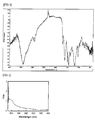
FIG. 1 is an FT-IR spectrum of base type polyaniline obtained by neutralizing a conductive polyaniline solution synthesized using the process of the present invention with ammonia water and then drying it; -
FIG. 2 is a UV-visible spectrum of base type polyaniline (solvent: N-methylpyrrolidinone) obtained by neutralizing the conductive polyaniline solution synthesized using the process of the present invention with ammonia water, -
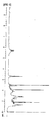
FIG. 3 is a graph showing the results of 500 MHz NMR analysis of base type polyaniline obtained by neutralizing the conductive polyaniline solution synthesized using the process of the present invention with ammonia waster, -
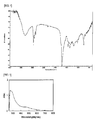
FIG. 4 is an FT-IR spectrum of base type polypyrrole obtained by neutralizing a conductive polypyrrole solution synthesized using the process of the present invention with ammonia water and then drying it; -
FIG. 5 is a UV-visible spectrum of base type polypyrrole (solvent: N-methylpyrrolidinone) obtained by neutralizing the conductive polypyrrole solution synthesized using the process of the present invention with ammonia water; -
FIG. 6 is a graph showing the results of 500 MHz NMR analysis of base type polypyrrole obtained by neutralizing the conductive polypyrrole solution synthesized using the process of the present invention with ammonia water; -
FIG, 7 is an FT-IR spectrum of base type polythiophene obtained by neutralizing a conductive polythiophene solution synthesized using the process of the present invention with ammonia water and then drying it; -
FIG. 8 is a UV-visible spectrum of base type polythiophene (solvent: N-methylpyrrolidinone) obtained by neutralizing the conductive polythiophene solution synthesized using the process of the present invention with ammonia water; and -
FIG. 9 is a graph showing the results of 500 MHz NMR analysis of base type polythiophene obtained by neutralizing the conductive polythiophene solution synthesized using the process of the present invention with ammonia water. - The present invention pertains to a conductive polymer which is doped with an acid and has a weight-average molecular weight of 5,000 or less when provided in the form of a base type, with a solubility of 3% or more by weight in an organic solvent selected from the group of dimethylsulfoxide, N-methylpyrrolidinone, and methylethylketone,wherein said conductive polymer is prepared by a method comprising:dissolving a substituted or unsubstituted pyrrole, or a substituted or unsubstituted thiophene monomer in an organic solvent, thus obtaining a monomer solution; adding water to the monomer solution in an amount ranging from more than 0 parts by weight to 10 parts by weight based on 100 parts by weight of the organic solvent; adding a dopant and an oxidizer to the monomer solution so that respective reactions occur, thus obtaining a reaction mixture; filtering the reaction mixture, thus obtaining a conductive polymer solution, wherein the weight-average molecular weight of the conductive polymer is measured using polystyrene as standard material
- In the present invention, the conductive polymer having the above properties may include polyaniline, polypyrrole or polythiophene.
- In the case where the conductive polymer is polypyrrole, it may be prepared in the form of a base type having a weight-average molecular weight less than 3,000 in order to increase the solubility.
- Examples of the acid used as the dopant in the conductive polymer according to the present invention may include sulfuric acid, hydrochloric acid, phosphoric acid, chlorosulfonic acid, methane sulfonic acid, sulfamic acid, nitric acid, dodecylbenzenesulfonic acid, camphor sulfonic acid, toluene sulfonic acid, naphthalene sulfonic acid, formic acid, polystyrenesulfonic acid, benzenesulfonic acid, oxalic acid, diphenylsulfone sulfonic acid, benzoic acid, and anthraquinonesulfonic acid, which may be used alone or in combinations of two or more.
- In this field, the sulfate, methanesulfonate, chlorosulfonate, hydrochloride or phosphate of the conductive polymer is known to be insoluble in organic solvents. Also, the kinds of solvents which dissolve the salt of the conductive polymer using another acid are known to be very limited.
- However, in the present invention, the conductive polymer salt is prepared using a process that controls molecular weight and thus has a low molecular weight and may be dissolved in various polar solvents.
- In the present invention, the conductive polymer which is doped with a dopant such as sulfuric acid, hydrochloric acid, phosphoric acid, chlorosulfonic acid, methane sulfonic acid, sulfamic acid, nitric acid, dodecylbenzenesulfonic acid, camphor sulfonic acid, toluene sulfonic acid, naphtalene sulfonic acid, formic acid, polystyrene sulfonic acid, benzenesulfonic acid, oxalic acid, diphenylsulfone sulfonic acid, benzoic acid, and anthraquinone sulfonic acid may be dissolved in any organic solvent selected from among methylethylketone, chloroform, dichloromethane, N-methylpyrrolidinone (NMP), dimethylsulfoxide (DMSO), dimethylformamide (DMF), methanol, ethanol, propanol, butanol, t-butyl alcohol, isopropylalcohol (iPA, 2-propanol), benzyl alcohol, tetrahydrofuran (THF), ethyl acetate, butyl acetate, propyleneglycol diacetate, propyleneglycol methyl ether acetate (PGMEA), formic acid, acetic acid, trifluoroacetic acid, acetonitrile, trifluoroacetonitrile, ethylene glycol, dimethylacetamide (DMAC), DMAC-LiCl, N,N'-1,3-dimethyl-3,4,5,6-tetrahydro-2(1H)-pyrimidinone (N,N'-1,3-dimethylpropyleneurea, DMPU), morpholine, pyridine, and pyrrolidine.
- In the present invention, the conductive polymer doped with the acid may be prepared by dissolving a monomer of a conductive polymer in one or more organic solvents selected from among the above organic solvent group, adding water in an amount ranging from more than 0 parts by weight to 10 parts by weight based on 100 parts by weight of the organic solvent, and adding a dopant and an oxidizer.
- Because the conductive polymer according to the present invention results from acid doping and monomer polymerization in the presence of a small amount of water and an organic solvent, the resulting base type conductive polymer has a weight-average molecular weight of 5,000 or less, and the maximum molecular weight thereof does not exceed 20,000 (in the present invention, a base type conductive polymer means that a conductive polymer doped with an acid is neutralized with a base). In particular, in the case of polypyrrole, it may be prepared to have a weight-average molecular weight of less than 3,000.
- Unlike conductive polymers synthesized by a synthesis process using an acid aqueous solution or an emulsion dispersion synthesis process using an organic solvent, the conductive polymers synthesized using the organic solvent according to the present invention are advantageous because the molecular weight thereof is not greatly increased even when the reaction rate of synthesis is slow, making it possible to prepare a low molecular weight conductive polymer.
- The conductive polymer according to the present invention is prepared by adding water in an amount ranging from more than 0 parts by weight to 10 parts by weight based on 100 parts by weight of the organic solvent As such, water added in the small amount makes the reaction fast However, if the amount of water is greater than 10 parts by weight based on 100 parts by weight of the organic solvent, the conductive polymer does not dissolve in the solvent Also, a large amount of oxidizer by-product dissolves in the water, undesirably lowering the purity of the conductive polymer solution, Furthermore, in the case where a film is manufactured using the conductive polymer solution including the oxidizer by-product, such an oxidizer by-product is contained in the film and thus absorbs moisture, undesirably deteriorating the properties of the film.
- As such, water is preferably used in an amount ranging from more than 0 parts by weight to 5 parts by weight, particularly favored being from more than 0 parts by weight to 1 part by weight, based on 100 parts by weight of the organic solvent
- The amount of the dopant may be set to be within the range in which the molar ratio of the monomer of the conductive polymer to the dopant is 0.125 ~ 4.00. If the molar ratio of the monomer to the dopant is less than 0.125, the conductive polymer may become very strongly acidic and may absorb moisture. In contrast, if the molar ratio thereof exceeds 4.00, it is difficult to dope sufficiently.
- In addition, the present invention pertains to a method of preparing the conductive polymer, including dissolving substituted or unsubstituted aniline, substituted or unsubstituted pyrrole, or substituted or unsubstituted thiophene monomer in an organic solvent thus obtaining a monomer solution, adding water to the monomer solution in an amount ranging from more than 0 parts by weight to 10 parts by weight based on 100 parts by weight of the organic solvent, adding a dopant and an oxidizer to the monomer solution in a random sequence so that respective reactions take place thus obtaining a reaction mixture, and filtering the reaction mixture, giving a conductive polymer solution wherein the weight-average molecular weight of the conductive polymer is measured using polystyrene as a standard material.
- The description of the conductive polymer according to the present invention is applied as it is to the method of preparing a conductive polymer according to the present invention, and the overlapping description is omitted below.
- In the method according to the present invention, when the dopant and the oxidizer are added, a catalyst and a doping adjuvant may be further added so that the reaction occurs. In the present invention, the doping adjuvant indicates materials which do not directly participate in doping but are added to the conductive polymer solution and thus increase the electrical conductivity of the conductive polymer.
- The catalyst and the doping adjuvant may be added in conjunction with or after addition of the dopant, and may be added before or after addition of the oxidizer regardless of the addition sequence of the dopant, so that the reaction is carried out
- Examples of the catalyst may include lithium chloride, lithium bromide, lithium iodide, lithium tetrafluoroborate, sodium chloride, sodium bromide, sodium iodide, potassium chloride, potassium bromide, potassium iodide, magnesium chloride, magnesium bromide, calcium chloride, strontium chloride, and barium chloride, which may be used alone or in combinations of two or more. The catalyst may be used in an amount of 10 wt% or less based on the total weight of the organic solvent If the amount of the catalyst exceeds 10 wt%, the catalytic activity is not further increased.
- Examples of the doping adjuvant may include N-methylpyrrolidinone (NMP), dimethylsulfoxide (DMSO), dimethylformamide (DMF), methanol, ethanol, propanol, butanol, isopropylalcohol, Tetrahydrofuran (THF), ethyl acetate, and butyl acetate, which may be used alone or in combinations of two or more.
- Also, when the dopant and the oxidizer are added, the addition reaction of the oxidizer may be carried out in a manner such that a first oxidizer is added thus completing the reaction, the resulting reaction product is filtered, and a second oxidizer having an oxidising power stronger than that of the first oxidizer is added to the filtrated solution, and thus the reaction takes place.
- The above reaction may be repeated as needed.
- The above manner of performing the oxidizer addition reaction is useful when reacting the remaining unreacted monomer or increasing the molecular weight of a low molecular weight conductive polymer composed of two to five monomers,
- Also, when the dopant and the oxidizer are added, the addition reaction of the oxidizer may be carried out in such a manner that the oxidizer is added thus completing the reaction, the resulting reaction product is filtered, and the organic solvent and the unreacted monomer of the conductive polymer are removed from the filtered solution using a distiller so that the filtered solution is concentrated to 20 ~ 50 wt%. If the solution is concentrated to less than 20 wt%, a long period of time and a large amount of energy are consumed to perform a concentration process, thus negating economic benefits. In contrast, if the solution is concentrated to exceed 50 wt%, it is difficult to expect the effects due to the concentration process. It is preferred that the filtered solution be concentrated to about 30 ~ 35 wt%.
- Also, the oxidizer may be again added to the concentrated solution, so that the reaction may be further carried out.
- The above manner of performing the oxidizer addition reaction may be utilized when the polymerization reaction does not proceed well. For example, when thiophene, is used as the monomer, the unreacted monomer may be generated in a larger amount. In this case, the above concentration process is employed, thus facilitating the polymerization reaction.
- In the method according to the present invention, the amount of the dopant may be set to be within the range in which the molar ratio of the monomer of the conductive polymer to the dopant is 0.125~4.00.
- Generally when a dopant acid is added to synthesize a conductive polymer, there frequently occur cases in which the viscosity of the solution is increased and the solvent is separated thus producing a precipitate and accordingly, it is difficult to perform stirring, making it impossible to perform a synthesis procedure.
- In the case where the above problems occur, the method according to the present invention may further include adding an additional organic solvent, which is not the above organic solvent which is used, in an amount of 5 ~ 30 wt% based on the total weight of the solution. When this procedure is performed, the precipitate may be dissolved and thus the viscosity of the solution is reduced, making it possible to continuously perform the synthesis of the conductive polymer.
- If the additional organic solvent is used in an amount of less than 5 wt% based on the total weight of the solution, it is difficult to form a solution which enables the synthesis of the polymer. In contrast, if the amount of the additional organic solvent exceeds 30 wt%, the concentration of the solution becomes too dilute.
- Herein, the additional organic solvent indicates an organic solvent which is not the same as the organic solvent which is used, and the kind thereof is not particularly limited so long as the above conditions are satisfied. For example, in the case where any one selected from the organic solvent group which will be listed later is used to synthesize a conductive polymer, one or more selected from the organic solvent group, which are different from the organic solvent which is used, may be used.
- In the method according to the present invention, the monomer of the conductive polymer may include substituted or unsubstituted aniline, substituted or unsubstituted pyrrole, and substituted or unsubstituted thiophene. The substituted aniline, pyrrole or thiophene means that the aromatic ring of aniline, pyrrole or thiophene is substituted with one or more substituents known in the art. Examples of the substituted aniline, pyrrole or thiophene are represented below.

- In the above formulas, R1, R2, R3 and R4 are each independently hydrogen, a linear or branched C1~C12 alkyl group, or a linear or branched C1 ~ C12 alkoxy group.
- In the method according to the present invention, examples of the organic solvent may include methylethylketone, chloroform, dichloromethane, N-methylpyrrolidinone (NMP), dimethylsulfoxide (DMSO), dimethylformamide (DMF), methanol, methanol propanol, butanol, t-butyl alcohol, isopropylalcohol (iPA, 2-propanol), benzyl alcohol, tehahydrofuran (THF), ethyl acetate, butyl acetate, propylene glycol diacetate, propylene glycol methyl ether acetate (PGMEA), formic acid, acetic acid, trifluoroacetic acid, acetonitrile, trifluoroacetonitrile, ethylene glycol, dimethylacetamide (DMAC), DMAC-LiCl, N,N'-1,3-dimethyl-3,4,5,6-tetrahydro-2(1H)-pyrimidinone (N,N'-1,3-dimethylpropyeneurea, DMPU), morpholine, pyridine, and pyrrolidine, which may be used alone or in combinations of two or more.
- Particularly useful as the organic solvent is methylethylketone. Because methylethylketone does not dissolve an oxidizer by-product such as ammonium persulfate or potassium permanganate, it may simplify the preparation process of the conductive polymer and is very effective.
- In the method according to the present invention, examples of the dopant may include sulfuric acid, hydrochloric acid, phosphoric acid, chlorosulfonic acid, methane sulfonic acid, sulfamic acid, nitric acid, dodecylbenzenesulfonic acid, camphor sulfonic acid, toluene sulfonic acid, naphthalene sulfonic acid, formic acid, polystyrene sulfonic acid, benzene sulfonic acid, oxalic acid, diphenylsulfone sulfonic acid, benzoic acid, and anthraquinone sulfonic acid, which may be used alone or in combinations of two or more.
- In the method according to the present invention, each of the oxidizer, the first oxidizer and the second oxidizer may include one or more selected from the group consisting of ammonium persulfate, ammonium iron(III) sulfate, iron(III) sulfate, iron(III) chloride, iron(III) perchlorate, iron(III) p-toluenesulfonate, potassium permanganate, potassium dichromate, and iron(III) tritoluenesulfonate (Fe(OTs)3).
- A better understanding of the present invention may be obtained through the following examples which are set forth to illustrate, but are not to be construed as limiting the present invention.
- A 0.2 mol aniline monomer was placed in an Erlenmeyer flask containing 600 ml of methylethylketone at room temperature and stirred using a magnetic stirrer. This solution was added with 0.1 mol sulfuric acid as a dopant, stirred for 30 min, added with 0.25 mol ammonium persulfate ((NH4)2S2O8) and reacted for 48 hours or longer (when the viscosity of the solution was increased and thus the precipitate was produced, 5 wt% or more of an additional solvent which was not methylethylketone was added based on the total weight of the solution, thus enabling stirring). The reaction solution was filtered, yielding a conductive polymer solution.
- Using this conductive polymer solution, a film was manufactured and its electrical conductivity, transmittance and sheet resistance were measured. The results were that the film had an electrical conductivity of 10-4 S/cm, and a sheet resistance of 109 Ω/sq at a transmittance of 90% or more.
- The conductive polymer solution was dried to remove the solvent, giving conductive polymer powder. Even in the case where the conductive polymer powder was provided again in a solution phase by performing addition of 600 ml of methylethylketone, shirring for 48 hours and filtration, the same conductive polymer solution as before drying of the conductive polymer solution to remove the solvent could be obtained.
- A 0,2 mol aniline monomer was placed in an Erlenmeyer flask containing 600 ml of methylethylketone at room temperature and stirred using a magnetic stirrer. This solution was added with 10 ml of water and 0.1 mol sulfuric acid as a dopant, further added with 10 ml of N-methylpyrrolidinone (NMP) as a doping adjuvant, stirred for 30 min, added with 0.25 mol ammonium persulfate ((NH4)2S2O8) and then reacted for 24 hours or longer (when the viscosity of the solution was increased and thus the precipitate was produced, 5 wt% or more of an additional solvent which was not methylethylketone was added based on the total weight of the solution, thus enabling stirring). The reaction solution was filtered, yielding a conductive polymer solution.
- Using this conductive polymer solution, a film was manufactured and its electrical conductivity, transmittance and sheet resistance were measured. The results were that the film had an electrical conductivity, of 10 S/cm in maximum, and a sheet resistance of 105 Ω/sq or less at a transmittance of 90% or more.
- A conductive polymer solution was prepared in the same manner as in Example 2, with the exception that 10 ml of a doping adjuvant selected from the group consisting of dimethylsulfoxide (DMSO), dimethylformamide (DMF), methanol, ethanol, propanol, butanol, isopropylalcohol, Tetrahydrofuran (THF), ethyl acetate and butyl acetate was used instead of 10 ml ofNMP. Using the conductive polymer solution thus prepared, a film was manufactured, and the electrical conductivity, transmittance and sheet resistance of the film were almost the same as those when using 10 ml of NMP as the doping adjuvant.
- A conductive polymer solution was prepared in the same manner as in Example 2, with the exception that 0.1 mol methanesulfonic acid was used as the dopant instead of 0.1 mol sulfuric acid. Using the conductive polymer solution thus prepared, a film was manufactured, and the electrical conductivity, transmittance and sheet resistance of the film were almost the same as those when using sulfuric acid as the dopant
- A 0.2 mol aniline monomer was placed in an Erlenmeyer flask containing 600 ml of methylethylketone at room temperature and stirred using a magnetic stirrer. This solution was added with 10 ml of water and 0.25 mol ammonium persulfate ((NH4)2S2O8) and then reacted for 48 hours or longer. The reaction solution was filtered thus obtaining a base type conductive polymer solution. This solution was added with 0,1 mol sulfuric acid as a dopant, stirred for 24 hours and filtered, yielding a conductive polymer solution (when the viscosity of the solution was increased and thus the precipitate was produced, 5 wt% or more of an additional solvent which was not methylethylketone was added based on the total weight of the solution, thus enabling stirring).
- Using this conductive polymer solution, a film was manufactured and its electrical conductivity, transmittance and sheet resistance thereof were measured. The results were that the film had an electrical conductivity of 10 S/cm in maximum, and a sheet resistance of 105 Ω/sq or less at a transmittance of 90% or more.
- A 0.2 mol aniline monomer was placed in an Erlenmeyer flask containing 600 ml of methylethylketone at room temperature and stirred using a magnetic stirrer. This solution was added with 5 ml of water and 0.25 mol ammonium persulfate ((NH4)2S2O8) and then reacted for 48 hours or longer. The reaction solution was filtered thus obtaining a base type conductive polymer solution. This solution was further added with 0.05 mol KMnO4, reacted for 24 hours and then filtered, thus obtaining a base type conductive polymer solution. This solution was added with 0.1 mol sulfuric acid as a dopant. The resulting solution was added with 10 ml of ethanol and stirred for 24 hours or longer (when the viscosity of the solution was increased and thus the precipitate was produced, 5 wt% or more of an additional solvent which was not methylethylketone was added based on the total weight of the solution, thus enabling stirring). This solution was filtered, yielding a conductive polymer solution.
- Using this conductive polymer solution, a film was manufactured and its electrical conductivity, transmittance and sheet resistance were measured. The results were that the film had an electrical conductivity of 100 S/cm in maximum, and a sheet resistance of 105 Ω/sq or less at a transmittance of 90% or more.
- A 0.2 mol pyrrole monomer was placed in an Erlenmeyer flask containing 600 ml of methylethylketone at room temperature and stirred using a magnetic stirrer. This solution was added with 10 ml of water and 0.25 mol ammonium persulfate ((NH4)2S2O8) and then reacted for 48 hours or longer. The reaction solution was filtered thus obtaining a base type conductive polymer solution. This solution was added with 10 ml of NMP, stirred for 1 hour, added with 0.1 mol sulfuric acid as a dopant, further stirred for 24 hours and then filtered, yielding a conductive polymer solution (when the viscosity of the solution was increased and thus the precipitate was produced, 5 wt% or more of an additional solvent which was not methylethylketone was added based on the total weight of the solution, thus enabling stirring).
- Using this conductive polymer solution, a film was manufactured and its electrical conductivity, transmittance and sheet resistance were measured. The results were that the film had an electrical conductivity of 10 S/cm, and a sheet resistance of 105 Ω/sq at a transmittance of 90% or more.
- A conductive polymer solution was prepared in the same manner as in Example 7, with the exception that 0.1 mol chlorosulfonic acid was used as the dopant instead of 0.1 mol sulfuric acid. Using the conductive polymer solution thus prepared, a film was manufactured, and the electrical conductivity, transmittance and sheet resistance of the film were almost the same as those when using sulfuric acid as the dopant
- A conductive polymer solution was prepared in the same manner as in Example 7, with the exception that 10 ml of isopropylalcohol was used as the doping adjuvant instead of 10 ml of NMP. Using the conductive polymer solution thus prepared, a film was manufactured, and the electrical conductivity, transmittance and sheet resistance of the film were almost the same as those when using 10 ml of NMP as the doping adjuvant
- A 0.2 mol pyrrole monomer was placed in an Erlenmeyer flask containing 600 ml of methylethylketone at room temperature and stirred using a magnetic stirrer. This solution was added with 10 ml of water and 0.1 mol sulfuric acid as a dopant. This solution was added with 8 g of lithium chloride as a catalyst and 10 ml of NMP as a doping adjuvant and stirred for 30 min. The stirred solution was added with 0.25 mol ammonium persulfate ((NH4)2S2O8) and then reacted for 24 hours or longer. The reaction solution was filtered, yielding a conductive polymer solution (when the viscosity of the solution was increased and thus the precipitate was produced, 5 wt% or more of an additional solvent which was not methylethylketone was added based on the total weight of the solution, thus enabling stirring).
- Using this conductive polymer solution, a film was manufactured and its electrical conductivity, transmittance and sheet resistance were measured. The results were that the film had an electrical conductivity of 100 S/cm in maximum, and a sheet resistance of 104 Ω/sq or less at a transmittance of 90% or more.
- Even in the case where 10 ml of a doping adjuvant selected from the group consisting of dimethylsulfoxide (DMSO), dimethylformalide (DMF), methanol, ethanol, propanol, butanol, isopropylalcohol, Tetrahydrofuran (THF), ethyl acetate and butyl acetate was used instead of 10 ml of NMP, almost the same results were obtained.
- A 0.2 mol pyrrole monomer was placed in an Erlenmeyer flask containing 600 ml of methylethylketone at room temperature and stirred using a magnetic stirrer. This solution was added with 5 ml of water and 0.25 mol ammonium persulfate ((NH4)2S2O8), and then reacted for 48 hours or longer. The reaction solution was filtered thus obtaining a base type conductive polymer solution. This solution was added with 0.05 mol KMnO4, reacted for 24 hours, and then filtered, thus obtaining a base type conductive polymer solution. This solution was added with 0.1 mol sulfuric acid as a dopant, added with 10 ml of methanol and stirred for 24 hours or longer (when the viscosity of the solution was increased and thus the precipitate was produced, 5 wt% or more of an additional solvent which was not methylethylketone was added based on the total weight of the solution, thus enabling stirring). This solution was filtered, yielding a conductive polymer solution.
- Using this conductive polymer solution, a film was manufactured and its electrical conductivity, transmittance and sheet resistance were measured. The results were that the film had an electrical conductivity of 100 S/cm in maximum, and a sheet resistance of 105 Ω/sq or less at a transmittance of 90% or more.
- Conductive polymer solutions were synthesized in the same manner as in Example 2 to 11, with the exception that the reaction temperature was changed from room temperature to -20°C, 0°C, 25°C and 50°C, respectively. Even in the case where the conductive polymers were prepared at different reaction temperatures, the same results as when the conductive polymer was synthesized at room temperature were obtained.
-
- (1) A 0.3 mol thiophene monomer was placed in an Erlenmeyer flask containing 600 ml of methylethylketone at room temperature and stirred using a magnetic stirrer. This solution was added with 5 ml of water and 0.1 mol sulfuric acid as a dopant. This solution was added with 8 g of lithium chloride (LiCl) as a catalyst and 10 ml of NMP as a doping adjuvant, stirred for 30 min, added with 0.3 mol ammonium persulfate ((NH4)2S2O8), and reacted for 72 hours or longer. The reaction solution was filtered, yielding a conductive polymer solution (when the viscosity of the solution was increased and thus the precipitate was produced, 5 wt% or more of an additional solvent which was not methylethylketone was added based on the total weight of the solution, thus enabling stirring).
Using the conductive polymer solution, a film was manufactured and its electrical conductivity, transmittance and sheet resistance were measured, revealing that the film had an electrical conductivity of 100 S/cm in maximum, and a sheet resistance of 105 Ω/sq or less at a transmittance of 94% or more. - (2) The conductive polymer solution was distilled at 80°C using a distiller to remove the solvent and the unreacted thiophene, so that the solution was concentrated to 1/3 of the original weight thereof.
Using the conductive polymer solution thus concentrated, a film was manufactured, and its electrical conductivity, transmittance and sheet resistance were measured. Results of the measurement were that the film had an electrical conductivity of 100 S/cm in maximum, and a sheet resistance of 105 Ω/sq or less at a transmittance of 92% or more. - (3) The conductive polymer solution concentrated to 1/3 was added with 0.05 mol potassium permanganate as an oxidizer, reacted for 24 hours, and filtered, thus obtaining a conductive polymer solution.
Using this conductive polymer solution, a film was manufactured, and its electrical conductivity, transmittance and sheet resistance were measured. The film had an electrical conductivity of 200 S/cm in maximum, and a sheet resistance of 104 Ω/sq or less at a transmittance of 90% or more.
Even in the case where 10 ml of a doping adjuvant selected from the group consisting of dimethylsulfoxide (DMSO), dimethylformamide (DMF), methanol, ethanol, propanol, butanol, isopropylalcohol, tetrahydrofuran (THF), ethyl acetate and butyl acetate was used instead of 10 ml of NMP, almost the same results were obtained. - (4) Conductive polymer solutions were synthesized in the same manner as in (1), with the exception that the reaction temperature was changed from room temperature to -20°C, 0°C, 25°C and 50°C, respectively. Even when the conductive polymers were prepared at different reaction temperatures, the same results as when the conductive polymer was synthesized at room temperature were obtained.
-
- (1) The conductive polyaniline solution synthesized in Example 2 was neutralized with ammonia water, and dried thus obtaining base type polyaniline, and the FT-IR spectrum of the base type polyaniline was obtained using an FT-IR spectrometer (
FIG.1 ).
As shown inFIG. 1 , the N-H stretching vibration peak near 3,400 cm-1, the benzene substituent peak between 2,000cm -1 and 1,600 cm-1, the C=C stretching vibration peak of the quinone ring and the benzene ring near between 1,600 cm-1 and 1,510 cm-1 were observed. From this, the polyaniline can be seen to have been synthesized. - (2) The base type polyaniline was dissolved in NMP, and the UV-visible spectrum of the base type polyaniline was obtained using a UV-Visible spectrophotometer (
FIG. 2 ). As shown inFIG. 2 , the base type polyaniline appeared in the form of a very weak peak near 370 nm, whereas the molecular exciton peak of base type polyaniline synthesized in an aqueous solution was observed at about 635 nm. - (3) The base type polyaniline was dissolved in a DMSO solution, and the NMR spectrum as shown in
FIG. 3 was obtained using 500 MHz NMR. -
- (1) The conductive polypyrrole solution synthesized in Example 7 was neutralized with ammonia water and dried thus obtaining base type polypyrrole, and the FT-IR spectrum of the base type polypyrrole was obtained using an FT-IR spectrometer (
FIG. 4 ).
As shown inFIG. 4 , from the C=C stretching vibration peak near 1,570 cm-1, the C-N vibration peak near 1,467 cm-1, the C-C vibration peak near 1,417 cm-1 and the C-H plane-in-vibration peak near 1,074 cm-1, polypyrrole can be seen to have been synthesized. - (2) The base type polypynole was dissolved in NMP, and the UV-visible spectrum of the base type polypyrrole was obtained using a UV-Visible spectrophotometer (
FIG. 5 ).
As shown inFIG. 5 , the base type polypyrrole appeared in the form of a very weak peak near 470 nm. - (3) The base type polypyrrole was dissolved in a DMSO solution, and the NMR spectrum as shown in
FIG. 6 was obtained using 500 MHz NMR. -
- (1) The conductive polythiophene solution synthesized in (3) of Example 13 was neutralized with ammonia water and dried thus obtaining base type Polythiophene, and the FT-IR spectrum or the base type polythiophene was obtained using an FT-IR spectrometer (
FIG. 7 ).
As shown inFIG. 7 , from the C-H stretching vibration peak near 3,066 cm-1, and the C-H peak based on two specific ring stretching modes of thiophene at 791 cm-1 and 785 cm-1, polythiophene can be seen to have been synthesized. - (2) The base type polythiophene was dissolved in NMP, and the UV-visible spectrum of the base type polythiophene was obtained using a UV-Visible spectrophotometer (
FIG. 8 ).
As shown inFIG. 8 , the base type polythiophene appeared in the form of an absorption peak near 385 nm. - (3) The base type polythiophene was dissolved in a DMSO solution, and the NMR spectrum as shown in
FIG. 9 was obtained using 500 MHz NMR. - The conductive polymer solution prepared in the present invention was neutralized width ammonia water and dried thus obtaining a base type conductive polymer. The base type conductive polymer was dissolved in HMP-LiCl (0.5 wt%), and analyzed. The results are shown in Table 1 below (the molecular weight was measured using polystyrene as a standard material).
TABLE 1 Conductive Polymer Mw Mn Polydispersity Mw at Initial Peak Polyaniline (Ex.2) 1,527 1,011 1.51 12,043 Polyaniline (Ex.6, Oxidizer Twice Treatment) 1,763 1,124 1.56 15,114 Polypyrrole (Ex.7) 1,464 636 2.30 13,254 Polypyrrole (Ex10) 2,256 1,224 1.84 14,306 Polypyrrole (Ex. 11, Oxidizer Twice Treatment) 3,403 1,112 3.16 15,835 Polythiophene ((2) of Ex.13) 921 277 3.32 9,980 Polythiophene ((3) of Ex.13, Concentration, Oxidizer Twice Treatment) 1,184 330 3.35 10,921 - The conductive polymers prepared in the present invention were respectively dissolved in dimethylsulfoxide, N-methylpyrrolidinone, and methylethylketone, and the solubility thereof was measured. The results are shown in Table 2 below.
TABLE 2 Conductive Polymer Dimethylsulfoxide N- methylpyrrolidinone Methylethylketone Polyaniline 10 wt% or more 10 wt% or more 7 wt% or more Polypyrrole 10 wt% or more 10 wt% or more 6 wt% or more Polythiophene 9 wt% or more 10 mt% or more 6 wt% or more
Claims (12)
- A conductive polymer of substituted or unsubstituted pyrrole, or substituted or unsubstituted thiophene, which is doped with an acid and has a weight-average molecular weight of 5,000 or less when provided in a base type, with a solubility of 3% by weight or more in an organic solvent selected from the group consisting of dimethylsulfoxide, N-methylpyrrolidinone, and methylethylketone,
wherein said conductive polymer is prepared by a method comprising:dissolving a substituted or unsubstituted pyrrole, or substituted or unsubstituted thiophene monomer in an organic solvent, thus obtaining a monomer solution;adding water to the monomer solution in an amount ranging from more than 0 parts by weight to 10 parts by weight based on 100 parts by weight of the organic solvent;adding a dopant and an oxidizer to the monomer solution so that respective reactions occur, thus obtaining a reaction mixture; andfiltering the reaction mixture, thus obtaining a conductive polymer solution,wherein the weight-average molecular weight of the conductive polymer is measured using polystyrene as a standard material. - The conductive polymer according to claim 1, wherein the acid used as a dopant comprises one or more selected from the group consisting of sulfuric acid, hydrochloric acid, phosphoric acid, chlorosulfonic acid, methane sulfonic acid, sulfamic acid, nitric acid, dodecylbenzenesulfonic acid, camphor sulfonic acid, toluene sulfonic acid, naphthalene sulfonic acid, formic acid, polystyrenesulfonic acid, benzenesulfonic acid, oxalic acid, diphenylsulfone sulfonic acid, benzoic acid, and anthraquinone sulfonic acid.
- The conductive polymer according to claim 2, wherein the organic solvent comprises one or more selected from the group consisting of methylethylketone, chloroform, dichloromethane, N-methylpyrrolidinone (NMP), dimethylsulfoxide (DMSO), dimethylformamide (DMF), methanol, ethanol, propanol, butanol, t-butyl alcohol, isopropylalcohol (iPA, 2-propanol), benzyl alcohol, tetrahydrofuran (THF), ethyl acetate, butyl acetate, propyleneglycol diacetate, propyleneglycol methyl ether acetate (PGMEA), formic acid, acetic acid, trifluoroacetic acid, acetonitrile, trifluoroacetonitrile, ethylene glycol, dimethylacetamide (DMAC), DMAC-LiCl, N,N'-1,3-dimethyl-3,4,5,6-tetrahydro-2(1H)-pyrimidinone (N,N'-1,3-dimethylpropyleneurea, DMPU), morpholine, pyridine, and pyrrolidine.
- The conductive polymer according to claim 2, wherein amounts of a monomer of the conductive polymer and the dopant are set to be within a range in which a molar ratio of the monomer of the conductive polymer to the dopant is 0.125 ~ 4.00.
- A method of preparing a conductive polymer which is doped with an acid and has a weight-average molecular weight of 5,000 or less when provided in a base type, with a solubility of 3% by weight or more in an organic solvent selected from the group consisting of dimethylsulfoxide, N-methylpyrrolidinone, and methylethylketone, comprising:dissolving substituted or unsubstituted aniline, substituted or unsubstituted pyrrole, or substituted or unsubstituted thiophene monomer in an organic solvent, thus obtaining a monomer solution;adding water to the monomer solution in an amount ranging from more than 0 parts by weight to 10 parts by weight based on 100 parts by weight of the organic solvent;adding a dopant and an oxidizer to the monomer solution so that respective reactions occur, thus obtaining a reaction mixture; andfiltering the reaction mixture, thus obtaining a conductive polymer solution,wherein the weight-average molecular weight of the conductive polymer is measured using polystyrene as a standard material.
- The method according to claim 5, wherein when the dopant and the oxidizer are added, a catalyst and a doping adjuvant are further added.
- The method according to claim 5, wherein when the dopant and the oxidizer are added, an addition reaction of the oxidizer is performed by adding a first oxidizer thus completing the reaction to thereby obtain a reaction product, filtering the reaction product thus obtaining a filtered solution, and adding to the filtered solution a second oxidizer having an oxidizing power stronger than that of the first oxidizer so that the reaction occurs.
- The method according to claim 5, wherein the dopant is added within a range so that a molar ratio of the monomer of the conductive polymer to the dopant is 0.125 ~ 4.00.
- The method according to any one of claims 5 to 8, wherein the organic solvent comprises one or more selected from the group consisting of methylethylketone, chloroform, dichloromethane, N-methylpyrrolidinone (NMP), dimethylsulfoxide (DMSO), dimethylformamide (DMF), methanol, ethanol, propanol, butanol, t-butyl alcohol, isopropylalcohol (iPA, 2-propanol), benzyl alcohol, tetrahydrofuran (THF), ethyl acetate, butyl acetate, propyleneglycol diacetate, propyleneglycol methyl ether acetate (PGMEA), formic acid, acetic acid, trifluoroacetic acid, acetonitrile, trifluoroacetonitrile, ethylene glycol, dimethylacetamide (DMAC), DMAC-LiCl, N,N'-1,3-dimethyl-3,4,5,6-tetrahydro-2(1H)-pyrimidinone (N,N'-1,3-dimethylpropyleneurea, DMPU), morpholine, pyridine, and pyrrolidine.
- The method according to claim 9, wherein the organic solvent is methylethylketone.
- The method according to any one of claims 5 to 8, wherein the dopant comprises one or more selected from the group consisting of sulfuric acid, hydrochloric acid, phosphoric acid, chlorosulfonic acid, methane sulfonic acid, sulfamic acid, nitric acid, dodecylbenzenesulfonic acid, camphor sulfonic acid, toluene sulfonic acid, naphthalene sulfonic acid, formic acid, polystyrenesulfonic acid, benzenesulfonic acid, oxalic acid, diphenyl p-sulfonic acid, benzoic acid, and anthraquinone sulfonic acid.
- The method according to any one of claims 5 to 8, wherein the oxidizer, or the first oxidizer and the second oxidizer which are each independent comprises one or more selected from the group consisting of ammonium persulfate, ammonium iron(III) sulfate, iron(III) sulfate, iron(III) chloride, iron(III) perchlorate, iron(III) p-toluenesulfonate, potassium permanganate, potassium dichromate, and iron(III) tritoluenesulfonate (Fe(OTs)3).
Applications Claiming Priority (2)
| Application Number | Priority Date | Filing Date | Title |
|---|---|---|---|
| KR20080005138 | 2008-01-17 | ||
| PCT/KR2009/000203 WO2009091184A2 (en) | 2008-01-17 | 2009-01-16 | Soluble conductive polymer and method for preparing same |
Publications (3)
| Publication Number | Publication Date |
|---|---|
| EP2239294A2 EP2239294A2 (en) | 2010-10-13 |
| EP2239294A4 EP2239294A4 (en) | 2012-02-29 |
| EP2239294B1 true EP2239294B1 (en) | 2016-07-06 |
Family
ID=40885797
Family Applications (1)
| Application Number | Title | Priority Date | Filing Date |
|---|---|---|---|
| EP09703080.3A Not-in-force EP2239294B1 (en) | 2008-01-17 | 2009-01-16 | Soluble conductive polymer and method for preparing same |
Country Status (6)
| Country | Link |
|---|---|
| US (1) | US9284453B2 (en) |
| EP (1) | EP2239294B1 (en) |
| JP (2) | JP5728232B2 (en) |
| KR (1) | KR101082531B1 (en) |
| CN (1) | CN101952349B (en) |
| WO (1) | WO2009091184A2 (en) |
Families Citing this family (23)
| Publication number | Priority date | Publication date | Assignee | Title |
|---|---|---|---|---|
| EP2239294B1 (en) * | 2008-01-17 | 2016-07-06 | Lee, Sung-Joo | Soluble conductive polymer and method for preparing same |
| JP5470831B2 (en) * | 2008-12-17 | 2014-04-16 | 東洋インキScホールディングス株式会社 | Polythiophene composition, conductive film using the same, and laminate |
| KR101053071B1 (en) * | 2010-12-17 | 2011-08-01 | (주)세진에스엠 | Manufacturing method of high yield granular conductive polymer |
| CN103304806B (en) * | 2012-03-09 | 2016-07-13 | 中国石油天然气股份有限公司 | A kind of preparation method of oil-soluble polyaniline |
| KR101420792B1 (en) * | 2012-06-07 | 2014-07-17 | 서울대학교산학협력단 | The mass production method of 1-D intrinsic conducting polymer nanomaterial with high heat stability |
| TWI567130B (en) * | 2012-08-01 | 2017-01-21 | 長興材料工業股份有限公司 | Conductive polymer composite and preparation and use thereof |
| CN103012787A (en) * | 2012-11-19 | 2013-04-03 | 兰州理工大学 | Preparation method of secondary acid-doped conductive polyaniline |
| CN103059294B (en) * | 2013-01-21 | 2015-05-13 | 潍柴动力股份有限公司 | Synthetic method of electrode material polyaniline |
| US9484516B2 (en) | 2013-01-24 | 2016-11-01 | Industry-Academic Cooperation Foundation Yonsei University | Method for preparing electroconductive polymer and thermoelectric device comprising electroconductive polymer film prepared using the same |
| KR101402851B1 (en) * | 2013-07-11 | 2014-06-02 | 광주과학기술원 | Conducting network composite comprising polyaniline and polypyrrole, and method for preparing the same |
| US9672952B2 (en) | 2013-08-14 | 2017-06-06 | Industrial Technology Research Institute | Polymer and conductive composition |
| CN106062033B (en) * | 2014-02-27 | 2017-09-05 | 帝化株式会社 | Electroconductive polymer and use the electroconductive polymer as the electrolytic capacitor of electrolyte that electroconductive polymer manufacture is fabricated by with oxidant and dopant, its solution, using they any one |
| KR101921105B1 (en) * | 2016-10-31 | 2018-11-22 | 한국생산기술연구원 | Conducting polymer dispersion of high viscosity and method for manufacturing using the same |
| CN106757786A (en) * | 2016-12-09 | 2017-05-31 | 彭州市运达知识产权服务有限公司 | A kind of PAn conducting membrane and preparation method thereof |
| JP7088009B2 (en) * | 2017-01-18 | 2022-06-21 | 日産化学株式会社 | Ink composition containing sulfonated conjugate polymer |
| JP7120887B2 (en) * | 2018-11-09 | 2022-08-17 | 出光興産株式会社 | METHOD FOR MANUFACTURING POROUS BODY CONTAINING CONDUCTIVE POLYMER |
| KR102791145B1 (en) | 2019-06-14 | 2025-04-02 | 주식회사 엘지에너지솔루션 | Sulfur-carbon composite, positive electrode for lithium secondary battery and lithium secondary battery comprising the same |
| US11987669B2 (en) | 2020-10-08 | 2024-05-21 | The Boeing Company | Polyaniline compositions, articles thereof, and methods thereof |
| US12448526B2 (en) * | 2020-10-08 | 2025-10-21 | The Boeing Company | Conjugated polymer compositions, articles thereof, and methods thereof |
| CN116445058A (en) * | 2022-01-06 | 2023-07-18 | 牛津大学(苏州)科技有限公司 | Preparation method of transparent conductive polymer film and conductive polymer film prepared by same |
| CN114790591B (en) * | 2022-04-07 | 2024-01-30 | 烟台哈尔滨工程大学研究院 | Polyimide/polyaniline composite conductive fiber membrane material and preparation method thereof |
| JP2024173261A (en) * | 2023-06-02 | 2024-12-12 | 信越ポリマー株式会社 | Method for producing conductive polymer dispersion, method for producing coating composition, and method for producing conductive laminate |
| CN119529240B (en) * | 2024-10-31 | 2025-09-19 | 安徽大学 | A thiophene-alkyne bifunctional organic semiconductor and its preparation method and application |
Family Cites Families (26)
| Publication number | Priority date | Publication date | Assignee | Title |
|---|---|---|---|---|
| JPH01230628A (en) | 1987-11-11 | 1989-09-14 | Sekisui Chem Co Ltd | Production of thiophene polymer |
| US5008041A (en) | 1990-01-30 | 1991-04-16 | Lockheed Corporation | Preparation of conductive polyaniline having controlled molecular weight |
| JP3271173B2 (en) * | 1991-05-07 | 2002-04-02 | ネクサン | Self-doping conductive polyaniline and method for producing the same |
| US5232631A (en) * | 1991-06-12 | 1993-08-03 | Uniax Corporation | Processible forms of electrically conductive polyaniline |
| JP3056650B2 (en) * | 1994-10-25 | 2000-06-26 | 三菱レイヨン株式会社 | Aniline-based conductive polymer and method for producing the same |
| US5567356A (en) * | 1994-11-07 | 1996-10-22 | Monsanto Company | Emulsion-polymerization process and electrically-conductive polyaniline salts |
| TW464661B (en) * | 1996-06-10 | 2001-11-21 | Nippon Catalytic Chem Ind | Water-soluble electrically-conductive polyaniline and method for production thereof and antistatic agent using water-soluble electrically-conductive polymer |
| US5852161A (en) | 1997-08-25 | 1998-12-22 | Monsanto Company | Process for the preparation of undoped polyaniline via para-haloaniline |
| TW502046B (en) * | 1998-10-22 | 2002-09-11 | Nippon Catalytic Chem Ind | Method for production of water-soluble conducting polyaniline |
| US6030551A (en) * | 1999-04-07 | 2000-02-29 | Conpoly Technology Co., Ltd. | Polyaniline-containing solution and method for preparing the same |
| CA2396374A1 (en) * | 2000-01-04 | 2001-07-12 | Gregory M. Kaplan | Method of production of polyanilines |
| KR20010112574A (en) | 2000-06-09 | 2001-12-20 | 오응주 | Method for preparation of Polypyrrole having a solubility in various organic solvents and various molecular weight |
| KR100373926B1 (en) | 2000-09-20 | 2003-02-26 | 스마트텍 주식회사 | Rapid Synthesis of High Molecular Weight Polyaniline |
| KR100490882B1 (en) * | 2001-11-12 | 2005-05-24 | 서광석 | Synthetic Method of Polyaniline and application for electroststic discharge and EMI Shielding |
| DE10296747B4 (en) * | 2002-03-21 | 2005-12-08 | Council Of Scientific And Industrial Research | Process for the preparation of a polyaniline salt dissolved in organic solvents |
| AU2003279014A1 (en) * | 2002-09-24 | 2004-04-19 | E.I. Du Pont De Nemours And Company | Water dispersible polyanilines made with polymeric acid colloids for electronics applications |
| US7074887B2 (en) * | 2002-12-17 | 2006-07-11 | The Regents Of The University Of California | Chemical synthesis of chiral conducting polymers |
| US7144949B2 (en) * | 2003-12-11 | 2006-12-05 | The Aerospace Corporation | Synthetic method for conducting polymer nanofibers |
| US20050230668A1 (en) * | 2004-03-22 | 2005-10-20 | Suck-Hyun Lee | Polyaniline having high electrical conductivity and producing process thereof |
| US20050269555A1 (en) * | 2004-05-11 | 2005-12-08 | Suck-Hyun Lee | Conductive polymers having highly enhanced solubility in organic solvent and electrical conductivity and synthesizing process thereof |
| KR20050108107A (en) * | 2004-05-11 | 2005-11-16 | 이석현 | Conductive polymers highly electrical conductivity and solubility in organic solvents and process of preparing thereof |
| KR100633031B1 (en) | 2004-07-29 | 2006-10-11 | (주)폴리메리츠 | Organic Solvent Soluble Polyaniline Using Mixed Dopant and Manufacturing Method Thereof |
| KR100715548B1 (en) * | 2005-07-29 | 2007-05-07 | 광 석 서 | Conductive Polymers Synthesized Using Partially Substituted Polymer Dopants |
| KR100840142B1 (en) * | 2007-04-19 | 2008-06-20 | 스마트머티리얼스 테크널러지주식회사 | Process for preparing soluble polypyrrole |
| EP2239294B1 (en) * | 2008-01-17 | 2016-07-06 | Lee, Sung-Joo | Soluble conductive polymer and method for preparing same |
| KR100949399B1 (en) * | 2008-07-11 | 2010-03-24 | 광 석 서 | Organic Solvent Dispersible Conductive Polymer and Manufacturing Method Thereof |
-
2009
- 2009-01-16 EP EP09703080.3A patent/EP2239294B1/en not_active Not-in-force
- 2009-01-16 JP JP2010543053A patent/JP5728232B2/en active Active
- 2009-01-16 KR KR1020090003579A patent/KR101082531B1/en not_active Expired - Fee Related
- 2009-01-16 WO PCT/KR2009/000203 patent/WO2009091184A2/en not_active Ceased
- 2009-01-16 US US12/863,432 patent/US9284453B2/en not_active Expired - Fee Related
- 2009-01-16 CN CN200980105486.2A patent/CN101952349B/en not_active Expired - Fee Related
-
2014
- 2014-09-05 JP JP2014181032A patent/JP6261478B2/en not_active Expired - Fee Related
Also Published As
| Publication number | Publication date |
|---|---|
| EP2239294A2 (en) | 2010-10-13 |
| CN101952349A (en) | 2011-01-19 |
| CN101952349B (en) | 2014-04-23 |
| WO2009091184A3 (en) | 2009-11-05 |
| US20110049432A1 (en) | 2011-03-03 |
| US9284453B2 (en) | 2016-03-15 |
| JP6261478B2 (en) | 2018-01-17 |
| WO2009091184A2 (en) | 2009-07-23 |
| JP5728232B2 (en) | 2015-06-03 |
| JP2011510131A (en) | 2011-03-31 |
| KR101082531B1 (en) | 2011-11-10 |
| EP2239294A4 (en) | 2012-02-29 |
| KR20090079820A (en) | 2009-07-22 |
| JP2015007249A (en) | 2015-01-15 |
Similar Documents
| Publication | Publication Date | Title |
|---|---|---|
| US9284453B2 (en) | Soluble conductive polymer and method for preparing same | |
| JP4688125B2 (en) | Conductive polymer and solid electrolytic capacitor using the same | |
| EP0921147B1 (en) | Transparent conducting polymers | |
| KR100996257B1 (en) | Method for preparing poly(5-aminoquinoxalines) | |
| JP4269113B2 (en) | Aromatic amine derivatives and soluble conductive compounds | |
| JPWO2012173148A1 (en) | Conductive polymer precursor, conductive polymer, and solid electrolytic capacitor | |
| WO2007066353A2 (en) | Novel polymers of 3,4-propylenedioxythiophene derivatives with pendant functional groups | |
| US5585454A (en) | Poly(quinone) and preparation and use of same | |
| JP4479879B2 (en) | Poly (5-aminoquinoxaline) and use thereof | |
| Rao et al. | Studies on biphenyl disulphonic acid doped polyanilines: Synthesis, characterization and electrochemistry | |
| Vacareanu et al. | Electrogeneration of N-substituted polyaniline micro/nanoparticles with potential for energy storage | |
| KR100437198B1 (en) | Water Soluble Polypyrrole with High Solubility and Method for Preparation thereof | |
| JP5790250B2 (en) | Novel sulfonated triarylamine polymer and process for producing the same | |
| JPH06239996A (en) | Conducting polymer and method for producing the same | |
| JP3058735B2 (en) | Polypyrrole derivative and method for producing the same | |
| JP5790252B2 (en) | Novel sulfonated triarylamine polymer and process for producing the same | |
| US9156923B2 (en) | Oxidizing agent useful for oxidative polymerization of high conductive polymers | |
| JP2004307479A (en) | 3,4-alkylenedioxythiophenediols, their preparation, their use, conductive oligomers and polymers containing structural units derived therefrom, their use, and intermediates in the preparation of diols | |
| JP3108755B2 (en) | Use of poly (isoquinolinediyl) polymer | |
| KR100503893B1 (en) | An electroconductive polymer having a polyhedraloligomericsilsesquinoxane substituent and preparation method thereof | |
| JPH02245019A (en) | Soluble organic semiconductor material and its production | |
| KR100554730B1 (en) | Method for preparing soluble polyaminobenzyl alcohol polymer and polyaminobenzyl alcohol polymer prepared therefrom | |
| KR100782733B1 (en) | Process for preparing soluble poly (aniline-co-anthranic acid) polymer, poly (aniline-co-anthranilic acid) polymer prepared therefrom and steel or metal product to which such polymer is applied | |
| KR20050089952A (en) | A diaminocarbazole compound and preparation method thereof | |
| KR20040094468A (en) | A diaminocarbazole compound, polyazometine synthesized with the diaminocarbazole compound, and preparation method thereof |
Legal Events
| Date | Code | Title | Description |
|---|---|---|---|
| PUAI | Public reference made under article 153(3) epc to a published international application that has entered the european phase |
Free format text: ORIGINAL CODE: 0009012 |
|
| 17P | Request for examination filed |
Effective date: 20100816 |
|
| AK | Designated contracting states |
Kind code of ref document: A2 Designated state(s): AT BE BG CH CY CZ DE DK EE ES FI FR GB GR HR HU IE IS IT LI LT LU LV MC MK MT NL NO PL PT RO SE SI SK TR |
|
| AX | Request for extension of the european patent |
Extension state: AL BA RS |
|
| DAX | Request for extension of the european patent (deleted) | ||
| A4 | Supplementary search report drawn up and despatched |
Effective date: 20120127 |
|
| RIC1 | Information provided on ipc code assigned before grant |
Ipc: C08G 61/12 20060101ALN20120123BHEP Ipc: C08L 65/00 20060101ALI20120123BHEP Ipc: C08G 73/02 20060101AFI20120123BHEP Ipc: C08L 79/02 20060101ALI20120123BHEP |
|
| 17Q | First examination report despatched |
Effective date: 20121010 |
|
| GRAP | Despatch of communication of intention to grant a patent |
Free format text: ORIGINAL CODE: EPIDOSNIGR1 |
|
| INTG | Intention to grant announced |
Effective date: 20160127 |
|
| GRAS | Grant fee paid |
Free format text: ORIGINAL CODE: EPIDOSNIGR3 |
|
| GRAA | (expected) grant |
Free format text: ORIGINAL CODE: 0009210 |
|
| AK | Designated contracting states |
Kind code of ref document: B1 Designated state(s): AT BE BG CH CY CZ DE DK EE ES FI FR GB GR HR HU IE IS IT LI LT LU LV MC MK MT NL NO PL PT RO SE SI SK TR |
|
| REG | Reference to a national code |
Ref country code: GB Ref legal event code: FG4D |
|
| REG | Reference to a national code |
Ref country code: AT Ref legal event code: REF Ref document number: 810657 Country of ref document: AT Kind code of ref document: T Effective date: 20160715 Ref country code: CH Ref legal event code: EP |
|
| REG | Reference to a national code |
Ref country code: IE Ref legal event code: FG4D |
|
| REG | Reference to a national code |
Ref country code: DE Ref legal event code: R096 Ref document number: 602009039571 Country of ref document: DE |
|
| REG | Reference to a national code |
Ref country code: NL Ref legal event code: MP Effective date: 20160706 |
|
| REG | Reference to a national code |
Ref country code: LT Ref legal event code: MG4D |
|
| REG | Reference to a national code |
Ref country code: AT Ref legal event code: MK05 Ref document number: 810657 Country of ref document: AT Kind code of ref document: T Effective date: 20160706 |
|
| PG25 | Lapsed in a contracting state [announced via postgrant information from national office to epo] |
Ref country code: HR Free format text: LAPSE BECAUSE OF FAILURE TO SUBMIT A TRANSLATION OF THE DESCRIPTION OR TO PAY THE FEE WITHIN THE PRESCRIBED TIME-LIMIT Effective date: 20160706 Ref country code: NL Free format text: LAPSE BECAUSE OF FAILURE TO SUBMIT A TRANSLATION OF THE DESCRIPTION OR TO PAY THE FEE WITHIN THE PRESCRIBED TIME-LIMIT Effective date: 20160706 Ref country code: IS Free format text: LAPSE BECAUSE OF FAILURE TO SUBMIT A TRANSLATION OF THE DESCRIPTION OR TO PAY THE FEE WITHIN THE PRESCRIBED TIME-LIMIT Effective date: 20161106 Ref country code: NO Free format text: LAPSE BECAUSE OF FAILURE TO SUBMIT A TRANSLATION OF THE DESCRIPTION OR TO PAY THE FEE WITHIN THE PRESCRIBED TIME-LIMIT Effective date: 20161006 Ref country code: IT Free format text: LAPSE BECAUSE OF FAILURE TO SUBMIT A TRANSLATION OF THE DESCRIPTION OR TO PAY THE FEE WITHIN THE PRESCRIBED TIME-LIMIT Effective date: 20160706 Ref country code: LT Free format text: LAPSE BECAUSE OF FAILURE TO SUBMIT A TRANSLATION OF THE DESCRIPTION OR TO PAY THE FEE WITHIN THE PRESCRIBED TIME-LIMIT Effective date: 20160706 Ref country code: FI Free format text: LAPSE BECAUSE OF FAILURE TO SUBMIT A TRANSLATION OF THE DESCRIPTION OR TO PAY THE FEE WITHIN THE PRESCRIBED TIME-LIMIT Effective date: 20160706 |
|
| PG25 | Lapsed in a contracting state [announced via postgrant information from national office to epo] |
Ref country code: PL Free format text: LAPSE BECAUSE OF FAILURE TO SUBMIT A TRANSLATION OF THE DESCRIPTION OR TO PAY THE FEE WITHIN THE PRESCRIBED TIME-LIMIT Effective date: 20160706 Ref country code: GR Free format text: LAPSE BECAUSE OF FAILURE TO SUBMIT A TRANSLATION OF THE DESCRIPTION OR TO PAY THE FEE WITHIN THE PRESCRIBED TIME-LIMIT Effective date: 20161007 Ref country code: BE Free format text: LAPSE BECAUSE OF FAILURE TO SUBMIT A TRANSLATION OF THE DESCRIPTION OR TO PAY THE FEE WITHIN THE PRESCRIBED TIME-LIMIT Effective date: 20160706 Ref country code: AT Free format text: LAPSE BECAUSE OF FAILURE TO SUBMIT A TRANSLATION OF THE DESCRIPTION OR TO PAY THE FEE WITHIN THE PRESCRIBED TIME-LIMIT Effective date: 20160706 Ref country code: SE Free format text: LAPSE BECAUSE OF FAILURE TO SUBMIT A TRANSLATION OF THE DESCRIPTION OR TO PAY THE FEE WITHIN THE PRESCRIBED TIME-LIMIT Effective date: 20160706 Ref country code: PT Free format text: LAPSE BECAUSE OF FAILURE TO SUBMIT A TRANSLATION OF THE DESCRIPTION OR TO PAY THE FEE WITHIN THE PRESCRIBED TIME-LIMIT Effective date: 20161107 Ref country code: LV Free format text: LAPSE BECAUSE OF FAILURE TO SUBMIT A TRANSLATION OF THE DESCRIPTION OR TO PAY THE FEE WITHIN THE PRESCRIBED TIME-LIMIT Effective date: 20160706 Ref country code: ES Free format text: LAPSE BECAUSE OF FAILURE TO SUBMIT A TRANSLATION OF THE DESCRIPTION OR TO PAY THE FEE WITHIN THE PRESCRIBED TIME-LIMIT Effective date: 20160706 |
|
| REG | Reference to a national code |
Ref country code: DE Ref legal event code: R097 Ref document number: 602009039571 Country of ref document: DE |
|
| PG25 | Lapsed in a contracting state [announced via postgrant information from national office to epo] |
Ref country code: EE Free format text: LAPSE BECAUSE OF FAILURE TO SUBMIT A TRANSLATION OF THE DESCRIPTION OR TO PAY THE FEE WITHIN THE PRESCRIBED TIME-LIMIT Effective date: 20160706 Ref country code: RO Free format text: LAPSE BECAUSE OF FAILURE TO SUBMIT A TRANSLATION OF THE DESCRIPTION OR TO PAY THE FEE WITHIN THE PRESCRIBED TIME-LIMIT Effective date: 20160706 |
|
| PLBE | No opposition filed within time limit |
Free format text: ORIGINAL CODE: 0009261 |
|
| STAA | Information on the status of an ep patent application or granted ep patent |
Free format text: STATUS: NO OPPOSITION FILED WITHIN TIME LIMIT |
|
| PG25 | Lapsed in a contracting state [announced via postgrant information from national office to epo] |
Ref country code: CZ Free format text: LAPSE BECAUSE OF FAILURE TO SUBMIT A TRANSLATION OF THE DESCRIPTION OR TO PAY THE FEE WITHIN THE PRESCRIBED TIME-LIMIT Effective date: 20160706 Ref country code: BG Free format text: LAPSE BECAUSE OF FAILURE TO SUBMIT A TRANSLATION OF THE DESCRIPTION OR TO PAY THE FEE WITHIN THE PRESCRIBED TIME-LIMIT Effective date: 20161006 Ref country code: SK Free format text: LAPSE BECAUSE OF FAILURE TO SUBMIT A TRANSLATION OF THE DESCRIPTION OR TO PAY THE FEE WITHIN THE PRESCRIBED TIME-LIMIT Effective date: 20160706 Ref country code: DK Free format text: LAPSE BECAUSE OF FAILURE TO SUBMIT A TRANSLATION OF THE DESCRIPTION OR TO PAY THE FEE WITHIN THE PRESCRIBED TIME-LIMIT Effective date: 20160706 |
|
| 26N | No opposition filed |
Effective date: 20170407 |
|
| PG25 | Lapsed in a contracting state [announced via postgrant information from national office to epo] |
Ref country code: SI Free format text: LAPSE BECAUSE OF FAILURE TO SUBMIT A TRANSLATION OF THE DESCRIPTION OR TO PAY THE FEE WITHIN THE PRESCRIBED TIME-LIMIT Effective date: 20160706 |
|
| REG | Reference to a national code |
Ref country code: CH Ref legal event code: PL |
|
| GBPC | Gb: european patent ceased through non-payment of renewal fee |
Effective date: 20170116 |
|
| PG25 | Lapsed in a contracting state [announced via postgrant information from national office to epo] |
Ref country code: MC Free format text: LAPSE BECAUSE OF FAILURE TO SUBMIT A TRANSLATION OF THE DESCRIPTION OR TO PAY THE FEE WITHIN THE PRESCRIBED TIME-LIMIT Effective date: 20160706 |
|
| REG | Reference to a national code |
Ref country code: FR Ref legal event code: ST Effective date: 20170929 |
|
| PG25 | Lapsed in a contracting state [announced via postgrant information from national office to epo] |
Ref country code: FR Free format text: LAPSE BECAUSE OF NON-PAYMENT OF DUE FEES Effective date: 20170131 Ref country code: CH Free format text: LAPSE BECAUSE OF NON-PAYMENT OF DUE FEES Effective date: 20170131 Ref country code: LI Free format text: LAPSE BECAUSE OF NON-PAYMENT OF DUE FEES Effective date: 20170131 |
|
| REG | Reference to a national code |
Ref country code: IE Ref legal event code: MM4A |
|
| PG25 | Lapsed in a contracting state [announced via postgrant information from national office to epo] |
Ref country code: LU Free format text: LAPSE BECAUSE OF NON-PAYMENT OF DUE FEES Effective date: 20170116 Ref country code: GB Free format text: LAPSE BECAUSE OF NON-PAYMENT OF DUE FEES Effective date: 20170116 |
|
| PG25 | Lapsed in a contracting state [announced via postgrant information from national office to epo] |
Ref country code: IE Free format text: LAPSE BECAUSE OF NON-PAYMENT OF DUE FEES Effective date: 20170116 |
|
| PG25 | Lapsed in a contracting state [announced via postgrant information from national office to epo] |
Ref country code: MT Free format text: LAPSE BECAUSE OF NON-PAYMENT OF DUE FEES Effective date: 20170116 |
|
| PGFP | Annual fee paid to national office [announced via postgrant information from national office to epo] |
Ref country code: DE Payment date: 20190128 Year of fee payment: 11 |
|
| PG25 | Lapsed in a contracting state [announced via postgrant information from national office to epo] |
Ref country code: HU Free format text: LAPSE BECAUSE OF FAILURE TO SUBMIT A TRANSLATION OF THE DESCRIPTION OR TO PAY THE FEE WITHIN THE PRESCRIBED TIME-LIMIT; INVALID AB INITIO Effective date: 20090116 |
|
| PG25 | Lapsed in a contracting state [announced via postgrant information from national office to epo] |
Ref country code: CY Free format text: LAPSE BECAUSE OF NON-PAYMENT OF DUE FEES Effective date: 20160706 |
|
| PG25 | Lapsed in a contracting state [announced via postgrant information from national office to epo] |
Ref country code: MK Free format text: LAPSE BECAUSE OF FAILURE TO SUBMIT A TRANSLATION OF THE DESCRIPTION OR TO PAY THE FEE WITHIN THE PRESCRIBED TIME-LIMIT Effective date: 20160706 |
|
| PG25 | Lapsed in a contracting state [announced via postgrant information from national office to epo] |
Ref country code: TR Free format text: LAPSE BECAUSE OF FAILURE TO SUBMIT A TRANSLATION OF THE DESCRIPTION OR TO PAY THE FEE WITHIN THE PRESCRIBED TIME-LIMIT Effective date: 20160706 |
|
| REG | Reference to a national code |
Ref country code: DE Ref legal event code: R119 Ref document number: 602009039571 Country of ref document: DE |
|
| PG25 | Lapsed in a contracting state [announced via postgrant information from national office to epo] |
Ref country code: DE Free format text: LAPSE BECAUSE OF NON-PAYMENT OF DUE FEES Effective date: 20200801 |