EP2239247A1 - Method for producing hydrogenolysis product of polyhydric alcohol - Google Patents
Method for producing hydrogenolysis product of polyhydric alcohol Download PDFInfo
- Publication number
- EP2239247A1 EP2239247A1 EP08871698A EP08871698A EP2239247A1 EP 2239247 A1 EP2239247 A1 EP 2239247A1 EP 08871698 A EP08871698 A EP 08871698A EP 08871698 A EP08871698 A EP 08871698A EP 2239247 A1 EP2239247 A1 EP 2239247A1
- Authority
- EP
- European Patent Office
- Prior art keywords
- polyhydric alcohol
- glycerol
- catalyst
- hydrogenolysis
- producing
- Prior art date
- Legal status (The legal status is an assumption and is not a legal conclusion. Google has not performed a legal analysis and makes no representation as to the accuracy of the status listed.)
- Granted
Links
Images
Classifications
-
- C—CHEMISTRY; METALLURGY
- C07—ORGANIC CHEMISTRY
- C07C—ACYCLIC OR CARBOCYCLIC COMPOUNDS
- C07C29/00—Preparation of compounds having hydroxy or O-metal groups bound to a carbon atom not belonging to a six-membered aromatic ring
- C07C29/60—Preparation of compounds having hydroxy or O-metal groups bound to a carbon atom not belonging to a six-membered aromatic ring by elimination of -OH groups, e.g. by dehydration
Definitions
- the present invention relates to a process for producing hydrogenolysis products of polyhydric alcohols with a high selectivity by converting the polyhydric alcohols into the aimed products in an efficient manner.
- Hydrogenolysis of polyhydric alcohols obtained from the natural world using a catalyst for converting the polyhydric alcohols into other compounds is an important technique from the viewpoint of effective utilization of materials or substances.
- production of glycerol used as the polyhydric alcohol in food or medical applications has been increased year by year.
- One of the reasons therefor is the spread of bio-diesel fuels which have recently come to dominate owing to uncertain supply of fossil fuels or global warming problems.
- Glycerol is produced during the process for production of the bio-diesel fuels from raw vegetable materials.
- excessive supply of the glycerol has occurred due to currently limited applications thereof. Therefore, effective utilization of the glycerol has been demanded.
- a catalytic reaction of the glycerol for converting the glycerol into C3 alcohols has been noticed over the world.
- the C3 alcohols are useful as various industrial materials, etc.
- the C3 alcohols as diols, there are 1,3-propanediol and 1,2-propanediol.
- the 1,3-propanediol has been noticed as a raw material of polyesters and polyurethanes, etc.
- the 1,2-propanediol has been used, for example, for production of polyester resins, paints, alkyd resins, various plasticizers, anti-freezing fluids, brake oils, etc., and further are useful for production of food wetting agents, viscosity increasers for fruit juices, cellophane softeners for food, cosmetics, drugs, etc.
- 1,2-propanediol (hereinafter occasionally referred to merely as "1,2-PD") by hydrogenolysis of the glycerol.
- the fixed-bed continuous liquid phase reaction methods there are known (1) the method using a copper-chromium catalyst (for example, refer to Patent Document 1), (2) the method using a cobalt-copper-manganese-molybdenum catalyst (for example, refer to Patent Document 2), (3) the method using a copper-zinc-aluminum catalyst (for example, refer to Patent Document 3), (4) the method using a nickel-rhenium catalyst (for example, refer to Patent Document 4), (5) the method using a copper catalyst (for example, refer to Patent Document 5), etc.
- a hydrogenation reaction may be generally carried out in a liquid phase using a solvent.
- Patent Documents 1 to 5 water is used as the solvent.
- these Patent Documents there are described the reaction examples using water in an amount of 10% by mass or more.
- Patent Document 2 there is described the reaction example using water in an amount of 13.5% by mass or more
- Patent Document 5 there is described the reaction example using water in an amount of 10% by mass or more.
- Patent Document 6 it is also described that in the fixed-bed continuous liquid phase methods (for example refer to Patent Document 6), the effect of protecting a catalyst is attained by using water as the solvent.
- Patent Document 1 DP-A 4302464 Patent Document 2: EP-A 713849 Patent Document 3: EP-A 523015 Patent Document 4: PCT Pamphlet WO 03/035582 Patent Document 5: PCT Pamphlet WO 07/099161 Patent Document 6: PCT Pamphlet WO 07/010299
- the present invention relates to a process for producing hydrogenolysis products of polyhydric alcohols using a catalyst which is enhanced in conversion rate of the polyhydric alcohols and selectivity to the aimed hydrogenolysis products.
- the present invention relates to a process for producing a hydrogenolysis product of a polyhydric alcohol which includes the step of subjecting a polyhydric alcohol solution having a water content of less than 10% by mass to hydrogenolysis by a fixed-bed continuous liquid phase reaction method in the presence of a hydrogenation catalyst.
- the polyhydric alcohol solution as used in the present invention means a solution containing a polyhydric alcohol, and may also be the polyhydric alcohol itself which has a water content less than a predetermined value.
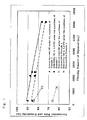
- FIG. 1 is a graph showing a reaction rate and a 1,2-PD selectivity relative to a flowing amount of glycerol.
- the polyhydric alcohol and hydrogen are heated in the presence of a catalyst to hydrogenolyze the polyhydric alcohol.
- the polyhydric alcohol is preferably in the form of a compound having 2 to 6 hydroxyl groups. Examples of the polyhydric alcohol include aliphatic or alicyclic polyhydric alcohols having 2 to 60 carbon atoms.
- polyhydric alcohol examples include various propanediols, various butanediols, various pentanediols, various pentanetriols, various hexanediols, various hexanetriols, glycerol, diglycerol, triglycerol, various cyclohexanediols, various cyclohexanetriols, pentaerythritol, trimethylol propane, and sugar alcohols such as sorbitol and mannitol.
- glycerol and sugar alcohols such as sorbitol and mannitol which are readily produced from biomasses such as sugars and oils and fats.
- glycerol especially preferred is glycerol because the glycerol is present in an excessive amount and therefore inexpensive owing to the recent spread of bio-diesel fuels.
- the hydrogenolysis product of the polyhydric alcohol as mentioned in the present invention means a compound obtained by reacting the polyhydric alcohol with hydrogen to decompose hydroxyl groups thereof to such an extent that at least one of the hydroxyl groups remains in a non-decomposed state.
- the hydrogenolysis product of glycerol (number of hydroxyl groups in molecule: 3) includes a C3 diol (number of hydroxyl groups in molecule: 2) and a C3 monool (number of hydroxyl group in molecule: 1).
- sugar alcohols such as sorbitol and mannitol may also undergo similar reactions via glycerol when they are subjected to hydrogenolysis.
- the above hydrogenolysis catalyst there may be used solid catalysts or complex catalysts which are used for hydrogenation of unsaturated hydrocarbon compounds or carbonyl compounds such as alkenes, alkynes and aromatic compounds.
- the above hydrogenolysis catalyst include metals such as copper, nickel, cobalt, ruthenium, palladium, platinum and rhodium.
- the hydrogenolysis catalyst may be in the form of a solid catalyst prepared by supporting any of these metals on a carrier.
- preferred are copper-containing catalysts, and especially preferred are copper/silica catalysts, copper-Raney catalysts and copper-iron-aluminum catalysts.
- the shape of a molded product obtained from these catalysts may be optionally determined unless the operation of a fixed-bed reactor used therefor is adversely affected.
- a catalyst precursor prepared by tableting or extrusion-molding the catalyst into a cylindrical shape, or a catalyst precursor prepared by forming the catalyst into spherical particles having a particle size of from 1 to 20 mm may be usually suitably used because these catalyst precursors can be readily produced at low costs.
- the catalysts there may also be used commercially available catalysts.
- the catalyst used in the present invention may be a molded product which is prepared by first obtaining a catalyst powder by conventionally known methods such as, for example, a precipitation method, and then subjecting the thus obtained catalyst powder to extrusion-molding, etc.
- the molded product of the catalyst may be reduced and activated by a vapor phase reduction method in which the reduction is carried out while flowing an inert gas containing hydrogen through the reaction system, or by a method in which the reduction is carried out by a hydrogen gas or an inert gas containing hydrogen while flowing a solvent through the reaction system.
- the polyhydric alcohol solution to be reacted is preferably a solution of a polyhydric alcohol selected from the group consisting of glycerol, sorbitol and mannitol and most preferably a solution containing glycerol (hereinafter occasionally referred to merely as a "glycerol solution").
- the present invention is characterized in that the content of water in the polyhydric alcohol solution is less than 10% by mass, preferably 5% by mass or less, more preferably 2% by mass or less and most preferably 1% by mass or less.
- the lower limit of the water content in the polyhydric alcohol solution is preferably 0.1% by mass or more, and more preferably 0.3% by mass or more.
- the polyhydric alcohol solution as used in the present invention means a solution containing a polyhydric alcohol, and is especially preferably a polyhydric alcohol itself whose water content is less than a predetermined value.
- the polyhydric alcohol solution used in the reaction of the present invention may also optionally contain an organic solvent such as methanol and ethanol which has no adverse influence on the reaction.
- the reaction is desirably carried out in a salvent-free condition.
- the polyhydric alcohol solution is preferably a solution containing only a polyhydric alcohol and water.
- the polyhydric alcohol solution be subjected to hydrogenolysis reaction in the same reactor.
- the reaction temperature is preferably from 130 to 300°C, more preferably from 180 to 250°C and still more preferably from 210 to 230°C.
- the reaction pressure is preferably 0.1 MPa or more, more preferably 5 MPa or more, still more preferably 10 MPa or more, and further still more preferably 15 MPa or more.
- the upper limit of the reaction pressure is preferably 30 MPa or less, more preferably 27 MPa or less, still more preferably 22 MPa or less, and further still more preferably 20 MPa or less.
- the liquid hourly space velocity (LHSV; unit: h -1 ) of the raw material fed may be optionally determined depending upon the reaction conditions.
- the LHSV is preferably in the range of from 0.1 to 5.0 h -1 and more preferably from 0.2 to 1.0 h -1 .
- the hydrogenolysis of the present invention is carried out by contacting a hydrogen gas or a mixed gas of hydrogen and an inert gas with the catalyst precursor while feeding the gas to the reaction system.
- the inert gas usable for diluting hydrogen include nitrogen, helium, argon and methane.
- the feeding rate of hydrogen based on glycerol is controlled such that a molar ratio of H 2 to glycerol is from 1 to 100, preferably from 2 to 50 and more preferably from 3 to 30.
- a hydrogen gas hydrogen concentration: 100%
- a hydrogen gas hydrogen concentration: 100%
- lauryl alcohol purity: 99.8%
- glycerol was introduced into the reactor at a liquid hourly space velocity of 0.5 h -1 at 230°C under a pressure of 2.0 MPa while flowing hydrogen therethrough in an amount of 5 mol per 1 mol of glycerol (gas hourly space velocity: 610 h -1 ) to thereby subject the glycerol to hydrogenolysis reaction.
- the reaction solution was sampled and analyzed by a gas chromatography under the following conditions to quantitatively determine the resulting products. As a result, it was confirmed that the products contained 1,2-propanediol, hydroxyacetone, ethylene glycol and other unknown substances. The results are shown in Table 1.
- the reaction was carried out under the conditions shown in Table 1 by using a glycerol solution (glycerol content: 91% by mass; water content: 9% by mass) as a raw material.
- the reaction was carried out under the conditions shown in Table 1 by using a glycerol solution (glycerol content: 80% by mass; water content: 20% by mass) as a raw material.
- Comparative Example 1 since it was recognized that Comparative Example 1, was less practical, the procedure of Comparative Example 1 was terminated when the flowing amount of glycerol reached 1,300 mL and the reaction time reached 192 h. On the other hand, it was confirmed that when using the raw material containing substantially no water as used in Example 1, the catalyst was hardly deteriorated in its catalytic activity, and even after the flowing amount of glycerol reached 6,192 mL and the reaction time reached 876 h, the reactivity of glycerol and the selectivity to 1,2-PD were still kept in the practically acceptable ranges as high as 77% and 73%, respectively. The results are shown in FIG. 1 .
- the present invention can be suitably applied to a process for producing a hydrogenolysis product of a polyhydric alcohol by a fixed-bed continuous liquid phase reaction method using a hydrogenation catalyst and a polyhydric alcohol solution having a water content of less than 10% by mass, in particular, a process for producing 1,2-PD from glycerol with a high conversion rate and a high selectivity in an efficient manner.
Landscapes
- Chemical & Material Sciences (AREA)
- Organic Chemistry (AREA)
- Organic Low-Molecular-Weight Compounds And Preparation Thereof (AREA)
- Low-Molecular Organic Synthesis Reactions Using Catalysts (AREA)
Abstract
Description
- The present invention relates to a process for producing hydrogenolysis products of polyhydric alcohols with a high selectivity by converting the polyhydric alcohols into the aimed products in an efficient manner.
- Hydrogenolysis of polyhydric alcohols obtained from the natural world using a catalyst for converting the polyhydric alcohols into other compounds is an important technique from the viewpoint of effective utilization of materials or substances.
On the other hand, production of glycerol used as the polyhydric alcohol in food or medical applications has been increased year by year. One of the reasons therefor is the spread of bio-diesel fuels which have recently come to dominate owing to uncertain supply of fossil fuels or global warming problems. Glycerol is produced during the process for production of the bio-diesel fuels from raw vegetable materials. However, excessive supply of the glycerol has occurred due to currently limited applications thereof. Therefore, effective utilization of the glycerol has been demanded. As one solution of the above problem, a catalytic reaction of the glycerol for converting the glycerol into C3 alcohols has been noticed over the world. - The C3 alcohols are useful as various industrial materials, etc. Among the C3 alcohols, as diols, there are 1,3-propanediol and 1,2-propanediol. The 1,3-propanediol has been noticed as a raw material of polyesters and polyurethanes, etc.
On the other hand, the 1,2-propanediol has been used, for example, for production of polyester resins, paints, alkyd resins, various plasticizers, anti-freezing fluids, brake oils, etc., and further are useful for production of food wetting agents, viscosity increasers for fruit juices, cellophane softeners for food, cosmetics, drugs, etc.
In the circumstances, in order to effectively utilize glycerol, it has been considered to convert glycerol into propanediols, and there are therefore known various methods for producing 1,2-propanediol (hereinafter occasionally referred to merely as "1,2-PD") by hydrogenolysis of the glycerol. - For example, as the fixed-bed continuous liquid phase reaction methods, there are known (1) the method using a copper-chromium catalyst (for example, refer to Patent Document 1), (2) the method using a cobalt-copper-manganese-molybdenum catalyst (for example, refer to Patent Document 2), (3) the method using a copper-zinc-aluminum catalyst (for example, refer to Patent Document 3), (4) the method using a nickel-rhenium catalyst (for example, refer to Patent Document 4), (5) the method using a copper catalyst (for example, refer to Patent Document 5), etc.
In these fixed-bed continuous liquid phase reaction methods, a hydrogenation reaction may be generally carried out in a liquid phase using a solvent. As far as a hydrogenolysis of glycerol is concerned, in any ofPatent Documents 1 to 5, water is used as the solvent. In these Patent Documents, there are described the reaction examples using water in an amount of 10% by mass or more. Specifically, in Patent Document 2, there is described the reaction example using water in an amount of 13.5% by mass or more, and in Patent Document 5, there is described the reaction example using water in an amount of 10% by mass or more. Incidentally, it is also described that in the fixed-bed continuous liquid phase methods (for example refer to Patent Document 6), the effect of protecting a catalyst is attained by using water as the solvent. - Patent Document 1:
DP-A 4302464
Patent Document 2:EP-A 713849
Patent Document 3:EP-A 523015
Patent Document 4:PCT Pamphlet WO 03/035582
Patent Document 5:PCT Pamphlet WO 07/099161
Patent Document 6:PCT Pamphlet WO 07/010299 - The present invention relates to a process for producing hydrogenolysis products of polyhydric alcohols using a catalyst which is enhanced in conversion rate of the polyhydric alcohols and selectivity to the aimed hydrogenolysis products.
As a result of extensive researches and studies concerning influences of addition of water on a catalyst in hydrogenolysis of polyhydric alcohols as raw materials by the fixed-bed continuous liquid phase reaction methods, the present inventors have found that no effect of protecting the catalyst by addition of water is recognized, and on the contrary, when no water is added, the catalyst has a long life and both the conversion rate and the selectivity can be enhanced.
Thus, the present invention relates to a process for producing a hydrogenolysis product of a polyhydric alcohol which includes the step of subjecting a polyhydric alcohol solution having a water content of less than 10% by mass to hydrogenolysis by a fixed-bed continuous liquid phase reaction method in the presence of a hydrogenation catalyst.
Meanwhile, the polyhydric alcohol solution as used in the present invention means a solution containing a polyhydric alcohol, and may also be the polyhydric alcohol itself which has a water content less than a predetermined value. -
FIG. 1 is a graph showing a reaction rate and a 1,2-PD selectivity relative to a flowing amount of glycerol. - In the process for producing a hydrogenolysis product of a polyhydric alcohol according to the present invention, the polyhydric alcohol and hydrogen are heated in the presence of a catalyst to hydrogenolyze the polyhydric alcohol.
The polyhydric alcohol is preferably in the form of a compound having 2 to 6 hydroxyl groups. Examples of the polyhydric alcohol include aliphatic or alicyclic polyhydric alcohols having 2 to 60 carbon atoms. Specific examples of the polyhydric alcohol include various propanediols, various butanediols, various pentanediols, various pentanetriols, various hexanediols, various hexanetriols, glycerol, diglycerol, triglycerol, various cyclohexanediols, various cyclohexanetriols, pentaerythritol, trimethylol propane, and sugar alcohols such as sorbitol and mannitol. Among these polyhydric alcohols, from the viewpoint of construction of sustainable world, preferred are glycerol and sugar alcohols such as sorbitol and mannitol which are readily produced from biomasses such as sugars and oils and fats. Further, among these compounds, especially preferred is glycerol because the glycerol is present in an excessive amount and therefore inexpensive owing to the recent spread of bio-diesel fuels.
The hydrogenolysis product of the polyhydric alcohol as mentioned in the present invention means a compound obtained by reacting the polyhydric alcohol with hydrogen to decompose hydroxyl groups thereof to such an extent that at least one of the hydroxyl groups remains in a non-decomposed state. For example, the hydrogenolysis product of glycerol (number of hydroxyl groups in molecule: 3) includes a C3 diol (number of hydroxyl groups in molecule: 2) and a C3 monool (number of hydroxyl group in molecule: 1). Meanwhile, some of sugar alcohols such as sorbitol and mannitol may also undergo similar reactions via glycerol when they are subjected to hydrogenolysis. - As the above hydrogenolysis catalyst, there may be used solid catalysts or complex catalysts which are used for hydrogenation of unsaturated hydrocarbon compounds or carbonyl compounds such as alkenes, alkynes and aromatic compounds. Examples of the above hydrogenolysis catalyst include metals such as copper, nickel, cobalt, ruthenium, palladium, platinum and rhodium. Also, the hydrogenolysis catalyst may be in the form of a solid catalyst prepared by supporting any of these metals on a carrier. Among these catalysts, preferred are copper-containing catalysts, and especially preferred are copper/silica catalysts, copper-Raney catalysts and copper-iron-aluminum catalysts. The shape of a molded product obtained from these catalysts may be optionally determined unless the operation of a fixed-bed reactor used therefor is adversely affected. As the molded product of the catalyst, a catalyst precursor prepared by tableting or extrusion-molding the catalyst into a cylindrical shape, or a catalyst precursor prepared by forming the catalyst into spherical particles having a particle size of from 1 to 20 mm may be usually suitably used because these catalyst precursors can be readily produced at low costs. As the catalysts, there may also be used commercially available catalysts. Further, the catalyst used in the present invention may be a molded product which is prepared by first obtaining a catalyst powder by conventionally known methods such as, for example, a precipitation method, and then subjecting the thus obtained catalyst powder to extrusion-molding, etc.
The molded product of the catalyst may be reduced and activated by a vapor phase reduction method in which the reduction is carried out while flowing an inert gas containing hydrogen through the reaction system, or by a method in which the reduction is carried out by a hydrogen gas or an inert gas containing hydrogen while flowing a solvent through the reaction system. - In the present invention, the polyhydric alcohol solution to be reacted is preferably a solution of a polyhydric alcohol selected from the group consisting of glycerol, sorbitol and mannitol and most preferably a solution containing glycerol (hereinafter occasionally referred to merely as a "glycerol solution"). The present invention is characterized in that the content of water in the polyhydric alcohol solution is less than 10% by mass, preferably 5% by mass or less, more preferably 2% by mass or less and most preferably 1% by mass or less. The lower limit of the water content in the polyhydric alcohol solution is preferably 0.1% by mass or more, and more preferably 0.3% by mass or more. When the water content in the polyhydric alcohol solution is reduced, the reactivity of the polyhydric alcohol and the selectivity to the aimed product can be enhanced.
More specifically, the polyhydric alcohol solution as used in the present invention means a solution containing a polyhydric alcohol, and is especially preferably a polyhydric alcohol itself whose water content is less than a predetermined value. - The polyhydric alcohol solution used in the reaction of the present invention may also optionally contain an organic solvent such as methanol and ethanol which has no adverse influence on the reaction. However, in the present invention, in view of a good productivity, the reaction is desirably carried out in a salvent-free condition. Namely, the polyhydric alcohol solution is preferably a solution containing only a polyhydric alcohol and water.
- In the present invention, from the industrial viewpoints, it is advantageous and preferable that after activating the catalyst in a fixed-bed continuous reactor by the above method, the polyhydric alcohol solution be subjected to hydrogenolysis reaction in the same reactor.
- The reaction temperature is preferably from 130 to 300°C, more preferably from 180 to 250°C and still more preferably from 210 to 230°C. The reaction pressure is preferably 0.1 MPa or more, more preferably 5 MPa or more, still more preferably 10 MPa or more, and further still more preferably 15 MPa or more. The upper limit of the reaction pressure is preferably 30 MPa or less, more preferably 27 MPa or less, still more preferably 22 MPa or less, and further still more preferably 20 MPa or less. The liquid hourly space velocity (LHSV; unit: h-1) of the raw material fed may be optionally determined depending upon the reaction conditions. However, in view of a good productivity or a good reactivity, the LHSV is preferably in the range of from 0.1 to 5.0 h-1 and more preferably from 0.2 to 1.0 h-1. The hydrogenolysis of the present invention is carried out by contacting a hydrogen gas or a mixed gas of hydrogen and an inert gas with the catalyst precursor while feeding the gas to the reaction system. Examples of the inert gas usable for diluting hydrogen include nitrogen, helium, argon and methane. The feeding rate of hydrogen based on glycerol is controlled such that a molar ratio of H2 to glycerol is from 1 to 100, preferably from 2 to 50 and more preferably from 3 to 30.
- In the process for producing a hydrogenolysis product of a polyhydric alcohol according to the present invention, by using glycerol, sorbitol or mannitol, in particular, glycerol, as the polyhydric alcohol, it is possible to produce a hydrogenolysis product of the polyhydric alcohol, in particular, 1,2-PD, with a high conversion rate and a high selectivity in an efficient manner.
- A fixed-bed continuous reactor was charged with 26 g (30 mL) of a copper/silica catalyst (product number: "F01B"; a cylindrical extrusion-molded product; diameter: 1 mm; length: 2 to 8 mm; copper/silica ratio = 1/0.55 (in terms of atomic ratio)) available from Nikki Chemical Co., Ltd. Next, a hydrogen gas (hydrogen concentration: 100%) was introduced into the reactor at a temperature of from 40 to 50°C at a flow rate of 4.5 NL/h (gas hourly space velocity: 150 h-1), and then lauryl alcohol (purity: 99.8%) was flowed through the reactor at a flow rate of 15 mL/h (liquid hourly space velocity: 0.5 h-1).
After the flow rate of the gas introduced was stabilized, heating of the contents in the reactor was started at a temperature rise rate of 10°C/h under a hydrogen pressure of 2.0 MPa (gauge pressure). After the heating, the catalyst was subjected to reduction and activation treatment at 100°C for 24 h.
Thereafter, lauryl alcohol was replaced with glycerol (purity: 99.7%; water content: 0.3%) at 80°C over 24 h. Next, glycerol was introduced into the reactor at a liquid hourly space velocity of 0.5 h-1 at 230°C under a pressure of 2.0 MPa while flowing hydrogen therethrough in an amount of 5 mol per 1 mol of glycerol (gas hourly space velocity: 610 h-1) to thereby subject the glycerol to hydrogenolysis reaction.
When 36 hours elapsed after initiation of the reaction, the reaction solution was sampled and analyzed by a gas chromatography under the following conditions to quantitatively determine the resulting products. As a result, it was confirmed that the products contained 1,2-propanediol, hydroxyacetone, ethylene glycol and other unknown substances. The results are shown in Table 1. - Column: "Ultra-alloy capillary column", 15.0 m x 250 µm x 0.15 µm (available from Frontier Laboratories Inc.); Detector: FID; Injection temperature: 300°C; Detector temperature: 350°C; Flow rate of He: 4.6 mL/min
-
TABLE 1 Examples Comparative Examples 1 2 3 4 5 6 7 8 9 10 11 12 1 2 4 5 Water content (mass%) in glycerol 0.3 0.3 0.3 0.3 0.3 0.3 0.3 0.3 0.3 0.3 9 9 20 20 20 20 (mo/h) Feeding rate of glycerol 0.2 0.12 0.2 0.2 0.2 0.2 0,12 0.12 0.2 0.12 0.2 0.2 0.2 0.12 0.2 0.2 LHSV (h-1) 0.5 0.3 0.5 0.5 0,5 0.5 0.3 0.3 0.5 0.3 0.55 0.55 0.68 0.38 0.68 0.68 H2/glycerol: molar ratio 5 5 10 15 25 15 15 25 25 25 5 25 5 5 25 25 Pressure (MPa) 2.0 2.0 2.0 2.0 2.0 2.0 2.0 2.0 20.0 20.0 2.0 20.0 2.0 2.0 2.0 20.0 Reaction temperature (°C) 230 230 230 230 230 210 210 210 230 210 230 230 230 230 230 230 Conversion (mol%) rate of glycerol 90 95 98 99 99 82 76 94 83 93 85 78 84 88 96 67 Selectivity (mol%) 1,2-PD 85 85 85 83 90 88 94 94 99 99 72 99 66 67 74 98 Hydroxyacetone 4 3 5 7 4 4 2 3 0 0 8 0 11 7 10 0 Ethylene glycol 3 3 2 2 2 2 2 1 1 1 3 1 2 2 2 1 Others and unknown substances 8 9 8 8 4 6 2 2 0 0 17 0 21 24 14 1 - The reaction was carried out under the conditions shown in Table 1 by using the same glycerol raw material as used in Example 1.
- The reaction was carried out under the conditions shown in Table 1 by using a glycerol solution (glycerol content: 91% by mass; water content: 9% by mass) as a raw material.
- The reaction was carried out under the conditions shown in Table 1 by using a glycerol solution (glycerol content: 80% by mass; water content: 20% by mass) as a raw material.
- From the results of the above Examples and Comparative Examples, the followings were recognized. That is, from the comparison between Examples 1 and 11 and Comparative Example 1, between Example 2 and Comparative Example 2, between Example 5 and Comparative Example 3, and between Examples 9 and 12 and Comparative Example 4 which were respectively conducted at the same glycerol feeding rate under the same reaction conditions (including a H2 molar ratio, a pressure and a reaction temperature), it was confirmed that the respective Examples were enhanced in both conversion rate and selectivity under the low-pressure condition (2.0 MPa), and further enhanced in conversion rate under the high-pressure condition (20.0 MPa).
Thus, when the glycerol having a less water content was used, the efficiency of production of 1,2-PD was enhanced. - In addition, in order to confirm the influence exerted on the catalyst by limiting a concentration of water in the raw material, the influences on the reactivity of glycerol and the selectivity to 1,2-PD relative to the flowing amount of glycerol were examined under the same conditions as used in Example 1 and Comparative Example 1, respectively. As a result, it was confirmed that under the conditions of Comparative Example 1, i.e., when using the glycerol solution (containing 80% by mass of glycerol and 20% by mass of water), the catalyst was deteriorated in its catalytic activity, and the reactivity of glycerol and the selectivity to 1,2-PD were deteriorated to a considerable extent. Therefore, since it was recognized that Comparative Example 1, was less practical, the procedure of Comparative Example 1 was terminated when the flowing amount of glycerol reached 1,300 mL and the reaction time reached 192 h. On the other hand, it was confirmed that when using the raw material containing substantially no water as used in Example 1, the catalyst was hardly deteriorated in its catalytic activity, and even after the flowing amount of glycerol reached 6,192 mL and the reaction time reached 876 h, the reactivity of glycerol and the selectivity to 1,2-PD were still kept in the practically acceptable ranges as high as 77% and 73%, respectively. The results are shown in
FIG. 1 . - From the above results, although it was conventionally mentioned that when using water or a mixture of water and a lower alcohol as a solvent in hydrogenolysis of glycerol, the water serves for not only reducing a viscosity of a material to be reacted but also protecting a catalyst used therein, it was actually recognized that as apparently shown in
FIG. 1 , the catalyst used in Example 1 using the glycerol raw material containing 0.3% by mass of water was hardly deteriorated in its catalytic activity as compared to the catalyst used in Comparative Example 1 using the glycerol raw material containing 20% by mass of water. - The present invention can be suitably applied to a process for producing a hydrogenolysis product of a polyhydric alcohol by a fixed-bed continuous liquid phase reaction method using a hydrogenation catalyst and a polyhydric alcohol solution having a water content of less than 10% by mass, in particular, a process for producing 1,2-PD from glycerol with a high conversion rate and a high selectivity in an efficient manner.
Claims (5)
- A process for producing a hydrogenolysis product of a polyhydric alcohol, comprising the step of subjecting a polyhydric alcohol solution having a water content of less than 10% by mass to hydrogenolysis by a fixed-bed continuous liquid phase reaction method in the presence of a hydrogenation catalyst.
- The process for producing a hydrogenolysis product of a polyhydric alcohol according to claim 1, wherein the hydrogenation catalyst is a copper-containing catalyst.
- The process for producing a hydrogenolysis product of a polyhydric alcohol according to claim 1 or 2, wherein the hydrogenation catalyst is a copper/silica catalyst.
- The process for producing a hydrogenolysis product of a polyhydric alcohol according to any one of claims 1 to 3, wherein the polyhydric alcohol is glycerol.
- The process for producing a hydrogenolysis product of a polyhydric alcohol according to claim 4, wherein the hydrogenolysis product contains 1,2-propanediol as a main product.
Applications Claiming Priority (2)
| Application Number | Priority Date | Filing Date | Title |
|---|---|---|---|
| JP2008019819A JP5612806B2 (en) | 2008-01-30 | 2008-01-30 | Process for producing polyhydric alcohol hydrocracked product |
| PCT/JP2008/073713 WO2009096134A1 (en) | 2008-01-30 | 2008-12-26 | Method for producing hydrogenolysis product of polyhydric alcohol |
Publications (3)
| Publication Number | Publication Date |
|---|---|
| EP2239247A1 true EP2239247A1 (en) | 2010-10-13 |
| EP2239247A4 EP2239247A4 (en) | 2013-11-06 |
| EP2239247B1 EP2239247B1 (en) | 2018-02-14 |
Family
ID=40912492
Family Applications (1)
| Application Number | Title | Priority Date | Filing Date |
|---|---|---|---|
| EP08871698.0A Not-in-force EP2239247B1 (en) | 2008-01-30 | 2008-12-26 | Method for producing hydrogenolysis product of polyhydric alcohol |
Country Status (7)
| Country | Link |
|---|---|
| US (1) | US8258351B2 (en) |
| EP (1) | EP2239247B1 (en) |
| JP (1) | JP5612806B2 (en) |
| CN (1) | CN101925564B (en) |
| ES (1) | ES2664575T3 (en) |
| MY (1) | MY150056A (en) |
| WO (1) | WO2009096134A1 (en) |
Families Citing this family (12)
| Publication number | Priority date | Publication date | Assignee | Title |
|---|---|---|---|---|
| JP2506148B2 (en) | 1988-05-27 | 1996-06-12 | 日機装株式会社 | Flow control mechanism of automatic decompressor |
| JPH0737929B2 (en) | 1988-05-27 | 1995-04-26 | 日機装株式会社 | Decompression control method of automatic decompression device |
| JP3354299B2 (en) | 1994-08-18 | 2002-12-09 | 日機装株式会社 | Automatic high-pressure and high-pressure sample water supply system |
| JP5350059B2 (en) * | 2008-04-22 | 2013-11-27 | 三井化学株式会社 | Propylene glycol production method |
| JP5562541B2 (en) * | 2008-09-11 | 2014-07-30 | 花王株式会社 | Catalyst preparation method |
| JP5562542B2 (en) * | 2008-09-11 | 2014-07-30 | 花王株式会社 | Catalyst preparation method |
| CN102070422B (en) * | 2009-11-20 | 2013-06-19 | 中国科学院大连化学物理研究所 | Method for preparing acetol by dehydrating glycerol and preparing 1,2-propanediol by hydrogenating acetol |
| CN102153446B (en) * | 2011-03-10 | 2013-12-11 | 江苏大学 | Cu/MgO catalyst, preparation method thereof and method for catalyzing glycerin hydrogenolysis |
| US9447011B2 (en) | 2012-11-21 | 2016-09-20 | University Of Tennessee Research Foundation | Methods, systems and devices for simultaneous production of lactic acid and propylene glycol from glycerol |
| CN103570934A (en) * | 2013-11-15 | 2014-02-12 | 安徽悦康凯悦制药有限公司 | Preparation technology of lauromacrogol |
| US20170044123A1 (en) * | 2014-04-10 | 2017-02-16 | Archer Daniels Midland Company | Synthesis of r-glucosides, sugar alcohols, reduced sugar alcohols, and furan derivatives of reduced sugar alcohols |
| WO2018093596A2 (en) * | 2016-11-16 | 2018-05-24 | Archer Daniels Midland Company | Process for producing 1,2-propanediol from glycerol |
Family Cites Families (13)
| Publication number | Priority date | Publication date | Assignee | Title |
|---|---|---|---|---|
| CA1219003A (en) * | 1981-09-30 | 1987-03-10 | William J. Bartley | Production of monethylene glycol and ethanol from hydrogenolysis of polyalkylene glycols |
| US4820880A (en) * | 1987-05-18 | 1989-04-11 | Michigan Biotechnology Institute | Process for the production of 3,4-dideoxyhexitol |
| DE4302464A1 (en) * | 1993-01-29 | 1994-08-04 | Henkel Kgaa | Prepn. of propylene glycol from re-generable fossil fuel sources |
| DE4442124A1 (en) * | 1994-11-26 | 1996-05-30 | Basf Ag | Process for the preparation of 1,2-propanediol |
| EP1292556B1 (en) * | 2000-06-20 | 2004-01-07 | E.I. Dupont De Nemours And Company | Catalytic dehydroxylation of diols and polyols |
| ATE283251T1 (en) * | 2000-09-27 | 2004-12-15 | Showa Denko Kk | METHOD FOR PRODUCING FLUORINATED METHYLBENZYL ALCOHOL |
| EP2298720B1 (en) * | 2004-03-25 | 2020-01-01 | Galen J. Suppes | Process for converting glycerol to propylene glycol |
| GB0514593D0 (en) * | 2005-07-15 | 2005-08-24 | Davy Process Techn Ltd | Process |
| PL1993985T3 (en) * | 2006-03-03 | 2018-03-30 | Basf Se | Process for the preparation of 1,2-propanediol |
| DE102007027371A1 (en) * | 2007-06-11 | 2008-12-18 | Cognis Oleochemicals Gmbh | A process for preparing a compound having at least one ester group |
| DE102007027372A1 (en) * | 2007-06-11 | 2008-12-18 | Cognis Oleochemicals Gmbh | Process for the hydrogenation of glycerol |
| CN101085719B (en) * | 2007-06-29 | 2011-09-21 | 上海华谊丙烯酸有限公司 | Method for preparing 1,2-dihydroxypropane by glycerine hydrogenation |
| CN101214440A (en) * | 2008-01-14 | 2008-07-09 | 南京工业大学 | Catalyst for preparing 1,2-propanediol by hydrogenolysis of glycerol and preparation method thereof |
-
2008
- 2008-01-30 JP JP2008019819A patent/JP5612806B2/en not_active Expired - Fee Related
- 2008-12-26 US US12/864,654 patent/US8258351B2/en not_active Expired - Fee Related
- 2008-12-26 EP EP08871698.0A patent/EP2239247B1/en not_active Not-in-force
- 2008-12-26 WO PCT/JP2008/073713 patent/WO2009096134A1/en not_active Ceased
- 2008-12-26 CN CN200880125651.6A patent/CN101925564B/en not_active Expired - Fee Related
- 2008-12-26 MY MYPI2010003557A patent/MY150056A/en unknown
- 2008-12-26 ES ES08871698.0T patent/ES2664575T3/en active Active
Also Published As
| Publication number | Publication date |
|---|---|
| WO2009096134A1 (en) | 2009-08-06 |
| US20110046418A1 (en) | 2011-02-24 |
| CN101925564A (en) | 2010-12-22 |
| JP2009179594A (en) | 2009-08-13 |
| MY150056A (en) | 2013-11-29 |
| CN101925564B (en) | 2014-05-21 |
| US8258351B2 (en) | 2012-09-04 |
| EP2239247A4 (en) | 2013-11-06 |
| EP2239247B1 (en) | 2018-02-14 |
| ES2664575T3 (en) | 2018-04-20 |
| JP5612806B2 (en) | 2014-10-22 |
Similar Documents
| Publication | Publication Date | Title |
|---|---|---|
| US8258351B2 (en) | Method for producing hydrogenolysis product of polyhydric alcohol | |
| EP2138478B1 (en) | Process for producing hydrogenolysis products of polyhydric alcohols | |
| Duarte et al. | Hydrodeoxygenation of 5-hydroxymethylfurfural over alumina-supported catalysts in aqueous medium | |
| US7812200B2 (en) | Process for preparing 1,2-propanediol by hydrogenolysis of glycerol | |
| EP2392556A2 (en) | Direct and selective production of ethanol from acetic acid utilizing a platinum/tin catalyst | |
| KR20080025357A (en) | Gas phase hydrogenation method of glycerol | |
| Yadav et al. | Hydrogenolysis of glycerol to 1, 2-propanediol over nano-fibrous Ag-OMS-2 catalysts | |
| EP2664605B1 (en) | Method for producing glycol from polyhydric alcohol | |
| CN108117480A (en) | A kind of catalyzed conversion methanol and alcohol mixeding liquid prepare the new method of isobutanol | |
| TW201041827A (en) | Olefin production process | |
| CN102802795A (en) | Process And Reactor Systems For Converting Sugars And Sugar Alcohols | |
| Rivière et al. | Solvent effect in hydrogenolysis of xylitol over bifunctional Ru/MnO/C catalysts under alkaline-free conditions | |
| EP2694205B1 (en) | Catalysts for the conversion of synthesis gas to alcohols | |
| MX2008012951A (en) | Process for hydrogenating an aldehyde. | |
| EP2565175B1 (en) | Catalytic process for the production of 1,2-propanediol from crude glycerol stream | |
| EP2951165B1 (en) | Single step process for conversion of furfural to tetrahydrofuran | |
| JP5684657B2 (en) | Method for producing polyol hydrocracked product | |
| EP2236486A1 (en) | Method for producing hydrogenolysis product of polyhydric alcohol | |
| FR2993557A1 (en) | SYNTHESIS OF METHYL PROPANE DIOL FROM ALLYL ALCOHOL | |
| EP2694206A1 (en) | Catalysts for the conversion of synthesis gas to alcohols | |
| EP3253486B1 (en) | One vessel process for making 1,2-propanediol from a high fructose feedstock | |
| CN116003352B (en) | A method for selectively reducing unsaturated compounds using hydrogen transfer | |
| JPWO2010016462A1 (en) | Process for producing glycol and 1-propanol from glycerin | |
| KR102737542B1 (en) | Dehydration and decomposition of alpha-, beta-dihydroxy carbonyl compounds to lactic acid and other products | |
| RU2462445C1 (en) | Method of producing esters and saturated hydrocarbons by hydrogenation of triglycerides of fatty acids |
Legal Events
| Date | Code | Title | Description |
|---|---|---|---|
| PUAI | Public reference made under article 153(3) epc to a published international application that has entered the european phase |
Free format text: ORIGINAL CODE: 0009012 |
|
| 17P | Request for examination filed |
Effective date: 20100728 |
|
| AK | Designated contracting states |
Kind code of ref document: A1 Designated state(s): AT BE BG CH CY CZ DE DK EE ES FI FR GB GR HR HU IE IS IT LI LT LU LV MC MT NL NO PL PT RO SE SI SK TR |
|
| AX | Request for extension of the european patent |
Extension state: AL BA MK RS |
|
| DAX | Request for extension of the european patent (deleted) | ||
| A4 | Supplementary search report drawn up and despatched |
Effective date: 20131009 |
|
| RIC1 | Information provided on ipc code assigned before grant |
Ipc: C07C 29/132 20060101AFI20131002BHEP Ipc: C07C 29/60 20060101ALI20131002BHEP Ipc: C07B 61/00 20060101ALI20131002BHEP Ipc: C07C 31/20 20060101ALI20131002BHEP |
|
| 17Q | First examination report despatched |
Effective date: 20170512 |
|
| GRAP | Despatch of communication of intention to grant a patent |
Free format text: ORIGINAL CODE: EPIDOSNIGR1 |
|
| INTG | Intention to grant announced |
Effective date: 20170911 |
|
| RAP1 | Party data changed (applicant data changed or rights of an application transferred) |
Owner name: KAO CORPORATION |
|
| GRAJ | Information related to disapproval of communication of intention to grant by the applicant or resumption of examination proceedings by the epo deleted |
Free format text: ORIGINAL CODE: EPIDOSDIGR1 |
|
| GRAR | Information related to intention to grant a patent recorded |
Free format text: ORIGINAL CODE: EPIDOSNIGR71 |
|
| GRAS | Grant fee paid |
Free format text: ORIGINAL CODE: EPIDOSNIGR3 |
|
| GRAA | (expected) grant |
Free format text: ORIGINAL CODE: 0009210 |
|
| INTC | Intention to grant announced (deleted) | ||
| AK | Designated contracting states |
Kind code of ref document: B1 Designated state(s): AT BE BG CH CY CZ DE DK EE ES FI FR GB GR HR HU IE IS IT LI LT LU LV MC MT NL NO PL PT RO SE SI SK TR |
|
| INTG | Intention to grant announced |
Effective date: 20180109 |
|
| REG | Reference to a national code |
Ref country code: GB Ref legal event code: FG4D |
|
| REG | Reference to a national code |
Ref country code: CH Ref legal event code: EP |
|
| REG | Reference to a national code |
Ref country code: IE Ref legal event code: FG4D |
|
| REG | Reference to a national code |
Ref country code: DE Ref legal event code: R096 Ref document number: 602008054051 Country of ref document: DE Ref country code: AT Ref legal event code: REF Ref document number: 969739 Country of ref document: AT Kind code of ref document: T Effective date: 20180315 |
|
| REG | Reference to a national code |
Ref country code: ES Ref legal event code: FG2A Ref document number: 2664575 Country of ref document: ES Kind code of ref document: T3 Effective date: 20180420 |
|
| REG | Reference to a national code |
Ref country code: NL Ref legal event code: MP Effective date: 20180214 |
|
| REG | Reference to a national code |
Ref country code: AT Ref legal event code: MK05 Ref document number: 969739 Country of ref document: AT Kind code of ref document: T Effective date: 20180214 |
|
| PG25 | Lapsed in a contracting state [announced via postgrant information from national office to epo] |
Ref country code: FI Free format text: LAPSE BECAUSE OF FAILURE TO SUBMIT A TRANSLATION OF THE DESCRIPTION OR TO PAY THE FEE WITHIN THE PRESCRIBED TIME-LIMIT Effective date: 20180214 Ref country code: NO Free format text: LAPSE BECAUSE OF FAILURE TO SUBMIT A TRANSLATION OF THE DESCRIPTION OR TO PAY THE FEE WITHIN THE PRESCRIBED TIME-LIMIT Effective date: 20180514 Ref country code: LT Free format text: LAPSE BECAUSE OF FAILURE TO SUBMIT A TRANSLATION OF THE DESCRIPTION OR TO PAY THE FEE WITHIN THE PRESCRIBED TIME-LIMIT Effective date: 20180214 Ref country code: CY Free format text: LAPSE BECAUSE OF FAILURE TO SUBMIT A TRANSLATION OF THE DESCRIPTION OR TO PAY THE FEE WITHIN THE PRESCRIBED TIME-LIMIT Effective date: 20180214 Ref country code: HR Free format text: LAPSE BECAUSE OF FAILURE TO SUBMIT A TRANSLATION OF THE DESCRIPTION OR TO PAY THE FEE WITHIN THE PRESCRIBED TIME-LIMIT Effective date: 20180214 Ref country code: NL Free format text: LAPSE BECAUSE OF FAILURE TO SUBMIT A TRANSLATION OF THE DESCRIPTION OR TO PAY THE FEE WITHIN THE PRESCRIBED TIME-LIMIT Effective date: 20180214 |
|
| PG25 | Lapsed in a contracting state [announced via postgrant information from national office to epo] |
Ref country code: BG Free format text: LAPSE BECAUSE OF FAILURE TO SUBMIT A TRANSLATION OF THE DESCRIPTION OR TO PAY THE FEE WITHIN THE PRESCRIBED TIME-LIMIT Effective date: 20180514 Ref country code: GR Free format text: LAPSE BECAUSE OF FAILURE TO SUBMIT A TRANSLATION OF THE DESCRIPTION OR TO PAY THE FEE WITHIN THE PRESCRIBED TIME-LIMIT Effective date: 20180515 Ref country code: SE Free format text: LAPSE BECAUSE OF FAILURE TO SUBMIT A TRANSLATION OF THE DESCRIPTION OR TO PAY THE FEE WITHIN THE PRESCRIBED TIME-LIMIT Effective date: 20180214 Ref country code: LV Free format text: LAPSE BECAUSE OF FAILURE TO SUBMIT A TRANSLATION OF THE DESCRIPTION OR TO PAY THE FEE WITHIN THE PRESCRIBED TIME-LIMIT Effective date: 20180214 Ref country code: AT Free format text: LAPSE BECAUSE OF FAILURE TO SUBMIT A TRANSLATION OF THE DESCRIPTION OR TO PAY THE FEE WITHIN THE PRESCRIBED TIME-LIMIT Effective date: 20180214 |
|
| PG25 | Lapsed in a contracting state [announced via postgrant information from national office to epo] |
Ref country code: RO Free format text: LAPSE BECAUSE OF FAILURE TO SUBMIT A TRANSLATION OF THE DESCRIPTION OR TO PAY THE FEE WITHIN THE PRESCRIBED TIME-LIMIT Effective date: 20180214 Ref country code: EE Free format text: LAPSE BECAUSE OF FAILURE TO SUBMIT A TRANSLATION OF THE DESCRIPTION OR TO PAY THE FEE WITHIN THE PRESCRIBED TIME-LIMIT Effective date: 20180214 Ref country code: PL Free format text: LAPSE BECAUSE OF FAILURE TO SUBMIT A TRANSLATION OF THE DESCRIPTION OR TO PAY THE FEE WITHIN THE PRESCRIBED TIME-LIMIT Effective date: 20180214 |
|
| REG | Reference to a national code |
Ref country code: DE Ref legal event code: R097 Ref document number: 602008054051 Country of ref document: DE |
|
| PG25 | Lapsed in a contracting state [announced via postgrant information from national office to epo] |
Ref country code: SK Free format text: LAPSE BECAUSE OF FAILURE TO SUBMIT A TRANSLATION OF THE DESCRIPTION OR TO PAY THE FEE WITHIN THE PRESCRIBED TIME-LIMIT Effective date: 20180214 Ref country code: CZ Free format text: LAPSE BECAUSE OF FAILURE TO SUBMIT A TRANSLATION OF THE DESCRIPTION OR TO PAY THE FEE WITHIN THE PRESCRIBED TIME-LIMIT Effective date: 20180214 Ref country code: DK Free format text: LAPSE BECAUSE OF FAILURE TO SUBMIT A TRANSLATION OF THE DESCRIPTION OR TO PAY THE FEE WITHIN THE PRESCRIBED TIME-LIMIT Effective date: 20180214 |
|
| PLBE | No opposition filed within time limit |
Free format text: ORIGINAL CODE: 0009261 |
|
| STAA | Information on the status of an ep patent application or granted ep patent |
Free format text: STATUS: NO OPPOSITION FILED WITHIN TIME LIMIT |
|
| 26N | No opposition filed |
Effective date: 20181115 |
|
| PG25 | Lapsed in a contracting state [announced via postgrant information from national office to epo] |
Ref country code: SI Free format text: LAPSE BECAUSE OF FAILURE TO SUBMIT A TRANSLATION OF THE DESCRIPTION OR TO PAY THE FEE WITHIN THE PRESCRIBED TIME-LIMIT Effective date: 20180214 |
|
| REG | Reference to a national code |
Ref country code: CH Ref legal event code: PL |
|
| PG25 | Lapsed in a contracting state [announced via postgrant information from national office to epo] |
Ref country code: LU Free format text: LAPSE BECAUSE OF NON-PAYMENT OF DUE FEES Effective date: 20181226 Ref country code: MC Free format text: LAPSE BECAUSE OF FAILURE TO SUBMIT A TRANSLATION OF THE DESCRIPTION OR TO PAY THE FEE WITHIN THE PRESCRIBED TIME-LIMIT Effective date: 20180214 |
|
| REG | Reference to a national code |
Ref country code: IE Ref legal event code: MM4A |
|
| REG | Reference to a national code |
Ref country code: BE Ref legal event code: MM Effective date: 20181231 |
|
| PG25 | Lapsed in a contracting state [announced via postgrant information from national office to epo] |
Ref country code: IE Free format text: LAPSE BECAUSE OF NON-PAYMENT OF DUE FEES Effective date: 20181226 |
|
| PG25 | Lapsed in a contracting state [announced via postgrant information from national office to epo] |
Ref country code: BE Free format text: LAPSE BECAUSE OF NON-PAYMENT OF DUE FEES Effective date: 20181231 |
|
| PG25 | Lapsed in a contracting state [announced via postgrant information from national office to epo] |
Ref country code: LI Free format text: LAPSE BECAUSE OF NON-PAYMENT OF DUE FEES Effective date: 20181231 Ref country code: CH Free format text: LAPSE BECAUSE OF NON-PAYMENT OF DUE FEES Effective date: 20181231 |
|
| PG25 | Lapsed in a contracting state [announced via postgrant information from national office to epo] |
Ref country code: MT Free format text: LAPSE BECAUSE OF NON-PAYMENT OF DUE FEES Effective date: 20181226 |
|
| PG25 | Lapsed in a contracting state [announced via postgrant information from national office to epo] |
Ref country code: TR Free format text: LAPSE BECAUSE OF FAILURE TO SUBMIT A TRANSLATION OF THE DESCRIPTION OR TO PAY THE FEE WITHIN THE PRESCRIBED TIME-LIMIT Effective date: 20180214 |
|
| PG25 | Lapsed in a contracting state [announced via postgrant information from national office to epo] |
Ref country code: PT Free format text: LAPSE BECAUSE OF FAILURE TO SUBMIT A TRANSLATION OF THE DESCRIPTION OR TO PAY THE FEE WITHIN THE PRESCRIBED TIME-LIMIT Effective date: 20180214 |
|
| PG25 | Lapsed in a contracting state [announced via postgrant information from national office to epo] |
Ref country code: HU Free format text: LAPSE BECAUSE OF FAILURE TO SUBMIT A TRANSLATION OF THE DESCRIPTION OR TO PAY THE FEE WITHIN THE PRESCRIBED TIME-LIMIT; INVALID AB INITIO Effective date: 20081226 |
|
| PG25 | Lapsed in a contracting state [announced via postgrant information from national office to epo] |
Ref country code: IS Free format text: LAPSE BECAUSE OF FAILURE TO SUBMIT A TRANSLATION OF THE DESCRIPTION OR TO PAY THE FEE WITHIN THE PRESCRIBED TIME-LIMIT Effective date: 20180614 |
|
| PGFP | Annual fee paid to national office [announced via postgrant information from national office to epo] |
Ref country code: GB Payment date: 20211104 Year of fee payment: 14 Ref country code: FR Payment date: 20211115 Year of fee payment: 14 |
|
| PGFP | Annual fee paid to national office [announced via postgrant information from national office to epo] |
Ref country code: IT Payment date: 20211110 Year of fee payment: 14 |
|
| PGFP | Annual fee paid to national office [announced via postgrant information from national office to epo] |
Ref country code: ES Payment date: 20220104 Year of fee payment: 14 |
|
| PGFP | Annual fee paid to national office [announced via postgrant information from national office to epo] |
Ref country code: DE Payment date: 20220622 Year of fee payment: 15 |
|
| GBPC | Gb: european patent ceased through non-payment of renewal fee |
Effective date: 20221226 |
|
| PG25 | Lapsed in a contracting state [announced via postgrant information from national office to epo] |
Ref country code: GB Free format text: LAPSE BECAUSE OF NON-PAYMENT OF DUE FEES Effective date: 20221226 |
|
| PG25 | Lapsed in a contracting state [announced via postgrant information from national office to epo] |
Ref country code: FR Free format text: LAPSE BECAUSE OF NON-PAYMENT OF DUE FEES Effective date: 20221231 |
|
| PG25 | Lapsed in a contracting state [announced via postgrant information from national office to epo] |
Ref country code: IT Free format text: LAPSE BECAUSE OF NON-PAYMENT OF DUE FEES Effective date: 20221226 |
|
| REG | Reference to a national code |
Ref country code: ES Ref legal event code: FD2A Effective date: 20240202 |
|
| PG25 | Lapsed in a contracting state [announced via postgrant information from national office to epo] |
Ref country code: ES Free format text: LAPSE BECAUSE OF NON-PAYMENT OF DUE FEES Effective date: 20221227 |
|
| PG25 | Lapsed in a contracting state [announced via postgrant information from national office to epo] |
Ref country code: ES Free format text: LAPSE BECAUSE OF NON-PAYMENT OF DUE FEES Effective date: 20221227 |
|
| REG | Reference to a national code |
Ref country code: DE Ref legal event code: R119 Ref document number: 602008054051 Country of ref document: DE |
|
| PG25 | Lapsed in a contracting state [announced via postgrant information from national office to epo] |
Ref country code: DE Free format text: LAPSE BECAUSE OF NON-PAYMENT OF DUE FEES Effective date: 20240702 |
|
| PG25 | Lapsed in a contracting state [announced via postgrant information from national office to epo] |
Ref country code: DE Free format text: LAPSE BECAUSE OF NON-PAYMENT OF DUE FEES Effective date: 20240702 |