EP2239175A1 - Control method of a vehicle provided with an automatic manual transmission during a gear shift or during a drive-away - Google Patents
Control method of a vehicle provided with an automatic manual transmission during a gear shift or during a drive-away Download PDFInfo
- Publication number
- EP2239175A1 EP2239175A1 EP10159070A EP10159070A EP2239175A1 EP 2239175 A1 EP2239175 A1 EP 2239175A1 EP 10159070 A EP10159070 A EP 10159070A EP 10159070 A EP10159070 A EP 10159070A EP 2239175 A1 EP2239175 A1 EP 2239175A1
- Authority
- EP
- European Patent Office
- Prior art keywords
- clutch
- engine
- torque
- transmitted
- control method
- Prior art date
- Legal status (The legal status is an assumption and is not a legal conclusion. Google has not performed a legal analysis and makes no representation as to the accuracy of the status listed.)
- Granted
Links
Images


Classifications
-
- F—MECHANICAL ENGINEERING; LIGHTING; HEATING; WEAPONS; BLASTING
- F16—ENGINEERING ELEMENTS AND UNITS; GENERAL MEASURES FOR PRODUCING AND MAINTAINING EFFECTIVE FUNCTIONING OF MACHINES OR INSTALLATIONS; THERMAL INSULATION IN GENERAL
- F16H—GEARING
- F16H63/00—Control outputs from the control unit to change-speed- or reversing-gearings for conveying rotary motion or to other devices than the final output mechanism
- F16H63/40—Control outputs from the control unit to change-speed- or reversing-gearings for conveying rotary motion or to other devices than the final output mechanism comprising signals other than signals for actuating the final output mechanisms
- F16H63/50—Signals to an engine or motor
- F16H63/502—Signals to an engine or motor for smoothing gear shifts
-
- B—PERFORMING OPERATIONS; TRANSPORTING
- B60—VEHICLES IN GENERAL
- B60W—CONJOINT CONTROL OF VEHICLE SUB-UNITS OF DIFFERENT TYPE OR DIFFERENT FUNCTION; CONTROL SYSTEMS SPECIALLY ADAPTED FOR HYBRID VEHICLES; ROAD VEHICLE DRIVE CONTROL SYSTEMS FOR PURPOSES NOT RELATED TO THE CONTROL OF A PARTICULAR SUB-UNIT
- B60W30/00—Purposes of road vehicle drive control systems not related to the control of a particular sub-unit, e.g. of systems using conjoint control of vehicle sub-units
- B60W30/18—Propelling the vehicle
- B60W30/19—Improvement of gear change, e.g. by synchronisation or smoothing gear shift
-
- F—MECHANICAL ENGINEERING; LIGHTING; HEATING; WEAPONS; BLASTING
- F16—ENGINEERING ELEMENTS AND UNITS; GENERAL MEASURES FOR PRODUCING AND MAINTAINING EFFECTIVE FUNCTIONING OF MACHINES OR INSTALLATIONS; THERMAL INSULATION IN GENERAL
- F16D—COUPLINGS FOR TRANSMITTING ROTATION; CLUTCHES; BRAKES
- F16D48/00—External control of clutches
- F16D48/06—Control by electric or electronic means, e.g. of fluid pressure
-
- F—MECHANICAL ENGINEERING; LIGHTING; HEATING; WEAPONS; BLASTING
- F16—ENGINEERING ELEMENTS AND UNITS; GENERAL MEASURES FOR PRODUCING AND MAINTAINING EFFECTIVE FUNCTIONING OF MACHINES OR INSTALLATIONS; THERMAL INSULATION IN GENERAL
- F16H—GEARING
- F16H63/00—Control outputs from the control unit to change-speed- or reversing-gearings for conveying rotary motion or to other devices than the final output mechanism
- F16H63/40—Control outputs from the control unit to change-speed- or reversing-gearings for conveying rotary motion or to other devices than the final output mechanism comprising signals other than signals for actuating the final output mechanisms
- F16H63/46—Signals to a clutch outside the gearbox
-
- B—PERFORMING OPERATIONS; TRANSPORTING
- B60—VEHICLES IN GENERAL
- B60W—CONJOINT CONTROL OF VEHICLE SUB-UNITS OF DIFFERENT TYPE OR DIFFERENT FUNCTION; CONTROL SYSTEMS SPECIALLY ADAPTED FOR HYBRID VEHICLES; ROAD VEHICLE DRIVE CONTROL SYSTEMS FOR PURPOSES NOT RELATED TO THE CONTROL OF A PARTICULAR SUB-UNIT
- B60W10/00—Conjoint control of vehicle sub-units of different type or different function
- B60W10/02—Conjoint control of vehicle sub-units of different type or different function including control of driveline clutches
-
- B—PERFORMING OPERATIONS; TRANSPORTING
- B60—VEHICLES IN GENERAL
- B60W—CONJOINT CONTROL OF VEHICLE SUB-UNITS OF DIFFERENT TYPE OR DIFFERENT FUNCTION; CONTROL SYSTEMS SPECIALLY ADAPTED FOR HYBRID VEHICLES; ROAD VEHICLE DRIVE CONTROL SYSTEMS FOR PURPOSES NOT RELATED TO THE CONTROL OF A PARTICULAR SUB-UNIT
- B60W10/00—Conjoint control of vehicle sub-units of different type or different function
- B60W10/04—Conjoint control of vehicle sub-units of different type or different function including control of propulsion units
- B60W10/06—Conjoint control of vehicle sub-units of different type or different function including control of propulsion units including control of combustion engines
-
- B—PERFORMING OPERATIONS; TRANSPORTING
- B60—VEHICLES IN GENERAL
- B60W—CONJOINT CONTROL OF VEHICLE SUB-UNITS OF DIFFERENT TYPE OR DIFFERENT FUNCTION; CONTROL SYSTEMS SPECIALLY ADAPTED FOR HYBRID VEHICLES; ROAD VEHICLE DRIVE CONTROL SYSTEMS FOR PURPOSES NOT RELATED TO THE CONTROL OF A PARTICULAR SUB-UNIT
- B60W50/00—Details of control systems for road vehicle drive control not related to the control of a particular sub-unit, e.g. process diagnostic or vehicle driver interfaces
- B60W2050/0001—Details of the control system
- B60W2050/0019—Control system elements or transfer functions
- B60W2050/0028—Mathematical models, e.g. for simulation
- B60W2050/0037—Mathematical models of vehicle sub-units
- B60W2050/004—Mathematical models of vehicle sub-units of the clutch
-
- B—PERFORMING OPERATIONS; TRANSPORTING
- B60—VEHICLES IN GENERAL
- B60W—CONJOINT CONTROL OF VEHICLE SUB-UNITS OF DIFFERENT TYPE OR DIFFERENT FUNCTION; CONTROL SYSTEMS SPECIALLY ADAPTED FOR HYBRID VEHICLES; ROAD VEHICLE DRIVE CONTROL SYSTEMS FOR PURPOSES NOT RELATED TO THE CONTROL OF A PARTICULAR SUB-UNIT
- B60W2510/00—Input parameters relating to a particular sub-units
- B60W2510/06—Combustion engines, Gas turbines
- B60W2510/0638—Engine speed
-
- B—PERFORMING OPERATIONS; TRANSPORTING
- B60—VEHICLES IN GENERAL
- B60W—CONJOINT CONTROL OF VEHICLE SUB-UNITS OF DIFFERENT TYPE OR DIFFERENT FUNCTION; CONTROL SYSTEMS SPECIALLY ADAPTED FOR HYBRID VEHICLES; ROAD VEHICLE DRIVE CONTROL SYSTEMS FOR PURPOSES NOT RELATED TO THE CONTROL OF A PARTICULAR SUB-UNIT
- B60W2510/00—Input parameters relating to a particular sub-units
- B60W2510/06—Combustion engines, Gas turbines
- B60W2510/0695—Inertia
-
- B—PERFORMING OPERATIONS; TRANSPORTING
- B60—VEHICLES IN GENERAL
- B60W—CONJOINT CONTROL OF VEHICLE SUB-UNITS OF DIFFERENT TYPE OR DIFFERENT FUNCTION; CONTROL SYSTEMS SPECIALLY ADAPTED FOR HYBRID VEHICLES; ROAD VEHICLE DRIVE CONTROL SYSTEMS FOR PURPOSES NOT RELATED TO THE CONTROL OF A PARTICULAR SUB-UNIT
- B60W2510/00—Input parameters relating to a particular sub-units
- B60W2510/10—Change speed gearings
- B60W2510/1095—Inertia
-
- B—PERFORMING OPERATIONS; TRANSPORTING
- B60—VEHICLES IN GENERAL
- B60W—CONJOINT CONTROL OF VEHICLE SUB-UNITS OF DIFFERENT TYPE OR DIFFERENT FUNCTION; CONTROL SYSTEMS SPECIALLY ADAPTED FOR HYBRID VEHICLES; ROAD VEHICLE DRIVE CONTROL SYSTEMS FOR PURPOSES NOT RELATED TO THE CONTROL OF A PARTICULAR SUB-UNIT
- B60W2710/00—Output or target parameters relating to a particular sub-units
- B60W2710/02—Clutches
- B60W2710/027—Clutch torque
-
- B—PERFORMING OPERATIONS; TRANSPORTING
- B60—VEHICLES IN GENERAL
- B60W—CONJOINT CONTROL OF VEHICLE SUB-UNITS OF DIFFERENT TYPE OR DIFFERENT FUNCTION; CONTROL SYSTEMS SPECIALLY ADAPTED FOR HYBRID VEHICLES; ROAD VEHICLE DRIVE CONTROL SYSTEMS FOR PURPOSES NOT RELATED TO THE CONTROL OF A PARTICULAR SUB-UNIT
- B60W2710/00—Output or target parameters relating to a particular sub-units
- B60W2710/06—Combustion engines, Gas turbines
- B60W2710/0666—Engine torque
-
- B—PERFORMING OPERATIONS; TRANSPORTING
- B60—VEHICLES IN GENERAL
- B60Y—INDEXING SCHEME RELATING TO ASPECTS CROSS-CUTTING VEHICLE TECHNOLOGY
- B60Y2400/00—Special features of vehicle units
- B60Y2400/42—Clutches or brakes
- B60Y2400/428—Double clutch arrangements; Dual clutches
-
- F—MECHANICAL ENGINEERING; LIGHTING; HEATING; WEAPONS; BLASTING
- F16—ENGINEERING ELEMENTS AND UNITS; GENERAL MEASURES FOR PRODUCING AND MAINTAINING EFFECTIVE FUNCTIONING OF MACHINES OR INSTALLATIONS; THERMAL INSULATION IN GENERAL
- F16D—COUPLINGS FOR TRANSMITTING ROTATION; CLUTCHES; BRAKES
- F16D2500/00—External control of clutches by electric or electronic means
- F16D2500/10—System to be controlled
- F16D2500/108—Gear
- F16D2500/1086—Concentric shafts
-
- F—MECHANICAL ENGINEERING; LIGHTING; HEATING; WEAPONS; BLASTING
- F16—ENGINEERING ELEMENTS AND UNITS; GENERAL MEASURES FOR PRODUCING AND MAINTAINING EFFECTIVE FUNCTIONING OF MACHINES OR INSTALLATIONS; THERMAL INSULATION IN GENERAL
- F16D—COUPLINGS FOR TRANSMITTING ROTATION; CLUTCHES; BRAKES
- F16D2500/00—External control of clutches by electric or electronic means
- F16D2500/30—Signal inputs
- F16D2500/304—Signal inputs from the clutch
- F16D2500/3042—Signal inputs from the clutch from the output shaft
- F16D2500/30421—Torque of the output shaft
- F16D2500/30425—Estimation of the transmitted clutch torque, e.g. applying dynamic torque balance equation
-
- F—MECHANICAL ENGINEERING; LIGHTING; HEATING; WEAPONS; BLASTING
- F16—ENGINEERING ELEMENTS AND UNITS; GENERAL MEASURES FOR PRODUCING AND MAINTAINING EFFECTIVE FUNCTIONING OF MACHINES OR INSTALLATIONS; THERMAL INSULATION IN GENERAL
- F16D—COUPLINGS FOR TRANSMITTING ROTATION; CLUTCHES; BRAKES
- F16D2500/00—External control of clutches by electric or electronic means
- F16D2500/50—Problem to be solved by the control system
- F16D2500/502—Relating the clutch
- F16D2500/50236—Adaptations of the clutch characteristics, e.g. curve clutch capacity torque - clutch actuator displacement
-
- F—MECHANICAL ENGINEERING; LIGHTING; HEATING; WEAPONS; BLASTING
- F16—ENGINEERING ELEMENTS AND UNITS; GENERAL MEASURES FOR PRODUCING AND MAINTAINING EFFECTIVE FUNCTIONING OF MACHINES OR INSTALLATIONS; THERMAL INSULATION IN GENERAL
- F16D—COUPLINGS FOR TRANSMITTING ROTATION; CLUTCHES; BRAKES
- F16D2500/00—External control of clutches by electric or electronic means
- F16D2500/50—Problem to be solved by the control system
- F16D2500/502—Relating the clutch
- F16D2500/50239—Soft clutch engagement
-
- F—MECHANICAL ENGINEERING; LIGHTING; HEATING; WEAPONS; BLASTING
- F16—ENGINEERING ELEMENTS AND UNITS; GENERAL MEASURES FOR PRODUCING AND MAINTAINING EFFECTIVE FUNCTIONING OF MACHINES OR INSTALLATIONS; THERMAL INSULATION IN GENERAL
- F16H—GEARING
- F16H3/00—Toothed gearings for conveying rotary motion with variable gear ratio or for reversing rotary motion
- F16H3/006—Toothed gearings for conveying rotary motion with variable gear ratio or for reversing rotary motion power being selectively transmitted by parallel flow paths, e.g. dual clutch transmissions
-
- F—MECHANICAL ENGINEERING; LIGHTING; HEATING; WEAPONS; BLASTING
- F16—ENGINEERING ELEMENTS AND UNITS; GENERAL MEASURES FOR PRODUCING AND MAINTAINING EFFECTIVE FUNCTIONING OF MACHINES OR INSTALLATIONS; THERMAL INSULATION IN GENERAL
- F16H—GEARING
- F16H61/00—Control functions within control units of change-speed- or reversing-gearings for conveying rotary motion ; Control of exclusively fluid gearing, friction gearing, gearings with endless flexible members or other particular types of gearing
- F16H61/68—Control functions within control units of change-speed- or reversing-gearings for conveying rotary motion ; Control of exclusively fluid gearing, friction gearing, gearings with endless flexible members or other particular types of gearing specially adapted for stepped gearings
- F16H61/684—Control functions within control units of change-speed- or reversing-gearings for conveying rotary motion ; Control of exclusively fluid gearing, friction gearing, gearings with endless flexible members or other particular types of gearing specially adapted for stepped gearings without interruption of drive
- F16H61/688—Control functions within control units of change-speed- or reversing-gearings for conveying rotary motion ; Control of exclusively fluid gearing, friction gearing, gearings with endless flexible members or other particular types of gearing specially adapted for stepped gearings without interruption of drive with two inputs, e.g. selection of one of two torque-flow paths by clutches
Definitions
- the present invention relates to a control method of a vehicle provided with an automatic manual transmission during a gear shifting or during a drive-away (i.e., a standing start).
- AMT Automatic manual transmissions
- An automatic manual transmission is provided with a transmission control unit which drives the servo-controls associated with clutch and gearbox during a gear shifting or during a drive-away; moreover, during a gear shifting or during a drive-away, the transmission control unit communicates with an engine control unit for making an appropriate adjustment of the engine torque delivered by the engine so as to adjust the engine operation according to the change in gear ratio and avoid a temporary undesired increase/decrease of the engine rpm when the clutch is open or however in opening or closure.
- Such a control mode applies both to a traditional single-clutch gearbox and a twin-clutch gearbox; the only difference between the two gearbox types is that during a gear shifting in a single-clutch gearbox there is also a central time slot in which the clutch is fully open (i.e., the engine idles with no load) while in a twin-clutch gearbox the two clutches cross and therefore there is a situation of opening/closure of the clutch throughout the gear shifting.
- an engine model is determined which allows to predict the engine behaviour and therefore allows to determine how to control the engine in order to get the generation of a desired engine torque.
- a transmission model is determined which requires the knowledge of the function of clutch transmissibility, which provides the torque which is transmitted by the clutch according to the degree of opening (i.e., the position in case of a position control in a dry clutch or the hydraulic pressure in case of a pressure control in a clutch in oil bath) of the clutch itself.
- the transmission control unit determines a target torque which must be transmitted by means of the clutch and a target rotation speed of the drive shaft according to the desired evolution of the gear shifting or the drive-away; in other words, the desired evolution of the gear shifting or the drive-away is described by a target speed and a target longitudinal acceleration, and such target speed and longitudinal acceleration may determine a target torque which must be transmitted by means of the clutch and a target rotation speed of the drive shaft.
- the transmission control unit uses the transmissibility function of the clutch for determining how to control the clutch actuator so as to pursue such target torque. Moreover, the transmission control unit communicates to the engine control unit a target torque which must be generated by the engine according to the target torque which must be transmitted by means of the clutch; the engine control unit uses the engine model for determining how to control the engine so as to pursue the target torque which must be generated by the engine.
- both the transmissibility function of the clutch and the engine model are relatively inaccurate; specifically, both models are affected by the errors due to aging of the components, the errors due to the dispersion of the characteristics of the components, and the inevitable errors inherent in the model.
- many external factors may affect the transmission of the torque by means of the clutch, and especially the generation of the engine torque, more or less randomly and unpredictably.
- the control of the torque may be inaccurate and therefore more or less significant offsets may occur between the torque actually generated by the engine and the torque actually transmitted by the clutch; such offsets determine undesired variations (temporary increases or decreases) of the engine rotation speed which are particularly bothersome as they are clearly felt by the driver (and by possible passengers) both acoustically when hearing the noise generated by the engine and physically as they may cause discontinuities (i.e., pulse variations) in the longitudinal acceleration of the vehicle. Consequently, the undesired variations in the engine rotation speed transmit to the driver (and the possible passengers) the feeling that the automatic manual transmission does not operate properly or however efficiently.
- the above-described undesired variations in the engine rotation speed during a gear shifting or during a drive-away may be mitigated by means of a feedback control on the engine rotation speed; in other words, a PID controller is used which modifies the torque generated by the engine to try and remove a speed mistake, i.e., an offset between the actual engine rotation speed and the desired engine rotation speed.
- the PID controller is not able to completely remove undesired variations in the engine rotation speed, specifically when the variations are significant.
- the PID controller may introduce oscillations in the engine rotation speed (which tends to oscillate around the desired value) and may introduce delays which degrade the overall dynamics of the control of the gearshift or the drive-away.
- FR2854848A1 describes an adaptive control device for coupling an engine to a gearbox in a vehicle.
- the control device comprises a module for monitoring and transmission, a module for controlling the torque of a clutch, and a module for controlling a clutch actuator;
- the module for controlling the clutch actuator comprises correcting means which determine a signal for controlling the actuator which allows the variation between a nominal value and a measure of a physical quantity for controlling the clutch, and adjusting means for adjusting parameters of the correcting means in accordance with quantities of the physical environment and in accordance with the current actuator behaviour.
- the object of the present invention is to provide a control method of a vehicle provided with an automatic manual transmission during a gear shifting or during a drive-away, which control method is free from the above-described drawbacks and is simultaneously both easy and cost-effective to be implemented.
- number 1 indicates as a whole a vehicle (specifically, a car) provided with two front wheels 2 and two rear driving wheels 3; an internal combustion engine 4 is arranged in rear position and provided with a drive shaft 5, and produces an engine torque which is transmitted to rear driving wheels 3 through an automatic manual transmission 6.
- Transmission 6 comprises a twin-clutch gearbox 7 arranged in rear position and a drive shaft 8 which connects drive shaft 5 to an input of gearbox 7.
- a self-locking differential 9, from which a pair of differential shafts 10 exit (each of which is integral with a rear driving wheel 3) is connected in cascade to gearbox 7.
- Vehicle 1 comprises a control unit 11 of engine 4 which monitors the control of engine 4, a control unit 12 of transmission 6 which monitors the control of transmission 6, and a BUS line 13 which is made according to the CAN (Car Area Network) protocol, is extended to the whole vehicle 1 and allows control units 11 and 12 to communicate with each other.
- control unit 11 of engine 4 and control unit 12 of transmission 6 are connected to BUS line 13 and may therefore communicate with each other by means of messages sent over BUS line 13 itself.
- control unit 11 of engine 4 and control unit 12 of transmission 6 may be directly connected to each other by means of a dedicated synchronization cable 14 which is able to directly transmit a signal without the delays introduced by BUS line 13 from control unit 12 of transmission 6 to control unit 11 of engine 4.
- twin-clutch gearbox 7 comprises a pair of primary shafts 15 coaxial with each other, independent and fitted within each other. Moreover, twin-clutch gearbox 7 comprises two coaxial clutches 16, each of which is adapted to connect a corresponding primary shaft 15 to drive shaft 5 of internal combustion engine 4 by means of interposition of the drive shaft 8. Twin-clutch gearbox 7 comprises a single secondary shaft 17 connected to differential 9 which transmits the motion to the rear driving wheels 3; according to an alternative and equivalent embodiment, twin-clutch gearbox 7 comprises two secondary shafts 17 both connected to differential 9.
- Twin-clutch gearbox 7 has seven forward gears indicated by Roman numerals (first gear I, second gear II, third gear III, fourth gear IV, fifth gear V, sixth gear VI and seventh gear VII) and a reverse gear (indicated by letter R).
- Primary shaft 15 and secondary shaft 17 are mechanically coupled to each other by means of a plurality of pairs of clusters, each of which defines a corresponding gear and comprises a primary cluster 18 fitted on primary shaft 15 and a secondary cluster 19 fitted on secondary shaft 17.
- all odd gears are coupled to the same primary shaft 15, while all even gears (second gear II, fourth gear IV and sixth gear VI) are coupled to the other primary shaft 15.
- twin-clutch gearbox 7 comprises four double synchronizers 20, each of which is fitted coaxially with respect to secondary shaft 17, is arranged between two secondary clusters 19, and is adapted to be operated to alternatively engage the two corresponding secondary gears 19 with secondary shaft 17 (i.e., to alternatively make the two corresponding secondary clusters 19 angularly integral with secondary shaft 17).
- each synchronizer 20 may be moved towards a direction for engaging a secondary cluster 19 with secondary shaft 17, or it may be moved towards another direction for engaging the other secondary cluster 19 with secondary shaft 17.
- a clutch 16A In an initial situation (i.e., before the gear shifting), a clutch 16A is closed for transmitting the motion to a primary shaft 15A which in turn transmits the motion to secondary shaft 17 by means of gear A which is currently engaged; on the contrary, a clutch 16B is open and therefore isolates a primary shaft 15B from drive shaft 8.
- subsequent gear B is engaged for connecting primary shaft 15B to secondary shaft 17 by means of gear B itself; such operation is performed automatically irrespective of the driver wishes as soon as clutch 16B is opened at the end of the previous gear shifting.
- a gear shifting is performed by opening clutch 16A for disconnecting primary shaft 15A (consequently, gear A) from drive shaft 8 (i.e., from drive shaft 5 of engine 4) and simultaneously closing clutch 16B for connecting primary shaft 15B (consequently, gear B) to drive shaft 8 (i.e., to drive shaft 5 of engine 4).
- clutch 16A is opened simultaneously with the complete closure of clutch 16B so as to achieve a symmetric crossing allowing to keep the overall torque transmitted to rear driving wheels 3 (and therefore the torque generated by engine 4) constant.
- clutch 16A is fully open (therefore no longer transmitting a torque) while clutch 16B is completely closed (therefore transmitting the entire engine torque).
- the rotation speed ⁇ E of drive shaft 5 of engine 4 is equal to the rotation speed ⁇ A imposed by the gear ratio of current gear A before gear shifting, progressively decreases towards the rotation speed ⁇ B imposed by the gear ratio of subsequent gear B during gear shifting, and is equal to the rotation speed ⁇ B after gear shifting.
- the rotation speed ⁇ E of drive shaft 5 is kept constant and equal to the rotation speed ⁇ A and is therefore decreased only after clutch 16A is fully open; such control method of the rotation speed ⁇ E of drive shaft 5 aims at preventing clutch 16A from becoming braking, i.e., generating a braking couple to rear driving wheels 3.
- control unit 11 of engine 4 temporarily decreases the engine torque generated by engine 4 itself, upon suggestion from control unit 12 of transmission 6; such temporary decrease in the engine torque generated by engine 4 has the effect of decreasing the rotation speed ⁇ E of drive shaft 5 which passes from the initial value ⁇ A imposed by the gear ratio of current gear A to the final value ⁇ B imposed by the gear ratio of subsequent gear B.
- both the mechanical power generated by engine 4 and part of the kinetic energy owned by drive shaft 5 (which slows down as a consequence) are transferred to rear driving wheels 3 for a short period.
- the temporary decrease in engine torque T E generated by engine 4 has no effect on longitudinal acceleration ⁇ of vehicle 1, as the torque transmitted by clutch 16B to the rear driving wheels 3 remains constant.
- Longitudinal acceleration ⁇ of vehicle 1 is in first approximation constant and equal to value ⁇ A immediately before gear shifting, gradually decreases towards value ⁇ B during gear shifting, and is in first approximation constant and equal to value ⁇ B immediately after gear shifting.
- the decrease of longitudinal acceleration ⁇ of vehicle 1 during gear shifting is due to the fact that the engine torque generated by engine 4 remaining fairly constant is transmitted with a gradually decreasing gear ratio (gear A is shorter than gear B) and therefore a gradually decreasing torque is applied to rear driving wheels 3.
- a model of transmission 6 is determined which provides knowledge of the transmissibility function FT of each clutch 16, which provides a torque which is transmitted by clutch 16 according to the degree of opening (i.e., the hydraulic pressure when clutch 16 is hydraulic or the position if clutch 16 is dry) of clutch 16 itself.
- An example of a transmissibility function FT of a clutch 16 is shown in figure 4 which shows hydraulic pressure P within clutch 16 on the x-axis and shows torque T transmitted by clutch 16 on the y-axis; specifically, the figure shows in dashed lines a standard transmissibility function FT and shows in solid lines an updated transmissibility function FT in accordance with the present invention and as described below.
- the transmissibility functions FT of the two clutches 16 are stored in a memory of control unit 12 of transmission 6 and are used by control unit 12 for translating a target torque in a corresponding target pressure (or position in the case of dry clutches 16) by which the actuators of the clutches 16 may be controlled.
- an engine model 4 is determined which allows to predict the behaviour of engine 4 and therefore allows to determine how to control engine 4 for obtaining the generation of a desired engine torque.
- Engine model 4 is stored in a memory of unit control 11 of engine 4 and used by control unit 11 to determine how to control engine 4 in an feedforward manner for pursuing a target torque.
- control unit 12 of transmission 6 determines a target torque T C-TAR which must be transmitted by means of the clutches 16 and a target rotation speed ⁇ E-TAR of drive shaft 5 of engine 4 according to the desired evolution of the gear shifting or the drive-away; in other words, the desired evolution of the gear shifting or the drive-away is described by a target speed during the gear shifting or during the drive-away and, by means of such target speed and longitudinal acceleration, it is possible to determine a target torque T C-TAR which must be transmitted through clutches 16 and a target speed rotation ⁇ E-TAR of drive shaft 5a.
- control unit 12 of transmission 6 determines a target engine torque T E-TAR , which must be generated by engine 4 according to target torque T C-TAR which must be transmitted by means of clutches 16, and transmits it to control unit 11 of engine 4.
- control unit 12 of transmission 6 uses the transmissibility functions FT to determine how to control the hydraulic pressure of the clutches 16 so as to pursue with a feedforward control the target torque T C-TAR which must be transmitted by means of the clutches 16.
- control unit 11 of engine 4 uses engine model 4 for determining how to control engine 4 so as to pursue with a feedforward control the target engine torque T E-TAR which must be generated by engine 4.
- the rotation speed ⁇ E of drive shaft 5 or the first derivative d ⁇ E /dt in time of the rotation speed ⁇ E of drive shaft 5 are subjected to a low-pass filtering for removing the high frequency noises.
- the first derivative d ⁇ E /dt in time of the rotation speed ⁇ E of drive shaft 5 is a "dirty" signal which normally requires a low-pass filtering.
- control unit 12 also applies the same type of low-pass filter to the engine torque T E , generated by engine 4 and estimated by engine model 4, and to torque T C transmitted by the clutches 16 resulting from the original transmissibility functions FT.
- phase error i.e., the delay
- Control unit 12 updates the transmissibility function FT of each clutch 16 by using torque T C transmitted by clutch 16 determined according to the estimation of engine torque T E generated by engine 4, i.e., torque T C transmitted by the clutches 16 according to the "viewpoint" of engine model 4 used by control unit 11 of engine 4.
- a pumping torque absorbed by the oil pump of a hydraulic circuit of the clutches 16 is removed; such pumping torque is determined in a design phase and is generally variable with the variation of rotation speed ⁇ E of drive shaft 5.
- engine torque T E generated by engine 4 is also deprived of all the torques absorbed by the auxiliary services of vehicle 1 such as e.g. the air-conditioning compressor, the alternator that feeds the electric loads of vehicle 1, and the reversible electric machine responsible for the electric traction in the case of hybrid vehicle 1.
- control unit 12 In order to update the transmissibility function FT of each clutch 16, control unit 12 tries to use only the moments in which a clutch 16 is fully open and therefore substantially the entire torque T C transmitted by the clutches 16 is transmitted by the other clutch 16 (a clutch 16 in oil bath has never null torque and transmits a parasite torque due to the presence of oil between the discs of clutch 16 itself, even when it is fully open; however, such parasite torque is negligible and known a priori and is therefore relatively easy to be taken into account). Consequently, in order to update the transmissibility function FT of each clutch 16, control unit 12 mainly uses the drives-away, in which a clutch 16 is always open.
- control unit 12 of transmission control 6 may perform a number of drives-away by engaging second gear II associated with clutch 16B instead of first gear I associated with clutch 16A only in order to have a higher number of data on the transmissibility function FT of clutch 16B (obviously only in case of comfortable drive without any search for performance).
- control unit 12 may use the transmissibility functions FT of the two clutches 16 for determining a proportion between the torques transmitted by each clutch 16 and therefore applying this proportion to torque T C transmitted by clutch 16 determined according to the estimation of engine torque T E generated by engine 4.
- control unit 12 determines the torques transmitted by the clutches 16 which are provided by the corresponding transmissibility functions FT and therefore determines the proportion between the torques transmitted by each clutch 16 by performing a proportion between these torques.
- control unit 12 determines a correction coefficient K according to the ratio between torque T C transmitted by a clutch 16 determined according to the estimation of engine torque T E generated by engine 4 and a corresponding torque transmitted by clutch 16 provided by the original transmissibility function FT determined at the design phase (shown in dotted lines in figure 4 ); once the correction coefficient K was determined, control unit 12 uses correction coefficient K for correcting a torque transmitted by each clutch 16 provided by the corresponding transmissibility function FT.
- correction coefficient K is a function of the degree of opening of each clutch 16, as several experimental tests have shown that correction coefficient K has a non-negligible variability with the variation of the degree of opening of clutch 16.
- control unit 12 determines, for each degree of opening of each clutch 16, a plurality of correction coefficients K, and statistically processes (e.g., by means of weighted averages) the plurality of correction coefficients K for each degree of opening of each clutch 16.
- control unit 12 discards (i.e., does not consider) a torque T C transmitted by a clutch 16 determined according to the estimation of engine torque T E generated by engine 4 when such torque T C transmitted by clutch 16 makes the transmissibility function FT locally non-increasing with the increase in oil pressure (or the position in case of dry clutch 16).
- the transmissibility function FT should be always increasing and therefore not considering (i.e., refusing) an estimation of torque T C transmitted by a clutch 16 (or better a correction coefficient K obtained from such estimation of torque T C transmitted by a clutch 16) which makes the transmissibility function FT locally non-increasing.
- control unit 12 discards (i.e., does not consider) a torque T C transmitted by a clutch 16 determined according to the estimation of engine torque T E generated by engine 4 when the difference between such torque T C transmitted by clutch 16 and a corresponding torque transmitted by clutch 16 provided by the transmissibility function FT is too high.
- a torque T C transmitted by clutch 16 determined according to the estimation of engine torque T E generated by engine 4 and a corresponding torque transmitted by clutch 16 provided by the transmissibility function FT must be lower than a threshold of acceptability (typically expressed in percentage); alternatively, a correction coefficient K is acceptable only when it is within a predetermined range of acceptability.
- control unit 12 does not update the transmissibility function FT using the torque T C transmitted by clutch 16 determined according to the estimation of engine torque T E generated by engine 4 in the presence of violent transitors of rotation speed ⁇ E of drive shaft 5 (i.e., when rotation speed ⁇ E of drive shaft 5 significantly changes in the short term, i.e. with a high angular acceleration), as the low-pass filtering which is performed on rotation speed ⁇ E of drive shaft 5 or on the first derivative d ⁇ E /dt in time of rotation speed ⁇ E of drive shaft 5 may result in a loss of "useful" information.
- control unit 12 discards the information obtained at violent transitors of rotation speed ⁇ E of drive shaft 5.
- Control unit 12 updates the transmissibility function FT using the torque T C transmitted by the clutches 16 determined according to the estimation of engine torque T E generated by engine 4 only under certain operating conditions of engine 4 and/or transmission 6, i.e. as much likely as that the estimation of engine torque T E generated by engine 4 is reliable. Specifically, control unit 12 updates the transmissibility function FT by using torque T C transmitted by the clutches 16 determined according to the estimation of engine torque T E generated by engine 4 only when engine 4 and/or transmission 6 have reached a minimum operating temperature and/or reached a stable operating temperature (specifically, engine model 4 is very responsive to the cooling temperature).
- 7 is a single clutch gearbox and therefore comprises a single clutch 16 and a single primary shaft 15; even in this case, the above-described control method is fully usable and indeed finds a simpler application as it has a single clutch 16 and therefore a single transmissibility function FT.
- the transmissibility function FT of each clutch 16 is updated (i.e., corrected) according to the "viewpoint" of engine model 4 according to a "master-slave” logic; in other words, engine model 4 is considered as a "master” (i.e., dominant) and therefore the transmissibility functions FT of the clutches 16 which are therefore considered as a "slave” (i.e., slaved) are adjusted according to engine model 4.
- Such control mode assumes that it is not necessary that engine model 4 and the transmissibility function FT of the clutches 16 are perfect (ideal, but practically not accessible condition), but it will suffice that engine model 4 and the transmissibility function FT of the clutches 16 are "wrong" in the same way; i.e., it is not necessary that engine model 4 and the transmissibility function FT of the clutches 16 tell the truth, but it will suffice that engine model 4 and the transmissibility function FT of the clutches 16 tell the same lie.
- the transmissibility functions FT of the clutches 16 are updated (corrected) according to the "viewpoint" of engine model 4, such that the transmissibility functions FT of the clutches 16 fit engine model 4 by having errors (inaccuracies) equal (i.e., of the same type) to the errors (inaccuracies) of engine model 4.
- the above-described control method has many advantages. Firstly, the above-described control method allows to remove or however significantly reduce the discontinuities in longitudinal acceleration ⁇ of vehicle 1 during a gear shifting or during a drive-away, as it allows to compensate for the inaccuracies of engine model 4 with similar inaccuracies in the transmissibility functions FT of the clutches 16. Secondly, the above-described control method is of a simple and cost-effective implementation, as it does not require the installation of additional physical components and does not involve an enhancing of control unit 11 of engine 4 or control unit 12 of transmission 6 as it does not require significant additional computing power.
Landscapes
- Engineering & Computer Science (AREA)
- General Engineering & Computer Science (AREA)
- Mechanical Engineering (AREA)
- Automation & Control Theory (AREA)
- Transportation (AREA)
- Physics & Mathematics (AREA)
- Fluid Mechanics (AREA)
- Control Of Transmission Device (AREA)
- Hydraulic Clutches, Magnetic Clutches, Fluid Clutches, And Fluid Joints (AREA)
- Control Of Driving Devices And Active Controlling Of Vehicle (AREA)
Abstract
Description
- The present invention relates to a control method of a vehicle provided with an automatic manual transmission during a gear shifting or during a drive-away (i.e., a standing start).
- Automatic manual transmissions (commonly called "AMT") are increasingly widespread: they are structurally similar to a traditional manual transmission except that the clutch pedal and the gear selector lever operated by the user are replaced by corresponding electric or hydraulic servo-controls.
- An automatic manual transmission is provided with a transmission control unit which drives the servo-controls associated with clutch and gearbox during a gear shifting or during a drive-away; moreover, during a gear shifting or during a drive-away, the transmission control unit communicates with an engine control unit for making an appropriate adjustment of the engine torque delivered by the engine so as to adjust the engine operation according to the change in gear ratio and avoid a temporary undesired increase/decrease of the engine rpm when the clutch is open or however in opening or closure. Such a control mode applies both to a traditional single-clutch gearbox and a twin-clutch gearbox; the only difference between the two gearbox types is that during a gear shifting in a single-clutch gearbox there is also a central time slot in which the clutch is fully open (i.e., the engine idles with no load) while in a twin-clutch gearbox the two clutches cross and therefore there is a situation of opening/closure of the clutch throughout the gear shifting.
- In a design phase, an engine model is determined which allows to predict the engine behaviour and therefore allows to determine how to control the engine in order to get the generation of a desired engine torque. Moreover, in a design phase, a transmission model is determined which requires the knowledge of the function of clutch transmissibility, which provides the torque which is transmitted by the clutch according to the degree of opening (i.e., the position in case of a position control in a dry clutch or the hydraulic pressure in case of a pressure control in a clutch in oil bath) of the clutch itself.
- In the known automatic manual transmissions currently marketed, during the gear shifting or during the drive-away, the transmission control unit determines a target torque which must be transmitted by means of the clutch and a target rotation speed of the drive shaft according to the desired evolution of the gear shifting or the drive-away; in other words, the desired evolution of the gear shifting or the drive-away is described by a target speed and a target longitudinal acceleration, and such target speed and longitudinal acceleration may determine a target torque which must be transmitted by means of the clutch and a target rotation speed of the drive shaft.
- By knowing the target torque which must be transmitted by means of the clutch as a start up, the transmission control unit uses the transmissibility function of the clutch for determining how to control the clutch actuator so as to pursue such target torque. Moreover, the transmission control unit communicates to the engine control unit a target torque which must be generated by the engine according to the target torque which must be transmitted by means of the clutch; the engine control unit uses the engine model for determining how to control the engine so as to pursue the target torque which must be generated by the engine.
- However, both the transmissibility function of the clutch and the engine model are relatively inaccurate; specifically, both models are affected by the errors due to aging of the components, the errors due to the dispersion of the characteristics of the components, and the inevitable errors inherent in the model. Moreover, many external factors may affect the transmission of the torque by means of the clutch, and especially the generation of the engine torque, more or less randomly and unpredictably.
- Because of the inaccuracies in the transmissibility function of the clutch and the engine model, the control of the torque may be inaccurate and therefore more or less significant offsets may occur between the torque actually generated by the engine and the torque actually transmitted by the clutch; such offsets determine undesired variations (temporary increases or decreases) of the engine rotation speed which are particularly bothersome as they are clearly felt by the driver (and by possible passengers) both acoustically when hearing the noise generated by the engine and physically as they may cause discontinuities (i.e., pulse variations) in the longitudinal acceleration of the vehicle. Consequently, the undesired variations in the engine rotation speed transmit to the driver (and the possible passengers) the feeling that the automatic manual transmission does not operate properly or however efficiently.
- The above-described undesired variations in the engine rotation speed during a gear shifting or during a drive-away may be mitigated by means of a feedback control on the engine rotation speed; in other words, a PID controller is used which modifies the torque generated by the engine to try and remove a speed mistake, i.e., an offset between the actual engine rotation speed and the desired engine rotation speed. However, the PID controller is not able to completely remove undesired variations in the engine rotation speed, specifically when the variations are significant. Moreover, the PID controller may introduce oscillations in the engine rotation speed (which tends to oscillate around the desired value) and may introduce delays which degrade the overall dynamics of the control of the gearshift or the drive-away.
- The undesired variations of the engine rotation speed during a gear shifting or during the drive-away are very mitigated and therefore less noticeable in small-medium capacity (i.e., power) engines having a fairly high mechanical inertia, but are very amplified and therefore very evident in high-performance sport engines which have a high capacity (i.e., power) combined with a very low mechanical inertia. Consequently, the need for minimizing as much as possible the undesired variations in the engine rotation speed during a gear shifting or during a drive-away is considerably felt in the high-performance sport engines, while it is less important in the small-medium capacity engines.
-
FR2854848A1 - The object of the present invention is to provide a control method of a vehicle provided with an automatic manual transmission during a gear shifting or during a drive-away, which control method is free from the above-described drawbacks and is simultaneously both easy and cost-effective to be implemented.
- According to the present invention, there is provided a control method of a vehicle provided with an automatic manual transmission during a gear shifting or during a second drive-away as claimed in the accompanying claims.
- The present invention will now be described with reference to the accompanying drawings, which illustrate an exemplary and non-limitative embodiment thereof, in which:
-
figure 1 is a schematic and plan view of a rear wheel drive vehicle provided with an automatic manual transmission which is controlled according to the control method of the present invention; -
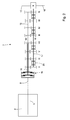
figure 2 is a schematic view of the automatic manual transmission infigure 1 provided with a twin-clutch gearbox; -
figure 3 shows the evolution in time of the torques transmitted by the two clutches of the twin-clutch gearbox, the rotation speed of a drive shaft of the engine, and the longitudinal acceleration of the vehicle during a gear shifting; and -
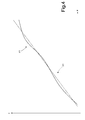
figure 4 is a chart showing an example of a transmissibility function of a clutch of the twin-clutch gearbox. - In
figure 1 , number 1 indicates as a whole a vehicle (specifically, a car) provided with twofront wheels 2 and tworear driving wheels 3; aninternal combustion engine 4 is arranged in rear position and provided with adrive shaft 5, and produces an engine torque which is transmitted torear driving wheels 3 through an automaticmanual transmission 6.Transmission 6 comprises a twin-clutch gearbox 7 arranged in rear position and adrive shaft 8 which connectsdrive shaft 5 to an input ofgearbox 7. A self-locking differential 9, from which a pair ofdifferential shafts 10 exit (each of which is integral with a rear driving wheel 3) is connected in cascade togearbox 7. - Vehicle 1 comprises a
control unit 11 ofengine 4 which monitors the control ofengine 4, acontrol unit 12 oftransmission 6 which monitors the control oftransmission 6, and aBUS line 13 which is made according to the CAN (Car Area Network) protocol, is extended to the whole vehicle 1 and allowscontrol units control unit 11 ofengine 4 andcontrol unit 12 oftransmission 6 are connected toBUS line 13 and may therefore communicate with each other by means of messages sent overBUS line 13 itself. Moreover,control unit 11 ofengine 4 andcontrol unit 12 oftransmission 6 may be directly connected to each other by means of adedicated synchronization cable 14 which is able to directly transmit a signal without the delays introduced byBUS line 13 fromcontrol unit 12 oftransmission 6 to controlunit 11 ofengine 4. - As shown in
figure 2 , twin-clutch gearbox 7 comprises a pair ofprimary shafts 15 coaxial with each other, independent and fitted within each other. Moreover, twin-clutch gearbox 7 comprises twocoaxial clutches 16, each of which is adapted to connect a correspondingprimary shaft 15 to driveshaft 5 ofinternal combustion engine 4 by means of interposition of thedrive shaft 8. Twin-clutch gearbox 7 comprises a singlesecondary shaft 17 connected todifferential 9 which transmits the motion to therear driving wheels 3; according to an alternative and equivalent embodiment, twin-clutch gearbox 7 comprises twosecondary shafts 17 both connected todifferential 9. - Twin-
clutch gearbox 7 has seven forward gears indicated by Roman numerals (first gear I, second gear II, third gear III, fourth gear IV, fifth gear V, sixth gear VI and seventh gear VII) and a reverse gear (indicated by letter R).Primary shaft 15 andsecondary shaft 17 are mechanically coupled to each other by means of a plurality of pairs of clusters, each of which defines a corresponding gear and comprises aprimary cluster 18 fitted onprimary shaft 15 and asecondary cluster 19 fitted onsecondary shaft 17. In order to enable the proper operation of twin-clutch gearbox 7, all odd gears (first gear I, third gear III, fifth gear V, seventh gear VII) are coupled to the sameprimary shaft 15, while all even gears (second gear II, fourth gear IV and sixth gear VI) are coupled to the otherprimary shaft 15. - Each
primary cluster 18 is keyed to a correspondingprimary shaft 15 for rotating always integrally withprimary shaft 15 itself and permanently meshes with correspondingsecondary cluster 19; on the contrary, eachsecondary cluster 19 is idly fitted onsecondary shaft 17. Moreover, twin-clutch gearbox 7 comprises fourdouble synchronizers 20, each of which is fitted coaxially with respect tosecondary shaft 17, is arranged between twosecondary clusters 19, and is adapted to be operated to alternatively engage the two correspondingsecondary gears 19 with secondary shaft 17 (i.e., to alternatively make the two correspondingsecondary clusters 19 angularly integral with secondary shaft 17). In other words, eachsynchronizer 20 may be moved towards a direction for engaging asecondary cluster 19 withsecondary shaft 17, or it may be moved towards another direction for engaging the othersecondary cluster 19 withsecondary shaft 17. - The modes for performing a gear shifting from a current gear A to a subsequent gear B will be described below. For the sake of simplicity, a forward gear shifting during the gear progression will be described, so that actual gear A has a higher gear ratio than subsequent gear B.
- In an initial situation (i.e., before the gear shifting), a
clutch 16A is closed for transmitting the motion to a primary shaft 15A which in turn transmits the motion tosecondary shaft 17 by means of gear A which is currently engaged; on the contrary, aclutch 16B is open and therefore isolates a primary shaft 15B fromdrive shaft 8. Before starting the forward gear shifting, subsequent gear B is engaged for connecting primary shaft 15B tosecondary shaft 17 by means of gear B itself; such operation is performed automatically irrespective of the driver wishes as soon asclutch 16B is opened at the end of the previous gear shifting. When the driver sends the command of gear shifting, a gear shifting is performed by openingclutch 16A for disconnecting primary shaft 15A (consequently, gear A) from drive shaft 8 (i.e., fromdrive shaft 5 of engine 4) and simultaneously closingclutch 16B for connecting primary shaft 15B (consequently, gear B) to drive shaft 8 (i.e., to driveshaft 5 of engine 4). - The above-described modes for gear shifting are schematically illustrated in
figure 3 , when the command of gear shifting is generated at instant T0. As soon astransmission control unit 12 receives the command of gear shifting (instant T0),transmission control unit 12 immediately starts closingclutch 16B associated with subsequent gear B; however, beforeclutch 16B associated with subsequent gear B starts transmitting a torque torear driving wheels 3 it is necessary to wait for a certain filling time slot TR (typically between 100 and 250 milliseconds) during which oil filling intoclutch 16B is completed. - From instant T0 when
transmission control unit 12 immediately starts closingclutch 16B at instant T1 whenclutch 16B is filled with oil after filling time TR and is ready to start transmitting a torque, nothing happens to the dynamics of vehicle 1, i.e., the entire engine torque generated byengine 4 is transmitted byclutch 16A as before the start of gear shifting. The opening ofclutch 16A is controlled at instant T1; it is worth noting that the opening ofclutch 16A associated with current gear A occurs with no delays, asclutch 16A is already filled with oil under pressure and at this step it must only be emptied of part of the oil. - The transfer of torque between the two
clutches 16 occurs between instants T1 and T2, i.e., the torque transmitted byclutch 16A gradually decreases and at the same time the torque transmitted byclutch 16B gradually increases, thus causing a crossing between the twoclutches 16. Preferably,clutch 16A is opened simultaneously with the complete closure ofclutch 16B so as to achieve a symmetric crossing allowing to keep the overall torque transmitted to rear driving wheels 3 (and therefore the torque generated by engine 4) constant. At instant T2,clutch 16A is fully open (therefore no longer transmitting a torque) whileclutch 16B is completely closed (therefore transmitting the entire engine torque). - The rotation speed ωE of
drive shaft 5 ofengine 4 is equal to the rotation speed ωA imposed by the gear ratio of current gear A before gear shifting, progressively decreases towards the rotation speed ωB imposed by the gear ratio of subsequent gear B during gear shifting, and is equal to the rotation speed ωB after gear shifting. As shown infigure 3 , until instant T2 whenclutch 16A is fully open, the rotation speed ωE ofdrive shaft 5 is kept constant and equal to the rotation speed ωA and is therefore decreased only afterclutch 16A is fully open; such control method of the rotation speed ωE ofdrive shaft 5 aims at preventingclutch 16A from becoming braking, i.e., generating a braking couple torear driving wheels 3. In order to decrease the rotation speed ωE ofdrive shaft 5 ofengine 4 after the complete opening ofclutch 16A,control unit 11 ofengine 4 temporarily decreases the engine torque generated byengine 4 itself, upon suggestion fromcontrol unit 12 oftransmission 6; such temporary decrease in the engine torque generated byengine 4 has the effect of decreasing the rotation speed ωE ofdrive shaft 5 which passes from the initial value ωA imposed by the gear ratio of current gear A to the final value ωB imposed by the gear ratio of subsequent gear B. In other words, both the mechanical power generated byengine 4 and part of the kinetic energy owned by drive shaft 5 (which slows down as a consequence) are transferred torear driving wheels 3 for a short period. It is worth noting that the temporary decrease in engine torque TE generated byengine 4 has no effect on longitudinal acceleration α of vehicle 1, as the torque transmitted byclutch 16B to therear driving wheels 3 remains constant. - Longitudinal acceleration α of vehicle 1 is in first approximation constant and equal to value αA immediately before gear shifting, gradually decreases towards value αB during gear shifting, and is in first approximation constant and equal to value αB immediately after gear shifting. The decrease of longitudinal acceleration α of vehicle 1 during gear shifting is due to the fact that the engine torque generated by
engine 4 remaining fairly constant is transmitted with a gradually decreasing gear ratio (gear A is shorter than gear B) and therefore a gradually decreasing torque is applied torear driving wheels 3. - The above-described modes for performing a gear shifting are partly used also for a drive-away, i.e., for a standing start in which a
clutch 16 is gradually closed (while theother clutch 16 remains open) for engaging a gear (typically first gear I associated withclutch 16A, but also second gear II associated withclutch 16B, e.g. when the road surface is considerably slippery). In essence, during a drive-away, clutch 16 associated with the gear to be engaged for a standing start is closed as described above, while the other clutch 16 remains open. - In a design phase, a model of
transmission 6 is determined which provides knowledge of the transmissibility function FT of each clutch 16, which provides a torque which is transmitted by clutch 16 according to the degree of opening (i.e., the hydraulic pressure when clutch 16 is hydraulic or the position if clutch 16 is dry) ofclutch 16 itself. An example of a transmissibility function FT of a clutch 16 is shown infigure 4 which shows hydraulic pressure P within clutch 16 on the x-axis and shows torque T transmitted by clutch 16 on the y-axis; specifically, the figure shows in dashed lines a standard transmissibility function FT and shows in solid lines an updated transmissibility function FT in accordance with the present invention and as described below. The transmissibility functions FT of the twoclutches 16 are stored in a memory ofcontrol unit 12 oftransmission 6 and are used bycontrol unit 12 for translating a target torque in a corresponding target pressure (or position in the case of dry clutches 16) by which the actuators of theclutches 16 may be controlled. - Moreover, in a design phase, an
engine model 4 is determined which allows to predict the behaviour ofengine 4 and therefore allows to determine how to controlengine 4 for obtaining the generation of a desired engine torque.Engine model 4 is stored in a memory ofunit control 11 ofengine 4 and used bycontrol unit 11 to determine how to controlengine 4 in an feedforward manner for pursuing a target torque. - Before starting a gear shifting or a drive-away,
control unit 12 oftransmission 6 determines a target torque TC-TAR which must be transmitted by means of theclutches 16 and a target rotation speed ωE-TAR ofdrive shaft 5 ofengine 4 according to the desired evolution of the gear shifting or the drive-away; in other words, the desired evolution of the gear shifting or the drive-away is described by a target speed during the gear shifting or during the drive-away and, by means of such target speed and longitudinal acceleration, it is possible to determine a target torque TC-TAR which must be transmitted throughclutches 16 and a target speed rotation ωE-TAR of drive shaft 5a. Moreover,control unit 12 oftransmission 6 determines a target engine torque TE-TAR, which must be generated byengine 4 according to target torque TC-TAR which must be transmitted by means ofclutches 16, and transmits it to controlunit 11 ofengine 4. - During the gear shifting or during the drive-away,
control unit 12 oftransmission 6 uses the transmissibility functions FT to determine how to control the hydraulic pressure of theclutches 16 so as to pursue with a feedforward control the target torque TC-TAR which must be transmitted by means of theclutches 16. Moreover, during the gear shifting or during the drive-away,control unit 11 ofengine 4 usesengine model 4 for determining how to controlengine 4 so as to pursue with a feedforward control the target engine torque TE-TAR which must be generated byengine 4. - When at least one clutch 16 is operated in opening or closure,
control unit 12 oftransmission 6 receives fromcontrol unit 11 ofengine 4 an estimation of engine torque TE generated byengine 4 and made by means ofengine model 4 and a measure of the rotation speed ωE ofdrive shaft 5; therefore,control unit 12 calculates a torque TC transmitted by theclutches 16 by applying the following equation:
- TC
- torque transmitted by the
clutches 16; - TE
- engine torque generated by
engine 4; - JE
- moment of inertia of
drive shaft 5; - dωE/dt
- first derivative in time of the rotation speed ωE of
drive shaft 5. - According to a preferred embodiment, the rotation speed ωE of
drive shaft 5 or the first derivative dωE/dt in time of the rotation speed ωE ofdrive shaft 5 are subjected to a low-pass filtering for removing the high frequency noises. In other words, the first derivative dωE/dt in time of the rotation speed ωE ofdrive shaft 5 is a "dirty" signal which normally requires a low-pass filtering. - Preferably, besides filtering with a low-pass filter the rotation speed ωE of
drive shaft 5 or the first derivative dωE/dt in time of the rotation speed ωE ofdrive shaft 5,control unit 12 also applies the same type of low-pass filter to the engine torque TE, generated byengine 4 and estimated byengine model 4, and to torque TC transmitted by theclutches 16 resulting from the original transmissibility functions FT. By subjecting all the involved quantities to the same low-pass filtering, it is possible to recover the phase error (i.e., the delay) inherent of an algorithm of the low-pass filtering which must operate in real time; in other words, by subjecting all involved quantities to the same type of low-pass filtering, all involved quantities have the same phase error and are therefore perfectly in phase with each other. -
Control unit 12 updates the transmissibility function FT of each clutch 16 by using torque TC transmitted by clutch 16 determined according to the estimation of engine torque TE generated byengine 4, i.e., torque TC transmitted by theclutches 16 according to the "viewpoint" ofengine model 4 used bycontrol unit 11 ofengine 4. - According to a preferred embodiment, in order to calculate torque TC transmitted from clutch 16 to engine torque TE generated by
engine 4, a pumping torque absorbed by the oil pump of a hydraulic circuit of theclutches 16 is removed; such pumping torque is determined in a design phase and is generally variable with the variation of rotation speed ωE ofdrive shaft 5. Moreover, engine torque TE generated byengine 4 is also deprived of all the torques absorbed by the auxiliary services of vehicle 1 such as e.g. the air-conditioning compressor, the alternator that feeds the electric loads of vehicle 1, and the reversible electric machine responsible for the electric traction in the case of hybrid vehicle 1. - In order to update the transmissibility function FT of each clutch 16,
control unit 12 tries to use only the moments in which a clutch 16 is fully open and therefore substantially the entire torque TC transmitted by theclutches 16 is transmitted by the other clutch 16 (a clutch 16 in oil bath has never null torque and transmits a parasite torque due to the presence of oil between the discs of clutch 16 itself, even when it is fully open; however, such parasite torque is negligible and known a priori and is therefore relatively easy to be taken into account). Consequently, in order to update the transmissibility function FT of each clutch 16,control unit 12 mainly uses the drives-away, in which a clutch 16 is always open. However, most of the drives-away (i.e., the standing starts) requires engaging first gear I associated with clutch 16A, so that updating transmissibility function FT of clutch 16B may be problematic (i.e., less reliable as the statistical methods require a number of data in order to substantially reduce the accidental errors); in order to obviate such drawback,control unit 12 oftransmission control 6 may perform a number of drives-away by engaging second gear II associated with clutch 16B instead of first gear I associated with clutch 16A only in order to have a higher number of data on the transmissibility function FT of clutch 16B (obviously only in case of comfortable drive without any search for performance). - According to an alternative embodiment, when both
clutches 16 are simultaneously partially open/closed, dividing torque TC transmitted by clutch 16 between the twoclutches 16 themselves would be theoretically possible, but the division of torque TC transmitted by clutch 16 in order to obtain the torque transmitted by each clutch 16 is generally not performed due to the high number of errors inherent in such a subdivision. In order to perform such a subdivision,control unit 12 may use the transmissibility functions FT of the twoclutches 16 for determining a proportion between the torques transmitted by each clutch 16 and therefore applying this proportion to torque TC transmitted by clutch 16 determined according to the estimation of engine torque TE generated byengine 4. In other words, according to the corresponding degree of opening,control unit 12 determines the torques transmitted by theclutches 16 which are provided by the corresponding transmissibility functions FT and therefore determines the proportion between the torques transmitted by each clutch 16 by performing a proportion between these torques. - According to a possible embodiment,
control unit 12 determines a correction coefficient K according to the ratio between torque TC transmitted by a clutch 16 determined according to the estimation of engine torque TE generated byengine 4 and a corresponding torque transmitted by clutch 16 provided by the original transmissibility function FT determined at the design phase (shown in dotted lines infigure 4 ); once the correction coefficient K was determined,control unit 12 uses correction coefficient K for correcting a torque transmitted by each clutch 16 provided by the corresponding transmissibility function FT. Preferably, correction coefficient K is a function of the degree of opening of each clutch 16, as several experimental tests have shown that correction coefficient K has a non-negligible variability with the variation of the degree of opening ofclutch 16. - In order to reduce the incidence of the accidental errors,
control unit 12 determines, for each degree of opening of each clutch 16, a plurality of correction coefficients K, and statistically processes (e.g., by means of weighted averages) the plurality of correction coefficients K for each degree of opening of each clutch 16. - Preferably,
control unit 12 discards (i.e., does not consider) a torque TC transmitted by a clutch 16 determined according to the estimation of engine torque TE generated byengine 4 when such torque TC transmitted by clutch 16 makes the transmissibility function FT locally non-increasing with the increase in oil pressure (or the position in case of dry clutch 16). In other words, it is assumed that the transmissibility function FT should be always increasing and therefore not considering (i.e., refusing) an estimation of torque TC transmitted by a clutch 16 (or better a correction coefficient K obtained from such estimation of torque TC transmitted by a clutch 16) which makes the transmissibility function FT locally non-increasing. - Preferably,
control unit 12 discards (i.e., does not consider) a torque TC transmitted by a clutch 16 determined according to the estimation of engine torque TE generated byengine 4 when the difference between such torque TC transmitted by clutch 16 and a corresponding torque transmitted by clutch 16 provided by the transmissibility function FT is too high. In other words, it is assumed that the difference between a torque TC transmitted by clutch 16 determined according to the estimation of engine torque TE generated byengine 4 and a corresponding torque transmitted by clutch 16 provided by the transmissibility function FT must be lower than a threshold of acceptability (typically expressed in percentage); alternatively, a correction coefficient K is acceptable only when it is within a predetermined range of acceptability. - Preferably,
control unit 12 does not update the transmissibility function FT using the torque TC transmitted by clutch 16 determined according to the estimation of engine torque TE generated byengine 4 in the presence of violent transitors of rotation speed ωE of drive shaft 5 (i.e., when rotation speed ωE ofdrive shaft 5 significantly changes in the short term, i.e. with a high angular acceleration), as the low-pass filtering which is performed on rotation speed ωE ofdrive shaft 5 or on the first derivative dωE/dt in time of rotation speed ωE ofdrive shaft 5 may result in a loss of "useful" information. In other words, in case of violent transitors of rotation speed ωE ofdrive shaft 5, part of the "useful" signal contained in the first derivative dωE/dt in time of rotation speed ωE ofdrive shaft 5 occurs at high frequencies typical of the noises and is therefore removed by the low-pass filtering; therefore,control unit 12 discards the information obtained at violent transitors of rotation speed ωE ofdrive shaft 5. -
Control unit 12 updates the transmissibility function FT using the torque TC transmitted by theclutches 16 determined according to the estimation of engine torque TE generated byengine 4 only under certain operating conditions ofengine 4 and/ortransmission 6, i.e. as much likely as that the estimation of engine torque TE generated byengine 4 is reliable. Specifically,control unit 12 updates the transmissibility function FT by using torque TC transmitted by theclutches 16 determined according to the estimation of engine torque TE generated byengine 4 only whenengine 4 and/ortransmission 6 have reached a minimum operating temperature and/or reached a stable operating temperature (specifically,engine model 4 is very responsive to the cooling temperature). - According to a not shown alternative embodiment, 7 is a single clutch gearbox and therefore comprises a
single clutch 16 and a singleprimary shaft 15; even in this case, the above-described control method is fully usable and indeed finds a simpler application as it has asingle clutch 16 and therefore a single transmissibility function FT. - As described above, the transmissibility function FT of each clutch 16 is updated (i.e., corrected) according to the "viewpoint" of
engine model 4 according to a "master-slave" logic; in other words,engine model 4 is considered as a "master" (i.e., dominant) and therefore the transmissibility functions FT of theclutches 16 which are therefore considered as a "slave" (i.e., slaved) are adjusted according toengine model 4. Such control mode assumes that it is not necessary thatengine model 4 and the transmissibility function FT of theclutches 16 are perfect (ideal, but practically not accessible condition), but it will suffice thatengine model 4 and the transmissibility function FT of theclutches 16 are "wrong" in the same way; i.e., it is not necessary thatengine model 4 and the transmissibility function FT of theclutches 16 tell the truth, but it will suffice thatengine model 4 and the transmissibility function FT of theclutches 16 tell the same lie. For example, if under certainconditions engine model 4 underestimates engine torque TE generated by engine 4 (and therefore the engine generates an engine torque TE higher than target engine torque TE-TAR which must be generated by engine 4) then the transmissibility functions FT of theclutches 16 should also underestimate the torque transmitted by the clutches 16 (therefore, theclutches 16 transmit a torque higher than torque target TC-TAR which must be transmitted by means of the clutches 16); in this manner, the excess engine torque TE generated byengine 4 determines no discontinuity in longitudinal acceleration α of vehicle 1 and therefore is not felt by the passengers of vehicle 1. - Briefly, the worst condition occurs when
engine model 4 gets wrong opposite with respect to the transmissibility function FT of theclutches 16, because the errors sum up, thus amplifying their effect. In order to avert this risk, and indeed to try and always ensure that the errors reciprocally eliminate, thus eliminating their effect, according to the present invention the transmissibility functions FT of theclutches 16 are updated (corrected) according to the "viewpoint" ofengine model 4, such that the transmissibility functions FT of theclutches 16fit engine model 4 by having errors (inaccuracies) equal (i.e., of the same type) to the errors (inaccuracies) ofengine model 4. - It is worth noting that when the feedforward controls are efficient and effective (which is made possible by the fact that the transmissibility functions FT of the
clutches 16fit engine model 4 by having inaccuracies which compensate for the inaccuracies in engine model 4), the intervention of the closed-loop control which "monitors" the rotation speed ωE ofdrive shaft 5 is absent or however limited, with a remarkable improvement of the overall dynamics of the control of the gear shifting or the drive-away. - In conclusion, the above-described control method has many advantages. Firstly, the above-described control method allows to remove or however significantly reduce the discontinuities in longitudinal acceleration α of vehicle 1 during a gear shifting or during a drive-away, as it allows to compensate for the inaccuracies of
engine model 4 with similar inaccuracies in the transmissibility functions FT of theclutches 16. Secondly, the above-described control method is of a simple and cost-effective implementation, as it does not require the installation of additional physical components and does not involve an enhancing ofcontrol unit 11 ofengine 4 orcontrol unit 12 oftransmission 6 as it does not require significant additional computing power.
Claims (13)
- Control method of a vehicle (1) provided with an automatic manual transmission (6) during a gear shifting or during a drive-away; the automatic manual transmission (6) comprises a gearbox (7) which is provided with at least one primary shaft (15) and at least one secondary shaft (17) connected to driving wheels (3), and at least one clutch (16), which is interposed between the primary shaft (15) of the gearbox (7) and a drive shaft (5) of an engine (4); the control method comprises the steps of:determining, during a design phase, a nominal transmissibility function (FT) of the clutch (16), which provides the torque delivered by the clutch (16) according to the degree of opening of the clutch (16);determining, during a design phase, a model of the engine (4);determining a target torque (TC-TAR) that has to be transmitted through the clutch (16) during the gear shifting or during the drive-away;making the clutch (16) pursue the target torque (TC-TAR) that has to be transmitted through the clutch (16) by using the transmissibility function (FT);determining a target engine torque (TE-TAR) of the engine (4) according to the target torque (TC-TAR) that has to be transmitted through the clutch (16); andmaking the engine (4) pursue the target engine torque (TE-TAR) of the engine (4) by using a feedforward control based on the model of the engine (4);the control method is characterised in that it comprises the further steps of:updating, when the clutch is operated in opening or closure, the transmissibility function (FT) of the clutch (16) by data determined using the model of the engine (4) which is considered as a true reference such that the transmissibility function (FT) and the model of the engine (4) have the same type of errors; andusing for the next control of the clutch (16) the transmissibility function (FT) which has been updated having as a true reference the model of the engine (4).
- Control method according to claim 1 and comprising, when the clutch is operated in opening or closure, the further steps of:estimating a torque (TE) delivered by the engine (4) through the model of the engine (4);measuring a rotation speed (ωE) of the drive shaft (5);calculating a torque (TC) transmitted by the clutch (16) by applying the following equation:
 TC torque transmitted by the clutch (16);TE torque delivered by the engine (4);JE moment of inertia of the drive shaft (5);dωE/dt first derivative in time of the rotation speed (ωE) of the drive shaft (5); andupdating the transmissibility function (FT) by using the torque (TC) transmitted by the clutch (16) determined according to the estimation of the torque (TE) delivered by the engine (4).
 - Control method according to claim 1 or 2 and comprising the further steps of:determining a correction coefficient (K) according to the ratio between the torque (TC) transmitted by the clutch (16), determined according to the estimation of the torque (TE) delivered by the engine (4), and a corresponding torque transmitted by the clutch (16), provided by the original transmissibility function (FT) determined during the design phase; andusing the correction coefficient (K) to correct a torque transmitted by the clutch (16) provided by the transmissibility function (FT).
- Control method according to claim 3, wherein the correction coefficient (K) is a function of the degree of opening of the clutch (16).
- Control method according to claim 3 or 4 and comprising the further steps of:determining, for each degree of opening of the clutch (16), a plurality of correction coefficients (K); andprocessing statistically, for each degree of opening of the clutch (16), the plurality of correction coefficients (K).
- Control method according to one of the claims from 2 to 5 and comprising the further step of rejecting a torque (TC) transmitted by the clutch (16) determined according to the estimation of the torque (TE) delivered by the engine (4) in case this torque (TC) transmitted by the clutch (16) makes the transmissibility function (FT) locally not increasing.
- Control method according to one of the claims from 2 to 6 and comprising the further step of rejecting a torque (TC) transmitted by the clutch (16) determined according to the estimation of the torque (TE) delivered by the engine (4) in case the difference between this torque (TC) transmitted by the clutch (16) and a corresponding torque transmitted by the clutch (16) provided by the transmissibility function (FT) is too big.
- Control method according to one of the claims from 2 to 7 and comprising the further step of updating the transmissibility function (FT) by using the torque (TC) transmitted by the clutch (16) determined according to the estimation of the torque (TE) delivered by the engine (4) only in presence of certain working conditions of the engine (4) and/or of the transmission (6).
- Control method according to claim 8 and comprising the further step of updating the transmissibility function (FT) by using the torque (TC) transmitted by the clutch (16) determined according to the estimation of the torque (TE) delivered by the engine (4) only when the engine (4) and/or of the transmission (6) have reached a minimum working temperature.
- Control method according to claim 8 and comprising the further step of updating the transmissibility function (FT) by using the torque (TC) transmitted by the clutch (16) determined according to the estimation of the torque (TE) delivered by the engine (4) only when the engine (4) and/or of the transmission (6) have reached a stable working temperature.
- Control method according to one of the claims from 2 to 10 and comprising the further step of carrying out a low-pass filtering at the rotation speed (ωE) of the drive shaft (5) or at the first derivative in time of the rotation speed (ωE) of the drive shaft (5).
- Control method according to claim 11 and comprising the further step of applying to the torque (TE) delivered by the engine (4) estimated through the model of the engine (4) and/or to the torque (TC) transmitted by the clutches (16) deriving from original the transmissibility function (FT) the same low-pass filter as the one applied to the rotation speed (ωE) of the drive shaft (5) or to the first derivative in time of the rotation speed (ωE) of the drive shaft (5).
- Control method according to claim 11 or 12 and comprising the further step of rejecting the information obtained in correspondence of violent transitors of the rotation speed (ωE) of the drive shaft (5).
Applications Claiming Priority (1)
| Application Number | Priority Date | Filing Date | Title |
|---|---|---|---|
| ITBO2009A000221A IT1393610B1 (en) | 2009-04-06 | 2009-04-06 | METHOD OF CONTROL OF A VEHICLE PROVIDED WITH AN AUTOMATIC MANUAL TRANSMISSION DURING A GEAR SHIFT OR DURING A CHECKOUT |
Publications (3)
| Publication Number | Publication Date |
|---|---|
| EP2239175A1 true EP2239175A1 (en) | 2010-10-13 |
| EP2239175A8 EP2239175A8 (en) | 2011-02-09 |
| EP2239175B1 EP2239175B1 (en) | 2012-12-26 |
Family
ID=41172130
Family Applications (1)
| Application Number | Title | Priority Date | Filing Date |
|---|---|---|---|
| EP10159070A Active EP2239175B1 (en) | 2009-04-06 | 2010-04-02 | Control method of a vehicle provided with an automatic manual transmission during a gear shift or during a drive-away |
Country Status (3)
| Country | Link |
|---|---|
| US (1) | US8380404B2 (en) |
| EP (1) | EP2239175B1 (en) |
| IT (1) | IT1393610B1 (en) |
Cited By (2)
| Publication number | Priority date | Publication date | Assignee | Title |
|---|---|---|---|---|
| CN104132082A (en) * | 2013-04-30 | 2014-11-05 | 福特全球技术公司 | Method of controlling transmission friction element by using adaptive transfer function |
| IT202100026240A1 (en) * | 2021-10-13 | 2023-04-13 | Fiat Ricerche | COMPENSATION FOR OVER-ACCELERATION DURING DOWN-DOWNS IN THE ELECTRONIC CONTROL OF THE LONGITUDINAL DYNAMICS OF SELF-DRIVING VEHICLES |
Families Citing this family (7)
| Publication number | Priority date | Publication date | Assignee | Title |
|---|---|---|---|---|
| DE102011016131B4 (en) * | 2011-03-29 | 2015-11-12 | Getrag Getriebe- Und Zahnradfabrik Hermann Hagenmeyer Gmbh & Cie Kg | Method for operating a hybrid drive train |
| US20150112572A1 (en) * | 2012-06-11 | 2015-04-23 | International Engine Intellectual Property Company Llc | Centralized actuator control module |
| US9604635B1 (en) * | 2015-09-21 | 2017-03-28 | Ford Global Technologies, Llc | Inhibit engine pull-down based on past driving history |
| KR102322388B1 (en) * | 2017-09-20 | 2021-11-04 | 현대자동차주식회사 | Apparatus and method for estimating torque of engine clutch in hybrid electric vehicle |
| KR102588929B1 (en) | 2019-02-22 | 2023-10-16 | 현대자동차주식회사 | Shift control method for hybrid vehicle with dct |
| IT201900018362A1 (en) * | 2019-10-10 | 2021-04-10 | Texa Spa | METHOD AND CONTROL SYSTEM FOR AT LEAST TWO ELECTRIC TRACTION MOTORS OF A VEHICLE |
| CN111361569B (en) * | 2020-02-19 | 2022-08-26 | 重庆大学 | Wet DCT clutch torque real-time estimation method based on model |
Citations (8)
| Publication number | Priority date | Publication date | Assignee | Title |
|---|---|---|---|---|
| FR2819564A1 (en) * | 2001-01-17 | 2002-07-19 | Renault | METHOD FOR ESTABLISHING THE CLUTCH CURVE OF A CLUTCH MEMBER MOUNTED BETWEEN AN INTERNAL COMBUSTION ENGINE AND A GEARBOX OF A MOTOR VEHICLE PROPLUSED BY THIS ENGINE |
| DE10113700A1 (en) * | 2001-03-21 | 2002-09-26 | Volkswagen Ag | Adapting motor vehicle engine frictional torque involves using theoretical crankshaft torque derived from difference between actual and theoretical friction torque values as correction value |
| EP1262360A1 (en) * | 2001-05-30 | 2002-12-04 | Eaton Corporation | Clutch calibration and control |
| US20030054920A1 (en) * | 2000-02-15 | 2003-03-20 | Luk Lamellen Und Kupplungsbau Beteiligungs Kg | Method of controlling a transmission |
| EP1475556A2 (en) * | 2003-05-07 | 2004-11-10 | Hitachi, Ltd. | Method and system for controlling a vehicle |
| FR2854848A1 (en) | 2003-05-14 | 2004-11-19 | Valeo Embrayages | Piloted connection for motor vehicle internal combustion engine and transmission has pilot module for actuator using torque signal for clutch control |
| WO2007148203A2 (en) * | 2006-06-20 | 2007-12-27 | Eaton Corporation | Method for estimating clutch engagement parameters in a strategy for clutch management in a vehicle powertrain |
| FR2910101A1 (en) * | 2006-12-15 | 2008-06-20 | Peugeot Citroen Automobiles Sa | Gearbox e.g. automatically-controlled manual gearbox, speed ratio changing method for hybrid motor vehicle, involves controlling machine in turning back phase to produce additional torque on primary shaft which compensates own inertia |
Family Cites Families (7)
| Publication number | Priority date | Publication date | Assignee | Title |
|---|---|---|---|---|
| JP2001280175A (en) * | 2000-03-30 | 2001-10-10 | Hitachi Ltd | Control device and method for automatic transmission using gear mechanism |
| DE10139122A1 (en) * | 2000-09-08 | 2002-03-21 | Luk Lamellen & Kupplungsbau | Controller arrangement for controlling drive train components has gradient regulator causing engine, gearbox revolution rates to approximate to each other, especially at end of start-up phase |
| ITBO20000627A1 (en) * | 2000-10-27 | 2002-04-27 | Magneti Marelli Spa | METHOD FOR PERFORMING GEAR DISCONNECTION IN A SERVO-CONTROLLED MANUAL GEARBOX |
| DE10390837D2 (en) * | 2002-03-07 | 2005-06-02 | Luk Lamellen & Kupplungsbau | A dual clutch transmission and a method of performing an upshift from an initial gear to a target gear in the dual clutch transmission of a vehicle |
| DE102004007103B4 (en) * | 2003-02-20 | 2019-06-13 | Schaeffler Technologies AG & Co. KG | Method and device for adapting a clutch torque |
| DE602007005240D1 (en) * | 2007-07-05 | 2010-04-22 | Magneti Marelli Spa | Method for controlling a vehicle equipped with a mechanical power transmission |
| IT1393018B1 (en) * | 2009-03-06 | 2012-04-11 | Ferrari Spa | METHOD OF CONTROL FOR THE EXECUTION OF A GEAR SHIFT IN AN AUTOMATIC MANUAL TRANSMISSION |
-
2009
- 2009-04-06 IT ITBO2009A000221A patent/IT1393610B1/en active
-
2010
- 2010-04-02 EP EP10159070A patent/EP2239175B1/en active Active
- 2010-04-06 US US12/755,258 patent/US8380404B2/en active Active
Patent Citations (8)
| Publication number | Priority date | Publication date | Assignee | Title |
|---|---|---|---|---|
| US20030054920A1 (en) * | 2000-02-15 | 2003-03-20 | Luk Lamellen Und Kupplungsbau Beteiligungs Kg | Method of controlling a transmission |
| FR2819564A1 (en) * | 2001-01-17 | 2002-07-19 | Renault | METHOD FOR ESTABLISHING THE CLUTCH CURVE OF A CLUTCH MEMBER MOUNTED BETWEEN AN INTERNAL COMBUSTION ENGINE AND A GEARBOX OF A MOTOR VEHICLE PROPLUSED BY THIS ENGINE |
| DE10113700A1 (en) * | 2001-03-21 | 2002-09-26 | Volkswagen Ag | Adapting motor vehicle engine frictional torque involves using theoretical crankshaft torque derived from difference between actual and theoretical friction torque values as correction value |
| EP1262360A1 (en) * | 2001-05-30 | 2002-12-04 | Eaton Corporation | Clutch calibration and control |
| EP1475556A2 (en) * | 2003-05-07 | 2004-11-10 | Hitachi, Ltd. | Method and system for controlling a vehicle |
| FR2854848A1 (en) | 2003-05-14 | 2004-11-19 | Valeo Embrayages | Piloted connection for motor vehicle internal combustion engine and transmission has pilot module for actuator using torque signal for clutch control |
| WO2007148203A2 (en) * | 2006-06-20 | 2007-12-27 | Eaton Corporation | Method for estimating clutch engagement parameters in a strategy for clutch management in a vehicle powertrain |
| FR2910101A1 (en) * | 2006-12-15 | 2008-06-20 | Peugeot Citroen Automobiles Sa | Gearbox e.g. automatically-controlled manual gearbox, speed ratio changing method for hybrid motor vehicle, involves controlling machine in turning back phase to produce additional torque on primary shaft which compensates own inertia |
Cited By (4)
| Publication number | Priority date | Publication date | Assignee | Title |
|---|---|---|---|---|
| CN104132082A (en) * | 2013-04-30 | 2014-11-05 | 福特全球技术公司 | Method of controlling transmission friction element by using adaptive transfer function |
| IT202100026240A1 (en) * | 2021-10-13 | 2023-04-13 | Fiat Ricerche | COMPENSATION FOR OVER-ACCELERATION DURING DOWN-DOWNS IN THE ELECTRONIC CONTROL OF THE LONGITUDINAL DYNAMICS OF SELF-DRIVING VEHICLES |
| WO2023062569A1 (en) * | 2021-10-13 | 2023-04-20 | C.R.F. Societa' Consortile Per Azioni | Down-shift acceleration overshoot compensation in automotive electronic longitudinal dynamics control of autonomous motor vehicles |
| US12427970B2 (en) | 2021-10-13 | 2025-09-30 | C.R.F. Societa' Consortile Per Azioni | Down-shift acceleration overshoot compensation in automotive electronic longitudinal dynamics control of autonomous motor vehicles |
Also Published As
| Publication number | Publication date |
|---|---|
| ITBO20090221A1 (en) | 2010-10-07 |
| IT1393610B1 (en) | 2012-05-08 |
| EP2239175A8 (en) | 2011-02-09 |
| US8380404B2 (en) | 2013-02-19 |
| EP2239175B1 (en) | 2012-12-26 |
| US20100280721A1 (en) | 2010-11-04 |
Similar Documents
| Publication | Publication Date | Title |
|---|---|---|
| EP2239175B1 (en) | Control method of a vehicle provided with an automatic manual transmission during a gear shift or during a drive-away | |
| US8394000B2 (en) | Method for operating a vehicle drivetrain | |
| CN109466541B (en) | Method for controlling a shift phase in a hybrid vehicle and corresponding transmission system | |
| CN113154032B (en) | Control method of dual clutch transmission, dual clutch transmission and vehicle | |
| US7370548B2 (en) | Method for controlling and regulating a transmission brake in an automatic motor vehicle transmission | |
| CN112572441B (en) | Method for controlling a road vehicle to perform a static start | |
| EP2226230B1 (en) | Control method of shifting gear in an automatic manual transmission | |
| CN112360970A (en) | Static gear-engaging self-adaption method without synchronizer | |
| US11214260B2 (en) | Method to control the execution of a shift to a lower gear with a released accelerator pedal in a drivetrain provided with a dual-clutch, servo-assisted transmission | |
| EP2226524B1 (en) | Control method for closing a clutch in an automatic manual transmission | |
| US11261924B2 (en) | Method for operating a clutch of a drivetrain for a motor vehicle and motor vehicle having a drivetrain | |
| US11215246B2 (en) | Method to control the execution of a shift to a higher gear with a released accelerator pedal in a drivetrain provided with a dual-clutch, servo-assisted transmission | |
| CN110239504B (en) | Method and device for controlling clutch in power upshift process | |
| CN112572448B (en) | Method for controlling a road vehicle by performing a multi-step downshift in a powertrain having a servo-assisted gearbox | |
| EP3798074B1 (en) | Method to control a road vehicle with a microslip of the clutch | |
| CN115574082B (en) | Transmission power downshift control method and device for hybrid electric vehicle and vehicle | |
| CN107298091A (en) | Method for manipulating clutch | |
| WO2023062569A1 (en) | Down-shift acceleration overshoot compensation in automotive electronic longitudinal dynamics control of autonomous motor vehicles | |
| KR20220043490A (en) | Shift conrtol method for vehicle |
Legal Events
| Date | Code | Title | Description |
|---|---|---|---|
| PUAI | Public reference made under article 153(3) epc to a published international application that has entered the european phase |
Free format text: ORIGINAL CODE: 0009012 |
|
| AK | Designated contracting states |
Kind code of ref document: A1 Designated state(s): AT BE BG CH CY CZ DE DK EE ES FI FR GB GR HR HU IE IS IT LI LT LU LV MC MK MT NL NO PL PT RO SE SI SK SM TR |
|
| 17P | Request for examination filed |
Effective date: 20101020 |
|
| RIC1 | Information provided on ipc code assigned before grant |
Ipc: B60W 10/02 20060101ALN20120529BHEP Ipc: F16H 63/46 20060101ALI20120529BHEP Ipc: B60W 30/19 20120101ALI20120529BHEP Ipc: B60W 30/18 20120101AFI20120529BHEP Ipc: B60W 10/06 20060101ALN20120529BHEP Ipc: F16H 63/50 20060101ALI20120529BHEP Ipc: F16D 48/06 20060101ALI20120529BHEP |
|
| GRAP | Despatch of communication of intention to grant a patent |
Free format text: ORIGINAL CODE: EPIDOSNIGR1 |
|
| GRAS | Grant fee paid |
Free format text: ORIGINAL CODE: EPIDOSNIGR3 |
|
| GRAA | (expected) grant |
Free format text: ORIGINAL CODE: 0009210 |
|
| AK | Designated contracting states |
Kind code of ref document: B1 Designated state(s): AT BE BG CH CY CZ DE DK EE ES FI FR GB GR HR HU IE IS IT LI LT LU LV MC MK MT NL NO PL PT RO SE SI SK SM TR |
|
| REG | Reference to a national code |
Ref country code: GB Ref legal event code: FG4D |
|
| RIN1 | Information on inventor provided before grant (corrected) |
Inventor name: MONTOSI, DAVIDE Inventor name: MARCIGLIANO, FRANCESCO Inventor name: BARONE, ALESSANDRO |
|
| REG | Reference to a national code |
Ref country code: CH Ref legal event code: EP |
|
| REG | Reference to a national code |
Ref country code: AT Ref legal event code: REF Ref document number: 590268 Country of ref document: AT Kind code of ref document: T Effective date: 20130115 |
|
| REG | Reference to a national code |
Ref country code: DE Ref legal event code: R096 Ref document number: 602010004259 Country of ref document: DE Effective date: 20130228 |
|
| PG25 | Lapsed in a contracting state [announced via postgrant information from national office to epo] |
Ref country code: NO Free format text: LAPSE BECAUSE OF FAILURE TO SUBMIT A TRANSLATION OF THE DESCRIPTION OR TO PAY THE FEE WITHIN THE PRESCRIBED TIME-LIMIT Effective date: 20130326 Ref country code: LT Free format text: LAPSE BECAUSE OF FAILURE TO SUBMIT A TRANSLATION OF THE DESCRIPTION OR TO PAY THE FEE WITHIN THE PRESCRIBED TIME-LIMIT Effective date: 20121226 Ref country code: SE Free format text: LAPSE BECAUSE OF FAILURE TO SUBMIT A TRANSLATION OF THE DESCRIPTION OR TO PAY THE FEE WITHIN THE PRESCRIBED TIME-LIMIT Effective date: 20121226 Ref country code: HR Free format text: LAPSE BECAUSE OF FAILURE TO SUBMIT A TRANSLATION OF THE DESCRIPTION OR TO PAY THE FEE WITHIN THE PRESCRIBED TIME-LIMIT Effective date: 20121226 Ref country code: FI Free format text: LAPSE BECAUSE OF FAILURE TO SUBMIT A TRANSLATION OF THE DESCRIPTION OR TO PAY THE FEE WITHIN THE PRESCRIBED TIME-LIMIT Effective date: 20121226 |
|
| REG | Reference to a national code |
Ref country code: AT Ref legal event code: MK05 Ref document number: 590268 Country of ref document: AT Kind code of ref document: T Effective date: 20121226 |
|
| REG | Reference to a national code |
Ref country code: LT Ref legal event code: MG4D |
|
| REG | Reference to a national code |
Ref country code: NL Ref legal event code: VDEP Effective date: 20121226 |
|
| PG25 | Lapsed in a contracting state [announced via postgrant information from national office to epo] |
Ref country code: GR Free format text: LAPSE BECAUSE OF FAILURE TO SUBMIT A TRANSLATION OF THE DESCRIPTION OR TO PAY THE FEE WITHIN THE PRESCRIBED TIME-LIMIT Effective date: 20130327 Ref country code: LV Free format text: LAPSE BECAUSE OF FAILURE TO SUBMIT A TRANSLATION OF THE DESCRIPTION OR TO PAY THE FEE WITHIN THE PRESCRIBED TIME-LIMIT Effective date: 20121226 Ref country code: SI Free format text: LAPSE BECAUSE OF FAILURE TO SUBMIT A TRANSLATION OF THE DESCRIPTION OR TO PAY THE FEE WITHIN THE PRESCRIBED TIME-LIMIT Effective date: 20121226 |
|
| PG25 | Lapsed in a contracting state [announced via postgrant information from national office to epo] |
Ref country code: EE Free format text: LAPSE BECAUSE OF FAILURE TO SUBMIT A TRANSLATION OF THE DESCRIPTION OR TO PAY THE FEE WITHIN THE PRESCRIBED TIME-LIMIT Effective date: 20121226 Ref country code: ES Free format text: LAPSE BECAUSE OF FAILURE TO SUBMIT A TRANSLATION OF THE DESCRIPTION OR TO PAY THE FEE WITHIN THE PRESCRIBED TIME-LIMIT Effective date: 20130406 Ref country code: BG Free format text: LAPSE BECAUSE OF FAILURE TO SUBMIT A TRANSLATION OF THE DESCRIPTION OR TO PAY THE FEE WITHIN THE PRESCRIBED TIME-LIMIT Effective date: 20130326 Ref country code: BE Free format text: LAPSE BECAUSE OF FAILURE TO SUBMIT A TRANSLATION OF THE DESCRIPTION OR TO PAY THE FEE WITHIN THE PRESCRIBED TIME-LIMIT Effective date: 20121226 Ref country code: SK Free format text: LAPSE BECAUSE OF FAILURE TO SUBMIT A TRANSLATION OF THE DESCRIPTION OR TO PAY THE FEE WITHIN THE PRESCRIBED TIME-LIMIT Effective date: 20121226 Ref country code: IS Free format text: LAPSE BECAUSE OF FAILURE TO SUBMIT A TRANSLATION OF THE DESCRIPTION OR TO PAY THE FEE WITHIN THE PRESCRIBED TIME-LIMIT Effective date: 20130426 Ref country code: AT Free format text: LAPSE BECAUSE OF FAILURE TO SUBMIT A TRANSLATION OF THE DESCRIPTION OR TO PAY THE FEE WITHIN THE PRESCRIBED TIME-LIMIT Effective date: 20121226 Ref country code: CZ Free format text: LAPSE BECAUSE OF FAILURE TO SUBMIT A TRANSLATION OF THE DESCRIPTION OR TO PAY THE FEE WITHIN THE PRESCRIBED TIME-LIMIT Effective date: 20121226 |
|
| PG25 | Lapsed in a contracting state [announced via postgrant information from national office to epo] |
Ref country code: PL Free format text: LAPSE BECAUSE OF FAILURE TO SUBMIT A TRANSLATION OF THE DESCRIPTION OR TO PAY THE FEE WITHIN THE PRESCRIBED TIME-LIMIT Effective date: 20121226 Ref country code: PT Free format text: LAPSE BECAUSE OF FAILURE TO SUBMIT A TRANSLATION OF THE DESCRIPTION OR TO PAY THE FEE WITHIN THE PRESCRIBED TIME-LIMIT Effective date: 20130426 Ref country code: NL Free format text: LAPSE BECAUSE OF FAILURE TO SUBMIT A TRANSLATION OF THE DESCRIPTION OR TO PAY THE FEE WITHIN THE PRESCRIBED TIME-LIMIT Effective date: 20121226 Ref country code: RO Free format text: LAPSE BECAUSE OF FAILURE TO SUBMIT A TRANSLATION OF THE DESCRIPTION OR TO PAY THE FEE WITHIN THE PRESCRIBED TIME-LIMIT Effective date: 20121226 |
|
| PG25 | Lapsed in a contracting state [announced via postgrant information from national office to epo] |
Ref country code: DK Free format text: LAPSE BECAUSE OF FAILURE TO SUBMIT A TRANSLATION OF THE DESCRIPTION OR TO PAY THE FEE WITHIN THE PRESCRIBED TIME-LIMIT Effective date: 20121226 |
|
| PLBE | No opposition filed within time limit |
Free format text: ORIGINAL CODE: 0009261 |
|
| STAA | Information on the status of an ep patent application or granted ep patent |
Free format text: STATUS: NO OPPOSITION FILED WITHIN TIME LIMIT |
|
| PG25 | Lapsed in a contracting state [announced via postgrant information from national office to epo] |
Ref country code: CY Free format text: LAPSE BECAUSE OF FAILURE TO SUBMIT A TRANSLATION OF THE DESCRIPTION OR TO PAY THE FEE WITHIN THE PRESCRIBED TIME-LIMIT Effective date: 20121226 Ref country code: MC Free format text: LAPSE BECAUSE OF FAILURE TO SUBMIT A TRANSLATION OF THE DESCRIPTION OR TO PAY THE FEE WITHIN THE PRESCRIBED TIME-LIMIT Effective date: 20121226 |
|
| 26N | No opposition filed |
Effective date: 20130927 |
|
| REG | Reference to a national code |
Ref country code: DE Ref legal event code: R097 Ref document number: 602010004259 Country of ref document: DE Effective date: 20130927 |
|
| REG | Reference to a national code |
Ref country code: IE Ref legal event code: MM4A |
|
| REG | Reference to a national code |
Ref country code: FR Ref legal event code: ST Effective date: 20131231 |
|
| PG25 | Lapsed in a contracting state [announced via postgrant information from national office to epo] |
Ref country code: FR Free format text: LAPSE BECAUSE OF NON-PAYMENT OF DUE FEES Effective date: 20130430 |
|
| PG25 | Lapsed in a contracting state [announced via postgrant information from national office to epo] |
Ref country code: IE Free format text: LAPSE BECAUSE OF NON-PAYMENT OF DUE FEES Effective date: 20130402 |
|
| REG | Reference to a national code |
Ref country code: CH Ref legal event code: PL |
|
| PG25 | Lapsed in a contracting state [announced via postgrant information from national office to epo] |
Ref country code: LI Free format text: LAPSE BECAUSE OF NON-PAYMENT OF DUE FEES Effective date: 20140430 Ref country code: CH Free format text: LAPSE BECAUSE OF NON-PAYMENT OF DUE FEES Effective date: 20140430 |
|
| PG25 | Lapsed in a contracting state [announced via postgrant information from national office to epo] |
Ref country code: MT Free format text: LAPSE BECAUSE OF FAILURE TO SUBMIT A TRANSLATION OF THE DESCRIPTION OR TO PAY THE FEE WITHIN THE PRESCRIBED TIME-LIMIT Effective date: 20121226 |
|
| PG25 | Lapsed in a contracting state [announced via postgrant information from national office to epo] |
Ref country code: SM Free format text: LAPSE BECAUSE OF FAILURE TO SUBMIT A TRANSLATION OF THE DESCRIPTION OR TO PAY THE FEE WITHIN THE PRESCRIBED TIME-LIMIT Effective date: 20121226 |
|
| PG25 | Lapsed in a contracting state [announced via postgrant information from national office to epo] |
Ref country code: TR Free format text: LAPSE BECAUSE OF FAILURE TO SUBMIT A TRANSLATION OF THE DESCRIPTION OR TO PAY THE FEE WITHIN THE PRESCRIBED TIME-LIMIT Effective date: 20121226 |
|
| PG25 | Lapsed in a contracting state [announced via postgrant information from national office to epo] |
Ref country code: HU Free format text: LAPSE BECAUSE OF FAILURE TO SUBMIT A TRANSLATION OF THE DESCRIPTION OR TO PAY THE FEE WITHIN THE PRESCRIBED TIME-LIMIT; INVALID AB INITIO Effective date: 20100402 Ref country code: MK Free format text: LAPSE BECAUSE OF FAILURE TO SUBMIT A TRANSLATION OF THE DESCRIPTION OR TO PAY THE FEE WITHIN THE PRESCRIBED TIME-LIMIT Effective date: 20121226 Ref country code: LU Free format text: LAPSE BECAUSE OF NON-PAYMENT OF DUE FEES Effective date: 20130402 |
|
| P01 | Opt-out of the competence of the unified patent court (upc) registered |
Effective date: 20230525 |
|
| PGFP | Annual fee paid to national office [announced via postgrant information from national office to epo] |
Ref country code: DE Payment date: 20250428 Year of fee payment: 16 |
|
| PGFP | Annual fee paid to national office [announced via postgrant information from national office to epo] |
Ref country code: IT Payment date: 20250408 Year of fee payment: 16 |
|
| PGFP | Annual fee paid to national office [announced via postgrant information from national office to epo] |
Ref country code: GB Payment date: 20260304 Year of fee payment: 17 |