EP2237560A1 - Halo reducing motion-compensated interpolation - Google Patents
Halo reducing motion-compensated interpolation Download PDFInfo
- Publication number
- EP2237560A1 EP2237560A1 EP10156800A EP10156800A EP2237560A1 EP 2237560 A1 EP2237560 A1 EP 2237560A1 EP 10156800 A EP10156800 A EP 10156800A EP 10156800 A EP10156800 A EP 10156800A EP 2237560 A1 EP2237560 A1 EP 2237560A1
- Authority
- EP
- European Patent Office
- Prior art keywords
- motion
- cover
- uncover
- backward
- estimates
- Prior art date
- Legal status (The legal status is an assumption and is not a legal conclusion. Google has not performed a legal analysis and makes no representation as to the accuracy of the status listed.)
- Ceased
Links
- 125000001475 halogen functional group Chemical group 0.000 title claims description 15
- 230000033001 locomotion Effects 0.000 claims abstract description 269
- 239000013598 vector Substances 0.000 claims abstract description 152
- 238000009499 grossing Methods 0.000 claims abstract description 30
- 238000000034 method Methods 0.000 claims abstract description 30
- 230000002457 bidirectional effect Effects 0.000 claims description 38
- 238000001914 filtration Methods 0.000 claims description 9
- 238000006243 chemical reaction Methods 0.000 claims description 6
- 230000026058 directional locomotion Effects 0.000 claims description 6
- 238000004590 computer program Methods 0.000 claims description 5
- 230000002123 temporal effect Effects 0.000 claims description 5
- 230000001131 transforming effect Effects 0.000 claims 2
- 238000001514 detection method Methods 0.000 description 8
- 230000000694 effects Effects 0.000 description 6
- 238000004422 calculation algorithm Methods 0.000 description 3
- 230000001419 dependent effect Effects 0.000 description 2
- 230000015572 biosynthetic process Effects 0.000 description 1
- 238000004364 calculation method Methods 0.000 description 1
- 230000001934 delay Effects 0.000 description 1
- 238000003786 synthesis reaction Methods 0.000 description 1
- 230000002194 synthesizing effect Effects 0.000 description 1
Images



Classifications
-
- H—ELECTRICITY
- H04—ELECTRIC COMMUNICATION TECHNIQUE
- H04N—PICTORIAL COMMUNICATION, e.g. TELEVISION
- H04N7/00—Television systems
- H04N7/01—Conversion of standards, e.g. involving analogue television standards or digital television standards processed at pixel level
- H04N7/0135—Conversion of standards, e.g. involving analogue television standards or digital television standards processed at pixel level involving interpolation processes
- H04N7/014—Conversion of standards, e.g. involving analogue television standards or digital television standards processed at pixel level involving interpolation processes involving the use of motion vectors
-
- H—ELECTRICITY
- H04—ELECTRIC COMMUNICATION TECHNIQUE
- H04N—PICTORIAL COMMUNICATION, e.g. TELEVISION
- H04N19/00—Methods or arrangements for coding, decoding, compressing or decompressing digital video signals
- H04N19/50—Methods or arrangements for coding, decoding, compressing or decompressing digital video signals using predictive coding
- H04N19/503—Methods or arrangements for coding, decoding, compressing or decompressing digital video signals using predictive coding involving temporal prediction
- H04N19/51—Motion estimation or motion compensation
- H04N19/553—Motion estimation dealing with occlusions
-
- H—ELECTRICITY
- H04—ELECTRIC COMMUNICATION TECHNIQUE
- H04N—PICTORIAL COMMUNICATION, e.g. TELEVISION
- H04N19/00—Methods or arrangements for coding, decoding, compressing or decompressing digital video signals
- H04N19/50—Methods or arrangements for coding, decoding, compressing or decompressing digital video signals using predictive coding
- H04N19/503—Methods or arrangements for coding, decoding, compressing or decompressing digital video signals using predictive coding involving temporal prediction
- H04N19/51—Motion estimation or motion compensation
- H04N19/577—Motion compensation with bidirectional frame interpolation, i.e. using B-pictures
-
- H—ELECTRICITY
- H04—ELECTRIC COMMUNICATION TECHNIQUE
- H04N—PICTORIAL COMMUNICATION, e.g. TELEVISION
- H04N7/00—Television systems
- H04N7/01—Conversion of standards, e.g. involving analogue television standards or digital television standards processed at pixel level
- H04N7/0127—Conversion of standards, e.g. involving analogue television standards or digital television standards processed at pixel level by changing the field or frame frequency of the incoming video signal, e.g. frame rate converter
Definitions
- Embodiments of the present invention provide a cover-uncover region detection and motion estimation for regions in motion containing videos.
- the term video is to be understood here in a general sense encompassing video, multimedia films, streaming, movies, clips, digital or analog image or picture presentation, etc.
- MCl motion compensated interpolation
- a common problem is the so-called halo effect around the moving object boundaries.
- This halo effect is caused by the covered and uncovered regions between two successive frames used for interpolation. Covering and uncovering are caused by the speed difference between the foreground and background objects.
- MC motion compensated interpolation schemes
- covered regions exist e.g. only in the previous frame and uncovered regions only in the next frame and therefore no block matching can be reliably established for such regions, and their motion vectors need to be calculated differently in order to minimize the halo effect.
- a first step is generally to localize the covered and uncovered areas ( US 6,219,436 , US 6,771,799 , US 7,058,227 , US 6,487,313 , WO 2007/119183 ). Once the problem areas are determined, the motion vectors in these areas are determined using different methods. After all motion vectors including those of the covered/uncovered areas are determined, usual frame interpolation is done.
- Covered/uncovered areas may be determined using motion vector field discontinuities. Large discontinuities, edges, in motion vector fields represent the covered/uncovered areas. For this reason, a true motion vector field should be established before problem area detection.
- true motion estimation has not yet been perfectly accomplished, there are approximates such as a 3D recursive search in: G. de Haan, P.W.A.C Biezen, H. Huijgen, and O.A. Ojo, 'True Motion Estimation with 3-D Recursive Search Block-Matching', IEEE Tr. on Circuits and Systems for Video Technology, Vol. 3, October 1993, pp. 368-388 .
- Another method establishing a less reliable true motion vector field is using a usual block matching followed by vector smoothing.
- Embodiments of devices and methods in accordance with the invention aim at providing at least one of a reliable cover-uncover region detection and motion estimation for applying halo reduction algorithms efficiently.
- At least one, or optionally all, of the embodiments of the invention provide high reliability of true motion vectors in cover/uncover detection.
- two separate motion estimations may be used, forward motion estimation, FME, and backward motion estimation, BME.
- FME forward motion estimation
- BME backward motion estimation
- the motion vectors on the cover/uncover regions are assigned correctly so as to prevent halo effect.
- At least one, more, or optionally all, of the embodiments of the present invention use both FME and BME to get a more truthful motion vector field and hence more efficient detection of cover/uncover regions.
- one or more embodiments of the invention use or process one or more forward motion estimations, e.g. by negation and smoothing of forward motion estimation or estimates, FME, vectors, to reduce computations.
- one or more embodiments of the present invention use a candidate set to determine the motion vectors on the cover/uncover regions.
- One or more, or optionally all, of the embodiments such as a method aim at reducing halo artifacts in the output of motion-compensated interpolation.
- a method is provided as defined in claim 1 or any one of the dependent method claims.
- a computer program or software or computer program is defined in claim 15.
- the program or program product may e.g. be provided or stored or storable on a computer readable storage medium.
- a motion-compensated image interpolation method, device or system is utilized in frame rate conversion applications.
- the accuracy of the motion vector estimation plays an important role for synthesizing natural, artifact free interpolated frames.
- the performance of two frame based motion estimation algorithms may degrade at the moving object boundaries (motion boundaries) according to the occlusion phenomena.
- a reference search unit which may generally be a rectangle shaped block, is covered or uncovered in the next frame according to the direction of the motion.
- a bi-directional compensation method may mix the foreground and background objects intensities which causes a disturbing artifact called halo artifact.
- the occlusion regions may be detected and may be classified as cover or uncover regions in accordance with one or more embodiments according to the invention. Then the motion estimates of the occlusion regions may be updated with the background motion vector. The updated motion vectors may be compensated from the previous frame for cover and from the next frame for uncover regions.
- Fig. 1 shows an outline of a halo reduced motion-compensated interpolation for frame rate conversion in accordance with one or more embodiments according to the invention.
- a motion estimation unit, MEU, (2) or a respective motion estimation function receives via an input (1) consecutive frames f n , n representing natural numbers from 1 to any arbitrary value.
- the motion estimation unit or function (2) makes a motion estimation from a previous frame f n to a next frame, e.g. f n+1 , which will be called forward motion estimate or estimates, FME.
- Input (1) is directly connected to an input of the motion estimation unit (2) and further to a frame delayer (3) or frame delay function, and a motion compensated interpolator (9) or motion compensated interpolation function.
- the frame delayer (3) or delay function delays an input frame by a defined time such as one frame.
- the output of the frame delayer (3) is connected to the motion estimation unit (2) and to the motion compensated interpolator (9).
- Any motion estimation algorithm can be used in the motion estimation unit (2) or function.
- a full block search method is utilized which minimizes the sum of absolute differences, SAD, metric given as ⁇ x ⁇ B I x ⁇ t - I ⁇ x + d , t + 1
- the acquired motion vector field, MVF, from the motion estimation unit, MEU, (2) can diverge from the real motion content in order to minimize an intensity based matching criteria like Sum of Absolute Differences (SAD).
- SAD Sum of Absolute Differences
- a MVF smoothing unit (SU) or smoother (5) or smoothing function is concatenated to the output of the motion estimation unit (2) as shown in Figure 1 .
- the smoothing unit (5) updates a motion vector, MV, of each block from a MV candidate set containing the motion vector estimates of the current and its e.g. eight neighbouring blocks.
- C a motion vector, MV, minimizing a cost function I x ⁇ t - I ⁇ x + d i , t + 1 ⁇ d j ⁇ C d i ⁇ d j d i - d j is assigned to current block.
- the output of the motion estimation unit (2) is also reversed by a negation unit, NU, or negator (4) or negation function, and fed to another motion vector field smoothing unit, SU, or smoother (6) or smoothing function for acquiring motion estimates of backward motion estimates, BME, from next frame to current frame.
- the negation unit, NU, (4) or negation function just multiplies the motion vectors with -1.
- the reversed motion vector field, MVF provides a good estimate for the BME except at the occlusion regions.
- the BME of the uncover regions can not be estimated accurately since those regions do not exist in the previous frame to be matched.
- the FME of cover regions are expected to be unreliable since their match disappear in the next frame, hence their negation will be also unreliable.
- Utilizing a negator (4) or negating or inverting function and a smoothing unit, SU, (6) or smoothing function for acquiring the BME is advantageous and computationally much more efficient than acquiring BME by utilizing another motion estimation unit or motion estimator and smoother.
- the BME may also be acquired in other ways such as utilizing another or motion estimator or function and smoother, etc.
- the FME and BME are transformed to bidirectional motion estimates, BiME, by a motion vector field shifting unit, MVFSU, or MVF shifter (7).
- the MVFSU (7) shifts the FME and BME received from MVF smoothers (5) and (6) respectively, to a desired fraction of their trajectories. This fraction may be determined by the desired temporal location of the motion-compensated interpolated frame. For doubling the frame rate, this fraction is just half of the motion vector trajectories, or more generally, the inverse of the frame rate increase factor. Keeping the block grid of the frame fixed, the shifted vectors become bidirectional motion candidates for the blocks they stay in.
- the motion trajectories of the FME and BME may cross some blocks that may contain more than one bidirectional motion vector candidate, among these candidates the one providing minimum bidirectional SAD is assigned as the BiME of the block.
- the synthesis blocks of the candidate vectors are also possible by weighting the synthesis blocks of the candidate vectors according to their SAD matching metric. Beside the blocks containing multiple motion vector candidates, some blocks may be left with no candidate since no trajectory passes over them. For this kind of blocks the assigned bidirectional motion vectors of the neighbouring blocks are used as bidirectional motion vector candidates.
- the SAD metric to be minimized is ⁇ x ⁇ B I ⁇ x - ⁇ ⁇ d , t - I ⁇ x + 1 - ⁇ ⁇ d , t + 1 which is similar to equation 2 but slightly differing by taking the frame to be interpolated as the reference of the motion compensation.
- the variable ⁇ is the temporal fraction of the frame to be motion-compensated and gets values between 0 and 1.
- a cover/uncover detection unit, CUDU, (8) detects and classifies the occlusion regions as cover and uncover based on the orientation of the motion vectors with respect to their neighbours.
- the discontinuities in the MVF may be utilized since they generally coincide with the object boundaries.
- the MVF at the cover and uncover regions are not reliable since they can not be matched correctly with bidirectional compensation.
- the difference between the neighbouring blocks in horizontal direction is more reliable to detect the discontinuities in the MVF. Since the motion contents of videos are in general in the horizontal direction it is reasonable to check the discontinuities in the horizontal direction. However vertical direction can also be added to the detection procedure.
- the blocks located at the border of the MVF discontinuities which are occlusion candidates are classified as cover and uncover according to orientations of the neighbouring motion vectors along the horizontal direction. It is important to get reliable neighbouring motion vectors for cover/uncover classification. Hence it is desirable that the motion vectors to be compared are located far away from the object boundaries.
- the ⁇ coefficient By setting the ⁇ coefficient to higher values e.g. above 1, for example between 1 and 5, or between 1,5 and 3, or to1,5 or 2, the location of the motion vectors to be compared can be made distant to object boundaries.
- the blocks with high bidirectional SAD match which are occlusion candidates are classified as cover and uncover according to orientations of the neighbouring motion vectors along the global motion direction.
- the motion-compensated interpolation unit, MCIU, or interpolator (9) receives the input signal applied to the input (1) and the output signals of the units, blocks or functions (3, 5, 6, 7, 8). At an output (10), the interpolator (9) outputs a motion compensated interpolated output such as f n-0,5 .
- the interpolator (9) makes a bidirectional interpolation as given in equation 1.
- the interpolator MCIU (9) updates the motion vector estimates of the blocks from the FME and BME according to their cover/uncover assignment and makes one directional interpolation.
- the background motion estimates can be located at the reverse direction of the foreground motion for cover and uncover regions. For this reason the motion vectors of uncover regions are updated with a reliable backward motion vector from a candidate set located at the reverse direction of the foreground motion vector which is a FME of the uncover region having a small forward matching error.
- the motion vectors of cover regions are updated with a reliable forward motion vector from a candidate set located at the reverse direction of the foreground motion vector which is a BME of the cover region having a small backward matching error.
- the locations of the candidate sets for the cover and uncover regions are shown in Figure 4 .
- From the candidate set the update vector can be acquired by a median filtering among the reliable motion vectors, which have small matching error.
- no motion vector candidate can be acquired since there is no reliable foreground motion estimate or there is no reliable candidate for the background motion, no update is done for the motion vector of the occlusion region.
- the one directional interpolation is done for the occlusion regions.
- For the uncover regions motion compensation is done from the next frame and for the cover regions motion compensation is done from previous frame.
- FIG. 5 A method in accordance with one or more embodiments according to the invention is shown in Fig. 5 .
- step S1 a forward motion estimation between previous and next frames of the video stream is performed.
- a block based full search motion estimation may be done at this step.
- the output of step S1 is called Initial Motion Estimates (IME).
- step S2 a motion vector field smoothing is done to get a more reliable true motion estimate.
- the term I x ⁇ t - I ⁇ x + d i , t + 1 ⁇ d j ⁇ C d i ⁇ d j d i - d j is minimized for each block during the smoothing operation where C is a candidate motion vector set composed of motion vectors of 8 neighbouring blocks and the block itself.
- the output of this step is called forward motion estimates (FME, d fw ).
- Step S3 In order to get backward motion estimates, negate (e.g. just multiply by -1) the IME generated a step S1, and make a motion vector field smoothing similar to the smoothing of step S2.
- the output of step S3 is called backward motion estimates (BME, d bw ).
- Step S4 In order to get Bidirectional Motion Estimates, shift the motion vector field to the temporal location of the desired frame to be interpolated. Shifting operation is done by following the trajectories of the motion vectors, FME and BME. For the blocks that contains multiple trajectories of motion vectors the one which has the least bidirectional matching criteria is assigned. For the blocks that contain no trajectory among the neighbouring motion vectors the one which has the least bidirectional matching criteria is assigned. The output of this step S4 is called Bidirectional Motion Estimates (BiME, d bi ).
- Step S5 Classify the blocks as cover and uncover which satisfy the following equations.
- d diff d bi ⁇ x + ⁇ ⁇ b , y - d bi ⁇ x - ⁇ ⁇ b , y If d diff , x ⁇ 0 and d diff , x > T occ ⁇ Cover If d diff , x > 0 and d diff , x > T occ ⁇ Uncover
- Step S6 Make a bidirectional motion-compensated frame interpolation for each block. If the block is neither assigned as cover nor uncover then
- the backward motion estimate is calculated base on the forward motion estimate.
- the process may also be carried out in a different or reversed manner by starting with a calculation of a backward motion estimate and then providing a forward motion estimate e.g. by negating and smoothing the backward motion estimate.
- the device shown in Fig. 1 may also be implemented in a different manner such as a distributed system or as an apparatus or part of a device or apparatus such as a controller or processor.
- any of the unit, steps, features or functions mentioned above may be implemented as hardware structures or in form of a software implementations such as computer implementable programs or routines or a computer program product. Such a computer program may e.g. be stored on a computer-readable storage medium or in any other form. Further, embodiments of the invention my include only one of the above mentioned units, steps, features or functions, or more or all of the above mentioned units, steps, features or functions in any arbitrary combinations.
Landscapes
- Engineering & Computer Science (AREA)
- Multimedia (AREA)
- Signal Processing (AREA)
- Television Systems (AREA)
Abstract
Embodiments provide a method, device, program or system for motion-compensated interpolation, comprising detecting cover and/or uncover regions, assigning motion vectors on cover and/or uncover regions, generating a forward (or backward) motion estimation, and processing the provided forward (or backward) estimation to generate a backward (or forward) motion estimation. The processing may comprise negating, and optionally smoothing, the provided forward (or backward) estimation to generate the backward (or forward) motion estimation
Description
- Embodiments of the present invention provide a cover-uncover region detection and motion estimation for regions in motion containing videos. The term video is to be understood here in a general sense encompassing video, multimedia films, streaming, movies, clips, digital or analog image or picture presentation, etc.
- In motion compensated interpolation (MCl) schemes, a common problem is the so-called halo effect around the moving object boundaries. This halo effect is caused by the covered and uncovered regions between two successive frames used for interpolation. Covering and uncovering are caused by the speed difference between the foreground and background objects. In motion compensated, MC, interpolation schemes, covered regions exist e.g. only in the previous frame and uncovered regions only in the next frame and therefore no block matching can be reliably established for such regions, and their motion vectors need to be calculated differently in order to minimize the halo effect.
- Another cause of the halo effect is the block size used in motion estimation. Motion vectors are calculated on block basis rather than pixel basis, resulting in a much lower motion vector resolution than the pixel resolution. If a part of foreground and background objects fall into the same block as in the boundaries, they are assigned the same motion vector which is actually not correct. Some schemes such as described in
US 7,058,227 try to overcome this problem by using smaller blocks at the boundaries. - There have been various attempts to reduce the halo effect in motion compensated interpolation, MCl. A first step is generally to localize the covered and uncovered areas (
US 6,219,436 ,US 6,771,799 ,US 7,058,227 ,US 6,487,313 ,WO 2007/119183 ). Once the problem areas are determined, the motion vectors in these areas are determined using different methods. After all motion vectors including those of the covered/uncovered areas are determined, usual frame interpolation is done. - Covered/uncovered areas may be determined using motion vector field discontinuities. Large discontinuities, edges, in motion vector fields represent the covered/uncovered areas. For this reason, a true motion vector field should be established before problem area detection. Although true motion estimation has not yet been perfectly accomplished, there are approximates such as a 3D recursive search in: G. de Haan, P.W.A.C Biezen, H. Huijgen, and O.A. Ojo, 'True Motion Estimation with 3-D Recursive Search Block-Matching', IEEE Tr. on Circuits and Systems for Video Technology, Vol. 3, October 1993, pp. 368-388. Another method establishing a less reliable true motion vector field is using a usual block matching followed by vector smoothing. An increase in reliability for this method may be achieved if vectors of forward motion estimation, FME, from the previous frame to the next are used together with the vectors of backward motion estimation, BME, from the next frame to the previous frame as disclosed in
US 6,005,639 . However, providing two separate motion estimations, using forward and backward motion estimation to construct two motion vector fields, requires high computational effort. - Embodiments of devices and methods in accordance with the invention aim at providing at least one of a reliable cover-uncover region detection and motion estimation for applying halo reduction algorithms efficiently.
- At least one, or optionally all, of the embodiments of the invention provide high reliability of true motion vectors in cover/uncover detection. For that purpose two separate motion estimations may be used, forward motion estimation, FME, and backward motion estimation, BME. The motion vectors on the cover/uncover regions are assigned correctly so as to prevent halo effect.
- At least one, more, or optionally all, of the embodiments of the present invention use both FME and BME to get a more truthful motion vector field and hence more efficient detection of cover/uncover regions.
- In making or providing backward motion estimation, BME, one or more embodiments of the invention use or process one or more forward motion estimations, e.g. by negation and smoothing of forward motion estimation or estimates, FME, vectors, to reduce computations.
- In addition, one or more embodiments of the present invention use a candidate set to determine the motion vectors on the cover/uncover regions.
- One or more, or optionally all, of the embodiments such as a method aim at reducing halo artifacts in the output of motion-compensated interpolation.
- In accordance with one or more embodiments, a method is provided as defined in
claim 1 or any one of the dependent method claims. - Further, an apparatus or device is provided as defined in
claim 10 or any one of the dependent device claims. - In addition, a computer program or software or computer program is defined in claim 15. The program or program product may e.g. be provided or stored or storable on a computer readable storage medium.
- Further features, aspects and advantages of embodiments of the invention will become apparent from the following detailed description of embodiments with reference to the drawings.
-
-
Fig. 1 shows a device or system of a halo reduced motion-compensated interpolation for frame rate conversion in accordance with one or more embodiments according to the invention, -
Fig. 2 illustrates schematic drawings of cover and uncover regions, -
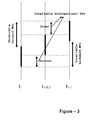
Fig. 3 shows motion estimates of forward directions for uncover regions, -
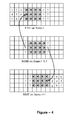
Fig. 4 shows motion estimates of backward directions for cover regions, and -
Fig. 5 illustrates an embodiment of a method in accordance with the invention. - In accordance with one or more embodiments, a motion-compensated image interpolation method, device or system is utilized in frame rate conversion applications. For frame rate conversion applications the accuracy of the motion vector estimation plays an important role for synthesizing natural, artifact free interpolated frames. The performance of two frame based motion estimation algorithms may degrade at the moving object boundaries (motion boundaries) according to the occlusion phenomena. A reference search unit, which may generally be a rectangle shaped block, is covered or uncovered in the next frame according to the direction of the motion.
- A straightforward motion-compensated interpolation method applies a bidirectional interpolation like

- Since the estimated motion vectors at the occlusion regions are unreliable, a bi-directional compensation method may mix the foreground and background objects intensities which causes a disturbing artifact called halo artifact.
- In order to remove or reduce the halo artifact the occlusion regions may be detected and may be classified as cover or uncover regions in accordance with one or more embodiments according to the invention. Then the motion estimates of the occlusion regions may be updated with the background motion vector. The updated motion vectors may be compensated from the previous frame for cover and from the next frame for uncover regions.
-
Fig. 1 shows an outline of a halo reduced motion-compensated interpolation for frame rate conversion in accordance with one or more embodiments according to the invention. A motion estimation unit, MEU, (2) or a respective motion estimation function, receives via an input (1) consecutive frames fn , n representing natural numbers from 1 to any arbitrary value. The motion estimation unit or function (2) makes a motion estimation from a previous frame fn to a next frame, e.g. fn+1, which will be called forward motion estimate or estimates, FME. Input (1) is directly connected to an input of the motion estimation unit (2) and further to a frame delayer (3) or frame delay function, and a motion compensated interpolator (9) or motion compensated interpolation function. The frame delayer (3) or delay function delays an input frame by a defined time such as one frame. The output of the frame delayer (3) is connected to the motion estimation unit (2) and to the motion compensated interpolator (9). - Any motion estimation algorithm can be used in the motion estimation unit (2) or function. In this embodiment, a full block search method is utilized which minimizes the sum of absolute differences, SAD, metric given as

- The acquired motion vector field, MVF, from the motion estimation unit, MEU, (2) can diverge from the real motion content in order to minimize an intensity based matching criteria like Sum of Absolute Differences (SAD). In order to remove the intensity based matching outliers in the motion vector field, MVF, a MVF smoothing unit (SU) or smoother (5) or smoothing function is concatenated to the output of the motion estimation unit (2) as shown in
Figure 1 . The smoothing unit (5) updates a motion vector, MV, of each block from a MV candidate set containing the motion vector estimates of the current and its e.g. eight neighbouring blocks. - Among the MV candidate set, C, a motion vector, MV, minimizing a cost function

is assigned to current block. - The output of the motion estimation unit (2) is also reversed by a negation unit, NU, or negator (4) or negation function, and fed to another motion vector field smoothing unit, SU, or smoother (6) or smoothing function for acquiring motion estimates of backward motion estimates, BME, from next frame to current frame. In this embodiment, the negation unit, NU, (4) or negation function just multiplies the motion vectors with -1. The reversed motion vector field, MVF, provides a good estimate for the BME except at the occlusion regions. The BME of the uncover regions can not be estimated accurately since those regions do not exist in the previous frame to be matched. The FME of cover regions are expected to be unreliable since their match disappear in the next frame, hence their negation will be also unreliable. However in most cases the BME of cover regions can be estimated accurately since those regions in next frame can be matched correctly in the previous frame. In order to correctly recover these regions another smoothing unit, SU, (6) or smoothing function is concatenated to the negated MVF. The next and previous frames are swapped in
equation 3 like
to make the next frame as reference for the BME. The smoothing unit, SU, (6) updates the BME of the cover regions correctly from the neighbouring MVs in the candidate set. Utilizing a negator (4) or negating or inverting function and a smoothing unit, SU, (6) or smoothing function for acquiring the BME is advantageous and computationally much more efficient than acquiring BME by utilizing another motion estimation unit or motion estimator and smoother. In other embodiments of the invention the BME may also be acquired in other ways such as utilizing another or motion estimator or function and smoother, etc. - Schematic drawings of cover and uncover regions are shown in
Fig. 2 . - In order to make a bidirectional interpolation for the motion-compensated frames, the FME and BME are transformed to bidirectional motion estimates, BiME, by a motion vector field shifting unit, MVFSU, or MVF shifter (7). The MVFSU (7) shifts the FME and BME received from MVF smoothers (5) and (6) respectively, to a desired fraction of their trajectories. This fraction may be determined by the desired temporal location of the motion-compensated interpolated frame. For doubling the frame rate, this fraction is just half of the motion vector trajectories, or more generally, the inverse of the frame rate increase factor. Keeping the block grid of the frame fixed, the shifted vectors become bidirectional motion candidates for the blocks they stay in.
- Since the motion trajectories of the FME and BME may cross some blocks that may contain more than one bidirectional motion vector candidate, among these candidates the one providing minimum bidirectional SAD is assigned as the BiME of the block. Using all candidate motion vectors during the motion-compensated bidirectional interpolation is also possible by weighting the synthesis blocks of the candidate vectors according to their SAD matching metric. Beside the blocks containing multiple motion vector candidates, some blocks may be left with no candidate since no trajectory passes over them. For this kind of blocks the assigned bidirectional motion vectors of the neighbouring blocks are used as bidirectional motion vector candidates. For the bidirectional motion vector candidates the SAD metric to be minimized is

which is similar toequation 2 but slightly differing by taking the frame to be interpolated as the reference of the motion compensation. The variable α is the temporal fraction of the frame to be motion-compensated and gets values between 0 and 1. - A cover/uncover detection unit, CUDU, (8) detects and classifies the occlusion regions as cover and uncover based on the orientation of the motion vectors with respect to their neighbours. In order to find the occlusion regions the discontinuities in the MVF may be utilized since they generally coincide with the object boundaries. However the MVF at the cover and uncover regions are not reliable since they can not be matched correctly with bidirectional compensation. Hence the difference between the neighbouring blocks in horizontal direction is more reliable to detect the discontinuities in the MVF. Since the motion contents of videos are in general in the horizontal direction it is reasonable to check the discontinuities in the horizontal direction. However vertical direction can also be added to the detection procedure. In accordance with one or more embodiments according to the invention, the occlusion detection and cover/uncover classification is done by the rule given below


where λ is a scaling coefficient, Tocc is a threshold for discontinuity in the MVF and b is the block size used in MEU (2). - By this rule the blocks located at the border of the MVF discontinuities which are occlusion candidates are classified as cover and uncover according to orientations of the neighbouring motion vectors along the horizontal direction. It is important to get reliable neighbouring motion vectors for cover/uncover classification. Hence it is desirable that the motion vectors to be compared are located far away from the object boundaries. By setting the λ coefficient to higher values e.g. above 1, for example between 1 and 5, or between 1,5 and 3, or to1,5 or 2, the location of the motion vectors to be compared can be made distant to object boundaries. By this rule the blocks with high bidirectional SAD match which are occlusion candidates are classified as cover and uncover according to orientations of the neighbouring motion vectors along the global motion direction.
- The motion-compensated interpolation unit, MCIU, or interpolator (9) receives the input signal applied to the input (1) and the output signals of the units, blocks or functions (3, 5, 6, 7, 8). At an output (10), the interpolator (9) outputs a motion compensated interpolated output such as fn-0,5. The interpolator (9) makes a bidirectional interpolation as given in
equation 1. - However for the cover and uncover assigned blocks the interpolator MCIU (9) updates the motion vector estimates of the blocks from the FME and BME according to their cover/uncover assignment and makes one directional interpolation.
- There is no SAD like matching criteria for updating the motion vectors of the cover/uncover regions since those regions only exist in one of the frames. However the differences between the forward and backward matching errors can give an idea about which motion vector should represent the foreground motion. In
Fig. 3 and inFig. 4 the unreliable regions for the motion estimates of the forward and backward directions are shown with "?". For the uncover regions it is expected to get reliable matching in forward direction as shown inFig. 3 , and for cover regions it is expected to get reliable matching in backward direction which are shown inFig. 4 . And additionally the motion vectors which give reliable matching at occlusion regions in forward or backward direction may represent the foreground motion. Hence in order to update the motion vectors of occlusion regions with the background motion for one directional motion-compensation, the background motion estimates can be located at the reverse direction of the foreground motion for cover and uncover regions. For this reason the motion vectors of uncover regions are updated with a reliable backward motion vector from a candidate set located at the reverse direction of the foreground motion vector which is a FME of the uncover region having a small forward matching error. - Similarly, the motion vectors of cover regions are updated with a reliable forward motion vector from a candidate set located at the reverse direction of the foreground motion vector which is a BME of the cover region having a small backward matching error. The locations of the candidate sets for the cover and uncover regions are shown in
Figure 4 . From the candidate set the update vector can be acquired by a median filtering among the reliable motion vectors, which have small matching error. In case no motion vector candidate can be acquired since there is no reliable foreground motion estimate or there is no reliable candidate for the background motion, no update is done for the motion vector of the occlusion region. After the motion vector update step the one directional interpolation is done for the occlusion regions. For the uncover regions motion compensation is done from the next frame and for the cover regions motion compensation is done from previous frame. - A method in accordance with one or more embodiments according to the invention is shown in
Fig. 5 . - In a step S1 shown in
Fig. 5 , a forward motion estimation between previous and next frames of the video stream is performed. A block based full search motion estimation may be done at this step. The output of step S1 is called Initial Motion Estimates (IME). - In step S2, a motion vector field smoothing is done to get a more reliable true motion estimate.

is minimized for each block during the smoothing operation where C is a candidate motion vector set composed of motion vectors of 8 neighbouring blocks and the block itself. The output of this step is called forward motion estimates (FME, dfw ). - Step S3: In order to get backward motion estimates, negate (e.g. just multiply by -1) the IME generated a step S1, and make a motion vector field smoothing similar to the smoothing of step S2. The output of step S3 is called backward motion estimates (BME, dbw ).
- Step S4: In order to get Bidirectional Motion Estimates, shift the motion vector field to the temporal location of the desired frame to be interpolated. Shifting operation is done by following the trajectories of the motion vectors, FME and BME. For the blocks that contains multiple trajectories of motion vectors the one which has the least bidirectional matching criteria is assigned. For the blocks that contain no trajectory among the neighbouring motion vectors the one which has the least bidirectional matching criteria is assigned. The output of this step S4 is called Bidirectional Motion Estimates (BiME, dbi ).
- Step S5: Classify the blocks as cover and uncover which satisfy the following equations.


- Step S6: Make a bidirectional motion-compensated frame interpolation for each block. If the block is neither assigned as cover nor uncover then
-

else if the block is assigned as cover - If the SAD error of BME, dbw , is under a defined threshold, Trel , update

where dc is derived among the motion vector candidate set consist of motion vectors of 8 neighbouring and the current block of the BME located at the reverse direction of the dbw . dc is the motion vector having the least backward matching error or median filtering of the candidate set after eliminating the unreliable motion vectors with SAD tresholding. After the update step, whether the bidirectional motion vector of the cover region is changed or not make one directional motion compensated interpolation
else which means the block is assigned as uncover - If the SAD error of FME, dfw , is under a defined threshold, Trel , update

where dc is derived among the motion vector candidate set consist of motion vectors of 8 neighbouring and the current block of the FME located at the reverse direction of the dfw . dc is the motion vector having the least forward matching error or median filtering of the candidate set after eliminating the unreliable motion vectors with SAD tresholding. After the update step, whether the bidirectional motion vector of the cover region is changed or not make one directional motion compensated interpolation
- In the above embodiment, the backward motion estimate is calculated base on the forward motion estimate. The process may also be carried out in a different or reversed manner by starting with a calculation of a backward motion estimate and then providing a forward motion estimate e.g. by negating and smoothing the backward motion estimate.
- The device shown in
Fig. 1 may also be implemented in a different manner such as a distributed system or as an apparatus or part of a device or apparatus such as a controller or processor. - Any of the unit, steps, features or functions mentioned above may be implemented as hardware structures or in form of a software implementations such as computer implementable programs or routines or a computer program product. Such a computer program may e.g. be stored on a computer-readable storage medium or in any other form. Further, embodiments of the invention my include only one of the above mentioned units, steps, features or functions, or more or all of the above mentioned units, steps, features or functions in any arbitrary combinations.
Claims (15)
- Method for motion-compensated interpolation, comprising:detecting cover and/or uncover regions,assigning motion vectors on cover and/or uncover regions,generating one of a forward and backward motion estimation,processing the provided forward or backward estimation to generate the other one of forward and backward motion estimation.
- Method according to claim 1, wherein said processing comprises negating, and optionally smoothing, the provided forward or backward estimation to generate the other one of forward and backward motion estimation.
- Method according to claim 1 or 2, comprising generating a candidate set and using the candidate set to determine the motion vectors on the cover and/or uncover regions.
- Method according to claim 1, 2 or 3, comprising at least one, more or all of:reducing halo artifacts in the output of the motion-compensated interpolation,utilizing the method in frame rate conversion application,applying a bidirectional interpolation,detecting and classifying occlusion regions as cover or uncover regions,updating motion estimates of the occlusion regions with a background motion vector,compensating the updated motion vectors from a previous frame for cover and from a next frame for uncover regions,providing a forward motion estimation from a previous frame to a next frame,delaying an input frame by a defined time,utilizing a full block search method,minimizing a sum of absolute differences,smoothing an output of the motion estimation,updating a motion vector of each block from a motion vector candidate set containing the motion vector estimates of the current and neighbouring blocks,reversing or negating an output of the motion estimation,smoothing the reversed or negated motion estimation for acquiring one or more backward motion estimates from next frame to current frame,updating the backward motion estimates of cover regions from neighbouring motion vectors in a candidate set.
- Method according to any one of the preceding claims, comprising at least one, more or all of:transforming forward motion estimates and backward motion estimates to bidirectional motion estimates in order to make a bidirectional interpolation for motion-compensated frames,shifting smoothed forward and backward motion estimates to a desired fraction of their trajectories,keeping a block grid of the frame fixed so that the shifted vectors become bidirectional motion candidates for the blocks they stay in.
- Method according to any one of the preceding claims, comprising at least one, more or all of:using all candidate motion vectors during a motion-compensated bidirectional interpolation,weighting the blocks of candidate vectors,in case a block does not include a motion vector candidate, assigning bidirectional motion vectors of neighbouring blocks as bidirectional motion vector candidates,classifying one or more blocks located at a border of motion vector field discontinuities as cover and uncover according to orientations of the neighbouring motion vectors along a direction, optionally the horizontal direction,comparing, for cover/uncover classification, motion vectors located remote from object boundaries,for cover and uncover assigned blocks, an interpolator or interpolation function updates the motion vector estimates of the blocks from the forward and backward motion estimates according to their cover/uncover assignment and makes one directional interpolation.
- Method according to any one of the preceding claims, comprising at least one, more or all of:motion vectors of uncover regions are updated with a backward motion vector from a candidate set located at the reverse direction of a foreground motion vector or forward motion estimate of the uncover region,motion vectors of cover regions are updated with a forward motion vector from a candidate set located at the reverse direction of the background motion vector or backward motion estimate of the cover region,acquiring from a candidate set an update vector by a median filtering among motion vectors.
- Method according to any one of the preceding claims, comprising at least one, more or all of:a forward motion estimation between previous and next frames of a video stream, a motion vector field smoothing to get a motion estimate,minimizing an equation for each block during the smoothing operation so as to provide forward motion estimates,providing backward motion estimates by negating an initial motion estimate and smoothing a motion vector field,generating bidirectional motion estimates by shifting a motion vector field to the temporal location of a desired frame to be interpolated.
- Method according to any one of the preceding claims, comprising at least one, more or all of:classification of blocks as cover and uncover which satisfy the following equations:


performing a bidirectional motion-compensated frame interpolation for one, more or each block,
if the block is neither assigned as cover nor uncover then
else if the block is assigned as cover,
if a sum of absolute differences (SAD) error of backward motion estimates, dbw , is under a defined threshold (Trel ) update
after the update step a one directional motion compensated interpolation is carried out:
else if the block is assigned as uncoverif the SAD error of FME, dfw , is under a defined threshold, Trel , update after the update step, a one directional motion compensated interpolation is carried out:
- Device for motion-compensated interpolation, comprising:means for detecting cover and/or uncover regions,means for assigning motion vectors on cover and/or uncover regions,means for generating one of a forward and backward motion estimation,means for processing the provided forward or backward estimation to generate the other one of forward and backward motion estimation.
- Device according to claim 10, wherein said processing means comprises means for negating, and optionally smoothing, the provided forward or backward estimation to generate the other one of forward and backward motion estimation.
- Device according to claim 10 or 11, comprising means for generating a candidate set and using the candidate set to determine the motion vectors on the cover and/or uncover regions.
- Device according to claim 10, 11 or 12, comprising means for at least one, more or all of:reducing halo artifacts in the output of the motion-compensated interpolation, utilizing the method in frame rate conversion application,applying a bidirectional interpolation,detecting and classifying occlusion regions as cover or uncover regions,updating motion estimates of the occlusion regions with a background motion vector, compensating the updated motion vectors from a previous frame for cover and from a next frame for uncover regions,providing a forward motion estimation from a previous frame to a next frame, delaying an input frame by a defined time,utilizing a full block search method,minimizing a sum of absolute differences,smoothing an output of the motion estimation,updating a motion vector of each block from a motion vector candidate set containing the motion vector estimates of the current and neighbouring blocks,reversing or negating an output of the motion estimation,smoothing the reversed or negated motion estimation for acquiring one or more backward motion estimates from next frame to current frame,updating the backward motion estimates of cover regions from neighbouring motion vectors in a candidate set.
- Device according to claim 10, 11, 12, or 13, comprising means for at least one, more or all of:transforming forward motion estimates and backward motion estimates to bidirectional motion estimates in order to make a bidirectional interpolation for motion-compensated frames,shifting smoothed forward and backward motion estimates to a desired fraction of their trajectories,keeping a block grid of the frame fixed so that the shifted vectors become bidirectional motion candidates for the blocks they stay in,using all candidate motion vectors during a motion-compensated bidirectional interpolation,weighting the blocks of candidate vectors,in case a block does not include a motion vector candidate, assigning bidirectional motion vectors of neighbouring blocks as bidirectional motion vector candidates,classifying one or more blocks located at a border of motion vector field discontinuities as cover and uncover according to orientations of the neighbouring motion vectors along a direction, optionally the horizontal direction,comparing, for cover/uncover classification, motion vectors located remote from object boundaries,for cover and uncover assigned blocks, an interpolator or interpolation function updates the motion vector estimates of the blocks from the forward and backward motion estimates according to their cover/uncover assignment and makes one directional interpolation,updating motion vectors of uncover regions with a backward motion vector from a candidate set located at the reverse direction of a foreground motion vector or forward motion estimate of the uncover region,updating motion vectors of cover regions with a forward motion vector from a candidate set located at the reverse direction of the background motion vector or backward motion estimate of the cover region,acquiring from a candidate set an update vector by a median filtering among motion vectors,a forward motion estimation between previous and next frames of a video stream, a motion vector field smoothing to get a motion estimate,minimizing an equation for each block during the smoothing operation so as to provide forward motion estimates,providing backward motion estimates by negating an initial motion estimate and smoothing a motion vector field,generating bidirectional motion estimates by shifting a motion vector field to the temporal location of a desired frame to be interpolated,classify blocks as cover and uncover which satisfy the following equations.


 performing a bidirectional motion-compensated frame interpolation for one, more or each block,if the block is neither assigned as cover nor uncover then
else if the block is assigned as cover,if a sum of absolute differences, SAD, error of backward motion estimates, dbw , is under a defined threshold, Trel , update after the update step a one directional motion compensated interpolation is carried out:else if the block is assigned as uncover
if the SAD error of FME, dfw , is under a defined threshold, Trel , update
after the update step, a one directional motion compensated interpolation is carried out:
- A computer program product, comprising code portions for carrying out one, more, or all of the steps or functions defined in any one of claims 1 to 9.
Applications Claiming Priority (1)
| Application Number | Priority Date | Filing Date | Title |
|---|---|---|---|
| TR200902468 | 2009-03-30 |
Publications (1)
| Publication Number | Publication Date |
|---|---|
| EP2237560A1 true EP2237560A1 (en) | 2010-10-06 |
Family
ID=42102052
Family Applications (1)
| Application Number | Title | Priority Date | Filing Date |
|---|---|---|---|
| EP10156800A Ceased EP2237560A1 (en) | 2009-03-30 | 2010-03-17 | Halo reducing motion-compensated interpolation |
Country Status (1)
| Country | Link |
|---|---|
| EP (1) | EP2237560A1 (en) |
Cited By (5)
| Publication number | Priority date | Publication date | Assignee | Title |
|---|---|---|---|---|
| EP2979243A1 (en) * | 2013-03-29 | 2016-02-03 | Google, Inc. | Motion-compensated frame interpolation using smoothness constraints |
| EP2285092B1 (en) * | 2009-08-04 | 2019-04-17 | Vestel Elektronik Sanayi ve Ticaret A.S. | Method and apparatus for adjusting motion fields in a memory - access efficient way to frame interpolation frameworks |
| CN111614911A (en) * | 2020-05-08 | 2020-09-01 | Oppo广东移动通信有限公司 | Image generation method and device, electronic device and storage medium |
| CN113873095A (en) * | 2020-06-30 | 2021-12-31 | 晶晨半导体(上海)股份有限公司 | Motion compensation method and module, chip, electronic device and storage medium |
| US12526448B2 (en) * | 2022-04-29 | 2026-01-13 | Samsung Electronics Co., Ltd. | Video frame rate conversion method supporting replacement of motion-compensated frame interpolation with linear combination of frames and device implementing the same |
Citations (9)
| Publication number | Priority date | Publication date | Assignee | Title |
|---|---|---|---|---|
| US6005639A (en) | 1990-09-20 | 1999-12-21 | Bbc, Broadcasting House | Vector assignment for video image motion compensation |
| US6219436B1 (en) | 1997-10-29 | 2001-04-17 | U.S. Philips Corporation | Motion vector estimation and detection of covered/uncovered image parts |
| US6487313B1 (en) | 1998-08-21 | 2002-11-26 | Koninklijke Philips Electronics N.V. | Problem area location in an image signal |
| US20030185304A1 (en) * | 2002-03-29 | 2003-10-02 | Sony Corporation & Sony Electronics Inc. | Method of estimating backward motion vectors within a video sequence |
| US6771799B2 (en) | 2000-05-18 | 2004-08-03 | Koninklijke Philips Electronics N.V. | Foreground/background detector |
| WO2004066624A1 (en) * | 2003-01-23 | 2004-08-05 | Koninklijke Philips Electronics N.V. | Background motion vector detection |
| WO2007119183A2 (en) | 2006-04-19 | 2007-10-25 | Nxp B.V. | Method and system for creating an interpolated image |
| EP1855474A1 (en) * | 2006-05-12 | 2007-11-14 | Sony Deutschland Gmbh | Method for generating an interpolated image between two images of an input image sequence |
| US20090060041A1 (en) * | 2007-08-28 | 2009-03-05 | Samsung Electronics Co, Ltd. | System and method for motion vector collection for motion compensated interpolation of digital video |
-
2010
- 2010-03-17 EP EP10156800A patent/EP2237560A1/en not_active Ceased
Patent Citations (10)
| Publication number | Priority date | Publication date | Assignee | Title |
|---|---|---|---|---|
| US6005639A (en) | 1990-09-20 | 1999-12-21 | Bbc, Broadcasting House | Vector assignment for video image motion compensation |
| US6219436B1 (en) | 1997-10-29 | 2001-04-17 | U.S. Philips Corporation | Motion vector estimation and detection of covered/uncovered image parts |
| US6487313B1 (en) | 1998-08-21 | 2002-11-26 | Koninklijke Philips Electronics N.V. | Problem area location in an image signal |
| US7058227B2 (en) | 1998-08-21 | 2006-06-06 | Koninklijke Philips Electronics N.V. | Problem area location in an image signal |
| US6771799B2 (en) | 2000-05-18 | 2004-08-03 | Koninklijke Philips Electronics N.V. | Foreground/background detector |
| US20030185304A1 (en) * | 2002-03-29 | 2003-10-02 | Sony Corporation & Sony Electronics Inc. | Method of estimating backward motion vectors within a video sequence |
| WO2004066624A1 (en) * | 2003-01-23 | 2004-08-05 | Koninklijke Philips Electronics N.V. | Background motion vector detection |
| WO2007119183A2 (en) | 2006-04-19 | 2007-10-25 | Nxp B.V. | Method and system for creating an interpolated image |
| EP1855474A1 (en) * | 2006-05-12 | 2007-11-14 | Sony Deutschland Gmbh | Method for generating an interpolated image between two images of an input image sequence |
| US20090060041A1 (en) * | 2007-08-28 | 2009-03-05 | Samsung Electronics Co, Ltd. | System and method for motion vector collection for motion compensated interpolation of digital video |
Non-Patent Citations (2)
| Title |
|---|
| G. DE HAAN; P.W.A.C BIEZEN; H. HUIJGEN; O.A. OJO: "True Motion Estimation with 3-D Recursive Search Block-Matching", IEEE TR. ON CIRCUITS AND SYSTEMS FOR VIDEO TECHNOLOGY, 19 September 1010 (1010-09-19), pages 368 - 388 |
| JEON B-W ET AL: "COARSE-TO-FINE FRAME INTERPOLATION FOR FRAME RATE UP-CONVERSION USING PYRAMID STRUCTURE", IEEE TRANSACTIONS ON CONSUMER ELECTRONICS, IEEE SERVICE CENTER, NEW YORK, NY, US LNKD- DOI:10.1109/TCE.2003.1233761, vol. 49, no. 3, 1 August 2003 (2003-08-01), pages 499 - 508, XP001172089, ISSN: 0098-3063 * |
Cited By (6)
| Publication number | Priority date | Publication date | Assignee | Title |
|---|---|---|---|---|
| EP2285092B1 (en) * | 2009-08-04 | 2019-04-17 | Vestel Elektronik Sanayi ve Ticaret A.S. | Method and apparatus for adjusting motion fields in a memory - access efficient way to frame interpolation frameworks |
| EP2979243A1 (en) * | 2013-03-29 | 2016-02-03 | Google, Inc. | Motion-compensated frame interpolation using smoothness constraints |
| CN111614911A (en) * | 2020-05-08 | 2020-09-01 | Oppo广东移动通信有限公司 | Image generation method and device, electronic device and storage medium |
| CN111614911B (en) * | 2020-05-08 | 2022-12-09 | Oppo广东移动通信有限公司 | Image generation method and device, electronic device and storage medium |
| CN113873095A (en) * | 2020-06-30 | 2021-12-31 | 晶晨半导体(上海)股份有限公司 | Motion compensation method and module, chip, electronic device and storage medium |
| US12526448B2 (en) * | 2022-04-29 | 2026-01-13 | Samsung Electronics Co., Ltd. | Video frame rate conversion method supporting replacement of motion-compensated frame interpolation with linear combination of frames and device implementing the same |
Similar Documents
| Publication | Publication Date | Title |
|---|---|---|
| JP5657391B2 (en) | Image interpolation to reduce halo | |
| US8144778B2 (en) | Motion compensated frame rate conversion system and method | |
| JP5594968B2 (en) | Method and apparatus for determining motion between video images | |
| CN100438609C (en) | Image processing unit with degradation | |
| US8274602B2 (en) | Image processing apparatus and image processing method with redundant frame detection | |
| US20120093231A1 (en) | Image processing apparatus and image processing method | |
| CN102868879B (en) | Method and system for converting video frame rate | |
| US8406305B2 (en) | Method and system for creating an interpolated image using up-conversion vector with uncovering-covering detection | |
| US20050249288A1 (en) | Adaptive-weighted motion estimation method and frame rate converting apparatus employing the method | |
| KR20050080862A (en) | Method for interpolating frame with motion compensation by overlapped block motion estimation and frame-rate converter using thereof | |
| US20070009038A1 (en) | Motion estimator and motion estimating method thereof | |
| CN103647973B (en) | A kind of method and apparatus of frame per second up-sampling | |
| EP2237559B1 (en) | Background motion estimate based halo reduction | |
| US8830394B2 (en) | System, method, and apparatus for providing improved high definition video from upsampled standard definition video | |
| KR20050119285A (en) | Apparatus and method for hybrid block-based motion estimation | |
| Han et al. | Frame rate up-conversion for high-definition video applications | |
| US7881500B2 (en) | Motion estimation with video mode detection | |
| WO2006136983A2 (en) | Motion estimation | |
| Kovačević et al. | Block-matching correlation motion estimation for frame-rate up-conversion | |
| EP2461565A2 (en) | Motion estimation method for frame rate up conversion applications | |
| JP2002314952A (en) | Method and apparatus for detecting the reliability of a motion vector field | |
| Li et al. | Motion-compensated frame interpolation using patch-based sparseland model | |
| Van Thang et al. | An efficient non-selective adaptive motion compensated frame rate up conversion | |
| JP4232869B2 (en) | Conversion unit and apparatus, and image processing apparatus | |
| Kim et al. | True motion compensation with feature detection for frame rate up-conversion |
Legal Events
| Date | Code | Title | Description |
|---|---|---|---|
| PUAI | Public reference made under article 153(3) epc to a published international application that has entered the european phase |
Free format text: ORIGINAL CODE: 0009012 |
|
| AK | Designated contracting states |
Kind code of ref document: A1 Designated state(s): AT BE BG CH CY CZ DE DK EE ES FI FR GB GR HR HU IE IS IT LI LT LU LV MC MK MT NL NO PL PT RO SE SI SK SM TR |
|
| AX | Request for extension of the european patent |
Extension state: AL BA ME RS |
|
| 17P | Request for examination filed |
Effective date: 20110405 |
|
| 17Q | First examination report despatched |
Effective date: 20130118 |
|
| STAA | Information on the status of an ep patent application or granted ep patent |
Free format text: STATUS: THE APPLICATION HAS BEEN REFUSED |
|
| 18R | Application refused |
Effective date: 20160520 |