EP2237173A2 - Storing and searching encoded data - Google Patents
Storing and searching encoded data Download PDFInfo
- Publication number
- EP2237173A2 EP2237173A2 EP20100154725 EP10154725A EP2237173A2 EP 2237173 A2 EP2237173 A2 EP 2237173A2 EP 20100154725 EP20100154725 EP 20100154725 EP 10154725 A EP10154725 A EP 10154725A EP 2237173 A2 EP2237173 A2 EP 2237173A2
- Authority
- EP
- European Patent Office
- Prior art keywords
- key
- byte array
- field
- document
- values
- Prior art date
- Legal status (The legal status is an assumption and is not a legal conclusion. Google has not performed a legal analysis and makes no representation as to the accuracy of the status listed.)
- Ceased
Links
Images



Classifications
-
- G—PHYSICS
- G06—COMPUTING OR CALCULATING; COUNTING
- G06F—ELECTRIC DIGITAL DATA PROCESSING
- G06F16/00—Information retrieval; Database structures therefor; File system structures therefor
- G06F16/40—Information retrieval; Database structures therefor; File system structures therefor of multimedia data, e.g. slideshows comprising image and additional audio data
- G06F16/41—Indexing; Data structures therefor; Storage structures
-
- G—PHYSICS
- G06—COMPUTING OR CALCULATING; COUNTING
- G06F—ELECTRIC DIGITAL DATA PROCESSING
- G06F16/00—Information retrieval; Database structures therefor; File system structures therefor
- G06F16/20—Information retrieval; Database structures therefor; File system structures therefor of structured data, e.g. relational data
-
- G—PHYSICS
- G06—COMPUTING OR CALCULATING; COUNTING
- G06F—ELECTRIC DIGITAL DATA PROCESSING
- G06F16/00—Information retrieval; Database structures therefor; File system structures therefor
- G06F16/20—Information retrieval; Database structures therefor; File system structures therefor of structured data, e.g. relational data
- G06F16/22—Indexing; Data structures therefor; Storage structures
- G06F16/2228—Indexing structures
- G06F16/2272—Management thereof
-
- G—PHYSICS
- G06—COMPUTING OR CALCULATING; COUNTING
- G06F—ELECTRIC DIGITAL DATA PROCESSING
- G06F16/00—Information retrieval; Database structures therefor; File system structures therefor
- G06F16/90—Details of database functions independent of the retrieved data types
- G06F16/95—Retrieval from the web
- G06F16/951—Indexing; Web crawling techniques
-
- G—PHYSICS
- G06—COMPUTING OR CALCULATING; COUNTING
- G06Q—INFORMATION AND COMMUNICATION TECHNOLOGY [ICT] SPECIALLY ADAPTED FOR ADMINISTRATIVE, COMMERCIAL, FINANCIAL, MANAGERIAL OR SUPERVISORY PURPOSES; SYSTEMS OR METHODS SPECIALLY ADAPTED FOR ADMINISTRATIVE, COMMERCIAL, FINANCIAL, MANAGERIAL OR SUPERVISORY PURPOSES, NOT OTHERWISE PROVIDED FOR
- G06Q10/00—Administration; Management
- G06Q10/10—Office automation; Time management
Definitions
- aspects of the invention relate to systems and methods for storing and searching data. More particularly, aspects of the invention relate to systems and methods for storing and searching data that allow for searching at the byte array level.
- Indexes are commonly used to facilitate the searching of stored data.
- the basic organization of a search index includes a key-value pair.
- the key is the indexed term and the value is a list of items or documents.
- keys and values are stored in serialized forms of objects.
- Software applications and tools are available for serializing data. Conventional serialization applications often produce indexes that have a high storage overhead.
- searching indexed data can be time consuming and computationally expensive.
- a system typically traverses the keys in the index and looks for a match.
- the process of looking for a match includes deserializing keys and associated values into objects in real-time. While deserializing objects, such as Java objects, can be performed with readily available and convenient to use applications, the time required to perform this process becomes significant as the size of an index increases.
- a user may enter a search to locate a television show at a set-top box.
- the search may be transmitted to a remote server via a telephone line, network connection or satellite signal and the search results are transmitted back via the same or a different path.
- the combination of transmission and searching delays may make the system inconvenient to users.
- aspects of the invention relate to systems and methods for creating indexes of content and searching the indexes at the byte array level.
- a method of searching an indexed collection of documents includes receiving a search request that includes at least one key.
- the at least one key is compared to values in a byte array at a processor. Potential matches are eliminated based on values in the byte array.
- Another implementation includes a server programmed with computer-executable instructions to search an index at the byte array level.
- the present invention can be partially or wholly implemented on a computer-readable medium, for example, by storing computer-executable instructions or modules, or by utilizing computer-readable data structures.
- Figure 1a shows an exemplary cable system in accordance with one embodiment of the invention
- FIG. 1b illustrates an exemplary CPE in accordance with an embodiment of the invention
- Figure 2 illustrates a system that may be used to store and search content, in accordance with an embodiment of the invention
- Figure 3 illustrates an exemplary process that may be used to search content, in accordance with an embodiment of the invention
- Figure 4 illustrates metadata for two pieces of content that will be used to create byte array entries, in accordance with an embodiment of the invention.
- FIG. 5 illustrates exemplary index entries, in accordance with an embodiment of the invention.
- aspects of the invention may relate to the transmission of data and/or content between a broadcast provider and electronic devices at an end-user location.
- the term "electronic device” refers to an apparatus that includes a memory and a processor, wherein the memory is configured to include computer-readable instructions, that when executed by the processor, execute an electronic method, such as transmitting or receiving multimedia content and/or communication data.
- Exemplary electronic devices include, but are not limited to: a set-top box, a telephone, a cable modem, computers ( i.e ., mobile, laptop, desktop), and combinations thereof.
- set-top box is used to describe an apparatus that is configured to receive and provide an output of multimedia content from a broadcast provider.
- the broadcast provider may include a cable system, satellite system, or other system associated with providing broadcast services to a user location.
- a set-top box is not required to be a separate apparatus, but rather would encompass a television or PVR configurable to receive the media content. Indeed, any device that is configurable to receive and provide an output signal comprising media content from a broadcast provider falls within the term set-top box as used herein.
- the apparatus(es) that form the set-top box may include any number of processors, memories, user interfaces, and other features to facilitate the operation thereof.
- FIG. 1a shows an exemplary cable system in accordance with one embodiment of the invention.
- exemplary cable system 102 may include communication medium 104 for transmitting data over a network.
- the medium 104 may include, for example, fiber optic cable, coax, hybrid fiber coax (HFC), multiple wireless connections, satellite transceivers, or any combination of mediums that may transmit or receive content.
- cable systems are often conceptually divided into a management/application portion 106 and a High Speed Data (HSD) portion 108 that respectively provide management/application and HSD services over the medium 104 to an end-user location 110.
- HSD High Speed Data
- the end-user location 110 generally relates to all features, devices, and applications located at a customer's location which are operatively connected and configured to interface with one or both of the broadcast provider and/or end-users at the user location in relation to media services associated with the cable system provider.
- the end-user location may include any number of electronic devices, including customer premises equipment ("CPE”) 112 and a cable modem ("CM") 114.
- customer premise equipment refers to electronic devices that are supplied, authorized or approved by the broadcast provider for receiving services provided by the broadcast provider.
- a user may rent a set-top box from the cable company that is required to receive at least a portion of the programming provided through the communication medium 104.
- Not every electronic device, however, must be a CPE to transmit or receive content from the broadcast provider.
- a user may utilize a non-CPE computer to access the internet 122 through the communications medium 104.
- the management/application portion 106 may include an application portion 116, a control portion 118, and a video/television portion 120.
- the control portion 118 may include systems configured to facilitate controlling, provisioning, managing, and/or securing the CPE 112 through one or more protocols, such as out-of-band messaging and include one or more servers, such as policy servers, TFTP servers, and/or central repositories for storing data, such as billing information.
- the application portion 116 may be configured to provide applications to the CPE 112 and/or other electronic devices, such as video on demand, interactive television, and/or other services.
- the video/television portion 120 may cooperate with the application portion 116 and control portion 118 to support video operations associated therewith and/or it may act independently to provide television, music, video, and other multimedia services to the CPE 112.
- the CPE 112 or any other electronic device at the end-user location 110 may be configured to operate according to or support the operation of any number of protocols, applications, and procedures, including applications such as linear and non-linear television programming (cable, satellite, broadcast, etc.), Video on Demand (VOD), interactive television (iTV), interactive gaming, pay-per-view (PPV), and protocols such as, Hyper Text Transfer Protocol (HTTP), Dynamic Host Configuration Protocol (DHCP), Syslog, Simple Network Management Protocol (SNMP), Trivial File Transfer Protocol (TFTP), Data Over Cable Service Interface Specification (DOCSIS), Domain Name Server (DNS) applications, DOCSIS Settop Gateway (DSG), out-of-band (OOB) messaging, and others.
- applications such as linear and non-linear television programming (cable, satellite, broadcast, etc
- the cable modem termination system (CMTS) 126 may comprise a combiner (not shown) that may combine signals from application portion 116 with the signal from the video/television portion 120 before transmission to the end-user location 110.
- the CMTS 126 may be configured to send and receive signals over the communication medium 104, such as between the Internet 122 and the CPE 112 and the CM 114.
- CM 114 Once received at the end-user location 110, specific data, such as QoS configuration files, may be received at CM 114, while other information, such as audiovisual multimedia delivered in a specific format (i.e., MPEG-2) may be received at other equipment, such as CPE 112.
- QoS configuration files such as QoS configuration files
- MPEG-2 audiovisual multimedia delivered in a specific format
- the HSD network 108 may provide data services for the system 102, including services for the CM 114 to access the Internet 122. It may include a network element, such as a network provisioning unit (NPU) 124.
- the NPU 124 may be configured to support any number of activities associated with the electronic devices.
- the NPU 124 may include capabilities to facilitate configuring the electronic devices, such as by distributing bulk configurations files to one or more the electronic devices. It may be configured to communicate with the electronic devices through any number of protocols, applications, and communication mediums, including DHCP, HTTP, SNMP, TFTP, and the like.
- a CAR 128 may be configured to connect the management network 106 to the CMTS 126.
- the CAR 128 may transport signals there between using IP protocols, and optionally, it may provide firewall separation for the VOD or STB controller portions and from the HSD network 106, enhancing security from any devices attempting to associate with devices and signaling on the management network.
- signaling traffic transported between the management network 106 and the CMTS 126 may be wrapped into addressable packets, such as Ethernet, IP, or other packets. Further discussions relating to exemplary cable systems may be located within U.S. Patent No. 6,463,585 , which is hereby incorporated by reference in its entirety for any and all purposes.
- FIG. 1b illustrates an exemplary CPE, such as CPE 112 shown in Figure 1a , in accordance with an exemplary embodiment of the present invention.
- the CPE 112 may be configured to communicate with the CMTS 126 through digital cable signals, such as through signaling defined by DOCSIS, DSG, and/or through other protocols, such as any other protocol authorized through DHCP registration.
- the CPE 112 may include a splitter 130, such as a radio frequency (RF) splitter, an embedded cable modem (eCM) 132, an embedded set-top box (eSTB) 134, audio visual (A/V) ports 136, a memory (volatile and/or non-volatile) 138, an conditional access (CA) unit 140, and a processor 142.
- RF radio frequency
- the splitter 130 may be configured to split RF signals into multiple groups, such as a group comprising out-of-band control functions and/or two-way application traffic and another group for multimedia content delivery.
- the out-of-band and/or two-way application traffic may be relayed to the eCM 132 and the multimedia content may be separately relayed to the eSTB 134.
- the eSTB 134 may be configured to manipulate signals and output video and other media signals to a media output device (not shown) or other device connected to the A/V ports 136, such as to a television (TV), digital video recorder (DVR), personal video recorder (PVR), or the like.
- TV television
- DVR digital video recorder
- PVR personal video recorder
- the eCM 132 may be configured to process and control other signals, such as DOCSIS and other IP packets, and bridge or relay the signals to the eSTB 134 through an internal communications link.
- the communications link may be used to transfer signals received through data tunnels, such as those tuned to by the eCM 132 to the eSTB 134, so that out-of-band messaging signals associated therewith can be delivered to the eSTB 134 for processing.
- the eCM 132 may include network communication capabilities for bi-directional communication of data signals with the CMTS 126.
- the CA unit 140 may be configured to provide conditional access control for the CPE 112. It may include or be configured to receive a CableCard, SmartCard, or other item for controlling security and access to the data, video, and control signals transmitted over the communication medium 104. It is illustrated as a standalone item, however, it can be included with or embedded on the eSTB 134 or the eCM 132 to perform similar functions.
- the eCM 132, eSTB 134, and CA unit 140 may be logically separate entities, however, they may physically share hardware and software. Other items, such as control logic and applications may be included on the CPE 112 for controlling operation of the eSTB 134 and/or the eCM 132.
- the CPE 112 may further comprise a decisioning module 144, which as discussed below in more detail, may determine what portion of content, such as an advertisement to present to a user.
- Decisioning module 144 may be a separate entity (as shown), yet in other embodiments, the decisioning module is any module, including processor 140, that may execute computer-executable instructions, such as those stored on memory 138 to determine which portion of content to present to the user.
- processor 140 may execute computer-executable instructions, such as those stored on memory 138 to determine which portion of content to present to the user.
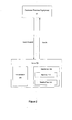
- FIG. 2 illustrates a system that may be used to store and search content, in accordance with an embodiment of the invention.
- a user may perform a search with customer premises equipment 202.
- Customer premises equipment 202 may be implemented with a set-top box, a television, computer device or other equipment used to interact with a source of audiovisual content.
- Customer premises equipment 202 transmits a search request to a server 204.
- Server 204 may be implemented with a conventional computer device and may be operated by cable television entity or other source.
- Server 204 receives the search request and utilizes a search module 206 to search content stored in a data memory 208.
- Search module 206 may be implemented with hardware, software or a combination of hardware and software.
- Data memory 208 includes an indexed collection of content.
- the index includes a byte array 210 and serialized data 212. Exemplary structures of byte array 210 and serialized data 212 are provided below.
- search module 206 may be configured to search at the byte array level. Searching at the byte array level reduces or eliminates the need to deserialize data. After a search is performed, server 204 returns results to customer premises equipment 202.
- FIG. 3 illustrates an exemplary process that may be used to search content, in accordance with an embodiment of the invention.
- a search requests that includes at least one key is received.
- the search request may be received at a server, such as server 204.
- the at least one key is compared to values in a byte array at a processor. Potential matches may then be eliminated based on values in the byte array in step 306. For example, a byte array may indicate whether or not content is formatted in a high definition format and potential matches may be eliminated based on this value.
- step 308 it is determined whether or not there any remaining documents that have not been eliminated. If there are not, the process ends in step 310. When there are remaining documents, in step 312 the remaining documents are deserialized and read so that further searching can be performed. The process ends in step 314.
- Figure 4 illustrates metadata for two assets or pieces of content 402 and 404 that will be used to create byte array entries in accordance with an embodiment of the invention.
- the metadata for each asset or piece of content includes fields for an ID, title, actors, director, provider and indication of whether or not the asset or piece of content is in a high definition format.
- fields are chosen such that expected search criteria are likely to be completed by analyzing byte array entries that correspond to the metadata.
- Figure 5 illustrates exemplary index entries 502 and 504.
- Entry 502 corresponds to a key value of "night” and includes a byte array value 506.
- Entry 504 corresponds to a key value of "nightingale” and includes a byte array value 508.
- byte arrays 506 and 508 use parentheses to logically group byte sections relating to different assets or pieces of content.
- An exemplary byte array may include header, metadata, positions header and positions of matches sections.
- the number “2" indicates the number of assets coded in the array.
- the number “7” indicates the fields of the assets coded in the array the key ("night") occurs.
- the number “7” may represent the fields of title, actors, and directors.
- the number “25678” corresponds to the asset ID and the value of "1" indicates that the content is high definition content.
- the number “3” indicates which fields of the asset the key "night” occurs. In the example shown, "3” represents the fields of title and actors.
- the positions of the matches are represented by "4, 2, 3, 3, 4.”
- the first "4" indicates the number of the next elements of the byte array that describe the positions in which the key is found, the "2,3” represent pointers to the positions and "3,4" indicate the positions themselves.
Landscapes
- Engineering & Computer Science (AREA)
- Theoretical Computer Science (AREA)
- Software Systems (AREA)
- Multimedia (AREA)
- Data Mining & Analysis (AREA)
- Databases & Information Systems (AREA)
- Physics & Mathematics (AREA)
- General Engineering & Computer Science (AREA)
- General Physics & Mathematics (AREA)
- Two-Way Televisions, Distribution Of Moving Picture Or The Like (AREA)
- Information Retrieval, Db Structures And Fs Structures Therefor (AREA)
- Read Only Memory (AREA)
Abstract
Description
- Aspects of the invention relate to systems and methods for storing and searching data. More particularly, aspects of the invention relate to systems and methods for storing and searching data that allow for searching at the byte array level.
- Indexes are commonly used to facilitate the searching of stored data. The basic organization of a search index includes a key-value pair. The key is the indexed term and the value is a list of items or documents. In a typical object-oriented implementation keys and values are stored in serialized forms of objects. Software applications and tools are available for serializing data. Conventional serialization applications often produce indexes that have a high storage overhead.
- After the data is stored, searching indexed data with conventional processes can be time consuming and computationally expensive. When a user or application issues a search request, a system typically traverses the keys in the index and looks for a match. The process of looking for a match includes deserializing keys and associated values into objects in real-time. While deserializing objects, such as Java objects, can be performed with readily available and convenient to use applications, the time required to perform this process becomes significant as the size of an index increases.
- The delays associated with conventional systems and methods for searching indexes become more noticeable when other delays are already present in systems. For example, a user may enter a search to locate a television show at a set-top box. The search may be transmitted to a remote server via a telephone line, network connection or satellite signal and the search results are transmitted back via the same or a different path. The combination of transmission and searching delays may make the system inconvenient to users.
- Thus, novel systems and methods for improving storage efficiencies and searching speeds would be beneficial to the art.
- The following presents a simplified summary of the disclosure in order to provide a basic understanding of some aspects. It is not intended to identify key or critical elements of the invention or to delineate the scope of the invention. The following summary merely presents some concepts of the disclosure in a simplified form as a prelude to the more detailed description provided below.
- Aspects of the invention relate to systems and methods for creating indexes of content and searching the indexes at the byte array level. In one implementation a method of searching an indexed collection of documents is provided. The method includes receiving a search request that includes at least one key. The at least one key is compared to values in a byte array at a processor. Potential matches are eliminated based on values in the byte array. Another implementation includes a server programmed with computer-executable instructions to search an index at the byte array level.
- In other embodiments, the present invention can be partially or wholly implemented on a computer-readable medium, for example, by storing computer-executable instructions or modules, or by utilizing computer-readable data structures.
- Of course, the methods and systems of the above-referenced embodiments may also include other additional elements, steps, computer-executable instructions, or computer-readable data structures. In this regard, other embodiments are disclosed and claimed herein as well.
- The details of these and other embodiments of the present invention are set forth in the accompanying drawings and the description below. Other features and advantages of the invention will be apparent from the description and drawings, and from the claims.
- The present disclosure is illustrated by way of example and not limited in the accompanying figures in which like reference numerals indicate similar elements and in which:
-
Figure 1a shows an exemplary cable system in accordance with one embodiment of the invention; -
Figure 1b illustrates an exemplary CPE in accordance with an embodiment of the invention; -
Figure 2 illustrates a system that may be used to store and search content, in accordance with an embodiment of the invention; -
Figure 3 illustrates an exemplary process that may be used to search content, in accordance with an embodiment of the invention; -
Figure 4 illustrates metadata for two pieces of content that will be used to create byte array entries, in accordance with an embodiment of the invention; and -
Figure 5 illustrates exemplary index entries, in accordance with an embodiment of the invention. - Aspects of the invention may relate to the transmission of data and/or content between a broadcast provider and electronic devices at an end-user location. As used herein, the term "electronic device" refers to an apparatus that includes a memory and a processor, wherein the memory is configured to include computer-readable instructions, that when executed by the processor, execute an electronic method, such as transmitting or receiving multimedia content and/or communication data. Exemplary electronic devices include, but are not limited to: a set-top box, a telephone, a cable modem, computers (i.e., mobile, laptop, desktop), and combinations thereof.
- As used herein, the term "set-top box" is used to describe an apparatus that is configured to receive and provide an output of multimedia content from a broadcast provider. The broadcast provider may include a cable system, satellite system, or other system associated with providing broadcast services to a user location. Moreover, a set-top box is not required to be a separate apparatus, but rather would encompass a television or PVR configurable to receive the media content. Indeed, any device that is configurable to receive and provide an output signal comprising media content from a broadcast provider falls within the term set-top box as used herein. The apparatus(es) that form the set-top box may include any number of processors, memories, user interfaces, and other features to facilitate the operation thereof.
-
Figure 1a shows an exemplary cable system in accordance with one embodiment of the invention. Those skilled in the art with the benefit of this disclosure will readily appreciate that the teachings of the invention may be utilized on several different broadcast systems, however, exemplary aspects and embodiments thereof will be explained in relation to an exemplary cable system to readily convey certain aspects and embodiments. In this regard, additional or fewer components may be utilized in theexemplary cable system 102 without departing from the scope of the invention. As seen inFigure 1a ,exemplary cable system 102 may includecommunication medium 104 for transmitting data over a network. Themedium 104 may include, for example, fiber optic cable, coax, hybrid fiber coax (HFC), multiple wireless connections, satellite transceivers, or any combination of mediums that may transmit or receive content. In this regard, cable systems are often conceptually divided into a management/application portion 106 and a High Speed Data (HSD)portion 108 that respectively provide management/application and HSD services over themedium 104 to an end-user location 110. - The end-
user location 110 generally relates to all features, devices, and applications located at a customer's location which are operatively connected and configured to interface with one or both of the broadcast provider and/or end-users at the user location in relation to media services associated with the cable system provider. The end-user location may include any number of electronic devices, including customer premises equipment ("CPE") 112 and a cable modem ("CM") 114. As used herein, customer premise equipment refers to electronic devices that are supplied, authorized or approved by the broadcast provider for receiving services provided by the broadcast provider. For example, a user may rent a set-top box from the cable company that is required to receive at least a portion of the programming provided through thecommunication medium 104. Not every electronic device, however, must be a CPE to transmit or receive content from the broadcast provider. For example, a user may utilize a non-CPE computer to access theinternet 122 through thecommunications medium 104. - The management/
application portion 106 may include anapplication portion 116, acontrol portion 118, and a video/television portion 120. Thecontrol portion 118 may include systems configured to facilitate controlling, provisioning, managing, and/or securing theCPE 112 through one or more protocols, such as out-of-band messaging and include one or more servers, such as policy servers, TFTP servers, and/or central repositories for storing data, such as billing information.. Theapplication portion 116 may be configured to provide applications to theCPE 112 and/or other electronic devices, such as video on demand, interactive television, and/or other services. The video/television portion 120 may cooperate with theapplication portion 116 andcontrol portion 118 to support video operations associated therewith and/or it may act independently to provide television, music, video, and other multimedia services to theCPE 112. TheCPE 112 or any other electronic device at the end-user location 110 may be configured to operate according to or support the operation of any number of protocols, applications, and procedures, including applications such as linear and non-linear television programming (cable, satellite, broadcast, etc.), Video on Demand (VOD), interactive television (iTV), interactive gaming, pay-per-view (PPV), and protocols such as, Hyper Text Transfer Protocol (HTTP), Dynamic Host Configuration Protocol (DHCP), Syslog, Simple Network Management Protocol (SNMP), Trivial File Transfer Protocol (TFTP), Data Over Cable Service Interface Specification (DOCSIS), Domain Name Server (DNS) applications, DOCSIS Settop Gateway (DSG), out-of-band (OOB) messaging, and others. - The cable modem termination system (CMTS) 126 may comprise a combiner (not shown) that may combine signals from
application portion 116 with the signal from the video/television portion 120 before transmission to the end-user location 110. TheCMTS 126 may be configured to send and receive signals over thecommunication medium 104, such as between theInternet 122 and theCPE 112 and theCM 114. - Once received at the end-
user location 110, specific data, such as QoS configuration files, may be received atCM 114, while other information, such as audiovisual multimedia delivered in a specific format (i.e., MPEG-2) may be received at other equipment, such asCPE 112. - The
HSD network 108 may provide data services for thesystem 102, including services for theCM 114 to access theInternet 122. It may include a network element, such as a network provisioning unit (NPU) 124. TheNPU 124 may be configured to support any number of activities associated with the electronic devices. In accordance with one non-limiting aspect of the present invention, theNPU 124 may include capabilities to facilitate configuring the electronic devices, such as by distributing bulk configurations files to one or more the electronic devices. It may be configured to communicate with the electronic devices through any number of protocols, applications, and communication mediums, including DHCP, HTTP, SNMP, TFTP, and the like. - A
CAR 128 may be configured to connect themanagement network 106 to theCMTS 126. TheCAR 128 may transport signals there between using IP protocols, and optionally, it may provide firewall separation for the VOD or STB controller portions and from theHSD network 106, enhancing security from any devices attempting to associate with devices and signaling on the management network. In operation, signaling traffic transported between themanagement network 106 and theCMTS 126 may be wrapped into addressable packets, such as Ethernet, IP, or other packets. Further discussions relating to exemplary cable systems may be located withinU.S. Patent No. 6,463,585 , which is hereby incorporated by reference in its entirety for any and all purposes. -
Figure 1b illustrates an exemplary CPE, such asCPE 112 shown inFigure 1a , in accordance with an exemplary embodiment of the present invention. TheCPE 112 may be configured to communicate with theCMTS 126 through digital cable signals, such as through signaling defined by DOCSIS, DSG, and/or through other protocols, such as any other protocol authorized through DHCP registration. TheCPE 112 may include asplitter 130, such as a radio frequency (RF) splitter, an embedded cable modem (eCM) 132, an embedded set-top box (eSTB) 134, audio visual (A/V)ports 136, a memory (volatile and/or non-volatile) 138, an conditional access (CA)unit 140, and aprocessor 142. - The
splitter 130 may be configured to split RF signals into multiple groups, such as a group comprising out-of-band control functions and/or two-way application traffic and another group for multimedia content delivery. The out-of-band and/or two-way application traffic may be relayed to theeCM 132 and the multimedia content may be separately relayed to theeSTB 134. TheeSTB 134 may be configured to manipulate signals and output video and other media signals to a media output device (not shown) or other device connected to the A/V ports 136, such as to a television (TV), digital video recorder (DVR), personal video recorder (PVR), or the like. - The
eCM 132 may be configured to process and control other signals, such as DOCSIS and other IP packets, and bridge or relay the signals to theeSTB 134 through an internal communications link. The communications link may be used to transfer signals received through data tunnels, such as those tuned to by theeCM 132 to theeSTB 134, so that out-of-band messaging signals associated therewith can be delivered to theeSTB 134 for processing. TheeCM 132 may include network communication capabilities for bi-directional communication of data signals with theCMTS 126. - The
CA unit 140 may be configured to provide conditional access control for theCPE 112. It may include or be configured to receive a CableCard, SmartCard, or other item for controlling security and access to the data, video, and control signals transmitted over thecommunication medium 104. It is illustrated as a standalone item, however, it can be included with or embedded on theeSTB 134 or theeCM 132 to perform similar functions. - The
eCM 132,eSTB 134, andCA unit 140 may be logically separate entities, however, they may physically share hardware and software. Other items, such as control logic and applications may be included on theCPE 112 for controlling operation of theeSTB 134 and/or theeCM 132. - The
CPE 112 may further comprise adecisioning module 144, which as discussed below in more detail, may determine what portion of content, such as an advertisement to present to a user.Decisioning module 144 may be a separate entity (as shown), yet in other embodiments, the decisioning module is any module, includingprocessor 140, that may execute computer-executable instructions, such as those stored onmemory 138 to determine which portion of content to present to the user. The foregoing system and apparatuses are merely provided for exemplary purposes and are thus intended to provide guidance on possible devices, applications, and configurations which may be used. -
Figure 2 illustrates a system that may be used to store and search content, in accordance with an embodiment of the invention. A user may perform a search withcustomer premises equipment 202.Customer premises equipment 202 may be implemented with a set-top box, a television, computer device or other equipment used to interact with a source of audiovisual content.Customer premises equipment 202 transmits a search request to aserver 204.Server 204 may be implemented with a conventional computer device and may be operated by cable television entity or other source.Server 204 receives the search request and utilizes asearch module 206 to search content stored in adata memory 208.Search module 206 may be implemented with hardware, software or a combination of hardware and software.Data memory 208 includes an indexed collection of content. The index includes abyte array 210 and serializeddata 212. Exemplary structures ofbyte array 210 and serializeddata 212 are provided below. - In operation,
search module 206 may be configured to search at the byte array level. Searching at the byte array level reduces or eliminates the need to deserialize data. After a search is performed,server 204 returns results tocustomer premises equipment 202. -
Figure 3 illustrates an exemplary process that may be used to search content, in accordance with an embodiment of the invention. First, in step 302 a search requests that includes at least one key is received. The search request may be received at a server, such asserver 204. Next, instep 304 the at least one key is compared to values in a byte array at a processor. Potential matches may then be eliminated based on values in the byte array instep 306. For example, a byte array may indicate whether or not content is formatted in a high definition format and potential matches may be eliminated based on this value. Next, instep 308 it is determined whether or not there any remaining documents that have not been eliminated. If there are not, the process ends instep 310. When there are remaining documents, instep 312 the remaining documents are deserialized and read so that further searching can be performed. The process ends instep 314. -
Figure 4 illustrates metadata for two assets or pieces ofcontent -
Figure 5 illustratesexemplary index entries Entry 502 corresponds to a key value of "night" and includes abyte array value 506.Entry 504 corresponds to a key value of "nightingale" and includes abyte array value 508. For presentation purposes,byte arrays - The values represented by bytes in
exemplary byte array 506 are described below. First, the number "2" indicates the number of assets coded in the array. The number "7" indicates the fields of the assets coded in the array the key ("night") occurs. The number "7" may represent the fields of title, actors, and directors. The number "25678" corresponds to the asset ID and the value of "1" indicates that the content is high definition content. Next, the number "3" indicates which fields of the asset the key "night" occurs. In the example shown, "3" represents the fields of title and actors. The positions of the matches are represented by "4,
2, 3, 3, 4." The first "4" indicates the number of the next elements of the byte array that describe the positions in which the key is found, the "2,3" represent pointers to the positions and "3,4" indicate the positions themselves. - While the invention has been described with respect to specific examples including presently preferred modes of carrying out the invention, those skilled in the art will appreciate that there are numerous variations and permutations of the above described systems and techniques that fall within the spirit and scope of the invention as set forth in the appended claims.
There follows a selection of a number of features relating to one or more embodiments of the invention. Where a numbered feature refers to an earlier numbered feature, then all of the elements of that earlier feature are understood to be included with the referring feature. Applicant gives notice that it reserves the right to claim any of the below features, either singularly or in combination. -
- 1. A method of searching an indexed collection of documents, the method comprising:
- (a) receiving a search request that includes at least one key;
- (b) comparing at a processor the at least one key to values in a byte array; and
- (c) eliminating potential matches based on values in the byte array.
- 2. The method of feature 1, wherein (a) comprises receiving a search request that includes at least one key and identifies at least one field that must contain the at least one key.
- 3. The method of feature 2, wherein (b) comprises comparing at a processor the at least one key to values in a byte array that represent fields that contain the at least one key.
- 4. The method of feature 3, wherein (c) comprises eliminating potential matches when the byte array does not indicate that a document contains the at least one key in the at least one field.
- 6. The method of feature 3, wherein (b) comprises comparing at a processor the at least one key to values in a byte array that indicate whether the document indicates that content is high definition content.
- 7. The method of feature 3, wherein (b) comprises comparing at a processor the at least one key to values in a byte array that indicate the start time of the broadcast of audio visual content.
- 8. The method of feature 3, wherein (b) comprises comparing at a processor the at least one key to values in a byte array that indicate whether the key is found in a document title field.
- 9. The method of feature 3, wherein (b) comprises comparing at a processor the at least one key to values in a byte array that indicate whether the key is found in a document genre field.
- 10. The method of feature 1, further including:
- (d) deserializing and reading documents not eliminated in (c).
- 11. A server computer comprising:
- a memory module containing an indexed collection of documents, a processor configured to perform the steps comprising:
- (a) receiving a search request that includes at least one key;
- (b) comparing the at least one key to values in a byte array; and
- (c) eliminating potential matches based on values in the byte array.
- a memory module containing an indexed collection of documents, a processor configured to perform the steps comprising:
- 12. The server computer of feature 11, wherein (a) comprises receiving a search request that includes at least one key and identifies at least one field that must contain the at least one key.
- 13. The server computer of feature 12, wherein (b) comprises comparing at a processor the at least one key to values in a byte array that represent fields that contain the at least one key.
- 14. The server computer of feature 13, wherein (c) comprises eliminating potential matches when the byte array does not indicate that a document contains the at least one key in the at least one field.
- 15. A method of searching an indexed collection of audiovisual content, the method comprising:
- (a) receiving from customer premises equipment a search request that includes at least one search term and a document field;
- (b) analyzing an index byte array to identify documents that contain the search term in the document field; and
- (c) eliminating a document from satisfying the search requests when the index byte array does not indicate that the document contains the search term in the document field.
- 16. The method of feature 15, further including:
- (d) deserializing and searching documents not eliminated in (c).
- 17. The method of feature 15, wherein the document field is a high definition field.
- 18. The method of feature 15, wherein the document field is a start time field.
- 19. The method of feature 15, wherein the document field is a title field.
- 20. The method of feature 15, further including:
- (d) deserializing and reading documents not eliminated in (c).
Claims (15)
- A method of searching an indexed collection of documents, the method comprising:(a) receiving a search request that includes at least one key;(b) comparing at a processor the at least one key to values in a byte array; and(c) eliminating potential matches based on values in the byte array.
- The method of claim 1, wherein (a) comprises receiving a search request that includes at least one key and identifies at least one field that must contain the at least one key.
- The method of claim 2, wherein (b) comprises comparing at a processor the at least one key to values in a byte array that represent fields that contain the at least one key, and in this instance:(c) may comprise eliminating potential matches when the byte array does not indicate that a document contains the at least one key in the at least one field;(b) may comprise comparing at a processor the at least one key to values in a byte array that indicate whether the document indicates that content is high definition content;(b) may additionally or alternatively comprise comparing at a processor the at least one key to values in a byte array that indicate the start time of the broadcast of audio visual content;(b) may additionally or alternatively comprise comparing at a processor the at least one key to values in a byte array that indicate whether the key is found in a document title field; and(b) may additionally or alternatively comprise comparing at a processor the at least one key to values in a byte array that indicate whether the key is found in a document genre field.
- The method of any preceding claim, further including:(d) deserializing and reading documents not eliminated in (c).
- A server computer comprising:a memory module containing an indexed collection of documents, a processor configured to perform the steps comprising:(a) receiving a search request that includes at least one key;(b) comparing the at least one key to values in a byte array; and(c) eliminating potential matches based on values in the byte array.
- The server computer of claim 5, wherein (a) comprises receiving a search request that includes at least one key and identifies at least one field that must contain the at least one key.
- The server computer of claim 6, wherein (b) comprises comparing at a processor the at least one key to values in a byte array that represent fields that contain the at least one key.
- The server computer of claim 7, wherein (c) comprises eliminating potential matches when the byte array does not indicate that a document contains the at least one key in the at least one field.
- A method of searching an indexed collection of audiovisual content, the method comprising:(a) receiving from customer premises equipment a search request that includes at least one search term and a document field;(b) analyzing an index byte array to identify documents that contain the search term in the document field; and(c) eliminating a document from satisfying the search requests when the index byte array does not indicate that the document contains the search term in the document field.
- The method of claim 9, further including:(d) deserializing and searching documents not eliminated in (c).
- The method of claim 9 or claim 10, wherein the document field is a high definition field.
- The method of any of claims 9 to 11, wherein the document field is a start time field.
- The method of any of claims 9 to 12, wherein the document field is a title field.
- The method of any of claims 9 to 13, further including:(d) deserializing and reading documents not eliminated in (c).
- A method of searching a collection of electronic files, the method comprising:generating one or more keys corresponding to one or more terms used to describe said electronic files,compiling, for each key a byte array wherein said byte array comprises a plurality of numbers describing characteristics of said key, and wherein said characteristics include: a number of files to which the byte array relates, a number of descriptor fields for said electronic file matching said key, an identification number for each file to which the bite array relates, an indication of whether the corresponding file is stored in high definition, an indication of which descriptor fields relate to the key, an indication of positions of matches with the key;receiving a search term; andperforming said search by comparing a number corresponding to at least a portion of said search term with said byte array.
Applications Claiming Priority (1)
| Application Number | Priority Date | Filing Date | Title |
|---|---|---|---|
| US12/415,734 US20100250614A1 (en) | 2009-03-31 | 2009-03-31 | Storing and searching encoded data |
Publications (2)
| Publication Number | Publication Date |
|---|---|
| EP2237173A2 true EP2237173A2 (en) | 2010-10-06 |
| EP2237173A3 EP2237173A3 (en) | 2010-12-01 |
Family
ID=42253743
Family Applications (1)
| Application Number | Title | Priority Date | Filing Date |
|---|---|---|---|
| EP20100154725 Ceased EP2237173A3 (en) | 2009-03-31 | 2010-02-25 | Storing and searching encoded data |
Country Status (3)
| Country | Link |
|---|---|
| US (1) | US20100250614A1 (en) |
| EP (1) | EP2237173A3 (en) |
| CA (1) | CA2694943A1 (en) |
Families Citing this family (6)
| Publication number | Priority date | Publication date | Assignee | Title |
|---|---|---|---|---|
| US9442933B2 (en) | 2008-12-24 | 2016-09-13 | Comcast Interactive Media, Llc | Identification of segments within audio, video, and multimedia items |
| US8176043B2 (en) | 2009-03-12 | 2012-05-08 | Comcast Interactive Media, Llc | Ranking search results |
| US8533223B2 (en) | 2009-05-12 | 2013-09-10 | Comcast Interactive Media, LLC. | Disambiguation and tagging of entities |
| US9892730B2 (en) | 2009-07-01 | 2018-02-13 | Comcast Interactive Media, Llc | Generating topic-specific language models |
| WO2012102103A1 (en) * | 2011-01-25 | 2012-08-02 | 日本電気株式会社 | Information processing device, information processing system, information processing method and information processing program |
| RU2609078C2 (en) * | 2013-08-29 | 2017-01-30 | Общество С Ограниченной Ответственностью "Яндекс" | Control system of indexing of partner advertisements |
Family Cites Families (86)
| Publication number | Priority date | Publication date | Assignee | Title |
|---|---|---|---|---|
| EP1003103B1 (en) * | 1993-06-03 | 2008-10-01 | Network Appliance, Inc. | Write anywhere file-system layout method and apparatus |
| US5560007A (en) * | 1993-06-30 | 1996-09-24 | Borland International, Inc. | B-tree key-range bit map index optimization of database queries |
| US5521841A (en) * | 1994-03-31 | 1996-05-28 | Siemens Corporate Research, Inc. | Browsing contents of a given video sequence |
| US5493677A (en) * | 1994-06-08 | 1996-02-20 | Systems Research & Applications Corporation | Generation, archiving, and retrieval of digital images with evoked suggestion-set captions and natural language interface |
| US5576755A (en) * | 1994-10-28 | 1996-11-19 | Davis; Bruce | System and method for verification of electronic television program guide data |
| JP3545824B2 (en) * | 1995-02-21 | 2004-07-21 | 富士通株式会社 | Data retrieval device |
| US6058392A (en) * | 1996-11-18 | 2000-05-02 | Wesley C. Sampson Revocable Trust | Method for the organizational indexing, storage, and retrieval of data according to data pattern signatures |
| US6278992B1 (en) * | 1997-03-19 | 2001-08-21 | John Andrew Curtis | Search engine using indexing method for storing and retrieving data |
| US6052657A (en) * | 1997-09-09 | 2000-04-18 | Dragon Systems, Inc. | Text segmentation and identification of topic using language models |
| US6418431B1 (en) * | 1998-03-30 | 2002-07-09 | Microsoft Corporation | Information retrieval and speech recognition based on language models |
| US6188976B1 (en) * | 1998-10-23 | 2001-02-13 | International Business Machines Corporation | Apparatus and method for building domain-specific language models |
| US6343294B1 (en) * | 1998-12-15 | 2002-01-29 | International Business Machines Corporation | Data file editor for multiple data subsets |
| US6415434B1 (en) * | 1999-06-18 | 2002-07-02 | Hewlett-Packard Company | Apparatus and method for a runtime method overloading resolver |
| US6546385B1 (en) * | 1999-08-13 | 2003-04-08 | International Business Machines Corporation | Method and apparatus for indexing and searching content in hardcopy documents |
| US7490092B2 (en) * | 2000-07-06 | 2009-02-10 | Streamsage, Inc. | Method and system for indexing and searching timed media information based upon relevance intervals |
| US6792426B2 (en) * | 2001-01-10 | 2004-09-14 | International Business Machines Corporation | Generic servlet for browsing EJB entity beans |
| US6993532B1 (en) * | 2001-05-30 | 2006-01-31 | Microsoft Corporation | Auto playlist generator |
| KR100492093B1 (en) * | 2001-07-13 | 2005-06-01 | 삼성전자주식회사 | System and method for providing summary video information of video data |
| JP2003036093A (en) * | 2001-07-23 | 2003-02-07 | Japan Science & Technology Corp | Voice input search system |
| JP4342753B2 (en) * | 2001-08-10 | 2009-10-14 | 株式会社リコー | Document search apparatus, document search method, program, and computer-readable storage medium |
| US6901364B2 (en) * | 2001-09-13 | 2005-05-31 | Matsushita Electric Industrial Co., Ltd. | Focused language models for improved speech input of structured documents |
| US6694323B2 (en) * | 2002-04-25 | 2004-02-17 | Sybase, Inc. | System and methodology for providing compact B-Tree |
| SG142158A1 (en) * | 2002-07-23 | 2008-05-28 | Samsung Electronics Co Ltd | Index structure of metadata, method for providing indices of metadata, and metadata searching method and apparatus using the indices of metadata |
| US7584102B2 (en) * | 2002-11-15 | 2009-09-01 | Scansoft, Inc. | Language model for use in speech recognition |
| US7647344B2 (en) * | 2003-05-29 | 2010-01-12 | Experian Marketing Solutions, Inc. | System, method and software for providing persistent entity identification and linking entity information in an integrated data repository |
| US7162473B2 (en) * | 2003-06-26 | 2007-01-09 | Microsoft Corporation | Method and system for usage analyzer that determines user accessed sources, indexes data subsets, and associated metadata, processing implicit queries based on potential interest to users |
| US20050044105A1 (en) * | 2003-08-19 | 2005-02-24 | Kelly Terrell | System and method for delivery of content-specific video clips |
| US7499912B2 (en) * | 2003-10-23 | 2009-03-03 | Hywire Ltd. | Search method using coded keys |
| US20050114130A1 (en) * | 2003-11-20 | 2005-05-26 | Nec Laboratories America, Inc. | Systems and methods for improving feature ranking using phrasal compensation and acronym detection |
| WO2005050621A2 (en) * | 2003-11-21 | 2005-06-02 | Philips Intellectual Property & Standards Gmbh | Topic specific models for text formatting and speech recognition |
| US7461089B2 (en) * | 2004-01-08 | 2008-12-02 | International Business Machines Corporation | Method and system for creating profiling indices |
| US7984089B2 (en) * | 2004-02-13 | 2011-07-19 | Microsoft Corporation | User-defined indexing of multimedia content |
| US7376642B2 (en) * | 2004-03-30 | 2008-05-20 | Microsoft Corporation | Integrated full text search system and method |
| US7231405B2 (en) * | 2004-05-08 | 2007-06-12 | Doug Norman, Interchange Corp. | Method and apparatus of indexing web pages of a web site for geographical searchine based on user location |
| US7925506B2 (en) * | 2004-10-05 | 2011-04-12 | Inago Corporation | Speech recognition accuracy via concept to keyword mapping |
| US7526506B2 (en) * | 2004-10-21 | 2009-04-28 | Microsoft Corporation | Interlinking sports and television program listing metadata |
| US8335753B2 (en) * | 2004-11-03 | 2012-12-18 | Microsoft Corporation | Domain knowledge-assisted information processing |
| US7587396B2 (en) * | 2004-11-24 | 2009-09-08 | Oracle International Corporation | Encoding data to be sorted |
| US20060156399A1 (en) * | 2004-12-30 | 2006-07-13 | Parmar Pankaj N | System and method for implementing network security using a sequestered partition |
| US7680791B2 (en) * | 2005-01-18 | 2010-03-16 | Oracle International Corporation | Method for sorting data using common prefix bytes |
| US7739286B2 (en) * | 2005-03-17 | 2010-06-15 | University Of Southern California | Topic specific language models built from large numbers of documents |
| US8812473B1 (en) * | 2005-06-16 | 2014-08-19 | Gere Dev. Applications, LLC | Analysis and reporting of collected search activity data over multiple search engines |
| US7590536B2 (en) * | 2005-10-07 | 2009-09-15 | Nuance Communications, Inc. | Voice language model adjustment based on user affinity |
| US8265933B2 (en) * | 2005-12-22 | 2012-09-11 | Nuance Communications, Inc. | Speech recognition system for providing voice recognition services using a conversational language model |
| US20070208567A1 (en) * | 2006-03-01 | 2007-09-06 | At&T Corp. | Error Correction In Automatic Speech Recognition Transcripts |
| US8863221B2 (en) * | 2006-03-07 | 2014-10-14 | Samsung Electronics Co., Ltd. | Method and system for integrating content and services among multiple networks |
| US8510453B2 (en) * | 2007-03-21 | 2013-08-13 | Samsung Electronics Co., Ltd. | Framework for correlating content on a local network with information on an external network |
| US20070214123A1 (en) * | 2006-03-07 | 2007-09-13 | Samsung Electronics Co., Ltd. | Method and system for providing a user interface application and presenting information thereon |
| US9100723B2 (en) * | 2006-03-07 | 2015-08-04 | Samsung Electronics Co., Ltd. | Method and system for managing information on a video recording |
| US8843467B2 (en) * | 2007-05-15 | 2014-09-23 | Samsung Electronics Co., Ltd. | Method and system for providing relevant information to a user of a device in a local network |
| US8209724B2 (en) * | 2007-04-25 | 2012-06-26 | Samsung Electronics Co., Ltd. | Method and system for providing access to information of potential interest to a user |
| US20080235209A1 (en) * | 2007-03-20 | 2008-09-25 | Samsung Electronics Co., Ltd. | Method and apparatus for search result snippet analysis for query expansion and result filtering |
| US8115869B2 (en) * | 2007-02-28 | 2012-02-14 | Samsung Electronics Co., Ltd. | Method and system for extracting relevant information from content metadata |
| US8195650B2 (en) * | 2007-02-28 | 2012-06-05 | Samsung Electronics Co., Ltd. | Method and system for providing information using a supplementary device |
| US8200688B2 (en) * | 2006-03-07 | 2012-06-12 | Samsung Electronics Co., Ltd. | Method and system for facilitating information searching on electronic devices |
| US20080221989A1 (en) * | 2007-03-09 | 2008-09-11 | Samsung Electronics Co., Ltd. | Method and system for providing sponsored content on an electronic device |
| US20080250010A1 (en) * | 2007-04-05 | 2008-10-09 | Samsung Electronics Co., Ltd. | Method and system for determining and pre-processing potential user queries related to content in a network |
| US8732154B2 (en) * | 2007-02-28 | 2014-05-20 | Samsung Electronics Co., Ltd. | Method and system for providing sponsored information on electronic devices |
| CN101034390A (en) * | 2006-03-10 | 2007-09-12 | 日电(中国)有限公司 | Apparatus and method for verbal model switching and self-adapting |
| US9135238B2 (en) * | 2006-03-31 | 2015-09-15 | Google Inc. | Disambiguation of named entities |
| US7792812B1 (en) * | 2006-03-31 | 2010-09-07 | Netlogic Microsystems, Inc. | Search engine devices that support high speed parallel decoding of digital search tries |
| US7716361B2 (en) * | 2006-05-04 | 2010-05-11 | Samsung Electronics Co., Ltd. | Method and system for providing persistent media across web pages using only browser plug-ins |
| US7921116B2 (en) * | 2006-06-16 | 2011-04-05 | Microsoft Corporation | Highly meaningful multimedia metadata creation and associations |
| US20110077943A1 (en) * | 2006-06-26 | 2011-03-31 | Nec Corporation | System for generating language model, method of generating language model, and program for language model generation |
| WO2008004666A1 (en) * | 2006-07-07 | 2008-01-10 | Nec Corporation | Voice recognition device, voice recognition method and voice recognition program |
| JP4257615B2 (en) * | 2006-07-14 | 2009-04-22 | ソニー株式会社 | Image processing apparatus and method, and program |
| US8935269B2 (en) * | 2006-12-04 | 2015-01-13 | Samsung Electronics Co., Ltd. | Method and apparatus for contextual search and query refinement on consumer electronics devices |
| US7739247B2 (en) * | 2006-12-28 | 2010-06-15 | Ebay Inc. | Multi-pass data organization and automatic naming |
| US20080168045A1 (en) * | 2007-01-10 | 2008-07-10 | Microsoft Corporation | Content rank |
| US20080183681A1 (en) * | 2007-01-29 | 2008-07-31 | Samsung Electronics Co., Ltd. | Method and system for facilitating information searching on electronic devices |
| US7818176B2 (en) * | 2007-02-06 | 2010-10-19 | Voicebox Technologies, Inc. | System and method for selecting and presenting advertisements based on natural language processing of voice-based input |
| US8055762B2 (en) * | 2007-04-16 | 2011-11-08 | Samsung Electronics Co. Ltd | Method and system for location identification |
| US8069188B2 (en) * | 2007-05-07 | 2011-11-29 | Applied Technical Systems, Inc. | Database system storing a data structure that includes data nodes connected by context nodes and related method |
| US7983902B2 (en) * | 2007-08-23 | 2011-07-19 | Google Inc. | Domain dictionary creation by detection of new topic words using divergence value comparison |
| US8301633B2 (en) * | 2007-10-01 | 2012-10-30 | Palo Alto Research Center Incorporated | System and method for semantic search |
| US8572087B1 (en) * | 2007-10-17 | 2013-10-29 | Google Inc. | Content identification |
| US8594996B2 (en) * | 2007-10-17 | 2013-11-26 | Evri Inc. | NLP-based entity recognition and disambiguation |
| US7966304B2 (en) * | 2007-11-30 | 2011-06-21 | Yahoo! Inc. | Enabling searching on abbreviated search terms via messaging |
| JP2011507096A (en) * | 2007-12-12 | 2011-03-03 | パケットビデオ コーポレーション | Metadata generation system and method |
| US20090172544A1 (en) * | 2007-12-31 | 2009-07-02 | United Video Properties, Inc. | Interactive media guidance application with access to multiple data sets |
| US7814267B1 (en) * | 2008-02-04 | 2010-10-12 | Netlogic Microsystems, Inc. | Processor with compare operations based on any of multiple compare data segments |
| US8244721B2 (en) * | 2008-02-13 | 2012-08-14 | Microsoft Corporation | Using related users data to enhance web search |
| WO2009158581A2 (en) * | 2008-06-27 | 2009-12-30 | Adpassage, Inc. | System and method for spoken topic or criterion recognition in digital media and contextual advertising |
| US7882143B2 (en) * | 2008-08-15 | 2011-02-01 | Athena Ann Smyros | Systems and methods for indexing information for a search engine |
| US8392706B2 (en) * | 2008-11-26 | 2013-03-05 | Perlustro, L.P. | Method and system for searching for, and collecting, electronically-stored information |
| US8996563B2 (en) * | 2010-04-06 | 2015-03-31 | Tokutek, Inc. | High-performance streaming dictionary |
-
2009
- 2009-03-31 US US12/415,734 patent/US20100250614A1/en not_active Abandoned
-
2010
- 2010-02-25 EP EP20100154725 patent/EP2237173A3/en not_active Ceased
- 2010-02-26 CA CA2694943A patent/CA2694943A1/en active Pending
Non-Patent Citations (1)
| Title |
|---|
| None |
Also Published As
| Publication number | Publication date |
|---|---|
| CA2694943A1 (en) | 2010-09-30 |
| EP2237173A3 (en) | 2010-12-01 |
| US20100250614A1 (en) | 2010-09-30 |
Similar Documents
| Publication | Publication Date | Title |
|---|---|---|
| US9967513B2 (en) | Password control for multi-room digital video recorder | |
| US10965727B2 (en) | Methods and apparatus for premises content distribution | |
| US11184187B2 (en) | Method and system for internet protocol provisioning of customer premises equipment | |
| US8359609B2 (en) | Detecting distribution of multimedia content | |
| US6789106B2 (en) | Selective capture and storage of A/V objects in an interactive multimedia system | |
| US8352990B2 (en) | Realtime broadcast stream and control data conversion system and method | |
| US20100235386A1 (en) | Multi-user file system for multi-room digital video recording | |
| US20260095543A1 (en) | Network Storage Device and Method | |
| US10939181B2 (en) | Systems and methods for in-home and on-the-go targeted content delivery | |
| US20020116510A1 (en) | Method and system for dataflow management in a communications network | |
| US20090193486A1 (en) | Digital set-top terminal with partitioned hard disk and associated system and method | |
| US20090300673A1 (en) | Peer- to- peer set-top box system | |
| US20020184642A1 (en) | Method and apparatus for opportunistically broadcasting rich media digital content | |
| US8732784B2 (en) | Hierarchical storage management for data | |
| US20100250614A1 (en) | Storing and searching encoded data | |
| CA2842810C (en) | Fragmenting media content | |
| US20240257188A1 (en) | Methods and systems for providing content | |
| KR20110062508A (en) | Method of sharing channel map of digital broadcasting in home network and system for same | |
| KR101221473B1 (en) | Meta data information providing server, client apparatus, method for providing meta data information, and method for providing contents | |
| CA2672648A1 (en) | Apparatus and method for transparent data collection from a network for electronic program guide-like applications | |
| KR102493299B1 (en) | Electronic device, control method thereof, program, medium storage and internet protocol television system | |
| US10455292B2 (en) | Dynamic channel list generation for content delivery over DLNA | |
| US20070204118A1 (en) | System and method of managing the memory content of a device | |
| US20080209500A1 (en) | TV-centric system | |
| US8806553B1 (en) | Prioritized channel scanning |
Legal Events
| Date | Code | Title | Description |
|---|---|---|---|
| PUAI | Public reference made under article 153(3) epc to a published international application that has entered the european phase |
Free format text: ORIGINAL CODE: 0009012 |
|
| AK | Designated contracting states |
Kind code of ref document: A2 Designated state(s): AT BE BG CH CY CZ DE DK EE ES FI FR GB GR HR HU IE IS IT LI LT LU LV MC MK MT NL NO PL PT RO SE SI SK SM TR |
|
| AX | Request for extension of the european patent |
Extension state: AL BA RS |
|
| PUAL | Search report despatched |
Free format text: ORIGINAL CODE: 0009013 |
|
| AK | Designated contracting states |
Kind code of ref document: A3 Designated state(s): AT BE BG CH CY CZ DE DK EE ES FI FR GB GR HR HU IE IS IT LI LT LU LV MC MK MT NL NO PL PT RO SE SI SK SM TR |
|
| AX | Request for extension of the european patent |
Extension state: AL BA RS |
|
| 17P | Request for examination filed |
Effective date: 20110517 |
|
| 17Q | First examination report despatched |
Effective date: 20150424 |
|
| RAP1 | Party data changed (applicant data changed or rights of an application transferred) |
Owner name: COMCAST CABLE COMMUNICATIONS, LLC |
|
| STAA | Information on the status of an ep patent application or granted ep patent |
Free format text: STATUS: EXAMINATION IS IN PROGRESS |
|
| STAA | Information on the status of an ep patent application or granted ep patent |
Free format text: STATUS: THE APPLICATION HAS BEEN REFUSED |
|
| 18R | Application refused |
Effective date: 20180921 |