EP2235102B1 - Method for manufacturing scrub and stain-resistant coating compositions - Google Patents
Method for manufacturing scrub and stain-resistant coating compositions Download PDFInfo
- Publication number
- EP2235102B1 EP2235102B1 EP08870112.3A EP08870112A EP2235102B1 EP 2235102 B1 EP2235102 B1 EP 2235102B1 EP 08870112 A EP08870112 A EP 08870112A EP 2235102 B1 EP2235102 B1 EP 2235102B1
- Authority
- EP
- European Patent Office
- Prior art keywords
- mixture
- additive composition
- mixing
- hydrophobically modified
- coating composition
- Prior art date
- Legal status (The legal status is an assumption and is not a legal conclusion. Google has not performed a legal analysis and makes no representation as to the accuracy of the status listed.)
- Active
Links
- 239000008199 coating composition Substances 0.000 title claims description 106
- 238000000034 method Methods 0.000 title claims description 37
- 238000004519 manufacturing process Methods 0.000 title description 25
- 239000000203 mixture Substances 0.000 claims description 241
- 239000000654 additive Substances 0.000 claims description 111
- 230000000996 additive effect Effects 0.000 claims description 97
- 239000002245 particle Substances 0.000 claims description 83
- 239000002562 thickening agent Substances 0.000 claims description 82
- 239000003795 chemical substances by application Substances 0.000 claims description 68
- 239000000178 monomer Substances 0.000 claims description 67
- 229920000642 polymer Polymers 0.000 claims description 54
- 238000002156 mixing Methods 0.000 claims description 47
- -1 cyanocarbonyl Chemical group 0.000 claims description 40
- 239000004816 latex Substances 0.000 claims description 38
- 229920000126 latex Polymers 0.000 claims description 38
- 239000011230 binding agent Substances 0.000 claims description 36
- 239000002270 dispersing agent Substances 0.000 claims description 31
- 229920001577 copolymer Polymers 0.000 claims description 30
- 239000007788 liquid Substances 0.000 claims description 28
- 239000002736 nonionic surfactant Substances 0.000 claims description 27
- 239000004094 surface-active agent Substances 0.000 claims description 27
- 239000013530 defoamer Substances 0.000 claims description 25
- 239000004927 clay Substances 0.000 claims description 23
- 239000004606 Fillers/Extenders Substances 0.000 claims description 22
- OAICVXFJPJFONN-UHFFFAOYSA-N Phosphorus Chemical compound [P] OAICVXFJPJFONN-UHFFFAOYSA-N 0.000 claims description 17
- 229920005787 opaque polymer Polymers 0.000 claims description 17
- 239000011574 phosphorus Substances 0.000 claims description 17
- 229910052698 phosphorus Inorganic materials 0.000 claims description 17
- BAPJBEWLBFYGME-UHFFFAOYSA-N Methyl acrylate Chemical compound COC(=O)C=C BAPJBEWLBFYGME-UHFFFAOYSA-N 0.000 claims description 16
- 239000006172 buffering agent Substances 0.000 claims description 15
- 229910052816 inorganic phosphate Inorganic materials 0.000 claims description 10
- 239000000049 pigment Substances 0.000 claims description 9
- JIGUQPWFLRLWPJ-UHFFFAOYSA-N Ethyl acrylate Chemical compound CCOC(=O)C=C JIGUQPWFLRLWPJ-UHFFFAOYSA-N 0.000 claims description 8
- 239000006185 dispersion Substances 0.000 claims description 8
- PNJWIWWMYCMZRO-UHFFFAOYSA-N pent‐4‐en‐2‐one Natural products CC(=O)CC=C PNJWIWWMYCMZRO-UHFFFAOYSA-N 0.000 claims description 8
- 239000003755 preservative agent Substances 0.000 claims description 7
- 239000004354 Hydroxyethyl cellulose Substances 0.000 claims description 6
- 229920000663 Hydroxyethyl cellulose Polymers 0.000 claims description 6
- 239000003513 alkali Substances 0.000 claims description 6
- 239000000839 emulsion Substances 0.000 claims description 6
- PBJZAYSKNIIHMZ-UHFFFAOYSA-N ethyl carbamate;oxirane Chemical class C1CO1.CCOC(N)=O PBJZAYSKNIIHMZ-UHFFFAOYSA-N 0.000 claims description 6
- 235000019447 hydroxyethyl cellulose Nutrition 0.000 claims description 6
- 229920002401 polyacrylamide Polymers 0.000 claims description 6
- 229920000058 polyacrylate Polymers 0.000 claims description 5
- 230000002335 preservative effect Effects 0.000 claims description 5
- GWEVSGVZZGPLCZ-UHFFFAOYSA-N Titan oxide Chemical compound O=[Ti]=O GWEVSGVZZGPLCZ-UHFFFAOYSA-N 0.000 description 40
- NIXOWILDQLNWCW-UHFFFAOYSA-M Acrylate Chemical compound [O-]C(=O)C=C NIXOWILDQLNWCW-UHFFFAOYSA-M 0.000 description 35
- 101100194706 Mus musculus Arhgap32 gene Proteins 0.000 description 27
- 230000000052 comparative effect Effects 0.000 description 25
- LYCAIKOWRPUZTN-UHFFFAOYSA-N Ethylene glycol Chemical compound OCCO LYCAIKOWRPUZTN-UHFFFAOYSA-N 0.000 description 24
- 238000000576 coating method Methods 0.000 description 23
- 230000015572 biosynthetic process Effects 0.000 description 19
- 239000011248 coating agent Substances 0.000 description 19
- 239000002002 slurry Substances 0.000 description 16
- XLYOFNOQVPJJNP-UHFFFAOYSA-N water Substances O XLYOFNOQVPJJNP-UHFFFAOYSA-N 0.000 description 16
- 239000004408 titanium dioxide Substances 0.000 description 15
- VYPSYNLAJGMNEJ-UHFFFAOYSA-N Silicium dioxide Chemical compound O=[Si]=O VYPSYNLAJGMNEJ-UHFFFAOYSA-N 0.000 description 13
- 239000003139 biocide Substances 0.000 description 11
- 230000002209 hydrophobic effect Effects 0.000 description 10
- 239000002253 acid Substances 0.000 description 9
- 125000000129 anionic group Chemical group 0.000 description 9
- 239000010434 nepheline Substances 0.000 description 9
- 229910052664 nepheline Inorganic materials 0.000 description 9
- 125000000217 alkyl group Chemical group 0.000 description 8
- 125000004432 carbon atom Chemical group C* 0.000 description 8
- 230000008569 process Effects 0.000 description 8
- 239000010435 syenite Substances 0.000 description 8
- CERQOIWHTDAKMF-UHFFFAOYSA-N Methacrylic acid Chemical compound CC(=C)C(O)=O CERQOIWHTDAKMF-UHFFFAOYSA-N 0.000 description 7
- 150000001414 amino alcohols Chemical class 0.000 description 7
- 229960000892 attapulgite Drugs 0.000 description 7
- 230000003115 biocidal effect Effects 0.000 description 7
- 229910052625 palygorskite Inorganic materials 0.000 description 7
- 125000001997 phenyl group Chemical group [H]C1=C([H])C([H])=C(*)C([H])=C1[H] 0.000 description 7
- 238000003756 stirring Methods 0.000 description 7
- 238000001179 sorption measurement Methods 0.000 description 6
- NIXOWILDQLNWCW-UHFFFAOYSA-N 2-Propenoic acid Natural products OC(=O)C=C NIXOWILDQLNWCW-UHFFFAOYSA-N 0.000 description 5
- 150000001252 acrylic acid derivatives Chemical class 0.000 description 5
- NLYAJNPCOHFWQQ-UHFFFAOYSA-N kaolin Chemical compound O.O.O=[Al]O[Si](=O)O[Si](=O)O[Al]=O NLYAJNPCOHFWQQ-UHFFFAOYSA-N 0.000 description 5
- 229910044991 metal oxide Inorganic materials 0.000 description 5
- 150000004706 metal oxides Chemical class 0.000 description 5
- 235000019832 sodium triphosphate Nutrition 0.000 description 5
- VZCYOOQTPOCHFL-UHFFFAOYSA-N trans-butenedioic acid Chemical class OC(=O)C=CC(O)=O VZCYOOQTPOCHFL-UHFFFAOYSA-N 0.000 description 5
- IAYPIBMASNFSPL-UHFFFAOYSA-N Ethylene oxide Chemical class C1CO1 IAYPIBMASNFSPL-UHFFFAOYSA-N 0.000 description 4
- OFOBLEOULBTSOW-UHFFFAOYSA-N Propanedioic acid Chemical class OC(=O)CC(O)=O OFOBLEOULBTSOW-UHFFFAOYSA-N 0.000 description 4
- GOOHAUXETOMSMM-UHFFFAOYSA-N Propylene oxide Chemical group CC1CO1 GOOHAUXETOMSMM-UHFFFAOYSA-N 0.000 description 4
- 125000002947 alkylene group Chemical group 0.000 description 4
- 239000003945 anionic surfactant Substances 0.000 description 4
- 238000000149 argon plasma sintering Methods 0.000 description 4
- 239000011246 composite particle Substances 0.000 description 4
- 239000011976 maleic acid Chemical class 0.000 description 4
- 239000000463 material Substances 0.000 description 4
- 238000012360 testing method Methods 0.000 description 4
- 238000012546 transfer Methods 0.000 description 4
- 125000000391 vinyl group Chemical group [H]C([*])=C([H])[H] 0.000 description 4
- HRPVXLWXLXDGHG-UHFFFAOYSA-N Acrylamide Chemical compound NC(=O)C=C HRPVXLWXLXDGHG-UHFFFAOYSA-N 0.000 description 3
- QGZKDVFQNNGYKY-UHFFFAOYSA-O Ammonium Chemical compound [NH4+] QGZKDVFQNNGYKY-UHFFFAOYSA-O 0.000 description 3
- DNIAPMSPPWPWGF-UHFFFAOYSA-N Propylene glycol Chemical compound CC(O)CO DNIAPMSPPWPWGF-UHFFFAOYSA-N 0.000 description 3
- 150000001340 alkali metals Chemical class 0.000 description 3
- TZCXTZWJZNENPQ-UHFFFAOYSA-L barium sulfate Chemical compound [Ba+2].[O-]S([O-])(=O)=O TZCXTZWJZNENPQ-UHFFFAOYSA-L 0.000 description 3
- 230000003749 cleanliness Effects 0.000 description 3
- MTHSVFCYNBDYFN-UHFFFAOYSA-N diethylene glycol Chemical compound OCCOCCO MTHSVFCYNBDYFN-UHFFFAOYSA-N 0.000 description 3
- 238000001035 drying Methods 0.000 description 3
- JPMIIZHYYWMHDT-UHFFFAOYSA-N octhilinone Chemical compound CCCCCCCCN1SC=CC1=O JPMIIZHYYWMHDT-UHFFFAOYSA-N 0.000 description 3
- 150000003839 salts Chemical class 0.000 description 3
- 229920002545 silicone oil Polymers 0.000 description 3
- 239000003381 stabilizer Substances 0.000 description 3
- 239000000758 substrate Substances 0.000 description 3
- UNXRWKVEANCORM-UHFFFAOYSA-I triphosphate(5-) Chemical compound [O-]P([O-])(=O)OP([O-])(=O)OP([O-])([O-])=O UNXRWKVEANCORM-UHFFFAOYSA-I 0.000 description 3
- 229920002554 vinyl polymer Polymers 0.000 description 3
- 239000011800 void material Substances 0.000 description 3
- HXKKHQJGJAFBHI-UHFFFAOYSA-N 1-aminopropan-2-ol Chemical compound CC(O)CN HXKKHQJGJAFBHI-UHFFFAOYSA-N 0.000 description 2
- AFFLGGQVNFXPEV-UHFFFAOYSA-N 1-decene Chemical compound CCCCCCCCC=C AFFLGGQVNFXPEV-UHFFFAOYSA-N 0.000 description 2
- SMZOUWXMTYCWNB-UHFFFAOYSA-N 2-(2-methoxy-5-methylphenyl)ethanamine Chemical compound COC1=CC=C(C)C=C1CCN SMZOUWXMTYCWNB-UHFFFAOYSA-N 0.000 description 2
- IBDVWXAVKPRHCU-UHFFFAOYSA-N 2-(2-methylprop-2-enoyloxy)ethyl 3-oxobutanoate Chemical group CC(=O)CC(=O)OCCOC(=O)C(C)=C IBDVWXAVKPRHCU-UHFFFAOYSA-N 0.000 description 2
- HZAXFHJVJLSVMW-UHFFFAOYSA-N 2-Aminoethan-1-ol Chemical compound NCCO HZAXFHJVJLSVMW-UHFFFAOYSA-N 0.000 description 2
- 229940100555 2-methyl-4-isothiazolin-3-one Drugs 0.000 description 2
- SEILKFZTLVMHRR-UHFFFAOYSA-N 2-phosphonooxyethyl 2-methylprop-2-enoate Chemical group CC(=C)C(=O)OCCOP(O)(O)=O SEILKFZTLVMHRR-UHFFFAOYSA-N 0.000 description 2
- PORQOHRXAJJKGK-UHFFFAOYSA-N 4,5-dichloro-2-n-octyl-3(2H)-isothiazolone Chemical compound CCCCCCCCN1SC(Cl)=C(Cl)C1=O PORQOHRXAJJKGK-UHFFFAOYSA-N 0.000 description 2
- VTYYLEPIZMXCLO-UHFFFAOYSA-L Calcium carbonate Chemical compound [Ca+2].[O-]C([O-])=O VTYYLEPIZMXCLO-UHFFFAOYSA-L 0.000 description 2
- LFQSCWFLJHTTHZ-UHFFFAOYSA-N Ethanol Chemical compound CCO LFQSCWFLJHTTHZ-UHFFFAOYSA-N 0.000 description 2
- VZCYOOQTPOCHFL-OWOJBTEDSA-N Fumaric acid Chemical compound OC(=O)\C=C\C(O)=O VZCYOOQTPOCHFL-OWOJBTEDSA-N 0.000 description 2
- UQSXHKLRYXJYBZ-UHFFFAOYSA-N Iron oxide Chemical compound [Fe]=O UQSXHKLRYXJYBZ-UHFFFAOYSA-N 0.000 description 2
- 229910019142 PO4 Inorganic materials 0.000 description 2
- 229920002845 Poly(methacrylic acid) Polymers 0.000 description 2
- ZLMJMSJWJFRBEC-UHFFFAOYSA-N Potassium Chemical compound [K] ZLMJMSJWJFRBEC-UHFFFAOYSA-N 0.000 description 2
- PPBRXRYQALVLMV-UHFFFAOYSA-N Styrene Chemical compound C=CC1=CC=CC=C1 PPBRXRYQALVLMV-UHFFFAOYSA-N 0.000 description 2
- XLOMVQKBTHCTTD-UHFFFAOYSA-N Zinc monoxide Chemical compound [Zn]=O XLOMVQKBTHCTTD-UHFFFAOYSA-N 0.000 description 2
- 230000002776 aggregation Effects 0.000 description 2
- 150000001298 alcohols Chemical class 0.000 description 2
- 229910052783 alkali metal Inorganic materials 0.000 description 2
- 229910052784 alkaline earth metal Inorganic materials 0.000 description 2
- 150000001342 alkaline earth metals Chemical class 0.000 description 2
- 229910000323 aluminium silicate Inorganic materials 0.000 description 2
- 238000013459 approach Methods 0.000 description 2
- DMSMPAJRVJJAGA-UHFFFAOYSA-N benzo[d]isothiazol-3-one Chemical compound C1=CC=C2C(=O)NSC2=C1 DMSMPAJRVJJAGA-UHFFFAOYSA-N 0.000 description 2
- 150000001735 carboxylic acids Chemical class 0.000 description 2
- 239000013078 crystal Substances 0.000 description 2
- MNNHAPBLZZVQHP-UHFFFAOYSA-N diammonium hydrogen phosphate Chemical compound [NH4+].[NH4+].OP([O-])([O-])=O MNNHAPBLZZVQHP-UHFFFAOYSA-N 0.000 description 2
- ZBCBWPMODOFKDW-UHFFFAOYSA-N diethanolamine Chemical compound OCCNCCO ZBCBWPMODOFKDW-UHFFFAOYSA-N 0.000 description 2
- LVTYICIALWPMFW-UHFFFAOYSA-N diisopropanolamine Chemical compound CC(O)CNCC(C)O LVTYICIALWPMFW-UHFFFAOYSA-N 0.000 description 2
- 229940043276 diisopropanolamine Drugs 0.000 description 2
- 238000009826 distribution Methods 0.000 description 2
- 230000000694 effects Effects 0.000 description 2
- 239000010433 feldspar Substances 0.000 description 2
- 239000000945 filler Substances 0.000 description 2
- 229910052736 halogen Inorganic materials 0.000 description 2
- 150000002367 halogens Chemical class 0.000 description 2
- BHEPBYXIRTUNPN-UHFFFAOYSA-N hydridophosphorus(.) (triplet) Chemical compound [PH] BHEPBYXIRTUNPN-UHFFFAOYSA-N 0.000 description 2
- 125000002768 hydroxyalkyl group Chemical group 0.000 description 2
- 239000004615 ingredient Substances 0.000 description 2
- 239000001023 inorganic pigment Substances 0.000 description 2
- LVHBHZANLOWSRM-UHFFFAOYSA-N itaconic acid Chemical compound OC(=O)CC(=C)C(O)=O LVHBHZANLOWSRM-UHFFFAOYSA-N 0.000 description 2
- VZCYOOQTPOCHFL-UPHRSURJSA-N maleic acid Chemical compound OC(=O)\C=C/C(O)=O VZCYOOQTPOCHFL-UPHRSURJSA-N 0.000 description 2
- BEGLCMHJXHIJLR-UHFFFAOYSA-N methylisothiazolinone Chemical compound CN1SC=CC1=O BEGLCMHJXHIJLR-UHFFFAOYSA-N 0.000 description 2
- 239000002480 mineral oil Substances 0.000 description 2
- 235000010446 mineral oil Nutrition 0.000 description 2
- 125000000843 phenylene group Chemical group C1(=C(C=CC=C1)*)* 0.000 description 2
- 125000002467 phosphate group Chemical group [H]OP(=O)(O[H])O[*] 0.000 description 2
- 229910052615 phyllosilicate Inorganic materials 0.000 description 2
- 229920001296 polysiloxane Polymers 0.000 description 2
- 239000011591 potassium Substances 0.000 description 2
- 229910052700 potassium Inorganic materials 0.000 description 2
- 239000000377 silicon dioxide Substances 0.000 description 2
- 159000000000 sodium salts Chemical class 0.000 description 2
- 239000001577 tetrasodium phosphonato phosphate Substances 0.000 description 2
- 239000004034 viscosity adjusting agent Substances 0.000 description 2
- DTGKSKDOIYIVQL-WEDXCCLWSA-N (+)-borneol Chemical group C1C[C@@]2(C)[C@@H](O)C[C@@H]1C2(C)C DTGKSKDOIYIVQL-WEDXCCLWSA-N 0.000 description 1
- FXCSCTVYEKPPDO-UHFFFAOYSA-N (2-ethenylphenyl)-phenylmethanone Chemical compound C=CC1=CC=CC=C1C(=O)C1=CC=CC=C1 FXCSCTVYEKPPDO-UHFFFAOYSA-N 0.000 description 1
- DAFHKNAQFPVRKR-UHFFFAOYSA-N (3-hydroxy-2,2,4-trimethylpentyl) 2-methylpropanoate Chemical compound CC(C)C(O)C(C)(C)COC(=O)C(C)C DAFHKNAQFPVRKR-UHFFFAOYSA-N 0.000 description 1
- UTOVMEACOLCUCK-SNAWJCMRSA-N (e)-4-butoxy-4-oxobut-2-enoic acid Chemical compound CCCCOC(=O)\C=C\C(O)=O UTOVMEACOLCUCK-SNAWJCMRSA-N 0.000 description 1
- ZPFAVCIQZKRBGF-UHFFFAOYSA-N 1,3,2-dioxathiolane 2,2-dioxide Chemical class O=S1(=O)OCCO1 ZPFAVCIQZKRBGF-UHFFFAOYSA-N 0.000 description 1
- TUBQDCKAWGHZPF-UHFFFAOYSA-N 1,3-benzothiazol-2-ylsulfanylmethyl thiocyanate Chemical compound C1=CC=C2SC(SCSC#N)=NC2=C1 TUBQDCKAWGHZPF-UHFFFAOYSA-N 0.000 description 1
- GSSDUXHQPXODCN-UHFFFAOYSA-N 1-phenylethenylphosphonic acid Chemical compound OP(O)(=O)C(=C)C1=CC=CC=C1 GSSDUXHQPXODCN-UHFFFAOYSA-N 0.000 description 1
- OVSKIKFHRZPJSS-UHFFFAOYSA-N 2,4-D Chemical compound OC(=O)COC1=CC=C(Cl)C=C1Cl OVSKIKFHRZPJSS-UHFFFAOYSA-N 0.000 description 1
- GIAFURWZWWWBQT-UHFFFAOYSA-N 2-(2-aminoethoxy)ethanol Chemical compound NCCOCCO GIAFURWZWWWBQT-UHFFFAOYSA-N 0.000 description 1
- FPZWZCWUIYYYBU-UHFFFAOYSA-N 2-(2-ethoxyethoxy)ethyl acetate Chemical compound CCOCCOCCOC(C)=O FPZWZCWUIYYYBU-UHFFFAOYSA-N 0.000 description 1
- JAHNSTQSQJOJLO-UHFFFAOYSA-N 2-(3-fluorophenyl)-1h-imidazole Chemical compound FC1=CC=CC(C=2NC=CN=2)=C1 JAHNSTQSQJOJLO-UHFFFAOYSA-N 0.000 description 1
- OEPOKWHJYJXUGD-UHFFFAOYSA-N 2-(3-phenylmethoxyphenyl)-1,3-thiazole-4-carbaldehyde Chemical compound O=CC1=CSC(C=2C=C(OCC=3C=CC=CC=3)C=CC=2)=N1 OEPOKWHJYJXUGD-UHFFFAOYSA-N 0.000 description 1
- RGDPCZKNNXHAIU-UHFFFAOYSA-N 2-(hydroxymethylamino)-2-methylpropan-1-ol Chemical compound OCC(C)(C)NCO RGDPCZKNNXHAIU-UHFFFAOYSA-N 0.000 description 1
- NWPCFCBFUXXJIE-UHFFFAOYSA-N 2-(hydroxymethylamino)ethanol Chemical compound OCCNCO NWPCFCBFUXXJIE-UHFFFAOYSA-N 0.000 description 1
- XNWFRZJHXBZDAG-UHFFFAOYSA-N 2-METHOXYETHANOL Chemical compound COCCO XNWFRZJHXBZDAG-UHFFFAOYSA-N 0.000 description 1
- XHZPRMZZQOIPDS-UHFFFAOYSA-N 2-Methyl-2-[(1-oxo-2-propenyl)amino]-1-propanesulfonic acid Chemical compound OS(=O)(=O)CC(C)(C)NC(=O)C=C XHZPRMZZQOIPDS-UHFFFAOYSA-N 0.000 description 1
- POAOYUHQDCAZBD-UHFFFAOYSA-N 2-butoxyethanol Chemical compound CCCCOCCO POAOYUHQDCAZBD-UHFFFAOYSA-N 0.000 description 1
- NQBXSWAWVZHKBZ-UHFFFAOYSA-N 2-butoxyethyl acetate Chemical compound CCCCOCCOC(C)=O NQBXSWAWVZHKBZ-UHFFFAOYSA-N 0.000 description 1
- RWXWVRHFJJHKLM-UHFFFAOYSA-N 2-cyano-n-ethenylacetamide Chemical compound C=CNC(=O)CC#N RWXWVRHFJJHKLM-UHFFFAOYSA-N 0.000 description 1
- SVONRAPFKPVNKG-UHFFFAOYSA-N 2-ethoxyethyl acetate Chemical compound CCOCCOC(C)=O SVONRAPFKPVNKG-UHFFFAOYSA-N 0.000 description 1
- 125000000954 2-hydroxyethyl group Chemical group [H]C([*])([H])C([H])([H])O[H] 0.000 description 1
- HFOCAQPWSXBFFN-UHFFFAOYSA-N 2-methylsulfonylbenzaldehyde Chemical compound CS(=O)(=O)C1=CC=CC=C1C=O HFOCAQPWSXBFFN-UHFFFAOYSA-N 0.000 description 1
- 229940044120 2-n-octyl-4-isothiazolin-3-one Drugs 0.000 description 1
- AGBXYHCHUYARJY-UHFFFAOYSA-N 2-phenylethenesulfonic acid Chemical compound OS(=O)(=O)C=CC1=CC=CC=C1 AGBXYHCHUYARJY-UHFFFAOYSA-N 0.000 description 1
- QCAHUFWKIQLBNB-UHFFFAOYSA-N 3-(3-methoxypropoxy)propan-1-ol Chemical compound COCCCOCCCO QCAHUFWKIQLBNB-UHFFFAOYSA-N 0.000 description 1
- QOXOZONBQWIKDA-UHFFFAOYSA-N 3-hydroxypropyl Chemical group [CH2]CCO QOXOZONBQWIKDA-UHFFFAOYSA-N 0.000 description 1
- 229940099451 3-iodo-2-propynylbutylcarbamate Drugs 0.000 description 1
- WYVVKGNFXHOCQV-UHFFFAOYSA-N 3-iodoprop-2-yn-1-yl butylcarbamate Chemical compound CCCCNC(=O)OCC#CI WYVVKGNFXHOCQV-UHFFFAOYSA-N 0.000 description 1
- WHNPOQXWAMXPTA-UHFFFAOYSA-N 3-methylbut-2-enamide Chemical compound CC(C)=CC(N)=O WHNPOQXWAMXPTA-UHFFFAOYSA-N 0.000 description 1
- OIYTYGOUZOARSH-UHFFFAOYSA-N 4-methoxy-2-methylidene-4-oxobutanoic acid Chemical compound COC(=O)CC(=C)C(O)=O OIYTYGOUZOARSH-UHFFFAOYSA-N 0.000 description 1
- JBDFNORUNVZONM-UHFFFAOYSA-N 4-octoxy-4-oxo-3-sulfobutanoic acid Chemical compound CCCCCCCCOC(=O)C(S(O)(=O)=O)CC(O)=O JBDFNORUNVZONM-UHFFFAOYSA-N 0.000 description 1
- NLHHRLWOUZZQLW-UHFFFAOYSA-N Acrylonitrile Chemical compound C=CC#N NLHHRLWOUZZQLW-UHFFFAOYSA-N 0.000 description 1
- 239000005995 Aluminium silicate Substances 0.000 description 1
- 239000004254 Ammonium phosphate Substances 0.000 description 1
- 241000894006 Bacteria Species 0.000 description 1
- GZRJIHDMKDQYRS-UHFFFAOYSA-N CC(=C)C(=O)OCP(O)=O Chemical compound CC(=C)C(=O)OCP(O)=O GZRJIHDMKDQYRS-UHFFFAOYSA-N 0.000 description 1
- WSNMPAVSZJSIMT-UHFFFAOYSA-N COc1c(C)c2COC(=O)c2c(O)c1CC(O)C1(C)CCC(=O)O1 Chemical compound COc1c(C)c2COC(=O)c2c(O)c1CC(O)C1(C)CCC(=O)O1 WSNMPAVSZJSIMT-UHFFFAOYSA-N 0.000 description 1
- GAWIXWVDTYZWAW-UHFFFAOYSA-N C[CH]O Chemical group C[CH]O GAWIXWVDTYZWAW-UHFFFAOYSA-N 0.000 description 1
- 239000004908 Emulsion polymer Substances 0.000 description 1
- 239000005977 Ethylene Substances 0.000 description 1
- DGAQECJNVWCQMB-PUAWFVPOSA-M Ilexoside XXIX Chemical compound C[C@@H]1CC[C@@]2(CC[C@@]3(C(=CC[C@H]4[C@]3(CC[C@@H]5[C@@]4(CC[C@@H](C5(C)C)OS(=O)(=O)[O-])C)C)[C@@H]2[C@]1(C)O)C)C(=O)O[C@H]6[C@@H]([C@H]([C@@H]([C@H](O6)CO)O)O)O.[Na+] DGAQECJNVWCQMB-PUAWFVPOSA-M 0.000 description 1
- 239000005909 Kieselgur Substances 0.000 description 1
- ZVXSESPJMKNIQA-YXMSTPNBSA-N Lys-Thr-Pro-Pro Chemical compound NCCCC[C@H](N)C(=O)N[C@@H]([C@H](O)C)C(=O)N1CCC[C@H]1C(=O)N1[C@H](C(O)=O)CCC1 ZVXSESPJMKNIQA-YXMSTPNBSA-N 0.000 description 1
- CERQOIWHTDAKMF-UHFFFAOYSA-M Methacrylate Chemical compound CC(=C)C([O-])=O CERQOIWHTDAKMF-UHFFFAOYSA-M 0.000 description 1
- VVQNEPGJFQJSBK-UHFFFAOYSA-N Methyl methacrylate Chemical compound COC(=O)C(C)=C VVQNEPGJFQJSBK-UHFFFAOYSA-N 0.000 description 1
- WHNWPMSKXPGLAX-UHFFFAOYSA-N N-Vinyl-2-pyrrolidone Chemical compound C=CN1CCCC1=O WHNWPMSKXPGLAX-UHFFFAOYSA-N 0.000 description 1
- NBIIXXVUZAFLBC-UHFFFAOYSA-N Phosphoric acid Chemical class OP(O)(O)=O NBIIXXVUZAFLBC-UHFFFAOYSA-N 0.000 description 1
- 229920003171 Poly (ethylene oxide) Polymers 0.000 description 1
- 239000004721 Polyphenylene oxide Substances 0.000 description 1
- KSQXVLVXUFHGJQ-UHFFFAOYSA-M Sodium ortho-phenylphenate Chemical compound [Na+].[O-]C1=CC=CC=C1C1=CC=CC=C1 KSQXVLVXUFHGJQ-UHFFFAOYSA-M 0.000 description 1
- 229920002125 Sokalan® Polymers 0.000 description 1
- ULUAUXLGCMPNKK-UHFFFAOYSA-N Sulfobutanedioic acid Chemical class OC(=O)CC(C(O)=O)S(O)(=O)=O ULUAUXLGCMPNKK-UHFFFAOYSA-N 0.000 description 1
- NINIDFKCEFEMDL-UHFFFAOYSA-N Sulfur Chemical compound [S] NINIDFKCEFEMDL-UHFFFAOYSA-N 0.000 description 1
- XTXRWKRVRITETP-UHFFFAOYSA-N Vinyl acetate Chemical class CC(=O)OC=C XTXRWKRVRITETP-UHFFFAOYSA-N 0.000 description 1
- BZHJMEDXRYGGRV-UHFFFAOYSA-N Vinyl chloride Chemical compound ClC=C BZHJMEDXRYGGRV-UHFFFAOYSA-N 0.000 description 1
- 150000007513 acids Chemical class 0.000 description 1
- 150000003926 acrylamides Chemical class 0.000 description 1
- 238000005054 agglomeration Methods 0.000 description 1
- 238000004220 aggregation Methods 0.000 description 1
- 229910000318 alkali metal phosphate Inorganic materials 0.000 description 1
- 150000008055 alkyl aryl sulfonates Chemical class 0.000 description 1
- 229940045714 alkyl sulfonate alkylating agent Drugs 0.000 description 1
- 150000008052 alkyl sulfonates Chemical class 0.000 description 1
- 229910052782 aluminium Inorganic materials 0.000 description 1
- XAGFODPZIPBFFR-UHFFFAOYSA-N aluminium Chemical compound [Al] XAGFODPZIPBFFR-UHFFFAOYSA-N 0.000 description 1
- PNEYBMLMFCGWSK-UHFFFAOYSA-N aluminium oxide Inorganic materials [O-2].[O-2].[O-2].[Al+3].[Al+3] PNEYBMLMFCGWSK-UHFFFAOYSA-N 0.000 description 1
- 235000012211 aluminium silicate Nutrition 0.000 description 1
- SNAAJJQQZSMGQD-UHFFFAOYSA-N aluminum magnesium Chemical compound [Mg].[Al] SNAAJJQQZSMGQD-UHFFFAOYSA-N 0.000 description 1
- SXQXMCWCWVCFPC-UHFFFAOYSA-N aluminum;potassium;dioxido(oxo)silane Chemical compound [Al+3].[K+].[O-][Si]([O-])=O.[O-][Si]([O-])=O SXQXMCWCWVCFPC-UHFFFAOYSA-N 0.000 description 1
- DLHONNLASJQAHX-UHFFFAOYSA-N aluminum;potassium;oxygen(2-);silicon(4+) Chemical compound [O-2].[O-2].[O-2].[O-2].[O-2].[O-2].[O-2].[O-2].[Al+3].[Si+4].[Si+4].[Si+4].[K+] DLHONNLASJQAHX-UHFFFAOYSA-N 0.000 description 1
- 229910000148 ammonium phosphate Inorganic materials 0.000 description 1
- 229940010556 ammonium phosphate Drugs 0.000 description 1
- 235000019289 ammonium phosphates Nutrition 0.000 description 1
- 150000001450 anions Chemical class 0.000 description 1
- 125000005228 aryl sulfonate group Chemical group 0.000 description 1
- 239000010428 baryte Substances 0.000 description 1
- 229910052601 baryte Inorganic materials 0.000 description 1
- 239000000440 bentonite Substances 0.000 description 1
- 229910000278 bentonite Inorganic materials 0.000 description 1
- SVPXDRXYRYOSEX-UHFFFAOYSA-N bentoquatam Chemical compound O.O=[Si]=O.O=[Al]O[Al]=O SVPXDRXYRYOSEX-UHFFFAOYSA-N 0.000 description 1
- XITYXFIXUCZAHF-OWOJBTEDSA-N bis(hydroxymethyl) (e)-but-2-enedioate Chemical compound OCOC(=O)\C=C\C(=O)OCO XITYXFIXUCZAHF-OWOJBTEDSA-N 0.000 description 1
- 125000000484 butyl group Chemical group [H]C([*])([H])C([H])([H])C([H])([H])C([H])([H])[H] 0.000 description 1
- 229910000019 calcium carbonate Inorganic materials 0.000 description 1
- 235000012241 calcium silicate Nutrition 0.000 description 1
- 229910052918 calcium silicate Inorganic materials 0.000 description 1
- OYACROKNLOSFPA-UHFFFAOYSA-N calcium;dioxido(oxo)silane Chemical compound [Ca+2].[O-][Si]([O-])=O OYACROKNLOSFPA-UHFFFAOYSA-N 0.000 description 1
- 125000002843 carboxylic acid group Chemical group 0.000 description 1
- 239000007795 chemical reaction product Substances 0.000 description 1
- CRQQGFGUEAVUIL-UHFFFAOYSA-N chlorothalonil Chemical compound ClC1=C(Cl)C(C#N)=C(Cl)C(C#N)=C1Cl CRQQGFGUEAVUIL-UHFFFAOYSA-N 0.000 description 1
- 239000000084 colloidal system Substances 0.000 description 1
- 238000010960 commercial process Methods 0.000 description 1
- 230000008878 coupling Effects 0.000 description 1
- 238000010168 coupling process Methods 0.000 description 1
- 238000005859 coupling reaction Methods 0.000 description 1
- 238000004132 cross linking Methods 0.000 description 1
- LDHQCZJRKDOVOX-NSCUHMNNSA-N crotonic acid Chemical compound C\C=C\C(O)=O LDHQCZJRKDOVOX-NSCUHMNNSA-N 0.000 description 1
- 125000002704 decyl group Chemical group [H]C([H])([H])C([H])([H])C([H])([H])C([H])([H])C([H])([H])C([H])([H])C([H])([H])C([H])([H])C([H])([H])C([H])([H])* 0.000 description 1
- 238000013461 design Methods 0.000 description 1
- 229940116349 dibasic ammonium phosphate Drugs 0.000 description 1
- 229940028356 diethylene glycol monobutyl ether Drugs 0.000 description 1
- 125000005442 diisocyanate group Chemical group 0.000 description 1
- 235000013870 dimethyl polysiloxane Nutrition 0.000 description 1
- HNPSIPDUKPIQMN-UHFFFAOYSA-N dioxosilane;oxo(oxoalumanyloxy)alumane Chemical compound O=[Si]=O.O=[Al]O[Al]=O HNPSIPDUKPIQMN-UHFFFAOYSA-N 0.000 description 1
- XPPKVPWEQAFLFU-UHFFFAOYSA-J diphosphate(4-) Chemical compound [O-]P([O-])(=O)OP([O-])([O-])=O XPPKVPWEQAFLFU-UHFFFAOYSA-J 0.000 description 1
- 235000011180 diphosphates Nutrition 0.000 description 1
- 125000003438 dodecyl group Chemical group [H]C([H])([H])C([H])([H])C([H])([H])C([H])([H])C([H])([H])C([H])([H])C([H])([H])C([H])([H])C([H])([H])C([H])([H])C([H])([H])C([H])([H])* 0.000 description 1
- MOTZDAYCYVMXPC-UHFFFAOYSA-N dodecyl hydrogen sulfate Chemical compound CCCCCCCCCCCCOS(O)(=O)=O MOTZDAYCYVMXPC-UHFFFAOYSA-N 0.000 description 1
- 229940043264 dodecyl sulfate Drugs 0.000 description 1
- 150000002148 esters Chemical class 0.000 description 1
- ANTNQGGUTAZUIC-UHFFFAOYSA-N ethenyl 2-cyanoacetate Chemical compound C=COC(=O)CC#N ANTNQGGUTAZUIC-UHFFFAOYSA-N 0.000 description 1
- ZEYMDLYHRCTNEE-UHFFFAOYSA-N ethenyl 3-oxobutanoate Chemical compound CC(=O)CC(=O)OC=C ZEYMDLYHRCTNEE-UHFFFAOYSA-N 0.000 description 1
- MEGHWIAOTJPCHQ-UHFFFAOYSA-N ethenyl butanoate Chemical class CCCC(=O)OC=C MEGHWIAOTJPCHQ-UHFFFAOYSA-N 0.000 description 1
- SUPCQIBBMFXVTL-UHFFFAOYSA-N ethyl 2-methylprop-2-enoate Chemical compound CCOC(=O)C(C)=C SUPCQIBBMFXVTL-UHFFFAOYSA-N 0.000 description 1
- 238000009472 formulation Methods 0.000 description 1
- VZCYOOQTPOCHFL-OWOJBTEDSA-L fumarate(2-) Chemical class [O-]C(=O)\C=C\C([O-])=O VZCYOOQTPOCHFL-OWOJBTEDSA-L 0.000 description 1
- 239000001530 fumaric acid Substances 0.000 description 1
- NKHAVTQWNUWKEO-UHFFFAOYSA-N fumaric acid monomethyl ester Natural products COC(=O)C=CC(O)=O NKHAVTQWNUWKEO-UHFFFAOYSA-N 0.000 description 1
- 229920001002 functional polymer Polymers 0.000 description 1
- 125000000623 heterocyclic group Chemical group 0.000 description 1
- 229940005740 hexametaphosphate Drugs 0.000 description 1
- 229920001519 homopolymer Polymers 0.000 description 1
- 150000002430 hydrocarbons Chemical group 0.000 description 1
- 229910052739 hydrogen Inorganic materials 0.000 description 1
- 239000001257 hydrogen Substances 0.000 description 1
- 125000004435 hydrogen atom Chemical class [H]* 0.000 description 1
- 125000004356 hydroxy functional group Chemical group O* 0.000 description 1
- 239000011256 inorganic filler Substances 0.000 description 1
- 229910003475 inorganic filler Inorganic materials 0.000 description 1
- 229910052500 inorganic mineral Inorganic materials 0.000 description 1
- 230000003993 interaction Effects 0.000 description 1
- 229910052622 kaolinite Inorganic materials 0.000 description 1
- 239000010410 layer Substances 0.000 description 1
- 229910003002 lithium salt Inorganic materials 0.000 description 1
- 159000000002 lithium salts Chemical class 0.000 description 1
- HCWCAKKEBCNQJP-UHFFFAOYSA-N magnesium orthosilicate Chemical compound [Mg+2].[Mg+2].[O-][Si]([O-])([O-])[O-] HCWCAKKEBCNQJP-UHFFFAOYSA-N 0.000 description 1
- 239000000391 magnesium silicate Substances 0.000 description 1
- 229910052919 magnesium silicate Inorganic materials 0.000 description 1
- 235000019792 magnesium silicate Nutrition 0.000 description 1
- 150000002688 maleic acid derivatives Chemical class 0.000 description 1
- 150000002689 maleic acids Chemical class 0.000 description 1
- FPYJFEHAWHCUMM-UHFFFAOYSA-N maleic anhydride Chemical compound O=C1OC(=O)C=C1 FPYJFEHAWHCUMM-UHFFFAOYSA-N 0.000 description 1
- 125000005341 metaphosphate group Chemical group 0.000 description 1
- 125000005395 methacrylic acid group Chemical group 0.000 description 1
- 239000010445 mica Substances 0.000 description 1
- 229910052618 mica group Inorganic materials 0.000 description 1
- 239000011707 mineral Substances 0.000 description 1
- NKHAVTQWNUWKEO-NSCUHMNNSA-N monomethyl fumarate Chemical compound COC(=O)\C=C\C(O)=O NKHAVTQWNUWKEO-NSCUHMNNSA-N 0.000 description 1
- 229940005650 monomethyl fumarate Drugs 0.000 description 1
- RBRNEJRTELJNAD-UHFFFAOYSA-N n-ethenyl-3-oxobutanamide Chemical compound CC(=O)CC(=O)NC=C RBRNEJRTELJNAD-UHFFFAOYSA-N 0.000 description 1
- 239000003921 oil Substances 0.000 description 1
- TWNQGVIAIRXVLR-UHFFFAOYSA-N oxo(oxoalumanyloxy)alumane Chemical compound O=[Al]O[Al]=O TWNQGVIAIRXVLR-UHFFFAOYSA-N 0.000 description 1
- JCGNDDUYTRNOFT-UHFFFAOYSA-N oxolane-2,4-dione Chemical compound O=C1COC(=O)C1 JCGNDDUYTRNOFT-UHFFFAOYSA-N 0.000 description 1
- 125000006353 oxyethylene group Chemical group 0.000 description 1
- 239000003973 paint Substances 0.000 description 1
- 239000010451 perlite Substances 0.000 description 1
- 235000019362 perlite Nutrition 0.000 description 1
- NBIIXXVUZAFLBC-UHFFFAOYSA-K phosphate Chemical compound [O-]P([O-])([O-])=O NBIIXXVUZAFLBC-UHFFFAOYSA-K 0.000 description 1
- 235000021317 phosphate Nutrition 0.000 description 1
- 150000003013 phosphoric acid derivatives Chemical class 0.000 description 1
- 229920003023 plastic Polymers 0.000 description 1
- 239000004033 plastic Substances 0.000 description 1
- 229920000435 poly(dimethylsiloxane) Polymers 0.000 description 1
- 239000004584 polyacrylic acid Substances 0.000 description 1
- 229920000570 polyether Polymers 0.000 description 1
- 229960003975 potassium Drugs 0.000 description 1
- 235000007686 potassium Nutrition 0.000 description 1
- WXKCRCGKCOKJEF-UHFFFAOYSA-N prop-2-enyl 2-cyanoacetate Chemical compound C=CCOC(=O)CC#N WXKCRCGKCOKJEF-UHFFFAOYSA-N 0.000 description 1
- AXLMPTNTPOWPLT-UHFFFAOYSA-N prop-2-enyl 3-oxobutanoate Chemical compound CC(=O)CC(=O)OCC=C AXLMPTNTPOWPLT-UHFFFAOYSA-N 0.000 description 1
- DZMOLBFHXFZZBF-UHFFFAOYSA-N prop-2-enyl dihydrogen phosphate Chemical compound OP(O)(=O)OCC=C DZMOLBFHXFZZBF-UHFFFAOYSA-N 0.000 description 1
- HJWLCRVIBGQPNF-UHFFFAOYSA-N prop-2-enylbenzene Chemical compound C=CCC1=CC=CC=C1 HJWLCRVIBGQPNF-UHFFFAOYSA-N 0.000 description 1
- RZKYDQNMAUSEDZ-UHFFFAOYSA-N prop-2-enylphosphonic acid Chemical compound OP(O)(=O)CC=C RZKYDQNMAUSEDZ-UHFFFAOYSA-N 0.000 description 1
- YQZZXXKFKTWDPY-UHFFFAOYSA-N propan-2-yl benzenesulfonate Chemical compound CC(C)OS(=O)(=O)C1=CC=CC=C1 YQZZXXKFKTWDPY-UHFFFAOYSA-N 0.000 description 1
- ARENMZZMCSLORU-UHFFFAOYSA-N propan-2-yl naphthalene-1-sulfonate Chemical compound C1=CC=C2C(S(=O)(=O)OC(C)C)=CC=CC2=C1 ARENMZZMCSLORU-UHFFFAOYSA-N 0.000 description 1
- 229940048084 pyrophosphate Drugs 0.000 description 1
- 229910052903 pyrophyllite Inorganic materials 0.000 description 1
- 239000002994 raw material Substances 0.000 description 1
- 238000007665 sagging Methods 0.000 description 1
- 239000004576 sand Substances 0.000 description 1
- 235000012239 silicon dioxide Nutrition 0.000 description 1
- 239000002356 single layer Substances 0.000 description 1
- 239000011734 sodium Substances 0.000 description 1
- 229910052708 sodium Inorganic materials 0.000 description 1
- AJPJDKMHJJGVTQ-UHFFFAOYSA-M sodium dihydrogen phosphate Chemical compound [Na+].OP(O)([O-])=O AJPJDKMHJJGVTQ-UHFFFAOYSA-M 0.000 description 1
- FQENQNTWSFEDLI-UHFFFAOYSA-J sodium diphosphate Chemical compound [Na+].[Na+].[Na+].[Na+].[O-]P([O-])(=O)OP([O-])([O-])=O FQENQNTWSFEDLI-UHFFFAOYSA-J 0.000 description 1
- GCLGEJMYGQKIIW-UHFFFAOYSA-H sodium hexametaphosphate Chemical compound [Na]OP1(=O)OP(=O)(O[Na])OP(=O)(O[Na])OP(=O)(O[Na])OP(=O)(O[Na])OP(=O)(O[Na])O1 GCLGEJMYGQKIIW-UHFFFAOYSA-H 0.000 description 1
- 235000019982 sodium hexametaphosphate Nutrition 0.000 description 1
- 229940048086 sodium pyrophosphate Drugs 0.000 description 1
- 239000002904 solvent Substances 0.000 description 1
- 125000004079 stearyl group Chemical group [H]C([*])([H])C([H])([H])C([H])([H])C([H])([H])C([H])([H])C([H])([H])C([H])([H])C([H])([H])C([H])([H])C([H])([H])C([H])([H])C([H])([H])C([H])([H])C([H])([H])C([H])([H])C([H])([H])C([H])([H])C([H])([H])[H] 0.000 description 1
- 238000003860 storage Methods 0.000 description 1
- 150000003440 styrenes Chemical class 0.000 description 1
- 239000000126 substance Substances 0.000 description 1
- 125000001273 sulfonato group Chemical class [O-]S(*)(=O)=O 0.000 description 1
- 239000011593 sulfur Substances 0.000 description 1
- 229910052717 sulfur Inorganic materials 0.000 description 1
- 239000000454 talc Substances 0.000 description 1
- 229910052623 talc Inorganic materials 0.000 description 1
- 235000019818 tetrasodium diphosphate Nutrition 0.000 description 1
- WJCNZQLZVWNLKY-UHFFFAOYSA-N thiabendazole Chemical compound S1C=NC(C=2NC3=CC=CC=C3N=2)=C1 WJCNZQLZVWNLKY-UHFFFAOYSA-N 0.000 description 1
- 230000009974 thixotropic effect Effects 0.000 description 1
- LDHQCZJRKDOVOX-UHFFFAOYSA-N trans-crotonic acid Natural products CC=CC(O)=O LDHQCZJRKDOVOX-UHFFFAOYSA-N 0.000 description 1
- RYFMWSXOAZQYPI-UHFFFAOYSA-K trisodium phosphate Chemical compound [Na+].[Na+].[Na+].[O-]P([O-])([O-])=O RYFMWSXOAZQYPI-UHFFFAOYSA-K 0.000 description 1
- 229920001567 vinyl ester resin Chemical class 0.000 description 1
- ZTWTYVWXUKTLCP-UHFFFAOYSA-N vinylphosphonic acid Chemical compound OP(O)(=O)C=C ZTWTYVWXUKTLCP-UHFFFAOYSA-N 0.000 description 1
- NLVXSWCKKBEXTG-UHFFFAOYSA-N vinylsulfonic acid Chemical compound OS(=O)(=O)C=C NLVXSWCKKBEXTG-UHFFFAOYSA-N 0.000 description 1
- 238000009736 wetting Methods 0.000 description 1
- 239000010456 wollastonite Substances 0.000 description 1
- 229910052882 wollastonite Inorganic materials 0.000 description 1
- 239000011787 zinc oxide Substances 0.000 description 1
- 239000004711 α-olefin Substances 0.000 description 1
Images

Classifications
-
- C—CHEMISTRY; METALLURGY
- C09—DYES; PAINTS; POLISHES; NATURAL RESINS; ADHESIVES; COMPOSITIONS NOT OTHERWISE PROVIDED FOR; APPLICATIONS OF MATERIALS NOT OTHERWISE PROVIDED FOR
- C09D—COATING COMPOSITIONS, e.g. PAINTS, VARNISHES OR LACQUERS; FILLING PASTES; CHEMICAL PAINT OR INK REMOVERS; INKS; CORRECTING FLUIDS; WOODSTAINS; PASTES OR SOLIDS FOR COLOURING OR PRINTING; USE OF MATERIALS THEREFOR
- C09D5/00—Coating compositions, e.g. paints, varnishes or lacquers, characterised by their physical nature or the effects produced; Filling pastes
- C09D5/02—Emulsion paints including aerosols
-
- C—CHEMISTRY; METALLURGY
- C08—ORGANIC MACROMOLECULAR COMPOUNDS; THEIR PREPARATION OR CHEMICAL WORKING-UP; COMPOSITIONS BASED THEREON
- C08F—MACROMOLECULAR COMPOUNDS OBTAINED BY REACTIONS ONLY INVOLVING CARBON-TO-CARBON UNSATURATED BONDS
- C08F220/00—Copolymers of compounds having one or more unsaturated aliphatic radicals, each having only one carbon-to-carbon double bond, and only one being terminated by only one carboxyl radical or a salt, anhydride ester, amide, imide or nitrile thereof
- C08F220/02—Monocarboxylic acids having less than ten carbon atoms; Derivatives thereof
- C08F220/10—Esters
- C08F220/12—Esters of monohydric alcohols or phenols
- C08F220/16—Esters of monohydric alcohols or phenols of phenols or of alcohols containing two or more carbon atoms
- C08F220/18—Esters of monohydric alcohols or phenols of phenols or of alcohols containing two or more carbon atoms with acrylic or methacrylic acids
- C08F220/1804—C4-(meth)acrylate, e.g. butyl (meth)acrylate, isobutyl (meth)acrylate or tert-butyl (meth)acrylate
-
- C—CHEMISTRY; METALLURGY
- C09—DYES; PAINTS; POLISHES; NATURAL RESINS; ADHESIVES; COMPOSITIONS NOT OTHERWISE PROVIDED FOR; APPLICATIONS OF MATERIALS NOT OTHERWISE PROVIDED FOR
- C09D—COATING COMPOSITIONS, e.g. PAINTS, VARNISHES OR LACQUERS; FILLING PASTES; CHEMICAL PAINT OR INK REMOVERS; INKS; CORRECTING FLUIDS; WOODSTAINS; PASTES OR SOLIDS FOR COLOURING OR PRINTING; USE OF MATERIALS THEREFOR
- C09D143/00—Coating compositions based on homopolymers or copolymers of compounds having one or more unsaturated aliphatic radicals, each having only one carbon-to-carbon double bond, and containing boron, silicon, phosphorus, selenium, tellurium, or a metal; Coating compositions based on derivatives of such polymers
- C09D143/02—Homopolymers or copolymers of monomers containing phosphorus
-
- C—CHEMISTRY; METALLURGY
- C08—ORGANIC MACROMOLECULAR COMPOUNDS; THEIR PREPARATION OR CHEMICAL WORKING-UP; COMPOSITIONS BASED THEREON
- C08F—MACROMOLECULAR COMPOUNDS OBTAINED BY REACTIONS ONLY INVOLVING CARBON-TO-CARBON UNSATURATED BONDS
- C08F220/00—Copolymers of compounds having one or more unsaturated aliphatic radicals, each having only one carbon-to-carbon double bond, and only one being terminated by only one carboxyl radical or a salt, anhydride ester, amide, imide or nitrile thereof
- C08F220/02—Monocarboxylic acids having less than ten carbon atoms; Derivatives thereof
- C08F220/10—Esters
- C08F220/12—Esters of monohydric alcohols or phenols
- C08F220/16—Esters of monohydric alcohols or phenols of phenols or of alcohols containing two or more carbon atoms
- C08F220/18—Esters of monohydric alcohols or phenols of phenols or of alcohols containing two or more carbon atoms with acrylic or methacrylic acids
- C08F220/1802—C2-(meth)acrylate, e.g. ethyl (meth)acrylate
-
- C—CHEMISTRY; METALLURGY
- C08—ORGANIC MACROMOLECULAR COMPOUNDS; THEIR PREPARATION OR CHEMICAL WORKING-UP; COMPOSITIONS BASED THEREON
- C08F—MACROMOLECULAR COMPOUNDS OBTAINED BY REACTIONS ONLY INVOLVING CARBON-TO-CARBON UNSATURATED BONDS
- C08F230/00—Copolymers of compounds having one or more unsaturated aliphatic radicals, each having only one carbon-to-carbon double bond, and containing phosphorus, selenium, tellurium or a metal
- C08F230/02—Copolymers of compounds having one or more unsaturated aliphatic radicals, each having only one carbon-to-carbon double bond, and containing phosphorus, selenium, tellurium or a metal containing phosphorus
-
- C—CHEMISTRY; METALLURGY
- C08—ORGANIC MACROMOLECULAR COMPOUNDS; THEIR PREPARATION OR CHEMICAL WORKING-UP; COMPOSITIONS BASED THEREON
- C08K—Use of inorganic or non-macromolecular organic substances as compounding ingredients
- C08K3/00—Use of inorganic substances as compounding ingredients
- C08K3/18—Oxygen-containing compounds, e.g. metal carbonyls
- C08K3/20—Oxides; Hydroxides
- C08K3/22—Oxides; Hydroxides of metals
-
- C—CHEMISTRY; METALLURGY
- C08—ORGANIC MACROMOLECULAR COMPOUNDS; THEIR PREPARATION OR CHEMICAL WORKING-UP; COMPOSITIONS BASED THEREON
- C08K—Use of inorganic or non-macromolecular organic substances as compounding ingredients
- C08K3/00—Use of inorganic substances as compounding ingredients
- C08K3/34—Silicon-containing compounds
- C08K3/346—Clay
Definitions
- This disclosure relates to methods for making scrub and stain-resistant coating compositions and articles comprising the same.
- Opacifying agent particles are useful for conferring opacity to plastic articles and films, and particularly to coating compositions.
- the opacifying agent particles can be one of the most expensive components. It is an ongoing objective of the coatings industry to achieve the desired degree of opacity while minimizing the amount of opacifying agent particles in the coating composition.
- the optimal way to make efficient use of opacifying agent particles is to disperse them as well as possible. If not adequately dispersed, opacifying agent particles agglomerate into larger particles, which tend to settle out of the coating composition as "grit". When grit is present, the opacifying agent particles make less than their full potential contribution to the coating opacity and depth of color. In addition, even low levels of grit can significantly detract from the appearance of the coated article. In cases of severe grit, the dried coating film will display a very rough surface texture with an almost sand paper-like appearance.
- the hiding power of the coating composition is a function of the spacing of the opacifying agent particles in the dried coating.
- Maximum light scattering occurs when the opacifying agent particles are spaced far apart from each other, on the order of a few particle diameters, so that there is minimal interference between the light scattered from neighboring particles.
- the distribution of the opacifying agent particles best approaches that of a random distribution.
- high shear force manufacturing processes are employed.
- significant quantities of surface-active dispersing, wetting or "coupling" agents are employed to reduce grit formation and crowding.
- Another approach for reducing the crowding of opacifying agent particles is the use of polymer latex binders that adsorb onto opacifying agent particles so that the resulting composite particles are well spaced out.
- Polymer latex binders with phosphate functional groups are particularly well suited for latex adsorption onto opacifying agent particles.
- These phosphate-functional polymer latex binders have such a high affinity for surface treated titanium dioxide however, that if the kinetics of adsorption are not controlled, the composite particles will aggregate causing unacceptable viscosity increases, and the formation of undesirable grit. It is therefore desirable to control the kinetics of adsorption of polymer latex binders onto the opacifying agent particles. It is also desirable to have a method for making coating compositions in which the viscosity is stable, and where grit formation and crowding is minimized.
- US 6,492,451 B1 discloses pigment-comprising formulations for coating substrates which comprise i) at least one polymer which has phosphate groups, as binder, ii) at least one inorganic pigment, iii) if desired, one or more inorganic fillers, and iv) customary auxiliaries.
- US 6,080 802 discloses a process for preparing an aqueous dispersion of composite particles, the composite particles each including a plurality of polymeric latex particles adsorbed onto a titanium dioxide particle.
- US 2007/208129 A1 discloses a coating composition comprising aqueous dispersion of particles made from a copolymer comprising, based on the weight of the copolymer one or more monoethylenically unsaturated monomers; acid functional or anionic monomer and phosphorous-containing monomer.
- US 4 243 430 A discloses a pigment paste for use in an aqueous paint comprising a film-forming latex polymer, a pigment and a dispersant copolymer.
- a method comprising mixing opacifying agent particles comprising pigment particles with 2 to 30 wt %, based on the amount of dry opacifying agent particles, of a hydrophobically modified thickening agent selected from the group consisting of hydrophobically modified ethylene oxide urethane (HEUR) polymers, hydrophobically modified alkali soluble emulsion (HASE) polymers, hydrophobically modified hydroxyethyl cellulose (HMHEC), hydrophobically modified polyacrylamide, and a combination comprising at least one of the foregoing thickening agents to form a first mixture; the mixing being conducted at a shear rate of 10 to 2,000 s -1 ; the first mixture having a viscosity of greater than or equal to 560 mPa ⁇ s (70 Krebs units) to less than or equal to 3,700 mPa ⁇ s (130 Krebs units) as measured at a temperature of 25 °C using a digital viscometer; and mixing a polymer latex binder
- HEUR hydro
- a method comprising in a first reactor, mixing opacifying agent particles comprising pigment particles with 2 to 30 wt %, based on the amount of dry opacifying agent particles, of a hydrophobically modified thickening agent selected from the group consisting of hydrophobically modified ethylene oxide urethane (HEUR) polymers, hydrophobically modified alkali soluble emulsion (HASE) polymers, hydrophobically modified hydroxyethyl cellulose (HMHEC), hydrophobically modified polyacrylamide, and a combination comprising at least one of the foregoing thickening agents to form a first mixture; the mixing being conducted at a shear rate of less than or equal to 2,000 s -1 ; in a second reactor, mixing together a first portion and a second portion to form a first additive composition ; the first portion comprising a dispersant, a nonionic surfactant, a buffering agent, a defoamer and a liquid medium; and the group consisting of hydropho
- a coating composition and a coating manufactured from the aforementioned first mixture and by the aforementioned methods Disclosed herein too is a coating composition and a coating manufactured from the aforementioned first mixture and by the aforementioned methods.
- a method of making a coating composition in which the kinetics of adsorption of polymer latex binders onto opacifying agent particles is controlled. This is achieved by first mixing the opacifying agent particles with a thickening agent. The formation of a layer of the thickening agent on the opacifying agent particles shields the surface of the particles from the polymer latex binders used in the coating composition. This effect minimizes the aggregation of particles brought about by polymer-particle interaction.
- the mixing of the opacifying agent particles with a thickening agent is advantageous in that it can be conducted at a low shear rate of less than or equal to 2,000 seconds -1 (s -1 ). It is also advantageous because it permits the use of low shear mixing in other stages of the manufacturing process.
- the mixing of the opacifying agent particles with the thickening agent produces a coating that facilitates dispersion of the opacifying agents in a coating.
- the coating is free from crowding and grit formation.
- the opacifying agent particles in the coatings are effectively dispersed to achieve maximum light scattering and opacity.
- the thickening agent is always added to the coating composition in a final step as a viscosity modifier. As a result, comparative coating compositions always display grit, especially when formulated under low shear conditions, which is undesirable.
- the first method comprises mixing opacifying agent particles with the thickening agent in an optional liquid medium in a first reactor to form a first mixture.
- the formation of the first mixture is conducted at a first shear rate of less than or equal to 2,000 (1/seconds) s -1 .
- a first additive composition to form a second mixture.
- the first additive composition comprises a surfactant, the liquid medium, a dispersant, a nonionic surfactant, a buffering agent, a coalescent, a defoamer, an extender, a clay thickener, or a combination comprising at least one of the foregoing additives.
- the first additive composition is added in a first portion and a second portion.
- the second mixture is mixed at a second shear rate of 10 to 10,000 s -1 .
- the second mixture is optionally transferred to a second reactor.
- a second additive composition to form the coating composition.
- the second additive composition comprises a polymer latex binder, the liquid medium, an opaque polymer, a coalescent, a preservative, an additional thickening agent, or a combination comprising at least one of the foregoing additives.
- the coating composition is mixed at the second shear rate.
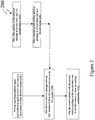
- the second method of making the coating composition comprises mixing the opacifying agent particles with the thickening agent in an optional liquid medium in the first reactor to form the first mixture.
- the formation of the first mixture is conducted at a first shear rate of less than or equal to 2,000 s -1 .
- the first portion and the second portion are mixed together to form the first additive composition.
- the first additive composition is then mixed into the first mixture to form the second mixture.
- the second mixture is mixed at the second shear rate of 10 to 10,000 s -1 .
- the second additive composition is added to the second mixture to form the coating composition.
- the mixing of the second additive composition with the second mixture is conducted at the second shear rate.
- the first method 100 for making the coating composition is now described in further detail.
- the opacifying agent particles, the thickening agent and the optional liquid medium are mixed in a first reactor at a first shear rate to form the first mixture.
- the mixing is conducted by subjecting the opacifying agent particles, the thickening agent and the liquid medium to shear forces in the first reactor.
- the first shear rate is less than or equal to 2,000 1/seconds (s -1 ). Specifically, the first shear rate is 1 to 1,900 s -1 , and more specifically 10 to 1,000 s -1 .
- the first mixture is mixed for 1 to 120 minutes, specifically for 3 to 60 minutes, and more specifically for 5 to 30 minutes.
- the viscosity of the first mixture is 560 megapascal ⁇ seconds (mPa ⁇ s, 70 Krebs units, KU) to 3,700 megapascal ⁇ seconds (mPa ⁇ s, 130 Krebs units, KU), and specifically 1,140 to 2,220 mPa ⁇ s (90 to 110 KU) as measured according to KU Digital Viscometer at a temperature of 25 °C.
- the first additive composition is divided into a plurality of portions with each portion being added to the reactor while its contents are being mixed.
- the first additive composition is added in a first portion (depicted in block 104) and a second additive portion (depicted in block 106).
- the second mixture is manufactured in the first reactor while mixing at a second shear rate.
- the first additive composition comprises a variety of different additives, the additives being a dispersant, a nonionic surfactant, a buffering agent, a defoamer and additional liquid media, an inorganic surfactant, an extender and a clay thickener or a combination comprising at least of the foregoing additives.
- the first additive composition is divided into two portions, a first portion and a second portion.
- the first portion of the first additive composition comprises the dispersant, the nonionic surfactant, the buffering agent, the defoamer and additional liquid media while the second portion of the first additive comprises an inorganic surfactant, an extender and a clay thickener.
- the contents of the reactor are mixed at a second shear rate.
- the second shear rate during the formation of the second mixture is higher than the first shear rate employed during the formation of the first mixture.
- the second shear rate can be 10 to 10,000 s -1 , specifically 50 to 2,000 s -1 . and more specifically 100 to 1,500 s -1 .
- the second mixture is then transferred to the second reactor, where it is mixed at the second shear rate.
- the first reactor can be the same as the second reactor.
- the transferring to the second reactor is optional and may be avoided if desired.
- a second additive composition is then added to the second mixture to form the coating composition as depicted in block 110.
- the second additive composition comprises the liquid medium, an opaque polymer, a polymer latex binder, a defoamer, a coalescent, preservatives, additional thickening agent or a combination comprising at least one of the foregoing additives.
- the viscosity of the coating composition is 806 to 2,220 mPa ⁇ s (80 to 110 KU), and specifically 956 to 1,895 mPa ⁇ s (85 to 105 KU) as measured according to KU Digital Viscometer at a temperature of 25 °C.
- the second method 200 for making the coating composition is now described in further detail.
- the opacifying agent particles and thickening agent are mixed in a first reactor at the first shear rate to form the first mixture.
- the first shear rate is less than or equal to 2,000 s -1 .
- the first portion of the first additive composition is then subjected to mixing as shown in block 204.
- the second portion of the first additive composition is then added to the second reactor followed by additional mixing to form the first additive composition.
- the respective mixing of the first portion and the second portions to form the first additive composition is conducted at the second shear rate of 10 to 10,000 s -1 .
- the first additive composition is then added to the first mixture in the first reactor or the second reactor to form the second mixture.
- the mixing of the first additive composition with the first mixture is conducted in the first reactor at the second shear rate.
- To the second mixture is added the second additive composition to form the coating composition as shown in block 210.
- the mixing to form the coating composition is conducted at the second shear rate.
- the first reactor and the second reactor are used to apply shear forces to manufacture the first mixture, the first additive package, the second additive package, the second mixture and the coating composition.
- shear forces other forces and forms of energy such as extensional forces, compressive forces, ultrasonic energy, electromagnetic energy, thermal energy or combinations comprising at least one of the foregoing forces or forms of energy are imparted to manufacture the coating composition.
- the aforementioned forces or forms of energy can be exerted upon the respective mixtures and compositions by a single screw, multiple screws, intermeshing co-rotating or counter rotating screws, non-intermeshing co-rotating or counter rotating screws, reciprocating screws, screws with pins, screws with screens, barrels with pins, rolls, rams, helical rotors, impellers, polypellers, or combinations comprising at least one of the foregoing.
- impellers are gate blades, flat blades, sweep blades, high shear Cowles blade, hi vane blades, pick blades, axial turbines.
- the first reactor and the second reactor can be a single or multiple screw extruder, a single or multiple screw extruders fitted with ultrasonic horns, a Buss kneader, a Henschel mixer, a helicone, a Ross mixer, a Banbury mixer, a roll mill, a letdown tank, a blend tank, a grind mill tank.
- the mixing is conducted in a letdown/blend tank and/or a grind mill tank.
- the first reactor is a let down tank or a blend tank, while the second reactor is a grind tank or a mill tank. In another embodiment, the first reactor is a grind tank or a mill tank, while the second reactor is a let down tank or a blend tank.
- the stirring shaft has an upper, middle, and lower impeller each having a diameter of 2.54 to 254 centimeters (cm, 100 inches), 2.54 to 508 cm (1 to 200 inches), and 2.54 to 508 cm (1 to 200 inches), respectively.
- the impellers operate at a rotational speed of 30 to 500 revolutions per minute
- the impellers are of the curved blade turbine or pitched blade type, where the pitch is 30 to 60 degrees.
- the let down tank or a blend tank can have an operating volume of 15.1 to 56,800 liters (4 to 15,000 gallons).
- a polypeller having a blade diameter of 12.7 to 127 cm (5 to 50 inches), specifically 25.4 to 102 cm (10 to 40 inches), and more specifically 38.1 to 88.9 cm (15 to 35 inches) can be used.
- the polypeller can operate at a rotational speed of 100 to 2,000 revolutions per minute, specifically 200 to 1800 revolutions per minute and more specifically 500 to 1500 revolutions per minute.
- the grind tank or mill tank can have an operating volume of 1,890 to 18,900 (500 to 5,000 gallons).
- opacifying agent particles in a coating composition is to hide the substrate from view.
- Opacifying agent particles scatter, reflect, or absorb light to prevent the light from reaching the substrate.
- opacifying agent particles are pigments, extenders, fillers, or combinations comprising one or more of the foregoing opacifying agent particles.
- pigments are metal oxides.
- metal oxides are titanium dioxide, zinc oxide, iron oxide, or a combination comprising at least one of the foregoing metal oxides.
- the metal oxide is titanium dioxide. Titanium dioxide exists in two crystal forms, anatase and rutile. Examples of commercially available rutile titanium dioxide are KRONOS® 2310, available from Kronos Worldwide, Inc. (Cranbury, NJ), Ti-Pure® R-900, available from DuPont (Wilmington, DE), or TiONA® AT1commercially available from Millenium Inorganic Chemicals. Titanium dioxide is also available in concentrated dispersion form. An example of a titanium dioxide dispersion is KRONOS® 4311, also available from Kronos Worldwide, Inc.
- the opacifying agent particles have average particle sizes of 0.001 to 100 micrometers ( ⁇ m), specifically 0.005 to 50 ⁇ m, and more specifically 0.01 to 10 ⁇ m.
- the opacifying agent particles also have a surface area of 0.1 to 200 square meters per gram (m 2 /g), specifically 2 to 100 m 2 /g and more specifically 5 to 50 m 2 /g.
- the opacifying agent particles may be used in the form of dry particles (hereinafter dry opacifying agent particles) or may be used in the form of a slurry (hereinafter opacifying agent particle slurry).
- dry opacifying agent particles When dry opacifying agent particles are used, they are present in the coating composition in an amount of up to 90% weight percent (wt%) based upon the total weight of the first mixture.
- the dry opacifying agent particles are present in an amount of 1 to 85 wt%, specifically 3 to 75 wt%, and more specifically 5 to 65 wt%, based on the total weight of the first mixture.
- the opacifying agent particles can also be used in the form of a slurry.
- the slurry generally comprises the opacifying agent particles, defoamers, anionic/nonionic surfactants, buffering agents and preservatives.
- the opacifying agent particle slurry is used, it is present in the coating composition in an amount of up to 35 weight percent (wt%) based upon the total weight of the coating composition.
- the opacifying agent particles are present in an amount of 1 to 32 wt%, specifically 5 to 30 wt%, and more specifically 7 to 28 wt%, based on the total weight of the coating composition.
- Extenders can also be used.
- the extenders may optionally be added along with the opacifying agent particles. They are added as part of the first portion of the first additive composition. They are naturally occurring minerals and synthetic inorganic pigments that are relatively colorless in coatings. They can be used in combination with more expensive opacifying agent particles such as, for example, metal oxides, to reduce raw material costs.
- Suitable extenders are nepheline syenite, (25% nepheline, 55% sodium feldspar, and 20% potassium feldspar), feldspar (an aluminosilicate), diatomaceous earth, calcined diatomaceous earth, calcium carbonate, talc (hydrated magnesium silicate), aluminosilicates, silica (silicon dioxide), alumina (aluminum oxide), clay, (hydrated aluminum silicate), kaolin (kaolinite, hydrated aluminum silicate), mica (hydrous aluminum potassium silicate), pyrophyllite (aluminum silicate hydroxide), perlite, baryte (barium sulfate), wollastonite (calcium metasilicate), or a combination comprising at least one of the foregoing extenders.
- the extenders that can be used are nepheline syenite, calcined diatomaceous earth, or combinations comprising one or more of the foregoing extend
- the extenders have average particle sizes of 0.001 to 1000 ⁇ m, specifically 0.01 to 500 ⁇ m, and more specifically 1 to 100 ⁇ m. In another embodiment, the extenders have a surface area of 0.1 to 200 m 2 /g, specifically 2 to 100 m 2 /g and more specifically 5 to 50 m 2 /g.
- the extenders when present, are generally used in amounts of 0.1 to 50 wt%, specifically 0.5 to 20 wt%, and more specifically 1 to 12 wt%, based on the total weight of the coating composition.
- a thickening agent is used to control the kinetics of adsorption of polymer latex binders onto the opacifying agent particles.
- the use of the thickening agent is advantageous in that grit formation is minimized, and that the polymer latex binder added in a subsequent step then efficiently spaces apart the opacifying agent particles for maximum light scattering and opacity in the final coating.
- the thickening agent is added to the first mixture without any additives or dispersants.
- thickening agents are a hydrophobically modified ethylene oxide urethane (HEUR) polymer, a hydrophobically modified alkali soluble emulsion (HASE) polymer, hydrophobically modified hydroxyethyl cellulose (HMHEC), hydrophobically modified polyacrylamide, or a combination comprising at least one of the foregoing thickening agents.
- HEUR polymers are linear reaction products of diisocyanates with polyethylene oxide end-capped with hydrophobic hydrocarbon groups.
- HASE polymers are homopolymers of (meth)acrylic acid, or copolymers of (meth)acrylic acid, (meth)acrylate esters, or maleic acid modified with hydrophobic vinyl monomers.
- HMHEC is hydroxyethyl cellulose modified with hydrophobic alkyl chains.
- Hydrophobically modified polyacrylamides are copolymers of acrylamide with acrylamide modified with hydrophobic alkyl chains (N-alkyl acrylamide).
- the thickening agent is a HEUR polymer, a HASE polymer, or a combination comprising at least one of the foregoing thickening agents.
- the thickening agent is present in the first mixture in an amount of 2 to 30 wt%, specifically 7 to 28 wt%, and more specifically 9 to 25 wt%, based on the amount of the dry opacifying agent particles.
- the thickening agent is present in the first mixture in an amount of 2 to 20 wt% . specifically 3 to 15 wt%, and more specifically 4 to 12 wt%, based on the amount of the opacifying agent particle slurry.
- the thickening agent is present in an amount of 1 to 10 wt%, specifically 2 to 9 wt%, and more specifically 3 to 7 wt%, based on the total weight of the coating composition.
- the thickening agent is generally added to the coating composition in two portions. The first portion is added during the formation of the first mixture as detailed above while the second portion is added during the last stages of the manufacturing in order to adjust the viscosity of the coating composition.
- a liquid medium is optionally used in any of the first or second mixtures or in the coating composition.
- Liquid media are used to adjust the viscosity of the coating composition. Suitable liquid media are water, water-miscible solvents, and coalescents. Coalescents aid in the formation of a continuous film from the polymer latex binder. Liquid media can also serve as freeze-thaw stabilizers. Examples of freeze-thaw stabilizers are ethylene glycol, propylene glycol, diethylene glycol, or a combination comprising one or more of the foregoing freeze thaw stabilizers.
- Suitable coalescents which aid in film formation during drying, are ethylene glycol monomethyl ether, ethylene glycol monobutyl ether, ethylene glycol monoethyl ether acetate, ethylene glycol monobutyl ether acetate, diethylene glycol monobutyl ether, diethylene glycol monoethyl ether acetate, dipropylene glycol monomethyl ether, 2,2,4-trimethyl-1,3-pentanediol monoisobutyrate, or a combination comprising at least one of the foregoing coalescents.
- Specific liquid media are water and ethylene glycol.
- the liquid media are generally used in amounts of 1 to 30 wt%, specifically 2 to 25 wt%, and more specifically 3 to 22 wt%, based on the total weight of the coating composition.
- the first portion of the first additive composition comprises the dispersant, the nonionic surfactant, the buffering agent, the defoamer and additional liquid media while the second portion of the first additive comprises an inorganic surfactant, an extender and a clay thickener.
- Dispersants can optionally be used. Dispersants aid in the formation of a stable dispersion of the opacifying agent particles.
- dispersants are polyacid dispersants and hydrophobic copolymer dispersants.
- polyacid dispersants are polycarboxylic acids, which are partially or completely in the form of their ammonium, alkali metal, alkaline earth metal, ammonium, or lower alkyl quaternary ammonium salts.
- Additional examples of polyacid dispersants are salts of polyacrylic acid, polymethacrylic acid, or combinations comprising at least one of the foregoing polyacid dispersants.
- polyacid dispersants are TAMOL® 850 and 960, sodium salts of polymethacrylic acid, and available from Rohm and Haas Co. (Philadelphia, PA).
- Hydrophobic copolymer dispersants are copolymers of acrylic acid, methacrylic acid, or maleic acid with hydrophobic monomers.
- hydrophobic copolymer dispersants are TAMOL® 731 A and 731 SD, which are sodium salts of maleic acid copolymer with hydrophobic monomers, and are available from Rohm and Haas Co.
- the polyacid dispersants or hydrophobic copolymer dispersants when present, are generally used in amounts of 0.1 to 10 wt%, specifically 0.3 to 5 wt%, and more specifically 0.5 to 2 wt%, based on the total weight of the coating composition.
- Nonionic surfactants can optionally be used.
- nonionic surfactants are alkylphenoxy polyethoxyethanols having alkyl groups of about 7 to about 18 carbon atoms, and having from about 6 to about 60 oxyethylene units; ethylene oxide derivatives of long chain carboxylic acids; analogous ethylene oxide condensates of long chain alcohols, or the like, or a combination comprising at least one of the foregoing nonionic surfactants.
- Examples of nonionic surfactants are heptylphenoxypolyethoxyethanols, methyloctyl phenoxypolyethoxyethanols, or the like, or a combination comprising at least one of the foregoing nonionic surfactants.
- nonionic surfactants that can be used are those based on polypropoxypropanol.
- polypropoxypropanol-containing nonionic surfactants are alkylphenoxy polypropoxypropanols having alkyl groups of from about 7 to about 18 carbon atoms, and having from about 6 to about 60 oxypropylene units; propylene oxide derivatives of long chained carboxylic acids; analogous propylene oxide condensates of long chain alcohols, or a combination comprising at least one of the foregoing polypropoxypropanol-containing nonionic surfactants.
- the nonionic surfactants when present, are generally used in amounts of 0.01 to 10 wt%, specifically 0.05 to 5 wt%, and more specifically 0.1 to 1 wt%, based on the total weight of the coating composition.
- anionic surfactants other than inorganic phosphate surfactants, can optionally be used.
- anionic surfactants are ammonium, alkali metal, alkaline earth metal, and lower alkyl quaternary ammonium salts of sulfosuccinates, di(C 7 -C 25 )alkylsulfosuccinates, octyl sulfosuccinate, higher fatty alcohol sulfates, lauryl sulfate; aryl sulfonates, alkyl sulfonates, alkylaryl sulfonates, isopropylbenzene sulfonate, isopropylnaphthalene sulfonate, N-methyl-N-palmitoyltaurate; isothionates, oleyl isothionate; alkylarylpoly(ethyleneoxy)ethylene sulfates, sulfonates
- Buffering agents can also optionally be used. These buffering agents serve to maintain an alkaline pH in the coating composition, and evaporate during the drying of the coating. Examples of buffering agents are amino alcohols, monoethanolamine (MEA), diethanolamine (DEA), 2-(2-aminoethoxy)ethanol, diisopropanolamine (DIPA), 1-amino-2-propanol (AMP), ADVANTEX®, available from Arkema, Philadelphia, PA.
- the buffering agent when present, is generally used in an amount of 0.01 to 5 wt%, specifically 0.05 to 3 wt%, and more specifically 0.1 to 0.5 wt%, based on the total weight of the coating composition
- Defoamers serve to minimize frothing during mixing of the coating composition.
- Defoamers can comprise a mineral oil or a silicone oil.
- An example of a mineral oil based defoamer is Rhodoline® (Colloid) 643, available from Rhodia (Cranbury, NJ).
- Examples of silicone oil defoamers are polysiloxanes, polydimethylsiloxanes, polyether modified polysiloxanes, or combinations comprising at least of the foregoing defoamers.
- silicone oil defoamers are BYK®-19, -21, and -22, available from BYK USA Inc.
- the defoamer when present, is generally used in an amount of 0.01 to 5 wt%, specifically 0.05 to 3 wt%, and more specifically 0.1 to 0.5 wt%, based on the total weight of the coating composition.
- the second portion of the first additive comprises an inorganic surfactant, an extender and a clay thickener.
- the extenders have already been described above.
- Inorganic phosphate surfactants are used in combination with the thickening agent to stabilize the opacifying agent particles against agglomeration, and grit formation.
- the surfactant functions by imparting electrostatic repulsion to the opacifying agent particles.
- inorganic phosphate surfactants are an alkali metal or ammonium phosphate surfactant such as for example dibasic ammonium phosphate, sodium pyrophosphate, potassium tripolyphosphate (KTPP), sodium tripolyphosphate (STPP), sodium hexametaphosphate, trisodium orthophosphate, and monosodium orthophosphate, a pyrophosphate, a tripolyphosphate, an orthophosphate, a metaphosphate, a hexametaphosphate, or a combination comprising at least one of the foregoing inorganic phosphate surfactants.
- An exemplary inorganic phosphate surfactant is potassium tripolyphosphate.
- the surfactant is generally used in amounts of 0.001 to 2 wt%, specifically 0.005 to 1 wt%, and more specifically 0.1 to 0.5 wt%, based on the total weight of the coating composition.
- Clay thickeners can also be used. Clay thickeners are thixotropic additives. They reduce settling, provide sagging resistance, and impart shear-thinning in coating compositions. Suitable clay thickeners are attapulgite (magnesium aluminum phyllosilicate), bentonite (aluminum phyllosilicate), or a combinations comprising at least one of the foregoing clay thickeners.
- the clay thickeners when present, are generally used in an amount of 0.01 to 10 wt%, specifically 0.05 to 5 wt%, and more specifically 0.1 to 0.8 wt%, based on the total weight of the coating composition.
- a second additive composition is added to the second mixture to produce the coating composition.
- the second additive composition comprises the liquid medium, opaque polymers, a polymer latex binder, a defoamer, a coalescent, a mildewcide, and a second portion of the thickening agent.
- the liquid medium, defoamer, coalescent and thickening agent have already been described above.
- Opaque polymers can also be used.
- Opaque polymers are hollow-sphere polymeric pigments. They are non-film forming emulsion polymers containing a water-filled void. During the drying of the coating composition, the water in the void diffuses through the polymer shell and leaves an air void. Due to the difference in refractive index between air and the surrounding polymer, light is effectively scattered, contributing to coating opacity.
- opaque polymers are RHOPAQUE® OP-62 LOE, OP-3000 and Ultra E, available from Rohm and Haas, Company.
- the opaque polymers when present, are generally used in an amount of 0.1 to 20 wt%, specifically 1 to 15 wt%, and more specifically 3 to 9 wt%, based on the total weight of the coating composition
- the polymer latex binder advantageously affords both scrub and stain-resistant coating compositions.
- the polymer latex binder comprises a copolymer that comprises phosphorus containing repeat units and an acrylate polymer.
- the polymer latex binder is a dispersion of a copolymer comprising 0.5 to 2.0 wt% of phosphorus-containing monomers; greater than or equal to 20 wt% of ethyl acrylate, methyl acrylate, or combinations of ethyl acrylate and methyl acrylate; and less than or equal to 79.5 wt% of one or more mono-ethylenically unsaturated monomers, the mono-ethylenically unsaturated monomers excluding the phosphorus-containing monomer, ethyl acrylate and methyl acrylate. All monomer weight percent values are based on the total weight of the copolymer.
- the copolymer comprises from 0.5 to 2.0 wt%, specifically 0.8 to 1.6 wt%, and more specifically 0.9 to 1.25 wt% of the phosphorous-containing monomer, based on the total weight of the copolymer.
- the copolymer comprises less than or equal to 79.5 wt% of one or more mono-ethylenically unsaturated monomers, excluding the phosphorus-containing monomer, ethyl acrylate, and methyl acrylate.
- mono-ethylenically unsaturated monomers are ⁇ -dicarbonyl monomers and cyanocarbonyl monomers.
- ⁇ -dicarbonyl monomer refers to ethylenically unsaturated acetoacetoxy-functional monomers and ethylenically unsaturated acetoacetamido-functional monomers
- cyanocarbonyl monomer refers to ethylenically unsaturated cyanoacetoxy-functional monomers, and ethylenically unsaturated cyanoacetamido-functional monomers.
- acetoacetoxy-functional monomers are acetoacetoxyethyl (meth)acrylate, acetoacetoxypropyl (meth)acrylate, allyl acetoacetate, acetoacetoxybutyl (meth)acrylate, 2,3-di(acetoacetoxy)propyl (meth)acrylate, vinyl acetoacetate, or a combination comprising at least one of the foregoing acetoxy-functional monomers.
- acetoacetamido-functional monomers examples include acetoacetamidoethyl (meth)acrylate, acetoacetamidopropyl (meth)acrylate, acetoacetamidobutyl (meth)acrylate, 2,3-di(acetoacetamido)propyl (meth)acrylate, allyl acetoacetamide, vinyl acetoacetamide, or a combination comprising at least one of the foregoing acetoacetamido-functional monomers.
- cyanoacetoxy-functional monomers examples include cyanoacetoxyethyl (meth)acrylate, cyanoacetoxypropyl (meth)acrylate, cyanoacetoxybutyl (meth)acrylate, 2,3-di(cyanoacetoxy)propyl (meth)acrylate, allyl cyanoacetate, vinyl cyanoacetate or a combination comprising at least one of the foregoing cyanoacetoxy-functional monomers.
- cyanoacetamido-functional monomers examples include cyanoacetamidoethyl (meth)acrylate, cyanoacetamidopropyl (meth)acrylate, cyanoacetamidobutyl (meth)acrylate, 2,3-di(cyanoacetamido)propyl (meth)acrylate, allyl cyanoacetamide, vinyl cyanoacetamide, or a combination comprising at least one of the foregoing cyanoacetamido-functional monomers.
- a specific example of a cross-linking monomer is acetoacetoxyethyl methacrylate (AAEM).
- AAEM acetoacetoxyethyl methacrylate
- (meth)acrylic” and “(meth)acrylate” refer to acrylic or methacrylic, and acrylate or methacrylate, respectively.
- the copolymer comprises 0.5 to 5.0 wt%, specifically 1.0 to 3.0 wt%, and more specifically 1.5 to 2.5 wt% of ⁇ -dicarbonyl monomer, cyanocarbonyl monomer, or a combination comprising at least one of the foregoing copolymers.
- the copolymer comprises less than or equal to 79.5 wt% of one or more mono-ethylenically unsaturated monomers excluding the phosphorus-containing monomer, ethyl acrylate, and methyl acrylate.
- a mono-ethylenically unsaturated monomer is an acid-functional or anionic monomer.
- acid-functional or anionic monomer refers to ethylenically unsaturated monomers containing acid groups or their salts, except for phosphorus-containing acid groups (or their salts).
- acid-functional or anionic monomers are monomers bearing carboxylic acid groups and sulfur acid groups or their respective anions, acrylic acid, methacrylic acid, crotonic acid, itaconic acid, fumaric acid, maleic acid, mono-ester derivatives of diacids, monomethyl itaconate, monomethyl fumarate, monobutyl fumarate, maleic anhydride, 2-acrylamido-2-methyl-1-propanesulfonic acid, sulfoethyl (meth)acrylate, styrene sulfonic acid, vinyl sulfonic acid, or a combinations comprising at least one of the foregoing acid functional or anionic monomers.
- a specific example of an acid functional or anionic monomers is methacrylic acid.
- mono-ethylenically unsaturated monomers are (meth)acrylic esters such as, for example, C1 to C40 esters of (meth)acrylic acid, methyl methacrylate, ethyl methacrylate, butyl (meth)acrylate, 2-ethylhexyl (meth)acrylate, decyl (meth)acrylate, lauryl (meth)acrylate, stearyl (meth)acrylate, isobornyl (meth)acrylate; hydroxyalkyl esters of (meth)acrylic acid, hydroxyethyl (meth)acrylate, hydroxypropyl (meth)acrylate; (meth)acrylamide, propenamide, dimethylacrylamide; (meth)acrylonitrile; aminofunctional and ureido-functional monomers; acid-functional or anionic monomers; monomers bearing acetoacetate-functional groups; ⁇ -olefins, 1-decene; styrene, substitute
- the copolymer can comprise from 0.1 to 2.0 specifically from 0.2 to 1.0 wt%, and more specifically from 0.4 to 0.6 wt%, of acid-functional or anionic monomer, based on the total weight of the copolymer.
- the polymer latex binder is commercially available under the trade name AVANSE®, from Rohm and Haas Co.
- the polymer latex binder is used in amounts of 10 to 75 wt%, specifically 15 to 65 wt%, and more specifically 35 to 50 wt%, based on the total weight of the coating composition
- Mildewcides can optionally be used. Mildewcides inhibit the growth mildew or its spores in the coating.
- Examples of mildewcides are 2-(thiocyanomethylthio)benzothiazole, 3-iodo-2-propynyl butyl carbamate, 2,4,5,6-tetrachloroisophthalonitrile, 2-(4-thiazolyl)benzimidazole, 2-N-octyl-4-isothiazolin-3-one, diiodomethyl p-tolyl sulfone, or a combinations comprising at least one of the foregoing mildewcides.
- the mildewcide when present, is generally used in amounts of 0.01 to wt%, specifically 0.05 to 1.5 wt%, and more specifically 0.1 to 0.8 wt%, based on the total weight of the coating composition.
- In-can biocides that inhibit the growth of bacteria and other microbes in the coating composition during storage are also used in the coating composition.
- examples of in-can biocides are 2-[(hydroxymethyl)amino] ethanol, 2-[(hydroxymethyl)amino] 2-methyl-1-propanol, o-phenylphenol, sodium salt, benzoisothiazolin-3-one (BIT), benzoisothiazolin-3-one, lithium salt, 2-methyl-4-isothiazolin-3-one (MIT), 5-chloro-2-methyland-4-isothiazolin-3-one (CIT), 2-octyl-4-isothiazolin-3-one (OIT), 4,5-dichloro-2-n-octyl-3-isothiazolone, or a combinations comprising at least one of the foregoing in-can biocides.
- Commercially available in-can biocides are (DCOIT), or NUOSEPT® 95, available from ISP (Wayne, NJ).
- the biocide when present, is generally used in an amount of 0.01 to wt%, specifically 0.05 to 0.8 wt%, and more specifically 0.1 to 0.5 wt%, based on the total weight of the coating composition.
- the thickening agent is added in two portions - a first portion and a second portion.
- the second portion is added to the second mixture as part of the second additive package.
- the addition of the second portion of thickening agent is to facilitate viscosity control for the coating composition.
- the thickening agent added as part of the second additive package constitutes 0.1 to 5 wt%, specifically 0.15 to 3 wt%, and more specifically 0.2 to 1.0 wt%, based on the total weight of the coating composition.
- the coating compositions disclosed herein have a number of advantages over other commercially available coating compositions.
- the kinetics of adsorption of polymer latex binders onto opacifying agent particles is controlled. This results in less crowding or grit formation when compared with other comparative commercially available compositions.
- the direct mixing of the thickening agent with the opacifying agent particles permits the use of lower shear rate processes and equipment which results in lower production and capital investment costs.
- the method embodies first mixing the opacifying agent particles with the thickening agent prior to adding other components of the coating composition.
- the first reactor was a grind/mill tank while the second reactor was a letdown/blend tank.
- a titanium dioxide slurry KRONOS 4311® commercially available from Kronos and HEUR/HASE associative thickener were mixed in a grind/mill tank (i.e., the first reactor) at 500 revolutions per minute (rpm) for 5 minutes to produce the first mixture.
- the grind/mill tank is equipped with a stirring shaft configured with a single PolypellerTM impeller having a diameter of 6.35 cm (2.5 inches), available from KMI Systems of Crystal Lake, IL.
- the shear rate was 50 s -1 .
- the viscosity of the first mixture is 1,140 m ⁇ Pas (90 KU).
- the composition and the various processes involved in the manufacturing of this coating composition are shown in the Table 1.
- the first portion of the first additive composition is then added to the first mixture in the grind/mill tank.
- the first portion comprises water, ethylene glycol, copolymer dispersant, nonionic surfactant, amino alcohol and the defoamer.
- the first portion of the first additive composition is mixed at 1000 revolutions per minute for 5 minutes.
- the second portion of the first additive composition is added to the grind/mill tank.
- the second portion of the second additive composition comprises an inorganic phosphate surfactant, nepheline syenite, attapulgite clay, and calcined diatomaceous earth.
- the resulting mixture is mixed at 1500 revolutions per minute for 20 minutes to form the second mixture.
- the shear rate is 200 s -1 .
- the second mixture is then transferred to a letdown/blend tank (i.e., the second reactor) and mixed at 100 revolutions per minute.
- the letdown/blend tank is equipped with a stirring shaft configured with an upper and lower impeller.
- the impellers are of the curved blade turbine or pitched blade type, wherein the pitch is from about 30 to about 60 degrees.
- the upper impeller has a diameter of 14.0 cm (5.5 inches), while the lower impeller has a diameter of 17.3 cm (6.8 inches).
- the second additive composition comprises water, an opaque polymer, AVANSE® polymer latex binder (commercially available from Rohm and Haas Co.), a coalescent, a mildewcide, an in-can biocide and the second portion of the HEUR/HASE associative thickener.
- AVANSE® polymer latex binder commercially available from Rohm and Haas Co.
- stirring is conducted in the letdown/blend tank at 150 revolutions per minute for 15 minutes to form the coating composition.
- the coating composition has a viscosity of 1350 mPa.s (95 KU).
- Inorganic surfactant 0.05 Nepheline syenite 12.0 Attapulgite clay 0.50 Calcined diatomaceous earth 5.00 Second Mixture (Letdown/Blend Tank) Transfer the Second Mixture to Letdown/Blend Tank Second Additive Composition (Letdown/Blend Tank) Water Mix for 15 minutes at 150 rpm. 4.00 Opaque polymer 6.00 AVANSE® polymer latex binder 30.00 Defoamer 0.50 Coalescent 1.00 Mildewcide 0.50 In-can biocide 0.05 HEUR/HASE thickening agent 4.00 Coating Composition 100
- the comparative compositions were manufactured to demonstrate the effects of not initially mixing the opacifying agent particles with the thickening agent.
- the thickening agent is added during the final steps of manufacturing of the coating composition.
- the opacifying agent particles are therefore never afforded an opportunity to develop a monolayer of the thickening agent on their surfaces and this facilitates crowding and the formation of grit.
- the procedure of Example 1 is followed, except that no HEUR/HASE thickening agent is not added to the first mixture and no inorganic phosphate surfactant is added to the second portion of the first additive composition.
- the comparative coating composition #1 along with the various process involved in the manufacturing process is shown in the Table 2.
- the comparative coating composition #1 is manufactured by pouring a titanium dioxide slurry into the grind/mill tank. To the titanium dioxide slurry in the grind/mill tank is added the first portion of the first additive composition. The mixing is conducted at a speed of 500 revolutions per minute for 5 minutes. Following this, the second portion of the first additive composition is added to the grind mill tank. Additional mixing is conducted at a speed of 1,500 revolutions per minute for 20 minutes. The mixture is then transferred to the letdown/blend tank. To the letdown/blend tank is added the second additive composition. Mixing is conducted in the letdown/blend tank at 150 rpm for 15 minutes to manufacture comparative coating composition #1.
- Table 2 Composition Name (Reactor) Materials Physical Operation Wt% based on total weight of the coating composition
- First Mixture (Grind/Mill Tank) Titanium dioxide slurry Add to Grind Mill tank. 20.00 First Portion of First Additive Composition (Grind/Mill Tank) Water Mix for 5 minutes at 500 rpm. 12.25 Ethylene glycol 2.00 Dispersant 0.10 Nonionic surfactant 0.50 Amino alcohol 0.05 Defoamer 0.50 Second Portion of First Additive Composition (Grind/Mill Tank) Nepheline syenite Mix for 20 minutes at 1500 rpm.
- the coating compositions of the Example 1 and the Comparative Example #1 were then subjected to a cleanliness/grit test and the results were measured on a pass/fail basis.
- a 76.2 micrometer (3 mil) thick wet drawdown of the respective coating composition was made on a laminated chart (Leneta chart).
- the coating drawdown was then air dried for 24 hours or force dried in an oven (forced air circulated) at 48.9 °C (120 °F) for 30 minutes. After the coating drawdown was completely dried, the surface was observed for any grit or agglomerated particles that were distinctly visible on the surface. If grit was present and uniformly distributed throughout the drawdown, then the sample was deemed to have failed.
- Example # 1 has a final appearance that is superior to the coating made in Comparative Example #1.
- the opacifying agent particles are first mixed with the thickening agent.
- the first reactor was a letdown/blend tank while the second reactor was a grind/mill tank.
- the first mixture was manufactured in the letdown/blend tank using a first shear rate.
- the first portion and the second portion of the first additive mixture were then mixed in the grind/mill tank.
- the first additive mixture was then transferred to the letdown/blend tank and mixed with the first mixture to form the second mixture.
- To the second mixture in the letdown/blend tank was then added the second additive composition to form the coating composition.
- the coating composition for this example along with the various process involved in the manufacturing process is shown in the Table 4.
- a titanium dioxide slurry and HEUR/HASE associative thickener were mixed in a letdown/blend (i.e., the first reactor) tank at 100 revolutions per minute for 10 minutes to produce the first mixture.
- the letdown/blend tank is equipped with a stirring shaft configured with an upper and lower impeller whose dimensions and design are noted in Example 1.
- the shear rate in the letdown/blend tank was 10 s -1 .
- the viscosity of the first mixture was 1,140 m ⁇ Pas (90 KU).
- the first portion of the first additive composition was then subjected to mixing.
- the first portion comprises water, ethylene glycol, copolymer dispersant, nonionic surfactant, amino alcohol and the defoamer.
- the first portion of the first additive composition is mixed at 1000 revolutions per minute for 10 minutes.
- the second portion of the first additive composition is added to the grind/mill tank reactor.
- the second portion of the second additive composition comprises an inorganic phosphate surfactant, nepheline syenite, attapulgite clay, and calcined diatomaceous earth.
- the resulting mixture was mixed at 1500 revolutions per minute for 20 minutes to form the second mixture.
- the shear rate in the grind/mill tank was 200 s -1 .
- the first additive composition was then added to the first mixture in the letdown/blend tank to form the second mixture.
- the mixture in the letdown/blend tank is mixed at 100 revolutions per minute for 5 minutes.
- the second additive composition comprises water, an opaque polymer, AVANSE® polymer latex binder (commercially available from Rohm and Haas Co.), a coalescent, a mildewcide, an in-can biocide and the second portion of the HEUR/HASE associative thickener.
- AVANSE® polymer latex binder commercially available from Rohm and Haas Co.
- stirring is conducted in the letdown/blend tank at 150 revolutions per minute for 15 minutes to form the coating composition.
- the composition along with the ingredients is shown in the Table 4.
- the coating composition has a viscosity of about 1,350 mPa ⁇ s (95 KU).
- Table 4 Composition Name (Reactor) Materials Physical Operation Wt% based on total weight of the coating composition
- First Mixture (Letdown/Blend Tank) Titanium dioxide slurry Add to Letdown /Blend tank. Mix for 10 minutes at 100 rpm. 20.00 HUER/HASE thickening agent 1.00 First Portion of First Additive Composition (Grind/Mill Tank) Water Mix for 10 minutes at 1000 rpm. 12.25 Ethylene glycol 2.00 Dispersant 0.10 Nonionic surfactant 0.50 Amino alcohol 0.05 Defoamer 0.50 Second Portion of First Additive Composition (Grind/Mill Tank) Inorganic surfactant Mix for 20 minutes at 1500 rpm.
- Second Additive Composition Water Mix for 15 4.00 (Letdown/Blend Tank) Opaque polymer minutes at 150 rpm. 6.00 AVANSE® polymer latex binder 30.00 Defoamer 0.50 Coalescent 1.00 Mildewcide 0.50 In-can biocide 0.05 HEUR/HASE thickening agent 4.00 Coating Composition 100
- Comparative Example #2 As in the Comparative Example #1, the thickening agent is added to the coating composition in the final steps as a viscosity modifier. Comparative Example #2 was made in the same manner as Comparative Example #1, except that no HEUR/HASE thickening agent or opacifying agent particles (TiO 2 ) slurry is added to the first mixture and no inorganic phosphate surfactant is added to the second portion of the first additive composition.
- the coating composition is shown in along with the various process involved in the manufacturing process is shown in the Table 5. As can be seen in the Table 5, the first portion of the first additive composition is added to the grind/mill tank and mixed for 5 minutes. The speed of the impeller is 1000 revolutions per minute.
- the second portion of the first additive composition is then transferred to the letdown/blend tank.
- the second additive composition along with the titanium dioxide slurry and the HEUR/HASE thickening agent to produce the comparative coating composition #2.
- Table 5 Composition Name (Reactor) Materials Physical Operation Wt% based on total weight of the coating composition
- First Portion of First Additive Composition (Grind/Mill Tank) Water Mix for 10 minutes at 1000 rpm 12.25 Ethylene glycol 2.00 Dispersant 0.10 Nonionic surfactant 0.50 Amino alcohol 0.05 Defoamer 0.50
- Second Portion of First Additive Composition (Grind/Mill Tank) Nepheline syenite Mix for 20 minutes at 1500 rpm 12.0 Attapulgite clay 0.50 Calcined diatomaceous earth Second Mixture (Letdown/Blend Tank) Transfer first additive composition from the Grind/Mill Tank to the Letdown/Blend Tank.
- Second Additive Composition (Letdown/Blend Tank) Water Mix for 15 minutes at 150 rpm 4.00 TiO 2 slurry 20.00 Opaque polymer 6.00 AVANSE® polymer latex binder 30.00 Defoamer 0.50 Coalescent 1.00 Mildewcide 0.50 In-can biocide 0.05 HEUR/HASE thickening agent 5.00 Coating Composition 100
- Example 2 The coating compositions of the Example 2 and the Comparative Example #2 were then subjected to cleanliness/grit testing as described above. Four samples were tested. The results were averaged and the results reported in the Table 6 below. Table 6 Sample Grit (Pass/Fail) Viscosity (mPa ⁇ s / KU) Example 2 No Grit Present - Pass 1350/95 Comparative Example #2 Grit Present (Uniformly distributed) - Fail 956 / 85
- Example # 2 has a final appearance that is superior to the coating made in the Comparative Example #2.
- the coating composition where the opacifying agent particles are first mixed with the thickening agent can be manufactured using a lower shear rate of less than of equal to about 2,000 s -1 than that compared with other comparative manufacturing processes where the thickening agent is added during the final states of the manufacturing process.
- the lower shear rate can be less than or equal to about 500 s -1 , specifically less than or equal to about 100 s -1 , and more specifically less than or equal to about 10 s -1 .
- the initial mixing of the opacifying agent particles with the thickening agent is also advantageous in that crowding is controlled and the formation of grit is minimized.
Landscapes
- Chemical & Material Sciences (AREA)
- Organic Chemistry (AREA)
- Life Sciences & Earth Sciences (AREA)
- Engineering & Computer Science (AREA)
- Materials Engineering (AREA)
- Wood Science & Technology (AREA)
- Dispersion Chemistry (AREA)
- Health & Medical Sciences (AREA)
- Chemical Kinetics & Catalysis (AREA)
- Medicinal Chemistry (AREA)
- Polymers & Plastics (AREA)
- Paints Or Removers (AREA)
- Compositions Of Macromolecular Compounds (AREA)
- Pigments, Carbon Blacks, Or Wood Stains (AREA)
- Addition Polymer Or Copolymer, Post-Treatments, Or Chemical Modifications (AREA)
Description
- This disclosure relates to methods for making scrub and stain-resistant coating compositions and articles comprising the same.
- Opacifying agent particles are useful for conferring opacity to plastic articles and films, and particularly to coating compositions. In coating compositions, the opacifying agent particles can be one of the most expensive components. It is an ongoing objective of the coatings industry to achieve the desired degree of opacity while minimizing the amount of opacifying agent particles in the coating composition. The optimal way to make efficient use of opacifying agent particles is to disperse them as well as possible. If not adequately dispersed, opacifying agent particles agglomerate into larger particles, which tend to settle out of the coating composition as "grit". When grit is present, the opacifying agent particles make less than their full potential contribution to the coating opacity and depth of color. In addition, even low levels of grit can significantly detract from the appearance of the coated article. In cases of severe grit, the dried coating film will display a very rough surface texture with an almost sand paper-like appearance.
- The hiding power of the coating composition is a function of the spacing of the opacifying agent particles in the dried coating. Maximum light scattering occurs when the opacifying agent particles are spaced far apart from each other, on the order of a few particle diameters, so that there is minimal interference between the light scattered from neighboring particles. In a coating, the distribution of the opacifying agent particles best approaches that of a random distribution. As a result, there exist a substantial number of opacifying agent particles in close proximity to each other, and possibly in direct physical contact with each other. This phenomenon is known as "crowding", and it diminishes light scattering. In order to reduce grit formation, high shear force manufacturing processes are employed. In addition, significant quantities of surface-active dispersing, wetting or "coupling" agents are employed to reduce grit formation and crowding.
- Another approach for reducing the crowding of opacifying agent particles is the use of polymer latex binders that adsorb onto opacifying agent particles so that the resulting composite particles are well spaced out. Polymer latex binders with phosphate functional groups are particularly well suited for latex adsorption onto opacifying agent particles. These phosphate-functional polymer latex binders have such a high affinity for surface treated titanium dioxide however, that if the kinetics of adsorption are not controlled, the composite particles will aggregate causing unacceptable viscosity increases, and the formation of undesirable grit. It is therefore desirable to control the kinetics of adsorption of polymer latex binders onto the opacifying agent particles. It is also desirable to have a method for making coating compositions in which the viscosity is stable, and where grit formation and crowding is minimized.
-
US 6,492,451 B1 discloses pigment-comprising formulations for coating substrates which comprise i) at least one polymer which has phosphate groups, as binder, ii) at least one inorganic pigment, iii) if desired, one or more inorganic fillers, and iv) customary auxiliaries. -
US 6,080 802 discloses a process for preparing an aqueous dispersion of composite particles, the composite particles each including a plurality of polymeric latex particles adsorbed onto a titanium dioxide particle. -
US 2007/208129 A1 discloses a coating composition comprising aqueous dispersion of particles made from a copolymer comprising, based on the weight of the copolymer one or more monoethylenically unsaturated monomers; acid functional or anionic monomer and phosphorous-containing monomer. -
US 4 243 430 A discloses a pigment paste for use in an aqueous paint comprising a film-forming latex polymer, a pigment and a dispersant copolymer. - Disclosed herein is a method comprising mixing opacifying agent particles comprising pigment particles with 2 to 30 wt %, based on the amount of dry opacifying agent particles, of a hydrophobically modified thickening agent selected from the group consisting of hydrophobically modified ethylene oxide urethane (HEUR) polymers, hydrophobically modified alkali soluble emulsion (HASE) polymers, hydrophobically modified hydroxyethyl cellulose (HMHEC), hydrophobically modified polyacrylamide, and a combination comprising at least one of the foregoing thickening agents to form a first mixture; the mixing being conducted at a shear rate of 10 to 2,000 s-1; the first mixture having a viscosity of greater than or equal to 560 mPa·s (70 Krebs units) to less than or equal to 3,700 mPa·s (130 Krebs units) as measured at a temperature of 25 °C using a digital viscometer; and mixing a polymer latex binder to form a coating composition; the polymer latex binder comprising a copolymer that comprises phosphorus containing repeat units and an acrylate polymer,
wherein the method further comprises
mixing a first additive composition with the first mixture to form a second mixture; the first additive composition comprising a liquid medium, a dispersant, a nonionic surfactant, a buffering agent, a defoamer, an inorganic surfactant, an extender, a clay thickener, or a combination comprising at least one of the foregoing additives; wherein the first additive composition is added in a first portion and a second portion, the first portion comprising the dispersant, the nonionic surfactant, the buffering agent, the defoamer and the liquid medium, and the second portion comprising the inorganic surfactant, the extender and the clay thickener; and
adding a second additive composition to the second mixture to form the coating composition, the second additive composition comprising the polymer latex binder, a liquid medium, an opaque polymer, a coalescent, a preservative, an additional thickening agent, or a combination comprising at least one of the foregoing additives. - Disclosed herein too is a method comprising in a first reactor, mixing opacifying agent particles comprising pigment particles with 2 to 30 wt %, based on the amount of dry opacifying agent particles, of a hydrophobically modified thickening agent selected from the group consisting of hydrophobically modified ethylene oxide urethane (HEUR) polymers, hydrophobically modified alkali soluble emulsion (HASE) polymers, hydrophobically modified hydroxyethyl cellulose (HMHEC), hydrophobically modified polyacrylamide, and a combination comprising at least one of the foregoing thickening agents to form a first mixture; the mixing being conducted at a shear rate of less than or equal to 2,000 s-1;
in a second reactor, mixing together a first portion and a second portion to form a first additive composition ; the first portion comprising a dispersant, a nonionic surfactant, a buffering agent, a defoamer and a liquid medium; and the second portion comprising an inorganic surfactant, an extender and a clay thickener;
mixing the first additive composition with the first mixture to form a second mixture; and mixing a second additive composition with the second mixture to form the coating composition; the second additive composition comprising the liquid medium, an opaque polymer, a polymer latex binder, a coalescent, a preservative, an additional thickening agent, or a combination comprising at least one of the foregoing additives ; the polymer latex binder comprising a copolymer that comprises phosphorus-containing repeat units and an acrylate polymer. - Disclosed herein too is a coating composition and a coating manufactured from the aforementioned first mixture and by the aforementioned methods.
- The above-described embodiments are described in further detail below.
- Referring now to the figures, which are exemplary embodiments and wherein the like elements are numbered alike:
-
Figure 1 illustrates the first method for making a coating composition; and -
Figure 2 illustrates the second method for making a coating composition. - It is to be noted that as used herein, the terms "first," "second," and the like do not denote any order or importance, but rather are used to distinguish one element from another, and the terms "the", "a" and "an" do not denote a limitation of quantity, but rather denote the presence of a of the referenced item. Furthermore, all ranges disclosed herein are inclusive of the endpoints and independently combinable. The terminology used herein is for the purpose of describing particular embodiments only and is not intended to be limiting of the invention. As used herein, the singular forms "a", "an" and "the" are intended to include the plural forms as well, unless the context clearly indicates otherwise. It will be further understood that the terms "comprises" and/or "comprising," when used in this specification, specify the presence of stated features, integers, steps, operations, elements, and/or components, but do not preclude the presence or addition of one or more other features, integers, steps, operations, elements, components, and/or groups thereof.
- Disclosed herein is a method of making a coating composition in which the kinetics of adsorption of polymer latex binders onto opacifying agent particles is controlled. This is achieved by first mixing the opacifying agent particles with a thickening agent. The formation of a layer of the thickening agent on the opacifying agent particles shields the surface of the particles from the polymer latex binders used in the coating composition. This effect minimizes the aggregation of particles brought about by polymer-particle interaction. The mixing of the opacifying agent particles with a thickening agent is advantageous in that it can be conducted at a low shear rate of less than or equal to 2,000 seconds-1 (s-1). It is also advantageous because it permits the use of low shear mixing in other stages of the manufacturing process.
- The mixing of the opacifying agent particles with the thickening agent produces a coating that facilitates dispersion of the opacifying agents in a coating. As a result, the coating is free from crowding and grit formation. The opacifying agent particles in the coatings are effectively dispersed to achieve maximum light scattering and opacity. In comparative commercial processes, the thickening agent is always added to the coating composition in a final step as a viscosity modifier. As a result, comparative coating compositions always display grit, especially when formulated under low shear conditions, which is undesirable.
- Disclosed herein are two methods by which the coating composition can be manufactured. In one embodiment, the first method comprises mixing opacifying agent particles with the thickening agent in an optional liquid medium in a first reactor to form a first mixture. The formation of the first mixture is conducted at a first shear rate of less than or equal to 2,000 (1/seconds) s-1. To the first mixture is added a first additive composition to form a second mixture. The first additive composition comprises a surfactant, the liquid medium, a dispersant, a nonionic surfactant, a buffering agent, a coalescent, a defoamer, an extender, a clay thickener, or a combination comprising at least one of the foregoing additives. The first additive composition is added in a first portion and a second portion. The second mixture is mixed at a second shear rate of 10 to 10,000 s-1.
- The second mixture is optionally transferred to a second reactor. To the second mixture is added a second additive composition to form the coating composition. The second additive composition comprises a polymer latex binder, the liquid medium, an opaque polymer, a coalescent, a preservative, an additional thickening agent, or a combination comprising at least one of the foregoing additives. The coating composition is mixed at the second shear rate.
- The second method of making the coating composition comprises mixing the opacifying agent particles with the thickening agent in an optional liquid medium in the first reactor to form the first mixture. The formation of the first mixture is conducted at a first shear rate of less than or equal to 2,000 s-1. In a second reactor, the first portion and the second portion are mixed together to form the first additive composition. The first additive composition is then mixed into the first mixture to form the second mixture. The second mixture is mixed at the second shear rate of 10 to 10,000 s-1. The second additive composition is added to the second mixture to form the coating composition. The mixing of the second additive composition with the second mixture is conducted at the second shear rate.
- With reference to the
Figure 1 , thefirst method 100 for making the coating composition is now described in further detail. As shown in block 102, the opacifying agent particles, the thickening agent and the optional liquid medium are mixed in a first reactor at a first shear rate to form the first mixture. The mixing is conducted by subjecting the opacifying agent particles, the thickening agent and the liquid medium to shear forces in the first reactor. - The first shear rate is less than or equal to 2,000 1/seconds (s-1). Specifically, the first shear rate is 1 to 1,900 s-1, and more specifically 10 to 1,000 s-1. The first mixture is mixed for 1 to 120 minutes, specifically for 3 to 60 minutes, and more specifically for 5 to 30 minutes.
- The viscosity of the first mixture is 560 megapascal·seconds (mPa·s, 70 Krebs units, KU) to 3,700 megapascal·seconds (mPa·s, 130 Krebs units, KU), and specifically 1,140 to 2,220 mPa·s (90 to 110 KU) as measured according to KU Digital Viscometer at a temperature of 25 °C.
- To the first mixture is added the first additive composition to form the second mixture as shown in the
blocks - The second mixture is manufactured in the first reactor while mixing at a second shear rate. The first additive composition comprises a variety of different additives, the additives being a dispersant, a nonionic surfactant, a buffering agent, a defoamer and additional liquid media, an inorganic surfactant, an extender and a clay thickener or a combination comprising at least of the foregoing additives.
- As noted above, the first additive composition is divided into two portions, a first portion and a second portion. The first portion of the first additive composition comprises the dispersant, the nonionic surfactant, the buffering agent, the defoamer and additional liquid media while the second portion of the first additive comprises an inorganic surfactant, an extender and a clay thickener. During the addition of the first portion and/or after the addition of the second portion, the contents of the reactor are mixed at a second shear rate.
- The second shear rate during the formation of the second mixture is higher than the first shear rate employed during the formation of the first mixture. The second shear rate can be 10 to 10,000 s-1, specifically 50 to 2,000 s-1. and more specifically 100 to 1,500 s-1.
- As can be seen in the
block 108, the second mixture is then transferred to the second reactor, where it is mixed at the second shear rate. In one embodiment, the first reactor can be the same as the second reactor. In other words, the transferring to the second reactor is optional and may be avoided if desired. A second additive composition is then added to the second mixture to form the coating composition as depicted in block 110. The second additive composition comprises the liquid medium, an opaque polymer, a polymer latex binder, a defoamer, a coalescent, preservatives, additional thickening agent or a combination comprising at least one of the foregoing additives. - The viscosity of the coating composition is 806 to 2,220 mPa·s (80 to 110 KU), and specifically 956 to 1,895 mPa·s (85 to 105 KU) as measured according to KU Digital Viscometer at a temperature of 25 °C.
- With reference now the
Figure 2 , thesecond method 200 for making the coating composition is now described in further detail. As shown in theblock 202, the opacifying agent particles and thickening agent are mixed in a first reactor at the first shear rate to form the first mixture. As noted above, the first shear rate is less than or equal to 2,000 s-1. - In a separate reactor (e.g., the second reactor), the first portion of the first additive composition is then subjected to mixing as shown in
block 204. As shown inblock 206, the second portion of the first additive composition is then added to the second reactor followed by additional mixing to form the first additive composition. The respective mixing of the first portion and the second portions to form the first additive composition is conducted at the second shear rate of 10 to 10,000 s-1. - As shown in
block 208, the first additive composition is then added to the first mixture in the first reactor or the second reactor to form the second mixture. In an exemplary embodiment, the mixing of the first additive composition with the first mixture is conducted in the first reactor at the second shear rate. To the second mixture is added the second additive composition to form the coating composition as shown inblock 210. The mixing to form the coating composition is conducted at the second shear rate. - The first reactor and the second reactor are used to apply shear forces to manufacture the first mixture, the first additive package, the second additive package, the second mixture and the coating composition. In addition to shear forces, other forces and forms of energy such as extensional forces, compressive forces, ultrasonic energy, electromagnetic energy, thermal energy or combinations comprising at least one of the foregoing forces or forms of energy are imparted to manufacture the coating composition. The aforementioned forces or forms of energy can be exerted upon the respective mixtures and compositions by a single screw, multiple screws, intermeshing co-rotating or counter rotating screws, non-intermeshing co-rotating or counter rotating screws, reciprocating screws, screws with pins, screws with screens, barrels with pins, rolls, rams, helical rotors, impellers, polypellers, or combinations comprising at least one of the foregoing.
- In an exemplary embodiment, the aforementioned forces or forms of energy are exerted upon the ingredients by impellers, propellers and/or polypellers. Examples of impellers are gate blades, flat blades, sweep blades, high shear Cowles blade, hi vane blades, pick blades, axial turbines.
- The first reactor and the second reactor can be a single or multiple screw extruder, a single or multiple screw extruders fitted with ultrasonic horns, a Buss kneader, a Henschel mixer, a helicone, a Ross mixer, a Banbury mixer, a roll mill, a letdown tank, a blend tank, a grind mill tank. In an exemplary embodiment, the mixing is conducted in a letdown/blend tank and/or a grind mill tank.
- In one embodiment, the first reactor is a let down tank or a blend tank, while the second reactor is a grind tank or a mill tank. In another embodiment, the first reactor is a grind tank or a mill tank, while the second reactor is a let down tank or a blend tank.
- When the mixing is conducted in a let down tank or a blend tank that uses an impeller, to transmit shear forces, it is desirable to use a stirring shaft comprising a plurality of impellers. In an exemplary embodiment, the stirring shaft has an upper, middle, and lower impeller each having a diameter of 2.54 to 254 centimeters (cm, 100 inches), 2.54 to 508 cm (1 to 200 inches), and 2.54 to 508 cm (1 to 200 inches), respectively. The impellers operate at a rotational speed of 30 to 500 revolutions per minute The impellers are of the curved blade turbine or pitched blade type, where the pitch is 30 to 60 degrees. In one embodiment, the let down tank or a blend tank can have an operating volume of 15.1 to 56,800 liters (4 to 15,000 gallons).
- When the mixing is conducted in a grind tank or mill tank, a polypeller having a blade diameter of 12.7 to 127 cm (5 to 50 inches), specifically 25.4 to 102 cm (10 to 40 inches), and more specifically 38.1 to 88.9 cm (15 to 35 inches) can be used. The polypeller can operate at a rotational speed of 100 to 2,000 revolutions per minute, specifically 200 to 1800 revolutions per minute and more specifically 500 to 1500 revolutions per minute. In one embodiment, the grind tank or mill tank can have an operating volume of 1,890 to 18,900 (500 to 5,000 gallons).
- The components of the coating compositions will now be described. The function of opacifying agent particles in a coating composition is to hide the substrate from view. Opacifying agent particles scatter, reflect, or absorb light to prevent the light from reaching the substrate. Examples of opacifying agent particles are pigments, extenders, fillers, or combinations comprising one or more of the foregoing opacifying agent particles.
- Examples of pigments are metal oxides. Examples of metal oxides are titanium dioxide, zinc oxide, iron oxide, or a combination comprising at least one of the foregoing metal oxides. In an exemplary embodiment, the metal oxide is titanium dioxide. Titanium dioxide exists in two crystal forms, anatase and rutile. Examples of commercially available rutile titanium dioxide are KRONOS® 2310, available from Kronos Worldwide, Inc. (Cranbury, NJ), Ti-Pure® R-900, available from DuPont (Wilmington, DE), or TiONA® AT1commercially available from Millenium Inorganic Chemicals. Titanium dioxide is also available in concentrated dispersion form. An example of a titanium dioxide dispersion is KRONOS® 4311, also available from Kronos Worldwide, Inc.
- The opacifying agent particles have average particle sizes of 0.001 to 100 micrometers (µm), specifically 0.005 to 50 µm, and more specifically 0.01 to 10 µm. The opacifying agent particles also have a surface area of 0.1 to 200 square meters per gram (m2/g), specifically 2 to 100 m2/g and more specifically 5 to 50 m2/g.
- The opacifying agent particles may be used in the form of dry particles (hereinafter dry opacifying agent particles) or may be used in the form of a slurry (hereinafter opacifying agent particle slurry). When dry opacifying agent particles are used, they are present in the coating composition in an amount of up to 90% weight percent (wt%) based upon the total weight of the first mixture. In one embodiment, the dry opacifying agent particles are present in an amount of 1 to 85 wt%, specifically 3 to 75 wt%, and more specifically 5 to 65 wt%, based on the total weight of the first mixture.
- As noted above, the opacifying agent particles can also be used in the form of a slurry. The slurry generally comprises the opacifying agent particles, defoamers, anionic/nonionic surfactants, buffering agents and preservatives. When the opacifying agent particle slurry is used, it is present in the coating composition in an amount of up to 35 weight percent (wt%) based upon the total weight of the coating composition. In one embodiment, the opacifying agent particles are present in an amount of 1 to 32 wt%, specifically 5 to 30 wt%, and more specifically 7 to 28 wt%, based on the total weight of the coating composition.
- Extenders (fillers) can also be used. The extenders may optionally be added along with the opacifying agent particles. They are added as part of the first portion of the first additive composition. They are naturally occurring minerals and synthetic inorganic pigments that are relatively colorless in coatings. They can be used in combination with more expensive opacifying agent particles such as, for example, metal oxides, to reduce raw material costs. Suitable extenders are nepheline syenite, (25% nepheline, 55% sodium feldspar, and 20% potassium feldspar), feldspar (an aluminosilicate), diatomaceous earth, calcined diatomaceous earth, calcium carbonate, talc (hydrated magnesium silicate), aluminosilicates, silica (silicon dioxide), alumina (aluminum oxide), clay, (hydrated aluminum silicate), kaolin (kaolinite, hydrated aluminum silicate), mica (hydrous aluminum potassium silicate), pyrophyllite (aluminum silicate hydroxide), perlite, baryte (barium sulfate), wollastonite (calcium metasilicate), or a combination comprising at least one of the foregoing extenders. In an exemplary embodiment, the extenders that can be used are nepheline syenite, calcined diatomaceous earth, or combinations comprising one or more of the foregoing extenders.
- The extenders have average particle sizes of 0.001 to 1000 µm, specifically 0.01 to 500 µm, and more specifically 1 to 100 µm. In another embodiment, the extenders have a surface area of 0.1 to 200 m2/g, specifically 2 to 100 m2/g and more specifically 5 to
50 m2/g. - The extenders, when present, are generally used in amounts of 0.1 to 50 wt%, specifically 0.5 to 20 wt%, and more specifically 1 to 12 wt%, based on the total weight of the coating composition.
- A thickening agent is used to control the kinetics of adsorption of polymer latex binders onto the opacifying agent particles. The use of the thickening agent is advantageous in that grit formation is minimized, and that the polymer latex binder added in a subsequent step then efficiently spaces apart the opacifying agent particles for maximum light scattering and opacity in the final coating. The thickening agent is added to the first mixture without any additives or dispersants. Examples of thickening agents are a hydrophobically modified ethylene oxide urethane (HEUR) polymer, a hydrophobically modified alkali soluble emulsion (HASE) polymer, hydrophobically modified hydroxyethyl cellulose (HMHEC), hydrophobically modified polyacrylamide, or a combination comprising at least one of the foregoing thickening agents. HEUR polymers are linear reaction products of diisocyanates with polyethylene oxide end-capped with hydrophobic hydrocarbon groups. HASE polymers are homopolymers of (meth)acrylic acid, or copolymers of (meth)acrylic acid, (meth)acrylate esters, or maleic acid modified with hydrophobic vinyl monomers. HMHEC is hydroxyethyl cellulose modified with hydrophobic alkyl chains. Hydrophobically modified polyacrylamides are copolymers of acrylamide with acrylamide modified with hydrophobic alkyl chains (N-alkyl acrylamide). In an exemplary embodiment, the thickening agent is a HEUR polymer, a HASE polymer, or a combination comprising at least one of the foregoing thickening agents.
- The thickening agent is present in the first mixture in an amount of 2 to 30 wt%, specifically 7 to 28 wt%, and more specifically 9 to 25 wt%, based on the amount of the dry opacifying agent particles. The thickening agent is present in the first mixture in an amount of 2 to 20 wt%. specifically 3 to 15 wt%, and more specifically 4 to 12 wt%, based on the amount of the opacifying agent particle slurry.
- With respect to the coating composition, the thickening agent is present in an amount of 1 to 10 wt%, specifically 2 to 9 wt%, and more specifically 3 to 7 wt%, based on the total weight of the coating composition. The thickening agent is generally added to the coating composition in two portions. The first portion is added during the formation of the first mixture as detailed above while the second portion is added during the last stages of the manufacturing in order to adjust the viscosity of the coating composition.
- A liquid medium is optionally used in any of the first or second mixtures or in the coating composition. Liquid media are used to adjust the viscosity of the coating composition. Suitable liquid media are water, water-miscible solvents, and coalescents. Coalescents aid in the formation of a continuous film from the polymer latex binder. Liquid media can also serve as freeze-thaw stabilizers. Examples of freeze-thaw stabilizers are ethylene glycol, propylene glycol, diethylene glycol, or a combination comprising one or more of the foregoing freeze thaw stabilizers. Suitable coalescents, which aid in film formation during drying, are ethylene glycol monomethyl ether, ethylene glycol monobutyl ether, ethylene glycol monoethyl ether acetate, ethylene glycol monobutyl ether acetate, diethylene glycol monobutyl ether, diethylene glycol monoethyl ether acetate, dipropylene glycol monomethyl ether, 2,2,4-trimethyl-1,3-pentanediol monoisobutyrate, or a combination comprising at least one of the foregoing coalescents. Specific liquid media are water and ethylene glycol.
- The liquid media are generally used in amounts of 1 to 30 wt%, specifically 2 to 25 wt%, and more specifically 3 to 22 wt%, based on the total weight of the coating composition.
- As noted above, the first portion of the first additive composition comprises the dispersant, the nonionic surfactant, the buffering agent, the defoamer and additional liquid media while the second portion of the first additive comprises an inorganic surfactant, an extender and a clay thickener. These will now be listed below.
- Dispersants can optionally be used. Dispersants aid in the formation of a stable dispersion of the opacifying agent particles. Examples of dispersants are polyacid dispersants and hydrophobic copolymer dispersants. Examples of polyacid dispersants are polycarboxylic acids, which are partially or completely in the form of their ammonium, alkali metal, alkaline earth metal, ammonium, or lower alkyl quaternary ammonium salts. Additional examples of polyacid dispersants are salts of polyacrylic acid, polymethacrylic acid, or combinations comprising at least one of the foregoing polyacid dispersants. Examples of polyacid dispersants are TAMOL® 850 and 960, sodium salts of polymethacrylic acid, and available from Rohm and Haas Co. (Philadelphia, PA).
- Hydrophobic copolymer dispersants are copolymers of acrylic acid, methacrylic acid, or maleic acid with hydrophobic monomers. Examples of hydrophobic copolymer dispersants are TAMOL® 731 A and 731 SD, which are sodium salts of maleic acid copolymer with hydrophobic monomers, and are available from Rohm and Haas Co.
- The polyacid dispersants or hydrophobic copolymer dispersants, when present, are generally used in amounts of 0.1 to 10 wt%, specifically 0.3 to 5 wt%, and more specifically 0.5 to 2 wt%, based on the total weight of the coating composition.
- Nonionic surfactants can optionally be used. Examples of nonionic surfactants are alkylphenoxy polyethoxyethanols having alkyl groups of about 7 to about 18 carbon atoms, and having from about 6 to about 60 oxyethylene units; ethylene oxide derivatives of long chain carboxylic acids; analogous ethylene oxide condensates of long chain alcohols, or the like, or a combination comprising at least one of the foregoing nonionic surfactants. Examples of nonionic surfactants are heptylphenoxypolyethoxyethanols, methyloctyl phenoxypolyethoxyethanols, or the like, or a combination comprising at least one of the foregoing nonionic surfactants. Other nonionic surfactants that can be used are those based on polypropoxypropanol. Examples of polypropoxypropanol-containing nonionic surfactants are alkylphenoxy polypropoxypropanols having alkyl groups of from about 7 to about 18 carbon atoms, and having from about 6 to about 60 oxypropylene units; propylene oxide derivatives of long chained carboxylic acids; analogous propylene oxide condensates of long chain alcohols, or a combination comprising at least one of the foregoing polypropoxypropanol-containing nonionic surfactants.
- The nonionic surfactants, when present, are generally used in amounts of 0.01 to 10 wt%, specifically 0.05 to 5 wt%, and more specifically 0.1 to 1 wt%, based on the total weight of the coating composition.
- In addition to nonionic surfactants, anionic surfactants other than inorganic phosphate surfactants, can optionally be used. Examples of anionic surfactants are ammonium, alkali metal, alkaline earth metal, and lower alkyl quaternary ammonium salts of sulfosuccinates, di(C7-C25)alkylsulfosuccinates, octyl sulfosuccinate, higher fatty alcohol sulfates, lauryl sulfate; aryl sulfonates, alkyl sulfonates, alkylaryl sulfonates, isopropylbenzene sulfonate, isopropylnaphthalene sulfonate, N-methyl-N-palmitoyltaurate; isothionates, oleyl isothionate; alkylarylpoly(ethyleneoxy)ethylene sulfates, sulfonates, t-octylphenoxypoly(ethyleneoxy) ethylene sulfates, or a combination comprising at least one of the foregoing anionic surfactants.
- Buffering agents can also optionally be used. These buffering agents serve to maintain an alkaline pH in the coating composition, and evaporate during the drying of the coating. Examples of buffering agents are amino alcohols, monoethanolamine (MEA), diethanolamine (DEA), 2-(2-aminoethoxy)ethanol, diisopropanolamine (DIPA), 1-amino-2-propanol (AMP), ADVANTEX®, available from Arkema, Philadelphia, PA.
- The buffering agent, when present, is generally used in an amount of 0.01 to 5 wt%, specifically 0.05 to 3 wt%, and more specifically 0.1 to 0.5 wt%, based on the total weight of the coating composition
- Defoamers serve to minimize frothing during mixing of the coating composition. Defoamers can comprise a mineral oil or a silicone oil. An example of a mineral oil based defoamer is Rhodoline® (Colloid) 643, available from Rhodia (Cranbury, NJ). Examples of silicone oil defoamers are polysiloxanes, polydimethylsiloxanes, polyether modified polysiloxanes, or combinations comprising at least of the foregoing defoamers. Examples of silicone oil defoamers are BYK®-19, -21, and -22, available from BYK USA Inc. (Wallingford, CT), the TEGO® series of defoamers, available from Evonik Industries (Hopewell, VA), the DREWPLUS® series of defoamers, available from Ashland Inc. (Covington, KY), or the like, or a combination comprising at least one of the foregoing silicon-oil based defoamers.
- The defoamer, when present, is generally used in an amount of 0.01 to 5 wt%, specifically 0.05 to 3 wt%, and more specifically 0.1 to 0.5 wt%, based on the total weight of the coating composition.
- As noted above, the second portion of the first additive comprises an inorganic surfactant, an extender and a clay thickener. The extenders have already been described above. Inorganic phosphate surfactants are used in combination with the thickening agent to stabilize the opacifying agent particles against agglomeration, and grit formation. The surfactant functions by imparting electrostatic repulsion to the opacifying agent particles. Examples of inorganic phosphate surfactants are an alkali metal or ammonium phosphate surfactant such as for example dibasic ammonium phosphate, sodium pyrophosphate, potassium tripolyphosphate (KTPP), sodium tripolyphosphate (STPP), sodium hexametaphosphate, trisodium orthophosphate, and monosodium orthophosphate, a pyrophosphate, a tripolyphosphate, an orthophosphate, a metaphosphate, a hexametaphosphate, or a combination comprising at least one of the foregoing inorganic phosphate surfactants. An exemplary inorganic phosphate surfactant is potassium tripolyphosphate.
- The surfactant is generally used in amounts of 0.001 to 2 wt%, specifically 0.005 to 1 wt%, and more specifically 0.1 to 0.5 wt%, based on the total weight of the coating composition.
- Clay thickeners can also be used. Clay thickeners are thixotropic additives. They reduce settling, provide sagging resistance, and impart shear-thinning in coating compositions. Suitable clay thickeners are attapulgite (magnesium aluminum phyllosilicate), bentonite (aluminum phyllosilicate), or a combinations comprising at least one of the foregoing clay thickeners.
- The clay thickeners, when present, are generally used in an amount of 0.01 to 10 wt%, specifically 0.05 to 5 wt%, and more specifically 0.1 to 0.8 wt%, based on the total weight of the coating composition.
- As noted above, a second additive composition is added to the second mixture to produce the coating composition. The second additive composition comprises the liquid medium, opaque polymers, a polymer latex binder, a defoamer, a coalescent, a mildewcide, and a second portion of the thickening agent. The liquid medium, defoamer, coalescent and thickening agent have already been described above.
- Opaque polymers can also be used. Opaque polymers are hollow-sphere polymeric pigments. They are non-film forming emulsion polymers containing a water-filled void. During the drying of the coating composition, the water in the void diffuses through the polymer shell and leaves an air void. Due to the difference in refractive index between air and the surrounding polymer, light is effectively scattered, contributing to coating opacity. Examples of opaque polymers are RHOPAQUE® OP-62 LOE, OP-3000 and Ultra E, available from Rohm and Haas, Company.
- The opaque polymers, when present, are generally used in an amount of 0.1 to 20 wt%, specifically 1 to 15 wt%, and more specifically 3 to 9 wt%, based on the total weight of the coating composition
- The polymer latex binder advantageously affords both scrub and stain-resistant coating compositions. The polymer latex binder comprises a copolymer that comprises phosphorus containing repeat units and an acrylate polymer. The polymer latex binder is a dispersion of a copolymer comprising 0.5 to 2.0 wt% of phosphorus-containing monomers; greater than or equal to 20 wt% of ethyl acrylate, methyl acrylate, or combinations of ethyl acrylate and methyl acrylate; and less than or equal to 79.5 wt% of one or more mono-ethylenically unsaturated monomers, the mono-ethylenically unsaturated monomers excluding the phosphorus-containing monomer, ethyl acrylate and methyl acrylate. All monomer weight percent values are based on the total weight of the copolymer.
- Examples of phosphorus-containing monomers are dihydrogen phosphate esters of an alcohol in which the alcohol contains a polymerizable vinyl or olefenic group, allyl phosphate, phosphoalkyl (meth)acrylates, 2-phosphoethyl (meth)acrylate, 2-phosphopropyl (meth)acrylate, 3-phosphopropyl (meth)acrylate, phosphobutyl (meth)acrylate, 3-phospho-2-hydroxypropyl (meth)acrylate, mono- or di-phosphates of bis(hydroxymethyl) fumarate or itaconate; phosphates of hydroxyalkyl (meth)acrylate, 2-hydroxyethyl (meth)acrylate, 3-hydroxypropyl (meth)acrylate, ethylene oxide condensates of (meth)acrylates, H2C=C(CH3)COO(CH2CH2O)nP(O)(OH)2, and analogous propylene oxide condensates where n is an amount of 1 to about 50, phosphoalkyl crotonates, phosphoalkyl maleates, phosphoalkyl fumarates, phosphodialkyl (meth)acrylates, phosphodialkyl crotonates, vinyl phosphonic acid, allyl phosphonic acid, 2-acrylamido-2-methylpropanephosphinic acid, α-phosphonostyrene, 2-methylacrylamido-2-methylpropanephosphinic acid, (hydroxy)phosphinylalkyl (meth)acrylates, (hydroxy)phosphinylmethyl methacrylate, or a combination comprising at least one of the foregoing phosphorus-containing monomers. The phosphorus-containing monomers are polymerized to form phosphorus-containing repeat units. A specific phosphorus-containing monomer is 2-phosphoethyl methacrylate (PEM).
- The copolymer comprises from 0.5 to 2.0 wt%, specifically 0.8 to 1.6 wt%, and more specifically 0.9 to 1.25 wt% of the phosphorous-containing monomer, based on the total weight of the copolymer.
- The copolymer comprises less than or equal to 79.5 wt% of one or more mono-ethylenically unsaturated monomers, excluding the phosphorus-containing monomer, ethyl acrylate, and methyl acrylate. Examples of mono-ethylenically unsaturated monomers are β-dicarbonyl monomers and cyanocarbonyl monomers. The term "β-dicarbonyl monomer" refers to ethylenically unsaturated acetoacetoxy-functional monomers and ethylenically unsaturated acetoacetamido-functional monomers, and the term "cyanocarbonyl monomer" refers to ethylenically unsaturated cyanoacetoxy-functional monomers, and ethylenically unsaturated cyanoacetamido-functional monomers.
- Acetoacetoxy-functional monomers are monomers having structure I;

A-NH-C(=O)-CH(R1)-C(=O)-B (II)
functional monomers having structure III; and
A-C(=O)-CH(R1)-CN (III)
cyanoacetamido-functional monomers having structure IV,
A-NH-C(=O)-CH(R1)-CN (IV)
wherein R1 is either H, alkyl having 1 to 10 carbon atoms, or phenyl; A is either structure V or structure VI;

- Examples of acetoacetoxy-functional monomers are acetoacetoxyethyl (meth)acrylate, acetoacetoxypropyl (meth)acrylate, allyl acetoacetate, acetoacetoxybutyl (meth)acrylate, 2,3-di(acetoacetoxy)propyl (meth)acrylate, vinyl acetoacetate, or a combination comprising at least one of the foregoing acetoxy-functional monomers. Examples of acetoacetamido-functional monomers are acetoacetamidoethyl (meth)acrylate, acetoacetamidopropyl (meth)acrylate, acetoacetamidobutyl (meth)acrylate, 2,3-di(acetoacetamido)propyl (meth)acrylate, allyl acetoacetamide, vinyl acetoacetamide, or a combination comprising at least one of the foregoing acetoacetamido-functional monomers. Examples of cyanoacetoxy-functional monomers are cyanoacetoxyethyl (meth)acrylate, cyanoacetoxypropyl (meth)acrylate, cyanoacetoxybutyl (meth)acrylate, 2,3-di(cyanoacetoxy)propyl (meth)acrylate, allyl cyanoacetate, vinyl cyanoacetate or a combination comprising at least one of the foregoing cyanoacetoxy-functional monomers. Examples of cyanoacetamido-functional monomers are cyanoacetamidoethyl (meth)acrylate, cyanoacetamidopropyl (meth)acrylate, cyanoacetamidobutyl (meth)acrylate, 2,3-di(cyanoacetamido)propyl (meth)acrylate, allyl cyanoacetamide, vinyl cyanoacetamide, or a combination comprising at least one of the foregoing cyanoacetamido-functional monomers. A specific example of a cross-linking monomer is acetoacetoxyethyl methacrylate (AAEM). The terms "(meth)acrylic" and "(meth)acrylate" refer to acrylic or methacrylic, and acrylate or methacrylate, respectively.
- The copolymer comprises 0.5 to 5.0 wt%, specifically 1.0 to 3.0 wt%, and more specifically 1.5 to 2.5 wt% of β-dicarbonyl monomer, cyanocarbonyl monomer, or a combination comprising at least one of the foregoing copolymers.
- As noted above, the copolymer comprises less than or equal to 79.5 wt% of one or more mono-ethylenically unsaturated monomers excluding the phosphorus-containing monomer, ethyl acrylate, and methyl acrylate. Another example of a mono-ethylenically unsaturated monomer is an acid-functional or anionic monomer. "Acid-functional or anionic monomer" refers to ethylenically unsaturated monomers containing acid groups or their salts, except for phosphorus-containing acid groups (or their salts). Examples of acid-functional or anionic monomers are monomers bearing carboxylic acid groups and sulfur acid groups or their respective anions, acrylic acid, methacrylic acid, crotonic acid, itaconic acid, fumaric acid, maleic acid, mono-ester derivatives of diacids, monomethyl itaconate, monomethyl fumarate, monobutyl fumarate, maleic anhydride, 2-acrylamido-2-methyl-1-propanesulfonic acid, sulfoethyl (meth)acrylate, styrene sulfonic acid, vinyl sulfonic acid, or a combinations comprising at least one of the foregoing acid functional or anionic monomers. A specific example of an acid functional or anionic monomers is methacrylic acid.
- Other mono-ethylenically unsaturated monomers are (meth)acrylic esters such as, for example, C1 to C40 esters of (meth)acrylic acid, methyl methacrylate, ethyl methacrylate, butyl (meth)acrylate, 2-ethylhexyl (meth)acrylate, decyl (meth)acrylate, lauryl (meth)acrylate, stearyl (meth)acrylate, isobornyl (meth)acrylate; hydroxyalkyl esters of (meth)acrylic acid, hydroxyethyl (meth)acrylate, hydroxypropyl (meth)acrylate; (meth)acrylamide, propenamide, dimethylacrylamide; (meth)acrylonitrile; aminofunctional and ureido-functional monomers; acid-functional or anionic monomers; monomers bearing acetoacetate-functional groups; α-olefins, 1-decene; styrene, substituted styrenes; vinyl esters, vinyl acetate, vinyl butyrate; vinyl monomers, vinyl chloride, vinyl toluene, vinyl benzophenone; vinylidene chloride; N-vinyl pyrrolidone; ethylene, propylene, butadiene, or a combination comprising at least one of the foregoing monomers.
- The copolymer can comprise from 0.1 to 2.0 specifically from 0.2 to 1.0 wt%, and more specifically from 0.4 to 0.6 wt%, of acid-functional or anionic monomer, based on the total weight of the copolymer.
- The polymer latex binder is commercially available under the trade name AVANSE®, from Rohm and Haas Co. The polymer latex binder is used in amounts of 10 to 75 wt%, specifically 15 to 65 wt%, and more specifically 35 to 50 wt%, based on the total weight of the coating composition
- Mildewcides can optionally be used. Mildewcides inhibit the growth mildew or its spores in the coating. Examples of mildewcides are 2-(thiocyanomethylthio)benzothiazole, 3-iodo-2-propynyl butyl carbamate, 2,4,5,6-tetrachloroisophthalonitrile, 2-(4-thiazolyl)benzimidazole, 2-N-octyl-4-isothiazolin-3-one, diiodomethyl p-tolyl sulfone, or a combinations comprising at least one of the foregoing mildewcides.
- The mildewcide, when present, is generally used in amounts of 0.01 to wt%, specifically 0.05 to 1.5 wt%, and more specifically 0.1 to 0.8 wt%, based on the total weight of the coating composition.
- In-can biocides that inhibit the growth of bacteria and other microbes in the coating composition during storage are also used in the coating composition. Examples of in-can biocides are 2-[(hydroxymethyl)amino] ethanol, 2-[(hydroxymethyl)amino] 2-methyl-1-propanol, o-phenylphenol, sodium salt, benzoisothiazolin-3-one (BIT), benzoisothiazolin-3-one, lithium salt, 2-methyl-4-isothiazolin-3-one (MIT), 5-chloro-2-methyland-4-isothiazolin-3-one (CIT), 2-octyl-4-isothiazolin-3-one (OIT), 4,5-dichloro-2-n-octyl-3-isothiazolone, or a combinations comprising at least one of the foregoing in-can biocides. Commercially available in-can biocides are (DCOIT), or NUOSEPT® 95, available from ISP (Wayne, NJ).
- The biocide, when present, is generally used in an amount of 0.01 to wt%, specifically 0.05 to 0.8 wt%, and more specifically 0.1 to 0.5 wt%, based on the total weight of the coating composition.
- As noted above, the thickening agent is added in two portions - a first portion and a second portion. The second portion is added to the second mixture as part of the second additive package. The addition of the second portion of thickening agent is to facilitate viscosity control for the coating composition. The thickening agent added as part of the second additive package constitutes 0.1 to 5 wt%, specifically 0.15 to 3 wt%, and more specifically 0.2 to 1.0 wt%, based on the total weight of the coating composition.
- The coating compositions disclosed herein have a number of advantages over other commercially available coating compositions. In one embodiment, the kinetics of adsorption of polymer latex binders onto opacifying agent particles is controlled. This results in less crowding or grit formation when compared with other comparative commercially available compositions. In addition, the direct mixing of the thickening agent with the opacifying agent particles permits the use of lower shear rate processes and equipment which results in lower production and capital investment costs.
- The method for making a coating composition will now be described by example. These examples are set forth as representative. They are not to be construed as limiting the scope of the invention as these and other equivalent embodiments will be apparent in view of the present disclosure and appended claims.
- These examples ware conducted to demonstrate the methods of manufacturing coating compositions as disclosed herein. Both methods of manufacturing the coating compositions are described in these examples. Corresponding comparative examples are also disclosed and the coatings produced by the respective coating compositions are compared with one another.
- This example was conducted to demonstrate the first method of manufacturing the coating composition. As noted above, the method embodies first mixing the opacifying agent particles with the thickening agent prior to adding other components of the coating composition. For this example, the first reactor was a grind/mill tank while the second reactor was a letdown/blend tank.
- A titanium dioxide slurry KRONOS 4311® commercially available from Kronos and HEUR/HASE associative thickener were mixed in a grind/mill tank (i.e., the first reactor) at 500 revolutions per minute (rpm) for 5 minutes to produce the first mixture. The grind/mill tank is equipped with a stirring shaft configured with a single Polypeller™ impeller having a diameter of 6.35 cm (2.5 inches), available from KMI Systems of Crystal Lake, IL. The shear rate was 50 s-1. The viscosity of the first mixture is 1,140 m·Pas (90 KU). The composition and the various processes involved in the manufacturing of this coating composition are shown in the Table 1.
- The first portion of the first additive composition is then added to the first mixture in the grind/mill tank. The first portion comprises water, ethylene glycol, copolymer dispersant, nonionic surfactant, amino alcohol and the defoamer. The first portion of the first additive composition is mixed at 1000 revolutions per minute for 5 minutes. Following this, the second portion of the first additive composition is added to the grind/mill tank. The second portion of the second additive composition comprises an inorganic phosphate surfactant, nepheline syenite, attapulgite clay, and calcined diatomaceous earth. The resulting mixture is mixed at 1500 revolutions per minute for 20 minutes to form the second mixture. The shear rate is 200 s-1.
- The second mixture is then transferred to a letdown/blend tank (i.e., the second reactor) and mixed at 100 revolutions per minute. The letdown/blend tank is equipped with a stirring shaft configured with an upper and lower impeller. The impellers are of the curved blade turbine or pitched blade type, wherein the pitch is from about 30 to about 60 degrees. The upper impeller has a diameter of 14.0 cm (5.5 inches), while the lower impeller has a diameter of 17.3 cm (6.8 inches).
- To the second mixture is added the second additive composition in the letdown/blend tank to form the coating composition. The second additive composition comprises water, an opaque polymer, AVANSE® polymer latex binder (commercially available from Rohm and Haas Co.), a coalescent, a mildewcide, an in-can biocide and the second portion of the HEUR/HASE associative thickener. During the addition of the second additive composition, stirring is conducted in the letdown/blend tank at 150 revolutions per minute for 15 minutes to form the coating composition. The coating composition has a viscosity of 1350 mPa.s (95 KU).
Table 1 Composition Name (Reactor) Materials Physical Operation Wt% based on total weight of the coating composition First Mixture (Grind/Mill Tank) Titanium dioxide slurry Add to Grind Mill tank. Mix for 5 minutes at 500 rpm. 20.00 HUER/HASE thickening agent 1.00 First Portion of First Additive Composition (Grind/Mill Tank) Water Mix for 10 minutes at 1000 rpm. 12.25 Ethylene glycol 2.00 Dispersant 0.10 Nonionic surfactant 0.50 Amino alcohol 0.05 Defoamer 0.50 Second Portion of First Additive Composition (Grind/Mill Tank) Mix for 20 minutes at 1500 rpm. Inorganic surfactant 0.05 Nepheline syenite 12.0 Attapulgite clay 0.50 Calcined diatomaceous earth 5.00 Second Mixture (Letdown/Blend Tank) Transfer the Second Mixture to Letdown/Blend Tank Second Additive Composition (Letdown/Blend Tank) Water Mix for 15 minutes at 150 rpm. 4.00 Opaque polymer 6.00 AVANSE® polymer latex binder 30.00 Defoamer 0.50 Coalescent 1.00 Mildewcide 0.50 In-can biocide 0.05 HEUR/HASE thickening agent 4.00 Coating Composition 100 - The comparative compositions were manufactured to demonstrate the effects of not initially mixing the opacifying agent particles with the thickening agent. In the comparative examples, which exemplify comparative manufacturing processes, the thickening agent is added during the final steps of manufacturing of the coating composition. The opacifying agent particles are therefore never afforded an opportunity to develop a monolayer of the thickening agent on their surfaces and this facilitates crowding and the formation of grit. The procedure of Example 1 is followed, except that no HEUR/HASE thickening agent is not added to the first mixture and no inorganic phosphate surfactant is added to the second portion of the first additive composition. The comparative coating composition #1 along with the various process involved in the manufacturing process is shown in the Table 2.
- The comparative coating composition #1 is manufactured by pouring a titanium dioxide slurry into the grind/mill tank. To the titanium dioxide slurry in the grind/mill tank is added the first portion of the first additive composition. The mixing is conducted at a speed of 500 revolutions per minute for 5 minutes. Following this, the second portion of the first additive composition is added to the grind mill tank. Additional mixing is conducted at a speed of 1,500 revolutions per minute for 20 minutes. The mixture is then transferred to the letdown/blend tank. To the letdown/blend tank is added the second additive composition. Mixing is conducted in the letdown/blend tank at 150 rpm for 15 minutes to manufacture comparative coating composition #1.
Table 2 Composition Name (Reactor) Materials Physical Operation Wt% based on total weight of the coating composition First Mixture (Grind/Mill Tank) Titanium dioxide slurry Add to Grind Mill tank. 20.00 First Portion of First Additive Composition (Grind/Mill Tank) Water Mix for 5 minutes at 500 rpm. 12.25 Ethylene glycol 2.00 Dispersant 0.10 Nonionic surfactant 0.50 Amino alcohol 0.05 Defoamer 0.50 Second Portion of First Additive Composition (Grind/Mill Tank) Nepheline syenite Mix for 20 minutes at 1500 rpm. 12.00 Attapulgite clay 0.50 Calcined diatomaceous earth Second Mixture (Letdown/Blend Tank) Transfer to the Letdown/Blend tank. Second Additive Composition (Letdown/Blend Tank) Water Mix for 15 minutes at 150 rpm. 4.00 Opaque polymer 6.00 AVANSE® polymer latex binder 30.00 Defoamer 0.50 Coalescent 1.00 Mildewcide 0.50 In-can biocide 0.05 HEUR/HASE thickening agent 5.00 Coating Composition 100 - The coating compositions of the Example 1 and the Comparative Example #1 were then subjected to a cleanliness/grit test and the results were measured on a pass/fail basis. In the cleanliness/grit test, a 76.2 micrometer (3 mil) thick wet drawdown of the respective coating composition was made on a laminated chart (Leneta chart). The coating drawdown was then air dried for 24 hours or force dried in an oven (forced air circulated) at 48.9 °C (120 °F) for 30 minutes. After the coating drawdown was completely dried, the surface was observed for any grit or agglomerated particles that were distinctly visible on the surface. If grit was present and uniformly distributed throughout the drawdown, then the sample was deemed to have failed. If no grit was present on the surface, then the sample was deemed to have passed the test. Four samples of each composition were tested. The results were averaged and the results reported in the Table 3 below.
Table 3 Sample Grit (Pass/Fail) Viscosity (mPa·s / KU) Example 1 No Grit Present - Pass 1350/95 Comparative Example #1 Grit Present (Uniformly distributed) - Fail 956 /85 - As can be seen, the results demonstrate that coating made in Example # 1 has a final appearance that is superior to the coating made in Comparative Example #1.
- This example was conducted to demonstrate the second method of manufacturing the coating composition. As noted above in the Example 1, the opacifying agent particles are first mixed with the thickening agent. For this example, the first reactor was a letdown/blend tank while the second reactor was a grind/mill tank. The first mixture was manufactured in the letdown/blend tank using a first shear rate. The first portion and the second portion of the first additive mixture were then mixed in the grind/mill tank. The first additive mixture was then transferred to the letdown/blend tank and mixed with the first mixture to form the second mixture. To the second mixture in the letdown/blend tank was then added the second additive composition to form the coating composition. The coating composition for this example along with the various process involved in the manufacturing process is shown in the Table 4.
- A titanium dioxide slurry and HEUR/HASE associative thickener were mixed in a letdown/blend (i.e., the first reactor) tank at 100 revolutions per minute for 10 minutes to produce the first mixture. The letdown/blend tank is equipped with a stirring shaft configured with an upper and lower impeller whose dimensions and design are noted in Example 1. The shear rate in the letdown/blend tank was 10 s-1. The viscosity of the first mixture was 1,140 m·Pas (90 KU).
- In the grind/mill tank (i.e., the second reactor), the first portion of the first additive composition was then subjected to mixing. The first portion comprises water, ethylene glycol, copolymer dispersant, nonionic surfactant, amino alcohol and the defoamer. The first portion of the first additive composition is mixed at 1000 revolutions per minute for 10 minutes. Following this, the second portion of the first additive composition is added to the grind/mill tank reactor. The second portion of the second additive composition comprises an inorganic phosphate surfactant, nepheline syenite, attapulgite clay, and calcined diatomaceous earth. The resulting mixture was mixed at 1500 revolutions per minute for 20 minutes to form the second mixture. The shear rate in the grind/mill tank was 200 s-1.
- The first additive composition was then added to the first mixture in the letdown/blend tank to form the second mixture. The mixture in the letdown/blend tank is mixed at 100 revolutions per minute for 5 minutes.
- To the second mixture is added the second additive composition in the letdown/blend tank to form the coating composition. The second additive composition comprises water, an opaque polymer, AVANSE® polymer latex binder (commercially available from Rohm and Haas Co.), a coalescent, a mildewcide, an in-can biocide and the second portion of the HEUR/HASE associative thickener. During the addition of the second additive composition, stirring is conducted in the letdown/blend tank at 150 revolutions per minute for 15 minutes to form the coating composition. The composition along with the ingredients is shown in the Table 4. The coating composition has a viscosity of about 1,350 mPa·s (95 KU).
Table 4 Composition Name (Reactor) Materials Physical Operation Wt% based on total weight of the coating composition First Mixture (Letdown/Blend Tank) Titanium dioxide slurry Add to Letdown /Blend tank. Mix for 10 minutes at 100 rpm. 20.00 HUER/HASE thickening agent 1.00 First Portion of First Additive Composition (Grind/Mill Tank) Water Mix for 10 minutes at 1000 rpm. 12.25 Ethylene glycol 2.00 Dispersant 0.10 Nonionic surfactant 0.50 Amino alcohol 0.05 Defoamer 0.50 Second Portion of First Additive Composition (Grind/Mill Tank) Inorganic surfactant Mix for 20 minutes at 1500 rpm. 0.05 Nepheline syenite 12.0 Attapulgite clay 0.50 Calcined diatomaceous earth 5.00 Mixing First Mixture to First Additive Composition (Letdown/Blend Tank) Transfer the first additive composition and the first mixture to the Letdown/Blend tank to form the second mixture. Second Additive Composition Water Mix for 15 4.00 (Letdown/Blend Tank) Opaque polymer minutes at 150 rpm. 6.00 AVANSE® polymer latex binder 30.00 Defoamer 0.50 Coalescent 1.00 Mildewcide 0.50 In-can biocide 0.05 HEUR/HASE thickening agent 4.00 Coating Composition 100 - In the Comparative Example #2 as in the Comparative Example #1, the thickening agent is added to the coating composition in the final steps as a viscosity modifier. Comparative Example #2 was made in the same manner as Comparative Example #1, except that no HEUR/HASE thickening agent or opacifying agent particles (TiO2) slurry is added to the first mixture and no inorganic phosphate surfactant is added to the second portion of the first additive composition. The coating composition is shown in along with the various process involved in the manufacturing process is shown in the Table 5. As can be seen in the Table 5, the first portion of the first additive composition is added to the grind/mill tank and mixed for 5 minutes. The speed of the impeller is 1000 revolutions per minute. To the grind/mill tank is added the second portion of the first additive composition and mixing is conducted for 20 minutes. The speed of the impeller is increased to 1500 revolutions per minute. The first additive composition prepared in the grind/mill tank is then transferred to the letdown/blend tank. To the letdown/blend tank is added the second additive composition along with the titanium dioxide slurry and the HEUR/HASE thickening agent to produce the comparative coating composition #2.
Table 5 Composition Name (Reactor) Materials Physical Operation Wt% based on total weight of the coating composition First Portion of First Additive Composition (Grind/Mill Tank) Water Mix for 10 minutes at 1000 rpm 12.25 Ethylene glycol 2.00 Dispersant 0.10 Nonionic surfactant 0.50 Amino alcohol 0.05 Defoamer 0.50 Second Portion of First Additive Composition (Grind/Mill Tank) Nepheline syenite Mix for 20 minutes at 1500 rpm 12.0 Attapulgite clay 0.50 Calcined diatomaceous earth Second Mixture (Letdown/Blend Tank) Transfer first additive composition from the Grind/Mill Tank to the Letdown/Blend Tank. Second Additive Composition (Letdown/Blend Tank) Water Mix for 15 minutes at 150 rpm 4.00 TiO2 slurry 20.00 Opaque polymer 6.00 AVANSE® polymer latex binder 30.00 Defoamer 0.50 Coalescent 1.00 Mildewcide 0.50 In-can biocide 0.05 HEUR/HASE thickening agent 5.00 Coating Composition 100 - The coating compositions of the Example 2 and the Comparative Example #2 were then subjected to cleanliness/grit testing as described above. Four samples were tested. The results were averaged and the results reported in the Table 6 below.
Table 6 Sample Grit (Pass/Fail) Viscosity (mPa·s / KU) Example 2 No Grit Present - Pass 1350/95 Comparative Example #2 Grit Present (Uniformly distributed) - Fail 956 / 85 - As can be seen the results demonstrate that the coating made in Example # 2 has a final appearance that is superior to the coating made in the Comparative Example #2.
- As can be seen from the results above, the coating composition where the opacifying agent particles are first mixed with the thickening agent can be manufactured using a lower shear rate of less than of equal to about 2,000 s-1 than that compared with other comparative manufacturing processes where the thickening agent is added during the final states of the manufacturing process. In an exemplary embodiment, the lower shear rate can be less than or equal to about 500 s-1, specifically less than or equal to about 100 s-1, and more specifically less than or equal to about 10 s-1. The initial mixing of the opacifying agent particles with the thickening agent is also advantageous in that crowding is controlled and the formation of grit is minimized.
- In comparative manufacturing processes, crowding is avoided by employing high shear rates of greater than or equal to about 1,000 s-1, specifically greater than or equal to about 5,000 s-1 throughout the manufacturing process. The use of high shear rates requires the use of larger amounts of energy than the disclosed process. In addition, the use of more expensive equipment necessitates the use of greater capital outlays. Since the process can only use a higher shear rate it is not as robust as the disclosed process.
Claims (10)
- A method comprising:mixing opacifying agent particles comprising pigment particles with 2 to 30 wt %, based on the amount of dry opacifying agent particles, of a hydrophobically modified thickening agent selected from the group consisting of hydrophobically modified ethylene oxide urethane (HEUR) polymers, hydrophobically modified alkali soluble emulsion (HASE) polymers, hydrophobically modified hydroxyethyl cellulose (HMHEC), hydrophobically modified polyacrylamide, and a combination comprising at least one of the foregoing thickening agents to form a first mixture; the mixing being conducted at a shear rate of 10 to 2,000 s-1; the first mixture having a viscosity of greater than or equal to 560 mPa·s (70 Krebs units) to less than or equal to 3,700 mPa·s (130 Krebs units) as measured at a temperature of 25 °C using a KU digital viscometer; andmixing a polymer latex binder to form a coating composition; the polymer latex binder comprising a copolymer that comprises phosphorus containing repeat units and an acrylate polymer,wherein the method further comprises.mixing a first additive composition with the first mixture to form a second mixture;the first additive composition comprising a liquid medium, a dispersant, a nonionic surfactant, a buffering agent, a defoamer, an inorganic surfactant, an extender, a clay thickener, or a combination comprising at least one of the foregoing additives;wherein the first additive composition is added in a first portion and a second portion, the first portion comprising the dispersant, the nonionic surfactant, the buffering agent, the defoamer and the liquid medium, and the second portion comprising the inorganic surfactant, the extender and the clay thickener ; andadding a second additive composition to the second mixture to form the coating composition, the second additive composition comprising the polymer latex binder, a liquid medium, an opaque polymer, a coalescent, a preservative, an additional thickening agent, or a combination comprising at least one of the foregoing additives.
- The method of claim 1, wherein the mixing of the first additive composition with the first mixture to form the second mixture is conducted at a shear rate of 10 s-1 to 10,000 s-1.
- A method comprising:in a first reactor, mixing opacifying agent particles comprising pigment particles with 2 to 30 wt %, based on the amount of dry opacifying agent particles, of a hydrophobically modified thickening agent selected from the group consisting of hydrophobically modified ethylene oxide urethane (HEUR) polymers, hydrophobically modified alkali soluble emulsion (HASE) polymers, hydrophobically modified hydroxyethyl cellulose (HMHEC), hydrophobically modified polyacrylamide, and a combination comprising at least one of the foregoing thickening agents to form a first mixture; the mixing being conducted at a shear rate of less than or equal to 2,000 s-1;in a second reactor, mixing together a first portion and a second portion to form a first additive composition; the first portion comprising a dispersant, a nonionic surfactant, a buffering agent, a defoamer and a liquid medium; and the second portion comprising an inorganic surfactant, an extender and a clay thickener ;mixing the first additive composition with the first mixture to form a second mixture; andmixing a second additive composition with the second mixture to form the coating composition; the second additive composition comprising the liquid medium, an opaque polymer, a polymer latex binder, a coalescent, a preservative, an additional thickening agent, or a combination comprising at least one of the foregoing additives ; the polymer latex binder comprising a copolymer that comprises phosphorus containing repeat units and an acrylate polymer.
- The method of claim 3, wherein the second mixture is mixed at a second shear rate of 10 s-1 to 10,000 s-1.
- The method of any of claims 3-4, wherein the first reactor is a let down tank or blend tank, and the second reactor is a grind tank or a mill tank.
- The method of any of claims 1-5, wherein the polymer latex binder is a dispersion of a copolymer comprising 0.5 to 2.0 wt% of phosphorus-containing monomers; greater than or equal to 20 wt% of ethyl acrylate, methyl acrylate, or combinations of ethyl acrylate and methyl acrylate; and less than or equal to 79.5 wt% of one or more mono-ethylenically unsaturated monomers, the mono-ethylenically unsaturated monomers excluding the phosphorus-containing monomer, ethyl acrylate and methyl acrylate.
- The method of claim 6, wherein the copolymer comprises from 0.5% to 5.0% by weight of beta-dicarbonyl monomer, cyanocarbonyl monomer, or a combination comprising a least one of the foregoing monomers.
- The method of any of claims 1-7, wherein the hydrophobically modified thickening agent is a hydrophobically modified ethylene oxide urethane (HEUR) polymer, a hydrophobically modified alkali soluble emulsion (HASE) polymer, or a combination comprising at least one of the foregoing thickening agents.
- The method of claim 1 or 3, wherein the inorganic surfactant comprises an inorganic phosphate surfactant.
- The method of any of claims 1-2, wherein the first mixture has a viscosity of 1,140 to 2,205 mPa·s (90 to 110 Krebs units), measured at a temperature of 25°C using a KU digital viscometer.
Applications Claiming Priority (2)
| Application Number | Priority Date | Filing Date | Title |
|---|---|---|---|
| US979708P | 2008-01-02 | 2008-01-02 | |
| PCT/US2008/088268 WO2009088792A1 (en) | 2008-01-02 | 2008-12-24 | Scrub and stain-resistant coating compositions, method for manufacturing thereof and articles comprising the same |
Publications (3)
| Publication Number | Publication Date |
|---|---|
| EP2235102A1 EP2235102A1 (en) | 2010-10-06 |
| EP2235102A4 EP2235102A4 (en) | 2011-11-16 |
| EP2235102B1 true EP2235102B1 (en) | 2021-03-24 |
Family
ID=40564932
Family Applications (2)
| Application Number | Title | Priority Date | Filing Date |
|---|---|---|---|
| EP08172109.4A Ceased EP2077301B1 (en) | 2008-01-02 | 2008-12-18 | Scrub and stain-resistant coating |
| EP08870112.3A Active EP2235102B1 (en) | 2008-01-02 | 2008-12-24 | Method for manufacturing scrub and stain-resistant coating compositions |
Family Applications Before (1)
| Application Number | Title | Priority Date | Filing Date |
|---|---|---|---|
| EP08172109.4A Ceased EP2077301B1 (en) | 2008-01-02 | 2008-12-18 | Scrub and stain-resistant coating |
Country Status (7)
| Country | Link |
|---|---|
| US (2) | US8158714B2 (en) |
| EP (2) | EP2077301B1 (en) |
| CN (2) | CN101952360B (en) |
| AU (1) | AU2008261115B2 (en) |
| CA (2) | CA2712286C (en) |
| NZ (1) | NZ573977A (en) |
| WO (1) | WO2009088792A1 (en) |
Families Citing this family (32)
| Publication number | Priority date | Publication date | Assignee | Title |
|---|---|---|---|---|
| ES2335262B1 (en) * | 2009-11-20 | 2010-12-22 | Ceracasa, S.A | CERAMIC ENAMEL COMPOSITION. |
| JP5566351B2 (en) | 2010-09-03 | 2014-08-06 | ローム アンド ハース カンパニー | Stable aqueous composite composition |
| CA2749419C (en) | 2010-09-03 | 2014-09-30 | Rohm And Haas Company | Multistage emulsion polymer and improved pigment efficiency |
| WO2012127126A1 (en) * | 2011-02-21 | 2012-09-27 | Lafarge Gypsum International | Element that is resistant to air movements and thermohydric movements for the field of construction, in particular of light walls or light frontages |
| US9102848B2 (en) | 2011-02-28 | 2015-08-11 | Basf Se | Environmentally friendly, polymer dispersion-based coating formulations and methods of preparing and using same |
| CA2771763C (en) * | 2011-04-29 | 2014-08-05 | Rohm And Haas Company | Stabilized aqueous compositions comprising cationic polymers that deliver paint and primer properties in a coating |
| CA2771572C (en) * | 2011-04-29 | 2014-06-03 | Rohm And Haas Company | Aqueous compositions comprising ion exchange resins that deliver paint and primer properties in a coating |
| CN103974984B (en) * | 2011-12-19 | 2016-10-19 | 罗门哈斯公司 | Sulfur-containing acid-functionalized latex polymers |
| CN102559031B (en) * | 2011-12-30 | 2013-10-02 | 江苏创基新材料有限公司 | Organosilicon-modified aqueous polyurethane-acrylate composite coating agent and preparation method thereof |
| CN102585650B (en) * | 2011-12-30 | 2013-11-27 | 江苏创基新材料有限公司 | High-silicon-content organic silicon-polyurethane-acrylate composite coating agent and preparation method thereof |
| CA2865166C (en) | 2012-03-06 | 2020-11-24 | Valspar Sourcing, Inc. | Latex polymer for improved paint washability |
| WO2014056184A1 (en) * | 2012-10-12 | 2014-04-17 | Dow Global Technologies Llc | Aqueous coating composition with improved viscosity stability |
| US9464204B2 (en) | 2012-12-05 | 2016-10-11 | Rohm And Haas Company | Stable aqueous dispersion of particle polymers containing structural units of 2-(methacryloyloxy)ethyl phosphonic acid and composites thereof |
| ES2688532T3 (en) | 2013-01-18 | 2018-11-05 | Basf Se | Acrylic dispersion based coating compositions |
| EP3063241B1 (en) | 2013-10-29 | 2018-12-19 | Dow Global Technologies LLC | An aqueous coating compostion |
| CN106459299B (en) | 2014-04-17 | 2018-11-30 | 陶氏环球技术有限责任公司 | Aqueous liquid dispersion and coating composition comprising it |
| WO2016004575A1 (en) | 2014-07-08 | 2016-01-14 | Dow Global Technologies Llc | Stable coating composition |
| WO2016074186A1 (en) * | 2014-11-13 | 2016-05-19 | Rohm And Haas Company | Polymer dispersion with thereof application in high pigment volume concentration paints |
| JP6178817B2 (en) * | 2015-04-27 | 2017-08-09 | 株式会社豊田中央研究所 | Glittering paint composition, brilliant resin film, and laminated coating film |
| CA3007210C (en) * | 2015-12-02 | 2022-11-08 | Arkema Inc. | Emulsion polymers and stain resistant coating compositions made therefrom |
| CN108602924A (en) * | 2015-12-02 | 2018-09-28 | 阿科玛股份有限公司 | Emulsion polymer and low VOC coating composition prepared therefrom |
| WO2017100993A1 (en) | 2015-12-15 | 2017-06-22 | Dow Global Technologies Llc | Multi-stage polymer as grinding additive and method of producing the same |
| US10040966B2 (en) * | 2016-05-06 | 2018-08-07 | Columbia Insurance Company | Aqueous paint compositions with soft feel and light diffusion effects |
| CA3027578C (en) * | 2016-06-17 | 2023-07-04 | Rohm And Haas Company | Coating composition with improved liquid stain repellency |
| CA2971498C (en) * | 2016-07-14 | 2025-09-02 | Dow Global Technologies Llc | Latex functionalized with phosphorus acid and photoinitiator groups |
| AU2016433599B2 (en) * | 2016-12-22 | 2022-10-06 | Dow Global Technologies Llc | Aqueous polymer composition |
| MX394868B (en) * | 2017-04-01 | 2025-03-24 | Dow Global Technologies Llc | AQUEOUS POLYMER DISPERSION AND AQUEOUS COATING COMPOSITION COMPRISING THE SAME. |
| CN110494461A (en) * | 2017-04-24 | 2019-11-22 | 陶氏环球技术有限责任公司 | Aqueous polymer dispersion |
| ES2837426T3 (en) * | 2017-09-13 | 2021-06-30 | Dow Global Technologies Llc | Water based coating composition |
| US10278905B1 (en) * | 2017-11-07 | 2019-05-07 | Johnson And Johnson Consumer Inc. | Sprayable compositions containing metal oxides |
| US20240336800A1 (en) | 2023-04-05 | 2024-10-10 | Columbia Insurance Company | Stain resistant architectural compositions |
| WO2025244829A2 (en) * | 2024-05-24 | 2025-11-27 | Rohm And Haas Company | Phosphate ester functionalized latex and alkyl phosphate ester blend |
Family Cites Families (34)
| Publication number | Priority date | Publication date | Assignee | Title |
|---|---|---|---|---|
| US4243430A (en) | 1977-09-21 | 1981-01-06 | Rohm And Haas Company | Pigment dispersant for aqueous paints |
| AU531821B2 (en) * | 1978-12-19 | 1983-09-08 | Dai Nippon Toryo Co. Ltd. | Aqueous dispersion type thermosetting coating composition |
| US4325856A (en) | 1980-01-02 | 1982-04-20 | The Dow Chemical Company | Sequential emulsion polymerization process |
| GB2073609B (en) | 1980-04-14 | 1984-05-02 | Ici Ltd | Coating process |
| US4487859A (en) * | 1983-11-21 | 1984-12-11 | Scm Corporation | Self-curing water dispersed polymers |
| US4606648A (en) * | 1984-07-31 | 1986-08-19 | General Signal Corporation | Clustered mixing system |
| DE3443964A1 (en) | 1984-12-01 | 1986-06-12 | Basf Ag, 6700 Ludwigshafen | METHOD FOR PRODUCING POLYMER DISPERSIONS THAT MAKE BLOCK-RESISTANT FILMS |
| US4814373A (en) | 1984-12-20 | 1989-03-21 | Rohm And Haas Company | Modified latex polymer composition |
| CN1007782B (en) * | 1985-07-30 | 1990-05-02 | 通用信号公司 | Mixing system for fluid |
| US4733005A (en) | 1986-04-21 | 1988-03-22 | The Dow Chemical Company | Phosphinyl-containing ethylenically unsaturated compounds |
| US5312863A (en) | 1989-07-05 | 1994-05-17 | Rohm And Haas Company | Cationic latex coatings |
| DE3930585A1 (en) | 1989-09-13 | 1991-03-21 | Basf Ag | WAITRESS ART RESIN PREPARATIONS |
| JP2864138B2 (en) * | 1989-12-26 | 1999-03-03 | ヘキスト合成株式会社 | Method for producing water-soluble polymer compound containing acetoacetoxy group |
| JPH03197529A (en) | 1989-12-26 | 1991-08-28 | Hitachi Chem Co Ltd | Epoxy resin molding material for semiconductor sealing |
| US5385960A (en) | 1991-12-03 | 1995-01-31 | Rohm And Haas Company | Process for controlling adsorption of polymeric latex on titanium dioxide |
| US6080802A (en) | 1991-12-03 | 2000-06-27 | Rohm And Haas Company | Process for preparing an aqueous dispersion of composite particles including polymeric latex adsorbed to titanium dioxide |
| US5663224A (en) | 1991-12-03 | 1997-09-02 | Rohm And Haas Company | Process for preparing an aqueous dispersion |
| AUPO216396A0 (en) | 1996-09-06 | 1996-10-03 | Ici Australia Operations Proprietary Limited | Stain resistant water-borne paint |
| AU738464B2 (en) * | 1997-04-22 | 2001-09-20 | Rohm And Haas Company | Wear-resistant traffic marking composition |
| DE19750618A1 (en) | 1997-11-14 | 1999-05-20 | Basf Ag | Pigment preparation for dispersion dye |
| US6214467B1 (en) | 1998-07-24 | 2001-04-10 | Rohm And Haas Company | Polymer-pigment composites |
| DE10011643A1 (en) | 2000-03-10 | 2001-09-13 | Basf Ag | Aqueous high-gloss emulsion paint with a long open time |
| US6756459B2 (en) | 2000-09-28 | 2004-06-29 | Rohm And Haas Company | Binder compositions for direct-to-metal coatings |
| AU782594B2 (en) | 2000-11-21 | 2005-08-11 | Rohm And Haas Company | Polymer-pigment composites |
| AU785282B2 (en) | 2001-06-20 | 2006-12-21 | Rohm And Haas Company | Coating with improved hiding, compositions prepared therewith, and processes for the preparation thereof |
| ES2479015T3 (en) * | 2001-07-24 | 2014-07-23 | Nof Corporation | Anti-fog coating composition and article coated therewith |
| US7179531B2 (en) | 2002-09-12 | 2007-02-20 | Rohm And Haas Company | Polymer particles having select pendant groups and composition prepared therefrom |
| US20050222299A1 (en) * | 2004-04-01 | 2005-10-06 | Alain Garzon | Aqueous coating composition |
| US8146894B2 (en) | 2004-06-21 | 2012-04-03 | Hills Blair H | Apparatus for mixing gasses and liquids |
| US7642309B2 (en) | 2004-08-09 | 2010-01-05 | Behr Process Corporation | Exterior paint formulation |
| EP1848777A1 (en) | 2005-02-11 | 2007-10-31 | Omnova Soltions Inc | Latex compositions |
| EP1746137B1 (en) | 2005-07-19 | 2008-08-13 | Rohm and Haas Company | Anti-flocculant aqueous coating composition |
| NZ553410A (en) | 2006-03-02 | 2008-06-30 | Rohm & Haas | Scrub and stain-resistant copolymer coating composition |
| AU2007201184B8 (en) | 2006-04-11 | 2013-02-07 | Rohm And Haas Company | Dirt pickup resistant coating binder having high adhesion to substrates |
-
2008
- 2008-12-18 AU AU2008261115A patent/AU2008261115B2/en not_active Ceased
- 2008-12-18 EP EP08172109.4A patent/EP2077301B1/en not_active Ceased
- 2008-12-23 US US12/342,874 patent/US8158714B2/en active Active
- 2008-12-24 EP EP08870112.3A patent/EP2235102B1/en active Active
- 2008-12-24 NZ NZ573977A patent/NZ573977A/en not_active IP Right Cessation
- 2008-12-24 CN CN200880126044.1A patent/CN101952360B/en active Active
- 2008-12-24 CA CA2712286A patent/CA2712286C/en active Active
- 2008-12-24 WO PCT/US2008/088268 patent/WO2009088792A1/en not_active Ceased
- 2008-12-30 CN CN2008101889811A patent/CN101475770B/en not_active Expired - Fee Related
- 2008-12-30 CA CA2648514A patent/CA2648514C/en not_active Expired - Fee Related
- 2008-12-30 US US12/317,879 patent/US8158713B2/en not_active Expired - Fee Related
Non-Patent Citations (1)
| Title |
|---|
| None * |
Also Published As
| Publication number | Publication date |
|---|---|
| CN101952360B (en) | 2014-03-05 |
| US8158713B2 (en) | 2012-04-17 |
| EP2077301B1 (en) | 2016-10-19 |
| WO2009088792A1 (en) | 2009-07-16 |
| EP2235102A1 (en) | 2010-10-06 |
| AU2008261115A1 (en) | 2009-07-16 |
| CN101475770B (en) | 2013-07-17 |
| EP2077301A2 (en) | 2009-07-08 |
| CA2648514A1 (en) | 2009-07-02 |
| CN101475770A (en) | 2009-07-08 |
| US20090171005A1 (en) | 2009-07-02 |
| US8158714B2 (en) | 2012-04-17 |
| CN101952360A (en) | 2011-01-19 |
| AU2008261115B2 (en) | 2014-10-09 |
| CA2712286A1 (en) | 2009-07-16 |
| US20090326135A1 (en) | 2009-12-31 |
| NZ573977A (en) | 2010-05-28 |
| EP2235102A4 (en) | 2011-11-16 |
| EP2077301A3 (en) | 2010-10-27 |
| CA2712286C (en) | 2016-07-05 |
| CA2648514C (en) | 2012-04-17 |
Similar Documents
| Publication | Publication Date | Title |
|---|---|---|
| US8158714B2 (en) | Scrub and stain-resistant coating compositions, method for manufacturing thereof and articles comprising the same | |
| US9951169B2 (en) | Aqueous coating composition and process of making the same | |
| EP2554609B1 (en) | Aqueous coating composition for improved liquid stain repellency | |
| US10053597B2 (en) | Acrylic dispersion-based coating compositions | |
| CN105377999A (en) | Polymer-encapsulated pigment particle | |
| KR102013251B1 (en) | Aqueous coating composition with improved stability | |
| CN104884551B (en) | Coatings composition with pigment and adsorbing vinyl acetate binders | |
| BRPI1105906A2 (en) | Method for forming a stable aqueous composition and coating | |
| CN107001814A (en) | The granules of pigments of polymer overmold | |
| CN105722926B (en) | waterborne coating composition | |
| CN110036083B (en) | waterborne coating composition | |
| JP2018532834A (en) | Storage-stable aqueous composition and method for producing the same | |
| CN109923134B (en) | waterborne coating composition | |
| CN113302248B (en) | Aqueous coating composition | |
| US20220380604A1 (en) | Surface modified kaolin pigment and method thereof | |
| TWI829766B (en) | Fast drying waterborne coatings, use of water dilutable polyamine additives and method for enhancing water resistance on coating composition films on substrates | |
| EP3383931B1 (en) | Emulsion polymers and low voc coating compositions made therefrom | |
| BR112019004871B1 (en) | AQUEOUS POLYMER COMPOSITION, COATING COMPOSITION, AND METHOD FOR IMPROVING EFLORESCENCE RESISTANCE OF A COATING | |
| CN105102548A (en) | Polymer particles adsorbed to sulfate-process titanium dioxide | |
| WO2013174934A1 (en) | Aqueous latex-based coating components | |
| CA3047164C (en) | Hydrophilic stain repellent aqueous coating composition | |
| KR20150143528A (en) | Encapsulated particles of sulphate-process titanium dioxide |
Legal Events
| Date | Code | Title | Description |
|---|---|---|---|
| PUAI | Public reference made under article 153(3) epc to a published international application that has entered the european phase |
Free format text: ORIGINAL CODE: 0009012 |
|
| 17P | Request for examination filed |
Effective date: 20100722 |
|
| AK | Designated contracting states |
Kind code of ref document: A1 Designated state(s): AT BE BG CH CY CZ DE DK EE ES FI FR GB GR HR HU IE IS IT LI LT LU LV MC MT NL NO PL PT RO SE SI SK TR |
|
| AX | Request for extension of the european patent |
Extension state: AL BA MK RS |
|
| RIN1 | Information on inventor provided before grant (corrected) |
Inventor name: CHANG-MATEU, I-HWA MIDEY Inventor name: ZHANG, WEI Inventor name: HOOK, III, JOHN W. Inventor name: PRESSLEY, OZZIE M. Inventor name: FINEGAN, CATHERINE A. Inventor name: WOO, TEK Inventor name: NAIR, RITESH |
|
| DAX | Request for extension of the european patent (deleted) | ||
| A4 | Supplementary search report drawn up and despatched |
Effective date: 20111019 |
|
| RIC1 | Information provided on ipc code assigned before grant |
Ipc: C09D 7/14 20060101ALI20111013BHEP Ipc: B05D 1/06 20060101ALI20111013BHEP Ipc: C08K 9/00 20060101AFI20111013BHEP |
|
| 17Q | First examination report despatched |
Effective date: 20151118 |
|
| STAA | Information on the status of an ep patent application or granted ep patent |
Free format text: STATUS: EXAMINATION IS IN PROGRESS |
|
| REG | Reference to a national code |
Ref country code: DE Ref legal event code: R079 Ref document number: 602008063807 Country of ref document: DE Free format text: PREVIOUS MAIN CLASS: C08K0009000000 Ipc: C09D0005020000 |
|
| RIC1 | Information provided on ipc code assigned before grant |
Ipc: B05D 1/06 20060101ALI20200929BHEP Ipc: C09D 5/02 20060101AFI20200929BHEP Ipc: C09D 143/02 20060101ALI20200929BHEP Ipc: C08K 3/22 20060101ALI20200929BHEP Ipc: C08F 220/18 20060101ALI20200929BHEP Ipc: C08K 9/00 20060101ALI20200929BHEP Ipc: C08F 230/02 20060101ALI20200929BHEP |
|
| GRAP | Despatch of communication of intention to grant a patent |
Free format text: ORIGINAL CODE: EPIDOSNIGR1 |
|
| STAA | Information on the status of an ep patent application or granted ep patent |
Free format text: STATUS: GRANT OF PATENT IS INTENDED |
|
| INTG | Intention to grant announced |
Effective date: 20201112 |
|
| GRAS | Grant fee paid |
Free format text: ORIGINAL CODE: EPIDOSNIGR3 |
|
| GRAA | (expected) grant |
Free format text: ORIGINAL CODE: 0009210 |
|
| STAA | Information on the status of an ep patent application or granted ep patent |
Free format text: STATUS: THE PATENT HAS BEEN GRANTED |
|
| AK | Designated contracting states |
Kind code of ref document: B1 Designated state(s): AT BE BG CH CY CZ DE DK EE ES FI FR GB GR HR HU IE IS IT LI LT LU LV MC MT NL NO PL PT RO SE SI SK TR |
|
| REG | Reference to a national code |
Ref country code: GB Ref legal event code: FG4D |
|
| REG | Reference to a national code |
Ref country code: CH Ref legal event code: EP |
|
| REG | Reference to a national code |
Ref country code: IE Ref legal event code: FG4D |
|
| REG | Reference to a national code |
Ref country code: AT Ref legal event code: REF Ref document number: 1374491 Country of ref document: AT Kind code of ref document: T Effective date: 20210415 Ref country code: DE Ref legal event code: R096 Ref document number: 602008063807 Country of ref document: DE |
|
| REG | Reference to a national code |
Ref country code: LT Ref legal event code: MG9D |
|
| PG25 | Lapsed in a contracting state [announced via postgrant information from national office to epo] |
Ref country code: FI Free format text: LAPSE BECAUSE OF FAILURE TO SUBMIT A TRANSLATION OF THE DESCRIPTION OR TO PAY THE FEE WITHIN THE PRESCRIBED TIME-LIMIT Effective date: 20210324 Ref country code: GR Free format text: LAPSE BECAUSE OF FAILURE TO SUBMIT A TRANSLATION OF THE DESCRIPTION OR TO PAY THE FEE WITHIN THE PRESCRIBED TIME-LIMIT Effective date: 20210625 Ref country code: HR Free format text: LAPSE BECAUSE OF FAILURE TO SUBMIT A TRANSLATION OF THE DESCRIPTION OR TO PAY THE FEE WITHIN THE PRESCRIBED TIME-LIMIT Effective date: 20210324 Ref country code: NO Free format text: LAPSE BECAUSE OF FAILURE TO SUBMIT A TRANSLATION OF THE DESCRIPTION OR TO PAY THE FEE WITHIN THE PRESCRIBED TIME-LIMIT Effective date: 20210624 Ref country code: BG Free format text: LAPSE BECAUSE OF FAILURE TO SUBMIT A TRANSLATION OF THE DESCRIPTION OR TO PAY THE FEE WITHIN THE PRESCRIBED TIME-LIMIT Effective date: 20210624 |
|
| PG25 | Lapsed in a contracting state [announced via postgrant information from national office to epo] |
Ref country code: SE Free format text: LAPSE BECAUSE OF FAILURE TO SUBMIT A TRANSLATION OF THE DESCRIPTION OR TO PAY THE FEE WITHIN THE PRESCRIBED TIME-LIMIT Effective date: 20210324 Ref country code: LV Free format text: LAPSE BECAUSE OF FAILURE TO SUBMIT A TRANSLATION OF THE DESCRIPTION OR TO PAY THE FEE WITHIN THE PRESCRIBED TIME-LIMIT Effective date: 20210324 |
|
| REG | Reference to a national code |
Ref country code: NL Ref legal event code: MP Effective date: 20210324 |
|
| REG | Reference to a national code |
Ref country code: AT Ref legal event code: MK05 Ref document number: 1374491 Country of ref document: AT Kind code of ref document: T Effective date: 20210324 |
|
| PG25 | Lapsed in a contracting state [announced via postgrant information from national office to epo] |
Ref country code: NL Free format text: LAPSE BECAUSE OF FAILURE TO SUBMIT A TRANSLATION OF THE DESCRIPTION OR TO PAY THE FEE WITHIN THE PRESCRIBED TIME-LIMIT Effective date: 20210324 |
|
| PG25 | Lapsed in a contracting state [announced via postgrant information from national office to epo] |
Ref country code: CZ Free format text: LAPSE BECAUSE OF FAILURE TO SUBMIT A TRANSLATION OF THE DESCRIPTION OR TO PAY THE FEE WITHIN THE PRESCRIBED TIME-LIMIT Effective date: 20210324 Ref country code: EE Free format text: LAPSE BECAUSE OF FAILURE TO SUBMIT A TRANSLATION OF THE DESCRIPTION OR TO PAY THE FEE WITHIN THE PRESCRIBED TIME-LIMIT Effective date: 20210324 Ref country code: LT Free format text: LAPSE BECAUSE OF FAILURE TO SUBMIT A TRANSLATION OF THE DESCRIPTION OR TO PAY THE FEE WITHIN THE PRESCRIBED TIME-LIMIT Effective date: 20210324 Ref country code: AT Free format text: LAPSE BECAUSE OF FAILURE TO SUBMIT A TRANSLATION OF THE DESCRIPTION OR TO PAY THE FEE WITHIN THE PRESCRIBED TIME-LIMIT Effective date: 20210324 |
|
| PG25 | Lapsed in a contracting state [announced via postgrant information from national office to epo] |
Ref country code: IS Free format text: LAPSE BECAUSE OF FAILURE TO SUBMIT A TRANSLATION OF THE DESCRIPTION OR TO PAY THE FEE WITHIN THE PRESCRIBED TIME-LIMIT Effective date: 20210724 Ref country code: RO Free format text: LAPSE BECAUSE OF FAILURE TO SUBMIT A TRANSLATION OF THE DESCRIPTION OR TO PAY THE FEE WITHIN THE PRESCRIBED TIME-LIMIT Effective date: 20210324 Ref country code: PT Free format text: LAPSE BECAUSE OF FAILURE TO SUBMIT A TRANSLATION OF THE DESCRIPTION OR TO PAY THE FEE WITHIN THE PRESCRIBED TIME-LIMIT Effective date: 20210726 Ref country code: PL Free format text: LAPSE BECAUSE OF FAILURE TO SUBMIT A TRANSLATION OF THE DESCRIPTION OR TO PAY THE FEE WITHIN THE PRESCRIBED TIME-LIMIT Effective date: 20210324 Ref country code: SK Free format text: LAPSE BECAUSE OF FAILURE TO SUBMIT A TRANSLATION OF THE DESCRIPTION OR TO PAY THE FEE WITHIN THE PRESCRIBED TIME-LIMIT Effective date: 20210324 Ref country code: ES Free format text: LAPSE BECAUSE OF FAILURE TO SUBMIT A TRANSLATION OF THE DESCRIPTION OR TO PAY THE FEE WITHIN THE PRESCRIBED TIME-LIMIT Effective date: 20210324 |
|
| REG | Reference to a national code |
Ref country code: DE Ref legal event code: R097 Ref document number: 602008063807 Country of ref document: DE |
|
| PG25 | Lapsed in a contracting state [announced via postgrant information from national office to epo] |
Ref country code: DK Free format text: LAPSE BECAUSE OF FAILURE TO SUBMIT A TRANSLATION OF THE DESCRIPTION OR TO PAY THE FEE WITHIN THE PRESCRIBED TIME-LIMIT Effective date: 20210324 |
|
| PLBE | No opposition filed within time limit |
Free format text: ORIGINAL CODE: 0009261 |
|
| STAA | Information on the status of an ep patent application or granted ep patent |
Free format text: STATUS: NO OPPOSITION FILED WITHIN TIME LIMIT |
|
| PG25 | Lapsed in a contracting state [announced via postgrant information from national office to epo] |
Ref country code: SI Free format text: LAPSE BECAUSE OF FAILURE TO SUBMIT A TRANSLATION OF THE DESCRIPTION OR TO PAY THE FEE WITHIN THE PRESCRIBED TIME-LIMIT Effective date: 20210324 |
|
| 26N | No opposition filed |
Effective date: 20220104 |
|
| PG25 | Lapsed in a contracting state [announced via postgrant information from national office to epo] |
Ref country code: IS Free format text: LAPSE BECAUSE OF FAILURE TO SUBMIT A TRANSLATION OF THE DESCRIPTION OR TO PAY THE FEE WITHIN THE PRESCRIBED TIME-LIMIT Effective date: 20210724 |
|
| PG25 | Lapsed in a contracting state [announced via postgrant information from national office to epo] |
Ref country code: MC Free format text: LAPSE BECAUSE OF FAILURE TO SUBMIT A TRANSLATION OF THE DESCRIPTION OR TO PAY THE FEE WITHIN THE PRESCRIBED TIME-LIMIT Effective date: 20210324 |
|
| REG | Reference to a national code |
Ref country code: CH Ref legal event code: PL |
|
| REG | Reference to a national code |
Ref country code: BE Ref legal event code: MM Effective date: 20211231 |
|
| PG25 | Lapsed in a contracting state [announced via postgrant information from national office to epo] |
Ref country code: LU Free format text: LAPSE BECAUSE OF NON-PAYMENT OF DUE FEES Effective date: 20211224 Ref country code: IE Free format text: LAPSE BECAUSE OF NON-PAYMENT OF DUE FEES Effective date: 20211224 |
|
| PG25 | Lapsed in a contracting state [announced via postgrant information from national office to epo] |
Ref country code: BE Free format text: LAPSE BECAUSE OF NON-PAYMENT OF DUE FEES Effective date: 20211231 |
|
| PG25 | Lapsed in a contracting state [announced via postgrant information from national office to epo] |
Ref country code: LI Free format text: LAPSE BECAUSE OF NON-PAYMENT OF DUE FEES Effective date: 20211231 Ref country code: CH Free format text: LAPSE BECAUSE OF NON-PAYMENT OF DUE FEES Effective date: 20211231 |
|
| PG25 | Lapsed in a contracting state [announced via postgrant information from national office to epo] |
Ref country code: IT Free format text: LAPSE BECAUSE OF FAILURE TO SUBMIT A TRANSLATION OF THE DESCRIPTION OR TO PAY THE FEE WITHIN THE PRESCRIBED TIME-LIMIT Effective date: 20210324 |
|
| PG25 | Lapsed in a contracting state [announced via postgrant information from national office to epo] |
Ref country code: HU Free format text: LAPSE BECAUSE OF FAILURE TO SUBMIT A TRANSLATION OF THE DESCRIPTION OR TO PAY THE FEE WITHIN THE PRESCRIBED TIME-LIMIT; INVALID AB INITIO Effective date: 20081224 Ref country code: CY Free format text: LAPSE BECAUSE OF FAILURE TO SUBMIT A TRANSLATION OF THE DESCRIPTION OR TO PAY THE FEE WITHIN THE PRESCRIBED TIME-LIMIT Effective date: 20210324 |
|
| P01 | Opt-out of the competence of the unified patent court (upc) registered |
Effective date: 20230518 |
|
| PG25 | Lapsed in a contracting state [announced via postgrant information from national office to epo] |
Ref country code: TR Free format text: LAPSE BECAUSE OF FAILURE TO SUBMIT A TRANSLATION OF THE DESCRIPTION OR TO PAY THE FEE WITHIN THE PRESCRIBED TIME-LIMIT Effective date: 20210324 |
|
| PG25 | Lapsed in a contracting state [announced via postgrant information from national office to epo] |
Ref country code: MT Free format text: LAPSE BECAUSE OF FAILURE TO SUBMIT A TRANSLATION OF THE DESCRIPTION OR TO PAY THE FEE WITHIN THE PRESCRIBED TIME-LIMIT Effective date: 20210324 |
|
| PGFP | Annual fee paid to national office [announced via postgrant information from national office to epo] |
Ref country code: DE Payment date: 20241126 Year of fee payment: 17 |
|
| PGFP | Annual fee paid to national office [announced via postgrant information from national office to epo] |
Ref country code: GB Payment date: 20241128 Year of fee payment: 17 |
|
| PGFP | Annual fee paid to national office [announced via postgrant information from national office to epo] |
Ref country code: FR Payment date: 20241209 Year of fee payment: 17 |