EP2234357A2 - Method for improving the data rate of mobile data and the quality of channel estimation in an ATSC-M/H transport data stream - Google Patents
Method for improving the data rate of mobile data and the quality of channel estimation in an ATSC-M/H transport data stream Download PDFInfo
- Publication number
- EP2234357A2 EP2234357A2 EP10002931A EP10002931A EP2234357A2 EP 2234357 A2 EP2234357 A2 EP 2234357A2 EP 10002931 A EP10002931 A EP 10002931A EP 10002931 A EP10002931 A EP 10002931A EP 2234357 A2 EP2234357 A2 EP 2234357A2
- Authority
- EP
- European Patent Office
- Prior art keywords
- data
- transport data
- data packets
- transport
- atsc
- Prior art date
- Legal status (The legal status is an assumption and is not a legal conclusion. Google has not performed a legal analysis and makes no representation as to the accuracy of the status listed.)
- Granted
Links
Images


Classifications
-
- H—ELECTRICITY
- H04—ELECTRIC COMMUNICATION TECHNIQUE
- H04L—TRANSMISSION OF DIGITAL INFORMATION, e.g. TELEGRAPHIC COMMUNICATION
- H04L25/00—Baseband systems
- H04L25/02—Details ; arrangements for supplying electrical power along data transmission lines
- H04L25/0202—Channel estimation
- H04L25/0224—Channel estimation using sounding signals
- H04L25/0226—Channel estimation using sounding signals sounding signals per se
-
- H—ELECTRICITY
- H04—ELECTRIC COMMUNICATION TECHNIQUE
- H04H—BROADCAST COMMUNICATION
- H04H20/00—Arrangements for broadcast or for distribution combined with broadcast
- H04H20/42—Arrangements for resource management
-
- H—ELECTRICITY
- H04—ELECTRIC COMMUNICATION TECHNIQUE
- H04H—BROADCAST COMMUNICATION
- H04H20/00—Arrangements for broadcast or for distribution combined with broadcast
- H04H20/53—Arrangements specially adapted for specific applications, e.g. for traffic information or for mobile receivers
- H04H20/57—Arrangements specially adapted for specific applications, e.g. for traffic information or for mobile receivers for mobile receivers
-
- H—ELECTRICITY
- H04—ELECTRIC COMMUNICATION TECHNIQUE
- H04L—TRANSMISSION OF DIGITAL INFORMATION, e.g. TELEGRAPHIC COMMUNICATION
- H04L1/00—Arrangements for detecting or preventing errors in the information received
- H04L1/004—Arrangements for detecting or preventing errors in the information received by using forward error control
- H04L1/0041—Arrangements at the transmitter end
-
- H—ELECTRICITY
- H04—ELECTRIC COMMUNICATION TECHNIQUE
- H04L—TRANSMISSION OF DIGITAL INFORMATION, e.g. TELEGRAPHIC COMMUNICATION
- H04L1/00—Arrangements for detecting or preventing errors in the information received
- H04L1/0078—Avoidance of errors by organising the transmitted data in a format specifically designed to deal with errors, e.g. location
- H04L1/0083—Formatting with frames or packets; Protocol or part of protocol for error control
-
- H—ELECTRICITY
- H04—ELECTRIC COMMUNICATION TECHNIQUE
- H04N—PICTORIAL COMMUNICATION, e.g. TELEVISION
- H04N21/00—Selective content distribution, e.g. interactive television or video on demand [VOD]
- H04N21/20—Servers specifically adapted for the distribution of content, e.g. VOD servers; Operations thereof
- H04N21/23—Processing of content or additional data; Elementary server operations; Server middleware
- H04N21/236—Assembling of a multiplex stream, e.g. transport stream, by combining a video stream with other content or additional data, e.g. inserting a URL [Uniform Resource Locator] into a video stream, multiplexing software data into a video stream; Remultiplexing of multiplex streams; Insertion of stuffing bits into the multiplex stream, e.g. to obtain a constant bit-rate; Assembling of a packetised elementary stream
- H04N21/23608—Remultiplexing multiplex streams, e.g. involving modifying time stamps or remapping the packet identifiers
-
- H—ELECTRICITY
- H04—ELECTRIC COMMUNICATION TECHNIQUE
- H04N—PICTORIAL COMMUNICATION, e.g. TELEVISION
- H04N21/00—Selective content distribution, e.g. interactive television or video on demand [VOD]
- H04N21/40—Client devices specifically adapted for the reception of or interaction with content, e.g. set-top-box [STB]; Operations thereof
- H04N21/43—Processing of content or additional data, e.g. demultiplexing additional data from a digital video stream; Elementary client operations, e.g. monitoring of home network or synchronising decoder's clock; Client middleware
- H04N21/434—Disassembling of a multiplex stream, e.g. demultiplexing audio and video streams, extraction of additional data from a video stream; Remultiplexing of multiplex streams; Extraction or processing of SI; Disassembling of packetised elementary stream
- H04N21/4344—Remultiplexing of multiplex streams, e.g. by modifying time stamps or remapping the packet identifiers
Definitions
- the invention generally relates to communication systems, and more particularly to improving the data rate of mobile data and the quality for channel estimation in an ATSC-M/H transport data stream.
- ATSC transport data stream reference is made to US 2006/0200853 A1 and US 2006/0244865 A1 .
- an ATSC-M/H transport data stream transport data packets containing data for stationary receivers and transport data packets containing data for mobile receivers are transmitted.
- the data structure of an ATSC-M/H transport data stream is organized in ATSC data frames each comprising 5 ATSC sub data frames, whereas each ATSC sub data frame is subdivided into 16 ATSC slots with each 156 transport data packets.
- An ATSC slot can be filled in total, i.e. in each 156 transport data packets of the ATSC slot, with data for stationary receivers or can be filled in 118 transport data packets of the ATSC slot with data for mobile receivers and in 38 transport data packets of the ATSC slot with data for stationary receivers.
- the 118 transport data packets containing data for mobile receivers are called an M/H group.
- a collection of M/H groups is an M/H parade, which can carry one or two M/H ensemble, whereas an M/H ensemble represents a logical pipe for IP based datagrams of one TV program or one TV service.
- the M/H ensembles resp. the M/H parades comprising a specific number of ATSC slots in an ATSC sub data frame or in an ATSC data frame in the ATSC-M/H transport data stream are each leased to a TV carrier from the broadcaster.
- the TV carrier is not restricted in the use of the leased bandwidth in the ATSC-M/H transport data stream. He is not requested to transmit a specific minimum rate of TV data for stationary receivers. Nevertheless, a TV carrier intending to transmit only data for mobile receivers is limited by the requirements of the ATSC-M/H standard concerning the above mentioned data structure of the ATSC-M/H transport data stream.
- each ATSC slot of the leased M/H ensemble containing only data for stationary receivers is substituted by an ATSC slot containing a combination of 118 transport data packets for mobile receivers and 38 transport data packets for stationary receivers, only 75 % of the total leased bandwidth can be used for the transmission of data for mobile receivers.
- An ATSC slot of a coded ATSC-M/H transport data structure is organized according to Fig. 1 in regions typed A, B, C and D, whereby each region comprises one or more segments.
- Another disadvantage in an ATSC-M/H transmission leading to a reduced transmission quality is resulted by the fact, that only in segments of region typed A in the coded ATSC transport data stream training sequences for a channel estimation and for a subsequent signal equalization are introduced, whereas the segments of regions typed B, C and D positioned at the border of two successive ATSC slots miss such training sequences.
- the channel estimation, the signal equalization and the subsequent decoding is downgraded in time periods corresponding to the occurrence of segments of region typed B, C and D in the ATSC-M/H transmission data stream.
- the present invention meets the above-identified needs by using the e.g. 38 transport data packets, preferably a part of the e.g. 38 transport data packets, of a slot, especially an ATSC slot originally determined for the transmission of data to stationary receivers for the transmission of data for mobile receivers.
- the rate of transmitted data for mobile receivers in the ATSC-M/H transport data stream is increased, ideally to a transmission rate near to 100 %.
- the transport data packets, whose contents are changed from data for stationary receivers to data for mobile receivers are marked for neglecting the respective content in a stationary receiver and for decoding the respective content in a mobile receiver.
- training sequences are introduced in segments of data fields in the coded transport data stream, especially the coded ATSC-M/H transport data stream, containing marked transport data packets. Marked transport data packets are positioned in segments of region typed B, C and D of the coded transport data stream, which are originally not arranged with training sequences. Thus all over the coded transport data stream training sequence are distributed for channel estimation and correct signal equalization and correct decoding in each time period of the transmission time.
- the data for mobile receivers are inserted symmetrically to the center of the e.g. 38 consecutively transmitted transport data packets originally determined for data for stationary receivers in an ATSC slot and are separated by at least one transport data packet from the consecutively transmitted transport data packets with data for mobile receivers in the actual or in the subsequent ATSC slot.
- the number of consecutively transmitted transport data packets with data for mobile receivers is limited to e.g. 118 transport data packets preventing a buffer underflow in the buffer model of the ATSC transport data stream.
- the training sequences are introduced in such parts of the segments, which contain only the e.g. 38 consecutively transmitted transport data packets originally determined for data for stationary receivers.
- the e.g. 38 consecutively transmitted transport data packets in an ATSC slot containing a training sequence are decoded in a better manner comparable to the decoding of transport data packets transmitted in a region typed A of the coded ATSC-M/H transport data stream.
- the training sequences are introduced all over the segments.
- the transport data packets in the neighborhood of the e.g. 38 successive transport data packets of an ATSC-M/H slot i.e. the transport data packets in e.g. 118 consecutively transmitted transport data packets of the actual, the preceding or the subsequent ATSC-M/H slot containing data for mobile receivers or the transport data packets in e.g. 156 consecutively transmitted transport data packets of the actual, the preceding or the subsequent ATSC-M/H slot containing only data for stationary receivers, are decoded in a better manner comparable to the decoding of transport data packets transmitted in a region typed A of the coded ATSC-M/H transport data stream.
- the marking of transport data packets, whose contents are changed from data for stationary receivers to data for mobile receivers is performed by a value of the packet identifier (PID) in the header of the transport data packet, which is so far not occupied by the ATSC-M/H standard.
- PID packet identifier
- the marking of transport data packets, whose contents are changed from data for stationary receivers to data for mobile receivers is performed by a transport data packet without any payload data, whose data point to the first and the last marked transport data packet.
- the marking of transport data packets, whose contents are changed from data for stationary receivers to data for mobile receivers is performed by values in the multiprotocol encapsulation (MPE) header of a protocol data unit (PDU) comprising several MPEG2 transport data packets, which normally indicate the first and the last MPEG2 transport data packet of the protocol data unit and which can be used for indication of the first and the last marked transport data packet.
- MPE multiprotocol encapsulation
- PDU protocol data unit
- the marking of transport data packets, whose contents are changed from data for stationary receivers to data for mobile receivers is performed by the adaptation field in the MPEG2 transport data, which is not reserved for standardized content and which can be used for indication of the first and the last marked transport data packet.
- the data for mobile receivers in that transport data packets, which are originally determined for stationary receivers, can be coded with the identical code in case of the transport data packets in an M/H group, i.e. with Reed-Solomon code in combination with a trellis based convolution code, or with a combination of a low-density-parity-check code and a Bose-Chaudhuri-Hocquenghen code leading to a better code quality.
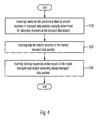
- Fig. 4 depicts a flowchart of an exemplary process for improving the data rate of mobile data and the quality for channel estimation in an ATSC-M/H transport data stream.
- step S10 the consecutively transmitted transport data packets out of for example 38 transport data packets in an ATSC-M/H slot originally determined for data for stationary receivers are marked for inserting data for mobile receivers.
- more than 118 transport data packets of the respective ATSC-M/H slot are filled with data for mobile receivers in this example.
- the marked and consecutively transmitted transport data packets of the respective ATSC-M/H slot are positioned symmetrical to the center of the e.g. 38 transport data packets originally determined for data for stationary receivers.
- the number of transport data packets with data for stationary receivers between the e.g. 118 transport data packets originally determined for data for mobile receivers and the marked transport data packets depends on the data rate of the ATSC-M/H transport data stream at the output of the ATSC-M/H multiplexer and MPEG-2 buffer size in the buffer model. Furthermore, the transport data packets filled with data for stationary receivers between the transport data packets filled with data for mobile receivers can be used for transmitting a TV program with little content or a forecast channel.
- the marking of the transport data packets is achieved by a specific value of the packet identifier (PID) in the header of the respective marked transport data packet.
- PID packet identifier
- one transport data packet of the e.g. 38 transport data packets originally determined for data for stationary receivers, which does not include any payload data is used for marking the transport data packets.
- this transport data packet contains a pointer to the first and to the last marked transport data packet determined for data for mobile receivers in the respective ATSC-M/H-slot.
- the transport data packets provided for data for mobile receivers from the e.g. 38 transport data packets originally determined for data for stationary receivers and representing each a MPEG2 transport data packet are combined to a protocol data unit (PDU) in a multi-protocol encapsulation method (MPE) in the transport layer.
- PDU protocol data unit
- MPE multi-protocol encapsulation method
- each protocol data unit contains a multi-protocol encapsulation header with a pointer, especially a specific value, to the first and the last MPEG2 transport data packet of the protocol data unit.
- the adaptation field in a MPEG2 transport data packet is used for marking a transport data packet originally determined for data for stationary receivers as a transport data packet for data for mobile receivers. If the adaptation field flag in the header of an MPEG2 transport data packet is set, the adaptation field is valid and can be used for transmitting any data. Thus by setting the adaptation field flag in the header of the MPEG2 transport data packet the adaptation field of MPEG2 transport data packet can be used for inserting mark data marking the transport data packet as container for data for mobile receivers.
- step S20 the supplementary data for mobile receivers are inserted in the marked transport data packets of the respective ATSC slot according to the last line of Fig. 3 .
- the data for mobile receivers inserted in the marked transport data packets are coded by means of the identical code as for coding the data for mobile receivers in the 118 consecutively transmitted transport data packets of each M/H group, i.e. Reed-Solomon-block-code in combination with a Series-Concatenated-Convolutional-Code (SCCC) or with a Parallel-Concatenated-Convolutional-Code (PCCC).
- SCCC Series-Concatenated-Convolutional-Code
- PCCC Parallel-Concatenated-Convolutional-Code
- the data for mobile receivers inserted in the marked transport data packets are coded in a more robust and reliable code, for example by means of a low-density-parity-check-code (LDPC-code) combined with a Bose-Chaudhuri-Hocquenghen-code (BCH-code).
- LDPC-code low-density-parity-check-code
- BCH-code Bose-Chaudhuri-Hocquenghen-code
- the data for mobile receivers inserted in the marked transport data packets can only be decoded by ATSC-M/H receivers qualified for recognizing the marking of transport data packets containing supplementary data for mobile receivers.
- step S30 training sequences are inserted in the segments of regions typed B, C and D, which are near the border of the ATSC-M/H slots in the coded ATSC-M/H transport data stream.
- the training sequences are only inserted in parts of the segments, which corresponds to the e.g. 38 transport data packets originally determined for data for stationary receivers, as can be seen in the lines indicating training sequences and positioned only in the trapezoid areas of the coded ATSC-M/H transport data stream in the above part of the diagram in Fig. 2 .
- the training sequences are inserted all over the segments belonging to regions typed B, C and D (see the below part of the diagram in Fig. 2 ).
- the training sequences are inserted in ranges of the coded ATSC-M/H transport data stream belonging to the 38 transport data packets originally determined for data for stationary receivers of the respective ATSC-M/H slot and to the transport data packets of the respective preceding ATSC-M/H slot and/or of the respective subsequent ATSC-M/H slot.
- the training sequences can be inserted at both borders of the respective ATSC-M/H slot in the segments of regions typed B, C and D.
- the training sequences can only be inserted at one border of the respective ATSC-M/H slot in the segments of regions typed B, C and D, i.e. at the border to the respective preceding ATSC-M/H slot or at the border to the respective subsequent ATSC-M/H slot.
- the training sequences are inserted in the ATSC-M/H transport data stream by means of the post processor in a method step between the interleaving and the 8-VSB-Trellis-encoding according to the ATSC-M/H standard.
- the training sequences are preceded by e.g. 12 bytes for setup the 8-VSB-trellis-encoder to a specific state, in which the 8-VSB-trellis-encoder encodes the training sequences in a code being specific for training sequences and being different from the code for payload data.
- the bytes in the training sequences being available for channel estimation are reduced in comparison to the bytes in the training sequences in the sixth embodiment of the invention or the bytes in the training sequences positioned in the segments of region typed A.
- the training sequences can only be decoded from ATSC-M/H receivers qualified for recognizing the training sequences positioned in the segments of regions typed B, C and D.
- the training sequences can also be decoded from specifically developed ATSC receivers qualified for recognizing the training sequences positioned in the segments of regions typed B, C and D.
- Software embodiments of the present invention may be provided as a computer program product, or software, that may include an article of manufacture on a machine accessible or machine readable medium having instructions.
- the instructions on the machine accessible or machine readable medium may be used to program a computer system or other electronic device.
- the machine-readable medium may include, but is not limited to floppy diskettes, optical disks, CD-ROMs and magneto-optical disks or other types of media/machine-readable medium suitable for storing or transmitting electronic instructions.
- machine accessible medium or “machine readable medium” used herein shall include any medium that is capable of storing, recording or transmitting a sequence of instructions for execution by the machine and that cause the machine to perform any one of the methods described herein.
- machine readable medium e.g. program, procedure, process, application, module, unit, logic and so on
- Such expressions are merely a shorthand way of stating that the execution of the software by a processing system causes the processor to perform an action to produce a result.
Landscapes
- Engineering & Computer Science (AREA)
- Signal Processing (AREA)
- Computer Networks & Wireless Communication (AREA)
- Multimedia (AREA)
- Power Engineering (AREA)
- Business, Economics & Management (AREA)
- General Business, Economics & Management (AREA)
- Mobile Radio Communication Systems (AREA)
- Two-Way Televisions, Distribution Of Moving Picture Or The Like (AREA)
Abstract
Description
- This application is related to
U.S. Provisional Patent Application Serial No. 61/162,275 filed March 21, 2009 - The invention generally relates to communication systems, and more particularly to improving the data rate of mobile data and the quality for channel estimation in an ATSC-M/H transport data stream. With respect to ATSC transport data stream reference is made to
US 2006/0200853 A1 andUS 2006/0244865 A1 . - In an ATSC-M/H transport data stream transport data packets containing data for stationary receivers and transport data packets containing data for mobile receivers are transmitted. According to
Fig. 3 the data structure of an ATSC-M/H transport data stream is organized in ATSC data frames each comprising 5 ATSC sub data frames, whereas each ATSC sub data frame is subdivided into 16 ATSC slots with each 156 transport data packets. An ATSC slot can be filled in total, i.e. in each 156 transport data packets of the ATSC slot, with data for stationary receivers or can be filled in 118 transport data packets of the ATSC slot with data for mobile receivers and in 38 transport data packets of the ATSC slot with data for stationary receivers. The 118 transport data packets containing data for mobile receivers are called an M/H group. A collection of M/H groups is an M/H parade, which can carry one or two M/H ensemble, whereas an M/H ensemble represents a logical pipe for IP based datagrams of one TV program or one TV service. - The M/H ensembles resp. the M/H parades comprising a specific number of ATSC slots in an ATSC sub data frame or in an ATSC data frame in the ATSC-M/H transport data stream are each leased to a TV carrier from the broadcaster. The TV carrier is not restricted in the use of the leased bandwidth in the ATSC-M/H transport data stream. He is not requested to transmit a specific minimum rate of TV data for stationary receivers. Nevertheless, a TV carrier intending to transmit only data for mobile receivers is limited by the requirements of the ATSC-M/H standard concerning the above mentioned data structure of the ATSC-M/H transport data stream. If each ATSC slot of the leased M/H ensemble containing only data for stationary receivers is substituted by an ATSC slot containing a combination of 118 transport data packets for mobile receivers and 38 transport data packets for stationary receivers, only 75 % of the total leased bandwidth can be used for the transmission of data for mobile receivers.
- An ATSC slot of a coded ATSC-M/H transport data structure is organized according to
Fig. 1 in regions typed A, B, C and D, whereby each region comprises one or more segments. Another disadvantage in an ATSC-M/H transmission leading to a reduced transmission quality is resulted by the fact, that only in segments of region typed A in the coded ATSC transport data stream training sequences for a channel estimation and for a subsequent signal equalization are introduced, whereas the segments of regions typed B, C and D positioned at the border of two successive ATSC slots miss such training sequences. Thus in a time varying transmission channel the channel estimation, the signal equalization and the subsequent decoding is downgraded in time periods corresponding to the occurrence of segments of region typed B, C and D in the ATSC-M/H transmission data stream. - Thus, what is needed is a method for improving the data rate of mobile data and the quality of channel estimation in an ATSC-M/H transport data stream.
- The present invention meets the above-identified needs by using the e.g. 38 transport data packets, preferably a part of the e.g. 38 transport data packets, of a slot, especially an ATSC slot originally determined for the transmission of data to stationary receivers for the transmission of data for mobile receivers. Thus the rate of transmitted data for mobile receivers in the ATSC-M/H transport data stream is increased, ideally to a transmission rate near to 100 %. The transport data packets, whose contents are changed from data for stationary receivers to data for mobile receivers are marked for neglecting the respective content in a stationary receiver and for decoding the respective content in a mobile receiver.
- Furthermore, training sequences are introduced in segments of data fields in the coded transport data stream, especially the coded ATSC-M/H transport data stream, containing marked transport data packets. Marked transport data packets are positioned in segments of region typed B, C and D of the coded transport data stream, which are originally not arranged with training sequences. Thus all over the coded transport data stream training sequence are distributed for channel estimation and correct signal equalization and correct decoding in each time period of the transmission time.
- The data for mobile receivers are inserted symmetrically to the center of the e.g. 38 consecutively transmitted transport data packets originally determined for data for stationary receivers in an ATSC slot and are separated by at least one transport data packet from the consecutively transmitted transport data packets with data for mobile receivers in the actual or in the subsequent ATSC slot. Thus the number of consecutively transmitted transport data packets with data for mobile receivers is limited to e.g. 118 transport data packets preventing a buffer underflow in the buffer model of the ATSC transport data stream.
- In a first embodiment of the invention the training sequences are introduced in such parts of the segments, which contain only the e.g. 38 consecutively transmitted transport data packets originally determined for data for stationary receivers. Thus only the e.g. 38 consecutively transmitted transport data packets in an ATSC slot containing a training sequence are decoded in a better manner comparable to the decoding of transport data packets transmitted in a region typed A of the coded ATSC-M/H transport data stream.
- In a second embodiment of the invention the training sequences are introduced all over the segments. Thus the transport data packets in the neighborhood of the e.g. 38 successive transport data packets of an ATSC-M/H slot, i.e. the transport data packets in e.g. 118 consecutively transmitted transport data packets of the actual, the preceding or the subsequent ATSC-M/H slot containing data for mobile receivers or the transport data packets in e.g. 156 consecutively transmitted transport data packets of the actual, the preceding or the subsequent ATSC-M/H slot containing only data for stationary receivers, are decoded in a better manner comparable to the decoding of transport data packets transmitted in a region typed A of the coded ATSC-M/H transport data stream.
- In one aspect of the invention the marking of transport data packets, whose contents are changed from data for stationary receivers to data for mobile receivers, is performed by a value of the packet identifier (PID) in the header of the transport data packet, which is so far not occupied by the ATSC-M/H standard.
- In another aspect of the invention the marking of transport data packets, whose contents are changed from data for stationary receivers to data for mobile receivers, is performed by a transport data packet without any payload data, whose data point to the first and the last marked transport data packet.
- In yet another aspect of the invention the marking of transport data packets, whose contents are changed from data for stationary receivers to data for mobile receivers, is performed by values in the multiprotocol encapsulation (MPE) header of a protocol data unit (PDU) comprising several MPEG2 transport data packets, which normally indicate the first and the last MPEG2 transport data packet of the protocol data unit and which can be used for indication of the first and the last marked transport data packet.
- In yet another aspect of the invention the marking of transport data packets, whose contents are changed from data for stationary receivers to data for mobile receivers, is performed by the adaptation field in the MPEG2 transport data, which is not reserved for standardized content and which can be used for indication of the first and the last marked transport data packet.
- The data for mobile receivers in that transport data packets, which are originally determined for stationary receivers, can be coded with the identical code in case of the transport data packets in an M/H group, i.e. with Reed-Solomon code in combination with a trellis based convolution code, or with a combination of a low-density-parity-check code and a Bose-Chaudhuri-Hocquenghen code leading to a better code quality.
- The features and advantages of the present invention will become more apparent from the detailed description set forth below when taken in conjunction with the following drawings. The description should be read as a non-limiting example. In the drawings
- Fig. 1
- shows a data structure of a time interval in a coded ATSC-M/H transport data stream as presently used by the applicant,
- Fig. 2
- shows a data structure of a time interval in an inventive ATSC-M/H transport data stream,
- Fig. 3
- shows a time diagram of an inventive uncoded ATSC-M/H transport data stream and
- Fig. 4
- shows a flowchart of an inventive method for improving the data rate of mobile data and the quality of channel estimation in an ATSC-M/H transport data stream.
-
Fig. 4 depicts a flowchart of an exemplary process for improving the data rate of mobile data and the quality for channel estimation in an ATSC-M/H transport data stream. - With respect to
Fig. 1 and2 , initially in step S10, the consecutively transmitted transport data packets out of for example 38 transport data packets in an ATSC-M/H slot originally determined for data for stationary receivers are marked for inserting data for mobile receivers. Thus more than 118 transport data packets of the respective ATSC-M/H slot are filled with data for mobile receivers in this example. The marked and consecutively transmitted transport data packets of the respective ATSC-M/H slot are positioned symmetrical to the center of the e.g. 38 transport data packets originally determined for data for stationary receivers. - Between the marked transport data packets and the e.g. 118 transport data packets originally determined for data for mobile receivers in the respective and in the subsequent ATSC-M/H slot enough transport data packets with data for stationary receivers have to be positioned in order to fulfill the requirements concerning underflow of the buffer for data for stationary receivers in the buffer model according to ISO/IEC 13818-1. The number of transport data packets with data for stationary receivers between the e.g. 118 transport data packets originally determined for data for mobile receivers and the marked transport data packets depends on the data rate of the ATSC-M/H transport data stream at the output of the ATSC-M/H multiplexer and MPEG-2 buffer size in the buffer model. Furthermore, the transport data packets filled with data for stationary receivers between the transport data packets filled with data for mobile receivers can be used for transmitting a TV program with little content or a forecast channel.
- In a first embodiment of the invention the marking of the transport data packets is achieved by a specific value of the packet identifier (PID) in the header of the respective marked transport data packet. This specific value of the packet identifier for marking the respective transport data packet is not yet reserved for other applications in the ATSC-M/H or MPEG2 standard.
- In a second embodiment of the invention one transport data packet of the e.g. 38 transport data packets originally determined for data for stationary receivers, which does not include any payload data, is used for marking the transport data packets. Instead of payload data this transport data packet contains a pointer to the first and to the last marked transport data packet determined for data for mobile receivers in the respective ATSC-M/H-slot.
- In a third embodiment of the invention the transport data packets provided for data for mobile receivers from the e.g. 38 transport data packets originally determined for data for stationary receivers and representing each a MPEG2 transport data packet are combined to a protocol data unit (PDU) in a multi-protocol encapsulation method (MPE) in the transport layer. Furthermore, each protocol data unit contains a multi-protocol encapsulation header with a pointer, especially a specific value, to the first and the last MPEG2 transport data packet of the protocol data unit. Thus in the transport layer it is possible to use these two pointers in the multi-protocol encapsulation header of a packet data unit comprising the marked transport data packets for marking.
- In a fourth embodiment of the invention the adaptation field in a MPEG2 transport data packet is used for marking a transport data packet originally determined for data for stationary receivers as a transport data packet for data for mobile receivers. If the adaptation field flag in the header of an MPEG2 transport data packet is set, the adaptation field is valid and can be used for transmitting any data. Thus by setting the adaptation field flag in the header of the MPEG2 transport data packet the adaptation field of MPEG2 transport data packet can be used for inserting mark data marking the transport data packet as container for data for mobile receivers.
- In step S20 the supplementary data for mobile receivers are inserted in the marked transport data packets of the respective ATSC slot according to the last line of
Fig. 3 . - In the post-processor of the ATSC-M/H transmitter the data for mobile receivers inserted in the marked transport data packets are coded by means of the identical code as for coding the data for mobile receivers in the 118 consecutively transmitted transport data packets of each M/H group, i.e. Reed-Solomon-block-code in combination with a Series-Concatenated-Convolutional-Code (SCCC) or with a Parallel-Concatenated-Convolutional-Code (PCCC). For better error correction the data for mobile receivers inserted in the marked transport data packets are coded in a more robust and reliable code, for example by means of a low-density-parity-check-code (LDPC-code) combined with a Bose-Chaudhuri-Hocquenghen-code (BCH-code).
- The data for mobile receivers inserted in the marked transport data packets can only be decoded by ATSC-M/H receivers qualified for recognizing the marking of transport data packets containing supplementary data for mobile receivers.
- In step S30 training sequences are inserted in the segments of regions typed B, C and D, which are near the border of the ATSC-M/H slots in the coded ATSC-M/H transport data stream.
- In a fifth embodiment of the invention the training sequences are only inserted in parts of the segments, which corresponds to the e.g. 38 transport data packets originally determined for data for stationary receivers, as can be seen in the lines indicating training sequences and positioned only in the trapezoid areas of the coded ATSC-M/H transport data stream in the above part of the diagram in
Fig. 2 . - In a sixth embodiment of the invention the training sequences are inserted all over the segments belonging to regions typed B, C and D (see the below part of the diagram in
Fig. 2 ). Thus the training sequences are inserted in ranges of the coded ATSC-M/H transport data stream belonging to the 38 transport data packets originally determined for data for stationary receivers of the respective ATSC-M/H slot and to the transport data packets of the respective preceding ATSC-M/H slot and/or of the respective subsequent ATSC-M/H slot. - In one sub-embodiment of the invention the training sequences can be inserted at both borders of the respective ATSC-M/H slot in the segments of regions typed B, C and D. In another sub-embodiment of the invention the training sequences can only be inserted at one border of the respective ATSC-M/H slot in the segments of regions typed B, C and D, i.e. at the border to the respective preceding ATSC-M/H slot or at the border to the respective subsequent ATSC-M/H slot.
- The training sequences are inserted in the ATSC-M/H transport data stream by means of the post processor in a method step between the interleaving and the 8-VSB-Trellis-encoding according to the ATSC-M/H standard. The training sequences are preceded by e.g. 12 bytes for setup the 8-VSB-trellis-encoder to a specific state, in which the 8-VSB-trellis-encoder encodes the training sequences in a code being specific for training sequences and being different from the code for payload data. Thus in the fifth embodiment of the invention the bytes in the training sequences being available for channel estimation are reduced in comparison to the bytes in the training sequences in the sixth embodiment of the invention or the bytes in the training sequences positioned in the segments of region typed A.
- The training sequences can only be decoded from ATSC-M/H receivers qualified for recognizing the training sequences positioned in the segments of regions typed B, C and D. Optionally the training sequences can also be decoded from specifically developed ATSC receivers qualified for recognizing the training sequences positioned in the segments of regions typed B, C and D.
- The scope of the invention is not limited by the features of the embodiments described above. Other and especially future digital TV transmission standards combining the transmission of data for stationary and mobile receivers, which are not described in this patent application, are inside the scope and the spirit of the present invention.
- Software embodiments of the present invention may be provided as a computer program product, or software, that may include an article of manufacture on a machine accessible or machine readable medium having instructions. The instructions on the machine accessible or machine readable medium may be used to program a computer system or other electronic device. The machine-readable medium may include, but is not limited to floppy diskettes, optical disks, CD-ROMs and magneto-optical disks or other types of media/machine-readable medium suitable for storing or transmitting electronic instructions.
- The techniques described herein are not limited to any particular software configuration. They may find applicability in any computing or processing environment. The terms "machine accessible medium" or "machine readable medium" used herein shall include any medium that is capable of storing, recording or transmitting a sequence of instructions for execution by the machine and that cause the machine to perform any one of the methods described herein. Furthermore, it is common in the art to speak of software, in one form or another (e.g. program, procedure, process, application, module, unit, logic and so on) as taking an action or causing a result. Such expressions are merely a shorthand way of stating that the execution of the software by a processing system causes the processor to perform an action to produce a result.
- While various embodiments of the present invention have been described above, it should be understood that they have been presented by way of example, and not limitation. It will be apparent to persons skilled in the relevant art(s) that various changes in form and detail can be made therein without departing from the spirit and scope of the present invention. Thus, the present invention should not be limited by any of the above described exemplary embodiments, but should be defined only in accordance with the following claims and their equivalents.
- In addition, it should be understood that the figures illustrated in the attachments, which highlight the functionality and advantages of the present invention, are presented for example purposes only. The architecture of the present invention is sufficiently flexible and configurable, such that it may be utilized (and navigated) in ways other than that shown in the accompanying figures.
- Further, the purpose of the foregoing Abstract is to enable the U.S. Patent and Trademark Office and the public generally, and especially the scientists, engineers and practitioners in the art who are familiar with patent and legal terms or phraseology, to determine quickly from a cursory inspection the nature and essence of the technical disclosure of the application. The Abstract is not intended to be limiting as to the scope of the present invention in any way. It is also to be understood that the steps and processes recited in the claims need not be performed in the order presented.
Claims (14)
- Method for improving the data rate of data for mobile receivers and for improving the quality of channel estimation in an transport data stream comprising:marking the number of consecutively transmitted transport data packets determined for the transmission of data for mobile receivers in a specification number of N of consecutively transmitted transport data packets in a slot of the uncoded transport data stream originally determined for the transmission of data for stationary receivers,inserting data for mobile receivers in the marked transport data packets andintroducing training sequences in segments of data fields of the coded transport data stream containing marked transport data packets.
- The method according to claim 1,
wherein said consecutively transmitted transport data packets determined for the transmission of data for mobile receivers are inserted symmetrically to the center of said N consecutively transmitted transport data packets and separated from M transport data packets of the actual or the subsequent slot determined for data for mobile receivers by at least one transport data packet. - The method according to claim 1 or 2,
wherein said training sequences are introduced only in said parts of the segments containing N consecutively transmitted transport data packets in said slot originally determined for the transmission of data for stationary receivers with at least one marked transport data packet. - The method according to claim 1 or 2,
wherein said training sequences are introduced in said parts of the segments containing N consecutively transmitted transport data packets in said slot originally determined for the transmission of data for stationary receivers with at least one marked transport data packet and in said parts of the segments belonging to a preceding or a subsequent slot. - The method according to any of claims 1 to 4, wherein said marking of said transport data packets determined for the transmission of data for mobile receivers is performed in the adaptation field in the header of said transport data packets.
- The method according to any of claims 1 to 5, wherein the transport data stream is an ATSC-M/H transport data stream and the slot is an ATSC-slot
- The method according to claim 6,
wherein said marking of said transport data packets determined for the transmission of data for mobile receivers is performed by a value of the packet identification (PID) in the header of said transport data packets being not referenced according to the ATSC standard. - The method according to any of claims 1 to 7,
wherein said marking of said transport data packets determined for the transmission of data for mobile receivers is performed by a transport data packet of said N consecutively transmitted transport data packets without any payload data. - The method according to any of claims 1 to 8,
wherein said marking of said transport data packets determined for the transmission of data for mobile receivers is performed by a pointer in the header of a protocol data unit produced by a multi-protocol encapsulation method. - The method according to claim 2,
wherein said data for mobile receivers inserted in said marked transport data packets are coded by the identical code for coding said data in said M transport data packets of a slot determined for data for mobile receivers. - The method according to any of claims 1 to 10,
wherein said data for mobile receivers inserted in said marked transport data packets are coded by means of a code with high robustness and high reliability. - The method according to claim 11,
wherein the code is a low-density-parity-check-code in combination with a Bose-Chaudhuri-Hocquenghen-code. - The method according to claim 1 or 2,
wherein N equals 38. - The method according to claim 2 or 10,
wherein M equals 118.
Applications Claiming Priority (2)
| Application Number | Priority Date | Filing Date | Title |
|---|---|---|---|
| US16227509P | 2009-03-21 | 2009-03-21 | |
| US26557209P | 2009-12-01 | 2009-12-01 |
Publications (3)
| Publication Number | Publication Date |
|---|---|
| EP2234357A2 true EP2234357A2 (en) | 2010-09-29 |
| EP2234357A3 EP2234357A3 (en) | 2013-05-22 |
| EP2234357B1 EP2234357B1 (en) | 2016-07-27 |
Family
ID=42236679
Family Applications (1)
| Application Number | Title | Priority Date | Filing Date |
|---|---|---|---|
| EP10002931.3A Active EP2234357B1 (en) | 2009-03-21 | 2010-03-19 | Method for improving the data rate of mobile data and the quality of channel estimation in an ATSC-M/H transport data stream |
Country Status (2)
| Country | Link |
|---|---|
| US (1) | US8982745B2 (en) |
| EP (1) | EP2234357B1 (en) |
Families Citing this family (4)
| Publication number | Priority date | Publication date | Assignee | Title |
|---|---|---|---|---|
| US8489961B2 (en) | 2009-10-19 | 2013-07-16 | Lg Electronics Inc. | Transmitting system and method of processing digital broadcast signal in transmitting system, receiving system and method of receiving digital broadcast signal in receiving system |
| US8699641B2 (en) * | 2010-06-10 | 2014-04-15 | Qualcomm Incorporated | Method and apparatus for ATSC signal processing |
| US8514761B2 (en) * | 2010-09-21 | 2013-08-20 | Qualcomm Incorporated | Method and apparatus for saving power in ATSC-M/H mobile devices |
| CN110719254A (en) * | 2019-08-29 | 2020-01-21 | 北斗航天卫星应用科技集团有限公司 | Multi-protocol integrated Beidou position service system and service method |
Citations (2)
| Publication number | Priority date | Publication date | Assignee | Title |
|---|---|---|---|---|
| US20060200853A1 (en) | 2005-03-02 | 2006-09-07 | Rohde & Schwarz, Inc. | Apparatus, systems and methods for providing enhancements to atsc networks using synchronous vestigial sideband (vsb) frame slicing |
| US20060244865A1 (en) | 2005-03-02 | 2006-11-02 | Rohde & Schwarz, Inc. | Apparatus, systems, methods and computer products for providing a virtual enhanced training sequence |
Family Cites Families (154)
| Publication number | Priority date | Publication date | Assignee | Title |
|---|---|---|---|---|
| US5073980A (en) | 1989-08-29 | 1991-12-17 | The Trustees Of Princeton University | Photonic switch employing shared data transmission facility |
| US5216503A (en) * | 1991-12-24 | 1993-06-01 | General Instrument Corporation | Statistical multiplexer for a multichannel image compression system |
| US6728467B2 (en) * | 1992-03-26 | 2004-04-27 | Matsushita Electric Industrial Co., Ltd. | Communication system |
| US5506844A (en) | 1994-05-20 | 1996-04-09 | Compression Labs, Inc. | Method for configuring a statistical multiplexer to dynamically allocate communication channel bandwidth |
| US5614914A (en) * | 1994-09-06 | 1997-03-25 | Interdigital Technology Corporation | Wireless telephone distribution system with time and space diversity transmission for determining receiver location |
| US5822324A (en) * | 1995-03-16 | 1998-10-13 | Bell Atlantic Network Services, Inc. | Simulcasting digital video programs for broadcast and interactive services |
| US5659353A (en) | 1995-03-17 | 1997-08-19 | Bell Atlantic Network Services, Inc. | Television distribution system and method |
| US5966120A (en) | 1995-11-21 | 1999-10-12 | Imedia Corporation | Method and apparatus for combining and distributing data with pre-formatted real-time video |
| US5835493A (en) | 1996-01-02 | 1998-11-10 | Divicom, Inc. | MPEG transport stream remultiplexer |
| DE19617293A1 (en) * | 1996-04-30 | 1997-11-20 | Bosch Gmbh Robert | Process for setting up a transport data stream |
| US5917830A (en) | 1996-10-18 | 1999-06-29 | General Instrument Corporation | Splicing compressed packetized digital video streams |
| JPH10126752A (en) * | 1996-10-23 | 1998-05-15 | Matsushita Electric Ind Co Ltd | Broadcast system |
| US6549242B1 (en) * | 1997-04-04 | 2003-04-15 | Harris Corporation | Combining adjacent TV channels for transmission by a common antenna |
| US5903574A (en) * | 1997-04-18 | 1999-05-11 | Sarnoff Corporation | Studio transmitter link method and apparatus |
| US20060023656A1 (en) | 2004-07-29 | 2006-02-02 | Anglin Richard L Jr | Interactive digital data broadcasting system |
| US6088337A (en) * | 1997-10-20 | 2000-07-11 | Motorola, Inc. | Method access point device and peripheral for providing space diversity in a time division duplex wireless system |
| US6631491B1 (en) * | 1997-11-10 | 2003-10-07 | Ntt Mobile Communications Network, Inc. | Interleaving method, interleaving apparatus, and recording medium in which interleave pattern generating program is recorded |
| CN1281606A (en) * | 1997-11-14 | 2001-01-24 | 世界空间管理公司 | Signaling protocol for satellite direct radio broadcast system |
| US6222832B1 (en) | 1998-06-01 | 2001-04-24 | Tantivy Communications, Inc. | Fast Acquisition of traffic channels for a highly variable data rate reverse link of a CDMA wireless communication system |
| EP0926894A1 (en) | 1997-12-23 | 1999-06-30 | CANAL+ Société Anonyme | Scrambling unit for a digital transmission system |
| US6192070B1 (en) * | 1998-01-02 | 2001-02-20 | Mitsubishi Electric Research Laboratories, Inc. | Universal modem for digital video, audio and data communications |
| US6313885B1 (en) * | 1998-03-25 | 2001-11-06 | Samsung Electronics Co., Ltd. | DTV receiver with baseband equalization filters for QAM signal and for VSB signal which employ common elements |
| US6480236B1 (en) * | 1998-04-02 | 2002-11-12 | Samsung Electronics Co., Ltd. | Envelope detection of PN sequences accompanying VSB signal to control operation of QAM/VSB DTV receiver |
| US6772391B1 (en) * | 1998-10-13 | 2004-08-03 | Interdigital Technology Corporation | Hybrid interleaver for turbo codes |
| US6269092B1 (en) * | 1999-01-14 | 2001-07-31 | Linex Technologies, Inc. | Spread-spectrum channel sounding |
| US6477180B1 (en) * | 1999-01-28 | 2002-11-05 | International Business Machines Corporation | Optimizing method for digital content delivery in a multicast network |
| US6621870B1 (en) * | 1999-04-15 | 2003-09-16 | Diva Systems Corporation | Method and apparatus for compressing video sequences |
| US6118797A (en) | 1999-06-02 | 2000-09-12 | O'shea; Thomas E. | Use of sub-rate out-of-band channel to transport signaling bits over time division multiplexed digital communication link |
| US20060093045A1 (en) | 1999-06-29 | 2006-05-04 | Roger Anderson | Method and apparatus for splicing |
| US6496477B1 (en) | 1999-07-09 | 2002-12-17 | Texas Instruments Incorporated | Processes, articles, and packets for network path diversity in media over packet applications |
| US6930983B2 (en) * | 2000-03-15 | 2005-08-16 | Texas Instruments Incorporated | Integrated circuits, systems, apparatus, packets and processes utilizing path diversity for media over packet applications |
| US6801499B1 (en) * | 1999-08-10 | 2004-10-05 | Texas Instruments Incorporated | Diversity schemes for packet communications |
| US6721337B1 (en) * | 1999-08-24 | 2004-04-13 | Ibiquity Digital Corporation | Method and apparatus for transmission and reception of compressed audio frames with prioritized messages for digital audio broadcasting |
| GB2353653B (en) | 1999-08-26 | 2003-12-31 | Sony Uk Ltd | Signal processor |
| EP1089475A1 (en) | 1999-09-28 | 2001-04-04 | TELEFONAKTIEBOLAGET L M ERICSSON (publ) | Converter and method for converting an input packet stream containing data with plural transmission rates into an output data symbol stream |
| US6580705B1 (en) | 1999-10-28 | 2003-06-17 | Lucent Technologies Inc. | Signal combining scheme for wireless transmission systems having multiple modulation schemes |
| US6640239B1 (en) * | 1999-11-10 | 2003-10-28 | Garuda Network Corporation | Apparatus and method for intelligent scalable switching network |
| DE19960295B4 (en) | 1999-12-14 | 2012-06-21 | Rohde & Schwarz Gmbh & Co. Kg | Method and apparatus for changing the information content of a digital video transport stream in selected regions |
| US6816204B2 (en) * | 2000-01-19 | 2004-11-09 | Allen Le Roy Limberg | Ghost cancellation reference signals for broadcast digital television signal receivers and receivers for utilizing them |
| US7367042B1 (en) * | 2000-02-29 | 2008-04-29 | Goldpocket Interactive, Inc. | Method and apparatus for hyperlinking in a television broadcast |
| US6996133B2 (en) * | 2000-04-18 | 2006-02-07 | Zenith Electronics Corporation | Digital communication system for transmitting and receiving robustly encoded data |
| US6507618B1 (en) | 2000-04-25 | 2003-01-14 | Hewlett-Packard Company | Compressed video signal including independently coded regions |
| US6772434B1 (en) * | 2000-05-24 | 2004-08-03 | The Directv Group, Inc. | Device and method for the integrated presentation of a secondary service as a part of a primary service |
| GB2364211A (en) | 2000-06-30 | 2002-01-16 | Nokia Oy Ab | A terminal comprising two receivers for receiving an encrypted first signal from a first network and a decryption second signal from a second network |
| US6744789B1 (en) | 2000-09-26 | 2004-06-01 | The Directv Group, Inc. | System and method for translating MPEG packets which include PCR data into DIRECTV packets which include RTS data |
| EP1249951B1 (en) * | 2000-11-16 | 2016-06-01 | Sony Corporation | Communication apparatus |
| US6804223B2 (en) * | 2000-11-30 | 2004-10-12 | Ipr Licensing, Inc. | Reverse link pilot integrated with block codes |
| US20020085548A1 (en) * | 2000-12-28 | 2002-07-04 | Maple Optical Systems, Inc. | Quality of service technique for a data communication network |
| KR100673419B1 (en) * | 2000-12-28 | 2007-01-24 | 엘지전자 주식회사 | Transmission system and data processing method |
| DE10100609A1 (en) | 2001-01-09 | 2002-07-11 | Siemens Ag | Data transmission charging system uses electronic vouchers allows accurate different tariff modes |
| DE10112773B4 (en) | 2001-03-16 | 2012-09-20 | Rohde & Schwarz Gmbh & Co Kg | Method for frequency and time synchronization of an OFDM receiver |
| CA2438138C (en) * | 2001-03-30 | 2007-03-13 | S. Merrill Weiss | Digital signal transmitter synchronization system |
| US7111221B2 (en) * | 2001-04-02 | 2006-09-19 | Koninklijke Philips Electronics N.V. | Digital transmission system for an enhanced ATSC 8-VSB system |
| US6727847B2 (en) | 2001-04-03 | 2004-04-27 | Rosum Corporation | Using digital television broadcast signals to provide GPS aiding information |
| US6947487B2 (en) | 2001-04-18 | 2005-09-20 | Lg Electronics Inc. | VSB communication system |
| US20030099303A1 (en) * | 2001-06-04 | 2003-05-29 | Koninklijke Philips Electronics N.V. | Digital television (DTV) transmission system using enhanced coding schemes |
| WO2002103483A2 (en) * | 2001-06-15 | 2002-12-27 | Cadence Design Systems, Inc. | Optimizing mergeability and datapath widths of data-flow-graphs |
| US7349691B2 (en) * | 2001-07-03 | 2008-03-25 | Microsoft Corporation | System and apparatus for performing broadcast and localcast communications |
| EP1433317B1 (en) | 2001-07-19 | 2007-05-02 | Thomson Licensing | Fade resistant digital transmission and reception system |
| KR20030013097A (en) | 2001-08-07 | 2003-02-14 | 삼성전자주식회사 | Apparatus and method for serving broadcasting service in mobile communication system |
| US7382838B2 (en) * | 2001-09-17 | 2008-06-03 | Digeo, Inc. | Frequency drift compensation across multiple broadband signals in a digital receiver system |
| US20030053493A1 (en) * | 2001-09-18 | 2003-03-20 | Joseph Graham Mobley | Allocation of bit streams for communication over-multi-carrier frequency-division multiplexing (FDM) |
| US6924753B2 (en) * | 2001-09-24 | 2005-08-02 | Zenith Electronics Corporation | Robust system for transmitting and receiving map data |
| FI20012256A0 (en) | 2001-11-20 | 2001-11-20 | Nokia Corp | Mobile networks and digital broadcasting services |
| AU2002359882A1 (en) * | 2001-12-28 | 2003-07-24 | Pegasus Development Corporation | Wideband direct-to-home broadcasting satellite communications system and method |
| GB0203538D0 (en) | 2002-02-14 | 2002-04-03 | Nokia Corp | Improvements in and relating to content delivery |
| US7230922B1 (en) * | 2002-04-05 | 2007-06-12 | Cingular Wireless Ii, Llc | Real-time rate control mechanism for multi-rate data transmissions in wireless networks |
| US20030206596A1 (en) | 2002-05-03 | 2003-11-06 | David Carver | Multimedia content assembly |
| US7310354B2 (en) | 2002-07-18 | 2007-12-18 | Zenith Electronics Corporation | Synchronous data link signal generator |
| US7551675B2 (en) * | 2002-09-27 | 2009-06-23 | Ibiquity Digital Corporation | Method and apparatus for synchronized transmission and reception of data in a digital audio broadcasting system |
| US6934312B2 (en) * | 2002-09-30 | 2005-08-23 | Agilent Technologies, Inc. | System and method for fabricating efficient semiconductor lasers via use of precursors having a direct bond between a group III atom and a nitrogen atom |
| US7564905B2 (en) * | 2002-12-20 | 2009-07-21 | Electronics And Telecommunications Research Institute | System and method for providing terrestrial digital broadcasting service using single frequency network |
| JP2004214961A (en) | 2002-12-27 | 2004-07-29 | Sony Corp | OFDM demodulator |
| US7197685B2 (en) * | 2003-01-02 | 2007-03-27 | Samsung Electronics, Co., Ltd. | Robust signal transmission in digital television broadcasting |
| AU2003288781A1 (en) | 2003-01-06 | 2004-07-29 | Electronics And Telecommunications Research Institute | Digital television transmitter and receiver for transmitting and receiving dual stream using 4 level vestigial side band robust data |
| GB2399719A (en) | 2003-03-18 | 2004-09-22 | Nokia Corp | Transmission of data with forward error correction information |
| US7324545B2 (en) * | 2003-03-31 | 2008-01-29 | Lucent Technologies Inc. | Methods and apparatus for reliable point to multipoint communications |
| KR100506253B1 (en) * | 2003-05-26 | 2005-08-10 | 재단법인서울대학교산학협력재단 | Device and Method for minimizing transmission delay in data communication system |
| GB2403630A (en) * | 2003-06-30 | 2005-01-05 | Nokia Corp | Adjusting data burst transmission rates in broadcast services |
| US7668250B2 (en) * | 2003-10-01 | 2010-02-23 | Samsung Electronics Co., Ltd. | Time-dependent trellis coding for more robust digital television signals |
| US20050013249A1 (en) * | 2003-07-14 | 2005-01-20 | Hao-Song Kong | Redundant packets for streaming video protection |
| US7103825B2 (en) * | 2003-08-19 | 2006-09-05 | Mitsubishi Electric Research Laboratories, Inc. | Decoding error-correcting codes based on finite geometries |
| US7599348B2 (en) * | 2003-11-04 | 2009-10-06 | Lg Electronics Inc. | Digital E8-VSB reception system and E8-VSB data demultiplexing method |
| KR100896684B1 (en) * | 2004-01-27 | 2009-05-14 | 삼성전자주식회사 | Digital broadcasting transmission/reception capable of improving receiving performance and signal processing method thereof |
| US20050207416A1 (en) * | 2004-03-16 | 2005-09-22 | Samsung Electronics Co. , Ltd. | Apparatus and method for deploying efficient broadcast multicast services in a wireless network |
| KR100657819B1 (en) * | 2004-04-01 | 2006-12-14 | 한국전자통신연구원 | Double Stream Structure Digital Television Transmission and Receiving Method using Hybrid of E-8VSB, E-4VSB and P-2VSB |
| MXPA06011267A (en) | 2004-04-01 | 2007-01-26 | Korea Electronics Telecomm | Digital television transmitter and receiver for using 16 state trellis coding. |
| US7496094B2 (en) * | 2004-04-06 | 2009-02-24 | Airtight Networks, Inc. | Method and system for allowing and preventing wireless devices to transmit wireless signals |
| US7626960B2 (en) | 2004-04-20 | 2009-12-01 | Nokia Corporation | Use of signaling for auto-configuration of modulators and repeaters |
| TWI247546B (en) | 2004-04-22 | 2006-01-11 | Newsoft Technology Corp | A video encoding method which carries out the encoding of P frame or B frame by utilizing I frame |
| KR100683879B1 (en) * | 2004-05-06 | 2007-02-15 | 삼성전자주식회사 | Digital broadcasting transmission and reception system with improved reception performance and signal processing method thereof |
| KR100692596B1 (en) * | 2004-05-06 | 2007-03-13 | 삼성전자주식회사 | Digital broadcasting transmission and reception system with improved reception performance and signal processing method thereof |
| US7852961B2 (en) | 2004-05-20 | 2010-12-14 | Samsung Electronics Co., Ltd. | Digital broadcasting transmission/reception devices capable of improving a receiving performance and signal processing method thereof |
| US7978778B2 (en) * | 2004-09-03 | 2011-07-12 | Qualcomm, Incorporated | Receiver structures for spatial spreading with space-time or space-frequency transmit diversity |
| US7783316B1 (en) * | 2004-09-09 | 2010-08-24 | Rockwell Collins, Inc. | Public safety communications network using asymmetric receive/transmit channels |
| CN101040522B (en) * | 2004-09-15 | 2010-05-26 | 韩国电子通信研究院 | Digital television transmission and reception apparatus and method using 1/4 rate encoded robust data |
| US20060067266A1 (en) | 2004-09-28 | 2006-03-30 | Ehlers Douglas E | Radio control over internet protocol system |
| US7336646B2 (en) * | 2004-10-26 | 2008-02-26 | Nokia Corporation | System and method for synchronizing a transport stream in a single frequency network |
| US7313414B2 (en) | 2004-12-13 | 2007-12-25 | Broadcom Corporation | Method and system for mobile receiver antenna architecture for European cellular and broadcasting services |
| US20060126556A1 (en) | 2004-12-14 | 2006-06-15 | Roundbox, Inc. | Territory mapping for efficient content distribution in wireless networks using broadcast/multicast |
| WO2006066617A1 (en) | 2004-12-20 | 2006-06-29 | Freescale Semiconductor, Inc | Broadcasting of textual and multimedia information |
| WO2006084361A1 (en) | 2005-02-09 | 2006-08-17 | Alex Dolgonos | System and method for implementing a transmit diversity single frequency network without gps receivers |
| US7738582B2 (en) * | 2005-03-02 | 2010-06-15 | Rohde & Schwarz Gmbh & Co. Kg | Apparatus, systems and methods for producing coherent symbols in a single frequency network |
| US7532857B2 (en) * | 2005-03-02 | 2009-05-12 | Rohde & Schwarz Gmbh & Co. Kg | Apparatus, systems and methods for providing time diversity for mobile broadcast services |
| US20060245516A1 (en) * | 2005-03-02 | 2006-11-02 | Rohde & Schwarz, Inc. | Apparatus, systems and methods for providing in-band atsc vestigial sideband signaling or out-of-band signaling |
| CN101945250A (en) | 2005-04-26 | 2011-01-12 | 皇家飞利浦电子股份有限公司 | Be used to handle have packet sequence with the equipment and the method for the data flow of the relevant timing information of grouping |
| US20070174880A1 (en) | 2005-07-05 | 2007-07-26 | Optibase Ltd. | Method, apparatus, and system of fast channel hopping between encoded video streams |
| JP2009502095A (en) * | 2005-07-18 | 2009-01-22 | ミツビシ・エレクトリック・リサーチ・ラボラトリーズ・インコーポレイテッド | Method, apparatus, and system for modulating and demodulating signals that are compatible with multiple receiver types and that are designed for improved receiver performance |
| US7924944B2 (en) * | 2005-09-16 | 2011-04-12 | Broadcom Corporation | Method and system for multi-band direct conversion complimentary metal-oxide-semiconductor (CMOS) mobile television tuner |
| EP1768285A1 (en) | 2005-09-23 | 2007-03-28 | Udcast | Method and device for processing a DVB-H (Digital Video Broadcasting - Handheld) compliant transport stream |
| KR101191181B1 (en) * | 2005-09-27 | 2012-10-15 | 엘지전자 주식회사 | Transmitting/receiving system of digital broadcasting and data structure |
| FR2892253B1 (en) * | 2005-10-14 | 2007-12-28 | Thales Sa | METHOD FOR GENERATING AND DEMULTIPLEXING AN OPTIMIZED CONTRIBUTION SIGNAL, AND SYSTEM FOR REGIONALIZED DIFFUSION OF DATA. |
| KR100759002B1 (en) * | 2005-10-21 | 2007-09-17 | 삼성전자주식회사 | System for processing and transmitting digital broadcasting signal and method thereof |
| KR100794790B1 (en) | 2005-10-21 | 2008-01-21 | 삼성전자주식회사 | Trellis encoding device for encoding dual transport streams and method thereof |
| US8275003B2 (en) * | 2005-10-24 | 2012-09-25 | General Instrument Corporation | Method and apparatus for generating multiplexed signals |
| WO2007049609A1 (en) | 2005-10-27 | 2007-05-03 | Matsushita Electric Industrial Co., Ltd. | Transport stream generating apparatus, recording apparatus having the same, and transport stream generating method |
| KR101319868B1 (en) * | 2005-10-31 | 2013-10-18 | 엘지전자 주식회사 | Digital broadcasting system and processing method |
| US7950042B2 (en) * | 2005-12-16 | 2011-05-24 | Newport Media, Inc. | Fast switching between time division multiplexed (TDM) channels |
| JP2009524328A (en) | 2006-01-20 | 2009-06-25 | エヌエックスピー ビー ヴィ | Replacement of frame data in video stream signal |
| US7715489B2 (en) * | 2006-02-10 | 2010-05-11 | Broadcom Corporation | Space time transmit diversity (STTD) decoder within a HSDPA rake receiver |
| WO2007100186A1 (en) * | 2006-03-02 | 2007-09-07 | Lg Electronics Inc. | Digital broadcasting system and method of processing data |
| DE102006015393A1 (en) * | 2006-04-03 | 2007-10-04 | Rohde & Schwarz Gmbh & Co. Kg | Digital audio/video data stream`s transmission time synchronizing arrangement, has transmitters provided with data stream in form of data frame, where reference time is compared with actual transmission time for each transmitter |
| US7639751B2 (en) | 2006-04-04 | 2009-12-29 | Samsung Electronics Co., Ltd. | Advanced-VSB system (A-VSB) |
| US8493973B2 (en) * | 2006-04-04 | 2013-07-23 | Samsung Electronics Co., Ltd. | Method of and apparatus for transmitting digital broadcasting signal in advanced-VSB (A-VSB) system in which transport packet without adaptation field is provided at fixed location in data field slices |
| US7702337B2 (en) * | 2006-05-16 | 2010-04-20 | Nokia Corporation | Method and system for providing quick service access |
| US20080056219A1 (en) | 2006-08-29 | 2008-03-06 | Muthaiah Venkatachalam | Broadband wireless access network and methods for joining multicast broadcast service sessions within multicast broadcast service zones |
| US8300668B2 (en) | 2006-09-29 | 2012-10-30 | Harris Corporation | Automatic delay compensated simulcasting system and method |
| DE102007012465A1 (en) | 2006-11-15 | 2008-05-21 | Rohde & Schwarz Ftk Gmbh | Transmission method and transmission apparatus in a digital broadcast transmission system |
| KR101221913B1 (en) * | 2006-12-20 | 2013-01-15 | 엘지전자 주식회사 | Digital broadcasting system and data processing method |
| US7848237B2 (en) * | 2007-01-18 | 2010-12-07 | Ineoquest Technologies, Inc. | System and method for selective packet discard for the transport of multiple transportation streams of streaming media in packet-based networks |
| US7729387B2 (en) | 2007-01-31 | 2010-06-01 | Agere Systems Inc. | Methods and apparatus for controlling latency variation in a packet transfer network |
| KR101424152B1 (en) * | 2007-02-01 | 2014-08-04 | 로오데운트쉬바르츠게엠베하운트콤파니카게 | Systems, devices, methods and computer program products providing ATSC interoperability |
| KR100853143B1 (en) | 2007-02-15 | 2008-08-20 | 충북대학교 산학협력단 | Video Compression and Restoration Method Using I Frame Tag |
| JP2008219163A (en) | 2007-02-28 | 2008-09-18 | Toshiba Corp | Information encoding method, information reproducing method, and information storage medium |
| JP2008217851A (en) | 2007-02-28 | 2008-09-18 | Toshiba Corp | Information recording medium, information recording method, information reproducing method, information recording apparatus, and information reproducing apparatus |
| KR101253185B1 (en) * | 2007-03-26 | 2013-04-10 | 엘지전자 주식회사 | Digital broadcasting system and data processing method |
| KR101285888B1 (en) * | 2007-03-30 | 2013-07-11 | 엘지전자 주식회사 | Digital broadcasting system and method of processing data in digital broadcasting system |
| US7890047B2 (en) * | 2007-04-11 | 2011-02-15 | The Directv Group, Inc. | Method and system for file sharing between a group of user devices using obtained permissions |
| US20080259835A1 (en) | 2007-04-20 | 2008-10-23 | Muthaiah Venkatachalam | Locating content in broadband wireless access networks |
| KR101405970B1 (en) * | 2007-06-28 | 2014-06-12 | 엘지전자 주식회사 | Digital broadcasting system and data processing method |
| KR101405967B1 (en) * | 2007-06-28 | 2014-06-12 | 엘지전자 주식회사 | Digital broadcasting system and method of processing data in digital broadcasting system |
| US8335266B2 (en) * | 2007-06-29 | 2012-12-18 | Cisco Technology, Inc. | Expedited splicing of video streams |
| JP5312456B2 (en) | 2007-07-05 | 2013-10-09 | コーヒレント・ロジックス・インコーポレーテッド | Mobile television broadcasting system |
| FR2919775A1 (en) | 2007-08-02 | 2009-02-06 | Udcast Sa | METHOD AND DEVICE FOR SYNCHRONIZING A DATA STREAM IN A SINGLE FREQUENCY NETWORK |
| KR101556134B1 (en) * | 2007-08-24 | 2015-09-30 | 엘지전자 주식회사 | Digital broadcasting transmitter and control method thereof |
| KR101498063B1 (en) * | 2008-03-04 | 2015-03-03 | 엘지전자 주식회사 | Digital broadcasting system and method of processing data in the digital broadcasting system |
| US8201062B2 (en) * | 2008-03-07 | 2012-06-12 | Lg Electronics Inc. | Digital broadcasting system and method of processing data in the digital broadcasting system |
| US20090265751A1 (en) * | 2008-04-22 | 2009-10-22 | Limberg Allen Leroy | Reception of ancillary 8VSB signals controlled responsive to information signaling version of broadcast standard being used |
| DE102008056703A1 (en) | 2008-07-04 | 2010-01-07 | Rohde & Schwarz Gmbh & Co. Kg | Method and system for time synchronization between a central office and multiple transmitters |
| US20100142447A1 (en) | 2008-09-04 | 2010-06-10 | Ludger Schlicht | Web applications for a mobile, broadband, routable internet |
| US20100142446A1 (en) | 2008-09-04 | 2010-06-10 | Ludger Schlicht | Business management systems for a mobile, broadband, routable internet |
| US20100150182A1 (en) * | 2008-12-12 | 2010-06-17 | Tandberg Television Inc. | Systems and methods for mutiplexing mpeg services for ip networks |
| US9025536B2 (en) | 2009-03-26 | 2015-05-05 | Qualcomm Incorporated | Apparatus and methods of whitespace communication |
| DE102009025219A1 (en) * | 2009-04-07 | 2010-10-14 | Rohde & Schwarz Gmbh & Co. Kg | Method and device for continuously adapting coding parameters to a variable payload data rate |
-
2010
- 2010-03-19 EP EP10002931.3A patent/EP2234357B1/en active Active
- 2010-03-19 US US12/727,478 patent/US8982745B2/en active Active
Patent Citations (2)
| Publication number | Priority date | Publication date | Assignee | Title |
|---|---|---|---|---|
| US20060200853A1 (en) | 2005-03-02 | 2006-09-07 | Rohde & Schwarz, Inc. | Apparatus, systems and methods for providing enhancements to atsc networks using synchronous vestigial sideband (vsb) frame slicing |
| US20060244865A1 (en) | 2005-03-02 | 2006-11-02 | Rohde & Schwarz, Inc. | Apparatus, systems, methods and computer products for providing a virtual enhanced training sequence |
Also Published As
| Publication number | Publication date |
|---|---|
| US20100238916A1 (en) | 2010-09-23 |
| US8982745B2 (en) | 2015-03-17 |
| EP2234357B1 (en) | 2016-07-27 |
| EP2234357A3 (en) | 2013-05-22 |
Similar Documents
| Publication | Publication Date | Title |
|---|---|---|
| CN101836445B (en) | Digital broadcasting receiver and method for controlling the same | |
| US7733819B2 (en) | Digital broadcasting system and method of processing data in digital broadcasting system | |
| US7705920B2 (en) | Digital broadcasting system and method of processing data in digital broadcasting system | |
| US7912006B2 (en) | Digital broadcasting system and method of processing data in digital broadcasting system | |
| US8687635B2 (en) | Digital broadcasting system and method of processing data in digital broadcasting system | |
| CN101785301B (en) | Digital broadcasting system and method of processing data in digital broadcasting system | |
| US9755849B2 (en) | Digital broadcasting system and method of processing data in digital broadcasting system | |
| US20070130495A1 (en) | Apparatus and method of multi-cyclic redundancy checking for section detection and reliability information acquisition in a DVB-H system | |
| KR20070077040A (en) | Digital broadcasting transmission / reception system and data processing method | |
| EP2234357B1 (en) | Method for improving the data rate of mobile data and the quality of channel estimation in an ATSC-M/H transport data stream | |
| US8385410B2 (en) | Digital broadcast system and data processing method | |
| US8718131B2 (en) | Method and apparatus for generating and processing packet in MPEG-2 transport stream | |
| US8386893B2 (en) | Digital broadcasting system and method of processing data in digital broadcasting system | |
| US7881259B2 (en) | Digital broadcasting system and method of processing data in digital broadcasting system | |
| US20070087684A1 (en) | Method and apparatus for displaying receptibility of broadcasting service | |
| WO2009038434A2 (en) | Digital broadcasting system and method of processing data in digital broadcasting system |
Legal Events
| Date | Code | Title | Description |
|---|---|---|---|
| PUAI | Public reference made under article 153(3) epc to a published international application that has entered the european phase |
Free format text: ORIGINAL CODE: 0009012 |
|
| AK | Designated contracting states |
Kind code of ref document: A2 Designated state(s): AT BE BG CH CY CZ DE DK EE ES FI FR GB GR HR HU IE IS IT LI LT LU LV MC MK MT NL NO PL PT RO SE SI SK SM TR |
|
| AX | Request for extension of the european patent |
Extension state: AL BA ME RS |
|
| PUAL | Search report despatched |
Free format text: ORIGINAL CODE: 0009013 |
|
| AK | Designated contracting states |
Kind code of ref document: A3 Designated state(s): AT BE BG CH CY CZ DE DK EE ES FI FR GB GR HR HU IE IS IT LI LT LU LV MC MK MT NL NO PL PT RO SE SI SK SM TR |
|
| AX | Request for extension of the european patent |
Extension state: AL BA ME RS |
|
| RIC1 | Information provided on ipc code assigned before grant |
Ipc: H04L 25/02 20060101ALI20130415BHEP Ipc: H04H 20/42 20080101ALI20130415BHEP Ipc: H04L 1/00 20060101AFI20130415BHEP |
|
| 17P | Request for examination filed |
Effective date: 20130423 |
|
| REG | Reference to a national code |
Ref country code: DE Ref legal event code: R079 Ref document number: 602010034975 Country of ref document: DE Free format text: PREVIOUS MAIN CLASS: H04L0025020000 Ipc: H04L0001000000 |
|
| GRAP | Despatch of communication of intention to grant a patent |
Free format text: ORIGINAL CODE: EPIDOSNIGR1 |
|
| RIC1 | Information provided on ipc code assigned before grant |
Ipc: H04L 25/02 20060101ALI20160323BHEP Ipc: H04H 20/42 20080101ALI20160323BHEP Ipc: H04N 21/236 20110101ALI20160323BHEP Ipc: H04N 21/434 20110101ALI20160323BHEP Ipc: H04H 20/57 20080101ALI20160323BHEP Ipc: H04L 1/00 20060101AFI20160323BHEP |
|
| INTG | Intention to grant announced |
Effective date: 20160408 |
|
| GRAS | Grant fee paid |
Free format text: ORIGINAL CODE: EPIDOSNIGR3 |
|
| GRAA | (expected) grant |
Free format text: ORIGINAL CODE: 0009210 |
|
| AK | Designated contracting states |
Kind code of ref document: B1 Designated state(s): AT BE BG CH CY CZ DE DK EE ES FI FR GB GR HR HU IE IS IT LI LT LU LV MC MK MT NL NO PL PT RO SE SI SK SM TR |
|
| REG | Reference to a national code |
Ref country code: GB Ref legal event code: FG4D |
|
| REG | Reference to a national code |
Ref country code: CH Ref legal event code: EP |
|
| REG | Reference to a national code |
Ref country code: AT Ref legal event code: REF Ref document number: 816559 Country of ref document: AT Kind code of ref document: T Effective date: 20160815 |
|
| REG | Reference to a national code |
Ref country code: IE Ref legal event code: FG4D |
|
| REG | Reference to a national code |
Ref country code: DE Ref legal event code: R096 Ref document number: 602010034975 Country of ref document: DE |
|
| REG | Reference to a national code |
Ref country code: LT Ref legal event code: MG4D |
|
| REG | Reference to a national code |
Ref country code: NL Ref legal event code: MP Effective date: 20160727 |
|
| REG | Reference to a national code |
Ref country code: AT Ref legal event code: MK05 Ref document number: 816559 Country of ref document: AT Kind code of ref document: T Effective date: 20160727 |
|
| PG25 | Lapsed in a contracting state [announced via postgrant information from national office to epo] |
Ref country code: NL Free format text: LAPSE BECAUSE OF FAILURE TO SUBMIT A TRANSLATION OF THE DESCRIPTION OR TO PAY THE FEE WITHIN THE PRESCRIBED TIME-LIMIT Effective date: 20160727 Ref country code: IS Free format text: LAPSE BECAUSE OF FAILURE TO SUBMIT A TRANSLATION OF THE DESCRIPTION OR TO PAY THE FEE WITHIN THE PRESCRIBED TIME-LIMIT Effective date: 20161127 Ref country code: LT Free format text: LAPSE BECAUSE OF FAILURE TO SUBMIT A TRANSLATION OF THE DESCRIPTION OR TO PAY THE FEE WITHIN THE PRESCRIBED TIME-LIMIT Effective date: 20160727 Ref country code: IT Free format text: LAPSE BECAUSE OF FAILURE TO SUBMIT A TRANSLATION OF THE DESCRIPTION OR TO PAY THE FEE WITHIN THE PRESCRIBED TIME-LIMIT Effective date: 20160727 Ref country code: HR Free format text: LAPSE BECAUSE OF FAILURE TO SUBMIT A TRANSLATION OF THE DESCRIPTION OR TO PAY THE FEE WITHIN THE PRESCRIBED TIME-LIMIT Effective date: 20160727 Ref country code: FI Free format text: LAPSE BECAUSE OF FAILURE TO SUBMIT A TRANSLATION OF THE DESCRIPTION OR TO PAY THE FEE WITHIN THE PRESCRIBED TIME-LIMIT Effective date: 20160727 Ref country code: NO Free format text: LAPSE BECAUSE OF FAILURE TO SUBMIT A TRANSLATION OF THE DESCRIPTION OR TO PAY THE FEE WITHIN THE PRESCRIBED TIME-LIMIT Effective date: 20161027 |
|
| REG | Reference to a national code |
Ref country code: FR Ref legal event code: PLFP Year of fee payment: 8 |
|
| PG25 | Lapsed in a contracting state [announced via postgrant information from national office to epo] |
Ref country code: ES Free format text: LAPSE BECAUSE OF FAILURE TO SUBMIT A TRANSLATION OF THE DESCRIPTION OR TO PAY THE FEE WITHIN THE PRESCRIBED TIME-LIMIT Effective date: 20160727 Ref country code: PT Free format text: LAPSE BECAUSE OF FAILURE TO SUBMIT A TRANSLATION OF THE DESCRIPTION OR TO PAY THE FEE WITHIN THE PRESCRIBED TIME-LIMIT Effective date: 20161128 Ref country code: BE Free format text: LAPSE BECAUSE OF FAILURE TO SUBMIT A TRANSLATION OF THE DESCRIPTION OR TO PAY THE FEE WITHIN THE PRESCRIBED TIME-LIMIT Effective date: 20160727 Ref country code: LV Free format text: LAPSE BECAUSE OF FAILURE TO SUBMIT A TRANSLATION OF THE DESCRIPTION OR TO PAY THE FEE WITHIN THE PRESCRIBED TIME-LIMIT Effective date: 20160727 Ref country code: PL Free format text: LAPSE BECAUSE OF FAILURE TO SUBMIT A TRANSLATION OF THE DESCRIPTION OR TO PAY THE FEE WITHIN THE PRESCRIBED TIME-LIMIT Effective date: 20160727 Ref country code: AT Free format text: LAPSE BECAUSE OF FAILURE TO SUBMIT A TRANSLATION OF THE DESCRIPTION OR TO PAY THE FEE WITHIN THE PRESCRIBED TIME-LIMIT Effective date: 20160727 Ref country code: GR Free format text: LAPSE BECAUSE OF FAILURE TO SUBMIT A TRANSLATION OF THE DESCRIPTION OR TO PAY THE FEE WITHIN THE PRESCRIBED TIME-LIMIT Effective date: 20161028 Ref country code: SE Free format text: LAPSE BECAUSE OF FAILURE TO SUBMIT A TRANSLATION OF THE DESCRIPTION OR TO PAY THE FEE WITHIN THE PRESCRIBED TIME-LIMIT Effective date: 20160727 |
|
| PG25 | Lapsed in a contracting state [announced via postgrant information from national office to epo] |
Ref country code: RO Free format text: LAPSE BECAUSE OF FAILURE TO SUBMIT A TRANSLATION OF THE DESCRIPTION OR TO PAY THE FEE WITHIN THE PRESCRIBED TIME-LIMIT Effective date: 20160727 Ref country code: EE Free format text: LAPSE BECAUSE OF FAILURE TO SUBMIT A TRANSLATION OF THE DESCRIPTION OR TO PAY THE FEE WITHIN THE PRESCRIBED TIME-LIMIT Effective date: 20160727 |
|
| REG | Reference to a national code |
Ref country code: DE Ref legal event code: R097 Ref document number: 602010034975 Country of ref document: DE |
|
| PG25 | Lapsed in a contracting state [announced via postgrant information from national office to epo] |
Ref country code: DK Free format text: LAPSE BECAUSE OF FAILURE TO SUBMIT A TRANSLATION OF THE DESCRIPTION OR TO PAY THE FEE WITHIN THE PRESCRIBED TIME-LIMIT Effective date: 20160727 Ref country code: CZ Free format text: LAPSE BECAUSE OF FAILURE TO SUBMIT A TRANSLATION OF THE DESCRIPTION OR TO PAY THE FEE WITHIN THE PRESCRIBED TIME-LIMIT Effective date: 20160727 Ref country code: BG Free format text: LAPSE BECAUSE OF FAILURE TO SUBMIT A TRANSLATION OF THE DESCRIPTION OR TO PAY THE FEE WITHIN THE PRESCRIBED TIME-LIMIT Effective date: 20161027 Ref country code: SK Free format text: LAPSE BECAUSE OF FAILURE TO SUBMIT A TRANSLATION OF THE DESCRIPTION OR TO PAY THE FEE WITHIN THE PRESCRIBED TIME-LIMIT Effective date: 20160727 Ref country code: SM Free format text: LAPSE BECAUSE OF FAILURE TO SUBMIT A TRANSLATION OF THE DESCRIPTION OR TO PAY THE FEE WITHIN THE PRESCRIBED TIME-LIMIT Effective date: 20160727 |
|
| PLBE | No opposition filed within time limit |
Free format text: ORIGINAL CODE: 0009261 |
|
| STAA | Information on the status of an ep patent application or granted ep patent |
Free format text: STATUS: NO OPPOSITION FILED WITHIN TIME LIMIT |
|
| 26N | No opposition filed |
Effective date: 20170502 |
|
| PG25 | Lapsed in a contracting state [announced via postgrant information from national office to epo] |
Ref country code: SI Free format text: LAPSE BECAUSE OF FAILURE TO SUBMIT A TRANSLATION OF THE DESCRIPTION OR TO PAY THE FEE WITHIN THE PRESCRIBED TIME-LIMIT Effective date: 20160727 |
|
| REG | Reference to a national code |
Ref country code: CH Ref legal event code: PL |
|
| PG25 | Lapsed in a contracting state [announced via postgrant information from national office to epo] |
Ref country code: MC Free format text: LAPSE BECAUSE OF FAILURE TO SUBMIT A TRANSLATION OF THE DESCRIPTION OR TO PAY THE FEE WITHIN THE PRESCRIBED TIME-LIMIT Effective date: 20160727 |
|
| REG | Reference to a national code |
Ref country code: IE Ref legal event code: MM4A |
|
| PG25 | Lapsed in a contracting state [announced via postgrant information from national office to epo] |
Ref country code: LU Free format text: LAPSE BECAUSE OF NON-PAYMENT OF DUE FEES Effective date: 20170319 |
|
| PG25 | Lapsed in a contracting state [announced via postgrant information from national office to epo] |
Ref country code: LI Free format text: LAPSE BECAUSE OF NON-PAYMENT OF DUE FEES Effective date: 20170331 Ref country code: IE Free format text: LAPSE BECAUSE OF NON-PAYMENT OF DUE FEES Effective date: 20170319 Ref country code: CH Free format text: LAPSE BECAUSE OF NON-PAYMENT OF DUE FEES Effective date: 20170331 |
|
| REG | Reference to a national code |
Ref country code: FR Ref legal event code: PLFP Year of fee payment: 9 |
|
| PG25 | Lapsed in a contracting state [announced via postgrant information from national office to epo] |
Ref country code: MT Free format text: LAPSE BECAUSE OF NON-PAYMENT OF DUE FEES Effective date: 20170319 |
|
| PG25 | Lapsed in a contracting state [announced via postgrant information from national office to epo] |
Ref country code: HU Free format text: LAPSE BECAUSE OF FAILURE TO SUBMIT A TRANSLATION OF THE DESCRIPTION OR TO PAY THE FEE WITHIN THE PRESCRIBED TIME-LIMIT; INVALID AB INITIO Effective date: 20100319 |
|
| PG25 | Lapsed in a contracting state [announced via postgrant information from national office to epo] |
Ref country code: CY Free format text: LAPSE BECAUSE OF NON-PAYMENT OF DUE FEES Effective date: 20160727 |
|
| PG25 | Lapsed in a contracting state [announced via postgrant information from national office to epo] |
Ref country code: MK Free format text: LAPSE BECAUSE OF FAILURE TO SUBMIT A TRANSLATION OF THE DESCRIPTION OR TO PAY THE FEE WITHIN THE PRESCRIBED TIME-LIMIT Effective date: 20160727 |
|
| PG25 | Lapsed in a contracting state [announced via postgrant information from national office to epo] |
Ref country code: TR Free format text: LAPSE BECAUSE OF FAILURE TO SUBMIT A TRANSLATION OF THE DESCRIPTION OR TO PAY THE FEE WITHIN THE PRESCRIBED TIME-LIMIT Effective date: 20160727 |
|
| P01 | Opt-out of the competence of the unified patent court (upc) registered |
Effective date: 20230525 |
|
| PGFP | Annual fee paid to national office [announced via postgrant information from national office to epo] |
Ref country code: GB Payment date: 20260324 Year of fee payment: 17 |
|
| PGFP | Annual fee paid to national office [announced via postgrant information from national office to epo] |
Ref country code: DE Payment date: 20260320 Year of fee payment: 17 |
|
| PGFP | Annual fee paid to national office [announced via postgrant information from national office to epo] |
Ref country code: FR Payment date: 20260325 Year of fee payment: 17 |