EP2233570A1 - L-threonine producing escherichia coli and process for producing l-threonine using same - Google Patents
L-threonine producing escherichia coli and process for producing l-threonine using same Download PDFInfo
- Publication number
- EP2233570A1 EP2233570A1 EP09700769A EP09700769A EP2233570A1 EP 2233570 A1 EP2233570 A1 EP 2233570A1 EP 09700769 A EP09700769 A EP 09700769A EP 09700769 A EP09700769 A EP 09700769A EP 2233570 A1 EP2233570 A1 EP 2233570A1
- Authority
- EP
- European Patent Office
- Prior art keywords
- threonine
- gene
- producing
- promoter
- microorganism
- Prior art date
- Legal status (The legal status is an assumption and is not a legal conclusion. Google has not performed a legal analysis and makes no representation as to the accuracy of the status listed.)
- Granted
Links
- AWZGMPKVVXXEOM-FNORWQNLSA-N CCC(C)/C=C(\C)/N Chemical compound CCC(C)/C=C(\C)/N AWZGMPKVVXXEOM-FNORWQNLSA-N 0.000 description 1
Images


Classifications
-
- C—CHEMISTRY; METALLURGY
- C12—BIOCHEMISTRY; BEER; SPIRITS; WINE; VINEGAR; MICROBIOLOGY; ENZYMOLOGY; MUTATION OR GENETIC ENGINEERING
- C12N—MICROORGANISMS OR ENZYMES; COMPOSITIONS THEREOF; PROPAGATING, PRESERVING, OR MAINTAINING MICROORGANISMS; MUTATION OR GENETIC ENGINEERING; CULTURE MEDIA
- C12N15/00—Mutation or genetic engineering; DNA or RNA concerning genetic engineering, vectors, e.g. plasmids, or their isolation, preparation or purification; Use of hosts therefor
- C12N15/02—Preparation of hybrid cells by fusion of two or more cells, e.g. protoplast fusion
- C12N15/04—Fungi
-
- C—CHEMISTRY; METALLURGY
- C12—BIOCHEMISTRY; BEER; SPIRITS; WINE; VINEGAR; MICROBIOLOGY; ENZYMOLOGY; MUTATION OR GENETIC ENGINEERING
- C12P—FERMENTATION OR ENZYME-USING PROCESSES TO SYNTHESISE A DESIRED CHEMICAL COMPOUND OR COMPOSITION OR TO SEPARATE OPTICAL ISOMERS FROM A RACEMIC MIXTURE
- C12P13/00—Preparation of nitrogen-containing organic compounds
- C12P13/04—Alpha- or beta- amino acids
- C12P13/08—Lysine; Diaminopimelic acid; Threonine; Valine
-
- C—CHEMISTRY; METALLURGY
- C12—BIOCHEMISTRY; BEER; SPIRITS; WINE; VINEGAR; MICROBIOLOGY; ENZYMOLOGY; MUTATION OR GENETIC ENGINEERING
- C12N—MICROORGANISMS OR ENZYMES; COMPOSITIONS THEREOF; PROPAGATING, PRESERVING, OR MAINTAINING MICROORGANISMS; MUTATION OR GENETIC ENGINEERING; CULTURE MEDIA
- C12N15/00—Mutation or genetic engineering; DNA or RNA concerning genetic engineering, vectors, e.g. plasmids, or their isolation, preparation or purification; Use of hosts therefor
-
- C—CHEMISTRY; METALLURGY
- C12—BIOCHEMISTRY; BEER; SPIRITS; WINE; VINEGAR; MICROBIOLOGY; ENZYMOLOGY; MUTATION OR GENETIC ENGINEERING
- C12N—MICROORGANISMS OR ENZYMES; COMPOSITIONS THEREOF; PROPAGATING, PRESERVING, OR MAINTAINING MICROORGANISMS; MUTATION OR GENETIC ENGINEERING; CULTURE MEDIA
- C12N9/00—Enzymes; Proenzymes; Compositions thereof; Processes for preparing, activating, inhibiting, separating or purifying enzymes
- C12N9/10—Transferases (2.)
- C12N9/1085—Transferases (2.) transferring alkyl or aryl groups other than methyl groups (2.5)
-
- C—CHEMISTRY; METALLURGY
- C12—BIOCHEMISTRY; BEER; SPIRITS; WINE; VINEGAR; MICROBIOLOGY; ENZYMOLOGY; MUTATION OR GENETIC ENGINEERING
- C12N—MICROORGANISMS OR ENZYMES; COMPOSITIONS THEREOF; PROPAGATING, PRESERVING, OR MAINTAINING MICROORGANISMS; MUTATION OR GENETIC ENGINEERING; CULTURE MEDIA
- C12N9/00—Enzymes; Proenzymes; Compositions thereof; Processes for preparing, activating, inhibiting, separating or purifying enzymes
- C12N9/88—Lyases (4.)
Definitions
- One or more embodiments of the present invention relate to an L-threonine-producing Escherichia coli ( E. coli) strain with enhanced L-threonine productivity in which a promoter of a phosphoenolpyruvate carboxylase (ppc) gene on the chromosome is substituted with a promoter of a cysteine synthase ( cysk ) gene, and a method of producing L-threonine using the same.
- E. coli Escherichia coli
- L-threonine is an essential amino acid and is widely used as an animal feed additive or food additive, and is also used as a raw material for medical fluid or drug synthesis. While animal protein contains a sufficient amount of L-threonine, vegetable protein is deficient in L-threonine. Thus, L-threonine is likely to be deficient in animals mainly on vegetarian diets, and thus in particular it is widely used as an additive for animal feed.
- L-threonine is produced mainly by a fermentation process using Escherichia coli ( E.coli ) or Corynebacterium, which is developed by artificial mutagenesis or genetic recombination.
- Escherichia coli E.coli
- Corynebacterium which is developed by artificial mutagenesis or genetic recombination.
- a mutant strain derived from a wild-type strain of Escherichia coli ( E.coli ), Corynebacteria sp., Serratia sp., or Providencia sp is used.
- mutant strain examples include an amino acid analogue- or drug-resistant mutant strain, and a diaminopimellic acid, a methionine, a lysine, or an isoleucine auxotrophic mutant strain that has also an amino acid analogue- or drug-resistance.
- a method of using a microorganism that belongs to Escherichia coli species, has diaminopimellic acid and methionine auxotroph phenotypes, and is mutated so that biosynthesis of L-threonine is not affected by feedback inhibition of threonine is disclosed in Japanese Patent No. 10037/81 .
- a fermentation process using a recombinant strain can also be used in production of L-threonine.
- Japanese Patent Application Publication No. 05-227977 discloses a method of producing L-threonine using a recombinant E. coli into which a threonine operon consisting of genes encoding aspartokinase, homoserine dehydrogenase, homoserine kinase, and threonine synthase is introduced in a plasmid form, and a method of producing L-threonine using threonine-producing Brevibacterium flavum into which a threonine operon derived from E . coli is introduced ( TURBA E, et al, Agric. Biol. Chem. 53:2269-2271, 1989 ).
- the expression of a specific gene in a microorganism may be enhanced by increasing the copy number of the gene in the microorganism.
- a plasmid that gives a greater copy number to a microorganism is used [ Sambrook et al., Molecular Cloning, 2th, 1989, 1.3-1.5 ]. That is, the number of the gene may be increased by as many as the copy number of the plasmid per a single microorganism by inserting a target gene into the plasmid whose copy number may be maintained at a high level and then transforming the microorganism with the obtained recombinant plasmid.
- a gene product is a primary metabolite that is produced at the same time when microorganisms begin to grow
- expression of a target gene must be induced during the growth phase. Otherwise, it is difficult to anticipate the accumulation of the primary metabolite. Since threonine belongs to a primary metabolite, the latter case is also applied to threonine.
- a microorganism strain capable of producing L-threonine in which a promoter of a phosphoenolpyruvate carboxylase (ppc) gene on the chromosome was substituted with a promoter of a gene encoding cysteine synthase ( cysK ) so as to increase the expression of a gene encoding ppc, which is a first enzyme in the biosynthesis of L-threonine after glycolysis, produced L-threonine in a high yield, thus completing the present invention.
- ppc phosphoenolpyruvate carboxylase
- One or more embodiments of the present invention provide an Escherichia coli (E. coli) strain capable of producing L-threonine in high yield.
- One or more embodiments of the present invention also provide a method of producing L-threonine using the E. coli strain, whereby L-threonine may be efficiently produced.
- the present invention provides an L-threonine-producing microorganism in which a promoter of a natural phosphoenolpyruvate carboxylase (ppc) gene on the chromosome is substituted with a promoter of a cysteine synthase ( cysK ) gene.
- ppc natural phosphoenolpyruvate carboxylase
- cysK cysteine synthase
- the expression of ppc increases in such a way that a promoter of a gene encoding ppc, which converts phosphoenolpyruvate produced after glycolysis to oxaloacetate, the starting material of L-threonine biosynthesis, is substituted with the promoter of the cysK gene, and the productivity of L-threonine may increase, accordingly.
- the microorganism may include a prokaryotic or eukaryotic cell capable of producing L-threonine in which a promoter of a ppc gene on the chromosome is substituted with a promoter of a cysK gene.
- the microorganism may be a microorganism strain belonging to Escherichia genus, Erwinia genus, Serratia genus, Providencia genus, Corynebacterium genus, or Brevibacterium genus.
- the microorganism may be a microorganism belonging to Enterobacteriaceae family, and more particularly, a microorganism belonging to Escherichia genus.
- the microorganism may be Escherichia coli CA030031 (KCCM 10910).
- the E. coli CA030031 is derived from E. coli KCCM 10541 which is derived from a L-threonine-producing E. coli, KFCC 10718 (Korean Patent Publication No. 92-8395 ).
- the E. coli KFCC 10718 has a resistance to an L-methionine analogue, a methionine auxotroph phenotype, a resistance to an L-threonine analogue, a leaky isoleucine auxotroph phenotype, a resistance to an L-lysine analogue, and a resistance to ⁇ -aminobutyric acid, and is capable of producing L-threonine.
- the microorganism may also include a mutant microorganism for producing L-threonine, in addition to a wild-type microorganism.
- the mutant microorganism may be a microorganism that has a resistance to an L-methionine analogue, a methionine auxotroph phenotype, a resistance to an L-threonine analogue, a leaky isoleucine auxotroph phenotype, a resistance to an L-lysine analogue, and a resistance to ⁇ -aminobutyric acid, and belongs to E. coli capable of producing L-threonine.
- the microorganism may be E. coli that has a methionine auxotroph phenotype and resistances to a threonine analogue, a lysine analogue, an isoleucine analogue and a methionine analogue.
- the L-methionine analogue may be at least one compound selected from the group consisting of D,L-methionine, norleucine, ⁇ -methylmethionine, and L-methionine-D,L-sulfoximine
- the L-threonine analogue may include at least one compound selected from the group consisting of ⁇ -amino- ⁇ -hydroxy valeric acid and D,L-threonine hydroxamate
- the L-lysine analogue may be at least one compound selected from the group consisting S-(2-aminoethyl)-L-cysteine and ⁇ -methyl-L-lysine.
- Examples of the mutant microorganism may include a microorganism in which a pckA gene involved in converting oxaloacetate (OAA) into phosphoenol pyruvate (PEP), which is an intermediate involved in the biosynthesis of L-threonine, is inactivated, a microorganism in which a tyrR gene repressing a lysC gene which is involved in conversion of oxaloacetate into aspartate is inactivated, or a microorganism in which a galR gene repressing the expression of a galP gene which is involved in the influx of glucose is inactivated.
- a pckA gene involved in converting oxaloacetate (OAA) into phosphoenol pyruvate (PEP), which is an intermediate involved in the biosynthesis of L-threonine is inactivated
- the promoter of the ppc gene on the chromosome is substituted with the promoter of the cysK gene so as to increase the expression thereof.
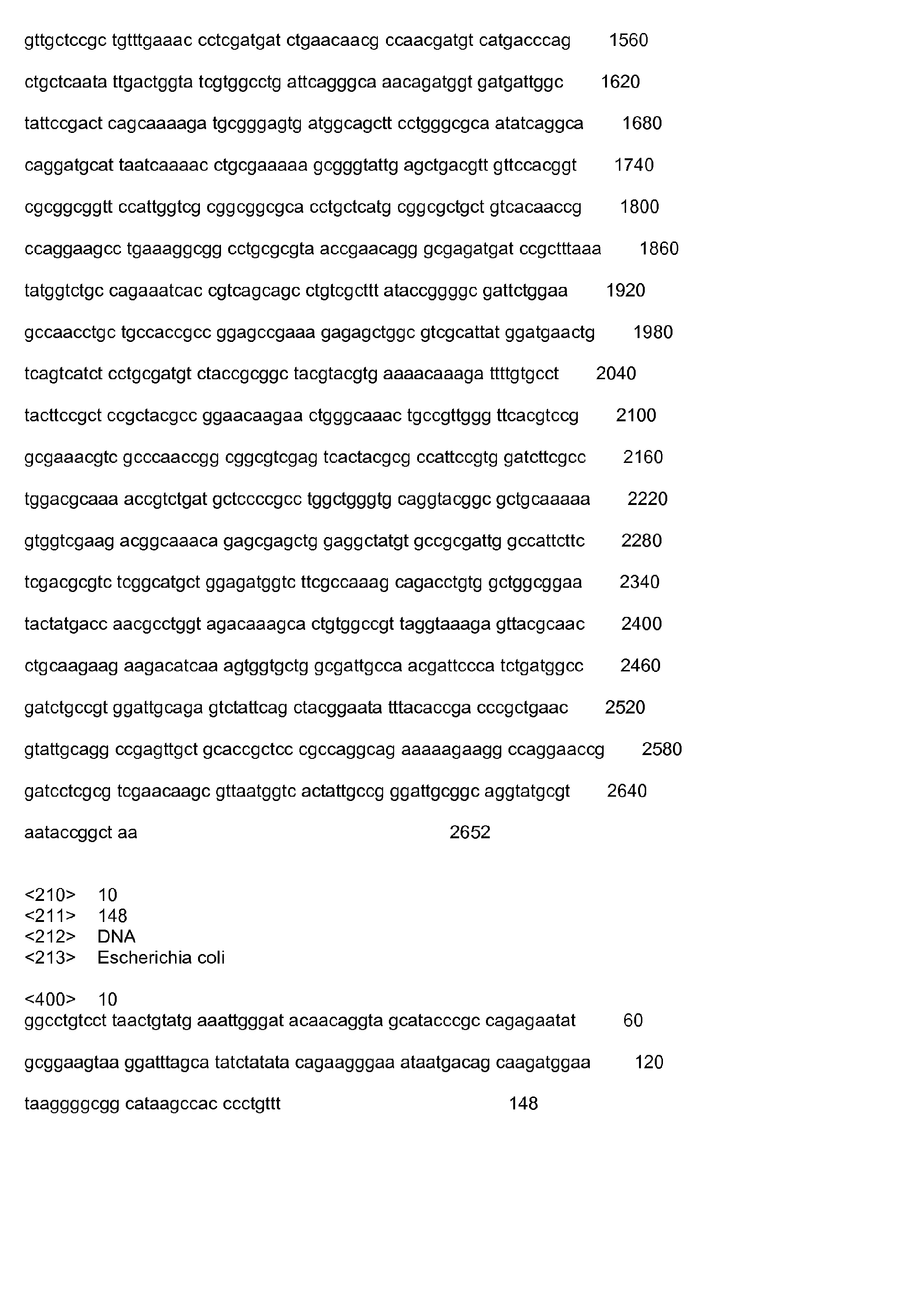
- the promoter of the cysK gene used herein may be derived from a cysK gene with a high expression rate, and may have a nucleotide sequence of SEQ ID NO: 10.
- the present invention also provides a method of producing L-threonine, the method including: culturing a transformed microorganism with enhanced L-threonine productivity in which a promoter of a natural ppc gene on the chromosome is substituted with a promoter of a cysK gene; and isolating L-threonine from the culture of the microorganism.
- the transformed microorganism may be E. coli, for example, E. coli CA030031 (KCCM 10910).
- gDNA genomic DNA
- W3110 E. coli wild type strain
- PCR polymerase chain reaction
- PCR polymerase chain reaction
- the PCR was performed using primers of SEQ ID NOS: 1 and 2 as follows: 30 cycles of denaturation at 94. for 30 seconds, annealing at 55. for 30 seconds and elongation at 72. for 2.5 minutes.
- PCR products were digested with KpnI and EcoRV, electrophoresized on a 0.8% agarose gel, and then eluted to obtain 0.3 Kb DNA fragment (hereinafter, referred to as "PcysK fragment").
- FIG. 1 is a diagram illustrating a process of constructing recombinant vector pUC-PcysK containing a promoter of a cysK gene.
- Plasmid pUC19 (New England Biolabs, USA) and the PcysK fragment obtained according to Example 1-(1) were each digested with restriction enzymes Kpnl and Smal, and ligated with each other to construct vector pUC-PcysK.
- FIG. 2 is a diagram illustrating a process of constructing a recombinant vector pUCpcysKmloxP.
- vector pUCpcysKmloxP having both a mutant loxP-Cm R -loxP cassette and the promoter of the cysK gene.
- the PCR was performed using plasmid pACYC184 (New England Biolab) as a template by using primers of SEQ ID NOS: 3 and 4 as follows: 30 cycles of denaturation at 94. for 30 seconds, annealing at 55 for 30 seconds and elongation at 72 for 1 minute to obtain 1.1 kb of PCR fragment.
- the vector pUC-PcysK constructed according to Example 1-(2) and 1.1 kb of DNA fragment obtained using pACYA184 as a template were each digested with restriction enzymes NdeI/KpnI, ligated with each other, and transformed into E. coli. Then, cell having DNA accurately ligated with the vector were selected using a general method, and plasmid pUCpcysKmloxP was purified from the culture of the cells.
- PCR was performed using the plasmid pUCpcysKmloxP constructed according to Example 1 as a template by using primers of SEQ ID NOS: 5 and 8 as follows: 30 cycles of denaturation at 94 for 30 seconds, annealing at 55 for 30 seconds and elongation at 72 for 1 minute to obtain DNA fragments and the obtained DNA fragments were purified using a QIAGEN kit (PCR Purification kit). Subsequently, PCR was further performed using primers of SEQ ID NOS: 6 and 7 and the purified DNA fragments as a template as follows: 30 cycles of denaturation at 94 for 30 seconds, annealing at 55 for 30 seconds and elongation at 72 for 1 minute.
- the resulting DNA fragments were purified, the purified DNA fragments were introduced by electroporation into E. coli KCCM 10541 into which vector pKD46 was introduced ( Proc. Natl. Acad. Sci. U.S.A. 97(12), 6640-6645(2000 )), and a single colony was selected on a Luria-Bertani (LB) plate containing 15 /mL of chloramphenicol.
- the selected strain was a strain in which the DNA fragment was inserted into a promoter site of a ppc gene.
- Vector pJW168 BMG Biothechnol. 2001;1:7. Epub 2001 Sep. 26 ) was introduced into the selected strain to prepare recombinant E. coli KCCM 10541-PcyK-ppc in which the naive promoter of the ppc gene was substituted with the promoter of the cysK gene, by removing antibiotics-resistance gene.
- the recombinant microorganism prepared according to Example 2 was cultured in a threonine titer medium, as shown in Table 1 below, in an Erlenmeyer flask, and it was confirmed whether the productivity of L-threonine was improved.
- Table 1 Composition Concentration (per liter) Glucose 70 g KH 2 PO 4 2 g (NH 4 ) 2 SO 4 25 g MgSO 4 .7H 2 O 1 g FeSO 4 .7H 2 O 5 mg MnSO 4 .4H 2 O 5 mg DL-methionine 0.15 g Yeast extract 2 g Calcium carbonate 30 g pH 6.8
- E . coli KCCM 10541 As shown in Table 2, when the parent strain E . coli KCCM 10541 was cultured for 48 hours, it produced 29.8 g/L of L-threonine, while the E . coli KCCM 10541-PcysK-ppc of Example 2 produced 34.7 g/L of L-threonine, which has a 4.9 g/L higher productivity than that of the parent strain. Thus, it was confirmed that the recombinant strain in which the promoter of the ppc gene was substituted with the promoter of the cysK gene has enhanced L-threonine productivity.
- the transformed E. coli KCCM 10541-PcysK-ppc was named E .
- KCCM10541 (parent strain) 29.8 KCCM10541-PcysK- ppc 34.7
- the expression of the ppc gene which is an enzyme converting phosphoenolpyruvate to oxaloacetate that is a precursor of L-threonine biosynthesis, increases, thereby significantly enhancing the productivity of L-threonine by 16% or higher.
- the microorganism may produce L-threonine in a high yield, and thus may be widely used in medical, pharmaceutical, and feed industries, particularly for an animal feed.
Landscapes
- Life Sciences & Earth Sciences (AREA)
- Chemical & Material Sciences (AREA)
- Health & Medical Sciences (AREA)
- Organic Chemistry (AREA)
- Engineering & Computer Science (AREA)
- Zoology (AREA)
- Wood Science & Technology (AREA)
- Genetics & Genomics (AREA)
- Bioinformatics & Cheminformatics (AREA)
- Biotechnology (AREA)
- General Engineering & Computer Science (AREA)
- Microbiology (AREA)
- General Health & Medical Sciences (AREA)
- Biochemistry (AREA)
- Biomedical Technology (AREA)
- Molecular Biology (AREA)
- Medicinal Chemistry (AREA)
- Chemical Kinetics & Catalysis (AREA)
- General Chemical & Material Sciences (AREA)
- Physics & Mathematics (AREA)
- Biophysics (AREA)
- Plant Pathology (AREA)
- Cell Biology (AREA)
- Mycology (AREA)
- Preparation Of Compounds By Using Micro-Organisms (AREA)
- Micro-Organisms Or Cultivation Processes Thereof (AREA)
- Saccharide Compounds (AREA)
- Dental Preparations (AREA)
Abstract
Description
- This application claims the benefit of Korean Patent Application No.
10-2008-0002310, filed on January 8, 2008 - One or more embodiments of the present invention relate to an L-threonine-producing Escherichia coli (E. coli) strain with enhanced L-threonine productivity in which a promoter of a phosphoenolpyruvate carboxylase (ppc) gene on the chromosome is substituted with a promoter of a cysteine synthase (cysk) gene, and a method of producing L-threonine using the same.
- L-threonine is an essential amino acid and is widely used as an animal feed additive or food additive, and is also used as a raw material for medical fluid or drug synthesis. While animal protein contains a sufficient amount of L-threonine, vegetable protein is deficient in L-threonine. Thus, L-threonine is likely to be deficient in animals mainly on vegetarian diets, and thus in particular it is widely used as an additive for animal feed.
- L-threonine is produced mainly by a fermentation process using Escherichia coli (E.coli) or Corynebacterium, which is developed by artificial mutagenesis or genetic recombination. To produce L-threonine, a mutant strain derived from a wild-type strain of Escherichia coli (E.coli), Corynebacteria sp., Serratia sp., or Providencia sp is used. Examples of the mutant strain include an amino acid analogue- or drug-resistant mutant strain, and a diaminopimellic acid, a methionine, a lysine, or an isoleucine auxotrophic mutant strain that has also an amino acid analogue- or drug-resistance. Among methods of producing L-threonine using a mutant strain, a method of using a microorganism that belongs to Escherichia coli species, has diaminopimellic acid and methionine auxotroph phenotypes, and is mutated so that biosynthesis of L-threonine is not affected by feedback inhibition of threonine is disclosed in Japanese Patent No.
10037/81 - A fermentation process using a recombinant strain can also be used in production of L-threonine. For example, Japanese Patent Application Publication No.
05-227977 - In general, the expression of a specific gene in a microorganism may be enhanced by increasing the copy number of the gene in the microorganism. For this, a plasmid that gives a greater copy number to a microorganism is used [Sambrook et al., Molecular Cloning, 2th, 1989, 1.3-1.5]. That is, the number of the gene may be increased by as many as the copy number of the plasmid per a single microorganism by inserting a target gene into the plasmid whose copy number may be maintained at a high level and then transforming the microorganism with the obtained recombinant plasmid. Attempts have also been made to enhance the productivity of threonine using this method and a partial success was reported (
U.S. Patent No. 5,538,873 ). However, this technology using a plasmid induces excessive expression of only a specific gene in most cases, thereby imposing a heavy burden on a host microorganism. Furthermore, plasmids may be lost during culturing of a recombinant strain, thereby decreasing plasmid stability. To address these problems of the method of producing threonine by using a recombinant strain into which a plasmid is introduced, addition of an antibiotic into a culture and methods of using a plasmid whose expression is controllable have been developed [Sambrook et al. Molecular Cloning, 2th, 1989, 1.5-1.6, 1.9-1.11]. In the case of using the plasmid whose expression is controllable, to alleviate the burden on a host microorganism and obtain a large amount of cells, during the growth phase, a host microorganism is cultured under conditions where the expression of a target gene on the plasmid does not occur, and after the sufficient growth of the host microorganism, temporary expression of the gene is induced, thereby obtaining a target material. However, methods using plasmids whose expression is controllable can be used only when a final gene product is a protein or a secondary metabolite. In a case where a gene product is a primary metabolite that is produced at the same time when microorganisms begin to grow, expression of a target gene must be induced during the growth phase. Otherwise, it is difficult to anticipate the accumulation of the primary metabolite. Since threonine belongs to a primary metabolite, the latter case is also applied to threonine. - Thus, to enhance the productivity of threonine, which is a primary metabolite, inserting genes involved in threonine biosynthesis into chromosomal DNA of a microorganism is disclosed in
U.S. Patent No. 5,939,307 , instead of using a method of introducing a plasmid with threonine biosynthesis-related genes into a microorganism. Methods of increasing the threonine biosynthesis-related genes and the expression thereof have been diversely developed, but there is still a need for developing a method of more economically producing L-threonine in a high yield. - To increase the production yield of L-threonine, research on a biosynthesis pathway from oxaloacetate to threonine has been intensively conducted. With regards to this, we intended to first induce the flow of carbon along a pathway from phosphoenolpyruvate to oxaloacetate by enhancing the activity of phosphoenolpyruvate carboxylase involved in a step right before the biosynthesis of L-threonine. For this, we studied and found that a microorganism strain capable of producing L-threonine in which a promoter of a phosphoenolpyruvate carboxylase (ppc) gene on the chromosome was substituted with a promoter of a gene encoding cysteine synthase (cysK) so as to increase the expression of a gene encoding ppc, which is a first enzyme in the biosynthesis of L-threonine after glycolysis, produced L-threonine in a high yield, thus completing the present invention.
- One or more embodiments of the present invention provide an Escherichia coli (E. coli) strain capable of producing L-threonine in high yield.
- One or more embodiments of the present invention also provide a method of producing L-threonine using the E. coli strain, whereby L-threonine may be efficiently produced.
- The above and other features and advantages of the present invention will become more apparent by describing in detail exemplary embodiments thereof with reference to the attached drawings in which:
-
FIG. 1 is a diagram illustrating a process of constructing a recombinant vector pUC-PcysK; and -
FIG. 2 is a diagram illustrating a process of constructing a recombinant vector pUCpcysKmloxP. - The present invention provides an L-threonine-producing microorganism in which a promoter of a natural phosphoenolpyruvate carboxylase (ppc) gene on the chromosome is substituted with a promoter of a cysteine synthase (cysK) gene.
- In the L-threonine-producing microorganism, the expression of ppc increases in such a way that a promoter of a gene encoding ppc, which converts phosphoenolpyruvate produced after glycolysis to oxaloacetate, the starting material of L-threonine biosynthesis, is substituted with the promoter of the cysK gene, and the productivity of L-threonine may increase, accordingly.
- The microorganism may include a prokaryotic or eukaryotic cell capable of producing L-threonine in which a promoter of a ppc gene on the chromosome is substituted with a promoter of a cysK gene. For example, the microorganism may be a microorganism strain belonging to Escherichia genus, Erwinia genus, Serratia genus, Providencia genus, Corynebacterium genus, or Brevibacterium genus. In particular, the microorganism may be a microorganism belonging to Enterobacteriaceae family, and more particularly, a microorganism belonging to Escherichia genus. Most particularly, the microorganism may be Escherichia coli CA030031 (KCCM 10910).
- The E. coli CA030031 is derived from E. coli KCCM 10541 which is derived from a L-threonine-producing E. coli, KFCC 10718 (Korean Patent Publication No.
92-8395 - In an embodiment, the microorganism may be E. coli that has a methionine auxotroph phenotype and resistances to a threonine analogue, a lysine analogue, an isoleucine analogue and a methionine analogue. For example, the L-methionine analogue may be at least one compound selected from the group consisting of D,L-methionine, norleucine, α-methylmethionine, and L-methionine-D,L-sulfoximine, the L-threonine analogue may include at least one compound selected from the group consisting of α-amino-β-hydroxy valeric acid and D,L-threonine hydroxamate, and the L-lysine analogue may be at least one compound selected from the group consisting S-(2-aminoethyl)-L-cysteine and δ-methyl-L-lysine. Examples of the mutant microorganism may include a microorganism in which a pckA gene involved in converting oxaloacetate (OAA) into phosphoenol pyruvate (PEP), which is an intermediate involved in the biosynthesis of L-threonine, is inactivated, a microorganism in which a tyrR gene repressing a lysC gene which is involved in conversion of oxaloacetate into aspartate is inactivated, or a microorganism in which a galR gene repressing the expression of a galP gene which is involved in the influx of glucose is inactivated.
- In the microorganism of the present invention, the promoter of the ppc gene on the chromosome is substituted with the promoter of the cysK gene so as to increase the expression thereof. The promoter of the cysK gene used herein may be derived from a cysK gene with a high expression rate, and may have a nucleotide sequence of SEQ ID NO: 10.
- The present invention also provides a method of producing L-threonine, the method including: culturing a transformed microorganism with enhanced L-threonine productivity in which a promoter of a natural ppc gene on the chromosome is substituted with a promoter of a cysK gene; and isolating L-threonine from the culture of the microorganism.
- In the method of producing L-threonine, the transformed microorganism may be E. coli, for example, E. coli CA030031 (KCCM 10910).
- One or more embodiments of the present invention will now be described more fully with reference to the following examples. However, these examples are provided only for illustrative purposes and are not intended to limit the scope of the present invention.
- To obtain 0.3 kb DNA fragment containing a promoter of a cysK gene (SEQ ID NO: 10), the genomic DNA (gDNA) of W3110, which is E. coli wild type strain, was extracted using a QIAGEN Genomic-tip system, and a polymerase chain reaction (PCR) was performed using the gDNA as a template and a PCR HL premix kit (manufactured by BIONEER, Korea). To amplify the promoter of the cysK gene, the PCR was performed using primers of SEQ ID NOS: 1 and 2 as follows: 30 cycles of denaturation at 94. for 30 seconds, annealing at 55. for 30 seconds and elongation at 72. for 2.5 minutes.
- The PCR products were digested with KpnI and EcoRV, electrophoresized on a 0.8% agarose gel, and then eluted to obtain 0.3 Kb DNA fragment (hereinafter, referred to as "PcysK fragment").
-
FIG. 1 is a diagram illustrating a process of constructing recombinant vector pUC-PcysK containing a promoter of a cysK gene. - Plasmid pUC19 (New England Biolabs, USA) and the PcysK fragment obtained according to Example 1-(1) were each digested with restriction enzymes Kpnl and Smal, and ligated with each other to construct vector pUC-PcysK.
-
FIG. 2 is a diagram illustrating a process of constructing a recombinant vector pUCpcysKmloxP. - In general, in an experiment of gene deletion caused by one-step inactivation, whenever one gene is deleted, one sequence of a recombinase recognition site loxP remains on a chromosomal DNA. It has been reported that due to the sequences of loxP remaining on the chromosomal DNA, when the strains are additionally modified for further development, the efficiency may be significantly decreased (Nagy A., Genesis, 26:99, 2000). An improved method of gene deletion using loxP mutants, which are named lox71 and lox 66 has been proposed by Suzuki (Appl. Environ. Microbiol. 71:8472, 2005). Thus, to more efficiently substitute a promoter of a ppc gene on the chromosome with a promoter of a cysK gene by using the loxP mutants, we constructed vector pUCpcysKmloxP having both a mutant loxP-CmR-loxP cassette and the promoter of the cysK gene.
- As shown in
FIG. 2 , the PCR was performed using plasmid pACYC184 (New England Biolab) as a template by using primers of SEQ ID NOS: 3 and 4 as follows: 30 cycles of denaturation at 94. for 30 seconds, annealing at 55 for 30 seconds and elongation at 72 for 1 minute to obtain 1.1 kb of PCR fragment. The vector pUC-PcysK constructed according to Example 1-(2) and 1.1 kb of DNA fragment obtained using pACYA184 as a template were each digested with restriction enzymes NdeI/KpnI, ligated with each other, and transformed into E. coli. Then, cell having DNA accurately ligated with the vector were selected using a general method, and plasmid pUCpcysKmloxP was purified from the culture of the cells. - To substitute a native promoter of a ppc gene (SEQ ID NO: 9) encoding phosphoenolpyruvate carboxylase on the chromosome with a promoter of a cysK gene, a known one-step inactivation method (Warner et al., PNAS, 6;97(12):6640, 2000) was performed on E. coli KCCM 10541.
- First, PCR was performed using the plasmid pUCpcysKmloxP constructed according to Example 1 as a template by using primers of SEQ ID NOS: 5 and 8 as follows: 30 cycles of denaturation at 94 for 30 seconds, annealing at 55 for 30 seconds and elongation at 72 for 1 minute to obtain DNA fragments and the obtained DNA fragments were purified using a QIAGEN kit (PCR Purification kit). Subsequently, PCR was further performed using primers of SEQ ID NOS: 6 and 7 and the purified DNA fragments as a template as follows: 30 cycles of denaturation at 94 for 30 seconds, annealing at 55 for 30 seconds and elongation at 72 for 1 minute. The resulting DNA fragments were purified, the purified DNA fragments were introduced by electroporation into E. coli KCCM 10541 into which vector pKD46 was introduced (Proc. Natl. Acad. Sci. U.S.A. 97(12), 6640-6645(2000)), and a single colony was selected on a Luria-Bertani (LB) plate containing 15 /mL of chloramphenicol. The selected strain was a strain in which the DNA fragment was inserted into a promoter site of a ppc gene. Vector pJW168 (BMG Biothechnol. 2001;1:7. Epub 2001 Sep. 26) was introduced into the selected strain to prepare recombinant E. coli KCCM 10541-PcyK-ppc in which the naive promoter of the ppc gene was substituted with the promoter of the cysK gene, by removing antibiotics-resistance gene.
- The recombinant microorganism prepared according to Example 2 was cultured in a threonine titer medium, as shown in Table 1 below, in an Erlenmeyer flask, and it was confirmed whether the productivity of L-threonine was improved.
Table 1 Composition Concentration (per liter) Glucose 70 g KH2PO4 2 g (NH4)2SO4 25 g MgSO4.7H2O 1 g FeSO4.7H2O 5 mg MnSO4.4H2O 5 mg DL-methionine 0.15 g Yeast extract 2 g Calcium carbonate 30 g pH 6.8 - 1 platinum loop of E. coli KCCM 10541 and E. coli KCCM 10541-PcysK-ppc that were cultured in a LB solid medium in an incubator at 33 overnight were each inoculated in 25 ml of titer medium, as shown in Table 1, and cultured in the incubator at 33 at 200 rpm for 48 hours. The results are shown in Table 2 below.
- As shown in Table 2, when the parent strain E. coli KCCM 10541 was cultured for 48 hours, it produced 29.8 g/L of L-threonine, while the E. coli KCCM 10541-PcysK-ppc of Example 2 produced 34.7 g/L of L-threonine, which has a 4.9 g/L higher productivity than that of the parent strain. Thus, it was confirmed that the recombinant strain in which the promoter of the ppc gene was substituted with the promoter of the cysK gene has enhanced L-threonine productivity. The transformed E. coli KCCM 10541-PcysK-ppc was named E. coli CA030031 and deposited in Korean Culture Center of Microorganisms (KCCM) on December 20, 2007 (Accession No: KCCM 10910).
Table 2 Strain L-threonine (g/L) KCCM10541 (parent strain) 29.8 KCCM10541-PcysK-ppc 34.7 - As described above, according to the present invention, in a microorganism in which a promoter of a ppc gene on the chromosome is substituted with a promoter of a cysK gene, the expression of the ppc gene, which is an enzyme converting phosphoenolpyruvate to oxaloacetate that is a precursor of L-threonine biosynthesis, increases, thereby significantly enhancing the productivity of L-threonine by 16% or higher. The microorganism may produce L-threonine in a high yield, and thus may be widely used in medical, pharmaceutical, and feed industries, particularly for an animal feed.
- While the present invention has been particularly shown and described with reference to exemplary embodiments thereof, it will be understood by those of ordinary skill in the art that various changes in form and details may be made therein without departing from the spirit and scope of the present invention as defined by the following claims.


Claims (4)
- An L-threonine-producing Escherichia coli strain in which a promoter of a phosphoenolpyruvate carboxylase (ppc) gene on the chromosome is substituted with a promoter of a cysteine synthase (cysk) gene.
- The Escherichia coli strain of claim 1, having a methionine auxotroph phenotype, and resistances to a threonine analogue, a lysine analogue, an isoleusine analogue and a methionine analogue.
- The Escherichia coli strain of claim 1, being Escherichia coli CA030031 (Accession No: KCCM 10910).
- A method of producing L-threonine, the method comprising: culturing the Escherichia coli strain according to any one of claims 1 to 3; and isolating L-threonine from the culture of the Escherichia coli strain.
Priority Applications (1)
| Application Number | Priority Date | Filing Date | Title |
|---|---|---|---|
| PL09700769T PL2233570T3 (en) | 2008-01-08 | 2009-01-07 | L-threonine producing escherichia coli and process for producing l-threonine using same |
Applications Claiming Priority (2)
| Application Number | Priority Date | Filing Date | Title |
|---|---|---|---|
| KR1020080002310A KR100966324B1 (en) | 2008-01-08 | 2008-01-08 | Escherichia coli having improved L-threonine production and a method for producing L-threonine using the same |
| PCT/KR2009/000066 WO2009088216A1 (en) | 2008-01-08 | 2009-01-07 | L-threonine producing escherichia coli and process for producing l-threonine using same |
Publications (3)
| Publication Number | Publication Date |
|---|---|
| EP2233570A1 true EP2233570A1 (en) | 2010-09-29 |
| EP2233570A4 EP2233570A4 (en) | 2011-03-02 |
| EP2233570B1 EP2233570B1 (en) | 2015-03-18 |
Family
ID=40853260
Family Applications (1)
| Application Number | Title | Priority Date | Filing Date |
|---|---|---|---|
| EP09700769.4A Active EP2233570B1 (en) | 2008-01-08 | 2009-01-07 | L-threonine producing escherichia coli and process for producing l-threonine using same |
Country Status (8)
| Country | Link |
|---|---|
| US (2) | US8455237B2 (en) |
| EP (1) | EP2233570B1 (en) |
| KR (1) | KR100966324B1 (en) |
| CN (1) | CN101946002B (en) |
| BR (1) | BRPI0925344B1 (en) |
| ES (1) | ES2535732T3 (en) |
| PL (1) | PL2233570T3 (en) |
| WO (1) | WO2009088216A1 (en) |
Cited By (1)
| Publication number | Priority date | Publication date | Assignee | Title |
|---|---|---|---|---|
| US10113191B2 (en) | 2014-03-21 | 2018-10-30 | Cj Cheiljedang Corporation | Microorganisms having enhanced L-amino acids productivity and process for producing L-amino acids using the same |
Families Citing this family (12)
| Publication number | Priority date | Publication date | Assignee | Title |
|---|---|---|---|---|
| CN102304553B (en) * | 2011-09-20 | 2013-09-04 | 中国科学院微生物研究所 | Method for producing L-threonine |
| KR101327093B1 (en) | 2012-01-06 | 2013-11-07 | 씨제이제일제당 (주) | Microorganisms capable of producing L-amino acids and methods of producing L-amino acids using the same |
| KR101555749B1 (en) | 2013-10-23 | 2015-09-25 | 씨제이제일제당 (주) | Microorganisms for production of o-succinyl homoserine and method for production of o-succinyl homoserine using the same |
| KR101555750B1 (en) | 2013-10-23 | 2015-09-25 | 씨제이제일제당 (주) | Microorganisms for production of o-succinyl homoserine and method for production of o-succinyl homoserine using the same |
| WO2016036209A1 (en) * | 2014-09-05 | 2016-03-10 | 씨제이제일제당 주식회사 | Microorganism with improved l-threonine productivity, and method for producing l-threonine by using same |
| KR101804017B1 (en) * | 2015-10-23 | 2017-12-04 | 씨제이제일제당 (주) | Microorganisms having L-threonine productivity and a process for producing L-threonine using the same |
| KR101996767B1 (en) | 2018-11-29 | 2019-07-04 | 씨제이제일제당 (주) | cAMP receptor protein variant and method for producing L-amino acid using the same |
| KR101991207B1 (en) | 2018-11-29 | 2019-06-19 | 씨제이제일제당 (주) | cAMP receptor protein variant and method for producing L-amino acid using the same |
| KR101991206B1 (en) | 2018-11-29 | 2019-06-19 | 씨제이제일제당 (주) | cAMP receptor protein variant and method for producing L-amino acid using the same |
| JP7293406B2 (en) * | 2019-06-14 | 2023-06-19 | シージェイ チェルジェダン コーポレイション | Composition for prevention, treatment or improvement of gastrointestinal disease containing Corynebacterium strain and its culture |
| CN114317389B (en) * | 2021-12-22 | 2023-06-13 | 南京工业大学 | Method for producing L-threonine by co-culture fermentation of recombinant escherichia coli |
| CN115197887B (en) * | 2022-03-15 | 2023-08-25 | 江南大学 | Full-biological synthesis method for producing pimelic acid by utilizing Kleisen condensation reaction |
Family Cites Families (18)
| Publication number | Priority date | Publication date | Assignee | Title |
|---|---|---|---|---|
| JPS5610037B1 (en) | 1969-08-04 | 1981-03-05 | ||
| JPH03501682A (en) * | 1988-10-25 | 1991-04-18 | 味の素株式会社 | Escherichia coli BKIIM strain B-3996 as an L-threonine producer |
| KR920009598B1 (en) | 1990-10-11 | 1992-10-21 | 주식회사삼성전자 | Fastening Mechanism |
| KR920008395Y1 (en) | 1990-10-13 | 1992-11-21 | 주식회사서흥캅셀 | Capsules |
| KR920008365B1 (en) | 1990-12-31 | 1992-09-26 | 제일제당 주식회사 | Method for producing l-threonine |
| JP3239903B2 (en) | 1991-09-20 | 2001-12-17 | 味の素株式会社 | Creation of new L-threonine-producing bacteria by Escherichia coli and method for producing L-threonine thereby |
| US5939307A (en) * | 1996-07-30 | 1999-08-17 | The Archer-Daniels-Midland Company | Strains of Escherichia coli, methods of preparing the same and use thereof in fermentation processes for l-threonine production |
| KR100389580B1 (en) * | 2000-10-12 | 2003-06-25 | 바스프 악티엔게젤샤프트 | E.coli variety producing L-threonine and producing method of L-threonine using thereof |
| EP1686184B1 (en) | 2001-07-11 | 2008-08-27 | Evonik Degussa GmbH | Process for the preparation of L-threonine using strains of the enterobacteriaceae family |
| DE10314618A1 (en) | 2003-04-01 | 2004-10-14 | Degussa Ag | Process for the preparation of L-amino acids using strains of the family Enterobacteriaceae |
| KR100478468B1 (en) * | 2003-09-06 | 2005-03-23 | 씨제이 주식회사 | A method for producing L-threonine |
| RU2275425C2 (en) * | 2003-11-03 | 2006-04-27 | Закрытое акционерное общество "Научно-исследовательский институт Аджиномото-Генетика" (ЗАО АГРИ) | Bacterium belonging to genus escherichia as producer of l-cysteine and method for preparing l-cysteine |
| KR100576342B1 (en) * | 2004-02-05 | 2006-05-03 | 씨제이 주식회사 | L-Threonine-producing microorganisms in which the gαR gene is inactivated, a method for preparing the same, and a method for producing L-Threonine using the microorganisms |
| KR100596372B1 (en) | 2004-12-06 | 2006-07-04 | 씨제이 주식회사 | L-Threonine-producing microorganisms in which the chromosome gene is inactivated on a chromosome, a method for preparing the same, and a method for producing L-Threonine using the microorganism |
| KR100620092B1 (en) * | 2004-12-16 | 2006-09-08 | 씨제이 주식회사 | Novel promoter sequences derived from Corynebacterium spp., Expression cassettes and vectors comprising the same, host cells comprising the vector and methods of expressing genes using the same |
| US7723097B2 (en) * | 2005-03-11 | 2010-05-25 | Archer-Daniels-Midland Company | Escherichia coli strains that over-produce L-threonine and processes for their production |
| KR100768750B1 (en) | 2006-10-18 | 2007-10-19 | 씨제이 주식회사 | 5'-inosinic acid-producing microorganisms having enhanced biotin carboxylase activity and a method of producing 5'-inosine acid using the same |
| WO2008127240A1 (en) | 2007-04-11 | 2008-10-23 | Cargill, Incorporated | Compositions and methods of producing methionine |
-
2008
- 2008-01-08 KR KR1020080002310A patent/KR100966324B1/en active Active
-
2009
- 2009-01-07 CN CN2009801055973A patent/CN101946002B/en active Active
- 2009-01-07 EP EP09700769.4A patent/EP2233570B1/en active Active
- 2009-01-07 US US12/812,203 patent/US8455237B2/en active Active
- 2009-01-07 PL PL09700769T patent/PL2233570T3/en unknown
- 2009-01-07 WO PCT/KR2009/000066 patent/WO2009088216A1/en not_active Ceased
- 2009-01-07 BR BRPI0925344A patent/BRPI0925344B1/en active IP Right Grant
- 2009-01-07 ES ES09700769.4T patent/ES2535732T3/en active Active
-
2012
- 2012-10-23 US US13/658,369 patent/US8486670B2/en active Active
Cited By (2)
| Publication number | Priority date | Publication date | Assignee | Title |
|---|---|---|---|---|
| US10113191B2 (en) | 2014-03-21 | 2018-10-30 | Cj Cheiljedang Corporation | Microorganisms having enhanced L-amino acids productivity and process for producing L-amino acids using the same |
| TWI639698B (en) * | 2014-03-21 | 2018-11-01 | Cj第一製糖股份有限公司 | Microorganisms having enhanced l-amino acids productivity and process for producing l-amino acids using the same |
Also Published As
| Publication number | Publication date |
|---|---|
| BRPI0925344A2 (en) | 2016-07-05 |
| EP2233570A4 (en) | 2011-03-02 |
| PL2233570T3 (en) | 2015-11-30 |
| CN101946002A (en) | 2011-01-12 |
| WO2009088216A1 (en) | 2009-07-16 |
| KR100966324B1 (en) | 2010-06-28 |
| CN101946002B (en) | 2013-05-08 |
| US20110189739A1 (en) | 2011-08-04 |
| BRPI0925344B1 (en) | 2019-01-22 |
| US8486670B2 (en) | 2013-07-16 |
| US8455237B2 (en) | 2013-06-04 |
| EP2233570B1 (en) | 2015-03-18 |
| US20130040347A1 (en) | 2013-02-14 |
| ES2535732T3 (en) | 2015-05-14 |
| KR20090076389A (en) | 2009-07-13 |
Similar Documents
| Publication | Publication Date | Title |
|---|---|---|
| EP2233570B1 (en) | L-threonine producing escherichia coli and process for producing l-threonine using same | |
| US8852898B2 (en) | L-threonine overproducing microorganism and method for preparing L-threonine using the same | |
| EP1687408B1 (en) | Method for producing l-amino acid by fermentation | |
| US7229794B2 (en) | Microorganism producing L-threonine having inactivated galR gene, method of producing the same and method of producing L-threonine using the microorganism | |
| US10053698B2 (en) | Recombinant microorganisms of Escherichia with L-threonine productivity and method of producing L-threonine using the same | |
| KR20090075549A (en) | Escherichia coli having improved L-threonine production and a method for producing L-threonine using the same | |
| US10202609B2 (en) | Microorganisms producing L-amino acids and process for producing L-amino acids using the same | |
| JP4334565B2 (en) | Microorganism in which tdcBC and pckA genes in the chromosome are inactivated, and method for producing L-threonine using the same | |
| JP4383984B2 (en) | Method for producing L-threonine | |
| KR100596372B1 (en) | L-Threonine-producing microorganisms in which the chromosome gene is inactivated on a chromosome, a method for preparing the same, and a method for producing L-Threonine using the microorganism | |
| KR100608085B1 (en) | L-threonine-producing microorganisms in which tyrR gene is inactivated, a method for producing the same, and a method for producing L-threonine using the microorganism | |
| KR100608084B1 (en) | Microorganisms for producing L-threonine, in which the iCcR gene is inactivated, a method for producing the same, and a method for producing L-threonine using the same | |
| CN105431531B (en) | Produce L-threonine microorganism and the method using the micro-organisms L-threonine |
Legal Events
| Date | Code | Title | Description |
|---|---|---|---|
| PUAI | Public reference made under article 153(3) epc to a published international application that has entered the european phase |
Free format text: ORIGINAL CODE: 0009012 |
|
| 17P | Request for examination filed |
Effective date: 20100715 |
|
| AK | Designated contracting states |
Kind code of ref document: A1 Designated state(s): AT BE BG CH CY CZ DE DK EE ES FI FR GB GR HR HU IE IS IT LI LT LU LV MC MK MT NL NO PL PT RO SE SI SK TR |
|
| AX | Request for extension of the european patent |
Extension state: AL BA RS |
|
| RIC1 | Information provided on ipc code assigned before grant |
Ipc: C12N 9/10 20060101ALI20101227BHEP Ipc: C12P 13/08 20060101ALI20101227BHEP Ipc: C12N 15/04 20060101AFI20090806BHEP |
|
| A4 | Supplementary search report drawn up and despatched |
Effective date: 20110128 |
|
| DAX | Request for extension of the european patent (deleted) | ||
| RIC1 | Information provided on ipc code assigned before grant |
Ipc: C12P 13/08 20060101ALI20140908BHEP Ipc: C12N 9/10 20060101ALI20140908BHEP Ipc: C12N 9/88 20060101ALI20140908BHEP Ipc: C12N 15/04 20060101AFI20140908BHEP |
|
| GRAP | Despatch of communication of intention to grant a patent |
Free format text: ORIGINAL CODE: EPIDOSNIGR1 |
|
| INTG | Intention to grant announced |
Effective date: 20141107 |
|
| RAP1 | Party data changed (applicant data changed or rights of an application transferred) |
Owner name: CJ CHEILJEDANG CORPORATION |
|
| GRAS | Grant fee paid |
Free format text: ORIGINAL CODE: EPIDOSNIGR3 |
|
| GRAA | (expected) grant |
Free format text: ORIGINAL CODE: 0009210 |
|
| AK | Designated contracting states |
Kind code of ref document: B1 Designated state(s): AT BE BG CH CY CZ DE DK EE ES FI FR GB GR HR HU IE IS IT LI LT LU LV MC MK MT NL NO PL PT RO SE SI SK TR |
|
| REG | Reference to a national code |
Ref country code: GB Ref legal event code: FG4D |
|
| REG | Reference to a national code |
Ref country code: CH Ref legal event code: EP |
|
| REG | Reference to a national code |
Ref country code: IE Ref legal event code: FG4D |
|
| REG | Reference to a national code |
Ref country code: AT Ref legal event code: REF Ref document number: 716602 Country of ref document: AT Kind code of ref document: T Effective date: 20150415 |
|
| REG | Reference to a national code |
Ref country code: DE Ref legal event code: R096 Ref document number: 602009030025 Country of ref document: DE Effective date: 20150430 |
|
| REG | Reference to a national code |
Ref country code: ES Ref legal event code: FG2A Ref document number: 2535732 Country of ref document: ES Kind code of ref document: T3 Effective date: 20150514 |
|
| REG | Reference to a national code |
Ref country code: NO Ref legal event code: T2 Effective date: 20150318 |
|
| PG25 | Lapsed in a contracting state [announced via postgrant information from national office to epo] |
Ref country code: FI Free format text: LAPSE BECAUSE OF FAILURE TO SUBMIT A TRANSLATION OF THE DESCRIPTION OR TO PAY THE FEE WITHIN THE PRESCRIBED TIME-LIMIT Effective date: 20150318 Ref country code: HR Free format text: LAPSE BECAUSE OF FAILURE TO SUBMIT A TRANSLATION OF THE DESCRIPTION OR TO PAY THE FEE WITHIN THE PRESCRIBED TIME-LIMIT Effective date: 20150318 Ref country code: LT Free format text: LAPSE BECAUSE OF FAILURE TO SUBMIT A TRANSLATION OF THE DESCRIPTION OR TO PAY THE FEE WITHIN THE PRESCRIBED TIME-LIMIT Effective date: 20150318 Ref country code: SE Free format text: LAPSE BECAUSE OF FAILURE TO SUBMIT A TRANSLATION OF THE DESCRIPTION OR TO PAY THE FEE WITHIN THE PRESCRIBED TIME-LIMIT Effective date: 20150318 |
|
| REG | Reference to a national code |
Ref country code: AT Ref legal event code: MK05 Ref document number: 716602 Country of ref document: AT Kind code of ref document: T Effective date: 20150318 |
|
| REG | Reference to a national code |
Ref country code: LT Ref legal event code: MG4D |
|
| PG25 | Lapsed in a contracting state [announced via postgrant information from national office to epo] |
Ref country code: GR Free format text: LAPSE BECAUSE OF FAILURE TO SUBMIT A TRANSLATION OF THE DESCRIPTION OR TO PAY THE FEE WITHIN THE PRESCRIBED TIME-LIMIT Effective date: 20150619 Ref country code: LV Free format text: LAPSE BECAUSE OF FAILURE TO SUBMIT A TRANSLATION OF THE DESCRIPTION OR TO PAY THE FEE WITHIN THE PRESCRIBED TIME-LIMIT Effective date: 20150318 |
|
| PG25 | Lapsed in a contracting state [announced via postgrant information from national office to epo] |
Ref country code: RO Free format text: LAPSE BECAUSE OF FAILURE TO SUBMIT A TRANSLATION OF THE DESCRIPTION OR TO PAY THE FEE WITHIN THE PRESCRIBED TIME-LIMIT Effective date: 20150318 Ref country code: CZ Free format text: LAPSE BECAUSE OF FAILURE TO SUBMIT A TRANSLATION OF THE DESCRIPTION OR TO PAY THE FEE WITHIN THE PRESCRIBED TIME-LIMIT Effective date: 20150318 Ref country code: EE Free format text: LAPSE BECAUSE OF FAILURE TO SUBMIT A TRANSLATION OF THE DESCRIPTION OR TO PAY THE FEE WITHIN THE PRESCRIBED TIME-LIMIT Effective date: 20150318 Ref country code: SK Free format text: LAPSE BECAUSE OF FAILURE TO SUBMIT A TRANSLATION OF THE DESCRIPTION OR TO PAY THE FEE WITHIN THE PRESCRIBED TIME-LIMIT Effective date: 20150318 Ref country code: PT Free format text: LAPSE BECAUSE OF FAILURE TO SUBMIT A TRANSLATION OF THE DESCRIPTION OR TO PAY THE FEE WITHIN THE PRESCRIBED TIME-LIMIT Effective date: 20150720 |
|
| PG25 | Lapsed in a contracting state [announced via postgrant information from national office to epo] |
Ref country code: IS Free format text: LAPSE BECAUSE OF FAILURE TO SUBMIT A TRANSLATION OF THE DESCRIPTION OR TO PAY THE FEE WITHIN THE PRESCRIBED TIME-LIMIT Effective date: 20150718 Ref country code: AT Free format text: LAPSE BECAUSE OF FAILURE TO SUBMIT A TRANSLATION OF THE DESCRIPTION OR TO PAY THE FEE WITHIN THE PRESCRIBED TIME-LIMIT Effective date: 20150318 |
|
| REG | Reference to a national code |
Ref country code: PL Ref legal event code: T3 |
|
| REG | Reference to a national code |
Ref country code: DE Ref legal event code: R097 Ref document number: 602009030025 Country of ref document: DE |
|
| REG | Reference to a national code |
Ref country code: FR Ref legal event code: PLFP Year of fee payment: 8 |
|
| PLBE | No opposition filed within time limit |
Free format text: ORIGINAL CODE: 0009261 |
|
| STAA | Information on the status of an ep patent application or granted ep patent |
Free format text: STATUS: NO OPPOSITION FILED WITHIN TIME LIMIT |
|
| PG25 | Lapsed in a contracting state [announced via postgrant information from national office to epo] |
Ref country code: DK Free format text: LAPSE BECAUSE OF FAILURE TO SUBMIT A TRANSLATION OF THE DESCRIPTION OR TO PAY THE FEE WITHIN THE PRESCRIBED TIME-LIMIT Effective date: 20150318 |
|
| 26N | No opposition filed |
Effective date: 20151221 |
|
| PG25 | Lapsed in a contracting state [announced via postgrant information from national office to epo] |
Ref country code: SI Free format text: LAPSE BECAUSE OF FAILURE TO SUBMIT A TRANSLATION OF THE DESCRIPTION OR TO PAY THE FEE WITHIN THE PRESCRIBED TIME-LIMIT Effective date: 20150318 |
|
| PG25 | Lapsed in a contracting state [announced via postgrant information from national office to epo] |
Ref country code: BE Free format text: LAPSE BECAUSE OF NON-PAYMENT OF DUE FEES Effective date: 20160131 |
|
| PG25 | Lapsed in a contracting state [announced via postgrant information from national office to epo] |
Ref country code: BE Free format text: LAPSE BECAUSE OF FAILURE TO SUBMIT A TRANSLATION OF THE DESCRIPTION OR TO PAY THE FEE WITHIN THE PRESCRIBED TIME-LIMIT Effective date: 20150318 Ref country code: LU Free format text: LAPSE BECAUSE OF FAILURE TO SUBMIT A TRANSLATION OF THE DESCRIPTION OR TO PAY THE FEE WITHIN THE PRESCRIBED TIME-LIMIT Effective date: 20160107 |
|
| REG | Reference to a national code |
Ref country code: CH Ref legal event code: PL |
|
| GBPC | Gb: european patent ceased through non-payment of renewal fee |
Effective date: 20160107 |
|
| PG25 | Lapsed in a contracting state [announced via postgrant information from national office to epo] |
Ref country code: MC Free format text: LAPSE BECAUSE OF FAILURE TO SUBMIT A TRANSLATION OF THE DESCRIPTION OR TO PAY THE FEE WITHIN THE PRESCRIBED TIME-LIMIT Effective date: 20150318 |
|
| PG25 | Lapsed in a contracting state [announced via postgrant information from national office to epo] |
Ref country code: LI Free format text: LAPSE BECAUSE OF NON-PAYMENT OF DUE FEES Effective date: 20160131 Ref country code: CH Free format text: LAPSE BECAUSE OF NON-PAYMENT OF DUE FEES Effective date: 20160131 Ref country code: GB Free format text: LAPSE BECAUSE OF NON-PAYMENT OF DUE FEES Effective date: 20160107 |
|
| REG | Reference to a national code |
Ref country code: IE Ref legal event code: MM4A |
|
| REG | Reference to a national code |
Ref country code: FR Ref legal event code: PLFP Year of fee payment: 9 |
|
| PG25 | Lapsed in a contracting state [announced via postgrant information from national office to epo] |
Ref country code: IE Free format text: LAPSE BECAUSE OF NON-PAYMENT OF DUE FEES Effective date: 20160107 |
|
| PG25 | Lapsed in a contracting state [announced via postgrant information from national office to epo] |
Ref country code: MT Free format text: LAPSE BECAUSE OF FAILURE TO SUBMIT A TRANSLATION OF THE DESCRIPTION OR TO PAY THE FEE WITHIN THE PRESCRIBED TIME-LIMIT Effective date: 20150318 |
|
| REG | Reference to a national code |
Ref country code: FR Ref legal event code: PLFP Year of fee payment: 10 |
|
| PG25 | Lapsed in a contracting state [announced via postgrant information from national office to epo] |
Ref country code: HU Free format text: LAPSE BECAUSE OF FAILURE TO SUBMIT A TRANSLATION OF THE DESCRIPTION OR TO PAY THE FEE WITHIN THE PRESCRIBED TIME-LIMIT; INVALID AB INITIO Effective date: 20090107 Ref country code: CY Free format text: LAPSE BECAUSE OF FAILURE TO SUBMIT A TRANSLATION OF THE DESCRIPTION OR TO PAY THE FEE WITHIN THE PRESCRIBED TIME-LIMIT Effective date: 20150318 |
|
| PG25 | Lapsed in a contracting state [announced via postgrant information from national office to epo] |
Ref country code: MT Free format text: LAPSE BECAUSE OF FAILURE TO SUBMIT A TRANSLATION OF THE DESCRIPTION OR TO PAY THE FEE WITHIN THE PRESCRIBED TIME-LIMIT Effective date: 20160131 Ref country code: MK Free format text: LAPSE BECAUSE OF FAILURE TO SUBMIT A TRANSLATION OF THE DESCRIPTION OR TO PAY THE FEE WITHIN THE PRESCRIBED TIME-LIMIT Effective date: 20150318 |
|
| PG25 | Lapsed in a contracting state [announced via postgrant information from national office to epo] |
Ref country code: BG Free format text: LAPSE BECAUSE OF FAILURE TO SUBMIT A TRANSLATION OF THE DESCRIPTION OR TO PAY THE FEE WITHIN THE PRESCRIBED TIME-LIMIT Effective date: 20150318 |
|
| P01 | Opt-out of the competence of the unified patent court (upc) registered |
Effective date: 20230606 |
|
| PGFP | Annual fee paid to national office [announced via postgrant information from national office to epo] |
Ref country code: NL Payment date: 20251120 Year of fee payment: 18 |
|
| PGFP | Annual fee paid to national office [announced via postgrant information from national office to epo] |
Ref country code: NO Payment date: 20251208 Year of fee payment: 18 |
|
| PGFP | Annual fee paid to national office [announced via postgrant information from national office to epo] |
Ref country code: FR Payment date: 20251125 Year of fee payment: 18 |
|
| PGFP | Annual fee paid to national office [announced via postgrant information from national office to epo] |
Ref country code: PL Payment date: 20251125 Year of fee payment: 18 |
|
| PGFP | Annual fee paid to national office [announced via postgrant information from national office to epo] |
Ref country code: ES Payment date: 20260212 Year of fee payment: 18 |
|
| PGFP | Annual fee paid to national office [announced via postgrant information from national office to epo] |
Ref country code: DE Payment date: 20251120 Year of fee payment: 18 |
|
| PGFP | Annual fee paid to national office [announced via postgrant information from national office to epo] |
Ref country code: IT Payment date: 20251121 Year of fee payment: 18 |
|
| PGFP | Annual fee paid to national office [announced via postgrant information from national office to epo] |
Ref country code: TR Payment date: 20260106 Year of fee payment: 18 |