EP2230108A2 - Continuous force control for dual air spring configuration - Google Patents
Continuous force control for dual air spring configuration Download PDFInfo
- Publication number
- EP2230108A2 EP2230108A2 EP10154795A EP10154795A EP2230108A2 EP 2230108 A2 EP2230108 A2 EP 2230108A2 EP 10154795 A EP10154795 A EP 10154795A EP 10154795 A EP10154795 A EP 10154795A EP 2230108 A2 EP2230108 A2 EP 2230108A2
- Authority
- EP
- European Patent Office
- Prior art keywords
- air
- spring
- piston
- inputs
- airbag
- Prior art date
- Legal status (The legal status is an assumption and is not a legal conclusion. Google has not performed a legal analysis and makes no representation as to the accuracy of the status listed.)
- Withdrawn
Links
- 230000009977 dual effect Effects 0.000 title description 8
- 239000000725 suspension Substances 0.000 claims abstract description 35
- 230000004044 response Effects 0.000 claims abstract description 6
- 230000000712 assembly Effects 0.000 claims description 10
- 238000000429 assembly Methods 0.000 claims description 10
- 238000000034 method Methods 0.000 claims description 7
- 230000001133 acceleration Effects 0.000 claims description 5
- 238000013016 damping Methods 0.000 claims description 4
- 239000006096 absorbing agent Substances 0.000 claims description 2
- 230000035939 shock Effects 0.000 claims description 2
- 230000004913 activation Effects 0.000 claims 3
- 230000004048 modification Effects 0.000 description 2
- 238000012986 modification Methods 0.000 description 2
- 238000005096 rolling process Methods 0.000 description 2
- 230000005540 biological transmission Effects 0.000 description 1
- 230000006835 compression Effects 0.000 description 1
- 238000007906 compression Methods 0.000 description 1
- 230000007423 decrease Effects 0.000 description 1
- 238000010586 diagram Methods 0.000 description 1
- 238000012423 maintenance Methods 0.000 description 1
Images

Classifications
-
- B—PERFORMING OPERATIONS; TRANSPORTING
- B60—VEHICLES IN GENERAL
- B60G—VEHICLE SUSPENSION ARRANGEMENTS
- B60G17/00—Resilient suspensions having means for adjusting the spring or vibration-damper characteristics, for regulating the distance between a supporting surface and a sprung part of vehicle or for locking suspension during use to meet varying vehicular or surface conditions, e.g. due to speed or load
- B60G17/015—Resilient suspensions having means for adjusting the spring or vibration-damper characteristics, for regulating the distance between a supporting surface and a sprung part of vehicle or for locking suspension during use to meet varying vehicular or surface conditions, e.g. due to speed or load the regulating means comprising electric or electronic elements
- B60G17/0152—Resilient suspensions having means for adjusting the spring or vibration-damper characteristics, for regulating the distance between a supporting surface and a sprung part of vehicle or for locking suspension during use to meet varying vehicular or surface conditions, e.g. due to speed or load the regulating means comprising electric or electronic elements characterised by the action on a particular type of suspension unit
- B60G17/0155—Resilient suspensions having means for adjusting the spring or vibration-damper characteristics, for regulating the distance between a supporting surface and a sprung part of vehicle or for locking suspension during use to meet varying vehicular or surface conditions, e.g. due to speed or load the regulating means comprising electric or electronic elements characterised by the action on a particular type of suspension unit pneumatic unit
-
- B—PERFORMING OPERATIONS; TRANSPORTING
- B60—VEHICLES IN GENERAL
- B60G—VEHICLE SUSPENSION ARRANGEMENTS
- B60G17/00—Resilient suspensions having means for adjusting the spring or vibration-damper characteristics, for regulating the distance between a supporting surface and a sprung part of vehicle or for locking suspension during use to meet varying vehicular or surface conditions, e.g. due to speed or load
- B60G17/015—Resilient suspensions having means for adjusting the spring or vibration-damper characteristics, for regulating the distance between a supporting surface and a sprung part of vehicle or for locking suspension during use to meet varying vehicular or surface conditions, e.g. due to speed or load the regulating means comprising electric or electronic elements
- B60G17/016—Resilient suspensions having means for adjusting the spring or vibration-damper characteristics, for regulating the distance between a supporting surface and a sprung part of vehicle or for locking suspension during use to meet varying vehicular or surface conditions, e.g. due to speed or load the regulating means comprising electric or electronic elements characterised by their responsiveness, when the vehicle is travelling, to specific motion, a specific condition, or driver input
-
- B—PERFORMING OPERATIONS; TRANSPORTING
- B60—VEHICLES IN GENERAL
- B60G—VEHICLE SUSPENSION ARRANGEMENTS
- B60G17/00—Resilient suspensions having means for adjusting the spring or vibration-damper characteristics, for regulating the distance between a supporting surface and a sprung part of vehicle or for locking suspension during use to meet varying vehicular or surface conditions, e.g. due to speed or load
- B60G17/02—Spring characteristics, e.g. mechanical springs and mechanical adjusting means
- B60G17/04—Spring characteristics, e.g. mechanical springs and mechanical adjusting means fluid spring characteristics
- B60G17/048—Spring characteristics, e.g. mechanical springs and mechanical adjusting means fluid spring characteristics with the regulating means inside the fluid springs
- B60G17/0485—Spring characteristics, e.g. mechanical springs and mechanical adjusting means fluid spring characteristics with the regulating means inside the fluid springs the springs being pneumatic springs with a flexible wall, e.g. with levelling valves
-
- B—PERFORMING OPERATIONS; TRANSPORTING
- B60—VEHICLES IN GENERAL
- B60G—VEHICLE SUSPENSION ARRANGEMENTS
- B60G17/00—Resilient suspensions having means for adjusting the spring or vibration-damper characteristics, for regulating the distance between a supporting surface and a sprung part of vehicle or for locking suspension during use to meet varying vehicular or surface conditions, e.g. due to speed or load
- B60G17/02—Spring characteristics, e.g. mechanical springs and mechanical adjusting means
- B60G17/04—Spring characteristics, e.g. mechanical springs and mechanical adjusting means fluid spring characteristics
- B60G17/052—Pneumatic spring characteristics
- B60G17/0521—Pneumatic spring characteristics the spring having a flexible wall
-
- F—MECHANICAL ENGINEERING; LIGHTING; HEATING; WEAPONS; BLASTING
- F16—ENGINEERING ELEMENTS AND UNITS; GENERAL MEASURES FOR PRODUCING AND MAINTAINING EFFECTIVE FUNCTIONING OF MACHINES OR INSTALLATIONS; THERMAL INSULATION IN GENERAL
- F16F—SPRINGS; SHOCK-ABSORBERS; MEANS FOR DAMPING VIBRATION
- F16F9/00—Springs, vibration-dampers, shock-absorbers, or similarly-constructed movement-dampers using a fluid or the equivalent as damping medium
- F16F9/02—Springs, vibration-dampers, shock-absorbers, or similarly-constructed movement-dampers using a fluid or the equivalent as damping medium using gas only or vacuum
- F16F9/04—Springs, vibration-dampers, shock-absorbers, or similarly-constructed movement-dampers using a fluid or the equivalent as damping medium using gas only or vacuum in a chamber with a flexible wall
- F16F9/05—Springs, vibration-dampers, shock-absorbers, or similarly-constructed movement-dampers using a fluid or the equivalent as damping medium using gas only or vacuum in a chamber with a flexible wall the flexible wall being of the rolling diaphragm type
- F16F9/057—Springs, vibration-dampers, shock-absorbers, or similarly-constructed movement-dampers using a fluid or the equivalent as damping medium using gas only or vacuum in a chamber with a flexible wall the flexible wall being of the rolling diaphragm type characterised by the piston
-
- B—PERFORMING OPERATIONS; TRANSPORTING
- B60—VEHICLES IN GENERAL
- B60G—VEHICLE SUSPENSION ARRANGEMENTS
- B60G2202/00—Indexing codes relating to the type of spring, damper or actuator
- B60G2202/10—Type of spring
- B60G2202/15—Fluid spring
- B60G2202/152—Pneumatic spring
-
- B—PERFORMING OPERATIONS; TRANSPORTING
- B60—VEHICLES IN GENERAL
- B60G—VEHICLE SUSPENSION ARRANGEMENTS
- B60G2202/00—Indexing codes relating to the type of spring, damper or actuator
- B60G2202/30—Spring/Damper and/or actuator Units
- B60G2202/31—Spring/Damper and/or actuator Units with the spring arranged around the damper, e.g. MacPherson strut
- B60G2202/314—The spring being a pneumatic spring
-
- B—PERFORMING OPERATIONS; TRANSPORTING
- B60—VEHICLES IN GENERAL
- B60G—VEHICLE SUSPENSION ARRANGEMENTS
- B60G2202/00—Indexing codes relating to the type of spring, damper or actuator
- B60G2202/40—Type of actuator
- B60G2202/41—Fluid actuator
- B60G2202/412—Pneumatic actuator
-
- B—PERFORMING OPERATIONS; TRANSPORTING
- B60—VEHICLES IN GENERAL
- B60G—VEHICLE SUSPENSION ARRANGEMENTS
- B60G2400/00—Indexing codes relating to detected, measured or calculated conditions or factors
- B60G2400/05—Attitude
- B60G2400/052—Angular rate
- B60G2400/0523—Yaw rate
-
- B—PERFORMING OPERATIONS; TRANSPORTING
- B60—VEHICLES IN GENERAL
- B60G—VEHICLE SUSPENSION ARRANGEMENTS
- B60G2400/00—Indexing codes relating to detected, measured or calculated conditions or factors
- B60G2400/10—Acceleration; Deceleration
- B60G2400/104—Acceleration; Deceleration lateral or transversal with regard to vehicle
-
- B—PERFORMING OPERATIONS; TRANSPORTING
- B60—VEHICLES IN GENERAL
- B60G—VEHICLE SUSPENSION ARRANGEMENTS
- B60G2400/00—Indexing codes relating to detected, measured or calculated conditions or factors
- B60G2400/20—Speed
- B60G2400/208—Speed of wheel rotation
-
- B—PERFORMING OPERATIONS; TRANSPORTING
- B60—VEHICLES IN GENERAL
- B60G—VEHICLE SUSPENSION ARRANGEMENTS
- B60G2400/00—Indexing codes relating to detected, measured or calculated conditions or factors
- B60G2400/30—Propulsion unit conditions
- B60G2400/33—Throttle position
-
- B—PERFORMING OPERATIONS; TRANSPORTING
- B60—VEHICLES IN GENERAL
- B60G—VEHICLE SUSPENSION ARRANGEMENTS
- B60G2400/00—Indexing codes relating to detected, measured or calculated conditions or factors
- B60G2400/30—Propulsion unit conditions
- B60G2400/34—Accelerator pedal position
-
- B—PERFORMING OPERATIONS; TRANSPORTING
- B60—VEHICLES IN GENERAL
- B60G—VEHICLE SUSPENSION ARRANGEMENTS
- B60G2400/00—Indexing codes relating to detected, measured or calculated conditions or factors
- B60G2400/30—Propulsion unit conditions
- B60G2400/39—Brake pedal position
-
- B—PERFORMING OPERATIONS; TRANSPORTING
- B60—VEHICLES IN GENERAL
- B60G—VEHICLE SUSPENSION ARRANGEMENTS
- B60G2400/00—Indexing codes relating to detected, measured or calculated conditions or factors
- B60G2400/40—Steering conditions
- B60G2400/41—Steering angle
-
- B—PERFORMING OPERATIONS; TRANSPORTING
- B60—VEHICLES IN GENERAL
- B60G—VEHICLE SUSPENSION ARRANGEMENTS
- B60G2400/00—Indexing codes relating to detected, measured or calculated conditions or factors
- B60G2400/50—Pressure
-
- B—PERFORMING OPERATIONS; TRANSPORTING
- B60—VEHICLES IN GENERAL
- B60G—VEHICLE SUSPENSION ARRANGEMENTS
- B60G2400/00—Indexing codes relating to detected, measured or calculated conditions or factors
- B60G2400/50—Pressure
- B60G2400/51—Pressure in suspension unit
-
- B—PERFORMING OPERATIONS; TRANSPORTING
- B60—VEHICLES IN GENERAL
- B60G—VEHICLE SUSPENSION ARRANGEMENTS
- B60G2400/00—Indexing codes relating to detected, measured or calculated conditions or factors
- B60G2400/50—Pressure
- B60G2400/51—Pressure in suspension unit
- B60G2400/512—Pressure in suspension unit in spring
- B60G2400/5122—Fluid spring
- B60G2400/51222—Pneumatic
-
- B—PERFORMING OPERATIONS; TRANSPORTING
- B60—VEHICLES IN GENERAL
- B60G—VEHICLE SUSPENSION ARRANGEMENTS
- B60G2500/00—Indexing codes relating to the regulated action or device
- B60G2500/20—Spring action or springs
- B60G2500/202—Height or leveling valve for air-springs
-
- B—PERFORMING OPERATIONS; TRANSPORTING
- B60—VEHICLES IN GENERAL
- B60G—VEHICLE SUSPENSION ARRANGEMENTS
- B60G2500/00—Indexing codes relating to the regulated action or device
- B60G2500/20—Spring action or springs
- B60G2500/204—Pressure regulating valves for air-springs
-
- B—PERFORMING OPERATIONS; TRANSPORTING
- B60—VEHICLES IN GENERAL
- B60G—VEHICLE SUSPENSION ARRANGEMENTS
- B60G2500/00—Indexing codes relating to the regulated action or device
- B60G2500/20—Spring action or springs
- B60G2500/204—Pressure regulating valves for air-springs
- B60G2500/2041—Pressure regulating valves for air-springs for variable volume air springs, e.g. using accumulators as expansion chambers
-
- B—PERFORMING OPERATIONS; TRANSPORTING
- B60—VEHICLES IN GENERAL
- B60G—VEHICLE SUSPENSION ARRANGEMENTS
- B60G2500/00—Indexing codes relating to the regulated action or device
- B60G2500/20—Spring action or springs
- B60G2500/22—Spring constant
-
- B—PERFORMING OPERATIONS; TRANSPORTING
- B60—VEHICLES IN GENERAL
- B60G—VEHICLE SUSPENSION ARRANGEMENTS
- B60G2600/00—Indexing codes relating to particular elements, systems or processes used on suspension systems or suspension control systems
- B60G2600/18—Automatic control means
-
- B—PERFORMING OPERATIONS; TRANSPORTING
- B60—VEHICLES IN GENERAL
- B60G—VEHICLE SUSPENSION ARRANGEMENTS
- B60G2600/00—Indexing codes relating to particular elements, systems or processes used on suspension systems or suspension control systems
- B60G2600/20—Manual control or setting means
-
- B—PERFORMING OPERATIONS; TRANSPORTING
- B60—VEHICLES IN GENERAL
- B60G—VEHICLE SUSPENSION ARRANGEMENTS
- B60G2800/00—Indexing codes relating to the type of movement or to the condition of the vehicle and to the end result to be achieved by the control action
- B60G2800/01—Attitude or posture control
- B60G2800/012—Rolling condition
-
- B—PERFORMING OPERATIONS; TRANSPORTING
- B60—VEHICLES IN GENERAL
- B60G—VEHICLE SUSPENSION ARRANGEMENTS
- B60G2800/00—Indexing codes relating to the type of movement or to the condition of the vehicle and to the end result to be achieved by the control action
- B60G2800/01—Attitude or posture control
- B60G2800/012—Rolling condition
- B60G2800/0122—Roll rigidity ratio; Warping
-
- B—PERFORMING OPERATIONS; TRANSPORTING
- B60—VEHICLES IN GENERAL
- B60G—VEHICLE SUSPENSION ARRANGEMENTS
- B60G2800/00—Indexing codes relating to the type of movement or to the condition of the vehicle and to the end result to be achieved by the control action
- B60G2800/01—Attitude or posture control
- B60G2800/014—Pitch; Nose dive
-
- B—PERFORMING OPERATIONS; TRANSPORTING
- B60—VEHICLES IN GENERAL
- B60G—VEHICLE SUSPENSION ARRANGEMENTS
- B60G2800/00—Indexing codes relating to the type of movement or to the condition of the vehicle and to the end result to be achieved by the control action
- B60G2800/16—Running
- B60G2800/162—Reducing road induced vibrations
-
- B—PERFORMING OPERATIONS; TRANSPORTING
- B60—VEHICLES IN GENERAL
- B60G—VEHICLE SUSPENSION ARRANGEMENTS
- B60G2800/00—Indexing codes relating to the type of movement or to the condition of the vehicle and to the end result to be achieved by the control action
- B60G2800/16—Running
- B60G2800/164—Heaving; Squatting
-
- B—PERFORMING OPERATIONS; TRANSPORTING
- B60—VEHICLES IN GENERAL
- B60G—VEHICLE SUSPENSION ARRANGEMENTS
- B60G2800/00—Indexing codes relating to the type of movement or to the condition of the vehicle and to the end result to be achieved by the control action
- B60G2800/90—System Controller type
- B60G2800/91—Suspension Control
Definitions
- This invention generally relates to an active air suspension system with a variable force and rate dual air spring that utilizes a plurality of vehicle inputs to generate normalized force requests for vehicle behavior modification purposes.
- Air suspensions utilize air springs to provide desired output characteristics, such as ride comfort and vehicle performance for example.
- One known active air suspension uses an air spring assembly that includes a primary airbag mounted around a piston airbag such that the piston airbag provides a rolling surface for the primary airbag.
- a change in piston airbag volume changes an effective piston area of the primary airbag.
- a relatively small change in the effective piston area provides a change in a spring rate of the air spring assembly.
- the pressures in the piston airbag and the primary airbag are selectively controlled to provide infinite variation in spring rates without requiring any auxiliary tanks and associated actuators.
- the smaller volume of the piston airbag relative to the larger volume of the primary airbag permits rapid pressure and volume changes to enable active suspension control.
- active air suspension systems have made gross discrete changes in suspension spring stiffness through switchable air spring volumes.
- the active air suspension with a dual air spring configuration described above is a force and a spring stiffness adjusting device.
- One problem with such a system is that it is difficult to actively control and adjust spring forces in an accurate manner.
- An active air suspension system with a variable force and rate dual air spring is configured to analyze a plurality of vehicle inputs and to generate output control signals to vary and control spring forces in an accurate manner.
- the active air suspension system includes an air spring assembly that has a piston airbag and a primary airbag mounted around the piston airbag to provide the variable force and rate dual air spring configuration.
- the air suspension system is configured to accurately control pressure within the piston and primary airbags to achieve an overall desired performance criteria.
- the system is a force controlling device when the vehicle is in a dynamic maneuver.
- the system When the vehicle is in a quasi-static state the system operates as a spring-rate changing device.
- weight transfer of the vehicle requires an opposing force to modify the rate of change of weight transfer thereby change the vehicle character.
- the opposing force is provided by the active control of the device.
- At least one air spring assembly comprises a plurality of air spring assemblies each having one primary airbag and one associated piston airbag
- the valve assembly comprises a separate valve assembly for each air spring assembly
- at least one pressure sensor comprises a plurality of pressure sensors with one pressure sensor being associated with each piston airbag.
- the controller generates a plurality of control signals to control air supply into and out of each piston airbag independently of all other piston airbags.
- FIG. 1 illustrates an air suspension system 10 for a vehicle.
- the air suspension system 10 generally includes a bracket 12, a longitudinal member 14, an air spring assembly 16, a damper 18, and an axle assembly 20.
- the air suspension system 10 is fixed to a frame or chassis of the vehicle (shown schematically at 22).
- the longitudinal member 14 could comprise a suspension arm, for example, and the axle assembly 20 could comprise any type of axle, such as a drive axle, non-drive axle, trailer axle, etc.
- the axle assembly 20 extends between laterally spaced wheels (not shown). It should be understood that the air suspension system 10 includes a longitudinal member 14, an air spring assembly 16, and a damper 18 at each lateral end of the axle.
- the air spring assembly 16 is illustrated in cross-section.
- the air spring assembly 16 is defined along a central vertical axis A and includes a lower mount 24 (illustrated schematically), a piston structure or support 26 attached to the lower mount 24, a piston airbag 28, and a primary airbag 30.
- An upper mount 32 is attached to the primary airbag 30.
- the upper 32 and lower 24 mounts provide attachment for the air spring assembly 16 between the longitudinal member 14 and chassis 22 (see Figure 1 ).
- the piston support 26 is a cylindrical member defined about the axis A. At the lower mount 24 the piston support 26 can be attached to many different structures such as a strut, damper, or other similar mechanism, for example. In one example, the piston support 26 is attached to the lower mount 24 at welds W; however other attachment methods could also be used.
- the piston support 26 and the lower mount 24 are relatively rigid components.
- the piston airbag 28 is a flexile, resilient member and is attached to the piston support 26 through a first band 36 and a second band 38.
- the first band 36 is secured at a lower end of the piston support 26 and the second band 38 is secured at an upper or opposite end of the piston support 26. While bands are shown, it should be understood that other attachment structures and/or methods could be used to secure the piston airbag 28 to the piston support 26.
- the piston airbag 28 defines a first volume V1 that is enclosed vertically between the bands 36, 38 and between an inner surface of the piston airbag 28 and an outer surface of the piston support 26.
- the primary airbag 30 is mounted to the piston air bag 28 through a third band 42 which is spaced radially outwardly relative to the second band 38 with the primary airbag 30 being located between the second 28 and third 42 bands. In other words, the primary airbag 30 is sandwiched between the third band 42 and the second band 38.
- the primary airbag 30 defines a second volume V2. It should be understood that while two volumes V1, and V2 are disclosed in the illustrated embodiment, additional volumes could also be utilized within the spring assembly 16 as needed. Further, any of these volumes may be selectively segmented to provide further incremental volume changes.
- An air supply system 40 (illustrated schematically in Figure 2 ) communicates air independently into the volumes V1, V2 through a first and a second supply conduits 44a, 44b respectively in response to a controller 46 (illustrated schematically).
- the controller 46 is a suspension controller that provides active suspension control methodology. Ports 48 through the piston support 26 supply air into the first volume V1.
- the piston airbag 28 operates as a rolloff piston surface for the primary airbag 30.
- the primary airbag 30 provides a rolling lobe L over a piston assembly having a variable diameter provided by the variable volume of the piston airbag 28.
- the lobe L of the primary airbag 30 rolls along the outer surface of the piston airbag 28.
- a change in the piston airbag 28 volume V1 thereby changes the effective piston area of the primary airbag 30.
- the primary airbag 30 will exert a pressure P2 against the piston airbag 28, tending to reduce the outer diameter of the piston airbag 28 until an equilibrium diameter is reached. Therefore a change in pressure P1 will change the radial spring rate of the piston airbag 28 and change the equilibrium diameter also affecting the primary airbag spring rate.
- a relatively small change in volume V1 provides a change in the spring rate of the primary airbag 30 as the diameter of the rolloff surface is selectively modified.
- a change in the pressure within the volume V1 couples a change in spring rate with a change in ride height when the pressure within volume V2 is maintained.
- the compression and rebound rates may alternatively be decoupled by simultaneously changing the volume of both V1 and V2.
- volume V1 and V2 By selectively controlling the pressure within volumes V1 and V2, infinite variation in spring rates are provided without an auxiliary tank and associated actuators.
- the relatively smaller volume of volume V1 relative to volume V2 permits rapid pressure and volume changes which enables active suspension control.
- each air spring assembly 16 is associated with one damper 50.
- the damper 50 comprises an electrically controlled shock absorber.
- the controller 46 generates control signals to vary a damper characteristic, such as damping ratio for example, as needed to achieve a desired handling/comfort level.
- An outer structure of the damper 50 is attached to the lower mount 24 of the air spring assembly 16.
- the controller 46 is configured to use the variable force and rate dual air spring configuration in combination with the damper to provide a real-time control of modulation of spring stiffness to improve vehicle handling and/or ride comfort.
- driver inputs 60 there are a plurality of driver inputs 60 to the vehicle 52, which are communicated to the controller 46.
- Examples of such inputs include hand wheel angle inputs, steered wheel angle (SWA) inputs, steered wheel inputs, throttle inputs, brake pedal and pressure inputs, transmission mode selection, etc.
- a plurality of vehicle inputs 62 are also communicated to the controller 46. Examples of these inputs include vehicle roll angle, roll rate, yaw rate, various directional accelerations, wheel speeds etc.
- the controller 46 can also receive various inputs that are associated with the air spring assemblies 16. Examples of these inputs include damper inputs, suspension position (ride height), air supply reservoir pressure, pressure within the airbags 28, 30, flow valve dynamics, etc.
- Various sensors S1-Sn are incorporated into the vehicle system such that each of these inputs can either be directly measured or estimated based on related input data.
- the controller 46 uses these inputs to control various dynamics of the vehicle 52. For example, the controller 46 uses these inputs to control vehicle lateral dynamics (such as roll angle and yaw rate for example), longitudinal dynamics (dive and squat for example), and vertical dynamics (maintenance of a flat ride for example).
- the controller 46 accomplishes this by generating control signals 64 that are communicated to the variable force and rate dual air spring assemblies 16 that are located at each vehicle wheel.
- the controller 46 determines a desired spring force for each of these air spring assemblies 16 and then controls air flow into and out of the air spring assemblies 16 to achieve the desired spring force. When the desired spring forces are achieved at each air spring assembly 16, the appropriate vehicle behavior is provided at each wheel.
- the controller 46 can also utilize data that is stored in memory such as look-up tables, specific vehicle application data, and past vehicle performance data for example.
- the controller takes the inputs such as hand wheel angle, steered wheel angle, yaw rate, lateral acceleration, wheel speeds, brake pedal switch activated, and brake pressure to determine and generate the control signal 64 for each air spring assembly 16.
- the various inputs to the controller 46 are communicated in a continuous manner such that a closed feedback loop configuration is provided.
- the controller 46 analyzes the various inputs to determine the appropriate spring rate/force to achieve the desired vehicle behavior (handling/ride comfort levels).
- the controller 46 further analyzes the various inputs to determine whether or not pressure within the primary 30 and/or piston 28 airbags needs to be adjusted to achieve this desired spring rate/force.
- valve assembly 70 associated with the air spring assembly 16.
- the valve assembly 70 can include separate valves for filling/inflating the airbags and deflating/exhausting the airbags or combinations of valves could be used.
- the valve assemblies 70 are open/closed as needed to achieve the pressure needed to provide the desired spring force/rate.
- the controller 46 continuously compiles and analyzes various data inputs to continuously adjust pressure within the air spring assemblies 16 in a closed loop manner.
- the controller 46 makes a determination if further adjustment/compensation is needed and generates control signals that are communicated to the appropriate valve assemblies 70.
- controller 46 could comprise a single vehicle controller that controls all vehicle systems, or the controller 46 could be comprised of several controllers and control modules that are linked together to transfer and communicate various data inputs and outputs as needed. Further, one of ordinary skill in the art would be able to determine a software algorithm to accomplish the steps set forth above.
- Closed loop control of the active air suspension provides an easily maintainable and accurate control for vehicle pitch, yaw, and roll.
- the closed loop configuration provides a real-time control that significantly increases system accuracy. This in turn provides improved handling and ride control for the vehicle.
Landscapes
- Engineering & Computer Science (AREA)
- Mechanical Engineering (AREA)
- General Engineering & Computer Science (AREA)
- Vehicle Body Suspensions (AREA)
- Vibration Prevention Devices (AREA)
- Fluid-Damping Devices (AREA)
Abstract
at least one air spring assembly including a piston airbag and a primary air bag mounted around said piston airbag; a plurality of sensors that measure a plurality of vehicle characteristics, said sensors generating a plurality of sensor signals;
a valve assembly that controls air supply into and out of said air spring assembly; and
a controller receives said sensor signals as inputs, analyzes said inputs to determine an appropriate spring output characteristic for said air spring assembly that corresponds to a desired vehicle behavior, and generates an output signal to modify pressure within said air spring assembly to achieve said spring output characteristic. The controller continuously receives sensor signals as inputs, analyzes the inputs to identify system changes, and continuously and actively adjusts pressure within said air spring assembly in response to identified system changes to maintain said desired spring rate/force in a closed-loop manner.
Description
- This invention generally relates to an active air suspension system with a variable force and rate dual air spring that utilizes a plurality of vehicle inputs to generate normalized force requests for vehicle behavior modification purposes.
- Air suspensions utilize air springs to provide desired output characteristics, such as ride comfort and vehicle performance for example. One known active air suspension uses an air spring assembly that includes a primary airbag mounted around a piston airbag such that the piston airbag provides a rolling surface for the primary airbag. A change in piston airbag volume changes an effective piston area of the primary airbag. A relatively small change in the effective piston area provides a change in a spring rate of the air spring assembly. The pressures in the piston airbag and the primary airbag are selectively controlled to provide infinite variation in spring rates without requiring any auxiliary tanks and associated actuators. The smaller volume of the piston airbag relative to the larger volume of the primary airbag permits rapid pressure and volume changes to enable active suspension control.
- Traditionally, active air suspension systems have made gross discrete changes in suspension spring stiffness through switchable air spring volumes. The active air suspension with a dual air spring configuration described above is a force and a spring stiffness adjusting device. One problem with such a system is that it is difficult to actively control and adjust spring forces in an accurate manner.
- An active air suspension system with a variable force and rate dual air spring is configured to analyze a plurality of vehicle inputs and to generate output control signals to vary and control spring forces in an accurate manner.
- In one example, the active air suspension system includes an air spring assembly that has a piston airbag and a primary airbag mounted around the piston airbag to provide the variable force and rate dual air spring configuration. The air suspension system is configured to accurately control pressure within the piston and primary airbags to achieve an overall desired performance criteria.
- In one example, the system is a force controlling device when the vehicle is in a dynamic maneuver. When the vehicle is in a quasi-static state the system operates as a spring-rate changing device. When the vehicle is in a dynamic situation, such as executing a turning maneuver or a drive-off event, weight transfer of the vehicle requires an opposing force to modify the rate of change of weight transfer thereby change the vehicle character. The opposing force is provided by the active control of the device.
- In one configuration, at least one air spring assembly comprises a plurality of air spring assemblies each having one primary airbag and one associated piston airbag, the valve assembly comprises a separate valve assembly for each air spring assembly, and at least one pressure sensor comprises a plurality of pressure sensors with one pressure sensor being associated with each piston airbag. The controller continuously receives pressure input signals from each of the pressure sensors indicating specific pressure changes within the associated piston airbag. The controller then actively adjusts pressure within each of the piston airbags in response to the pressure changes to maintain the desired spring stiffness in a closed-loop manner.
- In one example, the controller generates a plurality of control signals to control air supply into and out of each piston airbag independently of all other piston airbags.
- These and other features of the present invention can be best understood from the following specification and drawings, the following of which is a brief description.
-
-
Figure 1 is a general side view of one example of an active air suspension as installed on a vehicle. -
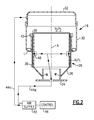
Figure 2 is a sectional view of an air spring assembly as used in the active air suspension ofFigure 1 . -
Figure 3 is a sectional view of the air spring in a first position. -
Figure 4 is a sectional view of the air spring in a second position. -
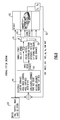
Figure 5 is a diagram showing an overall system incorporating variable force and rate dual air springs for a vehicle. -
Figure 1 illustrates anair suspension system 10 for a vehicle. Theair suspension system 10 generally includes abracket 12, alongitudinal member 14, anair spring assembly 16, adamper 18, and anaxle assembly 20. Theair suspension system 10 is fixed to a frame or chassis of the vehicle (shown schematically at 22). Thelongitudinal member 14 could comprise a suspension arm, for example, and theaxle assembly 20 could comprise any type of axle, such as a drive axle, non-drive axle, trailer axle, etc. Theaxle assembly 20 extends between laterally spaced wheels (not shown). It should be understood that theair suspension system 10 includes alongitudinal member 14, anair spring assembly 16, and adamper 18 at each lateral end of the axle. - Referring to
Figure 2 , theair spring assembly 16 is illustrated in cross-section. Theair spring assembly 16 is defined along a central vertical axis A and includes a lower mount 24 (illustrated schematically), a piston structure orsupport 26 attached to thelower mount 24, apiston airbag 28, and aprimary airbag 30. Anupper mount 32 is attached to theprimary airbag 30. The upper 32 and lower 24 mounts provide attachment for theair spring assembly 16 between thelongitudinal member 14 and chassis 22 (seeFigure 1 ). - The
piston support 26 is a cylindrical member defined about the axis A. At thelower mount 24 thepiston support 26 can be attached to many different structures such as a strut, damper, or other similar mechanism, for example. In one example, thepiston support 26 is attached to thelower mount 24 at welds W; however other attachment methods could also be used. The piston support 26 and thelower mount 24 are relatively rigid components. - The
piston airbag 28 is a flexile, resilient member and is attached to thepiston support 26 through afirst band 36 and asecond band 38. Thefirst band 36 is secured at a lower end of thepiston support 26 and thesecond band 38 is secured at an upper or opposite end of thepiston support 26. While bands are shown, it should be understood that other attachment structures and/or methods could be used to secure thepiston airbag 28 to thepiston support 26. Thepiston airbag 28 defines a first volume V1 that is enclosed vertically between thebands piston airbag 28 and an outer surface of thepiston support 26. - The
primary airbag 30 is mounted to thepiston air bag 28 through athird band 42 which is spaced radially outwardly relative to thesecond band 38 with theprimary airbag 30 being located between the second 28 and third 42 bands. In other words, theprimary airbag 30 is sandwiched between thethird band 42 and thesecond band 38. Theprimary airbag 30 defines a second volume V2. It should be understood that while two volumes V1, and V2 are disclosed in the illustrated embodiment, additional volumes could also be utilized within thespring assembly 16 as needed. Further, any of these volumes may be selectively segmented to provide further incremental volume changes. - An air supply system 40 (illustrated schematically in
Figure 2 ) communicates air independently into the volumes V1, V2 through a first and asecond supply conduits 44a, 44b respectively in response to a controller 46 (illustrated schematically). Thecontroller 46 is a suspension controller that provides active suspension control methodology.Ports 48 through the piston support 26 supply air into the first volume V1. - The
piston airbag 28 operates as a rolloff piston surface for theprimary airbag 30. In other words, theprimary airbag 30 provides a rolling lobe L over a piston assembly having a variable diameter provided by the variable volume of thepiston airbag 28. As theair spring assembly 16 experiences road load inputs, the lobe L of theprimary airbag 30 rolls along the outer surface of thepiston airbag 28. By changing the volume V1 or pressure P1 within thepiston airbag 28 the outer diameter of thepiston airbag 28 changes. A change in thepiston airbag 28 volume V1 thereby changes the effective piston area of theprimary airbag 30. It is also understood that theprimary airbag 30 will exert a pressure P2 against thepiston airbag 28, tending to reduce the outer diameter of thepiston airbag 28 until an equilibrium diameter is reached. Therefore a change in pressure P1 will change the radial spring rate of thepiston airbag 28 and change the equilibrium diameter also affecting the primary airbag spring rate. - Referring to
Figure 3 , increasing the air pressure within the volume V1 increases the diameter of thepiston airbag 28 to obtain a greater spring rate and ride height. That is, the increase in diameter of thepiston airbag 28 results in an extension of theairbag assembly 16 as volume V1 effectively provides a larger rolloff piston. The opposite results are obtained when the pressure within thepiston airbag 28 is reduced as volume V1 respectively decreases (Figure 4 ). This reduces the ride height and spring rate. - A relatively small change in volume V1 provides a change in the spring rate of the
primary airbag 30 as the diameter of the rolloff surface is selectively modified. A change in the pressure within the volume V1 couples a change in spring rate with a change in ride height when the pressure within volume V2 is maintained. The compression and rebound rates may alternatively be decoupled by simultaneously changing the volume of both V1 and V2. - By selectively controlling the pressure within volumes V1 and V2, infinite variation in spring rates are provided without an auxiliary tank and associated actuators. The relatively smaller volume of volume V1 relative to volume V2 permits rapid pressure and volume changes which enables active suspension control.
- In the example shown in
Figure 5 , eachair spring assembly 16 is associated with onedamper 50. In one example, thedamper 50 comprises an electrically controlled shock absorber. Thecontroller 46 generates control signals to vary a damper characteristic, such as damping ratio for example, as needed to achieve a desired handling/comfort level. An outer structure of thedamper 50 is attached to thelower mount 24 of theair spring assembly 16. There is one air spring and damper combination associated with each wheel, i.e. corner, of thevehicle 52 shown inFigure 5 . Thecontroller 46 is configured to use the variable force and rate dual air spring configuration in combination with the damper to provide a real-time control of modulation of spring stiffness to improve vehicle handling and/or ride comfort. - As shown in
Figure 5 , there are a plurality ofdriver inputs 60 to thevehicle 52, which are communicated to thecontroller 46. Examples of such inputs include hand wheel angle inputs, steered wheel angle (SWA) inputs, steered wheel inputs, throttle inputs, brake pedal and pressure inputs, transmission mode selection, etc. A plurality ofvehicle inputs 62 are also communicated to thecontroller 46. Examples of these inputs include vehicle roll angle, roll rate, yaw rate, various directional accelerations, wheel speeds etc. Thecontroller 46 can also receive various inputs that are associated with theair spring assemblies 16. Examples of these inputs include damper inputs, suspension position (ride height), air supply reservoir pressure, pressure within theairbags - The
controller 46 uses these inputs to control various dynamics of thevehicle 52. For example, thecontroller 46 uses these inputs to control vehicle lateral dynamics (such as roll angle and yaw rate for example), longitudinal dynamics (dive and squat for example), and vertical dynamics (maintenance of a flat ride for example). Thecontroller 46 accomplishes this by generatingcontrol signals 64 that are communicated to the variable force and rate dualair spring assemblies 16 that are located at each vehicle wheel. Thecontroller 46 determines a desired spring force for each of theseair spring assemblies 16 and then controls air flow into and out of theair spring assemblies 16 to achieve the desired spring force. When the desired spring forces are achieved at eachair spring assembly 16, the appropriate vehicle behavior is provided at each wheel. - The
controller 46 can also utilize data that is stored in memory such as look-up tables, specific vehicle application data, and past vehicle performance data for example. The controller takes the inputs such as hand wheel angle, steered wheel angle, yaw rate, lateral acceleration, wheel speeds, brake pedal switch activated, and brake pressure to determine and generate thecontrol signal 64 for eachair spring assembly 16. The various inputs to thecontroller 46 are communicated in a continuous manner such that a closed feedback loop configuration is provided. Thecontroller 46 analyzes the various inputs to determine the appropriate spring rate/force to achieve the desired vehicle behavior (handling/ride comfort levels). Thecontroller 46 further analyzes the various inputs to determine whether or not pressure within the primary 30 and/orpiston 28 airbags needs to be adjusted to achieve this desired spring rate/force. - If inflation or deflation is required, the
controller 46 generates a control signal 86 that is communicated to avalve assembly 70 associated with theair spring assembly 16. Thevalve assembly 70 can include separate valves for filling/inflating the airbags and deflating/exhausting the airbags or combinations of valves could be used. Thevalve assemblies 70 are open/closed as needed to achieve the pressure needed to provide the desired spring force/rate. - Once this pressure is achieved, the
controller 46 continuously compiles and analyzes various data inputs to continuously adjust pressure within theair spring assemblies 16 in a closed loop manner. Thecontroller 46 makes a determination if further adjustment/compensation is needed and generates control signals that are communicated to theappropriate valve assemblies 70. - It should be understood that the
controller 46 could comprise a single vehicle controller that controls all vehicle systems, or thecontroller 46 could be comprised of several controllers and control modules that are linked together to transfer and communicate various data inputs and outputs as needed. Further, one of ordinary skill in the art would be able to determine a software algorithm to accomplish the steps set forth above. - Closed loop control of the active air suspension provides an easily maintainable and accurate control for vehicle pitch, yaw, and roll. Thus, the closed loop configuration provides a real-time control that significantly increases system accuracy. This in turn provides improved handling and ride control for the vehicle.
- Although a preferred embodiment of this invention has been disclosed, a worker of ordinary skill in this art would recognize that certain modifications would come within the scope of this invention. For that reason, the following claims should be studied to determine the true scope and content of this invention.
Claims (15)
- An active air suspension system comprising:at least one air spring assembly including a piston airbag and a primary air bag mounted around said piston airbag;a plurality of sensors that measure a plurality of vehicle characteristics, said sensors generating a plurality of sensor signals;a valve assembly that controls air supply into and out of said air spring assembly; anda controller receives said sensor signals as inputs, analyzes said inputs to determine an appropriate spring output characteristic for said air spring assembly that corresponds to a desired vehicle behavior, and generates an output signal to modify pressure within said air spring assembly to achieve said spring output characteristic.
- The air suspension system according to claim 1 wherein said spring output characteristic comprises a desired spring rate/force.
- The air suspension system according to claim 2 wherein said controller continuously receives sensor signals as inputs, analyzes the inputs to identify system changes, and continuously and actively adjusts pressure within said air spring assembly in response to identified system changes to maintain said desired spring rate/force in a closed-loop manner.
- The air suspension system according to claim 3 wherein said controller generates electric control signals to actively control said valve assembly to control air flow into and out of said piston airbag and said primary air bag.
- The air suspension system according to claim 2 wherein said at least one air spring assembly comprises a plurality of air spring assemblies each having one primary airbag and one associated piston airbag, said valve assembly comprises a separate valve assembly for each air spring assembly, and wherein said controller actively adjusts pressure within each of said piston and primary airbags in response to the identified system changes to maintain said desired spring rate/force in a closed-loop manner.
- The air suspension system according to claim 5 wherein said controller generates a plurality of control signals to control air supply into and out of each piston air bag and each primary airbag independently of all other piston and primary airbags.
- The air suspension system according to claim 5 including at least one damper mounted to each air spring assembly, said controller generating a damper control signal to adjust a damping characteristic.
- The air suspension system according to claim 7 wherein said at least one damper comprises an electrically controlled shock absorber, and said damping characteristic comprises a damping ratio.
- The air suspension system according to claim 3 wherein said inputs comprise at least one of hand-wheel angle, yaw rate, lateral acceleration, vehicle wheel speeds, brake pedal activation, or brake pressure.
- The air suspension system according to claim 3 wherein said inputs comprise hand-wheel angle, yaw rate, lateral acceleration, vehicle wheel speeds, brake pedal activation, and brake pressure.
- The air suspension system according to claim 3 wherein said controller continuously adjusts spring force and spring rate of each of said air spring assemblies by individually controlling air flow into and out of each piston airbag and each primary airbag.
- A method of controlling airflow within an air suspension system comprising the steps of:(a) providing at least one air spring assembly including a piston airbag and a primary air bag mounted around the piston airbag, and providing a valve assembly that controls air supply into and out of the piston airbag;(b) measuring a plurality of vehicle characteristics with a plurality of sensors and generating a plurality of sensor signals from the plurality of sensors;(c) receiving the sensor signals as inputs, analyzing the inputs to determine an appropriate spring output characteristic for the air spring assembly that corresponds to a desired vehicle behavior, and generating an output signal to modify pressure within the air spring assembly to achieve the spring output characteristic.
- The method according to claim 12 wherein the spring output characteristic comprises a desired spring rate/force.
- The method according to claim 13 including continuously receiving sensor input signals from sensors, identifying system changes, and actively adjusting pressure within at least one of the piston and primary airbags in response to identified system changes to maintain the desired spring rate force in a closed-loop manner.
- The method according to claim 14 wherein the inputs comprise hand-wheel angle, yaw rate, lateral acceleration, vehicle wheel speeds, brake pedal activation, and brake pressure
Applications Claiming Priority (1)
| Application Number | Priority Date | Filing Date | Title |
|---|---|---|---|
| US12/402,662 US8967648B2 (en) | 2009-03-12 | 2009-03-12 | Continuous force control for dual air spring configuration |
Publications (2)
| Publication Number | Publication Date |
|---|---|
| EP2230108A2 true EP2230108A2 (en) | 2010-09-22 |
| EP2230108A3 EP2230108A3 (en) | 2011-07-20 |
Family
ID=42308344
Family Applications (1)
| Application Number | Title | Priority Date | Filing Date |
|---|---|---|---|
| EP10154795A Withdrawn EP2230108A3 (en) | 2009-03-12 | 2010-02-26 | Continuous force control for dual air spring configuration |
Country Status (4)
| Country | Link |
|---|---|
| US (1) | US8967648B2 (en) |
| EP (1) | EP2230108A3 (en) |
| JP (1) | JP2010215225A (en) |
| CN (1) | CN101844500A (en) |
Cited By (2)
| Publication number | Priority date | Publication date | Assignee | Title |
|---|---|---|---|---|
| WO2012107283A1 (en) * | 2011-02-11 | 2012-08-16 | Continental Teves Ag & Co. Ohg | Piston for an air spring |
| WO2017222987A1 (en) * | 2016-06-20 | 2017-12-28 | System Integrators International, LLC | Electro-dynamically controlled leveling system |
Families Citing this family (26)
| Publication number | Priority date | Publication date | Assignee | Title |
|---|---|---|---|---|
| US8172237B2 (en) * | 2009-04-03 | 2012-05-08 | Arvinmeritor Technology, Llc | Active suspension and adaptive damping configuration |
| US7950674B2 (en) * | 2009-04-09 | 2011-05-31 | Arvinmeritor Technology, Llc | Ride height leveling control for dual air spring configuration |
| US7942427B2 (en) * | 2009-04-23 | 2011-05-17 | Arvinmeritor Technology, Llc | Air supply system for active air suspension |
| US9403667B2 (en) | 2011-03-18 | 2016-08-02 | The Raymond Corporation | Dynamic vibration control systems and methods for industrial lift trucks |
| US8731785B2 (en) | 2011-03-18 | 2014-05-20 | The Raymond Corporation | Dynamic stability control systems and methods for industrial lift trucks |
| US8763990B2 (en) | 2012-03-20 | 2014-07-01 | The Raymond Corporation | Turn stability systems and methods for lift trucks |
| US9302893B2 (en) | 2013-02-07 | 2016-04-05 | The Raymond Corporation | Vibration control systems and methods for industrial lift trucks |
| MX373932B (en) * | 2013-03-13 | 2020-07-10 | Hendrickson Usa Llc | AIR SUSPENSION CONTROL SYSTEM. |
| US9002557B2 (en) | 2013-03-14 | 2015-04-07 | The Raymond Corporation | Systems and methods for maintaining an industrial lift truck within defined bounds |
| CA2938609C (en) | 2014-03-04 | 2016-11-29 | Hendrickson Usa, L.L.C. | Parking brake interlock for automatic lift axle |
| DE102016207873B4 (en) | 2016-05-09 | 2024-02-01 | Ford Global Technologies, Llc | Air suspension unit for a motor vehicle |
| DE102016207875A1 (en) | 2016-05-09 | 2017-11-09 | Ford Global Technologies, Llc | Air suspension unit for a motor vehicle |
| DE202016102654U1 (en) | 2016-05-09 | 2016-06-09 | Ford Global Technologies, Llc | Air suspension unit for a motor vehicle |
| US10266028B2 (en) * | 2017-04-24 | 2019-04-23 | GM Global Technology Operations LLC | Suspension system and method of control |
| CN107499271B (en) * | 2017-09-01 | 2024-03-08 | 浙江万安科技股份有限公司 | A passenger car anti-rollover control method based on electronically controlled air suspension |
| PT3753102T (en) * | 2018-02-13 | 2024-02-21 | FCX Solar LLC | Solar tracker system |
| CN112659835B (en) * | 2021-01-04 | 2022-12-16 | 青岛博锐智远减振科技有限公司 | Air spring and multi-connecting-rod independent suspension |
| CN114347743A (en) * | 2021-03-18 | 2022-04-15 | 上海正念汽车科技有限公司 | Air spring system with real-time adjustable rigidity and electric control air suspension system |
| CN113357300A (en) * | 2021-06-03 | 2021-09-07 | 东风汽车集团股份有限公司 | Air spring and automobile |
| CN114030331B (en) * | 2021-10-14 | 2023-09-12 | 山东交通学院 | Rollover prevention system |
| US11932069B2 (en) * | 2022-05-06 | 2024-03-19 | Universal Air, Inc. | Multiple stacked airbag spring |
| CN115585759B (en) * | 2022-09-20 | 2025-09-16 | 清华大学 | Air spring volume acquisition method and system and electronic equipment |
| CN116394692A (en) * | 2023-03-16 | 2023-07-07 | 广东溢康通空气弹簧有限公司 | A Design Method of Preset Performance Controller for Electronically Controlled Air Suspension |
| CN116754164A (en) * | 2023-06-20 | 2023-09-15 | 中国飞机强度研究所 | An adaptive and adjustable lift simulation device |
| CN117564674B (en) * | 2023-12-28 | 2026-03-06 | 亚新科智能汽车技术(仪征)有限公司 | Air spring support ring assembly equipment |
| CN117989273A (en) * | 2024-04-07 | 2024-05-07 | 苏州瑞玛精密工业股份有限公司 | Integrated air spring for suspension |
Family Cites Families (29)
| Publication number | Priority date | Publication date | Assignee | Title |
|---|---|---|---|---|
| US2115072A (en) * | 1937-01-25 | 1938-04-26 | Gen Motors Corp | Pneumatic suspension device |
| US4722548A (en) | 1981-11-17 | 1988-02-02 | Hamilton James M | Computer optimized adaptive suspension system having combined shock absorber/air spring unit |
| JPS62167943A (en) | 1986-01-21 | 1987-07-24 | Bridgestone Corp | Pneumatic spring |
| JPH0635245B2 (en) | 1987-10-15 | 1994-05-11 | 三菱自動車工業株式会社 | Vehicle suspension system |
| JPH01289709A (en) | 1988-05-17 | 1989-11-21 | Fuji Heavy Ind Ltd | Control method of active suspension |
| JPH0667684B2 (en) | 1988-06-16 | 1994-08-31 | 富士重工業株式会社 | Control device for automobile active suspension |
| JPH03177633A (en) | 1989-09-29 | 1991-08-01 | Bridgestone Corp | Air spring |
| DE4135900C2 (en) | 1991-10-31 | 1995-04-13 | Bayerische Motoren Werke Ag | Air spring, in particular for motor vehicles |
| JP2765341B2 (en) | 1992-02-14 | 1998-06-11 | 三菱自動車工業株式会社 | Vehicle suspension device |
| JP3010955B2 (en) * | 1993-01-20 | 2000-02-21 | トヨタ自動車株式会社 | Air suspension control device |
| US5513098A (en) * | 1993-06-04 | 1996-04-30 | The Johns Hopkins University | Method for model-free control of general discrete-time systems |
| JP3177633B2 (en) | 1995-06-01 | 2001-06-18 | 住友金属工業株式会社 | Extremely low Mn and low Cr ferrite heat resistant steel with excellent high temperature strength |
| JPH0971117A (en) * | 1995-09-07 | 1997-03-18 | Komatsu Ltd | Suspension device for construction machine and control method thereof |
| JP4143782B2 (en) * | 1999-03-31 | 2008-09-03 | 株式会社日立製作所 | Air suspension device |
| DE10033046A1 (en) | 2000-07-07 | 2002-01-17 | Volkswagen Ag | Pneumatic suspension regulation unit for motor vehicles has sensor system to detect load on individual wheels and issue signals for spring adjustment dependent upon loads |
| US6814347B1 (en) * | 2003-09-19 | 2004-11-09 | Tenneco Automotive Operating Company, Inc. | Booster to adapt air spring pressure for FDD shock absorber |
| GB2406548A (en) | 2003-10-03 | 2005-04-06 | Trelleborg Ab | Air suspension system |
| CN1890118A (en) * | 2003-10-17 | 2007-01-03 | 快速气垫有限公司 | Vehicle suspension control |
| US7380799B2 (en) | 2003-11-05 | 2008-06-03 | Bfs Diversified Products, Llc | Adjustable vehicle suspension system with adjustable-rate air spring |
| US6923434B2 (en) | 2003-11-10 | 2005-08-02 | The Goodyear Tire & Rubber Company | Dual height airspring having adjusted spring rate |
| US7156382B2 (en) | 2004-02-05 | 2007-01-02 | Arvinmeritor Technology, Llc | Dual airbag airspring |
| DE102004030335A1 (en) * | 2004-06-23 | 2006-01-19 | Contitech Luftfedersysteme Gmbh | Air spring with a rolling piston and a rolling bellows with at least one vulcanized fastening part |
| KR101068988B1 (en) * | 2005-03-29 | 2011-09-30 | 주식회사 만도 | Air suspension and electronically controlled suspension device |
| JP5100642B2 (en) * | 2005-05-28 | 2012-12-19 | ビーエフエス デバーシファイド プロダクツ エルエルシー | Actuation module, air spring assembly, vehicle suspension system, and method of operating vehicle suspension system |
| CN2915577Y (en) * | 2006-04-28 | 2007-06-27 | 东风汽车有限公司 | Air suspension height control system |
| CN201095298Y (en) * | 2007-11-20 | 2008-08-06 | 黄忠祥 | Air suspension electronic control device for vehicle |
| US7815199B2 (en) * | 2009-03-11 | 2010-10-19 | Arvinmeritor Technology, Llc | Speed dependent control for dual air spring configuration |
| US20100230910A1 (en) * | 2009-03-11 | 2010-09-16 | Mark Allen Kleckner | Pneumatic fittings for active air suspension |
| US7946599B2 (en) * | 2009-03-11 | 2011-05-24 | Arvinmeritor Technology, Llc | Cross-linked variable piston air suspension |
-
2009
- 2009-03-12 US US12/402,662 patent/US8967648B2/en not_active Expired - Fee Related
-
2010
- 2010-02-17 JP JP2010032852A patent/JP2010215225A/en active Pending
- 2010-02-21 CN CN201010117434A patent/CN101844500A/en active Pending
- 2010-02-26 EP EP10154795A patent/EP2230108A3/en not_active Withdrawn
Non-Patent Citations (1)
| Title |
|---|
| None |
Cited By (2)
| Publication number | Priority date | Publication date | Assignee | Title |
|---|---|---|---|---|
| WO2012107283A1 (en) * | 2011-02-11 | 2012-08-16 | Continental Teves Ag & Co. Ohg | Piston for an air spring |
| WO2017222987A1 (en) * | 2016-06-20 | 2017-12-28 | System Integrators International, LLC | Electro-dynamically controlled leveling system |
Also Published As
| Publication number | Publication date |
|---|---|
| JP2010215225A (en) | 2010-09-30 |
| EP2230108A3 (en) | 2011-07-20 |
| US8967648B2 (en) | 2015-03-03 |
| US20100230913A1 (en) | 2010-09-16 |
| CN101844500A (en) | 2010-09-29 |
Similar Documents
| Publication | Publication Date | Title |
|---|---|---|
| US8967648B2 (en) | Continuous force control for dual air spring configuration | |
| US8899603B2 (en) | Closed loop pressure control for dual air spring configuration | |
| EP2236326B1 (en) | Active suspension and adaptive damping configuration | |
| US7950674B2 (en) | Ride height leveling control for dual air spring configuration | |
| US7815199B2 (en) | Speed dependent control for dual air spring configuration | |
| EP1429930B1 (en) | Vehicle suspension system | |
| US7946599B2 (en) | Cross-linked variable piston air suspension | |
| US9370982B2 (en) | Method and apparatus for suspension damping including negative stiffness | |
| CN100475579C (en) | Method for controlling and regulating an active chassis system | |
| JP2007508185A (en) | Vehicle suspension control device | |
| US20130020772A1 (en) | Individual Wheel Suspension With Automatic Camber Adaptation | |
| US4826206A (en) | Tension actuator load suspension system | |
| EP4093623A1 (en) | Pneumatic suspension and roll control system | |
| US20240190197A9 (en) | Adjustable sensitivity controlling system for shock absorbers | |
| WO2024024216A1 (en) | Shock absorber | |
| AU2002331459A1 (en) | Vehicle suspension system |
Legal Events
| Date | Code | Title | Description |
|---|---|---|---|
| PUAI | Public reference made under article 153(3) epc to a published international application that has entered the european phase |
Free format text: ORIGINAL CODE: 0009012 |
|
| AK | Designated contracting states |
Kind code of ref document: A2 Designated state(s): AT BE BG CH CY CZ DE DK EE ES FI FR GB GR HR HU IE IS IT LI LT LU LV MC MK MT NL NO PL PT RO SE SI SK SM TR |
|
| AX | Request for extension of the european patent |
Extension state: AL BA RS |
|
| PUAL | Search report despatched |
Free format text: ORIGINAL CODE: 0009013 |
|
| AK | Designated contracting states |
Kind code of ref document: A3 Designated state(s): AT BE BG CH CY CZ DE DK EE ES FI FR GB GR HR HU IE IS IT LI LT LU LV MC MK MT NL NO PL PT RO SE SI SK SM TR |
|
| AX | Request for extension of the european patent |
Extension state: AL BA RS |
|
| 17P | Request for examination filed |
Effective date: 20120118 |
|
| 17Q | First examination report despatched |
Effective date: 20121129 |
|
| STAA | Information on the status of an ep patent application or granted ep patent |
Free format text: STATUS: THE APPLICATION IS DEEMED TO BE WITHDRAWN |
|
| 18D | Application deemed to be withdrawn |
Effective date: 20130410 |