EP2229750B1 - A method and apparatus for authenticating a user - Google Patents
A method and apparatus for authenticating a user Download PDFInfo
- Publication number
- EP2229750B1 EP2229750B1 EP08869089.6A EP08869089A EP2229750B1 EP 2229750 B1 EP2229750 B1 EP 2229750B1 EP 08869089 A EP08869089 A EP 08869089A EP 2229750 B1 EP2229750 B1 EP 2229750B1
- Authority
- EP
- European Patent Office
- Prior art keywords
- graph
- user
- private key
- generating
- priv
- Prior art date
- Legal status (The legal status is an assumption and is not a legal conclusion. Google has not performed a legal analysis and makes no representation as to the accuracy of the status listed.)
- Active
Links
Images


Classifications
-
- H—ELECTRICITY
- H04—ELECTRIC COMMUNICATION TECHNIQUE
- H04L—TRANSMISSION OF DIGITAL INFORMATION, e.g. TELEGRAPHIC COMMUNICATION
- H04L9/00—Cryptographic mechanisms or cryptographic arrangements for secret or secure communications; Network security protocols
- H04L9/32—Cryptographic mechanisms or cryptographic arrangements for secret or secure communications; Network security protocols including means for verifying the identity or authority of a user of the system or for message authentication, e.g. authorization, entity authentication, data integrity or data verification, non-repudiation, key authentication or verification of credentials
- H04L9/3271—Cryptographic mechanisms or cryptographic arrangements for secret or secure communications; Network security protocols including means for verifying the identity or authority of a user of the system or for message authentication, e.g. authorization, entity authentication, data integrity or data verification, non-repudiation, key authentication or verification of credentials using challenge-response
-
- H—ELECTRICITY
- H04—ELECTRIC COMMUNICATION TECHNIQUE
- H04L—TRANSMISSION OF DIGITAL INFORMATION, e.g. TELEGRAPHIC COMMUNICATION
- H04L9/00—Cryptographic mechanisms or cryptographic arrangements for secret or secure communications; Network security protocols
- H04L9/30—Public key, i.e. encryption algorithm being computationally infeasible to invert or user's encryption keys not requiring secrecy
- H04L9/3006—Public key, i.e. encryption algorithm being computationally infeasible to invert or user's encryption keys not requiring secrecy underlying computational problems or public-key parameters
- H04L9/3013—Public key, i.e. encryption algorithm being computationally infeasible to invert or user's encryption keys not requiring secrecy underlying computational problems or public-key parameters involving the discrete logarithm problem, e.g. ElGamal or Diffie-Hellman systems
-
- H—ELECTRICITY
- H04—ELECTRIC COMMUNICATION TECHNIQUE
- H04L—TRANSMISSION OF DIGITAL INFORMATION, e.g. TELEGRAPHIC COMMUNICATION
- H04L9/00—Cryptographic mechanisms or cryptographic arrangements for secret or secure communications; Network security protocols
- H04L9/30—Public key, i.e. encryption algorithm being computationally infeasible to invert or user's encryption keys not requiring secrecy
- H04L9/3066—Public key, i.e. encryption algorithm being computationally infeasible to invert or user's encryption keys not requiring secrecy involving algebraic varieties, e.g. elliptic or hyper-elliptic curves
- H04L9/3073—Public key, i.e. encryption algorithm being computationally infeasible to invert or user's encryption keys not requiring secrecy involving algebraic varieties, e.g. elliptic or hyper-elliptic curves involving pairings, e.g. identity based encryption [IBE], bilinear mappings or bilinear pairings, e.g. Weil or Tate pairing
-
- H—ELECTRICITY
- H04—ELECTRIC COMMUNICATION TECHNIQUE
- H04L—TRANSMISSION OF DIGITAL INFORMATION, e.g. TELEGRAPHIC COMMUNICATION
- H04L9/00—Cryptographic mechanisms or cryptographic arrangements for secret or secure communications; Network security protocols
- H04L9/32—Cryptographic mechanisms or cryptographic arrangements for secret or secure communications; Network security protocols including means for verifying the identity or authority of a user of the system or for message authentication, e.g. authorization, entity authentication, data integrity or data verification, non-repudiation, key authentication or verification of credentials
- H04L9/3218—Cryptographic mechanisms or cryptographic arrangements for secret or secure communications; Network security protocols including means for verifying the identity or authority of a user of the system or for message authentication, e.g. authorization, entity authentication, data integrity or data verification, non-repudiation, key authentication or verification of credentials using proof of knowledge, e.g. Fiat-Shamir, GQ, Schnorr, ornon-interactive zero-knowledge proofs
-
- H—ELECTRICITY
- H04—ELECTRIC COMMUNICATION TECHNIQUE
- H04L—TRANSMISSION OF DIGITAL INFORMATION, e.g. TELEGRAPHIC COMMUNICATION
- H04L9/00—Cryptographic mechanisms or cryptographic arrangements for secret or secure communications; Network security protocols
- H04L9/32—Cryptographic mechanisms or cryptographic arrangements for secret or secure communications; Network security protocols including means for verifying the identity or authority of a user of the system or for message authentication, e.g. authorization, entity authentication, data integrity or data verification, non-repudiation, key authentication or verification of credentials
- H04L9/3226—Cryptographic mechanisms or cryptographic arrangements for secret or secure communications; Network security protocols including means for verifying the identity or authority of a user of the system or for message authentication, e.g. authorization, entity authentication, data integrity or data verification, non-repudiation, key authentication or verification of credentials using a predetermined code, e.g. password, passphrase or PIN
-
- H—ELECTRICITY
- H04—ELECTRIC COMMUNICATION TECHNIQUE
- H04L—TRANSMISSION OF DIGITAL INFORMATION, e.g. TELEGRAPHIC COMMUNICATION
- H04L9/00—Cryptographic mechanisms or cryptographic arrangements for secret or secure communications; Network security protocols
- H04L9/32—Cryptographic mechanisms or cryptographic arrangements for secret or secure communications; Network security protocols including means for verifying the identity or authority of a user of the system or for message authentication, e.g. authorization, entity authentication, data integrity or data verification, non-repudiation, key authentication or verification of credentials
- H04L9/3236—Cryptographic mechanisms or cryptographic arrangements for secret or secure communications; Network security protocols including means for verifying the identity or authority of a user of the system or for message authentication, e.g. authorization, entity authentication, data integrity or data verification, non-repudiation, key authentication or verification of credentials using cryptographic hash functions
Definitions
- the present invention provides a method and apparatus for authenticating a user, in particular authenticating a user to a server across a network.
- a user authenticates through a web-application to a server
- they are presented with a dialog box within their browser window into which they enter a username and password.
- the username and password are sent from the web client to the server where they are authenticated.
- the credentials are transferred from the client to the server using http. As such, they are prone to being intercepted an attacker. If security is needed, an https protocol can be used. However, the credentials are still sent through the Internet and servers are able to read them.
- Asymmetric cryptography offers secure distributed authentication schemes over insecure communication channels.
- users are required to provide public and private key-pairs or digital certificates; and the certificate must be installed for a web browser. This is not an easy task for beginners nor might it be possible if the user is operating a browser from a restricted client such as an Internet café.
- a typical ZKP authentication protocol operates as follows:
- Step 1 is also called witness
- Steps 2 and 3 are challenge
- step 4 is response. If the protocol is repeated t times, all t rounds must be answered successfully to prove Alice's identity. The server is always convinced with probability 1-2 -t .
- the verifier cannot learn anything from the authentication procedure. Moreover, the verifier is unable to cheat the prover because of having always only one value R or f(R, private key); this is not sufficient to calculate the prover's secret.
- the verifier cannot cheat the prover because the protocol is repeated as long as the verifier is not convinced; due to random challenge selection, the verifier cannot pretend to be the prover to a third party.
- ZKP challenge-response protocols are based on: the discrete logarithm problem, the square-root problem, or elliptical curve cryptography.
- ECC Elliptic curve cryptography
- the present invention provides a method according to claim 1.
- the invention enables a zero-knowledge proof (ZKP) authentication protocol within a web-browser application.
- ZKP zero-knowledge proof
- the ZKP protocol is based on graph isomorphism which is simple to implement, fast, and provides significant benefits to developers who need to implement user authentication.
- Graph isomorphism provides an NP (Non-deterministic Polynomial time) space wherein ZKP implementations can be produced without the computational overhead that has, until now, made ZKP inappropriate for casual user authentication.
- the graph isomorphism does not require users' browsers to find co-prime numbers nor multiplicative inverses. It is performed using natural numbers and therefore, its arithmetic is easier to implement than, for example elliptic curves.
- JavaScript and Ajax are suitable for operations on natural numbers and matrixes. They do not require plug-ins and they are supported by default by most web browsers. Hence, integration with existing applications is straightforward. Furthermore, their start-up time is negligible. Such embodiments may therefore be fully distributed, easy to install, and do not need to have any browser dependencies.
- FIG. 3 another NP problem is graph isomorphism.
- the browser calculates the private key required to implement the ZKP protocol from a user's password.
- the browser can then generate challenge graphs and challenge responses as described above or indeed for use in any private-public key authentication protocol.
- a user's private key ⁇ is a permutation.
- a user's password is transformed to a corresponding permutation using a one-way function as well as taking other steps required to ensure the required size of permutation for use with graphs of a given size.
- Secure Hash Algorithm - Version 1.0 (SHA1) is used as this computes a 160-bits-long hash for any string that is no longer than 2 ⁇ 64-bits.
- SHA1 Secure Hash Algorithm - Version 1.0
- Such a hash is composed of numbers 0-9, a-f; and as such, the hash can be used at least as part of a hexadecimal index to a table of permutations.
- All the generated hashes have the same size, i.e. 160 bits and so their corresponding index numbers when sorted in lexicographical order in a table are from 38!+1 to 40!. If the hash alone were used as an index into a table of permutations stored in lexicographical order, different hashes would be mapped to permutations of varying lengths. Thus, in the embodiment, all hashes are extended with a hexadecimal character "b" at the beginning of each obtained hash. This extension means that the extended hashes point to index positions 41!+1 to 42!; therefore, all the generated permutations have the same length.
- the key size can be changed, if another hash generation algorithm is used.
- the web-application calculates the permutation indicated by the extended hash in two steps, the first being based on the observation that all the natural numbers can be represented as: a k-1 0! + a k-2 1! + a k-3 2! + ... + a 0 k! for any natural number k
- GreatestFactorial() is implemented with a predefined table of factorials and a binary search algorithm.
- the second step of the conversion takes as input the table a[], and returns as output, a table permutation[] that contains the created permutation.
- the convert function requires a temporary structure s, on which the following functions can be performed:
- the structure s could comprise a simple table, however, the complexity of operating the table would be O(n).
- a B-Tree and in particular, an AVL tree which is a special case of a B-Tree is used for the structure s.
- the computational complexity of removing elements is O(log n).
- the protocol in order to authenticate a user, the protocol requires more than two steps: a user's request, a server's challenge, a user's response, and a server's response. Therefore, the protocol requires flexible communication.
- preferred implementations of the invention are based on asynchronous technologies such as Ajax.
- Ajax Asynchronous JavaScript and XML
- the term Ajax was introduced in 2005 and it enables communication between a user's browser and a server from which the user downloads a page. The communication is done by means of JavaScript and XML messages. Since the technology uses a scripting language, it is relatively slow. However, it is supported by most browsers, including Internet Explorer 5.0+, Firefox 1.0+, Safari 1.2, Opera 7.6+, Gecko browsers (Netscape, Camino, K-Meleon, Galeon), Konqueror 3.3 with a patch, and several others. There is no need for an additional plug-in, hence a code is always executed right after a page is loaded.
- the hash is created from a user's password.
- the invention can equally be implemented with alternative user specific identifiers.
- identifiers can be generated from a user's biometric characteristics, as long as the client device has access to this information.
- the client device might include a fingerprint reader, a retinal reader, a smart card reader for reading user specific information from a user's smart card, or a wireless adapter capable or pairing the client device with another device which stores the user specific identifier, for example, a user's mobile phone.
- biometric information it is important that the user is scanned such that the same identifier is produced each time, so that a consistent hash can be generated from this identifier.
- the present invention can also be applied to other ZKP techniques that involve deriving a permutation from a password.
- the sub-graph isomorphism is a very similar problem to the graph isomorphism and is also known to be NP-hard. Hence, it is potentially more difficult to solve.
- This problem is a common generalization of many important graph problems (Clique, Independent Set, Hamiltonian Cycle, Matching, Girth, Shortest Path).
- a public key is composed of two graphs G 2 and A 1
- the second embodiment is implemented generally as follows: Since the private key comprises of two elements: a permutation ⁇ priv and the sub-graph G 1 , there is a need to calculate two elements from the given user's password.
- a 1 is first chosen as a random graph of size 41.
- the user's password is transformed with SHA1 to provide an extended hash comprising 20 hexadecimal characters, each character being represented by 4 bits. Hence there are 80 significant bits and these 80 bits are used to select a sub-graph G 1 of A 1 .
- This method generates a sub-graph G 1 that can be of a size up to 41. It implies that the size of the permutation ⁇ priv also has to vary in the given range (0-41). Therefore, there is also a need to normalize the extended hash to generate correct permutation size.
- the normalized hash value x is then passed to the Convert(number) function described above to return the permutation ⁇ priv .
- Other means can be employed to store the user's identifier including portable storage devices, connecting to the client device through a USB port; or RFID devices carried by a user.
Landscapes
- Engineering & Computer Science (AREA)
- Computer Security & Cryptography (AREA)
- Computer Networks & Wireless Communication (AREA)
- Signal Processing (AREA)
- Theoretical Computer Science (AREA)
- Computing Systems (AREA)
- General Physics & Mathematics (AREA)
- Mathematical Analysis (AREA)
- Mathematical Optimization (AREA)
- Mathematical Physics (AREA)
- Pure & Applied Mathematics (AREA)
- Algebra (AREA)
- Physics & Mathematics (AREA)
- Storage Device Security (AREA)
- Information Transfer Between Computers (AREA)
Description
- The present invention provides a method and apparatus for authenticating a user, in particular authenticating a user to a server across a network.
- Referring to
Figure 1 , typically, when a user (Alice) authenticates through a web-application to a server, they are presented with a dialog box within their browser window into which they enter a username and password. The username and password are sent from the web client to the server where they are authenticated. In most cases the credentials are transferred from the client to the server using http. As such, they are prone to being intercepted an attacker. If security is needed, an https protocol can be used. However, the credentials are still sent through the Internet and servers are able to read them. - Asymmetric cryptography offers secure distributed authentication schemes over insecure communication channels. However, users are required to provide public and private key-pairs or digital certificates; and the certificate must be installed for a web browser. This is not an easy task for beginners nor might it be possible if the user is operating a browser from a restricted client such as an Internet café.
- In
US 4,926,479 as well as in Goldwasser, Micali, and Rackoff, "The knowledge complexity of interactive proof-systems", STOC '85: Proceedings of the seventeenth annual ACM symposium on Theory of computing, pages 291-304, New York, NY, USA, 1985, ACM Press, discloses ZKP challenge-response authentication protocols, in which a prover proves his identity to a verifier, but the verifier is unable to compute the prover's secret using any received data. - The prerequisite for the protocol is that a user, for instance Alice, has to register her name and a public key and only those credentials are accessible to the verifier. Alice somehow maintains a private key, and the public-private key-pair depends on an NP problem on which the protocol is based. Referring now to
Figure 2 , a typical ZKP authentication protocol operates as follows: - Step 1 - Alice generates a random problem R and she computes f(R) using a one way hash function. The problem and the function are specific for the NP problem the protocol uses.
- Step 2 - She sends f(R) to the server where she wants to be authenticated. She keeps R secret.
- Step 3 - The server stores the received f(R) function and sends a request to Alice. The request contains a challenge. The challenge is a random decision that requires Alice to be capable of answering one of two questions: one of which demonstrates her knowledge of the private key (f(R, private key)); and the other, an easy question, to prevent her from cheating (R).
- Step 4 - Alice sends back the answer that depends on the challenge: f(R, private key) or R. She always reveals only one parameter.
- Step 5 - The server verifies her answer. If the answer is correct, the server can authenticate her or she can be queried for another challenge to decrease the probability of cheating; and thus, loop back to
Step 1. - In the above protocol,
Step 1 is also called witness,Steps step 4 is response. If the protocol is repeated t times, all t rounds must be answered successfully to prove Alice's identity. The server is always convinced with probability 1-2-t. In zero-knowledge proof protocols, the verifier cannot learn anything from the authentication procedure. Moreover, the verifier is unable to cheat the prover because of having always only one value R or f(R, private key); this is not sufficient to calculate the prover's secret. Furthermore, the verifier cannot cheat the prover because the protocol is repeated as long as the verifier is not convinced; due to random challenge selection, the verifier cannot pretend to be the prover to a third party. - Typically, ZKP challenge-response protocols are based on: the discrete logarithm problem, the square-root problem, or elliptical curve cryptography.
- The discrete logarithm problem is defined as finding x such that

- In the square-root problem, Alice wants to prove that she knows such an x that

- In Elliptic curve cryptography (ECC) a public-private key-par on an elliptic curve is defined as:

- Nonetheless, in each of the above cases, the user's private key must either be available on a local machine from which they are trying to authenticate themselves, or the user must allow their password to be transmitted across a network. The former makes a ZKP implementation based on the above problems infeasible within a browser, while the latter is undesirable.
- It is an object of the present invention to provide a more secure form of authentication while preserving the ease of use of simplistic username/password systems within a web-browser application.
- The present invention provides a method according to
claim 1. - The invention enables a zero-knowledge proof (ZKP) authentication protocol within a web-browser application.
- In the preferred embodiment, the ZKP protocol is based on graph isomorphism which is simple to implement, fast, and provides significant benefits to developers who need to implement user authentication.
- Graph isomorphism provides an NP (Non-deterministic Polynomial time) space wherein ZKP implementations can be produced without the computational overhead that has, until now, made ZKP inappropriate for casual user authentication.
- The graph isomorphism does not require users' browsers to find co-prime numbers nor multiplicative inverses. It is performed using natural numbers and therefore, its arithmetic is easier to implement than, for example elliptic curves.
- Preferred embodiments of the invention are implemented with Ajax. JavaScript and Ajax are suitable for operations on natural numbers and matrixes. They do not require plug-ins and they are supported by default by most web browsers. Hence, integration with existing applications is straightforward. Furthermore, their start-up time is negligible. Such embodiments may therefore be fully distributed, easy to install, and do not need to have any browser dependencies.
- Embodiments of the invention will now be described by way of example, with reference to the accompanying drawings, in which:
-
Figure 1 illustrates a typical web authentication scheme; -
Figure 2 is a schematic diagram of a typical zero-knowledge proof challenge-response protocol; -
Figure 3 illustrates a graph isomorphism; -
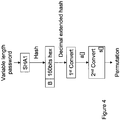
Figure 4 illustrates the calculation of a permutation according to a preferred embodiment of the present invention; and -
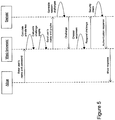
Figure 5 illustrates a ZKP protocol based on graph isomorphism according to a preferred embodiment of the present invention. - Referring now to
Figure 3 , another NP problem is graph isomorphism. Here, two graphs G1 = (V1,E1) and G2 = (V2,E2) that have the same sets of vertexes V1=V2={1,2,...,n} are isomorphic, if there exists a permutation π on vertexes {1, 2, ... , n} so that (u, v) ∈ E1 ↔ (π (u), π (v)) ∈ E2. - With a protocol based on the graph isomorphism, a public key is composed of two isomorphic graphs G1 and G2, and a private key comprises a permutation πp, such that G2 = πp(G1). While the problem is not likely to be NP-complete, it is NP, as there is no known polynomial-time algorithm that solves the problem.
- In a challenge-response protocol based on this public-private key pair, such as outlined in relation to
Figure 2 , a prover generates a random permutation πR, and sends a graph GR = πR(G1) to the verifier. Then, depending on the verifier's challenge, the prover sends back πR or πR2 such that πR2 = πR°πp -1, where G1=πp -1(G2) and ° is a composition operator on the two permutations. - Thus, the verifier is able to check one of the conditions:
GR = πR(G1) or GR = πR2(G2) - Knowledge about only one parameter πR or πR2 does not let the verifier compute the prover's private key.
- Nonetheless, when attempting to implement a ZKP protocol based on the graph isomorphism, there is still the problem of how to maintain, generate or provide access to the user's private key without transmitting their credentials across the network or requiring that they be stored locally on a user's machine.
- In the preferred embodiment of the present invention, the browser calculates the private key required to implement the ZKP protocol from a user's password. The browser can then generate challenge graphs and challenge responses as described above or indeed for use in any private-public key authentication protocol.
- Referring now to
Figure 4 , a user's private key π is a permutation. In the preferred embodiment, a user's password is transformed to a corresponding permutation using a one-way function as well as taking other steps required to ensure the required size of permutation for use with graphs of a given size. - In the embodiment, Secure Hash Algorithm - Version 1.0 (SHA1) is used as this computes a 160-bits-long hash for any string that is no longer than 2^64-bits. Such a hash is composed of numbers 0-9, a-f; and as such, the hash can be used at least as part of a hexadecimal index to a table of permutations.
- All the generated hashes have the same size, i.e. 160 bits and so their corresponding index numbers when sorted in lexicographical order in a table are from 38!+1 to 40!. If the hash alone were used as an index into a table of permutations stored in lexicographical order, different hashes would be mapped to permutations of varying lengths. Thus, in the embodiment, all hashes are extended with a hexadecimal character "b" at the beginning of each obtained hash. This extension means that the extended hashes point to index positions 41!+1 to 42!; therefore, all the generated permutations have the same length.
- The key size, of course, can be changed, if another hash generation algorithm is used.
- In the preferred embodiment, the web-application calculates the permutation indicated by the extended hash in two steps, the first being based on the observation that all the natural numbers can be represented as:
ak-10! + ak-21! + ak-32! + ... + a0k! for any natural number k - As such, we find the ak-10! + ak-21! + ak-32! + ... + a0k! representation of the extended hash.
- This can be done using a function of the following form for converting "number", the extended hash in decimal format, to the vector a[]:
 Convert(number)
 {
  var int i:= 0;
  var int factor;
  var int a[]
  while(number > 0)
       {factor:= GreatestFactorial(number)
                     // returns the smallest factorial that is greater than the given number
              a[i]:= number/factor
           number:= number - a[i]*factor
       } i=i+1
  return a
  }

- 562/120=4 remainder 82
- 82/24=3 r 10
- 10/6=1
r 4 - 4/2=2 r 0
- 0/1=0 r 0
- 0/1=0 r 0
a[0] = 4; a[1] = 3 ; a[2] = 1 ; a[3] = 2 ; a[4] = 0 ; a[5] = 0
- insert (x) -> adds number x to the structure
- remove (x) -> removes number x from structure
- elementAt (j) -> returns a number i that satisfies the condition: there are exactly j-1 smaller numbers than i in the structure
- full(n) -> return a structure with
integers 0,1,....(n-1)
 {
       var int n:= length a
       s:= full (n)
       for i=0 to (n-1)
              {
              s.insert (i) //Initializing our temporary structure
              }
       for i=0 to (k-1)
              {
              permutation[i]:=s.elementAt(a[i]) //getting an element at a certain position
              s.remove(a[i]) //removing the taken element
              }
       return permutation
       }
s[0] = 0 ; s[1] = 1 ; s[2] = 2 ; s[3] = 3 ; s[4] = 4 ; s[5] = 5
a[0] = 4 ; a[1] = 3 ; a[2] = 1 ; a[3] = 2 ; a[4] = 0 ; a[5] = 0
s[0] = 0; s[1] = 1 ; s[2] = 2 ; s[3] = 3 ; s[4] = 5
p[1] = 3 and we remove this element from s:
s[0]=0 ; s[1]=1 ; s[2]=2 ; s[3]=5
p[2] = 1 and s after removing this element:
s[0] = 0 ; s[1] = 2 ; s[2] = 5
- p[3] = 5
- s[0] = 0 ; s[1] = 2
- p[4] = 0
- s[0] = 2
- p[5] = 2
- s = empty
p[0] = 4 ; p[1] = 3 ; p[2] = 1 ; p[3] = 5 ; p[4] = 0 ; p[5] = 2
- 1. Alice's browser transforms her password to a permutation πpriv that is her private key.
- 2. Alice's browser generates a random graph G1
- 3. Alice's browser computes graph G2 = πrpriv(G1)
- 4. Alice's browser publishes graphs G1, G2, and her username. She keeps πpriv secret.
- 1. Alice's browser is acquiring the number of challenges t from Bob
- 2. Alice's browser generates t random permutations: πR1, πR2, ..., πRt.
- 3. Alice's browser calculates t graphs GR1,GR2, ...,GRt such that
GRn = πRn(G1) where n ∈ {1, 2, ..., t} - 4. Alice's browser sends the generated graphs to the Bob
- 5. Bob stores the graphs and generates t random challenges v1, v2, ..., vt such that for all i ∈ {1, 2, ..., t}, vi ∈ {0, 1} (The number of challenges t is determined by the acceptable response time and is typically of the order of 30).
- 6. Bob sends the generated challenges to Alice
- 7. Alice's browser constructs a response vector R1,R2, ...,Rt such that

- 8. Alice's browser sends the response vector to Bob
- 9. Bob checks her response

- 10. Bob sends her a response. She is authenticated, only if all the challenges are answered correctly

Since the private key comprises of two elements: a permutation πpriv and the sub-graph G1, there is a need to calculate two elements from the given user's password.
- If the hash bits are 00 or 01, we skip the vertex of A1.
- If the hash bits are 10 or 11, we take the vertex of A1 to the sub-graph G1
- Vertex number 41 of A1 is taken to the sub-graph G1, if the amount of bits in the extended hash was even.

Claims (15)
- A method of generating a user's private key for use in a ZKP authentication protocol comprising, at a client:receiving a user specific identifier provided by the user;converting the identifier through a one-way function to a string of a pre-determined length; andmapping said string to a permutation πpriv of a pre-determined order, said permutation being operable with a first graph G1 to generate a second public graph G2 = πpriv (G1) wherein said permutation is the user's private key.
- A method according to claim 1 wherein the user specific identifier comprises one of: a password entered by the user; or biometric data read from the user at said client.
- A method of registering a user of a client device to a server computer across a network, comprising:receiving a username for said user;generating a private key according to the method of claim 1;generating said first graph G1 of an order corresponding with said private key;generating said second public graph G2 = πpriv (G1); andproviding said username for said user and said first and second graphs to said server.
- A method of authenticating a user of a client device to a server across a network comprising:generating a private key according to the method of claim 1;at said client:a) transmitting a username for said user to said server;b) receiving one or more challenges from said server;c) for each challenge n, generating an associated random private key πRn;d) responsive to the value of the associated challenge, combining the random private key with a version of said private key πpriv to provide a response Rn comprising one of said combination or said random private key;e) for each challenge generating a graph GRN=Rn(G1); andf) for each challenge, transmitting said response Rn and said graph GRn to said server.
- A method according to claim 4 further comprising:at said server:g) for each challenge, receiving said associated response Rn and said graph GRn;h) responsive to the value of the associated challenge, generating a graph Gtemp=πRn(G1) or Gtemp=πRn(G1); andi) comparing Gtemp with GRn to authenticate said user.
- A method according to claim 4 wherein said version of said private key πpriv comprises πpriv -1 where G1=πpriv -1(G2).
- A method according to claim 1 wherein said one-way function comprises a secure hash function and said string comprises a hash provided by said hash function.
- A method according to claim 7 wherein said mapping comprises:converting a number num corresponding to said hash to a vector a[] of length k wherein: num = ak-10! + ak-21! + ak-32! + ... + a0k!; andconverting said vector a[] to said private key πpriv.
- A method according to claim 8 wherein said converting said vector a[] comprises:creating a structure s[] of length k, each element of said structure comprising an element of said private key πpriv; anditeratively choosing a value for each position of the private key as a function of the value of the corresponding element of the vector a[].
- A method according to claim 9 wherein said function of the element of the vector a[] returns a number i that satisfies the condition: there are exactly j-1 smaller numbers than i in the structure, j being the value of the element of the vector a[]; and wherein said method further comprises:
removing said element i from the structure s[]. - A method as claimed in claim 1 comprising:randomly generating a public graph A1; andgenerating the first graph G1 as a sub-graph of the graph A1 as a function of said user specific identifier.
- A method as claimed in claim 11 wherein the step of generating the sub-graph G1 comprises:
sequentially selecting vertices for the sub-graph G1 from the graph A1 in accordance with the value of successive bits of said string. - A method as claimed in claim 12 further comprising:
prior to mapping said string to said private key, normalizing said string in accordance with the size of said sub-graph G1 so that the size of said private key corresponds with the size of said sub-graph G1. - A computer program product comprising computer readable code which when executed on a computing device is arranged to perform the steps of claim 1.
- A computer program product according to claim 14 implemented in Javascript and executable with a web browser running on said computing device.
Applications Claiming Priority (3)
| Application Number | Priority Date | Filing Date | Title |
|---|---|---|---|
| IE20080001 | 2008-01-02 | ||
| IE20080146 | 2008-02-25 | ||
| PCT/EP2008/010465 WO2009083109A1 (en) | 2008-01-02 | 2008-12-10 | A method and apparatus for authenticating a user |
Publications (2)
| Publication Number | Publication Date |
|---|---|
| EP2229750A1 EP2229750A1 (en) | 2010-09-22 |
| EP2229750B1 true EP2229750B1 (en) | 2019-04-10 |
Family
ID=40627200
Family Applications (1)
| Application Number | Title | Priority Date | Filing Date |
|---|---|---|---|
| EP08869089.6A Active EP2229750B1 (en) | 2008-01-02 | 2008-12-10 | A method and apparatus for authenticating a user |
Country Status (3)
| Country | Link |
|---|---|
| US (1) | US8411854B2 (en) |
| EP (1) | EP2229750B1 (en) |
| WO (1) | WO2009083109A1 (en) |
Families Citing this family (15)
| Publication number | Priority date | Publication date | Assignee | Title |
|---|---|---|---|---|
| US8422683B2 (en) * | 2008-07-15 | 2013-04-16 | The Mitre Corporation | Appraising systems with zero knowledge proofs |
| US8527758B2 (en) * | 2009-12-09 | 2013-09-03 | Ebay Inc. | Systems and methods for facilitating user identity verification over a network |
| US9015489B2 (en) | 2010-04-07 | 2015-04-21 | Microsoft Technology Licensing, Llc | Securing passwords against dictionary attacks |
| JP5594034B2 (en) * | 2010-07-30 | 2014-09-24 | ソニー株式会社 | Authentication device, authentication method, and program |
| KR20120039133A (en) * | 2010-10-15 | 2012-04-25 | 삼성전자주식회사 | Apparatus and method that generates originality verification and certifies originality verification |
| MY184944A (en) * | 2014-07-24 | 2021-04-30 | Mimos Berhad | Method and system for computation and verification of authentication parameters from independant measurements of time or location |
| GB2543858B (en) * | 2015-11-02 | 2017-10-18 | Mgm Advantage Services Ltd | Authentication system |
| US10057261B2 (en) * | 2015-11-09 | 2018-08-21 | Fotonation Limited | Method for configuring access for a limited user interface (UI) device |
| US10146924B2 (en) | 2016-12-14 | 2018-12-04 | Fotonation Limited | Systems and methods for authenticating a biometric device using a trusted coordinating smart device |
| US11012435B2 (en) | 2017-12-19 | 2021-05-18 | International Business Machines Corporation | Multi factor authentication |
| US11122033B2 (en) * | 2017-12-19 | 2021-09-14 | International Business Machines Corporation | Multi factor authentication |
| US10972274B2 (en) * | 2018-08-29 | 2021-04-06 | International Business Machines Corporation | Trusted identity solution using blockchain |
| US11514439B2 (en) | 2020-02-26 | 2022-11-29 | Nice Ltd. | System and method using zero knowledge proofs for alert sharing |
| CN112560091B (en) * | 2020-12-17 | 2021-07-13 | 北京百度网讯科技有限公司 | Digital signature method, verification method of signature information, related device and electronic equipment |
| EP4373028B1 (en) | 2022-11-15 | 2026-01-07 | Nxp B.V. | Communication devices for use in challenge-response rounds and corresponding operating methods |
Family Cites Families (3)
| Publication number | Priority date | Publication date | Assignee | Title |
|---|---|---|---|---|
| US4926479A (en) * | 1988-04-29 | 1990-05-15 | Massachusetts Institute Of Technology | Multiprover interactive verification system |
| JP2001325547A (en) * | 2000-05-12 | 2001-11-22 | Nec Corp | Selling system by credit card, credit card authenticating device, and credit card |
| US7404202B2 (en) * | 2001-11-21 | 2008-07-22 | Line 6, Inc. | System, device, and method for providing secure electronic commerce transactions |
-
2008
- 2008-12-10 WO PCT/EP2008/010465 patent/WO2009083109A1/en not_active Ceased
- 2008-12-10 EP EP08869089.6A patent/EP2229750B1/en active Active
- 2008-12-10 US US12/811,317 patent/US8411854B2/en active Active
Non-Patent Citations (1)
| Title |
|---|
| None * |
Also Published As
| Publication number | Publication date |
|---|---|
| WO2009083109A1 (en) | 2009-07-09 |
| US20100290618A1 (en) | 2010-11-18 |
| EP2229750A1 (en) | 2010-09-22 |
| US8411854B2 (en) | 2013-04-02 |
Similar Documents
| Publication | Publication Date | Title |
|---|---|---|
| US8411854B2 (en) | Method and apparatus for authenticating a user | |
| US11882218B2 (en) | Matching system, method, apparatus, and program | |
| Chevalier et al. | Privately outsourcing exponentiation to a single server: cryptanalysis and optimal constructions | |
| US10229270B2 (en) | Host attestation | |
| US8527777B2 (en) | Cryptographic proofs in data processing systems | |
| US20100275028A1 (en) | Verification apparatus | |
| CN103425941B (en) | The verification method of cloud storage data integrity, equipment and server | |
| US7688973B2 (en) | Encryption apparatus, decryption apparatus, key generation apparatus, program, and method | |
| Rass et al. | Cryptography for security and privacy in cloud computing | |
| Chen et al. | Data dynamics for remote data possession checking in cloud storage | |
| US6959085B1 (en) | Secure user identification based on ring homomorphisms | |
| Alkeilani Alkadri et al. | On lattice-based interactive protocols: an approach with less or no aborts | |
| Hwang et al. | Round-reduced modular construction of asymmetric password-authenticated key exchange | |
| Yasuda | Secure Hamming distance computation for biometrics using ideal-lattice and ring-LWE homomorphic encryption | |
| WO2019110399A1 (en) | Two-party signature device and method | |
| Lysyanskaya | Security analysis of RSA-BSSA | |
| Batina et al. | Developing efficient blinded attribute certificates on smart cards via pairings | |
| Boschini et al. | Floppy-sized group signatures from lattices | |
| Kak | Lecture 12: Public-Key Cryptography and the RSA Algorithm | |
| Blocki et al. | On the multi-user security of short schnorr signatures with preprocessing | |
| US9292671B1 (en) | Multi-server authentication using personalized proactivization | |
| Boudgoust et al. | Overfull: Too large aggregate signatures based on lattices | |
| Singh et al. | Public integrity auditing for shared dynamic cloud data | |
| De La Piedra et al. | Towards a full-featured implementation of attribute based credentials on smart cards | |
| Grzonkowski et al. | Extending web applications with a lightweight zero knowledge proof authentication |
Legal Events
| Date | Code | Title | Description |
|---|---|---|---|
| PUAI | Public reference made under article 153(3) epc to a published international application that has entered the european phase |
Free format text: ORIGINAL CODE: 0009012 |
|
| 17P | Request for examination filed |
Effective date: 20100802 |
|
| AK | Designated contracting states |
Kind code of ref document: A1 Designated state(s): AT BE BG CH CY CZ DE DK EE ES FI FR GB GR HR HU IE IS IT LI LT LU LV MC MT NL NO PL PT RO SE SI SK TR |
|
| AX | Request for extension of the european patent |
Extension state: AL BA MK RS |
|
| DAX | Request for extension of the european patent (deleted) | ||
| 17Q | First examination report despatched |
Effective date: 20130315 |
|
| STAA | Information on the status of an ep patent application or granted ep patent |
Free format text: STATUS: EXAMINATION IS IN PROGRESS |
|
| GRAP | Despatch of communication of intention to grant a patent |
Free format text: ORIGINAL CODE: EPIDOSNIGR1 |
|
| STAA | Information on the status of an ep patent application or granted ep patent |
Free format text: STATUS: GRANT OF PATENT IS INTENDED |
|
| GRAS | Grant fee paid |
Free format text: ORIGINAL CODE: EPIDOSNIGR3 |
|
| INTG | Intention to grant announced |
Effective date: 20190206 |
|
| GRAA | (expected) grant |
Free format text: ORIGINAL CODE: 0009210 |
|
| STAA | Information on the status of an ep patent application or granted ep patent |
Free format text: STATUS: THE PATENT HAS BEEN GRANTED |
|
| AK | Designated contracting states |
Kind code of ref document: B1 Designated state(s): AT BE BG CH CY CZ DE DK EE ES FI FR GB GR HR HU IE IS IT LI LT LU LV MC MT NL NO PL PT RO SE SI SK TR |
|
| REG | Reference to a national code |
Ref country code: GB Ref legal event code: FG4D |
|
| REG | Reference to a national code |
Ref country code: CH Ref legal event code: EP Ref country code: AT Ref legal event code: REF Ref document number: 1120169 Country of ref document: AT Kind code of ref document: T Effective date: 20190415 |
|
| REG | Reference to a national code |
Ref country code: IE Ref legal event code: FG4D |
|
| REG | Reference to a national code |
Ref country code: DE Ref legal event code: R096 Ref document number: 602008059719 Country of ref document: DE |
|
| REG | Reference to a national code |
Ref country code: NL Ref legal event code: MP Effective date: 20190410 |
|
| REG | Reference to a national code |
Ref country code: LT Ref legal event code: MG4D |
|
| REG | Reference to a national code |
Ref country code: AT Ref legal event code: MK05 Ref document number: 1120169 Country of ref document: AT Kind code of ref document: T Effective date: 20190410 |
|
| PG25 | Lapsed in a contracting state [announced via postgrant information from national office to epo] |
Ref country code: NL Free format text: LAPSE BECAUSE OF FAILURE TO SUBMIT A TRANSLATION OF THE DESCRIPTION OR TO PAY THE FEE WITHIN THE PRESCRIBED TIME-LIMIT Effective date: 20190410 |
|
| PG25 | Lapsed in a contracting state [announced via postgrant information from national office to epo] |
Ref country code: FI Free format text: LAPSE BECAUSE OF FAILURE TO SUBMIT A TRANSLATION OF THE DESCRIPTION OR TO PAY THE FEE WITHIN THE PRESCRIBED TIME-LIMIT Effective date: 20190410 Ref country code: NO Free format text: LAPSE BECAUSE OF FAILURE TO SUBMIT A TRANSLATION OF THE DESCRIPTION OR TO PAY THE FEE WITHIN THE PRESCRIBED TIME-LIMIT Effective date: 20190710 Ref country code: PT Free format text: LAPSE BECAUSE OF FAILURE TO SUBMIT A TRANSLATION OF THE DESCRIPTION OR TO PAY THE FEE WITHIN THE PRESCRIBED TIME-LIMIT Effective date: 20190910 Ref country code: HR Free format text: LAPSE BECAUSE OF FAILURE TO SUBMIT A TRANSLATION OF THE DESCRIPTION OR TO PAY THE FEE WITHIN THE PRESCRIBED TIME-LIMIT Effective date: 20190410 Ref country code: SE Free format text: LAPSE BECAUSE OF FAILURE TO SUBMIT A TRANSLATION OF THE DESCRIPTION OR TO PAY THE FEE WITHIN THE PRESCRIBED TIME-LIMIT Effective date: 20190410 Ref country code: ES Free format text: LAPSE BECAUSE OF FAILURE TO SUBMIT A TRANSLATION OF THE DESCRIPTION OR TO PAY THE FEE WITHIN THE PRESCRIBED TIME-LIMIT Effective date: 20190410 Ref country code: LT Free format text: LAPSE BECAUSE OF FAILURE TO SUBMIT A TRANSLATION OF THE DESCRIPTION OR TO PAY THE FEE WITHIN THE PRESCRIBED TIME-LIMIT Effective date: 20190410 |
|
| PG25 | Lapsed in a contracting state [announced via postgrant information from national office to epo] |
Ref country code: LV Free format text: LAPSE BECAUSE OF FAILURE TO SUBMIT A TRANSLATION OF THE DESCRIPTION OR TO PAY THE FEE WITHIN THE PRESCRIBED TIME-LIMIT Effective date: 20190410 Ref country code: BG Free format text: LAPSE BECAUSE OF FAILURE TO SUBMIT A TRANSLATION OF THE DESCRIPTION OR TO PAY THE FEE WITHIN THE PRESCRIBED TIME-LIMIT Effective date: 20190710 Ref country code: PL Free format text: LAPSE BECAUSE OF FAILURE TO SUBMIT A TRANSLATION OF THE DESCRIPTION OR TO PAY THE FEE WITHIN THE PRESCRIBED TIME-LIMIT Effective date: 20190410 Ref country code: GR Free format text: LAPSE BECAUSE OF FAILURE TO SUBMIT A TRANSLATION OF THE DESCRIPTION OR TO PAY THE FEE WITHIN THE PRESCRIBED TIME-LIMIT Effective date: 20190711 |
|
| PG25 | Lapsed in a contracting state [announced via postgrant information from national office to epo] |
Ref country code: IS Free format text: LAPSE BECAUSE OF FAILURE TO SUBMIT A TRANSLATION OF THE DESCRIPTION OR TO PAY THE FEE WITHIN THE PRESCRIBED TIME-LIMIT Effective date: 20190810 Ref country code: AT Free format text: LAPSE BECAUSE OF FAILURE TO SUBMIT A TRANSLATION OF THE DESCRIPTION OR TO PAY THE FEE WITHIN THE PRESCRIBED TIME-LIMIT Effective date: 20190410 |
|
| REG | Reference to a national code |
Ref country code: DE Ref legal event code: R097 Ref document number: 602008059719 Country of ref document: DE |
|
| PG25 | Lapsed in a contracting state [announced via postgrant information from national office to epo] |
Ref country code: CZ Free format text: LAPSE BECAUSE OF FAILURE TO SUBMIT A TRANSLATION OF THE DESCRIPTION OR TO PAY THE FEE WITHIN THE PRESCRIBED TIME-LIMIT Effective date: 20190410 Ref country code: SK Free format text: LAPSE BECAUSE OF FAILURE TO SUBMIT A TRANSLATION OF THE DESCRIPTION OR TO PAY THE FEE WITHIN THE PRESCRIBED TIME-LIMIT Effective date: 20190410 Ref country code: DK Free format text: LAPSE BECAUSE OF FAILURE TO SUBMIT A TRANSLATION OF THE DESCRIPTION OR TO PAY THE FEE WITHIN THE PRESCRIBED TIME-LIMIT Effective date: 20190410 Ref country code: EE Free format text: LAPSE BECAUSE OF FAILURE TO SUBMIT A TRANSLATION OF THE DESCRIPTION OR TO PAY THE FEE WITHIN THE PRESCRIBED TIME-LIMIT Effective date: 20190410 Ref country code: RO Free format text: LAPSE BECAUSE OF FAILURE TO SUBMIT A TRANSLATION OF THE DESCRIPTION OR TO PAY THE FEE WITHIN THE PRESCRIBED TIME-LIMIT Effective date: 20190410 |
|
| PLBE | No opposition filed within time limit |
Free format text: ORIGINAL CODE: 0009261 |
|
| STAA | Information on the status of an ep patent application or granted ep patent |
Free format text: STATUS: NO OPPOSITION FILED WITHIN TIME LIMIT |
|
| PG25 | Lapsed in a contracting state [announced via postgrant information from national office to epo] |
Ref country code: IT Free format text: LAPSE BECAUSE OF FAILURE TO SUBMIT A TRANSLATION OF THE DESCRIPTION OR TO PAY THE FEE WITHIN THE PRESCRIBED TIME-LIMIT Effective date: 20190410 |
|
| 26N | No opposition filed |
Effective date: 20200113 |
|
| PG25 | Lapsed in a contracting state [announced via postgrant information from national office to epo] |
Ref country code: TR Free format text: LAPSE BECAUSE OF FAILURE TO SUBMIT A TRANSLATION OF THE DESCRIPTION OR TO PAY THE FEE WITHIN THE PRESCRIBED TIME-LIMIT Effective date: 20190410 |
|
| PG25 | Lapsed in a contracting state [announced via postgrant information from national office to epo] |
Ref country code: SI Free format text: LAPSE BECAUSE OF FAILURE TO SUBMIT A TRANSLATION OF THE DESCRIPTION OR TO PAY THE FEE WITHIN THE PRESCRIBED TIME-LIMIT Effective date: 20190410 |
|
| REG | Reference to a national code |
Ref country code: CH Ref legal event code: PL |
|
| REG | Reference to a national code |
Ref country code: BE Ref legal event code: MM Effective date: 20191231 |
|
| PG25 | Lapsed in a contracting state [announced via postgrant information from national office to epo] |
Ref country code: MC Free format text: LAPSE BECAUSE OF FAILURE TO SUBMIT A TRANSLATION OF THE DESCRIPTION OR TO PAY THE FEE WITHIN THE PRESCRIBED TIME-LIMIT Effective date: 20190410 |
|
| PG25 | Lapsed in a contracting state [announced via postgrant information from national office to epo] |
Ref country code: LU Free format text: LAPSE BECAUSE OF NON-PAYMENT OF DUE FEES Effective date: 20191210 Ref country code: IE Free format text: LAPSE BECAUSE OF NON-PAYMENT OF DUE FEES Effective date: 20191210 |
|
| PG25 | Lapsed in a contracting state [announced via postgrant information from national office to epo] |
Ref country code: LI Free format text: LAPSE BECAUSE OF NON-PAYMENT OF DUE FEES Effective date: 20191231 Ref country code: BE Free format text: LAPSE BECAUSE OF NON-PAYMENT OF DUE FEES Effective date: 20191231 Ref country code: CH Free format text: LAPSE BECAUSE OF NON-PAYMENT OF DUE FEES Effective date: 20191231 |
|
| PG25 | Lapsed in a contracting state [announced via postgrant information from national office to epo] |
Ref country code: CY Free format text: LAPSE BECAUSE OF FAILURE TO SUBMIT A TRANSLATION OF THE DESCRIPTION OR TO PAY THE FEE WITHIN THE PRESCRIBED TIME-LIMIT Effective date: 20190410 |
|
| PG25 | Lapsed in a contracting state [announced via postgrant information from national office to epo] |
Ref country code: MT Free format text: LAPSE BECAUSE OF FAILURE TO SUBMIT A TRANSLATION OF THE DESCRIPTION OR TO PAY THE FEE WITHIN THE PRESCRIBED TIME-LIMIT Effective date: 20190410 Ref country code: HU Free format text: LAPSE BECAUSE OF FAILURE TO SUBMIT A TRANSLATION OF THE DESCRIPTION OR TO PAY THE FEE WITHIN THE PRESCRIBED TIME-LIMIT; INVALID AB INITIO Effective date: 20081210 |
|
| PGFP | Annual fee paid to national office [announced via postgrant information from national office to epo] |
Ref country code: GB Payment date: 20251218 Year of fee payment: 18 |
|
| PGFP | Annual fee paid to national office [announced via postgrant information from national office to epo] |
Ref country code: FR Payment date: 20251230 Year of fee payment: 18 |
|
| PGFP | Annual fee paid to national office [announced via postgrant information from national office to epo] |
Ref country code: DE Payment date: 20251222 Year of fee payment: 18 |