EP2224959B1 - Polypeptides, cyclic polypeptides and pharmaceutical comprising thereof for non invasive specific imaging of fibrosis - Google Patents
Polypeptides, cyclic polypeptides and pharmaceutical comprising thereof for non invasive specific imaging of fibrosis Download PDFInfo
- Publication number
- EP2224959B1 EP2224959B1 EP08859568.1A EP08859568A EP2224959B1 EP 2224959 B1 EP2224959 B1 EP 2224959B1 EP 08859568 A EP08859568 A EP 08859568A EP 2224959 B1 EP2224959 B1 EP 2224959B1
- Authority
- EP
- European Patent Office
- Prior art keywords
- amino acid
- fibrosis
- polypeptide
- seq
- peptide
- Prior art date
- Legal status (The legal status is an assumption and is not a legal conclusion. Google has not performed a legal analysis and makes no representation as to the accuracy of the status listed.)
- Not-in-force
Links
Images


Classifications
-
- A—HUMAN NECESSITIES
- A61—MEDICAL OR VETERINARY SCIENCE; HYGIENE
- A61K—PREPARATIONS FOR MEDICAL, DENTAL OR TOILETRY PURPOSES
- A61K51/00—Preparations containing radioactive substances for use in therapy or testing in vivo
- A61K51/02—Preparations containing radioactive substances for use in therapy or testing in vivo characterised by the carrier, i.e. characterised by the agent or material covalently linked or complexing the radioactive nucleus
- A61K51/04—Organic compounds
- A61K51/08—Peptides, e.g. proteins, carriers being peptides, polyamino acids, proteins
-
- A—HUMAN NECESSITIES
- A61—MEDICAL OR VETERINARY SCIENCE; HYGIENE
- A61P—SPECIFIC THERAPEUTIC ACTIVITY OF CHEMICAL COMPOUNDS OR MEDICINAL PREPARATIONS
- A61P43/00—Drugs for specific purposes, not provided for in groups A61P1/00-A61P41/00
-
- C—CHEMISTRY; METALLURGY
- C07—ORGANIC CHEMISTRY
- C07K—PEPTIDES
- C07K14/00—Peptides having more than 20 amino acids; Gastrins; Somatostatins; Melanotropins; Derivatives thereof
- C07K14/435—Peptides having more than 20 amino acids; Gastrins; Somatostatins; Melanotropins; Derivatives thereof from animals; from humans
- C07K14/705—Receptors; Cell surface antigens; Cell surface determinants
- C07K14/70503—Immunoglobulin superfamily
Definitions
- the present invention relates to diagnostic imaging and in particular to the diagnostic imaging of fibrosis. More particularly, the present invention provides polypeptides, cyclic polypeptides and pharmaceutical compositions which specifically target collagen and are suitable for the non-invasive specific imaging of fibrosis.
- Fibrosis is defined pathologically as inappropriate repair by connective tissue and is caused by increased synthesis and decreased degradation of matrix proteins, most notably collagen types I and III.
- Fibrosis can affect virtually every tissue and organ system. Excessive fibrosis following physical, thermal, metabolic, ischemic, infectious, inflammatory, or immunological injury can occur in any part of the body, and can cause destruction of the affected structures such as lung, kidney, heart, liver, vascular system, skin, eye, bone marrow. Fibrotic tissue is characterized by a loss of normal architecture, paucity of stromal cells, and replacement of blood vessels and other essential parenchymal structures by dense, homogeneous, and increasingly stable extracellular matrix.
- Fibrosis is increasingly recognized as an important feature of many chronic diseases, and as such, represents an enormous health burden.
- fibrotic liver disease ranks as the eighth most common cause of mortality worldwide, accounting for 1.3 million deaths annually ( Murray and Lopez, 1997, Lancet 349,1269-1276 ).
- the cellular mechanisms of fibrosis are complex.
- HCV chronic hepatitis C virus
- HBV hepatitis B virus
- alcoholic or fatty liver disease drug-induced liver disease or primary biliary cirrhosis
- normally quiescent hepatic stellate cells are activated into proliferating myofibroblasts.
- fibrosis may accumulate through increased production of tissue and proteins like collagen and decreased degradation of these compounds so that the function of liver is impaired.
- early detection of fibrosis would be clinically relevant for therapeutical decision making since the occurrence of fibrosis represents a major poor prognostic factor.
- Atherosclerosis which is significantly associated with aging.
- Atherosclerotic plaques are rich in type I collagen. When the plaque is vulnerable, collagen becomes exposed to the blood flow and triggers arterial thrombosis and ischemia of downstream tissues.
- Non invasive molecular imaging of vulnerable atherosclerotic lesions attracts much interest to identify patients at risk for thromboischemic vascular event.
- GPVI radiolabeled soluble Glycoprotein VI
- diabetic cardiomyopathy which comprises intersticial fibrosis would be of clinical interest for early identification of diabetic patients at risk for heart failure. Also in idiopathic dilated cardiomyopathy, fibrosis is recognized as a major prognostic factor.
- Specific imaging tracers for molecular imaging of fibrosis represents a challenge and a large field of interest for different imaging modalities including radionuclide imaging and MRI (collagen-targeted MRI contrast agent for molecular imaging of fibrosis, Caravan P et al, Angew Chem Int Ed Engl 2007;46 (43): 8171-73 ).
- radionuclide imaging has the advantages of higher sensitivity and no toxicity since very low tracer dose (pico or nanomolar) is sufficient to obtain accurate target-to-background ratio.
- contrast agents comprising targeting vectors that bind to areas of collagen formation and extra-cellular matrix, ECM.
- Such contrast agents may be used for targeting of active fibrosis (collagen deposition) and the diagnosis of a number of disease conditions like for example heart failure, liver and lung fibrosis, retroperitoneal fibrosis, atherosclerosis, arthritis, cancer and skin disorders.
- the invention relates to a polypeptide comprising an amino acid sequence consisting of: X1-X2-M-H-G-L-X7-L-X9-X10-D-E (SEQ ID NO:1) wherein amino acid X1 is R, F or P; X2 is F or V; X7 is Q, H or L; X 9 is W or G and X10 is A or D.
- the invention also relates to a cyclic polypeptide wherein the polypeptide according to the invention is cyclised via a disulfide bound between two cysteine residues.
- the invention also relates to an imaging agent comprising a labelled polypeptide or a cyclic labelled polypeptide according to the invention.
- An object of the invention relates to a polypeptide comprising an amino acid sequence consisting of: X1-X2-M-H-G-L-X7-L-X9-X10-D-E (SEQ ID NO:1) wherein amino acid X1 is R, F or P; amino acid X2 is F or V; amino acid X7 is Q, H or L; amino acid X9 is W or G and amino acid X10 is A or D.
- amino acid is understood to mean the amino acids in the L form which can be found in natural proteins, that is to say alanine (A), arginine (R), asparagine (N), aspartic acid (D), cysteine (C), glutamine (Q), glutamic acid (E), glycine (G), histidine (H), isoleucine (I), leucine (L), lysine (K), methionine (M), phenylalanine (F), proline (P), serine (S), threonine (T), tryptophan (W), tyrosine (Y) and valine (V).
- the present invention also relates to the non-natural amino acids, that is to say the preceding amino acids in their D form, as well as the homo forms of some amino acids such as arginine, lysine, phenylalanine and serine or the nor forms of leucine or valine.
- the polypeptide of the invention comprises an amino acid sequence selected from the group consisting of RVMHGLHLGDDE (SEQ ID NO:2); RFMHGLQLWADE (SEQ ID NO:3); RVMHGLQLWADE (SEQ ID NO:4); RVMHGLHLWDDE (SEQ ID NO:5); RVMHGLQLWDDE (SEQ ID NO:6); RVMHGLHLWADE (SEQ ID NO:7); FVMHGLHLGDDE (SEQ ID NO:8); PVMHGLHLWDDE (SEQ ID NO:9); and RVMHGLLLGADE (SEQ ID NO:10).
- RVMHGLHLGDDE SEQ ID NO:2
- RFMHGLQLWADE SEQ ID NO:3
- RVMHGLQLWADE SEQ ID NO:4
- RVMHGLHLWDDE SEQ ID NO:5
- RVMHGLQLWDDE SEQ ID NO:6
- RVMHGLHLWADE SEQ ID NO:7
- FVMHGLHLGDDE SEQ ID NO:8
- polypeptides of the invention can be conformationally constrained to enable the polypeptides to bind collagen with a better affinity.
- Cyclization is well known in the art and generally involves the introduction of a disulfide bound between two cysteine residues.
- the cycle is formed through a side chain to side chain ring involving a monosulfide or disulfide bridge between pairs of cysteines, penicillamines, homocysteines, combinations of the foregoing, or other pairs of amino acids in which the side chains are linked with either one or two sulfur atoms.
- Methods for the synthesis of disulfide cyclic polypeptide are well known in the art and are described for example in US3,929,758 , US4,216,141 ; and US4,102,877 .
- Polypeptides of the invention may thus comprise cysteine residues at terminal ends to allow the cyclisation of the polypeptides.
- the cysteine residues are separated from the terminal ends of the polypeptide of the invention by 1, 2, 3 or more amino acids.
- the amino acids are selected in a manner that they do not prevent the collagen binding of the polypeptides.
- the amino acids may preferably be selected among small and neutral amino acids such as Glycine or Proline. Proline could structurally favour cyclisation.
- the polypeptides of the invention may comprise tripeptides flanking the terminal ends of the polypeptide and comprising at least one cysteine residue.
- the polypeptide of the invention may comprise a CGP tripeptide at its N-terminal end and a GPC tripeptide at its C-terminal end.
- polypeptides of the invention may comprise an amino acid sequence consisting of: CGP-X1-X2-MHGL-X7-L-X9-X10-DE-GPC (SEQ ID NO:11) wherein amino acid X1 is R, F or P; amino acid X2 is F or V; amino acid X7 is Q, H or L; amino acid X9 is W or G and amino acid X10 is A or D.
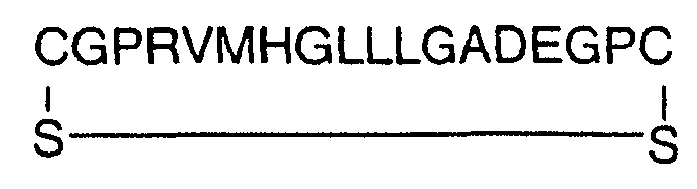
- polypeptides of the invention may comprise an amino acid sequence selected from the groups consisting of CGPRVMHGLHLGDDEGPC (SEQ ID NO:12); CGPRFMHGLQLWADEGPC (SEQ ID NO:13); CGPRVMHGLQLWADEGPC (SEQ ID NO:14); CGPRVMHGLHLWDDEGPC (SEQ ID NO:15); CGPRVMHGLQLWDDEGPC (SEQ ID NO:16); CGPRVMHGLHLWADEGPC (SEQ ID NO:17); CGPFVMHGLHLGDDEGPC (SEQ ID NO:18); CGPPVMHGLHLWDDEGPC (SEQ ID NO:19); and CGPRVMHGLLLGADEGPC (SEQ ID NO:20).
- polypeptides as above described are cyclised via a disulfide bound between the two cysteine residues of the polypeptides.
- the invention relates to a cyclic polypeptide having the formula: wherein amino acid X1 is R, F or P; amino acid X2 is F or V; amino acid X7 is Q, H or L; amino acid X9 is W or G and amino acid X10 is A or D.
- the invention further relates to a cyclic polypeptide having the formula:
- the invention further relates to a cyclic polypeptide having the formula:
- the invention further relates to a cyclic polypeptide having the formula:
- the invention further relates to a cyclic polypeptide having the formula:
- the invention further relates to a cyclic polypeptide having the formula:
- the invention further relates to a cyclic polypeptide having the formula:
- the invention further relates to a cyclic polypeptide having the formula:
- the invention further relates to a cyclic polypeptide having the formula:
- the invention further relates to a cyclic polypeptide having the formula:
- cyclization is contemplated by the invention.
- those methods include but are not limited by those described by Marlowe (1993, Biorg. Med. Chem. Lett. 3:437-44 ) who describes peptide cyclization on TFA resin using trimethylsilyl (TMSE) ester as an orthogonal protecting group; Pallin and Tam (1995, J. Chem. Soc. Chem. Comm. 2021-2022 ) who describe the cyclization of unprotected peptides in aqueous solution by oxime formation; Algin et al (1994, Tetrahedron Lett.
- polypeptides or cyclic polypeptides of the invention may comprise a spacer sequence at its terminal ends.
- Such spacer sequence may be suitable to label said polypeptide or cyclic polypeptide of the invention with a detectable substance (e.g.,biotin moiety).
- the spacer sequence may be useful to prevent the steric hindrance of the detectable substance.
- the spacer sequence for biotin may consist in a SGSG amino acid sequence that may be attached to the N-terminal end of the polypeptide or cyclic polypeptide of the invention.
- polypeptides of the invention may comprise an amino acid sequence consisting of: SGSGCGP-X1-X2-MHGL-X7-L-X9-X10-DE-GPC (SEQ ID NO:21) wherein amino acid X1 is R, F or P; amino acid X2 is F or V; amino acid X7 is Q, H or L; amino acid X9 is W or G and amino acid X10 is A or D.
- polypeptides of the invention may comprise an amino acid sequence selected from the groups consisting of SGSGCGPRVMHGLHLGDDEGPC (SEQ ID NO:22); SGSGCGPRFMHGLQLWADEGPC (SEQ ID NO:23); SGSGCGPRVMHGLQLWADEGPC (SEQ ID NO:24); SGSGCGPRVMHGLHLWDDEGPC (SEQ ID NO:25); SGSGCGPRVMHGLQLWDDEGPC (SEQ ID NO:26); SGSGCGPRVMHGLHLWADEGPC (SEQ ID NO:27); SGSGCGPFVMHGLHLGDDEGPC (SEQ ID NO:28); SGSGCGPPVMHGLHLWDDEGPC (SEQ ID NO:29); and SGSGCGPRVMHGLLLGADEGPC (SEQ ID NO:30).
- the invention relates to a cyclic polypeptide having the formula: wherein amino acid X1 is R, F or P; amino acid X2 is F or V; amino acid X7 is Q, H or L; amino acid X9 is W or G and amino acid X10 is A or D.
- the invention further relates to a cyclic polypeptide having the formula:
- the invention further relates to a cyclic polypeptide having the formula:
- the invention further relates to a cyclic polypeptide having the formula:
- the invention further relates to a cyclic polypeptide having the formula:
- the invention further relates to a cyclic polypeptide having the formula:
- the invention further relates to a cyclic polypeptide having the formula:
- the invention further relates to a cyclic polypeptide having the formula:
- the invention further relates to a cyclic polypeptide having the formula:
- the invention further relates to a cyclic polypeptide having the formula:
- polypeptides of the invention are PEGylated. It has been widely demonstrated that the conjugation of polyethylene glycol PEG to peptides significantly increases their duration of biological activity (half-life). PEG provides a more stable conformation and increases the size and the weight of the molecule, thereby prolonging the circulation time of the peptide.
- Polyethylene glycol is formed by a process of linking repeating units of ethylene glycol to form polymers with linear or branched shapes of different molecular mass.
- PEG is an hydrophilic, biocompatible and non-toxic water-soluble polymer of general formula HO-(CH2-CH2-O)n-H, wherein n>4. Its molecular weight varies from 300 to 40,000 Daltons.
- PEGylation of the polypeptide of the invention may be accomplished by known methods in the art.
- polyethylene glycol may be attached to the protein either directly or by an intervening linker.
- One non limitative way of proceeding is to bound covalently polyethylene glycol through amino acid residues via a reactive group, such as, a free amino or carboxyl group.
- Linkerless systems for attaching polyethylene glycol to proteins are described in Delgado et al., Crit. Rev. Thera. Drug Carrier Sys. 9:249-304 (1992 ), Francis et al., Inter J. of Hematol. 68:1-18 (1998 ), US 4,002,531 , U.S. 5,349,052 , WO 95/06058 and WO 98/32466 .
- One system for attaching polyethylene glycol directly to amino acid residues of proteins without an intervening linker employs tresylated MPEG, which is produced by the modification of monomethoxy polyethylene glycol (MPEG) using tresylchloride. Upon reaction of protein with tresylated MPEG, polyethylene glycol is directly attached to amine groups of the protein.
- MPEG monomethoxy polyethylene glycol
- the invention includes protein-polyethylene glycol conjugates produced by reacting proteins of the invention with a polyethylene glycol molecule having a 2,2,2-trifluoreothane sulphonyl group.
- Polyethylene glycol can also be attached to proteins using a number of different intervening linkers.
- US 5,612,460 discloses urethane linkers for connecting polyethylene glycol to proteins.
- Protein-polyethylene glycol conjugates wherein the polyethylene glycol is attached to the protein by a linker can also be produced by reaction of proteins with compounds such as MPEG-succinimidylsuccinate, MPEG activated with 1,1'-carbonyldiimidazole, MPEG-2,4,5-trichloropenylcarbonate, MPEG-p-nitrophenolcarbonate, and various MPEG-succinate derivatives.
- a number additional polyethylene glycol derivatives and reaction chemistries for attaching polyethylene glycol to proteins are described in WO 98/32466 .
- the number of polyethylene glycol moieties attached to each polypeptide may also vary.
- the pegylated proteins of the invention may be linked, on average, to 1, 2, 3, 4, 5, 6, 7, 8, 9, 10, 12, 15, 17, 20, or more polyethylene glycol molecules.
- the average degree of substitution within ranges such as 1-3, 2-4, 3-5, 4-6, 5-7, 6-8, 7-9, 8-10, 9-11, 10-12, 11-13, 12-14, 13-15, 14-16, 15-17, 16-18, 17-19, or 18-20 polyethylene glycol moieties per protein molecule. Methods for determining the degree of substitution are discussed, for example, in Delgado et al., Crit. Rev. Thera. Drug Carrier Sys. 9:249-304 (1992 ).
- polypeptides of the invention are oligomerized, preferably dimerized.
- Oligomerization is widely described in the scientific literature and constits in a specific assembly of monomeric polypeptides to form a stable polymere.
- Oligomerization increases the size and the weight of biological activity, thereby prolonging the circulation time (half-life) of the peptide.
- N and C terminal ends of the polypeptides and cyclic polypeptides of the invention may be protected by any well known method in the art.
- carboxyl function at the C-terminal end of the polypeptides and cyclic polypeptides of the invention may be substituted by an amide.
- polypeptides of the invention may be produced by any technique known per se in the art, such as, without limitation, any chemical, biological, genetic or enzymatic technique, either alone or in combination.
- polypeptides can be synthesized using well-known solid phase method, preferably using a commercially available peptide synthesis apparatus (such as that made by Applied Biosystems, Foster City, California) and following the manufacturer's instructions.
- polypeptides of the invention can be synthesized by recombinant DNA techniques as it is now well-known in the art.
- these fragments can be obtained as DNA expression products after incorporation of DNA sequences encoding the desired (poly)peptide into expression vectors and introduction of such vectors into suitable eukaryotic or prokaryotic hosts that will express the desired polypeptide, from which they can be later isolated using well-known techniques.
- a further object of the invention relates to an isolated nucleic acid molecule encoding for a polypeptide of the invention.
- said nucleic acid molecule is a DNA or RNA molecule, which may be included in any suitable vector, such as a plasmid, cosmid, episome, artificial chromosome, phage or a viral vector.
- vector e.g. a plasmid, cosmid, episome, artificial chromosome, phage or a viral vector.
- vector e.g. a plasmid, cosmid, episome, artificial chromosome, phage or a viral vector.
- vector cloning vector
- expression vector mean the vehicle by which a DNA or RNA sequence (e.g. a foreign gene) can be introduced into a host cell, so as to transform the host and promote expression (e.g. transcription and translation) of the introduced sequence.
- a further object of the invention relates to a vector comprising a nucleic acid molecule of the invention.
- Such vectors may comprise regulatory elements, such as a promoter, enhancer, terminator and the like, to cause or direct expression of said polypeptide upon administration to a subject.
- the vectors may further comprise one or several origins of replication and/or selectable markers.
- the promoter region may be homologous or heterologous with respect to the coding sequence, and provide for ubiquitous, constitutive, regulated and/or tissue specific expression, in any appropriate host cell, including for in vivo use. Examples of promoters include bacterial promoters (T7, pTAC, Trp promoter, etc.), viral promoters (LTR, TK, CMV-IE, etc.), mammalian gene promoters (albumin, PGK, etc), and the like.
- plasmids include replicating plasmids comprising an origin of replication, or integrative plasmids, such as for instance pUC, pcDNA, pBR, and the like.
- viral vector include adenoviral, retroviral, herpes virus and AAV vectors.
- recombinant viruses may be produced by techniques known in the art, such as by transfecting packaging cells or by transient transfection with helper plasmids or viruses.
- virus packaging cells include PA317 cells, PsiCRIP cells, GPenv+ cells, 293 cells, etc.
- a further object of the present invention relates to a cell which has been transfected, infected or transformed by a nucleic acid and/or a vector according to the invention.
- transformation means the introduction of a "foreign” (i.e. extrinsic or extracellular) gene, DNA or RNA sequence to a host cell, so that the host cell will express the introduced gene or sequence to produce a desired substance, typically a protein or enzyme coded by the introduced gene or sequence.
- a host cell that receives and expresses introduced DNA or RNA has been "transformed".
- the nucleic acids of the invention may be used to produce a recombinant polypeptide of the invention in a suitable expression system.
- expression system means a host cell and compatible vector under suitable conditions, e.g. for the expression of a protein coded for by foreign DNA carried by the vector and introduced to the host cell.
- Common expression systems include E. coli host cells and plasmid vectors, insect host cells and Baculovirus vectors, and mammalian host cells and vectors.
- host cells include, without limitation, prokaryotic cells (such as bacteria) and eukaryotic cells (such as yeast cells, mammalian cells, insect cells, plant cells, etc.).
- prokaryotic cells such as bacteria
- eukaryotic cells such as yeast cells, mammalian cells, insect cells, plant cells, etc.
- yeast cells such as yeast cells, mammalian cells, insect cells, plant cells, etc.
- mammalian cell lines e.g., Vero cells, CHO cells, 3T3 cells, COS cells, etc.
- the present invention also relates to a method for producing a recombinant host cell expressing a polypeptide according to the invention, said method comprising the steps consisting of: (i) introducing in vitro or ex vivo a recombinant nucleic acid or a vector as described above into a competent host cell, (ii) culturing in vitro or ex vivo the recombinant host cell obtained and (iii), optionally, selecting the cells which express and optionally secrete said polypeptide.
- recombinant host cells can be used for the production of the polypeptides according to the present invention, as previously described.
- the invention further relates to a method of producing a polypeptide of the invention, which method comprises the steps consisting of: (i) culturing a transformed host cell according to the invention under conditions suitable to allow expression of said polypeptide; and (ii) recovering the expressed polypeptide.
- Polypeptides of the invention may be used in an isolated (e.g., purified) form or contained in a vector, such as a membrane or lipid vesicle (e.g. a liposome).
- a vector such as a membrane or lipid vesicle (e.g. a liposome).
- polypeptides or cyclic polypeptides of the invention may be labelled with a detectable molecule or substance, such as a fluorescent molecule, a radioactive molecule or any others labels known in the art.
- a detectable molecule or substance such as a fluorescent molecule, a radioactive molecule or any others labels known in the art.
- Labels are known in the art that generally provide (either directly or indirectly) a signal.
- labeled with regard to the polypeptide or cyclic polypeptide of the invention, is intended to encompass direct labeling of the polypeptide or cyclic polypeptide of the invention by coupling (i.e., physically linking) a detectable substance.
- detectable substances include various enzymes, prosthetic groups, fluorescent materials, luminescent materials, bioluminescent materials, and radioactive materials.
- suitable enzymes include horseradish peroxidase, alkaline phosphatase, beta-galactosidase, or acetylcholinesterase;
- suitable prosthetic group complexes include streptavidin/biotin and avidin/biotin;
- suitable fluorescent materials include umbelliferone, fluorescein, fluorescein isothiocyanate, rhodamine, dichlorotriazinylamine fluorescein, dansyl chloride or phycoerythrin;
- an example of a luminescent material includes luminol;
- bioluminescent materials include luciferase, luciferin, and aequorin.
- the detectable substance may be a radioactive metal ion, i.e. a radiometal.
- Suitable radiometals can be either positron emitters such as 64 Cu, 48 V, 52 Fe, 55 Co, 94m Tc or 68 Ga; gamma-emitters such as 99m Tc 111 In 113m In or 67 Ga or beta-emitters such as 67 Cu, 89 Sr, 90 Y, 153 Sm, 136 Re, 188 Re or 192 Ir.
- polyamino polycarboxylate chelators such as diethylenetriaminepentaacetic acid (DTPA) or 1,4,7,10-tetraazacyclododecane-N,N',N",N"'-tetraacetic acid (DOTA) were also developed for labeling radiometals. These chelators allow labeling with radioisotopes suitable for imaging such as 111 In for single photon emission computed tomography (SPECT) and 68 Ga for positron emission tomography (PET). Polyamino polycarboxylates are also suitable chelators for 90 Y and 177 Lu isotopes.
- DTPA diethylenetriaminepentaacetic acid
- DOTA 1,4,7,10-tetraazacyclododecane-N,N',N",N"'-tetraacetic acid
- SPECT single photon emission computed tomography
- PET positron emission tomography
- Polyamino polycarboxylates are also suitable
- the detectable substance may be a paramagnetic metal ion, suitable such metal ions include: Gd(III), Mn(II), Cu(II), Cr(III), Fe(III), Co(II)1 Er(II)1 Ni(II), Eu(III) or Dy(III).
- the detectable substance may be a gamma-emitting radioactive halogen.
- the radiohalogen is suitably chosen from 123 I, 131 I or 77 Br.
- the detectable substance may be a positron-emitting radioactive non-metal. Suitable such positron emitters include: 11 C, 23 N, 15 0, 17 F, 18 F , 75 Sr, 76 Br or 124 I.
- the detectable substance may be a hyperpolarised NMR-active nucleus.
- NMR-active nuclei may have a non-zero nuclear spin, and include 13 C, 15 N, 19 F, 29 Si and 31 P.
- hyperpolarised is meant enhancement of the degree of polarisation of the NMR-active nucleus over its' equilibrium polarisation.
- the natural abundance of 13 C (relative to 12 C) is about 1%, and suitable 13 C-labelled compounds are suitably enriched to an abundance of at least 5%, preferably at least 50%, most preferably at least 90% before being hyperpolarised.
- At least one carbon atom of the imaging agent of the invention is suitably enriched with 13 C, which is subsequently hyperpolarised.
- the detectable substance may be a reporter suitable for in vivo optical imaging, the reporter is any moiety capable of detection either directly or indirectly in an optical imaging procedure.
- the reporter might be a light scatterer (e.g. a coloured or uncoloured particle), a light absorber or a light emitter.
- the reporter is a dye such as a chromophore or a fluorescent compound.
- the dye can be any dye that interacts with light in the electromagnetic spectrum with wavelengths from the ultraviolet light to the near infrared. Most preferably the reporter has fluorescent properties.
- Preferred organic chromophoric and fluorophoric reporters include groups having an extensive delocalized electron system, e.g. cyanines, merocyanines, indocyanines, phthalocyanines, naphthalocyanines, triphenylmethines, porphyrins, pyrilium dyes, thiapyrilium dyes, squarylium dyes, croconium dyes, azulenium dyes, indoanilines, benzophenoxazinium dyes, benzothiaphenothiazinium dyes, anthraquinones, napthoquinones, indathrenes, phthaloylacridones, trisphenoquinones, azo dyes, intramolecular and intermolecular charge-transfer dyes and dye complexes, tropones, tetrazines, b/s(dithiolene) complexes, bistbenzene-dithiolatei complexes, iodo
- Fluorescent proteins such as green fluorescent protein (GFP) and modifications of GFP that have different absorption/emission properties are also useful.
- GFP green fluorescent protein
- Complexes of certain rare earth metals e.g., europium, samarium, terbium or dysprosium are used in certain contexts, as are fluorescent nanocrystals (quantum dots).
- chromophores which may be used include: fluorescein, sulforhodamine 101 (Texas Red), rhodamine B, rhodamine 6G, rhodamine 19, indocyanine green, Cy2, Cy3, Cy3.5, Cy5, Cy5.5, Cy7, Marina Blue, Pacific Blue, Oregon Green 88, Oregon Green 514, tetramethylrhodamine, and Alexa Fluor 350, Alexa Fluor 430, Alexa Fluor 532, Alexa Fluor 546, Alexa Fluor 555, Alexa Fluor 568, Alexa Fluor 594, Alexa Fluor 633, Alexa Fluor 647, Alexa Fluor 660, Alexa Fluor 680, Alexa Fluor 700, and Alexa Fluor 750.
- Optical imaging modalities and measurement techniques include, but not limited to: luminescence imaging; endoscopy; fluorescence endoscopy; optical coherence tomography, transmittance imaging; time resolved transmittance imaging; confocal imaging; nonlinear microscopy; photoacoustic imaging; acousto-optical imaging; spectroscopy; reflectance spectroscopy; interferometry; coherence interferometry; diffuse optical tomography and fluorescence mediated diffuse optical tomography (continuous wave, time domain and frequency domain systems), and measurement of light scattering, absorption, polarisation, luminescence, fluorescence lifetime, quantum yield, and quenching.
- NIR visible or near infrared
- Preferred detectable substances are those which can be detected externally in a non-invasive manner following administration in vivo.
- Most preferred imaging moieties are radioactive, especially radioactive metal ions, gamma-emitting radioactive halogens and positron- emitting radioactive non-metals, particularly those suitable for imaging using Single photon emission computed tomography (SPECT) or Positron Emission Tomography (PET).
- SPECT Single photon emission computed tomography
- PET Positron Emission Tomography
- an object of the invention relates to the use of a labelled polypeptide or cyclic polypeptide of the invention as an imaging agent.
- imaging agent refers to a compound designed to target fibrosis in a mammal, and which can be detected following its administration to the mammalian body in vivo.
- the present invention relates to an imaging agent which comprises a labelled polypeptide or cyclic polypeptide of the invention.
- the present invention provides a pharmaceutical composition
- a pharmaceutical composition comprising the imaging agent as described above, together with a biocompatible carrier, in a form suitable for mammalian administration.
- the pharmaceutical composition is a radiopharmaceutical composition.
- the “biocompatible carrier” is a fluid, especially a liquid, in which the imaging agent is suspended or dissolved, such that the composition is physiologically tolerable, i.e. can be administered to the mammalian body without toxicity or undue discomfort.
- the biocompatible carrier medium is suitably an injectable carrier liquid such as sterile water for injection; an aqueous solution such as saline; an aqueous solution of one or more tonicity-adjusting substances (e.g. salts of plasma cations with biocompatible counterions), sugars (e.g. glucose or sucrose), sugar alcohols (e.g. sorbitol or mannitol), glycols (e.g. glycerol), or other non-ionic polyol materials (e.g. polyethyleneglycols, propylene glycols and the like).
- injectable carrier liquid such as sterile water for injection
- an aqueous solution such as saline
- kits for the preparation of the pharmaceutical compositions of the invention comprise kits.
- Such kits comprise a labelled polypeptide or cyclic polypeptide of the invention,
- the reaction medium for reconstitution of such kits is preferably a "biocompatible carrier" as defined above, and is most preferably aqueous.
- Suitable kit containers comprise a sealed container which permits maintenance of sterile integrity and/or radioactive safety, plus optionally an inert headspace gas (e.g. nitrogen or argon), whilst permitting addition and withdrawal of solutions by syringe.
- kits may optionally further comprise additional components such as a radioprotectant, antimicrobial preservative, pH-adjusting agent or filler.
- radioprotectant is meant a compound which inhibits degradation reactions, such as redox processes, by trapping highly-reactive free radicals, such as oxygen- containing free radicals arising from the radiolysis of water.
- the radioprotectants of the present invention are suitably chosen from: ascorbic acid, para-aminobenzoic acid (i.e.4- aminobenzoic acid), gentisic acid (i.e. 2,5-dihydroxybenzoic acid) and salts thereof with a biocompatible cation.
- biocompatible cation and preferred embodiments thereof are as described above.
- the imaging agent or pharmaceutical composition of the invention is useful for in vivo imaging of fibrosis.
- the present invention provides an imaging agent or a pharmaceutical composition of the invention for use in an in vivo diagnostic or imaging method, e.g. SPECT or PET.
- an in vivo diagnostic or imaging method e.g. SPECT or PET.
- said method relates to the in vivo diagnostic or imaging of a condition associated with fibrosis such as lung fibrosis, liver kidney fibrosis, heart fibrosis, vascular system fibrosis, skin fibrosis, eye fibrosis, bone and bone marrow fibrosis.
- the imaging agent or pharmaceutical composition of the invention are suitable for the in vivo imaging of atherosclerosis and myocardial infarcts, diabetic and idiopathic cardiomyopathy.
- This aspect of the invention also provides a method for the in vivo diagnosis or imaging in a patient of a condition associated with fibrosis comprising prior administration of the pharmaceutical composition of the invention.
- the term "patient” is intended for a human or non-human mammal affected or likely to be affected with fibrosis. Said patient is preferably a mammal and most preferably a human.
- previously administered is meant that the step involving the clinician, wherein the pharmaceutical is given to the patient e.g., intravenous injection, has already been carried out.
- the invention provides a method for imaging a condition associated with fibrosis in a patient comprising the steps consisting of:
- Another aspect of the invention also encompasses use of the imaging agent of the invention for the manufacture of pharmaceutical composition for the diagnostic imaging in vivo of a condition associated with fibrosis.
- Another aspect of the invention relates to the use of the imaging agent as a specific tool for direct targeting of collagen in vitro and in vivo.
- FIGURES are a diagrammatic representation of FIGURES.
- the FliTrxTM peptide library and anti-GPVI antibody The FliTrxTM Random Peptide Display Library is an E. coli -based system allowing the screening of peptide interactions.
- the FliTrxTM Library was constructed in the pFliTrx TM vector (Lu Z. et al. 1995).
- a diverse library of random dodecapeptides (10 8 ) is positioned in the active site loop of the thioredoxin protein ( trxc A), inside the dispensable region of the bacterial flagellin gene ( fl iC).
- FLITRX resultant recombinant fusion protein
- the dodecapeptides are displayed on the cell surface in a conformationally constrained by a disulfide bridge.
- the FliTrx TM random peptide library, based on the system was obtained from Invitrogen (San Diego, CA).
- the anti-human platelet GPVI 9012.2 IgGs and the soluble recombinant GPVI-Fc fusion protein were obtained as previously described (Lecut C. et al. 2003).
- Bacteria harboring the plasmid were grown overnight at 25°C in IMC medium [1 % M9 salts (40mM Na 2 HPO 4 , 20mM KH 2 PO 4 , 8.5mM NaCl, 20mM NH 4 Cl), 0.2% casamino acids, 0.5% glucose, 1 mM MgCl 2 ] containing 100 ⁇ g/mL ampicillin. Expression of the thioredoxin-flagellin fusion proteins containing the peptide inserts were induced by adding 10 8 cells (3mL) of the overnight culture to 50 mL IMC medium containing 100 ⁇ g/mL ampicillin and 100 ⁇ g/mL tryptophan. The cultures were grown for 6 h at 25°C.
- IMC medium [1 % M9 salts (40mM Na 2 HPO 4 , 20mM KH 2 PO 4 , 8.5mM NaCl, 20mM NH 4 Cl), 0.2% casamino acids, 0.5% glucose, 1 mM MgCl 2
- Sterile tissue culture plates (Nunc) were coated overnight at 4°C with 20 ⁇ g of the 9012.2 IgG in 1 mL of sterile phosphate-buffered saline (PBS, pH7.4). Plates were washed with 10mL sterile water and incubated with 10ml of a blocking solution (150mM NaCl, 1% w/v non-fat dry milk, 1% w/v alpha-methyl mannoside and 100 ⁇ g/mL ampicillin in IMC medium) under gentle agitation for 1 h. Aliquots (5 ml) of the induced bacterial culture were then added to the plates.
- a blocking solution 150mM NaCl, 1% w/v non-fat dry milk, 1% w/v alpha-methyl mannoside and 100 ⁇ g/mL ampicillin in IMC medium
- the plates were then gently agitated at 50 rpm on a shaker for 1 min and incubated for 1 h at 25°C.
- the bacterial suspension was then discarded and plates were washed by gentle agitation for 5 min with 4 mL of IMC medium containing ampicillin and alpha-methyl mannoside. After four additional washings, bound bacteria were detached with 1 mL IMC by vigorous agitation for 30 s.
- Small aliquots of the bacterial suspension were diluted in IMC medium and spread evenly onto RMG (1 % M9 salts, 2% casamino acids, 0.5% glucose, 1mM MgCl 2 , 100 ⁇ g/mL ampicillin and 1.5% agar) plates and then incubated overnight at 37°C. After each panning, bacteria were frozen at -80°C. After five rounds of biopanning, bacterial colonies were randomly picked from the RMG plates, amplified and induced for further identification.
- a 1.5 mL of induced cell culture was harvested by centrifugation at 10,000 g for 5 min. The pellet was resuspended in SDS-polyacrylamide gel-loading buffer, boiled for 5 min. Proteins were separated by electrophoresis in 12% polyacrylamide gel and blotted onto nitrocellulose by passive transfer overnight. Membranes were blocked with 2,5 % Blotto/PBS for 2 h at room temperature, then incubated with 9012 IgGs, 10 ⁇ g/mL in 1% BSA/PBS, for 2 h.
- DNA sequencing Plasmid DNAs of the selected clones were isolated using standard protocols of plasmid DNA extraction (Sambrook and Russel, 2001). The nucleotide sequences were determined using a PRISM 310 automated DNA sequencer (Applied Biosystems, Foster city, CA) and the FLITrx TM forward sequencing primer (5'-ATT CAC CTG ACT GAC GAC-3'). The peptide sequence of each selected clone was deduced from DNA sequencing.
- Peptide synthesis One sequence amongst the ten identified was selected for large scale peptide synthesis and further characterization.
- the peptide was synthesized either free or biotinylated at the N-terminal end via a short flexible spacer (SGSG) sequence. Cyclisation was obtained by disulfide bridging of the cysteine residues (C5 and C22) flanking the sequence. The carboxyl function at the C-terminal end of the peptide was substituted by an amide.
- Peptides were prepared by the solid-phase method of Merrifield, with a semi-automatic multisynthetizer NPS 4000 (NeoMPS, France).
- the sequence of the peptide so obtained was: SGSGCGPRVMHGLHLGDDEGPC.
- the quality of synthesized peptides was evaluated by HPLC and mass spectrometry.
- Said polypeptide was named collagelin.
- Binding experiments Peptide binding to protein targets was analyzed using surface plasmon resonance and solid phase assays.
- the 9012.2 IgG was injected over the immobilized peptide in HBS-EP buffer [0.01 M HEPES pH 7.4, 0.15 M NaCl, 0.005% polysorbate 20 (v/v)] at a flow rate of 20 ⁇ L.min-1 at 25 °C.
- Glycine-HCl (10 mM pH 2.5) was injected for 30 s at 20 ⁇ L.min-1 to regenerate the sensorchip between each sample.
- Sensorgrams were analyzed with the BIA evaluation version 3.1 software.
- Kinetic constants (kon, koff) were deduced from the analysis of association and dissociation rates at four different IgG concentrations ranging from 1.25 to 10 ⁇ g.mL -1 .
- type I equine collagen Collagen Horm, Nycomed. Germany
- fibrillar collagen was manually immobilized on a CM5-sensorchip according to the manufacturer's instructions (Biacore, Uppsala, Sweden).
- the biotinylated peptide (125; 250, 500 and 1000 ⁇ g/mL) was injected on immobilized collagen at 25°C with a flow rate of 20 ⁇ L.min-1.
- the peptide was pre-incubated with recombinant soluble human GPVI-Fc or the 9012.2 IgGs before injection onto the surface.
- the surface plasmon resonance intensity was monitored and data analyzed using BioEval2.0 (Biacore).
- Proteins [type I equine fibrillar collagen (Horm), bovine fibrinogen (Sigma), human fibronectin (Sigma), rat vitronectin (Sigma), murine laminin (Gibco), and bovine serum albumin (BSA Sigma)] were coated (1 ⁇ g/well) on microtitration plates (Immulon 2 Dynex vWR) for 24 hours at 4°C. After saturation of free sites with BSA, biotinylated FLIGPVI peptide (50 ⁇ g/ml) was added to the wells for 2 hours. The peptide bound to the wells was then detected using extravidin-HRP and orthophenyldiamine as substrate.
- Horm bovine fibrillar collagen
- BSA Sigma bovine serum albumin
- Rat tail tendon was excised and embedded with tissue-Tek OCT at -20°C. Sections of 20 ⁇ M were cut and further processed as above.
- Peptide radiolabeling Labeling of Streptavidin with technetium-99m : Briefly streptavidin was dissolved in 0.01% acetic acid to a concentration of 1mg.mL-1. For labeling, reactants were mixed for 1 min in the following order: first 10 ⁇ L of streptavidin followed by 4 ⁇ L of stannous (sn-PYP) and 2 ⁇ L of KBH4 (10mg/ml in 0.1 N NaOH), and 740 MBq of technetium-99m in 50-100 ⁇ L Thirty min later, the solution was ready for injection. The quality control was performed with paper chromatography using methyl-cetone. The labeled streptavidin was unable to migrate. Free technetium migrated with the solvent front. High efficiency of labeling was obtained, superior to 96% at 30min. Labeled streptavidin was mixed with biotin-collagelin in a molar ratio of one to four immediately before injection.
- Collagelin SGSGCGPRVMHGLHLGDDEGPC was directly labeled using the same procedure, concentrations.(10 ⁇ L of 0.01% collagelin 1mg.mL-1) and control as above. In any case high efficiency of labeling was obtained, superior to 96% at 30min.
- the cyclic Pc biotinylated peptide was used, after radiolabeling with 99mTc-streptavidin or directly by Tc-99m, using the above described procedures.
- the labeled streptavidin and of peptides was stable for at least three hours and then decreased with 40 to 50% free technetium at 6 hours. Labeled products were intravenously injected at the dose of 70MBq /animal.
- Radionucleide imaging was performed three to four weeks after the coronary ligature (or throracotomy) in order to the lesions to be healed.
- Labeled peptide was intravenously administrated to anesthetized animals (Pentobarbital 6mg/100g, BW, Ceva Santé Animale, France intraperitoneal injection) within 2h of radiolabeling.
- ANX uptake in left cardiac area was visually assessed. Also two regions of interest were drawn on the scintigrams, over the heart and over the right lung. Mean activity (cpm) per pixel was determined in each region of interest. Then heart to lung activity ratios (HLR) were calculated on planar images, as well as on transversal tomographic images.
- myocardial sections used for autoradiography as well as five micrometer contiguous heart sections fixed in acetone (-20°C), were stained with hematoxylineosin and Sirius red to determine the location and extent of fibrotic myocardial scar.
- the sequence of the clone 14 was selected for synthesis since the corresponding clone produced the more intense signal in immunoblotting with 9012.2 ( Figure 1 A) .
- the following constrained peptide SGSGCGP RVMHGLHLGDDE GPC. (designed as collagelin) was synthesized conjugated or not with biotin linked to the N-terminal end (designed "biotin-collagelin”).
- biotin-collagelin designed as biotin linked to the N-terminal end.
- the purity of both peptides was higher than 95 % as determined by HPLC analysis. Their molecular mass were 2155 and 2405 Da respectively.
- the peptide was analyzed for its capacity to bind to 9012.2 IgG, and to compete with GPVI in solid phase assays. Using surface plasmon resonance, 9012.2 IgGs were found to bind to immobilized biotin-collagelin in a dose-dependent manner ( Figure 1 B) . The deduced KD was of 10 -6 M. When biotin-collagelin was submitted to disulfide bridges reduction, it lost the capacity to bind 9012.2 IgGs ( Figure 1C ) in agreement with the previously reported observation that the 9012.2 epitope is conformational (Lecut C. et al. 2003). Furthermore, 9012.2 failed to bind to the peptide in the presence of recombinant soluble GPVI (GPVI-Fc) ( Figure 1 D) indicating that GPVI and collagelin competed for the binding to 9012.2.
- GPVI-Fc recombinant soluble GPVI
- the signal was accentuated in the infarct area in rats treated with the collagelin/Tc-99m streptavidin mixture, with infarct-to-remote myocardium ratio of 2.00+/-0.70 ( Figure 6C ).
- the infarct zone was enriched in collagen indicated by histology with Sirius red.
- the signal was accentuated in the infarct area in rats treated with infarct-to-remote myocardium ratio of 3.06+/-0.45 ( Figure 7B ).
- the infarct zone was enriched in collagen indicated by histology with Sirius red.
- mice Male C57BL/6J mice, aged 6-7 weeks were kept in accordance with INSERM rules. On day 0, mice were administered 80 ⁇ g of bleomycin hydrochloride (Bleomycine Bellon, Aventis, France) intratracheally. Mortality was assessed daily over a 14 day period. Na ⁇ ve mice were used as controls.
- mice received one intravenous injection of 99mTc- B-collagelin or of 99mTc- B-Pc (3 MBq). Then planar whole-body scintigraphic imaging (60min duration) was performed 1h after tracer injection, using Biospace Lab dedicated small animal gamma camera.
- control peptide uptake was significantly lower than that of 99mTc- B-collagelin as indicated by an activity of 65 ⁇ 10 counts/per mm 2 . Moreover control peptide uptake was not correlated with red Sirius coloration ( Figure 10 ).
- 99mTc-labeled collagelin permit an efficient and specific imaging of pulmonary fibrosis in mice.
Landscapes
- Health & Medical Sciences (AREA)
- Life Sciences & Earth Sciences (AREA)
- Chemical & Material Sciences (AREA)
- Proteomics, Peptides & Aminoacids (AREA)
- General Health & Medical Sciences (AREA)
- Organic Chemistry (AREA)
- Medicinal Chemistry (AREA)
- Immunology (AREA)
- Animal Behavior & Ethology (AREA)
- Pharmacology & Pharmacy (AREA)
- Veterinary Medicine (AREA)
- Public Health (AREA)
- Gastroenterology & Hepatology (AREA)
- Physics & Mathematics (AREA)
- Biophysics (AREA)
- Zoology (AREA)
- Epidemiology (AREA)
- Optics & Photonics (AREA)
- Molecular Biology (AREA)
- Biochemistry (AREA)
- Genetics & Genomics (AREA)
- Cell Biology (AREA)
- Toxicology (AREA)
- Nuclear Medicine, Radiotherapy & Molecular Imaging (AREA)
- General Chemical & Material Sciences (AREA)
- Chemical Kinetics & Catalysis (AREA)
- Bioinformatics & Cheminformatics (AREA)
- Engineering & Computer Science (AREA)
- Peptides Or Proteins (AREA)
- Micro-Organisms Or Cultivation Processes Thereof (AREA)
- Medicines Containing Antibodies Or Antigens For Use As Internal Diagnostic Agents (AREA)
Description
- The present invention relates to diagnostic imaging and in particular to the diagnostic imaging of fibrosis. More particularly, the present invention provides polypeptides, cyclic polypeptides and pharmaceutical compositions which specifically target collagen and are suitable for the non-invasive specific imaging of fibrosis.
- Fibrosis is defined pathologically as inappropriate repair by connective tissue and is caused by increased synthesis and decreased degradation of matrix proteins, most notably collagen types I and III.
- Fibrosis can affect virtually every tissue and organ system. Excessive fibrosis following physical, thermal, metabolic, ischemic, infectious, inflammatory, or immunological injury can occur in any part of the body, and can cause destruction of the affected structures such as lung, kidney, heart, liver, vascular system, skin, eye, bone marrow. Fibrotic tissue is characterized by a loss of normal architecture, paucity of stromal cells, and replacement of blood vessels and other essential parenchymal structures by dense, homogeneous, and increasingly stable extracellular matrix.
- Fibrosis is increasingly recognized as an important feature of many chronic diseases, and as such, represents an enormous health burden. The United States government estimates that 45% of deaths in the United States can be attributed to conditions associated with fibrosis.
- For example, fibrotic liver disease ranks as the eighth most common cause of mortality worldwide, accounting for 1.3 million deaths annually (Murray and Lopez, 1997, Lancet 349,1269-1276). The cellular mechanisms of fibrosis are complex. In response to liver injury, for example caused by chronic hepatitis C virus (HCV) infection, hepatitis B virus (HBV) infection, alcoholic or fatty liver disease, drug-induced liver disease or primary biliary cirrhosis, normally quiescent hepatic stellate cells are activated into proliferating myofibroblasts. As a result, fibrosis may accumulate through increased production of tissue and proteins like collagen and decreased degradation of these compounds so that the function of liver is impaired. Especially in viral chronic hepatitis, early detection of fibrosis would be clinically relevant for therapeutical decision making since the occurrence of fibrosis represents a major poor prognostic factor.
- Another example concerns atherosclerosis, which is significantly associated with aging. Atherosclerotic plaques are rich in type I collagen. When the plaque is vulnerable, collagen becomes exposed to the blood flow and triggers arterial thrombosis and ischemia of downstream tissues. Non invasive molecular imaging of vulnerable atherosclerotic lesions attracts much interest to identify patients at risk for thromboischemic vascular event. For example, a recent study evaluates the feasibility of radiolabeled soluble Glycoprotein VI (GPVI) agent for non-invasive imaging of vulnerable atherosclerotic plaques.
- In diabetes mellitus, early detection of diabetic cardiomyopathy which comprises intersticial fibrosis would be of clinical interest for early identification of diabetic patients at risk for heart failure. Also in idiopathic dilated cardiomyopathy, fibrosis is recognized as a major prognostic factor.
- Several biomarkers have been searched for diagnosing fibrosis, but very few methods have been developed for the in vivo visualization of fibrosis in an organ. For example, recent studies show that transient echography or MRI elastography represents methods to assess liver fibrosis by measuring non invasively liver stiffness in adult patients (de Ledinghen V. et al. 2007; Talwalkar JA et al. 2007). Also, preliminary experiences were done with diffusion-weighted MRI for quantification of liver fibrosis (Taouli B et al, AJR Am J Roentgenol 2007;189 (4): 799-806).
- Some attempts to image myocardial fibrosis were performed with gadolinium delayed-enhanced MRI (Tzelepis GE et al, Arthritis Rheum 2007;56 (11):3827-36). But these techniques are not specific for fibrosis. Also they may suffer from a lack of sensitivity since large amounts of fibrosis are necessary to impair tissue elasticity. Specific imaging tracers for molecular imaging of fibrosis represents a challenge and a large field of interest for different imaging modalities including radionuclide imaging and MRI (collagen-targeted MRI contrast agent for molecular imaging of fibrosis, Caravan P et al, Angew Chem Int Ed Engl 2007;46 (43): 8171-73). Compared to MRI, specific radionuclide imaging has the advantages of higher sensitivity and no toxicity since very low tracer dose (pico or nanomolar) is sufficient to obtain accurate target-to-background ratio.
- International patent application publication
WO 2006/054904 discloses contrast agents comprising targeting vectors that bind to areas of collagen formation and extra-cellular matrix, ECM. Such contrast agents may be used for targeting of active fibrosis (collagen deposition) and the diagnosis of a number of disease conditions like for example heart failure, liver and lung fibrosis, retroperitoneal fibrosis, atherosclerosis, arthritis, cancer and skin disorders. - The invention relates to a polypeptide comprising an amino acid sequence consisting of:
X1-X2-M-H-G-L-X7-L-X9-X10-D-E (SEQ ID NO:1)
wherein
amino acid X1 is R, F or P;
X2 is F or V;
X7 is Q, H or L;
X 9 is W or G and
X10 is A or D. - The invention also relates to a cyclic polypeptide wherein the polypeptide according to the invention is cyclised via a disulfide bound between two cysteine residues.
- The invention also relates to an imaging agent comprising a labelled polypeptide or a cyclic labelled polypeptide according to the invention.
- An object of the invention relates to a polypeptide comprising an amino acid sequence consisting of:
X1-X2-M-H-G-L-X7-L-X9-X10-D-E (SEQ ID NO:1)
wherein
amino acid X1 is R, F or P;
amino acid X2 is F or V;
amino acid X7 is Q, H or L;
amino acid X9 is W or G and
amino acid X10 is A or D. - It should be recalled that in the description as a whole, "amino acid" is understood to mean the amino acids in the L form which can be found in natural proteins, that is to say alanine (A), arginine (R), asparagine (N), aspartic acid (D), cysteine (C), glutamine (Q), glutamic acid (E), glycine (G), histidine (H), isoleucine (I), leucine (L), lysine (K), methionine (M), phenylalanine (F), proline (P), serine (S), threonine (T), tryptophan (W), tyrosine (Y) and valine (V). However, the present invention also relates to the non-natural amino acids, that is to say the preceding amino acids in their D form, as well as the homo forms of some amino acids such as arginine, lysine, phenylalanine and serine or the nor forms of leucine or valine.
- In a particular embodiment, the polypeptide of the invention comprises an amino acid sequence selected from the group consisting of RVMHGLHLGDDE (SEQ ID NO:2); RFMHGLQLWADE (SEQ ID NO:3); RVMHGLQLWADE (SEQ ID NO:4); RVMHGLHLWDDE (SEQ ID NO:5); RVMHGLQLWDDE (SEQ ID NO:6); RVMHGLHLWADE (SEQ ID NO:7); FVMHGLHLGDDE (SEQ ID NO:8); PVMHGLHLWDDE (SEQ ID NO:9); and RVMHGLLLGADE (SEQ ID NO:10).
- In a particular embodiment, polypeptides of the invention can be conformationally constrained to enable the polypeptides to bind collagen with a better affinity.
- Cyclization is well known in the art and generally involves the introduction of a disulfide bound between two cysteine residues. Typically, the cycle is formed through a side chain to side chain ring involving a monosulfide or disulfide bridge between pairs of cysteines, penicillamines, homocysteines, combinations of the foregoing, or other pairs of amino acids in which the side chains are linked with either one or two sulfur atoms. Methods for the synthesis of disulfide cyclic polypeptide are well known in the art and are described for example in
US3,929,758 ,US4,216,141 ; andUS4,102,877 . - Polypeptides of the invention may thus comprise cysteine residues at terminal ends to allow the cyclisation of the polypeptides. In a particular embodiment, the cysteine residues are separated from the terminal ends of the polypeptide of the invention by 1, 2, 3 or more amino acids. Typically, the amino acids are selected in a manner that they do not prevent the collagen binding of the polypeptides. The amino acids may preferably be selected among small and neutral amino acids such as Glycine or Proline. Proline could structurally favour cyclisation. In another particular embodiment, the polypeptides of the invention may comprise tripeptides flanking the terminal ends of the polypeptide and comprising at least one cysteine residue. In a particular embodiment, the polypeptide of the invention may comprise a CGP tripeptide at its N-terminal end and a GPC tripeptide at its C-terminal end.
- Accordingly, polypeptides of the invention may comprise an amino acid sequence consisting of:
CGP-X1-X2-MHGL-X7-L-X9-X10-DE-GPC (SEQ ID NO:11)
wherein
amino acid X1 is R, F or P;
amino acid X2 is F or V;
amino acid X7 is Q, H or L;
amino acid X9 is W or G and
amino acid X10 is A or D. - In another particular embodiment, polypeptides of the invention may comprise an amino acid sequence selected from the groups consisting of CGPRVMHGLHLGDDEGPC (SEQ ID NO:12); CGPRFMHGLQLWADEGPC (SEQ ID NO:13); CGPRVMHGLQLWADEGPC (SEQ ID NO:14); CGPRVMHGLHLWDDEGPC (SEQ ID NO:15); CGPRVMHGLQLWDDEGPC (SEQ ID NO:16); CGPRVMHGLHLWADEGPC (SEQ ID NO:17); CGPFVMHGLHLGDDEGPC (SEQ ID NO:18); CGPPVMHGLHLWDDEGPC (SEQ ID NO:19); and CGPRVMHGLLLGADEGPC (SEQ ID NO:20).
- In another particular embodiment, the polypeptides as above described are cyclised via a disulfide bound between the two cysteine residues of the polypeptides.
- In another particular embodiment, the invention relates to a cyclic polypeptide having the formula:

amino acid X1 is R, F or P;
amino acid X2 is F or V;
amino acid X7 is Q, H or L;
amino acid X9 is W or G and
amino acid X10 is A or D. - In another particular embodiment, the invention further relates to a cyclic polypeptide having the formula:

- In another particular embodiment, the invention further relates to a cyclic polypeptide having the formula:

- In another particular embodiment, the invention further relates to a cyclic polypeptide having the formula:

- In another particular embodiment, the invention further relates to a cyclic polypeptide having the formula:

- In another particular embodiment, the invention further relates to a cyclic polypeptide having the formula:

- In another particular embodiment, the invention further relates to a cyclic polypeptide having the formula:

- In another particular embodiment, the invention further relates to a cyclic polypeptide having the formula:

- In another particular embodiment, the invention further relates to a cyclic polypeptide having the formula:

- In another particular embodiment, the invention further relates to a cyclic polypeptide having the formula:
- Other methods of cyclization are contemplated by the invention. For example, those methods include but are not limited by those described by Marlowe (1993, Biorg. Med. Chem. Lett. 3:437-44) who describes peptide cyclization on TFA resin using trimethylsilyl (TMSE) ester as an orthogonal protecting group; Pallin and Tam (1995, J. Chem. Soc. Chem. Comm. 2021-2022) who describe the cyclization of unprotected peptides in aqueous solution by oxime formation; Algin et al (1994, Tetrahedron Lett. 35:9633-9636) who disclose solid-phase synthesis of head-to-tail cyclic peptides via lysine side-chain anchoring; Kates et al (1993, Tetrahedron Lett. 34:1549-1552) who describe the production of head-to-tail cyclic peptides by three-dimensional solid phase strategy; Tumelty et al (1994, J. Chem. Soc. Chem. Comm. 1067-1068) who describe the synthesis of cyclic peptides from an immobilized activated intermediate, wherein activation of the immobilized peptide is carried out with N-protecting group intact and subsequent removal leading to cyclization; McMurray et al (1994, Peptide Res. 7:195-206) who disclose head-to-tail cyclization of peptides attached to insoluble supports by means of the side chains of aspartic and glutamic acid; Hruby et al (1994, Reactive Polymers 22:231-241) who teach an alternate method for cyclizing peptides via solid supports; and Schmidt and Langer (1997, J. Peptide Res. 49:67-73) and those described by Davies JS (The cyclisation of peptides and depsipeptides J Pept Sci 2003,8:471-501); and Li and Roller (PPCyclisation strategies in peptide derived drug design. Curr. Tp Med. Chem. 2002, 3:325-41.).
- In another particular embodiment, polypeptides or cyclic polypeptides of the invention may comprise a spacer sequence at its terminal ends. Such spacer sequence may be suitable to label said polypeptide or cyclic polypeptide of the invention with a detectable substance (e.g.,biotin moiety). Actually, the spacer sequence may be useful to prevent the steric hindrance of the detectable substance. For example, the spacer sequence for biotin may consist in a SGSG amino acid sequence that may be attached to the N-terminal end of the polypeptide or cyclic polypeptide of the invention.
- In a particular embodiment, the polypeptides of the invention may comprise an amino acid sequence consisting of:
SGSGCGP-X1-X2-MHGL-X7-L-X9-X10-DE-GPC (SEQ ID NO:21)
wherein
amino acid X1 is R, F or P;
amino acid X2 is F or V;
amino acid X7 is Q, H or L;
amino acid X9 is W or G and
amino acid X10 is A or D. - In another particular embodiment, the polypeptides of the invention may comprise an amino acid sequence selected from the groups consisting of SGSGCGPRVMHGLHLGDDEGPC (SEQ ID NO:22); SGSGCGPRFMHGLQLWADEGPC (SEQ ID NO:23); SGSGCGPRVMHGLQLWADEGPC (SEQ ID NO:24); SGSGCGPRVMHGLHLWDDEGPC (SEQ ID NO:25); SGSGCGPRVMHGLQLWDDEGPC (SEQ ID NO:26); SGSGCGPRVMHGLHLWADEGPC (SEQ ID NO:27); SGSGCGPFVMHGLHLGDDEGPC (SEQ ID NO:28); SGSGCGPPVMHGLHLWDDEGPC (SEQ ID NO:29); and SGSGCGPRVMHGLLLGADEGPC (SEQ ID NO:30).
- In another particular embodiment, the invention relates to a cyclic polypeptide having the formula:

amino acid X1 is R, F or P;
amino acid X2 is F or V;
amino acid X7 is Q, H or L;
amino acid X9 is W or G and
amino acid X10 is A or D. - In another particular embodiment, the invention further relates to a cyclic polypeptide having the formula:

- The following constrained peptide SGSGCPGRVMHGLHLGDDEGPC is named "collagelin".
- In another particular embodiment, the invention further relates to a cyclic polypeptide having the formula:

- In another particular embodiment, the invention further relates to a cyclic polypeptide having the formula:

- In another particular embodiment, the invention further relates to a cyclic polypeptide having the formula:

- In another particular embodiment, the invention further relates to a cyclic polypeptide having the formula:

- In another particular embodiment, the invention further relates to a cyclic polypeptide having the formula:

- In another particular embodiment, the invention further relates to a cyclic polypeptide having the formula:

- In another particular embodiment, the invention further relates to a cyclic polypeptide having the formula:

- In another particular embodiment, the invention further relates to a cyclic polypeptide having the formula:

- In another embodiment, the polypeptides of the invention are PEGylated. It has been widely demonstrated that the conjugation of polyethylene glycol PEG to peptides significantly increases their duration of biological activity (half-life). PEG provides a more stable conformation and increases the size and the weight of the molecule, thereby prolonging the circulation time of the peptide.
- Polyethylene glycol (PEG) is formed by a process of linking repeating units of ethylene glycol to form polymers with linear or branched shapes of different molecular mass. PEG is an hydrophilic, biocompatible and non-toxic water-soluble polymer of general formula HO-(CH2-CH2-O)n-H, wherein n>4. Its molecular weight varies from 300 to 40,000 Daltons.
- PEGylation of the polypeptide of the invention may be accomplished by known methods in the art. For example, polyethylene glycol may be attached to the protein either directly or by an intervening linker.
- One non limitative way of proceeding is to bound covalently polyethylene glycol through amino acid residues via a reactive group, such as, a free amino or carboxyl group. Linkerless systems for attaching polyethylene glycol to proteins are described in Delgado et al., Crit. Rev. Thera. Drug Carrier Sys. 9:249-304 (1992), Francis et al., Inter J. of Hematol. 68:1-18 (1998),
US 4,002,531 ,U.S. 5,349,052 ,WO 95/06058 WO 98/32466 - One system for attaching polyethylene glycol directly to amino acid residues of proteins without an intervening linker employs tresylated MPEG, which is produced by the modification of monomethoxy polyethylene glycol (MPEG) using tresylchloride. Upon reaction of protein with tresylated MPEG, polyethylene glycol is directly attached to amine groups of the protein. Thus, the invention includes protein-polyethylene glycol conjugates produced by reacting proteins of the invention with a polyethylene glycol molecule having a 2,2,2-trifluoreothane sulphonyl group.
- Polyethylene glycol can also be attached to proteins using a number of different intervening linkers. For example,
US 5,612,460 discloses urethane linkers for connecting polyethylene glycol to proteins. Protein-polyethylene glycol conjugates wherein the polyethylene glycol is attached to the protein by a linker can also be produced by reaction of proteins with compounds such as MPEG-succinimidylsuccinate, MPEG activated with 1,1'-carbonyldiimidazole, MPEG-2,4,5-trichloropenylcarbonate, MPEG-p-nitrophenolcarbonate, and various MPEG-succinate derivatives. A number additional polyethylene glycol derivatives and reaction chemistries for attaching polyethylene glycol to proteins are described inWO 98/32466 - The number of polyethylene glycol moieties attached to each polypeptide (i.e., the degree of substitution) may also vary. For example, the pegylated proteins of the invention may be linked, on average, to 1, 2, 3, 4, 5, 6, 7, 8, 9, 10, 12, 15, 17, 20, or more polyethylene glycol molecules. Similarly, the average degree of substitution within ranges such as 1-3, 2-4, 3-5, 4-6, 5-7, 6-8, 7-9, 8-10, 9-11, 10-12, 11-13, 12-14, 13-15, 14-16, 15-17, 16-18, 17-19, or 18-20 polyethylene glycol moieties per protein molecule. Methods for determining the degree of substitution are discussed, for example, in Delgado et al., Crit. Rev. Thera. Drug Carrier Sys. 9:249-304 (1992).
- In another embodiment of the invention, the polypeptides of the invention are oligomerized, preferably dimerized.
- Oligomerization is widely described in the scientific literature and constits in a specific assembly of monomeric polypeptides to form a stable polymere.
- Oligomerization increases the size and the weight of biological activity, thereby prolonging the circulation time (half-life) of the peptide.
- In a particular embodiment, the N and C terminal ends of the polypeptides and cyclic polypeptides of the invention may be protected by any well known method in the art. For example, carboxyl function at the C-terminal end of the polypeptides and cyclic polypeptides of the invention may be substituted by an amide.
- The polypeptides of the invention may be produced by any technique known per se in the art, such as, without limitation, any chemical, biological, genetic or enzymatic technique, either alone or in combination.
- Knowing the amino acid sequence of the desired sequence, one skilled in the art can readily produce said polypeptides, by standard techniques for production of polypeptides. For instance, they can be synthesized using well-known solid phase method, preferably using a commercially available peptide synthesis apparatus (such as that made by Applied Biosystems, Foster City, California) and following the manufacturer's instructions.
- Alternatively, the polypeptides of the invention can be synthesized by recombinant DNA techniques as it is now well-known in the art. For example, these fragments can be obtained as DNA expression products after incorporation of DNA sequences encoding the desired (poly)peptide into expression vectors and introduction of such vectors into suitable eukaryotic or prokaryotic hosts that will express the desired polypeptide, from which they can be later isolated using well-known techniques.
- Therefore, a further object of the invention relates to an isolated nucleic acid molecule encoding for a polypeptide of the invention.
- Typically, said nucleic acid molecule is a DNA or RNA molecule, which may be included in any suitable vector, such as a plasmid, cosmid, episome, artificial chromosome, phage or a viral vector. The terms "vector", "cloning vector" and "expression vector" mean the vehicle by which a DNA or RNA sequence (e.g. a foreign gene) can be introduced into a host cell, so as to transform the host and promote expression (e.g. transcription and translation) of the introduced sequence.
- So, a further object of the invention relates to a vector comprising a nucleic acid molecule of the invention.
- Such vectors may comprise regulatory elements, such as a promoter, enhancer, terminator and the like, to cause or direct expression of said polypeptide upon administration to a subject. The vectors may further comprise one or several origins of replication and/or selectable markers. The promoter region may be homologous or heterologous with respect to the coding sequence, and provide for ubiquitous, constitutive, regulated and/or tissue specific expression, in any appropriate host cell, including for in vivo use. Examples of promoters include bacterial promoters (T7, pTAC, Trp promoter, etc.), viral promoters (LTR, TK, CMV-IE, etc.), mammalian gene promoters (albumin, PGK, etc), and the like.
- Examples of plasmids include replicating plasmids comprising an origin of replication, or integrative plasmids, such as for instance pUC, pcDNA, pBR, and the like. Examples of viral vector include adenoviral, retroviral, herpes virus and AAV vectors. Such recombinant viruses may be produced by techniques known in the art, such as by transfecting packaging cells or by transient transfection with helper plasmids or viruses. Typical examples of virus packaging cells include PA317 cells, PsiCRIP cells, GPenv+ cells, 293 cells, etc. Detailed protocols for producing such replication-defective recombinant viruses may be found for instance in
WO 95/14785 WO 96/22378 US 5,882,877 ,US 6,013,516 ,US 4,861,719 ,US 5,278,056 andWO 94/19478 - A further object of the present invention relates to a cell which has been transfected, infected or transformed by a nucleic acid and/or a vector according to the invention. The term "transformation" means the introduction of a "foreign" (i.e. extrinsic or extracellular) gene, DNA or RNA sequence to a host cell, so that the host cell will express the introduced gene or sequence to produce a desired substance, typically a protein or enzyme coded by the introduced gene or sequence. A host cell that receives and expresses introduced DNA or RNA has been "transformed".
- The nucleic acids of the invention may be used to produce a recombinant polypeptide of the invention in a suitable expression system. The term "expression system" means a host cell and compatible vector under suitable conditions, e.g. for the expression of a protein coded for by foreign DNA carried by the vector and introduced to the host cell.
- Common expression systems include E. coli host cells and plasmid vectors, insect host cells and Baculovirus vectors, and mammalian host cells and vectors. Other examples of host cells include, without limitation, prokaryotic cells (such as bacteria) and eukaryotic cells (such as yeast cells, mammalian cells, insect cells, plant cells, etc.). Specific examples include E.coli, Kluyveromyces or Saccharomyces yeasts, and mammalian cell lines (e.g., Vero cells, CHO cells, 3T3 cells, COS cells, etc.).
- The present invention also relates to a method for producing a recombinant host cell expressing a polypeptide according to the invention, said method comprising the steps consisting of: (i) introducing in vitro or ex vivo a recombinant nucleic acid or a vector as described above into a competent host cell, (ii) culturing in vitro or ex vivo the recombinant host cell obtained and (iii), optionally, selecting the cells which express and optionally secrete said polypeptide. Such recombinant host cells can be used for the production of the polypeptides according to the present invention, as previously described.
- The invention further relates to a method of producing a polypeptide of the invention, which method comprises the steps consisting of: (i) culturing a transformed host cell according to the invention under conditions suitable to allow expression of said polypeptide; and (ii) recovering the expressed polypeptide.
- Polypeptides of the invention may be used in an isolated (e.g., purified) form or contained in a vector, such as a membrane or lipid vesicle (e.g. a liposome).
- In a preferred embodiment, polypeptides or cyclic polypeptides of the invention may be labelled with a detectable molecule or substance, such as a fluorescent molecule, a radioactive molecule or any others labels known in the art. Labels are known in the art that generally provide (either directly or indirectly) a signal.
- As used herein, the term "labeled", with regard to the polypeptide or cyclic polypeptide of the invention, is intended to encompass direct labeling of the polypeptide or cyclic polypeptide of the invention by coupling (i.e., physically linking) a detectable substance.
- Examples of detectable substances include various enzymes, prosthetic groups, fluorescent materials, luminescent materials, bioluminescent materials, and radioactive materials. Examples of suitable enzymes include horseradish peroxidase, alkaline phosphatase, beta-galactosidase, or acetylcholinesterase; examples of suitable prosthetic group complexes include streptavidin/biotin and avidin/biotin; examples of suitable fluorescent materials include umbelliferone, fluorescein, fluorescein isothiocyanate, rhodamine, dichlorotriazinylamine fluorescein, dansyl chloride or phycoerythrin; an example of a luminescent material includes luminol; examples of bioluminescent materials include luciferase, luciferin, and aequorin.
- The detectable substance may be a radioactive metal ion, i.e. a radiometal. Suitable radiometals can be either positron emitters such as 64Cu, 48V, 52Fe, 55Co, 94mTc or 68Ga; gamma-emitters such as 99mTc 111In 113mIn or 67Ga or beta-emitters such as 67Cu, 89Sr, 90Y, 153Sm, 136Re, 188Re or 192Ir.
- In this particular embodiment polyamino polycarboxylate chelators such as diethylenetriaminepentaacetic acid (DTPA) or 1,4,7,10-tetraazacyclododecane-N,N',N",N"'-tetraacetic acid (DOTA) were also developed for labeling radiometals. These chelators allow labeling with radioisotopes suitable for imaging such as 111In for single photon emission computed tomography (SPECT) and 68Ga for positron emission tomography (PET). Polyamino polycarboxylates are also suitable chelators for 90Y and 177Lu isotopes.
- The detectable substance may be a paramagnetic metal ion, suitable such metal ions include: Gd(III), Mn(II), Cu(II), Cr(III), Fe(III), Co(II)1 Er(II)1 Ni(II), Eu(III) or Dy(III).
- The detectable substance may be a gamma-emitting radioactive halogen. The radiohalogen is suitably chosen from 123I, 131I or 77Br.
- The detectable substance may be a positron-emitting radioactive non-metal. Suitable such positron emitters include: 11C, 23N, 150, 17F, 18F , 75Sr, 76Br or 124I.
- The detectable substance may be a hyperpolarised NMR-active nucleus. Such NMR-active nuclei may have a non-zero nuclear spin, and include 13C, 15N, 19F, 29Si and 31P. By the term "hyperpolarised" is meant enhancement of the degree of polarisation of the NMR-active nucleus over its' equilibrium polarisation. The natural abundance of 13C (relative to 12C) is about 1%, and suitable 13C-labelled compounds are suitably enriched to an abundance of at least 5%, preferably at least 50%, most preferably at least 90% before being hyperpolarised. At least one carbon atom of the imaging agent of the invention is suitably enriched with 13C, which is subsequently hyperpolarised.
- The detectable substance may be a reporter suitable for in vivo optical imaging, the reporter is any moiety capable of detection either directly or indirectly in an optical imaging procedure. The reporter might be a light scatterer (e.g. a coloured or uncoloured particle), a light absorber or a light emitter. More preferably the reporter is a dye such as a chromophore or a fluorescent compound. The dye can be any dye that interacts with light in the electromagnetic spectrum with wavelengths from the ultraviolet light to the near infrared. Most preferably the reporter has fluorescent properties.
- Preferred organic chromophoric and fluorophoric reporters include groups having an extensive delocalized electron system, e.g. cyanines, merocyanines, indocyanines, phthalocyanines, naphthalocyanines, triphenylmethines, porphyrins, pyrilium dyes, thiapyrilium dyes, squarylium dyes, croconium dyes, azulenium dyes, indoanilines, benzophenoxazinium dyes, benzothiaphenothiazinium dyes, anthraquinones, napthoquinones, indathrenes, phthaloylacridones, trisphenoquinones, azo dyes, intramolecular and intermolecular charge-transfer dyes and dye complexes, tropones, tetrazines, b/s(dithiolene) complexes, bistbenzene-dithiolatei complexes, iodoaniline dyes, b/s(S,O-dithiolene) complexes. Fluorescent proteins, such as green fluorescent protein (GFP) and modifications of GFP that have different absorption/emission properties are also useful. Complexes of certain rare earth metals (e.g., europium, samarium, terbium or dysprosium) are used in certain contexts, as are fluorescent nanocrystals (quantum dots).
- Particular examples of chromophores which may be used include: fluorescein, sulforhodamine 101 (Texas Red), rhodamine B, rhodamine 6G,
rhodamine 19, indocyanine green, Cy2, Cy3, Cy3.5, Cy5, Cy5.5, Cy7, Marina Blue, Pacific Blue, Oregon Green 88, Oregon Green 514, tetramethylrhodamine, andAlexa Fluor 350, Alexa Fluor 430, Alexa Fluor 532, Alexa Fluor 546, Alexa Fluor 555, Alexa Fluor 568, Alexa Fluor 594, Alexa Fluor 633, Alexa Fluor 647, Alexa Fluor 660, Alexa Fluor 680, Alexa Fluor 700, and Alexa Fluor 750. - Particularly preferred are dyes which have absorption maxima in the visible or near infrared (NIR) region, between 400 nm and 3 µm, particularly between 600 and 1300 nm. Optical imaging modalities and measurement techniques include, but not limited to: luminescence imaging; endoscopy; fluorescence endoscopy; optical coherence tomography, transmittance imaging; time resolved transmittance imaging; confocal imaging; nonlinear microscopy; photoacoustic imaging; acousto-optical imaging; spectroscopy; reflectance spectroscopy; interferometry; coherence interferometry; diffuse optical tomography and fluorescence mediated diffuse optical tomography (continuous wave, time domain and frequency domain systems), and measurement of light scattering, absorption, polarisation, luminescence, fluorescence lifetime, quantum yield, and quenching.
- Preferred detectable substances are those which can be detected externally in a non-invasive manner following administration in vivo. Most preferred imaging moieties are radioactive, especially radioactive metal ions, gamma-emitting radioactive halogens and positron- emitting radioactive non-metals, particularly those suitable for imaging using Single photon emission computed tomography (SPECT) or Positron Emission Tomography (PET).
- In a further additional aspect, an object of the invention relates to the use of a labelled polypeptide or cyclic polypeptide of the invention as an imaging agent.
- The term "imaging agent" refers to a compound designed to target fibrosis in a mammal, and which can be detected following its administration to the mammalian body in vivo.
- In another further aspect, the present invention relates to an imaging agent which comprises a labelled polypeptide or cyclic polypeptide of the invention.
- In another further aspect, the present invention provides a pharmaceutical composition comprising the imaging agent as described above, together with a biocompatible carrier, in a form suitable for mammalian administration. In a preferred embodiment, the pharmaceutical composition is a radiopharmaceutical composition.
- The "biocompatible carrier" is a fluid, especially a liquid, in which the imaging agent is suspended or dissolved, such that the composition is physiologically tolerable, i.e. can be administered to the mammalian body without toxicity or undue discomfort. The biocompatible carrier medium is suitably an injectable carrier liquid such as sterile water for injection; an aqueous solution such as saline; an aqueous solution of one or more tonicity-adjusting substances (e.g. salts of plasma cations with biocompatible counterions), sugars (e.g. glucose or sucrose), sugar alcohols (e.g. sorbitol or mannitol), glycols (e.g. glycerol), or other non-ionic polyol materials (e.g. polyethyleneglycols, propylene glycols and the like).
- In an additional aspect, the present invention provides kits for the preparation of the pharmaceutical compositions of the invention. Such kits comprise a labelled polypeptide or cyclic polypeptide of the invention, Hence, the reaction medium for reconstitution of such kits is preferably a "biocompatible carrier" as defined above, and is most preferably aqueous. Suitable kit containers comprise a sealed container which permits maintenance of sterile integrity and/or radioactive safety, plus optionally an inert headspace gas (e.g. nitrogen or argon), whilst permitting addition and withdrawal of solutions by syringe.
- The kits may optionally further comprise additional components such as a radioprotectant, antimicrobial preservative, pH-adjusting agent or filler.
- By the term "radioprotectant" is meant a compound which inhibits degradation reactions, such as redox processes, by trapping highly-reactive free radicals, such as oxygen- containing free radicals arising from the radiolysis of water. The radioprotectants of the present invention are suitably chosen from: ascorbic acid, para-aminobenzoic acid (i.e.4- aminobenzoic acid), gentisic acid (i.e. 2,5-dihydroxybenzoic acid) and salts thereof with a biocompatible cation. The "biocompatible cation" and preferred embodiments thereof are as described above.
- The imaging agent or pharmaceutical composition of the invention is useful for in vivo imaging of fibrosis. Accordingly, in a yet further aspect, the present invention provides an imaging agent or a pharmaceutical composition of the invention for use in an in vivo diagnostic or imaging method, e.g. SPECT or PET. Preferably said method relates to the in vivo diagnostic or imaging of a condition associated with fibrosis such as lung fibrosis, liver kidney fibrosis, heart fibrosis, vascular system fibrosis, skin fibrosis, eye fibrosis, bone and bone marrow fibrosis. In a particular embodiment, the imaging agent or pharmaceutical composition of the invention are suitable for the in vivo imaging of atherosclerosis and myocardial infarcts, diabetic and idiopathic cardiomyopathy.
- This aspect of the invention also provides a method for the in vivo diagnosis or imaging in a patient of a condition associated with fibrosis comprising prior administration of the pharmaceutical composition of the invention. According to the invention, the term "patient", is intended for a human or non-human mammal affected or likely to be affected with fibrosis. Said patient is preferably a mammal and most preferably a human. By "previously administered" is meant that the step involving the clinician, wherein the pharmaceutical is given to the patient e.g., intravenous injection, has already been carried out.
- Alternatively, the invention provides a method for imaging a condition associated with fibrosis in a patient comprising the steps consisting of:
- a) providing an imaging agent or a pharmaceutical composition according to the invention
- b) administering said patient with said imaging agent or pharmaceutical agent
- c) detecting said imaging agent in said patient
- Another aspect of the invention also encompasses use of the imaging agent of the invention for the manufacture of pharmaceutical composition for the diagnostic imaging in vivo of a condition associated with fibrosis.
- Another aspect of the invention relates to the use of the imaging agent as a specific tool for direct targeting of collagen in vitro and in vivo.
- The invention will further be illustrated in view of the following figures and examples.
-
-
Figure 1 : Immunoblotting of 9012.2 binding bacterial clones. A: Isolated bacterial clones were lysed and proteins were separated by electrophoresis in non-reducing conditions and analysed by immunoblot using the 9012.2 IgGs. A positive band of Mr- 63 kDa corresponding to the expected mass of the FliTrx fusion protein was observed indicating that peptide presented by these clones bound to 9012.2. Results are shown for six selected clones (extracts fromclones -
Figure 2 : Interaction of the collagelin with collagen: A Collagen was injected on biotin-collagelin immobilized on a streptavidin coated sensorchip. ~ 10 RU collagen were bound onto the collagelin coated surface (dark). The fit is also indicated (grey). Non-specific background signal from a control flow cell coated with an irrelevant peptide was deduced. B Binding of collagelin to immobilized collagen. Increasing quantities of biotin-collagelin (250, 500 µg.mL-1) were injected on a collagen immobilized on a CM5 sensorchip. Sensorgrams and interaction fits obtained with the peptide are shown in black and grey respectively. Non-specific background measured using an irrelevant peptide was deduced. -
Figure 3 : Peptide Interaction with collagen and with different macromolecules: A Binding of collagelin to immobilized collagen in microtitration plates. biotin-collagelin or control peptide were incubated with immobilized fibrillar type I collagen and bound peptide was detected using peroxydase-coupled extravidine. In competition experiments collagelin was mixed with recombinant soluble GPVI (50 and 20 µg.mL-1), 9012 IgGs (50 and 20 µg.mL-1) or 3J24.2 IgGs (50 µg.mL-1) prior to addition to collagen-coated wells. B: Binding of biotin-collagelin or control peptide (50 µg.mL-1) to immobilized fibrinogen, fibronectin, vitronectin and laminin. Coating of microtitration wells with the different proteins was performed as with collagen. Bound peptides were detected using peroxidase coupled extravidine. -
Figure 4 : Binding of the collagelin family peptides to collagen: A Peptides corresponding to the nine sequences identified from the 20 selected clones were synthesized coupled to biotin. 100 µg of each peptide was incubated with immobilized collagen and detected using peroxydase coupled streptavidine. Results are the mean±SD of three experiments made in triplicate. Pc corresponds to the cyclic non relevant peptide. * indicates collagelin. B Binding to collagen as a function of peptide concentration is shown for the three peptides. Increasing amounts of the synthetic peptides corresponding to the sequence ofclones -
Figure 5 : Histochemical analysis of peptide binding to tissue collagen: A Frozen sections of the aorta from rats were incubated with biotin-collagelin or control peptide (300 µg/mL) which were detected using peroxydase coupled streptavidin. Sections were counter-colored with hematoxylin. Serial section were colored for collagen with Sirius red. In a competition experiment, the peptide was mixed with anti-GPVI IgGs 90121.2 (300 µg/mL) before the addition to the aorta section. B Paraffin embedded sections of rat tail tendon were treated as above. -
Figure 6 : In vivo scintigraphy, ex-vivo myocardial autoradiography and histology using collagelin-streptavidin-Tc99m. A: Planar thoracic scintigraphy of a control rat (sham). B: Planar and tomographic (sagittal view) thoracic images of a rat with fibrotic myocardial infarction: a hot spot (arrows) is seen in left ventricular myocardial area. C: Corresponding myocardial autoradiography and histology (Red Sirius coloration, specific for collagen), confirming tracer uptake in thinned fibrotic (red) myocardial scar (arrows). D: Control experiment: no activity is observed in myocardial scar of a rat injected with irrelevant Pc- streptavidin-Tc99m. -
Figure 7 : In vivo scintigraphy, ex-vivo myocardial autoradiography and histology using coltagelin-Tc99m: A: Planar thoracic scintigraphy of a rat with fibrotic myocardial infarction: a clear hot spot (arrows) is seen in left ventricular myocardial area. B: Corresponding myocardial autoradiography and histology (Red Sirius coloration, specific for collagen), confirming tracer uptake in thinned fibrotic (red) myocardial scar. C: Control experiment: very low activity is observed in myocardial infarction of a rat injected with irrelevant Pc- Tc99m. -
Figure 8 : In vivo pulmonary scintigraphy using 99m Tc-B-collagelin- -
Figure 9 : Ex-vivo pulmonary autoradiography using 99m Tc-B-collagelin- . Sections (20 µM) of lungs from bleomycin-treated or control mice were exposed in an instant imager (Packard, USA) for autoradiography (sacrifice 3h after 99m- Tc collagelin IV administration). -
Figure 10 : Comparison of the uptake of 99m Tc-B-collagelin in lungs and the localisaton of fibrosis. Sections (20 µM) of lungs from bleomycin-treated mice were stained with sirius red after autoradiography. The fibrotic collagen enriched regions (arrows) superpose with 99m-Tc-collagelin uptake whereas no uptake of the control peptide is observed in fibrosis. - FliTrx™ peptide library and anti-GPVI antibody: The FliTrx™ Random Peptide Display Library is an E. coli-based system allowing the screening of peptide interactions. The FliTrx™ Library was constructed in the pFliTrx TM vector (Lu Z. et al. 1995). A diverse library of random dodecapeptides (108) is positioned in the active site loop of the thioredoxin protein (trxcA), inside the dispensable region of the bacterial flagellin gene (fliC). The resultant recombinant fusion protein (FLITRX) is exported and assembled into partially functional flagella on the bacterial cell surface. The dodecapeptides are displayed on the cell surface in a conformationally constrained by a disulfide bridge. The FliTrx™ random peptide library, based on the system was obtained from Invitrogen (San Diego, CA).
- The anti-human platelet GPVI 9012.2 IgGs and the soluble recombinant GPVI-Fc fusion protein were obtained as previously described (Lecut C. et al. 2003).
- Screening of the random peptide display library: Bacterial cultures and general panning methods were conducted according to the manufacturer's protocol. Briefly, the pFIiTrx™ vector with the PL promoter from bacteriophage that drives expression was propagated in E. coli GI826 strain (F-, laclq, ampC:: Ptrp cl, ΔfliC, ΔmotB, eda::Tn10). Bacteria harboring the plasmid, were grown overnight at 25°C in IMC medium [1 % M9 salts (40mM Na2HPO4, 20mM KH2 PO4, 8.5mM NaCl, 20mM NH4Cl), 0.2% casamino acids, 0.5% glucose, 1 mM MgCl2] containing 100µg/mL ampicillin. Expression of the thioredoxin-flagellin fusion proteins containing the peptide inserts were induced by adding 108 cells (3mL) of the overnight culture to 50 mL IMC medium containing 100µg/mL ampicillin and 100 µg/mL tryptophan. The cultures were grown for 6 h at 25°C. After the 6 hours incubation, 10 mL of the induced E. coli culture were removed and mixed to 1% non-fat dry milk, NaCl (150 mM) and alpha-methyl mannoside 1% (final concentrations). The resulting solution was used as a peptide library ready for screening as follows.
- Sterile tissue culture plates (Nunc) were coated overnight at 4°C with 20 µg of the 9012.2 IgG in 1 mL of sterile phosphate-buffered saline (PBS, pH7.4). Plates were washed with 10mL sterile water and incubated with 10ml of a blocking solution (150mM NaCl, 1% w/v non-fat dry milk, 1% w/v alpha-methyl mannoside and 100µg/mL ampicillin in IMC medium) under gentle agitation for 1 h. Aliquots (5 ml) of the induced bacterial culture were then added to the plates. The plates were then gently agitated at 50 rpm on a shaker for 1 min and incubated for 1 h at 25°C. The bacterial suspension was then discarded and plates were washed by gentle agitation for 5 min with 4 mL of IMC medium containing ampicillin and alpha-methyl mannoside. After four additional washings, bound bacteria were detached with 1 mL IMC by vigorous agitation for 30 s. Small aliquots of the bacterial suspension were diluted in IMC medium and spread evenly onto RMG (1 % M9 salts, 2% casamino acids, 0.5% glucose, 1mM MgCl2, 100 µg/mL ampicillin and 1.5% agar) plates and then incubated overnight at 37°C. After each panning, bacteria were frozen at -80°C. After five rounds of biopanning, bacterial colonies were randomly picked from the RMG plates, amplified and induced for further identification.
- Western blotting analysis: Identification of positive clones by Western blotting was done essentially according to the manufacturer's protocol. Briefly, 10 mL of the amplified clone culture was transferred into 2ml RM medium (1% M9 salts, 2% casamino acids, 1% glycerol, 1 mM MgCl2) containing 100 µg/ml ampicillin, and grown to saturation at 30° C with shaking. A 40 µL sample from the overnight culture was inoculated at 37°C in 2mL IMC containing 100 µg/mL ampicillin and 100 µg/mL tryptophan until the cell density reaches A600nm 0.5-0.6. A 1.5 mL of induced cell culture was harvested by centrifugation at 10,000 g for 5 min. The pellet was resuspended in SDS-polyacrylamide gel-loading buffer, boiled for 5 min. Proteins were separated by electrophoresis in 12% polyacrylamide gel and blotted onto nitrocellulose by passive transfer overnight. Membranes were blocked with 2,5 % Blotto/PBS for 2 h at room temperature, then incubated with 9012 IgGs, 10 µg/mL in 1% BSA/PBS, for 2 h. After being washed three times with 0.1% Tween20/PBS, membranes were incubated with horseradish peroxydase (AP)-conjugated rabbit anti-mouse IgG for 1.5H at room temperature. After a further three washes procedure, bound IgGs were detected using NBT/BCIP.
- DNA sequencing: Plasmid DNAs of the selected clones were isolated using standard protocols of plasmid DNA extraction (Sambrook and Russel, 2001). The nucleotide sequences were determined using a PRISM 310 automated DNA sequencer (Applied Biosystems, Foster city, CA) and the FLITrx™ forward sequencing primer (5'-ATT CAC CTG ACT GAC GAC-3'). The peptide sequence of each selected clone was deduced from DNA sequencing.
- Peptide synthesis: One sequence amongst the ten identified was selected for large scale peptide synthesis and further characterization. The peptide was synthesized either free or biotinylated at the N-terminal end via a short flexible spacer (SGSG) sequence. Cyclisation was obtained by disulfide bridging of the cysteine residues (C5 and C22) flanking the sequence. The carboxyl function at the C-terminal end of the peptide was substituted by an amide. Peptides were prepared by the solid-phase method of Merrifield, with a semi-automatic multisynthetizer NPS 4000 (NeoMPS, Strasbourg, France). The sequence of the peptide so obtained was: SGSGCGPRVMHGLHLGDDEGPC. The quality of synthesized peptides (biotinylated and non-biotinylated) was evaluated by HPLC and mass spectrometry. Said polypeptide was named collagelin.
- The non cyclic biotinylated peptide (SGSGVNVYAVTKENTIINPSENGD) and the cyclic peptide Pc (SGSGCGPNDANHDAVDNARGPC), biotinylated at the N-terminus (Mimotopes, Clayton Victoria, Australia) were used as irrelevant peptides for control experiments.
- Binding experiments: Peptide binding to protein targets was analyzed using surface plasmon resonance and solid phase assays.
- A Biacore 2000 instrument (GE Healthcare Europe GmbH, Orsay, France) (
Université Paris 7, Institut Jacques Monod, Paris, France) was used to characterize the binding properties of the synthesized peptides. Biotinylated peptides (-20 RU) were covalently coupled to the surface of a SA-sensorchip. - The 9012.2 IgG was injected over the immobilized peptide in HBS-EP buffer [0.01 M HEPES pH 7.4, 0.15 M NaCl, 0.005% polysorbate 20 (v/v)] at a flow rate of 20 µL.min-1 at 25 °C. Glycine-HCl (10 mM pH 2.5) was injected for 30 s at 20 µL.min-1 to regenerate the sensorchip between each sample. Sensorgrams were analyzed with the BIA evaluation version 3.1 software. Kinetic constants (kon, koff) were deduced from the analysis of association and dissociation rates at four different IgG concentrations ranging from 1.25 to 10 µg.mL-1. The dissociation constant KD was calculated from KD=koff/kon. Sensorgrams were analyzed with the BIAevaluation version 3.1 software. In some experiments, the peptide was reduced by DTT on the sensor chip before injection of the IgG. Competition experiments were performed by mixing the IgG with recombinant soluble GPVI (25 µg.mL-1). Collagen binding to the peptide was analysed by injecting type I equine collagen (Collagen Horm, Nycomed. Germany) (200 µg.mL-1 in EBS-EP buffer) onto the peptide-coated sensorchip.
- In other experiments, fibrillar collagen was manually immobilized on a CM5-sensorchip according to the manufacturer's instructions (Biacore, Uppsala, Sweden).The biotinylated peptide (125; 250, 500 and 1000 µg/mL) was injected on immobilized collagen at 25°C with a flow rate of 20 µL.min-1. In competition experiments, the peptide was pre-incubated with recombinant soluble human GPVI-Fc or the 9012.2 IgGs before injection onto the surface. The surface plasmon resonance intensity was monitored and data analyzed using BioEval2.0 (Biacore).
- Proteins [type I equine fibrillar collagen (Horm), bovine fibrinogen (Sigma), human fibronectin (Sigma), rat vitronectin (Sigma), murine laminin (Gibco), and bovine serum albumin (BSA Sigma)] were coated (1µg/well) on microtitration plates (Immulon 2 Dynex vWR) for 24 hours at 4°C. After saturation of free sites with BSA, biotinylated FLIGPVI peptide (50µg/ml) was added to the wells for 2 hours. The peptide bound to the wells was then detected using extravidin-HRP and orthophenyldiamine as substrate.
- Histochemical analysis: After freezing in 2-methyl butane, 8 µm sections of thoracic aorta from Lewis rats were cut on a cryostat microtome. Inactivation of endogenous peroxydase, endogenous biotin sites and non specific sites were blocked by 0.3% H2O2 for 20 min, the biotin-blocking system (DAKO) and 1 % BSA. After each step, the sections were washed with TBS pH7.6. Biotinylated peptides (200 µg/mL) were applied to the sections overnight at 4°C. After three washing steps, staining was performed using a peroxydase-labeled streptavidin (DAKO) and diaminobenzidine. Sections were counter-colored with hematoxylineosin (Merck).
- Rat tail tendon was excised and embedded with tissue-Tek OCT at -20°C. Sections of 20 µM were cut and further processed as above.
- Alternatively, frozen sections were fixed with formol for 10 min. After rehydratation, collagen was colored using Sirius Red.
- Peptide radiolabeling: Labeling of Streptavidin with technetium-99m : Briefly streptavidin was dissolved in 0.01% acetic acid to a concentration of 1mg.mL-1. For labeling, reactants were mixed for 1 min in the following order: first 10µL of streptavidin followed by 4µL of stannous (sn-PYP) and 2µL of KBH4 (10mg/ml in 0.1 N NaOH), and 740 MBq of technetium-99m in 50-100µL Thirty min later, the solution was ready for injection. The quality control was performed with paper chromatography using methyl-cetone. The labeled streptavidin was unable to migrate. Free technetium migrated with the solvent front. High efficiency of labeling was obtained, superior to 96% at 30min. Labeled streptavidin was mixed with biotin-collagelin in a molar ratio of one to four immediately before injection.
- Collagelin SGSGCGPRVMHGLHLGDDEGPC was directly labeled using the same procedure, concentrations.(10µL of 0.01% collagelin 1mg.mL-1) and control as above. In any case high efficiency of labeling was obtained, superior to 96% at 30min.
- For control analyses, the cyclic Pc biotinylated peptide was used, after radiolabeling with 99mTc-streptavidin or directly by Tc-99m, using the above described procedures.
- The labeled streptavidin and of peptides was stable for at least three hours and then decreased with 40 to 50% free technetium at 6 hours. Labeled products were intravenously injected at the dose of 70MBq /animal.
- In vivo scintigraphic imaging: Male Wistar rats (Arland, France) were housed in a temperature- and humidity-controlled environment on a 12:12h light-dark cycle, and were fed standard rat chow and water ad libitum. Myocardial infarction of the left ventricle was obtained by permanent ligature of the left descending coronary artery while the rats were under general anesthesia [1 ml/kg ip ketamine (
Imalgène 500, Merial) and 0.5 ml/kg ip xylazine (2% Rompun, Bayer)] and positive pressure ventilation, as described (Fishbein MC. et al. 1978; Sarda-Mantel L. et al. 2006). This protocol is performed under the authorization of the French Direction des Services Vétérinaires (Authorization No. 75-214). Two types of control animals were used: healthy rats, and rats in which a simple throracotomy (sham-operated) was performed. - Radionucleide imaging was performed three to four weeks after the coronary ligature (or throracotomy) in order to the lesions to be healed. Labeled peptide was intravenously administrated to anesthetized animals (Pentobarbital 6mg/100g, BW, Ceva Santé Animale, France intraperitoneal injection) within 2h of radiolabeling. Scintigraphic images were obtained 0-2h, 4h, 6h, 10h and 24h after injection of 99mTc-streptavidin-biotinylated peptide (74 MBq), 0-2h and 4h after injection of 99mTc-biotinylated peptide (74 MBq), under pentobarbital anaesthesia (4mg/100g BW, Ceva Santé Animale, France). Planar and tomographic 1h acquisitions were performed using a dedicated small animal γIMAGER-S/CT system (Biospace Mesures, Paris, France) equipped with 2 parallel low-energy high-resolution collimators (matrix 128x128, 15% energy window centered on 140KeV). ANX uptake in left cardiac area was visually assessed. Also two regions of interest were drawn on the scintigrams, over the heart and over the right lung. Mean activity (cpm) per pixel was determined in each region of interest. Then heart to lung activity ratios (HLR) were calculated on planar images, as well as on transversal tomographic images.
- Quantitative autoradiography and histology: After sacrificing the animals, the heart was removed and frozen, then 20 micrometer thick myocardial sections were cut perpendicular to the short axis of the ventricles in a cryostat, then exposed in a radioimager (Instant Imager, Packard, Meriden, USA) during 12h. According to calibration studies performed as previously reported, with activity standards of tissue-equivalent homogenates, 50 counts/mm2 of 99mTc-annexinV approximated 210 kBq/mg in autoradiography (Petegnief Y. et al. 1998). Then the myocardial sections used for autoradiography as well as five micrometer contiguous heart sections fixed in acetone (-20°C), were stained with hematoxylineosin and Sirius red to determine the location and extent of fibrotic myocardial scar.
- Identification of 9012.2-binding peptides: After five rounds of biopanning of the combinatorial library of dodecamer constrained peptides using 9012.2 IgGs, several individual bacterial clones were obtained. Twenty clones were selected and analyzed by immunoblotting using the IgG9O12.2. (
Figure 1A ). These clones produced a fusion flagellar protein that was labelled by 9012.2 indicating that it contained a peptide recognized by the antibody. - DNA sequencing of the 20 clones resulted in the identification of 9 peptide sequences shown on Table 1).
Table 1: Amino-acid alignment (Fasta format) of the 20 clones sequenced after screening of the FliTrx random peptide display library against immobilized 9012 IgG. Clone Sequence 1 RFMHGLQLWADE 2 RFMHGLQLWADE 3 RFMHGLQLWADE 4 RFMHGLQLWADE 5 RFMHGLQLWADE 6 RFMHGLQLWADE 7 RFMHGLQLWADE 8 RFMHGLQLWADE 9 RFMHGLQLWADE 10 RFMHGLQLWADE 11 RVMHGLQLWADE 12 RVMHGLQLWADE 13 RVMHGLQLWADE 14 RVMHGLHLGDDE 15 RVMHGLHLWDDE 16 RVMHGLQLWDDE 17 RVMHGLHLWADE 18 FVMHGLHLGDDE 19 PVMHGLHLWDDE 20 RVMHGLLLGADE - Underlined is the sequence of the peptide that has been selected for synthesis.
- These sequences differ from each other by one to four residues. None of these sequences was registered in databases.
- The sequence of the
clone 14 was selected for synthesis since the corresponding clone produced the more intense signal in immunoblotting with 9012.2 (Figure 1 A) . The following constrained peptide SGSGCGPRVMHGLHLGDDEGPC. (designed as collagelin) was synthesized conjugated or not with biotin linked to the N-terminal end (designed "biotin-collagelin"). The purity of both peptides was higher than 95 % as determined by HPLC analysis. Their molecular mass were 2155 and 2405 Da respectively. - The peptide was analyzed for its capacity to bind to 9012.2 IgG, and to compete with GPVI in solid phase assays. Using surface plasmon resonance, 9012.2 IgGs were found to bind to immobilized biotin-collagelin in a dose-dependent manner (
Figure 1 B) . The deduced KD was of 10-6 M. When biotin-collagelin was submitted to disulfide bridges reduction, it lost the capacity to bind 9012.2 IgGs (Figure 1C ) in agreement with the previously reported observation that the 9012.2 epitope is conformational (Lecut C. et al. 2003). Furthermore, 9012.2 failed to bind to the peptide in the presence of recombinant soluble GPVI (GPVI-Fc) (Figure 1 D) indicating that GPVI and collagelin competed for the binding to 9012.2. - Binding to collagen: These data led us to postulate that collagelin mimics at least in part the epitope of 9012.2 on GPVI. As 9012.2 neutralizes GPVI binding to collagen, we hypothesized that collagelin could at least in part mimic the collagen binding site of GPVI. We thus tested the capacity of collagelin to interact with collagen.
- Using the streptavidin-coated sensorship onto which biotin-collagelin was immobilized we observed binding of type I collagen to the surface (
Figure 2A ). Type I collagen was then immobilized onto a CM5 sensorchip through an amine-coupling procedure. Using increasing concentrations of biotin-collagelin (125; 250, 500 and 1000 µg/mL), we observed a dose dependent binding. Analysis of the sensorgrams allowed to calculate a KD of 1.10-7 M. (Figure2B ). - Peptide interaction with collagen was further analyzed using collagen immobilized on microtitration plates. When compared to the irrelevant peptide, biotin-collagelin (50 µg/mL) significantly bound to collagen (
Figure 3A ). Binding was completely inhibited in the presence of recombinant soluble GPVI or in the presence of 9012.2 IgGs (Figure 3A ). In contrast, a second anti-GPVI monoclonal antibody, 3J24.2, that binds to a different epitope than 9012.2 and does not neutralize GPVI interaction with collagen (Lagrue-Lak-Hal AH. et al. 2001), did not inhibit the binding of biotin-collagelin to collagen. Altogether, these results demonstrate that collagelin and GPVI bind to the same or overlapping sites at the surface of collagen. Due to its collagen binding properties the peptide was named collagelin. - In order to precise the specificity of collagelin, we have tested its capacity to bind to different immobilized macromolecules from the extracellular matrix: fibronectin, vitronectin and mouse laminin or accumulated at sites of vascular lesions (fibrinogen/fibrin) (
Figure 3B ). Collagelin did not bind to fibrinogen, vitronectin and fibronectin significantly more than to bovine serum albumin. In contrast, it bound to laminin previously identified as a GPVI accessory ligand (Inoue O. et al. 2006). This result indicates that the sites of GPVI that interact with laminin and collagen share a common structure that is mimicked by collagelin. Furthermore, laminin was found to bind to collagelin by SPR analysis with a calculated KD of 1.83 10-5 M. In contrast, a non relevant peptide did not bind to any of these proteins. - Eight synthetic peptides corresponding to the sequences of the other clones identified with 9012.2 were synthesized and tested for their capacity to bind to collagen. All were found to bind to collagen when compared to the control non relevant peptides (
Figure 4 ) with variable efficiency. - Ex vivo labeling of collagen with collagelin: Since GPVI binds to collagen at the sites of vascular damages we investigated whether collagelin was able to interact with vascular collagen by histochemistry analysis.
- Frozen sections of paraffin embedded sections of rat aortas were incubated with the biotinylated collagelin I or irrelevant peptide. Bound peptides were detected using peroxydase coupled extravidine (
Figure 5A ). A brown color developed on aorta sections with collagelin but not with the irrelevant peptide. The labeling was clearer on frozen sections of rat aortas (Figure 7B ) than on fixed sections. Labeling with collagelin coincided with the coloration of collagen with Sirius Red. In the presence of the anti-GPVI IgG 9012.2 the intensity of the labeling with collagelin decreased indicating the specificity of the interaction between the peptide and the vascular matrix. - The capacity of collagelin to interact with non vascular collagen was next tested using sections of rat tail that contain high amounts of type I collagen (
Figure 5B ). An intense labeling of fibers colored with Sirius red was observe with collagelin but not with the control peptide. - In vivo isotopic molecular imaging of fibrosis: Since collagelin heavily labeled collagen on histochemistry analysis, we hypothesized that it could be retained in vivo at sites of collagen accumulation. Collagelin was thus labeled and intravenously injected in rats presenting a healed myocardial infarct.
- First, 8 rats (4 with myocardial infarction, 4 sham-operated) received mixed Tc-99m labeled streptavidin-biotinylated collagelin. The radiotracer showed high non specific liver uptake, and slow blood clearance (high blood pool activity was seen until 12h post-injection). Visually, planar and tomographic images demonstrated significant tracer uptake in cardiac area in all rats with myocardial infarction at 4h-6h post injection (
Figure 6B ), whereas no tracer uptake was observed in cardiac area of all sham-operated rats. Heart-to-lung ratio on planar scintigraphic images was 2.76+/-0.36 in rats with myocardial infarction versus 1.95+/-0.28 in sham-operated rats (p=0.003). On the frozen sections of the heart obtained 6 hours after the injection, the signal was accentuated in the infarct area in rats treated with the collagelin/Tc-99m streptavidin mixture, with infarct-to-remote myocardium ratio of 2.00+/-0.70 (Figure 6C ). The infarct zone was enriched in collagen indicated by histology with Sirius red. Control experiments were performed in 6 rats with myocardial scar using a non specific 99mTc-streptavidin-biotin-peptide: autoradiographic data obtained 6h after injection revealed no or mild non specific tracer uptake in the infarcts with lower infarct-to-remote myocardium ratio than that obtained with collagelin (1.82+/-0.32 versus 2.61+/-0.19, p<0.01) (Figure 6D ). - Second, 12 rats (8 with myocardial infarction, 4 sham-operated) were injected with 99mTc-collagelin. The radiotracer demonstrated early (<5min) biliary excretion and fast blood clearance. Visually, significant tracer uptake was clearly seen on planar and tomographic images in cardiac area of 5/8 rats with myocardial infarction 1 h after tracer injection (
Figure 7A ). Imaging was doubtful in the cardiac area of 2 other rats with myocardial infarction, and negative in 1. Increased tracer uptake was also observed in cutaneous scar and/or subcutaneous thoracic scar of 6/10 operated rats (4 with myocardial infarction, 2 sham-operated). Heart-to-lung ratio on planar scintigraphic images was 2.08+/-0.17 in rats with myocardial infarction versus 1.45+/-0.03 in sham-operated rats (p=0.03). On the frozen sections of the heart obtained 6 hours after the injection, the signal was accentuated in the infarct area in rats treated with infarct-to-remote myocardium ratio of 3.06+/-0.45 (Figure 7B ). The infarct zone was enriched in collagen indicated by histology with Sirius red. Control experiments were performed using a non specific 99mTc-peptide: autoradiographic data obtained 4h after injection revealed very low absolute tracer uptake in myocardial tissues (10% of that observed with 99mTc-collagelin), and mild increased tracer uptake in infarcts compared to normal myocardium, corresponding to mild non specific tracer accumulation (infarct-to-remote-myocardium: 1.7) (Figure 7C ). - Male C57BL/6J mice, aged 6-7 weeks were kept in accordance with INSERM rules. On
day 0, mice were administered 80 µg of bleomycin hydrochloride (Bleomycine Bellon, Aventis, France) intratracheally. Mortality was assessed daily over a 14 day period. Naïve mice were used as controls. - At
day 14 mice received one intravenous injection of 99mTc- B-collagelin or of 99mTc- B-Pc (3 MBq). Then planar whole-body scintigraphic imaging (60min duration) was performed 1h after tracer injection, using Biospace Lab dedicated small animal gamma camera. - At the end of the experiment, animals were sacrificed and lung were dissected for gamma counting, autoradiography, and histology (Sirius red coloration).
- Scintigraphy: Significant 99mTc- B-collagelin uptake was observed in pulmonary areas of the mice that received bleomycin (lung / muscle background activity ratio: 3.65±0.34), which was higher than that observed in pulmonary areas of control mice (lung / muscle background activity ratio: 1.56±0.01, p<0.02), and higher than 99mTc- B-Pc uptake in pulmonary areas of bleomycin mice (lung / muscle background activity ratio: 2.20±0.11, p<0.03) (
Figure 8 ). - Autoradiography: Autoradiographic studies confirmed higher 99mTc- B-collagelin uptake on sections of the lung of mice with pulmonary fibrosis as compared to controls (mean counts/mm2: 140±32 versus 61±10, NS), with heterogeneous distribution matched with that of Sirius red coloration. This result is highly suggestive of specific 99mTc- B-collagelin uptake into fibrosis (
Figure 9 ). - The uptake of the control peptide in fibrotic lungs was significantly lower than that of 99mTc- B-collagelin as indicated by an activity of 65±10 counts/per mm2. Moreover control peptide uptake was not correlated with red Sirius coloration (
Figure 10 ). - 99mTc-labeled collagelin permit an efficient and specific imaging of pulmonary fibrosis in mice.
-
- Algin et al 1994, Tetrahedron Lett. 35:9633-9636
- Clemetson JM, Polgar J, Magnenat E, Wells TN, Clemetson KJ. The platelet collagen receptor glycoprotein VI is a member of the immunoglobulin superfamily closely related to FcalphaR and the natural killer receptors. J Biol Chem. 1999;274:29019-29024.
- Cosemans JM, Kuijpers MJ, Lecut C, Loubele ST, Heeneman S, Jandrot-Perrus M, Heemskerk JW. Contribution of platelet glycoprotein VI to the thrombogenic effect of collagens in fibrous atherosclerotic lesions. Atherosclerosis. 2005;181:19-27
- Davies JS The cyclisation of peptides and depsipeptides J Pept Sci 2003,8:471-501
- Davies JS. The cyclization of peptides and depsipeptides. J Pept Sci. 2003 Aug;9(8):471-501. Review.
- de Lédinghen V, Le Bail B, Rebouissoux L, Fournier C, Foucher J, Miette V, Castéra L, Sandrin L, Merrouche W, Lavrand F, Lamireau T. Liver Stiffness Measurement in Children Using FibroScan: Feasibility Study and Comparison With Fibrotest, Aspartate Transaminase to Platelets Ratio Index, and Liver Biopsy. J Pediatr Gastroenterol Nutr. 2007 Oct;45(4):443-450.
- Dumont B, Minullina I, Loyau S, Monteiro RC, Lacapere JJ, Arocas V, Jandrot-Perrus M. Chimeric Fc Receptors Identify Ligand Binding Regions in Human Glycoprotein VI. J Mol Biol. 2006;361:877-887
- Fishbein MC, Maclean D, Maroko PR. Experimental myocardial infarction in the rat: qualitative and quantitative changes during pathologic evolution. Am J Pathol. 1978;90:57-70
- Fuster V. Role of platelets in the development of atherosclerotic disease and possible interference with platelet inhibitor drugs. Scand J Haematol Suppl. 1981;38:1-38
- Gawaz M, Konrad I, Hauser Al, Sauer S, Li Z, Wester HJ, Bengel FM, Schwaiger M, Schomig A, Massberg S, Haubner R. Non-invasive imaging of glycoprotein VI binding to injured arterial lesions. Thromb Haemost. 2005;93:910-913
- Gawaz M, Konrad I, Hauser Al, Sauer S, Li Z, Wester HJ, Bengel FM, Schwaiger M, Schömig A, Massberg S, Haubner R. Non-invasive imaging of glycoprotein VI binding to injured arterial lesions. Thromb Haemost. 2005 May;93(5):910-3.
- Horii K, Kahn ML, Herr AB. Structural basis for platelet collagen responses by the immune-type receptor glycoprotein VI. Blood. 2006;108:936-942
- Hruby et al 1994, Reactive Polymers 22:231-241
- Inoue O, Suzuki-Inoue K, McCarty OJ, Moroi M, Ruggeri ZM, Kunicki TJ, Ozaki Y, Watson SP. Laminin stimulates spreading of platelets through integrin alpha6beta1-dependent activation of GPVI. Blood. 2006;107:1405-1412
- Jandrot-Perrus M, Busfield S, Lagrue AH, Xiong X, Debili N, Chickering T, Le Couedic JP, Goodearl A, Dussault B, Fraser C, Vainchenker W, Villeval JL. Cloning, characterization, and functional studies of human and mouse glycoprotein VI: a platelet-specific collagen receptor from the immunoglobulin superfamily. Blood. 2000;96:1798-1807.
- Kates et al 1993, Tetrahedron Lett. 34:1549-1552
- Kehrel B, Wierwille S, Clemetson KJ, Anders O, Steiner M, Knight CG, Farndale RW, Okuma M, Barnes MJ. Glycoprotein VI is a major collagen receptor for platelet activation: it recognizes the platelet-activating quaternary structure of collagen, whereas CD36, glycoprotein IIb/IIIa, and von Willebrand factor do not. Blood. 1998;91:491-499.
- Kempton CL, Harvey RD, 3rd, Roberts HR. Novel therapeutic agents in the management of hemorrhage and thrombosis. Cardiovasc Hematol Agents Med Chem. 2006;4:319-334
- Kleinschnitz C, Pozgajova M, Pham M, Bendszus M, Nieswandt B, Stoll G. Targeting platelets in acute experimental stroke: impact of glycoprotein Ib, VI, and IIb/IIIa blockade on infarct size, functional outcome, and intracranial bleeding. Circulation. 2007;115:2323-2330
- Konishi H, Katoh Y, Takaya N, Kashiwakura Y, Itoh S, Ra C, Daida H. Platelets activated by collagen through immunoreceptor tyrosine-based activation motif play pivotal role in initiation and generation of neointimal hyperplasia after vascular injury. Circulation. 2002;105:912-916.
- Kunicki TJ, Cheli Y, Moroi M, Furihata K. The influence of N-linked glycosylation on the function of platelet glycoprotein VI. Blood. 2005
- Lagrue-Lak-Hal AH, Debili N, Kingbury G, Lecut C, Le Couedic JP, Villeval JL, Jandrot-Perrus M, Vainchenker W. Expression and function of the collagen receptor GPVI during megakaryocyte maturation. J Biol Chem. 2001;276:15316-15325.
- Lecut C, Arocas V, Ulrichts H, Elbaz A, Villeval JL, Lacapere JJ, Deckmyn H, Jandrot-Perrus M. Identification of residues within human glycoprotein VI involved in the binding to collagen: evidence for the existence of distinct binding sites. J Biol Chem. 2004;279:52293-52299
- Lecut C, Feeney LA, Kingsbury G, Hopkins J, Lanza F, Gachet C, Villeval JL, Jandrot-Perrus M. Human platelet glycoprotein VI function is antagonized by monoclonal antibody-derived Fab fragments. J Thromb Haemost. 2003;1:2653-2662
- Lecut C, Schoolmeester A, Kuijpers MJ, Broers JL, van Zandvoort MA, Vanhoorelbeke K, Deckmyn H, Jandrot-Perrus M, Heemskerk JW. Principal role of glycoprotein VI in alpha2beta1 and alphallbbeta3 activation during collagen-induced thrombus formation. Arterioscler Thromb Vasc Biol. 2004;24:1727-1733
- Li and Roller PPCyclisation strategies in peptide derived drug design. Curr. Tp Med. Chem. 2002, 3:325-41.
- Li P, Roller PP. Cyclization strategies in peptide derived drug design. Curr Top Med Chem. 2002 Mar;2(3):325-41. Review.
- Lu Z, Murray KS, Van Cleave V, LaVallie ER, Stahl ML, McCoy JM. Expression of thioredoxin random peptide libraries on the Escherichia coli cell surface as functional fusions to flagellin: a system designed for exploring protein-protein interactions. Biotechnology (N Y). 1995;13:366-372
- Marlowe CK. Peptide cyclization on TFA labile resin using the trimethylsilyl (TMSE) ester as an orthogonal protecting group. Bioorganic & Medicinal Chemistry Letters,
- Massberg S, Gawaz M, Gruner S, Schulte V, Konrad I, Zohlnhofer D, Heinzmann U, Nieswandt B. A crucial role of glycoprotein VI for platelet recruitment to the injured arterial wall in vivo. J Exp Med. 2003;197:41-49.
- McMurray et al 1994, Peptide Res. 7:195-206
- Miura Y, Ohnuma M, Jung SM, Moroi M. Cloning and expression of the platelet-specific collagen receptor glycoprotein VI. Thromb Res. 2000;98:301-309.
- Morton LF, Hargreaves PG, Farndale RW, Young RD, Barnes MJ. Integrin alpha 2 beta 1-independent activation of platelets by simple collagen-like peptides: collagen tertiary (triple-helical) and quaternary (polymeric) structures are sufficient alone for alpha 2 beta 1-independent platelet reactivity. Biochem J. 1995;306:337-344.
- Murray CJ, Lopez AD. Alternative projections of mortality and disability by cause 1990-2020: Global Burden of Disease Study. Lancet. 1997 May 24;349(9064):1498-504.
- Mustard JF. Hemostasis and thrombosis. Semin Hematol. 1968;5:91-106
- Nakamura T, Jamieson GA, Okuma M, Kambayashi J, Tandon NN. Platelet adhesion to native type I collagen fibrils. Role of GPVI in divalent cation-dependent and -independent adhesion and thromboxane A2 generation. J Biol Chem. 1998;273:4338-4344.
- Nieswandt B, Aktas B, Moers A, Sachs UJ. Platelets in atherothrombosis: lessons from mouse models. J Thromb Haemost. 2005;3:1725-1736
- Nieswandt B, Watson SP. Platelet-collagen interaction: is GPVI the central receptor? Blood. 2003;102:449-461
- Pallin and Tam 1995, J. Chem. Soc. Chem. Comm. 2021-2022
- Penz S, Reininger AJ, Brandl R, Goyal P, Rabie T, Bernlochner I, Rother E, Goetz C, Engelmann B, Smethurst PA, Ouwehand WH, Farndale R, Nieswandt B, Siess W. Human atheromatous plaques stimulate thrombus formation by activating platelet glycoprotein VI. Faseb J. 2005;19:898-909
- Petegnief Y, Petiet A, Peker MC, Bonnin F, Meulemans A, Le Guludec D. Quantitative autoradiography using a radioimager based on a multiwire proportional chamber. Phys Med Biol. 1998;43:3629-3638
- Sarda-Mantel L, Michel JB, Rouzet F, Martet G, Louedec L, Vanderheyden JL, Hervatin F, Raguin O, Vrigneaud JM, Khaw BA, Le Guludec D. (99m)Tc-annexin V and (111)In-antimyosin antibody uptake in experimental myocardial infarction in rats. Eur J Nucl Med Mol Imaging. 2006;33:239-245
- Schmidt and Langer 1997, J. Peptide Res. 49:67-73
- Smethurst PA, Joutsi-Korhonen L, O'Connor MN, Wilson E, Jennings NS, Garner SF, Zhang Y, Knight CG, Dafforn TR, Buckle A, MJ IJ, De Groot PG, Watkins NA, Farndale RW, Ouwehand WH. Identification of the primary collagen-binding surface on human glycoprotein VI by site-directed mutagenesis and by a blocking phage antibody. Blood. 2004;103:903-911
- Takaya N, Katoh Y, Iwabuchi K, Hayashi I, Konishi H, Itoh S, Okumura K, Ra C, Nagaoka I, Daida H. Platelets activated by collagen through the immunoreceptor tyrosine-based activation motif in the Fc receptor gamma-chain play a pivotal role in the development of myocardial ischemia-reperfusion injury. J Mol Cell Cardiol. 2005
- Talwalkar JA, Kurtz DM, Schoenleber SJ, West CP, Montori VM. Ultrasound-based transient elastography for the detection of hepatic fibrosis: systematic review and meta-analysis. Clin Gastroenterol Hepatol. 2007 Oct;5(10):1214-20.
- Taouli B, Tolia AJ, Losada M, Babb JS, Chan ES, Bannan MA, Tobias H. Diffusion-weighted MRI for quantification of liver fibrosis: preliminary experience. AJR Am J Roentgenol. 2007 Oct;189(4):799-806.
- Tumelty et al 1994, J. Chem. Soc. Chem. Comm. 1067-1068
- Vanhoorelbeke K, Ulrichts H, Schoolmeester A, Deckmyn H. Inhibition of platelet adhesion to collagen as a new target for antithrombotic drugs. Curr Drug Targets Cardiovasc Haematol Disord. 2003;3:125-140.
- Weidemann F, Niemann M, Herrmann S, Kung M, Stork S, Waller C, Beer M, Breunig F, Wanner C, Voelker W, Ertl G, Bijnens B, Strotmann JM. A new echocardiographic approach for the detection of non-ischaemic fibrosis in hypertrophic myocardium. Eur Heart J. 2007 Nov 1; [Epub ahead of print]
-
- <110> INSERM TRANSFERT JANDROT, Mr
- <120> POLYPEPTIDES, CYCLIC POLYPEPTIDES AND PHARMACEUTICAL COMPRISING THEREOF FOR NON INVASIVE SPECIFIC IMAGING OF FIBROSIS
- <130> BCT080333
- <160> 30
- <170> PatentIn version 3.3
- <210> 1
<211> 12
<212> PRT
<213> artificial - <220>
<223> polypeptide - <220>
<221> MISC_FEATURE
<222> (1)..(1)
<223> X is R, F or P - <220>
<221> MISC_FEATURE
<222> (2)..(2)
<223> X is F or V - <220>
<221> MISC_FEATURE
<222> (7)..(7)
<223> X is Q, H or L - <220>
<221> MISC_FEATURE
<222> (9)..(9)
<223> X is W or G - <220>
<221> MISC_FEATURE
<222> (10)..(10)
<223> X is A or D - <400> 1

- <210> 2
<211> 12
<212> PRT
<213> artificial - <220>
<223> polypeptide - <400> 2

- <210> 3
<211> 12
<212> PRT
<213> artificial - <220>
<223> polypeptide - <400> 3

- <210> 4
<211> 12
<212> PRT
<213> artificial - <220>
<223> polypeptide - <400> 4

- <210> 5
<211> 12
<212> PRT
<213> artificial - <220>
<223> polypeptide - <400> 5

- <210> 6
<211> 12
<212> PRT
<213> artificial - <220>
<223> polypeptide - <400> 6

- <210> 7
<211> 12
<212> PRT
<213> artificial - <220>
<223> polypeptide - <400> 7

- <210> 8
<211> 12
<212> PRT
<213> artificial - <220>
<223> polypeptide - <400> 8

- <210> 9
<211> 12
<212> PRT
<213> artificial - <220>
<223> polypeptide - <400> 9

- <210> 10
<211> 12
<212> PRT
<213> artificial - <220>
<223> polypeptide - <400> 10

- <210> 11
<211> 18
<212> PRT
<213> artificial - <220>
<223> polypeptide - <220>
<221> MISC_FEATURE
<222> (4)..(4)
<223> X is R, F or P - <220>
<221> MISC_FEATURE
<222> (5)..(5)
<223> X is F or V - <220>
<221> MISC_FEATURE
<222> (10)..(10)
<223> X is Q, H or L - <220>
<221> MISC_FEATURE
<222> (12)..(12)
<223> X is W or G - <220>
<221> MISC_FEATURE
<222> (13)..(13)
<223> X is A or D - <400> 11

- <210> 12
<211> 18
<212> PRT
<213> artificial - <220>
<223> polypeptide - <400> 12

- <210> 13
<211> 18
<212> PRT
<213> artificial - <220>
<223> polypeptide - <400> 13

- <210> 14
<211> 18
<212> PRT
<213> artificial - <220>
<223> polypeptide - <400> 14

- <210> 15
<211> 18
<212> PRT
<213> artificial - <220>
<223> polypeptide - <400> 15

- <210> 16
<211> 18
<212> PRT
<213> artificial - <220>
<223> polypeptide - <400> 16

- <210> 17
<211> 18
<212> PRT
<213> artificial - <220>
<223> polypeptide - <400> 17

- <210> 18
<211> 18
<212> PRT
<213> artificial - <220>
<223> polypeptide - <400> 18


- <210> 19
<211> 18
<212> PRT
<213> artificial - <220>
<223> polypeptide - <400> 19

- <210> 20
<211> 18
<212> PRT
<213> artificial - <220>
<223> polypeptide - <400> 20

- <210> 21
<211> 22
<212> PRT
<213> artificial - <220>
<223> polypeptide - <220>
<221> MISC_FEATURE
<222> (8)..(8)
<223> X is R, F or P - <220>
<221> MISC_FEATURE
<222> (9)..(9)
<223> X is F or V - <220>
<221> MISC_FEATURE
<222> (14)..(14)
<223> X is Q, H or L - <220>
<221> MISC_FEATURE
<222> (16)..(16)
<223> X is W or G - <220>
<221> MISC_FEATURE
<222> (17)..(17)
<223> X is A or D - <400> 21

- <210> 22
<211> 22
<212> PRT
<213> artificial - <220>
<223> polypeptide - <400> 22

- <210> 23
<211> 22
<212> PRT
<213> artificial - <220>
<223> polypeptide - <400> 23

- <210> 24
<211> 22
<212> PRT
<213> artificial - <220>
<223> polypeptide - <400> 24

- <210> 25
<211> 22
<212> PRT
<213> artificial - <220>
<223> polypeptide - <400> 25

- <210> 26
<211> 22
<212> PRT
<213> artificial - <220>
<223> polypeptide - <400> 26

- <210> 27
<211> 22
<212> PRT
<213> artificial - <220>
<223> polypeptide - <400> 27

- <210> 28
<211> 22
<212> PRT
<213> artificial - <220>
<223> polypeptide - <400> 28


- <210> 29
<211> 22
<212> PRT
<213> artificial - <220>
<223> polypeptide - <400> 29

- <210> 30
<211> 22
<212> PRT
<213> artificial - <220>
<223> polypeptide - <400> 30

Claims (15)
- A polypeptide comprising an amino acid sequence consisting of:
X1-X2-M-H-G-L-X7-L-X9-X10-D-E (SEQ ID NO:1)
wherein
amino acid X1 is R, F or P;
X2 is F or V;
X7 is Q, H or L;
X9 is W or G and
X10 is A or D. - The polypeptide according to claim 1 comprising an amino acid sequence selected in the group consisting of RVMHGLHLGDDE (SEQ ID NO:2); RFMHGLQLWADE (SEQ ID NO:3); RVMHGLQLWADE (SEQ ID NO:4); RVMHGLHLWDDE (SEQ ID NO:5); RVMHGLQLWDDE (SEQ ID NO:6); RVMHGLHLWADE (SEQ ID NO:7); FVMHGLHLGDDE (SEQ ID NO:8); PVMHGLHLWDDE (SEQ ID NO:9); and RVMHGLLLGADE (SEQ ID NO:10).
- The polypeptide according to claim 1 comprising an amino acid sequence consisting of:
CGP-X1-X2-MHGL-X7-L-X9-X10-DE-GPC (SEQ ID NO:11)
wherein
amino acid X1 is R, F or P;
amino acid X2 is F or V;
amino acid X7 is Q, H or L;
amino acid X9 is W or G and
amino acid X10 is A or D. - The polypeptide according to claim 3 comprising an amino acid sequence consisting of:
SGSGCGP-X1-X2-MHGL-X7-L-X9-X10-DE-GPC (SEQ ID NO:21)
wherein
amino acid X1 is R, F or P;
amino acid X2 is F or V;
amino acid X7 is Q, H or L;
amino acid X9 is W or G and
amino acid X10 is A or D. - A cyclic polypeptide wherein the polypeptide according to claim 3 or 4 is cyclised via a disulfide bound between the two cysteine residues.
- The cyclic polypeptide according to claim 5 having the formula of:

- The cyclic polypeptide according to claim 5 having the formula of:

- An isolated nucleic acid molecule encoding a polypeptide according to any one of claims 1 to 4.
- A vector comprising a nucleic acid according to claim 8.
- A host cell, which has been transformed by a nucleic acid according to claim 8
or a vector according to claim 9. - The polypeptide according to any of claims 1 to 4 or the cyclic polypeptide
according to any of claims 5 to 7 which is labelled with a detectable substance. - An imaging agent comprising the labelled polypeptide or the cyclic labelled
polypeptide according to claim 11. - A pharmaceutical composition comprising an imaging agent according to claim 12.
- The imaging agent according to claim 12 or the pharmaceutical composition
according to claim 13 for the in vivo diagnostic or imaging of a condition associated with fibrosis. - The imaging agent according to claim 14 or the pharmaceutical composition
according to claim 14 wherein said condition associated with fibrosis is selected from the group consisting of lung fibrosis, liver kidney fibrosis, heart fibrosis, vascular system fibrosis, skin fibrosis, eye fibrosis, bone and bone marrow fibrosis.
Priority Applications (1)
| Application Number | Priority Date | Filing Date | Title |
|---|---|---|---|
| EP08859568.1A EP2224959B1 (en) | 2007-12-13 | 2008-12-11 | Polypeptides, cyclic polypeptides and pharmaceutical comprising thereof for non invasive specific imaging of fibrosis |
Applications Claiming Priority (3)
| Application Number | Priority Date | Filing Date | Title |
|---|---|---|---|
| EP07301676 | 2007-12-13 | ||
| PCT/EP2008/067275 WO2009074628A1 (en) | 2007-12-13 | 2008-12-11 | Polypeptides, cyclic polypeptides and pharmaceutical comprising thereof for non invasive specific imaging of fibrosis |
| EP08859568.1A EP2224959B1 (en) | 2007-12-13 | 2008-12-11 | Polypeptides, cyclic polypeptides and pharmaceutical comprising thereof for non invasive specific imaging of fibrosis |
Publications (2)
| Publication Number | Publication Date |
|---|---|
| EP2224959A1 EP2224959A1 (en) | 2010-09-08 |
| EP2224959B1 true EP2224959B1 (en) | 2015-02-25 |
Family
ID=39522302
Family Applications (1)
| Application Number | Title | Priority Date | Filing Date |
|---|---|---|---|
| EP08859568.1A Not-in-force EP2224959B1 (en) | 2007-12-13 | 2008-12-11 | Polypeptides, cyclic polypeptides and pharmaceutical comprising thereof for non invasive specific imaging of fibrosis |
Country Status (4)
| Country | Link |
|---|---|
| US (1) | US8466258B2 (en) |
| EP (1) | EP2224959B1 (en) |
| JP (1) | JP5604305B2 (en) |
| WO (1) | WO2009074628A1 (en) |
Families Citing this family (2)
| Publication number | Priority date | Publication date | Assignee | Title |
|---|---|---|---|---|
| EP2401689B1 (en) * | 2009-02-26 | 2018-05-09 | Universite D'Angers | Improved diagnosis of liver fibrosis or cirrhosis |
| WO2023034903A1 (en) * | 2021-09-01 | 2023-03-09 | 3Helix, Inc. | Systems and methods for detecting fibrosis |
Family Cites Families (4)
| Publication number | Priority date | Publication date | Assignee | Title |
|---|---|---|---|---|
| AU7097400A (en) | 1999-09-01 | 2001-03-26 | Otsuka Pharmaceutical Co., Ltd. | Platelet membrane glycoprotein vi (gpvi) dna and protein sequences, and uses thereof |
| AU2005307195A1 (en) * | 2004-11-22 | 2006-05-26 | Ge Healthcare As | Contrast agents to target extracellular matrix |
| GB0610395D0 (en) * | 2006-05-25 | 2006-07-05 | Ge Healthcare Ltd | Novel imaging agents |
| EP1864996A1 (en) * | 2006-06-06 | 2007-12-12 | Helmholtz-Zentrum für Infektionsforschung GmbH | Peptide associated with rheumatic fever (PARF) and its use as a diagnostic marker. |
-
2008
- 2008-12-11 JP JP2010537442A patent/JP5604305B2/en not_active Expired - Fee Related
- 2008-12-11 WO PCT/EP2008/067275 patent/WO2009074628A1/en not_active Ceased
- 2008-12-11 EP EP08859568.1A patent/EP2224959B1/en not_active Not-in-force
- 2008-12-11 US US12/746,996 patent/US8466258B2/en not_active Expired - Fee Related
Also Published As
| Publication number | Publication date |
|---|---|
| JP5604305B2 (en) | 2014-10-08 |
| WO2009074628A1 (en) | 2009-06-18 |
| JP2011505820A (en) | 2011-03-03 |
| EP2224959A1 (en) | 2010-09-08 |
| US8466258B2 (en) | 2013-06-18 |
| US20100303724A1 (en) | 2010-12-02 |
Similar Documents
| Publication | Publication Date | Title |
|---|---|---|
| US11446356B2 (en) | Peptides and related compositions and methods | |
| EP2654803B1 (en) | Radiolabeled her2-binding peptide conjugates | |
| PL178252B1 (en) | Radioisotope labelled antagonists of the platelet receptor gpiib/iiia as visualising agents in diagnosing thrombotic/embolic diseases | |
| ES2614955T3 (en) | Anti-VCAM-1 nanobodies | |
| JP2012512233A (en) | PDGF-Rβ binding agent | |
| MX2013001939A (en) | PEPTIDE RADIO TRAINER COMPOSITIONS. | |
| CN101325978A (en) | New imaging agent for fibrosis | |
| US8466258B2 (en) | Polypeptides, cyclic polypeptides and pharmaceutical comprising thereof for non invasive specific imaging of fibrosis | |
| CA2586621A1 (en) | Contrast agents to target extracellular matrix | |
| IL262699A (en) | Cd31shed as a molecular target for imaging of inflammation | |
| Amigues et al. | [^ sup 18^ F] Si-RiboRGD: From Design and Synthesis to the Imaging of [alpha]^ sub v^[Beta]^ sub 3^ Integrins in Melanoma Tumors | |
| AU2018259027B2 (en) | Tumour-targeting peptide variants | |
| EP4333871A1 (en) | Peptide-fc fusions for treating amyloid disorders | |
| AU2005254915B2 (en) | Peptide-based compounds | |
| EP1776144A2 (en) | Heat shock protein as a targeting agent for endothelium-specific in vivo transduction | |
| AU2014213687A1 (en) | Immuno imaging agent for use with antibody-drug conjugate therapy | |
| DK2953975T3 (en) | IMMUNE IMAGE-MAKING AGENT FOR ANTIBODY-MEDICINE-CONJUGATE THERAPY | |
| EP4453001A2 (en) | Dll3 binding peptides and uses thereof | |
| WO2022101492A1 (en) | Bioorthogonal reporter gene system | |
| HK1192847A (en) | Radiolabled her2 binding peptides |
Legal Events
| Date | Code | Title | Description |
|---|---|---|---|
| PUAI | Public reference made under article 153(3) epc to a published international application that has entered the european phase |
Free format text: ORIGINAL CODE: 0009012 |
|
| 17P | Request for examination filed |
Effective date: 20100622 |
|
| AK | Designated contracting states |
Kind code of ref document: A1 Designated state(s): AT BE BG CH CY CZ DE DK EE ES FI FR GB GR HR HU IE IS IT LI LT LU LV MC MT NL NO PL PT RO SE SI SK TR |
|
| AX | Request for extension of the european patent |
Extension state: AL BA MK RS |
|
| DAX | Request for extension of the european patent (deleted) | ||
| REG | Reference to a national code |
Ref country code: DE Ref legal event code: R079 Ref document number: 602008036871 Country of ref document: DE Free format text: PREVIOUS MAIN CLASS: A61K0049000000 Ipc: C07K0014705000 |
|
| GRAP | Despatch of communication of intention to grant a patent |
Free format text: ORIGINAL CODE: EPIDOSNIGR1 |
|
| RIC1 | Information provided on ipc code assigned before grant |
Ipc: A61K 51/08 20060101ALI20140801BHEP Ipc: G01N 33/68 20060101ALI20140801BHEP Ipc: C07K 14/705 20060101AFI20140801BHEP |
|
| INTG | Intention to grant announced |
Effective date: 20140910 |
|
| GRAS | Grant fee paid |
Free format text: ORIGINAL CODE: EPIDOSNIGR3 |
|
| GRAA | (expected) grant |
Free format text: ORIGINAL CODE: 0009210 |
|
| AK | Designated contracting states |
Kind code of ref document: B1 Designated state(s): AT BE BG CH CY CZ DE DK EE ES FI FR GB GR HR HU IE IS IT LI LT LU LV MC MT NL NO PL PT RO SE SI SK TR |
|
| REG | Reference to a national code |
Ref country code: GB Ref legal event code: FG4D |
|
| REG | Reference to a national code |
Ref country code: CH Ref legal event code: EP |
|
| REG | Reference to a national code |
Ref country code: IE Ref legal event code: FG4D |
|
| REG | Reference to a national code |
Ref country code: DE Ref legal event code: R096 Ref document number: 602008036871 Country of ref document: DE Effective date: 20150409 |
|
| REG | Reference to a national code |
Ref country code: AT Ref legal event code: REF Ref document number: 711917 Country of ref document: AT Kind code of ref document: T Effective date: 20150415 |
|
| REG | Reference to a national code |
Ref country code: NL Ref legal event code: VDEP Effective date: 20150225 |
|
| REG | Reference to a national code |
Ref country code: AT Ref legal event code: MK05 Ref document number: 711917 Country of ref document: AT Kind code of ref document: T Effective date: 20150225 |
|
| REG | Reference to a national code |
Ref country code: LT Ref legal event code: MG4D |
|
| PG25 | Lapsed in a contracting state [announced via postgrant information from national office to epo] |
Ref country code: LT Free format text: LAPSE BECAUSE OF FAILURE TO SUBMIT A TRANSLATION OF THE DESCRIPTION OR TO PAY THE FEE WITHIN THE PRESCRIBED TIME-LIMIT Effective date: 20150225 Ref country code: ES Free format text: LAPSE BECAUSE OF FAILURE TO SUBMIT A TRANSLATION OF THE DESCRIPTION OR TO PAY THE FEE WITHIN THE PRESCRIBED TIME-LIMIT Effective date: 20150225 Ref country code: HR Free format text: LAPSE BECAUSE OF FAILURE TO SUBMIT A TRANSLATION OF THE DESCRIPTION OR TO PAY THE FEE WITHIN THE PRESCRIBED TIME-LIMIT Effective date: 20150225 Ref country code: SE Free format text: LAPSE BECAUSE OF FAILURE TO SUBMIT A TRANSLATION OF THE DESCRIPTION OR TO PAY THE FEE WITHIN THE PRESCRIBED TIME-LIMIT Effective date: 20150225 Ref country code: FI Free format text: LAPSE BECAUSE OF FAILURE TO SUBMIT A TRANSLATION OF THE DESCRIPTION OR TO PAY THE FEE WITHIN THE PRESCRIBED TIME-LIMIT Effective date: 20150225 Ref country code: NO Free format text: LAPSE BECAUSE OF FAILURE TO SUBMIT A TRANSLATION OF THE DESCRIPTION OR TO PAY THE FEE WITHIN THE PRESCRIBED TIME-LIMIT Effective date: 20150525 |
|
| PG25 | Lapsed in a contracting state [announced via postgrant information from national office to epo] |
Ref country code: LV Free format text: LAPSE BECAUSE OF FAILURE TO SUBMIT A TRANSLATION OF THE DESCRIPTION OR TO PAY THE FEE WITHIN THE PRESCRIBED TIME-LIMIT Effective date: 20150225 Ref country code: IS Free format text: LAPSE BECAUSE OF FAILURE TO SUBMIT A TRANSLATION OF THE DESCRIPTION OR TO PAY THE FEE WITHIN THE PRESCRIBED TIME-LIMIT Effective date: 20150625 Ref country code: GR Free format text: LAPSE BECAUSE OF FAILURE TO SUBMIT A TRANSLATION OF THE DESCRIPTION OR TO PAY THE FEE WITHIN THE PRESCRIBED TIME-LIMIT Effective date: 20150526 Ref country code: AT Free format text: LAPSE BECAUSE OF FAILURE TO SUBMIT A TRANSLATION OF THE DESCRIPTION OR TO PAY THE FEE WITHIN THE PRESCRIBED TIME-LIMIT Effective date: 20150225 |
|
| PG25 | Lapsed in a contracting state [announced via postgrant information from national office to epo] |
Ref country code: NL Free format text: LAPSE BECAUSE OF FAILURE TO SUBMIT A TRANSLATION OF THE DESCRIPTION OR TO PAY THE FEE WITHIN THE PRESCRIBED TIME-LIMIT Effective date: 20150225 |
|
| PG25 | Lapsed in a contracting state [announced via postgrant information from national office to epo] |
Ref country code: EE Free format text: LAPSE BECAUSE OF FAILURE TO SUBMIT A TRANSLATION OF THE DESCRIPTION OR TO PAY THE FEE WITHIN THE PRESCRIBED TIME-LIMIT Effective date: 20150225 Ref country code: DK Free format text: LAPSE BECAUSE OF FAILURE TO SUBMIT A TRANSLATION OF THE DESCRIPTION OR TO PAY THE FEE WITHIN THE PRESCRIBED TIME-LIMIT Effective date: 20150225 Ref country code: SK Free format text: LAPSE BECAUSE OF FAILURE TO SUBMIT A TRANSLATION OF THE DESCRIPTION OR TO PAY THE FEE WITHIN THE PRESCRIBED TIME-LIMIT Effective date: 20150225 Ref country code: CZ Free format text: LAPSE BECAUSE OF FAILURE TO SUBMIT A TRANSLATION OF THE DESCRIPTION OR TO PAY THE FEE WITHIN THE PRESCRIBED TIME-LIMIT Effective date: 20150225 Ref country code: RO Free format text: LAPSE BECAUSE OF FAILURE TO SUBMIT A TRANSLATION OF THE DESCRIPTION OR TO PAY THE FEE WITHIN THE PRESCRIBED TIME-LIMIT Effective date: 20150225 |
|
| REG | Reference to a national code |
Ref country code: FR Ref legal event code: PLFP Year of fee payment: 8 |
|
| REG | Reference to a national code |
Ref country code: DE Ref legal event code: R097 Ref document number: 602008036871 Country of ref document: DE |
|
| PG25 | Lapsed in a contracting state [announced via postgrant information from national office to epo] |
Ref country code: PL Free format text: LAPSE BECAUSE OF FAILURE TO SUBMIT A TRANSLATION OF THE DESCRIPTION OR TO PAY THE FEE WITHIN THE PRESCRIBED TIME-LIMIT Effective date: 20150225 |
|
| PG25 | Lapsed in a contracting state [announced via postgrant information from national office to epo] |
Ref country code: IT Free format text: LAPSE BECAUSE OF FAILURE TO SUBMIT A TRANSLATION OF THE DESCRIPTION OR TO PAY THE FEE WITHIN THE PRESCRIBED TIME-LIMIT Effective date: 20150225 |
|
| PLBE | No opposition filed within time limit |
Free format text: ORIGINAL CODE: 0009261 |
|
| STAA | Information on the status of an ep patent application or granted ep patent |
Free format text: STATUS: NO OPPOSITION FILED WITHIN TIME LIMIT |
|
| 26N | No opposition filed |
Effective date: 20151126 |
|
| PG25 | Lapsed in a contracting state [announced via postgrant information from national office to epo] |
Ref country code: SI Free format text: LAPSE BECAUSE OF FAILURE TO SUBMIT A TRANSLATION OF THE DESCRIPTION OR TO PAY THE FEE WITHIN THE PRESCRIBED TIME-LIMIT Effective date: 20150225 |
|
| PG25 | Lapsed in a contracting state [announced via postgrant information from national office to epo] |
Ref country code: BE Free format text: LAPSE BECAUSE OF FAILURE TO SUBMIT A TRANSLATION OF THE DESCRIPTION OR TO PAY THE FEE WITHIN THE PRESCRIBED TIME-LIMIT Effective date: 20150225 |
|
| PG25 | Lapsed in a contracting state [announced via postgrant information from national office to epo] |
Ref country code: MC Free format text: LAPSE BECAUSE OF FAILURE TO SUBMIT A TRANSLATION OF THE DESCRIPTION OR TO PAY THE FEE WITHIN THE PRESCRIBED TIME-LIMIT Effective date: 20150225 Ref country code: LU Free format text: LAPSE BECAUSE OF FAILURE TO SUBMIT A TRANSLATION OF THE DESCRIPTION OR TO PAY THE FEE WITHIN THE PRESCRIBED TIME-LIMIT Effective date: 20151211 |
|
| REG | Reference to a national code |
Ref country code: CH Ref legal event code: PL |
|
| REG | Reference to a national code |
Ref country code: IE Ref legal event code: MM4A |
|
| PG25 | Lapsed in a contracting state [announced via postgrant information from national office to epo] |
Ref country code: LI Free format text: LAPSE BECAUSE OF NON-PAYMENT OF DUE FEES Effective date: 20151231 Ref country code: IE Free format text: LAPSE BECAUSE OF NON-PAYMENT OF DUE FEES Effective date: 20151211 Ref country code: CH Free format text: LAPSE BECAUSE OF NON-PAYMENT OF DUE FEES Effective date: 20151231 |
|
| REG | Reference to a national code |
Ref country code: FR Ref legal event code: PLFP Year of fee payment: 9 |
|
| PGFP | Annual fee paid to national office [announced via postgrant information from national office to epo] |
Ref country code: GB Payment date: 20161128 Year of fee payment: 9 Ref country code: DE Payment date: 20161121 Year of fee payment: 9 Ref country code: FR Payment date: 20161121 Year of fee payment: 9 |
|
| PG25 | Lapsed in a contracting state [announced via postgrant information from national office to epo] |
Ref country code: HU Free format text: LAPSE BECAUSE OF FAILURE TO SUBMIT A TRANSLATION OF THE DESCRIPTION OR TO PAY THE FEE WITHIN THE PRESCRIBED TIME-LIMIT; INVALID AB INITIO Effective date: 20081211 Ref country code: BG Free format text: LAPSE BECAUSE OF FAILURE TO SUBMIT A TRANSLATION OF THE DESCRIPTION OR TO PAY THE FEE WITHIN THE PRESCRIBED TIME-LIMIT Effective date: 20150225 |
|
| PG25 | Lapsed in a contracting state [announced via postgrant information from national office to epo] |
Ref country code: CY Free format text: LAPSE BECAUSE OF FAILURE TO SUBMIT A TRANSLATION OF THE DESCRIPTION OR TO PAY THE FEE WITHIN THE PRESCRIBED TIME-LIMIT Effective date: 20150225 |
|
| PG25 | Lapsed in a contracting state [announced via postgrant information from national office to epo] |
Ref country code: TR Free format text: LAPSE BECAUSE OF FAILURE TO SUBMIT A TRANSLATION OF THE DESCRIPTION OR TO PAY THE FEE WITHIN THE PRESCRIBED TIME-LIMIT Effective date: 20150225 Ref country code: MT Free format text: LAPSE BECAUSE OF FAILURE TO SUBMIT A TRANSLATION OF THE DESCRIPTION OR TO PAY THE FEE WITHIN THE PRESCRIBED TIME-LIMIT Effective date: 20150225 |
|
| PG25 | Lapsed in a contracting state [announced via postgrant information from national office to epo] |
Ref country code: PT Free format text: LAPSE BECAUSE OF FAILURE TO SUBMIT A TRANSLATION OF THE DESCRIPTION OR TO PAY THE FEE WITHIN THE PRESCRIBED TIME-LIMIT Effective date: 20150225 |
|
| REG | Reference to a national code |
Ref country code: DE Ref legal event code: R119 Ref document number: 602008036871 Country of ref document: DE |
|
| GBPC | Gb: european patent ceased through non-payment of renewal fee |
Effective date: 20171211 |
|
| REG | Reference to a national code |
Ref country code: FR Ref legal event code: ST Effective date: 20180831 |
|
| PG25 | Lapsed in a contracting state [announced via postgrant information from national office to epo] |
Ref country code: FR Free format text: LAPSE BECAUSE OF NON-PAYMENT OF DUE FEES Effective date: 20180102 Ref country code: DE Free format text: LAPSE BECAUSE OF NON-PAYMENT OF DUE FEES Effective date: 20180703 |
|
| PG25 | Lapsed in a contracting state [announced via postgrant information from national office to epo] |
Ref country code: GB Free format text: LAPSE BECAUSE OF NON-PAYMENT OF DUE FEES Effective date: 20171211 |