EP2222112B1 - Emergency cell access control - Google Patents
Emergency cell access control Download PDFInfo
- Publication number
- EP2222112B1 EP2222112B1 EP10154349.4A EP10154349A EP2222112B1 EP 2222112 B1 EP2222112 B1 EP 2222112B1 EP 10154349 A EP10154349 A EP 10154349A EP 2222112 B1 EP2222112 B1 EP 2222112B1
- Authority
- EP
- European Patent Office
- Prior art keywords
- access
- failure rate
- prach
- thrc
- thrb
- Prior art date
- Legal status (The legal status is an assumption and is not a legal conclusion. Google has not performed a legal analysis and makes no representation as to the accuracy of the status listed.)
- Not-in-force
Links
Images


Classifications
-
- H—ELECTRICITY
- H04—ELECTRIC COMMUNICATION TECHNIQUE
- H04W—WIRELESS COMMUNICATION NETWORKS
- H04W28/00—Network traffic management; Network resource management
- H04W28/16—Central resource management; Negotiation of resources or communication parameters, e.g. negotiating bandwidth or QoS [Quality of Service]
-
- H—ELECTRICITY
- H04—ELECTRIC COMMUNICATION TECHNIQUE
- H04W—WIRELESS COMMUNICATION NETWORKS
- H04W4/00—Services specially adapted for wireless communication networks; Facilities therefor
- H04W4/90—Services for handling of emergency or hazardous situations, e.g. earthquake and tsunami warning systems [ETWS]
-
- H—ELECTRICITY
- H04—ELECTRIC COMMUNICATION TECHNIQUE
- H04W—WIRELESS COMMUNICATION NETWORKS
- H04W76/00—Connection management
- H04W76/50—Connection management for emergency connections
Definitions
- the present invention is comprised within the field of mobile telecommunications, and more specifically in providing automatic cell access control to high-priority mobile users in overload and emergency situations.
- Radio Access Networks are normally dimensioned for daily or weekly average traffic but rarely for peak traffic conditions. Based on this dimensioning, users are able to access network resources in order to establish and release their communications.
- WO01/93462 describes a mechanism for reducing access collisions between messages transmitted over a random access channel (RACH).
- RACH random access channel
- the described mechanism uses previously assigned access service class (ASC) to differentiate between user equipment (UE).
- ASC access service class
- UEs of different ASCs are only offered access to the RACH using a respective subset of the RACH scrambling codes, so that UEs having a given associated ASC may in principle be given preferential access to the RACH (i.e. a larger than average proportion of the scrambling codes).
- the present invention automatically detects the accessibility problems caused by unexpected high traffic load and reacts to the situation in order to guarantee the proper accessibility to special pre-defined high priority users (user prioritization based access control).
- the present invention automatically protects against the excessive load by ensuring that its workload is kept lower than a pre-configurable load level able to guarantee a correct functioning of the RNC (Radio Network Controller) and Node B machine.
- RNC Radio Network Controller
- the invention automatically detects the accessibility problems caused by the extremely high load, reduces overload situations (e.g. signalling, CPU usage) on the network elements, automatically guarantees accessibility in emergency situations to the emergency user (e.g. rescue services, police, etc) and measures the effectiveness of its countermeasures and adapts its behaviour to the new traffic situation as the time goes by.
- overload situations e.g. signalling, CPU usage
- the present invention acts upon two scenarios:
- the availability of the 3GPP-defined resources for 3G system accessibility is dynamically increased/decreased based on the level of system congestion (RRC and RAB allocation success rate) as well as on the detected congestion on the accessibility channels.
- the invention relates to a method for providing automatic cell access prioritization to high-priority mobile users in overload and emergency situations according to claim 1. Preferred embodiments of the method are defined in the dependent claims.
- the high-priority mobile users are mapped to at least one access class (AC) selected from access classes 11 to 15.
- the method comprises:
- giving more priority to the AC associated with said high-priority mobile users comprises dedicating PRACH resources (preferably at least PRACH signatures or PRACH sub-channels) specifically to the AC associated with said high-priority mobile users.
- the overload situation is detected when either the RRC connection failure rate or RB setup failure rate or PRACH collisions failure rate exceeds determined thresholds (THRC 1 , THRB 1 , THRP 1 ) for each type of failure rate.
- the method can also comprise:
- the method can also comprise:
- the 1 st AC differentiation preferably comprises dedicating PRACH signatures initially mapped to ASC 1 to the ASC associated with the high-priority mobile users.
- the 2 nd AC differentiation preferably comprises dedicating PRACH signatures and sub-channels initially mapped to ASC 1 to the ASC associated with the high-priority mobile users.
- giving more priority to the AC associated with the high-priority mobile users further comprises activating access class barring for, at least, part of the users associated with any of AC 0 to 9 when an overload situation is detected.
- the method can also comprise:
- the restriction can be applied to all the access classes defined within a range X range or it can be applied sequentially, according to a restriction interval T R , and repeatedly to different groups of access classes.
- all UEs are members of one of the ten randomly allocated mobile populations, defined as Access Classes (AC) 0 to 9.
- the population number is stored in the SIM/USIM.
- mobiles may be members of one or more of the 5 special categories (Access Classes 11 to 15), also held in the SIM/USIM. These are allocated to specific high priority users as follows. (The enumeration is not meant as a priority sequence):
- the mobile terminal and the network can know in the SIM/USIM which kind of access class the user is.
- This invention proposes to give more priority to this kind of special users.
- the only way that the network can give more priority is in the PRACH procedure.
- a preferred implementation of the algorithm is explained in the next paragraphs.
- the triggering of the algorithm is the statistics per cell, in particular the RRC connection failure rate, the Radio Bearer Setup failure rate and the PRACH collisions failure rate. In this way the algorithm will act only in very congested situations, in which there are many users trying to access to the network.
- the present invention proposes different resolutions (A, B and C) to act upon the two different scenarios, Scenario 1 (to guarantee the proper accessibility to special pre-defined high priority users) and Scenario 2 (to protect against the excessive load by ensuring that the workload is kept lower than a pre-configurable load level able to guarantee a correct functioning of the RNC and Node B machines)
- the AC 11 to 15 are mapped to the Access Service Classes (ASC) 2 to 7, and the rest of the users with Access Class from 0 to 9 are mapped to the ASC 1.
- ASC Access Service Classes
- AC 0-9 10 11 12 13 14 15 ASC 1st IE 2nd IE 3rd IE 4th IE 5th IE 6th IE 7th IE IE: Information Element
- the inventive algorithm may be expressed in pseudocode as follows:
- thresholds for the same messages are given a numerical index: e.g. THRC1, THRC2, etc.
- the normal users have always possibility of accessing to the network because they have always a signature and a sub-channel available to try to access.
- the solution for this case is the implementation of an automatic Access Class Restriction per cell. This algorithm is triggered when the RRC connection failure or RB setup failure exceeds thresholds (THRC B ,THRB B ), which are preferably higher than in the previous algorithm as this is a more restricted way of avoiding the access of normal users, so it should be applied when the network congestion situation is becoming critical.
- thresholds THRC B ,THRB B
- Restriction can be implemented in the range X range of the access classes from 0 to 9, within the access class restriction interval T R instead of applying control to all subscribers.
- This Access Class barring is indicated in the System Information messages, forbidding the network access to the mobiles with the indicated AC.
- the mobiles which SIM/USIM has said AC will not even start the PRACH procedure, meaning that will not try to access the network (therefore not increasing the network load in terms of RRC messages, RB assignment and overall network traffic).
- the operator shall be able to define two different modes of operation:
- the system will check every period of G*T R seconds or minutes (G is an integer value from 1 to 100) if the RRC connection failure or RB setup failure become lower than the threshold that triggered the algorithm.
- the third solution is to combine both algorithms, depending on the failure rates commented before. In this way it is possible to increase the priority of the special users to access the network and simultaneously to restrict the access to some AC with the barring solution B algorithm.
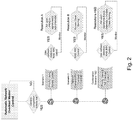
- Figure 2 shows a flow diagram representing the algorithm including the Resolutions A, B and C.
- Access Classes shall only be applied at initial access, i.e. when sending an RRC CONNECTION REQUEST. That means in the access to the PRACH (Physical Random Access Channel) procedure.
- PRACH Physical Random Access Channel
- AC Access Class
- ASC Access Service Class
- the parameters implied by the respective ASC shall be employed.
- the UE In case the UE is member of several ACs it shall select the ASC for the highest AC number. In connected mode, AC shall not be applied.
- the PRACH resources i.e. access slots and preamble signatures
- An ASC is defined by an identifier, i, that defines a certain partition of the PRACH resources and an associated persistence value Pi.
- PRACH partitions shall be established using the information element "PRACH partitioning".
- the persistence probability value controls the timing of RACH transmissions at the level of radio frame intervals.
- the terminal draws a number r randomly between 0 and 1. If r ⁇ Pi, the physical layer PRACH transmission procedure is initiated. Otherwise, the initiation of the transmission is deferred by 10ms, then a new random experiment is performed, and so on, until r ⁇ Pi. During this procedure, the terminal monitors downlink control channels for information and takes updates of the RACH control parameters into account.
- FIG. 3 it is shown the timing relationship in the PRACH channel. There are 15 slots and every user repeats a PRACH preamble until it gets an Acquisition Indicator to transmit the message part.
- the access slots are split between 12 RACH subchannels, hence every 12th access slot pertains to a specific subchannel.
- Several subchannels may be associated with any one of up to 16 different PRACHs signatures, similarly several or all subchannels associated with that PRACH may be used by a particular ASC.
- the 15 access slots are split into two access slots, the first eight slots are associated with set one, the other seven with set 2, as illustrated in Figure 3 .
Landscapes
- Engineering & Computer Science (AREA)
- Quality & Reliability (AREA)
- Computer Networks & Wireless Communication (AREA)
- Signal Processing (AREA)
- Mobile Radio Communication Systems (AREA)
Description
- The present invention is comprised within the field of mobile telecommunications, and more specifically in providing automatic cell access control to high-priority mobile users in overload and emergency situations.
- Radio Access Networks (RAN) are normally dimensioned for daily or weekly average traffic but rarely for peak traffic conditions. Based on this dimensioning, users are able to access network resources in order to establish and release their communications.
- When unexpected peak traffic situations occur (e.g. in case of emergency situations like earthquake, terrorist attacks, etc.) the mobile network can become so congested that accessibility is not possible to the great majority of users.
- Similar peak traffic can also occur in special events, like concerts, sport games (football, races) or similar situations in which a huge amount of people get together; and in these cases, although operators increase as much as possible the available network resources, it is not possible to design the system in order to guarantee the normal level of accessibility.
- Special users like police, ambulance services, fire brigades, and special allowed staff must be able to access the network.
- International patent document
WO01/93462 - However, there is currently no automatic solution to cope with the problems.
- The present invention automatically detects the accessibility problems caused by unexpected high traffic load and reacts to the situation in order to guarantee the proper accessibility to special pre-defined high priority users (user prioritization based access control).
- Besides, the present invention automatically protects against the excessive load by ensuring that its workload is kept lower than a pre-configurable load level able to guarantee a correct functioning of the RNC (Radio Network Controller) and Node B machine.
- The invention automatically detects the accessibility problems caused by the extremely high load, reduces overload situations (e.g. signalling, CPU usage) on the network elements, automatically guarantees accessibility in emergency situations to the emergency user (e.g. rescue services, police, etc) and measures the effectiveness of its countermeasures and adapts its behaviour to the new traffic situation as the time goes by.
- The present invention acts upon two scenarios:
- 1. To react to the situation in order to guarantee the proper accessibility to special pre-defined high priority users (user prioritisation based access control)
- 2. To be able to self protect against the excessive load by ensuring that its workload is kept lower than a pre-configurable load level able to guarantee a correct functioning of the RNC and Node B machines.
- In the present solution the availability of the 3GPP-defined resources for 3G system accessibility (RACH slots and signatures) is dynamically increased/decreased based on the level of system congestion (RRC and RAB allocation success rate) as well as on the detected congestion on the accessibility channels.
- It is well-known that abbreviations and acronyms are frequently used in the mobile telephony field. Below is a glossary of acronyms/terms used throughout the present specification:
- 3GPP
- The 3rd Generation Partnership Project
- AC
- Access Class
- ASC
- Access Service Class
- FDD
- Frequency Division Duplex
- PLMN
- Public Land Mobile Network
- PRACH
- Physical Random Access Channel
- RAB
- Radio Access Bearer
- RACH
- Random Access Channel
- RAN
- Radio Access Network
- RNC
- Radio Network Controller
- RRC
- Radio Resource Control
- TDD
- Time Division Duplex
- UE
- User Equipment
- SIM
- Subscriber Identity Module
- U/SIM
- UMTS Subscriber Identity Module
- UMTS
- Universal Mobile Telecommunications System
- The invention relates to a method for providing automatic cell access prioritization to high-priority mobile users in overload and emergency situations according to
claim 1. Preferred embodiments of the method are defined in the dependent claims. - In the method of the present invention the high-priority mobile users are mapped to at least one access class (AC) selected from access classes 11 to 15. The method comprises:
- detecting an overload situation in the mobile network, said overload situation being detected when at least one failure rate parameter exceeds a respective predetermined threshold (THRC1, THRB1, THRP1), there being at least one predetermined threshold for each type of failure rate parameter;
- when an overload situation is detected, dedicating PRACH resources specifically to the access classes associated with said high-priority mobile users, thereby giving more priority to the access classes associated with said high-priority mobile users;
- if at least one failure rate parameter exceeds the threshold (THRC1, THRB1, THRP1), but not a second threshold (THRC2, THRB2, THRP2), activating a first access class differentiation for dedicating PRACH resources specifically to the access classes associated with said high-priority mobile users; and
- if at least one failure rate parameter exceeds the threshold (THRC1, THRB1, THRP1), and the second threshold (THRC2, THRB2, THRP2), activating a second access class differentiation for dedicating more PRACH resources than in the first access class differentiation specifically to the access classes associated with said high-priority mobile users.
- Thus giving more priority to the AC associated with said high-priority mobile users comprises dedicating PRACH resources (preferably at least PRACH signatures or PRACH sub-channels) specifically to the AC associated with said high-priority mobile users.
- In a preferred embodiment the overload situation is detected when either the RRC connection failure rate or RB setup failure rate or PRACH collisions failure rate exceeds determined thresholds (THRC1, THRB1, THRP1) for each type of failure rate.
- In the case that at least one failure rate parameter has exceeded its corresponding threshold TH1, the method can also comprise:
- when said at least one failure rate parameter goes below its corresponding threshold THRhyst, the 1st AC differentiation is removed.
- In the case that at least one failure rate parameter has exceeded its corresponding threshold TH2, the method can also comprise:
- when said at least one failure rate parameter goes below its corresponding threshold THRhyst2, activating the 1st AC differentiation.
- The 1st AC differentiation preferably comprises dedicating PRACH signatures initially mapped to
ASC 1 to the ASC associated with the high-priority mobile users. - The 2nd AC differentiation preferably comprises dedicating PRACH signatures and sub-channels initially mapped to
ASC 1 to the ASC associated with the high-priority mobile users. - In another preferred embodiment giving more priority to the AC associated with the high-priority mobile users further comprises activating access class barring for, at least, part of the users associated with any of AC 0 to 9 when an overload situation is detected.
- In that case the method can also comprise:
- if at least one failure rate parameter exceeds a restricting threshold (THRCB, THRBB), restricting the access to at least one access class belonging from AC1 to AC9.
- The restriction can be applied to all the access classes defined within a range Xrange or it can be applied sequentially, according to a restriction interval TR, and repeatedly to different groups of access classes.
- A series of drawings which aid in better understanding the invention and which are expressly related with an embodiment of said invention, presented as a non-limiting example thereof, are very briefly described below.
-
Figure 1 shows access restriction mechanism for 10 access classes in a range Xrange. -
Figure 2 shows a flow diagram of the algorithm proposed by the invention. -
Figure 3 shows the timing relationship in the PRACH channel. -
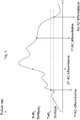
Figure 4 shows the activation of the AC differentiations when a failure rate exceeds determined thresholds, and deactivation of the AC differentiations when the failure rate goes below other determined thresholds. - According to the 3GPP standard 22.011, section 4, all UEs (User Equipments) are members of one of the ten randomly allocated mobile populations, defined as Access Classes (AC) 0 to 9. The population number is stored in the SIM/USIM. In addition, mobiles may be members of one or more of the 5 special categories (Access Classes 11 to 15), also held in the SIM/USIM. These are allocated to specific high priority users as follows. (The enumeration is not meant as a priority sequence):
- Class 15
- - PLMN Staff;
-
Class 14 - - Emergency Services;
-
Class 13 - - Public Utilities (e.g. water/gas suppliers);
- Class 12
- - Security Services;
- Class 11
- - For PLMN Use.
- In this way, the mobile terminal and the network can know in the SIM/USIM which kind of access class the user is.
- This invention proposes to give more priority to this kind of special users. The only way that the network can give more priority is in the PRACH procedure. A preferred implementation of the algorithm is explained in the next paragraphs.
- The triggering of the algorithm is the statistics per cell, in particular the RRC connection failure rate, the Radio Bearer Setup failure rate and the PRACH collisions failure rate. In this way the algorithm will act only in very congested situations, in which there are many users trying to access to the network.
- When the failure increases and exceeds a threshold, then the algorithm starts to act. There can be several thresholds: in every one it is increased the priority of the special users and decrease the priority of the normal users. The present invention proposes different resolutions (A, B and C) to act upon the two different scenarios, Scenario 1 (to guarantee the proper accessibility to special pre-defined high priority users) and Scenario 2 (to protect against the excessive load by ensuring that the workload is kept lower than a pre-configurable load level able to guarantee a correct functioning of the RNC and Node B machines)
- An example of a preferred algorithm is described here. Taking into account the PRACH procedure, it is possible to give more access probability to the special users (with AC 11 to 15).
- According to the 3GPP standards, the AC 11 to 15 are mapped to the Access Service Classes (ASC) 2 to 7, and the rest of the users with Access Class from 0 to 9 are mapped to the
ASC 1.AC 0-9 10 11 12 13 14 15 ASC 1st IE 2nd IE 3rd IE 4th IE 5th IE 6th IE 7th IE IE: Information Element - The inventive algorithm may be expressed in pseudocode as follows:
- where THRC indicates a threshold for the RRC messages,
- where THRB for the Radio Bearer messages,
- where THRP a threshold for the PRACH collisions.
- And when several thresholds for the same messages are used, they are given a numerical index: e.g. THRC1, THRC2, etc.

- Signatures and Sub-channels of the PRACH procedure (taken from the 3GPP specs) are included for ease of reading in the later section called "PRACH procedure in 3G".
- With the first prioritisation, some signatures are dedicated to the special users, so the probability of receiving OK is higher.
- With the use of the sub-channels, it is not possible a collision between normal users and special users, so it is easier for the special users to access the network.
- There could be more thresholds to increase the priority of the special users. For example:

- In the same way, when the failure rate goes down respect to the previous thresholds with certain hysteresis (THRhyst1, THRhyst2), the AC differentiation is changed, and even removed (see
Figure 4 ). - In summary, to give more priority it is a question of dedicating more signatures and more sub-channels to the special Access Class users.
- According to the function of the previous algorithm the normal users have always possibility of accessing to the network because they have always a signature and a sub-channel available to try to access.
- So, if there are a big amount of users, they could still congest and collapse the cell.
- The solution for this case is the implementation of an automatic Access Class Restriction per cell. This algorithm is triggered when the RRC connection failure or RB setup failure exceeds thresholds (THRCB,THRBB), which are preferably higher than in the previous algorithm as this is a more restricted way of avoiding the access of normal users, so it should be applied when the network congestion situation is becoming critical.
- Restriction can be implemented in the range Xrange of the access classes from 0 to 9, within the access class restriction interval TR instead of applying control to all subscribers. This Access Class barring is indicated in the System Information messages, forbidding the network access to the mobiles with the indicated AC. According to the 3GPP specs, when an AC is forbidden, the mobiles which SIM/USIM has said AC will not even start the PRACH procedure, meaning that will not try to access the network (therefore not increasing the network load in terms of RRC messages, RB assignment and overall network traffic).
- The operator shall be able to define two different modes of operation:
- Mode 1: Restriction applies immediately to all the access classes defined within the range Xrange.
- Mode 2: Restriction applies sequentially in the access classes defined in the range Xrange, during the restriction interval TR. This sequence is set by an X percentage of restriction from 0% to 100% with 10% step, called Xstart. For example, if 10 access classes are defined in the range Xrange, 10 % is one access class, 20% is two access classes and 100% is all access classes. This means that during TR seconds (or minutes), if X = 20%,
Access classes 0 and 1 will be forbidden, than in next TR period the mobiles whose SIM/USIM haveAC 0 and 1 will be able to start PRACH procedure again, whistAC 2 and 3 will be forbidden, meaning that the mobiles which SIM/USIM haveAC 2 and 3 will not be able to start any PRACH procedure. - The system will check every period of G*TR seconds or minutes (G is an integer value from 1 to 100) if the RRC connection failure or RB setup failure become lower than the threshold that triggered the algorithm.
- If this is not the case, the value X is increased by a so called X-step and the restriction is now applied to a wider set of ACs.
- At the next check, if the RRC or RB failure rate is still high, X will be increased again until the maximum value.
- When both the RRC connection failure or RB setup failure become lower than THRChystB andTHRBhystB respectively, the value X will be decreased by X-step if it had been increased in the first round of the algorithm from Xstart, and the new system load will be checked after S*TR period.
- When X value is back to Xstart value, if the RRC connection failure or RB setup failure remain below THRChystB andTHRBhystB thresholds, the algorithm is disabled and all AC classes can finally access the system.
- The third solution is to combine both algorithms, depending on the failure rates commented before. In this way it is possible to increase the priority of the special users to access the network and simultaneously to restrict the access to some AC with the barring solution B algorithm.
-
Figure 2 shows a flow diagram representing the algorithm including the Resolutions A, B and C. - As commented previously Access Classes shall only be applied at initial access, i.e. when sending an RRC CONNECTION REQUEST. That means in the access to the PRACH (Physical Random Access Channel) procedure.
- In 3GPP standard 25.331, chapter 8.5.13, a mapping between Access Class (AC) and Access Service Class (ASC) shall be indicated by the information element "AC-to-ASC mapping" in System Information Block type 5 or System Information Block type 5bis. The correspondence between AC and ASC shall be indicated as follows.
AC 0-9 10 11 12 13 14 15 ASC 1st IE 2nd IE 3rd IE 4th IE 5th IE 6th IE 7th IE - For the random access, the parameters implied by the respective ASC shall be employed. In case the UE is member of several ACs it shall select the ASC for the highest AC number. In connected mode, AC shall not be applied.
- The PRACH resources (i.e. access slots and preamble signatures), may be divided between different Access Service Classes in order to provide different priorities of RACH usage. It is possible for more than one ASC or for all ASCs to be assigned to the same access slot/signature space.
- Access Service Classes shall be numbered in the range 0 <= i <= NumASC <= 7 (i.e. the maximum number of ASCs is 8). An ASC is defined by an identifier, i, that defines a certain partition of the PRACH resources and an associated persistence value Pi. A set of ASC parameters consists of "NumASC+1" such parameters (i, Pi), i = 0, ..., NumASC.
- PRACH partitions shall be established using the information element "PRACH partitioning". The persistence values Pi to be associated with each ASC shall be derived from the dynamic persistence level N = 1,..., 8 which is broadcast in System Information Block 7, and the persistence scaling factors si, broadcast in System Information Block Type 5 or System Information Block type 5bis and possibly also in System Information Block Type 6, as follows:
ASC # i 0 1 2 3 4 5 6 7 Pi 1 P(N) s2 P(N) s3 P(N) s4 P(N) s5 P(N) s6P(N) s7 P(N) - Scaling factors si are provided optionally for i=2,..., NumASC, where NumASC+1 is the number of ASCs as defined by PRACH partitioning. If no scaling factors are broadcast,
default value 1 shall be used if NumASC >= 2. - The persistence probability value controls the timing of RACH transmissions at the level of radio frame intervals. When initiating RACH transmission, having received the necessary system information for the chosen PRACH and established the relevant Pi, the terminal draws a number r randomly between 0 and 1. If r ≤ Pi, the physical layer PRACH transmission procedure is initiated. Otherwise, the initiation of the transmission is deferred by 10ms, then a new random experiment is performed, and so on, until r ≤ Pi. During this procedure, the terminal monitors downlink control channels for information and takes updates of the RACH control parameters into account.
- In
Figure 3 it is shown the timing relationship in the PRACH channel. There are 15 slots and every user repeats a PRACH preamble until it gets an Acquisition Indicator to transmit the message part. - The access slots are split between 12 RACH subchannels, hence every 12th access slot pertains to a specific subchannel. Several subchannels may be associated with any one of up to 16 different PRACHs signatures, similarly several or all subchannels associated with that PRACH may be used by a particular ASC.
- The 15 access slots are split into two access slots, the first eight slots are associated with set one, the other seven with
set 2, as illustrated inFigure 3 . - In summary, the parameters depending on the ASC (which controls the priority of the users) are:
- Signature Start and End: As commented before, there are 16 possible signatures which are different coding that can allow transmitting more than 1 user in the same slot. If one ASC class has dedicated signatures, then it is not possible to have a collision with other class of users from code point of view.
- Assigned Sub-channel number: Every ASC can be allocated one or more sub-channel numbers. There are 12 subchannels. Every sub-channel can be allocated to one or more ASC. To give more priority to the high Access Class users, it is possible to dedicate some sub-channels; in this way, the normal users will not transmit any PRACH preamble in said dedicated sub-channels.
Claims (12)
- Method for providing automatic cell access prioritization to high-priority mobile users, characterised in that access classes, ACs, selected from ACs 11 to 15, are associated with said high-priority mobile users, and the method comprises:- detecting an overload situation in a mobile network, said overload situation being detected when at least one failure rate parameter exceeds a respective predetermined threshold (THRC1, THRB1, THRP1), there being at least one predetermined threshold for each failure rate parameter;- when an overload situation is detected, dedicating PRACH, Physical Random Access Channel, resources specifically to the access classes associated with said high-priority mobile users, thereby giving more priority to the access classes associated with said high-priority mobile users;- if the at least one failure rate parameter exceeds the respective predetermined threshold (THRC1, THRB1, THRP1), but not a second threshold (THRC2, THRB2, THRP2), activating a first access class differentiation for dedicating PRACH resources specifically to the access classes associated with said high-priority mobile users; and- if the at least one failure rate parameter exceeds the respective predetermined threshold (THRC1, THRB1, THRP1), and the second threshold (THRC2, THRB2, THRP2), activating a second access class differentiation for dedicating more PRACH resources than in the first access class differentiation specifically to the access classes associated with said high-priority mobile users.
- Method according to claim 1, characterized in that the PRACH resources specifically dedicated to the high-priority mobile users are at least PRACH signatures.
- Method according to claim 1 or claim 2, characterized in that the PRACH resources specifically dedicated to the high-priority mobile users are at least PRACH sub-channels.
- Method according to any one of claims 1 to 3, characterized in that the at least one failure rate parameter is selected from a group including: RRC connection failure rate; RB setup failure rate; and PRACH collisions failure rate.
- Method according to any one of claims 1 to 4, wherein, after at least one failure rate parameter has exceeded its corresponding threshold (THRC1, THRB1, THRP1) and the first access class differentiation has been activated,, the method further comprises:- when said at least one failure rate parameter goes below a corresponding hysteresis threshold (THRhyst1), the first access class differentiation is removed.
- Method according to any one of claims 1 to 5, wherein after at least one failure rate parameter has exceeded its corresponding threshold (THRC2, THRB2, THRP2) and the second access class differentiation has been activated, the method further comprises:- when said at least one failure rate parameter goes below a second corresponding threshold (THRhyst2), activating the first access class differentiation.
- Method according to any one of claims 1 to 6, wherein the first access class differentiation comprises dedicating PRACH signatures initially mapped to ASC 1 to an ASC associated with the high-priority mobile users.
- Method according to any one of claims 1 to 7, wherein the second access class differentiation comprises dedicating PRACH signatures and sub-channels initially mapped to ASC 1 to an ASC associated with the high-priority mobile users.
- Method according to any of previous claims, further comprising:when an overload situation is detected, activating access class barring for, at least, part of the users associated with any of AC 0 to 9.
- Method according to claim 9, wherein the access class barring comprises:- if at least one failure rate parameter exceeds a restricting threshold (THRCB, THRBB), restricting the access to at least one access class belonging from AC1 to AC9.
- Method according to claim 10, wherein the restriction is applied to all the access classes defined within a range Xrange.
- Method according to claim 10 or 11, wherein the restriction is applied sequentially, according to a restriction interval TR, and repeatedly to different groups of access classes.
Applications Claiming Priority (1)
| Application Number | Priority Date | Filing Date | Title |
|---|---|---|---|
| ES200900495A ES2355227B1 (en) | 2009-02-23 | 2009-02-23 | METHOD FOR PROVIDING AUTOMATIC CELL ACCESS CONTROL, FOR HIGH PRIORITY MOBILE USERS IN OVERLOAD AND EMERGENCY SITUATIONS. |
Publications (2)
| Publication Number | Publication Date |
|---|---|
| EP2222112A1 EP2222112A1 (en) | 2010-08-25 |
| EP2222112B1 true EP2222112B1 (en) | 2017-04-12 |
Family
ID=42245679
Family Applications (1)
| Application Number | Title | Priority Date | Filing Date |
|---|---|---|---|
| EP10154349.4A Not-in-force EP2222112B1 (en) | 2009-02-23 | 2010-02-23 | Emergency cell access control |
Country Status (3)
| Country | Link |
|---|---|
| US (1) | US8423029B2 (en) |
| EP (1) | EP2222112B1 (en) |
| ES (1) | ES2355227B1 (en) |
Families Citing this family (17)
| Publication number | Priority date | Publication date | Assignee | Title |
|---|---|---|---|---|
| JP5278350B2 (en) * | 2010-02-25 | 2013-09-04 | 富士通株式会社 | Base station apparatus, identifier assigning method, and identifier assigning program |
| US8711791B2 (en) * | 2010-12-20 | 2014-04-29 | Telefonaktiebolaget L M Ericsson (Publ) | Denial of service (DoS) attack prevention through random access channel resource reallocation |
| AU2012250760B2 (en) | 2011-05-02 | 2015-11-05 | Apple Inc. | Methods and apparatus for transporting data through network tunnels |
| KR101961734B1 (en) * | 2011-05-06 | 2019-03-25 | 삼성전자 주식회사 | Terminal and method for managing backoff time thereof |
| WO2012167497A1 (en) * | 2011-08-03 | 2012-12-13 | 华为技术有限公司 | Sending method, enb and user equipment |
| US8942091B2 (en) | 2011-11-09 | 2015-01-27 | Industrial Technology Research Institute | Method and apparatus for notifying access control information |
| US8797858B2 (en) * | 2012-01-04 | 2014-08-05 | Telefonaktiebolaget L M Ericsson (Publ) | Adaptive access channel overload control |
| JP6071276B2 (en) * | 2012-05-14 | 2017-02-01 | 株式会社Nttドコモ | Mobile station |
| US9094445B2 (en) * | 2013-03-15 | 2015-07-28 | Centripetal Networks, Inc. | Protecting networks from cyber attacks and overloading |
| US20160143057A1 (en) * | 2013-07-02 | 2016-05-19 | Telefonaktiebolaget L M Ericsson (Publ) | Method and network node for managing collisions |
| WO2015069091A1 (en) * | 2013-11-11 | 2015-05-14 | 엘지전자 주식회사 | Method for establishing rrc connection for cell of terminal and terminal using same |
| JP6161825B2 (en) * | 2014-03-19 | 2017-07-12 | エルジー エレクトロニクス インコーポレイティド | Service request procedure execution method and user device |
| GB2526587A (en) * | 2014-05-28 | 2015-12-02 | Vodafone Ip Licensing Ltd | Method and apparatus for controlling access to a telecommunications network |
| US9591686B2 (en) * | 2014-08-11 | 2017-03-07 | Qualcomm Incorporated | Access class barring for device-to-device proximity service communications |
| JP6810787B2 (en) * | 2017-02-24 | 2021-01-06 | 京セラ株式会社 | Wireless communication device and processor |
| EP3632018B1 (en) * | 2017-05-24 | 2024-10-09 | Motorola Mobility LLC | Performing an action based on a number of transmissions reaching a threshold |
| KR102951830B1 (en) | 2020-08-04 | 2026-04-13 | 삼성전자 주식회사 | Electronic device and method for performing communication using the same |
Family Cites Families (6)
| Publication number | Priority date | Publication date | Assignee | Title |
|---|---|---|---|---|
| EP1032236A1 (en) * | 1999-02-24 | 2000-08-30 | ICO Services Ltd. | Improved congestion control using access classes |
| DE60043629D1 (en) | 2000-04-04 | 2010-02-11 | Sony Deutschland Gmbh | Event-driven change of the access service class in a random access channel |
| EP1212853B1 (en) * | 2000-06-02 | 2005-08-31 | Samsung Electronics Co., Ltd. | Method for selecting rach in a cdma mobile communication system |
| US7003303B2 (en) * | 2002-08-23 | 2006-02-21 | Motorola, Inc. | Dedicated high priority access channel |
| JP2009535968A (en) * | 2006-05-02 | 2009-10-01 | テレフオンアクチーボラゲット エル エム エリクソン(パブル) | Congestion flag generation method based on measurement system load |
| WO2008115451A1 (en) * | 2007-03-16 | 2008-09-25 | Interdigital Technology Corporation | Random access resource mapping for long term evolution |
-
2009
- 2009-02-23 ES ES200900495A patent/ES2355227B1/en active Active
-
2010
- 2010-02-23 EP EP10154349.4A patent/EP2222112B1/en not_active Not-in-force
- 2010-02-23 US US12/710,727 patent/US8423029B2/en not_active Expired - Fee Related
Non-Patent Citations (1)
| Title |
|---|
| None * |
Also Published As
| Publication number | Publication date |
|---|---|
| ES2355227A1 (en) | 2011-03-24 |
| US8423029B2 (en) | 2013-04-16 |
| US20100240377A1 (en) | 2010-09-23 |
| ES2355227B1 (en) | 2012-02-10 |
| EP2222112A1 (en) | 2010-08-25 |
Similar Documents
| Publication | Publication Date | Title |
|---|---|---|
| US8423029B2 (en) | Method for providing automatic cell access control to high-priority mobile users in overload and emergency situations | |
| KR102161831B1 (en) | Method and appratus of applying extended access barring in mobile communication system | |
| US7079507B2 (en) | Method and apparatus for common packet channel assignment | |
| KR101756635B1 (en) | Method and program for cell barring in a cellular network | |
| CA2283906C (en) | Random access channel prioritization scheme | |
| US7848281B2 (en) | Method for selection of an available transmission channel by sending a negative decision value and an additional positive decision value and corresponding base station, mobile terminal and mobile radio network | |
| KR102106989B1 (en) | Method and apparatus for efficiently controlling access for system load adjustment in mobile communication systems | |
| EP3654671B1 (en) | Communication system, mobile station, base station, response decision method, resource configuration decision method, and program | |
| KR101461939B1 (en) | Priority-based random access method | |
| EP2127442A2 (en) | Methods and procedures to allocate ue dedicated signatures | |
| AU1952800A (en) | Process for controlling uplink packet transmission in a wireless communication system | |
| WO2010107354A1 (en) | High priority random access | |
| EP2680656B1 (en) | Enhanced barring for wireless communication | |
| WO2008115451A1 (en) | Random access resource mapping for long term evolution | |
| US8306543B2 (en) | Method for providing random access to communication system | |
| EP2645779A1 (en) | Network access method and device | |
| IDRIS et al. | ELECTRICAL ENGINEERING DEPARTMENT, FACULTY OF ENGINEERING. BAYERO UNIVERSITY KANO. PMB 3011 | |
| HK1111848A (en) | Event triggered change of access service class in a random access channel |
Legal Events
| Date | Code | Title | Description |
|---|---|---|---|
| PUAI | Public reference made under article 153(3) epc to a published international application that has entered the european phase |
Free format text: ORIGINAL CODE: 0009012 |
|
| AK | Designated contracting states |
Kind code of ref document: A1 Designated state(s): AT BE BG CH CY CZ DE DK EE ES FI FR GB GR HR HU IE IS IT LI LT LU LV MC MK MT NL NO PL PT RO SE SI SK SM TR |
|
| AX | Request for extension of the european patent |
Extension state: AL BA RS |
|
| 17P | Request for examination filed |
Effective date: 20110224 |
|
| GRAP | Despatch of communication of intention to grant a patent |
Free format text: ORIGINAL CODE: EPIDOSNIGR1 |
|
| INTG | Intention to grant announced |
Effective date: 20161103 |
|
| RIC1 | Information provided on ipc code assigned before grant |
Ipc: H04W 28/16 20090101AFI20161021BHEP Ipc: H04W 76/00 20090101ALN20161021BHEP Ipc: H04W 4/22 20090101ALN20161021BHEP |
|
| RIN1 | Information on inventor provided before grant (corrected) |
Inventor name: DE PASQUALE, ANDREA Inventor name: DOMINGUEZ ROMERO, FRANCISCO Inventor name: EXADAKTYLOS, KYRIAKOS |
|
| GRAS | Grant fee paid |
Free format text: ORIGINAL CODE: EPIDOSNIGR3 |
|
| GRAA | (expected) grant |
Free format text: ORIGINAL CODE: 0009210 |
|
| AK | Designated contracting states |
Kind code of ref document: B1 Designated state(s): AT BE BG CH CY CZ DE DK EE ES FI FR GB GR HR HU IE IS IT LI LT LU LV MC MK MT NL NO PL PT RO SE SI SK SM TR |
|
| REG | Reference to a national code |
Ref country code: GB Ref legal event code: FG4D |
|
| REG | Reference to a national code |
Ref country code: CH Ref legal event code: EP |
|
| REG | Reference to a national code |
Ref country code: IE Ref legal event code: FG4D |
|
| REG | Reference to a national code |
Ref country code: AT Ref legal event code: REF Ref document number: 884922 Country of ref document: AT Kind code of ref document: T Effective date: 20170515 |
|
| REG | Reference to a national code |
Ref country code: DE Ref legal event code: R096 Ref document number: 602010041420 Country of ref document: DE |
|
| REG | Reference to a national code |
Ref country code: NL Ref legal event code: MP Effective date: 20170412 |
|
| REG | Reference to a national code |
Ref country code: LT Ref legal event code: MG4D |
|
| REG | Reference to a national code |
Ref country code: AT Ref legal event code: MK05 Ref document number: 884922 Country of ref document: AT Kind code of ref document: T Effective date: 20170412 |
|
| PG25 | Lapsed in a contracting state [announced via postgrant information from national office to epo] |
Ref country code: NL Free format text: LAPSE BECAUSE OF FAILURE TO SUBMIT A TRANSLATION OF THE DESCRIPTION OR TO PAY THE FEE WITHIN THE PRESCRIBED TIME-LIMIT Effective date: 20170412 |
|
| PG25 | Lapsed in a contracting state [announced via postgrant information from national office to epo] |
Ref country code: GR Free format text: LAPSE BECAUSE OF FAILURE TO SUBMIT A TRANSLATION OF THE DESCRIPTION OR TO PAY THE FEE WITHIN THE PRESCRIBED TIME-LIMIT Effective date: 20170713 Ref country code: FI Free format text: LAPSE BECAUSE OF FAILURE TO SUBMIT A TRANSLATION OF THE DESCRIPTION OR TO PAY THE FEE WITHIN THE PRESCRIBED TIME-LIMIT Effective date: 20170412 Ref country code: LT Free format text: LAPSE BECAUSE OF FAILURE TO SUBMIT A TRANSLATION OF THE DESCRIPTION OR TO PAY THE FEE WITHIN THE PRESCRIBED TIME-LIMIT Effective date: 20170412 Ref country code: AT Free format text: LAPSE BECAUSE OF FAILURE TO SUBMIT A TRANSLATION OF THE DESCRIPTION OR TO PAY THE FEE WITHIN THE PRESCRIBED TIME-LIMIT Effective date: 20170412 Ref country code: ES Free format text: LAPSE BECAUSE OF FAILURE TO SUBMIT A TRANSLATION OF THE DESCRIPTION OR TO PAY THE FEE WITHIN THE PRESCRIBED TIME-LIMIT Effective date: 20170412 Ref country code: NO Free format text: LAPSE BECAUSE OF FAILURE TO SUBMIT A TRANSLATION OF THE DESCRIPTION OR TO PAY THE FEE WITHIN THE PRESCRIBED TIME-LIMIT Effective date: 20170712 Ref country code: HR Free format text: LAPSE BECAUSE OF FAILURE TO SUBMIT A TRANSLATION OF THE DESCRIPTION OR TO PAY THE FEE WITHIN THE PRESCRIBED TIME-LIMIT Effective date: 20170412 |
|
| PG25 | Lapsed in a contracting state [announced via postgrant information from national office to epo] |
Ref country code: LV Free format text: LAPSE BECAUSE OF FAILURE TO SUBMIT A TRANSLATION OF THE DESCRIPTION OR TO PAY THE FEE WITHIN THE PRESCRIBED TIME-LIMIT Effective date: 20170412 Ref country code: SE Free format text: LAPSE BECAUSE OF FAILURE TO SUBMIT A TRANSLATION OF THE DESCRIPTION OR TO PAY THE FEE WITHIN THE PRESCRIBED TIME-LIMIT Effective date: 20170412 Ref country code: BG Free format text: LAPSE BECAUSE OF FAILURE TO SUBMIT A TRANSLATION OF THE DESCRIPTION OR TO PAY THE FEE WITHIN THE PRESCRIBED TIME-LIMIT Effective date: 20170712 Ref country code: IS Free format text: LAPSE BECAUSE OF FAILURE TO SUBMIT A TRANSLATION OF THE DESCRIPTION OR TO PAY THE FEE WITHIN THE PRESCRIBED TIME-LIMIT Effective date: 20170812 Ref country code: PL Free format text: LAPSE BECAUSE OF FAILURE TO SUBMIT A TRANSLATION OF THE DESCRIPTION OR TO PAY THE FEE WITHIN THE PRESCRIBED TIME-LIMIT Effective date: 20170412 |
|
| REG | Reference to a national code |
Ref country code: DE Ref legal event code: R097 Ref document number: 602010041420 Country of ref document: DE |
|
| PG25 | Lapsed in a contracting state [announced via postgrant information from national office to epo] |
Ref country code: RO Free format text: LAPSE BECAUSE OF FAILURE TO SUBMIT A TRANSLATION OF THE DESCRIPTION OR TO PAY THE FEE WITHIN THE PRESCRIBED TIME-LIMIT Effective date: 20170412 Ref country code: DK Free format text: LAPSE BECAUSE OF FAILURE TO SUBMIT A TRANSLATION OF THE DESCRIPTION OR TO PAY THE FEE WITHIN THE PRESCRIBED TIME-LIMIT Effective date: 20170412 Ref country code: EE Free format text: LAPSE BECAUSE OF FAILURE TO SUBMIT A TRANSLATION OF THE DESCRIPTION OR TO PAY THE FEE WITHIN THE PRESCRIBED TIME-LIMIT Effective date: 20170412 Ref country code: SK Free format text: LAPSE BECAUSE OF FAILURE TO SUBMIT A TRANSLATION OF THE DESCRIPTION OR TO PAY THE FEE WITHIN THE PRESCRIBED TIME-LIMIT Effective date: 20170412 Ref country code: CZ Free format text: LAPSE BECAUSE OF FAILURE TO SUBMIT A TRANSLATION OF THE DESCRIPTION OR TO PAY THE FEE WITHIN THE PRESCRIBED TIME-LIMIT Effective date: 20170412 |
|
| PLBE | No opposition filed within time limit |
Free format text: ORIGINAL CODE: 0009261 |
|
| STAA | Information on the status of an ep patent application or granted ep patent |
Free format text: STATUS: NO OPPOSITION FILED WITHIN TIME LIMIT |
|
| PG25 | Lapsed in a contracting state [announced via postgrant information from national office to epo] |
Ref country code: IT Free format text: LAPSE BECAUSE OF FAILURE TO SUBMIT A TRANSLATION OF THE DESCRIPTION OR TO PAY THE FEE WITHIN THE PRESCRIBED TIME-LIMIT Effective date: 20170412 Ref country code: SM Free format text: LAPSE BECAUSE OF FAILURE TO SUBMIT A TRANSLATION OF THE DESCRIPTION OR TO PAY THE FEE WITHIN THE PRESCRIBED TIME-LIMIT Effective date: 20170412 |
|
| 26N | No opposition filed |
Effective date: 20180115 |
|
| PG25 | Lapsed in a contracting state [announced via postgrant information from national office to epo] |
Ref country code: SI Free format text: LAPSE BECAUSE OF FAILURE TO SUBMIT A TRANSLATION OF THE DESCRIPTION OR TO PAY THE FEE WITHIN THE PRESCRIBED TIME-LIMIT Effective date: 20170412 |
|
| REG | Reference to a national code |
Ref country code: DE Ref legal event code: R119 Ref document number: 602010041420 Country of ref document: DE |
|
| REG | Reference to a national code |
Ref country code: CH Ref legal event code: PL |
|
| PG25 | Lapsed in a contracting state [announced via postgrant information from national office to epo] |
Ref country code: MC Free format text: LAPSE BECAUSE OF FAILURE TO SUBMIT A TRANSLATION OF THE DESCRIPTION OR TO PAY THE FEE WITHIN THE PRESCRIBED TIME-LIMIT Effective date: 20170412 |
|
| GBPC | Gb: european patent ceased through non-payment of renewal fee |
Effective date: 20180223 |
|
| REG | Reference to a national code |
Ref country code: IE Ref legal event code: MM4A |
|
| REG | Reference to a national code |
Ref country code: BE Ref legal event code: MM Effective date: 20180228 |
|
| PG25 | Lapsed in a contracting state [announced via postgrant information from national office to epo] |
Ref country code: CH Free format text: LAPSE BECAUSE OF NON-PAYMENT OF DUE FEES Effective date: 20180228 Ref country code: LI Free format text: LAPSE BECAUSE OF NON-PAYMENT OF DUE FEES Effective date: 20180228 Ref country code: LU Free format text: LAPSE BECAUSE OF NON-PAYMENT OF DUE FEES Effective date: 20180223 |
|
| REG | Reference to a national code |
Ref country code: FR Ref legal event code: ST Effective date: 20181031 |
|
| PG25 | Lapsed in a contracting state [announced via postgrant information from national office to epo] |
Ref country code: DE Free format text: LAPSE BECAUSE OF NON-PAYMENT OF DUE FEES Effective date: 20180901 Ref country code: IE Free format text: LAPSE BECAUSE OF NON-PAYMENT OF DUE FEES Effective date: 20180223 |
|
| PG25 | Lapsed in a contracting state [announced via postgrant information from national office to epo] |
Ref country code: GB Free format text: LAPSE BECAUSE OF NON-PAYMENT OF DUE FEES Effective date: 20180223 Ref country code: FR Free format text: LAPSE BECAUSE OF NON-PAYMENT OF DUE FEES Effective date: 20180228 Ref country code: BE Free format text: LAPSE BECAUSE OF NON-PAYMENT OF DUE FEES Effective date: 20180228 |
|
| PG25 | Lapsed in a contracting state [announced via postgrant information from national office to epo] |
Ref country code: MT Free format text: LAPSE BECAUSE OF NON-PAYMENT OF DUE FEES Effective date: 20180223 |
|
| PG25 | Lapsed in a contracting state [announced via postgrant information from national office to epo] |
Ref country code: TR Free format text: LAPSE BECAUSE OF FAILURE TO SUBMIT A TRANSLATION OF THE DESCRIPTION OR TO PAY THE FEE WITHIN THE PRESCRIBED TIME-LIMIT Effective date: 20170412 |
|
| PG25 | Lapsed in a contracting state [announced via postgrant information from national office to epo] |
Ref country code: PT Free format text: LAPSE BECAUSE OF FAILURE TO SUBMIT A TRANSLATION OF THE DESCRIPTION OR TO PAY THE FEE WITHIN THE PRESCRIBED TIME-LIMIT Effective date: 20170412 Ref country code: HU Free format text: LAPSE BECAUSE OF FAILURE TO SUBMIT A TRANSLATION OF THE DESCRIPTION OR TO PAY THE FEE WITHIN THE PRESCRIBED TIME-LIMIT; INVALID AB INITIO Effective date: 20100223 |
|
| PG25 | Lapsed in a contracting state [announced via postgrant information from national office to epo] |
Ref country code: MK Free format text: LAPSE BECAUSE OF NON-PAYMENT OF DUE FEES Effective date: 20170412 Ref country code: CY Free format text: LAPSE BECAUSE OF FAILURE TO SUBMIT A TRANSLATION OF THE DESCRIPTION OR TO PAY THE FEE WITHIN THE PRESCRIBED TIME-LIMIT Effective date: 20170412 |