EP2222054A1 - Method, system and apparatus for connecting a plurality of client machines to a plurality of servers - Google Patents
Method, system and apparatus for connecting a plurality of client machines to a plurality of servers Download PDFInfo
- Publication number
- EP2222054A1 EP2222054A1 EP09153453A EP09153453A EP2222054A1 EP 2222054 A1 EP2222054 A1 EP 2222054A1 EP 09153453 A EP09153453 A EP 09153453A EP 09153453 A EP09153453 A EP 09153453A EP 2222054 A1 EP2222054 A1 EP 2222054A1
- Authority
- EP
- European Patent Office
- Prior art keywords
- servers
- unique
- identifier
- client
- server
- Prior art date
- Legal status (The legal status is an assumption and is not a legal conclusion. Google has not performed a legal analysis and makes no representation as to the accuracy of the status listed.)
- Granted
Links
Images





Classifications
-
- H—ELECTRICITY
- H04—ELECTRIC COMMUNICATION TECHNIQUE
- H04L—TRANSMISSION OF DIGITAL INFORMATION, e.g. TELEGRAPHIC COMMUNICATION
- H04L67/00—Network arrangements or protocols for supporting network services or applications
- H04L67/01—Protocols
- H04L67/10—Protocols in which an application is distributed across nodes in the network
- H04L67/1001—Protocols in which an application is distributed across nodes in the network for accessing one among a plurality of replicated servers
- H04L67/1004—Server selection for load balancing
- H04L67/1014—Server selection for load balancing based on the content of a request
Definitions
- the state indicators are maintained in volatile storage unit 204 or non-volatile storage unit 208 of load balancer 62. It will be appreciated that the state indicators may be updated in a variety of ways. For example, load balancer 62 may poll servers 58 at certain intervals. If no response is received from a particular server 58 within a predefined time period, the state indicators maintained in memory at load balancer 62 may be updated to indicate that that server 58 is inactive. As another example, in a present embodiment each server 58 periodically transmits a message to load balancer 62.
- An array of integers, adjust, of length N that contains values computed as follows.
- the ith element of the array contains a count of the number of zeroes in the least-significant i-1 bits of the bit vector, mask.
- the array adjust can be generated from the bit vector mask at every performance of the method represented by the program fragment.
- the contents of adjust is subject to change when the active ones of servers 58 change. Therefore, in a present embodiment the value of adjust is regenerated when the active ones of servers 58 change.
Landscapes
- Engineering & Computer Science (AREA)
- Computer Networks & Wireless Communication (AREA)
- Signal Processing (AREA)
- Computer And Data Communications (AREA)
- Hardware Redundancy (AREA)
Abstract
Description
- The specification relates generally to server load balancing, and specifically to a method, system and apparatus for connecting a plurality of client machines to a plurality of servers.
- Client machines send a wide variety of requests to service providers. In some cases, an incoming request at the service provider may be handled by one of several servers operated by the service provider. Multiple requests from a given computing device, however, are often disadvantageously distributed amongst different servers. If requests from a client machine are sent to different servers, the state information associated with that client machine is migrated to other servers, consuming additional bandwidth and computational resources. Hash-based load balancing schemes have been proposed, however these schemes work as long as the number of servers is substantially static. In practice the number of servers may change. For example, under various prior art methodologies, when a server fails, the load from all clients is remapped, often unnecessarily.
- In one embodiment there may be provided a method for connecting a plurality of client machines to a plurality of servers; each of said servers having a unique server identifier, the method comprising: receiving a request from one of said client machines; receiving a unique client identifier for said one of said client machines; selecting a unique server identifier from said plurality of unique server identifiers, based on a mapping function comprising: said unique client identifier for said one of said client machines; and a state indicator for each of said servers; and connecting said one of said client machines to one of said servers corresponding to said selected unique server identifier.
- In another embodiment there may be provided a computer readable storage medium containing computer readable instructions executable by a processor of a computing device for causing said computing device to perform the steps of a method described herein.
- Embodiments are described with reference to the following figures, in which:
-
Fig. 1 depicts a system for connecting client machines to servers, according to a non-limiting embodiment; -
Fig. 2 depicts a load balancer of the system ofFigure 1 , according to a non-limiting embodiment; -
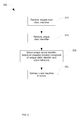
Fig. 3 depicts a flowchart of a method for connecting client machines to servers, according to a non-limiting embodiment; -
Fig. 4 depicts a tabular representation of a partial mapping function for the method ofFig. 3 , according to a non-limiting embodiment; -
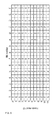
Fig. 5 depicts a completed tabular representation of the mapping function ofFig. 4 , according to a non-limiting embodiment; -
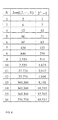
Fig. 6 depicts a tabular enumeration of various required dimensions of the tabular representation ofFig. 5 , according to a non-limiting embodiment; -
Fig. 7 depicts a system for connecting client machines to servers, according to another non-limiting embodiment; -
Fig. 8 depicts the performance ofblock 310 of the method ofFig. 3 , according to a non-limiting embodiment; -
Fig. 9 depicts a load balancer of the system ofFigure 4 , according to a non-limiting embodiment; -
Fig. 10 depicts the performance ofblock 325 of the method ofFig. 3 , according to a non-limiting embodiment; -
Fig. 11 depicts a state transition diagram for the system ofFig. 4 , according to a non-limiting embodiment; -
Fig. 12 depicts a tabular representation of another mapping function, according to a non-limiting embodiment; and -
Fig. 13 depicts a tabular representation of a comparison between the mapping functions ofFig. 5 andFig. 12 . - Referring now to
Figure 1 , a load-balancing scenario is presented with respect to a system indicated generally at 50.System 50 comprises a first plurality M of first computing devices in the form of client machines, indicated at 54-0, 54-1, 54-2 ... 54-(M-1) (generically referred to as aclient machine 54 or a client machine 54-i, and collectively asclient machines 54. This convention is used elsewhere herein).System 50 also comprises a second plurality N of second computing devices in the form of servers, indicated at 58-0, 58-1 ... 58-(N-1), where M can be much greater than N. Eachserver 58 is configured to be identified by a unique server identifier. In a present embodiment, for convenience and ease of explanation, the unique server identifier for eachserver 58 is taken to be the final digit of the reference numeral used herein to identify thatserver 58. For example, the unique server identifier of server 58-0 is "0." Other examples of unique server identifiers will occur to those skilled in the art, such as Internet Protocol ("IP") address, Media Access Control ("MAC") address, hardware serial number or any other unique machine identification, or any combination thereof. A load balancer 62 intercepts each request from eachclient machine 54, the request being transmitted via alink 66. Load balancer 62 then selects aserver 58 to service that request, and forwards the request to the selectedserver 58 via theappropriate link 70.Servers 58 andload balancer 62 can be operated by acommon service provider 74.Service provider 74 can, for example, host a website onservers 58, and can employload balancer 62 to balance incoming Hypertext Transfer Protocol ("HTTP") requests amongservers 58. It will be appreciated, however, thatservers 58 andload balancer 62 can also be operated by any number of different entities. -
Client machines 54 can be based on any known computing or electronic device environment including a processor, volatile memory (e.g. Random Access Memory ("RAM")), non-volatile memory (e.g. read only memory ("ROM"), Electrically Eraseable Programmable Read Only Memory ("EEPROM"), Flash Memory), input and output devices (e.g. keyboard, trackball, display) and communication interfaces for communicating overlinks Client machines 54 may be, for example, cell phones, smart phones, desktop computers and the like. -
Servers 58 may be based on any known server environment including a module that houses one or more central processing units, volatile memory, persistent memory (e.g. hard disk devices) and network interfaces to allowservers 58 to communicate overlinks - It will be understood that the nature of
links 66 which interconnectclient machines 54 andload balancer 62, andlinks 70 which interconnect load balancer 62 andservers 58, is not particularly limited.Links client machines 54 andservers 58. For example,links 66 may be based on core mobile network infrastructure (e.g. Global System for Mobile communications ("GSM"); Code Division Multiple Access ("CDMA"); CDMA 2000; 3G; 4G) and may also include the Internet as well as appropriate gateways and backhauls.Links 70 may be based on a T1, T3 or any other suitable wired or wireless connection betweenload balancer 62 andservers 58. - Referring now to
Figure 2 , a schematic block diagram showsload balancer 62 in greater detail.Load balancer 62 is configured to evenly distribute incoming requests fromclient machines 54 to the active ones ofservers 58. -
Load balancer 62 includes aprocessor 200 which communicates with a non-volatile storage unit 204 (e.g. read only memory ("ROM"), Electrically Eraseable Programmable Read Only Memory ("EEPROM"), Flash Memory) and a volatile storage unit 208 (e.g. random access memory ("RAM")).Processor 200 also communicates with anetwork interface 212 allowingload balancer 62 to communicate overlinks Load balancer 62 may also include one or more input devices such as akeyboard 216, and one or more output devices such as adisplay 220. It will be understood that the structure depicted inFigure 2 is purely exemplary. For example, in some embodiments (not shown)load balancer 62 may include a plurality of processors. In some embodiments,load balancer 62 may additionally include a plurality of network interfaces, or may also include further input devices such as a mouse, a microphone and the like. - Computer readable code embodying programming instructions that implement the functional teachings of
load balancer 62 as described herein are typically maintained in a computer readable storage medium, for example innon-volatile storage unit 204, and used byprocessor 200 which makes appropriate utilization ofvolatile storage unit 208 during the execution of such programming instructions. - Referring now to
Figure 3 , a flow chart is provided depicting a method, indicated generally at 300, for connecting a plurality of client machines to a plurality of servers.Method 300 will be described in conjunction withsystem 50. It will be understood, however, that bothsystem 50 andmethod 300 may be varied and such variations are within the scope of the present teachings. - In general,
method 300 begins atblock 310 with the receipt of a request atload balancer 62. The request originates from aclient machine 54 and is destined forservice provider 74. For example, the request may be a request to view a portion of a web page hosted byservice provider 74 onservers 58. -
Method 300 continues atblock 315 with the receipt of a unique client identifier atload balancer 62. In a present embodiment, for convenience and ease of explanation, the unique client identifier of a givenclient machine 54 is taken to be the reference numeral used to identify thatclient machine 54 in the drawings. For example, the unique client identifier of client machine 54-0 inFigure 1 is "54-0." Other examples of unique client identifiers will occur to those skilled in the art, such as IP address, MAC address, hardware serial number or any other unique machine identification, or any combination thereof. The unique client identifier can be obtained from the request received atblock 310, and thus block 310 and block 315 can be performed substantially simultaneously. In a present embodiment, performance ofblock 315 also includes the generation of a hashed unique client identifier atload balancer 62. The hashed unique client identifier can be an integer value generated on the basis of a hash of the unique client identifier of theclient machine 54. For example, for the case of an IP address as a unique client identifier, given a request from a particular client machine 54-i, a hashed unique client identifier may be generated by hashing the IP address of that client machine 54-i:
- where h() is a suitably constructed hash function. For the case of an IP address as a unique client identifier, the hash function can, for example, simply compute the sum of the bytes comprising the IP address, although many other hash functions will occur to those skilled in the art. For example, the hash function h() may be computed over the source (client machine 54-i) and destination IP addresses and ports. It will be appreciated that in other embodiments (not shown), the hashed unique client identifier may be received at
load balancer 62 as part of the received request. In other words, the hashed unique client identifier may be determined by the originatingclient machine 54 or an intermediate network component. In still other embodiments (not shown) the unique client identifier can be used for the remainder ofmethod 300, and the generation of a hashed unique client identifier can be foregone. -
Method 300 continues atblock 320. At block 320 a unique server identifier is selected atload balancer 62. The selected unique server identifier corresponds to an active one ofservers 58 for servicing the request received atblock 310. The unique server identifier is selected based on a mapping function. In order to allow forservers 58 to be added and removed (that is, to change states between active and inactive), the mapping function is comprised of both (a) the hashed unique client identifier (generated at block 315) of the client machine 54-i which originated the request, and (b) a state indicator for each server. It will be noted that in other embodiments, the mapping function can be comprised of the unique client identifier rather than the hashed unique client identifier. The state indicator provides an indication of whether a given server is active or inactive. An active server, as will now be appreciated by those skilled in the art, is able to service requests fromclient machines 54, while an inactive server is not able to service such requests. In a present embodiment, the state indicators forservers 58 are contained within a bit vector representing the set of active ones ofservers 58. - The bit vector can be defined as follows:

- where bi is "1" if server 58-i is active; "0" if server 58-i is inactive. The state indicators are maintained in
volatile storage unit 204 ornon-volatile storage unit 208 ofload balancer 62. It will be appreciated that the state indicators may be updated in a variety of ways. For example,load balancer 62 may pollservers 58 at certain intervals. If no response is received from aparticular server 58 within a predefined time period, the state indicators maintained in memory atload balancer 62 may be updated to indicate that thatserver 58 is inactive. As another example, in a present embodiment eachserver 58 periodically transmits a message to loadbalancer 62. So long as such messages continue to be received from a givenserver 58, the state indicator maintained atload balancer 62 for thatserver 58 indicates activity. If no messages are received from a givenserver 58 for a predetermined amount of time, the state indicator for thatserver 58 is updated to indicate inactivity. In a present embodiment in which state indicators are contained within the above-mentioned bit vector, the bit vector would therefore be updated to provide a 0 in the bit corresponding to thatparticular server 58. - Thus, in the present embodiment, given a request from a
client machine 54, a unique server identifier is generally selected as follows atblock 320 of method 300:
- where g() is a suitably constructed mapping function.
- The mapping function g() is constructed to allow
load balancer 62 to distribute the load represented by incoming requests fromclient machines 54 substantially evenly across all the active ones ofservers 58. As a general example, there may be from 1 to Nactive servers 58. This has implications for the range of the hash function h(), or any other function used to generate hashed unique client identifiers. It will be understood that in order to balance the load over twoservers 58, the range of hash function h() is a multiple of two; to balance the load over threeservers 58, the range of hash function h() is a multiple of three; and so on. It follows that in order to balance the load overN servers 58 as depicted inFigure 1 , the range of hash function h() is a multiple of N. Therefore, the smallest possible range for the hash function h() can be defined as the least-common multiple of the first N integers, lcm(1,2,···, N). Thus, for a request received from a client machine 54-i atload balancer 62, a suitable mapping function can be generally formulated as:
- The mapping function g() is constructed in a way that provides the "stickiness," or consistency, property. That is, requests from a given
client machine 54 substantially result in the same unique server identifier selection (that is, are substantially mapped to the same one of servers 58). The following illustrates how such a mapping function can be constructed. - For this exemplary construction of a mapping function g(), it is assumed that N = 4. That is,
system 50 includes fourservers 58, any one of which may be active or inactive. The range of the hash function is therefore lcm(1,2,3,4) =12 and there are 15 valid combinations of state indicators represented by the bit vector B that represents the set of active ones ofservers 58. (The case where all servers are inactive - that is, the case where B = 0000 - is not valid since no load balancing can be conducted if there are no active servers for servicingrequests 58 atservice provider 74. Construction of the exemplary mapping function g() in tabular format will first be described. - A tabular representation of the mapping function g() is constructed as follows. The table has twelve rows (one for each value of the range of the hash function h()) and fifteen columns (one for each value of the bit vector B containing a state indicator for each server 58).
-
Figure 4 shows the first step in the construction of the mapping function. Construction begins in the right-most column which corresponds to all servers active - that is, where B = 1111, or a hexadecimal value of "F." This column is completed in by assigning the rows in round-robin fashion to each of theservers 58, indicating whichserver 58 a given row is assigned to by way of the corresponding unique server identifier (0,1,2 or 3). - Each of the remaining columns in the table of
Figure 4 is partially completed by copying the unique server identifiers from the right-most column (column F) corresponding to the active server(s) 58 in the given column. For example, column E corresponds to the case where servers 58-1, 58-2, and 58-3, are active while server 58-0 is inactive - that is, where B = 1110. Thus, column E is partially completed by copying the unique server identifiers "1," "2," and "3" from the right-most column. The unique server identifier "0" is not inserted into column E, as in the situation represented by column E, server 58-0 is inactive and cannot service requests. Thus,rows -
Figure 5 shows the second step in the construction of the mapping function. In the second step, the remaining entries are filled one column at a time. In each column the entries are filled by assigning unique server identifiers for the active ones ofservers 58 in round-robin fashion. - For example, consider column E. The active ones of
servers 58 are servers 58-1, 58-2, and 58-3.Unique server identifiers rows servers 58 in round-robin fashion is to substantially balance the load on the active ones ofservers 58. - As can be seen from the completed tabular mapping function represented in
Figure 5 , the three rows (0, 4 and 8) of column E which would have been assigned tounique server identifier 0 if allservers 58 were active, as in column F, are instead assigned evenly amongunique server identifiers - An exemplary C program fragment will now be described for providing the above-described tabular mapping function g(). The program fragment represents a method for connecting a plurality of first client machines to a plurality of servers, and is provided below with numbered lines for later reference.
- 1 unsigned g(unsigned hash, unsigned N, unsigned mask,
- 2 unsigned L, unsigned zeroes, unsigned ones,
- 3 unsigned* active, unsigned* adjust)
- 4 {
- 5 unsigned result = 0;
- 6 unsigned row = hash % L;
- 7 unsigned group = row / N;
- 8 unsigned offset = row % N;
- 9 if (mask & (1 << offset))
- 10 {
- 11 result = offset;
- 12 }
- 13 Else
- 14 {
- 15 result = active[(group * zeroes + adjust[offset]) % ones];
- 16 }
- 17 return result;
- 18 }
- The inputs to the program fragment are as follows:
- An integer variable, hash, that contains a hashed unique client identifier as described above.
- An integer variable, N, that represents the number of
servers 58 included insystem 50. It will be noted that this number N therefore indicates the maximum number ofactive servers 58 insystem 50. It is assumed in a present embodiment that N is a constant. - An integer variable, mask, that is a bit vector containing a status indicator for each
server 58, and thereby represents the set of active ones ofservers 58. - An integer variable, L, that contains the least-common multiple of the first N integers. It will be noted that in a present embodiment, since N is a constant, so too is L. Therefore, L need be computed only once.
- An integer variable, zeroes, that contains the number of zeroes in the bit vector. More generally, zeroes contains a count of the number of status indicators indicating inactivity on the part of their
respective servers 58. Thus, the number of zeroes is equal to the number of inactive ones ofservers 58. This value can be generated from the bit vector mask at every performance of the method represented by the program fragment. However, as with mask, the value of zeroes is subject to change when the active ones ofservers 58 change. Therefore, in a present embodiment the value of zeroes is regenerated when the active ones ofservers 58 change. - An integer variable, ones, that contains the number of ones in the bit vector. More generally, ones contains a count of the number of status indicators indicating activity on the part of their
respective servers 58. Thus, the number of ones is equal to the number of active ones ofservers 58. This value can be generated from the bit vector mask at every performance of the method represented by the program fragment. However, as with mask and zeroes, the value of ones is subject to change when the active ones ofservers 58 change. Therefore, in a present embodiment the value of ones is regenerated when the active ones ofservers 58 change. - An array of integers, active, whose length is equal to the number of active ones of
servers 58 and that contains the unique server identifiers corresponding to the active ones ofservers 58. The array active can be generated from the bit vector mask at every performance of the method represented by the program fragment. However, as discussed above the contents of active is subject to change when the active ones ofservers 58 change. Therefore, in a present embodiment the value of active is regenerated when the active ones ofservers 58 change. - An array of integers, adjust, of length N that contains values computed as follows. The ith element of the array contains a count of the number of zeroes in the least-significant i-1 bits of the bit vector, mask. The array adjust can be generated from the bit vector mask at every performance of the method represented by the program fragment. However, as discussed above, the contents of adjust is subject to change when the active ones of
servers 58 change. Therefore, in a present embodiment the value of adjust is regenerated when the active ones ofservers 58 change. - It will now be apparent that the running time of this program fragment is O(1). When the active ones of
servers 58 change (that is, when one ormore servers 58 that were previously active become inactive, or vice versa), the values of mask, zeroes, ones, active, and adjust are regenerated atload balancer 62. These values can be regenerated in O(N) time (where N is the number ofservers 58 included in system 50). The values of mask, zeroes, ones, active, and adjust require O(N) storage (where N is the number ofservers 58 included in system 50). - Following the above description of the exemplary mapping function g(), it will now become apparent that either of the tabular or algorithmic approaches may be used. In particular, for some values of N the entire mapping function g() may be computed and stored by
load balancer 62, for example innon-volatile storage unit 208, in a table similar to Table 2. Such a tabular format may be dynamically constructed as described above with respect toFigures 4 and5 , or may be constructed by computing the above-discussed algorithm for each row using all values of the bit vector, mask. The time required to select a unique server identifier in such a case is always O(1) because all that is required is a table lookup. No additional computation is required when the active ones ofservers 58 change. - When the mapping function g() is stored at
load balancer 62 in a tabular format as described above, the size of the table required is lcm(1,2,..., N)×(2 N -1).Figure 6 provides a table enumerating the required table dimensions for various values of N. - Following the selection of a unique server identifier at
block 320,method 300 continues atblock 325. Atblock 325,load balancer 62 connects theclient machine 54 which originated the request with theserver 58 corresponding to the unique server identifier selected atblock 320. In the present embodiment, load balancer 62 forwards the request to theserver 58 corresponding to the selected unique server identifier, completing the performance ofblock 325. - By way of further explanation, an exemplary performance of
method 300 will now be described in connection with asystem 50a, depicted inFigure 7 . Wheresystem 50a includes like components to those ofsystem 50, those components are identified by the same reference numerals as inFigure 1 , with the addition of a suffix "a." It will be noted fromFigure 7 thatsystem 50a includes fourservers 58a and twenty-fourclient machines 54a. Thus, the value of the least common multiple L as described above is twelve. For this exemplary performance ofmethod 300, it will be assumed thatservers 58a-0, 58a-2 and 58a-3 are active, whileserver 58a-1 is inactive.Link 70a-1 has been severed to indicated the inactivity of server 58-1. Thus, the state indicators forservers 58a may be represented in the form of a bit vector, mask, as follows:
- The state indicators may be stored by
load balancer 62a, for example innon-volatile storage unit 208a, as shown inFigure 9 . - It will be appreciated that as a result of the above value of mask, the following values of inputs, which may also be stored by
load balancer 62a, to the program fragment described earlier are as follows:


-
Method 300 begins atblock 310 with the receipt of a request fromclient machine 54a-0. Performance ofblock 310 is depicted atFigure 5 , where a request 500-0 originates fromclient machine 54a-0. Request 500-0 is associated withservice provider 74a, and is thus received atload balancer 62a. As shown inFigure 6 , request 500-0 may be stored atload balancer 62a, for example involatile storage unit 204a. - Returning to
Figure 3 , performance ofmethod 300 continues atblock 315 with the receipt of a unique client identifier and the generation of a hashed unique client identifier atload balancer 62a. As described earlier, the unique client identifier will be taken as the reference numeral "54a-0" forclient machine 54a-0 fromFigure 7 , for the purposes of explanation. In this exemplary performance ofmethod 300, the hashed unique client identifier is generated from the sum of the digits (that is, "5," "4," and "0") in the unique client identifier. Therefore,load balancer 62a is configured in a present embodiment to determine the hashed unique client identifier via the following hash function h():
- Once generated at
block 315, the hashed unique client identifier may be stored byload balancer 62a, for example involatile storage unit 204a, as shown inFigure 9 . - Referring again to
Figure 3 ,method 300 continues atblock 320 with the selection of a unique server identifier based on the mapping function g(), comprised of the state indicators stored byload balancer 62a, and the hashed unique client identifier also stored byload balancer 62a. In the present embodiment,load balancer 62a selects a unique server identifier by executing, atprocessor 200a in conjunction with computer readable instructions stored atnon-volatile storage unit 208a, the program fragment described above. It will be understood thatprocessor 200a makes use, as necessary, ofnon-volatile storage unit 208a andvolatile storage unit 204a during the execution of the program fragment. For example, intermediate values calculated in the course of execution may be stored involatile storage unit 204a. - In particular,
line 6 of the program fragment results in the generation of the value "row" as follows: row = hash mod L = 9mod12 = 9. Similarly, atlines 

- At
line 9 of the program fragment, the result of (mask & (1 << offset)) is 1101 & 0010 = 0000 = FALSE. Therefore, execution of the program fragment proceeds toline 15, where a unique server identifier is selected as follows:
- Thus, the unique server identifier selected at
block 320 is 3, corresponding toserver 58a-3. It will be noted that the same result can be achieved in other embodiments (not shown) whereload balancer 62a maintains in memory a table as shown inFigure 5 . In these other embodiments, a unique server identifier is selected byprocessor 200a ofload balancer 62a from the column corresponding to a bit vector value of "1101", or hexadecimal "D," and from the row corresponding to a value of hash mod L = 9mod 12 = 9. As seen inFigure 5 , the unique server identifier provided at column D androw 9 is "3," corresponding toserver 58a-3. - Performance of
method 300 continues with the connection ofclient machine 54a-0 andserver 58a-3 atblock 325. Performance ofblock 325 is depicted atFigure 10 , where request 500-0 is forwarded byload balancer 62a toserver 58a-3 for servicing. - From the above description of the present embodiment, certain advantages will now be apparent. For example, the above mapping function substantially satisfies a stickiness, or consistency, property. That is, multiple requests from a given
client machine 54 substantially result in the selection of the same unique server identifier, as long as the correspondingserver 58 is active. To evaluate the quality of the mapping function with respect to stickiness, all server activation states are enumerated, and for each state, all possible state transitions resulting from the addition or removal of asingle server 58 are considered. -
Figure 11 illustrates that the states and state transitions forN servers 58 forms an N -dimensional hypercube (with the exception of state "0" which is not valid and is therefore indicated in dashed lines). The set ofservers 58 active in adjacent states in the hypercube differ by exactly oneserver 58. In general, there are N(2 N -1) transitions (with the "0" state and associated transitions removed). For example, for N = 4 there are twenty-eight transitions as shown inFigure 11 . - For each transition between a state "i" and a state "j", the corresponding columns of the tabular mapping function representation in
Figure 5 are compared, and the number of rows in which the unique server identifiers are different is counted. These correspond toclient machines 54 which are remapped as a result of the activation or deactivation of aserver 58 to which requests fromsuch client machines 54 were previously assigned. - For the purpose of the above-described comparison, a tabular representation of a modular hash-based mapping function was constructed (see
Figure 12 ). - For the above mapping function, a hashed unique client identifier is generated as described above. The hashed unique client identifier is then mapped to a number in the range [0, N-1] to select a unique server identifier using modular arithmetic:

- Note that in
Figure 12 , unique server identifiers for active ones ofservers 58 are assigned to rows in round-robin fashion. -
Figure 13 shows the results of the analysis. The table shows, for each possible transition between columns inFigure 5 and12 , the number of rows that change as a result of the transition. The fraction of rows that change represents the fraction of clients that experience a change in server assignment as a result of the transition. -
Figure 13 shows three cases: The first represents a hypothetical ideal in which the minimum number of rows are remapped as the result of the transition. The second case represents the performance of the mapping function described above and represented inFigure 5 . The third represents the modular hash-based mapping function represented inFigure 12 . - Averaged over all possible transitions, the mapping function represented in
Figure 5 remaps 4% ofclient machines 54 unnecessarily relative to the ideal case. By comparison the modular hash-based mapping function represented inFigure 12 remaps 23% of the clients unnecessarily. - Additionally, the preceding analysis assumes that all transitions are equally likely. In fact, in realistic scenarios the mapping function represented in
Figure 5 has greater stickiness than the modular hash-based mapping function represented inFigure 12 . For example, in the cases where there are initially 4servers 58 active and onlysingle server 58 failures are considered (i.e., double and triple failures are ignored), there are only four possible transitions (7-F, B-F, D-F, and E-F ofFigure 13 ). The average excess for the mapping function represented inFigure 5 is 0% and in all cases the excess for the mapping function represented inFigure 12 is 50%. In other words, the mapping function described above in conjunction withmethod 300 and represented inFigure 5 is ideal; whereas in the mapping function represented inFigure 12 , half of theclient machines 54 are remapped unnecessarily as a result of aserver 58 failure. - Other advantages will also occur to those skilled in the art. For example,
load balancer 62 does not need to maintain a per-client state, and thus reduces consumption of storage and computational resources. It will be understood that the above advantages are merely exemplary, and that other advantages may also be achieved in the present or other embodiments. - Persons skilled in the art will appreciate that there are yet more alternative implementations and modifications possible for implementing the embodiments, and that the above implementations and examples are only illustrations of one or more embodiments. The scope, therefore, is only to be limited by the claims appended hereto.
Claims (10)
- A method for connecting a plurality of client machines (54) to a plurality of servers (58); each of said servers (58) having a unique server identifier, the method comprising:receiving a request (310) from one of said client machines (54);receiving a unique client identifier (315) for said one of said client machines (54);selecting a unique server identifier (320) from said plurality of unique server identifiers, based on a mapping function comprising:said unique client identifier for said one of said client machines (54); anda state indicator for each of said servers (58); and connecting said one of said client machines (54) to one of said servers (58) corresponding to said selected unique server identifier.
- The method of claim 1, wherein said state indicator for each of said servers (58) is '1' if active, and is '0' if inactive.
- The method of claim 2, further comprising:maintaining a bit vector 'B' containing said state indicators, said bit vector 'B' being defined according to B = b N-1 b N-2···b 2 b 1 b 0, where bi is a state indicator for an ith server (58) of said plurality of servers (58).
- The method of any one of claims 1 to 3, further comprising:generating a hashed unique client identifier, wherein said hashed unique client identifier is a hash comprising at least said unique client identifier, and wherein selecting said unique server identifier is based on a mapping function further comprising said hashed unique client identifier.
- The method of any one of claims 1 to 4, wherein selecting said unique server identifier is based on a mapping function further comprising:a least-common-multiple of the first N integers, where N is a count of said plurality of servers (58).
- The method of any one of claims 1 to 5, wherein connecting said one of said client machines (54) to said one of said servers (58) corresponding to said selected unique server identifier comprises:forwarding said request to said one of said servers (58) corresponding to said selected unique server identifier.
- The method of any one of claims 1 to 6, wherein said unique client identifier comprises at least one of an internet protocol 'IP' address of said client machine (54) and a media access control 'MAC' address of said client machine (54).
- The method of claim 7, wherein said hashed unique client identifier further comprises at least one of an additional IP address and an additional MAC address.
- A server (62) configured to perform the steps of the method of any one of claims 1 to 8.
- A computer readable storage medium containing computer readable instructions executable by a processor (200) of a computing device for causing said computing device to perform the steps of the method of any one of claims 1 to 8.
Priority Applications (3)
| Application Number | Priority Date | Filing Date | Title |
|---|---|---|---|
| EP09153453A EP2222054B1 (en) | 2009-02-23 | 2009-02-23 | Method, system and apparatus for connecting a plurality of client machines to a plurality of servers |
| AT09153453T ATE554587T1 (en) | 2009-02-23 | 2009-02-23 | METHOD, SYSTEM AND APPARATUS FOR CONNECTING MULTIPLE CLIENT MACHINES TO MULTIPLE SERVERS |
| CA2691319A CA2691319C (en) | 2009-02-23 | 2010-01-28 | Method, system and apparatus for connecting a plurality of client machines to a plurality of servers |
Applications Claiming Priority (1)
| Application Number | Priority Date | Filing Date | Title |
|---|---|---|---|
| EP09153453A EP2222054B1 (en) | 2009-02-23 | 2009-02-23 | Method, system and apparatus for connecting a plurality of client machines to a plurality of servers |
Publications (2)
| Publication Number | Publication Date |
|---|---|
| EP2222054A1 true EP2222054A1 (en) | 2010-08-25 |
| EP2222054B1 EP2222054B1 (en) | 2012-04-18 |
Family
ID=40810057
Family Applications (1)
| Application Number | Title | Priority Date | Filing Date |
|---|---|---|---|
| EP09153453A Active EP2222054B1 (en) | 2009-02-23 | 2009-02-23 | Method, system and apparatus for connecting a plurality of client machines to a plurality of servers |
Country Status (3)
| Country | Link |
|---|---|
| EP (1) | EP2222054B1 (en) |
| AT (1) | ATE554587T1 (en) |
| CA (1) | CA2691319C (en) |
Cited By (1)
| Publication number | Priority date | Publication date | Assignee | Title |
|---|---|---|---|---|
| WO2014066979A1 (en) * | 2012-10-29 | 2014-05-08 | Blackberry Limited | Method and system for tcp turn operation behind a restrictive firewall |
Citations (3)
| Publication number | Priority date | Publication date | Assignee | Title |
|---|---|---|---|---|
| US20030108052A1 (en) | 2001-12-06 | 2003-06-12 | Rumiko Inoue | Server load sharing system |
| US20040243709A1 (en) * | 2003-05-27 | 2004-12-02 | Sun Microsystems, Inc. | System and method for cluster-sensitive sticky load balancing |
| US20060233106A1 (en) * | 2005-04-14 | 2006-10-19 | Microsoft Corporation | Stateless, affinity-preserving load balancing |
-
2009
- 2009-02-23 EP EP09153453A patent/EP2222054B1/en active Active
- 2009-02-23 AT AT09153453T patent/ATE554587T1/en active
-
2010
- 2010-01-28 CA CA2691319A patent/CA2691319C/en active Active
Patent Citations (3)
| Publication number | Priority date | Publication date | Assignee | Title |
|---|---|---|---|---|
| US20030108052A1 (en) | 2001-12-06 | 2003-06-12 | Rumiko Inoue | Server load sharing system |
| US20040243709A1 (en) * | 2003-05-27 | 2004-12-02 | Sun Microsystems, Inc. | System and method for cluster-sensitive sticky load balancing |
| US20060233106A1 (en) * | 2005-04-14 | 2006-10-19 | Microsoft Corporation | Stateless, affinity-preserving load balancing |
Non-Patent Citations (1)
| Title |
|---|
| RUEDIGER MARTIN ET AL: "Accuracy and Dynamics of Hash-Based Load Balancing Algorithms for Multipath Internet Routing", BROADBAND COMMUNICATIONS, NETWORKS AND SYSTEMS, 2006. BROADNETS 2006. 3RD INTERNATIONAL CONFERENCE ON, IEEE, PI, 1 October 2006 (2006-10-01), pages 1 - 10, XP031155928, ISBN: 978-1-4244-0424-7 * |
Cited By (3)
| Publication number | Priority date | Publication date | Assignee | Title |
|---|---|---|---|---|
| WO2014066979A1 (en) * | 2012-10-29 | 2014-05-08 | Blackberry Limited | Method and system for tcp turn operation behind a restrictive firewall |
| CN104756462A (en) * | 2012-10-29 | 2015-07-01 | 黑莓有限公司 | Method and system for tcp turn operation behind a restrictive firewall |
| CN104756462B (en) * | 2012-10-29 | 2019-03-29 | 黑莓有限公司 | Method and system for TCP TURN operation behind a restrictive firewall |
Also Published As
| Publication number | Publication date |
|---|---|
| EP2222054B1 (en) | 2012-04-18 |
| CA2691319C (en) | 2013-09-03 |
| CA2691319A1 (en) | 2010-08-23 |
| ATE554587T1 (en) | 2012-05-15 |
Similar Documents
| Publication | Publication Date | Title |
|---|---|---|
| US8364163B2 (en) | Method, system and apparatus for connecting a plurality of client machines to a plurality of servers | |
| EP2652924B1 (en) | Synchronizing state among load balancer components | |
| US11336718B2 (en) | Usage-based server load balancing | |
| US6263368B1 (en) | Network load balancing for multi-computer server by counting message packets to/from multi-computer server | |
| US7353276B2 (en) | Bi-directional affinity | |
| US8812727B1 (en) | System and method for distributed load balancing with distributed direct server return | |
| US9055076B1 (en) | System and method for distributed load balancing with load balancer clients for hosts | |
| US20150281087A1 (en) | Forwarding data packets using a service-based forwarding policy | |
| US7380002B2 (en) | Bi-directional affinity within a load-balancing multi-node network interface | |
| CN109542641A (en) | Service calling method, apparatus and system | |
| WO2018034971A1 (en) | Load balancing system and method for cloud-based network appliances | |
| CN112839081A (en) | Load balancing method of cloud cluster | |
| US10397097B2 (en) | Weighted next hop selection at a router using an equal cost multipath process | |
| CN114915638B (en) | Methods and devices and computer-readable media for network management | |
| CN109510878B (en) | Long connection session keeping method and device | |
| US20070073829A1 (en) | Partitioning data across servers | |
| CN107105013B (en) | File processing method, server, terminal and system | |
| CN114365089B (en) | Method for overload protection in a container virtualized computing device | |
| EP2222054B1 (en) | Method, system and apparatus for connecting a plurality of client machines to a plurality of servers | |
| CN115134424A (en) | Load balancing method, apparatus, computer device, storage medium and program product | |
| CN120301892A (en) | Load balancing method and load balancer | |
| EP3987751B1 (en) | Large scale nat system | |
| CA2986758C (en) | Systems and methods for server failover and load balancing | |
| Adam et al. | A service middleware that scales in system size and applications | |
| US12063267B1 (en) | Network traffic distribution for network-based services |
Legal Events
| Date | Code | Title | Description |
|---|---|---|---|
| PUAI | Public reference made under article 153(3) epc to a published international application that has entered the european phase |
Free format text: ORIGINAL CODE: 0009012 |
|
| 17P | Request for examination filed |
Effective date: 20090223 |
|
| AK | Designated contracting states |
Kind code of ref document: A1 Designated state(s): AT BE BG CH CY CZ DE DK EE ES FI FR GB GR HR HU IE IS IT LI LT LU LV MC MK MT NL NO PL PT RO SE SI SK TR |
|
| AX | Request for extension of the european patent |
Extension state: AL BA RS |
|
| 17Q | First examination report despatched |
Effective date: 20100728 |
|
| AKX | Designation fees paid |
Designated state(s): AT BE BG CH CY CZ DE DK EE ES FI FR GB GR HR HU IE IS IT LI LT LU LV MC MK MT NL NO PL PT RO SE SI SK TR |
|
| GRAP | Despatch of communication of intention to grant a patent |
Free format text: ORIGINAL CODE: EPIDOSNIGR1 |
|
| GRAS | Grant fee paid |
Free format text: ORIGINAL CODE: EPIDOSNIGR3 |
|
| GRAA | (expected) grant |
Free format text: ORIGINAL CODE: 0009210 |
|
| AK | Designated contracting states |
Kind code of ref document: B1 Designated state(s): AT BE BG CH CY CZ DE DK EE ES FI FR GB GR HR HU IE IS IT LI LT LU LV MC MK MT NL NO PL PT RO SE SI SK TR |
|
| REG | Reference to a national code |
Ref country code: GB Ref legal event code: FG4D |
|
| REG | Reference to a national code |
Ref country code: CH Ref legal event code: EP |
|
| REG | Reference to a national code |
Ref country code: IE Ref legal event code: FG4D |
|
| REG | Reference to a national code |
Ref country code: AT Ref legal event code: REF Ref document number: 554587 Country of ref document: AT Kind code of ref document: T Effective date: 20120515 |
|
| REG | Reference to a national code |
Ref country code: DE Ref legal event code: R096 Ref document number: 602009006334 Country of ref document: DE Effective date: 20120614 |
|
| REG | Reference to a national code |
Ref country code: NL Ref legal event code: T3 |
|
| REG | Reference to a national code |
Ref country code: AT Ref legal event code: MK05 Ref document number: 554587 Country of ref document: AT Kind code of ref document: T Effective date: 20120418 |
|
| LTIE | Lt: invalidation of european patent or patent extension |
Effective date: 20120418 |
|
| PG25 | Lapsed in a contracting state [announced via postgrant information from national office to epo] |
Ref country code: IS Free format text: LAPSE BECAUSE OF FAILURE TO SUBMIT A TRANSLATION OF THE DESCRIPTION OR TO PAY THE FEE WITHIN THE PRESCRIBED TIME-LIMIT Effective date: 20120818 Ref country code: SE Free format text: LAPSE BECAUSE OF FAILURE TO SUBMIT A TRANSLATION OF THE DESCRIPTION OR TO PAY THE FEE WITHIN THE PRESCRIBED TIME-LIMIT Effective date: 20120418 Ref country code: PL Free format text: LAPSE BECAUSE OF FAILURE TO SUBMIT A TRANSLATION OF THE DESCRIPTION OR TO PAY THE FEE WITHIN THE PRESCRIBED TIME-LIMIT Effective date: 20120418 Ref country code: CY Free format text: LAPSE BECAUSE OF FAILURE TO SUBMIT A TRANSLATION OF THE DESCRIPTION OR TO PAY THE FEE WITHIN THE PRESCRIBED TIME-LIMIT Effective date: 20120418 Ref country code: NO Free format text: LAPSE BECAUSE OF FAILURE TO SUBMIT A TRANSLATION OF THE DESCRIPTION OR TO PAY THE FEE WITHIN THE PRESCRIBED TIME-LIMIT Effective date: 20120718 Ref country code: LT Free format text: LAPSE BECAUSE OF FAILURE TO SUBMIT A TRANSLATION OF THE DESCRIPTION OR TO PAY THE FEE WITHIN THE PRESCRIBED TIME-LIMIT Effective date: 20120418 Ref country code: FI Free format text: LAPSE BECAUSE OF FAILURE TO SUBMIT A TRANSLATION OF THE DESCRIPTION OR TO PAY THE FEE WITHIN THE PRESCRIBED TIME-LIMIT Effective date: 20120418 |
|
| PG25 | Lapsed in a contracting state [announced via postgrant information from national office to epo] |
Ref country code: HR Free format text: LAPSE BECAUSE OF FAILURE TO SUBMIT A TRANSLATION OF THE DESCRIPTION OR TO PAY THE FEE WITHIN THE PRESCRIBED TIME-LIMIT Effective date: 20120418 Ref country code: SI Free format text: LAPSE BECAUSE OF FAILURE TO SUBMIT A TRANSLATION OF THE DESCRIPTION OR TO PAY THE FEE WITHIN THE PRESCRIBED TIME-LIMIT Effective date: 20120418 Ref country code: LV Free format text: LAPSE BECAUSE OF FAILURE TO SUBMIT A TRANSLATION OF THE DESCRIPTION OR TO PAY THE FEE WITHIN THE PRESCRIBED TIME-LIMIT Effective date: 20120418 Ref country code: GR Free format text: LAPSE BECAUSE OF FAILURE TO SUBMIT A TRANSLATION OF THE DESCRIPTION OR TO PAY THE FEE WITHIN THE PRESCRIBED TIME-LIMIT Effective date: 20120719 Ref country code: PT Free format text: LAPSE BECAUSE OF FAILURE TO SUBMIT A TRANSLATION OF THE DESCRIPTION OR TO PAY THE FEE WITHIN THE PRESCRIBED TIME-LIMIT Effective date: 20120820 |
|
| PG25 | Lapsed in a contracting state [announced via postgrant information from national office to epo] |
Ref country code: BE Free format text: LAPSE BECAUSE OF FAILURE TO SUBMIT A TRANSLATION OF THE DESCRIPTION OR TO PAY THE FEE WITHIN THE PRESCRIBED TIME-LIMIT Effective date: 20120418 |
|
| PG25 | Lapsed in a contracting state [announced via postgrant information from national office to epo] |
Ref country code: RO Free format text: LAPSE BECAUSE OF FAILURE TO SUBMIT A TRANSLATION OF THE DESCRIPTION OR TO PAY THE FEE WITHIN THE PRESCRIBED TIME-LIMIT Effective date: 20120418 Ref country code: CZ Free format text: LAPSE BECAUSE OF FAILURE TO SUBMIT A TRANSLATION OF THE DESCRIPTION OR TO PAY THE FEE WITHIN THE PRESCRIBED TIME-LIMIT Effective date: 20120418 Ref country code: SK Free format text: LAPSE BECAUSE OF FAILURE TO SUBMIT A TRANSLATION OF THE DESCRIPTION OR TO PAY THE FEE WITHIN THE PRESCRIBED TIME-LIMIT Effective date: 20120418 Ref country code: DK Free format text: LAPSE BECAUSE OF FAILURE TO SUBMIT A TRANSLATION OF THE DESCRIPTION OR TO PAY THE FEE WITHIN THE PRESCRIBED TIME-LIMIT Effective date: 20120418 Ref country code: AT Free format text: LAPSE BECAUSE OF FAILURE TO SUBMIT A TRANSLATION OF THE DESCRIPTION OR TO PAY THE FEE WITHIN THE PRESCRIBED TIME-LIMIT Effective date: 20120418 Ref country code: EE Free format text: LAPSE BECAUSE OF FAILURE TO SUBMIT A TRANSLATION OF THE DESCRIPTION OR TO PAY THE FEE WITHIN THE PRESCRIBED TIME-LIMIT Effective date: 20120418 |
|
| PLBE | No opposition filed within time limit |
Free format text: ORIGINAL CODE: 0009261 |
|
| STAA | Information on the status of an ep patent application or granted ep patent |
Free format text: STATUS: NO OPPOSITION FILED WITHIN TIME LIMIT |
|
| PG25 | Lapsed in a contracting state [announced via postgrant information from national office to epo] |
Ref country code: IT Free format text: LAPSE BECAUSE OF FAILURE TO SUBMIT A TRANSLATION OF THE DESCRIPTION OR TO PAY THE FEE WITHIN THE PRESCRIBED TIME-LIMIT Effective date: 20120418 |
|
| 26N | No opposition filed |
Effective date: 20130121 |
|
| PG25 | Lapsed in a contracting state [announced via postgrant information from national office to epo] |
Ref country code: ES Free format text: LAPSE BECAUSE OF FAILURE TO SUBMIT A TRANSLATION OF THE DESCRIPTION OR TO PAY THE FEE WITHIN THE PRESCRIBED TIME-LIMIT Effective date: 20120729 |
|
| REG | Reference to a national code |
Ref country code: DE Ref legal event code: R097 Ref document number: 602009006334 Country of ref document: DE Effective date: 20130121 |
|
| PG25 | Lapsed in a contracting state [announced via postgrant information from national office to epo] |
Ref country code: BG Free format text: LAPSE BECAUSE OF FAILURE TO SUBMIT A TRANSLATION OF THE DESCRIPTION OR TO PAY THE FEE WITHIN THE PRESCRIBED TIME-LIMIT Effective date: 20120718 |
|
| PG25 | Lapsed in a contracting state [announced via postgrant information from national office to epo] |
Ref country code: MC Free format text: LAPSE BECAUSE OF NON-PAYMENT OF DUE FEES Effective date: 20130228 |
|
| REG | Reference to a national code |
Ref country code: CH Ref legal event code: PL |
|
| PG25 | Lapsed in a contracting state [announced via postgrant information from national office to epo] |
Ref country code: CH Free format text: LAPSE BECAUSE OF NON-PAYMENT OF DUE FEES Effective date: 20130228 Ref country code: LI Free format text: LAPSE BECAUSE OF NON-PAYMENT OF DUE FEES Effective date: 20130228 |
|
| REG | Reference to a national code |
Ref country code: IE Ref legal event code: MM4A |
|
| PG25 | Lapsed in a contracting state [announced via postgrant information from national office to epo] |
Ref country code: IE Free format text: LAPSE BECAUSE OF NON-PAYMENT OF DUE FEES Effective date: 20130223 |
|
| PG25 | Lapsed in a contracting state [announced via postgrant information from national office to epo] |
Ref country code: MT Free format text: LAPSE BECAUSE OF FAILURE TO SUBMIT A TRANSLATION OF THE DESCRIPTION OR TO PAY THE FEE WITHIN THE PRESCRIBED TIME-LIMIT Effective date: 20120418 |
|
| REG | Reference to a national code |
Ref country code: DE Ref legal event code: R082 Ref document number: 602009006334 Country of ref document: DE Representative=s name: MERH-IP MATIAS ERNY REICHL HOFFMANN, DE |
|
| REG | Reference to a national code |
Ref country code: DE Ref legal event code: R082 Ref document number: 602009006334 Country of ref document: DE Representative=s name: MERH-IP MATIAS ERNY REICHL HOFFMANN, DE Effective date: 20140925 Ref country code: DE Ref legal event code: R081 Ref document number: 602009006334 Country of ref document: DE Owner name: BLACKBERRY LIMITED, WATERLOO, CA Free format text: FORMER OWNER: RESEARCH IN MOTION LIMITED, WATERLOO, ONTARIO, CA Effective date: 20140925 Ref country code: DE Ref legal event code: R082 Ref document number: 602009006334 Country of ref document: DE Representative=s name: MERH-IP MATIAS ERNY REICHL HOFFMANN PATENTANWA, DE Effective date: 20140925 |
|
| PG25 | Lapsed in a contracting state [announced via postgrant information from national office to epo] |
Ref country code: TR Free format text: LAPSE BECAUSE OF FAILURE TO SUBMIT A TRANSLATION OF THE DESCRIPTION OR TO PAY THE FEE WITHIN THE PRESCRIBED TIME-LIMIT Effective date: 20120418 |
|
| PG25 | Lapsed in a contracting state [announced via postgrant information from national office to epo] |
Ref country code: MK Free format text: LAPSE BECAUSE OF FAILURE TO SUBMIT A TRANSLATION OF THE DESCRIPTION OR TO PAY THE FEE WITHIN THE PRESCRIBED TIME-LIMIT Effective date: 20120418 Ref country code: LU Free format text: LAPSE BECAUSE OF NON-PAYMENT OF DUE FEES Effective date: 20130223 Ref country code: HU Free format text: LAPSE BECAUSE OF FAILURE TO SUBMIT A TRANSLATION OF THE DESCRIPTION OR TO PAY THE FEE WITHIN THE PRESCRIBED TIME-LIMIT; INVALID AB INITIO Effective date: 20090223 |
|
| REG | Reference to a national code |
Ref country code: FR Ref legal event code: PLFP Year of fee payment: 8 |
|
| REG | Reference to a national code |
Ref country code: FR Ref legal event code: PLFP Year of fee payment: 9 |
|
| REG | Reference to a national code |
Ref country code: FR Ref legal event code: PLFP Year of fee payment: 10 |
|
| REG | Reference to a national code |
Ref country code: DE Ref legal event code: R079 Ref document number: 602009006334 Country of ref document: DE Free format text: PREVIOUS MAIN CLASS: H04L0029080000 Ipc: H04L0065000000 |
|
| REG | Reference to a national code |
Ref country code: DE Ref legal event code: R082 Ref document number: 602009006334 Country of ref document: DE Ref country code: DE Ref legal event code: R081 Ref document number: 602009006334 Country of ref document: DE Owner name: MALIKIE INNOVATIONS LTD., IE Free format text: FORMER OWNER: BLACKBERRY LIMITED, WATERLOO, ONTARIO, CA |
|
| PGFP | Annual fee paid to national office [announced via postgrant information from national office to epo] |
Ref country code: NL Payment date: 20260220 Year of fee payment: 18 |
|
| PGFP | Annual fee paid to national office [announced via postgrant information from national office to epo] |
Ref country code: GB Payment date: 20260223 Year of fee payment: 18 |
|
| PGFP | Annual fee paid to national office [announced via postgrant information from national office to epo] |
Ref country code: DE Payment date: 20260220 Year of fee payment: 18 |
|
| PGFP | Annual fee paid to national office [announced via postgrant information from national office to epo] |
Ref country code: FR Payment date: 20260224 Year of fee payment: 18 |