EP2219361A2 - Digital printing systems for packaging and document printing with special colors - Google Patents
Digital printing systems for packaging and document printing with special colors Download PDFInfo
- Publication number
- EP2219361A2 EP2219361A2 EP10153760A EP10153760A EP2219361A2 EP 2219361 A2 EP2219361 A2 EP 2219361A2 EP 10153760 A EP10153760 A EP 10153760A EP 10153760 A EP10153760 A EP 10153760A EP 2219361 A2 EP2219361 A2 EP 2219361A2
- Authority
- EP
- European Patent Office
- Prior art keywords
- color
- substrate
- image
- station
- printing
- Prior art date
- Legal status (The legal status is an assumption and is not a legal conclusion. Google has not performed a legal analysis and makes no representation as to the accuracy of the status listed.)
- Granted
Links
- 238000007639 printing Methods 0.000 title claims abstract description 81
- 239000003086 colorant Substances 0.000 title abstract description 86
- 238000004806 packaging method and process Methods 0.000 title description 2
- 239000000758 substrate Substances 0.000 claims abstract description 134
- 238000003854 Surface Print Methods 0.000 claims abstract description 10
- 238000000034 method Methods 0.000 claims description 15
- 238000007647 flexography Methods 0.000 claims description 6
- 239000011248 coating agent Substances 0.000 claims description 3
- 238000000576 coating method Methods 0.000 claims description 3
- 239000007788 liquid Substances 0.000 claims description 2
- 238000010022 rotary screen printing Methods 0.000 claims description 2
- 108091008695 photoreceptors Proteins 0.000 description 11
- 230000008569 process Effects 0.000 description 11
- 239000000976 ink Substances 0.000 description 10
- 125000004122 cyclic group Chemical group 0.000 description 9
- 238000007774 anilox coating Methods 0.000 description 5
- 238000009459 flexible packaging Methods 0.000 description 3
- 230000000007 visual effect Effects 0.000 description 2
- 239000002390 adhesive tape Substances 0.000 description 1
- 230000008859 change Effects 0.000 description 1
- 230000008021 deposition Effects 0.000 description 1
- 235000013305 food Nutrition 0.000 description 1
- 238000012986 modification Methods 0.000 description 1
- 230000004048 modification Effects 0.000 description 1
- 235000011888 snacks Nutrition 0.000 description 1
- 239000007787 solid Substances 0.000 description 1
- 239000002966 varnish Substances 0.000 description 1
Images












Classifications
-
- H—ELECTRICITY
- H04—ELECTRIC COMMUNICATION TECHNIQUE
- H04N—PICTORIAL COMMUNICATION, e.g. TELEVISION
- H04N1/00—Scanning, transmission or reproduction of documents or the like, e.g. facsimile transmission; Details thereof
- H04N1/32—Circuits or arrangements for control or supervision between transmitter and receiver or between image input and image output device, e.g. between a still-image camera and its memory or between a still-image camera and a printer device
- H04N1/32502—Circuits or arrangements for control or supervision between transmitter and receiver or between image input and image output device, e.g. between a still-image camera and its memory or between a still-image camera and a printer device in systems having a plurality of input or output devices
-
- H—ELECTRICITY
- H04—ELECTRIC COMMUNICATION TECHNIQUE
- H04N—PICTORIAL COMMUNICATION, e.g. TELEVISION
- H04N1/00—Scanning, transmission or reproduction of documents or the like, e.g. facsimile transmission; Details thereof
- H04N1/32—Circuits or arrangements for control or supervision between transmitter and receiver or between image input and image output device, e.g. between a still-image camera and its memory or between a still-image camera and a printer device
- H04N1/32502—Circuits or arrangements for control or supervision between transmitter and receiver or between image input and image output device, e.g. between a still-image camera and its memory or between a still-image camera and a printer device in systems having a plurality of input or output devices
- H04N1/32523—Circuits or arrangements for control or supervision between transmitter and receiver or between image input and image output device, e.g. between a still-image camera and its memory or between a still-image camera and a printer device in systems having a plurality of input or output devices a plurality of output devices
- H04N1/32529—Circuits or arrangements for control or supervision between transmitter and receiver or between image input and image output device, e.g. between a still-image camera and its memory or between a still-image camera and a printer device in systems having a plurality of input or output devices a plurality of output devices of different type, e.g. internal and external devices
-
- H—ELECTRICITY
- H04—ELECTRIC COMMUNICATION TECHNIQUE
- H04N—PICTORIAL COMMUNICATION, e.g. TELEVISION
- H04N1/00—Scanning, transmission or reproduction of documents or the like, e.g. facsimile transmission; Details thereof
- H04N1/32—Circuits or arrangements for control or supervision between transmitter and receiver or between image input and image output device, e.g. between a still-image camera and its memory or between a still-image camera and a printer device
- H04N1/32502—Circuits or arrangements for control or supervision between transmitter and receiver or between image input and image output device, e.g. between a still-image camera and its memory or between a still-image camera and a printer device in systems having a plurality of input or output devices
- H04N1/32545—Distributing a job or task among a plurality of input devices or a plurality of output devices
-
- H—ELECTRICITY
- H04—ELECTRIC COMMUNICATION TECHNIQUE
- H04N—PICTORIAL COMMUNICATION, e.g. TELEVISION
- H04N1/00—Scanning, transmission or reproduction of documents or the like, e.g. facsimile transmission; Details thereof
- H04N1/32—Circuits or arrangements for control or supervision between transmitter and receiver or between image input and image output device, e.g. between a still-image camera and its memory or between a still-image camera and a printer device
- H04N1/32502—Circuits or arrangements for control or supervision between transmitter and receiver or between image input and image output device, e.g. between a still-image camera and its memory or between a still-image camera and a printer device in systems having a plurality of input or output devices
- H04N1/32545—Distributing a job or task among a plurality of input devices or a plurality of output devices
- H04N1/3255—Hybrid jobs, i.e. performing different parts of the same job on different devices, e.g. colour and B/W pages on different devices
-
- H—ELECTRICITY
- H04—ELECTRIC COMMUNICATION TECHNIQUE
- H04N—PICTORIAL COMMUNICATION, e.g. TELEVISION
- H04N1/00—Scanning, transmission or reproduction of documents or the like, e.g. facsimile transmission; Details thereof
- H04N1/46—Colour picture communication systems
- H04N1/50—Picture reproducers
- H04N1/506—Reproducing the colour component signals picture-sequentially, e.g. with reproducing heads spaced apart from one another in the subscanning direction
-
- H—ELECTRICITY
- H04—ELECTRIC COMMUNICATION TECHNIQUE
- H04N—PICTORIAL COMMUNICATION, e.g. TELEVISION
- H04N1/00—Scanning, transmission or reproduction of documents or the like, e.g. facsimile transmission; Details thereof
- H04N1/46—Colour picture communication systems
- H04N1/56—Processing of colour picture signals
- H04N1/60—Colour correction or control
- H04N1/6097—Colour correction or control depending on the characteristics of the output medium, e.g. glossy paper, matt paper, transparency or fabrics
Definitions
- the embodiments generally relate to print apparatuses and print systems that incorporate multiple print engines for printing on different mediums including, for example, flexible packaging, labels and documents.
- Flexible packaging is often printed on flexography presses that may have five to eight color stations.
- the major components used in a conventional flexography process include an ink pan, an anilox roll, a plate cylinder, and impression cylinder.
- cells in the anilox roll receive ink from the ink pan.
- the plate cylinder has raised images, or dots, that enter the anilox cells and pick up the ink that comes into contact with the image areas.
- the image printed on the substrate is pulled through a series of stations, or print units. Each print unit prints a single color.
- Various tones and shadings are achieved by overlaying the four basic shades of ink: magenta, yellow, cyan, and black (MYCK).
- the flexography process is often used for print jobs associated with drink packages, snack food packages, labels, adhesive tapes, envelopes, disposable containers, corrugated containers, etc. Such print jobs often utilize multiple print stations for spot colors, brand colors, or to match the anilox roll cell count to the type of image being printed. As a result, print systems using flexography may use different color stations for the black printing which prints a black solid area on the package, and a different color station with a finer cell count anilox roll for the black station that prints half-toned areas.
- a spot color is any color generated by an ink (pure or mixed) that is printed using a single run.
- spot color is commonly understood to mean any color generated by a non-standard offset ink; such as metallic, fluorescent, spot varnish, or custom hand-mixed inks.
- Spot colors are used in the printing industry to extend the color gamut of a printing system beyond the color gamut available with the standard process colors, magenta, cyan, yellow and black. Spot colors may also be used to provide an overcoat such as a matte finish, a gloss finish, or a satin finish. Moreover, spot colors may be used to provide white image layers.
- Printing systems may print on a substrate having a finite size (i.e., an 8.5" x 11" sheet of paper, an 8.5" x 14" sheet of paper, an 11" x 17" sheet of paper, etc.). Such printing systems are known as cut-sheet systems.
- printing systems may print on a continuous substrate in which the continuous substrate is set out from an unwinder and passed through a print engine. Upon passing through the print engine, the continuous substrate is wound up on a rewinder.
- Such a printing system is often referred to as a web system.
- the printing of packaging or labels may be accomplished by either surface printing or by reverse printing.
- Surface printing corresponds to the printing of print jobs for which the image will be viewed from the same side of the substrate on which the image is being applied (i.e., the ink or image is between the viewer and the substrate).
- reverse printing corresponds to the printing of print jobs for which the image will be viewed from a side of the substrate which is opposite to the side of the substrate on which the image is applied (i.e., the substrate is between the viewer and the ink).
- Document printing is generally accomplished by surface printing.
- a print system may include the following key components: a roll unwinder, two or more print engines, a fix/dry/cure station, and a roll winder.
- the print engines may correspond to Image-on-Image engines.
- Image-on-Image print engines a multi-color image is built on a photoreceptor, and is then transferred to a substrate in a single transfer.
- the photoreceptor may be a belt or a drum. Improved productivity for a range of image lengths can be obtained with a seamless belt or imageable photoreceptor belt.
- Each of the print engines may include any number of color stations.
- Additional colors may correspond to: (i) a spot color (e.g., a Pantone color, white, clear (matte, gloss, or satin), etc.); (ii) a color used to extend the color gamut over standard 4 color printing; and/or (iii) a color used to achieve reduced image graininess (e.g., light cyan, light magenta, gray, etc.).
- a spot color e.g., a Pantone color, white, clear (matte, gloss, or satin), etc.
- a color used to extend the color gamut over standard 4 color printing e.g., a color used to extend the color gamut over standard 4 color printing
- a color used to achieve reduced image graininess e.g., light cyan, light magenta, gray, etc.
- the standard MYCK print colors are used in a first print engine (hereinafter Print Engine 1).
- Print Engine 1 After the MYCK image is built upon on a photoreceptor in Print Engine 1, the MYCK image is transferred onto a substrate in a single transfer.
- the substrate is then passed into a second print engine (hereinafter Print Engine 2).
- Print Engine 2 builds up an image corresponding to the additional colors (e.g., the 5678 image, where 5678 corresponds to additional color 5, additional color 6, additional color 7, additional color 8) and transfers the 5678 image onto the substrate in a single transfer on top of the MYCK image.
- some embodiments may pass the substrate to Print Engine 2 (or any other Print Engine subsequent to Print Engine 1) after it exits Print Engine 1, and the image on the substrate may be unfixed or partially set or fully fixed before entering Print Engine 2 (or any other Print Engine subsequent to Print Engine 1).
- the images exiting from Print Engine 2 (or any other Print Engine subsequent to Print Engine 1) are passed through a fix/dry/cure station.
- the color ordering may be flexible. For example, some embodiments may dispose a MYCK Print Engine subsequent to one or more other Print Engines with additional colors. In addition, some embodiments may include a subset of MYCK colors in a Print Engine (e.g., rather than having a single print engine for all MYCK colors).
- colors 5678 could be disposed in Print Engine 1, and the MYCK colors may be disposed in Print Engine 2; or, some of the additional colors may be disposed in Print Engine 1, and some of the MYCK colors may be disposed in Print Engine 2 - for example colors corresponding to magenta, yellow, and additional colors 5 and 6 may be disposed in Print Engine 1, and colors corresponding to cyan, black, and additional colors 7 and 8 may be disposed in Print Engine 2.
- a white layer may be formed in a Print Engine.
- the white may be installed as the last active color station in Print Engine 1. This ensures that a white layer is formed as the first layer on the substrate for surface printing.
- An example of a color order for such an embodiment may be MYCW in Print Engine 1 and 567K in Print Engine 2 (where 567 corresponds to additional color 5, additional color 6, and additional color 7).
- the color station corresponding to black (K) may be the last active station of the Print Engine in which the black station is disposed.
- Some embodiments may utilize Image-on-Image reverse printing. Reverse printing is utilized in print jobs for which it is desirable to view the image from the side of the substrate that opposes the side on which colors are printed.
- the white layer is typically the last layer to be deposited on the substrate, or it otherwise represents the imaged layer farthest from the substrate.
- the white layer may be formed in a Print Engine.
- Embodiments may include white within the last Print Engine. For example, in embodiments having two Print Engines, to form the white layer as the last layer on the substrate for reverse printing, the white may be installed as a color station in the second Print Engine (i.e., Print Engine 2).
- a W image e.g., a white image
- embodiments may have W as the last active station in the Print Engine in which it is located.
- W is digitally selectively imaged, the constraint of having W as the last active station in the Print Engine does not necessarily hold, depending on the desired visual appearance.
- Embodiments may also include tandem engine printing.
- the image is transferred from the photoreceptors to an ITB (intermediate transfer belt) one color at a time, and colors are thereafter transferred to the substrate in a second transfer step.
- the photoreceptors may be a drum or a belt. Improved productivity may be obtained with seamless photoreceptor and/or intermediate transfer belts or imageable seam photoreceptor and/or intermediate transfer belts.
- Embodiments may include an intermediate transfer drum as an alternative to an intermediate transfer belt.
- the tandem Print Engine may include any number of color stations.
- the tandem Print Engine includes 6 colors
- the YMCK56 image is built upon the intermediate belt in Print Engine 1 and is transferred onto the substrate in a single transfer.
- the substrate is then passed into Print Engine 2.
- the 789 10 11 12 image is built upon the intermediate belt in Print Engine 2, and the 789 10 11 12 image is transferred onto the substrate in a single transfer on top of the YMCK56 image.
- Some embodiments may pass the substrate to Print Engine 2 (or any other Print Engine subsequent to Print Engine 1) after exiting Print Engine 1, and the image on the substrate may be unfixed or partially set before entering Print Engine 2 (or any other Print Engine subsequent to Print Engine 1).
- the images exiting from Print Engine 2 (or any other Print Engine subsequent to Print Engine 1) are passed through a fix/dry/cure station.
- the color ordering may be flexible.
- some embodiments may dispose a MYCK Print Engine subsequent to one or more other Print Engines with additional colors.
- some embodiments may include a subset of MYCK colors in a Print Engine. Thus, for example, colors 5678 could be disposed in Print Engine 1, and the MYCK colors may be disposed in Print Engine 2; or, some of the additional colors may be disposed in Print Engine 1, and some of the MYCK colors may be disposed in Print Engine 2.
- a white image may be imaged by including a white color station in one of the Print Engines.
- a white color station may be installed as the last active color station in Print Engine 1.
- a color order for such an embodiment may be: colors corresponding to YMCK5W disposed in Print Engine 1, and colors 789 10 11 12 disposed in Print Engine 2.
- Some embodiments may include a tandem Print Engine for reverse printing.
- the white layer is typically the last layer to be deposited on the substrate, or it otherwise represents the layer farthest from the substrate.
- a white image may be imaged by including a white color station in one of the Print Engines.
- a white color station may be installed as a color station in Print Engine 2.
- a color order for such an embodiment may be: YMCK56 in Print Engine 1, and W89 10 11 12 in Print Engine 2. If white is digitally selectively imaged, the constraint of having W as the first active station in Print Engine 2 does not necessarily hold, depending on the desired visual appearance.
- Some embodiments may include a tandem engine configuration in which an image is transferred from the photoreceptors to the substrate one color at a time.
- the tandem engine may contain any number of color stations.
- the tandem engine may contain YMCK, YMCK5, YMCK56, etc. in Print Engine 1, and additional colors in Print Engine 2.
- Some embodiments may include a cyclic engine configuration in which an image is transferred from the photoreceptor to an intermediate belt or drum, and in a cyclic mode, the full set of colors in the print engine is built up on the intermediate belt or drum, one image transfer for each cycle. The full image is then transferred from the intermediate belt or drum to the substrate in a single transfer step.
- the cyclic engine may contain any number of color stations.
- the cyclic engine may contain YMCK, YMCK5, YMCK56, etc in Print Engine 1, and additional colors in Print Engine 2.
- the color ordering may be flexible.
- colors 5678 could be disposed in Print Engine 1, and the MYCK colors may be disposed in Print Engine 2; or, some of the additional colors may be disposed in Print Engine 1, and some of the MYCK colors may be disposed in Print Engine 2.
- Some embodiments may include a cyclic engine configuration in which an image is transferred from the photoreceptor to the substrate, one color at a time, and in a cyclic mode, the full set of colors is built up on the substrate.
- the cyclic engine may contain any number of color stations.
- the cyclic engine may contain YMCK, YMCK5, YMCK56, etc. in Print Engine 1, and additional colors in Print Engine 2.
- the color ordering may be flexible.
- colors 5678 could be disposed in Print Engine 1, and the YMCK colors may be disposed in Print Engine 2; or, some of the additional colors may be disposed in Print Engine 1, and some of the YMCK colors may be disposed in Print Engine 2.
- Print Engine 1 may implement an Image-on-Image process and Print Engine 2 may implement a Tandem process.
- Embodiments may include printing to either web feed or sheet feed systems, may include simplex or duplex printing systems, and may also be directed to control systems for controlling multiple Print Engines.
- the method according to claim 15 may include:
- Embodiments may be directed to computer executable programs that are stored on a computer readable medium, including, but not limited to, a hard drive or RAM.
- the computer executable programs may be used to control the multiple print engines of the various above-identified embodiments.
- Fig. 1 illustrates an example of a printing apparatus in an exemplary embodiment.
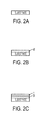
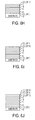
- Figs. 2A-2F illustrate an example of surface printed color order for some embodiments corresponding to Image-on-Image printing with two Print Engines in an exemplary embodiment.
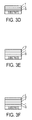
- Figs. 3A-3I illustrate a second example of surface printed color order for some embodiments corresponding to Image-on-Image printing with two Print Engines.
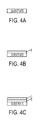
- Figs. 4A-4F illustrate an example of reverse printed color order for some embodiments corresponding to Image-on-Image printing with two Print Engines.
- Figs. 5A-5F illustrate a second example of reverse printed color order for some embodiments corresponding to Image-on-Image printing with two Print Engines.
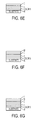
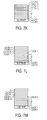
- Figs. 6A-6M illustrate an example of surface printed color order for some embodiments including two tandem Print Engines.
- Figs. 7A-7M illustrate an example of reverse printed color order for some embodiments including two tandem Print Engines.
- Figure 1 illustrates an example of a printing system 100 in an exemplary embodiment
- the printing system 100 includes a substrate feeding unit 101.
- the feeding unit may be an unwinder in those embodiments corresponding to web printing systems.
- the substrate is then fed into Print Engine 1 103 that forms images corresponding to the CMYK colors.
- the Print Engine 1 103 images the substrate
- the substrate is fed into the Print Engine 2 104 which forms images corresponding to additional colors 5678.
- the full image is fixed onto the substrate.
- a control unit 102 may control each of the feeding unit 101, Print Engine 1 103, Print Engine 2 104.
- control unit 102 controls the operation of other components of the printing system 100 as necessary, performs any necessary calculations and executes any necessary programs for implementing the processes of the printing system 100 and its individual components, and controls the flow of data between other components of the printing system 100 as needed.
- Figures 2A-2F illustrate an example of surface printed color order for some embodiments corresponding to Image-on-Image printing with two Print Engines.
- the colors associated with Print Engine 1 are CMYW
- the colors associated with Print Engine 2 are Kxxx, where x represents an inactive color station in this example.
- Figures 2A-2F illustrates the printing on the substrate with W (e.g., white) being deposited on the substrate first, C (e.g., cyan) being deposited on the substrate second, Y (e.g., yellow) being deposited on the substrate third, M (e.g., magenta) being deposited on the substrate fourth, and K (e.g., black) being deposited on the substrate fifth.
- W e.g., white
- C e.g., cyan
- Y e.g., yellow
- M e.g., magenta
- K e.g., black
- one transfer to the substrate may be accomplished for each Print Engine in Image-on-Image printing. While the different colors may be transferred to the substrate in the above exemplary order, the transfer to the substrate need not be by one color at a time.
- Figures 2A-2F merely show one exemplary embodiment of an order of color transferred to a substrate, not necessarily one color at a time.
- Figures 3A-3I illustrate a second example of surface printed color order for some embodiments corresponding to Image-on-Image printing with two Print Engines.
- the colors associated with Print Engine 1 are MYCW, and the colors associated with Print Engine 2 are 567K (where 5 corresponds to additional color 5; 6 corresponds to additional color 6; 7 corresponds to additional color 7; and K corresponds to black).
- Figures 3A-3I illustrates color stacking on the substrate - 8 colors may be stacked on the substrate.
- Figures 3A-3I are illustrative of the color deposition order. Not every color may overlap another, particularly with respect to colors 567 which may be spot colors. Spot colors may overlap in trapped edges where two or more colors are butted together.
- W e.g., white
- C e.g., cyan
- Y e.g., yellow
- M e.g., magenta
- K e.g., black
- 7 e.g., additional color 7
- 6 e.g., additional color 6
- 5 e.g., additional color 5
- the above described color order shown in Figures 3A-3I is exemplary, and describes colors closest to the substrate.
- the color order may or may not be sequential, that is, transfer to the substrate need not be by one color at a time.
- Figures 4A-4F illustrate an example of reverse printed color order for some embodiments corresponding to Image-on-Image printing with two Print Engines. Figures 4A-4F further illustrate color stacking on the substrate for such embodiments.
- the colors associated with Print Engine 1 include CMYK
- the colors associated with Print Engine 2 include Wxxx, where W represents white and x represents inactive color stations.
- K e.g., black
- C e.g., cyan
- Y e.g., yellow
- M e.g., magenta
- W e.g., white
- the above-described color order shown in Figures 4A-4F is exemplary, and describes colors closest to the substrate. In an exemplary embodiment, the color order may or may not be sequential, that is, transfer to the substrate need not be by one color at a time.
- Figures 5A-5F illustrate a second example of reverse printed color order for some embodiments corresponding to Image-on-Image printing with two Print Engines. Figures 5A-5F further illustrate color stacking on the substrate.
- the colors associated with Print Engine 1 include MYCK
- the colors associated with Print Engine 2 include xxxW, where x represents an inactive color station and W represents white.
- K e.g., black
- C e.g., cyan
- Y e.g., yellow
- M e.g., magenta
- W e.g., white
- the described color order shown in Figures 5A-5F is exemplary; the color order may or may not be sequential, that is, transfer to the substrate need not be by one color at a time.
- Figures 6A-6M illustrate an example of surface printed color order for some embodiments including two tandem Print Engines. Figures 6A-6M further illustrate color stacking on the substrate. Although Figures 6A-6M illustrates 12 colors stacked on the substrate, Figures 6A-6M are intended to be merely illustrative of the order in which colors are imaged onto the substrate. Because colors 7-12 may be spot colors, those colors will not necessarily be stacked. However, the spot colors may be stacked in trapped edges where two or more colors are butted together. In this example, the colors associated with Print Engine 1 include YMCK5W, and the colors associated with Print Engine 2 include 789 10 11 12.
- W e.g., white
- 5 e.g., additional color 5
- K e.g., black
- C e.g., cyan
- M e.g., magenta
- Y e.g., yellow
- 12 e.g., additional color 12
- 10 e.g., additional color 10
- 9 e.g., additional color 9
- 8 e.g., additional color 8
- 7 e.g., additional color 7) is deposited on the substrate twelfth.
- one transfer to the substrate may be accomplished for each Print Engine in Tandem printing. While the different colors may be transferred to the substrate in the above exemplary order, the transfer to the substrate need not be by one color at a time.
- Figures 6A-6M merely show one exemplary embodiment of an order of color transferred to a substrate, not necessarily one color at a time.
- Figures 7A-7M illustrate an example of reverse printed color order for some embodiments including two tandem Print Engines. Figures 7A-7M further illustrate color stacking on the substrate. Although Figures 7A-7M illustrates 12 colors stacked on the substrate, Figures 7A-7M are intended to be merely illustrative of the order in which colors are imaged onto the substrate. Because colors 7-12 may be spot colors, those colors will not necessarily be stacked. The spot colors may be stacked, however, in trapped edges where two or more colors are butted together. In this example, the colors associated with Print Engine 1 include YMCK56, and the colors associated with Print Engine 2 include W89 10 11 12.
- 6 (e.g., additional color 6) will be deposited on the substrate first; 5 (e.g., additional color 5) will be deposited on the substrate second; K (e.g., black) will be deposited on the substrate third; C (e.g., cyan) will deposited on the substrate fourth; M (e.g., magenta) will be deposited on the substrate fifth; Y (e.g., yellow) will be deposited on the substrate sixth; 12 (e.g., additional color 12) will be deposited on the substrate seventh; 11 (e.g., additional color 11) will be deposited on the substrate eighth; 10 (e.g., additional color 10) will be deposited on the substrate ninth; 9 (e.g., additional color 9) will be deposited on the substrate tenth; 8 (e.g., additional color 8) will be deposited on the substrate eleventh; and W (e.g., white) will be deposited on the substrate twelfth.
- 5 e.g., additional color 5
- the exemplary embodiments for reverse printed color order including two tandem Print Engines are not limited to the exemplary embodiment of Figures 7A - 7M .
- colors associated with Print Engine 1 may include YMCK5W
- the colors associated with Print Engine 2 may include W89 10 11 12. It should be understood that many color variations may be used.
- This embodiment with white installed in two positions enables the control system to select which white station to use, based on surface or reverse printing, without operator intervention to change the position of the white station.
- the exemplary embodiments are not limited to reverse printed color order including two tandem Print Engines.
- an Image-on-Image process may be implemented in either Print Engine, or any other process known or later developed that may be implemented with the Print Engines.
- the exemplary embodiments are not limited to print systems that implement dry toner processes, but may implement flexography, liquid toner processes, inkjet, roll coating, rotary screen printing, and any other known or later developed process that may incorporate multiple print engines for printing on different mediums including, for example, flexible packaging, labels, documents and the like.
Landscapes
- Engineering & Computer Science (AREA)
- Multimedia (AREA)
- Signal Processing (AREA)
- Color Electrophotography (AREA)
- Printing Methods (AREA)
Abstract
Description
- The embodiments generally relate to print apparatuses and print systems that incorporate multiple print engines for printing on different mediums including, for example, flexible packaging, labels and documents.
- Flexible packaging is often printed on flexography presses that may have five to eight color stations. In general, the major components used in a conventional flexography process include an ink pan, an anilox roll, a plate cylinder, and impression cylinder. In operation, cells in the anilox roll receive ink from the ink pan. The plate cylinder has raised images, or dots, that enter the anilox cells and pick up the ink that comes into contact with the image areas. The image printed on the substrate is pulled through a series of stations, or print units. Each print unit prints a single color. Various tones and shadings are achieved by overlaying the four basic shades of ink: magenta, yellow, cyan, and black (MYCK).
- The flexography process is often used for print jobs associated with drink packages, snack food packages, labels, adhesive tapes, envelopes, disposable containers, corrugated containers, etc. Such print jobs often utilize multiple print stations for spot colors, brand colors, or to match the anilox roll cell count to the type of image being printed. As a result, print systems using flexography may use different color stations for the black printing which prints a black solid area on the package, and a different color station with a finer cell count anilox roll for the black station that prints half-toned areas.
- A spot color is any color generated by an ink (pure or mixed) that is printed using a single run. However, use of the term spot color is commonly understood to mean any color generated by a non-standard offset ink; such as metallic, fluorescent, spot varnish, or custom hand-mixed inks. Spot colors are used in the printing industry to extend the color gamut of a printing system beyond the color gamut available with the standard process colors, magenta, cyan, yellow and black. Spot colors may also be used to provide an overcoat such as a matte finish, a gloss finish, or a satin finish. Moreover, spot colors may be used to provide white image layers.
- Printing systems may print on a substrate having a finite size (i.e., an 8.5" x 11" sheet of paper, an 8.5" x 14" sheet of paper, an 11" x 17" sheet of paper, etc.). Such printing systems are known as cut-sheet systems. Alternatively, printing systems may print on a continuous substrate in which the continuous substrate is set out from an unwinder and passed through a print engine. Upon passing through the print engine, the continuous substrate is wound up on a rewinder. Such a printing system is often referred to as a web system.
- There are generally two types of printing- surface printing and reverse printing. The printing of packaging or labels may be accomplished by either surface printing or by reverse printing. Surface printing corresponds to the printing of print jobs for which the image will be viewed from the same side of the substrate on which the image is being applied (i.e., the ink or image is between the viewer and the substrate). Contrarily, reverse printing corresponds to the printing of print jobs for which the image will be viewed from a side of the substrate which is opposite to the side of the substrate on which the image is applied (i.e., the substrate is between the viewer and the ink). Document printing is generally accomplished by surface printing.
- With the evolution of digital print systems, there has been an increased need for expanding a printing system's color gamut. Thus, while conventional print systems may use a single print engine, embodiments for achieving this end include incorporating multiple print engines into a print apparatus or print system. For example, in an exemplary embodiment, a print system may include the following key components: a roll unwinder, two or more print engines, a fix/dry/cure station, and a roll winder.
- The print engines may correspond to Image-on-Image engines. For Image-on-Image print engines, a multi-color image is built on a photoreceptor, and is then transferred to a substrate in a single transfer. The photoreceptor may be a belt or a drum. Improved productivity for a range of image lengths can be obtained with a seamless belt or imageable photoreceptor belt. Each of the print engines may include any number of color stations. Additional colors may correspond to: (i) a spot color (e.g., a Pantone color, white, clear (matte, gloss, or satin), etc.); (ii) a color used to extend the color gamut over standard 4 color printing; and/or (iii) a color used to achieve reduced image graininess (e.g., light cyan, light magenta, gray, etc.).
- In some embodiments, the standard MYCK print colors are used in a first print engine (hereinafter Print Engine 1). After the MYCK image is built upon on a photoreceptor in Print Engine 1, the MYCK image is transferred onto a substrate in a single transfer. The substrate is then passed into a second print engine (hereinafter Print Engine 2). Print Engine 2 builds up an image corresponding to the additional colors (e.g., the 5678 image, where 5678 corresponds to
additional color 5,additional color 6,additional color 7, additional color 8) and transfers the 5678 image onto the substrate in a single transfer on top of the MYCK image. - In some embodiments, it may be desirable to maintain color-to-color registration, independent of whether the color is imaged in Print Engine 1 or in Print Engine 2. For example, some embodiments may pass the substrate to Print Engine 2 (or any other Print Engine subsequent to Print Engine 1) after it exits Print Engine 1, and the image on the substrate may be unfixed or partially set or fully fixed before entering Print Engine 2 (or any other Print Engine subsequent to Print Engine 1). In such embodiments, the images exiting from Print Engine 2 (or any other Print Engine subsequent to Print Engine 1) are passed through a fix/dry/cure station.
- In some embodiments, the color ordering may be flexible. For example, some embodiments may dispose a MYCK Print Engine subsequent to one or more other Print Engines with additional colors. In addition, some embodiments may include a subset of MYCK colors in a Print Engine (e.g., rather than having a single print engine for all MYCK colors). Thus, for example, colors 5678 could be disposed in Print Engine 1, and the MYCK colors may be disposed in Print Engine 2; or, some of the additional colors may be disposed in Print Engine 1, and some of the MYCK colors may be disposed in Print Engine 2 - for example colors corresponding to magenta, yellow, and
additional colors additional colors - In some embodiments, a white layer may be formed in a Print Engine. In embodiments corresponding to Image-on-Image printing, and including multiple Print Engines, the white may be installed as the last active color station in Print Engine 1. This ensures that a white layer is formed as the first layer on the substrate for surface printing. An example of a color order for such an embodiment may be MYCW in Print Engine 1 and 567K in Print Engine 2 (where 567 corresponds to
additional color 5,additional color 6, and additional color 7). - It may be difficult to image sufficiently through an image formed in black (K), particularly with typical laser wavelength exposure. Accordingly, in some embodiments, the color station corresponding to black (K) may be the last active station of the Print Engine in which the black station is disposed.
- Some embodiments may utilize Image-on-Image reverse printing. Reverse printing is utilized in print jobs for which it is desirable to view the image from the side of the substrate that opposes the side on which colors are printed. In embodiments corresponding to reverse printing, the white layer is typically the last layer to be deposited on the substrate, or it otherwise represents the imaged layer farthest from the substrate. The white layer may be formed in a Print Engine. Embodiments may include white within the last Print Engine. For example, in embodiments having two Print Engines, to form the white layer as the last layer on the substrate for reverse printing, the white may be installed as a color station in the second Print Engine (i.e., Print Engine 2).
- With typical laser wavelength exposure, it is extremely difficult to image sufficiently through a W image (e.g., a white image). Thus, print jobs for which white is to be used as a flood coating, embodiments may have W as the last active station in the Print Engine in which it is located. However, if white is digitally selectively imaged, the constraint of having W as the last active station in the Print Engine does not necessarily hold, depending on the desired visual appearance.
- Embodiments may also include tandem engine printing. For typical tandem engines, the image is transferred from the photoreceptors to an ITB (intermediate transfer belt) one color at a time, and colors are thereafter transferred to the substrate in a second transfer step. The photoreceptors may be a drum or a belt. Improved productivity may be obtained with seamless photoreceptor and/or intermediate transfer belts or imageable seam photoreceptor and/or intermediate transfer belts. Embodiments may include an intermediate transfer drum as an alternative to an intermediate transfer belt. The tandem Print Engine may include any number of color stations.
- For example, in embodiments where the tandem Print Engine includes 6 colors, the YMCK56 image is built upon the intermediate belt in Print Engine 1 and is transferred onto the substrate in a single transfer. The substrate is then passed into Print Engine 2. The 789 10 11 12 image is built upon the intermediate belt in Print Engine 2, and the 789 10 11 12 image is transferred onto the substrate in a single transfer on top of the YMCK56 image. In some embodiments, it may be desirable to maintain color-to-color registration, independent of whether the color is imaged in Print Engine 1 or in Print Engine 2.
- Some embodiments may pass the substrate to Print Engine 2 (or any other Print Engine subsequent to Print Engine 1) after exiting Print Engine 1, and the image on the substrate may be unfixed or partially set before entering Print Engine 2 (or any other Print Engine subsequent to Print Engine 1). In such embodiments, the images exiting from Print Engine 2 (or any other Print Engine subsequent to Print Engine 1) are passed through a fix/dry/cure station. As discussed above, the color ordering may be flexible. For example, some embodiments may dispose a MYCK Print Engine subsequent to one or more other Print Engines with additional colors. In addition, some embodiments may include a subset of MYCK colors in a Print Engine. Thus, for example, colors 5678 could be disposed in Print Engine 1, and the MYCK colors may be disposed in Print Engine 2; or, some of the additional colors may be disposed in Print Engine 1, and some of the MYCK colors may be disposed in Print Engine 2.
- A white image may be imaged by including a white color station in one of the Print Engines. In embodiments where it is desired to form a white layer as the first layer on the substrate for surface printing, a white color station may be installed as the last active color station in Print Engine 1. For example, a color order for such an embodiment may be: colors corresponding to YMCK5W disposed in Print Engine 1, and colors 789 10 11 12 disposed in Print Engine 2.
- Some embodiments may include a tandem Print Engine for reverse printing. In such embodiments, the white layer is typically the last layer to be deposited on the substrate, or it otherwise represents the layer farthest from the substrate. A white image may be imaged by including a white color station in one of the Print Engines. In embodiments where it is desired to form a white layer as the last layer on the substrate for reverse printing, a white color station may be installed as a color station in Print Engine 2. For example, a color order for such an embodiment may be: YMCK56 in Print Engine 1, and
W89 10 11 12 in Print Engine 2. If white is digitally selectively imaged, the constraint of having W as the first active station in Print Engine 2 does not necessarily hold, depending on the desired visual appearance. - Some embodiments may include a tandem engine configuration in which an image is transferred from the photoreceptors to the substrate one color at a time. The tandem engine may contain any number of color stations. For example, the tandem engine may contain YMCK, YMCK5, YMCK56, etc. in Print Engine 1, and additional colors in Print Engine 2.
- Some embodiments may include a cyclic engine configuration in which an image is transferred from the photoreceptor to an intermediate belt or drum, and in a cyclic mode, the full set of colors in the print engine is built up on the intermediate belt or drum, one image transfer for each cycle. The full image is then transferred from the intermediate belt or drum to the substrate in a single transfer step. The cyclic engine may contain any number of color stations. For example, the cyclic engine may contain YMCK, YMCK5, YMCK56, etc in Print Engine 1, and additional colors in Print Engine 2. As discussed above, the color ordering may be flexible. For example, colors 5678 could be disposed in Print Engine 1, and the MYCK colors may be disposed in Print Engine 2; or, some of the additional colors may be disposed in Print Engine 1, and some of the MYCK colors may be disposed in Print Engine 2.
- Some embodiments may include a cyclic engine configuration in which an image is transferred from the photoreceptor to the substrate, one color at a time, and in a cyclic mode, the full set of colors is built up on the substrate. The cyclic engine may contain any number of color stations. For example, the cyclic engine may contain YMCK, YMCK5, YMCK56, etc. in Print Engine 1, and additional colors in Print Engine 2. As discussed above, the color ordering may be flexible. For example, colors 5678 could be disposed in Print Engine 1, and the YMCK colors may be disposed in Print Engine 2; or, some of the additional colors may be disposed in Print Engine 1, and some of the YMCK colors may be disposed in Print Engine 2.
- Although the above embodiments only describe Image-on-Image, Tandem and cyclic engine configuration for the multiple print engines, it is envisioned that any number of known or future developed systems, in any combination, may be implemented without departing from the scope of this invention. For Example, Print Engine 1 may implement an Image-on-Image process and Print Engine 2 may implement a Tandem process.
- Embodiments may include printing to either web feed or sheet feed systems, may include simplex or duplex printing systems, and may also be directed to control systems for controlling multiple Print Engines. In one embodiment of the method according to claim 15,:
- the print job dictates a color order corresponding to the order in which each of the at least one color station is used to form the respective color image;
- the color order is such that when the image is viewed by a viewer, the image formed on the substrate is between the viewer and the substrate; and
- the portion of image data that corresponds to the single color of each of the at least one color station is formed on the substrate in accordance with the color order.
- the print job dictates a color order corresponding to the order in which each of the at least one color station is used to form the respective color image;
- the color order is such that when the image is viewed by a viewer, the substrate on which the image is formed is between the viewer and the image; and
- the portion of image data that corresponds to the single color of each of the at least one color station is formed on the substrate in accordance with the color order.
- Embodiments may be directed to computer executable programs that are stored on a computer readable medium, including, but not limited to, a hard drive or RAM. The computer executable programs may be used to control the multiple print engines of the various above-identified embodiments.
-
Fig. 1 illustrates an example of a printing apparatus in an exemplary embodiment. -
Figs. 2A-2F illustrate an example of surface printed color order for some embodiments corresponding to Image-on-Image printing with two Print Engines in an exemplary embodiment. -
Figs. 3A-3I illustrate a second example of surface printed color order for some embodiments corresponding to Image-on-Image printing with two Print Engines. -
Figs. 4A-4F illustrate an example of reverse printed color order for some embodiments corresponding to Image-on-Image printing with two Print Engines. -
Figs. 5A-5F illustrate a second example of reverse printed color order for some embodiments corresponding to Image-on-Image printing with two Print Engines. -
Figs. 6A-6M illustrate an example of surface printed color order for some embodiments including two tandem Print Engines. -
Figs. 7A-7M illustrate an example of reverse printed color order for some embodiments including two tandem Print Engines. -
Figure 1 illustrates an example of aprinting system 100 in an exemplary embodiment, Specifically, theprinting system 100 includes asubstrate feeding unit 101. The feeding unit may be an unwinder in those embodiments corresponding to web printing systems. The substrate is then fed into Print Engine 1 103 that forms images corresponding to the CMYK colors. After the Print Engine 1 103 images the substrate, the substrate is fed into the Print Engine 2 104 which forms images corresponding to additional colors 5678. After the images corresponding to additional colors 5678 are formed, the full image is fixed onto the substrate. Acontrol unit 102 may control each of thefeeding unit 101, Print Engine 1 103, Print Engine 2 104. - In addition to the control described above, the
control unit 102 controls the operation of other components of theprinting system 100 as necessary, performs any necessary calculations and executes any necessary programs for implementing the processes of theprinting system 100 and its individual components, and controls the flow of data between other components of theprinting system 100 as needed. -
Figures 2A-2F illustrate an example of surface printed color order for some embodiments corresponding to Image-on-Image printing with two Print Engines. The colors associated with Print Engine 1 are CMYW, and the colors associated with Print Engine 2 are Kxxx, where x represents an inactive color station in this example. Thus,Figures 2A-2F illustrates the printing on the substrate with W (e.g., white) being deposited on the substrate first, C (e.g., cyan) being deposited on the substrate second, Y (e.g., yellow) being deposited on the substrate third, M (e.g., magenta) being deposited on the substrate fourth, and K (e.g., black) being deposited on the substrate fifth. In accordance with an exemplary embodiment, one transfer to the substrate may be accomplished for each Print Engine in Image-on-Image printing.
While the different colors may be transferred to the substrate in the above exemplary order, the transfer to the substrate need not be by one color at a time.Figures 2A-2F merely show one exemplary embodiment of an order of color transferred to a substrate, not necessarily one color at a time. -
Figures 3A-3I illustrate a second example of surface printed color order for some embodiments corresponding to Image-on-Image printing with two Print Engines. The colors associated with Print Engine 1 are MYCW, and the colors associated with Print Engine 2 are 567K (where 5 corresponds toadditional color 5; 6 corresponds toadditional color 6; 7 corresponds toadditional color 7; and K corresponds to black).Figures 3A-3I illustrates color stacking on the substrate - 8 colors may be stacked on the substrate.Figures 3A-3I are illustrative of the color deposition order. Not every color may overlap another, particularly with respect to colors 567 which may be spot colors. Spot colors may overlap in trapped edges where two or more colors are butted together. Thus, as shown inFigures 3A-3I , W (e.g., white) is deposited on the substrate first; C (e.g., cyan) is deposited on the substrate second; Y (e.g., yellow) is deposited on the substrate third; M (e.g., magenta) is deposited on the substrate fourth; K (e.g., black) is deposited on the substrate fifth; 7 (e.g., additional color 7) is deposited on the substrate sixth; 6 (e.g., additional color 6) is deposited on the substrate seventh; and 5 (e.g., additional color 5) is deposited on the substrate eighth. In accordance with the exemplary embodiments, the above described color order shown inFigures 3A-3I is exemplary, and describes colors closest to the substrate. In an exemplary embodiment, the color order may or may not be sequential, that is, transfer to the substrate need not be by one color at a time. -
Figures 4A-4F illustrate an example of reverse printed color order for some embodiments corresponding to Image-on-Image printing with two Print Engines.Figures 4A-4F further illustrate color stacking on the substrate for such embodiments. In this example, the colors associated with Print Engine 1 include CMYK, and the colors associated with Print Engine 2 include Wxxx, where W represents white and x represents inactive color stations. Thus, as illustrated inFigures 4A-4F , K (e.g., black) is deposited on the substrate first; C (e.g., cyan) is deposited on the substrate second; Y (e.g., yellow) is deposited on the substrate third; M (e.g., magenta) is deposited on the substrate fourth; and W (e.g., white) is deposited on the substrate fifth. As similarly discussed above, the above-described color order shown inFigures 4A-4F is exemplary, and describes colors closest to the substrate. In an exemplary embodiment, the color order may or may not be sequential, that is, transfer to the substrate need not be by one color at a time. -
Figures 5A-5F illustrate a second example of reverse printed color order for some embodiments corresponding to Image-on-Image printing with two Print Engines.Figures 5A-5F further illustrate color stacking on the substrate. In this example, the colors associated with Print Engine 1 include MYCK, and the colors associated with Print Engine 2 include xxxW, where x represents an inactive color station and W represents white. Thus, as illustrated inFigures 5A-5F , K (e.g., black) is deposited on the substrate first; C (e.g., cyan) is deposited on the substrate second; Y (e.g., yellow) is deposited on the substrate third; M (e.g., magenta) is deposited on the substrate fourth; and W (e.g., white) is deposited on the substrate fifth. The described color order shown inFigures 5A-5F is exemplary; the color order may or may not be sequential, that is, transfer to the substrate need not be by one color at a time. -
Figures 6A-6M illustrate an example of surface printed color order for some embodiments including two tandem Print Engines.Figures 6A-6M further illustrate color stacking on the substrate. AlthoughFigures 6A-6M illustrates 12 colors stacked on the substrate,Figures 6A-6M are intended to be merely illustrative of the order in which colors are imaged onto the substrate. Because colors 7-12 may be spot colors, those colors will not necessarily be stacked. However, the spot colors may be stacked in trapped edges where two or more colors are butted together. In this example, the colors associated with Print Engine 1 include YMCK5W, and the colors associated with Print Engine 2 include 789 10 11 12. As illustrated inFigures 6A-6M , W (e.g., white) is deposited on the substrate first; 5 (e.g., additional color 5) is deposited on the substrate second; K (e.g., black) is deposited on the substrate third; C (e.g., cyan) is deposited on the substrate fourth; M (e.g., magenta) is deposited on the substrate fifth; Y (e.g., yellow) is deposited on the substrate sixth; 12 (e.g., additional color 12) is deposited on the substrate seventh; 11 (e.g., additional color 11) is deposited on the substrate eighth; 10 (e.g., additional color 10) is deposited on the substrate ninth; 9 (e.g., additional color 9) is deposited on the substrate tenth; 8 (e.g., additional color 8) is deposited on the substrate eleventh; and 7 (e.g., additional color 7) is deposited on the substrate twelfth. - In accordance with an exemplary embodiment, one transfer to the substrate may be accomplished for each Print Engine in Tandem printing. While the different colors may be transferred to the substrate in the above exemplary order, the transfer to the substrate need not be by one color at a time.
Figures 6A-6M merely show one exemplary embodiment of an order of color transferred to a substrate, not necessarily one color at a time. -
Figures 7A-7M illustrate an example of reverse printed color order for some embodiments including two tandem Print Engines.Figures 7A-7M further illustrate color stacking on the substrate. AlthoughFigures 7A-7M illustrates 12 colors stacked on the substrate,Figures 7A-7M are intended to be merely illustrative of the order in which colors are imaged onto the substrate. Because colors 7-12 may be spot colors, those colors will not necessarily be stacked. The spot colors may be stacked, however, in trapped edges where two or more colors are butted together. In this example, the colors associated with Print Engine 1 include YMCK56, and the colors associated with Print Engine 2 includeW89 10 11 12. As illustrated inFigures 7A-7M ,6 (e.g., additional color 6) will be deposited on the substrate first; 5 (e.g., additional color 5) will be deposited on the substrate second; K (e.g., black) will be deposited on the substrate third; C (e.g., cyan) will deposited on the substrate fourth; M (e.g., magenta) will be deposited on the substrate fifth; Y (e.g., yellow) will be deposited on the substrate sixth; 12 (e.g., additional color 12) will be deposited on the substrate seventh; 11 (e.g., additional color 11) will be deposited on the substrate eighth; 10 (e.g., additional color 10) will be deposited on the substrate ninth; 9 (e.g., additional color 9) will be deposited on the substrate tenth; 8 (e.g., additional color 8) will be deposited on the substrate eleventh; and W (e.g., white) will be deposited on the substrate twelfth. - The exemplary embodiments for reverse printed color order including two tandem Print Engines are not limited to the exemplary embodiment of
Figures 7A - 7M . For example, in another exemplary embodiment of reverse printed color order including two tandem Print Engines, colors associated with Print Engine 1 may include YMCK5W, and the colors associated with Print Engine 2 may includeW89 10 11 12. It should be understood that many color variations may be used. This embodiment with white installed in two positions enables the control system to select which white station to use, based on surface or reverse printing, without operator intervention to change the position of the white station. - Furthermore, the exemplary embodiments are not limited to reverse printed color order including two tandem Print Engines. For example, an Image-on-Image process may be implemented in either Print Engine, or any other process known or later developed that may be implemented with the Print Engines.
- It will be appreciated that various of the above-disclosed and other features and functions, or alternatives thereof, may be desirably combined into many other different systems or applications. Also, various presently unforeseen or unanticipated alternatives, modifications, variations or improvements therein may be subsequently made by those skilled in the art, and are also intended to be encompassed by the following claims.
- For example, the exemplary embodiments are not limited to print systems that implement dry toner processes, but may implement flexography, liquid toner processes, inkjet, roll coating, rotary screen printing, and any other known or later developed process that may incorporate multiple print engines for printing on different mediums including, for example, flexible packaging, labels, documents and the like.
- It will be appreciated that various of the above-disclosed and other features and functions, or alternatives thereof, may be desirably combined into many other different systems or applications.
Claims (15)
- A printing system that prints an image on a substrate, the printing system comprising:a storage unit that at least temporarily stores image data that corresponds to a print job;a feeding unit that feeds the substrate from a storage location;a plurality of print engines each of which includes at least one color station, wherein the at least one color station corresponds to a single color and wherein each of the plurality of print engines forms on the substrate a respective color image that is associated with a portion of the image data that corresponds to the single color of each of the at least one color station; andat least one of:a fix station;a dry station; anda cure station.
- The printing system of according to claim 1, further comprising:a processing unit that determines the extent to which each of the at least one color station is used to form the portion of the image data that corresponds to the single color of the at least one color station.
- The printing system according to claim 1, wherein:the printing system is a cut-sheet system.
- The printing system according to claim 1, wherein:the printing system is a web system.
- The printing system according to claim 1, wherein:the printing system is a surface printing system that forms on the substrate images in accordance with the positioning of the respective color images formed using a respective color station.
- The printing system according to claim 5, wherein:the print job dictates a color order corresponding to the order in which each of the at least one color station is used to form the respective color image; andthe color order is such that when a viewer views the image, the image formed on the substrate is between the viewer and the substrate.
- The printing system according to claim 1, wherein:the printing system is a reverse printing system that forms on the substrate images in accordance with the positioning of the respective color images formed using a respective color station.
- The printing system according to claim 7, wherein:the print job dictates a color order corresponding to the order in which each of the at least one color station is used to form the respective color image; andthe color order is such that when a viewer views the image, the substrate on which the image is formed is between the viewer and the image.
- A printing apparatus that prints an image on a substrate, the printing apparatus comprising:a storage unit that at least temporarily stores image data that corresponds to a print job;a plurality of print engines each of which includes at least one color station, wherein the at least one color station corresponds to a single color and wherein each of the plurality of print engines forms on the substrate a respective color image that is associated with a portion of the image data that corresponds to the single color of each of the at least one color station;a processing unit that determines the extent to which each of the at least one color station is used to form the portion of the image data that corresponds to the single color of the at least one color station.
- The printing apparatus according to claim 9, wherein:the printing apparatus is a cut-sheet apparatus.
- The printing apparatus according to claim 9, wherein:the printing apparatus is a web apparatus.
- The printing apparatus according to claim 9, wherein one of dry toner development, liquid toner development, flexography, inkjet, roll coating, and rotary screen printing is used to form the image.
- The printing apparatus according to claim 9, wherein:the printing apparatus is a surface printing apparatus that forms on the substrate images in accordance with the positioning of the respective color images formed using a respective color station.
- The printing apparatus according to claim 13, wherein:the print job dictates a color order corresponding to the order in which each of the at least one color station is used to form the respective color image; andthe color order is such that when a viewer views the image the image formed on the substrate is between the viewer and the substrate.
- A method for printing an image on a substrate using a plurality of print engines each of which includes at least one color station, wherein the at least one color station corresponds to a single color and wherein each of the plurality of print engines forms on the substrate a respective color image that is associated with a portion of image data that corresponds to the single color of each of the at least one color station, the method comprising:receiving a print job associated with image data;determining the extent to which each of the at least one color station is used to form the portion of the image data that corresponds to the single color of the at least one color station; andforming on the substrate the portion of image data that corresponds to the single color of each of the at least one color station.
Applications Claiming Priority (1)
| Application Number | Priority Date | Filing Date | Title |
|---|---|---|---|
| US12/372,074 US8854686B2 (en) | 2009-02-17 | 2009-02-17 | Digital printing systems for packaging and document printing with special colors |
Publications (3)
| Publication Number | Publication Date |
|---|---|
| EP2219361A2 true EP2219361A2 (en) | 2010-08-18 |
| EP2219361A3 EP2219361A3 (en) | 2015-12-02 |
| EP2219361B1 EP2219361B1 (en) | 2017-05-17 |
Family
ID=42163719
Family Applications (1)
| Application Number | Title | Priority Date | Filing Date |
|---|---|---|---|
| EP10153760.3A Not-in-force EP2219361B1 (en) | 2009-02-17 | 2010-02-17 | Digital printing systems for packaging and document printing with special colors |
Country Status (3)
| Country | Link |
|---|---|
| US (1) | US8854686B2 (en) |
| EP (1) | EP2219361B1 (en) |
| JP (1) | JP2010188725A (en) |
Families Citing this family (2)
| Publication number | Priority date | Publication date | Assignee | Title |
|---|---|---|---|---|
| US8837970B2 (en) | 2011-06-21 | 2014-09-16 | Xerox Corporation | Apparatus, methods, and systems for engaging and disengaging a fixing nip for cut sheet processing |
| WO2015023487A1 (en) * | 2013-08-12 | 2015-02-19 | Sun Chemical Corporation | Digitally printed color cards |
Family Cites Families (12)
| Publication number | Priority date | Publication date | Assignee | Title |
|---|---|---|---|---|
| US5739928A (en) * | 1991-09-12 | 1998-04-14 | Eastman Kodak Company | Technique particularly suited for use in a print preview function for adapting CRT colorimetry to ambient lighting conditions |
| US5486057A (en) * | 1992-05-06 | 1996-01-23 | Eltron International, Inc. | Multicolor printer system having multiple print heads |
| US5611629A (en) * | 1993-03-30 | 1997-03-18 | Paranjpe; Suresh C. | Multiple print head nonimpact printing apparatus |
| US5347353A (en) * | 1993-09-24 | 1994-09-13 | Xerox Corporation | Tandem high productivity color architecture using a photoconductive intermediate belt |
| JP2711081B2 (en) * | 1994-07-21 | 1998-02-10 | キヤノン株式会社 | Ink jet printing apparatus, ink jet printing method, and printed matter |
| US5837408A (en) * | 1997-08-20 | 1998-11-17 | Xerox Corporation | Xerocolography tandem architectures for high speed color printing |
| US6947175B1 (en) * | 2000-07-31 | 2005-09-20 | Xerox Corporation | Method and system for adjusting color mixing due to substrate characteristics |
| US6965746B2 (en) * | 2003-06-17 | 2005-11-15 | Xerox Corporation | Hybrid electrophotographic development with toner induction charged via AC induced conductivity |
| US7416267B2 (en) * | 2004-03-23 | 2008-08-26 | Zink Imaging, Llc | Print job data processing for multi-head printers |
| JP3965587B2 (en) * | 2004-03-31 | 2007-08-29 | 富士フイルム株式会社 | Color mixing determination method and image recording method and apparatus |
| US7236734B2 (en) * | 2005-02-22 | 2007-06-26 | Eastman Kodak Company | Method and apparatus for electrostatographic printing with enhanced color gamut |
| JP5483834B2 (en) * | 2007-06-28 | 2014-05-07 | キヤノン株式会社 | Image processing apparatus and image processing method |
-
2009
- 2009-02-17 US US12/372,074 patent/US8854686B2/en active Active
-
2010
- 2010-02-12 JP JP2010028494A patent/JP2010188725A/en active Pending
- 2010-02-17 EP EP10153760.3A patent/EP2219361B1/en not_active Not-in-force
Non-Patent Citations (1)
| Title |
|---|
| None |
Also Published As
| Publication number | Publication date |
|---|---|
| EP2219361A3 (en) | 2015-12-02 |
| US20100208278A1 (en) | 2010-08-19 |
| EP2219361B1 (en) | 2017-05-17 |
| US8854686B2 (en) | 2014-10-07 |
| JP2010188725A (en) | 2010-09-02 |
Similar Documents
| Publication | Publication Date | Title |
|---|---|---|
| US7990589B2 (en) | Image processing apparatus and method therefor | |
| EP1149703B1 (en) | Method of and device for managing print colors, and image data processing device | |
| JP2007137049A (en) | Image processing method, program, image processing apparatus, image forming apparatus, and image forming system | |
| US7747210B2 (en) | Multi-color printing system and method for high toner pile height printing | |
| JP5322117B2 (en) | How to print | |
| JP2012505779A (en) | Adaptive exposure printing and its system | |
| US10005291B2 (en) | Thermal transfer printer and method for controlling the same | |
| US20070172270A1 (en) | Method and device for correcting paper shrinkage during generation of a bitmap | |
| JP2009078408A (en) | Multiplying printing system | |
| US8854686B2 (en) | Digital printing systems for packaging and document printing with special colors | |
| US20180052421A1 (en) | Method for converting a toner cartridge printer to a sublimation toner printer | |
| US10737505B2 (en) | Method for alternately operating an inkjet printing machine | |
| US20080181680A1 (en) | Digital offset printing method, electrophotographic machine and software for causing an electrophotographic machine to carry out such a method | |
| JP4604837B2 (en) | Printing device | |
| US20160277642A1 (en) | Color processing apparatus, color processing method, and image forming system | |
| US7880928B2 (en) | Color image process controls methods and systems | |
| US9110408B1 (en) | Adjusting tone reproduction curve and belt tension to control printing errors | |
| EP3480663B1 (en) | Method for converting a toner cartridge printer to a sublimation toner printer | |
| US12280585B2 (en) | Systems and methods for registering and printing a flexible web | |
| EP4010763B1 (en) | Method and system for converting a toner cartridge printer | |
| US7444094B2 (en) | Image forming device and method capable of high quality duplex printing | |
| EP3224765B1 (en) | Rosette-free printing | |
| JP4128108B2 (en) | Image forming method | |
| US20090257077A1 (en) | Defect avoidance in digital printing | |
| WO2020217713A1 (en) | Image formation device |
Legal Events
| Date | Code | Title | Description |
|---|---|---|---|
| PUAI | Public reference made under article 153(3) epc to a published international application that has entered the european phase |
Free format text: ORIGINAL CODE: 0009012 |
|
| AK | Designated contracting states |
Kind code of ref document: A2 Designated state(s): AT BE BG CH CY CZ DE DK EE ES FI FR GB GR HR HU IE IS IT LI LT LU LV MC MK MT NL NO PL PT RO SE SI SK SM TR |
|
| AX | Request for extension of the european patent |
Extension state: AL BA RS |
|
| PUAL | Search report despatched |
Free format text: ORIGINAL CODE: 0009013 |
|
| AK | Designated contracting states |
Kind code of ref document: A3 Designated state(s): AT BE BG CH CY CZ DE DK EE ES FI FR GB GR HR HU IE IS IT LI LT LU LV MC MK MT NL NO PL PT RO SE SI SK SM TR |
|
| AX | Request for extension of the european patent |
Extension state: AL BA RS |
|
| RIC1 | Information provided on ipc code assigned before grant |
Ipc: H04N 1/60 20060101ALI20151028BHEP Ipc: H04N 1/32 20060101AFI20151028BHEP Ipc: H04N 1/50 20060101ALI20151028BHEP |
|
| 17P | Request for examination filed |
Effective date: 20160602 |
|
| RBV | Designated contracting states (corrected) |
Designated state(s): AT BE BG CH CY CZ DE DK EE ES FI FR GB GR HR HU IE IS IT LI LT LU LV MC MK MT NL NO PL PT RO SE SI SK SM TR |
|
| 17Q | First examination report despatched |
Effective date: 20160623 |
|
| GRAP | Despatch of communication of intention to grant a patent |
Free format text: ORIGINAL CODE: EPIDOSNIGR1 |
|
| INTG | Intention to grant announced |
Effective date: 20161223 |
|
| GRAS | Grant fee paid |
Free format text: ORIGINAL CODE: EPIDOSNIGR3 |
|
| GRAA | (expected) grant |
Free format text: ORIGINAL CODE: 0009210 |
|
| AK | Designated contracting states |
Kind code of ref document: B1 Designated state(s): AT BE BG CH CY CZ DE DK EE ES FI FR GB GR HR HU IE IS IT LI LT LU LV MC MK MT NL NO PL PT RO SE SI SK SM TR |
|
| REG | Reference to a national code |
Ref country code: GB Ref legal event code: FG4D |
|
| REG | Reference to a national code |
Ref country code: CH Ref legal event code: EP |
|
| REG | Reference to a national code |
Ref country code: IE Ref legal event code: FG4D |
|
| REG | Reference to a national code |
Ref country code: AT Ref legal event code: REF Ref document number: 895407 Country of ref document: AT Kind code of ref document: T Effective date: 20170615 |
|
| REG | Reference to a national code |
Ref country code: DE Ref legal event code: R096 Ref document number: 602010042361 Country of ref document: DE |
|
| REG | Reference to a national code |
Ref country code: NL Ref legal event code: MP Effective date: 20170517 |
|
| REG | Reference to a national code |
Ref country code: LT Ref legal event code: MG4D |
|
| REG | Reference to a national code |
Ref country code: AT Ref legal event code: MK05 Ref document number: 895407 Country of ref document: AT Kind code of ref document: T Effective date: 20170517 |
|
| PG25 | Lapsed in a contracting state [announced via postgrant information from national office to epo] |
Ref country code: NO Free format text: LAPSE BECAUSE OF FAILURE TO SUBMIT A TRANSLATION OF THE DESCRIPTION OR TO PAY THE FEE WITHIN THE PRESCRIBED TIME-LIMIT Effective date: 20170817 Ref country code: ES Free format text: LAPSE BECAUSE OF FAILURE TO SUBMIT A TRANSLATION OF THE DESCRIPTION OR TO PAY THE FEE WITHIN THE PRESCRIBED TIME-LIMIT Effective date: 20170517 Ref country code: HR Free format text: LAPSE BECAUSE OF FAILURE TO SUBMIT A TRANSLATION OF THE DESCRIPTION OR TO PAY THE FEE WITHIN THE PRESCRIBED TIME-LIMIT Effective date: 20170517 Ref country code: GR Free format text: LAPSE BECAUSE OF FAILURE TO SUBMIT A TRANSLATION OF THE DESCRIPTION OR TO PAY THE FEE WITHIN THE PRESCRIBED TIME-LIMIT Effective date: 20170818 Ref country code: AT Free format text: LAPSE BECAUSE OF FAILURE TO SUBMIT A TRANSLATION OF THE DESCRIPTION OR TO PAY THE FEE WITHIN THE PRESCRIBED TIME-LIMIT Effective date: 20170517 Ref country code: FI Free format text: LAPSE BECAUSE OF FAILURE TO SUBMIT A TRANSLATION OF THE DESCRIPTION OR TO PAY THE FEE WITHIN THE PRESCRIBED TIME-LIMIT Effective date: 20170517 Ref country code: LT Free format text: LAPSE BECAUSE OF FAILURE TO SUBMIT A TRANSLATION OF THE DESCRIPTION OR TO PAY THE FEE WITHIN THE PRESCRIBED TIME-LIMIT Effective date: 20170517 |
|
| PG25 | Lapsed in a contracting state [announced via postgrant information from national office to epo] |
Ref country code: SE Free format text: LAPSE BECAUSE OF FAILURE TO SUBMIT A TRANSLATION OF THE DESCRIPTION OR TO PAY THE FEE WITHIN THE PRESCRIBED TIME-LIMIT Effective date: 20170517 Ref country code: NL Free format text: LAPSE BECAUSE OF FAILURE TO SUBMIT A TRANSLATION OF THE DESCRIPTION OR TO PAY THE FEE WITHIN THE PRESCRIBED TIME-LIMIT Effective date: 20170517 Ref country code: IS Free format text: LAPSE BECAUSE OF FAILURE TO SUBMIT A TRANSLATION OF THE DESCRIPTION OR TO PAY THE FEE WITHIN THE PRESCRIBED TIME-LIMIT Effective date: 20170917 Ref country code: PL Free format text: LAPSE BECAUSE OF FAILURE TO SUBMIT A TRANSLATION OF THE DESCRIPTION OR TO PAY THE FEE WITHIN THE PRESCRIBED TIME-LIMIT Effective date: 20170517 Ref country code: BG Free format text: LAPSE BECAUSE OF FAILURE TO SUBMIT A TRANSLATION OF THE DESCRIPTION OR TO PAY THE FEE WITHIN THE PRESCRIBED TIME-LIMIT Effective date: 20170817 Ref country code: LV Free format text: LAPSE BECAUSE OF FAILURE TO SUBMIT A TRANSLATION OF THE DESCRIPTION OR TO PAY THE FEE WITHIN THE PRESCRIBED TIME-LIMIT Effective date: 20170517 |
|
| REG | Reference to a national code |
Ref country code: FR Ref legal event code: PLFP Year of fee payment: 9 |
|
| PG25 | Lapsed in a contracting state [announced via postgrant information from national office to epo] |
Ref country code: CZ Free format text: LAPSE BECAUSE OF FAILURE TO SUBMIT A TRANSLATION OF THE DESCRIPTION OR TO PAY THE FEE WITHIN THE PRESCRIBED TIME-LIMIT Effective date: 20170517 Ref country code: DK Free format text: LAPSE BECAUSE OF FAILURE TO SUBMIT A TRANSLATION OF THE DESCRIPTION OR TO PAY THE FEE WITHIN THE PRESCRIBED TIME-LIMIT Effective date: 20170517 Ref country code: RO Free format text: LAPSE BECAUSE OF FAILURE TO SUBMIT A TRANSLATION OF THE DESCRIPTION OR TO PAY THE FEE WITHIN THE PRESCRIBED TIME-LIMIT Effective date: 20170517 Ref country code: SK Free format text: LAPSE BECAUSE OF FAILURE TO SUBMIT A TRANSLATION OF THE DESCRIPTION OR TO PAY THE FEE WITHIN THE PRESCRIBED TIME-LIMIT Effective date: 20170517 Ref country code: EE Free format text: LAPSE BECAUSE OF FAILURE TO SUBMIT A TRANSLATION OF THE DESCRIPTION OR TO PAY THE FEE WITHIN THE PRESCRIBED TIME-LIMIT Effective date: 20170517 |
|
| REG | Reference to a national code |
Ref country code: DE Ref legal event code: R097 Ref document number: 602010042361 Country of ref document: DE |
|
| PG25 | Lapsed in a contracting state [announced via postgrant information from national office to epo] |
Ref country code: SM Free format text: LAPSE BECAUSE OF FAILURE TO SUBMIT A TRANSLATION OF THE DESCRIPTION OR TO PAY THE FEE WITHIN THE PRESCRIBED TIME-LIMIT Effective date: 20170517 Ref country code: IT Free format text: LAPSE BECAUSE OF FAILURE TO SUBMIT A TRANSLATION OF THE DESCRIPTION OR TO PAY THE FEE WITHIN THE PRESCRIBED TIME-LIMIT Effective date: 20170517 |
|
| PLBE | No opposition filed within time limit |
Free format text: ORIGINAL CODE: 0009261 |
|
| STAA | Information on the status of an ep patent application or granted ep patent |
Free format text: STATUS: NO OPPOSITION FILED WITHIN TIME LIMIT |
|
| 26N | No opposition filed |
Effective date: 20180220 |
|
| PG25 | Lapsed in a contracting state [announced via postgrant information from national office to epo] |
Ref country code: SI Free format text: LAPSE BECAUSE OF FAILURE TO SUBMIT A TRANSLATION OF THE DESCRIPTION OR TO PAY THE FEE WITHIN THE PRESCRIBED TIME-LIMIT Effective date: 20170517 |
|
| REG | Reference to a national code |
Ref country code: CH Ref legal event code: PL |
|
| PG25 | Lapsed in a contracting state [announced via postgrant information from national office to epo] |
Ref country code: MC Free format text: LAPSE BECAUSE OF FAILURE TO SUBMIT A TRANSLATION OF THE DESCRIPTION OR TO PAY THE FEE WITHIN THE PRESCRIBED TIME-LIMIT Effective date: 20170517 |
|
| REG | Reference to a national code |
Ref country code: IE Ref legal event code: MM4A |
|
| REG | Reference to a national code |
Ref country code: BE Ref legal event code: MM Effective date: 20180228 |
|
| PG25 | Lapsed in a contracting state [announced via postgrant information from national office to epo] |
Ref country code: LI Free format text: LAPSE BECAUSE OF NON-PAYMENT OF DUE FEES Effective date: 20180228 Ref country code: CH Free format text: LAPSE BECAUSE OF NON-PAYMENT OF DUE FEES Effective date: 20180228 Ref country code: LU Free format text: LAPSE BECAUSE OF NON-PAYMENT OF DUE FEES Effective date: 20180217 |
|
| PG25 | Lapsed in a contracting state [announced via postgrant information from national office to epo] |
Ref country code: IE Free format text: LAPSE BECAUSE OF NON-PAYMENT OF DUE FEES Effective date: 20180217 |
|
| PG25 | Lapsed in a contracting state [announced via postgrant information from national office to epo] |
Ref country code: BE Free format text: LAPSE BECAUSE OF NON-PAYMENT OF DUE FEES Effective date: 20180228 |
|
| PG25 | Lapsed in a contracting state [announced via postgrant information from national office to epo] |
Ref country code: MT Free format text: LAPSE BECAUSE OF NON-PAYMENT OF DUE FEES Effective date: 20180217 |
|
| PG25 | Lapsed in a contracting state [announced via postgrant information from national office to epo] |
Ref country code: TR Free format text: LAPSE BECAUSE OF FAILURE TO SUBMIT A TRANSLATION OF THE DESCRIPTION OR TO PAY THE FEE WITHIN THE PRESCRIBED TIME-LIMIT Effective date: 20170517 |
|
| PGFP | Annual fee paid to national office [announced via postgrant information from national office to epo] |
Ref country code: GB Payment date: 20200123 Year of fee payment: 11 |
|
| PG25 | Lapsed in a contracting state [announced via postgrant information from national office to epo] |
Ref country code: HU Free format text: LAPSE BECAUSE OF FAILURE TO SUBMIT A TRANSLATION OF THE DESCRIPTION OR TO PAY THE FEE WITHIN THE PRESCRIBED TIME-LIMIT; INVALID AB INITIO Effective date: 20100217 Ref country code: PT Free format text: LAPSE BECAUSE OF FAILURE TO SUBMIT A TRANSLATION OF THE DESCRIPTION OR TO PAY THE FEE WITHIN THE PRESCRIBED TIME-LIMIT Effective date: 20170517 |
|
| PG25 | Lapsed in a contracting state [announced via postgrant information from national office to epo] |
Ref country code: CY Free format text: LAPSE BECAUSE OF FAILURE TO SUBMIT A TRANSLATION OF THE DESCRIPTION OR TO PAY THE FEE WITHIN THE PRESCRIBED TIME-LIMIT Effective date: 20170517 Ref country code: MK Free format text: LAPSE BECAUSE OF NON-PAYMENT OF DUE FEES Effective date: 20170517 |
|
| PGFP | Annual fee paid to national office [announced via postgrant information from national office to epo] |
Ref country code: FR Payment date: 20200122 Year of fee payment: 11 |
|
| GBPC | Gb: european patent ceased through non-payment of renewal fee |
Effective date: 20210217 |
|
| PG25 | Lapsed in a contracting state [announced via postgrant information from national office to epo] |
Ref country code: GB Free format text: LAPSE BECAUSE OF NON-PAYMENT OF DUE FEES Effective date: 20210217 Ref country code: FR Free format text: LAPSE BECAUSE OF NON-PAYMENT OF DUE FEES Effective date: 20210228 |
|
| PGFP | Annual fee paid to national office [announced via postgrant information from national office to epo] |
Ref country code: DE Payment date: 20230119 Year of fee payment: 14 |
|
| REG | Reference to a national code |
Ref country code: DE Ref legal event code: R119 Ref document number: 602010042361 Country of ref document: DE |
|
| PG25 | Lapsed in a contracting state [announced via postgrant information from national office to epo] |
Ref country code: DE Free format text: LAPSE BECAUSE OF NON-PAYMENT OF DUE FEES Effective date: 20240903 |
|
| PG25 | Lapsed in a contracting state [announced via postgrant information from national office to epo] |
Ref country code: DE Free format text: LAPSE BECAUSE OF NON-PAYMENT OF DUE FEES Effective date: 20240903 |