EP2216911A1 - Method of managing baseband resources in mobile communications networks implementing interference cancellation techniques - Google Patents
Method of managing baseband resources in mobile communications networks implementing interference cancellation techniques Download PDFInfo
- Publication number
- EP2216911A1 EP2216911A1 EP10152783A EP10152783A EP2216911A1 EP 2216911 A1 EP2216911 A1 EP 2216911A1 EP 10152783 A EP10152783 A EP 10152783A EP 10152783 A EP10152783 A EP 10152783A EP 2216911 A1 EP2216911 A1 EP 2216911A1
- Authority
- EP
- European Patent Office
- Prior art keywords
- baseband resources
- interference cancellation
- interference
- determining whether
- resources
- Prior art date
- Legal status (The legal status is an assumption and is not a legal conclusion. Google has not performed a legal analysis and makes no representation as to the accuracy of the status listed.)
- Granted
Links
Images



Classifications
-
- H—ELECTRICITY
- H04—ELECTRIC COMMUNICATION TECHNIQUE
- H04B—TRANSMISSION
- H04B1/00—Details of transmission systems, not covered by a single one of groups H04B3/00 - H04B13/00; Details of transmission systems not characterised by the medium used for transmission
- H04B1/69—Spread spectrum techniques
- H04B1/707—Spread spectrum techniques using direct sequence modulation
- H04B1/7097—Interference-related aspects
- H04B1/7103—Interference-related aspects the interference being multiple access interference
- H04B1/7107—Subtractive interference cancellation
-
- H—ELECTRICITY
- H04—ELECTRIC COMMUNICATION TECHNIQUE
- H04W—WIRELESS COMMUNICATION NETWORKS
- H04W72/00—Local resource management
- H04W72/50—Allocation or scheduling criteria for wireless resources
- H04W72/54—Allocation or scheduling criteria for wireless resources based on quality criteria
-
- H—ELECTRICITY
- H04—ELECTRIC COMMUNICATION TECHNIQUE
- H04B—TRANSMISSION
- H04B2201/00—Indexing scheme relating to details of transmission systems not covered by a single group of H04B3/00 - H04B13/00
- H04B2201/69—Orthogonal indexing scheme relating to spread spectrum techniques in general
- H04B2201/707—Orthogonal indexing scheme relating to spread spectrum techniques in general relating to direct sequence modulation
- H04B2201/70707—Efficiency-related aspects
- H04B2201/7071—Efficiency-related aspects with dynamic control of receiver resources
Definitions
- the present invention relates to mobile or cellular telecommunications networks and in particular, to mobile or cellular telecommunications networks implementing interference cancellation techniques.
- the baseband resources In mobile telecommunications networks there are two main capacity limits in the uplink: the baseband resources and the maximum interference (in 3G, the RTWP, Received Total Wideband Power) of the users.
- the baseband resources are fixed and known by the base station or Node B, while the maximum allowed interference (in dB) is a configurable parameter that cannot be exceeded.
- the baseband consumption is due to different types of channels: the common channels, the dedicated channels (DCH) and the enhanced uplink dedicated channels (E-DCH), all of which share the same limited hardware resources.
- DCH dedicated channels
- E-DCH enhanced uplink dedicated channels
- DCH dedicated channels
- UL uplink
- DL downlink
- DCH dedicated channels
- E-DCH enhanced dedicated channels
- HSUPA uplink
- E-DCH channels are quite dynamic and they do not have a fixed, reserved amount of resources.
- the network tries to maximise the use of the radio resources for the E-DCH users. In every TTI (Time Transmission Interval), the resources can be allocated to every user that demands to upload data.
- the maximum data rate in enhanced dedicated channels (E-DCH) is 5.7 Mbps with current modulation. If 16 QAM is used, this maximum data rate is foreseen to reach 11 Mbps.
- the downlink channels share the same hardware resources with the uplink (UL) ones or not.
- dedicated channels (DCH) in downlink (DL) and HSDPA channels may also consume part of the baseband capacity.
- interference cancellation algorithms reduce the interference when decoding the data traffic of the users. It is to be remarked that the provision of such high peak rates (E-DCH at 5.76 Mbps and 11 Mbps) requires the introduction of interference cancellation techniques in order to guarantee the availability of these peak rates to a high amount of users (capacity) without producing too much interference and therefore reducing the coverage of the network.
- Figure 1 illustrates a conventional simple parallel interference cancellation technique implemented at the base station (or node B in a 3G system) when there is a cancellation of all the users in a system.
- a system with interference cancellation consists mainly of several cascaded detection units (e.g. RAKE receivers for descrambling and dispreading) for each user. Each detection unit, after detection, regenerates a replica (re-spreading) of the signal based on the detected symbols, the estimated channel responses and the user's spreading codes. Then, the regenerated signal is inserted with the input of all the other active users' signal replicas from the previous stage.
- cascaded detection units e.g. RAKE receivers for descrambling and dispreading
- the replicas are subtracted (in order to cancel interference) from the original total received signal and a tentative symbol decision is formed using a standard RAKE receiver and a channel response estimator.
- the channel response estimator averages the pilot symbols from two consecutive slots of the uplink signal (for example, a WCDMA uplink signal) in order to form an estimate.
- stages There can be as many stages as wanted, but every stage consumes a high number of baseband hardware resources.
- the simplest algorithm in terms of stages implies doing a despreading, then composing again the signal, subtracting from the rest of the users and resuming with a new despreading.
- the resources consumption is multiplied by 3 at least.
- the higher the amount of stages the higher the uplink (UL) radio capacity required, as well as the higher the baseband consumption.
- IC interference cancellation
- the present invention is intended to address the above mentioned need.
- a method of managing baseband resources in a mobile communications network wherein at least one interference cancellation technique in uplink is available.
- the method comprises the steps of: when baseband resources (21) are demanded by a mobile user, determining whether there are free baseband resources or not, and: if there are not free baseband resources, determining whether there is at least one interference cancellation process cancelling the interference caused by at least one mobile user or not, and: if there is at least one interference cancellation process cancelling the interference caused by at least one mobile user, one mobile user is removed from said interference cancellation process.
- an allocation of free baseband resources is executed.
- a congestion control algorithm is executed.
- the step of determining whether there are free baseband resources or not is preferably done either periodically or when a certain event is triggered.
- said step of determining whether there are free baseband resources or not is done when a certain event is triggered, said event which is triggered is the addition or reconfiguration of a new radio link. Alternatively, said event which is triggered is a demand of throughput from a HSDPA mobile user.
- the step of determining whether there is at least one interference cancellation process cancelling the interference caused by at least one mobile user or not results in that there is not at least one interference cancellation process cancelling the interference caused by at least one mobile user, the available baseband resources are shared by all current mobile users.
- said step of determining whether there are free baseband resources or not is done by a demand of throughput from an enhanced dedicated channel. This is preferably done after checking that there is no interference congestion between the mobile users. If there is interference congestion between the mobile users: it is determined whether there are free baseband resources or not, and if there are not free baseband resources, a congestion control algorithm is executed. Alternatively, if there is interference congestion between the mobile users: it is determined whether there are free baseband resources or not, and if there are free baseband resources, an interference cancellation process is triggered to reduce interference.
- the step of removing one mobile user from said interference cancellation process is done according to the following criterion: the mobile user causing less Rise-over-Thermal noise is removed.
- the method is managed by a scheduler at a base station or node B.
- the usage of the conventional interference cancellation (IC) algorithms is linked to the effective level of traffic in the base stations or Node Bs, and more specifically to the amount of baseband resources being used in every moment.
- the baseband utilization for IC (as well as its performance) is dynamically set on the basis of the current baseband consumption, in such a way that, if more baseband is needed in order to admit services that use, for example, DCH or HSDPA channels, the performances in the uplink are reduced and traded with more availability of baseband.
- a network entity of a mobile communications network comprising means for carrying out the above-mentioned method.
- it comprises: means for determining whether there are free baseband resources or not; means for determining whether there is at least one interference cancellation process cancelling the interference caused by at least one mobile user or not; means for adding or removing at least one mobile user from an interference cancellation process.
- That network entity is a base station or a node B.
- the invention also refers to a computer program comprising computer program code means adapted to perform the steps of the above-mentioned method when said program is run on a computer, a digital signal processor, a field-programmable gate array, an application-specific integrated circuit, a micro-processor, a micro-controller, or any other form of programmable hardware.
- call refers to a packet-switched session or circuit-switched session over a radio bearer.
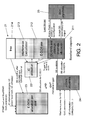
- the uplink interference cancellation When starting to admit users, the uplink interference cancellation is activated as it enhances the performance of the network in the uplink (this means that there is lower Rise Over Thermal for the same number of users). It is remarked that the algorithm used for interference cancellation is out of the scope of the present invention. Any of the conventional IC algorithms can be used with the herein described method. The activation of IC consumes a part of the installed NodeB baseband resources 213. The overall baseband allocation 21 procedure is depicted in figure 2 .
- Figure 2 shows a schematic representation of the consumption of baseband resources at a node B.
- Block 21 represents the total available baseband capacity. This total baseband capacity 21 is used for different purposes in a variable way, which is explained next.
- the common channels, the dedicated channels (DCH) and the high speed channel (DCH/HS) are allocated, as shown in block 211.
- the dedicated channels (DCH) and the high speed channel (DCH/HS) comprise all the dedicated channels as described in Release' 99 of the UMTS standards (both uplink and downlink) and the HSDPA channels (downlink).
- the amount of baseband capacity 211 assigned to these channels is variable and depends on the traffic demand.
- E-DCH enhanced dedicated ones
- HSUPA High Speed Uplink Packet Access
- the remaining baseband capacity 213 is devoted to interference cancellation (IC) algorithms. Unlike in conventional IC techniques, which reserve a fixed amount of baseband resources to interference cancellation techniques, in the present invention this amount of baseband resources 213 dynamically changes in relation to the traffic demand.
- IC interference cancellation
- block 21 and its sub-blocks 211 212 213 214 as illustrated in figure 2 represent a particular example of the baseband capacity allocation.
- Block 24 in figure 2 refers to the baseband resources demand of HSDPA algorithms.
- the main variables (or inputs) which affect such demand are: the maximum power for high speed (HS), the quality-of-service (QoS) parameters and the user equipment (UE) information, such as category, CQI, etc.
- HS high speed
- QoS quality-of-service
- UE user equipment
- Block 25 in figure 2 refers to the baseband resources demand of algorithms (which are out of the scope of the present invention) which manage dedicated channels (DCH), both uplink and downlink. Every time a new radio link is added or reconfigured, certain baseband allocation of resources is demanded to the scheduler of the node B. As a response, the demand is either accepted (and baseband resources are reserved) or rejected (in the event that there are no available baseband resources). This is normally done every time a new radio link is added or reconfigured.
- DCH dedicated channels
- Block 23 in figure 2 refers to the baseband resources demand of enhanced dedicated channels (E-DCH).
- E-DCH enhanced dedicated channels
- this baseband resources demand 23 can apply not only to uplink E-DCH, but also to both uplink E-DCH and uplink DCH.
- the main variables (or inputs) which affect such demand are: the RTWP (Received Total Wideband Power) load and the maximum RTWP configured, the quality-of-service (QoS) parameters and the user equipment (UE) information, such as category, UE power headroom (amount of dB still available at a UE before it reaches a maximum transmitted power value) and the UE unhappiness.
- the RTWP Receiveived Total Wideband Power
- QoS quality-of-service
- UE user equipment
- the different E-DCH algorithms which manage the E-DCH allocation per user demand the scheduler a certain baseband allocation of resources and get, as a response, from the total amount of baseband resources 21, certain baseband allocation. This is normally done periodically. This is done after the allocation of demanded baseband resources for common channels and DCH/HS channels (block 211) is fulfilled.
- This block 22 represents the dynamic allocation of baseband resources as demanded by interference cancellation (IC) algorithms.
- IC interference cancellation
- Block 22 refers to the baseband resources demand of interference cancellation (IC) algorithms (which are out of the scope of the present invention). As explained before, these IC algorithms are aimed at reducing the interference when decoding the data traffic of the users, but they consume baseband resources 21.
- An IC algorithm demands baseband resources to the baseband capacity 21 in order to execute the interference cancellation. If there are available resources after the common channels, the dedicated channels, the high speed channel (DCH/HS) and the enhanced dedicated channels (E-DCH) are allocated, some baseband resources 213 are assigned for interference cancellation. This differs from prior art methods, wherein a static (fixed) amount of baseband resources is assigned for IC techniques.
- the invention focuses on the IC baseband allocation/deallocation (boxes 22 and 213) and on their interaction with other boxes in the system, the baseband allocation for DCH, E-DCH and HSDPA being out of the scope of this invention.
- the current method considers the performance of IC techniques less important than the availability of baseband resources in order to provide accessibility for services that use DCH, HSDPA or E-DCH.
- the common channels are always reserved, and the dedicated channels (DCH) are reserved during the whole call, so the amount of assigned baseband resources for these channels 211 is maintained until an event is triggered.
- the algorithm at the scheduler of the Node B for these DCH channels is:
- the algorithms which manage the HSDPA channels behave in a different way:
- the scheduler periodically (for example, every 2 ms) checks if a higher throughput is required and allocates a certain amount of baseband resources to a user's HSDPA channel. It is remarked that the behaviour in relation to HSDPA channels is different from that of DCH: While DCH are either allocated or not, depending on the amount of baseband resources, the HSDPA channel can be assigned a higher or lower bit rate, depending on, amongst other reasons, the amount of available baseband resources 21 ( figure 2 ).
- the removal of IC users is triggered by the scheduler as in the DCH case until the target DL throughput (measured over time) is reached.
- the detailed steps of the algorithm at the scheduler of the Node B for these HSDPA channel are the same as that for the DCH and are also illustrated in figure 3 :
- FIG 4 shows a dataflow of the inventive method applied to enhanced dedicated channels (E-DCH) (box 23 in figure 2 ) according to an embodiment of the present invention.
- E-DCH enhanced dedicated channels
- the E-DCH are similar to the HSDPA but in Uplink, i.e. the system tries to maximise the throughput of the user. Therefore, either periodically or based on a certain event, the possibility of allocating more resources to provide more throughput when it is demanded by the UE is triggered (box 411). Then, the first thing to do is to check if the RTWP (interference) exceeds a certain congestion threshold (box 412).
- the goal is to use the maximum number of baseband resources 212 ( figure 2 ) dynamically allocated to every user.
- the algorithm is performed periodically by the scheduler (for example, every 2 ms TTI (Transmission Time Interval), which is used for high category UEs).
- TTI Transmission Time Interval
- Figure 5 shows a schematic representation of the removal of a user from an interference cancellation algorithm implemented at a base station (or node B).
- the criteria to select the user or users whose signals are to be removed from the IC process is as follows: There can be different alternatives to choose the user or users to be removed from the IC procedure.
- the criterion is to remove the user causing less RoT (Rise over Thermal) noise. In this way the gain of the IC is maintained high because the interfering users which interfere the most are still cancelled.
- the used E-DCH algorithm allocates a certain bit rate to every user. This means that, based on the already mentioned parameters which influence the E-DCH allocation per user, the throughput in uplink is variable. If the most restrictive criterion is the RoT (Rise over Thermal) noise and there are available baseband resources 214, the IC can be activated and its performance increased by adding users to the IC process.
- RoT Rivest over Thermal
- the criteria to select the user or users whose signals are to be added to the IC process are described:
- the chosen users are those which are the most interfering ones.
- Alternative criteria are also possible.
- the invention enables operators of mobile communications networks to optimize the amount of baseband resources to be installed in situations in which interference cancellation (IC) is activated.
- IC interference cancellation
- the invention is applicable to any mobile communications network in which interference cancellation techniques are available.
Landscapes
- Engineering & Computer Science (AREA)
- Computer Networks & Wireless Communication (AREA)
- Signal Processing (AREA)
- Quality & Reliability (AREA)
- Mobile Radio Communication Systems (AREA)
Abstract
Description
- The present invention relates to mobile or cellular telecommunications networks and in particular, to mobile or cellular telecommunications networks implementing interference cancellation techniques.
- In mobile telecommunications networks there are two main capacity limits in the uplink: the baseband resources and the maximum interference (in 3G, the RTWP, Received Total Wideband Power) of the users. The baseband resources are fixed and known by the base station or Node B, while the maximum allowed interference (in dB) is a configurable parameter that cannot be exceeded.
- For example, in UMTS the baseband consumption is due to different types of channels: the common channels, the dedicated channels (DCH) and the enhanced uplink dedicated channels (E-DCH), all of which share the same limited hardware resources. The dedicated and enhanced dedicated channels are summarized next.
- In Release'99 of the UMTS standards, the dedicated channels (DCH), both uplink (UL) and downlink (DL), were first defined. They are allocated per user with a maximum data rate, a fixed amount of spreading codes and reserved baseband allocation. The maximum bit rate of a dedicated channel (DCH) is 384 Kbps.
- Next, in Release 5 of the standards, the downlink HSDPA channels were defined.
- Finally, the enhanced dedicated channels (E-DCH) were defined in Release 6. These channels are specific for uplink (also known as HSUPA). The E-DCH channels are quite dynamic and they do not have a fixed, reserved amount of resources. The network tries to maximise the use of the radio resources for the E-DCH users. In every TTI (Time Transmission Interval), the resources can be allocated to every user that demands to upload data. The maximum data rate in enhanced dedicated channels (E-DCH) is 5.7 Mbps with current modulation. If 16 QAM is used, this maximum data rate is foreseen to reach 11 Mbps.
- In other words, the evolution of packet transmission in uplink in mobile telecommunications networks has led to the introduction of several new features aiming at increasing the uplink peak rate, amongst which we can currently find the enhanced dedicated channel (E-DCH) up to 5.76 Mbps as well as the future E-DCH using 16QAM reaching up to 11 Mbps.
- Depending on the vendor implementation, the downlink channels share the same hardware resources with the uplink (UL) ones or not. As a consequence, dedicated channels (DCH) in downlink (DL) and HSDPA channels may also consume part of the baseband capacity.
- Within this context, interference cancellation algorithms reduce the interference when decoding the data traffic of the users. It is to be remarked that the provision of such high peak rates (E-DCH at 5.76 Mbps and 11 Mbps) requires the introduction of interference cancellation techniques in order to guarantee the availability of these peak rates to a high amount of users (capacity) without producing too much interference and therefore reducing the coverage of the network.
-
Figure 1 illustrates a conventional simple parallel interference cancellation technique implemented at the base station (or node B in a 3G system) when there is a cancellation of all the users in a system. A system with interference cancellation (IC) consists mainly of several cascaded detection units (e.g. RAKE receivers for descrambling and dispreading) for each user. Each detection unit, after detection, regenerates a replica (re-spreading) of the signal based on the detected symbols, the estimated channel responses and the user's spreading codes. Then, the regenerated signal is inserted with the input of all the other active users' signal replicas from the previous stage. The replicas are subtracted (in order to cancel interference) from the original total received signal and a tentative symbol decision is formed using a standard RAKE receiver and a channel response estimator. The channel response estimator averages the pilot symbols from two consecutive slots of the uplink signal (for example, a WCDMA uplink signal) in order to form an estimate. - There can be as many stages as wanted, but every stage consumes a high number of baseband hardware resources. The simplest algorithm in terms of stages implies doing a despreading, then composing again the signal, subtracting from the rest of the users and resuming with a new despreading. Taking into account that most of the baseband processing is spent on the spreading/despreading process, the resources consumption is multiplied by 3 at least. For a given number of users in the system, the higher the amount of stages, the higher the uplink (UL) radio capacity required, as well as the higher the baseband consumption. As a consequence, the conventional static activation of interference cancellation (IC) can cause the blocking of resources assigned to other services.
- In summary, the main drawback of current interference cancellation (IC) techniques is that they are baseband consuming, which means that their activation drains resources from other services considered of higher importance based on their impact on user perception (such as accessibility to speech) and on overall traffic usage (HSDPA). In order not to impact on the speech and HSDPA level of service (accessibility for speech, throughput for HSDPA), the only current available solution is to add additional baseband resources in order to reduce or compensate for the impact of interference cancellation.
- Therefore, there is a need to optimize the application of current interference cancellation (IC) techniques to reduce, as much as possible, the blocking of baseband resources assigned to important services.
- The present invention is intended to address the above mentioned need.
- In a first aspect of the present invention there is provided a method of managing baseband resources in a mobile communications network, wherein at least one interference cancellation technique in uplink is available. The method comprises the steps of: when baseband resources (21) are demanded by a mobile user, determining whether there are free baseband resources or not, and: if there are not free baseband resources, determining whether there is at least one interference cancellation process cancelling the interference caused by at least one mobile user or not, and: if there is at least one interference cancellation process cancelling the interference caused by at least one mobile user, one mobile user is removed from said interference cancellation process.
- Preferably, if the step of determining whether there are free baseband resources or not results in that there are free baseband resources, an allocation of free baseband resources is executed.
- Preferably, if the step of determining whether there is at least one interference cancellation process cancelling the interference caused by at least one mobile user or not, results in that there is not at least one interference cancellation process cancelling the interference caused by at least one mobile user, a congestion control algorithm is executed.
- The step of determining whether there are free baseband resources or not, is preferably done either periodically or when a certain event is triggered.
- If said step of determining whether there are free baseband resources or not is done when a certain event is triggered, said event which is triggered is the addition or reconfiguration of a new radio link. Alternatively, said event which is triggered is a demand of throughput from a HSDPA mobile user. In this embodiment, if the step of determining whether there is at least one interference cancellation process cancelling the interference caused by at least one mobile user or not, results in that there is not at least one interference cancellation process cancelling the interference caused by at least one mobile user, the available baseband resources are shared by all current mobile users.
- Alternatively, said step of determining whether there are free baseband resources or not is done by a demand of throughput from an enhanced dedicated channel. This is preferably done after checking that there is no interference congestion between the mobile users. If there is interference congestion between the mobile users: it is determined whether there are free baseband resources or not, and if there are not free baseband resources, a congestion control algorithm is executed. Alternatively, if there is interference congestion between the mobile users: it is determined whether there are free baseband resources or not, and if there are free baseband resources, an interference cancellation process is triggered to reduce interference.
- In a particular embodiment, the step of removing one mobile user from said interference cancellation process is done according to the following criterion: the mobile user causing less Rise-over-Thermal noise is removed.
- In a particular embodiment, the method is managed by a scheduler at a base station or node B.
- As can be observed, the usage of the conventional interference cancellation (IC) algorithms is linked to the effective level of traffic in the base stations or Node Bs, and more specifically to the amount of baseband resources being used in every moment. In the inventive method, the baseband utilization for IC (as well as its performance) is dynamically set on the basis of the current baseband consumption, in such a way that, if more baseband is needed in order to admit services that use, for example, DCH or HSDPA channels, the performances in the uplink are reduced and traded with more availability of baseband.
- In a further aspect of the present invention there is provided a network entity of a mobile communications network comprising means for carrying out the above-mentioned method. In particular, it comprises: means for determining whether there are free baseband resources or not; means for determining whether there is at least one interference cancellation process cancelling the interference caused by at least one mobile user or not; means for adding or removing at least one mobile user from an interference cancellation process. That network entity is a base station or a node B.
- Finally, the invention also refers to a computer program comprising computer program code means adapted to perform the steps of the above-mentioned method when said program is run on a computer, a digital signal processor, a field-programmable gate array, an application-specific integrated circuit, a micro-processor, a micro-controller, or any other form of programmable hardware.
- The advantages of the proposed invention will become apparent in the description that follows.
- To complete the description and in order to provide for a better understanding of the invention, a set of drawings is provided. Said drawings form an integral part of the description and illustrate a preferred embodiment of the invention, which should not be interpreted as restricting the scope of the invention, but rather as an example of how the invention can be embodied. The drawings comprise the following figures:
-
Figure 1 shows a schematic representation of a conventional simple parallel interference cancellation technique implemented at a base station (or node B). -
Figure 2 shows a schematic representation of the consumption of baseband resources at a node B according to an embodiment of the present invention. -
Figure 3 shows a dataflow of the inventive method applied to dedicated and HSDPA channels according to an embodiment of the present invention. -
Figure 4 shows a dataflow of the inventive method applied to enhanced dedicated channels according to an embodiment of the present invention. -
Figure 5 shows a schematic representation of the removal of a user from an interference cancellation algorithm implemented at a base station (or node B) according to an embodiment of the present invention. - In the context of the present invention, the term "call" refers to a packet-switched session or circuit-switched session over a radio bearer.
- In this text, the term "comprises" and its derivations (such as "comprising", etc.) should not be understood in an excluding sense, that is, these terms should not be interpreted as excluding the possibility that what is described and defined may include further elements, steps, etc.
- The implementation of an exemplary embodiment of the present invention can be carried out as follows:
- When starting to admit users, the uplink interference cancellation is activated as it enhances the performance of the network in the uplink (this means that there is lower Rise Over Thermal for the same number of users). It is remarked that the algorithm used for interference cancellation is out of the scope of the present invention. Any of the conventional IC algorithms can be used with the herein described method. The activation of IC consumes a part of the installed
NodeB baseband resources 213. Theoverall baseband allocation 21 procedure is depicted infigure 2 . -
Figure 2 shows a schematic representation of the consumption of baseband resources at anode B. Block 21 represents the total available baseband capacity. Thistotal baseband capacity 21 is used for different purposes in a variable way, which is explained next. - First (meaning with a higher priority), the common channels, the dedicated channels (DCH) and the high speed channel (DCH/HS) are allocated, as shown in
block 211. The dedicated channels (DCH) and the high speed channel (DCH/HS) comprise all the dedicated channels as described in Release' 99 of the UMTS standards (both uplink and downlink) and the HSDPA channels (downlink). The amount ofbaseband capacity 211 assigned to these channels is variable and depends on the traffic demand. - Once the common channels, dedicated channels and high speed channels are allocated, the enhanced dedicated ones (E-DCH) are assigned (block 212). These enhanced dedicated channels (E-DCH) are also known as the HSUPA channels (High Speed Uplink Packet Access). This allocation is also variable and also depends on the traffic demand.
- After assigning the common, dedicated, high-speed and the enhanced dedicated channels, the remaining
baseband capacity 213 is devoted to interference cancellation (IC) algorithms. Unlike in conventional IC techniques, which reserve a fixed amount of baseband resources to interference cancellation techniques, in the present invention this amount ofbaseband resources 213 dynamically changes in relation to the traffic demand. - Finally, in the event that, at a certain time instant, the common, dedicated, and high-
speed channels 211, the enhanceddedicated ones 212 and theinterference cancellation techniques 213 do not consume the wholeavailable baseband capacity 21, somefree baseband capacity 214 remains in the system. - It is remarked that
block 21 and itssub-blocks 211 212 213 214 as illustrated infigure 2 represent a particular example of the baseband capacity allocation. This means that, for example, the common, dedicated and high-speed channels 211 and/or the enhanceddedicated ones 212 could consume so much baseband resources that very few ones could be dedicated tointerference cancellation techniques 213. It is also possible that there are nofree baseband resources 214 at all. This allocation is controlled by a scheduler at the node B. -
Block 24 infigure 2 refers to the baseband resources demand of HSDPA algorithms. As can be observed, the main variables (or inputs) which affect such demand are: the maximum power for high speed (HS), the quality-of-service (QoS) parameters and the user equipment (UE) information, such as category, CQI, etc. From this information, the different HSDPA algorithms (which are out of the scope of the present invention) demand a certain baseband allocation of resources and get, as a response, a certain baseband allocation from the scheduler. This is normally done periodically. -
Block 25 infigure 2 refers to the baseband resources demand of algorithms (which are out of the scope of the present invention) which manage dedicated channels (DCH), both uplink and downlink. Every time a new radio link is added or reconfigured, certain baseband allocation of resources is demanded to the scheduler of the node B. As a response, the demand is either accepted (and baseband resources are reserved) or rejected (in the event that there are no available baseband resources). This is normally done every time a new radio link is added or reconfigured. -
Block 23 infigure 2 refers to the baseband resources demand of enhanced dedicated channels (E-DCH). Depending on the vendor implementation, this baseband resources demand 23 can apply not only to uplink E-DCH, but also to both uplink E-DCH and uplink DCH. As can be observed, the main variables (or inputs) which affect such demand are: the RTWP (Received Total Wideband Power) load and the maximum RTWP configured, the quality-of-service (QoS) parameters and the user equipment (UE) information, such as category, UE power headroom (amount of dB still available at a UE before it reaches a maximum transmitted power value) and the UE unhappiness. From this information, the different E-DCH algorithms which manage the E-DCH allocation per user (which are out of the scope of the present invention) demand the scheduler a certain baseband allocation of resources and get, as a response, from the total amount ofbaseband resources 21, certain baseband allocation. This is normally done periodically. This is done after the allocation of demanded baseband resources for common channels and DCH/HS channels (block 211) is fulfilled. - Next, block 22 and its interaction with other blocks of
figure 2 are described. Thisblock 22 represents the dynamic allocation of baseband resources as demanded by interference cancellation (IC) algorithms. -
Block 22 refers to the baseband resources demand of interference cancellation (IC) algorithms (which are out of the scope of the present invention). As explained before, these IC algorithms are aimed at reducing the interference when decoding the data traffic of the users, but they consumebaseband resources 21. An IC algorithm demands baseband resources to thebaseband capacity 21 in order to execute the interference cancellation. If there are available resources after the common channels, the dedicated channels, the high speed channel (DCH/HS) and the enhanced dedicated channels (E-DCH) are allocated, somebaseband resources 213 are assigned for interference cancellation. This differs from prior art methods, wherein a static (fixed) amount of baseband resources is assigned for IC techniques. Besides, when the demand for common channels, dedicated channels and high speed channel (DCH/HS) (box 211) and/or the demand for enhanced dedicated ones (E-DCH) (box 212) is high, the scheduler asks theIC algorithm 22 to remove IC users, thus releasingbaseband resources 213. - Thus, the invention focuses on the IC baseband allocation/deallocation (
boxes 22 and 213) and on their interaction with other boxes in the system, the baseband allocation for DCH, E-DCH and HSDPA being out of the scope of this invention. - As already explained, the current method considers the performance of IC techniques less important than the availability of baseband resources in order to provide accessibility for services that use DCH, HSDPA or E-DCH.
- The algorithm followed by the inventive method is illustrated in
figures 3 (DCH and HSDPA) and 4 (E-DCH). - In particular, the algorithm used in relation to DCH and HSDPA channels is illustrated in
figure 3 and is as follows: - On the one hand, the common channels are always reserved, and the dedicated channels (DCH) are reserved during the whole call, so the amount of assigned baseband resources for these
channels 211 is maintained until an event is triggered. The algorithm at the scheduler of the Node B for these DCH channels is: - In the event that a new Radio Link (between user equipment and node B) is added or reconfigured (box 311), the Node B checks the baseband resources 21 (
figure 2 ). If there are available (free) baseband resources (box 32), they are allocated to the demanded DCH (box 33):- If there is one or more users being cancelled in the IC process (that is to say, if an IC algorithm is being used for cancelling the contribution of one or more users) (box 34):
- While there is no enough BB resources to do the addition/reconfiguration of that new Radio Link (box 32), then
The removal of one user consuming baseband resources allocated to IC is triggered (box 36), therefore freeing baseband resources. - End While
- Do the typical RRM (radio resource management) algorithm actions for congestion control (box 35), for example pre-emption methods, to allocate the user at expenses of downgrading other users/services with less importance.
- While there is no enough BB resources to do the addition/reconfiguration of that new Radio Link (box 32), then
- If there is one or more users being cancelled in the IC process (that is to say, if an IC algorithm is being used for cancelling the contribution of one or more users) (box 34):
- On the other hand, the algorithms which manage the HSDPA channels (
box 24 infigure 2 ) behave in a different way: The scheduler periodically (for example, every 2 ms) checks if a higher throughput is required and allocates a certain amount of baseband resources to a user's HSDPA channel. It is remarked that the behaviour in relation to HSDPA channels is different from that of DCH: While DCH are either allocated or not, depending on the amount of baseband resources, the HSDPA channel can be assigned a higher or lower bit rate, depending on, amongst other reasons, the amount of available baseband resources 21 (figure 2 ). - If the average downlink (DL) throughput (measured over a period of time) per user or per cell is limited by the available bandwidth, and if the DL throughput can be significantly increased by reducing the IC performances (up to complete IC deactivation), the removal of IC users is triggered by the scheduler as in the DCH case until the target DL throughput (measured over time) is reached. The detailed steps of the algorithm at the scheduler of the Node B for these HSDPA channel are the same as that for the DCH and are also illustrated in
figure 3 : - In the event that a HSDPA channel requires a higher throughput (box 312), the Node B checks the baseband resources 21 (
figure 2 ). If there are available (free) baseband resources (box 32), they are allocated to the demanded HSDPA (box 33):- If there is one or more users being cancelled in the IC process (that is to say, if an IC algorithm is being used for cancelling the contribution of one or more users) (box 34):
- While there is no enough BB resources to do the increase of the HSDPA throughput (box 32), then
The removal of one user consuming baseband resources allocated to IC is triggered (box 36), therefore freeing baseband resources. - End While
- Share the available baseband resources across all users in the scheduler (box 35) according to an algorithm which is out of the scope of this invention (e.g. the proportional fair, round robin, etc.).
- While there is no enough BB resources to do the increase of the HSDPA throughput (box 32), then
- If there is one or more users being cancelled in the IC process (that is to say, if an IC algorithm is being used for cancelling the contribution of one or more users) (box 34):
-
Figure 4 shows a dataflow of the inventive method applied to enhanced dedicated channels (E-DCH) (box 23 infigure 2 ) according to an embodiment of the present invention. The E-DCH are similar to the HSDPA but in Uplink, i.e. the system tries to maximise the throughput of the user. Therefore, either periodically or based on a certain event, the possibility of allocating more resources to provide more throughput when it is demanded by the UE is triggered (box 411). Then, the first thing to do is to check if the RTWP (interference) exceeds a certain congestion threshold (box 412). - If there is no interference (RTWP) congestion (box 412) then it is checked if:
- If there are free baseband resources (box 42), then they are allocated to the E-DCH users (box 43).
Else- if there is at least one user in the IC process (box 44), then the removal of one user consuming baseband resources allocated to IC is triggered (box 46), thus freeing baseband resources. And the resources are then allocated.
Else- if there is no user in the IC process (box 44), then the conventional congestion control algorithms are triggered (box 45).
- if there is at least one user in the IC process (box 44), then the removal of one user consuming baseband resources allocated to IC is triggered (box 46), thus freeing baseband resources. And the resources are then allocated.
- If there are free baseband resources (box 413), an Interference cancellation process is triggered to reduce the interference.
- Else (if there are no free baseband resources (box 413)),
then conventional congestion control processes are executed (box 45) typically to reduce the throughput and thus reduce the interference. - For these E-DCH, the goal is to use the maximum number of baseband resources 212 (
figure 2 ) dynamically allocated to every user. For the E-DCH allocation of bit rate, the algorithm is performed periodically by the scheduler (for example, every 2 ms TTI (Transmission Time Interval), which is used for high category UEs). There are several inputs for the algorithm, as schematized infigure 2 (box 23): - The amount of
available baseband capacity 21 after reserving the DCH, common channels andHSDPA 211. - The RTWP current load, which provides the interference generated in every moment, and the maximum RTWP that can be reached.
- The information from the users, regarding QoS parameters to distribute accordingly the resources per priority and the information from the UL transmission such as UE category to know the maximum data rate, the UE power headroom to know if the UE can transmit with more power, and the UE happy/unhappy bit which gives information about the UE data buffer which requires more bit rate or not.
- When the E-DCH bit rate per user is allocated based on the above-mentioned parameters, if the required baseband resources are not enough, the removal of IC users in the IC processes is again triggered.
-
Figure 5 shows a schematic representation of the removal of a user from an interference cancellation algorithm implemented at a base station (or node B). - Next, the criteria to select the user or users whose signals are to be removed from the IC process is as follows: There can be different alternatives to choose the user or users to be removed from the IC procedure. Preferably, the criterion is to remove the user causing less RoT (Rise over Thermal) noise. In this way the gain of the IC is maintained high because the interfering users which interfere the most are still cancelled.
- Similarly, there can be an increase in the
IC baseband 213 utilization: As already mentioned the used E-DCH algorithm allocates a certain bit rate to every user. This means that, based on the already mentioned parameters which influence the E-DCH allocation per user, the throughput in uplink is variable. If the most restrictive criterion is the RoT (Rise over Thermal) noise and there areavailable baseband resources 214, the IC can be activated and its performance increased by adding users to the IC process. - Next, the criteria to select the user or users whose signals are to be added to the IC process are described: Preferably, the chosen users are those which are the most interfering ones. Alternative criteria are also possible.
- In conclusion, the invention enables operators of mobile communications networks to optimize the amount of baseband resources to be installed in situations in which interference cancellation (IC) is activated.
- Although an exemplary embodiment has been described illustrating a situation in which the mobile communications network is a 3G network, in which case the method is executed in a node B, the invention is applicable to any mobile communications network in which interference cancellation techniques are available.
- The invention is obviously not limited to the specific embodiments described herein, but also encompasses any variations that may be considered by any person skilled in the art (for example, as regards the choice of components, configuration, etc.), within the general scope of the invention as defined in the appended claims.
if there is interference (RTWP) congestion (box 412) then it is checked if:
Claims (15)
- A method of managing baseband resources (21) in a mobile communications network, wherein at least one interference cancellation technique in uplink is available, the method being characterised by the steps of:- when baseband resources (21) are demanded by a mobile user, determining whether there are free baseband resources (214, 32, 42) or not, and:- if there are not free baseband resources (214, 32, 42), determining whether there is at least one interference cancellation process cancelling the interference caused by at least one mobile user (34, 44) or not, and:- if there is at least one interference cancellation process cancelling the interference caused by at least one mobile user (34, 44), one mobile user is removed from said interference cancellation process (36, 46).
- The method of claim 1, wherein, if the step of determining whether there are free baseband resources (214, 32, 42) or not results in that there are free baseband resources (214, 32, 42), an allocation of free baseband resources is executed (33, 43).
- The method of any preceding claim, wherein, if the step of determining whether there is at least one interference cancellation process cancelling the interference caused by at least one mobile user (34, 44) or not, results in that there is not at least one interference cancellation process cancelling the interference caused by at least one mobile user (34, 44), a congestion control algorithm is executed (35, 45).
- The method of any preceding claim, wherein said step of determining whether there are free baseband resources (214, 32, 42) or not, is done either periodically (411) or when a certain event is triggered (311, 312, 411).
- The method of claim 4, wherein said step of determining whether there are free baseband resources (214, 32, 42) or not is done when a certain event is triggered (311, 312, 411), said event which is triggered (311, 312, 411) being the addition or reconfiguration of a new radio link (311).
- The method of claim 4, wherein said step of determining whether there are free baseband resources (214, 32, 42) or not is done when a certain event is triggered (311, 312, 411), said event which is triggered (311, 312, 411) being a demand of throughput from a HSDPA mobile user (312).
- The method of claim 6, wherein, if the step of determining whether there is at least one interference cancellation process cancelling the interference caused by at least one mobile user (34) or not, results in that there is not at least one interference cancellation process cancelling the interference caused by at least one mobile user (34), the available baseband resources are shared by all current mobile users (35).
- The method of claim 4, wherein said step of determining whether there are free baseband resources (214, 32, 42) or not is done by a demand of throughput from an enhanced dedicated channel (411).
- The method of claim 8, wherein said step of determining whether there are free baseband resources (42) or not is done after checking that there is no interference congestion (412) between the mobile users.
- The method of claim 9, wherein, if there is interference congestion (412) between the mobile users:determining whether there are free baseband resources (413) or not, and- if there are not free baseband resources (413), a congestion control algorithm is executed (415).
- The method of claim 9, wherein, if there is interference congestion (412) between the mobile users:determining whether there are free baseband resources (413) or not, and- if there are free baseband resources (413), an interference cancellation process is triggered (414) to reduce interference.
- The method of any preceding claim, wherein said step of removing one mobile user from said interference cancellation process (36, 46) is done according to the following criterion: the mobile user causing less Rise-over-Thermal noise is removed.
- The method of any preceding claim, said method being managed by a scheduler at a base station or node B.
- A network entity of a mobile communications network configured for carrying out the method of any preceding claim, said network entity comprising:- means for determining whether there are free baseband resources (214, 32, 42) or not;- means for determining whether there is at least one interference cancellation process cancelling the interference caused by at least one mobile user (34, 44) or not;- means for adding or removing at least one mobile user from an interference cancellation process (36, 46).said network entity being a base station or a node B.
- A computer program comprising computer program code means adapted to perform the steps of the method according to any claims from 1 to 13 when said program is run on a computer, a digital signal processor, a field-programmable gate array, an application-specific integrated circuit, a micro-processor, a micro-controller, or any other form of programmable hardware.
Applications Claiming Priority (1)
| Application Number | Priority Date | Filing Date | Title |
|---|---|---|---|
| ES200900329A ES2353481B1 (en) | 2009-02-05 | 2009-02-05 | BASE BAND RESOURCE MANAGEMENT PROCEDURE IN MOBILE COMMUNICATIONS NETWORKS THAT IMPLEMENT INTERFERENCE CANCELLATION TECHNIQUES. |
Publications (2)
| Publication Number | Publication Date |
|---|---|
| EP2216911A1 true EP2216911A1 (en) | 2010-08-11 |
| EP2216911B1 EP2216911B1 (en) | 2011-10-19 |
Family
ID=42244240
Family Applications (1)
| Application Number | Title | Priority Date | Filing Date |
|---|---|---|---|
| EP10152783A Not-in-force EP2216911B1 (en) | 2009-02-05 | 2010-02-05 | Method of managing baseband resources in mobile communications networks implementing interference cancellation techniques |
Country Status (4)
| Country | Link |
|---|---|
| US (1) | US8619686B2 (en) |
| EP (1) | EP2216911B1 (en) |
| AT (1) | ATE529951T1 (en) |
| ES (1) | ES2353481B1 (en) |
Families Citing this family (4)
| Publication number | Priority date | Publication date | Assignee | Title |
|---|---|---|---|---|
| EP2536053B1 (en) | 2011-06-14 | 2014-08-13 | Telefonaktiebolaget L M Ericsson (publ) | Device and method for conditionally controlling interference |
| IN2014CN03075A (en) * | 2011-11-24 | 2015-07-03 | Ericsson Telefon Ab L M | |
| CN102404829B (en) * | 2011-12-07 | 2016-08-10 | 华为技术有限公司 | The method and device that power controls |
| EP2856833B1 (en) * | 2012-06-05 | 2019-08-07 | Telefonaktiebolaget LM Ericsson (publ) | Method for selecting antennas to be included in a set of receiving antennas |
Citations (1)
| Publication number | Priority date | Publication date | Assignee | Title |
|---|---|---|---|---|
| US20030231702A1 (en) * | 2001-03-14 | 2003-12-18 | Oates John H. | Wireless communications systems and methods for cache enabled multiple processor based multiple user detection |
Family Cites Families (14)
| Publication number | Priority date | Publication date | Assignee | Title |
|---|---|---|---|---|
| CN1118200C (en) * | 1999-08-10 | 2003-08-13 | 信息产业部电信科学技术研究院 | Baseband processing method based on intelligent antoma and interference cancel |
| FR2813006B1 (en) * | 2000-08-10 | 2003-01-31 | Cit Alcatel | METHOD FOR TAKING ACCOUNT OF TRAFFIC PROCESSING CAPACITY FOR CONTROLLING TRAFFIC LOAD IN A MOBILE RADIO COMMUNICATION NETWORK |
| US20020128014A1 (en) * | 2001-03-09 | 2002-09-12 | Dayong Chen | Method and apparatus for maintaining traffic capacity in a wireless communication system including automatic frequency allocation (AFA) |
| US6771934B2 (en) * | 2001-06-19 | 2004-08-03 | Telcordia Technologies, Inc. | Methods and systems for reducing interference across coverage cells |
| US20040192315A1 (en) * | 2002-03-26 | 2004-09-30 | Li Jimmy Kwok-On | Method for dynamically assigning spreading codes |
| AU2003234738A1 (en) * | 2002-04-15 | 2003-11-03 | America Online, Inc. | Dynamically managing and reconfiguring wireless mesh networks |
| US7420939B2 (en) * | 2003-08-13 | 2008-09-02 | Qualcomm Incorporated | Methods and apparatus of power control in wireless communication systems |
| CN100588190C (en) * | 2004-09-29 | 2010-02-03 | 上海贝尔阿尔卡特股份有限公司 | Baseband board and its method for processing multi-standard services |
| CN101288324B (en) * | 2005-01-21 | 2013-03-27 | 艾利森电话股份有限公司 | Technique for radio resource management |
| JP4569768B2 (en) * | 2005-06-17 | 2010-10-27 | 日本電気株式会社 | Mobile communication system, mobile terminal, and mobile terminal transmission scheduling method |
| JPWO2007100012A1 (en) * | 2006-03-01 | 2009-07-23 | 日本電気株式会社 | Mobile communication system, base station, mobile device, notification method, program, and recording medium |
| KR101301756B1 (en) * | 2007-02-09 | 2013-08-30 | 텔레콤 이탈리아 소시에떼 퍼 아찌오니 | Characterization of co-channel interference in a wireless communication system |
| EP2549823A3 (en) * | 2007-11-02 | 2013-07-17 | Research In Motion Limited | Long term evolution user equipment multi-packet data network parameter based connectivity control |
| EP2223478B1 (en) * | 2007-12-21 | 2012-11-21 | Telecom Italia S.p.A. | A scheduling method and system for communication |
-
2009
- 2009-02-05 ES ES200900329A patent/ES2353481B1/en not_active Expired - Fee Related
-
2010
- 2010-02-05 US US12/701,456 patent/US8619686B2/en not_active Expired - Fee Related
- 2010-02-05 AT AT10152783T patent/ATE529951T1/en not_active IP Right Cessation
- 2010-02-05 EP EP10152783A patent/EP2216911B1/en not_active Not-in-force
Patent Citations (1)
| Publication number | Priority date | Publication date | Assignee | Title |
|---|---|---|---|---|
| US20030231702A1 (en) * | 2001-03-14 | 2003-12-18 | Oates John H. | Wireless communications systems and methods for cache enabled multiple processor based multiple user detection |
Also Published As
| Publication number | Publication date |
|---|---|
| EP2216911B1 (en) | 2011-10-19 |
| ES2353481B1 (en) | 2012-01-13 |
| US8619686B2 (en) | 2013-12-31 |
| ATE529951T1 (en) | 2011-11-15 |
| ES2353481A1 (en) | 2011-03-02 |
| US20100227624A1 (en) | 2010-09-09 |
Similar Documents
| Publication | Publication Date | Title |
|---|---|---|
| US7821983B2 (en) | Effective dynamic management scheme of HS-DSCH channel codes | |
| EP1512304B1 (en) | Method and network entity, for adaptive reservation of channelization codes and power | |
| EP2117186B1 (en) | Scheduling method and system for hsupa | |
| EP2025183A2 (en) | Dynamic resource reuse pattern selection in a cellular communication system | |
| US20100061321A1 (en) | Method of scheduling packets | |
| Ferdosian et al. | Throughput-aware resource allocation for QoS classes in LTE networks | |
| KR100798854B1 (en) | Adaptive Delay Threshold Based Packet Scheduling for Supporting Real-time and Non-real-time Integrated Services in Broadband Mobile Access Systems | |
| EP2216911B1 (en) | Method of managing baseband resources in mobile communications networks implementing interference cancellation techniques | |
| EP1932382B1 (en) | Throughput optimized carrier allocation | |
| JP5410296B2 (en) | Power overload control method useful for high speed downlink packet access | |
| US7783295B2 (en) | Call admission control device, and call admission control method | |
| Do et al. | Channel assignment with QoS guarantees for a multiclass multicode CDMA system | |
| EP3162151A1 (en) | Radio resource management for packet data services | |
| CN100593303C (en) | Method and scheduler for executing scheduling algorithm with minimum resource parameters | |
| Dimou et al. | Performance of uplink packet services in WCDMA | |
| EP2645799B1 (en) | Predictive EUL scheduling based on service awareness | |
| Xue et al. | Performance analysis of two packet scheduling algorithms in downlink 3gpp lte system | |
| Koo et al. | QoS-sensitive admission policy for non-real-time data packets in voice/data integrated CDMA systems | |
| Chen et al. | Radio resource management for CDMA systems with interference guard margin (IGM) | |
| KR101085600B1 (en) | Frequency band and code allocation method and base station apparatus in cellular based MC-CDMA system | |
| Delicado et al. | User satisfaction based CRRM policy for heterogeneous wireless networks | |
| Zarai et al. | Performance evaluation of a novel scheme for QoS provision in UTRA TDD | |
| García Lozano et al. | Study on the automated tuning of HSDPA code allocation | |
| Pérez-Romero et al. | Downlink Packet Scheduling for a Two-Layered Streaming Video Service in UMTS | |
| Challa et al. | Class-based fair code allocation with delay guarantees for OVSF-CDMA and VSF-OFCDM in next-generation cellular networks |
Legal Events
| Date | Code | Title | Description |
|---|---|---|---|
| PUAI | Public reference made under article 153(3) epc to a published international application that has entered the european phase |
Free format text: ORIGINAL CODE: 0009012 |
|
| AK | Designated contracting states |
Kind code of ref document: A1 Designated state(s): AT BE BG CH CY CZ DE DK EE ES FI FR GB GR HR HU IE IS IT LI LT LU LV MC MK MT NL NO PL PT RO SE SI SK SM TR |
|
| AX | Request for extension of the european patent |
Extension state: AL BA RS |
|
| 17P | Request for examination filed |
Effective date: 20110211 |
|
| RIC1 | Information provided on ipc code assigned before grant |
Ipc: H04B 1/707 20110101AFI20110303BHEP |
|
| GRAP | Despatch of communication of intention to grant a patent |
Free format text: ORIGINAL CODE: EPIDOSNIGR1 |
|
| GRAS | Grant fee paid |
Free format text: ORIGINAL CODE: EPIDOSNIGR3 |
|
| GRAA | (expected) grant |
Free format text: ORIGINAL CODE: 0009210 |
|
| AK | Designated contracting states |
Kind code of ref document: B1 Designated state(s): AT BE BG CH CY CZ DE DK EE ES FI FR GB GR HR HU IE IS IT LI LT LU LV MC MK MT NL NO PL PT RO SE SI SK SM TR |
|
| REG | Reference to a national code |
Ref country code: GB Ref legal event code: FG4D |
|
| REG | Reference to a national code |
Ref country code: CH Ref legal event code: EP |
|
| REG | Reference to a national code |
Ref country code: IE Ref legal event code: FG4D |
|
| REG | Reference to a national code |
Ref country code: DE Ref legal event code: R096 Ref document number: 602010000272 Country of ref document: DE Effective date: 20111229 |
|
| REG | Reference to a national code |
Ref country code: NL Ref legal event code: VDEP Effective date: 20111019 |
|
| LTIE | Lt: invalidation of european patent or patent extension |
Effective date: 20111019 |
|
| REG | Reference to a national code |
Ref country code: AT Ref legal event code: MK05 Ref document number: 529951 Country of ref document: AT Kind code of ref document: T Effective date: 20111019 |
|
| PG25 | Lapsed in a contracting state [announced via postgrant information from national office to epo] |
Ref country code: LT Free format text: LAPSE BECAUSE OF FAILURE TO SUBMIT A TRANSLATION OF THE DESCRIPTION OR TO PAY THE FEE WITHIN THE PRESCRIBED TIME-LIMIT Effective date: 20111019 Ref country code: BE Free format text: LAPSE BECAUSE OF FAILURE TO SUBMIT A TRANSLATION OF THE DESCRIPTION OR TO PAY THE FEE WITHIN THE PRESCRIBED TIME-LIMIT Effective date: 20111019 Ref country code: NO Free format text: LAPSE BECAUSE OF FAILURE TO SUBMIT A TRANSLATION OF THE DESCRIPTION OR TO PAY THE FEE WITHIN THE PRESCRIBED TIME-LIMIT Effective date: 20120119 Ref country code: IS Free format text: LAPSE BECAUSE OF FAILURE TO SUBMIT A TRANSLATION OF THE DESCRIPTION OR TO PAY THE FEE WITHIN THE PRESCRIBED TIME-LIMIT Effective date: 20120219 |
|
| PG25 | Lapsed in a contracting state [announced via postgrant information from national office to epo] |
Ref country code: LV Free format text: LAPSE BECAUSE OF FAILURE TO SUBMIT A TRANSLATION OF THE DESCRIPTION OR TO PAY THE FEE WITHIN THE PRESCRIBED TIME-LIMIT Effective date: 20111019 Ref country code: HR Free format text: LAPSE BECAUSE OF FAILURE TO SUBMIT A TRANSLATION OF THE DESCRIPTION OR TO PAY THE FEE WITHIN THE PRESCRIBED TIME-LIMIT Effective date: 20111019 Ref country code: PT Free format text: LAPSE BECAUSE OF FAILURE TO SUBMIT A TRANSLATION OF THE DESCRIPTION OR TO PAY THE FEE WITHIN THE PRESCRIBED TIME-LIMIT Effective date: 20120220 Ref country code: SI Free format text: LAPSE BECAUSE OF FAILURE TO SUBMIT A TRANSLATION OF THE DESCRIPTION OR TO PAY THE FEE WITHIN THE PRESCRIBED TIME-LIMIT Effective date: 20111019 Ref country code: SE Free format text: LAPSE BECAUSE OF FAILURE TO SUBMIT A TRANSLATION OF THE DESCRIPTION OR TO PAY THE FEE WITHIN THE PRESCRIBED TIME-LIMIT Effective date: 20111019 Ref country code: NL Free format text: LAPSE BECAUSE OF FAILURE TO SUBMIT A TRANSLATION OF THE DESCRIPTION OR TO PAY THE FEE WITHIN THE PRESCRIBED TIME-LIMIT Effective date: 20111019 Ref country code: GR Free format text: LAPSE BECAUSE OF FAILURE TO SUBMIT A TRANSLATION OF THE DESCRIPTION OR TO PAY THE FEE WITHIN THE PRESCRIBED TIME-LIMIT Effective date: 20120120 |
|
| PG25 | Lapsed in a contracting state [announced via postgrant information from national office to epo] |
Ref country code: CY Free format text: LAPSE BECAUSE OF FAILURE TO SUBMIT A TRANSLATION OF THE DESCRIPTION OR TO PAY THE FEE WITHIN THE PRESCRIBED TIME-LIMIT Effective date: 20111019 |
|
| PG25 | Lapsed in a contracting state [announced via postgrant information from national office to epo] |
Ref country code: CZ Free format text: LAPSE BECAUSE OF FAILURE TO SUBMIT A TRANSLATION OF THE DESCRIPTION OR TO PAY THE FEE WITHIN THE PRESCRIBED TIME-LIMIT Effective date: 20111019 Ref country code: DK Free format text: LAPSE BECAUSE OF FAILURE TO SUBMIT A TRANSLATION OF THE DESCRIPTION OR TO PAY THE FEE WITHIN THE PRESCRIBED TIME-LIMIT Effective date: 20111019 Ref country code: BG Free format text: LAPSE BECAUSE OF FAILURE TO SUBMIT A TRANSLATION OF THE DESCRIPTION OR TO PAY THE FEE WITHIN THE PRESCRIBED TIME-LIMIT Effective date: 20120119 Ref country code: SK Free format text: LAPSE BECAUSE OF FAILURE TO SUBMIT A TRANSLATION OF THE DESCRIPTION OR TO PAY THE FEE WITHIN THE PRESCRIBED TIME-LIMIT Effective date: 20111019 Ref country code: EE Free format text: LAPSE BECAUSE OF FAILURE TO SUBMIT A TRANSLATION OF THE DESCRIPTION OR TO PAY THE FEE WITHIN THE PRESCRIBED TIME-LIMIT Effective date: 20111019 |
|
| PLBE | No opposition filed within time limit |
Free format text: ORIGINAL CODE: 0009261 |
|
| STAA | Information on the status of an ep patent application or granted ep patent |
Free format text: STATUS: NO OPPOSITION FILED WITHIN TIME LIMIT |
|
| PG25 | Lapsed in a contracting state [announced via postgrant information from national office to epo] |
Ref country code: IT Free format text: LAPSE BECAUSE OF FAILURE TO SUBMIT A TRANSLATION OF THE DESCRIPTION OR TO PAY THE FEE WITHIN THE PRESCRIBED TIME-LIMIT Effective date: 20111019 Ref country code: PL Free format text: LAPSE BECAUSE OF FAILURE TO SUBMIT A TRANSLATION OF THE DESCRIPTION OR TO PAY THE FEE WITHIN THE PRESCRIBED TIME-LIMIT Effective date: 20111019 Ref country code: RO Free format text: LAPSE BECAUSE OF FAILURE TO SUBMIT A TRANSLATION OF THE DESCRIPTION OR TO PAY THE FEE WITHIN THE PRESCRIBED TIME-LIMIT Effective date: 20111019 |
|
| 26N | No opposition filed |
Effective date: 20120720 |
|
| PG25 | Lapsed in a contracting state [announced via postgrant information from national office to epo] |
Ref country code: MC Free format text: LAPSE BECAUSE OF NON-PAYMENT OF DUE FEES Effective date: 20120229 |
|
| REG | Reference to a national code |
Ref country code: DE Ref legal event code: R097 Ref document number: 602010000272 Country of ref document: DE Effective date: 20120720 |
|
| REG | Reference to a national code |
Ref country code: IE Ref legal event code: MM4A |
|
| PG25 | Lapsed in a contracting state [announced via postgrant information from national office to epo] |
Ref country code: IE Free format text: LAPSE BECAUSE OF NON-PAYMENT OF DUE FEES Effective date: 20120205 Ref country code: AT Free format text: LAPSE BECAUSE OF FAILURE TO SUBMIT A TRANSLATION OF THE DESCRIPTION OR TO PAY THE FEE WITHIN THE PRESCRIBED TIME-LIMIT Effective date: 20111019 |
|
| PG25 | Lapsed in a contracting state [announced via postgrant information from national office to epo] |
Ref country code: MK Free format text: LAPSE BECAUSE OF FAILURE TO SUBMIT A TRANSLATION OF THE DESCRIPTION OR TO PAY THE FEE WITHIN THE PRESCRIBED TIME-LIMIT Effective date: 20111019 |
|
| PG25 | Lapsed in a contracting state [announced via postgrant information from national office to epo] |
Ref country code: ES Free format text: LAPSE BECAUSE OF FAILURE TO SUBMIT A TRANSLATION OF THE DESCRIPTION OR TO PAY THE FEE WITHIN THE PRESCRIBED TIME-LIMIT Effective date: 20120130 |
|
| PG25 | Lapsed in a contracting state [announced via postgrant information from national office to epo] |
Ref country code: FI Free format text: LAPSE BECAUSE OF FAILURE TO SUBMIT A TRANSLATION OF THE DESCRIPTION OR TO PAY THE FEE WITHIN THE PRESCRIBED TIME-LIMIT Effective date: 20111019 |
|
| PG25 | Lapsed in a contracting state [announced via postgrant information from national office to epo] |
Ref country code: MT Free format text: LAPSE BECAUSE OF FAILURE TO SUBMIT A TRANSLATION OF THE DESCRIPTION OR TO PAY THE FEE WITHIN THE PRESCRIBED TIME-LIMIT Effective date: 20111019 |
|
| PG25 | Lapsed in a contracting state [announced via postgrant information from national office to epo] |
Ref country code: TR Free format text: LAPSE BECAUSE OF FAILURE TO SUBMIT A TRANSLATION OF THE DESCRIPTION OR TO PAY THE FEE WITHIN THE PRESCRIBED TIME-LIMIT Effective date: 20111019 |
|
| PG25 | Lapsed in a contracting state [announced via postgrant information from national office to epo] |
Ref country code: SM Free format text: LAPSE BECAUSE OF FAILURE TO SUBMIT A TRANSLATION OF THE DESCRIPTION OR TO PAY THE FEE WITHIN THE PRESCRIBED TIME-LIMIT Effective date: 20111019 Ref country code: LU Free format text: LAPSE BECAUSE OF NON-PAYMENT OF DUE FEES Effective date: 20120205 |
|
| PG25 | Lapsed in a contracting state [announced via postgrant information from national office to epo] |
Ref country code: HU Free format text: LAPSE BECAUSE OF FAILURE TO SUBMIT A TRANSLATION OF THE DESCRIPTION OR TO PAY THE FEE WITHIN THE PRESCRIBED TIME-LIMIT Effective date: 20100205 |
|
| REG | Reference to a national code |
Ref country code: CH Ref legal event code: PL |
|
| PG25 | Lapsed in a contracting state [announced via postgrant information from national office to epo] |
Ref country code: LI Free format text: LAPSE BECAUSE OF NON-PAYMENT OF DUE FEES Effective date: 20140228 Ref country code: CH Free format text: LAPSE BECAUSE OF NON-PAYMENT OF DUE FEES Effective date: 20140228 |
|
| REG | Reference to a national code |
Ref country code: FR Ref legal event code: PLFP Year of fee payment: 7 |
|
| REG | Reference to a national code |
Ref country code: FR Ref legal event code: PLFP Year of fee payment: 8 |
|
| PGFP | Annual fee paid to national office [announced via postgrant information from national office to epo] |
Ref country code: DE Payment date: 20170217 Year of fee payment: 8 Ref country code: FR Payment date: 20170217 Year of fee payment: 8 |
|
| PGFP | Annual fee paid to national office [announced via postgrant information from national office to epo] |
Ref country code: GB Payment date: 20170216 Year of fee payment: 8 |
|
| REG | Reference to a national code |
Ref country code: DE Ref legal event code: R119 Ref document number: 602010000272 Country of ref document: DE |
|
| GBPC | Gb: european patent ceased through non-payment of renewal fee |
Effective date: 20180205 |
|
| REG | Reference to a national code |
Ref country code: FR Ref legal event code: ST Effective date: 20181031 |
|
| PG25 | Lapsed in a contracting state [announced via postgrant information from national office to epo] |
Ref country code: DE Free format text: LAPSE BECAUSE OF NON-PAYMENT OF DUE FEES Effective date: 20180901 |
|
| PG25 | Lapsed in a contracting state [announced via postgrant information from national office to epo] |
Ref country code: GB Free format text: LAPSE BECAUSE OF NON-PAYMENT OF DUE FEES Effective date: 20180205 Ref country code: FR Free format text: LAPSE BECAUSE OF NON-PAYMENT OF DUE FEES Effective date: 20180228 |