EP2216053B1 - Sterilization case - Google Patents
Sterilization case Download PDFInfo
- Publication number
- EP2216053B1 EP2216053B1 EP10000204A EP10000204A EP2216053B1 EP 2216053 B1 EP2216053 B1 EP 2216053B1 EP 10000204 A EP10000204 A EP 10000204A EP 10000204 A EP10000204 A EP 10000204A EP 2216053 B1 EP2216053 B1 EP 2216053B1
- Authority
- EP
- European Patent Office
- Prior art keywords
- sterilization case
- drawer
- sterilization
- lid
- case
- Prior art date
- Legal status (The legal status is an assumption and is not a legal conclusion. Google has not performed a legal analysis and makes no representation as to the accuracy of the status listed.)
- Expired - Lifetime
Links
Images





Classifications
-
- A—HUMAN NECESSITIES
- A61—MEDICAL OR VETERINARY SCIENCE; HYGIENE
- A61L—METHODS OR APPARATUS FOR STERILISING MATERIALS OR OBJECTS IN GENERAL; DISINFECTION, STERILISATION OR DEODORISATION OF AIR; CHEMICAL ASPECTS OF BANDAGES, DRESSINGS, ABSORBENT PADS OR SURGICAL ARTICLES; MATERIALS FOR BANDAGES, DRESSINGS, ABSORBENT PADS OR SURGICAL ARTICLES
- A61L2/00—Disinfection or sterilisation of materials or objects, in general; Accessories therefor
- A61L2/26—Accessories
-
- A—HUMAN NECESSITIES
- A61—MEDICAL OR VETERINARY SCIENCE; HYGIENE
- A61B—DIAGNOSIS; SURGERY; IDENTIFICATION
- A61B50/00—Containers, covers, furniture or holders specially adapted for surgical or diagnostic appliances or instruments, e.g. sterile covers
- A61B50/30—Containers specially adapted for packaging, protecting, dispensing, collecting or disposing of surgical or diagnostic appliances or instruments
- A61B50/31—Carrying cases or bags, e.g. doctors' bags
-
- A—HUMAN NECESSITIES
- A61—MEDICAL OR VETERINARY SCIENCE; HYGIENE
- A61B—DIAGNOSIS; SURGERY; IDENTIFICATION
- A61B50/00—Containers, covers, furniture or holders specially adapted for surgical or diagnostic appliances or instruments, e.g. sterile covers
- A61B50/30—Containers specially adapted for packaging, protecting, dispensing, collecting or disposing of surgical or diagnostic appliances or instruments
- A61B50/34—Baskets
-
- A—HUMAN NECESSITIES
- A61—MEDICAL OR VETERINARY SCIENCE; HYGIENE
- A61B—DIAGNOSIS; SURGERY; IDENTIFICATION
- A61B50/00—Containers, covers, furniture or holders specially adapted for surgical or diagnostic appliances or instruments, e.g. sterile covers
- A61B50/10—Furniture specially adapted for surgical or diagnostic appliances or instruments
- A61B50/18—Cupboards; Drawers therefor
- A61B2050/185—Drawers
-
- A—HUMAN NECESSITIES
- A61—MEDICAL OR VETERINARY SCIENCE; HYGIENE
- A61B—DIAGNOSIS; SURGERY; IDENTIFICATION
- A61B50/00—Containers, covers, furniture or holders specially adapted for surgical or diagnostic appliances or instruments, e.g. sterile covers
- A61B50/30—Containers specially adapted for packaging, protecting, dispensing, collecting or disposing of surgical or diagnostic appliances or instruments
- A61B2050/3007—Stackable casings
-
- A—HUMAN NECESSITIES
- A61—MEDICAL OR VETERINARY SCIENCE; HYGIENE
- A61B—DIAGNOSIS; SURGERY; IDENTIFICATION
- A61B50/00—Containers, covers, furniture or holders specially adapted for surgical or diagnostic appliances or instruments, e.g. sterile covers
- A61B50/30—Containers specially adapted for packaging, protecting, dispensing, collecting or disposing of surgical or diagnostic appliances or instruments
- A61B2050/3009—Containers specially adapted for packaging, protecting, dispensing, collecting or disposing of surgical or diagnostic appliances or instruments having means for connecting similar adjacent containers
-
- A—HUMAN NECESSITIES
- A61—MEDICAL OR VETERINARY SCIENCE; HYGIENE
- A61B—DIAGNOSIS; SURGERY; IDENTIFICATION
- A61B50/00—Containers, covers, furniture or holders specially adapted for surgical or diagnostic appliances or instruments, e.g. sterile covers
- A61B50/30—Containers specially adapted for packaging, protecting, dispensing, collecting or disposing of surgical or diagnostic appliances or instruments
- A61B2050/3011—Containers specially adapted for packaging, protecting, dispensing, collecting or disposing of surgical or diagnostic appliances or instruments having carrying handles
-
- A—HUMAN NECESSITIES
- A61—MEDICAL OR VETERINARY SCIENCE; HYGIENE
- A61B—DIAGNOSIS; SURGERY; IDENTIFICATION
- A61B50/00—Containers, covers, furniture or holders specially adapted for surgical or diagnostic appliances or instruments, e.g. sterile covers
- A61B50/30—Containers specially adapted for packaging, protecting, dispensing, collecting or disposing of surgical or diagnostic appliances or instruments
- A61B50/31—Carrying cases or bags, e.g. doctors' bags
- A61B2050/311—Cases
-
- A—HUMAN NECESSITIES
- A61—MEDICAL OR VETERINARY SCIENCE; HYGIENE
- A61L—METHODS OR APPARATUS FOR STERILISING MATERIALS OR OBJECTS IN GENERAL; DISINFECTION, STERILISATION OR DEODORISATION OF AIR; CHEMICAL ASPECTS OF BANDAGES, DRESSINGS, ABSORBENT PADS OR SURGICAL ARTICLES; MATERIALS FOR BANDAGES, DRESSINGS, ABSORBENT PADS OR SURGICAL ARTICLES
- A61L2103/00—Materials or objects being the target of disinfection or sterilisation
- A61L2103/15—Laboratory, medical or dentistry appliances, e.g. catheters or sharps
-
- A—HUMAN NECESSITIES
- A61—MEDICAL OR VETERINARY SCIENCE; HYGIENE
- A61L—METHODS OR APPARATUS FOR STERILISING MATERIALS OR OBJECTS IN GENERAL; DISINFECTION, STERILISATION OR DEODORISATION OF AIR; CHEMICAL ASPECTS OF BANDAGES, DRESSINGS, ABSORBENT PADS OR SURGICAL ARTICLES; MATERIALS FOR BANDAGES, DRESSINGS, ABSORBENT PADS OR SURGICAL ARTICLES
- A61L2202/00—Aspects relating to methods or apparatus for disinfecting or sterilising materials or objects
- A61L2202/10—Apparatus features
- A61L2202/12—Apparatus for isolating biocidal substances from the environment
- A61L2202/122—Chambers for sterilisation
Definitions
- the present invention relates to sterilization cases and, more particularly, to orthopaedic instrument sterilization cases.
- Sterilization containers are known that provide organization, storage and sterilization functionality for surgical instruments and devices. In order to avoid infection to a patient on which such instruments used, the instruments are required to be cleaned and sterilized after a procedure, and therefore, before use.
- Surgical procedures are regularly performed using "sets" of pre-selected surgical instruments, each set being a collection of instruments established from experience or design to be useful in a given surgical procedure.
- the surgical instruments expected to be used in a particular procedure are grouped together to form a set, and, as a set, are sterilized, stored on a pan or tray, and finally transported on that pan or tray to the operating room when their use is required.
- Complex procedures typically involve a substantial number of instruments.
- typically, several instrument trays may be necessary to accommodate all of the required surgical instruments.
- sterilizing cases often are designed to accommodate a plurality of trays with the instruments arranged on the trays in such a manner that the trays may be accessed as the surgical procedure advances often in a preset sequence.
- An example of a cleaning procedure can be the instruments are first placed into a tank containing water and perhaps solvents, and ultrasound is applied to agitate the fluid to wash and remove the debris, such as biomatter, remaining on the instruments from their last use.
- the instruments are then sterilized in some manner to destroy any microorganisms, viruses or other contamination on the hand instruments.
- the two sterilization methods include the use of dry heat, wherein the instruments are heated to a high temperature, for example at least 365° Fahrenheit for a period of time, or the use of steam under pressure in an autoclave system. The time to sterilize, using a steam autoclave system, depends on heat and pressure and whether the instruments are wrapped or not.
- a third method of sterilization is a chemical autoclave wherein a controlled atmosphere of various gases is used, with heat and humidity in some instances, to sterilize the instruments held within sealed sterile wraps. Radiation can also be used to sterilize instruments.
- a sterile wrap can cover the case to maintain the sterile field within the case after sterilization.
- Sterilization systems which have multiple trays in a drawer arrangement, however when a tray is pulled forward to access the instruments, there is a shift in center of gravity forward which can cause the system to become unstable and tilt forward.
- Braces are known which rotate forward to stabilize such a sterilization case. Such braces, when in a stabilizing position, increase the footprint of the sterilization case on the table in the operating room.
- a sterilization case including at least one drawer therein and attached to the sterilization case using a slide mechanism.
- Each sterilization case includes a lid which can pivot open.
- US 3 752 547 A1 discloses a drawer and a drawer supporting structure.
- the drawers can be stacked with other similar drawers.
- the drawer is supported in a frame having sides with inwardly projecting guide flanges for embracing guide flanges which project outwardly from the drawers.
- Object of the present invention is to provide an improved sterilization container which are configurable into a multiple level, stair step and/or inline stacked, self-contained and self-standing instrument case for sterilizing, organizing, containing and transporting of surgical instruments and devices.
- the invention comprises, in a form thereof, a sterilization case including a drawer having a latch mechanism.
- a lid is connected to the drawer.
- the lid has a latch receiver which receives the latch mechanism when both the lid is in a closed position and the drawer is in a closed position.
- An advantage of the present invention is that the sterilization cases have secure latching of both the lid and the drawer to hold each closed when appropriate.
- Another advantage of the present invention is that the sterilization cases have secure latching of the drawer with lid closed, opened or removed.
- Figures 1 to 5 do not relate to the invention but are useful for understanding the invention shown in fig. 6 to 12 .
- a stacked sterilization case assembly or system 10 which generally includes a plurality of sterilization cases 12, and in the embodiment shown, specifically three sterilization cases 12.
- Each sterilization case 12 includes at least one drawer 14 therein and attached to sterilization case 12 using slide mechanisms 16.
- Each sterilization case 12 includes lid 18 which can pivot open as shown. As will be subsequently discussed in detail, only one of drawer 14 or lid 18 can be open for a given sterilization case 12.
- the trays are interlocked using at least one handle 20 that can be located on both of the side of the trays.
- At least one sterilization case 12 is offset from another sterilization case 12 in a direction transverse to the vertical direction such as a frontward to reward direction as shown in the drawings.
- Fig. 2 illustrates how the offset stacking features conserve back table space and help prevent tipping as drawers are opened and closed. As shown, lid 18 is capable of rotation, whereas drawer 14 is capable of translation.
- Ergonomic handle grips 22 can be soft and cool to the touch. Unique bail 24 shape allows handles to lay flat on a case top or swing upward to facilitate proper removal technique from closed container systems. Resilient handle grips 22 roll flat in the palm of the hand for comfortable lifting and roll over center and into end cap 26 to lock stacked cases together.
- Safety catch 28 prevents drawer 14 from opening in sterilization case 12 unless another sterilization case 12 is stacked upon it. The contents of a single case or the top case in a stack are accessed by opening lid 18. Safety catch 28 allows a drawer to be released in a sterilization case 12 having another sterilization case 12 stacked upon it when safety catch 28 is actuated. Latch 29 interlocks lid 18 and drawer 14, and when slid towards the back (away from the drawer front) of sterilization case 12, depending on the state of safety catch 28 and whether another case is on lid 18, one of drawer 14 or lid 18 will open.
- the present embodiment can include assist spring 30 that slightly opens drawer 14 of a lower stacked case, or lid 18 of single cases or the top case in a stack.
- Assist spring 30 is shown for drawer 14, the assist spring 30 for a lid can be similar to what is shown, but positioned differently to actuate lid 18.
- Assist spring 30 can be a variety of resilient members such as other spring types (coil spring, etc.), rubber items and flexible containers with compressible liquids therein.
- Assist spring 30 facilitates easy opening of drawers 14 and lids 18.
- Drawers 14 can hold plastic trays by their rims and metal inserts as drop-ins, such trays and inserts holding sets of instruments (all not shown).
- sterilization case 12 is wrap and container friendly and features resilient carrying handles 20 and recessed carrying pockets 32 in end panels 26. Rounded corners 34 are less likely to puncture a sterile wrap than sharp corners.
- End panels 26 can be cast from aluminum, titanium or other suitable metals, or injection molded from Radel, PEEK or other suitable plastics or materials.
- Slider mechanisms 16 can be stainless steel or other suitable materials and can be rated to hold 40 lbs per pair, although different load carrying capacity is possible based on the expected use of sterilization system 10.
- Drawer front 38 can be drawn from aluminum or vacuum formed from Radel or made from other suitable materials. The highly perforated design with open drawer bottom and ability to access contents from the top or through an open drawer ensures unsurpassed cleanability and sterilization and safe access to contents.
- the top 44 of sterilization case 12, or lid 18, includes at least one top registration element 40.
- Bottom 46 of sterilization case 12 includes at least one bottom registration element 42.
- At least one top registration element 40 is offset from at least one bottom registration element 42 in a direction parallel with bottom 46, or alternatively, lid 18 when closed.
- sterilization case 12 includes opposed sides, first side 48 and second side 50, connected to bottom 46.
- At least one bottom registration element 42 is closer to one opposed side than at least one top registration element 40.
- sterilization case 60 includes a plurality of drawers 14 and hinged front cover 62. Hinged front cover 62 can also be lockable. Sterilization case 60 can be offset stacked similarly to sterilization case 12. Other features are similar to as already described and have been given identical reference characters. Sterilization case 60 may be more suitable for a hip or knee replacement surgery whereas sterilization case 12 may be more suitable for spinal or extremities surgery.
- a second sterilization case 12 is stacked upon a first sterilization case 12 in a vertical direction, and concurrently, the second sterilization case 12 is offset from the first sterilization case 12 in a direction transverse to the vertical direction.
- the second sterilization case 12 can be interlocked with the first sterilization case 12 using handles 20 and corresponding recessed pockets 32.
- a stacked sterilization case assembly or system 70 which generally includes a plurality of sterilization cases 72.
- Sterilization case assembly or system 70 and sterilization cases 72 can generally be used to contain, organize and sterilize one or more surgical instruments (not shown) or sets or trays thereof, in particular orthopaedic instruments in a surgical, cleaning, sterilization or storage environment.
- Sterilization case assembly or system 70 and sterilization cases 72 can generally include the elements described above and illustrated in Figs. 1-5 , and in addition to being offset stackable as illustrated in Figs. 1-5 , sterilization case assembly 70 and sterilization cases 72 can be stackable inline in a direction transverse to the vertical direction, as shown in Fig. 7 .
- Sterilization case 72 includes a base 74, and at least one drawer 76 therein and attached to base 74 using slide mechanisms 78.
- Sterilization case 12 includes lid 80 which can pivot open, and additionally, can be removed. Consequently, sterilization cases 12 can be stacked, either offset or inline, with all of the corresponding lids 80 installed on their respective sterilization case 12, or alternatively, with any or all of the lids 80 removed from their respective sterilization case 12.
- Sterilization case 12 includes handle 82 which can be used to interlock sterilization cases 12 when they are stacked offset as described above; however, handles do not engage to interlock sterilization cases 12 when they are stacked inline, to prevent misuse.
- Sterilization case 12 is configured for stacking with at least one other sterilization case 12 both offset and inline in a direction transverse to the vertical direction.
- Base 74 generally includes back 84, end caps 86 and bottom 88.
- Back 84 includes at least one hinge post 92 of takeaway hinge 90 for lid 80, and will generally include two hinge posts 92 which mate with corresponding hinge receivers 94 on lid 80.
- Back 84 can also include resilient member 96 which can be used to bias drawer 76 such that drawer 76 will open slightly when unlatched.
- Each end cap 86 is connected to a base rail 98 of a corresponding slide mechanism 78.
- End caps 86 include an inside contour or surface 102 with a locking bracket 104.
- a handle 82 can be attached to each of end caps 86.
- Handles 82 can be injection molded with two halves which snap together around a preformed wire or bail. Handles 82 offer ergonomic design for lifting/handling and lock cases 72 together when cases 72 are offset stacked.
- Drawer 76 is slidably connected to an end cap 86 on either side of drawer 76 via slide mechanisms 78, and in particular, drawer 76 connects to drawer rail 100 of slide mechanisms 78.
- resilient lever 106 On at least one side of drawer 76 there is included resilient lever 106 with aperture 108.
- the drawer 76 latch mechanism primarily includes at least one locking bracket 104 which are received in a corresponding aperture 108 when drawer 76 is in a closed position. The drawer latches are therefore single action and are shown on both sides of case 72. A push down on resilient lever 106 with the thumb or other appendage and resilient lever 106 releases from locking bracket 104 to allow drawer 76 to move forward, which movement can be aided by resilient member 96.
- the two rails 98, 100 of slide mechanism 78 can be unlubricated aluminum with stainless steel ball bearings and added steam holes for sterilization and cleanability, for example.
- the lid latching mechanism includes latch mechanism 110 on drawer 76 and at least one latch receiver 112 on lid 80.
- Latch mechanism 110 is received in latch receivers 112 when both lid 80 and drawer 76 are in a closed position. More particularly, drawer 76 includes a drawer front 114 with a front panel 116. Latch mechanism 110 is slidably
- latch mechanism 110 is slidable in a direction approximately parallel to front panel 116.
- Latch receiver 112 includes at least one slotted ledge 120.
- Latch mechanism 110 includes at least one clasp 122 positioned transverse to the sliding direction of latch mechanism 110 and is received in a corresponding slotted ledge 120 when both lid 80 and drawer 76 are in a closed position.
- Latch mechanism tab 124 is connected to latch mechanism 110 and front panel tab 126 is connected to front panel 116.
- Latch mechanism 110 is connected to front panel 116 via fasteners 128 which allow latch mechanism 110 to slide relative to front panel 116 in slots 130 of latch mechanism 110.
- lid latching allows single handed operation. Pinching or compressing tabs 124 and 126 together disengages lid 80, and lid 80 can be pivoted open and removed, if desired, by sliding lid 80 laterally thereby releasing hinge receiver 94 from hinge post 92. Detent 134 can be used to pivot lid 80 upward and remove when lid 80 is unlatched. Drawer 76 can be opened or closed with lid 80 closed, open or completely removed.
- Ribs 132 enable a positive location and feel to stack and nest multiple cases 72. Ribs 132 allow cases 72 to be stacked inline for storage, cleaning and/or sterilization, and/or offset when in surgical or other use, when drawers 76 may be opened, to prevent tipping.
- the invention comprises the aspects which are laid down in the following sentences, which form a part of the description, but are not claims in accordance with J 15/88 of the Boards of Appeal.
Landscapes
- Health & Medical Sciences (AREA)
- Life Sciences & Earth Sciences (AREA)
- Surgery (AREA)
- Animal Behavior & Ethology (AREA)
- Veterinary Medicine (AREA)
- Public Health (AREA)
- General Health & Medical Sciences (AREA)
- Biomedical Technology (AREA)
- Medical Informatics (AREA)
- Heart & Thoracic Surgery (AREA)
- Engineering & Computer Science (AREA)
- Nuclear Medicine, Radiotherapy & Molecular Imaging (AREA)
- Molecular Biology (AREA)
- Epidemiology (AREA)
- Apparatus For Disinfection Or Sterilisation (AREA)
- Closures For Containers (AREA)
- Packages (AREA)
- Transition And Organic Metals Composition Catalysts For Addition Polymerization (AREA)
- Agricultural Chemicals And Associated Chemicals (AREA)
- Endoscopes (AREA)
- Apparatus Associated With Microorganisms And Enzymes (AREA)
Abstract
Description
- The present invention relates to sterilization cases and, more particularly, to orthopaedic instrument sterilization cases.
- Sterilization containers are known that provide organization, storage and sterilization functionality for surgical instruments and devices. In order to avoid infection to a patient on which such instruments used, the instruments are required to be cleaned and sterilized after a procedure, and therefore, before use.
- Surgical procedures are regularly performed using "sets" of pre-selected surgical instruments, each set being a collection of instruments established from experience or design to be useful in a given surgical procedure. The surgical instruments expected to be used in a particular procedure are grouped together to form a set, and, as a set, are sterilized, stored on a pan or tray, and finally transported on that pan or tray to the operating room when their use is required. Complex procedures typically involve a substantial number of instruments. Thus, typically, several instrument trays may be necessary to accommodate all of the required surgical instruments. Accordingly, sterilizing cases often are designed to accommodate a plurality of trays with the instruments arranged on the trays in such a manner that the trays may be accessed as the surgical procedure advances often in a preset sequence.
- An example of a cleaning procedure can be the instruments are first placed into a tank containing water and perhaps solvents, and ultrasound is applied to agitate the fluid to wash and remove the debris, such as biomatter, remaining on the instruments from their last use. The instruments are then sterilized in some manner to destroy any microorganisms, viruses or other contamination on the hand instruments. The two sterilization methods include the use of dry heat, wherein the instruments are heated to a high temperature, for example at least 365° Fahrenheit for a period of time, or the use of steam under pressure in an autoclave system. The time to sterilize, using a steam autoclave system, depends on heat and pressure and whether the instruments are wrapped or not. In some sterilization processes, chemicals are applied to the hand instruments as an intermediate step between the ultrasonic bath and the heating. A third method of sterilization is a chemical autoclave wherein a controlled atmosphere of various gases is used, with heat and humidity in some instances, to sterilize the instruments held within sealed sterile wraps. Radiation can also be used to sterilize instruments. In the situation of instruments in a sterilization case, a sterile wrap can cover the case to maintain the sterile field within the case after sterilization.
- Major surgeries such a hip or knee replacements have larger instruments requiring multiple cases and trays of instruments. Sterilization systems are known which have multiple trays in a drawer arrangement, however when a tray is pulled forward to access the instruments, there is a shift in center of gravity forward which can cause the system to become unstable and tilt forward. Braces are known which rotate forward to stabilize such a sterilization case. Such braces, when in a stabilizing position, increase the footprint of the sterilization case on the table in the operating room.
- What is needed in the art is an easily configurable sterilization system which does not become unstable when accessing instruments, which can accommodate large and complex instrument sets and which minimizes the sterilization container footprint while maximizing access to the instruments.
- From the closest state of the art in form of
US 2004/0129595 A1 a sterilization case is known including at least one drawer therein and attached to the sterilization case using a slide mechanism. Each sterilization case includes a lid which can pivot open. -
US 3 752 547 A1 discloses a drawer and a drawer supporting structure. The drawers can be stacked with other similar drawers. The drawer is supported in a frame having sides with inwardly projecting guide flanges for embracing guide flanges which project outwardly from the drawers. - Object of the present invention is to provide an improved sterilization container which are configurable into a multiple level, stair step and/or inline stacked, self-contained and self-standing instrument case for sterilizing, organizing, containing and transporting of surgical instruments and devices.
- The object of the present invention is solved by a sterilization case according to claim 1. Improvements are part of the subclaims.
- The invention comprises, in a form thereof, a sterilization case including a drawer having a latch mechanism. A lid is connected to the drawer. The lid has a latch receiver which receives the latch mechanism when both the lid is in a closed position and the drawer is in a closed position.
- An advantage of the present invention is that the sterilization cases have secure latching of both the lid and the drawer to hold each closed when appropriate.
- Another advantage of the present invention is that the sterilization cases have secure latching of the drawer with lid closed, opened or removed.
- The above mentioned and other features and advantages of this invention, and the manner of attaining them, will become more apparent and the invention will be better understood by reference to the following description of embodiments of the invention taken in conjunction with the accompanying drawings, wherein:
-
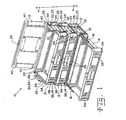
Fig. 1 is a perspective view of an embodiment of a multiple level sterilization system including 3 stacked cases; -
Fig. 2 is a side view of the multiple level sterilization case offig. 1 ; -
Fig. 3 is a fragmentary cross-sectional view taken along section line 3-3 offig. 2 ; -
Fig. 4 is a partially fragmentary side view as viewed along section line 4-4 offig. 1 ; -
Fig. 5 is a perspective view of a further stackable sterilization case having multiple trays; -
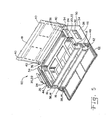
Fig. 6 is a perspective view of an inventive stackable sterilization case; -
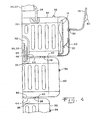
Fig. 7 is a side view of another embodiment of an inventive sterilization case assembly illustrating the inline stacking of the sterilization cases offig. 6 , and also showing a lid, in perspective, removed from a sterilization case; -
Fig. 8 is a perspective, partially exploded and fragmentary view of a rear corner of the sterilization case offig. 6 , illustrating the take away hinge which allows easy removal of the lid from the sterilization case; -
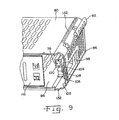
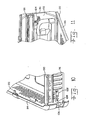
Fig. 9 is a perspective and fragmentary view of the side of the sterilization case offig. 6 , illustrating the drawer latching mechanism in particular; -
Fig. 10 is a perspective and fragmentary view of the side of the drawer of the sterilization case offig. 6 , illustrating th4e drawer latching mechanism, and in particular, the resilient lever of the drawer latching mechanism; -
Fig. 11 is a perspective and fragmentary view of the side of the base (end cap) of the sterilization case offig. 6 , illustrating the drawer latching mechanism,
and in particular, the locking bracket of the drawer latching mechanism corresponding to the drawer latching mechanism offig. 10 ; and -
Fig. 12 is a perspective, partially exploded and fragmentary view of the fron of the drawer and lid of the sterilization case offig. 6 , illustrating the lid latching mechanism in particular. - Corresponding reference characters indicate corresponding parts throughout the several view. The exemplifications set out herein illustrate one preferred embodiment of the invention, in one form, and such exemplifications are not to be construed as limiting the scope of the invention in any manner.
-
Figures 1 to 5 do not relate to the invention but are useful for understanding the invention shown infig. 6 to 12 . - Referring now to the drawings, and more particularly to
fig. 1 , there is shown a stacked sterilization case assembly orsystem 10 which generally includes a plurality ofsterilization cases 12, and in the embodiment shown, specifically threesterilization cases 12. Eachsterilization case 12 includes at least onedrawer 14 therein and attached tosterilization case 12 usingslide mechanisms 16. Eachsterilization case 12 includeslid 18 which can pivot open as shown. As will be subsequently discussed in detail, only one ofdrawer 14 orlid 18 can be open for a givensterilization case 12. The trays are interlocked using at least one handle 20 that can be located on both of the side of the trays. - At least one
sterilization case 12 is offset from anothersterilization case 12 in a direction transverse to the vertical direction such as a frontward to reward direction as shown in the drawings. -
Fig. 2 illustrates how the offset stacking features conserve back table space and help prevent tipping as drawers are opened and closed. As shown,lid 18 is capable of rotation, whereasdrawer 14 is capable of translation. - Ergonomic handle grips 22 can be soft and cool to the touch.
Unique bail 24 shape allows handles to lay flat on a case top or swing upward to facilitate proper removal technique from closed container systems. Resilient handle grips 22 roll flat in the palm of the hand for comfortable lifting and roll over center and intoend cap 26 to lock stacked cases together. -
Safety catch 28 preventsdrawer 14 from opening insterilization case 12 unless anothersterilization case 12 is stacked upon it. The contents of a single case or the top case in a stack are accessed by openinglid 18.Safety catch 28 allows a drawer to be released in asterilization case 12 having anothersterilization case 12 stacked upon it whensafety catch 28 is actuated.Latch 29interlocks lid 18 anddrawer 14, and when slid towards the back (away from the drawer front) ofsterilization case 12, depending on the state ofsafety catch 28 and whether another case is onlid 18, one ofdrawer 14 orlid 18 will open. - The present embodiment can include assist
spring 30 that slightly opensdrawer 14 of a lower stacked case, orlid 18 of single cases or the top case in a stack. Assistspring 30 is shown fordrawer 14, theassist spring 30 for a lid can be similar to what is shown, but positioned differently to actuatelid 18. Assistspring 30 can be a variety of resilient members such as other spring types (coil spring, etc.), rubber items and flexible containers with compressible liquids therein. Assistspring 30 facilitates easy opening ofdrawers 14 and lids 18.Drawers 14 can hold plastic trays by their rims and metal inserts as drop-ins, such trays and inserts holding sets of instruments (all not shown). - The size and shape of
sterilization case 12 is wrap and container friendly and features resilient carrying handles 20 and recessed carryingpockets 32 inend panels 26.Rounded corners 34 are less likely to puncture a sterile wrap than sharp corners. - Take-away hinges 36 allow removal of the lid for access or cleaning purposes.
End panels 26 can be cast from aluminum, titanium or other suitable metals, or injection molded from Radel, PEEK or other suitable plastics or materials. -
Slider mechanisms 16 can be stainless steel or other suitable materials and can be rated to hold 40 lbs per pair, although different load carrying capacity is possible based on the expected use ofsterilization system 10.Drawer front 38 can be drawn from aluminum or vacuum formed from Radel or made from other suitable materials. The highly perforated design with open drawer bottom and ability to access contents from the top or through an open drawer ensures unsurpassed cleanability and sterilization and safe access to contents. - The top 44 of
sterilization case 12, orlid 18, includes at least onetop registration element 40.Bottom 46 ofsterilization case 12 includes at least onebottom registration element 42. At least onetop registration element 40 is offset from at least onebottom registration element 42 in a direction parallel with bottom 46, or alternatively,lid 18 when closed. For example,sterilization case 12 includes opposed sides,first side 48 andsecond side 50, connected to bottom 46. At least onebottom registration element 42 is closer to one opposed side than at least onetop registration element 40. - In another embodiment (
Fig. 5 ),sterilization case 60 includes a plurality ofdrawers 14 and hingedfront cover 62. Hingedfront cover 62 can also be lockable.Sterilization case 60 can be offset stacked similarly tosterilization case 12. Other features are similar to as already described and have been given identical reference characters.Sterilization case 60 may be more suitable for a hip or knee replacement surgery whereassterilization case 12 may be more suitable for spinal or extremities surgery. - In use, a
second sterilization case 12 is stacked upon afirst sterilization case 12 in a vertical direction, and concurrently, thesecond sterilization case 12 is offset from thefirst sterilization case 12 in a direction transverse to the vertical direction. Thesecond sterilization case 12 can be interlocked with thefirst sterilization case 12 using handles 20 and corresponding recessed pockets 32. - Referring now to
Figs. 6-12 , and, more particularly toFigs. 6 and7 , there is shown a stacked sterilization case assembly orsystem 70 which generally includes a plurality ofsterilization cases 72. Sterilization case assembly orsystem 70 andsterilization cases 72 can generally be used to contain, organize and sterilize one or more surgical instruments (not shown) or sets or trays thereof, in particular orthopaedic instruments in a surgical, cleaning, sterilization or storage environment. Sterilization case assembly orsystem 70 andsterilization cases 72 can generally include the elements described above and illustrated inFigs. 1-5 , and in addition to being offset stackable as illustrated inFigs. 1-5 ,sterilization case assembly 70 andsterilization cases 72 can be stackable inline in a direction transverse to the vertical direction, as shown inFig. 7 . -
Sterilization case 72 includes a base 74, and at least onedrawer 76 therein and attached to base 74 usingslide mechanisms 78.Sterilization case 12 includeslid 80 which can pivot open, and additionally, can be removed. Consequently,sterilization cases 12 can be stacked, either offset or inline, with all of the correspondinglids 80 installed on theirrespective sterilization case 12, or alternatively, with any or all of thelids 80 removed from theirrespective sterilization case 12.Sterilization case 12 includeshandle 82 which can be used to interlocksterilization cases 12 when they are stacked offset as described above; however, handles do not engage to interlocksterilization cases 12 when they are stacked inline, to prevent misuse.Sterilization case 12 is configured for stacking with at least oneother sterilization case 12 both offset and inline in a direction transverse to the vertical direction. - Base 74 generally includes back 84, end caps 86 and bottom 88. Back 84 includes at least one
hinge post 92 oftakeaway hinge 90 forlid 80, and will generally include twohinge posts 92 which mate withcorresponding hinge receivers 94 onlid 80. Back 84 can also includeresilient member 96 which can be used tobias drawer 76 such thatdrawer 76 will open slightly when unlatched. Eachend cap 86 is connected to abase rail 98 of acorresponding slide mechanism 78. End caps 86 include an inside contour orsurface 102 with alocking bracket 104. Ahandle 82 can be attached to each ofend caps 86.Handles 82 can be injection molded with two halves which snap together around a preformed wire or bail.Handles 82 offer ergonomic design for lifting/handling and lockcases 72 together whencases 72 are offset stacked. -
Drawer 76 is slidably connected to anend cap 86 on either side ofdrawer 76 viaslide mechanisms 78, and in particular,drawer 76 connects todrawer rail 100 ofslide mechanisms 78. On at least one side ofdrawer 76 there is includedresilient lever 106 withaperture 108. Thedrawer 76 latch mechanism primarily includes at least onelocking bracket 104 which are received in acorresponding aperture 108 whendrawer 76 is in a closed position. The drawer latches are therefore single action and are shown on both sides ofcase 72. A push down onresilient lever 106 with the thumb or other appendage andresilient lever 106 releases from lockingbracket 104 to allowdrawer 76 to move forward, which movement can be aided byresilient member 96. - The two
rails slide mechanism 78 can be unlubricated aluminum with stainless steel ball bearings and added steam holes for sterilization and cleanability, for example. - The lid latching mechanism includes
latch mechanism 110 ondrawer 76 and at least onelatch receiver 112 onlid 80.Latch mechanism 110 is received inlatch receivers 112 when bothlid 80 anddrawer 76 are in a closed position. More particularly,drawer 76 includes adrawer front 114 with afront panel 116.Latch mechanism 110 is slidably - connected to
front panel 116. At least oneresilient member 118 biases latchmechanism 110 with respect tofront panel 116 to a closed position. In the embodiment shown,latch mechanism 110 is slidable in a direction approximately parallel tofront panel 116.Latch receiver 112 includes at least one slottedledge 120.Latch mechanism 110 includes at least oneclasp 122 positioned transverse to the sliding direction oflatch mechanism 110 and is received in a corresponding slottedledge 120 when bothlid 80 anddrawer 76 are in a closed position.Latch mechanism tab 124 is connected to latchmechanism 110 andfront panel tab 126 is connected tofront panel 116.Latch mechanism 110 is connected tofront panel 116 viafasteners 128 which allowlatch mechanism 110 to slide relative tofront panel 116 inslots 130 oflatch mechanism 110. This unique lid latching allows single handed operation. Pinching or compressingtabs lid 80, andlid 80 can be pivoted open and removed, if desired, by slidinglid 80 laterally thereby releasinghinge receiver 94 fromhinge post 92.Detent 134 can be used to pivotlid 80 upward and remove whenlid 80 is unlatched.Drawer 76 can be opened or closed withlid 80 closed, open or completely removed. -
Ribs 132 enable a positive location and feel to stack and nestmultiple cases 72.Ribs 132 allowcases 72 to be stacked inline for storage, cleaning and/or sterilization, and/or offset when in surgical or other use, whendrawers 76 may be opened, to prevent tipping. - While this invention has been described as having a preferred design, the present invention can be further modified within the scope of this disclosure. This application is therefore intended to cover any variations, uses, or adaptations of the invention using its general principles. Further, this application is intended to cover such departures from the present disclosure as come within known or customary practice in the art to which this invention pertains and which fall within the limits of the appended claims.
- The invention comprises the aspects which are laid down in the following sentences, which form a part of the description, but are not claims in accordance with J 15/88 of the Boards of Appeal.
-
- 1. A sterilization case assembly, comprising:
- a plurality of sterilization cases including a first sterilization case and a second sterilization case, said second sterilization case stacked upon said first sterilization case in a vertical direction, said second sterilization case being configured for both stacking offset from said first sterilization case in a direction transverse to said vertical direction and stacking inline from said first sterilization case in a direction transverse to said vertical direction.
- 2. The sterilization case assembly of sentence 1, wherein said second sterilization case is offset from said first sterilization case in a frontward to rearward direction.
- 3. The sterilization case assembly of sentence 1, wherein at least one said case includes a plurality of drawers.
- 4. The sterilization case assembly of sentence 1, wherein at least one of said first sterilization case and said second sterilization case includes a hinged lid.
- 5. The sterilization case assembly of sentence 1, wherein at least one of said first sterilization case and said second sterilization case includes a hinged lid.
- 6. The sterilization case assembly of sentence 5, wherein said lid is removable.
- 7. A sterilization case assembly, comprising:
- a plurality of sterilization cases including a first sterilization case having a first lid and a second sterilization case having a second lid, said second sterilization case stacked upon said first sterilization case in a vertical direction, both said first sterilization case and said second sterilization case being configured for stacking both with at least one of said first lid and said second lid and in the absence of at least one of said first lid and said second lid.
- 8. The sterilization case assembly of sentence 7, further including a first hinge connected to both, said first sterilization case and said first lid, and a second hinge connected to both, said second sterilization case and said second lid, each of said first hinge and said second hinge allowing a removal of a corresponding said lid from a corresponding said sterilization case.
- 9. A sterilization case, comprising:
- a drawer having a latch mechanism; and
- a lid being connected to said drawer, said lid having a latch receiver receiving said latch mechanism when both said lid is in a closed position and said drawer is in a closed position.
- 10. The sterilization case of sentence 9, wherein said drawer includes a drawer front with a front panel, said latch mechanism is slidably connected to said front panel.
- 11. The sterilization case of
sentence 10, further including a resilient member biasing said latch mechanism with respect to said front panel. - 12. The sterilization case of
sentence 10, wherein said latch mechanism is slidable in a direction approximately parallel to said front panel. - 13. The sterilization case of
sentence 12, wherein said latch receiver includes at least one slotted ledge. - 14. The sterilization case of sentence 13, wherein said latch mechanism includes at least one clasp positioned transverse to said direction and received in a corresponding said at least one slotted ledge when both said lid is in a closed position and said drawer is in a closed position.
- 15. The sterilization case of sentence 9, wherein said drawer is slidably connected to said sterilization case.
- 16. The sterilization case of sentence 15, wherein said drawer is slidably connected to said sterilization case with an unlubricated slide rail.
- 17. The sterilization case of sentence 9, wherein said lid is pivotably connected to said sterilization case.
- 18. A sterilization case, comprising:
- at least one end cap having an inside surface including a locking bracket; and
- a drawer slidably connected to said end cap, said drawer including at least one lever having an aperture, at least one said locking bracket being received in a corresponding said aperture when said drawer is in a closed position.
- 19. The sterilization case of
sentence 18, wherein said at least one lever is at least one resilient lever. - 20. The sterilization case of
sentence 18, wherein said drawer includes at least one end panel, said at least one lever is located on said at least one end panel. - 21. A method of using a sterilization case assembly, comprising the steps of:
- stacking a first sterilization case and a second sterilization case in a surgical environment,
said second sterilization case stacked upon said first sterilization case in a vertical direction; - offsetting said second sterilization case from said first sterilization case in a direction transverse to said vertical direction; and
- resetting said second sterilization case relative to said first sterilization case so that said second sterilization case is inline with said first sterilization case in said direction transverse to said vertical direction to store said second sterilization case and said first sterilization case after
use in said surgical environment.
- stacking a first sterilization case and a second sterilization case in a surgical environment,
Claims (8)
- A sterilization case (72) comprising:a base (74) and at least one drawer (76) therein and attached to said base (74),a lid (80) being connected to said drawer (76), andsaid drawer (76) including a drawer front (114) with a front panel (116),characterized in thatsaid drawer (76) has a latch mechanism (110) and said lid (80) has a latch receiver (112) receiving said latch mechanism (110) when both said lid (80) is in a closed position and said drawer (76) is in a closed position, and in that said latch mechanism (110) is slidably connected to said front panel (116).
- The sterilization case (72) of claim 1, characterized in that the sterilization case includes a resilient member (118) biasing said latch mechanism (110) with respect to said front panel (116).
- The sterilization case (72) of claim 1, characterized in that said latch mechanism (110) is slidable in a direction approximately parallel to said front panel (116).
- The sterilization case (72) of claim 3, characterized in that said latch receiver (112) includes at least one slotted ledge (120).
- The sterilization case (72) of claim 4, characterized in that said latch mechanism (110) includes at least one clasp (122) positioned transverse to said direction and received in a corresponding said at least one slotted ledge (120) when both said lid (80) is in a closed position and said drawer (76) is in a closed position.
- The sterilization case (72) of claim 1, characterized in that said drawer (76) is slidably connected to said sterilization case (72).
- The sterilization case (72) of claim 6, characterized in that said drawer (76) is slidably connected to said sterilization case (72) with an unlubricated slide rail (100).
- The sterilization case (72) of claim 1, characterized in that said lid (80) is pivotably connected to said sterilization case (72).
Applications Claiming Priority (2)
| Application Number | Priority Date | Filing Date | Title |
|---|---|---|---|
| US11/150,391 US8100281B2 (en) | 2002-10-15 | 2005-06-09 | Orthopaedic instrument sterilization case |
| EP06750463A EP1888416B1 (en) | 2005-06-09 | 2006-04-18 | Sterilization case assembly |
Related Parent Applications (1)
| Application Number | Title | Priority Date | Filing Date |
|---|---|---|---|
| EP06750463.9 Division | 2006-04-18 |
Publications (3)
| Publication Number | Publication Date |
|---|---|
| EP2216053A2 EP2216053A2 (en) | 2010-08-11 |
| EP2216053A3 EP2216053A3 (en) | 2010-11-10 |
| EP2216053B1 true EP2216053B1 (en) | 2011-08-24 |
Family
ID=37532763
Family Applications (3)
| Application Number | Title | Priority Date | Filing Date |
|---|---|---|---|
| EP10000204A Expired - Lifetime EP2216053B1 (en) | 2005-06-09 | 2006-04-18 | Sterilization case |
| EP10007775A Expired - Lifetime EP2246071B1 (en) | 2005-06-09 | 2006-04-18 | Sterilization case |
| EP06750463A Expired - Lifetime EP1888416B1 (en) | 2005-06-09 | 2006-04-18 | Sterilization case assembly |
Family Applications After (2)
| Application Number | Title | Priority Date | Filing Date |
|---|---|---|---|
| EP10007775A Expired - Lifetime EP2246071B1 (en) | 2005-06-09 | 2006-04-18 | Sterilization case |
| EP06750463A Expired - Lifetime EP1888416B1 (en) | 2005-06-09 | 2006-04-18 | Sterilization case assembly |
Country Status (7)
| Country | Link |
|---|---|
| US (2) | US8100281B2 (en) |
| EP (3) | EP2216053B1 (en) |
| JP (4) | JP2008543364A (en) |
| CN (3) | CN101238037B (en) |
| AT (1) | ATE521368T1 (en) |
| CA (2) | CA2785737A1 (en) |
| WO (1) | WO2006135487A2 (en) |
Cited By (1)
| Publication number | Priority date | Publication date | Assignee | Title |
|---|---|---|---|---|
| US8100281B2 (en) | 2002-10-15 | 2012-01-24 | Symmetry Medical, Inc. | Orthopaedic instrument sterilization case |
Families Citing this family (41)
| Publication number | Priority date | Publication date | Assignee | Title |
|---|---|---|---|---|
| US7523827B2 (en) * | 2002-10-15 | 2009-04-28 | Symmetry Medical, Inc. | Orthopaedic instrument sterilization case |
| US7219969B2 (en) * | 2003-02-27 | 2007-05-22 | Zag Industries Ltd. | Storage container and storage system including a stack of the same |
| US9327041B2 (en) * | 2008-03-05 | 2016-05-03 | Symmetry Medical Manufacturing, Inc. | Medical instrument sterilization container and method |
| US8046961B1 (en) * | 2008-05-27 | 2011-11-01 | Solarcraft, Inc. | Tactical solar power system |
| GB2471278B (en) * | 2009-06-22 | 2011-05-18 | Toly Products | Make-up kit |
| US8210387B2 (en) * | 2009-10-09 | 2012-07-03 | The Stanley Works Israel Ltd. | Organizer |
| US20110108554A1 (en) * | 2009-11-12 | 2011-05-12 | Ladison Timothy J | Transparent sterilization, storage, display and transportaion system |
| US8641984B2 (en) * | 2009-11-16 | 2014-02-04 | Q-Case, Inc. | Surgical instrument tray system |
| USRE47022E1 (en) | 2009-12-11 | 2018-09-04 | The Stanley Works Israel Ltd. | Container |
| US8602217B2 (en) * | 2009-12-11 | 2013-12-10 | The Stanley Works Israel Ltd. | Container |
| US20110139777A1 (en) * | 2009-12-11 | 2011-06-16 | The Stanley Works Israel Ltd. | Container |
| KR101714051B1 (en) * | 2010-11-12 | 2017-03-08 | 삼성전자주식회사 | Cover locking device for portable terminal |
| US8540326B2 (en) * | 2011-06-16 | 2013-09-24 | Joan M. Moszer | Stackable footwear storage cabinet |
| EP2596920B1 (en) * | 2011-11-22 | 2018-06-06 | The Stanley Works Israel Ltd. | Modular container assembly |
| JP6265611B2 (en) | 2013-03-27 | 2018-01-24 | 株式会社Nttドコモ | COMMUNICATION SYSTEM, RELAY DEVICE, AND COMMUNICATION METHOD |
| US9616143B2 (en) | 2013-07-17 | 2017-04-11 | Progressive Sterilization, Llc | Mobile apparatus and method for sterilizing one or more surgical trays with integrable transfer and storage system |
| US9321402B2 (en) * | 2014-01-22 | 2016-04-26 | Ford Global Technologies, Llc | Multi-function automotive trunk storage drawer |
| CN117923026A (en) | 2014-03-10 | 2024-04-26 | 前进灭菌有限责任公司 | Mobile sterilization device and method for using same |
| US9439992B2 (en) | 2014-03-10 | 2016-09-13 | Promedica, Inc. | Autoclave sterilization cabinet |
| CN104083221B (en) * | 2014-05-26 | 2016-02-17 | 中国人民解放军第一七五医院 | Aneurysm grip box |
| CN104382654A (en) * | 2014-11-13 | 2015-03-04 | 李甲振 | Novel multi-functional orthopedic universal instrument box |
| DE102015110419A1 (en) * | 2015-06-29 | 2016-12-29 | Aesculap Ag | Sterile container with a plurality of centrally actuable locking elements |
| GB201603517D0 (en) * | 2016-02-29 | 2016-04-13 | Ocado Innovation Ltd | Improved goods delivery system |
| US10086100B1 (en) | 2017-07-28 | 2018-10-02 | Pmbs, Llc | Mobile sterilization apparatus and method for using the same |
| DE102017123268A1 (en) | 2017-10-06 | 2019-04-11 | Aesculap Ag | Medical container for receiving medical devices |
| US11297934B2 (en) * | 2017-10-11 | 2022-04-12 | Likwid Concepts Llc | Artists' brush cover |
| CN109745573B (en) * | 2017-11-02 | 2021-05-04 | 青岛海尔智慧厨房电器有限公司 | Disinfection cabinet bracket and disinfection cabinet |
| CN107822714A (en) * | 2017-11-27 | 2018-03-23 | 王权 | A kind of ear-nose-throat department drawer for tools |
| CN108723037A (en) * | 2018-07-17 | 2018-11-02 | 芜湖市轩恒广告传媒有限公司 | A kind of experiment in middle school sterilization of instruments sterilizing unit |
| AU2019416199A1 (en) * | 2018-12-26 | 2021-05-27 | Boston Scientific Scimed, Inc. | Medical device containment and transportation systems and methods |
| NO20190842A1 (en) * | 2019-07-04 | 2020-04-08 | Stein Hofstad | A case for storing articles and carrying articles by hand |
| USD958399S1 (en) * | 2020-03-06 | 2022-07-19 | Straumann Holding Ag | Cassette with insert tray for surgical tools |
| USD950101S1 (en) * | 2020-03-06 | 2022-04-26 | Straumann Holding Ag | Cassette with insert tray for surgical tools |
| USD965815S1 (en) * | 2020-07-08 | 2022-10-04 | Retrofix Screws, Llc | Tray for orthopedic screws |
| CN112690980A (en) * | 2021-01-21 | 2021-04-23 | 无锡市儿童医院 | Portable sterilizing box for dressing change |
| CN113384357A (en) * | 2021-07-28 | 2021-09-14 | 郑州华英包装股份有限公司 | Medicine cabinet with disinfection function |
| CN114159589B (en) * | 2021-12-01 | 2023-04-28 | 芜湖市第五人民医院 | Emergency instrument sterilizer for severe department |
| US12179335B2 (en) * | 2022-07-12 | 2024-12-31 | Techtronic Cordless Gp | Storage system and container for same |
| DE102022134823A1 (en) * | 2022-12-27 | 2024-06-27 | Paulus Jeuken | Sterile goods container for storing and/or sterilizing medical instruments and use of a sterile goods container |
| US12036049B1 (en) | 2023-02-10 | 2024-07-16 | DePuy Synthes Products, Inc. | Storage system with trays for long medical implants |
| USD1065537S1 (en) | 2024-07-30 | 2025-03-04 | Stericube Surgical Systems, Llc | Filter separator |
Family Cites Families (42)
| Publication number | Priority date | Publication date | Assignee | Title |
|---|---|---|---|---|
| US224490A (en) * | 1880-02-10 | sturg es | ||
| US2512747A (en) * | 1948-04-29 | 1950-06-27 | Lewis Gertrude Edna | Sterilizer |
| GB1201500A (en) * | 1967-12-01 | 1970-08-05 | Kerridge Joinery Ltd | A new or improved case for storing articles |
| US3752547A (en) * | 1971-03-26 | 1973-08-14 | Miller Herman Inc | Stackable drawer and cover |
| US4600103A (en) * | 1984-03-21 | 1986-07-15 | Buckhorn Material Handling Group, Inc. | Symmetrical bakery basket |
| US4716025A (en) * | 1984-11-05 | 1987-12-29 | Nichols Robert L | Medical sterilization container with instrument tray |
| DE3734695C2 (en) * | 1986-11-05 | 1988-11-24 | Franzen Soehne S | LOCKING DEVICE FOR CASES, BAGS, ESPECIALLY BRIEFCASE |
| US4923079A (en) * | 1987-03-06 | 1990-05-08 | Ropak Corporation | Collapsible container |
| US5078460A (en) * | 1990-11-16 | 1992-01-07 | Holsinger Melvin L | Portable work station |
| US5125697A (en) * | 1990-11-29 | 1992-06-30 | Rubbermaid Incorporated | Lockable latch for a container |
| US5111939A (en) * | 1990-12-17 | 1992-05-12 | Schafer Christopher E | Self-supporting stacked display and dispenser structure |
| US5176281A (en) * | 1991-09-20 | 1993-01-05 | Woodstream Corporation | Tackle box with lid-latching handle and removable carrying case |
| US5346075A (en) * | 1992-04-17 | 1994-09-13 | Johnson & Johnson Medical, Inc. | Apparatus and method for holding a medical instrument |
| US5287980A (en) * | 1992-06-17 | 1994-02-22 | Eddy Associates, Inc. | Ticket dispenser assembly including interlocking dispenser units |
| US5356006A (en) * | 1992-12-16 | 1994-10-18 | Ethicon, Inc. | Sterile package for surgical devices |
| CN2169424Y (en) * | 1993-10-06 | 1994-06-22 | 廖赣尧 | Combined drawer type electronic tableware sterilizing cabinet |
| US5518139A (en) * | 1993-11-24 | 1996-05-21 | Waterloo Industries, Inc. | Portable storage assembly |
| EP0663214B1 (en) * | 1994-01-18 | 1999-03-31 | Sci-Can, A Division Of Lux And Zwingenberger Ltd. | Assembly for the steam sterilization of surgical instruments, implants and the like |
| US5540901A (en) * | 1994-03-15 | 1996-07-30 | Riley Medical, Inc. | Sterilization tray system for surgical instruments |
| JPH07323036A (en) * | 1994-06-01 | 1995-12-12 | Saitou Shika:Kk | Sterilizer |
| GB2298578B (en) * | 1995-03-10 | 1999-11-24 | Dentsply Ltd | Dental or surgical instrument sterilising tray |
| US5740906A (en) * | 1996-08-08 | 1998-04-21 | Lai; Yung-Feng | Container combination for stationery goods |
| US5680957A (en) * | 1996-11-26 | 1997-10-28 | Liu; Cheng-Chia | Drawer type storage bin |
| JP3837203B2 (en) | 1997-03-12 | 2006-10-25 | 隆晴 斎藤 | Graveyards, graveyard building blocks, and graveyard construction methods |
| JPH10286263A (en) * | 1997-04-11 | 1998-10-27 | Olympus Optical Co Ltd | Endoscopic treatment tool housing case |
| US5893618A (en) * | 1997-07-21 | 1999-04-13 | Poly Vac, Inc. | Stacking sterilizing tray system |
| US5882097A (en) * | 1997-10-02 | 1999-03-16 | Waterloo Industries, Inc. | Step tool box |
| US6138850A (en) * | 1998-02-09 | 2000-10-31 | Carr Metal Products, Inc. | Modular sterilization container |
| US6164738A (en) | 1999-01-29 | 2000-12-26 | Poly Vac, Inc. | Stacking sterilizing tray system |
| US6116452A (en) * | 1999-06-30 | 2000-09-12 | Synthes | Method and apparatus for combining the lid-securing and carrying functions of covered containers |
| US6395234B1 (en) * | 2000-02-08 | 2002-05-28 | Triangle Biomedical Sciences, Inc. | Sample cassette having utility for histological processing of tissue samples |
| DE50008037D1 (en) * | 2000-04-17 | 2004-11-04 | Mathys Medizinaltechnik Ag Bet | DEVICE FOR STORING OBJECTS |
| US6368565B1 (en) * | 2000-04-28 | 2002-04-09 | Dennis J. Michaelson | Sterilization apparatus for dental and orthodontic tools |
| CN2446492Y (en) * | 2000-09-19 | 2001-09-05 | 湖南计算机股份有限公司 | Shooting indication control board with keyboard self-locking device |
| US8100281B2 (en) | 2002-10-15 | 2012-01-24 | Symmetry Medical, Inc. | Orthopaedic instrument sterilization case |
| US7523827B2 (en) * | 2002-10-15 | 2009-04-28 | Symmetry Medical, Inc. | Orthopaedic instrument sterilization case |
| US6932444B2 (en) * | 2003-01-13 | 2005-08-23 | Delbert E. Price | Locking drawer |
| JP3096023U (en) | 2003-02-20 | 2003-08-29 | 河淳株式会社 | Product display stand |
| US7219969B2 (en) * | 2003-02-27 | 2007-05-22 | Zag Industries Ltd. | Storage container and storage system including a stack of the same |
| US6935710B2 (en) * | 2003-03-05 | 2005-08-30 | King Slide Works Co., Ltd. | Two-way retainer for a slide track assembly of drawers |
| CN2693234Y (en) * | 2004-04-19 | 2005-04-20 | 白顺科 | Disinfection cabinet |
| CN2731020Y (en) * | 2004-04-30 | 2005-10-05 | 骆安国 | Electromagnetic door lock for drawer type sterilizing-cabinet |
-
2005
- 2005-06-09 US US11/150,391 patent/US8100281B2/en not_active Expired - Fee Related
-
2006
- 2006-04-18 CN CN2006800259984A patent/CN101238037B/en not_active Expired - Fee Related
- 2006-04-18 WO PCT/US2006/014435 patent/WO2006135487A2/en not_active Ceased
- 2006-04-18 CA CA2785737A patent/CA2785737A1/en not_active Abandoned
- 2006-04-18 AT AT10000204T patent/ATE521368T1/en not_active IP Right Cessation
- 2006-04-18 CA CA2611692A patent/CA2611692C/en not_active Expired - Fee Related
- 2006-04-18 CN CN201010150632A patent/CN101822847A/en active Pending
- 2006-04-18 EP EP10000204A patent/EP2216053B1/en not_active Expired - Lifetime
- 2006-04-18 JP JP2008515694A patent/JP2008543364A/en not_active Withdrawn
- 2006-04-18 EP EP10007775A patent/EP2246071B1/en not_active Expired - Lifetime
- 2006-04-18 CN CN201110174442A patent/CN102274534A/en active Pending
- 2006-04-18 EP EP06750463A patent/EP1888416B1/en not_active Expired - Lifetime
-
2010
- 2010-10-29 JP JP2010243753A patent/JP2011101794A/en active Pending
-
2011
- 2011-12-21 US US13/333,507 patent/US20120091024A1/en not_active Abandoned
-
2012
- 2012-06-07 JP JP2012129802A patent/JP2012196487A/en active Pending
- 2012-10-24 JP JP2012234339A patent/JP2013066723A/en active Pending
Cited By (1)
| Publication number | Priority date | Publication date | Assignee | Title |
|---|---|---|---|---|
| US8100281B2 (en) | 2002-10-15 | 2012-01-24 | Symmetry Medical, Inc. | Orthopaedic instrument sterilization case |
Also Published As
| Publication number | Publication date |
|---|---|
| CA2611692C (en) | 2012-10-16 |
| WO2006135487A2 (en) | 2006-12-21 |
| JP2012196487A (en) | 2012-10-18 |
| EP1888416A4 (en) | 2009-08-19 |
| CN101822847A (en) | 2010-09-08 |
| WO2006135487A3 (en) | 2007-11-01 |
| JP2013066723A (en) | 2013-04-18 |
| CN101238037B (en) | 2011-10-12 |
| EP2216053A3 (en) | 2010-11-10 |
| EP1888416A2 (en) | 2008-02-20 |
| JP2008543364A (en) | 2008-12-04 |
| EP2246071B1 (en) | 2012-05-16 |
| CA2785737A1 (en) | 2006-12-21 |
| EP2246071A1 (en) | 2010-11-03 |
| ATE521368T1 (en) | 2011-09-15 |
| US20120091024A1 (en) | 2012-04-19 |
| CN101238037A (en) | 2008-08-06 |
| CA2611692A1 (en) | 2006-12-21 |
| HK1145647A1 (en) | 2011-04-29 |
| US8100281B2 (en) | 2012-01-24 |
| EP1888416B1 (en) | 2013-02-27 |
| CN102274534A (en) | 2011-12-14 |
| JP2011101794A (en) | 2011-05-26 |
| US20050224384A1 (en) | 2005-10-13 |
| EP2216053A2 (en) | 2010-08-11 |
Similar Documents
| Publication | Publication Date | Title |
|---|---|---|
| EP2246071B1 (en) | Sterilization case | |
| US7523827B2 (en) | Orthopaedic instrument sterilization case | |
| EP1023909B1 (en) | Stacking sterilizing tray system | |
| US6572819B1 (en) | Instrument sterilization container having improved drainage and support for an instrument mat | |
| US6759017B2 (en) | Instrument sterilization container system | |
| AU668109B2 (en) | Surgical instrument transport tray | |
| US20070104609A1 (en) | Sterilization tray with base and elastomeric lid | |
| CN113194871B (en) | Medical equipment containment and transportation system and method | |
| US6264902B1 (en) | Instrument sterilization container having an improved latching mechanism | |
| HK1145647B (en) | Sterilization case | |
| KR102513804B1 (en) | Sterilized Container for Surgical Instrument | |
| HK1165335A (en) | Orthopaedic instrument sterilization case | |
| WO2006110719A2 (en) | Surgical instrument container assembly with elliptical softgrip handle assembly | |
| CN220824368U (en) | Sterilizing box for medical instrument |
Legal Events
| Date | Code | Title | Description |
|---|---|---|---|
| PUAI | Public reference made under article 153(3) epc to a published international application that has entered the european phase |
Free format text: ORIGINAL CODE: 0009012 |
|
| 17P | Request for examination filed |
Effective date: 20100112 |
|
| AC | Divisional application: reference to earlier application |
Ref document number: 1888416 Country of ref document: EP Kind code of ref document: P |
|
| AK | Designated contracting states |
Kind code of ref document: A2 Designated state(s): AT BE BG CH CY CZ DE DK EE ES FI FR GB GR HU IE IS IT LI LT LU LV MC NL PL PT RO SE SI SK TR |
|
| PUAL | Search report despatched |
Free format text: ORIGINAL CODE: 0009013 |
|
| AK | Designated contracting states |
Kind code of ref document: A3 Designated state(s): AT BE BG CH CY CZ DE DK EE ES FI FR GB GR HU IE IS IT LI LT LU LV MC NL PL PT RO SE SI SK TR |
|
| GRAP | Despatch of communication of intention to grant a patent |
Free format text: ORIGINAL CODE: EPIDOSNIGR1 |
|
| RIC1 | Information provided on ipc code assigned before grant |
Ipc: A61L 2/26 20060101AFI20110311BHEP Ipc: A61B 19/02 20060101ALI20110311BHEP |
|
| REG | Reference to a national code |
Ref country code: HK Ref legal event code: DE Ref document number: 1145647 Country of ref document: HK |
|
| GRAS | Grant fee paid |
Free format text: ORIGINAL CODE: EPIDOSNIGR3 |
|
| GRAA | (expected) grant |
Free format text: ORIGINAL CODE: 0009210 |
|
| AC | Divisional application: reference to earlier application |
Ref document number: 1888416 Country of ref document: EP Kind code of ref document: P |
|
| AK | Designated contracting states |
Kind code of ref document: B1 Designated state(s): AT BE BG CH CY CZ DE DK EE ES FI FR GB GR HU IE IS IT LI LT LU LV MC NL PL PT RO SE SI SK TR |
|
| REG | Reference to a national code |
Ref country code: GB Ref legal event code: FG4D |
|
| REG | Reference to a national code |
Ref country code: CH Ref legal event code: EP |
|
| REG | Reference to a national code |
Ref country code: IE Ref legal event code: FG4D |
|
| REG | Reference to a national code |
Ref country code: DE Ref legal event code: R096 Ref document number: 602006024101 Country of ref document: DE Effective date: 20111027 |
|
| REG | Reference to a national code |
Ref country code: NL Ref legal event code: VDEP Effective date: 20110824 |
|
| REG | Reference to a national code |
Ref country code: HK Ref legal event code: GR Ref document number: 1145647 Country of ref document: HK |
|
| LTIE | Lt: invalidation of european patent or patent extension |
Effective date: 20110824 |
|
| PG25 | Lapsed in a contracting state [announced via postgrant information from national office to epo] |
Ref country code: LT Free format text: LAPSE BECAUSE OF FAILURE TO SUBMIT A TRANSLATION OF THE DESCRIPTION OR TO PAY THE FEE WITHIN THE PRESCRIBED TIME-LIMIT Effective date: 20110824 Ref country code: PT Free format text: LAPSE BECAUSE OF FAILURE TO SUBMIT A TRANSLATION OF THE DESCRIPTION OR TO PAY THE FEE WITHIN THE PRESCRIBED TIME-LIMIT Effective date: 20111226 Ref country code: FI Free format text: LAPSE BECAUSE OF FAILURE TO SUBMIT A TRANSLATION OF THE DESCRIPTION OR TO PAY THE FEE WITHIN THE PRESCRIBED TIME-LIMIT Effective date: 20110824 Ref country code: SE Free format text: LAPSE BECAUSE OF FAILURE TO SUBMIT A TRANSLATION OF THE DESCRIPTION OR TO PAY THE FEE WITHIN THE PRESCRIBED TIME-LIMIT Effective date: 20110824 Ref country code: IS Free format text: LAPSE BECAUSE OF FAILURE TO SUBMIT A TRANSLATION OF THE DESCRIPTION OR TO PAY THE FEE WITHIN THE PRESCRIBED TIME-LIMIT Effective date: 20111224 Ref country code: NL Free format text: LAPSE BECAUSE OF FAILURE TO SUBMIT A TRANSLATION OF THE DESCRIPTION OR TO PAY THE FEE WITHIN THE PRESCRIBED TIME-LIMIT Effective date: 20110824 |
|
| REG | Reference to a national code |
Ref country code: AT Ref legal event code: MK05 Ref document number: 521368 Country of ref document: AT Kind code of ref document: T Effective date: 20110824 |
|
| PG25 | Lapsed in a contracting state [announced via postgrant information from national office to epo] |
Ref country code: SI Free format text: LAPSE BECAUSE OF FAILURE TO SUBMIT A TRANSLATION OF THE DESCRIPTION OR TO PAY THE FEE WITHIN THE PRESCRIBED TIME-LIMIT Effective date: 20110824 Ref country code: GR Free format text: LAPSE BECAUSE OF FAILURE TO SUBMIT A TRANSLATION OF THE DESCRIPTION OR TO PAY THE FEE WITHIN THE PRESCRIBED TIME-LIMIT Effective date: 20111125 Ref country code: AT Free format text: LAPSE BECAUSE OF FAILURE TO SUBMIT A TRANSLATION OF THE DESCRIPTION OR TO PAY THE FEE WITHIN THE PRESCRIBED TIME-LIMIT Effective date: 20110824 Ref country code: CY Free format text: LAPSE BECAUSE OF FAILURE TO SUBMIT A TRANSLATION OF THE DESCRIPTION OR TO PAY THE FEE WITHIN THE PRESCRIBED TIME-LIMIT Effective date: 20110824 Ref country code: PL Free format text: LAPSE BECAUSE OF FAILURE TO SUBMIT A TRANSLATION OF THE DESCRIPTION OR TO PAY THE FEE WITHIN THE PRESCRIBED TIME-LIMIT Effective date: 20110824 Ref country code: LV Free format text: LAPSE BECAUSE OF FAILURE TO SUBMIT A TRANSLATION OF THE DESCRIPTION OR TO PAY THE FEE WITHIN THE PRESCRIBED TIME-LIMIT Effective date: 20110824 |
|
| PG25 | Lapsed in a contracting state [announced via postgrant information from national office to epo] |
Ref country code: BE Free format text: LAPSE BECAUSE OF FAILURE TO SUBMIT A TRANSLATION OF THE DESCRIPTION OR TO PAY THE FEE WITHIN THE PRESCRIBED TIME-LIMIT Effective date: 20110824 |
|
| PG25 | Lapsed in a contracting state [announced via postgrant information from national office to epo] |
Ref country code: CZ Free format text: LAPSE BECAUSE OF FAILURE TO SUBMIT A TRANSLATION OF THE DESCRIPTION OR TO PAY THE FEE WITHIN THE PRESCRIBED TIME-LIMIT Effective date: 20110824 Ref country code: SK Free format text: LAPSE BECAUSE OF FAILURE TO SUBMIT A TRANSLATION OF THE DESCRIPTION OR TO PAY THE FEE WITHIN THE PRESCRIBED TIME-LIMIT Effective date: 20110824 |
|
| PG25 | Lapsed in a contracting state [announced via postgrant information from national office to epo] |
Ref country code: IT Free format text: LAPSE BECAUSE OF FAILURE TO SUBMIT A TRANSLATION OF THE DESCRIPTION OR TO PAY THE FEE WITHIN THE PRESCRIBED TIME-LIMIT Effective date: 20110824 Ref country code: EE Free format text: LAPSE BECAUSE OF FAILURE TO SUBMIT A TRANSLATION OF THE DESCRIPTION OR TO PAY THE FEE WITHIN THE PRESCRIBED TIME-LIMIT Effective date: 20110824 Ref country code: RO Free format text: LAPSE BECAUSE OF FAILURE TO SUBMIT A TRANSLATION OF THE DESCRIPTION OR TO PAY THE FEE WITHIN THE PRESCRIBED TIME-LIMIT Effective date: 20110824 |
|
| PG25 | Lapsed in a contracting state [announced via postgrant information from national office to epo] |
Ref country code: DK Free format text: LAPSE BECAUSE OF FAILURE TO SUBMIT A TRANSLATION OF THE DESCRIPTION OR TO PAY THE FEE WITHIN THE PRESCRIBED TIME-LIMIT Effective date: 20110824 |
|
| PLBE | No opposition filed within time limit |
Free format text: ORIGINAL CODE: 0009261 |
|
| STAA | Information on the status of an ep patent application or granted ep patent |
Free format text: STATUS: NO OPPOSITION FILED WITHIN TIME LIMIT |
|
| PGFP | Annual fee paid to national office [announced via postgrant information from national office to epo] |
Ref country code: DE Payment date: 20120620 Year of fee payment: 7 Ref country code: IE Payment date: 20120419 Year of fee payment: 7 |
|
| 26N | No opposition filed |
Effective date: 20120525 |
|
| PGFP | Annual fee paid to national office [announced via postgrant information from national office to epo] |
Ref country code: GB Payment date: 20120423 Year of fee payment: 7 Ref country code: FR Payment date: 20120511 Year of fee payment: 7 |
|
| REG | Reference to a national code |
Ref country code: DE Ref legal event code: R097 Ref document number: 602006024101 Country of ref document: DE Effective date: 20120525 |
|
| PG25 | Lapsed in a contracting state [announced via postgrant information from national office to epo] |
Ref country code: MC Free format text: LAPSE BECAUSE OF NON-PAYMENT OF DUE FEES Effective date: 20120430 |
|
| REG | Reference to a national code |
Ref country code: CH Ref legal event code: PL |
|
| PG25 | Lapsed in a contracting state [announced via postgrant information from national office to epo] |
Ref country code: CH Free format text: LAPSE BECAUSE OF NON-PAYMENT OF DUE FEES Effective date: 20120430 Ref country code: LI Free format text: LAPSE BECAUSE OF NON-PAYMENT OF DUE FEES Effective date: 20120430 |
|
| PG25 | Lapsed in a contracting state [announced via postgrant information from national office to epo] |
Ref country code: ES Free format text: LAPSE BECAUSE OF FAILURE TO SUBMIT A TRANSLATION OF THE DESCRIPTION OR TO PAY THE FEE WITHIN THE PRESCRIBED TIME-LIMIT Effective date: 20111205 |
|
| PG25 | Lapsed in a contracting state [announced via postgrant information from national office to epo] |
Ref country code: BG Free format text: LAPSE BECAUSE OF FAILURE TO SUBMIT A TRANSLATION OF THE DESCRIPTION OR TO PAY THE FEE WITHIN THE PRESCRIBED TIME-LIMIT Effective date: 20111124 |
|
| GBPC | Gb: european patent ceased through non-payment of renewal fee |
Effective date: 20130418 |
|
| REG | Reference to a national code |
Ref country code: IE Ref legal event code: MM4A |
|
| PG25 | Lapsed in a contracting state [announced via postgrant information from national office to epo] |
Ref country code: DE Free format text: LAPSE BECAUSE OF NON-PAYMENT OF DUE FEES Effective date: 20131101 Ref country code: GB Free format text: LAPSE BECAUSE OF NON-PAYMENT OF DUE FEES Effective date: 20130418 |
|
| REG | Reference to a national code |
Ref country code: FR Ref legal event code: ST Effective date: 20131231 |
|
| REG | Reference to a national code |
Ref country code: DE Ref legal event code: R119 Ref document number: 602006024101 Country of ref document: DE Effective date: 20131101 |
|
| PG25 | Lapsed in a contracting state [announced via postgrant information from national office to epo] |
Ref country code: FR Free format text: LAPSE BECAUSE OF NON-PAYMENT OF DUE FEES Effective date: 20130430 |
|
| PG25 | Lapsed in a contracting state [announced via postgrant information from national office to epo] |
Ref country code: IE Free format text: LAPSE BECAUSE OF NON-PAYMENT OF DUE FEES Effective date: 20130418 Ref country code: TR Free format text: LAPSE BECAUSE OF FAILURE TO SUBMIT A TRANSLATION OF THE DESCRIPTION OR TO PAY THE FEE WITHIN THE PRESCRIBED TIME-LIMIT Effective date: 20110824 |
|
| PG25 | Lapsed in a contracting state [announced via postgrant information from national office to epo] |
Ref country code: LU Free format text: LAPSE BECAUSE OF NON-PAYMENT OF DUE FEES Effective date: 20120418 |
|
| PG25 | Lapsed in a contracting state [announced via postgrant information from national office to epo] |
Ref country code: HU Free format text: LAPSE BECAUSE OF FAILURE TO SUBMIT A TRANSLATION OF THE DESCRIPTION OR TO PAY THE FEE WITHIN THE PRESCRIBED TIME-LIMIT Effective date: 20060418 |