EP2215040B1 - Process for preparing (s) 2-(2-chlorophenyl)-2-hydroxy-ethyl carbamate - Google Patents
Process for preparing (s) 2-(2-chlorophenyl)-2-hydroxy-ethyl carbamate Download PDFInfo
- Publication number
- EP2215040B1 EP2215040B1 EP08840130.2A EP08840130A EP2215040B1 EP 2215040 B1 EP2215040 B1 EP 2215040B1 EP 08840130 A EP08840130 A EP 08840130A EP 2215040 B1 EP2215040 B1 EP 2215040B1
- Authority
- EP
- European Patent Office
- Prior art keywords
- chloro
- phenyl
- hydroxy
- methyl
- methoxy
- Prior art date
- Legal status (The legal status is an assumption and is not a legal conclusion. Google has not performed a legal analysis and makes no representation as to the accuracy of the status listed.)
- Active
Links
- 0 *[C@](*=C*=*)c(cccc1)c1Cl Chemical compound *[C@](*=C*=*)c(cccc1)c1Cl 0.000 description 4
- IYOQJZBABNPCNT-LLVKDONJSA-N CC(C)(OC)O[C@H](COC(N)=O)c1ccccc1Cl Chemical compound CC(C)(OC)O[C@H](COC(N)=O)c1ccccc1Cl IYOQJZBABNPCNT-LLVKDONJSA-N 0.000 description 1
- ZMPGBVQQIQSQED-QMMMGPOBSA-N COC([C@H](c(cccc1)c1Cl)O)=O Chemical compound COC([C@H](c(cccc1)c1Cl)O)=O ZMPGBVQQIQSQED-QMMMGPOBSA-N 0.000 description 1
- OLBWFRRUHYQABZ-MRVPVSSYSA-N NC(OC[C@H](c1ccccc1Cl)O)=O Chemical compound NC(OC[C@H](c1ccccc1Cl)O)=O OLBWFRRUHYQABZ-MRVPVSSYSA-N 0.000 description 1
- RWOLDZZTBNYTMS-ZETCQYMHSA-N O[C@H](C(O)=O)c(cccc1)c1Cl Chemical compound O[C@H](C(O)=O)c(cccc1)c1Cl RWOLDZZTBNYTMS-ZETCQYMHSA-N 0.000 description 1
Classifications
-
- C—CHEMISTRY; METALLURGY
- C07—ORGANIC CHEMISTRY
- C07C—ACYCLIC OR CARBOCYCLIC COMPOUNDS
- C07C269/00—Preparation of derivatives of carbamic acid, i.e. compounds containing any of the groups, the nitrogen atom not being part of nitro or nitroso groups
- C07C269/06—Preparation of derivatives of carbamic acid, i.e. compounds containing any of the groups, the nitrogen atom not being part of nitro or nitroso groups by reactions not involving the formation of carbamate groups
-
- A—HUMAN NECESSITIES
- A61—MEDICAL OR VETERINARY SCIENCE; HYGIENE
- A61P—SPECIFIC THERAPEUTIC ACTIVITY OF CHEMICAL COMPOUNDS OR MEDICINAL PREPARATIONS
- A61P25/00—Drugs for disorders of the nervous system
-
- A—HUMAN NECESSITIES
- A61—MEDICAL OR VETERINARY SCIENCE; HYGIENE
- A61P—SPECIFIC THERAPEUTIC ACTIVITY OF CHEMICAL COMPOUNDS OR MEDICINAL PREPARATIONS
- A61P25/00—Drugs for disorders of the nervous system
- A61P25/08—Antiepileptics; Anticonvulsants
-
- C—CHEMISTRY; METALLURGY
- C07—ORGANIC CHEMISTRY
- C07C—ACYCLIC OR CARBOCYCLIC COMPOUNDS
- C07C41/00—Preparation of ethers; Preparation of compounds having groups, groups or groups
- C07C41/48—Preparation of compounds having groups
-
- C—CHEMISTRY; METALLURGY
- C07—ORGANIC CHEMISTRY
- C07C—ACYCLIC OR CARBOCYCLIC COMPOUNDS
- C07C67/00—Preparation of carboxylic acid esters
- C07C67/08—Preparation of carboxylic acid esters by reacting carboxylic acids or symmetrical anhydrides with the hydroxy or O-metal group of organic compounds
-
- C—CHEMISTRY; METALLURGY
- C07—ORGANIC CHEMISTRY
- C07C—ACYCLIC OR CARBOCYCLIC COMPOUNDS
- C07C67/00—Preparation of carboxylic acid esters
- C07C67/30—Preparation of carboxylic acid esters by modifying the acid moiety of the ester, such modification not being an introduction of an ester group
- C07C67/31—Preparation of carboxylic acid esters by modifying the acid moiety of the ester, such modification not being an introduction of an ester group by introduction of functional groups containing oxygen only in singly bound form
-
- Y—GENERAL TAGGING OF NEW TECHNOLOGICAL DEVELOPMENTS; GENERAL TAGGING OF CROSS-SECTIONAL TECHNOLOGIES SPANNING OVER SEVERAL SECTIONS OF THE IPC; TECHNICAL SUBJECTS COVERED BY FORMER USPC CROSS-REFERENCE ART COLLECTIONS [XRACs] AND DIGESTS
- Y02—TECHNOLOGIES OR APPLICATIONS FOR MITIGATION OR ADAPTATION AGAINST CLIMATE CHANGE
- Y02P—CLIMATE CHANGE MITIGATION TECHNOLOGIES IN THE PRODUCTION OR PROCESSING OF GOODS
- Y02P20/00—Technologies relating to chemical industry
- Y02P20/50—Improvements relating to the production of bulk chemicals
- Y02P20/55—Design of synthesis routes, e.g. reducing the use of auxiliary or protecting groups
Definitions
- the present invention relates to a new process for preparing a (S)-(+)- 2-(substituted phenyl) -2 hydroxy-ethyl carbamate as defined herein.
- the present invention relates to a process of preparing (S)-carbamic acid 2-(2-chloro-phenyl)-2-hydroxy-ethyl ester: said process comprising the following steps:
- the present invention relates to a process of preparing (S)-carbamic acid 2-(2-chloro-phenyl)-2-hydroxy-ethyl ester:
- (S)-carbamic acid 2-(2-chloro-phenyl)-2-hydroxy-ethyl ester of the present invention comprises the use of the steps a, b, and c as described below:
- the present invention relates to a process of preparing (S)-carbamic acid 2-(2-chloro-phenyl)-2-hydroxy-ethyl ester (S)-carbamic acid 2-(2-chloro-phenyl)-2-hydroxy-ethyl ester said process comprising the use of the steps a, b, c, d, e, f, and g as described below:
- the present invention relates to a process of preparing (S)-carbamic acid 2-(2-chloro-phenyl)-2-hydroxy-ethyl ester (S)-carbamic acid 2-(2-chloro-phenyl)-2-hydroxy-ethyl ester said process comprising the use of the steps a, b, and c as described below:
- the present invention relates to a process of preparing (S)-carbamic acid 2-(2-chloro-phenyl)-2-hydroxy-ethyl ester: (S)-carbamic acid 2-(2-chloro-phenyl)-2-hydroxy-ethyl ester said process comprising the use of the steps a, b, c, e, f, and g as described below:
- a reaction vessel was charged with 300 kg (1607.8 mol) of (S)-2-chloromandelic acid, 519 kg (16199 mol) of methanol, 24.6 kg (160.4 mol) of phosphoric trichloride, 190 kg (1790.4 mol) of trimethoxymethane and 672 kg of toluene, and heated to 40 to 50 °C, whereupon a clear solution was formed.
- the solution was partially concentrated in vacuum until approximately 708 kg of solvents were removed. An additional 708 kg of toluene were added and the distillation in vacuum was repeated until 708 kg of solvents were again removed. Ester IV was transferred to the following reaction step as solution in toluene.
- Partial concentration of the toluene solution as opposed to full removal of the methanol as reagent / solvent and toluene as solvent, provided the benefit of avoiding the reverse reaction, and thereby increasing the reaction yield.
- less than equimolar amounts like 0.025 -0.4 equivalents of POCl 3 could be used as acid, rather than 2.8 equivalents of HCl.
- the use of a substochiometrical amounts of POCl 3 has advantages which include: increased safety by avoiding the need to destroy a large amount of acid after distillation, reduction of cycle time, decreased use of reagents, and an overall simplification of the process (no gaseous HCl addition).
- a dry vessel was charged with 91.8 kg (1702.2 mol) potassium borohydrate, 72.0 kg (1698.9 mol) of lithium chloride, and 516 kg of tetrahydrofuran.
- the resulting suspension was stirred at 40 to 50 °C for 1 to 2 h before the solution of ester II was added over 90 to 180 min at 40 to 50 °C.
- the reaction mixture was stirred at 40 to 50 °C for an additional 2.5 to 3.5 h.
- 271 kg of acetone were added slowly over 60 to 120 min, followed by 240 kg of toluene, and the mixture was stirred for an additional 30 to 60 min at 40 to 50 °C.
- Vacuum distillation was then used to remove 786 kg of solvents.
- LiBH 4 either as solid reagent or as solution in an appropriate solvent or formed in situ from potassium borohydride and lithium chloride, as the reducing agent resulted in several improvements to the procedure, including: eliminating the need to use the solvent tetraethyleneglycol dimethyl ether -which can be difficult to remove, lower reaction temperature, increased volume yield, and elimination of the need for Na 2 SO 4 drying and filtration.
- use of LiBH 4 resulted in excellent and unexpected selectivity of reduction. Avoided undesirable side reactions include removal of the protecting group and/or dehalogenation.
- reaction vessel was charged with 326 kg (2010.5) mol 1,1'-carbonylbis-1H-imidazole and
- the biphasic reaction mixture containing the carbamate VI was treated with 392 kg of purified water, followed by the addition of 311 kg (3171.2 mol, 2 equivalents) of sulfuric acid at 15 to 50 °C, followed by an additional 43.5 kg of purified water.
- the emulsion was stirred at 40 to 50 °C for 45 to 75 min whereupon the crude carbamate I precipitated.
- the suspension was cooled to 10 to 20 °C, followed by centrifugation.
- the wet product (approximately 360 kg) was washed with 360 kg of purified water in several portions and dried in a tray dryer (drying cabinet) or a mechanical dryer in vacuum and 65 to 75 °C for 0.5 to 24 h.
- Carbamate I was dissolved in methanol at reflux temperature ( ⁇ 65 °C) and filtered via a 0.45 ⁇ m filter cartridge into a preheated reactor. The solution was cooled with a defined cooling gradient to 18 to 22 °C during which the product started to crystallize.
Landscapes
- Chemical & Material Sciences (AREA)
- Organic Chemistry (AREA)
- Health & Medical Sciences (AREA)
- Chemical Kinetics & Catalysis (AREA)
- General Chemical & Material Sciences (AREA)
- Pharmacology & Pharmacy (AREA)
- Bioinformatics & Cheminformatics (AREA)
- Biomedical Technology (AREA)
- Neurology (AREA)
- Neurosurgery (AREA)
- Veterinary Medicine (AREA)
- Medicinal Chemistry (AREA)
- Nuclear Medicine, Radiotherapy & Molecular Imaging (AREA)
- Engineering & Computer Science (AREA)
- Life Sciences & Earth Sciences (AREA)
- Animal Behavior & Ethology (AREA)
- General Health & Medical Sciences (AREA)
- Public Health (AREA)
- Pain & Pain Management (AREA)
- Organic Low-Molecular-Weight Compounds And Preparation Thereof (AREA)
- Acyclic And Carbocyclic Compounds In Medicinal Compositions (AREA)
- Pharmaceuticals Containing Other Organic And Inorganic Compounds (AREA)
- Low-Molecular Organic Synthesis Reactions Using Catalysts (AREA)
Description
- The present invention relates to a new process for preparing a (S)-(+)- 2-(substituted phenyl) -2 hydroxy-ethyl carbamate as defined herein.
- 2- (substituted phenyl) -2 hydroxy-ethyl carbamates and their isomers have been described in
US 5,698,588 ,US 5,854,283 ,US 6,127,412 ,US 6,103,759 ,WO 97/26241 WO 03/053916 - Disclosed is a process of preparing a compound of Formula I:

- R1 is selected from the group consisting of Cl, F, and Br;
- The present invention relates to a process of preparing (S)-carbamic acid 2-(2-chloro-phenyl)-2-hydroxy-ethyl ester:

- a) esterification of (S)-(2-chloro-phenyl)-hydroxy-acetic acid,

with a C(1-4)alcohol, selected from the group consisting of: methanol, ethanol, n-propanol, iso-propanol, n-butanol, iso-butanol, sec-butanol, and tert-butanol: wherein said esterification is characterized by the use of: 0.025 to 0.4 equivalents phosphorous oxychloride to obtain an ester of Formula IV.
- b) protection of the alcohol moiety of a compound of Formula IV, wherein said protection is characterized by the use of acidic catalysis controlled by left over acid from phosphorous oxychloride from the previous reaction and an ether selected from the group consisting of: 2-methoxy-1-propene, dihydropyran, methyl vinyl ether, ethyl vinyl ether, and 5,6-dihydro-4-methoxy-2H-pyran to obtain a compound of Formula II, wherein PG is a protecting group derived from an ether, wherein said ether is selected from the group consisting of 2-methoxy-1-propene, dihydropyran, methyl vinyl ether, ethyl vinyl ether, and 5,6-dihydro-4-methoxy-2H-pyran.

- c) reduction of the ester intermediate of Formula II, to an alcohol of Formula III, wherein said reduction is characterized by the use of lithium borohydride

- Disclosed is a process of preparing a compound of Formula I:

- R1 is selected from the group consisting of Cl, F, and Br;
- The present invention relates to a process of preparing (S)-carbamic acid 2-(2-chloro-phenyl)-2-hydroxy-ethyl ester:

- (S)-carbamic acid 2-(2-chloro-phenyl)-2-hydroxy-ethyl ester
- The process of preparing (S)-carbamic acid 2-(2-chloro-phenyl)-2-hydroxy-ethyl ester:

- a) esterification of (S)-(2-chloro-phenyl)-hydroxy-acetic acid,

with a C(1-4)alcohol, selected from the group consisting of: methanol, ethanol, n-propanol, iso-propanol, n-butanol, iso-butanol, sec-butanol, and tert-butanol: wherein said esterification is characterized by the use of: 0.025 to 0.4 equivalents phosphorous oxychloride to obtain an ester of Formula IV.
- b) protection of the alcohol moiety of a compound of Formula IV, wherein said protection is characterized by the use of acidic catalysis controlled by left over acid from phosphorous oxychlolide from the previous reaction and an ether selected from the group consisting of: 2-methoxy-1-propene, dihydropyran, methyl vinyl ether, ethyl vinyl ether, and 5,6-dihydro-4-methoxy-2H-pyran to obtain a compound of Formula II,

- c) Use of lithium borohydride to reduce the ester intermediate of Formula II, to an alcohol of Formula III, which is carried on in subsequent reactions to become (S)-carbamic acid 2-(2-chloro-phenyl)-2-hydroxy-ethyl ester.

- In one embodiment, the present invention relates to a process of preparing (S)-carbamic acid 2-(2-chloro-phenyl)-2-hydroxy-ethyl ester

- a) esterification of (S)-(2-chloro-phenyl)-hydroxy-acetic acid,
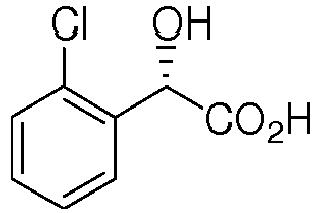
with a C(1-4)alcohol, selected from the group consisting of: methanol, ethanol, n-propanol, iso-propanol, n-butanol, iso-butanol, sec-butanol, and tert-butanol: wherein said esterification is characterized by the use of: 0.025 to 0.4 equivalents phosphorous oxychloride to obtain an ester of Formula IV.
- b) protection of the alcohol moiety of a compound of Formula IV, wherein said protection is characterized by the use of acidic catalysis controlled by left over acid from phosphorous oxychlolide from the previous reaction and an ether selected from the group consisting of: 2-methoxy-1-propene, dihydropyran, methyl vinyl ether, ethyl vinyl ether, and 5,6-dihydro-4-methoxy-2H-pyran to obtain a compound of Formula II

- c) Use of lithium borohydride to reduce the ester intermediate of Formula II, to an alcohol of Formula III.

- d) Reaction of an alcohol of Formula III

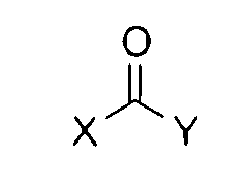
wherein said reaction is characterized by a reaction temperature: -10 to 65 °C, to yield a carbonyl compound of Formula V.
- e) Reaction of a compound of Formula V with ammonium hydroxide or ammonia, wherein said reaction is characterized by reaction temperature: 0 to 55 °C to form the carbamate of Formula VI.

- f) Deprotection of the carbamate of Formula VI, wherein said deprotection is characterized by the use of an acid selected from the group consisting of phosphoric acid, hydrochloric acid, and sulfuric acid to form (S)-carbamic acid 2-(2-chloro-phenyl)-2-hydroxy-ethyl ester

- g) Recrystalization of (S)-carbamic acid 2-(2-chloro-phenyl)-2-hydroxy-ethyl ester, wherein said recrystalization is characterized by a controlled cooling gradient.
- In another embodiment, the present invention relates to a process of preparing (S)-carbamic acid 2-(2-chloro-phenyl)-2-hydroxy-ethyl ester

- a) Methyl esterification of (S)-(2-chloro-phenyl)-hydroxy-acetic acid,

wherein said esterification is characterized by the use of 0.1 equivalents phosphorous oxychloride to obtain (S)-(2-chloro-phenyl)-hydroxy-acetic acid methyl ester.
- b) protection of (S)-(2-chloro-phenyl)-hydroxy-acetic acid methyl ester, wherein said protection is characterized by the use of acidic catalysis controlled by left over acid from phosphorous oxychlolide from the previous reaction and 2-methoxy-1-propene, to obtain (S)-(2-chloro-phenyl)-(1-methoxy-1-methyl-ethoxy)-acetic acid methyl ester.

- c) reduction of (S)-(2-chloro-phenyl)-(1-methoxy-1-methyl-ethoxy)-acetic acid methyl ester, wherein said reduction is characterized by the use of LiBH4, to obtain (S)-2-(2-chloro-phenyl)-2-(1-methoxy-1-methyl-ethoxy)-ethanol, which is carried on in subsequent reactions to become (S)-carbamic acid 2-(2-chloro-phenyl)-2-hydroxy-ethyl ester.

- In another embodiment of the invention the present invention relates to a process of preparing (S)-carbamic acid 2-(2-chloro-phenyl)-2-hydroxy-ethyl ester:

said process comprising the use of the steps a, b, c, e, f, and g as described below: - a) methyl esterification of (S)-(2-chloro-phenyl)-hydroxy-acetic acid:

wherein said methyl esterification is characterized by the use of:- 10 equivalents of methanol,
- 0.1 equivalents of phosphorous oxychloride,
- reaction temperature: 40 to 50 °C,
- partial concentration, and
- toluene co-solvent;

- b) protection of (S)-(2-chloro-phenyl)-hydroxy-acetic acid methyl ester, wherein said protection is characterized by the use of:
- acidic catalysis controlled by left over acid from phosphorous oxychloride from the previous step,
- addition of 1.6 equivalents isopropenyl methyl ether to reaction mixture, and
- 1 extraction with water;

- c) reduction of (S)-(2-chloro-phenyl)-(1-methoxy-1-methyl-ethoxy)-acetic acid methyl ester, wherein said reduction is characterized by the use of:
- LiBH4,
- solvents: Aprotic solvents like ethers e.g. THF, diethylether and the like,
- hydrocarbons like e.g. toluene,
- workup with ketones like e.g. acetone,
- reaction temperature: 40 to 50 °C,
- distillation of THF and acetone, and and isopropanol (the last one formed during workup procedure by reduction of acetone)
- 2 extractions with sodium hydroxide solution and NaCl-solution; to obtain (S)-2-(2-chloro-phenyl)-2-(1-methoxy-1-methyl-ethoxy)-ethanol.

- e) reaction of (S)-imidazole-1-carboxylic acid 2-(2-chloro-phenyl)-2-(1-methoxy-1-methyl-ethoxy)-ethyl ester

with ammonium hydroxide, wherein said reaction is characterized by- 1.60 equivalents of ammonium hydroxide, and
- reaction temperature: 40 to 50 °C

- f) deprotection of (S)-carbamic acid 2-(2-chloro-phenyl)-2-(1-methoxy-1-methyl-ethoxy)-ethyl ester, wherein said deprotection is characterized by
- addition of 2 equivalents of aq. sulfuric acid, and
- reaction temperature: 40 to 50 °C

- g) recrystallization of (S)-carbamic acid 2-(2-chloro-phenyl)-2-hydroxy-ethyl ester, wherein said recrystalization is characterized by
- methanol / water 1 : 4, and
- use of a controlled temperature gradient.
- The following examples illustrate embodiments of the invention as they apply to the synthesis of

-

- A reaction vessel was charged with 300 kg (1607.8 mol) of (S)-2-chloromandelic acid, 519 kg (16199 mol) of methanol, 24.6 kg (160.4 mol) of phosphoric trichloride, 190 kg (1790.4 mol) of trimethoxymethane and 672 kg of toluene, and heated to 40 to 50 °C, whereupon a clear solution was formed. The solution was partially concentrated in vacuum until approximately 708 kg of solvents were removed. An additional 708 kg of toluene were added and the distillation in vacuum was repeated until 708 kg of solvents were again removed. Ester IV was transferred to the following reaction step as solution in toluene.
- Partial concentration of the toluene solution, as opposed to full removal of the methanol as reagent / solvent and toluene as solvent, provided the benefit of avoiding the reverse reaction, and thereby increasing the reaction yield. In addition, it was discovered that less than equimolar amounts like 0.025 -0.4 equivalents of POCl3 could be used as acid, rather than 2.8 equivalents of HCl. The use of a substochiometrical amounts of POCl3 has advantages which include: increased safety by avoiding the need to destroy a large amount of acid after distillation, reduction of cycle time, decreased use of reagents, and an overall simplification of the process (no gaseous HCl addition).
-

- The reaction mixture was cooled to 5 to 15 °C. A mass of 184 kg (2552 mol) of 2-methoxy-1-propene was slowly added at 5 to 30 °C. The resulting solution was stirred for 30 to 120 min at 20 to 30 °C before 24.6 kg (243.1 mol) of anhydrous triethylamine were added. After the pH had been checked to be in the range of 8 to 11, 270 kg of water were added, whereupon a biphasic mixture was formed. The emulsion was stirred for 10 to 30 min, before the layers were separated. The lower aqueous layer was discarded (approximately 305 kg). The organic layer was partially concentrated in vacuum until approximately 300 kg of solvents were removed. Ester II was transferred to the following reaction step as solution.
- The discovery that pH control for acidic catalysis controlled by left over acid from phosphorous oxychloride from the previous step could be used in place of new POCl3 resulted in several simplifications of the process, including the following: avoidance of the need to add additional phosphorous oxychloride, avoidance of the need to monitor and control the pH for optimum ketal formation, and eliminating the need for reactor change which resulted in reduction of cycle time. In addition, it was discovered that this reaction did not require multiple washings and drying over Na2SO4; rather, a single water wash with azeotropic drying was found to be sufficient.
-

- A dry vessel was charged with 91.8 kg (1702.2 mol) potassium borohydrate, 72.0 kg (1698.9 mol) of lithium chloride, and 516 kg of tetrahydrofuran. The resulting suspension was stirred at 40 to 50 °C for 1 to 2 h before the solution of ester II was added over 90 to 180 min at 40 to 50 °C. After the addition, the reaction mixture was stirred at 40 to 50 °C for an additional 2.5 to 3.5 h. At the same temperature 271 kg of acetone were added slowly over 60 to 120 min, followed by 240 kg of toluene, and the mixture was stirred for an additional 30 to 60 min at 40 to 50 °C. Vacuum distillation was then used to remove 786 kg of solvents. Sodium hydroxide solution (approximately 30% (w/w), 278 kg, 2085 mol) was added, followed by 557 kg of purified water. The resulting emulsion was stirred for 20 to 40 min at 40 to 50 °C, and the layers were separated. The lower aqueous layer was discarded (approximately 997 kg). The organic layer was diluted with 240 kg toluene, treated with 300 kg purified water, and 30 kg of sodium chloride. The emulsion is stirred at 40 to 50 °C for 10 to 30 min and the layers were again separated. The aqueous layer (approximately 360 kg) is discarded. The organic layer was partially concentrated in vacuum until approximately 600 kg of solvents were removed. Alcohol III was transferred to the following reaction step as solution.
- Use of LiBH4, either as solid reagent or as solution in an appropriate solvent or formed in situ from potassium borohydride and lithium chloride, as the reducing agent resulted in several improvements to the procedure, including: eliminating the need to use the solvent tetraethyleneglycol dimethyl ether -which can be difficult to remove, lower reaction temperature, increased volume yield, and elimination of the need for Na2SO4 drying and filtration. In addition use of LiBH4 resulted in excellent and unexpected selectivity of reduction. Avoided undesirable side reactions include removal of the protecting group and/or dehalogenation.
-

- A reaction vessel was charged with 326 kg (2010.5) mol 1,1'-carbonylbis-1H-imidazole and
- 540 kg toluene. The suspension was vigorously stirred for 10 to 30 min before the solution of alcohol III was added slowly over 30 min at 15 to 45 °C, forming a nearly clear solution. Imidazolide V was transferred to the following reaction step as solution in toluene.
- Using a temperature range of 15 to 45 °C resulted in consistently complete conversion and increased volume yield, when compared to the same reaction run at a temperature range of 0 to 20 °C.
-

- The solution from the previous step was stirred at 35 to 45 °C for 30 to 60 min before 175 kg of ammonium hydroxide solution (25% (w/v), 1.6 eq.) was added slowly within 90 to 180 min at 35 to 45 °C. The biphasic reaction mixture was stirred at 35 to 45 °C for an additional 45 to 75 min. Carbamate VI was transferred to the following step in the biphasic reaction mixture.
- Use of 1.6 (1.44-1.77) equivalents of ammonium hydroxide rather than 10 equivalents allowed the reaction mixture to be transferred directly to the following step with no aqueous extractions. The new procedure had the benefits of complete conversion with a low incidence of side reactions, no product losses in the aqueous layers, and increased volume yield.
-

- The biphasic reaction mixture containing the carbamate VI was treated with 392 kg of purified water, followed by the addition of 311 kg (3171.2 mol, 2 equivalents) of sulfuric acid at 15 to 50 °C, followed by an additional 43.5 kg of purified water. The emulsion was stirred at 40 to 50 °C for 45 to 75 min whereupon the crude carbamate I precipitated. The suspension was cooled to 10 to 20 °C, followed by centrifugation. The wet product (approximately 360 kg) was washed with 360 kg of purified water in several portions and dried in a tray dryer (drying cabinet) or a mechanical dryer in vacuum and 65 to 75 °C for 0.5 to 24 h.
- Use of 2 equivalents of sulfuric acid allowed the combination of carbamate formation in example 5 with the procedure in example 6. Further the use of 2 equivalents of sulfuric acid at 40 to 50 °C rather than 0.73 equivalents of HCl at 20 to 30 °C resulted in increased yield from 83.7% to 91.6%. Volume yield increased from 70 g/L to 146 g/L, and cycle time was reduced.
-

- Carbamate I was dissolved in methanol at reflux temperature (∼65 °C) and filtered via a 0.45 µm filter cartridge into a preheated reactor. The solution was cooled with a defined cooling gradient to 18 to 22 °C during which the product started to crystallize.
- Water was added to the suspension, until the methanol/water ratio is 1:4. The suspension was further cooled with a defined gradient to 0 - 5 °C. The suspension was filtered and the resulting cake was washed with water. The wet product was dried under vacuum at 48 - 52 °C in a drying cabinet or in a mechanical dryer.
- Use of a controlled cooling gradient resulted in a slightly increased volume yield from 118 g/L to 123 g/L and control of the polymorphs.


Claims (4)
- A process of preparing (S)-carbamic acid 2-(2-chloro-phenyl)-2-hydroxy-ethyl ester:
 a) esterification of (S)-(2-chloro-phenyl)-hydroxy-acetic acid,
with a C(1-4)alcohol, selected from the group consisting of: methanol, ethanol, n-propanol, iso-propanol, n-butanol, iso-butanol, sec-butanol, and tert-butanol: wherein said esterification is characterized by the use of: 0.025 to 0.4 equivalents phosphorous oxychloride to obtain an ester of Formula IV. b) protection of the alcohol moiety of a compound of Formula IV, wherein said protection is characterized by the use of acidic catalysis controlled by left over acid from phosphorous oxychloride from the previous reaction and an ether selected from the group consisting of: 2-methoxy-1-propene, dihydropyran, methyl vinyl ether, ethyl vinyl ether, and 5,6-dihydro-4-methoxy-2H-pyran to obtain a compound of Formula II, wherein PG is a protecting group derived from an ether, wherein said ether is selected from the group consisting of 2-methoxy-1-propene, dihydropyran, methyl vinyl ether, ethyl vinyl ether, and 5,6-dihydro-4-methoxy-2H-pyran.
 c) reduction of the ester intermediate of Formula II, to an alcohol of Formula III, wherein said reduction is characterized by the use of lithium borohydride
- The process of Claim 1 further comprising steps d, e, f, and g as shown below:d) reaction of an alcohol of Formula III


wherein said reaction is characterized by a reaction temperature: -10 to 65 °C, to yield a carbonyl compound of Formula V.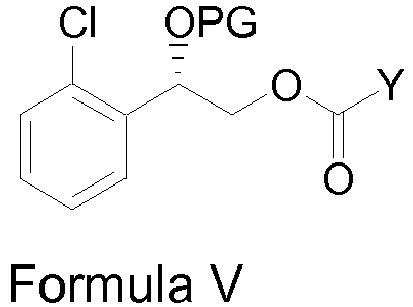 e) reaction of a compound of Formula V with ammonium hydroxide or ammonia, wherein said reaction is characterized by reaction temperature: 0 to 55 °C to form the carbamate of Formula VI.
 f) deprotection of the carbamate of Formula VI, wherein said deprotection is characterized by the use of an acid selected from the group consisting of phosphoric acid, hydrochloric acid, and sulfuric acid to form (S)-carbamic acid 2-(2-chloro-phenyl)-2-hydroxy-ethyl ester
 g) recrystalization of (S)-carbamic acid 2-(2-chloro-phenyl)-2-hydroxy-ethyl ester, wherein said recrystalization is characterized by a controlled cooling gradient.
 - The process of Claim 1 comprising preparing (S)-carbamic acid 2-(2-chloro-phenyl)-2-hydroxy-ethyl ester
 a) methyl esterification of (S)-(2-chloro-phenyl)-hydroxy-acetic acid,
wherein said esterification is characterized by the use of 0.1 equivalents phosphorous oxychloride to obtain (S)-(2-chloro-phenyl)-hydroxy-acetic acid methyl ester. b) protection of (S)-(2-chloro-phenyl)-hydroxy-acetic acid methyl ester, wherein said protection is characterized by the use of acidic catalysis controlled by left over acid from phosphorous oxychloride from the previous reaction and 2-methoxy-1-propene, to obtain (S)-(2-chloro-phenyl)-(1-methoxy-1-methyl-ethoxy)-acetic acid methyl ester.
 c) reduction of (S)-(2-chloro-phenyl)-(1-methoxy-1-methyl-ethoxy)-acetic acid methyl ester, wherein said reduction is characterized by the use of LiBH4, to obtain (S)-2-(2-chloro-phenyl)-2-(1-methoxy-1-methyl-ethoxy)-ethanol
- The process of Claim 1 comprising preparing (S)-carbamic acid 2-(2-chloro-phenyl)-2-hydroxy-ethyl ester:
 a) methyl esterification of (S)-(2-chloro-phenyl)-hydroxy-acetic acid:
wherein said methyl esterification is characterized by the use of:10 equivalents of methanol,0.1 equivalents of phosphorous oxychloride,reaction temperature: 40 to 50 °C,partial concentration, andtoluene co-solvent;to obtain (S)-(2-chloro-phenyl)-hydroxy-acetic acid methyl ester. b) protection of (S)-(2-chloro-phenyl)-hydroxy-acetic acid methyl ester, wherein said protection is characterized by the use of:acidic catalysis controlled by left over acid from phosphorous oxychloride from the previous step,addition of 1.6 equivalents isopropenyl methyl ether to reaction mixture, and1 extraction with water;to obtain (S)-(2-chloro-phenyl)-(1-methoxy-1-methyl-ethoxy)-acetic acid methyl ester.
 c) reduction of (S)-(2-chloro-phenyl)-(1-methoxy-1-methyl-ethoxy)-acetic acid methyl ester, wherein said reduction is characterized by the use of:LiBH4,THF as solventworkup with acetone reaction temperature: 40 to 50 °C,distillation of THF and acetone and Isopropanol which is formed during workup procedure by reduction of acetone and2 extractions with sodium hydroxide solution and NaCl-solution;
to obtain (S)-2-(2-chloro-phenyl)-2-(1-methoxy-1-methyl-ethoxy)-ethanol. e) reaction of (S)-imidazole-1-carboxylic acid 2-(2-chloro-phenyl)-2-(1-methoxy-1-methyl-ethoxy)-ethyl ester with ammonium hydroxide, wherein said reaction is characterized by1.60 equivalents of ammonium hydroxide, andreaction temperature: 40 to 50 °Cto form (S)-carbamic acid 2-(2-chloro-phenyl)-2-(1-methoxy-1-methyl-ethoxy)-ethyl ester.
 f) deprotection of (S)-carbamic acid 2-(2-chloro-phenyl)-2-(1-methoxy-1-methyl-ethoxy)-ethyl ester, wherein said deprotection is characterized byaddition of 2 equivalents of aq. sulfuric acid, andreaction temperature: 40 to 50 °Cto form (S)-carbamic acid 2-(2-chloro-phenyl)-2-hydroxy-ethyl ester.
 g) recrystallization of (S)-carbamic acid 2-(2-chloro-phenyl)-2-hydroxy-ethyl ester, wherein said recrystalization is characterized bymethanol / water 1 : 4, anduse of a controlled temperature gradient.
Applications Claiming Priority (2)
| Application Number | Priority Date | Filing Date | Title |
|---|---|---|---|
| US98087707P | 2007-10-18 | 2007-10-18 | |
| PCT/IB2008/003300 WO2009050587A1 (en) | 2007-10-18 | 2008-10-18 | Improved process for preparing 2-(substituted phenyl)-2-hydroxy-ethyl carbamates |
Publications (2)
| Publication Number | Publication Date |
|---|---|
| EP2215040A1 EP2215040A1 (en) | 2010-08-11 |
| EP2215040B1 true EP2215040B1 (en) | 2016-06-01 |
Family
ID=40377726
Family Applications (1)
| Application Number | Title | Priority Date | Filing Date |
|---|---|---|---|
| EP08840130.2A Active EP2215040B1 (en) | 2007-10-18 | 2008-10-18 | Process for preparing (s) 2-(2-chlorophenyl)-2-hydroxy-ethyl carbamate |
Country Status (23)
| Country | Link |
|---|---|
| US (1) | US20090105498A1 (en) |
| EP (1) | EP2215040B1 (en) |
| JP (1) | JP2011500663A (en) |
| KR (1) | KR101622323B1 (en) |
| CN (1) | CN101903317A (en) |
| AR (1) | AR071053A1 (en) |
| AU (1) | AU2008313425B2 (en) |
| BR (1) | BRPI0818777A2 (en) |
| CA (1) | CA2702873C (en) |
| CL (1) | CL2008003086A1 (en) |
| CO (1) | CO6270354A2 (en) |
| CR (1) | CR11435A (en) |
| EA (1) | EA019569B1 (en) |
| EC (1) | ECSP10010186A (en) |
| IL (1) | IL205124A (en) |
| MX (1) | MX2010004168A (en) |
| NI (1) | NI201000062A (en) |
| PA (1) | PA8800001A1 (en) |
| PE (1) | PE20090885A1 (en) |
| TW (1) | TW200927711A (en) |
| UY (1) | UY31404A1 (en) |
| WO (1) | WO2009050587A1 (en) |
| ZA (1) | ZA201002855B (en) |
Families Citing this family (4)
| Publication number | Priority date | Publication date | Assignee | Title |
|---|---|---|---|---|
| US8609849B1 (en) | 2010-11-30 | 2013-12-17 | Fox Chase Chemical Diversity Center, Inc. | Hydroxylated sulfamides exhibiting neuroprotective action and their method of use |
| RU2632659C2 (en) * | 2011-12-27 | 2017-10-09 | Байо-Фарм Солюшнс Ко., Лтд. | Phenylcarbamate compounds for application in epilepsy prevention or treatment |
| WO2014097137A2 (en) * | 2012-12-18 | 2014-06-26 | Mahesh Kandula | Compositions and methods for the treatment of seizures and neurologic diseases |
| JP7688348B2 (en) * | 2020-06-05 | 2025-06-04 | 国立研究開発法人産業技術総合研究所 | Method for producing carbamic acid ester |
Family Cites Families (11)
| Publication number | Priority date | Publication date | Assignee | Title |
|---|---|---|---|---|
| DE1543876B2 (en) * | 1965-10-07 | 1977-01-27 | Sankyo Co. Ltd., Tokio | ALKYL-SUBSTITUTED O-TERT.-BUTYL-PHENYL FORMATES, PROCESS FOR THEIR PRODUCTION AND USE |
| US4156791A (en) * | 1976-06-11 | 1979-05-29 | Phillips Petroleum Company | Preparation of alcohols by treating esters with alkali metal borohydride |
| US4237138A (en) * | 1977-11-16 | 1980-12-02 | Pfizer Inc. | Antihypertensive 4-amino-2-[4-(substituted-alkoxy)piperidino)]quinazolines |
| DE3145436A1 (en) * | 1981-11-16 | 1983-05-26 | Basf Ag, 6700 Ludwigshafen | Novel optically active 5-chloro- or 5-bromo-3-methylpentane derivatives, their preparation and their use as intermediate for the synthesis of the side chain of (R,R,R)- alpha -tocopherol |
| US5250744A (en) * | 1992-09-16 | 1993-10-05 | Ganes Chemicals Inc. | Process for the preparation of 2-aryl-1,3-propanediols |
| US5698588A (en) * | 1996-01-16 | 1997-12-16 | Yukong Limited | Halogen substituted carbamate compounds from 2-phenyl-1,2-ethanediol |
| US6262297B1 (en) * | 2000-09-25 | 2001-07-17 | Huntsman Petrochemical Corporation | Preparation of hydroxyalkylcarbamates from six-membered cyclic carbonates |
| WO2003053916A1 (en) * | 2001-12-21 | 2003-07-03 | Ortho-Mcneil Pharmaceutical, Inc. | Process for preparing 2-(substituted phenyl) - 2 - hydroxy-ethyl carbamates |
| JP2004143087A (en) * | 2002-10-24 | 2004-05-20 | Central Glass Co Ltd | Method for producing optically active 2-alkoxy-1- (trifluoromethyl-substituted phenyl) ethanol derivative |
| JP2004323516A (en) * | 2003-04-11 | 2004-11-18 | Nippon Soda Co Ltd | 3-acylaminosalicyclic acid amide derivative, method for producing the same and agricultural and horticultural bactericidal agent |
| CN1262535C (en) * | 2004-04-12 | 2006-07-05 | 浙江大学 | Method ofr synthesizing S-(1)-2.2 dimethylcyclopropane formamide |
-
2008
- 2008-10-10 US US12/248,934 patent/US20090105498A1/en not_active Abandoned
- 2008-10-17 PA PA20088800001A patent/PA8800001A1/en unknown
- 2008-10-17 TW TW097139811A patent/TW200927711A/en unknown
- 2008-10-17 UY UY31404A patent/UY31404A1/en unknown
- 2008-10-17 AR ARP080104552A patent/AR071053A1/en unknown
- 2008-10-17 CL CL2008003086A patent/CL2008003086A1/en unknown
- 2008-10-17 PE PE2008001790A patent/PE20090885A1/en not_active Application Discontinuation
- 2008-10-18 KR KR1020107009382A patent/KR101622323B1/en active Active
- 2008-10-18 EP EP08840130.2A patent/EP2215040B1/en active Active
- 2008-10-18 JP JP2010529473A patent/JP2011500663A/en active Pending
- 2008-10-18 CN CN2008801225310A patent/CN101903317A/en active Pending
- 2008-10-18 BR BRPI0818777 patent/BRPI0818777A2/en not_active Application Discontinuation
- 2008-10-18 MX MX2010004168A patent/MX2010004168A/en not_active Application Discontinuation
- 2008-10-18 EA EA201070486A patent/EA019569B1/en not_active IP Right Cessation
- 2008-10-18 WO PCT/IB2008/003300 patent/WO2009050587A1/en not_active Ceased
- 2008-10-18 CA CA2702873A patent/CA2702873C/en active Active
- 2008-10-18 AU AU2008313425A patent/AU2008313425B2/en active Active
-
2010
- 2010-04-15 IL IL205124A patent/IL205124A/en active IP Right Grant
- 2010-04-16 NI NI201000062A patent/NI201000062A/en unknown
- 2010-04-22 ZA ZA2010/02855A patent/ZA201002855B/en unknown
- 2010-05-10 CO CO10055387A patent/CO6270354A2/en not_active Application Discontinuation
- 2010-05-17 CR CR11435A patent/CR11435A/en not_active Application Discontinuation
- 2010-05-18 EC EC2010010186A patent/ECSP10010186A/en unknown
Non-Patent Citations (1)
| Title |
|---|
| None * |
Also Published As
| Publication number | Publication date |
|---|---|
| NI201000062A (en) | 2010-09-13 |
| AR071053A1 (en) | 2010-05-26 |
| ECSP10010186A (en) | 2010-06-29 |
| JP2011500663A (en) | 2011-01-06 |
| AU2008313425A1 (en) | 2009-04-23 |
| EP2215040A1 (en) | 2010-08-11 |
| IL205124A (en) | 2015-01-29 |
| PE20090885A1 (en) | 2009-07-02 |
| BRPI0818777A2 (en) | 2015-04-14 |
| WO2009050587A1 (en) | 2009-04-23 |
| CR11435A (en) | 2011-01-14 |
| US20090105498A1 (en) | 2009-04-23 |
| AU2008313425B2 (en) | 2013-09-26 |
| KR20100087302A (en) | 2010-08-04 |
| KR101622323B1 (en) | 2016-05-18 |
| UY31404A1 (en) | 2009-04-30 |
| CO6270354A2 (en) | 2011-04-20 |
| TW200927711A (en) | 2009-07-01 |
| CL2008003086A1 (en) | 2009-03-06 |
| EA201070486A1 (en) | 2010-12-30 |
| CA2702873C (en) | 2015-12-15 |
| CA2702873A1 (en) | 2009-04-23 |
| IL205124A0 (en) | 2010-11-30 |
| MX2010004168A (en) | 2010-07-06 |
| EA019569B1 (en) | 2014-04-30 |
| PA8800001A1 (en) | 2009-05-15 |
| ZA201002855B (en) | 2011-07-27 |
| CN101903317A (en) | 2010-12-01 |
Similar Documents
| Publication | Publication Date | Title |
|---|---|---|
| EP2262756B1 (en) | Process for preparing alkyl 2-alkoxymethylene-4,4-difluoro-3-oxobutyrates | |
| CN113880903B (en) | Preparation method of monabivalir | |
| ZA200408719B (en) | Process for preparing xanthine phosphodiesterase Vinhibitors and precursors thereof. | |
| CA1077057A (en) | Process for the preparation of acetic acid derivatives | |
| CA2702873C (en) | Improved process for preparing 2-(substituted phenyl)-2-hydroxy-ethyl carbamates | |
| EP2864286B1 (en) | Process for the manufacture of alkylfluoroacrylate | |
| JP7824778B2 (en) | Method for producing cyclized products by cyclization reaction accompanied by dehydration condensation, and method for producing 1,3,4-substituted-pyrazole-5-carboxylic acid esters | |
| EP2032522B1 (en) | Shortened synthesis using paraformaldehyde or trioxane | |
| SK2572004A3 (en) | Process for preparing 2-(substituted phenyl)-2-hydroxyethyl carbamates | |
| CN1036264C (en) | Process for the preparation of arvlhydantoins | |
| EP0037588A1 (en) | Method of preparing furfuryl alcohols | |
| JP2000273057A (en) | Production of alkyl iodide | |
| CN116003271B (en) | A method for synthesizing quaternary ammonium lipids | |
| EP4225723B1 (en) | Process for the preparation of alpha-alkyl-2-(trifluoromethyl)-benzyl alcohols | |
| CN114057659B (en) | Intermediate for synthesizing sulfenamide and synthesis method thereof | |
| CN113461585B (en) | Synthesis process of glycopyrronium bromide | |
| CA2451175A1 (en) | Process for the preparation of tamsulosin | |
| FR2614619A1 (en) | Process for the preparation of N-(2-chlorobenzyl)-2-(2-thienyl)ethylamine | |
| EP0714885A2 (en) | Preparation process of aminoacetamide derivative | |
| EP2298782A1 (en) | Method for producing pyrazole glycoside derivatives | |
| JPH08301816A (en) | Method for producing α-hydroxymethyl acrylate compound | |
| EP2456758B1 (en) | A process for preparing trisubstituted phenyl derivatives comprising a (1h-1,2,4-triazol-1-yl)alkyl group | |
| JP3371009B2 (en) | Method for producing carboxylic acid derivative | |
| TH104399A (en) | The improvement process for the preparation 2- (Substitutated Phenyl) -2 Hydroxyl-ethyl carbamate | |
| HK1065778B (en) | Methods for preparing o-desmethylvenlafaxine |
Legal Events
| Date | Code | Title | Description |
|---|---|---|---|
| PUAI | Public reference made under article 153(3) epc to a published international application that has entered the european phase |
Free format text: ORIGINAL CODE: 0009012 |
|
| 17P | Request for examination filed |
Effective date: 20100513 |
|
| AK | Designated contracting states |
Kind code of ref document: A1 Designated state(s): AT BE BG CH CY CZ DE DK EE ES FI FR GB GR HR HU IE IS IT LI LT LU LV MC MT NL NO PL PT RO SE SI SK TR |
|
| AX | Request for extension of the european patent |
Extension state: AL BA MK RS |
|
| RAP1 | Party data changed (applicant data changed or rights of an application transferred) |
Owner name: SK BIOPHARMACEUTICALS CO., LTD |
|
| 17Q | First examination report despatched |
Effective date: 20140728 |
|
| REG | Reference to a national code |
Ref country code: DE Ref legal event code: R079 Ref document number: 602008044553 Country of ref document: DE Free format text: PREVIOUS MAIN CLASS: C07C0029147000 Ipc: C07C0067080000 |
|
| GRAP | Despatch of communication of intention to grant a patent |
Free format text: ORIGINAL CODE: EPIDOSNIGR1 |
|
| RIC1 | Information provided on ipc code assigned before grant |
Ipc: C07C 41/48 20060101ALI20160112BHEP Ipc: C07C 67/31 20060101ALI20160112BHEP Ipc: C07C 269/06 20060101ALI20160112BHEP Ipc: C07C 43/315 20060101ALI20160112BHEP Ipc: C07C 69/732 20060101ALI20160112BHEP Ipc: C07C 271/12 20060101ALI20160112BHEP Ipc: C07C 67/08 20060101AFI20160112BHEP |
|
| INTG | Intention to grant announced |
Effective date: 20160204 |
|
| RIN1 | Information on inventor provided before grant (corrected) |
Inventor name: PORSTMANN, FRANK Inventor name: MEIER, THOMAS |
|
| GRAS | Grant fee paid |
Free format text: ORIGINAL CODE: EPIDOSNIGR3 |
|
| GRAA | (expected) grant |
Free format text: ORIGINAL CODE: 0009210 |
|
| AK | Designated contracting states |
Kind code of ref document: B1 Designated state(s): AT BE BG CH CY CZ DE DK EE ES FI FR GB GR HR HU IE IS IT LI LT LU LV MC MT NL NO PL PT RO SE SI SK TR |
|
| AX | Request for extension of the european patent |
Extension state: AL BA MK RS |
|
| REG | Reference to a national code |
Ref country code: GB Ref legal event code: FG4D |
|
| REG | Reference to a national code |
Ref country code: CH Ref legal event code: EP Ref country code: AT Ref legal event code: REF Ref document number: 803802 Country of ref document: AT Kind code of ref document: T Effective date: 20160615 |
|
| REG | Reference to a national code |
Ref country code: IE Ref legal event code: FG4D |
|
| REG | Reference to a national code |
Ref country code: DE Ref legal event code: R096 Ref document number: 602008044553 Country of ref document: DE |
|
| REG | Reference to a national code |
Ref country code: FR Ref legal event code: PLFP Year of fee payment: 9 |
|
| REG | Reference to a national code |
Ref country code: LT Ref legal event code: MG4D |
|
| REG | Reference to a national code |
Ref country code: NL Ref legal event code: MP Effective date: 20160601 |
|
| PG25 | Lapsed in a contracting state [announced via postgrant information from national office to epo] |
Ref country code: NO Free format text: LAPSE BECAUSE OF FAILURE TO SUBMIT A TRANSLATION OF THE DESCRIPTION OR TO PAY THE FEE WITHIN THE PRESCRIBED TIME-LIMIT Effective date: 20160901 Ref country code: LT Free format text: LAPSE BECAUSE OF FAILURE TO SUBMIT A TRANSLATION OF THE DESCRIPTION OR TO PAY THE FEE WITHIN THE PRESCRIBED TIME-LIMIT Effective date: 20160601 Ref country code: FI Free format text: LAPSE BECAUSE OF FAILURE TO SUBMIT A TRANSLATION OF THE DESCRIPTION OR TO PAY THE FEE WITHIN THE PRESCRIBED TIME-LIMIT Effective date: 20160601 |
|
| REG | Reference to a national code |
Ref country code: AT Ref legal event code: MK05 Ref document number: 803802 Country of ref document: AT Kind code of ref document: T Effective date: 20160601 |
|
| PG25 | Lapsed in a contracting state [announced via postgrant information from national office to epo] |
Ref country code: LV Free format text: LAPSE BECAUSE OF FAILURE TO SUBMIT A TRANSLATION OF THE DESCRIPTION OR TO PAY THE FEE WITHIN THE PRESCRIBED TIME-LIMIT Effective date: 20160601 Ref country code: HR Free format text: LAPSE BECAUSE OF FAILURE TO SUBMIT A TRANSLATION OF THE DESCRIPTION OR TO PAY THE FEE WITHIN THE PRESCRIBED TIME-LIMIT Effective date: 20160601 Ref country code: GR Free format text: LAPSE BECAUSE OF FAILURE TO SUBMIT A TRANSLATION OF THE DESCRIPTION OR TO PAY THE FEE WITHIN THE PRESCRIBED TIME-LIMIT Effective date: 20160902 Ref country code: SE Free format text: LAPSE BECAUSE OF FAILURE TO SUBMIT A TRANSLATION OF THE DESCRIPTION OR TO PAY THE FEE WITHIN THE PRESCRIBED TIME-LIMIT Effective date: 20160601 Ref country code: ES Free format text: LAPSE BECAUSE OF FAILURE TO SUBMIT A TRANSLATION OF THE DESCRIPTION OR TO PAY THE FEE WITHIN THE PRESCRIBED TIME-LIMIT Effective date: 20160601 Ref country code: NL Free format text: LAPSE BECAUSE OF FAILURE TO SUBMIT A TRANSLATION OF THE DESCRIPTION OR TO PAY THE FEE WITHIN THE PRESCRIBED TIME-LIMIT Effective date: 20160601 |
|
| PG25 | Lapsed in a contracting state [announced via postgrant information from national office to epo] |
Ref country code: IS Free format text: LAPSE BECAUSE OF FAILURE TO SUBMIT A TRANSLATION OF THE DESCRIPTION OR TO PAY THE FEE WITHIN THE PRESCRIBED TIME-LIMIT Effective date: 20161001 Ref country code: SK Free format text: LAPSE BECAUSE OF FAILURE TO SUBMIT A TRANSLATION OF THE DESCRIPTION OR TO PAY THE FEE WITHIN THE PRESCRIBED TIME-LIMIT Effective date: 20160601 Ref country code: IT Free format text: LAPSE BECAUSE OF FAILURE TO SUBMIT A TRANSLATION OF THE DESCRIPTION OR TO PAY THE FEE WITHIN THE PRESCRIBED TIME-LIMIT Effective date: 20160601 Ref country code: RO Free format text: LAPSE BECAUSE OF FAILURE TO SUBMIT A TRANSLATION OF THE DESCRIPTION OR TO PAY THE FEE WITHIN THE PRESCRIBED TIME-LIMIT Effective date: 20160601 Ref country code: CZ Free format text: LAPSE BECAUSE OF FAILURE TO SUBMIT A TRANSLATION OF THE DESCRIPTION OR TO PAY THE FEE WITHIN THE PRESCRIBED TIME-LIMIT Effective date: 20160601 Ref country code: EE Free format text: LAPSE BECAUSE OF FAILURE TO SUBMIT A TRANSLATION OF THE DESCRIPTION OR TO PAY THE FEE WITHIN THE PRESCRIBED TIME-LIMIT Effective date: 20160601 |
|
| PG25 | Lapsed in a contracting state [announced via postgrant information from national office to epo] |
Ref country code: BE Free format text: LAPSE BECAUSE OF NON-PAYMENT OF DUE FEES Effective date: 20160601 Ref country code: PL Free format text: LAPSE BECAUSE OF FAILURE TO SUBMIT A TRANSLATION OF THE DESCRIPTION OR TO PAY THE FEE WITHIN THE PRESCRIBED TIME-LIMIT Effective date: 20160601 Ref country code: AT Free format text: LAPSE BECAUSE OF FAILURE TO SUBMIT A TRANSLATION OF THE DESCRIPTION OR TO PAY THE FEE WITHIN THE PRESCRIBED TIME-LIMIT Effective date: 20160601 Ref country code: PT Free format text: LAPSE BECAUSE OF FAILURE TO SUBMIT A TRANSLATION OF THE DESCRIPTION OR TO PAY THE FEE WITHIN THE PRESCRIBED TIME-LIMIT Effective date: 20161003 |
|
| REG | Reference to a national code |
Ref country code: DE Ref legal event code: R097 Ref document number: 602008044553 Country of ref document: DE |
|
| PLBE | No opposition filed within time limit |
Free format text: ORIGINAL CODE: 0009261 |
|
| STAA | Information on the status of an ep patent application or granted ep patent |
Free format text: STATUS: NO OPPOSITION FILED WITHIN TIME LIMIT |
|
| 26N | No opposition filed |
Effective date: 20170302 |
|
| PG25 | Lapsed in a contracting state [announced via postgrant information from national office to epo] |
Ref country code: DK Free format text: LAPSE BECAUSE OF FAILURE TO SUBMIT A TRANSLATION OF THE DESCRIPTION OR TO PAY THE FEE WITHIN THE PRESCRIBED TIME-LIMIT Effective date: 20160601 Ref country code: SI Free format text: LAPSE BECAUSE OF FAILURE TO SUBMIT A TRANSLATION OF THE DESCRIPTION OR TO PAY THE FEE WITHIN THE PRESCRIBED TIME-LIMIT Effective date: 20160601 |
|
| REG | Reference to a national code |
Ref country code: CH Ref legal event code: PL |
|
| REG | Reference to a national code |
Ref country code: IE Ref legal event code: MM4A |
|
| PG25 | Lapsed in a contracting state [announced via postgrant information from national office to epo] |
Ref country code: CH Free format text: LAPSE BECAUSE OF NON-PAYMENT OF DUE FEES Effective date: 20161031 Ref country code: LI Free format text: LAPSE BECAUSE OF NON-PAYMENT OF DUE FEES Effective date: 20161031 |
|
| PG25 | Lapsed in a contracting state [announced via postgrant information from national office to epo] |
Ref country code: LU Free format text: LAPSE BECAUSE OF NON-PAYMENT OF DUE FEES Effective date: 20161018 |
|
| REG | Reference to a national code |
Ref country code: FR Ref legal event code: PLFP Year of fee payment: 10 |
|
| PG25 | Lapsed in a contracting state [announced via postgrant information from national office to epo] |
Ref country code: IE Free format text: LAPSE BECAUSE OF NON-PAYMENT OF DUE FEES Effective date: 20161018 |
|
| PG25 | Lapsed in a contracting state [announced via postgrant information from national office to epo] |
Ref country code: CY Free format text: LAPSE BECAUSE OF FAILURE TO SUBMIT A TRANSLATION OF THE DESCRIPTION OR TO PAY THE FEE WITHIN THE PRESCRIBED TIME-LIMIT Effective date: 20160601 Ref country code: HU Free format text: LAPSE BECAUSE OF FAILURE TO SUBMIT A TRANSLATION OF THE DESCRIPTION OR TO PAY THE FEE WITHIN THE PRESCRIBED TIME-LIMIT; INVALID AB INITIO Effective date: 20081018 |
|
| PG25 | Lapsed in a contracting state [announced via postgrant information from national office to epo] |
Ref country code: MC Free format text: LAPSE BECAUSE OF FAILURE TO SUBMIT A TRANSLATION OF THE DESCRIPTION OR TO PAY THE FEE WITHIN THE PRESCRIBED TIME-LIMIT Effective date: 20160601 Ref country code: TR Free format text: LAPSE BECAUSE OF FAILURE TO SUBMIT A TRANSLATION OF THE DESCRIPTION OR TO PAY THE FEE WITHIN THE PRESCRIBED TIME-LIMIT Effective date: 20160601 Ref country code: MT Free format text: LAPSE BECAUSE OF NON-PAYMENT OF DUE FEES Effective date: 20161031 |
|
| PG25 | Lapsed in a contracting state [announced via postgrant information from national office to epo] |
Ref country code: BG Free format text: LAPSE BECAUSE OF FAILURE TO SUBMIT A TRANSLATION OF THE DESCRIPTION OR TO PAY THE FEE WITHIN THE PRESCRIBED TIME-LIMIT Effective date: 20160601 |
|
| REG | Reference to a national code |
Ref country code: FR Ref legal event code: PLFP Year of fee payment: 11 |
|
| P01 | Opt-out of the competence of the unified patent court (upc) registered |
Effective date: 20230525 |
|
| PGFP | Annual fee paid to national office [announced via postgrant information from national office to epo] |
Ref country code: GB Payment date: 20250904 Year of fee payment: 18 |
|
| PGFP | Annual fee paid to national office [announced via postgrant information from national office to epo] |
Ref country code: FR Payment date: 20250908 Year of fee payment: 18 |
|
| PGFP | Annual fee paid to national office [announced via postgrant information from national office to epo] |
Ref country code: DE Payment date: 20250902 Year of fee payment: 18 |