EP2214411A2 - Datacasting - Google Patents
Datacasting Download PDFInfo
- Publication number
- EP2214411A2 EP2214411A2 EP10159683A EP10159683A EP2214411A2 EP 2214411 A2 EP2214411 A2 EP 2214411A2 EP 10159683 A EP10159683 A EP 10159683A EP 10159683 A EP10159683 A EP 10159683A EP 2214411 A2 EP2214411 A2 EP 2214411A2
- Authority
- EP
- European Patent Office
- Prior art keywords
- data
- datacast
- service
- main page
- network
- Prior art date
- Legal status (The legal status is an assumption and is not a legal conclusion. Google has not performed a legal analysis and makes no representation as to the accuracy of the status listed.)
- Withdrawn
Links
Images



Classifications
-
- H—ELECTRICITY
- H04—ELECTRIC COMMUNICATION TECHNIQUE
- H04N—PICTORIAL COMMUNICATION, e.g. TELEVISION
- H04N21/00—Selective content distribution, e.g. interactive television or video on demand [VOD]
- H04N21/40—Client devices specifically adapted for the reception of or interaction with content, e.g. set-top-box [STB]; Operations thereof
- H04N21/45—Management operations performed by the client for facilitating the reception of or the interaction with the content or administrating data related to the end-user or to the client device itself, e.g. learning user preferences for recommending movies, resolving scheduling conflicts
- H04N21/462—Content or additional data management e.g. creating a master electronic programme guide from data received from the Internet and a Head-end or controlling the complexity of a video stream by scaling the resolution or bit-rate based on the client capabilities
- H04N21/4622—Retrieving content or additional data from different sources, e.g. from a broadcast channel and the Internet
-
- H—ELECTRICITY
- H04—ELECTRIC COMMUNICATION TECHNIQUE
- H04H—BROADCAST COMMUNICATION
- H04H60/00—Arrangements for broadcast applications with a direct linking to broadcast information or broadcast space-time; Broadcast-related systems
- H04H60/68—Systems specially adapted for using specific information, e.g. geographical or meteorological information
- H04H60/72—Systems specially adapted for using specific information, e.g. geographical or meteorological information using electronic programme guides [EPG]
-
- H—ELECTRICITY
- H04—ELECTRIC COMMUNICATION TECHNIQUE
- H04N—PICTORIAL COMMUNICATION, e.g. TELEVISION
- H04N21/00—Selective content distribution, e.g. interactive television or video on demand [VOD]
- H04N21/20—Servers specifically adapted for the distribution of content, e.g. VOD servers; Operations thereof
- H04N21/23—Processing of content or additional data; Elementary server operations; Server middleware
- H04N21/235—Processing of additional data, e.g. scrambling of additional data or processing content descriptors
-
- H—ELECTRICITY
- H04—ELECTRIC COMMUNICATION TECHNIQUE
- H04N—PICTORIAL COMMUNICATION, e.g. TELEVISION
- H04N21/00—Selective content distribution, e.g. interactive television or video on demand [VOD]
- H04N21/40—Client devices specifically adapted for the reception of or interaction with content, e.g. set-top-box [STB]; Operations thereof
- H04N21/43—Processing of content or additional data, e.g. demultiplexing additional data from a digital video stream; Elementary client operations, e.g. monitoring of home network or synchronising decoder's clock; Client middleware
- H04N21/435—Processing of additional data, e.g. decrypting of additional data, reconstructing software from modules extracted from the transport stream
-
- H—ELECTRICITY
- H04—ELECTRIC COMMUNICATION TECHNIQUE
- H04N—PICTORIAL COMMUNICATION, e.g. TELEVISION
- H04N21/00—Selective content distribution, e.g. interactive television or video on demand [VOD]
- H04N21/60—Network structure or processes for video distribution between server and client or between remote clients; Control signalling between clients, server and network components; Transmission of management data between server and client, e.g. sending from server to client commands for recording incoming content stream; Communication details between server and client
- H04N21/61—Network physical structure; Signal processing
- H04N21/6106—Network physical structure; Signal processing specially adapted to the downstream path of the transmission network
- H04N21/6131—Network physical structure; Signal processing specially adapted to the downstream path of the transmission network involving transmission via a mobile phone network
-
- H—ELECTRICITY
- H04—ELECTRIC COMMUNICATION TECHNIQUE
- H04N—PICTORIAL COMMUNICATION, e.g. TELEVISION
- H04N21/00—Selective content distribution, e.g. interactive television or video on demand [VOD]
- H04N21/80—Generation or processing of content or additional data by content creator independently of the distribution process; Content per se
- H04N21/83—Generation or processing of protective or descriptive data associated with content; Content structuring
- H04N21/84—Generation or processing of descriptive data, e.g. content descriptors
-
- H—ELECTRICITY
- H04—ELECTRIC COMMUNICATION TECHNIQUE
- H04N—PICTORIAL COMMUNICATION, e.g. TELEVISION
- H04N7/00—Television systems
- H04N7/16—Analogue secrecy systems; Analogue subscription systems
-
- H—ELECTRICITY
- H04—ELECTRIC COMMUNICATION TECHNIQUE
- H04H—BROADCAST COMMUNICATION
- H04H20/00—Arrangements for broadcast or for distribution combined with broadcast
- H04H20/16—Arrangements for broadcast or for distribution of identical information repeatedly
Definitions
- the present invention relates to datacasting, particularly, though not exclusively to internet protocol datacasting.
- IPDC Internet Protocol datacasting
- DVB digital video broadcasting
- IPDC can be used to deliver data services, such as a news or software updates, at rates over 11 Mbits -1 .
- a method of datacasting comprising providing electronic service guide (ESG) data relating to one or more services and providing supplementary data selectively provided by a datacast operator.
- ESG electronic service guide
- the method may comprise providing a main page including at least some of said supplementary data.
- the method may comprise providing a data file including information for locating said main page.
- the data file may include information for locating at least one service main page.
- a computer program including instructions which when executed by a data processing apparatus causes said apparatus to perform the method.
- a system for datacasting comprising providing electronic service guide (ESG) data relating to one or more services and providing supplementary data selectively provided by a datacast service operator.
- ESG electronic service guide
- apparatus for datacasting comprising means for providing electronic service guide (ESG) data relating to one or more services and means for providing supplementary data selectively provided by a datacast service operator.
- ESG electronic service guide
- a method of operating a terminal for receiving datacast services comprising receiving electronic service guide (ESG) data relating to one or more services and receiving supplementary data provided by a datacast operator.
- ESG electronic service guide
- the method may comprise receiving at least some of said supplementary data in preference to receiving said ESG data.
- the method may comprise using said supplementary data to locate said ESG data.
- the method may comprise receiving a main page including at least some of said supplementary data.
- the method may comprise providing a data file including information for locating said main page.
- the data file may include information for locating at least one service main page.
- the method may further comprise receiving datacast data via a first network, receiving data from a second, different network and displaying at least some of said datacast data and at least some of said data.
- the method may comprise displaying a list of services and selecting one or more services.
- the method may comprise intermittently switching on a receiver to receive a time-sliced burst of data and switching off said receiver.
- a computer program including instructions which when executed by a data processing apparatus causes said apparatus to perform the method.
- a system for operating a terminal for receiving datacast services comprising receiving electronic service guide (ESG) data relating to one or more services and receiving supplementary data provided by a datacast operator.
- ESG electronic service guide
- a terminal for receiving datacast services comprising means for receiving electronic service guide (ESG) data relating to one or more services and means for receiving supplementary data provided by a datacast operator.
- ESG electronic service guide
- the terminal may comprise means for receiving datacast transmissions and means for communicating with public land mobile network.
- the communications system 1 includes sources 3 1 , 3 2 , 3 3 , 3 4 of content, for example in the form of video, audio and data files, and content servers 4 1 , 4 2 for retrieving content and, optionally, re-formatting, storing, aggregating and/or scheduling the content.
- the content servers 4 1 , 4 2 may be controlled by respective entities 5 1 , 5 2 referred to as "content providers". However, the content servers 4 1 , 4 2 may be controlled by the same entity.
- the communications system 1 further includes a datacast service system 6.
- the datacast service system 6 receives content from the content servers 4 1 , 4 2 via a network 7, such as the Internet, and performs a number of functions including receiving content, providing service sets and service bundles, arranging service sets data in carousels, generating service information (SI) data, encapsulating and multiplexing data.
- a service set can be used for combining same kind of services of one service or content provider together.
- One service may belong to a number of service sets.
- a number of services are bundled into a service bundle, which may be a sellable entity.
- the datacast service system 6 may also re-format, store, aggregate and/or schedule content
- the communications system 1 also includes a broadcast network 8, for example in the form of a terrestrial digital video broadcasting (DVB-T) network, for providing a transmission channel from the datacast service system 6 to the mobile terminal 2.
- a broadcast network for example in the form of a terrestrial digital video broadcasting (DVB-T) network, for providing a transmission channel from the datacast service system 6 to the mobile terminal 2.
- Other broadcast networks may be used including other types of DVB networks, such as a cable DVB network or satellite DVB network, a Digital Audio Broadcasting (DAB) network or an Advance Television System Committee ATSC) network or a terrestrial Integrated Services Digital Broadcasting-Terrestrial (ISDB-T) network.
- DVB Digital Audio Broadcasting
- ATSC Advance Television System Committee ATSC
- ISDB-T terrestrial Integrated Services Digital Broadcasting-Terrestrial
- the datacast service system 6 and broadcast network 8 are controlled by an entity 9 referred to as a "datacast operator".
- the broadcast network 8 may also be used for other purposes, such as transmission of digital television, and may be controlled by another, different operator (not shown). Under those circumstances, the datacast operator 9 controls the datacast service system 6 but not the broadcast network 8.
- a public land mobile network (PLMN) 10 may provide a return channel from the mobile terminal 2 to the Internet 7.
- PLMN networks may be used, such as other types of second-generation (2G) network such as digital advanced mobile phone system (D-AMPS) network or Personal Digital Communication System (PDC) network, a "two-and-a-half" generation network, such as General Packet Radio Service (GPRS) network and enhanced data rates for GSM evolution (EDGE), or a third-generation network (3G), such as Universal Mobile Telephone System (UMTS) network based on wideband code division multiple access (W-CDMA), or a time division synchronous code division multiple access (TD-SCDMA) network.
- 2G second-generation
- D-AMPS digital advanced mobile phone system
- PDC Personal Digital Communication System
- GPRS General Packet Radio Service
- EDGE enhanced data rates for GSM evolution
- 3G such as Universal Mobile Telephone System (UMTS) network based on wideband code division multiple access (W-CDMA), or a time division synchronous
- a local area network (LAN) 11 for example using IEEE 802.11x, may also be provided for obtaining data from local sources (not shown) or from the Internet 7.
- LANs or personal area networks (PANs) may be used such as BluetoothTM.
- first and second geographical regions 12, 13 are shown.
- One or both of the regions 12, 13 may be a country, a part of a country, city or town or a district of a city or town.
- the first region 12 may be a city
- the second region 13 may be a countryside surrounding the city.
- the first region 12 is served by the first datacast service system 6 via the broadcast network 8.
- the broadcast network 8 comprises a core network 14 and one or more transmitters 15 1 , 15 2 , 15 3 which transmit in respective cells 16 1 , 16 2 , 16 3 , Gap filler transmitters (not shown) may also be provided. It will be appreciated that alternative configurations of the broadcast network 8 may be used. For example, the core network need not be provided.
- the broadcast network 8 is in this example arranged to transmit as a single frequency network (SFN) using 16 Quadrature Amplitude Modulation (QAM) at frequency lying in the range 470 to 862 MHz.
- SFN single frequency network
- QAM Quadrature Amplitude Modulation
- the first region 12 is also served by PLMN 10 ( Figure 1 ) in a conventional manner.
- the second region 13 is served by second datacast service system 17 via another broadcast network 18 comprising a core network 19 and one or more transmitters 20 1 .
- Alternative configurations may be used as with the first datacast service system,
- a user is initially located in the second region 13 and moves to the first region 12, taking their mobile terminal 2 with them.
- the mobile terminal 2 receives a signal 21 transmitted from a transmitter 15 3 carrying a number of services.
- the datacast service system 6 provides its own information service which supplements an electronic service guide (ESG).
- ESG electronic service guide
- the information service is specific to the area served by the datacast service system 6.
- FIG. 3 a schematic diagram of an embodiment of a datacast service system 6 according to the present invention is shown.
- the datacast service system 6 comprises an interface 22 for receiving service data 23 and, optionally, relevant electronic service guide (ESG) data 24, both in the form of IP data, from content servers 4 1 , 4 2 ( Figure 1 ) and storage 25 for optionally storing at least part of the service data 23 and ESG data 24.
- the system 6 also comprises a controller 26, memory 27 storing a computer program 28 for controlling the datacast system 6 shown in Figure 3 , a service information (SI) table generator 29, a carousel generator 30, a multiprotocol encapsulation (MPE) encapsulator 31 and a multiplexer 32.
- SI service information
- MPE multiprotocol encapsulation
- the controller 26 includes an ESG data generator 33 for generating ESG data 34, which together with ESG data 24, is used for describing the scheduling and timing of content.
- the controller 26 also includes a main page generator 35 for producing a main page 36 for the datacast operator, herein referred to as the "DCO main page".
- the controller 26 also includes a hierarchy page generator 37 for generating a hierarchy page 38 which will be described in more detail later.
- the controller 26 may provide main pages 39 1 , 39 2 , 39 3 for a number of services.
- the service main pages 39 1 , 39 2 , 39 3 may be provided by the content servers 4 1 , 4 2 ( Figure 1 ). However, the controller 26 may modify the service main pages 39 1 , 39 2 , 39 3 or generate the service main pages 39 1 , 39 2 , 39 3 from the service data 22.
- the DCO main page 36 is selectively provided by the datacast operator 9 ( Figure 3 ) and may include data for identifying the datacast operator, data for advertising and/or data for informing the user, for example announcing new, upcoming or updated services, informing the user of popular services or providing recommendations.
- the carousel generator 30 receives data relating to the services such as service data 22 and ESG data 24, 34. It may generate a number of carousels 40, 41, 42, 43, 44 including an alert carousel 40 for notifying the mobile terminal 2 ( Figure 1 ) e.g. of changes in service, a security association carousel 41 for encryption keys for encrypted content , a session announcement carousel 42 for announcing sessions, a main page carousel 43 for providing main pages for the datacast operator and the services and a hierarchy carousel 44 for providing data relating to the hierarchy of available services. Carousels 40, 41, 42, 43, 44 repeatedly transmit data usually in a cyclically manner.
- the main page carousel 43 may comprise the DCO main page 36 in the form of one or more files 47 1 , 47 2 , 47 3 and service main pages 39 1 , 39 2 , 39 3 each in the form of one or more files 48 11 , 48 12 , 48 13 , 48 21 , 48 22 , 48 23 , 48 31 , 48 32 , 48 33 ,
- the number of files 47 1 , 47 2 , 47 3 comprised in the DCO main page 36 need not be the same as the number of files 48 11 , 48 12 , 48 13 , 48 21 , 48 22 , 48 23 , 48 31 , 48 32 , 48 33 comprised in any other service main page 39 1 , 39 2 , 39 3 .
- the number of files 48 11 , 48 12 , 48 13 comprised in any service main page need not be the same as the number of files 48 21 , 48 22 , 48 23 comprised in another service main page, for instance the second service main page 39 2 .
- the files 47 1 , 47 2 , 47 3 , 48 11 , 48 12 , 48 13 , 48 21 , 48 22 , 48 23 , 48 31 , 48 32 , 48 33 are in one embodiment of the invention in the form of hypertext mark-up language (HTML) protocol files.
- HTTP hypertext mark-up language
- other file formats may be used, such as extensible mark-up language (XML) or session description protocol (SDP).
- XML extensible mark-up language
- SDP session description protocol
- a hierarchy file carousel 44 comprises a hierarchy file 38 in the form of one or more sub-files 49 1 , 49 2 , 49 3 .
- the hierarchy file 38 need not be configured or transmitted in the form of a carousel 38.
- the ESG data 24, 34 includes service description data 50 in one embodiment of the invention.
- the hierarchy file 38 comprises sets 51 1 , 51 2 , 51 3 , 51 4 , 51 5 of carousel information.
- Each carousel 40, 41, 42, 43, 44 ( Figure 3 ) has a respective set 51 1 , 51 2 , 51 3 , 51 4 , 51 5 of carousel information comprising an identifier 52 1 , 52 2 , 52 3 , 52 4 , 52 5 for identifying the carousel type, a list 53 1 , 53 2 , 53 3 , 53 4 , 53 5 of IP addresses and port numbers for sets of pages within a carousel, an optional list 54 1 , 54 2 , 54 3 , 54 4 , 54 5 of times for indicating when carousel information will expire and optional list 55 1 , 55 2 , 55 3 , 55 4 , 55 5 of times for indicating frequency of updates.
- the session, main page and hierarchy carousels 42, 43, 44 include respective lists 54 2 , 54 4 , 54 5 of expiry times.
- the main page and hierarchy carousels 43, 44 may include respective lists 55 4 , 55 5 of update times.
- the main page carousel 43 ( Figure 3 ) has a set 51 4 of carousel information including an identifier 52 4 for indicating that the carousel is the main page carousel, a list 53 4 of IP addresses and port numbers for the DCO main page 36 ( Figure 4 ) and the service main pages 39 1 , 39 2 , 39 3 ( Figure 4 ), a list 54 4 of expiry times and a list 55 4 of update intervals.
- IP addresses in lists 53 1 , 53 2 , 53 3 , 53 4 , 53 5 conform in one embodiment of the invention to IPv6 protocols and reference is made to "Internet Protocol, Version 6 (IPv6) Specification", by S. Deering and R. Hindern, RFC 2460, IETF, December 1998 and other related IPv6 RFCs. However, other IP protocols may be used.
- the expiry times in lists 54 1 , 54 2 , 54 3 , 54 4 , 54 5 conform in one embodiment of the invention to Network Time Protocol (NTP) and reference is made to "Network Time Protocol (version 3) Specification, Implementation" by D. Mills, RFC 1305, IETF, March 1992. However, other times may be used.
- the expiry times in lists 54 1 , 54 2 , 54 3 , 54 4 , 54 5 may differ from one another.
- the update intervals 55 1 , 55 2 , 55 3 , 55 4 , 55 5 may be expressed in seconds. However, other units of time such as milliseconds may be used in various embodiments of the invention.
- an exemplary directory structure 56 of the main pages 36, 39 1 , 39 2 , 39 3 is shown.
- the DCO main page 36 includes the service main pages 39 1 , 39 2 , 39 3 .
- the IP address of the hierarchy file 38 is signalled through SI, in particular through the NIT 45 ( Figure 3 ) and the INT 46 ( Figure 3 ).
- the datacast service system 6 transmits data in accordance with a number of transport protocols and a protocol stack 57 is shown.
- IPv6 protocols 58 are used and reference is made to "Internet Protocol, Version 6 (IPv6) Specification" ibid .
- IP security IPsec is not necessarily used when transmitting main page files 47 1 , 47 2 , 47 3 , 48 11 , 48 12 , 48 13 , 48 21 , 48 22 , 48 23 , 48 31 , 48 32 , 48 33 .
- UDP Usergram Data Protocol
- UDP Usergram Data Protocol
- Real-time Transport Protocol (RTP) 60 1 may be used to transport files.
- Asynchronous Layered Coding (ALC) protocol 60 2 may be used in other embodiments of the invention.
- RTP Real-time Transport Protocol
- Asynchronous Layered Coding (ALC) protocol 60 2 may be used in other embodiments of the invention.
- a filecast payload format may be used which specifies, in detail, the use of RTP/ALC protocols.
- XML 62 1 may be used for hierarchy files 49 1 , 49 2 , 49 3 ( Figure 5 ), security association files (not shown) and session announcement files (not shown).
- SDP 62 2 may be used for technical session information that is not directly shown to the user.
- HTML 62 3 may be used for main page files 47 1 , 47 2 , 47 3 , 48 11 , 48 12 , 48 13 , 48 21 , 48 22 , 48 23 , 48 31 , 48 32 , 48 33 .
- the main pages can be sent in files for different languages.
- the language used is indicated e.g. using language codes. Reference is made to "Tags for the Identification of Languages" by H. Alvestrand, RFC 1766, IETF, March 1995.
- an MPE encapsulator 31 encapsulates data, such as data from carousels 40, 41, 42, 43, 44, into sections (not shown) compliant with DSM-CC section format for private data as specified Section 7 "Multiprotocol Encapsulation" in "Digital Video Broadcasting (DVB); DVB specification for data broadcasting", ETSI EN 301 192, V1.3.1 (2003).
- Data for a given service may be time-sliced.
- the NIT 45 may be segmented into network information sections, for example as specified in Section 5 "Service Information (SI) tables” in “Digital Video Broadcasting (DVB); Specification for Service Information (SI) in DVB systems", ETSI EN 300 468, V1.5.1 (2003).
- SI Service Information
- DVB Digital Video Broadcasting
- SI Service Information
- the multiplexer 32 places the sections (not shown) into MPEG-2 transport stream (TS) packets 63, according to International Organisation for Standards/ International Electrotechnical Commission (ISO/IEC) Standard 13818-1 "Information technology - Generic coding of moving pictures and associated audio information: Systems" and outputs a transport stream 64.
- the transport stream 64 is provided to the broadcast network 8 ( Figure 1 ) in which it may be multiplexed with other streams (not shown), then modulated and broadcast.
- the IP address of the hierarchy file 38 may be signalled through SI, in particular through the NIT 45 ( Figure 3 ) and the INT 46 ( Figure 3 ).
- the NIT 45 includes first and second descriptor loops 65, 66 in which a plurality of descriptors (not shown) for, inter alia , specifying data values and identifying other parts of the transport stream, may be inserted.
- a linkage descriptor 67 can be used to point to other parts of the transport stream and thus obtain further data or access a service. To identify itself as such, the linkage descriptor 67 includes a descriptor tag 68 containing a predetermined value, e.g. 0x0B. The linkage descriptor 67 also includes a transport stream id 69 and an original network id 70 to identify uniquely a transport stream, in this case carrying the INT 46.
- the transport stream 54 may carry a plurality of sets of IP streams, a set of IP streams being known as an "IP platform".
- IP platform can be identified by a platform id 71 and a platform name 72 which describes the platform and can be used by the mobile terminal 2 to select a platform.
- the INT 46 includes a table id 73 containing a predetermined value, such as 0x4C.
- the INT 46 includes a platform id 74 and may include one or more target IP address descriptors 75, each including a target IP address 76.
- the IP address on which the hierarchy file 38 ( Figure 6 ) is transmitted is specified in target IP address 70.
- FIG. 12 a process performed by the datacast service system 6 in one embodiment of the invention is shown in the form of a flow diagram.
- the DCO main page generator 35 generates a DCO main page 36 and the hierarchy page generator 37 generates a hierarchy page 38 (step S1). This may be done periodically, for example every 10 or 100 seconds. Additionally or alternatively, the DCO main page generator 35 may generate a DCO main page 36 when any one of a number of predefined events occurs, such as a change in service, or any one of a number of predefined conditions, such as when a number of consumers exceeds a given number, are satisfied. Additionally or alternatively, the DCO main page generator 35 may generate a DCO main page 36 as-and-when directed to do so by the DCO operator 9.
- the controller 26 also may provide service main pages 39 1 , 39 2 , 39 3 (step S2).
- the carousel generator 30 receives the DCO main page 32 ( Figure 4 ), the service main pages 33 1 , 33 2 , 33 3 and the hierarchy page 38 and generates the main page carousel 43 and the hierarchy file carousel 44 (step S3).
- Generation of the main page carousel 43 and the hierarchy file carousel 44 includes assigning respective IP addresses and port numbers to the DCO main page 36 ( Figure 4 ) and the service main pages 39 1 , 39 2 , 39 3 ( Figure 4 ), and to the hierarchy file 38 ( Figure 6 ).
- IP address and port numbers assigned to the DCO main page 36 ( Figure 4 ) and the service main pages 39 1 , 39 2 , 39 3 ( Figure 4 ), as well as IP address and port numbers assigned to other carousels, are included in the hierarchy file 38 ( Figure 6 ).
- the IP address and port number assigned to the hierarchy file 38 ( Figure 6 ) are supplied to the table generator 29 for inclusion in the INT 46.
- the carousels 40, 41, 42, 43, 44 are local, i.e. specific to the network area.
- each network area has its own hierarchy, main page, security association, session announcement and alert carousels.
- the hierarchy file 38 ( Figure 6 ) has a different IP address in each network area.
- the IP addresses may be assigned on an ad-hoc basis. Alternatively, the IP addresses may be pre-assigned.
- the NIT 45 and INT 46 are prepared and cyclically transmitted (step S4).
- the main page and hierarchy file carousels 43, 44 are transmitted (step S5).
- the mobile terminal 2 in one embodiment of the invention is in the form of a mobile telephone handset with a multimedia capability.
- the mobile terminal 2 includes first and second antennae 77 1 , 77 2 , a receiver 78 1 and a transceiver 78 2 .
- the first antenna 77 1 and receiver 78 1 are used to receive signals from the broadcast network 8 ( Figure 1 ).
- the second antenna 77 2 and transceiver 78 2 are used to transmit and receive signals to and from the PLMN 10 ( Figure 1 ).
- the receiver and transceiver 78 1 , 78 2 each include respective r.f. signal processing circuits (not shown) for amplifying and demodulating received signals and respective processors (not shown) for channel decoding and demultiplexing.
- the mobile terminal 2 also includes a controller 79, a user interface 80, memory 81, storage 82 a smart card reader 83, smart card 84 received in the smart card reader 83, a coder/decoder (codec) 85, a speaker 86 with corresponding amplifier 87 and a microphone 88 with a corresponding pre-amplifier 89.
- the user interface 80 comprises a display 90 and a keypad 91.
- the display 90 is adapted for displaying images and video by, for instance, being larger and/or having greater resolution than a display of conventional mobile telephone and being capable of colour images.
- the mobile terminal 2 also includes a battery 92.
- a transceiver 93 may optionally be provided for transmitting and receiving signals to and from the LAN 11 ( Figure 1 ).
- the transceiver 93 may be a wireless card compliant to IEEE 802.11x or BluetoothTM specifications.
- the controller 79 manages operation of the mobile terminal 2 under the direction of computer software 94 stored in memory 81. For example, the controller 79 provides an output for the display 90 and receives inputs from the keypad 91.
- the mobile terminal 2 may be modified by providing a single receiver adapted to receive signals from the broadcast network 8 ( Figure 1 ) and the PLMN 10 ( Figure 1 ) and a transmitter adapted to transmit signals to the PLMN 10 ( Figure 1 ).
- a single transceiver for both communications networks 8, 10 may be provided.
- the mobile terminal 2 When the mobile terminal 2 is switched on and/or if the mobile terminal 2 moves from one region 13 ( Figure 13 ) to another region 12 ( Figure 2 ) served by different datacast operators 6, 17 ( Figure 2 ) or served by the same datacast operator and having at least partly different services available, then the mobile terminal 2 may not have up-to-date -or even any- electronic service guide (ESG) information.
- ESG electronic service guide
- the mobile terminal 2 acquires ESG data 24, 25 ( Figure 3 ), which includes NIT 45, INT 46, main pages 47 1 , 47 2 , 47 3 , 48 11 , 48 12 , 48 13 , 48 21 , 48 22 , 48 33 , 48 31 , 48 32 , 48 33 ( Figure 4 ) and service description data 50 ( Figure 6 ) using information included in the hierarchy file 38 ( Figure 5 ) and the DCO main page 36 ( Figure 3 ). More detailed information may also be acquired, on request, using information included in the ESG data 24, 25 ( Figure 3 ).
- FIG. 13 and 14 a process performed by the mobile terminal 2, for example when it is switched or moves from one region 13 ( Figure 13 ) to another region 12 ( Figure 2 ), is shown in the form of a flow diagram.
- the controller 79 instructs the receiver 78 1 to locate a network, in this case the broadcast network 8 ( Figure 1 ) (step S6). This may be achieved by scanning a part of the radio frequency spectrum until signal 21 ( Figure 2 ) is found. Alternatively, the controller 79 may select one or one or more pre-defined or user inputted network frequencies. Then again, the user may instruct the controller 79 to find a given network.
- a network in this case the broadcast network 8 ( Figure 1 ) (step S6). This may be achieved by scanning a part of the radio frequency spectrum until signal 21 ( Figure 2 ) is found. Alternatively, the controller 79 may select one or one or more pre-defined or user inputted network frequencies. Then again, the user may instruct the controller 79 to find a given network.
- the controller 79 locates, downloads, parses and stores the NIT 45, then locates, downloads, parses and stores the INT 46 (step S7).
- the controller 79 obtains the IP address and port number of the hierarchy file 38 (step S8). This may comprise determining whether any IP address within the hierarchy file 38 falls within a predefined ESG IP address range and returning any address which falls within that range.
- the controller 79 joins the address, downloads, parses and stores the hierarchy file 38 in storage 82 (step S9).
- the controller 79 can obtain respective IP addresses and port numbers for the carousels 40, 41, 42, 43, 44.
- the controller 79 may obtain the IP address and port number for the main pages 36, 39 1 , 39 2 , 39 3 (step S10),may join the addresses and download one or more of the main pages 36, 39 1 , 39 2 , 39 3 (step S11). Furthermore, the controller 79 can obtain the IP address and port number for session announcement carousel 42 (step S12), join the address and download the session description data 50 (step S13).
- the session description data 50 may include universal resource locators (URLs) for obtaining further, more detailed information (not shown). At the request of the user, the controller 79 may retrieve more detailed information (not shown) via the PLMN 10 ( Figure 1 ) or LAN 11 ( Figure 1 ).
- the controller 79 may only listen to announcements, such as hierarchy file 38, when it is time for an update.
- the controller 79 determines whether it is time to update the hierarchy file 38 (step S15). If it is time for an update, the controller 79 downloads a new hierarchy file 38' (step S16).
- the currently stored hierarchy file 38 and the new hierarchy file 38' each have values 95, 95' indicating when they were last modified.
- the controller 79 compares the modification time 95' of the new hierarchy file 38' with the modification time 95 of the currently-stored hierarchy file 38 (step S17). If the modification time 95' of the new hierarchy file 38' is later than the modification time 95 of the currently-stored hierarchy file 38, in other words the new hierarchy file 38' is indeed newer than the currently-stored hierarchy file 38, then the new hierarchy file 38' is stored in storage 82 (step S18). If not, the expiry time 54 5 ( Figure 7 ) is simply updated (step S19).
- the controller 79 may also check expiry times 54 4 for the main page carousel 43.
- the update interval 55 4 ( Figure 7 ) for the main page carousel 43 may be shorter than the update interval 55 5 ( Figure 7 ) for the hierarchy file carousel 44. Therefore, the controller 79 may calculate expected expiry times for the main page carousel 43 using the update interval 55 4 , thereby avoiding the need to check the hierarchy file 38.
- a first view of a DCO main page display 96 as displayed by the mobile terminal 2 in display 90 is shown in one embodiment of the invention.
- the DCO main page display 96 is the first page which is presented to the user when the datacast service system 6 ( Figure 1 ) is accessed and can be used to view the ESG.
- the DCO main page display 96 can be quickly presented because the DCO main page 36 ( Figure 3 ) is used as a default starting point and presents the most relevant information to the user.
- the DCO main page display 96 may include a number of fields including an operator identity field 97, terminal status area 98, an active area 99, selection buttons 100, time/date field 101 and further soft key selection buttons 102.
- the operator identify field 97 may include the name of the datacast operator 9 ( Figure 1 ) and a logo.
- the terminal status area 98 may include information such as network connection status, battery level and incoming call alert. The information may be presented in the form of icons, animated icons or text.
- Some of the fields may display data and information which has been received from the datacast service system 6 ( Figure 1 ). Some of the fields may display data and information which has been stored in the storage 82 ( Figure 13 ) and which originates from the datacast service system 6 ( Figure 1 ), the user, the terminal 2, another source, for example via PLMN 10 ( Figure 1 ) or a combination of these.
- the selection buttons 100 may include a button 100 1 for presenting a viewing history, a button 100 2 for displaying programs which are currently running, a button 100 3 for displaying available channels and a button 100 4 for switching to a viewer 105 ( Figure 19 ) which fills substantially all or most of the display 90.
- the DCO main page display 96 is updated to reflect changes in ESG, service popularity etc. It can also be used for informing users of upcoming events, changes in services or service availability.
- the DCO main page display 96 may also be used for advertising purposes, such as displaying trailers.
- the active area 99 shows a list 103 of available channels.
- the selection buttons 100 may include a button 100 5 for entering an options menu, a button 100 6 for reverting back to the first view shown in Figure 17 and a button 100 7 for obtaining further details.
- the viewer 105 includes an active area 106 and a button 107 for reverting to the DCO main page display 96.
- the mobile terminal 2 can be used not only to obtain and render content obtained from the broadcast network 8 ( Figure 1 ), but also content and/or data obtained from the PLMN 10 ( Figure 1 ).
- FIG. 20 a process performed by the mobile terminal 2 in one embodiment of the invention is shown in the form of a flow diagram.
- the controller 79 retrieves at least a part of the service data 23 from the datacast service system 6 via the broadcast network 8 (step S20). Additionally, the controller 79 retrieves data (not shown) from a source (not shown) via the PLMN 10 (step S21). The processor 79 displays service data 23 in the display 90, for example in the DCO main page display 96 (step S22) and also displays data obtained from the PLMN 10 in the display 90.
- the mobile terminal 2 may take the form of a personal digital assistant (PDA).
- PDA personal digital assistant
- a fixed or semi-fixed terminal may be used, for example in the form of a set-top box or personal computer.
- a method of datacasting comprising providing electronic service guide (ESG) data relating to one or more services and providing supplementary data selectively provided by a datacast operator.
- ESG electronic service guide
- the method may comprise providing a main page including at least some of said supplementary data.
- the method may comprise providing one or more data files including information for locating said main page.
- One or more data files may include information for locating at least one service main page.
- a computer program including instructions which when executed by a data processing apparatus causes said apparatus to perform the method as described above.
- a system for datacasting comprising providing electronic service guide (ESG) data relating to one or more services and providing supplementary data selectively provided by a datacast service operator.
- ESG electronic service guide
- apparatus for datacasting comprising means for providing electronic service guide (ESG) data relating to one or more services and means for providing supplementary data selectively provided by a datacast service operator.
- ESG electronic service guide
- apparatus for datacasting comprising a processor configured to provide electronic service guide (ESG) data relating to one or more services and to provide supplementary data selectively provided by a datacast service operator.
- ESG electronic service guide
- a method of operating a terminal for receiving datacast services comprising receiving electronic service guide (ESG) data relating to one or more services and receiving supplementary data provided by a datacast operator.
- ESG electronic service guide
- the method may comprise receiving at least some of said supplementary data in preference to receiving said ESG data.
- the method may comprise using said supplementary data to locate said ESG data.
- the method may comprise receiving a main page including at least some of said supplementary data.
- the method may comprise providing one or more data files including information for locating said main page.
- Said one or more data files may include information for locating at least one service main page.
- the method may further comprise receiving datacast data via a first network, receiving data from a second, different network and displaying at least some of said datacast data and at least some of said data.
- the method may comprise displaying a list of services and selecting one or more services.
- the method may comprise intermittently switching on a receiver to receive one or more time-sliced bursts of data and switching off said receiver.
- a computer program including instructions which when executed by a data processing apparatus causes said apparatus to perform the method as described above.
- a system for operating a terminal for receiving datacast services comprising receiving electronic service guide (ESG) data relating to one or more services and receiving supplementary data provided by a datacast operator.
- ESG electronic service guide
- a terminal for receiving datacast services comprising means for receiving electronic service guide (ESG) data relating to one or more services and means for receiving supplementary data provided by a datacast operator.
- ESG electronic service guide
- the terminal may comprise means for receiving datacast transmissions and means for communicating with public land mobile network.
Landscapes
- Engineering & Computer Science (AREA)
- Signal Processing (AREA)
- Multimedia (AREA)
- Databases & Information Systems (AREA)
- Computer Networks & Wireless Communication (AREA)
- Two-Way Televisions, Distribution Of Moving Picture Or The Like (AREA)
- Mobile Radio Communication Systems (AREA)
- Information Transfer Between Computers (AREA)
Abstract
Description
- The present invention relates to datacasting, particularly, though not exclusively to internet protocol datacasting.
- In Internet Protocol datacasting (IPDC), IP data is transmitted to mobile and fixed receivers using a digital video broadcasting (DVB) network. IPDC can be used to deliver data services, such as a news or software updates, at rates over 11 Mbits-1.
- It is possible for more than one datacast operator to provide datacast services in the same area using one or more broadcast networks. Furthermore, a user having a mobile receiver can move from one area to another, each area being served by different datacast operators. Where a user moves into a new area, it is likely they will have no prior knowledge of available services or information regarding datacast service operators.
- In either case, but particularly in the case of a user having a mobile receiver, it is desirable that datacast operators are easily identifiable and that information about the services they provide is readily available.
- According to a first aspect of the present invention there is provided a method of datacasting, the method comprising providing electronic service guide (ESG) data relating to one or more services and providing supplementary data selectively provided by a datacast operator.
- The method may comprise providing a main page including at least some of said supplementary data. The method may comprise providing a data file including information for locating said main page. The data file may include information for locating at least one service main page.
- According to a second aspect of the present invention there is provided a computer program including instructions which when executed by a data processing apparatus causes said apparatus to perform the method.
- According to a third aspect of the present invention there is provided a system for datacasting comprising providing electronic service guide (ESG) data relating to one or more services and providing supplementary data selectively provided by a datacast service operator.
- According to a fourth aspect of the present invention there is provided apparatus for datacasting comprising means for providing electronic service guide (ESG) data relating to one or more services and means for providing supplementary data selectively provided by a datacast service operator.
- According to a fifth aspect of the present invention there is provided a method of operating a terminal for receiving datacast services, the method comprising receiving electronic service guide (ESG) data relating to one or more services and receiving supplementary data provided by a datacast operator.
- The method may comprise receiving at least some of said supplementary data in preference to receiving said ESG data. The method may comprise using said supplementary data to locate said ESG data. The method may comprise receiving a main page including at least some of said supplementary data. The method may comprise providing a data file including information for locating said main page. The data file may include information for locating at least one service main page. The method may further comprise receiving datacast data via a first network, receiving data from a second, different network and displaying at least some of said datacast data and at least some of said data. The method may comprise displaying a list of services and selecting one or more services. The method may comprise intermittently switching on a receiver to receive a time-sliced burst of data and switching off said receiver.
- According to a sixth aspect of the present invention there is provided a computer program including instructions which when executed by a data processing apparatus causes said apparatus to perform the method.
- According to a seventh aspect of the present invention there is provided a system for operating a terminal for receiving datacast services, the system comprising receiving electronic service guide (ESG) data relating to one or more services and receiving supplementary data provided by a datacast operator.
- According to an eighth aspect of the present invention there is provided a terminal for receiving datacast services comprising means for receiving electronic service guide (ESG) data relating to one or more services and means for receiving supplementary data provided by a datacast operator.
- The terminal may comprise means for receiving datacast transmissions and means for communicating with public land mobile network.
- Embodiments of the present invention will now be described, by way of example, with reference to the accompanying drawings in which:
-
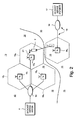
Figure 1 is a schematic diagram of an exemplary communications system; -
Figure 2 is a more detailed schematic diagram of aspects of the system shown inFigure 1 ; -
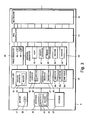
Figure 3 is block diagram of an embodiment of a datacast service system according to the present invention; -
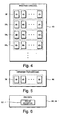
Figure 4 is a schematic diagram of a main page carousel including a datacast operator main page in accordance with one embodiment of the present invention; -
Figure 5 is a schematic diagram of a hierarchy file carousel in accordance with one embodiment of the present invention; -
Figure 6 is a schematic diagram of ESG data including service description; -
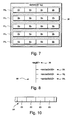
Figure 7 is a schematic diagram of a hierarchy file in accordance with one embodiment of the present invention; -
Figure 8 illustrates a main page directory structure in accordance with one embodiment of the present invention; -
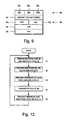
Figure 9 illustrates a protocol stack used for transmission of data in the datacast service system shown inFigure 3 ; -
Figure 10 illustrates a transport stream output from the datacast service system shown inFigure 3 ; -
Figure 11 illustrates an example of a network interface table and an IP/MAC Notification table; -
Figure 12 is a flow diagram of a process performed by datacast service system shown inFigure 3 in one embodiment of the invention; -
Figure 13 is a schematic diagram of a mobile terminal in one embodiment of the invention; -
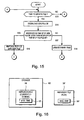
Figure 14 is a flow diagram of a first process performed by the mobile communications device shown inFigure 13 in one embodiment of the invention;Figure 15 is a flow diagram of a second process performed by the mobile communications device shown inFigure 13 in one embodiment of the invention;Figure 16 shows an old hierarchy file and a new hierarchy file; -
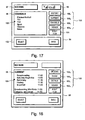
Figure 17 illustrates a first view of datacast operator main page in accordance with one embodiment of the present invention; -
Figure 18 illustrates a second view of datacast operator main page in accordance with one embodiment of the present invention; -
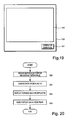
Figure 19 illustrates a viewer; and -
Figure 20 is a flow diagram of a third process performed by the mobile communications device shown inFigure 13 in one embodiment of the invention. - Referring to
Figure 1 , acommunications system 1 for delivering content to amobile terminal 2 is shown. Thecommunications system 1 includessources content servers content servers respective entities content servers - The
communications system 1 further includes adatacast service system 6. Thedatacast service system 6 receives content from thecontent servers datacast service system 6 may also re-format, store, aggregate and/or schedule content - The
communications system 1 also includes abroadcast network 8, for example in the form of a terrestrial digital video broadcasting (DVB-T) network, for providing a transmission channel from thedatacast service system 6 to themobile terminal 2. Other broadcast networks may be used including other types of DVB networks, such as a cable DVB network or satellite DVB network, a Digital Audio Broadcasting (DAB) network or an Advance Television System Committee ATSC) network or a terrestrial Integrated Services Digital Broadcasting-Terrestrial (ISDB-T) network. - The
datacast service system 6 andbroadcast network 8 are controlled by anentity 9 referred to as a "datacast operator". However, thebroadcast network 8 may also be used for other purposes, such as transmission of digital television, and may be controlled by another, different operator (not shown). Under those circumstances, thedatacast operator 9 controls thedatacast service system 6 but not thebroadcast network 8. - A public land mobile network (PLMN) 10, for example in the form of a GSM system, may provide a return channel from the
mobile terminal 2 to the Internet 7. Other PLMN networks may be used, such as other types of second-generation (2G) network such as digital advanced mobile phone system (D-AMPS) network or Personal Digital Communication System (PDC) network, a "two-and-a-half" generation network, such as General Packet Radio Service (GPRS) network and enhanced data rates for GSM evolution (EDGE), or a third-generation network (3G), such as Universal Mobile Telephone System (UMTS) network based on wideband code division multiple access (W-CDMA), or a time division synchronous code division multiple access (TD-SCDMA) network. - A local area network (LAN) 11, for example using IEEE 802.11x, may also be provided for obtaining data from local sources (not shown) or from the Internet 7. Other LANs or personal area networks (PANs) may be used such as Bluetooth™.
- Referring to
Figure 2 , first and secondgeographical regions regions first region 12 may be a city, while thesecond region 13 may be a countryside surrounding the city. - The
first region 12 is served by the firstdatacast service system 6 via thebroadcast network 8. Thebroadcast network 8 comprises acore network 14 and one ormore transmitters broadcast network 8 may be used. For example, the core network need not be provided. - The
broadcast network 8 is in this example arranged to transmit as a single frequency network (SFN) using 16 Quadrature Amplitude Modulation (QAM) at frequency lying in the range 470 to 862 MHz. - The
first region 12 is also served by PLMN 10 (Figure 1 ) in a conventional manner. - The
second region 13 is served by seconddatacast service system 17 via anotherbroadcast network 18 comprising acore network 19 and one ormore transmitters 201. Alternative configurations may be used as with the first datacast service system, - A user is initially located in the
second region 13 and moves to thefirst region 12, taking theirmobile terminal 2 with them. In thefirst region 12, themobile terminal 2 receives asignal 21 transmitted from atransmitter 153 carrying a number of services. - As explained earlier, it is desirable that the
datacast service system 6 is easily identifiable and that information about services is readily available. Therefore, thedatacast service system 6 provides its own information service which supplements an electronic service guide (ESG). The information service is specific to the area served by thedatacast service system 6. Thus, when themobile terminal 2 moves to thefirst region 12, local information can be provided quickly. - Referring to
Figure 3 , a schematic diagram of an embodiment of adatacast service system 6 according to the present invention is shown. - In this embodiment of the invention, the
datacast service system 6 comprises aninterface 22 for receivingservice data 23 and, optionally, relevant electronic service guide (ESG)data 24, both in the form of IP data, fromcontent servers 41, 42 (Figure 1 ) andstorage 25 for optionally storing at least part of theservice data 23 andESG data 24. Thesystem 6 also comprises acontroller 26,memory 27 storing acomputer program 28 for controlling thedatacast system 6 shown inFigure 3 , a service information (SI)table generator 29, acarousel generator 30, a multiprotocol encapsulation (MPE)encapsulator 31 and amultiplexer 32. - The
controller 26 includes anESG data generator 33 for generatingESG data 34, which together withESG data 24, is used for describing the scheduling and timing of content. Thecontroller 26 also includes amain page generator 35 for producing amain page 36 for the datacast operator, herein referred to as the "DCO main page". Thecontroller 26 also includes ahierarchy page generator 37 for generating ahierarchy page 38 which will be described in more detail later. Thecontroller 26 may providemain pages main pages content servers 41, 42 (Figure 1 ). However, thecontroller 26 may modify the servicemain pages main pages service data 22. - The DCO
main page 36 is selectively provided by the datacast operator 9 (Figure 3 ) and may include data for identifying the datacast operator, data for advertising and/or data for informing the user, for example announcing new, upcoming or updated services, informing the user of popular services or providing recommendations. - The
carousel generator 30 receives data relating to the services such asservice data 22 andESG data carousels alert carousel 40 for notifying the mobile terminal 2 (Figure 1 ) e.g. of changes in service, asecurity association carousel 41 for encryption keys for encrypted content , asession announcement carousel 42 for announcing sessions, amain page carousel 43 for providing main pages for the datacast operator and the services and ahierarchy carousel 44 for providing data relating to the hierarchy of available services.Carousels - Referring to
Figure 4 , themain page carousel 43 may comprise the DCOmain page 36 in the form of one or more files 471, 472, 473 and servicemain pages main page 36 need not be the same as the number of files 4811, 4812, 4813, 4821, 4822, 4823, 4831, 4832, 4833 comprised in any other servicemain page main page 391, need not be the same as the number of files 4821, 4822, 4823 comprised in another service main page, for instance the second servicemain page 392. - The files 471, 472, 473, 4811, 4812, 4813, 4821, 4822, 4823, 4831, 4832, 4833 are in one embodiment of the invention in the form of hypertext mark-up language (HTML) protocol files. However, other file formats may be used, such as extensible mark-up language (XML) or session description protocol (SDP). Reference is made to "Session Description Protocol" by M. Handley & V. Jacobson, RFC 2327, IETF, April 1998.
- Referring to
Figure 5 , ahierarchy file carousel 44 comprises ahierarchy file 38 in the form of one or more sub-files 491, 492, 493. In one embodiment of the invention thehierarchy file 38 need not be configured or transmitted in the form of acarousel 38. - Referring to
Figure 6 , theESG data service description data 50 in one embodiment of the invention. - Referring to
Figure 7 , thehierarchy file 38 comprisessets carousel Figure 3 ) has arespective set identifier - The session, main page and hierarchy carousels 42, 43, 44 include respective lists 542, 544, 545 of expiry times. The main page and hierarchy carousels 43, 44 may include respective lists 554, 555 of update times.
- Thus, the main page carousel 43 (
Figure 3 ) has a set 514 of carousel information including anidentifier 524 for indicating that the carousel is the main page carousel, a list 534 of IP addresses and port numbers for the DCO main page 36 (Figure 4 ) and the servicemain pages Figure 4 ), a list 544 of expiry times and a list 554 of update intervals. - The IP addresses in lists 531, 532, 533, 534, 535 conform in one embodiment of the invention to IPv6 protocols and reference is made to "Internet Protocol, Version 6 (IPv6) Specification", by S. Deering and R. Hindern, RFC 2460, IETF, December 1998 and other related IPv6 RFCs. However, other IP protocols may be used.
- The expiry times in lists 541, 542, 543, 544, 545 conform in one embodiment of the invention to Network Time Protocol (NTP) and reference is made to "Network Time Protocol (version 3) Specification, Implementation" by D. Mills, RFC 1305, IETF, March 1992. However, other times may be used. The expiry times in lists 541, 542, 543, 544, 545 may differ from one another.
- The update intervals 551, 552, 553, 554, 555 may be expressed in seconds. However, other units of time such as milliseconds may be used in various embodiments of the invention.
- Referring to
Figure 8 , anexemplary directory structure 56 of themain pages main page 36 includes the servicemain pages - As will be explained in more detail later, in one embodiment of the invention the IP address of the
hierarchy file 38 is signalled through SI, in particular through the NIT 45 (Figure 3 ) and the INT 46 (Figure 3 ). - Referring to
Figure 9 , in one embodiment of the invention thedatacast service system 6 transmits data in accordance with a number of transport protocols and a protocol stack 57 is shown. - In one embodiment of the invention in the network layer (layer 3),
IPv6 protocols 58 are used and reference is made to "Internet Protocol, Version 6 (IPv6) Specification" ibid. IP security (IPsec) is not necessarily used when transmitting main page files 471, 472, 473, 4811, 4812, 4813, 4821, 4822, 4823, 4831, 4832, 4833. Further in one embodiment of the invention in the transport layer (layer 4), Usergram Data Protocol (UDP) 59 is used and reference is made to "User Datagram Protocol", by J. Postel, RFC 768, IETF, August 1980. - In one embodiment of the invention Real-time Transport Protocol (RTP) 601 may be used to transport files. However, Asynchronous Layered Coding (ALC)
protocol 602 may be used in other embodiments of the invention. Reference is made to "A Transport Protocol for Real-Time Applications" by H. Schulzrinne et al., RFC 1889, IETF, January 1996 and "Asynchronous Layered Coding Protocol" by M. Luby et al., RFC 3450, IETF, December 2002. - On the RTP/
ALC layer 60, a filecast payload format may be used which specifies, in detail, the use of RTP/ALC protocols. - A number of different file formats may be used. For example,
XML 621 may be used for hierarchy files 491, 492, 493 (Figure 5 ), security association files (not shown) and session announcement files (not shown).SDP 622 may be used for technical session information that is not directly shown to the user.In various embodiments of theinvention HTML 623 may be used for main page files 471, 472, 473, 4811, 4812, 4813, 4821, 4822, 4823, 4831, 4832, 4833. - If more than one language is supported, then the main pages can be sent in files for different languages. The language used is indicated e.g. using language codes. Reference is made to "Tags for the Identification of Languages" by H. Alvestrand, RFC 1766, IETF, March 1995.
- Referring again to
Figure 3 , anMPE encapsulator 31 encapsulates data, such as data fromcarousels - Data for a given service may be time-sliced.
- However, some data may not be so encapsulated. For example, the
NIT 45 may be segmented into network information sections, for example as specified inSection 5 "Service Information (SI) tables" in "Digital Video Broadcasting (DVB); Specification for Service Information (SI) in DVB systems", ETSI EN 300 468, V1.5.1 (2003). - Referring also to
Figure 10 , themultiplexer 32 places the sections (not shown) into MPEG-2 transport stream (TS)packets 63, according to International Organisation for Standards/ International Electrotechnical Commission (ISO/IEC) Standard 13818-1 "Information technology - Generic coding of moving pictures and associated audio information: Systems" and outputs atransport stream 64. Thetransport stream 64 is provided to the broadcast network 8 (Figure 1 ) in which it may be multiplexed with other streams (not shown), then modulated and broadcast. - As mentioned earlier, the IP address of the
hierarchy file 38 may be signalled through SI, in particular through the NIT 45 (Figure 3 ) and the INT 46 (Figure 3 ). - Referring to an example illustrated in
Figure 11 , theNIT 45 includes first andsecond descriptor loops - A
linkage descriptor 67 can be used to point to other parts of the transport stream and thus obtain further data or access a service. To identify itself as such, thelinkage descriptor 67 includes adescriptor tag 68 containing a predetermined value, e.g. 0x0B. Thelinkage descriptor 67 also includes atransport stream id 69 and anoriginal network id 70 to identify uniquely a transport stream, in this case carrying theINT 46. - The transport stream 54 (
Figure 10 ) may carry a plurality of sets of IP streams, a set of IP streams being known as an "IP platform". Each IP platform can be identified by aplatform id 71 and aplatform name 72 which describes the platform and can be used by themobile terminal 2 to select a platform. - Reference is made to Section 7.4 "Network (SI) signalling" in "Digital Video Broadcasting (DVB); DVB specification for data broadcasting", ETSI EN 301 192 ibid. and in Section 6.2.17 "Linkage descriptor" in "Digital Video Broadcasting (DVB); Specification for Service Information (SI) in DVB systems" ETSI EN 300 468 ibid..
- To identify itself as such, the
INT 46 includes atable id 73 containing a predetermined value, such as 0x4C. TheINT 46 includes aplatform id 74 and may include one or more targetIP address descriptors 75, each including atarget IP address 76. The IP address on which the hierarchy file 38 (Figure 6 ) is transmitted is specified intarget IP address 70. - Referring to
Figure 12 , a process performed by thedatacast service system 6 in one embodiment of the invention is shown in the form of a flow diagram. - Referring also to
Figure 3 , in one exemplary embodiment of the invention the DCOmain page generator 35 generates a DCOmain page 36 and thehierarchy page generator 37 generates a hierarchy page 38 (step S1). This may be done periodically, for example every 10 or 100 seconds. Additionally or alternatively, the DCOmain page generator 35 may generate a DCOmain page 36 when any one of a number of predefined events occurs, such as a change in service, or any one of a number of predefined conditions, such as when a number of consumers exceeds a given number, are satisfied. Additionally or alternatively, the DCOmain page generator 35 may generate a DCOmain page 36 as-and-when directed to do so by theDCO operator 9. - The
controller 26 also may provide servicemain pages - The
carousel generator 30 receives the DCO main page 32 (Figure 4 ), the servicemain pages hierarchy page 38 and generates themain page carousel 43 and the hierarchy file carousel 44 (step S3). - Generation of the
main page carousel 43 and thehierarchy file carousel 44 includes assigning respective IP addresses and port numbers to the DCO main page 36 (Figure 4 ) and the servicemain pages Figure 4 ), and to the hierarchy file 38 (Figure 6 ). - The IP address and port numbers assigned to the DCO main page 36 (
Figure 4 ) and the servicemain pages Figure 4 ), as well as IP address and port numbers assigned to other carousels, are included in the hierarchy file 38 (Figure 6 ). The IP address and port number assigned to the hierarchy file 38 (Figure 6 ) are supplied to thetable generator 29 for inclusion in theINT 46. - The
carousels Figure 6 ) has a different IP address in each network area. - The IP addresses may be assigned on an ad-hoc basis. Alternatively, the IP addresses may be pre-assigned.
- The
NIT 45 andINT 46 are prepared and cyclically transmitted (step S4). The main page andhierarchy file carousels - Referring to
Figure 13 , themobile terminal 2 in one embodiment of the invention is in the form of a mobile telephone handset with a multimedia capability. - The
mobile terminal 2 includes first and second antennae 771, 772, a receiver 781 and a transceiver 782. In this example, the first antenna 771 and receiver 781 are used to receive signals from the broadcast network 8 (Figure 1 ). The second antenna 772 and transceiver 782 are used to transmit and receive signals to and from the PLMN 10 (Figure 1 ). The receiver and transceiver 781, 782 each include respective r.f. signal processing circuits (not shown) for amplifying and demodulating received signals and respective processors (not shown) for channel decoding and demultiplexing. - The
mobile terminal 2 also includes acontroller 79, auser interface 80,memory 81, storage 82 asmart card reader 83,smart card 84 received in thesmart card reader 83, a coder/decoder (codec) 85, aspeaker 86 with correspondingamplifier 87 and amicrophone 88 with a correspondingpre-amplifier 89. - The
user interface 80 comprises adisplay 90 and akeypad 91. Thedisplay 90 is adapted for displaying images and video by, for instance, being larger and/or having greater resolution than a display of conventional mobile telephone and being capable of colour images. Themobile terminal 2 also includes abattery 92. - A
transceiver 93 may optionally be provided for transmitting and receiving signals to and from the LAN 11 (Figure 1 ). Thetransceiver 93 may be a wireless card compliant to IEEE 802.11x or Bluetooth™ specifications. - The
controller 79 manages operation of themobile terminal 2 under the direction ofcomputer software 94 stored inmemory 81. For example, thecontroller 79 provides an output for thedisplay 90 and receives inputs from thekeypad 91. - The
mobile terminal 2 may be modified by providing a single receiver adapted to receive signals from the broadcast network 8 (Figure 1 ) and the PLMN 10 (Figure 1 ) and a transmitter adapted to transmit signals to the PLMN 10 (Figure 1 ). Alternatively, a single transceiver for bothcommunications networks - When the
mobile terminal 2 is switched on and/or if themobile terminal 2 moves from one region 13 (Figure 13 ) to another region 12 (Figure 2 ) served bydifferent datacast operators 6, 17 (Figure 2 ) or served by the same datacast operator and having at least partly different services available, then themobile terminal 2 may not have up-to-date -or even any- electronic service guide (ESG) information. - The
mobile terminal 2 acquiresESG data 24, 25 (Figure 3 ), which includesNIT 45,INT 46, main pages 471, 472, 473, 4811, 4812, 4813, 4821, 4822, 4833, 4831, 4832, 4833 (Figure 4 ) and service description data 50 (Figure 6 ) using information included in the hierarchy file 38 (Figure 5 ) and the DCO main page 36 (Figure 3 ). More detailed information may also be acquired, on request, using information included in theESG data 24, 25 (Figure 3 ). - Referring to
Figures 13 and14 illustrating one embodiment of the invention, a process performed by themobile terminal 2, for example when it is switched or moves from one region 13 (Figure 13 ) to another region 12 (Figure 2 ), is shown in the form of a flow diagram. - The
controller 79 instructs the receiver 781 to locate a network, in this case the broadcast network 8 (Figure 1 ) (step S6). This may be achieved by scanning a part of the radio frequency spectrum until signal 21 (Figure 2 ) is found. Alternatively, thecontroller 79 may select one or one or more pre-defined or user inputted network frequencies. Then again, the user may instruct thecontroller 79 to find a given network. - In this exemplary embodiment of the invention the
controller 79 locates, downloads, parses and stores theNIT 45, then locates, downloads, parses and stores the INT 46 (step S7). Thecontroller 79 obtains the IP address and port number of the hierarchy file 38 (step S8). This may comprise determining whether any IP address within thehierarchy file 38 falls within a predefined ESG IP address range and returning any address which falls within that range. Thecontroller 79 joins the address, downloads, parses and stores thehierarchy file 38 in storage 82 (step S9). - From the
hierarchy file 38, thecontroller 79 can obtain respective IP addresses and port numbers for thecarousels - In particular, the
controller 79 may obtain the IP address and port number for themain pages main pages controller 79 can obtain the IP address and port number for session announcement carousel 42 (step S12), join the address and download the session description data 50 (step S13). Thesession description data 50 may include universal resource locators (URLs) for obtaining further, more detailed information (not shown). At the request of the user, thecontroller 79 may retrieve more detailed information (not shown) via the PLMN 10 (Figure 1 ) or LAN 11 (Figure 1 ). - Referring to
Figures 13 ,15 and 16 , a process performed by themobile terminal 2 in one embodiment of the invention, for example once it obtained ESG information, is shown in the form of a flow diagram. - The
controller 79 may only listen to announcements, such ashierarchy file 38, when it is time for an update. - Based upon the expiry time 545 (
Figure 7 ), thecontroller 79 determines whether it is time to update the hierarchy file 38 (step S15). If it is time for an update, thecontroller 79 downloads a new hierarchy file 38' (step S16). The currently storedhierarchy file 38 and the new hierarchy file 38' each have values 95, 95' indicating when they were last modified. - The
controller 79 compares the modification time 95' of the new hierarchy file 38' with themodification time 95 of the currently-stored hierarchy file 38 (step S17). If the modification time 95' of the new hierarchy file 38' is later than themodification time 95 of the currently-storedhierarchy file 38, in other words the new hierarchy file 38' is indeed newer than the currently-storedhierarchy file 38, then the new hierarchy file 38' is stored in storage 82 (step S18). If not, the expiry time 545 (Figure 7 ) is simply updated (step S19). - The
controller 79 may also check expiry times 544 for themain page carousel 43. However, the update interval 554 (Figure 7 ) for themain page carousel 43 may be shorter than the update interval 555 (Figure 7 ) for thehierarchy file carousel 44. Therefore, thecontroller 79 may calculate expected expiry times for themain page carousel 43 using the update interval 554, thereby avoiding the need to check thehierarchy file 38. - Referring to
Figure 17 , a first view of a DCOmain page display 96 as displayed by themobile terminal 2 indisplay 90 is shown in one embodiment of the invention. - The DCO
main page display 96 is the first page which is presented to the user when the datacast service system 6 (Figure 1 ) is accessed and can be used to view the ESG. The DCOmain page display 96 can be quickly presented because the DCO main page 36 (Figure 3 ) is used as a default starting point and presents the most relevant information to the user. - The DCO
main page display 96 may include a number of fields including anoperator identity field 97,terminal status area 98, anactive area 99,selection buttons 100, time/date field 101 and further softkey selection buttons 102. - The operator identify
field 97 may include the name of the datacast operator 9 (Figure 1 ) and a logo. Theterminal status area 98 may include information such as network connection status, battery level and incoming call alert. The information may be presented in the form of icons, animated icons or text. - Some of the fields may display data and information which has been received from the datacast service system 6 (
Figure 1 ). Some of the fields may display data and information which has been stored in the storage 82 (Figure 13 ) and which originates from the datacast service system 6 (Figure 1 ), the user, theterminal 2, another source, for example via PLMN 10 (Figure 1 ) or a combination of these. - The
selection buttons 100 may include abutton 1001 for presenting a viewing history, abutton 1002 for displaying programs which are currently running, abutton 1003 for displaying available channels and abutton 1004 for switching to a viewer 105 (Figure 19 ) which fills substantially all or most of thedisplay 90. - The DCO
main page display 96 is updated to reflect changes in ESG, service popularity etc. It can also be used for informing users of upcoming events, changes in services or service availability. The DCOmain page display 96 may also be used for advertising purposes, such as displaying trailers. - In
Figure 17 , theactive area 99 shows alist 103 of available channels. - Referring to
Figure 18 , a second view of the DCOmain page display 96 is shown in which theactive area 99 shows alist 104 of programs currently running. Theselection buttons 100 may include abutton 1005 for entering an options menu, abutton 1006 for reverting back to the first view shown inFigure 17 and abutton 1007 for obtaining further details. - Referring to
Figure 19 , aviewer 105 is shown. Theviewer 105 includes anactive area 106 and abutton 107 for reverting to the DCOmain page display 96. - As mentioned earlier, the
mobile terminal 2 can be used not only to obtain and render content obtained from the broadcast network 8 (Figure 1 ), but also content and/or data obtained from the PLMN 10 (Figure 1 ). - Referring to
Figure 20 , a process performed by themobile terminal 2 in one embodiment of the invention is shown in the form of a flow diagram. - Referring also to
Figures 1 ,3 and13 , thecontroller 79 retrieves at least a part of theservice data 23 from thedatacast service system 6 via the broadcast network 8 (step S20). Additionally, thecontroller 79 retrieves data (not shown) from a source (not shown) via the PLMN 10 (step S21). Theprocessor 79displays service data 23 in thedisplay 90, for example in the DCO main page display 96 (step S22) and also displays data obtained from thePLMN 10 in thedisplay 90. - It will be appreciated that many modifications may be made to the embodiments hereinbefore described. For example, the
mobile terminal 2 may take the form of a personal digital assistant (PDA). Furthermore, a fixed or semi-fixed terminal may be used, for example in the form of a set-top box or personal computer. - According to some, but not necessarily all embodiments of the invention, there is provided a method of datacasting, the method comprising providing electronic service guide (ESG) data relating to one or more services and providing supplementary data selectively provided by a datacast operator.
- The method may comprise providing a main page including at least some of said supplementary data.
- The method may comprise providing one or more data files including information for locating said main page.
- One or more data files may include information for locating at least one service main page.
- According to some, but not necessarily all embodiments of the invention, there is provided a computer program including instructions which when executed by a data processing apparatus causes said apparatus to perform the method as described above.
- According to some, but not necessarily all embodiments of the invention, there is provided a system for datacasting comprising providing electronic service guide (ESG) data relating to one or more services and providing supplementary data selectively provided by a datacast service operator.
- According to some, but not necessarily all embodiments of the invention, there is provided apparatus for datacasting comprising means for providing electronic service guide (ESG) data relating to one or more services and means for providing supplementary data selectively provided by a datacast service operator.
- According to some, but not necessarily all embodiments of the invention, there is provided apparatus for datacasting comprising a processor configured to provide electronic service guide (ESG) data relating to one or more services and to provide supplementary data selectively provided by a datacast service operator.
- According to some, but not necessarily all embodiments of the invention, there is provided a method of operating a terminal for receiving datacast services, the method comprising receiving electronic service guide (ESG) data relating to one or more services and receiving supplementary data provided by a datacast operator.
- The method may comprise receiving at least some of said supplementary data in preference to receiving said ESG data.
- The method may comprise using said supplementary data to locate said ESG data.
- The method may comprise receiving a main page including at least some of said supplementary data.
- The method may comprise providing one or more data files including information for locating said main page.
- Said one or more data files may include information for locating at least one service main page.
- The method may further comprise receiving datacast data via a first network, receiving data from a second, different network and displaying at least some of said datacast data and at least some of said data.
- The method may comprise displaying a list of services and selecting one or more services.
- The method may comprise intermittently switching on a receiver to receive one or more time-sliced bursts of data and switching off said receiver.
- According to some, but not necessarily all embodiments of the invention, there is provided a computer program including instructions which when executed by a data processing apparatus causes said apparatus to perform the method as described above.
- According to some, but not necessarily all embodiments of the invention, there is provided a system for operating a terminal for receiving datacast services, the system comprising receiving electronic service guide (ESG) data relating to one or more services and receiving supplementary data provided by a datacast operator.
- According to some, but not necessarily all embodiments of the invention, there is provided a terminal for receiving datacast services comprising means for receiving electronic service guide (ESG) data relating to one or more services and means for receiving supplementary data provided by a datacast operator.
- The terminal may comprise means for receiving datacast transmissions and means for communicating with public land mobile network.
Claims (5)
- A method of datacasting, the method comprising:providing electronic service guide data (24) relating to one or more services which is specific to a datacast service system (6) and selectively provided by a datacast operator (9); andproviding one or more data files (47) including information for locating a main page (36) of the datacast operator (9).
- A method according to claim 1, wherein the main page (36) of the datacast operator (9) includes at least some of supplementary data (23).
- A method according to claim 1, wherein the main page (36) is the first page which is presented to the user when the datacast service system (6) is accessed.
- A method according to claim 1, wherein providing the one or more data files further comprises:downloading an internet protocol notification table (INT);obtaining an address of a hierarchy file from the internet protocol notification table;downloading the hierarchy file; andobtaining addresses of main pages from the hierarchy file, said main pages including a main page for the datacast operator.
- A method according to claim 1, wherein said one or more data files (48) include information for locating at least one service main page (39).
Applications Claiming Priority (2)
| Application Number | Priority Date | Filing Date | Title |
|---|---|---|---|
| GB0325143A GB2407745A (en) | 2003-10-28 | 2003-10-28 | Method of providing an electronic service guide in a datacasting system |
| EP04770323A EP1678945A1 (en) | 2003-10-28 | 2004-10-26 | Datacasting |
Related Parent Applications (1)
| Application Number | Title | Priority Date | Filing Date |
|---|---|---|---|
| EP04770323.6 Division | 2004-10-26 |
Publications (1)
| Publication Number | Publication Date |
|---|---|
| EP2214411A2 true EP2214411A2 (en) | 2010-08-04 |
Family
ID=29725514
Family Applications (2)
| Application Number | Title | Priority Date | Filing Date |
|---|---|---|---|
| EP04770323A Ceased EP1678945A1 (en) | 2003-10-28 | 2004-10-26 | Datacasting |
| EP10159683A Withdrawn EP2214411A2 (en) | 2003-10-28 | 2004-10-26 | Datacasting |
Family Applications Before (1)
| Application Number | Title | Priority Date | Filing Date |
|---|---|---|---|
| EP04770323A Ceased EP1678945A1 (en) | 2003-10-28 | 2004-10-26 | Datacasting |
Country Status (8)
| Country | Link |
|---|---|
| US (1) | US20070240188A1 (en) |
| EP (2) | EP1678945A1 (en) |
| JP (1) | JP2007510348A (en) |
| KR (2) | KR100965530B1 (en) |
| CN (1) | CN1875620A (en) |
| BR (1) | BRPI0416061A (en) |
| GB (1) | GB2407745A (en) |
| WO (1) | WO2005041567A1 (en) |
Families Citing this family (39)
| Publication number | Priority date | Publication date | Assignee | Title |
|---|---|---|---|---|
| US20060031825A1 (en) * | 2002-09-20 | 2006-02-09 | Michael Mulligan | Method, device and system for providing additional information related to the contents of a radio broadcast to terminal devices |
| US20050289592A1 (en) * | 2004-06-29 | 2005-12-29 | Larri Vermola | System and method for service listings |
| US7827579B2 (en) * | 2004-09-09 | 2010-11-02 | Nokia Corporation | Mobile television electronic service guide delivery system |
| US7614068B2 (en) * | 2005-03-18 | 2009-11-03 | Nokia Corporation | Prioritization of electronic service guide carousels |
| KR101129387B1 (en) * | 2005-07-12 | 2012-03-27 | 삼성전자주식회사 | Method and apparatus for providing IP datacasting service in Digital Audio Broadcasting system |
| KR101270275B1 (en) * | 2005-08-17 | 2013-05-31 | 삼성전자주식회사 | Apparatus and method for providing notification message in broadcasting system |
| JP4779788B2 (en) | 2005-08-29 | 2011-09-28 | カシオ計算機株式会社 | Program recording apparatus, mobile receiving apparatus, and data management method |
| US8320819B2 (en) * | 2005-11-01 | 2012-11-27 | Nokia Corporation | Mobile TV channel and service access filtering |
| US8763036B2 (en) * | 2005-11-04 | 2014-06-24 | Nokia Corporation | Method for indicating service types in the service guide |
| US8260945B2 (en) * | 2005-11-16 | 2012-09-04 | ABSi Corporation | System and method for wirelessly broadcasting content from a core for receipt by a mobile client |
| US20070168534A1 (en) * | 2005-12-16 | 2007-07-19 | Nokia Corp. | Codec and session parameter change |
| FR2896365B1 (en) * | 2006-01-17 | 2008-03-14 | Sagem Comm | METHOD FOR MANAGING SERVICE INFORMATION BY DIGITAL SERVICE RECEIVING APPARATUS AND APPARATUS IMPLEMENTING THE METHOD |
| US8311048B2 (en) * | 2008-05-09 | 2012-11-13 | Roundbox, Inc. | Datacasting system with intermittent listener capability |
| KR100878534B1 (en) * | 2006-04-10 | 2009-01-13 | 삼성전자주식회사 | Apparatus and method for providing IPC service in DAX system |
| KR100800857B1 (en) | 2006-08-18 | 2008-02-04 | 삼성전자주식회사 | Method for providing notification message in DVB-H system and system for same |
| KR100800858B1 (en) * | 2006-08-19 | 2008-02-04 | 삼성전자주식회사 | Method for optimizing ESV data transmission in DVB-H system and system for same |
| KR100790195B1 (en) | 2006-08-21 | 2008-01-02 | 삼성전자주식회사 | Method for efficiently providing ESP data in DV-H system and system for same |
| KR100748470B1 (en) * | 2006-09-29 | 2007-08-10 | 삼성전자주식회사 | Method and device for storing data broadcasting information of mobile communication terminal |
| KR101306703B1 (en) * | 2006-11-08 | 2013-09-10 | 엘지전자 주식회사 | Method for providing a Electronic Service Guide and A device for broadcasting thereof and System thereof |
| KR100790179B1 (en) | 2006-11-21 | 2008-01-02 | 삼성전자주식회사 | Method for efficiently receiving broadcasting data in the DVH terminal and the DVH terminal for the same |
| KR101285668B1 (en) * | 2006-11-27 | 2013-07-11 | 엘지전자 주식회사 | The method for downloading an OTA software, the broadcasting receiver for controlling the same |
| EP1940190B1 (en) | 2006-12-29 | 2013-11-20 | Motorola Mobility LLC | A cellular wireless communication device and method for managing the receipt of a handover command |
| CN101212602B (en) * | 2006-12-30 | 2010-09-29 | 中兴通讯股份有限公司 | Realization Method of Electronic Service Guide Information Update in Handheld Digital Video Broadcasting |
| CN101005642B (en) * | 2007-01-08 | 2010-05-19 | 中兴通讯股份有限公司 | A method for transmitting program information of a mobile multimedia broadcasting system |
| US7912057B2 (en) | 2007-01-12 | 2011-03-22 | Wi-Lan Inc. | Convergence sublayer for use in a wireless broadcasting system |
| US7944919B2 (en) * | 2007-01-12 | 2011-05-17 | Wi-Lan, Inc. | Connection identifier for wireless broadcast system |
| US8064444B2 (en) * | 2007-01-12 | 2011-11-22 | Wi-Lan Inc. | Wireless broadcasting system |
| US8774229B2 (en) * | 2007-01-12 | 2014-07-08 | Wi-Lan, Inc. | Multidiversity handoff in a wireless broadcast system |
| US8548520B2 (en) | 2007-01-26 | 2013-10-01 | Wi-Lan Inc. | Multiple network access system and method |
| CN101237245B (en) * | 2007-01-31 | 2012-07-04 | 展讯通信(上海)有限公司 | Single-frequency broadcasting receiving method based on TD-SCDMA network |
| CN101072311B (en) * | 2007-03-02 | 2010-06-02 | 中兴通讯股份有限公司 | Method and device for updating electronic service guide for digital television broadcasting |
| CN101031062B (en) * | 2007-03-21 | 2010-05-26 | 中兴通讯股份有限公司 | A transmission method of mobile multimedia broadcasting electronic service guide |
| US8711833B2 (en) * | 2007-04-18 | 2014-04-29 | Wi-Lan, Inc. | Base station synchronization for a single frequency network |
| US7903604B2 (en) * | 2007-04-18 | 2011-03-08 | Wi-Lan Inc. | Method and apparatus for a scheduler for a macro-diversity portion of a transmission |
| CN101119455B (en) * | 2007-09-13 | 2012-04-11 | 中兴通讯股份有限公司 | A Method of Quickly Displaying Program Information in Mobile TV |
| CN101409866B (en) * | 2007-10-12 | 2012-12-19 | 华为技术有限公司 | Method, system and apparatus for obtaining complement electronic business guide data |
| CN101540646B (en) * | 2008-03-18 | 2011-03-30 | 中国移动通信集团公司 | Method and device for updating mobile TV service guide |
| CN101557649B (en) * | 2008-04-08 | 2011-01-05 | 中国移动通信集团公司 | Update method and equipment of mobile TV service instruction |
| EP2343881B1 (en) | 2010-01-07 | 2019-11-20 | LG Electronics Inc. | Method of processing application in digital broadcast receiver connected with interactive network, and digital broadcast receiver |
Family Cites Families (23)
| Publication number | Priority date | Publication date | Assignee | Title |
|---|---|---|---|---|
| US6400996B1 (en) * | 1999-02-01 | 2002-06-04 | Steven M. Hoffberg | Adaptive pattern recognition based control system and method |
| US6418556B1 (en) * | 1993-09-09 | 2002-07-09 | United Video Properties, Inc. | Electronic television program guide schedule system and method |
| US5940073A (en) * | 1996-05-03 | 1999-08-17 | Starsight Telecast Inc. | Method and system for displaying other information in a TV program guide |
| US6061097A (en) * | 1997-05-22 | 2000-05-09 | United Video Properties, Inc. | Interactive television program guide with selectable non-program options |
| US20050039177A1 (en) * | 1997-07-12 | 2005-02-17 | Trevor Burke Technology Limited | Method and apparatus for programme generation and presentation |
| WO1999020049A1 (en) * | 1997-10-14 | 1999-04-22 | Thomson Licensing S.A. | System for formatting and processing multimedia program data and program guide information |
| CN1375164A (en) * | 1998-12-04 | 2002-10-16 | 英戴克系统公司 | System and method for providing news, sports and local guide services through an electronic program guide |
| US6522342B1 (en) * | 1999-01-27 | 2003-02-18 | Hughes Electronics Corporation | Graphical tuning bar for a multi-program data stream |
| GB9923500D0 (en) * | 1999-10-06 | 1999-12-08 | Pace Micro Tech Plc | Improvements relating to an electronic program guide |
| US6983482B2 (en) * | 2000-02-29 | 2006-01-03 | Matsushita Electric Industrial Co., Ltd. | Data broadcast content generation system |
| US7908172B2 (en) * | 2000-03-09 | 2011-03-15 | Impulse Radio Inc | System and method for generating multimedia accompaniments to broadcast data |
| TW516314B (en) * | 2000-05-23 | 2003-01-01 | United Video Properties Inc | Interactive television application with watch lists |
| US6622007B2 (en) * | 2001-02-05 | 2003-09-16 | Command Audio Corporation | Datacast bandwidth in wireless broadcast system |
| US20020116471A1 (en) * | 2001-02-20 | 2002-08-22 | Koninklijke Philips Electronics N.V. | Broadcast and processing of meta-information associated with content material |
| US20020146125A1 (en) * | 2001-03-14 | 2002-10-10 | Ahmet Eskicioglu | CA system for broadcast DTV using multiple keys for different service providers and service areas |
| US20040250273A1 (en) * | 2001-04-02 | 2004-12-09 | Bellsouth Intellectual Property Corporation | Digital video broadcast device decoder |
| AU2002323022A1 (en) * | 2001-08-06 | 2003-02-24 | Digeo Inc. | Providing content and applicatons via carousel transmission to thin-client interactive television terminals |
| US8042132B2 (en) * | 2002-03-15 | 2011-10-18 | Tvworks, Llc | System and method for construction, delivery and display of iTV content |
| US7343487B2 (en) | 2001-10-10 | 2008-03-11 | Nokia Corporation | Datacast distribution system |
| JP2003230121A (en) * | 2001-11-30 | 2003-08-15 | Fujitsu Ltd | Content distribution method, content viewing method, server device, and terminal device |
| US7694210B2 (en) * | 2002-07-31 | 2010-04-06 | Broadcom Corporation | Turbo-coding DOCSIS information for satellite communication |
| US20060031825A1 (en) * | 2002-09-20 | 2006-02-09 | Michael Mulligan | Method, device and system for providing additional information related to the contents of a radio broadcast to terminal devices |
| US7904936B2 (en) * | 2002-10-18 | 2011-03-08 | Time Warner Interactive Video Group, Inc. | Technique for resegmenting assets containing programming content delivered through a communications network |
-
2003
- 2003-10-28 GB GB0325143A patent/GB2407745A/en not_active Withdrawn
-
2004
- 2004-10-26 US US10/577,639 patent/US20070240188A1/en not_active Abandoned
- 2004-10-26 EP EP04770323A patent/EP1678945A1/en not_active Ceased
- 2004-10-26 BR BRPI0416061-4A patent/BRPI0416061A/en not_active IP Right Cessation
- 2004-10-26 CN CNA2004800320292A patent/CN1875620A/en active Pending
- 2004-10-26 KR KR1020087013520A patent/KR100965530B1/en not_active Expired - Fee Related
- 2004-10-26 WO PCT/IB2004/052207 patent/WO2005041567A1/en not_active Ceased
- 2004-10-26 JP JP2006537523A patent/JP2007510348A/en active Pending
- 2004-10-26 EP EP10159683A patent/EP2214411A2/en not_active Withdrawn
- 2004-10-26 KR KR1020067008189A patent/KR100922532B1/en not_active Expired - Lifetime
Non-Patent Citations (3)
| Title |
|---|
| H. SCHULZRINNE ET AL.: "A Transport Protocol for Real-Time Applications", RFC 1889, IETF, January 1996 (1996-01-01) |
| J. POSTEL: "User Datagram Protocol", RFC 768, IETF, August 1980 (1980-08-01) |
| M. LUBY ET AL.: "Asynchronous Layered Coding Protocol", RFC 3450, IETF, December 2002 (2002-12-01) |
Also Published As
| Publication number | Publication date |
|---|---|
| US20070240188A1 (en) | 2007-10-11 |
| JP2007510348A (en) | 2007-04-19 |
| GB2407745A (en) | 2005-05-04 |
| CN1875620A (en) | 2006-12-06 |
| BRPI0416061A (en) | 2007-01-02 |
| KR20080059340A (en) | 2008-06-26 |
| KR100965530B1 (en) | 2010-06-23 |
| GB0325143D0 (en) | 2003-12-03 |
| KR100922532B1 (en) | 2009-10-21 |
| KR20060065736A (en) | 2006-06-14 |
| WO2005041567A1 (en) | 2005-05-06 |
| EP1678945A1 (en) | 2006-07-12 |
Similar Documents
| Publication | Publication Date | Title |
|---|---|---|
| EP2214411A2 (en) | Datacasting | |
| RU2394390C2 (en) | Method and device for notification on changes in services | |
| US9331802B2 (en) | Identifying scope ESG fragments and enabling hierarchy in the scope | |
| KR100764005B1 (en) | System and associated terminal, method and computer program product for providing broadcasting content | |
| TWI399980B (en) | Method and apparatuses for electronic-service-guide selection and computer readable medium for implementing said method | |
| CA2624048C (en) | A method for indicating service types in the service guide | |
| EP1763247A2 (en) | Method and apparatus for providing preview service using electronic service guide in a digital broadcasting system | |
| EP1922885A1 (en) | Adapting location based broadcasting | |
| RU2392745C2 (en) | Notice for terminal initialisation through service guide | |
| US20070234396A1 (en) | Method and apparatus for transmitting and receiving electronic service guide of interaction channel in a digital video broadcasting system |
Legal Events
| Date | Code | Title | Description |
|---|---|---|---|
| PUAI | Public reference made under article 153(3) epc to a published international application that has entered the european phase |
Free format text: ORIGINAL CODE: 0009012 |
|
| AC | Divisional application: reference to earlier application |
Ref document number: 1678945 Country of ref document: EP Kind code of ref document: P |
|
| AK | Designated contracting states |
Kind code of ref document: A2 Designated state(s): AT BE BG CH CY CZ DE DK EE ES FI FR GB GR HU IE IT LI LU MC NL PL PT RO SE SI SK TR |
|
| PUAL | Search report despatched |
Free format text: ORIGINAL CODE: 0009013 |
|
| STAA | Information on the status of an ep patent application or granted ep patent |
Free format text: STATUS: THE APPLICATION HAS BEEN WITHDRAWN |
|
| PUAF | Information related to the publication of a search report (a3 document) modified or deleted |
Free format text: ORIGINAL CODE: 0009199SEPU |
|
| 18W | Application withdrawn |
Effective date: 20110712 |
|
| AK | Designated contracting states |
Kind code of ref document: A3 Designated state(s): AT BE BG CH CY CZ DE DK EE ES FI FR GB GR HU IE IT LI LU MC NL PL PT RO SE SI SK TR |
|
| RIC1 | Information provided on ipc code assigned before grant |
Ipc: H04N 7/16 20110101AFI20110711BHEP |
|
| D17D | Deferred search report published (deleted) |