EP2212469B1 - Process for defibering a fibrous raw-material - Google Patents
Process for defibering a fibrous raw-material Download PDFInfo
- Publication number
- EP2212469B1 EP2212469B1 EP08851453.4A EP08851453A EP2212469B1 EP 2212469 B1 EP2212469 B1 EP 2212469B1 EP 08851453 A EP08851453 A EP 08851453A EP 2212469 B1 EP2212469 B1 EP 2212469B1
- Authority
- EP
- European Patent Office
- Prior art keywords
- lignin
- raw
- cooking
- pulp
- fibre
- Prior art date
- Legal status (The legal status is an assumption and is not a legal conclusion. Google has not performed a legal analysis and makes no representation as to the accuracy of the status listed.)
- Not-in-force
Links
- 238000000034 method Methods 0.000 title claims abstract description 92
- 230000008569 process Effects 0.000 title claims abstract description 83
- 239000002994 raw material Substances 0.000 title claims abstract description 53
- 238000010411 cooking Methods 0.000 claims abstract description 120
- 239000003960 organic solvent Substances 0.000 claims abstract description 12
- TVZISJTYELEYPI-UHFFFAOYSA-N hypodiphosphoric acid Chemical compound OP(O)(=O)P(O)(O)=O TVZISJTYELEYPI-UHFFFAOYSA-N 0.000 claims abstract description 9
- AFINAILKDBCXMX-PBHICJAKSA-N (2s,3r)-2-amino-3-hydroxy-n-(4-octylphenyl)butanamide Chemical compound CCCCCCCCC1=CC=C(NC(=O)[C@@H](N)[C@@H](C)O)C=C1 AFINAILKDBCXMX-PBHICJAKSA-N 0.000 claims abstract description 5
- 239000003265 pulping liquor Substances 0.000 claims abstract description 4
- 229920005610 lignin Polymers 0.000 claims description 123
- 239000000835 fiber Substances 0.000 claims description 93
- QTBSBXVTEAMEQO-UHFFFAOYSA-N Acetic acid Chemical compound CC(O)=O QTBSBXVTEAMEQO-UHFFFAOYSA-N 0.000 claims description 71
- XLYOFNOQVPJJNP-UHFFFAOYSA-N water Substances O XLYOFNOQVPJJNP-UHFFFAOYSA-N 0.000 claims description 55
- 239000002023 wood Substances 0.000 claims description 47
- 239000003513 alkali Substances 0.000 claims description 29
- LFQSCWFLJHTTHZ-UHFFFAOYSA-N Ethanol Chemical compound CCO LFQSCWFLJHTTHZ-UHFFFAOYSA-N 0.000 claims description 28
- 239000000203 mixture Substances 0.000 claims description 28
- 229920002488 Hemicellulose Polymers 0.000 claims description 26
- 239000010902 straw Substances 0.000 claims description 24
- 239000002105 nanoparticle Substances 0.000 claims description 23
- 108010029541 Laccase Proteins 0.000 claims description 22
- 239000000126 substance Substances 0.000 claims description 17
- 229910052698 phosphorus Inorganic materials 0.000 claims description 16
- OAICVXFJPJFONN-UHFFFAOYSA-N Phosphorus Chemical compound [P] OAICVXFJPJFONN-UHFFFAOYSA-N 0.000 claims description 15
- 239000011574 phosphorus Substances 0.000 claims description 15
- 239000002904 solvent Substances 0.000 claims description 15
- BDAGIHXWWSANSR-UHFFFAOYSA-N methanoic acid Natural products OC=O BDAGIHXWWSANSR-UHFFFAOYSA-N 0.000 claims description 14
- 239000002253 acid Substances 0.000 claims description 12
- 239000002131 composite material Substances 0.000 claims description 9
- 238000007254 oxidation reaction Methods 0.000 claims description 9
- OSWFIVFLDKOXQC-UHFFFAOYSA-N 4-(3-methoxyphenyl)aniline Chemical compound COC1=CC=CC(C=2C=CC(N)=CC=2)=C1 OSWFIVFLDKOXQC-UHFFFAOYSA-N 0.000 claims description 7
- 235000019253 formic acid Nutrition 0.000 claims description 7
- PEDCQBHIVMGVHV-UHFFFAOYSA-N Glycerine Chemical compound OCC(O)CO PEDCQBHIVMGVHV-UHFFFAOYSA-N 0.000 claims description 6
- OKKJLVBELUTLKV-UHFFFAOYSA-N Methanol Chemical compound OC OKKJLVBELUTLKV-UHFFFAOYSA-N 0.000 claims description 6
- WVDDGKGOMKODPV-UHFFFAOYSA-N Benzyl alcohol Chemical compound OCC1=CC=CC=C1 WVDDGKGOMKODPV-UHFFFAOYSA-N 0.000 claims description 5
- 125000004432 carbon atom Chemical group C* 0.000 claims description 5
- KFZMGEQAYNKOFK-UHFFFAOYSA-N Isopropanol Chemical compound CC(C)O KFZMGEQAYNKOFK-UHFFFAOYSA-N 0.000 claims description 4
- 229910052799 carbon Inorganic materials 0.000 claims description 4
- BDERNNFJNOPAEC-UHFFFAOYSA-N propan-1-ol Chemical compound CCCO BDERNNFJNOPAEC-UHFFFAOYSA-N 0.000 claims description 4
- 150000001298 alcohols Chemical class 0.000 claims description 3
- 229920001222 biopolymer Polymers 0.000 claims description 3
- 150000002430 hydrocarbons Chemical group 0.000 claims description 3
- 239000011159 matrix material Substances 0.000 claims description 3
- 239000012528 membrane Substances 0.000 claims description 3
- 230000001590 oxidative effect Effects 0.000 claims description 3
- 229920005862 polyol Polymers 0.000 claims description 3
- 150000003077 polyols Chemical class 0.000 claims description 3
- NWUYHJFMYQTDRP-UHFFFAOYSA-N 1,2-bis(ethenyl)benzene;1-ethenyl-2-ethylbenzene;styrene Chemical compound C=CC1=CC=CC=C1.CCC1=CC=CC=C1C=C.C=CC1=CC=CC=C1C=C NWUYHJFMYQTDRP-UHFFFAOYSA-N 0.000 claims description 2
- LYCAIKOWRPUZTN-UHFFFAOYSA-N Ethylene glycol Chemical compound OCCO LYCAIKOWRPUZTN-UHFFFAOYSA-N 0.000 claims description 2
- 150000008044 alkali metal hydroxides Chemical class 0.000 claims description 2
- 239000011111 cardboard Substances 0.000 claims description 2
- 150000001768 cations Chemical class 0.000 claims description 2
- 239000003456 ion exchange resin Substances 0.000 claims description 2
- 229920003303 ion-exchange polymer Polymers 0.000 claims description 2
- 229910052751 metal Inorganic materials 0.000 claims description 2
- 239000002184 metal Substances 0.000 claims description 2
- 239000011087 paperboard Substances 0.000 claims description 2
- 239000003495 polar organic solvent Substances 0.000 claims description 2
- 230000001376 precipitating effect Effects 0.000 claims description 2
- ULWHHBHJGPPBCO-UHFFFAOYSA-N propane-1,1-diol Chemical compound CCC(O)O ULWHHBHJGPPBCO-UHFFFAOYSA-N 0.000 claims description 2
- 150000005325 alkali earth metal hydroxides Chemical class 0.000 claims 1
- GQZXNSPRSGFJLY-UHFFFAOYSA-N hydroxyphosphanone Chemical compound OP=O GQZXNSPRSGFJLY-UHFFFAOYSA-N 0.000 claims 1
- 229940046817 hypophosphorus acid Drugs 0.000 claims 1
- 230000000694 effects Effects 0.000 abstract description 13
- 235000000346 sugar Nutrition 0.000 abstract description 13
- 108090000790 Enzymes Proteins 0.000 abstract description 12
- 102000004190 Enzymes Human genes 0.000 abstract description 12
- 150000008163 sugars Chemical class 0.000 abstract description 10
- 239000002657 fibrous material Substances 0.000 abstract description 9
- 230000003213 activating effect Effects 0.000 abstract description 2
- 235000018185 Betula X alpestris Nutrition 0.000 description 71
- 235000018212 Betula X uliginosa Nutrition 0.000 description 71
- ACVYVLVWPXVTIT-UHFFFAOYSA-N phosphinic acid Chemical compound O[PH2]=O ACVYVLVWPXVTIT-UHFFFAOYSA-N 0.000 description 31
- 229920002678 cellulose Polymers 0.000 description 30
- 239000001913 cellulose Substances 0.000 description 28
- 235000010980 cellulose Nutrition 0.000 description 28
- 244000081757 Phalaris arundinacea Species 0.000 description 26
- 239000000243 solution Substances 0.000 description 24
- 239000000123 paper Substances 0.000 description 19
- HEMHJVSKTPXQMS-UHFFFAOYSA-M Sodium hydroxide Chemical compound [OH-].[Na+] HEMHJVSKTPXQMS-UHFFFAOYSA-M 0.000 description 15
- QAOWNCQODCNURD-UHFFFAOYSA-L Sulfate Chemical compound [O-]S([O-])(=O)=O QAOWNCQODCNURD-UHFFFAOYSA-L 0.000 description 12
- 238000004519 manufacturing process Methods 0.000 description 12
- 239000007858 starting material Substances 0.000 description 12
- 229910021653 sulphate ion Inorganic materials 0.000 description 12
- 241000208202 Linaceae Species 0.000 description 11
- 235000004431 Linum usitatissimum Nutrition 0.000 description 11
- 241000218657 Picea Species 0.000 description 10
- 229940088598 enzyme Drugs 0.000 description 10
- 230000007062 hydrolysis Effects 0.000 description 10
- 238000006460 hydrolysis reaction Methods 0.000 description 10
- 239000000463 material Substances 0.000 description 10
- 230000035484 reaction time Effects 0.000 description 10
- 239000000523 sample Substances 0.000 description 10
- SRBFZHDQGSBBOR-IOVATXLUSA-N D-xylopyranose Chemical compound O[C@@H]1COC(O)[C@H](O)[C@H]1O SRBFZHDQGSBBOR-IOVATXLUSA-N 0.000 description 9
- 241000196324 Embryophyta Species 0.000 description 9
- 238000000605 extraction Methods 0.000 description 9
- 238000012360 testing method Methods 0.000 description 9
- CQJQGIHBWLOHCD-UHFFFAOYSA-N O[PH2]=O.CC(O)=O Chemical compound O[PH2]=O.CC(O)=O CQJQGIHBWLOHCD-UHFFFAOYSA-N 0.000 description 8
- 239000002245 particle Substances 0.000 description 8
- 239000004033 plastic Substances 0.000 description 8
- 229920003023 plastic Polymers 0.000 description 8
- PYMYPHUHKUWMLA-UHFFFAOYSA-N arabinose Natural products OCC(O)C(O)C(O)C=O PYMYPHUHKUWMLA-UHFFFAOYSA-N 0.000 description 7
- QVGXLLKOCUKJST-UHFFFAOYSA-N atomic oxygen Chemical compound [O] QVGXLLKOCUKJST-UHFFFAOYSA-N 0.000 description 7
- SRBFZHDQGSBBOR-UHFFFAOYSA-N beta-D-Pyranose-Lyxose Natural products OC1COC(O)C(O)C1O SRBFZHDQGSBBOR-UHFFFAOYSA-N 0.000 description 7
- 238000006243 chemical reaction Methods 0.000 description 7
- 229910052760 oxygen Inorganic materials 0.000 description 7
- 239000001301 oxygen Substances 0.000 description 7
- 239000000047 product Substances 0.000 description 7
- 239000011122 softwood Substances 0.000 description 7
- CSCPPACGZOOCGX-UHFFFAOYSA-N Acetone Chemical compound CC(C)=O CSCPPACGZOOCGX-UHFFFAOYSA-N 0.000 description 6
- WQZGKKKJIJFFOK-GASJEMHNSA-N Glucose Natural products OC[C@H]1OC(O)[C@H](O)[C@@H](O)[C@@H]1O WQZGKKKJIJFFOK-GASJEMHNSA-N 0.000 description 6
- 238000004061 bleaching Methods 0.000 description 6
- 229920002301 cellulose acetate Polymers 0.000 description 6
- 150000001875 compounds Chemical class 0.000 description 6
- 239000008103 glucose Substances 0.000 description 6
- 239000002655 kraft paper Substances 0.000 description 6
- 230000002787 reinforcement Effects 0.000 description 6
- -1 aliphatic alcohols Chemical class 0.000 description 5
- 238000004458 analytical method Methods 0.000 description 5
- 239000000706 filtrate Substances 0.000 description 5
- 239000011121 hardwood Substances 0.000 description 5
- 230000001965 increasing effect Effects 0.000 description 5
- 229920001282 polysaccharide Polymers 0.000 description 5
- 239000005017 polysaccharide Substances 0.000 description 5
- 150000004804 polysaccharides Chemical class 0.000 description 5
- SHZGCJCMOBCMKK-UHFFFAOYSA-N D-mannomethylose Natural products CC1OC(O)C(O)C(O)C1O SHZGCJCMOBCMKK-UHFFFAOYSA-N 0.000 description 4
- WQZGKKKJIJFFOK-QTVWNMPRSA-N D-mannopyranose Chemical compound OC[C@H]1OC(O)[C@@H](O)[C@@H](O)[C@@H]1O WQZGKKKJIJFFOK-QTVWNMPRSA-N 0.000 description 4
- SHZGCJCMOBCMKK-JFNONXLTSA-N L-rhamnopyranose Chemical compound C[C@@H]1OC(O)[C@H](O)[C@H](O)[C@H]1O SHZGCJCMOBCMKK-JFNONXLTSA-N 0.000 description 4
- PNNNRSAQSRJVSB-UHFFFAOYSA-N L-rhamnose Natural products CC(O)C(O)C(O)C(O)C=O PNNNRSAQSRJVSB-UHFFFAOYSA-N 0.000 description 4
- ISWSIDIOOBJBQZ-UHFFFAOYSA-N Phenol Natural products OC1=CC=CC=C1 ISWSIDIOOBJBQZ-UHFFFAOYSA-N 0.000 description 4
- NBIIXXVUZAFLBC-UHFFFAOYSA-N Phosphoric acid Chemical compound OP(O)(O)=O NBIIXXVUZAFLBC-UHFFFAOYSA-N 0.000 description 4
- 230000002378 acidificating effect Effects 0.000 description 4
- 239000006185 dispersion Substances 0.000 description 4
- 125000002887 hydroxy group Chemical group [H]O* 0.000 description 4
- 229920000642 polymer Polymers 0.000 description 4
- 238000000607 proton-decoupled 31P nuclear magnetic resonance spectroscopy Methods 0.000 description 4
- 238000000746 purification Methods 0.000 description 4
- 230000009257 reactivity Effects 0.000 description 4
- 238000010992 reflux Methods 0.000 description 4
- JNIQBPHJIAOMQU-FSIIMWSLSA-N (2s,3s,4s,5r)-2,3,4,5-tetrahydroxy-6-oxoheptanoic acid Chemical compound CC(=O)[C@H](O)[C@@H](O)[C@H](O)[C@H](O)C(O)=O JNIQBPHJIAOMQU-FSIIMWSLSA-N 0.000 description 3
- IAJILQKETJEXLJ-UHFFFAOYSA-N Galacturonsaeure Natural products O=CC(O)C(O)C(O)C(O)C(O)=O IAJILQKETJEXLJ-UHFFFAOYSA-N 0.000 description 3
- IAJILQKETJEXLJ-RSJOWCBRSA-N aldehydo-D-galacturonic acid Chemical compound O=C[C@H](O)[C@@H](O)[C@@H](O)[C@H](O)C(O)=O IAJILQKETJEXLJ-RSJOWCBRSA-N 0.000 description 3
- 239000006227 byproduct Substances 0.000 description 3
- 150000001720 carbohydrates Chemical class 0.000 description 3
- 235000014633 carbohydrates Nutrition 0.000 description 3
- 238000010586 diagram Methods 0.000 description 3
- 229930182830 galactose Natural products 0.000 description 3
- 230000009477 glass transition Effects 0.000 description 3
- 238000000227 grinding Methods 0.000 description 3
- 238000002955 isolation Methods 0.000 description 3
- 230000003647 oxidation Effects 0.000 description 3
- 230000036284 oxygen consumption Effects 0.000 description 3
- 238000001556 precipitation Methods 0.000 description 3
- 238000011084 recovery Methods 0.000 description 3
- 239000013074 reference sample Substances 0.000 description 3
- 239000002002 slurry Substances 0.000 description 3
- 229920001221 xylan Polymers 0.000 description 3
- 150000004823 xylans Chemical class 0.000 description 3
- ZNQVEEAIQZEUHB-UHFFFAOYSA-N 2-ethoxyethanol Chemical compound CCOCCO ZNQVEEAIQZEUHB-UHFFFAOYSA-N 0.000 description 2
- 239000002028 Biomass Substances 0.000 description 2
- 229920003043 Cellulose fiber Polymers 0.000 description 2
- IAZDPXIOMUYVGZ-WFGJKAKNSA-N Dimethyl sulfoxide Chemical compound [2H]C([2H])([2H])S(=O)C([2H])([2H])[2H] IAZDPXIOMUYVGZ-WFGJKAKNSA-N 0.000 description 2
- 229910003953 H3PO2 Inorganic materials 0.000 description 2
- MHAJPDPJQMAIIY-UHFFFAOYSA-N Hydrogen peroxide Chemical compound OO MHAJPDPJQMAIIY-UHFFFAOYSA-N 0.000 description 2
- LRHPLDYGYMQRHN-UHFFFAOYSA-N N-Butanol Chemical compound CCCCO LRHPLDYGYMQRHN-UHFFFAOYSA-N 0.000 description 2
- 238000005481 NMR spectroscopy Methods 0.000 description 2
- UWWUKZMQNNNRIP-UHFFFAOYSA-N OC=O.O[PH2]=O Chemical compound OC=O.O[PH2]=O UWWUKZMQNNNRIP-UHFFFAOYSA-N 0.000 description 2
- 229920001131 Pulp (paper) Polymers 0.000 description 2
- NINIDFKCEFEMDL-UHFFFAOYSA-N Sulfur Chemical compound [S] NINIDFKCEFEMDL-UHFFFAOYSA-N 0.000 description 2
- 239000005864 Sulphur Substances 0.000 description 2
- DKGAVHZHDRPRBM-UHFFFAOYSA-N Tert-Butanol Chemical compound CC(C)(C)O DKGAVHZHDRPRBM-UHFFFAOYSA-N 0.000 description 2
- DOOTYTYQINUNNV-UHFFFAOYSA-N Triethyl citrate Chemical compound CCOC(=O)CC(O)(C(=O)OCC)CC(=O)OCC DOOTYTYQINUNNV-UHFFFAOYSA-N 0.000 description 2
- 239000000853 adhesive Substances 0.000 description 2
- 230000001070 adhesive effect Effects 0.000 description 2
- 239000007864 aqueous solution Substances 0.000 description 2
- PYMYPHUHKUWMLA-WDCZJNDASA-N arabinose Chemical compound OC[C@@H](O)[C@@H](O)[C@H](O)C=O PYMYPHUHKUWMLA-WDCZJNDASA-N 0.000 description 2
- 239000002585 base Substances 0.000 description 2
- 230000008901 benefit Effects 0.000 description 2
- BTANRVKWQNVYAZ-UHFFFAOYSA-N butan-2-ol Chemical compound CCC(C)O BTANRVKWQNVYAZ-UHFFFAOYSA-N 0.000 description 2
- 150000001735 carboxylic acids Chemical class 0.000 description 2
- 239000007795 chemical reaction product Substances 0.000 description 2
- 239000003153 chemical reaction reagent Substances 0.000 description 2
- 230000003247 decreasing effect Effects 0.000 description 2
- 238000000113 differential scanning calorimetry Methods 0.000 description 2
- 238000010790 dilution Methods 0.000 description 2
- 239000012895 dilution Substances 0.000 description 2
- XBDQKXXYIPTUBI-UHFFFAOYSA-N dimethylselenoniopropionate Natural products CCC(O)=O XBDQKXXYIPTUBI-UHFFFAOYSA-N 0.000 description 2
- 238000001035 drying Methods 0.000 description 2
- 238000005516 engineering process Methods 0.000 description 2
- 230000003301 hydrolyzing effect Effects 0.000 description 2
- 230000006872 improvement Effects 0.000 description 2
- 238000002347 injection Methods 0.000 description 2
- 239000007924 injection Substances 0.000 description 2
- 239000007791 liquid phase Substances 0.000 description 2
- 238000005259 measurement Methods 0.000 description 2
- 230000007246 mechanism Effects 0.000 description 2
- 125000002496 methyl group Chemical group [H]C([H])([H])* 0.000 description 2
- 239000012452 mother liquor Substances 0.000 description 2
- 235000011007 phosphoric acid Nutrition 0.000 description 2
- 238000002203 pretreatment Methods 0.000 description 2
- 238000004064 recycling Methods 0.000 description 2
- 150000003839 salts Chemical class 0.000 description 2
- 241000894007 species Species 0.000 description 2
- 238000001228 spectrum Methods 0.000 description 2
- 239000001069 triethyl citrate Substances 0.000 description 2
- VMYFZRTXGLUXMZ-UHFFFAOYSA-N triethyl citrate Natural products CCOC(=O)C(O)(C(=O)OCC)C(=O)OCC VMYFZRTXGLUXMZ-UHFFFAOYSA-N 0.000 description 2
- 235000013769 triethyl citrate Nutrition 0.000 description 2
- 238000001644 13C nuclear magnetic resonance spectroscopy Methods 0.000 description 1
- UFBJCMHMOXMLKC-UHFFFAOYSA-N 2,4-dinitrophenol Chemical compound OC1=CC=C([N+]([O-])=O)C=C1[N+]([O-])=O UFBJCMHMOXMLKC-UHFFFAOYSA-N 0.000 description 1
- XNWFRZJHXBZDAG-UHFFFAOYSA-N 2-METHOXYETHANOL Chemical compound COCCO XNWFRZJHXBZDAG-UHFFFAOYSA-N 0.000 description 1
- YEYKMVJDLWJFOA-UHFFFAOYSA-N 2-propoxyethanol Chemical compound CCCOCCO YEYKMVJDLWJFOA-UHFFFAOYSA-N 0.000 description 1
- 241000208140 Acer Species 0.000 description 1
- 241000609240 Ambelania acida Species 0.000 description 1
- 108010065511 Amylases Proteins 0.000 description 1
- 102000013142 Amylases Human genes 0.000 description 1
- 241000219495 Betulaceae Species 0.000 description 1
- MGYDURGLVJVNPW-UHFFFAOYSA-N C(C)O.[PH2](=O)O Chemical compound C(C)O.[PH2](=O)O MGYDURGLVJVNPW-UHFFFAOYSA-N 0.000 description 1
- OKTJSMMVPCPJKN-UHFFFAOYSA-N Carbon Chemical compound [C] OKTJSMMVPCPJKN-UHFFFAOYSA-N 0.000 description 1
- 229920002284 Cellulose triacetate Polymers 0.000 description 1
- 244000166124 Eucalyptus globulus Species 0.000 description 1
- 229930091371 Fructose Natural products 0.000 description 1
- RFSUNEUAIZKAJO-ARQDHWQXSA-N Fructose Chemical compound OC[C@H]1O[C@](O)(CO)[C@@H](O)[C@@H]1O RFSUNEUAIZKAJO-ARQDHWQXSA-N 0.000 description 1
- 239000005715 Fructose Substances 0.000 description 1
- DGAQECJNVWCQMB-PUAWFVPOSA-M Ilexoside XXIX Chemical compound C[C@@H]1CC[C@@]2(CC[C@@]3(C(=CC[C@H]4[C@]3(CC[C@@H]5[C@@]4(CC[C@@H](C5(C)C)OS(=O)(=O)[O-])C)C)[C@@H]2[C@]1(C)O)C)C(=O)O[C@H]6[C@@H]([C@H]([C@@H]([C@H](O6)CO)O)O)O.[Na+] DGAQECJNVWCQMB-PUAWFVPOSA-M 0.000 description 1
- 229920000168 Microcrystalline cellulose Polymers 0.000 description 1
- ZOKXTWBITQBERF-UHFFFAOYSA-N Molybdenum Chemical compound [Mo] ZOKXTWBITQBERF-UHFFFAOYSA-N 0.000 description 1
- 208000012266 Needlestick injury Diseases 0.000 description 1
- 241000745991 Phalaris Species 0.000 description 1
- 235000005632 Phalaris canariensis Nutrition 0.000 description 1
- 235000014676 Phragmites communis Nutrition 0.000 description 1
- 235000008331 Pinus X rigitaeda Nutrition 0.000 description 1
- 241000018646 Pinus brutia Species 0.000 description 1
- 235000011613 Pinus brutia Nutrition 0.000 description 1
- 241000209504 Poaceae Species 0.000 description 1
- 241000183024 Populus tremula Species 0.000 description 1
- 241001327284 Sorghastrum nutans Species 0.000 description 1
- QAOWNCQODCNURD-UHFFFAOYSA-N Sulfuric acid Chemical compound OS(O)(=O)=O QAOWNCQODCNURD-UHFFFAOYSA-N 0.000 description 1
- 244000204900 Talipariti tiliaceum Species 0.000 description 1
- 101000946418 Trametes hirsuta Laccase Proteins 0.000 description 1
- 229920002522 Wood fibre Polymers 0.000 description 1
- NNLVGZFZQQXQNW-ADJNRHBOSA-N [(2r,3r,4s,5r,6s)-4,5-diacetyloxy-3-[(2s,3r,4s,5r,6r)-3,4,5-triacetyloxy-6-(acetyloxymethyl)oxan-2-yl]oxy-6-[(2r,3r,4s,5r,6s)-4,5,6-triacetyloxy-2-(acetyloxymethyl)oxan-3-yl]oxyoxan-2-yl]methyl acetate Chemical compound O([C@@H]1O[C@@H]([C@H]([C@H](OC(C)=O)[C@H]1OC(C)=O)O[C@H]1[C@@H]([C@@H](OC(C)=O)[C@H](OC(C)=O)[C@@H](COC(C)=O)O1)OC(C)=O)COC(=O)C)[C@@H]1[C@@H](COC(C)=O)O[C@@H](OC(C)=O)[C@H](OC(C)=O)[C@H]1OC(C)=O NNLVGZFZQQXQNW-ADJNRHBOSA-N 0.000 description 1
- 238000010521 absorption reaction Methods 0.000 description 1
- DHKHKXVYLBGOIT-UHFFFAOYSA-N acetaldehyde Diethyl Acetal Natural products CCOC(C)OCC DHKHKXVYLBGOIT-UHFFFAOYSA-N 0.000 description 1
- 150000001241 acetals Chemical class 0.000 description 1
- 235000011054 acetic acid Nutrition 0.000 description 1
- 230000021736 acetylation Effects 0.000 description 1
- 238000006640 acetylation reaction Methods 0.000 description 1
- 238000005903 acid hydrolysis reaction Methods 0.000 description 1
- 150000007513 acids Chemical class 0.000 description 1
- 239000000654 additive Substances 0.000 description 1
- 230000000996 additive effect Effects 0.000 description 1
- 125000001931 aliphatic group Chemical group 0.000 description 1
- 229910052783 alkali metal Inorganic materials 0.000 description 1
- 108010061261 alpha-glucuronidase Proteins 0.000 description 1
- 235000019418 amylase Nutrition 0.000 description 1
- 229940025131 amylases Drugs 0.000 description 1
- 239000000538 analytical sample Substances 0.000 description 1
- 125000003118 aryl group Chemical group 0.000 description 1
- 238000003556 assay Methods 0.000 description 1
- 239000010905 bagasse Substances 0.000 description 1
- 235000019445 benzyl alcohol Nutrition 0.000 description 1
- 125000001797 benzyl group Chemical group [H]C1=C([H])C([H])=C(C([H])=C1[H])C([H])([H])* 0.000 description 1
- 229920000704 biodegradable plastic Polymers 0.000 description 1
- 239000007844 bleaching agent Substances 0.000 description 1
- 239000003054 catalyst Substances 0.000 description 1
- 230000003197 catalytic effect Effects 0.000 description 1
- 239000003638 chemical reducing agent Substances 0.000 description 1
- 238000000576 coating method Methods 0.000 description 1
- 238000004939 coking Methods 0.000 description 1
- 230000000052 comparative effect Effects 0.000 description 1
- 238000000354 decomposition reaction Methods 0.000 description 1
- 230000007423 decrease Effects 0.000 description 1
- 239000012153 distilled water Substances 0.000 description 1
- 238000009826 distribution Methods 0.000 description 1
- 230000003028 elevating effect Effects 0.000 description 1
- 230000002255 enzymatic effect Effects 0.000 description 1
- 125000004185 ester group Chemical group 0.000 description 1
- RRLWYLINGKISHN-UHFFFAOYSA-N ethoxymethanol Chemical compound CCOCO RRLWYLINGKISHN-UHFFFAOYSA-N 0.000 description 1
- 238000002474 experimental method Methods 0.000 description 1
- 239000003337 fertilizer Substances 0.000 description 1
- 239000003063 flame retardant Substances 0.000 description 1
- 239000011521 glass Substances 0.000 description 1
- 238000004128 high performance liquid chromatography Methods 0.000 description 1
- 150000001261 hydroxy acids Chemical class 0.000 description 1
- 238000001746 injection moulding Methods 0.000 description 1
- 229910052500 inorganic mineral Inorganic materials 0.000 description 1
- 150000002500 ions Chemical class 0.000 description 1
- 239000007788 liquid Substances 0.000 description 1
- 230000014759 maintenance of location Effects 0.000 description 1
- 229910021645 metal ion Inorganic materials 0.000 description 1
- VHWYCFISAQVCCP-UHFFFAOYSA-N methoxymethanol Chemical compound COCO VHWYCFISAQVCCP-UHFFFAOYSA-N 0.000 description 1
- 230000002906 microbiologic effect Effects 0.000 description 1
- 235000019813 microcrystalline cellulose Nutrition 0.000 description 1
- 239000008108 microcrystalline cellulose Substances 0.000 description 1
- 229940016286 microcrystalline cellulose Drugs 0.000 description 1
- 239000011707 mineral Substances 0.000 description 1
- 238000002156 mixing Methods 0.000 description 1
- 238000012544 monitoring process Methods 0.000 description 1
- 150000007518 monoprotic acids Chemical class 0.000 description 1
- 150000002772 monosaccharides Chemical class 0.000 description 1
- 230000035515 penetration Effects 0.000 description 1
- 230000035699 permeability Effects 0.000 description 1
- 150000004965 peroxy acids Chemical class 0.000 description 1
- 239000012071 phase Substances 0.000 description 1
- 150000003017 phosphorus Chemical class 0.000 description 1
- 229910052573 porcelain Inorganic materials 0.000 description 1
- 239000002244 precipitate Substances 0.000 description 1
- 238000002360 preparation method Methods 0.000 description 1
- 239000003755 preservative agent Substances 0.000 description 1
- 238000003825 pressing Methods 0.000 description 1
- 238000012545 processing Methods 0.000 description 1
- 235000019260 propionic acid Nutrition 0.000 description 1
- ODLMAHJVESYWTB-UHFFFAOYSA-N propylbenzene Chemical group CCCC1=CC=CC=C1 ODLMAHJVESYWTB-UHFFFAOYSA-N 0.000 description 1
- 238000000481 proton-decoupled phosphorus-31 nuclear magnetic resonance spectrum Methods 0.000 description 1
- 238000004076 pulp bleaching Methods 0.000 description 1
- IUVKMZGDUIUOCP-BTNSXGMBSA-N quinbolone Chemical compound O([C@H]1CC[C@H]2[C@H]3[C@@H]([C@]4(C=CC(=O)C=C4CC3)C)CC[C@@]21C)C1=CCCC1 IUVKMZGDUIUOCP-BTNSXGMBSA-N 0.000 description 1
- 230000009467 reduction Effects 0.000 description 1
- 238000007670 refining Methods 0.000 description 1
- 230000004044 response Effects 0.000 description 1
- 239000012487 rinsing solution Substances 0.000 description 1
- 239000013049 sediment Substances 0.000 description 1
- 238000000926 separation method Methods 0.000 description 1
- 229910052708 sodium Inorganic materials 0.000 description 1
- 239000011734 sodium Substances 0.000 description 1
- 238000005507 spraying Methods 0.000 description 1
- 239000000758 substrate Substances 0.000 description 1
- LSNNMFCWUKXFEE-UHFFFAOYSA-L sulfite Chemical compound [O-]S([O-])=O LSNNMFCWUKXFEE-UHFFFAOYSA-L 0.000 description 1
- 239000000725 suspension Substances 0.000 description 1
- 229920001169 thermoplastic Polymers 0.000 description 1
- 239000004416 thermosoftening plastic Substances 0.000 description 1
- 238000005406 washing Methods 0.000 description 1
- 230000003313 weakening effect Effects 0.000 description 1
Images




Classifications
-
- D—TEXTILES; PAPER
- D21—PAPER-MAKING; PRODUCTION OF CELLULOSE
- D21C—PRODUCTION OF CELLULOSE BY REMOVING NON-CELLULOSE SUBSTANCES FROM CELLULOSE-CONTAINING MATERIALS; REGENERATION OF PULPING LIQUORS; APPARATUS THEREFOR
- D21C3/00—Pulping cellulose-containing materials
- D21C3/18—Pulping cellulose-containing materials with halogens or halogen-generating compounds
-
- D—TEXTILES; PAPER
- D21—PAPER-MAKING; PRODUCTION OF CELLULOSE
- D21C—PRODUCTION OF CELLULOSE BY REMOVING NON-CELLULOSE SUBSTANCES FROM CELLULOSE-CONTAINING MATERIALS; REGENERATION OF PULPING LIQUORS; APPARATUS THEREFOR
- D21C11/00—Regeneration of pulp liquors or effluent waste waters
-
- D—TEXTILES; PAPER
- D21—PAPER-MAKING; PRODUCTION OF CELLULOSE
- D21C—PRODUCTION OF CELLULOSE BY REMOVING NON-CELLULOSE SUBSTANCES FROM CELLULOSE-CONTAINING MATERIALS; REGENERATION OF PULPING LIQUORS; APPARATUS THEREFOR
- D21C3/00—Pulping cellulose-containing materials
- D21C3/04—Pulping cellulose-containing materials with acids, acid salts or acid anhydrides
-
- D—TEXTILES; PAPER
- D21—PAPER-MAKING; PRODUCTION OF CELLULOSE
- D21C—PRODUCTION OF CELLULOSE BY REMOVING NON-CELLULOSE SUBSTANCES FROM CELLULOSE-CONTAINING MATERIALS; REGENERATION OF PULPING LIQUORS; APPARATUS THEREFOR
- D21C3/00—Pulping cellulose-containing materials
- D21C3/20—Pulping cellulose-containing materials with organic solvents or in solvent environment
Definitions
- the present invention relates to a process for defibering a fibrous raw-material according to the preamble of claim 1.
- a fibrous raw-material is contacted with a pulping liquor containing an organic solvent for defibering a fibrous raw-material.
- the invention relates also to a process according to the preamble of claim 11 for recovering lignin and to a process according to the preamble of claim 14 for recovering hemicelluloses, respectively.
- Defibering of a fibrous material, such as chips, which hereinafter also is referred to by the term "delignification”, is performed mainly by sulphate (or kraft) or sulphite cooking, wherein sulphur and sodium chemicals of a water based cooking liquor are used as an active cooking chemical.
- defibering means the separation of fibres from each others by dissolving lignin that acts as adhesive. Yields of kraft cooking before bleaching are in the range of 50 to 53 % for hardwood and about 46 to 49 % for softwood. Both the fibrous material and residual lignin are sulphur-containing, and thus also nonreactive, after the cooking.
- the invention is based on the idea that a raw-material is treated in an organic solvent containing a lower acid of phosphorus.
- a fibre-containing raw-material is cooked in an organic solvent containing hypophosphoric acid or another phosphoric acid derivative having a lower degree of oxidation (lower than that of orthophosphoric acid disclosed in WO 7900119 ).
- lignin that is dissolved into the cooking liquor is precipitated from the solvent with a non-solvent, in particular with water.
- the process for recovering lignin according to the invention is, in turn, characterized by what is stated in the characterizing part of claim 11.
- the process for recovering hemicellulose according to the invention is characterized by what is stated in the characterizing part of claim 14.
- the fibrous material that can be obtained from cooking has interesting properties, such as good mechanical properties, reactivity with functionalizing enzymes and en excellent enzyme hydrolysability into sugars.
- lignin can be recovered in the form of reactive nanoparticles, which have been found to contain -1 % chemically bound phosphorus, which may also have significance as a fire retardant.
- Organophosphate groups can bind metal ions and thus may serve as an ion exchanger.
- the fibres produced according to the new cooking process from plant fibres, such as from wood or reed canary grass, and lignin obtainable from cooking are suitable e.g. for fibre composites and special paper applications as well as for lignin products (sizes, coatings, composite matrices). Delignification according to the invention can also be used as a pre-treatment stage in isolation of hemicellulose. Taking into account only the yield of lignin, 60 to 75 % of dry weight of the plant material is utilized as useful products.
- FIG 1 is shown a TEM-picture of lignin nanoparticles produced by means of the invention. Particles of less than 50 nm and respectively about 100 nm are seen from the picture,
- Figure 2 are shown bar charts depicting enzyme hydrolysis of two pulps obtained from a cooking according to example 10.
- Figure 3 is graphically depicted the effect of Trametes hirsuta laccase on oxygen consumption of lignin pulps, described as a function of time of measurement
- Figure 4 is a corresponding diagram for oxygen consumption of LGF-4 lignin in the presence of laccase.
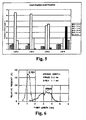
- Figure 5 are shown the lengths of fibres of the pulps produced according to example 1 and example 7, respectively, by means of bar charts; the results can be compared to the literature values shown in Figure 6 .
- Figure 7 are shown graphically the grinding curves or a tensile index of the pulps as a function of grinding.
- Figures 8A and 8B are shown the effect of birch pulp produced by the process according to the invention on the air permeance of the paper, and on the smoothness of the sheet surface.
- Figure 9 two diagrammatic plans from pulp treatment, wherein the upper one (1) depicts the sequence, wherein the pulp is treated with laccase and then an sheet is formed, after which the technical properties are determined from it, and the lower one depicts the sequence, wherein sheeting is followed by spraying the sheets with laccase, pressing and drying the sheets, after which the technical properties are determined from the sheets.
- Figure 10 are shown bar charts for tensile strengths of two samples.
- FIG 11A to 11C are shown bar charts for 15 samples, wherein "RM” represents a compound of cellulose acetate plastics and organosolv birch fibre (example 5), fibre of CA-RM reed canary grass produced according to example 10, birch cellulose I, birch cellulose II and birch cellulose III represent birch sulphate cellulose fibre taken from different process stages; birch cellulose I - after sulphate cooking, birch cellulose II - before bleaching, and birch cellulose III - bleached pulp.
- Figure 11B are shown the yield strength comparisons and in Figure 11C breaking strength comparisons.
- the cooking process according to the present invention is based on a so far unknown (unidentified) chemical reaction, wherein phosphinic acid or its derivative catalyses, in an organic solvent, the delignification process while covalently attaching to lignin.
- phosphinic acid H 3 PO 2 , H 2 P(O)(OH), its tautomeric form HP(OH) 2 and salts thereof are strong reducing agents.
- peroxoformic acid which is an active cooking chemical of another so-called organosolv-process, namely the MILOX process.
- a mineral acid phosphinic acid is a monoprotic acid pKa: 1.2, but weaker than H 2 SO 4 or HCl
- phosphinic acid and its tautomeric form and salts thereof, other derivatives of phosphorus can be used, wherein phosphorus has a lower oxidation degree than orthophosphoric acid.
- the cooking process would seem to be based on acidic catalytic delignification of phosphinic acid and on the other hand on its capability chemically to attach to lignin.
- the mechanism of delignification has not been elucidated, but it is possible that the effect of the phosphinic acid can relate to the benzyl positions of a phenyl propane unit of lignin and to reactions of acetal or ketal links of the wood structure. In that case organophosphate groups or such ester groups would seem to be formed.
- the process according to the present invention works well on different plant-based materials. Annual and perennial plants are suitable as starting materials. According to one preferred application defibrated pulp is produced from wood. Some domestic plant species such as pine, spruce, birch, aspen or alder can serve as a starting material, but also other wood species can be used, such as eucalyptus, maple, Cottonwood, mixed tropical hardwood etc. According to another preferred embodiment, the process according to the invention is applied for annual plants, such as straw of grain crops, reed canary grass and bagasse.
- the fibrous raw-material such as straw and wood
- the sulphur-free cooking process developed works very well on reed-stem plants, soft and hardwood trees in up to 50 to 60 % yield, in addition to which from 10 to 15 % of purified lignin is obtained as particles having particle size of from 50 to 100 nm according to the TEM description.
- the total yield is thus from 60 to 75 % of the starting material.
- Cooking can be carried out as well on wood at natural moisture or on dry starting material at almost anhydrous conditions.
- the yield of the spruce cooking carried out in dry conditions can be e.g. about 54 %, in other words on the order of 10 % better than that of kraft cooking compared to the values in literature.
- the residual lignin concentration for birch fibre corresponding to the 50 % yield was 3.35 % and the yield of isolated lignin was 11 %.
- the glucose concentration of the fibre was 89.5 % and the concentration of xylan was 7.8 %.
- the active residue lignin contained in the fibre can in principal be used to increase the enzymatic strength of the sheet. This is exemplified by a test wherein laccase treated fibres that were cooked with the new process gave 10 % higher tensile strength compared to the reference treated fibres (shown in appendix).
- the fibres are well suited at least as fibre reinforcement for biopolymers (in an exemplifying embodiment, cellulose acetate and PLA) in fibre composites.
- Birch fibres produced by the process increase the module of the reinforcement by a factor of 3x. Compared to a commercial birch fibre (directly from cooking) the improvement in the module was 10 % higher and in yield and breaking strength was 9 % higher.
- the strength values for a reed canary grass fibre composite were comparable to a bleached sulphate-process birch fibre reinforcement.
- the cooking process can also be used as a pre-treatment step for biomass in the production of fermentable sugars.
- the alkaline extraction with 0.5M NaOH is combined to the defibering, for example material, having an enzyme hydrolysability of 100 % (time of ⁇ 24 h) is obtained from reed canary grass in ⁇ 40 % total yield.
- the alkali extraction is suitable for isolation of hemicellulose. Based on the sugar analysis, the alkali treatment increased the glucose concentration of the fibre by 25 % and decreased the xylan concentration by about 50 %. Alkali treatment also removed clearly the residual lignin of fibre, so it is also a pulp bleaching process.
- acetic acid, formic acid and ethanol are suitable as an organic part of the cooking liquor (cf. below in more detail). Ratio of the solvent to the starting material can be, as has been proved, changed more preferred by recycling the cooking liquor.
- the economical potential can be considered to be significant, since the most possible objective comparison to the main process (kraft cooking) offers an advantage in magnitude of at least 10 %, measured by almost any product characteristics.
- Cooking process is in principal extremely gentle, and it can generally be carried on at from about 50 to about 125 °C. As it is evident hereinafter, according to the examples operation were at a temperature of about from 75-110 °C. Longer treatment times are used at lower temperatures to enhance the penetration of cooking chemicals into the fibre raw-material, for example woodchip. Reaction times could very well be increased by a pressurized process. In case of phosphinic acid, elevating the temperature is not recommended (or it should be avoided), because risk for decomposition of reagent increases, as the temperature exceeds 110 °C.
- the overpressure is typically about 1.1 ... 10 times normal atmospheric pressure.
- the same cooking liquor can be recycled in the process several times, whereby a higher concentration is achieved for lignin, if it is to be isolated.
- the amount of phosphinic acid in the cooking solution is at industrial scale operations e.g. about from 0.01 to 10 %, preferably about from 0.1 to 5 %, of hypophosphoric acid from the weight of the cooking liquor.
- the amount of phosphinic acid can also be adjusted according to the fibrous material being brought to the cooking.
- cooking liquor contains therefore about from 0.1 to 50 %, in particular about from 0.5 to 20 %, of hypophosphoric acid from the dry matter of raw-material.
- Small molecular weight carboxylic acids are suitable as solvents as well as aliphatic alcohols (alkanols) and aromatic alcohols of 6 to 10 carbon atoms.
- hydrocarbon residue of carboxylic acid comprises 1 to 6, in particular 1 to 4 carbon atoms.
- suitable solvents should be mentioned formic acid, acetic acid and propionic acid mentioned above.
- alkanoic acids also corresponding peracids can be used as well as suitable hydroxy acids.
- Aromatic alcohols can also be used.
- Suitable alkanols contain generally 1 to 6 carbon atoms and 1 to 5 hydroxyl groups, in particular 1 to 3 hydroxyl groups.
- Aromatic alcohols are e.g. phenol and benzyl alcohol.
- polar organic solvent such as C 1-6 -alkanoic acid, C 1-6 -alkanol or polyol or aromatic alcohol, hydrocarbon residue thereof containing 6 to 10 carbon atoms, or a mixture thereof.
- Solvent can contain water, which originates e.g. from the fibrous raw-material to be treated. However, the amount of water is so small that the organic solvent serves as a solvent for lignin that is released from the fibrous material in connection with cooking (in practice during it).
- concentration of water in moles is not over about 50 % the total mole amount of water and solvent, or the molar ratio of water and solvent is up to about 1:1, most suitably it is less than 1:1, in particular the molar ratio of water and solvent is from about 0 to about 40 %, most suitably from 0 to about 30 %.
- at least some amount of water typically at least about 0.1 weight-% of the liquid phase, often at least about 0.2 %, enters with the raw-material or cooking chemical to the cooking.
- the organic solvent used in the present process is most suitably water miscible, whereupon the liquid phase of the cooking stays in one phase during the treatment.
- defibering of the raw-material is carried out at less than 20 %, preferably less than 10 % total moisture content.
- Lignin obtainable from the cooking can be produced irrespective of the plant species into the nanoparticles with a very simple process.
- the preparation of nanoparticles of lignin by means of known techniques is an expensive and complicated process requiring high technology from the apparatus.
- nanoparticles of lignin can be prepared simply by precipitating them from water solution.
- a special feature of the particles is a high phenol functionality that is promoted by the small particle size of the particles, in general about from 50 to 100 nm. Phenol functionality is well visible e.g. as a high response to the oxidative enzymes. Probably organic phosphorus bound to the lignin has a significant role in dispersing mechanism of lignin, which that seems to happen spontaneously without mechanical dispersing or auxiliary dispersing substances.
- lignin is left deliberately into the fibres, e.g. the amount corresponding to the portion of Klason lignin (about 2 to 3 %), whereby a very high reactivity towards different chemicals that activate by oxidation is achieved for the fibre.
- activity observed for the laccase enzyme is an order higher than for mechanical pulps.
- laccase Since the effect of laccase is based on the oxidation reaction, along with laccase and, at least in some cases, as a substitutive chemical for it, some oxidative chemical can be used, typically alkali metal salts of peroxosulphur acid.
- the laccase enzyme of the fibre 1000 nkat/g activity in consumption of oxygen DO ⁇ 4 mg/l, in 30 min or up to DO ⁇ 5 mg/l in 30 minutes.
- the shown defibering treatment is continued until an essential part of the fibre matter has been defibrated. In general this corresponds to a case, wherein a significant amount of lignin has dissolved from the starting material. According to the starting material
- the yield of the defibrated pulp is in general up to ca. 90 weight-%, in particular yield is about from 30 to 75 weight-% from the starting material.
- the Kappa value is in general 10 to 150 with unbleached pulp, in particular about 15 to 120, most suitably about 20 to 110. After bleaching the kappa number is e.g. with hardwood about from 10 to 30, with softwood from 10 to 40.
- the process can also be understood as some sort of a concept, wherein the aim is to utilize wood or reed totally by fractionating it into polymer components.
- lignin, hemicellulose and cellulose could be separated from each others gradually.
- An efficient exit of hemicellulose from the fibre can be concluded also by examining the sugar compositions of the fibres. Quite mild alkali treatment (0.5 M NaOH) decreases for example xylose concentration of birch fibre to a half. If an alkali treatment is carried out after removal of lignin, cellulose is obtained mainly as the end product. The removal of hemicellulose serves at the same time as a bleaching process.
- the cooking can in principle be directed "over" in such a way that microcrystalline cellulose or cellulose fibrils can be produced from the end product with a good yield, in other words to carry out partly the acid hydrolysis of cellulose during the cooking and/or to increase the enzyme hydrolysis rate of the polysaccharide.
- the fibrous material produced by means of the present cooking can be used as such, or as further functionalized in fibre composites (either with synthetic or bio plastics) and in special paper and paperboard applications (filters, traceability, recognisability) or as a base paper in printed electronics (especially then, if it is accompanied with alkali sensitive conducing polymer).
- Lignin can be used directly to replace the present lignin product in existing applications (sizes, adhesives, wood preservatives, fertilizers, etc.) to bring added value, such as fire resistance or microbiological durability of wood surface.
- lignin could bring new properties, among others to fibre composite products and as an additive and possibly also as a matrix material.
- the amount of chemically bound phosphorus being >1 % the polymeric derivative serves in principle as an ion exchange resin or as a metal cation trap.
- lignin is dissolved into the cooking liquor, from which it is separated, whereby lignin dissolved into the cooking liquor can preferably be precipitated from the solvent e.g. with water.
- the pH of lignin to be precipitated is set to a value of 4.5 to 6.0, in particular about to a value of 5.0 to 5.5.
- the fibrous raw-material is treated with the presented cooking solution to dissolve lignin, whereby cooking is most suitably continued, until at least about 20 % of the raw-material has been dissolved.
- Fibrous raw-material, from which a significant part of lignin has been removed, can be separated from the cooking liquor, after which it is treated separately with an alkali to dissolve hemicellulose. From the alkali solution hemicellulose can for its part be isolated by precipitation, e.g. by using water, or with membranes or other corresponding means.
- a significant part is separated from the fibrous raw-material, typically about 25 to 35 of dry weight, whereby most of lignin is removed from it, after which at least about 50 weight-% of hemicellulose contained therein is extracted with an alkali solution from the treated fibrous raw-material.
- alkali an aqueous solution of alkali or earth alkali metal hydroxide is used, having molality such as above noted, relatively low, e.g. about 0.1 to 5 M, most suitably about 0.1 to 1 M.
- the solution was dyed to reddish brown, but the sticks were not dispersed into fibre.
- the sticks were purified with a process according to example 1 and the acetic acid solutions, 400 ml, were spared for further analyses.
- composition was obtained for the fibre: Materials extractable with acetone: 2.48 % Klason's soluble lignin: 0.54 % Klason's gravimetric lignin: 3.52 % rhamnose ⁇ 0.10 arabinose ⁇ 0.10 galactose ⁇ 0.10 glucose 86.9 % xylose 7.89 % mannose 0.50 % methyl glucuronic acid (MeGlcA) 0.15 % galacturonic acid (GlIA) ⁇ 0.10 in total: 95.54 %
- Yield was 195 g of pulp having dry matter concentration of 25.1 %. This corresponds to 48.1 % yield if birch fibre calculated from dry weight of wood.
- composition was determined for birch fibre: Materials extractable with acetone: 2.80 % Klason's soluble lignin: 0.59 % Klason's gravimetric lignin: 3.40 Sugars rhamnose ⁇ 0.10 % arabinose ⁇ 0.10 % galactose ⁇ 0.10 % glucose 89.5 % xylose 7.80 % mannose 0.76 % methyl glucuronic acid 0.28 % galacturonic acid ⁇ 0.10 % glukuronihappo ⁇ 0.10 % in total 98.34 %
- Carbonhydrate and lignin fractions were analysed from the cooking liquor after ultrafiltering and alkali extraction. Yield of the dissolved polymeric carbohydrate fraction was 5.8 % dry matter of wood and yield of the dissolved lignin was (purified as nanoparticles) 8.9 % dry matter of wood.
- Example 5 Production of birch fibre with acetic acid-phosphinic acid cooking, from fresh birch wood
- Yield was 186 g of pulp, having dry matter concentration of 26.6 %. This corresponds to 50.3 % yield of fibre calculated from dry weight of wood.
- the obtainable fibre is suitable for example for reinforcement of plastics (in particular thermoplastics).
- Example 6 Production of spruce fibre from classified needlesticks (pin chips) with acetic acid-phosphinic acid cooking
- Example 7 Production of spruce fibre from woodchips with phosphinic acid-acetic acid cooking
- Fresh spruce chips 267 g dry matter concentration of 37.2 %, corresponding to 100 g calculated as dry wood of spruce, were immersed into the cooking liquor containing 302 g of acetic acid, 30 g of 100 % calculated of phosphinic acid and 30 g of water. Woodchips were cooked in the solution for 88 h at temperature of 105 °C, whereupon wood softened and degraded into fibres as lignin dissolved in acetic acid. After reaction time mother liquor was aspirate with vacuum from the pulp, giving a yield of 231 g, after this the fibre cake was rinsed part by part with 70 % acetic acid to remove lignin and cooking chemicals.
- the yield of washing solution was 246 g, which was combined to the previous filtrate (mother liquor). After this the fibre was washed with water in 5 % slurry, filtered onto the wire and the filtrate was sucked once through the fibre cake. Finally the pulp was washed on the filter with water and concentrated with vacuum suction.
- Yield of the moist pulp was 238 g, dry matter concentration 22.4 %, corresponding 53.3 % yield calculated from dry matter or wood.
- Example 8 Removal of lignin from the inner bark of birch with acetic acid-phosphinic acid cooking
- composition was determined for treated inner bark of birch rhamnose ⁇ 0.10 galactose ⁇ 0.1 % glucose 48.6 % xylose 3.8 % mannose 0.64 % fructose ⁇ 0.1 % Monosaccharide in total: 53 %
- Birch wood (119 g, dry matter concentration 84 %, corresponding to 100.0 g of dry wood) was combined with a pulping liquor containing 251 g of formic acid, 25 g of phosphinic acid and 25 g of water.
- the cooking time was 19 h 30 min, during which time wood degraded totally into fibres.
- Lignin-containing cooking liquor was removed from fibre by means of vacuum suction and the yield was 268 g. After this the pulp was rinsed with 70 % formic acid to remove the dissolved lignin.
- the rinsing solution was recovered while amount thereof was 266 g, after which the lignin solutions were combined.
- the fibre was washed with water according to example 1.
- the yield of moist pulp was 189 g, dry matter concentration was 23.8 % and yield of birch fibre was 43.6 % calculated from dry weight of wood.
- Example 10 Production of fibre from reed canary grass with acetic acid-phosphinic acid cooking
- Straw of reed canary grass amount of which was 55.3 g (dry matter concentration 90.3 %), or 50.0 g calculated as dry matter, was mixed with 904 g of cooking liquor, having a composition of 604 g of acetic acid, 60 g of phosphinic acid, and 240 g of water. The mixture was cooked for 13 h at temperature of 105 °C, whereupon straw softened and degraded into fibres. The fibre was purified by a process according to example 1. Yield 134 g of wet pulp, dry matter concentration 20.3 %, corresponding to 54.0 % yield. The wet pulp was dried in a convection oven at a temperature of 60 °C.
- Example 11 Production of reed canary grass with acetic acid-phosphinic acid cooking
- Pulp corresponding to an amount of 30.0 g of dry weight, was treated with alkali extraction according to example 10, whereby yield of cellulose rich pulp as dry weight was 23.3 g, corresponding to 77.6 % yield from the ethanol cooked fibre and 57 % yield from the straw raw-materials of the starting situation.
- Example 13 Production of nanoparticles of lignin from the cooking liquor by water dilution
- Acetic acidic lignin solution (376 g), obtained from example 1, was diluted with water to a volume of 3000 ml, whereupon a precipitation of lignin is formed, that can at least once sedimented and to separate dissolved acetic acid by decanting.
- a new water dilution is carried out after this to a volume of from 2000 to 3000 ml, the lignin precipitation does not anymore sediment by gravitation, but water dispersion is formed, that can be concentrated by centrifuging with high speed 3000 to 5000 r.p.m/ 15 min.
- Lignin was washed to pH-value of -5, yield of lignin dispersion 20.5 g (dry matter of 24.6 %) and yield of 10.1 % calculated from dry weight of birch.
- Table 1 In table 1 are shown the yields for different fibre raw-materials of lignin nanoparticles produced by above described examples.
- Table 1 Yields of lignin nanoparticles for different plant materials Raw material
- Example Yield % % phosphorus (total) %P NMR Ref.
- birch ⁇ 5 total H 2 O precipitables
- 0.47 Aldrich lignin 0.31 Birch 1 10.1 1.21 0.96 Birch 4
- Inner bark of birch 8 11.7 Spruce 7 11.1 1.13
- Flax 6.4 Reed canary grass 11 13.4 Reed canary grass 12 7.0
- Thermoplasticity of nanoparticles of lignin produced from different starting materials was studied by means of DSC analysis.
- Protobind 1000 a commercial lignin, was used as a reference sample.
- DSC analysis was run as two from 0 to 125 °C cycles using 10 °C/min temperature increasing and decreasing speed.
- Table 3 The glass transition temperature of organosolv lignin nanoparticle produced from different starting materials, determined by DSC. Analytical samples were made by drying a lignin dispersion sample in a convection oven/ 60 °C.
- Table 3 shows that the glass transition temperature of lignins produced with an organic solvent was at about 100 °C and that the lignins act thermoplastically.
- the molecular masses of lignins are assayed by GPC techology and the results are expected to explain some of the observed differences between different examples.
- Lignin-containing formic acid solution amount of which was 664 g, was diluted with water to 3000 ml, and prepared with a centrifuging wash at pH value of 5 to a nanoparticle dispersion of lignin, giving a yield of 16 g (dry matter concentration 20.14 %) corresponding to 6.4 % yield of purified lignin nanoparticles calculated from the dry weights of straw.
- the flax fibre pulp (27 g of dry matter) was mixed to a volume of 1000 ml of 0.5 M NaOH-solution and extracted for 24h at a temperature of 20 °C to separate hemicellulose. After the extraction the pulp was filtered through a wire and the filtrate was sucked once through the fibre cake. The solution containing the alkali soluble polysaccharides was stored and finally the fibres were rinsed on the filter with cold water.
- Yield was 116.46 g of wet cellulose pulp, dry matter concentration was assayed to be 19.34 %. This corresponds to 45 % yield calculated from the dry matter of straw at starting situation.
- Flax could be fractionated by the process as follows: Biomass divided into either in 54 % yield of corresponding amount of fibre and in 6.4 % yield of corresponding amount of lignin nanoparticles, or in 45 % yield of corresponding amount of cellulose rich fibre, 9 % of alkali soluble polysaccharides (mainly hemicellulose) and 6.4 % of nanoparticles of flax lignin. In total the conversion of flax into useful polymeric products was 60.4 %.
- Example 15 Treatment of polymers of birch wood with acetic acid-phosphinic acid coking
- Birch was fractionated with phosphinic acid cooking, into cellulose, hemicellulose, and lignin nanoparticles.
- the starting situation (1.000 kg per moist wood, 57 % dry matter concentration) 1754 g of birch sticks (pin chips), 1000 g as calculated dry wood, was mixed into a solution, having a composition of 5000 g of acetic acid, 100 g of phosphinic acid and 246 g of water, at a cooking time at a temperature of 100 °C and at normal pressure was for 31 h 30 min, during which time the wood stick degraded into fibres.
- the fibres were purified by a process according to example 1 and lignin nanoparticles were produced by a process according to example 12. Hemicellulose was isolated from fibres by extracting 2 % fibre slurry in 1 M NaOH solution for 24 h at room temperature.
- the polysaccharide fraction that was dissolved to alkali was purified by ultrafiltering trough a 5000 g/mol [cut off] membrane, after which it was freeze-dried.
- the polymers of birch fibres could be fractionated by the process.
- Reed canary grass 4h 105 °C 57.4 13.4 0 0 0 63.8 9.30 0 74 59.3 80.1 SR5 alkali Reed canary grass pH 12, 4 h, 80 °C 38.0 0 0 0 85.1 4.20 0 90 100 100 12 1 st cycle Reed canary grass 30 h, 79 °C 72.0 0 0.24 0.20 57.9 17.0 0.45 76 76.5 100 12 2 nd cycle Reed canary grass 30 h, 79 °C 75.0 7.0 0 0.15 0.12 58.7 15.1 0.51 75 75.1 100 12 Reed canary grass pH 12 57.0 0 0.11 0.12 67.4 16.0 0.52 84 93 100
- FIG 2 is illustrated the enzyme hydrolysis in cooking carried out according to example 10.
- the experiment scores SR-5 pulp 1 and 2 of hydrolysis of canary grass pulp cooked according to example 11 mean the fibre sample before and after the alkali extraction.
- Alkali extraction clearly removes components that slow down hydrolysis from the pulp, such as hemicellulose, which appears well also on changes in the sugar composition of the pulp (table 4).
- Alkali treatment after the hydrolysis of the pulp after 24 h is already 100 %, which corresponds in the analysis to DNS mg/ml of glucose.
- Hydrolysability of the pulp treated according to example 12 is already initially large (76 %); 2 cooking cycles with recycled solvent did not affect substantially on the result. After the alkali treatment the hydrolysability of the pulp was > 90 %.
- Reactivity of fibres produces according to example 1 in an oxidation reaction catalyzed by laccase enzyme was measured as the consumption of dissolved oxygen.
- the oxygen measurement was performed by determining the concentration of oxygen dissolved into the fibre suspension during the laccase treatment. Measuring was performed in a sealed sample vessel with SensorLink PCM800 apparatus using an oxygen electrode (Clark). It is evident from Figure 3 that the new organosolv fibres are very laccase reactive and that they can therefore be activated in the oxidation reaction catalyzed by laccase, for further utilizing, for example as suitable for functionalizating.
- Example 18 Special properties of nanoparticles of lignin, laccase enzyme activity
- Figure 4 is shown the oxygen consumption of birch lignin nanoparticles produced by process according to example 1 in an oxidation reaction catalyzed by laccase enzyme.
- the oxygen measuring was performed by using the oxygen measuring process described in example 16. From Figure 4 is observed that the lignin nanoparticles produced by the organosolv cooking process described in the invention were very reactive in the oxidation reaction catalyzed by laccase.
- Figure 7 is shown the compensation on density difference of pulps of the experimental sequence (test sequence) compared with the industrial pulps.
- Reference is the birch sulphate cellulose pulp used in the production of experimental sheets.
- the comparison curves represent the effect of grinding. In its entirety the result in fully comparable to fibre produced by a sulphate process.
- table 4 are shown extensively the physical characteristics of the birch pulp produced by cooking according to example 1 and a comparison to the industrial pulps. Table 4. Physical, strength and paper technical characteristics of the pulp. Organosolv Birch Reference mill pulp Comparison: commercial industrial pulp, grammage compensated.
- test sequence is cooked birch according to example 1.
- Reference point is a commercial birch pulp.
- the permeability and smoothness of the sheet correlate to a certain degree with each others; some kind of on optimum, in accordance of these variables, would seem to correspond to 48 to 50 % fibre yield such as in example 4.
- Results are shown in the bar chart of Figure 10 .
- the laccase treatment of the fibres was performed in the sheet mould with laccase dosing or 500 nkat/g of dry fibre. According to the obtained results, the tensile strength of the paper produced from organosolv fibre made according to the invention could be increased clearly with the laccase treatment.
- the fibre was washed with water according to example 5.
- Cellulose ester plastics was commercial cellulose triacetate softened with 50 php of triethylcitrate (TEC).
- CA-RM represents cellulose acetate plastics organosolv birch fibre (example 5) compound, CA-RM reed canary grass the fibre produced according to example 10.
- Birch cellulose I, birch cellulose II and birch cellulose III represent birch sulphate cellulose fibre taken from different process steps. Birch cellulose 1 - after sulphate cooking, birch cellulose II - before the bleaching and birch cellulose III - bleached pulp.
- Figure 11B yield strength comparisons.
- the sample codes are the same as in Figure 11A .
- Figure 11C depicts comparisons of breaking strength.
- the sample codes are the same as in Figure 11A
- the strength of cellulose acetate fibre compounds are generally better than with reference pulps.
- the birch fibres produced by the process according to the invention gave a comparable result compared to the birch sulphate cellulose, when they are used as reinforcement for PLA.
- a remarkable improvement was achieved very especially on the breaking strength with 20 % proportion of the inventive birch fibre compared to birch sulphate cellulose pulp taken any one of the process steps.
- Blends have been compounded with a Brabender batch mixer intended for laboratory use, while using Nocke's tip mixing arms (volume of 80 cm3). Temperatures in the cellulose acetate mixtures were 220 °C and PLA in the mixtures were 190 °C.
- testing poles ("dog-bones") are produced with a Therino Haake MiniJet injection moulding apparatus. Injection pressure 600 to 700 bar, injection time 3 to 5 s, exit pressure 320 to 400 bar, exit time 15 to 30 s. Temperature of the mould with cellulose-acetates 40 to 50 °C, with PLA 25 to 30 °C.
- testing poles were tested with a testing machine (Instron).
- PLA + RM birch test poles have not been kept according to the standard for five days in condition cupboard but the samples have been tested immediately after making then. Due to the crystallinity of PLA the results of these testing poles may improve while PLA crystallises.
- the poles have hydrophilic fibres that may waken the mechanical properties while absorbing moisture.
- Example 25 Production of reed canary grass fibre at a low water concentration
Landscapes
- Paper (AREA)
- Compounds Of Unknown Constitution (AREA)
Abstract
Description
- The present invention relates to a process for defibering a fibrous raw-material according to the preamble of
claim 1. - According to this kind of a process, a fibrous raw-material is contacted with a pulping liquor containing an organic solvent for defibering a fibrous raw-material.
- The invention relates also to a process according to the preamble of claim 11 for recovering lignin and to a process according to the preamble of claim 14 for recovering hemicelluloses, respectively.
- Defibering of a fibrous material, such as chips, which hereinafter also is referred to by the term "delignification", is performed mainly by sulphate (or kraft) or sulphite cooking, wherein sulphur and sodium chemicals of a water based cooking liquor are used as an active cooking chemical. In that case, defibering means the separation of fibres from each others by dissolving lignin that acts as adhesive. Yields of kraft cooking before bleaching are in the range of 50 to 53 % for hardwood and about 46 to 49 % for softwood. Both the fibrous material and residual lignin are sulphur-containing, and thus also nonreactive, after the cooking.
- At present, bleaching is increasingly carried out with hydrogen peroxide, the drawback of which is a weakening of the mechanical properties of the fibre.
- In principal, it is possible to produce also monomeric sugars and lignin derivatives from lignin-containing raw-materials by chemical cooking processes. These can be reprocessed or burned. However, a drawback with known processes is that they generally are optimized only for one product. Sugars with high yield can be obtained as a result, but lignin and at least a major part of hemicellulose are lost or recovery thereof is technically difficult. Energy recovery of the by-product may also be restricted by the high water content thereof.
- It is an aim of the invention to eliminate drawbacks relating to the known processes and to provide a totally new kind of a solution for defibering a fibrous raw-material.
- The invention is based on the idea that a raw-material is treated in an organic solvent containing a lower acid of phosphorus. In particular, in the invention a fibre-containing raw-material is cooked in an organic solvent containing hypophosphoric acid or another phosphoric acid derivative having a lower degree of oxidation (lower than that of orthophosphoric acid disclosed in
WO 7900119 - In the process according to the invention for recovering lignin from a lignin-containing fibrous raw-material, lignin that is dissolved into the cooking liquor is precipitated from the solvent with a non-solvent, in particular with water.
- More specifically, the process according to the invention is mainly characterized by what is stated in the characterizing part of
claim 1. - The process for recovering lignin according to the invention is, in turn, characterized by what is stated in the characterizing part of claim 11. The process for recovering hemicellulose according to the invention is characterized by what is stated in the characterizing part of claim 14.
- Considerable advantages are obtained with the present invention. Thus, a significantly high yield is provided by the process and it has been noted that the cooking has an activating effect on the fibrous material. The fibrous material that can be obtained from cooking has interesting properties, such as good mechanical properties, reactivity with functionalizing enzymes and en excellent enzyme hydrolysability into sugars. Of the compounds dissolved in the cooking, lignin can be recovered in the form of reactive nanoparticles, which have been found to contain -1 % chemically bound phosphorus, which may also have significance as a fire retardant. Organophosphate groups can bind metal ions and thus may serve as an ion exchanger.
- The fibres produced according to the new cooking process from plant fibres, such as from wood or reed canary grass, and lignin obtainable from cooking are suitable e.g. for fibre composites and special paper applications as well as for lignin products (sizes, coatings, composite matrices). Delignification according to the invention can also be used as a pre-treatment stage in isolation of hemicellulose. Taking into account only the yield of lignin, 60 to 75 % of dry weight of the plant material is utilized as useful products.
- In the following the invention will be examined in more detail by means of the detailed description and working examples.
- In
Figure 1 is shown a TEM-picture of lignin nanoparticles produced by means of the invention. Particles of less than 50 nm and respectively about 100 nm are seen from the picture,
InFigure 2 are shown bar charts depicting enzyme hydrolysis of two pulps obtained from a cooking according to example 10.
InFigure 3 is graphically depicted the effect of Trametes hirsuta laccase on oxygen consumption of lignin pulps, described as a function of time of measurement, and InFigure 4 is a corresponding diagram for oxygen consumption of LGF-4 lignin in the presence of laccase.
InFigure 5 are shown the lengths of fibres of the pulps produced according to example 1 and example 7, respectively, by means of bar charts; the results can be compared to the literature values shown inFigure 6 .
InFigure 7 are shown graphically the grinding curves or a tensile index of the pulps as a function of grinding.
On the other hand, inFigures 8A and 8B are shown the effect of birch pulp produced by the process according to the invention on the air permeance of the paper, and on the smoothness of the sheet surface.
InFigure 9 are shown two diagrammatic plans from pulp treatment, wherein the upper one (1) depicts the sequence, wherein the pulp is treated with laccase and then an sheet is formed, after which the technical properties are determined from it, and the lower one depicts the sequence, wherein sheeting is followed by spraying the sheets with laccase, pressing and drying the sheets, after which the technical properties are determined from the sheets.
InFigure 10 are shown bar charts for tensile strengths of two samples.
InFigure 11A to 11C are shown bar charts for 15 samples, wherein "RM" represents a compound of cellulose acetate plastics and organosolv birch fibre (example 5), fibre of CA-RM reed canary grass produced according to example 10, birch cellulose I, birch cellulose II and birch cellulose III represent birch sulphate cellulose fibre taken from different process stages; birch cellulose I - after sulphate cooking, birch cellulose II - before bleaching, and birch cellulose III - bleached pulp.
InFigure 11B are shown the yield strength comparisons and inFigure 11C breaking strength comparisons. - The cooking process according to the present invention is based on a so far unknown (unidentified) chemical reaction, wherein phosphinic acid or its derivative catalyses, in an organic solvent, the delignification process while covalently attaching to lignin.
- By their chemical nature, phosphinic acid H3PO2, H2P(O)(OH), its tautomeric form HP(OH)2 and salts thereof are strong reducing agents. In this respect, as cooking chemicals they differ significantly from e.g. peroxoformic acid, which is an active cooking chemical of another so-called organosolv-process, namely the MILOX process. Indeed, in many other known organic cookings a mineral acid (phosphinic acid is a monoprotic acid pKa: 1.2, but weaker than H2SO4 or HCl) is utilized as a catalyst, but the effect of these is primarily hydrolytic.
- In addition to phosphinic acid and its tautomeric form and salts thereof, other derivatives of phosphorus can be used, wherein phosphorus has a lower oxidation degree than orthophosphoric acid.
- The cooking process would seem to be based on acidic catalytic delignification of phosphinic acid and on the other hand on its capability chemically to attach to lignin. The mechanism of delignification has not been elucidated, but it is possible that the effect of the phosphinic acid can relate to the benzyl positions of a phenyl propane unit of lignin and to reactions of acetal or ketal links of the wood structure. In that case organophosphate groups or such ester groups would seem to be formed.
- It has been found that the process according to the present invention works well on different plant-based materials. Annual and perennial plants are suitable as starting materials. According to one preferred application defibrated pulp is produced from wood. Some domestic plant species such as pine, spruce, birch, aspen or alder can serve as a starting material, but also other wood species can be used, such as eucalyptus, maple, Cottonwood, mixed tropical hardwood etc. According to another preferred embodiment, the process according to the invention is applied for annual plants, such as straw of grain crops, reed canary grass and bagasse.
- It should be pointed out that the fibrous raw-material, such as straw and wood, can be mechanically pre-treated (refined, sawdust, woodchips as well as mechanical pulp) or classified in various ways. Fibres of very high quality or merely fermentable sugars can be the target. Hemicellulose can be as a by-product and in all cases technically useful pure lignin.
- Thus, the sulphur-free cooking process developed works very well on reed-stem plants, soft and hardwood trees in up to 50 to 60 % yield, in addition to which from 10 to 15 % of purified lignin is obtained as particles having particle size of from 50 to 100 nm according to the TEM description. The total yield is thus from 60 to 75 % of the starting material.
- Cooking can be carried out as well on wood at natural moisture or on dry starting material at almost anhydrous conditions.
- Compared to the traditional sulphate cooking, the yield of the spruce cooking carried out in dry conditions (50/50 spring wood) based on the examples below, can be e.g. about 54 %, in other words on the order of 10 % better than that of kraft cooking compared to the values in literature. The residual lignin concentration for birch fibre corresponding to the 50 % yield (that is comparable to the kraft process) was 3.35 % and the yield of isolated lignin was 11 %. After cooking the glucose concentration of the fibre was 89.5 % and the concentration of xylan was 7.8 %.
- The mechanical properties of the fibre produced by the new process from birch wood were better compared (reduced) to comparative mill pulps as a function of refining.
- In addition to the strength, valuable properties are obtained for paper sheets, such as good smoothness and low air permeance. The active residue lignin contained in the fibre can in principal be used to increase the enzymatic strength of the sheet. This is exemplified by a test wherein laccase treated fibres that were cooked with the new process gave 10 % higher tensile strength compared to the reference treated fibres (shown in appendix). The fibres are well suited at least as fibre reinforcement for biopolymers (in an exemplifying embodiment, cellulose acetate and PLA) in fibre composites.
- Birch fibres produced by the process increase the module of the reinforcement by a factor of 3x. Compared to a commercial birch fibre (directly from cooking) the improvement in the module was 10 % higher and in yield and breaking strength was 9 % higher. The strength values for a reed canary grass fibre composite were comparable to a bleached sulphate-process birch fibre reinforcement.
- The cooking process can also be used as a pre-treatment step for biomass in the production of fermentable sugars. When the alkaline extraction with 0.5M NaOH is combined to the defibering, for example material, having an enzyme hydrolysability of 100 % (time of ≤ 24 h) is obtained from reed canary grass in ∼40 % total yield. The alkali extraction is suitable for isolation of hemicellulose. Based on the sugar analysis, the alkali treatment increased the glucose concentration of the fibre by 25 % and decreased the xylan concentration by about 50 %. Alkali treatment also removed clearly the residual lignin of fibre, so it is also a pulp bleaching process.
- Also acetic acid, formic acid and ethanol are suitable as an organic part of the cooking liquor (cf. below in more detail). Ratio of the solvent to the starting material can be, as has been proved, changed more preferred by recycling the cooking liquor. The economical potential can be considered to be significant, since the most possible objective comparison to the main process (kraft cooking) offers an advantage in magnitude of at least 10 %, measured by almost any product characteristics.
- Cooking process is in principal extremely gentle, and it can generally be carried on at from about 50 to about 125 °C. As it is evident hereinafter, according to the examples operation were at a temperature of about from 75-110 °C. Longer treatment times are used at lower temperatures to enhance the penetration of cooking chemicals into the fibre raw-material, for example woodchip. Reaction times could very well be increased by a pressurized process. In case of phosphinic acid, elevating the temperature is not recommended (or it should be avoided), because risk for decomposition of reagent increases, as the temperature exceeds 110 °C.
- It is possible to operate at normal atmospheric pressure or increased pressure.
The overpressure is typically about 1.1 ... 10 times normal atmospheric pressure. - The same cooking liquor can be recycled in the process several times, whereby a higher concentration is achieved for lignin, if it is to be isolated.
- The amount of phosphinic acid in the cooking solution is at industrial scale operations e.g. about from 0.01 to 10 %, preferably about from 0.1 to 5 %, of hypophosphoric acid from the weight of the cooking liquor. The amount of phosphinic acid can also be adjusted according to the fibrous material being brought to the cooking. In general, cooking liquor contains therefore about from 0.1 to 50 %, in particular about from 0.5 to 20 %, of hypophosphoric acid from the dry matter of raw-material.
- It should be pointed out that in most of the examples presented below the amount of phosphinic acid is considerably high (up to 1:1 for the material to be cooked). The large volume required by the material has partly affected the high reagent amount (for example straw or bark). However, in connection with the present invention it could be noted that the process operates excellently with dosages mentioned above. A good pulp is obtained from birch at dosages of phosphinic acid in the range from about 5 to 15, e.g. at about 10 % calculated from the dry weight of birch. The corresponding amount for softwood is from 5 to 25 % as calculated from the dry weight of softwood.
- Small molecular weight carboxylic acids (aliphatic and aromatic) are suitable as solvents as well as aliphatic alcohols (alkanols) and aromatic alcohols of 6 to 10 carbon atoms.
- In general, hydrocarbon residue of carboxylic acid (alkanoic acid) comprises 1 to 6, in particular 1 to 4 carbon atoms. As examples of suitable solvents should be mentioned formic acid, acetic acid and propionic acid mentioned above. In addition to alkanoic acids also corresponding peracids can be used as well as suitable hydroxy acids. Aromatic alcohols can also be used.
- Suitable alkanols contain generally 1 to 6 carbon atoms and 1 to 5 hydroxyl groups, in particular 1 to 3 hydroxyl groups. As examples should be mentioned: methanol, ethanol, n-propanol, isopropanol, n-butanol, sec-butanol, tert-butanol, as well as substituted lower alcohols, such as methoxyethanol, ethoxyethanol, methoxymethanol and ethoxymethanol, as well as alcohols, that contain more hydroxyl groups (polyols), such as compounds comprising 2 or 3 hydroxyl groups, e.g. 1.2-ethanediol (ethylglycol), propanediol (propylglycol) and glycerol. Aromatic alcohols are e.g. phenol and benzyl alcohol.
- It should be noted that also mixtures of compounds presented above can be used as solvents having two or more components mentioned above.
- According to one application in particular polar organic solvent is used as solvent, such as C1-6-alkanoic acid, C1-6-alkanol or polyol or aromatic alcohol, hydrocarbon residue thereof containing 6 to 10 carbon atoms, or a mixture thereof.
- Solvent can contain water, which originates e.g. from the fibrous raw-material to be treated. However, the amount of water is so small that the organic solvent serves as a solvent for lignin that is released from the fibrous material in connection with cooking (in practice during it). In general the concentration of water in moles is not over about 50 % the total mole amount of water and solvent, or the molar ratio of water and solvent is up to about 1:1, most suitably it is less than 1:1, in particular the molar ratio of water and solvent is from about 0 to about 40 %, most suitably from 0 to about 30 %. Usually at least some amount of water, typically at least about 0.1 weight-% of the liquid phase, often at least about 0.2 %, enters with the raw-material or cooking chemical to the cooking.
- For the reason mentioned above the organic solvent used in the present process is most suitably water miscible, whereupon the liquid phase of the cooking stays in one phase during the treatment.
- According to an application defibering of the raw-material is carried out at less than 20 %, preferably less than 10 % total moisture content.
- Lignin obtainable from the cooking can be produced irrespective of the plant species into the nanoparticles with a very simple process. The preparation of nanoparticles of lignin by means of known techniques is an expensive and complicated process requiring high technology from the apparatus. In the present invention nanoparticles of lignin can be prepared simply by precipitating them from water solution.
- A special feature of the particles is a high phenol functionality that is promoted by the small particle size of the particles, in general about from 50 to 100 nm. Phenol functionality is well visible e.g. as a high response to the oxidative enzymes. Probably organic phosphorus bound to the lignin has a significant role in dispersing mechanism of lignin, which that seems to happen spontaneously without mechanical dispersing or auxiliary dispersing substances.
- According to an application a small part of lignin is left deliberately into the fibres, e.g. the amount corresponding to the portion of Klason lignin (about 2 to 3 %), whereby a very high reactivity towards different chemicals that activate by oxidation is achieved for the fibre. For example, activity observed for the laccase enzyme is an order higher than for mechanical pulps.
- Since the effect of laccase is based on the oxidation reaction, along with laccase and, at least in some cases, as a substitutive chemical for it, some oxidative chemical can be used, typically alkali metal salts of peroxosulphur acid.
- According to an application, the laccase enzyme of the fibre (Tr. Hirs) 1000 nkat/g activity in consumption of oxygen DO ≥ 4 mg/l, in 30 min or up to DO ≥ 5 mg/l in 30 minutes.
- The features shown above make possible further processing of fibres with functional substrates, whereupon already previously good technical properties can be modified. This fact will prove to be especially meaningful e.g. in production of fibre-plastics composites, wherein the fibre has in every case to be as much as possible compatible with the plastics matrix. Unmodified fibres have also been found to be suitable excellently in biopolymer composites and to function at least with cellulose esters and PLA better than a conventional sulphate cellulose pulp.
- Physical and strength properties of the fibre have been shown by examples to be totally on the level of sulphate pulps and in most cases even surpass them.
- The shown defibering treatment is continued until an essential part of the fibre matter has been defibrated. In general this corresponds to a case, wherein a significant amount of lignin has dissolved from the starting material. According to the starting material
- (hardwood/softwood/grasses) the yield of the defibrated pulp is in general up to ca. 90 weight-%, in particular yield is about from 30 to 75 weight-% from the starting material. Always according to the starting material, the Kappa value is in general 10 to 150 with unbleached pulp, in particular about 15 to 120, most suitably about 20 to 110. After bleaching the kappa number is e.g. with hardwood about from 10 to 30, with softwood from 10 to 40.
- Especially preferred results are obtained, when the yield is from 48 to 55 %, whereupon the fibres bind well on each others and form a dense net.
- In paper technology fibres can therefore be used in production of air impermeable, very smooth papers. Since the background of paper making is acidic, so the paper suits well e.g. for a base paper for printable electronics or an electrically conductive paper.
- The process can also be understood as some sort of a concept, wherein the aim is to utilize wood or reed totally by fractionating it into polymer components.
- The disadvantage of most known processes is indeed, that they are good only in one case at a time. Sugars with high yield can be as a result, but lignin and at least most part of hemicellulose are lost or its recovering is technically difficult. Energy recovery of the side product can be restricted also its high water concentration.
- By means of the new process, lignin, hemicellulose and cellulose could be separated from each others gradually. An efficient exit of hemicellulose from the fibre can be concluded also by examining the sugar compositions of the fibres. Quite mild alkali treatment (0.5 M NaOH) decreases for example xylose concentration of birch fibre to a half. If an alkali treatment is carried out after removal of lignin, cellulose is obtained mainly as the end product. The removal of hemicellulose serves at the same time as a bleaching process.
- Since enzyme hydrolyzing of the cellulose fraction alone has been discovered to be extremely fast, the cooking can in principle be directed "over" in such a way that microcrystalline cellulose or cellulose fibrils can be produced from the end product with a good yield, in other words to carry out partly the acid hydrolysis of cellulose during the cooking and/or to increase the enzyme hydrolysis rate of the polysaccharide.
- In summary, it can be noted from the applications mentioned above that the fibrous material produced by means of the present cooking can be used as such, or as further functionalized in fibre composites (either with synthetic or bio plastics) and in special paper and paperboard applications (filters, traceability, recognisability) or as a base paper in printed electronics (especially then, if it is accompanied with alkali sensitive conducing polymer).
- Lignin can be used directly to replace the present lignin product in existing applications (sizes, adhesives, wood preservatives, fertilizers, etc.) to bring added value, such as fire resistance or microbiological durability of wood surface. As nanoparticles or further functionalized, lignin could bring new properties, among others to fibre composite products and as an additive and possibly also as a matrix material.
- The amount of chemically bound phosphorus being >1 % the polymeric derivative serves in principle as an ion exchange resin or as a metal cation trap.
- In the process according to the invention for recovering of lignin from the lignin-containing fibrous raw-material, lignin is dissolved into the cooking liquor, from which it is separated, whereby lignin dissolved into the cooking liquor can preferably be precipitated from the solvent e.g. with water. The pH of lignin to be precipitated is set to a value of 4.5 to 6.0, in particular about to a value of 5.0 to 5.5.
- In the process according to the invention for recovering of hemicellulose, the fibrous raw-material is treated with the presented cooking solution to dissolve lignin, whereby cooking is most suitably continued, until at least about 20 % of the raw-material has been dissolved. Fibrous raw-material, from which a significant part of lignin has been removed, can be separated from the cooking liquor, after which it is treated separately with an alkali to dissolve hemicellulose. From the alkali solution hemicellulose can for its part be isolated by precipitation, e.g. by using water, or with membranes or other corresponding means. In general a significant part is separated from the fibrous raw-material, typically about 25 to 35 of dry weight, whereby most of lignin is removed from it, after which at least about 50 weight-% of hemicellulose contained therein is extracted with an alkali solution from the treated fibrous raw-material. As alkali an aqueous solution of alkali or earth alkali metal hydroxide is used, having molality such as above noted, relatively low, e.g. about 0.1 to 5 M, most suitably about 0.1 to 1 M.
- The following non-limiting examples illustrate the invention.
- 52.8 g of dried birch wood (dry matter 88 %), 50.0 g calculated as dry, 302.0 g of acetic acid, 82.0 g of water and 60 g of 50 % aqueous solution of phosphinic acid (hypophosphoric acid, H3PO2), corresponding addition of 30.0 g of 100 % of phosphinic acid, were put into a glass reaction vessel, so that the wood particles were covered with the liquid. After this 24 h cooking was carried out with reflux at atmospheric pressure and at 105 °C. Within the reaction time the wood particles were degraded into fibres, from which the reaction solution (160 g) was filtered off, after which the fibres were rinsed with 216 ml of 70 % acetic acid. After this the fibres were mixed into the water to form 5 % slurry, filtered through a wire and the filtrate was sucked once through the fibre cake. Finally the pulp was washed in the filter with water. Water was sucked away with vacuum, whereupon dry matter of the fibre cake was 29.2 %.
- Yield: 58.9 % of fibre calculated from the dry weight of wood.
- As a reference sample, 53 g (50 g as dry) of birch sticks were treated in reaction conditions according to example 1, but no phosphinic acid was added into the cooking liquor.
- During cooking the solution was dyed to reddish brown, but the sticks were not dispersed into fibre. The sticks were purified with a process according to example 1 and the acetic acid solutions, 400 ml, were spared for further analyses.
- 108 g of dried (dry matter concentration of 92.4 %), corresponding 100.0 g of dry birch wood, was set as small pieces into the cooking liquor, amount of which was 462 g, and containing: 302 g of acetic acid, 30 g of phosphinic acid and 130 g of water. The mixture was cooked for 23 h at a temperature of 105 °C with reflux at normal pressure, whereupon wood degraded into fibres. The wood fibres were purified by a process according to example 1. Reaction solutions, containing acetic acid and lignin, were recovered and total amount thereof was 536 g. The yield of the fibre pulp washed with water was 206 g dry matter concentration was 30.5 %, that corresponds to 62.8 % yield of birch fibre calculated from the dry weight of wood.
- The following composition was obtained for the fibre:
Materials extractable with acetone: 2.48 % Klason's soluble lignin: 0.54 % Klason's gravimetric lignin: 3.52 % rhamnose < 0.10 arabinose < 0.10 galactose < 0.10 glucose 86.9 % xylose 7.89 % mannose 0.50 % methyl glucuronic acid (MeGlcA) 0.15 % galacturonic acid (GlIA) < 0.10 in total: 95.54 % - Fresh birch wood, in amount of 166 g (100 g calculated as dry wood), 302 g of acetic acid and 60 g if 50 percentage phosphinic acid were reacted in a 0.5 l hairline level flask for 35
h 30 min at normal pressure and at a temperature of 105 °C. After the reaction time purification of fibre was carried out exactly by the process described in example 1. - Yield was 195 g of pulp having dry matter concentration of 25.1 %. This corresponds to 48.1 % yield if birch fibre calculated from dry weight of wood.
- The following composition was determined for birch fibre:
Materials extractable with acetone: 2.80 % Klason's soluble lignin: 0.59 % Klason's gravimetric lignin: 3.40 Sugars rhamnose < 0.10 % arabinose < 0.10 % galactose < 0.10 % glucose 89.5 % xylose 7.80 % mannose 0.76 % methyl glucuronic acid 0.28 % galacturonic acid < 0.10 % glukuronihappo < 0.10 % in total 98.34 % - Carbonhydrate and lignin fractions were analysed from the cooking liquor after ultrafiltering and alkali extraction. Yield of the dissolved polymeric carbohydrate fraction was 5.8 % dry matter of wood and yield of the dissolved lignin was (purified as nanoparticles) 8.9 % dry matter of wood.
- Fresh birch wood in amount of 189.4 g (100 g calculated as dry wood), 3 02 g of acetic acid and 60 g of 50 % phosphinic acid, are reacted in a 0.5 liter hairline level flask for 32 h at normal.pressure and at temperature of 105 °C. After the reaction time purification of fibre was carried out exactly by the process described in example 1.
- Yield was 186 g of pulp, having dry matter concentration of 26.6 %. This corresponds to 50.3 % yield of fibre calculated from dry weight of wood.
- The obtainable fibre is suitable for example for reinforcement of plastics (in particular thermoplastics).
- 43.5 g of dried up (dry matter 91.9 %, 40.0 g of dry wood) spruce sticks, whose portion of spring wood had been enriched to a proportion of 1:1, was immersed into 578 g of cooking liquor containing 482 g of acetic acid, 48 g of phosphinic acid and 48 g of water. The mixture was cooked with reflux at normal pressure for 24 h at temperature of 105 °C. After the reaction time, purification of fibre was carried out exactly by the process described in example 1. Yield: 54 % of spruce fibre calculated from dry matter of wood.
- Fresh spruce chips, 267 g dry matter concentration of 37.2 %, corresponding to 100 g calculated as dry wood of spruce, were immersed into the cooking liquor containing 302 g of acetic acid, 30 g of 100 % calculated of phosphinic acid and 30 g of water. Woodchips were cooked in the solution for 88 h at temperature of 105 °C, whereupon wood softened and degraded into fibres as lignin dissolved in acetic acid. After reaction time mother liquor was aspirate with vacuum from the pulp, giving a yield of 231 g, after this the fibre cake was rinsed part by part with 70 % acetic acid to remove lignin and cooking chemicals. The yield of washing solution was 246 g, which was combined to the previous filtrate (mother liquor). After this the fibre was washed with water in 5 % slurry, filtered onto the wire and the filtrate was sucked once through the fibre cake. Finally the pulp was washed on the filter with water and concentrated with vacuum suction.
- Yield of the moist pulp was 238 g, dry matter concentration 22.4 %, corresponding 53.3 % yield calculated from dry matter or wood.
- 95.3 g of inner bark of birch, dry matter concentration of 91.6 %, corresponding to 87.3 g of dry bark, was mixed into the cooking liquor containing 302 g of acetic acid, 30.0 g of phosphinic acid and 117 g of water. The mixture was cooked for 44 h at temperature of 105 °C to dissolve lignin. After the reaction time lignin-containing acetic acid solution was obtained 400 g, polysaccharide rich, water washed according to example 1 moist pulp 195 g, dry matter concentration was determined to be 22.4 %, corresponding 50 % yield calculated from dry weight of the bark.
- The following composition was determined for treated inner bark of birch
rhamnose < 0.10 galactose < 0.1 % glucose 48.6 % xylose 3.8 % mannose 0.64 % fructose < 0.1 % Monosaccharide in total: 53 % - Birch wood (119 g, dry matter concentration 84 %, corresponding to 100.0 g of dry wood) was combined with a pulping liquor containing 251 g of formic acid, 25 g of phosphinic acid and 25 g of water. The cooking time was 19
h 30 min, during which time wood degraded totally into fibres. Lignin-containing cooking liquor was removed from fibre by means of vacuum suction and the yield was 268 g. After this the pulp was rinsed with 70 % formic acid to remove the dissolved lignin. The rinsing solution was recovered while amount thereof was 266 g, after which the lignin solutions were combined. The fibre was washed with water according to example 1. The yield of moist pulp was 189 g, dry matter concentration was 23.8 % and yield of birch fibre was 43.6 % calculated from dry weight of wood. - Straw of reed canary grass, amount of which was 55.3 g (dry matter concentration 90.3 %), or 50.0 g calculated as dry matter, was mixed with 904 g of cooking liquor, having a composition of 604 g of acetic acid, 60 g of phosphinic acid, and 240 g of water. The mixture was cooked for 13 h at temperature of 105 °C, whereupon straw softened and degraded into fibres. The fibre was purified by a process according to example 1. Yield 134 g of wet pulp, dry matter concentration 20.3 %, corresponding to 54.0 % yield. The wet pulp was dried in a convection oven at a temperature of 60 °C.
- The obtainable fibre suits for example for plastics enforcements.
- 55.3 g of straw of reed canary grass (dry matter concentration: 90.3 %) was mixed into a solution having composition at the starting situation of 604 g of acetic acid, 60 g of phosphinic acid and 240 g of water. The cooking time at temperature of 105 °C and at normal pressure was 5 h, during which time straw softened and degraded into fibres. Cooking liquor was sucked away from the pulp with vacuum suction as totally as possible, after which to the cooking liquor was added a new batch of 50 g (calculated as dry) of straw and a new cooking was carried out for 5 h. The procedure was repeated an to the restored cooking liquor was mixed further 25 g batch of straw as dry weight, after which a 3rd cooking step was carried out. After the cooking steps the fibre pulps were combined and rinsed with 70 % acetic acid and after that were washed with water to a pH-value of ∼5. In total 120 g of reed canary grass straw was treated with the same cooking liquor. Yield of the wet pulp was 396 g, dry matter concentration was 18.1 %, corresponding to 57.4 % total yield. Retention of the cooking liquor concentrated with lignin from the process was 516 g and 70 % acetic acidic filtrate amounted 195 g.
- 166 g of, 30.0 g calculated as dry reed canary grass pulp was treated further by extracting it for 4 h with 1000 ml of 0.5 N NaOH (pH = 12) at a temperature of 80 °C. The treatment was detected to bleach the pulp, while the residual lignin and hemicellulose were dissolving. After the reaction time the fibres were filtered onto a wire and rinsed with 0.5 N NaOH solution. Yield 19.9 g of dry calculated fibre, corresponding to 66.3 % yield from the fibre proceeded into alkaline extraction. The yield of cellulose rich fibre calculated from straw raw-material was therefore 38 %.
- 55.4 g (dry matter concentration 90.3), 50.0 g of dry calculated straw of reed canary grass was mixed into a cooking liquor, having a composition of 604 g ethanol, 60 g of phosphinic acid and 180 g of water. The mixture was cooked at reflux (79 °C) for 30 h. After this ethanol was sucked away from the pulp by means of vacuum. To the returned ethanol cooking liquor was added as dry weight a new batch of 50.0 g of straw and cooking was repeated. After reaction time the ethanol-containing pulps were rinsed with ethanol, combined and washed with 3000 ml volume of water and finally rinsed with water on the wire. Yield of the pulp was 73.5 % calculates from dry weight of raw-materials.
- Pulp, corresponding to an amount of 30.0 g of dry weight, was treated with alkali extraction according to example 10, whereby yield of cellulose rich pulp as dry weight was 23.3 g, corresponding to 77.6 % yield from the ethanol cooked fibre and 57 % yield from the straw raw-materials of the starting situation.
- Acetic acidic lignin solution (376 g), obtained from example 1, was diluted with water to a volume of 3000 ml, whereupon a precipitation of lignin is formed, that can at least once sedimented and to separate dissolved acetic acid by decanting. When a new water dilution is carried out after this to a volume of from 2000 to 3000 ml, the lignin precipitation does not anymore sediment by gravitation, but water dispersion is formed, that can be concentrated by centrifuging with
high speed 3000 to 5000 r.p.m/ 15 min. Lignin was washed to pH-value of -5, yield of lignin dispersion 20.5 g (dry matter of 24.6 %) and yield of 10.1 % calculated from dry weight of birch. - From a reference sample (from example 2) slightly light yellowish precipitate was obtained, that was sufficient for chemical determination of phosphorus. The chemical determination of phosphorus was carried out burning in a muffle oven a sample on 1.00 g for 6 h/800 °C. Long burning time was necessary for lignin that had reacted with phosphinic acid, in order all carbon to disappear. Reference samples were burned immediately. After the burning the inorganic matter remaining in the porcelain crucible was dissolved into 5.0 ml of 1 M HCl and diluted to a volume of 100 ml with distilled water. A sample was sent to the Water laboratory of Altia Oy and the total phosphorus concentration was determined by means of molybdene blue process (total phosphorus of water).
- In table 1 are shown the yields for different fibre raw-materials of lignin nanoparticles produced by above described examples.
Table 1. Yields of lignin nanoparticles for different plant materials Raw material Example Yield % % phosphorus (total) %P NMR Ref. birch <<5 (total H2O precipitables) 0.47 Aldrich lignin 0.31 Birch 1 10.1 1.21 0.96 Birch 4 11.3 Inner bark of birch 8 11.7 Spruce 7 11.1 1.13 Flax 6.4 Reed canary grass 11 13.4 Reed canary grass 12 7.0 - On the other hand, in table 2 the amount of phosphorus bound to lignin is reported for lignin according to example 1. The assay has been carried out by 31P{1H} NMR analysis.
Table 2. NMR analysis of birch lignin Measured 31P{1H} NMR-spectrum Sum of 31P{1H} NMR integrals Measured 31P{1H} NMR spectrum, DMSO-d6 5.90 (total sample) Lignin; 31P{1H} NMR spectrum, D2O solution 1.26 % (portion of the water soluble) Phosphorus bound to lignin 5.9 - 1.26 = 4.64 Portion of phosphorus bound to lignin % 79 % Qualitative Acetylation of lignin 13C NMR 170.5 ppm (C=O)-acetyl carbonyl 20.6 ppm methyl of (-CH3)-acetyl - Thermoplasticity of nanoparticles of lignin produced from different starting materials was studied by means of DSC analysis.
Protobind 1000, a commercial lignin, was used as a reference sample. DSC analysis was run as two from 0 to 125 °C cycles using 10 °C/min temperature increasing and decreasing speed.Table 3. The glass transition temperature of organosolv lignin nanoparticle produced from different starting materials, determined by DSC. Analytical samples were made by drying a lignin dispersion sample in a convection oven/ 60 °C. Starting material of cooking Isolation means for lignin, Glass transition temperature/° C 1st cycle 2nd cycle Birch sawdust, Example 1 Example 13 99 95 Reed canary grass, Example 12 Example 13 65 61 Reed canary grass, Example 10 Example 13 104 102 Reed canary grass, Example 11 Example 13 103 102 Flax, Example 14 Example 13 97 110 Protobind 1000, reference lignin- 107 105 - Table 3 shows that the glass transition temperature of lignins produced with an organic solvent was at about 100 °C and that the lignins act thermoplastically. The molecular masses of lignins are assayed by GPC techology and the results are expected to explain some of the observed differences between different examples.
- Straw of flax, amount of which was 57.6 g (dry matter concentration 86.7 %, or calculated as dry material 50.0 g of flax straw) was mixed into the cooking liquor, containing 604 g of formic acid, 60.0 g of phosphinic acid and 240 g of water. The cooking time at normal pressure was 11 h, whereupon straw degraded into fibres. The fibre was purified according to procedure of example 1 and 8, the yield of the wet flax fibre pulp, that was washed wit water, was 141.8 %, dry matter concentration was 19.2 %, corresponding to the yield of 54 % of flax fibre calculated from the dry weights of straw.
- Lignin-containing formic acid solution, amount of which was 664 g, was diluted with water to 3000 ml, and prepared with a centrifuging wash at pH value of 5 to a nanoparticle dispersion of lignin, giving a yield of 16 g (dry matter concentration 20.14 %) corresponding to 6.4 % yield of purified lignin nanoparticles calculated from the dry weights of straw.
- The flax fibre pulp (27 g of dry matter) was mixed to a volume of 1000 ml of 0.5 M NaOH-solution and extracted for 24h at a temperature of 20 °C to separate hemicellulose. After the extraction the pulp was filtered through a wire and the filtrate was sucked once through the fibre cake. The solution containing the alkali soluble polysaccharides was stored and finally the fibres were rinsed on the filter with cold water.
- Yield was 116.46 g of wet cellulose pulp, dry matter concentration was assayed to be 19.34 %. This corresponds to 45 % yield calculated from the dry matter of straw at starting situation.
- Flax could be fractionated by the process as follows: Biomass divided into either in 54 % yield of corresponding amount of fibre and in 6.4 % yield of corresponding amount of lignin nanoparticles, or in 45 % yield of corresponding amount of cellulose rich fibre, 9 % of alkali soluble polysaccharides (mainly hemicellulose) and 6.4 % of nanoparticles of flax lignin. In total the conversion of flax into useful polymeric products was 60.4 %.
- Birch was fractionated with phosphinic acid cooking, into cellulose, hemicellulose, and lignin nanoparticles.
- The starting situation (1.000 kg per moist wood, 57 % dry matter concentration) 1754 g of birch sticks (pin chips), 1000 g as calculated dry wood, was mixed into a solution, having a composition of 5000 g of acetic acid, 100 g of phosphinic acid and 246 g of water, at a cooking time at a temperature of 100 °C and at normal pressure was for 31
h 30 min, during which time the wood stick degraded into fibres. The fibres were purified by a process according to example 1 and lignin nanoparticles were produced by a process according to example 12. Hemicellulose was isolated from fibres by extracting 2 % fibre slurry in 1 M NaOH solution for 24 h at room temperature. The polysaccharide fraction that was dissolved to alkali was purified by ultrafiltering trough a 5000 g/mol [cut off] membrane, after which it was freeze-dried. - The polymers of birch fibres could be fractionated by the process.
- Yields as calculated from the dry matter of wood at the starting situation:
Birch fibre 58.3 % after cooking Cellulose 44.5 % after alkali extraction Hemicellulose: 5.8 % Mw ≥ 5000 g/mol Lignin nanoparticles: 8.9 % - Enzyme hydrolysis of fibre; in table 4 are shown the hydrolysis results for examplary cookings
Table 4. Hydrolysis results / carbohydrate compositions Example Material Conditions Yield Isolated lignin Carbohydrate composition CHs Hydrolysis level (72h) % from d.m. % from d.m. Rha Ara Gal Glu Xyl Man % from d.m. % from d.m. % from chs 11 (2 recycling cycles) Reed canary grass 4h, 105 °C 57.4 13.4 0 0 0 63.8 9.30 0 74 59.3 80.1 SR5 alkali Reed canary grass pH 12, 4 h, 80 °C 38.0 0 0 0 85.1 4.20 0 90 100 100 12 1st cycle Reed canary grass 30 h, 79 °C 72.0 0 0.24 0.20 57.9 17.0 0.45 76 76.5 100 12 2nd cycle Reed canary grass 30 h, 79 °C 75.0 7.0 0 0.15 0.12 58.7 15.1 0.51 75 75.1 100 12 Reed canary grass pH 12 57.0 0 0.11 0.12 67.4 16.0 0.52 84 93 100 - Sugars have been determined by a process described in the Bernfeldin publication, based on the reduction of 2-hydroxy-3,5-dinitrobenzene acid, Bernfeld, P (1955) Amylases, a and b. In Colowick SP and Kaplan NO (eds) Methods of enzymology, .
- Chemical composition of untreated cellulose was analyzed after acid addition by HPLC (Tenkanen, M., Gellerstedt, G, Vuorinen, T., Teleman, A., Perttula, M., Li, J. and Buchert, J. (1999) Determination of hexeuronic acid in softwood kraft pulps by three different methods. Journal of pulp and paper science, 25:9, 306-311).
- Tenkanen, M. and Siika-Aho, M. (2000) An α-glucuronidase of Schittophyllum commune acting on polymeric xylan. Journal of biotechnology, 78:2, 149 161.
- Enzyme hydrolysability of fibre after an organic cooking appeared to be extremely high and also rapid.
- In
Figure 2 is illustrated the enzyme hydrolysis in cooking carried out according to example 10. The experiment scores SR-5pulp - Hydrolysability of the pulp treated according to example 12 is already initially large (76 %); 2 cooking cycles with recycled solvent did not affect substantially on the result. After the alkali treatment the hydrolysability of the pulp was > 90 %.
- Reactivity of fibres produces according to example 1 in an oxidation reaction catalyzed by laccase enzyme was measured as the consumption of dissolved oxygen. The oxygen measurement was performed by determining the concentration of oxygen dissolved into the fibre suspension during the laccase treatment. Measuring was performed in a sealed sample vessel with SensorLink PCM800 apparatus using an oxygen electrode (Clark). It is evident from
Figure 3 that the new organosolv fibres are very laccase reactive and that they can therefore be activated in the oxidation reaction catalyzed by laccase, for further utilizing, for example as suitable for functionalizating. - In
Figure 4 is shown the oxygen consumption of birch lignin nanoparticles produced by process according to example 1 in an oxidation reaction catalyzed by laccase enzyme. The oxygen measuring was performed by using the oxygen measuring process described in example 16. FromFigure 4 is observed that the lignin nanoparticles produced by the organosolv cooking process described in the invention were very reactive in the oxidation reaction catalyzed by laccase. - In
Figure 5 are shown lengths of fibres of the pulps produced by example 1 (birch) and example 7 (spruce), and they are compared to the literature values (Figure 6 .). - It can be seen from the diagram that the fibre length distributions are typical for wood species.
- In
Figure 7 is shown the compensation on density difference of pulps of the experimental sequence (test sequence) compared with the industrial pulps. Reference is the birch sulphate cellulose pulp used in the production of experimental sheets. - The comparison curves represent the effect of grinding. In its entirety the result in fully comparable to fibre produced by a sulphate process.
- In table 4 are shown extensively the physical characteristics of the birch pulp produced by cooking according to example 1 and a comparison to the industrial pulps.
Table 4. Physical, strength and paper technical characteristics of the pulp. Organosolv Birch Reference mill pulp Comparison: commercial industrial pulp, grammage compensated. Tensile Strength X1 (N/m) 7271.0 3389.7 4170.3 Stdev 449.4 112.4 Tensile Strength (N) 109.1 50.8 62.6 Stdev 6.7 1.8 Tensile Index X2 (Nm/g) 101.0 54.6 54.6 Stdev 6.2 1.8 Energy to Break Z11 (J/m2) 93.6 96.5 Stdev 13.3 5.6 Strain at Break % (mJ/g) 2.1 3.9 4.0 Stdev 0.2 0.1 Modulus of Elasticity E (N/mmm2) 9646.8 4525.2 4656.6 Stdev 519.5 199.8 Width (mm) 15 15.0 Breadth (gm) 82 86.0 Grammage (qsm) 72 62.1 Moisture absorption at 50 % RH, 23 °C 9.7 9.0 Air permeance (ml/min) 287 Bendtsen roughness (ml/min) 512 Shape Factor ( ) 94.5 87.5 Average fibre length, mm 0.816 0.9 Average fibre width, pm 22.4 21 - The effect of the organosolv fibres according to the invention on the air permeance of paper has been shown in bar charts according to
Figure 8 . - The test sequence is cooked birch according to example 1. Reference point is a commercial birch pulp. The permeability and smoothness of the sheet correlate to a certain degree with each others; some kind of on optimum, in accordance of these variables, would seem to correspond to 48 to 50 % fibre yield such as in example 4.
- In diagram (
Figure 9 ) is shown the possibilities of using laccase enzyme for improving the characteristics if cardboard of papers produced from organsolv fibres according to the invention. - Results are shown in the bar chart of
Figure 10 . Colum of sample N1 depicts the tensile strength of reference paper sheet made form present organosolv fibre (T. Strength = tensile strength) and column of the sample N2 the tensile strength of paper sheet made from organosolv fibre treated with laccase enzyme. The laccase treatment of the fibres was performed in the sheet mould with laccase dosing or 500 nkat/g of dry fibre. According to the obtained results, the tensile strength of the paper produced from organosolv fibre made according to the invention could be increased clearly with the laccase treatment. - The fibre was washed with water according to example 5. Cellulose ester plastics was commercial cellulose triacetate softened with 50 php of triethylcitrate (TEC).
- In
Figure 11A , CA-RM represents cellulose acetate plastics organosolv birch fibre (example 5) compound, CA-RM reed canary grass the fibre produced according to example 10. Birch cellulose I, birch cellulose II and birch cellulose III represent birch sulphate cellulose fibre taken from different process steps. Birch cellulose 1 - after sulphate cooking, birch cellulose II - before the bleaching and birch cellulose III - bleached pulp. - In
Figure 11B are presented yield strength comparisons. The sample codes are the same as inFigure 11A .Figure 11C depicts comparisons of breaking strength. The sample codes are the same as inFigure 11A - The strength of cellulose acetate fibre compounds are generally better than with reference pulps.
- As a whole, the birch fibres produced by the process according to the invention gave a comparable result compared to the birch sulphate cellulose, when they are used as reinforcement for PLA. A remarkable improvement was achieved very especially on the breaking strength with 20 % proportion of the inventive birch fibre compared to birch sulphate cellulose pulp taken any one of the process steps.
- Blends have been compounded with a Brabender batch mixer intended for laboratory use, while using Nocke's tip mixing arms (volume of 80 cm3). Temperatures in the cellulose acetate mixtures were 220 °C and PLA in the mixtures were 190 °C.
- Testing poles ("dog-bones") are produced with a Therino Haake MiniJet injection moulding apparatus.
Injection pressure 600 to 700 bar,injection time 3 to 5 s, exit pressure 320 to 400 bar,exit time 15 to 30 s. Temperature of the mould with cellulose-acetates 40 to 50 °C, with PLA 25 to 30 °C. - The mechanical properties of the testing poles were tested with a testing machine (Instron). PLA + RM birch test poles have not been kept according to the standard for five days in condition cupboard but the samples have been tested immediately after making then. Due to the crystallinity of PLA the results of these testing poles may improve while PLA crystallises. On the other hand, the poles have hydrophilic fibres that may waken the mechanical properties while absorbing moisture.
- Straw of reed canary grass, 55.1 g (dry matter concentration 90.8 %) was cooked 6.5 h at a temperature of 110 °C in a cooking solution, having a composition of 684 g of acetic acid and 60 g of phosphinic acid and 60 g of water. Taking the moisture of straw in to account the water concentration of the mixture is 9.1 %. During the reaction time straw softened and degraded into fibres. Purification of the pulp was carried out with a process according to example 1. The yield of fibre calculated as dry matter was 54 %. Lignin was isolated from acetic acid with a process according to example 13.
Claims (15)
- Process for defibering a fibrous raw-material, according to which process a raw-material is contacted with a cooking liquor that contains an organic solvent to produce a defibrated pulp, characterized in that the cooking liquor contains hypophosphoric acid or a corresponding reducing phosphoric acid derivative.
- The process according to claim 1, characterized in that the cooking liquor contains by its weight about 0.01 to 10 %, preferably about 0.1 to 5 %, of hypophosphorus acid, or it contains by dry weights of raw-materials about 0.1 to 50 %, in particular about 0.5 to 20 %, of hypophosphoric acid.
- The process according to claim 1 or 2, characterized in that the used cooking liquor is recycled possibly without removing the dissolved components.
- The process according to any of claims 1 to 3, characterized in that the cooking liquor contains a polar organic solvent, which preferably is an acid, such as formic acid or acetic acid or a mixture thereof, or an alcohol, such as methanol, ethanol, n-propanol, isopropanol, 1,2-ethanediol, propanediol or glycerol, or a mixture of two or more alcohols, or a C1-6-alkanoic acid, C1-6-alkanol or a polyol or an aromatic alcohol, having a hydrocarbon residue, that contains 6 to 10 carbon atoms or a mixture thereof, is used as organic solvent, wherein most suitably the cooking liquor comprises a mixture of water and an organic solvent that forms one phase during the cooking.
- The process according to any of the previous claims, characterized in that the raw-material is treated in a cooking solution at a temperature of about 50 to 120 °C, in particular about 70 to 110 °C.
- The process according to any of the previous claims, characterized in that the raw-material has been obtained from annual or perennial plants, in particular the raw-material is straw of an annual plant or wood, which has possibly been pretreated, preferably so that the raw-material has been refined, chipped or milled to sawdust, or it has been classified to enrich the desired part.
- The process according to any of previous claims, characterized in that lignin-containing raw-material is defibrated until at least about 40 % of dry matter thereof is dissolved into the cooking liquor, preferably raw-material is defibrated, until in the fibres about 1 to 20 weight-% of the original lignin remains, in particular defibering is continued, until the lignin concentration of the pulp is about 1 to 5 % of dry weights of the pulp, more preferably so that the lignin concentration of the pulp at least substantially corresponds to Klason's lignin, most suitably lignin-containing raw-material is defibrated until at least about 45 to 52 % of the dry matter thereof is dissolved into the cooking liquor, which defibering of the raw-material preferably is carried out at less than 20 %, preferably less than 10 % total moisture content.
- Pulp produced by the process according any one of the previous claims.
- Use of pulp according to claim 8 for producing paper or cardboard.
- Use of pulp according to claim 8 as a fibre component in composite materials, in particular with biopolymer based matrix.
- Process for recovering lignin from lignin-containing fibrous raw-material, according to which process lignin is dissolved into a cooking liquor, from which it is separated, characterized in that- the raw-material is treated with a pulping liquor that contains an organic solvent, which contains hypophosphoric acid or a corresponding reducing phosphoric acid derivative, and- lignin dissolved into the cooking liquor is precipitated from the solvent with water.
- The process according to claim 11, characterized in that the pH of lignin to be precipitated is adjusted to a value of about 4.5 to 6.0, in particular to a value of about 5.0 to 5.5.
- The process according to claim 11 or 12, characterized in that the lignin is reactive in an oxidation reaction catalyzed by laccase, or the lignin is reactive with oxidative chemicals, whereby the process optionally includes recovering reactive nanoparticles which contain about 0.1 to 5 %, in particular about 1 %, of chemically bound phosphorus, preferably recovering lignin which contains chemically bound phosphorus, amounting to > 1 %, wherein the polymeric derivative is useful e.g. as an ion exchange resin or as a metal cation trap.
- A process for recovering hemicellulose from a lignin-containing fibrous raw-material, according to which process the fibrous raw-material is treated with a cooking solution to dissolve lignin, characterized by- using a cooking liquor which contains hypophosphoric acid or a corresponding reducing phosphoric acid derivative;- continuing cooking until at least about 20 % of the raw-material has been dissolved;- optionally separating raw-material from the cooking liquor;- treating it with an alkali to dissolve hemicellulose, and subsequently- separating hemicellulose from the alkali.
- The process according to claim 14, characterized by using aqueous alkali or alkali earth metal hydroxide solution, having molality of about 0.1 - 5 M, as alkali, after which hemicellulose is separated from the alkali solution, most suitably by precipitating or by a membrane, which alkali treatment optionally is preceded by a step of separating from the fibrous raw-material a significant part of lignin contained in it, and then extracting from the treated fibrous raw-material with an alkali solution at least about 50 weight-% of hemi-cellulose it contains.
Applications Claiming Priority (2)
| Application Number | Priority Date | Filing Date | Title |
|---|---|---|---|
| FI20075823A FI122535B (en) | 2007-11-20 | 2007-11-20 | Method of defibrating fibrous raw material and pulp and use thereof |
| PCT/FI2008/050671 WO2009066007A2 (en) | 2007-11-20 | 2008-11-20 | Process for defibering a fibrous raw-material |
Publications (2)
| Publication Number | Publication Date |
|---|---|
| EP2212469A2 EP2212469A2 (en) | 2010-08-04 |
| EP2212469B1 true EP2212469B1 (en) | 2013-11-20 |
Family
ID=38786753
Family Applications (1)
| Application Number | Title | Priority Date | Filing Date |
|---|---|---|---|
| EP08851453.4A Not-in-force EP2212469B1 (en) | 2007-11-20 | 2008-11-20 | Process for defibering a fibrous raw-material |
Country Status (4)
| Country | Link |
|---|---|
| EP (1) | EP2212469B1 (en) |
| BR (1) | BRPI0819738A2 (en) |
| FI (1) | FI122535B (en) |
| WO (1) | WO2009066007A2 (en) |
Families Citing this family (3)
| Publication number | Priority date | Publication date | Assignee | Title |
|---|---|---|---|---|
| FI129824B (en) * | 2020-03-31 | 2022-09-15 | Chempolis Oy | Separation of lignin |
| CN114763680B (en) * | 2021-01-15 | 2024-01-30 | 中国石油天然气股份有限公司 | Method for removing lignin from lignocellulose raw material |
| WO2025182046A1 (en) * | 2024-02-29 | 2025-09-04 | 国立大学法人京都大学 | Plant bark solution, plant bark molded article, and laminate material |
Family Cites Families (3)
| Publication number | Priority date | Publication date | Assignee | Title |
|---|---|---|---|---|
| US3585104A (en) * | 1968-07-29 | 1971-06-15 | Theodor N Kleinert | Organosolv pulping and recovery process |
| DE2737118A1 (en) * | 1977-08-17 | 1979-03-01 | Projektierung Chem Verfahrenst | METHOD FOR OBTAINING SUGAR, CELLULOSE AND LIGNIN, WHEREAS, FROM LIGNOCELLULOSIC VEGETABLE RAW MATERIALS |
| YU41117B (en) * | 1977-08-31 | 1986-12-31 | Paszner Laszlo | Process for obtaining sugovar, lingnig and cellulose from lignocellulose |
-
2007
- 2007-11-20 FI FI20075823A patent/FI122535B/en not_active IP Right Cessation
-
2008
- 2008-11-20 BR BRPI0819738-5A patent/BRPI0819738A2/en not_active Application Discontinuation
- 2008-11-20 WO PCT/FI2008/050671 patent/WO2009066007A2/en not_active Ceased
- 2008-11-20 EP EP08851453.4A patent/EP2212469B1/en not_active Not-in-force
Also Published As
| Publication number | Publication date |
|---|---|
| EP2212469A2 (en) | 2010-08-04 |
| BRPI0819738A2 (en) | 2015-06-16 |
| FI122535B (en) | 2012-03-15 |
| WO2009066007A2 (en) | 2009-05-28 |
| FI20075823L (en) | 2009-05-21 |
| FI20075823A0 (en) | 2007-11-20 |
| WO2009066007A3 (en) | 2009-10-22 |
Similar Documents
| Publication | Publication Date | Title |
|---|---|---|
| Chen et al. | Cellulose (dissolving pulp) manufacturing processes and properties: A mini-review | |
| Glasser et al. | Isolation options for non-cellulosic heteropolysaccharides (HetPS) | |
| Geng et al. | Effect of delignification on hemicellulose extraction from switchgrass, poplar, and pine and its effect on enzymatic convertibility of cellulose-rich residues | |
| US10266610B2 (en) | Method of processing and fractionating biomass and use of fractions thus obtained | |
| Li et al. | Carbohydrate reactions during high-temperature steam treatment of aspen wood | |
| Sun et al. | Isolation and characterisation of cellulose obtained by a two-stage treatment with organosolv and cyanamide activated hydrogen peroxide from wheat straw | |
| CA2698641C (en) | A process for fractionating sugarcane bagasse into high a-cellulose pulp, xylan and lignin | |
| US20040244925A1 (en) | Method for producing pulp and lignin | |
| EP2683759B1 (en) | Separation of lignin from plant material | |
| CZ298831B6 (en) | Method for separating lignocellulose-containing biomass | |
| Borrega et al. | Effects of hot water extraction in a batch reactor on the delignification of birch wood | |
| CA3017463A1 (en) | Low temperature and efficient fractionation of lignocellulosic biomass using recyclable organic solid acids | |
| WO1998016682A2 (en) | Process for the co-production of dissolving-grade pulp and xylan | |
| Jahan et al. | Fractionation of rice straw for producing dissolving pulp in biorefinery concept | |
| US20100300634A1 (en) | Method of making medium density fiberboard | |
| Salmén et al. | Extrusion of softwood kraft lignins as precursors for carbon fibres | |
| Chimphango et al. | Isolation, characterization and enzymatic modification of water soluble xylans from Eucalyptus grandis wood and sugarcane bagasse | |
| Xu et al. | Fractional and structural characterization of hemicelluloses from perennial ryegrass (Lolium perenne) and cocksfoot grass (Dactylis glomerata) | |
| Janzon et al. | Upgrading of paper-grade pulps to dissolving pulps by nitren extraction: properties of nitren extracted xylans in comparison to NaOH and KOH extracted xylans | |
| WO2009066007A2 (en) | Process for defibering a fibrous raw-material | |
| WO2013002708A1 (en) | Method for purifying lignin | |
| Wallis et al. | Chemical cellulose from Eucalyptus Regnans wood by autohydrolysis-explosion-extraction | |
| Fišerová et al. | Hemicelluloses extraction from beech wood with water and alkaline solutions | |
| US11306113B2 (en) | Process for the production of cellulose, lignocellulosic sugars, lignosulfonate, and ethanol | |
| Jedvert | Mild Steam Explosion of Norway Spruce: Investigations into a potential process step for a future biorefinery |
Legal Events
| Date | Code | Title | Description |
|---|---|---|---|
| PUAI | Public reference made under article 153(3) epc to a published international application that has entered the european phase |
Free format text: ORIGINAL CODE: 0009012 |
|
| 17P | Request for examination filed |
Effective date: 20100512 |
|
| AK | Designated contracting states |
Kind code of ref document: A2 Designated state(s): AT BE BG CH CY CZ DE DK EE ES FI FR GB GR HR HU IE IS IT LI LT LU LV MC MT NL NO PL PT RO SE SI SK TR |
|
| AX | Request for extension of the european patent |
Extension state: AL BA MK RS |
|
| DAX | Request for extension of the european patent (deleted) | ||
| 17Q | First examination report despatched |
Effective date: 20120120 |
|
| GRAP | Despatch of communication of intention to grant a patent |
Free format text: ORIGINAL CODE: EPIDOSNIGR1 |
|
| RAP1 | Party data changed (applicant data changed or rights of an application transferred) |
Owner name: TEKNOLOGIAN TUTKIMUSKESKUS VTT |
|
| GRAS | Grant fee paid |
Free format text: ORIGINAL CODE: EPIDOSNIGR3 |
|
| GRAP | Despatch of communication of intention to grant a patent |
Free format text: ORIGINAL CODE: EPIDOSNIGR1 |
|
| INTG | Intention to grant announced |
Effective date: 20130611 |
|
| GRAA | (expected) grant |
Free format text: ORIGINAL CODE: 0009210 |
|
| AK | Designated contracting states |
Kind code of ref document: B1 Designated state(s): AT BE BG CH CY CZ DE DK EE ES FI FR GB GR HR HU IE IS IT LI LT LU LV MC MT NL NO PL PT RO SE SI SK TR |
|
| REG | Reference to a national code |
Ref country code: GB Ref legal event code: FG4D |
|
| REG | Reference to a national code |
Ref country code: CH Ref legal event code: EP |
|
| REG | Reference to a national code |
Ref country code: AT Ref legal event code: REF Ref document number: 641744 Country of ref document: AT Kind code of ref document: T Effective date: 20131215 |
|
| REG | Reference to a national code |
Ref country code: IE Ref legal event code: FG4D |
|
| REG | Reference to a national code |
Ref country code: DE Ref legal event code: R096 Ref document number: 602008028909 Country of ref document: DE Effective date: 20140116 |
|
| REG | Reference to a national code |
Ref country code: SE Ref legal event code: TRGR |
|
| REG | Reference to a national code |
Ref country code: NL Ref legal event code: VDEP Effective date: 20131120 |
|
| REG | Reference to a national code |
Ref country code: NO Ref legal event code: T2 Effective date: 20131120 |
|
| REG | Reference to a national code |
Ref country code: AT Ref legal event code: MK05 Ref document number: 641744 Country of ref document: AT Kind code of ref document: T Effective date: 20131120 |
|
| REG | Reference to a national code |
Ref country code: LT Ref legal event code: MG4D |
|
| PG25 | Lapsed in a contracting state [announced via postgrant information from national office to epo] |
Ref country code: HR Free format text: LAPSE BECAUSE OF FAILURE TO SUBMIT A TRANSLATION OF THE DESCRIPTION OR TO PAY THE FEE WITHIN THE PRESCRIBED TIME-LIMIT Effective date: 20131120 Ref country code: NL Free format text: LAPSE BECAUSE OF FAILURE TO SUBMIT A TRANSLATION OF THE DESCRIPTION OR TO PAY THE FEE WITHIN THE PRESCRIBED TIME-LIMIT Effective date: 20131120 Ref country code: IS Free format text: LAPSE BECAUSE OF FAILURE TO SUBMIT A TRANSLATION OF THE DESCRIPTION OR TO PAY THE FEE WITHIN THE PRESCRIBED TIME-LIMIT Effective date: 20140320 Ref country code: LT Free format text: LAPSE BECAUSE OF FAILURE TO SUBMIT A TRANSLATION OF THE DESCRIPTION OR TO PAY THE FEE WITHIN THE PRESCRIBED TIME-LIMIT Effective date: 20131120 Ref country code: FI Free format text: LAPSE BECAUSE OF FAILURE TO SUBMIT A TRANSLATION OF THE DESCRIPTION OR TO PAY THE FEE WITHIN THE PRESCRIBED TIME-LIMIT Effective date: 20131120 |
|
| PG25 | Lapsed in a contracting state [announced via postgrant information from national office to epo] |
Ref country code: LV Free format text: LAPSE BECAUSE OF FAILURE TO SUBMIT A TRANSLATION OF THE DESCRIPTION OR TO PAY THE FEE WITHIN THE PRESCRIBED TIME-LIMIT Effective date: 20131120 Ref country code: AT Free format text: LAPSE BECAUSE OF FAILURE TO SUBMIT A TRANSLATION OF THE DESCRIPTION OR TO PAY THE FEE WITHIN THE PRESCRIBED TIME-LIMIT Effective date: 20131120 Ref country code: ES Free format text: LAPSE BECAUSE OF FAILURE TO SUBMIT A TRANSLATION OF THE DESCRIPTION OR TO PAY THE FEE WITHIN THE PRESCRIBED TIME-LIMIT Effective date: 20131120 Ref country code: BE Free format text: LAPSE BECAUSE OF FAILURE TO SUBMIT A TRANSLATION OF THE DESCRIPTION OR TO PAY THE FEE WITHIN THE PRESCRIBED TIME-LIMIT Effective date: 20131120 |
|
| PG25 | Lapsed in a contracting state [announced via postgrant information from national office to epo] |
Ref country code: PT Free format text: LAPSE BECAUSE OF FAILURE TO SUBMIT A TRANSLATION OF THE DESCRIPTION OR TO PAY THE FEE WITHIN THE PRESCRIBED TIME-LIMIT Effective date: 20140320 |
|
| REG | Reference to a national code |
Ref country code: CH Ref legal event code: PL |
|
| PG25 | Lapsed in a contracting state [announced via postgrant information from national office to epo] |
Ref country code: LI Free format text: LAPSE BECAUSE OF NON-PAYMENT OF DUE FEES Effective date: 20131130 Ref country code: EE Free format text: LAPSE BECAUSE OF FAILURE TO SUBMIT A TRANSLATION OF THE DESCRIPTION OR TO PAY THE FEE WITHIN THE PRESCRIBED TIME-LIMIT Effective date: 20131120 Ref country code: CH Free format text: LAPSE BECAUSE OF NON-PAYMENT OF DUE FEES Effective date: 20131130 |
|
| REG | Reference to a national code |
Ref country code: DE Ref legal event code: R097 Ref document number: 602008028909 Country of ref document: DE |
|
| REG | Reference to a national code |
Ref country code: IE Ref legal event code: MM4A |
|
| PG25 | Lapsed in a contracting state [announced via postgrant information from national office to epo] |
Ref country code: CZ Free format text: LAPSE BECAUSE OF FAILURE TO SUBMIT A TRANSLATION OF THE DESCRIPTION OR TO PAY THE FEE WITHIN THE PRESCRIBED TIME-LIMIT Effective date: 20131120 Ref country code: PL Free format text: LAPSE BECAUSE OF FAILURE TO SUBMIT A TRANSLATION OF THE DESCRIPTION OR TO PAY THE FEE WITHIN THE PRESCRIBED TIME-LIMIT Effective date: 20131120 Ref country code: IT Free format text: LAPSE BECAUSE OF FAILURE TO SUBMIT A TRANSLATION OF THE DESCRIPTION OR TO PAY THE FEE WITHIN THE PRESCRIBED TIME-LIMIT Effective date: 20131120 Ref country code: SK Free format text: LAPSE BECAUSE OF FAILURE TO SUBMIT A TRANSLATION OF THE DESCRIPTION OR TO PAY THE FEE WITHIN THE PRESCRIBED TIME-LIMIT Effective date: 20131120 Ref country code: RO Free format text: LAPSE BECAUSE OF FAILURE TO SUBMIT A TRANSLATION OF THE DESCRIPTION OR TO PAY THE FEE WITHIN THE PRESCRIBED TIME-LIMIT Effective date: 20131120 |
|
| PLBE | No opposition filed within time limit |
Free format text: ORIGINAL CODE: 0009261 |
|
| STAA | Information on the status of an ep patent application or granted ep patent |
Free format text: STATUS: NO OPPOSITION FILED WITHIN TIME LIMIT |
|
| PG25 | Lapsed in a contracting state [announced via postgrant information from national office to epo] |
Ref country code: DK Free format text: LAPSE BECAUSE OF FAILURE TO SUBMIT A TRANSLATION OF THE DESCRIPTION OR TO PAY THE FEE WITHIN THE PRESCRIBED TIME-LIMIT Effective date: 20131120 |
|
| 26N | No opposition filed |
Effective date: 20140821 |
|
| GBPC | Gb: european patent ceased through non-payment of renewal fee |
Effective date: 20140220 |
|
| PG25 | Lapsed in a contracting state [announced via postgrant information from national office to epo] |
Ref country code: IE Free format text: LAPSE BECAUSE OF NON-PAYMENT OF DUE FEES Effective date: 20131120 |
|
| REG | Reference to a national code |
Ref country code: DE Ref legal event code: R097 Ref document number: 602008028909 Country of ref document: DE Effective date: 20140821 |
|
| PG25 | Lapsed in a contracting state [announced via postgrant information from national office to epo] |
Ref country code: GB Free format text: LAPSE BECAUSE OF NON-PAYMENT OF DUE FEES Effective date: 20140220 |
|
| PGFP | Annual fee paid to national office [announced via postgrant information from national office to epo] |
Ref country code: SE Payment date: 20141119 Year of fee payment: 7 |
|
| PG25 | Lapsed in a contracting state [announced via postgrant information from national office to epo] |
Ref country code: SI Free format text: LAPSE BECAUSE OF FAILURE TO SUBMIT A TRANSLATION OF THE DESCRIPTION OR TO PAY THE FEE WITHIN THE PRESCRIBED TIME-LIMIT Effective date: 20131120 |
|
| PG25 | Lapsed in a contracting state [announced via postgrant information from national office to epo] |
Ref country code: CY Free format text: LAPSE BECAUSE OF FAILURE TO SUBMIT A TRANSLATION OF THE DESCRIPTION OR TO PAY THE FEE WITHIN THE PRESCRIBED TIME-LIMIT Effective date: 20131120 Ref country code: TR Free format text: LAPSE BECAUSE OF FAILURE TO SUBMIT A TRANSLATION OF THE DESCRIPTION OR TO PAY THE FEE WITHIN THE PRESCRIBED TIME-LIMIT Effective date: 20131120 Ref country code: MC Free format text: LAPSE BECAUSE OF FAILURE TO SUBMIT A TRANSLATION OF THE DESCRIPTION OR TO PAY THE FEE WITHIN THE PRESCRIBED TIME-LIMIT Effective date: 20131120 |
|
| PG25 | Lapsed in a contracting state [announced via postgrant information from national office to epo] |
Ref country code: HU Free format text: LAPSE BECAUSE OF FAILURE TO SUBMIT A TRANSLATION OF THE DESCRIPTION OR TO PAY THE FEE WITHIN THE PRESCRIBED TIME-LIMIT; INVALID AB INITIO Effective date: 20081120 Ref country code: BG Free format text: LAPSE BECAUSE OF FAILURE TO SUBMIT A TRANSLATION OF THE DESCRIPTION OR TO PAY THE FEE WITHIN THE PRESCRIBED TIME-LIMIT Effective date: 20131120 Ref country code: LU Free format text: LAPSE BECAUSE OF NON-PAYMENT OF DUE FEES Effective date: 20131120 |
|
| PG25 | Lapsed in a contracting state [announced via postgrant information from national office to epo] |
Ref country code: GR Free format text: LAPSE BECAUSE OF NON-PAYMENT OF DUE FEES Effective date: 20131120 Ref country code: MT Free format text: LAPSE BECAUSE OF FAILURE TO SUBMIT A TRANSLATION OF THE DESCRIPTION OR TO PAY THE FEE WITHIN THE PRESCRIBED TIME-LIMIT Effective date: 20131120 |
|
| REG | Reference to a national code |
Ref country code: FR Ref legal event code: PLFP Year of fee payment: 8 |
|
| PG25 | Lapsed in a contracting state [announced via postgrant information from national office to epo] |
Ref country code: GR Free format text: LAPSE BECAUSE OF FAILURE TO SUBMIT A TRANSLATION OF THE DESCRIPTION OR TO PAY THE FEE WITHIN THE PRESCRIBED TIME-LIMIT Effective date: 20140221 |
|
| PGFP | Annual fee paid to national office [announced via postgrant information from national office to epo] |
Ref country code: NO Payment date: 20160418 Year of fee payment: 8 Ref country code: DE Payment date: 20160412 Year of fee payment: 8 |
|
| PG25 | Lapsed in a contracting state [announced via postgrant information from national office to epo] |
Ref country code: SE Free format text: LAPSE BECAUSE OF NON-PAYMENT OF DUE FEES Effective date: 20151121 |
|
| PGFP | Annual fee paid to national office [announced via postgrant information from national office to epo] |
Ref country code: FR Payment date: 20160412 Year of fee payment: 8 |
|
| REG | Reference to a national code |
Ref country code: DE Ref legal event code: R119 Ref document number: 602008028909 Country of ref document: DE |
|
| REG | Reference to a national code |
Ref country code: NO Ref legal event code: MMEP |
|
| PG25 | Lapsed in a contracting state [announced via postgrant information from national office to epo] |
Ref country code: NO Free format text: LAPSE BECAUSE OF NON-PAYMENT OF DUE FEES Effective date: 20161130 |
|
| REG | Reference to a national code |
Ref country code: FR Ref legal event code: ST Effective date: 20170731 |
|
| PG25 | Lapsed in a contracting state [announced via postgrant information from national office to epo] |
Ref country code: FR Free format text: LAPSE BECAUSE OF NON-PAYMENT OF DUE FEES Effective date: 20161130 |
|
| PG25 | Lapsed in a contracting state [announced via postgrant information from national office to epo] |
Ref country code: DE Free format text: LAPSE BECAUSE OF NON-PAYMENT OF DUE FEES Effective date: 20170601 |