EP2212338B1 - Polymorphic forms of ibandronate sodium and processes for preparation thereof - Google Patents
Polymorphic forms of ibandronate sodium and processes for preparation thereof Download PDFInfo
- Publication number
- EP2212338B1 EP2212338B1 EP08841088.1A EP08841088A EP2212338B1 EP 2212338 B1 EP2212338 B1 EP 2212338B1 EP 08841088 A EP08841088 A EP 08841088A EP 2212338 B1 EP2212338 B1 EP 2212338B1
- Authority
- EP
- European Patent Office
- Prior art keywords
- crystalline form
- ibandronate sodium
- zeta
- propanol
- solid
- Prior art date
- Legal status (The legal status is an assumption and is not a legal conclusion. Google has not performed a legal analysis and makes no representation as to the accuracy of the status listed.)
- Not-in-force
Links
- MPBVHIBUJCELCL-UHFFFAOYSA-N Ibandronate Chemical compound CCCCCN(C)CCC(O)(P(O)(O)=O)P(O)(O)=O MPBVHIBUJCELCL-UHFFFAOYSA-N 0.000 title claims description 64
- 229960005236 ibandronic acid Drugs 0.000 title claims description 59
- 238000000034 method Methods 0.000 title claims description 17
- 230000008569 process Effects 0.000 title claims description 13
- 238000002360 preparation method Methods 0.000 title description 10
- KFZMGEQAYNKOFK-UHFFFAOYSA-N Isopropanol Chemical compound CC(C)O KFZMGEQAYNKOFK-UHFFFAOYSA-N 0.000 claims description 43
- 239000007787 solid Substances 0.000 claims description 23
- 238000000634 powder X-ray diffraction Methods 0.000 claims description 20
- 239000000203 mixture Substances 0.000 claims description 17
- XLYOFNOQVPJJNP-UHFFFAOYSA-N water Substances O XLYOFNOQVPJJNP-UHFFFAOYSA-N 0.000 claims description 15
- 239000008194 pharmaceutical composition Substances 0.000 claims description 12
- 239000000546 pharmaceutical excipient Substances 0.000 claims description 11
- CSCPPACGZOOCGX-UHFFFAOYSA-N Acetone Chemical compound CC(C)=O CSCPPACGZOOCGX-UHFFFAOYSA-N 0.000 claims description 10
- 239000003814 drug Substances 0.000 claims description 8
- 238000010992 reflux Methods 0.000 claims description 7
- 238000001816 cooling Methods 0.000 claims description 6
- 238000004519 manufacturing process Methods 0.000 claims description 6
- 239000000725 suspension Substances 0.000 claims description 6
- 238000001035 drying Methods 0.000 claims description 5
- 238000010438 heat treatment Methods 0.000 claims description 4
- 238000001938 differential scanning calorimetry curve Methods 0.000 claims description 3
- 239000000126 substance Substances 0.000 description 12
- 150000001875 compounds Chemical class 0.000 description 11
- 239000013078 crystal Substances 0.000 description 9
- 239000002552 dosage form Substances 0.000 description 7
- 239000000463 material Substances 0.000 description 7
- -1 monohydrate salt Chemical class 0.000 description 7
- 239000000243 solution Substances 0.000 description 7
- 238000004090 dissolution Methods 0.000 description 5
- 239000002775 capsule Substances 0.000 description 4
- 238000000113 differential scanning calorimetry Methods 0.000 description 4
- 239000007788 liquid Substances 0.000 description 4
- 239000002674 ointment Substances 0.000 description 4
- 239000000843 powder Substances 0.000 description 4
- 239000012453 solvate Substances 0.000 description 4
- 239000003826 tablet Substances 0.000 description 4
- 239000004480 active ingredient Substances 0.000 description 3
- 239000000969 carrier Substances 0.000 description 3
- 239000001913 cellulose Substances 0.000 description 3
- 235000010980 cellulose Nutrition 0.000 description 3
- 229920002678 cellulose Polymers 0.000 description 3
- 230000008859 change Effects 0.000 description 3
- KRKNYBCHXYNGOX-UHFFFAOYSA-N citric acid Chemical compound OC(=O)CC(O)(C(O)=O)CC(O)=O KRKNYBCHXYNGOX-UHFFFAOYSA-N 0.000 description 3
- 230000000694 effects Effects 0.000 description 3
- 238000009472 formulation Methods 0.000 description 3
- 239000008187 granular material Substances 0.000 description 3
- 239000007937 lozenge Substances 0.000 description 3
- 238000012986 modification Methods 0.000 description 3
- 230000004048 modification Effects 0.000 description 3
- 235000010603 pastilles Nutrition 0.000 description 3
- 239000008188 pellet Substances 0.000 description 3
- 239000000825 pharmaceutical preparation Substances 0.000 description 3
- 239000006187 pill Substances 0.000 description 3
- 238000012545 processing Methods 0.000 description 3
- 239000000829 suppository Substances 0.000 description 3
- 239000012730 sustained-release form Substances 0.000 description 3
- 239000006188 syrup Substances 0.000 description 3
- 235000020357 syrup Nutrition 0.000 description 3
- 230000001225 therapeutic effect Effects 0.000 description 3
- XPCTZQVDEJYUGT-UHFFFAOYSA-N 3-hydroxy-2-methyl-4-pyrone Chemical compound CC=1OC=CC(=O)C=1O XPCTZQVDEJYUGT-UHFFFAOYSA-N 0.000 description 2
- 208000020084 Bone disease Diseases 0.000 description 2
- 208000010191 Osteitis Deformans Diseases 0.000 description 2
- 208000003076 Osteolysis Diseases 0.000 description 2
- 208000001132 Osteoporosis Diseases 0.000 description 2
- 208000027868 Paget disease Diseases 0.000 description 2
- XAGFODPZIPBFFR-UHFFFAOYSA-N aluminium Chemical compound [Al] XAGFODPZIPBFFR-UHFFFAOYSA-N 0.000 description 2
- 229910052782 aluminium Inorganic materials 0.000 description 2
- 239000004411 aluminium Substances 0.000 description 2
- 238000004458 analytical method Methods 0.000 description 2
- 238000003556 assay Methods 0.000 description 2
- 239000011230 binding agent Substances 0.000 description 2
- 210000000988 bone and bone Anatomy 0.000 description 2
- 239000003795 chemical substances by application Substances 0.000 description 2
- 239000003086 colorant Substances 0.000 description 2
- 239000006071 cream Substances 0.000 description 2
- 230000003412 degenerative effect Effects 0.000 description 2
- 239000002270 dispersing agent Substances 0.000 description 2
- 239000006196 drop Substances 0.000 description 2
- 229940079593 drug Drugs 0.000 description 2
- 239000000839 emulsion Substances 0.000 description 2
- 238000001914 filtration Methods 0.000 description 2
- 239000000796 flavoring agent Substances 0.000 description 2
- 239000012530 fluid Substances 0.000 description 2
- 235000003599 food sweetener Nutrition 0.000 description 2
- 239000000499 gel Substances 0.000 description 2
- 239000004615 ingredient Substances 0.000 description 2
- 239000007972 injectable composition Substances 0.000 description 2
- 238000007918 intramuscular administration Methods 0.000 description 2
- 238000001990 intravenous administration Methods 0.000 description 2
- 239000006210 lotion Substances 0.000 description 2
- 239000000314 lubricant Substances 0.000 description 2
- 208000029791 lytic metastatic bone lesion Diseases 0.000 description 2
- HQKMJHAJHXVSDF-UHFFFAOYSA-L magnesium stearate Chemical compound [Mg+2].CCCCCCCCCCCCCCCCCC([O-])=O.CCCCCCCCCCCCCCCCCC([O-])=O HQKMJHAJHXVSDF-UHFFFAOYSA-L 0.000 description 2
- 208000027202 mammary Paget disease Diseases 0.000 description 2
- 238000002844 melting Methods 0.000 description 2
- 230000008018 melting Effects 0.000 description 2
- OSWPMRLSEDHDFF-UHFFFAOYSA-N methyl salicylate Chemical compound COC(=O)C1=CC=CC=C1O OSWPMRLSEDHDFF-UHFFFAOYSA-N 0.000 description 2
- 201000008482 osteoarthritis Diseases 0.000 description 2
- 229940127557 pharmaceutical product Drugs 0.000 description 2
- 230000000704 physical effect Effects 0.000 description 2
- VBDRTGFACFYFCT-UHFFFAOYSA-M sodium;hydroxy-[(1r)-1-hydroxy-3-[methyl(pentyl)amino]-1-phosphonopropyl]phosphinate;hydrate Chemical compound O.[Na+].CCCCCN(C)CCC(O)(P(O)(O)=O)P(O)([O-])=O VBDRTGFACFYFCT-UHFFFAOYSA-M 0.000 description 2
- 239000007921 spray Substances 0.000 description 2
- 238000003756 stirring Methods 0.000 description 2
- 238000003860 storage Methods 0.000 description 2
- 238000007920 subcutaneous administration Methods 0.000 description 2
- 239000000375 suspending agent Substances 0.000 description 2
- 238000013268 sustained release Methods 0.000 description 2
- 239000003765 sweetening agent Substances 0.000 description 2
- 229940124597 therapeutic agent Drugs 0.000 description 2
- 230000000699 topical effect Effects 0.000 description 2
- 230000007704 transition Effects 0.000 description 2
- 239000003981 vehicle Substances 0.000 description 2
- NOOLISFMXDJSKH-UTLUCORTSA-N (+)-Neomenthol Chemical compound CC(C)[C@@H]1CC[C@@H](C)C[C@@H]1O NOOLISFMXDJSKH-UTLUCORTSA-N 0.000 description 1
- LNAZSHAWQACDHT-XIYTZBAFSA-N (2r,3r,4s,5r,6s)-4,5-dimethoxy-2-(methoxymethyl)-3-[(2s,3r,4s,5r,6r)-3,4,5-trimethoxy-6-(methoxymethyl)oxan-2-yl]oxy-6-[(2r,3r,4s,5r,6r)-4,5,6-trimethoxy-2-(methoxymethyl)oxan-3-yl]oxyoxane Chemical compound CO[C@@H]1[C@@H](OC)[C@H](OC)[C@@H](COC)O[C@H]1O[C@H]1[C@H](OC)[C@@H](OC)[C@H](O[C@H]2[C@@H]([C@@H](OC)[C@H](OC)O[C@@H]2COC)OC)O[C@@H]1COC LNAZSHAWQACDHT-XIYTZBAFSA-N 0.000 description 1
- 206010002556 Ankylosing Spondylitis Diseases 0.000 description 1
- 108010011485 Aspartame Proteins 0.000 description 1
- 241000416162 Astragalus gummifer Species 0.000 description 1
- 208000006386 Bone Resorption Diseases 0.000 description 1
- OYPRJOBELJOOCE-UHFFFAOYSA-N Calcium Chemical compound [Ca] OYPRJOBELJOOCE-UHFFFAOYSA-N 0.000 description 1
- 206010007027 Calculus urinary Diseases 0.000 description 1
- 229920002134 Carboxymethyl cellulose Polymers 0.000 description 1
- 229920002261 Corn starch Polymers 0.000 description 1
- FBPFZTCFMRRESA-FSIIMWSLSA-N D-Glucitol Natural products OC[C@H](O)[C@H](O)[C@@H](O)[C@H](O)CO FBPFZTCFMRRESA-FSIIMWSLSA-N 0.000 description 1
- FBPFZTCFMRRESA-JGWLITMVSA-N D-glucitol Chemical compound OC[C@H](O)[C@@H](O)[C@H](O)[C@H](O)CO FBPFZTCFMRRESA-JGWLITMVSA-N 0.000 description 1
- NOOLISFMXDJSKH-UHFFFAOYSA-N DL-menthol Natural products CC(C)C1CCC(C)CC1O NOOLISFMXDJSKH-UHFFFAOYSA-N 0.000 description 1
- 239000001856 Ethyl cellulose Substances 0.000 description 1
- ZZSNKZQZMQGXPY-UHFFFAOYSA-N Ethyl cellulose Chemical compound CCOCC1OC(OC)C(OCC)C(OCC)C1OC1C(O)C(O)C(OC)C(CO)O1 ZZSNKZQZMQGXPY-UHFFFAOYSA-N 0.000 description 1
- 206010017076 Fracture Diseases 0.000 description 1
- 239000001828 Gelatine Substances 0.000 description 1
- UFHFLCQGNIYNRP-UHFFFAOYSA-N Hydrogen Chemical compound [H][H] UFHFLCQGNIYNRP-UHFFFAOYSA-N 0.000 description 1
- 229920000663 Hydroxyethyl cellulose Polymers 0.000 description 1
- 239000004354 Hydroxyethyl cellulose Substances 0.000 description 1
- 229920002153 Hydroxypropyl cellulose Polymers 0.000 description 1
- 208000037147 Hypercalcaemia Diseases 0.000 description 1
- 206010020584 Hypercalcaemia of malignancy Diseases 0.000 description 1
- DGAQECJNVWCQMB-PUAWFVPOSA-M Ilexoside XXIX Chemical compound C[C@@H]1CC[C@@]2(CC[C@@]3(C(=CC[C@H]4[C@]3(CC[C@@H]5[C@@]4(CC[C@@H](C5(C)C)OS(=O)(=O)[O-])C)C)[C@@H]2[C@]1(C)O)C)C(=O)O[C@H]6[C@@H]([C@H]([C@@H]([C@H](O6)CO)O)O)O.[Na+] DGAQECJNVWCQMB-PUAWFVPOSA-M 0.000 description 1
- GUBGYTABKSRVRQ-QKKXKWKRSA-N Lactose Natural products OC[C@H]1O[C@@H](O[C@H]2[C@H](O)[C@@H](O)C(O)O[C@@H]2CO)[C@H](O)[C@@H](O)[C@H]1O GUBGYTABKSRVRQ-QKKXKWKRSA-N 0.000 description 1
- HYMLWHLQFGRFIY-UHFFFAOYSA-N Maltol Natural products CC1OC=CC(=O)C1=O HYMLWHLQFGRFIY-UHFFFAOYSA-N 0.000 description 1
- 241000124008 Mammalia Species 0.000 description 1
- 244000246386 Mentha pulegium Species 0.000 description 1
- 235000016257 Mentha pulegium Nutrition 0.000 description 1
- 235000004357 Mentha x piperita Nutrition 0.000 description 1
- 206010027452 Metastases to bone Diseases 0.000 description 1
- 208000037848 Metastatic bone disease Diseases 0.000 description 1
- 229920000168 Microcrystalline cellulose Polymers 0.000 description 1
- 239000006057 Non-nutritive feed additive Substances 0.000 description 1
- 102000045595 Phosphoprotein Phosphatases Human genes 0.000 description 1
- 108700019535 Phosphoprotein Phosphatases Proteins 0.000 description 1
- 239000002202 Polyethylene glycol Substances 0.000 description 1
- VYPSYNLAJGMNEJ-UHFFFAOYSA-N Silicium dioxide Chemical compound O=[Si]=O VYPSYNLAJGMNEJ-UHFFFAOYSA-N 0.000 description 1
- FAPWRFPIFSIZLT-UHFFFAOYSA-M Sodium chloride Chemical compound [Na+].[Cl-] FAPWRFPIFSIZLT-UHFFFAOYSA-M 0.000 description 1
- 229920002472 Starch Polymers 0.000 description 1
- 229930006000 Sucrose Natural products 0.000 description 1
- CZMRCDWAGMRECN-UGDNZRGBSA-N Sucrose Chemical compound O[C@H]1[C@H](O)[C@@H](CO)O[C@@]1(CO)O[C@@H]1[C@H](O)[C@@H](O)[C@H](O)[C@@H](CO)O1 CZMRCDWAGMRECN-UGDNZRGBSA-N 0.000 description 1
- 229920001615 Tragacanth Polymers 0.000 description 1
- 230000002159 abnormal effect Effects 0.000 description 1
- 239000003655 absorption accelerator Substances 0.000 description 1
- 239000011149 active material Substances 0.000 description 1
- 239000013543 active substance Substances 0.000 description 1
- 239000000853 adhesive Substances 0.000 description 1
- 230000001070 adhesive effect Effects 0.000 description 1
- 235000010443 alginic acid Nutrition 0.000 description 1
- 239000000783 alginic acid Substances 0.000 description 1
- 229920000615 alginic acid Polymers 0.000 description 1
- 229960001126 alginic acid Drugs 0.000 description 1
- 150000004781 alginic acids Chemical class 0.000 description 1
- 230000000181 anti-adherent effect Effects 0.000 description 1
- 239000003911 antiadherent Substances 0.000 description 1
- 239000000010 aprotic solvent Substances 0.000 description 1
- 239000007864 aqueous solution Substances 0.000 description 1
- 239000008135 aqueous vehicle Substances 0.000 description 1
- 239000000605 aspartame Substances 0.000 description 1
- 235000010357 aspartame Nutrition 0.000 description 1
- IAOZJIPTCAWIRG-QWRGUYRKSA-N aspartame Chemical compound OC(=O)C[C@H](N)C(=O)N[C@H](C(=O)OC)CC1=CC=CC=C1 IAOZJIPTCAWIRG-QWRGUYRKSA-N 0.000 description 1
- 229960003438 aspartame Drugs 0.000 description 1
- 230000015572 biosynthetic process Effects 0.000 description 1
- 239000002617 bone density conservation agent Substances 0.000 description 1
- 230000024279 bone resorption Effects 0.000 description 1
- 229940028101 boniva Drugs 0.000 description 1
- 239000000872 buffer Substances 0.000 description 1
- 239000011575 calcium Substances 0.000 description 1
- 229910052791 calcium Inorganic materials 0.000 description 1
- 239000001768 carboxy methyl cellulose Substances 0.000 description 1
- 235000010948 carboxy methyl cellulose Nutrition 0.000 description 1
- 239000008112 carboxymethyl-cellulose Substances 0.000 description 1
- 239000004359 castor oil Substances 0.000 description 1
- 235000019438 castor oil Nutrition 0.000 description 1
- 238000005119 centrifugation Methods 0.000 description 1
- 238000012822 chemical development Methods 0.000 description 1
- 229960004106 citric acid Drugs 0.000 description 1
- 238000000576 coating method Methods 0.000 description 1
- 229940075614 colloidal silicon dioxide Drugs 0.000 description 1
- 239000008120 corn starch Substances 0.000 description 1
- 238000013480 data collection Methods 0.000 description 1
- 238000010908 decantation Methods 0.000 description 1
- 230000007423 decrease Effects 0.000 description 1
- 238000011161 development Methods 0.000 description 1
- 239000003085 diluting agent Substances 0.000 description 1
- LOKCTEFSRHRXRJ-UHFFFAOYSA-I dipotassium trisodium dihydrogen phosphate hydrogen phosphate dichloride Chemical compound P(=O)(O)(O)[O-].[K+].P(=O)(O)([O-])[O-].[Na+].[Na+].[Cl-].[K+].[Cl-].[Na+] LOKCTEFSRHRXRJ-UHFFFAOYSA-I 0.000 description 1
- 239000007884 disintegrant Substances 0.000 description 1
- 238000012377 drug delivery Methods 0.000 description 1
- 235000019325 ethyl cellulose Nutrition 0.000 description 1
- 229920001249 ethyl cellulose Polymers 0.000 description 1
- 239000000945 filler Substances 0.000 description 1
- 235000019634 flavors Nutrition 0.000 description 1
- 235000013355 food flavoring agent Nutrition 0.000 description 1
- 239000003205 fragrance Substances 0.000 description 1
- 210000004051 gastric juice Anatomy 0.000 description 1
- 229920000159 gelatin Polymers 0.000 description 1
- 235000019322 gelatine Nutrition 0.000 description 1
- ZEMPKEQAKRGZGQ-XOQCFJPHSA-N glycerol triricinoleate Natural products CCCCCC[C@@H](O)CC=CCCCCCCCC(=O)OC[C@@H](COC(=O)CCCCCCCC=CC[C@@H](O)CCCCCC)OC(=O)CCCCCCCC=CC[C@H](O)CCCCCC ZEMPKEQAKRGZGQ-XOQCFJPHSA-N 0.000 description 1
- 238000005469 granulation Methods 0.000 description 1
- 230000003179 granulation Effects 0.000 description 1
- 235000001050 hortel pimenta Nutrition 0.000 description 1
- 239000001257 hydrogen Substances 0.000 description 1
- 229910052739 hydrogen Inorganic materials 0.000 description 1
- 230000003301 hydrolyzing effect Effects 0.000 description 1
- 235000019447 hydroxyethyl cellulose Nutrition 0.000 description 1
- 229910052588 hydroxylapatite Inorganic materials 0.000 description 1
- 239000001863 hydroxypropyl cellulose Substances 0.000 description 1
- 235000010977 hydroxypropyl cellulose Nutrition 0.000 description 1
- 239000001866 hydroxypropyl methyl cellulose Substances 0.000 description 1
- 235000010979 hydroxypropyl methyl cellulose Nutrition 0.000 description 1
- 229920003088 hydroxypropyl methyl cellulose Polymers 0.000 description 1
- UFVKGYZPFZQRLF-UHFFFAOYSA-N hydroxypropyl methyl cellulose Chemical compound OC1C(O)C(OC)OC(CO)C1OC1C(O)C(O)C(OC2C(C(O)C(OC3C(C(O)C(O)C(CO)O3)O)C(CO)O2)O)C(CO)O1 UFVKGYZPFZQRLF-UHFFFAOYSA-N 0.000 description 1
- 230000000148 hypercalcaemia Effects 0.000 description 1
- 208000030915 hypercalcemia disease Diseases 0.000 description 1
- 239000003112 inhibitor Substances 0.000 description 1
- 230000002401 inhibitory effect Effects 0.000 description 1
- 230000009878 intermolecular interaction Effects 0.000 description 1
- 230000008863 intramolecular interaction Effects 0.000 description 1
- 238000002955 isolation Methods 0.000 description 1
- 239000008101 lactose Substances 0.000 description 1
- 239000006193 liquid solution Substances 0.000 description 1
- 239000006194 liquid suspension Substances 0.000 description 1
- 235000019359 magnesium stearate Nutrition 0.000 description 1
- 229940043353 maltol Drugs 0.000 description 1
- 238000005259 measurement Methods 0.000 description 1
- 229940041616 menthol Drugs 0.000 description 1
- 208000030159 metabolic disease Diseases 0.000 description 1
- 229920000609 methyl cellulose Polymers 0.000 description 1
- STZCRXQWRGQSJD-GEEYTBSJSA-M methyl orange Chemical compound [Na+].C1=CC(N(C)C)=CC=C1\N=N\C1=CC=C(S([O-])(=O)=O)C=C1 STZCRXQWRGQSJD-GEEYTBSJSA-M 0.000 description 1
- 229940012189 methyl orange Drugs 0.000 description 1
- 229960001047 methyl salicylate Drugs 0.000 description 1
- 239000001923 methylcellulose Substances 0.000 description 1
- 235000010981 methylcellulose Nutrition 0.000 description 1
- 239000008108 microcrystalline cellulose Substances 0.000 description 1
- 235000019813 microcrystalline cellulose Nutrition 0.000 description 1
- 229940016286 microcrystalline cellulose Drugs 0.000 description 1
- 238000003801 milling Methods 0.000 description 1
- 239000012452 mother liquor Substances 0.000 description 1
- 239000012299 nitrogen atmosphere Substances 0.000 description 1
- QJGQUHMNIGDVPM-UHFFFAOYSA-N nitrogen group Chemical group [N] QJGQUHMNIGDVPM-UHFFFAOYSA-N 0.000 description 1
- 239000012454 non-polar solvent Substances 0.000 description 1
- 239000002687 nonaqueous vehicle Substances 0.000 description 1
- 230000011164 ossification Effects 0.000 description 1
- 210000002997 osteoclast Anatomy 0.000 description 1
- 238000007911 parenteral administration Methods 0.000 description 1
- 239000002245 particle Substances 0.000 description 1
- XYJRXVWERLGGKC-UHFFFAOYSA-D pentacalcium;hydroxide;triphosphate Chemical compound [OH-].[Ca+2].[Ca+2].[Ca+2].[Ca+2].[Ca+2].[O-]P([O-])([O-])=O.[O-]P([O-])([O-])=O.[O-]P([O-])([O-])=O XYJRXVWERLGGKC-UHFFFAOYSA-D 0.000 description 1
- 238000011170 pharmaceutical development Methods 0.000 description 1
- 229940124531 pharmaceutical excipient Drugs 0.000 description 1
- 230000000144 pharmacologic effect Effects 0.000 description 1
- 239000002953 phosphate buffered saline Substances 0.000 description 1
- 229920000573 polyethylene Polymers 0.000 description 1
- 229920001223 polyethylene glycol Polymers 0.000 description 1
- 230000003389 potentiating effect Effects 0.000 description 1
- 235000019814 powdered cellulose Nutrition 0.000 description 1
- 229920003124 powdered cellulose Polymers 0.000 description 1
- 239000003755 preservative agent Substances 0.000 description 1
- 239000003586 protic polar solvent Substances 0.000 description 1
- 238000000746 purification Methods 0.000 description 1
- 238000009877 rendering Methods 0.000 description 1
- 230000004044 response Effects 0.000 description 1
- 206010039073 rheumatoid arthritis Diseases 0.000 description 1
- 235000019204 saccharin Nutrition 0.000 description 1
- CVHZOJJKTDOEJC-UHFFFAOYSA-N saccharin Chemical compound C1=CC=C2C(=O)NS(=O)(=O)C2=C1 CVHZOJJKTDOEJC-UHFFFAOYSA-N 0.000 description 1
- 229940081974 saccharin Drugs 0.000 description 1
- 239000000901 saccharin and its Na,K and Ca salt Substances 0.000 description 1
- 150000003839 salts Chemical class 0.000 description 1
- 238000000926 separation method Methods 0.000 description 1
- 210000002966 serum Anatomy 0.000 description 1
- 239000011734 sodium Substances 0.000 description 1
- 229910052708 sodium Inorganic materials 0.000 description 1
- 239000011780 sodium chloride Substances 0.000 description 1
- 239000008247 solid mixture Substances 0.000 description 1
- 239000002904 solvent Substances 0.000 description 1
- 239000002594 sorbent Substances 0.000 description 1
- 239000000600 sorbitol Substances 0.000 description 1
- 229960002920 sorbitol Drugs 0.000 description 1
- 239000008107 starch Substances 0.000 description 1
- 235000019698 starch Nutrition 0.000 description 1
- 210000002784 stomach Anatomy 0.000 description 1
- 239000005720 sucrose Substances 0.000 description 1
- 229960004793 sucrose Drugs 0.000 description 1
- 239000004094 surface-active agent Substances 0.000 description 1
- 208000024891 symptom Diseases 0.000 description 1
- 230000008646 thermal stress Effects 0.000 description 1
- 229940098465 tincture Drugs 0.000 description 1
- 238000011200 topical administration Methods 0.000 description 1
- 208000008281 urolithiasis Diseases 0.000 description 1
- MWOOGOJBHIARFG-UHFFFAOYSA-N vanillin Chemical compound COC1=CC(C=O)=CC=C1O MWOOGOJBHIARFG-UHFFFAOYSA-N 0.000 description 1
- FGQOOHJZONJGDT-UHFFFAOYSA-N vanillin Natural products COC1=CC(O)=CC(C=O)=C1 FGQOOHJZONJGDT-UHFFFAOYSA-N 0.000 description 1
- 235000012141 vanillin Nutrition 0.000 description 1
- 229940117960 vanillin Drugs 0.000 description 1
- 239000000080 wetting agent Substances 0.000 description 1
Images



Classifications
-
- C—CHEMISTRY; METALLURGY
- C07—ORGANIC CHEMISTRY
- C07F—ACYCLIC, CARBOCYCLIC OR HETEROCYCLIC COMPOUNDS CONTAINING ELEMENTS OTHER THAN CARBON, HYDROGEN, HALOGEN, OXYGEN, NITROGEN, SULFUR, SELENIUM OR TELLURIUM
- C07F9/00—Compounds containing elements of Groups 5 or 15 of the Periodic Table
- C07F9/02—Phosphorus compounds
- C07F9/28—Phosphorus compounds with one or more P—C bonds
- C07F9/38—Phosphonic acids [RP(=O)(OH)2]; Thiophosphonic acids ; [RP(=X1)(X2H)2(X1, X2 are each independently O, S or Se)]
- C07F9/3804—Phosphonic acids [RP(=O)(OH)2]; Thiophosphonic acids ; [RP(=X1)(X2H)2(X1, X2 are each independently O, S or Se)] not used, see subgroups
- C07F9/3839—Polyphosphonic acids
- C07F9/3873—Polyphosphonic acids containing nitrogen substituent, e.g. N.....H or N-hydrocarbon group which can be substituted by halogen or nitro(so), N.....O, N.....S, N.....C(=X)- (X =O, S), N.....N, N...C(=X)...N (X =O, S)
-
- A—HUMAN NECESSITIES
- A61—MEDICAL OR VETERINARY SCIENCE; HYGIENE
- A61P—SPECIFIC THERAPEUTIC ACTIVITY OF CHEMICAL COMPOUNDS OR MEDICINAL PREPARATIONS
- A61P35/00—Antineoplastic agents
Definitions
- the present invention relates to novel polymorphic forms of Ibandronate sodium, to processes for preparing them, to pharmaceutical compositions containing them, as well as their use.
- Ibandronate sodium is a third-generation nitrogen-containing biphosphonate derivative characterized by an aliphatic tertiary amine side chain.
- Ibandronate sodium is one of the most potent anti-resorptive drugs that directly inhibit osteoclast activity, presenting a pharmacologic alternative for controlling hypercalcemia.
- Ibandronate sodium binds to hydroxyapatite in calcified bones, rendering them resistant to hydrolytic dissolution by phosphatases, thereby inhibiting both normal and abnormal bone resorption.
- This drug increases bone mass and decreases the risk of fractures and is therefore particularly adapted to bone diseases and calcium metabolic disorders such as osteoporosis, osteolysis, Paget's disease, Bechterew's disease, bone metastases, urolithiasis, heterotropic ossifications, rheumatoid arthritis, osteoarthritis and degenerative arthrosis.
- Ibandronate sodium is a compound of Formula (I)
- the present invention relates to novel polymorphic forms of Ibandronate sodium and processes for preparation thereof.
- Polymorphism is the property of some molecules and molecular complexes to assume more than one crystalline or amorphous form in the solid state. Substances are known which only appear in a single crystal form; in addition, however, there are also substances which can form two, three or even more polymorphic crystal modifications. In general, polymorphism is caused by the ability of the molecule of a substance to change its conformation or to form different inter molecular and intramolecular interactions, particularly hydrogen bonds, which is reflected in different atom arrangements in the crystal lattices of different polymorphs. Accordingly, polymorphs are distinct solids sharing the same molecular Formula, having distinct advantageous and/or disadvantageous physical properties compared to other forms in the polymorph family.
- the morphology and polymorphology of organo-chemical active substances is of great importance to the chemical and pharmaceutical development thereof.
- the relevant polymorphism of an organo-chemical substance is always unpredictable in respect of the number of crystal modifications, the stability thereof and their behaviour in a living organism.
- the different polymorphs of a substance possess different energies of the crystal lattice and, thus, they show different physical properties of the solid state such as form, density, melting point, colour, stability, dissolution rate, milling facility, granulation, compacting etc.
- These differences in morphology and polymorphism may have drastic effects on the flowability of the milled solid (flowability affects the ease with which the material is handled during processing into a pharmaceutical product; when particles of the powdered compound do not flow past each other easily, a formulation specialist must necessitate the use of glidants), development, transport stability and storage stability of individual administration forms, on the ability to produce different administration forms, on their application, on the solubility in polar or non-polar, protic or aprotic solvents, on solubility in aqueous solution, on solubility in the gastric juices, on solubility in blood serum, and finally on bio-availability.
- the rate of dissolution of an active ingredient in a patient's stomach fluid can have therapeutic consequences since it imposes an upper limit on the rate at which an orally-administered active ingredient can reach the patient's bloodstream.
- the rate of dissolution is also a consideration in formulating syrups, elixirs and other liquid medicaments.
- Other important properties of polymorphic forms relate to the ease of processing the form into pharmaceutical dosages, as the tendency of a powdered or granulated form to flow and the surface properties that determine whether crystals of the form will adhere to each other when compacted into a tablet.
- the polymorphic form may give rise to thermal behavior different from that of the amorphous material or another polymorphic form.
- Thermal behavior is measured in the laboratory by such techniques as capillary melting point, Differential Scanning Calorimetry (DSC) and can be used to distinguish some polymorphic forms from others.
- DSC Differential Scanning Calorimetry
- a particular polymorphic form may also give rise to distinct spectroscopic properties that may be detectable by X-Ray Powder Diffraction (XRPD).
- the crystalline solid has improved chemical and physical stability over the amorphous form, and forms with low crystallinity. They can also exhibit improved solubility, hygroscopicity, bulk properties, and/or flowability. The same also applies in respect of the physical and chemical properties of Ibandronate sodium.
- Ibandronate sodium may exist in various polymorphs.
- the Patent Application WO-A-2006024024 relates to solid amorphous and crystalline forms of Ibandronate sodium (herein designated as crystalline Forms C, D, E, F, G, H, J, K, K2, K3, Q, Q1, Q2, Q3, Q4, Q5, Q6, QQ, R, S, T) and processes for preparation thereof, where some forms of them are solvates.
- Form C can exist as monoethanolate
- Form E can exist as hemibutanolate
- Form R and S can exist as hemiethanolate.
- the Patent Application WO-A-2007074475 relates to novel polymorphic forms of Ibandronate sodium monohydrate and processes for their preparation.
- the novel crystalline forms are designated as Form I and Form II, and the amorphous Ibandronate sodium monohydrate as Form III.
- novel polymorphic forms of a pharmaceutically useful compound provides a new opportunity to improve the performance characteristics of a pharmaceutical product. It enlarges the repertoire of materials that a formulation scientist has available for designing a pharmaceutical dosage form, or a drug with a targeted release profile, or other desired characteristics, such as flowability and suitable rate of dissolution in aqueous fluid. Therefore, the preparation of novel crystalline forms of Ibandronate sodium is desirable.
- An object of the present invention is to provide novel polymorphic crystalline forms of Ibandronate sodium, processes for preparing them, pharmaceutical compositions containing them, as well as their use.
- the present invention provides Ibandronate sodium in new crystalline forms designated as Form ⁇ and Form ⁇ (zeta).
- the invention provides a novel polymorphic crystalline form of Ibandronate sodium, herein designated as Form ⁇ .
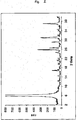
- the crystalline Form ⁇ of Ibandronate sodium is characterized by an XRPD pattern wherein the most prominent peaks are as follows: 2 ⁇ (degrees) ( ⁇ 0.2°) I/Imax (%) 4,9 100,0 6,0 8,8 9,9 0,5 11,0 0,5 13,6 0,4 14,0 0,5 16,0 0,2 17,1 0,8 18,6 0,9 19,4 0,7 19,9 1,2 22,1 0,4 23,8 0,4 24,7 0,5 25,9 0,7 26,5 0,5 28,0 0,5 28,4 0,6 30,3 0,7 34,9 0,3 36,3 0,7 having an X-ray powder diffraction pattern as shown in Figure 1 , wherein said crystalline form is an hemisolvate of 2-propanol and a hemihydrate.
- the invention provides a novel polymorphic crystalline form of Ibandronate sodium, herein designated as Form zeta.
- the crystalline Form zeta of Ibandronate sodium is characterized by an XRPD pattern comprising the following peaks: 2 ⁇ (degrees) ( ⁇ 0.2°) I/Imax (%) 6,2 100 12,3 1 14,5 1 15,1 1 16,9 2 17,3 2 18,0 1 19,6 1 20,0 1 21,1 1 21,5 1 24,7 2 25,9 5 26,7 2 27,6 1 29,2 2 31,0 4 34,6 1 37,2 3
- Form ⁇ is a stable solvate form, allowing the isolation and purification of ibandronate sodium in high yields.
- Hemihydrate Form zeta is a stable crystalline form, which may be obtained from the corresponding solvate form without degenerative phenomena. The new form zeta resulted to be more useful for formulation.
- Solvate ⁇ is useful for preparing said form.
- the invention provides a process for preparing the crystalline Form ⁇ of Ibandronate sodium comprising the steps of:
- the invention provides a process for preparing the crystalline Form zeta of Ibandronate sodium comprising the step of refluxing Form ⁇ in acetone with 5-6% (v/v) of water.
- the invention provides a process for preparing the crystalline Form zeta of Ibandronate sodium comprising:
- the invention provides a crystalline Form zeta of Ibandronate sodium for use as a medicament.
- the invention provides a pharmaceutical composition
- a pharmaceutical composition comprising the crystalline Form zeta of Ibandronate sodium, optionally together with at least one pharmaceutically acceptable excipient.
- excipient herein means any substance, not itself a therapeutic agent, used as a carrier or vehicle for delivery of a therapeutic agent to a subject or added to a pharmaceutical composition to improve its handling or storage properties or to permit or facilitate formation of a dose unit of the composition into a discrete article such as a tablet, capsule, pill, powder, granule, pellet, lozenge, pastille, elixir, syrup, solution, suspension, emulsion, drop, lotion, spray, tincture, cream, ointment, gel, unguent, suppository and transdermal devices for oral, enteral, parenteral or topical administrations.
- a discrete article such as a tablet, capsule, pill, powder, granule, pellet, lozenge, pastille, elixir, syrup, solution, suspension, emulsion, drop, lotion, spray, tincture, cream, ointment, gel, unguent, suppository and transdermal devices for oral, enteral, parenteral or
- unit dosage forms refers to physically discrete units suitable as unitary dosages for human subjects and other mammals, each unit containing a predetermined quantity of active material calculated to produce the desired therapeutic effect, in association with a suitable pharmaceutical excipient.
- Ibandronate sodium may be prepared in a manner that result in novel polymorphic forms that are until now unknown.
- the novel polymorphic forms have been designated as Forms ⁇ and ⁇ (zeta) of Ibandronate sodium.
- These novel forms of Ibandronate sodium arc found to be stable at room temperature, reproducible and suitable for pharmaceutical preparations. They can be prepared with efficient and economic processes particularly suited to large-scale preparation.
- the crystalline forms of the present invention may be recovered by methods well known to those skilled in the art for the separation of the crystallized solid from the mother liquor, for example by filtration, with or without the assistance of pressure and/or vacuum, or by centrifugation, or by decantation.
- the collected solid is washed with at least a solvent and dried by conventional means.
- the novel crystalline Form ⁇ of Ibandronate sodium has an XRPD pattern as depicted in Figur 1 .
- Most prominent peaks of XRPD pattern of Form ⁇ are as follows: 2 ⁇ (degrees) ( ⁇ 0.2°) I/Imax (%) 4,9 100,3 6,0 8,8 9,9 0,5 11,0 0,5 13,6 0,4 14,0 0,5 16,0 0,2 17,1 0,8 18,6 0,9 19,4 0,7 19,9 1,2 22,1 0,4 23,8 0,4 24,7 0,5 25,9 0,7 26,5 0,5 28,0 0,5 28,4 0,6 30,3 0,7 34,9 0,3 36,3 0,7
- the invention provides a process for the preparation of Form ⁇ of Ibandronate sodium comprising the steps of:
- the novel crystalline Form zeta has an XRPD pattern as depicted in Figure 2 .
- Form zeta may be isolated with a water content of 2.4-2.8% (determined by Karl Fischer method), which corresponds to a hemihydrate. When exposed to atmospheric humidity, Form zeta may uptake water to a content of 3.5-3.8%, showing no change in its XRPD pattern. A probable explanation for this behavior is that the crystal structure may accommodate additional loosely bound water.
- Form zeta shows a DSC curve as depicted in Figure 3 .
- the DSC of Form zeta is further characterized by an endothermic peak at about 172 °C and two close endothermic peaks at about 183 °C and 188 °C.
- Form zeta has shown stability in preliminary stability studies. Form zeta crystallizes in the form of little needles and plates. Advantageously, due to its morphology, Form zeta may be easier to filter and safer to handle and store.
- Crystalline Form zeta of Ibandronate sodium may be obtained by a process comprising the step of refluxing Form ⁇ in acetone with 5-6 % (v/v) of water.
- the system is preferably allowed to cool to isolate a solid.
- the solid may be dried under reduced pressure to render Form zeta.
- Crystalline Form zeta of Ibandronate sodium may also be obtained by a process comprising:
- the compound of the invention has useful therapeutic properties.
- the invention provides crystalline Form zeta for use as a medicament.
- the Form zeta of Ibandronate sodium may be administered per se or, preferably, as a pharmaceutical composition.
- the invention provides a pharmaceutical composition
- a pharmaceutical composition comprising the crystalline Form zeta, optionally together with at least one pharmaceutically acceptable excipient.
- the polymorphic forms may be used as single components or mixtures.
- Excipients include, by way of illustration and not limitation, diluents, fillers, agglutinants, disintegrants, disintegration inhibitors, absorption accelerators, binders, carriers, suspending/dispersing agents, film formers/coatings, adhesives, antiadherents, wetting agents, lubricants, glidants, preservatives, sorbents, surface active agents, substances added to mask or counteract a disagreeable taste or odor, flavorings, colorants, fragrances, aromatising agents, sweeteners and substances added to improve appearance of the composition.
- excipient compounds suitable to formulate a pharmaceutical composition.
- the choice of excipient will to a large extent depend on factors such as the particular mode of administration, the effect of the excipient on solubility and stability, and the nature of the dosage form.
- a crystalline Form zeta of Ibandronate sodium may be placed into the form of pharmaceutical compositions and unit dosages thereof, and in such form may be employed as solids, such as tablets, capsules, pills, powders, granules, pellets, lozenges, pastilles, or liquids, such as solutions, suspensions, emulsions, drops, lotions, sprays, tinctures, syrups, elixirs, or capsules filled with the same, all for oral use, or in the form of sterile injectable solutions for parenteral (including subcutaneous, intramuscular, and intravenous) use, or in the form of suppositories for rectal use, or in the form of creams, ointments, gels, unguents for topical use and other forms suitable for the inhalatory or transdermal administrations.
- Such pharmaceutical compositions and unit dosage forms thereof may comprise ingredients in conventional proportions, with or without additional active compounds or principles, and such unit dosage forms may contain any
- compositions containing a crystalline Form zeta of Ibandronate sodium can be prepared in a manner well known in the pharmaceutical art and comprise at least one active compound.
- the compounds of this invention are administered in a pharmaceutically effective amount.
- the amount of the compound actually administered will typically be determined by a physician, in the light of the relevant circumstances, including the condition to be treated, the chosen route of administration, the actual compound administered, the age, weight, and response of the individual patient, the severity of the patient's symptoms, and the like.
- compositions of the present invention can be administered by a variety of routes including oral, rectal, parenteral (including subcutaneous, intravenous, intramuscular), topical, transdermal, ophtalmic and intranasal.
- the compositions for oral administration can take the form of bulk liquid solutions or suspensions, or bulk powders. More commonly, however, the compositions arc presented in unit dosage forms to facilitate accurate dosing.
- Typical unit dosage forms include prefilled, premeasured ampoules or syringes of the liquid compositions or pills, tablets, capsules, powders, granules, pellets, lozenges, pastilles, suppositories or the like in the case of solid compositions.
- a crystalline Form zeta of Ibandronate sodium is usually a minor component (from about 0.1 to about 50% by weight or preferably from about 1 to about 40% by weight) with the remainder being various vehicles or carriers and processing aids helpful for forming the desired dosing form.
- Solid forms may include, for example, any of the following ingredients, or compounds of a similar nature: a binder, such as cellulose-derived materials like powdered cellulose, microcrystalline cellulose, microfine cellulose, methyl cellulose, ethyl cellulose, hydroxyethyl cellulose, hydroxypropyl cellulose, hydroxypropylmethyl cellulose, carboxymethyl cellulose salts and other substituted and unsubstituted celluloses, gum tragacanth or gelatine; an excipient, such as starch or lactose, a disintegrating agent, such as alginic acid, primogel, or corn starch; a lubricant, such as magnesium stearate, hydrogenated castor oil, polyethylene glycol; a glidant, such as colloidal silicon dioxide; a sweetening agent, such as sorbitol, sucrose, aspartame or saccharin; or a flavoring agent, such as maltol, vanillin, menthol, citric acid, pepper
- Liquid forms suitable for oral administration may include a suitable aqueous or nonaqueous vehicle with buffers, suspending and dispersing agents, colorants, flavors and the like.
- Injectable compositions are typically based upon injectable sterile saline or phosphate-buf-fered saline or other injectable carriers known in the art.
- a crystalline Form zeta of Ibandronate sodium in such compositions is typically a minor component, with the remainder being the injectable carrier and the like.
- Ibandronate sodium (20 g) was suspended at 20 °C in a round bottom flask containing water (100 mL) and 2-propanol (130 mL). While stirring, the mixture was heated to 85°C until a clear solution was obtained. Then the system was cooled to 15 °C and the resulting solid was filtered, washed with 2-propanol and dried under reduced pressure at 50 °C.
- Ibandronate sodium Form ⁇ (19 g), having an XRPD pattern as substantially depicted in Figure 1 was obtained.
- Ibandronate sodium Form ⁇ (isopropanol 9.5%; KF 2.0%; assay 88.3% on dry base; 42,2 g, 0.1088 mol) was suspended in 210 mL of acetone containing 5-6% v/v of water. The mixture was heated under stirring to reflux temperature (about 56°C) and kept in these conditions for 4-6 hours. The system spontaneously was allowed to cool to room temperature. The solid so obtained was filtered and washed with acetone obtaining wet product (54 g).
- Ibandronate sodium Form ⁇ (isopropanol 9.5%; KF 2.0%; assay 88.3% on dry base) was refluxed in 2-propanol. After filtration and drying at 135-140 °C under reduced pressure Ibandronate sodium hemihydrate Form zeta was afforded (KF 2.4%;), having an XRPD as substantially depicted respectively in Figure 2 .
Landscapes
- Chemical & Material Sciences (AREA)
- Organic Chemistry (AREA)
- Health & Medical Sciences (AREA)
- General Health & Medical Sciences (AREA)
- Life Sciences & Earth Sciences (AREA)
- Medicinal Chemistry (AREA)
- Nuclear Medicine, Radiotherapy & Molecular Imaging (AREA)
- Pharmacology & Pharmacy (AREA)
- General Chemical & Material Sciences (AREA)
- Animal Behavior & Ethology (AREA)
- Chemical Kinetics & Catalysis (AREA)
- Public Health (AREA)
- Veterinary Medicine (AREA)
- Biochemistry (AREA)
- Molecular Biology (AREA)
- Pharmaceuticals Containing Other Organic And Inorganic Compounds (AREA)
- Steroid Compounds (AREA)
Description
- The present invention relates to novel polymorphic forms of Ibandronate sodium, to processes for preparing them, to pharmaceutical compositions containing them, as well as their use.
- Ibandronate sodium is a third-generation nitrogen-containing biphosphonate derivative characterized by an aliphatic tertiary amine side chain.
- Ibandronate sodium is one of the most potent anti-resorptive drugs that directly inhibit osteoclast activity, presenting a pharmacologic alternative for controlling hypercalcemia. Ibandronate sodium binds to hydroxyapatite in calcified bones, rendering them resistant to hydrolytic dissolution by phosphatases, thereby inhibiting both normal and abnormal bone resorption. This drug increases bone mass and decreases the risk of fractures and is therefore particularly adapted to bone diseases and calcium metabolic disorders such as osteoporosis, osteolysis, Paget's disease, Bechterew's disease, bone metastases, urolithiasis, heterotropic ossifications, rheumatoid arthritis, osteoarthritis and degenerative arthrosis.
- Ibandronate sodium is a compound of Formula (I)

- [3-(N-methyl-N'-pentyl)-amino-1-hydroxypropane-1,1-diphosphonic acid monosodium salt], which is disclosed in
U.S. Patent 4,927,814 . It is marketed under the name of Boniva® for the treatment of bone disorders such as hypercalcaemia of malignancy, osteolysis, Paget's disease, osteoporosis, and metastatic bone disease. Ibandronate sodium is also marketed in Europe under the name of Bondronat®. - The present invention relates to novel polymorphic forms of Ibandronate sodium and processes for preparation thereof.
- Polymorphism is the property of some molecules and molecular complexes to assume more than one crystalline or amorphous form in the solid state. Substances are known which only appear in a single crystal form; in addition, however, there are also substances which can form two, three or even more polymorphic crystal modifications. In general, polymorphism is caused by the ability of the molecule of a substance to change its conformation or to form different inter molecular and intramolecular interactions, particularly hydrogen bonds, which is reflected in different atom arrangements in the crystal lattices of different polymorphs. Accordingly, polymorphs are distinct solids sharing the same molecular Formula, having distinct advantageous and/or disadvantageous physical properties compared to other forms in the polymorph family.
- The morphology and polymorphology of organo-chemical active substances is of great importance to the chemical and pharmaceutical development thereof.
- The relevant polymorphism of an organo-chemical substance is always unpredictable in respect of the number of crystal modifications, the stability thereof and their behaviour in a living organism.
- The different polymorphs of a substance possess different energies of the crystal lattice and, thus, they show different physical properties of the solid state such as form, density, melting point, colour, stability, dissolution rate, milling facility, granulation, compacting etc. These differences in morphology and polymorphism may have drastic effects on the flowability of the milled solid (flowability affects the ease with which the material is handled during processing into a pharmaceutical product; when particles of the powdered compound do not flow past each other easily, a formulation specialist must necessitate the use of glidants), development, transport stability and storage stability of individual administration forms, on the ability to produce different administration forms, on their application, on the solubility in polar or non-polar, protic or aprotic solvents, on solubility in aqueous solution, on solubility in the gastric juices, on solubility in blood serum, and finally on bio-availability. The rate of dissolution of an active ingredient in a patient's stomach fluid can have therapeutic consequences since it imposes an upper limit on the rate at which an orally-administered active ingredient can reach the patient's bloodstream. The rate of dissolution is also a consideration in formulating syrups, elixirs and other liquid medicaments. Other important properties of polymorphic forms relate to the ease of processing the form into pharmaceutical dosages, as the tendency of a powdered or granulated form to flow and the surface properties that determine whether crystals of the form will adhere to each other when compacted into a tablet. The polymorphic form may give rise to thermal behavior different from that of the amorphous material or another polymorphic form. Thermal behavior is measured in the laboratory by such techniques as capillary melting point, Differential Scanning Calorimetry (DSC) and can be used to distinguish some polymorphic forms from others. A particular polymorphic form may also give rise to distinct spectroscopic properties that may be detectable by X-Ray Powder Diffraction (XRPD).
- Generally, the crystalline solid has improved chemical and physical stability over the amorphous form, and forms with low crystallinity. They can also exhibit improved solubility, hygroscopicity, bulk properties, and/or flowability. The same also applies in respect of the physical and chemical properties of Ibandronate sodium.
- It has been found that Ibandronate sodium may exist in various polymorphs.
- According to the Patent Applications
WO-A-2006081962 andWO-A-2006081963 , two crystalline form of Ibandronate sodium, monohydrate salt, herein designated as Forms A and B, were disclosed. - The Patent Application
WO-A-2006024024 relates to solid amorphous and crystalline forms of Ibandronate sodium (herein designated as crystalline Forms C, D, E, F, G, H, J, K, K2, K3, Q, Q1, Q2, Q3, Q4, Q5, Q6, QQ, R, S, T) and processes for preparation thereof, where some forms of them are solvates. Form C can exist as monoethanolate, Form E can exist as hemibutanolate, Form R and S can exist as hemiethanolate. - The Patent Application
WO-A-2007074475 relates to novel polymorphic forms of Ibandronate sodium monohydrate and processes for their preparation. The novel crystalline forms are designated as Form I and Form II, and the amorphous Ibandronate sodium monohydrate as Form III. - The discovery of novel polymorphic forms of a pharmaceutically useful compound provides a new opportunity to improve the performance characteristics of a pharmaceutical product. It enlarges the repertoire of materials that a formulation scientist has available for designing a pharmaceutical dosage form, or a drug with a targeted release profile, or other desired characteristics, such as flowability and suitable rate of dissolution in aqueous fluid. Therefore, the preparation of novel crystalline forms of Ibandronate sodium is desirable.
- An object of the present invention is to provide novel polymorphic crystalline forms of Ibandronate sodium, processes for preparing them, pharmaceutical compositions containing them, as well as their use.
- The present invention provides Ibandronate sodium in new crystalline forms designated as Form ε and Form ζ (zeta).
- In one aspect, the invention provides a novel polymorphic crystalline form of Ibandronate sodium, herein designated as Form ε. The crystalline Form ε of Ibandronate sodium is characterized by an XRPD pattern wherein the most prominent peaks are as follows:
2θ (degrees) (± 0.2°) I/Imax (%) 4,9 100,0 6,0 8,8 9,9 0,5 11,0 0,5 13,6 0,4 14,0 0,5 16,0 0,2 17,1 0,8 18,6 0,9 19,4 0,7 19,9 1,2 22,1 0,4 23,8 0,4 24,7 0,5 25,9 0,7 26,5 0,5 28,0 0,5 28,4 0,6 30,3 0,7 34,9 0,3 36,3 0,7 Figure 1 , wherein said crystalline form is an hemisolvate of 2-propanol and a hemihydrate. - In another aspect, the invention provides a novel polymorphic crystalline form of Ibandronate sodium, herein designated as Form zeta. The crystalline Form zeta of Ibandronate sodium is characterized by an XRPD pattern comprising the following peaks:
2θ (degrees) (± 0.2°) I/Imax (%) 6,2 100 12,3 1 14,5 1 15,1 1 16,9 2 17,3 2 18,0 1 19,6 1 20,0 1 21,1 1 21,5 1 24,7 2 25,9 5 26,7 2 27,6 1 29,2 2 31,0 4 34,6 1 37,2 3 - characterized by an X-ray powder diffraction pattern as shown in
Figure 2 and wherein said form is a hemihydrate. - Form ε is a stable solvate form, allowing the isolation and purification of ibandronate sodium in high yields. Hemihydrate Form zeta is a stable crystalline form, which may be obtained from the corresponding solvate form without degenerative phenomena. The new form zeta resulted to be more useful for formulation. Solvate ε is useful for preparing said form.
- In another aspect, the invention provides a process for preparing the crystalline Form ε of Ibandronate sodium comprising the steps of:
- a) suspending ibandronate sodium in a mixture of water and 2-propanol;
- b) heating the suspension in order to obtain a clear solution;
- c) cooling the solution in order to crystallize a solid;
- d) recovering the crystalline form.
- In another aspect, the invention provides a process for preparing the crystalline Form zeta of Ibandronate sodium comprising the step of refluxing Form ε in acetone with 5-6% (v/v) of water. In another aspect, the invention provides a process for preparing the crystalline Form zeta of Ibandronate sodium comprising:
- a) refluxing in 2-propanol a crystalline Form ε,
- b) cooling the system to precipitate a solid,
- c) isolating the solid,
- d) drying at a temperature comprised in the range of 135-140°C under reduced pressure to render Form zeta.
- In another aspect, the invention provides a crystalline Form zeta of Ibandronate sodium for use as a medicament.
- In another aspect, the invention provides a pharmaceutical composition comprising the crystalline Form zeta of Ibandronate sodium, optionally together with at least one pharmaceutically acceptable excipient.
-
-
Figure 1 provides a characteristic XRPD pattern of crystalline Form ε of Ibandronate sodium. -
Figure 2 provides a characteristic XRPD pattern of crystalline Form zeta of Ibandronate sodium. -
Figure 3 provides a characteristic DSC curve of crystalline Form zeta of Ibandronate sodium. It shows a first transition at 172 °C, with an overall enthalpy (endo) of 9.0 J/gram and a second transition with two close peaks at 183 and 188 °C, with an overall enthalpy (endo) of 32 J/gram. -
Figure 4 provides a microscopic photograph of crystals of Form zeta of Ibandronate sodium. Measured crystal has the following dimensions 34.5 µm x 11.0 µm. - All terms as used herein in this application, unless otherwise stated, shall be understood in their ordinary meaning as known in the art. Other more specific definitions for certain terms as used in the present application are as set forth below and arc intended to apply uniformly through-out the specification and claims unless an otherwise expressly set out definition provides a broader definition.
- The term "about" encompasses the range of experimental error that may typically occur in a measurement.
- The term "excipient" herein means any substance, not itself a therapeutic agent, used as a carrier or vehicle for delivery of a therapeutic agent to a subject or added to a pharmaceutical composition to improve its handling or storage properties or to permit or facilitate formation of a dose unit of the composition into a discrete article such as a tablet, capsule, pill, powder, granule, pellet, lozenge, pastille, elixir, syrup, solution, suspension, emulsion, drop, lotion, spray, tincture, cream, ointment, gel, unguent, suppository and transdermal devices for oral, enteral, parenteral or topical administrations.
- The term "unit dosage forms" refers to physically discrete units suitable as unitary dosages for human subjects and other mammals, each unit containing a predetermined quantity of active material calculated to produce the desired therapeutic effect, in association with a suitable pharmaceutical excipient.
- We have now surprisingly found that Ibandronate sodium may be prepared in a manner that result in novel polymorphic forms that are until now unknown. The novel polymorphic forms have been designated as Forms ε and ζ (zeta) of Ibandronate sodium. These novel forms of Ibandronate sodium arc found to be stable at room temperature, reproducible and suitable for pharmaceutical preparations. They can be prepared with efficient and economic processes particularly suited to large-scale preparation.
- XRPD analysis was used to characterize polymorphic forms of Ibandronate sodium.
- XRPD analysis was performed on a APD 2000 Ital Structures diffractometer at room temperature, using a CuKα tube (40 kV, 30 mA, λ = 1.5418 Å) as the X-ray source. Data collection was made in 2θ step scan mode, at a scan speed of 0.02°/s (of 0.04% for Form zeta) in the range of 3° to 40° in 2θ. Approximately 100 mg samples were accurately grinded and placed on an aluminium sampler.
- DSC (Differential Scanning Calorimetry) was performed with sample held in a vented aluminium crucible and analyzed at a heating rate of 10 °C per minute.
- The crystalline forms of the present invention may be recovered by methods well known to those skilled in the art for the separation of the crystallized solid from the mother liquor, for example by filtration, with or without the assistance of pressure and/or vacuum, or by centrifugation, or by decantation. The collected solid is washed with at least a solvent and dried by conventional means.
- The novel crystalline Form ε of Ibandronate sodium has an XRPD pattern as depicted in
Figur 1 . Most prominent peaks of XRPD pattern of Form ε are as follows:2θ (degrees) (± 0.2°) I/Imax (%) 4,9 100,3 6,0 8,8 9,9 0,5 11,0 0,5 13,6 0,4 14,0 0,5 16,0 0,2 17,1 0,8 18,6 0,9 19,4 0,7 19,9 1,2 22,1 0,4 23,8 0,4 24,7 0,5 25,9 0,7 26,5 0,5 28,0 0,5 28,4 0,6 30,3 0,7 34,9 0,3 36,3 0,7 - In another aspect, the invention provides a process for the preparation of Form ε of Ibandronate sodium comprising the steps of:
- a) suspending Ibandronate sodium in a mixture of water and 2-propanol. Preferably, water and 2-propanol are in a ratio of about 1:3 to about 1:5 volume/volume. Preferably, Ibandronate sodium is in a ratio of about 1:4 to about 1:6 weight/volume with respect to water;
- b) heating the suspension in order to dissolve completely the Ibandronate sodium. Preferably, the mixture is heated to a temperature comprised in a range of about 80 to about 100 °C;
- c) Cooling the solution to a suitable temperature in order to crystallize a solid. A suitable temperature is comprised in a range of about 5 °C to about 25 °C; preferably, the temperature is comprised in a range of about 10 °C to about 20 °C; more preferably, the temperature is about 15 °C.
- d) recovering the crystalline form.
- The novel crystalline Form zeta has an XRPD pattern as depicted in
Figure 2 . Form zeta may be isolated with a water content of 2.4-2.8% (determined by Karl Fischer method), which corresponds to a hemihydrate. When exposed to atmospheric humidity, Form zeta may uptake water to a content of 3.5-3.8%, showing no change in its XRPD pattern. A probable explanation for this behavior is that the crystal structure may accommodate additional loosely bound water. Form zeta shows a DSC curve as depicted inFigure 3 . The DSC of Form zeta is further characterized by an endothermic peak at about 172 °C and two close endothermic peaks at about 183 °C and 188 °C. - Form zeta has shown stability in preliminary stability studies. Form zeta crystallizes in the form of little needles and plates. Advantageously, due to its morphology, Form zeta may be easier to filter and safer to handle and store.
- Crystalline Form zeta of Ibandronate sodium may be obtained by a process comprising the step of refluxing Form ε in acetone with 5-6 % (v/v) of water. The system is preferably allowed to cool to isolate a solid. The solid may be dried under reduced pressure to render Form zeta.
- Crystalline Form zeta of Ibandronate sodium may also be obtained by a process comprising:
- a) refluxing in 2-propanol a crystalline Form ε,
- b) cooling the system to precipitate a solid,
- c) isolating the solid,
- d) drying at a temperature comprised in the range of 135-140°C under reduced pressure to render Form zeta.
- One skilled in the art will appreciate that by adjusting concentration, temperature and time the yield of crystalline Forms ε and zeta of Ibandronate sodium may be optimized.
- As mentioned above the compound of the invention has useful therapeutic properties.
- In another aspect, the invention provides crystalline Form zeta for use as a medicament.
- The Form zeta of Ibandronate sodium may be administered per se or, preferably, as a pharmaceutical composition.
- In another aspect, the invention provides a pharmaceutical composition comprising the crystalline Form zeta, optionally together with at least one pharmaceutically acceptable excipient.
- The polymorphic forms may be used as single components or mixtures.
- Excipients include, by way of illustration and not limitation, diluents, fillers, agglutinants, disintegrants, disintegration inhibitors, absorption accelerators, binders, carriers, suspending/dispersing agents, film formers/coatings, adhesives, antiadherents, wetting agents, lubricants, glidants, preservatives, sorbents, surface active agents, substances added to mask or counteract a disagreeable taste or odor, flavorings, colorants, fragrances, aromatising agents, sweeteners and substances added to improve appearance of the composition.
- A person skilled in the art is aware of a whole variety of such excipient compounds suitable to formulate a pharmaceutical composition. The choice of excipient will to a large extent depend on factors such as the particular mode of administration, the effect of the excipient on solubility and stability, and the nature of the dosage form.
- A crystalline Form zeta of Ibandronate sodium, together with a conventionally employed excipient, may be placed into the form of pharmaceutical compositions and unit dosages thereof, and in such form may be employed as solids, such as tablets, capsules, pills, powders, granules, pellets, lozenges, pastilles, or liquids, such as solutions, suspensions, emulsions, drops, lotions, sprays, tinctures, syrups, elixirs, or capsules filled with the same, all for oral use, or in the form of sterile injectable solutions for parenteral (including subcutaneous, intramuscular, and intravenous) use, or in the form of suppositories for rectal use, or in the form of creams, ointments, gels, unguents for topical use and other forms suitable for the inhalatory or transdermal administrations. Such pharmaceutical compositions and unit dosage forms thereof may comprise ingredients in conventional proportions, with or without additional active compounds or principles, and such unit dosage forms may contain any suitable effective amount of the active ingredient commensurate with the intended daily dosage range to be employed.
- Pharmaceutical compositions containing a crystalline Form zeta of Ibandronate sodium can be prepared in a manner well known in the pharmaceutical art and comprise at least one active compound. Generally, the compounds of this invention are administered in a pharmaceutically effective amount. The amount of the compound actually administered will typically be determined by a physician, in the light of the relevant circumstances, including the condition to be treated, the chosen route of administration, the actual compound administered, the age, weight, and response of the individual patient, the severity of the patient's symptoms, and the like.
- The pharmaceutical compositions of the present invention can be administered by a variety of routes including oral, rectal, parenteral (including subcutaneous, intravenous, intramuscular), topical, transdermal, ophtalmic and intranasal. The compositions for oral administration can take the form of bulk liquid solutions or suspensions, or bulk powders. More commonly, however, the compositions arc presented in unit dosage forms to facilitate accurate dosing. Typical unit dosage forms include prefilled, premeasured ampoules or syringes of the liquid compositions or pills, tablets, capsules, powders, granules, pellets, lozenges, pastilles, suppositories or the like in the case of solid compositions. In such compositions, a crystalline Form zeta of Ibandronate sodium is usually a minor component (from about 0.1 to about 50% by weight or preferably from about 1 to about 40% by weight) with the remainder being various vehicles or carriers and processing aids helpful for forming the desired dosing form.
- Solid forms may include, for example, any of the following ingredients, or compounds of a similar nature: a binder, such as cellulose-derived materials like powdered cellulose, microcrystalline cellulose, microfine cellulose, methyl cellulose, ethyl cellulose, hydroxyethyl cellulose, hydroxypropyl cellulose, hydroxypropylmethyl cellulose, carboxymethyl cellulose salts and other substituted and unsubstituted celluloses, gum tragacanth or gelatine; an excipient, such as starch or lactose, a disintegrating agent, such as alginic acid, primogel, or corn starch; a lubricant, such as magnesium stearate, hydrogenated castor oil, polyethylene glycol; a glidant, such as colloidal silicon dioxide; a sweetening agent, such as sorbitol, sucrose, aspartame or saccharin; or a flavoring agent, such as maltol, vanillin, menthol, citric acid, pepper-mint, methyl salicylate, or orange flavoring.
- Liquid forms suitable for oral administration may include a suitable aqueous or nonaqueous vehicle with buffers, suspending and dispersing agents, colorants, flavors and the like.
- Injectable compositions are typically based upon injectable sterile saline or phosphate-buf-fered saline or other injectable carriers known in the art. As above mentioned, a crystalline Form zeta of Ibandronate sodium in such compositions is typically a minor component, with the remainder being the injectable carrier and the like.
- The above described components for orally administered or injectable compositions are merely representative. Further materials as well as processing techniques and the like are set out in Part 5 of Remington 's Pharmaceutical Sciences, 20th Edition, 2000, Merck Publishing Company, Easton, Pennsylvania, which is incorporated herein by reference. A crystalline Form zeta of Ibandronatc sodium of this invention can also be administered in sustained release forms or from sustained release drug delivery systems. A description of representative sustained release materials can also be found in the incorporated materials in Remington's Pharmaceutical Sciences.
- While the present invention has been described in terms of its specific embodiments, certain modifications and equivalents will be apparent to those skilled in the art and are included within the scope of the present invention.
- In the following, the present invention shall be illustrated by means of some examples, which arc not construed to be viewed as limiting the scope of the invention.
- Ibandronate sodium (20 g) was suspended at 20 °C in a round bottom flask containing water (100 mL) and 2-propanol (130 mL). While stirring, the mixture was heated to 85°C until a clear solution was obtained. Then the system was cooled to 15 °C and the resulting solid was filtered, washed with 2-propanol and dried under reduced pressure at 50 °C. Ibandronate sodium Form ε (19 g), having an XRPD pattern as substantially depicted in
Figure 1 , was obtained. - Ibandronate sodium Form ε (isopropanol 9.5%; KF 2.0%; assay 88.3% on dry base; 42,2 g, 0.1088 mol) was suspended in 210 mL of acetone containing 5-6% v/v of water. The mixture was heated under stirring to reflux temperature (about 56°C) and kept in these conditions for 4-6 hours. The system spontaneously was allowed to cool to room temperature. The solid so obtained was filtered and washed with acetone obtaining wet product (54 g). After drying under reduced pressure at 40-50°C to constant weight Ibandronate sodium hemihydrate Form zeta was afforded (36,0 g; KF 2.7%; 94,1% yield), having an XRPD as substantially depicted respectively in
Figure 2 . - Ibandronate sodium Form ε (isopropanol 9.5%; KF 2.0%; assay 88.3% on dry base) was refluxed in 2-propanol. After filtration and drying at 135-140 °C under reduced pressure Ibandronate sodium hemihydrate Form zeta was afforded (KF 2.4%;), having an XRPD as substantially depicted respectively in
Figure 2 . - Form zeta of Ibandronate sodium was placed under the following conditions:
- thermal stress at 70 - 75 °C under reduced pressure in an oven
- a nitrogen atmosphere at room temperature
- in a sealed polythene bag at room temperature.
- After one week under said conditions, no change was observed in its XRPD patterns.
Claims (11)
- A crystalline form of Ibandronate sodium (Form zeta) having an XRPD pattern comprising the following peaks:
2θ (degrees) (± 0.2°) I/Imax (%) 6,2 100 12,3 1 14,5 1 15,1 1 16,9 2 17,3 2 18,0 1 19,6 1 20,0 1 21,1 1 21,5 1 24,7 2 25,9 5 26,7 2 27,6 1 29,2 2 31,0 4 34,6 1 37,2 3 - A crystalline form according to claim 1, characterized by a DSC curve showing an endothermic peak at about 172 °C and two close endothermic peaks at about 183 °C and 188 °C.
- A crystalline form according to claim 1 for use as a medicament.
- A pharmaceutical composition comprising the crystalline form according to claim 1, optionally together with at least one pharmaceutically acceptable excipient.
- A crystalline form of Ibandronate sodium (Form ε) having an X-ray powder diffraction pattern wherein the most prominent peaks are as follows:
2θ (degrees) (± 0.2°) I/Imax (%) 4,9 100,0 6,0 8,8 9,9 0,5 11,0 0,5 13,6 0,4 14,0 0,5 16,0 0,2 17,1 0,8 18,6 0,9 19,4 0,7 19,9 1,2 22,1 0,4 23,8 0,4 24,7 0,5 25,9 0,7 26,5 0,5 28,0 0,5 28,4 0,6 30,3 0,7 34,9 0,3 36,3 0,7 - A process for preparing the crystalline form according to claim 5, which comprises the steps of:a) suspending Ibandronate sodium in a mixture of water and 2-propanol;b) heating the suspension in order to obtain a clear solution;c) cooling the solution in order to crystallize a solid;d) recovering the crystalline form.
- The process according to claim 6, wherein in step a) water and 2-propanol are in a ratio of about 1:3 to about 1:5 volume/volume.
- The process according to claim 6, wherein in step a) Ibandronate sodium is in a ratio of about 1:4 to about 1:6 weight/volume with to water.
- The process according to claim 6, wherein in step b) the suspension is heated to a temperature comprised in a range of about 80 to about 100 °C.
- A process for preparing the crystalline form according to claim 1, which comprises the step of refluxing in acetone with 5-6% (v/v) of water a crystalline Form ε according to claim 5.
- A process for preparing the crystalline form according to claim 1, which comprises:a) refluxing in 2-propanol a crystalline Form ε according to claim 5,b) cooling the system to precipitate a solid,c) isolating the solid,d) drying at a temperature comprised in the range of 135-140°C under reduced pressure to render Form zeta.
Priority Applications (1)
| Application Number | Priority Date | Filing Date | Title |
|---|---|---|---|
| EP08841088.1A EP2212338B1 (en) | 2007-10-26 | 2008-10-24 | Polymorphic forms of ibandronate sodium and processes for preparation thereof |
Applications Claiming Priority (4)
| Application Number | Priority Date | Filing Date | Title |
|---|---|---|---|
| EP07119358 | 2007-10-26 | ||
| EP08156592A EP2128166A1 (en) | 2008-05-20 | 2008-05-20 | Polymorphic forms of Ibandronate sodium and processes for preparation thereof |
| PCT/EP2008/064401 WO2009053445A2 (en) | 2007-10-26 | 2008-10-24 | Polymorphic forms of ibandronate sodium and processes for preparation thereof |
| EP08841088.1A EP2212338B1 (en) | 2007-10-26 | 2008-10-24 | Polymorphic forms of ibandronate sodium and processes for preparation thereof |
Publications (2)
| Publication Number | Publication Date |
|---|---|
| EP2212338A2 EP2212338A2 (en) | 2010-08-04 |
| EP2212338B1 true EP2212338B1 (en) | 2013-07-10 |
Family
ID=40157216
Family Applications (1)
| Application Number | Title | Priority Date | Filing Date |
|---|---|---|---|
| EP08841088.1A Not-in-force EP2212338B1 (en) | 2007-10-26 | 2008-10-24 | Polymorphic forms of ibandronate sodium and processes for preparation thereof |
Country Status (3)
| Country | Link |
|---|---|
| EP (1) | EP2212338B1 (en) |
| ES (1) | ES2428699T3 (en) |
| WO (1) | WO2009053445A2 (en) |
Family Cites Families (4)
| Publication number | Priority date | Publication date | Assignee | Title |
|---|---|---|---|---|
| DE602005025977D1 (en) * | 2004-08-23 | 2011-03-03 | Teva Pharma | CRYSTALLINE FORM OF IBANDRONATE SODIUM AND METHOD OF MANUFACTURING THEREOF |
| JP5828607B2 (en) * | 2005-02-01 | 2015-12-09 | エフ.ホフマン−ラ ロシュ アーゲーF. Hoffmann−La Roche Aktiengesellschaft | Ibandronate polymorph B |
| WO2007074475A2 (en) * | 2005-12-27 | 2007-07-05 | Natco Pharma Limited | Novel polymorphic forms of ibandronate |
| US20090012047A1 (en) * | 2006-11-16 | 2009-01-08 | Eran Turgeman | Crystalline forms of ibandronate sodium |
-
2008
- 2008-10-24 WO PCT/EP2008/064401 patent/WO2009053445A2/en not_active Ceased
- 2008-10-24 EP EP08841088.1A patent/EP2212338B1/en not_active Not-in-force
- 2008-10-24 ES ES08841088T patent/ES2428699T3/en active Active
Non-Patent Citations (3)
| Title |
|---|
| BRITTAIN: "X-RAY DIFFRACTION III: PHARMACEUTICAL APPLICATIONS", SPECTROSCOPY, ELSEVIER, AMSTERDAM, NL, vol. 16, 1 January 2001 (2001-01-01), pages 142 - 150, XP009082169, ISSN: 0712-4813 * |
| CAIRA M R: "CRYSTALLINE POLYMORPHISM OF ORGANIC COMPOUNDS", TOPICS IN CURRENT CHEMISTRY, SPRINGER, BERLIN, DE LNKD- DOI:10.1007/3-540-69178-2_5, vol. 198, 1 January 1998 (1998-01-01), pages 163 - 208, XP001156954 * |
| MCCRONE W C: "POLYMORPHISM", PHYSICS AND CHEMISTRY OF THE ORGANIC SOLID STATE, XX, XX, vol. 2, 1 January 1965 (1965-01-01), pages 725 - 767, XP001156955 * |
Also Published As
| Publication number | Publication date |
|---|---|
| WO2009053445A2 (en) | 2009-04-30 |
| EP2212338A2 (en) | 2010-08-04 |
| ES2428699T3 (en) | 2013-11-08 |
| WO2009053445A3 (en) | 2009-10-15 |
Similar Documents
| Publication | Publication Date | Title |
|---|---|---|
| US10487053B2 (en) | Acid addition salt of 1-(5-(2,4-difluorophenyl)-1-((3-fluorophenyl)sulfonyl)-4-methoxy-1H-pyrrol-3-yl)-N-methylmethanamine | |
| US11459297B2 (en) | Crystalline form of 1-(5-(2,4-difluorophenyl)-1-((3-fluorophenyl)sulfonyl)-4-methoxy-1H-pyrrol-3-yl)-N-methylmethanamine salt | |
| US8933114B2 (en) | Polymorphic forms of asenapine maleate and processes for their preparation | |
| EP1930011A2 (en) | Crystalline form of ibandronate sodium | |
| US20090076272A1 (en) | Polymorphs of eszopiclone malate | |
| EP1977744A1 (en) | Polymorphic Form alpha of (S)-Pregabalin and process for its preparation | |
| NO330528B1 (en) | New Salts of Benzazepine Compounds, Methods of Preparation thereof, and their Use in Pharmaceutical Compositions | |
| EP2128166A1 (en) | Polymorphic forms of Ibandronate sodium and processes for preparation thereof | |
| EP2083010A1 (en) | Polymorphic Forms of Moxifloxacin hydrochloride and processes for preparation thereof | |
| WO2009053445A2 (en) | Polymorphic forms of ibandronate sodium and processes for preparation thereof | |
| US10995083B2 (en) | Cocrystal of 2-(6-methyl-pyridine-2-yl)-3-yl-[6-amide-quinoline-4-yl]-5,6-dihydro-4H-pyrrole[1,2-b]pyrazole, preparation method therefor, and pharmaceutical composition | |
| US20100216831A1 (en) | Desloratadine crystalline forms mixtures having a low level of residual solvents | |
| US20070112073A1 (en) | Protriptyline hydrochloride crystalline form | |
| EP1751148A1 (en) | Ziprasidone hydrochloride polymorph and process for its preparation | |
| ZA200405263B (en) | Solid salts benzazepine compounds and their use in the preparation of pharmaceutical compounds. | |
| WO2010021745A2 (en) | Polymorphic forms of rosiglitazone hydrobromide and processes for their preparation |
Legal Events
| Date | Code | Title | Description |
|---|---|---|---|
| PUAI | Public reference made under article 153(3) epc to a published international application that has entered the european phase |
Free format text: ORIGINAL CODE: 0009012 |
|
| 17P | Request for examination filed |
Effective date: 20100526 |
|
| AK | Designated contracting states |
Kind code of ref document: A2 Designated state(s): AT BE BG CH CY CZ DE DK EE ES FI FR GB GR HR HU IE IS IT LI LT LU LV MC MT NL NO PL PT RO SE SI SK TR |
|
| AX | Request for extension of the european patent |
Extension state: AL BA MK RS |
|
| 17Q | First examination report despatched |
Effective date: 20101022 |
|
| DAX | Request for extension of the european patent (deleted) | ||
| TPAC | Observations filed by third parties |
Free format text: ORIGINAL CODE: EPIDOSNTIPA |
|
| GRAP | Despatch of communication of intention to grant a patent |
Free format text: ORIGINAL CODE: EPIDOSNIGR1 |
|
| GRAS | Grant fee paid |
Free format text: ORIGINAL CODE: EPIDOSNIGR3 |
|
| GRAA | (expected) grant |
Free format text: ORIGINAL CODE: 0009210 |
|
| AK | Designated contracting states |
Kind code of ref document: B1 Designated state(s): AT BE BG CH CY CZ DE DK EE ES FI FR GB GR HR HU IE IS IT LI LT LU LV MC MT NL NO PL PT RO SE SI SK TR |
|
| REG | Reference to a national code |
Ref country code: GB Ref legal event code: FG4D |
|
| REG | Reference to a national code |
Ref country code: AT Ref legal event code: REF Ref document number: 620942 Country of ref document: AT Kind code of ref document: T Effective date: 20130715 Ref country code: CH Ref legal event code: EP |
|
| REG | Reference to a national code |
Ref country code: IE Ref legal event code: FG4D |
|
| REG | Reference to a national code |
Ref country code: DE Ref legal event code: R096 Ref document number: 602008025967 Country of ref document: DE Effective date: 20130905 |
|
| PG25 | Lapsed in a contracting state [announced via postgrant information from national office to epo] |
Ref country code: SI Free format text: LAPSE BECAUSE OF FAILURE TO SUBMIT A TRANSLATION OF THE DESCRIPTION OR TO PAY THE FEE WITHIN THE PRESCRIBED TIME-LIMIT Effective date: 20130710 |
|
| REG | Reference to a national code |
Ref country code: ES Ref legal event code: FG2A Ref document number: 2428699 Country of ref document: ES Kind code of ref document: T3 Effective date: 20131108 |
|
| REG | Reference to a national code |
Ref country code: AT Ref legal event code: MK05 Ref document number: 620942 Country of ref document: AT Kind code of ref document: T Effective date: 20130710 |
|
| REG | Reference to a national code |
Ref country code: NL Ref legal event code: VDEP Effective date: 20130710 |
|
| REG | Reference to a national code |
Ref country code: LT Ref legal event code: MG4D |
|
| PG25 | Lapsed in a contracting state [announced via postgrant information from national office to epo] |
Ref country code: PT Free format text: LAPSE BECAUSE OF FAILURE TO SUBMIT A TRANSLATION OF THE DESCRIPTION OR TO PAY THE FEE WITHIN THE PRESCRIBED TIME-LIMIT Effective date: 20131111 Ref country code: AT Free format text: LAPSE BECAUSE OF FAILURE TO SUBMIT A TRANSLATION OF THE DESCRIPTION OR TO PAY THE FEE WITHIN THE PRESCRIBED TIME-LIMIT Effective date: 20130710 Ref country code: SE Free format text: LAPSE BECAUSE OF FAILURE TO SUBMIT A TRANSLATION OF THE DESCRIPTION OR TO PAY THE FEE WITHIN THE PRESCRIBED TIME-LIMIT Effective date: 20130710 Ref country code: HR Free format text: LAPSE BECAUSE OF FAILURE TO SUBMIT A TRANSLATION OF THE DESCRIPTION OR TO PAY THE FEE WITHIN THE PRESCRIBED TIME-LIMIT Effective date: 20130710 Ref country code: LT Free format text: LAPSE BECAUSE OF FAILURE TO SUBMIT A TRANSLATION OF THE DESCRIPTION OR TO PAY THE FEE WITHIN THE PRESCRIBED TIME-LIMIT Effective date: 20130710 Ref country code: BE Free format text: LAPSE BECAUSE OF FAILURE TO SUBMIT A TRANSLATION OF THE DESCRIPTION OR TO PAY THE FEE WITHIN THE PRESCRIBED TIME-LIMIT Effective date: 20130710 Ref country code: CY Free format text: LAPSE BECAUSE OF FAILURE TO SUBMIT A TRANSLATION OF THE DESCRIPTION OR TO PAY THE FEE WITHIN THE PRESCRIBED TIME-LIMIT Effective date: 20130904 Ref country code: IS Free format text: LAPSE BECAUSE OF FAILURE TO SUBMIT A TRANSLATION OF THE DESCRIPTION OR TO PAY THE FEE WITHIN THE PRESCRIBED TIME-LIMIT Effective date: 20131110 Ref country code: NO Free format text: LAPSE BECAUSE OF FAILURE TO SUBMIT A TRANSLATION OF THE DESCRIPTION OR TO PAY THE FEE WITHIN THE PRESCRIBED TIME-LIMIT Effective date: 20131010 |
|
| PGFP | Annual fee paid to national office [announced via postgrant information from national office to epo] |
Ref country code: GB Payment date: 20131028 Year of fee payment: 6 Ref country code: FR Payment date: 20131017 Year of fee payment: 6 Ref country code: DE Payment date: 20131029 Year of fee payment: 6 |
|
| PG25 | Lapsed in a contracting state [announced via postgrant information from national office to epo] |
Ref country code: PL Free format text: LAPSE BECAUSE OF FAILURE TO SUBMIT A TRANSLATION OF THE DESCRIPTION OR TO PAY THE FEE WITHIN THE PRESCRIBED TIME-LIMIT Effective date: 20130710 Ref country code: LV Free format text: LAPSE BECAUSE OF FAILURE TO SUBMIT A TRANSLATION OF THE DESCRIPTION OR TO PAY THE FEE WITHIN THE PRESCRIBED TIME-LIMIT Effective date: 20130710 Ref country code: FI Free format text: LAPSE BECAUSE OF FAILURE TO SUBMIT A TRANSLATION OF THE DESCRIPTION OR TO PAY THE FEE WITHIN THE PRESCRIBED TIME-LIMIT Effective date: 20130710 Ref country code: NL Free format text: LAPSE BECAUSE OF FAILURE TO SUBMIT A TRANSLATION OF THE DESCRIPTION OR TO PAY THE FEE WITHIN THE PRESCRIBED TIME-LIMIT Effective date: 20130710 Ref country code: GR Free format text: LAPSE BECAUSE OF FAILURE TO SUBMIT A TRANSLATION OF THE DESCRIPTION OR TO PAY THE FEE WITHIN THE PRESCRIBED TIME-LIMIT Effective date: 20131011 |
|
| PGFP | Annual fee paid to national office [announced via postgrant information from national office to epo] |
Ref country code: ES Payment date: 20131028 Year of fee payment: 6 Ref country code: IT Payment date: 20131023 Year of fee payment: 6 |
|
| PG25 | Lapsed in a contracting state [announced via postgrant information from national office to epo] |
Ref country code: CY Free format text: LAPSE BECAUSE OF FAILURE TO SUBMIT A TRANSLATION OF THE DESCRIPTION OR TO PAY THE FEE WITHIN THE PRESCRIBED TIME-LIMIT Effective date: 20130710 |
|
| PG25 | Lapsed in a contracting state [announced via postgrant information from national office to epo] |
Ref country code: SK Free format text: LAPSE BECAUSE OF FAILURE TO SUBMIT A TRANSLATION OF THE DESCRIPTION OR TO PAY THE FEE WITHIN THE PRESCRIBED TIME-LIMIT Effective date: 20130710 Ref country code: RO Free format text: LAPSE BECAUSE OF FAILURE TO SUBMIT A TRANSLATION OF THE DESCRIPTION OR TO PAY THE FEE WITHIN THE PRESCRIBED TIME-LIMIT Effective date: 20130710 Ref country code: EE Free format text: LAPSE BECAUSE OF FAILURE TO SUBMIT A TRANSLATION OF THE DESCRIPTION OR TO PAY THE FEE WITHIN THE PRESCRIBED TIME-LIMIT Effective date: 20130710 Ref country code: DK Free format text: LAPSE BECAUSE OF FAILURE TO SUBMIT A TRANSLATION OF THE DESCRIPTION OR TO PAY THE FEE WITHIN THE PRESCRIBED TIME-LIMIT Effective date: 20130710 Ref country code: CZ Free format text: LAPSE BECAUSE OF FAILURE TO SUBMIT A TRANSLATION OF THE DESCRIPTION OR TO PAY THE FEE WITHIN THE PRESCRIBED TIME-LIMIT Effective date: 20130710 |
|
| PLBE | No opposition filed within time limit |
Free format text: ORIGINAL CODE: 0009261 |
|
| STAA | Information on the status of an ep patent application or granted ep patent |
Free format text: STATUS: NO OPPOSITION FILED WITHIN TIME LIMIT |
|
| PG25 | Lapsed in a contracting state [announced via postgrant information from national office to epo] |
Ref country code: MC Free format text: LAPSE BECAUSE OF FAILURE TO SUBMIT A TRANSLATION OF THE DESCRIPTION OR TO PAY THE FEE WITHIN THE PRESCRIBED TIME-LIMIT Effective date: 20130710 |
|
| REG | Reference to a national code |
Ref country code: CH Ref legal event code: PL |
|
| 26N | No opposition filed |
Effective date: 20140411 |
|
| REG | Reference to a national code |
Ref country code: DE Ref legal event code: R097 Ref document number: 602008025967 Country of ref document: DE Effective date: 20140411 |
|
| REG | Reference to a national code |
Ref country code: IE Ref legal event code: MM4A |
|
| PG25 | Lapsed in a contracting state [announced via postgrant information from national office to epo] |
Ref country code: LI Free format text: LAPSE BECAUSE OF NON-PAYMENT OF DUE FEES Effective date: 20131031 Ref country code: CH Free format text: LAPSE BECAUSE OF NON-PAYMENT OF DUE FEES Effective date: 20131031 |
|
| PG25 | Lapsed in a contracting state [announced via postgrant information from national office to epo] |
Ref country code: IE Free format text: LAPSE BECAUSE OF NON-PAYMENT OF DUE FEES Effective date: 20131024 |
|
| REG | Reference to a national code |
Ref country code: DE Ref legal event code: R119 Ref document number: 602008025967 Country of ref document: DE |
|
| GBPC | Gb: european patent ceased through non-payment of renewal fee |
Effective date: 20141024 |
|
| PG25 | Lapsed in a contracting state [announced via postgrant information from national office to epo] |
Ref country code: TR Free format text: LAPSE BECAUSE OF FAILURE TO SUBMIT A TRANSLATION OF THE DESCRIPTION OR TO PAY THE FEE WITHIN THE PRESCRIBED TIME-LIMIT Effective date: 20130710 |
|
| PG25 | Lapsed in a contracting state [announced via postgrant information from national office to epo] |
Ref country code: BG Free format text: LAPSE BECAUSE OF FAILURE TO SUBMIT A TRANSLATION OF THE DESCRIPTION OR TO PAY THE FEE WITHIN THE PRESCRIBED TIME-LIMIT Effective date: 20130710 Ref country code: LU Free format text: LAPSE BECAUSE OF NON-PAYMENT OF DUE FEES Effective date: 20131024 Ref country code: DE Free format text: LAPSE BECAUSE OF NON-PAYMENT OF DUE FEES Effective date: 20150501 Ref country code: GB Free format text: LAPSE BECAUSE OF NON-PAYMENT OF DUE FEES Effective date: 20141024 Ref country code: HU Free format text: LAPSE BECAUSE OF FAILURE TO SUBMIT A TRANSLATION OF THE DESCRIPTION OR TO PAY THE FEE WITHIN THE PRESCRIBED TIME-LIMIT; INVALID AB INITIO Effective date: 20081024 |
|
| REG | Reference to a national code |
Ref country code: FR Ref legal event code: ST Effective date: 20150630 |
|
| PG25 | Lapsed in a contracting state [announced via postgrant information from national office to epo] |
Ref country code: MT Free format text: LAPSE BECAUSE OF FAILURE TO SUBMIT A TRANSLATION OF THE DESCRIPTION OR TO PAY THE FEE WITHIN THE PRESCRIBED TIME-LIMIT Effective date: 20130710 Ref country code: FR Free format text: LAPSE BECAUSE OF NON-PAYMENT OF DUE FEES Effective date: 20141031 Ref country code: IT Free format text: LAPSE BECAUSE OF NON-PAYMENT OF DUE FEES Effective date: 20141024 |
|
| REG | Reference to a national code |
Ref country code: ES Ref legal event code: FD2A Effective date: 20151127 |
|
| PG25 | Lapsed in a contracting state [announced via postgrant information from national office to epo] |
Ref country code: ES Free format text: LAPSE BECAUSE OF NON-PAYMENT OF DUE FEES Effective date: 20141025 |