EP2211577A1 - Method for wireless system selection optimization - Google Patents
Method for wireless system selection optimization Download PDFInfo
- Publication number
- EP2211577A1 EP2211577A1 EP09151086A EP09151086A EP2211577A1 EP 2211577 A1 EP2211577 A1 EP 2211577A1 EP 09151086 A EP09151086 A EP 09151086A EP 09151086 A EP09151086 A EP 09151086A EP 2211577 A1 EP2211577 A1 EP 2211577A1
- Authority
- EP
- European Patent Office
- Prior art keywords
- arfcn
- wireless
- wireless mobile
- location data
- memory
- Prior art date
- Legal status (The legal status is an assumption and is not a legal conclusion. Google has not performed a legal analysis and makes no representation as to the accuracy of the status listed.)
- Granted
Links
Images



Classifications
-
- H—ELECTRICITY
- H04—ELECTRIC COMMUNICATION TECHNIQUE
- H04W—WIRELESS COMMUNICATION NETWORKS
- H04W36/00—Hand-off or reselection arrangements
- H04W36/34—Reselection control
- H04W36/38—Reselection control by fixed network equipment
- H04W36/385—Reselection control by fixed network equipment of the core network
Definitions
- the present disclosure relates to wireless mobile networks and in particular to system selection by a mobile wireless device during initialization on a wireless network.
- a wireless mobile device In 3GPP wireless network deployments, carriers or service providers deploy multiple frequencies for distributing handling traffic capacity.
- initialization for example of a factory fresh device, or re-selection a wireless mobile device must scan a wide frequency range to determine the appropriate ARFCN (absolute radio frequency channel number) to enable access to the network as it has no knowledge yet as to which frequency is to be utilized.
- ARFCN absolute radio frequency channel number
- An exhaustive search can take a considerable length of time because there are a large number of potential frequencies to be scanned delaying a users initial access to the system. The scan typically occurs during initial start-up or when a 'full reset' type event occurs requiring the wireless mobile device to re-sync to the network. There is therefore a need for improved system selection by wireless mobile devices that reduces system access time.
- a method of system selection in a mobile wireless device operable on a 3GPP wireless network.
- An absolute radio frequency channel number (ARFCN) table is stored in a memory of the wireless mobile device. Location data associated with the wireless device is then retrieved prior to accessing the wireless network.
- An absolute radio frequency channel number (ARFCN) associated with the retrieved location data is determined from the ARFCN table stored in memory and system selection is then performed using the determined ARFCN.
- a wireless mobile device in a 3GPP wireless network comprises a memory and a control processor for executing instructions in the memory.
- the instructions comprising retrieving location data associated with the wireless device; determining an absolute radio frequency channel number (ARFCN) associated with the location data from a ARFCN table stored in memory in the wireless mobile device; and performing system selection using the determined ARFCN.
- ARFCN absolute radio frequency channel number
- An absolute radio frequency channel number (ARFCN) table is generated comprising location data and one or more associated ARFCNs.
- the ARFCN table is sent to each of the plurality of wireless mobile devices wherein each of the plurality of wireless mobile devices utilizes a selected ARFCN associated with determined location data when attempting to initialize on the wireless network.
- a server for enabling system selection by a plurality of wireless mobile devices in a 3GPP wireless network.
- the server comprising a memory and a processor for executing instructions in the memory.
- An absolute radio frequency channel number (ARFCN) table is generated comprising location data and one or more associated ARFCNs.
- the ARFCN table is sent to each of the plurality of wireless mobile devices wherein each of the plurality of wireless mobile devices utilizes a selected ARFCN associated with determined location data when attempting to initialize on the wireless network.
- ARFCN absolute radio frequency channel number
- 3GPP wireless networks are uniquely identified by a specific Mobile Country Code (MCC) and a specific Mobile Network Code (MNC).
- Wireless mobile devices are provisioned by carriers (service providers) to have a preferred MCC and MNC.
- a preferred list may be stored in a Subscriber Identity Module (SIM), a Universal SIM (USIM), or some other non-volatile memory module resident within the wireless mobile device.
- SIM Subscriber Identity Module
- USIM Universal SIM
- the MCC and MNC is utilized by the wireless mobile device to determine which system or network it should be operating on. However, the device must still scan the available frequencies to determine the appropriate ARFCN (absolute radio frequency channel number) to access the system.
- ARFCN absolute radio frequency channel number
- a table or service book identifying known ARFCNs associated with systems is provided.
- the wireless mobile device can then initiate scanning to access the system using a known ARFCN associated with the likely system rather than having to scan all possible ARFCNs.
- the table can be provisioned during manufacture or delivered to the wireless mobile device upon registration in the field over-the-air for storage with the device.
- the table identifies routing area identifier (RAI) defining a MCC.MNC and an associated ARFCN for the particular network.
- RAI routing area identifier
- location related data such as the MCC.MNC associated with the device can be determined from information stored on the SIM card in the device.
- location data can be based upon proprietary handset branding data associated with the operating software load in the device stored in flash memory 144. This information is then used to look up an ARFCN associated with the RAI combination enabling the device to tune directly to the ARFCN reducing required search time.
- the RAI in the table may include LAC (location area code) and RAC (routing area code) information providing additional granularity if different ARFCN's are used throughout the system.
- a GPS (Global Positioning System) receiver integrated in the device may be used to determine a location of the device prior to initialization enabling a location look-up in the ARFCN table.
- the handset system selection may be improved with prior knowledge of ARFCNs in it's current location. Examples are when a handset needs to rescan, for example, within RF coverage holes, or when a users manual wishes to rescan for frequencies.
- the ARFCN table may be generated based upon information provided directly by carriers and stored on a server connected to the network or accessible during manufacturing or provided by a protocol where handsets already in field report in to a central server the ARFCNs that are being seen.
- the table may be retrieved from the server and provided to a mobile device at manufacture or during initial programming.
- the server may be connected to one or more networks enabling updates to the ARFCN table to be received from carrier or from devices on the networks to update ARFCN table information.
- the updated ARFCN tables can then be provided to devices as required.
- FIG. 1 is a block diagram of a wireless mobile device 100 incorporating a communication subsystem having both a receiver 112 and a transmitter 114, as well as associated components such as one or more embedded or internal antenna elements 116 and 118, local oscillators (L0s) 113, and a processing module such as a digital signal processor (DSP) 120.
- the particular design of the communication subsystem will be dependent upon the communication network in which the device is intended to operate such as in a GSM, EDGE, UMTS, or 3GPP LTE networks.
- the wireless mobile device 100 performs synchronization, registration or activation procedures by sending and receiving communication signals over the network 102.
- Signals received by antenna 116 through communication network 100 are input to receiver 112, which may perform such common receiver functions as signal amplification, frequency down conversion, filtering, channel selection and the like, and in the example system shown in Figure 1 , analog to digital (A/D) conversion.
- A/D conversion of a received signal allows more complex communication functions such as demodulation, decoding and synchronization to be performed in the DSP 120.
- signals to be transmitted are processed, including modulation and encoding for example, by DSP 120 and input to transmitter 114 for digital to analog conversion, frequency up conversion, filtering, amplification and transmission over the communication network 102 via antenna 118.
- DSP 120 not only processes communication signals, but also provides for receiver and transmitter control. For example, the gains applied to communication signals in receiver 112 and transmitter 114 may be adaptively controlled through automatic gain control algorithms implemented in DSP 120.
- Wireless mobile device 100 preferably includes a radio processor 111 and a control processor 180 which together control the overall operation of the device.
- DSP 120 is located on radio processor 111. Communication functions are performed through radio processor 111.
- Radio processor 111 interacts with receiver 112 and transmitter 114, and further with flash memory 162, random access memory (RAM) 160, the subscriber identity module 164, a headset 168, a speaker 170, and a microphone 172.
- flash memory 162 random access memory (RAM) 160
- the subscriber identity module 164 the subscriber identity module 164
- a headset 168 the headset 168
- a speaker 170 the speaker 170
- a microphone 172 a microphone 172.
- Control processor 180 interacts with further device subsystems such as the display 122, flash memory 144, random access memory (RAM) 136, auxiliary input/output (I/O) subsystems 128, serial port 130, keyboard 132, other communications 138, GPS receiver 140 and other device subsystems generally designated as 142.
- display 122 flash memory 144
- RAM random access memory
- I/O auxiliary input/output subsystems 128, serial port 130, keyboard 132, other communications 138, GPS receiver 140 and other device subsystems generally designated as 142.
- Some of the subsystems shown in Figure 1 perform communication-related functions, whereas other subsystems may provide "resident" or on-device functions.
- some subsystems such as keyboard 132 and display 122, for example, may be used for both communication-related functions, such as entering a text message for transmission over a communication network, and device-resident functions such as a calculator or task list.
- Radio processor 111 and control processor 180 is preferably stored in a persistent store such as flash memory 144 and 162, which may instead be a read-only memory (ROM) or similar storage element (not shown).
- ROM read-only memory
- Those skilled in the art will appreciate that the operating system, specific device applications, or parts thereof, may be temporarily loaded into a volatile memory such as RAM 136 and RAM 160. Received communication signals may also be stored in RAM 136.
- flash memory 144 can be segregated into different areas for computer programs 146, device state 148, address book 150, other personal information management (PIM) 152 and other functionality such as the ARFCN table generally designated as 154. These different storage types indicate that each program can allocate a portion of flash memory 144 for their own data storage requirements.
- Control processor 180 in addition to its operating system functions, preferably enables execution of software applications on the mobile station.
- wireless mobile device 100 For voice communications, overall operation of wireless mobile device 100 is similar, except that received signals would preferably be output to the speaker 170 or headset 168 and signals for transmission would be generated by the microphone 172.
- Alternative voice or audio I/O subsystems such as a voice message recording subsystem, may also be implemented on mobile station 102.
- Serial port 130 in Figure 1 would normally be implemented in a personal digital assistant (PDA)-type wireless mobile device for which synchronization with a user's desktop computer (not shown) may be desirable, but is an optional device component.
- PDA personal digital assistant
- Such a port 130 would enable a user to set preferences through an external device or software application and would extend the capabilities of wireless mobile device 100 by providing for information or software downloads to wireless mobile device 100 other than through a wireless communication network.
- the alternate download path may for example be used to load an encryption key onto the device through a direct and thus reliable and trusted connection to thereby enable secure device communication.
- Other device subsystems 142 such as a short-range communications subsystem, is a further optional component which may provide for communication between wireless mobile device 100 and different systems or devices, which need not necessarily be similar devices.
- the subsystem 142 may include an infrared device and associated circuits and components or a BluetoothTM communication module to provide for communication with similarly enabled systems and devices.
- FIG. 2 shows a system diagram of server based system selection optimization.
- Server 150 may be coupled to storage device 156.
- the storage device 156 stores ARFCN table 160 and computer executable code for generating the ARFCN table and sending and receiving updates.
- the ARFCN table comprises an entry for every RAI (routing area identifier) 162.
- the RAI may be solely based upon MCC.MNC or be further resolved by MCC.MNC.LAC.RAC, where LAC (location area code) and RAC (routing area code) are used if the mobile device has data associated with the last LAC.RAC used while accessing the network.
- One or more ARFCNs 164 can then be associated with each RAI entry.
- the ARFCN may be provided by a carrier or by mobile wireless device provided updates as discussed in connection with Figure 5 . If device updates to the ARFCN table are enabled, a suspension tag 166 can also be identified for each entry. The suspension tag 166 identifies a date at which the identified ARFCN is deemed be expired and will be removed form the table unless an update is received from a device on the network identifying the ARFCN as active. The wireless mobile device uses the tag as a trigger to only send an update only when necessary.
- the ARFCN table may also include GPS coordinates ,providing a latitude and longitude, (not shown) associated with each RAI entry if a GPS receiver coupled to device is used during initialization or re-acquisition. The GPS coordinates in the ARFCN may be based on a range defining a service area for the RAI and ARFCN.
- Each system 110 and 120 have a unique MCC.MNC.
- Base stations 102, 106 and 122 can then be assigned to a unique MCC.MNC.LAC.RAC if different AFRCN are utilized within the same MCC.MNC network.
- the wireless network 110 and 120 are in communication with server 150.
- the server 150 may be a central server or be resident on each carriers network.
- the server 150 contains software stored in memory 154 and executed by one or more central processing units 152 for generating and sending (or pushing) ARFCN tables to devices in addition to receiving updates from wireless devices accessing the system.
- a wireless mobile device 116 receives the ARFCN table or service book which would be stored within non-volatile memory 144 of the device.
- updates may be provided from devices operating on the networks once initialized.
- device 112 can provide an update to the server 150 identifying an ARFCN change associated either with the carrier's wireless network 110 MCC.MNC or even the BTS 106 MCC.MNC.LAC.RAC.
- the updates are provided once the device is operating on the network and has determined that the ARFCN used for network access does not match the ARFCN identified in the ARFCN table.
- Updates to the ARFCN table can then be pushed to devices on the network such as devices 100 and 114 at periodic intervals to unsure the most current information is available.
- Figure 3 shows a method of ARFCN selection using a network identifier retrieved from the mobile wireless device 100. This method is distinct in that it bootstraps the handset with information on the assumption that most times, the initial use will be in the home MCC.MNC on particular ARFCNs.
- the wireless mobile device 100 receives an ARFCN table either during manufacture or initial programming or provisioning.
- the ARFCN is then stored 302 in memory of the mobile wireless device.
- the device When the device powers up, prior to acquiring a network and registering on the network, the device retrieves location data to determine or infer 304 what is the primary carrier associated with the device either by retrieving MCC.MNC information from the SIM or by accessing proprietary handset branding The handset may use and empty MRU (most recently used AFRCN) as a trigger to determine its likely location via carrier branding and thereby make use of the ARFCN table. information which identifies an associated MCC.MNC. A look-up 306 in the ARFCN table is performed to determine the associated ARFCN for the MCC.MNC. System selection is then performed 308 using the selected ARFCN frequency or a series of applicable ARFCNs.
- MRU most recently used AFRCN
- a periodic update can then be sent 312 over the wireless network to server 150 providing details regarding the MCC.MNC and the ARFCN used to access the system. If the system is accessed using the ARFCN, YES at 310, it can then be determined if the suspension tag associated with the ARFCN has expired 314. The suspension tag expiry is defined in relation to a date or time interval associated with the RAI entry in the ARFCN table 160 assigned by the server upon creation of the table. If the tag has expired, YES at 314, a periodic update can be sent to server 150 identifying that the ARFCN is still active 316. The suspension tag can then be increased at the next ARFCN update. If the suspension tag has not expired, NO at 314, initialization or re-acquisition is completed at 318. At 320 the device may then receive an updated ARFCN table for use during future re-initializations.
- Figure 4 shows a method of system selection using location data such as GPS location data.
- the wireless mobile device 100 receives an ARFCN table, either during manufacture or initial programming or provisioning.
- the ARFCN is then stored 400 in memory of the mobile wireless device.
- the mobile wireless device retrieves GPS location information 402 from an internal GPS receiver or from an external GPS source coupled to the device prior to system access during power up or re-initialization. As the device is not on the network, network assisted GPS is not utilized.
- a look-up 404 in the ARFCN table is performed to determine the associated ARFCN for the associated location.
- System selection is then performed 406 using the selected ARFCN frequency.
- a periodic update can then be sent 410 to server 150 providing details regarding the GPS location and the ARFCN used to access the system after successful system acquisition. If the system is accessed using the ARFCN, YES at 408, it can then be determined if the suspension tag associated with the ARFCN has expired 412. If the tag has expired, YES at 412, a periodic update can be sent to server 150 identifying that the ARFCN is still active 414. The suspension tag can then be increased at the next ARFCN update. If the suspension tag has not expired, NO at 412, initialization or re-acquisition is completed at 416. At 418 the device may then receive an updated ARFCN table for use during future re-initializations.
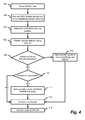
- Figure 5 shows a method of maintaining ARFCN tables at a server.
- the server may be used to provide ARFCN a stand alone server or integrated as software with other servers during the manufacturing processes or coupled to the carrier wireless network to provide updates.
- An initial ARFCN table is generated 502 for loading to the wireless mobile devices.
- the ARFCN table may be populated by either information provided by carriers or populated based upon data acquired from devices on the associated networks via update messages.
- the ARFCN table is then sent to mobiles devices either during manufacture or initial programming 504. Alternatively the table may be provided upon registration of the wireless mobile device with the server over the air and pushed to the device. If the mobile wireless device 100 software is configured to send updates, the server receives updates from information obtained by devices accessing systems or directly provided by carriers 506.
- the ARFCN for the associated RAI is replaced 510. If the ARFCN is not new, NO at 508, it is then determined if the update is associated with an existing ARFCN that has an expired suspension tag. If the suspension tag is expired in the update, YES at 512, the suspension tag is updated to a new value 514. If the tag in the updated is not expired, NO at 512, expired ARFCNs can then be removed from the table periodically 516 based upon a pre-defined time interval after the suspension tag expiry. The updated table can then be sent to devices 518 or provided for upload to new devices during manufacturing or provisioning.
Landscapes
- Engineering & Computer Science (AREA)
- Computer Networks & Wireless Communication (AREA)
- Signal Processing (AREA)
- Mobile Radio Communication Systems (AREA)
- Position Fixing By Use Of Radio Waves (AREA)
Abstract
Description
- The present disclosure relates to wireless mobile networks and in particular to system selection by a mobile wireless device during initialization on a wireless network.
- In 3GPP wireless network deployments, carriers or service providers deploy multiple frequencies for distributing handling traffic capacity. During initialization, for example of a factory fresh device, or re-selection a wireless mobile device must scan a wide frequency range to determine the appropriate ARFCN (absolute radio frequency channel number) to enable access to the network as it has no knowledge yet as to which frequency is to be utilized. An exhaustive search can take a considerable length of time because there are a large number of potential frequencies to be scanned delaying a users initial access to the system. The scan typically occurs during initial start-up or when a 'full reset' type event occurs requiring the wireless mobile device to re-sync to the network. There is therefore a need for improved system selection by wireless mobile devices that reduces system access time.
- In accordance with an aspect of the present disclosure there is provided a method of system selection in a mobile wireless device, the mobile wireless device operable on a 3GPP wireless network. An absolute radio frequency channel number (ARFCN) table is stored in a memory of the wireless mobile device. Location data associated with the wireless device is then retrieved prior to accessing the wireless network. An absolute radio frequency channel number (ARFCN) associated with the retrieved location data is determined from the ARFCN table stored in memory and system selection is then performed using the determined ARFCN.
- In accordance with another aspect another aspect of the present disclosure there is provided a wireless mobile device in a 3GPP wireless network. The wireless mobile device comprises a memory and a control processor for executing instructions in the memory. The instructions comprising retrieving location data associated with the wireless device; determining an absolute radio frequency channel number (ARFCN) associated with the location data from a ARFCN table stored in memory in the wireless mobile device; and performing system selection using the determined ARFCN.
- In accordance with yet another aspect of the present disclosure there is also provided a method on a server of enabling system selection by a plurality of wireless mobile devices in a 3GPP wireless network. An absolute radio frequency channel number (ARFCN) table is generated comprising location data and one or more associated ARFCNs. The ARFCN table is sent to each of the plurality of wireless mobile devices wherein each of the plurality of wireless mobile devices utilizes a selected ARFCN associated with determined location data when attempting to initialize on the wireless network.
- In accordance with still yet another aspect of the present disclosure there is provided a server for enabling system selection by a plurality of wireless mobile devices in a 3GPP wireless network. The server comprising a memory and a processor for executing instructions in the memory. An absolute radio frequency channel number (ARFCN) table is generated comprising location data and one or more associated ARFCNs. The ARFCN table is sent to each of the plurality of wireless mobile devices wherein each of the plurality of wireless mobile devices utilizes a selected ARFCN associated with determined location data when attempting to initialize on the wireless network.
- Further features and advantages of the present disclosure will become apparent from the following detailed description, taken in combination with the appended drawings, in which:
-
Figure 1 shows a block diagram of a wireless mobile device; -
Figure 2 shows a system diagram of server based system selection optimization; -
Figure 3 shows a method of ARFCN selection in a wireless mobile device using internal location data; -
Figure 4 shows a method of ARFCN selection in a wireless mobile device using a GPS location data; and -
Figure 5 shows a method of generating and maintaining ARFCN tables at a server. - It will be noted that throughout the appended drawings, like features are identified by like reference numerals.
- 3GPP wireless networks are uniquely identified by a specific Mobile Country Code (MCC) and a specific Mobile Network Code (MNC). Wireless mobile devices are provisioned by carriers (service providers) to have a preferred MCC and MNC. In addition, when the carrier has roaming agreements a preferred list may be stored in a Subscriber Identity Module (SIM), a Universal SIM (USIM), or some other non-volatile memory module resident within the wireless mobile device. The MCC and MNC is utilized by the wireless mobile device to determine which system or network it should be operating on. However, the device must still scan the available frequencies to determine the appropriate ARFCN (absolute radio frequency channel number) to access the system. As wireless mobile devices have no notion of which ARFCNs to first scan, the scan is exhaustive which can take a very long time.
- To accelerate the ability of a wireless mobile device to access a system during initialization or re-selection, a table or service book identifying known ARFCNs associated with systems is provided. The wireless mobile device can then initiate scanning to access the system using a known ARFCN associated with the likely system rather than having to scan all possible ARFCNs. The table can be provisioned during manufacture or delivered to the wireless mobile device upon registration in the field over-the-air for storage with the device. The table identifies routing area identifier (RAI) defining a MCC.MNC and an associated ARFCN for the particular network. When the mobile wireless device must acquire a system, location related data such as the MCC.MNC associated with the device can be determined from information stored on the SIM card in the device. Alternatively, location data can be based upon proprietary handset branding data associated with the operating software load in the device stored in
flash memory 144. This information is then used to look up an ARFCN associated with the RAI combination enabling the device to tune directly to the ARFCN reducing required search time. The RAI in the table may include LAC (location area code) and RAC (routing area code) information providing additional granularity if different ARFCN's are used throughout the system. Alternatively, a GPS (Global Positioning System) receiver integrated in the device may be used to determine a location of the device prior to initialization enabling a location look-up in the ARFCN table. By providing an ARFCN to the device prior to network access initial scans are much quicker thus decreasing the effective "time to find first channel" when powering on for the first time and enhancing the users first use experience. Further, even subsequent to a successful network access, the handset system selection may be improved with prior knowledge of ARFCNs in it's current location. Examples are when a handset needs to rescan, for example, within RF coverage holes, or when a users manual wishes to rescan for frequencies. - The ARFCN table may be generated based upon information provided directly by carriers and stored on a server connected to the network or accessible during manufacturing or provided by a protocol where handsets already in field report in to a central server the ARFCNs that are being seen. The table may be retrieved from the server and provided to a mobile device at manufacture or during initial programming. In addition the server may be connected to one or more networks enabling updates to the ARFCN table to be received from carrier or from devices on the networks to update ARFCN table information. The updated ARFCN tables can then be provided to devices as required.
-
Figure 1 is a block diagram of a wirelessmobile device 100 incorporating a communication subsystem having both areceiver 112 and atransmitter 114, as well as associated components such as one or more embedded orinternal antenna elements - The wireless
mobile device 100 performs synchronization, registration or activation procedures by sending and receiving communication signals over thenetwork 102. Signals received byantenna 116 throughcommunication network 100 are input toreceiver 112, which may perform such common receiver functions as signal amplification, frequency down conversion, filtering, channel selection and the like, and in the example system shown inFigure 1 , analog to digital (A/D) conversion. A/D conversion of a received signal allows more complex communication functions such as demodulation, decoding and synchronization to be performed in theDSP 120. - In a similar manner, signals to be transmitted are processed, including modulation and encoding for example, by
DSP 120 and input totransmitter 114 for digital to analog conversion, frequency up conversion, filtering, amplification and transmission over thecommunication network 102 viaantenna 118. DSP 120 not only processes communication signals, but also provides for receiver and transmitter control. For example, the gains applied to communication signals inreceiver 112 andtransmitter 114 may be adaptively controlled through automatic gain control algorithms implemented in DSP 120. - Wireless
mobile device 100 preferably includes aradio processor 111 and acontrol processor 180 which together control the overall operation of the device. DSP 120 is located onradio processor 111. Communication functions are performed throughradio processor 111. -
Radio processor 111 interacts withreceiver 112 andtransmitter 114, and further withflash memory 162, random access memory (RAM) 160, thesubscriber identity module 164, aheadset 168, aspeaker 170, and amicrophone 172. -
Control processor 180 interacts with further device subsystems such as thedisplay 122,flash memory 144, random access memory (RAM) 136, auxiliary input/output (I/O)subsystems 128,serial port 130,keyboard 132,other communications 138,GPS receiver 140 and other device subsystems generally designated as 142. - Some of the subsystems shown in
Figure 1 perform communication-related functions, whereas other subsystems may provide "resident" or on-device functions. Notably, some subsystems, such askeyboard 132 anddisplay 122, for example, may be used for both communication-related functions, such as entering a text message for transmission over a communication network, and device-resident functions such as a calculator or task list. - Software used by
radio processor 111 andcontrol processor 180 is preferably stored in a persistent store such asflash memory RAM 136 andRAM 160. Received communication signals may also be stored inRAM 136. - As shown,
flash memory 144 can be segregated into different areas forcomputer programs 146,device state 148,address book 150, other personal information management (PIM) 152 and other functionality such as the ARFCN table generally designated as 154. These different storage types indicate that each program can allocate a portion offlash memory 144 for their own data storage requirements.Control processor 180, in addition to its operating system functions, preferably enables execution of software applications on the mobile station. - For voice communications, overall operation of wireless
mobile device 100 is similar, except that received signals would preferably be output to thespeaker 170 orheadset 168 and signals for transmission would be generated by themicrophone 172. Alternative voice or audio I/O subsystems, such as a voice message recording subsystem, may also be implemented onmobile station 102. -
Serial port 130 inFigure 1 would normally be implemented in a personal digital assistant (PDA)-type wireless mobile device for which synchronization with a user's desktop computer (not shown) may be desirable, but is an optional device component. Such aport 130 would enable a user to set preferences through an external device or software application and would extend the capabilities of wirelessmobile device 100 by providing for information or software downloads to wirelessmobile device 100 other than through a wireless communication network. The alternate download path may for example be used to load an encryption key onto the device through a direct and thus reliable and trusted connection to thereby enable secure device communication. -
Other device subsystems 142, such as a short-range communications subsystem, is a further optional component which may provide for communication between wirelessmobile device 100 and different systems or devices, which need not necessarily be similar devices. For example, thesubsystem 142 may include an infrared device and associated circuits and components or a Bluetooth™ communication module to provide for communication with similarly enabled systems and devices. -
Figure 2 shows a system diagram of server based system selection optimization.Server 150 may be coupled tostorage device 156. Thestorage device 156 stores ARFCN table 160 and computer executable code for generating the ARFCN table and sending and receiving updates. The ARFCN table comprises an entry for every RAI (routing area identifier) 162. Depending on the granularity required, the RAI may be solely based upon MCC.MNC or be further resolved by MCC.MNC.LAC.RAC, where LAC (location area code) and RAC (routing area code) are used if the mobile device has data associated with the last LAC.RAC used while accessing the network. One or more ARFCNs 164 can then be associated with each RAI entry. The ARFCN may be provided by a carrier or by mobile wireless device provided updates as discussed in connection withFigure 5 . If device updates to the ARFCN table are enabled, asuspension tag 166 can also be identified for each entry. Thesuspension tag 166 identifies a date at which the identified ARFCN is deemed be expired and will be removed form the table unless an update is received from a device on the network identifying the ARFCN as active. The wireless mobile device uses the tag as a trigger to only send an update only when necessary. The ARFCN table may also include GPS coordinates ,providing a latitude and longitude, (not shown) associated with each RAI entry if a GPS receiver coupled to device is used during initialization or re-acquisition. The GPS coordinates in the ARFCN may be based on a range defining a service area for the RAI and ARFCN. - Each
system Base stations wireless network server 150. Theserver 150 may be a central server or be resident on each carriers network. Theserver 150 contains software stored inmemory 154 and executed by one or morecentral processing units 152 for generating and sending (or pushing) ARFCN tables to devices in addition to receiving updates from wireless devices accessing the system. During manufacture or initial programming by the carrier a wirelessmobile device 116 receives the ARFCN table or service book which would be stored withinnon-volatile memory 144 of the device. - In additional to directly editing the ARFCN table, updates may be provided from devices operating on the networks once initialized. For example,
device 112 can provide an update to theserver 150 identifying an ARFCN change associated either with the carrier'swireless network 110 MCC.MNC or even theBTS 106 MCC.MNC.LAC.RAC. The updates are provided once the device is operating on the network and has determined that the ARFCN used for network access does not match the ARFCN identified in the ARFCN table. Updates to the ARFCN table can then be pushed to devices on the network such asdevices -
Figure 3 shows a method of ARFCN selection using a network identifier retrieved from themobile wireless device 100. This method is distinct in that it bootstraps the handset with information on the assumption that most times, the initial use will be in the home MCC.MNC on particular ARFCNs. The wirelessmobile device 100 receives an ARFCN table either during manufacture or initial programming or provisioning. The ARFCN is then stored 302 in memory of the mobile wireless device. When the device powers up, prior to acquiring a network and registering on the network, the device retrieves location data to determine or infer 304 what is the primary carrier associated with the device either by retrieving MCC.MNC information from the SIM or by accessing proprietary handset branding The handset may use and empty MRU (most recently used AFRCN) as a trigger to determine its likely location via carrier branding and thereby make use of the ARFCN table. information which identifies an associated MCC.MNC. A look-up 306 in the ARFCN table is performed to determine the associated ARFCN for the MCC.MNC. System selection is then performed 308 using the selected ARFCN frequency or a series of applicable ARFCNs. If the ARFCN used is not successful at accessing the system, NO at 310, a periodic update can then be sent 312 over the wireless network toserver 150 providing details regarding the MCC.MNC and the ARFCN used to access the system. If the system is accessed using the ARFCN, YES at 310, it can then be determined if the suspension tag associated with the ARFCN has expired 314. The suspension tag expiry is defined in relation to a date or time interval associated with the RAI entry in the ARFCN table 160 assigned by the server upon creation of the table. If the tag has expired, YES at 314, a periodic update can be sent toserver 150 identifying that the ARFCN is still active 316. The suspension tag can then be increased at the next ARFCN update. If the suspension tag has not expired, NO at 314, initialization or re-acquisition is completed at 318. At 320 the device may then receive an updated ARFCN table for use during future re-initializations. -
Figure 4 shows a method of system selection using location data such as GPS location data. The wirelessmobile device 100 receives an ARFCN table, either during manufacture or initial programming or provisioning. The ARFCN is then stored 400 in memory of the mobile wireless device. The mobile wireless device retrievesGPS location information 402 from an internal GPS receiver or from an external GPS source coupled to the device prior to system access during power up or re-initialization. As the device is not on the network, network assisted GPS is not utilized. A look-up 404 in the ARFCN table is performed to determine the associated ARFCN for the associated location. System selection is then performed 406 using the selected ARFCN frequency. If the ARFCN used is not successful at accessing the system, NO at 408, a periodic update can then be sent 410 toserver 150 providing details regarding the GPS location and the ARFCN used to access the system after successful system acquisition. If the system is accessed using the ARFCN, YES at 408, it can then be determined if the suspension tag associated with the ARFCN has expired 412. If the tag has expired, YES at 412, a periodic update can be sent toserver 150 identifying that the ARFCN is still active 414. The suspension tag can then be increased at the next ARFCN update. If the suspension tag has not expired, NO at 412, initialization or re-acquisition is completed at 416. At 418 the device may then receive an updated ARFCN table for use during future re-initializations. -
Figure 5 shows a method of maintaining ARFCN tables at a server. The server may be used to provide ARFCN a stand alone server or integrated as software with other servers during the manufacturing processes or coupled to the carrier wireless network to provide updates. An initial ARFCN table is generated 502 for loading to the wireless mobile devices. The ARFCN table may be populated by either information provided by carriers or populated based upon data acquired from devices on the associated networks via update messages. The ARFCN table is then sent to mobiles devices either during manufacture orinitial programming 504. Alternatively the table may be provided upon registration of the wireless mobile device with the server over the air and pushed to the device. If themobile wireless device 100 software is configured to send updates, the server receives updates from information obtained by devices accessing systems or directly provided bycarriers 506. If a new ARFCN is identified in the update, YES at 508, the ARFCN for the associated RAI is replaced 510. If the ARFCN is not new, NO at 508, it is then determined if the update is associated with an existing ARFCN that has an expired suspension tag. If the suspension tag is expired in the update, YES at 512, the suspension tag is updated to anew value 514. If the tag in the updated is not expired, NO at 512, expired ARFCNs can then be removed from the table periodically 516 based upon a pre-defined time interval after the suspension tag expiry. The updated table can then be sent todevices 518 or provided for upload to new devices during manufacturing or provisioning. - While a particular embodiment of the present method for providing wireless system selection optimization has been described herein, it will be appreciated by those skilled in the art that changes and modifications may be made thereto without departing from the disclosure in its broadest aspects and as set forth in the following claims.
Claims (16)
- A method of system selection in a mobile wireless device (100), the mobile wireless device operable on a 3GPP wireless network (110, 120), the method comprising:storing (302, 400) an absolute radio frequency channel number (ARFCN) table (160) in memory of the wireless mobile;retrieving (304, 402) location data associated with the wireless device prior to accessing the wireless network;determining (306, 404) an ARFCN (164) associated with the retrieved location data from the ARFCN table stored in memory; andperforming (308, 406) system selection using the determined ARFCN.
- The method of claim 1 wherein the ARFCN table is stored in the memory of the wireless device at the time of manufacture (302, 400).
- The method of claim 2 wherein the ARFCN table identifies a routing area identifier (RAI) (162) comprising a mobile country code (MCC) and mobile network code (MNC).
- The method of claim 3 wherein the RAI further comprises a location area code (LAC) and routing area code (RAC).
- The method of claim 4 wherein the retrieved (402) location data is a global positioning system (GPS) location retrieved from a GPS receiver (140) coupled to the wireless mobile device (100), and the ARFCN table contains GPS location data associated with the RAI.
- The method of any one of claims 3 to 4 wherein the retrieved location data (304) is inferred based on a MCC.MNC retrieved from a subscriber identity module (SIM) (154) or based upon branding information associated with the operating software load (144) of the wireless mobile device to determine a corresponding MCC.MNC.
- The method of any one of claims 3 to 6 wherein the ARFCN table further comprises a suspension tag (166) identifying an expiry period for the ARFCN associated with an RAI entry.
- The method of any one of claims 1 to 7 further comprising:sending (312, 410) a periodic update to a server coupled to the wireless network, the update identifying an ARFCN not present in the ARFCN table on which the wireless mobile device successfully initialized; andsending (316, 414) a periodic update to a server coupled to the wireless network identifying that the ARFCN associated with an RAI is still active and has not expired.
- The method of any one of claims 1 to 8 further the stored ARFCN table is received (320, 418) as an updated ARFCN table over-the-air (320).
- A wireless mobile device in a 3GPP wireless network (110, 120), the wireless mobile device (100) comprising:a memory (144); anda control processor (180) for executing instructions in the memory comprising the method steps of claims 1 to 9.
- A method of enabling system selection by a plurality of wireless mobile devices (100, 112, 114, 116) in a 3GPP wireless network (110, 120), the method comprising:generating (502) an absolute radio frequency channel number (ARFCN) table (160) comprising location data and one or more associated ARFCNs; andsending (504) the ARFCN table (160) to each of the plurality of wireless mobile devices wherein each of the plurality of wireless mobile devices utilizes (100, 112, 114, 116) a selected ARFCN (164) associated with determined location data when attempting to initialize on the wireless network.
- The method of claim 11 wherein the location data is associated with routing area identifiers (RAls) (162) comprising a mobile country code (MCC) and mobile network code (MNC).
- The method of claim 12 wherein the ARFCN table further comprises a suspension tag (166) identifying an expiry period for the ARFCN associated with an RAI .
- The method of any one of claims 11 to 13 further comprising:receiving updates (506) from the plurality of wireless mobile devices (100, 112, 114, 116) through the wireless network, the updates providing information for updating new or existing ARFCNs associated with a particular RAI in the ARFCN table;updating (510) entries in the ARFCN table based upon the updates received from the plurality of wireless mobile devices; andsending (518) the updated ARFCN to the plurality of wireless mobile devices.
- The method of claim 14 further comprising periodically removing (516) ARFCN entries which have expired.
- A server (150) for enabling system selection by a plurality of wireless mobile devices in a 3GPP wireless network (100, 112, 114, 116), the server comprising:a memory (152); anda processor (154) for executing instructions in the memory comprising the steps of the method of any one of claims 11 to 15.
Priority Applications (6)
| Application Number | Priority Date | Filing Date | Title |
|---|---|---|---|
| AT09151086T ATE534254T1 (en) | 2009-01-22 | 2009-01-22 | METHOD FOR WIRELESS SYSTEM SELECTION OPTIMIZATION |
| EP11183785.2A EP2421303B1 (en) | 2009-01-22 | 2009-01-22 | Method for wireless system selection optimization |
| EP09151086A EP2211577B1 (en) | 2009-01-22 | 2009-01-22 | Method for wireless system selection optimization |
| PCT/CA2010/000092 WO2010083604A1 (en) | 2009-01-22 | 2010-01-22 | Method for wireless system selection optimization |
| CA2750556A CA2750556C (en) | 2009-01-22 | 2010-01-22 | Method for wireless system selection optimization |
| HK11100764.1A HK1146652B (en) | 2011-01-25 | Method for wireless system selection optimization |
Applications Claiming Priority (1)
| Application Number | Priority Date | Filing Date | Title |
|---|---|---|---|
| EP09151086A EP2211577B1 (en) | 2009-01-22 | 2009-01-22 | Method for wireless system selection optimization |
Related Child Applications (1)
| Application Number | Title | Priority Date | Filing Date |
|---|---|---|---|
| EP11183785.2 Division-Into | 2011-10-04 |
Publications (2)
| Publication Number | Publication Date |
|---|---|
| EP2211577A1 true EP2211577A1 (en) | 2010-07-28 |
| EP2211577B1 EP2211577B1 (en) | 2011-11-16 |
Family
ID=40723411
Family Applications (2)
| Application Number | Title | Priority Date | Filing Date |
|---|---|---|---|
| EP11183785.2A Active EP2421303B1 (en) | 2009-01-22 | 2009-01-22 | Method for wireless system selection optimization |
| EP09151086A Active EP2211577B1 (en) | 2009-01-22 | 2009-01-22 | Method for wireless system selection optimization |
Family Applications Before (1)
| Application Number | Title | Priority Date | Filing Date |
|---|---|---|---|
| EP11183785.2A Active EP2421303B1 (en) | 2009-01-22 | 2009-01-22 | Method for wireless system selection optimization |
Country Status (4)
| Country | Link |
|---|---|
| EP (2) | EP2421303B1 (en) |
| AT (1) | ATE534254T1 (en) |
| CA (1) | CA2750556C (en) |
| WO (1) | WO2010083604A1 (en) |
Cited By (2)
| Publication number | Priority date | Publication date | Assignee | Title |
|---|---|---|---|---|
| CN104754700A (en) * | 2013-12-31 | 2015-07-01 | 英特尔公司 | Device and method for public land mobile network searching |
| WO2016182614A1 (en) * | 2015-05-14 | 2016-11-17 | Qualcomm Incorporated | Optimized public land mobile network search to reduce data throughput degradation |
Families Citing this family (1)
| Publication number | Priority date | Publication date | Assignee | Title |
|---|---|---|---|---|
| CN106304019B (en) * | 2015-06-04 | 2020-01-21 | 中国移动通信集团公司 | Mobile terminal capability updating method and device and mobile terminal |
Citations (2)
| Publication number | Priority date | Publication date | Assignee | Title |
|---|---|---|---|---|
| WO2002076117A2 (en) | 2001-03-16 | 2002-09-26 | Qualcomm Incorporated | Accelerating acquisition of a preferred cellular system by a portable communication device using position location |
| WO2007103975A2 (en) | 2006-03-07 | 2007-09-13 | Qualcomm Incorporated | Network selection by wireless terminals |
Family Cites Families (4)
| Publication number | Priority date | Publication date | Assignee | Title |
|---|---|---|---|---|
| ITTO20010296A1 (en) * | 2001-03-30 | 2002-09-30 | Telecom Italia Lab Spa | METHOD FOR THE TRANSMISSION OF LOCALIZATION DATA OF MOBILE APPARATUS FOR MOBILE TELEPHONY. |
| EP1820361A1 (en) * | 2004-12-08 | 2007-08-22 | Telefonaktiebolaget LM Ericsson (publ) | Method and system for improved handover of mobile stations to unlicensed mobile access networks |
| EP1926251B1 (en) * | 2006-11-22 | 2015-01-07 | Motorola Mobility LLC | Intelligent scanning in preparation for handover |
| KR101450776B1 (en) * | 2007-12-04 | 2014-10-14 | 삼성전자주식회사 | Terminal performing camping using IMSI information and control method thereof |
-
2009
- 2009-01-22 EP EP11183785.2A patent/EP2421303B1/en active Active
- 2009-01-22 AT AT09151086T patent/ATE534254T1/en active
- 2009-01-22 EP EP09151086A patent/EP2211577B1/en active Active
-
2010
- 2010-01-22 CA CA2750556A patent/CA2750556C/en active Active
- 2010-01-22 WO PCT/CA2010/000092 patent/WO2010083604A1/en not_active Ceased
Patent Citations (2)
| Publication number | Priority date | Publication date | Assignee | Title |
|---|---|---|---|---|
| WO2002076117A2 (en) | 2001-03-16 | 2002-09-26 | Qualcomm Incorporated | Accelerating acquisition of a preferred cellular system by a portable communication device using position location |
| WO2007103975A2 (en) | 2006-03-07 | 2007-09-13 | Qualcomm Incorporated | Network selection by wireless terminals |
Cited By (4)
| Publication number | Priority date | Publication date | Assignee | Title |
|---|---|---|---|---|
| CN104754700A (en) * | 2013-12-31 | 2015-07-01 | 英特尔公司 | Device and method for public land mobile network searching |
| EP2903350A1 (en) * | 2013-12-31 | 2015-08-05 | Intel Corporation | Device and method for public land mobile network searching |
| US9357474B2 (en) | 2013-12-31 | 2016-05-31 | Intel Corporation | Device and method for public land mobile network searching |
| WO2016182614A1 (en) * | 2015-05-14 | 2016-11-17 | Qualcomm Incorporated | Optimized public land mobile network search to reduce data throughput degradation |
Also Published As
| Publication number | Publication date |
|---|---|
| WO2010083604A1 (en) | 2010-07-29 |
| EP2211577B1 (en) | 2011-11-16 |
| EP2421303A2 (en) | 2012-02-22 |
| HK1146652A1 (en) | 2011-06-24 |
| EP2421303B1 (en) | 2013-08-07 |
| ATE534254T1 (en) | 2011-12-15 |
| CA2750556C (en) | 2015-11-24 |
| EP2421303A3 (en) | 2012-07-04 |
| CA2750556A1 (en) | 2010-07-29 |
Similar Documents
| Publication | Publication Date | Title |
|---|---|---|
| US8768354B2 (en) | Wireless system selection optimization using absolute radio frequency channel number (ARFCN) table | |
| US7689218B2 (en) | Method, apparatus and computer program providing network-associated system priority list for multimode system selection | |
| US11902889B2 (en) | Wireless communication apparatus for managing access to plurality of wireless networks and management method thereof | |
| US11627448B2 (en) | Method and system for fast initialization of an electronic subscriber identity module at multiple locations | |
| US9155033B2 (en) | System and method for accelerating network selection by a wireless user equipment (UE) device | |
| KR101661221B1 (en) | Adaptive Data Communication Control Method And Portable Device supporting the same | |
| US7349695B2 (en) | Multimode roaming mobile devices | |
| US20080064393A1 (en) | Managing Multimode Roaming Mobile Devices | |
| US20100070963A1 (en) | Mobile communication terminal and method of updating software thereof | |
| US8406761B2 (en) | Initializing and provisioning user equipment having multi-network connectivity | |
| JP2013526818A (en) | Method and system for managing non-volatile items and provisioning files for communication devices with multiple service accounts | |
| US12375900B2 (en) | Secondary eSIM provisioning for wireless devices | |
| WO2024167583A1 (en) | ON-DEVICE SHARED PROVISIONING SIM/eSIM CONTROLLER FOR A WIRELESS DEVICE | |
| EP1869922A2 (en) | Mehtod and apparatus anc computer program providing network-associated system priority list for multimode system selection | |
| CA2750556C (en) | Method for wireless system selection optimization | |
| EP2217033A1 (en) | A method and a system for network information processing, a method for network searching, a server and a terminal | |
| US20170142645A1 (en) | Method for enhancing performance of a communications apparatus in a plmn search procedure and a communications apparatus utilizing the same | |
| CN101204106A (en) | Method, apparatus and computer program for providing network-dependent system priority for multi-mode system selection | |
| US20260113699A1 (en) | Selection of subscription profiles | |
| HK1146652B (en) | Method for wireless system selection optimization | |
| US20230171686A1 (en) | Network selection method and apparatus, device and storage medium | |
| EP3209066B1 (en) | Device and method of handling a public land mobile network selection | |
| ES2377429T3 (en) | Method for optimizing the section of a wireless system | |
| KR20250100629A (en) | Mobile device secret mode automatically reverts to default operating mode |
Legal Events
| Date | Code | Title | Description |
|---|---|---|---|
| PUAI | Public reference made under article 153(3) epc to a published international application that has entered the european phase |
Free format text: ORIGINAL CODE: 0009012 |
|
| 17P | Request for examination filed |
Effective date: 20090122 |
|
| AK | Designated contracting states |
Kind code of ref document: A1 Designated state(s): AT BE BG CH CY CZ DE DK EE ES FI FR GB GR HR HU IE IS IT LI LT LU LV MC MK MT NL NO PL PT RO SE SI SK TR |
|
| AX | Request for extension of the european patent |
Extension state: AL BA RS |
|
| AKX | Designation fees paid |
Designated state(s): AT BE BG CH CY CZ DE DK EE ES FI FR GB GR HR HU IE IS IT LI LT LU LV MC MK MT NL NO PL PT RO SE SI SK TR |
|
| AXX | Extension fees paid |
Extension state: BA Payment date: 20090122 Extension state: AL Payment date: 20090122 Extension state: RS Payment date: 20090122 |
|
| GRAP | Despatch of communication of intention to grant a patent |
Free format text: ORIGINAL CODE: EPIDOSNIGR1 |
|
| REG | Reference to a national code |
Ref country code: HK Ref legal event code: DE Ref document number: 1146652 Country of ref document: HK |
|
| GRAS | Grant fee paid |
Free format text: ORIGINAL CODE: EPIDOSNIGR3 |
|
| GRAA | (expected) grant |
Free format text: ORIGINAL CODE: 0009210 |
|
| AK | Designated contracting states |
Kind code of ref document: B1 Designated state(s): AT BE BG CH CY CZ DE DK EE ES FI FR GB GR HR HU IE IS IT LI LT LU LV MC MK MT NL NO PL PT RO SE SI SK TR |
|
| AX | Request for extension of the european patent |
Extension state: AL BA RS |
|
| REG | Reference to a national code |
Ref country code: GB Ref legal event code: FG4D |
|
| REG | Reference to a national code |
Ref country code: CH Ref legal event code: EP |
|
| REG | Reference to a national code |
Ref country code: IE Ref legal event code: FG4D |
|
| REG | Reference to a national code |
Ref country code: DE Ref legal event code: R096 Ref document number: 602009003678 Country of ref document: DE Effective date: 20120126 |
|
| REG | Reference to a national code |
Ref country code: HK Ref legal event code: GR Ref document number: 1146652 Country of ref document: HK |
|
| REG | Reference to a national code |
Ref country code: NL Ref legal event code: VDEP Effective date: 20111116 |
|
| REG | Reference to a national code |
Ref country code: ES Ref legal event code: FG2A Ref document number: 2377429 Country of ref document: ES Kind code of ref document: T3 Effective date: 20120327 |
|
| LTIE | Lt: invalidation of european patent or patent extension |
Effective date: 20111116 |
|
| PG25 | Lapsed in a contracting state [announced via postgrant information from national office to epo] |
Ref country code: NO Free format text: LAPSE BECAUSE OF FAILURE TO SUBMIT A TRANSLATION OF THE DESCRIPTION OR TO PAY THE FEE WITHIN THE PRESCRIBED TIME-LIMIT Effective date: 20120216 Ref country code: LT Free format text: LAPSE BECAUSE OF FAILURE TO SUBMIT A TRANSLATION OF THE DESCRIPTION OR TO PAY THE FEE WITHIN THE PRESCRIBED TIME-LIMIT Effective date: 20111116 Ref country code: IS Free format text: LAPSE BECAUSE OF FAILURE TO SUBMIT A TRANSLATION OF THE DESCRIPTION OR TO PAY THE FEE WITHIN THE PRESCRIBED TIME-LIMIT Effective date: 20120316 |
|
| PG25 | Lapsed in a contracting state [announced via postgrant information from national office to epo] |
Ref country code: LV Free format text: LAPSE BECAUSE OF FAILURE TO SUBMIT A TRANSLATION OF THE DESCRIPTION OR TO PAY THE FEE WITHIN THE PRESCRIBED TIME-LIMIT Effective date: 20111116 Ref country code: SI Free format text: LAPSE BECAUSE OF FAILURE TO SUBMIT A TRANSLATION OF THE DESCRIPTION OR TO PAY THE FEE WITHIN THE PRESCRIBED TIME-LIMIT Effective date: 20111116 Ref country code: BE Free format text: LAPSE BECAUSE OF FAILURE TO SUBMIT A TRANSLATION OF THE DESCRIPTION OR TO PAY THE FEE WITHIN THE PRESCRIBED TIME-LIMIT Effective date: 20111116 Ref country code: GR Free format text: LAPSE BECAUSE OF FAILURE TO SUBMIT A TRANSLATION OF THE DESCRIPTION OR TO PAY THE FEE WITHIN THE PRESCRIBED TIME-LIMIT Effective date: 20120217 Ref country code: PT Free format text: LAPSE BECAUSE OF FAILURE TO SUBMIT A TRANSLATION OF THE DESCRIPTION OR TO PAY THE FEE WITHIN THE PRESCRIBED TIME-LIMIT Effective date: 20120316 Ref country code: PL Free format text: LAPSE BECAUSE OF FAILURE TO SUBMIT A TRANSLATION OF THE DESCRIPTION OR TO PAY THE FEE WITHIN THE PRESCRIBED TIME-LIMIT Effective date: 20111116 Ref country code: NL Free format text: LAPSE BECAUSE OF FAILURE TO SUBMIT A TRANSLATION OF THE DESCRIPTION OR TO PAY THE FEE WITHIN THE PRESCRIBED TIME-LIMIT Effective date: 20111116 Ref country code: SE Free format text: LAPSE BECAUSE OF FAILURE TO SUBMIT A TRANSLATION OF THE DESCRIPTION OR TO PAY THE FEE WITHIN THE PRESCRIBED TIME-LIMIT Effective date: 20111116 Ref country code: HR Free format text: LAPSE BECAUSE OF FAILURE TO SUBMIT A TRANSLATION OF THE DESCRIPTION OR TO PAY THE FEE WITHIN THE PRESCRIBED TIME-LIMIT Effective date: 20111116 |
|
| PG25 | Lapsed in a contracting state [announced via postgrant information from national office to epo] |
Ref country code: CY Free format text: LAPSE BECAUSE OF FAILURE TO SUBMIT A TRANSLATION OF THE DESCRIPTION OR TO PAY THE FEE WITHIN THE PRESCRIBED TIME-LIMIT Effective date: 20111116 |
|
| PG25 | Lapsed in a contracting state [announced via postgrant information from national office to epo] |
Ref country code: SK Free format text: LAPSE BECAUSE OF FAILURE TO SUBMIT A TRANSLATION OF THE DESCRIPTION OR TO PAY THE FEE WITHIN THE PRESCRIBED TIME-LIMIT Effective date: 20111116 Ref country code: DK Free format text: LAPSE BECAUSE OF FAILURE TO SUBMIT A TRANSLATION OF THE DESCRIPTION OR TO PAY THE FEE WITHIN THE PRESCRIBED TIME-LIMIT Effective date: 20111116 Ref country code: EE Free format text: LAPSE BECAUSE OF FAILURE TO SUBMIT A TRANSLATION OF THE DESCRIPTION OR TO PAY THE FEE WITHIN THE PRESCRIBED TIME-LIMIT Effective date: 20111116 Ref country code: BG Free format text: LAPSE BECAUSE OF FAILURE TO SUBMIT A TRANSLATION OF THE DESCRIPTION OR TO PAY THE FEE WITHIN THE PRESCRIBED TIME-LIMIT Effective date: 20120216 Ref country code: CZ Free format text: LAPSE BECAUSE OF FAILURE TO SUBMIT A TRANSLATION OF THE DESCRIPTION OR TO PAY THE FEE WITHIN THE PRESCRIBED TIME-LIMIT Effective date: 20111116 |
|
| PG25 | Lapsed in a contracting state [announced via postgrant information from national office to epo] |
Ref country code: RO Free format text: LAPSE BECAUSE OF FAILURE TO SUBMIT A TRANSLATION OF THE DESCRIPTION OR TO PAY THE FEE WITHIN THE PRESCRIBED TIME-LIMIT Effective date: 20111116 Ref country code: MC Free format text: LAPSE BECAUSE OF NON-PAYMENT OF DUE FEES Effective date: 20120131 |
|
| REG | Reference to a national code |
Ref country code: AT Ref legal event code: MK05 Ref document number: 534254 Country of ref document: AT Kind code of ref document: T Effective date: 20111116 |
|
| PLBE | No opposition filed within time limit |
Free format text: ORIGINAL CODE: 0009261 |
|
| STAA | Information on the status of an ep patent application or granted ep patent |
Free format text: STATUS: NO OPPOSITION FILED WITHIN TIME LIMIT |
|
| 26N | No opposition filed |
Effective date: 20120817 |
|
| REG | Reference to a national code |
Ref country code: IE Ref legal event code: MM4A |
|
| REG | Reference to a national code |
Ref country code: DE Ref legal event code: R097 Ref document number: 602009003678 Country of ref document: DE Effective date: 20120817 |
|
| PG25 | Lapsed in a contracting state [announced via postgrant information from national office to epo] |
Ref country code: IE Free format text: LAPSE BECAUSE OF NON-PAYMENT OF DUE FEES Effective date: 20120122 Ref country code: AT Free format text: LAPSE BECAUSE OF FAILURE TO SUBMIT A TRANSLATION OF THE DESCRIPTION OR TO PAY THE FEE WITHIN THE PRESCRIBED TIME-LIMIT Effective date: 20111116 |
|
| PG25 | Lapsed in a contracting state [announced via postgrant information from national office to epo] |
Ref country code: MK Free format text: LAPSE BECAUSE OF FAILURE TO SUBMIT A TRANSLATION OF THE DESCRIPTION OR TO PAY THE FEE WITHIN THE PRESCRIBED TIME-LIMIT Effective date: 20111116 |
|
| PG25 | Lapsed in a contracting state [announced via postgrant information from national office to epo] |
Ref country code: FI Free format text: LAPSE BECAUSE OF FAILURE TO SUBMIT A TRANSLATION OF THE DESCRIPTION OR TO PAY THE FEE WITHIN THE PRESCRIBED TIME-LIMIT Effective date: 20111116 |
|
| PG25 | Lapsed in a contracting state [announced via postgrant information from national office to epo] |
Ref country code: MT Free format text: LAPSE BECAUSE OF FAILURE TO SUBMIT A TRANSLATION OF THE DESCRIPTION OR TO PAY THE FEE WITHIN THE PRESCRIBED TIME-LIMIT Effective date: 20111116 |
|
| REG | Reference to a national code |
Ref country code: CH Ref legal event code: PL |
|
| PG25 | Lapsed in a contracting state [announced via postgrant information from national office to epo] |
Ref country code: CH Free format text: LAPSE BECAUSE OF NON-PAYMENT OF DUE FEES Effective date: 20130131 Ref country code: LI Free format text: LAPSE BECAUSE OF NON-PAYMENT OF DUE FEES Effective date: 20130131 |
|
| PG25 | Lapsed in a contracting state [announced via postgrant information from national office to epo] |
Ref country code: TR Free format text: LAPSE BECAUSE OF FAILURE TO SUBMIT A TRANSLATION OF THE DESCRIPTION OR TO PAY THE FEE WITHIN THE PRESCRIBED TIME-LIMIT Effective date: 20111116 |
|
| PG25 | Lapsed in a contracting state [announced via postgrant information from national office to epo] |
Ref country code: LU Free format text: LAPSE BECAUSE OF NON-PAYMENT OF DUE FEES Effective date: 20120122 |
|
| PG25 | Lapsed in a contracting state [announced via postgrant information from national office to epo] |
Ref country code: HU Free format text: LAPSE BECAUSE OF FAILURE TO SUBMIT A TRANSLATION OF THE DESCRIPTION OR TO PAY THE FEE WITHIN THE PRESCRIBED TIME-LIMIT Effective date: 20090122 |
|
| REG | Reference to a national code |
Ref country code: DE Ref legal event code: R082 Ref document number: 602009003678 Country of ref document: DE Representative=s name: MERH-IP MATIAS ERNY REICHL HOFFMANN, DE |
|
| REG | Reference to a national code |
Ref country code: ES Ref legal event code: PC2A Owner name: BLACKBERRY LIMITED Effective date: 20141016 |
|
| REG | Reference to a national code |
Ref country code: DE Ref legal event code: R082 Ref document number: 602009003678 Country of ref document: DE Representative=s name: MERH-IP MATIAS ERNY REICHL HOFFMANN, DE Effective date: 20140925 Ref country code: DE Ref legal event code: R081 Ref document number: 602009003678 Country of ref document: DE Owner name: BLACKBERRY LIMITED, WATERLOO, CA Free format text: FORMER OWNER: RESEARCH IN MOTION LIMITED, WATERLOO, ONTARIO, CA Effective date: 20140925 Ref country code: DE Ref legal event code: R082 Ref document number: 602009003678 Country of ref document: DE Representative=s name: MERH-IP MATIAS ERNY REICHL HOFFMANN PATENTANWA, DE Effective date: 20140925 |
|
| REG | Reference to a national code |
Ref country code: FR Ref legal event code: PLFP Year of fee payment: 8 |
|
| REG | Reference to a national code |
Ref country code: FR Ref legal event code: PLFP Year of fee payment: 9 |
|
| REG | Reference to a national code |
Ref country code: FR Ref legal event code: PLFP Year of fee payment: 10 |
|
| REG | Reference to a national code |
Ref country code: DE Ref legal event code: R082 Ref document number: 602009003678 Country of ref document: DE Ref country code: DE Ref legal event code: R081 Ref document number: 602009003678 Country of ref document: DE Owner name: MALIKIE INNOVATIONS LTD., IE Free format text: FORMER OWNER: BLACKBERRY LIMITED, WATERLOO, ONTARIO, CA |
|
| PGFP | Annual fee paid to national office [announced via postgrant information from national office to epo] |
Ref country code: GB Payment date: 20260126 Year of fee payment: 18 |
|
| PGFP | Annual fee paid to national office [announced via postgrant information from national office to epo] |
Ref country code: ES Payment date: 20260210 Year of fee payment: 18 |
|
| PGFP | Annual fee paid to national office [announced via postgrant information from national office to epo] |
Ref country code: DE Payment date: 20260127 Year of fee payment: 18 |
|
| PGFP | Annual fee paid to national office [announced via postgrant information from national office to epo] |
Ref country code: IT Payment date: 20260123 Year of fee payment: 18 |
|
| PGFP | Annual fee paid to national office [announced via postgrant information from national office to epo] |
Ref country code: FR Payment date: 20260126 Year of fee payment: 18 |