EP2211112A2 - A method for starting premixed combustion in combustor for two-shaft gas turbine - Google Patents
A method for starting premixed combustion in combustor for two-shaft gas turbine Download PDFInfo
- Publication number
- EP2211112A2 EP2211112A2 EP10151248A EP10151248A EP2211112A2 EP 2211112 A2 EP2211112 A2 EP 2211112A2 EP 10151248 A EP10151248 A EP 10151248A EP 10151248 A EP10151248 A EP 10151248A EP 2211112 A2 EP2211112 A2 EP 2211112A2
- Authority
- EP
- European Patent Office
- Prior art keywords
- fuel
- combustor
- combustion
- premixed combustion
- amount
- Prior art date
- Legal status (The legal status is an assumption and is not a legal conclusion. Google has not performed a legal analysis and makes no representation as to the accuracy of the status listed.)
- Granted
Links
Images



Classifications
-
- F—MECHANICAL ENGINEERING; LIGHTING; HEATING; WEAPONS; BLASTING
- F23—COMBUSTION APPARATUS; COMBUSTION PROCESSES
- F23R—GENERATING COMBUSTION PRODUCTS OF HIGH PRESSURE OR HIGH VELOCITY, e.g. GAS-TURBINE COMBUSTION CHAMBERS
- F23R3/00—Continuous combustion chambers using liquid or gaseous fuel
- F23R3/28—Continuous combustion chambers using liquid or gaseous fuel characterised by the fuel supply
- F23R3/34—Feeding into different combustion zones
-
- F—MECHANICAL ENGINEERING; LIGHTING; HEATING; WEAPONS; BLASTING
- F02—COMBUSTION ENGINES; HOT-GAS OR COMBUSTION-PRODUCT ENGINE PLANTS
- F02C—GAS-TURBINE PLANTS; AIR INTAKES FOR JET-PROPULSION PLANTS; CONTROLLING FUEL SUPPLY IN AIR-BREATHING JET-PROPULSION PLANTS
- F02C7/00—Features, components parts, details or accessories, not provided for in, or of interest apart form groups F02C1/00 - F02C6/00; Air intakes for jet-propulsion plants
- F02C7/26—Starting; Ignition
-
- F—MECHANICAL ENGINEERING; LIGHTING; HEATING; WEAPONS; BLASTING
- F02—COMBUSTION ENGINES; HOT-GAS OR COMBUSTION-PRODUCT ENGINE PLANTS
- F02C—GAS-TURBINE PLANTS; AIR INTAKES FOR JET-PROPULSION PLANTS; CONTROLLING FUEL SUPPLY IN AIR-BREATHING JET-PROPULSION PLANTS
- F02C9/00—Controlling gas-turbine plants; Controlling fuel supply in air- breathing jet-propulsion plants
- F02C9/26—Control of fuel supply
- F02C9/32—Control of fuel supply characterised by throttling of fuel
- F02C9/34—Joint control of separate flows to main and auxiliary burners
-
- F—MECHANICAL ENGINEERING; LIGHTING; HEATING; WEAPONS; BLASTING
- F23—COMBUSTION APPARATUS; COMBUSTION PROCESSES
- F23N—REGULATING OR CONTROLLING COMBUSTION
- F23N5/00—Systems for controlling combustion
- F23N5/18—Systems for controlling combustion using detectors sensitive to rate of flow of air or fuel
- F23N5/184—Systems for controlling combustion using detectors sensitive to rate of flow of air or fuel using electronic means
-
- F—MECHANICAL ENGINEERING; LIGHTING; HEATING; WEAPONS; BLASTING
- F23—COMBUSTION APPARATUS; COMBUSTION PROCESSES
- F23N—REGULATING OR CONTROLLING COMBUSTION
- F23N2237/00—Controlling
- F23N2237/02—Controlling two or more burners
-
- F—MECHANICAL ENGINEERING; LIGHTING; HEATING; WEAPONS; BLASTING
- F23—COMBUSTION APPARATUS; COMBUSTION PROCESSES
- F23N—REGULATING OR CONTROLLING COMBUSTION
- F23N2237/00—Controlling
- F23N2237/04—Controlling at two or more different localities
-
- F—MECHANICAL ENGINEERING; LIGHTING; HEATING; WEAPONS; BLASTING
- F23—COMBUSTION APPARATUS; COMBUSTION PROCESSES
- F23N—REGULATING OR CONTROLLING COMBUSTION
- F23N2241/00—Applications
- F23N2241/20—Gas turbines
Definitions
- the present invention relates to a two-shaft gas turbine and a method for starting premixed combustion in a combustor for a two-shaft gas turbine.
- a general two-shaft gas turbine has a gas generator and a low-pressure turbine (power turbine).
- the gas generator includes a compressor, a combustor and a high-pressure turbine.
- the low-pressure turbine is connected to a load device.
- the gas generator has a rotary shaft separated from a rotary shaft of the low-pressure turbine.
- the compressor included in the gas generator compresses air.
- the compressed air and fuel are mixed and burned to form a combustion gas.
- the combustion gas formed in the combustor is transferred to the low-pressure turbine. Then, the low-pressure turbine is driven to rotate.
- both diffusion combustion and premixed combustion are carried out.
- fuel and air are burned while being mixed with each other.
- premixed combustion fuel and air are premixed and then burned.
- the diffusion combustion is carried out until a load is increased from zero to a certain level.
- the premixed combustion starts when the load reaches the certain level. This combustion process stabilizes a flame in the combustor and suppresses generation of a nitrogen oxide (NOx).
- NOx nitrogen oxide
- JP-07-280267-A discloses a combustor including a burner for diffuse combustion and a burner for premixed combustion.
- the burner for premixed combustion is arranged around the burner for diffusion combustion.
- the burner for premixed combustion includes a plurality of regions arranged in a circumferential direction of the burner for diffusion combustion. In the combustor, the premixed combustion can be carried out separately in each of the regions.
- the diffusion combustion is carried out until a load is increased from zero to a certain level. Then, a flame is stabilized in the combustor. After that, the premixed combustion starts on the basis of the amount of fuel that is to be introduced into the combustor. The amount of the fuel is increased with the increase in the load. A region in which the premixed combustion is to be carried out is selected from the plurality of regions on the basis of the amount of the fuel. The premixed combustion starts separately in each selected region. The number of the selected regions in which the premixed combustion is carried out is increased with the increase in the amount of the fuel that is to be introduced into the combustor. This method suppresses generation of a nitrogen oxide.
- a region in which the premixed combustion is to be carried out is selected from the plurality of regions on the basis of the amount of the fuel.
- the number of the selected regions in which the premixed combustion is carried out is increased with the increase in the amount of the fuel that is to be introduced into the combustor.
- the rotational rate of the rotary shaft of the gas generator varies according to the load.
- the opening degree of an air intake of the compressor is changed according to the rotational rate of the rotary shaft of the gas generator to control the amount of air that is to be introduced into the combustor.
- An object of the present invention is to provide a two-shaft gas turbine that is capable of starting premixed combustion without extinguishing a flame, and a method for starting the premixed combustion in a combustor for the two-shaft gas turbine.
- the present invention provides the two-shaft gas turbine and the method for starting the premixed combustion in the combustor for the two-shaft gas turbine.
- the two-shaft gas turbine includes a combustor having a burner for premixed combustion.
- the two-shaft gas turbine is capable of starting premixed combustion separately in each of regions included in the burner for premixed combustion.
- the two-shaft gas turbine selects at least one of the regions on the basis of a fuel-air ratio (ratio of the amount of fuel that is introduced into the combustor to the amount of air that is introduced into the combustor).
- the premixed combustion starts in the selected region or starts separately in each of the selected regions.
- the present invention provides the two-shaft gas turbine that is capable of starting the premixed combustion without extinguishing a flame, and the method for starting the premixed combustion in the combustor.
- a load L applied to a two-shaft gas turbine is plotted along a horizontal axis of the graph, and the amount F of fuel that is to be introduced into a combustor is plotted along a vertical axis of the graph.
- the atmospheric temperature T is plotted along a horizontal axis of the graph, and the amount F of the fuel that is to be introduced into the combustor is plotted along a vertical axis of the graph.
- Fig. 3A the load L is plotted along a horizontal axis of the graph, and the amount A of air that is to be introduced into the combustor is plotted along a vertical axis of the graph.
- Fig. 3B the atmospheric temperature T is plotted along a horizontal axis of the graph, and the amount of the air that is to be introduced into the combustor is plotted along a vertical axis of the graph.
- reference numeral 1 denotes the two-shaft gas turbine.
- the two-shaft gas turbine 1 includes a gas generator 2 and an output turbine 3.
- the output gas turbine 3 has a low-pressure turbine 4 and a load device 5.
- the low-pressure turbine 4 has an output turbine shaft 6 connected to the load device 5.
- the load device 5 is an electric generator, for example.
- the load device 5 outputs a load state signal Ls that indicates the state of the load.
- the state of the load includes the amount (hereinafter also referred to a load L) of the load.
- reference numeral 8 denotes the combustor.
- the gas generator 2 includes a compressor 7, the combustor 8, a high-pressure turbine 9 and a gas generator controller 10.
- the compressor 7 takes air from the atmosphere present outside the compressor 7, and then compresses the air.
- reference numeral 16 denotes the compressed air.
- the compressor 7 has an inlet guide vane (IGV) 11 on its air intake side, and also has an air intake 7a on the air intake side.
- IGV inlet guide vane
- the gas generator 2 has an IGV drive device 12 which drives IGV 11.
- the IGV 11 changes the opening degree of the air intake 7a of the compressor 7.
- the IGV 11 is driven to control the amount of air that is to be introduced into the compressor 7.
- the two-shaft gas turbine 1 has a fuel supply source 13.
- the gas generator 2 has a fuel control valve 14.
- reference numeral 15 denotes fuel.
- the fuel 15 is supplied from the fuel supply source 13 through the fuel control valve 14 to the combustor 8.
- the air 16 compressed by the compressor 7 is introduced into the compressor 8 in which the fuel 15 and the compressed air 16 are mixed and burned to form a combustion gas 17.
- the combustor 8 is described later in detail.
- the high-pressure turbine 9 has a gas generator shaft 18 that is a rotor.
- the high-pressure turbine 9 drives and rotates the gas generator shaft 18 by means of the combustion gas 17 formed in the combustor 8, and transfers the rotation of the gas generator shaft 18 to the compressor 7.
- the rotation of the gas generator shaft 18 decompresses the combustion gas 17.
- the decompressed combustion gas 17 is introduced into the low-pressure turbine 4 for driving and rotating the output turbine shaft 6 by means of the combustion gas 17.
- the gas generator 2 has a rotational rate detector 21.
- the rotational rate detector 21 detects a rotational rate ⁇ of the gas generator shaft 18, converts the detected rotational rate ⁇ into a rotational rate signal ⁇ s, and outputs the rotational rate signal ⁇ s to the gas generator controller 10.
- the gas generator controller 10 is capable of calculating the rotational rate ⁇ of the gas generator shaft 18 based on the rotational rate signal ⁇ s.
- the compressor 7 has an atmosphere temperature detector 23 installed in the air intake 7a and connected to the gas generator controller 10.
- the atmosphere temperature detector 23 detects the atmospheric temperature T to be introduced into the compressor 7, converts the detected atmospheric temperature T into a temperature signal Ts, and outputs the temperature signal Ts to the gas generator controller 10.
- the gas generator controller 10 is capable of calculating the atmospheric temperature T based on the temperature signal Ts.
- the gas generator controller 10 includes a fuel controller 10a, an IGV opening degree controller 10b and a switching controller 10c.
- the fuel controller 10a calculates an appropriate amount (amount F) of the fuel 15 (that is to be introduced into the combustor 8) based on the load state signal Ls transmitted by the load device 5 and the temperature signal Ts transmitted by the atmosphere temperature detector 23, and controls the opening degree of the fuel control valve 14 such that the amount of the fuel 15 to be introduced into the combustor 8 is equal to the calculated amount F.
- the load state signal Ls transmitted by the load device 5 indicates the state (including the amount (load L) of the load) of the load.
- the gas generator controller 10 is capable of calculating the load L based on the load state signal Ls transmitted by the load device 5.
- the two-shaft gas turbine 1 controls the amount F of the fuel 15 (that is to be introduced into the combustor 8) on the basis of the load L.
- the appropriate amount F of the fuel 15, which is calculated on the basis of the load L, may be determined by an experiment or the like beforehand.
- Fig. 2A shows an appropriate relationship between the load L applied to the two-shaft gas turbine 1 and the amount F of the fuel 15 that is to be introduced into the combustor 8.
- the fuel controller 10a included in the gas generator controller 10 calculates the load L on the basis of the load state signal Ls transmitted by the load device 5.
- the fuel controller 10a references the graph shown in Fig. 2 to calculate the appropriate amount F of the fuel 15 on the basis of the calculated load L.
- the fuel controller 10a included in the gas generator controller 10 calculates the atmospheric temperature T based on the temperature signal Ts transmitted by the atmosphere temperature detector 23.
- the fuel controller 10a references the graph shown in Fig. 2A to calculate the appropriate amount F of the fuel 15 based on the calculated atmospheric temperature T.
- the fuel controller 10a included in the gas generator controller 10 calculates an appropriate opening degree of the fuel control valve 14 on the basis of the calculated amount F of the fuel 15, and also drives the fuel control valve 14 such that the actual opening degree of the fuel control valve 14 is equal to the calculated opening degree.
- the relationship (shown in Fig. 2A ) between the load L and the amount F of the fuel, and the relationship (shown in Fig. 2B ) between the atmospheric temperature T and the amount F of the fuel 15, may be determined by an experiment or the like and are stored as map data (first map data) in a storage section (not shown).
- the fuel controller 10a included in the gas generator controller 10 references the first map data on the basis of the load L and the temperature T to calculate the appropriate amount F of the fuel 15.
- the load L is calculated on the basis of the load state signal Ls transmitted by the load device 5.
- the temperature T is calculated based on the temperature signal Ts transmitted by the atmosphere temperature detector 23 of the atmosphere.
- the IGV opening degree controller 10b included in the gas generator controller 10 calculates an appropriate amount A of the compressed air 16 to be introduced into the combustor 8, on the basis of the load L, the atmospheric temperature T, and the rotational rate ⁇ of the gas generator shaft 18.
- the load L is calculated on the basis of the load state signal Ls transmitted by the load device 5.
- the temperature T is calculated based on the temperature signal Ts transmitted by the atmosphere temperature detector 23.
- the rotational rate ⁇ is calculated based on the rotational rate signal ⁇ s transmitted by the rotational rate detector 21.
- the IGV opening degree controller 10b calculates, on the basis of the calculated amount A, the amount of air to be introduced into the compressor 7, and also calculates an appropriate opening degree of the air intake 7a such that the calculated amount of air is introduced into the compressor 7.
- the two-shaft gas turbine 1 controls, on the basis of the load L, the amount A of the compressed air 16 that is to be introduced into the combustor 8.
- the appropriate amount A of the compressed air 16, which is calculated on the basis of the load L, may be determined by an experiment or the like beforehand.
- the IGV opening degree controller 10b included in the gas generator controller 10 calculates the load L on the basis of the load state signal Ls transmitted by the load device 5.
- the IGV opening degree controller 10b then references the graph shown in Fig. 3A to calculate the appropriate amount A of the compressed air 16 on the basis of the calculated load L.
- the appropriate amount A of the compressed air 16 which is calculated on the basis of the load L, varies according to the atmospheric temperature T.
- the appropriate amount A of the compressed air 16 is reduced as the atmospheric temperature T increases, as shown in Fig. 3B .
- the relationship between the load L and the amount A of the compressed air 16 varies in a range At (defined by broken lines shown in Fig. 3A ) that varies according to the atmospheric temperature T.
- the IGV opening degree controller 10b included in the gas generator controller 10 calculates the atmospheric temperature T based on the temperature signal Ts transmitted by the atmosphere temperature detector 23. Then, the IGV opening degree controller 10b references the graph shown in Fig. 3A to calculate the amount A of the compressed air 16 based on the calculated atmospheric temperature T.
- the appropriate amount A of the compressed air 16 varies in response to the rotational rate ⁇ of the gas generator shaft 18.
- the graph shown in Fig. 3A and indicates relationship between the load L and the appropriate amount A (which is determined by the atmospheric temperature T) of the compressed air 16 is associated with the rotational rate ⁇ of the gas generator shaft 18.
- the graph (shown in Fig. 3A ) associated with the rotational rate ⁇ of the gas generator shaft 18 is set in the gas generator 2.
- the IGV opening degree controller 10b included in the gas generator controller 10 calculates the rotational rate ⁇ of the gas generator shaft 18 based on the rotational rate signal ⁇ s transmitted by the rotational rate detector 21.
- the IGV opening degree controller 10b references the graph shown in Fig. 3A to calculate the amount A of the compressed air 16 based on the calculated rotational rate ⁇ .
- the IGV opening degree controller 10b included in the gas generator controller 10 calculates an appropriate opening degree of the air intake 7a on the basis of the calculated amount A of the compressed air, and also drives the IGV 11 via the IGV drive device 12 such that the actual opening degree of the air intake 7a is equal to the calculated opening degree.
- Relationships among the load L, the atmospheric temperature T, the rotational rate ⁇ of the gas generator shaft 18 and the amount A of the compressed air 16 may be determined by an experiment or the like and are stored as map data (second map data) in the storage section (not shown).
- the IGV opening degree controller 10b included in the gas generator controller 10 references the second map data to calculate the amount A of the compressed air 16 on the basis of the load L, the atmospheric temperature T, and the rotational rate ⁇ of the gas generator shaft 18.
- the load L is calculated on the basis of the load state signal Ls transmitted by the load device 5.
- the temperature T is calculated based on the temperature signal Ts transmitted by the atmosphere temperature detector 23.
- the rotational rate ⁇ is calculated based on the temperature signal Ts transmitted by the rotational rate detector 21.
- the two-shaft gas turbine 1 shown in Fig. 1 is capable of controlling the amount F of the fuel 15 to be introduced into the combustor 8, on the basis of the load L and the atmospheric temperature T.
- the two-shaft gas turbine 1 is capable of controlling the amount A of the compressed air 16 (that is to be introduced into the combustor 8) on the basis of the load L, the atmospheric temperature T and the rotational rate ⁇ of the gas generator shaft 18.
- the ratio of the reduction in the amount F of the fuel 15 to the increase in the atmospheric temperature T is larger than the ratio of the reduction in the amount A of the compressed air 16 to the increase in the atmospheric temperature T.
- the ratio (hereinafter, also referred to as a fuel-air ratio (F/A)) of the amount F of the fuel 15 (that is to be introduced into the combustor 8) to the amount A of the compressed air 16 (that is to be introduced into the combustor 8) is reduced with the increase in the atmospheric temperature T.
- the switching controller 10c included in the gas generator controller 10 calculates the fuel-air ratio (F/A) on the basis of the amount F of the fuel 15 and the amount A of the compressed air 16.
- the amount F of the fuel 15 is calculated by the fuel controller 10a.
- the amount A of the compressed air 16 is calculated by the IGV opening degree controller 10b. Then, the switching controller 10c controls, on the basis of the calculated fuel-air ratio (F/A), combustion that is carried out in the combustor 8.
- the combustor 8 includes a combustor cover 80 and a diffusion pilot burner 81.
- the combustor cover 80 has a cylindrical shape with one end thereof closed.
- the diffusion pilot burner 81 used for diffusion combustion is located in a central inner space of the combustor cover 80.
- the combustor 8 also has a premix burner 82 circularly arranged around the outer circumference of the diffusion pilot burner 81.
- the premix burner 82 surrounds the outer circumference of the diffusion pilot burner 81.
- the premix burner 82 is used for premixed combustion and includes a plurality of combustion nozzles 82a and a plurality of flame holders 83.
- the combustor 8 also has a combustor liner 84a extending along the inner circumference of the combustor cover 80 to form a combustion chamber 84.
- a front side of the combustor 8 is regarded as the side on which the combustion chamber 84 is located.
- the compressed air 16 flows from the compressor 7 through a path formed between the combustor liner 84a and the combustor cover 80.
- the compressed air 16 is then divided into compressed air 16a and compressed air 16b.
- the compressed air 16b is supplied to the diffusion pilot burner 81, and the compressed air 16a is supplied to the premix burner 82.
- the combustor 8 also has a diffusion fuel system 85 and a premix fuel system 86.
- the fuel 15 is supplied from the fuel supply source 13 through the fuel control valve 14 to the combustor 8. Specifically, the fuel 15 that flows from the fuel supply source 13 through the fuel control valve 14 is introduced into both the diffusion fuel system 85 and the premix fuel system 86. Then, the fuel 15 introduced into the diffusion fuel system 85 is supplied to the diffusion pilot burner 81. The fuel 15 introduced into the premix fuel system 86 is supplied to the premix burner 82.
- the diffusion fuel system 85 has a flow rate control valve 85a that controls the amount of the fuel 15 to be supplied to the diffusion pilot burner 81.
- the flow rate control valve 85a is connected to the switching controller 10c included in the gas generator controller 10.
- the switching controller 10c transmits a control signal to the diffusion fuel system 85 to control the opening degree of the flow rate control valve 85a.
- the premixed fuel system 86 has a flow rate control valve 87 that controls the amount of the fuel 15 to be supplied to the premix burner 82.
- the flow rate control valve 87 is connected to the switching controller 10c included in the gas generator controller 10.
- the switching controller 10c transmits a control signal to the premixed fuel system 86 to control the opening degree of the flow rate control valve 87.
- the premix burner 82 includes four combustion regions 82f 1 , 82f 2 , 82f 3 and 82f 4 in which the premixed combustion is to be carried out.
- the premix burner 82 included in the combustor 8 according to the present embodiment is viewed from the front side of the combustor 8 (or from the side of the combustion chamber 84) as shown in Fig. 4B , the four combustion regions 82f 1 , 82f 3 , 82f 4 and 82f 2 are arranged in this order from the upper side of the combustor 8 in the clockwise direction surrounding the outer circumference of the diffusion pilot burner 81.
- the areas of the four combustion regions are substantially equal to each other.
- the premixed combustion can be carried out separately in each of the combustion regions 82f 1 , 82f 2 , 82f 3 and 82f 4 .
- the premix fuel system 86 shown in Fig. 4A includes four premix fuel systems 86f 1 , 86f 2 , 86f 3 and 86f 4 .
- the four premix fuel systems 86f 1 , 86f 2 , 86f 3 and 86f 4 are capable of supplying the fuel 15 to the respective combustion regions 82f 1 , 82f 2 , 82f 3 and 82f 4 .
- Each of the premix fuel systems 86f 1 , 86f 2 , 86f 3 and 86f 4 has its corresponding flow rate control valve 87f 1 , 87f 2 , 87f 3 or 87f 4 respectively.
- Fig. 4 shows the premix fuel systems 86f 1 , 86f 4 and the flow rate control valves 87f 1 , 87f 4 .
- the combustor 8 configured described above, when the fuel 15 is supplied to the diffusion pilot burner 81, the fuel 15 and the compressed air 16b are mixed and burned by the diffusion burner 81 in the combustion chamber 84. In this way, diffusion combustion is carried out in the combustion chamber 84.
- the fuel 15 is supplied to the premix burner 82 through the combustion nozzles 82a, the fuel 15 and the compressed air 16a are mixed (premixed) in the premix burner 82 and then burned in the combustion chamber 84. In this way, premixed combustion is carried out in the combustion chamber 84.
- both the diffusion combustion by the diffusion pilot burner 81 and the premixed combustion by the premix burner 82 can be carried out simultaneously.
- the premix burner 82 is capable of separately supplying the fuel 15 to each of the combustion regions 82f 1 to 82f 4 .
- the premixed combustion can be carried out separately in each of the combustion regions 82f 1 to 82f 4 when the fuel 15 is supplied to the combustion region.
- the switching controller 10c selects at least one of the combustion regions 82f 1 to 82f 4 to which the fuel 15 is supplied, the premixed combustion starts in the selected combustion region or starts separately in each of the selected combustion regions.
- the switching controller 10c controls the flow rate control valve 87f 1 such that the flow rate control valve 87f 1 is open to supply the fuel 15 to the combustion region 82f 1 .
- the switching controller 10c controls the flow rate control valves 87f 1 and 87f 2 such that the flow rate control valves 87f 1 and 87f 2 are open to supply the fuel 15 to the combustion regions 82f 1 and 82f 2 .
- the premixed combustion can start separately in each of the combustion regions 82f 1 to 82f 4 .
- the gas generator controller 10 controls the combustor 8 to carry out the diffusion combustion and form a stable flame by means of the diffusion pilot burner 81 until the load L is increased from zero to a certain level.
- the gas generator controller 10 controls the combustor 8 to start the premixed combustion by means of the premixed burner 82 so as to suppress generation of NOx.
- the gas generator controller 10 selects at least one of the combustion regions 82f 1 to 82f 4 on the basis of the load L applied to the two-shaft gas turbine 1 to allow the premixed combustion to be carried out in the selected combustion region or regions.
- the gas generator controller 10 controls the combustor 8 such that the premixed combustion starts in the selected combustion region or starts separately in each of the selected combustion regions.
- the gas generator controller 10 controls the start of the premixed combustion in the combustor 8 such that the number of the selected combustion regions in which the premixed combustion is to be carried out is increased with the increase in the load L. In this way, the gas generator controller 10 appropriately suppresses generation of NOx.
- a controller that controls the combustor included in the one-shaft gas turbine changes the operational state of the combustor on the basis of the amount F (that varies according to the load) of fuel that is to be introduced into the combustor, thereby appropriately suppressing generation of NOx.
- the two-shaft gas turbine 1 shown in Fig. 1 controls the amount A of the compressed air (that is to be introduced into the combustor 8) based on the rotational rate ⁇ of the gas generator shaft 18.
- the rotational rate ⁇ of the gas generator shaft 18 is changed on the basis of the load L. If the gas generator controller 10 changes the operational state of the combustor 8 on the basis of the amount F of the fuel that is to be introduced into the combustor 8, a flame may be extinguished.
- a change point P1 is set when the load L is zero.
- the low-pressure turbine 4 rotates at a rotational rate that is approximately 30% of rated rotational speed, for example.
- the switching controller 10c included in the gas generator controller 10 shown in Fig. 4A controls the combustor 8 to start the diffusion combustion by means of the diffusion pilot burner 81 included in the combustor 8.
- the switching controller 10c controls the flow rate control valve 85a such that the flow rate control valve 85a is open to supply the fuel 15 to the diffusion pilot burner 81.
- the opening degree of the fuel control valve 14 is set such that the amount F of the fuel, which is set in the graph shown in Fig. 2A when the load L is zero, is to be introduced into the combustor 8.
- the fuel controller 10a included in the gas generator controller 10 references the graph shown in Fig. 2A to calculate the amount F of the fuel 15 on the basis of the load L and the atmospheric temperature T.
- the IGV opening degree controller 10b references the graph shown in Fig. 3A to calculate the amount A of the compressed air 16 on the basis of the load L, the atmospheric temperature T and the rotational rate ⁇ of the gas generator shaft 18.
- the switching controller 10c included in the gas generator controller 10 calculates the fuel-air ratio (F/A) on the basis of the calculated amount F of the fuel 15 and the calculated amount A of the compressed air 16.
- the fuel-air ratio (F/A) is increased with the increase in the load L.
- the switching controller 10c controls the flow rate control valve 87f 1 included in the premix fuel system 86f 1 such that the flow rate control valve 87f 1 is open to supply the fuel 15 to the combustion region 82f 1 included in the premix burner 82.
- the premixed combustion starts in the combustion region 82f 1 included in the premix burner 82.
- the preset fuel-air ratio FA 1 is a ratio corresponding to a change point P21 at which the premixed combustion starts in the combustion region 82f 1 included in the premix burner 82.
- the preset fuel-air ratio FA 1 may be predetermined by an experiment or the like and set as a fuel-air ratio (F/A) that is appropriate for starting the premixed combustion in the combustion region 82f 1 included in the premix burner 82.
- the fuel controller 10a included in the gas generator controller 10 calculates the amount F of the fuel on the basis of the load L and the atmospheric temperature T.
- the IGV opening degree controller 10b included in the gas generator controller 10 calculates the amount A of the compressed air on the basis of the load L, the atmospheric temperature T and the rotational rate ⁇ of the gas generator shaft 18.
- the switching controller 10c included in the gas generator controller 10 calculates the fuel-air ratio (F/A) on the basis of the calculated amounts F and A.
- the switching controller 10c controls the flow rate control valve 87f 2 included in the premix fuel system 86f 2 such that the flow rate control valve 87f 2 is open to supply the fuel 15 to the combustion region 82f 2 included in the premix burner 82.
- the premixed combustion starts in the combustion region 82f 2 included in the premix burner 82.
- the preset fuel-air ratio FA 2 is a ratio corresponding to a change point 22 at which the premixed combustion starts in the combustion region 82f 2 included in the premix burner 82.
- the preset fuel-air ratio FA 2 may be determined by an experiment or the like and set as a fuel-air ratio (F/A) that is appropriate for starting the premix combustion in the combustion region 82f 2 included in the premix burner 82.
- the switching controller 10c controls the flow rate control valve 87f 3 included in the premix fuel system 86f 3 such that the flow rate control valve 87f 3 is open to supply the fuel 15 to the combustion region 82f 3 included in the premix burner 82.
- the switching controller 10c controls the flow rate control valve 87f 4 included in the premix fuel system 86f 4 such that the flow rate control valve 87f 4 is open to supply the fuel 15 to the combustion region 82f 4 included in the premix burner 82.
- the premixed combustion sequentially starts in the combustion regions 82f 3 and 82f 4 included in the premix burner 82.
- the preset fuel-air ratio FA 3 is a ratio corresponding to a change point P23 at which the premixed combustion starts in the combustion region 82f 3 included in the premix burner 82.
- the preset fuel-air ratio FA 3 may be determined by an experiment or the like and set as a fuel-air ratio (F/A) that is appropriate for starting the premixed combustion in the combustion region 82f 3 included in the premix burner 82.
- the preset fuel-air ratio FA 4 is a ratio corresponding to a change point P24 at which the premixed combustion starts in the combustion region 82f 4 included in the premix burner 82.
- the preset fuel-air ratio FA 4 may be determined by an experiment or the like and set as a fuel-air ratio (F/A) that is appropriate for starting the premixed combustion in the combustion region 82f 4 included in the premix burner 82.
- the two-shaft gas turbine 1 is capable of operating in a rated range.
- the premixed combustion can starts in the combustion regions 82f 1 to 82f 4 under the condition that the fuel-air ratios (F/A) are appropriate for the premixed combustion. This can suppress such a problem as extinction of a flame.
- the gas generator controller 10 changes the operational state of the combustor 8 when the fuel-air ratio (F/A) is equal to any of the preset fuel-air ratios FA 1 to FA 4 .
- the gas generator controller 10 changes the operational state of the combustor 8 when the fuel-air ratio (F/A) is equal to any of the preset fuel-air ratios FA 1 to FA 4 regardless of how the load L and the fuel-air ratio (F/A) are changed.
- the preset fuel-air ratios FA 1 to FA 4 are appropriate for starting the premixed combustion in the respective combustion regions 82f 1 to 82f 4 included in the premix burner 82.
- the appropriate preset fuel-air ratios FA 1 to FA 4 suppress the fact that a flame is extinguished when the premixed combustion starts in the combustion regions 82f 1 to 82f 4 included in the premix burner 82.
- the premix burner 82 When the premix burner 82 according to the present embodiment is viewed from the front side of the combustor 8 (or from the side of the combustion chamber 84) as shown in Fig. 4B , the four combustion regions 82f 1 , 82f 3 , 82f 4 and 82f 2 have areas substantially equal to each other, and are arranged in the order from the upper side of the combustor 8 in the clockwise direction surrounding the outer circumference of the diffusion pilot burner 81. In such a configuration, the premixed combustion initially starts in the upper combustion region 82f 1 , thereby reducing a deviation in the temperature distribution of the gas in the high-pressure turbine 9.
- the change points P21 to P24 (at which the operational state of the combustor 8 is changed) are set in the two-shaft gas turbine 1 according to the present embodiment on the basis of the appropriate fuel-air ratios FA 1 to FA 4 .
- the gas generator controller 10 changes the operational state of the combustor 8 at each of the change points P21 to P24.
- the switching controller 10c included in the gas generator controller 10 changes the operational state of the combustor 8 on the basis of the fuel-air ratio (F/A).
- Each of the preset fuel-air ratios FA 1 to FA 4 that correspond to the respective change points P21 to P24 are appropriate for changing the operational state of the combustor 8. Therefore, the two-shaft gas turbine 1 is capable of suppressing a problem (such as extinction of a flame at each of the change points P21 to P24) caused by a change in the operational state of the combustor 8.
Landscapes
- Engineering & Computer Science (AREA)
- Chemical & Material Sciences (AREA)
- Combustion & Propulsion (AREA)
- Mechanical Engineering (AREA)
- General Engineering & Computer Science (AREA)
- Control Of Turbines (AREA)
Abstract
Description
- The present invention relates to a two-shaft gas turbine and a method for starting premixed combustion in a combustor for a two-shaft gas turbine.
- A general two-shaft gas turbine has a gas generator and a low-pressure turbine (power turbine). The gas generator includes a compressor, a combustor and a high-pressure turbine. The low-pressure turbine is connected to a load device. The gas generator has a rotary shaft separated from a rotary shaft of the low-pressure turbine.
- The compressor included in the gas generator compresses air. In the combustor, the compressed air and fuel are mixed and burned to form a combustion gas.
- After the high-pressure turbine is driven to rotate and thereby generate a drive force for the compressor, the combustion gas formed in the combustor is transferred to the low-pressure turbine. Then, the low-pressure turbine is driven to rotate.
- In the conventional combustor included in the gas turbine, both diffusion combustion and premixed combustion are carried out. In the diffusion combustion, fuel and air are burned while being mixed with each other. In the premixed combustion, fuel and air are premixed and then burned. The diffusion combustion is carried out until a load is increased from zero to a certain level. The premixed combustion starts when the load reaches the certain level. This combustion process stabilizes a flame in the combustor and suppresses generation of a nitrogen oxide (NOx).
-
JP-07-280267-A - In the combustor described in
JP-07-280267-A - A region in which the premixed combustion is to be carried out is selected from the plurality of regions on the basis of the amount of the fuel. The number of the selected regions in which the premixed combustion is carried out is increased with the increase in the amount of the fuel that is to be introduced into the combustor.
- In the conventional two-shaft gas turbine, however, the rotational rate of the rotary shaft of the gas generator varies according to the load. In addition, the opening degree of an air intake of the compressor is changed according to the rotational rate of the rotary shaft of the gas generator to control the amount of air that is to be introduced into the combustor. When a region in which the premixed combustion is to be carried out is selected on the basis of the amount of the fuel, and the ratio of the amount of the fuel that is to be introduced into the combustor to the amount of air that is to be introduced into the combustor is changed, the premixed combustion may not be sufficiently carried out. Thus, a flame may be extinguished.
- An object of the present invention is to provide a two-shaft gas turbine that is capable of starting premixed combustion without extinguishing a flame, and a method for starting the premixed combustion in a combustor for the two-shaft gas turbine.
- To solve the aforementioned problem, the present invention provides the two-shaft gas turbine and the method for starting the premixed combustion in the combustor for the two-shaft gas turbine. The two-shaft gas turbine includes a combustor having a burner for premixed combustion. The two-shaft gas turbine is capable of starting premixed combustion separately in each of regions included in the burner for premixed combustion. In addition, the two-shaft gas turbine selects at least one of the regions on the basis of a fuel-air ratio (ratio of the amount of fuel that is introduced into the combustor to the amount of air that is introduced into the combustor). The premixed combustion starts in the selected region or starts separately in each of the selected regions.
- The present invention provides the two-shaft gas turbine that is capable of starting the premixed combustion without extinguishing a flame, and the method for starting the premixed combustion in the combustor.
-
-
Fig. 1 is a schematic diagram showing the configuration of a two-shaft gas turbine. -
Fig. 2A is a graph showing the relationship between a load applied to the two-shaft gas turbine and fuel that is to be introduced into a combustor. -
Fig. 2B is a graph showing the relationship between the temperature of an atmosphere and the fuel that is to be introduced into the combustor. -
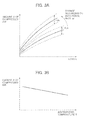
Fig. 3A is a graph showing the relationship between the load applied to the two-shaft gas turbine and the amount of air that is to be introduced into the combustor. -
Fig. 3B is a graph showing the relationship between the amount of the air that is to be introduced into the combustor and the temperature of the atmosphere. -
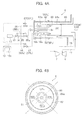
Fig. 4A is an outline cross sectional view of the combustor. -
Fig. 4B is a front view of the combustor shown inFig. 4A and viewed from a front side of the combustor. -
Fig. 5 is a graph showing an example of the relationship between the load and the ratio of the amount of the fuel that is to be introduced into the combustor to the amount of the air that is to be introduced into the combustor. - An embodiment of the present invention is described below with reference to the accompanying drawings.
- In
Fig. 2A , a load L applied to a two-shaft gas turbine is plotted along a horizontal axis of the graph, and the amount F of fuel that is to be introduced into a combustor is plotted along a vertical axis of the graph. InFig. 2B , the atmospheric temperature T is plotted along a horizontal axis of the graph, and the amount F of the fuel that is to be introduced into the combustor is plotted along a vertical axis of the graph. - In
Fig. 3A , the load L is plotted along a horizontal axis of the graph, and the amount A of air that is to be introduced into the combustor is plotted along a vertical axis of the graph. InFig. 3B , the atmospheric temperature T is plotted along a horizontal axis of the graph, and the amount of the air that is to be introduced into the combustor is plotted along a vertical axis of the graph. - In
Fig. 1 , reference numeral 1 denotes the two-shaft gas turbine. The two-shaft gas turbine 1 includes agas generator 2 and anoutput turbine 3. - The
output gas turbine 3 has a low-pressure turbine 4 and aload device 5. The low-pressure turbine 4 has anoutput turbine shaft 6 connected to theload device 5. Theload device 5 is an electric generator, for example. Theload device 5 outputs a load state signal Ls that indicates the state of the load. The state of the load includes the amount (hereinafter also referred to a load L) of the load. - In
Fig. 1 ,reference numeral 8 denotes the combustor. Thegas generator 2 includes acompressor 7, thecombustor 8, a high-pressure turbine 9 and agas generator controller 10. - The
compressor 7 takes air from the atmosphere present outside thecompressor 7, and then compresses the air. InFig. 1 ,reference numeral 16 denotes the compressed air. Thecompressor 7 has an inlet guide vane (IGV) 11 on its air intake side, and also has an air intake 7a on the air intake side. - The
gas generator 2 has anIGV drive device 12 which drives IGV 11. The IGV 11 changes the opening degree of the air intake 7a of thecompressor 7. Thus, the IGV 11 is driven to control the amount of air that is to be introduced into thecompressor 7. - The two-shaft gas turbine 1 has a
fuel supply source 13. Thegas generator 2 has afuel control valve 14. InFig. 1 ,reference numeral 15 denotes fuel. Thefuel 15 is supplied from thefuel supply source 13 through thefuel control valve 14 to thecombustor 8. Theair 16 compressed by thecompressor 7 is introduced into thecompressor 8 in which thefuel 15 and thecompressed air 16 are mixed and burned to form a combustion gas 17. Thecombustor 8 is described later in detail. - The high-
pressure turbine 9 has agas generator shaft 18 that is a rotor. The high-pressure turbine 9 drives and rotates thegas generator shaft 18 by means of the combustion gas 17 formed in thecombustor 8, and transfers the rotation of thegas generator shaft 18 to thecompressor 7. - The rotation of the
gas generator shaft 18 decompresses the combustion gas 17. The decompressed combustion gas 17 is introduced into the low-pressure turbine 4 for driving and rotating theoutput turbine shaft 6 by means of the combustion gas 17. - The
gas generator 2 has a rotational rate detector 21. The rotational rate detector 21 detects a rotational rate ω of thegas generator shaft 18, converts the detected rotational rate ω into a rotational rate signal ωs, and outputs the rotational rate signal ωs to thegas generator controller 10. - The
gas generator controller 10 is capable of calculating the rotational rate ω of thegas generator shaft 18 based on the rotational rate signal ωs. - The
compressor 7 has anatmosphere temperature detector 23 installed in the air intake 7a and connected to thegas generator controller 10. Theatmosphere temperature detector 23 detects the atmospheric temperature T to be introduced into thecompressor 7, converts the detected atmospheric temperature T into a temperature signal Ts, and outputs the temperature signal Ts to thegas generator controller 10. Thegas generator controller 10 is capable of calculating the atmospheric temperature T based on the temperature signal Ts. - The
gas generator controller 10 includes afuel controller 10a, an IGV opening degree controller 10b and a switchingcontroller 10c. - The
fuel controller 10a calculates an appropriate amount (amount F) of the fuel 15 (that is to be introduced into the combustor 8) based on the load state signal Ls transmitted by theload device 5 and the temperature signal Ts transmitted by theatmosphere temperature detector 23, and controls the opening degree of thefuel control valve 14 such that the amount of thefuel 15 to be introduced into thecombustor 8 is equal to the calculated amount F. - As described above, the load state signal Ls transmitted by the
load device 5 indicates the state (including the amount (load L) of the load) of the load. Thegas generator controller 10 is capable of calculating the load L based on the load state signal Ls transmitted by theload device 5. - The two-shaft gas turbine 1 controls the amount F of the fuel 15 (that is to be introduced into the combustor 8) on the basis of the load L.
- The appropriate amount F of the
fuel 15, which is calculated on the basis of the load L, may be determined by an experiment or the like beforehand. -
Fig. 2A shows an appropriate relationship between the load L applied to the two-shaft gas turbine 1 and the amount F of thefuel 15 that is to be introduced into thecombustor 8. For example, when the amount F of thefuel 15 is increased with an increase in the load L as shown inFig. 2A , thefuel controller 10a included in thegas generator controller 10 calculates the load L on the basis of the load state signal Ls transmitted by theload device 5. Thefuel controller 10a references the graph shown inFig. 2 to calculate the appropriate amount F of thefuel 15 on the basis of the calculated load L. - The appropriate amount F of the
fuel 15, which is calculated on the basis of the load L, varies according to the atmospheric temperature T. As shown inFig. 2B , the appropriate amount F of thefuel 15 is reduced as the atmospheric temperature T increases. Therefore, the relationship between the amount F of thefuel 15 and the load L varies within a range Ft shown inFig. 2A according to the atmospheric temperature T. - The
fuel controller 10a included in thegas generator controller 10 calculates the atmospheric temperature T based on the temperature signal Ts transmitted by theatmosphere temperature detector 23. Thefuel controller 10a references the graph shown inFig. 2A to calculate the appropriate amount F of thefuel 15 based on the calculated atmospheric temperature T. - In addition, the
fuel controller 10a included in thegas generator controller 10 calculates an appropriate opening degree of thefuel control valve 14 on the basis of the calculated amount F of thefuel 15, and also drives thefuel control valve 14 such that the actual opening degree of thefuel control valve 14 is equal to the calculated opening degree. - The relationship (shown in
Fig. 2A ) between the load L and the amount F of the fuel, and the relationship (shown inFig. 2B ) between the atmospheric temperature T and the amount F of thefuel 15, may be determined by an experiment or the like and are stored as map data (first map data) in a storage section (not shown). - The
fuel controller 10a included in thegas generator controller 10 references the first map data on the basis of the load L and the temperature T to calculate the appropriate amount F of thefuel 15. The load L is calculated on the basis of the load state signal Ls transmitted by theload device 5. The temperature T is calculated based on the temperature signal Ts transmitted by theatmosphere temperature detector 23 of the atmosphere. - Returning back to
Fig. 1 , the IGV opening degree controller 10b included in thegas generator controller 10 calculates an appropriate amount A of thecompressed air 16 to be introduced into thecombustor 8, on the basis of the load L, the atmospheric temperature T, and the rotational rate ω of thegas generator shaft 18. The load L is calculated on the basis of the load state signal Ls transmitted by theload device 5. The temperature T is calculated based on the temperature signal Ts transmitted by theatmosphere temperature detector 23. The rotational rate ω is calculated based on the rotational rate signal ωs transmitted by the rotational rate detector 21. The IGV opening degree controller 10b calculates, on the basis of the calculated amount A, the amount of air to be introduced into thecompressor 7, and also calculates an appropriate opening degree of the air intake 7a such that the calculated amount of air is introduced into thecompressor 7. - The two-shaft gas turbine 1 controls, on the basis of the load L, the amount A of the
compressed air 16 that is to be introduced into thecombustor 8. - The appropriate amount A of the
compressed air 16, which is calculated on the basis of the load L, may be determined by an experiment or the like beforehand. - In the two-shaft gas turbine 1, when the amount A of the compressed air is increased with the increase in the load L as shown in
Fig. 3A , For example, the IGV opening degree controller 10b included in thegas generator controller 10 calculates the load L on the basis of the load state signal Ls transmitted by theload device 5. The IGV opening degree controller 10b then references the graph shown inFig. 3A to calculate the appropriate amount A of thecompressed air 16 on the basis of the calculated load L. - The appropriate amount A of the
compressed air 16, which is calculated on the basis of the load L, varies according to the atmospheric temperature T. The appropriate amount A of thecompressed air 16 is reduced as the atmospheric temperature T increases, as shown inFig. 3B . The relationship between the load L and the amount A of thecompressed air 16 varies in a range At (defined by broken lines shown inFig. 3A ) that varies according to the atmospheric temperature T. - The IGV opening degree controller 10b included in the
gas generator controller 10 calculates the atmospheric temperature T based on the temperature signal Ts transmitted by theatmosphere temperature detector 23. Then, the IGV opening degree controller 10b references the graph shown inFig. 3A to calculate the amount A of thecompressed air 16 based on the calculated atmospheric temperature T. - The appropriate amount A of the
compressed air 16 varies in response to the rotational rate ω of thegas generator shaft 18. The graph shown inFig. 3A and indicates relationship between the load L and the appropriate amount A (which is determined by the atmospheric temperature T) of thecompressed air 16 is associated with the rotational rate ω of thegas generator shaft 18. The graph (shown inFig. 3A ) associated with the rotational rate ω of thegas generator shaft 18 is set in thegas generator 2. - The IGV opening degree controller 10b included in the
gas generator controller 10 calculates the rotational rate ω of thegas generator shaft 18 based on the rotational rate signal ωs transmitted by the rotational rate detector 21. The IGV opening degree controller 10b references the graph shown inFig. 3A to calculate the amount A of thecompressed air 16 based on the calculated rotational rate ω. - The IGV opening degree controller 10b included in the
gas generator controller 10 calculates an appropriate opening degree of the air intake 7a on the basis of the calculated amount A of the compressed air, and also drives the IGV 11 via theIGV drive device 12 such that the actual opening degree of the air intake 7a is equal to the calculated opening degree. - Relationships among the load L, the atmospheric temperature T, the rotational rate ω of the
gas generator shaft 18 and the amount A of thecompressed air 16 may be determined by an experiment or the like and are stored as map data (second map data) in the storage section (not shown). - The IGV opening degree controller 10b included in the
gas generator controller 10 references the second map data to calculate the amount A of thecompressed air 16 on the basis of the load L, the atmospheric temperature T, and the rotational rate ω of thegas generator shaft 18. The load L is calculated on the basis of the load state signal Ls transmitted by theload device 5. The temperature T is calculated based on the temperature signal Ts transmitted by theatmosphere temperature detector 23. The rotational rate ω is calculated based on the temperature signal Ts transmitted by the rotational rate detector 21. - Therefore, the two-shaft gas turbine 1 shown in
Fig. 1 is capable of controlling the amount F of thefuel 15 to be introduced into thecombustor 8, on the basis of the load L and the atmospheric temperature T. In addition, the two-shaft gas turbine 1 is capable of controlling the amount A of the compressed air 16 (that is to be introduced into the combustor 8) on the basis of the load L, the atmospheric temperature T and the rotational rate ω of thegas generator shaft 18. - The ratio of the reduction in the amount F of the
fuel 15 to the increase in the atmospheric temperature T is larger than the ratio of the reduction in the amount A of thecompressed air 16 to the increase in the atmospheric temperature T. The ratio (hereinafter, also referred to as a fuel-air ratio (F/A)) of the amount F of the fuel 15 (that is to be introduced into the combustor 8) to the amount A of the compressed air 16 (that is to be introduced into the combustor 8) is reduced with the increase in the atmospheric temperature T. - Returning back to
Fig. 1 , the switchingcontroller 10c included in thegas generator controller 10 calculates the fuel-air ratio (F/A) on the basis of the amount F of thefuel 15 and the amount A of thecompressed air 16. The amount F of thefuel 15 is calculated by thefuel controller 10a. The amount A of thecompressed air 16 is calculated by the IGV opening degree controller 10b. Then, the switchingcontroller 10c controls, on the basis of the calculated fuel-air ratio (F/A), combustion that is carried out in thecombustor 8. - The configuration of the combustor 8 (refer to
Fig. 1 ) is described below. - Referring to
Figs. 4A and 4B , thecombustor 8 includes acombustor cover 80 and adiffusion pilot burner 81. Thecombustor cover 80 has a cylindrical shape with one end thereof closed. Thediffusion pilot burner 81 used for diffusion combustion is located in a central inner space of thecombustor cover 80. - The
combustor 8 also has apremix burner 82 circularly arranged around the outer circumference of thediffusion pilot burner 81. In other words, thepremix burner 82 surrounds the outer circumference of thediffusion pilot burner 81. Thepremix burner 82 is used for premixed combustion and includes a plurality ofcombustion nozzles 82a and a plurality offlame holders 83. Thecombustor 8 also has acombustor liner 84a extending along the inner circumference of thecombustor cover 80 to form acombustion chamber 84. - A front side of the
combustor 8 is regarded as the side on which thecombustion chamber 84 is located. - The
compressed air 16 flows from thecompressor 7 through a path formed between thecombustor liner 84a and thecombustor cover 80. Thecompressed air 16 is then divided intocompressed air 16a andcompressed air 16b. Thecompressed air 16b is supplied to thediffusion pilot burner 81, and thecompressed air 16a is supplied to thepremix burner 82. - The
combustor 8 also has a diffusion fuel system 85 and apremix fuel system 86. Thefuel 15 is supplied from thefuel supply source 13 through thefuel control valve 14 to thecombustor 8. Specifically, thefuel 15 that flows from thefuel supply source 13 through thefuel control valve 14 is introduced into both the diffusion fuel system 85 and thepremix fuel system 86. Then, thefuel 15 introduced into the diffusion fuel system 85 is supplied to thediffusion pilot burner 81. Thefuel 15 introduced into thepremix fuel system 86 is supplied to thepremix burner 82. - The diffusion fuel system 85 has a flow
rate control valve 85a that controls the amount of thefuel 15 to be supplied to thediffusion pilot burner 81. The flowrate control valve 85a is connected to the switchingcontroller 10c included in thegas generator controller 10. The switchingcontroller 10c transmits a control signal to the diffusion fuel system 85 to control the opening degree of the flowrate control valve 85a. - The premixed
fuel system 86 has a flowrate control valve 87 that controls the amount of thefuel 15 to be supplied to thepremix burner 82. The flowrate control valve 87 is connected to the switchingcontroller 10c included in thegas generator controller 10. The switchingcontroller 10c transmits a control signal to the premixedfuel system 86 to control the opening degree of the flowrate control valve 87. - The
premix burner 82 includes four combustion regions 82f1, 82f2, 82f3 and 82f4 in which the premixed combustion is to be carried out. When thepremix burner 82 included in thecombustor 8 according to the present embodiment is viewed from the front side of the combustor 8 (or from the side of the combustion chamber 84) as shown inFig. 4B , the four combustion regions 82f1, 82f3, 82f4 and 82f2 are arranged in this order from the upper side of thecombustor 8 in the clockwise direction surrounding the outer circumference of thediffusion pilot burner 81. The areas of the four combustion regions are substantially equal to each other. - The premixed combustion can be carried out separately in each of the combustion regions 82f1, 82f2, 82f3 and 82f4.
- The
premix fuel system 86 shown inFig. 4A includes four premix fuel systems 86f1, 86f2, 86f3 and 86f4. The four premix fuel systems 86f1, 86f2, 86f3 and 86f4 are capable of supplying thefuel 15 to the respective combustion regions 82f1, 82f2, 82f3 and 82f4. - Each of the premix fuel systems 86f1, 86f2, 86f3 and 86f4 has its corresponding flow rate control valve 87f1, 87f2, 87f3 or 87f4 respectively.
Fig. 4 shows the premix fuel systems 86f1, 86f4 and the flow rate control valves 87f1, 87f4. - With the
combustor 8 configured described above, when thefuel 15 is supplied to thediffusion pilot burner 81, thefuel 15 and thecompressed air 16b are mixed and burned by thediffusion burner 81 in thecombustion chamber 84. In this way, diffusion combustion is carried out in thecombustion chamber 84. - When the
fuel 15 is supplied to thepremix burner 82 through thecombustion nozzles 82a, thefuel 15 and thecompressed air 16a are mixed (premixed) in thepremix burner 82 and then burned in thecombustion chamber 84. In this way, premixed combustion is carried out in thecombustion chamber 84. - In the
combustor 8 according to the present embodiment, both the diffusion combustion by thediffusion pilot burner 81 and the premixed combustion by thepremix burner 82 can be carried out simultaneously. - The
premix burner 82 is capable of separately supplying thefuel 15 to each of the combustion regions 82f1 to 82f4. The premixed combustion can be carried out separately in each of the combustion regions 82f1 to 82f4 when thefuel 15 is supplied to the combustion region. - When the switching
controller 10c selects at least one of the combustion regions 82f1 to 82f4 to which thefuel 15 is supplied, the premixed combustion starts in the selected combustion region or starts separately in each of the selected combustion regions. - In order to start the premixed combustion in the combustion region 82f1, the switching
controller 10c controls the flow rate control valve 87f1 such that the flow rate control valve 87f1 is open to supply thefuel 15 to the combustion region 82f1. In order to start the premixed combustion in the combustion regions 82f1 and 82f2, the switchingcontroller 10c controls the flow rate control valves 87f1 and 87f2 such that the flow rate control valves 87f1 and 87f2 are open to supply thefuel 15 to the combustion regions 82f1 and 82f2. - In the
combustor 8, the premixed combustion can start separately in each of the combustion regions 82f1 to 82f4. - Before the premixed combustion starts in the
combustor 8 included in the two-shaft gas turbine 1 shown inFig. 1 , thegas generator controller 10 controls thecombustor 8 to carry out the diffusion combustion and form a stable flame by means of thediffusion pilot burner 81 until the load L is increased from zero to a certain level. - When the load L is increased to the certain level by the diffusion combustion carried out in the
combustor 8, thegas generator controller 10 controls thecombustor 8 to start the premixed combustion by means of the premixedburner 82 so as to suppress generation of NOx. - When the
premix burner 82 includes a plurality of combustion regions, for example, the four combustion regions 82f1 to 82f4 as shown inFig. 4B , thegas generator controller 10 selects at least one of the combustion regions 82f1 to 82f4 on the basis of the load L applied to the two-shaft gas turbine 1 to allow the premixed combustion to be carried out in the selected combustion region or regions. Thegas generator controller 10 controls thecombustor 8 such that the premixed combustion starts in the selected combustion region or starts separately in each of the selected combustion regions. Further, thegas generator controller 10 controls the start of the premixed combustion in thecombustor 8 such that the number of the selected combustion regions in which the premixed combustion is to be carried out is increased with the increase in the load L. In this way, thegas generator controller 10 appropriately suppresses generation of NOx. - Starting the diffusion combustion for the start of the premixed combustion in the
combustor 8, and increasing the number of the combustion regions (in which the premixed combustion is carried out) selected from the combustion regions 82f1 to 82f4, are hereinafter called "changing of the operational state of thecombustor 8". A point at which the operational state of thecombustor 8 is changed is hereinafter called "a change point". - In a one-shaft gas turbine, since the rotational rate of a rotary shaft is constant regardless of a load, the amount A of air that is to be introduced into a combustor can be constant in the one-shaft gas turbine. Therefore, a controller that controls the combustor included in the one-shaft gas turbine changes the operational state of the combustor on the basis of the amount F (that varies according to the load) of fuel that is to be introduced into the combustor, thereby appropriately suppressing generation of NOx.
- However, the two-shaft gas turbine 1 shown in
Fig. 1 controls the amount A of the compressed air (that is to be introduced into the combustor 8) based on the rotational rate ω of thegas generator shaft 18. The rotational rate ω of thegas generator shaft 18 is changed on the basis of the load L. If thegas generator controller 10 changes the operational state of thecombustor 8 on the basis of the amount F of the fuel that is to be introduced into thecombustor 8, a flame may be extinguished. - To avoid this, appropriate fuel-air ratios (FA1 to FA4) are preset in the two-shaft gas turbine 1 according to the present embodiment, and the
gas generator controller 10 changes the operational state of thecombustor 8 based on the fuel-air ratio (F/A) that varies according to the load L. - As shown in
Fig. 5 , a change point P1 is set when the load L is zero. When the load L is zero, the low-pressure turbine 4 rotates at a rotational rate that is approximately 30% of rated rotational speed, for example. At the change point P1, the switchingcontroller 10c included in thegas generator controller 10 shown inFig. 4A controls thecombustor 8 to start the diffusion combustion by means of thediffusion pilot burner 81 included in thecombustor 8. - Specifically, at the change point P1, the switching
controller 10c controls the flowrate control valve 85a such that the flowrate control valve 85a is open to supply thefuel 15 to thediffusion pilot burner 81. - At the change point P1, the opening degree of the
fuel control valve 14 is set such that the amount F of the fuel, which is set in the graph shown inFig. 2A when the load L is zero, is to be introduced into thecombustor 8. - When the diffusion combustion starts in the
combustor 8, the load L is increased. Then, thefuel controller 10a included in thegas generator controller 10 references the graph shown inFig. 2A to calculate the amount F of thefuel 15 on the basis of the load L and the atmospheric temperature T. - In addition, the IGV opening degree controller 10b references the graph shown in
Fig. 3A to calculate the amount A of thecompressed air 16 on the basis of the load L, the atmospheric temperature T and the rotational rate ω of thegas generator shaft 18. - Furthermore, the switching
controller 10c included in thegas generator controller 10 calculates the fuel-air ratio (F/A) on the basis of the calculated amount F of thefuel 15 and the calculated amount A of thecompressed air 16. - The fuel-air ratio (F/A) is increased with the increase in the load L. When the fuel-air ratio (F/A) reaches the preset fuel-air ratio FA1, the switching
controller 10c controls the flow rate control valve 87f1 included in the premix fuel system 86f1 such that the flow rate control valve 87f1 is open to supply thefuel 15 to the combustion region 82f1 included in thepremix burner 82. - After the
fuel 15 is supplied to the combustion region 82f1, the premixed combustion starts in the combustion region 82f1 included in thepremix burner 82. - The preset fuel-air ratio FA1 is a ratio corresponding to a change point P21 at which the premixed combustion starts in the combustion region 82f1 included in the
premix burner 82. - The preset fuel-air ratio FA1 may be predetermined by an experiment or the like and set as a fuel-air ratio (F/A) that is appropriate for starting the premixed combustion in the combustion region 82f1 included in the
premix burner 82. - When the two-shaft gas turbine 1 starts the premix combustion in the combustion region 82f1 included in the
premix burner 82, the load L is further increased. Then, thefuel controller 10a included in thegas generator controller 10 calculates the amount F of the fuel on the basis of the load L and the atmospheric temperature T. The IGV opening degree controller 10b included in thegas generator controller 10 calculates the amount A of the compressed air on the basis of the load L, the atmospheric temperature T and the rotational rate ω of thegas generator shaft 18. The switchingcontroller 10c included in thegas generator controller 10 calculates the fuel-air ratio (F/A) on the basis of the calculated amounts F and A. - When the fuel-air ratio (F/A) is increased to the preset fuel-air ratio FA2, the switching
controller 10c controls the flow rate control valve 87f2 included in the premix fuel system 86f2 such that the flow rate control valve 87f2 is open to supply thefuel 15 to the combustion region 82f2 included in thepremix burner 82. - After the
fuel 15 is supplied to the combustion region 82f2, the premixed combustion starts in the combustion region 82f2 included in thepremix burner 82. - The preset fuel-air ratio FA2 is a ratio corresponding to a change point 22 at which the premixed combustion starts in the combustion region 82f2 included in the
premix burner 82. - The preset fuel-air ratio FA2 may be determined by an experiment or the like and set as a fuel-air ratio (F/A) that is appropriate for starting the premix combustion in the combustion region 82f2 included in the
premix burner 82. - When the fuel-air ratio (F/A) reaches the preset fuel-air ratio FA3, the switching
controller 10c controls the flow rate control valve 87f3 included in the premix fuel system 86f3 such that the flow rate control valve 87f3 is open to supply thefuel 15 to the combustion region 82f3 included in thepremix burner 82. When the fuel-air ratio (F/A) reaches the preset fuel-air ratio FA4, the switchingcontroller 10c controls the flow rate control valve 87f4 included in the premix fuel system 86f4 such that the flow rate control valve 87f4 is open to supply thefuel 15 to the combustion region 82f4 included in thepremix burner 82. - Then, the premixed combustion sequentially starts in the combustion regions 82f3 and 82f4 included in the
premix burner 82. - The preset fuel-air ratio FA3 is a ratio corresponding to a change point P23 at which the premixed combustion starts in the combustion region 82f3 included in the
premix burner 82. The preset fuel-air ratio FA3 may be determined by an experiment or the like and set as a fuel-air ratio (F/A) that is appropriate for starting the premixed combustion in the combustion region 82f3 included in thepremix burner 82. - The preset fuel-air ratio FA4 is a ratio corresponding to a change point P24 at which the premixed combustion starts in the combustion region 82f4 included in the
premix burner 82. The preset fuel-air ratio FA4 may be determined by an experiment or the like and set as a fuel-air ratio (F/A) that is appropriate for starting the premixed combustion in the combustion region 82f4 included in thepremix burner 82. - When the premixed combustion starts in all the combustion regions 82f1 to 82f4, the rotational rate of the
output turbine shaft 6 of the low-pressure turbine 4 reaches the rated rotational speed. Thus, the two-shaft gas turbine 1 is capable of operating in a rated range. - When the change points P21 to P24 (at which the operational state of the
combustor 8 is changed) are set on the basis of the respective fuel-air ratios (F/A), the premixed combustion can starts in the combustion regions 82f1 to 82f4 under the condition that the fuel-air ratios (F/A) are appropriate for the premixed combustion. This can suppress such a problem as extinction of a flame. - When the relationship between the load L and the fuel-air ratio (F/A) is represented by a broken line shown in
Fig. 5 , the change points P21 to P24 are shifted to points present on the broken line without changing in the preset fuel-air ratios FA1 to FA4. - Even when the fuel-air ratio (F/A) is increased with the increase in the load L as shown by the broken line of
Fig. 5 , thegas generator controller 10 changes the operational state of thecombustor 8 when the fuel-air ratio (F/A) is equal to any of the preset fuel-air ratios FA1 to FA4. - Therefore, the
gas generator controller 10 changes the operational state of thecombustor 8 when the fuel-air ratio (F/A) is equal to any of the preset fuel-air ratios FA1 to FA4 regardless of how the load L and the fuel-air ratio (F/A) are changed. As described above, the preset fuel-air ratios FA1 to FA4 are appropriate for starting the premixed combustion in the respective combustion regions 82f1 to 82f4 included in thepremix burner 82. In addition, the appropriate preset fuel-air ratios FA1 to FA4 suppress the fact that a flame is extinguished when the premixed combustion starts in the combustion regions 82f1 to 82f4 included in thepremix burner 82. - When the
premix burner 82 according to the present embodiment is viewed from the front side of the combustor 8 (or from the side of the combustion chamber 84) as shown inFig. 4B , the four combustion regions 82f1, 82f3, 82f4 and 82f2 have areas substantially equal to each other, and are arranged in the order from the upper side of thecombustor 8 in the clockwise direction surrounding the outer circumference of thediffusion pilot burner 81. In such a configuration, the premixed combustion initially starts in the upper combustion region 82f1, thereby reducing a deviation in the temperature distribution of the gas in the high-pressure turbine 9. - Starting the premixed combustion in the combustion regions 82f1, 82f2, 82f3 and 82f4 in this order appropriately suppresses generation of carbon monoxide (CO).
- When the premixed combustion is carried out in one of the adjacent combustion regions, carbon monoxide is generated in a boundary space (in which the combustion is not carried out) between the adjacent two combustion regions. Thus, after the premixed combustion starts in the combustion region 82f1, the premixed combustion starts in the combustion region 82f2. This method reduces a boundary space between a region in which the premixed combustion is carried out and a region in which the premixed combustion is not carried out.
- The change points P21 to P24 (at which the operational state of the
combustor 8 is changed) are set in the two-shaft gas turbine 1 according to the present embodiment on the basis of the appropriate fuel-air ratios FA1 to FA4. Thegas generator controller 10 changes the operational state of thecombustor 8 at each of the change points P21 to P24. - Specifically, the switching
controller 10c included in thegas generator controller 10 changes the operational state of thecombustor 8 on the basis of the fuel-air ratio (F/A). - Each of the preset fuel-air ratios FA1 to FA4 that correspond to the respective change points P21 to P24 are appropriate for changing the operational state of the
combustor 8. Therefore, the two-shaft gas turbine 1 is capable of suppressing a problem (such as extinction of a flame at each of the change points P21 to P24) caused by a change in the operational state of thecombustor 8. - Features, components and specific details of the structures of the above-described embodiments may be exchanged or combined to form further embodiments optimized for the respective application. As far as those modifications are apparent for an expert skilled in the art they shall be disclosed implicitly by the above description without specifying explicitly every possible combination.
Claims (6)
- A two-shaft gas turbine (1) comprising:a combustor (8) that includes a first burner for diffusion combustion and a second burner for premixed combustion, the second burner being circularly arranged around the first burner and including at least two regions arranged in a circumferential direction for carrying our premixed combustion individually; anda controller that controls the start of the premixed combustion that is to be carried out in the combustor (8),wherein the controller selects at least one of the regions on the basis of the ratio of the amount of fuel (15) to the amount of air in order to start the premixed combustion, starts the premixed combustion in the selected region or starts the premixed combustion separately in each of the selected regions, and increases the number of the selected region in which the premixed combustion is carried out, as the fuel-air ratio is increased.
- The two-shaft gas turbine (1) according to claim 1,
wherein as the fuel-air ratio is increased, the controller increases the number of the selected region in which the premixed combustion is carried out in an order of location from an upper side to a lower side of the combustor (8). - The two-shaft gas turbine (1) according to claim 1 or 2,
wherein as the fuel-air ratio is increased, the controller increases the number of the selected region in which the premixed combustion is carried out such that one of the regions to be selected is adjacent to the selected one of the regions. - A method for starting premixed combustion in a combustor (8) for a two-shaft gas turbine (1), the combustor (8) including a first burner for diffusion combustion and a second burner for premixed combustion, the second burner being circularly arranged around the first burner and including at least two regions arranged in a circumferential for direction carrying out premixed combustion individually, the method comprising the steps of:selecting at least one of the region on the basis of the ratio of the amount of fuel (15) to the amount of air by means of the controller that controls the start of the premixed combustion that is to be carried out in the combustor (8), andstarting the premixed combustion in the selected region or separately in each of the selected regions,wherein as the fuel-air ratio is increased, the controller increases the number of the selected region in which the premixed combustion is carried out.
- The method according to claim 4,
wherein as the fuel-air ratio is increased, the number of the selected region in which the premixed combustion is carried out is increased in an order of location from an upper side to a lower side of the combustor (8). - The method according to claim 4 or 5, wherein
as the fuel-air ratio is increased, the number of the selected region in which the premixed combustion is to be carried out is increased such that one of the regions to be selected is adjacent to the selected one of the regions.
Applications Claiming Priority (1)
| Application Number | Priority Date | Filing Date | Title |
|---|---|---|---|
| JP2009011052A JP2010168957A (en) | 2009-01-21 | 2009-01-21 | Two-shaft gas turbine and method for starting premixed combustion in combustor for two-shaft gas turbine |
Publications (3)
| Publication Number | Publication Date |
|---|---|
| EP2211112A2 true EP2211112A2 (en) | 2010-07-28 |
| EP2211112A3 EP2211112A3 (en) | 2011-07-27 |
| EP2211112B1 EP2211112B1 (en) | 2015-03-18 |
Family
ID=42023894
Family Applications (1)
| Application Number | Title | Priority Date | Filing Date |
|---|---|---|---|
| EP10151248.1A Active EP2211112B1 (en) | 2009-01-21 | 2010-01-20 | A method for starting premixed combustion in combustor for two-shaft gas turbine |
Country Status (3)
| Country | Link |
|---|---|
| US (2) | US20100180604A1 (en) |
| EP (1) | EP2211112B1 (en) |
| JP (1) | JP2010168957A (en) |
Cited By (1)
| Publication number | Priority date | Publication date | Assignee | Title |
|---|---|---|---|---|
| EP2762677A3 (en) * | 2013-02-01 | 2017-08-23 | Hitachi, Ltd. | Two-shaft gas turbine |
Families Citing this family (15)
| Publication number | Priority date | Publication date | Assignee | Title |
|---|---|---|---|---|
| US9353947B2 (en) * | 2009-06-11 | 2016-05-31 | General Electric Company | Combustor flashback/flame holding detection via temperature sensing |
| US8726671B2 (en) * | 2010-07-14 | 2014-05-20 | Siemens Energy, Inc. | Operation of a combustor apparatus in a gas turbine engine |
| US8850790B2 (en) * | 2011-07-22 | 2014-10-07 | Honeywell International Inc. | Gas turbine engine speed control system and method during maximum fuel flow |
| JP5745640B2 (en) * | 2011-11-09 | 2015-07-08 | 三菱日立パワーシステムズ株式会社 | Control device for gas turbine power plant |
| JP5639568B2 (en) | 2011-11-15 | 2014-12-10 | 三菱日立パワーシステムズ株式会社 | 2-shaft gas turbine |
| KR101754066B1 (en) | 2012-05-29 | 2017-07-05 | 미쯔비시 케미컬 주식회사 | Golf club shaft for wood club |
| ITFI20120292A1 (en) * | 2012-12-24 | 2014-06-25 | Nuovo Pignone Srl | "GAS TURBINES IN MECHANICAL DRIVE APPLICATIONS AND OPERATING METHODS" |
| EP2907990A1 (en) * | 2014-02-18 | 2015-08-19 | Siemens Aktiengesellschaft | Method for operating a gas turbine installation, and the same |
| JP6343504B2 (en) * | 2014-07-03 | 2018-06-13 | 三菱日立パワーシステムズ株式会社 | 2-shaft gas turbine |
| JP6364363B2 (en) * | 2015-02-23 | 2018-07-25 | 三菱日立パワーシステムズ株式会社 | Two-shaft gas turbine and control device and control method thereof |
| ITUB20155049A1 (en) * | 2015-10-20 | 2017-04-20 | Nuovo Pignone Tecnologie Srl | INTEGRATED TRAIN OF POWER GENERATION AND COMPRESSION, AND METHOD |
| EP3225812B1 (en) * | 2016-03-29 | 2019-02-27 | Mitsubishi Hitachi Power Systems, Ltd. | A two-shaft gas turbine, and the control method of opening degree of inlet guide vane of the gas turbine |
| JP6288529B2 (en) * | 2016-07-22 | 2018-03-07 | 三菱日立パワーシステムズ株式会社 | Two-shaft gas turbine power generation facility and control method thereof |
| KR101971337B1 (en) * | 2017-04-24 | 2019-04-22 | 두산중공업 주식회사 | Gas Turbine System and Controlling Method thereof |
| US11203986B1 (en) * | 2020-06-08 | 2021-12-21 | General Electric Company | Systems and methods for extended emissions compliant operation of a gas turbine engine |
Citations (1)
| Publication number | Priority date | Publication date | Assignee | Title |
|---|---|---|---|---|
| JPH07280267A (en) | 1994-04-08 | 1995-10-27 | Hitachi Ltd | Gas turbine combustor |
Family Cites Families (11)
| Publication number | Priority date | Publication date | Assignee | Title |
|---|---|---|---|---|
| US3255586A (en) * | 1962-09-12 | 1966-06-14 | Dresser Ind | Gas turbine capable of rapidly accepting or rejecting a load with minimum speed deviation |
| US4699021A (en) * | 1984-09-20 | 1987-10-13 | Avco Corporation | Integrated power system |
| US4903478A (en) * | 1987-06-25 | 1990-02-27 | General Electric Company | Dual manifold fuel system |
| JPH02221636A (en) * | 1989-02-22 | 1990-09-04 | Nissan Motor Co Ltd | Starting control device for gas turbine engine |
| JP2894861B2 (en) * | 1991-04-18 | 1999-05-24 | 株式会社日立製作所 | Control device for gas turbine combustor |
| JPH05203146A (en) * | 1992-01-29 | 1993-08-10 | Hitachi Ltd | Gas turbine combustion apparatus and gas turbine power generator |
| US5303542A (en) * | 1992-11-16 | 1994-04-19 | General Electric Company | Fuel supply control method for a gas turbine engine |
| US5836164A (en) * | 1995-01-30 | 1998-11-17 | Hitachi, Ltd. | Gas turbine combustor |
| JP2000274689A (en) * | 1999-03-26 | 2000-10-03 | Tokyo Gas Co Ltd | Multi-shaft gas turbine device |
| JP2002201966A (en) * | 2000-12-28 | 2002-07-19 | Toyota Central Res & Dev Lab Inc | Premix combustor for gas turbine and fuel supply control method therefor |
| JP4015656B2 (en) * | 2004-11-17 | 2007-11-28 | 三菱重工業株式会社 | Gas turbine combustor |
-
2009
- 2009-01-21 JP JP2009011052A patent/JP2010168957A/en active Pending
-
2010
- 2010-01-14 US US12/687,228 patent/US20100180604A1/en not_active Abandoned
- 2010-01-20 EP EP10151248.1A patent/EP2211112B1/en active Active
-
2011
- 2011-03-22 US US13/069,022 patent/US8499541B2/en active Active
Patent Citations (1)
| Publication number | Priority date | Publication date | Assignee | Title |
|---|---|---|---|---|
| JPH07280267A (en) | 1994-04-08 | 1995-10-27 | Hitachi Ltd | Gas turbine combustor |
Cited By (2)
| Publication number | Priority date | Publication date | Assignee | Title |
|---|---|---|---|---|
| EP2762677A3 (en) * | 2013-02-01 | 2017-08-23 | Hitachi, Ltd. | Two-shaft gas turbine |
| US10202906B2 (en) | 2013-02-01 | 2019-02-12 | Hitachi, Ltd. | Two-shaft gas turbine |
Also Published As
| Publication number | Publication date |
|---|---|
| EP2211112A3 (en) | 2011-07-27 |
| US8499541B2 (en) | 2013-08-06 |
| JP2010168957A (en) | 2010-08-05 |
| EP2211112B1 (en) | 2015-03-18 |
| US20110167833A1 (en) | 2011-07-14 |
| US20100180604A1 (en) | 2010-07-22 |
Similar Documents
| Publication | Publication Date | Title |
|---|---|---|
| EP2211112B1 (en) | A method for starting premixed combustion in combustor for two-shaft gas turbine | |
| JP4979615B2 (en) | Combustor and fuel supply method for combustor | |
| EP2447509B1 (en) | Combuster control method and combustor controller | |
| EP2504547B1 (en) | Exhaust temperature based mode control method for gas turbine and gas turbine | |
| KR101536776B1 (en) | Method for controlling the load variations in a gas turbine | |
| US8707671B2 (en) | Fuel control method and fuel control apparatus for gas turbine and gas turbine | |
| US20140123651A1 (en) | System for providing fuel to a combustor assembly in a gas turbine engine | |
| US6834226B2 (en) | Multiple control loop acceleration of turboalternator after reaching self-sustaining speed previous to reaching synchronous speed | |
| EP2565427B1 (en) | Method for switching over a combustion device of a gas turbine engine from operation with a first premixed fuel to a second premixed fuel | |
| CN106536899B (en) | Control device, system and control method | |
| JP5216923B2 (en) | 2-shaft gas turbine | |
| JP5356340B2 (en) | Control device for gas turbine combustor and control method for gas turbine combustor | |
| JP2014181700A (en) | Compressor start bleed system for turbine system, and method of controlling compressor start bleed system | |
| US20200300181A1 (en) | Gas turbine and control method therefor | |
| AU2016254323B2 (en) | Ultra-low NOx emission gas turbine engine in mechanical drive applications | |
| JP2024523195A (en) | System and method for using baseload power of standby GT systems to improve GT emissions or grid stability | |
| JP5031779B2 (en) | Control device for gas turbine engine | |
| JP2017180454A (en) | Gas turbine variable flow compressor | |
| JP5762874B2 (en) | Gas turbine combustor, gas turbine, and control method of gas turbine combustor | |
| JP5931556B2 (en) | Gas turbine control device, gas turbine, and gas turbine control method | |
| HK1136025B (en) | Gas turbine combustor and gaseous fuel supply method for gas turbine combustor | |
| KR20170004543A (en) | Combustor device of gas turbine and control method thereof | |
| JP2001082168A (en) | Method and apparatus for controlling combustion air flow control mechanism of gas turbine combustor |
Legal Events
| Date | Code | Title | Description |
|---|---|---|---|
| PUAI | Public reference made under article 153(3) epc to a published international application that has entered the european phase |
Free format text: ORIGINAL CODE: 0009012 |
|
| 17P | Request for examination filed |
Effective date: 20100331 |
|
| AK | Designated contracting states |
Kind code of ref document: A2 Designated state(s): AT BE BG CH CY CZ DE DK EE ES FI FR GB GR HR HU IE IS IT LI LT LU LV MC MK MT NL NO PL PT RO SE SI SK SM TR |
|
| AX | Request for extension of the european patent |
Extension state: AL BA RS |
|
| PUAL | Search report despatched |
Free format text: ORIGINAL CODE: 0009013 |
|
| AK | Designated contracting states |
Kind code of ref document: A3 Designated state(s): AT BE BG CH CY CZ DE DK EE ES FI FR GB GR HR HU IE IS IT LI LT LU LV MC MK MT NL NO PL PT RO SE SI SK SM TR |
|
| AX | Request for extension of the european patent |
Extension state: AL BA RS |
|
| RIC1 | Information provided on ipc code assigned before grant |
Ipc: F23R 3/34 20060101AFI20100325BHEP Ipc: F23N 5/18 20060101ALI20110622BHEP |
|
| RAP1 | Party data changed (applicant data changed or rights of an application transferred) |
Owner name: MITSUBISHI HITACHI POWER SYSTEMS, LTD. |
|
| GRAP | Despatch of communication of intention to grant a patent |
Free format text: ORIGINAL CODE: EPIDOSNIGR1 |
|
| INTG | Intention to grant announced |
Effective date: 20140910 |
|
| GRAS | Grant fee paid |
Free format text: ORIGINAL CODE: EPIDOSNIGR3 |
|
| GRAA | (expected) grant |
Free format text: ORIGINAL CODE: 0009210 |
|
| AK | Designated contracting states |
Kind code of ref document: B1 Designated state(s): AT BE BG CH CY CZ DE DK EE ES FI FR GB GR HR HU IE IS IT LI LT LU LV MC MK MT NL NO PL PT RO SE SI SK SM TR |
|
| REG | Reference to a national code |
Ref country code: GB Ref legal event code: FG4D |
|
| REG | Reference to a national code |
Ref country code: CH Ref legal event code: EP |
|
| REG | Reference to a national code |
Ref country code: IE Ref legal event code: FG4D |
|
| RAP2 | Party data changed (patent owner data changed or rights of a patent transferred) |
Owner name: MITSUBISHI HITACHI POWER SYSTEMS, LTD. |
|
| REG | Reference to a national code |
Ref country code: AT Ref legal event code: REF Ref document number: 716822 Country of ref document: AT Kind code of ref document: T Effective date: 20150415 |
|
| REG | Reference to a national code |
Ref country code: DE Ref legal event code: R096 Ref document number: 602010023145 Country of ref document: DE Effective date: 20150430 |
|
| REG | Reference to a national code |
Ref country code: NL Ref legal event code: VDEP Effective date: 20150318 |
|
| REG | Reference to a national code |
Ref country code: NL Ref legal event code: VDEP Effective date: 20150318 |
|
| PG25 | Lapsed in a contracting state [announced via postgrant information from national office to epo] |
Ref country code: FI Free format text: LAPSE BECAUSE OF FAILURE TO SUBMIT A TRANSLATION OF THE DESCRIPTION OR TO PAY THE FEE WITHIN THE PRESCRIBED TIME-LIMIT Effective date: 20150318 Ref country code: LT Free format text: LAPSE BECAUSE OF FAILURE TO SUBMIT A TRANSLATION OF THE DESCRIPTION OR TO PAY THE FEE WITHIN THE PRESCRIBED TIME-LIMIT Effective date: 20150318 Ref country code: NO Free format text: LAPSE BECAUSE OF FAILURE TO SUBMIT A TRANSLATION OF THE DESCRIPTION OR TO PAY THE FEE WITHIN THE PRESCRIBED TIME-LIMIT Effective date: 20150618 Ref country code: SE Free format text: LAPSE BECAUSE OF FAILURE TO SUBMIT A TRANSLATION OF THE DESCRIPTION OR TO PAY THE FEE WITHIN THE PRESCRIBED TIME-LIMIT Effective date: 20150318 Ref country code: HR Free format text: LAPSE BECAUSE OF FAILURE TO SUBMIT A TRANSLATION OF THE DESCRIPTION OR TO PAY THE FEE WITHIN THE PRESCRIBED TIME-LIMIT Effective date: 20150318 |
|
| REG | Reference to a national code |
Ref country code: AT Ref legal event code: MK05 Ref document number: 716822 Country of ref document: AT Kind code of ref document: T Effective date: 20150318 |
|
| REG | Reference to a national code |
Ref country code: LT Ref legal event code: MG4D |
|
| PG25 | Lapsed in a contracting state [announced via postgrant information from national office to epo] |
Ref country code: LV Free format text: LAPSE BECAUSE OF FAILURE TO SUBMIT A TRANSLATION OF THE DESCRIPTION OR TO PAY THE FEE WITHIN THE PRESCRIBED TIME-LIMIT Effective date: 20150318 Ref country code: GR Free format text: LAPSE BECAUSE OF FAILURE TO SUBMIT A TRANSLATION OF THE DESCRIPTION OR TO PAY THE FEE WITHIN THE PRESCRIBED TIME-LIMIT Effective date: 20150619 |
|
| PG25 | Lapsed in a contracting state [announced via postgrant information from national office to epo] |
Ref country code: NL Free format text: LAPSE BECAUSE OF FAILURE TO SUBMIT A TRANSLATION OF THE DESCRIPTION OR TO PAY THE FEE WITHIN THE PRESCRIBED TIME-LIMIT Effective date: 20150318 |
|
| PG25 | Lapsed in a contracting state [announced via postgrant information from national office to epo] |
Ref country code: PT Free format text: LAPSE BECAUSE OF FAILURE TO SUBMIT A TRANSLATION OF THE DESCRIPTION OR TO PAY THE FEE WITHIN THE PRESCRIBED TIME-LIMIT Effective date: 20150720 Ref country code: ES Free format text: LAPSE BECAUSE OF FAILURE TO SUBMIT A TRANSLATION OF THE DESCRIPTION OR TO PAY THE FEE WITHIN THE PRESCRIBED TIME-LIMIT Effective date: 20150318 Ref country code: SK Free format text: LAPSE BECAUSE OF FAILURE TO SUBMIT A TRANSLATION OF THE DESCRIPTION OR TO PAY THE FEE WITHIN THE PRESCRIBED TIME-LIMIT Effective date: 20150318 Ref country code: CZ Free format text: LAPSE BECAUSE OF FAILURE TO SUBMIT A TRANSLATION OF THE DESCRIPTION OR TO PAY THE FEE WITHIN THE PRESCRIBED TIME-LIMIT Effective date: 20150318 Ref country code: EE Free format text: LAPSE BECAUSE OF FAILURE TO SUBMIT A TRANSLATION OF THE DESCRIPTION OR TO PAY THE FEE WITHIN THE PRESCRIBED TIME-LIMIT Effective date: 20150318 Ref country code: RO Free format text: LAPSE BECAUSE OF FAILURE TO SUBMIT A TRANSLATION OF THE DESCRIPTION OR TO PAY THE FEE WITHIN THE PRESCRIBED TIME-LIMIT Effective date: 20150318 |
|
| PG25 | Lapsed in a contracting state [announced via postgrant information from national office to epo] |
Ref country code: AT Free format text: LAPSE BECAUSE OF FAILURE TO SUBMIT A TRANSLATION OF THE DESCRIPTION OR TO PAY THE FEE WITHIN THE PRESCRIBED TIME-LIMIT Effective date: 20150318 Ref country code: IS Free format text: LAPSE BECAUSE OF FAILURE TO SUBMIT A TRANSLATION OF THE DESCRIPTION OR TO PAY THE FEE WITHIN THE PRESCRIBED TIME-LIMIT Effective date: 20150718 Ref country code: PL Free format text: LAPSE BECAUSE OF FAILURE TO SUBMIT A TRANSLATION OF THE DESCRIPTION OR TO PAY THE FEE WITHIN THE PRESCRIBED TIME-LIMIT Effective date: 20150318 |
|
| REG | Reference to a national code |
Ref country code: FR Ref legal event code: PLFP Year of fee payment: 7 |
|
| REG | Reference to a national code |
Ref country code: DE Ref legal event code: R097 Ref document number: 602010023145 Country of ref document: DE |
|
| PG25 | Lapsed in a contracting state [announced via postgrant information from national office to epo] |
Ref country code: IT Free format text: LAPSE BECAUSE OF FAILURE TO SUBMIT A TRANSLATION OF THE DESCRIPTION OR TO PAY THE FEE WITHIN THE PRESCRIBED TIME-LIMIT Effective date: 20150318 |
|
| PLBE | No opposition filed within time limit |
Free format text: ORIGINAL CODE: 0009261 |
|
| STAA | Information on the status of an ep patent application or granted ep patent |
Free format text: STATUS: NO OPPOSITION FILED WITHIN TIME LIMIT |
|
| PG25 | Lapsed in a contracting state [announced via postgrant information from national office to epo] |
Ref country code: DK Free format text: LAPSE BECAUSE OF FAILURE TO SUBMIT A TRANSLATION OF THE DESCRIPTION OR TO PAY THE FEE WITHIN THE PRESCRIBED TIME-LIMIT Effective date: 20150318 |
|
| 26N | No opposition filed |
Effective date: 20151221 |
|
| PG25 | Lapsed in a contracting state [announced via postgrant information from national office to epo] |
Ref country code: SI Free format text: LAPSE BECAUSE OF FAILURE TO SUBMIT A TRANSLATION OF THE DESCRIPTION OR TO PAY THE FEE WITHIN THE PRESCRIBED TIME-LIMIT Effective date: 20150318 |
|
| PG25 | Lapsed in a contracting state [announced via postgrant information from national office to epo] |
Ref country code: BE Free format text: LAPSE BECAUSE OF NON-PAYMENT OF DUE FEES Effective date: 20160131 |
|
| PG25 | Lapsed in a contracting state [announced via postgrant information from national office to epo] |
Ref country code: BE Free format text: LAPSE BECAUSE OF FAILURE TO SUBMIT A TRANSLATION OF THE DESCRIPTION OR TO PAY THE FEE WITHIN THE PRESCRIBED TIME-LIMIT Effective date: 20150318 Ref country code: LU Free format text: LAPSE BECAUSE OF FAILURE TO SUBMIT A TRANSLATION OF THE DESCRIPTION OR TO PAY THE FEE WITHIN THE PRESCRIBED TIME-LIMIT Effective date: 20160120 |
|
| PG25 | Lapsed in a contracting state [announced via postgrant information from national office to epo] |
Ref country code: MC Free format text: LAPSE BECAUSE OF FAILURE TO SUBMIT A TRANSLATION OF THE DESCRIPTION OR TO PAY THE FEE WITHIN THE PRESCRIBED TIME-LIMIT Effective date: 20150318 |
|
| REG | Reference to a national code |
Ref country code: IE Ref legal event code: MM4A |
|
| REG | Reference to a national code |
Ref country code: FR Ref legal event code: PLFP Year of fee payment: 8 |
|
| PG25 | Lapsed in a contracting state [announced via postgrant information from national office to epo] |
Ref country code: IE Free format text: LAPSE BECAUSE OF NON-PAYMENT OF DUE FEES Effective date: 20160120 |
|
| PG25 | Lapsed in a contracting state [announced via postgrant information from national office to epo] |
Ref country code: MT Free format text: LAPSE BECAUSE OF FAILURE TO SUBMIT A TRANSLATION OF THE DESCRIPTION OR TO PAY THE FEE WITHIN THE PRESCRIBED TIME-LIMIT Effective date: 20150318 |
|
| REG | Reference to a national code |
Ref country code: FR Ref legal event code: PLFP Year of fee payment: 9 |
|
| PG25 | Lapsed in a contracting state [announced via postgrant information from national office to epo] |
Ref country code: CY Free format text: LAPSE BECAUSE OF FAILURE TO SUBMIT A TRANSLATION OF THE DESCRIPTION OR TO PAY THE FEE WITHIN THE PRESCRIBED TIME-LIMIT Effective date: 20150318 Ref country code: HU Free format text: LAPSE BECAUSE OF FAILURE TO SUBMIT A TRANSLATION OF THE DESCRIPTION OR TO PAY THE FEE WITHIN THE PRESCRIBED TIME-LIMIT; INVALID AB INITIO Effective date: 20100120 Ref country code: SM Free format text: LAPSE BECAUSE OF FAILURE TO SUBMIT A TRANSLATION OF THE DESCRIPTION OR TO PAY THE FEE WITHIN THE PRESCRIBED TIME-LIMIT Effective date: 20150318 |
|
| PG25 | Lapsed in a contracting state [announced via postgrant information from national office to epo] |
Ref country code: TR Free format text: LAPSE BECAUSE OF FAILURE TO SUBMIT A TRANSLATION OF THE DESCRIPTION OR TO PAY THE FEE WITHIN THE PRESCRIBED TIME-LIMIT Effective date: 20150318 Ref country code: MT Free format text: LAPSE BECAUSE OF FAILURE TO SUBMIT A TRANSLATION OF THE DESCRIPTION OR TO PAY THE FEE WITHIN THE PRESCRIBED TIME-LIMIT Effective date: 20160131 Ref country code: MK Free format text: LAPSE BECAUSE OF FAILURE TO SUBMIT A TRANSLATION OF THE DESCRIPTION OR TO PAY THE FEE WITHIN THE PRESCRIBED TIME-LIMIT Effective date: 20150318 |
|
| PG25 | Lapsed in a contracting state [announced via postgrant information from national office to epo] |
Ref country code: BG Free format text: LAPSE BECAUSE OF FAILURE TO SUBMIT A TRANSLATION OF THE DESCRIPTION OR TO PAY THE FEE WITHIN THE PRESCRIBED TIME-LIMIT Effective date: 20150318 |
|
| REG | Reference to a national code |
Ref country code: DE Ref legal event code: R082 Ref document number: 602010023145 Country of ref document: DE Representative=s name: MERH-IP MATIAS ERNY REICHL HOFFMANN PATENTANWA, DE Ref country code: DE Ref legal event code: R081 Ref document number: 602010023145 Country of ref document: DE Owner name: MITSUBISHI POWER, LTD., JP Free format text: FORMER OWNER: MITSUBISHI HITACHI POWER SYSTEMS, LTD., YOKOHAMA, KANAGAWA, JP |
|
| REG | Reference to a national code |
Ref country code: CH Ref legal event code: PFA Owner name: MITSUBISHI POWER, LTD., JP Free format text: FORMER OWNER: MISUBISHI HITACHI POWER SYSTEMS, LTD., JP |
|
| PGFP | Annual fee paid to national office [announced via postgrant information from national office to epo] |
Ref country code: GB Payment date: 20251127 Year of fee payment: 17 |
|
| PGFP | Annual fee paid to national office [announced via postgrant information from national office to epo] |
Ref country code: FR Payment date: 20251128 Year of fee payment: 17 |
|
| REG | Reference to a national code |
Ref country code: CH Ref legal event code: U11 Free format text: ST27 STATUS EVENT CODE: U-0-0-U10-U11 (AS PROVIDED BY THE NATIONAL OFFICE) Effective date: 20260201 |
|
| PGFP | Annual fee paid to national office [announced via postgrant information from national office to epo] |
Ref country code: DE Payment date: 20251203 Year of fee payment: 17 |
|
| PGFP | Annual fee paid to national office [announced via postgrant information from national office to epo] |
Ref country code: CH Payment date: 20260201 Year of fee payment: 17 |