EP2211044A1 - EGR controller and EGR control method for internal combustion engine - Google Patents
EGR controller and EGR control method for internal combustion engine Download PDFInfo
- Publication number
- EP2211044A1 EP2211044A1 EP09179030A EP09179030A EP2211044A1 EP 2211044 A1 EP2211044 A1 EP 2211044A1 EP 09179030 A EP09179030 A EP 09179030A EP 09179030 A EP09179030 A EP 09179030A EP 2211044 A1 EP2211044 A1 EP 2211044A1
- Authority
- EP
- European Patent Office
- Prior art keywords
- egr
- passage
- exhaust
- proportion
- oxygen
- Prior art date
- Legal status (The legal status is an assumption and is not a legal conclusion. Google has not performed a legal analysis and makes no representation as to the accuracy of the status listed.)
- Granted
Links
- 238000002485 combustion reaction Methods 0.000 title claims abstract description 32
- 238000000034 method Methods 0.000 title claims description 26
- QVGXLLKOCUKJST-UHFFFAOYSA-N atomic oxygen Chemical compound [O] QVGXLLKOCUKJST-UHFFFAOYSA-N 0.000 claims abstract description 173
- 229910052760 oxygen Inorganic materials 0.000 claims abstract description 173
- 239000001301 oxygen Substances 0.000 claims abstract description 173
- 239000007789 gas Substances 0.000 claims abstract description 84
- 238000011144 upstream manufacturing Methods 0.000 claims abstract description 26
- 230000003134 recirculating effect Effects 0.000 claims description 12
- 239000011261 inert gas Substances 0.000 claims description 9
- 230000000694 effects Effects 0.000 abstract description 6
- 230000001629 suppression Effects 0.000 abstract description 5
- 230000008569 process Effects 0.000 description 20
- 201000006756 occult macular dystrophy Diseases 0.000 description 17
- 101100074177 Schizosaccharomyces pombe (strain 972 / ATCC 24843) laf2 gene Proteins 0.000 description 9
- 239000002826 coolant Substances 0.000 description 7
- 239000000446 fuel Substances 0.000 description 5
- 238000002347 injection Methods 0.000 description 4
- 239000007924 injection Substances 0.000 description 4
- 101150000548 laf1 gene Proteins 0.000 description 4
- 230000004044 response Effects 0.000 description 4
- 230000007246 mechanism Effects 0.000 description 3
- 230000001133 acceleration Effects 0.000 description 2
- 239000003054 catalyst Substances 0.000 description 2
- 238000010586 diagram Methods 0.000 description 2
- NINIDFKCEFEMDL-UHFFFAOYSA-N Sulfur Chemical compound [S] NINIDFKCEFEMDL-UHFFFAOYSA-N 0.000 description 1
- 230000008859 change Effects 0.000 description 1
- 230000007423 decrease Effects 0.000 description 1
- 230000001419 dependent effect Effects 0.000 description 1
- 230000002401 inhibitory effect Effects 0.000 description 1
- 230000004048 modification Effects 0.000 description 1
- 238000012986 modification Methods 0.000 description 1
- 230000009467 reduction Effects 0.000 description 1
- 230000001172 regenerating effect Effects 0.000 description 1
- 230000008929 regeneration Effects 0.000 description 1
- 238000011069 regeneration method Methods 0.000 description 1
- 230000004043 responsiveness Effects 0.000 description 1
- 239000004071 soot Substances 0.000 description 1
- 229910052717 sulfur Inorganic materials 0.000 description 1
- 239000011593 sulfur Substances 0.000 description 1
Images



Classifications
-
- F—MECHANICAL ENGINEERING; LIGHTING; HEATING; WEAPONS; BLASTING
- F02—COMBUSTION ENGINES; HOT-GAS OR COMBUSTION-PRODUCT ENGINE PLANTS
- F02D—CONTROLLING COMBUSTION ENGINES
- F02D41/00—Electrical control of supply of combustible mixture or its constituents
- F02D41/0025—Controlling engines characterised by use of non-liquid fuels, pluralities of fuels, or non-fuel substances added to the combustible mixtures
- F02D41/0047—Controlling exhaust gas recirculation [EGR]
- F02D41/0065—Specific aspects of external EGR control
-
- F—MECHANICAL ENGINEERING; LIGHTING; HEATING; WEAPONS; BLASTING
- F02—COMBUSTION ENGINES; HOT-GAS OR COMBUSTION-PRODUCT ENGINE PLANTS
- F02D—CONTROLLING COMBUSTION ENGINES
- F02D41/00—Electrical control of supply of combustible mixture or its constituents
- F02D41/02—Circuit arrangements for generating control signals
- F02D41/14—Introducing closed-loop corrections
- F02D41/1438—Introducing closed-loop corrections using means for determining characteristics of the combustion gases; Sensors therefor
- F02D41/1439—Introducing closed-loop corrections using means for determining characteristics of the combustion gases; Sensors therefor characterised by the position of the sensor
- F02D41/144—Sensor in intake manifold
-
- F—MECHANICAL ENGINEERING; LIGHTING; HEATING; WEAPONS; BLASTING
- F02—COMBUSTION ENGINES; HOT-GAS OR COMBUSTION-PRODUCT ENGINE PLANTS
- F02M—SUPPLYING COMBUSTION ENGINES IN GENERAL WITH COMBUSTIBLE MIXTURES OR CONSTITUENTS THEREOF
- F02M26/00—Engine-pertinent apparatus for adding exhaust gases to combustion-air, main fuel or fuel-air mixture, e.g. by exhaust gas recirculation [EGR] systems
- F02M26/02—EGR systems specially adapted for supercharged engines
- F02M26/04—EGR systems specially adapted for supercharged engines with a single turbocharger
- F02M26/05—High pressure loops, i.e. wherein recirculated exhaust gas is taken out from the exhaust system upstream of the turbine and reintroduced into the intake system downstream of the compressor
-
- F—MECHANICAL ENGINEERING; LIGHTING; HEATING; WEAPONS; BLASTING
- F02—COMBUSTION ENGINES; HOT-GAS OR COMBUSTION-PRODUCT ENGINE PLANTS
- F02M—SUPPLYING COMBUSTION ENGINES IN GENERAL WITH COMBUSTIBLE MIXTURES OR CONSTITUENTS THEREOF
- F02M26/00—Engine-pertinent apparatus for adding exhaust gases to combustion-air, main fuel or fuel-air mixture, e.g. by exhaust gas recirculation [EGR] systems
- F02M26/02—EGR systems specially adapted for supercharged engines
- F02M26/04—EGR systems specially adapted for supercharged engines with a single turbocharger
- F02M26/06—Low pressure loops, i.e. wherein recirculated exhaust gas is taken out from the exhaust downstream of the turbocharger turbine and reintroduced into the intake system upstream of the compressor
-
- F—MECHANICAL ENGINEERING; LIGHTING; HEATING; WEAPONS; BLASTING
- F02—COMBUSTION ENGINES; HOT-GAS OR COMBUSTION-PRODUCT ENGINE PLANTS
- F02M—SUPPLYING COMBUSTION ENGINES IN GENERAL WITH COMBUSTIBLE MIXTURES OR CONSTITUENTS THEREOF
- F02M26/00—Engine-pertinent apparatus for adding exhaust gases to combustion-air, main fuel or fuel-air mixture, e.g. by exhaust gas recirculation [EGR] systems
- F02M26/45—Sensors specially adapted for EGR systems
- F02M26/46—Sensors specially adapted for EGR systems for determining the characteristics of gases, e.g. composition
- F02M26/47—Sensors specially adapted for EGR systems for determining the characteristics of gases, e.g. composition the characteristics being temperatures, pressures or flow rates
-
- F—MECHANICAL ENGINEERING; LIGHTING; HEATING; WEAPONS; BLASTING
- F02—COMBUSTION ENGINES; HOT-GAS OR COMBUSTION-PRODUCT ENGINE PLANTS
- F02D—CONTROLLING COMBUSTION ENGINES
- F02D41/00—Electrical control of supply of combustible mixture or its constituents
- F02D41/0002—Controlling intake air
- F02D41/0007—Controlling intake air for control of turbo-charged or super-charged engines
-
- F—MECHANICAL ENGINEERING; LIGHTING; HEATING; WEAPONS; BLASTING
- F02—COMBUSTION ENGINES; HOT-GAS OR COMBUSTION-PRODUCT ENGINE PLANTS
- F02D—CONTROLLING COMBUSTION ENGINES
- F02D41/00—Electrical control of supply of combustible mixture or its constituents
- F02D41/02—Circuit arrangements for generating control signals
- F02D41/04—Introducing corrections for particular operating conditions
- F02D41/06—Introducing corrections for particular operating conditions for engine starting or warming up
- F02D41/068—Introducing corrections for particular operating conditions for engine starting or warming up for warming-up
-
- Y—GENERAL TAGGING OF NEW TECHNOLOGICAL DEVELOPMENTS; GENERAL TAGGING OF CROSS-SECTIONAL TECHNOLOGIES SPANNING OVER SEVERAL SECTIONS OF THE IPC; TECHNICAL SUBJECTS COVERED BY FORMER USPC CROSS-REFERENCE ART COLLECTIONS [XRACs] AND DIGESTS
- Y02—TECHNOLOGIES OR APPLICATIONS FOR MITIGATION OR ADAPTATION AGAINST CLIMATE CHANGE
- Y02T—CLIMATE CHANGE MITIGATION TECHNOLOGIES RELATED TO TRANSPORTATION
- Y02T10/00—Road transport of goods or passengers
- Y02T10/10—Internal combustion engine [ICE] based vehicles
- Y02T10/40—Engine management systems
Definitions
- the present invention relates to an EGR controller and an EGR control method for an internal combustion engine, for controlling an EGR that recirculates part of exhaust gases to an intake passage.
- an EGR controller for an internal combustion engine in Japanese Laid-Open Patent Publication (Kokai) No. 2007-127037 .
- This engine includes a supercharger, a high-pressure EGR device, and a low-pressure EGR device.
- the supercharger is comprised of a turbine disposed in an exhaust passage, a compressor disposed in an intake passage for rotation in unison with the turbine, and so forth. Further, both the high-pressure EGR device and the low-pressure EGR device are for recirculating part of exhaust gases to the intake passage.
- the high-pressure EGR device is comprised of a high-pressure EGR passage connected to a portion of the exhaust passage upstream of the turbine and a portion of the intake passage downstream of the compressor, and a high-pressure EGR control valve disposed in the high-pressure EGR passage.
- the low-pressure EGR device is comprised of a low-pressure EGR passage connected to a portion of the exhaust passage downstream of the turbine and a portion of the intake passage upstream of the compressor, and a low-pressure EGR control valve disposed in the low-pressure EGR passage.
- This EGR controller controls the respective degrees of opening of the high-pressure EGR control valve and opening of the low-pressure EGR control valve in accordance with the rotational speed of the engine etc. to thereby control the amount of exhaust gases recirculated to the intake passage. More specifically, when the rotational speed of the engine is low and at the same time the load thereon is low, a target oxygen concentration is calculated in accordance with the rotational speed of the engine and an accelerator pedal opening. Then, the degrees of opening of both the high-pressure EGR control valve and the low-pressure EGR control valve are controlled such that the oxygen concentration of intake air flowing through a section of the intake passage downstream of the portion connected to the high-pressure EGR passage becomes equal to the target oxygen concentration. On the other hand, when the rotational speed of the engine and the load thereon are both high, the high-pressure EGR control valve and the low-pressure EGR control valve are both controlled to be fully closed so as to inhibit the recirculation of exhaust gases.
- the degrees of opening of the low-pressure EGR control valve and opening of the high-pressure EGR control valve are changed depending on operating conditions, such the rotational speed, of the engine.
- the low-pressure EGR passage is connected to a portion of the intake passage upstream of the portion connected to the high-pressure EGR passage, so that response delay of exhaust gases becomes large.
- the degree of opening of the low-pressure EGR control valve is changed in accordance with a change in the operating conditions of the engine, due to the influence of response delay of exhaust gases, the oxygen concentration of intake air supplied to the combustion chamber does not immediately follows up the target oxygen concentration.
- an EGR controller for an internal combustion engine, including a first EGR passage connected to an intake passage and an exhaust passage, for recirculating part of exhaust gases discharged into the exhaust passage, to the intake passage, a second EGR passage connected to a portion of the intake passage upstream of a portion thereof connected to the first EGR passage and a portion of the exhaust passage downstream of a portion thereof connected to the first EGR passage, for recirculating part of exhaust gases to the intake passage, and an EGR control valve disposed in at least one of the intake passage at a location in a vicinity of the portion connected to the second EGR passage, and the second EGR passage, characterized by comprising exhaust gas recirculation amount control means for controlling an amount of exhaust gas recirculation by controlling a degree of opening of the EGR control valve, first oxygen proportion-obtaining means for obtaining a proportion of oxygen in intake air flowing through an EGR recirculation section of the intake passage which is downstream of the EGR control valve and at the same
- the first EGR passage and the second EGR passage are each connected to the intake passage and the exhaust passage.
- the second EGR passage is connected to a portion of the intake passage upstream of the portion connected to the first EGR passage and a portion of the exhaust passage downstream of the portion connected to the first EGR passage. Part of exhaust gases discharged into the exhaust passage is recirculated to the intake passage via these first EGR passage and the second EGR passage. Further, the amount of exhaust gas recirculation via the second EGR passage is controlled by controlling the degree of opening of the EGR control valve.
- the proportion of oxygen in intake air flowing through the EGR recirculation section of the intake passage which is downstream of the EGR control valve and at the same time upstream of the portion connected to the first EGR passage is obtained as the first oxygen proportion, and the degree of opening of the EGR control valve is controlled such that the first oxygen proportion becomes equal to the target oxygen proportion.
- the amount of exhaust gas recirculation via the second EGR passage is controlled whereby the first oxygen proportion is controlled to be equal to the target oxygen proportion.
- the first oxygen proportion in the EGR recirculation section i.e. in a section immediately before a confluence where the intake passage meets the fist EGR passage is controlled to be equal to the target oxygen proportion.
- the EGR recirculation section is relatively long, so that the temperature of recirculated exhaust gases is liable to fall. Accordingly, even by recirculating a small amount of exhaust gases via the second EGR passage, it is possible to effectively suppress NOx generation.
- exhaust gases are always recirculated via the second EGR passage such that the first oxygen proportion becomes equal to the target oxygen proportion. This makes it possible to achieve the maximum effect of suppression of NOx generation, while maintaining reduced exhaust emissions and excellent drivability.
- the target oxygen proportion-setting means sets the target oxygen proportion such that a ratio of an amount of oxygen in the intake air flowing through the EGR recirculation section to an amount of inert gases in the intake air becomes constant.
- Exhaust gases include not only inert gases but also oxygen unused for combustion in the combustion chamber and discharged therefrom. Therefore, the oxygen in intake air flowing through the EGR recirculation section also includes oxygen contained in exhaust gases in addition to oxygen contained in fresh air.
- the target oxygen proportion is set such that the ratio of the amount of oxygen in the intake air flowing through the EGR recirculation section to the amount of inert gases in the same becomes constant. Accordingly, by using the target oxygen proportion to control the degree of opening of the EGR control valve, it is possible to make the net oxygen proportion of intake air always constant. Therefore, it is possible to ensure a more stable combustion, and as a result, it is possible to maintain further reduced exhaust emissions and more excellent drivability.
- the EGR controller further comprises second oxygen proportion-obtaining means for obtaining a proportion of oxygen in exhaust gases in the exhaust passage, as a second oxygen proportion, and the exhaust gas recirculation amount control means controls the degree of opening of the EGR control valve such that as the obtained second oxygen proportion is smaller, an amount of exhaust gas recirculation via the second EGR passage is made smaller.
- the proportion of oxygen in exhaust gases is smaller, the amount of inert gases contained in the exhaust gases is larger, and therefore even when the same amount of exhaust gases is recirculated via the second EGR passage, the proportion of oxygen in the EGR recirculation section is smaller.
- the second oxygen proportion which is the obtained proportion of oxygen in exhaust gases
- the recirculation amount of exhaust gases via the second EGR passage is controlled to be smaller.
- the EGR controller further comprises operating region-determining means for determining an operating region of the engine, and the target oxygen proportion-setting means sets the target oxygen proportion in accordance with the determined operating region of the engine.
- the proportion of oxygen necessary for maintaining reduced exhaust emissions and excellent drivability is different depending on the operating region of the engine, such as respective operating regions for normal operation, warm-up operation, and regeneration of a filter.
- the target oxygen proportion is set based on the determined operating region of the engine, whereby it is possible to set an appropriate target oxygen proportion for each operating region. Therefore, by using the target oxygen proportion thus set to control of the degree of opening of the EGR control valve, it is possible to maintain reduced exhaust emissions and excellent drivability in each operating region of the engine.
- the operating region-determining means determines whether or not the engine is in warm-up operation, for determining the operating region of the engine, and when the engine is determined to be in warm-up operation, the target oxygen proportion-setting means sets the target oxygen proportion to a larger value than a value set when the engine is determined not to be in warm-up operation.
- the target oxygen proportion is set to a larger value than a value set when the engine is determined not to be in warm-up operation. Therefore, it is possible to obtain oxygen necessary for combustion to thereby properly perform warm-up operation.
- the engine includes a supercharger, the supercharger including a turbine disposed in the exhaust passage, a compressor disposed in the intake passage, for rotation in unison with the turbine, and a boost pressure control valve disposed in the exhaust passage, for controlling a boost pressure, wherein the first EGR passage is connected to a portion of the exhaust passage upstream of the turbine, and wherein the second EGR passage is connected to a portion of the exhaust passage downstream of the turbine.
- the supercharger including a turbine disposed in the exhaust passage, a compressor disposed in the intake passage, for rotation in unison with the turbine, and a boost pressure control valve disposed in the exhaust passage, for controlling a boost pressure
- the first EGR passage is connected to a portion of the exhaust passage upstream of the turbine
- the second EGR passage is connected to a portion of the exhaust passage downstream of the turbine.
- the first EGR passage is connected to the portion of the exhaust passage upstream of the turbine, and the second EGR passage is connected to the portion of the exhaust passage downstream of the turbine. Therefore, by recirculating exhaust gases via the second EGR passage, it is possible to reduce the amount of exhaust gases recirculation via the first EGR passage. This makes it possible to secure a sufficient amount of exhaust gases passing through the turbine, and while securing an excellent supercharging operation by the supercharger, it is possible to properly control the oxygen proportion.
- an EGR control method for an internal combustion engine including a first EGR passage connected to an intake passage and an exhaust passage, for recirculating part of exhaust gases discharged into the exhaust passage, to the intake passage, a second EGR passage connected to a portion of the intake passage upstream of a portion thereof connected to the first EGR passage and a portion of the exhaust passage downstream of a portion thereof connected to the first EGR passage, for recirculating part of exhaust gases to the intake passage, and an EGR control valve disposed in at least one of the intake passage at a location in a vicinity of the portion connected to the second EGR passage, and the second EGR passage, characterized by comprising an exhaust gas recirculation amount control step of controlling an amount of exhaust gas recirculation by controlling a degree of opening of the EGR control valve, a first oxygen proportion-obtaining step of obtaining a proportion of oxygen in intake air flowing through an EGR recirculation section of the intake passage which is downstream of the EGR control valve and
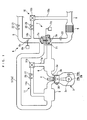
- an EGR controller 1 includes an ECU 2 configured to perform various controlling processes described hereinafter, and is applied to an internal combustion engine (hereinafter referred to as "the engine") 3 shown in FIG. 1 .
- the engine 3 is e.g. an in-line four-cylinder diesel engine installed on a vehicle (not shown), and includes a turbocharger 7, a low-pressure EGR device 10, a high-pressure EGR device 11, and so forth.
- a cylinder head 3a of the engine 3 has a fuel injection valve (hereinafter referred to as "the injector") 4 mounted therethrough such that they face a combustion chamber 3b.
- the valve-opening time period and the valve-opening timing of the injector 4 are controlled by a drive signal from the ECU 2, whereby a fuel injection amount and fuel injection timing of fuel are controlled.
- the turbocharger 7 is comprised of a compressor blade 7a disposed in an intake passage 5, a turbine blade 7b disposed in an exhaust passage 6, for rotation in unison with the compressor blade 7a, a plurality of variable vanes 7c (only two of which are shown), and a vane actuator 7d for actuating the variable vanes 7c.
- the compressor blade 7a integrally formed with the turbine blade 7b rotates simultaneously with the rotation of the turbine blade 7b, whereby a supercharging operation for supercharging intake air is carried out.
- variable vanes 7c are pivotally mounted on a wall of a housing, not shown, accommodating the turbine blade 7b, and are mechanically connected to the vane actuator 7d.
- the degree of opening of the variable vanes 7c is controlled by the ECU 2 via the vane actuator 7d.
- An air flow sensor 21, a first oxygen concentration sensor 22, and a throttle valve mechanism 8 are arranged in the intake passage 5 of the engine 3 from upstream to downstream in the mentioned order. Out of these components, the air flow sensor 21 and the first oxygen concentration sensor 22 are disposed at respective locations upstream of the compressor blade 7a.
- the air flow sensor 21 detects an amount QA of intake air introduced into the engine 3 to deliver a signal indicative of the sensed intake air amount QA to the ECU 2.
- the first oxygen concentration sensor 22 linearly detects the oxygen concentration of fresh air as a first oxygen concentration LAF1 to deliver a signal indicative of the sensed first oxygen concentration LAF1 to the ECU 2.
- the throttle valve mechanism 8 is comprised of a throttle valve 8a and a TH actuator 8b that actuates the throttle valve 8a.
- the throttle valve 8a is pivotally disposed in the intake passage 5 at a location upstream of the compressor blade 7a and at the same time immediately upstream of a portion of the intake passage 5 connected to a low-pressure EGR passage 10a, referred to hereinafter, of the low-pressure EGR device 10.
- the TH actuator 8b is a combination of a motor (not shown) and a reduction gear mechanism (not shown).
- the degree of opening of the throttle valve 8a is controlled via the TH actuator 8b in accordance with a control input U_TH from the ECU 2, whereby the amount of fresh air passing through the throttle valve 8a is controlled. It should be noted that the throttle valve 8a is normally controlled to be fully open.
- a second oxygen concentration sensor 23 and a DPF (Diesel Particulate Filter) 9 are disposed in the exhaust passage 6 at a location downstream of the turbine blade 7b, from upstream to downstream in the mentioned order.
- the second oxygen concentration sensor 23 linearly detects the oxygen concentration of exhaust gases as a second oxygen concentration LAF2 to deliver a signal indicative of the sensed second oxygen concentration LAF2 to the ECU 2.
- the DPF 9 collects particulates, such as soot, from exhaust gases to thereby purify the exhaust gases.
- Both of the above-mentioned low-pressure EGR device 10 and high-pressure EGR device 11 are provided for recirculating part of exhaust gases discharged from the engine 3 into the exhaust passage 6, to the intake passage 5.
- the low-pressure EGR device 10 is comprised of the low-pressure EGR passage 10a connected to a portion of the intake passage 5 upstream of the compressor blade 7a and a portion of the exhaust passage 6 downstream of the turbine blade 7b, and a low-pressure EGR control valve 10b for opening and closing the low-pressure EGR passage 10a.
- the low-pressure EGR control valve 10b is formed by an electromagnetic valve the valve lift of which is continuously changed, and is electrically connected to the ECU 2.
- the degree of opening of the low-pressure EGR control valve 10b is controlled in accordance with a control input U_EGRL from the ECU 2, whereby the amount of exhaust gas recirculation via the low-pressure EGR passage 10a (hereinafter referred to as "the low-pressure EGR amount”) is controlled.
- an EGR valve opening sensor 24 is disposed in the low-pressure EGR passage 10a at a location in the vicinity of the low-pressure EGR control valve 10b (see FIG. 2 ).
- the EGR valve opening sensor 24 detects a degree of opening of the low-pressure EGR control valve 10b (hereinafter referred to as "the low-pressure EGR valve opening") LEGRL to deliver a signal indicative of the sensed low-pressure EGR valve opening LEGRL to the ECU 2.
- the low-pressure EGR passage 10a has a low-pressure EGR pressure sensor 25 and a low-pressure EGR temperature sensor 26 inserted therein.
- the low-pressure EGR pressure sensor 25 detects a pressure in the low-pressure EGR passage 10a (hereinafter referred to as "the low-pressure EGR pressure") PEGRL, and delivers a signal indicative of the sensed low-pressure EGR pressure PEGRL to the ECU 2.
- the low-pressure EGR temperature sensor 26 detects a temperature in the low-pressure EGR passage 10a (hereinafter referred to as "the low-pressure EGR temperature”) TEGRL, and delivers a signal indicative of the sensed low-pressure EGR temperature TEGRL to the ECU 2.
- the high-pressure EGR device 11 is comprised of a high-pressure EGR passage 11a connected to a portion of the intake passage 5 downstream of the compressor blade 7a and a portion of the exhaust passage 6 upstream of the turbine blade 7b, and a high-pressure EGR control valve 11b for opening and closing the high-pressure EGR passage 11a.
- the high-pressure EGR control valve 11b is formed by an electromagnetic valve the valve lift of which is continuously changed, and is electrically connected to the ECU 2.
- the degree of opening of the high-pressure EGR control valve 11b is controlled in accordance with a control input U_EGRH from the ECU 2, whereby the amount of exhaust gas recirculation via the high-pressure EGR passage 11a (hereinafter referred to as "the high-pressure EGR amount”) is controlled.
- the high-pressure EGR passage 11a has a high-pressure EGR pressure sensor 27 and a high-pressure EGR temperature sensor 28 inserted therein.
- the high-pressure EGR pressure sensor 27 detects a pressure in the high-pressure EGR passage 11a (hereinafter referred to as "the high-pressure EGR pressure") PEGRH, and delivers a signal indicative of the sensed high-pressure EGR pressure PEGRH to the ECU 2.
- the high-pressure EGR temperature sensor 28 detects a temperature in the high-pressure EGR passage 11a (hereinafter referred to as "the high-pressure EGR temperature”) TEGRH, and delivers a signal indicative of the sensed high-pressure EGR temperature TEGRH to the ECU 2.
- the engine 3 is provided with a crank angle sensor 29.
- the crank angle sensor 29 is comprised of a magnet rotor 29a and an MRE (magnetic resistance element) pickup 29b, and delivers a CRK signal and a TDC signal, which are both pulse signals, to the ECU 2 in accordance with rotation of a crankshaft 3c.
- MRE magnetic resistance element
- Each pulse of the CRK signal is delivered whenever the crankshaft 3c rotates through a predetermined angle (e.g. 1° ).
- the ECU 2 calculates a rotational speed of the engine 3 (hereinafter referred to as "the engine speed") NE based on the CRK signal.
- the TDC signal indicates that each piston in the associated cylinder is in a predetermined crank angle position slightly before the TDC position at the start of the intake stroke, and each pulse thereof is delivered whenever the crankshaft 3c rotates through 180° when the engine 3 is of a four-cylinder type as in the present embodiment.
- the body of the engine 3 is provided with a coolant temperature sensor 30.
- the coolant temperature sensor 30 detects the temperature of engine coolant (hereinafter referred to as the "engine coolant temperature") TW circulating through a cylinder block (not shown) of the engine 3, and delivers a signal indicative of the sensed engine coolant temperature TW to the ECU 2.
- an accelerator pedal opening sensor 31 detects a stepped-on amount of an accelerator pedal (not shown) of the vehicle (hereinafter referred to as "the accelerator pedal opening") AP and delivers a signal indicative of the sensed accelerator pedal opening AP to the ECU 2.
- the ECU 2 is implemented by a microcomputer comprised of a CPU, a RAM, a ROM and an I/O interface (none of which are specifically shown).
- the ECU 2 determines operating conditions of the engine 3 based on the signals from the aforementioned sensors 21 to 31, and depending on the determined operating conditions of the engine 3, performs control processes, such as a fuel injection control process and an EGR control process including control of the low-pressure EGR amount using the low-pressure EGR device 10 and the high-pressure EGR amount using the high-pressure EGR device 11.
- the ECU 2 corresponds to exhaust gas recirculation amount control means, first oxygen proportion-obtaining means, target oxygen proportion-setting means, and operating region-determining means.
- FIG. 3 is a flowchart showing the above-mentioned EGR control process.
- the EGR control process is executed whenever a predetermined time period elapses.
- a target total EGR amount QEGRTCMD is calculated by searching a predetermined map (not shown) according to the engine speed NE and a demanded torque PMCMD.
- the target total EGR amount QEGRTCMD is a target value of the total amount of exhaust gases that is to be recirculated by the low-pressure EGR device 10 and the high-pressure EGR device 11.
- the demanded torque PMCMD is calculated by searching a predetermined map (not shown) according to the engine speed NE and the accelerator pedal opening AP.
- a target low-pressure EGR valve opening LEGRLCMD as a target to which the degree of opening of the low-pressure EGR control valve 10b is to be controlled (step 2).
- FIG. 4 is a subroutine of a process for calculating the target low-pressure EGR valve opening LEGRLCMD.
- step 12 it is determined whether or not the detected engine coolant temperature TW is not lower than a predetermined temperature TWREF (e.g. 50° C) (step 12). If the answer to the question of the step 12 is negative (NO), i.e. if the engine coolant temperature TW is lower than the predetermined temperature TWREF, it is determined that the engine 3 is in warm-up operation, and a first predetermined value OREF1 is set as a target oxygen concentration OCMD of intake air in the low-pressure EGR recirculation section 5a (step 13). The first predetermined value OREF1 is set to a fixed value smaller than the oxygen concentration of the atmosphere.
- a predetermined temperature TWREF e.g. 50° C
- a second predetermined value OREF2 is set as the target oxygen concentration OCMD (step 14).
- the second predetermined value OREF2 is set to a fixed value smaller than the first predetermined value OREF1 that is set during the above-mentioned warm-up operation (see FIG. 8 ).
- the target oxygen concentration OCMD is switched depending on whether the engine 3 is in warm-up operation or in normal operation. Further, during the warm-up operation, the target oxygen concentration OCMD is set to the larger value, which increases the proportion of oxygen, whereby it is possible to ensure stable combustion.
- the target low-pressure EGR valve opening LEGRLCMD is calculated by feedback control such that the actual oxygen concentration OACT calculated in the step 11 becomes equal to the set target oxygen concentration OCMD, followed by terminating the present process.
- the ratio of the amount of oxygen to the amount of inert gases i.e. the ratio a:b in FIG. 7
- the ratio a:b in FIG. 7 is controlled to be a fixed value corresponding to the first predetermined value OREF1 in warm-up operation or the second predetermined value OREF2 in normal operation, irrespective of whether the supercharging by the turbocharger 7 is in operation and of the boost pressure.
- a limiting process is carried out on the calculated target low-pressure EGR valve opening LEGRLCMD.
- FIG. 5 is a subroutine of the limiting process carried out on the target low-pressure EGR valve opening LEGRLCMD.
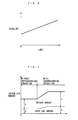
- an upper limit value LEGRLLMT of the target low-pressure EGR valve opening LEGRLCMD is calculated by searching the table shown in FIG. 6 according to the second oxygen concentration LAF2 detected by the second oxygen concentration sensor 23.
- the second oxygen concentration LAF2 is lower, the amount of inert gases in exhaust gases is larger, and hence the upper limit value LEGRLLMT is set to a smaller value in order to prevent the oxygen concentration in the low-pressure EGR recirculation section 5a from becoming too low.
- step 22 it is determined whether or not the target low-pressure EGR valve opening LEGRLCMD is not larger than the upper limit value LEGRLLMT (step 22). If the answer to the question of the step 22 is affirmative (YES), the present process is immediately terminated, whereas if the answer to the question of the step 22 is negative (NO), i.e. if LEGRLCMD > LEGRLLMT, the target low-pressure EGR valve opening LEGRLCMD is set to the upper limit value LEGRLLMT (step 23), followed by terminating the present process.
- the control input U_EGRL of the low-pressure EGR control valve 10b is calculated based on the set target low-pressure EGR valve opening LEGRLCMD.
- the control input U_EGRL is delivered to the low-pressure EGR control valve 10b, whereby the low-pressure EGR valve opening LEGRL is controlled to the target low-pressure EGR valve opening LEGRLCMD.
- the control input U_TH of the throttle valve 8a is calculated (step 5). More specifically, in principle, the control input U_TH is calculated so as to keep the throttle valve 8a fully open. Further, when the low-pressure EGR valve opening LEGRL has been fully opened, and at the same time the actual oxygen concentration OACT has not converged to the target oxygen concentration OCMD, i.e. although the low-pressure EGR valve opening LEGRL is controlled to be fully open, the low-pressure EGR amount is insufficient so that the actual oxygen concentration OACT is higher than the target oxygen concentration OCMD, the control input U_TH is calculated by feedback control such that the actual oxygen concentration OACT becomes equal to the target oxygen concentration OCMD.
- control input U_TH is calculated such that as the actual oxygen concentration OACT is higher, the degree of opening of the throttle valve 8a is more closed, i.e. reduced.
- the control input U_TH is delivered to the TH actuator 8b, whereby the degree of opening of the throttle valve 8a is controlled.
- the throttle valve 8a is controlled to the closing side, whereby the negative pressure in the intake passage 5 downstream of the throttle valve 8a is increased, causing a larger amount of exhaust gases to be recirculated to the intake passage 5 via the low-pressure EGR passage 10a, whereby the actual oxygen concentration OACT decreases to converge to the target oxygen concentration OCMD.
- the oxygen concentration in the low-pressure EGR recirculation section 5a is basically controlled by the degree of opening of the low-pressure EGR control valve 10b, and after the low-pressure EGR control valve 10b has been fully opened, the oxygen concentration in the low-pressure EGR recirculation section 5a is controlled by the degree of opening of the throttle valve 8a, whereby the actual oxygen concentration OACT is controlled to be equal to the target oxygen concentration OCMD.
- the control input U_EGRH of the high-pressure EGR control valve 11b is calculated by feedback control such that a high-pressure EGR amount QEGRH converges to the target high-pressure EGR amount QEGRHCMD (step 7), followed by terminating the present process.
- the high-pressure EGR amount QEGRH is calculated based on the equation of state of gas by using the high-pressure EGR pressure PEGRH detected by the high-pressure EGR pressure sensor 27 and the high-pressure EGR temperature TEGRH detected by the high-pressure EGR temperature sensor 28. By doing so, the total amount of exhaust gases recirculated via the low-pressure EGR device 10 and the high-pressure EGR device 11 is controlled to be equal to the target total EGR amount QEGRTCMD.
- the low-pressure EGR control valve 10b and the throttle valve 8a are controlled such that the actual oxygen concentration OACT in the low-pressure EGR recirculation section 5a becomes equal to the target oxygen concentration OCMD.
- exhaust gases at a lower temperature are always recirculated via the low-pressure EGR passage 10a. This makes it possible to achieve the maximum effect of suppression of NOx generation, thereby further reducing exhaust emissions.
- the target oxygen concentration OCMD is set to the first predetermined value OREF1 or the second predetermined value OREF2 dependent on an operating region (during warm-up operation or during operation other than warm-up operation), and hence, in each operating region, the ratio of the amount of oxygen in intake air to the amount of inert gases in the same in the low-pressure EGR recirculation section 5a becomes constant, whereby the net oxygen concentration of intake air can always be made constant. This makes it possible to ensure more stable combustion, and as a result, it is possible to maintain further reduced exhaust emissions and more excellent drivability.
- the upper limit value LEGRLLMT is set to a smaller value, whereby the opening of the low-pressure EGR control valve 10b is more strictly limited.
- the low-pressure EGR amount is controlled to be more reduced, whereby it is possible to take in a large amount of fresh air.
- the target oxygen concentration OCMD is set to a larger value, whereby it is possible to obtain oxygen required for combustion to thereby properly perform the warm-up operation.
- exhaust gases are recirculated via the low-pressure EGR passage 10a in addition to the high-pressure EGR passage 11a, and therefore, it is possible to secure a sufficient amount of exhaust gases passing through the turbine blade 7b, and it is possible to properly control the oxygen concentration in the low-pressure EGR recirculation section 5a while ensuring an excellent supercharging operation by the turbocharger 7.
- the present invention is by no means limited to the embodiment described above, but it can be practiced in various forms.
- both the low-pressure EGR control valve 10b and the throttle valve 8a are used as the low-pressure EGR control valve for control of the actual oxygen concentration OACT, only one of the low-pressure EGR control valve 10b and the throttle valve 8a may be used.
- the actual oxygen concentration OACT of intake air in the low-pressure EGR recirculation section 5a is estimated by using the first oxygen concentration LAF1, the second oxygen concentration LAF2, and the low-pressure EGR amount QEGRL, this is not limitative, but the actual oxygen concentration OACT may be directly detected by using a sensor disposed in the low-pressure EGR recirculation section 5a.
- the oxygen concentration of exhaust gases is directly detected by using the second oxygen concentration sensor 23, this is not limitative, but the oxygen concentration of exhaust gases may be estimated by using a parameter having a close relationship to the oxygen concentration of exhaust gases.
- the second oxygen concentration LAF2 is detected upstream of the DPF 9
- the second oxygen concentration LAF2 may be detected downstream of the DPF 9.
- the target oxygen concentration OCMD is switched depending on whether the engine 3 is in warm-up operation or in normal operation, instead of this or in addition to this, the target oxygen concentration OCMD may be switched depending on whether or not the engine 3 is in other operating regions such as an operation region where the engine 3 is regenerating a catalyst or an operating region where the engine 3 is eliminating sulfur accumulated on a catalyst.
- the supercharger is the turbocharger 7 comprised of the compressor blade 7a disposed in the intake passage 5 and the turbine blade 7b disposed in the exhaust passage 6, this is not limitative, but the supercharger may be one that has no turbine disposed in the exhaust passage. Further, in the above-described embodiment, the present invention is applied to an internal combustion engine having a supercharger, this is not limitative, but the present invention can be applied to an internal combustion engine having no supercharger.
- the present invention is applied to a diesel engine installed on a vehicle, by way of example, this is not limitative, but the present invention can be applied not only to the diesel engine but also to various types of engines, such as a gasoline engine. Further, the present invention can also be applied to engines other than engines for vehicles, including engines for ship propulsion machines, such as an outboard motor having a vertically-disposed crankshaft.
- An EGR controller for an internal combustion engine which is capable of maintaining reduced exhaust emissions and excellent drivability while achieving the maximum effect of suppression of NOx generation.
- part of exhaust gases discharged into an exhaust passage is recirculated into an intake passage via a first EGR passage and a second EGR passage. Further, by controlling the degree of opening of an EGR control valve, the amount of exhaust gas recirculation is controlled. Further, the proportion of oxygen in intake air flowing through an EGR recirculation section of the intake passage which is downstream of the EGR control valve and upstream of a portion connected to the first EGR passage is obtained as a first oxygen proportion, and the degree of opening of the EGR control valve is controlled such that the first oxygen proportion becomes equal to a target oxygen proportion. ( Figure 3 )
Landscapes
- Engineering & Computer Science (AREA)
- Chemical & Material Sciences (AREA)
- Combustion & Propulsion (AREA)
- Mechanical Engineering (AREA)
- General Engineering & Computer Science (AREA)
- Physics & Mathematics (AREA)
- Fluid Mechanics (AREA)
- Analytical Chemistry (AREA)
- Exhaust-Gas Circulating Devices (AREA)
- Output Control And Ontrol Of Special Type Engine (AREA)
Abstract
Description
- The present invention relates to an EGR controller and an EGR control method for an internal combustion engine, for controlling an EGR that recirculates part of exhaust gases to an intake passage.
- Conventionally, there has been proposed an EGR controller for an internal combustion engine in Japanese Laid-Open Patent Publication (Kokai) No.
2007-127037 - This EGR controller controls the respective degrees of opening of the high-pressure EGR control valve and opening of the low-pressure EGR control valve in accordance with the rotational speed of the engine etc. to thereby control the amount of exhaust gases recirculated to the intake passage. More specifically, when the rotational speed of the engine is low and at the same time the load thereon is low, a target oxygen concentration is calculated in accordance with the rotational speed of the engine and an accelerator pedal opening. Then, the degrees of opening of both the high-pressure EGR control valve and the low-pressure EGR control valve are controlled such that the oxygen concentration of intake air flowing through a section of the intake passage downstream of the portion connected to the high-pressure EGR passage becomes equal to the target oxygen concentration. On the other hand, when the rotational speed of the engine and the load thereon are both high, the high-pressure EGR control valve and the low-pressure EGR control valve are both controlled to be fully closed so as to inhibit the recirculation of exhaust gases.
- As described above, in the conventional EGR controller, the degrees of opening of the low-pressure EGR control valve and opening of the high-pressure EGR control valve are changed depending on operating conditions, such the rotational speed, of the engine. However, since the low-pressure EGR passage is connected to a portion of the intake passage upstream of the portion connected to the high-pressure EGR passage, the distance from the portion of the intake passage connected to the low-pressure EGR passage to a combustion chamber is relatively long, so that response delay of exhaust gases becomes large. For this reason, even when the degree of opening of the low-pressure EGR control valve is changed in accordance with a change in the operating conditions of the engine, due to the influence of response delay of exhaust gases, the oxygen concentration of intake air supplied to the combustion chamber does not immediately follows up the target oxygen concentration. As a result, the combustion state of the engine sometimes becomes unstable, and in such a case, exhaust emissions are increased and drivability is degraded. Especially when the amount of exhaust gas recirculation is large and the oxygen concentration is too low, a misfire can occur. Also, during acceleration of the engine, oxygen required for combustion becomes short, which reduces the acceleration responsiveness, resulting in degraded drivability.
- Further, in the conventional EGR controller, when the rotational speed of the engine and the load thereon are high, the recirculation of exhaust gases is inhibited. However, when the rotational speed of the engine and the load thereon are high, the amount of generated NOx tends to increase due to high combustion temperatures, and hence by inhibiting the recirculation of exhaust gases under such operating conditions of the engine, a larger amount of NOx is generated.
- It is an object of the present invention to provide an EGR controller and an EGR control method for an internal combustion engine, which are capable of maintaining reduced exhaust emissions and excellent drivability while achieving the maximum effect of suppression of NOx generation.
- To attain the above object, in a first aspect of the present invention, there is provided an EGR controller for an internal combustion engine, including a first EGR passage connected to an intake passage and an exhaust passage, for recirculating part of exhaust gases discharged into the exhaust passage, to the intake passage, a second EGR passage connected to a portion of the intake passage upstream of a portion thereof connected to the first EGR passage and a portion of the exhaust passage downstream of a portion thereof connected to the first EGR passage, for recirculating part of exhaust gases to the intake passage, and an EGR control valve disposed in at least one of the intake passage at a location in a vicinity of the portion connected to the second EGR passage, and the second EGR passage, characterized by comprising exhaust gas recirculation amount control means for controlling an amount of exhaust gas recirculation by controlling a degree of opening of the EGR control valve, first oxygen proportion-obtaining means for obtaining a proportion of oxygen in intake air flowing through an EGR recirculation section of the intake passage which is downstream of the EGR control valve and at the same time upstream of the portion connected to the first EGR passage, as a first oxygen proportion, and target oxygen proportion-setting means for setting a target oxygen proportion as a target to which the obtained first oxygen proportion is to be controlled, wherein the exhaust gas recirculation amount control means controls the degree of opening of the EGR control valve such that the obtained first oxygen proportion becomes equal to the target oxygen proportion.
- With the configuration of this EGR controller according to the first aspect of the present invention, the first EGR passage and the second EGR passage are each connected to the intake passage and the exhaust passage. The second EGR passage is connected to a portion of the intake passage upstream of the portion connected to the first EGR passage and a portion of the exhaust passage downstream of the portion connected to the first EGR passage. Part of exhaust gases discharged into the exhaust passage is recirculated to the intake passage via these first EGR passage and the second EGR passage. Further, the amount of exhaust gas recirculation via the second EGR passage is controlled by controlling the degree of opening of the EGR control valve.
- Further, the proportion of oxygen in intake air flowing through the EGR recirculation section of the intake passage which is downstream of the EGR control valve and at the same time upstream of the portion connected to the first EGR passage is obtained as the first oxygen proportion, and the degree of opening of the EGR control valve is controlled such that the first oxygen proportion becomes equal to the target oxygen proportion. By doing so, the amount of exhaust gas recirculation via the second EGR passage is controlled whereby the first oxygen proportion is controlled to be equal to the target oxygen proportion. As described above, the first oxygen proportion in the EGR recirculation section i.e. in a section immediately before a confluence where the intake passage meets the fist EGR passage is controlled to be equal to the target oxygen proportion. Therefore, unlike the above-described conventional EGR controller, it is possible to eliminate the influence of response delay of exhaust gases occurring from the time when exhaust gases are recirculated to the intake passage from the second EGR passage to the time when the exhaust gases are supplied to the combustion chamber, thereby ensuring a stable combustion state. As a result, it is possible to maintain reduced exhaust emissions and excellent drivability.
- Further, the EGR recirculation section is relatively long, so that the temperature of recirculated exhaust gases is liable to fall. Accordingly, even by recirculating a small amount of exhaust gases via the second EGR passage, it is possible to effectively suppress NOx generation. According to the present invention, exhaust gases are always recirculated via the second EGR passage such that the first oxygen proportion becomes equal to the target oxygen proportion. This makes it possible to achieve the maximum effect of suppression of NOx generation, while maintaining reduced exhaust emissions and excellent drivability.
- Preferably, the target oxygen proportion-setting means sets the target oxygen proportion such that a ratio of an amount of oxygen in the intake air flowing through the EGR recirculation section to an amount of inert gases in the intake air becomes constant.
- Exhaust gases include not only inert gases but also oxygen unused for combustion in the combustion chamber and discharged therefrom. Therefore, the oxygen in intake air flowing through the EGR recirculation section also includes oxygen contained in exhaust gases in addition to oxygen contained in fresh air. From this point of view, according to the present invention, the target oxygen proportion is set such that the ratio of the amount of oxygen in the intake air flowing through the EGR recirculation section to the amount of inert gases in the same becomes constant. Accordingly, by using the target oxygen proportion to control the degree of opening of the EGR control valve, it is possible to make the net oxygen proportion of intake air always constant. Therefore, it is possible to ensure a more stable combustion, and as a result, it is possible to maintain further reduced exhaust emissions and more excellent drivability.
- Preferably, the EGR controller further comprises second oxygen proportion-obtaining means for obtaining a proportion of oxygen in exhaust gases in the exhaust passage, as a second oxygen proportion, and the exhaust gas recirculation amount control means controls the degree of opening of the EGR control valve such that as the obtained second oxygen proportion is smaller, an amount of exhaust gas recirculation via the second EGR passage is made smaller.
- As the proportion of oxygen in exhaust gases is smaller, the amount of inert gases contained in the exhaust gases is larger, and therefore even when the same amount of exhaust gases is recirculated via the second EGR passage, the proportion of oxygen in the EGR recirculation section is smaller. According to the present invention, as the second oxygen proportion, which is the obtained proportion of oxygen in exhaust gases, is smaller, the recirculation amount of exhaust gases via the second EGR passage is controlled to be smaller. With this configuration, a large amount of fresh air is taken in to increase the proportion of oxygen in intake air, whereby it is possible to properly control the first oxygen proportion, thereby maintaining further reduced exhaust emissions and more excellent drivability.
- Preferably, the EGR controller further comprises operating region-determining means for determining an operating region of the engine, and the target oxygen proportion-setting means sets the target oxygen proportion in accordance with the determined operating region of the engine.
- The proportion of oxygen necessary for maintaining reduced exhaust emissions and excellent drivability is different depending on the operating region of the engine, such as respective operating regions for normal operation, warm-up operation, and regeneration of a filter. From this point of view, according to the present invention, the target oxygen proportion is set based on the determined operating region of the engine, whereby it is possible to set an appropriate target oxygen proportion for each operating region. Therefore, by using the target oxygen proportion thus set to control of the degree of opening of the EGR control valve, it is possible to maintain reduced exhaust emissions and excellent drivability in each operating region of the engine.
- More preferably, the operating region-determining means determines whether or not the engine is in warm-up operation, for determining the operating region of the engine, and when the engine is determined to be in warm-up operation, the target oxygen proportion-setting means sets the target oxygen proportion to a larger value than a value set when the engine is determined not to be in warm-up operation.
- During warm-up operation of the engine, a larger amount of oxygen is required to ensure stable combustion. According to the present invention, when the engine is determined to be in warm-up operation, the target oxygen proportion is set to a larger value than a value set when the engine is determined not to be in warm-up operation. Therefore, it is possible to obtain oxygen necessary for combustion to thereby properly perform warm-up operation.
- Preferably, the engine includes a supercharger, the supercharger including a turbine disposed in the exhaust passage, a compressor disposed in the intake passage, for rotation in unison with the turbine, and a boost pressure control valve disposed in the exhaust passage, for controlling a boost pressure, wherein the first EGR passage is connected to a portion of the exhaust passage upstream of the turbine, and wherein the second EGR passage is connected to a portion of the exhaust passage downstream of the turbine.
- With the arrangement of this preferred embodiment, the first EGR passage is connected to the portion of the exhaust passage upstream of the turbine, and the second EGR passage is connected to the portion of the exhaust passage downstream of the turbine. Therefore, by recirculating exhaust gases via the second EGR passage, it is possible to reduce the amount of exhaust gases recirculation via the first EGR passage. This makes it possible to secure a sufficient amount of exhaust gases passing through the turbine, and while securing an excellent supercharging operation by the supercharger, it is possible to properly control the oxygen proportion.
- To attain the above object, in a second aspect of the present invention, there is provided an EGR control method for an internal combustion engine including a first EGR passage connected to an intake passage and an exhaust passage, for recirculating part of exhaust gases discharged into the exhaust passage, to the intake passage, a second EGR passage connected to a portion of the intake passage upstream of a portion thereof connected to the first EGR passage and a portion of the exhaust passage downstream of a portion thereof connected to the first EGR passage, for recirculating part of exhaust gases to the intake passage, and an EGR control valve disposed in at least one of the intake passage at a location in a vicinity of the portion connected to the second EGR passage, and the second EGR passage, characterized by comprising an exhaust gas recirculation amount control step of controlling an amount of exhaust gas recirculation by controlling a degree of opening of the EGR control valve, a first oxygen proportion-obtaining step of obtaining a proportion of oxygen in intake air flowing through an EGR recirculation section of the intake passage which is downstream of the EGR control valve and at the same time upstream of the portion connected to the first EGR passage, as a first oxygen proportion, and a target oxygen proportion-setting step of setting a target oxygen proportion as a target to which the obtained first oxygen proportion is to be controlled, wherein the exhaust gas recirculation amount control step includes controlling the degree of opening of the EGR control valve such that the obtained first oxygen proportion becomes equal to the target oxygen proportion.
- With the configuration of this EGR control method according to the second aspect of the present invention, it is possible to obtain the same advantageous effects as provided by the first aspect of the present invention.
- The above and other objects, features, and advantages of the present invention will become more apparent from the following detailed description taken in conjunction with the accompanying drawings.
-
-
FIG. 1 is a schematic diagram of an internal combustion engine to which is applied the present invention; -
FIG. 2 is a schematic block diagram of an EGR controller; -
FIG. 3 is a flowchart showing a main flow of an EGR control process; -
FIG. 4 is a flowchart showing a subroutine of a process for calculating a target low-pressure EGR amount; -
FIG. 5 is a flowchart showing a subroutine of a process for limiting the target low-pressure EGR amount; -
FIG. 6 is an example of a table for use in the process shown inFIG. 5 ; -
FIG. 7 is a graph showing a relationship between an amount of oxygen and an amount of inert gases in intake air in a low-pressure EGR recirculation section; and -
FIG. 8 is a graph showing a relationship between operating conditions of the engine and a first predetermined value and a second predetermined value that are set as a target oxygen concentration. - The invention will now be described in detail with reference to drawings showing a preferred embodiment thereof. As shown in
FIG. 2 , anEGR controller 1 according to the present embodiment includes anECU 2 configured to perform various controlling processes described hereinafter, and is applied to an internal combustion engine (hereinafter referred to as "the engine") 3 shown inFIG. 1 . Theengine 3 is e.g. an in-line four-cylinder diesel engine installed on a vehicle (not shown), and includes aturbocharger 7, a low-pressure EGR device 10, a high-pressure EGR device 11, and so forth. - A cylinder head 3a of the
engine 3 has a fuel injection valve (hereinafter referred to as "the injector") 4 mounted therethrough such that they face acombustion chamber 3b. The valve-opening time period and the valve-opening timing of theinjector 4 are controlled by a drive signal from theECU 2, whereby a fuel injection amount and fuel injection timing of fuel are controlled. - The
turbocharger 7 is comprised of acompressor blade 7a disposed in anintake passage 5, aturbine blade 7b disposed in anexhaust passage 6, for rotation in unison with thecompressor blade 7a, a plurality ofvariable vanes 7c (only two of which are shown), and avane actuator 7d for actuating thevariable vanes 7c. - In the
turbocharger 7, as theturbine blade 7b is driven for rotation by exhaust gases flowing through theexhaust passage 6, thecompressor blade 7a integrally formed with theturbine blade 7b rotates simultaneously with the rotation of theturbine blade 7b, whereby a supercharging operation for supercharging intake air is carried out. - The
variable vanes 7c are pivotally mounted on a wall of a housing, not shown, accommodating theturbine blade 7b, and are mechanically connected to thevane actuator 7d. The degree of opening of thevariable vanes 7c is controlled by theECU 2 via thevane actuator 7d. As a consequence, as the amount of exhaust gases blown to theturbine blade 7b changes, the rotational speed of theturbine blade 7b and thecompressor blade 7a is changed, whereby boost pressure is controlled. - An
air flow sensor 21, a firstoxygen concentration sensor 22, and athrottle valve mechanism 8 are arranged in theintake passage 5 of theengine 3 from upstream to downstream in the mentioned order. Out of these components, theair flow sensor 21 and the firstoxygen concentration sensor 22 are disposed at respective locations upstream of thecompressor blade 7a. Theair flow sensor 21 detects an amount QA of intake air introduced into theengine 3 to deliver a signal indicative of the sensed intake air amount QA to theECU 2. The firstoxygen concentration sensor 22 linearly detects the oxygen concentration of fresh air as a first oxygen concentration LAF1 to deliver a signal indicative of the sensed first oxygen concentration LAF1 to theECU 2. - The
throttle valve mechanism 8 is comprised of a throttle valve 8a and aTH actuator 8b that actuates the throttle valve 8a. The throttle valve 8a is pivotally disposed in theintake passage 5 at a location upstream of thecompressor blade 7a and at the same time immediately upstream of a portion of theintake passage 5 connected to a low-pressure EGR passage 10a, referred to hereinafter, of the low-pressure EGR device 10. TheTH actuator 8b is a combination of a motor (not shown) and a reduction gear mechanism (not shown). The degree of opening of the throttle valve 8a is controlled via theTH actuator 8b in accordance with a control input U_TH from theECU 2, whereby the amount of fresh air passing through the throttle valve 8a is controlled. It should be noted that the throttle valve 8a is normally controlled to be fully open. - A second
oxygen concentration sensor 23 and a DPF (Diesel Particulate Filter) 9 are disposed in theexhaust passage 6 at a location downstream of theturbine blade 7b, from upstream to downstream in the mentioned order. The secondoxygen concentration sensor 23 linearly detects the oxygen concentration of exhaust gases as a second oxygen concentration LAF2 to deliver a signal indicative of the sensed second oxygen concentration LAF2 to theECU 2. TheDPF 9 collects particulates, such as soot, from exhaust gases to thereby purify the exhaust gases. - Both of the above-mentioned low-
pressure EGR device 10 and high-pressure EGR device 11 are provided for recirculating part of exhaust gases discharged from theengine 3 into theexhaust passage 6, to theintake passage 5. - The low-
pressure EGR device 10 is comprised of the low-pressure EGR passage 10a connected to a portion of theintake passage 5 upstream of thecompressor blade 7a and a portion of theexhaust passage 6 downstream of theturbine blade 7b, and a low-pressureEGR control valve 10b for opening and closing the low-pressure EGR passage 10a. - The low-pressure
EGR control valve 10b is formed by an electromagnetic valve the valve lift of which is continuously changed, and is electrically connected to theECU 2. The degree of opening of the low-pressureEGR control valve 10b is controlled in accordance with a control input U_EGRL from theECU 2, whereby the amount of exhaust gas recirculation via the low-pressure EGR passage 10a (hereinafter referred to as "the low-pressure EGR amount") is controlled. - Further, an EGR
valve opening sensor 24 is disposed in the low-pressure EGR passage 10a at a location in the vicinity of the low-pressureEGR control valve 10b (seeFIG. 2 ). The EGRvalve opening sensor 24 detects a degree of opening of the low-pressureEGR control valve 10b (hereinafter referred to as "the low-pressure EGR valve opening") LEGRL to deliver a signal indicative of the sensed low-pressure EGR valve opening LEGRL to theECU 2. - Further, the low-
pressure EGR passage 10a has a low-pressureEGR pressure sensor 25 and a low-pressureEGR temperature sensor 26 inserted therein. The low-pressureEGR pressure sensor 25 detects a pressure in the low-pressure EGR passage 10a (hereinafter referred to as "the low-pressure EGR pressure") PEGRL, and delivers a signal indicative of the sensed low-pressure EGR pressure PEGRL to theECU 2. The low-pressureEGR temperature sensor 26 detects a temperature in the low-pressure EGR passage 10a (hereinafter referred to as "the low-pressure EGR temperature") TEGRL, and delivers a signal indicative of the sensed low-pressure EGR temperature TEGRL to theECU 2. - The high-
pressure EGR device 11 is comprised of a high-pressure EGR passage 11a connected to a portion of theintake passage 5 downstream of thecompressor blade 7a and a portion of theexhaust passage 6 upstream of theturbine blade 7b, and a high-pressureEGR control valve 11b for opening and closing the high-pressure EGR passage 11a. - The high-pressure
EGR control valve 11b is formed by an electromagnetic valve the valve lift of which is continuously changed, and is electrically connected to theECU 2. The degree of opening of the high-pressureEGR control valve 11b is controlled in accordance with a control input U_EGRH from theECU 2, whereby the amount of exhaust gas recirculation via the high-pressure EGR passage 11a (hereinafter referred to as "the high-pressure EGR amount") is controlled. - Further, the high-
pressure EGR passage 11a has a high-pressureEGR pressure sensor 27 and a high-pressureEGR temperature sensor 28 inserted therein. The high-pressureEGR pressure sensor 27 detects a pressure in the high-pressure EGR passage 11a (hereinafter referred to as "the high-pressure EGR pressure") PEGRH, and delivers a signal indicative of the sensed high-pressure EGR pressure PEGRH to theECU 2. The high-pressureEGR temperature sensor 28 detects a temperature in the high-pressure EGR passage 11a (hereinafter referred to as "the high-pressure EGR temperature") TEGRH, and delivers a signal indicative of the sensed high-pressure EGR temperature TEGRH to theECU 2. - Further, the
engine 3 is provided with acrank angle sensor 29. Thecrank angle sensor 29 is comprised of amagnet rotor 29a and an MRE (magnetic resistance element)pickup 29b, and delivers a CRK signal and a TDC signal, which are both pulse signals, to theECU 2 in accordance with rotation of acrankshaft 3c. - Each pulse of the CRK signal is delivered whenever the
crankshaft 3c rotates through a predetermined angle (e.g. 1° ). TheECU 2 calculates a rotational speed of the engine 3 (hereinafter referred to as "the engine speed") NE based on the CRK signal. The TDC signal indicates that each piston in the associated cylinder is in a predetermined crank angle position slightly before the TDC position at the start of the intake stroke, and each pulse thereof is delivered whenever thecrankshaft 3c rotates through 180° when theengine 3 is of a four-cylinder type as in the present embodiment. - The body of the
engine 3 is provided with acoolant temperature sensor 30. Thecoolant temperature sensor 30 detects the temperature of engine coolant (hereinafter referred to as the "engine coolant temperature") TW circulating through a cylinder block (not shown) of theengine 3, and delivers a signal indicative of the sensed engine coolant temperature TW to theECU 2. - Further, an accelerator
pedal opening sensor 31 detects a stepped-on amount of an accelerator pedal (not shown) of the vehicle (hereinafter referred to as "the accelerator pedal opening") AP and delivers a signal indicative of the sensed accelerator pedal opening AP to theECU 2. - The
ECU 2 is implemented by a microcomputer comprised of a CPU, a RAM, a ROM and an I/O interface (none of which are specifically shown). TheECU 2 determines operating conditions of theengine 3 based on the signals from theaforementioned sensors 21 to 31, and depending on the determined operating conditions of theengine 3, performs control processes, such as a fuel injection control process and an EGR control process including control of the low-pressure EGR amount using the low-pressure EGR device 10 and the high-pressure EGR amount using the high-pressure EGR device 11. - In the present embodiment, the
ECU 2 corresponds to exhaust gas recirculation amount control means, first oxygen proportion-obtaining means, target oxygen proportion-setting means, and operating region-determining means. -
FIG. 3 is a flowchart showing the above-mentioned EGR control process. The EGR control process is executed whenever a predetermined time period elapses. In the present process, first, in a step 1 (shown as S1 in abbreviated form inFIG. 3 ; the following steps are also shown in abbreviated form), a target total EGR amount QEGRTCMD is calculated by searching a predetermined map (not shown) according to the engine speed NE and a demanded torque PMCMD. The target total EGR amount QEGRTCMD is a target value of the total amount of exhaust gases that is to be recirculated by the low-pressure EGR device 10 and the high-pressure EGR device 11. Further, the demanded torque PMCMD is calculated by searching a predetermined map (not shown) according to the engine speed NE and the accelerator pedal opening AP. - Next, there is calculated a target low-pressure EGR valve opening LEGRLCMD as a target to which the degree of opening of the low-pressure
EGR control valve 10b is to be controlled (step 2). -
FIG. 4 is a subroutine of a process for calculating the target low-pressure EGR valve opening LEGRLCMD. In the present process, first, in astep 11, an actual oxygen concentration OACT of intake air (fresh air and exhaust gases recirculated via the low-pressure EGR passage 10a) flowing through a section of theintake passage 5 between the portion connected to the low-pressure EGR passage 10a and the portion connected to the high-pressure EGR passage 11a (hereinafter referred to as "the low-pressure EGR recirculation section") 5a is calculated using the detected
- The low-pressure EGR amount QEGRL is calculated based on an equation of state of gas by using the low-pressure EGR pressure PEGRL detected by the low-pressure
EGR pressure sensor 25 and the low-pressure EGR temperature TEGRL detected by the low-pressureEGR temperature sensor 26. - Next, it is determined whether or not the detected engine coolant temperature TW is not lower than a predetermined temperature TWREF (e.g. 50° C) (step 12). If the answer to the question of the
step 12 is negative (NO), i.e. if the engine coolant temperature TW is lower than the predetermined temperature TWREF, it is determined that theengine 3 is in warm-up operation, and a first predetermined value OREF1 is set as a target oxygen concentration OCMD of intake air in the low-pressureEGR recirculation section 5a (step 13). The first predetermined value OREF1 is set to a fixed value smaller than the oxygen concentration of the atmosphere. - On the other hand, if the answer to the question of the
step 12 is affirmative (YES), i.e. if TW ≧ TWREF, it is determined that theengine 3 is not in warm-up operation, but in normal operation, and a second predetermined value OREF2 is set as the target oxygen concentration OCMD (step 14). The second predetermined value OREF2 is set to a fixed value smaller than the first predetermined value OREF1 that is set during the above-mentioned warm-up operation (seeFIG. 8 ). - As described above, the target oxygen concentration OCMD is switched depending on whether the
engine 3 is in warm-up operation or in normal operation. Further, during the warm-up operation, the target oxygen concentration OCMD is set to the larger value, which increases the proportion of oxygen, whereby it is possible to ensure stable combustion. - In a
step 15 following the above-describedstep 13 or 14, the target low-pressure EGR valve opening LEGRLCMD is calculated by feedback control such that the actual oxygen concentration OACT calculated in thestep 11 becomes equal to the set target oxygen concentration OCMD, followed by terminating the present process. - As described above, by setting the target oxygen concentration OCMD to the first predetermined value OREF1, which is fixed, or the second predetermined value OREF2, which is fixed, and performing control such that the actual oxygen concentration OACT becomes equal to the target oxygen concentration OCMD, the ratio of the amount of oxygen to the amount of inert gases (i.e. the ratio a:b in
FIG. 7 ) in intake air in the low-pressureEGR recirculation section 5a is controlled to be a fixed value corresponding to the first predetermined value OREF1 in warm-up operation or the second predetermined value OREF2 in normal operation, irrespective of whether the supercharging by theturbocharger 7 is in operation and of the boost pressure. - Referring again to
FIG. 3 , in astep 3 following the above-describedstep 2, a limiting process is carried out on the calculated target low-pressure EGR valve opening LEGRLCMD. -
FIG. 5 is a subroutine of the limiting process carried out on the target low-pressure EGR valve opening LEGRLCMD. In the present process, first, in astep 21, an upper limit value LEGRLLMT of the target low-pressure EGR valve opening LEGRLCMD is calculated by searching the table shown inFIG. 6 according to the second oxygen concentration LAF2 detected by the secondoxygen concentration sensor 23. In this table, as the second oxygen concentration LAF2 is lower, the amount of inert gases in exhaust gases is larger, and hence the upper limit value LEGRLLMT is set to a smaller value in order to prevent the oxygen concentration in the low-pressureEGR recirculation section 5a from becoming too low. - Next, it is determined whether or not the target low-pressure EGR valve opening LEGRLCMD is not larger than the upper limit value LEGRLLMT (step 22). If the answer to the question of the
step 22 is affirmative (YES), the present process is immediately terminated, whereas if the answer to the question of thestep 22 is negative (NO), i.e. if LEGRLCMD > LEGRLLMT, the target low-pressure EGR valve opening LEGRLCMD is set to the upper limit value LEGRLLMT (step 23), followed by terminating the present process. - Referring again to
FIG. 3 , in astep 4 following the above-describedstep 3, the control input U_EGRL of the low-pressureEGR control valve 10b is calculated based on the set target low-pressure EGR valve opening LEGRLCMD. The control input U_EGRL is delivered to the low-pressureEGR control valve 10b, whereby the low-pressure EGR valve opening LEGRL is controlled to the target low-pressure EGR valve opening LEGRLCMD. - Next, the control input U_TH of the throttle valve 8a is calculated (step 5). More specifically, in principle, the control input U_TH is calculated so as to keep the throttle valve 8a fully open. Further, when the low-pressure EGR valve opening LEGRL has been fully opened, and at the same time the actual oxygen concentration OACT has not converged to the target oxygen concentration OCMD, i.e. although the low-pressure EGR valve opening LEGRL is controlled to be fully open, the low-pressure EGR amount is insufficient so that the actual oxygen concentration OACT is higher than the target oxygen concentration OCMD, the control input U_TH is calculated by feedback control such that the actual oxygen concentration OACT becomes equal to the target oxygen concentration OCMD. More specifically, the control input U_TH is calculated such that as the actual oxygen concentration OACT is higher, the degree of opening of the throttle valve 8a is more closed, i.e. reduced. The control input U_TH is delivered to the
TH actuator 8b, whereby the degree of opening of the throttle valve 8a is controlled. By doing so, the throttle valve 8a is controlled to the closing side, whereby the negative pressure in theintake passage 5 downstream of the throttle valve 8a is increased, causing a larger amount of exhaust gases to be recirculated to theintake passage 5 via the low-pressure EGR passage 10a, whereby the actual oxygen concentration OACT decreases to converge to the target oxygen concentration OCMD. - As described above, the oxygen concentration in the low-pressure
EGR recirculation section 5a is basically controlled by the degree of opening of the low-pressureEGR control valve 10b, and after the low-pressureEGR control valve 10b has been fully opened, the oxygen concentration in the low-pressureEGR recirculation section 5a is controlled by the degree of opening of the throttle valve 8a, whereby the actual oxygen concentration OACT is controlled to be equal to the target oxygen concentration OCMD. - Next, a target high-pressure EGR amount QEGRHCMD is calculated by subtracting the low-pressure EGR amount QEGRL from the target total EGR amount QEGRTCMD calculated in the above-described step 1 (= QEGRTCMD - QEGRL) (step 6).
- Then, the control input U_EGRH of the high-pressure
EGR control valve 11b is calculated by feedback control such that a high-pressure EGR amount QEGRH converges to the target high-pressure EGR amount QEGRHCMD (step 7), followed by terminating the present process. It should be noted that the high-pressure EGR amount QEGRH is calculated based on the equation of state of gas by using the high-pressure EGR pressure PEGRH detected by the high-pressureEGR pressure sensor 27 and the high-pressure EGR temperature TEGRH detected by the high-pressureEGR temperature sensor 28. By doing so, the total amount of exhaust gases recirculated via the low-pressure EGR device 10 and the high-pressure EGR device 11 is controlled to be equal to the target total EGR amount QEGRTCMD. - As described above, according to the present embodiment, the low-pressure
EGR control valve 10b and the throttle valve 8a are controlled such that the actual oxygen concentration OACT in the low-pressureEGR recirculation section 5a becomes equal to the target oxygen concentration OCMD. This makes it possible to eliminate the influence of response delay of exhaust gases occurring from the time when exhaust gases are recirculated to theintake passage 5 from the low-pressure EGR passage 10a to the time when the exhaust gases are supplied to thecombustion chamber 3b, thereby ensuring stable combustion. As a result, it is possible to maintain reduced exhaust emissions and excellent drivability. - Further, exhaust gases at a lower temperature are always recirculated via the low-
pressure EGR passage 10a. This makes it possible to achieve the maximum effect of suppression of NOx generation, thereby further reducing exhaust emissions. - Further, the target oxygen concentration OCMD is set to the first predetermined value OREF1 or the second predetermined value OREF2 dependent on an operating region (during warm-up operation or during operation other than warm-up operation), and hence, in each operating region, the ratio of the amount of oxygen in intake air to the amount of inert gases in the same in the low-pressure
EGR recirculation section 5a becomes constant, whereby the net oxygen concentration of intake air can always be made constant. This makes it possible to ensure more stable combustion, and as a result, it is possible to maintain further reduced exhaust emissions and more excellent drivability. - Moreover, as the second oxygen concentration LAF2 representing the oxygen concentration of exhaust gases is lower, the upper limit value LEGRLLMT is set to a smaller value, whereby the opening of the low-pressure
EGR control valve 10b is more strictly limited. As a consequence, the low-pressure EGR amount is controlled to be more reduced, whereby it is possible to take in a large amount of fresh air. By doing so, it is possible to increase the oxygen concentration in the low-pressureEGR recirculation section 5a and properly control the actual oxygen concentration OACT, and as a result, it is possible to maintain further reduced exhaust emissions and more excellent drivability. - Further, during warm-up operation of the
engine 3, the target oxygen concentration OCMD is set to a larger value, whereby it is possible to obtain oxygen required for combustion to thereby properly perform the warm-up operation. - Further, exhaust gases are recirculated via the low-
pressure EGR passage 10a in addition to the high-pressure EGR passage 11a, and therefore, it is possible to secure a sufficient amount of exhaust gases passing through theturbine blade 7b, and it is possible to properly control the oxygen concentration in the low-pressureEGR recirculation section 5a while ensuring an excellent supercharging operation by theturbocharger 7. - It should be noted that the present invention is by no means limited to the embodiment described above, but it can be practiced in various forms. For example, although in the above-described embodiment, both the low-pressure
EGR control valve 10b and the throttle valve 8a are used as the low-pressure EGR control valve for control of the actual oxygen concentration OACT, only one of the low-pressureEGR control valve 10b and the throttle valve 8a may be used. - Although in the above-described embodiment, the actual oxygen concentration OACT of intake air in the low-pressure
EGR recirculation section 5a is estimated by using the first oxygen concentration LAF1, the second oxygen concentration LAF2, and the low-pressure EGR amount QEGRL, this is not limitative, but the actual oxygen concentration OACT may be directly detected by using a sensor disposed in the low-pressureEGR recirculation section 5a. Further, although in the above-described embodiment, the oxygen concentration of exhaust gases is directly detected by using the secondoxygen concentration sensor 23, this is not limitative, but the oxygen concentration of exhaust gases may be estimated by using a parameter having a close relationship to the oxygen concentration of exhaust gases. Also, although the second oxygen concentration LAF2 is detected upstream of theDPF 9, the second oxygen concentration LAF2 may be detected downstream of theDPF 9. - Further, although in the above-described embodiment, the target oxygen concentration OCMD is switched depending on whether the
engine 3 is in warm-up operation or in normal operation, instead of this or in addition to this, the target oxygen concentration OCMD may be switched depending on whether or not theengine 3 is in other operating regions such as an operation region where theengine 3 is regenerating a catalyst or an operating region where theengine 3 is eliminating sulfur accumulated on a catalyst. - Further, although in the above-described embodiment, the supercharger is the
turbocharger 7 comprised of thecompressor blade 7a disposed in theintake passage 5 and theturbine blade 7b disposed in theexhaust passage 6, this is not limitative, but the supercharger may be one that has no turbine disposed in the exhaust passage. Further, in the above-described embodiment, the present invention is applied to an internal combustion engine having a supercharger, this is not limitative, but the present invention can be applied to an internal combustion engine having no supercharger. - Further, although in the above-described embodiment, the present invention is applied to a diesel engine installed on a vehicle, by way of example, this is not limitative, but the present invention can be applied not only to the diesel engine but also to various types of engines, such as a gasoline engine. Further, the present invention can also be applied to engines other than engines for vehicles, including engines for ship propulsion machines, such as an outboard motor having a vertically-disposed crankshaft.
- It is further understood by those skilled in the art that the foregoing are preferred embodiments of the invention, and that various changes and modifications may be made without departing from the spirit and scope thereof.
- An EGR controller for an internal combustion engine, which is capable of maintaining reduced exhaust emissions and excellent drivability while achieving the maximum effect of suppression of NOx generation. In the EGR controller, part of exhaust gases discharged into an exhaust passage is recirculated into an intake passage via a first EGR passage and a second EGR passage. Further, by controlling the degree of opening of an EGR control valve, the amount of exhaust gas recirculation is controlled. Further, the proportion of oxygen in intake air flowing through an EGR recirculation section of the intake passage which is downstream of the EGR control valve and upstream of a portion connected to the first EGR passage is obtained as a first oxygen proportion, and the degree of opening of the EGR control valve is controlled such that the first oxygen proportion becomes equal to a target oxygen proportion. (
Figure 3 )
Claims (7)
- An EGR controller for an internal combustion engine, including:a first EGR passage connected to an intake passage and an exhaust passage, for recirculating part of exhaust gases discharged into the exhaust passage, to the intake passage,a second EGR passage connected to a portion of the intake passage upstream of a portion thereof connected to the first EGR passage and a portion of the exhaust passage downstream of a portion thereof connected to the first EGR passage, for recirculating part of exhaust gases to the intake passage, andan EGR control valve disposed in at least one of the intake passage at a location in a vicinity of the portion connected to the second EGR passage, and the second EGR passage,characterized by comprising:exhaust gas recirculation amount control means for controlling an amount of exhaust gas recirculation by controlling a degree of opening of the EGR control valve;first oxygen proportion-obtaining means for obtaining a proportion of oxygen in intake air flowing through an EGR recirculation section of the intake passage which is downstream of the EGR control valve and at the same time upstream of the portion connected to the first EGR passage, as a first oxygen proportion; andtarget oxygen proportion-setting means for setting a target oxygen proportion as a target to which the obtained first oxygen proportion is to be controlled,wherein said exhaust gas recirculation amount control means controls the degree of opening of the EGR control valve such that the obtained first oxygen proportion becomes equal to the target oxygen proportion.
- The EGR controller as claimed in claim 1, wherein said target oxygen proportion-setting means sets the target oxygen proportion such that a ratio of an amount of oxygen in the intake air flowing through the EGR recirculation section to an amount of inert gases in the intake air becomes constant.
- The EGR controller as claimed in either claim 1 or claim 2, further comprising second oxygen proportion-obtaining means for obtaining a proportion of oxygen in exhaust gases in the exhaust passage, as a second oxygen proportion, and
wherein the exhaust gas recirculation amount control means controls the degree of opening of the EGR control valve such that as the obtained second oxygen proportion is smaller, an amount of exhaust gas recirculation via the second EGR passage is made smaller. - The EGR controller as claimed in any one of claim 1 to claim 3, further comprising operating region-determining means for determining an operating region of the engine, and
wherein said target oxygen proportion-setting means sets the target oxygen proportion in accordance with the determined operating region of the engine. - The EGR controller as claimed in claim 4, wherein said operating region-determining means determines whether or not the engine is in warm-up operation, for determining the operating region of the engine, and
wherein when the engine is determined to be in warm-up operation, said target oxygen proportion-setting means sets the target oxygen proportion to a larger value than a value set when the engine is determined not to be in warm-up operation. - The EGR controller as claimed in any one of claim 1 to claim 5, wherein the engine includes a supercharger,
said supercharger including:a turbine disposed in the exhaust passage,a compressor disposed in the intake passage, for rotation in unison with said turbine, anda boost pressure control valve disposed in the exhaust passage, for controlling a boost pressure,wherein the first EGR passage is connected to a portion of the exhaust passage upstream of the turbine, and
wherein the second EGR passage is connected to a portion of the exhaust passage downstream of the turbine. - An EGR control method for an internal combustion engine including a first EGR passage connected to an intake passage and an exhaust passage, for recirculating part of exhaust gases discharged into the exhaust passage, to the intake passage, a second EGR passage connected to a portion of the intake passage upstream of a portion thereof connected to the first EGR passage and a portion of the exhaust passage downstream of a portion thereof connected to the first EGR passage, for recirculating part of exhaust gases to the intake passage, and an EGR control valve disposed in at least one of the intake passage at a location in a vicinity of the portion connected to the second EGR passage, and the second EGR passage,
characterized by comprising:an exhaust gas recirculation amount control step of controlling an amount of exhaust gas recirculation by controlling a degree of opening of the EGR control valve;a first oxygen proportion-obtaining step of obtaining a proportion of oxygen in intake air flowing through an EGR recirculation section of the intake passage which is downstream of the EGR control valve and at the same time upstream of the portion connected to the first EGR passage, as a first oxygen proportion; anda target oxygen proportion-setting step of setting a target oxygen proportion as a target to which the obtained first oxygen proportion is to be controlled,wherein said exhaust gas recirculation amount control step includes controlling the degree of opening of the EGR control valve such that the obtained first oxygen proportion becomes equal to the target oxygen proportion.
Applications Claiming Priority (1)
| Application Number | Priority Date | Filing Date | Title |
|---|---|---|---|
| JP2009011207A JP5075137B2 (en) | 2009-01-21 | 2009-01-21 | EGR control device for internal combustion engine |
Publications (2)
| Publication Number | Publication Date |
|---|---|
| EP2211044A1 true EP2211044A1 (en) | 2010-07-28 |
| EP2211044B1 EP2211044B1 (en) | 2013-01-23 |
Family
ID=41693473
Family Applications (1)
| Application Number | Title | Priority Date | Filing Date |
|---|---|---|---|
| EP09179030A Not-in-force EP2211044B1 (en) | 2009-01-21 | 2009-12-14 | EGR controller and EGR control method for internal combustion engine |
Country Status (2)
| Country | Link |
|---|---|
| EP (1) | EP2211044B1 (en) |
| JP (1) | JP5075137B2 (en) |
Cited By (5)
| Publication number | Priority date | Publication date | Assignee | Title |
|---|---|---|---|---|
| WO2013017945A3 (en) * | 2011-08-03 | 2013-03-28 | Toyota Jidosha Kabushiki Kaisha | Control apparatus for internal combustion engine and method therefor |
| US9476388B2 (en) | 2014-02-12 | 2016-10-25 | General Electric Company | Method and systems for exhaust gas recirculation |
| ITUB20152868A1 (en) * | 2015-08-05 | 2017-02-05 | Magneti Marelli Spa | METHOD FOR THE CONTROL OF AN EGR RECIRCULATION CIRCUIT FOR LOW PRESSURE EXHAUST GASES IN AN INTERNAL COMBUSTION ENGINE |
| EP2816208B1 (en) * | 2012-02-14 | 2018-11-21 | Toyota Jidosha Kabushiki Kaisha | Control device for internal combustion engine |
| RU2690601C2 (en) * | 2014-04-14 | 2019-06-04 | ФОРД ГЛОУБАЛ ТЕКНОЛОДЖИЗ, ЭлЭлСи | Method (versions) and control system of egr (exhaust gas recirculation) for improved road qualities |
Families Citing this family (2)
| Publication number | Priority date | Publication date | Assignee | Title |
|---|---|---|---|---|
| JP2012047093A (en) * | 2010-08-26 | 2012-03-08 | Daihatsu Motor Co Ltd | Internal combustion engine |
| JP5397408B2 (en) * | 2011-05-13 | 2014-01-22 | 株式会社デンソー | Exhaust gas recirculation control device for internal combustion engine |
Citations (3)
| Publication number | Priority date | Publication date | Assignee | Title |
|---|---|---|---|---|
| JP2007127037A (en) * | 2005-11-02 | 2007-05-24 | Mazda Motor Corp | diesel engine |
| US20070220864A1 (en) * | 2005-03-25 | 2007-09-27 | Haugen David J | Control methods for low emission internal combustion system |
| US20080022972A1 (en) * | 2006-07-26 | 2008-01-31 | Daisuke Shimo | Engine exhaust gas purifier |
Family Cites Families (9)
| Publication number | Priority date | Publication date | Assignee | Title |
|---|---|---|---|---|
| JPH08165943A (en) * | 1994-12-13 | 1996-06-25 | Nippondenso Co Ltd | Internal combustion engine control device |
| JP4797880B2 (en) * | 2006-04-25 | 2011-10-19 | 株式会社デンソー | Exhaust gas purification device for internal combustion engine |
| JP2008031874A (en) * | 2006-07-26 | 2008-02-14 | Mazda Motor Corp | Engine exhaust purification system |
| JP4265667B2 (en) * | 2007-02-23 | 2009-05-20 | トヨタ自動車株式会社 | Exhaust system for internal combustion engine |
| JP4765966B2 (en) * | 2007-03-15 | 2011-09-07 | トヨタ自動車株式会社 | Exhaust gas recirculation device for internal combustion engine |
| CN102418608B (en) * | 2007-03-28 | 2015-05-13 | 博格华纳公司 | Controlling exhaust gas recirculation in a turbocharged compression-ignition engine system |
| JP4715799B2 (en) * | 2007-04-13 | 2011-07-06 | トヨタ自動車株式会社 | Exhaust gas recirculation device for internal combustion engine |
| JP4320684B2 (en) * | 2007-06-08 | 2009-08-26 | トヨタ自動車株式会社 | Exhaust gas recirculation device for internal combustion engine |
| JP2008309030A (en) * | 2007-06-13 | 2008-12-25 | Toyota Motor Corp | Exhaust gas recirculation device for internal combustion engine |
-
2009
- 2009-01-21 JP JP2009011207A patent/JP5075137B2/en not_active Expired - Fee Related
- 2009-12-14 EP EP09179030A patent/EP2211044B1/en not_active Not-in-force
Patent Citations (3)
| Publication number | Priority date | Publication date | Assignee | Title |
|---|---|---|---|---|
| US20070220864A1 (en) * | 2005-03-25 | 2007-09-27 | Haugen David J | Control methods for low emission internal combustion system |
| JP2007127037A (en) * | 2005-11-02 | 2007-05-24 | Mazda Motor Corp | diesel engine |
| US20080022972A1 (en) * | 2006-07-26 | 2008-01-31 | Daisuke Shimo | Engine exhaust gas purifier |
Non-Patent Citations (4)
| Title |
|---|
| HADLER J ET AL.: "MTZ MOTORTECHNISCHE ZEITSCHRIFT", vol. 69, 1 May 2008, VIEWEG VERLAG, article "Der neue 2,0-1-TDI-Motor von Volkswagen fur niedrigste Abgasgrenzwerte - Teil 1", pages: 386 - 395 |
| HADLER J ET AL: "Der neue 2,0-l-TDI-Motor von Volkswagen fuer niedrigste Abgasgrenzwerte - Teil 1", MTZ MOTORTECHNISCHE ZEITSCHRIFT, VIEWEG VERLAG, WIESBADEN, DE, vol. 69, no. 5, 1 May 2008 (2008-05-01), pages 386 - 395, XP001518704, ISSN: 0024-8525 * |
| WANG ET AL.: "CONTROL ENGINEERING PRACTICE", vol. 16, 1 December 2008, PERGAMON PRESS, article "Air fraction estimation for multiple combustion mode diesel engines with dual-loop EGR systems", pages: 1479 - 1486 |
| WANG ET AL: "Air fraction estimation for multiple combustion mode diesel engines with dual-loop EGR systems", CONTROL ENGINEERING PRACTICE, PERGAMON PRESS, OXFORD, GB, vol. 16, no. 12, 1 December 2008 (2008-12-01), pages 1479 - 1486, XP024529877, ISSN: 0967-0661, [retrieved on 20080610] * |
Cited By (9)
| Publication number | Priority date | Publication date | Assignee | Title |
|---|---|---|---|---|
| WO2013017945A3 (en) * | 2011-08-03 | 2013-03-28 | Toyota Jidosha Kabushiki Kaisha | Control apparatus for internal combustion engine and method therefor |
| CN103732887A (en) * | 2011-08-03 | 2014-04-16 | 丰田自动车株式会社 | Control apparatus for internal combustion engine and method therefor |
| US9341144B2 (en) | 2011-08-03 | 2016-05-17 | Toyota Jidosha Kabushiki Kaisha | Control apparatus for internal combustion engine and method therefor |
| CN103732887B (en) * | 2011-08-03 | 2016-07-06 | 丰田自动车株式会社 | Control equipment and control method for internal combustion engine |
| EP2816208B1 (en) * | 2012-02-14 | 2018-11-21 | Toyota Jidosha Kabushiki Kaisha | Control device for internal combustion engine |
| US9476388B2 (en) | 2014-02-12 | 2016-10-25 | General Electric Company | Method and systems for exhaust gas recirculation |
| RU2690601C2 (en) * | 2014-04-14 | 2019-06-04 | ФОРД ГЛОУБАЛ ТЕКНОЛОДЖИЗ, ЭлЭлСи | Method (versions) and control system of egr (exhaust gas recirculation) for improved road qualities |
| ITUB20152868A1 (en) * | 2015-08-05 | 2017-02-05 | Magneti Marelli Spa | METHOD FOR THE CONTROL OF AN EGR RECIRCULATION CIRCUIT FOR LOW PRESSURE EXHAUST GASES IN AN INTERNAL COMBUSTION ENGINE |
| EP3128159A1 (en) * | 2015-08-05 | 2017-02-08 | Magneti Marelli S.p.A. | Metodo per il controllo di un circuito egr di ricircolo dei gas di scarico di bassa pressione in un motore a combustione interna |
Also Published As
| Publication number | Publication date |
|---|---|
| JP5075137B2 (en) | 2012-11-14 |
| EP2211044B1 (en) | 2013-01-23 |
| JP2010168958A (en) | 2010-08-05 |
Similar Documents
| Publication | Publication Date | Title |
|---|---|---|
| JP4859718B2 (en) | Turbocharger abnormality determination device | |
| JP5187123B2 (en) | Control device for internal combustion engine | |
| US20090070014A1 (en) | Control system for internal combustion engine | |
| JP5169439B2 (en) | Internal combustion engine control device and internal combustion engine control system | |
| JP4495204B2 (en) | EGR device abnormality determination device | |
| EP2211044B1 (en) | EGR controller and EGR control method for internal combustion engine | |
| JP2008057498A (en) | Abnormality judgment device for blow-by gas recirculation device | |
| JP2009281144A (en) | Control device for internal combustion engine with turbocharger | |
| EP1867857B1 (en) | Fuel injection control system for internal combustion engine | |
| US11149666B2 (en) | Control method and control device for vehicular internal combustion engine | |
| US8117829B2 (en) | Exhaust emission control device and method for internal combustion engine, and engine control unit | |
| JP4911432B2 (en) | Control device for internal combustion engine | |
| US7913549B2 (en) | Transition from exhaust braking to exhaust particulate filter regeneration in a diesel engine | |
| EP2189647B1 (en) | Boost pressure controller for internal combustion engine | |
| JP2018155167A (en) | Control device of internal combustion engine | |
| JP2007303437A (en) | Control device for internal combustion engine | |
| EP2290210A1 (en) | Fuel supply control system for internal combustion engine | |
| JP4455353B2 (en) | Control device for internal combustion engine | |
| JP4421360B2 (en) | Exhaust gas purification device for internal combustion engine | |
| JP4710729B2 (en) | Control device for internal combustion engine | |
| JP4818341B2 (en) | Control device for internal combustion engine | |
| JP4425003B2 (en) | Control device for internal combustion engine | |
| JP2007303355A (en) | EGR control device for internal combustion engine | |
| JP4982712B2 (en) | Control device for internal combustion engine | |
| JP4000923B2 (en) | Inlet throttle valve control device for turbocharged diesel engine for vehicle |
Legal Events
| Date | Code | Title | Description |
|---|---|---|---|
| PUAI | Public reference made under article 153(3) epc to a published international application that has entered the european phase |
Free format text: ORIGINAL CODE: 0009012 |
|
| 17P | Request for examination filed |
Effective date: 20091214 |
|
| AK | Designated contracting states |
Kind code of ref document: A1 Designated state(s): AT BE BG CH CY CZ DE DK EE ES FI FR GB GR HR HU IE IS IT LI LT LU LV MC MK MT NL NO PL PT RO SE SI SK SM TR |
|
| GRAP | Despatch of communication of intention to grant a patent |
Free format text: ORIGINAL CODE: EPIDOSNIGR1 |
|
| RIC1 | Information provided on ipc code assigned before grant |
Ipc: F02M 25/07 20060101ALI20120711BHEP Ipc: F02D 41/14 20060101ALI20120711BHEP Ipc: F02D 41/06 20060101ALN20120711BHEP Ipc: F02D 41/00 20060101AFI20120711BHEP |
|
| GRAS | Grant fee paid |
Free format text: ORIGINAL CODE: EPIDOSNIGR3 |
|
| GRAA | (expected) grant |
Free format text: ORIGINAL CODE: 0009210 |
|
| AK | Designated contracting states |
Kind code of ref document: B1 Designated state(s): AT BE BG CH CY CZ DE DK EE ES FI FR GB GR HR HU IE IS IT LI LT LU LV MC MK MT NL NO PL PT RO SE SI SK SM TR |
|
| REG | Reference to a national code |
Ref country code: GB Ref legal event code: FG4D |
|
| REG | Reference to a national code |
Ref country code: CH Ref legal event code: EP |
|
| REG | Reference to a national code |
Ref country code: AT Ref legal event code: REF Ref document number: 595108 Country of ref document: AT Kind code of ref document: T Effective date: 20130215 Ref country code: CH Ref legal event code: EP |
|
| REG | Reference to a national code |
Ref country code: IE Ref legal event code: FG4D |
|
| REG | Reference to a national code |
Ref country code: DE Ref legal event code: R096 Ref document number: 602009012963 Country of ref document: DE Effective date: 20130321 |
|
| REG | Reference to a national code |
Ref country code: AT Ref legal event code: MK05 Ref document number: 595108 Country of ref document: AT Kind code of ref document: T Effective date: 20130123 |
|
| REG | Reference to a national code |
Ref country code: LT Ref legal event code: MG4D |
|
| REG | Reference to a national code |
Ref country code: NL Ref legal event code: VDEP Effective date: 20130123 |
|
| PG25 | Lapsed in a contracting state [announced via postgrant information from national office to epo] |
Ref country code: AT Free format text: LAPSE BECAUSE OF FAILURE TO SUBMIT A TRANSLATION OF THE DESCRIPTION OR TO PAY THE FEE WITHIN THE PRESCRIBED TIME-LIMIT Effective date: 20130123 Ref country code: ES Free format text: LAPSE BECAUSE OF FAILURE TO SUBMIT A TRANSLATION OF THE DESCRIPTION OR TO PAY THE FEE WITHIN THE PRESCRIBED TIME-LIMIT Effective date: 20130504 Ref country code: LT Free format text: LAPSE BECAUSE OF FAILURE TO SUBMIT A TRANSLATION OF THE DESCRIPTION OR TO PAY THE FEE WITHIN THE PRESCRIBED TIME-LIMIT Effective date: 20130123 Ref country code: BE Free format text: LAPSE BECAUSE OF FAILURE TO SUBMIT A TRANSLATION OF THE DESCRIPTION OR TO PAY THE FEE WITHIN THE PRESCRIBED TIME-LIMIT Effective date: 20130123 Ref country code: NO Free format text: LAPSE BECAUSE OF FAILURE TO SUBMIT A TRANSLATION OF THE DESCRIPTION OR TO PAY THE FEE WITHIN THE PRESCRIBED TIME-LIMIT Effective date: 20130423 Ref country code: SE Free format text: LAPSE BECAUSE OF FAILURE TO SUBMIT A TRANSLATION OF THE DESCRIPTION OR TO PAY THE FEE WITHIN THE PRESCRIBED TIME-LIMIT Effective date: 20130123 Ref country code: IS Free format text: LAPSE BECAUSE OF FAILURE TO SUBMIT A TRANSLATION OF THE DESCRIPTION OR TO PAY THE FEE WITHIN THE PRESCRIBED TIME-LIMIT Effective date: 20130523 Ref country code: BG Free format text: LAPSE BECAUSE OF FAILURE TO SUBMIT A TRANSLATION OF THE DESCRIPTION OR TO PAY THE FEE WITHIN THE PRESCRIBED TIME-LIMIT Effective date: 20130423 |
|
| PG25 | Lapsed in a contracting state [announced via postgrant information from national office to epo] |
Ref country code: GR Free format text: LAPSE BECAUSE OF FAILURE TO SUBMIT A TRANSLATION OF THE DESCRIPTION OR TO PAY THE FEE WITHIN THE PRESCRIBED TIME-LIMIT Effective date: 20130424 Ref country code: SI Free format text: LAPSE BECAUSE OF FAILURE TO SUBMIT A TRANSLATION OF THE DESCRIPTION OR TO PAY THE FEE WITHIN THE PRESCRIBED TIME-LIMIT Effective date: 20130123 Ref country code: LV Free format text: LAPSE BECAUSE OF FAILURE TO SUBMIT A TRANSLATION OF THE DESCRIPTION OR TO PAY THE FEE WITHIN THE PRESCRIBED TIME-LIMIT Effective date: 20130123 Ref country code: PT Free format text: LAPSE BECAUSE OF FAILURE TO SUBMIT A TRANSLATION OF THE DESCRIPTION OR TO PAY THE FEE WITHIN THE PRESCRIBED TIME-LIMIT Effective date: 20130523 Ref country code: PL Free format text: LAPSE BECAUSE OF FAILURE TO SUBMIT A TRANSLATION OF THE DESCRIPTION OR TO PAY THE FEE WITHIN THE PRESCRIBED TIME-LIMIT Effective date: 20130123 Ref country code: NL Free format text: LAPSE BECAUSE OF FAILURE TO SUBMIT A TRANSLATION OF THE DESCRIPTION OR TO PAY THE FEE WITHIN THE PRESCRIBED TIME-LIMIT Effective date: 20130123 Ref country code: FI Free format text: LAPSE BECAUSE OF FAILURE TO SUBMIT A TRANSLATION OF THE DESCRIPTION OR TO PAY THE FEE WITHIN THE PRESCRIBED TIME-LIMIT Effective date: 20130123 |
|
| PG25 | Lapsed in a contracting state [announced via postgrant information from national office to epo] |
Ref country code: HR Free format text: LAPSE BECAUSE OF FAILURE TO SUBMIT A TRANSLATION OF THE DESCRIPTION OR TO PAY THE FEE WITHIN THE PRESCRIBED TIME-LIMIT Effective date: 20130123 |
|
| PG25 | Lapsed in a contracting state [announced via postgrant information from national office to epo] |
Ref country code: CZ Free format text: LAPSE BECAUSE OF FAILURE TO SUBMIT A TRANSLATION OF THE DESCRIPTION OR TO PAY THE FEE WITHIN THE PRESCRIBED TIME-LIMIT Effective date: 20130123 Ref country code: DK Free format text: LAPSE BECAUSE OF FAILURE TO SUBMIT A TRANSLATION OF THE DESCRIPTION OR TO PAY THE FEE WITHIN THE PRESCRIBED TIME-LIMIT Effective date: 20130123 Ref country code: SK Free format text: LAPSE BECAUSE OF FAILURE TO SUBMIT A TRANSLATION OF THE DESCRIPTION OR TO PAY THE FEE WITHIN THE PRESCRIBED TIME-LIMIT Effective date: 20130123 Ref country code: EE Free format text: LAPSE BECAUSE OF FAILURE TO SUBMIT A TRANSLATION OF THE DESCRIPTION OR TO PAY THE FEE WITHIN THE PRESCRIBED TIME-LIMIT Effective date: 20130123 Ref country code: RO Free format text: LAPSE BECAUSE OF FAILURE TO SUBMIT A TRANSLATION OF THE DESCRIPTION OR TO PAY THE FEE WITHIN THE PRESCRIBED TIME-LIMIT Effective date: 20130123 |
|
| PG25 | Lapsed in a contracting state [announced via postgrant information from national office to epo] |
Ref country code: CY Free format text: LAPSE BECAUSE OF FAILURE TO SUBMIT A TRANSLATION OF THE DESCRIPTION OR TO PAY THE FEE WITHIN THE PRESCRIBED TIME-LIMIT Effective date: 20130123 |
|
| PLBE | No opposition filed within time limit |
Free format text: ORIGINAL CODE: 0009261 |
|
| STAA | Information on the status of an ep patent application or granted ep patent |
Free format text: STATUS: NO OPPOSITION FILED WITHIN TIME LIMIT |
|
| PG25 | Lapsed in a contracting state [announced via postgrant information from national office to epo] |
Ref country code: IT Free format text: LAPSE BECAUSE OF FAILURE TO SUBMIT A TRANSLATION OF THE DESCRIPTION OR TO PAY THE FEE WITHIN THE PRESCRIBED TIME-LIMIT Effective date: 20130123 |
|
| 26N | No opposition filed |
Effective date: 20131024 |
|
| REG | Reference to a national code |
Ref country code: DE Ref legal event code: R097 Ref document number: 602009012963 Country of ref document: DE Effective date: 20131024 |
|
| PG25 | Lapsed in a contracting state [announced via postgrant information from national office to epo] |
Ref country code: MC Free format text: LAPSE BECAUSE OF FAILURE TO SUBMIT A TRANSLATION OF THE DESCRIPTION OR TO PAY THE FEE WITHIN THE PRESCRIBED TIME-LIMIT Effective date: 20130123 |
|
| REG | Reference to a national code |
Ref country code: CH Ref legal event code: PL |
|
| REG | Reference to a national code |
Ref country code: DE Ref legal event code: R084 Ref document number: 602009012963 Country of ref document: DE |
|
| GBPC | Gb: european patent ceased through non-payment of renewal fee |
Effective date: 20131214 |
|
| PG25 | Lapsed in a contracting state [announced via postgrant information from national office to epo] |
Ref country code: LU Free format text: LAPSE BECAUSE OF FAILURE TO SUBMIT A TRANSLATION OF THE DESCRIPTION OR TO PAY THE FEE WITHIN THE PRESCRIBED TIME-LIMIT Effective date: 20131214 |
|
| REG | Reference to a national code |
Ref country code: IE Ref legal event code: MM4A |
|
| REG | Reference to a national code |
Ref country code: FR Ref legal event code: ST Effective date: 20140829 |
|
| REG | Reference to a national code |
Ref country code: DE Ref legal event code: R084 Ref document number: 602009012963 Country of ref document: DE Effective date: 20140821 |
|
| PG25 | Lapsed in a contracting state [announced via postgrant information from national office to epo] |
Ref country code: LI Free format text: LAPSE BECAUSE OF NON-PAYMENT OF DUE FEES Effective date: 20131231 Ref country code: CH Free format text: LAPSE BECAUSE OF NON-PAYMENT OF DUE FEES Effective date: 20131231 Ref country code: IE Free format text: LAPSE BECAUSE OF NON-PAYMENT OF DUE FEES Effective date: 20131214 |
|
| PG25 | Lapsed in a contracting state [announced via postgrant information from national office to epo] |
Ref country code: GB Free format text: LAPSE BECAUSE OF NON-PAYMENT OF DUE FEES Effective date: 20131214 Ref country code: FR Free format text: LAPSE BECAUSE OF NON-PAYMENT OF DUE FEES Effective date: 20131231 |
|
| PG25 | Lapsed in a contracting state [announced via postgrant information from national office to epo] |
Ref country code: SM Free format text: LAPSE BECAUSE OF FAILURE TO SUBMIT A TRANSLATION OF THE DESCRIPTION OR TO PAY THE FEE WITHIN THE PRESCRIBED TIME-LIMIT Effective date: 20130123 |
|
| PG25 | Lapsed in a contracting state [announced via postgrant information from national office to epo] |
Ref country code: TR Free format text: LAPSE BECAUSE OF FAILURE TO SUBMIT A TRANSLATION OF THE DESCRIPTION OR TO PAY THE FEE WITHIN THE PRESCRIBED TIME-LIMIT Effective date: 20130123 |
|
| PG25 | Lapsed in a contracting state [announced via postgrant information from national office to epo] |
Ref country code: MK Free format text: LAPSE BECAUSE OF FAILURE TO SUBMIT A TRANSLATION OF THE DESCRIPTION OR TO PAY THE FEE WITHIN THE PRESCRIBED TIME-LIMIT Effective date: 20130123 Ref country code: HU Free format text: LAPSE BECAUSE OF FAILURE TO SUBMIT A TRANSLATION OF THE DESCRIPTION OR TO PAY THE FEE WITHIN THE PRESCRIBED TIME-LIMIT; INVALID AB INITIO Effective date: 20091214 |
|
| PG25 | Lapsed in a contracting state [announced via postgrant information from national office to epo] |
Ref country code: MT Free format text: LAPSE BECAUSE OF FAILURE TO SUBMIT A TRANSLATION OF THE DESCRIPTION OR TO PAY THE FEE WITHIN THE PRESCRIBED TIME-LIMIT Effective date: 20130123 |
|
| PGFP | Annual fee paid to national office [announced via postgrant information from national office to epo] |
Ref country code: DE Payment date: 20171206 Year of fee payment: 9 |
|
| REG | Reference to a national code |
Ref country code: DE Ref legal event code: R119 Ref document number: 602009012963 Country of ref document: DE |
|
| PG25 | Lapsed in a contracting state [announced via postgrant information from national office to epo] |
Ref country code: DE Free format text: LAPSE BECAUSE OF NON-PAYMENT OF DUE FEES Effective date: 20190702 |