EP2207165A1 - Information processing apparatus and text-to-speech method - Google Patents
Information processing apparatus and text-to-speech method Download PDFInfo
- Publication number
- EP2207165A1 EP2207165A1 EP10150362A EP10150362A EP2207165A1 EP 2207165 A1 EP2207165 A1 EP 2207165A1 EP 10150362 A EP10150362 A EP 10150362A EP 10150362 A EP10150362 A EP 10150362A EP 2207165 A1 EP2207165 A1 EP 2207165A1
- Authority
- EP
- European Patent Office
- Prior art keywords
- text
- tune
- template
- information
- read aloud
- Prior art date
- Legal status (The legal status is an assumption and is not a legal conclusion. Google has not performed a legal analysis and makes no representation as to the accuracy of the status listed.)
- Granted
Links
Images



Classifications
-
- G—PHYSICS
- G10—MUSICAL INSTRUMENTS; ACOUSTICS
- G10L—SPEECH ANALYSIS TECHNIQUES OR SPEECH SYNTHESIS; SPEECH RECOGNITION; SPEECH OR VOICE PROCESSING TECHNIQUES; SPEECH OR AUDIO CODING OR DECODING
- G10L13/00—Speech synthesis; Text to speech systems
-
- G—PHYSICS
- G10—MUSICAL INSTRUMENTS; ACOUSTICS
- G10L—SPEECH ANALYSIS TECHNIQUES OR SPEECH SYNTHESIS; SPEECH RECOGNITION; SPEECH OR VOICE PROCESSING TECHNIQUES; SPEECH OR AUDIO CODING OR DECODING
- G10L15/00—Speech recognition
- G10L15/26—Speech to text systems
Definitions
- the present invention relates to information processing apparatuses and text-to-speech methods, and in particular, relates to a technique for generating a text to be read aloud by an information processing apparatus including a function of reading text information aloud (a text-to-speech (TTS) engine).
- TTS text-to-speech
- the text aloud (a TTS engine) have been developed to be widely used in, for example, telephone answering service for cellular phones.
- a TTS engine for example, a TTS engine
- voice service for reading aloud information such as electronic mails, news, and market trends in response to a phone call made by a user even when a mobile terminal, a computer, or the like does not exist near the user.
- Tune data includes, together with the digital data of a tune, tag data in which information such as the title and artist of the tune is described. For example, it has become possible to, on the basis of tag data, display the title of a tune that is being reproduced or the like on a display screen or read the title of the tune or the like aloud, using a TTS engine.
- Japanese Unexamined Patent Application Publication (Translation of PCT Application) No. 2007-509377 discloses a technique for, e.g., checking the spelling of a text to be input into a TTS engine and converting an ambiguous text to a correct text by checking with a user about the ambiguous text as a technique for inputting a correct text into a TTS engine.
- tag information of digital audio such as a tune name and an artist name (tune information) can be heard, using a text-to-speech conversion function, as described above.
- a text to be converted to speech is generated by replacing predetermined replacement symbols in a template text prepared in advance with the characters of tune information acquired from digital audio equipment.
- a text to be generated includes no grammatical error, and thus an appropriate speech response is returned to a question.
- tag information includes characters that cannot be handled by a TTS engine, for example, Chinese characters in a case where the TTS engine supports American English
- the portion of the Chinese characters cannot be read aloud, in general, the portion is set as a blank portion.
- no speech is output for the blank portion.
- portions other than the portion replaced with blanks in a template text are converted to speech.
- an unnatural text is read aloud.
- a template text of a response to a question "What song is this?" is "It is ⁇ Song> by ⁇ Artist>.”
- ⁇ Song> is replaced with a tune name
- ⁇ Artist> is replaced with an artist name.
- the tune name is "Happy Song”
- the artist name does not exist, the response text is "It is Happy Song by", resulting in unnatural speech output.
- an information processing apparatus is provided.
- the information processing apparatus is connected to an apparatus storing tune data to be played back so that the information processing apparatus can communicate with the apparatus.
- the information processing apparatus includes an oral reading unit including a function of converting a text to speech data to output the speech data, a storage unit storing template texts for responses to questions from a user and template text conversion rules, an input unit for inputting a question from a user, and a control unit retrieving tune data and items of tune information associated with the tune data from the apparatus storing tune data.
- the control unit analyzes a question about a tune from a user to select a template text for a response to the question, detects characters in items of tune information of the tune, the characters replacing replacement symbols included in the template text, to perform conversion of the template text in a manner that depends on whether the characters can be read aloud, generates a text to be read aloud, using the converted template text, and causes the oral reading unit to read the text aloud.
- control unit may select the template text in a manner that depends on a genre of the tune, and upon determining that one of the items of the tune information cannot be read aloud, the control unit may generate a text using the template text, from which a modifier equivalent portion including a replacement symbol to be replaced with the item of the tune information is removed, or generate a text using a new template text.
- the control unit may generate a text using the template text, from which a modifier equivalent portion including a replacement symbol to be replaced with the artist name is removed.
- the control unit may generate a text using the template text, from which a modifier equivalent portion including a replacement symbol to be replaced with the album name is removed.
- the control unit may extract, from the storage unit, a new template text including a replacement symbol to be replaced with an artist name of the tune as a component and a new template text including a replacement symbol to be replaced with an album name of the tune as a component and generate a text using the new template texts.
- a response text when a tune acquired from digital audio equipment is being played back, a response text may be generated for a question about the tune information from a user, on the basis of a template text.
- characters that cannot be read aloud, out of the tune information may be converted to spaces, and a part of the template text may be changed to convert the template text to a text having no grammatical problem to read the text aloud using a TTS engine.
- a text-to-speech method includes the steps of a) analyzing a question about a tune from a user, b) extracting a template text corresponding to the question from template texts for responses stored in a storage unit, c) detecting characters in items of tune information of the tune, the characters replacing replacement symbols included in the template text, d) performing conversion of the template text in a manner that depends on whether the characters can be read aloud, e) generating a text to be read aloud by replacing replacement symbols in the converted template text with the characters, and f) converting the text to speech data to output the speech data.
- the step b) may include the steps of selecting candidates for the template text for a response to the question from the template texts for responses stored in the storage unit, detecting a genre of the tune by analyzing the tune information, and selecting a template text corresponding to the genre from the candidates for the template text.
- the step d) may include the steps of determining whether any one of the items of the tune information cannot be read aloud, and converting the template text to a new template text upon determining that one of the items of the tune information cannot be read aloud.
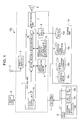
- Fig. 1 is a diagram showing the components of an information processing apparatus 100 according to the embodiment of the present invention.
- the information processing apparatus 100 includes a control unit 1 (an audio control unit 1a and a speech recognition/TTS control unit 1b), a speech input unit 2, a speech recognition engine 4, a character-string-to-be-read-aloud generation unit 5, a TTS engine 6, a reproduction unit 7, a display unit 8, a microphone 3, a speaker 9, and a storage unit 10.
- Digital audio equipment 12 is connected to the information processing apparatus 100 via an audio bus 11.
- the digital audio equipment 12 includes, for example, an external audio apparatus 12a, a hard disk drive (HDD) audio apparatus 12b, and a Compact Disc (CD) text apparatus 12c.
- the HDD audio apparatus 12b is a portable music player including a hard disk as a storage unit.
- the CD text apparatus 12c is a player supporting CD-Text specifications and displays text information such as the title of a CD and a composer.
- tune files in Motion Picture Experts Group (MPEG)-1 Audio Layer-3 (MP3) format or the like delivered via the Internet or the like are first downloaded to a personal computer (PC) and further transferred from the PC to be stored in the digital audio equipment 12.
- a tune file includes, in addition to audio information to be reproduced, tune information (for example, a title, an artist name, and an album name) for identifying the audio information.
- the audio control unit 1a includes a microcomputer.
- the audio control unit 1a retrieves audio reproduction information from the digital audio equipment 12 and performs control so as to display the audio reproduction information on the display unit 8 including, for example, a liquid crystal panel or an organic electro-luminescence (EL) panel.
- the audio control unit 1a further extracts information about a tune to be reproduced from the audio reproduction information and transfers the information about the tune to the speech recognition/TTS control unit 1b.
- Speech by a user is input into the speech input unit 2 via the microphone 3. Then, the speech input unit 2 converts the speech to speech signal data to transfer the converted speech data to the speech recognition/TTS control unit 1b.
- Speech data converted from a text by the TTS engine 6 is input into the reproduction unit 7. Then, the reproduction unit 7 reproduces speech according to the speech data and amplifies speech signals to supply the speech signals to the speaker 9.
- the speech recognition/TTS control unit 1b retrieves information about a tune that is being reproduced as necessary via the audio control unit 1a.
- the speech recognition/TTS control unit 1b further controls the whole process from a step of inputting speech to a step of outputting speech.
- the speech recognition/TTS control unit 1b causes the speech recognition engine 4 to recognize speech uttered by a user and input via the microphone 3 and the speech input unit 2.
- speech recognition as is the case with general recognition processing, acoustic analysis is performed on input speech to calculate features, and an acoustic model 10a (prepared as data in advance to be stored in a memory) corresponding to the utterance is extracted on the basis of the features.
- the speech is recognized on the basis of the acoustic model 10a and words stored in a speech recognition dictionary 10b.
- the character-string-to-be-read-aloud generation unit 5 generates a character string to be input into the TTS engine 6 and to be read aloud.
- the character string is generated by combining a template text for a response to a question from a user and information about a tune, the information replacing the portion of replacement symbols in the template text.
- the character-string-to-be-read-aloud generation unit 5 further includes a function related to the present invention. In the function, when it is determined that characters replacing the portion of replacement symbols in a template text cannot be read aloud, the template text is converted to a new template text from which a portion corresponding to a modifier including the portion of the replacement symbols is removed.
- the TTS engine 6 analyzes the text information on the basis of a language analysis dictionary included in TTS data 10d and generates intermediate language that is a character string representing readings and accents.
- the intermediate language is converted to speech (waveform) data with reference to a speech synthesis dictionary included in the TTS data 10d.
- the storage unit 10 includes, for example, a hard disk or a semiconductor memory.
- the acoustic model 10a and the speech recognition dictionary 10b used by the speech recognition engine 4, a character string processing table 10c referred to by the character-string-to-be-read-aloud generation unit 5, and the TTS data 10d read by the TTS engine 6 are stored in separate areas in the storage unit 10.
- the tune information data of a tune that is acquired from the digital audio equipment 12 and is being played back is stored in the storage unit 10.
- the tune information data stored in the storage unit 10 is also always updated.
- Template texts of respective responses to questions from users and rules for determining which base template text is applied to which question are stored in the character string processing table 10c. Moreover, rules and the like for performing, when the text of tune information data replacing the portion of replacement symbols included in a template text for a response to a question cannot be read aloud, conversion of the template text are stored in the character string processing table 10c.
- the TTS data 10d includes dictionaries (a language analysis dictionary and a speech synthesis dictionary) to be used when speech synthesis is performed by the TTS engine 6.
- a language analysis dictionary is referred to when the syntax analysis of text information subjected to speech synthesis is performed.
- a language analysis dictionary the detailed information of each word, such as the notation, reading, accent, and part of speech, is registered in association with the word in advance.
- a speech synthesis dictionary is referred to when text information analyzed by the TTS engine 6 is converted to corresponding speech (waveform) data.
- the information processing apparatus 100 arranged in this manner, during playback of a tune, when a user has made a question about the tune, an appropriate response text to the question is generated, and then the text is converted to speech to be output via the speaker 9 as a response.
- the speech recognition/TTS control unit 1b needs information about a tune that is being played back, the information is acquired via the audio control unit 1a or is acquired from the storage unit 10 storing the information.
- the embodiment covers the information processing apparatus 100, in which tunes stored in the digital audio equipment 12 are played back. Moreover, it is assumed that the information processing apparatus 100 is connected to the digital audio equipment 12, all tune information is sent from tune data stored in the digital audio equipment 12 to the information processing apparatus 100, and the tune data is stored in the storage unit 10 in the information processing apparatus 100.
- the information processing apparatus 100 sends file path information corresponding to an indicated tune to the digital audio equipment 12 under the control of the audio control unit 1a and then plays back speech from the speaker 9 while receiving the tune data from the digital audio equipment 12.
- a question "What song is this?" has been input into the information processing apparatus 100.
- the speech recognition engine 4 recognizes the question uttered by a user to determine that the user has requested the information of a tune indicating what tune is being played back, a base template text for a response to the question is extracted from the character string processing table 10c in the storage unit 10, the base template text being prepared and stored in the character string processing table 10c in advance.
- a response text is generated by replacing the portion of replacement symbols in the base template text with a text of the tune information. It is determined whether the audio signals of the text of the tune information can be generated by the TTS engine 6. When it is determined that the audio signals cannot be generated, the text is replaced with a space.
- the TTS engine 6 converting an input text to speech to read the speech aloud depends on a language that can be handled by the TTS engine 6. When the TTS engine 6 cannot interpret the character code of the language, the TTS engine 6 cannot convert an input text to speech.
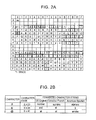
- Fig. 2A is a diagram showing an exemplary character code table (ISO 8859-1).
- the character code table characters that can be read aloud and characters that cannot be read aloud, using the TTS engine 6, exist.
- the TTS engine 6 cannot convert characters in cells enclosed in double-ruled borders and cells enclosed in thick borders, out of the character codes, to speech signals.
- character codes in the cells enclosed in the double-ruled borders cannot be read aloud, the character codes are converted to spaces before being input into the TTS engine 6.
- character codes in the cells enclosed in the thick borders cannot be directly read aloud.
- the respective readings of the character codes are defined so that the character codes can be read aloud.
- Fig. 2B shows examples of such definitions.
- Fig. 3A shows exemplary base template texts for a response to a question about a tune.
- (3) "This is called ⁇ Song> by ⁇ Artist> from ⁇ Album>.” are prepared as base template texts, as shown in Fig. 3A .
- ⁇ Song>, ⁇ Artist>, and ⁇ Album> are a replacement symbol to be replaced with a tune name, a replacement symbol to be replaced with an artist name, and a replacement symbol to be replaced with an album name, respectively.
- Candidate response texts are extracted from these base template texts and temporarily stored in a memory (not shown) in the speech recognition/TTS control unit 1b.
- the genre of a tune is detected, and a template text for a response to a question, the template text corresponding to the genre of the tune, is selected. It is assumed that, from the base template texts shown in Fig. 3A , the base template text of (2) is adopted when the genre of a tune is pop or rock, and the base template text of (3) is adopted when the genre of a tune is classical music or instrumental music.
- Such relationships between base template texts and the genres of tunes are defined in advance and stored in the character string processing table 10c in the storage unit 10.
- tune information about the tune, which is being played back such as the tune name and the artist name
- tune information about the tune, which is being played back is retrieved from the storage unit 10, and it determined whether the characters of the tune information can be read aloud, i.e., whether the characters of the tune information can be interpreted in a language adopted for the TTS engine 6.
- the character-string-to-be-read-aloud generation unit 5 When all the characters of items of the tune information to be substituted into the base template text for the response can be read aloud, the character-string-to-be-read-aloud generation unit 5 generates a text in which the portion of replacement symbols in the base template text is replaced with the items of the tune information.
- a text to be input into the TTS engine 6 is generated by changing a part of the base template text in a manner that depends on items of the tune information that cannot be read aloud. For example, when character codes supported by the TTS engine 6 are American English, Chinese characters and hiragana characters in Japanese cannot be handled and thus cannot be read aloud.
- an appropriate text is generated by adjusting the template text in a manner that depends on items of the tune information that cannot be read aloud.
- Fig. 3B shows exemplary base template text conversion rules for such conversion.
- the base template text conversion rules how to convert a template text in a manner that depends on items of tune information that cannot be read aloud is defined, as shown in Fig. 3B .
- rule no. 1 in Fig. 3B when it is determined that an artist name cannot be read aloud, a text to be input into the TTS engine 6 is generated by removing the portion of "by ⁇ Artist>" from a base template text.
- rule no. 2 when it is determined that an album name cannot be read aloud, the portion of "from ⁇ Album>" is removed from a base template text.
- rule no. 3 it is defined that, when a tune name is determined as being incapable of being read aloud, new template texts are used.
- the album name is found to be described in character codes that cannot be read aloud, for example, Chinese characters and hiragana characters in Japanese.
- a portion corresponding to a modifier including a replacement symbol to be replaced with the album name and a preposition preceding the replacement symbol is removed from a template text. For example, a text "This song is called ⁇ Song> by ⁇ Artist>.” is generated.
- the rules for removing a part of a template text and the rules for using a new template text in the foregoing cases are stored in advance in the character string processing table 10c in the storage unit 10.
- the base template text of (3) in Fig. 3A is selected, and the base template text is adapted to the cases (a) to (f).
- the base template text is converted to "This is called ⁇ Song> from ⁇ Album>.”
- Fig. 4A shows four examples of tune data acquired from the digital audio equipment 12.
- tune information including a tune name, an artist name, an album name, a composer's name, and a genre is acquired.
- Example 1 is a case where the genre of a tune is pop, and characters of items of tune information replacing replacement symbols in a base template text can be all read aloud.
- a text is generated by replacing the replacement symbols in the base template text with the items of the tune information.
- the generated text is "This song is called Happy Song by Mariah Carey from All of you.”.
- Example 2 is a case where the genre of a tune is pop, and only the characters of the artist name cannot be read aloud.
- "by ⁇ Artist>” is removed from the base template text by applying base template text conversion rule no. 1 to the base template text to convert the template text to "This song is called ⁇ Song> from ⁇ Album>.”
- Fig. 4B shows a case where items of data of tune information in the case of example 2 are converted to items of data to be input into the TTS engine 6.
- the character-string-to-be-read-aloud generation unit 5 determines whether characters of tune information can be read aloud.
- the character-string-to-be-read-aloud generation unit 5 determines that the characters of the tune information correspond to character codes that are not supported by the TTS engine 6, the characters are converted to a space so as to make it clear that the characters cannot be converted to speech.
- the artist name data extracted from the digital audio equipment 12 is converted to a space as TTS input data, as shown in Fig. 4B .
- the character-string-to-be-read-aloud generation unit 5 determines that the characters of the item of the tune information cannot be read aloud to perform conversion of a corresponding template text by applying a corresponding base template text conversion rule to the template text.
- the base template text is "This song is called ⁇ Song> by ⁇ Artist> from ⁇ Album>.”. Since it is determined that the artist name cannot be read aloud, the template text is converted to "This song is called ⁇ Song> from ⁇ Album>.”.
- Example 3 is a case where the genre of a tune is rock, and only the artist name can be read aloud.
- Base template text conversion rules nos. 2 and 3 are applied to this case.
- new template texts are applied with priority, and a text related to the album, out of the new template texts, is not used.
- a replacement symbol in the other new template text is replaced with the artist name, so that a text to be input into the TTS engine 6 is "This track's artist is T-BOLAN.”
- Example 4 is a case where the genre of a tune is classical music, and characters of items of tune information replacing replacement symbols in a base template text can be all read aloud.
- a text is generated by replacing the replacement symbols in the base template text with the items of the tune information.
- the generated text is "This is called Piano Concerto #21 in C, K467 by Royal Heroc Orchestra from The Great Piano Concertos Vol. 1.".
- Fig. 5 is a flowchart of a process of reading a text aloud by TTS performed by the information processing apparatus 100.
- Fig. 6 is a flowchart of a process of generating a response when a corresponding question is that about a tune.
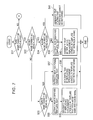
- Figs. 7 and 8 are flowcharts showing an exemplary process of generating a response text corresponding to items of tune information that cannot be read aloud. In these processes, it is assumed that data such as tune information acquired from the digital audio equipment 12 is stored in the storage unit 10 for each tune.
- template texts for respective responses to questions are defined and stored in the character string processing table 10c in the storage unit 10 in advance, and template text conversion rules corresponding to items of tune information that cannot be read aloud are also defined and stored in the character string processing table 10c in the storage unit 10 in advance.
- step S11 in Fig. 5 a question uttered by a user is first accepted.
- the speech uttered by the user is input into the speech input unit 2 via the microphone 3.
- the speech input unit 2 converts the speech to data such as speech signals to output the data to the speech recognition/TTS control unit 1b.
- step S12 the question from the user is analyzed.
- the speech recognition/TTS control unit 1b transfers the input speech signals to the speech recognition engine 4. Then, the speech recognition engine 4 recognizes the question from the user with reference to, for example, the acoustic model 10a and the speech recognition dictionary 10b.
- step S13 a template text for a response to the question from the user is selected.
- the speech recognition/TTS control unit 1b determines to what category the question from the user recognized by the speech recognition engine 4 belongs and extracts the template text for the response to the question from the storage unit 10 storing the template text in advance. Moreover, characters replacing the portion of each replacement symbol included in the template text are extracted from data related to the question. For example, when the question is that about a tune, and a replacement symbol in the response text corresponds to the tune name, the tune name is extracted from corresponding tune information.
- step S14 it is determined whether characters replacing the portion of the replacement symbol in the template text for the response can be read aloud.
- the process proceeds to step S16. Otherwise, the process proceeds to step S15. Whether the characters can be read aloud is determined by determining whether the characters correspond to character codes that can be handled by the TTS engine 6.
- step S15 a modifier equivalent portion including the replacement symbol is removed from the template text to convert the template text to a new template text, and a natural text is generated, using the new template text.
- step S16 a text is generated, using the base template text.
- step S17 the text generated step S15 or S16 is input into the TTS engine 6.
- step S18 the text input into the TTS engine 6 is converted to speech signals under the control of the speech recognition/TTS control unit 1b.
- step S19 the response text converted to the speech signals by the TTS engine 6 is read aloud via the reproduction unit 7 and the speaker 9.
- a text having no grammatical error is read aloud in response to a question from a user by the foregoing process.
- Figs. 7 and 8 are the flowcharts showing the exemplary process of generating a response text corresponding to items of tune information that cannot be read aloud in the process in Fig. 6 .
- step S21 in Fig. 6 candidate base template texts for a response to a question are first selected.
- the base response template texts shown in Fig. 3A out of base template texts for responses, are selected as the candidates.
- the selected base response template texts are temporarily stored in a memory (not shown).
- step S22 the genre information of the tune is retrieved from the tune information.
- the tune information is acquired from, for example, the digital audio equipment 12 and stored in the storage unit 10.
- a playback-in-process flag indicating whether a tune is being played back or not is prepared in advance as an attribute of tune data stored in the storage unit 10.
- Tune data that is being played back is retrieved, referring to the playback-in-process flag, and the genre is detected, referring to genre information, out of the tune information of the tune data.
- a base template text corresponding to the genre of the tune retrieved in step S22 is selected.
- the base response template text (2) in Fig. 3A is selected
- the genre of the tune is classical music or instrumental music
- the base response template text (3) in Fig. 3A is selected.
- the selected base response template text is left in the memory, and the other base response template texts having not been selected are discarded.
- step S24 it is determined whether the characters of the tune information can be read aloud.
- the characters replace the portion of replacement symbols in the base template text.
- the characters are Japanese such as Chinese characters in a case where character codes supported by the TTS engine 6 are American English, the characters are replaced with a space.
- the characters of the tune information are extracted from the storage unit 10 and temporarily stored in the memory.
- step S25 it is determined whether the characters described in the tune information can be all read aloud.
- the process proceeds to step S27.
- step S26 Whether any character that cannot be read aloud, out of the characters of the tune information, exists or not is determined, referring to the TTS input data created in step S24. For example, in the tune data shown in Fig. 4B , since the information of the artist name is described in Chinese characters, the characters are converted to a space. Thus, when TTS input data includes any space, it is determined that any character that cannot be read aloud exists.
- step S26 a text for the response is generated in a manner that depends on items of the tune information that cannot be read aloud, and the process is terminated.
- step S27 since it is determined, in step S25, that all the tune information can be read aloud, a text for the response is generated by replacing the replacement symbols in the template text with the tune information, and then the process is terminated.
- Figs. 7 and 8 are the flowcharts showing the details of the process in step S26 in Fig. 6 .
- cases are identified by determining whether three types of characters (a tune name, an artist name, and an album name) replacing replacement symbols included in a template text, out of tune information, can be read aloud, and what text is generated is determined for each of the cases.
- step S31 When the tune name cannot be read aloud (YES in step S31), the artist name can be read aloud (NO in step S32), and the album name can be read aloud (NO in step S33), a new response template text is extracted in step S35, and a text is generated by replacing replacement symbols in the response template text with the artist name and the album name in step S36.
- step S31 When the tune name cannot be read aloud (YES in step S31), the artist name can be read aloud (NO in step S32), and the album name cannot be read aloud (YES in step S33), a new response template text is extracted in step S37, and a text is generated by replacing a replacement symbol in the response template text with the artist name in step S38.
- step S31 When the tune name cannot be read aloud (YES in step S31), the artist name cannot be read aloud (YES in step S32), and the album name can be read aloud (NO in step S34), a new response template text is extracted in step S39, and a text is generated by replacing a replacement symbol in the response template text with the album name in step S40.
- step S31 When the tune name cannot be read aloud (YES in step S31), the artist name cannot be read aloud (YES in step S32), and the album name cannot be read aloud (YES in step S34), the process proceeds to step S41 where an output text stating that no response can be returned is generated.
- step S31 When the tune name can be read aloud (NO in step S31), the artist name cannot be read aloud (YES in step S42), and the album name can be read aloud (NO in step S43), in step S45, a part of the template text is removed.
- the removed part is a modifier equivalent portion including the corresponding replacement symbol to be replaced with the artist name.
- step S46 a text is generated by replacing the corresponding replacement symbols in the template text, a part of which has been removed, with the tune name and the album name.
- step S47 a part of the template text is removed.
- the removed part includes a modifier equivalent portion including the corresponding replacement symbol to be replaced with the artist name and a modifier equivalent portion including the corresponding replacement symbol to be replaced with the album name.
- step S48 a text is generated by replacing the corresponding replacement symbol in the template text, a part of which has been removed, with the tune name.
- step S31 When the tune name can be read aloud (NO in step S31), the artist name can be read aloud (NO in step S42), and the album name cannot be read aloud (YES in step S44), in step S49, a part of the template text is removed.
- the removed part is a modifier equivalent portion including the corresponding replacement symbol to be replaced with the album name.
- step S50 a text is generated by replacing the corresponding replacement symbols in the template text, a part of which has been removed, with the tune name and the artist name.
- step S31 When the tune name can be read aloud (NO in step S31), the artist name can be read aloud (NO in step S42), and the album name can be read aloud (NO in step S44), in step S51, a text is generated by replacing the replacement symbols in the template text with the tune name, the artist name, and the album name.
- step S26 in Fig. 6 the details of which have been described, using Figs. 7 and 8 , the text is input into the TTS engine 6, and then an appropriate speech response to a question is returned.
- template texts for responses including replacement symbols are prepared for questions from users, as described above.
- the portion of each replacement symbol is replaced with the characters of a corresponding item of tune information.
- a portion corresponding to a modifier including a replacement symbol to be replaced with the item of the tune information is removed from a corresponding template text to perform conversion of the template text, and a text to be input into the TTS engine is generated, using the converted template text.
- the embodiment has been described, assuming that a language supported by the TTS engine is American English, needless to say, the language is not limited to American English.
- the embodiment can be applied to all languages by defining template text conversion rules such that, when characters that cannot be read aloud are converted to a space in a manner that depends on the language, no grammatical error occurs.
Landscapes
- Engineering & Computer Science (AREA)
- Computational Linguistics (AREA)
- Health & Medical Sciences (AREA)
- Audiology, Speech & Language Pathology (AREA)
- Human Computer Interaction (AREA)
- Physics & Mathematics (AREA)
- Acoustics & Sound (AREA)
- Multimedia (AREA)
- Document Processing Apparatus (AREA)
- Information Retrieval, Db Structures And Fs Structures Therefor (AREA)
Abstract
Description
- The present invention relates to information processing apparatuses and text-to-speech methods, and in particular, relates to a technique for generating a text to be read aloud by an information processing apparatus including a function of reading text information aloud (a text-to-speech (TTS) engine).
- Recently, systems including a function of reading, upon inputting a text, the text aloud (a TTS engine) have been developed to be widely used in, for example, telephone answering service for cellular phones. For example, in personal mobile service, such systems are used as voice service for reading aloud information such as electronic mails, news, and market trends in response to a phone call made by a user even when a mobile terminal, a computer, or the like does not exist near the user.
- On the other hand, it is common to connect a device storing audio information to be reproduced to audio equipment and reproduce music on the basis of the audio information. Such audio information includes tune data. Tune data includes, together with the digital data of a tune, tag data in which information such as the title and artist of the tune is described. For example, it has become possible to, on the basis of tag data, display the title of a tune that is being reproduced or the like on a display screen or read the title of the tune or the like aloud, using a TTS engine.
- In oral reading using a TTS engine, a text input into the TTS engine is faithfully converted to speech signals. Thus, it is necessary to input a correct text into the TTS engine. Japanese Unexamined Patent Application Publication (Translation of
PCT Application) No. 2007-509377 - The oral reading of tag information of digital audio such as a tune name and an artist name (tune information) can be heard, using a text-to-speech conversion function, as described above. Regarding such information, a text to be converted to speech is generated by replacing predetermined replacement symbols in a template text prepared in advance with the characters of tune information acquired from digital audio equipment.
- When the whole of tune information used in a template text can be read aloud, a text to be generated includes no grammatical error, and thus an appropriate speech response is returned to a question.
- However, when tag information includes characters that cannot be handled by a TTS engine, for example, Chinese characters in a case where the TTS engine supports American English, since the portion of the Chinese characters cannot be read aloud, in general, the portion is set as a blank portion. Thus, no speech is output for the blank portion. Even in this case, portions other than the portion replaced with blanks in a template text are converted to speech. As a result, an unnatural text is read aloud. For example, it is assumed that a template text of a response to a question "What song is this?" is "It is <Song> by <Artist>.", <Song> is replaced with a tune name, and <Artist> is replaced with an artist name. In this case, when the tune name is "Happy Song", and the artist name does not exist, the response text is "It is Happy Song by", resulting in unnatural speech output.
- In view of the problem with the known arts, it is an object of the present invention to provide an information processing apparatus and a text-to-speech method in which, even when a part of information is missing, a natural talk-back can be returned by constructing a natural speech phrase.
- To solve the aforementioned problem with the known arts, an information processing apparatus according to a first aspect of the present invention is provided. The information processing apparatus is connected to an apparatus storing tune data to be played back so that the information processing apparatus can communicate with the apparatus. The information processing apparatus includes an oral reading unit including a function of converting a text to speech data to output the speech data, a storage unit storing template texts for responses to questions from a user and template text conversion rules, an input unit for inputting a question from a user, and a control unit retrieving tune data and items of tune information associated with the tune data from the apparatus storing tune data. The control unit analyzes a question about a tune from a user to select a template text for a response to the question, detects characters in items of tune information of the tune, the characters replacing replacement symbols included in the template text, to perform conversion of the template text in a manner that depends on whether the characters can be read aloud, generates a text to be read aloud, using the converted template text, and causes the oral reading unit to read the text aloud.
- In the information processing apparatus according to the first aspect, the control unit may select the template text in a manner that depends on a genre of the tune, and upon determining that one of the items of the tune information cannot be read aloud, the control unit may generate a text using the template text, from which a modifier equivalent portion including a replacement symbol to be replaced with the item of the tune information is removed, or generate a text using a new template text.
- Moreover, in the information processing apparatus according to the first aspect, upon determining that an artist name, out of the items of the tune information, cannot be read aloud, the control unit may generate a text using the template text, from which a modifier equivalent portion including a replacement symbol to be replaced with the artist name is removed. Upon determining that an album name, out of the items of the tune information, cannot be read aloud, the control unit may generate a text using the template text, from which a modifier equivalent portion including a replacement symbol to be replaced with the album name is removed. Upon determining that a tune name, out of the items of the tune information, cannot be read aloud, the control unit may extract, from the storage unit, a new template text including a replacement symbol to be replaced with an artist name of the tune as a component and a new template text including a replacement symbol to be replaced with an album name of the tune as a component and generate a text using the new template texts.
- In the information processing apparatus according to the present invention, when a tune acquired from digital audio equipment is being played back, a response text may be generated for a question about the tune information from a user, on the basis of a template text. In the generation of the response text, characters that cannot be read aloud, out of the tune information, may be converted to spaces, and a part of the template text may be changed to convert the template text to a text having no grammatical problem to read the text aloud using a TTS engine. For example, in a case where a template text for a response to a question "What am I listening to?" is "This Song is called <Song> by <Artist> from <Album>.", and <Song>, <Artist>, and <Album> are respectively replaced with a tune name, an artist name, and an album name, when it is determined that the characters of the artist name cannot be read aloud, a text to be read aloud is generated by converting the template text for the response to "This Song is called <Song> from <Album>.".
- In this manner, characters that cannot be read aloud are converted to spaces, and a text is generated by removing a portion corresponding to a modifier including the characters and a preposition preceding the characters from a template text. Thus, a natural text can be read aloud.
- Moreover, a text-to-speech method according to a second aspect of the present invention is provided. The text-to-speech method includes the steps of a) analyzing a question about a tune from a user, b) extracting a template text corresponding to the question from template texts for responses stored in a storage unit, c) detecting characters in items of tune information of the tune, the characters replacing replacement symbols included in the template text, d) performing conversion of the template text in a manner that depends on whether the characters can be read aloud, e) generating a text to be read aloud by replacing replacement symbols in the converted template text with the characters, and f) converting the text to speech data to output the speech data.
- In the text-to-speech method according to the second aspect, the step b) may include the steps of selecting candidates for the template text for a response to the question from the template texts for responses stored in the storage unit, detecting a genre of the tune by analyzing the tune information, and selecting a template text corresponding to the genre from the candidates for the template text.
- Moreover, in the text-to-speech method according to the second aspect, the step d) may include the steps of determining whether any one of the items of the tune information cannot be read aloud, and converting the template text to a new template text upon determining that one of the items of the tune information cannot be read aloud.
-
-
Fig. 1 is a diagram showing the components of an information processing apparatus according to an embodiment of the present invention; -
Fig. 2A is a character code table showing characters that can be read aloud and characters that cannot be read aloud, andFig. 2B is a diagram showing exemplary character conversion rules; -
Fig. 3A is a diagram showing exemplary base template texts for a response to a question, andFig. 3B is a diagram showing exemplary base template text conversion rules; -
Fig. 4A is a diagram showing examples of tune data acquired from digital audio equipment, andFig. 4B is a diagram showing a case where extracted items of data of tune information are converted to items of TTS input data; -
Fig. 5 is a flowchart showing an exemplary process of reading a text aloud by TTS; -
Fig. 6 is a flowchart showing an exemplary process of generating a response when a corresponding question is that about a tune; -
Fig. 7 is a flowchart (1) showing an exemplary process of generating a response text corresponding to items of tune information that cannot be read aloud; and -
Fig. 8 is a flowchart (2) showing an exemplary process of generating a response text corresponding to items of tune information that cannot be read aloud. - An embodiment of the present invention will now be described with reference to the attached drawings.
-
Fig. 1 is a diagram showing the components of aninformation processing apparatus 100 according to the embodiment of the present invention. - The
information processing apparatus 100 according to the embodiment includes a control unit 1 (anaudio control unit 1a and a speech recognition/TTS control unit 1b), aspeech input unit 2, aspeech recognition engine 4, a character-string-to-be-read-aloud generation unit 5, aTTS engine 6, areproduction unit 7, adisplay unit 8, amicrophone 3, aspeaker 9, and astorage unit 10. -
Digital audio equipment 12 is connected to theinformation processing apparatus 100 via anaudio bus 11. Thedigital audio equipment 12 includes, for example, anexternal audio apparatus 12a, a hard disk drive (HDD)audio apparatus 12b, and a Compact Disc (CD)text apparatus 12c. TheHDD audio apparatus 12b is a portable music player including a hard disk as a storage unit. TheCD text apparatus 12c is a player supporting CD-Text specifications and displays text information such as the title of a CD and a composer. - For example, tune files in Motion Picture Experts Group (MPEG)-1 Audio Layer-3 (MP3) format or the like delivered via the Internet or the like are first downloaded to a personal computer (PC) and further transferred from the PC to be stored in the
digital audio equipment 12. A tune file includes, in addition to audio information to be reproduced, tune information (for example, a title, an artist name, and an album name) for identifying the audio information. - The
audio control unit 1a includes a microcomputer. Theaudio control unit 1a retrieves audio reproduction information from thedigital audio equipment 12 and performs control so as to display the audio reproduction information on thedisplay unit 8 including, for example, a liquid crystal panel or an organic electro-luminescence (EL) panel. Theaudio control unit 1a further extracts information about a tune to be reproduced from the audio reproduction information and transfers the information about the tune to the speech recognition/TTS control unit 1b. - Speech by a user is input into the
speech input unit 2 via themicrophone 3. Then, thespeech input unit 2 converts the speech to speech signal data to transfer the converted speech data to the speech recognition/TTS control unit 1b. - Speech data converted from a text by the
TTS engine 6 is input into thereproduction unit 7. Then, thereproduction unit 7 reproduces speech according to the speech data and amplifies speech signals to supply the speech signals to thespeaker 9. - The speech recognition/
TTS control unit 1b retrieves information about a tune that is being reproduced as necessary via theaudio control unit 1a. - The speech recognition/
TTS control unit 1b further controls the whole process from a step of inputting speech to a step of outputting speech. The speech recognition/TTS control unit 1b causes thespeech recognition engine 4 to recognize speech uttered by a user and input via themicrophone 3 and thespeech input unit 2. In speech recognition, as is the case with general recognition processing, acoustic analysis is performed on input speech to calculate features, and anacoustic model 10a (prepared as data in advance to be stored in a memory) corresponding to the utterance is extracted on the basis of the features. The speech is recognized on the basis of theacoustic model 10a and words stored in aspeech recognition dictionary 10b. - The character-string-to-be-read-aloud
generation unit 5 generates a character string to be input into theTTS engine 6 and to be read aloud. The character string is generated by combining a template text for a response to a question from a user and information about a tune, the information replacing the portion of replacement symbols in the template text. The character-string-to-be-read-aloudgeneration unit 5 further includes a function related to the present invention. In the function, when it is determined that characters replacing the portion of replacement symbols in a template text cannot be read aloud, the template text is converted to a new template text from which a portion corresponding to a modifier including the portion of the replacement symbols is removed. - When a character string (a text) to be read aloud has been input into the
TTS engine 6, theTTS engine 6 analyzes the text information on the basis of a language analysis dictionary included inTTS data 10d and generates intermediate language that is a character string representing readings and accents. The intermediate language is converted to speech (waveform) data with reference to a speech synthesis dictionary included in theTTS data 10d. - The
storage unit 10 includes, for example, a hard disk or a semiconductor memory. For example, theacoustic model 10a and thespeech recognition dictionary 10b used by thespeech recognition engine 4, a character string processing table 10c referred to by the character-string-to-be-read-aloudgeneration unit 5, and theTTS data 10d read by theTTS engine 6 are stored in separate areas in thestorage unit 10. Moreover, the tune information data of a tune that is acquired from thedigital audio equipment 12 and is being played back is stored in thestorage unit 10. When a tune that is being played back is updated, the tune information data stored in thestorage unit 10 is also always updated. - Template texts of respective responses to questions from users and rules for determining which base template text is applied to which question are stored in the character string processing table 10c. Moreover, rules and the like for performing, when the text of tune information data replacing the portion of replacement symbols included in a template text for a response to a question cannot be read aloud, conversion of the template text are stored in the character string processing table 10c.
- The
TTS data 10d includes dictionaries (a language analysis dictionary and a speech synthesis dictionary) to be used when speech synthesis is performed by theTTS engine 6. - A language analysis dictionary is referred to when the syntax analysis of text information subjected to speech synthesis is performed. In a language analysis dictionary, the detailed information of each word, such as the notation, reading, accent, and part of speech, is registered in association with the word in advance. A speech synthesis dictionary is referred to when text information analyzed by the
TTS engine 6 is converted to corresponding speech (waveform) data. - In the
information processing apparatus 100 arranged in this manner, during playback of a tune, when a user has made a question about the tune, an appropriate response text to the question is generated, and then the text is converted to speech to be output via thespeaker 9 as a response. - When the speech recognition/
TTS control unit 1b needs information about a tune that is being played back, the information is acquired via theaudio control unit 1a or is acquired from thestorage unit 10 storing the information. - In the
TTS engine 6 converting a text to speech, an input text is faithfully converted to speech. Thus, a text to be input into theTTS engine 6 is converted to an optimal text. - For example, when "This song is called <Song> by <Artist> from <Album>." is used as a template text for a response text, characters replacing <Song> and <Album> can be read aloud, and characters replacing <Artist> cannot be read aloud, the response text is converted to "This song is called <Song> from <Album>.", and a text is generated, using the converted template text, to be input into the
TTS engine 6. Thus, a natural response text having no grammatical error can be read aloud. - A process of generating a text having no grammatical error will now be described. The embodiment covers the
information processing apparatus 100, in which tunes stored in thedigital audio equipment 12 are played back. Moreover, it is assumed that theinformation processing apparatus 100 is connected to thedigital audio equipment 12, all tune information is sent from tune data stored in thedigital audio equipment 12 to theinformation processing apparatus 100, and the tune data is stored in thestorage unit 10 in theinformation processing apparatus 100. - The
information processing apparatus 100 sends file path information corresponding to an indicated tune to thedigital audio equipment 12 under the control of theaudio control unit 1a and then plays back speech from thespeaker 9 while receiving the tune data from thedigital audio equipment 12. - It is assumed that a question "What song is this?" has been input into the
information processing apparatus 100. When thespeech recognition engine 4 recognizes the question uttered by a user to determine that the user has requested the information of a tune indicating what tune is being played back, a base template text for a response to the question is extracted from the character string processing table 10c in thestorage unit 10, the base template text being prepared and stored in the character string processing table 10c in advance. A response text is generated by replacing the portion of replacement symbols in the base template text with a text of the tune information. It is determined whether the audio signals of the text of the tune information can be generated by theTTS engine 6. When it is determined that the audio signals cannot be generated, the text is replaced with a space. - The
TTS engine 6 converting an input text to speech to read the speech aloud depends on a language that can be handled by theTTS engine 6. When theTTS engine 6 cannot interpret the character code of the language, theTTS engine 6 cannot convert an input text to speech. -
Fig. 2A is a diagram showing an exemplary character code table (ISO 8859-1). In the character code table, characters that can be read aloud and characters that cannot be read aloud, using theTTS engine 6, exist. For example, it is assumed that theTTS engine 6 cannot convert characters in cells enclosed in double-ruled borders and cells enclosed in thick borders, out of the character codes, to speech signals. Since character codes in the cells enclosed in the double-ruled borders cannot be read aloud, the character codes are converted to spaces before being input into theTTS engine 6. Moreover, character codes in the cells enclosed in the thick borders cannot be directly read aloud. However, the respective readings of the character codes are defined so that the character codes can be read aloud.Fig. 2B shows examples of such definitions. When character codes that can be handled by theTTS engine 6 are American English, a character "#" corresponding to a character code 0x23, a character "&" corresponding to a character code 0x26, and a character "@" corresponding to a character code 0x40 are respectively converted to "number", "and", and "at", as shown inFig. 2B . When character codes that can be handled by theTTS engine 6 are Canadian French or American Spanish, conversion is performed, as shown inFig. 2B . -
Fig. 3A shows exemplary base template texts for a response to a question about a tune. For example, (1) "It is <Song> by <Artist>.", (2) "This song is called <Song> by <Artist> from <Album>.", and (3) "This is called <Song> by <Artist> from <Album>." are prepared as base template texts, as shown inFig. 3A . In the template texts, <Song>, <Artist>, and <Album> are a replacement symbol to be replaced with a tune name, a replacement symbol to be replaced with an artist name, and a replacement symbol to be replaced with an album name, respectively. - Candidate response texts are extracted from these base template texts and temporarily stored in a memory (not shown) in the speech recognition/
TTS control unit 1b. - Then, the genre of a tune is detected, and a template text for a response to a question, the template text corresponding to the genre of the tune, is selected. It is assumed that, from the base template texts shown in
Fig. 3A , the base template text of (2) is adopted when the genre of a tune is pop or rock, and the base template text of (3) is adopted when the genre of a tune is classical music or instrumental music. Such relationships between base template texts and the genres of tunes are defined in advance and stored in the character string processing table 10c in thestorage unit 10. - Then, tune information about the tune, which is being played back, such as the tune name and the artist name, is retrieved from the
storage unit 10, and it determined whether the characters of the tune information can be read aloud, i.e., whether the characters of the tune information can be interpreted in a language adopted for theTTS engine 6. - When all the characters of items of the tune information to be substituted into the base template text for the response can be read aloud, the character-string-to-be-read-aloud
generation unit 5 generates a text in which the portion of replacement symbols in the base template text is replaced with the items of the tune information. On the other hand, when some of the characters cannot be read aloud, a text to be input into theTTS engine 6 is generated by changing a part of the base template text in a manner that depends on items of the tune information that cannot be read aloud. For example, when character codes supported by theTTS engine 6 are American English, Chinese characters and hiragana characters in Japanese cannot be handled and thus cannot be read aloud. In this case, only when corresponding replacement symbols in the base template text are replaced with spaces, an unnatural text having grammatical errors may be generated. Thus, an appropriate text is generated by adjusting the template text in a manner that depends on items of the tune information that cannot be read aloud. -
Fig. 3B shows exemplary base template text conversion rules for such conversion. In the base template text conversion rules, how to convert a template text in a manner that depends on items of tune information that cannot be read aloud is defined, as shown inFig. 3B . - For example, according to rule no. 1 in
Fig. 3B , when it is determined that an artist name cannot be read aloud, a text to be input into theTTS engine 6 is generated by removing the portion of "by <Artist>" from a base template text. Similarly, according to rule no. 2, when it is determined that an album name cannot be read aloud, the portion of "from <Album>" is removed from a base template text. Moreover, in rule no. 3, it is defined that, when a tune name is determined as being incapable of being read aloud, new template texts are used. - Even in a case where any one of the items of tune information (an artist name, an album name, and a tune name) cannot be read aloud, a natural response text is generated by applying the base template text conversion rules. Exemplary conversion of a template text in a case where at least one item of tune information cannot be read aloud will next be described.
- This is a case where, as a result of analysis by the character-string-to-be-read-aloud
generation unit 5 on whether items of tune information can be read aloud, the tune name is found to be described in character codes that cannot be read aloud, for example, Chinese characters and hiragana characters in Japanese. In this case, the artist name and the album name are separately returned. For example, "This Track's Artist is <Artist>. This Track's Album is <Album>." is generated. In this manner, when the tune name cannot be read aloud, new template texts are used. Such new template texts are stored in advance in the character string processing table 10c in thestorage unit 10. - This is a case where, as a result of analysis by the character-string-to-be-read-aloud
generation unit 5 on whether items of tune information can be read aloud, the artist name is found to be described in character codes that cannot be read aloud, for example, Chinese characters and hiragana characters in Japanese. In this case, a portion corresponding to a modifier including a replacement symbol to be replaced with the artist name and a preposition preceding the replacement symbol is removed from a template text. For example, a text "This song is called <Song> from <Album>." is generated. - This is a case where, as a result of analysis by the character-string-to-be-read-aloud
generation unit 5 on whether items of tune information can be read aloud, the album name is found to be described in character codes that cannot be read aloud, for example, Chinese characters and hiragana characters in Japanese. In this case, a portion corresponding to a modifier including a replacement symbol to be replaced with the album name and a preposition preceding the replacement symbol is removed from a template text. For example, a text "This song is called <Song> by <Artist>." is generated. - This is a case where, as a result of analysis by the character-string-to-be-read-aloud
generation unit 5 on whether items of tune information can be read aloud, the artist name and the tune name are found to be described in character codes that cannot be read aloud. In this case, a new template text including a replacement symbol to be replaced with the album name as a component is adopted. For example, a text "This Track's Album is <Album>." is generated. - This is a case where, as a result of analysis by the character-string-to-be-read-aloud
generation unit 5 on whether items of tune information can be read aloud, the tune name and the album name are found to be described in character codes that cannot be read aloud. In this case, a new template text including a replacement symbol to be replaced with the artist name as a component is adopted. For example, a text "This track's artist is <Artist>." is generated. - This is a case where, as a result of analysis by the character-string-to-be-read-aloud
generation unit 5 on whether items of tune information can be read aloud, the artist name and the album name are found to be described in character codes that cannot be read aloud. In this case, a portion corresponding to a modifier including a replacement symbol to be replaced with the artist name and a preposition preceding the replacement symbol and a portion corresponding to a modifier including a replacement symbol to be replaced with the album name and a preposition preceding the replacement symbol are removed from a template text. For example, a text "This song is called <Song>." is generated. - The rules for removing a part of a template text and the rules for using a new template text in the foregoing cases are stored in advance in the character string processing table 10c in the
storage unit 10. - When a tune name, an artist name, and an album name are all described in character codes that cannot be read aloud, a speech response cannot be returned, and thus a response stating that a speech response cannot be returned is returned.
- Moreover, when the genre of a tune is classical music or instrumental music, for example, the base template text of (3) in
Fig. 3A is selected, and the base template text is adapted to the cases (a) to (f). For example, in the case (b) where only an artist name cannot be read aloud, the base template text is converted to "This is called <Song> from <Album>.". - Examples in which appropriate texts are generated by the application of the foregoing rules will now be described, using
Figs. 4A and 4B . -
Fig. 4A shows four examples of tune data acquired from thedigital audio equipment 12. In each of the examples, tune information including a tune name, an artist name, an album name, a composer's name, and a genre is acquired. - Example 1 is a case where the genre of a tune is pop, and characters of items of tune information replacing replacement symbols in a base template text can be all read aloud. In this case, a text is generated by replacing the replacement symbols in the base template text with the items of the tune information. The generated text is "This song is called Happy Song by Mariah Carey from All of you.".
- Example 2 is a case where the genre of a tune is pop, and only the characters of the artist name cannot be read aloud. In this case, "by <Artist>" is removed from the base template text by applying base template text conversion rule no. 1 to the base template text to convert the template text to "This song is called <Song> from <Album>.".
Fig. 4B shows a case where items of data of tune information in the case of example 2 are converted to items of data to be input into theTTS engine 6. The character-string-to-be-read-aloudgeneration unit 5 determines whether characters of tune information can be read aloud. When the character-string-to-be-read-aloudgeneration unit 5 determines that the characters of the tune information correspond to character codes that are not supported by theTTS engine 6, the characters are converted to a space so as to make it clear that the characters cannot be converted to speech. As a result, regarding the artist name, data extracted from thedigital audio equipment 12 is converted to a space as TTS input data, as shown inFig. 4B . - When the character-string-to-be-read-aloud
generation unit 5 refers to TTS input data and finds an item of tune information that is a space, the character-string-to-be-read-aloudgeneration unit 5 determines that the characters of the item of the tune information cannot be read aloud to perform conversion of a corresponding template text by applying a corresponding base template text conversion rule to the template text. In the case of example 2, the base template text is "This song is called <Song> by <Artist> from <Album>.". Since it is determined that the artist name cannot be read aloud, the template text is converted to "This song is called <Song> from <Album>.". - Replacement symbols in the template text are replaced with corresponding texts, so that a text to be input into the
TTS engine 6 is "This song is called One Night Magic from ULTRA BLUE.". - Example 3 is a case where the genre of a tune is rock, and only the artist name can be read aloud. Base template text conversion rules nos. 2 and 3 are applied to this case. Moreover, new template texts are applied with priority, and a text related to the album, out of the new template texts, is not used. Thus, a replacement symbol in the other new template text is replaced with the artist name, so that a text to be input into the
TTS engine 6 is "This track's artist is T-BOLAN.". - Example 4 is a case where the genre of a tune is classical music, and characters of items of tune information replacing replacement symbols in a base template text can be all read aloud. In this case, a text is generated by replacing the replacement symbols in the base template text with the items of the tune information. The generated text is "This is called
Piano Concerto # 21 in C, K467 by Royal Philharmonic Orchestra from The Great Piano Concertos Vol. 1.". - Processes of generating a natural text for a response to a question about a tune will next be described with reference to
Figs. 5 to 8 .Fig. 5 is a flowchart of a process of reading a text aloud by TTS performed by theinformation processing apparatus 100.Fig. 6 is a flowchart of a process of generating a response when a corresponding question is that about a tune.Figs. 7 and8 are flowcharts showing an exemplary process of generating a response text corresponding to items of tune information that cannot be read aloud. In these processes, it is assumed that data such as tune information acquired from thedigital audio equipment 12 is stored in thestorage unit 10 for each tune. Moreover, it is assumed that template texts for respective responses to questions are defined and stored in the character string processing table 10c in thestorage unit 10 in advance, and template text conversion rules corresponding to items of tune information that cannot be read aloud are also defined and stored in the character string processing table 10c in thestorage unit 10 in advance. - In step S11 in
Fig. 5 , a question uttered by a user is first accepted. The speech uttered by the user is input into thespeech input unit 2 via themicrophone 3. Then, thespeech input unit 2 converts the speech to data such as speech signals to output the data to the speech recognition/TTS control unit 1b. - Then, in step S12, the question from the user is analyzed. The speech recognition/
TTS control unit 1b transfers the input speech signals to thespeech recognition engine 4. Then, thespeech recognition engine 4 recognizes the question from the user with reference to, for example, theacoustic model 10a and thespeech recognition dictionary 10b. - Then, in step S13, a template text for a response to the question from the user is selected. The speech recognition/
TTS control unit 1b determines to what category the question from the user recognized by thespeech recognition engine 4 belongs and extracts the template text for the response to the question from thestorage unit 10 storing the template text in advance. Moreover, characters replacing the portion of each replacement symbol included in the template text are extracted from data related to the question. For example, when the question is that about a tune, and a replacement symbol in the response text corresponds to the tune name, the tune name is extracted from corresponding tune information. - Then, in step S14, it is determined whether characters replacing the portion of the replacement symbol in the template text for the response can be read aloud. When it is determined that the characters can be read aloud, the process proceeds to step S16. Otherwise, the process proceeds to step S15. Whether the characters can be read aloud is determined by determining whether the characters correspond to character codes that can be handled by the
TTS engine 6. - In step S15, a modifier equivalent portion including the replacement symbol is removed from the template text to convert the template text to a new template text, and a natural text is generated, using the new template text. On the other hand, in step S16, a text is generated, using the base template text.
- Then, in step S17, the text generated step S15 or S16 is input into the
TTS engine 6. - Then, in step S18, the text input into the
TTS engine 6 is converted to speech signals under the control of the speech recognition/TTS control unit 1b. - Then, in step S19, the response text converted to the speech signals by the
TTS engine 6 is read aloud via thereproduction unit 7 and thespeaker 9. - A text having no grammatical error is read aloud in response to a question from a user by the foregoing process.
- The processes of generating a speech response when a question from a user is that about a tune will next be described with reference to
Figs. 6 to 8 .Figs. 7 and8 are the flowcharts showing the exemplary process of generating a response text corresponding to items of tune information that cannot be read aloud in the process inFig. 6 . - In step S21 in
Fig. 6 , candidate base template texts for a response to a question are first selected. In this process, since the question is that about a tune, the base response template texts shown inFig. 3A , out of base template texts for responses, are selected as the candidates. The selected base response template texts are temporarily stored in a memory (not shown). - Then, in step S22, the genre information of the tune is retrieved from the tune information. The tune information is acquired from, for example, the
digital audio equipment 12 and stored in thestorage unit 10. A playback-in-process flag indicating whether a tune is being played back or not is prepared in advance as an attribute of tune data stored in thestorage unit 10. Tune data that is being played back is retrieved, referring to the playback-in-process flag, and the genre is detected, referring to genre information, out of the tune information of the tune data. - Then, in step S23, a base template text corresponding to the genre of the tune retrieved in step S22 is selected. For example, when the genre of the tune is pop or rock, the base response template text (2) in
Fig. 3A is selected, and when the genre of the tune is classical music or instrumental music, the base response template text (3) inFig. 3A is selected. The selected base response template text is left in the memory, and the other base response template texts having not been selected are discarded. - Then, in step S24, it is determined whether the characters of the tune information can be read aloud. The characters replace the portion of replacement symbols in the base template text. When the characters cannot be read aloud, for example, when the characters are Japanese such as Chinese characters in a case where character codes supported by the
TTS engine 6 are American English, the characters are replaced with a space. The characters of the tune information are extracted from thestorage unit 10 and temporarily stored in the memory. - Then, in step S25, it is determined whether the characters described in the tune information can be all read aloud. When it is determined that the characters can be all read aloud, the process proceeds to step S27. When it is determined that any character that cannot be read aloud exists, the process proceeds to step S26. Whether any character that cannot be read aloud, out of the characters of the tune information, exists or not is determined, referring to the TTS input data created in step S24. For example, in the tune data shown in
Fig. 4B , since the information of the artist name is described in Chinese characters, the characters are converted to a space. Thus, when TTS input data includes any space, it is determined that any character that cannot be read aloud exists. - In step S26, a text for the response is generated in a manner that depends on items of the tune information that cannot be read aloud, and the process is terminated. On the other hand, in step S27, since it is determined, in step S25, that all the tune information can be read aloud, a text for the response is generated by replacing the replacement symbols in the template text with the tune information, and then the process is terminated.
-
Figs. 7 and8 are the flowcharts showing the details of the process in step S26 inFig. 6 . In the process, cases are identified by determining whether three types of characters (a tune name, an artist name, and an album name) replacing replacement symbols included in a template text, out of tune information, can be read aloud, and what text is generated is determined for each of the cases. - When the tune name cannot be read aloud (YES in step S31), the artist name can be read aloud (NO in step S32), and the album name can be read aloud (NO in step S33), a new response template text is extracted in step S35, and a text is generated by replacing replacement symbols in the response template text with the artist name and the album name in step S36.
- When the tune name cannot be read aloud (YES in step S31), the artist name can be read aloud (NO in step S32), and the album name cannot be read aloud (YES in step S33), a new response template text is extracted in step S37, and a text is generated by replacing a replacement symbol in the response template text with the artist name in step S38.
- When the tune name cannot be read aloud (YES in step S31), the artist name cannot be read aloud (YES in step S32), and the album name can be read aloud (NO in step S34), a new response template text is extracted in step S39, and a text is generated by replacing a replacement symbol in the response template text with the album name in step S40.
- When the tune name cannot be read aloud (YES in step S31), the artist name cannot be read aloud (YES in step S32), and the album name cannot be read aloud (YES in step S34), the process proceeds to step S41 where an output text stating that no response can be returned is generated.
- When the tune name can be read aloud (NO in step S31), the artist name cannot be read aloud (YES in step S42), and the album name can be read aloud (NO in step S43), in step S45, a part of the template text is removed. The removed part is a modifier equivalent portion including the corresponding replacement symbol to be replaced with the artist name. In step S46, a text is generated by replacing the corresponding replacement symbols in the template text, a part of which has been removed, with the tune name and the album name.
- When the tune name can be read aloud (NO in step S31), the artist name cannot be read aloud (YES in step S42), and the album name cannot be read aloud (YES in step S43), in step S47, a part of the template text is removed. The removed part includes a modifier equivalent portion including the corresponding replacement symbol to be replaced with the artist name and a modifier equivalent portion including the corresponding replacement symbol to be replaced with the album name. In step S48, a text is generated by replacing the corresponding replacement symbol in the template text, a part of which has been removed, with the tune name.
- When the tune name can be read aloud (NO in step S31), the artist name can be read aloud (NO in step S42), and the album name cannot be read aloud (YES in step S44), in step S49, a part of the template text is removed. The removed part is a modifier equivalent portion including the corresponding replacement symbol to be replaced with the album name. In step S50, a text is generated by replacing the corresponding replacement symbols in the template text, a part of which has been removed, with the tune name and the artist name.
- When the tune name can be read aloud (NO in step S31), the artist name can be read aloud (NO in step S42), and the album name can be read aloud (NO in step S44), in step S51, a text is generated by replacing the replacement symbols in the template text with the tune name, the artist name, and the album name.
- When a text is generated in step S26 in
Fig. 6 , the details of which have been described, usingFigs. 7 and8 , the text is input into theTTS engine 6, and then an appropriate speech response to a question is returned. - In the information processing apparatus and the text-to-speech method according to the embodiment, template texts for responses including replacement symbols are prepared for questions from users, as described above. The portion of each replacement symbol is replaced with the characters of a corresponding item of tune information. When the characters of an item of tune information cannot be read aloud, a portion corresponding to a modifier including a replacement symbol to be replaced with the item of the tune information is removed from a corresponding template text to perform conversion of the template text, and a text to be input into the TTS engine is generated, using the converted template text. Thus, even when a part of information is missing because the information includes characters that cannot be read aloud, a natural response text having no grammatical error can be read aloud.
- While the embodiment has been described, assuming that a language supported by the TTS engine is American English, needless to say, the language is not limited to American English. The embodiment can be applied to all languages by defining template text conversion rules such that, when characters that cannot be read aloud are converted to a space in a manner that depends on the language, no grammatical error occurs.
- Moreover, while a case where items of tune information to be substituted into a template text are a tune name, an artist name, and an album name has been described in
Figs. 3A and 3B , showing three response template texts to questions about tune information. However, the case is not restrictive, and other items of tune information, for example, a composer's name, may be covered. - Moreover, a case where all the characters of, for example, a tune name in tune name can be or cannot be read aloud has been described as an example. However, only some of the characters can be read aloud. In this case, only the characters, which can be read aloud, may be left as a text, or all the characters may be determined as being incapable of being read aloud. When all the characters are determined as being incapable of being read aloud, incorrect information is not output.
Claims (15)
- An information processing apparatus (100) connected to an apparatus (12) storing tune data to be played back so that the information processing apparatus can communicate with the apparatus, the information processing apparatus comprising:an oral reading unit (6) including a function of converting a text to speech data to output the speech data;a storage unit (10) storing template texts for responses to questions from a user and template text conversion rules;an input unit (2) for inputting a question from a user; anda control unit (1) retrieving tune data and items of tune information associated with the tune data from the apparatus (12) storing tune data,wherein the control unit (1) analyzes a question about a tune from a user to select a template text for a response to the question, detects characters in items of tune information of the tune, the characters replacing replacement symbols included in the template text, to perform conversion of the template text in a manner that depends on whether the characters can be read aloud, generates a text to be read aloud, using the converted template text, and causes the oral reading unit (6) to read the text aloud.
- The information processing apparatus according to Claim 1, wherein the control unit (1) selects the template text in a manner that depends on a genre of the tune.
- The information processing apparatus according to Claim 2, wherein, upon determining that one of the items of the tune information cannot be read aloud, the control unit (1) generates a text using the template text, from which a modifier equivalent portion including a replacement symbol to be replaced with the item of the tune information is removed, or generates a text using a new template text.
- The information processing apparatus according to Claim 3, wherein, upon determining that an artist name, out of the items of the tune information, cannot be read aloud, the control unit (1) generates a text using the template text, from which a modifier equivalent portion including a replacement symbol to be replaced with the artist name is removed.
- The information processing apparatus according to Claim 3, wherein, upon determining that an album name, out of the items of the tune information, cannot be read aloud, the control unit (1) generates a text using the template text, from which a modifier equivalent portion including a replacement symbol to be replaced with the album name is removed.
- The information processing apparatus according to Claim 3, wherein, upon determining that a tune name, out of the items of the tune information, cannot be read aloud, the control unit (1) extracts, from the storage unit (10), a new template text including a replacement symbol to be replaced with an artist name of the tune as a component and a new template text including a replacement symbol to be replaced with an album name of the tune as a component and generates a text using the new template texts.
- The information processing apparatus according to Claim 3, wherein, upon determining that only an artist name, out of the items of the tune information, can be read aloud, the control unit (1) extracts, from the storage unit (10), a new template text including a replacement symbol to be replaced with the artist name as a component and generates a text using the new template text.
- The information processing apparatus according to Claim 3, wherein, upon determining that only an album name, out of the items of the tune information, can be read aloud, the control unit (1) extracts, from the storage unit (10), a new template text including a replacement symbol to be replaced with the album name as a component and generates a text using the new template text.
- The information processing apparatus according to Claim 3, wherein, upon determining that only a tune name, out of the items of the tune information, can be read aloud, the control unit (1) generates a text using the template text, from which a modifier equivalent portion including a replacement symbol to be replaced with an artist name of the tune and a modifier equivalent portion including a replacement symbol to be replaced with an album name of the tune are removed.
- The information processing apparatus according to Claim 9, wherein each of the modifier equivalent portions is a prepositional phrase equivalent portion including a replacement symbol to be replaced with a predetermined item of tune information and a preposition.
- A text-to-speech method for an information processing apparatus (100) connected to an apparatus (12) storing tune data to be played back so that the information processing apparatus can communicate with the apparatus, the method comprising the steps of:a) analyzing a question about a tune from a user;b) extracting a template text corresponding to the question from template texts for responses stored in a storage unit (10);c) detecting characters in items of tune information of the tune, the characters replacing replacement symbols included in the template text;d) performing conversion of the template text in a manner that depends on whether the characters can be read aloud;e) generating a text to be read aloud by replacing replacement symbols in the converted template text with the characters; andf) converting the text to speech data to output the speech data.
- The text-to-speech method according to Claim 11, wherein the step b) includes the steps of:selecting candidates for the template text for a response to the question from the template texts for responses stored in the storage unit (10),detecting a genre of the tune by analyzing the tune information, andselecting a template text corresponding to the genre from the candidates for the template text.
- The text-to-speech method according to Claim 12, wherein the step d) includes the steps of:g) determining whether any one of the items of the tune information cannot be read aloud, andh) converting the template text to a new template text upon determining that one of the items of the tune information cannot be read aloud.
- The text-to-speech method according to Claim 13, wherein, upon determining that only a tune name, out of the items of the tune information, can be read aloud, the step h) converts the template text to the new template text by removing, from the template text, a modifier equivalent portion including a replacement symbol to be replaced with an artist name of the tune and a modifier equivalent portion including a replacement symbol to be replaced with an album name of the tune.
- The text-to-speech method according to Claim 14, wherein each of the modifier equivalent portions is a prepositional phrase equivalent portion including a replacement symbol to be replaced with a predetermined item of tune information and a preposition.
Applications Claiming Priority (1)
| Application Number | Priority Date | Filing Date | Title |
|---|---|---|---|
| JP2009002346A JP2010160316A (en) | 2009-01-08 | 2009-01-08 | Information processor and text read out method |
Publications (2)
| Publication Number | Publication Date |
|---|---|
| EP2207165A1 true EP2207165A1 (en) | 2010-07-14 |
| EP2207165B1 EP2207165B1 (en) | 2018-10-03 |
Family
ID=42077624
Family Applications (1)
| Application Number | Title | Priority Date | Filing Date |
|---|---|---|---|
| EP10150362.1A Active EP2207165B1 (en) | 2009-01-08 | 2010-01-08 | Information processing apparatus and text-to-speech method |
Country Status (3)
| Country | Link |
|---|---|
| US (1) | US8719028B2 (en) |
| EP (1) | EP2207165B1 (en) |
| JP (1) | JP2010160316A (en) |
Families Citing this family (21)
| Publication number | Priority date | Publication date | Assignee | Title |
|---|---|---|---|---|
| US9159313B2 (en) | 2012-04-03 | 2015-10-13 | Sony Corporation | Playback control apparatus, playback control method, and medium for playing a program including segments generated using speech synthesis and segments not generated using speech synthesis |
| US9336193B2 (en) | 2012-08-30 | 2016-05-10 | Arria Data2Text Limited | Method and apparatus for updating a previously generated text |
| US9355093B2 (en) | 2012-08-30 | 2016-05-31 | Arria Data2Text Limited | Method and apparatus for referring expression generation |
| US8762134B2 (en) | 2012-08-30 | 2014-06-24 | Arria Data2Text Limited | Method and apparatus for situational analysis text generation |
| US9405448B2 (en) | 2012-08-30 | 2016-08-02 | Arria Data2Text Limited | Method and apparatus for annotating a graphical output |
| US8762133B2 (en) | 2012-08-30 | 2014-06-24 | Arria Data2Text Limited | Method and apparatus for alert validation |
| US9135244B2 (en) | 2012-08-30 | 2015-09-15 | Arria Data2Text Limited | Method and apparatus for configurable microplanning |
| US9600471B2 (en) | 2012-11-02 | 2017-03-21 | Arria Data2Text Limited | Method and apparatus for aggregating with information generalization |
| WO2014076525A1 (en) | 2012-11-16 | 2014-05-22 | Data2Text Limited | Method and apparatus for expressing time in an output text |
| WO2014076524A1 (en) | 2012-11-16 | 2014-05-22 | Data2Text Limited | Method and apparatus for spatial descriptions in an output text |
| WO2014102568A1 (en) | 2012-12-27 | 2014-07-03 | Arria Data2Text Limited | Method and apparatus for motion detection |
| WO2014102569A1 (en) | 2012-12-27 | 2014-07-03 | Arria Data2Text Limited | Method and apparatus for motion description |
| WO2014111753A1 (en) | 2013-01-15 | 2014-07-24 | Arria Data2Text Limited | Method and apparatus for document planning |
| WO2015028844A1 (en) | 2013-08-29 | 2015-03-05 | Arria Data2Text Limited | Text generation from correlated alerts |
| US9244894B1 (en) | 2013-09-16 | 2016-01-26 | Arria Data2Text Limited | Method and apparatus for interactive reports |
| US9396181B1 (en) | 2013-09-16 | 2016-07-19 | Arria Data2Text Limited | Method, apparatus, and computer program product for user-directed reporting |
| US10664558B2 (en) | 2014-04-18 | 2020-05-26 | Arria Data2Text Limited | Method and apparatus for document planning |
| US10445432B1 (en) | 2016-08-31 | 2019-10-15 | Arria Data2Text Limited | Method and apparatus for lightweight multilingual natural language realizer |
| US10467347B1 (en) | 2016-10-31 | 2019-11-05 | Arria Data2Text Limited | Method and apparatus for natural language document orchestrator |
| JP2022047550A (en) * | 2019-01-23 | 2022-03-25 | ソニーグループ株式会社 | Information processing apparatus and information processing method |
| CN114842827B (en) * | 2022-04-28 | 2025-09-12 | 腾讯音乐娱乐科技(深圳)有限公司 | Audio synthesis method, electronic device and readable storage medium |
Citations (4)
| Publication number | Priority date | Publication date | Assignee | Title |
|---|---|---|---|---|
| US20040215461A1 (en) * | 2003-04-24 | 2004-10-28 | Visteon Global Technologies, Inc. | Text-to-speech system for generating information announcements |
| US20050267757A1 (en) * | 2004-05-27 | 2005-12-01 | Nokia Corporation | Handling of acronyms and digits in a speech recognition and text-to-speech engine |
| WO2007022533A2 (en) * | 2005-08-19 | 2007-02-22 | Gracenote, Inc. | Method and system to control operation of a playback device |
| JP2007509377A (en) | 2003-10-21 | 2007-04-12 | コーニンクレッカ フィリップス エレクトロニクス エヌ ヴィ | Intelligent speech recognition with user interface |
Family Cites Families (9)
| Publication number | Priority date | Publication date | Assignee | Title |
|---|---|---|---|---|
| US7711564B2 (en) * | 1995-07-27 | 2010-05-04 | Digimarc Corporation | Connected audio and other media objects |
| US6246981B1 (en) * | 1998-11-25 | 2001-06-12 | International Business Machines Corporation | Natural language task-oriented dialog manager and method |
| US6604074B2 (en) * | 2001-03-22 | 2003-08-05 | Empirix Inc. | Automatic validation of recognized dynamic audio data from data provider system using an independent data source |
| US7693720B2 (en) * | 2002-07-15 | 2010-04-06 | Voicebox Technologies, Inc. | Mobile systems and methods for responding to natural language speech utterance |
| JP2004226741A (en) * | 2003-01-23 | 2004-08-12 | Nissan Motor Co Ltd | Information provision device |
| US20070260460A1 (en) * | 2006-05-05 | 2007-11-08 | Hyatt Edward C | Method and system for announcing audio and video content to a user of a mobile radio terminal |
| BRPI0718245A2 (en) | 2006-11-06 | 2014-01-07 | Sci Protek Inc | METHODS OF GENERATING PHOSPHORUS FERTILIZATION THROUGH THE USE OF MICROBIAN FERMENTATION TECHNOLOGY |
| US7917368B2 (en) * | 2008-02-25 | 2011-03-29 | Mitsubishi Electric Research Laboratories, Inc. | Method for interacting with users of speech recognition systems |
| US8352268B2 (en) * | 2008-09-29 | 2013-01-08 | Apple Inc. | Systems and methods for selective rate of speech and speech preferences for text to speech synthesis |
-
2009
- 2009-01-08 JP JP2009002346A patent/JP2010160316A/en not_active Withdrawn
- 2009-12-17 US US12/640,534 patent/US8719028B2/en active Active
-
2010
- 2010-01-08 EP EP10150362.1A patent/EP2207165B1/en active Active
Patent Citations (4)
| Publication number | Priority date | Publication date | Assignee | Title |
|---|---|---|---|---|
| US20040215461A1 (en) * | 2003-04-24 | 2004-10-28 | Visteon Global Technologies, Inc. | Text-to-speech system for generating information announcements |
| JP2007509377A (en) | 2003-10-21 | 2007-04-12 | コーニンクレッカ フィリップス エレクトロニクス エヌ ヴィ | Intelligent speech recognition with user interface |
| US20050267757A1 (en) * | 2004-05-27 | 2005-12-01 | Nokia Corporation | Handling of acronyms and digits in a speech recognition and text-to-speech engine |
| WO2007022533A2 (en) * | 2005-08-19 | 2007-02-22 | Gracenote, Inc. | Method and system to control operation of a playback device |
Non-Patent Citations (1)
| Title |
|---|
| SCHULZ C H ET AL: "A Spoken Language Front-end for a Multilingual Music Data Base", INTERNET CITATION, XP003014547, Retrieved from the Internet <URL:http://www.dfki.de/~romanell/BerlinerXMLTage2004.pdf> [retrieved on 20070101] * |
Also Published As
| Publication number | Publication date |
|---|---|
| US8719028B2 (en) | 2014-05-06 |
| US20100174545A1 (en) | 2010-07-08 |
| EP2207165B1 (en) | 2018-10-03 |
| JP2010160316A (en) | 2010-07-22 |
Similar Documents
| Publication | Publication Date | Title |
|---|---|---|
| EP2207165B1 (en) | Information processing apparatus and text-to-speech method | |
| US8396714B2 (en) | Systems and methods for concatenation of words in text to speech synthesis | |
| US8355919B2 (en) | Systems and methods for text normalization for text to speech synthesis | |
| US8583418B2 (en) | Systems and methods of detecting language and natural language strings for text to speech synthesis | |
| US8712776B2 (en) | Systems and methods for selective text to speech synthesis | |
| US8352272B2 (en) | Systems and methods for text to speech synthesis | |
| US8352268B2 (en) | Systems and methods for selective rate of speech and speech preferences for text to speech synthesis | |
| US20100082327A1 (en) | Systems and methods for mapping phonemes for text to speech synthesis | |
| US20100082328A1 (en) | Systems and methods for speech preprocessing in text to speech synthesis | |
| EP1693829B1 (en) | Voice-controlled data system | |
| JP2011033874A (en) | Device for multilingual voice recognition, multilingual voice recognition dictionary creation method | |
| KR20080043358A (en) | Method and system for controlling the operation of a playback device | |
| CN101415259A (en) | System and method for searching information of embedded equipment based on double-language voice enquiry | |
| JP6806662B2 (en) | Speech synthesis system, statistical model generator, speech synthesizer, speech synthesis method | |
| JP5465926B2 (en) | Speech recognition dictionary creation device and speech recognition dictionary creation method | |
| Demenko et al. | JURISDIC: Polish Speech Database for Taking Dictation of Legal Texts. | |
| CN101326571A (en) | voice recognition device | |
| JP5693834B2 (en) | Speech recognition apparatus and speech recognition method | |
| JP4697432B2 (en) | Music playback apparatus, music playback method, and music playback program | |
| JP2004294577A (en) | Text information sound conversion method | |
| JP5431817B2 (en) | Music database update device and music database update method | |
| Serralheiro et al. | Towards a repository of digital talking books. | |
| KR20220050342A (en) | Apparatus, terminal and method for providing speech synthesizer service | |
| Kishore et al. | A text to speech interface for Universal Digital Library | |
| KR102274275B1 (en) | Application and method for generating text link |
Legal Events
| Date | Code | Title | Description |
|---|---|---|---|
| PUAI | Public reference made under article 153(3) epc to a published international application that has entered the european phase |
Free format text: ORIGINAL CODE: 0009012 |
|
| AK | Designated contracting states |
Kind code of ref document: A1 Designated state(s): AT BE BG CH CY CZ DE DK EE ES FI FR GB GR HR HU IE IS IT LI LT LU LV MC MK MT NL NO PL PT RO SE SI SK SM TR |
|
| AX | Request for extension of the european patent |
Extension state: AL BA RS |
|
| 17P | Request for examination filed |
Effective date: 20101122 |
|
| 17Q | First examination report despatched |
Effective date: 20160726 |
|
| STAA | Information on the status of an ep patent application or granted ep patent |
Free format text: STATUS: EXAMINATION IS IN PROGRESS |
|
| REG | Reference to a national code |
Ref country code: DE Ref legal event code: R079 Ref document number: 602010053988 Country of ref document: DE Free format text: PREVIOUS MAIN CLASS: G10L0013040000 Ipc: G10L0013000000 |
|
| GRAP | Despatch of communication of intention to grant a patent |
Free format text: ORIGINAL CODE: EPIDOSNIGR1 |
|
| STAA | Information on the status of an ep patent application or granted ep patent |
Free format text: STATUS: GRANT OF PATENT IS INTENDED |
|
| RIC1 | Information provided on ipc code assigned before grant |
Ipc: G10L 15/26 20060101ALI20180326BHEP Ipc: G10L 13/00 20060101AFI20180326BHEP |
|
| INTG | Intention to grant announced |
Effective date: 20180420 |
|
| GRAS | Grant fee paid |
Free format text: ORIGINAL CODE: EPIDOSNIGR3 |
|
| GRAA | (expected) grant |
Free format text: ORIGINAL CODE: 0009210 |
|
| STAA | Information on the status of an ep patent application or granted ep patent |
Free format text: STATUS: THE PATENT HAS BEEN GRANTED |
|
| AK | Designated contracting states |
Kind code of ref document: B1 Designated state(s): AT BE BG CH CY CZ DE DK EE ES FI FR GB GR HR HU IE IS IT LI LT LU LV MC MK MT NL NO PL PT RO SE SI SK SM TR |
|
| REG | Reference to a national code |
Ref country code: GB Ref legal event code: FG4D |
|
| REG | Reference to a national code |
Ref country code: CH Ref legal event code: EP Ref country code: AT Ref legal event code: REF Ref document number: 1049474 Country of ref document: AT Kind code of ref document: T Effective date: 20181015 |
|
| REG | Reference to a national code |
Ref country code: IE Ref legal event code: FG4D Ref country code: DE Ref legal event code: R096 Ref document number: 602010053988 Country of ref document: DE |
|
| REG | Reference to a national code |
Ref country code: NL Ref legal event code: MP Effective date: 20181003 |
|
| REG | Reference to a national code |
Ref country code: LT Ref legal event code: MG4D |
|
| REG | Reference to a national code |
Ref country code: AT Ref legal event code: MK05 Ref document number: 1049474 Country of ref document: AT Kind code of ref document: T Effective date: 20181003 |
|
| PG25 | Lapsed in a contracting state [announced via postgrant information from national office to epo] |
Ref country code: NL Free format text: LAPSE BECAUSE OF FAILURE TO SUBMIT A TRANSLATION OF THE DESCRIPTION OR TO PAY THE FEE WITHIN THE PRESCRIBED TIME-LIMIT Effective date: 20181003 |
|
| PG25 | Lapsed in a contracting state [announced via postgrant information from national office to epo] |
Ref country code: IS Free format text: LAPSE BECAUSE OF FAILURE TO SUBMIT A TRANSLATION OF THE DESCRIPTION OR TO PAY THE FEE WITHIN THE PRESCRIBED TIME-LIMIT Effective date: 20190203 Ref country code: CZ Free format text: LAPSE BECAUSE OF FAILURE TO SUBMIT A TRANSLATION OF THE DESCRIPTION OR TO PAY THE FEE WITHIN THE PRESCRIBED TIME-LIMIT Effective date: 20181003 Ref country code: LT Free format text: LAPSE BECAUSE OF FAILURE TO SUBMIT A TRANSLATION OF THE DESCRIPTION OR TO PAY THE FEE WITHIN THE PRESCRIBED TIME-LIMIT Effective date: 20181003 Ref country code: FI Free format text: LAPSE BECAUSE OF FAILURE TO SUBMIT A TRANSLATION OF THE DESCRIPTION OR TO PAY THE FEE WITHIN THE PRESCRIBED TIME-LIMIT Effective date: 20181003 Ref country code: HR Free format text: LAPSE BECAUSE OF FAILURE TO SUBMIT A TRANSLATION OF THE DESCRIPTION OR TO PAY THE FEE WITHIN THE PRESCRIBED TIME-LIMIT Effective date: 20181003 Ref country code: PL Free format text: LAPSE BECAUSE OF FAILURE TO SUBMIT A TRANSLATION OF THE DESCRIPTION OR TO PAY THE FEE WITHIN THE PRESCRIBED TIME-LIMIT Effective date: 20181003 Ref country code: BG Free format text: LAPSE BECAUSE OF FAILURE TO SUBMIT A TRANSLATION OF THE DESCRIPTION OR TO PAY THE FEE WITHIN THE PRESCRIBED TIME-LIMIT Effective date: 20190103 Ref country code: ES Free format text: LAPSE BECAUSE OF FAILURE TO SUBMIT A TRANSLATION OF THE DESCRIPTION OR TO PAY THE FEE WITHIN THE PRESCRIBED TIME-LIMIT Effective date: 20181003 Ref country code: LV Free format text: LAPSE BECAUSE OF FAILURE TO SUBMIT A TRANSLATION OF THE DESCRIPTION OR TO PAY THE FEE WITHIN THE PRESCRIBED TIME-LIMIT Effective date: 20181003 Ref country code: NO Free format text: LAPSE BECAUSE OF FAILURE TO SUBMIT A TRANSLATION OF THE DESCRIPTION OR TO PAY THE FEE WITHIN THE PRESCRIBED TIME-LIMIT Effective date: 20190103 Ref country code: AT Free format text: LAPSE BECAUSE OF FAILURE TO SUBMIT A TRANSLATION OF THE DESCRIPTION OR TO PAY THE FEE WITHIN THE PRESCRIBED TIME-LIMIT Effective date: 20181003 |
|
| PG25 | Lapsed in a contracting state [announced via postgrant information from national office to epo] |
Ref country code: PT Free format text: LAPSE BECAUSE OF FAILURE TO SUBMIT A TRANSLATION OF THE DESCRIPTION OR TO PAY THE FEE WITHIN THE PRESCRIBED TIME-LIMIT Effective date: 20190203 Ref country code: GR Free format text: LAPSE BECAUSE OF FAILURE TO SUBMIT A TRANSLATION OF THE DESCRIPTION OR TO PAY THE FEE WITHIN THE PRESCRIBED TIME-LIMIT Effective date: 20190104 Ref country code: SE Free format text: LAPSE BECAUSE OF FAILURE TO SUBMIT A TRANSLATION OF THE DESCRIPTION OR TO PAY THE FEE WITHIN THE PRESCRIBED TIME-LIMIT Effective date: 20181003 |
|
| REG | Reference to a national code |
Ref country code: DE Ref legal event code: R097 Ref document number: 602010053988 Country of ref document: DE |
|
| PG25 | Lapsed in a contracting state [announced via postgrant information from national office to epo] |
Ref country code: IT Free format text: LAPSE BECAUSE OF FAILURE TO SUBMIT A TRANSLATION OF THE DESCRIPTION OR TO PAY THE FEE WITHIN THE PRESCRIBED TIME-LIMIT Effective date: 20181003 Ref country code: DK Free format text: LAPSE BECAUSE OF FAILURE TO SUBMIT A TRANSLATION OF THE DESCRIPTION OR TO PAY THE FEE WITHIN THE PRESCRIBED TIME-LIMIT Effective date: 20181003 |
|
| PLBE | No opposition filed within time limit |
Free format text: ORIGINAL CODE: 0009261 |
|
| STAA | Information on the status of an ep patent application or granted ep patent |
Free format text: STATUS: NO OPPOSITION FILED WITHIN TIME LIMIT |
|
| PG25 | Lapsed in a contracting state [announced via postgrant information from national office to epo] |
Ref country code: MC Free format text: LAPSE BECAUSE OF FAILURE TO SUBMIT A TRANSLATION OF THE DESCRIPTION OR TO PAY THE FEE WITHIN THE PRESCRIBED TIME-LIMIT Effective date: 20181003 Ref country code: RO Free format text: LAPSE BECAUSE OF FAILURE TO SUBMIT A TRANSLATION OF THE DESCRIPTION OR TO PAY THE FEE WITHIN THE PRESCRIBED TIME-LIMIT Effective date: 20181003 Ref country code: SK Free format text: LAPSE BECAUSE OF FAILURE TO SUBMIT A TRANSLATION OF THE DESCRIPTION OR TO PAY THE FEE WITHIN THE PRESCRIBED TIME-LIMIT Effective date: 20181003 Ref country code: SM Free format text: LAPSE BECAUSE OF FAILURE TO SUBMIT A TRANSLATION OF THE DESCRIPTION OR TO PAY THE FEE WITHIN THE PRESCRIBED TIME-LIMIT Effective date: 20181003 Ref country code: EE Free format text: LAPSE BECAUSE OF FAILURE TO SUBMIT A TRANSLATION OF THE DESCRIPTION OR TO PAY THE FEE WITHIN THE PRESCRIBED TIME-LIMIT Effective date: 20181003 |
|
| REG | Reference to a national code |
Ref country code: CH Ref legal event code: PL |
|
| 26N | No opposition filed |
Effective date: 20190704 |
|
| PG25 | Lapsed in a contracting state [announced via postgrant information from national office to epo] |
Ref country code: LU Free format text: LAPSE BECAUSE OF NON-PAYMENT OF DUE FEES Effective date: 20190108 |
|
| REG | Reference to a national code |
Ref country code: BE Ref legal event code: MM Effective date: 20190131 |
|
| REG | Reference to a national code |
Ref country code: IE Ref legal event code: MM4A |
|
| PG25 | Lapsed in a contracting state [announced via postgrant information from national office to epo] |
Ref country code: SI Free format text: LAPSE BECAUSE OF FAILURE TO SUBMIT A TRANSLATION OF THE DESCRIPTION OR TO PAY THE FEE WITHIN THE PRESCRIBED TIME-LIMIT Effective date: 20181003 |
|
| PG25 | Lapsed in a contracting state [announced via postgrant information from national office to epo] |
Ref country code: BE Free format text: LAPSE BECAUSE OF NON-PAYMENT OF DUE FEES Effective date: 20190131 |
|
| PG25 | Lapsed in a contracting state [announced via postgrant information from national office to epo] |
Ref country code: CH Free format text: LAPSE BECAUSE OF NON-PAYMENT OF DUE FEES Effective date: 20190131 Ref country code: LI Free format text: LAPSE BECAUSE OF NON-PAYMENT OF DUE FEES Effective date: 20190131 |
|
| PG25 | Lapsed in a contracting state [announced via postgrant information from national office to epo] |
Ref country code: IE Free format text: LAPSE BECAUSE OF NON-PAYMENT OF DUE FEES Effective date: 20190108 |
|
| PG25 | Lapsed in a contracting state [announced via postgrant information from national office to epo] |
Ref country code: TR Free format text: LAPSE BECAUSE OF FAILURE TO SUBMIT A TRANSLATION OF THE DESCRIPTION OR TO PAY THE FEE WITHIN THE PRESCRIBED TIME-LIMIT Effective date: 20181003 |
|
| PG25 | Lapsed in a contracting state [announced via postgrant information from national office to epo] |
Ref country code: MT Free format text: LAPSE BECAUSE OF NON-PAYMENT OF DUE FEES Effective date: 20190108 |
|
| PG25 | Lapsed in a contracting state [announced via postgrant information from national office to epo] |
Ref country code: CY Free format text: LAPSE BECAUSE OF FAILURE TO SUBMIT A TRANSLATION OF THE DESCRIPTION OR TO PAY THE FEE WITHIN THE PRESCRIBED TIME-LIMIT Effective date: 20181003 |
|
| PG25 | Lapsed in a contracting state [announced via postgrant information from national office to epo] |
Ref country code: HU Free format text: LAPSE BECAUSE OF FAILURE TO SUBMIT A TRANSLATION OF THE DESCRIPTION OR TO PAY THE FEE WITHIN THE PRESCRIBED TIME-LIMIT; INVALID AB INITIO Effective date: 20100108 |
|
| PG25 | Lapsed in a contracting state [announced via postgrant information from national office to epo] |
Ref country code: MK Free format text: LAPSE BECAUSE OF FAILURE TO SUBMIT A TRANSLATION OF THE DESCRIPTION OR TO PAY THE FEE WITHIN THE PRESCRIBED TIME-LIMIT Effective date: 20181003 |
|
| PGFP | Annual fee paid to national office [announced via postgrant information from national office to epo] |
Ref country code: GB Payment date: 20260123 Year of fee payment: 17 |
|
| PGFP | Annual fee paid to national office [announced via postgrant information from national office to epo] |
Ref country code: DE Payment date: 20260121 Year of fee payment: 17 |
|
| PGFP | Annual fee paid to national office [announced via postgrant information from national office to epo] |
Ref country code: FR Payment date: 20260123 Year of fee payment: 17 |