EP2206771B1 - Bacterium capable of fermenting glucose, mannose and xylose simultaneously, and method for production of bioethanol using the bacterium - Google Patents
Bacterium capable of fermenting glucose, mannose and xylose simultaneously, and method for production of bioethanol using the bacterium Download PDFInfo
- Publication number
- EP2206771B1 EP2206771B1 EP08834910.5A EP08834910A EP2206771B1 EP 2206771 B1 EP2206771 B1 EP 2206771B1 EP 08834910 A EP08834910 A EP 08834910A EP 2206771 B1 EP2206771 B1 EP 2206771B1
- Authority
- EP
- European Patent Office
- Prior art keywords
- xylose
- dna
- gene
- mannose
- ethanol
- Prior art date
- Legal status (The legal status is an assumption and is not a legal conclusion. Google has not performed a legal analysis and makes no representation as to the accuracy of the status listed.)
- Not-in-force
Links
- SRBFZHDQGSBBOR-IOVATXLUSA-N D-xylopyranose Chemical compound O[C@@H]1COC(O)[C@H](O)[C@H]1O SRBFZHDQGSBBOR-IOVATXLUSA-N 0.000 title claims description 135
- PYMYPHUHKUWMLA-UHFFFAOYSA-N arabinose Natural products OCC(O)C(O)C(O)C=O PYMYPHUHKUWMLA-UHFFFAOYSA-N 0.000 title claims description 68
- SRBFZHDQGSBBOR-UHFFFAOYSA-N beta-D-Pyranose-Lyxose Natural products OC1COC(O)C(O)C1O SRBFZHDQGSBBOR-UHFFFAOYSA-N 0.000 title claims description 68
- WQZGKKKJIJFFOK-QTVWNMPRSA-N D-mannopyranose Chemical compound OC[C@H]1OC(O)[C@@H](O)[C@@H](O)[C@@H]1O WQZGKKKJIJFFOK-QTVWNMPRSA-N 0.000 title claims description 59
- WQZGKKKJIJFFOK-GASJEMHNSA-N Glucose Natural products OC[C@H]1OC(O)[C@H](O)[C@@H](O)[C@@H]1O WQZGKKKJIJFFOK-GASJEMHNSA-N 0.000 title claims description 37
- 239000008103 glucose Substances 0.000 title claims description 37
- WQZGKKKJIJFFOK-VFUOTHLCSA-N beta-D-glucose Chemical compound OC[C@H]1O[C@@H](O)[C@H](O)[C@@H](O)[C@@H]1O WQZGKKKJIJFFOK-VFUOTHLCSA-N 0.000 title claims description 29
- 241000894006 Bacteria Species 0.000 title claims description 26
- 238000004519 manufacturing process Methods 0.000 title description 20
- LFQSCWFLJHTTHZ-UHFFFAOYSA-N Ethanol Chemical compound CCO LFQSCWFLJHTTHZ-UHFFFAOYSA-N 0.000 claims description 194
- 238000000034 method Methods 0.000 claims description 42
- 241000588902 Zymomonas mobilis Species 0.000 claims description 23
- 239000002028 Biomass Substances 0.000 claims description 18
- 230000008569 process Effects 0.000 claims description 10
- 108020004414 DNA Proteins 0.000 description 132
- 238000000855 fermentation Methods 0.000 description 83
- 230000004151 fermentation Effects 0.000 description 83
- 239000012634 fragment Substances 0.000 description 69
- 239000000243 solution Substances 0.000 description 69
- 241000588724 Escherichia coli Species 0.000 description 61
- 101150026430 manA gene Proteins 0.000 description 48
- 101100345994 Aspergillus oryzae (strain ATCC 42149 / RIB 40) mns1B gene Proteins 0.000 description 46
- 101100346210 Neosartorya fumigata (strain ATCC MYA-4609 / Af293 / CBS 101355 / FGSC A1100) pmi1 gene Proteins 0.000 description 46
- 101100075926 Streptococcus mutans serotype c (strain ATCC 700610 / UA159) pmi gene Proteins 0.000 description 46
- 108090000623 proteins and genes Proteins 0.000 description 43
- 239000013612 plasmid Substances 0.000 description 41
- 108091034117 Oligonucleotide Proteins 0.000 description 37
- 230000001580 bacterial effect Effects 0.000 description 28
- 239000002253 acid Substances 0.000 description 27
- 108020004530 Transaldolase Proteins 0.000 description 22
- 235000000346 sugar Nutrition 0.000 description 21
- 239000013598 vector Substances 0.000 description 21
- 238000012360 testing method Methods 0.000 description 20
- 108010043652 Transketolase Proteins 0.000 description 19
- 108700040099 Xylose isomerases Proteins 0.000 description 17
- 210000004027 cell Anatomy 0.000 description 17
- 239000002994 raw material Substances 0.000 description 16
- 239000002023 wood Substances 0.000 description 16
- 108091022915 xylulokinase Proteins 0.000 description 16
- 108091022912 Mannose-6-Phosphate Isomerase Proteins 0.000 description 15
- OKTJSMMVPCPJKN-UHFFFAOYSA-N Carbon Chemical compound [C] OKTJSMMVPCPJKN-UHFFFAOYSA-N 0.000 description 14
- FAPWRFPIFSIZLT-UHFFFAOYSA-M Sodium chloride Chemical compound [Na+].[Cl-] FAPWRFPIFSIZLT-UHFFFAOYSA-M 0.000 description 12
- 244000005700 microbiome Species 0.000 description 12
- 239000002699 waste material Substances 0.000 description 12
- 101100536311 Drosophila melanogaster Taldo gene Proteins 0.000 description 11
- 101100480526 Drosophila melanogaster tal-1A gene Proteins 0.000 description 11
- 101100205917 Drosophila melanogaster tal-2A gene Proteins 0.000 description 11
- 101100312937 Drosophila melanogaster tal-3A gene Proteins 0.000 description 11
- 101100312939 Drosophila melanogaster tal-AA gene Proteins 0.000 description 11
- 108090000790 Enzymes Proteins 0.000 description 11
- 101100098715 Mus musculus Taldo1 gene Proteins 0.000 description 11
- 101100205913 Streptomyces coelicolor (strain ATCC BAA-471 / A3(2) / M145) tal1 gene Proteins 0.000 description 11
- 101150024271 TKT gene Proteins 0.000 description 11
- 229940041514 candida albicans extract Drugs 0.000 description 11
- 238000010276 construction Methods 0.000 description 11
- 101150106193 tal gene Proteins 0.000 description 11
- 239000012138 yeast extract Substances 0.000 description 11
- 102000004190 Enzymes Human genes 0.000 description 10
- 238000007796 conventional method Methods 0.000 description 10
- 239000000203 mixture Substances 0.000 description 10
- 108091008146 restriction endonucleases Proteins 0.000 description 10
- 101150011516 xlnD gene Proteins 0.000 description 10
- 101150052264 xylA gene Proteins 0.000 description 10
- 101150082674 E2 gene Proteins 0.000 description 9
- 102000048193 Mannose-6-phosphate isomerases Human genes 0.000 description 9
- 108020004511 Recombinant DNA Proteins 0.000 description 9
- 230000014509 gene expression Effects 0.000 description 9
- 229920001817 Agar Polymers 0.000 description 8
- 102100028601 Transaldolase Human genes 0.000 description 8
- 239000008272 agar Substances 0.000 description 8
- 235000010419 agar Nutrition 0.000 description 8
- 229910052799 carbon Inorganic materials 0.000 description 8
- 238000006243 chemical reaction Methods 0.000 description 8
- 230000004127 xylose metabolism Effects 0.000 description 8
- 102000003960 Ligases Human genes 0.000 description 7
- 108090000364 Ligases Proteins 0.000 description 7
- 102100029089 Xylulose kinase Human genes 0.000 description 7
- 239000013611 chromosomal DNA Substances 0.000 description 7
- 210000000349 chromosome Anatomy 0.000 description 7
- 238000003776 cleavage reaction Methods 0.000 description 7
- 230000007017 scission Effects 0.000 description 7
- 238000009739 binding Methods 0.000 description 6
- 238000004113 cell culture Methods 0.000 description 6
- 238000010586 diagram Methods 0.000 description 6
- 230000010354 integration Effects 0.000 description 6
- 238000002360 preparation method Methods 0.000 description 6
- 239000000047 product Substances 0.000 description 6
- 239000011780 sodium chloride Substances 0.000 description 6
- 150000008163 sugars Chemical class 0.000 description 6
- 102000012410 DNA Ligases Human genes 0.000 description 5
- 108010061982 DNA Ligases Proteins 0.000 description 5
- 108010036940 Levansucrase Proteins 0.000 description 5
- 241000588901 Zymomonas Species 0.000 description 5
- 235000010980 cellulose Nutrition 0.000 description 5
- 229920002678 cellulose Polymers 0.000 description 5
- 230000000694 effects Effects 0.000 description 5
- 238000005516 engineering process Methods 0.000 description 5
- 230000001965 increasing effect Effects 0.000 description 5
- 230000004060 metabolic process Effects 0.000 description 5
- XLYOFNOQVPJJNP-UHFFFAOYSA-N water Substances O XLYOFNOQVPJJNP-UHFFFAOYSA-N 0.000 description 5
- 108091027305 Heteroduplex Proteins 0.000 description 4
- 239000007836 KH2PO4 Substances 0.000 description 4
- VYPSYNLAJGMNEJ-UHFFFAOYSA-N Silicium dioxide Chemical compound O=[Si]=O VYPSYNLAJGMNEJ-UHFFFAOYSA-N 0.000 description 4
- 102000014701 Transketolase Human genes 0.000 description 4
- AVKUERGKIZMTKX-NJBDSQKTSA-N ampicillin Chemical compound C1([C@@H](N)C(=O)N[C@H]2[C@H]3SC([C@@H](N3C2=O)C(O)=O)(C)C)=CC=CC=C1 AVKUERGKIZMTKX-NJBDSQKTSA-N 0.000 description 4
- 229960000723 ampicillin Drugs 0.000 description 4
- 230000015572 biosynthetic process Effects 0.000 description 4
- 230000002759 chromosomal effect Effects 0.000 description 4
- 238000010367 cloning Methods 0.000 description 4
- 230000002255 enzymatic effect Effects 0.000 description 4
- 239000000284 extract Substances 0.000 description 4
- 108020004445 glyceraldehyde-3-phosphate dehydrogenase Proteins 0.000 description 4
- 229910000402 monopotassium phosphate Inorganic materials 0.000 description 4
- 239000002773 nucleotide Substances 0.000 description 4
- 125000003729 nucleotide group Chemical group 0.000 description 4
- GNSKLFRGEWLPPA-UHFFFAOYSA-M potassium dihydrogen phosphate Chemical compound [K+].OP(O)([O-])=O GNSKLFRGEWLPPA-UHFFFAOYSA-M 0.000 description 4
- 238000011084 recovery Methods 0.000 description 4
- 239000011347 resin Substances 0.000 description 4
- 229920005989 resin Polymers 0.000 description 4
- 239000013605 shuttle vector Substances 0.000 description 4
- OPIFSICVWOWJMJ-AEOCFKNESA-N 5-bromo-4-chloro-3-indolyl beta-D-galactoside Chemical compound O[C@@H]1[C@@H](O)[C@@H](O)[C@@H](CO)O[C@H]1OC1=CNC2=CC=C(Br)C(Cl)=C12 OPIFSICVWOWJMJ-AEOCFKNESA-N 0.000 description 3
- 101100272859 Arabidopsis thaliana BXL1 gene Proteins 0.000 description 3
- 238000007400 DNA extraction Methods 0.000 description 3
- 229920002488 Hemicellulose Polymers 0.000 description 3
- 101000891113 Homo sapiens T-cell acute lymphocytic leukemia protein 1 Proteins 0.000 description 3
- 238000012408 PCR amplification Methods 0.000 description 3
- 240000004808 Saccharomyces cerevisiae Species 0.000 description 3
- 235000014680 Saccharomyces cerevisiae Nutrition 0.000 description 3
- 101000702553 Schistosoma mansoni Antigen Sm21.7 Proteins 0.000 description 3
- 101000714192 Schistosoma mansoni Tegument antigen Proteins 0.000 description 3
- 102100040365 T-cell acute lymphocytic leukemia protein 1 Human genes 0.000 description 3
- 230000003321 amplification Effects 0.000 description 3
- 230000000593 degrading effect Effects 0.000 description 3
- BPHPUYQFMNQIOC-NXRLNHOXSA-N isopropyl beta-D-thiogalactopyranoside Chemical compound CC(C)S[C@@H]1O[C@H](CO)[C@H](O)[C@H](O)[C@H]1O BPHPUYQFMNQIOC-NXRLNHOXSA-N 0.000 description 3
- 239000007788 liquid Substances 0.000 description 3
- 239000000463 material Substances 0.000 description 3
- 229930027945 nicotinamide-adenine dinucleotide Natural products 0.000 description 3
- 238000003199 nucleic acid amplification method Methods 0.000 description 3
- 239000002244 precipitate Substances 0.000 description 3
- 230000009467 reduction Effects 0.000 description 3
- 101150014795 tktA gene Proteins 0.000 description 3
- 238000011144 upstream manufacturing Methods 0.000 description 3
- 101150034227 xyl1 gene Proteins 0.000 description 3
- 101150115739 xyl4 gene Proteins 0.000 description 3
- FWMNVWWHGCHHJJ-SKKKGAJSSA-N 4-amino-1-[(2r)-6-amino-2-[[(2r)-2-[[(2r)-2-[[(2r)-2-amino-3-phenylpropanoyl]amino]-3-phenylpropanoyl]amino]-4-methylpentanoyl]amino]hexanoyl]piperidine-4-carboxylic acid Chemical compound C([C@H](C(=O)N[C@H](CC(C)C)C(=O)N[C@H](CCCCN)C(=O)N1CCC(N)(CC1)C(O)=O)NC(=O)[C@H](N)CC=1C=CC=CC=1)C1=CC=CC=C1 FWMNVWWHGCHHJJ-SKKKGAJSSA-N 0.000 description 2
- 101100272861 Arabidopsis thaliana BXL3 gene Proteins 0.000 description 2
- 101100264262 Aspergillus aculeatus xlnD gene Proteins 0.000 description 2
- IJGRMHOSHXDMSA-UHFFFAOYSA-N Atomic nitrogen Chemical compound N#N IJGRMHOSHXDMSA-UHFFFAOYSA-N 0.000 description 2
- VTYYLEPIZMXCLO-UHFFFAOYSA-L Calcium carbonate Chemical compound [Ca+2].[O-]C([O-])=O VTYYLEPIZMXCLO-UHFFFAOYSA-L 0.000 description 2
- 229930091371 Fructose Natural products 0.000 description 2
- 239000005715 Fructose Substances 0.000 description 2
- RFSUNEUAIZKAJO-ARQDHWQXSA-N Fructose Chemical compound OC[C@H]1O[C@](O)(CO)[C@@H](O)[C@@H]1O RFSUNEUAIZKAJO-ARQDHWQXSA-N 0.000 description 2
- 101100049998 Gibberella zeae (strain ATCC MYA-4620 / CBS 123657 / FGSC 9075 / NRRL 31084 / PH-1) XYLB gene Proteins 0.000 description 2
- 101000625330 Homo sapiens T-cell acute lymphocytic leukemia protein 2 Proteins 0.000 description 2
- 101000800498 Homo sapiens Transketolase-like protein 1 Proteins 0.000 description 2
- 239000005909 Kieselgur Substances 0.000 description 2
- 240000007594 Oryza sativa Species 0.000 description 2
- 235000007164 Oryza sativa Nutrition 0.000 description 2
- 229930006000 Sucrose Natural products 0.000 description 2
- CZMRCDWAGMRECN-UGDNZRGBSA-N Sucrose Chemical compound O[C@H]1[C@H](O)[C@@H](CO)O[C@@]1(CO)O[C@@H]1[C@H](O)[C@@H](O)[C@H](O)[C@@H](CO)O1 CZMRCDWAGMRECN-UGDNZRGBSA-N 0.000 description 2
- 102100025039 T-cell acute lymphocytic leukemia protein 2 Human genes 0.000 description 2
- 108010006785 Taq Polymerase Proteins 0.000 description 2
- 101100157012 Thermoanaerobacterium saccharolyticum (strain DSM 8691 / JW/SL-YS485) xynB gene Proteins 0.000 description 2
- 102100033108 Transketolase-like protein 1 Human genes 0.000 description 2
- 101150095212 XYL2 gene Proteins 0.000 description 2
- 101150032931 XYL3 gene Proteins 0.000 description 2
- 238000000137 annealing Methods 0.000 description 2
- 239000001913 cellulose Substances 0.000 description 2
- 238000012790 confirmation Methods 0.000 description 2
- 239000012153 distilled water Substances 0.000 description 2
- 238000004520 electroporation Methods 0.000 description 2
- 238000000605 extraction Methods 0.000 description 2
- 239000012530 fluid Substances 0.000 description 2
- 102000006602 glyceraldehyde-3-phosphate dehydrogenase Human genes 0.000 description 2
- 239000008187 granular material Substances 0.000 description 2
- 238000004128 high performance liquid chromatography Methods 0.000 description 2
- 230000006801 homologous recombination Effects 0.000 description 2
- 238000002744 homologous recombination Methods 0.000 description 2
- 229910010272 inorganic material Inorganic materials 0.000 description 2
- 239000011147 inorganic material Substances 0.000 description 2
- AIHDCSAXVMAMJH-GFBKWZILSA-N levan Chemical compound O[C@H]1[C@H](O)[C@@H](CO)O[C@@]1(CO)OC[C@@H]1[C@@H](O)[C@H](O)[C@](CO)(CO[C@@H]2[C@H]([C@H](O)[C@@](O)(CO)O2)O)O1 AIHDCSAXVMAMJH-GFBKWZILSA-N 0.000 description 2
- 235000019796 monopotassium phosphate Nutrition 0.000 description 2
- 230000035772 mutation Effects 0.000 description 2
- BOPGDPNILDQYTO-NNYOXOHSSA-N nicotinamide-adenine dinucleotide Chemical compound C1=CCC(C(=O)N)=CN1[C@H]1[C@H](O)[C@H](O)[C@@H](COP(O)(=O)OP(O)(=O)OC[C@@H]2[C@H]([C@@H](O)[C@@H](O2)N2C3=NC=NC(N)=C3N=C2)O)O1 BOPGDPNILDQYTO-NNYOXOHSSA-N 0.000 description 2
- 150000002972 pentoses Chemical class 0.000 description 2
- -1 polyethylene Polymers 0.000 description 2
- 238000000746 purification Methods 0.000 description 2
- 239000011541 reaction mixture Substances 0.000 description 2
- 235000009566 rice Nutrition 0.000 description 2
- 238000000926 separation method Methods 0.000 description 2
- 239000000126 substance Substances 0.000 description 2
- 239000005720 sucrose Substances 0.000 description 2
- 101150027455 tkt1 gene Proteins 0.000 description 2
- 230000009466 transformation Effects 0.000 description 2
- 238000011282 treatment Methods 0.000 description 2
- 101150110790 xylB gene Proteins 0.000 description 2
- OWEGMIWEEQEYGQ-UHFFFAOYSA-N 100676-05-9 Natural products OC1C(O)C(O)C(CO)OC1OCC1C(O)C(O)C(O)C(OC2C(OC(O)C(O)C2O)CO)O1 OWEGMIWEEQEYGQ-UHFFFAOYSA-N 0.000 description 1
- PKAUICCNAWQPAU-UHFFFAOYSA-N 2-(4-chloro-2-methylphenoxy)acetic acid;n-methylmethanamine Chemical compound CNC.CC1=CC(Cl)=CC=C1OCC(O)=O PKAUICCNAWQPAU-UHFFFAOYSA-N 0.000 description 1
- XUSNPFGLKGCWGN-UHFFFAOYSA-N 3-[4-(3-aminopropyl)piperazin-1-yl]propan-1-amine Chemical compound NCCCN1CCN(CCCN)CC1 XUSNPFGLKGCWGN-UHFFFAOYSA-N 0.000 description 1
- 229920000936 Agarose Polymers 0.000 description 1
- 102000002260 Alkaline Phosphatase Human genes 0.000 description 1
- 108020004774 Alkaline Phosphatase Proteins 0.000 description 1
- 108010017826 DNA Polymerase I Proteins 0.000 description 1
- 102000004594 DNA Polymerase I Human genes 0.000 description 1
- 230000033616 DNA repair Effects 0.000 description 1
- 108010014303 DNA-directed DNA polymerase Proteins 0.000 description 1
- 102000016928 DNA-directed DNA polymerase Human genes 0.000 description 1
- 229920002307 Dextran Polymers 0.000 description 1
- 241001646716 Escherichia coli K-12 Species 0.000 description 1
- 108090000156 Fructokinases Proteins 0.000 description 1
- 102000003793 Fructokinases Human genes 0.000 description 1
- 241000233866 Fungi Species 0.000 description 1
- PWKSKIMOESPYIA-BYPYZUCNSA-N L-N-acetyl-Cysteine Chemical compound CC(=O)N[C@@H](CS)C(O)=O PWKSKIMOESPYIA-BYPYZUCNSA-N 0.000 description 1
- GUBGYTABKSRVRQ-PICCSMPSSA-N Maltose Natural products O[C@@H]1[C@@H](O)[C@H](O)[C@@H](CO)O[C@@H]1O[C@@H]1[C@@H](CO)OC(O)[C@H](O)[C@H]1O GUBGYTABKSRVRQ-PICCSMPSSA-N 0.000 description 1
- 108010086093 Mung Bean Nuclease Proteins 0.000 description 1
- ACFIXJIJDZMPPO-NNYOXOHSSA-N NADPH Chemical compound C1=CCC(C(=O)N)=CN1[C@H]1[C@H](O)[C@H](O)[C@@H](COP(O)(=O)OP(O)(=O)OC[C@@H]2[C@H]([C@@H](OP(O)(O)=O)[C@@H](O2)N2C3=NC=NC(N)=C3N=C2)O)O1 ACFIXJIJDZMPPO-NNYOXOHSSA-N 0.000 description 1
- 101100436871 Neurospora crassa (strain ATCC 24698 / 74-OR23-1A / CBS 708.71 / DSM 1257 / FGSC 987) atp-3 gene Proteins 0.000 description 1
- 108091028043 Nucleic acid sequence Proteins 0.000 description 1
- 239000001888 Peptone Substances 0.000 description 1
- 108010080698 Peptones Proteins 0.000 description 1
- 102000012288 Phosphopyruvate Hydratase Human genes 0.000 description 1
- 108010022181 Phosphopyruvate Hydratase Proteins 0.000 description 1
- 108091000080 Phosphotransferase Proteins 0.000 description 1
- 239000004698 Polyethylene Substances 0.000 description 1
- 239000004743 Polypropylene Substances 0.000 description 1
- 239000004372 Polyvinyl alcohol Substances 0.000 description 1
- 241000269851 Sarda sarda Species 0.000 description 1
- 102100033055 Transketolase Human genes 0.000 description 1
- 240000008042 Zea mays Species 0.000 description 1
- 235000005824 Zea mays ssp. parviglumis Nutrition 0.000 description 1
- 235000002017 Zea mays subsp mays Nutrition 0.000 description 1
- 229910021536 Zeolite Inorganic materials 0.000 description 1
- 241001464778 Zymobacter Species 0.000 description 1
- JLCPHMBAVCMARE-UHFFFAOYSA-N [3-[[3-[[3-[[3-[[3-[[3-[[3-[[3-[[3-[[3-[[3-[[5-(2-amino-6-oxo-1H-purin-9-yl)-3-[[3-[[3-[[3-[[3-[[3-[[5-(2-amino-6-oxo-1H-purin-9-yl)-3-[[5-(2-amino-6-oxo-1H-purin-9-yl)-3-hydroxyoxolan-2-yl]methoxy-hydroxyphosphoryl]oxyoxolan-2-yl]methoxy-hydroxyphosphoryl]oxy-5-(5-methyl-2,4-dioxopyrimidin-1-yl)oxolan-2-yl]methoxy-hydroxyphosphoryl]oxy-5-(6-aminopurin-9-yl)oxolan-2-yl]methoxy-hydroxyphosphoryl]oxy-5-(6-aminopurin-9-yl)oxolan-2-yl]methoxy-hydroxyphosphoryl]oxy-5-(6-aminopurin-9-yl)oxolan-2-yl]methoxy-hydroxyphosphoryl]oxy-5-(6-aminopurin-9-yl)oxolan-2-yl]methoxy-hydroxyphosphoryl]oxyoxolan-2-yl]methoxy-hydroxyphosphoryl]oxy-5-(5-methyl-2,4-dioxopyrimidin-1-yl)oxolan-2-yl]methoxy-hydroxyphosphoryl]oxy-5-(4-amino-2-oxopyrimidin-1-yl)oxolan-2-yl]methoxy-hydroxyphosphoryl]oxy-5-(5-methyl-2,4-dioxopyrimidin-1-yl)oxolan-2-yl]methoxy-hydroxyphosphoryl]oxy-5-(5-methyl-2,4-dioxopyrimidin-1-yl)oxolan-2-yl]methoxy-hydroxyphosphoryl]oxy-5-(6-aminopurin-9-yl)oxolan-2-yl]methoxy-hydroxyphosphoryl]oxy-5-(6-aminopurin-9-yl)oxolan-2-yl]methoxy-hydroxyphosphoryl]oxy-5-(4-amino-2-oxopyrimidin-1-yl)oxolan-2-yl]methoxy-hydroxyphosphoryl]oxy-5-(4-amino-2-oxopyrimidin-1-yl)oxolan-2-yl]methoxy-hydroxyphosphoryl]oxy-5-(4-amino-2-oxopyrimidin-1-yl)oxolan-2-yl]methoxy-hydroxyphosphoryl]oxy-5-(6-aminopurin-9-yl)oxolan-2-yl]methoxy-hydroxyphosphoryl]oxy-5-(4-amino-2-oxopyrimidin-1-yl)oxolan-2-yl]methyl [5-(6-aminopurin-9-yl)-2-(hydroxymethyl)oxolan-3-yl] hydrogen phosphate Polymers Cc1cn(C2CC(OP(O)(=O)OCC3OC(CC3OP(O)(=O)OCC3OC(CC3O)n3cnc4c3nc(N)[nH]c4=O)n3cnc4c3nc(N)[nH]c4=O)C(COP(O)(=O)OC3CC(OC3COP(O)(=O)OC3CC(OC3COP(O)(=O)OC3CC(OC3COP(O)(=O)OC3CC(OC3COP(O)(=O)OC3CC(OC3COP(O)(=O)OC3CC(OC3COP(O)(=O)OC3CC(OC3COP(O)(=O)OC3CC(OC3COP(O)(=O)OC3CC(OC3COP(O)(=O)OC3CC(OC3COP(O)(=O)OC3CC(OC3COP(O)(=O)OC3CC(OC3COP(O)(=O)OC3CC(OC3COP(O)(=O)OC3CC(OC3COP(O)(=O)OC3CC(OC3COP(O)(=O)OC3CC(OC3COP(O)(=O)OC3CC(OC3CO)n3cnc4c(N)ncnc34)n3ccc(N)nc3=O)n3cnc4c(N)ncnc34)n3ccc(N)nc3=O)n3ccc(N)nc3=O)n3ccc(N)nc3=O)n3cnc4c(N)ncnc34)n3cnc4c(N)ncnc34)n3cc(C)c(=O)[nH]c3=O)n3cc(C)c(=O)[nH]c3=O)n3ccc(N)nc3=O)n3cc(C)c(=O)[nH]c3=O)n3cnc4c3nc(N)[nH]c4=O)n3cnc4c(N)ncnc34)n3cnc4c(N)ncnc34)n3cnc4c(N)ncnc34)n3cnc4c(N)ncnc34)O2)c(=O)[nH]c1=O JLCPHMBAVCMARE-UHFFFAOYSA-N 0.000 description 1
- 238000010521 absorption reaction Methods 0.000 description 1
- 230000009471 action Effects 0.000 description 1
- 229940023476 agar Drugs 0.000 description 1
- 239000000783 alginic acid Substances 0.000 description 1
- 229920000615 alginic acid Polymers 0.000 description 1
- 235000010443 alginic acid Nutrition 0.000 description 1
- 229960001126 alginic acid Drugs 0.000 description 1
- 150000004781 alginic acids Chemical class 0.000 description 1
- BFNBIHQBYMNNAN-UHFFFAOYSA-N ammonium sulfate Chemical compound N.N.OS(O)(=O)=O BFNBIHQBYMNNAN-UHFFFAOYSA-N 0.000 description 1
- 229910052921 ammonium sulfate Inorganic materials 0.000 description 1
- RHZUVFJBSILHOK-UHFFFAOYSA-N anthracen-1-ylmethanolate Chemical compound C1=CC=C2C=C3C(C[O-])=CC=CC3=CC2=C1 RHZUVFJBSILHOK-UHFFFAOYSA-N 0.000 description 1
- 239000003830 anthracite Substances 0.000 description 1
- 230000001174 ascending effect Effects 0.000 description 1
- QVGXLLKOCUKJST-UHFFFAOYSA-N atomic oxygen Chemical compound [O] QVGXLLKOCUKJST-UHFFFAOYSA-N 0.000 description 1
- 108010051210 beta-Fructofuranosidase Proteins 0.000 description 1
- GUBGYTABKSRVRQ-QUYVBRFLSA-N beta-maltose Chemical compound OC[C@H]1O[C@H](O[C@H]2[C@H](O)[C@@H](O)[C@H](O)O[C@@H]2CO)[C@H](O)[C@@H](O)[C@@H]1O GUBGYTABKSRVRQ-QUYVBRFLSA-N 0.000 description 1
- 239000002551 biofuel Substances 0.000 description 1
- 238000009395 breeding Methods 0.000 description 1
- 230000001488 breeding effect Effects 0.000 description 1
- 229910000019 calcium carbonate Inorganic materials 0.000 description 1
- 150000001720 carbohydrates Chemical class 0.000 description 1
- 239000000679 carrageenan Substances 0.000 description 1
- 235000010418 carrageenan Nutrition 0.000 description 1
- 229920001525 carrageenan Polymers 0.000 description 1
- 229940113118 carrageenan Drugs 0.000 description 1
- 239000000969 carrier Substances 0.000 description 1
- 230000015556 catabolic process Effects 0.000 description 1
- 239000003054 catalyst Substances 0.000 description 1
- 238000005119 centrifugation Methods 0.000 description 1
- 239000000919 ceramic Substances 0.000 description 1
- 235000013339 cereals Nutrition 0.000 description 1
- 239000003610 charcoal Substances 0.000 description 1
- 239000003795 chemical substances by application Substances 0.000 description 1
- 230000005757 colony formation Effects 0.000 description 1
- 150000001875 compounds Chemical class 0.000 description 1
- 239000000470 constituent Substances 0.000 description 1
- 238000010924 continuous production Methods 0.000 description 1
- 235000005822 corn Nutrition 0.000 description 1
- 238000012258 culturing Methods 0.000 description 1
- 239000007857 degradation product Substances 0.000 description 1
- 238000006731 degradation reaction Methods 0.000 description 1
- 238000010790 dilution Methods 0.000 description 1
- 239000012895 dilution Substances 0.000 description 1
- HNPSIPDUKPIQMN-UHFFFAOYSA-N dioxosilane;oxo(oxoalumanyloxy)alumane Chemical compound O=[Si]=O.O=[Al]O[Al]=O HNPSIPDUKPIQMN-UHFFFAOYSA-N 0.000 description 1
- 230000002708 enhancing effect Effects 0.000 description 1
- 238000006911 enzymatic reaction Methods 0.000 description 1
- 230000001747 exhibiting effect Effects 0.000 description 1
- 239000000835 fiber Substances 0.000 description 1
- 230000005484 gravity Effects 0.000 description 1
- 239000005431 greenhouse gas Substances 0.000 description 1
- 239000010903 husk Substances 0.000 description 1
- 230000003301 hydrolyzing effect Effects 0.000 description 1
- 210000001822 immobilized cell Anatomy 0.000 description 1
- 230000003100 immobilizing effect Effects 0.000 description 1
- 238000000338 in vitro Methods 0.000 description 1
- 238000001727 in vivo Methods 0.000 description 1
- 239000003550 marker Substances 0.000 description 1
- 235000013372 meat Nutrition 0.000 description 1
- 230000007246 mechanism Effects 0.000 description 1
- 239000012528 membrane Substances 0.000 description 1
- 238000012269 metabolic engineering Methods 0.000 description 1
- 239000010445 mica Substances 0.000 description 1
- 229910052618 mica group Inorganic materials 0.000 description 1
- 238000002156 mixing Methods 0.000 description 1
- 230000004048 modification Effects 0.000 description 1
- 238000012986 modification Methods 0.000 description 1
- 238000010369 molecular cloning Methods 0.000 description 1
- 229910052757 nitrogen Inorganic materials 0.000 description 1
- 108020004707 nucleic acids Proteins 0.000 description 1
- 150000007523 nucleic acids Chemical class 0.000 description 1
- 102000039446 nucleic acids Human genes 0.000 description 1
- 235000015097 nutrients Nutrition 0.000 description 1
- 239000011368 organic material Substances 0.000 description 1
- 239000001301 oxygen Substances 0.000 description 1
- 229910052760 oxygen Inorganic materials 0.000 description 1
- 238000012856 packing Methods 0.000 description 1
- 239000010893 paper waste Substances 0.000 description 1
- 239000002245 particle Substances 0.000 description 1
- 230000004108 pentose phosphate pathway Effects 0.000 description 1
- 235000019319 peptone Nutrition 0.000 description 1
- 102000020233 phosphotransferase Human genes 0.000 description 1
- 229920002401 polyacrylamide Polymers 0.000 description 1
- 229920000728 polyester Polymers 0.000 description 1
- 229920000573 polyethylene Polymers 0.000 description 1
- 229920001155 polypropylene Polymers 0.000 description 1
- 229920002635 polyurethane Polymers 0.000 description 1
- 239000004814 polyurethane Substances 0.000 description 1
- 229920002451 polyvinyl alcohol Polymers 0.000 description 1
- 239000004576 sand Substances 0.000 description 1
- 238000012163 sequencing technique Methods 0.000 description 1
- 230000035939 shock Effects 0.000 description 1
- 239000000741 silica gel Substances 0.000 description 1
- 229910002027 silica gel Inorganic materials 0.000 description 1
- 238000001179 sorption measurement Methods 0.000 description 1
- 230000000638 stimulation Effects 0.000 description 1
- 239000010902 straw Substances 0.000 description 1
- 239000000758 substrate Substances 0.000 description 1
- 238000000967 suction filtration Methods 0.000 description 1
- QAOWNCQODCNURD-UHFFFAOYSA-N sulfuric acid Substances OS(O)(=O)=O QAOWNCQODCNURD-UHFFFAOYSA-N 0.000 description 1
- 239000000725 suspension Substances 0.000 description 1
- 230000008961 swelling Effects 0.000 description 1
- 238000003786 synthesis reaction Methods 0.000 description 1
- 230000008685 targeting Effects 0.000 description 1
- 235000013529 tequila Nutrition 0.000 description 1
- 238000006276 transfer reaction Methods 0.000 description 1
- 238000002525 ultrasonication Methods 0.000 description 1
- 239000010457 zeolite Substances 0.000 description 1
- UHVMMEOXYDMDKI-JKYCWFKZSA-L zinc;1-(5-cyanopyridin-2-yl)-3-[(1s,2s)-2-(6-fluoro-2-hydroxy-3-propanoylphenyl)cyclopropyl]urea;diacetate Chemical compound [Zn+2].CC([O-])=O.CC([O-])=O.CCC(=O)C1=CC=C(F)C([C@H]2[C@H](C2)NC(=O)NC=2N=CC(=CC=2)C#N)=C1O UHVMMEOXYDMDKI-JKYCWFKZSA-L 0.000 description 1
Images





Classifications
-
- C—CHEMISTRY; METALLURGY
- C12—BIOCHEMISTRY; BEER; SPIRITS; WINE; VINEGAR; MICROBIOLOGY; ENZYMOLOGY; MUTATION OR GENETIC ENGINEERING
- C12P—FERMENTATION OR ENZYME-USING PROCESSES TO SYNTHESISE A DESIRED CHEMICAL COMPOUND OR COMPOSITION OR TO SEPARATE OPTICAL ISOMERS FROM A RACEMIC MIXTURE
- C12P7/00—Preparation of oxygen-containing organic compounds
- C12P7/02—Preparation of oxygen-containing organic compounds containing a hydroxy group
- C12P7/04—Preparation of oxygen-containing organic compounds containing a hydroxy group acyclic
- C12P7/06—Ethanol, i.e. non-beverage
- C12P7/08—Ethanol, i.e. non-beverage produced as by-product or from waste or cellulosic material substrate
- C12P7/10—Ethanol, i.e. non-beverage produced as by-product or from waste or cellulosic material substrate substrate containing cellulosic material
-
- C—CHEMISTRY; METALLURGY
- C12—BIOCHEMISTRY; BEER; SPIRITS; WINE; VINEGAR; MICROBIOLOGY; ENZYMOLOGY; MUTATION OR GENETIC ENGINEERING
- C12N—MICROORGANISMS OR ENZYMES; COMPOSITIONS THEREOF; PROPAGATING, PRESERVING, OR MAINTAINING MICROORGANISMS; MUTATION OR GENETIC ENGINEERING; CULTURE MEDIA
- C12N9/00—Enzymes; Proenzymes; Compositions thereof; Processes for preparing, activating, inhibiting, separating or purifying enzymes
- C12N9/10—Transferases (2.)
- C12N9/1022—Transferases (2.) transferring aldehyde or ketonic groups (2.2)
-
- C—CHEMISTRY; METALLURGY
- C12—BIOCHEMISTRY; BEER; SPIRITS; WINE; VINEGAR; MICROBIOLOGY; ENZYMOLOGY; MUTATION OR GENETIC ENGINEERING
- C12N—MICROORGANISMS OR ENZYMES; COMPOSITIONS THEREOF; PROPAGATING, PRESERVING, OR MAINTAINING MICROORGANISMS; MUTATION OR GENETIC ENGINEERING; CULTURE MEDIA
- C12N9/00—Enzymes; Proenzymes; Compositions thereof; Processes for preparing, activating, inhibiting, separating or purifying enzymes
- C12N9/10—Transferases (2.)
- C12N9/12—Transferases (2.) transferring phosphorus containing groups, e.g. kinases (2.7)
- C12N9/1205—Phosphotransferases with an alcohol group as acceptor (2.7.1), e.g. protein kinases
-
- C—CHEMISTRY; METALLURGY
- C12—BIOCHEMISTRY; BEER; SPIRITS; WINE; VINEGAR; MICROBIOLOGY; ENZYMOLOGY; MUTATION OR GENETIC ENGINEERING
- C12N—MICROORGANISMS OR ENZYMES; COMPOSITIONS THEREOF; PROPAGATING, PRESERVING, OR MAINTAINING MICROORGANISMS; MUTATION OR GENETIC ENGINEERING; CULTURE MEDIA
- C12N9/00—Enzymes; Proenzymes; Compositions thereof; Processes for preparing, activating, inhibiting, separating or purifying enzymes
- C12N9/90—Isomerases (5.)
-
- C—CHEMISTRY; METALLURGY
- C12—BIOCHEMISTRY; BEER; SPIRITS; WINE; VINEGAR; MICROBIOLOGY; ENZYMOLOGY; MUTATION OR GENETIC ENGINEERING
- C12P—FERMENTATION OR ENZYME-USING PROCESSES TO SYNTHESISE A DESIRED CHEMICAL COMPOUND OR COMPOSITION OR TO SEPARATE OPTICAL ISOMERS FROM A RACEMIC MIXTURE
- C12P7/00—Preparation of oxygen-containing organic compounds
- C12P7/02—Preparation of oxygen-containing organic compounds containing a hydroxy group
- C12P7/04—Preparation of oxygen-containing organic compounds containing a hydroxy group acyclic
- C12P7/06—Ethanol, i.e. non-beverage
- C12P7/065—Ethanol, i.e. non-beverage with microorganisms other than yeasts
-
- Y—GENERAL TAGGING OF NEW TECHNOLOGICAL DEVELOPMENTS; GENERAL TAGGING OF CROSS-SECTIONAL TECHNOLOGIES SPANNING OVER SEVERAL SECTIONS OF THE IPC; TECHNICAL SUBJECTS COVERED BY FORMER USPC CROSS-REFERENCE ART COLLECTIONS [XRACs] AND DIGESTS
- Y02—TECHNOLOGIES OR APPLICATIONS FOR MITIGATION OR ADAPTATION AGAINST CLIMATE CHANGE
- Y02E—REDUCTION OF GREENHOUSE GAS [GHG] EMISSIONS, RELATED TO ENERGY GENERATION, TRANSMISSION OR DISTRIBUTION
- Y02E50/00—Technologies for the production of fuel of non-fossil origin
- Y02E50/10—Biofuels, e.g. bio-diesel
Definitions
- the present invention relates to a fermentative bacterial strain capable of fermenting glucose, mannose and xylose simultaneously, and a process for producing bioethanol from a cellulose-type or lignocellulose-type biomass using the bacterial strain.
- biomass resources that is, cellulose-type industrial (general) waste materials, such as forest thinnings, construction waste materials, rice straw and rice husk, as well as old paper and waste paper
- Use of these biomasses as an energy source is considered to be "carbon-neutral" because they do not upset the global CO 2 balance, and the biomasses are highly expected as an energy source that contributes to the greenhouse gas reduction.
- fermentative bacteria there are no fermentative bacteria available in nature, which produce ethanol by directly degrading and fermenting cellulose-type or lignocellulose-type biomass resources. Therefore, it is expected to create a fermentative bacterium capable of fermenting and converting cellulose partial degradation products (cellooligosaccharides), xylose and mannose present as a mixture in an acid-treated saccharified solution of celluloses and hemicelluloses simultaneously into ethanol by using metabolic engineering technologies and cell surface presentation technologies. It is also expected to construct an innovative energy-saving high-efficiency conversion process, wherein a continuous fermentation apparatus having a bred fermentative bacterial strain as a catalyst element is incorporated.
- the present inventors previously succeeded in the creation of a transformed microorganism capable of producing ethanol from a pentose by introducing a foreign gene encoding at least one enzyme selected from a xylose isomerase, a xylulokinase, a transaldolase and a transketolase into a microorganism of the genus zymobacter incapable of assimilating a pentose (Patent Document 1).
- the present inventors also succeeded in the creation of a recombinant microorganism by integrating a foreign gene encoding a phosphomannose isomerase into the chromosome of a bacterium of the genus Zymomonas to give stable mannose fermentation capacity to the bacterium (Patent Document 2).
- An object of the present invention is to create a fermentative bacterium capable of fermenting glucose, mannose and xylose, simultaneously, which can produce ethanol by fermenting and converting cellooligosaccharides, xylose and mannose present in a saccharified solution obtained from cellulose-type and lignocellulose-type biomass resources of herbaceous origin and particularly of ligneous origin simultaneously into ethanol.
- Another object of the present invention is to establish an innovative energy-saving high-efficiency bioethanol conversion process suitable for practical use.
- Bacteria of the genus Zymomonas are known as bacteria for brewing tequila, and these bacteria are 3 to 5 times more excellent in the rate of ethanol fermentation and productivity as compared with traditional brewer's yeast, and are also superior to yeast in the ethanol productivity per unit bacterial cells.
- the bacteria of the genus Zymomonas are not capable of fermenting maltose or xylose that is present in a saccharified solution of a cellulose-type or lignocellulose-type biomass resource to produce ethanol.
- the present inventors aimed at the excellent ethanol productivity of bacteria of the genus Zymomonas, and presumed that a bacterium capable of fermenting glucose, mannose and xylose simultaneously could be created by applying the technologies described in the above Patent Documents 1 and 2 filed by the present inventors to achieve the objects mentioned above.
- a bacterium capable of fermenting glucose, mannose and xylose simultaneously could be created by applying the technologies described in the above Patent Documents 1 and 2 filed by the present inventors to achieve the objects mentioned above.
- the present inventors have completed the present invention.
- the present invention provides:
- Zymomonas mobilis insufficiently expresses a mannose kinase and a phosphomannose isomerase, particularly a phosphomannose isomerase, which are indispensable for metabolism of mannose.
- a mannose fermentation capacity it is possible to give mannose fermentation capacity to Zymomonas mobilis by introducing and expressing a phosphomannose isomerase gene (manA) of Escherichia coli origin, and further to give stable mannose fermentation capacity by integrating the gene into the chromosome.
- xylose isomerase a xylose isomerase
- xylulokinase a xylulokinase
- transaldolase a transketolase which are essential enzymes for the pentose phosphate pathway
- Zymomonas mobilis lacks a xylose isomerase and a xylulokinase and cannot therefore utilize xylose.
- xylose fermentation capacity can be given to Zymomonas mobilis by introducing a xylose isomerase gene (xylA), a xylulokinase gene (xylB), a transaldolase gene (tal) and a transketolase gene (tktA), all being Escherichia coli origin.
- xylA xylose isomerase gene
- xylB xylulokinase gene
- tal transaldolase gene
- tktA transketolase gene
- the ethanol fermentation can be carried out efficiently by immobilizing the thus-created bacterial strain capable of fermenting glucose, mannose and xylose simultaneously on an immobilization carrier to construct a reactor for the continuous production of bioethanol, and continuously introducing a saccharified solution of a biomass resource into the reactor to allow the saccharified solution and the fermentative bacterial strain to contact with each other.
- the Zymomonas mobilis host to which mannose fermentation capacity is given according to the present invention is a high levansucrase producing strain described hereinafter which occurs as a result of natural mutation and produces a larger amount of levansucrase than a wild type strain does. Giving mannose fermentation capacity to bacterial strain
- the gene that encodes a phosphomannose isomerase (manA) used for giving mannose fermentation capacity can be obtained from Escherichia coli, which is a donor microorganism capable of degrading mannose.
- DNA encoding a phosphomannose isomerase of a donor microorganism is separated and purified, and then cleaving the DNA by various methods to obtain a DNA fragment. Further, the DNA fragment is bound to a vector DNA fragment obtainable according to the same manner by means of, for example, a DNA ligase to form recombinant DNA containing a phosphomannose isomerase gene.
- Techniques such as separation and purification of DNA, preparation of a DNA fragment, and binding by a DNA ligase can be carried out, for example, by using a commercially available DNA extraction kit according to a known method in the pertinent field such as the method described in Molecular Cloning, 3rd Edition (J. Sambrook, et al., Cold Spring Harbor Lab. Press, 2001 ).
- the integration into the chromosome can be carried out by double crossover according to a known homologous recombination method. That is, a levansucrase gene is cloned as a chromosomal target gene of Zymomonas mobilis, and then a foreign gene encoding a phosphomannose isomerase is inserted into the chromosomal target gene which has been cloned in vitro to prepare DNA wherein parts of the target gene are linked to the upstream and downstream of the foreign gene, respectively, followed by integrating this DNA into the target gene located on the chromosome of Zymomonas mobilis.
- a levansucrase gene is cloned as a chromosomal target gene of Zymomonas mobilis
- a foreign gene encoding a phosphomannose isomerase is inserted into the chromosomal target gene which has been cloned in vitro to prepare DNA wherein parts of the target gene are linked to the
- a levansucrase gene (hereinafter referred to as E2) is coordinated with an invertase gene (hereinafter referred to as E3) on the chromosomal DNA of Zymomonas mobilis.
- E2 a levansucrase gene
- E3 an invertase gene
- These two enzymes are present on the cell surface of Zymomonas mobilis, and releases fructose utilizing sucrose as a substrate, thereby catalyzing a transfer reaction to form levan.
- the E2 site is targeted, and a phosphomannose isomerase gene is integrated thereinto by double crossover using a homologous recombination method to delete E2.
- a phosphomannose isomerase gene is integrated thereinto by double crossover using a homologous recombination method to delete E2.
- the stability of the introduced gene is increased.
- an agent such as a marker is not required.
- Escherichia coli As a microorganism capable of degrading xylose, Escherichia coli is used as a DNA donor, and DNAs encoding a xylose isomerase, a xylulokinase, a transaldolase and a transketolase are separated therefrom and purified. Subsequently, the DNAs are cleaved by various methods to prepare DNA fragments encoding the enzymes. These DNA fragments are bound to an appropriate vector DNA fragment, for example, by means of a DNA ligase. Thus, a recombinant DNA containing a xylose isomerase gene, a xylulokinase gene, a transaldolase gene and a transketolase gene is formed.
- Separation and purification of a DNA from a donor can be carried out by a per se known method, for example, the method by Saito and Miura (Biochem. Biophys. Acta, Vol. 72, 619-629, 1963 ) or a modification thereof, or a method using a commercial DNA extraction kit.
- the DNAs of the donor microorganism obtained are cleaved by, for example, a restriction enzyme, and DNA fragments of shorter than 1 kbp are eliminated by a sucrose density gradient method. Then, the remaining fragments can be used as donor DNA fragments.
- the restriction enzyme used at this time is not particularly limited, and it is also possible to cleave DNA by using, for example, ultrasonication, or physical shear force, in addition to the above enzymatic method.
- the termini of the donor DNA fragments are treated with, for example, a Klenow fragment or an enzyme such as a DNA polymerase or a mung bean nuclease because the efficiency of subsequence binding with a vector DNA is increased.
- a PCR amplification product obtained by using the DNA of the donor microorganism or a fragment thereof as a template can also be used as a donor DNA fragment either directly or after applying the treatments mentioned above.
- the vector DNA fragment is not particularly limited but, shuttle vector pZA22 was used herein.
- the vector DNA fragment obtained can be treated with an alkaline phosphatase prior to the binding reaction with the donor DNA fragments, thereby, enhancing the binding efficiency of the fragment and the donor DNA fragments.
- the binding efficiency can also be increased by using in advance a primer which gives a restriction site such as EcoRI at both termini of an amplified fragment, while a vector fragment to be used is prepared by cleaving a vector with the same restriction enzyme as that used for cleaving the amplified fragment.
- the binding reaction of the donor DNA fragments and the vector DNA fragment can be carried out by using a conventional method such as a method using a known DNA ligase.
- a conventional method such as a method using a known DNA ligase.
- recombinant DNA can be produced ex vivo under the action of an appropriate DNA ligase.
- the fragments can be introduced into a host microorganism, and a recombinant DNA can be produced by utilizing the in vivo DNA repair capacity.
- the recombinant DNA vector containing a xylose isomerase gene, a xylulokinase gene, a transaldolase gene and a transketolase gene is introduced into Zymomonas mobilis obtained above to which mannose fermentation capacity has been given.
- the method for introducing the recombinant DNA vector is not particularly limited, but introduction of the recombinant DNA is suitably achieved by a method utilizing electrical stimulation, such as electroporation.
- the strain into which recombinant DNA vector has been introduced is cultured on a xylose plate medium, and the colonies formed thereon are cultured in a liquid medium containing xylose and mannose as carbon sources. The growth is monitored, and a transformed strain exhibiting high growth in both carbon sources of xylose and mannose is selected to obtain the desired bacterial strain capable of fermenting glucose, mannose and xylose simultaneously.
- the fermentative bacterium of the present invention can be used in the production of ethanol from a saccharified solution of any biomass resource of ligneous type or herbaceous type, but in view of its high ethanol productivity, the bacterium can be suitably used in the production of ethanol from a saccharified solution of a capitaous biomass resource.
- a saccharified solution is prepared by hydrolyzing raw material wood through a chemical or physical treatment, and this solution is used as a raw material for fermentation.
- This saccharified solution of wood contains a mixture of glucose, xylose and mannose derived from celluloses and hemicelluloses which are constituent components of wood.
- Bioethanol has been produced hitherto by batch type or continuous type fermentation of a saccharified solution of wood with yeast which is used as a traditional brewer's fungus.
- xylose or mannose contained in a saccharified solution of wood (approximately 20%) cannot be converted into bioethanol.
- recovery of bioethanol from a saccharified solution of wood has been limited to only that from the glucose component (approximately 50%). This is a factor in increasing the cost of bioethanol.
- bioethanol can be produced at high speed with a high recovery rate by using the fermentative bacterial strain described above by continuously feeding a saccharified solution of wood to a reactor packed with the bacterial strain which has been immobilized on an immobilization carrier to allow the saccharified solution and the fermentative bacterial strain to contact with each other. Then, it is possible to achieve a further recovery of bioethanol of about 20% corresponding to the amount of xylose and mannose, and cost reduction, as compared with a conventional method.
- the immobilization onto an immobilization carrier can be carried out according to a per se known method such as an inclusion method, a physical adsorption method, or a covalent bonding method.
- a suitable carrier is that having, for example, a hollow shape, a concavo-convex shape, or a porous shape and having a large surface area per unit volume, or that swelling by water absorption.
- the suitable carrier should have fluidity and sufficient particle size and specific gravity to prevent it from easily flowing out of a reaction system.
- the carrier can be in the form of, for example, plate, fiber, a special shape such as cylinder, sponge, granules or mass, or cube. Among them, fine granules are preferred because of easy securing of fluidity and sufficient surface area.
- the usable material includes various organic and inorganic materials which have been conventionally used as those of carriers for microorganisms or enzymes.
- examples thereof include inorganic materials such as granular activated carbon, pulverized activated carbon, wood charcoal, zeolite, mica and sand grains; resin materials such as photocurable resins, polyurethane, polyvinyl alcohol, polyethylene, polyacrylamide, polyester, polypropylene, agar, alginic acid, carrageenan, cellulose, dextran, agarose and ion-exchanged resins; porous ceramics such as silica gel; anthracite; diatomaceous earth; and a mixture of resin materials and activated carbon. They can be used alone or in a combination of two or more thereof.
- the immobilization carrier is usually used by packing a bioreactor with it.
- the bioreactor used for fermentation include reactors of complete mixing tank type, packed bed type, membrane type, fluid bed type, and horizontal type according to the difference in mechanisms and function.
- Such a bioreactor is suitably used because the bioreactor makes it possible to carry out continuous fermentation without requiring feeding and recovery of a microorganism.
- various nutrient sources for the microorganism can be incorporated into the saccharified solution where necessary and, for example, a yeast extract, corn steep liquor, peptone, a meat extract, and a bonito extract can be used as nitrogen sources.
- a yeast extract for example, a yeast extract, corn steep liquor, peptone, a meat extract, and a bonito extract can be used as nitrogen sources.
- the present invention will be described in more detail by the following Examples, but the present invention is not intended to be limited thereto.
- a DNA fragment containing a target gene was amplified by PCR using a combination of the synthetic oligonucleotides shown in Table 1 which were designed based on a known glyceraldehyde-3-phosphate dehydrogenase gene sequence of Zymomonas mobilis ( Zm. mobilis ) origin ( J. Bacteriol. Vol. 169 (12), 5653-5662, 1987 ) and a known manA nucleotide sequence of E. coli origin ( Gene 32 (1-2), 41-48 (1984 )).
- primary PCR was carried out using the chromosomal DNA (Chr. DNA) of a wild strain of Zm. mobilis (IFO13756 as a template to amplify the gap promoter.
- manA was amplified using the Chr. DNA of E. coli K12 strain as a template. Then, the two PCR products were used to form a hetero-double strand. Secondary PCR was carried out to construct a gap-manA fragment, and this fragment was ligated to the HincII site of vector pUC118. E. coli JM109 strain was transformed with the resulting product. Sequencing of the inserted fragment was carried out and, as a result, the nucleotide sequence of the inserted fragment was confirmed to be consistent with the nucleotide sequence of manA registered in a database. Thus, the product was named pUC118-manA. Fig. 2 summarizes this cloning operation.
- manA primers manA(1) SEQ ID NO: 1): CGGAATTCGTTCGATCAACAACCCGAATCCTATCG manA(2) (SEQ ID NO: 2): CTTAATAAGTTAGGAGAATAAACATGCAAAAACTCATTAACAACTCAGTGCAA manA(3) (SEQ ID NO: 3): TTGCACTGAGTTAATGAGTTTTTGCATGTTTATTCTCCTAACTTATTAAG manA(4) (SEQ ID NO: 4): CGCGGATCCTTACAGCTTGTTGTAAACAGGCGCTA
- Fig. 3 is a diagram illustrating the construction of a vector for chromosomal integration by targeting at the E2 site.
- Vector pUZE2d (4.8 kb) was treated with NdeI, blunted, and then treated with BAPP to cut out the DNA.
- Pgap-manA (1.5 kb) was digested from pUC118-manA (4.8 kb) with BamHI and EcoRI, followed by blunting to cut out the manA fragment. Then, ligation was carried out overnight at 4°C and 16°C using Ligation High and T4 ligase, and transformation of E. coli JM109 strain was carried out by a heat shock method to extract a plasmid.
- E2 primers E2 (1) (SEQ ID NO: 5) : ACTTAATAAGTTAGGAGAATAAACATGTTGAATAAAGCAGGCATTGCAGA E2(2) (SEQ ID NO: 6): GCTCTAGATCATTATTTATTCAATAAAGACAGGGC E2(3) (SEQ ID NO: 7): AGCAAATAATTTCTGGGATTTCCGC E2(4) (SEQ ID NO:8): AGGCCGCTCCGTCTGG
- ZM ms strain A strain producing levansucrase in a large amount which had been derived from Zm. mobilis IFO13756 by natural mutation (hereinafter referred to as ZM ms strain) was selected as a host strain, and the transformation of the host strain was carried out by an electroporation method using a high concentration plasmid solution. Then, three successive subcultures were carried out, and the culture was applied on a 2% mannose-RM plate. From the third day after the application, the culture was continued for about two weeks, and a large colony grown therein was arbitrarily selected and inoculated into a 2% mannose-RM liquid medium.
- Bacterial cells were harvested from a suspension of grown cells, and the cells were washed once with sterilized MilliQ water and then were suspended in 1 mL of sterilized MilliQ water to prepare a sample for DNA extraction.
- One ⁇ L out of 50 ⁇ L of the extract was subjected to PCR amplification using manA primers manA(1) and manA(4), and E2 primers E2(1) and E2(2).
- a manA fragment 1.5 kbp
- a band was detected at 2.8 kbp in the amplification using the E2 primers.
- genes of xylA, xylB, tal and tktA were cloned in E. coli using vector pUC118, and then inserted into a shuttle vector for E. coli and Zm. mobilis, pZA22, to construct a recombinant plasmid pZA22-xt. Then, pZA22-xt was introduced into Zm. mobilis to which mannose fermentation capacity had been given by integrating manA into the chromosome thereof. Thus, the simultaneous fermentation capacity of glucose, xylose and mannose was given to the strain.
- the necessary genes were cloned from E. coli genomic DNA by PCR. Further, a promoter gene (GAP promoter) for controlling the expression of glyceraldehyde-3-phosphate dehydrogenase, which was reported to be expressed in a large amount in Zm. mobilis cells, was used to express the introduced four kinds of enzyme genes in Zm. mobiles cells.
- GAP promoter a promoter gene for controlling the expression of glyceraldehyde-3-phosphate dehydrogenase
- a xylose isomerase gene and a xylulokinase gene of E. coli origin were cloned by PCR. Namely, 4 types of PCR primers as shown in Table 3 were designed based on a known gene sequence of glyceraldehyde-3-phosphate dehydrogenase of Zm. mobilis origin ( J.
- XYL primers XYL1 (SEQ ID NO: 9): CGGAATTCGTTCGATCAACAACCCGAATCCTATCG XYL2 (SEQ ID NO: 10): TACTGGAATAAATGGTCTTCGTTATGCAAGCCTATTTTGACCAGCCTCGAT XYL3 (SEQ ID NO: 11): ATCGACTGGTCAAAATAGGCTTGCATAACGAAGACCATTTATTCCAGTA XYL4 (SEQ ID NO: 12): CGGAATTCATGCATAGTTCCCAAAAGTTGCTGTCA
- a DNA fragment of about 300 bp containing the promoter and the N-terminal site of the xylose isomerase gene was amplified by using a genomic DNA prepared from Zm. mobilis cells as a template and the primers XYL1 and XYL3.
- a DNA fragment of about 3.0 kbp containing a part of the promoter gene, the xylose isomerase gene and the xylulokinase gene was amplified by using an E. coli genomic DNA as a template and the primers XYL2 and XYL4.
- the DNA fragment containing the promoter gene and the DNA fragment containing the xylose isomerase gene and the xylulokinase gene were mixed and heated at 94°C for 20 minutes. The mixture was maintained at 37°C for 15 minutes to form a heteroduplex. The heteroduplex was allowed to react at 72°C for 3 minutes in the presence of TaqDNA polymerase.
- primer XYL1 and primer XYL4 were added and secondary PCR was carried out to amplify a DNA fragment of about 3.2 kbp in which the Gap promoter gene, the xylose isomerase gene and the xylulokinase gene were linked in this order.
- coli JM109 according to a conventional method, and then the transformed strain was applied on an LB plate medium (1% Bacto Tripton, 0.5% yeast extract, 1% NaCl, and 1.5% agar) containing 50 ⁇ g/mL of ampicillin, 0.1 mM isopropyl- ⁇ -D-thiogalactoside and 20 ⁇ g/mL of 5-bromo-4-chloro-3-indolyl- ⁇ -D-galactopyranoside to form colonies.
- a recombinant plasmid extracted from the transformed strain which formed a white colony was designated as pUC116-xylAB.
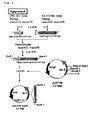
- Fig. 4 summarizes this operation.
- the transaldolase gene and the transketolase gene do not constitute an operon on E. coli genomic DNA, and their positions are remote from each other. Therefore, the transaldolase and transketolase were cloned separately, and then were linked so that they were controlled by GAP promoter of Zm. mobilis origin.
- 4 types of PCR primers shown in Table 4 were designed based on a known gene sequence of enolase enzyme of Zm. mobilis origin and a known transaldolase gene of E. coli origin ( Nucleic Acids Res., Vol. 20, 3305-3308, 1992 ).
- TAL primers TAL1 SEQ ID NO: 13: CGGAATTCTCGAGCTCCAGTTACTCAATACGTAACAATAA
- TAL2 SEQ ID NO: 14
- TAL3 SEQ ID NO: 15
- ACGAAGGGAGGTCAATTTGTCCGTCATATCGAAACCTTTCTTAAAATCTT TAL4 SEQ ID NO: 16: CATTTTGACTACCAGATCTAGATTACAGCAGATCGCCGATGATTTTTTCC
- a genomic DNA prepared from Zm. mobilis cells was used as a template, and primers TAL1 and TAL3 were used to amplify a DNA fragment of about 300 bp containing the promoter and the N-terminal site of the transaldolase gene, and having a XhoI restriction cleavage site added at the upstream terminal of the promoter gene.
- primers TAL1 and TAL3 were used to amplify a DNA fragment of about 300 bp containing the promoter and the N-terminal site of the transaldolase gene, and having a XhoI restriction cleavage site added at the upstream terminal of the promoter gene.
- coli genomic DNA was used as a template, and primers TAL2 and TAL4 were used to amplify a DNA fragment of about 1.2 kbp containing a part of a promoter gene and the transaldolase gene, and having a XbaI restriction cleavage site added at the C-terminus of the transaldolase gene. Then, the DNA fragment containing the promoter gene and the DNA fragment containing the transaldolase gene were mixed and the mixture was heated at 94°C for 20 minutes, and then maintained at 37°C for 15 minutes to form a heteroduplex. Then, the heteroduplex was allowed to react at 72°C for 3 minutes in the presence of TaqDNA polymerase.
- primer TAL1 and primer TAL4 were added and secondary PCR was carried out to amplify a DNA fragment of about 1.3 kbp in which the Eno promoter gene and the transaldolase gene were linked in this order.
- the DNA fragment and a fragment of a vector plasmid DNA for E. coli, pUC118, cleaved with HincII restriction enzyme were mixed, followed by linking with T4 ligase to produce a recombinant plasmid DNA.
- the produced recombinant plasmid was used to transform E.
- coli JM109 according to a conventional method, and then the transformed strain was applied on an LB plate medium (1% Bacto Tripton, 0.5% yeast extract, 1% NaCl, and 1.5% agar) containing 50 ⁇ g/mL of ampicillin, 0.1 mM isopropyl- ⁇ -D-thiogalactoside and 20 ⁇ g/mL of 5-bromo-4-chloro-3-indolyl- ⁇ -D-galactopyranoside to form colonies.
- a recombinant plasmid extracted from the transformed strain which formed a white colony was designated as pUC118-tal.
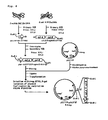
- Fig. 5 summarizes this operation.
- TKT primers TKT1 SEQ ID NO: 17: CGGAATTCTCGAGCTCCAGTTACTCAATACGTAACAATAA
- TKT2 SEQ ID NO: 18: CGGCATGCCTCGAGGCAAACGGACATTATCAAGGTAATAAAAAAGGTCGC
- a genomic DNA prepared from E. coli cells was used as a template, and primers TKT1 and TKT2 were used to amplify a DNA fragment of about 2.1 kbp containing an XbaI restriction cleavage site added at the upstream of the N-terminus of the transketolase gene and an XhoI restriction cleavage site added at the downstream of the C-terminus of the transketolase gene. After the two termini of this DNA fragment was subjected to a blunting reaction, the DNA fragment and a fragment of a vector plasmid DNA for E.
- coli, pUC118, cleaved with HincII restriction enzyme were mixed, followed by linking with T4 ligase to produce a recombinant plasmid DNA.
- the produced recombinant plasmid was used to transform E. coli JM109 according to a conventional method, and then the transformed strain was applied on an LB plate medium (1% Bacto Tripton, 0.5% yeast extract, 1% NaCl, and 1.5% agar) containing 50 ⁇ g/mL of ampicillin, 0.1 mM isopropyl- ⁇ -D-thiogalactoside and 20 ⁇ g/mL of 5-bromo-4-chloro-3-indolyl- ⁇ -D-galactopyranoside to form colonies.
- a recombinant plasmid extracted from the transformed strain which formed a white colony was designated as pUC118-tkt.
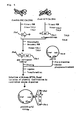
- Fig. 6 summarizes this operation.
- a recombinant plasmid containing a DNA fragment in which GAP promoter gene, the transaldolase gene and the transketolase gene were linked was produced. Namely, a DNA fragment obtained by cleaving the recombinant plasmid pUC118-tal at the XbaI restriction cleavage site and the SphI restriction cleavage site present in the downstream region of the C-terminus of the transaldolase gene, and a DNA fragment of about 2.1 kbp containing a transketolase gene prepared by cleaving the recombinant plasmid pUC118-tkt with XbaI and SphI were mixed, followed by linking with T4 ligase to produce a recombinant plasmid DNA.
- the produced recombinant plasmid was used to transform E. coli JM109 according to a conventional method, and then the transformed strain was applied on an LB plate medium (1% Bacto Tripton, 0.5% yeast extract, 1% NaCl, and 1.5% agar) containing 50 ⁇ g/mL of ampicillin to form colonies. It was confirmed that a recombinant plasmid extracted from the transformed strain which formed a colony had Eno promoter gene, transaldolase gene and transketolase gene tandemly linked in this order, and this recombinant plasmid was designated as pUC118-tal+tkt. Fig. 7 summarizes this operation.
- coli JM109 according to a conventional method, and then the transformed strain was applied on an LB plate medium (1% Bacto Tripton, 0.5% yeast extract, 1% NaCl, and 1.5% agar) containing 50 ⁇ g/mL of chloramphenichol to form colonies. It was confirmed that a recombinant plasmid extracted from the transformed strain which formed a colony had Eno promoter gene, transaldolase gene and transketolase gene linked in this order.
- LB plate medium 1% Bacto Tripton, 0.5% yeast extract, 1% NaCl, and 1.5% agar
- a DNA fragment was prepared by cleaving pUC118-xylAxylB with EcoRI restriction enzyme to cut out a DNA fragment of about 3.4 kbp containing Gap promoter gene, xylose isomerase gene and xylulokinase gene, and blunting the two cleaved termini. Then, the prepared DNA fragment and a product obtained by cleaving pZA22 recombinant plasmid, which had been prepared by inserting a transaldolase gene and a transketolase gene, with EcoRV restriction enzyme were mixed, followed by linking with T4 ligase to produce a recombinant DNA plasmid.
- the produced recombinant plasmid was used to transform E . coli JM109 according to a conventional method, and then the transformed strain was applied on an LB plate medium (1% Bacto Tripton, 0.5% yeast extract, 1% NaCl, and 1.5% agar) containing 50 ⁇ g/mL of chloramphenichol to form colonies. It was confirmed that a recombinant plasmid extracted from the transformed strain which formed a colony had GAP promoter, xylose isomerase, xylulokinase gene, Eno promoter, transaldolase gene and transketolase gene linked in this order, and this recombinant plasmid was designated as pZA22-xt. Fig. 8 summarizes this operation.
- the recombinant plasmid pZA22-xt having xylAB and taltktA genes tandemly inserted into plasmid pZA22 was used to study breeding of a strain having xylose fermentation capacity.
- the operation is as follows.
- the recombinant plasmid pZA22-xt was used to transform Zm . mobilis IFO13756 according to a conventional method, and the transformed strain was selected by applying on a glucose-RM plate medium (2% glucose, 1.0% yeast extract, 0.2% KH2PO4, 1.5% agar, and 100 ⁇ g/mL chloramphenichol, pH 6.0).
- a transformed strain which had formed a colony was inoculated into xylose-RM medium (2% xylose, 1.0% yeast extract, 0.2% KH2PO4, and 100 ⁇ g/mL chloramphenichol, pH 6.0) to study its growth based on xylose as a carbon source and the fermentation capacity for the production of ethanol.
- the transformed strain exhibited only feeble growth in the xylose-RM medium, and did not exhibit the fermentation capacity for producing ethanol.
- Zm ms described above was selected as a host strain and transformed with pZA22-xt to obtain Zm ms[pZA22-xt] strain.
- ZM ms[pZA22-xt] strain grown in a glucose-RM plate medium was inoculated into a xylose-RM medium to study its growth based on xylose as a carbon source and the fermentation capacity for producing ethanol.
- Zm ms[pZA22-xt] strain grew based on xylose as a carbon source.
- a fermentation test of ZM ms[pZA22-xt] strain was carried out in a 4% xylose medium.
- a strain obtained by introducing pZA22-xt into a wild strain with (ZM[pZA22-xt]) was subjected to the fermentation test.
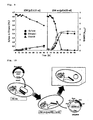
- ZM ms[pZA22-xt] strain completely utilized 4% xylose in 48 hours to produce ethanol in the theoretical yield.
- ZM [pZA22-xt] strain degradation of only a part of xylose due to feeble growth was observed, while no fermentation capacity for producing ethanol was found ( Fig. 9 ).
- Competent cells of ZM ms[E2:manA] having manA integrated into the chromosome obtained in Example 1 were prepared, and the cells were transformed with pZA22-xt ( Fig. 10 ).
- a transformed strain was selected based on the colony formation on a xylose plate medium. Then, growth of obtained colonies in a liquid medium containing xylose and mannose as carbon sources was monitored. A transformed strain which exhibited high growth in both carbon sources of xylose and mannose was selected and used for a fermentation test.
- Fermentation capacity was evaluated by using a bred strain in which manA was introduced into the chromosome and xy1A, xy1B, tal and tktA were introduced as plasmids.
- a bred strain in which manA was introduced into the chromosome and xy1A, xy1B, tal and tktA were introduced as plasmids.
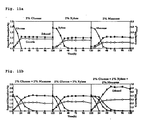
- Fig. 11a and Fig. 11b when 2% glucose, xylose or mannose was used as a sole carbon source, a slight decrease was recognized as compared with the fermentation rate of glucose, but the strain exhibited a growth conforming to the rapid consumption of xylose and mannose, and ethanol production in the theoretical yield. The strain also exhibited rapid ethanol production with respect to xylose or mannose in the co-presence of glucose.
- Zm. mobilis strain capable of efficiently converting main sugars contained in an acid-treated saccharified solution, glucose, xylose and mannose, into ethanol has been successfully bred.
- the bred strain was designated as ZM mx42, and has been deposited since August 13, 2007, under the Budapest Treaty, with the International Patent Organism Depository, National Institute of Advanced Industrial Science and Technology, tsukuba Central 6, 1-1-1 Higashi, Tsukuba 305-8566, Japan, under accession number FERM BP-11025.
- Fermentation test of acid-treated saccharified solution of waste wood (under conditions of batch type fermentation) A fermentation test of the bred strain (ZM ms42[sucZE2::manA, pZA22-xt]) was carried out by using a acid-treated saccharified solution of waste wood.
- a concentrated sulfuric acid-treated saccharified solution of construction waste materials prepared according to a conventional method ( Applied Biochemistry and Biotechnology, Vol. 98-100, 899-807, 2002 ) was used as the acid-treated saccharified solution of waste wood.
- a fermentation test was carried out in the case of adding one volume of 2-fold concentration RM medium (2% of C source, 1% of yeast extract, and 0.2% of KH 2 PO 4 , pH 6.0-6.5) to one volume of the acid-treated saccharified solution, or in the case of adding one volume of 10-fold concentration RM medium to 9 volume of the acid-treated saccharified solution.
- the results are shown in Fig. 12a and Fig. 12b .
- Fig. 12a glucose, mannose and xylose were consumed to produce ethanol at a yield close to the theoretical yield.
- ZM ms[pZA22-xt] also rapidly fermented the three kinds of sugars to produce ethanol in a high yield.
- the production of ethanol and reduction of sugar components were analyzed by using the eluate from the reactor sampled with time. Namely, 1 mL of the column extract was centrifuged (4°C, 15000 rpm, 15 minutes) and was analyzed by HPLC.
- the HPLC analysis conditions are as follows.
- a reactor packed with the immobilized bacterial cell culture of the recombinant Zymomonas as described in Example 5 was used to evaluate continuous fermentation for producing ethanol from a model sugar solution containing glucose, mannose and xylose as a mixture.
- Fig. 14 the production of ethanol in the theoretical yield, which corresponded to the complete consumption of glucose and mannose, was observed.
- xylose was recognized in the fermented solution as a residual sugar, and thus it was found that continuous simultaneous fermentation of three kinds of sugars was difficult. Thus, a cause of the lowered fermentation capacity of xylose was studies, and it was found that the pH of the fermented solution affected the fermentation capacity of xylose.
- Fig. 15 shows the results obtained by observing the relationship between the fermentation capacity of sugars of the bred strain and the initial pH of the fermented solution.
- ZM ms42 [sucZE2::manA, pza22-xyl]
- the influence of the initial pH on the fermentation of glucose and mannose was not recognized, while it was found that the initial pH of the sugar solution markedly affected the xylose fermentation capacity. Namely, a decrease in the xylose fermentation capacity was observed at pH 5 or lower.
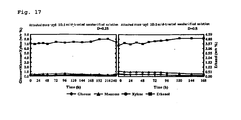
- glucose and xylose were consumed, and only a trace amount of mannose remained.
- the average ethanol concentration was 3.83%, the yield was 86.56%, and the rate of ethanol formation was 20.88 g/L ⁇ hour (Fig. 17b).
- ethanol was produced in a yield close to the theoretical yield, even if the dilution ratio was 0.50/hour.
- an energy-saving high-efficiency conversion process for bioethanol can be established by using a fermentative bacterial strain capable of fermenting glucose, mannose and xylose simultaneously which can produce ethanol by fermenting a saccharified solution of cellulose-type and lignocellulose-type biomass resources.
Landscapes
- Chemical & Material Sciences (AREA)
- Life Sciences & Earth Sciences (AREA)
- Organic Chemistry (AREA)
- Health & Medical Sciences (AREA)
- Zoology (AREA)
- Engineering & Computer Science (AREA)
- Wood Science & Technology (AREA)
- Genetics & Genomics (AREA)
- Bioinformatics & Cheminformatics (AREA)
- Microbiology (AREA)
- Biotechnology (AREA)
- Biochemistry (AREA)
- General Engineering & Computer Science (AREA)
- General Health & Medical Sciences (AREA)
- Molecular Biology (AREA)
- Biomedical Technology (AREA)
- Medicinal Chemistry (AREA)
- Chemical Kinetics & Catalysis (AREA)
- General Chemical & Material Sciences (AREA)
- Micro-Organisms Or Cultivation Processes Thereof (AREA)
- Preparation Of Compounds By Using Micro-Organisms (AREA)
Description
- The present invention relates to a fermentative bacterial strain capable of fermenting glucose, mannose and xylose simultaneously, and a process for producing bioethanol from a cellulose-type or lignocellulose-type biomass using the bacterial strain.
- In Japan, the output of unused biomass resources, that is, cellulose-type industrial (general) waste materials, such as forest thinnings, construction waste materials, rice straw and rice husk, as well as old paper and waste paper, reaches up to 50 million tons per year. Use of these biomasses as an energy source is considered to be "carbon-neutral" because they do not upset the global CO2 balance, and the biomasses are highly expected as an energy source that contributes to the greenhouse gas reduction. Under such circumstances, it has been suggested and studied to produce ethanol as a biofuel from unused cellulose-type or lignocellulose-type biomass resources and to use the produced bioethanol as a raw material for the syntheses of oxygen-containing compounds for addition to gasoline or chemical products, or as regional heat source and electric power source.
However, there are no fermentative bacteria available in nature, which produce ethanol by directly degrading and fermenting cellulose-type or lignocellulose-type biomass resources. Therefore, it is expected to create a fermentative bacterium capable of fermenting and converting cellulose partial degradation products (cellooligosaccharides), xylose and mannose present as a mixture in an acid-treated saccharified solution of celluloses and hemicelluloses simultaneously into ethanol by using metabolic engineering technologies and cell surface presentation technologies. It is also expected to construct an innovative energy-saving high-efficiency conversion process, wherein a continuous fermentation apparatus having a bred fermentative bacterial strain as a catalyst element is incorporated.
The present inventors previously succeeded in the creation of a transformed microorganism capable of producing ethanol from a pentose by introducing a foreign gene encoding at least one enzyme selected from a xylose isomerase, a xylulokinase, a transaldolase and a transketolase into a microorganism of the genus zymobacter incapable of assimilating a pentose (Patent Document 1). For the purpose of efficient production of ethanol from a raw material containing mannose, the present inventors also succeeded in the creation of a recombinant microorganism by integrating a foreign gene encoding a phosphomannose isomerase into the chromosome of a bacterium of the genus Zymomonas to give stable mannose fermentation capacity to the bacterium (Patent Document 2). - Patent Document 1:
JP 2005-261421 A - Patent Document 2:
JP 2007-14306 A - An object of the present invention is to create a fermentative bacterium capable of fermenting glucose, mannose and xylose, simultaneously, which can produce ethanol by fermenting and converting cellooligosaccharides, xylose and mannose present in a saccharified solution obtained from cellulose-type and lignocellulose-type biomass resources of herbaceous origin and particularly of ligneous origin simultaneously into ethanol. Another object of the present invention is to establish an innovative energy-saving high-efficiency bioethanol conversion process suitable for practical use.
- Bacteria of the genus Zymomonas are known as bacteria for brewing tequila, and these bacteria are 3 to 5 times more excellent in the rate of ethanol fermentation and productivity as compared with traditional brewer's yeast, and are also superior to yeast in the ethanol productivity per unit bacterial cells. However, the bacteria of the genus Zymomonas are not capable of fermenting maltose or xylose that is present in a saccharified solution of a cellulose-type or lignocellulose-type biomass resource to produce ethanol.
The present inventors aimed at the excellent ethanol productivity of bacteria of the genus Zymomonas, and presumed that a bacterium capable of fermenting glucose, mannose and xylose simultaneously could be created by applying the technologies described in theabove Patent Documents - That is, the present invention provides:
- (1) A fermentative bacterium capable of fermenting glucose, mannose and xylose simultaneously, which is Zymomonas mobilis ZM mx42 (FERM BP-11025).
- (2) A process for producing ethanol comprising allowing a saccharified solution of cellulose-type and/or lignocellulose-type biomass resources and the fermentative bacterium capable of fermenting glucose, mannose and xylose simultaneously according to
claim 1, which has been immobilized on an immobilized carrier, to contact with each other, thereby fermenting the saccharified solution to obtain a fermented solution, and recovering ethanol from the fermented solution; - (3) The process for producing ethanol according to the above (2), wherein the biomass resource is a ligneous biomass resource; and
- (4) The process for producing ethanol according to the above (2), wherein the saccharified solution is continuously fed into a reactor packed with the immobilized fermentative bacterium, thereby allowing the saccharified solution and the fermentative bacterium to contact with each other to obtain a fermented solution, collecting the fermented solution continuously, and recovering ethanol therefrom.
- In the highly efficient ethanol production from an acid-treated saccharified solution of ligneous and herbaceous biomass resources, it is of importance to give simultaneous fermentation capacity of glucose, mannose and xylose, which are derived from celluloses and hemicelluloses and are present as a mixture in the saccharified solution, to a bacterium to be used. However, Zymomonas mobilis has no fermentation capacity of mannose or xylose, while it has strong glucose fermentation capacity.
- As to mannose fermentation capacity, Zymomonas mobilis insufficiently expresses a mannose kinase and a phosphomannose isomerase, particularly a phosphomannose isomerase, which are indispensable for metabolism of mannose. According to the present invention, it is possible to give mannose fermentation capacity to Zymomonas mobilis by introducing and expressing a phosphomannose isomerase gene (manA) of Escherichia coli origin, and further to give stable mannose fermentation capacity by integrating the gene into the chromosome. Furthermore, although the metabolism of xylose in bacteria generally requires four enzymes, i.e., a xylose isomerase and a xylulokinase as well as a transaldolase and a transketolase which are essential enzymes for the pentose phosphate pathway, Zymomonas mobilis lacks a xylose isomerase and a xylulokinase and cannot therefore utilize xylose. Then, according to the present invention, xylose fermentation capacity can be given to Zymomonas mobilis by introducing a xylose isomerase gene (xylA), a xylulokinase gene (xylB), a transaldolase gene (tal) and a transketolase gene (tktA), all being Escherichia coli origin. Thus, the fermentation capacity of three kinds of saccharides i.e., glucose, xylose and mannose, can be given to Zymomonas mobilis by introducing a manA gene and genes of the enzyme system of xylose metabolism.
- The ethanol fermentation can be carried out efficiently by immobilizing the thus-created bacterial strain capable of fermenting glucose, mannose and xylose simultaneously on an immobilization carrier to construct a reactor for the continuous production of bioethanol, and continuously introducing a saccharified solution of a biomass resource into the reactor to allow the saccharified solution and the fermentative bacterial strain to contact with each other.
-
-
Fig. 1 is a diagram illustrating the procedure for integrating manA into chromosomal DNA. -
Fig. 2 is a diagram illustrating the procedure for cloning manA of Escherichia coli origin. -
Fig. 3 is a restriction map illustrating the procedure for constructing a recombinant plasmid pUZE2d'-manA for integration of chromosomal DNA. -
Fig. 4 is a restriction map illustrating the procedure for constructing pUC118-xylAB. -
Fig. 5 is a restriction map illustrating the procedure for constructing pUC118-tal. -
Fig. 6 is a restriction map illustrating the procedure for constructing pUC118-tkt. -
Fig. 7 is a restriction map illustrating the procedure for constructing pUC118-tal+tkt. -
Fig. 8 is a restriction map illustrating the procedure for constructing pZA22-xt. -
Fig. 9 is a graph illustrating the results of the fermentation test of xylose in Example 2(4). -
Fig. 10 is a diagram illustrating the procedure for giving simultaneous fermentation capacity of glucose, mannose and xylose to the bacterial strain. -
Fig. 11a is a graph illustrating the results of the fermentation test of the bred strain in Example 3. -
Fig. 11b is a graph illustrating the results of the fermentation test of the bred strain in Example 3. -
Fig. 12a is a graph illustrating the results of the fermentation test of the waste wood saccharified solution in Example 4. -
Fig. 12b is a graph illustrating the results of the fermentation test of the waste wood saccharified solution in Example 4. -
Fig. 13 is a schematic diagram of a reactor illustrating the conditions for continuous fermentation in Example 5. -
Fig. 14 is a graph illustrating the results of continuous fermentation of the model acid-treated saccharified solution in Example 6. -
Fig. 15 is a graph illustrating the influence of the initial medium pH in the continuous fermentation of the model acid-treated saccharified solution in Example 6. -
Fig. 16 is a graph illustrating the results of continuous fermentation of the waste wood acid-treated saccharified solution in Example 6. -
Fig. 17 is a graph illustrating the results of continuous ethanol production using the acid-treated saccharified solution in Example 6. - The Zymomonas mobilis host to which mannose fermentation capacity is given according to the present invention is a high levansucrase producing strain described hereinafter which occurs as a result of natural mutation and produces a larger amount of levansucrase than a wild type strain does.
Giving mannose fermentation capacity to bacterial strain - The gene that encodes a phosphomannose isomerase (manA) used for giving mannose fermentation capacity can be obtained from Escherichia coli, which is a donor microorganism capable of degrading mannose.
DNA encoding a phosphomannose isomerase of a donor microorganism is separated and purified, and then cleaving the DNA by various methods to obtain a DNA fragment. Further, the DNA fragment is bound to a vector DNA fragment obtainable according to the same manner by means of, for example, a DNA ligase to form recombinant DNA containing a phosphomannose isomerase gene. Techniques such as separation and purification of DNA, preparation of a DNA fragment, and binding by a DNA ligase can be carried out, for example, by using a commercially available DNA extraction kit according to a known method in the pertinent field such as the method described in Molecular Cloning, 3rd Edition (J. Sambrook, et al., Cold Spring Harbor Lab. Press, 2001). - The integration into the chromosome can be carried out by double crossover according to a known homologous recombination method. That is, a levansucrase gene is cloned as a chromosomal target gene of Zymomonas mobilis, and then a foreign gene encoding a phosphomannose isomerase is inserted into the chromosomal target gene which has been cloned in vitro to prepare DNA wherein parts of the target gene are linked to the upstream and downstream of the foreign gene, respectively, followed by integrating this DNA into the target gene located on the chromosome of Zymomonas mobilis. For example, as shown in
Fig. 1 , a levansucrase gene (hereinafter referred to as E2) is coordinated with an invertase gene (hereinafter referred to as E3) on the chromosomal DNA of Zymomonas mobilis. These two enzymes are present on the cell surface of Zymomonas mobilis, and releases fructose utilizing sucrose as a substrate, thereby catalyzing a transfer reaction to form levan. The E2 site is targeted, and a phosphomannose isomerase gene is integrated thereinto by double crossover using a homologous recombination method to delete E2. As a result, it is possible to produce ethanol from fructose which forms levan. On the other hand, unlike a vector-introduced strain, the stability of the introduced gene is increased. Thus, an agent such as a marker is not required. - As a microorganism capable of degrading xylose, Escherichia coli is used as a DNA donor, and DNAs encoding a xylose isomerase, a xylulokinase, a transaldolase and a transketolase are separated therefrom and purified. Subsequently, the DNAs are cleaved by various methods to prepare DNA fragments encoding the enzymes. These DNA fragments are bound to an appropriate vector DNA fragment, for example, by means of a DNA ligase. Thus, a recombinant DNA containing a xylose isomerase gene, a xylulokinase gene, a transaldolase gene and a transketolase gene is formed.
- Separation and purification of a DNA from a donor can be carried out by a per se known method, for example, the method by Saito and Miura (Biochem. Biophys. Acta, Vol. 72, 619-629, 1963) or a modification thereof, or a method using a commercial DNA extraction kit.
The DNAs of the donor microorganism obtained are cleaved by, for example, a restriction enzyme, and DNA fragments of shorter than 1 kbp are eliminated by a sucrose density gradient method. Then, the remaining fragments can be used as donor DNA fragments. The restriction enzyme used at this time is not particularly limited, and it is also possible to cleave DNA by using, for example, ultrasonication, or physical shear force, in addition to the above enzymatic method. At this time, preferably, the termini of the donor DNA fragments are treated with, for example, a Klenow fragment or an enzyme such as a DNA polymerase or a mung bean nuclease because the efficiency of subsequence binding with a vector DNA is increased. Further, a PCR amplification product obtained by using the DNA of the donor microorganism or a fragment thereof as a template can also be used as a donor DNA fragment either directly or after applying the treatments mentioned above. - The vector DNA fragment is not particularly limited but, shuttle vector pZA22 was used herein.
The vector DNA fragment obtained can be treated with an alkaline phosphatase prior to the binding reaction with the donor DNA fragments, thereby, enhancing the binding efficiency of the fragment and the donor DNA fragments. Further, in the case of preparing a donor DNA fragment by PCR amplification, the binding efficiency can also be increased by using in advance a primer which gives a restriction site such as EcoRI at both termini of an amplified fragment, while a vector fragment to be used is prepared by cleaving a vector with the same restriction enzyme as that used for cleaving the amplified fragment. The binding reaction of the donor DNA fragments and the vector DNA fragment can be carried out by using a conventional method such as a method using a known DNA ligase. For example, after annealing the donor DNA fragments and the vector DNA fragment, recombinant DNA can be produced ex vivo under the action of an appropriate DNA ligase. If necessary, after annealing, the fragments can be introduced into a host microorganism, and a recombinant DNA can be produced by utilizing the in vivo DNA repair capacity. - The recombinant DNA vector containing a xylose isomerase gene, a xylulokinase gene, a transaldolase gene and a transketolase gene is introduced into Zymomonas mobilis obtained above to which mannose fermentation capacity has been given.
The method for introducing the recombinant DNA vector is not particularly limited, but introduction of the recombinant DNA is suitably achieved by a method utilizing electrical stimulation, such as electroporation.
The strain into which recombinant DNA vector has been introduced is cultured on a xylose plate medium, and the colonies formed thereon are cultured in a liquid medium containing xylose and mannose as carbon sources. The growth is monitored, and a transformed strain exhibiting high growth in both carbon sources of xylose and mannose is selected to obtain the desired bacterial strain capable of fermenting glucose, mannose and xylose simultaneously. - The fermentative bacterium of the present invention can be used in the production of ethanol from a saccharified solution of any biomass resource of ligneous type or herbaceous type, but in view of its high ethanol productivity, the bacterium can be suitably used in the production of ethanol from a saccharified solution of a ligneous biomass resource.
- For example, a saccharified solution is prepared by hydrolyzing raw material wood through a chemical or physical treatment, and this solution is used as a raw material for fermentation. This saccharified solution of wood contains a mixture of glucose, xylose and mannose derived from celluloses and hemicelluloses which are constituent components of wood.
- Bioethanol has been produced hitherto by batch type or continuous type fermentation of a saccharified solution of wood with yeast which is used as a traditional brewer's fungus. In such a production process, xylose or mannose contained in a saccharified solution of wood (approximately 20%) cannot be converted into bioethanol. Then, recovery of bioethanol from a saccharified solution of wood has been limited to only that from the glucose component (approximately 50%). This is a factor in increasing the cost of bioethanol.
- In the present invention, bioethanol can be produced at high speed with a high recovery rate by using the fermentative bacterial strain described above by continuously feeding a saccharified solution of wood to a reactor packed with the bacterial strain which has been immobilized on an immobilization carrier to allow the saccharified solution and the fermentative bacterial strain to contact with each other. Then, it is possible to achieve a further recovery of bioethanol of about 20% corresponding to the amount of xylose and mannose, and cost reduction, as compared with a conventional method.
- The immobilization onto an immobilization carrier can be carried out according to a per se known method such as an inclusion method, a physical adsorption method, or a covalent bonding method.
A suitable carrier is that having, for example, a hollow shape, a concavo-convex shape, or a porous shape and having a large surface area per unit volume, or that swelling by water absorption. The suitable carrier should have fluidity and sufficient particle size and specific gravity to prevent it from easily flowing out of a reaction system. The carrier can be in the form of, for example, plate, fiber, a special shape such as cylinder, sponge, granules or mass, or cube. Among them, fine granules are preferred because of easy securing of fluidity and sufficient surface area. The usable material includes various organic and inorganic materials which have been conventionally used as those of carriers for microorganisms or enzymes. Examples thereof include inorganic materials such as granular activated carbon, pulverized activated carbon, wood charcoal, zeolite, mica and sand grains; resin materials such as photocurable resins, polyurethane, polyvinyl alcohol, polyethylene, polyacrylamide, polyester, polypropylene, agar, alginic acid, carrageenan, cellulose, dextran, agarose and ion-exchanged resins; porous ceramics such as silica gel; anthracite; diatomaceous earth; and a mixture of resin materials and activated carbon. They can be used alone or in a combination of two or more thereof. - The immobilization carrier is usually used by packing a bioreactor with it. Examples of the bioreactor used for fermentation include reactors of complete mixing tank type, packed bed type, membrane type, fluid bed type, and horizontal type according to the difference in mechanisms and function. Such a bioreactor is suitably used because the bioreactor makes it possible to carry out continuous fermentation without requiring feeding and recovery of a microorganism.
- When carrying out the alcohol fermentation as described above, various nutrient sources for the microorganism can be incorporated into the saccharified solution where necessary and, for example, a yeast extract, corn steep liquor, peptone, a meat extract, and a bonito extract can be used as nitrogen sources.
Hereinafter, the present invention will be described in more detail by the following Examples, but the present invention is not intended to be limited thereto. - A DNA fragment containing a target gene was amplified by PCR using a combination of the synthetic oligonucleotides shown in Table 1 which were designed based on a known glyceraldehyde-3-phosphate dehydrogenase gene sequence of Zymomonas mobilis (Zm. mobilis) origin (J. Bacteriol. Vol. 169 (12), 5653-5662, 1987) and a known manA nucleotide sequence of E. coli origin (Gene 32 (1-2), 41-48 (1984)).
First, primary PCR was carried out using the chromosomal DNA (Chr. DNA) of a wild strain of Zm. mobilis (IFO13756 as a template to amplify the gap promoter. Similarly, manA was amplified using the Chr. DNA of E. coli K12 strain as a template. Then, the two PCR products were used to form a hetero-double strand. Secondary PCR was carried out to construct a gap-manA fragment, and this fragment was ligated to the HincII site of vector pUC118. E. coli JM109 strain was transformed with the resulting product.
Sequencing of the inserted fragment was carried out and, as a result, the nucleotide sequence of the inserted fragment was confirmed to be consistent with the nucleotide sequence of manA registered in a database. Thus, the product was named pUC118-manA.
Fig. 2 summarizes this cloning operation. -
Table 1 manA primers manA(1) (SEQ ID NO: 1): CGGAATTCGTTCGATCAACAACCCGAATCCTATCG manA(2) (SEQ ID NO: 2): CTTAATAAGTTAGGAGAATAAACATGCAAAAACTCATTAACAACTCAGTGCAA manA(3) (SEQ ID NO: 3): TTGCACTGAGTTAATGAGTTTTTGCATGTTTATTCTCCTAACTTATTAAG manA(4) (SEQ ID NO: 4): CGCGGATCCTTACAGCTTGTTGTAAACAGGCGCTA -
Fig. 3 is a diagram illustrating the construction of a vector for chromosomal integration by targeting at the E2 site.
Vector pUZE2d (4.8 kb) was treated with NdeI, blunted, and then treated with BAPP to cut out the DNA. Further, Pgap-manA (1.5 kb) was digested from pUC118-manA (4.8 kb) with BamHI and EcoRI, followed by blunting to cut out the manA fragment. Then, ligation was carried out overnight at 4°C and 16°C using Ligation High and T4 ligase, and transformation of E. coli JM109 strain was carried out by a heat shock method to extract a plasmid. From the extracted plasmid, a manA fragment of 1.5 kbp was confirmed by PCR using manA(1) and manA(4) primers shown in Table 2 which were designed based on a known genomic E2 sequence of Zm. mobilis (Biosci. Biotech. Biochem., 59(2), 289-293 (1995); DNA accession number D17524 (DDBJ, EMBL)). Further, when the plasmid was digested with EcoRV and KpnI, a band of a 5.3 kbp fragment was detected, which showed that the fragment was composed of 4.8 kbp and 1.5 kbp fragments being in the forward direction relative to the E2 gene. In view of this result, the plasmid was designated as plasmid pUZE2d'-manA. -
Table 2 E2 primers E2 (1) (SEQ ID NO: 5) : ACTTAATAAGTTAGGAGAATAAACATGTTGAATAAAGCAGGCATTGCAGA E2(2) (SEQ ID NO: 6): GCTCTAGATCATTATTTATTCAATAAAGACAGGGC E2(3) (SEQ ID NO: 7): AGCAAATAATTTCTGGGATTTCCGC E2(4) (SEQ ID NO:8): AGGCCGCTCCGTCTGG - A strain producing levansucrase in a large amount which had been derived from Zm. mobilis IFO13756 by natural mutation (hereinafter referred to as ZM ms strain) was selected as a host strain, and the transformation of the host strain was carried out by an electroporation method using a high concentration plasmid solution. Then, three successive subcultures were carried out, and the culture was applied on a 2% mannose-RM plate. From the third day after the application, the culture was continued for about two weeks, and a large colony grown therein was arbitrarily selected and inoculated into a 2% mannose-RM liquid medium. Bacterial cells were harvested from a suspension of grown cells, and the cells were washed once with sterilized MilliQ water and then were suspended in 1 mL of sterilized MilliQ water to prepare a sample for DNA extraction. One µL out of 50 µL of the extract was subjected to PCR amplification using manA primers manA(1) and manA(4), and E2 primers E2(1) and E2(2). As a result, a manA fragment (1.5 kbp) was detected in the amplification using the manA primers, and a band was detected at 2.8 kbp in the amplification using the E2 primers. This result showed that manA was inserted at the E2 site on the chromosomal DNA because 2.8 kbp corresponded to the length of the fragment prepared by integrated manA (1.5 kbp) into E2 (1.3 kbp).
The strain ZM ms has been deposited since August 13, 2007 under the Budapest Treaty with the International Patent Organism Depository, National Institute of Advanced Industrial Science and Technology,tsukuba Central 6, 1-1-1 Higashi, Tsukuba 305-8566, Japan, under accession number FERM BP-11204. - In order to introduce genes of enzymes in xylose metabolism system of E coli origin into Zm. mobilis, first, genes of xylA, xylB, tal and tktA were cloned in E. coli using vector pUC118, and then inserted into a shuttle vector for E. coli and Zm. mobilis, pZA22, to construct a recombinant plasmid pZA22-xt. Then, pZA22-xt was introduced into Zm. mobilis to which mannose fermentation capacity had been given by integrating manA into the chromosome thereof. Thus, the simultaneous fermentation capacity of glucose, xylose and mannose was given to the strain.
- The necessary genes were cloned from E. coli genomic DNA by PCR. Further, a promoter gene (GAP promoter) for controlling the expression of glyceraldehyde-3-phosphate dehydrogenase, which was reported to be expressed in a large amount in Zm. mobilis cells, was used to express the introduced four kinds of enzyme genes in Zm. mobiles cells.
A xylose isomerase gene and a xylulokinase gene of E. coli origin were cloned by PCR. Namely, 4 types of PCR primers as shown in Table 3 were designed based on a known gene sequence of glyceraldehyde-3-phosphate dehydrogenase of Zm. mobilis origin (J. Bacteriol., Vol. 169(12), 5653-5662, 1987) and a known nucleotide sequences of a xylose isomerase gene and a xylulokinase gene of E. coli origin (Appl. Environ. Microbiol., vol. 47(1), 15-21, 1984) to prepare a DNA fragment wherein the xylose isomerase gene and the xylulokinase gene of E. coli origin were tandemly linked in the downstream of the promoter gene of glyceraldehyde-3-phosphate dehydrogenase gene of Zm. mobilis origin, and EcoRI restriction cleavage sites for cloning were provided at both termini of the DNA fragment, respectively. -
Table 3 XYL primers XYL1 (SEQ ID NO: 9): CGGAATTCGTTCGATCAACAACCCGAATCCTATCG XYL2 (SEQ ID NO: 10): TACTGGAATAAATGGTCTTCGTTATGCAAGCCTATTTTGACCAGCCTCGAT XYL3 (SEQ ID NO: 11): ATCGACTGGTCAAAATAGGCTTGCATAACGAAGACCATTTATTCCAGTA XYL4 (SEQ ID NO: 12): CGGAATTCATGCATAGTTCCCAAAAGTTGCTGTCA - For primary PCR, a DNA fragment of about 300 bp containing the promoter and the N-terminal site of the xylose isomerase gene was amplified by using a genomic DNA prepared from Zm. mobilis cells as a template and the primers XYL1 and XYL3. On the other hand, a DNA fragment of about 3.0 kbp containing a part of the promoter gene, the xylose isomerase gene and the xylulokinase gene was amplified by using an E. coli genomic DNA as a template and the primers XYL2 and XYL4. Then, the DNA fragment containing the promoter gene and the DNA fragment containing the xylose isomerase gene and the xylulokinase gene were mixed and heated at 94°C for 20 minutes. The mixture was maintained at 37°C for 15 minutes to form a heteroduplex. The heteroduplex was allowed to react at 72°C for 3 minutes in the presence of TaqDNA polymerase. To this reaction mixture, primer XYL1 and primer XYL4 were added and secondary PCR was carried out to amplify a DNA fragment of about 3.2 kbp in which the Gap promoter gene, the xylose isomerase gene and the xylulokinase gene were linked in this order. After the two termini of this DNA fragment was subjected to a blunting reaction, the DNA fragment and a fragment of a vector plasmid DNA for E. coli, pUC118, cleaved with HincII restriction enzyme were mixed, followed by linking with T4 ligase to produce a recombinant plasmid DNA. The produced recombinant plasmid was used to transform E. coli JM109 according to a conventional method, and then the transformed strain was applied on an LB plate medium (1% Bacto Tripton, 0.5% yeast extract, 1% NaCl, and 1.5% agar) containing 50 µg/mL of ampicillin, 0.1 mM isopropyl-β-D-thiogalactoside and 20 µg/mL of 5-bromo-4-chloro-3-indolyl-β-D-galactopyranoside to form colonies. A recombinant plasmid extracted from the transformed strain which formed a white colony was designated as pUC116-xylAB.
Fig. 4 summarizes this operation. - The transaldolase gene and the transketolase gene do not constitute an operon on E. coli genomic DNA, and their positions are remote from each other. Therefore, the transaldolase and transketolase were cloned separately, and then were linked so that they were controlled by GAP promoter of Zm. mobilis origin. For this purpose, 4 types of PCR primers shown in Table 4 were designed based on a known gene sequence of enolase enzyme of Zm. mobilis origin and a known transaldolase gene of E. coli origin (Nucleic Acids Res., Vol. 20, 3305-3308, 1992).
-
Table 4 TAL primers TAL1 (SEQ ID NO: 13): CGGAATTCTCGAGCTCCAGTTACTCAATACGTAACAATAA TAL2 (SEQ ID NO: 14): AAGATTTTAAGAAAGGTTTCGATATGAtGGACAAATTGACCTCCCTTCGT TAL3 (SEQ ID NO: 15): ACGAAGGGAGGTCAATTTGTCCGTCATATCGAAACCTTTCTTAAAATCTT TAL4 (SEQ ID NO: 16): CATTTTGACTACCAGATCTAGATTACAGCAGATCGCCGATGATTTTTTCC - For primary PCR, a genomic DNA prepared from Zm. mobilis cells was used as a template, and primers TAL1 and TAL3 were used to amplify a DNA fragment of about 300 bp containing the promoter and the N-terminal site of the transaldolase gene, and having a XhoI restriction cleavage site added at the upstream terminal of the promoter gene. On the other hand, E. coli genomic DNA was used as a template, and primers TAL2 and TAL4 were used to amplify a DNA fragment of about 1.2 kbp containing a part of a promoter gene and the transaldolase gene, and having a XbaI restriction cleavage site added at the C-terminus of the transaldolase gene. Then, the DNA fragment containing the promoter gene and the DNA fragment containing the transaldolase gene were mixed and the mixture was heated at 94°C for 20 minutes, and then maintained at 37°C for 15 minutes to form a heteroduplex. Then, the heteroduplex was allowed to react at 72°C for 3 minutes in the presence of TaqDNA polymerase. To this reaction mixture, primer TAL1 and primer TAL4 were added and secondary PCR was carried out to amplify a DNA fragment of about 1.3 kbp in which the Eno promoter gene and the transaldolase gene were linked in this order. After the two termini of this DNA fragment was subjected to a blunting reaction, the DNA fragment and a fragment of a vector plasmid DNA for E. coli, pUC118, cleaved with HincII restriction enzyme were mixed, followed by linking with T4 ligase to produce a recombinant plasmid DNA. The produced recombinant plasmid was used to transform E. coli JM109 according to a conventional method, and then the transformed strain was applied on an LB plate medium (1% Bacto Tripton, 0.5% yeast extract, 1% NaCl, and 1.5% agar) containing 50 µg/mL of ampicillin, 0.1 mM isopropyl-β-D-thiogalactoside and 20 µg/mL of 5-bromo-4-chloro-3-indolyl-β-D-galactopyranoside to form colonies. A recombinant plasmid extracted from the transformed strain which formed a white colony was designated as pUC118-tal.
Fig. 5 summarizes this operation. - Subsequently, amplification of the transketolase gene by PCR was carried out. Two types of primers shown in Table 5 were synthesized based on a known nucleotide sequence of a transketolase gene (J. Bacteriol., Vol. 174, 1707-1708, 1992).
-
Table 5 TKT primers TKT1 (SEQ ID NO: 17): CGGAATTCTCGAGCTCCAGTTACTCAATACGTAACAATAA TKT2 (SEQ ID NO: 18): CGGCATGCCTCGAGGCAAACGGACATTATCAAGGTAATAAAAAAGGTCGC - For primary PCR, a genomic DNA prepared from E. coli cells was used as a template, and primers TKT1 and TKT2 were used to amplify a DNA fragment of about 2.1 kbp containing an XbaI restriction cleavage site added at the upstream of the N-terminus of the transketolase gene and an XhoI restriction cleavage site added at the downstream of the C-terminus of the transketolase gene. After the two termini of this DNA fragment was subjected to a blunting reaction, the DNA fragment and a fragment of a vector plasmid DNA for E. coli, pUC118, cleaved with HincII restriction enzyme were mixed, followed by linking with T4 ligase to produce a recombinant plasmid DNA. The produced recombinant plasmid was used to transform E. coli JM109 according to a conventional method, and then the transformed strain was applied on an LB plate medium (1% Bacto Tripton, 0.5% yeast extract, 1% NaCl, and 1.5% agar) containing 50 µg/mL of ampicillin, 0.1 mM isopropyl-β-D-thiogalactoside and 20 µg/mL of 5-bromo-4-chloro-3-indolyl-β-D-galactopyranoside to form colonies. A recombinant plasmid extracted from the transformed strain which formed a white colony was designated as pUC118-tkt.
Fig. 6 summarizes this operation. - Subsequently, a recombinant plasmid containing a DNA fragment in which GAP promoter gene, the transaldolase gene and the transketolase gene were linked was produced. Namely, a DNA fragment obtained by cleaving the recombinant plasmid pUC118-tal at the XbaI restriction cleavage site and the SphI restriction cleavage site present in the downstream region of the C-terminus of the transaldolase gene, and a DNA fragment of about 2.1 kbp containing a transketolase gene prepared by cleaving the recombinant plasmid pUC118-tkt with XbaI and SphI were mixed, followed by linking with T4 ligase to produce a recombinant plasmid DNA. The produced recombinant plasmid was used to transform E. coli JM109 according to a conventional method, and then the transformed strain was applied on an LB plate medium (1% Bacto Tripton, 0.5% yeast extract, 1% NaCl, and 1.5% agar) containing 50 µg/mL of ampicillin to form colonies. It was confirmed that a recombinant plasmid extracted from the transformed strain which formed a colony had Eno promoter gene, transaldolase gene and transketolase gene tandemly linked in this order, and this recombinant plasmid was designated as pUC118-tal+tkt.
Fig. 7 summarizes this operation. - In order to introduce genes of 4 kinds of enzymes of xylose metabolism system into µm. mobilis and express them therein, these genes were inserted into a shuttle vector to produce a recombinant plasmid. A DNA fragment of about 3.3 kbp containing Eno promoter gene, transaldolase gene and transketolase gene was produced by cleaving the recombinant plasmid pUC118-taltkt with XhoI restriction enzyme. This fragment and a shuttle vector pZA22 cleaved by restriction enzyme SalI were mixed, followed by linking with T4 ligase to produce a recombinant plasmid. The produced recombinant plasmid was used to transform E. coli JM109 according to a conventional method, and then the transformed strain was applied on an LB plate medium (1% Bacto Tripton, 0.5% yeast extract, 1% NaCl, and 1.5% agar) containing 50 µg/mL of chloramphenichol to form colonies. It was confirmed that a recombinant plasmid extracted from the transformed strain which formed a colony had Eno promoter gene, transaldolase gene and transketolase gene linked in this order. On the other hand, a DNA fragment was prepared by cleaving pUC118-xylAxylB with EcoRI restriction enzyme to cut out a DNA fragment of about 3.4 kbp containing Gap promoter gene, xylose isomerase gene and xylulokinase gene, and blunting the two cleaved termini. Then, the prepared DNA fragment and a product obtained by cleaving pZA22 recombinant plasmid, which had been prepared by inserting a transaldolase gene and a transketolase gene, with EcoRV restriction enzyme were mixed, followed by linking with T4 ligase to produce a recombinant DNA plasmid. The produced recombinant plasmid was used to transform E. coli JM109 according to a conventional method, and then the transformed strain was applied on an LB plate medium (1% Bacto Tripton, 0.5% yeast extract, 1% NaCl, and 1.5% agar) containing 50 µg/mL of chloramphenichol to form colonies. It was confirmed that a recombinant plasmid extracted from the transformed strain which formed a colony had GAP promoter, xylose isomerase, xylulokinase gene, Eno promoter, transaldolase gene and transketolase gene linked in this order, and this recombinant plasmid was designated as pZA22-xt.
Fig. 8 summarizes this operation. - The recombinant plasmid pZA22-xt having xylAB and taltktA genes tandemly inserted into plasmid pZA22 was used to study breeding of a strain having xylose fermentation capacity.
The operation is as follows. The recombinant plasmid pZA22-xt was used to transform Zm. mobilis IFO13756 according to a conventional method, and the transformed strain was selected by applying on a glucose-RM plate medium (2% glucose, 1.0% yeast extract, 0.2% KH2PO4, 1.5% agar, and 100 µg/mL chloramphenichol, pH 6.0). A transformed strain which had formed a colony was inoculated into xylose-RM medium (2% xylose, 1.0% yeast extract, 0.2% KH2PO4, and 100 µg/mL chloramphenichol, pH 6.0) to study its growth based on xylose as a carbon source and the fermentation capacity for the production of ethanol. However, the transformed strain exhibited only feeble growth in the xylose-RM medium, and did not exhibit the fermentation capacity for producing ethanol. Then, Zm ms described above was selected as a host strain and transformed with pZA22-xt to obtain Zm ms[pZA22-xt] strain. ZM ms[pZA22-xt] strain grown in a glucose-RM plate medium was inoculated into a xylose-RM medium to study its growth based on xylose as a carbon source and the fermentation capacity for producing ethanol. As a result, it was confirmed that Zm ms[pZA22-xt] strain grew based on xylose as a carbon source.
A fermentation test of ZM ms[pZA22-xt] strain was carried out in a 4% xylose medium. As a control, a strain obtained by introducing pZA22-xt into a wild strain with (ZM[pZA22-xt]) was subjected to the fermentation test. ZM ms[pZA22-xt] strain completely utilized 4% xylose in 48 hours to produce ethanol in the theoretical yield. On the other hand, in ZM [pZA22-xt] strain, degradation of only a part of xylose due to feeble growth was observed, while no fermentation capacity for producing ethanol was found (Fig. 9 ). - Simultaneous fermentation capacity of mannose and glucose had been successfully given to Zm. mobilis by integrating manA into the chromosomal DNA thereof. Then, a further study was made to give xylose simultaneous fermentation capacity.
- Competent cells of ZM ms[E2:manA] having manA integrated into the chromosome obtained in Example 1 were prepared, and the cells were transformed with pZA22-xt (
Fig. 10 ). A transformed strain was selected based on the colony formation on a xylose plate medium. Then, growth of obtained colonies in a liquid medium containing xylose and mannose as carbon sources was monitored. A transformed strain which exhibited high growth in both carbon sources of xylose and mannose was selected and used for a fermentation test. - The expression of genes of xylose metabolism system and mannose metabolism co-existing in the strain to be used for a fermentation test was studied. Although endogenous fructokinase activity was found in a wild Zm. mobilis strain, the enzymatic activities of a xylose isomerase, a xylulokinase, a transaldolase and a phosphomannose isomerase were not found therein. However, the expression of phosphomannose isomerase activity was confirmed in ZM ms[E2::manA] strain, and the expression of xylulokinase and transaldolase activities which was the expression indicator of the introduced genes of xylose metabolism system was confirmed in Zm ms[pZA22-xt]. Further, the expression of the genes of xylose metabolism system and manA gene was confirmed in the co-expressing strain and it was also confirmed that the expression level of these genes was higher in these strains as compared with E. coli. Namely, it was confirmed that the introduced genes were stabilized and expressed efficiently.
Table 6 shows the results of confirmation of the introduced gene expression. -
Table 6 Bacterial strain C source Activity (U/mg) XK1) TA2) PMI3) E. coli JM109 - 0.141 0.259 0.198 ZM ms E2:: manA Mannose 0 0 2.666 ZM ms/pZA22-xt Xylose 0.907 2.915 0.036 ZM ms E2::manA/pZA22-xt Xylose 1.179 2.597 1.631 Remarks 1) XK: xylulokinase, 1 U = enzymatic activity to reduce 1 µmol of NADH in one minute
TA: transaldolase, 1 U = enzymatic activity to reduce 1 µmol of NADH in one minute
PMI: phosphomannose isomerase, 1 U = enzymatic activity to produce 1 µmol of NADPH in one minute - Fermentation capacity was evaluated by using a bred strain in which manA was introduced into the chromosome and xy1A, xy1B, tal and tktA were introduced as plasmids. As shown in
Fig. 11a and Fig. 11b , when 2% glucose, xylose or mannose was used as a sole carbon source, a slight decrease was recognized as compared with the fermentation rate of glucose, but the strain exhibited a growth conforming to the rapid consumption of xylose and mannose, and ethanol production in the theoretical yield. The strain also exhibited rapid ethanol production with respect to xylose or mannose in the co-presence of glucose. As to the sugar consumption in the co-presence of glucose, xylose and mannose, consumption of glucose occurred first, and then consumption of xylose and mannose occurred in this order. Thus, ethanol production in the theoretical yield was recognized.
As described above, Zm. mobilis strain capable of efficiently converting main sugars contained in an acid-treated saccharified solution, glucose, xylose and mannose, into ethanol has been successfully bred.
The bred strain was designated as ZM mx42, and has been deposited since August 13, 2007, under the Budapest Treaty, with the International Patent Organism Depository, National Institute of Advanced Industrial Science and Technology,tsukuba Central 6, 1-1-1 Higashi, Tsukuba 305-8566, Japan, under accession number FERM BP-11025. - Fermentation test of acid-treated saccharified solution of waste wood (under conditions of batch type fermentation)
A fermentation test of the bred strain (ZM ms42[sucZE2::manA, pZA22-xt]) was carried out by using a acid-treated saccharified solution of waste wood. A concentrated sulfuric acid-treated saccharified solution of construction waste materials prepared according to a conventional method (Applied Biochemistry and Biotechnology, Vol. 98-100, 899-807, 2002) was used as the acid-treated saccharified solution of waste wood.
A fermentation test was carried out in the case of adding one volume of 2-fold concentration RM medium (2% of C source, 1% of yeast extract, and 0.2% of KH2PO4, pH 6.0-6.5) to one volume of the acid-treated saccharified solution, or in the case of adding one volume of 10-fold concentration RM medium to 9 volume of the acid-treated saccharified solution.
The results are shown inFig. 12a and Fig. 12b . According toFig. 12a , glucose, mannose and xylose were consumed to produce ethanol at a yield close to the theoretical yield. In the case of an acid-treated saccharified solution which was almost an undiluted solution, as shown inFig. 12b , ZM ms[pZA22-xt] also rapidly fermented the three kinds of sugars to produce ethanol in a high yield. - The preparation of an attached immobilized bacterial cell culture and production of a reactor for fermentation packed with the bacterial cells are illustrated below.
- (a) Preparation of acid-treated saccharified solution medium
- 1) An acid-treated saccharified solution (about pH 1.0) was neutralized to near pH 5.5 with CaCO3.
- 2) A precipitate was removed from the neutralized acid-treated saccharified solution by suction filtration and the solution was stored at 4°C.
- 3) The acid-treated saccharified solution was pasteurized at 80°C for one day or more and, at the same time, an excess precipitate was deposited.
- 4) For using as a medium for a continuous fermentation test and a fermentation test, RM medium and T-medium, free of C source, were prepared at 2-fold, 2.5-fold and 10-fold concentrations, and each of the media was mixed with the pasteurized acid-treated saccharified solution. Any precipitate formed was removed by centrifugation (25°C, 8000 rpm, 60 minutes).
The T-medium is a medium having a composition of 2% of C source, 1% of yeast extract, 1% of KH2PO4, 0.2% of (NH4)2SO4, and 0.05% of MgSOa·7H2O (pH 6.0). - (b) Preparation of attached immobilized bacterial cell culture
- 1) For culturing in a large scale, the carrier shown in Table 7 was added to 500 ml of RM medium (T-medium) supplemented with appropriate sugars, and the mixture was autoclaved.
-
Table 7 Name of carrier Harvested amount Carrier Diameter SIRAN 20 g 2-3 mm Purified diatomaceous earth 13 g 3-5 mm - 2) After the mixture was cooled to room temperature, the bacterial cells were inoculated into this medium and subjected to stationary culture at 30°C for 2 days or more. At this time, the carrier having the bacterial cells attached thereto was used as immobilized cells.
- (d) Continuous fermentation test using reactor
- The production of ethanol and reduction of sugar components were analyzed by using the eluate from the reactor sampled with time. Namely, 1 mL of the column extract was centrifuged (4°C, 15000 rpm, 15 minutes) and was analyzed by HPLC.
The HPLC analysis conditions are as follows. -
- Column used: BIO-RAD Aminex HPX-87P
- Flow rate: 0.4 mL/min
- Column temperature: 80°C
- Extraction solution: Degassed distilled water
- Sample amount: 5 µL
-
Condition 2 - Column used: Shodex SUGAR KS-801
- Flow rate: 0.5 mL/min
- Column temperature: 50°C
- Extraction solution: Degassed distilled water
- Sample amount: 5 µL
- A reactor packed with the immobilized bacterial cell culture of the recombinant Zymomonas as described in Example 5 was used to evaluate continuous fermentation for producing ethanol from a model sugar solution containing glucose, mannose and xylose as a mixture. First, a continuous fermentation test in a reactor packed with ZM ms42 [sucZE2::manA, pza22-xyl] was carried out with a model sugar solution of 6% glucose + 2% mannose + 2% xylose at 30°C and pH 6.5 with D = 0.2/hour. As a result, as shown in
Fig. 14 , the production of ethanol in the theoretical yield, which corresponded to the complete consumption of glucose and mannose, was observed. However, xylose was recognized in the fermented solution as a residual sugar, and thus it was found that continuous simultaneous fermentation of three kinds of sugars was difficult. Thus, a cause of the lowered fermentation capacity of xylose was studies, and it was found that the pH of the fermented solution affected the fermentation capacity of xylose.Fig. 15 shows the results obtained by observing the relationship between the fermentation capacity of sugars of the bred strain and the initial pH of the fermented solution. In the case of ZM ms42 [sucZE2::manA, pza22-xyl], the influence of the initial pH on the fermentation of glucose and mannose was not recognized, while it was found that the initial pH of the sugar solution markedly affected the xylose fermentation capacity. Namely, a decrease in the xylose fermentation capacity was observed atpH 5 or lower. These results suggest that pH control is necessary in the continuous fermentation of a mixed sugar solution. - The preparation of immobilized bacterial cell culture of ZM ms42[sucZE2::manA, pza22-xyl] was carried out according to an attached immobilization method as described above, and a column (inner diameter: 25 mm,
length 130 mm) was packed with the bacterial cells while preventing air bubbles from entering. Subsequently, a 1:1 acid-treated saccharified solution-RM medium (pH 6.5) was prepared as described above and continuous fermentation was carried out using this medium at a flow rate of 16 mL/hour and D = 0.25/hour in a thermostat at 30°C. The results are shown in Fig. 16a.
As shown from these results, although mannose was remaining as a residual sugar at the beginning of fermentation, eventually there was almost no residual sugar. The average ethanol concentration was 1.97%, the yield was 88.79%, and the rate of ethanol formation was 5.18 g/L·hour. From this, the production of ethanol was achieved in a yield close to the theoretical yield.
Then, a continuous fermentation test was carried out according to the same manner except that the sugar concentration was increased. As seen from the results of Fig. 16b, there was no residual sugar, and the average ethanol concentration was 2.45%, while the yield was 96.16%, and the rate of ethanol formation was 6.24 g/L·hour. From this, ethanol was produced in the theoretical yield. - The above results clearly showed that it was possible to produce ethanol by the continuous fermentation of an acid-treated saccharified solution of construction waste materials. Thus, the continuous ethanol production from an acid-treated saccharified solution was studied by a practical test.
Namely, a continuous fermentation test was carried out at a concentration close to an undiluted solution (10:1) under the conditions of a flow rate of 16 mL/hour, D = 0.25/hour and 30°C. As a result, there was less residual sugar, and ethanol was produced in the theoretical yield. The average ethanol concentration was 3.73%, the yield was 92.20%, and the rate of ethanol formation was 10.27 g/L·hour (Fig. 17a). Further, in order to study high speed continuous fermentation for producing ethanol, the continuous fermentation was carried out by maintaining the above sugar concentration of the acid-treated saccharified solution at a flow rate of 32 ml/hour and D = 0.50/hour in a thermostat at 30°C. As a result, glucose and xylose were consumed, and only a trace amount of mannose remained. The average ethanol concentration was 3.83%, the yield was 86.56%, and the rate of ethanol formation was 20.88 g/L·hour (Fig. 17b). In view of this, ethanol was produced in a yield close to the theoretical yield, even if the dilution ratio was 0.50/hour. - As discussed above, according to the present invention, an energy-saving high-efficiency conversion process for bioethanol can be established by using a fermentative bacterial strain capable of fermenting glucose, mannose and xylose simultaneously which can produce ethanol by fermenting a saccharified solution of cellulose-type and lignocellulose-type biomass resources.
-
- SEQ ID NO: 1: Designed oligonucleotide primer to amplify DNA encoding E. coli manA;
- SEQ ID NO: 2: Designed oligonucleotide primer to amplify DNA encoding E. coli manA;
- SEQ ID NO: 3: Designed oligonucleotide primer to amplify DNA encoding E. coli manA;
- SEQ ID NO: 4: Designed oligonucleotide primer to amplify DNA encoding E. coli manA;
- SEQ ID NO: 5: Designed oligonucleotide primer to amplify DNA encoding Zymomonas mobilis genome E2 gene portion;
- SEQ ID NO: 6: Designed oligonucleotide primer to amplify DNA encoding Zymomonas mobilis genome E2 gene portion;
- SEQ ID NO: 7: Designed oligonucleotide primer to amplify DNA encoding Zymomonas mobilis genome E2 gene portion;
- SEQ ID NO: 8: Designed oligonucleotide primer to amplify DNA encoding Zymomonas mobilis genome E2 gene portion;
- SEQ ID NO: 9: Designed oligonucleotide primer to amplify DNA encoding E. coli xylA, B;
- SEQ ID NO: 10: Designed oligonucleotide primer to amplify DNA encoding E. coli xylA, B;
- SEQ ID NO: 11: Designed oligonucleotide primer to amplify DNA encoding E. coli xylA, B;
- SEQ ID NO: 12: Designed oligonucleotide primer to amplify DNA encoding E. coli xylA, B;
- SEQ ID NO: 13: Designed oligonucleotide primer to amplify DNA encoding E. coli tal;
- SEQ ID NO: 14: Designed oligonucleotide primer to amplify DNA encoding E. coli tal;
- SEQ ID NO: 15: Designed oligonucleotide primer to amplify DNA encoding E. coli tal;
- SEQ ID NO: 16: Designed oligonucleotide primer to amplify DNA encoding E. coli tal;
- SEQ ID NO: 17: Designed oligonucleotide primer to amplify DNA encoding E. coli tkt;
- SEQ ID NO: 18: Designed oligonucleotide primer to amplify DNA encoding E. coli tkt.
-
- <110> NATIONAL UNIVERSITY CORPORATION TOTTORI UNIVERSITY
- <120> Bacterium capable of fermenting glucose, mannose and xylose simultaneously, and method for production of bioethanol
- <130> GRF/FP6687560
- <140>
EP 08834910.5
<141> 2008-10-03 - <150>
PCT/JP2008/068073
<151> 2008-10-03 - <150>
JP 2007-261860
<151> 2007-10-05 - <160> 18
- <210> 1
<211> 35
<212> DNA
<213> Artificial Sequence - <220>
<223> Designed oligonucleotide primer to amplify DNA encoding E. coli manA - <400> 1

- <210> 2
<211> 50
<212> DNA
<213> Artificial Sequence - <220>
<223> Designed oligonucleotide primer to amplify DNA encoding E. coli manA - <400> 2

- <210> 3
<211> 50
<212> DNA
<213> Artificial Sequence - <220>
<223> Designed oligonucleotide primer to amplify DNA encoding E. coli manA - <400> 3

- <210> 4
<211> 35
<212> DNA
<213> Artificial Sequence - <220>
<223> Designed oligonucleotide primer to amplify DNA encoding E. coli manA - <400> 4

- <210> 5
<211> 50
<212> DNA
<213> Artificial Sequence - <220>
<223> Designed oligonucleotide primer to amplify DNA encoding Zymomonas mobilis
genome E2 gene portion - <400> 5

- <210> 6
<211> 35
<212> DNA
<213> Artificial Sequence - <220>
<223> Designed oligonucleotide primer to amplify DNA encoding Zymomonas mobilis
genome E2 gene portion - <400> 6

- <210> 7
<211> 25
<212> DNA
<213> Artificial Sequence - <220>
<223> Designed oligonucleotide primer to amplify DNA encoding Zymomonas mobilis
genome E2 gene portion - <400> 7
agcaaataat ttctgggatt tccgc 25 - <210> 8
<211> 16
<212> DNA
<213> Artificial Sequence - <220>
<223> Designed oligonucleotide primer to amplify DNA encoding Zymomonas mobilis
genome E2 gene portion - <400> 8
aggccgctcc gtctgg 16 - <210> 9
<211> 35
<212> DNA
<213> Artificial Sequence - <220>
<223> Designed oligonucleotide primer to amplify DNA encoding E. coli xylA, B - <400> 9
cggaattcgt tcgatcaaca acccgaatcc tatcg 35 - <210> 10
<211> 51
<212> DNA
<213> Artificial Sequence - <220>
<223> Designed oligonucleotide primer to amplify DNA encoding E. coli xylA, B - <400> 10
tactggaata aatggtcttc gttatgcaag cctattttga ccagcctcga t 51 - <210> 11
<211> 49
<212> DNA
<213> Artificial Sequence - <220>
<223> Designed oligonucleotide primer to amplify DNA encoding E. coli xylA, B - <400> 11
atcgactggt caaaataggc ttgcataacg aagaccattt attccagta 49 - <210> 12
<211> 35
<212> DNA
<213> Artificial Sequence - <220>
<223> Designed oligonucleotide primer to amplify DNA encoding E. coli xylA, B - <400> 12
cggaattcat gcatagttgc caaaagttgc tgtca 35 - <210> 13
<211> 40
<212> DNA
<213> Artificial Sequence - <220>
<223> Designed oligonucleotide primer to amplify DNA encoding E. coli tal - <400> 13
cggaattctc gagctccagt tactcaatac gtaacaataa 40 - <210> 14
<211> 50
<212> DNA
<213> Artificial Sequence - <220>
<223> Designed oligonucleotide primer to amplify DNA encoding E. coli tal - <400> 14
aagattttaa gaaaggtttc gatatgacgg acaaattgac ctcccttcgt 50 - <210> 15
<211> 50
<212> DNA
<213> Artificial Sequence - <220>
<223> Designed oligonucleotide primer to amplify DNA encoding E. coli tal - <400> 15
acgaagggag gtcaatttgt ccgtcatatc gaaacctttc ttaaaatctt 50 - <210> 16
<211> 50
<212> DNA
<213> Artificial Sequence - <220>
<223> Designed oligonucleotide primer to amplify DNA encoding E. coli tal - <400> 16
cattttgact accagatcta gattacagca gatcgccgat cattttttcc 50 - <210> 17
<211> 40
<212> DNA
<213> Artificial Sequence - <220>
<223> Designed oligonucleotide primer to amplify DNA encoding E. coli tkt - <400> 17
cggaattctc gagctccagt tactcaatac gtaacaataa 40 - <210> 18
<211> 50
<212> DNA
<213> Artificial Sequence - <220>
<223> Designed oligonucleotide primer to amplify DNA encoding E. coli tkt - <400> 18
cggcatgcct cgaggcaaac ggacattatc aaggtaataa aaaaggtcgc 50
| Column size | Flow rate (ml/hour) | Temperature of thermostat (°C) |
| Inner diameter:25 mm Length: 130 mm | 16, 32 | 30 |
| Inner diameter:25 mm Length: 260 mm | 13, 16 | 30 |
Glucose + ADP + Pi → 2 Ethanol + 2CO2 + ATP
3 Xylose + 3ADP + 3Pi → 5 Ethanol + 5CO2 + 3ATP

Claims (4)
- A fermentative bacterium capable of fermenting glucose, mannose and xylose simultaneously, which is Zymomonas mobilis ZM mx42 (FERM BP-11025).
- A process for producing ethanol comprising allowing a saccharified solution of cellulose-type and/or lignocellulose-type biomass resources and the fermentative bacterium capable of fermenting glucose, mannose and xylose simultaneously according to claim 1, which has been immobilized on an immobilized carrier, to contact with each other, thereby fermenting the saccharified solution to obtain a fermented solution, and recovering ethanol from the fermented solution.
- The process for producing ethanol according to claim 2, wherein the biomass resource is a ligneous biomass resource.
- The process for producing ethanol according to claim 2, wherein the saccharified solution is continuously fed into a reactor packed with the immobilized fermentative bacterium, thereby allowing the saccharified solution and the fermentative bacterium to contact with each other to obtain a fermented solution, collecting the fermented solution continuously, and recovering ethanol therefrom.
Applications Claiming Priority (2)
| Application Number | Priority Date | Filing Date | Title |
|---|---|---|---|
| JP2007261860A JP4124270B1 (en) | 2007-10-05 | 2007-10-05 | Glucose / Mannose / Xylose Parallel Fermentative Bacteria and Method for Producing Bioethanol Using the Same |
| PCT/JP2008/068073 WO2009044868A1 (en) | 2007-10-05 | 2008-10-03 | Bacterium capable of fermenting glucose, mannose and xylose simultaneously, and method for production of bioethanol using the bacterium |
Publications (3)
| Publication Number | Publication Date |
|---|---|
| EP2206771A1 EP2206771A1 (en) | 2010-07-14 |
| EP2206771A4 EP2206771A4 (en) | 2010-09-29 |
| EP2206771B1 true EP2206771B1 (en) | 2013-04-10 |
Family
ID=39704917
Family Applications (1)
| Application Number | Title | Priority Date | Filing Date |
|---|---|---|---|
| EP08834910.5A Not-in-force EP2206771B1 (en) | 2007-10-05 | 2008-10-03 | Bacterium capable of fermenting glucose, mannose and xylose simultaneously, and method for production of bioethanol using the bacterium |
Country Status (7)
| Country | Link |
|---|---|
| US (1) | US8383377B2 (en) |
| EP (1) | EP2206771B1 (en) |
| JP (1) | JP4124270B1 (en) |
| CN (1) | CN101889078B (en) |
| BR (1) | BRPI0818432A2 (en) |
| CA (1) | CA2700826A1 (en) |
| WO (1) | WO2009044868A1 (en) |
Families Citing this family (10)
| Publication number | Priority date | Publication date | Assignee | Title |
|---|---|---|---|---|
| JPWO2009081941A1 (en) * | 2007-12-25 | 2011-05-06 | 国立大学法人鳥取大学 | Bioethanol parallel fermentation from woody and herbaceous biomass saccharified liquors |
| WO2012115290A1 (en) * | 2011-02-23 | 2012-08-30 | 주식회사 마크로젠 | Transformant for producing lactic acid having high optical purity, and method for producing lactic acid using same |
| US20130316416A1 (en) * | 2012-02-23 | 2013-11-28 | Massachusetts Institute Of Technology | Engineering microbes and metabolic pathways for the production of ethylene glycol |
| JP6004321B2 (en) * | 2012-04-18 | 2016-10-05 | 日立造船株式会社 | Methods for controlling the growth of miscellaneous bacteria in ethanol fermentation of moss |
| CN102965297B (en) * | 2012-06-25 | 2014-03-12 | 黑龙江省科学院微生物研究所 | Cellulose-degrading Escherichia coli |
| CN117904081A (en) * | 2013-07-29 | 2024-04-19 | 诺维信公司 | Protease variants and polynucleotides encoding the same |
| CN104131023A (en) * | 2014-07-08 | 2014-11-05 | 四川大学 | Plasmids capable of applying RED recombinant system in zymomonas mobilis, construction method and applications thereof |
| AU2016293487B2 (en) | 2015-07-13 | 2021-07-01 | MARA Renewables Corporation | Enhancing microalgal metabolism of xylose |
| LT3208340T (en) * | 2016-02-22 | 2020-05-25 | Versalis S.P.A. | Process for propagating a yeast capable to ferment glucose and xylose |
| CA3163523A1 (en) * | 2019-12-06 | 2021-06-10 | Jacobs Engineering Group, Inc. | System and methods for improved anaerobic digestion |
Family Cites Families (3)
| Publication number | Priority date | Publication date | Assignee | Title |
|---|---|---|---|---|
| US5843760A (en) * | 1994-04-15 | 1998-12-01 | Midwest Research Institute | Single zymomonas mobilis strain for xylose and arabinose fermentation |
| US7223575B2 (en) * | 2000-05-01 | 2007-05-29 | Midwest Research Institute | Zymomonas pentose-sugar fermenting strains and uses thereof |
| US6566107B1 (en) | 2000-11-01 | 2003-05-20 | Midwest Research Institute | Recombinant Zymomonas mobilis with improved xylose utilization |
-
2007
- 2007-10-05 JP JP2007261860A patent/JP4124270B1/en not_active Expired - Fee Related
-
2008
- 2008-10-03 EP EP08834910.5A patent/EP2206771B1/en not_active Not-in-force
- 2008-10-03 BR BRPI0818432-1A2A patent/BRPI0818432A2/en not_active IP Right Cessation
- 2008-10-03 WO PCT/JP2008/068073 patent/WO2009044868A1/en not_active Ceased
- 2008-10-03 CA CA2700826A patent/CA2700826A1/en not_active Abandoned
- 2008-10-03 CN CN200880119451XA patent/CN101889078B/en not_active Expired - Fee Related
- 2008-10-03 US US12/681,520 patent/US8383377B2/en not_active Expired - Fee Related
Also Published As
| Publication number | Publication date |
|---|---|
| CN101889078A (en) | 2010-11-17 |
| US8383377B2 (en) | 2013-02-26 |
| BRPI0818432A2 (en) | 2014-10-14 |
| EP2206771A1 (en) | 2010-07-14 |
| US20100311140A1 (en) | 2010-12-09 |
| JP4124270B1 (en) | 2008-07-23 |
| WO2009044868A1 (en) | 2009-04-09 |
| CN101889078B (en) | 2013-09-11 |
| CA2700826A1 (en) | 2009-04-09 |
| JP2010158170A (en) | 2010-07-22 |
| EP2206771A4 (en) | 2010-09-29 |
Similar Documents
| Publication | Publication Date | Title |
|---|---|---|
| US8383377B2 (en) | Bacterium capable of fermenting glucose, mannose and xylose simultaneously, and method for production of bioethanol using the bacterium | |
| Gunasekaran et al. | Ethanol fermentation technology–Zymomonas mobilis | |
| EP0973915B1 (en) | Recombinant microorganisms capable of fermenting cellobiose | |
| EP2679686B1 (en) | Nucleic acid molecule encoding xylose isomerase and xylose isomerase encoded thereof | |
| US6566107B1 (en) | Recombinant Zymomonas mobilis with improved xylose utilization | |
| Paulino et al. | Current perspectives in the biotechnological production of sweetening syrups and polyols | |
| Meinander et al. | Fed‐batch xylitol production with two recombinant Saccharomyces cerevisiae strains expressing XYL1 at different levels, using glucose as a cosubstrate: a comparison of production parameters and strain stability | |
| JP5496356B2 (en) | Xylitol producing strain introduced with arabinose metabolic pathway and xylitol producing method using the same | |
| EP3332004B1 (en) | Xylose isomerase-modified yeast strains and methods for bioproduct production | |
| Raj et al. | Thermophilic hydrogen production from renewable resources: current status and future perspectives | |
| CN103695329A (en) | Isolated yeast strains having high xylose consumption rates and methods of producing ethanol using the same | |
| WO2009081941A1 (en) | Simultaneous bioethanol fermentation from saccharified solution of woody or herbaceous biomass | |
| CN103180451A (en) | Method for producing ethanol using recombinant yeast strain | |
| JP2015502168A (en) | Bacteria having a reconstituted transcription unit and use thereof | |
| US7569379B2 (en) | Pentose-fermentative transformed zymobacter microorganisms | |
| US9127323B2 (en) | Isolated yeast strain having high xylose consumption rate and process for production of ethanol using the strain | |
| CN101255448A (en) | Method for producing xylitol with high yield and high yield | |
| JP2005261421A (en) | Pentose fermentative transformed microorganism of genus zymobacter | |
| KR101828580B1 (en) | Methods of utilizing xylose as a carbon source using secretory expression of xylose isomerase | |
| JP4528972B2 (en) | Chromosomally integrated mannose-fermenting Zymomonas bacterium | |
| JP6249391B2 (en) | Method of fermenting xylose at high temperature | |
| JP4686709B2 (en) | Mannose fermenting zymobacter transformed microorganism | |
| JP4578170B2 (en) | Cellulo-oligosaccharide fermentable zymobacter transformed genus microorganism | |
| JP7078900B2 (en) | Transformed yeast and method for producing ethanol using it | |
| Luli et al. | The development of ethanologenic bacteria for fuel ethanol production |
Legal Events
| Date | Code | Title | Description |
|---|---|---|---|
| PUAI | Public reference made under article 153(3) epc to a published international application that has entered the european phase |
Free format text: ORIGINAL CODE: 0009012 |
|
| 17P | Request for examination filed |
Effective date: 20100330 |
|
| AK | Designated contracting states |
Kind code of ref document: A1 Designated state(s): AT BE BG CH CY CZ DE DK EE ES FI FR GB GR HR HU IE IS IT LI LT LU LV MC MT NL NO PL PT RO SE SI SK TR |
|
| AX | Request for extension of the european patent |
Extension state: AL BA MK RS |
|
| A4 | Supplementary search report drawn up and despatched |
Effective date: 20100901 |
|
| RIC1 | Information provided on ipc code assigned before grant |
Ipc: C12P 7/02 20060101ALI20100820BHEP Ipc: C12R 1/01 20060101ALI20100820BHEP Ipc: C12N 1/22 20060101ALI20100820BHEP Ipc: C12N 1/21 20060101AFI20090506BHEP Ipc: C12N 15/52 20060101ALI20100820BHEP Ipc: C12N 15/74 20060101ALI20100820BHEP Ipc: C12P 7/06 20060101ALI20100820BHEP |
|
| DAX | Request for extension of the european patent (deleted) | ||
| 17Q | First examination report despatched |
Effective date: 20110511 |
|
| GRAP | Despatch of communication of intention to grant a patent |
Free format text: ORIGINAL CODE: EPIDOSNIGR1 |
|
| GRAS | Grant fee paid |
Free format text: ORIGINAL CODE: EPIDOSNIGR3 |
|
| GRAA | (expected) grant |
Free format text: ORIGINAL CODE: 0009210 |
|
| AK | Designated contracting states |
Kind code of ref document: B1 Designated state(s): AT BE BG CH CY CZ DE DK EE ES FI FR GB GR HR HU IE IS IT LI LT LU LV MC MT NL NO PL PT RO SE SI SK TR |
|
| REG | Reference to a national code |
Ref country code: GB Ref legal event code: FG4D |
|
| REG | Reference to a national code |
Ref country code: AT Ref legal event code: REF Ref document number: 606030 Country of ref document: AT Kind code of ref document: T Effective date: 20130415 Ref country code: CH Ref legal event code: EP |
|
| REG | Reference to a national code |
Ref country code: IE Ref legal event code: FG4D |
|
| REG | Reference to a national code |
Ref country code: DE Ref legal event code: R096 Ref document number: 602008023771 Country of ref document: DE Effective date: 20130606 |
|
| PG25 | Lapsed in a contracting state [announced via postgrant information from national office to epo] |
Ref country code: SI Free format text: LAPSE BECAUSE OF FAILURE TO SUBMIT A TRANSLATION OF THE DESCRIPTION OR TO PAY THE FEE WITHIN THE PRESCRIBED TIME-LIMIT Effective date: 20130410 |
|
| REG | Reference to a national code |
Ref country code: AT Ref legal event code: MK05 Ref document number: 606030 Country of ref document: AT Kind code of ref document: T Effective date: 20130410 |
|
| REG | Reference to a national code |
Ref country code: NL Ref legal event code: VDEP Effective date: 20130410 Ref country code: LT Ref legal event code: MG4D |
|
| PG25 | Lapsed in a contracting state [announced via postgrant information from national office to epo] |
Ref country code: NL Free format text: LAPSE BECAUSE OF FAILURE TO SUBMIT A TRANSLATION OF THE DESCRIPTION OR TO PAY THE FEE WITHIN THE PRESCRIBED TIME-LIMIT Effective date: 20130410 Ref country code: SE Free format text: LAPSE BECAUSE OF FAILURE TO SUBMIT A TRANSLATION OF THE DESCRIPTION OR TO PAY THE FEE WITHIN THE PRESCRIBED TIME-LIMIT Effective date: 20130410 Ref country code: NO Free format text: LAPSE BECAUSE OF FAILURE TO SUBMIT A TRANSLATION OF THE DESCRIPTION OR TO PAY THE FEE WITHIN THE PRESCRIBED TIME-LIMIT Effective date: 20130710 Ref country code: AT Free format text: LAPSE BECAUSE OF FAILURE TO SUBMIT A TRANSLATION OF THE DESCRIPTION OR TO PAY THE FEE WITHIN THE PRESCRIBED TIME-LIMIT Effective date: 20130410 Ref country code: GR Free format text: LAPSE BECAUSE OF FAILURE TO SUBMIT A TRANSLATION OF THE DESCRIPTION OR TO PAY THE FEE WITHIN THE PRESCRIBED TIME-LIMIT Effective date: 20130711 Ref country code: FI Free format text: LAPSE BECAUSE OF FAILURE TO SUBMIT A TRANSLATION OF THE DESCRIPTION OR TO PAY THE FEE WITHIN THE PRESCRIBED TIME-LIMIT Effective date: 20130410 Ref country code: PT Free format text: LAPSE BECAUSE OF FAILURE TO SUBMIT A TRANSLATION OF THE DESCRIPTION OR TO PAY THE FEE WITHIN THE PRESCRIBED TIME-LIMIT Effective date: 20130812 Ref country code: ES Free format text: LAPSE BECAUSE OF FAILURE TO SUBMIT A TRANSLATION OF THE DESCRIPTION OR TO PAY THE FEE WITHIN THE PRESCRIBED TIME-LIMIT Effective date: 20130721 Ref country code: IS Free format text: LAPSE BECAUSE OF FAILURE TO SUBMIT A TRANSLATION OF THE DESCRIPTION OR TO PAY THE FEE WITHIN THE PRESCRIBED TIME-LIMIT Effective date: 20130810 Ref country code: BE Free format text: LAPSE BECAUSE OF FAILURE TO SUBMIT A TRANSLATION OF THE DESCRIPTION OR TO PAY THE FEE WITHIN THE PRESCRIBED TIME-LIMIT Effective date: 20130410 Ref country code: LT Free format text: LAPSE BECAUSE OF FAILURE TO SUBMIT A TRANSLATION OF THE DESCRIPTION OR TO PAY THE FEE WITHIN THE PRESCRIBED TIME-LIMIT Effective date: 20130410 |
|
| PG25 | Lapsed in a contracting state [announced via postgrant information from national office to epo] |
Ref country code: BG Free format text: LAPSE BECAUSE OF FAILURE TO SUBMIT A TRANSLATION OF THE DESCRIPTION OR TO PAY THE FEE WITHIN THE PRESCRIBED TIME-LIMIT Effective date: 20130710 Ref country code: LV Free format text: LAPSE BECAUSE OF FAILURE TO SUBMIT A TRANSLATION OF THE DESCRIPTION OR TO PAY THE FEE WITHIN THE PRESCRIBED TIME-LIMIT Effective date: 20130410 Ref country code: PL Free format text: LAPSE BECAUSE OF FAILURE TO SUBMIT A TRANSLATION OF THE DESCRIPTION OR TO PAY THE FEE WITHIN THE PRESCRIBED TIME-LIMIT Effective date: 20130410 Ref country code: HR Free format text: LAPSE BECAUSE OF FAILURE TO SUBMIT A TRANSLATION OF THE DESCRIPTION OR TO PAY THE FEE WITHIN THE PRESCRIBED TIME-LIMIT Effective date: 20130410 Ref country code: CY Free format text: LAPSE BECAUSE OF FAILURE TO SUBMIT A TRANSLATION OF THE DESCRIPTION OR TO PAY THE FEE WITHIN THE PRESCRIBED TIME-LIMIT Effective date: 20130410 |
|
| PG25 | Lapsed in a contracting state [announced via postgrant information from national office to epo] |
Ref country code: EE Free format text: LAPSE BECAUSE OF FAILURE TO SUBMIT A TRANSLATION OF THE DESCRIPTION OR TO PAY THE FEE WITHIN THE PRESCRIBED TIME-LIMIT Effective date: 20130410 Ref country code: SK Free format text: LAPSE BECAUSE OF FAILURE TO SUBMIT A TRANSLATION OF THE DESCRIPTION OR TO PAY THE FEE WITHIN THE PRESCRIBED TIME-LIMIT Effective date: 20130410 Ref country code: DK Free format text: LAPSE BECAUSE OF FAILURE TO SUBMIT A TRANSLATION OF THE DESCRIPTION OR TO PAY THE FEE WITHIN THE PRESCRIBED TIME-LIMIT Effective date: 20130410 Ref country code: CZ Free format text: LAPSE BECAUSE OF FAILURE TO SUBMIT A TRANSLATION OF THE DESCRIPTION OR TO PAY THE FEE WITHIN THE PRESCRIBED TIME-LIMIT Effective date: 20130410 |
|
| PLBE | No opposition filed within time limit |
Free format text: ORIGINAL CODE: 0009261 |
|
| STAA | Information on the status of an ep patent application or granted ep patent |
Free format text: STATUS: NO OPPOSITION FILED WITHIN TIME LIMIT |
|
| PG25 | Lapsed in a contracting state [announced via postgrant information from national office to epo] |
Ref country code: RO Free format text: LAPSE BECAUSE OF FAILURE TO SUBMIT A TRANSLATION OF THE DESCRIPTION OR TO PAY THE FEE WITHIN THE PRESCRIBED TIME-LIMIT Effective date: 20130410 Ref country code: IT Free format text: LAPSE BECAUSE OF FAILURE TO SUBMIT A TRANSLATION OF THE DESCRIPTION OR TO PAY THE FEE WITHIN THE PRESCRIBED TIME-LIMIT Effective date: 20130410 |
|
| 26N | No opposition filed |
Effective date: 20140113 |
|
| REG | Reference to a national code |
Ref country code: DE Ref legal event code: R097 Ref document number: 602008023771 Country of ref document: DE Effective date: 20140113 |
|
| PG25 | Lapsed in a contracting state [announced via postgrant information from national office to epo] |
Ref country code: MC Free format text: LAPSE BECAUSE OF FAILURE TO SUBMIT A TRANSLATION OF THE DESCRIPTION OR TO PAY THE FEE WITHIN THE PRESCRIBED TIME-LIMIT Effective date: 20130410 |
|
| REG | Reference to a national code |
Ref country code: CH Ref legal event code: PL |
|
| GBPC | Gb: european patent ceased through non-payment of renewal fee |
Effective date: 20131003 |
|
| REG | Reference to a national code |
Ref country code: IE Ref legal event code: MM4A |
|
| PG25 | Lapsed in a contracting state [announced via postgrant information from national office to epo] |
Ref country code: LI Free format text: LAPSE BECAUSE OF NON-PAYMENT OF DUE FEES Effective date: 20131031 Ref country code: CH Free format text: LAPSE BECAUSE OF NON-PAYMENT OF DUE FEES Effective date: 20131031 Ref country code: GB Free format text: LAPSE BECAUSE OF NON-PAYMENT OF DUE FEES Effective date: 20131003 |
|
| REG | Reference to a national code |
Ref country code: DE Ref legal event code: R119 Ref document number: 602008023771 Country of ref document: DE Effective date: 20140501 |
|
| PG25 | Lapsed in a contracting state [announced via postgrant information from national office to epo] |
Ref country code: DE Free format text: LAPSE BECAUSE OF NON-PAYMENT OF DUE FEES Effective date: 20140501 |
|
| PG25 | Lapsed in a contracting state [announced via postgrant information from national office to epo] |
Ref country code: IE Free format text: LAPSE BECAUSE OF NON-PAYMENT OF DUE FEES Effective date: 20131003 |
|
| PGFP | Annual fee paid to national office [announced via postgrant information from national office to epo] |
Ref country code: FR Payment date: 20140827 Year of fee payment: 7 |
|
| PG25 | Lapsed in a contracting state [announced via postgrant information from national office to epo] |
Ref country code: TR Free format text: LAPSE BECAUSE OF FAILURE TO SUBMIT A TRANSLATION OF THE DESCRIPTION OR TO PAY THE FEE WITHIN THE PRESCRIBED TIME-LIMIT Effective date: 20130410 |
|
| PG25 | Lapsed in a contracting state [announced via postgrant information from national office to epo] |
Ref country code: HU Free format text: LAPSE BECAUSE OF FAILURE TO SUBMIT A TRANSLATION OF THE DESCRIPTION OR TO PAY THE FEE WITHIN THE PRESCRIBED TIME-LIMIT; INVALID AB INITIO Effective date: 20081003 Ref country code: LU Free format text: LAPSE BECAUSE OF NON-PAYMENT OF DUE FEES Effective date: 20131003 |
|
| PG25 | Lapsed in a contracting state [announced via postgrant information from national office to epo] |
Ref country code: MT Free format text: LAPSE BECAUSE OF FAILURE TO SUBMIT A TRANSLATION OF THE DESCRIPTION OR TO PAY THE FEE WITHIN THE PRESCRIBED TIME-LIMIT Effective date: 20130410 |
|
| REG | Reference to a national code |
Ref country code: FR Ref legal event code: ST Effective date: 20160630 |
|
| PG25 | Lapsed in a contracting state [announced via postgrant information from national office to epo] |
Ref country code: FR Free format text: LAPSE BECAUSE OF NON-PAYMENT OF DUE FEES Effective date: 20151102 |