EP2204758A2 - Methods and systems to directly render an image and correlate corresponding user input in a secure memory domain - Google Patents
Methods and systems to directly render an image and correlate corresponding user input in a secure memory domain Download PDFInfo
- Publication number
- EP2204758A2 EP2204758A2 EP09252894A EP09252894A EP2204758A2 EP 2204758 A2 EP2204758 A2 EP 2204758A2 EP 09252894 A EP09252894 A EP 09252894A EP 09252894 A EP09252894 A EP 09252894A EP 2204758 A2 EP2204758 A2 EP 2204758A2
- Authority
- EP
- European Patent Office
- Prior art keywords
- image
- video frame
- user
- frame buffer
- memory domain
- Prior art date
- Legal status (The legal status is an assumption and is not a legal conclusion. Google has not performed a legal analysis and makes no representation as to the accuracy of the status listed.)
- Withdrawn
Links
Images


Classifications
-
- G—PHYSICS
- G06—COMPUTING OR CALCULATING; COUNTING
- G06F—ELECTRIC DIGITAL DATA PROCESSING
- G06F21/00—Security arrangements for protecting computers, components thereof, programs or data against unauthorised activity
- G06F21/30—Authentication, i.e. establishing the identity or authorisation of security principals
- G06F21/31—User authentication
- G06F21/36—User authentication by graphic or iconic representation
-
- G—PHYSICS
- G06—COMPUTING OR CALCULATING; COUNTING
- G06F—ELECTRIC DIGITAL DATA PROCESSING
- G06F21/00—Security arrangements for protecting computers, components thereof, programs or data against unauthorised activity
- G06F21/10—Protecting distributed programs or content, e.g. vending or licensing of copyrighted material ; Digital rights management [DRM]
- G06F21/101—Protecting distributed programs or content, e.g. vending or licensing of copyrighted material ; Digital rights management [DRM] by binding digital rights to specific entities
- G06F21/1012—Protecting distributed programs or content, e.g. vending or licensing of copyrighted material ; Digital rights management [DRM] by binding digital rights to specific entities to domains
Definitions
- An application program associated with receiving of confidential user information may also be vulnerable to malware, such as spyware.
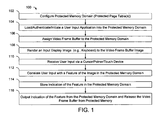
- FIG. 1 is a process flowchart of an exemplary method 100 of rendering a data entry image and correlating user input with the rendered image in a protected memory domain.
- an access-protected memory domain is configured within a computer system. Access to the protected memory domain is restricted in accordance with one or more rules to substantially insure that data and instructions within the protected memory domain are inaccessible to processes outside of the protected memory domain.
- the protected memory domain may include one or more portions of system memory, graphics memory, and combinations thereof.
- the protected memory domain may be configured and enforced under control of software, hardware, and combinations thereof, including virtual machine management technology.
- an application is initiated in the protected memory domain.
- the application may include instructions to cause a processor of the computer system to render a data entry image, such as a keyboard image, and to correlate subsequent user input with the image, in the protected memory domain.
- the application may authenticated prior to initiation, using software, hardware, and combinations thereof, and may be authenticated in accordance with one or more hashing techniques including code signature hashing techniques, which may include a trusted execution technology.
- the application may be loaded into the secure memory domain and authenticated in the secure memory domain.
- the application, or a portion thereof may be loaded into another secure memory domain, such as access-protected firmware associated with a trusted execution technology module.
- the protected memory domain and the authenticating of the application may protect the application, including code, control flow, and data structures associated with the application from malicious code, including spyware, even when a corresponding operating system under which the application is launched, is compromised such as by a rootkit, virus, worm, or spyware.
- Configuring of the protected memory domain at 102, and/or loading, authenticating, and initiating of the application at 104, may be performed under control of a hypervisor-based security visor that protects in-memory components from snooping and modification by malicious code.
- the hypervisor-based security visor may be configured to identify code and/or data, to measure one or more features associated with the code and/or data for authenticity, and to protect authenticated code and/or data.
- the hypervisor-based security visor may be configured to operate without modification to an operating system.
- the hypervisor-based security visor may include an integrity measurement module (IMM) to run in a protected space outside a boundary of an operating system, and thus outside bounds of potential malware in the operating environment.
- IMM protected space may include protected hardware and/or a protected virtual machine (VM) running above a virtual machine manager (VMM).
- the IMM may be configured to verify an identity and integrity of code of the application against a signature file containing a hash of sections of the code, such as a SHA-1 hash, and to verify entry points into the code sections and a corresponding relocation table.
- the hypervisor-based security visor may include a memory protection module (MPM) to enforce memory access protections, and the IMM may be configured to signal the MPM to enforce the memory access protections after the IMM has successfully identified and measured the application.
- MPM memory protection module
- the MPM may be configured to create one or more protected page tables (PPTs) and to map the protected code of the application and corresponding data pages to the PPTs, and to sever corresponding mapping from active page tables (APTs).
- a memory manager such as a VMM, may be configured to manage a list of virtual address range of protected memory and the corresponding physical addresses of protected pages.
- the VMM may be configured to compare the virtual address of a destination page with the list of protected page addresses, and when a match is found, to switch a page table base register (PTBR) in a virtual machine control structure (VMCS) to the address of the PPT base address.
- PTBR page table base register
- VMCS virtual machine control structure
- the VMM may be configured to switch the PTBR from the PPT address to the APT base.
- the VMM may check the list of physical page addresses each time the VMM attempts to add a page to the APTs. When the VMM finds a protected page, the VMM may decline to add the protected page to the APT and may generate an error indication.
- an initialization vector associated with the application may be the first code section to execute within the protected application domain.
- the hypervisor-based security visor may include a VT Integrity Services for Networking (VISN) system, developed my Intel Corporation.
- VT Integrity Services for Networking (VISN) system developed my Intel Corporation.
- a video frame buffer is assigned to the protected memory domain.
- the application may be configured to pull a video frame buffer corresponding to a graphics adapter into the protected memory domain, and to directly render to the video frame buffer.
- One or more video frame back buffers and/or other surfaces may also be assigned to the protected memory domain. While in the protected memory domain, the video frame buffer, including any back buffers and other surfaces, may be substantially protected from write and/or read processes initiated by the operating system and other processes outside of the protected memory domain. Correspondingly, the video frame buffer, including any back buffers and other surfaces may be substantially immune to malware running on the computer system, regardless of a privilege level of the malware.
- the application may be configured to identify or determine a memory address corresponding to a primary or video frame front buffer and one or more video frame back buffers, to remove corresponding pages from APTs associated with an operating system (OS), and to place the pages in PPTs along with the protected parts of the application and other protected code and data pages.
- OS operating system
- screen scraping applications/malware may be precluded from reading from and writing to the protected pages.
- the application may be configured to perform direct graphics rendering, such as that provided by DirectX and OpenGL in Microsoft Windows and OpenGL in Linux OS.
- Corresponding libraries may be accessed to find address corresponding to the video frame buffer and to remove read and write restrictions that may exist with respect to applications running under the OS.
- the initiation of the application in the protected memory domain at 102 may include protecting at least code, and data sections for the code, that are responsible for writing to and/or reading from the video frame buffer.
- Assigning the video frame buffer to the protected memory domain at 106 may include identifying a location of a pointer to the video frame buffer, or an APT translation corresponding to the pointer.
- Locating a pointer to the video frame buffer may include using an application programming interface (API) associated with an operating system to determine a virtual address of the pointer.
- API application programming interface
- a corresponding physical address may be identified from a page table maintained by an operating system or VMM.
- Locating a pointer to the video frame buffer may include obtaining a physical address of the pointer and walking through the corresponding process address space, such as a page table to find the physical address and the corresponding virtual address.
- the physical address of the pointer may be mapped to a known physical address, such as address 0XA000. This may include a hypercall for each step.
- the virtual address and corresponding physical address may be pulled into one or more PPTs.
- the pulling of the video frame buffer into the PPTs may include marking the corresponding memory pages as not-present in the APTs, and marking the memory pages as read/write in the PPTs.
- an image of a user input device is rendered to the video frame buffer.
- the image may include an image of a keyboard, which may include one or more of an image of a numeric keyboard, an alphabetical keyboard, and an alpha-numeric keyboard.
- the image of the user input device may be loaded and authenticated in the protected memory domain, as part of the loading of the application at 102.
- a graphics adaptor may be configured to render from one or more of memory within the graphics adaptor, video RAM (VRAM) in the case discrete graphics adaptors, shared system memory (system RAM) and, in the case of an embedded graphics adaptor, may be configured share system RAM with a general purpose processor or a combination thereof, such with an advance graphics aperture (AGP).
- VRAM video RAM
- system RAM shared system memory
- AGP advance graphics aperture
- a graphics card may be configured to normally use local VRAM, and to use system RAM when the local VRAM is insufficient for processes running on the system.
- a graphics card may render from one or more primary video frame buffers. Content of the video frame back buffers may be blitted to a primary buffer or an application may declare a chain of back buffers and flip the back buffers to the primary buffer in a chain.
- a ring-3 application may declare multiple surfaces, which may include texture, when rendering the keyboard.
- the graphics card and/or a corresponding display may include security protections.
- user input is received in the protected memory domain subsequent to the rendering of the input display image.
- the user input may include a positional indication, which may be generated by one or more of a pointing device, a cursor device such as a mouse device, a touch pad, and a touch screen display.
- the user input is correlated with a feature of the input display image.
- the correlating may include correlating coordinates of the user input with a key of a rendered keyboard image to identify a user-selected key of the keyboard.
- an indication of the image feature that correlates to the user input is stored in the protected memory domain.
- the storing may include storing an indication of a user-selected key.
- the stored indication of the user input may be output from the protected memory domain, and the video frame buffer may be released from the protected memory.
- Method 100 may be invoked to receive confidential user-input, such as electronic payment information.
- FIG. 2 is a process flowchart of an exemplary method 200 of invoking method 100 to conduct a payment transaction over a network connection.
- a communication session is conducted over a network between a user-computer system and another computer system, which may be remote relative to the user-computer system.
- the communication session may, for example, be conducted through a web browser running on the user-computer system, with a merchant web site or a financial card processor web site, over the Internet.
- a prompt for user information received from the remote computer system and detected at the user computer system.
- Detecting of the prompt at 204 may include detecting a prompt for electronic payment information, such as credit card information, debit card information, or other payment authorization information.
- Detecting of the prompt at 204 may include detecting one or more standardized payment prompts, such as an industry-standard hypertext mark-up language (HTML) credit card form.
- HTTP hypertext mark-up language
- Detecting of the prompt at 204 may include searching incoming web pages for data entry fields that are common to credit card payment transactions, such as credit card number fields, date fields, and monetary denomination fields.
- the prompt may be detected by an application running on the user computer system, such as a web browser.
- Computer readable instructions to detect a prompt may be implemented as a browser plug-in to work with a browser application, and may be implemented relatively seamlessly with little or no modification to a merchant website or a financial card processor web site.
- Detecting of the prompt may include intercepting a secure sockets layer (SSL) channel or transport layer security (TLS) channel between a browser running on a user computer system and a merchant web site or a financial card processor web site.
- SSL secure sockets layer
- TLS transport layer security
- the prompt may be detected by a VMM running on the user computer system.
- an application is invoked in response to a detected prompt for user information. Invoking of the application at 206 may include performing method 100, or a portion thereof, and may include obtaining credit card information and payment authorization from a user in the protected memory domain.
- the prompt is populated with user input data from the protected memory domain, and is returned to the requestor.
- rendering at 108 may include rendering the input display image to a relatively random or pseudo random position, and may include re-rendering the image to another random position following a user input.
- the random positioning may include one or more of true random positioning, pseudo-random positioning, and positioning to one of a plurality of pre-determined positions. Random positioning may help to reduce an ability of spyware or other malicious code to correlate user input with the rendered image.
- FIG. 3 is a process flowchart of an exemplary method 300 of rendering an image to a random position and re-rendering the image to another random position following a user input.
- Method 300 may be preceded 102 through 106 in FIG. 1 .
- a keyboard image is rendered to a random position of the video frame buffer.
- the keyboard image may have a size that is smaller than a size of the video frame buffer, to allow rendering to multiple random positions within the video frame buffer.
- user input is received, such as described above with respect to 110 in FIG. 1 .
- coordinates of the user input are correlated with the rendered keyboard image and corresponding indications of user selected keys are stored in the protected memory, such as described above with respect to 112 and 114 in FIG. 1 .
- the keyboard image is re-rendered at 310 to another random position in the video frame buffer.
- the receiving of user input at 304 and the correlating and storing at 306 may be repeated until user data input is complete.
- the keyboard image may be re-rendered to another random position following each user input. For example, where the user is to input a multi-digit sequence, the keyboard image may be re-rendered to another random position following each digit entry.
- the keyboard image may include an image of a user data entry complete key, to permit a user to indicate that data entry is complete.
- the stored indications of user selected keys may be output from the protected memory domain, and the video frame buffer may be released from the protected memory domain at 312.
- rendering of the input display image at 108 may include rendering the input display image over a user image.
- the user image may be selected by the user and associated with the application in advance, as a security measure.
- FIG. 4 is a process flowchart of an exemplary method 400 of rendering an input display image over a user image.
- a protected memory domain is configured, such as described above with reference to 102 in FIG. 1 .
- an application is initiated in the protected memory domain, such as described above with reference to 104 in FIG. 1 .
- a user image or bitmap is loaded into the protected memory domain.
- the user image may be retrieved as an encrypted user image from a storage device, such as a hard drive.
- the encrypted user image may be loaded and decrypted in the protected memory domain.
- Decryption may be performed under control of the application initiated at 404, and a decryption key may be provided to the application by a security visor module upon authentication or validation of code and/or static data sections of the application.
- a video frame front buffer and first and second video frame back buffers are assigned to the protected memory domain.
- a keyboard image is rendered to a random position of the first video frame back buffer, such as described above with respect to 302 in FIG. 3 .
- the user image is rendered to the second video frame back buffer, at a position corresponding to the random position of the keyboard image in first video frame back buffer.
- the user image may have a size that is larger than the size of the keyboard image and smaller than a size of the video frame front buffer.
- the first and second video frame back buffers are merged to the video frame front buffer.
- the merging may include overlaying a portion of user image with the keyboard image.
- the merging may be performed as a bit block transfer (BitBlt) or block image transfer (Blit), in which multiple bit maps are combined using a rastering operation.
- user input is received, such as describe above with respect to 110 in FIG. 1 .
- coordinates of the user input are correlated with the rendered keyboard image and stored in the protected memory, such as described above with respect to 112 and 114 in FIG. 1 .
- the keyboard image and the user image are re-rendered at 422 to another random position in the corresponding first and second video frame back buffers.
- the merging at 414, the receiving of user input at 416, and the correlating and storing at 418 may be repeated until user data entry is complete.
- the keyboard image and the user image may be re-rendered to another random position following each user input.
- the stored indications of user selected keys may be output from the protected memory domain, and the video frame buffer may be released from the protected memory domain at 424.
- an acknowledgment image may be rendered to a random position to permit a user to complete a corresponding transaction.
- FIG. 5 is a process flowchart of an exemplary method 500 of rendering an acknowledgment image to a random position of video frame buffer.
- Method 500 may be implemented following a completion of user data entry, such as after 114 in FIG. 1 , 308 in FIG. 3 , and 420 in FIG. 4 .
- an acknowledgment image is rendered to a video frame buffer in a protected memory domain.
- the acknowledgment image may be rendered over a user image, such as described above with respect to FIG. 4 .
- user input is received, such as described above at 110 in FIG. 1 .
- corresponding user input data may be output from the protected memory domain and the video frame buffer may be released from the protected memory domain at 510.
- the acknowledgement image may include one or more of a cancel transaction image and an edit data image, to permit a user to elect to cancel the transaction or edit the transaction.
- One or more methods described above may include counting user inputs that do not correlate to a rendered image and aborting a transaction when the number of non-correlated inputs exceeds a threshold. This may help to thwart click-everywhere attacks.
- FIG. 6 is a process flowchart of an exemplary method 600 of detecting non-correlated user inputs. Method 600 may be implemented with respect to one or more other methods disclosed herein.
- an image is rendered to a random position of a video frame buffer.
- the image may include one or more of an input display image, an acknowledgement image, and a user image.
- processing proceeds to 608 where the user input is processed in accordance with the correlation.
- This may include one or more of correlating at 112 in FIG. 1 , correlating at 306 in FIG. 3 , correlating at 418 in FIG. 4 , and correlating at 506 in FIG. 5 .
- processing proceeds to 610, where an error count is incremented.
- the image may be re-rendered to another random position at 614, and processing may return to 604 to receive another user input.
- one or more processes may be halted or terminated at 616. This may include one or more of terminating a corresponding network connection, excising contents of the video frame buffer and/or previously entered user data, sending an alert or report to an administrator, and terminating the application.
- FIG. 7 is a process flowchart of an exemplary method 700 of rendering a data entry image and receiving user input selections corresponding to the image in a protected memory domain.
- One or more features of method 700 may be implemented in combination with one or more features disclosed with respect to one or more other methods herein.
- an encrypted or otherwise protected user image is loaded and decrypted in a secure memory domain.
- the secure memory domain may be configured using one or more protected page tables.
- the user image may be similar to a site key.
- a keyboard image is rendered on top of the user image to a random location on a secure display screen.
- the keyboard image may be blitted on top of the user image.
- the combination of the keyboard image and the underlying user are referred to herein as a secure input screen.
- the user may enter a credit card/bank card number through the secure input screen.
- the user may enter a personal identification number (PIN) to access a secure value of information, such as a credit card number.
- PIN personal identification number
- the secret value may be secured with an access key, such as described above with respect to an encrypted user image.
- the access key may be secured as a security visor secret platform key, to be revealed to an authenticated application.
- the application may be configured to use the PIN to unlock the secret value. This may reduce the amount of data to be entered by a user and may increase security of a transaction.
- an acknowledgment image is rendered to the secure display screen to prompt the user to acknowledge the transaction parameters.
- the acknowledgment image may be rendered over the user image, as described above.
- the combination of the acknowledgment image and the underlying user image are referred to herein as a secure acknowledgment screen.
- the secure acknowledgement screen may be viewed as another surface in the protected memory domain, which is rendered when the user has completed entry of credential and transaction information.
- the secure acknowledgement screen may include transaction information, such as a merchant name, monetary value of the transaction, date, and credentials to be sent to the merchant or card processor site.
- the secure acknowledgement screen may include one or more lines to display information.
- the previously entered keystrokes or other corresponding user information may be output from the secure memory domain.
- the keystrokes or other user information may be output to a merchant network site or credit card processor network site.
- the keystrokes or other user information may be encrypted and signed prior to outputting.
- the transaction information may be encrypted, such as with a public key of the merchant or card processor, and may be signed with a private key of the user.
- a hashing function may be applied to one or more of a monetary value of the transaction, a credit card number entered by the user, a transaction count, and merchant information, to generate a secure transaction value.
- the secure transaction value may be sent to the merchant or card processor.
- the merchant or card processing network site may be authenticated at the user-computer, such as by a certificate. This may help to thwart phishing attacks.
- the acknowledgement image may be randomly positioned, and may be randomly repositioned following a user click that does not correlate to the acknowledgment image. This may preclude an attacker from determining a location of the acknowledgement image from an analysis of previous clicks.
- the transaction may be aborted when a number of uncorrelated user clicks exceed a threshold number. This may help to thwart brute force, click everywhere attacks.
- One or more features disclosed herein may be implemented in hardware, software, firmware, and combinations thereof, including discrete and integrated circuit logic, application specific integrated circuit (ASIC) logic, and microcontrollers, and may be implemented as part of a domain-specific integrated circuit package, or a combination of integrated circuit packages.
- the term software, as used herein, refers to a computer program product including a computer readable medium having computer program logic stored therein to cause a computer system to perform one or more features and/or combinations of features disclosed herein.
- FIG. 8 is a graphical illustration of an exemplary computer environment 800, including one or more computer instruction processing units, illustrated here as a processor 802 and a graphics processor GPU 804, to execute computer program logic.
- Processor 802 may include one or more general purpose processors and/or processor cores.
- Computer system 800 includes memory 806, which may include one or more of video memory or VRAM 812 and physical system memory or random access memory (RAM) 808, which may include advanced graphics processing (AGP) aperture memory 810.
- AGP aperture memory 810 may be used by GPU 804 in addition to VRAM 812.
- Memory 806 may include a computer readable medium having computer program product logic or instructions stored thereon, to cause one or more of processor 802 and GPU 804 to perform one or more functions in response thereto.
- Physical addresses of memory 806, or portions thereof, may be virtualized with respect to one or more operating environments 814 and applications. Memory mappings between virtual-to-physical memory addresses may be maintained in one or more active page tables (APTs) 818.
- APITs active page tables
- One or more access-protected memory domains may be configured within memory 806, and corresponding memory address mappings may be maintained in one or more protected page tables (PPTs) 820.
- PPTs protected page tables
- APTs 818 and PPTs 820 may be configured and enforced within a security visor environment 822 under control of an access control manager 824.
- FIG. 9 is a block diagram of exemplary logic and data corresponding to memory 806in FIG. 8 .
- memory 806 includes a protected memory domain 902, which may be configured with PPTs 820.
- Protected memory domain 902 includes application logic 904, which may be authenticated, such as described above with respect to 104 in FIG. 1 .
- Application logic 904 may include video frame buffer identify and protect logic 906 to cause processor 802 identify a location or address mapping corresponding to a video frame buffer, or of a pointer to the video frame buffer, and to access-protect the video frame buffer, such as described above with respect to 106 in FIG. 1 .
- a video frame buffer 908 is illustrated within protected memory domain 902.
- Video frame buffer 908 may include one or more back buffers 910 through 912, and a primary or front buffer 914.
- Application logic 904 may include user image decrypt logic 916 to cause processor 802 to retrieve an encrypted user image into protected memory domain 902, and to decrypt the user image, such as described above with respect to 406 in FIG. 4 .
- a decrypted user image 918 is illustrated within protected memory domain 902.
- Application logic 904 may include random render logic 920 to cause processor 802 to render an input display image 922 to a random position of video frame buffer 908, such as described above with respect to FIG. 3 .
- Random render logic 920 may include logic to cause processor 802 to render input display image 922 and decrypted user image 918 to a random position in back buffers 910 and 912, respectively, and to merge or blit the images from back buffers 910 and 912 to front buffer 914, such as described above with respect to FIG. 4 .
- Random render logic 920 may include logic to cause processor 802 to render an acknowledgment image 924 to a random position of video frame buffer 908, such as described above with respect to 502 in FIG. 5 .
- Random render logic 920 may include logic to cause processor 802 to render acknowledgment image 924 and decrypted user image 918 to a random position in back buffers 910 and 912, respectively, and to merge or blit the images from back buffers 910 and 912 to front buffer 914, such as described above with respect to FIGS. 4 and 5 .
- Application logic 904 may include correlate logic 926 to cause processor 802 to correlate user input with rendered images, and to store corresponding user input in protected memory domain 902 as user input data 928, such as described above with respect to 112 and 114, respectively, in FIG. 1
- Application logic 904 may include abort logic 930 to cause processor 802 to count user inputs that do not correlate to a rendered image, and to abort one or more portions of application logic 904 when a number of non-correlated user inputs exceeds a threshold, such as described above with respect to FIG. 6 .
- Application logic 904 may include logic to cause processor 802 to retrieve an encrypted user value, such as credit card information, into protected memory domain 902, and to decrypt the user value, such as described above with respect to FIG. 7 .
- an encrypted user value such as credit card information
- decrypt the user value such as described above with respect to FIG. 7 .
- a decrypted user value 932 is illustrated within protected memory domain 902.
- Memory 806 may include browser logic 934 to cause processor 802 to interface with one or more remote computer systems over a network.
- Browser logic 934 may include prompt detect logic 936 to cause processor 802 to detect a prompt from a remote computer system, such as a prompt for electronic payment information, such as described above with respect to 204 in FIG. 2 .
- Browser logic 934 may include application initiation logic 938 to cause processor 802 to initiate application logic 904 in protected memory domain 902, and to populate the prompt with user input data 928, such as described above with respect to 206 in FIG. 2 .
- One or more of prompt detect logic 936 and application initiation logic 938, or portions thereof, may be implemented within a VMM.
- Methods and systems disclosed herein may be implemented with respect to other devices that are configurable to communicate information to a computer system including, without limitation, biometric scanners.
Landscapes
- Engineering & Computer Science (AREA)
- Theoretical Computer Science (AREA)
- Computer Security & Cryptography (AREA)
- Software Systems (AREA)
- General Physics & Mathematics (AREA)
- General Engineering & Computer Science (AREA)
- Physics & Mathematics (AREA)
- Computer Hardware Design (AREA)
- Multimedia (AREA)
- Technology Law (AREA)
- Storage Device Security (AREA)
- User Interface Of Digital Computer (AREA)
- Input From Keyboards Or The Like (AREA)
Abstract
Description
- When confidential user information, such as electronic payment transaction information, is input to a computer system through a mechanical keyboard or pointing device, the information may be vulnerable to malware, such as spyware, which may record keystrokes or input coordinates as they are transmitted to or within the computer system.
- An application program associated with receiving of confidential user information may also be vulnerable to malware, such as spyware.
-
-
FIG. 1 is a process flowchart of an exemplary method of rendering a data entry image and correlating user input with the rendered image in a protected memory domain. -
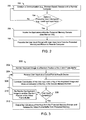
FIG. 2 is a process flowchart of an exemplary method of invoking the method ofFIG. 1 to perform a payment transaction over a network connection. -
FIG. 3 is a process flowchart of an exemplary method of rendering an image to a random position of a display and re-rendering the image to another random position of the display following a user input. -
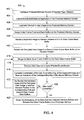
FIG. 4 is a process flowchart of an exemplary method of rendering an input display image over a user image, in a secure memory domain. -
FIG. 5 is a process flowchart of an exemplary method of rendering an acknowledgment image to a random position of a display. -
FIG. 6 is a process flowchart of an exemplary method of aborting a transaction when a number of user inputs that do not correlate to a rendered image exceed a threshold. -
FIG. 7 is a process flowchart of another exemplary method of rendering a data entry image and correlating user input with the rendered image in a protected memory domain. -
FIG. 8 is a graphical illustration of an exemplary computer environment. -
FIG. 9 is a block diagram of exemplary logic and data corresponding to the exemplary computer environment ofFIG. 8 . - In the drawings, the leftmost digit(s) of a reference number identifies the drawing in which the reference number first appears.
-
FIG. 1 is a process flowchart of anexemplary method 100 of rendering a data entry image and correlating user input with the rendered image in a protected memory domain. - At 102, an access-protected memory domain is configured within a computer system. Access to the protected memory domain is restricted in accordance with one or more rules to substantially insure that data and instructions within the protected memory domain are inaccessible to processes outside of the protected memory domain. The protected memory domain may include one or more portions of system memory, graphics memory, and combinations thereof. The protected memory domain may be configured and enforced under control of software, hardware, and combinations thereof, including virtual machine management technology.
- At 104, an application is initiated in the protected memory domain. The application may include instructions to cause a processor of the computer system to render a data entry image, such as a keyboard image, and to correlate subsequent user input with the image, in the protected memory domain.
- The application may authenticated prior to initiation, using software, hardware, and combinations thereof, and may be authenticated in accordance with one or more hashing techniques including code signature hashing techniques, which may include a trusted execution technology.
- The application may be loaded into the secure memory domain and authenticated in the secure memory domain. Alternatively, or additionally, the application, or a portion thereof may be loaded into another secure memory domain, such as access-protected firmware associated with a trusted execution technology module.
- The protected memory domain and the authenticating of the application, alone or in combination with one another, may protect the application, including code, control flow, and data structures associated with the application from malicious code, including spyware, even when a corresponding operating system under which the application is launched, is compromised such as by a rootkit, virus, worm, or spyware.
- Configuring of the protected memory domain at 102, and/or loading, authenticating, and initiating of the application at 104, may be performed under control of a hypervisor-based security visor that protects in-memory components from snooping and modification by malicious code.
- The hypervisor-based security visor may be configured to identify code and/or data, to measure one or more features associated with the code and/or data for authenticity, and to protect authenticated code and/or data.
- The hypervisor-based security visor may be configured to operate without modification to an operating system.
- The hypervisor-based security visor may include an integrity measurement module (IMM) to run in a protected space outside a boundary of an operating system, and thus outside bounds of potential malware in the operating environment. IMM protected space may include protected hardware and/or a protected virtual machine (VM) running above a virtual machine manager (VMM). The IMM may be configured to verify an identity and integrity of code of the application against a signature file containing a hash of sections of the code, such as a SHA-1 hash, and to verify entry points into the code sections and a corresponding relocation table.
- The hypervisor-based security visor may include a memory protection module (MPM) to enforce memory access protections, and the IMM may be configured to signal the MPM to enforce the memory access protections after the IMM has successfully identified and measured the application.
- The MPM may be configured to create one or more protected page tables (PPTs) and to map the protected code of the application and corresponding data pages to the PPTs, and to sever corresponding mapping from active page tables (APTs). A memory manager, such as a VMM, may be configured to manage a list of virtual address range of protected memory and the corresponding physical addresses of protected pages. Upon a page fault, the VMM may be configured to compare the virtual address of a destination page with the list of protected page addresses, and when a match is found, to switch a page table base register (PTBR) in a virtual machine control structure (VMCS) to the address of the PPT base address. On return, the VMM may be configured to switch the PTBR from the PPT address to the APT base. The VMM may check the list of physical page addresses each time the VMM attempts to add a page to the APTs. When the VMM finds a protected page, the VMM may decline to add the protected page to the APT and may generate an error indication. When the memory protections are configured, an initialization vector associated with the application may be the first code section to execute within the protected application domain.
- The hypervisor-based security visor may include a VT Integrity Services for Networking (VISN) system, developed my Intel Corporation.
- At 106, a video frame buffer is assigned to the protected memory domain.
- The application may be configured to pull a video frame buffer corresponding to a graphics adapter into the protected memory domain, and to directly render to the video frame buffer. One or more video frame back buffers and/or other surfaces may also be assigned to the protected memory domain. While in the protected memory domain, the video frame buffer, including any back buffers and other surfaces, may be substantially protected from write and/or read processes initiated by the operating system and other processes outside of the protected memory domain. Correspondingly, the video frame buffer, including any back buffers and other surfaces may be substantially immune to malware running on the computer system, regardless of a privilege level of the malware.
- The application may be configured to identify or determine a memory address corresponding to a primary or video frame front buffer and one or more video frame back buffers, to remove corresponding pages from APTs associated with an operating system (OS), and to place the pages in PPTs along with the protected parts of the application and other protected code and data pages. As a result screen scraping applications/malware may be precluded from reading from and writing to the protected pages.
- The application may be configured to perform direct graphics rendering, such as that provided by DirectX and OpenGL in Microsoft Windows and OpenGL in Linux OS. Corresponding libraries may be accessed to find address corresponding to the video frame buffer and to remove read and write restrictions that may exist with respect to applications running under the OS.
- The initiation of the application in the protected memory domain at 102 may include protecting at least code, and data sections for the code, that are responsible for writing to and/or reading from the video frame buffer.
- Assigning the video frame buffer to the protected memory domain at 106 may include identifying a location of a pointer to the video frame buffer, or an APT translation corresponding to the pointer.
- Locating a pointer to the video frame buffer may include using an application programming interface (API) associated with an operating system to determine a virtual address of the pointer. A corresponding physical address may be identified from a page table maintained by an operating system or VMM.
- Locating a pointer to the video frame buffer may include obtaining a physical address of the pointer and walking through the corresponding process address space, such as a page table to find the physical address and the corresponding virtual address. The physical address of the pointer may be mapped to a known physical address, such as address 0XA000. This may include a hypercall for each step.
- The virtual address and corresponding physical address may be pulled into one or more PPTs. The pulling of the video frame buffer into the PPTs may include marking the corresponding memory pages as not-present in the APTs, and marking the memory pages as read/write in the PPTs.
- At 108, an image of a user input device is rendered to the video frame buffer. The image may include an image of a keyboard, which may include one or more of an image of a numeric keyboard, an alphabetical keyboard, and an alpha-numeric keyboard.
- The image of the user input device may be loaded and authenticated in the protected memory domain, as part of the loading of the application at 102.
- A graphics adaptor may be configured to render from one or more of memory within the graphics adaptor, video RAM (VRAM) in the case discrete graphics adaptors, shared system memory (system RAM) and, in the case of an embedded graphics adaptor, may be configured share system RAM with a general purpose processor or a combination thereof, such with an advance graphics aperture (AGP).
- A graphics card may be configured to normally use local VRAM, and to use system RAM when the local VRAM is insufficient for processes running on the system. A graphics card may render from one or more primary video frame buffers. Content of the video frame back buffers may be blitted to a primary buffer or an application may declare a chain of back buffers and flip the back buffers to the primary buffer in a chain.
- For secure input and output, a ring-3 application may declare multiple surfaces, which may include texture, when rendering the keyboard.
- The graphics card and/or a corresponding display may include security protections.
- At 110, user input is received in the protected memory domain subsequent to the rendering of the input display image. The user input may include a positional indication, which may be generated by one or more of a pointing device, a cursor device such as a mouse device, a touch pad, and a touch screen display.
- At 112, the user input is correlated with a feature of the input display image. The correlating may include correlating coordinates of the user input with a key of a rendered keyboard image to identify a user-selected key of the keyboard.
- At 114, an indication of the image feature that correlates to the user input is stored in the protected memory domain. Where the image includes a keyboard image, the storing may include storing an indication of a user-selected key.
- At 116, the stored indication of the user input may be output from the protected memory domain, and the video frame buffer may be released from the protected memory.
-
Method 100 may be invoked to receive confidential user-input, such as electronic payment information.FIG. 2 is a process flowchart of anexemplary method 200 of invokingmethod 100 to conduct a payment transaction over a network connection. - At 202, a communication session is conducted over a network between a user-computer system and another computer system, which may be remote relative to the user-computer system. The communication session may, for example, be conducted through a web browser running on the user-computer system, with a merchant web site or a financial card processor web site, over the Internet.
- At 204, a prompt for user information received from the remote computer system and detected at the user computer system.
- Detecting of the prompt at 204 may include detecting a prompt for electronic payment information, such as credit card information, debit card information, or other payment authorization information.
- Detecting of the prompt at 204 may include detecting one or more standardized payment prompts, such as an industry-standard hypertext mark-up language (HTML) credit card form.
- Detecting of the prompt at 204 may include searching incoming web pages for data entry fields that are common to credit card payment transactions, such as credit card number fields, date fields, and monetary denomination fields.
- The prompt may be detected by an application running on the user computer system, such as a web browser. Computer readable instructions to detect a prompt may be implemented as a browser plug-in to work with a browser application, and may be implemented relatively seamlessly with little or no modification to a merchant website or a financial card processor web site.
- Detecting of the prompt may include intercepting a secure sockets layer (SSL) channel or transport layer security (TLS) channel between a browser running on a user computer system and a merchant web site or a financial card processor web site.
- The prompt may be detected by a VMM running on the user computer system.
- At 206, an application is invoked in response to a detected prompt for user information. Invoking of the application at 206 may include performing
method 100, or a portion thereof, and may include obtaining credit card information and payment authorization from a user in the protected memory domain. - At 208, the prompt is populated with user input data from the protected memory domain, and is returned to the requestor.
- Returning to
FIG. 1 , rendering at 108 may include rendering the input display image to a relatively random or pseudo random position, and may include re-rendering the image to another random position following a user input. The random positioning may include one or more of true random positioning, pseudo-random positioning, and positioning to one of a plurality of pre-determined positions. Random positioning may help to reduce an ability of spyware or other malicious code to correlate user input with the rendered image. -
FIG. 3 is a process flowchart of anexemplary method 300 of rendering an image to a random position and re-rendering the image to another random position following a user input.Method 300 may be preceded 102 through 106 inFIG. 1 . - At 302, a keyboard image is rendered to a random position of the video frame buffer. The keyboard image may have a size that is smaller than a size of the video frame buffer, to allow rendering to multiple random positions within the video frame buffer.
- At 304, user input is received, such as described above with respect to 110 in
FIG. 1 . - At 306, coordinates of the user input are correlated with the rendered keyboard image and corresponding indications of user selected keys are stored in the protected memory, such as described above with respect to 112 and 114 in
FIG. 1 . - At 308, when the user is to provide additional input, the keyboard image is re-rendered at 310 to another random position in the video frame buffer. The receiving of user input at 304 and the correlating and storing at 306 may be repeated until user data input is complete. The keyboard image may be re-rendered to another random position following each user input. For example, where the user is to input a multi-digit sequence, the keyboard image may be re-rendered to another random position following each digit entry.
- The keyboard image may include an image of a user data entry complete key, to permit a user to indicate that data entry is complete.
- When user data input is complete at 308, the stored indications of user selected keys may be output from the protected memory domain, and the video frame buffer may be released from the protected memory domain at 312.
- Referring back to
FIG. 1 , rendering of the input display image at 108 may include rendering the input display image over a user image. The user image may be selected by the user and associated with the application in advance, as a security measure.FIG. 4 is a process flowchart of anexemplary method 400 of rendering an input display image over a user image. - At 402, a protected memory domain is configured, such as described above with reference to 102 in
FIG. 1 . - At 404, an application is initiated in the protected memory domain, such as described above with reference to 104 in
FIG. 1 . - At 406, a user image or bitmap is loaded into the protected memory domain. The user image may be retrieved as an encrypted user image from a storage device, such as a hard drive. The encrypted user image may be loaded and decrypted in the protected memory domain.
- Decryption may be performed under control of the application initiated at 404, and a decryption key may be provided to the application by a security visor module upon authentication or validation of code and/or static data sections of the application.
- At 408, a video frame front buffer and first and second video frame back buffers are assigned to the protected memory domain.
- At 410, a keyboard image is rendered to a random position of the first video frame back buffer, such as described above with respect to 302 in
FIG. 3 . - At 412, the user image is rendered to the second video frame back buffer, at a position corresponding to the random position of the keyboard image in first video frame back buffer. The user image may have a size that is larger than the size of the keyboard image and smaller than a size of the video frame front buffer.
- At 414, the first and second video frame back buffers are merged to the video frame front buffer. The merging may include overlaying a portion of user image with the keyboard image. The merging may be performed as a bit block transfer (BitBlt) or block image transfer (Blit), in which multiple bit maps are combined using a rastering operation.
- At 416, user input is received, such as describe above with respect to 110 in
FIG. 1 . - At 418, coordinates of the user input are correlated with the rendered keyboard image and stored in the protected memory, such as described above with respect to 112 and 114 in
FIG. 1 . - At 420, when the user is to provide additional input, the keyboard image and the user image are re-rendered at 422 to another random position in the corresponding first and second video frame back buffers.
- The merging at 414, the receiving of user input at 416, and the correlating and storing at 418 may be repeated until user data entry is complete. The keyboard image and the user image may be re-rendered to another random position following each user input.
- When user data input is complete at 420, the stored indications of user selected keys may be output from the protected memory domain, and the video frame buffer may be released from the protected memory domain at 424.
- When user data entry is complete, an acknowledgment image may be rendered to a random position to permit a user to complete a corresponding transaction.
-
FIG. 5 is a process flowchart of anexemplary method 500 of rendering an acknowledgment image to a random position of video frame buffer.Method 500 may be implemented following a completion of user data entry, such as after 114 inFIG. 1 , 308 inFIG. 3 , and 420 inFIG. 4 . - At 502, an acknowledgment image is rendered to a video frame buffer in a protected memory domain. The acknowledgment image may be rendered over a user image, such as described above with respect to
FIG. 4 . - At 504, user input is received, such as described above at 110 in
FIG. 1 . - At 506, coordinates of the user input are correlated with the rendered acknowledgment image.
- At 506, where the coordinates of the user input correlate to the acknowledgment image, corresponding user input data, such as indications of user selected keys, may be output from the protected memory domain and the video frame buffer may be released from the protected memory domain at 510.
- Where the coordinates of the user input do not correlate to the acknowledgment image at 506, one or more actions may occur. For example, the acknowledgement image may include one or more of a cancel transaction image and an edit data image, to permit a user to elect to cancel the transaction or edit the transaction.
- One or more methods described above may include counting user inputs that do not correlate to a rendered image and aborting a transaction when the number of non-correlated inputs exceeds a threshold. This may help to thwart click-everywhere attacks.
-
FIG. 6 is a process flowchart of anexemplary method 600 of detecting non-correlated user inputs.Method 600 may be implemented with respect to one or more other methods disclosed herein. - At 602, an image is rendered to a random position of a video frame buffer. The image may include one or more of an input display image, an acknowledgement image, and a user image.
- At 604, user input is received.
- At 606, a determination is made as to whether the user input correlates to the rendered image.
- Where the user input correlates to the rendered image at 606, processing proceeds to 608 where the user input is processed in accordance with the correlation. This may include one or more of correlating at 112 in
FIG. 1 , correlating at 306 inFIG. 3 , correlating at 418 inFIG. 4 , and correlating at 506 inFIG. 5 . - Where the user input does not correlate to the rendered image, processing proceeds to 610, where an error count is incremented.
- At 612, when the error count is below a threshold, the image may be re-rendered to another random position at 614, and processing may return to 604 to receive another user input.
- When the error count is above the threshold at 612, one or more processes may be halted or terminated at 616. This may include one or more of terminating a corresponding network connection, excising contents of the video frame buffer and/or previously entered user data, sending an alert or report to an administrator, and terminating the application.
-
FIG. 7 is a process flowchart of anexemplary method 700 of rendering a data entry image and receiving user input selections corresponding to the image in a protected memory domain. One or more features ofmethod 700 may be implemented in combination with one or more features disclosed with respect to one or more other methods herein. - At 702, an encrypted or otherwise protected user image is loaded and decrypted in a secure memory domain. The secure memory domain may be configured using one or more protected page tables. The user image may be similar to a site key.
- At 704, a keyboard image is rendered on top of the user image to a random location on a secure display screen. The keyboard image may be blitted on top of the user image. The combination of the keyboard image and the underlying user are referred to herein as a secure input screen.
- At 706, when a user clicks over the keyboard image, a corresponding keystroke is recorded and displayed in an output area on the secure display screen, and the secure input image is randomly relocated to another position. This may protect against guessing attacks from an attacker.
- The user may enter a credit card/bank card number through the secure input screen. Alternatively, or additionally, the user may enter a personal identification number (PIN) to access a secure value of information, such as a credit card number. The secret value may be secured with an access key, such as described above with respect to an encrypted user image. The access key may be secured as a security visor secret platform key, to be revealed to an authenticated application. The application may be configured to use the PIN to unlock the secret value. This may reduce the amount of data to be entered by a user and may increase security of a transaction.
- At 708, upon completion of user data entry, an acknowledgment image is rendered to the secure display screen to prompt the user to acknowledge the transaction parameters. The acknowledgment image may be rendered over the user image, as described above. The combination of the acknowledgment image and the underlying user image are referred to herein as a secure acknowledgment screen.
- The secure acknowledgement screen may be viewed as another surface in the protected memory domain, which is rendered when the user has completed entry of credential and transaction information. The secure acknowledgement screen may include transaction information, such as a merchant name, monetary value of the transaction, date, and credentials to be sent to the merchant or card processor site. The secure acknowledgement screen may include one or more lines to display information.
- At 710, when the user clicks over the acknowledgement image, the previously entered keystrokes or other corresponding user information may be output from the secure memory domain. The keystrokes or other user information may be output to a merchant network site or credit card processor network site.
- The keystrokes or other user information may be encrypted and signed prior to outputting. The transaction information may be encrypted, such as with a public key of the merchant or card processor, and may be signed with a private key of the user. A hashing function may be applied to one or more of a monetary value of the transaction, a credit card number entered by the user, a transaction count, and merchant information, to generate a secure transaction value. The secure transaction value may be sent to the merchant or card processor.
- The merchant or card processing network site may be authenticated at the user-computer, such as by a certificate. This may help to thwart phishing attacks.
- The acknowledgement image may be randomly positioned, and may be randomly repositioned following a user click that does not correlate to the acknowledgment image. This may preclude an attacker from determining a location of the acknowledgement image from an analysis of previous clicks. The transaction may be aborted when a number of uncorrelated user clicks exceed a threshold number. This may help to thwart brute force, click everywhere attacks.
- One or more features disclosed herein may be implemented in hardware, software, firmware, and combinations thereof, including discrete and integrated circuit logic, application specific integrated circuit (ASIC) logic, and microcontrollers, and may be implemented as part of a domain-specific integrated circuit package, or a combination of integrated circuit packages. The term software, as used herein, refers to a computer program product including a computer readable medium having computer program logic stored therein to cause a computer system to perform one or more features and/or combinations of features disclosed herein.
-
FIG. 8 is a graphical illustration of anexemplary computer environment 800, including one or more computer instruction processing units, illustrated here as aprocessor 802 and agraphics processor GPU 804, to execute computer program logic.Processor 802 may include one or more general purpose processors and/or processor cores. -
Computer system 800 includesmemory 806, which may include one or more of video memory orVRAM 812 and physical system memory or random access memory (RAM) 808, which may include advanced graphics processing (AGP)aperture memory 810.AGP aperture memory 810 may be used byGPU 804 in addition toVRAM 812. -
Memory 806 may include a computer readable medium having computer program product logic or instructions stored thereon, to cause one or more ofprocessor 802 andGPU 804 to perform one or more functions in response thereto. - Physical addresses of
memory 806, or portions thereof, may be virtualized with respect to one ormore operating environments 814 and applications. Memory mappings between virtual-to-physical memory addresses may be maintained in one or more active page tables (APTs) 818. - One or more access-protected memory domains may be configured within
memory 806, and corresponding memory address mappings may be maintained in one or more protected page tables (PPTs) 820. -
APTs 818 andPPTs 820 may be configured and enforced within asecurity visor environment 822 under control of anaccess control manager 824. -
FIG. 9 is a block diagram of exemplary logic and data corresponding to memory 806inFIG. 8 . - In
FIG. 9 ,memory 806 includes a protectedmemory domain 902, which may be configured withPPTs 820. - Protected
memory domain 902 includesapplication logic 904, which may be authenticated, such as described above with respect to 104 inFIG. 1 . -
Application logic 904 may include video frame buffer identify and protectlogic 906 to causeprocessor 802 identify a location or address mapping corresponding to a video frame buffer, or of a pointer to the video frame buffer, and to access-protect the video frame buffer, such as described above with respect to 106 inFIG. 1 . In the example ofFIG. 9 , avideo frame buffer 908 is illustrated within protectedmemory domain 902.Video frame buffer 908 may include one or moreback buffers 910 through 912, and a primary orfront buffer 914. -
Application logic 904 may include user image decrypt logic 916 to causeprocessor 802 to retrieve an encrypted user image into protectedmemory domain 902, and to decrypt the user image, such as described above with respect to 406 inFIG. 4 . In the example ofFIG. 9 , a decrypted user image 918 is illustrated within protectedmemory domain 902. -
Application logic 904 may include random renderlogic 920 to causeprocessor 802 to render an input display image 922 to a random position ofvideo frame buffer 908, such as described above with respect toFIG. 3 . Random renderlogic 920 may include logic to causeprocessor 802 to render input display image 922 and decrypted user image 918 to a random position inback buffers back buffers front buffer 914, such as described above with respect toFIG. 4 . - Random render
logic 920 may include logic to causeprocessor 802 to render an acknowledgment image 924 to a random position ofvideo frame buffer 908, such as described above with respect to 502 inFIG. 5 . Random renderlogic 920 may include logic to causeprocessor 802 to render acknowledgment image 924 and decrypted user image 918 to a random position inback buffers back buffers front buffer 914, such as described above with respect toFIGS. 4 and5 . -
Application logic 904 may include correlatelogic 926 to causeprocessor 802 to correlate user input with rendered images, and to store corresponding user input in protectedmemory domain 902 as user input data 928, such as described above with respect to 112 and 114, respectively, inFIG. 1 -
Application logic 904 may includeabort logic 930 to causeprocessor 802 to count user inputs that do not correlate to a rendered image, and to abort one or more portions ofapplication logic 904 when a number of non-correlated user inputs exceeds a threshold, such as described above with respect toFIG. 6 . -
Application logic 904 may include logic to causeprocessor 802 to retrieve an encrypted user value, such as credit card information, into protectedmemory domain 902, and to decrypt the user value, such as described above with respect toFIG. 7 . In the example ofFIG. 9 , a decrypteduser value 932 is illustrated within protectedmemory domain 902. -
Memory 806 may include browser logic 934 to causeprocessor 802 to interface with one or more remote computer systems over a network. Browser logic 934 may include prompt detectlogic 936 to causeprocessor 802 to detect a prompt from a remote computer system, such as a prompt for electronic payment information, such as described above with respect to 204 inFIG. 2 . Browser logic 934 may includeapplication initiation logic 938 to causeprocessor 802 to initiateapplication logic 904 in protectedmemory domain 902, and to populate the prompt with user input data 928, such as described above with respect to 206 inFIG. 2 . One or more of prompt detectlogic 936 andapplication initiation logic 938, or portions thereof, may be implemented within a VMM. - Methods and systems disclosed herein may be implemented with respect to other devices that are configurable to communicate information to a computer system including, without limitation, biometric scanners.
- Methods and systems are disclosed herein with the aid of functional building blocks illustrating the functions, features, and relationships thereof. At least some of the boundaries of these functional building blocks have been arbitrarily defined herein for the convenience of the description. Alternate boundaries may be defined so long as the specified functions and relationships thereof are appropriately performed.
- One skilled in the art will recognize that these functional building blocks can be implemented by discrete components, application specific integrated circuits, processors executing appropriate software, and combinations thereof.
- While various embodiments are disclosed herein, it should be understood that they have been presented by way of example only, and not limitation. It will be apparent to persons skilled in the relevant art that various changes in form and detail may be made therein without departing from the spirit and scope of the methods and systems disclosed herein. Thus, the breadth and scope of the claims should not be limited by any of the exemplary embodiments disclosed herein.
Claims (14)
- A method, comprising:initiating at least a portion of an application program in an access-protected memory domain;assigning a video frame buffer to the access-protected memory domain;rendering a keyboard image to a random position in the video frame buffer;correlating coordinates of a user input with a key of the rendered keyboard image;storing an indication of the key in the access-protected memory domain;re-rendering the keyboard image to another random position in the video frame buffer in response to the user input;repeating the correlating and the storing with respect to an another user input; andoutputting the indications of the keys from the access-protected memory domain;wherein the assigning, the rendering, the correlating, the storing, the re-rendering, the repeating, and the outputting are performed under control of the at least the portion of the application program in the access-protected memory domain.
- The method of claim 1, further including:maintaining translations between physical addresses and virtual addresses associated with the video frame buffer, the keyboard image, and the application program and corresponding data in one or more protected page tables;limiting access to the protected page tables substantially to the application program; andidentifying a translation between a physical address and a virtual address associated with a pointer to the video frame buffer as unavailable in an active page table.
- The method of claim 1, wherein the initiating the at least the portion of the application program includes loading, authenticating, and initiating the at least the portion of the application program in the protected memory domain under control of a trusted execution module.
- The method of claim 1, further including:interfacing with a remote computer system over a communication network;detecting a prompt for user information from the remote computer system; andinvoking the at least the portion of the application program in the access-protected memory domain in response to the prompt;wherein the outputting includes populating the prompt with the indications of the keys and returning the populated prompt to the remote computer system over the communication network.
- The method of claim 1, further including:incrementing an error count when the user input does not correlate to the keyboard image;aborting at least a portion of the application when the error count exceeds a threshold; andre-rendering the keyboard image to another random position in the video frame buffer when the user input does not correlate to the keyboard image and the error count is below the threshold.
- The method of claim 1, further including:loading and decrypting a user image in the access-protected memory domain;wherein the rendering the keyboard image and the re-rendering the keyboard image each include rendering the keyboard image over at least a portion of the user image to the corresponding random position in the video frame buffer.
- The method of claim 6, further including:incrementing an error count when the user input does not correlate to the keyboard image;aborting at least a portion of the application when the error count exceeds a threshold; andre-rendering the keyboard image over at least the portion of the user image to another random position in the video frame buffer when the user input does not correlate to the keyboard image and the error count is below the threshold.
- The method of claim 7, further including:rendering an acknowledgment image over at least a portion of the user image to a random position in the video frame buffer when user data entry is complete;correlating coordinates of a subsequent user input with the rendered acknowledgment image;outputting the indication of the keys in response to a correlation between the coordinates of the subsequent user input and the acknowledgment image;incrementing the error count when the subsequent user input does not correlate to the acknowledgment image;re-rendering the acknowledgment image over at least a portion of the user image to another random position in the video frame buffer when the subsequent user input does not correlate to the acknowledgment image and the error count is below the threshold; andaborting at least a portion of the application when the error count exceeds a threshold.
- The method of claim 1, wherein:the assigning the video frame buffer to the access-protected memory domain includes assigning a portion of the video frame buffer to the access-protected memory domain and permitting a remaining portion of the video frame buffer to be accessed by one or more processes outside of the access-protected memory domain; andthe rendering and the re-rendering are performed with respect to the portion of the video frame buffer assigned to the access-protected memory domain.
- A computer program product comprising a computer readable medium having computer program logic stored therein for causing a processor to perform the functions recited in any one of claims 1 to 9.
- A system, comprising:a processor;a graphics processor;memory coupled to the processor, the memory having a video frame buffer defined therein that is accessible to the graphics processor; anda computer program product within the memory, including a computer readable medium having computer program logic stored therein to cause a processor to perform functions in response thereto, the computer program product including,
memory protection logic to cause a processor to configure an access-protected memory domain within the memory,
application logic to cause the processor to assign the video frame buffer to the access-protected memory domain, and to cause the processor to render a keyboard image from the access-protected memory domain to a random position in the video frame buffer, re-render the keyboard image from the access-protected memory domain to another random position of the video frame buffer in response to a user input, correlate coordinates of user inputs with keys of the keyboard image, store indications of the corresponding keys in the access-protected memory domain, and output the indications of the keys from the access-protected memory domain; andtrusted execution logic to cause the processor to load, authenticate, and initiate at least a portion of the user-application logic in the access-protected memory domain. - The system of claim 11, wherein the application logic includes:image decrypt logic to cause the processor to load and decrypt a user image in the protected memory domain; andrender logic to cause the processor to render and re-render the keyboard image from the access-protected memory domain to the random positions of the video frame buffer and over the decrypted user image.
- The system of claim 12, wherein the render logic includes:logic to cause the processor to render an acknowledgment image from the access-protected memory domain to a random position of the video frame buffer over the decrypted user image, in response to entry of user data.
- The system of claim 13, wherein the application logic further includes:abort logic to cause the processor to count user inputs that do not correlate to a rendered image and to interrupt the application, or a portion thereof, when a number non-correlated user inputs exceeds a threshold.
Applications Claiming Priority (1)
| Application Number | Priority Date | Filing Date | Title |
|---|---|---|---|
| US12/347,576 US8364601B2 (en) | 2008-12-31 | 2008-12-31 | Methods and systems to directly render an image and correlate corresponding user input in a secure memory domain |
Publications (2)
| Publication Number | Publication Date |
|---|---|
| EP2204758A2 true EP2204758A2 (en) | 2010-07-07 |
| EP2204758A3 EP2204758A3 (en) | 2010-12-15 |
Family
ID=42034503
Family Applications (1)
| Application Number | Title | Priority Date | Filing Date |
|---|---|---|---|
| EP09252894A Withdrawn EP2204758A3 (en) | 2008-12-31 | 2009-12-23 | Methods and systems to directly render an image and correlate corresponding user input in a secure memory domain |
Country Status (5)
| Country | Link |
|---|---|
| US (1) | US8364601B2 (en) |
| EP (1) | EP2204758A3 (en) |
| JP (1) | JP4937339B2 (en) |
| KR (2) | KR20100080401A (en) |
| CN (1) | CN101840469B (en) |
Cited By (2)
| Publication number | Priority date | Publication date | Assignee | Title |
|---|---|---|---|---|
| WO2014004093A1 (en) | 2012-06-25 | 2014-01-03 | Intel Corporation | Authenticating a user of a system via an authentication image mechanism |
| EP3021249A1 (en) * | 2014-11-13 | 2016-05-18 | Gemalto Sa | System for securely entering a private code |
Families Citing this family (28)
| Publication number | Priority date | Publication date | Assignee | Title |
|---|---|---|---|---|
| US8207983B2 (en) * | 2009-02-18 | 2012-06-26 | Stmicroelectronics International N.V. | Overlaying videos on a display device |
| US8780122B2 (en) | 2009-09-16 | 2014-07-15 | Nvidia Corporation | Techniques for transferring graphics data from system memory to a discrete GPU |
| US9111325B2 (en) * | 2009-12-31 | 2015-08-18 | Nvidia Corporation | Shared buffer techniques for heterogeneous hybrid graphics |
| US8874749B1 (en) | 2010-02-03 | 2014-10-28 | Citrix Systems, Inc. | Network fragmentation and virtual machine migration in a scalable cloud computing environment |
| US8775590B2 (en) * | 2010-09-02 | 2014-07-08 | International Business Machines Corporation | Reactive monitoring of guests in a hypervisor environment |
| TWI607376B (en) * | 2011-04-08 | 2017-12-01 | 系微股份有限公司 | System and method for processing requests to alter system security databases and firmware stores in a unified extensible firmware interface-compliant computing device |
| WO2013036223A1 (en) * | 2011-09-07 | 2013-03-14 | Intel Corporation | Verifying firmware integrity of a device |
| BR112014013221A2 (en) * | 2011-11-30 | 2017-06-13 | Intel Corp | protection of entries against malware |
| US20130145475A1 (en) * | 2011-12-02 | 2013-06-06 | Samsung Electronics Co., Ltd. | Method and apparatus for securing touch input |
| US9430035B2 (en) | 2011-12-30 | 2016-08-30 | Intel Corporation | Interactive drawing recognition |
| GB201212878D0 (en) | 2012-07-20 | 2012-09-05 | Pike Justin | Authentication method and system |
| US9769123B2 (en) * | 2012-09-06 | 2017-09-19 | Intel Corporation | Mitigating unauthorized access to data traffic |
| EP2747071A1 (en) * | 2012-12-21 | 2014-06-25 | Deutsche Telekom AG | Display of a tamper-resistant identity indicator |
| KR20140099135A (en) * | 2013-02-01 | 2014-08-11 | 삼성전자주식회사 | System on chip updating partial frame of imge and operating method thereof |
| KR20140111790A (en) * | 2013-03-12 | 2014-09-22 | 삼성전자주식회사 | Method and apparatus for inputting keys using random valuable on virtual keyboard |
| EP3084667A4 (en) * | 2013-12-19 | 2017-07-26 | Intel Corporation | Policy-based trusted inspection of rights managed content |
| US20150212658A1 (en) * | 2014-01-24 | 2015-07-30 | Lenovo Enterprise Solutions (Singapore) Pte. Ltd. | Indicating altered user interface elements |
| US9009468B1 (en) * | 2014-08-26 | 2015-04-14 | MagicCube, Inc. | System for transaction authentication |
| US9507951B2 (en) * | 2014-10-20 | 2016-11-29 | Intel Corporation | Technologies for secure input and display of virtual touch user interfaces |
| US9940455B2 (en) | 2015-02-25 | 2018-04-10 | International Business Machines Corporation | Programming code execution management |
| GB201520741D0 (en) | 2015-05-27 | 2016-01-06 | Mypinpad Ltd And Licentia Group Ltd | Authentication methods and systems |
| US10515023B2 (en) * | 2016-02-29 | 2019-12-24 | Intel Corporation | System for address mapping and translation protection |
| US10025550B2 (en) * | 2016-03-15 | 2018-07-17 | Intel Corporation | Fast keyboard for screen mirroring |
| GB2549118B (en) * | 2016-04-05 | 2020-12-16 | Samsung Electronics Co Ltd | Electronic payment system using identity-based public key cryptography |
| US11233658B2 (en) * | 2019-08-14 | 2022-01-25 | OX Labs Inc. | Digital transaction signing for multiple client devices using secured encrypted private keys |
| GB201916441D0 (en) | 2019-11-12 | 2019-12-25 | Mypinpad Ltd | Computer-implemented system and method |
| US11392721B2 (en) * | 2019-12-13 | 2022-07-19 | At&T Intellectual Property I, L.P. | Virtual machine formjacking protection |
| US12455757B2 (en) * | 2022-03-24 | 2025-10-28 | Intel Corporation | Hypervisor-managed linear address translation and memory integrity |
Citations (2)
| Publication number | Priority date | Publication date | Assignee | Title |
|---|---|---|---|---|
| US20040073809A1 (en) * | 2002-10-10 | 2004-04-15 | Wing Keong Bernard Ignatius Ng | System and method for securing a user verification on a network using cursor control |
| US6779117B1 (en) * | 1999-07-23 | 2004-08-17 | Cybersoft, Inc. | Authentication program for a computer operating system |
Family Cites Families (100)
| Publication number | Priority date | Publication date | Assignee | Title |
|---|---|---|---|---|
| US5557798A (en) * | 1989-07-27 | 1996-09-17 | Tibco, Inc. | Apparatus and method for providing decoupling of data exchange details for providing high performance communication between software processes |
| EP0447145B1 (en) * | 1990-03-12 | 2000-07-12 | Hewlett-Packard Company | User scheduled direct memory access using virtual addresses |
| US5483641A (en) * | 1991-12-17 | 1996-01-09 | Dell Usa, L.P. | System for scheduling readahead operations if new request is within a proximity of N last read requests wherein N is dependent on independent activities |
| US6208805B1 (en) * | 1992-02-07 | 2001-03-27 | Max Abecassis | Inhibiting a control function from interfering with a playing of a video |
| US7054547B1 (en) * | 1992-02-07 | 2006-05-30 | Max Abecassis | Disc having a segment code for prohibiting a play control function during a playing of a video segment |
| US5312673A (en) * | 1992-07-28 | 1994-05-17 | Bradford Industries, Inc. | Adhesive system for athletic lettering and the like |
| US5379400A (en) * | 1992-08-07 | 1995-01-03 | International Business Machines Corp. | Method and system for determining memory refresh rate |
| JPH09506988A (en) * | 1993-09-30 | 1997-07-08 | アップル コンピュータ,インコーポレイテッド | A distributed control system for auxiliary storage in a virtual memory of a computer |
| US5634043A (en) * | 1994-08-25 | 1997-05-27 | Intel Corporation | Microprocessor point-to-point communication |
| US5687370A (en) * | 1995-01-31 | 1997-11-11 | Next Software, Inc. | Transparent local and distributed memory management system |
| FR2744818B1 (en) * | 1996-02-12 | 1998-03-27 | Bull Sa | PROCESS FOR VERIFYING THE CONSERVATION OF THE INTEGRITY OF A QUERY ISSUED WITHOUT PROTECTION BY A CUSTOMER TO A SERVER BY MEANS OF INTEGRITY OF THE RESPONSE |
| US6542919B1 (en) * | 1996-03-22 | 2003-04-01 | Koninklijke Philips Electronics N.V. | Operating system for use with protection domains in a single address space |
| US5944821A (en) * | 1996-07-11 | 1999-08-31 | Compaq Computer Corporation | Secure software registration and integrity assessment in a computer system |
| US5991881A (en) * | 1996-11-08 | 1999-11-23 | Harris Corporation | Network surveillance system |
| JPH10228421A (en) * | 1997-02-14 | 1998-08-25 | Nec Ic Microcomput Syst Ltd | Memory access control circuit |
| US6360244B1 (en) | 1997-04-11 | 2002-03-19 | Fujitsu Limited | System and method for multi-level memory domain protection |
| US5987557A (en) * | 1997-06-19 | 1999-11-16 | Sun Microsystems, Inc. | Method and apparatus for implementing hardware protection domains in a system with no memory management unit (MMU) |
| US6061449A (en) * | 1997-10-10 | 2000-05-09 | General Instrument Corporation | Secure processor with external memory using block chaining and block re-ordering |
| US6163834A (en) * | 1998-01-07 | 2000-12-19 | Tandem Computers Incorporated | Two level address translation and memory registration system and method |
| US6496847B1 (en) * | 1998-05-15 | 2002-12-17 | Vmware, Inc. | System and method for virtualizing computer systems |
| US6105137A (en) * | 1998-07-02 | 2000-08-15 | Intel Corporation | Method and apparatus for integrity verification, authentication, and secure linkage of software modules |
| US6321276B1 (en) * | 1998-08-04 | 2001-11-20 | Microsoft Corporation | Recoverable methods and systems for processing input/output requests including virtual memory addresses |
| JP4763866B2 (en) * | 1998-10-15 | 2011-08-31 | インターシア ソフトウェア エルエルシー | Method and apparatus for protecting digital data by double re-encryption |
| US6832257B1 (en) * | 1998-12-07 | 2004-12-14 | Sony Corporation | Computer, recorded medium on which address validity checking program is recorded, and address validity checking method |
| US6732220B2 (en) * | 1999-02-17 | 2004-05-04 | Elbrus International | Method for emulating hardware features of a foreign architecture in a host operating system environment |
| WO2001001262A1 (en) * | 1999-06-24 | 2001-01-04 | Fujitsu Limited | Device controller and input/output system |
| US7650504B2 (en) * | 1999-07-22 | 2010-01-19 | Macrovision Corporation | System and method of verifying the authenticity of dynamically connectable executable images |
| US6751737B1 (en) * | 1999-10-07 | 2004-06-15 | Advanced Micro Devices | Multiple protected mode execution environments using multiple register sets and meta-protected instructions |
| WO2001042874A2 (en) | 1999-10-25 | 2001-06-14 | Phoenix Technologies Inc. | Secure dispatching of software system mangement interrupt by vali dating the caller address |
| US6571333B1 (en) * | 1999-11-05 | 2003-05-27 | Intel Corporation | Initializing a memory controller by executing software in second memory to wakeup a system |
| US6738882B1 (en) * | 1999-11-30 | 2004-05-18 | Hewlett-Packard Development Company, L.P. | Concurrent multi-processor memory testing beyond 32-bit addresses |
| US6658515B1 (en) * | 2000-01-25 | 2003-12-02 | Dell Usa, L.P. | Background execution of universal serial bus transactions |
| US7270193B2 (en) * | 2000-02-14 | 2007-09-18 | Kabushiki Kaisha Toshiba | Method and system for distributing programs using tamper resistant processor |
| US6553438B1 (en) * | 2000-04-24 | 2003-04-22 | Intel Corporation | Methods and system for message resource pool with asynchronous and synchronous modes of operation |
| US6931540B1 (en) * | 2000-05-31 | 2005-08-16 | Networks Associates Technology, Inc. | System, method and computer program product for selecting virus detection actions based on a process by which files are being accessed |
| US6751720B2 (en) * | 2000-06-10 | 2004-06-15 | Hewlett-Packard Development Company, L.P. | Method and system for detecting and resolving virtual address synonyms in a two-level cache hierarchy |
| US6954861B2 (en) * | 2000-07-14 | 2005-10-11 | America Online, Inc. | Identifying unauthorized communication systems based on their memory contents |
| US6487643B1 (en) * | 2000-09-29 | 2002-11-26 | Intel Corporation | Method and apparatus for preventing starvation in a multi-node architecture |
| US6996551B2 (en) * | 2000-12-18 | 2006-02-07 | International Business Machines Corporation | Apparata, articles and methods for discovering partially periodic event patterns |
| US6907600B2 (en) * | 2000-12-27 | 2005-06-14 | Intel Corporation | Virtual translation lookaside buffer |
| US6567897B2 (en) * | 2001-03-01 | 2003-05-20 | International Business Machines Corporation | Virtualized NVRAM access methods to provide NVRAM CHRP regions for logical partitions through hypervisor system calls |
| US20030037237A1 (en) * | 2001-04-09 | 2003-02-20 | Jean-Paul Abgrall | Systems and methods for computer device authentication |
| US6684305B1 (en) * | 2001-04-24 | 2004-01-27 | Advanced Micro Devices, Inc. | Multiprocessor system implementing virtual memory using a shared memory, and a page replacement method for maintaining paged memory coherence |
| CA2446584A1 (en) * | 2001-05-09 | 2002-11-14 | Ecd Systems, Inc. | Systems and methods for the prevention of unauthorized use and manipulation of digital content |
| US7478394B1 (en) * | 2001-06-04 | 2009-01-13 | Hewlett-Packard Development Company, L.P. | Context-corrupting context switching |
| US6671791B1 (en) * | 2001-06-15 | 2003-12-30 | Advanced Micro Devices, Inc. | Processor including a translation unit for selectively translating virtual addresses of different sizes using a plurality of paging tables and mapping mechanisms |
| US7093118B2 (en) * | 2001-06-27 | 2006-08-15 | Intel Corporation | System and method for external bus device support |
| US6920534B2 (en) * | 2001-06-29 | 2005-07-19 | Intel Corporation | Virtual-port memory and virtual-porting |
| US8001594B2 (en) * | 2001-07-30 | 2011-08-16 | Ipass, Inc. | Monitoring computer network security enforcement |
| US6685567B2 (en) * | 2001-08-08 | 2004-02-03 | Igt | Process verification |
| US6883116B2 (en) * | 2001-09-27 | 2005-04-19 | International Business Machines Corporation | Method and apparatus for verifying hardware implementation of a processor architecture in a logically partitioned data processing system |
| US7062650B2 (en) * | 2001-09-28 | 2006-06-13 | Intel Corporation | System and method for verifying integrity of system with multiple components |
| US6823433B1 (en) * | 2001-11-13 | 2004-11-23 | Advanced Micro Devices, Inc. | Memory management system and method for providing physical address based memory access security |
| US6850994B2 (en) * | 2001-11-16 | 2005-02-01 | Microsoft Corporation | Method for determining status of a computer device and detecting device behavior in response to a status request |
| US6804741B2 (en) * | 2002-01-16 | 2004-10-12 | Hewlett-Packard Development Company, L.P. | Coherent memory mapping tables for host I/O bridge |
| JP2003281071A (en) * | 2002-03-20 | 2003-10-03 | Seiko Epson Corp | Data transfer control device, electronic device, and data transfer control method |
| US7127548B2 (en) * | 2002-04-16 | 2006-10-24 | Intel Corporation | Control register access virtualization performance improvement in the virtual-machine architecture |
| JP2003330365A (en) * | 2002-05-09 | 2003-11-19 | Toshiba Corp | Content distribution / receiving method |
| US20030229794A1 (en) * | 2002-06-07 | 2003-12-11 | Sutton James A. | System and method for protection against untrusted system management code by redirecting a system management interrupt and creating a virtual machine container |
| US6922766B2 (en) * | 2002-09-04 | 2005-07-26 | Cray Inc. | Remote translation mechanism for a multi-node system |
| US7028229B2 (en) * | 2002-09-30 | 2006-04-11 | Sun Microsystems, Inc. | Kernel event subscription and publication system and method |
| US7107497B2 (en) * | 2002-09-30 | 2006-09-12 | Sun Microsystems, Inc. | Method and system for event publication and subscription with an event channel from user level and kernel level |
| CN1220128C (en) * | 2003-01-22 | 2005-09-21 | 王洋 | Intelligent secret keyboard with key values being changed randomly |
| US7111200B2 (en) * | 2003-04-17 | 2006-09-19 | International Business Machines Corporation | Apparatus and method for debugging a logical partition |
| US20040226009A1 (en) * | 2003-05-09 | 2004-11-11 | International Business Machines Corporation | System and method for software application task abstraction |
| US6961852B2 (en) * | 2003-06-19 | 2005-11-01 | International Business Machines Corporation | System and method for authenticating software using hidden intermediate keys |
| US7010630B2 (en) * | 2003-06-30 | 2006-03-07 | International Business Machines Corporation | Communicating to system management in a data processing system |
| US7103779B2 (en) * | 2003-09-18 | 2006-09-05 | Apple Computer, Inc. | Method and apparatus for incremental code signing |
| US7542026B2 (en) * | 2003-11-03 | 2009-06-02 | International Business Machines Corporation | Apparatus method and system for improved feedback of pointing device event processing |
| US20050132122A1 (en) * | 2003-12-16 | 2005-06-16 | Rozas Carlos V. | Method, apparatus and system for monitoring system integrity in a trusted computing environment |
| US20050138417A1 (en) * | 2003-12-19 | 2005-06-23 | Mcnerney Shaun C. | Trusted network access control system and method |
| US7225325B2 (en) * | 2003-12-30 | 2007-05-29 | International Business Machines Corporation | Customizing a computer system by using stored configuration parameters in a configuration mechanism |
| US7831838B2 (en) * | 2004-03-05 | 2010-11-09 | Microsoft Corporation | Portion-level in-memory module authentication |
| US7653727B2 (en) * | 2004-03-24 | 2010-01-26 | Intel Corporation | Cooperative embedded agents |
| US20050213768A1 (en) * | 2004-03-24 | 2005-09-29 | Durham David M | Shared cryptographic key in networks with an embedded agent |
| US7401230B2 (en) * | 2004-03-31 | 2008-07-15 | Intel Corporation | Secure virtual machine monitor to tear down a secure execution environment |
| US7594124B2 (en) * | 2004-06-09 | 2009-09-22 | Intel Corporation | Cross validation of data using multiple subsystems |
| US7558966B2 (en) * | 2004-06-09 | 2009-07-07 | Intel Corporation | Notifying remote administrator of platform integrity determination |
| US7802250B2 (en) * | 2004-06-28 | 2010-09-21 | Intel Corporation | Support for transitioning to a virtual machine monitor based upon the privilege level of guest software |
| US20050289311A1 (en) * | 2004-06-29 | 2005-12-29 | David Durham | System and method for secure inter-platform and intra-platform communications |
| US7644287B2 (en) * | 2004-07-29 | 2010-01-05 | Microsoft Corporation | Portion-level in-memory module authentication |
| US7281102B1 (en) * | 2004-08-12 | 2007-10-09 | Vmware, Inc. | Restricting memory access to protect data when sharing a common address space |
| US7571474B2 (en) * | 2004-12-30 | 2009-08-04 | Intel Corporation | System security event notification aggregation and non-repudiation |
| US7577848B2 (en) * | 2005-01-18 | 2009-08-18 | Microsoft Corporation | Systems and methods for validating executable file integrity using partial image hashes |
| US7739517B2 (en) * | 2005-03-31 | 2010-06-15 | Intel Corporation | Hardware-based authentication of a software program |
| US7603484B2 (en) * | 2005-04-21 | 2009-10-13 | Microsoft Corporation | Protocol for communication with a user-mode device driver |
| US20060294596A1 (en) * | 2005-06-27 | 2006-12-28 | Priya Govindarajan | Methods, systems, and apparatus to detect unauthorized resource accesses |
| US20070006175A1 (en) * | 2005-06-30 | 2007-01-04 | David Durham | Intra-partitioning of software components within an execution environment |
| US20070006307A1 (en) * | 2005-06-30 | 2007-01-04 | Hahn Scott D | Systems, apparatuses and methods for a host software presence check from an isolated partition |
| US7761674B2 (en) * | 2005-12-30 | 2010-07-20 | Intel Corporation | Identifier associated with memory locations for managing memory accesses |
| US7953980B2 (en) * | 2005-06-30 | 2011-05-31 | Intel Corporation | Signed manifest for run-time verification of software program identity and integrity |
| US7669242B2 (en) * | 2005-06-30 | 2010-02-23 | Intel Corporation | Agent presence monitor configured to execute in a secure environment |
| US20070005935A1 (en) * | 2005-06-30 | 2007-01-04 | Khosravi Hormuzd M | Method and apparatus for securing and validating paged memory system |
| US7587612B2 (en) * | 2005-06-30 | 2009-09-08 | Intel Corporation | Generating and communicating information on locations of program sections in memory |
| CN1825796A (en) * | 2006-03-29 | 2006-08-30 | 刘大扬 | Network encryption system based on picture keyboard and operating method thereof |
| JP2008033747A (en) * | 2006-07-31 | 2008-02-14 | Fuji Xerox Co Ltd | Input information protection system and program |
| US20080077767A1 (en) * | 2006-09-27 | 2008-03-27 | Khosravi Hormuzd M | Method and apparatus for secure page swapping in virtual memory systems |
| US8161395B2 (en) * | 2006-11-13 | 2012-04-17 | Cisco Technology, Inc. | Method for secure data entry in an application |
| CN201035502Y (en) * | 2006-12-28 | 2008-03-12 | 上海麦柯信息技术有限公司 | Safety accidental dynamic soft keyboard |
| US8364973B2 (en) * | 2007-12-31 | 2013-01-29 | Intel Corporation | Dynamic generation of integrity manifest for run-time verification of software program |
-
2008
- 2008-12-31 US US12/347,576 patent/US8364601B2/en not_active Expired - Fee Related
-
2009
- 2009-12-23 EP EP09252894A patent/EP2204758A3/en not_active Withdrawn
- 2009-12-24 JP JP2009293555A patent/JP4937339B2/en not_active Expired - Fee Related
- 2009-12-24 KR KR1020090131006A patent/KR20100080401A/en not_active Ceased
- 2009-12-25 CN CN200911000268.0A patent/CN101840469B/en not_active Expired - Fee Related
-
2012
- 2012-10-30 KR KR1020120121514A patent/KR101390077B1/en not_active Expired - Fee Related
Patent Citations (2)
| Publication number | Priority date | Publication date | Assignee | Title |
|---|---|---|---|---|
| US6779117B1 (en) * | 1999-07-23 | 2004-08-17 | Cybersoft, Inc. | Authentication program for a computer operating system |
| US20040073809A1 (en) * | 2002-10-10 | 2004-04-15 | Wing Keong Bernard Ignatius Ng | System and method for securing a user verification on a network using cursor control |
Non-Patent Citations (3)
| Title |
|---|
| ADELSBACH A ET AL: "Visual spoofing of SSL protected Web sites and effective countermeasures", INFORMATION SECURITY PRACTICE AND EXPERIENCE. FIRST INTERNATIONAL CONFERENCE, ISPEC 2005. PROCEEDINGS - 11-14 APRIL 2005 - SINGAPORE, SPRINGER VERLAG, DE, vol. 3439, 11 April 2005 (2005-04-11), pages 204 - 216, XP007913745, ISBN: 978-3-540-25584-0 * |
| DAVID GRAWROCK: "The Intel Safer Computing Initiative. Building Blocks for Trusted ComputiNG", INTERNET CITATION, 1 January 2006 (2006-01-01), pages 282pp, XP007913877, Retrieved from the Internet <URL:http://files.rsdn.ru/19450/SECC_100Validation.pdf> [retrieved on 20100712] * |
| NORMAN FESKE AND CHRISTIAN HELMUTH: "A Nitpicker s guide to a minimal-complexity secure GUI", INTERNET CITATION, 1 January 2005 (2005-01-01), XP007906452, Retrieved from the Internet <URL:http://www.acsac.org/2005/papers/54.pdf> [retrieved on 20081124] * |
Cited By (4)
| Publication number | Priority date | Publication date | Assignee | Title |
|---|---|---|---|---|
| WO2014004093A1 (en) | 2012-06-25 | 2014-01-03 | Intel Corporation | Authenticating a user of a system via an authentication image mechanism |
| EP2864922A4 (en) * | 2012-06-25 | 2016-03-02 | Intel Corp | USER AUTHENTICATION OF A SYSTEM THROUGH AUTHENTICATION IMAGE MECHANISM |
| US9607140B2 (en) | 2012-06-25 | 2017-03-28 | Intel Corporation | Authenticating a user of a system via an authentication image mechanism |
| EP3021249A1 (en) * | 2014-11-13 | 2016-05-18 | Gemalto Sa | System for securely entering a private code |
Also Published As
| Publication number | Publication date |
|---|---|
| CN101840469B (en) | 2017-10-13 |
| JP2010170543A (en) | 2010-08-05 |
| US8364601B2 (en) | 2013-01-29 |
| KR101390077B1 (en) | 2014-04-29 |
| KR20120135165A (en) | 2012-12-12 |
| US20100169666A1 (en) | 2010-07-01 |
| CN101840469A (en) | 2010-09-22 |
| JP4937339B2 (en) | 2012-05-23 |
| EP2204758A3 (en) | 2010-12-15 |
| KR20100080401A (en) | 2010-07-08 |
Similar Documents
| Publication | Publication Date | Title |
|---|---|---|
| US8364601B2 (en) | Methods and systems to directly render an image and correlate corresponding user input in a secure memory domain | |
| US10528717B2 (en) | User authentication | |
| EP3394811B1 (en) | Method and system for enhancing the security of a transaction | |
| CN102541765B (en) | Security protection for memory content of processor main memory | |
| KR101504857B1 (en) | System and method for supporting jit in a secure system with randomly allocated memory ranges | |
| JP5940677B2 (en) | Method, computer program and apparatus for protecting input | |
| US8874931B2 (en) | System and method for securing a user interface | |
| Oh et al. | Trustore: Side-channel resistant storage for sgx using intel hybrid cpu-fpga | |
| Amiri Sani | Schrodintext: Strong protection of sensitive textual content of mobile applications | |
| US20140098141A1 (en) | Method and Apparatus for Securing Input of Information via Software Keyboards | |
| JP2010517424A (en) | Encryption key container on USB token | |
| CN113302613B (en) | Bypass protection | |
| US20190103074A1 (en) | Technologies for secure z-order enforcement with trusted display | |
| Chu et al. | Ocram-assisted sensitive data protection on arm-based platform | |
| Zheng et al. | Secure mobile payment employing trusted computing on TrustZone enabled platforms | |
| US20250156525A1 (en) | Inter-entity virtual credential generation | |
| JP6117402B2 (en) | System and method for protecting input | |
| Ng et al. | PRISM: To Fortify Widget Based User-App Data Exchanges Using Android Virtualization Framework | |
| JP2009515449A (en) | Method for securely processing data during execution of cryptographic algorithms on embedded systems | |
| Ma | Insight into TCB Issues for Information Security | |
| US20150113643A1 (en) | Information security method |
Legal Events
| Date | Code | Title | Description |
|---|---|---|---|
| PUAI | Public reference made under article 153(3) epc to a published international application that has entered the european phase |
Free format text: ORIGINAL CODE: 0009012 |
|
| 17P | Request for examination filed |
Effective date: 20100111 |
|
| AK | Designated contracting states |
Kind code of ref document: A2 Designated state(s): AT BE BG CH CY CZ DE DK EE ES FI FR GB GR HR HU IE IS IT LI LT LU LV MC MK MT NL NO PL PT RO SE SI SK SM TR |
|
| AX | Request for extension of the european patent |
Extension state: AL BA RS |
|
| RIC1 | Information provided on ipc code assigned before grant |
Ipc: G06F 21/20 20060101ALI20100713BHEP Ipc: G06F 21/00 20060101AFI20100713BHEP |
|
| PUAL | Search report despatched |
Free format text: ORIGINAL CODE: 0009013 |
|
| AK | Designated contracting states |
Kind code of ref document: A3 Designated state(s): AT BE BG CH CY CZ DE DK EE ES FI FR GB GR HR HU IE IS IT LI LT LU LV MC MK MT NL NO PL PT RO SE SI SK SM TR |
|
| AX | Request for extension of the european patent |
Extension state: AL BA RS |
|
| RIC1 | Information provided on ipc code assigned before grant |
Ipc: G06F 21/00 20060101AFI20100713BHEP |
|
| 17Q | First examination report despatched |
Effective date: 20110117 |
|
| STAA | Information on the status of an ep patent application or granted ep patent |
Free format text: STATUS: THE APPLICATION IS DEEMED TO BE WITHDRAWN |
|
| 18D | Application deemed to be withdrawn |
Effective date: 20150701 |