EP2204375A1 - Preparation of mono-aryl-substituted methylene-bridged substituted cyclopentadienyl-fluorenyl ligands and zirconium complexes derived thereof - Google Patents
Preparation of mono-aryl-substituted methylene-bridged substituted cyclopentadienyl-fluorenyl ligands and zirconium complexes derived thereof Download PDFInfo
- Publication number
- EP2204375A1 EP2204375A1 EP08291195A EP08291195A EP2204375A1 EP 2204375 A1 EP2204375 A1 EP 2204375A1 EP 08291195 A EP08291195 A EP 08291195A EP 08291195 A EP08291195 A EP 08291195A EP 2204375 A1 EP2204375 A1 EP 2204375A1
- Authority
- EP
- European Patent Office
- Prior art keywords
- mono
- mmol
- aryl
- flu
- substituted
- Prior art date
- Legal status (The legal status is an assumption and is not a legal conclusion. Google has not performed a legal analysis and makes no representation as to the accuracy of the status listed.)
- Withdrawn
Links
- -1 cyclopentadienyl-fluorenyl Chemical group 0.000 title claims abstract description 17
- 239000003446 ligand Substances 0.000 title claims description 16
- 238000002360 preparation method Methods 0.000 title description 6
- 150000003754 zirconium Chemical class 0.000 title 1
- 239000003054 catalyst Substances 0.000 claims abstract description 24
- 238000000034 method Methods 0.000 claims abstract description 15
- RTZKZFJDLAIYFH-UHFFFAOYSA-N Diethyl ether Chemical compound CCOCC RTZKZFJDLAIYFH-UHFFFAOYSA-N 0.000 claims description 24
- 125000002496 methyl group Chemical group [H]C([H])([H])* 0.000 claims description 13
- 125000000217 alkyl group Chemical group 0.000 claims description 10
- 239000004743 Polypropylene Substances 0.000 claims description 9
- 229920001155 polypropylene Polymers 0.000 claims description 9
- 239000002904 solvent Substances 0.000 claims description 9
- 238000004519 manufacturing process Methods 0.000 claims description 8
- 125000004432 carbon atom Chemical group C* 0.000 claims description 7
- 125000000999 tert-butyl group Chemical group [H]C([H])([H])C(*)(C([H])([H])[H])C([H])([H])[H] 0.000 claims description 7
- 230000003213 activating effect Effects 0.000 claims description 6
- 125000003983 fluorenyl group Chemical group C1(=CC=CC=2C3=CC=CC=C3CC12)* 0.000 claims description 6
- 125000000058 cyclopentadienyl group Chemical group C1(=CC=CC1)* 0.000 claims description 5
- 230000000694 effects Effects 0.000 claims description 5
- 125000001495 ethyl group Chemical group [H]C([H])([H])C([H])([H])* 0.000 claims description 5
- 239000003795 chemical substances by application Substances 0.000 claims description 4
- ZSWFCLXCOIISFI-UHFFFAOYSA-N endo-cyclopentadiene Natural products C1C=CC=C1 ZSWFCLXCOIISFI-UHFFFAOYSA-N 0.000 claims description 4
- 229910052736 halogen Inorganic materials 0.000 claims description 4
- 125000005843 halogen group Chemical group 0.000 claims description 4
- 229910052744 lithium Inorganic materials 0.000 claims description 4
- 125000001997 phenyl group Chemical group [H]C1=C([H])C([H])=C(*)C([H])=C1[H] 0.000 claims description 4
- 229910052700 potassium Inorganic materials 0.000 claims description 4
- 229910052708 sodium Inorganic materials 0.000 claims description 4
- VGGSQFUCUMXWEO-UHFFFAOYSA-N Ethene Chemical compound C=C VGGSQFUCUMXWEO-UHFFFAOYSA-N 0.000 claims description 3
- 239000005977 Ethylene Substances 0.000 claims description 3
- 125000001797 benzyl group Chemical group [H]C1=C([H])C([H])=C(C([H])=C1[H])C([H])([H])* 0.000 claims description 3
- 238000002425 crystallisation Methods 0.000 claims description 3
- 229910052751 metal Inorganic materials 0.000 claims description 3
- 239000002184 metal Substances 0.000 claims description 3
- 230000000737 periodic effect Effects 0.000 claims description 3
- 229910052783 alkali metal Inorganic materials 0.000 claims description 2
- 150000001340 alkali metals Chemical group 0.000 claims description 2
- 125000003118 aryl group Chemical group 0.000 claims description 2
- 125000001449 isopropyl group Chemical group [H]C([H])([H])C([H])(*)C([H])([H])[H] 0.000 claims description 2
- 125000000654 isopropylidene group Chemical group C(C)(C)=* 0.000 claims description 2
- 238000005649 metathesis reaction Methods 0.000 claims description 2
- 238000005935 nucleophilic addition reaction Methods 0.000 claims description 2
- 150000003839 salts Chemical class 0.000 claims description 2
- 125000003808 silyl group Chemical group [H][Si]([H])([H])[*] 0.000 claims description 2
- 125000001424 substituent group Chemical group 0.000 claims description 2
- 239000003153 chemical reaction reagent Substances 0.000 claims 1
- 230000003301 hydrolyzing effect Effects 0.000 claims 1
- QQONPFPTGQHPMA-UHFFFAOYSA-N propylene Natural products CC=C QQONPFPTGQHPMA-UHFFFAOYSA-N 0.000 abstract description 4
- 125000004805 propylene group Chemical group [H]C([H])([H])C([H])([*:1])C([H])([H])[*:2] 0.000 abstract description 4
- VLKZOEOYAKHREP-UHFFFAOYSA-N n-Hexane Chemical compound CCCCCC VLKZOEOYAKHREP-UHFFFAOYSA-N 0.000 description 39
- 239000000243 solution Substances 0.000 description 36
- HEDRZPFGACZZDS-MICDWDOJSA-N Trichloro(2H)methane Chemical compound [2H]C(Cl)(Cl)Cl HEDRZPFGACZZDS-MICDWDOJSA-N 0.000 description 26
- OKKJLVBELUTLKV-UHFFFAOYSA-N Methanol Chemical compound OC OKKJLVBELUTLKV-UHFFFAOYSA-N 0.000 description 21
- 239000011541 reaction mixture Substances 0.000 description 20
- 229910007928 ZrCl2 Inorganic materials 0.000 description 19
- 239000000203 mixture Substances 0.000 description 19
- CSNNHWWHGAXBCP-UHFFFAOYSA-L Magnesium sulfate Chemical compound [Mg+2].[O-][S+2]([O-])([O-])[O-] CSNNHWWHGAXBCP-UHFFFAOYSA-L 0.000 description 18
- MZRVEZGGRBJDDB-UHFFFAOYSA-N N-Butyllithium Chemical compound [Li]CCCC MZRVEZGGRBJDDB-UHFFFAOYSA-N 0.000 description 18
- 238000005160 1H NMR spectroscopy Methods 0.000 description 15
- SYSQUGFVNFXIIT-UHFFFAOYSA-N n-[4-(1,3-benzoxazol-2-yl)phenyl]-4-nitrobenzenesulfonamide Chemical class C1=CC([N+](=O)[O-])=CC=C1S(=O)(=O)NC1=CC=C(C=2OC3=CC=CC=C3N=2)C=C1 SYSQUGFVNFXIIT-UHFFFAOYSA-N 0.000 description 15
- 230000015572 biosynthetic process Effects 0.000 description 14
- YMWUJEATGCHHMB-DICFDUPASA-N dichloromethane-d2 Chemical compound [2H]C([2H])(Cl)Cl YMWUJEATGCHHMB-DICFDUPASA-N 0.000 description 12
- 238000003786 synthesis reaction Methods 0.000 description 12
- 239000012044 organic layer Substances 0.000 description 10
- 229910052943 magnesium sulfate Inorganic materials 0.000 description 9
- 239000003039 volatile agent Substances 0.000 description 9
- NLXLAEXVIDQMFP-UHFFFAOYSA-N Ammonia chloride Chemical compound [NH4+].[Cl-] NLXLAEXVIDQMFP-UHFFFAOYSA-N 0.000 description 8
- 238000001228 spectrum Methods 0.000 description 8
- XLYOFNOQVPJJNP-UHFFFAOYSA-N water Substances O XLYOFNOQVPJJNP-UHFFFAOYSA-N 0.000 description 8
- 238000001644 13C nuclear magnetic resonance spectroscopy Methods 0.000 description 7
- XKRFYHLGVUSROY-UHFFFAOYSA-N Argon Chemical compound [Ar] XKRFYHLGVUSROY-UHFFFAOYSA-N 0.000 description 6
- 239000000460 chlorine Substances 0.000 description 6
- 239000012047 saturated solution Substances 0.000 description 6
- 238000002424 x-ray crystallography Methods 0.000 description 6
- 101100208039 Rattus norvegicus Trpv5 gene Proteins 0.000 description 5
- 239000012968 metallocene catalyst Substances 0.000 description 5
- 229920000642 polymer Polymers 0.000 description 5
- IQSUNBLELDRPEY-UHFFFAOYSA-N 1-ethylcyclopenta-1,3-diene Chemical compound CCC1=CC=CC1 IQSUNBLELDRPEY-UHFFFAOYSA-N 0.000 description 4
- VYPSYNLAJGMNEJ-UHFFFAOYSA-N Silicium dioxide Chemical compound O=[Si]=O VYPSYNLAJGMNEJ-UHFFFAOYSA-N 0.000 description 4
- HUMNYLRZRPPJDN-UHFFFAOYSA-N benzaldehyde Chemical compound O=CC1=CC=CC=C1 HUMNYLRZRPPJDN-UHFFFAOYSA-N 0.000 description 4
- 150000001875 compounds Chemical class 0.000 description 4
- 238000004821 distillation Methods 0.000 description 4
- 239000012467 final product Substances 0.000 description 4
- 238000002844 melting Methods 0.000 description 4
- 230000008018 melting Effects 0.000 description 4
- 238000000425 proton nuclear magnetic resonance spectrum Methods 0.000 description 4
- BWTDBQSGBZHBAV-UHFFFAOYSA-N (2-tert-butyl-4-ethylcyclopenta-2,4-dien-1-ylidene)methylbenzene Chemical compound CC(C)(C)C1=CC(CC)=CC1=CC1=CC=CC=C1 BWTDBQSGBZHBAV-UHFFFAOYSA-N 0.000 description 3
- JWPUMFIXYCSKPE-UHFFFAOYSA-N (3-benzylidene-4-tert-butylcyclopenta-1,4-dien-1-yl)benzene Chemical compound CC(C)(C)C1=CC(C=2C=CC=CC=2)=CC1=CC1=CC=CC=C1 JWPUMFIXYCSKPE-UHFFFAOYSA-N 0.000 description 3
- QJXMEMSJKYQJON-UHFFFAOYSA-N (4-tert-butylcyclopenta-1,4-dien-1-yl)benzene Chemical compound C1C(C(C)(C)C)=CC(C=2C=CC=CC=2)=C1 QJXMEMSJKYQJON-UHFFFAOYSA-N 0.000 description 3
- UHOVQNZJYSORNB-UHFFFAOYSA-N Benzene Chemical compound C1=CC=CC=C1 UHOVQNZJYSORNB-UHFFFAOYSA-N 0.000 description 3
- 101100392078 Caenorhabditis elegans cat-4 gene Proteins 0.000 description 3
- 101100494773 Caenorhabditis elegans ctl-2 gene Proteins 0.000 description 3
- 229920000181 Ethylene propylene rubber Polymers 0.000 description 3
- 101100112369 Fasciola hepatica Cat-1 gene Proteins 0.000 description 3
- 101100005271 Neurospora crassa (strain ATCC 24698 / 74-OR23-1A / CBS 708.71 / DSM 1257 / FGSC 987) cat-1 gene Proteins 0.000 description 3
- RWRDLPDLKQPQOW-UHFFFAOYSA-N Pyrrolidine Chemical compound C1CCNC1 RWRDLPDLKQPQOW-UHFFFAOYSA-N 0.000 description 3
- 101150019148 Slc7a3 gene Proteins 0.000 description 3
- YXFVVABEGXRONW-UHFFFAOYSA-N Toluene Chemical compound CC1=CC=CC=C1 YXFVVABEGXRONW-UHFFFAOYSA-N 0.000 description 3
- 229910007932 ZrCl4 Inorganic materials 0.000 description 3
- 229910052786 argon Inorganic materials 0.000 description 3
- 239000013078 crystal Substances 0.000 description 3
- 239000000706 filtrate Substances 0.000 description 3
- 238000003760 magnetic stirring Methods 0.000 description 3
- 239000000463 material Substances 0.000 description 3
- 239000007787 solid Substances 0.000 description 3
- DUNKXUFBGCUVQW-UHFFFAOYSA-J zirconium tetrachloride Chemical compound Cl[Zr](Cl)(Cl)Cl DUNKXUFBGCUVQW-UHFFFAOYSA-J 0.000 description 3
- IWUHFBNEZZKUEY-UHFFFAOYSA-N 3,6-ditert-butyl-9h-fluorene Chemical compound C1=C(C(C)(C)C)C=C2C3=CC(C(C)(C)C)=CC=C3CC2=C1 IWUHFBNEZZKUEY-UHFFFAOYSA-N 0.000 description 2
- QTBSBXVTEAMEQO-UHFFFAOYSA-N Acetic acid Chemical compound CC(O)=O QTBSBXVTEAMEQO-UHFFFAOYSA-N 0.000 description 2
- CSCPPACGZOOCGX-UHFFFAOYSA-N Acetone Chemical compound CC(C)=O CSCPPACGZOOCGX-UHFFFAOYSA-N 0.000 description 2
- ZOXJGFHDIHLPTG-UHFFFAOYSA-N Boron Chemical compound [B] ZOXJGFHDIHLPTG-UHFFFAOYSA-N 0.000 description 2
- FYYHWMGAXLPEAU-UHFFFAOYSA-N Magnesium Chemical compound [Mg] FYYHWMGAXLPEAU-UHFFFAOYSA-N 0.000 description 2
- OFBQJSOFQDEBGM-UHFFFAOYSA-N Pentane Chemical compound CCCCC OFBQJSOFQDEBGM-UHFFFAOYSA-N 0.000 description 2
- CDBYLPFSWZWCQE-UHFFFAOYSA-L Sodium Carbonate Chemical compound [Na+].[Na+].[O-]C([O-])=O CDBYLPFSWZWCQE-UHFFFAOYSA-L 0.000 description 2
- 150000001336 alkenes Chemical class 0.000 description 2
- 239000004411 aluminium Substances 0.000 description 2
- 229910052782 aluminium Inorganic materials 0.000 description 2
- XAGFODPZIPBFFR-UHFFFAOYSA-N aluminium Chemical compound [Al] XAGFODPZIPBFFR-UHFFFAOYSA-N 0.000 description 2
- 235000010210 aluminium Nutrition 0.000 description 2
- 125000000649 benzylidene group Chemical group [H]C(=[*])C1=C([H])C([H])=C([H])C([H])=C1[H] 0.000 description 2
- 229910052796 boron Inorganic materials 0.000 description 2
- 238000006243 chemical reaction Methods 0.000 description 2
- 229920001577 copolymer Polymers 0.000 description 2
- 239000007788 liquid Substances 0.000 description 2
- 239000000155 melt Substances 0.000 description 2
- CPOFMOWDMVWCLF-UHFFFAOYSA-N methyl(oxo)alumane Chemical compound C[Al]=O CPOFMOWDMVWCLF-UHFFFAOYSA-N 0.000 description 2
- QNGNSVIICDLXHT-UHFFFAOYSA-N para-ethylbenzaldehyde Natural products CCC1=CC=C(C=O)C=C1 QNGNSVIICDLXHT-UHFFFAOYSA-N 0.000 description 2
- 238000006116 polymerization reaction Methods 0.000 description 2
- 229920000098 polyolefin Polymers 0.000 description 2
- 239000000047 product Substances 0.000 description 2
- 239000000377 silicon dioxide Substances 0.000 description 2
- 238000003756 stirring Methods 0.000 description 2
- 239000000725 suspension Substances 0.000 description 2
- 229910052726 zirconium Inorganic materials 0.000 description 2
- VPKHRPKIKUFQDT-UHFFFAOYSA-N (2-tert-butyl-4-methylcyclopenta-2,4-dien-1-ylidene)methylbenzene Chemical compound CC(C)(C)C1=CC(C)=CC1=CC1=CC=CC=C1 VPKHRPKIKUFQDT-UHFFFAOYSA-N 0.000 description 1
- 125000004209 (C1-C8) alkyl group Chemical group 0.000 description 1
- PQSMGHVFPKLTEW-UHFFFAOYSA-N 1-tert-butyl-3-ethylcyclopenta-1,3-diene Chemical compound CCC1=CCC(C(C)(C)C)=C1 PQSMGHVFPKLTEW-UHFFFAOYSA-N 0.000 description 1
- DFZYPLLGAQIQTD-UHFFFAOYSA-N 2,7-ditert-butyl-9h-fluorene Chemical compound CC(C)(C)C1=CC=C2C3=CC=C(C(C)(C)C)C=C3CC2=C1 DFZYPLLGAQIQTD-UHFFFAOYSA-N 0.000 description 1
- UHTNKICWCQWOBM-UHFFFAOYSA-N 3-phenylcyclopent-2-en-1-one Chemical compound O=C1CCC(C=2C=CC=CC=2)=C1 UHTNKICWCQWOBM-UHFFFAOYSA-N 0.000 description 1
- HWFNAIRTAQKISS-UHFFFAOYSA-N 3-tert-butyl-1-ethylcyclopenta-1,3-diene Chemical class CCC1=CC(C(C)(C)C)=CC1 HWFNAIRTAQKISS-UHFFFAOYSA-N 0.000 description 1
- VKWMOOFWZGJOQO-UHFFFAOYSA-N 5,5-diethylcyclopenta-1,3-diene Chemical compound CCC1(CC)C=CC=C1 VKWMOOFWZGJOQO-UHFFFAOYSA-N 0.000 description 1
- TZEXNAJDVJMMMI-UHFFFAOYSA-N C(C)(C)(C)C=1C=C(C=2CC3=CC=C(C=C3C2C1)C(C)(C)C)[Li] Chemical compound C(C)(C)(C)C=1C=C(C=2CC3=CC=C(C=C3C2C1)C(C)(C)C)[Li] TZEXNAJDVJMMMI-UHFFFAOYSA-N 0.000 description 1
- POCBPBSENWBCKW-UHFFFAOYSA-N C(C)(C)(C)C=1C=C(C=2CC3=CC=CC(=C3C2C1)C(C)(C)C)[Li] Chemical compound C(C)(C)(C)C=1C=C(C=2CC3=CC=CC(=C3C2C1)C(C)(C)C)[Li] POCBPBSENWBCKW-UHFFFAOYSA-N 0.000 description 1
- XJTQEAXBIXXILJ-UHFFFAOYSA-L CC(C)=[Zr](Cl)(Cl)(C1C=CC=C1)C1=CC=CC2=C1CC1=CC=CC=C21 Chemical compound CC(C)=[Zr](Cl)(Cl)(C1C=CC=C1)C1=CC=CC2=C1CC1=CC=CC=C21 XJTQEAXBIXXILJ-UHFFFAOYSA-L 0.000 description 1
- ADORHCKLCVERRC-UHFFFAOYSA-N CC12C3C(=C4C=5C=CC=CC5CC4=C1C(C(C(C2(C)C)(C)C)(C)C)([Li])C)C=CCC3 Chemical compound CC12C3C(=C4C=5C=CC=CC5CC4=C1C(C(C(C2(C)C)(C)C)(C)C)([Li])C)C=CCC3 ADORHCKLCVERRC-UHFFFAOYSA-N 0.000 description 1
- 239000002841 Lewis acid Substances 0.000 description 1
- 239000007832 Na2SO4 Substances 0.000 description 1
- PMZURENOXWZQFD-UHFFFAOYSA-L Sodium Sulfate Chemical compound [Na+].[Na+].[O-]S([O-])(=O)=O PMZURENOXWZQFD-UHFFFAOYSA-L 0.000 description 1
- GOWACZLXHUFUNZ-UHFFFAOYSA-L [Cl-].[Cl-].C1(C=CC=C1)C1=CC=CC=2C3=CC=CC=C3C(C1=2)[Zr+2] Chemical compound [Cl-].[Cl-].C1(C=CC=C1)C1=CC=CC=2C3=CC=CC=C3C(C1=2)[Zr+2] GOWACZLXHUFUNZ-UHFFFAOYSA-L 0.000 description 1
- RBQGALRSGWYFMO-UHFFFAOYSA-L [Cl-].[Cl-].C1(C=CC=C1)[Zr+2]C1=CC=CC=2C3=CC=CC=C3CC1=2 Chemical compound [Cl-].[Cl-].C1(C=CC=C1)[Zr+2]C1=CC=CC=2C3=CC=CC=C3CC1=2 RBQGALRSGWYFMO-UHFFFAOYSA-L 0.000 description 1
- KUNZSLJMPCDOGI-UHFFFAOYSA-L [Cl-].[Cl-].[Hf+2] Chemical compound [Cl-].[Cl-].[Hf+2] KUNZSLJMPCDOGI-UHFFFAOYSA-L 0.000 description 1
- POQKGIPYRUOMMU-UHFFFAOYSA-N [O-]B[O-].C1=CC=CC=C1[C+](C=1C=CC=CC=1)C1=CC=CC=C1.C1=CC=CC=C1[C+](C=1C=CC=CC=1)C1=CC=CC=C1 Chemical class [O-]B[O-].C1=CC=CC=C1[C+](C=1C=CC=CC=1)C1=CC=CC=C1.C1=CC=CC=C1[C+](C=1C=CC=CC=1)C1=CC=CC=C1 POQKGIPYRUOMMU-UHFFFAOYSA-N 0.000 description 1
- 125000005234 alkyl aluminium group Chemical group 0.000 description 1
- PNEYBMLMFCGWSK-UHFFFAOYSA-N aluminium oxide Inorganic materials [O-2].[O-2].[O-2].[Al+3].[Al+3] PNEYBMLMFCGWSK-UHFFFAOYSA-N 0.000 description 1
- 229920001585 atactic polymer Polymers 0.000 description 1
- RDHPKYGYEGBMSE-UHFFFAOYSA-N bromoethane Chemical compound CCBr RDHPKYGYEGBMSE-UHFFFAOYSA-N 0.000 description 1
- 238000006555 catalytic reaction Methods 0.000 description 1
- 229910052801 chlorine Inorganic materials 0.000 description 1
- 125000001309 chloro group Chemical group Cl* 0.000 description 1
- 125000004122 cyclic group Chemical group 0.000 description 1
- 230000005595 deprotonation Effects 0.000 description 1
- 238000010537 deprotonation reaction Methods 0.000 description 1
- DENRZWYUOJLTMF-UHFFFAOYSA-N diethyl sulfate Chemical compound CCOS(=O)(=O)OCC DENRZWYUOJLTMF-UHFFFAOYSA-N 0.000 description 1
- 229940008406 diethyl sulfate Drugs 0.000 description 1
- IPZJQDSFZGZEOY-UHFFFAOYSA-N dimethylmethylene Chemical compound C[C]C IPZJQDSFZGZEOY-UHFFFAOYSA-N 0.000 description 1
- 229920001971 elastomer Polymers 0.000 description 1
- 239000000806 elastomer Substances 0.000 description 1
- 229910052735 hafnium Inorganic materials 0.000 description 1
- 230000007062 hydrolysis Effects 0.000 description 1
- 238000006460 hydrolysis reaction Methods 0.000 description 1
- 229910052500 inorganic mineral Inorganic materials 0.000 description 1
- 238000003780 insertion Methods 0.000 description 1
- 230000037431 insertion Effects 0.000 description 1
- 238000002955 isolation Methods 0.000 description 1
- 229920001580 isotactic polymer Polymers 0.000 description 1
- 150000007517 lewis acids Chemical class 0.000 description 1
- PNZHVWRAOWASIJ-UHFFFAOYSA-N lithium;2,7-ditert-butyl-1,9-dihydrofluoren-1-ide Chemical compound [Li+].CC(C)(C)C1=CC=C2C3=CC=C(C(C)(C)C)C=C3CC2=[C-]1 PNZHVWRAOWASIJ-UHFFFAOYSA-N 0.000 description 1
- UBJFKNSINUCEAL-UHFFFAOYSA-N lithium;2-methylpropane Chemical compound [Li+].C[C-](C)C UBJFKNSINUCEAL-UHFFFAOYSA-N 0.000 description 1
- DVSDBMFJEQPWNO-UHFFFAOYSA-N methyllithium Chemical compound C[Li] DVSDBMFJEQPWNO-UHFFFAOYSA-N 0.000 description 1
- 239000011707 mineral Substances 0.000 description 1
- 239000000178 monomer Substances 0.000 description 1
- 238000006386 neutralization reaction Methods 0.000 description 1
- CNFAZLKZXYJGII-UHFFFAOYSA-N octamethyloctahydrodibenzofluorene Chemical compound C1=CC=C2C3=C4C=CCCC4C4C(C)(C)C(C)(C)C(C)(C)C(C)(C)C4=C3CC2=C1 CNFAZLKZXYJGII-UHFFFAOYSA-N 0.000 description 1
- JRZJOMJEPLMPRA-UHFFFAOYSA-N olefin Natural products CCCCCCCC=C JRZJOMJEPLMPRA-UHFFFAOYSA-N 0.000 description 1
- 229920005606 polypropylene copolymer Polymers 0.000 description 1
- 239000002244 precipitate Substances 0.000 description 1
- 229920001384 propylene homopolymer Polymers 0.000 description 1
- 238000001953 recrystallisation Methods 0.000 description 1
- 239000011342 resin composition Substances 0.000 description 1
- 238000000926 separation method Methods 0.000 description 1
- 229910000029 sodium carbonate Inorganic materials 0.000 description 1
- 229910052938 sodium sulfate Inorganic materials 0.000 description 1
- 238000006467 substitution reaction Methods 0.000 description 1
- 229920001576 syndiotactic polymer Polymers 0.000 description 1
- 229920001169 thermoplastic Polymers 0.000 description 1
- 239000004416 thermosoftening plastic Substances 0.000 description 1
- 229910052719 titanium Inorganic materials 0.000 description 1
- 239000004711 α-olefin Substances 0.000 description 1
Images


Classifications
-
- C—CHEMISTRY; METALLURGY
- C07—ORGANIC CHEMISTRY
- C07F—ACYCLIC, CARBOCYCLIC OR HETEROCYCLIC COMPOUNDS CONTAINING ELEMENTS OTHER THAN CARBON, HYDROGEN, HALOGEN, OXYGEN, NITROGEN, SULFUR, SELENIUM OR TELLURIUM
- C07F17/00—Metallocenes
Definitions
- the present invention relates to new methods for the preparation of metallocene catalyst components based on mono-phenyl-bridged substituted cyclopentadienyl-fluorenyl ligands.
- C 2 - or C 1 -symmetric metallocene catalysts are known to produce isotactic polyolefins.
- C 2 -symmetric bis-indenyl type zirconocenes can produce high molecular weight, high melting temperature isotactic polypropylene. The preparation of this metallocene catalyst is, however, costly and time-consuming.
- the final catalyst consists of a mixture of racemic and meso isomers in an often unfavourable ratio.
- the meso stereoisomer has to be separated to avoid the formation of atactic polypropylene during the polymerisation reaction.
- the desired metallocene is obtained in an overall poor yield.
- EP-A-0426644 relates to syndiotactic copolymers of olefins such as propylene obtainable using as a catalyst component isopropylidene-(fluorenyl)(cyclopentadienyl) zirconium dichloride. Syndiotacticity, as measured by the amount of syndiotactic pentads rrrr , was found to be 73-80%.
- EP 747406 relates to the polymerisation of an olefin monomer to form a syndiotactic/isotactic block polyolefin, particularly a block polypropylene.
- a component of the polymerisation catalyst was a ⁇ 3-trimethylsilyl-cyclopentadienyl ⁇ / ⁇ 9-fluorenyl ⁇ zirconium or hafnium dichloride having an isopropylidene or diphenylmethylidene bridge.
- EP-A-577581 discloses the production of syndiotactic polypropylenes using metallocene catalysts having fluorenyl groups substituted in positions 2 and 7 and an unsubstituted cyclopentadienyl ring.
- EP-A-0419677 describes the production of syndiotactic polypropylene with an object to produce resin compositions having high stiffness when moulded.
- Metallocene catalysts such as isopropylidene-bridged (cyclopentadienyl-9-fluorenyl) zirconium dichloride were used in the production of polypropylene. However, the molecular weight, melting point and syndiotacticity of these products were relatively low.
- EP 0881236 A1 relates to the preparation of isotactic polypropylene using C 1 -symmetric zirconocenes incorporating isopropylidene-bridged (fluorenyl)(cyclopentadienyl) ligands having Me and t Bu substituents in 5 and 3 positions of a cyclopentadienyl ring, respectively, and an unsubstituted fluorenyl group.
- EP 1762577 A1 treats of the production of isotactic impact copolymer of propylene using isopropylidene-bridged (fluorenyl)(cyclopentadienyl) zirconium dichloride having Me and t Bu substituents in 5 and 3 positions of a cyclopentadienyl ring, respectively, and a 3,6- t Bu substituted fluorenyl group.
- the present invention provides a process for preparing a catalyst component of general formula ⁇ R' (R b 2 -Flu) (R c R d C 5 H 2 ) ⁇ MQ 2 wherein R' is a mono-aryl-substituted methylene bridge, preferably a mono-phenyl-substituted methylene bridge, wherein Flu is a 9-fluorenyl group, and wherein R b , R c and R d are each independently selected from H or alkyl having from 1 to 12 carbon atoms or silyl groups substituted or unsubstituted wherein M is a metal Group 4 of the Periodic Table and wherein Q is halogen or alkyl having from 1 to 12 carbon atoms, and said process comprising:
- the metallocene component of the present invention crystallises easily thus allowing the efficient high yield production of pure compounds.
- Typical yields obtained when producing the prior art metallocene components were of the order of 30 to 40, whereas the yields of the present invention are of at least 70%, preferably of at least 80%.
- both R b are the same and are alkyl groups having from 1 to 12 carbon atoms, more preferably they both are tert -butyl. They are preferably located at positions 1 and 8 or 2 and 7 or 3 and 6. More preferably they are located at positions 3 and 6 and they are tert-butyl.
- the fluorenyl has the substitution pattern: 2,3,6,7-octamethyloctahydrodibenzofluorene (OMOHDD-FluH) represented by:
- R c is H or methyl or ethyl or isopropyl or phenyl, more preferably, it is ethyl.
- R d is alkyl having from 3 to 6 carbon atoms, more preferably, it is tert -butyl.
- M is Zr, Hf or Ti, more preferably, it is Zr.
- Q is a halogen or methyl, more preferably it is chlorine.
- M" is Li.
- any activating agent having an ionising action known in the art may be used for activating the metallocene component for polymerisation.
- it can be selected from aluminium-containing or boron-containing compounds.
- the aluminium-containing compounds comprise aluminoxanes, alkyl aluminiums and/or Lewis acids.
- the aluminoxanes are preferred and may comprise oligomeric linear and/or cyclic alkyl aluminoxanes represented by the formula: for oligomeric, linear aluminoxanes and for oligomeric, cyclic aluminoxane, wherein n is 1-40, preferably 10-20, m is 3-40, preferably 3-20 and R is a C 1 -C 8 alkyl group and preferably methyl.
- Suitable boron-containing activating agents can be used when Q is alkyl or benzyl. They comprise triphenylcarbenium boronates such as tetrakis-pentafluorophenyl-borato-triphenylcarbenium as described in EP-A-0427696 , or those of the general formula [L'-H] + [B Ar 1 Ar 2 X 3 X 4 ]- as described in EP-A-0277004 (page 6, line 30 to page 7, line 7).
- the catalyst system can also be supported.
- the support if present can be a porous mineral oxide, advantageously selected from silica, alumina and mixtures thereof. Preferably, it is silica.
- a fluorinated activating support can be used.
- the catalyst system of the present invention can be used in the polymerisation of ethylene and alpha-olefins. It is preferably used to prepare highly isotactic propylene homopolymers having a high weight average molecular weight of at least 500 kDa, preferably at least 700 kDa, a high melting temperature of more than 150°C, preferably of more than 160 °C.
- EPR ethylene-propylene rubber
- ethylene-propylene rubber having an ethylene content of from 8 to 15 wt%, a high weight average molecular weight of at least 500 kDa, preferably at least 700 kDa, and a melt flow index MFI of from 2 to 10 dg/min.
- the melt flow index is measured following the method of standard test ASTM D 1238 under a load of 2.16 kg and at a temperature of 230 °C.
- the EPR obtained in the present invention is characterised by excellent impact properties. It can be used in all applications that require elastomers with excellent thermoplastic properties.
- Ethylcyclopentadiene was prepared using a procedure published by Riemschneider et al ( Riemschneider R., Reichelt E., Grabitz E.B. in Monatsh. Chem., 1960, 91, 812-823 ) or diethylcyclopentadiene was purchased from 3B Scientific Corporation USA or from Lianyungang Henrychem Science Co., Ltd. China . 1,2 A 1 L round bottom flask, equipped with magnetic stirring bar and argon inlet, was charged with 25 g (1029 mmol) of magnesium metal tunings and 500 mL of Et 2 O.
- the reaction mixture was allowed to warm up to room temperature over 3 hours, and then, was carefully hydrolyzed with 500 mL of water. 30 mL of concentrated HCl were added slowly and the reaction mixture was stirred overnight. 100 mL of Et 2 O were added, the organic layer was separated, washed with a concentrated solution of Na 2 CO 3 and dried over MgSO 4 . The solvent was evaporated and the resultant oily product was purified by distillation at a temperature of 106-120 °C and under a pressure of 2 ⁇ 10 -2 Torr to give 2.66 g (13.41 mmol) of 1- tert -butyl-3-phenyl-cyclopentadiene with a yield of 12 %, as mixture of isomers.
- the reaction mixture was stirred over 120 h at a temperature of 60 °C and then quenched with 50 mL of a saturated solution of NH 4 Cl and diluted with 50 mL of diethyl ether.
- the organic layer was separated, washed twice with 200 mL of water and dried over MgSO 4 . All the volatiles were removed under vacuum and the residue was precipitated from MeOH to give 3.82 g (6.11 mmol) of the final product with a yield of 55 %. It was a mixture of isomers in a ratio of about 17:83.
- the polymerisation of propylene was carried out in toluene, under a pressure of 5 bars, with a catalyst concentration of 10 ⁇ mol.L -1 , with 5000 equiv (vs Zr) of methylaluminoxane (MAO) as activating agent and for a period of time of 30 minutes.
- n.d. n.d. Cat1 60 (65) 4.48 4480 5940 156 200 2.6 96 100 Cat1 60 (63) 8.44 8440 11190 154 n.d. n.d. n.d. n.d. Cat2 60 (63) 5.89 5355 8170 152 174 2.3 93 n.d. Cat2 60 (65) 7.94 7225 11015 151 n.d. n.d. n.d. n.d. Cat2 60 (65) 11.37 1135 17355 n.d. n.d. n.d. n.d. n.d. n.d. Cat3 60 (60) 0.92 830 1350 102 34 2.1 61 n.d.
- Cat3 60 (59) 0.94 780 1270 102 n.d. n.d. n.d. n.d.
- Cat4 60 (60) 0.83 1235 825 131 95 2.2 80.8 n.d.
- Cat4 60 (62) 4.95 4950 7415 133 n.d. n.d. n.d. n.d.
- the catalyst system of the present invention has a very high activity, often higher than the reference system, particularly Cat2 that has an ethyl substituent on the cyclopentadienyl in position 5, vicinal to the bridge. It has also an excellent isotacticity, represented by [m] 4 . It can also be observed that the tert -butyl substituents at positions 3,6 on the fluorenyl lead to a much higher isotacticity than the same substituents at positions 2,7.
- the main advantage of the present invention is that the catalyst component with the mono-aryl bridge are obtained easily and in very high yield as compared to the yields previously obtained with different bridges. This is due to the fact that they have an excellent crystallisation ability.
Landscapes
- Chemical & Material Sciences (AREA)
- Organic Chemistry (AREA)
- Transition And Organic Metals Composition Catalysts For Addition Polymerization (AREA)
Abstract
Description
- The present invention relates to new methods for the preparation of metallocene catalyst components based on mono-phenyl-bridged substituted cyclopentadienyl-fluorenyl ligands.
- It is possible to develop catalyst systems that are able to produce different types of polymer such as isotactic, syndiotactic or atactic. It is, however, desirable that the selected catalyst produces predominantly an isotactic or syndiotactic polymer with very little atactic polymer. C2- or C1-symmetric metallocene catalysts are known to produce isotactic polyolefins. For example, C2-symmetric bis-indenyl type zirconocenes can produce high molecular weight, high melting temperature isotactic polypropylene. The preparation of this metallocene catalyst is, however, costly and time-consuming. Most importantly, the final catalyst consists of a mixture of racemic and meso isomers in an often unfavourable ratio. The meso stereoisomer has to be separated to avoid the formation of atactic polypropylene during the polymerisation reaction. As a result, the desired metallocene is obtained in an overall poor yield.
-
EP-A-0426644 relates to syndiotactic copolymers of olefins such as propylene obtainable using as a catalyst component isopropylidene-(fluorenyl)(cyclopentadienyl) zirconium dichloride. Syndiotacticity, as measured by the amount of syndiotactic pentads rrrr, was found to be 73-80%. -
EP 747406 -
EP-A-577581 positions 2 and 7 and an unsubstituted cyclopentadienyl ring. -
EP-A-0419677 describes the production of syndiotactic polypropylene with an object to produce resin compositions having high stiffness when moulded. Metallocene catalysts such as isopropylidene-bridged (cyclopentadienyl-9-fluorenyl) zirconium dichloride were used in the production of polypropylene. However, the molecular weight, melting point and syndiotacticity of these products were relatively low. -
EP 0881236 A1 relates to the preparation of isotactic polypropylene using C1-symmetric zirconocenes incorporating isopropylidene-bridged (fluorenyl)(cyclopentadienyl) ligands having Me and tBu substituents in 5 and 3 positions of a cyclopentadienyl ring, respectively, and an unsubstituted fluorenyl group. - Manufacturing of highly isotactic polypropylene using C1-symmetric zirconocenes incorporating isopropylidene-bridged (fluorenyl)(cyclopentadienyl) ligands has also been reported in Abbas Razavi, Vincenzo Bellia, Yves De Brauwer, Kai Hortmann, Liliane Peters, Sabine Sirol, Stephan Van Belle and Ulf Thewalt, Macromol. Chem. Phys. 2004, 205, 347-356 and in A. Razavi, V. Bellia, D. Baekelmans, M. Slawinsky, S. Sirol, L. Peters, and Ulf Thewalt, Kinetics and Catalysis, 2006, 47, 257-267.
-
EP 1762577 A1 treats of the production of isotactic impact copolymer of propylene using isopropylidene-bridged (fluorenyl)(cyclopentadienyl) zirconium dichloride having Me and tBu substituents in 5 and 3 positions of a cyclopentadienyl ring, respectively, and a 3,6-tBu substituted fluorenyl group. - Many bridged cyclopentadienyl-fluorenyl components have been described in the literature but few have been prepared and most of the complexes formed are quite unstable.
- There is a need to develop new catalyst systems capable of providing with high activity polymers with improved properties and efficient methods for preparing them.
- It is an aim of the present invention to provide a method for efficiently preparing mono-phenyl-substituted methylene-bridged cyclopentadienyl-fluorenyl catalyst components.
- It is also an aim of the present invention to isolate pure metallocene components with high yield.
- It is also an aim of the present invention to use these catalyst components for the highly effective preparation of polymers having high molecular weight.
- It is another aim of the present invention to use these catalyst components to prepare polymers having a high melting temperature.
- It is a further aim of the present invention to use these catalyst components to prepare impact copolymers having improved impact properties.
- Any one of those aims is, at least partially, fulfilled by the present invention.
- Accordingly, the present invention provides a process for preparing a catalyst component of general formula
{R' (Rb 2-Flu) (RcRdC5H2)} MQ2
wherein R' is a mono-aryl-substituted methylene bridge, preferably a mono-phenyl-substituted methylene bridge, wherein Flu is a 9-fluorenyl group, and wherein Rb, Rc and Rd are each independently selected from H or alkyl having from 1 to 12 carbon atoms or silyl groups substituted or unsubstituted
wherein M is a metal Group 4 of the Periodic Table and
wherein Q is halogen or alkyl having from 1 to 12 carbon atoms, and said process comprising: - a) reaction by nucleophilic addition, in a solvent, of the adequate (Ra 2CRcRdfulvene), wherein each Ra is independently selected from aromatic group, preferably a phenyl group, with the group [Rb 2-Flu ]- [M']+ wherein M' is alkali metal such as Li, Na, K;
- b) hydrolysis and separation of the resulting ligand;
- c) deprotonation of the ligand of step b) with R"M" to prepare a dianion ligand,
wherein R" is an alkyl having from 1 to 6 carbon atoms and M" is Li, Na or K; - d) salt metathesis reaction in a solvent of the dianion ligand of step d) with MQ4
wherein M is a metal group 4 of the Periodic Table and Q is halogen or alkyl or benzyl; - e) isolation of the mono-aryl-substituted methylene-bridged catalyst component by crystallisation.
- The metallocene component of the present invention crystallises easily thus allowing the efficient high yield production of pure compounds. Typical yields obtained when producing the prior art metallocene components were of the order of 30 to 40, whereas the yields of the present invention are of at least 70%, preferably of at least 80%.
- Throughout this description, the positions are labelled as represented below:

- Preferably, both Rb are the same and are alkyl groups having from 1 to 12 carbon atoms, more preferably they both are tert-butyl. They are preferably located at
positions positions 
- Preferably Rc is H or methyl or ethyl or isopropyl or phenyl, more preferably, it is ethyl.
- Preferably Rd is alkyl having from 3 to 6 carbon atoms, more preferably, it is tert-butyl.
- Preferably M is Zr, Hf or Ti, more preferably, it is Zr.
- Preferably Q is a halogen or methyl, more preferably it is chlorine.
- Preferably, M" is Li.
- Any activating agent having an ionising action known in the art may be used for activating the metallocene component for polymerisation. For example, it can be selected from aluminium-containing or boron-containing compounds. The aluminium-containing compounds comprise aluminoxanes, alkyl aluminiums and/or Lewis acids.
- The aluminoxanes are preferred and may comprise oligomeric linear and/or cyclic alkyl aluminoxanes represented by the formula:


wherein n is 1-40, preferably 10-20, m is 3-40, preferably 3-20 and R is a C1-C8 alkyl group and preferably methyl. - Suitable boron-containing activating agents can be used when Q is alkyl or benzyl. They comprise triphenylcarbenium boronates such as tetrakis-pentafluorophenyl-borato-triphenylcarbenium as described in
EP-A-0427696 , or those of the general formula [L'-H] + [B Ar1 Ar2 X3 X4]- as described inEP-A-0277004 (page 6, line 30 to page 7, line 7). - The catalyst system can also be supported. The support if present can be a porous mineral oxide, advantageously selected from silica, alumina and mixtures thereof.
Preferably, it is silica. - Alternatively, a fluorinated activating support can be used.
- The catalyst system of the present invention can be used in the polymerisation of ethylene and alpha-olefins. It is preferably used to prepare highly isotactic propylene homopolymers having a high weight average molecular weight of at least 500 kDa, preferably at least 700 kDa, a high melting temperature of more than 150°C, preferably of more than 160 °C.
- It can also be used to prepare ethylene-propylene rubber (EPR) having an ethylene content of from 8 to 15 wt%, a high weight average molecular weight of at least 500 kDa, preferably at least 700 kDa, and a melt flow index MFI of from 2 to 10 dg/min. The melt flow index is measured following the method of standard test ASTM D 1238 under a load of 2.16 kg and at a temperature of 230 °C. The EPR obtained in the present invention is characterised by excellent impact properties. It can be used in all applications that require elastomers with excellent thermoplastic properties.
-
-
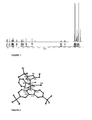
Figure 1 represents the 1H NMR spectrum of anti-[Ph(H)C(3-tBu-5-Et-Cp)(3,6-tBu2Flu)]ZrCl2. -
Figure 2 represents the X-ray crystallography of anti-[Ph(H)C(3-tBu-5-Et-Cp)(3,6-tBu2Flu)]ZrCl2. -
Figure 3 represents the 1H NMR spectrum of anti-[Ph(H)C(3-tBu-5-Ph-Cp)(3,6-tBu2Flu)JZrCl2. -
Figure 4 represents the X-ray crystallography of anti-[Ph(H)C(3-tBu-5-Ph-Cp)(3,6-tBu2Flu)]ZrCl2. -
Figure 5 represents the 1H NMR spectrum of anti-[Ph(H)C(3-tBu-5-Me-Cp)(2,7-tBu2Flu)]ZrCl2. -
Figure 6 represents the X-ray crystallography of anti-[Ph(H)C(3-tBu-5-Me-Cp)(2,7-tBU2Flu)]ZrCl2. -
Figure 7 represents the 1H NMR spectrum of pro-ligand Ph(H)C(3-tBu-5-Et-CpH)(OMOHDD-FluH)]. -
Ref = [Me2C(3-tBu-5-Me-Cp)(3,6-tBu2Flu)]ZrCl2
Cat1 = anti-[Ph(H)C(3-tBu-5-Me-Cp)(3,6-tBu2Flu)]ZrCl2
Cat2 = anti-[Ph(H)C(3-tBu-5-Et-Cp)(3,6-tBu2Flu)]ZrCl2
Cat3 = anti-[Ph(H)C(3-tBu-5-Ph-Cp)(3,6-tBu2Flu)]ZrCl2
Cat4 = anti-[Ph(H)C(3-tBu-5-Me-Cp)(2,7-tBu2Flu)]ZrCl2
- Ethylcyclopentadiene was prepared using a procedure published by Riemschneider et al (Riemschneider R., Reichelt E., Grabitz E.B. in Monatsh. Chem., 1960, 91, 812-823) or diethylcyclopentadiene was purchased from 3B Scientific Corporation USA or from Lianyungang Henrychem Science Co., Ltd. China .1,2 A 1 L round bottom flask, equipped with magnetic stirring bar and argon inlet, was charged with 25 g (1029 mmol) of magnesium metal tunings and 500 mL of Et2O. 84 mL (1126 mmol) of ethyl bromide in 100 mL of Et2O were added dropwise over a period of time of 3 h. The reaction mixture was refluxed for 1 h and magnesium metal completely dissolved. Under rigorous stirring 75 mL (919 mmol) of freshly distilled cyclopentadiene were added dropwise at room temperature (about 25 °C) over a period of time of 1 h and the resultant greenish suspension was refluxed overnight. The reaction mixture was maintained at a temperature of 0 °C and 147 mL (1126 mmol) of diethyl sulfate were added dropwise to result in formation of grey precipitate. After 4-5 h of stirring at room temperature the resultant suspension was carefully diluted with 1 L of a saturated solution of NH4Cl in water. The organic layer was separated, dried over Na2SO4 and concentrated. The residue was purified by distillation under vacuum (80 mbar pressure) at a temperature of 35-38 °C to give 36,4 g of pure ethylcyclopentadiene with a yield of 41 %, as a mixture of isomers.
-
- 1) In a round bottom flask, equipped with magnetic stirring bar and argon inlet, were placed 500 mL of methanol, 36.4 g (479 mmol) of freshly cracked ethylcyclopentadiene and 35.2 mL (479 mmol) of acetone. 39.3 mL (479 mmol) of pyrrolidine were added dropewise over a period of time of 2 h. The reaction mixture was stirred at room temperature for 72 hours. After neutralisation with 27.4 mL of CH3COOH methanol was evaporated, and 1 L of water (1 L) and 250 mL of Et2O were added. The organic layer was separated, dried over MgSO4 and evaporated. The resultant orange liquid was purified by distillation at a temperature of 65 °C and under a pressure of 7 mbar to give 42 g (313 mmol) of 6,6'-dimethyl-3-ethyl-fulvene with a yield of 82 %.
1H NMR (CDCl3, 200 MHz, 25 °C): δ 6.54 (m, 1H), 6.41 (m, 1H), 6.21 (m, 1H), 2.45 (q, 3 J = 7.5 Hz, 2H, CH 2CH3), 2.18 (s, 6H, CH3), 1.21 (t, 3 J = 7.5 Hz, 2H, CH2CH 3).
Anal. Calcd for C10H14: C, 89.49; H, 10.51. Found: C, 90.05; H, 11.12. - 2) 21 g (157 mmol) of 6,6'-dimethyl-3-ethyl-fulvene were placed in 1 L flask and 300 mL of Et2O were added. To the solution 100 mL (160 mmol) of a 1.6 M solution of methyllithium were added dropwise at a temperature of 0 °C. The reaction was completed after a few hours. The reaction mixture was carefully hydrolysed with a saturated solution of NH4Cl in water. The organic layer was separated, dried over MgSO4 and evaporated. The resultant orange liquid was purified by distillation at a temperature of 60 °C and under a pressure of 9 mbar to give 22.3 g (148 mmol) of 1-tert-butyl-3-ethyl-cyclopentadiene with a yield of 95 %, as a mixture of isomers.
1H NMR (CDCl3, 200 MHz, 25 °C): δ 6.30-5.70 (m, 2H), 3.00-2.80 (m, 2H), 2.50-2.20 (m, 2H, CH 2CH3), 1.30-1.10 (m, 12H, C(CH3)2 + CH2CH 3).
Anal. Calcd for C11H18: C, 87.93; H, 12.07. Found: C, 88.12; H, 12.54. - To a solution of 5 g (33.28 mmol) of a mixture of isomers of 1-ethyl-3-tert-butyl-cyclopentadiene in 50 mL of THF were added 15.1 mL (33.28 mmol) of a 2.2 M solution of n-butyllithium in hexane at a temperature of 0 °C. The reaction mixture was stirred for 4 hours and a solution of 3.4 mL (33.28 mmol) of benzaldehyde in 30 mL of THF was added dropwise. The reaction mixture became orange. After 2 hours, 50 mL of a concentrated solution of NH4Cl were added slowly. This mixture was stirred overnight. The organic layer was separated, dried over MgSO4 and all the volatiles were removed in vacuum. 7.46 g (31.28 mmol) of a red oily residue were obtained with a yield of 94 % and were dried overnight under vacuum.
1H NMR (CDCl3, 500 MHz, 25 °C): δ7.57 (m, 2H), 7.46-7.39 (m, 4H), 7.35 (m, 1H), 7.08 (s, 1H, =CHPh), 6.27 (m, 1H, CH), 6.19 (m, 1H, CH), 2.59 (q, 3 J = 7.5 Hz, 2H, CH 2CH3), 1.23 (s, 9H, CCH 3), 1.19 (t, 3 J = 7.5 Hz, 2H, CH2CH 3).
Anal. Calcd for C18H22: C, 90.70; H, 9.30. Found: C, 92.05; H, 10.15. - To a solution of 3.92 g (16.45 mmol) of 6-phenyl-2-ethyl-4-tert-butyl-fulvene in 40 mL of THF were added at room temperature 40 mL of a solution of 3,5-di-tert-butyl-fluorenyl-lithium prepared from 4.4 g (15.8 mmol) of 3,6-di-tert-butyl-fluorene and 7.2 mL (15.8 mmol) of a 2.2 M solution of n-butyllithium. The reaction mixture was stirred overnight at ambient temperature and then quenched with 50 mL of saturated solution of NH4Cl and diluted with 50 mL of diethyl ether. The organic layer was separated, washed twice with 200 mL of with water and dried over MgSO4. All the volatiles were removed in vacuum and the residue was recrystallised from MeOH to give 5.9 g (11.42 mmol) of the final product with a yield of 73 %. It was a mixture of isomers in a ratio of about 7:50.
1H NMR (CDCl3, 500 MHz, 25 °C) (only the spectrum of major isomer is given): δ 7.79 (m, 2H), 7.50-7.40 (m, 4H), 7.33 (m, 1H), 7.15 (m, 1H), 7.10 (m, 1H), 6.90 (d, 3 J = 8.1 Hz, 1H), 6.45 (s, 1H), 6.34 (d, 3 J = 8.1 Hz, 1H), 4.56 (d, 3 J = 10.7 Hz, 1H), 3.70 (d, 3 J = 10.7 Hz, 1H), 2.90 (m, 2H), 2.08 (q, 3 J = 7.5 Hz, 2H, CH 2CH3), 1.43 (s, 9H, CCH 3-Flu), 1.40 (s, 9H, CCH 3-Flu), 1.25 (s, 9H, CCH 3-Cp), 0.74 (q, 3 J = 7.5 Hz, 2H, CH2CH 3).
13C NMR (CDCl3, 125 MHz, 25 °C) (only the spectrum of major isomer is given): δ 155.9, 149.9, 149.8, 144.2, 143.9, 143.5, 141.1, 140.8, 139.2, 128.9, 128.6, 126.3, 125.8, 125.2, 124.5, 123.4, 123.3, 115.9,115.7, 50.0, 48.3, 41.0, 34.8, 33.2, 31.7, 31.0, 20.9, 14.4.
Anal. Calcd for C39H48: C, 90.64; H, 9.36. Found: C, 90.99; H, 9.45. - To a solution of 1.530 g (2.96 mmol) of pro-ligand Ph(H)C(3,6-tBu2FluH)(3-tBu-5-Et-CpH) in 40 mL of Et2O were added 2.7 mL (5.92 mmol) of a 2.2 M solution of n-butyllithium in hexane at a temperature of 0 °C. The reaction mixture was stirred overnight at room temperature and then all the volatiles were removed under reduced pressure. Then in a glovebox 0.690 g (2.96 mmol) of anhydrous ZrCl4 were added followed by addition of 50 mL of Et2O. The resulting pink reaction mixture was stirred at room temperature overnight. The solvent was evaporated in vacuum and 40 mL of hexane were added. The resulting solution was filtered off and the filtrate was evaporated to give 1.96 g (2.90 mmol) of red solid of Ph(H)C(3,6-tBu2Flu)(3-tBu-5-Et-Cp)ZrCl2 with a yield of 98 %. Only one diastereomer out of two possible was obtained (500 MHz 1H NMR spectroscopy). The latter material was recrystallised from 15 mL of hexane at a temperature of -50 °C. The crystals suitable for X-ray were obtained by slow concentration of hexane solution. 1H NMR (CD2Cl2, 500 MHz, 25 °C) is represented in
Figure 1 : δ 8.07 (m, 2H), 7.84 (m, 2H), 7.60 (m, 1H), 7.55 (m, 2H), 7.47 (m, 2H), 7.12 (m, 1H), 6.45 (m, 1H), 6.53 (s, 1H, PhHC), 6.22 (d, 4 J = 2.8 Hz, Cp), 5.65 (d, 4 J = 2.8 Hz, Cp), 2.81 (sxt, 3 J = 7.5 Hz, CHHCH3), 2.45 (sxt, 3 J = 7.5 Hz, CHHCH3), 1.50 (s, 9H, CCH 3-Flu), 1.43 (s, 9H, CCH 3-Flu), 1.25 (t, 3 J = 7.5 Hz, CH2CH 3), 1.09 (s, 9H, CCH 3-Cp). 13C NMR (CD2Cl2, 125 MHz, 25°C): δ 149.7, 146.8, 139.9, 132.8, 128.8, 128.5, 128.0, 127.9, 127.2, 126.3, 125.1, 124.6, 122.5, 122.3, 121.2, 119.6, 119.1, 118.8, 114.5, 102.2, 101.1, 74.3, 39.9, 35.1, 35.0, 32.9, 31.7, 31.6, 29.3, 22.6, 16.5.
Anal. Calcd for C39H46Cl2Zr: C, 69.20; H, 6.85; Cl, 10.70. Found: C, 70.10; H, 7.54.
X-ray crystallography of complex Ph(H)C(3,6-tBu2Flu)(3-tBu-5-Et-Cp)ZrCl2 is represented inFigure 2 . - In a round bottom flask, equipped with magnetic stirring bar and argon inlet, were placed 17.7 g (111.88 mmol) of 3-phenylcyclopent-2-en-1-one prepared as described in Riemschneider and Nerin (Riemschneider R., Nerin R. in Monatsh. Chem., 1960 91, 829-835) and 300 mL of THF. Then, 77 mL (123.2 mmol) of a 1.6 M solution of tert-butyllithium in pentane were added dropwise at a temperature of -100 °C over a period of time of one hour. The reaction mixture was allowed to warm up to room temperature over 3 hours, and then, was carefully hydrolyzed with 500 mL of water. 30 mL of concentrated HCl were added slowly and the reaction mixture was stirred overnight. 100 mL of Et2O were added, the organic layer was separated, washed with a concentrated solution of Na2CO3 and dried over MgSO4. The solvent was evaporated and the resultant oily product was purified by distillation at a temperature of 106-120 °C and under a pressure of 2·10-2 Torr to give 2.66 g (13.41 mmol) of 1-tert-butyl-3-phenyl-cyclopentadiene with a yield of 12 %, as mixture of isomers.
1H NMR (CDCl3, 300 MHz, 25 °C): δ 7.70-7.20 (m, 5H, Ph), 6.70-6.00 (1H, =CH), 3.37 (m, 2H, -CH2), 1.24 (m, 9H, CCH 3).
Anal. Calcd for C15H18: C, 90.85; H, 9.15. Found: C, 92.12; H, 10.34. - To a solution of 2.66 g (13.41 mmol) of 1-tert-butyl-3-phenyl-cyclopentadiene (mixture of isomers) in 50 mL of THF were added 6.1 mL (13.41 mmol) of a 2.2 M solution of n-butyllithium in hexane at a temperature of 0 °C. The reaction mixture was stirred for 4 hours and a solution of 1.4 mL (13.41 mmol) of benzaldehyde in 20 mL of THF was added dropwise. The reaction mixture became orange. After 5 hours, 50 mL of a concentrated solution of NH4Cl were added slowly. This mixture was stirred overnight. The organic layer was separated, dried over MgSO4 and all the volatiles were removed in vacuum. The red oily residue of compound 6-phenyl-2-phenyl-4-tert-butyl-fulvene was recrystallised from 20 mL of methanol at a temperature of -20 °C and dried overnight under vacuum. 3.02 g (10.54 mmol) were obtained with a yield of 79 % yield.
1H NMR (CDCl3, 200 MHz, 25 °C): δ 7.70-7.30 (m, 10H, Ph), 7.19 (s, 1H, =CHPh), 6.67 (m, 1H, CH), 6.45 (m, 1H, CH), 1.30 (s, 9H, CCH 3).
Anal. Calcd for C22H22: C, 92.26; H, 7.74. Found: C, 92.79; H, 8.55. - To a solution of 3.02 g (10.54 mmol) of 6-phenyl-2-phenyl-4-tert-butyl-fulvene in 40 mL of THF were added, at room temperature, 40 mL of a solution of 3,6-di-tert-butylfluorenyl-lithium prepared from 2.92 g (10.54 mmol) of 3,6-di-tert-butyl-fluorene and 4.8 mL (10.54 mmol) of a 2.2 M solution of n-butyllithium. The reaction mixture was stirred overnight at ambient temperature and then quenched with 50 mL of a saturated solution of NH4Cl and diluted with 50 mL of diethyl ether. The organic layer was separated, washed twice with 200 mL of water and dried over MgSO4. All the volatiles were removed under vacuum and the residue was recrystallised from MeOH to give 4.08 g (7.22 mmol) of the final product with a yield of 69 % yield. It was a mixture of isomers in a 1:10 ratio.
1H NMR (CDCl3, 500 MHz, 25 °C) (only the spectrum of major isomer is given): δ 7.75 (d, 4 J = 1.7 Hz, 1H), 7.69 (d, 4 J = 1.7 Hz, 1H), 7.50-7.40 (m, 4H), 7.36 (m, 1H), 7.21-7.11 (m, 4H), 6.96 (m, 1H), 6.88-6.81 (m, 3H), 6.32 (d, 3 J = 8.2 Hz, 1H), 6.17 (s, 1H), 4.57 (d, 3 J = 9.4 Hz, 1H), 4.20 (d, 3 J = 9.4 Hz, 1H), 3.14 (m, 2H), 1.42 (s, 9H, CCH 3-Flu), 1.37 (s, 9H, CCH 3-Flu), 1.17 (s, 9H, CCH 3-Cp).
13C NMR (CDCl3, 125 MHz, 25 °C) (only the spectrum of major isomer is given): δ 157.4, 150.2, 149.7, 143.6, 143.5, 143.2, 141.7, 141.2, 141.1, 139.4, 137.9, 128.9, 128.8, 128.6, 128.3, 128.2, 128.0, 127.9, 126.5, 125.8, 125.5, 125.4, 125.0, 123.4, 123.3, 115.9, 115.7, 50.6, 47.8, 43.0, 34.8, 34.7, 33.2, 31.7, 31.6, 30.7.
Anal. Calcd for C43H48: C, 91.43; H, 8.57. Found: C, 91.18; H, 9.43. - To a solution of 1.54 g (2.73 mmol) of pro-ligand Ph(H)C(3,6-tBu2-FluH)(3-tBu-5-Ph-CpH) (1.540 g, 2.73 mmol) in 40 mL of Et2O were added 2.5 mL (5.46 mmol) of a 2.2 M solution of n-butyllithium in hexane at a temperature of 0 °C. The reaction mixture was stirred overnight at room temperature and then all the volatiles were removed under reduced pressure. Then in glovebox 0.640 g (2.73 mmol) of anhydrous ZrCl4 were added followed by addition of 30 mL of Et2O. The resulting pink reaction mixture was stirred at room temperature overnight. The solvent was evaporated under vacuum and 40 mL of hexane were added. The resulting solution was filtered off and the filtrate was evaporated to give 1.88 g (2.59 mmol) of red solid of Ph(H)C(3,6- t Bu2Flu)(3- t Bu-5-Ph-Cp)ZrCl2 with a yield of 95 %. Only one diastereomer out of two possible was obtained (500 MHz 1H NMR spectroscopy). The latter material was recrystallised from 15 mL of hexane at a temperature of -50 °C. Crystals suitable for X-ray were obtained by slow concentration of benzene solution.
1H NMR (CD2Cl2, 500 MHz, 25 °C) is represented inFigure 3 : δ 8.03 (m, 2H), 8.0 (m, 2H), 7.69 (m, 2H), 7.61 (m, 2H), 7.52 (m, 1H), 7.43 (m, 3H), 7.17 (m, 1H), 6.96 (s, 1H, PhHC), 6.88 (m, 1H), 6.61 (m, 1H), 6.49 (d, 4 J = 2.8 Hz, Cp), 6.07 (d, 3 J = 8.9 Hz), 5.70 (d, 4 J = 2.8 Hz, Cp), 1.45 (s, 9H, CCH 3-Flu), 1.43 (s, 9H, CCH 3-Flu), 1.20 (s, 9H, CCH 3-Cp).
13C NMR (CD2Cl2, 125 MHz, 25 °C): δ 150.6, 150.2, 146.36139.4, 134.6, 129.0, 128.9, 128.5, 128.4, 128.0, 127.7, 127.6, 127.3, 127.0, 124.4, 122.7, 122.4, 122.3, 121.0, 119.9, 119.2, 118.9, 116.1, 102.5, 100.2, 74.5, 40.7, 35.0, 34.9, 33.2, 31.6, 31.5, 29.7. Anal. Calcd for C43H46Cl2Zr: C, 71.24; H, 6.40; Cl, 10.70. Found: C, 71.76; H, 7.03.
X-ray crystallography of anti-Ph(H)C(3,6- t Bu2Flu)(3- t Bu-5-Ph-Cp)ZrCl2 is represented inFigure 4 . - To a solution of 2.64 g (11.7 mmol) of 6-phenyl-2-methyl-4-tert-butyl-fulvene in 40 mL of THF were added, at room temperature, 40 mL of solution of 2,7-di-tert-butyl-fluorenyl-lithium prepared from 3.27 g (11.77 mmol) of 2,7-di-tert-butyl-fluorene and 5.34 mL (11.77 mmol) of a 2.2 M solution of n-butyllithium. The reaction mixture was stirred overnight at ambient temperature and then quenched with 50 mL of a saturated solution of NH4Cl and diluted with 50 mL of diethyl ether. The organic layer was separated, washed twice with 200 mL of water and dried over MgSO4. All the volatiles were removed under vacuum and the residue was recrystallised from MeOH to give3.42 g (6.8 mmol) of the final product with a yield of 58 %. It was a mixture of isomers in a ratio of about 6:50.
1H NMR (CDCl3, 500 MHz, 25 °C) (only the spectrum of major isomer is given): δ 7.61 (t, 3 J = 7.7 Hz, 2H), 7.47-7.38 (m, 4H), 7.36-7.29 (m, 3H), 7.18 (m, 1H), 6.63 (s, 1H), 6.35 (m, 1H), 4.54 (d, 3 J = 11.1 Hz, 1H), 3.55 (d, 3 J = 11.1 Hz, 1H), 2.91 (m, 2H), 1.65 (s, 3H, CH 3), 1.26 (s, 9H, CCH 3-Flu), 1.25 (s, 9H, CCH 3-Flu), 1.08 (s, 9H, CCH 3-Cp). 13C NMR (CDCl3, 125 MHz, 25 °C) (only the spectrum of major isomer is given): δ 156.0, 148.8, 148.5, 146.0, 145.9, 144.3, 139.9, 138.5, 138.3, 134.4, 128.9, 128.6, 126.4, 124.6, 123.8, 123.7, 123.6, 123.4, 123.3, 118.5, 118.4, 50.6, 49.1, 44.2, 34.8, 34.7, 34.5, 33.2, 33.1, 31.6, 31.1, 30.9, 13.2.
Anal. Calcd for C38H46: C, 90.78; H, 9.22. Found: C, 91.15; H, 9.89. - To a solution of 1.5 g (2.98 mmol) of pro-ligand Ph(H)C(2,7-tBu2-FluH)(3-tBu-5-Me-CpH) in 40 mL of Et2O were added 2.71 mL (5.96 mmol) of a 2.2 M solution of n-butyllithium in hexane at a temperature of 0 °C. The reaction mixture was stirred overnight at room temperature and then all the volatiles were removed under reduced pressure. Then in glovebox 0.695 g (2.98 mmol) of anhydrous ZrCl4 were added followed by addition of 50 mL of Et2O. The resulting pink reaction mixture was stirred at room temperature overnight. The solvent was evaporated under vacuum and 40 mL of hexane were added. The resulting solution was filtered off and the filtrate was concentrated to give 1.96 g (2.9 mmol) of red-orange microcrystalline solid of mostly one anti-Ph,Me diastereomer of Ph(H)C(2,7-tBu2Flu)(3-tBu-5-Me-Cp)ZrCl2 (97 % as judged by 500 MHz 1H NMR spectroscopy) with a yield of 98%. The latter material was obtained diastereomerically pure by recrystallisation from hexane. Crystals suitable for X-ray were obtained by slow concentration of a concentrated hexane solution of the complex.
1H NMR (CD2Cl2, 500 MHz, 25 °C) is represented inFigure 5 : δ 8.00 (m, 1H), 7.86 (m, 1H), 7.67-7.54 (m, 5H), 7.47 (m, 1H), 6.62 (s, 1H), 6.56 (m, 1H), 6.20 (d, 4 J = 2.8 Hz, Cp), 5.58 (d, 4 J = 2.8 Hz, Cp), 2.31 (s, 3H, CH 3), 1.41 (s, 9H, CCH 3-Cp), 1.11 (s, 9H, CCH 3-Flu), 1.10 (s, 9H, CCH 3-Flu). 13C NMR (CD2Cl2, 125 MHz, 25°C): δ 151.3, 149.6, 146.7, 139.6, 128.8, 128.1, 127.2, 126.5, 125.3, 124.5, 124.0, 123.9, 123.7, 122.5, 120.9, 119.0, 118.3, 118.2, 116.9, 102.5, 100.4, 74.4, 39.6, 35.2, 34.7, 32.9, 31.6, 30.7, 30.3, 15.7.
Anal. Calcd for C39H46Cl2Zr: C, 68.85; H, 6.69. Found: C, 69.14; H, 7.45.
X-ray crystallography of anti-PH(H)C(2,7-tBu2Flu)(3-tBu-5-Me-Cp)ZrCl2 is represented inFigure 6 . - To a solution of 2.68 mg (11.22 mmol) of 6-phenyl-2-ethyl-4-tert-butyl-fulvene in 40 mL of THF were added, at room temperature, 100 mL of solution of octamethyloctahydrodibenzo-fluorenyl-lithium prepared from 4.3 g (11.12 mmol) of octamethyloctahydrodibenzo-fluorene and 5.1 mL (11.12 mmol) of a 2.2 M solution of n-butyllithium. The reaction mixture was stirred over 120 h at a temperature of 60 °C and then quenched with 50 mL of a saturated solution of NH4Cl and diluted with 50 mL of diethyl ether. The organic layer was separated, washed twice with 200 mL of water and dried over MgSO4. All the volatiles were removed under vacuum and the residue was precipitated from MeOH to give 3.82 g (6.11 mmol) of the final product with a yield of 55 %. It was a mixture of isomers in a ratio of about 17:83.
1H NMR (CDCl3, 500 MHz, 25 °C) (only the spectrum of major isomer is given): δ 7.67 (s, 1H), 7.65 (s, 1H), 7.46 (m, 4H, Ph), 7.35 (t, 3 J = 7.3 Hz, 1H, Ph), 7.15 (s, 1H), 6.76 (s, 1H), 6.19 (s, 1H), 4.55 (d, 3 J = 11.5 Hz, 1H), 3.58 (d, 3 J = 11.5 Hz, 1H), 2.96 (m, 2H), 2.17 (m, 3H, CH 2CH3), 1.74 (s, 8H), 1.43 (s, 3H, CH3), 1.42 (s, 3H, CH3), 1.37 (s, 3H, CH3), 1.34 (s, 9H, tBu), 1.33 (s, 3H, CH3), 1.26 (s, 3H, CH3), 1.17 (s, 3H, CH3), 1.02 (s, 3H, CH3), 0.88 (s, 3H, CH3), 0.81 (m, 3H, CH2CH 3).
13C NMR (CDCl3, 125 MHz, 25 °C) (only the spectrum of major isomer is given): δ 156.1, 144.9, 143.5, 143.4, 143.3, 143.2, 142.3, 140.5, 139.8, 138.7, 138.5, 128.9, 128.6, 126.2, 124.7, 124.5, 124.3, 116.4, 116.3, 49.8, 49.0, 41.6, 35.5, 35.4, 35.3 (three signals overlapped), 34.6, 34.5, 34.4 (two signals overlapped), 34.3, 32.3, 32.2, 32.1 (two signals overlapped), 31.9, 31.6, 31.5, 31.2, 31.1, 26.5, 26.4, 22.9, 22.8, 21.0, 14.7. Anal. Calcd for C47H60: C, 90.32; H, 9.68. Found: C, 90.88; H, 9.97. - The polymerisation of propylene was carried out in toluene, under a pressure of 5 bars, with a catalyst concentration of 10 µmol.L-1, with 5000 equiv (vs Zr) of methylaluminoxane (MAO) as activating agent and for a period of time of 30 minutes.
- Other conditions are specified in Table I for each run. The activities and the properties of the resulting polymer are also summarised in Table I.
Table I. Cat Tp (°C) mp (g) Productivity (gpolym/gcat) Activity (kg·mol-1·h-1) Tm (°C) Mw (×103 g/mol PDI [m]4 (%) 1,2- insertion (%) Ref 60 (61) 1.39 1390 1710 154 166 2.4 95 100 Ref 60 (62) 1.63 1810 2225 n.d. n.d. n.d. n.d. n.d. Ref 60 (62) 1.64 1490 1835 n.d. n.d. n.d. n.d. n.d. Cat1 60 (65) 4.48 4480 5940 156 200 2.6 96 100 Cat1 60 (63) 8.44 8440 11190 154 n.d. n.d. n.d. n.d. Cat2 60 (63) 5.89 5355 8170 152 174 2.3 93 n.d. Cat2 60 (65) 7.94 7225 11015 151 n.d. n.d. n.d. n.d. Cat2 60 (65) 11.37 1135 17355 n.d. n.d. n.d. n.d. n.d. Cat3 60 (60) 0.92 830 1350 102 34 2.1 61 n.d. Cat3 60 (59) 0.94 780 1270 102 n.d. n.d. n.d. n.d. Cat4 60 (60) 0.83 1235 825 131 95 2.2 80.8 n.d. Cat4 60 (62) 4.95 4950 7415 133 n.d. n.d. n.d. n.d. - It can be observed that the catalyst system of the present invention has a very high activity, often higher than the reference system, particularly Cat2 that has an ethyl substituent on the cyclopentadienyl in
position 5, vicinal to the bridge. It has also an excellent isotacticity, represented by [m]4. It can also be observed that the tert-butyl substituents atpositions positions 2,7. - The main advantage of the present invention is that the catalyst component with the mono-aryl bridge are obtained easily and in very high yield as compared to the yields previously obtained with different bridges. This is due to the fact that they have an excellent crystallisation ability.
Claims (9)
- A process for preparing a catalyst component of general formula
{R' (Rb 2-Flu) (RcRdC5H2)} MQ2
that comprises the steps of:a) reacting by nucleophilic addition, in a solvent, the adequate (Ra 2CRcRdfulvene), with the reagent [Rb 2-Flu ]- [M']+;b) hydrolysing and separating of the resulting ligand;c) deprotonating the ligand of step b) with R"M" to prepare a dianion ligand;d) carrying out the salt metathesis reaction in a solvent of the dianion ligand of step c) with MQ4;e) isolating of the mono-aryl-substituted methylene-bridged catalyst component by crystallisation,wherein each Ra is independently selected from aromatic group, preferably a phenyl group, wherein M' is alkali metal such as Li, Na, K, wherein R" is an alkyl having from 1 to 6 carbon atoms, wherein M" is Li, Na or K, wherein M is a metal group 4 of the periodic Table, wherein Q is halogen or alkyl or benzyl, wherein R' is a mono-aryl-substituted methylene bridge, and wherein Rb, Rc and Rd are each independently selected from H or alkyl having from 1 to 12 carbon atoms or silyl groups substituted or unsubstituted,
and characterised in that the mono-aryl-substituted methylene-bridged catalyst component is crystallised with a yield of at least 70%. - The process of claim 1 wherein R' is a mono-phenyl-substituted bridge.
- The process of any one of the preceding claims wherein both Rb are the same and are tert-butyl.
- The process of any one of the preceding claims wherein substituents Rb are located at positions 3 and 6 on the fluorenyl group.
- The process of any one of the preceding claims wherein Rc is methyl, ethyl, isopropyl or phenyl at position 2 and Rd is tert-butyl at position 4 on the cyclopentadienyl.
- The process of claim 5 wherein Rc is ethyl.
- The process of any one of the preceding claims wherein the solvent of both steps a) and d) is Et2O.
- The process of any one of the preceding claims wherein M' and M" are Li.
- Use of the mono-aryl-substituted methylene-bridged catalyst component obtained by the process of any one of claims 1 to 8 in combination with an activating agent to prepare isotactic polypropylene with a higher activity than equivalent catalyst components carrying an ethylene, isopropylidene or silylene bridge.
Priority Applications (1)
| Application Number | Priority Date | Filing Date | Title |
|---|---|---|---|
| EP08291195A EP2204375A1 (en) | 2008-12-12 | 2008-12-12 | Preparation of mono-aryl-substituted methylene-bridged substituted cyclopentadienyl-fluorenyl ligands and zirconium complexes derived thereof |
Applications Claiming Priority (1)
| Application Number | Priority Date | Filing Date | Title |
|---|---|---|---|
| EP08291195A EP2204375A1 (en) | 2008-12-12 | 2008-12-12 | Preparation of mono-aryl-substituted methylene-bridged substituted cyclopentadienyl-fluorenyl ligands and zirconium complexes derived thereof |
Publications (1)
| Publication Number | Publication Date |
|---|---|
| EP2204375A1 true EP2204375A1 (en) | 2010-07-07 |
Family
ID=40546060
Family Applications (1)
| Application Number | Title | Priority Date | Filing Date |
|---|---|---|---|
| EP08291195A Withdrawn EP2204375A1 (en) | 2008-12-12 | 2008-12-12 | Preparation of mono-aryl-substituted methylene-bridged substituted cyclopentadienyl-fluorenyl ligands and zirconium complexes derived thereof |
Country Status (1)
| Country | Link |
|---|---|
| EP (1) | EP2204375A1 (en) |
Cited By (1)
| Publication number | Priority date | Publication date | Assignee | Title |
|---|---|---|---|---|
| RU2660907C1 (en) * | 2018-02-19 | 2018-07-11 | Публичное акционерное общество "Нефтяная компания "Роснефть" (ПАО "НК "Роснефть") | Catalyst for producing synthetic high viscosity oils and method for preparation thereof |
Citations (15)
| Publication number | Priority date | Publication date | Assignee | Title |
|---|---|---|---|---|
| EP0277004A1 (en) | 1987-01-30 | 1988-08-03 | Exxon Chemical Patents Inc. | Catalysts, method of preparing these catalysts and method of using said catalysts |
| EP0419677A1 (en) | 1989-04-18 | 1991-04-03 | MITSUI TOATSU CHEMICALS, Inc. | Syndiotactic polypropylene resin composition |
| EP0426644A1 (en) | 1989-10-30 | 1991-05-08 | Fina Research S.A. | Syndiotactic homopolymers of olefins |
| EP0427696A2 (en) | 1989-10-10 | 1991-05-15 | Fina Technology, Inc. | Process and catalyst for producing syndiotactic polymers |
| EP0577581A2 (en) | 1992-06-22 | 1994-01-05 | Fina Technology, Inc. | Method for controlling the melting points and molecular weights of syndiotactic polyolefins using metallocene catalyst systems |
| EP0747406A1 (en) | 1995-06-07 | 1996-12-11 | Fina Technology, Inc. | Process for producing syndiotactic/isotactic block polyolefins |
| EP0881236A1 (en) | 1997-05-26 | 1998-12-02 | Fina Research S.A. | Metallocene catalyst component for use in producing isotactic polyolefins |
| WO2004020481A1 (en) * | 2002-08-29 | 2004-03-11 | Lg Chem, Ltd. | Fulvene, metallocene catalysts and preparation method thereof, and preparation of polyolefines copolymer using the same |
| EP1734058A1 (en) * | 2005-06-13 | 2006-12-20 | Total Petrochemicals Research Feluy | Ethylene and alpha-olefins polymerisation catalyst system based on fluorenyl ligand |
| WO2006134098A1 (en) * | 2005-06-13 | 2006-12-21 | Total Petrochemicals Research Feluy | Carbon-bridged cyclopentadienyl-fluorenyl ligands |
| WO2007022244A2 (en) * | 2005-08-17 | 2007-02-22 | Fina Technology, Inc. | Preparation and use of tetrasubstituted fluorenyl catalysts for polmerization of olefins |
| EP1762577A1 (en) | 2005-09-02 | 2007-03-14 | Total Petrochemicals Research Feluy | Impact copolymer of propylene prepared in single reactor |
| US20080027193A1 (en) * | 2006-07-31 | 2008-01-31 | Fina Technology, Inc. | Isotactic-atactic polypropylene and methods of making same |
| WO2008014217A2 (en) * | 2006-07-25 | 2008-01-31 | Fina Technology, Inc. | Fluorenyl catalyst compositions and olefin polymerization process |
| EP1900744A1 (en) * | 2005-05-25 | 2008-03-19 | Mitsui Chemicals, Inc. | Transition metal compound, olefin polymerization catalyst, and process for producing olefin polymer |
-
2008
- 2008-12-12 EP EP08291195A patent/EP2204375A1/en not_active Withdrawn
Patent Citations (15)
| Publication number | Priority date | Publication date | Assignee | Title |
|---|---|---|---|---|
| EP0277004A1 (en) | 1987-01-30 | 1988-08-03 | Exxon Chemical Patents Inc. | Catalysts, method of preparing these catalysts and method of using said catalysts |
| EP0419677A1 (en) | 1989-04-18 | 1991-04-03 | MITSUI TOATSU CHEMICALS, Inc. | Syndiotactic polypropylene resin composition |
| EP0427696A2 (en) | 1989-10-10 | 1991-05-15 | Fina Technology, Inc. | Process and catalyst for producing syndiotactic polymers |
| EP0426644A1 (en) | 1989-10-30 | 1991-05-08 | Fina Research S.A. | Syndiotactic homopolymers of olefins |
| EP0577581A2 (en) | 1992-06-22 | 1994-01-05 | Fina Technology, Inc. | Method for controlling the melting points and molecular weights of syndiotactic polyolefins using metallocene catalyst systems |
| EP0747406A1 (en) | 1995-06-07 | 1996-12-11 | Fina Technology, Inc. | Process for producing syndiotactic/isotactic block polyolefins |
| EP0881236A1 (en) | 1997-05-26 | 1998-12-02 | Fina Research S.A. | Metallocene catalyst component for use in producing isotactic polyolefins |
| WO2004020481A1 (en) * | 2002-08-29 | 2004-03-11 | Lg Chem, Ltd. | Fulvene, metallocene catalysts and preparation method thereof, and preparation of polyolefines copolymer using the same |
| EP1900744A1 (en) * | 2005-05-25 | 2008-03-19 | Mitsui Chemicals, Inc. | Transition metal compound, olefin polymerization catalyst, and process for producing olefin polymer |
| EP1734058A1 (en) * | 2005-06-13 | 2006-12-20 | Total Petrochemicals Research Feluy | Ethylene and alpha-olefins polymerisation catalyst system based on fluorenyl ligand |
| WO2006134098A1 (en) * | 2005-06-13 | 2006-12-21 | Total Petrochemicals Research Feluy | Carbon-bridged cyclopentadienyl-fluorenyl ligands |
| WO2007022244A2 (en) * | 2005-08-17 | 2007-02-22 | Fina Technology, Inc. | Preparation and use of tetrasubstituted fluorenyl catalysts for polmerization of olefins |
| EP1762577A1 (en) | 2005-09-02 | 2007-03-14 | Total Petrochemicals Research Feluy | Impact copolymer of propylene prepared in single reactor |
| WO2008014217A2 (en) * | 2006-07-25 | 2008-01-31 | Fina Technology, Inc. | Fluorenyl catalyst compositions and olefin polymerization process |
| US20080027193A1 (en) * | 2006-07-31 | 2008-01-31 | Fina Technology, Inc. | Isotactic-atactic polypropylene and methods of making same |
Non-Patent Citations (5)
| Title |
|---|
| A. RAZAVI ET AL., KINETICS AND CATALYSIS, vol. 47, 2006, pages 257 - 267 |
| ABBAS RAZAVI ET AL., MACROMOL. CHEM. PHYS., vol. 205, 2004, pages 347 - 356 |
| RIEMSCHNEIDER R.; NERIN R., MONATSH. CHEM., vol. 91, 1960, pages 829 - 835 |
| RIEMSCHNEIDER R.; REICHELT E.; GRABITZ E.B., MONATSH. CHEM., vol. 91, 1960, pages 812 - 823 |
| WON, YOUNG CHUL ET AL: "Fulvene having substituents only on 1-, 4-, and 6-positions: a key intermediate for novel ansa-metallocene complexes", JOURNAL OF ORGANOMETALLIC CHEMISTRY , 677(1-2), 133-139 CODEN: JORCAI; ISSN: 0022-328X, 2003, XP002524302 * |
Cited By (1)
| Publication number | Priority date | Publication date | Assignee | Title |
|---|---|---|---|---|
| RU2660907C1 (en) * | 2018-02-19 | 2018-07-11 | Публичное акционерное общество "Нефтяная компания "Роснефть" (ПАО "НК "Роснефть") | Catalyst for producing synthetic high viscosity oils and method for preparation thereof |
Similar Documents
| Publication | Publication Date | Title |
|---|---|---|
| US6268518B1 (en) | Metallocene compounds and their use in catalysts for the polymerization of olefins | |
| EP0423101B2 (en) | Catalyst for producing hemiisotactic polypropylene | |
| RU2098423C1 (en) | Metallocenes with benzofused indenyl derivatives, method of their synthesis, method of olefin polymer producing and catalyst for olefin polymerization | |
| JP4051089B2 (en) | Heteroatom-substituted metallocene compounds for olefin polymerization catalyst systems and methods for their preparation | |
| EP1636245B1 (en) | Bisindenyl zirconium complexes for use in the polymerisation of olefins | |
| US5329033A (en) | Process for the preparation of an olefin polymer | |
| EP1567560B1 (en) | Organometallic transition metal compound, biscyclopentadienyl ligand system, catalyst system and process for preparing polyolefins | |
| US6391991B1 (en) | Process for the preparation of amorphous polymers of propylene | |
| US6515086B1 (en) | Polyolefin production | |
| KR20010006381A (en) | Substituted metallocene compounds for olefin polymerization catalyst systems, their intermediates and methods for preparing them | |
| SK36095A3 (en) | Benzofluorenylmetallocene and method of polymerization of olefins | |
| JPH09136930A (en) | Production of syndiotactic/isotactic block polyolefin | |
| CA2371835C (en) | Stereorigid, bridged metallocene catalysts for polyolefin production | |
| EP1680453B1 (en) | Organometallic transition metal compound, biscyclopentadienyl ligand system, catalyst system and process for preparing polyolefins | |
| EP1734059A1 (en) | Carbon-bridged cyclopentadienyl-fluorenyl ligands | |
| JP2980977B2 (en) | Method for producing syndiotactic copolymer of propylene and olefin | |
| US6100416A (en) | Asymmetric ethylene-bridged metallocenes useful as catalysts in the polymerization of olefins and process for preparing said metallocenes | |
| US6800707B2 (en) | Polyolefin production | |
| EP2069372B1 (en) | Preparation of diphenyl-bridged substituted cyclopentadienyl-fluorenyl ligands | |
| EP1169356B1 (en) | Polyolefin production | |
| MXPA98010099A (en) | Metallocenes and catalysts for polymerization of olefins | |
| KR20000016125A (en) | Metallocenes and catalysts for polymerization of olefins |
Legal Events
| Date | Code | Title | Description |
|---|---|---|---|
| PUAI | Public reference made under article 153(3) epc to a published international application that has entered the european phase |
Free format text: ORIGINAL CODE: 0009012 |
|
| AK | Designated contracting states |
Kind code of ref document: A1 Designated state(s): AT BE BG CH CY CZ DE DK EE ES FI FR GB GR HR HU IE IS IT LI LT LU LV MC MT NL NO PL PT RO SE SI SK TR |
|
| AX | Request for extension of the european patent |
Extension state: AL BA MK RS |
|
| AKY | No designation fees paid | ||
| REG | Reference to a national code |
Ref country code: DE Ref legal event code: R108 Effective date: 20110215 Ref country code: DE Ref legal event code: 8566 |
|
| STAA | Information on the status of an ep patent application or granted ep patent |
Free format text: STATUS: THE APPLICATION IS DEEMED TO BE WITHDRAWN |
|
| 18D | Application deemed to be withdrawn |
Effective date: 20110108 |